Article

A Comparative Study on the Effect of Biogas Residue Soil Conditioner on Dryland Maize

1
Shanxi Institute of Organic Dryland Farming, Shanxi Agricultural University, Taiyuan 030031, China
2
Key Laboratory of Sustainable Dryland Agriculture (Co-Construction by Ministry of Agriculture and Rural Affairs and Shanxi Province), Taiyuan 030031, China
3
Shanxi Province Key Laboratory of Sustainable Dryland Agriculture, Taiyuan 030031, China
*
Author to whom correspondence should be addressed.
Agronomy 2025, 15(12), 2845; https://doi.org/10.3390/agronomy15122845
Submission received: 6 November 2025 / Revised: 4 December 2025 / Accepted: 9 December 2025 / Published: 11 December 2025
(This article belongs to the Section Soil and Plant Nutrition)

Abstract

To investigate the adaptability and efficacy of biogas residue soil conditioner in conjunction with other commercially available soil conditioners in arid conditions, a study was conducted using dryland maize as the experimental crop. Five treatments were implemented based on the “dry sowing and wet emergence” method for Xinjiang cotton: T1 with traditional fertilization, T2 with biogas residue soil conditioner, T3 with biogas residue soil conditioner and endophytic arbuscular mycorrhizal bacteria, T4 with commercial Fuli Bang soil conditioner, and T5 with commercial Tianji soil conditioner. Results indicated that the combined use of biogas residue particulate soil conditioner and arbuscular mycorrhizal fungi (T3) had the most positive effects. T3 treatment reduced soil bulk density, increased soil organic matter content, and enhanced rhizosphere microbial diversity. Compared to T1, T3 led to a decrease in soil bulk density by 8.89%, higher microbial diversity indices, and significant increases in plant height, stem diameter, and yield by 6.25%, 15.48%, and 37.43%, respectively. Moreover, T3 showed elevated antioxidant enzyme activities (SOD and POD) and lower malondialdehyde content, indicating enhanced stress resilience and root activity. T3 showed ideal balance in yield, aboveground growth, and root stress resilience. It also improved soil organic matter levels and structure, highlighting the significant potential of combining biogas residue soil conditioner and endophytic arbuscular mycorrhizal fungi to alleviate spring drought stress.

1. Introduction

In recent years, the increased frequency and severity of droughts, attributed to global warming, pose a significant challenge to rain-fed dry farming. Shanxi, located in the eastern part of the Loess Plateau in North China, has a temperate monsoon climate with over 80% of its arable land under dryland cultivation. Due to its specific geographical and topographical characteristics, rainfall and high temperatures in this area do not align, leading to frequent droughts, especially in spring, which significantly impact agricultural productivity in Shanxi. Maize is the primary staple grown in dryland farming. Issues such as soil shallowness, compaction, and depletion of organic matter, commonly referred to as “shallow, solid, and few” soil conditions, have arisen due to continuous monoculture, excessive agrochemical use, and poor farming practices. These challenges exacerbate the existing difficulties in enhancing the drought resistance of dryland crops.
Soil is the basis of agricultural production, and its quality directly affects the growth and yield of crops. In order to improve soil quality and enhance crop resistance and yield, the application of soil conditioner has become an important direction of agricultural production and soil science research. At present, there are many kinds of soil conditioners with different mechanisms of action, but the core is to improve the physical, chemical and biological properties of soil, enhance soil productivity and change the assembly mechanism of soil microorganisms [1,2,3,4,5,6,7].
The popularity of soil biological organic improver stems from its cost-effectiveness in terms of raw materials and straightforward production process. This improver effectively enhances soil physical and chemical properties, boosts crop yield, and fortifies soil resistance [8,9,10]. Biogas residue is rich in organic matter, nitrogen, phosphorus, potassium, humic acid, and microbial communities, making it an excellent soil biological organic improver. It also enhances soil structure, water retention, and aeration due to its high organic matter content [11,12]. As a soil conditioner, biogas residue has proven effective in cultivating various crops. For example, in maize cultivation, using biogas residue significantly boosted maize yield and calorific value, surpassing traditional nitrogen fertilizer treatments [13]. Similarly, applying biogas residue in energy crop cultivation has led to increased crop yield and nutrient utilization [14]. Moreover, biogas residue plays a role in improving photosynthetic rates and nutrient content when cultivating forage grasses like ryegrass, underscoring its potential as a fertilizer and soil conditioner [15]. Investigating the utilization of biogas residue as a soil conditioner not only facilitates resource optimization but also furnishes valuable agricultural resources.
Current biogas residue soil conditioner technology primarily focuses on biochar content [16,17,18,19], with limited emphasis on synergistic utilization with microbial inoculants in peat and mineral nutrient compounds. The prevailing approach involves the use of Bacillus and biogas residue to produce organic fertilizer [20,21,22], often overlooking endophytic arbuscular bacteria. Arbuscular Mycorrhizal Fungi (AMF) are soil fungi that form symbiotic relationships with terrestrial plants by infecting their roots and creating specialized arbuscles. They act as natural allies in combating plant abiotic stress, particularly in drought conditions [23,24,25]. Research on soil conditioners predominantly aims to improve saline-alkali lands and address heavy metal pollution, with insufficient attention given to the issue of low organic matter content in regional soils as a hindrance to drought resilience.
In 2024, a severe drought hit Shanxi Province. In May, surface rainfall was only 10.86 mm, with total rainfall reaching 118.90 mm. To avoid farming delays, we used the “dry sowing and wet harvesting” technique for cotton in Xinjiang, China, effectively managing low soil moisture during the drought and enabling timely sowing. Previous dryland maize studies mainly focused on leaf stress resistance indicators, neglecting root system responses to adverse conditions. Roots play a crucial role in plant stress resistance by optimizing nutrient uptake, forming barriers, signaling stress, and producing regulatory compounds. Therefore, we investigated dryland maize growth, root stress resistance, soil properties, and soil microorganism responses to different soil conditioners. Our aim was to identify suitable soil conditioners for dryland maize farming and enhance knowledge on their use during severe droughts.

2. Materials and Methods

2.1. Experimental Site

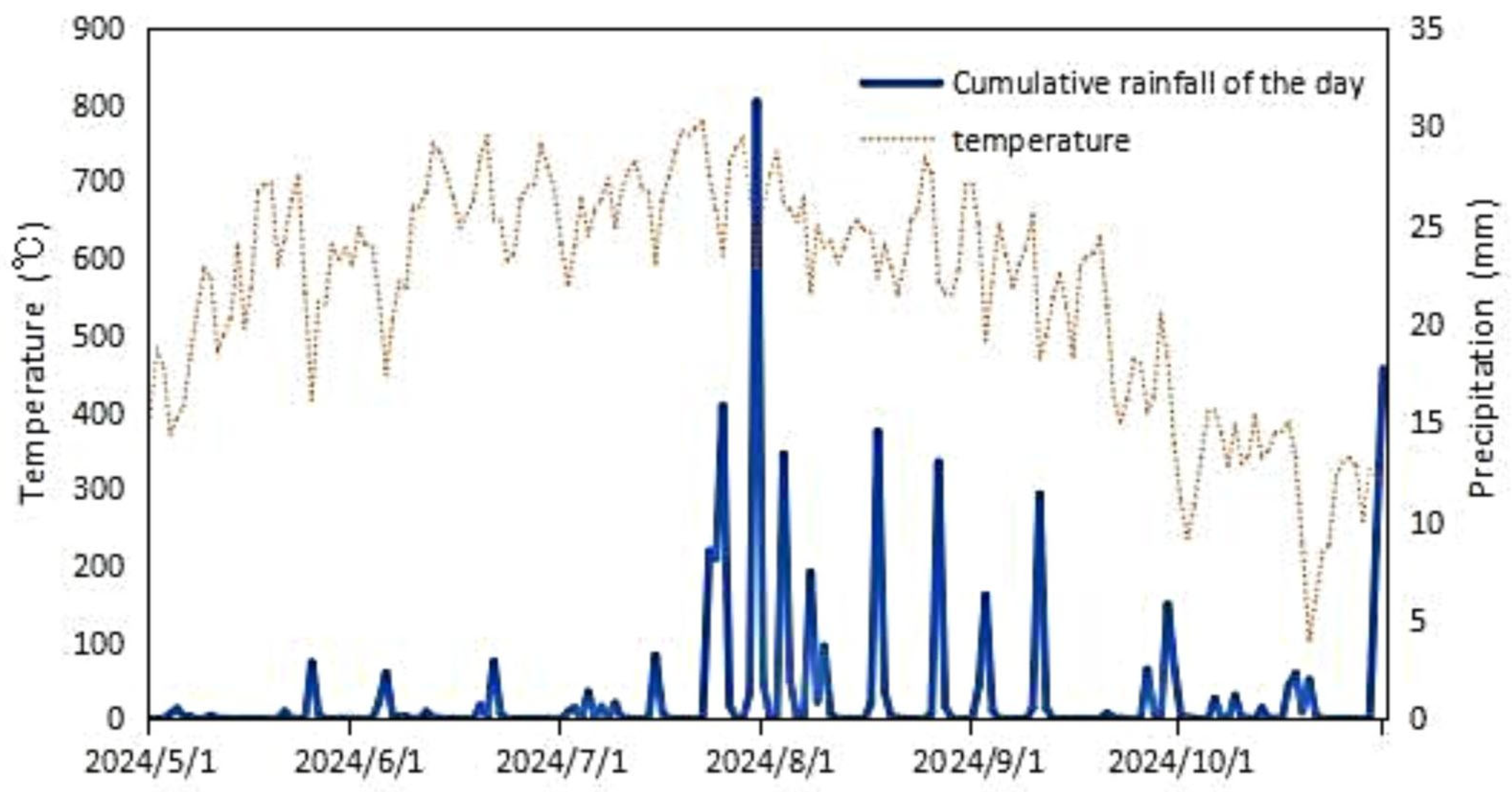
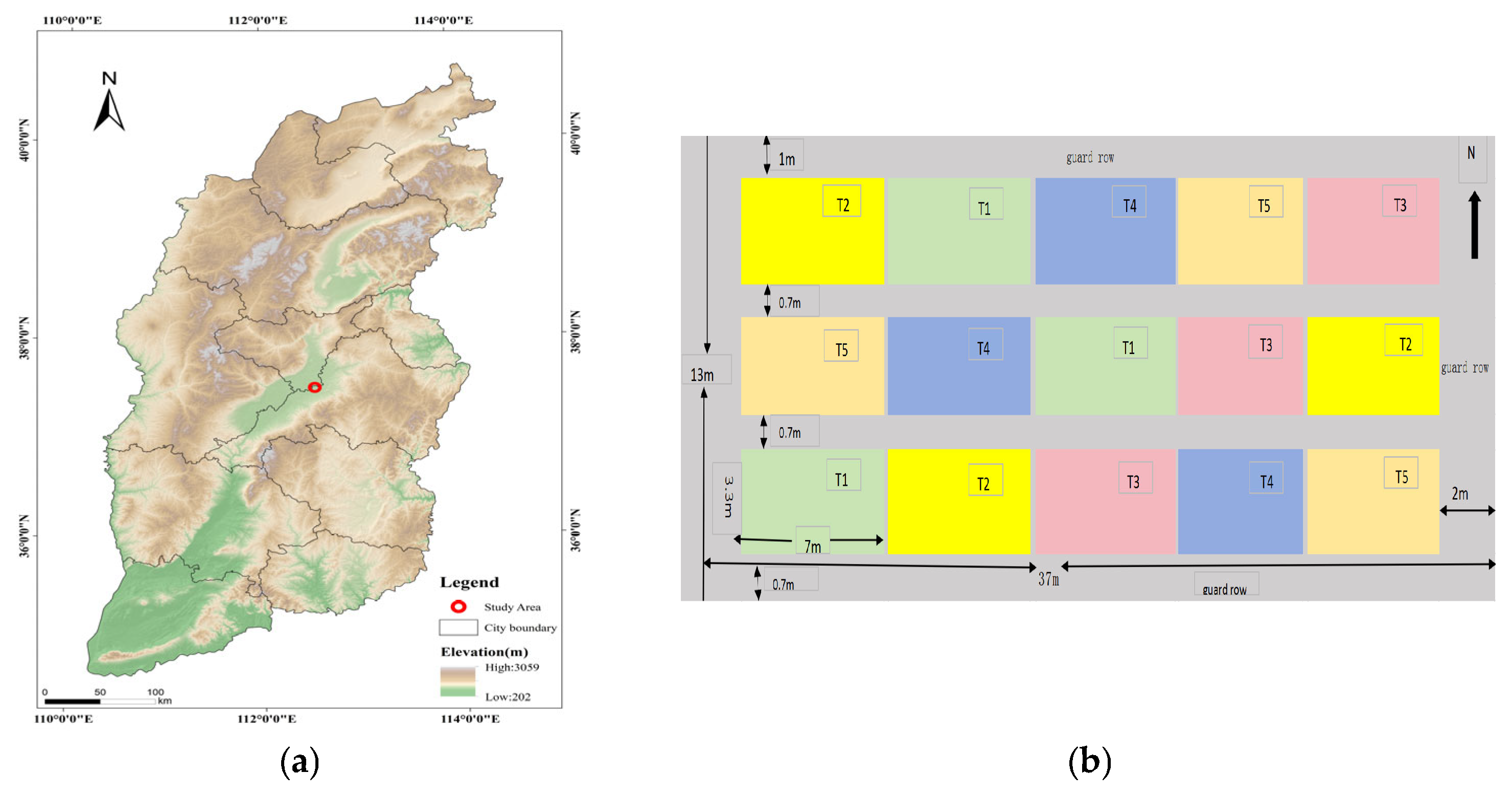
The experimental site was situated in Beiguo Village, Taigu County, Jinzhong City, at geographical coordinates 37°30′ N, 112°32′ E. The soil composition is characterized as powdery sandy cinnamon soil. The region experienced a temperate continental monsoon climate, characterized by strong spring winds, limited rainfall, and periods of drought. The precipitation and temperature patterns during the maize growth stages in dryland are depicted in Figure 1. The area has an average annual temperature of 9 °C, annual average precipitation of 400 mm, an accumulated temperature above 0 °C of 2300 °C annually, a frost-free period lasting 165 days annually, and an average of 2450 h of sunshine per year. The soil fertility analysis of the top 30 cm soil layer in the experimental site reveals the following average values: total nitrogen content at 0.082%, available phosphorus content at 18.87 mg/kg, organic matter content at 10.94 g/kg, and pH levels ranging from 7.75 to 9.77. The average available potassium content is 162.42 mg/kg, with an average electrical conductivity (EC) value of 224.27 μs/cm, as detailed in Table 1.

2.2. Test Material

The maize variety utilized in the study was Xinnong 26, sourced from Shanxi Jiuzhou Jiahe Seed Co., Ltd.(Jichang, Xinjiang, China). The basal fertilizer applied was 28-7-8 “Red Sifang” compound fertilizer. A biogas residue granular soil conditioner, comprising biogas residue, peat, and pearlite, was developed by our research team. Biogas residue is the solid residue of biogas project, which came from Jin FengGreen Energy Agricultural Technology Co., Ltd. in Qinbi Village, Dahuaishu Town, Hongtong County, Linfen City, Shanxi Province.The basic characteristics and heavy metal content of biogas residue are shown in the Table 2. Peat were obtained from Shandon Sanyi (Shouguang) Agricultural Co., Ltd. (Shouguang, Shandong, China). Perlite was acquired from Puyang Sitong Thermal Insulation Materials Factory in Henan Province (Puyang, Henan, China). Endophytic mycorrhizal fungi were procured from the Institute of Plant Nutrition, Resources, and Environment at the Beijing City Academy of Agriculture and Forestry Sciences. The “Fulibang” soil conditioner, with key components including K2O ≥ 4.0%, CaO ≥ 32.0%, MgO ≥ 5.0%, SiO2 ≥ 30.0%, and pH = 10.0–11.5, was manufactured by Shanxi Fubang Fertilizer Co., Ltd. Additionally, the primary component of the Tianji soil conditioner, produced by Tianji Coal Chemical Group Co., Ltd., is CaO ≥ 40.0%.
The biogas residue conditioner was prepared by mixing decomposed biogas residue with peat and perlite in a 3:2:1 ratio. A wetting agent, sophorolipid, was added at 3%, along with vinegar residue as an acid regulator at 30% of the total mass. Konjac polysaccharide and modified chitosan serve as binders. The mixture undergoes high-temperature puffing extrusion granulation to produce the biogas residue conditioner, characterized by a particle length of 3–4 cm, pH of 6.5, and organic matter content of 32.50%.

2.3. Experimental Design

The study was conducted in Beiguo Village, Taigu County, Shanxi Province, from May to October 2024. The previous crop in the experimental field was rehmannia, following a single-crop per year rotation system. A randomized complete block design was employed with a total of 5 treatments, each replicated 3 times. The treatments included: T1—traditional fertilization, T2—application of biogas residue granular soil conditioner, T3—biogas residue granular soil conditioner combined with FM microbial agent, T4—commercially available Fuli Bang soil conditioner, and T5—commercially available Tianji soil conditioner (Table 3). A total of 440 maize plants were planted per 667 m2, with a plant spacing of 0.28 m and row spacing of 0.50 m. Prior to sowing, 40 kg/mu of compound fertilizer was applied, with all other management practices kept consistent throughout the experiment. The experimental layout is illustrated in Figure 2.

2.4. Analytical Methods

2.4.1. Soil Sample Collection and Analysis

Soil samples were collected from the tillage layer at depths of 0–5 cm, 5–10 cm, and 10–30 cm after harvest. The samples were then cleaned to remove impurities like roots and stones, mixed thoroughly, and placed in sampling bags for analysis of basic physical and chemical properties. Bulk density and water content of soil were determined through the ring knife method [26], total porosity was calculated, this was derived using the following formula:
B D = M V V × 100
In the formula: BD = bulk density (g·cm−3), M = air-dried soil weight (g), V = ring knife volume (cm3).
S P O = ( 1 B D S D ) × 100
In the formula: BD = bulk density (g·cm−3), SD = Soil density, Soil densitysually take value 2.65 g·cm−3.
S W C = W M M R × 100
In the formula: WC = soil water content (%), W = wet soil weight (g). M = air-dried soil weight (g), V = ring knife volume (cm3).
Additionally, aggregates larger than 0.25 mm were evaluated using the dry sieve technique [27], organic matter content was assessed using the dichromic acid method, and soil pH and electrical conductivity (EC) were measured with an acidity meter (water-soil ratio 5:1) [28].
During collection of rhizosphere soil samples, the entire maize plant is excavated and its root system vigorously shaken to remove loosely attached soil particles. Subsequently, the roots are rinsed in a centrifuge tube with 35 mL of sterilized water to release rhizosphere soil. The suspended soil is then centrifuged at 10,000 rpm for 15 min to form a soil pellet, which is then frozen at −80 °C for storage before analyzing the rhizosphere bacterial community. Soil microbial samples were obtained and sent to Shanghai Meiji Biomedicine Company (Shanghai, China) for DNA extraction, amplification, and sequencing, with each treatment replicated three times. Genomic DNA was extracted following the E.Z.N.A.® soil DNA kit (OmegaBiotek, Norcross, GA, USA) protocol. The quality of the DNA was evaluated using 1% agarose gel electrophoresis, while NanoDrop2000 (Thermo Fisher Scientific, Waltham City, MA, USA) was used to determine DNA concentration and purity. PCR amplification of the V3–V4 region of the 16S rRNA gene was performed with primers 338F and 806R. The PCR reaction mixture contained 5× TransStart FastPfu buffer, 2.5 mM dNTPs, specific primers, TransStart FastPfu DNA polymerase, and template DNA. The amplification process involved pre-denaturation, 27 cycles of denaturation, annealing, and extension, and a final extension step. Sequencing was carried out on the Illumina Nextseq2000 platform(Illumina, San Diego, CA, USA), and PICRUSt2(1.1.0) software was used for 16S functional prediction analysis.

2.4.2. Plant Index Determination

Plant growth index: At the jointing stage on 11 July, the silking stage on 11 August, and the wax ripening stage on 23 September, plant height (measured from the root to the growth point) and stem diameter (measured at the first node at the stem’s lowest end) were assessed on fifteen randomly chosen plants from each treatment. The SPAD value of leaves was determined using an SPAD-502 portable chlorophyll meter (Minolta, Tokyo, Japan) between 9:00 and 12:00 under clear and calm weather conditions.
Root vigor and resistance index of maize: In the harvest period of dry land maize in 2025, 3 intact maize plants were taken from each treatment, the soil mass was gently knocked, large pieces of soil were shaken off by hand, then soaked in clean water and gently kneaded, all visible roots (including fine fibrous roots) were reserved, surface moisture was absorbed by absorbent paper, and fibrous roots and lateral root tips were taken for determination of resistance index. TTC method, NBT method, guaiacol method and ultraviolet absorption method were used to determine the activity of Superoxide Dismutase (SOD), Peroxidase (POD) and catalase (CAT)respectively. Malondialdehyde content (MDA) content was determined by thiobarbituric acid method and free proline content was determined by sulphosalicylic acid extraction method [29,30].
Yield components and yield: In the harvest period of dry land maize in 2025, take the middle 2 rows of each plot, randomly select 5 plants to measure plant height, ear height, bald tip length and stem diameter. 20 ears were randomly selected to count ear length, ear diameter and 100-grain weight. All ears were dried and threshed to calculate yield. The yield of dry land maize was determined according to the combination of sampling yield measurement and received yield measurement.

2.5. Statistical Analysis

Data were collected and organized using Microsoft Excel 2017. The test area map was generated using ArcGIS 10.2. The impact of various soil conditioners on the physicochemical properties and growth of upland maize was assessed through one-way ANOVA. Significance was determined using LSD multiple range tests (p ≤ 0.05). The diversity and composition of the rhizosphere soil microbial community were analyzed utilizing the Meiji Biological Cloud Platform. The relationship between soil and plant growth factors was examined through Mantel tests. The overall efficacy of different soil conditioners was evaluated using radar mapping with Min-Max normalization [31]. Statistical analysis was conducted using SPSS 18.0, and graphical representations were created using Origin 2019.

3. Results

3.1. Effects on Soil Physical and Chemical Properties of Dry Land Maize Cultivated Layer

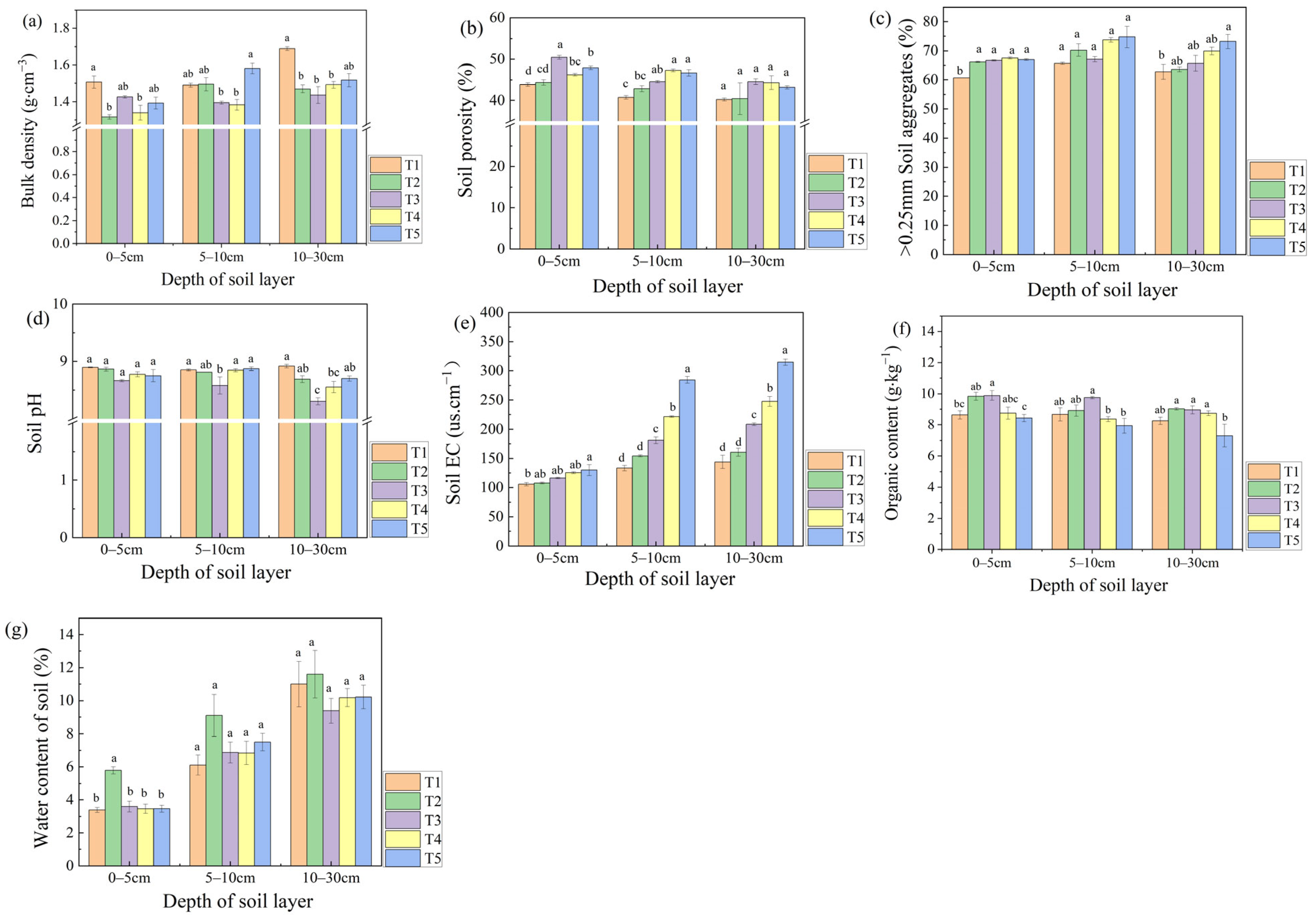
Soil conditioners had varying effects on the physical and chemical properties of soil, as shown in Figure 3. Treatment T1 exhibited the highest bulk density, whereas T3 demonstrated an 8.89% reduction compared to T1. Porosity in the 0–10 cm layer was higher in T3, T4, and T5 compared to T1. Application of soil conditioners led to an increase in soil aggregates > 0.25 mm. In the 5–10 cm and 10–30 cm layers, T3 exhibited a decrease in pH by 3.05% and 6.88% compared to T1, and by 3.27% and 4.60% compared to T5. Soil conductivity increased with depth, with T1 showing the lowest electrical conductivity (EC) in the 0–5 cm layer. T1’s EC was notably lower than that of T3, T4, and T5 in the 5–10 cm and 10–30 cm layers. T3 had the highest organic matter content across all layers, surpassing T5 by 17.20%, 22.83%, and 22.57%, respectively. A detailed assessment revealed varied improvements in soil permeability, aggregate structure, and conductivity following soil amendment application. In the 0–5 cm soil layer, the soil moisture content of the biogas residue soil conditioner (T2) was significantly higher than that of the other treatments. When compared to T1, the soil moisture content of T3 increased by 6.15%; however, this difference was not statistically significant. In the 5–30 cm soil layer, no significant differences in soil moisture content were observed among the various treatments. Particularly, treatment T3 exhibited a significant decrease in soil density, along with successful modifications in soil acidity and EC, enhancements in soil carbon content, and improvements in soil characteristics and attributes.

3.2. Effects of Soil Bacterial Diversity on Maize Rhizosphere in Dryland

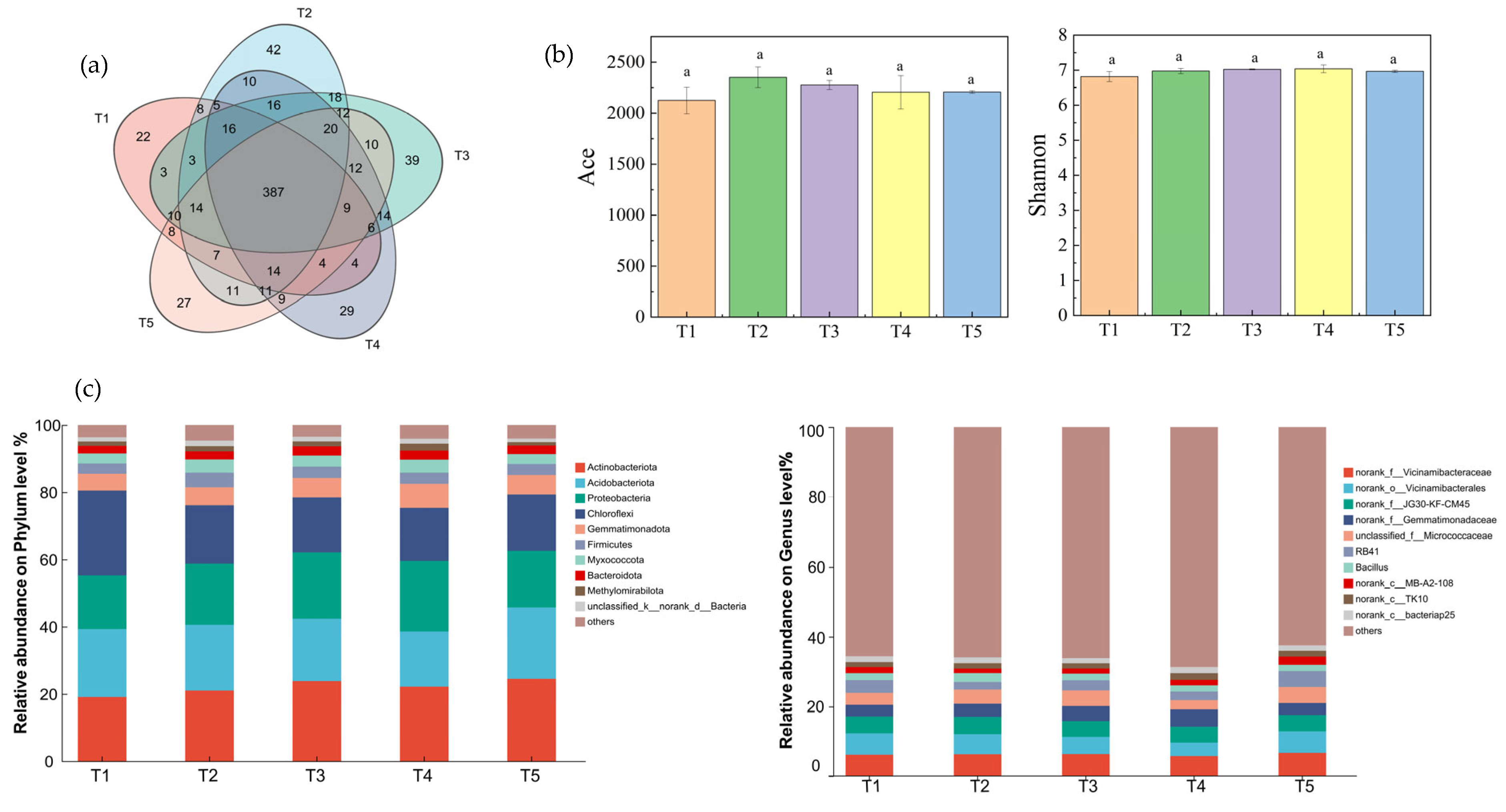
Figure 4 illustrates the effects of various soil conditioners on the bacterial community within the rhizosphere soil. Venn diagram analysis (Figure 4a) reveals 387 shared microbial groups among the five treatments. Evaluation of alpha diversity using Ace and Shannon indices shows varying effects of the treatments (Figure 4b), with the impact ranking on Ace as T2 > T3 > T4 > T5 > T1 and on Shannon as T4 > T3 > T2 > T5 > T1. Analysis of bacterial community composition in rhizosphere soil identifies Actinomycetes, Acidobacteria, Proteobacteria, Chloroflexi, and Gemmatimonadota, collectively representing over 80% of relative abundance (Figure 4c). These taxa are predominantly associated with families such as Vimonadaceae, Blastomonaceae, Micrococcaceae, Pyrinomonadaceae, Sphingomonas, Bacillaceae, Nocardioides, and Nitrosomonadaceae.
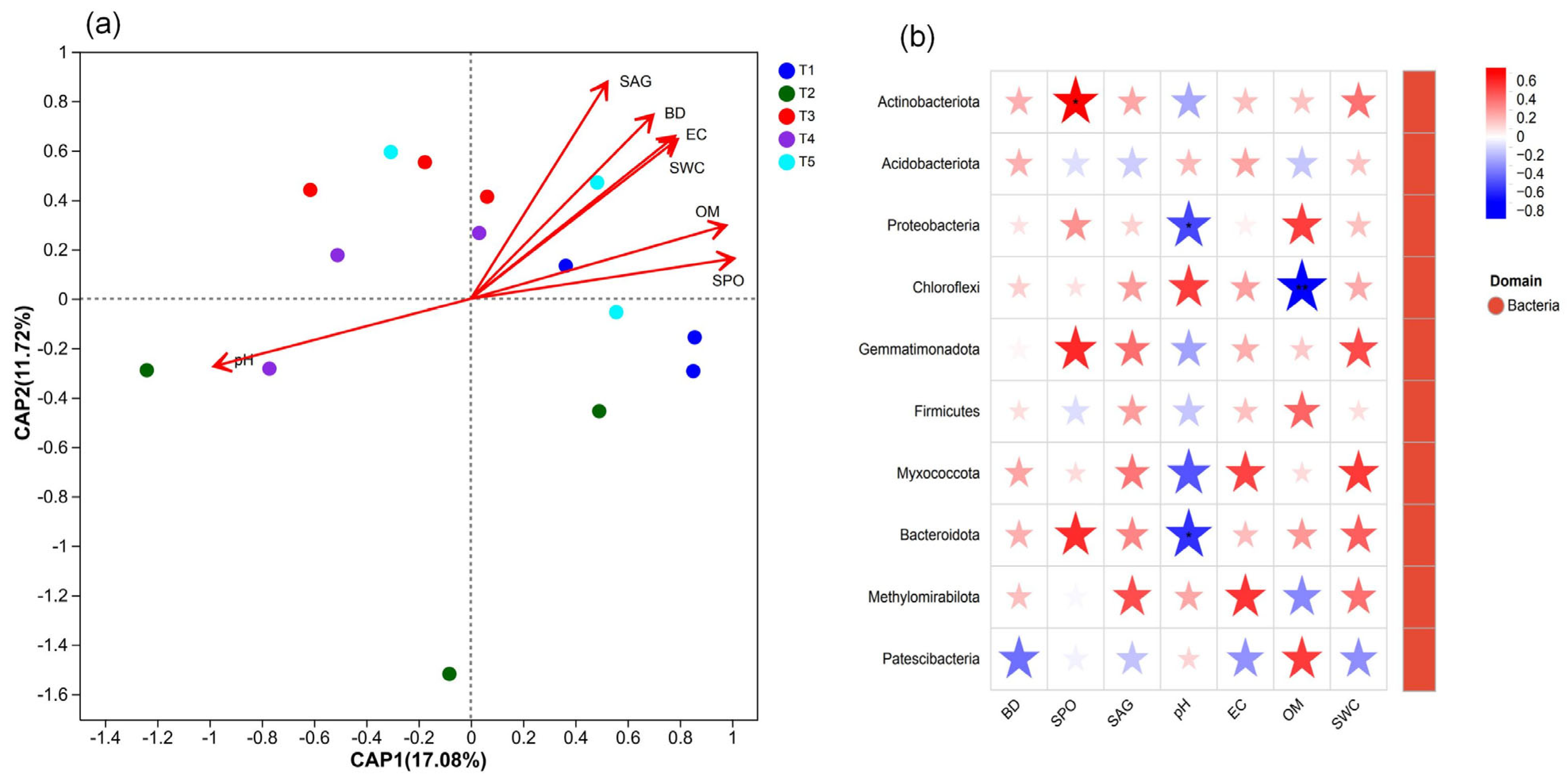
In Figure 5, the first (CAP1) and second (CAP2) ordination axes collectively explain 28.80% of the variance in bacterial community composition, with CAP1 and CAP2 individually accounting for 17.08% and 11.72% of the variance, respectively. The relative abundance of dominant bacterial communities is closely linked to soil properties such as bulk density, aggregate structure, pH, and organic matter.

3.3. Growth Parameters of Dryland Maize

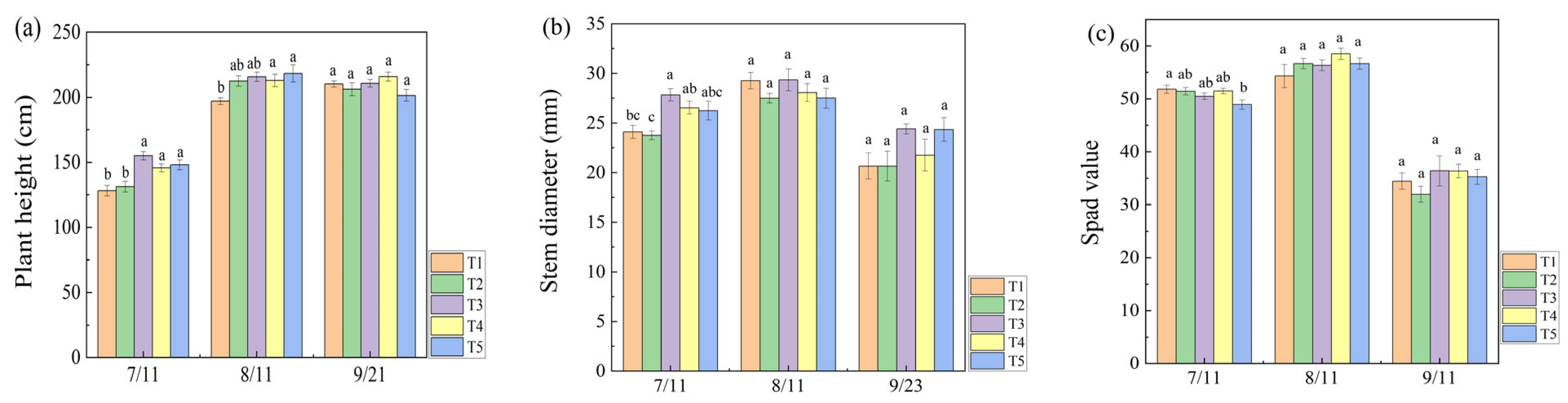
According to the growth conditions of dryland maize plants (Figure 6), as the growth period progressed, the differences in plant height, stem thickness, and leaf SPAD values among the various treatments gradually diminished. Overall, plant height exhibited a consistent upward trend, while stem thickness and leaf SPAD values initially increased before subsequently decreasing. From the jointing stage to the tasseling stage, the growth vigor of the T3 and T4 treatments was superior under the dry, high-temperature environment. Notably, the plant height of T3 increased significantly by 6.25% compared to T1, and its stem diameter was significantly greater than that of the T1 and T2 treatments. Additionally, the leaf SPAD value for T5 was significantly lower than that of the other treatments. In the later growth stages, no significant differences in plant height, stem diameter, or leaf SPAD values were observed among the treatments, except for T1. Overall, plants treated with T3 demonstrated the best performance.

3.4. The Influence on the Stress Resistance and Root Vitality of Dryland Maize Roots

The root system is an important organ for plants to absorb water and nutrients, and it is also the first line of defense against environmental stress. From the antioxidant index system of dryland maize roots (Table 4), enzyme activities under soil conditioner treatments exceeded those without conditioners, although differences among conditioner treatments were not significant. Superoxide dismutase (SOD) and peroxidase (POD) activities in T3 were significantly higher than in T1, increasing by 36.24% and 24.39%, respectively. Malondialdehyde (MDA) content in T5 was significantly higher than in the other treatments, while MDA did not differ significantly between T1 and T2. MDA in T3 was only 0.07 mmol·g−1 FW, a value significantly lower than in the other treatments. Free proline (Pro) content followed the order T3 > T4 > T2 > T1 > T5. Root activity (TCC) in T3 was significantly greater than in T1 and T2, with T3 reaching 2.44 times the activity of T1; root vitality did not differ significantly between T3 and either T4 or T5. Overall, T3 most effectively enhanced antioxidant enzyme activity, reduced oxidative damage, promoted accumulation of stress-tolerance metabolites such as free proline, and increased root vitality, indicating superior stress resistance. on yield and yield components of dryland maizes.

3.5. Effects on Yield and Yield Components of Dryland Maize

From the perspective of yield composition and output of dryland maize (Table 5), T3 exhibits significant advantages across multiple yield indicators, including ear length, weight per 100 grains, and protrusion tip length. The spike length of T3 increased by 12.16% compared to T5, while the protrusion tip length decreased by 12.18% relative to T1. The weight per 100 grains for T1 was significantly lower than that of T3, T4, and T5. No statistically significant differences were observed in the diameter of the panicles or the number of rows across the treatments. Although the output of T3 surpassed that of the other treatments, the difference was not significant when compared to T4. In comparison to T1, T2, and T5, the production increases were 37.43%, 29.98%, and 21.28%, respectively.

3.6. The Comprehensive Effects of Applying Different Types of Soil Conditioners

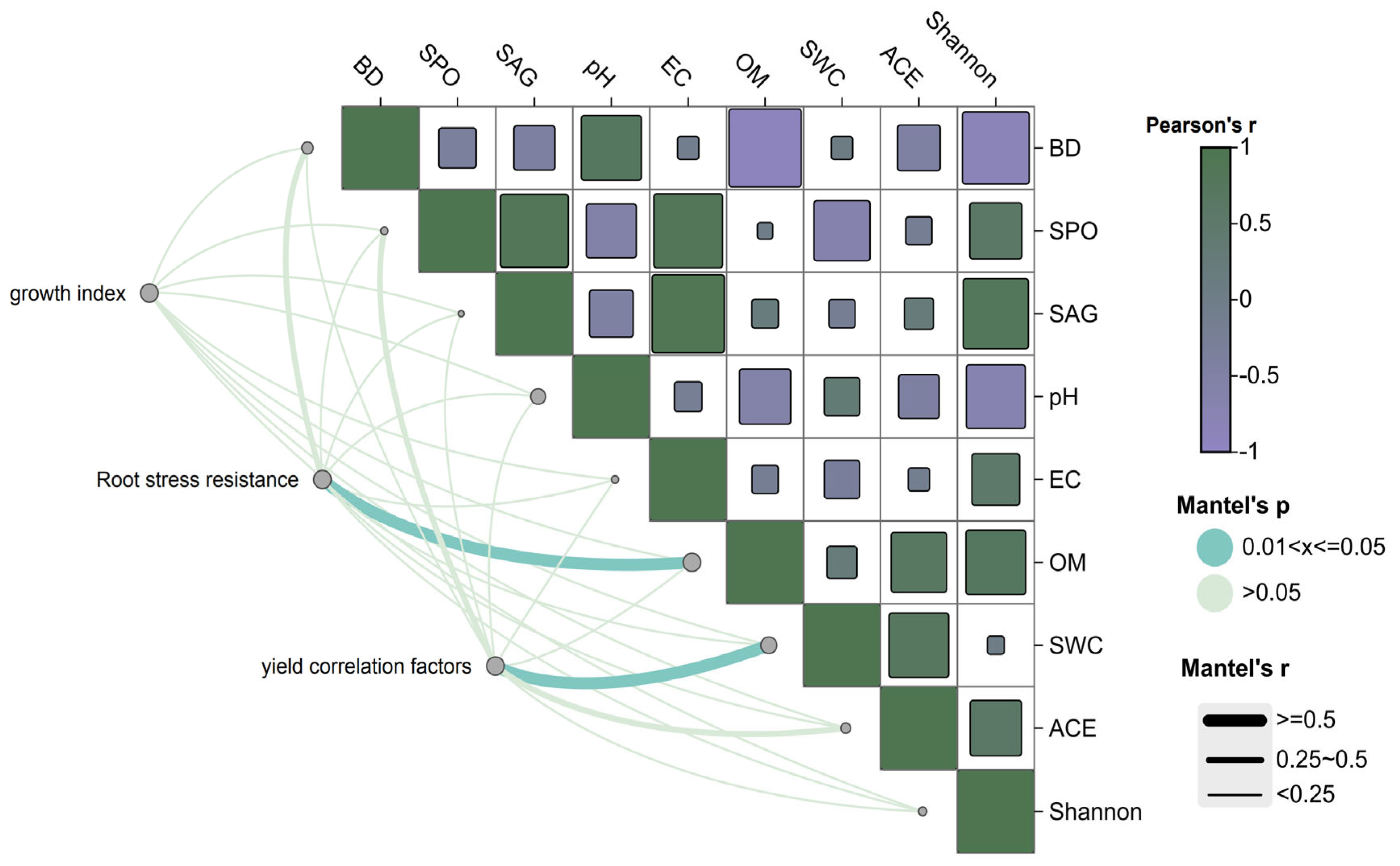
Figure 7 showed the Mantel test correlation graph for plant and soil traits in dryland maize. Pearson correlation analysis reveals a strong negative relationship between bulk density (BD) and soil porosity (SPO) and soil moisture content (SWC). Additionally, organic matter (OM) is positively associated with soil aggregates (SAG) and SWC, indicating that higher porosity and lower bulk density improve water retention, while organic matter enhances water retention capacity. Mantel analysis demonstrates a significant correlation between growth index, yield, and SAG (0.01 < p < 0.05), suggesting a positive impact of organic matter on plant growth and yield. Root resistance correlates positively with crop growth index, indicating that stronger root resistance benefits dryland maize growth and yield. SWC indirectly affects the soil-plant system through internal correlations with SPO, OM, and other soil traits, crucial for maintaining soil structure stability and functionality.
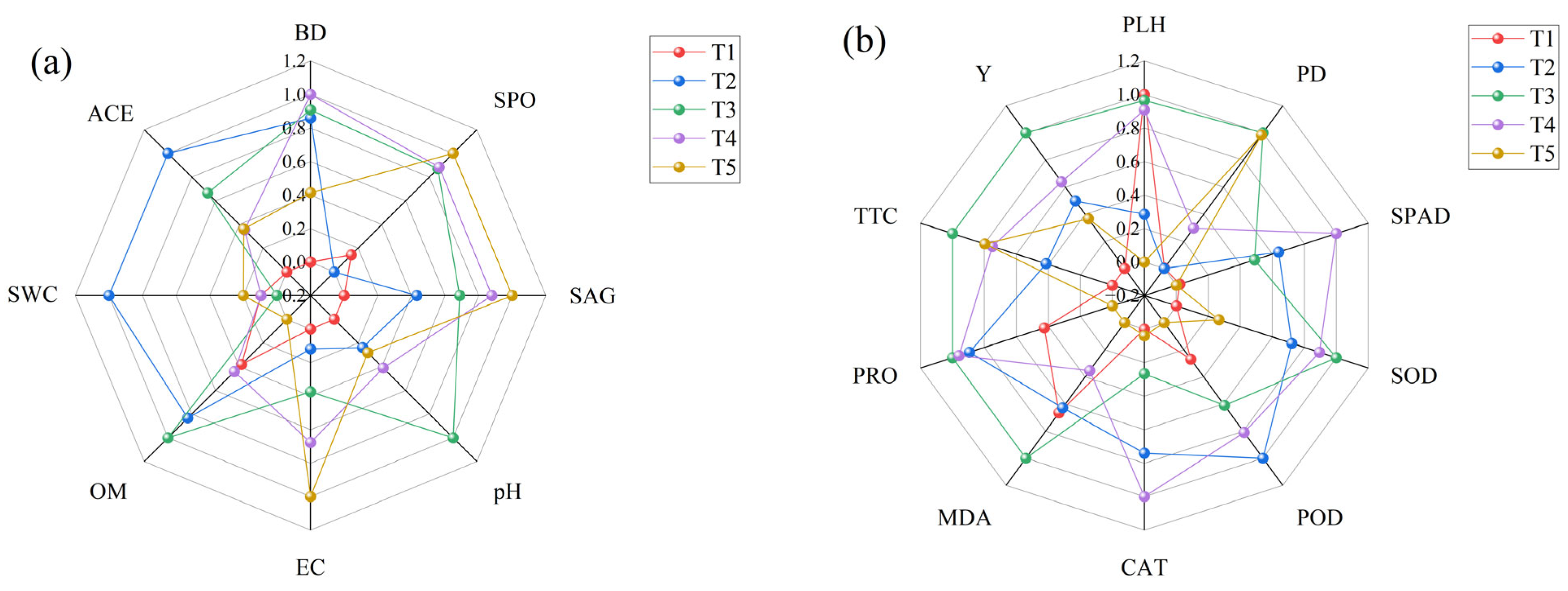
The Min-Max normalization method proposed by Wang Jiahui et al. was employed to standardize factors like the basic physical and chemical properties of soil, growth indicators, and yield (as shown in Table 6 and Table 7). Radar charts were utilized to comprehensively analyze the effects of different soil conditioners. Figure 8a illustrates that applying soil conditioners effectively enhances the soil’s physical and chemical properties. Among the conditioner types, powdery conditioners exhibit superior overall effects on soil physical and chemical properties and microbial diversity. Notably, T4 significantly increases soil organic matter in the plow layer, optimizes microbial diversity, and regulates soil porosity and aggregates. T3 maintains a relatively balanced effect. Compared to traditional fertilization methods, it not only adjusts soil pH but also synergistically improves soil structure and micro-ecology.
Figure 8b illustrates the varying impacts of different soil conditioners on maize’s growth and physiological traits. The T3 treatment excelled in yield (Y), plant height (PLH), and stem diameter (PD), while also enhancing antioxidant enzyme activities related to root stress resistance (SOD, POD, CAT). This synergy improved aboveground growth, yield formation, and root stress resistance. The T2 treatment showed significant advantages in chlorophyll content (SPAD, TTC) and root stress resistance enzyme activity, facilitating the integration of photosynthetic energy production with root stress resistance. Meanwhile, the T4 treatment excelled in chlorophyll indicators, laying a strong photosynthetic foundation for yield formation.
The T3 treatment exhibited the most balanced performance across multiple dimensions, including yield, growth indicators, and root stress resistance physiology, delivering the best overall effect. It effectively promoted above-ground growth and yield formation in the maizefield while also enhancing the root’s stress resistance capacity.

4. Discussion

4.1. Effects of Different Soil Conditioners on Soil Properties and Biological Properties of Topsoil

Treatments using soil conditioners showed superior physical and chemical properties in the topsoil layer compared to traditional tillage methods. However, these differences gradually diminished with increasing soil depth. A healthy topsoil layer enhances soil aeration and microbial diversity due to its favorable structure and high organic matter content, helping crops grow better under drought conditions [32,33]. In this study, soil amendments containing organic matter, such as biogas residues, effectively reduced soil bulk density and increased soil organic matter content and porosity, aligning with the findings of Oulaya et al. (2023) [34]. Additionally, the loose soil environment and abundant organic matter promoted the diversity of rhizosphere communities. Similar results were observed in studies on biogas residues by Xin-Rong Pan et al. (2023) [35], Yvonne Musavi Madegwa et al. (2021) [36], and Ziwei Wang et al. (2024) [37]. Soil organic matter enhances soil pore structure by promoting stable aggregate formation, increasing porosity, and reducing bulk density. This optimization, along with organic matter’s water holding properties, improves soil water holding and retention capacities. Aline Martineli Batista [38] and Peter Bilson Obour’s [39] experiment yielded similar findings.
Powdered soil conditioners (T4, T5) are more conducive to optimizing soil structure. Due to their fine particles, they are easier to mix with soil particles [40]. In this study, the self-made soil conditioner was of granular type. Although it had a better pore structure, due to the drought and lack of rainfall that year, many particles disintegrated slowly in the soil and did not achieve the optimal effect of soil improvement. Especially, the T2 processing performed outstandingly. In future research, the study of different dosage forms should also be regarded as a topic, as it is of helpful significance to production practice.
Ying-Ning Zou et al. (2024) [41] demonstrate that Arbuscular Mycorrhizal Fungi (AMF) serve as vital symbiotic microorganisms in the soil, forming relationships with plant roots that significantly enhance the physical and chemical properties of the soil. AMF improve soil structure by increasing the stability of soil aggregates and the proportion of water-stable aggregates through their mycelial networks. This study reveals that the combined application of AMF and biogas residue conditioner markedly enhances the physical and chemical properties of the soil. The bulk density of T3 is, on average, 8.89% lower than that of T1. Additionally, T3 effectively regulates soil pH and electrical conductivity (EC), while also increasing soil organic matter. The organic matter and nutrient elements supplied by biogas residue, along with AMF, facilitate the decomposition of organic matter and the release of nutrients through the mycelial network [42,43]. This synergistic interaction not only improves soil fertility but also enhances the soil’s resistance to stress, which is evident in the growth and root stress resistance of dryland maize.

4.2. Effects of Different Soil Conditioners on Plant Growth and Root Resistance

In the early growth stage of dryland maize, significant differences were observed in plant height and stem diameter among different treatments, especially in the T3 treatment. Compared with T1, the plant height in T3 was significantly increased by 6.25%, and the stem diameter was significantly increased by 15.48%. However, as the growth period progressed, the differences among treatments were not significant. Liqing Si et al. (2018) [44] found in a mulberry planting experiment that the application of biogas residue increased the plant height of mulberry by 12.1%. Oulaya Zoui. et al. (2023) [34] found in maize planting that the application of biogas residue significantly increased the plant height and stem diameter by 15% and 13% respectively. The conclusions of this study are similar to theirs but also different. The similarity is that the biogas residue soil conditioner can effectively promote the growth of crop plant height and stem diameter. The difference is that the differences were not significant in the later stage. The reason may be the different experimental environments. In this study, dryland maize suffered from high-temperature and drought in the early growth stage. Under the combined action of biogas residue and endophytic arbuscular mycorrhizal fungi, the T3 treatment showed stronger stress resistance [24,45]. However, with the increase in rainfall in August and September, the growth advantage gradually weakened. Meanwhile, the CaO content of the two commercially available soil conditioners was more than 30%. Studies by Saifeldeen M et al. (2023) [46], Faraj Hijaz. et al. (2022) [47] showed that CaO can regulate the calcium ion concentration in plant cells. Calcium ions, as second messengers in plant cells, are involved in various stress responses, including signal transduction of drought and high-temperature stress, which plays a certain regulatory role in crop growth. This may also be one of the reasons for the non-significant differences in the later stage.
In this study, root activity in T3 was 2.44 times that of T1. SOD and POD in T3 increased significantly relative to T1 by 36.24% and 24.39%, respectively. MDA in T3 was appreciably lower than in the other treatments. These results indicate that the combined application of AMF and biogas residue substantially enhances root activity, raises antioxidant capacity, and reduces cellular damage from drought and high-temperature stress. Biogas residue enriches soil with nutrients and bioactive compounds and stimulates microbial activity [48]; it also raises soil organic carbon, potentially supplying more energy to AM fungi and strengthening their symbiosis with crops to improve stress resilience [49]. Findings by Jaagriti Tyagi et al. (2021) [50] similarly show that endophytic arbuscular fungi reduce reactive oxygen species accumulation and lipid peroxidation, thereby enhancing antioxidant capacity, which aligns with the results reported here.

4.3. Effects of Different Soil Conditioners on Yield of Dryland Maize

The research demonstrates that using soil amendments can enhance dryland maize production. Specifically, applying biogas residue combined with endophytic arbuscular fungi (T3) resulted in notably higher yields compared to T1 and T5, with increases of 37.43% and 21.28% respectively. Comparable findings were reported by Julia Dahlqvist et al. (2018) [48] in trials with spring wheat. Previous studies have shown that soil conditioners derived from biogas residue can decrease soil bulk density, enhance soil structure, increase microbial diversity, and elevate crop yields [51,52].
Treatment T2, initially the most suitable formula in early experiments, failed to notably increase yield during the year of extreme heat and drought, indicating a need for further refinement. While the biogas residue conditioner shows some stress resistance, it may not endure high-intensity stress conditions. The breakdown of organic matter requires water and produces heat, which can hinder crop growth under such circumstances. Endogenous arbuscular mycorrhizal fungi (AMF) can enhance plant resilience to drought stress, improving crop yield and stability. Yanbo Hu et al. (2020) [53] observed that AMF significantly enhanced drought resistance in maize and wheat by adjusting photosynthetic efficiency and key metabolite levels. Similarly, Xiaohan Wu et al. (2024) [54] found that AMF enhances peanut drought resistance by changing root exudates and attracting specific fungi like Claroideoglomus. Julia et al.’s (2018) [48] research also supported the idea that combining biogas residue with AMF can increase crop yield, consistent with the current study’s results.

5. Conclusions

In the event of a severe spring drought, adopting the “dry sowing and wet emergence” model serves as an effective solution. This approach not only mitigates the challenges of planting under drought conditions but also preserves the timeline of the farming season. Research indicates that various soil conditioners significantly enhance soil structure and promote the growth of dryland maize. These conditioners effectively reduce soil bulk density, improve soil aggregate structure, increase root vitality, and enhance the activity of antioxidant enzymes, thereby minimizing oxidative damage. Biogas residue, when utilized as a soil conditioner, can substantially elevate the organic matter content and microbial diversity of the soil, exhibiting effects comparable to those of commercially available soil conditioners. Notably, when biogas residue is applied in conjunction with endophytic arbuscular mycorrhizal fungi (AMF) in the T3 treatment, it demonstrates remarkable efficacy in improving dryland soil structure, enhancing root vitality, promoting the growth of dryland maize, and increasing yield. The synergistic effect of biogas residue and AMF is considered crucial for mitigating high temperature and drought stress while boosting crop yields. Future research should prioritize the optimization of soil conditioner formulations. For instance, incorporating elements such as calcium and silicon into the biogas residue conditioner could enhance crop adaptability to environmental conditions through their combined effects.

Author Contributions

Conceptualization, J.Z. (Jing Zhou) and X.W.; methodology, J.Z. (Jing Zhou); software, J.Z. (Jing Zhou); validation, J.Z. (Jitao Zhang) and B.W.; formal analysis, X.Z.; investigation, J.Z. (Jing Zhou), X.Z., X.W., J.Z. (Jitao Zhang) and B.W.; resources, J.Z. (Jing Zhou), X.W., X.S., J.Z. (Jitao Zhang) and B.W.; data curation, J.Z. (Jing Zhou); writing—original draft preparation, J.Z. (Jing Zhou); writing—review and editing, J.Z. (Jing Zhou) and X.S.; visualization, J.Z. (Jing Zhou), X.Z. and X.W.; supervision, X.W. and X.S.; project administration, X.W.; funding acquisition, X.S. and X.W. All authors have read and agreed to the published version of the manuscript.

Funding

This research was funded by the National Key R&D Program of China, grant number 2021YFD1901105; the Science and Technology Major Project of Shanxi Province, China, grant number 202101140601026. All authors approved the version of the manuscript to be published.

Data Availability Statement

The original contributions presented in this study are included in the article; further inquiries can be directed to the corresponding author.

Conflicts of Interest

The authors declare no conflicts of interest.

References

  1. Mohd, Y.S.; Osumanu, H.A.; Latifah, O.; Heng, K.R.J.; Rahiniza, K. Inorganic and Natural Silicon Sources as Soil Amendment on Growth of Local Aromatic Rice Variety. J. Trop. Plant Physiol. 2023, 15, 13. [Google Scholar] [CrossRef]
  2. Thanayut, S.-I.; Suchat, J.; Kritsadang, S.; Somporn, K.; Kittipong, L. Pelletization of soil amendment: Optimizing the production and quality of soil amendment pellets from compost with water and biochar mixtures and their impact on soil properties. Environ. Technol. Innov. 2023, 33, 103505. [Google Scholar] [CrossRef]
  3. Yawar, S.; Ahmad, K.M.M.; Asfia, S.; Bilal, A.; Hassan, J.; Ajmat, J. Response of Mentha spicata L. to the reclamation of soil by the application of polyacrylamide (PAM): A soil-conditioner. J. Food Process. Preserv. 2021, 464, e16198. [Google Scholar]
  4. Wentong, L.; Caiyan, W.; Jincheng, W.; Wang, Z.; Sun, J. Novel microencapsulated soil conditioner: Improving utilization efficiency of core materials and yield of cabbages. Res. Sq. 2023. [Google Scholar] [CrossRef]
  5. Yong Wei, T.; Pooja, S.; Shuai, X.; Jie, B.; Soobin, A.; Luo, F.J.B.; Kangjie, W.B.; Yueyang, W.; Jonathan, T.E.L.; Jingxin, Z.; et al. Enhancing sustainable crop cultivation: The impact of renewable soil amendments and digestate fertilizer on crop growth and nutrient composition. Environ. Pollut. 2023, 342, 123132. [Google Scholar] [CrossRef]
  6. Dongxu, X.; Yangyang, W.; Hong, S.; Lina, F.; Lihe, Z.; Jiaqi, L.; Zhenyi, Z.; Jiayi, H.; Wang, W.; Chunyan, W. Effects of Soil Conditioner (Volcanic Ash) on Yield Quality and Rhizosphere Soil Characteristics of Melon. Plants 2024, 13, 1787. [Google Scholar] [CrossRef]
  7. Jiří, H.; Tereza, H.; Oldřich, L.; Antonín, K.; Adnan, M.; Tivadar, B.; Ondrej, M.; Martin, B. Deciphering the Effectiveness of Humic Substances and Biochar Modified Digestates on Soil Quality and Plant Biomass Accumulation. Agronomy 2022, 12, 1587. [Google Scholar] [CrossRef]
  8. Mehnaz, M.; Kamal, U.M.; Firdaus, S.M.; Shamim, M.; Shamsuzzaman, S.M.; Ashfaqul, H.A.N. Combined Application of Biochar and Lime Increases Maize Yield and Accelerates Carbon Loss from an Acidic Soil. Agronomy 2021, 11, 1313. [Google Scholar] [CrossRef]
  9. Jiashen, S.; Hongyuan, Z.; Fangdi, C.; Ru, Y.; Jing, W.; Aiping, C.; Yang, X.; Yu, L.; Jie, Z.; Yuyi, L. Subsurface organic amendment of a saline soil increases ecosystem multifunctionality and sunflower yield. Sci. Total Environ. 2024, 917, 170276. [Google Scholar]
  10. Tomáš, Š.; Eva, K.; Friedlová, M. The effect of digestate, cattle slurry and mineral fertilization on the winter wheat yield and soil quality parameters. Plant Soil Environ. 2015, 2015, 522–527. [Google Scholar]
  11. Furong, T.; Qili, Z.; Xujing, G.; He, L. Effects of digestate on biomass of a selected energy crop and soil properties. J. Sci. Food Agric. 2020, 101, 927–936. [Google Scholar] [CrossRef] [PubMed]
  12. Haibing, W.; Yuhui, N.; Jing, L. Effects of food waste biogas residue composting on soil aggregates and its organic matter content in relocation site. Ying Yong Sheng Tai Xue Bao 2024, 35, 1331–1336. [Google Scholar]
  13. Ikelle Issie, I.; Nworu, J.; Eze, N.; Felix Sunday, N.; John, J.; Elom, N.; Ogah, A. Production of Biogas from Residential Bio-waste with the Digestate as Soil Enhancer. World J. Appl. Chem. 2023, 8, 34–38. [Google Scholar] [CrossRef]
  14. Andrzej, B.; Bożenna, P.; Andrzej, K.; Tomasz, P.O. Application of Sugar Beet Pulp Digestate as a Soil Amendment in the Production of Energy Maize. Processes 2021, 9, 765. [Google Scholar] [CrossRef]
  15. María José, F.R.; Juan Manuel, M.-L.; Antonia, J.R.; Borja, R.; Rincón, B. Reuse of the digestate obtained from the biomethanization of olive mill solid waste (omsw) as soil amendment or fertilizer for the cultivation of forage grass (Lolium rigidum var. Wimmera). Sci. Total Environ. 2021, 792, 148465. [Google Scholar]
  16. Shengyu, X.; Guangwei, Y.; Ruqing, J.; Jianli, M.; Xiaofu, S.; Gang, W.; Yin, W.; Yongan, Y.; Chunxing, L. Moderate sewage sludge biochar application on alkaline soil for corn growth: A field study. Biochar 2021, 3, 135–147. [Google Scholar] [CrossRef]
  17. Qi, J.Q.; Yuan, H.Y.; Sun, S.C.; Zama, E.F.; Tao, B.X.; Liu, J.; Zhang, B.H. Biochar amendment alters rare microbial taxa and enhances wheat growth in alkaline farmland: Insights into soil microbiome dynamics. Front. Microbiol. 2025, 16, 1563712. [Google Scholar] [CrossRef]
  18. Li, B.; Zhang, J.; Chang, T.; Wu, Q.; Zheng, H.; Zhang, D. Corn Stover Biochar Amendment Enhances Nitrogen and Phosphorus Transformations, Microbial Community Diversity, and Enzyme Activities in Agricultural Soil. Plants 2025, 14, 2787. [Google Scholar] [CrossRef]
  19. Ekebafe, M.O.; Ekebafe, I.O.; Ikyaahemba, P.T. Soil Amendment with Biochar Blend Produced from Selected Waste. Nig. J. Chem. Res. 2023, 27, 043–053. [Google Scholar] [CrossRef]
  20. Myrna, S.-O.; Aida, S.S.; Rubria Marlen, M.C.; Delgado, F.J. Application of Microorganisms Isolated from Compost and Digestate as Biofertilizers to Improve the Growth of Lettuce. Commun. Soil Sci. Plant Anal. 2023, 55, 141–155. [Google Scholar] [CrossRef]
  21. Uduak, U.N.-N.; Utibe, A.O.; Naomi, A.; Victoria, M.E. Enhanced Biogas and Biofertilizer Production from Anaerobic Codigestion of Harvest Residues and Goat Manure. J. Sci. Res. Rep. 2020, 26, 1–13. [Google Scholar] [CrossRef]
  22. Raquel, P.-B.; Rebeca, M.; Xiomar, G.; Fernando, G.A. Innovative liquid formulation of digestates for producing a biofertilizer based on bacillus siamensis: Field testing on sweet pepper. J. Plant Nutr. Soil Sci. 2017, 180, 748–758. [Google Scholar] [CrossRef]
  23. Yalin, C.; Chunyu, S.; Yuxin, Y.; Dongxue, J.; Shaoqi, H.; Lei, T. Impact of arbuscular mycorrhizal fungi on maize rhizosphere microbiome stability under moderate drought conditions. Microbiol. Res. 2024, 290, 127957. [Google Scholar] [CrossRef] [PubMed]
  24. Redouane, O.; Lahoucine, E.-C.; Chayma, I.; Fatima-Ezzahra, S.; Farid, E.; Abderrahim, B.; Julio Cesar, R.; Salah, E.R.; Robin, D.; Abdelilah, M. Investigation of the impact of dual inoculations of arbuscular mycorrhizal fungi and plant growth-promoting rhizobacteria on drought tolerance of maize grown in a compost-amended field under mediterranean conditions. Front. Microbiol. 2024, 15, 1432637. [Google Scholar]
  25. Wasim, K.; Ying, Z.; Aziz, K.; Ling, Z.; Yu-Miao, Y.; Ning, W.; Meng, H.; Yue, M.; Jaya, N.; Fazal, U.; et al. Above-and below-ground feedback loop of maize is jointly enhanced by plant growth-promoting rhizobacteria and arbuscular mycorrhizal fungi in drier soil. Sci. Total Environ. 2024, 170, 170417. [Google Scholar]
  26. Alexey, A.T.; Belyakov, A.M.; Alexander, K.; Sytin, G.O. Influence of the No-till Technology on the Bulk Density of the Calcic Chernozem of the Volgograd Region. Indian J. Agric. Res. 2023, 58, 488–494. [Google Scholar]
  27. Fenghao, S.; Zhichun, Z.; Jiang, P.-A.; Shaolong, Z.; Jianfang, O. Structure and stability characteristics of zonal soil aggregates in the three rivers source of the qinghai-tibetan plateau. Soil Sci. Soc. Am. J. 2023, 87, 1042–1055. [Google Scholar]
  28. Zhuoyi, Y.; Wenchuan, D.; Gengxin, X.; Ming, Y.; Jianbing, L.; Han, Y.; Xin, X.; Chen, W. Identification of cadmium phytoavailability in response to cadmium transformation and changes in soil ph and electrical conductivity. Chemosphere 2023, 32, 140042. [Google Scholar] [CrossRef]
  29. Xiaodong, F.; Xiaotao, H.; Yuxin, M.; Yaoyue, P.; Jun, S.; Panpan, H. Influence of high temperature and drought stress at jointing stage on crop physiological responses and growth in summer maize plants (Zea mays L.). Front. Plant Physiol. 2024, 2, 1331421. [Google Scholar] [CrossRef]
  30. Abdul, K.; Arifa, S.; Shayla, S.; Afzal, H.M.; Taufiqul, A.M.; Muhammad, B.; Yoshiyuki, M. Chitosan Enhances Drought Tolerance in Maize (Zea mays L.) by Promoting Growth and Chlorophyll Content While Reducing Hydrogen Peroxide Levels. Fundam. Appl. Agric. 2024, 9, 195–203. [Google Scholar] [CrossRef]
  31. Xingyao, M.; Jing, Y.; Bin, Z.; Yunhe, W.; Xufeng, Y.; Zongjun, C. Full-scale of composting process of biogas residues from corn stover anaerobic digestion: Physical-chemical, biology parameters and maturity indexes during whole process. Bioresour. Technol. 2020, 302, 122742. [Google Scholar]
  32. Konovalov, V. Tillage and creation of soil structure in the conditions of krasnodar territory. In AIP Conference Proceedings; AIP Publishing LLC: Melbourne, FL, USA, 2022. [Google Scholar]
  33. Tang, Y.; Nian, L.; Zhao, X.; Li, J.; Wang, Z.; Dong, L. Bio-Organic Fertilizer Application Enhances Silage Maize Yield by Regulating Soil Physicochemical and Microbial Properties. Microorganisms 2025, 13, 959. [Google Scholar] [CrossRef] [PubMed]
  34. Oulaya, Z.; Mustapha, B.; Saad, D.; Aziz, A.; Omar, H.A.E.; Gabriel, P.; Mohamed, B. Utilization of Digestate as an Organic Manure in Corn Silage Culture: An In-Depth Investigation of Its Profound Influence on Soil’s Physicochemical Properties, Crop Growth Parameters, and Agronomic Performance. Agronomy 2023, 13, 1715. [Google Scholar]
  35. Xin-Rong, P.; Seyit, Y.; Jiamin, L.; Lei, C.; Yin, L.; Jiane, Z. Microbial community and antibiotic resistance gene distribution in food waste, anaerobic digestate, and paddy soil. Sci. Total Environ. 2023, 889, 164192. [Google Scholar]
  36. Musavi, M.Y.; Yoshitaka, U. Liming improves the stability of soil microbial community structures against the application of digestate made from dairy wastes. J. Environ. Manag. 2021, 297, 113356. [Google Scholar] [CrossRef]
  37. Ziwei, W.; Mengting, H.; Yuxin, Z.; Fang, Z.; Junxia, Y.; Ruan, C.; Chunqiao, X. Enhanced Pb immobilization by CaO/MgO-modified soybean residue (Okara) in phosphate mining wasteland soil: Mechanism and microbial community structure. J. Environ. Manag. 2024, 373, 123779. [Google Scholar]
  38. Batista, A.M.; Pessoa, T.N.; Putti, F.F.; Andreote, F.D.; Libardi, P.L. Root Influences Rhizosphere Hydraulic Properties through Soil Organic Carbon and Microbial Activity. Plants 2024, 13, 1981. [Google Scholar] [CrossRef]
  39. Peter Bilson, O.; Johannes, L.J.; Mathieu, L.; Watts, C.W.; Lars, J.M. Soil Organic matter widens the range of water contents for tillage. Soil Tillage Res. 2018, 182, 57–65. [Google Scholar] [CrossRef]
  40. Marina, K.; Sofia, K. Interaction of pyrolysis conditions and soil texture on biochar mineralization and its effect on soil structure. Global NEST J. 2023, 25, 9–16. [Google Scholar]
  41. Ying-Ning, Z.; Xiaoqing, L.; Wan-Xia, H.; Xiaohong, X.; Yongjie, X.; Abeer, H.; Elsayed Fathi, A.-A.; Qiang-Sheng, W. Arbuscular mycorrhizal fungi and intercropping Vicia villosa mediate plant biomass, soil properties, and rhizosphere metabolite profiles of walnuts. Chem. Biol. Technol. Agric. 2024, 11, 159. [Google Scholar] [CrossRef]
  42. Yu, L.; Zhang, H.; Zhang, W.; Liu, K.; Liu, M.; Shao, X. Cooperation between arbuscular mycorrhizal fungi and plant growth-promoting bacteria and their effects on plant growth and soil quality. PeerJ 2022, 10, e13080. [Google Scholar] [CrossRef] [PubMed]
  43. Rév, A.; Parádi, I.; Füzy, A.; Juhász, P.; Kocsis, K.; Cseresnyés, I.; Takács, T. Improvement of soil fertility and enzymatic activity by wastewater sludge compost and arbuscular mycorrhizal fungi in giant reed’s rhizosphere. Biol. Futur. 2025, 76, 559–575. [Google Scholar] [CrossRef] [PubMed]
  44. Liqing, S.; Xiawei, P.; Jinxing, Z. The Suitability of growing mulberry (Morus alba L.) on soils consisting of urban sludge composted with garden waste: A new method for urban sludge disposal. Environ. Sci. Pollut. Res. 2018, 76, 559–575. [Google Scholar]
  45. Vadivel, A.; Ramasamy, V.; Bruno, L.B.; Krishnan, S.; Helena, F.; Rajkumar, M. Combined Application of Biochar and Plant Growth-Promoting Rhizobacteria Improves Heavy Metal and Drought Stress Tolerance in Zea mays. Plants 2024, 13, 1143. [Google Scholar] [CrossRef]
  46. Saifeldeen, M.I.; Abdullah, I.M.S.; Radwa, K.; Fawzy, E.A.; Shafik, D.I. Unlocking the Genetic Basis of Abiotic Stress Tolerance in Wheat: Insights from Differential Expression Analysis and Machine Learning. Highlights Biosci. 2023, 6, 1–10. [Google Scholar] [CrossRef]
  47. Faraj, H.; Nabil, K. The use of deuterium-labeled γ-Aminobutyric (D6-GABA) to study uptake, translocation, and metabolism of exogenous GABA in plants. Plant Methods 2020, 16, 24. [Google Scholar]
  48. Dahlqvist, J. Arbuscular Mycorrhizal Fungi in Spring Wheat. Master’s Thesis, Swedish University of Agricultural Sciences, Uppsala, Sweden, 2018. [Google Scholar]
  49. Georgina, C.; Carlos, U.; Pedro, E.G.; Gervasio, P. The potential of arbuscular mycorrhizal fungi to improve soil organic carbon agricultural ecosystems: A meta-analytical approach. Funct. Ecol. 2025, 39, 1016–1030. [Google Scholar]
  50. Jaagriti, T.; Neeraj, S.; Anubha, S.; Ajit, V. Effect of Rhizophagus intraradices on growth and physiological performance of finger millet (Eleusine coracana L.) under drought stress. Plant Sci. Today 2021, 8, 912–923. [Google Scholar] [CrossRef]
  51. Zhen, F.; Zhang, Y.; Zhou, H.; Zhang, H.; Pang, Y.; Xing, T.; Peng, X.; Li, L. Digestate-based organic amendment substitution improves the red soil quality and pakchoi yield. J. Environ. Manag. 2025, 380, 125005. [Google Scholar] [CrossRef]
  52. Haodong, L.; Yi, Y.; Yanyan, F.; Xiaoyan, W.; Genuofu, J.; Yali, B.; Hong, W. Concentrated biogas slurry and biogas residue can improve the yield and quality of pepper. Environ. Technol. 2024, 8, 912–923. [Google Scholar]
  53. Yanbo, H.; Wei, X.; Baodong, C. Arbuscular Mycorrhiza improved drought tolerance of maize seedlings by altering photosystem ii efficiency and the levels of key metabolites. Chem. Biol. Technol. Agric. 2020, 7, 20. [Google Scholar] [CrossRef]
  54. Xiaohan, W.; Chen-Yu, M.; Huijun, J.; Xiangyu, Z.; Haomin, W.; Haoran, L.; Zihan, Z.; Kai, S.; Wei, Z.; Chuan-Chao, D. Root Endophyte-Manipulated Alteration in Rhizodeposits Stimulates Claroideoglomus in the Rhizosphere to Enhance Drought Resistance in Peanut. J. Agric. Food Chem. 2024, 72, 20211–20223. [Google Scholar] [CrossRef]
Figure 1. Precipitation and temperature in Taigu County during maize growth period (May–September) in 2024.
Agronomy 15 02845 g001
Figure 2. Layout of experimental sites. (a) geographical location map of test site; (b) layout map of test plot.
Agronomy 15 02845 g002
Figure 3. Effects of different types of soil conditioners on basic physical and chemical properties of dry land maize cultivated soil. Values are means ± SE. Means with the same letters are not significantly different at p ≤ 0.05 according to LDS’s test. (a) Bulk density; (b) Soil porosity; (c) >0.25 mm Soil aggregates; (d) Soil pH; (e) Soil EC; (f) Organic content; (g) Water content of soil.
Agronomy 15 02845 g003
Figure 4. Effects of different soil conditioners on the soil bacterial community of dryland maize roots. (a) Venn diagrams of rhizosphere soil bacteria under different treatments. (b) α-diversity index of rhizosphere soil bacteria in different treatments. Values are means ± SE. Means with the same letters are not significantly different at p ≤ 0.05 according to LDS’s test. Ace = Microbial diversity ACE index; Shannon = Microbial diversity Shannon index. (c) Analysis of the bacterial composition of rhizosphere soil under different treatments at the phylum and family levels.
Agronomy 15 02845 g004
Figure 5. Correlation between the basic physical and chemical properties of soil and the soil bacterial community of dryland maize roots. (a) Db-RDA scatter plot at the phylum level. (b) Spearman correclation heatmap.BD = bulk density; SPO = soil porosity; SAG = soil aggregates; pH = soil acidity and alkalinity; EC =soil bulk electrical conductivity; OM = soil organic matter.In the correlation analysis, * indicates a significant correlation, p < 0.05; ** indicates a very significant correlation, p < 0.01.
Agronomy 15 02845 g005
Figure 6. Effects of different soil conditioners on growth parameters of dryland maize. Values are means ± SE. Means with the same letters are not significantly different at p ≤ 0.05 according to LDS’s test. (a) Plant height; (b) Stem diameter; (c) Spad value.
Agronomy 15 02845 g006
Figure 7. Mantel test correlation diagram of plant traits and soil traits of dryland maize. BD = bulk density; SPO = soil porosity; SAG = soil aggregates; pH = soil acidity and alkalinity; EC = soil bulk electrical conductivity; OM = soil organic matter; SWC = soil water content; ACE = Microbial diversity ACE index; Shannon = Microbial diversity Shannon index.
Agronomy 15 02845 g007
Figure 8. Comprehensive effect analysis of applying different conditioners. (a) Comprehensive analysis of soil-related indicators. (b) Comprehensive analysis of growth indicators related indicators. Letters represent the same as above.
Agronomy 15 02845 g008
Table 1. The physical and chemical details of original soil.
Soil DepthTotal N
(%)
Aavailable P
(mg·kg−1)
Available K
(mg·kg−1)
pHOrganic Matter
(g·kg−1)
Electrical Conductivity
(us·cm−1)
0–5 cm0.08 ± 0.0119.80 ± 0.33167.93 ± 0.557.75 ± 0.0510.96 ± 0.40212.70 ± 0.84
5–10 cm0.08 ± 0.0118.40 ± 0.34162.60 ± 0.539.33 ± 0.049.98 ± 0.45220.06 ± 0.67
10–30 cm0.09 ± 0.0218.41 ± 0.31156.73 ± 0.729.77 ± 0.0611.89 ± 0.40240.06 ± 0.94
AV0.0818.87162.428.9510.94224.27
Values in columns are mean ± standard deviation.
Table 2. Characteristics of Biogas Residue.
IndexValue
Bulk density (BD) (g·cm−3)/(g∙cm−3)0.75
Total porosity (TPS)/(%)78.51
Air-to-water ratio (AWR) 1:1.54
Organic matter (OM)/(%)87.7
Electrical conductivity (EC)/(ms·cm−1)3.84
pH value8.01
Arsenic (As)/(mg·kg−1)1.5
Cadmium (Cd)/(mg·kg−1)0.1
Chromium (Cr)/(mg·kg−1)7
Mercury (Hg)/(mg·kg−1)0.1
Lead (Pb)/(mg·kg−1)2.6
Table 3. Experimental treatment description.
CodeTreatmentExperimental Description
T1Traditional fertilization method According to farmers’ traditional fertilization habits, apply 600 kg of Hong Sifang compound fertilizer (28-7-8) per hectare.
T2Use of biogas residue granule soil conditionerApply 450 kg of homemade biogas residue granule soil conditioner per hectare.
T3Biogas residue granule soil conditioner + AFM Apply 450 kg of homemade biogas residue granule soil conditioner and 0.75 kg of arbuscular mycorrhizal fungi (AFM) per hectare.
T4Fulibang soil conditionerApply 600 kg of Fulibang calcium-magnesium-silicon-potassium soil conditioner per hectare.
T5Tianji soil conditionerApply 600 kg of Tianji humic acid soil conditioner per hectare.
Table 4. Effects of different soil conditioners on root activity and resistance physiology of dryland maize.
TreatmentSOD
(U·g−1 FW·h−1)
POD
(µg·g−1 FW min−1)
CAT
(mg·g−1 min−1)
MDA
(mmol·g−1 FW)
PRO
(µg·g−1 FW)
TTC
(mg·g−1·h)
T132.08 ± 2.51 b374.99 ± 43.02 b0.56 ± 0.05 a0.33 ± 0.02 c103.96 ± 7.73 a11.11 ± 2.19 c
T240.46 ± 2.05 ab571.32 ± 5.79 ab0.85 ± 0.08 a0.36 ± 0.04 c114.78 ± 6.82 a19.94 ± 0.34 b
T343.69 ± 1.12 a466.50 ± 77.91 a0.66 ± 0.09 a0.07 ± 0.02 d117.23 ± 8.23 a32.38 ± 1.51 a
T442.47 ± 1.06 a520.06 ± 75.47 ab0.95 ± 0.27 a0.56 ± 0.01 b116.30 ± 6.47 a27.07 ± 2.18 ab
T535.17 ± 2.33 ab302.54 ± 17.42 ab0.58 ± 0.04 a0.85 ± 0.01 a88.06 ± 6.10 a28.08 ± 4.06 a
Values in columns are mean ± standard deviation. Means with the same letters are not significantly different at p ≤ 0.05 according to LDS’s test. SOD = Superoxide dismutase activity; POD = Peroxidase activity; CAT = Catalase activity; MDA = Malondialdehyde content; PRO = free protein content; TTC = Root viability.
Table 5. Effects of different soil conditioners on yield and yield components of dryland maize.
TreatmentEar Length
(cm)
Ear Diameter
(mm)
Tip Length
(mm)
Number of Rows100-Kernel Weight
(g)
Yield
(kg·hm−2)
T117.81 ± 0.55 ab52.19 ± 0.87 a4.20 ± 1.61 a17.73 ± 0.38 a38.83 ± 0.47 b5.93 ± 0.02 b
T218.13 ± 0.39 ab50.74 ± 0.73 a6.10 ± 1.91 ab17.60 ± 0.49 a40.50 ± 0.60 ab6.00 ± 0.15 b
T319.56 ± 0.35 a53.42 ± 0.61 a0.50 ± 0.50 b18.53 ± 0.36 a41.29 ± 0.47 a8.15 ± 0.41 a
T418.08 ± 0.47 ab50.80 ± 0.53 a2.49 ± 1.33 ab17.07 ± 0.38 a42.59 ± 0.68 a7.11 ± 0.43 ab
T517.44 ± 0.54 b51.25 ± 0.81 a1.37 ± 0.94 ab17.60 ± 0.40 a42.23 ± 0.59 a6.72 ± 0.20 b
Values are means (SD). Means in a column followed by the same letter are not significantly different at p ≤ 0.05 according to LSD’s test.
Table 6. Standardization of soil-related factors.
FactorsT1T2T3T4T5
BD0.0000 0.5073 0.9082 1.0000 0.0836
SPO0.1436 0.0000 0.8710 0.8834 1.0000
SAG0.0000 0.4324 0.6874 0.8792 1.0000
pH0.0000 0.2389 1.0000 0.4115 0.2819
EC0.0000 0.1186 0.3743 0.6766 1.0000
OM0.3812 0.8342 1.0000 0.4413 0.0000
SWC0.0955 1.0000 0.0000 0.0946 0.1998
ACE0.0000 1.0000 0.6657 0.3548 0.3622
Shannon 0.0000 0.7102 0.9282 1.0000 0.6692
BD = bulk density; SPO = soil porosity; SAG = soil aggregates; pH = soil acidity and alkalinity; EC = soil bulk electrical conductivity; OM = soil organic matter; SWC = soil water content; ACE = Microbial diversity ACE index; Shannon = Microbial diversity Shannon index.
Table 7. Standardization of plant-related factors.
FactorsT1T2T3T4T5
PLH0.54970.44750.36380.33520.3376
PD0.05430.04800.04170.03550.0350
SPAD0.13470.11410.09600.09130.0901
SOD0.08470.07960.07260.07020.0683
POD1.00001.00001.00001.00001.0000
CAT0.00060.00060.00070.00090.0009
MDA0.00000.00000.00000.00000.0000
PRO0.27660.25150.20840.20040.2000
TTC0.02880.03410.03280.03430.0400
Y0.01420.01330.01120.01130.0112
Note: PLH = plant height; PD = stem diameter; SPAD = SPAD value; SOD = Superoxide dismutase activity; POD = Peroxidase activity; CAT = Catalase activity; MDA = Malondialdehyde content; PRO = free protein content; TTC = Root viability; Y = Yield.
Disclaimer/Publisher’s Note: The statements, opinions and data contained in all publications are solely those of the individual author(s) and contributor(s) and not of MDPI and/or the editor(s). MDPI and/or the editor(s) disclaim responsibility for any injury to people or property resulting from any ideas, methods, instructions or products referred to in the content.