Article

Analysis of Microscopic Characteristics of Pepper Seedling Root Systems and Study on Transplanting Gripping Injury Based on Micro-CT


1
State Key Laboratory of Agricultural Equipment Technology, Chinese Academy of Agricultural Mechanization Sciences Group Co., Ltd., Beijing 100083, China
2
College of Agricultural Equipment Engineering, Henan University of Science and Technology, Luoyang 471003, China
*
Author to whom correspondence should be addressed.
Agronomy 2025, 15(12), 2822; https://doi.org/10.3390/agronomy15122822
Submission received: 28 October 2025 / Revised: 2 December 2025 / Accepted: 5 December 2025 / Published: 8 December 2025

Abstract

While the root architecture of potted crop seedlings directly determines subsequent crop productivity and adaptability, these root systems remain challenging to quantify using conventional methods due to their structural complexity. To investigate the microscopic characteristics of the root systems of pepper seedlings within pots, Micro-CT was employed to scan the seedling pots. After three-dimensional (3D) reconstruction was conducted on the data acquired from the pot scans, the 3D model of the root system was segmented and extracted using the watershed algorithm. Vertically, the three-dimensional root model was divided from top to bottom into four equally spaced regions (a, b, c, and d), showing the volumetric distribution characteristics of pepper seedling roots within the pots. The results showed that region a had the largest average root volume proportion (29.72%), primarily due to the substantial volume contribution of the taproot. Region d followed with an average proportion of 27.26%, resulting from root coiling and entanglement at the pot bottom caused by the spatial constraints of the seedling tray. The middle regions of the pot, b and c, showed average root volume proportions of 23.14% and 19.89%, respectively. To further investigate the influence of root system characteristics on root injury during seedling gripping, the seedlings were categorized into three types based on their taproot growth positions. A gripping experiment was conducted on these three seedling types using spatula-equipped needles. The results showed that the greatest root injury (12.67%) was observed in Type 1 seedlings, which had taproots located closest to the needle insertion point. In contrast, the least injury (4.09%) was found in Type 3 seedlings, characterized by centrally positioned taproots. Type 2 seedlings, with their taproots growing on the side (laterally away from the insertion point), sustained intermediate injury (5.45%). This was because their lateral positioning led to an uneven distribution of mechanical stress during gripping compared with Type 3 seedlings. A validation experiment conducted on an automated seedling retrieval platform confirmed the root injury analysis. The experimental results showed maximum root injury in Type 1 seedlings (14.16%), followed by Type 2 (6.03%) and Type 3 (4.82%) seedlings, with a successful retrieval rate of 95.29%. These findings were consistent with the Micro-CT analysis. This study could provide a theoretical foundation for low-injury seedling gripping in fully automated seedling transplanters.

1. Introduction

Raising crop seedlings for transplanting, which enhances both crop yield and quality, is the standard practice in modern vegetable production [1,2]. While traditional vegetable transplanting relies on manual labor and is inefficient, mechanized transplanting has emerged as a key trend to enhance both efficiency and quality [3,4]. The current mechanized vegetable transplanting systems can be categorized into semi-automatic and fully automatic systems [5,6,7,8,9]. Semi-automatic transplanting relies on manual seedling gripping, resulting in lower efficiency compared with its fully automatic counterpart [10]. However, semi-automatic transplanters dominate the current market. This is because fully automatic systems face significant challenges in automated seedling gripping, which can lead to high rates of seedling plug injury, missed pick-ups, and other failures [11,12]. Moreover, the mechanical picking mechanism may cause injury to the seedlings, adversely affecting their subsequent growth [13].
In response to this challenge, numerous studies have been undertaken. Ishizaki et al. [14] developed a low-cost vegetable transplanter by adapting a rice transplanter and a cuttable nursery mat, and then demonstrated its ability to transplant seedlings efficiently at 250 plants min−1 per row. Li et al. [15] developed a novel transplanter with a follow-up seedling picking and depositing mechanism. When its speed was synchronized with the conveyor, it achieved high depositing accuracy, with a bench test success rate exceeding 97% at speeds up to 150 seedlings/min. Chen et al. [16] designed a compact, electric-driven transplanter for pepper plug seedlings. Its innovative dual-layer seedling conveying and sector-expanding picking device achieved high success rates, with static tests showing 100% efficiency at 160 plants/min. These studies discussed the influence of pick-up mechanism design on both the success rate and efficiency of seedling gripping, thereby contributing to the development of fully automatic transplanters. However, they did not analyze the injury caused by the insertion mechanism to the seedling root system during the gripping process.
In pot-gripping seedling transplant mechanisms, needle penetration into the substrate inevitably induces root system injury; however, the subsurface nature of this injury makes it difficult to quantify using conventional methods [17]. Recent years have witnessed rapid advances in computed tomography (CT), a non-invasive imaging technique that has been increasingly adopted in agricultural research owing to its unique capability of visualizing internal structures without causing injury [18,19,20,21], which allows for a non-destructive assessment of internal root injury after the seedling gripping operation [22,23,24,25,26]. Mao et al. [27] utilized CT to scan and reconstruct the root system of tomato plug seedlings. By analyzing the root density in different regions of the pot, they investigated the root system architecture and distribution characteristics of tomato seedlings. Liu et al. [28] conducted CT scanning experiments to investigate the causes of seedling plug injury after transplanting. Subsequently, they optimized the needle pick-up parameters by utilizing the root density and pore density, which were derived from the 3D reconstructed CT models, as key indicators. Mao et al. [29] employed CT to investigate the causes of seedling plug injury during the gripping process. Their analysis subsequently identified the key gripping parameters responsible for this injury. These studies have laid the groundwork for utilizing CT technology to quantify root system injury following seedling gripping.
To address the challenge of observing the influence of internal root system characteristics on root injury during automated transplanting of potted seedlings, this study employed pepper seedlings as the research subject. Computed tomography (CT) was utilized to scan the pepper seedling pots. Three-dimensional root architecture models were reconstructed from the scanned data using the watershed algorithm [30,31,32], enabling analysis of the root system’s characteristics and a systematic investigation of root injury following the gripping of different seedling types. Based on these analyses, a seedling gripping validation experiment was conducted. The aim of this research was to provide a theoretical foundation for reducing root system injury during automated mechanical seedling transplanting operations.

2. Materials and Methods

2.1. Experimental Materials and Instrument

Figure 1 shows that the experimental material consisted of pepper seedlings with a growth period of 40–50 days. The plant material used in this study was the helical-shaped pepper (Capsicum annuum L.), a corkscrew chili characterized by its deeply wrinkled and twisted pod shape, sourced from Hiers (Shandong) Seedling Co., Ltd. (Shouguang, China). The seedling tray measured 540 mm in length and 280 mm in width, featuring a total of 128 cells arranged in 8 columns and 16 rows (Figure 1a). Each individual pepper seedling, along with its substrate, had a total weight of 18.6 ± 3.5 g, a plant height of 163 ± 12 mm, and a substrate moisture content of 35 ± 3% (Figure 1b).
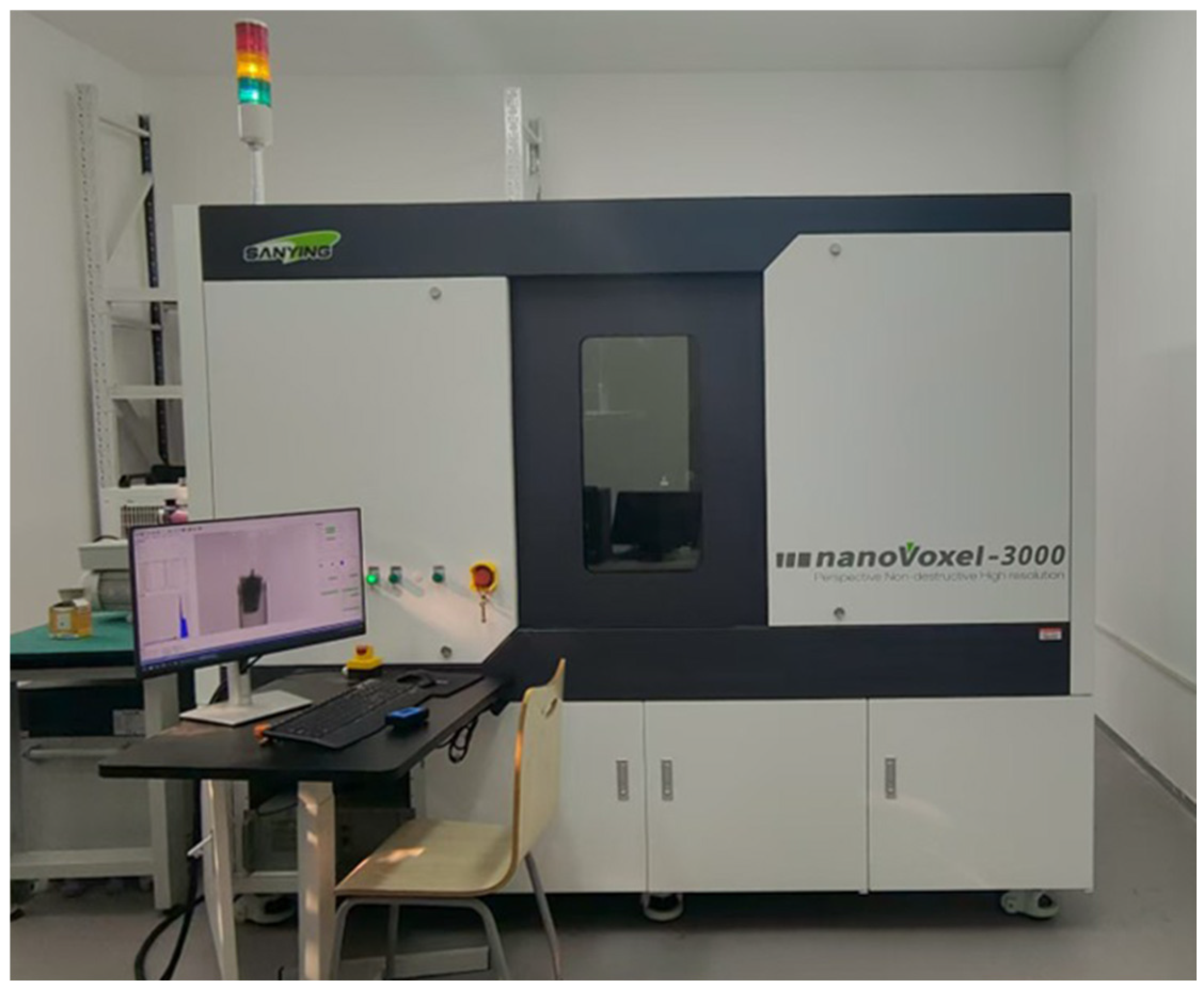
A nanoVoxel-3000 series instrument (Tianjin Sanjing Precision Instrument Co., Ltd., Tianjin, China; Figure 2), was used in the experiment. This instrument is equipped with an open micro-focus X-ray source, with a maximum voltage of 190 kV and a maximum power of 25 W. The system is fitted with a dynamic flat-panel detector, with an active area of 300 mm × 250 mm (length × width) and a rated resolution of 0.5 μm. The instrument’s operating system is equipped with three software packages: the scanning software VoxelStudio-Scan and the reconstruction software VoxelStudio-Recon (both are integrated components of the NanoVoxel-3000 system), and the 3D visualization analysis software Dragonfly (version 2024.1, Object Research Systems, Montreal, QC, Canada). This integrated suite enables the reconstruction and image post-processing of the acquired CT data.

2.2. Experimental Methods

2.2.1. Scanning Parameter Settings

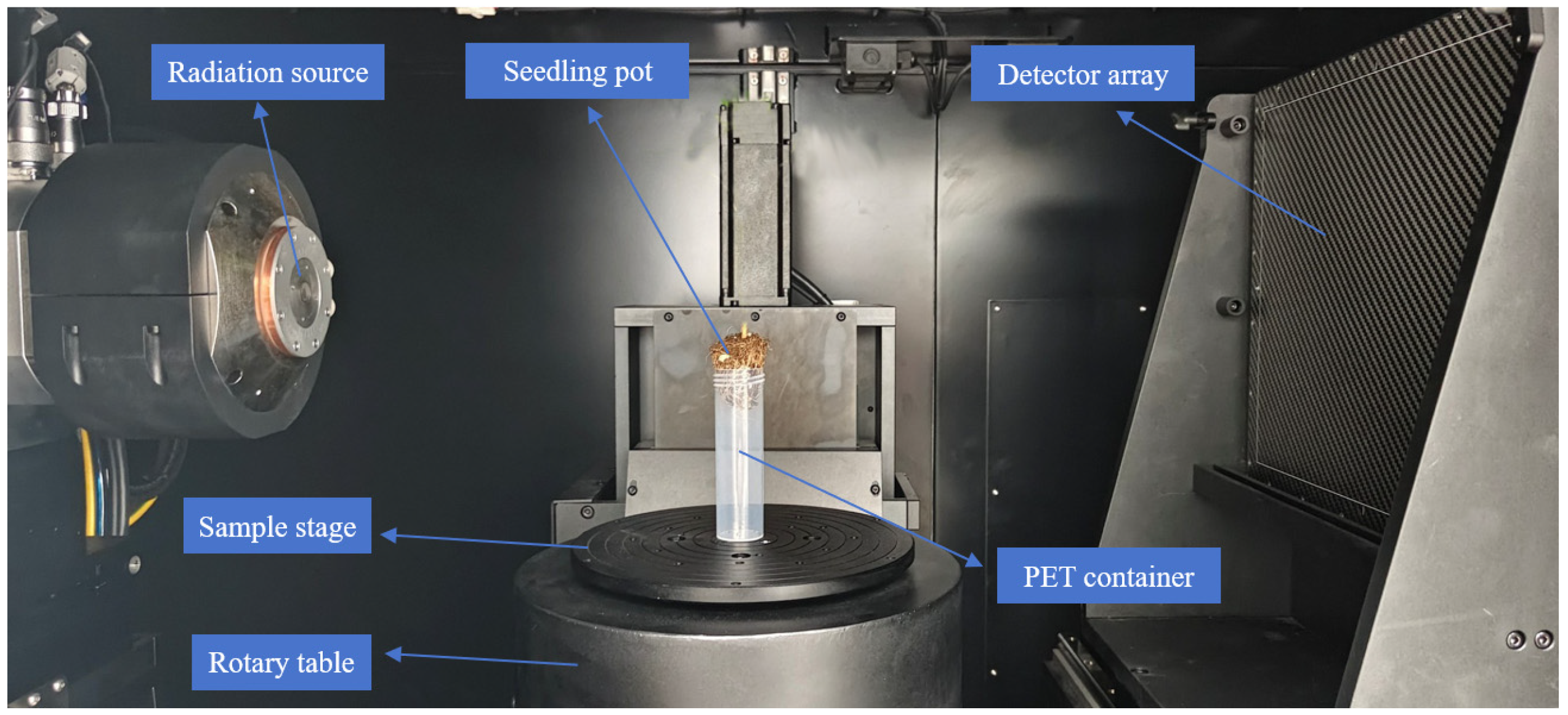
To ensure the clarity of the scanned data from the pepper seedling pots, the following procedures were required: sample preparation, setting appropriate instrument scanning parameters, and adjusting the position of the sample. Additionally, the sample needed to be properly immobilized and stably positioned throughout the scanning process. The pot sample was extracted from the seedling tray. The pepper seedling stem was severed at 3.5 ± 1.5 mm above the substrate surface. The upper shoot portion was removed, retaining only the lower pot sample. This sample was then placed into a low-density PET container featuring a cylindrical opening, which securely held the pot and allowed stable placement on the sample stage. Prior to operation, the instrument parameters were set as follows: X-ray source voltage at 95 kV, current at 50 μA, and exposure time at 0.8 s. Subsequently, the container with the pepper seedling pot was placed at the center of the sample stage. The height of the rotation stage was adjusted such that the sample was aligned with the height of the X-ray source (Figure 3). To ensure clear visualization of the internal details of the pepper seedling pots, the distances between the rotation stage and the X-ray source and between the detector and the rotation stage were adjusted. Using the scanning software VoxelStudio-Scan, the transmission rate of the pot was measured and maintained at 65% ± 5%, while ensuring that the pot image was positioned at the center of the dynamic viewing window in the software.

2.2.2. Three-Dimensional Pot Model Reconstruction

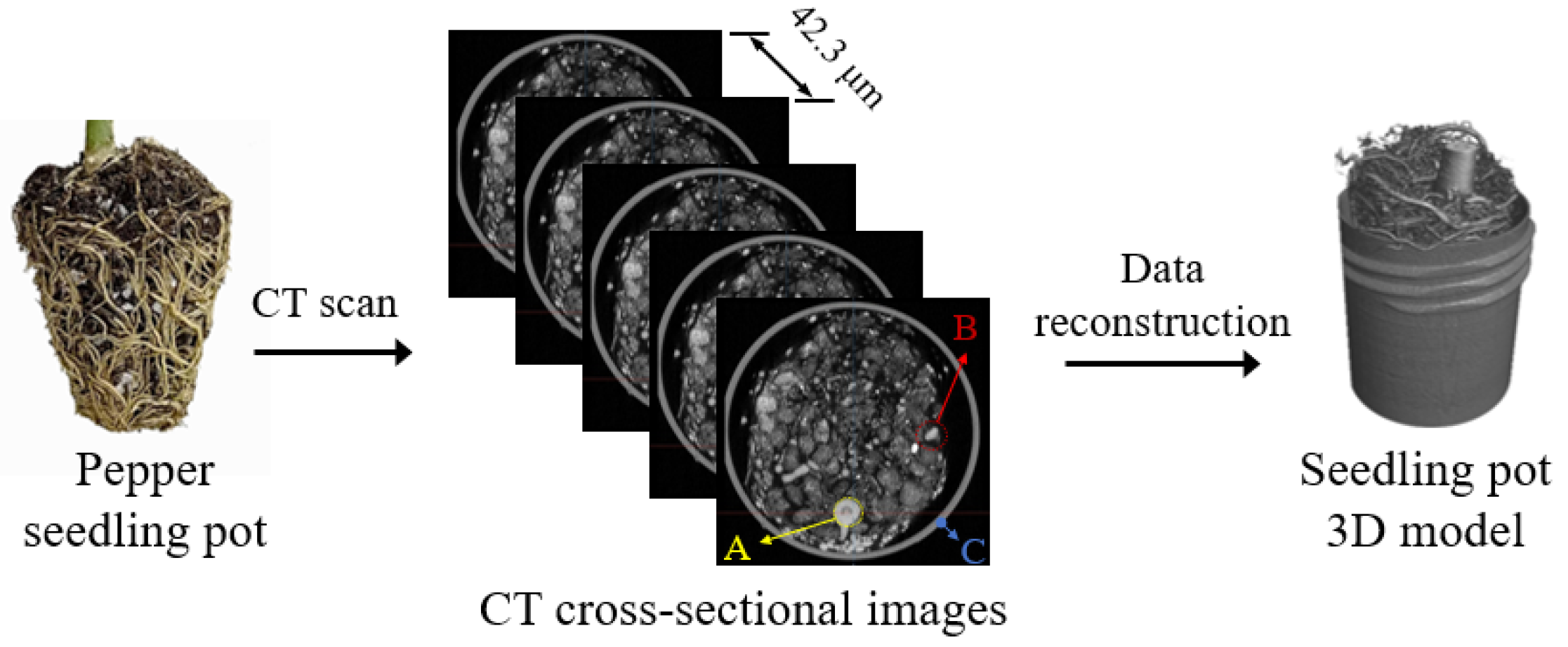
Following scanning of the pepper seedling pots by the instrument, a series of cross-sectional images with a voxel size of 42.3 μm were generated (Figure 4). These images revealed key internal structures, including the main root of the pepper seedling (A), high-density substrate particles (B), and the container wall (C). To obtain a three-dimensional model from the scanned data, a reconstruction process was applied to the acquired cross-sectional images. This process primarily involved filtering the images, correcting offsets, and defining the reconstruction dimensions.

2.2.3. Extraction Method for Root System 3D Model

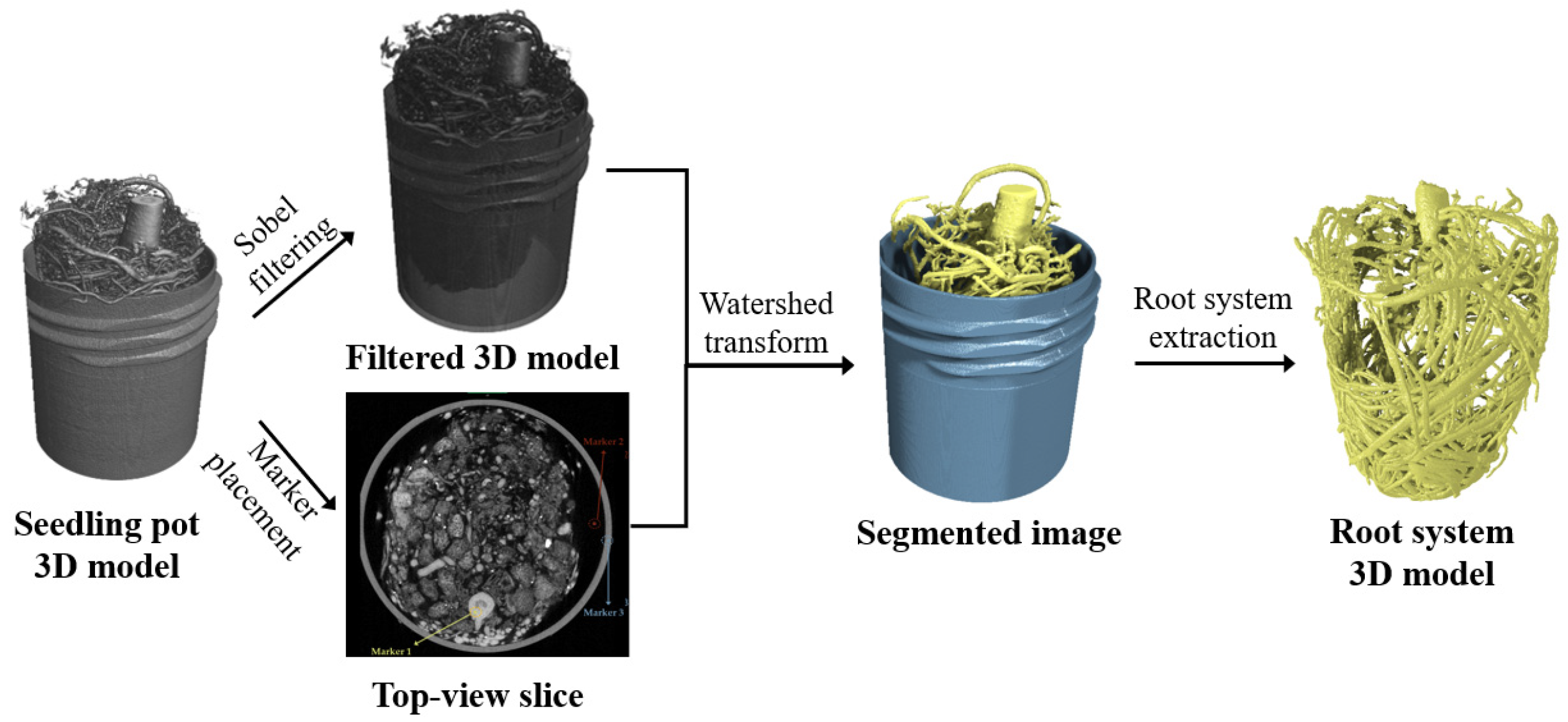
To investigate the microstructural characteristics of the root system within the pot soil, the watershed algorithm was applied to the reconstructed 3D model for root segmentation. The watershed algorithm operates on image grayscale levels to distinguish materials of different densities. However, its application requires the definition of at least two markers—representing the foreground and background (as predefined connected regions)—to guide the algorithm toward accurate image segmentation.
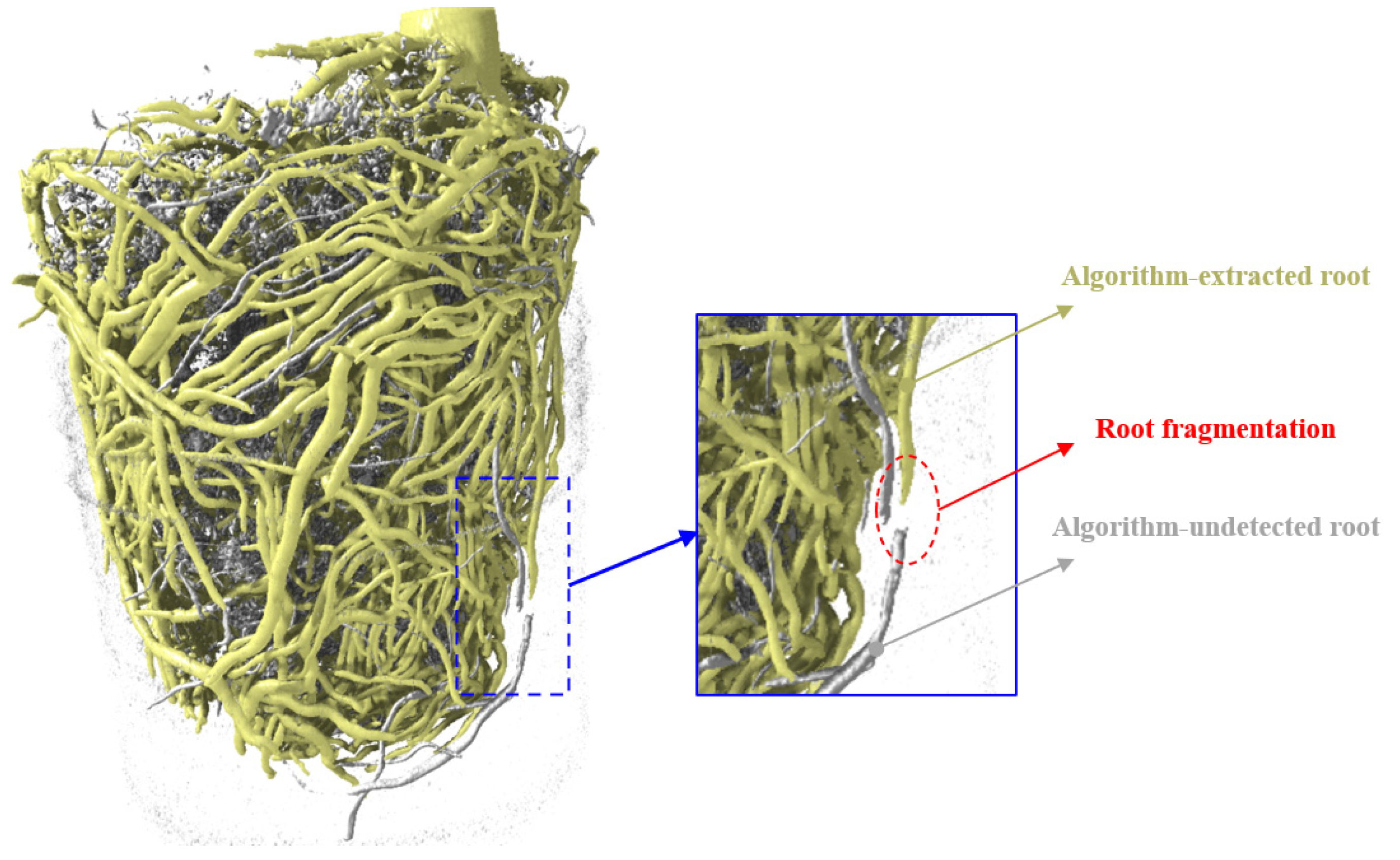
The watershed algorithm enables the extraction of continuous root systems by employing an adaptive threshold method to segment roots from heterogeneous substrate. However, it fails to capture root fragments that have been severed due to external forces. During its application, a manual marker is first placed within the root region in the image. The algorithm then automatically compares grayscale values and extracts all connected regions sharing the same grayscale as the marker, thereby reconstructing the complete continuous root system. Consequently, if the root system within the pot is fractured, the resulting discontinuous regions cause the algorithm to halt extraction at the fracture edges due to abrupt grayscale transitions. As a result, the root volume extracted by this algorithm from CT images excludes the separated root fragments, thereby providing a basis for quantifying root injury in pepper seedlings.
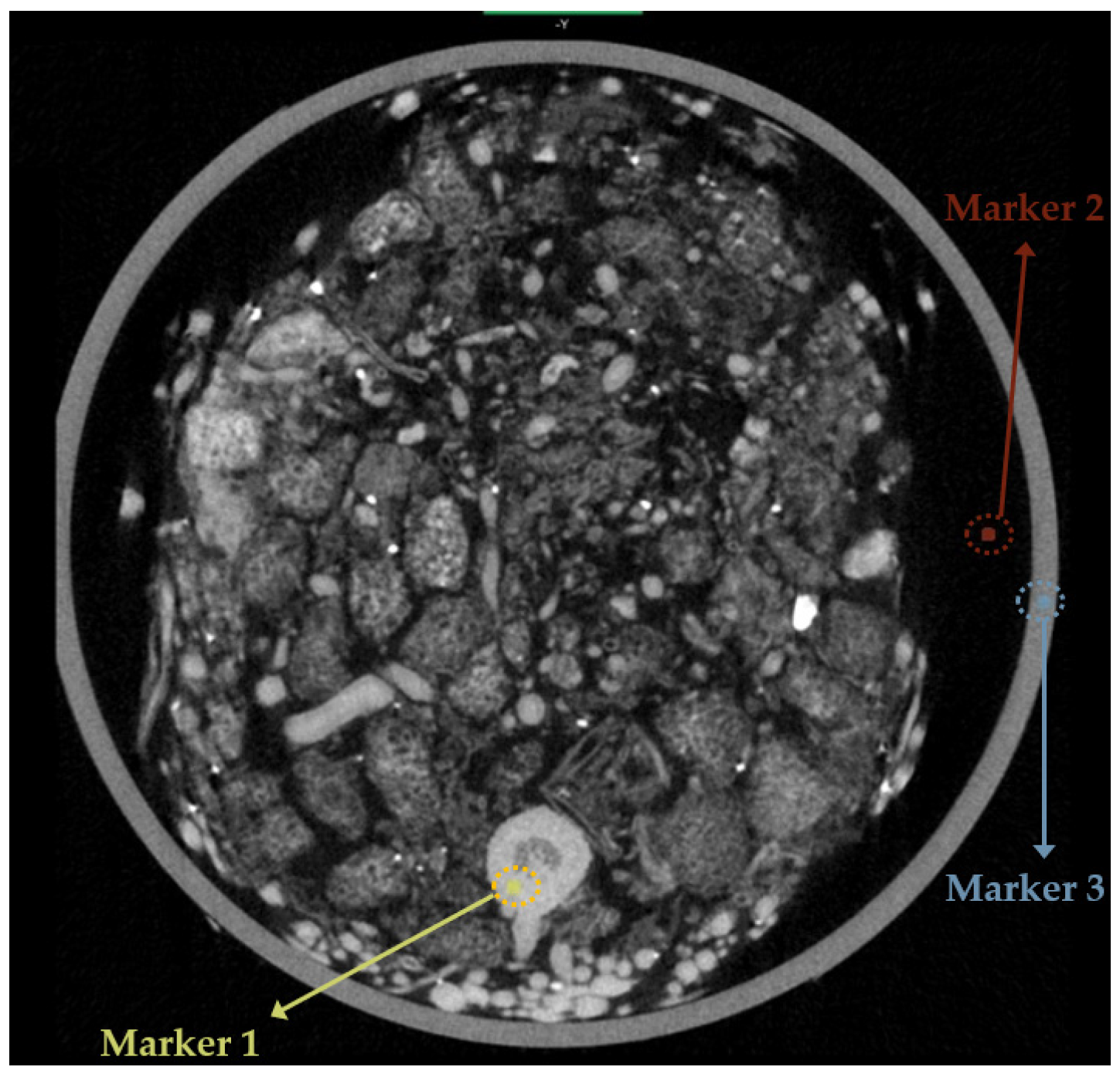
Due to the presence of various small particles with different densities within the pot substrate, complete segmentation of the substrate using the watershed algorithm would require setting markers for each connected region of every substrate particle, which is an overly complex operation. Therefore, markers were not applied for substrate segmentation. In the planar slice (top view), the pot’s primary root, substrate, container, and air were distinctly identifiable. Therefore, three markers—Marker 1, Marker 2, and Marker 3—were set on this planar slice as initial points for the algorithm application. These markers were positioned to correspond to the regions of the primary root, air, and pot container, respectively, in the top-view slice. Each marker had an actual diameter of 0.5 mm (Figure 5).
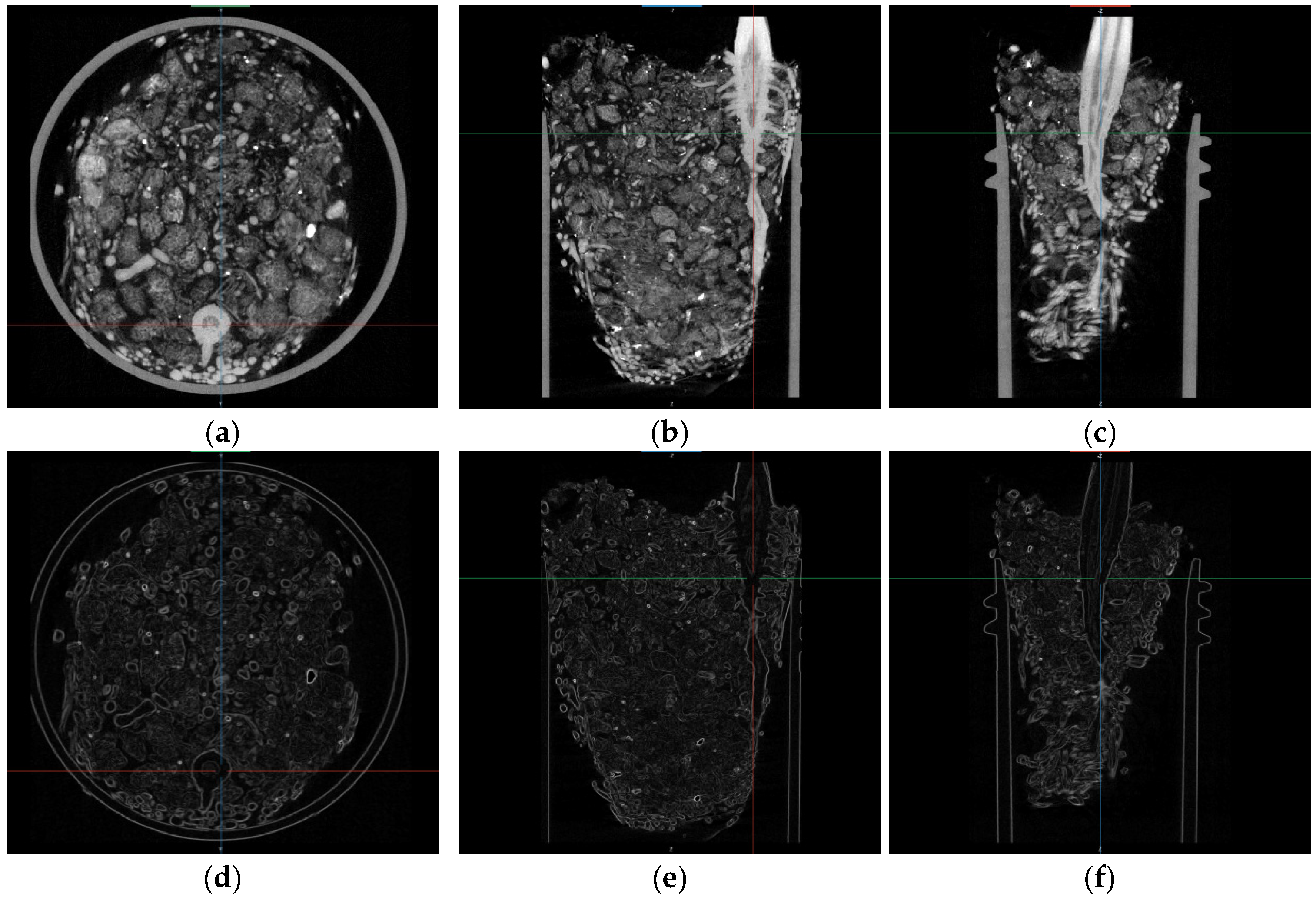
To ensure the segmentation accuracy of the watershed algorithm, the three-dimensional model of the pot was filtered prior to image segmentation. A Sobel filter was applied to enhance the edges of the pot model (Figure 6). In the edge-enhanced images, boundaries between materials of different densities became more distinct, particularly at the interface between the root system and the substrate. This improvement facilitated more precise segmentation by the watershed algorithm, as it could then operate on these accentuated boundaries.
Figure 7 shows that the watershed algorithm was applied to the filtered 3D image of the pot using the three markers, resulting in segmented 3D representations of the different materials corresponding to each marker (displayed in the same colors as their respective markers). These include comprised the 3D root system model, the 3D air volume, and the 3D container model. Here, the 3D air volume represents the air within the reconstruction region set during data processing. During algorithm execution, air was treated as the background. The 3D air volume was subsequently hidden to visualize the root system and container models. By further hiding the 3D container model, the root system model was isolated. The root system volume was then calculated by multiplying the voxel count in the segmented 3D root model by the volume of a single voxel.
To validate the accuracy of the root system extracted by the watershed algorithm, the actual root volume of the pot was measured using the water displacement method. The error rate ( ε A H ) between the root volume extracted by the algorithm and the manually measured root volume was calculated using the following formula:
ε A H = V A V H V H × 100 %
where V A represents the algorithm-extracted root volume, while V H represents the manually measured root volume. The validation was performed using 30 seedling pots, where both the algorithm-extracted root volume and the root volume physically measured by means of water displacement were recorded for each pot, and the error rate was calculated.

2.2.4. Characterization Method for Root System

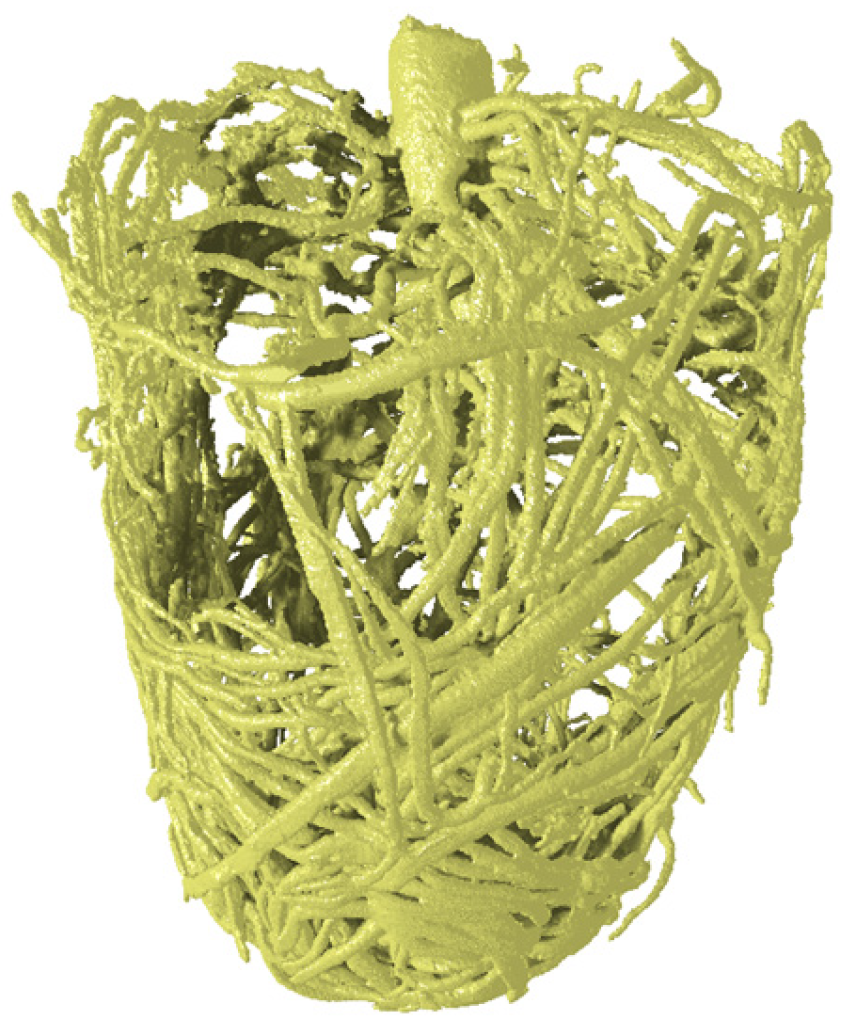
As observed in the three-dimensional root architecture of the seedling plug (Figure 8), the pepper seedling root system consists primarily of a dominant taproot and multiple radiating lateral roots. Most lateral roots traverse along the outermost region of the plug, effectively encasing the substrate. This structural configuration enhances the mechanical integrity of the plug, reducing the risk of injury during transplanting operations.
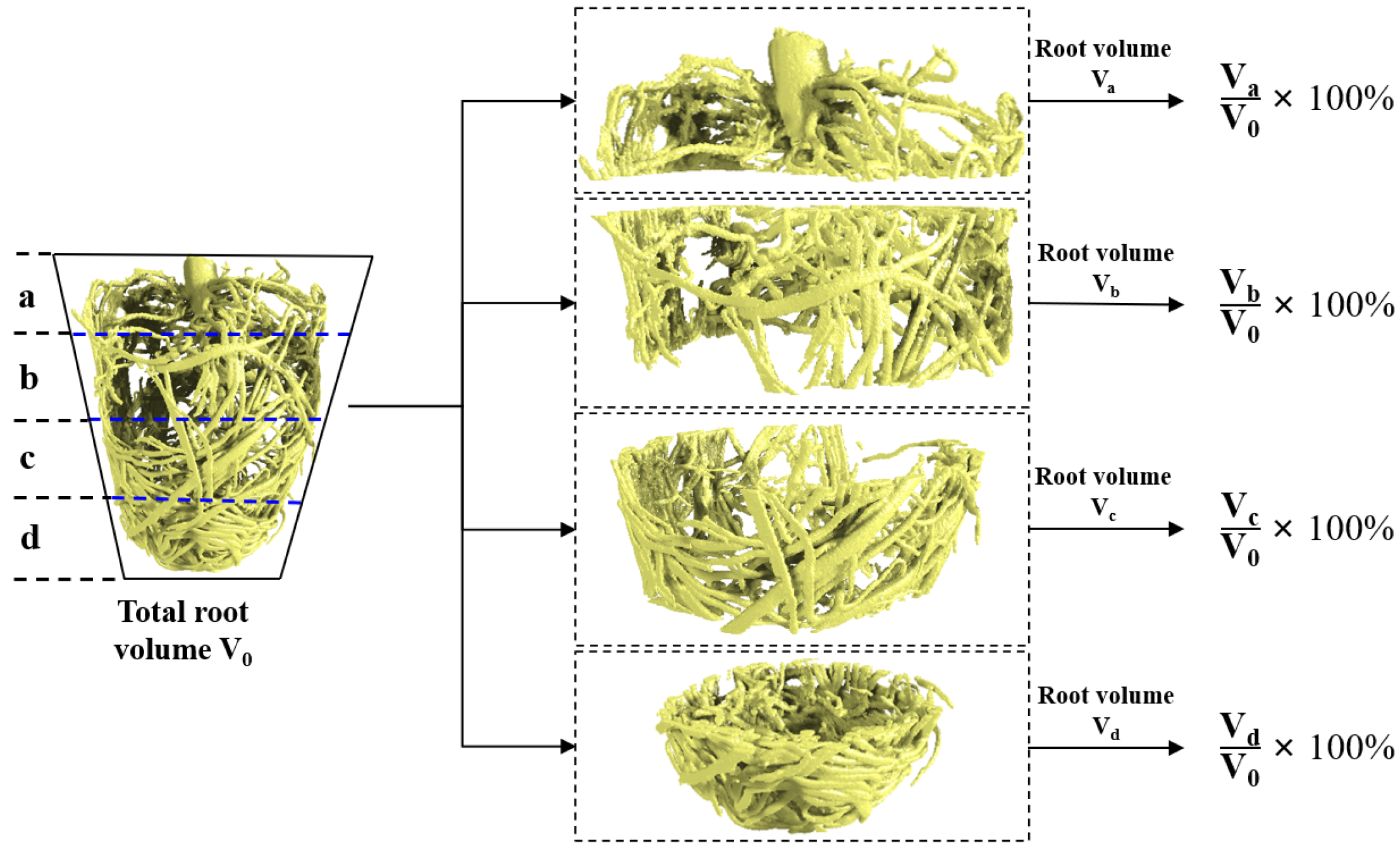
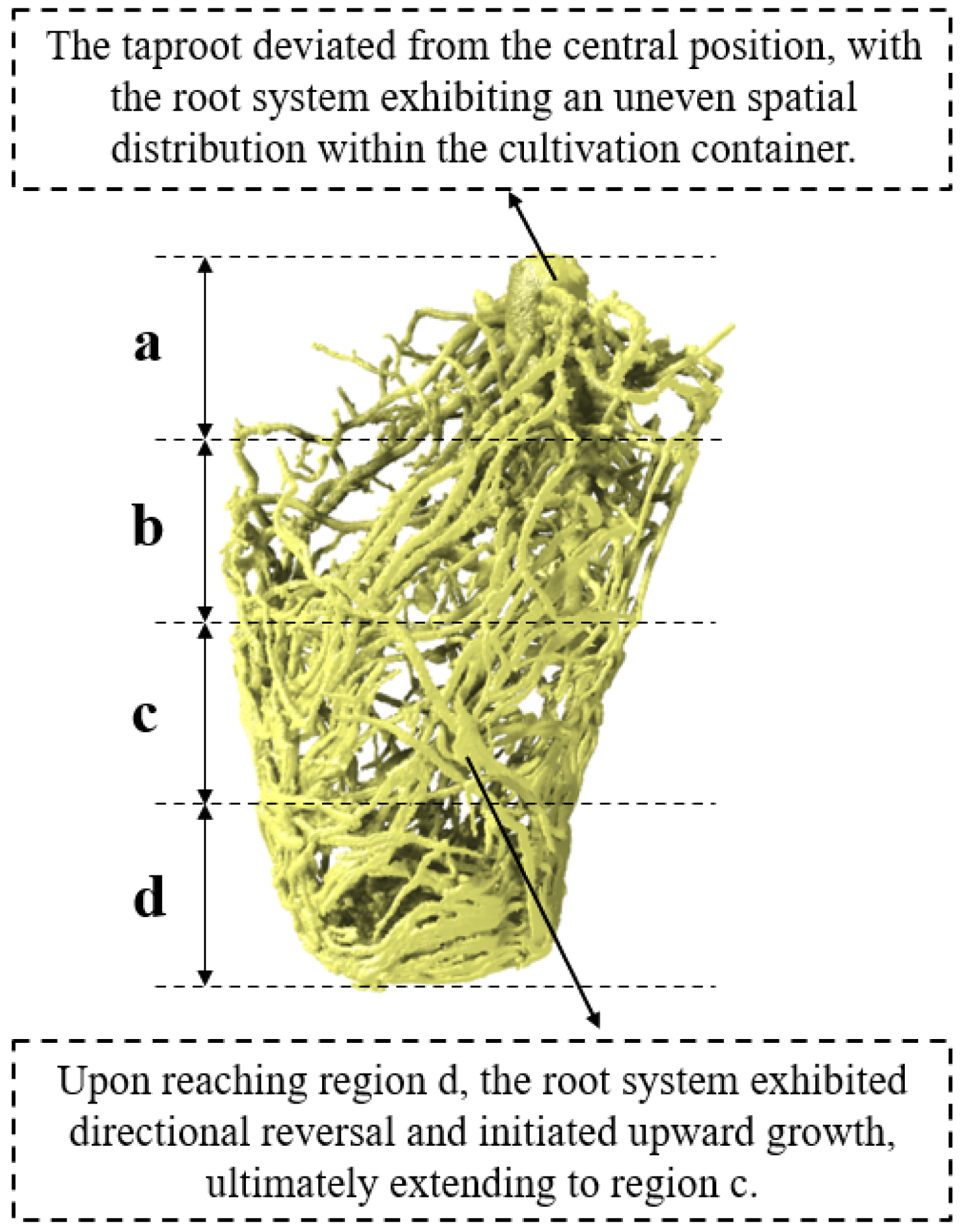
Figure 9 shows that the root system model was evenly divided into four regions (a, b, c, and d). Using the clipping tool in Dragonfly, the 3D root model was uniformly segmented into four volumes. The volume of each region ( V a , V b , V c , and V d ) was calculated based on its voxel count. The ratio of the root volume in each region to the total root volume ( V 0 ) was then determined. This experiment was conducted using 30 pepper seedling pots, with the root volume distribution across the four regions calculated and recorded for each sample. To eliminate the influence of variations in the total root volume between samples on the analysis results, this study adopted the ratio of each region’s volume to the total volume as the analytical characteristic. This approach ensured that the obtained characteristic data were dimensionless and scale-invariant.

2.2.5. Test Method for Root Injury During Gripping

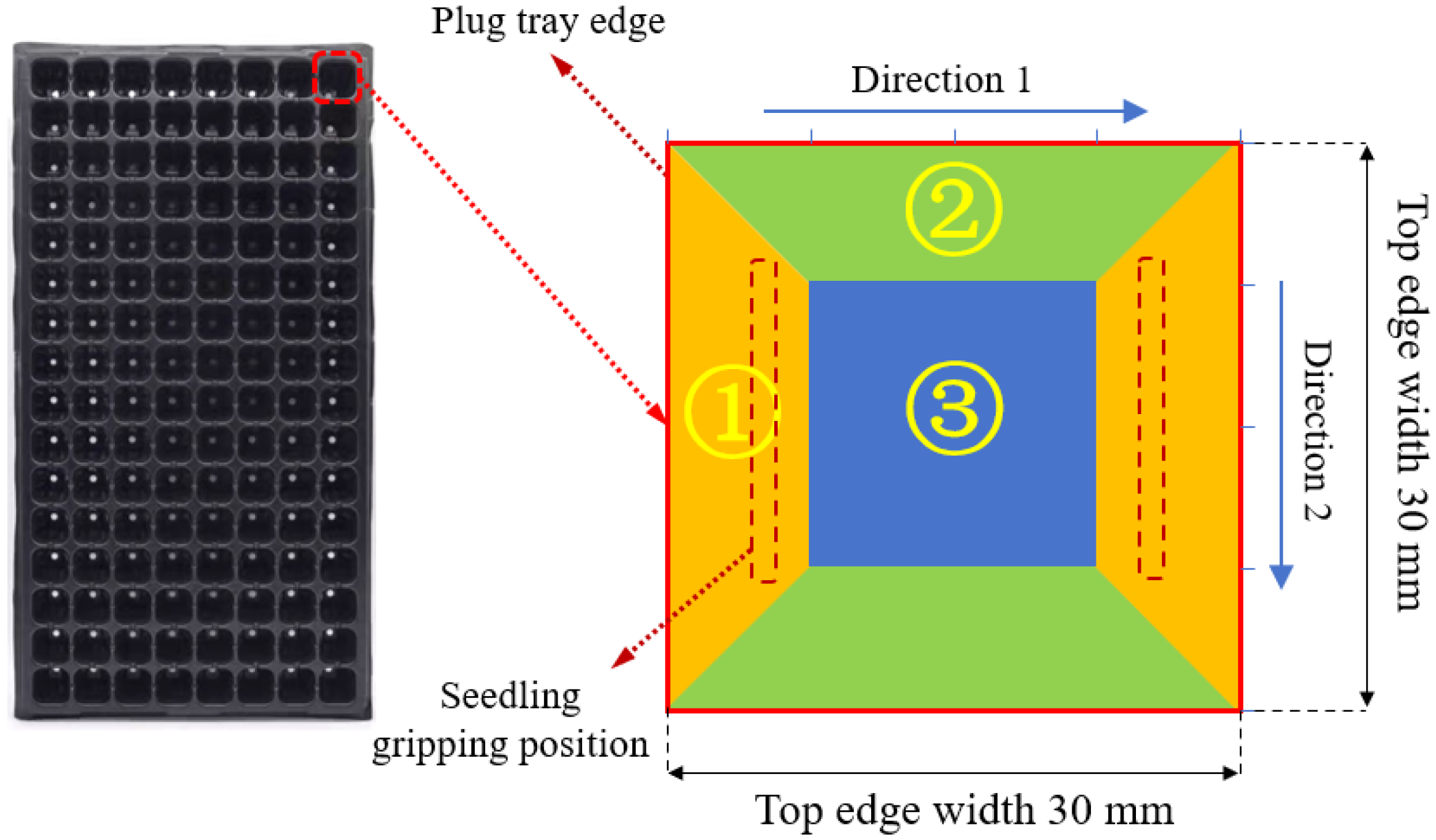
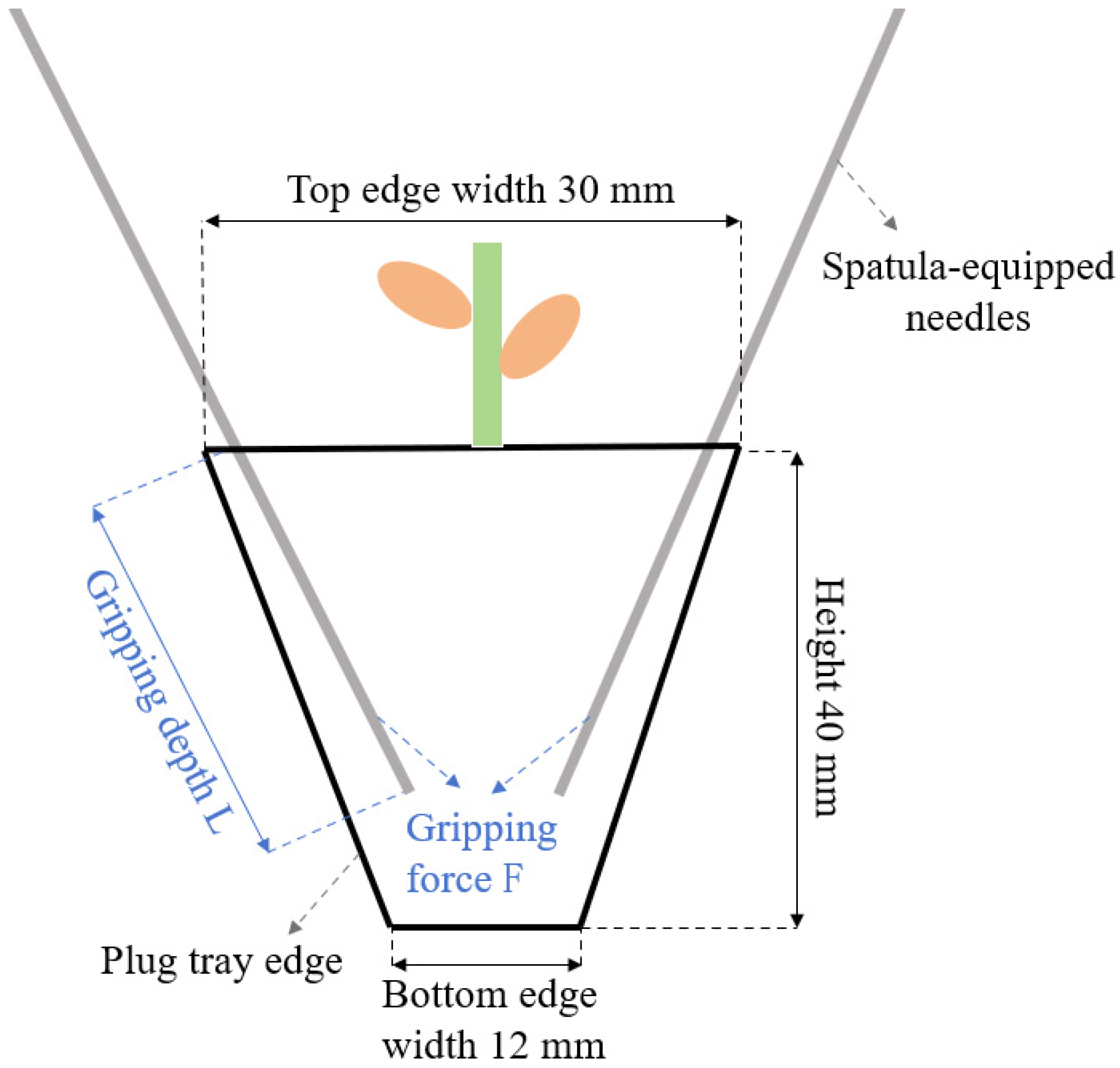
To investigate the influence of root system characteristics in pepper seedling pots on gripping-induced root injury, the seedlings were categorized based on their taproot growth position, and a pot gripping experiment was performed. The seedling tray cells (the individual potting units) measured 30 mm × 30 mm at the top edge and 12 mm × 30 mm at the bottom edge, with a height of 40 mm. If the taproot of a pepper seedling developed within the central area of the tray cell, it was classified as a central seedling; otherwise, it was categorized as an edge seedling. For edge seedlings, the taproot may grow near any of the four inner walls of the cell. The extent of root injury during gripping varies significantly depending on the orientation of the inner wall adjacent to the taproot. During the gripping process, two spatula-equipped needles were used, arranged in a symmetrical configuration. Based on the top-view analysis of the seedling tray, as shown in Figure 10, the tray was divided equally along Direction 1 and Direction 2. The gripping-induced root injury was consistent when the taproot was adjacent to either the left or right inner walls of the cell; similarly, equivalent injury was observed when the taproot was close to the top or bottom inner walls. Therefore, edge seedlings were categorized into Type 1 and Type 2 based on the orientation of the inner wall closest to the taproot. In summary, the experimental factor in this study consisted of three types of pepper seedlings: Type 1 edge seedlings, Type 2 edge seedlings, and central seedlings.
The experimental evaluation metric was root injury. With the root volume of the seedling pot extracted before gripping denoted by V 1 , and the root volume extracted after gripping denoted by V 2 , the root injury δ was calculated as follows:
δ = V 1 V 2 V 1 × 100 %
The experiment was conducted using spatula-equipped needles with a gripping depth of 35 mm (Figure 11). Seedlings of the three different types were gripped to analyze the root injury specific to each type. The experiment utilized a total of 30 pepper seedlings. Based on the root-shoot axis growth zone, the seedlings were categorized into three groups, each representing one seedling type, with 10 seedlings per group. These groups were then sequentially scanned using CT. The experimental procedure was as follows:
(1)
Each group of 10 pepper seedlings was labeled and sequentially scanned in the CT system. Following the initial scan of each seedling, a gripping procedure was applied at a depth of 35 mm using the seedling extraction mechanism. The seedling was then rescanned in the CT system. This procedure yielded 20 CT datasets per group (10 pre-gripping and 10 post-gripping), resulting in a total of 60 CT datasets for the entire experiment.
(2)
Three-dimensional image reconstruction was performed on the raw CT data obtained from scanning the pot samples.
(3)
The reconstructed image data were post-processed using Dragonfly software. The watershed algorithm was applied to extract three-dimensional root models and calculate the corresponding root volumes. Changes in root volume before and after the gripping process were systematically recorded.

3. Results and Discussion

3.1. Root System Distribution Characteristics of Pepper Seedling Pots

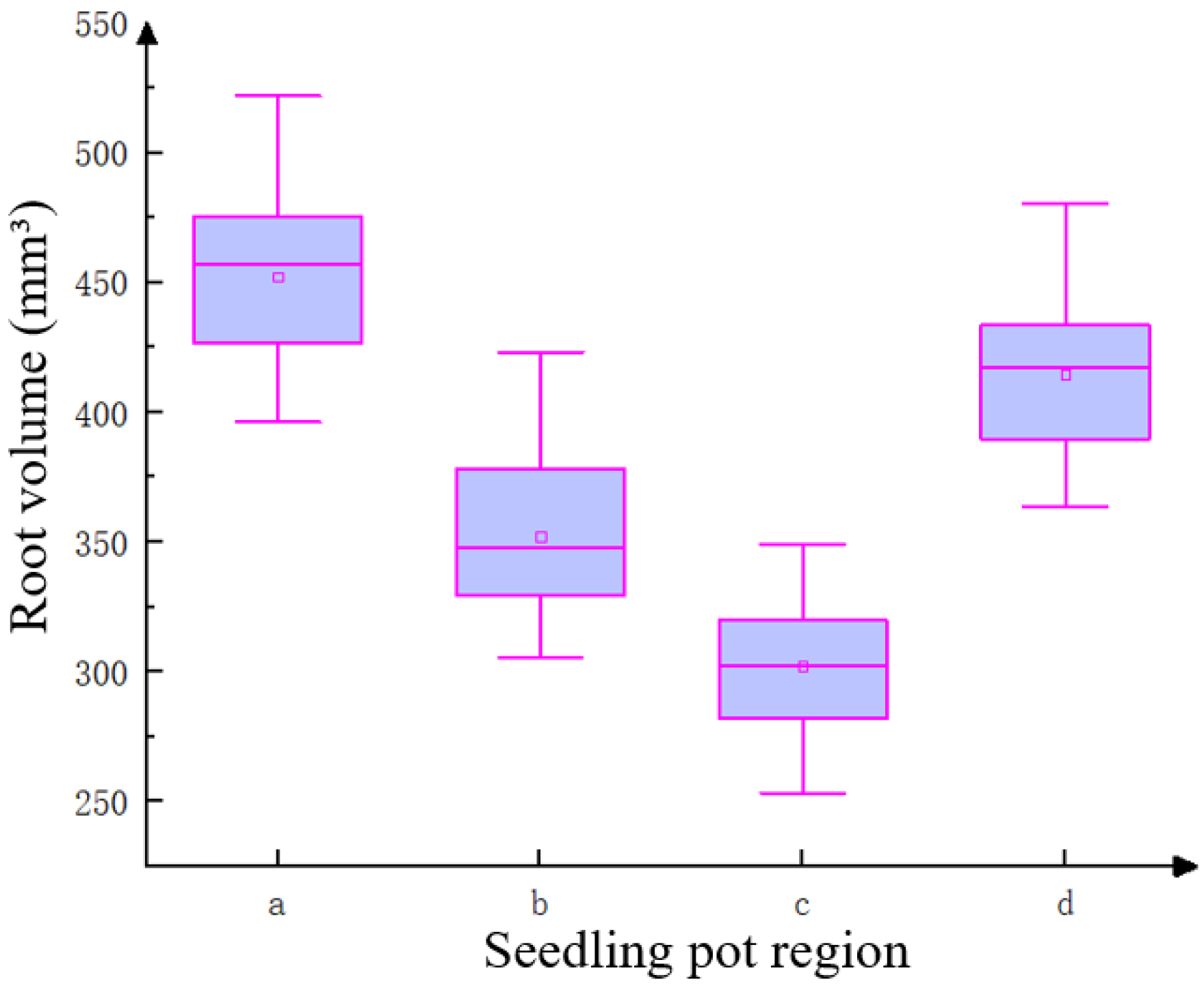
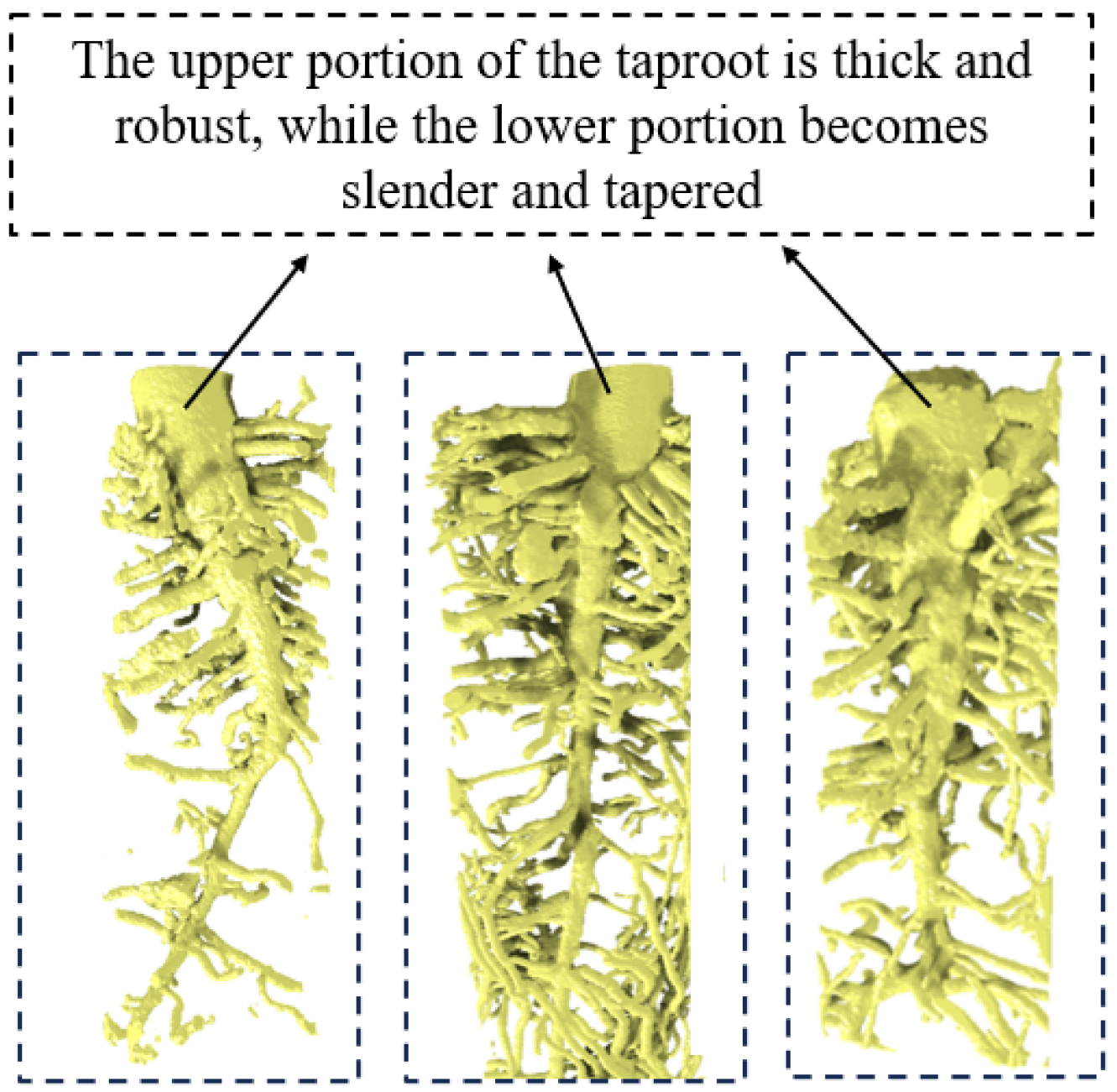
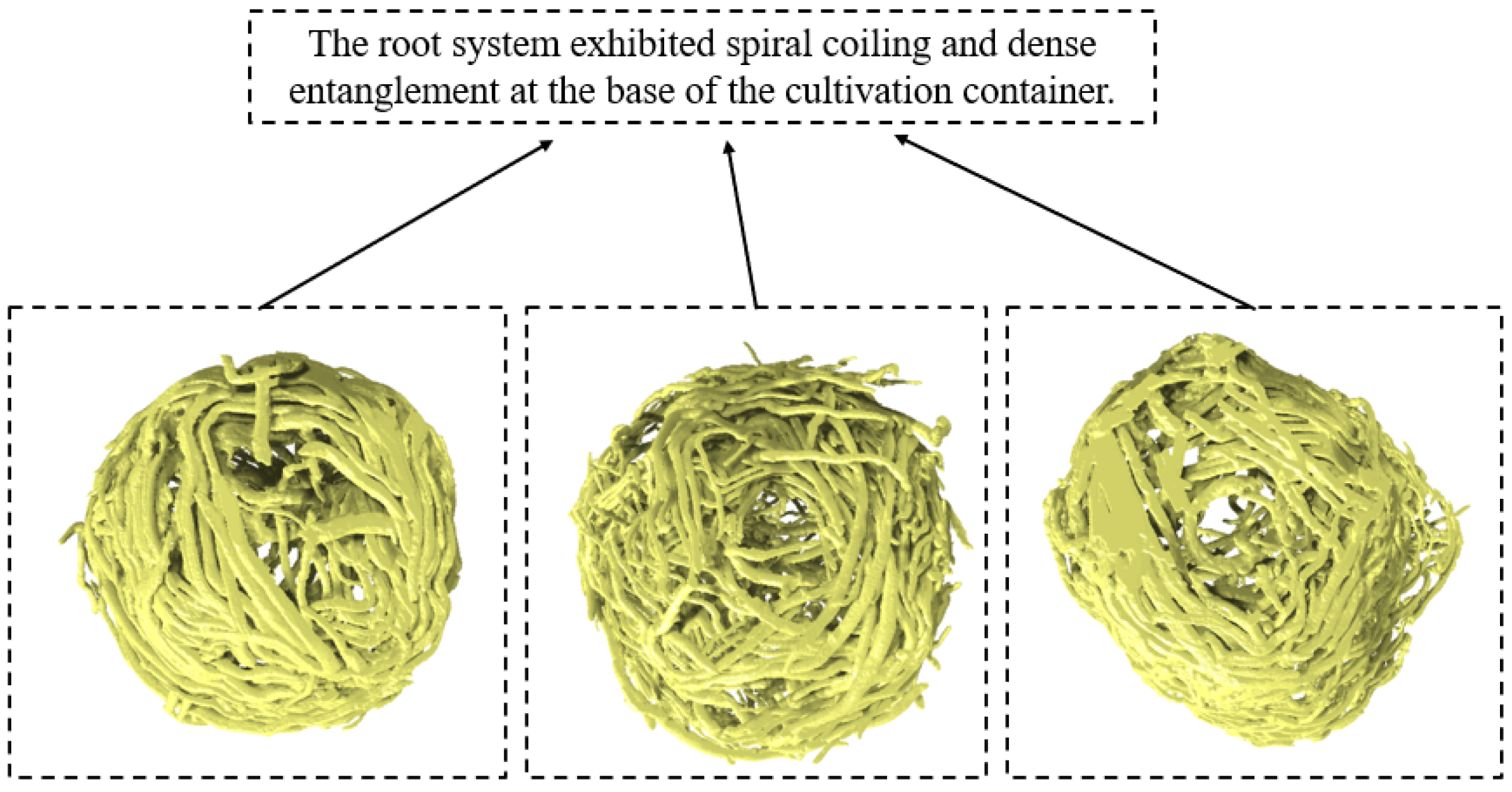
Figure 12 shows that among the four pot regions, region a exhibited the largest average root volume of 452.33 mm3, while region c showed the smallest average root volume of 302.21 mm3. The average root volumes of region b and region d fell between these values, measuring 352.05 mm3 and 414.85 mm3, respectively. This distribution pattern arises because lateral roots grow outward from the taproot, resulting in dense lateral root development in the upper taproot section. The upper portion of the taproot, being thicker, is primarily located in region a, while the taproot diameter gradually decreases toward the lower part of the pot; this corresponds to a reduction in volume (Figure 13). However, due to spatial constraints imposed by the inner walls and bottom of the seedling tray, root growth is unable to extend further downward. Instead, roots accumulate and coil at the bottom of the tray, leading to the increased root volume observed in region d (Figure 14).
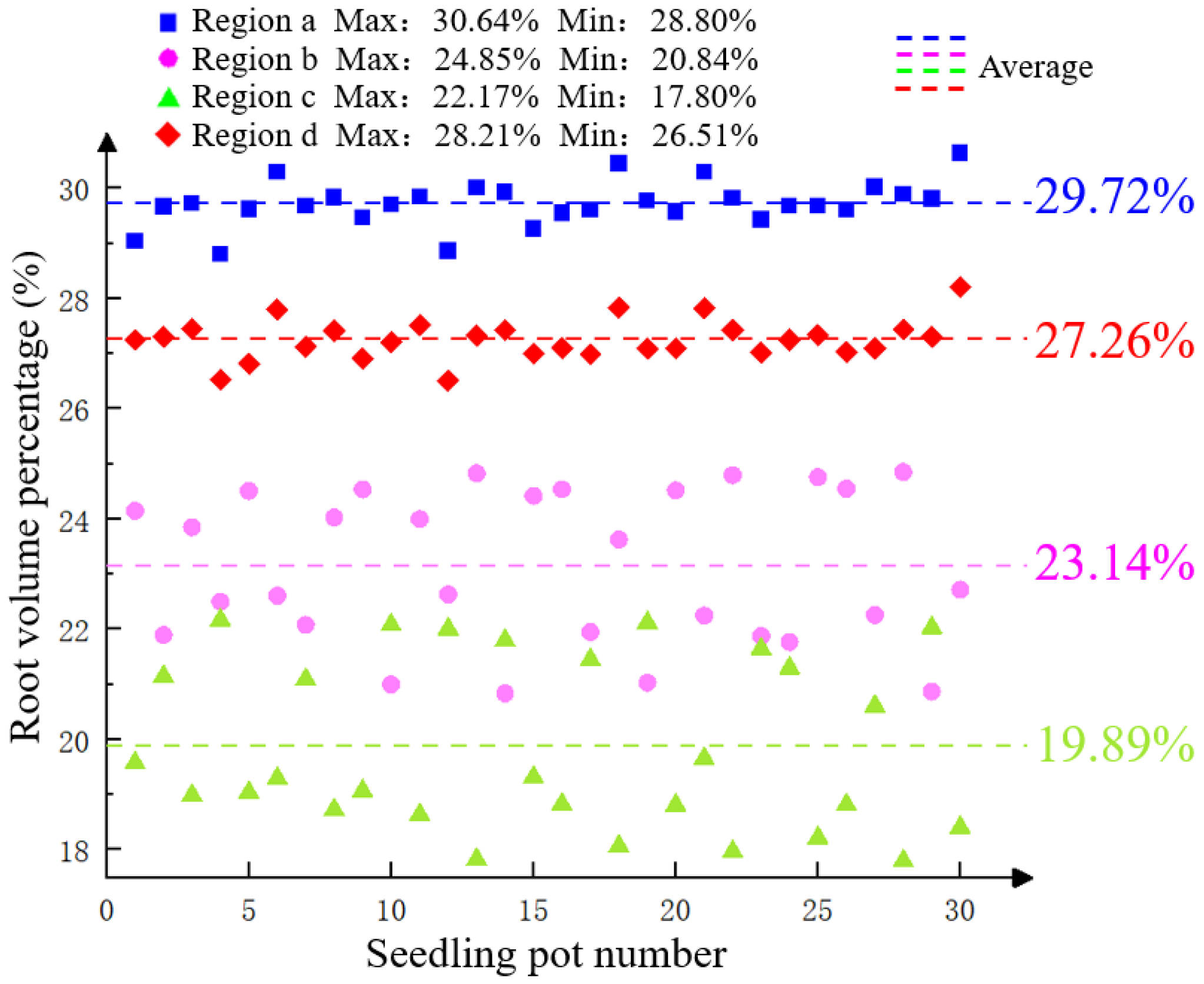
As shown in the scatter plot of root volume proportions across the four regions (Figure 15), region a accounted for the largest share; its root volume represented an average of 29.72% of the total root volume, primarily due to the substantial contribution of the taproot. Region d followed, with an average proportion of 27.26%, resulting from restricted root extension leading to root accumulation in this region. The average proportions in regions b and c were 23.14% and 19.89%, respectively. However, in some of the 30 samples, the proportion in region c exceeded that in region b. This anomaly occurred when the taproot was not centrally positioned, causing asymmetric distribution of the lateral roots. Furthermore, due to spatial constraints imposed by the inner walls and bottom of the seedling tray, once root growth reached saturation in region d, roots extended further upward into region c; this led to the observed higher proportion in region c compared with region b (Figure 16).
Table 1 shows that both the standard deviation (SD) and coefficient of variation (CV) for the volume proportions across the four regions were relatively low. Specifically, regions a and d exhibited particularly low coefficients of variation at merely 1.38% and 1.32%, respectively, indicating minimal data variability. In contrast, regions b and c showed higher coefficients of variation of 5.96% and 7.69%, respectively. This greater variability can be attributed to the distinctive distribution characteristics of the root system within these regions.
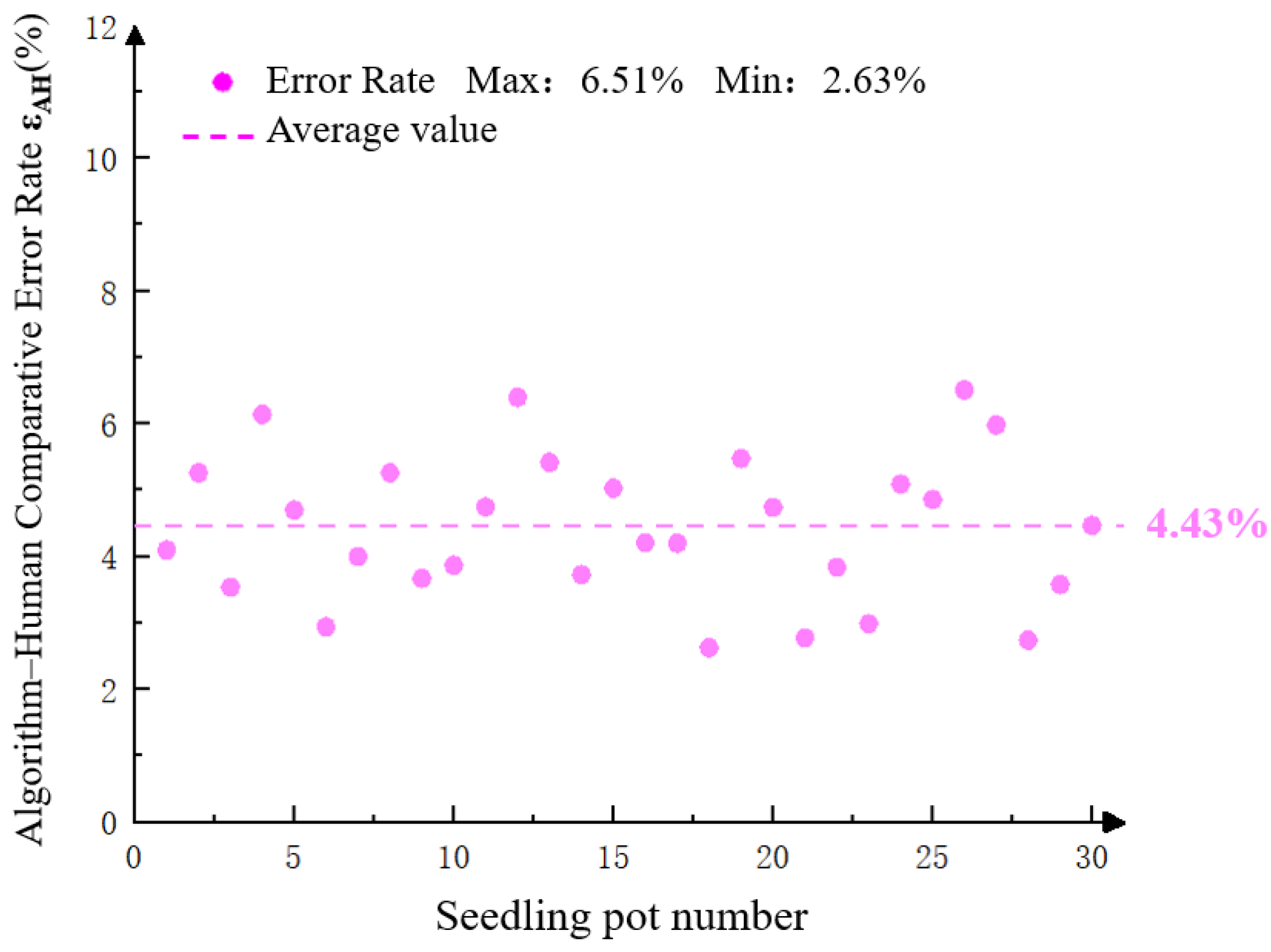
Figure 17, the algorithm validation results demonstrated that the error rate between the algorithm-extracted root volume and the manually measured root volume had an average value of 4.43%, with maximum and minimum values of 6.51% and 2.63%, respectively. These results indicate a relatively small discrepancy between the algorithm-extracted and manually measured root volumes, demonstrating good accuracy of the algorithm.
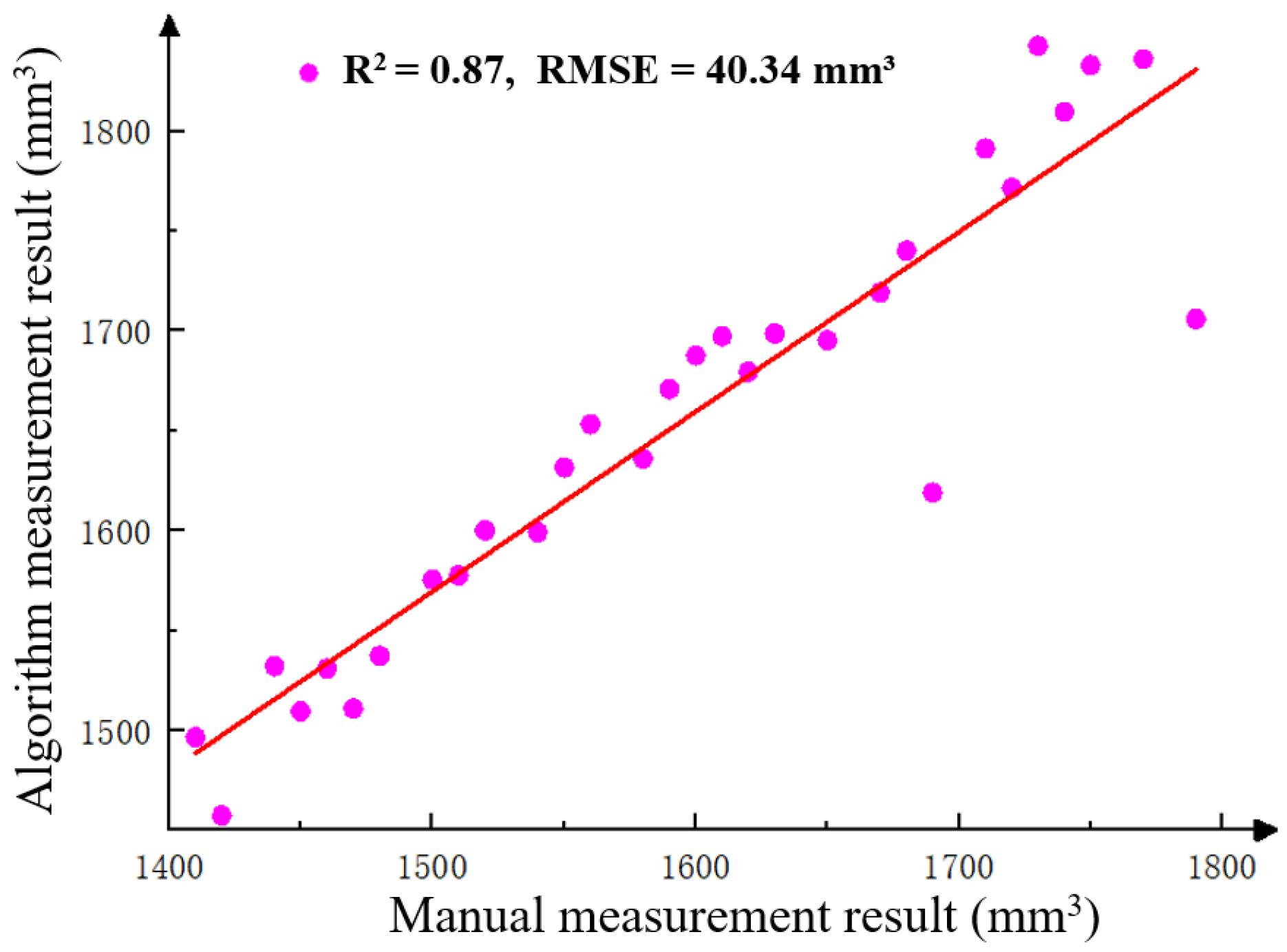
To further evaluate the error between the algorithm-extracted and manually measured values, a linear regression analysis was performed on the measurement data, along with an analysis of the standard deviation (SD) and coefficient of variation (CV). As shown in the linear regression results in Figure 18, the regression equation yielded an R2 of 0.87 and an RMSE of 40.34 mm3, indicating a strong fit between the algorithm-extracted and manually measured values. Table 2 shows that the standard deviation of the algorithm-extracted values was 107.70 mm3, with a CV of only 6.51%, demonstrating low variability in the algorithm-based measurements. In parallel, the manually measured values exhibited a standard deviation of 111.53 mm3 and a CV of 6.99%. Although slightly higher than that of the algorithm-extracted values, the variability remained at a relatively low level.
The observed differences are primarily attributed to two factors:
(1)
During extraction, the algorithm inadvertently includes substrate particles that are tightly adhered to the roots and have grayscale values similar to those of the roots, leading to an overestimation of the root volume.
(2)
The algorithm fails to detect extremely fine roots, such as those resulting from poor development or other growth limitations.
Figure 19 presents a case of root fracture in a potted seedling. The 3D model of the pot after gripping (shown in gray-white) is compared with the root architecture extracted by the watershed algorithm (shown in yellow-green), where matching regions are superimposed. From an examination of the discrepant areas between the two models, it is evident that the watershed algorithm failed to capture the fractured root segments, thereby resulting in a measured difference in root volume before and after the gripping process.

3.2. Root System Injury from Gripping

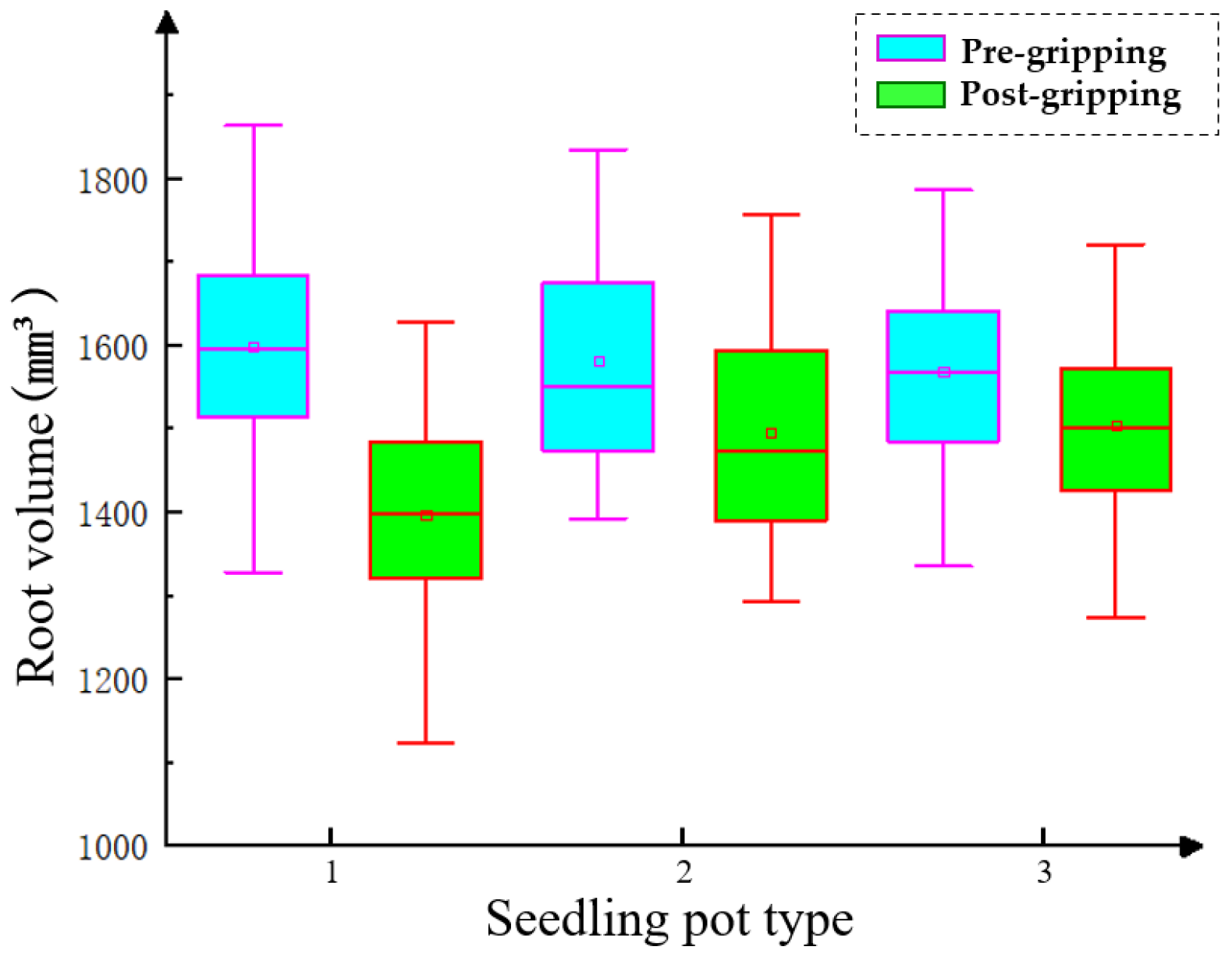
Figure 20 shows that the changes in the root volume of different seedling types after gripping revealed that Type 1 seedlings had an average root volume of 1599.22 mm3 before gripping, which decreased to 1397.58 mm3 after gripping. The resulting average reduction in root volume was 201.64 mm3, which was the largest when compared with the reductions observed in Type 2 (85.57 mm3) and Type 3 (64.20 mm3) seedlings. This indicates that Type 1 seedlings experienced either a greater number of root fractures or a larger volume of root loss during gripping, significantly impacting the integrity of their root systems.
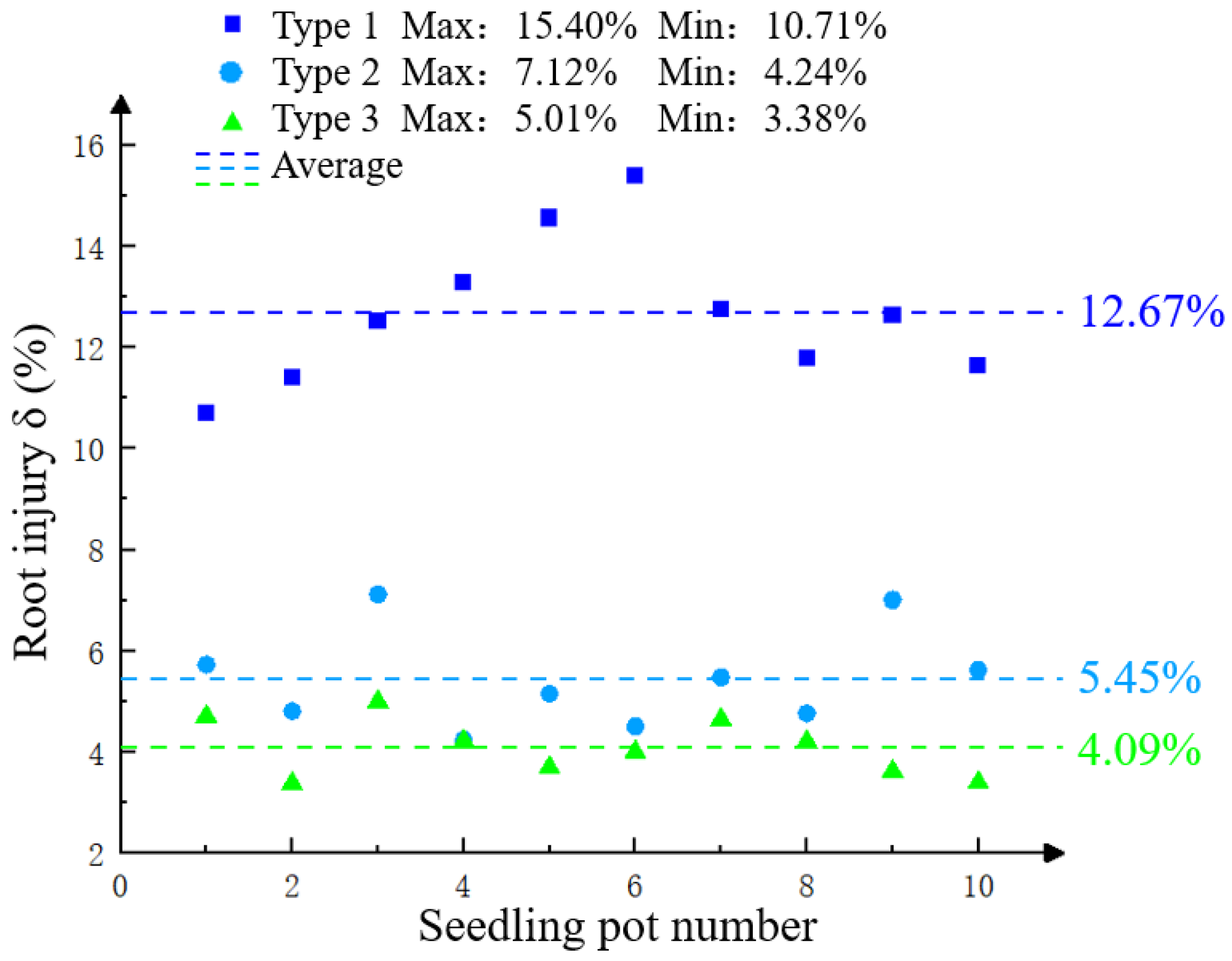
As shown in Figure 21, the average root injury for Type 1 seedlings after gripping was 12.67%, with maximum and minimum values of 15.40% and 10.71%, respectively. Compared with Type 2 (5.45%) and Type 3 (4.09%) seedlings, Type 1 seedlings exhibited the greatest average root injury, indicating a greater volume of root fractures after gripping. This is attributed to the proximity of the taproot in Type 1 seedlings to the needle insertion point. During gripping, the needles damaged the dense lateral root zone near the upper portion of the taproot, causing numerous lateral roots to fracture close to the taproot and resulting in a large volume of broken lateral roots. Additionally, the relatively thick taproot itself was prone to fracture due to the gripping action. In contrast, Type 3 seedlings showed the least root injury, as their taproots were centrally positioned and away from the needle insertion area. Root fractures in these seedlings occurred farther from the taproot, leading to a smaller volume of root loss. Type 2 seedlings exhibited slightly greater root injury than Type 3 due to their lateral taproot growth. Besides direct needle penetration, these seedlings were subjected to tearing forces from the needles during gripping. Even minimal displacement of the needles within the pot, resulting from the applied gripping force, was sufficient to break fine roots.
According to Table 3, Type 1 seedlings showed a relatively large standard deviation (SD) in their root injury level (1.44%), yet they have the smallest coefficient of variation (CV, 11.37%). This indicates that while the absolute dispersion range of the root injury data for Type 1 seedlings was wide, the relative dispersion around the average was comparatively low, meaning that the data points were relatively concentrated close to the average value. Type 2 seedlings exhibited the largest coefficient of variation, suggesting the greatest relative dispersion in their root injury data. Type 3 seedlings demonstrated the smallest standard deviation, reflecting the lowest absolute dispersion. Overall, however, the coefficients of variation for all data remained at a relatively low level of dispersion.

3.3. Statistical Analysis Results

To determine whether significant differences existed between the datasets, a one-way analysis of variance (ANOVA) was performed on the root volume proportions of the four regions and the root injury data of the three seedling types using DPS software (Data Processing System, v9.01), followed by Tukey’s HSD post hoc test.
The ANOVA results for the root volume proportions across the four regions are presented in Table 4, indicating a highly significant difference (F(3, 116) = 497.19, p < 0.001). Tukey’s post hoc test (Table 5) demonstrated that the volume proportions for any two regions differed significantly at both the α = 0.05 and α = 0.01 levels.
The one-way ANOVA results for the root injury levels of the three seedling types are presented in Table 6, indicating a highly significant difference between the types (F(2, 27) = 189.55, p < 0.001). Tukey’s post hoc test (Table 7) revealed that at the α = 0.05 level, all pairwise comparisons between seedling types showed statistically significant differences. However, under the more stringent α = 0.01 criterion, no significant difference in root injury was detected between Types 2 and 3 seedlings.

3.4. Validation Experiment of Seedling Gripping

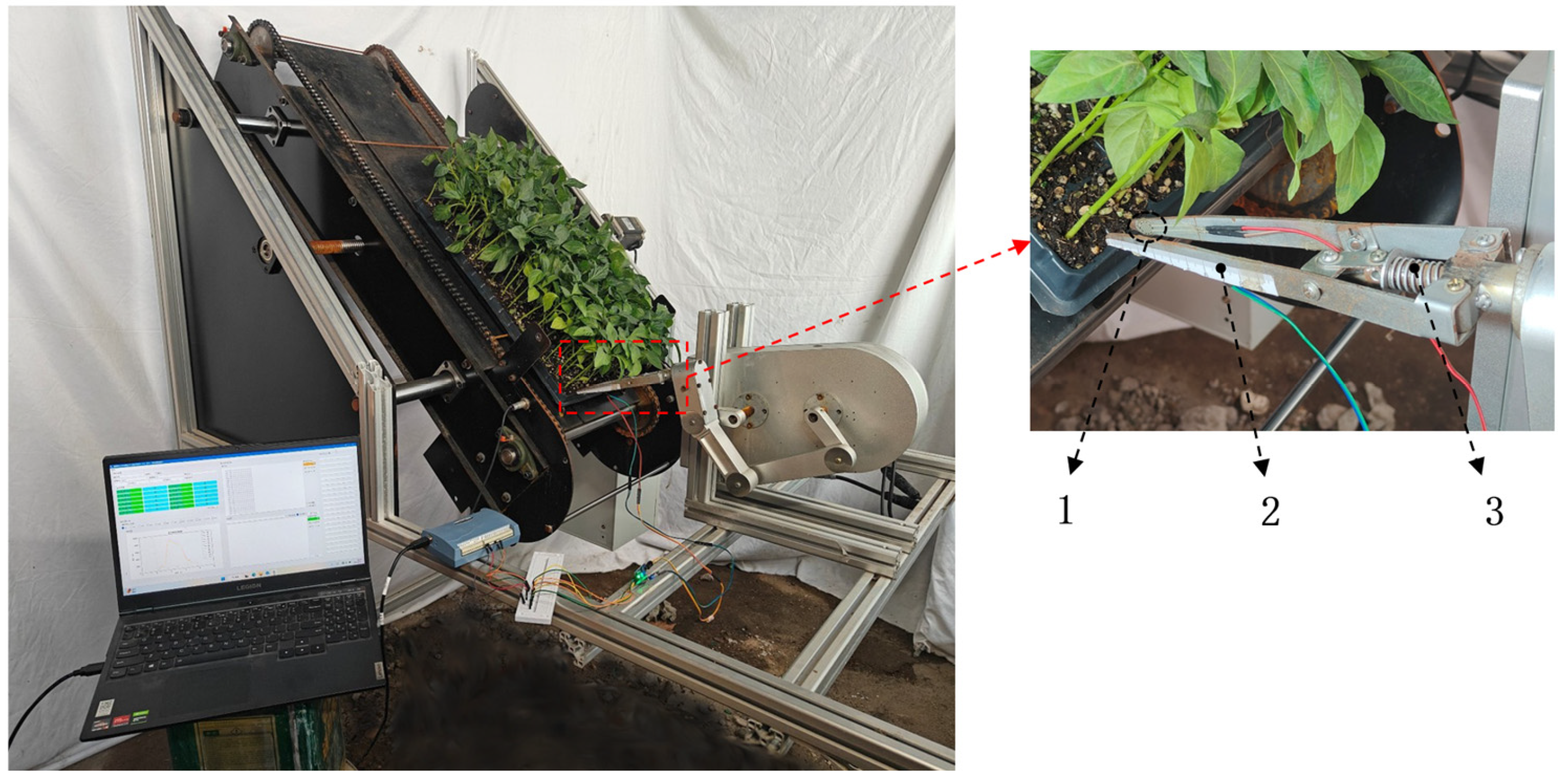
To validate the analytical results regarding the influence of seedling growth position on root injury during seedling gripping, a verification experiment was conducted using 255 pepper seedlings (comprising the three distinct types in equal numbers). Prior to the experiment, seedlings of each type were individually labeled. The experimental device is shown in Figure 22. The gripping mechanism primarily consisted of spatula-equipped needles and a spring-loaded pull rod. During the gripping process, the needles penetrated the substrate and the inter-needle spacing was simultaneously reduced, achieving the minimum distance at the optimal gripping depth of 35 mm. The needle spacing increased during retraction. Throughout the experiment, the device operated at this consistent gripping depth of 35 mm. To analyze the extent of root injury caused by gripping, the water displacement method was employed to measure the volumes of both the severed root fragments and the remaining root system after gripping. The total root volume was calculated as the sum of the volumes of the severed and remaining roots.
The experimental device successfully gripped 243 seedlings, with 12 pepper seedlings not successfully gripped, resulting in a gripping success rate of 95.29%. Root volume measurements were conducted on the 243 successfully gripped seedlings (comprising 77 Type 1, 82 Type 2, and 84 Type 3 seedlings), and the results are presented in Table 8. Type 1 seedlings exhibited the highest values for the average root injury, standard deviation (SD), and coefficient of variation (CV) at 14.16%, 2.23%, and 15.75%, respectively. Type 2 seedlings followed, with an average root injury of 6.03%, a standard deviation of 0.78%, and a coefficient of variation of 12.94%. Type 3 seedlings showed the lowest values, with an average root injury of 4.82%, a standard deviation of 0.78%, and a coefficient of variation of 12.94%. Regarding the average root injury across seedling types, these results are consistent with those from the CT scanning analysis.
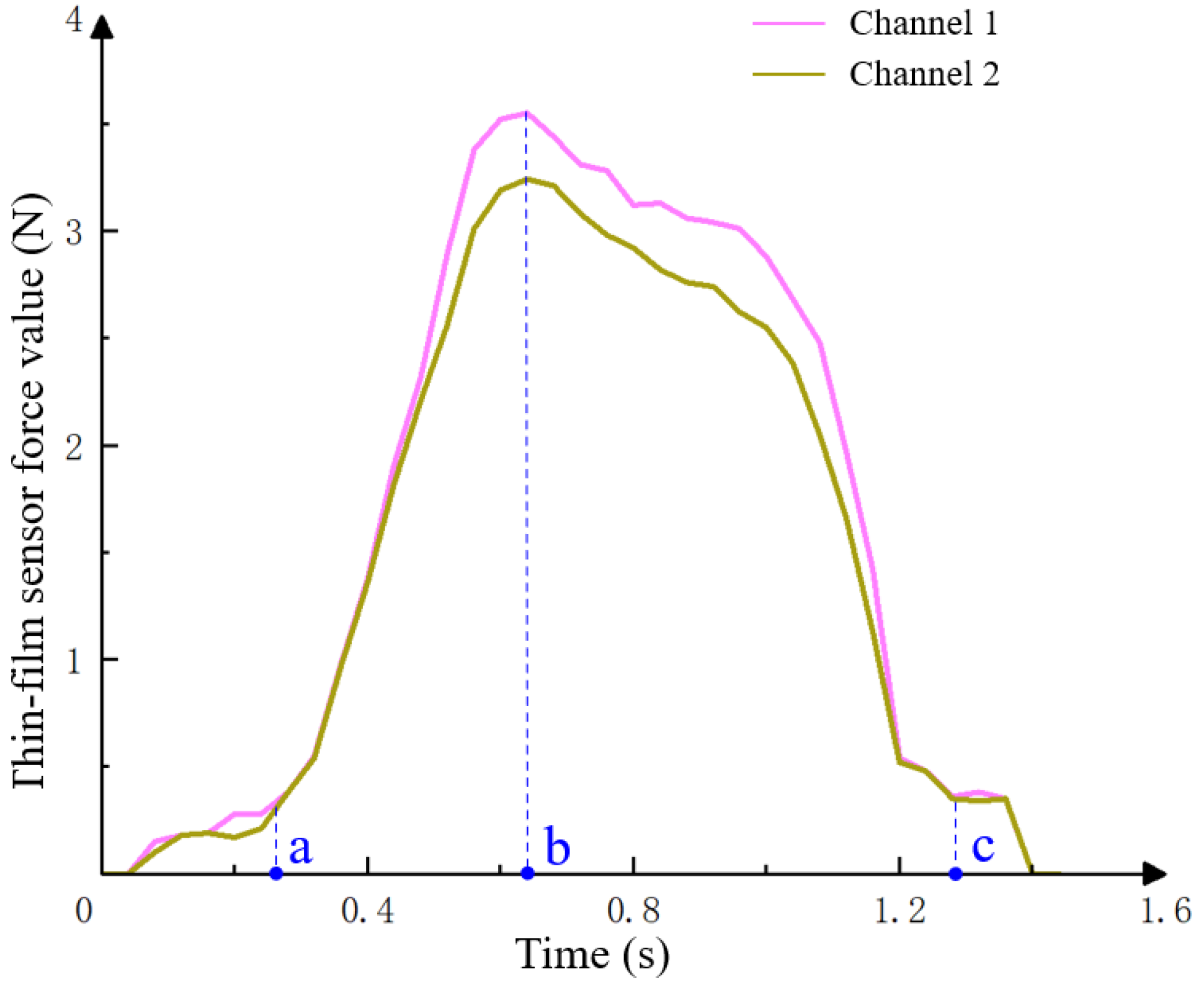
The mechanical interaction between the insertion needles and the pot substrate directly governs the extent of root injury. To characterize this relationship, thin-film pressure sensors were mounted on the inner tips of the spatula-equipped needles. With the sampling frequency set at 25 Hz (one force measurement per 0.04 s), the system could monitor the force exerted on the needle tips in real-time throughout the gripping process.
As shown in Figure 23, during the initial needle insertion (before point a), the thin-film pressure sensors exhibited minimal response due to incomplete contact with the substrate. This resulted in relatively stable force curves for both Channel 1 and Channel 2, with values maintained around 0.2 N. As the needles penetrated toward the optimal gripping depth (from point a to b), the gripping force increased rapidly within 0.4 s: Channel 1 rose from 0.28 to 3.55 N, while Channel 2 increased from 0.28 to 3.24 N. The difference in peak force between the two channels was attributed to variations in substrate composition near their respective sensors. During needle retraction (from point b to c), the gripping force initially declined gradually before dropping sharply. Channel 1 decreased slowly to 2.88 N before plunging to 0.35 N, and Channel 2 followed a similar pattern, declining to 2.55 N before falling rapidly to 0.35 N. This two-stage decline occurred because the substrate initially loosened gradually while partially adhering to the sensor surfaces, delaying force reduction. As retraction continued, the attached substrate detached, leading to a rapid force drop until the needles were fully withdrawn (point c), when forces stabilized again.

4. Discussion

This study analyzed the microstructural characteristics of the root systems of potted pepper seedlings and quantified the root injury caused by transplant gripping, providing a reliable theoretical basis for optimizing the design of low-injury transplanting equipment. First, regarding the design of gripping components, since root injury originates from needle insertion, future transplant needle designs should consider their geometric configuration (e.g., utilizing finer needles to reduce injury during insertion) and spatial arrangement (e.g., avoiding the taproot growth position). Second, for operational parameter optimization, the gripping depth should be selected to avoid penetrating the high-density root zone at the bottom of the pot. Furthermore, from an agronomic perspective, this study strongly supports cultivating seedlings with taproots centrally positioned within the cell, as such seedlings demonstrate significantly lesser root injury when subjected to mechanical transplanting.
The health of the seedling root system is crucial for subsequent plant development and future yield assurance. Although this study did not track the growth of seedlings after transplant injury, Gallegos-Cedillo et al. [33] systematically demonstrated, through comparisons of different nursery methods and cultivation techniques, that root system injury in seedlings is a major risk factor reducing survival rates and yield. An intact, well-developed root system can more efficiently utilize water and nutrients and establish symbiotic relationships with beneficial microorganisms, thereby enhancing drought tolerance and stress resistance. However, it is noteworthy that Galindo-Reyes et al. [34] found that controlled, symmetrical root pruning in mirasol chili peppers could stimulate compensatory growth in the plants, ultimately leading to increased yield. This result indicates that appropriate root injury is not necessarily entirely detrimental to seedling growth. Since mechanical transplanting causes non-selective, random physical injury, the impact of such root system damage on seedling survival and yield requires further detailed experimental investigation.
Furthermore, Liu et al. [27,28,29] utilized Micro-CT to scan seedling pots and obtained three-dimensional root system models through threshold-based segmentation. They noted that when threshold segmentation was used for root extraction, small substrate particles were often co-extracted, making it difficult to achieve complete root system isolation. In contrast, although the watershed algorithm employed in this study could extract more complete root systems to a greater extent, the extracted results still contained trace amounts of non-root materials, posing significant challenges for precise quantification of the root volume within the pot. Therefore, future research should focus on developing more reliable CT image segmentation methods specifically for root systems.

5. Conclusions

  • Based on a Micro-CT analysis of the microstructural characteristics of pepper seedling root systems, the roots were divided vertically into four equally spaced regions (a, b, c, d). The results showed that region a had the largest average root volume proportion (29.72%), followed by region d (27.26%). Region b exhibited a slightly greater proportion than region c, with average values of 23.14% and 19.89%, respectively. These root distribution characteristics provide a theoretical foundation for the design of low-injury seedling gripping mechanisms in fully automatic pepper seedling transplanters.
  • Gripping-induced root injury was investigated for three seedling types characterized by different taproot positions. The results demonstrated that the taproot location significantly influenced root injury. Type 3 seedlings, with their taproots positioned centrally within the pot, sustained the least root injury (average 4.09%). In contrast, Type 1 seedlings, whose taproots were located directly at the gripping location, exhibited the most severe injury (average 12.67%). Although Type 2 seedlings had taproots positioned away from the immediate gripping location, their lateral placement within the pot still resulted in slightly greater injury than that for Type 3, with an average value of 5.45%. These findings provide a basis for optimizing seedling cultivation practices and adjusting transplanting parameters.
  • The seedling gripping validation experiment confirmed the accuracy of Micro-CT for analyzing root distribution characteristics and gripping-induced root injury. The tests also demonstrated the effective operational performance of the needle-based gripping mechanism, achieving a gripping success rate of 95.29%. For seedlings with centrally positioned taproots, the gripping-induced root injury was only 4.82%.

Author Contributions

Conceptualization, C.Z. and Y.M.; methodology, C.Z. and T.F.; software, T.F. and Y.W.; validation, T.F. and Y.W.; formal analysis, M.L.; investigation, T.F.; resources, T.F. and C.Z.; data curation, T.F.; writing—original draft preparation, C.Z. and T.F.; writing—review and editing, C.Z. and H.W.; visualization, T.F.; supervision, Y.M.; project administration, L.Z.; funding acquisition, Y.M. All authors have read and agreed to the published version of the manuscript.

Funding

This research was supported by the Opening Fund of State Key Laboratory of Agricultural Equipment Technology (NKL-2023-009) and the National Natural Science Foundation of China (52105252).

Data Availability Statement

The data presented in this study are available on request from the corresponding author upon reasonable request. The data are not publicly available due to privacy restrictions of the research participants.

Conflicts of Interest

Authors Chao Zhang and Liming Zhou were employed by the company Chinese Academy of Agricultural Mechanization Sciences Group Co., Ltd. The remaining authors declare that the research was conducted in the absence of any commercial or financial relationships that could be construed as a potential conflict of interest.

References

  1. Cheng, B.; Wu, H.; Zhu, H.; Liang, J.; Miao, Y.; Cui, Y.; Song, W. Current Status and Analysis of Key Technologies in Automatic Transplanters for Vegetables in China. Agriculture 2024, 14, 2168. [Google Scholar] [CrossRef]
  2. Gallegos-Cedillo, V.; Najera, C.; Signore, A.; Ochoa, J. Analysis of global research on vegetable seedlings and transplants and their impacts on product quality. J. Sci. Food Agric. 2024, 104, 4950–4965. [Google Scholar] [CrossRef] [PubMed]
  3. Markumningsih, S.; Hwang, S.; Kim, J.; Jang, M.; Shin, C.; Nam, J. Comparison of Consumed Power and Safety of Two Types of Semi-Automatic Vegetable Transplanter: Cam and Four-Bar Link. Agriculture 2023, 13, 588. [Google Scholar] [CrossRef]
  4. Liu, W.; Tian, S.; Wang, Q.; Jiang, H. Key Technologies of Plug Tray Seedling Transplanters in Protected Agriculture: A Review. Agriculture 2023, 13, 1488. [Google Scholar] [CrossRef]
  5. Yue, R.; Yao, M.; Zhang, T.; Shi, J.; Zhou, J.; Hu, J. Design and Experiment of Dual-Row Seedling Pick-Up Device for High-Speed Automatic Transplanting Machine. Agriculture 2024, 14, 942. [Google Scholar] [CrossRef]
  6. Jin, X.; Cheng, Q.; Zhao, B.; Ji, J.; Li, M. Design and test of 2ZYM-2 potted vegetable seedlings transplanting machine. Int. J. Agric. Biol. Eng. 2020, 13, 101–110. [Google Scholar] [CrossRef]
  7. Hu, S.; Hu, M.; Yan, W.; Zhang, W. Design and Experiment of an Integrated Automatic Transplanting Mechanism for Picking and Planting Pepper Hole Tray Seedlings. Agriculture 2022, 12, 557. [Google Scholar] [CrossRef]
  8. Vera, S.; Prado, S. Synthesis and Optimization of a Needles Robotic Gripper Mechanism for transplanting seedlings. In Proceedings of the ANDESCON 2020 Index, Quito, Ecuador, 13–16 October 2020. [Google Scholar]
  9. Magar, A.; Nalawade, S.; Walunj, A.; Gaikwad, B.; Shelke, G.; Khadatkar, A.; Sawant, C.; Modi, R. Development and optimization of an automatic transplanting device for plug tray vegetable seedlings using embedded system. Sci. Rep. 2025, 15, 22483. [Google Scholar] [CrossRef]
  10. Khadatkar, A.; Mathur, S.; Gaikwad, B. Automation in transplanting: A smart way of vegetable cultivation. Curr. Sci. 2018, 115, 1884–1892. [Google Scholar] [CrossRef]
  11. Habineza, E.; Ali, M.; Reza, M.; Woo, J.; Chung, S.; Hou, Y. Vegetable transplanters and kinematic analysis of major mechanisms. Korean J. Agric. Sci. 2023, 50, 113–129. [Google Scholar] [CrossRef]
  12. Habineza, E.; Reza, N.; Bicamumakuba, E.; Haque, A.; Park, S.; Lee, D.; Chung, S.; Lee, Y. Pepper transplanting mechanisms and kinematic simulation analysis: A review. Precis. Agric. Sci. Technol. 2024, 6, 17–32. [Google Scholar] [CrossRef]
  13. Xu, T.; Li, X.; He, J.; Han, S.; Wang, G.; Yin, D.; Zhou, M. Research Progress and Future Prospects of Key Technologies for Dryland Transplanters. Appl. Sci. 2025, 15, 8073. [Google Scholar] [CrossRef]
  14. Ishizaki, S.; Hirai, H.; Sakagaito, T.; Takeyama, T.; Oido, N.; Tamura, T.; Mizutani, M.; Watanabe, Y.; Umeda, M. Development of a transplanter-based transplanter for vegetable seedlings cultured in a cuttable nursery mat. J. Agric. Eng. 2024, 55, 1571. [Google Scholar] [CrossRef]
  15. Li, G.; Xu, Y.; Han, C.; Liang, J.; Luo, Y.; Mao, H.; Cao, G. Design and Experiment of the Follow-Up Seedling Picking and Depositing Mechanism for the Pepper Plug Seedling Transplanter. Agricultural 2025, 15, 2026. [Google Scholar] [CrossRef]
  16. Chen, M.; Xu, Y. Design and Testing of Miniaturized Electrically Driven Plug Seedling Transplanter. Agriculture 2025, 15, 1589. [Google Scholar] [CrossRef]
  17. Freschet, G.; Roumet, C.; Comas, L.; Weemstra, M.; Bengough, A.; Rewald, B.; Bardgett, R.; De Deyn, G.; Johnson, D.; Klimesová, J.; et al. Root traits as drivers of plant and ecosystem functioning: Current understanding, pitfalls and future research needs. New Phytol. 2021, 232, 1123–1158. [Google Scholar] [CrossRef]
  18. Wang, Q.; Xue, H.; Martin, J.; Hou, M.; Cao, H.; Dong, Z.; Li, J.; Sun, C. Trends and Applications of computed Tomography in Agricultural Non-Destructive Testing. Agriculture 2024, 14, 2329. [Google Scholar] [CrossRef]
  19. Zhang, Q.; Zheng, Z.; Liao, Q.; Yan, H.; Liao, Y. Current status and prospects of CT technology in agricultural engineering research. Trans. Chin. Soc. Agric. Eng. 2025, 41, 1–13. [Google Scholar]
  20. Li, D.; Wang, J.; Zhang, Y.; Lu, X.; Du, J.; Guo, X. CT-Based Phenotyping and Genome-Wide Association Analysis of the Internal Structure and Components of Maize Kernels. Agronomy 2023, 13, 1078. [Google Scholar] [CrossRef]
  21. Su, Y.; Zhou, Z.; Ma, L. Micro-CT and Its Application in Plant Research. Exp. Sci. Technol. 2022, 20, 7–12. [Google Scholar]
  22. Liu, L.; Fang, H.; Wei, X.; Liu, Y.; Gao, W.; Li, B.; Zhou, H. Research advances on using X-ray CT in the study of 3-D root architecture. J. Plant Nutr. Fertil. 2024, 30, 375–384. [Google Scholar]
  23. Gargiulo, L.; Mele, G.; Izzo, L.; Romano, L.; Aronne, G. Local mapping of root orientation traits by X-ray micro-CT and 3d image analysis: A study case on carrot seedlings grown in simulated vs real weightlessness. Plant Methods 2024, 20, 150. [Google Scholar] [CrossRef] [PubMed]
  24. Kurogane, T.; Tamaoki, D.; Yano, S.; Tanigaki, F.; Shimazu, T.; Kasahara, H.; Yamauchi, D.; Uesugi, K.; Hoshino, M.; Kamisaka, S.; et al. Visualization of Arabidopsis root system architecture in 3D by refraction-contrast X-ray micro-computed tomography. Microscopy 2021, 70, 536–544. [Google Scholar] [CrossRef] [PubMed]
  25. Zheng, X.; Camilo, V.; Jennifer, C. Existing and Potential Statistical and Computational Approaches for the Analysis of 3D CT Images of Plant Roots. Agronomy 2018, 8, 71. [Google Scholar] [CrossRef]
  26. Wang, J.; Liu, H.; Yao, Q.; Gillbanks, J.; Zhao, X. Research on High-Throughput Crop Root Phenotype 3D Reconstruction Using X-ray CT in 5G Era. Electronics 2023, 12, 276. [Google Scholar] [CrossRef]
  27. Mao, H.; Liu, Y.; Xu, J.; Han, L.; Li, Y.; Li, H. Root structure and distribution characteristics of tomato seedlings based on μCT. J. Jiangsu Univ. (Nat. Sci. Ed.) 2019, 40, 288–294. [Google Scholar]
  28. Liu, Y.; Mao, H.; Han, L.; Xu, J.; Ma, G.; Li, Y. Plug damage detection and parameter optimization of picking up cucumber seedlings from tray cells based on Micro-CT. Trans. Chin. Soc. Agric. Eng. 2018, 34, 27–34. [Google Scholar]
  29. Mao, H.; Liu, Y.; Han, L.; Sheng, B.; Ma, G.; Li, Y. X-ray computerized tomography for characterization of pick-up destruction and pick-up parameter optimization of tomato root lumps. Span. J. Agric. Res. 2019, 17, e0202. [Google Scholar] [CrossRef]
  30. Kornilov, A.; Safonov, I.; Yakimchuk, I. A Review of Watershed Implementations for Segmentation of Volumetric Images. J. Imaging 2022, 8, 127. [Google Scholar] [CrossRef]
  31. Hu, S.; Wang, Q.; Li, C.; Li, Z. Threshold Ranges of Multiphase Components from Natural Ice CT Images Based on Watershed Algorithm. Water 2024, 16, 3330. [Google Scholar] [CrossRef]
  32. Sun, Z.; Pan, L.; Xie, Y.; Ding, Z.; Sun, Y. Application of Watershed Algorithm to Forestry. World For. Res. 2021, 34, 63–67. [Google Scholar]
  33. Gallegos-Cedillo, V.; Nájera, C.; Gruda, N.; Signore, A.; Galleges, J.; Rodríguez, R.; Ochoa, J.; Egea-Gilabert, C.; Fernández, J. An in-depth analysis of sustainable practices in vegetable seedlings nurseries: A review. Sci. Hortic. 2024, 334, 113342. [Google Scholar] [CrossRef]
  34. Galindo-Reyes, M.; Roldán, F.; Monárez-González, J.; Servin-Palestina, M. Effect of root pruning on yield and fruit quality of mirasol chili peppers. Hortic. Int. J. 2024, 8, 50–53. [Google Scholar] [CrossRef]
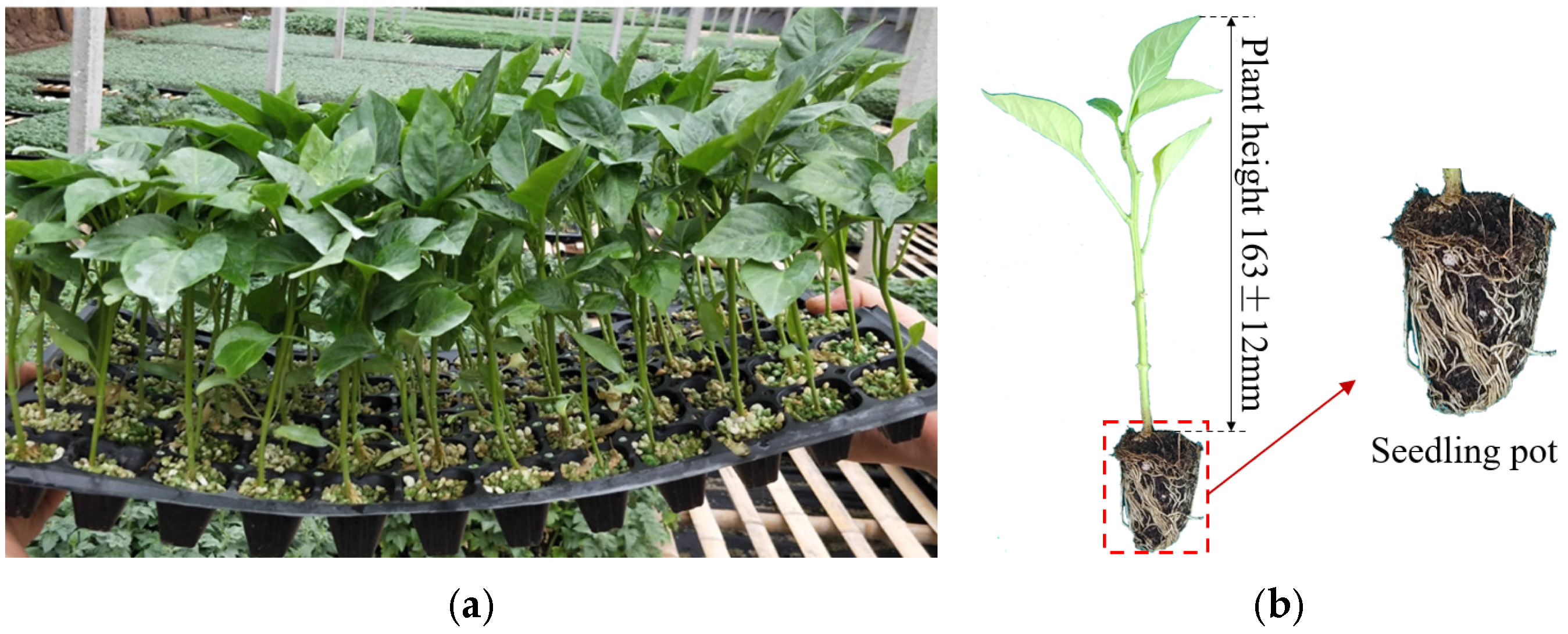
Figure 1. Pepper seedlings and seedling pot: (a) pepper seedlings in the seedling tray. (b) pepper seedling and seedling pot.
Agronomy 15 02822 g001
Figure 2. Experimental instrument.
Agronomy 15 02822 g002
Figure 3. The internal structure of scanning instrument.
Agronomy 15 02822 g003
Figure 4. Acquiring 3D models of pepper seedling pots using Micro-CT. Notes: (A) main root of the pepper seedling, (B) high-density substrate particles, (C) container wall.
Agronomy 15 02822 g004
Figure 5. Setting markers in the top-view slice.
Agronomy 15 02822 g005
Figure 6. Slice images of a pot before and after filtering: (a) top-view slice; (b) front-view slice; (c) left-view slice; (d) filtered top-view slice; (e) filtered front-view slice; (f) filtered left-view slice. Notes: The colored lines indicate the positions of the corresponding CT slices.
Agronomy 15 02822 g006
Figure 7. Root system extraction process.
Agronomy 15 02822 g007
Figure 8. Root system 3D model in pepper seedling pot.
Agronomy 15 02822 g008
Figure 9. A schematic diagram of root volume division in the pot.
Agronomy 15 02822 g009
Figure 10. Schematic diagram of seedling type classification.
Agronomy 15 02822 g010
Figure 11. Schematic diagram of seedling gripping.
Agronomy 15 02822 g011
Figure 12. Box plot of root system volume distribution.
Agronomy 15 02822 g012
Figure 13. Taproot morphological characteristics in pepper seedling pots.
Agronomy 15 02822 g013
Figure 14. Morphological characteristics of the root system at the pot bottom.
Agronomy 15 02822 g014
Figure 15. A scatter plot of root volume proportions across the four regions.
Agronomy 15 02822 g015
Figure 16. Root system distribution characteristics of edge seedlings.
Agronomy 15 02822 g016
Figure 17. Scatter plot of algorithm-human comparative error rates in root volume.
Agronomy 15 02822 g017
Figure 18. Linear regression analysis of manually measured and algorithm-extracted results.
Agronomy 15 02822 g018
Figure 19. A case of root fractures that were undetected by the algorithm.
Agronomy 15 02822 g019
Figure 20. Box plot of root volume for different pot types pre- and post-gripping.
Agronomy 15 02822 g020
Figure 21. Scatter plot of root injury levels in different seedling types post-gripping.
Agronomy 15 02822 g021
Figure 22. Device for seedling gripping experiment. Notes: 1. thin-film pressure sensor; 2. spatula-equipped needles; 3. spring-loaded pull rod.
Agronomy 15 02822 g022
Figure 23. Force curve during seedling gripping with insertion needles. Notes: (a) initial needle insertion, (b) peak force, (c) complete needle withdrawal.
Agronomy 15 02822 g023
Table 1. Volume proportion results for the four regions.
RegionsAverage
(%)
SD
(%)
CV
(%)
a29.720.411.38
b23.141.385.96
c19.891.537.69
d27.260.361.32
Table 2. Algorithm-extracted and manually measured results.
MethodsAverage
(mm3)
SD
(mm3)
CV
(%)
Algorithm1654.83107.706.51
Manual1594.67111.536.99
Table 3. Root injury results from the gripping experiment.
TypesAverage
(%)
SD
(%)
CV
(%)
112.671.4411.37
25.450.9717.80
34.090.5613.69
Table 4. ANOVA of root volume proportions across the four regions.
Source of VariationSum of SquaresdfMean SquareF-Valuep-Value
Between Treatments1708.763569.59497.19<0.001
Within Treatments132.901161.15
Total1841.65119
Note: p < 0.001 indicates a highly significant difference.
Table 5. Results of Tukey’s post hoc test.
RegionsAverage
(%)
0.05 Significance Level0.01 Significance Level
a29.79aA
d27.26bB
b23.14cC
c19.89dD
Note: Different lowercase letters within the same column indicate significant differences at the 0.05 level; different uppercase letters indicate significant differences at the 0.01 level.
Table 6. ANOVA of root injury data for the three seedling types.
Source of VariationSum of SquaresdfMean SquareF-Valuep-Value
Between Treatments298.862149.43189.55<0.001
Within Treatments21.26270.79
Total320.1229
Note: p < 0.001 indicates a highly significant difference.
Table 7. Results of Tukey’s post hoc test for root injury.
TypesAverage
(%)
0.05 Significance Level0.01 Significance Level
112.67aA
25.45bB
34.09dB
Note: Different lowercase letters within the same column indicate significant differences at the 0.05 level; different uppercase letters indicate significant differences at the 0.01 level.
Table 8. Root volume and injury levels before and after the gripping experiment.
Seedling TypesAverage
(%)
SD
(%)
CV
(%)
Type 114.162.2315.75
Type 26.030.7812.94
Type 34.820.4910.16
Disclaimer/Publisher’s Note: The statements, opinions and data contained in all publications are solely those of the individual author(s) and contributor(s) and not of MDPI and/or the editor(s). MDPI and/or the editor(s) disclaim responsibility for any injury to people or property resulting from any ideas, methods, instructions or products referred to in the content.