Article

Effects of Different Sod-Seeding Patterns on Soil Properties, Nitrogen Cycle Genes, and N2O Mitigation in Peach Orchards

1
Beijing Academy of Agricultural and Forestry Sciences, Beijing 100097, China
2
Institute of Grassland, Flowers and Ecology, Beijing 100097, China
3
Beijing Key Laboratory of Environmental Monitoring in Agricultural Product Production Areas, Institute of Quality Standards and Testing Technology, Beijing 100097, China
*
Authors to whom correspondence should be addressed.
These author contributed equally to this work.
Agronomy 2025, 15(12), 2744; https://doi.org/10.3390/agronomy15122744
Submission received: 26 October 2025 / Revised: 25 November 2025 / Accepted: 27 November 2025 / Published: 28 November 2025

Abstract

To clarify the role and mechanism of sod-seeding patterns in improving soil fertility and mitigating nitrous oxide (N2O) emissions in peach orchards, we conducted a study since 2023. Taking clean tillage (CK) as the control, three sod-seeding patterns—Trifolium repensLolium perenne mixed sowing (TPr), T. repens single sowing (Tr), and L. perenne single sowing (Pr)—were tested to analyze soil physicochemical properties, nitrogen cycle functional genes, and N2O emission-related genes, and to explore the driving mechanism of N2O mitigation. Results showed that all three sod-seeding patterns significantly reduced soil pH and bulk density, increased soil electrical conductivity and mean aggregate size, and improved soil nutrient status compared with CK; TPr performed best, significantly enhancing soil enzyme activities related to carbon and nitrogen cycles. Sod-seeding patterns had no significant effect on genes involved in assimilatory nitrate reduction, denitrification, or nitrification, but significantly increased dissimilatory nitrate reduction (DNRA) and nitrogen degradation gene abundances, and reduced N2O-producing gene (amoA + amoB, nirS + nirK) abundances. Field monitoring indicated TPr reduced N2O emissions by 34.0%, 35.7%, and 41.0%, relative to CK, Pr, and Tr, respectively. Structural equation modeling revealed that sod-seeding reduced N2O emissions mainly by decreasing soil NH4+-N content and nirS + nirK abundance. In conclusion, sod-seeding patterns improve soil fertility and mitigate N2O emissions in peach orchards, with TPr showing the best comprehensive benefits.

1. Introduction

China’s fruit orchard sector has expanded rapidly, with global orchard area increasing by over 65 million hectares (Mha) since 2010, and China alone now accounting for 12 Mha, which is 12% growth since 2016, making it the world’s largest fruit producer [1]. The Pinggu District in Beijing, a renowned peach-producing region, exemplifies this trend, with 14,700 hectares of peach orchards contributing 80% of Beijing’s peach revenue and 34% of the district’s agricultural output. Traditional orchard management in China relies heavily on clean tillage or herbicides for weed control, combined with excessive nitrogen (N) fertilization (550 kg N·ha−1·yr−1) [2], leading to soil compaction, nutrient depletion, and reduced productivity [3].
Sod-seeding (integrating perennial grasses/legumes with fruit trees) has emerged as a sustainable alternative, enhancing soil organic carbon (SOC), microbial diversity, and water retention while reducing erosion [4,5]. However, its potential to mitigate nitrous oxide (N2O)—a potent greenhouse gas (265 × CO2 warming potential) [6] and a critical agricultural emission source—remains underexplored in Asian temperate climates. Orchards, particularly in China, receive disproportionately high N inputs (up to 1200 N·ha−1·yr−1 in apple orchards) [7], yet N2O emissions from these systems are poorly quantified [8,9]. While Mediterranean-region studies on vineyard sod-seeding show conflicting results (e.g., 50% N2O reduction vs. no effect), no systematic investigations exist for intensive peach orchards in China. Moreover, there are still significant gaps in critical knowledge regarding the underlying mechanisms. The interactive roles of specific grass species, such as legume–grass mixtures versus monocultures, the associated shifts in soil microbial pathways that govern the nitrogen cycle (e.g., nitrification, denitrification, dissimilatory nitrate reduction), and how they interact with key environmental factors like soil moisture, pH, and ammonium content to regulate N2O fluxes remain inadequately understood [10].
Sod-seeding improves soil structure, reduces bulk density, and increases SOC in apple and peach orchards. Legume-based systems enhance N retention via symbiotic fixation [11], while grasses reduce evaporation and runoff [12]. Additionally, N2O production is dominated by nitrification (ammonia oxidation, amoA) [13] and denitrification (nirS/K) [14,15], with soil moisture (SM) [16] and pH as critical regulators [17,18]. Recent studies link sod-seeding to altered microbial communities, including increased AOB abundance and reduced nirK expression under legume cover. However, most studies focus on Mediterranean climates in America and Europe [19], leaving temperate orchards (e.g., peach orchards in China) understudied. Regional factors like monsoon-driven waterlogging [20] or calcareous soils may alter N2O dynamics [21]. While legume–grass mixtures theoretically optimize N retention [22] and C sequestration [23], their combined impact on N2O fluxes and SOC persistence remains untested. For example, legumes may elevate pH, suppressing denitrification [24], while grasses could increase SM, favoring nitrate reduction.
This study aims to compare three sod-seeding systems (ryegrass monoculture—Pr, white clover monoculture—Tr, ryegrass–clover mixture—TPr) with clean tillage (CK) in peach orchards. The objectives are (1) to measure spatiotemporal N2O fluxes and SOC changes under different grass regimes, and (2) to investigate the microbial drivers of N2O production pathways (nitrification, denitrification) and their interaction with soil physicochemistry using metagenomic sequencing. Our hypothesis is that the leguminous–grass mixture (TPr) will enhance soil properties and decrease N2O emissions by providing complementary nitrogen nutrition and promoting balanced microbial activity.

2. Materials and Methods

2.1. Study Site

This study was located in Liujiadian Town, Pinggu District, Beijing, at 40°16′ N, 117°01′ E and 90–120 m above sea level. The study area belongs to a temperate continental monsoon climate, with an average annual temperature of 11.5 °C and an average annual precipitation of 680 mm [25]. The soil type in the study area is cinnamon soil, and the parent material is weathered potassium-rich pyroclastic rock; the characteristics of soil profile include: 0–20 cm is the tillage layer with the texture of sandy loam, and 20–60 cm is the sediment layer with the texture of medium loam [26]. The peach variety is “Okubo”, with a tree age of 6 years and a row spacing of 3 m × 4 m. The field management measures are to apply nitrogen fertilizer (urea 0.8 kg per plant) before germination in late March, nitrogen, phosphorus, and potassium compound fertilizer (1.2 kg per plant) in late May, and base fertilizer (decomposed sheep manure 50 kg per plant plus superphosphate 1.0 kg per plant) after fruit harvesting in late October. The irrigation method is drip irrigation, with irrigation once every 15 days from the germination stage to the fruit expansion stage, with an irrigation amount of 20 m3/667 m2 each time, and no irrigation in winter (December–February of the following year). The average yield of peaches is 2500–3000 kg per 667 m2, and the soluble solid content of fruit is 12–14% [27,28].

2.2. Experiment Design

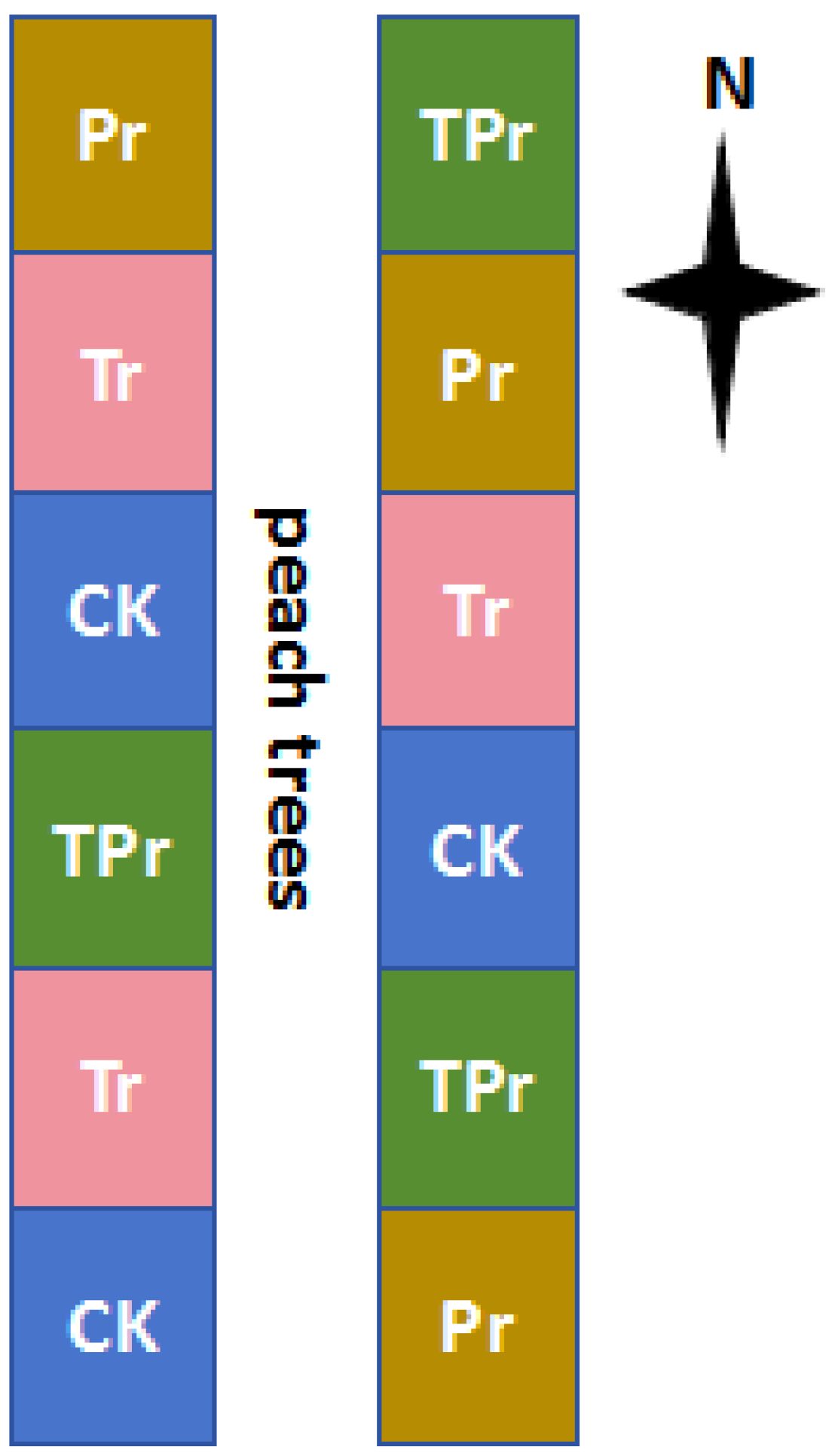
Four treatments were established in the peach orchard, with the control (CK) and three sod-seeding patterns. Specifically, CK was clean tillage with weeds controlled by plowing, TPr was Trifolium repens and Lolium perenne mixed sowing, Tr was Trifolium repens monoculture, and Pr was Lolium perenne monoculture (Table 1). The experimental plots were arranged randomly, with 3 replicates for each treatment (Figure 1).

2.3. Measurements

2.3.1. Soil Physiochemical and Enzymic Indicators

The core ring method was used to measure bulk density (BD). Undisturbed soil cores (5 cm diameter × 5 cm height) were collected, oven-dried at 105 °C for 48 h, and weighed to calculate BD (g·cm−3). As for electrical conductivity (EC), soil suspensions (1:2.5 soil/deionized water, w/v) were shaken for 30 min, then measured using a conductivity meter (Orion 160, Thermo Fisher). The pH was determined in a 1:2.5 soil/deionized water suspension using a glass electrode pH meter (METTLER TOLEDO FE28). Aggregates were separated via wet sieving (2 mm, 1 mm, 0.5 mm, 0.25 mm, and <0.25 mm sieves) after dispersion with sodium hexametaphosphate. MWD (mm) was calculated as the weighted average of aggregate mass across the sieves. Soil organic carbon (SOC) was measured by potassium dichromate oxidation-colorimetry, with correction for carbonate interference. Nitrate (NO3-N) and ammonium (NH4+-N) nitrogen: extracted with 2 M KCl (1:5 soil/solution, w/v), then quantified via continuous-flow colorimetry. Total nitrogen (STN) was determined by Kjeldahl digestion followed by colorimetric analysis. Soil organic nitrogen (SON) was calculated as total N minus NO3-N and NH4+-N. Available phosphorus (SAP) was extracted using the Olsen method (0.5 M NaHCO3, pH 8.5) then measured via molybdate-blue colorimetry.
Sucrase (SUC) activity was determined by sucrose hydrolysis, using 3,5-dinitrosalicylic acid (DNS) to quantify the reduced sugar. Urease (URE) activity was measured through catalyzed urea hydrolysis and the released NH3 was trapped in boric acid and detected via indophenol blue. Catalase (CAT) activity was assessed by H2O2 decomposition and the residual H2O2 was measured through UV absorbance at 240 nm. Cellulase (CEL) activity was determined by carboxymethyl cellulose (CMC) hydrolysis, and the reduced sugars were quantified using DNS.

2.3.2. Soil N2O Flux and Accumulative Emission

The LI-7820 high-precision N2O/H2O analyzer (LI-COR) combined with the 8200-01 Smart Chamber (LI-COR Biosciences, Lincoln, NE, USA) was employed to quantify soil N2O flux ([N2O]). The system operates on optical feedback-cavity enhanced absorption spectroscopy (OF-CEAS), enabling real-time detection of N2O concentrations with a precision of 0.2 ppb and a response time ≤ 2 s. The Smart Chamber, equipped with a pressure-balanced ventilation system and automated mixing mechanism, minimizes pressure fluctuations and ensures stable gas sampling. Concurrently with soil N2O flux, soil temperature and soil volumetric water content were measured using a Stevens Hydraprobe connected to the smart chamber. The measurements were conducted from 9:00 to 11:00 a.m. and 3:00 to 5:00 p.m.
The measurement protocol involved placing the Smart Chamber on soil collars (20 cm diameter, 10 cm depth) installed at experimental plots. Closed-loop gas sampling connected the chamber to the LI-7820, which continuously monitored N2O concentrations. Data were acquired at 1 Hz and processed using SoilFluxProTM software (LI-COR, version 5.2.0) to calculate fluxes via linear or exponential regression, depending on concentration dynamics. Calibration was performed daily using certified N2O standards (0–100 ppm) to correct drift and ensure accuracy.
Measurement of [N2O] was conducted 2 to 3 times monthly, with supplementary sampling performed promptly following fertilization and intense rainfall events, and the accumulative N2O emission was calculated according to the annual mean [N2O].

2.3.3. Soil Metagenomic Sequencing

Soil metagenomic analysis was performed using a standardized workflow to characterize the microbial community structure and functional potential. Surface soil samples were collected from experimental plots at a depth of 0–10 cm, with 3 replicates per treatment. The samples were obtained using a sterilized auger, homogenized, and then stored at −80 °C until DNA extraction in August.
Total soil microbial DNA was extracted from 0.5 g of fresh mixed soil using the E.Z.N.A.® Soil DNA Kit (Omega Bio-TEK, Norcross, GI, USA) according to the manufacturer’s instructions. DNA quality and concentration were assessed with a NanoDrop 2000 spectrophotometer (Thermo Scientific, Waltham, MA, USA) prior to metagenomic sequencing. Approximately 1 μg of high-quality DNA from each sample was used for library construction and sequenced on the Illumina HiSeq 4000 platform (Illumina Inc., San Diego, CA, USA) at Majorbio Bio-Pharm Technology Co., Ltd. (Shanghai, China).
Raw sequencing reads were quality-filtered using fastp (v0.20.0; https://github.com/OpenGene/fastp, accessed on 20 September 2025) to remove low-quality bases and adapters, producing high-quality clean data for subsequent analyses. The clean reads were assembled into contigs using MEGAHIT (v1.1.2; https://github.com/voutcn/megahit, accessed on 22 September 2025), with a minimum contig length of 300 bp retained after assembly. Open reading frames (ORFs) were predicted from the contigs using Prodigal (v2.6.3; https://github.com/hyattpd/Prodigal, accessed on 22 September 2025), and ORFs with a length ≥ 100 bp were translated into amino acid sequences for downstream analysis. A non-redundant gene catalog was constructed using CD-HIT (v4.7; http://weizhongli-lab.org/cd-hit/, accessed on 23 September 2025) with thresholds of 90% sequence identity and 90% coverage. High-quality reads from each sample were mapped to the non-redundant gene catalog using SOAPaligner (v2.21; https://github.com/ShujiaHuang/SOAPaligner, accessed on 23 September 2025) to calculate gene abundance profiles. Taxonomic and functional annotations of the non-redundant gene set were obtained using DIAMOND (v2.0.13; https://github.com/bbuchfink/diamond, accessed on 23 September 2025) by performing blastp searches (E-value ≤ 1 × 10⁻⁵) against multiple databases, including NR, eggNOG, KEGG, and CAZy.

2.4. Statistical Analysis

The experimental data were presented as mean ± standard deviation (n = 3) and analyzed using SPSS 25 software (IBM, Armonk, NY, USA). Tukey’s t-test was used to assess the significant differences, and p < 0.05 was considered to be statistically significant. The structural equation model was constructed using the maximum likelihood evaluation program implemented in IBM SPSS AMOS 25 software (IBM, USA).

3. Results

3.1. Effects on Soil Properties

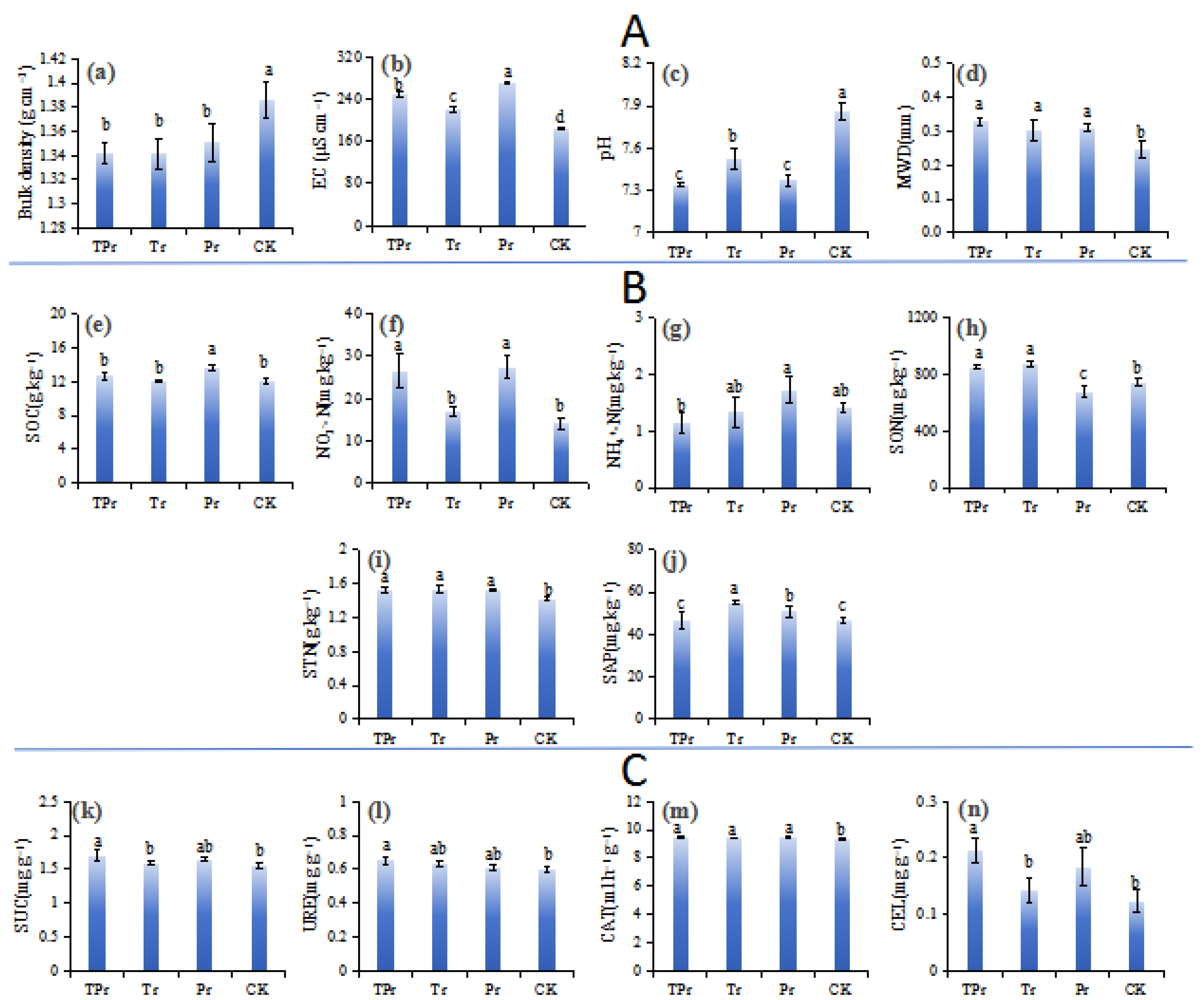
All sod-seeding patterns were found to have significant effects on soil physicochemical properties (Bulk density, EC, pH, and MWD), nutrient contents (SOC, NO3-N, NH4+-N, SON, STN, and SAP) and soil enzymes (SUC, URE, CAT, and CEL) (Figure 2).
Soil bulk density significantly decreased in all sod-seeding treatments compared to the CK, with most changes observed in TPr pattern (Figure 2a). Soil electrical conductivity (EC) elevated dramatically in all sod-seeding treatments compared to the CK, with significant difference among TPr, Tr, and Pr patterns (Figure 2b). Compared with CK, the decline of pH was significant for all sod-seeding patterns, approximating to chemical neutrality (pH = 7) (Figure 2c). The mean weight diameter (MWD) of soil aggregates in TPr, Tr, and Pr treatments was notably higher than that in CK, reflecting improved soil aggregate stability under sod-seeding patterns (Figure 2d). Generally, sod-seeding patterns modified soil physicochemical characteristics by reducing bulk density and pH and increasing EC and MWD.
Sod-seeding patterns (TPr, Tr, Pr) improved soil nutrient status. Compared to the CK, the SOC content consistently increased in all sod-seeding treatments, with significant changes observed only in the treatment of Pr (Figure 2e). The NO3-N contents were markedly higher in TPr and Pr than those in Tr and CK, while the NH4+-N content was greatest in Pr, followed by CK, Tr, and TPr, with a significant difference only between Pr and TPr (Figure 2f,g). Relative to the CK, the SON and STN were significantly boosted in both TPr and Tr treatments; however, the SON decreased but the STN increased in Pr treatment (Figure 2h,i). With significant difference, the SAP was optimal in the Tr, followed by Pr, and higher than that in TPr and CK (Figure 2j). Collectively, sod-seeding patterns enhanced soil organic and inorganic nutrients, with Pr for SOC and NH4+-N, TPr, and Tr for SON and STN, and Tr for SAP.
Sod-seeding patterns (TPr, Tr, Pr) enhanced soil enzyme activities as well. Specifically, the activities of SUC, URE, and CEL in all sod-seeding patterns were higher than those in CK, while only the increase in the TPr was significant (Figure 2k,l,n). CAT activity boosted dramatically in all sod-seeding treatments compared to the CK, with no significant difference among TPr, Tr, and Pr patterns (Figure 2m). In general, TPr pattern performed best for improvement of soil enzyme activity.

3.2. Effects on N2O Emission

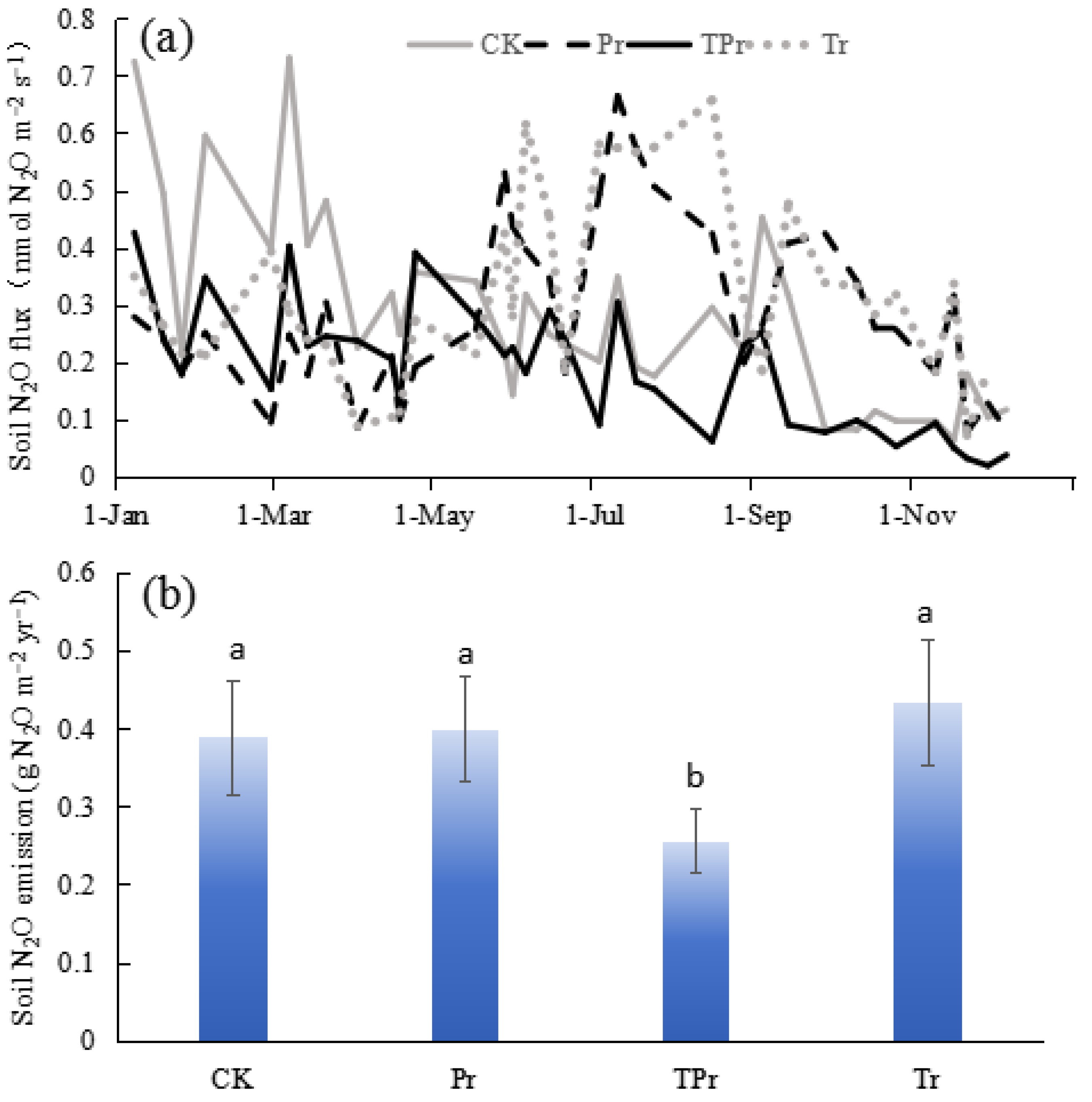
The temporal variations in soil N2O flux ([N2O]) showed distinct modes across sod-seeding patterns (Figure 3a). As for the relative magnitude of [N2O] in the four treatments, the whole year can be divided into three stages. In the first stage, from January to March, which was the period of soil freezing, thawing, and grass dormancy, the [N2O] of CK was higher than that of the three sod-seeding patterns, and the [N2O] showed little difference among Pr, TPr, and Tr. From April to mid-June was the second stage, overlapping with grass reviving, peach tree flowering, and fruit setting. There was no obvious difference in [N2O] among the four treatments, and the strong effects of fertilization, irrigation, and flower and fruit thinning on [N2O] masked the influence from sod-seeding patterns. The third stage lasted from late June to December, in parallel with the sod-grass growth periods from florescence to senescence, when the [N2O] of TPr was the lowest, followed by CK, while Pr and Tr showed similarly higher [N2O].
From the perspective of the annually changing trend of soil nitrous oxide flux ([N2O]), the CK was similar to TPr, showing a relatively stable yet moderate flux trajectory with reduced peak intensities throughout the year. In contrast, Pr and Tr treatments presented more pronounced peaks, exhibiting a multimodal form (Figure 3a).
As for the cumulative N2O emission, there was no significant difference among CK, Pr, and Tr treatments, while TPr exhibited markedly lower values (Figure 3b). The cumulative N2O emission in CK (0.39 g N2O·m−2·yr−1) was mainly contributed by the soil freezing and thawing process during the first stage (Figure 3a,b). Compared to CK, the insignificantly higher cumulative N2O emissions in Pr (0.40 g N2O·m−2·yr−1) and Tr (0.43 g N2O·m−2·yr−1) were mostly determined by the third stage, relating to the active physiological activities of sod-grass (Figure 3a,b). However, when T. repens and L. perenne were combined as the TPr pattern, the cumulative N2O emission (0.26 g N2O·m−2·yr−1) significantly declined by 34.0%, 35.7%, and 41.0% relative to CK, Pr, and Tr (Figure 3b). These results indicated that the TPr sod-seeding pattern can effectively reduce soil N2O cumulative emissions. Such differences might be attributed to altered soil microbial communities, especially those related to nitrogen cycling processes under the TPr pattern.

3.3. Effects on Nitrogen Cycle Genes

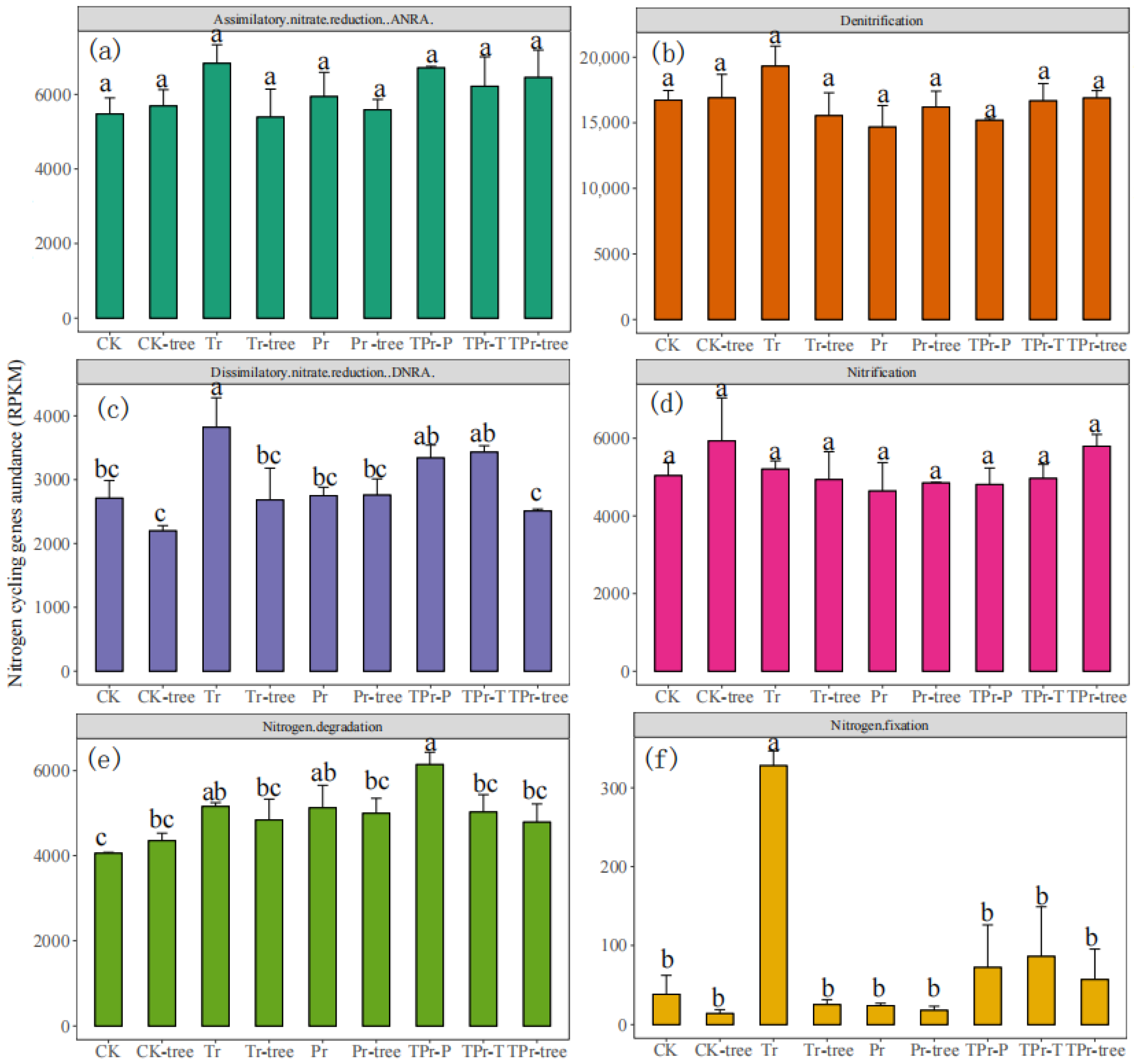
Sod-seeding patterns (TPr, Tr, Pr) significantly influenced soil nitrogen (N) cycling functional genes. The abundance of genes involved in assimilatory nitrate reduction (ANRA), denitrification, and nitrification processes in the soil nitrogen cycle did not differ significantly among different sod-seeding patterns (Figure 4a,b,d). Compared with the CK, Tr, and TPr (TPr-P and TPr-T), treatments significantly increased the gene abundance of the dissimilatory nitrate reduction (DNRA) process (Figure 4c). Tr, Pr, and TPr-P significantly boosted gene abundance for the nitrogen degradation process compared to the CK, and the TPr-P treatment exhibited the highest gene abundance (Figure 4e). Both Tr and TPr (TPr-P and TPr-T) treatments promoted gene abundance for the nitrogen fixation process; however, only Tr exhibited a significant increase compared to other treatments (Figure 4f). Collectively, sod-seeding patterns, especially TPr, differentially regulated soil N cycling genes across processes, with pronounced effects on ANRA, DNRA, N degradation, and N fixation, while denitrification and nitrification were less responsive.
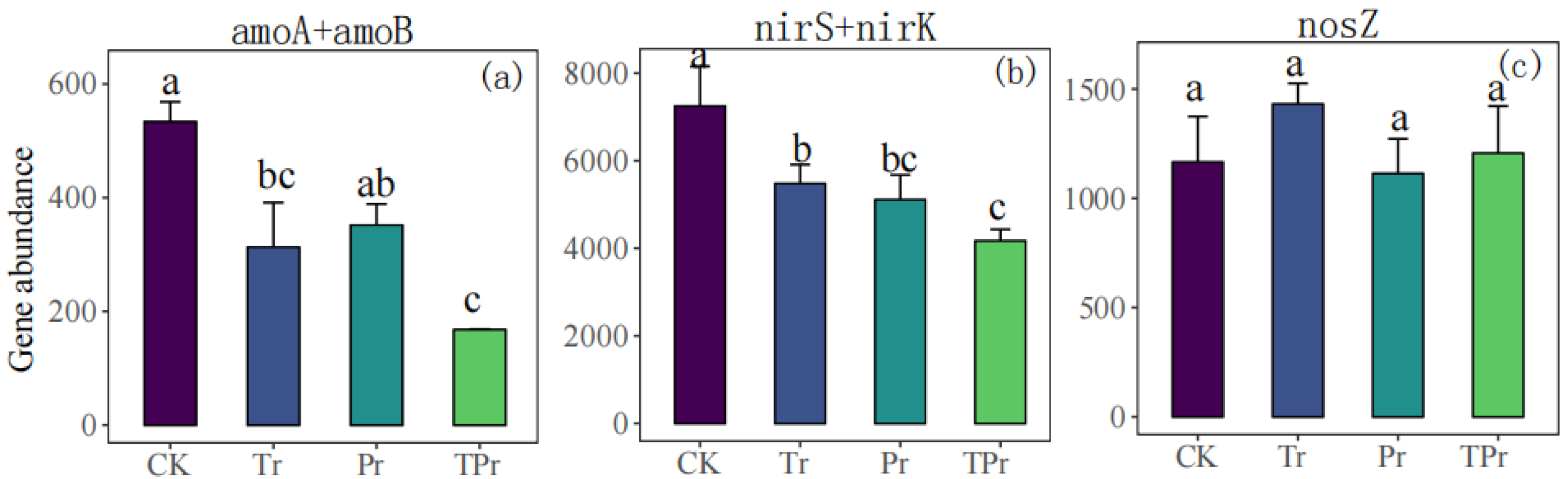
The sod-seeding pattern did not significantly affect the gene abundance of nitrification and denitrification processes, which in turn played a decisive role in soil N2O emission. As a result, the response of specific gene abundance closely related to N2O for sod-seeding patterns was further analyzed. The sod-seeding pattern had no significant effect on the abundance of nitrous oxide reductase gene (nosZ) that determines N2O consumption, compared with the CK (Figure 5c). Nevertheless, the grass-growing pattern dramatically reduced the abundance of the ammonia monooxygenase gene (amoA + amoB) and nitrite reductase gene (nirS + nirK), which determine N2O production, and the TPr treatment had the most prominent reduction effect (Figure 5a,b). In summary, the sod-seeding pattern differentially regulates N2O-related gene pools: it prominently declined genes in nitrification and early denitrification steps (amoA/amoB, nirS/nirK) but made subtle impact on the terminal nosZ gene.

3.4. The Impact of Sod-Seeding Pattern on N2O Emission: Pathways and Correlations

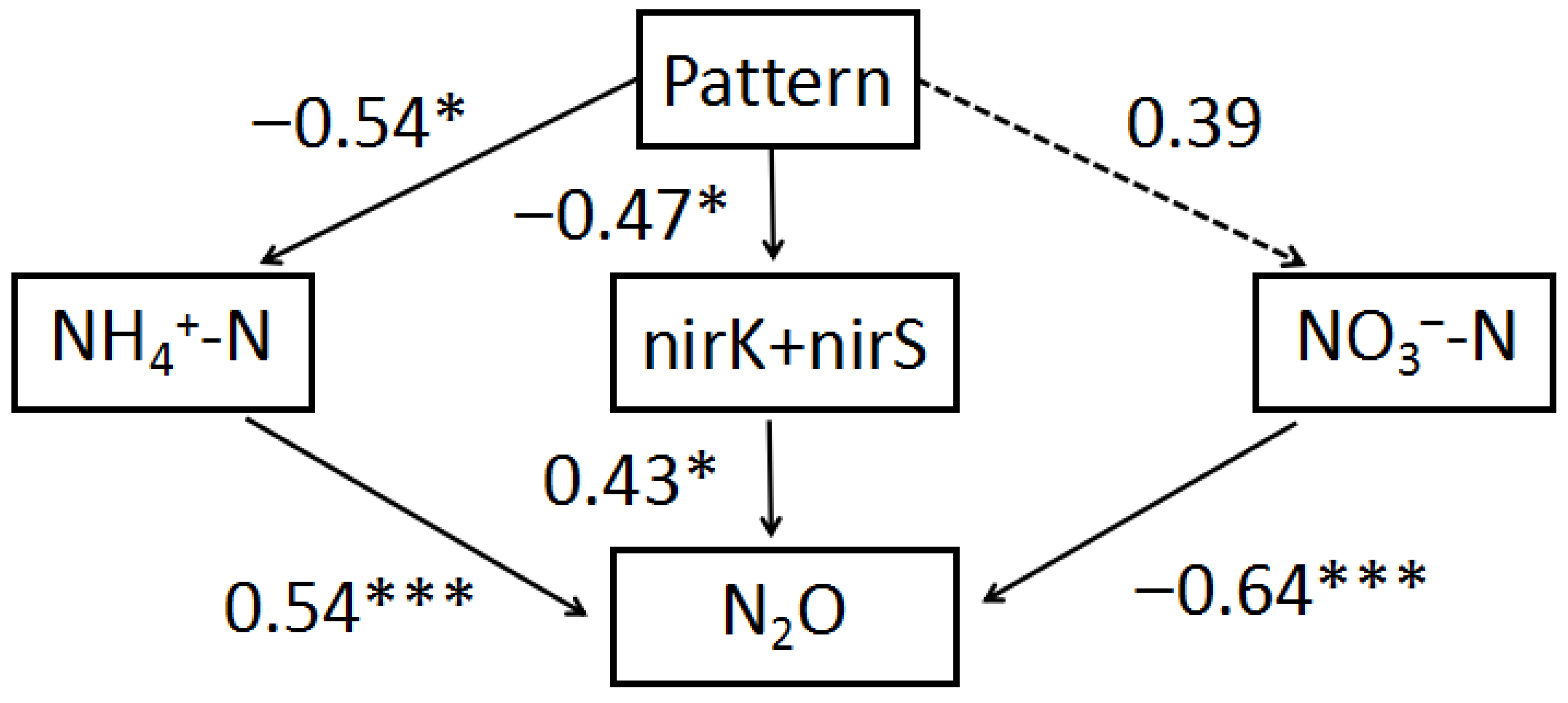
Sod-seeding patterns (Pr, Tr, TPr), as crucial agricultural management practices, have far-reaching impacts on soil nitrogen (N) cycling and nitrous oxide (N2O) emissions, an important greenhouse gas. Here, the direct and indirect pathways through which sod-seeding patterns influence N2O were analyzed, taking both abiotic (substrate availability) and biotic (microbial functional genes) factors into account. The sod-seeding pattern mainly decreased soil N2O emission by reducing soil NH4+-N content and nirS + nirK abundance. Soil NO3-N content was weakly affected by sod-seeding pattern but exerted strong influence on N2O emission (Figure 6).

4. Discussion

4.1. Impacts on Soil Quality and Health

The integration of sod-seeding patterns (Pr, Tr, TPr) demonstrated profound effects on soil physicochemical properties, nutrient dynamics, and enzymatic activities, collectively enhancing soil quality and health in peach orchards.
The significant reduction in bulk density (most notable in TPr) and pH (approaching neutrality) across all treatments indicates improved soil structure and reduced compaction. Lower bulk density enhances root penetration and water infiltration, mitigating risks of waterlogging and root rot—a critical factor in peach cultivation where soil aeration is vital. The elevated electrical conductivity (EC) in all sod-seeded plots suggests enhanced solute mobility, potentially facilitating nutrient uptake by roots. Increased mean weight diameter (MWD) of soil aggregates (Figure 2d) reflects improved aggregate stability, which is essential for water retention and erosion resistance [29,30]. These changes align with practices such as deep tillage and organic mulching, which are known to optimize soil physical conditions.
Moreover, sod-seeding patterns significantly altered nutrient availability. The consistent increase in soil organic carbon (SOC) in Pr highlights its role in enhancing organic matter retention, a key driver of long-term soil fertility. The differential responses of nitrate (NO3-N) and ammonium (NH4+-N) nitrogen further underscore treatment-specific nutrient dynamics: both TPr and Pr favored nitrate mobilization, while only Pr excelled in ammonium retention. Lolium perenn did not introduce new nitrogen into the soil like legumes do, but suppressed nitrification and slowed down the conversion of ammonium (NH4+) to nitrate (NO3) [31], resulting in an accumulation of NH4+ in the soil. This divergence may influence nitrogen use efficiency in peach trees, as nitrate is more mobile but prone to leaching [32,33], whereas ammonium is more stable but requires enzymatic conversion for plant uptake. The elevated soil organic nitrogen (SON) and total nitrogen (STN) in TPr and Tr suggest accelerated organic matter mineralization, potentially synchronizing nutrient release with peach growth phases. Notably, available phosphorus (SAP) peaked in Tr, emphasizing its efficacy in phosphorus bioavailability—a critical factor in calcareous soils where phosphorus fixation is common.
The surge in soil enzyme activities (SUC, URE, CAT) under sod-seeding treatments reflects enhanced microbial metabolic activity. Sucrase and urease, key enzymes in carbon and nitrogen cycling [34], were most elevated in TPr, indicating robust organic matter decomposition and nutrient mineralization [35]. Catalase activity across all treatments implies improved redox conditions, which could mitigate oxidative stress in soil microbes and promote a nitrification–denitrification balance. These enzymatic shifts correlate with microbial community restructuring, where sod-seeding likely enriched copiotrophic taxa capable of rapid organic matter turnover. The dominance of TPr in enzymatic kinetics suggests its superiority in fostering a dynamic microbial ecosystem, which is critical for sustaining nutrient fluxes under intensive orchard management.
In summary, sod-seeding patterns comprehensively improved the soil quality through optimizing physicochemical properties, nutrient supply, and enzyme activity. The soil quality improvement underscored the dominance of TPr in enzyme kinetics and nutrient mobilization and the ascendancy of Pr in organic matter retention and pH moderation.

4.2. Pathways from Sod-Seeding Pattern to Nitrogen Substrates and Functional Genes

The sod-seeding pattern showed a significant negative correlation with soil ammonium (NH4+-N) concentration [36], suggesting that different seeding strategies, such as single-cropping (Pr, Tr) or intercropping (TPr), can influence NH4+ dynamics through processes such as enhanced microbial immobilization, increased plant N uptake, or reduced ammonification [37]. For instance, intercropping (TPr) might make use of complementary resources among different species, speeding up the consumption of NH4+ compared to its production, thereby reducing the soil NH4+ pools.
The sod-seeding pattern had a significant negative impact on the combined abundance of nirK and nirS genes, which encode nitrite reductases crucial for denitrification by converting nitrite (NO2) to N2O or dinitrogen (N2) [38,39]. A decrease in these genes under specific seeding patterns indicates changes in the denitrifier community structure, resulting in reduced potential for N2O production during denitrification [40].

4.3. Direct Effects of Nitrogen Substrates and Functional Genes on N2O

Soil NH4+-N had a strong positive correlation with N2O emissions. Higher NH4+ availability directly promotes N2O formation by increasing the substrate supply for N-transforming microbes [41]. Primarily, NH4+-N is the substrate for autotrophic nitrification, the two-step oxidation of ammonia to nitrate, which is a direct source of N2O [42]. Elevated concentrations of NH4+-N can stimulate the growth and activity of ammonia-oxidizing microorganisms, including both ammonia-oxidizing bacteria (AOB) and archaea (AOA) [43]), thereby increasing the overall rate of nitrification and associated N2O leakage.
Furthermore, high NH4+-N availability can promote N2O emissions through indirect pathways. Under conditions of high substrate concentration, rapid nitrification can lead to the accumulation of nitrite (NO2), a highly reactive intermediate. This accumulation can fuel N2O production via nitrifier denitrification, a process where ammonia oxidizers reduce NO2 to N2O, particularly under low oxygen conditions [13]. Additionally, the nitrate (NO3) produced from nitrification serves as the terminal electron acceptor for canonical denitrification, another major source of N2O [44]. Thus, a high supply of NH4+-N effectively fuels the entire coupled nitrification–denitrification sequence, leading to amplified N2O emissions. The strong correlation observed in our study likely reflects the integrated contribution of these multiple, interconnected pathways, all of which are fundamentally driven by the availability of NH4+-N.
The combined abundance of nirK + nirS genes also had a significantly positive relationship with N2O emission. The nirK and nirS genes encode enzymes that convert nitrite (NO2) to nitric oxide (NO), a crucial step in denitrification. The total gene count in a soil sample reflects the community’s ability to perform this conversion. More nirK + nirS genes lead to higher N2O emissions, especially in low-oxygen conditions (a characteristic of denitrification hotspots) [45,46]. This direct link emphasizes how the metabolic potential of microbes determines N2O emissions [47].
Numerous studies in various ecosystems and management practices support this finding. Agricultural activities that boost N2O emissions, like nitrogen fertilization, also increase nirK and nirS gene numbers [15,48]. Conversely, practices reducing N2O, such as certain biochar applications, can alter the denitrifying community by reducing nirK + nirS gene levels or changing their ratio to other denitrification genes [49,50]. This consistent pattern underscores the key role of nitrite-reducing microbes in regulating N2O production potential.
For nitrate (NO3-N), sod-seeding pattern showed a non-significant positive pathway (coefficient = 0.39, p > 0.05), indicating a weak direct regulation of the sod-seeding pattern on soil nitrate pools. However, NO3-N had a strong negative correlation with N2O emissions [51]. This negative association is in line with the “denitrification completion” hypothesis: sufficient NO3-N promotes complete denitrification (converting NO3 to N2), reducing the accumulation of the intermediate N2O [52]. Alternatively, high NO3 may cause changes in the microbial community that favor complete denitrification over incomplete pathways, limiting the release of N2O [53].

4.4. Integrated Mechanisms and Implications

Sod-seeding pattern affects N2O through multiple, interconnected pathways:
(1)
Substrate-driven pathway: The pattern regulates NH4+-N, which directly fuels N2O production by providing substrates for nitrification and denitrification [51].
(2)
Microbial-functional pathway: The pattern controls the abundances of nirK + nirS, changing the denitrification potential and N2O formation [54].
(3)
Competitive-denitrification pathway: The pattern has a weak direct effect on NO3-N but strongly influences N2O through NO3-mediated completion of denitrification, reducing the intermediate N2O [55].
These results showed that the sod-seeding pattern shaped N2O emissions through both abiotic (substrate availability) and biotic (microbial gene regulation) mechanisms. For N2O mitigation in sod-seeded agroecosystems, strategies should aim to reduce NH4+ accumulation, for example, through enhanced plant uptake or microbial immobilization and modulate denitrifier functional genes, such as through species intercropping that favors complete denitrification.

4.5. Implications, Limitations, and Future Directions

The integration of sod-seeding patterns (Pr, Tr, TPr) demonstrates significant potential to reduce N2O emissions while enhancing soil health in peach orchards. By mimicking natural ecosystems through grass–legume integration (e.g., Tr and TPr), these systems reduce reliance on synthetic fertilizers, aligning with conservation agriculture principles [56]. For instance, Pr’s ability to retain soil organic carbon (SOC) and moderate pH mitigates soil degradation and carbon sequestration losses, which is critical for long-term fertility [57]. TPr’s dominance in enzymatic activity (e.g., SUC, URE) enhances organic matter decomposition, promoting nutrient synchronization with peach growth phases and buffering against seasonal fluctuations. This enzymatic resilience, coupled with reduced bulk density and improved aggregate stability (MWD), mitigates erosion risks and optimizes water retention—key adaptations to climate variability. Moreover, TPr’s capacity to lower NH4+-N pools and modulate denitrifier functional genes (nirK/nirS) suppresses N2O production pathways, while elevated NO3-N under Tr facilitates complete denitrification, further reducing intermediate N2O accumulation. These findings position sod-seeding as a dual-functional strategy for productivity and ecological resilience.
Despite promising outcomes, current studies face critical limitations. First, short-term trials (e.g., 3–5 years) may overlook the long-term impacts on microbial community dynamics and SOC sequestration. For example, Pr’s initial SOC gains might plateau over time due to decomposition dynamics, necessitating extended monitoring [58,59]. Second, variability in treatment responses (e.g., SON decline in Pr) highlights unresolved mechanistic interactions between plant–microbe–soil systems. The reduced SON in Pr suggests potential trade-offs between organic matter retention and nutrient cycling efficiency, requiring deeper metagenomic profiling to elucidate the microbial taxa responsible. Third, regional adaptability remains unvalidated. While TPr excels in nutrient mobilization in calcareous soils, its efficacy in waterlogged or saline-sodic soils—common in peach-growing regions—requires validation through multi-location trials. Lastly, economic feasibility studies are lacking. Although TPr reduces N-fertilizer inputs, the cost–benefit ratio of sod-seeding implementation (e.g., seedling establishment and maintenance are more labor-intensive than clean tillage for the first year) remains unquantified, limiting adoption by resource-limited farmers.
To advance sod-seeding applications in orchards, future research should prioritize three axes. First, longitudinal studies spanning 10 years or more are needed to assess SOC dynamics, microbial succession, and N2O mitigation efficacy under climate extremes (e.g., droughts, heavy rainfall). Isotopic tracing (e.g., 15N) could quantify N transformation pathways [60] and identify keystone microbial guilds driving denitrification. Second, integrating sod-seeding with precision agriculture tools (e.g., sensor-guided fertilization, drones for soil mapping) could optimize resource allocation. For instance, coupling TPr with nitrate sensors might balance N supply–demand while minimizing leaching. Third, expanding functional genomics to profile nirK/nirS-harboring taxa will clarify how sowing patterns reshape denitrifier communities. Metatranscriptomic analyses could reveal metabolic shifts under varying moisture and O2 regimes [61], guiding gene-editing strategies to enhance complete denitrification. By bridging ecological principles with technological innovation, sod-seeding patterns can evolve into a scalable paradigm for climate-smart agriculture.

5. Conclusions

The sod-seeding patterns (Pr, Tr, TPr) delivered dual benefits for peach orchard sustainability: mitigating nitrous oxide (N2O) emission and enhancing soil health. TPr (Trifolium repensLolium perenne mixed sowing) excelled, reducing cumulative N2O emission by 34.0 to 41.0% via suppressing NH4+-N pools and nirK/nirS genes—key drivers of denitrification. The recommended seed amounts for Trifolium repens and Lolium perenne in TPr pattern are 0.5 and 1 kg·667 m−2, respectively. All sod-seeding treatments improve soil physicochemical properties, optimize nutrient dynamics, and stimulate enzymatic activities. These changes advance soil resilience, nutrient cycling, and N2O mitigation, positioning sod-seeding as a climate-smart strategy for long-term orchard productivity and ecological balance.

Author Contributions

Conceptualization, Z.P. and Y.L.; methodology, Z.P.; validation, C.C. and G.Z.; investigation, Z.P.; resources, A.L. and H.K.; data curation, G.Z.; writing—original draft preparation, Z.P. and Y.L.; writing—review and editing, H.K. and A.L.; visualization, H.X. and A.L.; supervision, H.X. and H.K.; project administration, H.K. and A.L.; funding acquisition, A.L. All authors have read and agreed to the published version of the manuscript.

Funding

This research was funded by Special Projects of Construction of Science and Technology Innovation Ability of Beijing Academy of Agricultural and Forestry Sciences (BAAFS) grant number (KJCX20230220, KJCX20240319 and KJCX 20230305).

Data Availability Statement

The original contributions presented in this study are included in the article. Further inquiries can be directed to the corresponding authors.

Acknowledgments

This work was financially supported by Special Projects of Construction of Science and Technology Innovation Ability of BAAFS (KJCX20230220, KJCX20240319 and KJCX 20230305).

Conflicts of Interest

The authors declare no conflicts of interest.

References

  1. Liu, Z.; Lin, Y.; Lu, H.; Ding, M.; Tan, Y.; Xu, S.; Fu, S. Maintenance of a living understory enhances soil carbon sequestration in subtropical orchards. PLoS ONE 2013, 8, e76950. [Google Scholar] [CrossRef]
  2. Fu, H.; Ma, Q.; Chen, H.; Wu, L.; Ye, Y. Mitigating Soil Phosphorus Leaching Risk and Improving Pear Production Through Planting and Mowing Ryegrass Mode. Agronomy 2025, 15, 1296. [Google Scholar] [CrossRef]
  3. Weinbaum, S.; Johnson, R.; DeJong, T. Causes and Consequences of Overfertilization in Orchards. HortTechnology 1992, 2, 112b–121. [Google Scholar] [CrossRef]
  4. Montanaro, G.; Xiloyannis, C.; Nuzzo, V.; Dichio, B. Orchard management, soil organic carbon and ecosystem services in Mediterranean fruit tree crops. Sci. Hortic. 2017, 217, 92–101. [Google Scholar] [CrossRef]
  5. Rathore, A.; Singh, C.; Jayaprakash, J.; Gupta, A.; Doharey, V.; Jinger, D.; Singh, D.; Yadav, D.; Barh, A.; Islam, S.; et al. Impact of conservation practices on soil quality and ecosystem services under diverse horticulture land use system. Front. For. Glob. Chang. 2023, 6, 1289325. [Google Scholar] [CrossRef]
  6. Deng, Z.; Ciais, P.; Tzompa-Sosa, Z.; Saunois, M.; Qiu, C.; Tan, C.; Sun, T.; Ke, P.; Cui, Y.; Tanaka, K.; et al. Comparing national greenhouse gas budgets reported in UNFCCC inventories against atmospheric inversions. Earth Syst. Sci. Data 2022, 14, 1639–1675. [Google Scholar] [CrossRef]
  7. Wang, N.; Wolf, J.; Zhang, F. Towards sustainable intensification of apple production in China—Yield gaps and nutrient use efficiency in apple farming systems. J. Integr. Agric. 2016, 15, 716–725. [Google Scholar] [CrossRef]
  8. Alsina, M.; Fanton-Borges, A.; Smart, D. Spatiotemporal variation of event related N2O and CH4 emissions during fertigation in a California almond orchard. Ecosphere 2013, 4, 1–21. [Google Scholar] [CrossRef]
  9. Deng, J.; Li, C.; Burger, M.; Horwáth, W.; Smart, D.; Six, J.; Guo, L.; Salas, W.; Frolking, S. Assessing Short-Term Impacts of Management Practices on N2O Emissions from Diverse Mediterranean Agricultural Ecosystems Using a Biogeochemical Model. J. Geophys. Res. Biogeosci. 2018, 123, 1557–1571. [Google Scholar] [CrossRef]
  10. Hansen, S.; Frøseth, R.; Stenberg, M.; Stalenga, J.; Olesen, J.; Krauss, M.; Radzikowski, P.; Doltra, J.; Nadeem, S.; Torp, T.; et al. Reviews and syntheses: Review of causes and sources of N2O emissions and NO3 leaching from organic arable crop rotations. Biogeosciences 2019, 16, 2795–2819. [Google Scholar] [CrossRef]
  11. Oberson, A.; Jarosch, K.; Frossard, E.; Hammelehle, A.; Fließbach, A.; Mäder, P.; Mayer, J. Higher than expected: Nitrogen flows, budgets, and use efficiencies over 35 years of organic and conventional cropping. Agric. Ecosyst. Environ. 2023, 362, 108802. [Google Scholar] [CrossRef]
  12. Chang, M.; Xiao, S.; Liao, Y.; Huang, J.; Li, H. Effects of Rainfall Variability and Land Cover Type on Soil Organic Carbon Loss in a Hilly Red Soil Region of Southern China. Agronomy 2024, 14, 2563. [Google Scholar] [CrossRef]
  13. Huang, T.; Gao, B.; Hu, X.K.; Lu, X.; Well, R.; Christie, P.; Bakken, L.R.; Ju, X.T. Ammonia-oxidation as an engine to generate nitrous oxide in an intensively managed calcareous fluvo-aquic soil. Sci. Rep. 2014, 4, 3950. [Google Scholar] [CrossRef]
  14. Graf, D.R.; Jones, C.M.; Hallin, S. Intergenomic comparisons highlight modularity of the denitrification pathway and underpin the importance of community structure for N2O emissions. PLoS ONE 2014, 9, e114118. [Google Scholar] [CrossRef]
  15. Hui, D.; Ray, A.; Kasrija, L.; Christian, J. Impacts of Climate Change and Agricultural Practices on Nitrogen Processes, Genes, and Soil Nitrous Oxide Emissions: A Quantitative Review of Meta-Analyses. Agriculture 2024, 14, 240. [Google Scholar] [CrossRef]
  16. Dobbie, K.; Smith, K. The effects of temperature, water-filled pore space and land use on N2O emissions from an imperfectly drained gleysol. Eur. J. Soil Sci. 2001, 52, 667–673. [Google Scholar] [CrossRef]
  17. Qiu, Y.; Zhang, Y.; Zhang, K.; Xu, X.; Zhao, Y.; Bai, T.; Zhao, Y.; Wang, H.; Sheng, X.; Bloszies, S.; et al. Intermediate soil acidification induces highest nitrous oxide emissions. Nat. Commun. 2024, 15, 2695. [Google Scholar] [CrossRef]
  18. Wang, Y.; Guo, J.; Vogt, R.D.; Mulder, J.; Wang, J.; Zhang, X. Soil pH as the chief modifier for regional nitrous oxide emissions: New evidence and implications for global estimates and mitigation. Glob. Change Biol. 2018, 24, e617–e626. [Google Scholar] [CrossRef]
  19. Zhao, H.; Lakshmanan, P.; Wang, X.; Xiong, H.; Yang, L.; Liu, B.; Shi, X.; Chen, X.; Wang, J.; Zhang, Y.; et al. Global reactive nitrogen loss in orchard systems: A review. Sci. Total Environ. 2022, 821, 153462. [Google Scholar] [CrossRef]
  20. Chen, Z.; Zhang, N.; Li, Y.; Xu, S.; Liu, Y.; Miao, S.; Ding, W. Extreme Rainfall Amplified the Stimulatory Effects of Soil Carbon Availability on N2O Emissions. Glob. Change Biol. 2025, 31, e70164. [Google Scholar] [CrossRef]
  21. Tao, R.; Wakelin, S.A.; Liang, Y.; Hu, B.; Chu, G. Nitrous oxide emission and denitrifier communities in drip-irrigated calcareous soil as affected by chemical and organic fertilizers. Sci. Total Environ. 2018, 612, 739–749. [Google Scholar] [CrossRef]
  22. Blesh, J. Functional traits in cover crop mixtures: Biological nitrogen fixation and multifunctionality. J. Appl. Ecol. 2017, 55, 38–48. [Google Scholar] [CrossRef]
  23. Fageria, N.; Baligar, V.; Bailey, B. Role of Cover Crops in Improving Soil and Row Crop Productivity. Commun. Soil Sci. Plant Anal. 2005, 36, 2733–2757. [Google Scholar] [CrossRef]
  24. Dalal, R.; Wang, W.; Robertson, G.; Parton, W. Nitrous oxide emission from Australian agricultural lands and mitigation options: A review. Soil Res. 2003, 41, 165. [Google Scholar] [CrossRef]
  25. Miao, S.; Dou, J.; Chen, F.; Ju, L.; Li, A. Analysis of observations on the urban surface energy balance in Beijing. Sci. China Earth Sci. 2012, 55, 1881–1890. [Google Scholar] [CrossRef]
  26. Xu, W.; Cai, Y.P.; Yang, Z.F.; Yin, X.A.; Tan, Q. Microbial nitrification, denitrification and respiration in the leached cinnamon soil of the upper basin of Miyun Reservoir. Sci. Rep. 2017, 7, 42032. [Google Scholar] [CrossRef]
  27. Chen, Y.; Hu, S.; Guo, Z.; Cui, T.; Zhang, L.; Lu, C.; Yu, Y.; Luo, Z.; Fu, H.; Jin, Y. Effect of balanced nutrient fertilizer: A case study in Pinggu District, Beijing, China. Sci. Total Environ. 2021, 754, 142069. [Google Scholar] [CrossRef]
  28. Li, S.; Zhang, X.; Meng, Z.; Liu, G. Responses of peach trees to modified pruning 2. Cropping and fruit quality. N. Z. J. Crop Hortic. Sci. 1994, 22, 411–417. [Google Scholar] [CrossRef]
  29. Gan, F.; Shi, H.; Gou, J.; Zhang, L.; Dai, Q.; Yan, Y. Responses of soil aggregate stability and soil erosion resistance to different bedrock strata dip and land use types in the karst trough valley of Southwest China. Int. Soil Water Conserv. Res. 2023, 12, 684–696. [Google Scholar] [CrossRef]
  30. Mina, M.; Rezaei, M.; Sameni, A.; Ostovari, Y.; Ritsema, C. Predicting wind erosion rate using portable wind tunnel combined with machine learning algorithms in calcareous soils, southern Iran. J. Environ. Manag. 2022, 304, 114171. [Google Scholar] [CrossRef]
  31. O’Sullivan, C.; Whisson, K.; Treble, K.; Roper, M.; Micin, S.; Ward, P. Biological nitrification inhibition by weeds: Wild radish, brome grass, wild oats and annual ryegrass decrease nitrification rates in their rhizospheres. Crop Pasture Sci. 2017, 68, 798–804. [Google Scholar] [CrossRef]
  32. Liu, Z.; Song, X.; Jiang, L.; Lin, H.; Yu, X.; Gao, X.; Zheng, F.; Tan, D.; Wang, M.; Shi, J.; et al. Strategies for Managing Soil Nitrogen to Prevent Nitrate-N Leaching in Intensive Agriculture System; InTech eBooks; IntechOpen: London, UK, 2012. [Google Scholar] [CrossRef]
  33. Lee, W.J.; Truong, H.A.; Trịnh, C.S.; Kim, J.H.; Lee, S.; Hong, S.W.; Lee, H. NITROGEN RESPONSE DEFICIENCY 1-mediated CHL1 induction contributes to optimized growth performance during altered nitrate availability in Arabidopsis. Plant J. Cell Mol. Biol. 2020, 104, 1382–1398. [Google Scholar] [CrossRef]
  34. Piotrowska-Długosz, A.; Wilczewski, E. Effects of Catch Crops Cultivated for Green Manure on Soil C and N Content and Associated Enzyme Activities. Agriculture 2024, 14, 898. [Google Scholar] [CrossRef]
  35. Xing, Y.; Xie, Y.; Wang, X. Enhancing soil health through balanced fertilization: A pathway to sustainable agriculture and food security. Front. Microbiol. 2025, 16, 1536524. [Google Scholar] [CrossRef]
  36. Xuan, P.; Ma, H.; Deng, X.; Li, Y.; Tian, J.; Li, J.; Ma, E.; Xu, Z.; Xiao, D.; Bezemer, T.M.; et al. Microbiome-mediated alleviation of tobacco replant problem via autotoxin degradation after long-term continuous cropping. iMeta 2024, 3, e189. [Google Scholar] [CrossRef] [PubMed]
  37. Hagner, M.; Räty, M.; Nikama, J.; Rasa, K.; Peltonen, S.; Vepsäläinen, J.; Keskinen, R. Slow pyrolysis liquid in reducing NH3 emissions from cattle slurry—Impacts on plant growth and soil organisms. Sci. Total Environ. 2021, 784, 147139. [Google Scholar] [CrossRef] [PubMed]
  38. Saghaï, A.; Pold, G.; Jones, C.; Hallin, S. Phyloecology of nitrate ammonifiers and their importance relative to denitrifiers in global terrestrial biomes. Nat. Commun. 2023, 14, 8249. [Google Scholar] [CrossRef]
  39. Wu, L.; Tang, S.; Hu, R.; Wang, J.; Duan, P.; Xu, C.; Zhang, W.; Xu, M. Increased N2O emission due to paddy soil drainage is regulated by carbon and nitrogen availability. Geoderma 2023, 432, 116422. [Google Scholar] [CrossRef]
  40. Lourenço, K.; Costa, O.; Cantarella, H.; Kuramae, E. Ammonia-oxidizing bacteria and fungal denitrifier diversity are associated with N2O production in tropical soils. Soil Biol. Biochem. 2022, 166, 108563. [Google Scholar] [CrossRef]
  41. Wang, J.F.; Huang, J.W.; Cai, Z.X.; Li, Q.S.; Sun, Y.Y.; Zhou, H.Z.; Zhu, H.; Song, X.S.; Wu, H.M. Differential Nitrous oxide emission and microbiota succession in constructed wetlands induced by nitrogen forms. Environ. Int. 2024, 183, 108369. [Google Scholar] [CrossRef]
  42. Khalil, K.; Mary, B.; Renault, P. Nitrous oxide production by nitrification and denitrification in soil aggregates as affected by O2 concentration. Soil Biol. Biochem. 2004, 36, 687–699. [Google Scholar] [CrossRef]
  43. Scarlett, K.; Denman, S.; Clark, D.R.; Forster, J.; Vanguelova, E.; Brown, N.; Whitby, C. Relationships between nitrogen cycling microbial community abundance and composition reveal the indirect effect of soil pH on oak decline. ISME J. 2021, 15, 623–635. [Google Scholar] [CrossRef] [PubMed]
  44. Zhang, Z.; Peng, L.; Gao, W.; Wu, D.; Zhang, W.; Wang, X.; Liu, H.; Li, Q.; Fan, C.; Chen, M. PBAT microplastics exacerbates N2O emissions from tropical latosols mainly via stimulating denitrification. Chem. Eng. J. 2024, 495, 153681. [Google Scholar] [CrossRef]
  45. Chen, K.H.; Feng, J.; Bodelier, P.L.E.; Yang, Z.; Huang, Q.; Delgado-Baquerizo, M.; Cai, P.; Tan, W.; Liu, Y.R. Metabolic coupling between soil aerobic methanotrophs and denitrifiers in rice paddy fields. Nat. Commun. 2024, 15, 3471. [Google Scholar] [CrossRef] [PubMed]
  46. Schlüter, S.; Lucas, M.; Grosz, B.; Ippisch, O.; Zawallich, J.; He, H.; Dechow, R.; Kraus, D.; Blagodatsky, S.; Şenbayram, M.; et al. The anaerobic soil volume as a controlling factor of denitrification: A review. Biol. Fertil. Soils 2024, 61, 343–365. [Google Scholar] [CrossRef]
  47. Chen, X.; Zhang, S.; Liu, J.; Wang, J.; Xin, Y.; Sun, S.; Xia, X. Tracing Microbial Production and Consumption Sources of N2O in Rivers on the Qinghai-Tibet Plateau via Isotopocule and Functional Microbe Analyses. Environ. Sci. Technol. 2023, 57, 7196–7205. [Google Scholar] [CrossRef]
  48. Kong, D.; Zhang, X.; Yu, Q.; Jin, Y.; Jiang, P.; Wu, S.; Liu, S.; Zou, J. Mitigation of N2O emissions in water-saving paddy fields: Evaluating organic fertilizer substitution and microbial mechanisms. J. Integr. Agric. 2024, 23, 3159–3173. [Google Scholar] [CrossRef]
  49. Chen, Y.; Wang, Z.; Sun, K.; Ren, J.; Xiao, Y.; Li, Y.; Gao, B.; Gunina, A.; Aloufi, A.; Kuzyakov, Y. Biochar and Microplastics Affect Microbial Necromass Accumulation and CO2 and N2O Emissions from Soil. ACS EST Eng. 2023, 4, 603–614. [Google Scholar] [CrossRef]
  50. Harter, J.; Krause, H.M.; Schuettler, S.; Ruser, R.; Fromme, M.; Scholten, T.; Kappler, A.; Behrens, S. Linking N2O emissions from biochar-amended soil to the structure and function of the N-cycling microbial community. ISME J. 2014, 8, 660–674. [Google Scholar] [CrossRef]
  51. Cheng, Y.; Elrys, A.S.; Merwad, A.M.; Zhang, H.; Chen, Z.; Zhang, J.; Cai, Z.; Müller, C. Global Patterns and Drivers of Soil Dissimilatory Nitrate Reduction to Ammonium. Environ. Sci. Technol. 2022, 56, 3791–3800. [Google Scholar] [CrossRef]
  52. Timilsina, A.; Neupane, P.; Yao, J.; Raseduzzaman, M.; Bizimana, F.; Pandey, B.; Feyissa, A.; Li, X.; Dong, W.; Yadav, R.K.P.; et al. Plants mitigate ecosystem nitrous oxide emissions primarily through reductions in soil nitrate content: Evidence from a meta-analysis. Sci. Total Environ. 2024, 949, 175115. [Google Scholar] [CrossRef] [PubMed]
  53. Lee, H.H.; Kim, H.; Park, Y.L.; Horn, M.A.; Kim, J.; Lee, J.; Toyoda, S.; Yun, J.; Kang, H.; Kim, S.Y.; et al. Exploring Sulfate as an Alternative Electron Acceptor: A Potential Strategy to Mitigate N2O Emissions in Upland Arable Soils. Glob. Change Biol. 2025, 31, e70428. [Google Scholar] [CrossRef] [PubMed]
  54. Tang, Q.; Moeskjær, S.; Cotton, A.; Dai, W.; Wang, X.; Yan, X.; Daniell, T.J. Organic fertilization reduces nitrous oxide emission by altering nitrogen cycling microbial guilds favouring complete denitrification at soil aggregate scale. Sci. Total Environ. 2024, 946, 174178. [Google Scholar] [CrossRef]
  55. Wang, G.; Xia, X.; Liu, S.; Zhang, S.; Yan, W.; McDowell, W.H. Distinctive Patterns and Controls of Nitrous Oxide Concentrations and Fluxes from Urban Inland Waters. Environ. Sci. Technol. 2021, 55, 8422–8431. [Google Scholar] [CrossRef]
  56. Carciochi, W.; Gabriel, J.; Wyngaard, N. Editorial: Cover crops and green manures: Providing services to agroecosystems. Front. Soil Sci. 2024, 4, 1518511. [Google Scholar] [CrossRef]
  57. Hoogsteen, M.; Bakker, E.; Eekeren, N.; Tittonell, P.; Groot, J.; Ittersum, M.; Lantinga, E. Do Grazing Systems and Species Composition Affect Root Biomass and Soil Organic Matter Dynamics in Temperate Grassland Swards? Sustainability 2020, 12, 1260. [Google Scholar] [CrossRef]
  58. Chen, L.; Liu, L.; Qin, S.; Yang, G.; Fang, K.; Zhu, B.; Kuzyakov, Y.; Chen, P.; Xu, Y.; Yang, Y. Regulation of priming effect by soil organic matter stability over a broad geographic scale. Nat. Commun. 2019, 10, 5112. [Google Scholar] [CrossRef]
  59. Yang, Y.; Fang, J.; Ma, W.; Smith, P.; Mohammat, A.; Wang, S.; Wang, W. Soil carbon stock and its changes in northern China’s grasslands from 1980s to 2000s. Glob. Change Biol. 2010, 16, 3036–3047. [Google Scholar] [CrossRef]
  60. Xiong, H.; Liu, J.; Huang, S.; Li, C.; Li, Y.; Xu, L.; Huang, Z.; Li, Q.; Shaghaleh, H.; Hamoud, Y.; et al. Subsurface Drainage and Biochar Amendment Alter Coastal Soil Nitrogen Cycling: Evidence from 15N Isotope Tracing—A Case Study in Eastern China. Water 2025, 17, 2071. [Google Scholar] [CrossRef]
  61. Sennett, L.B.; Roco, C.A.; Lim, N.Y.N.; Yavitt, J.B.; Dörsch, P.; Bakken, L.R.; Shapleigh, J.P.; Frostegård, Å. Determining how oxygen legacy affects trajectories of soil denitrifier community dynamics and N2O emissions. Nat. Commun. 2024, 15, 7298. [Google Scholar] [CrossRef]
Figure 1. Layout of experimental plots for different sod-seeding patterns. TPr represents Trifolium repensLolium perenne mixed sowing, Tr indicates T. repens single sowing, Pr means L. perenne single sowing, and CK is clean tillage.
Agronomy 15 02744 g001
Figure 2. Changes in multiple soil properties among different treatments (TPr, Tr, Pr, and CK). Panel (A) soil physicochemical indices: (a) bulk density; (b) EC, electrical conductivity; (c) pH; and (d) MWD, mean weight diameter. Panel (B) soil nutrient indices: (e) SOC, soil organic carbon; (f) NO3−N, nitrate nitrogen; (g) NH4+−N, ammonium nitrogen; (h) SON, soil organic nitrogen; (i) STN, soil total nitrogen; and (j) SAP, soil available phosphorous. Panel (C) soil enzymatic activities: (k) SUC, sucrase; (l) URE, urease; (m) CAT, catalase; and (n) CEL, cellulase. The error bar indicates standard deviation. Lowercase letters above the error bars represent significant differences among treatments (n = 3, p < 0.05).
Agronomy 15 02744 g002
Figure 3. Mitigation effect of sod-seeding pattern on N2O emission. (a) Temporary dynamics: soil N2O flux, (b) cumulative soil N2O emission annually. The error bar indicates standard deviation. Lowercase letters above the error bars represent significant differences among treatments (n = 3, p < 0.05).
Agronomy 15 02744 g003
Figure 4. Changes in soil nitrogen cycle functional genes in rhizosphere soil for different sod-seeding patterns. (a) Assimilatory nitrate reduction (ANRA), (b) denitrification, (c) dissimilatory nitrate reduction (DNRA), (d) nitrification, (e) nitrogen degradation, (f) nitrogen fixation. CK-tree, Tr-tree, Pr-tree, and TPr-tree stand for peach tree rhizosphere soil in CK, Tr, Pr, and TPr patterns, respectively. TPr-P and TPr-T stand for rhizosphere soil of L. perenne and T. repens in TPr pattern, respectively. The error bar indicates standard deviation. Lowercase letters above the error bars represent significant differences among treatments (n = 3, p < 0.05).
Agronomy 15 02744 g004
Figure 5. Changes in gene abundance related to N2O emission for different sod-seeding patterns. (a) amoA and amoB, (b) nirS and nirK, (c) nosZ. The error bar indicates standard deviation. Lowercase letters above the error bars represent significant differences among treatments (n = 3, p < 0.05).
Agronomy 15 02744 g005
Figure 6. Structural equation model. The solid line indicates significant pathway while the dashed line represents non-significant pathway. As for the significance level of coefficients, * means p < 0.05 and *** points to p < 0.001. The model fit-indexes: chisq = 0.458, p-value = 0.928, RMSEA = 0.00 (<0.06), indicating a good fit.
Agronomy 15 02744 g006
Table 1. Sod-seeding patterns and seed amounts.
PatternsCKTPrTrPr
Treatments clean tillageTrifolium repens and Lolium perenne mixed sowingTrifolium repens monocultureLolium perenne monoculture
Seed amounts0 kg·667 m−20.5 and 1 kg·667 m−21 kg·667 m−22 kg·667 m−2
Disclaimer/Publisher’s Note: The statements, opinions and data contained in all publications are solely those of the individual author(s) and contributor(s) and not of MDPI and/or the editor(s). MDPI and/or the editor(s) disclaim responsibility for any injury to people or property resulting from any ideas, methods, instructions or products referred to in the content.