Article

Soil Fertility Assessment and Spatial Heterogeneity of the Natural Grasslands in the Tibetan Plateau Using a Novel Index


1
State Key Laboratory of Efficient Utilization of Arable Land in China, National Hulunber Grassland Ecosystem Observation and Research Station, Institute of Agricultural Resources and Regional Planning, Chinese Academy of Agricultural Sciences, Beijing 100081, China
2
Department of Geosciences and Natural Resource Management, University of Copenhagen, Rolighedsvej 23, 1958 Frederiksberg, Denmark
3
Key Laboratory of 3-Dimensional Information Acquisition and Application, Ministry of Education, Capital Normal University, Beijing 100048, China
4
School of Civil Engineering and Surveying & Mapping Engineering, Jiangxi University of Science and Technology, Ganzhou 341000, China
*
Author to whom correspondence should be addressed.
These authors contributed equally to this work.
Agronomy 2025, 15(12), 2743; https://doi.org/10.3390/agronomy15122743
Submission received: 28 October 2025 / Revised: 17 November 2025 / Accepted: 26 November 2025 / Published: 28 November 2025

Abstract

As the most extensive terrestrial ecosystem, grassland exhibits substantial ecological functions and scientific research significance. Conducting a scientific assessment of the soil fertility of grasslands is of paramount importance for attaining sustainable grassland management, especially for the Tibetan Plateau, which has the most vulnerable ecosystem. This study endeavors to evaluate the soil fertility and spatial differentiation patterns of the natural grasslands in the Tibetan Plateau. Initially, we developed a Soil Fertility Evaluation Index (SFEI) for natural grasslands by integrating three representative soil indicators (total nitrogen, soil organic matter, and bulk density) and a vegetation indicator (fractional vegetation cover). The selection of these indicators followed the Minimum Data Set (MDS) principle, ensuring both ecological relevance and consistent data availability across all sampling plots in the Tibetan Plateau. Subsequently, validation based on field sampling data showed an overall accuracy of 69.89%. Moreover, the evaluation result revealed a clear eastward-increasing gradient in soil fertility, with low fertility in the western regions (e.g., Ngari and Nagqu) and medium-to-high fertility in the central and eastern regions (e.g., Lhasa, Yushu, and Golog), consistent with regional hydrothermal patterns. The proposed method offers a novel and practical framework for assessing soil fertility of natural grassland in the Tibetan Plateau, with significant implications for differentiated grassland management and ecological restoration.

1. Introduction

Grasslands, which cover almost one-third of the terrestrial surface of the Earth, represent the largest biome on the planet [1]. Currently, pastures and natural grasslands account for approximately 26% of global land area and 70% of the world’s agricultural land [2]. Within these ecosystems, soils act as the largest reservoir of nutrients and constitute an essential source of nutrients for plant growth [3]. Soil quality is a comprehensive indicator that integrates soil fertility, environmental quality, and soil health, reflecting the capacity of soils to sustain biological productivity, maintain environmental quality, and support the health of plants and animals [4]. Therefore, assessing soil quality is a critical step for effective soil conservation and plays a fundamental role in ensuring ecosystem stability, regional ecological security, and sustainable development [5].
As the “Third Pole of the Earth,” the Tibetan Plateau is one of the regions that is most sensitive to global climate change [6]. Natural grasslands cover nearly 60% of the plateau and serve as the main units that sustain regional ecological functions [7]. However, due to pronounced climatic and topographic heterogeneity, grassland ecosystems in this region are highly fragile, sensitive to external disturbances, and widely threatened by degradation with limited recovery potential [8]. The plateau soils are poorly developed and characterized by frequent translocation of surface materials, unstable horizons, shallow profiles, simple structures, coarse textures, weak weathering, water scarcity, low resistance to erosion, and nutrient imbalances (e.g., potassium enrichment, nitrogen deficiency, and phosphorus limitation) [9,10,11]. Against this backdrop, an accurate soil quality assessment is urgently needed to mitigate grassland degradation and the weakening of ecological functions on the plateau.
Soil quality assessment research has thus far focused primarily on croplands because of their close relationship with food production and agricultural sustainability [12]. In comparison, research on other ecosystems such as forests, grasslands, and wetlands has been relatively limited, although it is gradually expanding. Across these ecosystems, indicator selection varies according to dominant ecological functions: forest assessments emphasize nutrient cycling using indicators such as litter thickness, microbial biomass, and enzyme activity [13]; grassland assessments focus on environment conservation and soil water retention, incorporating soil depth, organic matter content, nitrogen and phosphorus levels, and soil moisture [14]; and wetland assessments prioritize hydrological and purification functions, with key indicators including redox potential, organic carbon storage, and pollutant degradation capacity [15]. In fragile ecosystems such as karst landscapes, evaluations often prioritize erosion control and select indicators such as capillary water-holding capacity, porosity, and total phosphorus [16]. Overall, soil quality assessment frameworks remain dominated by cropland systems, with grasslands and other ecosystems studied only as complements. Therefore, the selection of indicators must be tailored to reflect the specific productive and ecological functions, as well as the environmental context, of grassland ecosystems.
Existing studies have developed relatively systematic frameworks for soil quality assessment that cover multiple dimensions of physical, chemical, and biological properties. These frameworks include not only quantitative indicators that can be directly measured, such as bulk density, organic matter, nutrient contents, and enzyme activities, but also qualitative indicators that rely on perception and expert judgment, such as soil color and texture [12]. Methods for soil quality assessment have also evolved from early qualitative approaches, such as scorecards and test kits, to more quantitative techniques, including comprehensive index methods, fuzzy mathematics, cluster analysis, geostatistics, multivariate indicator transformation, and relative soil quality indices. More recently, strategies such as the minimum data set (MDS) and pedotransfer functions (PTFs) have been adopted to improve scientific rigor and practical applicability [17].
Nevertheless, these systems face distinct challenges when applied to alpine grasslands such as those on the Tibetan Plateau. The shallow and nutrient-poor soils of the region constrain forage growth and shape community composition. Meanwhile, sparse vegetation and a short growing season mean that litter decomposition and root turnover constitute the primary sources of soil organic matter and available nutrients, playing a pivotal role in maintaining ecosystem nutrient cycling [18,19,20]. This tight soil–vegetation feedback highlights a key limitation of existing evaluation frameworks: their predominant focus on intrinsic soil properties, while largely neglecting the functions of vegetation. Consequently, developing an assessment framework that effectively integrates vegetation parameters (e.g., community cover, root morphology, and litter quality) with soil attributes is essential. Such integration would shift the paradigm from a conventional soil-centered approach to a more holistic soil–vegetation assessment system, which represents the central scientific question of this study.
To address this issue, the primary objectives of this study were: (1) to construct a coupled soil–vegetation integrated evaluation framework to assess soil fertility in the natural grasslands of the Tibetan Plateau; (2) to analyze the spatial heterogeneity of soil fertility in these grasslands to evaluate the applicability and scientific validity of the proposed framework, thereby providing methodological support for soil fertility assessment in the region; and (3) to discuss the spatial pattern of soil fertility in the Tibetan Plateau in relation to its hydrothermal distribution, demonstrating a general trend of gradual increase from the western to eastern regions.

2. Materials and Methods

2.1. Study Area and Field Sampling

The Tibetan Plateau (26°00′ N–39°47′ N, 73°19′ E–104°47′ E) in southwestern China is the highest and largest plateau in the world, covering approximately 2.5 million km2 with an average elevation above 4000 m [6,7]. It is bordered by major mountain ranges such as Kunlun, Himalaya, Hengduan, and Qilian has a unique geomorphology of alternating mountains and basins. The plateau has a typical continental climate, with low annual mean temperatures (0–5 °C), large diurnal variations, and arid and windy conditions [21]. Precipitation decreases from 400 to 600 mm in the southeast to less than 50 mm in the northwest, while strong winds and wind erosion are frequent in the west and north. The soil types are diverse, including alpine meadow soils, chestnut soils, calcic soils, gray desert soils, and saline soils. The vegetation cover is dominated by alpine meadows and steppes, with common species such as Kobresia, Festuca, Elymus, and Poa; desert steppe and shrubland occur in drier areas. These grasslands form the ecological and productive foundation of the plateau.
Field work was conducted from July to August 2024 across 362 sampling plots on the Tibetan Plateau, spanning the provinces of Qinghai, Sichuan, and Gansu (Figure 1). These plots were selected to represent diverse geomorphological units and ecological types, capturing the regional heterogeneity in soil and vegetation conditions for a comprehensive soil fertility evaluation. At each sampling plot, an elementary sampling unit (ESU) of approximately 30 × 30 m was established. Within each ESU, we set 5 quadrats (1 × 1 m) arranged along the diagonal, with a spacing of approximately 20 m between adjacent quadrats. Vertical photographs were taken for each quadrat using a digital camera. Concurrently, soil samples were collected from the 0–10 cm depth layer within each quadrat, because this layer can potentially modulate and constrain plant growth, community structure, and stability of alpine meadow ecosystems, as soil moisture is critical for resprouting and growth of belowground bud banks of all bud types [22]. All soil samples were air-dried, sieved through a 2-mm mesh, and subsequently transported to the laboratory for analysis.

2.2. Soil Fertility Evaluation Indicator for Natural Grasslands

For a comprehensive assessment of the soil fertility in the natural grassland, this study integrates both soil and vegetation indicators. The selected soil indicators include soil organic matter (SOM) [23] and total nitrogen (TN) [24], which represent soil nutrient status, as well as soil bulk density (BD), an indicator of soil physical porosity. For vegetation indicators, the fractional vegetation cover (FVC) [25] was adopted to characterize the surface vegetation condition. Based on their influence on the soil fertility of natural grassland, the indicators were categorized as either positive (more is better) or negative (less is better). Specifically, TN, SOM, and FVC are considered positive indicators, whereas BD is a negative indicator. Both TN and SOM were analyzed by high-temperature combustion based on the Dumas principle, with SOM calculated from soil organic carbon (SOC) using a conversion factor of 1.724 [26]. In addition, undisturbed soil samples were collected using a 100 cm3 cutting ring from three quadrats, oven-dried at 105 °C to constant weight, and BD was calculated as the ratio of oven-dried soil mass to the ring volume [27]. For FVC, we first visually estimated it in the field via trained researchers. Then, the achieved images of each quadrat were subsequently processed in Adobe Photoshop for binary classification to calculate the ratio of vegetation pixels to total pixels, and the average FVC of the five quadrats was used as the FVC value of the sample plot. The descriptive statistics for all evaluation indicators of the natural grasslands are summarized in Table 1.

2.3. Soil Fertility Evaluation Index of Natural Grasslands in the Tibetan Plateau

To establish a scientific and standardized framework for assessing soil fertility of natural grasslands in the Tibetan Plateau, a comprehensive Soil Fertility Evaluation Index (SFEI) was developed. The SFEI integrates multiple soil and vegetation indicators, thereby overcoming the limitations of single-factor assessments and providing a more holistic representation of soil fertility status in grassland ecosystems.

2.3.1. Membership Functions for Indicators

To unify the dimensions of indicators with different measurement units, fuzzy membership functions were applied to transform the values of indicators into dimensionless values ranging from 0 to 1. A higher value indicates a greater contribution of the indicator to overall soil fertility. Threshold ranges of membership degree were determined based on the ecological roles of soil nutrients, physical properties, and vegetation cover, and values were converted using piecewise linear functions. When an indicator value exceeded the upper limit of the optimal range, it was assigned a membership degree of 1; when it was substantially below the lower limit, it was assigned a membership degree of 0.2. To minimize subjectivity in defining threshold ranges, the K-means clustering method was introduced in this study. Through multiple iterations, the value distribution of indicators was divided into five levels, and the resulting class boundaries were used to determine the upper and lower limits for membership functions. Both expert knowledge and clustering results were combined to ensure that the tasks captured both ecological significance and statistical robustness. It is important to note that the positive or negative relationship between these indicators and soil fertility is not linear and unlimited. Each indicator exhibits a saturation threshold beyond which its contribution to soil fertility plateaus, showing no further significant improvement. Therefore, the benefit-type and cost-type membership functions from fuzzy set theory [28] were introduced to model the relationship between the evaluation indicators and soil fertility. The modified benefit-type membership function was used for positive indicators, and it can be expressed as:
M = 0.2 , m i c 1 0.2 + 0.8 × m i c 1 c 2 c 1 , c 1 < m i < c 2 1 , m i c 2
where M is the membership degree of the i-th indicator, m i is its measured value, and c 1 and c 2 are the lower and upper critical thresholds, respectively. This function defines a membership degree that starts at a baseline of 0.2 when m i is at or below c 1 . It then increases linearly as m i crosses the critical transition zone between c 1 and c 2 , finally reaching and maintaining the maximum value of 1.0 once m i surpasses c 2 , indicating a saturation of the benefit. For negative indicators, we modified the cost-type membership function to express, and it can be defined as:
M = 1 , m i c 1 1 0.8 × m i c 1 c 2 c 1 , c 1 < m i < c 2 0.2 , m i c 2
This function defines a membership degree that starts at a maximum of 1.0 when m i is at or below c 1 , and then decreases linearly as m i crosses the critical transition zone between c 1 and c 2 , finally reaching and maintaining the minimum value of 0.2 once m i surpasses c 2 , conversely indicating a saturation of the benefit.

2.3.2. Assigning Weights for Indicators

To ensure a scientifically and ecologically relevant weighting scheme that reflects the unequal contributions of different indicators to soil fertility, a hybrid approach integrating expert knowledge and statistical analysis was adopted.
First, a panel of experts in grassland ecology and soil science was invited to assign relative importance scores to the four indicators(TN, SOM, BD, and FVC). These scores were then normalized to obtain the subjective weight vector W e = ( w e 1 , w e 2 , w e 3 , w e 4 ) , where j = 1 4 w e j = 1 .
Concurrently, an objective weight vector W c was derived from the field measurement data using K-means clustering. The clustering algorithm was run for a predefined number of clusters ( k = 5 , corresponding to the fertility grades). The weight for the j-th indicator, w c j , was calculated as the reciprocal of the within-cluster sum of squares (WCSS) for that indicator, normalized across all indicators.
The comprehensive weight vector W was subsequently obtained by integrating the expert-based subjective weights and the clustering-based objective weights. This integration was performed using the arithmetic mean, followed by a normalization step to ensure the final weights sum to unity:
W = W e + W c 2
w j = W j j = 1 4 W j
where w j is the final integrated weight for the j-th indicator. This combined approach effectively balances ecological expertise with statistical objectivity, providing a robust foundation for the subsequent fuzzy comprehensive evaluation.

2.3.3. Soil Fertility Evaluation Index Calculation

The SFEI was calculated using a weighted summation approach:
SFEI = i = 1 n W i · M i
where W i is the weight of the indicator i, and M i is its membership degree. SFEI values range from 0 to 1, with higher values indicating higher fertility.
To facilitate interpretation, with reference to previous research [29,30], the SFEI values were classified into 5 fertility grades using an equal-interval method. Values greater than 0.8 were defined as Highest, 0.6–0.8 as High, 0.4–0.6 as Medium, 0.2–0.4 as Low, and values equal to or below 0.2 as Lowest. This grading system clearly illustrates the spatial gradients of soil fertility across the Tibetan Plateau and provides a practical basis for regional grassland management and ecological restoration. Therefore, the grade of SFEI is summarized in Table 2.

2.4. Evaluation Metric

To quantitatively assess the accuracy and reliability of the proposed soil fertility evaluation framework, the F1-score [31], Coefficient of Determination ( R 2 ), Root Mean Square Error (RMSE), and Mean Absolute Error (MAE) were adopted as the performance metrics. The F1-score is particularly advantageous for evaluating multi-class classification problems with potential data imbalance, a common scenario in ecological grading studies where the distribution of samples across different fertility grades (e.g., High, Medium, Low) is often non-uniform [1]. It provides a balanced measure by integrating two fundamental aspects of classification performance: Precision and Recall. Precision quantifies the reliability of the positive predictions, while Recall measures the ability to identify all relevant instances of a class. They are defined as follows:
Precision = T P T P + F P , Recall = T P T P + F N
where T P , F P , and F N denote True Positives, False Positives, and False Negatives, respectively. The F1-score is then defined as the harmonic mean of Precision and Recall:
F 1 = 2 · Precision · Recall Precision + Recall
The F1-score ranges from 0 to 1, where a value of 1 represents perfect precision and recall. Compared to overall accuracy, which can be inflated by the majority class in imbalanced datasets, the F1-score offers a more robust and informative assessment by ensuring that performance is consistent across all classes, including those with fewer samples. Moreover, the R 2 , R M S E , and M A E are defined as:
R 2 = 1 i = 1 n ( y i y ^ i ) 2 i = 1 n ( y i y ^ ) 2
RMSE = 1 n i = 1 n ( y i y ^ i ) 2
MAE = 1 n i = 1 n | y i y ^ i |
where y i and y ^ i represent the measured and predicted values, respectively, y ¯ is the mean of the measured values, and n is the sample size. In the context of this study, the F1-score was calculated for each of the five soil fertility grades (e.g., Highest, High, Medium, Low, Lowest). This per-grade analysis ensures that the proposed fuzzy comprehensive evaluation index achieves not only high overall agreement with ground truth but also maintains a balanced and reliable predictive capability for every fertility level, which is crucial for practical agricultural management and policy-making.

3. Results

3.1. Variations of Evaluation Indicators Across Fertility Grades

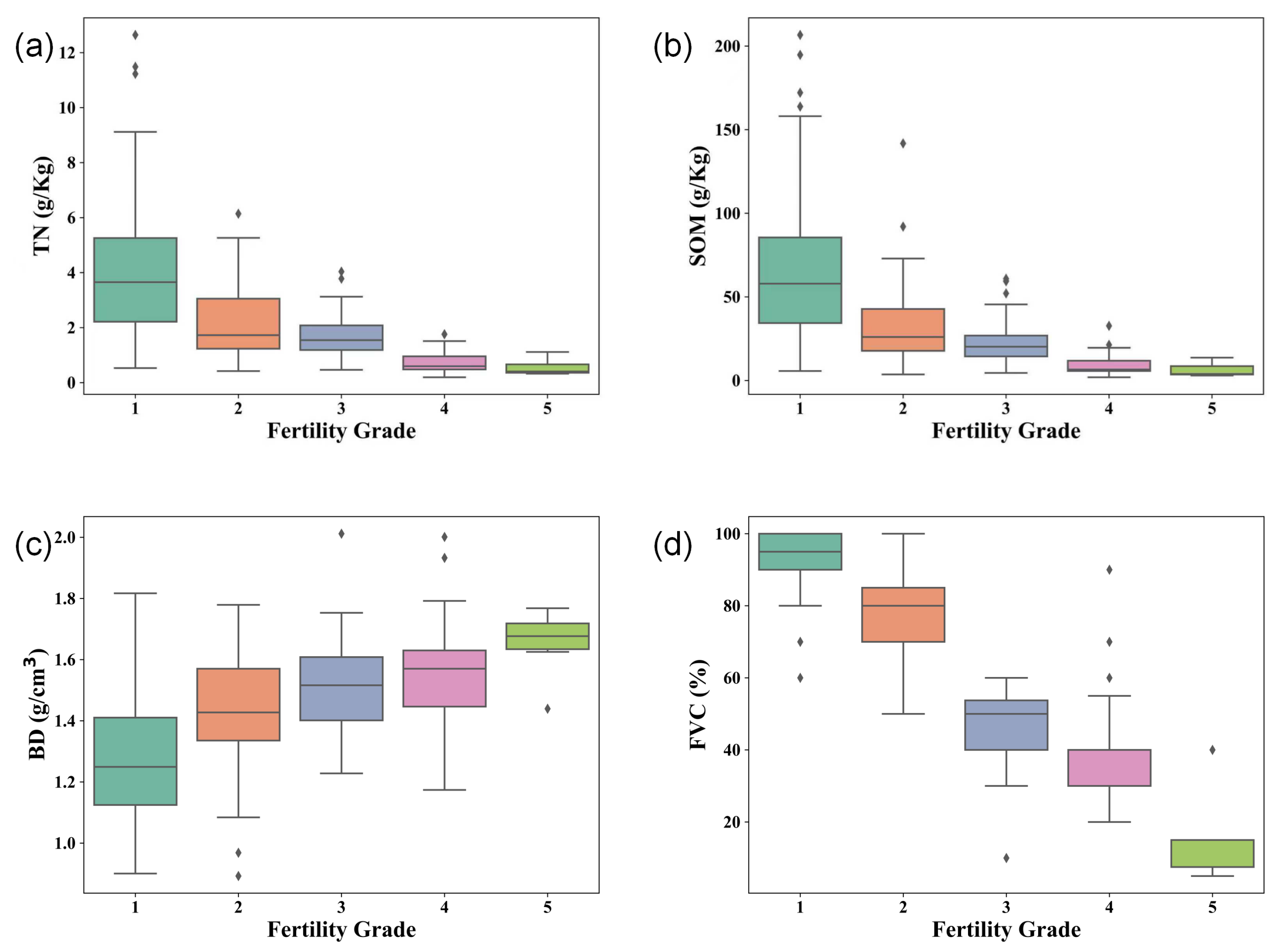
To characterize the differentiation of soil and vegetation properties across the five fertility grades, boxplots of TN, SOM, BD, and FVC were plotted (Figure 2). These boxplots intuitively reveal the distributional characteristics and ecological gradients of the key indicators.
As shown in Figure 2, TN and SOM exhibit a clear declining trend with decreasing fertility grade, reflecting the progressive depletion of soil nutrients from Grade 1 (highest fertility) to Grade 5 (lowest fertility). In contrast, BD shows the opposite pattern, increasing steadily along the fertility gradient, which suggests that soil compaction acts as a major limiting factor for soil fertility in degraded grasslands. Meanwhile, FVC also decreases sharply with the fertility grade, implying that vegetation coverage effectively mirrors the overall soil fertility status.
Together, these results confirm that the thresholds of membership degree and grading rules used in this study are consistent with ecological processes, thereby validating the scientific basis of the SFEI framework.

3.2. Membership Degrees and Weights for Evaluation Indicators

In this study, the K-means clustering method was applied to determine the interval thresholds of membership degrees for the evaluation indicators. After multiple iterations K = 5 , the dataset was divided into five distinct clusters, and the corresponding representative centers for each indicator were identified (Table 3). These interval thresholds were used to define the classification boundaries for the membership functions.
The boundaries obtained from K-means analysis provided the empirical basis for defining the critical thresholds (i.e., c 1 and c 2 ) in the membership functions. For a benefit-type indicator like TN, the lowest cluster boundary (1.3 g/kg) was designated as the lower critical value c 1 , below which the membership degree was minimal (0.2). Conversely, the highest cluster boundary (7.8 g/kg) was set as the upper critical value c 2 , above which the membership saturates at the maximum (1.0). The interval between c 1 and c 2 constitutes the dynamic transition zone where membership degree increases linearly.
Following this normalization, the four evaluation indicators were standardized into dimensionless membership values. The interval thresholds of corresponding membership degrees are summarized in Table 4. The final membership degree intervals were determined by integrating the K-means clustering results with expert knowledge and relevant empirical with expert knowledge, including standards from the Second National Soil Survey of China. The proposed method combines the ecological significance of soil and vegetation properties with the statistical objectivity of clustering, ensuring both quantitative rigor and practical applicability of the composite index.
Based on expert knowledge and the Second National Soil Survey of China, the relative importance of TN, SOM, BD, and FVC was ranked and assigned a score. Experts generally considered nutrient supply capacity to be the most critical for sustaining grassland productivity, FVC to provide a direct reflection of community recovery status, and BD to act as a limiting factor. To balance subjectivity with objectivity, the expert-derived scores were compared with the weights obtained from K-means clustering, and a weighted averaging approach was applied. The final integrated weights are presented in Table 5.

3.3. Soil Fertility Evaluation Results

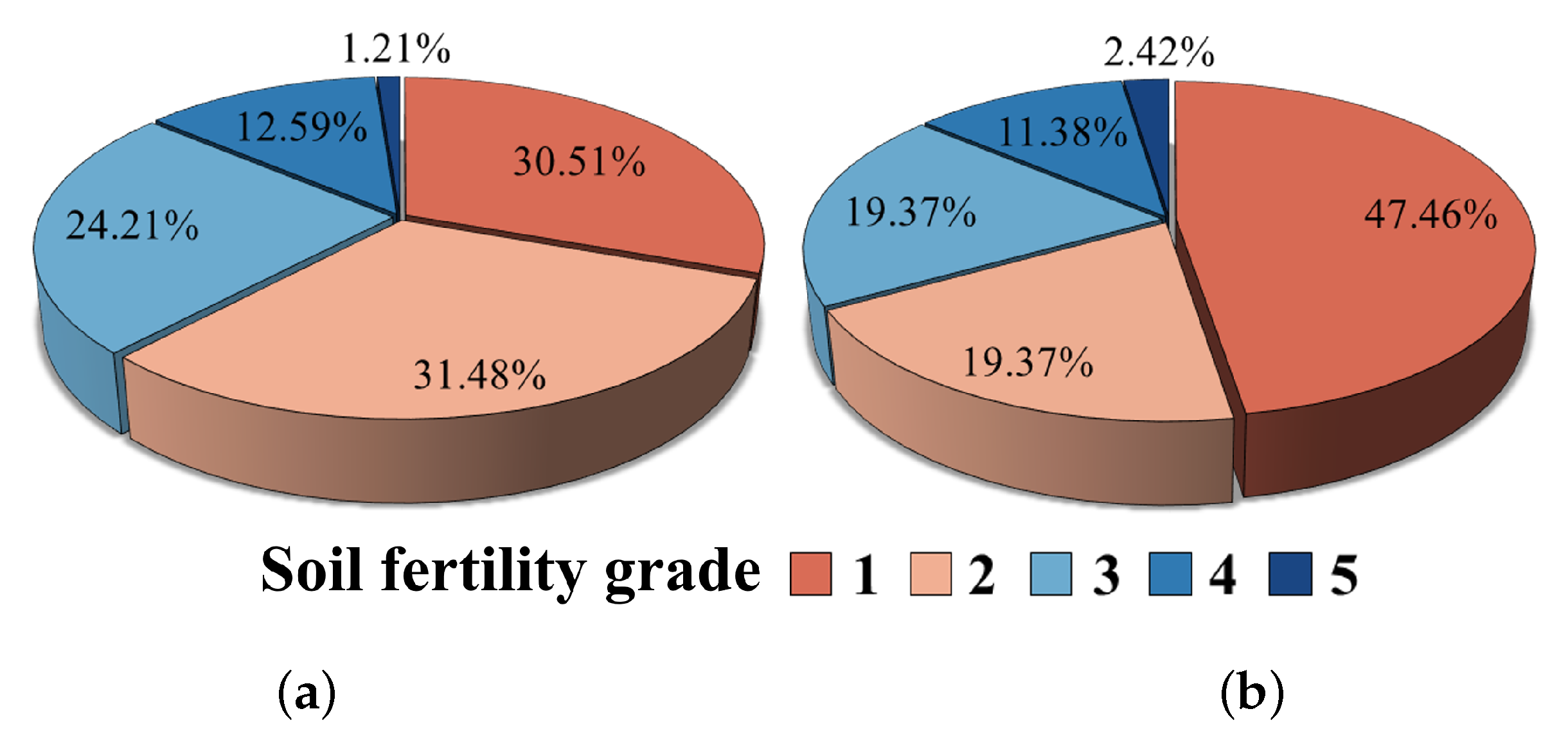
We evaluated the soil fertility status of 362 sample plots across the Tibetan Plateau by SFEI, and the results showed that the evaluation accuracy of the proposed SFEI reached 69.89%, which indicates a reasonable result of reliability and applicability at the regional scale. From the distribution of fertility grades, the evaluation results were generally consistent with the observed soil fertility grades from field work, albeit with some discernible discrepancies among different soil fertility grades (Figure 3).
Specifically, the proportion of the sample plot predicted to be of Grade-1 (highest fertility) was 30.5%, which was significantly lower than the observed proportion of 47.5%. This suggests that the proposed method tended to underestimate sample plots with the highest fertility levels. In contrast, the predicted proportions of Grade-2 and -3 (31.5% and 24.2%, respectively) were higher than the observed proportion (19.4%), suggesting an overestimation of medium fertility. Meanwhile, the predicted proportions for Grade-4 and -5 (12.6% and 1.2%) were relatively close to the observed proportions (11.4% and 2.4%), indicating a better performance.
Overall, despite the presence of certain discrepancies in specific grades, the SFEI can effectively capture the general trends of soil fertility distribution on the Tibetan plateau. The evaluation accuracy is acceptable considering the current research conditions and offers a reliable reference for subsequent grassland resource assessment and management.

3.4. Relative Contributions of Individual Indicators to the SFEI

To understand the individual contributions of the selected indicators for SFEI, ablation experiments were conducted, and the results are shown in Table 6. The ablation results reveal a clear hierarchy of indicator importance, FVC exhibits remarkable importance as a complementary indicator, and soil nutrient indicators (TN and SOM) show significant interdependence, while BD demonstrates the least individual contribution.
Notably, the exclusion of FVC results in the most pronounced decline in the performance of SFEI, reducing the F1-score by 23.20%, underscoring its unique role in providing ecological insights that soil-based indicators are hard to capture. In contrast, the removal of BD resulted in the smallest performance reduction, indicating that its contribution could be partially compensated for by other indicators. The exclusion of either TN or SOM caused severe performance degradation, confirming their complementary function in representing the soil nutrient base.
This hierarchy is consistent with the integrated weights assigned in Section 3.2, which validates the weighting scheme. The critical insight is that while TN and SOM form the foundational pillars of soil fertility, FVC acts as a synergistic integrator, reflecting the response of vegetation to overall soil conditions. This highlights the importance of incorporating FVC into a comprehensive evaluation framework for the soil–plant system.

3.5. Performance of the SFEI in Assessing Natural Grassland Fertility on the Tibetan Plateau

The spatial complexity of the vast Tibetan Plateau requires a deeper investigation of the predictive accuracy of the SFEI. To this end, we evaluated the performance of the proposed SFEI heterogeneity by analyzing the global R 2 and the evaluation precision for per-grade fertility.
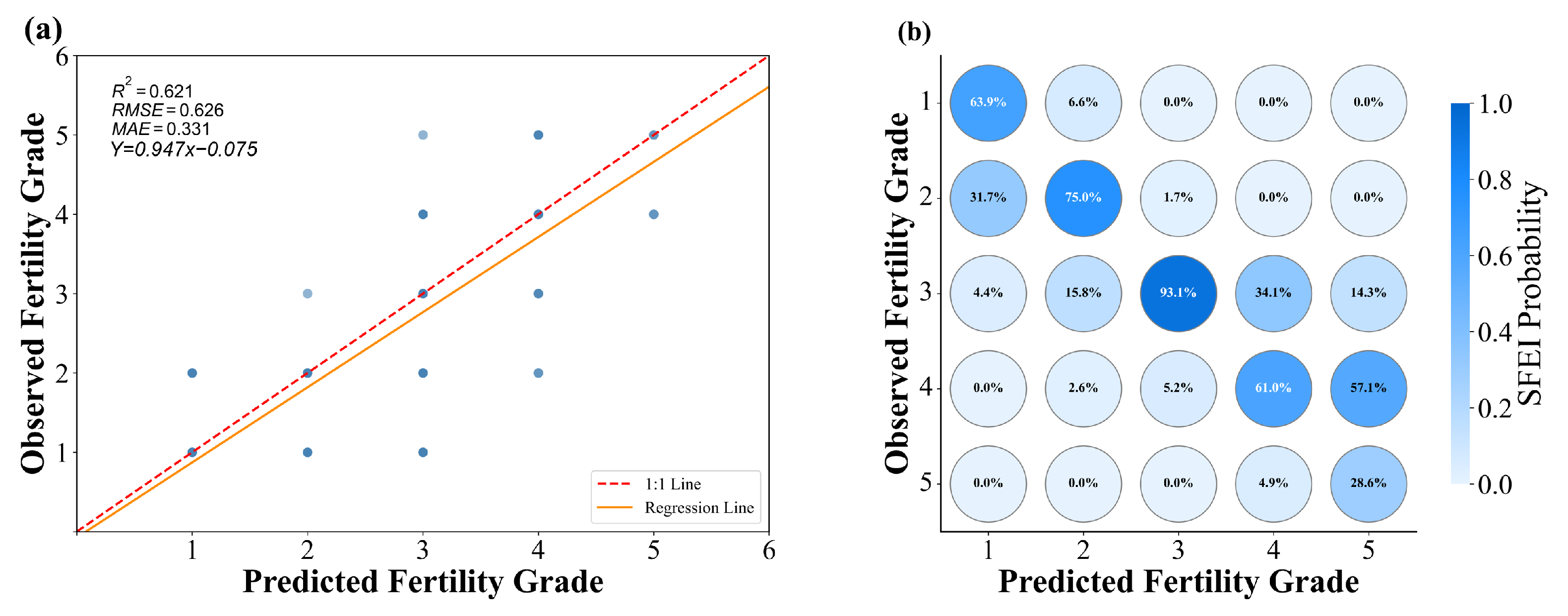
Figure 4a shows the regression analysis between predicted and measured fertility grades, the result demonstrated a satisfactory accuracy for regional-scale fertility assessment. When complemented by the overall accuracy of 69.89% reported in Section 3.2, these results robustly confirm the reliability of the proposed SFEI framework.
The Figure 4b visualizes the correspondence between predicted and measured soil fertility grades. The results indicate high evaluation performance for Grade-1 to -3 fertility, while notable mis-evaluation occurred between adjacent grades, particularly between Grade-3 to -4 and Grade-4 to -5. Grade-5 exhibited the lowest accuracy, with the majority of its samples being misclassified as Grade-4. As indicated by the indicator analysis in Section 3.1, this confusion can be attributed to the diminished disparity among the soil and vegetation indicators in low-fertility conditions. When soil fertility degrades to a lowest status (Grade 5), the numerical ranges of these indicators tend to converge and saturate at their lower limits, thereby reducing the ability of SFEI to discriminate between Grade-4 and -5 effectively. Despite this limitation for the lowest grade, the overall evaluation pattern confirms that the SFEI framework provides a reliable evaluation of soil fertility across the natural grasslands of the Tibetan Plateau.

3.6. Spatial Patterns of Soil Fertility Across the Tibetan Plateau

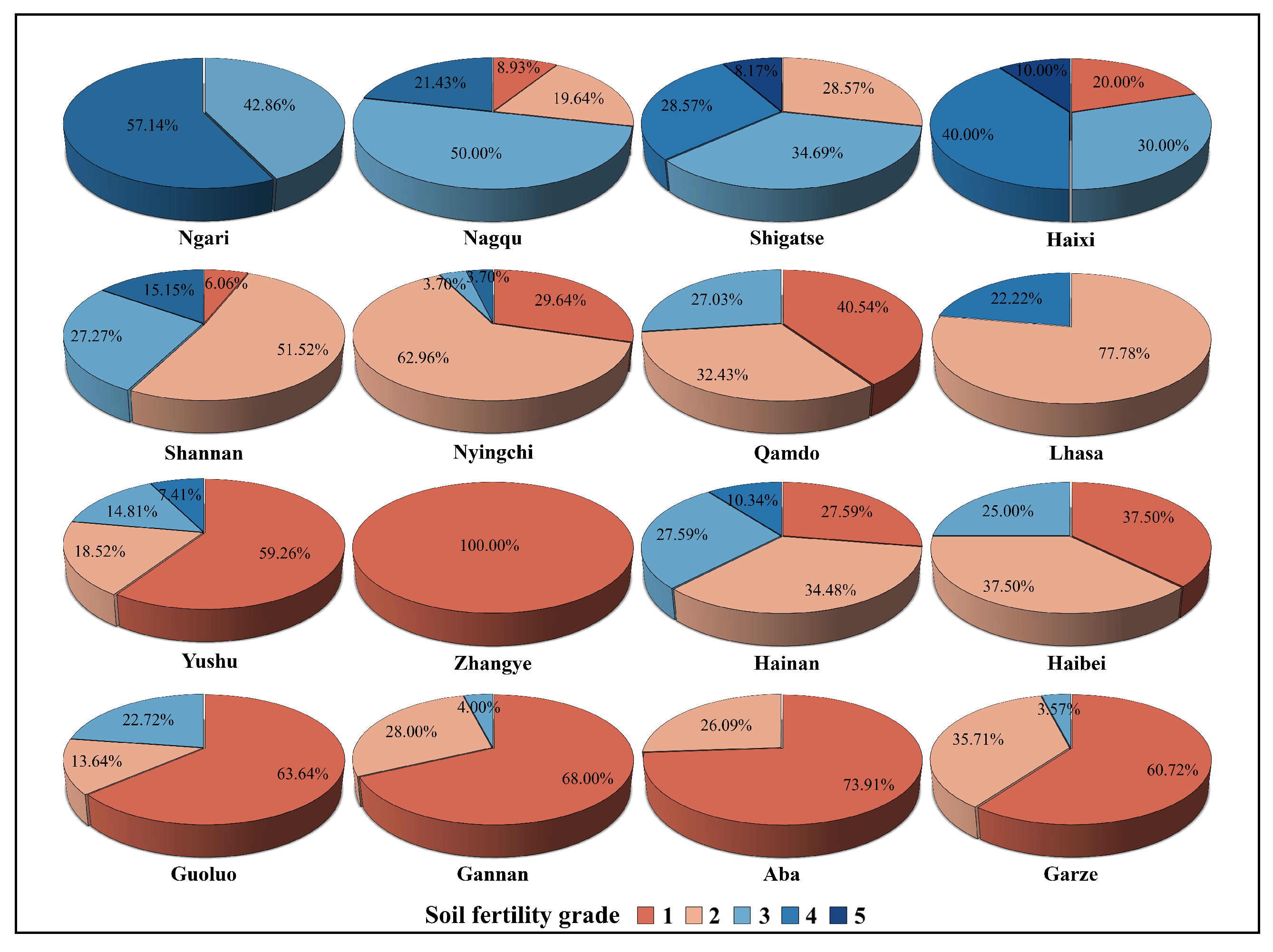
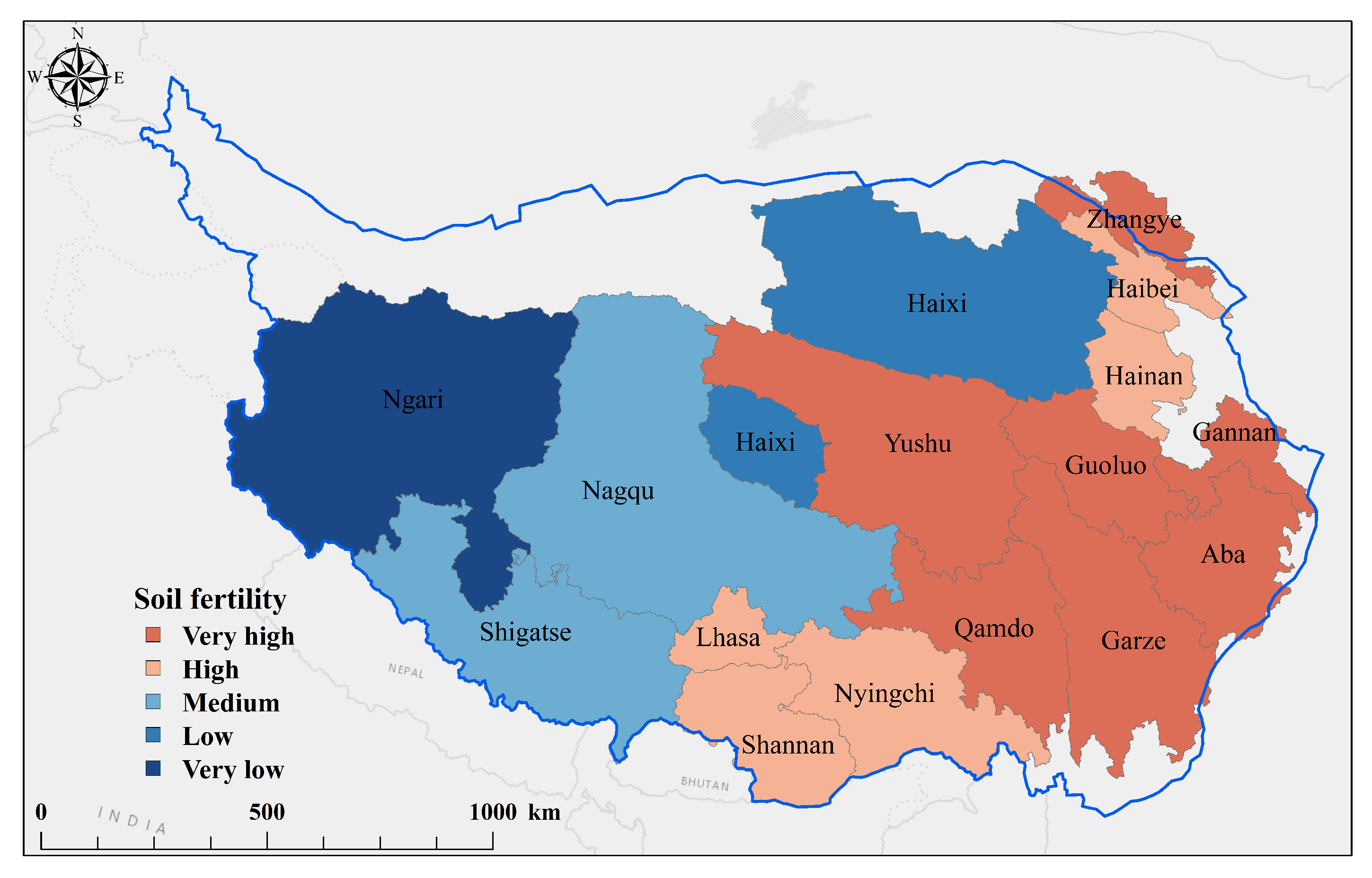
The soil fertility evaluation results of natural grassland in the Tibetan Plateau reveal a pronounced spatial heterogeneity across the Tibetan Plateau, characterized by a consistent west-to-east gradient of increasing fertility grades (Figure 5 and Figure 6).
Analysis of intra-city variability shows that western prefectures (e.g., Ngari, Nagqu, and Shigatse) are predominantly characterized by low or lowest fertility grades, indicating limited overall production potential (Figure 5). In contrast, central and southern regions (e.g., Lhasa, Shannan, and Nyingchi) exhibit a higher prevalence of medium-grade fertility. The eastern prefectures (e.g., Yushu, Guoluo, and Chamdo) demonstrate a significant increase in the proportion of medium- to high-grade soil fertility, with some areas even dominated by high-grade fertility, suggesting superior productive capacity.
To further delineate the regional pattern, each city is represented by its dominant fertility grade in Figure 6. This synthesis clearly illustrates the macro-scale spatial distribution: the western plateau is dominated by low-grade soils, which progressively transition to medium and high grades towards the central and eastern regions. This pattern is closely correlated with the hydrothermal conditions of the Tibetan Plateau [32,33]. The western regions are constrained by a cold and arid climate, where scarce precipitation and limited heat supply hinder biogeochemical processes, suppressing nutrient accumulation and vegetation productivity. Conversely, the eastern regions benefit from more favorable thermal and moisture conditions, amplified by monsoonal influences and complex topography, which support robust soil development and vigorous vegetation growth.
These findings confirm that the proposed SFEI framework not only captures the soil fertility status but also effectively reflects the large-scale spatial patterns and their underlying environmental drivers, thereby demonstrating both its scientific rigor and practical applicability for regional soil assessment.

3.7. Spatial Heterogeneity of Natural Grassland Soil Fertility on the Tibetan Plateau

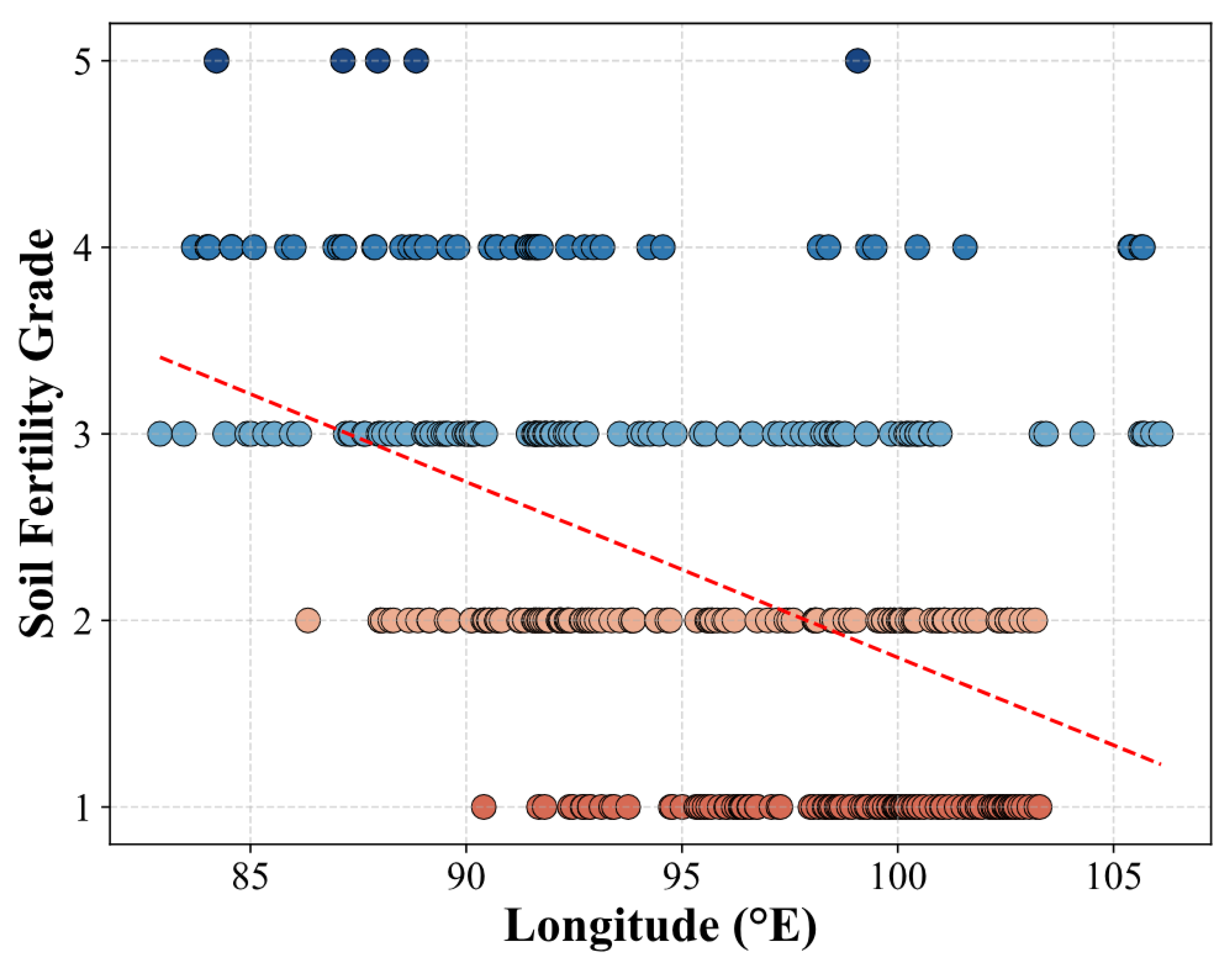
Figure 7 clearly depicts the longitudinal distribution pattern of soil fertility grades across the natural grasslands in the Tibetan Plateau. Generally, soil fertility exhibits a distinct eastward increasing trend, which emphasizes the strong correlation between fertility grades and the regional hydrothermal gradient.
Specifically, Grade-5 (lowest fertility) represented only a negligible proportion of the study area and was scattered in the western part of the plateau, reflecting the limitations of cold and arid environments on soil development. Grade-4 and -3 were more extensively distributed, mainly in the central and western regions, suggesting that these areas had certain soil nutrients and production potential but were still restricted by water and heat availability, resulting in medium- to low-fertility grades.
In contrast, Grade-1 and -2 showed a significant eastward shift and became predominant in the eastern plateau. This distribution pattern indicates that the more favorable hydrothermal conditions in the east have promoted nutrient accumulation and improved vegetation productivity, thus supporting higher levels of soil fertility.

4. Discussion

4.1. Contributions

This study makes a substantial methodological contribution by proposing a novel SFEI that shifts the focus from a conventional soil-centered to an integrated approach soil-vegetation assessment framework.
Most soil quality assessment research has concentrated on croplands because of their direct relevance to agricultural productivity [12]. However, such frameworks are not fully transferable to natural grasslands, especially in fragile alpine regions. This is exemplified by the Tibetan Plateau, where vegetation plays a pivotal role in nutrient cycling and ecosystem stability [18,19]. The proposed SFEI addresses this research gap by integrating soil indicators with a vegetation indicator. This comprehensive design enables a more accurate representation of the essential ecological feedback within grassland ecosystems. This integrated approach is in line with the evolving global concept of soil health, which underscores the capacity of the soil to sustain biological productivity within an ecosystem context [12]. The SFEI provides a practical, transferable model for assessing grassland health in other data-scarce, fragile environments worldwide, thereby supporting sustainable ecosystem management under changing climatic conditions.

4.2. Indicator Selection and Model Performance

The selection of indicators for this study followed the principles of the MDS, as evidenced in analogous research assessing soil quality in plantation forests. This principle guarantees both ecological relevance and practical feasibility across the extensive and heterogeneous Tibetan Plateau. SOM and TN are widely recognized as essential indicators of soil nutrient storage and cycling capacity [3,12]. BD, as a key physical property, effectively reflects soil compaction and porosity and often serves as a limiting factor in degraded grasslands [34]. The incorporation of FVC is a distinctive characteristic, and the ablation analysis indicated that excluding FVC resulted in the most substantial decline in performance (the F1-score decreased by 23.20%), underscoring its unique function in offering above-ground ecological information that soil indicators alone are unable to capture.
Given the substantial spatial heterogeneity and extreme environmental gradients across the Tibetan Plateau, the overall accuracy of 69.89% achieved by the proposed SFEI is both reasonable and justifiable. This performance is comparable to the reported in other regional-scale soil quality investigations conducted in similarly complex terrains. For instance, a study in the Qilian Mountains also documented challenges in achieving high accuracy across all soil fertility classes, largely due to pronounced environmental variability [35]. The observed underestimation of high-fertility areas and the confusion between adjacent low-fertility grades are common in evaluation models where the ranges of indicator values converge at the extremes of environmental gradients [36]. This suggests that although the SFEI effectively captures broad-scale fertility trends, future improvements could explore non-linear modeling techniques, such as machine learning, to better address transitions at class boundaries [12].

4.3. Spatial Patterns and Environmental Drivers

The results revealed a clear west-to-east increasing gradient in soil fertility across the Tibetan Plateau. This pattern aligns well with the region’s underlying hydrothermal gradients [32,33]. The western prefectures, such as Ngari and Nagqu, characterized by low or lowest fertility grades, are constrained by a frigid and arid climate. Scarce precipitation and limited heat availability severely impede biogeochemical processes, including weathering, organic matter decomposition, and nutrient mineralization, leading to poorly developed and nutrient-deficient soils [9,11]. Conversely, central and eastern regions (e.g., Lhasa, Yushu, Golog) benefit from more favorable moisture and thermal conditions, reinforced by the influence of the Asian monsoon. These conditions promote higher primary productivity, more efficient nutrient cycling, and, consequently, greater accumulation of SOM and nitrogen [7,20]. The strong correspondence between the SFEI-derived fertility patterns and regional climate factors demonstrates that the index not only evaluates soil fertility at the plot scale but also effectively captures macroecological patterns, thereby enhancing its reliability for regional ecological assessment and spatial planning.

4.4. Limitations and Future Work

Despite its contributions, this study has several limitations that point to promising avenues for future research. First, the spatial distribution of sampling sites was inevitably constrained by the region’s extreme topography and climate, resulting in lower sampling density across the remote western plateau. This limitation may have introduced uncertainty into the spatial predictions for those regions. Future studies should adopt stratified sampling designs based on grassland types and site accessibility to enhance sampling representativeness.
Second, although our MDS was intentionally designed to be concise, we acknowledge that a more comprehensive evaluation would require the inclusion of additional soil properties. Crucial chemical attributes, including soil pH, available phosphorus, cation exchange capacity, and base cations (e.g., calcium and magnesium), are indispensable for soil fertility. These attributes can be classified into high, medium, and low grades in accordance with pre-established criteria. However, certain ions (e.g., Ca2+, K+) were not included. This is especially pertinent on the Tibetan Plateau, where widespread phosphorus limitation has been documented [11] and potassium enrichment has been observed [9]. Soil pH also exerts a strong influence on nutrient solubility and plant nutrient availability. These variables were mainly excluded due to the aim of maintaining a concise MDS and the absence of consistent measurements across all sampling locations. Future versions of the SFEI may integrate these indicators, potentially through pedotransfer functions or remote-sensing-based estimation, to facilitate cost-effective enhancements in large-scale soil fertility assessments [12].
Third, applying a uniform membership function across all grassland types may have reduced evaluation accuracy for certain ecosystems. Different vegetation communities and soil types can exhibit varying relationships between indicators and soil fertility. A promising approach for future research is to develop type-specific membership functions and weighting schemes to enhance the framework’s adaptability.
Ultimately, this study provides a spatial representation of soil fertility across the Tibetan Plateau. Integrating long-term remote-sensing time series with repeated field investigations is essential for monitoring soil fertility dynamics in response to climate change and human activities, such as grazing management. This need is supported by studies showing that long-term fertilization and residue return significantly affect soil stoichiometry and organic matter fractions [8,18]. Such integration would transform the SFEI from a static assessment tool into a dynamic monitoring system, providing more robust scientific support for the sustainable management of the Tibetan Plateau’s critical grassland ecosystems.

5. Conclusions

This study proposed a SFEI for the natural grasslands of the Tibetan Plateau by integrating three key soil indicators (TN, SOM, and BD) with a vegetation indicator (FVC) using fuzzy mathematics combined with expert knowledge methods. The SFEI achieved an overall accuracy of 69.89%, effectively capturing the spatial heterogeneity of soil fertility in the region. The results demonstrated a distinct west-to-east increasing gradient in soil fertility, which aligned closely with the regional hydrothermal pattern, and SFEI reliably reflects the over-fertility status, despite a slight underestimation in high-fertility areas. Consequently, this study provides a scientific basis for spatially targeted grassland management and ecological restoration, supporting the sustainable stewardship of the grassland ecosystems.

Author Contributions

Conceptualization, X.Z.; methodology, X.Z.; software, X.Z. and K.Z. (Kun Zhang 1); validation, X.Z., and K.Z. (Kun Zhang 1); formal analysis, X.Z. and K.Z. (Kun Zhang 1); investigation, X.Z. and K.Z. (Kun Zhang 2); resources, X.Z.; data curation, X.Z.; writing—original draft preparation, X.Z.; writing—review and editing, C.S., A.Z., Y.C., K.Z. (Kun Zhang 1), K.Z. (Kun Zhang 2) and L.H.; supervision, L.H.; Funding acquisition, L.H.; visualization, X.Z.; project administration, L.H. All authors have read and agreed to the published version of the manuscript.

Funding

This research was funded by the Science and Technology Project of Inner Mongolia Autonomous Region (2025KJTW0023), the National Key Research and Development Program of China (grant number: 2021YFD1300505), the China Agriculture Research System (grant number: CARS–34), and the National Natural Science Foundation of China (grant number: 32130070).

Data Availability Statement

Authors do not have permission or authority to make the data available publicly.

Conflicts of Interest

The authors declare no conflicts of interest. The funders had no role in the design of the study; in the collection, analyses, or interpretation of data; in the writing of the manuscript; or in the decision to publish the results.

References

  1. Muro, J.; Linstädter, A.; Magdon, P.; Wöllauer, S.; Männer, F.; Schwarz, L.M.; Ghazaryan, G.; Schultz, J.; Malenovskỳ, Z.; Dubovyk, O. Predicting Plant Biomass and Species Richness in Temperate Grasslands across Regions, Time, and Land Management with Remote Sensing and Deep Learning. Remote Sens. Environ. 2022, 282, 113262. [Google Scholar] [CrossRef]
  2. Punalekar, S.; Verhoef, A.; Quaife, T.; Humphries, D.; Bermingham, L.; Reynolds, C. Application of Sentinel-2A Data for Pasture Biomass Monitoring Using a Physically Based Radiative Transfer Model. Remote Sens. Environ. 2018, 218, 207–220. [Google Scholar] [CrossRef]
  3. Kowalski, K.; Senf, C.; Okujeni, A.; Hostert, P. Large-scale Remote Sensing Analysis Reveals an Increasing Coupling of Grassland Vitality to Atmospheric Water Demand. Glob. Change Biol. 2024, 30, e17315. [Google Scholar] [CrossRef]
  4. Doran, J.; Parkin, T. Defining and Assessing Soil Quality. In Defining Soil Quality for a Sustainable Environment; Soil Science Society of America, Inc.: Madison, WI, USA, 1994; Volume 35, pp. 1–21. [Google Scholar]
  5. Huang, M.; Lu, R.; Zhao, J.; Ma, L. Assessment of Soil Quality in Typical Wind Erosion Area of Qaidam Basin. J. Desert Res. 2023, 43, 199–209. [Google Scholar]
  6. Yao, T.; Wang, W.; An, B.; Piao, S.; Chen, F. The Scientific Expedition and Research Activities on the Tibetan Plateau in 1949–2017. Acta Geogr. Sin. 2022, 77, 1586–1602. [Google Scholar]
  7. Wang, Y.; Lv, W.; Xue, K.; Wang, S.; Zhang, L.; Hu, R.; Zeng, H.; Xu, X.; Li, Y.; Jiang, L.; et al. Grassland Changes and Adaptive Management on the Qinghai–Tibetan Plateau. Nat. Rev. Earth Environ. 2022, 3, 668–683. [Google Scholar] [CrossRef]
  8. Wei, Y.; Lu, H.; Wang, J.; Wang, X.; Sun, J. Dual Influence of Climate Change and Anthropogenic Activities on the Spatiotemporal Vegetation Dynamics over the Qinghai-Tibetan Plateau from 1981 to 2015. Earth’s Future 2022, 10, e2021EF002566. [Google Scholar] [CrossRef]
  9. Zhang, J.; Chongyi, E.; Yang, F.; Shi, Y.; Xie, L. OSL Ages and Pedogenic Mode of Kobresia Mattic Epipedon on the Northeastern Qinghai-Tibetan Plateau. Catena 2023, 223, 106912. [Google Scholar] [CrossRef]
  10. Chen, J.; Wu, T.; Zou, D.; Liu, L.; Wu, X.; Gong, W.; Zhu, X.; Li, R.; Hao, J.; Hu, G.; et al. Magnitudes and Patterns of Large-Scale Permafrost Ground Deformation Revealed by Sentinel-1 InSAR on the Central Qinghai-Tibet Plateau. Remote Sens. Environ. 2022, 268, 112778. [Google Scholar] [CrossRef]
  11. Hong, J.; Pang, B.; Zhao, L.; Shu, S.; Feng, P.; Liu, F.; Du, Z.; Wang, X. Soil Phosphorus Crisis in the Tibetan Alpine Permafrost Region. Nat. Commun. 2025, 16, 6204. [Google Scholar] [CrossRef]
  12. Lehmann, J.; Bossio, D.; Kögel-Knabner, I.; Rillig, M.C. The Concept and Future Prospects of Soil Health. Nat. Rev. Earth Environ. 2020, 1, 544–553. [Google Scholar] [CrossRef]
  13. Xu, H.; Gan, Q.; Huang, L.; Pan, X.; Liu, T.; Wang, R.; Wang, L.; Zhang, L.; Li, H.; Wang, L.; et al. Effects of Forest Thinning on Soil Microbial Biomass and Enzyme Activity. Catena 2024, 239, 107938. [Google Scholar] [CrossRef]
  14. Sommer, L.; Donath, T.; Harvolk-Schöning, S.; Kleinebecker, T.; Schneider, S.; Voß, N.; Klinger, Y.P. Grassland Restoration Practice in Central Europe: Drivers of Success across a Broad Moisture Gradient. Restor. Ecol. 2025, 33, e70106. [Google Scholar] [CrossRef]
  15. Chen, T.; Zou, C.; Chen, F.; Yuan, Y.; Pan, J.; Zhao, Q.; Wang, M.; Qiao, L.; Cheng, H.; Ding, C.; et al. Response of 2, 4, 6-trichlorophenol-reducing Biocathode to Burial Depth in Constructed Wetland Sediments. J. Hazard. Mater. 2022, 426, 128066. [Google Scholar] [CrossRef]
  16. Hu, G.; Huang, X.; Chen, S.; Hu, C.; Zhong, C.; Xu, C.; Zhang, Z. Biotic and Abiotic Factors Affecting Soil C, N, P and Their Stoichiometries under Different Land-Use Types in a Karst Agricultural Watershed, China. Agriculture 2024, 14, 1083. [Google Scholar] [CrossRef]
  17. Diaz-Gonzalez, F.; Vuelvas, J.; Correa, C.; Vallejo, V.E.; Patino, D. Machine Learning and Remote Sensing Techniques Applied to Estimate Soil Indicators–Review. Ecol. Indic. 2022, 135, 108517. [Google Scholar] [CrossRef]
  18. Ren, S.; Wang, T.; Ji, X.; Wei, L.; Wei, J.; Cao, Y.; Ding, J. Grazing Reverses Climate-Induced Soil Carbon Gains on the Tibetan Plateau. Nat. Commun. 2025, 16, 6978. [Google Scholar] [CrossRef]
  19. Zhang, F.; Du, W.; Song, C.; Li, H.; Zhu, J.; Liang, N. Long-Term Multi-Nutrient Enrichment Enhances Aboveground Biomass without Compromising Ecosystem Temporal Stability in a Tibetan Alpine Meadow. Agric. Ecosyst. Environ. 2025, 394, 109917. [Google Scholar] [CrossRef]
  20. Gao, X.; Dong, S.; Xu, Y.; Li, Y.; Li, S.; Wu, S.; Shen, H.; Liu, S.; Fry, E.L. Revegetation Significantly Increased the Bacterial-Fungal Interactions in Different Successional Stages of Alpine Grasslands on the Qinghai-Tibetan Plateau. Catena 2021, 205, 105385. [Google Scholar] [CrossRef]
  21. Deng, X.; Wu, L.; He, C.; Shao, H. Study on Spatiotemporal Variation Pattern of Vegetation Coverage on Qinghai–Tibet Plateau and the Analysis of Its Climate Driving Factors. Int. J. Environ. Res. Public Health 2022, 19, 8836. [Google Scholar] [CrossRef]
  22. Wu, J.; Hou, X.; Xu, L.; Zhou, Q.; Wang, Y.; Guo, Z.; Adomako, M.O.; Ma, Q. Belowground Bud Banks and Land Use Change: Roles of Vegetation and Soil Properties in Mediating the Composition of Bud Banks in Different Ecosystems. Front. Plant Sci. 2024, 14, 1330664. [Google Scholar] [CrossRef]
  23. NY/T 1121.24-2012; Soil Testing—Part 24: Determination of Total Nitrogen in Soil by Automatic Kjeldahl Apparatus. Ministry of Agriculture of the People’s Republic of China: Beijing, China, 2012. (In Chinese)
  24. NY/T 1121.6-2006; Soil Testing—Part 6: Determination of Soil Organic Matter. Ministry of Agriculture of the People’s Republic of China: Beijing, China, 2006. (In Chinese)
  25. Mu, X.; Song, W.; Gao, Z.; McVicar, T.R.; Donohue, R.J.; Yan, G. Fractional vegetation cover estimation by using multi-angle vegetation index. Remote Sens. Environ. 2018, 216, 44–56. [Google Scholar] [CrossRef]
  26. Tang, J.; Li, W.; Wei, T.; Huang, R.; Zeng, Z. Patterns and Mechanisms of Legume Responses to Nitrogen Enrichment: A Global Meta-Analysis. Plants 2024, 13, 3244. [Google Scholar] [CrossRef]
  27. NY/T 1121.4-2006; Soil Testing—Part 4: Determination of Bulk Density of Soil. Ministry of Agriculture of the People’s Republic of China: Beijing, China, 2006. (In Chinese)
  28. He, J.; Zhang, X.; Xue, Y.; Yu, L.; Zhang, P. Fuzzy Comprehensive Evaluation of Effectiveness Based on Improved Membership Function. In Proceedings of the 2025 IEEE International Conference on Mechatronics and Automation (ICMA), Beijing, China, 3–6 August 2025; IEEE: Piscataway, NJ, USA, 2025; pp. 426–431. [Google Scholar]
  29. Jin, J.; Wang, L.; Müller, K.; Wu, J.; Wang, H.; Zhao, K.; Berninger, F.; Fu, W. A 10-year monitoring of soil properties dynamics and soil fertility evaluation in Chinese hickory plantation regions of southeastern China. Sci. Rep. 2021, 11, 23531. [Google Scholar] [CrossRef]
  30. Chaudhry, H.; Vasava, H.B.; Chen, S.; Saurette, D.; Beri, A.; Gillespie, A.; Biswas, A. Evaluating the soil quality index using three methods to assess soil fertility. Sensors 2024, 24, 864. [Google Scholar] [CrossRef]
  31. Zhang, X.; Zhang, A.; Sun, Y.; Wang, J.; Pang, H.; Peng, J.; Chen, Y.; Zhang, J.; Giannico, V.; Legesse, T.G.; et al. Deep Multi-Order Spatial–Spectral Residual Feature Extractor for Weak Information Mining in Remote Sensing Imagery. Remote Sens. 2024, 16, 1957. [Google Scholar] [CrossRef]
  32. Guo, J.; Zhai, L.; Sang, H.; Cheng, S.; Li, H. Effects of hydrothermal factors and human activities on the vegetation coverage of the Qinghai-Tibet Plateau. Sci. Rep. 2023, 13, 12488. [Google Scholar] [CrossRef]
  33. Zhu, X.; Wu, T.; Li, R.; Xie, C.; Hu, G.; Qin, Y.; Wang, W.; Hao, J.; Yang, S.; Ni, J.; et al. Impacts of summer extreme precipitation events on the hydrothermal dynamics of the active layer in the Tanggula permafrost region on the Qinghai-Tibetan plateau. J. Geophys. Res. Atmos. 2017, 122, 11–549. [Google Scholar] [CrossRef]
  34. Walter, K.; Don, A.; Tiemeyer, B.; Freibauer, A. Determining soil bulk density for carbon stock calculations: A systematic method comparison. Soil Sci. Soc. Am. J. 2016, 80, 579–591. [Google Scholar] [CrossRef]
  35. Li, Q.; Yang, J.; Guan, W.; Liu, Z.; He, G.; Zhang, D.; Liu, X. Soil fertility evaluation and spatial distribution of grasslands in Qilian Mountains Nature Reserve of eastern Qinghai-Tibetan Plateau. PeerJ 2021, 9, e10986. [Google Scholar] [CrossRef]
  36. Lenka, N.K.; Meena, B.P.; Lal, R.; Khandagle, A.; Lenka, S.; Shirale, A.O. Comparing four indexing approaches to define soil quality in an intensively cropped region of Northern India. Front. Environ. Sci. 2022, 10, 865473. [Google Scholar] [CrossRef]
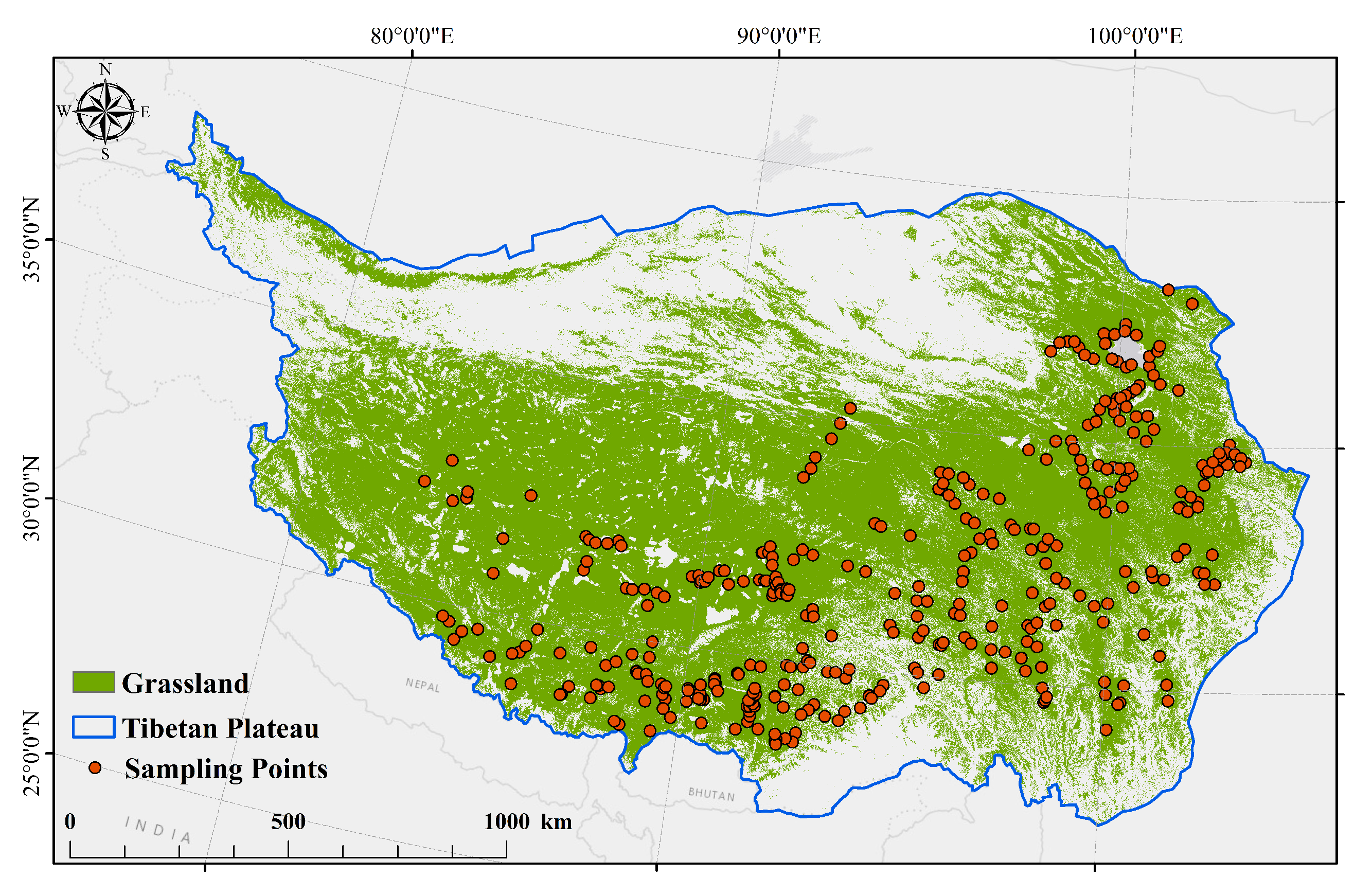
Figure 1. Study area and sampling plots of natural grassland in the Tibetan Plateau.
Agronomy 15 02743 g001
Figure 2. Distribution of the evaluation indicators across five fertility grades in natural grasslands of the Tibetan Plateau: (a) TN, (b) SOM, (c) BD, and (d) FVC.
Agronomy 15 02743 g002
Figure 3. Soil fertility evaluation results in the Tibetan Plateau: (a) predicted soil fertility via SFEI; (b) observed soil fertility from field work.
Agronomy 15 02743 g003
Figure 4. Accuracy evaluation of the proposed SFEI: (a) relationship between predicted and measured fertility grades; (b) classification accuracy across five grades.
Agronomy 15 02743 g004
Figure 5. Spatial variability of soil fertility grades across cities of the Tibetan Plateau.
Agronomy 15 02743 g005
Figure 6. Spatial patterns of soil fertility grades across cities in the Tibetan Plateau.
Agronomy 15 02743 g006
Figure 7. Variation of soil fertility grades along longitude across the Tibetan Plateau. The red dashed line represents the overall trend.
Agronomy 15 02743 g007
Table 1. Descriptive statistics for all evaluation indicators of natural grasslands in the Tibetan Plateau.
StatisticTN (g/kg)SOM (g/kg)BD (g/cm3)FVC (%)
Min0.201.940.895.00
Max12.64206.652.01100.00
Mean2.7443.311.3974.69
Std2.0435.580.2225.2
K2.592.28−0.63−0.48
CV0.740.820.160.34
Note: CV means coefficient of variation, K means kurtosis, which is used to describe distribution shape relative to the normal distribution.
Table 2. Classification of soil fertility in natural grasslands of the Tibetan Plateau based on the SFEI.
SFEI>0.8 ( 0.6 , 0.8 ] ( 0.4 , 0.6 ] ( 0.2 , 0.4 ] ≤0.2
Grade12345
InterpretationHighestHighMediumLowLowest
Table 3. Representative cluster interval thresholds of soil fertility indicators determined by K-means classification (K = 5).
ClusterTN (g/kg)SOM (g/kg)BD (g/cm3)FVC (%)
1>7.8>115<1.14>90
24.5–7.875–1151.14–1.3175–90
32.7–4.545–751.31–1.4850–75
41.3–2.721.5–451.48–1.6630–50
5<1.3<21.5>1.66<30
Table 4. Interval thresholds and membership degrees for soil fertility evaluation indicators.
GradeTN (g/kg)SOM (g/kg)BD (g/cm3)FVC (%)Membership Degree
1>7.8>80<1.14>801.0
24.5–7.860–801.14–1.4870–800.8
32.7–4.540–601.31–1.4860–700.6
41.3–2.720–401.48–1.6650–600.4
5<1.3<20>1.66<500.2
Table 5. Weights assigned to soil fertility evaluation indicators.
IndicatorTNSOMBDFVC
Weight0.26250.26250.22500.2500
Table 6. Ablation analysis for the contribution of indicators to the SFEI.
TNSOMBDFVCF1-Score (%)
69.89
32.87
32.60
68.78
46.69
Note: ∘ means the indicator was excluded from the SFEI framework, while ✓ indicates the indicator was included in the SFEI.
Disclaimer/Publisher’s Note: The statements, opinions and data contained in all publications are solely those of the individual author(s) and contributor(s) and not of MDPI and/or the editor(s). MDPI and/or the editor(s) disclaim responsibility for any injury to people or property resulting from any ideas, methods, instructions or products referred to in the content.