Review

The Effects of High Temperature Stress and Its Mitigation Through the Application of Biostimulants in Controlled Environment Agriculture

by
Anna Gardiner-Piggott
1,*,
Martin McAinsh
1,
Gabriela Toledo-Ortiz
2 and
Douglas J. Orr
1
1
Lancaster Environment Centre, Lancaster University, Lancaster LA1 4YQ, UK
2
Laboratory of Molecular Biology, Wageningen University, 6708 PB Wageningen, The Netherlands
*
Author to whom correspondence should be addressed.
Agronomy 2025, 15(12), 2742; https://doi.org/10.3390/agronomy15122742

Submission received: 8 September 2025 / Revised: 13 November 2025 / Accepted: 19 November 2025 / Published: 28 November 2025
(This article belongs to the Special Issue Sustainable Agriculture for Food and Nutrition Security)

Abstract

Food security and supply networks are becoming an ever-increasing concern requiring innovative practices to deal with the contributing factors. Controlled Environment Agriculture (CEA) offers an alternative to conventional cropping systems for increasing the yields of certain produce types. Crop yields (tons/hectare/year) in CEA are reported to range between 10 and 100 times higher than open-field agriculture, and the water use in CEA is typically about 4.5–16% of that from conventional farms per unit mass of produce. However, these systems can be energy intensive due to temperature regulation requirements, compromising their environmental and economic viability. Energy is the second largest overhead cost in CEA with carbon footprints being reported as 5.6–16.7 times and 2.3–3.3 times greater than that of open-field agriculture for indoor vertical farms and greenhouses, respectively. This can be offset, in part, by reducing the reliance on cooling systems. However, high temperature stress negatively impacts crops at morphological, cellular, metabolic, and molecular levels, reducing produce quality and quantity. Biostimulants are additives which can benefit plant growth through ameliorating stress. This review considers recent research on the effects of heat stress on a variety of crops commonly grown in CEA and the categories of biostimulants that have known thermoprotective qualities. Seaweed extracts, chitin/chitosan, protein hydrolysates and amino acids, inorganic compounds, beneficial microorganisms, and humic substances are explored, alongside the known benefits, limitations, and knowledge gaps.

1. Introduction

Our environment is becoming increasingly variable and unpredictable, as is the stability of international trade, presenting unique challenges to the security of food production and supply networks. Given the projected population increase to 9.7 billion by 2050, the need for resilient and reliable sources of food is more pressing than ever [1,2,3]. The adoption of alternative agricultural practices is a key component of strengthening the food supply network [1,2,3]. Controlled Environment Agriculture (CEA), including hydroponic systems, offers the potential to alleviate pressure on land use from agriculture. Crop yields (tons/hectare/year) in CEA are reported to range between 10 and 100 times higher than open-field agriculture and the water use in CEA is typically about 4.5–16% of that from conventional farms per unit mass of produce [4]. CEA also has the potential to reduce the impact of environmental stresses on crops by protecting them from the external environment and its fluctuations, resulting in a more secure food supply pathway.
Whilst already accepted as being a key industry for continued food production, there are known issues associated with controlling the growth environment, primarily regarding the energy consumption associated with lighting and temperature regulation [5]. Energy is the second largest overhead cost in CEA, with carbon footprints being reported as 5.6–16.7 times and 2.3–3.3 times greater than that of open-field agriculture for indoor vertical farms and greenhouses, respectively [4]. It was identified that 23–35% of energy load is a result of cooling systems alone [6]. Limited ventilation capacity can also result in temperatures increasing above the optimum range, which can lead to high humidity levels, further impacting the productivity of plants, as well as driving up the energy demand [6]. Moderating temperature properly can result in reduced overall energy demand, directly reducing the energy expended on temperature maintenance systems, as well as through indirect control of relative humidity within the space [6].
At present, CEA systems rely on a consistent provision of optimal environments to be able to obtain the highest quality yields possible, and as such are vulnerable to disruptions to these. High temperature stress can impact the morphology, physiology, and biochemistry of plants, causing declines in nutritional value and yield [1], highlighting a risk not only to caloric provisions, but also to the availability of nutrients, micronutrients, and proteins that are essential for nutritionally complete diets [2]. In addition, temperature maintenance-associated costs are the second highest cost for some CEA systems [4]. Heating, ventilation, and air conditioning constitute 50% of operational costs in warmer climates, and up to 85% in extreme climates [4,5]. Many CEA and vertical farm start-ups are significantly limited by the costs of powering these systems. Furthermore, in many CEA systems, limited ventilation capacities result in temperatures increasing above the optimum range for growth. Even in climate-controlled glasshouses, heat waves can cause temperatures to rise above the safe operating limits of the cooling systems which can result in the loss of entire harvests of plants. Therefore, for CEA systems to make a significant contribution to food security, it is important to consider methods for reducing both their energy consumption and, consequently, the effects of less stringent growth conditions, including those from high temperatures, on plants [6]. Whilst there are options, such as demand response programmes, for CEA facilities to reduce the financial costs associated with the energy consumption [5], this does not negate the need to reduce the carbon emissions being emitted to operate these systems, particularly in areas which do not have a green grid.
One such measure could be the application of biostimulants, which are additives, usually of biological origin, that have the capacity to induce a level of tolerance to a wide variety of stressors including increased temperatures [7,8]. Biostimulants therefore offer the potential to reduce the reliance of CEA systems on temperature maintenance controls as well as providing a failsafe should the temperature controls cease operating. Energy supplies could be interrupted due to a variety of reasons such as extreme weather events bringing down power lines, cyber-attacks, or damage to the production facility’s infrastructure itself. Under such circumstances, biostimulants could reduce the damage to crops by the resulting temperature increases, thus limiting food waste and reducing the income lost by the production facility. Consequently, biostimulants could contribute significantly to the security of food supply networks, both domestically and globally, to meet the needs of the growing population. In this review, we consider the effects of heat stress on a variety of crops commonly grown in different CEA systems and discuss recent advances in biostimulant usage for the amelioration of heat stress effects in these systems. We also identify knowledge gaps and suggest future research avenues in this area for the benefit of CEA, including hydroponics, vertical farms, and biostimulant industries.

2. Temperature Stress Effects

The responses of plants to temperature stress depend on the temperature and duration of the stress [9]. High temperature stress encompasses several different categories of stress. “Heat stress” is a term often used to describe “heat shock”, the short-term exposure to severe high temperatures up to 20 °C above the optimum. Heat shock is not commonly encountered in CEA systems; therefore, responses associated with this type of stress are not covered in this review. “Heat wave” studies expose plants to temperatures 5–10 °C above the optimum for a longer period, usually multiple days, sometimes with multiple incidences of exposure with recovery periods in between [9]. “Climate warming” studies consider the effects of temperatures increases of 2–6 °C over much longer periods lasting from weeks to years [9]. The last two categories of high temperature stress, heat wave, and climate warming studies, are most pertinent to this review. These are the most akin to the kinds of temperature stress plants may experience in CEA systems should the reliance on energy-intensive temperature controls be reduced, and/or if climate events become more frequent/extreme. Whilst there are important distinctions between responses observed in each category of high temperature stress, responses are not discrete in their scale and are proportional to the level of stress encountered. There are key areas of overlap, such as morphophysiological responses, changes to metabolic processes, and modulation of molecular pathways, which are discussed in the following sections.

2.1. Morphological Temperature Responses

Thermomorphogenesis refers to the architectural and morphological adaptations observed in response to elevated temperatures that occur within a plant’s optimal temperature range. Morphophysiological changes include leaf elongation, increased leaf petiole angle (hyponasty), and decreased stomatal indices [10]. Above the upper limitation of these optimal temperature ranges, plants begin to experience heat stress [9]. Although there is variation in the upper limits of tolerated temperature increases between species, unlike thermomorphogenesis, heat stress always has negative impacts on plant growth and development [10]. Heat stress can impact plants at any point during their lifecycle. In the vegetative stage, the most obvious signs of heat stress are slowed growth and the wilting of plant architecture. In the more sensitive reproductive stage, heat stress can induce low pollen viability and abnormal fertilisation [10], which can impact the yield and profitability of a growth cycle.
The most significant impacts of high temperature stress are observed during the flowering stage, where accelerated flowering rates result from shortened developmental phases. Pollen development and function are highly thermosensitive, and male sterility occurs at moderate temperature increases of only 4–5 °C above the optimum [11]. Heat stress decreases the number of pollen grains developed and released and reduces pollen viability. Should a plant achieve fertilisation despite these issues, high temperatures impact flower morphology and the metabolite content of fruits, as well as the production of seeds with reduced germination rates. Metabolites such as carbohydrates, polyamines, and proline directly impact reproduction and eventually seed quality [11,12], limiting the continued viability of crops grown under these conditions.
Reduced root growth also occurs at high temperatures due to changes in energy resource allocation and hormonal regulation, including of auxin and auxin-related hormones, which impairs nutrient uptake [13]. Alterations in sugar levels, protein levels, and the uptake and assimilation of macro-nutrients such as nitrogen and carbon can cause shifts in the source–sink dynamics between roots and shoots [9,13]. This often negatively impacts both vegetative and reproductive growth, further contributing to reduced yields and fruit quality [9]. In addition to these factors, many plants balance water loss and heat dissipation under mild or transient heat stress through the regulation of respiration and transpiration rates due to changes in abscisic acid (ABA). ABA directly impacts the water use efficiency of plants through altering stomatal conductance and apertures [9].
Importantly, one of the key benefits of hydroponic growth systems, often utilised in CEA systems, is that they prevent nutrient deficiency through the use of solutions optimised for nutrient availability and uptake. The effect of high temperatures on root growth, nutrient uptake, and assimilation have the potential to negate this benefit if allowed to become too significant. Additionally, many of the crops that could be targeted for growth in CEA rely on healthy flowers to produce fruits and vegetables, such as tomatoes and cucumbers. With compromised flower morphology and pollen viability, the productivity of plants grown under high temperatures is significantly reduced, which negatively impacts the profitability and proliferation of commercial CEA ventures.

2.2. Cellular Temperature Stress Responses

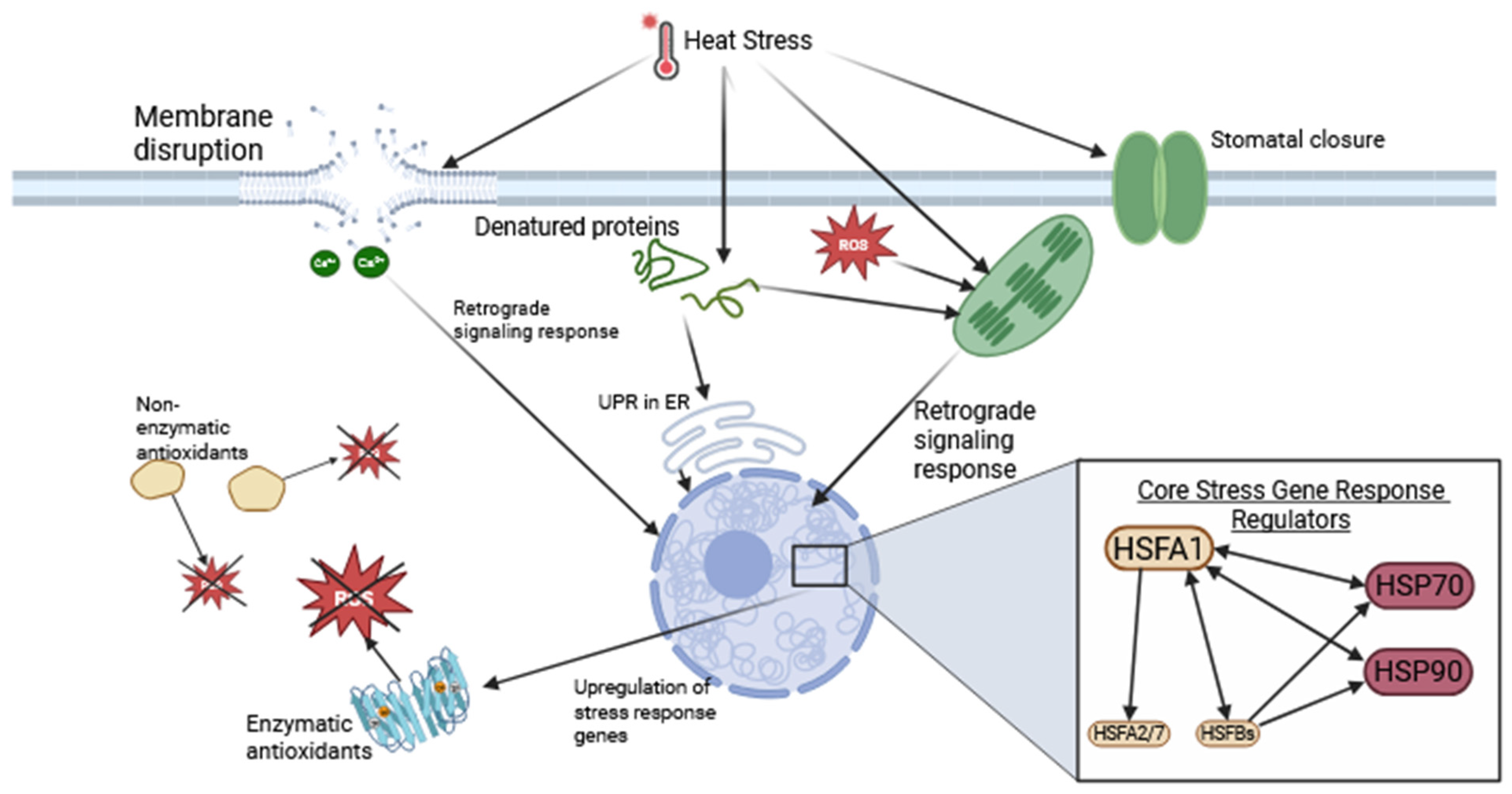
High temperature stress induces a range of different responses at the cellular level (see Figure 1). Increased membrane fluidity and protein aggregation disrupt plasma membrane homeostasis, increasing membrane permeability and resulting in the leakage of ions and amino acids [10]. Additionally, protein denaturation impairs the activity of individual proteins and acts as a trigger for the unfolded protein response (UPR) in the endoplasmic reticulum (ER), which is induced by both the accumulation of unfolded proteins and the disruption of the cell’s redox state. These responses occur due to a combination of the direct impacts of heat stress as well as the subsequent oxidative stress mechanisms that take place within cells [14]. The UPR instigates a cascade of stress responses which transfer to the nucleus, activating the expression of stress response genes [14]. De novo protein synthesis is also impaired as transcription and translation processes become inhibited, creating a positive feedback loop for the UPR as the load on the ER increases. This load increases due to the need to produce proteins to incite the stress responses [14].
Oxidative stress induction as a result of high temperature stress involves the production of Reactive Oxygen Species (ROS), including singlet oxygen (1O2), superoxide radicals (O2), hydrogen peroxide (H2O2), and hydroxyl radicals (OH) [15], to a level which overwhelms the cell’s antioxidative defence systems [16]. Once the optimal temperature of a plant is exceeded by just 5–10 °C, an ROS burst occurs, causing irreversible oxidative damage [10]. This process includes protein degradation, enzyme denaturation, lipid peroxidation-disrupting membranes, and the degradation of DNA, all of which contribute to cell damage, and ultimately can lead to cell death [9]. ROS, specifically heat stress-induced H2O2 and 1O2, alongside calcium ions released by cell walls, can trigger stress responses in plants by activating operational retrograde signalling, from chloroplasts to nuclei, to induce the upregulation of nuclear genes. Genes which are upregulated include those which induce antioxidant enzyme production and stress response mechanisms, which are centrally controlled by heat shock proteins and heat shock factors [10,16] which are discussed in more detail in Section 2.3.
ROS activity within plant cells can be quenched by the activity of various classes of antioxidants, which can be either enzymatic or non-enzymatic (See Table 1). This is a complex system which regulates the cellular redox potential of cells; antioxidant enzymes, such as superoxide dismutase (SOD), peroxidases (POD), ascorbate peroxidase (APX), glutathione peroxidase (GPX), catalase (CAT), dehydroascorbate reductase, monodehydroascorbate reductase (MDAR), glutathione reductase (GR), and peroxiredoxins (PRX) are upregulated as part of the retrograde signalling response [17]. Non-enzymatic antioxidants, such as ascorbate, ascorbic acid (AsA), glutathione, alpha-tocopherol, flavonoids, and carotenoids detoxify ROS by interrupting the chain reactions of free radicals to counteract the production cascade of ROS that occurs in response to stress [17].
Non-enzymatic antioxidants can interact with enzymatic antioxidants for the metabolism of ROS and the upregulation or overexpression of antioxidant enzymes has been shown to confer better abiotic stress tolerance in plants by reducing ROS levels [17]. ROS and the subsequent upregulation of ROS-scavenging enzymes, which occur on a scale that is proportional to the stress experienced, suggest that at least some heat stress responses are not discrete, but continuous [9]. Denatured enzymes and increased ROS content of cells impact various metabolic processes, including photosynthesis.
Photosynthetic efficiency is significantly reduced by heat stress, resulting in reduced productivity and shortened life cycles [15], resulting in less productive plants, thus reducing yields. Chloroplast structure is impaired due to protein denaturation; some major components of the photosynthetic machinery, such as PSII and rubisco, are highly sensitive to elevated temperatures [15]. Photosystem II (PSII), located in the thylakoid membrane, is the least thermotolerant component of the light-dependent stage of photosynthesis and experiences drastically reduced, even halted, productivity under increased temperatures [15]. At high temperatures, the light-harvesting complexes dissociate due to increased membrane fluidity which impairs the complex’s integrity, initiating the disruption of the electron transport chain (ETC) [18]. Disruption continues down the ETC as the oxygen-evolving complex also becomes dissociated, causing further oxidative stress and impacting the regeneration of rubisco, NADPH, and ATP molecules, creating a feedback loop which further inhibits the photosynthetic process [15].
Furthermore, reductions in chloroplastic CO2 levels combined with elevated external temperatures result in stomatal closure, which causes internal leaf temperatures to rise further. In response, metabolic reactions shift towards photorespiration and away from photosynthesis, reducing carbon fixation and decreasing sugar production [18]. Rubisco activity is altered in these conditions by disruptions to various proteins including rubisco itself, as well as highly thermosensitive regulatory proteins such as the key chaperone rubisco activase [18]. Reduced photosynthetic pigment production also impacts rubisco activity and related components, inhibiting energy production and carbon fixation [15,18]. Reductions in photosynthetic pigment production can also cause reduced nutritional value of plant produce, meaning that the yield is of lower quality, containing fewer antioxidants and other phytonutrients [10]. The presence of denatured proteins not only impairs individual protein activity but also acts as a trigger for the unfolded protein response (UPR) in the endoplasmic reticulum (ER). The UPR instigates a cascade of stress responses which transfer to the nucleus, activating the expression of stress response genes [14]. The ER is key for protein synthesis, folding and processing, post-translational modifications, lipid biosynthesis, and homeostatic regulation. The UPR is induced by the accumulation of unfolded proteins or the disruption of the redox state, which occur from the effects of heat stress directly and from subsequent oxidative stress [14]. The ER contains sensors which activate downstream organelle–nucleus signalling pathways to invoke the cytoprotective UPR, to reinstate ER homeostasis [14]. De novo protein synthesis is also impaired as transcription and translation processes become inhibited, creating a positive feedback loop for the UPR as the load on the ER increases to produce proteins to incite a response [14].

2.3. Hormonal and Molecular Response

The detection and response to high temperatures requires the convergence of multiple signalling pathways, such as those of light, circadian rhythms, and plant hormones, as well as the activity of proteins [10]. Temperature-sensing mechanisms in plants include phase separation, isomerisation, subcellular protein translocation, RNA structural reconfiguration, and chromatin remodelling, although at present, the thermosensing of heat stress is not completely understood [10]. Exogenous application of plant hormones including ABA, auxins, brassinosteroids (BRs), cytokinins (CKs), gibberellins (GAs), jasmonic acid (JA), and salicylic acid (SA) results in reduced heat-induced damage and thermotolerance enhancement, indicating a role for hormone signalling in plant heat stress responses [19] (See Table 2). Alongside the integration of hormonal mechanisms in heat stress responses, molecular mechanistic responses are also induced to coordinate responses. When plants are subjected to elevated temperatures, heat stress-responsive genes are upregulated through ROS and calcium ion-related retrograde signalling to code for the enzymatic antioxidants and molecular chaperones required for thermotolerance [15].
Heat shock proteins (HSPs) are key molecular regulators of thermotolerance in plants. HSPs are modulated by heat shock factors (HSFs), which rapidly induce HSP expression. As such, both play central roles in the induction of thermotolerance mechanisms in a manner that is thought to be synergistic in activity, rather than responses being conferred by single HSFs or HSPs [15]. HSFs are split into highly conserved classes named HSFA, HSFB, and HSFC. These HSF classes are known to be key regulators of heat tolerance in many plants. HSFAs are essential for transcriptional activation; HSFA1 is a master regulator which triggers the expression of other heat stress-response transcription factors such as HSFA2, HSFA7, and HSFBs. HSFA1 activity is induced through interactions with HSP70 and HSP90. HSFBs are negative regulators of many HSPs and HSFs and are downstream targets of HSFA1 to form a regulatory network that is responsible for HS-responsive gene expression in many plants, including tomato and Arabidopsis [15]. Other families of transcription factors such as multiprotein-bridging factor 1C, WRKY, Myb, and basic leucine zippers (bZIPs) are also regulators of heat stress response genes, which have indicated the ability to induce thermotolerance. bZIP28 and bZIP60 are both involved in the UPR, and many WRKY transcription factors positively regulate HSPs and HSFs to confer thermotolerance responses [15].
Currently, work on Arabidopsis and other species has suggested that the various signalling pathways converge upon the regulation of basic helix–loop–helix (bHLH) transcription factors known as Phytochrome Interacting Factor 4 (PIF4) and 7 (PIF7). Both PIF4 and PIF7 act as master regulators for the mediation of growth, under both ambient and high-temperature conditions [10]. PIF4 has been identified as being key for the regulation of thermosensitive physiological responses such as hypocotyl and petiole growth, leaf hyponasty, and stomatal index changes, as well the regulation of flowering [10]. PIF4 stability is regulated by PHYTOCHROME B (phyB), which is both a red/far-red photoreceptor and a heat sensor, which induces PIF4 accumulation under elevated temperatures. PIF4 is also regulated through blue light receptor CRYPTOCHROME 1 (cry1) at lower temperatures, where it directly interacts with PIF4 to inhibit transcriptional activity [24,25]. Furthermore, PIF4 mediates hormone pathways involved in thermomorphogenesis, including those of auxin, BR, and GA [10]. PIF4 directly activates auxin biosynthesis genes, such as YUCCA 8, TAA1, and CYP79B2, as well as transcription factor AUXIN RESPONSE FACTOR 6. AUXIN RESPONSE FACTOR 6 expression dramatically increases under increased temperatures, inducing physiological responses such as stem elongation and leaf hyponasty [26]. Thermoresponsive growth induced by BR action is also linked to PIF4 for regulation, and GA is known to be a negative regulator of thermomorphogenesis through the inhibition of PIF4 [10].

2.4. Effects of Temperature Stress on Crops and the Role of Controlled Environment Agriculture

Food quality and food quantity are both compromised by high temperature stress exposure due to the stress responses outlined above. High temperatures typically result in fewer, smaller fruits. In addition to this, temperature stress alters the compounds present, such as increasing polyamines, proline, and carbohydrates, compromising nutritional value and the quality of seeds available for future growth cycles [12]. Many phytonutrients in fruits and vegetables including carotenoids, polyphenols, sterols, saponins, catechins, curcumins, anthocyanins, quercetin, AsA, and chlorogenic acid, have been identified as having positive effects on human health, such as having roles in anti-cancer activity, neuroprotection, and the treatment of metabolic disorders and other diseases [27]. The biosynthetic pathways of these compounds are often impacted by the presence of heat stress, reducing the nutritional value of the resultant crop. Consequently, to meet recommended daily intakes, each person will need to consume a higher volume of stressed produce to reap the long-term health benefits of these compounds, and the number of plants needed to yield the same quantity of produce will be higher under stressful conditions.
Among the better studied of these phytonutrients, and those with the most known benefits for human health, are carotenoids, polyphenols, and sterols. Carotenoids are well known to be crucial for human health across various facets including eye health, brain function, and skin health, as well as many of them being vitamin A precursors [28]. The carotenoid contents of some produce exposed to high temperature stress during the ripening process have been found to be significantly lower under heat stress than under standard conditions, such as the lycopene levels of heat-stressed tomatoes (35 °C) being suppressed by up to 80% of the unstressed levels [29]. Phenolic compounds have been found to positively influence human antioxidant response pathways and inhibit enzymes associated with the development of human diseases through reducing oxidative damage; the progression of conditions such as hypotension, metabolic disorders such as type 2 diabetes, and neurodegenerative diseases such as Alzheimer’s Disease are all impacted by oxidative stress [30]. Environmental changes have been shown to significantly alter polyphenol and flavonoid prevalence in stressed plants [31]. Furthermore, plant sterols are also widely considered to be beneficial to human health due to their cholesterol lowering activity and immune-modulating properties [32]; however, some report that their activity can be detrimental to women’s health; currently much of their mechanisms are not well understood [32]. The sterol content of plants is recorded to be impacted by heat stress, though this can increase or decrease depending on the species of plant [33].
Adopting CEA systems into widespread agricultural and horticultural practice is one option for reducing the potential effects of extreme weather events, including high temperature stress. Through creating a physical barrier between the plants and the external climate, and within those barriers ensuring that optimal conditions are present, plants can be protected against large temperature fluctuations, insufficient light, and biotic stresses which compromise crop yields. However, as previously mentioned, these benefits do not come without the energetic and financial costs associated with their maintenance. Biostimulants provide another method for the reduction in the harmful effects discussed above, with different varieties yielding varying results. There are multiple reviews discussing biostimulants broadly, such as those produced by du Jardin [7], Rouphael and Colla [34], and Yakhin et al. [8], which discuss the underpinning components of biostimulants. There are also condition-specific reviews, such as those looking at outdoor row crops [35], amongst others. For this review article, we have focused specifically on the role of biostimulants for the cultivation of crops in CEA systems, including hydroponics, which thus far has not been undertaken.

3. Biostimulants

The term “biostimulant” has had many definitions over the years. Beginning in 1947 with Filatov’s “biogenic stimulators”, this class of substances was initially defined as comprising substances of a non-specific nature that stimulate the “life reactions of the organisms” [36]. In many cases, plant biostimulant activity comes from complex interactions between the constituent parts of the treatment and the plant alongside synergistic activity between the components as well. The definition proposed by Yakhin et al. [8] was “a formulated product of biological origin that improves plant productivity as a consequence of the novel or emergent properties of the complex of constituents, and not as a sole consequence of the presence of known essential plant nutrients, plant growth regulators, or plant protective compounds”. This definition encapsulates the notion that it is not one single element of the biostimulant that is responsible for its effects, but rather the combined interactions of the compounds present produce the responses, and it is this which sets these treatments apart from other plant additives. At present, at the governmental regulatory level, there is little consensus on how biostimulants should be classified, although Caradonia et al. [37] has compiled an overview of regulatory frameworks related to biostimulants. In the time following Caradonia’s review, the European Union defined biostimulants as products that should not be evaluated against their nutrient content, but that their effects include increased plant nutrient absorption and use efficiency, tolerance to abiotic stress, and better produce quality [38]. The earlier definition proposed by du Jardin [7] of biostimulants being “any substance or microorganism applied to plants with the aim to enhance nutrition efficiency, abiotic stress tolerance and/or crop quality traits, regardless of its nutrients content” is considered one of the most concise definitions of “biostimulants” available in the literature to date. As such, this is the definition adopted for the purpose of this review.
Biostimulants are diverse in their nature and functions, and there is wide variation in the reporting of effects regarding whether the reported biostimulant is the bioactive ingredient, or if it is another component of the commercial product which is eliciting responses [7,8]. Whilst understanding that the mode of action is frequently a regulatory requirement for many agricultural chemicals, this is often unattainable when it comes to biostimulants due to their diverse, holistic, and variable effects in different species and cultivars. At present, research in the area is beginning to focus on the “mechanism of action” and the identification of general impacts on physiological pathways/processes, without a definition of the basis of molecular specificity [8].
As such, biostimulant classification now tends towards a more holistic approach, rather than basing regulatory categories upon response complexities. The variety of responses observed in different species and cultivars indicate that the activities of different pathways are modulated variably between model crops, which can make regulations complex and inaccurate. That being said, understanding how treatments interact with internal stress response pathways in different species is important for the development of the field, and the development of more effective biostimulants. It is possible that through analysing the effects of different biostimulatory compounds on the responses and pathways discussed above in different species and cultivars, we could curate tailored treatment packages that yield the most effective responses in target plants. This knowledge, relating to both soil-based and soil-less practices, will assist in moving towards the goal of reducing the negative effects of stress as we look to the future of food production and the integration of CEA systems into standard practice.

3.1. Seaweed Extracts

Seaweed is a broad term for varieties of macro-algae. These primarily fall into the categories of Chlorophyta, Phaeophyceae, and Rhodophyta, also known as green, brown, and red seaweed, respectively [39]. Macroalgae are nutritionally dense, containing various stress-related compounds, including minerals (Mg, Ca, P, K, and I), proteins, vitamins, indigestible carbohydrates, and fibres, as well as exhibiting plant hormone-like activities [40]. At present, the most comprehensively researched seaweed extract (SE) is obtained from Ascophyllum nodosum, an intertidal variety of brown seaweed [39], although this is by no means the only variety being researched at present.
Globally, seaweed extracts comprise more than 1/3 of the biostimulant market value [41]. There are multiple methods of extraction used to create SEs which can heavily impact both the type and the potency of the bioactive compounds obtained, as well as what form the extract takes [42,43]. Carmody et al. [43] identified through their study that an SE biostimulant extracted under high temperatures and alkaline conditions outperformed another SE extracted at lower temperatures with gentler conditions. These differing efficacies were attributed to the molecular mass distribution profiles, where lower molecular weights were preferable [43]. SEs can be applied both as soil and foliar treatments [40]. When applied to plant leaves, SEs have mitigated nutrient deficits and influence the hormone levels of treated plants, including those of ABA, auxin, CK, and GA. When applied to soil, various effects including the induction of microflora, enhanced soil retention, and soil remediation, such as through metal chelation, have also been observed [44].
Numerous other bioactive compounds and structures have been identified in SEs that provide potential mechanisms of action in different species and cultivars. These include sulphated polysaccharides, peptides, sterols, polyphenols, carotenoids, and terpenoids [39]. In addition to these, SEs have been found to contain different plant growth hormones such as auxins, ABAs, GBs, CKs, BRs, jasmonates, betaines, and polyamines, as well as macro- and micronutrients, vitamins, and amino acids [39]. It has been found that the composition of these compounds vary between the different species of seaweed from which the extract has been obtained [39], which suggests that extracts from different species may be more or less appropriate to treat different types of stress, although more research will be needed to ascertain the best pairings of cultivars of SE and target plants. An in-depth analysis of the different species of SE was compiled by Mughunth et al. [39]. Whilst there are a wide variety of bioactive compounds present in different types of SEs, gene expression studies in Arabidopsis treated with A. nodosum show that it is possible that SE application effects are due to the induction of plant hormone biosynthesis pathways by non-hormonal actives, and not the activity of exogenous plant hormones contained within the SEs [45].
New evidence suggests that seaweed carbohydrates contribute to the observed biostimulatory activity of SEs in tomatoes. It is proposed that low molecular weight carbohydrates can contribute to enhanced stress tolerance in the reproductive stage [43,46]. Kumar et al. [44] suggest that some beneficial effects of SEs in soil grown plants may be due to the role of the polysaccharides present, which may aid water retention, gel formation, and soil aeration. Furthermore, the action of oligosaccharides acting as signalling molecules triggering changes in endogenous plant hormones through selective regulation of genes associated with their metabolism has also been suggested [47].
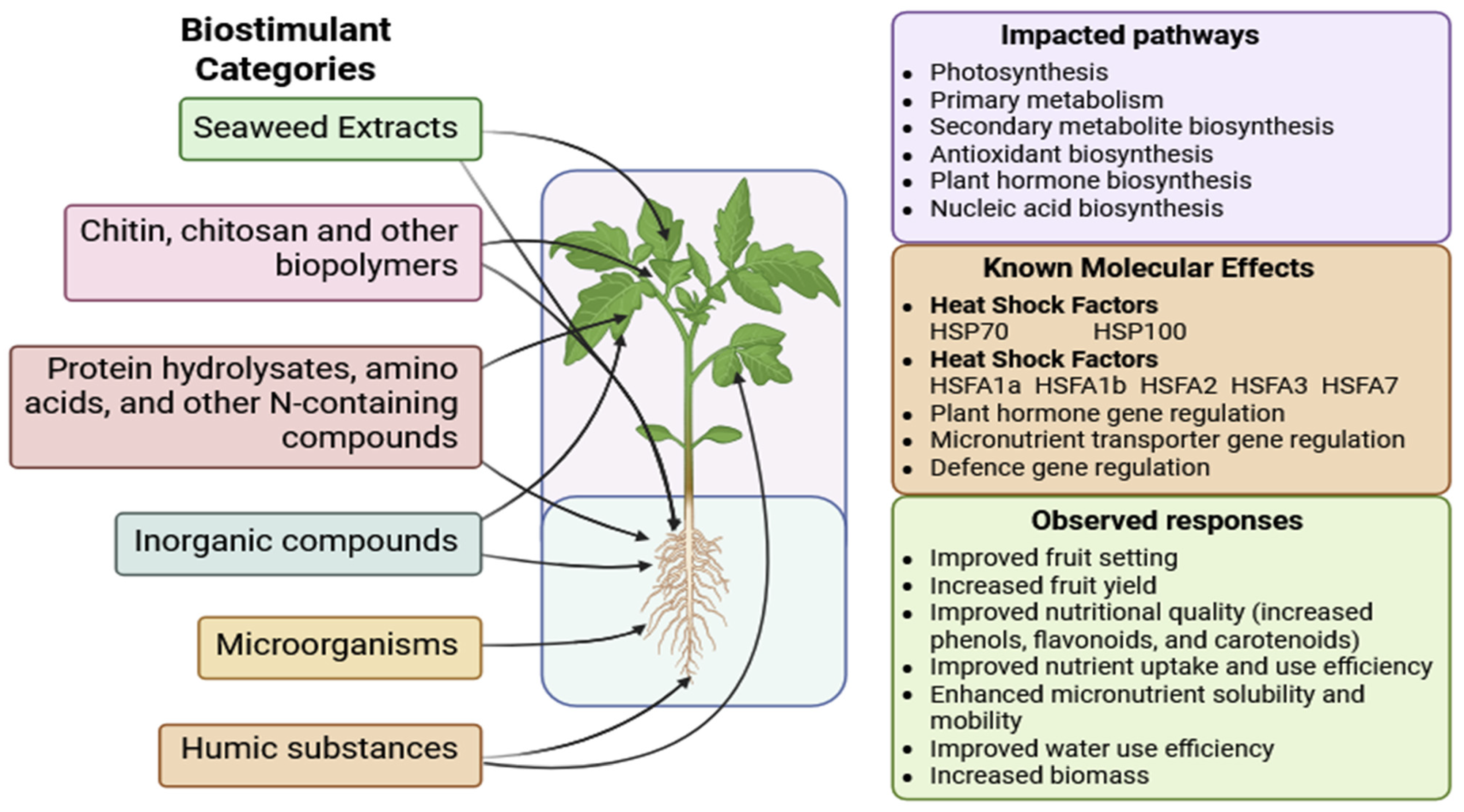
Various effects of heat stress have been found to be ameliorated through the application of SEs. Carmody et al. [43] showed that soil-grown tomato plants treated with a foliar spray of A. nodosum extract exhibited improved pollen viability, an 86% increase in fruit setting, and improved retention of leaf sugar content after exposure to temperatures up to 31 °C compared to untreated, stressed plants (see Table 3). These responses may be linked to the improved fruit yields observed in the stressed, biostimulant-treated tomato plants [43]. SEs have also shown the ability to mitigate other abiotic stress effects in plants, including low temperature stress [42], salinity stress [48], low nutrient availability [47], and drought stress [49], in addition to generally improving plant growth and development. SE application under non-stressful conditions has been found to improve fruit quality, yield, physiological qualities, and overall plant growth in various crops as well [42,50,51,52]. SEs can be applied either as foliar treatments or as root treatments and can also be applied in tandem with other forms of biostimulants (Table 3).
At present, the studies conducted suggest that the application of SEs to crops grown in CEA systems would be beneficial under elevated temperatures for the maintenance of food production, improving shoot and root length, fresh weight, flower development, pollen viability, and fruit production [43,47].

3.2. Chitin and Chitosan

Chitin is a polymer derived from various natural sources including the shells of crustaceans, insects, molluscs, and the walls of fungi. It is considered the second most abundant polymer on earth [62]. Chitin is a hydrophobic molecule, meaning that it does not dissolve easily into a sprayable compound, limiting its applications in agriculture [63]. Chitosan, on the other hand, is a chitin derivative which is highly soluble and therefore more easily applied to plants than chitin [64]. The extraction methods used to create chitosan from chitin often yield inconsistent results at a high environmental cost. With the growing global interest in these versatile compounds, there is much interest in the development of alternative biotechnological extraction methods, with particular interest in the process of converting chitin to chitosan [65]. Chitin and chitosan can both be applied as a pre-sowing seed treatment, a foliar treatment, a root treatment, or in consortium with other treatments (see Table 3 and Section 3.6). Chitosan application through nanoparticles is now being researched as an alternative application method; however, at present, the literature pertaining to its use to conferring heat stress tolerance is extremely limited, especially with regard to crops commonly grown in CEA systems, and as such has not been addressed in this review.
When chitosan has been applied to CEA-grown strawberries exposed to high temperatures and light stress, increased chlorophyll contents of leaves post stress, as well as reduced accumulation of H2O2 and O2, and preserved PSII activity compared to untreated stressed plants, indicate that chitosan has photoprotective qualities. An increase in AsA was also observed in leaves, demonstrating increased antioxidant activity in response to the applied stress, which is consistent with the reported preservation of PSII activity [54].
When applied to glasshouse-grown, soil-based lettuce plants, chitin has been associated with increasing photosynthetic activity and inducing tolerance to abiotic stressors, as well as increasing antioxidant enzyme activity and upregulation of defence genes [66]. Interestingly, this study found that the growth-promoting effects of chitin was still significantly different to the controls under the more variable conditions of a non-temperature regulated glasshouse, suggesting that the growth-promoting effects of chitin are independent of strict environmental conditions. This supports the inclusion of chitin-based biostimulants in commercial CEA practices, specifically to reduce reliance on energetically demanding temperature maintenance equipment, as they already have demonstrated beneficial effects in these conditions.
Chitosan application in hydroponic systems also seems to be promising; hydroponically grown tomatoes treated with chitosan demonstrated increased plant height and leaf chlorophyll content compared to controls [53]. Fruit size parameters and the phenol, flavonoid, and vitamin C contents were also increased in the fruit produced by chitosan-treated plants. This suggests that chitosan treatment enhanced the tomato plants’ vegetative and reproductive growth [53], increasing yields. The findings of this study are consistent with previous soil-based studies, which found that yield and bioactive compound accumulation in tomatoes was dose-dependent [67]. In addition, Dasgan et al. [53] suggest that benefits of the biostimulant’s application may be transferable between growth practices, indicating that it is the cultivar that determines the efficacy of a treatment rather than the growth practice [53]. This is supported by the conclusion drawn by Li et al. [66], which was that the growth-promoting effect of chitin did not appear to be dependent on consistent environmental conditions, as findings from these less environmentally rigorous studies were consistent with previous studies that had much stricter environmental parameter control. Whilst these two studies do not include specific temperature stress, their cross-applicability highlights the need for future research into the modulation of temperature stress responses in specific plants cultivars using biostimulants under different experimental conditions.

3.3. Protein Hydrolysates, N-Containing Compounds, and Amino Acids

Biomass is generated at a massive scale by food and agricultural industries. It is a byproduct rich in secondary metabolites, which can undergo extraction processes to produce protein hydrolysates. Protein hydrolysates include polypeptides, oligopeptides, and free amino acids which have all demonstrated biostimulatory activity [68]. Protein hydrolysate treatments have been shown to result in increased plant growth, improved photosynthetic rates, and enhanced productivity, both in the presence and absence of stress in tomatoes [55]. In addition to this, enhanced soil microbial activity and improved nutrient uptake have been reported in response to protein hydrolysate application, which has been suggested to result from increased solubility and micronutrient mobility through complexations with amino acids and peptides [68].
Increases to primary and secondary metabolism by the application of protein hydrolysates have also been observed, including the production of phenylpropanoids, terpenes, flavonoids, and alkaloids [34,65], all of which have the capacity to improve heat stress responses. The antioxidant contents of protein hydrolysate-treated plants under heat stress have been found to be higher than untreated their counterparts, with decreased ROS levels present in the harvested tomatoes [55]. These effects could be due to protein hydrolysates possessing hormone-like activity, although it has been suggested that they may play a role in the regulation of endogenous hormonal stress responses, like that seen under treatment with SEs. It is proposed that they may elevate levels of auxin, CK, ABA, and GA, as well as decreasing BRs, CKs, and JA within treated plants [64,65]. Metabolomic analysis identified over 250 compounds involved in secondary metabolism-related pathways influenced by treatments [56].
A study of two tomato varieties grown in soil under heat stress up to 30–31 °C, treated with a protein hydrolysate, highlighted how biostimulants can yield different effects in individual cultivars [55]. The effects of a biostimulant treatment on the response of a heat-tolerant tomato cultivar (LA3120) to high temperature stress differed markedly from those of a standard Italian cultivar (E42) treated with the same protein hydrolysate-based biostimulant. Whilst some positive responses were observed in the standard variety, such as increased AsA content, reduced H2O2 content, modulated lipid peroxidation, and reduced stomatal effects, the same could not be said of the heat-tolerant variety (Table 3). Interestingly, the heat-tolerant variety had an unexpected response to the biostimulant under heat stress, with observed responses being almost the opposite to those which enhance heat tolerance. Additionally, when plants were exposed to combined heat and drought stress, the drought stress responses and combined stress responses were more consistent and significantly more positive than those to heat stress alone [55]. This suggests that this particular biostimulant would be better placed to support plants of these cultivars experiencing only drought, or drought in combination with heat, rather than heat stress alone. This study highlights the need for more comprehensive investigation into different biostimulants, the responses of individual cultivars, and the metabolic impacts of these combinations for the optimisation of usage.
Whilst protein hydrolysate biostimulants contain a variety of different lengths of polypeptides and free amino acids [56], applications of free amino acids alone can also elicit biostimulatory responses [53]. Free amino acid application can improve plant growth parameters, such as increased leaf growth, improved chlorophyll content of leaves, enhanced fruit quality, and increased fruit yields. Tomatoes harvested from free amino acid-treated plants also demonstrated increased phenolic content, ascorbic acid content, and flavonoid content, all contributing to the nutritional quality of the produce (Table 3) [53]. An assessment of the impacts of three amino acids on hydroponic lettuce grown under temperature stress indicated that different amino acids yield different impacts, with methionine identified as being most beneficial in this instance, and tryptophan and glycine negatively impacting plant growth and development [57]. This, again, highlights the significance of identifying the most appropriate treatment for application on a case-by-case basis.

3.4. Inorganic Compounds

Whilst there are many known macro- and micronutrients which are essential for plant growth and development, many additional inorganic compounds have been identified as being beneficial to plants and are considered to be biostimulants because of this. Examples of such inorganic compounds include phosphite salts and “beneficial elements”, which are defined as those which stimulate plant growth and initiate other effects, such as metabolite synthesis and toxicity amelioration, especially at very low concentrations [69]. Previously, 10 beneficial elements have been identified: Selenium (Se), Silicon (Si), Aluminium (Al), Cerium (Ce), Cobalt (Co), Iodine (I), Lanthanum (La), Sodium (Na), Titanium (Ti), and Vanadium (V), although there is some debate around whether some might also be considered essential micronutrients, which can vary between different plant taxa [69,70].
Se is one of the most studied beneficial elements and it is often used for biofortification purposes due to its known human health benefits [70]. The two most bioavailable forms of Se are selenate and selenite which are transported by sulphate and phosphate transporters, respectively [70]. Haghighi et al. [60] studied the effects of Se on hydroponically grown Capsicum annum L. (pepper) exposed to temperatures as high as 35 ± 2 °C. Se application resulted in increased vegetative growth, going as far as to outperform the unstressed control in some parameters. Se was found to decrease the rates of flower dropping at all concentrations, to a rate below that observed in the controls. The phenol and antioxidant concentrations of fruit were significantly increased under Se application, with increased SOD and POD activity observed. Photosynthetic capacities were benefited by the application of Se through increased antioxidant activity. Lower concentrations of Se application were associated with improved vegetative growth, contrasting with higher concentrations, yielding improved fruit and flower performance. This study clearly shows that Se application can ameliorate negative high temperature stress effects in hydroponic systems, at least in pepper [60], demonstrating that Se application is a viable option for use in CEA. The study also demonstrated that Se application can be applied at variable rates to yield desired results at different developmental stages, suggesting that this is another area of biostimulant usage that should be investigated for full utilisation.
Si is another element which has been proven to be a beneficial additive, having both physiological and molecular effects [71]. The biostimulatory effect of Si to improve the growth of heat-stressed plants has been attributed to enhanced levels of photosynthetic pigments (Chl a, Chl b, and carotenoids), the enhancement of cell stability, and the modulation of endogenous hormone biosynthesis pathways (see Table 3) [58,59,72]. Si supplementation has been shown to enhance the expression of antioxidant enzyme genes and the biosynthesis of enzymatic antioxidants in peppers and strawberries, including CAT, APX, POD, SOD, and GPX [58,59], which protect cells from heat-induced oxidative damage and improve growth-related attributes in many plants [58]. In addition, ROS activity has been shown to be influenced by Si application, with the O2 levels of treated pepper plants being less than half than that of untreated plants, with byproducts of lipid peroxidation also being significantly decreased [59]. This indicates that Si can limit lipid peroxidation during heat stress and confirms that Si application can reduce oxidative stress, as well as protect photosynthetic processes [58,59]. In addition to the effects of Si listed above, Si application to soil specifically has been shown to improve seed germination, root and shoot development, nutrient uptake, nitrogen fixation, and secondary metabolism [72].
Endogenous hormone production in pepper was linked to downregulation of SA biosynthetic genes, which is thought to benefit thermotolerance mechanisms [59]. The upregulation of heat stress factors, such as HSFA1a, HSFA1b, HSFA2, HSFA3, and HSFA7, has also been observed. This resulted in enhanced heat stress responses and the prevention of ROS accumulation, which can protect cells from oxidative stress in both peppers and strawberries [58,59].

3.5. Beneficial Microorganisms

Currently there is no consensus as to whether microorganisms should be classed as biofertilisers or as biostimulants. However, the production of metabolites by microorganisms, combined with their improvements to nutrient uptake and assimilation, suggests that they can be considered both [73]. Microorganisms can enhance nutrient uptake and assimilation through nutrient solubilisation processes [73].
Microbial biostimulants increase tolerance to abiotic stress through direct and indirect mechanisms. Direct mechanisms include the production and enhanced bioavailability of essential nutrients and the production and regulation of plant growth-regulating compounds through changes in gene expression, such as auxin-responsive genes [74]. Plant growth is also affected indirectly, however whilst this is widely recognised in the scientific literature, it is a claim that cannot be made from a regulatory standpoint for products sold in the EU [74].
Microbial biostimulants can be a single microorganism or multiple microorganisms used in combination. These are broadly known as Plant Growth-Promoting Microorganisms (PGPMs) and are generally classified as either Plant Growth-Promoting Rhizobacteria (PGPRs) or Arbuscular Mycorrhizal Fungi (AMF) [75]. PGPRs are endophytic bacteria found in the rhizosphere, including Proteobacteria, Firmicutes, Actinobacteria, and Bacteroidetes, which enhance soil productivity and abiotic stress tolerance [75]. AMFs are a functional group of soil biota which exert positive effects on crop production, as well as supporting ecosystem sustainability [47]. AMFs form symbiotic relationships with the roots of nearly all land-based plants, and can enhance productivity through improving nutrient acquisition, regulating growth, and potentially influencing and protecting ecosystems under both biotic and abiotic stressors [76]. The arbuscular–mycorrhizal interface allows for plants and fungi to exchange nutrients, signalling molecules and protective compounds which can regulate the antioxidant defence systems, hormones, and osmotic processes involved in heat stress response coordination [76]. Photosynthetic products from host plants are utilised by the AMF which in return provide plant root systems with nutrients. It has been found that this can promote primary and secondary metabolite synthesis, such as that of phenols and flavonoids, which are essential for abiotic stress alleviation [47]. Soil quality is enhanced by AMF hyphal networks through improved soil particle aggregation and reduced erosion; soil nutrient leaching is also limited, promoting nutrient retention and decreasing the risk of ground water contamination [47]. Under abiotic stress, AMFs trigger plants’ morphological, physiological, and molecular responses, modulating antioxidant defence mechanisms, osmotic adjustments, and hormone regulation. These responses promote plant performance, enhancing photosynthetic efficiency through modulation of antioxidant genes and biomass production [76].
The use of PGPRs on tomatoes grown hydroponically in coconut coir, without temperature control mechanisms, has been shown to result in enhanced fruit qualities, including size, weight, and total phenolic content [53] (see Table 3). Additionally, treated plants showed increased vitamin C content, total flavonoids, and mineral nutrient accumulation compared to controls, making for more nutritionally dense fruit [53]. Phenol and flavonoid concentrations were also found to be significantly increased under treatment with the PGPR, which is indicative of a plant’s ability to withstand abiotic stress such as high temperature, as well as enhancing nutritional value [53]. In a separate study [47], tomatoes grown hydroponically in a glasshouse and treated with the AMF Rhizophagus intraradices had a higher combined root and shoot length than the untreated plants, with significantly higher fresh and dry weights. The plants treated with both nutrient solution and AMF also had flowers, whereas the AMF-treated plants alone did not, indicating that the AMF, when combined with adequate nutrients, resulted in accelerated flowering, but that AMFs cannot overcome nutrient deficiency alone. Furthermore, the antioxidant and photoprotective capacities were shown to be higher in AMF-treated plants, indicating that benefits were not only at the morphophysiological level, but that biostimulatory benefits extended to the molecular and metabolic levels too. These studies provide intriguing insights into the potential use of PGPMs to mitigate stress effects in CEA systems, specifically in hydroponics despite the absence of soil.

3.6. Humic Substances and Other Potential Biostimulants

Humic Substances (HSs) are substances which comprise one of the key fractions of organic matter and soil, derived from the metabolic activity of soil microbes during the process of humification [68]. HSs have been suggested to contain various compounds, including lipids, proteins, tannins, polysaccharides, and inorganic elements which are released during the humification process. They are traditionally categorised by their molecular weights and solubility into the subcategories of humic acids, fulvic acids, and humins [7].
Humic acids and fulvic acids have both been reported to increase antioxidant activity, chlorophyll content, photosynthesis, and nucleic acid synthesis, as well as promoting root hair production, root elongation, and lateral root growth [58,67,77]. At the metabolic and biochemical level, HSs have been found to benefit both primary and secondary metabolite biosynthetic pathways [53] and stimulate nitrogen and sulphur metabolic processes, which improves the nutritional quality of treated crops [78]. Transcriptional networks are impacted by HS application through both plant hormone-linked and independent signalling pathways [79]. The properties of a given sample of an HS vary depending on the source of the raw material and the extraction conditions [80].
Studies on Arabidopsis thaliana identified that the application of humic acid induced the transcriptional activation of HSPs through the upregulation of related genes, specifically identifying HSP101 as a specific potential molecular target of humic acid activity [81].
The application of humic acids to tomato plants under high temperature stress yielded significant reductions in oxidative stress effects, which was assessed through MDA quantification. The activity of both SOD and APX activity was enhanced as well [61]. Amino acid levels were modulated through the application of this treatment—under control temperatures, increased levels of aspartic acid, glutamic acid, alanine, phenylalanine, arginine, and proline were observed. When exposed to heat stress, the amino acid contents of the plants were significantly increased in contrast to the untreated plants, which exhibited decreased levels of amino acids [61].
Whilst there are somewhat limited studies into the use of HS in hydroponic systems for the mitigation of high temperature stress, there are studies assessing both the effects of HSs on heat tolerance and studies assessing the use of HSs in hydroponic systems. For example, a study exploring the impacts of fulvic acid on tomatoes grown hydroponically in a greenhouse under normal temperature conditions found that increased plant height, stem diameter, and leaf numbers occurred in treated plants in comparison to the untreated ones [53]. Furthermore, leaf chlorophyll content was significantly higher and fruit quantity and quality improved, with total soluble solids increasing by 16%, flavonoid content increasing by 318%, and phenolic compounds increasing by 20% compared to the controls [53].

3.7. Combined Treatments

Whilst biostimulants can be used individually to elicit responses from plants in a holistic manner, there are many instances whereby the best results have been obtained through the co-application of more than one biostimulant at a time. The activation of multiple pathways of protection can result in synergistic responses, resulting in more holistic thermoprotective activity. Combined treatments can be applied in different manners, including the consortia of microbes discussed previously, combined microbial and non-microbial biostimulant treatments, and the deployment of multiple non-microbial biostimulants. Combined treatment can also involve the co-application of treatments through different means, e.g., a foliar and a root treatment applied simultaneously (see Table 3).
Microbial and non-microbial treatments are often applied in tandem, such as in the study conducted by Cardarelli et al. [82] where a protein hydrolysate and Trichoderma atroviride MUCL42632, were deployed in an ebb and flow hydroponic system to both tomatoes and lettuce. In this instance, whilst the protein hydrolysates alone did increase shoot and root growth, combining the two resulted in further improved growth. This study also highlighted how different application methods may need to be deployed to receive the most out of the treatments being applied. The protein hydrolysate applied in liquid form yielded less significant results than that applied in microgranular form, and the microgranular protein hydrolysate combined with liquid AMF application yielded the most significant results of the study.
González-González et al. [47] showed that tomato plants treated separately with SE and an AMF demonstrated increased growth parameters compared to their untreated counterparts; however, when the treatments were applied in tandem, even more significantly improved results were obtained [47]. Both fresh and dry weights were significantly higher in the combined treated sets than was observed in the individually treated plant sets. The dual treatment treated plants also had higher leaf protein contents and higher carbohydrate and phosphorus contents were recorded. Interestingly, of the individually treated plants, only those treated with the AMF had any flowers—those treated with both AMF and SE exhibited a 150% increase in flower quantity compared to the AMF alone. When root mycorrhizal colonisation was analysed, SE was found to significantly increase the colonisation observed when compared to the AMF alone, confirming that SE can enhance the effects of AMF through synergistic mechanisms.
The treatment of tomato plants with humic acid and an SA1 isolate of Baccius cereus yielded interesting results, which indicated differential regulation of oxidative stress pathways and responses that were unique to each individual treatment and the combined treatment [61]. Combined application did not always yield better results, with SA, ABA, and MDA levels being modulated individually. Modulation of gene expression was significantly enhanced when treatments were combined; slHsfA1a demonstrated a 2.9-fold increase in comparison to the individual treatments which yielded a 0.3–1.4-fold increase, indicating that the stress response coordination was greater. slWRKY33b, a transcription factor involved in stress responses, was downregulated in treated plants by 2.3–4-fold, in comparison to a 13-fold upregulation observed in untreated plants [61].
These studies all highlight the potential for enhancing the thermoprotection of crops at different levels and the applicability of biostimulants for this goal specifically in CEA systems. Investigation into how the co-application of biostimulants work, what pairings are most effective in specific species/cultivars, and how pathways are regulated both individually and in tandem, could open the forecourt for a variety of developments in biostimulant research. For example, research into cross-stress biostimulant application or the enhancement of observed effects under known stress levels could reduce the quantity of treatment required to reap the benefits, thus further relieving the economic burden. Conversely, understanding which treatments do not work together is also vital if growers are utilising multiple biostimulants/treatments for different end goals—for producers of biostimulants to be able to warn growers of interactions could prevent significant crop loss.

4. Conclusions and Perspectives

Biostimulants encompass a broad spectrum of treatments which provide holistic protection for plants against abiotic and biotic stressors, which are becoming increasingly pressing issues faced by the agricultural and horticultural industries. The biostimulant categories discussed in this review demonstrate their ability to ameliorate high temperature stress effects, as summarised in Figure 2, across numerous species and cultivars. The variation in the effects observed between different cultivars, developmental stages, and stress conditions highlights the need for further research to ascertain how best to target specific economically or culturally significant cultivars for maximal benefit optimisation. Applications of biostimulants must be appropriate not just for the crop in question, but also for the stress that is to be mitigated and the stage of development at which it is being applied, as inappropriate application of a biostimulant can result in substandard crop yields.
In addition to providing an option for managing plant responses to naturally occurring environmental stressors, biostimulants have the potential to alleviate the energy demands associated with maintaining the optimal growth conditions of plants grown in CEA systems to reduce both energetic and financial costs, as indicated by the outcomes of the studies discussed in this review. Wider implementation could support the use of CEA practices for food in regions that experience extreme weather events, are projected to be subjected to increased average temperatures as the climate continues to change, or where there is restricted electricity available to grow. This could have far-reaching benefits, helping to support the communities who could experience the most severe disruption to their food supply networks throughout the 21st century.
Whilst the implementation of biostimulants in hydroponic, and specifically vertical farming systems, is not as well documented as it is in soil, emerging evidence shows that similar positive effects are obtained when applied to appropriate species and cultivars. The inclusion of hydroponics into biostimulant studies could further support the advancement of food production towards future demands and limitations, taking into consideration the effects of both environmental stressors and financial feasibility for this cultivation practice. Despite the variability of pathways and responses induced by biostimulants, they provide great opportunity for alternative means of food supply network fortification when used in conjunction with other alternative plant growth production practices. Further research is therefore required to maximise the potential for biostimulant usage in hydroponic growing and vertical farming systems. Understanding how different plants react in these systems compared to soil, and whether responses transfer over simply, will allow for the advancement and broadening of the understanding of their applications in this field through research that considers the needs of growers.
Whilst the potential uses of biostimulants are numerous, the paucity of knowledge surrounding their mechanisms or modes of action means that, at present, legislation around classification is vague. This means that commercial products can be sold as “biostimulants” without any underpinning research to support this classification, which has resulted in some research and industrial communities being wary of commercial biostimulants and their claims. Increasing understanding of how and why variability occurs and broadening the knowledge of biostimulatory activity across species, cultivars, and cultivation practices could provide avenues for improved regulatory standards. Investigations utilising ‘omic technologies could assist in this regard, and the inclusion of proteomic and genomic assessments, specifically with regard to crops of significant economic importance, could deepen the scientific knowledge base around how observed responses come to be. This level of understanding could influence regulatory guidelines, which in turn could increase the acceptance of these advantageous technologies, assisting movement towards the goal of improving the quality and quantity of food produced across a variety of different systems. Comparative analyses of the activity and efficacy of biostimulants in single cultivars, such as that conducted by Dasgan [53], exemplifies a comprehensive analytical approach to identifying the best biostimulant for a cultivar, which would particularly benefit economically significant varieties to allow for more widespread adoption of practice into the mainstream food supply network. Integration of ‘omic analyses could greatly increase the understanding held from both theoretical and practical perspectives.
High temperature stress effects also need to be investigated more thoroughly alongside the investigations into biostimulants and their activity. The development of the understanding of different economically important crop responses to heat stress, specifically considering the cellular and molecular impacts and how these translate using ‘omic technologies, will allow for more targeted developments of systems and treatments to ameliorate the negative effects. At present, there is a significant deficit of knowledge around the genetic and molecular processes which underpin much of heat tolerance, specifically and singularly. The role of plant hormones in the modulation of molecular heat stress responses and the mechanism by which hormone biosynthesis occurs at elevated temperatures, remains largely opaque. Much of this could be elucidated through ‘omic investigation, as is occurring for other stress response pathways, such as drought and salinity. This information would also assist in the breeding and/or genetic modification of cultivars towards the same goal. Increasing temperatures are being faced globally, and any research into how and why observed responses occur will benefit every stage of the food supply chain, from growers to consumers, by aiding in reducing food waste at each stage.
At present, there is a significant lack of studies which consider the effects of high temperature stress as a single stressor, not in combination with water deficit or salinity. These stressors are often combined in the natural environment, hence a focus on them in the research is necessary; within CEA it is often the case that heat is the only factor that cannot be controlled. In soil-based systems, irrigation with clean and/or deionised water can resolve the issues of drought and high salinity. In hydroponic systems, water is not a scarce resource for crops, and salinity is easily resolved through regular replenishment of nutrient solutions—as such, a renewed focus on the impacts of temperature stress and its mitigation in a singular capacity would greatly benefit the development of this area.
Another line of investigation which could be explored is the potential for magnetised water for CEA. Water magnetisation has shown potential for use in agricultural settings, having both positive and negative impacts on treated model crops, including physiological, metabolic, and biochemical responses. Whilst this would be of particular interest to soilless CEA methodologies, such as hydroponic and aeroponic systems, it has already indicated that it impacts soil-grown crops [83]. Investigation of this more novel treatment, such as the elucidation of suitable target cultivars, potential treatment programmes, and molecular mechanisms of action, could greatly improve this area of research and support its integration into more mainstream practice, as we are already observing with the main categories of biostimulants outlined above [83].
This review highlights the potential for biostimulants and CEA systems to add to the range of options available for fortification of the food supply network towards more sustainable agricultural practices. With the twin goals of reducing carbon emissions and feeding the growing population in mind, the deployment of these technologies, alongside modification of land-based practices and other food production systems, could enable a systemic change towards a more productive, sustainable, and secure food supply network.

Author Contributions

Conceptualization, A.G.-P., M.M. and G.T.-O.; investigation, A.G.-P.; writing—original draft preparation, A.G.-P.; writing—review and editing, M.M., D.J.O. and G.T.-O.; supervision, M.M., D.J.O. and G.T.-O.; funding acquisition, M.M. and G.T.-O. All authors have read and agreed to the published version of the manuscript.

Funding

This research was funded by the European Regional Development Fund managed by the UK Ministry of Housing Communities and Local Government. The grant received by Lancaster University was ‘Eco-I North West 03R19P03809’. G.T.-O. acknowledges the contribution of the Sector Plan Biology of Wageningen University funded by the Dutch Ministry of Education, Culture, and Science.

Data Availability Statement

No new data were created or analysed in this study. Data sharing is not applicable to this article.

Conflicts of Interest

The authors declare no conflicts of interest.

Abbreviations

The following abbreviations are used in this manuscript:
ABAAbscisic Acid
AMFArbuscular Mycorrhizal Fungi
APXAscorbate Peroxidase
AsAAscorbic Acid
bHLHBasic helix–loop–helix
BRBrassinosteroid
bZIPBasic Leucine Zipper
CATCatalase
CEControlled Environment
CEAControlled Environment Agriculture
CKCytokinin
EREndoplasmic Reticulum
ETCElectron Transport Chain
GAGibberellin
GPXGlutathione Reductase
HSFHeat Shock Factor
HSPHeat Shock Protein
JAJasmonic Acid
PGPMPlant Growth Promoting Microorganisms
PGPRPlant Growth Promoting Rhizobacteria
PIF4/7Phytochrome Interacting Factor 4/7
PODPeroxidases
PSIPhotosystem I
PSIIPhotosystem II
ROSReactive Oxygen Species
SASalicylic Acid
SESeaweed Extract
SODSuperoxide Dismutase
UPRUnfolded Protein Response

References

  1. Engler, N.; Krarti, M. Review of energy efficiency in controlled environment agriculture. Renew. Sustain. Energy Rev. 2021, 141, 110786. [Google Scholar] [CrossRef]
  2. Owino, V.; Kumwenda, C.; Ekesa, B.; Parker, M.E.; Ewoldt, L.; Roos, N.; Lee, W.T.; Tome, D. The impact of climate change on food systems, diet quality, nutrition, and health outcomes: A narrative review. Front. Clim. 2022, 4, 941842. [Google Scholar] [CrossRef]
  3. Younger, S. NASA Finds Summer 2024 Hottest to Date. 11 September 2024. Available online: https://www.nasa.gov/earth/nasa-finds-summer-2024-hottest-to-date/ (accessed on 9 December 2024).
  4. Wang, L.; Norford, L.; Arkin, A.; Niu, G.; Valle de Souza, S.; Zahid, A.; Shih, P.M.; Piette, M.A.; Ganapathysubramanian, B. Finding sustainable, resilient, and scalable solutions for future indoor agriculture. npj Sci. Plants 2025, 1, 5. [Google Scholar] [CrossRef]
  5. Penuela, J.; Ben, C.; Boldyrev, S.; Gentzbittel, L.; Ouerdane, H. The indoor agriculture industry: A promising player in demand response services. Appl. Energy 2024, 372, 123756. [Google Scholar] [CrossRef]
  6. Talbot, M.-H.; Monfet, D. Analysing the influence of growing conditions on both energy load and crop yield of a controlled environment agriculture space. Appl. Energy 2024, 368, 123406. [Google Scholar] [CrossRef]
  7. Du Jardin, P. Plant biostimulants: Definition, concept, main categories and regulation. Sci. Hortic. 2015, 196, 3–14. [Google Scholar] [CrossRef]
  8. Yakhin, O.I.; Lubyanov, A.A.; Yakhin, I.A.; Brown, P.H. Biostimulants in Plant Science: A Global Perspective. Front. Plant Sci. 2017, 7, 2049. [Google Scholar] [CrossRef]
  9. Jagadish, S.V.K.; Way, D.A.; Sharkey, T.D. Plant heat stress: Concepts directing future research. Plant Cell Environ. 2021, 44, 1992–2005. [Google Scholar] [CrossRef]
  10. Kan, Y.; Mu, X.R.; Gao, J.; Lin, H.X.; Lin, Y. The molecular basis of heat stress responses in plants. Mol. Plant 2023, 16, 1612–1634. [Google Scholar] [CrossRef] [PubMed]
  11. Santiago, J.P.; Sharkey, T.D. Pollen development at high temperature and role of carbon and nitrogen metabolites. Plant Cell Environ. 2019, 42, 2759–2775. [Google Scholar] [CrossRef]
  12. Alsamir, M.; Mahmood, T.; Trethowan, R.; Ahmad, N. An overview of heat stress in tomato (Solanum lycopersicum L.). Saudi J. Biol. Sci. 2021, 28, 1654–1663. [Google Scholar] [CrossRef]
  13. Giri, A.; Heckathorn, S.; Mishra, S.; Krause, C. Heat Stress Decreases Levels of Nutrient-Uptake and -Assimilation Proteins in Tomato Roots. Plants 2017, 6, 6. [Google Scholar] [CrossRef] [PubMed]
  14. Manghwar, H.; Li, J. Endoplasmic Reticulum Stress and Unfolded Protein Response Signaling in Plants. Int. J. Mol. Sci. 2022, 23, 828. [Google Scholar] [CrossRef] [PubMed]
  15. Zhao, J.; Lu, Z.; Wang, L.; Jin, B. Plant Responses to Heat Stress: Physiology, Transcription, Noncoding RNAs, and Epigenetics. Int. J. Mol. Sci. 2021, 22, 117. [Google Scholar] [CrossRef] [PubMed]
  16. Farooq, M.A.; Niazi, A.K.; Akhtar, J.; Saifullah; Farooq, M.; Souri, Z.; Karimi, N.; Rengel, Z. Acquiring control: The evolution of ROS-Induced oxidative stress and redox signaling pathways in plant stress responses. Plant Physiol. Biochem. 2019, 141, 353–369. [Google Scholar] [CrossRef]
  17. Sachdev, S.; Ansari, S.A.; Ansari, M.I.; Fujita, M.; Hasanuzzaman, M. Abiotic Stress and Reactive Oxygen Species: Generation, Signaling, and Defense Mechanisms. Antioxidants 2021, 10, 277. [Google Scholar] [CrossRef]
  18. Hu, S.; Ding, Y.; Zhu, C. Sensitivity and Responses of Chloroplasts to Heat Stress in Plants. Front. Plant Sci. 2020, 11, 375. [Google Scholar] [CrossRef]
  19. Angon, P.B.; Das, A.; Roy, A.R.; Khan, J.J.; Ahmad, I.; Biswas, A.; Pallob, A.T.; Mondol, M.; Yeasmin, S.T. Plant development and heat stress: Role of exogenous nutrients and phytohormones in thermotolerance. Discov. Plants 2024, 1, 17. [Google Scholar] [CrossRef]
  20. Ghorbel, M.; Brini, F.; Sharma, A.; Landi, M. Role of jasmonic acid in plants: The molecular point of view. Plant Cell Rep. 2021, 40, 1471–1494. [Google Scholar] [CrossRef]
  21. Guo, T.; Gull, S.; Ali, M.M.; Yousef, A.F.; Ercisli, S.; Kalaji, H.M.; Telesiński, A.; Auriga, A.; Wróbel, J.; Radwan, N.S.; et al. Heat stress mitigation in tomato (Solanum lycopersicum L.) through foliar application of gibberellic acid. Sci. Rep. 2022, 12, 11324. [Google Scholar] [CrossRef]
  22. Li, N.; Euring, D.; Cha, J.Y.; Lin, Z.; Lu, M.; Huang, L.-J.; Kim, W.Y. Plant Hormone-Mediated Regulation of Heat Tolerance in Response to Global Climate Change. Front. Plant Sci. 2020, 11, 627969. [Google Scholar] [CrossRef]
  23. Ali, M.S.; Baek, K.-H. Jasmonic Acid Signaling Pathway in Response to Abiotic Stresses in Plants. Int. J. Mol. Sci. 2020, 21, 621. [Google Scholar] [CrossRef]
  24. Pooam, M.; Dixon, N.; Hilvert, M.; Misko, P.; Waters, K.; Jourdan, N.; Drahy, S.; Mills, S.; Engle, D.; Link, J.; et al. Effect of temperature on the Arabidopsis cryptochrome photocycle. Physiol. Plant. 2021, 172, 1653–1661. [Google Scholar] [CrossRef]
  25. Zhai, H.; Xiong, L.; Li, H.; Lyu, X.; Yang, G.; Zhao, T.; Liu, J.; Liu, B. Cryptochrome 1 Inhibits Shoot Branching by Repressing the Self-Activated Transciption Loop of PIF4 in Arabidopsis. Plant Commun. 2020, 1, 100042. [Google Scholar] [CrossRef]
  26. Casal, J.J.; Balasubramanian, S. Thermomorphogenesis. Annu. Rev. Plant Biol. 2019, 70, 321–346. [Google Scholar] [CrossRef]
  27. Kan, J.; Wu, F.; Wang, F.; Zheng, J.; Cheng, J.; Li, Y.; Yang, Y.; Du, J. Phytonutrients: Sources, bioavailability, interaction with gut microbiota, and their impacts on human health. Front. Nutr. 2022, 9, 960309. [Google Scholar] [CrossRef] [PubMed]
  28. Amengual, J. Bioactive Properties of Carotenoids in Human Health. Nutrients 2019, 11, 2388. [Google Scholar] [CrossRef]
  29. Graves, M.; Wu, F.; Wang, F.; Zheng, J.; Cheng, J.; Li, Y.; Yang, Y.; Du, J. ABA-mediated reprogramming of carotenoid metabolism under heat stress impairs tomato fruit ripening. Plant Sci. 2025, 362, 112755. [Google Scholar] [CrossRef]
  30. Rahman, M.M.; Rahaman, M.S.; Islam, M.R.; Rahman, F.; Mithi, F.M.; Alqahtani, T.; Almikhlafi, M.A.; Alghamdi, S.Q.; Alruwaili, A.S.; Hossain, M.S.; et al. Role of Phenolic Compounds in Human Disease: Current Knowledge and Future Prospects. Molecules 2022, 27, 233. [Google Scholar] [CrossRef] [PubMed]
  31. Ilahy, R.; Siddiqui, M.W.; Piro, G.; Lenucci, M.S.; Hdider, C. Year-to-year Variations in Antioxidant Components of High-Lycopene Tomato (Solanum lycopersicum L.) Breeding Lines. Turk. J. Agric.-Food Sci. Technol. 2016, 4, 486. [Google Scholar] [CrossRef]
  32. Kopylov, A.T.; Malsagova, K.A.; Stepanov, A.A.; Kaysheva, A.L. Diversity of Plant Sterols Metabolism: The Impact on Human Health, Sport, and Accumulation of Contaminating Sterols. Nutrients 2021, 13, 1623. [Google Scholar] [CrossRef]
  33. Du, Y.; Fu, X.; Chu, Y.; Wu, P.; Liu, Y.; Ma, L.; Tian, H.; Zhu, B. Biosynthesis and the Roles of Plant Sterols in Development and Stress Responses. Int. J. Mol. Sci. 2022, 23, 2332. [Google Scholar] [CrossRef] [PubMed]
  34. Rouphael, Y.; Colla, G. Toward a Sustainable Agriculture Through Plant Biostimulants: From Experimental Data to Practical Applications. Agronomy 2020, 10, 1461. [Google Scholar] [CrossRef]
  35. Sible, C.N.; Seebauer, J.R.; Below, F.E. Plant Biostimulants: A Categorical Review, Their Implications for Row Crop Production, and Relation to Soil Health Indicators. Agronomy 2021, 11, 1297. [Google Scholar] [CrossRef]
  36. Filatov, V.P. Tissue therapy by biological stimulants. Med. Hyg. 1947, 5, 365. [Google Scholar] [PubMed]
  37. Caradonia, F.; Battaglia, V.; Righi, L.; Pascali, G.; La Torre, A. Plant Biostimulant Regulatory Framework: Prospects in Europe and Current Situation at International Level. J. Plant Growth Regul. 2019, 38, 438–448. [Google Scholar] [CrossRef]
  38. EU. Regulation (EU) 2019/1009 of the European Parliament and the Council of 5 June 2019 Laying down Rules on the Making; EU: Brussels, Belgium, 2019. [Google Scholar]
  39. Mughunth, R.J.; Velmurugan, S.; Mohanalakshmi, M.; Vanitha, K. A review of seaweed extract’s potential as a biostimulant to enhance growth and mitigate stress in horticulture crops. Sci. Hortic. 2024, 334, 113312. [Google Scholar] [CrossRef]
  40. Raja, B.; Vidya, R. Application of seaweed extracts to mitigate biotic and abiotic stresses in plants. Physiol. Mol. Biol. Plants 2023, 29, 641–661. [Google Scholar] [CrossRef]
  41. Al-Juthery, H.; Abbas Drebee, H.; HAl-Khafaji, B.; Hadi, R. Plant Biostimulants, Seaweeds Extract as a Model (Article Review). In IOP Conference Series: Earth and Environmental Science; IOP Publishing Ltd.: Al-Qadisiyah, Iraq, 2020. [Google Scholar]
  42. Shukla, P.S.; Mantin, E.G.; Adil, M.; Bajpai, S.; Critchley, A.T.; Prithiviraj, B. Ascophyllum nodosum-Based Biostimulants: Sustainable Applications in Agriculture for the Stimulation of Plant Growth, Stress Tolerance, and Disease Management. Front. Plant Sci. 2019, 10, 655. [Google Scholar] [CrossRef]
  43. Carmody, N.; Goni, O.; Langowski, L.; O’Connell, S. Ascophyllum nodosum Extract Biostimulant Processing and Its Impact on Enhancing Heat Stress Tolerance During Tomato Fruit Set. Front. Plant Sci. 2020, 11, 807. [Google Scholar] [CrossRef]
  44. Kumar, G.; Nanda, S.; Singh, S.K.; Kumar, S.; Singh, D.; Singh, B.N.; Mukherjee, A. Seaweed extracts: Enhancing plant resilience to biotic and abiotic stresses. Front. Mar. Sci. 2024, 11, 1457500. [Google Scholar] [CrossRef]
  45. Olaetxea, M.; Garnica, M.; Erro, J.; Sanz, J.; Monreal, G.; Zamarreño, A.M.; García-Mina, J.M. The plant growth-promoting effect of an Ascophyllum nodosum (L.) extract derives from the interaction of its components and involves salicylic-, auxin- and cytokinin-signaling pathways. Chem. Biol. Technol. Agric. 2024, 11, 190. [Google Scholar] [CrossRef]
  46. Goñi, O.; Quille, P.; O’Connell, S. Seaweed Carbohydrates. In The Chemical Biology of Plant Biostimulants; Geelen, D., Xu, L., Stevens, C.V., Eds.; John Wiley & Sons: Hoboken, NJ, USA, 2020; pp. 57–95. [Google Scholar]
  47. González-González, M.F.; Ocampo-Alvarez, H.; Santacruz-Ruvalcaba, F.; Sanchez-Hernandez, C.V.; Casarrubias-Castillo, K.; Becerril-Espinosa, A.; Castaneda-Nava, J.J.; Hernandez-Herrera, R.M. Physiological, Ecological, and Biochemical Implications in Tomato Plants of Two Plant Biostimulants: Arbuscular Mycorrhizal Fungi and Seaweed Extract. Front. Plant Sci. 2020, 11, 999. [Google Scholar] [CrossRef]
  48. Zou, P.; Lu, X.; Zhao, H.; Yuan, Y.; Meng, L.; Zhang, C.; Li, Y. Polysaccharides Derived from the Brown Algae Lessonia nigrescens Enhance Salt Stress Tolerance to Wheat Seedlings by Enhancing the Antioxidant System and Modulating Intracellular Ion Concentration. Front. Plant Sci. 2019, 10, 48. [Google Scholar] [CrossRef] [PubMed]
  49. Irani, H.; Valizadehkaji, B.; Naeini, M.R. Biostimulant-induced drought tolerance in grapevine is associated with physiological and biochemical changes. Chem. Biol. Technol. Agric. 2021, 8, 5. [Google Scholar] [CrossRef]
  50. Yao, Y.; Wang, X.; Chen, B.; Zhang, M.; Ma, J. Seaweed Extract Improved Yields, Leaf Photosynthesis, Ripening Time, and Net Returns of Tomato (Solanum lycopersicum Mill.). ACS Omega 2020, 5, 4242–4249. [Google Scholar] [CrossRef]
  51. Frioni, T.; Sabbatini, P.; Tombesi, S.; Norrie, J.; Poni, S.; Gatti, M.; Palliotti, A. Effects of a biostimulant derived from the brown seaweed Ascophyllum nodosum on ripening dynamics and fruit quality of grapevines. Sci. Hortic. 2018, 232, 97–106. [Google Scholar] [CrossRef]
  52. Kapur, B.; Sarıdaş, M.A.; Çeliktopuz, E.; Kafkas, E.; Paydaş Kargı, S. Health and taste related compounds in strawberries under various irrigation regimes and bio-stimulant application. Food Chem. 2018, 263, 67–73. [Google Scholar] [CrossRef]
  53. Dasgan, H.Y.; Aksu, K.S.; Zikaria, K.; Gruda, N.S. Biostimulants Enhance the Nutritional Quality of Soilless Greenhouse Tomatoes. Plants 2024, 13, 2587. [Google Scholar] [CrossRef]
  54. Fu, E.; Zhang, Y.; Li, H.; Wang, X.; Zhang, H.; Xiao, W.; Chen, X.; Li, L. Chitosan Reduces Damages of Strawberry Seedlings under High-Temperature and High-Light Stress. Agronomy 2023, 13, 517. [Google Scholar] [CrossRef]
  55. Francesca, S.; Najai, S.; Zhou, R.; Decros, G.; Cassan, C.; Delmas, F.; Ottosen, C.O.; Barone, A.; Rigano, M.M. Phenotyping to dissect the biostimulant action of a protein hydrolysate in tomato plants under combined abiotic stress. Plant Physiol. Biochem. 2022, 179, 32–43. [Google Scholar] [CrossRef]
  56. Lucini, L.; Miras-Moreno, B.; Rouphael, Y.; Cardarelli, M.; Colla, G. Combining Molecular Weight Fractionation and Metabolomics to Elucidate the Bioactivity of Vegetal Protein Hydrolysates in Tomato Plants. Front. Plant Sci. 2020, 11, 976. [Google Scholar]
  57. Khan, S.; Iqbal, M.Z.; Solangi, F.; Azeem, S.; Bodlah, M.A.; Zaheer, M.S.; Niaz, Y.; Ashraf, M.; Abid, M.; Gul, H.; et al. Impact of amino acid supplementation on hydroponic lettuce (Lactuca sativa L.) growth and nutrient content. Sci. Rep. 2025, 15, 15829. [Google Scholar] [CrossRef] [PubMed]
  58. Muneer, S.; Park, Y.G.; Kim, S.; Jeong, B.R. Foliar or Subirrigation Silicon Supply Mitigates High Temperature Stress in Strawberry by Maintaining Photosynthetic and Stress-Responsive Proteins. J. Plant Growth Regul. 2017, 36, 836–845. [Google Scholar] [CrossRef]
  59. Khan, A.; Khan, A.L.; Imran, M.; Asaf, S.; Kim, Y.-H.; Bilal, S.; Numan, M.; Al-Harrasi, A.; Al-Rawahi, A.; Lee, I.-J. Silicon-induced thermotolerance in Solanum lycopersicum L. via activation of antioxidant system, heat shock proteins, and endogenous phytohormones. BMC Plant Biol. 2020, 20, 248. [Google Scholar] [CrossRef]
  60. Haghighi, M.; Ramezani, M.R.; Rajaii, N. Improving oxidative damage, photosynthesis traits, growth and flower dropping of pepper under high temperature stress by selenium. Mol. Biol. Rep. 2019, 46, 497–503. [Google Scholar] [CrossRef]
  61. Khan, M.A.; Asaf, S.; Khan, A.L.; Jan, R.; Kang, S.M.; Kim, K.M.; Lee, I.J. Extending thermotolerance to tomato seedlings by inoculation with SA1 isolate of Bacillus cereus and comparison with exogenous humic acid application. PLoS ONE 2020, 15, e0232228. [Google Scholar] [CrossRef] [PubMed]
  62. Yadav, M.; Goswami, P.; Paritosh, K.; Kumar, M.; Pareek, N.; Vivekanand, V. Seafood waste: A source for preparation of commercially employable chitin/chitosan materials. Bioresour. Bioprocess. 2019, 6, 8. [Google Scholar] [CrossRef]
  63. Ramírez, M.Á.; Rodriguez, A.T.; Alfonso, L.; Peniche, C. Chitin and its derivatives as biopolymers with potential agricultural applications. Biotechnol. Appl. 2010, 27, 270–276. [Google Scholar]
  64. Cogello-Herrera, K.; Bonfante-Álvarez, H.; Ávila-Montiel, G.; Barros, A.H.; González-Delgado, Á.D. Techno-Economic sensitivity analysis of large scale chitosan production process from shrimp shell wastes. Chem. Eng. Trans. 2018, 70, 2179–2184. [Google Scholar]
  65. Kaczmarek, M.B.; Struszczyk-Swita, K.; Li, X.; Szczesna-Antczak, M.; Daroch, M. Enzymatic Modifications of Chitin, Chitosan, and Chitooligosaccharides. Front. Bioeng. Biotechnol. 2019, 7, 243. [Google Scholar] [CrossRef]
  66. Li, L.; Kaufmann, M.; Makechemu, M.; Van Poucke, C.; De Keyser, E.; Uyttendaele, M.; Zipfel, C.; Cottyn, B.; Pothier, J.F. Assessment of transcriptional reprogramming of lettuce roots in response to chitin soil amendment. Front. Plant Sci. 2023, 14, 1158068. [Google Scholar] [CrossRef]
  67. Hernández, V.; Botella, M.Á.; Hellín, P.; Fenoll, J.; Flores, P. Dose-Dependent Potential of Chitosan to Increase Yield or Bioactive Compound Content in Tomatoes. Horticulturae 2022, 8, 1152. [Google Scholar] [CrossRef]
  68. Baltazar, M.; Correia, S.; Guinan, K.J.; Sujeeth, N.; Bragança, R.; Gonçalves, B. Recent Advances in the Molecular Effects of Biostimulants in Plants: An Overview. Biomolecules 2021, 11, 1096. [Google Scholar] [CrossRef]
  69. Trejo-Tellez, L.I.; Gómez-Trejo, L.F.; Gómez-Merino, F.C. Biostimulant Effects and Concentration Patterns of Beneficial Elements in Plants. In Beneficial Chemical Elements of Plants: Recent Developments and Future Prospects; Pandey, S., Tripathi, D.K., Singh, V.P., Sharma, S., Chauhan, D.K., Eds.; John Wiley & Sons Ltd.: Hoboken, NJ, USA, 2023; pp. 58–102. [Google Scholar]
  70. Lo Piccolo, E.; Ceccanti, C.; Guidi, L.; Landi, M. Role of beneficial elements in plants: Implications for the photosynthetic process. Photosynthetica 2021, 59, 349–360. [Google Scholar] [CrossRef]
  71. Cristofano, F.; El-Nakhel, C.; Rouphael, Y. Biostimulant Substances for Sustainable Agriculture: Origin, Operating Mechanisms and Effects on Cucurbits, Leafy Greens, and Nightshade Vegetables Species. Biomolecules 2021, 11, 1103. [Google Scholar] [CrossRef]
  72. Saha, G.; Mostofa, M.G.; Rahman, M.M.; Tran, L.P. Silicon-mediated heat tolerance in higher plants: A mechanistic outlook. Plant Physiol. Biochem. 2021, 166, 341–347. [Google Scholar] [CrossRef]
  73. Nuti, M.; Giovannetti, G. Borderline Products between Bio-fertilizers/Bio-effectors and Plant Protectants: The Role of Microbial Consortia. J. Agric. Sci. Technol. A 2015, 5, 305–315. [Google Scholar]
  74. Melini, F.; Melini, V.; Luziatelli, F.; Abou Jaoude, R.; Ficca, A.G.; Ruzzi, M. Effect of microbial plant biostimulants on fruit and vegetable quality: Current research lines and future perspectives. Front. Plant Sci. 2023, 14, 1251544. [Google Scholar] [CrossRef]
  75. Castiglione, A.M.; Mannino, G.; Contartese, V.; Bertea, C.M.; Ertani, A. Microbial Biostimulants as Response to Modern Agriculture Needs: Composition, Role and Application of These Innovative Products. Plants 2021, 10, 1533. [Google Scholar] [CrossRef] [PubMed]
  76. Wahab, A.; Muhammad, M.; Munir, A.; Abdi, G.; Zaman, W.; Ayaz, A.; Khizar, C.; Reddy, S.P.P. Role of Arbuscular Mycorrhizal Fungi in Regulating Growth, Enhancing Productivity, and Potentially Influencing Ecosystems under Abiotic and Biotic Stresses. Plants 2023, 12, 3102. [Google Scholar] [CrossRef]
  77. Nabi, F.; Sarfaraz, A.; Kama, R.; Kanwal, R.; Li, H. Structure-Based Function of Humic Acid in Abiotic Stress Alleviation in Plants: A Review. Plants 2025, 14, 1916. [Google Scholar] [CrossRef]
  78. Nardi, S.; Ertani, A.; Francioso, O. Soil–root cross-talking: The role of humic substances. J. Plant Nutr. Soil Sci. 2017, 180, 5–13. [Google Scholar] [CrossRef]
  79. Trevisan, S.; Botton, A.; Vaccaro, S.; Vezzaro, A.; Quaggiotti, S.; Nardi, S. Humic substances affect Arabidopsis physiology by altering the expression of genes involved in primary metabolism, growth and development. Environ. Exp. Bot. 2011, 74, 45–55. [Google Scholar] [CrossRef]
  80. Conselvan, G.B.; Pizzeghello, D.; Francioso, O.; Di Foggia, M.; Nardi, S.; Carletti, P. Biostimulant activity of humic substances extracted from leonardites. Plant Soil 2017, 420, 119–134. [Google Scholar] [CrossRef]
  81. Cha, J.Y.; Kang, S.H.; Ali, I.; Lee, S.C.; Ji, M.G.; Jeong, S.Y.; Shin, G.I.; Kim, M.G.; Jeon, J.R.; Kim, W.Y. Humic acid enhances heat stress tolerance via transcriptional activation of Heat-Shock Proteins in Arabidopsis. Sci. Rep. 2020, 10, 15042. [Google Scholar] [CrossRef]
  82. Cardarelli, M.; Rouphael, Y.; Coppa, E.; Hoagland, L.; Colla, G. Using Microgranular-Based Biostimulant in Vegetable Transplant Production to Enhance Growth and Nitrogen Uptake. Agronomy 2020, 10, 842. [Google Scholar] [CrossRef]
  83. Dobránszki, J. From mystery to reality: Magnetized water to tackle the challenges of climate change and for cleaner agricultural production. J. Clean. Prod. 2023, 425, 139077. [Google Scholar] [CrossRef]
Figure 1. A summary of the cellular responses and key molecular regulatory actors for heat stress responses in plant cells. This image includes the flow of ions following membrane disruption, the denaturation of proteins inducing the unfolded protein response (UPR) on the endoplasmic reticulum (ER), as well as denaturation occurring within chloroplasts, inducing retrograde-signalling responses. The summary also includes a brief summary of the heat shock factors (HSFs) and heat shock proteins (HSPs) involved in the nuclear response to heat stress induced by the signalling pathways, which results in the upregulation of enzymes related to the creation of non-enzymatic antioxidants as well as enzymatic antioxidants. These participate in the elimination of Reactive Oxygen Species (ROS) from the cell.
Agronomy 15 02742 g001
Figure 2. Summary of biostimulant types, pathways, known molecular effects, and the observed responses. Arrows are used to signify whether biostimulant types are applied to leaves or to roots and the observed responses. Arrows are used to signify whether biostimulant types are applied to leaves or to roots. (Created in BioRender. Gardiner-Piggott, A. (2025) https://BioRender.com/1j6cxq7 (accessed on 12 November 2025)).
Agronomy 15 02742 g002
Table 1. A summary of significant antioxidants mentioned in this review, indicating whether they are enzymatic or non-enzymatic, the full name, and any abbreviations [17].
ClassificationFull NameAbbreviation
Enzymatic Ascorbate peroxidaseAPX
EnzymaticCatalaseCAT
EnzymaticGlutathione reductaseGR
EnzymaticGlutathione peroxidaseGPX
EnzymaticMonodehydroascorbate reductaseMDAR
EnzymaticPeroxidasePOD
EnzymaticPeroxiredoxinsPRX
EnzymaticSuperoxide dismutaseSOD
Non-enzymaticAscorbaten/a
Non-enzymaticAscorbic acidAsA
Non-enzymaticCarotenoidsn/a
Non-enzymaticFlavonoidsn/a
Non-enzymaticGlutathionen/a
Non-enzymaticIsoprenoidsn/a
Non-enzymaticTocopherolsn/a
Table 2. A summary of significant role of phytohormones in regulating heat tolerance with key effects and known or suggested molecular mechanisms. Abbreviations: ABA = abscisic acid, APX = ascorbate peroxidase, BR = brassinosteroid, CAT = catalase, CK = cytokinin, HSF = heat shock factor, HSP = heat shock protein, PIF4 = phytochrome interacting factor 4, POD = peroxidases, ROS = Reactive Oxygen Species, SOD = superoxide dismutase [19,20,21,22,23].
HormoneKey EffectsMechanism
Abscisic Acid (ABA)Induction of stomatal closure to decrease transpiration rates. Increases ROS levels to enhance antioxidant capacity by elevating ROS scavenging enzyme activity. Modulates carbohydrate and energy status [19].Unknown. Proposed mechanism through regulation of HSFs and HSPs. Sucrose metabolism activated by ABA under heat stress; sucrose and ABA show synergistic effects for heat tolerance [19].
AuxinThermomorphogenesis, specifically stem elongation and leaf hyponasty [19].Auxin Response Factors activate auxin-responsive gene expression. HSP90 required for induction of auxin-responsive genes. PIF4 controls the expression of auxin biosynthesis in thermomorphogenesis [19].
Brassinosteroid (BR)A significant increase in thermotolerance is induced by BRs. Increase protein synthesis, including membrane proteins such as ATPase and aquaporins. Promotes growth. Induces root elongation [19].Downstream signalling processes. Translation initiation and elongation factors higher in translational machinery of BR-treated seedlings. BZR1 regulates growth-promoting genes and activates PIF4 [19].
Cytokinin (CK)Protective role for developing flowers and enhancing activity of enzymatic antioxidants, including SOD and APX. CK important for long-term temperature acclimation and changes in development to recover chloroplast and photosynthetic abilities [19].Heat-induced CK activates transcription genes of photosynthesis and carbohydrate metabolism. Heat and CK response proteomes target chloroplasts. Most of the nature of CK activity remains unknown [19].
Salicylic Acid (SA)Reduces heat stress-related membrane damage and modulates antioxidant enzyme activities such as SOD, CAT, and POD. Improves photosynthetic efficiency and scavenging of ROS through induction of antioxidants under stress and protects PSII function [19].Mechanism largely not understood. Found to increase HSP expression. Increased proline content observed in treated plants [19].
Jasmonic Acid (JA)Regulates plant growth and development, flower development, leaf senescence, root formation, and stomatal opening [21].Largely not well understood. Suggested to be through JA-inducible TFs regulating stress response-related genes to promote specific protective mechanisms that are suppressed under normal conditions [23].
Gibberellin (GA)Regulate plant height, leaf expansion, dry matter accumulation, tissue differentiation, flower blooming, and transpiration [20]. Inhibits growth under stress conditions [21].Mechanisms not yet understood [21]
Table 3. A summary of studies of different biostimulant treatments on crops commonly grown in CEA systems. Table includes biostimulant type and concentration, model crop, experiment conditions, key findings, and references. Abbreviations; AsA: ascorbic acid. ABA: abscisic acid. BR: brassinosteroid. CK: cytokinins. JA: jasmonic acid. MDA: malondialdehyde, POD: peroxidases. PSI: photosystem I. PSII: photosystem II. SOD: superoxide dismutase [43,47,53,54,55,56,57,58,59,60,61].
BiostimulantCropConditionsResponsesRef.
Seaweed Extract (Padina gymnospora) (Root)
8 g L−1
Lycopersicon esculentum (Tomato)Greenhouse, inert media of vermiculite, sand, and irrigated, natural lighting, day temperatures 27 °C ± 2 °C and night >15 °C ± 2 °C. Two treatments, once at day 1 and the other at day 15. No heat stress.Shoot and root length increased by a total of 16%. Leaf area increased by 181%, root area by 17%, fresh weight by 150%, and dry weight by 73%. No acceleration of flowering identified. [47]
Seaweed Extracts (Ascophyllum nodosum)
PSI-494 (high temp extraction): 0.106% w/v
C129 (low temp extraction): 0.106% w/v
Lycopersicon esculentum (Tomato)CE growth room, soil, 31 °C long-term exposure during reproductive stage (mild heat stress)Both treatments improved flower development, increased pollen viability and fruit production, and improved sugar retention in leaves. PSI-494 increased fruit number by 86% compared to untreated stressed plants. C129 and PSI-494 increased pollen viability reduction by 3.2 and 4.4 compared to the 80% reduction in the untreated plants. Fruit number increased in both C129 and PSI-494 by 22 and 33%, respectively. [43]
Chitosan
(both foliar and root in tandem)
Root: 0.3 mg L−1
Foliar: 0.6 mL L−1
Lycopersicon esculentum (Tomato)Greenhouse, inert media of coco coir, irrigated with nutrient solution. No temperature control—daytime 23–28 °C, night 18–20 °C. Increased plant height (4.7%), leaf area (46.43%), and stem diameter (10.23%). Increased chlorophyll content (SPAD) (23%). Increased fruit weight and volume. Increased fruit total soluble solids, phenol content, and flavonoid content by 17%, 27%, and 46%, respectively. [53]
Chitosan
(Foliar)
50 mL of 100 mg kg−1
Fragaria × ananassa
(Strawberry)
CE cabinets, media not listed. High temperature (38 °C) and high light. Post-stress chlorophyll content increased by 16.9% compared to positive control. PSII damage reduced. Reduced accumulation of H2O2 and O2. Proline content increased by 9.9%. Reduced electrolyte leakage. Increased ascorbic acid levels. [54]
Protein Hydrolysate from Sugar Cane and Yeast (Root)
3 g L−1
Lycopersicon esculentum
(heat tolerant LA3120 and non-heat tolerant E42)
(Tomato)
Greenhouse, growth media with nutrient solution irrigation. Control day temperature: 25 °C. Control night temperature: 20 °C. Heat stress day temperatures: 31 °C. Heat stress night temperatures: 30 °C. Variable physiological responses between cultivars. Non-tolerant benefits included an increased total AsA content and a lower reduced AsA content. Lipid peroxidation was lower and stomatal densities were reduced, indicating that leaf structure was protected from thermal stress through membrane stabilisation and water loss-preventing mechanisms.
In heat tolerant variety LA3120, the reduced AsA content was increased and H2O2 content was decreased. Lipid peroxidation was higher than in other groups, stomatal density was akin to the unstressed untreated group, and lower than the untreated stressed group; however, stomatal width was significantly larger, indicating that stomatal response pathways were differentially affected, yielding little benefit to water use efficiency.
[55]
Protein Hydrolysate from Legume Seed (foliar, root, and tandem)
Foliar: 6 g L−1
Root: 285.71 g L−1
Lycopersicon esculentum (Tomato)Growth chamber, vermiculite growth media. Photoperiod was 12 h. PH used contains 17 free amino acids and soluble peptides, macronutrients, and micronutrients. Compared PH and PH-fraction, which contained higher concentration of free amino acids. Increased root length across both treatments. Metabolomic analysis identified over 250 compounds involved in secondary metabolism-related pathways influenced by treatments. Biochemical processes including N-containing secondary metabolites, phenylpropanoids, and terpenes were most influenced by treatments. PH treatment increased flavonoid accumulation. BR, CK, and JA biosynthesis-related compounds were downregulated. Gibberellins elevated in response to both treatments. PH fraction provided auxin-like activity and a decrease in cytokinins and abscisic acid accumulation. A PH containing lower quantity of free amino acids had a greater effect on root growth and micronutrient accumulation than the fractionated formula. [56]
Amino Acids
(foliar and root in tandem)
Root: 1.76 g L−1
Foliar: 0.6 g L−1
Lycopersicon esculentum (Tomato)Greenhouse, inert media of coco coir, irrigated with nutrient solution. No temperature control—daytime 23–28 °C, night 18–20 °C. Plant height not significantly impacted, but leaf area and number increased by 33% and 73%, respectively, with chlorophyll content (SPAD) increasing by 19%.
Increased total soluble solids of fruit increased by 27%, EC by 10%, and phenols and flavonoids by 19% and 174%, respectively, without significant impact on pH or titratable acidity.
[53]
Amino Acids
(Root)
Methionine:
20 mg L−1
Tryptophan:
220 mg L−1
Glycine:
200 mg L−1
Lactuca sativa L.
(Lettuce)
Glasshouse. Hydroponic (NFT) with Hoagland’s nutrient solution. Daytime temp 34 °C, night 24 °C. Photoperiod was 12 h.Methionine treatment: leaf area increased 31.41%.
Tryptophan treatment: leaf area decreased by 86.25% and height by 82.91%.
Glycine treatment: leaf area decreased by 29.67%.
[57]
Inorganic Compound (Silicon: K2SIO3, NA2SIO3, CASIO3) (foliar, root and both)
3 Concentrations:
35 and 70 mg L−1
Fragaria × ananassa
(Strawberry)
Greenhouse, Tosilee growth media. Initial growth temperature: 25 °C. Temperature stress: 33 °C and 41 °C for 48 h in CE chambers. Photoperiod was 16 h. Both foliar and root treatments of K2SiO3 mitigate H2O2 and O2−1 accumulation in leaves (indicative of oxidative damage mitigation). Photosynthetic components of PSI and PSII were maintained at high temperatures, somewhat maintaining photosynthesis. SOD, CAT, and APX increased under temperature stress and Si application in all forms. Most effective form of Si was K2SiO3[58]
Inorganic Compound (Silicon, NA2SIO3) (Foliar)
50 mL of 1 MM SI
Lycopersicon esculentum (Tomato)CE chamber, peat moss. Day temperatures: 30 °C, heat stress up to 43 °C ± 0.5 °C for 6 h per 12 h day for 10 days. Night temperatures: 30 °CIncreased shoot length and shoot biomass both with (31% and 70%, respectively) and without stress (36% and 61%). Stem diameter also increased by 72% and 36% with and without heat stress. Root morphology, length, and fresh weight increased by 41%, 42%, and 28%. Chl a, Chl b, and carotenoid content increased by 38%, 38%, and 39%. O2 production comparatively reduced, indicating decreased ROS generation. Oxidative stress indicators reduced, specifically relating to lipid perodixation. CAT, SOD, and PPO activity increased in stressed treated plants by 61%, 450%, and 167% compared to normal conditions. Upregulation of antioxidant enzyme biosynthetic genes SlCAT, SlAPX, SlPOD, and SlSOD. HSF genes upregulated under stress (SlHsfA1a, SlHsfA1b, SlHsfA2, SlHsfA3, and SlHsfA7). Reduced ABA under stress and control conditions. Salicylic acid content also reduced through downregulation of biosynthetic pathway genes SlR1b1, SlPrP2, SlICS, and SlPAL. Leaf silicon levels increased but sodium levels did not significantly increase with treatment with a silicate, however potassium levels did. [59]
Inorganic Compound (SeCl2)
(Root)
4/6/8 mg L−1
Capsicum annum (pepper)Greenhouse then CE chamber in nutrient solution. Control temp 25/17 °C, high temp 35 ± 2 °C for 4 h/day then returned to control. Photoperiod was14 h.Decreased flower dropping at all levels to lower than control. Shoot fresh weight increased for 4 mg, but increased for 6 & 8 mg. Fruit fresh and dry weight increased at all concentrations. A mass of 4 mg decreased negative vegetative effects most. Se more effective at low concentrations for vegetative growth and at high concentrations for fruit growth. [60]
Plant Growth Promoting Rhizobacteria
Bacillus subtilis, Bacillus megaterium, Pseudomonas fluorescens (both foliar and root in tandem)
Root: 1 mL L−1
Foliar: 3 mL L−1
Lycopersicon esculentum (Tomato)Greenhouse, inert media of coco coir, irrigated with nutrient solution. No temperature control—daytime 23–28 °C, night 18–20 °C.Growth parameters statistically significantly increased: 4.12% taller, 60.78% greater leaf area, and 2.88% larger stem diameter. Chlorophyll content (SPAD) increased by 20.9%. Both fruit weight and volume increased by 56%. Total soluble solids in fruit increased by 12%, 89% increased phenol content, 47% increase in flavonoid content, and 24% increase in EC, indicating broadly increased mineral nutrient accumulation. However, pH decreased, meaning that acidity increased.[53]
Arbuscular Mycorrhizal Fungi
(Root)
3 g L−1 seed treatment
Lycopersicon esculentum (Tomato)Greenhouse, inert media of vermiculite, and sand and irrigated with nutrient solution, day temperatures 27 °C ± 2 °C and night >15 °C ± 2 °C. No heat stress.Total length increased by 37. Fresh weight and dry weight increased by 666% and 83%, respectively. Developed five flowers where others had no other combined treated plants. [47]
Humic Substances (humic acids, fulvic acids, and humins) (Root)
500 mg L−1
Lycopersicon esculentum (Tomato)Greenhouse, autoclaved soil, and distilled water. HA applied at 500 mg/L.
Heat stress of 37 °C applied for 14 h, dropped to 30 °C for 10 h.
Significantly reduced ABA content (1.5–2 fold). MDA increase was lower compared to untreated (187% compared to 385%). Increased APX, SOD, and reduced glutathione activity.[61]
Humic Substances (fulvic acid) (both root and foliar in tandem)
Root: 1.5 g L−1
Foliar: 1 g L−1
Lycopersicon esculentum (Tomato)Greenhouse, inert media of coco coir, and irrigated with nutrient solution. No temperature control—daytime 23–28 °C, night 18–20 °C.Plant height increased by 7.65%, leaf area by, 41.14%, and stem diameter by 5.95%. SPAD-chlorophyll readings increased by 11.55%. Total soluble solids increased by 16%, pH was unchanged, but total phenolic and flavonoid content increased by 32% and 217%, respectively.[53]
Seaweed Extract and Arbuscular Mycorrhizal Fungi in tandem (root)
SE: 8 g L−1
AMF: 3 g L−1 seed treatment
Lycopersicon esculentum (Tomato)Greenhouse, inert media of vermiculite, and sand and irrigated with nutrient solution, day temperatures 27 °C ± 2 °C and night >15 °C ± 2 °C. Nutrient deficiency. Greater physiological responses than independent treatments, improved growth values. Increased protein, carbohydrate, and phosphorus content in leaves. Downregulation of electron transport rate on PSII indicating optimisation of energetic resources under nutrient deficiency. [47]
Humic Acid and Bacillus cereus isolate
HA: 500 mg L−1
isolate: 109 CFU mL−1
Lycopersicon esculentum (tomato)Greenhouse, autoclaved soil, and distilled water. Heat stress of 37 °C applied for 14 h, dropped to 30 °C for 10 h.Decreased ABA levels than each individual treatment, but increased SA. Increased amino acid content. Upregulated SlHsfA1a expression and reduced relative expression of heat stress-response genes WRKY and ATG under heat stress. Increased ion uptake (Fe, P and K).[61]
Disclaimer/Publisher’s Note: The statements, opinions and data contained in all publications are solely those of the individual author(s) and contributor(s) and not of MDPI and/or the editor(s). MDPI and/or the editor(s) disclaim responsibility for any injury to people or property resulting from any ideas, methods, instructions or products referred to in the content.