Article

Hydrogen Sulfide Is Involved in Melatonin-Induced Drought Tolerance in Maize (Zea mays “Beiqing340”)


College of Life Sciences, Shanxi Agricultural University, Jinzhong 030800, China
*
Authors to whom correspondence should be addressed.
Agronomy 2025, 15(11), 2592; https://doi.org/10.3390/agronomy15112592
Submission received: 4 October 2025 / Revised: 5 November 2025 / Accepted: 10 November 2025 / Published: 11 November 2025

Abstract

Melatonin and hydrogen sulfide (H2S) have both been demonstrated to enhance plant drought tolerance. However, the relationship between melatonin and H2S during the drought resistance response remains unclear. In this study, under drought stress, the synthesis pathways for both melatonin and H2S in maize seedlings were activated. The application of exogenous melatonin enhanced the expression of key genes, namely LCD and DCD, which are involved in H2S synthesis, thereby promoting the accumulation of H2S. Conversely, the application of NaHS did not significantly influence the expression of genes related to melatonin synthesis or the levels of endogenous melatonin. Melatonin enhanced drought tolerance in maize through the H2S signaling pathway, as evidenced by a 124.1% increase in the photosynthetic rate and improved activity of antioxidant enzymes. Specifically, there were increases of 66.5%, 75.6%, and 51.0% in the activities of superoxide dismutase (SOD), peroxidase (POD), and catalase (CAT), respectively. Furthermore, there was an elevation in the levels of osmotic regulatory substances and non-enzymatic antioxidants. The application of the H2S scavenger (HT) significantly inhibited the drought tolerance effects mediated by melatonin, whereas the melatonin synthesis inhibitor (p-CPA) did not exert a significant impact on the drought resistance induced by H2S. Overall, our findings suggest that H2S plays a role in the melatonin-mediated enhancement of drought tolerance in maize, primarily through coordinated modulation of osmotic balance and antioxidant defense systems.

1. Introduction

In the context of global climate warming and the exacerbation of water resource shortages, drought stress has emerged as a critical global issue that constrains agricultural production. This is particularly pronounced in arid and semi-arid regions, where crops are increasingly subjected to more frequent and severe seasonal droughts [1]. Drought stress induces various physiological and metabolic disorders in plants, including impaired photosynthesis, disrupted carbohydrate metabolism, and excessive lipid peroxidation in membranes, which collectively inhibit plant growth and yield formation [2]. Addressing the global challenge of food security necessitates enhancing crop productivity under drought conditions, which has become a focal point of contemporary agricultural research. In this regard, the exogenous application of plant growth regulators is widely recognized as an effective strategy to improve the drought tolerance of crops [3]. Among these regulators, melatonin, an endogenous signaling molecule ubiquitously present in plants, has recently demonstrated significant potential in modulating plant drought tolerance [4].
Melatonin serves as a multifunctional signaling molecule extensively found in both animals and plants [5]. In plants, its biosynthesis is initiated with tryptophan as the precursor, followed by catalysis through key enzymes such as tryptophan decarboxylase (TDC), tryptamine-5-hydroxylase (T5H), serotonin-N-acetyltransferase (SNAT), and N-acetylserotonin-O-methyltransferase (ASMT) [6]. Numerous studies have demonstrated that melatonin significantly influences the regulation of plant growth, development, and responses to abiotic stressors, notably enhancing drought tolerance [7,8]. Under drought stress, melatonin has been shown to increase the activity of antioxidant enzymes, facilitate the accumulation of osmotic regulatory substances, modulate polyamine metabolism, and induce the expression of drought-responsive genes, thereby improving the drought tolerance of plants [9,10]. Furthermore, a growing body of research has confirmed that the role of melatonin frequently relies on its interaction with signaling molecules, including reactive oxygen species (ROS), nitric oxide (NO), calcium ions (Ca2+), and plant hormones [11,12]. These molecules may function as downstream mediators or co-regulatory factors in the processes of stress perception and signal transduction.
In plants, hydrogen sulfide (H2S) functions as a gaseous signaling molecule that plays a pivotal role in regulating growth and development, as well as in mediating responses to biotic and abiotic stresses [13]. Its endogenous production primarily depends on the catalytic activities of enzymes such as L-cysteine desulfurase (LCD) and D-cysteine desulfurase (DCD) [14]. H2S is involved in the intricate interaction networks of hydrogen peroxide (H2O2), hormones, and mitogen-activated protein kinase (MAPK) signaling pathways, thereby regulating various physiological processes and enhancing crop stress resistance [15,16]. Recent studies have demonstrated that H2S and melatonin exert a synergistic effect in enhancing plant stress resistance. For instance, in cucumbers, H2S may function as a downstream signal of melatonin, in conjunction with NO and the MAPK cascade, to mitigate salt stress [17]. In tomatoes, H2S acts as a critical downstream component of melatonin, enhancing antioxidant defense capacity and inducing the expression of genes related to cold response [18]. However, the current understanding of the interaction mechanisms between melatonin and H2S under drought stress conditions remains limited.
Over extended periods of adaptation to drought stress, plants have developed a variety of physiological mechanisms, with osmotic adjustment and antioxidant defense emerging as the two principal response strategies. The osmotic regulation mechanism is crucial for maintaining water balance and membrane structural stability, primarily through the accumulation of compatible solutes [19]. Common osmotic regulators include sucrose, glucose, fructose, proline, and betaine, among others [20]. Conversely, the antioxidant defense system modulates the activity of antioxidant enzymes and the levels of non-enzymatic antioxidant substances to effectively neutralize excessive ROS and mitigate oxidative damage. This system primarily comprises key enzymes such as superoxide dismutase (SOD), catalase (CAT) and peroxidase (POD), in addition to non-enzymatic antioxidant substances such as ascorbic acid (ASA), glutathione (GSH), and flavonoids [21].
Maize (Zea mays L.), as a critical global food crop, feed source, and raw material for biomass energy, occupies a central role in agricultural production. Nevertheless, drought has emerged as a significant constraint on its growth and yield formation [22]. Previous studies have confirmed that H2S functions as a downstream signal of melatonin in plant responses to abiotic stress [16,18]. However, the interaction between H2S and melatonin in modulating the drought tolerance of maize remains unclear. In addition, both H2S and melatonin exhibit similar mechanisms in modulating plant adaptation to drought stress, particularly through their substantial involvement in the regulation of ROS metabolism and signal transduction pathways [23,24]. Therefore, we propose the hypothesis that H2S may function as a downstream signal of melatonin, contributing to the regulation of drought stress responses. To evaluate this hypothesis, the present study aims to explore the synergistic or interdependent relationship between H2S and melatonin in osmotic adjustment and the alleviation of oxidative stress.

2. Materials and Methods

2.1. Experimental Design

The drought-sensitive maize variety BQ340 was chosen for this study. The seeds underwent disinfection using a 1% NaClO solution for a duration of 10 min, followed by three rinses with distilled water. Subsequently, the seeds were placed in a Petri dish lined with filter paper and incubated in darkness at 25 °C for a period of three days. Seedlings exhibiting uniform growth were then transplanted into a hydroponic container filled with 5 L of Hogland nutrient solution, maintained at a pH of 5.8, for further cultivation. The experiments were conducted in an artificial climate chamber under controlled conditions: a light intensity of 800 μmol·m−2·s−1, a photoperiod of 10 h of light and 14 h of darkness, a relative humidity of 45% to 55%, and day/night temperatures of 28/23 °C. To examine the interaction between melatonin and H2S in the drought response of maize, foliar spray treatments were applied to 14-day-old uniform seedlings 12 h before drought exposure. The reagents used included 50 μmol/L sodium hydrosulfide (NaHS, serving as an H2S donor), 50 μmol/L melatonin, 0.15 mmol/L hydroxylamine (HT, a H2S scavenger), and 100 μmol/L p-chlorophenylalanine (p-CPA, a melatonin synthesis inhibitor). p-CPA functions by specifically inhibiting the activity of tryptamine 5-hydroxylase (T5H), a key enzyme that catalyzes the conversion of tryptamine to serotonin in the melatonin synthesis pathway, thereby effectively reducing endogenous melatonin levels [25]. The concentration of melatonin (50 μmol/L) was determined based on our previous experimental results. Drought stress was induced by adding 10% (w/v) polyethylene glycol (PEG-6000) to the nutrient solution. Eight experimental groups were established: a control group (no stress), 10% PEG, 10% PEG combined with 50 μmol/L melatonin, 10% PEG combined with 50 μmol/L NaHS, 10% PEG combined with 100 μmol/L p-CPA, 10% PEG combined with 0.15 mmol/L HT, 10% PEG combined with 50 μmol/L melatonin and 0.15 mmol/L HT, and 10% PEG combined with 50 μmol/L NaHS and 100 μmol/L p-CPA. Each treatment comprised 10 pots, with each pot containing 12 seedlings. Leaf and root samples were collected seven days after the initiation of drought stress treatment for subsequent analysis of various indices.

2.2. Endogenous H2S Content

The quantification of H2S content was performed following the method described by Basak et al. [26]. Fresh root or leaf samples, weighing 0.2 g each, were combined with 5 mL of an extraction solution comprising 50 mmol·L−1 phosphate buffer at pH 6.8, 0.5 mL of 1 mol·L−1 HCl, 0.1 mol·L−1 EDTA, and 0.2 mol·L−1 ascorbic acid, and then homogenized. The liberated H2S was subsequently trapped using a 1% (w/v) zinc acetate solution. Following this, 0.3 mL of 5 mmol·L−1 N,N-dimethyl-p-phenylenediamine, dissolved in 3.5 mol·L−1 sulfuric acid, and 0.3 mL of 50 mmol·L−1 ammonium ferric sulfate solution were introduced. The reaction mixture was maintained at room temperature in the dark for 15 min, after which, the absorbance was measured at 667 nm.

2.3. Endogenous Melatonin Content

The endogenous melatonin content was quantitatively assessed utilizing an UHPLC-MS/MS, specifically integrating the Nexera LC-30AD (Shimadzu, Kyoto, Japan) with the SCIEX QTRAP 5500 (AB Sciex, Concord, ON, Canada), according to the method outlined by Ardıç et al. [27]. A fresh sample (0.5 g) was pulverized into a fine powder using liquid nitrogen. Subsequently, 1 mL of a pre-cooled extraction solution composed of methanol, acetonitrile, and water in a volumetric ratio of 2:2:1 was added and the sample was homogenized. The mixture was subjected to vortexing and shaking, subsequently undergoing sonication on ice for 60 min. It was then allowed to precipitate proteins at −20 °C for 1 h. Centrifugation was performed at 4 °C and 12,000× g for 20 min, after which, the supernatant was evaporated under a stream of nitrogen. The resulting residue was reconstituted in 100 μL of a methanol-water solution (1:1, v/v) and centrifuged once more before the supernatant was collected for analysis. A standard curve was constructed using a melatonin standard (Thermo Fisher, Waltham, MA, USA), enabling the calculation of the melatonin content based on the peak area of the samples.

2.4. Plant Dry Weight, Photosynthetic Parameters, and Fv/Fm

Root and leaf samples from each treatment group were collected for biomass assessment. The samples were dried at 70 °C, which required approximately 72 h, and subsequently weighed. Photosynthetic parameters of the most recently fully expanded leaves were evaluated using the LI-6800 portable photosynthesis system (LI-COR, Lincoln, NE, USA). During these measurements, the environmental conditions within the leaf chamber were maintained at a photosynthetic photon flux density of 800 μmol·m−2·s−1 and a relative humidity of 50%. The maximum photochemical efficiency of photosystem II (PSII), denoted as Fv/Fm, was assessed utilizing the DUAL-PAM-100 chlorophyll fluorescence system (Heinz Walz, Effeltrich, Germany). This measurement was performed 30 min after the leaves had been subjected to dark adaptation.

2.5. Starch and Sugar Contents

The concentrations of sucrose, fructose, and glucose were quantified using HPLC (1260, Agilent Technologies, Santa Clara, CA, USA), in accordance with the methodology described by Xu et al. [28]. The procedure involved the extraction of 0.2 g of frozen leaf tissue with ultrapure water, which had been filtered through a 0.22 μm membrane. The extracts were subsequently separated and analyzed using a YMC Polyamine II chromatographic column. Starch content was determined following the protocol described by Regela et al. [29]. This involved enzymatic digestion of the samples, after which, the liberated glucose was reacted with a glucose detection kit (GAHK20, Thermo Fisher, MA, USA). The alterations in absorbance were assessed utilizing a UV spectrophotometer (Shimadzu, Kyoto, Japan) at a wavelength of 340 nm. The starch content was determined by multiplying the measured glucose value by a conversion factor of 0.9.

2.6. Lipid Peroxidation

The quantification of H2O2 was conducted following the method described by Jiang et al. [30]. Specifically, 0.2 g of fresh tissue was weighed and pulverized in liquid nitrogen, after which, 2 mL of 0.1% (w/v) trichloroacetic acid (TCA) was introduced for extraction purposes. The resultant extract was subsequently reacted with a buffer solution comprising 1 mol·L−1 potassium iodide and 10 mmol·L−1 phosphate. Absorbance measurements were performed utilizing an ultraviolet spectrophotometer (UV-2550, Shimadzu, Kyoto, Japan) at a wavelength of 415 nm. The quantification of superoxide anion (O2·) was conducted following the method described by Chen et al. [31]. Briefly, 0.2 g of fresh sample was ground using liquid nitrogen, followed by the addition of 2 mL of 50 mmol·L−1 phosphate-buffer solution (pH 7.8) to achieve homogenization. The homogenate was then subjected to centrifugation at 4 °C and 12,000× g for 20 min. Subsequently, 0.5 mL of the resulting supernatant was combined with 0.5 mL of phosphate-buffer solution and 0.1 mL of 10 mmol·L−1 hydroxylamine. The mixture was allowed to react at room temperature for 30 min, after which, 1 mL of 17 mmol·L−1 sulfanilamide and 1 mL of 7 mmol·L−1 naphthyl ethylenediamine were added. The absorbance was measured at 530 nm. The malondialdehyde (MDA) content was assessed using the thiobarbituric acid method described by Jiang et al. [30].

2.7. Antioxidant Enzyme Activities

Fresh plant tissue (0.2 g) was ground using liquid nitrogen. Subsequently, extraction buffer comprising 2 mmol·L−1 ascorbic acid, 2.5 mmol·L−1 HEPES, 2% polyvinylpyrrolidone (PVP), and 0.2 mmol·L−1 ethylenediaminetetraacetic acid (EDTA) was added. The sample was thoroughly homogenized and subjected to centrifugation at 4 °C and 12,000× g for 30 min. The resulting supernatant was collected for subsequent analysis of antioxidant enzyme activity. The activity of SOD was assessed using the method described by Kaya et al. [32], which involves the inhibition of the light-reducing capacity of nitroblue tetrazolium (NBT). CAT activity was determined following the method of Xu et al. [33] by observing the reduction in absorbance at 240 nm due to the decomposition of H2O2. POD activity was quantitatively analyzed based on the change in absorbance at 470 nm of the peroxidase product oxidized by H2O2 according to the method of Kaya et al. [34].

2.8. Non-Enzymatic Antioxidant Content

The quantification of ASA content was performed according to the protocol established by Campos et al. [35]. A fresh sample weighing 0.1 g was combined with 5% trichloroacetic acid (w/v) and subjected to centrifugation at 4 °C for 15 min at 10,000× g. The reaction system comprised 5% trichloroacetic acid, 98.8% ethanol, 0.4% H3PO4 ethanol solution, 0.5% BP-ethanol solution (w/v), and 0.03% FeCl3 ethanol solution (w/v), with absorbance readings taken at 534 nm. Dehydroascorbic acid (DHA) content was assessed by tracking the absorbance change of dithiothreitol (DTT) at 265 nm. GSH content was determined using the methodology described by Wu et al. [36]. A fresh root sample weighing 0.2 g was homogenized with 2 mL of 5% sulfosalicylic acid and centrifuged at 4 °C for 20 min at 12,000× g. The determination system included a 50 mmol·L−1 KH2PO4 buffer solution (pH 8.0), 2 mmol·L−1 EDTA, 0.2 mmol·L−1 NADPH, 0.6 mmol·L−1 DTNB, 1 U glutathione reductase, and 0.1 mL of extract, with quantification based on absorbance changes at 412 nm. The content of oxidized glutathione (GSSG) was measured following derivatization with 2-ethynylpyridine and the analysis used the same method.

2.9. RNA Extraction and Quantitative RT-PCR

The qRT-PCR analysis was performed in accordance with the method described by Catala et al. [37]. Approximately 0.1 g of leaf and root tissues were utilized for total RNA extraction, which was carried out using the RNA isolation kit (QIAGEN, Hilden, Germany). Subsequently, cDNA synthesis was conducted using the cDNA Synthesis Kit (Takara, Dalian, China). The synthesized cDNA was then diluted 50-fold, and 2 μL was employed as the template for qRT-PCR amplification. Gene expression levels were quantified using the 2−ΔΔCt method, with the maize Ubi-2 gene serving as the internal reference.

2.10. Statistical Analysis

Before conducting the statistical analysis, the assumptions of normality and homogeneity of variances were evaluated. The Shapiro–Wilk test was employed to confirm the normality of the data distribution, while Levene’s test was used to verify the homogeneity of variances. As all datasets satisfied these assumptions, a one-way analysis of variance (ANOVA) was subsequently performed using SPSS software version 22.0. Duncan’s multiple range test was then applied to assess intergroup differences. Principal component analysis (PCA) was conducted according the method described by Tang et al. [38]. Statistical significance threshold was set at p < 0.05. The data are expressed as the mean ± SE of three independent biological replicates. Distinct letters in the figures denote statistically significant differences among the treatments.

3. Results

3.1. Induction of H2S Production by Drought Stress and Melatonin

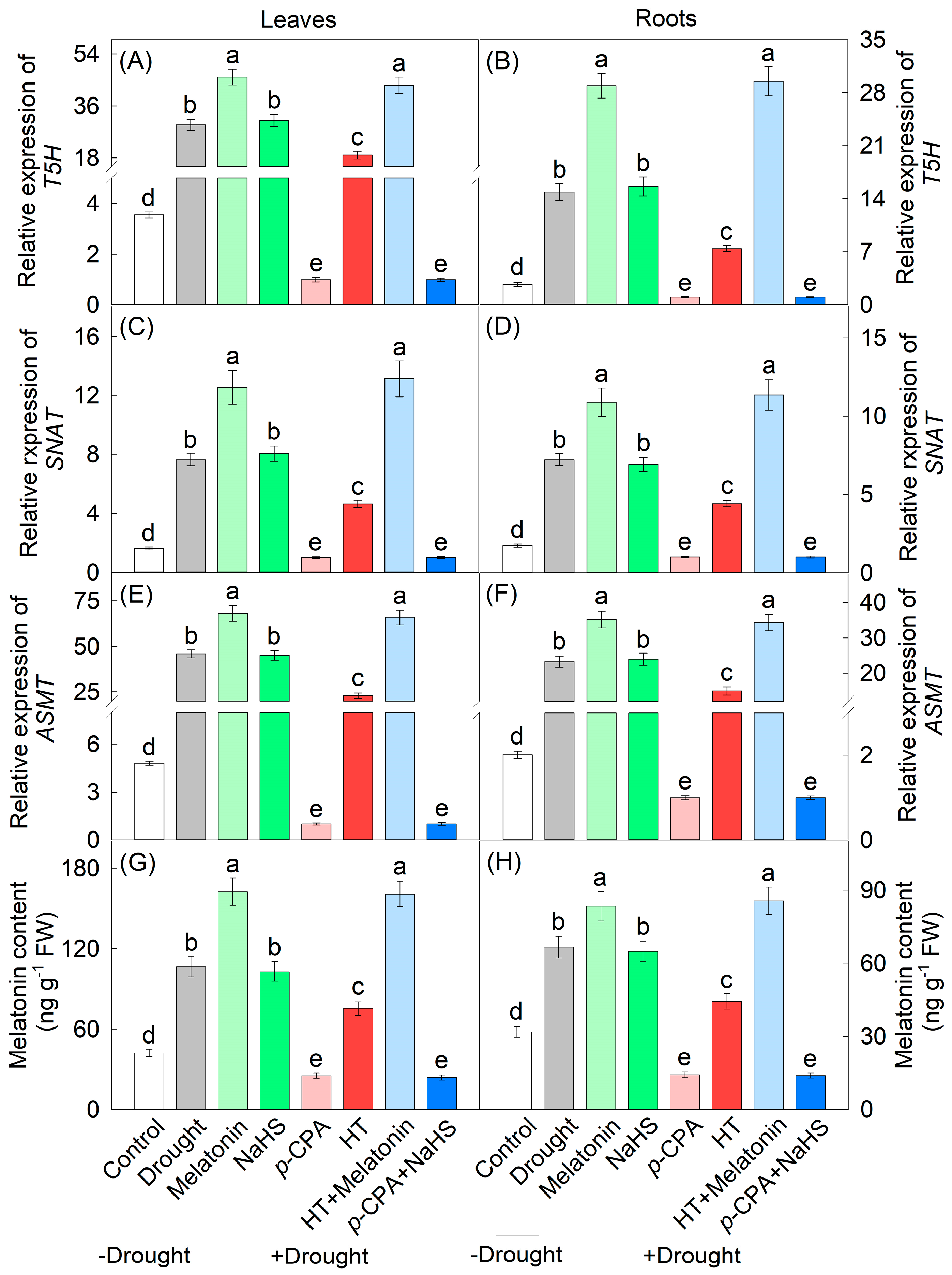
Drought stress markedly upregulated the expression of genes associated with H2S synthesis (LCD1, LCD2, DCD1, DCD2) and those involved in melatonin synthesis (T5H, SNAT, ASMT), resulting in a significant increase in endogenous levels of H2S and melatonin. The exogenous application of melatonin further enhanced the transcriptional activity of H2S synthesis genes and elevated their endogenous concentrations (Figure 1). In contrast, treatment with NaHS did not significantly affect the expression of melatonin synthesis genes or the endogenous melatonin content (Figure 2). These findings suggest that melatonin may act upstream of H2S and play a regulatory role in the drought response signaling pathway.

3.2. Melatonin and NaHS Promote Plant Growth Under Drought Stress

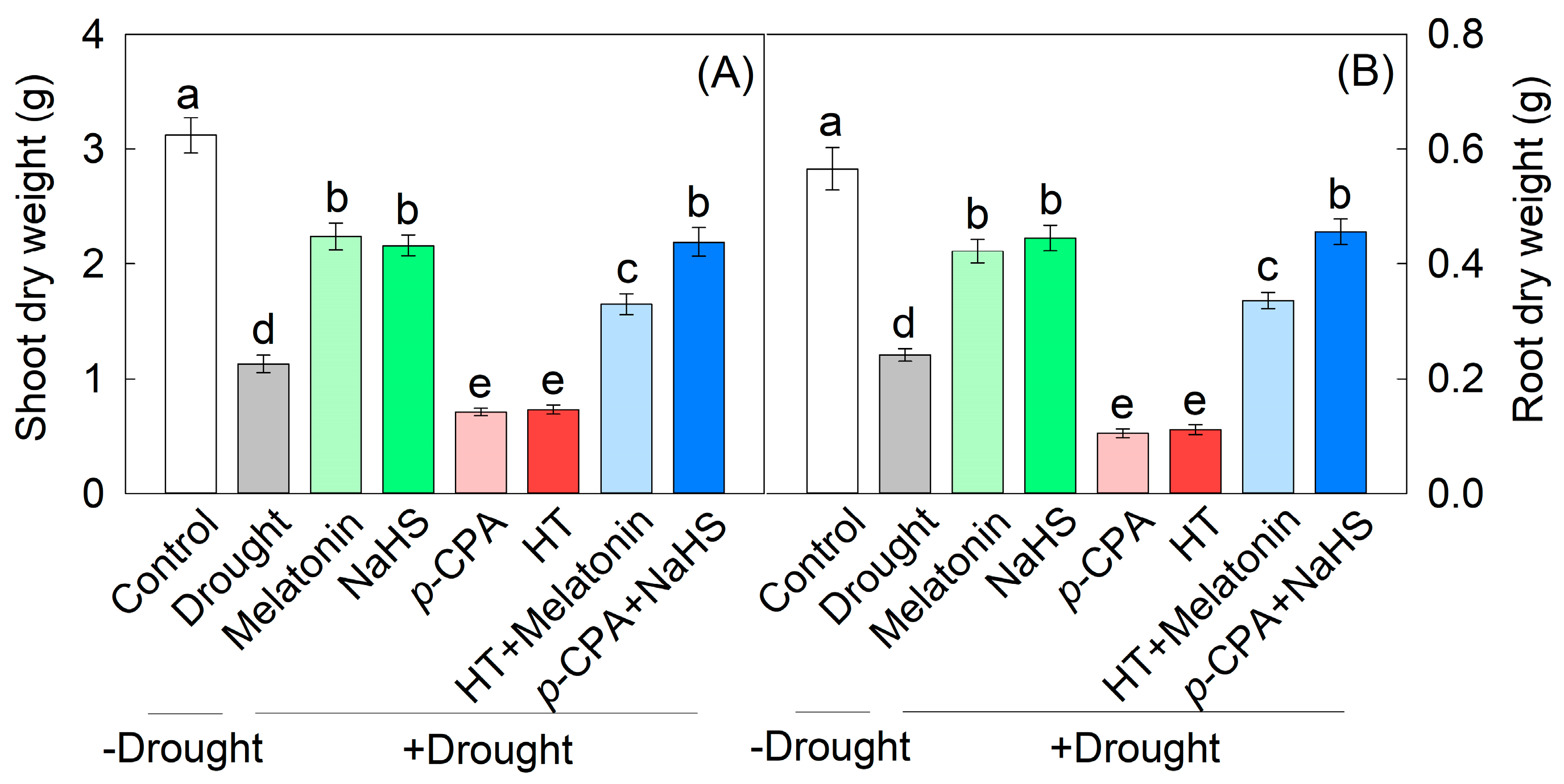
Drought stress markedly inhibits the growth of maize plants, leading to reductions in the dry weight of shoots and roots by 63.8% and 57.3%, respectively. The exogenous application of melatonin or NaHS has been shown to effectively mitigate the growth inhibition caused by drought. Conversely, the introduction of HT or p-CPA intensifies the reduction in plant biomass induced by drought stress. HT treatment diminishes the growth-promoting effects of melatonin, whereas p-CPA does not significantly impact the growth enhancement mediated by NaHS (Figure 3).

3.3. Melatonin and NaHS Improve Photosynthesis in Drought-Stressed Maize Seedlings

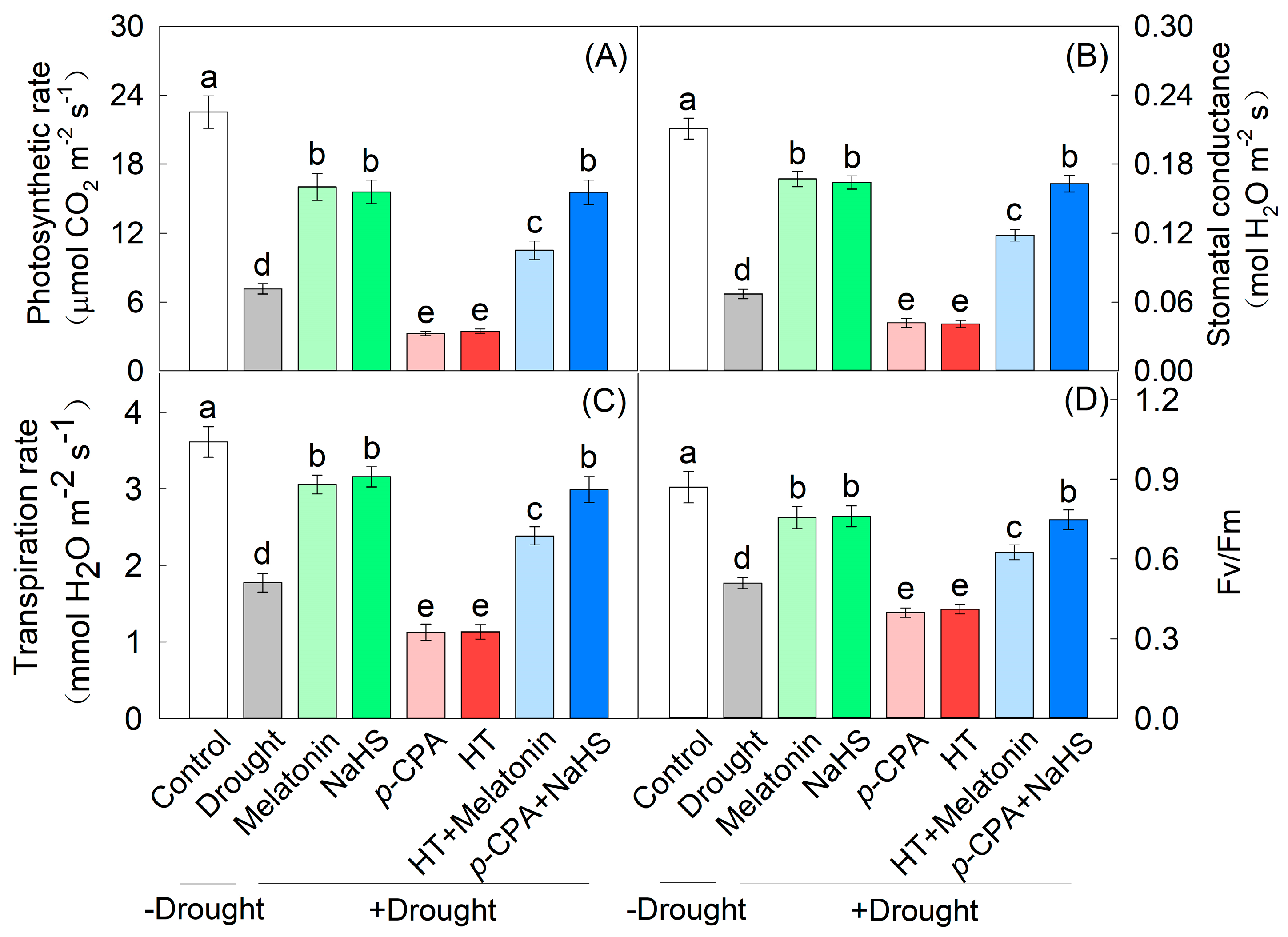
Following a 7-day period of drought stress treatment, the exogenous application of NaHS or melatonin markedly improved the photosynthetic performance of maize leaves. Specifically, the net photosynthetic rates increased by 124.0% and 118.0%, respectively, while Fv/fM values improved by 48.5% and 49.6%. Conversely, the introduction of HT or p-CPA led to a significant reduction in these photosynthetic parameters. Subsequent experiments demonstrated that HT treatment diminished the enhancing effect of melatonin on both the net photosynthetic rate and Fv/Fm. In contrast, p-CPA did not significantly affect the photosynthetic enhancement induced by NaHS (Figure 4).

3.4. Melatonin and NaHS Enhance Osmotic Adjustment Capacity in Drought-Stressed Maize Seedlings

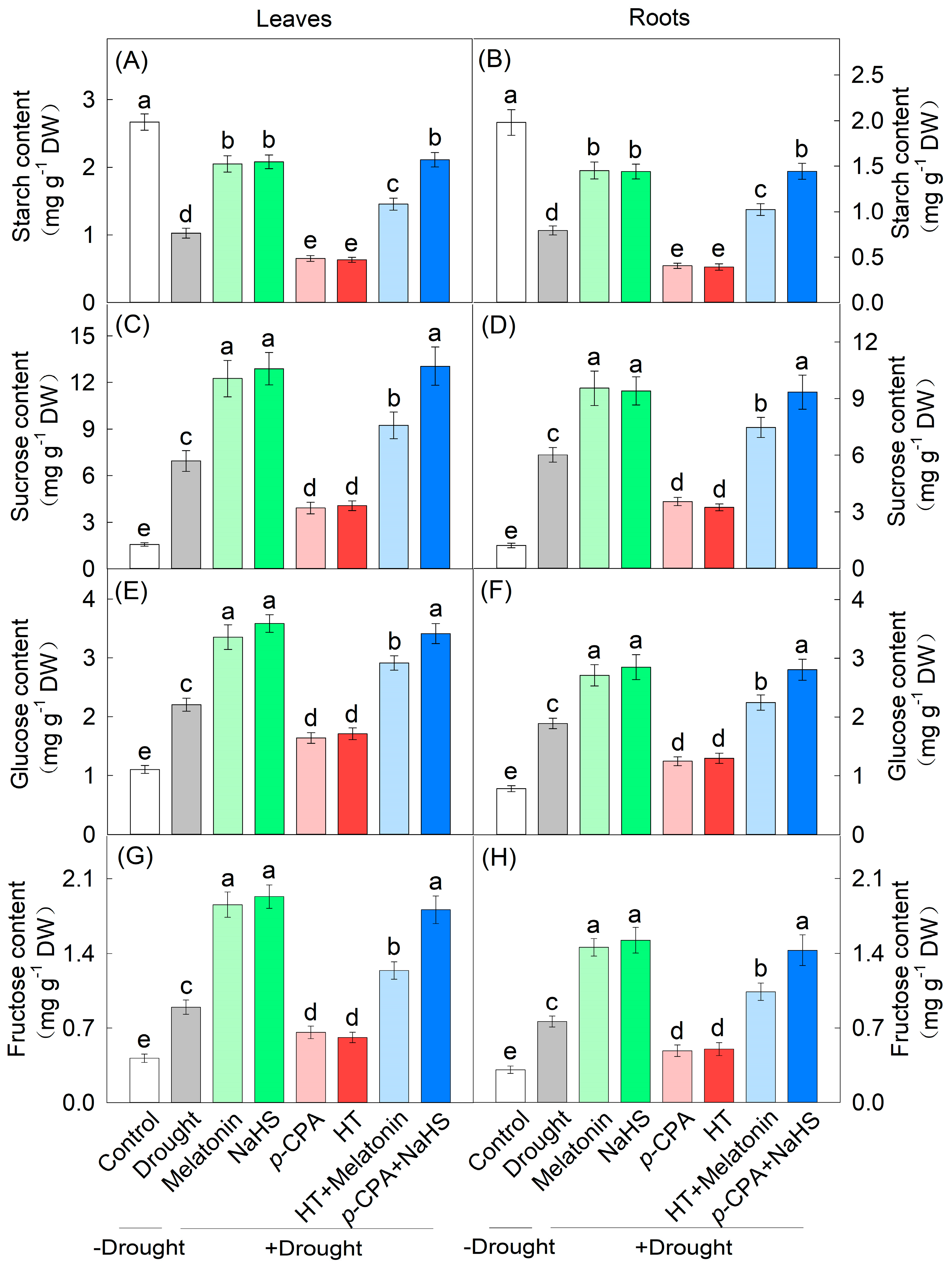
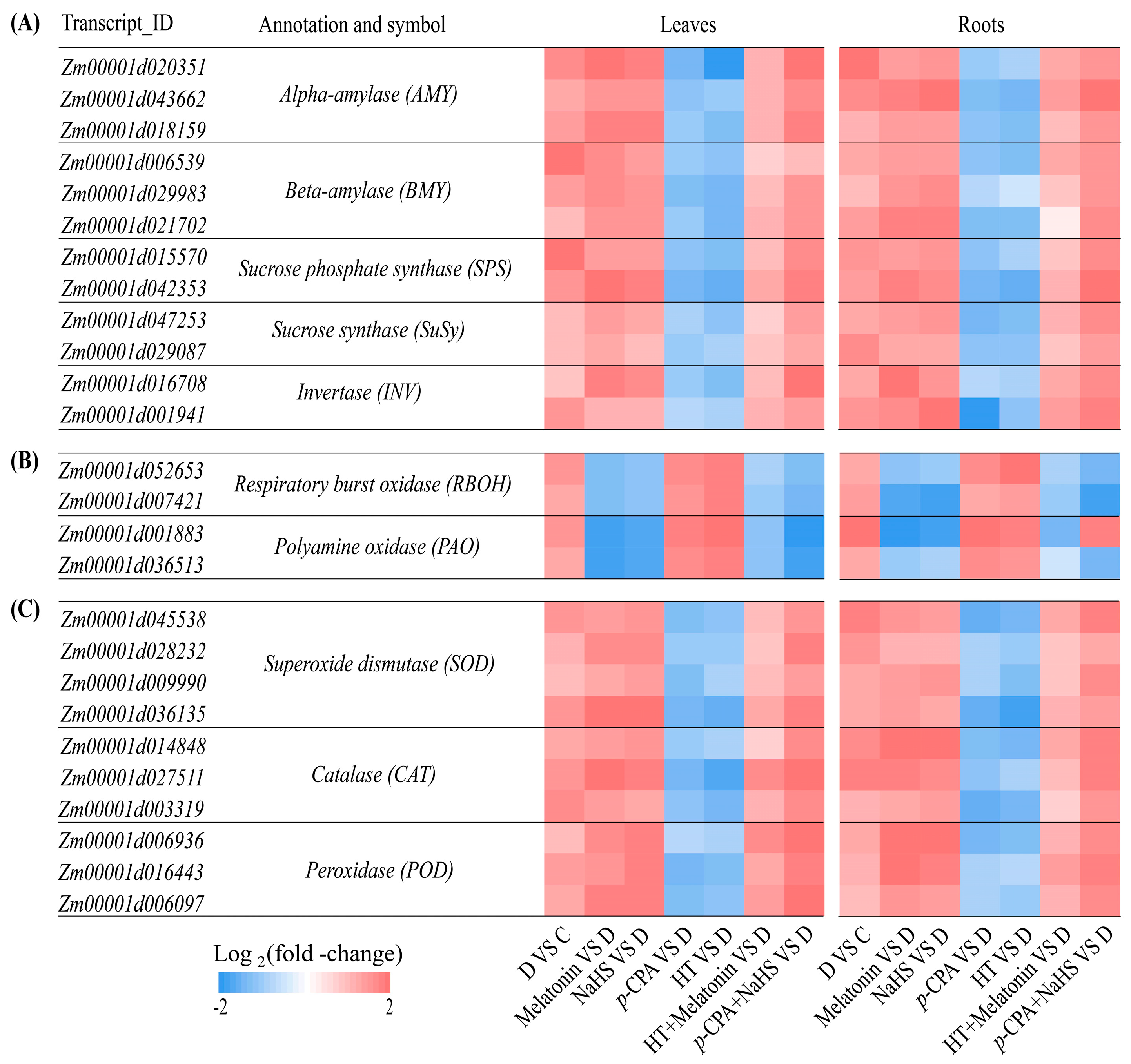
Following a seven-day period of drought stress treatment, a notable reduction in starch content was observed in the roots and leaves of maize, whereas the levels of sucrose, glucose, and fructose exhibited a significant increase. The exogenous application of melatonin or NaHS further augmented the accumulation of these carbohydrates. The study revealed that HT was capable of inhibiting the enhancing effect of melatonin on soluble sugar content. In contrast, p-CPA did not significantly impact the sugar accumulation induced by NaHS (Figure 5). At the transcriptional level, alterations in the expression of starch hydrolase genes (AMY, BMY) and key genes involved in sucrose metabolism (SPS, SuSy, INV) were consistent with the observed changes in the corresponding substrate contents (Figure 6A). This suggests that melatonin may modulate starch and sugar metabolism via the H2S signaling pathway, thereby improving the osmotic regulation capacity of maize plants.

3.5. Melatonin and NaHS Alleviate Oxidative Damage in Drought-Stressed Maize Seedlings

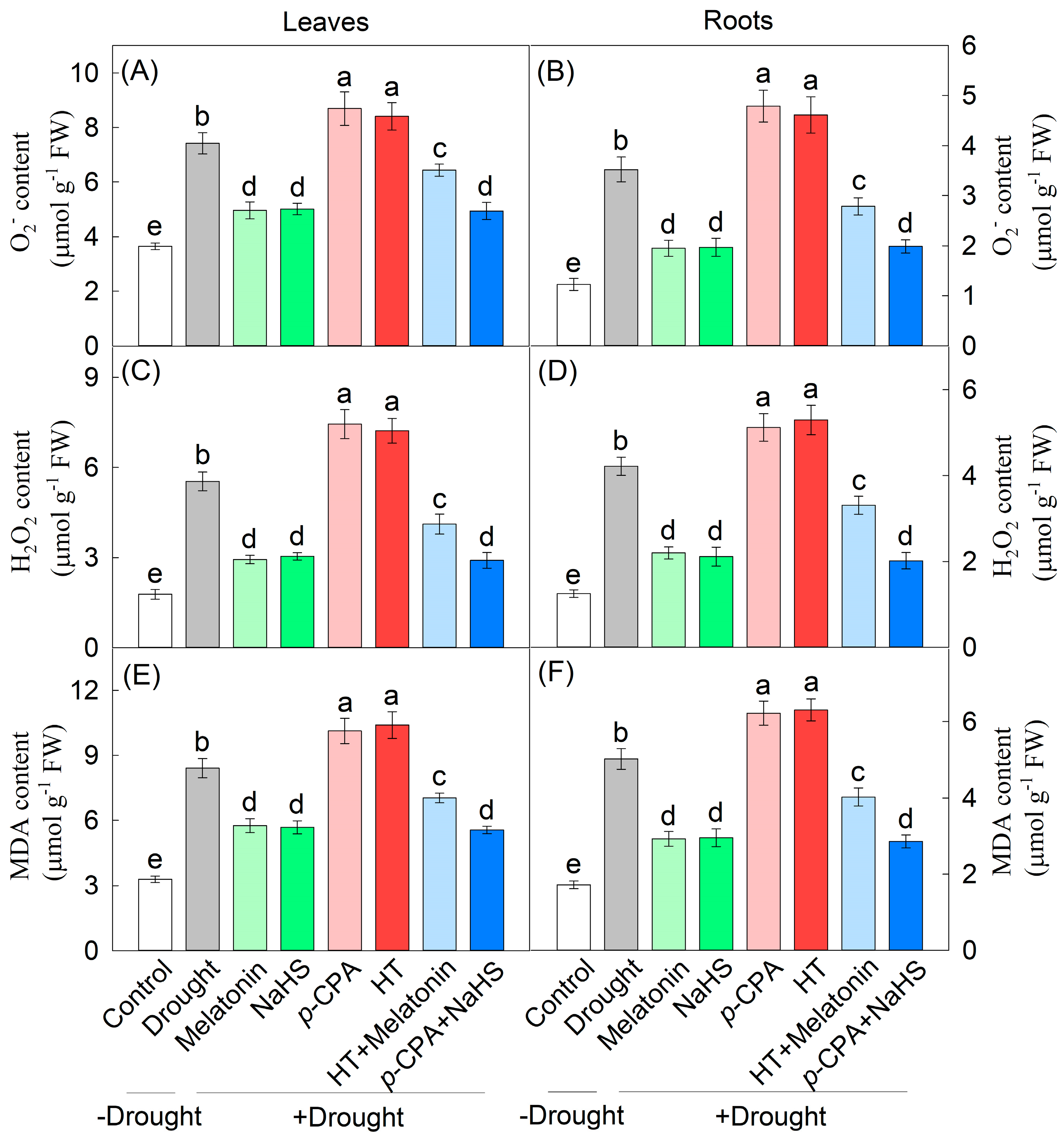
Under drought stress, the contents of O2·, H2O2, and MDA were significantly elevated in both the leaves and roots of maize seedlings, with increases of 103.3%, 211.2%, and 155.5% in leaves and 187.7%, 236.8%, and 191.6% in roots, respectively. By contrast, exogenous application of melatonin markedly suppressed their accumulation, reducing leaf levels by 33.2%, 47.0%, and 31.6%, and root levels by 44.6%, 47.9%, and 41.8%, respectively. The introduction of HT or p-CPA exacerbates the accumulation of ROS. Specifically, HT treatment markedly impairs the melatonin-mediated reduction of O2·, H2O2, and MDA levels, whereas p-CPA does not significantly affect the NaHS-induced attenuation of oxidative damage (Figure 7). At the transcriptional level, alterations in gene expression associated with ROS production exhibited a pattern consistent with the previously mentioned ROS content (Figure 6B). Following melatonin treatment, the expression levels of respiratory burst oxidase homolog (ROBH) genes, specifically Zm00001d052653 and Zm00001d007241, were downregulated 2.3-fold and 2.4-fold in leaves, respectively, and 2.2-fold and 3.2-fold in roots, respectively. These findings suggest that both H2S and melatonin are effective in mitigating oxidative damage induced by drought stress, with H2S potentially serving as a downstream signaling molecule in the melatonin-mediated regulatory pathway.

3.6. Melatonin and NaHS Enhance Antioxidant Capacity in Drought-Stressed Maize Seedlings

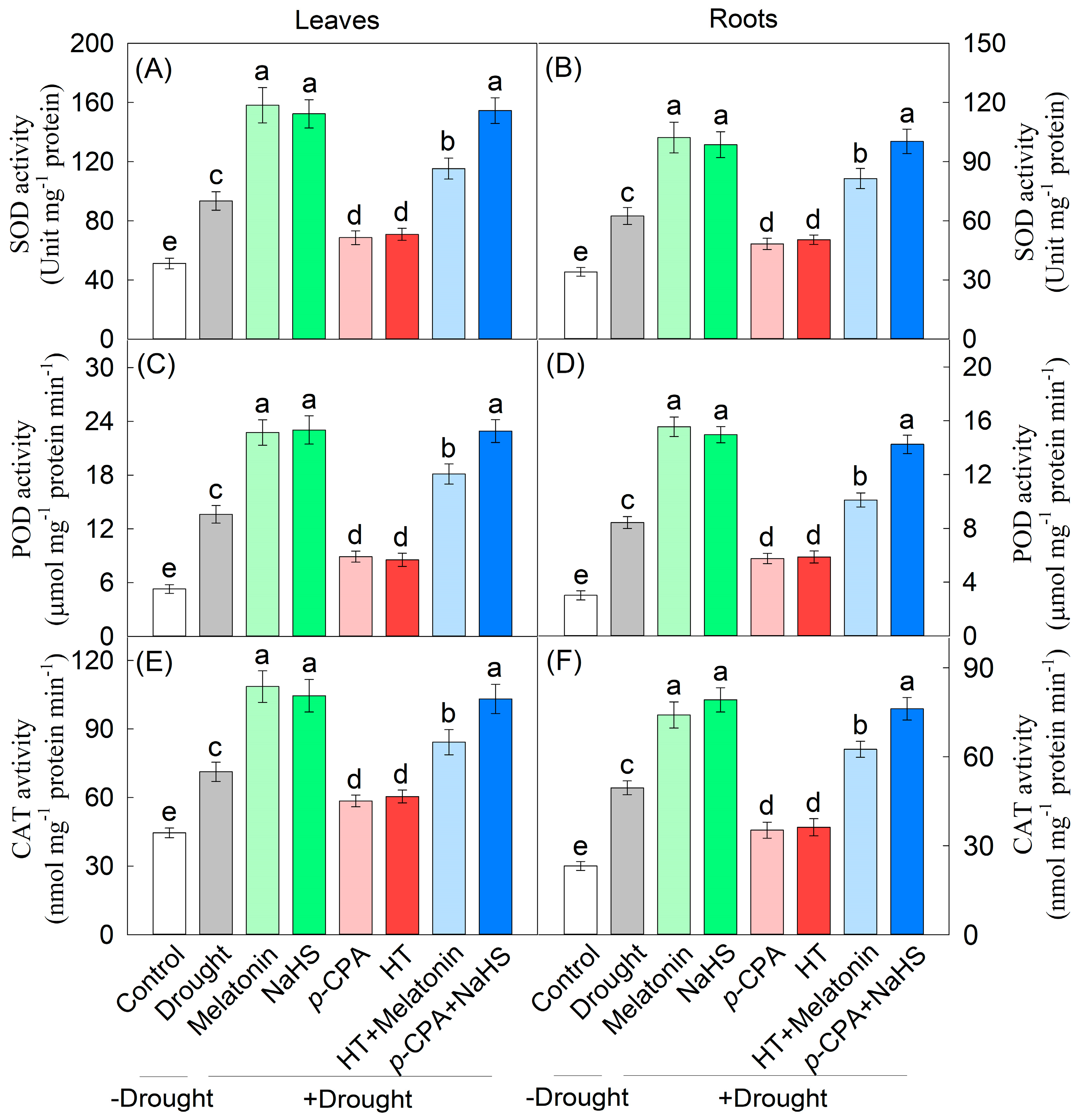
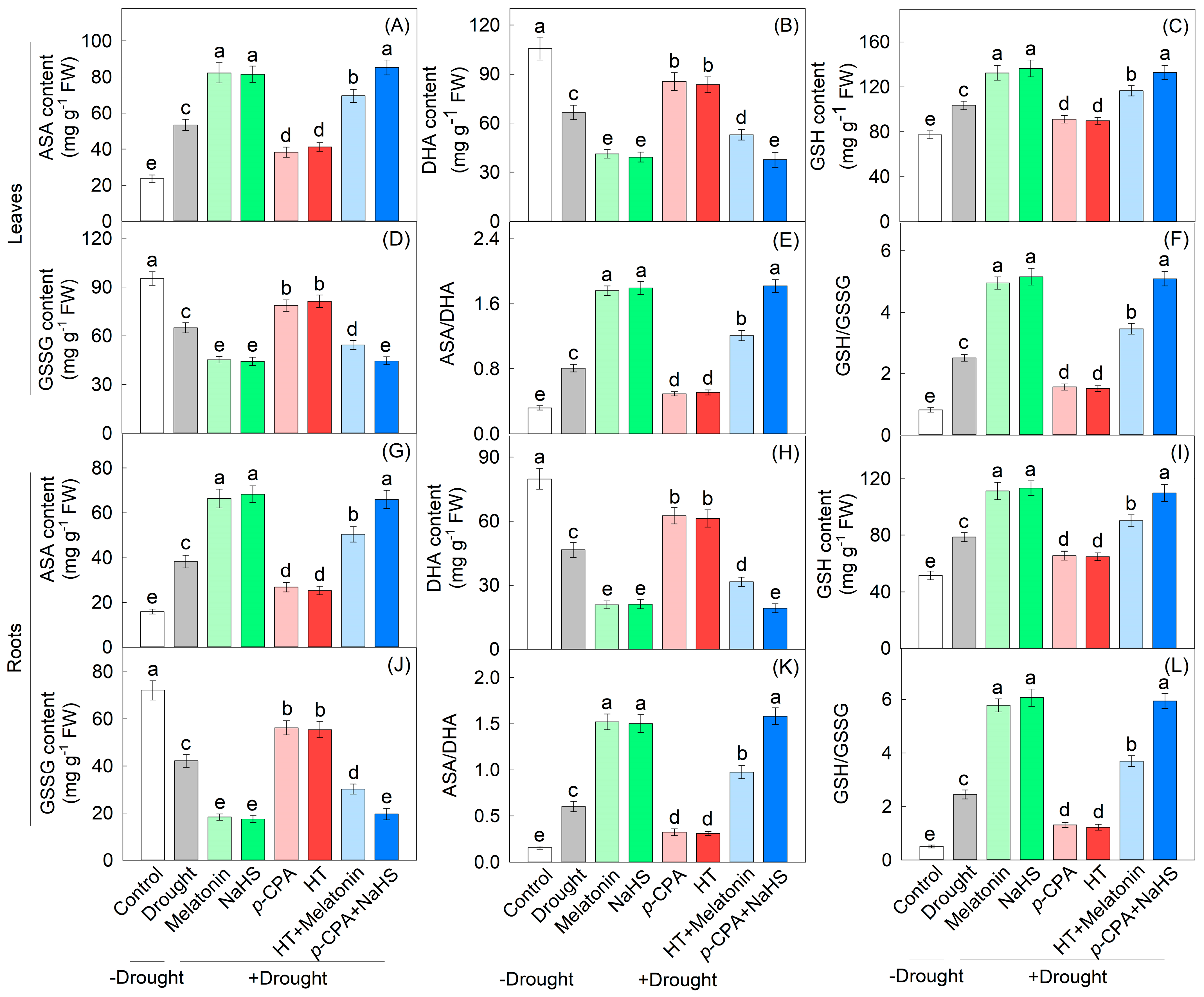
Drought stress markedly enhanced the activity of antioxidant enzymes, including SOD, POD, and CAT, in both the leaves and roots of maize. The exogenous application of NaHS or melatonin further augmented the activity of these enzymes. Conversely, the introduction of HT or p-CPA led to a reduction in antioxidant enzyme activity. Notably, HT treatment significantly impeded the melatonin-induced enhancement of antioxidant enzyme activity, whereas p-CPA did not significantly affect the enzyme activity increase induced by NaHS (Figure 8). At the gene expression level, the transcriptional levels of genes associated with antioxidant enzyme synthesis exhibited a consistent pattern of change (Figure 6C). Furthermore, drought stress elevated the levels of ASA and GSH in leaves by 126.1% and 34.1%, respectively, and in roots by 142.4% and 52.3% (Figure 9). Treatment with NaHS or melatonin further increased the levels of ASA and GSH. However, HT diminished the melatonin-induced accumulation of ASA and GSH, while p-CPA did not significantly affect the enhancement effect of NaHS.

3.7. Principal Component Analysis (PCA)

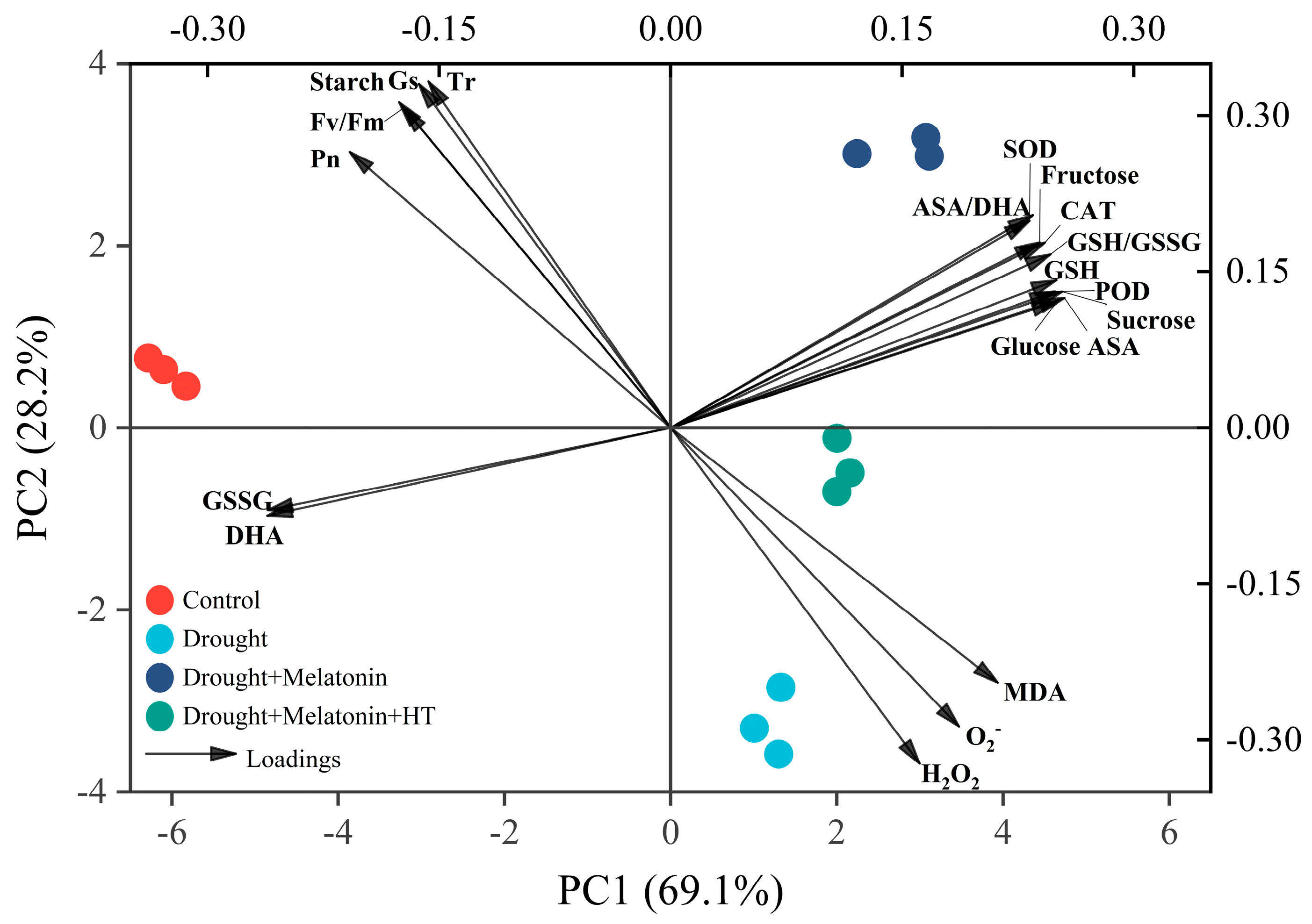
Principal component analysis (PCA) revealed a clear separation in the physiological responses of plants under different treatments (control, drought, drought + melatonin, drought + melatonin + HT). The first and second principal components (PC1 and PC2) accounted for 69.1% and 28.2% of the total variance, respectively. Drought stress significantly induced oxidative damage, as evidenced by marked accumulations of ROS (H2O2 and O2) and the lipid peroxidation product MDA. Exogenous melatonin application effectively mitigated these effects by enhancing both antioxidant enzyme activities and the levels of osmoprotectants. Critically, the addition of HT, an H2S biosynthesis inhibitor, substantially compromised melatonin’s protective effects (Figure 10). This analysis further underscores the essential role of H2S as a downstream signaling component in melatonin-induced drought tolerance.

4. Discussion

Melatonin is a multifunctional molecule that plays a crucial role in regulating growth and development, as well as enhancing drought tolerance in plants [9,11]. Its functionality is dependent on interactions with various signaling molecules, including ROS, plant hormones, and NO, among others [12]. For example, previous research has demonstrated that melatonin’s induction of salt tolerance in cucumbers necessitates regulation through the H2O2 and MAPK cascade pathways [17]. Nevertheless, the interaction between H2S and melatonin in modulating drought tolerance in maize has yet to be elucidated. In this study, a combined analysis of osmolyte content, reactive oxygen species accumulation, and antioxidant enzyme activity corroborates the hypothesis that H2S function as a downstream signaling molecule of melatonin, playing a role in the regulation of plant responses to drought stress.
Under drought stress conditions, plants synthesize and accumulate organic osmolytes to maintain cellular water homeostasis, with soluble sugars serving as crucial osmoprotectants and energy sources [20]. Previous research has demonstrated a positive correlation between the accumulation of soluble sugars, such as sucrose, and enhanced plant tolerance to drought stresses [39]. In this study, the application of melatonin significantly elevated the levels of sucrose, glucose, and fructose in maize plants subjected to drought conditions (Figure 5). The findings of this study align with previous reports on wheat [40] and potato [41], suggesting that melatonin enhances the osmotic regulation capabilities of plants by facilitating the accumulation of soluble sugars. Notably, the application of HT markedly suppresses the melatonin-induced accumulation of soluble sugars, suggesting that the H2S signaling is crucial in the melatonin-mediated regulation of osmotic processes. This observation is consistent with conclusions drawn from studies on bread wheat under drought stress, which indicate that melatonin-mediated osmotic regulation is dependent on upon the involvement of downstream H2S signaling [42].
Drought stress disrupts the dynamic equilibrium of ROS metabolism in plants, resulting in the excessive accumulation of ROS and subsequent oxidative damage [43]. The findings of this study demonstrate that melatonin treatment significantly decreases the levels of O2· and H2O2 in maize leaves and roots, thereby effectively mitigating the membrane lipid peroxidation (Figure 7). This observation aligns with previous reports indicating that melatonin alleviates drought-induced oxidative damage in pea [44] and rice [45]. In response to oxidative stress, plants typically activate antioxidant defense mechanisms. Studies by Luo et al. [46] and Khan et al. [47] on drought and salt stress in wheat, respectively, have shown that melatonin significantly enhances the activities of key antioxidant enzymes, including SOD, CAT, and POD. This enhancement effect of melatonin on the antioxidant system is consistent with the results observed in maize in this study (Figure 8). However, the application of the HT reversed the enhancing effect of melatonin on antioxidant capacity, suggesting that H2S signaling plays a role in melatonin-induced antioxidant defense. Research indicates that in maize, the antioxidant defense mechanism induced by melatonin under chromium stress is contingent upon the synergistic interaction of H2S signaling pathways [48]. Similarly, in tomatoes, H2S has been identified to function through a comparable mechanism, enhancing antioxidant capacity as a downstream signal of melatonin [49]. As a gaseous signaling molecule, H2S exerts its primary functional mechanism through the post-translational modification known as protein sulfhydration, or S-sulfhydration. This biochemical reaction involves the conversion of the sulfhydryl group (-SH) of a cysteine residue within the target protein into an oxidized form (-SSH), thereby modulating the protein’s conformation, activity, and stability [50]. Previous studies have demonstrated that the activity of crucial enzymes, such as APX and glutathione S-transferases (GST), is positively modulated through H2S-mediated sulfhydration [51,52]. This modification is instrumental in preserving the structural integrity of the enzyme under stress conditions, thereby enhancing its capacity to eliminate reactive oxygen species and improving the plant’s stress resilience.
Ascorbic acid (ASA) and glutathione (GSH) are pivotal regulatory molecules in plants, crucial for maintaining redox equilibrium under drought stress conditions [53,54]. These compounds play a fundamental role in mitigating the accumulation of ROS through the synergistic regulation of the intracellular redox state [55]. Central to this regulatory process is the ASA-GSH cycle, wherein ASA is initially oxidized to MDHA, subsequently converted to DHA, and ultimately regenerated back to ASA utilizing the reducing power provided by GSH [56]. The effective operation of this cycle is contingent upon maintaining elevated AsA/DHA and GSH/GSSG ratios, which are widely recognized as critical indicators of plant redox homeostasis and stress tolerance [57]. The findings of this study demonstrate that the exogenous application of melatonin can augment levels of ASA and GSH, significantly elevating the AsA/DHA and GSH/GSSG ratios (Figure 9). This suggests that both compounds contribute to enhancing the efficiency of the ASA-GSH cycle, thereby improving redox homeostasis. Previous research has also demonstrated that melatonin could increase the levels of ASA and GSH in drought-stressed maize plants [58]. In alignment with the observed patterns of antioxidant enzymes, the application of HT counteracted the regulatory influence of melatonin on the ASA-GSH cycle (Figure 9). Similarly, in tomato, Mao et al. [10] identified that H2S, acting as a downstream signal of melatonin, was involved in modulating this non-enzymatic antioxidant defense mechanism under conditions of cold stress.
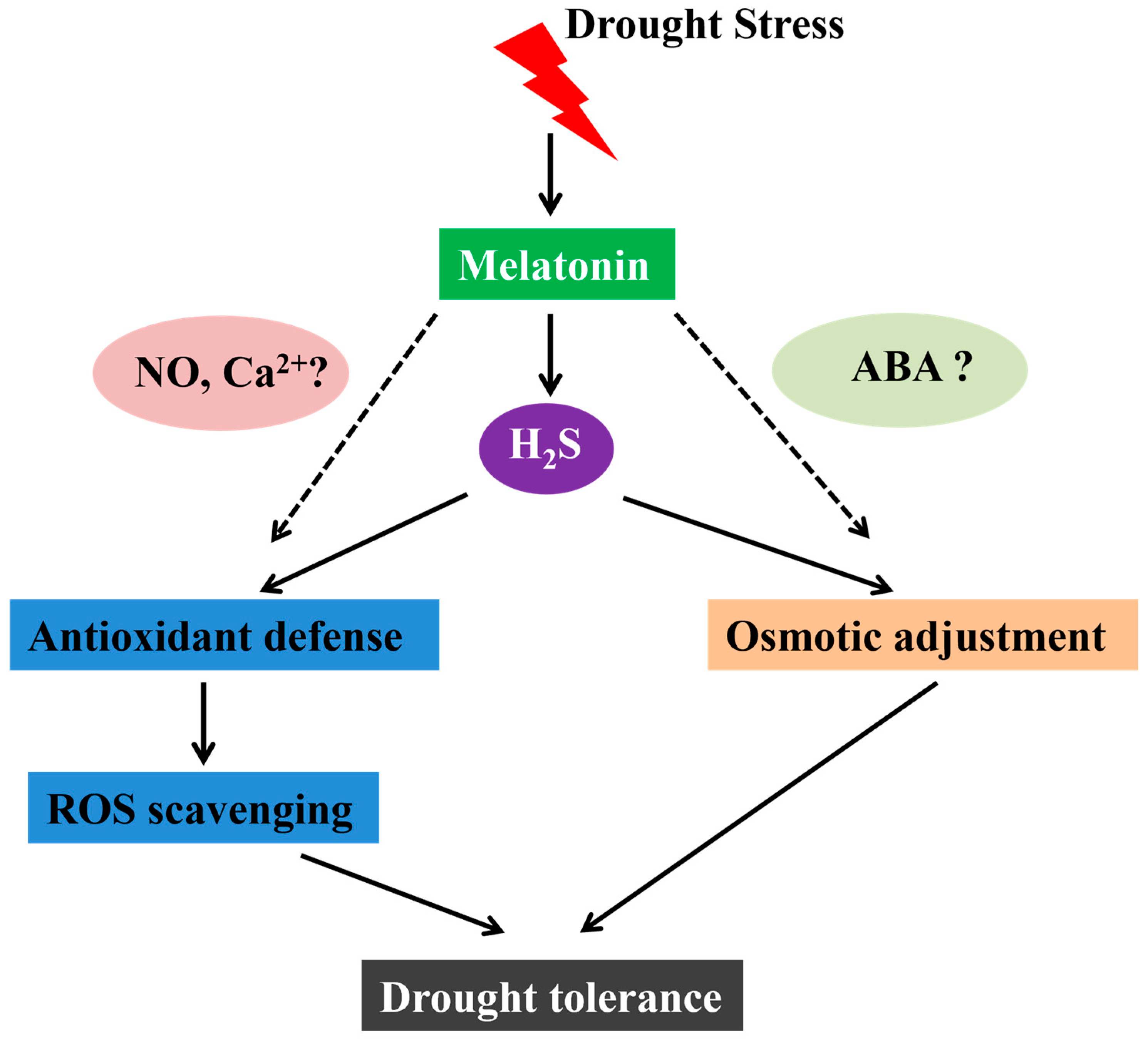
Taken together, this study demonstrates that H2S, as a critical downstream element in the melatonin signaling pathway, primarily enhancing drought tolerance in maize by modulating osmotic balance and improving the antioxidant defense system (Figure 11). This conclusion is robustly supported by the PCA, which clearly segregated the treatments and attributed the restorative effects of melatonin and H2S to these key physiological processes (Figure 10). This study has elucidated the pivotal role of H2S in melatonin-induced drought tolerance in maize. Nonetheless, the signaling network underlying plant stress responses is typically characterized by its complexity and interactivity. Consequently, in addition to H2S, other established signaling molecules, such as NO and MAPKs, may serve as intermediate components or synergistic nodes within this pathway [13]. Prior research has demonstrated that melatonin can stimulate the accumulation of NO, which subsequently activates the antioxidant defense system and the expression of stress-related genes [59]. Notably, NO can increase the activity of key enzymes, such as LCD, which is responsible for H2S synthesis, thereby enhancing H2S production [60]. This indicates that melatonin may induce NO production, which further stimulates H2S synthesis, thereby establishing a “melatonin–NO–H2S” signaling cascade. On the other hand, the MAPK pathway may serve as the convergence point for melatonin and H2S signaling. Research has demonstrated that both melatonin and H2S can activate MAPK members, such as MPK3 and MPK6, under various stress conditions [17]. This activation leads to the phosphorylation of transcription factors and functional proteins that regulate antioxidant metabolism and stress responses. The observed synergistic enhancement of the antioxidant enzyme system by melatonin and H2S in this study may result from shared downstream regulation via MAPK pathways. While this study has confirmed the pivotal role of H2S in melatonin signal transduction, the interaction network between H2S and other signaling molecules, such as NO and Ca2+, under drought stress—particularly the specific mechanisms at the levels of transcriptional regulation and protein modification—requires further elucidation. Future research should integrate biological approaches such as transcriptomics and proteomics, alongside genetic tools like gene editing and mutagenesis, to further elucidate the functions and interactions of each component within this signaling network. Furthermore, this research focused on a single drought-sensitive maize variety; evaluating this pathway in diverse, commercially relevant cultivars will be crucial for assessing its broader agronomic potential.

5. Conclusions

This study substantiates that H2S, as a downstream element of the melatonin signaling pathway, plays a crucial role in modulating maize tolerance to drought stress. The application of exogenous melatonin has been shown to elevate endogenous H2S levels, thereby enhancing drought resistance through various mechanisms. These include the promotion of osmotic regulator accumulation, the enhancement of antioxidant enzyme activities, and the augmentation of the non-enzymatic antioxidant content. Pharmacological investigations revealed that HT significantly inhibited the melatonin-induced enhancement of drought tolerance, whereas p-CPA did not impact H2S-mediated drought resistance. This finding further corroborates the regulatory role of H2S downstream of melatonin signaling. The findings of this study provide a theoretical foundation and technical methodology for the application of exogenous melatonin in enhancing the adaptive cultivation of maize in arid regions.

Author Contributions

Conceptualization, writing—original draft preparation, J.R.; investigation, software, X.Y. (Xinru Yan); formal analysis, W.W.; writing—review and editing, funding acquisition, J.R., X.Y. (Xiaoxiao Yang) and Y.D. All authors have read and agreed to the published version of the manuscript.

Funding

This work was supported by the National Key Research and Development Program of China (2021YFD1901103-5), the Research Funds for the Doctoral Program of Shanxi Agriculture University (2023BQ01 and 2024BQ57), and the Fundamental Research Program of Shanxi Province (202303021212107).

Data Availability Statement

The data are contained within the manuscript.

Conflicts of Interest

The authors declare no conflicts of interest.

Abbreviations

The following abbreviations are used in this manuscript:
H2SHydrogen sulfide
HTHydroxylamine
p-CPAP-chlorophenylalanine
H2O2Hydrogen peroxide
O2·Superoxide anion
MDAMalondialdehyde
SODSuperoxide dismutase
CATCatalase
PODPeroxidase
ASAAscorbic acid
DHADehydroascorbic acid
GSHGlutathione
GSSGOxidized glutathione
LCD/DCDL-/D-cysteine desulfhydrase
T5HTryptamine 5-hydroxylase
SNATSerotonin-N-acetyltransferase
ASMTAcetylserotonin O-methyltransferase
AMYAlpha-amylase
BMYBeta-amylase
SPSSucrose phosphate synthase
SuSySucrose synthase
INVInvertase

References

  1. Seki, M.; Umezawa, T.; Urano, K.; Shinozaki, K. Regulatory metabolic networks in drought stress responses. Curr. Opin. Plant Biol. 2007, 10, 296–302. [Google Scholar] [CrossRef]
  2. Zahedi, S.M.; Karimi, M.; Venditti, A. Plants adapted to arid areas: Specialized metabolites. Nat. Prod. Res. 2021, 35, 3314–3331. [Google Scholar] [CrossRef]
  3. Salvi, P.; Manna, M.; Kaur, H.; Thakur, T.; Gandass, N.; Bhatt, D.; Muthamilarasan, M. Phytohormone signaling and crosstalk in regulating drought stress response in plants. Plant Cell Rep. 2021, 40, 1305–1329. [Google Scholar] [CrossRef]
  4. Khan, M.N.; Khan, Z.; Luo, T.; Liu, J.; Rizwan, M.; Zhang, J.; Xu, Z.; Wu, H.; Hu, L. Seed priming with gibberellic acid and melatonin in rapeseed: Consequences for improving yield and seed quality under drought and non-stress conditions. Ind. Crops Prod. 2020, 156, 112850. [Google Scholar] [CrossRef]
  5. Gao, T.; Wang, Z.X.; Dong, Y.L.; Cao, J.; Lin, R.T.; Wang, X.T.; Yu, Z.Q.; Chen, Y.X. Role of melatonin in sleep deprivation induced intestinal barrier dysfunction in mice. J. Pineal Res. 2019, 67, e12574. [Google Scholar] [CrossRef]
  6. Colombage, R.; Singh, M.B.; Bhalla, P.L. Melatonin and abiotic stress tolerance in crop plants. Int. J. Mol. Sci. 2023, 24, 7447. [Google Scholar] [CrossRef]
  7. He, M.; Geng, G.; Mei, S.; Wang, G.; Yu, L.; Xu, Y.; Wang, Y. Melatonin modulates the tolerance of plants to water stress: Morphological response of the molecular mechanism. Funct. Plant Biol. 2024, 51, FP23199. [Google Scholar] [CrossRef] [PubMed]
  8. Dzinyela, R.; Manda, T.; Hwarari, D.; Ramakrishnan, M.; Ahmad, Z.; Agassin, R.H.; Movahedi, A. Melatonin-mediated phytohormonal crosstalk improves salt stress tolerance in plants. Planta 2025, 262, 86. [Google Scholar] [CrossRef] [PubMed]
  9. Liu, X.; Chen, A.; Wei, Q.; Wang, C.; Zhao, Q.; Wang, Q.; Zhao, Q.; Wang, Q.; Zheng, X.; He, T.; et al. Exogenous melatonin inhibits the expression of GmABI5 and enhances drought resistance in fodder soybean through an ABA-independent pathway. Plant Cell Environ. 2025, 48, 8341–8355. [Google Scholar] [CrossRef] [PubMed]
  10. Mao, C.; Wang, L.; Mao, Y.; Li, Y.; Peng, Y.; Fan, Y.; Li, J.; Zhu, Y.; Xu, X.; Li, P. Melatonin integrates multiple biological and phytohormonal pathways to enhance drought tolerance in rice. Planta 2025, 262, 13. [Google Scholar] [CrossRef]
  11. Ahammed, G.J.; Li, Z.; Chen, J.; Dong, Y.; Qu, K.; Guo, T.; Wang, F.H.; Liu, A.R.; Chen, S.C.; Li, X. Reactive oxygen species signaling in melatonin-mediated plant stress response. Plant Physiol. Bioch. 2024, 207, 108398. [Google Scholar] [CrossRef]
  12. Corpas, F.J.; Rivero, R.M.; Freschi, L.; Palma, J.M. Functional interactions among H2O2, NO, H2S, and melatonin in the physiology, metabolism, and quality of horticultural Solanaceae. J. Exp. Bot. 2025, 76, 3634–3656. [Google Scholar] [CrossRef]
  13. Jaiswal, S.; Singh, S.P.; Singh, S.; Gupta, R.; Tripathi, D.K.; Corpas, F.J.; Singh, V.P. Hydrogen sulphide: A key player in plant development and stress resilience. Plant Cell Environ. 2025, 48, 2445–2459. [Google Scholar] [CrossRef]
  14. Zhou, M.; Xie, Y.; Van Breusegem, F.; Huang, J. Hydrogen sulfide and protein persulfidation in plant stress signaling. J. Exp. Bot. 2025, 76, eraf100. [Google Scholar] [CrossRef] [PubMed]
  15. Ma, Y.L.; Zhang, W.; Niu, J.; Ren, Y.; Zhang, F. Hydrogen sulfide may function downstream of hydrogen peroxide in salt stress-induced stomatal closure in Vicia faba. Funct. Plant Biol. 2018, 46, 136–145. [Google Scholar] [CrossRef] [PubMed]
  16. Li, Z.; Zhu, Y.Q.; He, X.S.; Yong, B.; Peng, Y.; Zhang, X.Q.; Ma, X.; Yan, Y.H.; Huang, L.K.; Nie, G. The hydrogen sulfide, a downstream signaling molecule of hydrogen peroxide and nitric oxide, involves spermidine-regulated transcription factors and antioxidant defense in white clover in response to dehydration. Environ. Exp. Bot. 2019, 161, 255–264. [Google Scholar] [CrossRef]
  17. Sun, Y.; Ma, C.; Kang, X.; Zhang, L.; Wang, J.; Zheng, S.; Zhang, T. Hydrogen sulfide and nitric oxide are involved in melatonin-induced salt tolerance in cucumber. Plant Physiol. Bioch. 2021, 167, 101–112. [Google Scholar] [CrossRef]
  18. Ma, C.; Pei, Z.Q.; Zhu, Q.; Chai, C.H.; Guo, T.; Mou, X.X.; Wang, X.; Wang, J.; Zhang, T.; Zheng, S. Hydrogen sulfide as a key mediator in melatonin-induced enhancement of cold tolerance in tomato (Solanum lycopersicum L.) seedlings. Plant Sci. 2025, 362, 112784. [Google Scholar] [CrossRef]
  19. Blum, A. Osmotic adjustment is a prime drought stress adaptive engine in support of plant production. Plant Cell Environ. 2017, 40, 4–10. [Google Scholar] [CrossRef]
  20. Supriya, L.; Shukla, P.; Dake, D.; Gudipalli, P.; Muthamilarasan, M. Physio-biochemical and molecular analyses decipher distinct dehydration stress responses in contrasting genotypes of foxtail millet (Setaria italica L.). J. Plant Physiol. 2025, 311, 154549. [Google Scholar] [CrossRef]
  21. Ren, J.H.; Yang, X.X.; Zhang, N.; Feng, L.; Ma, C.Y.; Wang, Y.L.; Yang, Z.P.; Zhao, J. Melatonin alleviates aluminum-induced growth inhibition by modulating carbon and nitrogen metabolism, and reestablishing redox homeostasis in Zea mays L. J. Hazard. Mater. 2022, 423, 127159. [Google Scholar] [CrossRef] [PubMed]
  22. Zhao, Y.; Wei, S.; Chen, D.; Guo, Y.; Ma, B.; Riao, D.; Zhang, J.; Tong, Z.; Liu, X.; Zhao, C. Determining the dynamic response of maize to compound low-temperature and drought stress. Eur. J. Agron. 2026, 172, 127842. [Google Scholar] [CrossRef]
  23. Bagal, D.; Guleria, A.; Chowdhary, A.A.; Verma, P.K.; Mishra, S.; Rathore, S.; Srivastava, V. Unveiling the role and crosstalk of hydrogen sulfide with other signalling molecules enhances plant tolerance to water scarcity. Physiol. Plant. 2025, 177, e70222. [Google Scholar] [CrossRef] [PubMed]
  24. Rai, K.K.; Corpas, F.J. Interplay between transcription factors and redox-related genes in ROS, RNS and H2S signalling during plant stress responses. Plant Cell Environ. 2025, 48, 7796–7814. [Google Scholar] [CrossRef]
  25. Xu, K.; Yan, R.; Zhang, H.; Yin, L.; Lei, W.; Cheng, J.; Hua, C.; Liu, Y.; Zheng, X.; Shen, S. p-chlorophenylalanine treatment accelerates tomato fruit ripening through hormone synthesis and glycolytic pathway during storage. Postharvest Biol. Technol. 2025, 225, 113517. [Google Scholar] [CrossRef]
  26. Basak, G.; Barman, C.; Subba, R.; Sk, B.; Aktar, S.; Ghosh, N.; Mukherjee, S. Melatonin priming elevates hydrogen sulfide metabolism, reduces Na+ uptake and reprograms NaCl stress-induced metabolic signatures in sunflower seedling leaves. Plant Physiol. Bioch. 2025, 229, 110305. [Google Scholar] [CrossRef]
  27. Ardıç, Ş.K.; Szafrańska, K.; Havan, A.; Karaca, A.; Aslan, M.Ö.; Sözeri, E.; Yakupoglu, G.; Korkmaz, A. Endogenous melatonin content confers drought stress tolerance in pepper. Environ. Exp. Bot. 2023, 216, 105536. [Google Scholar] [CrossRef]
  28. Xu, H.; Zou, Q.; Yang, G.; Jiang, S.; Fang, H.; Wang, Y.; Zhang, J.; Zhang, Z.; Wang, N.; Chen, X. MdMYB6 regulates anthocyanin formation in apple both through direct inhibition of the biosynthesis pathway and through substrate removal. Hortic. Res. 2020, 7, 72. [Google Scholar] [CrossRef]
  29. Reguera, M.; Peleg, Z.; Abdel-Tawab, Y.M.; Tumimbang, E.B.; Delatorre, C.A.; Blumwald, E. Stress-induced cytokinin synthesis increases drought tolerance through the coordinated regulation of carbon and nitrogen assimilation in Rice. Plant Physiol. 2013, 163, 1609–1622. [Google Scholar] [CrossRef]
  30. Jiang, J.L.; Tian, Y.; Li, L.; Yu, M.; Hou, R.P.; Ren, X.M. H2S alleviates salinity stress in cucumber by maintaining the Na+/K+ balance and regulating H2S metabolism and oxidative stress response. Front. Plant Sci. 2019, 10, 678. [Google Scholar] [CrossRef]
  31. Chen, L.; Peng, Y.; Zhu, L.; Huang, Y.; Bie, Z.; Wu, H. CS nanoparticles improved cucumber salt tolerance is associated with its induced early stimulation on antioxidant system. Chemosphere 2022, 299, 134474. [Google Scholar] [CrossRef]
  32. Kaya, C.; Ugurlar, F.; Ashraf, M.; Alyemeni, M.N.; Bajguz, A.; Ahmad, P. The involvement of hydrogen sulphide in melatonin-induced tolerance to arsenic toxicity in pepper (Capsicum annuum L.) plants by regulating sequestration and subcellular distribution of arsenic, and antioxidant defense system. Chemosphere 2022, 309, 136678. [Google Scholar] [CrossRef]
  33. Xu, J.; Guo, L.; Liu, L. Exogenous silicon alleviates drought stress in maize by improving growth, photosynthetic and antioxidant metabolism. Environ. Exp. Bot. 2022, 201, 104974. [Google Scholar] [CrossRef]
  34. Kaya, C.; Ashraf, M.; Alyemeni, M.N.; Ahmad, P. Responses of nitric oxide and hydrogen sulfide in regulating oxidative defence system in wheat plants grown under cadmium stress. Physiol. Plant. 2020, 168, 345–360. [Google Scholar] [CrossRef]
  35. Campos, C.N.; Ávila, R.G.; de Souza, K.R.D.; Azevedo, L.M.; Alves, J.D. Melatonin reduces oxidative stress and promotes drought tolerance in young Coffea arabica L. plants. Agric. Water Manag. 2019, 211, 37–47. [Google Scholar] [CrossRef]
  36. Wu, X.X.; He, J.; Ding, H.D.; Zhu, Z.W.; Chen, J.L.; Xu, S.; Zha, D.S. Modulation of zinc-induced oxidative damage in Solanum melongena by 6-benzylaminopurine involves ascorbate–glutathione cycle metabolism. Environ. Exp. Bot. 2015, 116, 1–11. [Google Scholar] [CrossRef]
  37. Catala, R.; Lopez-Cobollo, R.; Castellano, M.M.; Angosto, T.; Alonso, J.M.; Ecker, J.R.; Salinas, J. The Arabidopsis 14-3-3 protein RARE COLD INDUCIBLE 1A links low-temperature response and ethylene biosynthesis to regulate freezing tolerance and cold acclimation. Plant Cell 2014, 26, 3326–3342. [Google Scholar] [CrossRef] [PubMed]
  38. Tang, N.; Huang, W.; Li, X.; Gao, X.; Liu, X.; Wang, L.; Xing, W. Drilling into the physiology, transcriptomics, and metabolomics to enhance insight on Vallisneria denseserrulata responses to nanoplastics and metalloid co-stress. J. Clean. Prod. 2024, 448, 141653. [Google Scholar] [CrossRef]
  39. Qi, H.; Wen, X.; Wang, Z.; Yin, S. Microbial memory of drought reshapes root-associated communities to enhance plant resilience. Plant Cell Environ. 2025. [Google Scholar] [CrossRef] [PubMed]
  40. Zhang, Y.; Li, Y.; Liu, J.; Suo, L.; Li, D.; He, L.; Duan, J.; Wang, Y.; Feng, W.; Guo, T. Exogenous melatonin alleviates drought stress in wheat by enhancing photosynthesis and carbon metabolism to promote floret development and grain yield. Plant Stress 2025, 16, 100885. [Google Scholar] [CrossRef]
  41. El-Yazied, A.A.; Ibrahim, M.F.; Ibrahim, M.A.; Nasef, I.N.; Al-Qahtani, S.M.; Al-Harbi, N.A.; Alzuaibr, F.M.; Alaklabi, A.; Dessoky, E.S.; Alabdallah, N.M.; et al. Melatonin mitigates drought induced oxidative stress in potato plants through modulation of osmolytes, sugar metabolism, ABA homeostasis and antioxidant enzymes. Plants 2022, 11, 1151. [Google Scholar] [CrossRef]
  42. Muslemyar, Q.S.; Kaya, C. Melatonin and L-cysteine desulfhydrase: Unraveling hydrogen sulfide signaling for drought tolerance in bread wheat (Triticum aestivum). Food Energy Secur. 2025, 14, e70103. [Google Scholar] [CrossRef]
  43. Tian, Z.; He, J.; Wang, Z.; Zhang, Z.; Quinet, M.; Meng, Y. Exogenous melatonin enhances drought tolerance and germination in common buckwheat seeds through the coordinated effects of antioxidant and osmotic regulation. BMC Plant Biol. 2025, 25, 613. [Google Scholar]
  44. Ahmad, R.; Alsahli, A.A.; Alansi, S.; Altaf, M.A. Exogenous melatonin confers drought stress by promoting plant growth, photosynthetic efficiency and antioxidant defense system of pea (Pisum sativum L.). Sci. Hortic. 2023, 322, 112431. [Google Scholar] [CrossRef]
  45. Li, Y.; Zhang, L.; Yu, Y.; Zeng, H.; Deng, L.; Zhu, L.; Chen, G.; Wang, Y. Melatonin-induced resilience strategies against the damaging impacts of drought stress in rice. Agronomy 2022, 12, 813. [Google Scholar] [CrossRef]
  46. Luo, M.; Wang, D.; Delaplace, P.; Pan, Y.; Zhou, Y.; Tang, W.; Chen, K.; Chen, J.; Xu, Z.; Ma, Y.; et al. Melatonin enhances drought tolerance by affecting jasmonic acid and lignin biosynthesis in wheat (Triticum aestivum L.). Plant Physiol. Bioch. 2023, 202, 107974. [Google Scholar] [CrossRef]
  47. Khan, S.; Sehar, Z.; Fatma, M.; Mir, I.R.; Iqbal, N.; Tarighat, M.A.; Abdi, G.; Khan, N.A. Involvement of ethylene in melatonin-modified photosynthetic-N use efficiency and antioxidant activity to improve photosynthesis of salt grown wheat. Physiol. Plant. 2022, 174, e13832. [Google Scholar] [CrossRef] [PubMed]
  48. Yang, X.; Shi, Q.; Wang, X.; Zhang, T.; Feng, K.; Wang, G.; Zhao, J.; Yuan, X.; Ren, J. Melatonin-induced chromium tolerance requires hydrogen sulfide signaling in maize. Plants 2024, 13, 1763. [Google Scholar] [CrossRef]
  49. Siddiqui, M.H.; Khan, M.N.; Mukherjee, S.; Basahi, R.A.; Alamri, S.; Al-Amri, A.A.; Alsubaie, Q.D.; Ali, H.M.; Al-Munqedhi, B.M.A.; Almohisen, I.A.A. Exogenous melatonin-mediated regulation of K+/Na+ transport, H+-ATPase activity and enzymatic antioxidative defence operate through endogenous hydrogen sulphide signalling in NaCl-stressed tomato seedling roots. Plant Biol. 2021, 23, 797–805. [Google Scholar] [CrossRef] [PubMed]
  50. Liu, H.; Liang, X.; Liu, R.; Liu, C.; Luo, S.; Zhang, Z.; Liu, Z.; Xue, S. Hydrogen sulfide inhibits Arabidopsis inward potassium channels via protein persulfidation. J. Integr. Plant Biol. 2025, 67, 1217. [Google Scholar] [CrossRef]
  51. Liu, W.; Zhang, W.; Cheng, H.; Deng, Y.; Yao, B.; Shangguan, Z.; Wei, G.; Chen, J. Rhizobia cystathionine γ-lyase-derived H2S delays nodule senescence in soybean. Plant Physiol. 2024, 196, 2232–2250. [Google Scholar] [CrossRef]
  52. Yi, Y.; Li, W.; Wang, J.; Sun, G.; Ma, Y.; Li, F.; Shi, W.; Hu, Y.; Jia, H.; Li, J. Hydrogen sulfide enhances Cd tolerance through persulfidation of SlGSTU24 in Solanum lycopersicum L. Plant Soil 2025, 514, 3101–3118. Plant Soil 2025, 514, 3101–3118. [Google Scholar] [CrossRef]
  53. Jia, J.; Zhao, M.; Liu, R.; Xue, C.; Xia, Z.; Hu, B.; Rennenberg, H. Drought-mediated oxidative stress and its scavenging differ between citrus hybrids with medium and late fruit maturation. Plant Stress 2024, 14, 100670. [Google Scholar] [CrossRef]
  54. Li, G.Z.; Liu, J.; Li, N.Y.; Zhang, D.D.; Fan, P.; Liu, H.T.; Chen, Y.L.; Seth, C.S.; Ge, Q.; Guo, T.C.; et al. TaERFL1a enhances drought resilience through DHAR-mediated ASA-GSH biosynthesis in wheat. Plant Physiol. Bioch. 2025, 220, 109587. [Google Scholar] [CrossRef]
  55. Song, R.; Zhang, X.; Feng, C.; Zhang, S.; Song, L.; Qi, J. Exogenous hydrogen promotes germination and seedling establishment of barley under drought stress by mediating the ASA-GSH cycle and sugar metabolism. J. Plant Growth Regul. 2023, 42, 2749–2762. [Google Scholar] [CrossRef]
  56. Kaya, C.; Ashraf, M.; Alyemeni, M.N.; Ahmad, P. The role of endogenous nitric oxide in salicylic acid-induced up-regulation of ascorbate-glutathione cycle involved in salinity tolerance of pepper (Capsicum annuum L.) plants. Plant Physiol. Bioch. 2020, 147, 10–20. [Google Scholar] [CrossRef] [PubMed]
  57. Wang, Y.; Ou, Y.; Lin, X.; Liu, X.; Sun, C. Novel application of cyclo (-Phe-Pro) in mitigating aluminum toxicity through oxidative stress alleviation in wheat roots. Environ. Pollut. 2024, 363, 125241. [Google Scholar] [CrossRef]
  58. Cui, G.; Zhao, X.; Liu, S.; Sun, F.; Zhang, C.; Xi, Y. Beneficial effects of melatonin in overcoming drought stress in wheat seedlings. Plant Physiol. Bioch. 2017, 118, 138–149. [Google Scholar] [CrossRef] [PubMed]
  59. Zhao, G.; Zhao, Y.; Yu, X.; Kiprotich, F.; Han, H.; Guan, R.; Wang, R.; Shen, W. Nitric oxide is required for melatonin-enhanced tolerance against salinity stress in rapeseed (Brassica napus L.) seedlings. Int. J. Mol. Sci. 2018, 19, 1912. [Google Scholar] [CrossRef]
  60. Khan, M.N.; Mobin, M.; Abbas, Z.K.; Siddiqui, M.H. Nitric oxide-induced synthesis of hydrogen sulfide alleviates osmotic stress in wheat seedlings through sustaining antioxidant enzymes, osmolyte accumulation and cysteine homeostasis. Nitric Oxide 2017, 68, 91–102. [Google Scholar] [CrossRef]
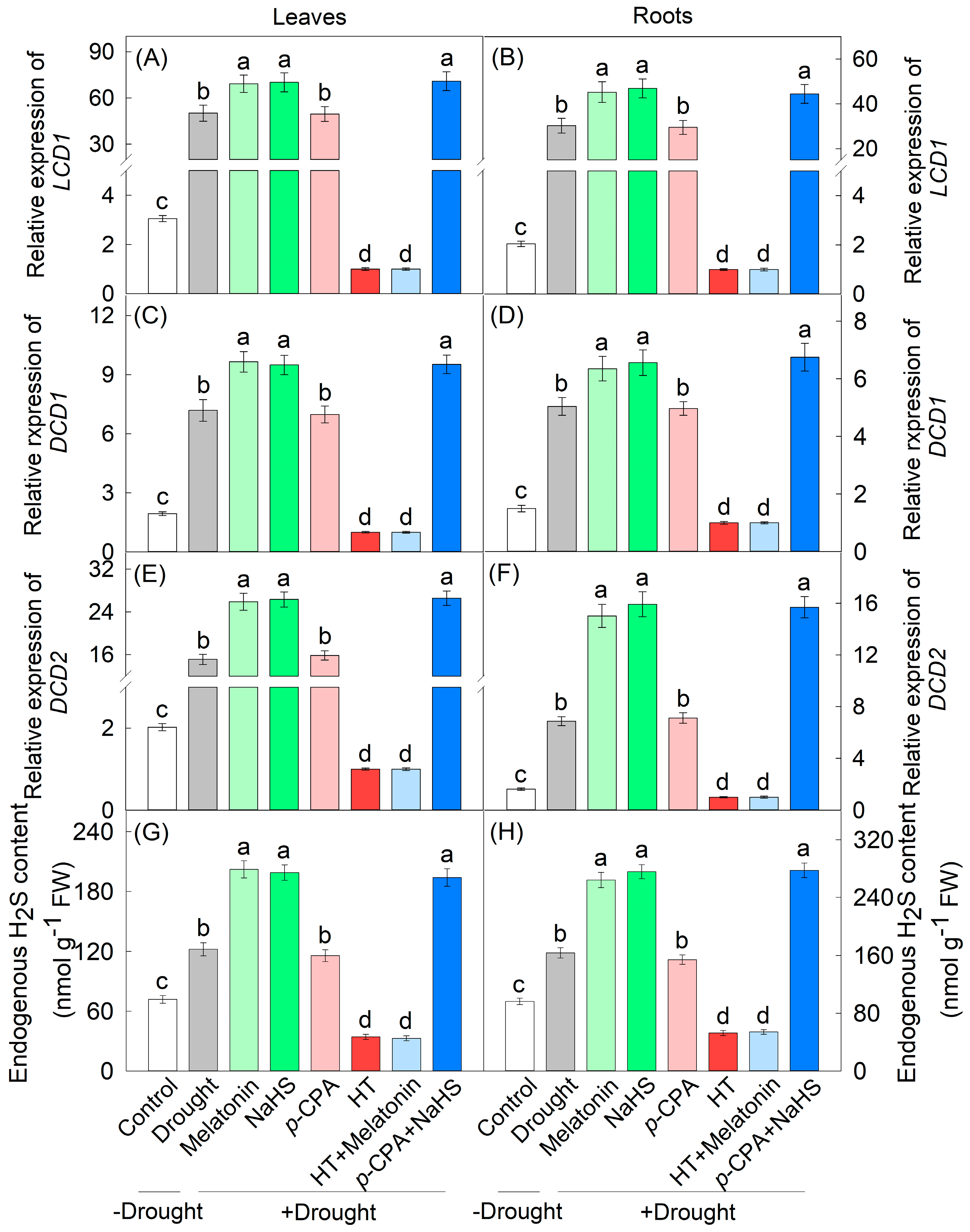
Figure 1. Effects of melatonin and NaHS on the transcript levels of H2S biosynthesis-related genes (AF) and endogenous H2S content (G,H) in the leaves and roots of maize seedlings under drought stress. Data are presented as mean ± SE of three independent biological replicates (n = 3). Different letters indicate statistically significant differences among treatments (p < 0.05).
Agronomy 15 02592 g001
Figure 2. Effects of melatonin and NaHS on the transcript levels of melatonin biosynthesis-related genes (AF) and endogenous melatonin content (G,H) in the leaves and roots of maize seedlings under drought stress. Data are presented as mean ± SE of three independent biological replicates (n = 3). Different letters indicate statistically significant differences among treatments (p < 0.05).
Agronomy 15 02592 g002
Figure 3. Effects of melatonin and NaHS on the dry weight of maize shoots (A) and roots (B) under drought stress. Data are presented as mean ± SE of three independent biological replicates (n = 3). Different letters indicate statistically significant differences among treatments (p < 0.05).
Agronomy 15 02592 g003
Figure 4. Effects of melatonin and NaHS on the photosynthetic rate (A), stomatal conductance (B), transpiration rate (C), and Fv/Fm (D) in leaves of maize seedlings under drought stress. Data are presented as mean ± SE of three independent biological replicates (n = 3). Different letters indicate statistically significant differences among treatments (p < 0.05).
Agronomy 15 02592 g004
Figure 5. Effects of melatonin and NaHS on the contents of starch (A,B) sucrose (C,D), glucose (E,F), and fructose (G,H) in the leaves and roots of maize seedlings under drought stress. Data are presented as mean ± SE of three independent biological replicates (n = 3). Different letters indicate statistically significant differences among treatments (p < 0.05).
Agronomy 15 02592 g005
Figure 6. Effects of melatonin and NaHS on the transcript levels of genes related to starch and sucrose metabolism (A), ROS production (B), and antioxidant enzyme synthesis (C) in the leaves and roots of maize seedlings under drought stress.
Agronomy 15 02592 g006
Figure 7. Effects of melatonin and NaHS on the contents of O2· (A,B), H2O2 (C,D), and MDA (E,F) in the leaves and roots of maize seedlings under drought stress. Data are presented as mean ± SE of three independent biological replicates (n = 3). Different letters indicate statistically significant differences among treatments (p < 0.05).
Agronomy 15 02592 g007
Figure 8. Effects of melatonin and NaHS on the activities of SOD (A,B), POD (C,D), and CAT (E,F) in the leaves and roots of maize seedlings under drought stress. SOD: superoxide dismutase; POD: peroxidase; CAT: catalase. Data are presented as mean ± SE of three independent biological replicates (n = 3). Different letters indicate statistically significant differences among treatments (p < 0.05).
Agronomy 15 02592 g008
Figure 9. Effects of melatonin and NaHS on the contents of ASA (A,G), DHA (B,H), GSH (C,I), GSSG (D,J), and the ratios of ASA/DHA (E,K), and GSH/GSSG (F,L) in the leaves and roots of maize seedlings under drought stress. ASA: ascorbic acid; DHA: dehydroascorbic acid; GSH: glutathione; GSSG: oxidized glutathione. Data are presented as mean ± SE of three independent biological replicates (n = 3). Different letters indicate statistically significant differences among treatments (p < 0.05).
Agronomy 15 02592 g009
Figure 10. Principal component analysis (PCA) loading plot of physiological traits.
Agronomy 15 02592 g010
Figure 11. The proposed model for H2S-mediated melatonin signaling in enhancing drought tolerance in maize.
Agronomy 15 02592 g011
Disclaimer/Publisher’s Note: The statements, opinions and data contained in all publications are solely those of the individual author(s) and contributor(s) and not of MDPI and/or the editor(s). MDPI and/or the editor(s) disclaim responsibility for any injury to people or property resulting from any ideas, methods, instructions or products referred to in the content.