Article

Effects of Long-Term Straw Return and Tillage Practices on Soil Physicochemical Traits and Yield of Waxy Maize


Institute of Maize and Featured Upland Crops, Zhejiang Academy of Agricultural Sciences, Dongyang 322100, China
*
Author to whom correspondence should be addressed.
Agronomy 2025, 15(11), 2586; https://doi.org/10.3390/agronomy15112586
Submission received: 16 October 2025 / Revised: 5 November 2025 / Accepted: 7 November 2025 / Published: 10 November 2025
(This article belongs to the Section Soil and Plant Nutrition)

Abstract

In the waxy maize production of Zhejiang Province, China, conventional straw management often causes planting difficulties and nutrient competition. Although no-till with straw retention is known to benefit soil structure, its long-term impacts on local soil health and productivity remain poorly understood. Hence, a six-year field experiment (2016–2021) was conducted with four treatments, i.e., no-till with residue retention (NTRR), no-till with residue removal (NTR0), plow tillage with residue incorporation (PTRR), and plow tillage with residue removal (PTR0), to investigate the long-term effects of tillage and residue management. The results demonstrated that plow tillage (PT) significantly improved soil physical properties, reducing soil compaction and decreasing bulk density compared to no-till (NT) practices. Meanwhile, residue retention (RR) enhanced soil chemical fertility, increasing soil organic matter by 7.8–9.8% and substantially improving available potassium levels. The PTRR treatment achieved the most favorable soil conditions with the lowest compaction and bulk density values among all treatments. PTRR consistently yielded the highest maize production, showing a 1.7–6.9% advantage over PTR0 and a substantial 15.4% yield increase in spring maize compared to residue removal (R0) treatments. Correlation analyses revealed significant relationships between soil quality and productivity, with the Soil Quality Index (SQI) showing strong positive correlations with both yield (r = 0.74, p < 0.01) and economic returns (r = 0.67, p < 0.05). These findings demonstrate that PTRR represents an optimal agricultural management strategy for simultaneously enhancing soil health and ensuring sustainable crop production in fresh maize cultivation.

1. Introduction

Cropland provides key ecosystem services globally and regionally, such as carbon sequestration to combat climate change and food production essential for human survival [1]. However, the degradation of cropland worldwide has intensified due to agricultural mismanagement and the overexploitation of land resources, posing significant threats to these ecosystem functions [2]. Zhejiang Province, located in the subtropical region of the middle and lower reaches of the Yangtze River, is one of China’s primary fresh maize production areas. Waxy maize (Zea mays L. var. ceratain Kulesh) is a type of fresh maize, with having high viscosity and digestibility. Beyond its role as a food source, waxy maize serves as a valuable raw material for industries such as textiles, adhesives, brewing, and paper manufacturing [3]. Due to its significant economic, nutritional, and processing value, the cultivation area and production of waxy maize have expanded substantially in recent decades [4,5,6]. In Zhejiang Province, the cultivation area of waxy maize has remained stable at approximately 40,000 hectares in recent years, with the potential for 2–3 annual planting cycles. However, the intensive tillage practices will reduce top cover and destabilize the topsoil, leading to loss of soil organic carbon and structural destabilization, and ultimately to a long-term decline in soil fertility and crop yields [7]. To address these challenges and support sustainable agricultural development, it is important to document long-term changes in tillage practices related to fresh maize production in Zhejiang Province. This data collection effort would help create a reliable assessment and monitoring system, guiding informed decision making and the adoption of sustainable land management practices.
Removing crop residues from fields can reduce carbon content in agroecosystems, potentially harming soil quality and disrupting the farm’s carbon balance [8]. In modern agriculture, returning straw to the field is considered a practical strategy to maintain both productivity and the long-term sustainability of farming systems [9]. Straw return helps speed up the breakdown of organic matter, stimulates microbial growth and activity, and enhances the soil’s ability to supply nitrogen [10]. Additionally, as straw decomposes, it releases nutrients such as nitrogen, phosphorus, and potassium, which support crop growth and enrich the soil [11]. However, despite financial incentives and technical support from the local government, maize straw returning has not been widely adopted by farmers in Zhejiang Province [12]. This reluctance is primarily due to concerns that returning maize straw to the field may lead to reduced crop yields and lower economic returns, with significant year-to-year fluctuations [13]. Traditional straw-return methods, such as straw mulching or mixing straw into the soil with rotary tillage, also face challenges in effectively managing large amounts of straw [14]. These issues are compounded by factors such as the negative impact of straw-soil mixtures on seeding quality and the competition between decomposing straw and crops for nitrogen, which can limit crop growth [15,16]. As a result, despite its potential benefits, farmers remain hesitant to adopt practices of returning maize straw.
Two traditional straw-return methods are residue retention with no tillage and with conventional tillage. Previous studies reported that residue retention without tillage promoted aggregate formation, thereby increasing soil organic carbon [17,18]. Furthermore, conservation tillage modifies soil physical traits, such as decreasing soil bulk density and increasing soil porosity [19]. Different straw return and tillage management have significant impacts on soil physical traits, including soil bulk density, soil porosity, and soil moisture content. Soil bulk density must be within a reasonable range to favor crop growth. Lower soil bulk density reduces root penetration resistance but is not conducive to root anchors, increasing lodging risk.
The specific tillage practice combined with straw return is crucial, as practices like residue retention with shallow rotary increase subsoil compaction and constrain crop growth and development. Additionally, soil chemical traits, including nitrogen (N), phosphorus (P), and potassium (K), are generally the limiting nutrients for crop yield in farmland ecosystems. Traditional farming practices (like fertilizer use and tillage) can disrupt the natural balance of soil nutrients (such as carbon, nitrogen, and phosphorus), which may ultimately affect crop yields [20]. Tillage and straw return can significantly affect soil organic matter and nutrient levels, altering the ecological balance of soil nutrients [21]. Unlike direct fertilizer application, conservation tillage (e.g., reduced tillage and no tillage) and crop residue retention can increase soil organic matter storage. However, the high C:N:P ratios of crop residues may temporarily immobilize nutrients, thereby creating competition between crops and soil microbes [22]. Despite these findings, the long-term effects of tillage practices on soil physical and chemical traits, and their subsequent influence on crop yields, particularly in waxy maize production, remain insufficiently understood.
Agricultural lands provide essential ecosystem services, including carbon storage and food production, but unsustainable farming practices are degrading these vital functions. In Zhejiang Province, China, a key production area for waxy maize, intensive tillage practices have led to declining soil organic carbon levels and structural deterioration, ultimately compromising agricultural productivity. Straw return improves soil quality by increasing organic matter, enhancing soil structure, and recycling nutrients. However, farmers hesitate to adopt it due to worries about unstable yields and financial risks. Standard straw application methods, such as mulching or mixing into soil, can cause planting problems and nutrient competition between crops and microbes. No-till with straw retention helps build better soil structure and store more carbon, but we still do not fully understand how it affects soil health and maize yields over time, especially for waxy maize.
To address these knowledge gaps, a long-term field experiment was established in Zhejiang Province in 2016, comparing four management practices: no-till with residue retention (NTRR), no-till with residue removal (NTR0), plow tillage with residue incorporation (PTRR), and plow tillage with residue removal (PTR0). We hypothesized that no-till combined with residue retention (NTRR) would most effectively enhance soil quality, thereby increasing the yield and economic return of waxy maize. The aims of this study were to: (1) monitor the long-term dynamics of soil physicochemical properties under these practices; (2) integrate these properties into a comprehensive Soil Quality Index (SQI) and establish the relationships between the SQI, yield, and economic performance. The novelty of our research lies in linking long-term soil management strategies directly to the agronomic and economic outcomes for waxy maize, providing an evidence base for sustainable farming decisions.

2. Materials and Methods

2.1. Experimental Site and Soil Sampling

The field experiments were conducted at the Institute of Maize and Featured Upland Crops (29°16′ N, 120°13′ E), Dongyang, Zhejiang Province. This region experiences a typical subtropical monsoon climate. The soil at the experimental site is a loamy red soil with a bulk density of 1.57 g cm−3 in the 0–20 cm layer prior to the experiment. The mineralogical composition is dominated by kaolinite in the clay fraction and by quartz and iron oxides in the coarser fractions. The field experiment began in autumn 2016 and ended in autumn 2021, spanning 11 consecutive maize growing seasons. The weather during the experiments is shown in Figure 1. Precipitation during the maize season ranged from 1317.5 mm in 2017 to 2007.6 mm in 2021. The maximum temperature varied from 21.1 °C in 2020 to 24.2 °C in 2017, and the minimum temperature varied from 11.4 °C in 2020 to 15.1 °C in 2016. The chemical properties of the 0–20 cm soil depth before the experiment were as follows: soil organic matter 1.7%, soil available nitrogen 94.8 mg kg−1, available phosphorus 109 mg kg−1, and available potassium 125.6 mg kg−1. Soil organic matter (SOM) was determined by the potassium dichromate (K2Cr2O7-H2SO4) oxidation method. Available nitrogen (AN) was measured using the Kjeldahl method. Available phosphorus (AP) was extracted with 0.5 M sodium bicarbonate (NaHCO3, pH 8.5) and determined by the ascorbic acid molybdenum blue method. Available potassium (AK) was extracted with 1 M ammonium acetate (NH4OAc, pH 7.0) and measured by flame photometry. All analyses were performed according to the procedures described by Bao [23].
The field experiment was a split-plot design with three replicates, with two residue management treatments (residue retention, RR; residue removal, R0) as main plots and two tillage practices (no-till, NT; plow tillage, PT) as subplots. The combined four treatments were no-till with residue retention (NTRR), no-till with residue removal (NTR0), plow tillage with residue incorporation (PTRR), and plow tillage with residue removal (PTR0). Residue Removal (R0): After manual harvest, all visible above-ground maize residues were manually raked and completely removed from the plot area. Residue Retention (RR): After manual harvest of the maize, all above-ground crop residues were chopped using a straw shredder and spread back onto the soil surface. The chopped residue length was typically 5–10 cm. Plow Tillage (PT): This treatment involved moldboard plowing to a depth of 20–25 cm, which effectively inverted the soil and buried >90% of the surface residues. Regardless of the crop season, a single pass with a rotary tiller was consistently conducted before sowing to prepare a fine seedbed. No-Till (NT): The soil was left undisturbed throughout the year. Sowing was conducted manually. Surface residues along the planting row were first moved aside by hand, and then seeds were placed into holes created using a hoe to ensure good seed-soil contact. Plant density was 52,500 plants ha−1, with a row spacing of 65.0 cm and an intra-row plant spacing of 29.3 cm. The waxy maize cultivar Zhenuoyu14 (ZNY14) was used. The dimension of each plot was 24 m × 5.2 m per year.
The spring sowing time varied from early April to late April, and the autumn sowing date was during the first two weeks in August (Table A1). This was a fixed-field long-term experiment. All treatments were permanently assigned to the same individual plots and remained unchanged across all 11 growing cycles. Maize was harvested at the milking stage, around 20–25 days after silking, and the dates of silking and harvest were recorded. The silking stage timing differed by 4 d among the four treatments, and the harvest timing differed by 7 d. The difference in growth duration among the four treatments was 6 d, and the mean growth duration of spring sowing was smaller than that of autumn sowing (82.05 d vs. 84.5 d). The fertilizer application was the same for all plots, with 110 kg N ha−1, 320 kg ha−1 commercial fertilizer (N:P2O5:K2O = 18%:18%:18%) at the jointing stage and an extra 400 kg ha−1 commercial fertilizer at the V13 stage (when the collar of the 13th leaf was visible). This fertilization regimen (240 kg N ha−1) was applied to each maize crop (both spring and autumn), representing a local management strategy for waxy maize production Weeds, insects, and diseases were effectively controlled throughout the maize growing season.

2.2. Plant and Soil Sampling

2.2.1. Plant Sampling

Maize was harvested at milking stage around 20–25 days after silking. Four central rows in an experimental unit were hand-harvested to determine fresh maize yield. Fresh corn yield was determined as the total fresh weight of intact ears with husks removed, comprising both the cob and unthreshed kernels.
Economic benefits (¥) were calculated using the following equation:
Economic benefits (¥) = maize yield × the market price of maize-total cost
Total cost (¥) = land rent cost + straw disposal cost + plowing cost + pesticide cost + fertilizer cost + seed
cost + labor cost

2.2.2. Soil Sampling

Soil physical traits: Soil samples were obtained after the autumn maize harvest from 2016 to 2021. All samples were collected from the 0–20 cm depth layer. For the determination of soil physical properties (soil bulk density and soil porosity), undisturbed soil samples were collected using a core sampler with an internal diameter of 5 cm. Three sampling points were located along the diagonal of each plot. These core samples were carefully handled to preserve their natural structure for subsequent analysis. Soil bulk density was measured by the core method and calculated as the mass of oven-dried soil per unit soil sample volume [24]. Soil porosity refers to the fraction of the total soil volume that is taken up by the pore space. Soil bulk density and soil porosity were calculated as follows:
soil bulk density (g cm−3) = (soil dry matter)⁄(soil sample volume)
soil porosity (%) = ⌊1 − ((soil bulk density)⁄2.65)⌋ × 100
Additionally, soil compaction was assessed using a penetrometer (model SL-TSA, China). This device operates on the principle of measuring the penetration resistance of a conical probe inserted into the soil, providing a direct readout of compactness in pressure units (kPa).
Soil chemical traits: Soil samples were obtained before autumn maize sown in 2016 and after the autumn maize harvest in 2019 and 2021. Five points along the S linear transect in each plot were sampled with a core sampler from the 0–20 cm soil layer and mixed thoroughly. The soil samples were air-dried, then gently ground and sieved through a 2 mm sieve. Soil pH was measured in a 1:2.5 (w/v) soil/water mixture using a pH meter (PHSJ-3 F, INESA Scientific Instrument Co., Ltd., Shanghai, China). Soil organic matter (SOM) was analyzed with H2SO4-K2Cr2O7 solution, available nitrogen (TN) was determined by the Kjeldahl method, available potassium (AK) was measured by the ammonium acetate oscillation extraction and flame photometry method, available phosphorus (AP) was measured by the sodium bicarbonate extraction and ascorbic acid molybdenum blue method, as described by Bao [24].
Soil quality index evaluation: The soil quality index (SQI) was quantified using the total dataset method, as described by Nabiollahi et al. [25]. The methodology involved a two-step process: first, all soil properties were standardized into dimensionless scores ranging from 0 to 1. This transformation was achieved through a linear scoring model, expressed as follows:
SL = 1 − (x − L)/(H − L)
SL represents the linear score (ranging from 0 to 1), x denotes the measured value of the index, and L and H correspond to the lowest and highest values of the index, respectively.
Second, the weight of each indicator (Wi) was derived from PCA and calculated as the ratio of its individual variance to the cumulative variance across all components.
The soil quality index (SQI) was computed using the following equation:
S Q I = i = 1 n W i × S L
where Wi represents the weight of the i-th evaluation indicator, SL denotes the normalized score of the indicator, and n is the total number of indicators considered in the analysis.

2.3. Statistical Analysis

Differences among treatments for yield, soil physical and chemical traits were checked using the homogeneity of variances and analyzed using the LSD analysis of variance (ANOVA) in SPSS 20.0 (IBM Corp., Armonk, NY, USA). Prior to ANOVA, the assumptions of homogeneity of variances and normality were checked. Homogeneity of variances was verified using Levene’s test, and normality was assessed using the Shapiro–Wilk test. The interaction between the residue management factor and the tillage practice factor was analyzed using GLM. Pearson correlation analysis was conducted to assess the relationships between waxy corn yield and soil physicochemical properties. The analysis utilized the autumn harvest yield data from 2016, 2019, and 2021, paired with the post-harvest soil measurement data obtained in the same years.

3. Results

3.1. Yield and Economic Benefits

Residue management factor (R) mainly affected the yield of autumn maize from 2019 to 2021 and the yield of spring maize in 2021 (Table 1). The tillage practice factor (T) showed significant effects on yield on all sown dates and years. In the autumn of 2016, a significant tillage × residue interaction was observed for grain yield, wherein plow tillage resulted in significantly higher yields than no-till, regardless of residue management. On average across tillage practice factors, the mean autumn maize yield with residue retention from 2019 to 2021 was 16.6%, 6.3%, and 15.4% higher than with residue removal. Likewise, residue retention increased the mean spring maize yield by 15.4% in 2021 compared to the residue removal. Across residue management factors, the mean spring/autumn maize yields from plow tillage were significantly larger than those from no-till in all years.
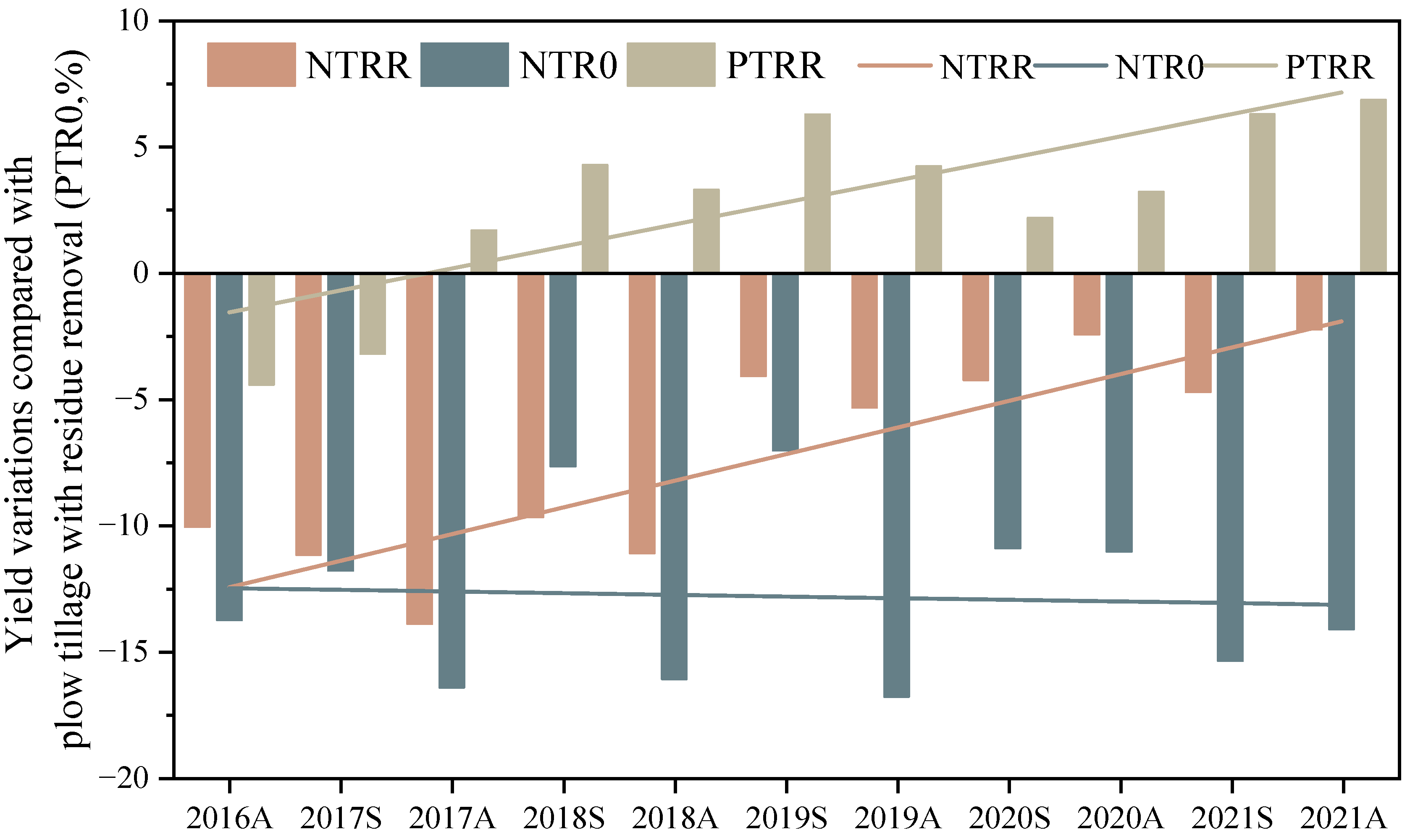
The yield of plow tillage with residue incorporation (PTRR) was 1.7–6.9% higher than that of PTR0 from 2017 (autumn) to 2021 (Figure 2), and the increasing trend became larger with years. In contrast, the yields of no-till with residue retention (NTRR) and no-till with residue removal (NTR0) were 2.3% to 16.9% lower than those of PTR0 from 2016 to 2021. The yield variations in NTRR increased gradually, whereas those of NTR0 decreased slightly.
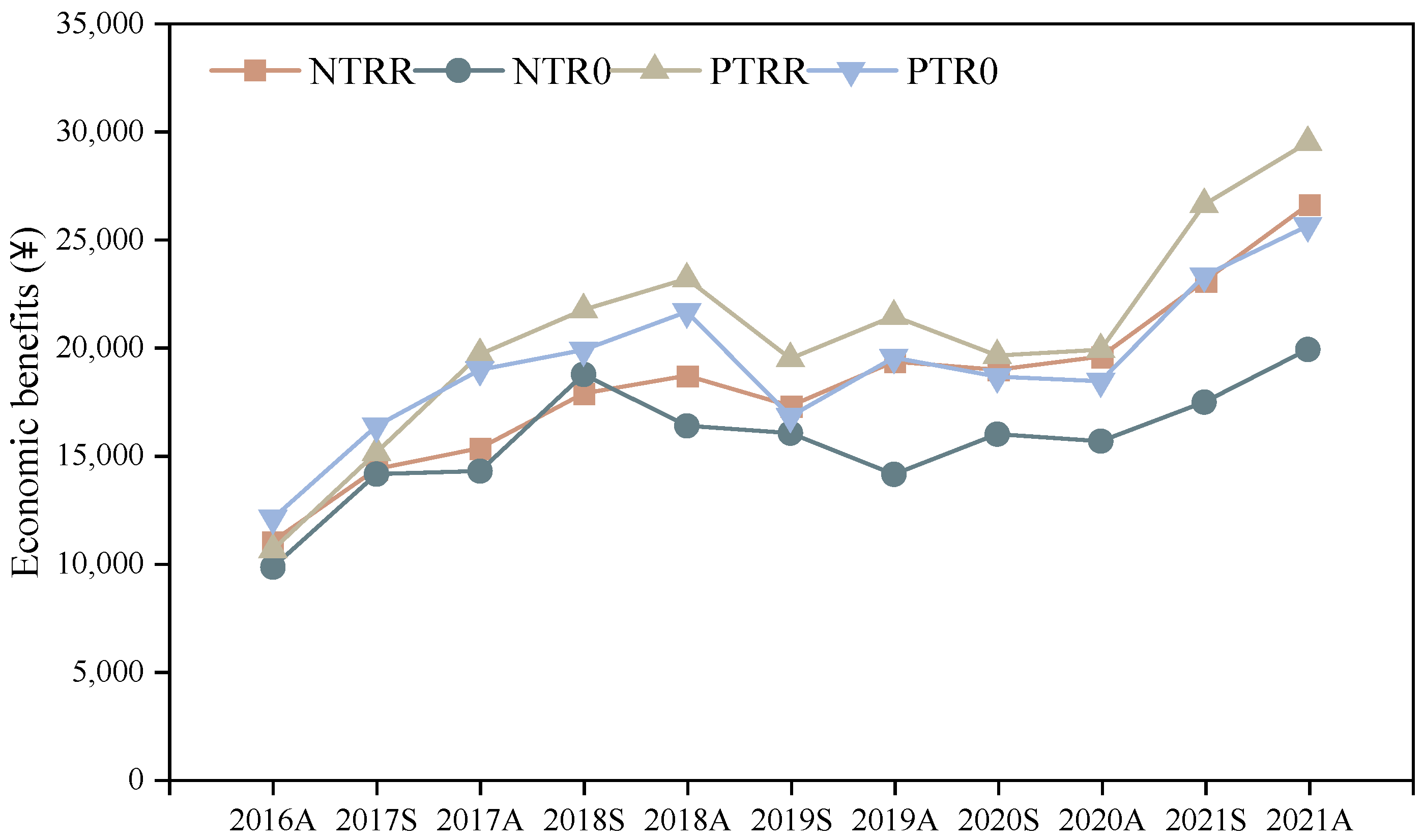
The assumptions behind the economic analysis (market price, cost of land rent, etc.) were listed in Table A2. The economic benefits of waxy maize production under different tillage practices and residue management from 2016 to 2021 showed an overall increasing trend, except for a slight reduction in 2019 and 2020 (Figure 3). PTRR showed the highest economic benefits among the four treatments from the autumn of 2017 to 2021.

3.2. Soil Physical Traits

The tillage practice factor (T) had a significant effect on soil compaction in 2017–2019 and residue management factor (R) mainly affected soil compaction in 2018 (Table 2). No significant interaction effects (R*T) were observed on soil compaction. The mean soil compaction across the residue management factor of no-till was 12.3%, 13.8%, and 21.6% higher than that of plow tillage in 2017, 2018, and 2019, respectively. Likewise, on average across tillage practice factor (T), the mean soil compaction with residue retention was 10.0% lower than with residue removal in 2018.
The tillage practice factor (T) had a significant effect on soil bulk density in 2019 (Table 3). There was no significant effect of residue management (R) or its interaction (R*T) with tillage on soil bulk density. The mean soil bulk density across the residue management factor of no-till was 2.5% than that of plow tillage in 2019.
The tillage practice factor (T) had a significant effect on soil total porosity in 2019, and residue management factor (R) mainly affected soil total porosity in 2020 (Table 4). No significant interaction effects (R*T) were observed on soil bulk density. Compared with residue removal, the mean total porosity value of residue retention was increased by 3.9% in 2020. The mean soil total porosity across the residue management factor of no-till was 2.1% lower than that of plow tillage in 2019.

3.3. Soil Chemical Traits

Available nitrogen did not differ significantly among the treatments (Table 5). Tillage practice factor had significant effects on available phosphorous in 2016. Plow tillage increased available phosphorous by 3.9% compared with no-till in 2016.
Tillage practice factor (T) had a significant effect on soil organic matter in 2019 (Table 6). Residue management factor (R) had significant effects on soil organic matter in 2019 and 2021. pH did not differ significantly among the treatments. Plow tillage increased soil organic matter by 3.9% compared with no-till in 2019. On average across tillage practice factor, the residue retention increased soil organic matter by 7.8% and 9.8% compared with residue removal in 2019 and 2021, respectively.
Tillage practice factor (T) had a significant effect on available potassium in 2019 (Table 7). Residue management factor (R) had significant effects on available potassium in 2019 and 2021. The interaction significantly affected the available potassium. PTRR displayed the highest available potassium among four different treatments in 2019 and 2021, and NTR0 and PTR0 showed the lowest values. Simple effect analysis indicated that residue retention significantly increased AK content compared to residue removal within both tillage systems.

3.4. The Relationship Between Yield and Soil Traits

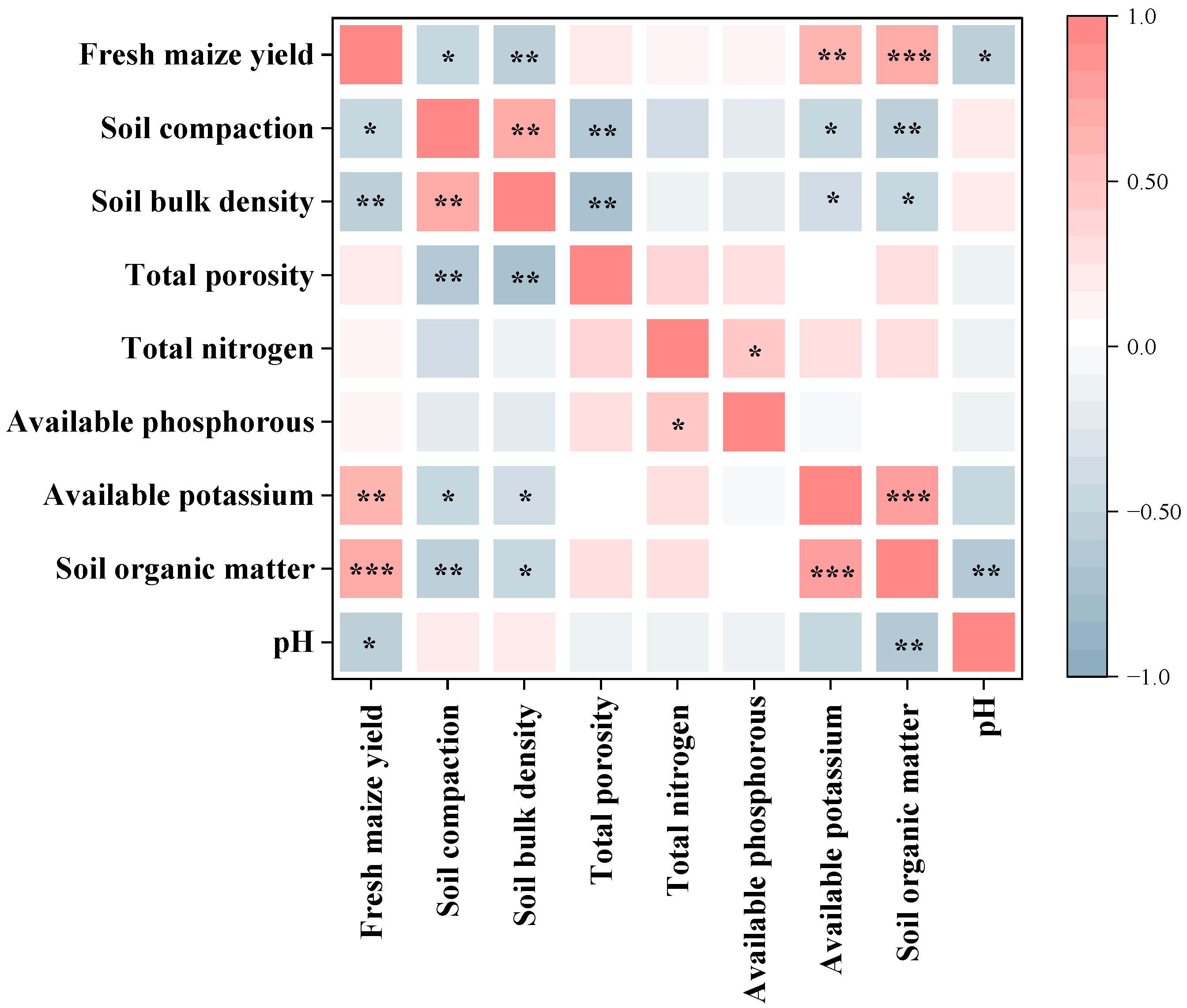
The yield was significantly negatively correlated with soil compaction, soil bulk density, and pH, with correlation coefficients of −0.421, −0.522, and −0.508, respectively (Figure 4); it was significantly positively correlated with available potassium and soil organic matter, with correlation coefficients of 0.616 and 0.706, respectively. Soil compaction was significantly positively correlated with soil bulk density (0.685), and negatively correlated with total porosity (−0.663), available potassium (−0.445), and soil organic matter (−0.517). Soil bulk density had significant correlations with total porosity, available potassium, and soil organic matter. Available potassium was significantly positively correlated with soil organic matter and significantly negatively correlated with pH. The correlation coefficient between total nitrogen and available phosphorus was 0.437, and the coefficient between soil organic matter and pH was −0.662.
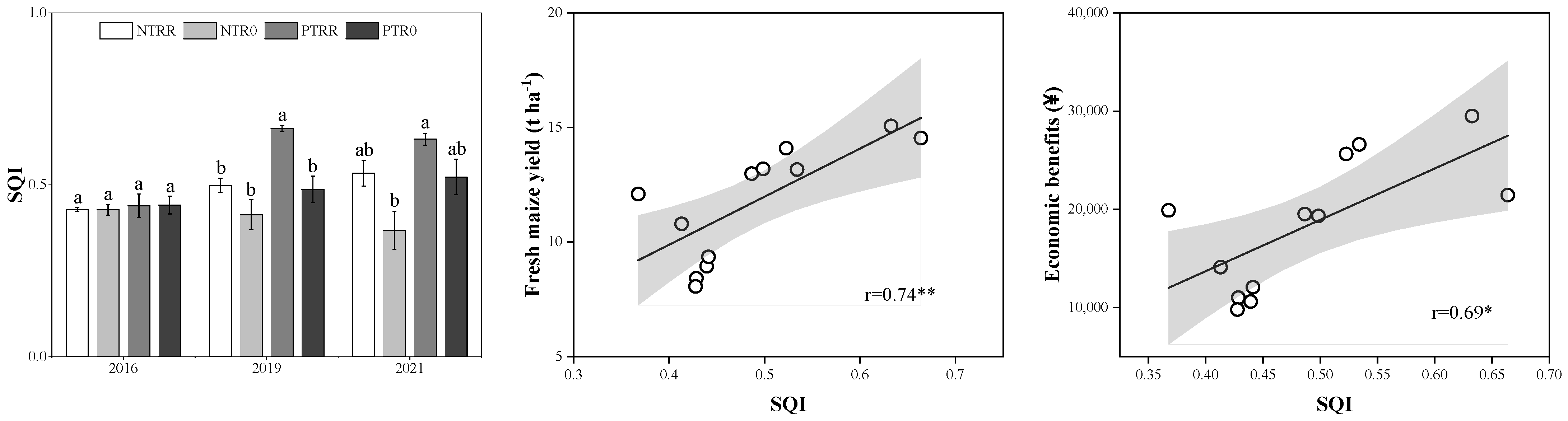
The Soil Quality Index (SQI) did not differ significantly among the treatments in 2016 (Figure 5). The PTRR treatment exhibited the highest SQI values in 2019 and 2021, whereas the NTR0 treatment resulted in the lowest values. A significant positive linear relationship was found between SQI and fresh maize yield (r = 0.74, p < 0.01). Similarly, SQI was significantly and positively correlated with economic benefits (r = 0.69, p < 0.05).

4. Discussion

4.1. The Effects of Different Tillage Management on Physical Traits

Plow tillage (PT) and no-till (NT) significantly affected soil physical properties. Pooled data across residue treatments showed consistently higher soil compaction under NT than under PT, with increases of 12.3%, 13.8%, and 21.6% in 2017, 2018, and 2019, respectively (Table 2). By 2019, PT reduced soil bulk density by 2.9% relative to NT (Table 3). Generally, PT disrupts soil aggregates through mechanical action, potentially enhancing soil aeration and water infiltration, whereas NT preserves the existing soil structure, often resulting in progressive densification [26]. These findings align with previous studies conducted in Northeast China’s black soil region [27], the central United States [28], and the semi-arid area of China [29], which reported reduced compaction and improved porosity under various tillage interventions, including rotary, rotational, and deep-tillage practices [30]. Residue retention (RR) exerted positive yet interannually variable effects on soil physical properties. Pooled across tillage practices, RR reduced soil compaction by 10.0% compared to residue removal (R0) in 2018, and increased total porosity by 3.9% in 2020. However, no significant difference in bulk density was observed in that year (Table 4). The improvements are likely attributable to organic binding agents derived from straw decomposition, which enhance aggregation, alleviate compaction, and promote porosity [31]. The effectiveness of residue retention varied from year to year. This result is mainly due to climate, which accelerates decomposition in warmer, wetter years but slows it down in drier or colder ones. These findings align with previous studies demonstrating that straw return, particularly combined with deep tillage, improves soil porosity and reduces bulk density [32], enhances aggregate stability over time [33], and consistently mitigates compaction while increasing water-stable aggregates across tillage systems [34]. In summary, PT was more effective in reducing soil compaction and bulk density. RR contributed to increasing soil porosity and reducing compaction in certain years. The combination of PT and RR (PTRR) resulted in the best soil physical conditions, with the lowest soil compaction and bulk density (ranking: NTR0 > NTRR > PTR0 > PTRR) and favorable total porosity (Table 2, Table 3 and Table 4). This condition suggests that PTRR may be a suitable practice for maintaining soil health in this region.

4.2. The Effects of Different Tillage Management on Chemical Traits

The findings of this study demonstrated that tillage practices and residue management significantly influence soil chemical properties. The tillage factor (T) exerted a significant effect: in 2016, plow tillage boosted available phosphorus (AP) by 3.9% compared with no-till (Table 5), attributed to enhanced organic matter mineralization, release of immobilized phosphorus, and improved soil aeration via residue incorporation [35]. Despite the association between no-till practices and surface soil organic matter (SOM) accumulation, our results show that plow tillage increased SOM by 4.0% in 2019 (Table 6). In the early to middle years, plowing broke down and mixed residues more effectively. This condition meant that soil organic matter was evenly distributed, unlike in no-till systems, where it stays concentrated at the surface [36,37]. Residue management became the main factor affecting available phosphorus and potassium in 2019 and 2021 (Table 5 and Table 7). During this period, residue retention also increased soil organic matter, highlighting its contribution to soil health through organic carbon input. Residues serve as microbial substrates to form stable organic matter [38], and SOM strongly correlates with AK (r = 0.616; Figure 4). Residue retention enhances nutrient availability by slowing nutrient release from decomposition and improving nutrient cycling conditions [31]. A key finding is that tillage-residue interaction (R*T) on AK, and that plow tillage with residue incorporation (PTRR) outperforms other practices in AK, AP, SOM, and available nitrogen. Plowing may promote residue decomposition by improving contact with the soil, creating more favorable moisture and temperature conditions for microbes, and distributing nutrients throughout the plow layer [39]. Conversely, no-till with no residue (NTR0) was associated with relatively poorer soil chemistry compared to the other practices (Table 5, Table 6 and Table 7). Residue incorporation likely increased soil acidity (via organic acids and cation exchange capacity), as yield and SOM both negatively correlated with pH (r = −0.662; Figure 4).

4.3. The Effects of Different Tillage Management on Yield

This study confirms that tillage and residue management significantly shape soil quality and maize yield, with their combined effects being more pronounced than those of individual factors. From a yield perspective, residue retention consistently increased autumn maize yield by 6.3–16.6% (2019–2021) and spring maize yield by 15.4% (2021), compared to residue removal (Table 1). These results align with the findings of Gupta et al. [40], who reported that residues serve as substrates for microbes, thereby enhancing nutrient cycling. Plow tillage also outperformed no-till in both spring and autumn maize yields across years (Table 1), as it improves soil aeration and nutrient distribution by mixing residues [41]. The PTRR treatment developed a growing yield advantage over time, reaching 1.7–6.9% higher than PTR0 (Table 1). In contrast, no-till treatments (NTRR, NTR0) yielded 2.3–16.9% less than PTR0 (Table 1). This condition suggests that incorporating residues through tillage may be a key factor in achieving sustained yield improvements. Correlation analysis revealed that yield was negatively correlated with compaction, bulk density, and pH, but positively correlated with available potassium and SOM (Figure 4). Economically, fresh waxy maize’s economic benefits showed an overall upward trend (with minor dips in 2019–2020), and PTRR maintained the highest benefits from 2017 autumn to 2021 (Figure 3). This condition is because PTRR’s yield stability (avoiding loss from poor soil conditions), improved kernel quality (commanding higher market prices), and reduced long-term input costs (via enhanced soil fertility, reducing fertilizer needs) synergistically drive profitability. Correlation analysis reinforced this: SQI was highest in PTRR (2019–2021) and positively correlated with both yield and economic benefits (Figure 5). In summary, PTRR is the optimal management strategy for fresh waxy maize, as it improves soil physical/chemical quality to sustain high yields and kernel quality, directly translating into stable, high economic returns and matching the crop’s market and growth requirements.

5. Conclusions

Comprehensive analysis revealed that PT significantly enhanced soil physical characteristics by mechanically loosening the soil structure, thereby reducing compaction by 12.3–21.6% and decreasing bulk density by 2.9% compared to no-till systems. RR improved soil chemical properties through the gradual decomposition of organic materials, which increased soil organic matter content and elevated available potassium levels. PTRR treatment demonstrated synergistic effects, creating optimal soil conditions that combined improved aeration and structure with enhanced nutrient availability. This treatment consistently resulted in higher maize yields across multiple growing seasons, with yield advantages of 1.7–6.9% compared with other management practices. Furthermore, correlation analysis showed that the SQI under PTRR was significantly positively correlated with both crop yield (r = 0.59) and economic returns (r = 0.57), confirming the crucial role of soil quality in agricultural productivity and profitability. These results suggest that integrated plow tillage with residue retention can effectively maintain soil health while ensuring sustainable agricultural production, making it a recommended management strategy for local farming systems.

Author Contributions

Conceptualization, H.T., G.W. and P.Z.; methodology, H.T.; software, P.Z. and B.C.; validation, F.B., B.C., H.H. and J.H.; formal analysis, H.T., F.B. and J.H.; investigation, H.T., B.C., J.H., F.B. and H.H.; resources, F.Z. and G.W.; data curation, J.H., H.H. and F.B.; writing—original draft preparation, P.Z. and B.C.; writing—review and editing, P.Z.; supervision, G.W.; project administration, F.Z.; funding acquisition, G.W. and F.Z. All authors have read and agreed to the published version of the manuscript.

Funding

This research was funded by the Zhejiang Science and Technology Major Program on Agricultural New Variety Breeding, China (grant number: 2021C02064-4).

Data Availability Statement

The data presented in this study are available on request from the corresponding author.

Conflicts of Interest

The authors declare no conflicts of interest.

Appendix A

Table A1. Sowing, silking and harvest data, and growth duration of no-till with residue retention (NTRR), no-till with residue removal (NTR0) and plow tillage with residue incorporation (PTRR) compared with plow tillage with residue removal (PTR0) from 2016 to 2021. A, autumn season; S, spring season.
YearTreatmentSowingSilkingHarvest Growth Duration
m-dm-dm-dDays
2016ANTRR3-Aug26-Sep20-Oct78
NTR03-Aug27-Sep21-Oct79
PTRR3-Aug26-Sep20-Oct78
PTR03-Aug25-Sep19-Oct77
2017SNTRR12-Apr13-Jun5-Jul84
NTR012-Apr15-Jun7-Jul86
PTRR12-Apr13-Jun5-Jul84
PTR012-Apr14-Jun6-Jul85
2017ANTRR8-Aug3-Oct2-Nov86
NTR08-Aug3-Oct2-Nov86
PTRR8-Aug5-Oct4-Nov88
PTR08-Aug5-Oct4-Nov88
2018SNTRR11-Apr13-Jun3-Jul83
NTR011-Apr16-Jun5-Jul85
PTRR11-Apr13-Jun3-Jul83
PTR011-Apr14-Jun3-Jul83
2018ANTRR4-Aug24-Sep25-Oct82
NTR04-Aug26-Sep26-Oct83
PTRR4-Aug23-Sep24-Oct81
PTR04-Aug25-Sep26-Oct83
2019SNTRR12-Apr16-Jun7-Jul86
NTR012-Apr18-Jun8-Jul87
PTRR12-Apr17-Jun8-Jul87
PTR012-Apr16-Jun7-Jul86
2019ANTRR10-Aug5-Oct3-Nov85
NTR010-Aug7-Oct9-Nov91
PTRR10-Aug5-Oct3-Nov85
PTR010-Aug5-Oct3-Nov85
2020SNTRR22-Apr17-Jun7-Jul76
NTR022-Apr17-Jun7-Jul76
PTRR22-Apr15-Jun5-Jul74
PTR022-Apr15-Jun5-Jul74
2020ANTRR12-Aug7-Oct6-Nov86
NTR012-Aug10-Oct11-Nov91
PTRR12-Aug6-Oct6-Nov86
PTR012-Aug6-Oct6-Nov86
2021SNTRR18-Apr19-Jun8-Jul81
NTR018-Apr19-Jun8-Jul81
PTRR18-Apr17-Jun7-Jul80
PTR018-Apr17-Jun7-Jul80
2021ANTRR15-Aug9-Oct10-Nov87
NTR015-Aug8-Oct10-Nov87
PTRR15-Aug5-Oct8-Nov85
PTR015-Aug5-Oct8-Nov85
Table A2. The market price of maize (¥ kg−1), fresh maize yield (t ha−1), total revenue (¥ ha−1), land rent cost (¥ ha−1), straw disposal cost (¥ ha−1), plowing cost (¥ ha−1), pesticide cost (¥ ha−1), fertilizer cost (¥ ha−1), seed cost (¥ ha−1), labor cost (¥ ha−1), total cost (¥ ha−1) and economic benefits (¥ ha−1) of no-till with residue retention (NTRR), no-till with residue removal (NTR0) and plow tillage with residue incorporation (PTRR) compared with plow tillage with residue removal (PTR0) from 2016 to 2021.
YearTreatmentThe Market Price of Maize (¥ kg−1)Fresh Maize Yield (t ha−1)Total Revenue (¥ ha−1)Land Rent Cost (¥ ha−1)Straw Disposal Cost (¥ ha−1)Plowing Cost (¥ ha−1)Pesticide Cost (¥ ha−1)Fertilizer Cost (¥ ha−1)Seed Cost (¥ ha−1)Labor Cost (¥ ha−1)Total Cost (¥ ha−1)Economic Benefits (¥ ha−1)
2016ANTRR3.5 8.4 29,467.3 4500.0 1500.0 0.0 1500.0 3600.0 2250.0 5100.0 18,450.0 11,017.3
NTR03.5 8.1 28,251.9 4500.0 0.0 0.0 1500.0 3600.0 2250.0 6600.0 18,450.0 9801.9
PTRR3.5 8.9 31,318.3 4500.0 1500.0 2250.0 1500.0 3600.0 2250.0 5100.0 20,700.0 10,618.3
PTR03.5 9.4 32,776.7 4500.0 0.0 2250.0 1500.0 3600.0 2250.0 6600.0 20,700.0 12,076.7
2017SNTRR3.5 9.6 33,560.5 4500.0 1500.0 0.0 1500.0 3600.0 2250.0 5850.0 19,200.0 14,360.5
NTR03.5 9.5 33,326.2 4500.0 0.0 0.0 1500.0 3600.0 2250.0 7350.0 19,200.0 14,126.2
PTRR3.5 10.5 36,576.7 4500.0 1500.0 2250.0 1500.0 3600.0 2250.0 5850.0 21,450.0 15,126.7
PTR03.5 10.8 37,797.6 4500.0 0.0 2250.0 1500.0 3600.0 2250.0 7350.0 21,450.0 16,347.6
2017ANTRR3.5 10.4 36,329.3 4500.0 1500.0 0.0 1500.0 3600.0 2250.0 7650.0 21,000.0 15,329.3
NTR03.5 10.1 35,263.5 4500.0 0.0 0.0 1500.0 3600.0 2250.0 9150.0 21,000.0 14,263.5
PTRR3.5 12.3 42,929.5 4500.0 1500.0 2250.0 1500.0 3600.0 2250.0 7650.0 23,250.0 19,679.5
PTR03.5 12.1 42,219.0 4500.0 0.0 2250.0 1500.0 3600.0 2250.0 9150.0 23,250.0 18,969.0
2018SNTRR3.0 13.2 39,612.0 4500.0 1500.0 0.0 1500.0 3600.0 2250.0 8400.0 21,750.0 17,862.0
NTR03.0 13.5 40,497.0 4500.0 0.0 0.0 1500.0 3600.0 2250.0 9900.0 21,750.0 18,747.0
PTRR3.0 15.2 45,747.0 4500.0 1500.0 2250.0 1500.0 3600.0 2250.0 8400.0 24,000.0 21,747.0
PTR03.0 14.6 43,872.0 4500.0 0.0 2250.0 1500.0 3600.0 2250.0 9900.0 24,000.0 19,872.0
2018ANTRR3.5 11.9 41,487.3 4500.0 1500.0 0.0 1500.0 3600.0 2250.0 9450.0 22,800.0 18,687.3
NTR03.5 11.2 39,158.0 4500.0 0.0 0.0 1500.0 3600.0 2250.0 10,950.0 22,800.0 16,358.0
PTRR3.5 13.8 48,238.8 4500.0 1500.0 2250.0 1500.0 3600.0 2250.0 9450.0 25,050.0 23,188.8
PTR03.5 13.3 46,696.3 4500.0 0.0 2250.0 1500.0 3600.0 2250.0 10,950.0 25,050.0 21,646.3
2019SNTRR4.0 10.2 40,984.0 4500.0 1500.0 0.0 1500.0 3600.0 2250.0 10,350.0 23,700.0 17,284.0
NTR04.0 9.9 39,724.0 4500.0 0.0 0.0 1500.0 3600.0 2250.0 11,850.0 23,700.0 16,024.0
PTRR4.0 11.4 45,430.0 4500.0 1500.0 2250.0 1500.0 3600.0 2250.0 10,350.0 25,950.0 19,480.0
PTR04.0 10.7 42,742.0 4500.0 0.0 2250.0 1500.0 3600.0 2250.0 11,850.0 25,950.0 16,792.0
2019ANTRR3.5 12.3 43,037.8 4500.0 1500.0 0.0 1500.0 3600.0 2250.0 10,350.0 23,700.0 19,337.8
NTR03.5 10.8 37,814.0 4500.0 0.0 0.0 1500.0 3600.0 2250.0 11,850.0 23,700.0 14,114.0
PTRR3.5 13.5 47,402.3 4500.0 1500.0 2250.0 1500.0 3600.0 2250.0 10,350.0 25,950.0 21,452.3
PTR03.5 13.0 45,475.5 4500.0 0.0 2250.0 1500.0 3600.0 2250.0 11,850.0 25,950.0 19,525.5
2020SNTRR4.0 10.7 42,970.0 4500.0 1500.0 0.0 1500.0 3600.0 2250.0 10,650.0 24,000.0 18,970.0
NTR04.0 10.0 39,972.0 4500.0 0.0 0.0 1500.0 3600.0 2250.0 12,150.0 24,000.0 15,972.0
PTRR4.0 11.5 45,866.0 4500.0 1500.0 2250.0 1500.0 3600.0 2250.0 10,650.0 26,250.0 19,616.0
PTR04.0 11.2 44,886.0 4500.0 0.0 2250.0 1500.0 3600.0 2250.0 12,150.0 26,250.0 18,636.0
2020ANTRR3.5 12.7 44,317.0 4500.0 1500.0 0.0 1500.0 3600.0 2250.0 11,400.0 24,750.0 19,567.0
NTR03.5 11.5 40,398.8 4500.0 0.0 0.0 1500.0 3600.0 2250.0 12,900.0 24,750.0 15,648.8
PTRR3.5 13.4 46,894.8 4500.0 1500.0 2250.0 1500.0 3600.0 2250.0 11,400.0 27,000.0 19,894.8
PTR03.5 13.0 45,433.5 4500.0 0.0 2250.0 1500.0 3600.0 2250.0 12,900.0 27,000.0 18,433.5
2021SNTRR4.0 12.5 50,080.0 4500.0 1500.0 0.0 2250.0 3600.0 2250.0 12,900.0 27,000.0 23,080.0
NTR04.0 11.1 44,462.0 4500.0 0.0 0.0 2250.0 3600.0 2250.0 14,400.0 27,000.0 17,462.0
PTRR4.0 14.0 55,882.0 4500.0 1500.0 2250.0 2250.0 3600.0 2250.0 12,900.0 29,250.0 26,632.0
PTR04.0 13.1 52,572.0 4500.0 0.0 2250.0 2250.0 3600.0 2250.0 14,400.0 29,250.0 23,322.0
2021ANTRR4.0 13.8 55,114.0 4500.0 1500.0 0.0 2250.0 4500.0 2250.0 13,500.0 28,500.0 26,614.0
NTR04.0 12.1 48,404.0 4500.0 0.0 0.0 2250.0 4500.0 2250.0 15,000.0 28,500.0 19,904.0
PTRR4.0 15.1 60,264.0 4500.0 1500.0 2250.0 2250.0 4500.0 2250.0 13,500.0 30,750.0 29,514.0
PTR04.0 14.1 56,390.0 4500.0 0.0 2250.0 2250.0 4500.0 2250.0 15,000.0 30,750.0 25,640.0

References

  1. Pugh, T.A.M.; Müller, C.; Elliott, J.; Deryng, D.; Folberth, C.; Olin, S.; Schmid, E.; Arneth, A. Climate Analogues Suggest Limited Potential for Intensification of Production on Current Croplands under Climate Change. Nat. Commun. 2016, 7, 12608. [Google Scholar] [CrossRef] [PubMed]
  2. Abu Hammad, A.; Tumeizi, A. Land Degradation: Socioeconomic and Environmental Causes and Consequences in the Eastern Mediterranean. Land Degrad. Dev. 2010, 23, 216–226. [Google Scholar] [CrossRef]
  3. Tian, M.; Tan, G.; Liu, Y.; Rong, T.; Huang, Y. Origin and Evolution of Chinese Waxy Maize: Evidence from the Globulin-1 Gene. Genet. Resour. Crop Evol. 2008, 56, 247–255. [Google Scholar] [CrossRef]
  4. Singh, N.; Inouchi, N.; Nishinari, K. Structural, Thermal and Viscoelastic Characteristics of Starches Separated from Normal, Sugary and Waxy Maize. Food Hydrocolloid 2006, 20, 923–935. [Google Scholar] [CrossRef]
  5. Lei, Y.; Long, W.; Zhou, G.; Cai, Q.; Wu, S. Research and utilization of waxy maize germplasm resources in yunnan. J. Henan Agric. Sci. 2016, 45, 1–7. [Google Scholar] [CrossRef]
  6. Yang, F.; He, B.; Zhang, L.; Zhang, G.; Gao, Y. An Approach to Improve Soil Quality: A Case Study of Straw Incorporation with a Decomposer Under Full Film-Mulched Ridge-Furrow Tillage on the Semiarid Loess Plateau, China. J. Soil Sci. Plant Nut. 2019, 20, 125–138. [Google Scholar] [CrossRef]
  7. Zandi, L.; Erfanzadeh, R.; Joneidi Jafari, H. Rangeland Use Change to Agriculture Has Different Effects on Soil Organic Matter Fractions Depending on the Type of Cultivation. Land Degrad. Dev. 2016, 28, 175–180. [Google Scholar] [CrossRef]
  8. Ceschia, E.; Béziat, P.; Dejoux, J.F.; Aubinet, M.; Bernhofer, C.; Bodson, B.; Buchmann, N.; Carrara, A.; Cellier, P.; Di Tommasi, P.; et al. Management Effects on Net Ecosystem Carbon and GHG Budgets at European Crop Sites. Agric. Ecosyst. Environ. 2010, 139, 363–383. [Google Scholar] [CrossRef]
  9. Yang, L.; Chi, Y.X.; Wang, Y.F.; Zeeshan, M.; Zhou, X.B. Gradual Application of Potassium Fertilizer Elevated the Sugar Conversion Mechanism and Yield of Waxy and Sweet Fresh-Eaten Maize in the Semiarid Cold Region. J. Food Qual. 2021, 2021, 1–11. [Google Scholar] [CrossRef]
  10. Kalkhajeh, Y.K.; He, Z.; Yang, X.; Lu, Y.; Zhou, J.; Gao, H.; Ma, C. Co-Application of Nitrogen and Straw-Decomposing Microbial Inoculant Enhanced Wheat Straw Decomposition and Rice Yield in a Paddy Soil. J. Agric. Food Res. 2021, 4, 100134. [Google Scholar] [CrossRef]
  11. Jing, Y.; Zhang, Y.; Han, I.; Wang, P.; Mei, Q.; Huang, Y. Effects of Different Straw Biochars on Soil Organic Carbon, Nitrogen, Available Phosphorus, and Enzyme Activity in Paddy Soil. Sci. Rep. 2020, 10, 8837. [Google Scholar] [CrossRef]
  12. Zhao, Y.; Wang, M.; Hu, S.; Zhang, X.; Ouyang, Z.; Zhang, G.; Huang, B.; Zhao, S.; Wu, J.; Xie, D.; et al. Economics- and Policy-Driven Organic Carbon Input Enhancement Dominates Soil Organic Carbon Accumulation in Chinese Croplands. Proc. Natl. Acad. Sci. USA 2018, 115, 4045–4050. [Google Scholar] [CrossRef]
  13. Wang, S.; Huang, X.; Zhang, Y.; Yin, C.; Richel, A. The Effect of Corn Straw Return on Corn Production in Northeast China: An Integrated Regional Evaluation with Meta-Analysis and System Dynamics. Resour. Conserv. Recycl. 2021, 167, 105402. [Google Scholar] [CrossRef]
  14. Wang, Y.; Wu, P.; Mei, F.; Ling, Y.; Qiao, Y.; Liu, C.; Leghari, S.J.; Guan, X.; Wang, T. Does Continuous Straw Returning Keep China Farmland Soil Organic Carbon Continued Increase? A Meta-Analysis. J Environ. Manag. 2021, 288, 112391. [Google Scholar] [CrossRef]
  15. Lu, X.; Li, Z.; Sun, Z.; Bu, Q. Straw Mulching Reduces Maize Yield, Water, and Nitrogen Use in Northeastern China. Agron. J. 2015, 107, 406–414. [Google Scholar] [CrossRef]
  16. Cai, A.; Liang, G.; Zhang, X.; Zhang, W.; Li, L.; Rui, Y.; Xu, M.; Luo, Y. Long-Term Straw Decomposition in Agro-Ecosystems Described by a Unified Three-Exponentiation Equation with Thermal Time. Sci. Total Environ. 2018, 636, 699–708. [Google Scholar] [CrossRef] [PubMed]
  17. Yin, W.; Guo, Y.; Hu, F.; Fan, Z.; Feng, F.; Zhao, C.; Yu, A.; Chai, Q. Wheat-Maize Intercropping With Reduced Tillage and Straw Retention: A Step Towards Enhancing Economic and Environmental Benefits in Arid Areas. Front. Plant Sci. 2018, 9, 1328. [Google Scholar] [CrossRef] [PubMed]
  18. Kan, Z.-R.; Ma, S.-T.; Liu, Q.-Y.; Liu, B.-Y.; Virk, A.L.; Qi, J.-Y.; Zhao, X.; Lal, R.; Zhang, H.-L. Carbon Sequestration and Mineralization in Soil Aggregates under Long-Term Conservation Tillage in the North China Plain. CATENA 2020, 188, 104428. [Google Scholar] [CrossRef]
  19. Yu, Q.; Wang, H.; Wen, P.; Wang, S.; Li, J.; Wang, R.; Wang, X. A Suitable Rotational Conservation Tillage System Ameliorates Soil Physical Properties and Wheat Yield: An 11-Year in-Situ Study in a Semi-Arid Agroecosystem. Soil Till Res. 2020, 199, 104600. [Google Scholar] [CrossRef]
  20. Peñuelas, J.; Poulter, B.; Sardans, J.; Ciais, P.; van der Velde, M.; Bopp, L.; Boucher, O.; Godderis, Y.; Hinsinger, P.; Llusia, J.; et al. Human-Induced Nitrogen–Phosphorus Imbalances Alter Natural and Managed Ecosystems across the Globe. Nat. Commun. 2013, 4, 2934. [Google Scholar] [CrossRef]
  21. Shao, Y.; Xie, Y.; Wang, C.; Yue, J.; Yao, Y.; Li, X.; Liu, W.; Zhu, Y.; Guo, T. Effects of Different Soil Conservation Tillage Approaches on Soil Nutrients, Water Use and Wheat-Maize Yield in Rainfed Dry-Land Regions of North China. Eur. J. Agron. 2016, 81, 37–45. [Google Scholar] [CrossRef]
  22. Song, X.; Liu, X.; Liang, G.; Li, S.; Li, J.; Zhang, M.; Zheng, F.; Ding, W.; Wu, X.; Wu, H. Positive Priming Effect Explained by Microbial Nitrogen Mining and Stoichiometric Decomposition at Different Stages. Soil Biol. Biochem. 2022, 175, 108852. [Google Scholar] [CrossRef]
  23. Bao, S.D. Soil and Agricultural Chemistry Analysis; China Agriculture Press: Beijing, China, 2000. [Google Scholar]
  24. Blake, G.R.; Hartge, K.H. Bulk density. In Methods of Soil Analysis: Part 1 Physical and Mineralogical Methods; Klute, A., Ed.; American Society of Agronomy, Inc.; Soil Science Society of America, Inc.: Madison, WI, USA, 1987; pp. 363–376. [Google Scholar]
  25. Nabiollahi, K.; Golmohamadi, F.; Taghizadeh-Mehrjardi, R.; Kerry, R.; Davari, M. Assessing the Effects of Slope Gradient and Land Use Change on Soil Quality Degradation through Digital Mapping of Soil Quality Indices and Soil Loss Rate. Geoderma 2018, 318, 16–28. [Google Scholar] [CrossRef]
  26. Deng, Z.Z.; Huang, M.J.; Zhang, W.P.; Wang, G.F. Effects of Conservation Tillage on Soil Structure and Bulk Density under Dryland. Chin. J. Soil Sci. 2023, 54, 46–55. [Google Scholar] [CrossRef]
  27. Qian, Y.; Zhang, Z.; Jiang, F.; Wang, J.; Dong, F.; Liu, J.; Peng, X. Impacts of Tillage Treatments on Soil Physical Properties and Maize Growth at Two Sites under Different Climatic Conditions in Black Soil Region of Northeast China. Soil Till Res. 2025, 248, 106471. [Google Scholar] [CrossRef]
  28. Mielke, L.N.; Doran, J.W.; Richards, K.A. Physical Environment near the Surface of Plowed and No-Tilled Soils. Soil Till Res. 1986, 7, 355–366. [Google Scholar] [CrossRef]
  29. Hou, X.; Li, R.; Jia, Z.; Han, Q.; Wang, W.; Yang, B. Effects of Rotational Tillage Practices on Soil Properties, Winter Wheat Yields and Water-Use Efficiency in Semi-Arid Areas of North-West China. Field Crops Res. 2012, 129, 7–13. [Google Scholar] [CrossRef]
  30. Zhu, S.; Gao, T.; Liu, Z.; Ning, T. Rotary and Subsoiling Tillage Rotations Influence Soil Carbon and Nitrogen Sequestration and Crop Yield. Plant Soil Environ. 2022, 68, 89–97. [Google Scholar] [CrossRef]
  31. Zhao, X.; Yuan, G.; Wang, H.; Lu, D.; Chen, X.; Zhou, J. Effects of Full Straw Incorporation on Soil Fertility and Crop Yield in Rice-Wheat Rotation for Silty Clay Loamy Cropland. Agronomy 2019, 9, 133. [Google Scholar] [CrossRef]
  32. Yang, Y.; Long, Y.; Li, S.; Liu, X. Straw Return Decomposition Characteristics and Effects on Soil Nutrients and Maize Yield. Agriculture 2023, 13, 1570. [Google Scholar] [CrossRef]
  33. Wu, J.S.; Liu, J.; Liu, X.F.; Yang, H.S.; Wang, X.H.; Xu, M.M.; Wei, Y.F.; Bian, X.M. Effects of rice and wheat straw ditch-buried returning on soil physical properties of wheat field. Acta Ecol. Sin. 2016, 36, 2066–2075. [Google Scholar] [CrossRef]
  34. Singh, M.; Singh, K.B. Effect of Tillage for Rice Residue Management on Physical Properties of Soil. Commun. Soil Sci. Plant Anal. 2021, 52, 2098–2109. [Google Scholar] [CrossRef]
  35. Kelley, K.W.; Long, J.H., Jr.; Todd, T.C. Long-Term Crop Rotations Affect Soybean Yield, Seed Weight, and Soil Chemical Properties. Field Crops Res. 2003, 83, 41–50. [Google Scholar] [CrossRef]
  36. Blanco-Canqui, H.; Lal, R. No-Tillage and Soil--Profile Carbon Sequestration: An On-Farm Assessment. Soil Sci. Soc. Am. J. 2008, 72, 693–701. [Google Scholar] [CrossRef]
  37. Liu, E.; Teclemariam, S.G.; Yan, C.; Yu, J.; Gu, R.; Liu, S.; He, W.; Liu, Q. Long-Term Effects of No-Tillage Management Practice on Soil Organic Carbon and Its Fractions in the Northern China. Geoderma 2014, 213, 379–384. [Google Scholar] [CrossRef]
  38. Yeboah, S.; Zhang, R.; Cai, L.; Li, L.; Xie, J.; Luo, Z.; Liu, J.; Wu, J. Tillage Effect on Soil Organic Carbon, Microbial Biomass Carbon and Crop Yield in Spring Wheat-Field Pea Rotation. Plant Soil Environ. 2016, 62, 279–285. [Google Scholar] [CrossRef]
  39. Jat, R.K.; Sapkota, T.B.; Singh, R.G.; Jat, M.L.; Kumar, M.; Gupta, R.K. Seven Years of Conservation Agriculture in a Rice–Wheat Rotation of Eastern Gangetic Plains of South Asia: Yield Trends and Economic Profitability. Field Crops Res. 2014, 164, 199–210. [Google Scholar] [CrossRef]
  40. Gupta Choudhury, S.; Srivastava, S.; Singh, R.; Chaudhari, S.K.; Sharma, D.K.; Singh, S.K.; Sarkar, D. Tillage and Residue Management Effects on Soil Aggregation, Organic Carbon Dynamics and Yield Attribute in Rice–Wheat Cropping System under Reclaimed Sodic Soil. Soil Till Res. 2014, 136, 76–83. [Google Scholar] [CrossRef]
  41. Zhao, Y.; Han, X.; Qiu, C.; Zou, W.; Lu, X.; Yan, J.; Chen, X. The Enhancements of Pore Morphology and Size Distribution by Straw Return Are Mediated by Increases in Aggregate-Associated Carbon and Nitrogen. J. Integr. Agric. 2025, 24, 1562–1576. [Google Scholar] [CrossRef]
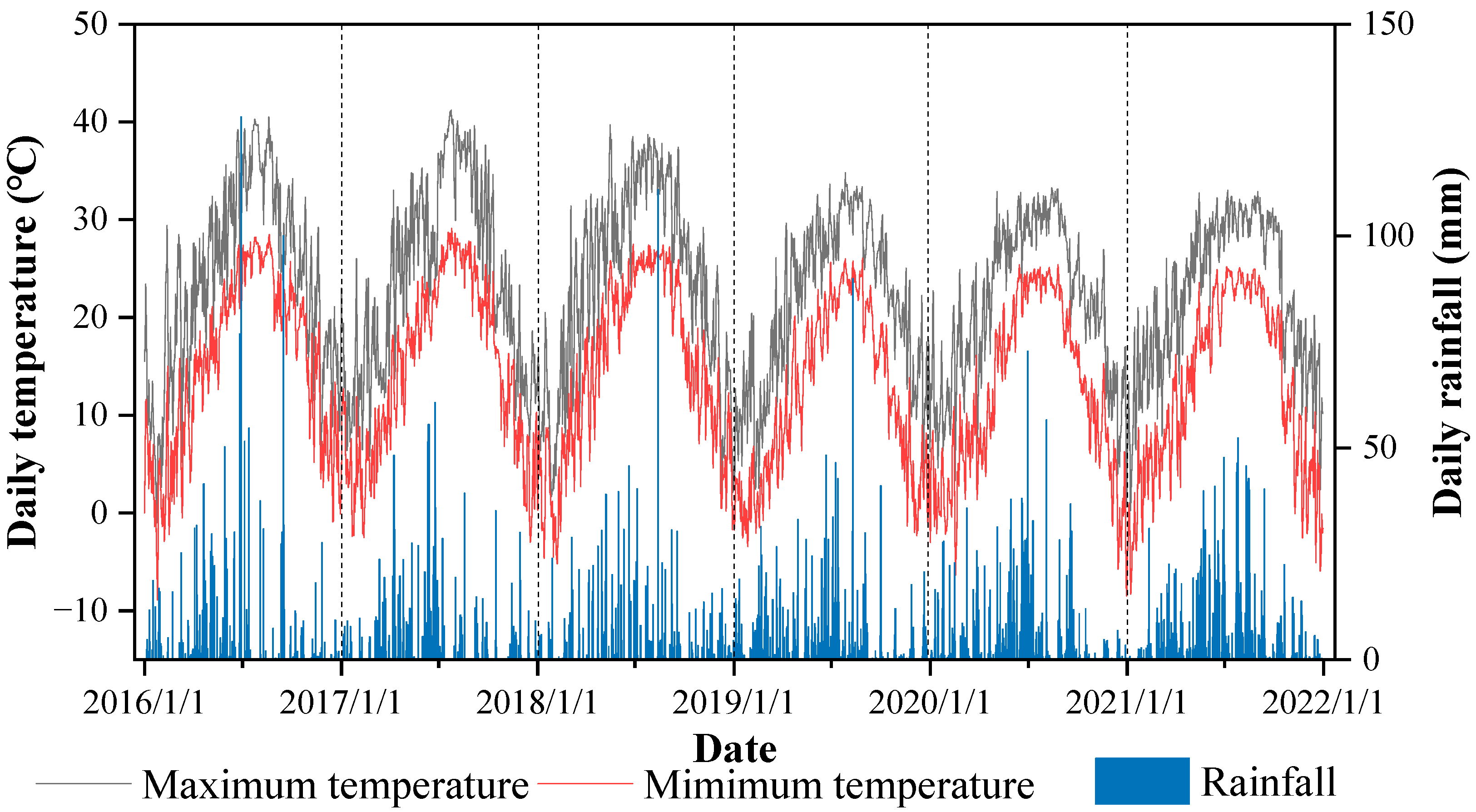
Figure 1. Maximum temperature, minimum temperature, and rainfall during the experiments at Dongyang from 2016 to 2021.
Agronomy 15 02586 g001
Figure 2. Yield variations in no-till with residue retention (NTRR), no-till with residue removal (NTR0), and plow tillage with residue incorporation (PTRR) compared with plow tillage with residue removal (PTR0) from 2016 to 2021.
Agronomy 15 02586 g002
Figure 3. The economic benefits of autumn and spring maize under different tillage practices and residue managements from 2016 to 2021.
Agronomy 15 02586 g003
Figure 4. Correlation coefficients between waxy maize yield and physical and chemical traits of soil. *, **, and *** denote significance at p < 0.05, p < 0.01, and p < 0.001, respectively.
Agronomy 15 02586 g004
Figure 5. Soil quality index (SQI) of no-till with residue retention (NTRR), no-till with residue removal (NTR0), and plow tillage with residue incorporation (PTRR) compared with plow tillage with residue removal (PTR0) in 2016, 2019, and 2021; and the relationship of SQI between fresh maize yield (kg ha−1) and economic benefits (¥). For each year, lowercase letters indicate significant differences among the four treatment combinations within the column (p < 0.05, Tukey’s HSD test). * and ** denote significance at p < 0.05 and p < 0.01, respectively.
Agronomy 15 02586 g005
Table 1. The fresh maize yield (t ha−1) of autumn and spring maize under different tillage practices and residue managements from 2016 to 2021.
Treatment2016A2017S2017A2018S2018A2019S2019A2020S2020A2021S2021A
No-till with residue retention (NTRR)8.42 bB9.59 aA10.38 aA13.20 aA11.85 aA10.25 aA13.20 aA10.74 aA12.66 aA12.17 aA13.17 aA
No-till with residue removal (NTR0)8.07 bB9.52 aA10.08 aA13.50 aA11.19 aA9.93 aA10.80 aA9.99 aA11.54 aA10.87 aA12.10 aA
Plow tillage with residue incorporation (PTRR)8.95 aA10.45 aA12.27 aA15.25 aA13.78 aA11.36 aA14.54 aA11.47 aA13.40 aA13.97 aA15.07 aA
Plow tillage with residue removal (PTR0)9.36 aA10.80 aA12.06 aA14.62 aA13.34 aA10.69 aA12.99 aA11.22 aA12.98 aA13.14 aA14.10 aA
ANOVA (F-value)
Tillage practice factor (T)107.66 **22.31 **9.06 *9.02 *46.55 **12.89 *20.68 *14.44 *11.30 *17.37 *33.80 **
Residue management factor (R)0.040.080.890.143.953.146.07 *2.1918.61 *38.36 *30.94 *
T × R interaction effect18.93 *0.840.010.760.140.471.020.961.180.240.02
A, autumn season; S, spring season. For each season, lowercase letters indicate significant differences between residue management practices within the same tillage system (e.g., comparing NTRR vs. NTRO within the No-till group). Uppercase letters indicate significant differences between tillage practices within the same residue management (e.g., comparing NTRR vs. PTRR within the residue retention group). Values within a column sharing a common letter are not significantly different at p < 0.05 according to Tukey’s HSD test. The bottom section presents the F-values from a two-way ANOVA analyzing the effects of Tillage (T), Residue management (R), and their interaction (T × R). * and ** denote significance at p < 0.05 and p < 0.01, respectively.
Table 2. Soil compaction (kPa) as influenced by tillage and residue management practices from 2016 to 2021.
Treatment201620172018201920202021
No-till with residue retention (NTRR)13.8 ± 0.7 a14.2 ± 0.5 ab15.1 ± 0.3 b16.5 ± 0.4 b16.4 ± 1.6 a17.5 ± 0.9 a
No-till with residue removal (NTR0)13.2 ± 0.4 a15.3 ± 0.6 a17.0 ± 0.2 a17.8 ± 0.4 a17.2 ± 1.4 a19.1 ± 1.3 a
Plow tillage with residue incorporation (PTRR)13.1 ± 1.4 a13.1 ± 0.4 b13.5 ± 0.2 c13.8 ± 0.4 c13.8 ± 1.1 a15.1 ± 1.5 a
Plow tillage with residue removal (PTR0)13.0 ± 0.6 a13.2 ± 0.4 b14.8 ± 0.4 b14.4 ± 0.2 c14.1 ± 0.8 a16.3 ± 2.0 a
No-till (NT)13.514.816.117.216.818.3
Plow tillage (PT)13.113.114.214.11415.7
Residue retention (RR)13.513.614.315.215.116.3
Residue removal (R0)13.114.315.916.115.717.7
ANOVA (F-value)
Tillage practice factor (T)0.2310.77 *47.04 **68.54 **5.002.87
Residue management factor (R)0.171.5731.07 **7.090.190.78
T × R interaction effect0.080.961.240.960.050.01
Values are presented as Mean ± Standard Error (SE) (n = 3). For each year, lowercase letters indicate significant differences among the four treatment combinations within the column (p < 0.05, Tukey’s HSD test). The “Main effect means” section presents the averaged values across the levels of the other factor. The bottom section presents the F-values from a two-way ANOVA. * and ** denote significance at p < 0.05 and p < 0.01, respectively.
Table 3. Soil bulk density (g cm−3) as influenced by tillage and residue management practices from 2016 to 2021.
Treatment201620172018201920202021
No-till with residue retention (NTRR)1.57 ± 0.02 a1.58 ± 0.01 a1.58 ± 0.02 a1.59 ± 0.01 ab1.58 ± 0.01 a1.59 ± 0.01 ab
No-till with residue removal (NTR0)1.57 ± 0.02 a1.58 ± 0.01 a1.62 ± 0.02 a1.63 ± 0.03 a1.62 ± 0.03 a1.65 ± 0.03 a
Plow tillage with residue incorporation (PTRR)1.58 ± 0.02 a1.57 ± 0.02 a1.57 ± 0.01 a1.57 ± 0.01 b1.56 ± 0.00 a1.56 ± 0.01 b
Plow tillage with residue removal (PTR0)1.58 ± 0.01 a1.56 ± 0.01 a1.57 ± 0.01 a1.57 ± 0.01 b1.58 ± 0.02 a1.58 ± 0.03 ab
No-till (NT)1.571.581.61.611.61.62
Plow tillage (PT)1.581.571.571.571.571.57
Residue retention (RR)1.581.581.581.581.571.58
Residue removal (R0)1.581.571.591.61.61.62
ANOVA (F-value)
Tillage practice factor (T)0.16 0.98 4.19 7.15 *2.10 4.72
Residue management factor (R)0.04 0.18 1.17 1.66 3.14 3.51
T × R interaction effect0.04 0.02 1.75 1.19 0.23 0.68
Values are presented as Mean ± Standard Error (SE) (n = 3). For each year, lowercase letters indicate significant differences among the four treatment combinations within the column (p < 0.05, Tukey’s HSD test). The “Main effect means” section presents the averaged values across the levels of the other factor. The bottom section presents the F-values from a two-way ANOVA. * denote significance at p < 0.05.
Table 4. Soil total porosity (%) as influenced by tillage and residue management practices from 2016 to 2021.
Treatment201620172018201920202021
No-till with residue retention (NTRR)39.3 ± 0.3 a38.7 ± 0.9 a39.0 ± 1.0 a38.7 ± 0.3 a39.7 ± 0.3 a38.3 ± 0.3 a
No-till with residue removal (NTR0)39.0 ± 1.0 a39.0 ± 0.6 a38.0 ± 0.0 b38.3 ± 0.3 a38.0 ± 0.6 b38.0 ± 1.0 a
Plow tillage with residue incorporation (PTRR)39.0 ± 0.6 a39.7 ± 0.3 a39.3 ± 0.9 a39.3 ± 0.3 a40.0 ± 0.6 a39.3 ± 0.9 a
Plow tillage with residue removal (PTR0)39.3 ± 0.3 a39.7 ± 1.2 a39.0 ± 0.6 a39.3 ± 0.3 a38.7 ± 0.7 ab38.7 ± 0.7 a
No-till (NT)39.238.838.538.538.838.2
Plow tillage (PT)39.239.739.239.339.339
Residue retention (RR)39.239.239.23939.838.8
Residue removal (R0)39.239.338.538.838.338.3
ANOVA (F-value)
Tillage practice factor (T)0.01 1.04 0.84 6.25 *0.82 1.19
Residue management factor (R)0.01 0.04 0.84 0.25 7.36 *0.43
T × R interaction effect0.29 0.04 0.21 0.25 0.09 0.05
Values are presented as Mean ± Standard Error (SE) (n = 3). For each year, lowercase letters indicate significant differences among the four treatment combinations within the column (p < 0.05, Tukey’s HSD test). The “Main effect means” section presents the averaged values across the levels of the other factor. The bottom section presents the F-values from a two-way ANOVA. * denote significance at p < 0.05.
Table 5. Soil available nitrogen (AN, mg kg−1) and available phosphorus (AP, mg kg−1) as influenced by tillage and residue management practices in 2016, 2019, and 2021.
TraitTreatment201620192021
Available Nitrogen (AN, mg kg−1)No-till with residue retention (NTRR)94.7 ± 2.0 a90.3 ± 4.4 a92.3 ± 6.8 a
No-till with residue removal (NTR0)91.3 ± 5.5 a91.0 ± 4.0 a90.0 ± 4.1 a
Plow tillage with residue incorporation (PTRR)97.0 ± 3.7 a96.7 ± 3.2 a97.0 ± 2.6 a
Plow tillage with residue removal (PTR0)96.3 ± 4.1 a85.3 ± 3.5 a85.0 ± 4.4 a
No-till (NT)93.090.791.2
Plow tillage (PT)96.791.091.0
Residue retention (RR)95.893.594.7
Residue removal (R0)93.888.287.5
ANOVA (F-value)
Tillage practice factor (T)0.820.010.00
Residue management factor (R)12.001.852.25
T × R interaction effect5.332.341.03
Available Phosphorus (AP, mg kg−1)No-till with residue retention (NTRR)101.5 ± 5.4 b127.5 ± 7.8 a125.3 ± 6.1 a
No-till with residue removal (NTR0)97.5 ± 5.5 b139.4 ± 5.4 a132.2 ± 6.9 a
Plow tillage with residue incorporation (PTRR)121.0 ± 1.0 a146.5 ± 2.6 a144.1 ± 6.7 a
Plow tillage with residue removal (PTR0)116.0 ± 2.6 a138.0 ± 6.8 a143.8 ± 6.9 a
No-till (NT)99.5133.5128.8
Plow tillage (PT)118.5142.2143.9
Residue retention (RR)111.3137.0134.7
Residue removal (R0)106.8138.7138.0
ANOVA (F-value)
Tillage practice factor (T)20.13 **2.304.86
Residue management factor (R)60.750.080.23
T × R interaction effect0.753.050.27
Values are presented as Mean ± Standard Error (SE) (n = 3). For each trait and year, lowercase letters indicate significant differences among the four treatment combinations within the column (p < 0.05, Tukey’s HSD test). The “Main effect means” section presents the averaged values across the levels of the other factor. The bottom section presents the F-values from a two-way ANOVA analyzing the effects of Tillage (T), Residue management (R), and their interaction (T × R). ** denote significance at p < 0.01.
Table 6. Soil organic matter (g kg−1) and pH as influenced by tillage and residue management practices in 2016, 2019, and 2021.
TraitTreatment201620192021
Soil Organic Matter (SOM, g kg−1)No-till with residue retention (NTRR)1.63 ± 0.06 a1.61 ± 0.01 ab1.67 ± 0.03 a
No-till with residue removal (NTR0)1.57 ± 0.03 a1.50 ± 0.00 c1.50 ± 0.00 b
Plow tillage with residue incorporation (PTRR)1.63 ± 0.03 a1.67 ± 0.03 a1.70 ± 0.00 a
Plow tillage with residue removal (PTR0)1.63 ± 0.03 a1.55 ± 0.03 bc1.57 ± 0.03 b
No-till (NT)1.61.551.58
Plow tillage (PT)1.631.611.63
Residue retention (RR)1.631.641.68
Residue removal (R0)1.61.531.53
ANOVA (F-value)
Tillage practice factor (T)0.57 5.41 * 4.50
Residue management factor (R)0.0019.92 **40.50 ***
T × R interaction effect0.000.190.50
pHNo-till with residue retention (NTRR)5.99 ± 0.28 a5.71 ± 0.10 a5.60 ± 0.12 a
No-till with residue removal (NTR0)6.07 ± 0.14 a5.84 ± 0.04 a5.77 ± 0.03 a
Plow tillage with residue incorporation (PTRR)6.15 ± 0.19 a5.64 ± 0.15 a5.53 ± 0.09 a
Plow tillage with residue removal (PTR0)6.17 ± 0.11 a5.72 ± 0.09 a5.73 ± 0.07 a
No-till (NT)6.035.785.68
Plow tillage (PT)6.165.685.63
Residue retention (RR)6.075.675.57
Residue removal (R0)6.125.785.75
ANOVA (F-value)
Tillage practice factor (T)0.010.935.04
Residue management factor (R)0.410.770.37
T × R interaction effect0.000.020.04
Values are presented as Mean ± Standard Error (SE) (n = 3). For each trait and year, lowercase letters indicate significant differences among the four treatment combinations within the column (p < 0.05, Tukey’s HSD test). The “Main effect means” section presents the averaged values across the levels of the other factor. The bottom section presents the F-values from a two-way ANOVA analyzing the effects of Tillage (T), Residue management (R), and their interaction (T × R). *, **, and *** denote significance at p < 0.05, p < 0.01, and p < 0.001, respectively.
Table 7. Soil available potassium (AK, mg kg−1) as influenced by tillage and residue management practices in 2016, 2019, and 2021.
Treatment201620192021
No-till with residue retention (NTRR)117.3 ± 13.6 aA141.5 ± 0.5 bA152.2 ± 3.8 aA
No-till with residue removal (NTR0)125.3 ± 12.1 aA128.7 ± 3.1 cB132.2 ± 5.0 bA
Plow tillage with residue incorporation (PTRR)126.3 ± 5.5 aA154.8 ± 0.5 aA162.7 ± 8.2 aA
Plow tillage with residue removal (PTR0)133.3 ± 10.3 aA130.9 ± 3.5 cB132.5 ± 3.8 bA
No-till (NT)121.3135.1142.2
Plow tillage (PT)129.8142.9147.6
Residue retention (RR)121.8148.2157.5
Residue removal (R0)129.3129.7132.3
ANOVA (F-value)
Tillage practice factor (T)0.6210.07 *0.95
Residue management factor (R)168.7556.34 ***20.55 **
T × R interaction effect0.755.29 *0.84
Values are presented as Mean ± Standard Error (SE) (n = 3). For each year, lowercase letters indicate significant differences among the four treatment combinations within the column (p < 0.05, Tukey’s HSD test). Uppercase letters indicate significant differences between tillage practices within the same residue management (e.g., comparing NTRR vs. PTRR within the residue retention group). The “Main effect means” section presents the averaged values across the levels of the other factor. The bottom section presents the F-values from a two-way ANOVA. *, **, and *** denote significance at p < 0.05, p < 0.01, and p < 0.001, respectively.
Disclaimer/Publisher’s Note: The statements, opinions and data contained in all publications are solely those of the individual author(s) and contributor(s) and not of MDPI and/or the editor(s). MDPI and/or the editor(s) disclaim responsibility for any injury to people or property resulting from any ideas, methods, instructions or products referred to in the content.