Article

Multi-Omics Dissection of Gene–Metabolite Networks Underlying Lenticel Spot Formation via Cell-Wall Deposition in Pear Peel


1
Key Laboratory of Horticultural Crop Germplasm Innovation and Utilization (Co-Construction by Ministry and Province), Institute of Horticulture, Anhui Academy of Agricultural Sciences, Hefei 230031, China
2
Key Laboratory of Genetic Improvement and Eco-Physiology of Horticultural Crops, Institute of Horticulture, Anhui Academy of Agricultural Sciences, Hefei 230031, China
3
College of Horticulture, China Agricultural University, Beijing 100000, China
*
Authors to whom correspondence should be addressed.
Agronomy 2025, 15(11), 2564; https://doi.org/10.3390/agronomy15112564
Submission received: 15 October 2025 / Revised: 2 November 2025 / Accepted: 5 November 2025 / Published: 6 November 2025

Abstract

Lenticel spots (fruit dots) on pear peel strongly influence consumer preference and market price, yet the regulatory networks underlying their lignin/cellulose deposition remain elusive. Here, we integrated electron microscopy, metabolomics, and RNA-seq across three developmental stages (30, 40, and 60 d after full bloom, DAFB) in the pear cultivar ‘Dangshansuli’ (SL) and its bud-sport ‘Dangshanxisu’ (XS). XS exhibited fewer lenticel spots and lower lignin, cellulose, and hemicellulose contents than SL, with the critical onset of lignin and cellulose accumulation detected between 40 and 60 DAFB. Metabolome-wide analysis detected five differentially accumulated lignin monomers, while transcriptome profiling revealed 79 differentially expressed genes (padj ≤ 0.05, |log2FC| ≥ 1) enriched in phenylpropanoid and cellulose-synthase pathways. Weighted gene co-expression network analysis (WGCNA) uncovered two modules (|r| > 0.8, p < 0.05) positively correlated with lignin and cellulose content, harboring 11 structural genes (4CL, F5H, CCR, COMT, PRX/POD and CESA isoforms) and five transcription-factor families (MYB, NAC, AP2/ERF, WRKY, bHLH). RT-qPCR validated the coordinated down-regulation of these genes in XS relative to SL. Our results decipher the gene–metabolite circuitry driving lenticel lignification in pear, providing molecular targets for breeding peel-perfect cultivars and for cultural practices that minimize superficial blemishes.

1. Introduction

Pear (Pyrus spp.), a member of the Rosaceae family, originated in China and has been cultivated for more than 3000 years. China is the world’s largest producer, accounting for approximately 70% of global pear cultivation area and production [1]. As consumer preference increasingly favors fruit with smooth, visually appealing peel, the prominence of lenticel spots/fruit dots has become a critical quality trait in pear-breeding programs. Lenticel are the small, corky structures on the fruit surface that serve as gas-exchange pores. In pear, excessively large and dense lenticels produce a rough texture that markedly reduces external quality, particularly in yellow- and green-skinned cultivars [2]. Such morphological defects not only diminish consumer acceptance but also substantially compromise the commercial value and market competitiveness of the fruit.
Lenticel spots (commonly referred to as fruit dots) are small, corky structures commonly observed on the peel of pome fruits such as apple and pear, and their prominence markedly affects external fruit quality. In pear, lenticel spots ontogeny proceeds through four consecutive stages: the stomatal or lenticel stage, lenticel collapse stage, lenticel spot formation stage, and lenticel spot enlargement stage. Consequently, lenticel spot formation is intimately linked to cork biosynthesis and subsequent lignin deposition in the phellem cell walls [3]. Fluorescence microscopy of young ‘Dangshansu’ fruit revealed that phenolic–lignin complexes accumulate in cortical cells underlying stomata. The intensity of this fluorescence positively correlates with the final diameter of lenticels, whereas stomatal density primarily determines lenticel frequency [4]. Pre-harvest bagging consistently reduces lenticel prominence by producing smaller lenticel spots and a smoother peel surface [5]. Bagging of ‘Huanghua’ pear further decreases lenticel spot size without altering lenticel density [6]. Conversely, cold-stored ‘Danxiahong’ pears develop larger, more protrusive lenticels spot that contain elevated lignin levels, indicating that lignin biosynthesis is a key driver of lenticel expansion [7]. Collectively, these data suggest that stomatal density determines lenticel spot number, whereas the extent of lignin accumulation controls lenticel spot size.
Lenticel spot formation on pear peel is tightly linked to localized lignin deposition in phellem (cork) cells [3]; consequently, dissecting the lignin biosynthetic network is a prerequisite for rationally modulating lenticel prominence. In pear, as in other angiosperms, the core pathway is the phenylpropanoid cascade. L-phenylalanine is first deaminated to cinnamate by phenylalanine ammonia-lyase (PAL). Sequential hydroxylation, O-methylation, and redox reactions catalyzed by cinnamate 4-hydroxylase (C4H), 4-coumarate: CoA ligase (4CL), p-coumaroyl shikimate/quinate 3′-hydroxylase (C3′H), caffeoyl-CoA O-methyltransferase (CCoAOMT), cinnamoyl-CoA reductase (CCR) and cinnamyl alcohol dehydrogenase (CAD) generate the monolignol p-coumaryl, coniferyl, and sinapyl alcohols. Peroxidase (POD) and laccase (LAC) then oxidatively polymerize these monomers into H-, G-, and S-lignin [8,9]. Thus, PAL, COMT, POD/PRX, and 4CL are key enzymes in the lignin synthesis process, and many structural genes encode these enzymes involved in lignin accumulation [10,11,12,13]. Transcriptomic and metabolomic comparisons of pear cultivars with a protrusion of aberrant lenticel spots (‘Danxiahong’ and ‘Xinyu’) show concerted up-regulation of PbPAL1/4, PbC4H2, Pb4CL5, PbCCR1/2/3, PbCAD, PbCOMT, and PbLAC/POD [7,14]. Ectopic over-expression of PbCAD and PbCCR increases lignin deposition in stone cells [15], supporting the hypothesis that the same isoforms contribute to phellem lignification during lenticel expansion, a premise that remains to be experimentally validated.
Transcriptional control is mediated by MYB, NAC, AP2/ERF, WRKY, and bHLH family members that bind to AC-rich elements in the promoters of structural genes, thereby modulating lignin biosynthesis in response to developmental and environmental cues [16,17,18,19]. MYB transcription factors play a central role in the spatio-temporal regulation of lignin deposition across diverse fruit crops, including grape (Vitis vinifera L.), loquat (Eriobotrya japonica L.), and pear (Pyrus L.) [17,18]. The majority of R2R3-MYB activators directly binds AC elements in the promoters of phenylpropanoid genes—such as PAL, C4H, 4CL, CAD, and PRX—and thus enhance the metabolic flux toward lignin biosynthesis [20,21,22]. For instance, PtrMYB120 up-regulates PtrF5H expression and consequently elevates lignin content in transgenic poplar [22]. Similarly, over-expression of CmMYB15 in chrysanthemum increases lignin levels and improves aphid resistance [23], while MdMYB52 exerts an analogous function in apple [24]. In pear, PbrMYB24 promotes lignin and cellulose accumulation in stone cells by trans-activating PbCAD and PbCCR [25]. Conversely, several MYB repressors attenuate lignin biosynthesis. Poplar LTF1 represses 4CL1 transcription, thereby suppressing cork formation [26]. Consistently, transient over-expression of PbMYB80 in pear fruit down-regulates PbPAL, PbCCR and PbCAD transcripts and results in reduced lignin deposition and diminished stone cell development [27]. Collectively, these findings illustrate that both positive and negative MYB-mediated circuits fine-tune lignin accumulation in fruit tissues.
NAC-domain proteins generally occupy the upper tier of regulatory cascades that govern secondary cell-wall formation [28]. Acting as primary master switches, they initiate transcriptional networks that both activate downstream MYB regulators and directly control the expression of structural genes involved in cellulose, xylan, and lignin biosynthesis [29,30]. In chilling-stressed loquat fruit, EjNAC3 directly binds to the promoter of EjCAD-like and trans-activates its expression, thereby promoting lignin accumulation [31]. Over-expression of EgNAC141 in Arabidopsis increased lignin content and induced an additional two layers of xylem vessels in stems compared with the wild type (p < 0.01) [32]. Similarly, PpNAC187 was recently shown to exacerbate the ‘hard-end’ disorder in ‘Whangkeumbae’ pear by up-regulating PbCCR and PbCAD, leading to ectopic lignin deposition in the fruit cortex [33]. AP2/ERF transcription factors also participate in the modulation of lignin biosynthesis. In poplar, ERF18/34/35 modulate stem elongation and xylem fiber length by regulating lignin pathway genes [34]. In rice, ectopic expression of the AP2/ERF gene SHINE reduced lignin content in Arabidopsis stems [35]. In pear, transient over-expression of PpERF1b in fruit and stable over-expression in callus both elevated lignin levels and up-regulated key lignin biosynthetic genes (PbPAL, PbCCR, PbCAD), ultimately promoting the formation of ‘hard-end’ fruit [36].
WRKY transcription factors regulate lignin biosynthesis by directly binding to W-box (TTGACC/T) elements within the promoters of phenylpropanoid genes [37]. In apple, MdWRKY75e trans-activates MdLAC7, and its over-expression enhances lignin deposition and pathogen resistance [38]. Similarly, DkWRKY8 and DkWRKY10 from persimmon bind to the promoter of DkCAD1 to promote lignin accumulation [39]. In pear, PbWRKY24 was recently shown to directly activate PbPRX4 transcription via a canonical W-box, thereby increasing lignin content and contributing to russet skin formation [40]. In addition, bHLH proteins also modulate lignin metabolism. Over-expression of CmHLB in chrysanthemum elevates stem lignin and mechanical strength, whereas CmHLB-RNAi lines exhibit the opposite phenotype [41]. In loquat, EjbHLH1 forms a ternary complex with EjMYB2 and EjAP2-1 that represses Ej4CL1 transcription, thereby attenuating chilling-induced fruit lignification [42].

2. Materials and Methods

2.1. Plant Materials

Pear fruit (Pyrus × bretschneideri) of ‘Dangshansuli’ (SL) and its budburst ‘Dangshanxisu’ (XS) were obtained from the Experimental Station of the Horticulture Research Institute, Anhui Academy of Agricultural Sciences, Dangshan China (34°16 ′N, 116°29 ′E). XS exhibits markedly fewer lenticel spots than SL. Fruits were sampled at 30, 40, 50, 60, and 80 DAFB; 15 fruits per replicate were harvested from different trees, placed in ice boxes, and transported immediately to the laboratory. The peel was excised, divided into two portions: one fixed for electron microscopy, the other snap-frozen in liquid nitrogen and stored at −80 °C for transcriptomic and metabolomic analyses. Three independent biological replicates were prepared.

2.2. Electron Microscopy Observation

Peel segments (2 × 2 × 1 mm) were excised from the fruit equator with a double-edged blade and immediately fixed in 2.5% (v/v) glutaraldehyde, 4% (v/v) formaldehyde, 50 mM sodium phosphate (pH 7.2) at 4 °C overnight. After dehydration in an ethanol series and critical-point drying, samples were sputter-coated with gold and examined under a JSM-6380LV scanning electron microscope (JEOL Ltd., Tokyo, Japan). For stereo-microscopic observation, a 1 cm2 section of fruit peel was extracted from each fruit, and a 2.5 mm2 area was selected to count lenticel spots. ImageJ (version 1.54q) was used to record spot density (number per 2.5 mm2) and individual spot size. Five biological replicates were analyzed.

2.3. Lignin, Cellulose and Hemicellulose Content Determination

Pear peel were deactivated at 105 °C for 30 min, dried at 60 °C to constant weight, ground to pass a 60-mesh sieve and stored in a desiccator until analysis. All values are expressed on a dry-weight (DW) basis. Lignin content was determined with a modified acetyl-bromide spectrophotometric method [43]. A 2–3 mg DW sample was incubated in 25% (v/v) acetyl bromide in acetic acid containing 70 mM HClO4 for 2 h at 70 °C. After cooling, the digest was diluted with 2 M NaOH/acetic acid (9:1, v/v) and the absorbance read at 280 nm. Quantification was performed against an external calibration curve (0–2 mg mL−1, R2 ≥ 0.999) prepared from alkali lignin standard (Sigma-Aldrich, 471003) [44]. Cellulose was quantified by the anthrone–sulfuric acid procedure [45]. Non-cellulosic polysaccharides and lignin were removed with Updegraff reagent (acetic–nitric acid–ethanol, 1:1:1, v/v/v) at 100 °C for 30 min. The cellulose-rich residue was hydrolyzed in 72% H2SO4 (1 h, 30 °C), diluted to 4% H2SO4 and autoclaved (121 °C, 20 min). The released glucose was determined with anthrone/H2SO4 at 620 nm. A D-(+)-glucose standard curve (0–100 µg mL−1, R2 ≥ 0.998) was run in parallel. Hemicellulose contents were quantified by TFA–phloroglucinol [46]. Estimated as total neutral sugars (2 M trifluoroacetic acid, 90 min, 121 °C) minus the cellulose contribution. The xylose-rich hydrolysate was reacted with phloroglucinol/HCl (554 nm) and quantified against a D-xylose calibration curve (0–80 µg mL−1, R2 ≥ 0.997). Hemicellulose content is reported as xylan equivalents (xylose × 0.88) on a mg/g DW basis.

2.4. Transcriptome Analysis and RNA-Seq Data Validation

Fruit peels of ‘Dangshansuli’ (SL) and ‘Dangshanxisu’ (XS) were collected at 30, 40, and 60 DAFB and used to construct RNA-seq libraries. Three biological replicates were processed for each time point and cultivar. Total RNA was extracted with the RNAprep Pure Plant Kit (Tiangen, Beijing, China) following the manufacturer’s instructions. The quality of RNA was examined by an Agilent 2100 Bioanalyzer (Santa Clara, CA, USA). The purified and intact mRNA was enriched using poly-T oligo-attached magnetic beads. Then, the product was broken into short segments of 250–350 bp. After that, the double-stranded cDNA was synthesized and selected with AMPure XP system (Beckman Coulter Inc., Brea, CA, USA).
Clean reads were obtained by removing adapter sequences, reads containing > 10% ambiguous ‘N’ bases, and reads with Phred quality score ≤ 20. High-quality reads were aligned to the pear reference genome (Pyrus bretschneideri ‘Dangshansuli’ v1.0) using HISAT2 (version 2.2.1) [47]. Read counts per gene were obtained with HTSeq v0.6.1 [48]. Gene expression levels were quantified as fragments per kilobase of transcript per million mapped reads (FPKM) [49]. Differential expression was assessed with DESeq2-adjusted p-values (FDR), which were calculated using the Benjamini–Hochberg method. Genes with |log2(fold change)| ≥ 1 and adjusted p-value ≤ 0.05 were designated as differentially expressed genes (DEGs). Gene Ontology (GO) enrichment analysis of DEGs was performed with the GOseq R package [50]; GO terms with corrected p-value < 0.05 were considered significantly enriched. KEGG pathway enrichment was analyzed with clusterProfiler, using p < 0.05 as the significance threshold.

2.5. Metabolomics Identification and Statistical Analysis

Metabolomic profiling was performed on an ACQUITY UPLC I-Class system coupled to a VION IMS QTOF mass spectrometer (both Waters Corporation, Milford, MA, USA). Raw data were processed with MassLynx v4.2; peak alignment, deconvolution, and normalization were carried out using Progenesis QI v2.3 (Nonlinear Dynamics). Multivariate analyses were conducted with SIMCA 16.0.2 (Sartorius Stedim Data Analytics AB, Umeå, Sweden). Data were Pareto-scaled and log-transformed to reduce heteroscedasticity. An unsupervised principal component analysis (PCA) was first applied to overview sample clustering. Subsequently, supervised orthogonal projections to latent structures discriminant analysis (OPLS-DA) was used to maximize group separation. Model validity was verified by 200-iteration permutation testing (R2Y-intercept < 0.3, Q2-intercept < 0.05). Metabolites with |log2 fold-change| ≥ 1 and p < 0.05 were regarded as significantly changed. Metabolic pathway enrichment was performed against KEGG and the small-molecule pathway library of MetaboAnalyst 5.0. Hierarchical cluster analysis (Euclidean distance, Ward.D2 linkage) was executed with the pheatmap package in R v4.3.1.

2.6. RNA Extraction and RT-qPCR

Total RNA of fruit peel was isolated by RNA Plant Plus (Tiangen, Beijing, China) following the manufacturer’s instructions. First-strand cDNA was synthesized using TransScript One-Step gDNA Removal and cDNA Synthesis Supermix (Transgen, Beijing, China). The qRT-PCR system was performed utilizing One-Step SYBR® PrimeScpript® qPCR master mix (Takala, Beijing, China), and each sample contained three replicates. The primer sequences used in this study are showed in Table S1. The PbGAPDH gene was used as an internal control, and the relative expression of genes was calculated using the 2−∆∆CT method.

2.7. Bioinformatics and Statistical Analysis

Protein sequences were aligned with DNAMAN 6.0. Phylogenetic trees were generated in MEGA 7.0 using the neighbor-joining method (1000 bootstrap replicates) to assess branch reliability. Statistical analyses, including assessments of variance and pairwise differences, were performed with SPSS (version 20.0). One-way analysis of variance (ANOVA) was applied, followed by Duncan’s multiple-range test for post hoc comparisons. Pearson’s correlation coefficient (r) was used to assess the correlation, with statistical significance determined by two-tailed t-test. Differences with p < 0.05 were considered statistically significant. All graphs were prepared with GraphPad Prism (version 5.0).

3. Results

3.1. Development and Formation of Pear Lenticel Spots

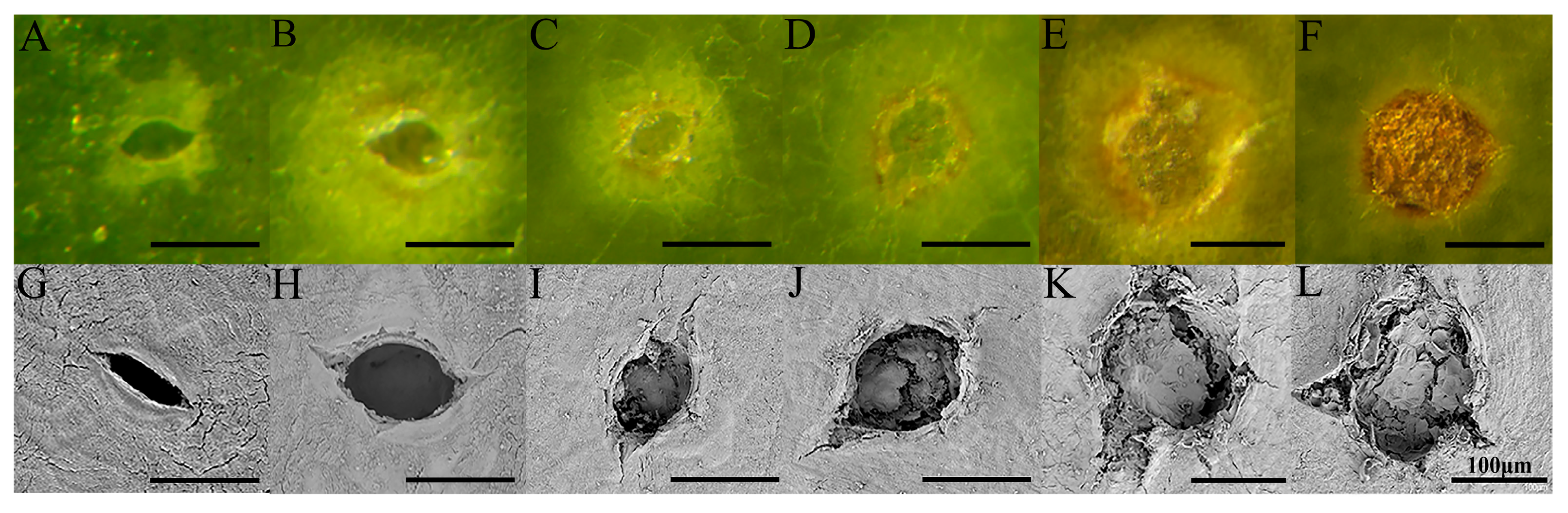
Macroscopic observations of fruit peel from two pear cultivars—‘Dangshansuli’ and ‘Dangshanxisu’—revealed marked differences in lenticel density. ‘Dangshansuli’ exhibited dense lenticel spots, whereas ‘Dangshanxisu’ displayed sparse lenticels (Figure 1). Stereo-microscopy and scanning electron microscopy (SEM) were used to track lenticel ontogeny at 20, 30, 40 and 60 days after full bloom (DAFB). Irrespective of cultivar, four sequential stages were identified (Figure 2): (1) stomatal or lenticel stage: functional stomata or trichome scars were observed; (2) lenticel collapse stage: guard cells lost turgor and ruptured; (3) lenticel spot formation stage: sub-epidermal cells differentiated into a phellogen that produced cork cells; (4) lenticel spot enlargement stage: continual cork deposition caused the structure to protrude above the surrounding epidermis.

3.2. Lenticel Density and Cell-Wall Composition During Fruit Development

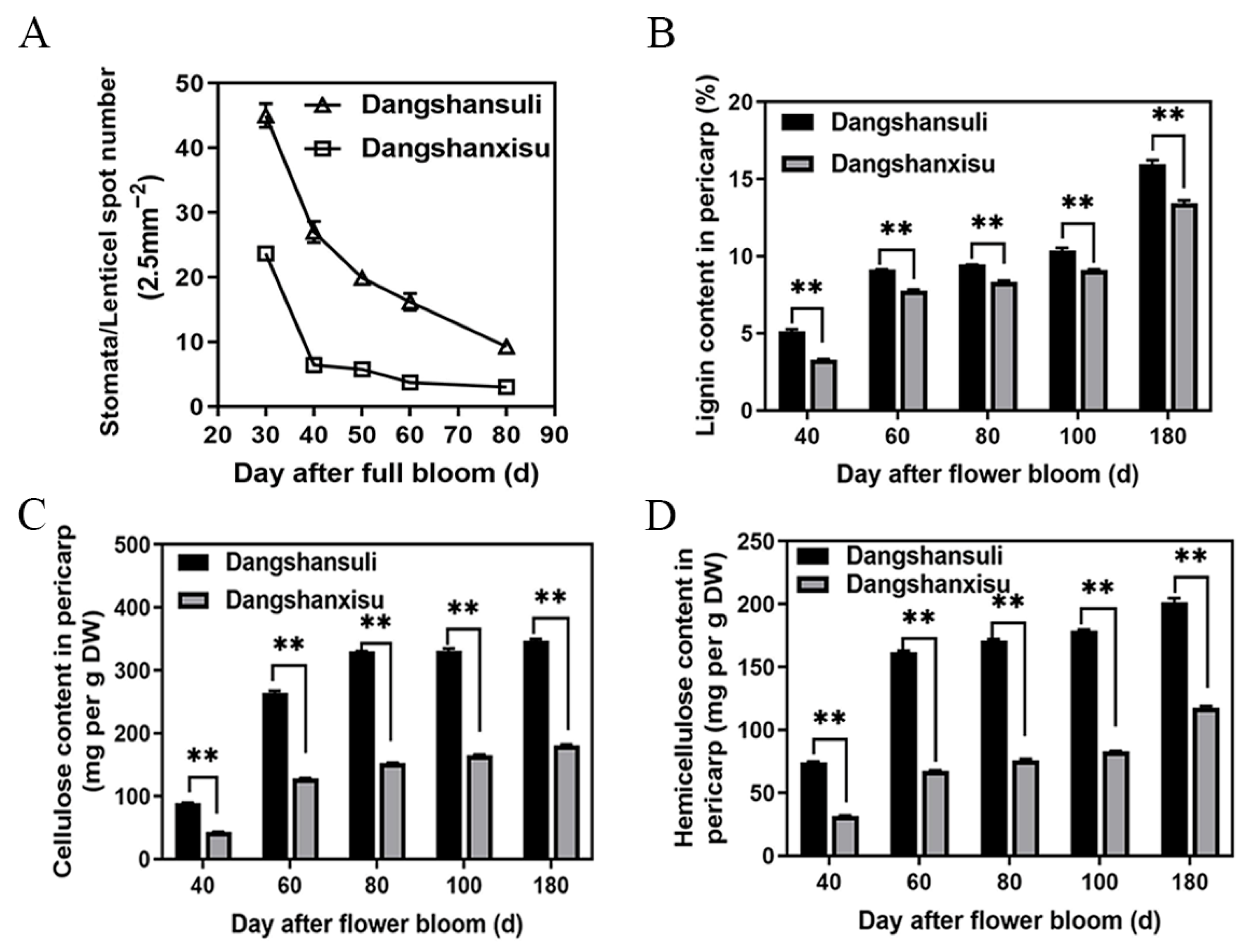
The number and size of lenticel spots on the surface of both varieties were quantified. The number of lenticel spots in the solid area of SL was significantly greater than that in XS, and the counts in both cultivars declined markedly between 30 and 40 DAFB. In XS, the decrease stabilized by 40 DAFB (Figure 3A). This period corresponds to stomatal or lenticel collapse and marks the onset of lignin accumulation. Subsequently, the density of lenticel spots continued to decline gradually during fruit growth and development, indicating that the final number of lenticel spots is determined by the initial complement of stomata on the pericarp (Figure 3A). Moreover, during lenticel spot development, the pericarp of SL exhibited significantly higher contents of lignin, cellulose, and hemicellulose than that of XS (Figure 3B–D). These results suggest that the formation of pear lenticel spots is associated with the progressive deposition of lignin and cellulose.

3.3. Overview of RNA Sequencing

A total of 821,078,562 raw reads were generated from fruit peel samples of ’Dangshansuli’ and ‘Dangshanxisu’ collected at 30, 40 and 60 DAFB. Following quality filtering, the clean-read counts per library ranged from 41.2 to 47.2 million, corresponding to 95.5–97.5% of the raw data. The Q30 percentage exceeded 92.9% for all libraries. On average, 79.46% of the reads mapped to the ’Dangshansuli’ reference genome, and 93.97–95.21% aligned to annotated exonic regions (Table S2). Pearson correlation analysis revealed strong concordance among biological replicates for both cultivars at 30, 40, and 60 DAFB (r ≥ 0.97; Figure S1). Principal component analysis (PCA) showed clear separation between the three groups, and the samples in the same group showed a close association (Figure S2). These metrics confirm the high quality of the data and their suitability for downstream analyses.

3.4. Analysis of Differentially Expressed Genes

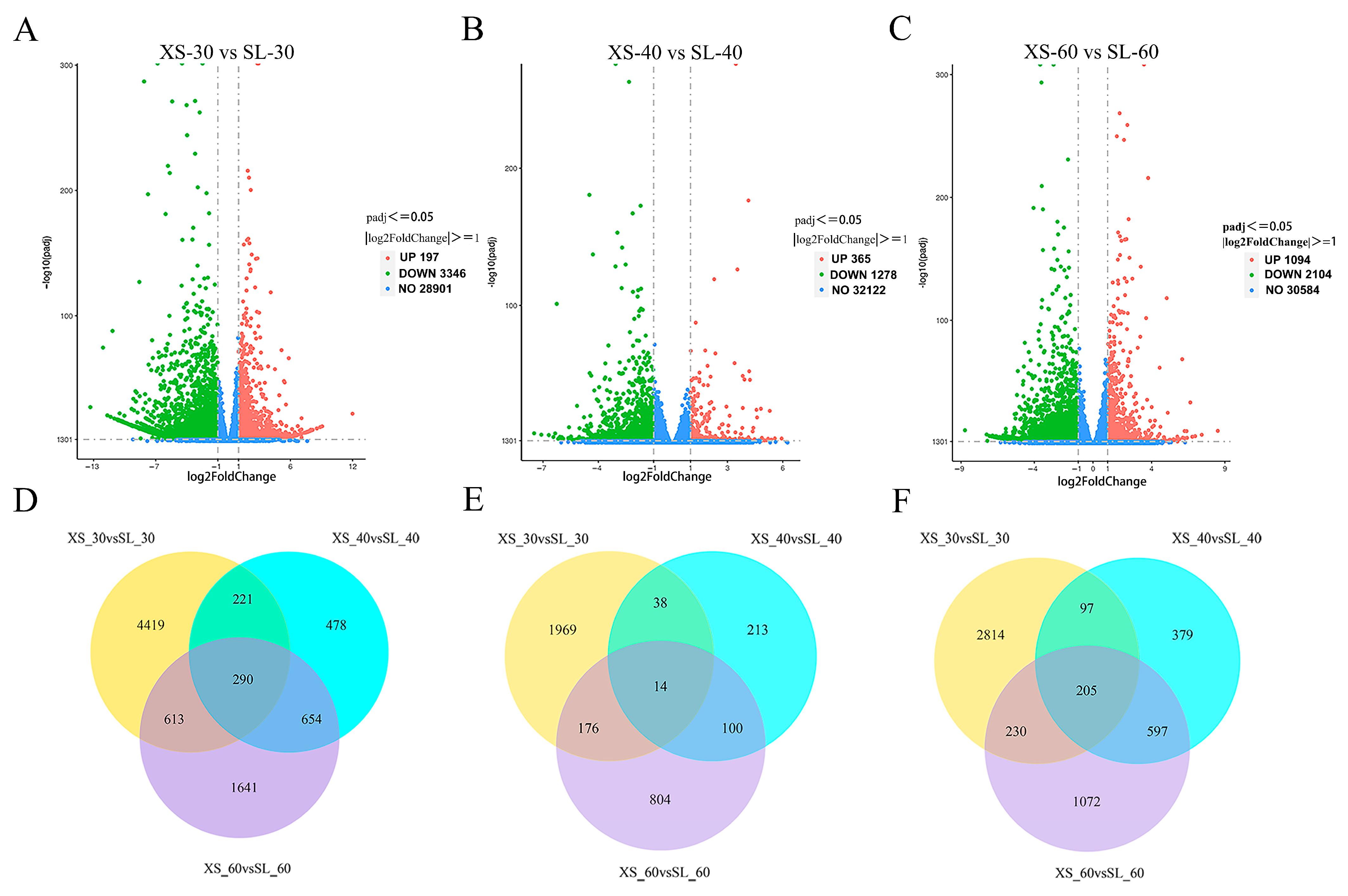
Differentially expressed genes (DEGs) were identified with thresholds of false-discovery rate (FDR) ≤ 0.05 and |log2 fold-change| ≥ 1. Across 30, 40, and 60 DAFB, 8316 unique DEGs were detected between SL and XS, with 5543, 1643, and 3198 DEGs to 30, 40, and 60 DAFB, respectively (Figure 4A–C). Relative to SL, XS exhibited 2197 up-regulated and 3346 down-regulated genes at 30 DAFB (Figure 4A); 365 up-regulated and 1278 down-regulated genes at 40 DAFB (Figure 4B); and 1094 up-regulated and 2104 down-regulated genes at 60 DAFB (Figure 4C). The largest DEG set was detected at 30 DAFB, whereas the number at 40 DAFB fell by 70.3% relative to 30 DAFB and by approximately 49% relative to 60 DAFB. Of all DEGs, 4419, 478, and 1641 were uniquely expressed at 30, 40, and 60 DAFB, respectively (Figure 4D), which indicates stage-specific roles in pear lenticel spot development. Additionally, 290 DEGs were shared across all three time points (Figure 4D).

3.5. GO and KEGG Enrichment Analysis of DEGs

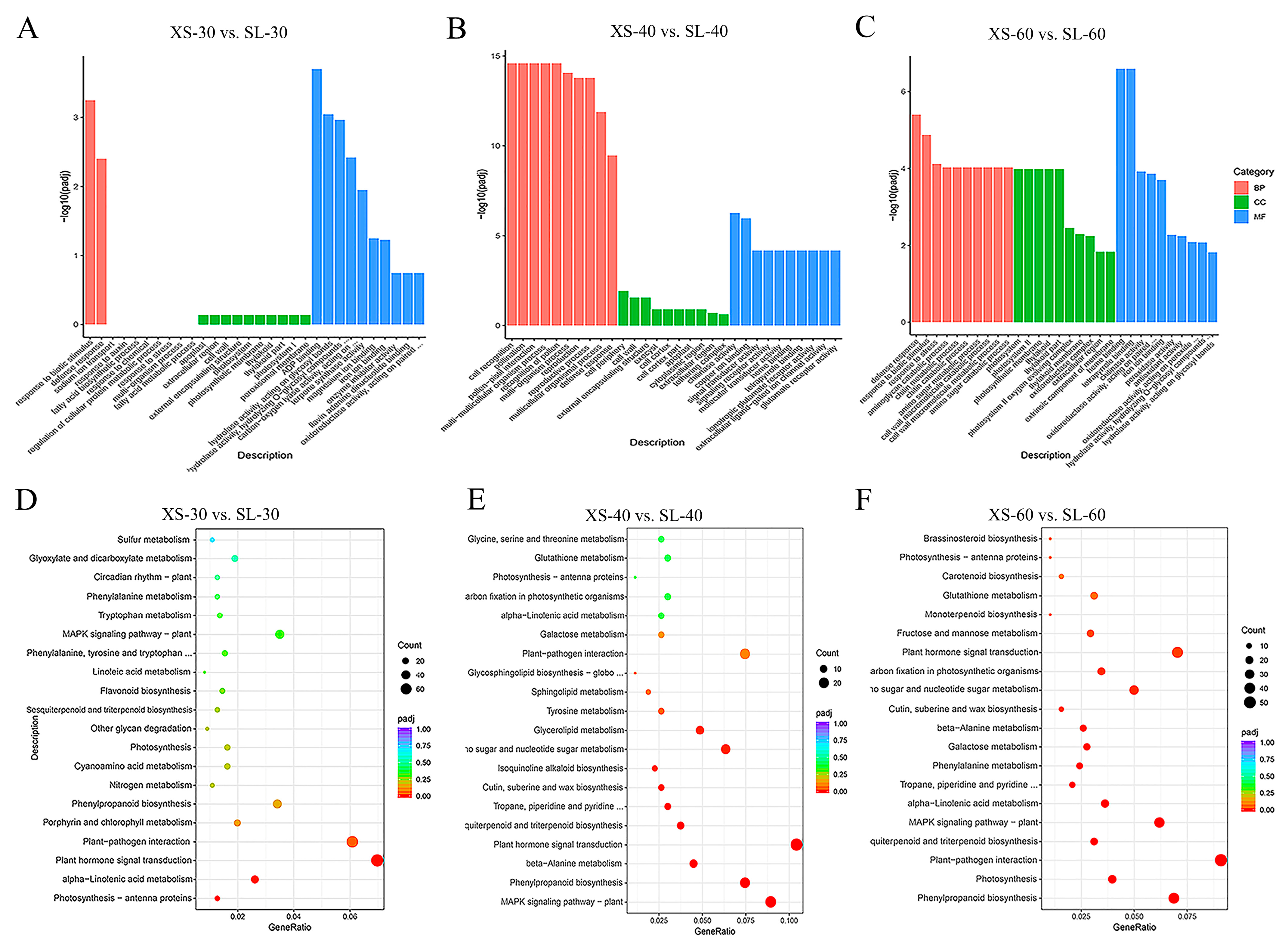
Gene Ontology (GO) enrichment analysis assigned the DEGs to three main categories—cellular component, molecular function, and biological process (Figure 5A–C). Within the biological process, the most populated subcategories were ‘response to stress’ and ‘defense response’, in which 28, 41, and 69 DEGs were significantly enriched at 30, 40, and 60 DAFB, respectively. For the cellular component, ‘external encapsulating structure’ (17 DEGs) and ‘photosystem’ (18 DEGs) were the largest classes. Under molecular function, ’hydrolase activity, acting on glycosyl bonds’ comprised 101, 39, and 65 DEGs at 30, 40, and 60 DAFB, respectively (Table S3).
To elucidate the metabolic pathways and candidate genes underlying metabolite accumulation, KEGG pathway enrichment analysis was performed. Pathways jointly enriched among the DEG sets from all three time points included plant-hormone signal transduction (ko04075), MAPK signaling pathway—plant (ko04016), and phenylpropanoid biosynthesis (ko00940) (Figure 5D–F), suggesting that these DEGs may contribute to lenticel spot formation in pear peel. A total of 78, 28, 41 DEGs were significantly enriched in the plant-hormone signal transduction pathway at 30, 40, and 60 DAFB, respectively (Table S4). Of these, 38, 7, 5, 17, 7, 5, 14, and 10 DEGs were enriched in the auxin, cytokinin, gibberellin, abscisic acid, ethylene, brassinosteroid, salicylic acid, and jasmonic acid pathways, respectively (Table S5). ER/ERLs (LOC103936869), MPK3/6 (LOC103948905) and ERECTA (LOC103929655) were enriched in the MAPK signaling pathway—plant (Table S5). In addition, 34, 19, and 40 DEGs were significantly enriched in the phenylpropanoid biosynthesis pathway at 30, 40, and 60 DAFB, respectively (Table S4). The genes ALDH2C4 (LOC103938843), PODA2 (LOC103963973), and PODP7-like (LOC103958680) were enriched at all three stages (Table S5). Furthermore, three CESA genes (LOC103943290, LOC103940710, LOC103949049), one CESA (LOC108867045), and six CESAs (LOC103936880, LOC103940701, LOC108867045, LOC103938826, LOC103944558, LOC103938817) associated with cellulose synthesis were enriched at 30, 40, and 60 DAFB, respectively (Table S5). Overall, these results indicate that pear lenticel spot formation is a complex developmental process involving plant-hormone regulation, stomatal development, and subsequent lignin and cellulose deposition.

3.6. Transcription Factors (TFs) Involved in Lenticel Spot Formation

TFs are key regulators that modulate the expression of both coding and non-coding genes and thereby control diverse biological processes. From the RNA-seq data, we identified 2067, 722 and 1383 differentially expressed TFs in the comparisons XS-30 Vs. SL-30, XS-40 Vs. SL-40, and XS-60 Vs. SL-60, respectively. These TFs comprised 859, 147, and 389 up-regulated genes and 1208, 575 and 994 down-regulated genes for the three pairwise contrasts (Table S6). AP2/ERF, MYB, NAC, WRKY, and bHLH were the most abundant TF families, and as reported in the literature, members of these families are known to be involved in regulating lignin and cellulose biosynthesis [25,33,36,40,42]. In the present dataset, the number of down-regulated genes from these families was higher than that of up-regulated ones in XS compared with SL (Table S7). For example, LOC103960468 (encoding MYB39-like), LOC103951652 (encoding MYB36-like), and LOC103963302 (encoding MYB102)—genes that may be involved in lignin and cellulose biosynthesis—were down-regulated 39-, 29-, and 114-fold at 40 DAFB and 161-, 62-, and 27-fold at 60 DAFB, respectively, coinciding with the critical period of lignin accumulation during fruit dot formation. In addition, LOC103931329 (encoding ERF114-like), LOC103927857 (encoding NAC2-like), LOC103951248 (encoding WRKY71), and LOC103940198 (encoding bHLH30-like) were all down-regulated ≥ 9-fold at 40 and 60 DAFB (Table S7). These transcription factors may be involved in the formation of lignin and cellulose in pear lenticel spots.

3.7. Comprehensive Analysis of Transcripts and Metabolites Involved in Pear Lenticel Spot Formation

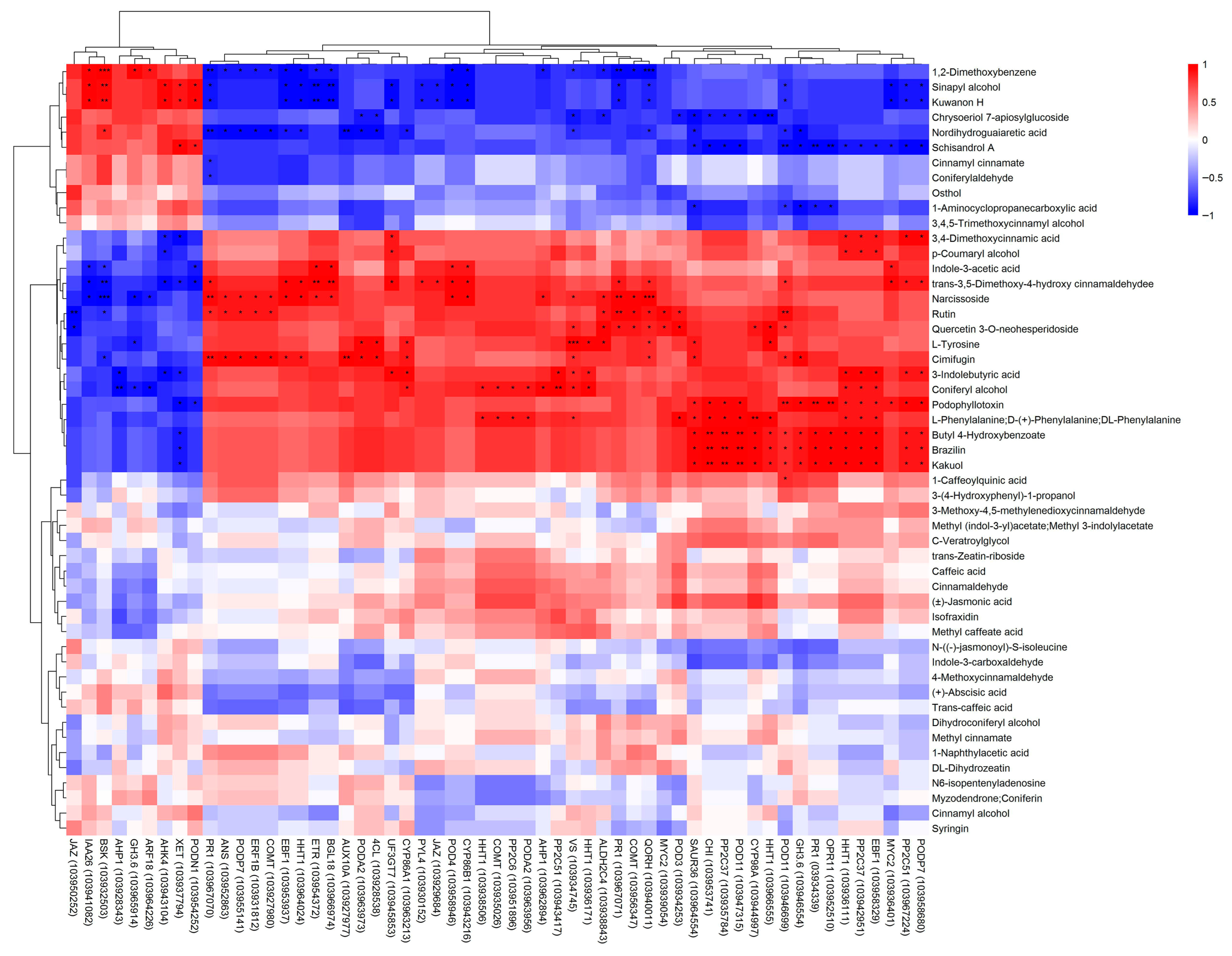
To identify the metabolic pathways that play a major role in pear lenticel spot formation, we performed a correlation analysis between DEGs and differentially accumulated metabolites (DAMs; including phytohormones, phenylpropanoids, flavonoids, phenols, and lignans) at 40 and 60 DAFB (Figure 6). The majority of these DEGs were correlated with metabolites associated with lignin synthesis within the phenylpropanoid pathway (Figure 6; Table S8). For example, POD3 (LOC103934253), POD11-like (LOC103947315), PODA2 (LOC103963956), and COMT (LOC103935026) showed strong positive correlations with L-phenylalanine and p-coumaryl alcohol (|r| > 0.80, p < 0.05). Likewise, UF3GT7 (LOC103945853) was positively correlated with coniferyl alcohol (r > 0.80, p < 0.05). Conversely, PODP7 (LOC103958680), POD11 (LOC103946699) and POD4 (LOC103958946) exhibited negative correlations with sinapyl alcohol (r < −0.80, p < 0.05). These results indicate that the phenylpropanoid biosynthesis pathway makes the largest contribution to lignin accumulation during pear fruit dot formation.
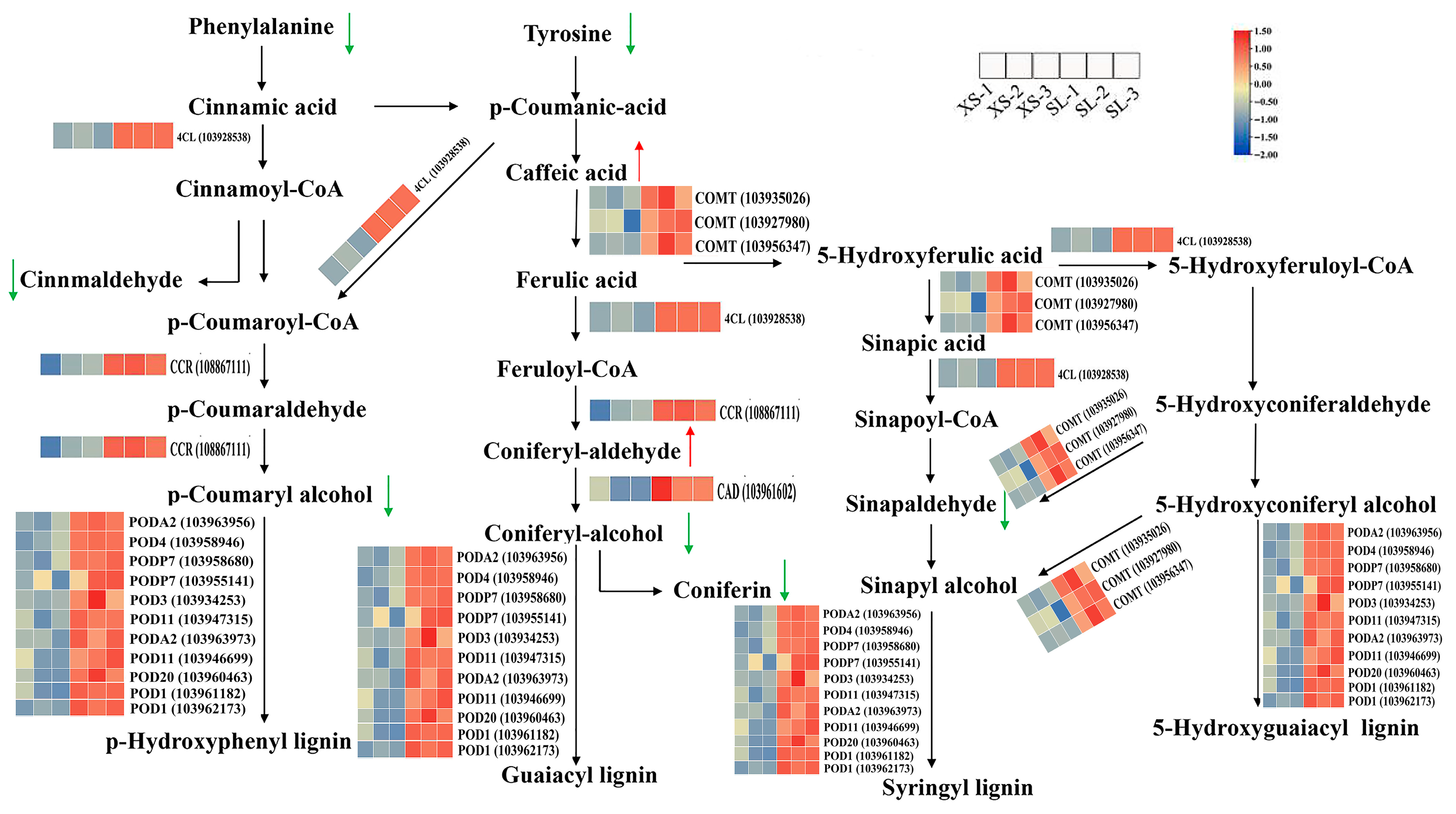
To identify candidate structural genes and their associated metabolites underlying pear fruit dot formation, we focused on the lignin branch of the phenylpropanoid pathway. A total of 17 DEGs and 8 DAMs were identified as participating in lignin synthesis at the critical period 40 and 60 DAFB (Figure 7). Lignin-related metabolites—L-phenylalanine, coniferyl alcohol, sinapaldehyde, cinnamaldehyde, and p-coumaryl alcohol—were significantly lower in XS than in SL. Consistently, the expression of one 4CL, one CCR, one CAD, three COMT, and eleven POD/PRX genes was significantly down-regulated in XS compared with SL.
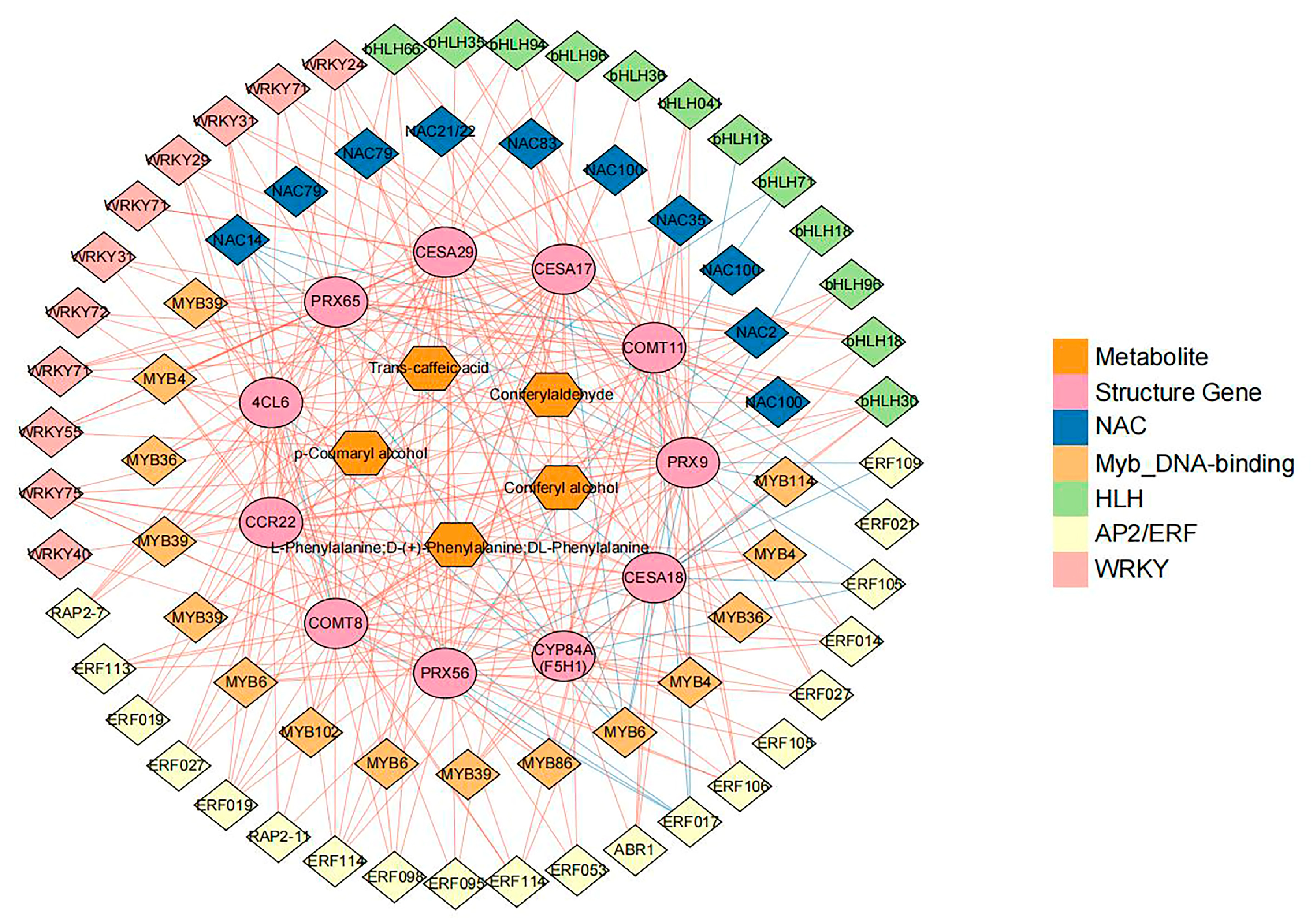
We performed a co-expression analysis of differentially expressed TFs, candidate structural genes, and associated metabolites involved in lignin and cellulose biosynthesis during pear fruit dot formation (Figure 8, Table S9). To narrow down the core regulatory nodes, we focused on the phenylpropanoid pathway and identified 11 structural genes whose expression levels were strongly correlated with the accumulation of pathway-specific metabolites. These genes include 4CL6, PRX56/POD4-like, PRX9/POD11, PRX65/POD11-like, COMT8, COMT11, CESA17, CESA18, CESA29, F5H1, and CCR22. Notably, the three cellulose synthase genes (CESA17, CESA18, and CESA29) imply a coordinated regulation of secondary cell-wall formation during dot development. The expression levels of these 11 genes were strongly correlated with the levels of phenylalanine isomers L-phenylalanine; D-(+)-phenylalanine; DL-phenylalanine, coniferyl alcohol, and p-coumaryl alcohol in the fruit dots (|r| ≥ 0.8, p < 0.05; Figure S3, Table S10). We identified 68 hub TF active in the phenylpropanoid pathway during pear fruit dot formation, including 15 MYBs, 10 NACs, 20 AP2/ERFs, 11 WRKYs, and 12 bHLHs (Figure 8; Table S9). Network analysis revealed that four MYB TFs co-regulated 4CL6; whereas seven AP2/ERF TFs co-regulated PRX56/POD4-like. Five NAC TFs were found to synergistically regulate both PRX9/POD11 and F5H1. Additionally, six MYB TFs targeted CESA17, and four WRKY TFs targeted CESA29 (|r| > 0.80, p < 0.05; Figure 8, Table S10). Collectively, these TFs appear to modulate lignin and cellulose deposition during pear fruit dot formation by coordinating the expression of lignin and cellulose biosynthetic genes.

3.8. Comfirmation of Transcriptome Data Using qRT-PCR

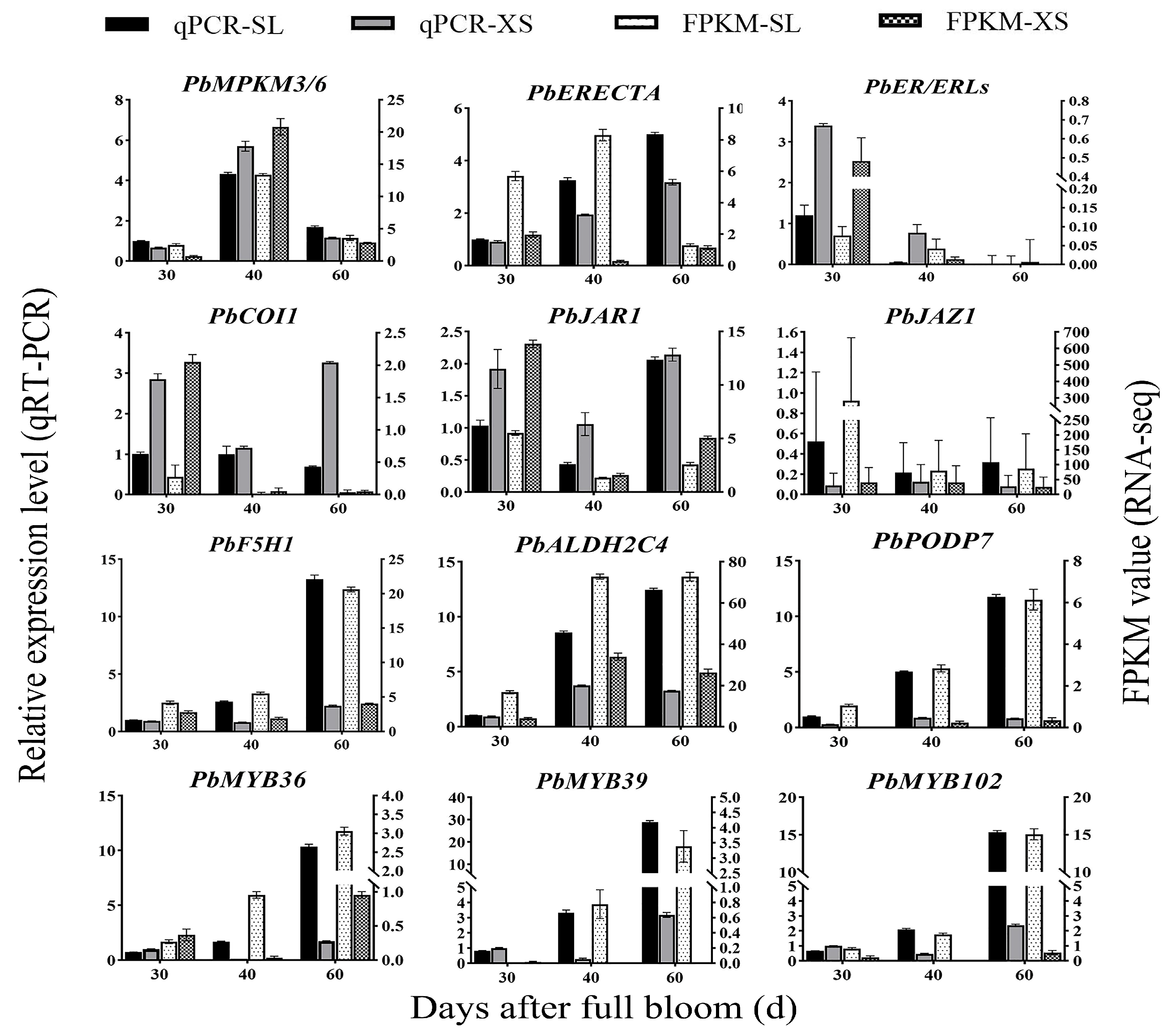
Nine candidate structural genes and three TFs implicated in pear fruit dot formation were selected for qRT-PCR validation of the RNA-seq results (Figure 9). The relative expression levels determined by qRT-PCR were consistent with the transcript abundances obtained from RNA-seq, confirming the reliability of the transcriptomic data.

4. Discussion

Lenticel spots are an important feature of pear peel that affect fruit quality, especially in East Asian pear cultivars [2]. Previous studies have shown that these spots develop through the differentiation of stomata or lenticels on the fruit surface [4]. Consistent with this, we observed numerous stomata and lenticels distributed over the peel of young pear fruits (Figure 2A,G). The number of stomata in ‘Dangshanxisu’ was significantly lower than that in ‘Dangshansuli’ (Figure 3A), a difference that may reflect a genetic mutation in the former. As fruit expansion progressed, the density of lenticel spots declined markedly in both cultivars, indicating that the final number of stomata/lenticels on the peel is genetically fixed and is merely diluted by surface expansion. This observation agrees with earlier reports [4]. The rate of decrease in spot density slowed around 40 DAFB (Figure 3A), coinciding with the initiation of lignin and cellulose deposition in the peel (Figure 2B,H and Figure 3B–D). Thus, 40 DAFB represents the critical onset of lenticel spot morphogenesis.
Stone cells of pear fruit possess secondary-thickened walls formed by the deposition of lignin and cellulose derived from parenchyma cells [45]. Duan et al. [7] reported that the peel of ‘Danxiahong’ pears develops enlarged, protruding lenticel spots after prolonged cold storage, and this phenotype is associated with increased lignin content in the peel. Similar results were also observed in ‘Xinli No. 7’ pear [51]. In the present study, the lignin and cellulose contents in the pericarp of XS were significantly lower than those in SL (Figure 3B,C). As lenticel spots gradually developed, lignin and cellulose continued to accumulate, whereas the number of spots remained essentially constant (Figure 3A). These observations indicate that the enlargement of lenticel spots is coupled to active lignin and cellulose biosynthesis. In addition, the trend in hemicellulose content mirrored that of lignin and cellulose (Figure 3D), suggesting that hemicellulose deposition also contributes to lenticel spot formation. Taken together, our results support a model in which stomatal density establishes the density of lenticel spots, whereas the extent of lignin, cellulose, and hemicellulose deposition determines their final size.
Previous studies on lignin and cellulose biosynthesis in pear have concentrated on stone-cell formation in the pulp, peel pigmentation, and russeting [14,15,16]; how these pathways contribute to lenticel spot development remains unknown. Here, DEGs were predominantly enriched in plant hormone signal transduction, the MAPK signaling pathway—plant, and phenylpropanoid biosynthesis pathway (Figure 5D–F; Table S3). Within the phenylpropanoid pathway, DEGs were most closely associated with lignin-synthetic metabolites (Figure 6; Table S8), implying that lenticel spot formation is driven primarily by lignin deposition. Phenylalanine-derived lignin biosynthesis gives rise to three main monolignol types: p-coumaryl (H), coniferyl (G), and sinapyl (S) alcohols [8,9]. Jiang et al. [14] reported that brown-russet peel of ‘Xinyu’ pear accumulates mainly G- and S-lignin. In the present study, the upstream precursors L-phenylalanine, p-coumaryl alcohol, coniferyl alcohol, and sinapaldehyde were all significantly lower in XS than in SL (Figure 7), suggesting that monolignol supply is globally reduced. Consequently, lenticel spots in XS are likely to contain lower amounts of all three lignin types (H, G, and S) rather than being dominated by a single form. Furthermore, structural genes encoding enzymes of the phenylpropanoid pathway—e.g., 4CL, CAD, CCR, COMT, POD/PRX—are well documented as able to control lignin biosynthesis [52,53]. Among them, 4CL determines the entry of phenylpropanoids into monolignol biosynthesis, whereas POD/PRX catalyzes the oxidative polymerization of monolignols to complete lignification. Within the phenylpropanoid regulatory network identified here, we detected DEGs encoding one 4CL, one CCR, one CAD, three COMT, and eleven POD/PRX isoforms (Figure 7). These enzymes presumably channel phenylalanine via cinnamoyl-CoA and caffeic acid into the production of p-coumaryl, coniferyl, and sinapyl alcohols. The resulting monolignols subsequently serve as substrates for H-, G-, and S-lignin deposition, thereby determining the final size and density of lenticel spots.
Liu et al. [54] reported that the lignin content in ‘Xiusu’ pear peel is higher than that in ‘Dangshan’ pears, a difference attributed to the strong positive correlation between lignin level and the expression of 4CL1 and POD4 in ‘Xiusu’, whereas in ‘Dangshansu’ only POD4 showed such a correlation. Similarly, suppressed expression of POD and 4CL in the green, lightly russeted peel of ‘Sucuiyihao’ is thought to reduce russet formation [55]. Consistent with these findings, we observed significantly higher transcript levels of one 4CL and eleven POD/PRX genes in SL pericarp than in XS at 40 and 60 DAFB (Figure 7). Both lenticel spot density and lignin content followed the same trend (Figure 3A,B). Collectively, these results indicate that 4CL and POD genes modulate lignin accumulation during lenticel spot development. Additionally, COMT is known to control lignin accumulation by directing the methylation step in monolignol biosynthesis [56]; down-regulation of COMT reduces lignin content in Arabidopsis [57]. In ‘Xinyu’ pear, the highest COMT expression and lignin content both occur in brown peel at 40 DAFB [14]. Similarly, three COMT genes identified here showed significantly higher expression in SL pericarp than in XS at 40 DAFB (Figure 7), a trend that paralleled lenticel spot density and lignin content (Figure 3A,B). Collectively, these results indicate that COMT, together with 4CL and POD/PRX, orchestrates lignin biosynthesis during lenticel spot formation in pear.
In addition, cellulose and hemicellulose are synthesized by cellulose synthase A (CESA) and cellulose synthase-like (CSL) proteins, respectively [58]. In flax, stage- and site-specific expression of CESA/CSL genes implicates these genes in secondary cell-wall thickening [59], while Arabidopsis CESA4, 7 and 8 are required for cellulose deposition in secondary walls [60]. Here, we identified one CESA and nine CSL genes, most of which were down-regulated in XS relative to SL at 40 DAFB (Table S7). This expression pattern aligns with the lower cellulose and hemicellulose contents measured in XS pericarp (Figure 3C,D), indicating that reduced CESA/CSL activity limits secondary wall polysaccharide accumulation during lenticel spot formation.
To elucidate the transcriptional control of lignin and cellulose biosynthesis during lenticel spot formation, we screened 68 regulatory genes encoding AP2/ERF, MYB, NAC, WRKY, and bHLH transcription factors within the phenylpropanoid–cellulose regulatory network (Figure 8; Table S5). These TFs are predicted to bind to the promoter regions of structural genes and to modulate the levels of DAMs. Genome-wide analyses have identified 28 R2R3-MYBs that regulate lignin biosynthesis in Chinese white pear [61]. Notably, PbrMYB14, PbMYB24, PbMYB80, PbMYB61, PbMYB308, and PbrMYB4 recognize AC elements (AC-I/II/III) in lignin-related promoters and activate lignin biosynthesis in fruit, potentially controlling stone-cell lignification [20,25,27,62,63]. Over-expression of PbrMYB24 further enhances lignin and cellulose deposition as well as the expression of secondary cell wall (SCW) biosynthetic genes in pear fruit [25]. In the present study, 15 MYB TFs were identified that (i) possess AC-element binding motifs, (ii) are co-expressed with lignin or cellulose structural genes, and (iii) display higher transcript levels in SL than in XS (Table S7). Among them, five MYBs correlate positively with the lignin genes 4CL6, PRX56/POD4, and PRX9/POD11, whereas seven MYBs co-express with the cellulose synthase genes CESA17, CESA18, and CESA29 (Figure 8; Table S10). A parallel example is PbrMYB132, which activates PbrCESA4a/7b/8c and PbrLAC5 to promote simultaneous lignin and cellulose accumulation in stone cells [64]. Collectively, these findings indicate that MYB-mediated transcriptional networks orchestrate the coordinated biosynthesis of lignin and cellulose during lenticel spot formation in pear.
The NAC family represents one of the largest transcription factor families in plants, and numerous studies have implicated its members in regulating lignin and cellulose synthesis [29,30]. EjNAC3, for example, is associated with the induction of lignification-related genes and promotes lignin accumulation in loquat flesh under chilling stress [31]. EgNAC141 and PpNAC187 act as transcriptional activators that enhance lignification in Arabidopsis stems and pear fruit, respectively [32,33]. In poplar, PdWND3A modulates both lignin content and monomer composition by activating the F5H gene [65]. In the present study, we identified ten NAC transcription factors. Of these, NAC14, NAC79, NAC35, and NAC83 were co-expressed with the lignin genes PRX9/POD11 and F5H1, while NAC35 and NAC83 were co-expressed with the cellulose synthase genes CESA29 and CESA17 (Figure 8; Table S10). Analogously, a Ca2+-induced PuNAC21PuDof2.5PuPRX42-like/PuCCoAOMT1 module represses lignin biosynthesis in pear fruit [66]. Furthermore, OsNAC29/31 directly activates OsMYB61, which in turn induces OsCESA expression and promotes cellulose deposition in rice [67]. The PbAGL7PbNAC47PbMYB73 complex activates PbC3H1 and PbHCT17 to promote lignin biosynthesis and stone-cell formation in pear fruit [68]. Together, these results indicate that NAC TFs promote lignin and cellulose accumulation in pear lenticel spots by regulating the expression of structural genes.
Additionally, AP2/ERF transcription factors modulate lignin and cellulose synthesis. Transient over-expression of PpERF1b-like in pear fruit elevates both lignin content and the transcript abundance of lignin biosynthetic genes [36]. Conversely, PagERF81 functions as a negative regulator of lignin biosynthesis: its knockdown increases lignin, whereas its over-expression decreases lignin in poplar [69]. Similarly, transgenic poplar over-expressing PagERF110 exhibits reduced cellulose, xylan, and lignin deposition in secondary xylem, because PagERF110 represses the SCW-related gene PagXND1d [70]. Here, thirteen ERF genes were significantly more highly expressed in SL peel than in XS (Table S7). WGCNA indicated that most of these ERFs are associated with the promoters of lignin and cellulose genes-4CL, PRX/POD, COMT, and CESA (Figure 8; Table S10). Thirteen of them showed significant correlation with MYB39-like (LOC103960468) (Figure S4), implying that ERF and MYB TFs act cooperatively to control lignin and cellulose accumulation during lenticel spot formation in pear. Likewise, an analogous interaction occurs in loquat, where EjERF39 partners with EjMYB8 to enhance pulp lignification under low temperature [71]. PuMYB91 and PuERF023 individually or synergistically activate PuPRX73 to modulate stone-cell and lignin accumulation in ‘Nanguo’ pear [72].
The role of WRKY transcription factors in lignin-mediated stress responses is increasingly recognized. In apple, MdWRKY75e enhances lignin deposition and stress tolerance by targeting MdLAC7 [38], whereas in pear PbWRKY24 promotes russeting via direct activation of PbPRX4 [40]. Consistent with these reports, WRKY genes were more highly expressed in SL peel than in XS (Table S7; Figure 8). We identified eleven WRKY TFs, WRKY31, WRKY55, WRKY71 (LOC103966009, LOC103951248) were co-expressed with cellulose synthase genes CESA17 and CESA29, while WRKY71 (LOC103951248) showed a coordinated expression with both 4CL6 and PRX65/POD11-like (Table S10). Analogous functions have been described in other species: cotton GhWRKY1-like increases lignin content and Verticillium resistance by activating GhPAL6 and GhCOMT1 [73]; in Nicotiana benthamiana, NbWRKY81 and NbWRKY45 bind the promoters of NbC4H/Nb4CL and NbCCR, respectively, to stimulate lignin synthesis [74]. In addition, PuWRKY29 binds the PuMYB62 promoter to activate its transcription, while forming a complex that represses PuPRX64 expression, thereby inhibiting stone-cell and lignin formation in pear fruit [75]. Together, these findings indicate that WRKY-mediated transcriptional networks are likely to modulate both lignin and cellulose accumulation during lenticel spot formation in pear.
bHLH transcription factors also modulate lignin accumulation. In chrysanthemum, over-expression of CmHLH significantly increases stem lignin content [41], whereas over-expression of sorghum SbbHLH1 in Arabidopsis represses At4CL1, AtHCT, AtCOMT, AtPAL1, and AtCCR, reducing lignin deposition [76]. In the present study, bHLH96 was co-expressed with both lignin (4CL6, CCR22, COMT8) and cellulose (CESA17, CESA29) biosynthetic genes (Table S10; Figure 8). Notably, significant positive correlations were detected between bHLH96 and MYB102/MYB36-like (Figure S4), implying that bHLH96 may form a regulatory complex with these MYBs to activate structural gene expression and thereby promote lignin and cellulose accumulation during lenticel spot formation in pear. A comparable mechanism operates in loquat, where the EjbHLH1-EjMYB2-EjAP2-1 ternary complex represses Ej4CL1 and enhances cold-induced flesh lignification [42].
However, the precise functions of these candidate transcription factors remain to be experimentally validated. Our will employ gene editing (such as CRISPR-Cas9) and over-expression techniques to validate the causal role of key genes in lenticel formation; RT-PCR detection will be extended to additional commercial varieties to confirm the universality of our findings. In addition, we will design experiments to regulate hormone levels (e.g., exogenous application of auxins, gibberellins) and environmental factors (e.g., drought, low temperature) to clarify the specific regulatory mechanism of hormone pathways in lenticel formation.

5. Conclusions

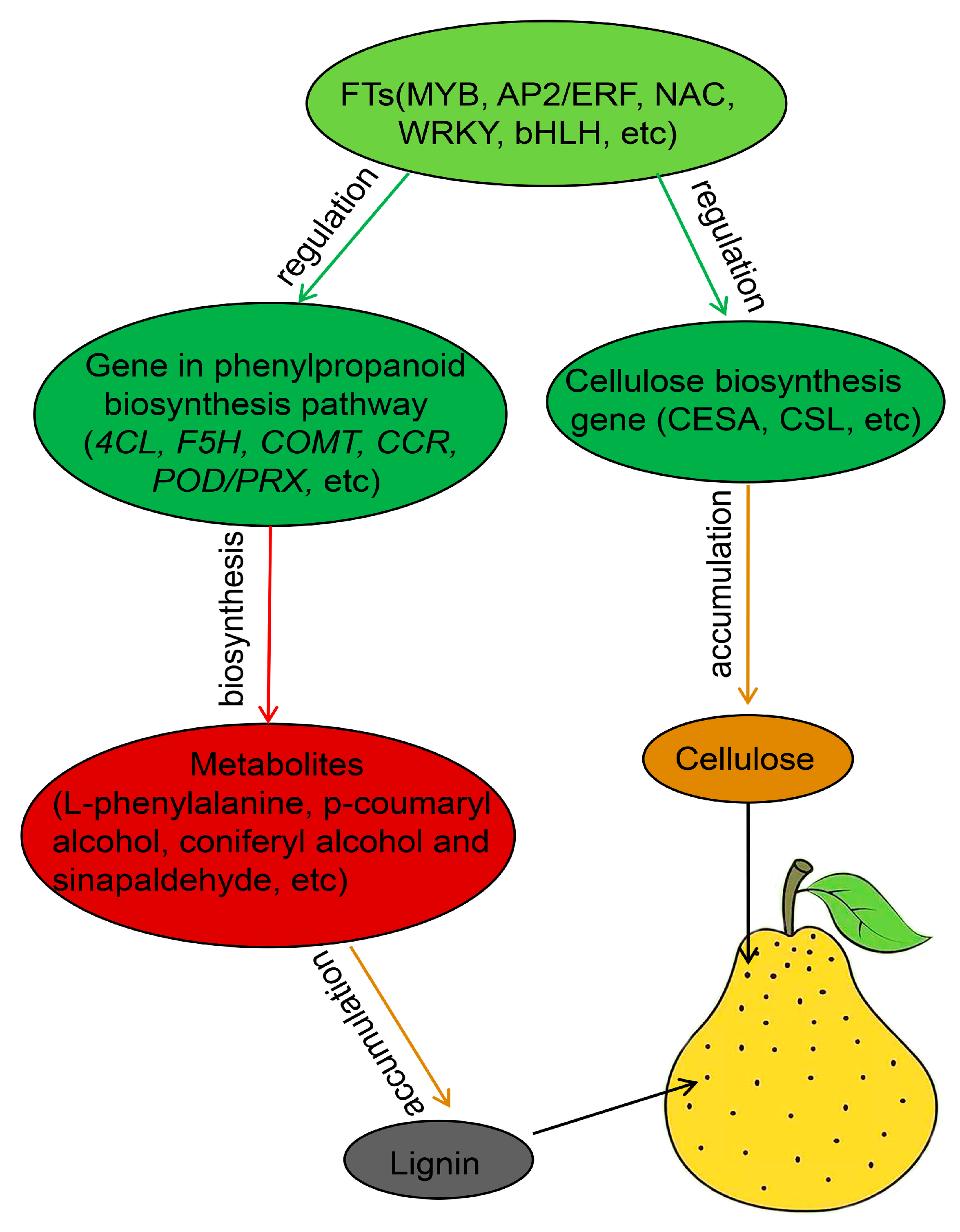
A proposed model of lenticel spot formation in pear peel was shown in Figure 10. Fruit lenticel spots (fruit dots) are key peel structures that strongly affect pear appearance and market value. Here, we integrated SEM, metabolomics, and transcriptomics across three developmental stages (30, 40, and 60 DAFB) and demonstrated that lenticel spots formation coincides with a progressive deposition of lignin, cellulose, and hemicellulose in the peel. WGCNA and correlation analyses revealed that the accumulation of core lignin and cellulose metabolites—L-phenylalanine, p-coumaryl alcohol, coniferyl alcohol and sinapaldehyde—is orchestrated by the coordinated expression of structural genes (4CL, CCR, POD/PRX, COMT and CESA) and five transcription-factor families (MYB, NAC, AP2/ERF, WRKY and bHLH). These findings uncover the gene–metabolite networks driving cell-wall thickening in pear lenticel spot formation, provide molecular targets for modulating peel texture, and offer a theoretical framework for breeding pear cultivars with improved surface quality.

Supplementary Materials

The following supporting information can be downloaded at: https://www.mdpi.com/article/10.3390/agronomy15112564/s1. Figure S1: The correlation coefficient between 30, 40, 60 DAFB of SL and XS; Figure S2: Principal component analysis between 30, 40, 60 DAFB of SL and XS; Figure S3: The relationship of structure gene with the main metabolite; Figure S4: The relationship of three main MYB TFs with other TFs. Table S1: The primers used for RT-qPCR analysis in the experiment; Table S2: Number of reads based on the transcriptome data of SL and XS pericarp; Table S3: The GO classification of significantly enriched DEGs; Table S4: The DEGs enriched in KEGG pathway; Table S5: The DEGs enriched in the main metabolic pathway; Table S6: The differential expression transcription factors in three comparison groups; Table S7: The information of several regulatory TFs involved in lignin and cellulose biosynthesis of pear lenticel spots; Table S8: The relationship of DEGs and differentially accumulated metabolites; Table S9: The information of TFs, structural genes, and the metabolites for co-expression analysis; Table S10: The correlation coefficients of structural genes, metabolites and transcription factors.

Author Contributions

Conceptualization, Z.G., Y.X. and Y.Q.; methodology, N.M. and Z.X.; software, N.M.; validation, N.M., Z.X., L.L., H.Z. and C.L.; formal analysis, N.M., Z.X., L.L., H.Z. and C.L.; investigation, N.M., Z.X.; resources, N.M., Z.X.; data curation, N.M.; writing—original draft preparation, N.M.; writing—review and editing, Z.G. and N.M.; visualization, Y.Q.; supervision, Y.X.; project administration, Z.G., Y.X. and Y.Q.; funding acquisition, Z.G. All authors have read and agreed to the published version of the manuscript.

Funding

This research was funded by National Natural Science Foundation of China Regional Innovation and Development Joint Fund (project number: U24A20415); National Pear Industry Technology System Dangshan Comprehensive Experiment Station, grant number CARS-28-34.

Data Availability Statement

The original data presented in the study are openly available in NCBI sequence read archive (SRA) database at https://www.ncbi.nlm.nih.gov/bioproject/?term=PRJNA1224571, accessed on 17 February 2025, accession number PRJNA1224571 and MetaboLights at https://www.ebi.ac.uk/metabolights/reviewere1da9ebd-45d7-4914-8895-3409882ab11f, accessed on 21 March 2025, accession number MTBLS12247.

Acknowledgments

We are grateful to Shanghai Biotree biomedical technology co., ltd. for the technical support.

Conflicts of Interest

The authors declare no conflicts of interest.

References

  1. Sheng, J.; Chen, X.; Song, B.; Liu, H.; Li, J.; Wang, R.; Wu, J. Genome-wide identification of the MATE gene family and functional characterization of PbrMATE9 related to anthocyanin in pear. Hortic. Plant J. 2023, 9, 1079–1094. [Google Scholar] [CrossRef]
  2. Duan, R.W.; Zhang, X.Z.; Li, B.; Wang, M.R.; Xie, Y.R.; Li, P.; Wang, L.; Yang, J.; Xue, H.B. Comprehensive evaluation of fruit spots in 296 pear germplasm resources. Acta Hortic. Sin. 2023, 50, 2305–2322. [Google Scholar]
  3. Wang, Y.L.; Zhang, X.F.; Wang, R.; Bai, Y.X.; Liu, C.L.; Yuan, Y.B.; Yang, Y.J.; Yang, S.L. Differential gene expression analysis of ‘Chili’ (Pyrus bretschneideri) fruit pericarp with two types of bagging treatments. Hortic. Res. 2017, 4, 17005. [Google Scholar] [CrossRef]
  4. Yu, H.; Jia, X.B. Anatomical observation on the process of pear fruitlet stomata changing to fruit dots. J. Fruit. Sci. 2002, 19, 62–63. [Google Scholar]
  5. Ali, M.M.; Anwar, R.; Yousef, A.F.; Li, B.; Luvisi, A.; Bellis, L.; Aprile, A.; Chen, F. Influence of bagging on the development and quality of fruits. Plants 2021, 10, 358. [Google Scholar] [CrossRef]
  6. Shi, M.Q.; Li, H.; Xu, K.; Chen, Z.T.; Gao, Y.B. The Effect of bagging on the appearance quality of ‘Huanghua’ pear fruit. South. China Fruit. 2019, 48, 100–106. [Google Scholar]
  7. Duan, R.; Zhang, X.; Liu, Y.; Wang, L.; Yang, J.; Wang, L.; Wang, S.; Su, Y.; Xue, H. Transcriptome and physiological analysis highlight lignin metabolism of the fruit dots disordering during postharvest cold storage in ‘Danxiahong’ pear. Genes 2023, 14, 1785. [Google Scholar] [CrossRef]
  8. Liu, C.J. Deciphering the enigma of lignification: Precursor transport, oxidation, and the topochemistry of lignin assembly. Mol. Plant 2012, 5, 304–317. [Google Scholar] [CrossRef]
  9. Perkins, M.; Smith, R.A.; Samuels, L. The transport of monomers during lignification in plants: Anything goes but how? Curr. Opin. Biotech. 2019, 56, 69–74. [Google Scholar] [CrossRef]
  10. Li, G.H.; Wang, H.; Cheng, X.; Su, X.Q.; Zhao, Y.; Jiang, T.S.; Jin, Q.; Lin, Y.; Cai, Y.P. Comparative genomic analysis of the PAL genes in five Rosaceae species and functional identification of Chinese white pear. PeerJ 2019, 7, e8064. [Google Scholar] [CrossRef]
  11. Li, D.; Cheng, Y.D.; Dong, Y.; Shang, Z.L.; Guan, J.F. Effects of low temperature conditioning on fruit quality and peel browning spot in ‘Huangguan’ pears during cold storage. Postharvest Biol. Technol. 2017, 131, 68–73. [Google Scholar] [CrossRef]
  12. Qu, G.Y.; Peng, D.; Yu, Z.Q.; Chen, X.L.; Cheng, X.R.; Yang, Y.Z.; Ye, T.; Lv, Q.; Ji, W.J.; Deng, X.W.; et al. Advances in the role of auxin for transcriptional regulation of lignin biosynthesis. Funct. Plant Biol. 2021, 48, 743–754. [Google Scholar] [CrossRef]
  13. Yang, S.L.; Zhang, X.N.; Lu, G.L.; Wang, C.R.; Wang, R. Regulation of gibberellin on gene expressions related with the lignin biosynthesis in ‘Wangkumbae’ pear (Pyrus pyrifolia Nakai) fruit. Plant Growth Regul. 2015, 76, 127–134. [Google Scholar] [CrossRef]
  14. Jiang, C.; Lyu, K.; Zeng, S.; Wang, X.; Chen, X. A Combined metabolome and transcriptome reveals the lignin metabolic pathway during the developmental stages of peel coloration in the ‘Xinyu’ pear. Int. J. Mol. Sci. 2024, 25, 7481. [Google Scholar] [CrossRef] [PubMed]
  15. Cheng, X.; Li, M.L.; Li, D.H.; Zhang, J.Y.; Jin, L.; Sheng, L.L.; Cai, Y.P.; Lin, Y. Characterization and analysis of CCR and CAD gene families at the whole-genome level for lignin synthesis of stone cells in pear (Pyrus bretschneideri) Fruit. Biol. Open 2017, 6, 1602–1613. [Google Scholar] [CrossRef] [PubMed]
  16. Wu, X.Y.; Wang, Q.; Wang, Y.J.; Wang, M.C.; Liu, Y.P.; Hu, H.J.; Ja, B.; Ye, Z.F.; Liu, L.; Tang, X.M.; et al. Multi-omics analysis of green and russet skin pear cultivars identify key regulators of skin russeting. Sci. Hortic. 2023, 318, 112116. [Google Scholar] [CrossRef]
  17. Xiao, R.; Zhang, C.; Guo, X.; Li, H.; Lu, H. MYB transcription factors and its regulation in secondary cell wall formation and lignin biosynthesis during xylem development. Int. J. Mol. Sci. 2021, 22, 3560. [Google Scholar] [CrossRef]
  18. Cao, Y.; Han, Y.; Li, D.; Lin, Y.; Cai, Y. Transcription factors in Chinese pear (Pyrus bretschneideri Rehd.): Genome-wide identification, classification, and expression profiling during fruit development. Front. Plant Sci. 2016, 7, 577. [Google Scholar] [CrossRef]
  19. Kim, S.H.; Lam, P.Y.; Lee, M.H.; Jeon, H.S.; Tobimatsu, Y.; Park, O.K. The Arabidopsis R2R3-MYB transcription factor MYB15 is a key regulator of lignin biosynthesis in effector-triggered immunity. Front. Plant Sci. 2020, 11, 583153. [Google Scholar] [CrossRef] [PubMed]
  20. Yan, Q.; Chen, W.Y.; Zhang, H.; Liu, P.; Zhang, Y.X. PbrMYB14 Enhances Pear Resistance to Alternaria alternata by Regulating Genes in Lignin and Salicylic Acid Biosynthesis Pathways. Int. J. Mol. Sci. 2025, 26, 972. [Google Scholar] [CrossRef]
  21. Geng, P.; Zhang, S.; Liu, J.Y.; Zhao, C.H.; Wu, J.; Cao, Y.P.; Fu, C.X.; Han, X.; He, H.; Zhao, Q. MYB20, MYB42, MYB43, and MYB85 regulate phenylalanine and lignin biosynthesis during secondary cell wall formation. Plant Physiol. 2020, 182, 1272–1283. [Google Scholar] [CrossRef]
  22. Kim, M.H.; Cho, J.S.; Bae, E.K.; Choi, Y.I.; Eom, S.H.; Lim, Y.J.; Lee, H.; Park, E.J.; Ko, J.H. PtrMYB120 functions as a positive regulator of both anthocyanin and lignin biosynthetic pathway in a hybrid poplar. Tree Physiol. 2021, 41, 2409–2423. [Google Scholar] [CrossRef] [PubMed]
  23. An, C.; Sheng, L.P.; Dong, X.P.; Wang, Y.J.; Zhang, Y.; Song, A.P.; Jiang, J.F.; Guan, Z.Y.; Fang, W.M.; Chen, F.D.; et al. Overexpression of CmMYB15 provides chrysanthemum resistance to aphids by regulating the biosynthesis of lignin. Hortic. Res. 2019, 6, 84. [Google Scholar] [CrossRef] [PubMed]
  24. Xu, X.; Guerriero, G.; Berni, R.; Sergeant, K.; Guignard, C.; Lenouvel, A.; Hausman, J.F.; Legay, S. MdMYB52 regulates lignin biosynthesis upon the suberization process in apple. Front. Plant Sci. 2022, 13, 1039014. [Google Scholar] [CrossRef] [PubMed]
  25. Xue, Y.S.; Shan, Y.F.; Yao, J.L.; Wang, R.Z.; Xu, S.Z.; Liu, D.L.; Ye, Z.C.; Lin, J.; Li, X.G.; Xue, C.; et al. The transcription factor PbrMYB24 regulates lignin and cellulose biosynthesis in stone cells of pear fruits. Plant Physiol. 2023, 192, 1997–2014. [Google Scholar] [CrossRef]
  26. Gui, J.; Luo, L.; Zhong, Y.; Sun, J.; Umezawa, T.; Li, L. Phosphorylation of LTF1, an MYB transcription factor in populus, acts as a sensory switch regulating lignin biosynthesis in wood cells. Mol. Plant 2019, 12, 1325–1337. [Google Scholar] [CrossRef]
  27. Wang, H.; Zhang, Y.J.; Feng, X.F.; Hong, J.Y.; Manzoor, M.A.; Zhou, X.Y.; Zhou, Q.F.; Cai, Y.P. Transcription factor PbMYB80 regulates lignification of stone cells and undergoes RING finger protein PbRHY1-mediated degradation in pear fruit. J. Exp. Bot. 2023, 75, 833–900. [Google Scholar] [CrossRef]
  28. Vroemen, C.W.; Mordhorst, A.P.; Albrecht, C.; Kwaaitaal, M.A.; deVries, S.C. The CUP-SHAPED COTYLEDON3 gene is required for boundary and shoots meristem formation in Arabidopsis. Plant Cell 2003, 15, 1563–1577. [Google Scholar] [CrossRef]
  29. Zhong, R.Q.; Ye, Z.H. Regulation of cell wall biosynthesis. Curr. Opin. Plant Biol. 2007, 10, 564–572. [Google Scholar] [CrossRef]
  30. Zhong, R.Q.; Ye, Z.H. Transcriptional regulation of lignin biosynthesis. Plant Signal. Behav. 2009, 4, 1028–1034. [Google Scholar] [CrossRef]
  31. Ge, H.; Zhang, J.; Zhang, Y.J.; Li, X.; Yin, X.R.; Grierson, D.; Chen, K.S. EjNAC3 transcriptionally regulates chilling-induced lignification of loquat fruit via physical interaction with an atypical CAD-like gene. J. Exp. Bot. 2017, 68, 5129–5136. [Google Scholar] [CrossRef]
  32. Sun, Y.; Jiang, C.; Jiang, R.; Wang, F.; Zhang, Z.; Zeng, J. A novel NAC transcription factor from Eucalyptus, EgNAC141, positively regulates lignin biosynthesis and increases lignin deposition. Front. Plant Sci. 2021, 12, 642090. [Google Scholar] [CrossRef]
  33. Li, M.T.; Cheng, C.X.; Zhang, X.F.; Zhou, S.P.; Wang, C.H.; Ma, C.H.; Yang, S.L. PpNAC187 enhances lignin synthesis in ‘Whangkeumbae’ pear (Pyrus pyrifolia) ‘Hard-End’ Fruit. Molecules 2019, 24, 4338. [Google Scholar] [CrossRef]
  34. Vahala, J.; Felten, J.; Love, J.; Gorzsas, A.; Gerber, L.; Lamminmaki, A.; Kangasjarvi, J.; Sundberg, B. A genome-wide screen for ethylene-induced Ethylene Response Factors (ERFs) in hybrid aspen stem identifies ERF genes that modify stem growth and wood properties. New Phytol. 2013, 200, 511–522. [Google Scholar] [CrossRef] [PubMed]
  35. Ambavaram, M.M.R.; Krishnan, A.; Trijatmiko, K.R.; Pereira, A. Coordinated activation of cellulose and repression of lignin biosynthesis pathways in rice. Plant Physiol. 2011, 155, 916–931. [Google Scholar] [CrossRef]
  36. Jin, X.; Cheng, C.; Qi, Q.; Zhou, S.; Wang, C.; Zhang, Y.; Sun, C.; Wang, Y.; Dang, R.; Yang, S. PpERF1b-like enhances lignin synthesis in pear (Pyrus pyrifolia) ‘hard-end’ fruit. Front. Plant Sci. 2022, 13, 1087388. [Google Scholar] [CrossRef] [PubMed]
  37. Mahiwal, S.; Pahuja, S.; Pandey, G.K. Review: Structural-functional relationship of WRKY transcription factors: Unfolding the role of WRKY in plants. Int. J. Biol. Macromol. 2024, 257, 128769. [Google Scholar] [CrossRef]
  38. Hou, Y.; Yu, X.; Chen, W.P.; Zhuang, W.B.; Wang, S.H.; Sun, C.; Cao, L.F.; Zhou, T.T.; Qu, S.C. MdWRKY75e enhances resistance to Alternaria alternata in Malus domestica. Hortic. Res. 2021, 8, 225. [Google Scholar] [CrossRef]
  39. Fan, H.Y.; Shen, X.X.; Ding, Y.; Li, Y.K.; Liu, S.Y.; Yang, Y.; Ding, Y.D.; Guan, C.F. DkWRKY transcription factors enhance persimmon resistance to Colletotrichum horii by promoting lignin accumulation through DkCAD1 promotor interaction. Stress Biol. 2024, 4, 17. [Google Scholar] [CrossRef]
  40. Wang, J.L.; Wang, D.; Zhao, M.R.; Yu, M.Y.; Zheng, X.D.; Tian, Y.K.; Sun, Z.J.; Liu, X.L.; Wang, C.H.; Ma, C.Q. A transcription factor, PbWRKY24, contributes to russet skin formation in pear fruits by modulating lignin accumulation. Hortic. Res. 2025, 12, uhae300. [Google Scholar] [CrossRef]
  41. Zhao, W.Q.; Ding, L.; Liu, J.Y.; Zhang, X.; Li, S.; Zhao, K.K.; Guan, Y.X.; Song, A.P.; Wang, H.B.; Chen, S.M.; et al. Regulation of lignin biosynthesis by an atypical bHLH protein CmHLB in Chrysanthemum. J. Exp. Bot. 2022, 73, 2403–2419. [Google Scholar] [CrossRef]
  42. Xu, M.; Li, S.J.; Liu, X.F.; Yin, X.R.; Grierson, D.; Chen, K.S. Ternary complex EjbHLH1-EjMYB2-EjAP2-1 retards low temperature-induced flesh lignification in loquat fruit. Plant Physiol. Bioch. 2019, 139, 731–737. [Google Scholar] [CrossRef]
  43. Van Acker, R.; Vanholme, R.; Storme, V.; Mortimer, J.C.; Dupree, P.; Boerjan, W. Lignin biosynthesis perturbations affect secondary cell wall composition and saccharification yield in Arabidopsis thaliana. Biotechnol. Biofuels 2013, 6, 46. [Google Scholar] [CrossRef]
  44. Svinterikos, E.; Kormányos, A.; Zuburtikudis, I.; Al-Marzouqi, M. Activated carbon nanofibers from lignin/recycled-PET and their adsorption capacity of refractory sulfur compounds from fossil fuels. Energy Procedia 2019, 161, 259–267. [Google Scholar] [CrossRef]
  45. Wang, R.Z.; Xue, Y.S.; Fan, J.; Yao, J.L.; Qin, M.F.; Lin, T.; Lian, Q.; Zhang, M.Y.; Li, X.L.; Li, J.M.; et al. A systems genetics approach reveals PbrNSC as a regulator of lignin and cellulose biosynthesis in stone cells of pear fruit. Genome Biol. 2021, 22, 313. [Google Scholar] [CrossRef] [PubMed]
  46. Yusuf, A.O.; Möllers, C. Inheritance of cellulose, hemicellulose and lignin content in relation to seed oil and protein content in oil seed rape. Euphytica 2024, 220, 5. [Google Scholar] [CrossRef]
  47. Mortazavi, A.; Williams, B.A.; McCue, K.; Schaeffer, L.; Wold, B. Mapping and quantifying mammalian transcriptomes by RNA-Seq. Nat. Methods 2008, 5, 621–628. [Google Scholar] [CrossRef]
  48. Anders, S.; Pyl, P.T.; Huber, W. HTSeq-a python framework to work with high-through put sequencing data. Bioinformatics 2014, 31, 166–169. [Google Scholar]
  49. Trapnell, C.; Williams, B.A.; Pertea, G.; Mortazavi, A.; Kwan, G.; van Baren, M.J.; Salzberg, S.L.; Wold, B.J.; Pachter, L. Transcript assembly and quantification by RNA-Seq reveals unannotated transcripts and isoform switching during cell differentiation. Nat. Biotechnol. 2010, 28, 511–515. [Google Scholar] [CrossRef] [PubMed]
  50. Young, M.D.; Wakefield, M.J.; Smyth, G.K.; Oshlack, A. Gene ontology analysis for RNA-seq: Accounting for selection bias. Genome Biol. 2010, 11, R14. [Google Scholar] [CrossRef]
  51. Xu, R.R.; Zhou, J.H.; Deng, L.Z.; Zhang, S.Q.; Golding, J.B.; Wang, B.G. Transcriptomics Integrated with Metabolomics Analysis of Cold-induced Lenticel Disorder via the Lignin Pathway upon Postharvest ‘Xinli No.7’ Pear Fruit. Postharvest Biol. Tec. 2025, 220, 113315. [Google Scholar] [CrossRef]
  52. Guan, Y.Q.; Qin, X.L.; Pei, Y.; Li, X.L.; Feng, Y.X.; Wei, C.Q.; Cheng, Y.D.; Guan, J.F. Effect of exogenous chlorogenic acid on fruit dot formation and expression of related genes in ‘Xuehua’ pear (Pyrus bretschneideri). J. Agric. Biotech. 2021, 29, 258–267. [Google Scholar]
  53. Guan, Y.; Qin, X.; Wei, C.; Feng, Y.; Cheng, Y.; Zhang, Y.; Guan, J. Influence of bagging on fruit quality, incidence of peel browning spots, and lignin content of ‘Huangguan’ pears. Plants 2024, 13, 516. [Google Scholar] [CrossRef]
  54. Liu, L.; Sun, H.L.; Cheng, Z.Y.; Jia, B.; Liu, P.; Ye, Z.F.; Zhu, L.W.; Heng, W. Cloning and expression of enzyme genes related to lignin biosynthesis in the pericarp of russet mutant of Dangshansuli. Acta Agric. Boreali Sin. 2013, 28, 88–92. [Google Scholar]
  55. Yang, W.L.; Li, X.G.; Yang, Q.S.; Lin, J.; Sheng, B.L.; Chang, Y.H.; Wang, H. Comparative metabolic and transcriptomic analysis of the pericarp of Sucui 1, Cuiguan and Huasu pears. J. Fruit Sci. 2022, 39, 1989–2006. [Google Scholar]
  56. O’Malley, D.M.; Whetten, R.W.; Bao, W.; Chen, C.L.; Sederoff, R.R. The role of laccase in lignification. Plant J. 1993, 4, 751–757. [Google Scholar] [CrossRef]
  57. Vanholme, R.; Ralph, J.; Akiyama, T.; Lu, F.; Pazo, J.R.; Kim, H.; Christensen, J.H.; Brecht, V.R.; Storme, V.; Rycke, R.D.; et al. Engineering traditional monolignols out of lignin by concomitant up-regulation of F5H1 and down-regulation of COMT in Arabidopsis. Plant J. 2010, 64, 885–897. [Google Scholar] [CrossRef] [PubMed]
  58. Sipahi, H.; Haiden, S.; Berkowitz, G. Genome-wide analysis of cellulose synthase (CesA) and cellulose synthase-like (Csl) proteins in Cannabis sativa L. PeerJ 2024, 12, e17821. [Google Scholar] [CrossRef] [PubMed]
  59. Guo, Y.; Wen, L.; Chen, J.; Pan, G.; Wu, Z.; Li, Z.; Xiao, Q.; Wang, Y.; Qiu, C.; Long, S.; et al. Comparative transcriptomic analysis identifies key cellulose synthase genes (CESA) and cellulose synthase-like genes (CSL) in fast growth period of flax stem (Linum usitatissimum L.). J. Nat. Fibers 2022, 19, 10431–10446. [Google Scholar] [CrossRef]
  60. Taylor, N.G.; Howells, R.M.; Huttly, A.K.; Vickers, K.; Turner, S.R. Interactions among three distinct CesA proteins essential for cellulose synthesis. Proc. Natl. Acad. Sci. USA 2003, 100, 1450–1455. [Google Scholar] [CrossRef]
  61. Li, X.; Xue, C.; Li, J.; Qiao, X.; Li, L.; Yu, L.; Huang, Y.; Wu, J. Genome-wide identification, evolution and functional divergence of MYB transcription factors in Chinese white pear (Pyrus bretschneideri). Plant Cell Physiol. 2016, 57, 824–847. [Google Scholar] [CrossRef] [PubMed]
  62. Zhu, Y.S.; Wang, Y.C.; Jiang, H.Y.; Liu, W.J.; Zhang, S.H.; Hou, X.K.; Zhang, S.S.; Wang, N.; Zhang, R.; Zhang, Z.Y.; et al. Transcriptome analysis reveals that PbMYB61 and PbMYB308 are involved in the regulation of lignin biosynthesis in pear fruit stone cells. Plant J. 2023, 116, 217–233. [Google Scholar] [CrossRef]
  63. Liu, D.L.; Xue, Y.S.; Wang, R.Z.; Song, B.B.; Xue, C.; Shan, Y.F.; Xue, Z.L.; Wu, J. PbrMYB4, a R2R3-MYB Protein, Regulates Pear Stone Cell Lignification through Activation of Lignin Biosynthesis Genes. Hortic. Plant J. 2024, 11, 105–122. [Google Scholar] [CrossRef]
  64. Xu, S.Z.; Sun, M.Y.; Yao, J.L.; Liu, X.X.; Xue, Y.S.; Yang, G.Y.; Zhu, R.X.; Jiang, W.T.; Wang, R.Z.; Xue, C.; et al. Auxin inhibits lignin and cellulose biosynthesis in stone cells of pear fruit via the PbrARF13-PbrNSC-PbrMYB132 transcriptional regulatory cascade. Plant Biotech. J. 2023, 21, 1408–1425. [Google Scholar] [CrossRef]
  65. Yang, Y.; Yoo, C.G.; Rottmann, W.; Winkeler, K.A.; Collins, C.M.; Gunter, L.E.; Jawdy, S.S.; Yang, X.H.; Pu, Y.Q.; Ragauskas, A.J.; et al. PdWND3A, a wood-associated NAC domain-containing protein, affects lignin biosynthesis and composition in Populus. BMC Plant Biol. 2019, 19, 486. [Google Scholar] [CrossRef] [PubMed]
  66. Zhang, H.; Gao, S.Y.; Yin, M.X.; Xu, M.Y.; Wang, T.Y.; Li, X.Y.; Du, G.D. A Ca2+-induced PuNAC21PuDof2.5PuPRX42-like/PuCCoAOMT1 Module Represses Lignin Biosynthesis in Pear Fruit. Hort. Res. 2025, 12, uhaf102. [Google Scholar] [CrossRef]
  67. Huang, D.B.; Wang, S.G.; Zhang, B.C.; Shang-Guan, K.K.; Shi, Y.Y.; Zhang, D.M.; Liu, X.L.; Wu, K.; Xu, Z.P.; Fu, X.D.; et al. A gibberellin-mediated DELLA-NAC signaling cascade regulates cellulose synthesis in rice. Plant Cell 2015, 27, 1681–1696. [Google Scholar] [CrossRef]
  68. Gong, X.; Qi, K.J.; Zhao, L.Y.; Xie, Z.H.; Pan, J.H.; Yan, X.; Shiratake, K.; Zhang, S.L.; Tao, S.T. PbAGL7PbNAC47PbMYB73 Complex Coordinately Regulates PbC3H1 and PbHCT17 to Promote the Lignin Biosynthesis in Stone Cells of Pear Fruit. Plant J. 2024, 120, 1933–1953. [Google Scholar] [CrossRef] [PubMed]
  69. Zhao, X.W.; Wang, Q.; Wang, D.; Guo, W.; Hu, M.X.; Liu, Y.L.; Zhou, G.K.; Chai, G.H.; Zhao, S.T.; Lu, M.Z. PagERF81 regulates lignin biosynthesis and xylem cell differentiation in poplar. J. Integr. Plant Biol. 2023, 65, 1134–1146. [Google Scholar] [CrossRef]
  70. Cheng, Z.H.; Fan, G.F.; Jiang, J.H.; Yao, W.J.; Zhang, X.M.; Zhao, K.; Zhou, B.R.; Jiang, T.B. Transcription factor PagERF110 inhibits xylem differentiation by direct regulating PagXND1d in poplar. Ind. Crop. Prod. 2024, 215, 118622. [Google Scholar] [CrossRef]
  71. Zhang, J.; Yin, X.R.; Li, H.; Xu, M.; Zhang, M.X.; Li, S.J.; Liu, X.F.; Shi, Y.N.; Grierson, D.; Chen, K.S. ETHYLENE RESPONSE FACTOR39-MYB8 complex regulates low-temperature-induced lignification of loquat fruit. J. Exp. Bot. 2020, 71, 3172–3184. [Google Scholar] [CrossRef] [PubMed]
  72. Xu, M.Y.; He, S.; Zhang, H.; Gao, S.Y.; Yin, M.X.; Li, X.Y.; Du, G.D. Gibberellin Regulates the Synthesis of Stone Cells in ‘Nanguo’ Pear via the PuMYB91-PuERF023 Module. Physiol. Plant. 2025, 177, e70074. [Google Scholar] [CrossRef] [PubMed]
  73. Hu, Q.; Xiao, S.; Wang, X.; Ao, C.; Zhang, X.; Zhu, L. GhWRKY1-like enhances cotton resistance to Verticillium Dahliae via an increase in defense-induced lignification and S monolignol content. Plant Sci. 2021, 305, 110833. [Google Scholar] [CrossRef] [PubMed]
  74. Shun, X.J.; Zhang, F.B.; Song, H.D.; Liang, K.L.; Wang, J.X.; Zhang, X.Y.; Wang, X.W.; Yang, J.G.; Han, W.H. Genome-wide analysis of the WRKY family in Nicotiana benthamiana reveals key members regulating lignin synthesis and Bemisia tabaci resistance. Ind. Crop. Prod. 2024, 222, 119655. [Google Scholar] [CrossRef]
  75. Xu, M.Y.; Zhang, X.F.; Jiang, F.; Zhang, H.; Yan, N.; Li, X.Y.; Du, G.D. The PuWRKY29-PuMYB62 Module Responds to Salicylic Acid to Inhibit the Synthesis of Stone Cells in ‘Nanguo’ Pear. Plant Physiol. Bioch. 2025, 228, 110238. [Google Scholar] [CrossRef]
  76. Yan, L.; Xu, C.H.; Kang, Y.L.; Gu, T.W.; Wang, D.X.; Zhao, S.Y.; Xia, G.M. The heterologous expression in Arabidopsis thaliana of sorghum transcription factor SbbHLH1 downregulates lignin synthesis. J. Exp. Bot. 2013, 64, 3021–3032. [Google Scholar] [CrossRef]
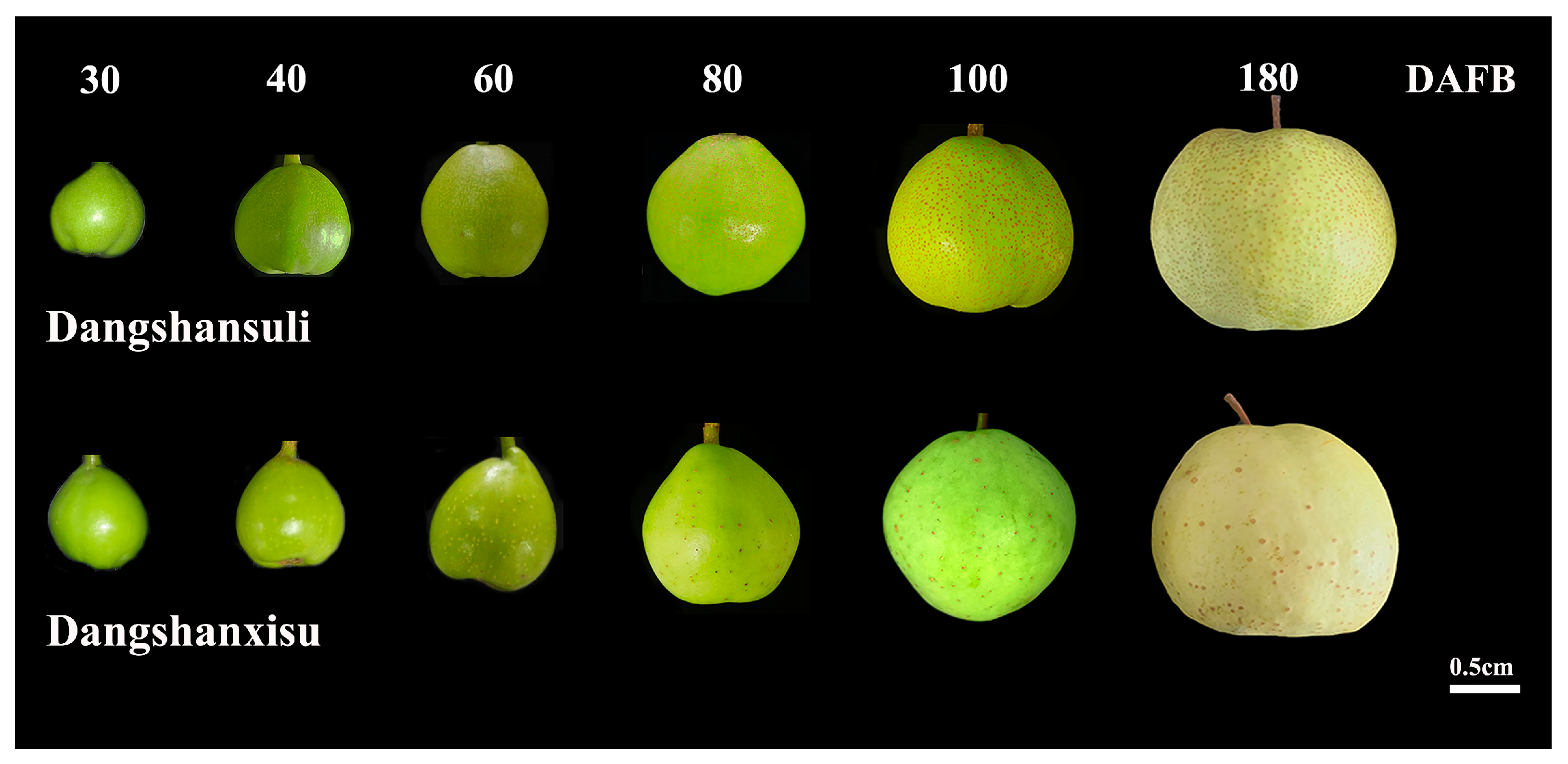
Figure 1. Distribution of lenticel spots on the surface of different developmental stages of ‘Dangshansuli, SL’ and ‘Dangshanxisu, XS’, ruler = 0.5 cm.
Agronomy 15 02564 g001
Figure 2. Lenticel spot development under stereo-microscopy and scanning electron microscopy. (A,G) Stomatal or lenticel stages. (B,H) Lenticel-collapse stages. (C,D,I,J) Lenticel spot formation stages. (E,F,K,L) Lenticel spot enlargement stages. Scale bars: 100 μm.
Agronomy 15 02564 g002
Figure 3. (A) Stomata or lenticel spot numbers, (B) lignin content, (C) cellulose content, and (D) hemicellulose content in pericarp of SL and XS. Each value is mean ± SD (n = 5 biological replicates). The p-values were tested using Student’s t-test (** p < 0.01).
Agronomy 15 02564 g003
Figure 4. Differentially expressed genes identified by RNA-seq analysis in XS and SL pericarp after illuminating for 30, 40, and 60 DAFB. (AC) Volcano plot of the RNA-seq showing DEGs in red and green. The X-axis represents the fold change in XS-30 vs. SL-30, XS-40 vs. SL-40, and XS-60 vs. SL-60, respectively. The Y-axis represents the negative –log10-transformed p values (p-adj < 0.05) for differences between the samples. (D) Quantity of total DEGs. (E) Quantity of up-regulated DEGs. (F) Quantity of down-regulated DEGs. Overlapping areas shows the shared DEGs at different time points.
Agronomy 15 02564 g004
Figure 5. The GO classification and KEGG pathway enrichment of DEGs. (AC) GO categories assigned to DEGs in XS-30 Vs. SL-30 (A), XS-40 Vs. SL-40 (B), and XS-60 Vs. SL-60 (C), respectively. The X-axis represents the negative –log10-transformed p values (p-adj < 0.05) for differences between the samples. The left Y-axis shows categories according to the annotation of GO. (DF) KEGG pathways of DEGs in XS-30 Vs. SL-30 (D), XS-40 Vs. SL-40 (E), and XS-60 Vs. SL-60 (F), respectively. The Y-axis and X-axis present the KEGG pathways and the enrichment scores, respectively. Dot size corresponds to the number of distinct genes, whereas dot color reflects the p-adj value.
Agronomy 15 02564 g005
Figure 6. Correlation analysis for DEGs involved in plant hormone signal transduction, MAPK signaling pathway—plant, and phenylpropanoid biosynthesis pathways and DAMs (phytohormone, phenylpropanoids, flavonoids, phenols, and lignans) (|r| > 0.80, p < 0.05). Heatmap: red = positive, blue = negative; darker = stronger. * p < 0.05, ** p < 0.01, *** p < 0.001.
Agronomy 15 02564 g006
Figure 7. The phenylpropanoid biosynthesis pathways in the critical period of pear lentil spot formation. Expression patterns of genes in the phenylpropanoid biosynthesis pathways shown as a heatmap. The red indicates higher and the blue indicates lower. The compounds up-regulated in the metabolome analysis are marked by red arrows, and the compounds down-regulated are marked by green arrows.
Agronomy 15 02564 g007
Figure 8. Co-expression analysis of structural genes, metabolites, and transcription factors related to the lignin and cellulose biosynthesis pathways. Genes with correlation coefficients |r| > 0.80 and p < 0.05 are shown. The correlation network diagram is divided into four layers, the two outermost genes are transcription factors, the third layer is lignin and cellulose synthesis genes, and the most central layer is metabolites of lignin.
Agronomy 15 02564 g008
Figure 9. Expression of representative genes in SL and XS pear pericarps validated by qRT-PCR. qPCR-SL and qPCR-XS represent qPCR analysis; FPKM-SL and FPKM-XS represent the FPKM value of RNA-seq.
Agronomy 15 02564 g009
Figure 10. A hypothetical model of lenticel spot formation in pear peel.
Agronomy 15 02564 g010
Disclaimer/Publisher’s Note: The statements, opinions and data contained in all publications are solely those of the individual author(s) and contributor(s) and not of MDPI and/or the editor(s). MDPI and/or the editor(s) disclaim responsibility for any injury to people or property resulting from any ideas, methods, instructions or products referred to in the content.