Article

Calibration and Testing of Discrete Element Simulation Parameters for the Presoaked Cyperus esculentus L. Rubber Interface Using EDEM

Faculty of Mechanical and Electrical Engineering, Inner Mongolia Agricultural University, Hohhot 010018, China
*
Author to whom correspondence should be addressed.
Agronomy 2025, 15(10), 2440; https://doi.org/10.3390/agronomy15102440
Submission received: 29 September 2025 / Revised: 17 October 2025 / Accepted: 20 October 2025 / Published: 21 October 2025
(This article belongs to the Section Precision and Digital Agriculture)

Abstract

To address the challenges in precision seeding of Cyperus esculentus L. seeds caused by their irregular shape and uneven surface, this study investigates the effect of soaking pretreatment on seed germination and adopts rubber-based seed suction holes to improve adsorption performance. Subsequently, calibration and experiments on discrete element simulation parameters were carried out. Initially, by setting four soaking time gradients (0, 24, 48, and 72 h), the optimal soaking duration was determined. Furthermore, through free-fall collision tests, static friction tests, and rolling friction tests, combined with the Plackett–Burman design, steepest ascent experiments, and Box–Behnken response surface methodology, the contact parameters between seeds and between seeds and rubber suction holes were calibrated and optimized. The results showed that the static friction coefficient (D) between seeds, the rolling friction coefficient (E) between seeds, and the rolling friction coefficient (H) between seeds and rubber have significant effects on the stacking angle. The optimal parameter combination obtained was D = 0.592, E = 0.325, H = 0.171. Validation tests on the dynamic stacking angle demonstrated that the relative error between the simulated and physical test values was only 1.89%, confirming the accuracy of the parameters. This study provides reliable parameter references for the design and simulation optimization of precision seed metering devices for C. esculentus after soaking pretreatment.

1. Introduction

Cyperus esculentus L., also known as chufa sedge, earth almond, or tiger nut, is an annual herbaceous plant [1,2]. Native to Africa with a long history of cultivation [3], it is an economic crop of high comprehensive utilization value. The above-ground stems and leaves of C. esculentus grow vigorously, yielding over 3000 kg of fresh grass per mu, which can be used as high-quality forage for cattle, sheep, rabbits, and other livestock [4]. With strong tillering ability, C. esculentus can produce up to 858 kg of dry tubers per mu. These tubers can be used for oil extraction, with an oil yield of up to 25%, and the oil quality is superior to that of rapeseed oil [5,6]. Furthermore, C. esculentus is rich in various nutrients, making it a high-quality raw material for producing advanced nutritional products and processed foods. The protein content of C. esculentus is approximately 5–10%, primarily composed of glutelin (>47.5%), albumin (31.8%), globulin (4.7%), and prolamin (3.8%). It contains 18 amino acids involved in protein synthesis, with a total content of 34.2 g/kg, and its amino acid ratio coefficient is close to that of eggs. Its dietary fiber content is 8.9 g/100 g, comparable to that of nut-based foods. Simultaneously, C. esculentus is rich in carbohydrates, high-quality protein, and fats, and contains various vitamins and mineral elements, capable of meeting the diverse nutritional requirements for livestock and poultry growth [7,8,9,10].
Currently, there are no specialized seed metering devices for C. esculentus in China, and the performance of these devices directly impacts sowing quality. Precision seeding is a primary method for achieving hill-drop or single-seed precision drilling of crops. It allows for the control of row spacing, hill spacing, and the number of seeds per hill according to agronomic requirements, accurately placing seeds into the soil in sequence. This technology is now widely promoted both domestically and internationally. Precision seed metering devices are mainly categorized into two types based on their working principles: mechanical seed meters and pneumatic seed meters [11]. Mechanical seed meters have higher requirements for seed shape and are prone to issues such as seed jamming and miss-planting. In contrast, pneumatic seed meters exhibit greater adaptability to seed shape, facilitate single-seed precision planting, not only save seeds but also effectively prevent seed damage.
For the development of an air-suction precision metering device for C. esculentus, it is necessary to determine the characteristic parameters of the seeds and their contact parameters with the device. However, the seed surface of C. esculentus is uneven and irregular in shape, making it difficult to achieve effective adsorption during metering, which adversely affects the precision seeding performance. To address this, flexible rubber suction holes are employed, utilizing the elastic deformation of the rubber during adsorption to enhance the adsorption effect. Pre-sowing seed soaking treatment can cause the seed surface to expand and become rounder, improving the morphological parameters and facilitating adsorption, while simultaneously activating seed viability and increasing the germination rate. However, after soaking, the seed parameters change significantly. When conducting discrete element simulations in EDEM, it is necessary to set the material intrinsic parameters and contact parameters. The material intrinsic parameters are mostly fixed values and close to the measured values. However, differences in geometric and surface characteristics between the seed particle model and the actual seeds can lead to inconsistencies between the simulation and physical test results. Therefore, the contact parameters need to be recalibrated to meet the experimental requirements [12,13].
In recent years, with the advancement of computer technology, the Discrete Element Method (DEM) has been increasingly applied in agricultural equipment research [14]. Guo Lin et al. [15] taking the slope farmland red clay in central Yunnan as the research object, combined unconfined compressive strength tests with DEM simulations to establish a simulation model for the unconfined compressive strength test based on the EEPA model and Bonding model, and calibrated the relevant parameters in the simulation model. Liu Fanyi et al. [16] using wheat as the research object and taking the stacking angle of wheat particle piles obtained from both physical experiments and simulations under different parameter combinations as the response value, calibrated the discrete element simulation parameters for wheat based on response surface optimization. Ma Yongcai et al. [17] aiming to improve the accuracy of parameters required for the DEM simulation of the compression molding process of corn straw-cattle manure mixture, conducted parameter calibration experiments for the mixture and verified the accuracy of the calibrated parameters through a combination of simulation analysis and physical experiments. Wang Xiaoyong et al. [18] calibrated the key discrete element simulation parameters for roasted green tea. Liao Yangyang et al. [19] in order to better apply the DEM to study the mixed seeding process of oat and common vetch seeds and improve the accuracy of the seed discrete element models, calibrated the simulation parameters by combining actual experiments and simulation tests. The above results indicate that using EDEM parameter calibration, the simulation results after calibration are close to the physical test results in terms of population distribution, with no significant difference between the two.
Based on previous research on the germination characteristics of C. esculentus seeds in response to different soaking durations, four soaking time gradients were established, i.e., 0 h (CK), 24 h, 48 h, and 72 h, to determine the optimal soaking duration. The findings not only provide a basis for the pre-sowing treatment of C. esculentus seeds but can also be extended to other crop seeds with irregular surfaces and non-uniform shapes, such as corn, soybean, and wheat. This contributes to improving their physical properties and seeding performance by optimizing soaking conditions, thereby enhancing seeding efficiency and germination rates, and increasing the effectiveness of agricultural production. The related parameters offer important reference value for the design of high-efficiency seeding devices and provide key parameter support for subsequent precision metering analysis of C. esculentus following pre-sowing soaking treatment.
While scholars such as Chen Yong, Ma Shikuan, and Zheng Xiaoshuai [20,21,22] have systematically measured the intrinsic and contact parameters of C. esculentus seeds and completed the calibration of inter-seed static friction and rolling friction coefficients, their studies were exclusively conducted on dry seeds and limited to rigid contact surfaces such as steel, ABS, and glass. These works neither addressed the alterations in seed properties induced by soaking pretreatment nor involved parameter calibration for flexible materials like those used in seed suction holes (e.g., rubber). In practice, soaking treatment leads to seed coat softening, along with changes in particle packing behavior, geometric morphology, and surface characteristics. Continued use of parameter sets derived from dry seeds would result in substantial deviations in simulation outcomes, undermining their utility in guiding the design and optimization of seed metering apparatus. In this context, the present study pioneers the calibration of intrinsic and contact parameters for soaked C. esculentus seeds interacting with rubber seed-suction holes. By incorporating the interfacial characteristics between pretreated seeds and rubber materials, this work transcends the prior research constraints of dry seed–rigid material systems. It thereby establishes a reliable parametric foundation for high-fidelity simulation and the optimization of seed metering devices under realistic working conditions, effectively bridging a critical research gap concerning wet seed–rubber material interactions [23,24,25,26,27].
The main research contents of this paper are as follows:
(1)
The response of C. esculentus seed germination characteristics to different soaking durations was analyzed. By conducting comparative experiments with varying soaking times and a non-soaked control group and integrating germination indicators with root and shoot growth traits, the optimal soaking time for promoting germination and growth was determined.
(2)
Key interaction parameters between soaked C. esculentus seeds and rubber materials were systematically calibrated. Using Plackett Burman design, the steepest ascent test, and Box Behnken response surface methodology, the contact parameters at the seed–rubber interface were obtained and their optimal combination was identified, filling the research gap in parameters for soaked seed–rubber material interactions.
(3)
A dynamic stacking angle test platform was established. Using the physical dynamic stacking angle as a benchmark, the optimized parameter set was applied in discrete element simulations for comparative validation. The results showed good agreement between simulation and experimental outcomes, confirming the validity of the model and providing a reliable simulation tool and parametric basis for the design of precision seed metering devices for soaked C. esculentus.

2. Materials and Methods

2.1. A Study on the Response of C. esculentus Seed Germination Characteristics to Different Soaking Durations

Soaking Experiment: Materials and Methods Design

The C. esculentus seeds used in the experiment were of the Zhongsha No. 2 variety, produced in Shangqiu City, Henan Province, China. Four soaking time gradients were established: 0 h, 24 h, 48 h, and 72 h (Figure 1a). After soaking, the seeds were placed in Φ90 mm Petri dishes, using filter paper as the germination bed. Each treatment consisted of 50 seeds, distributed across three Petri dishes, with three replicates per treatment (Figure 1b). These were neatly arranged in a light incubator under controlled conditions: 70% humidity, 25 °C, a 12 h light/12 h dark photoperiod, and a light intensity of 15,000 Lux (Figure 1d). At 19:00 daily, sterile water was replenished using the weighing method based on evaporation to maintain moist filter paper. Germinated seeds were observed and recorded daily [28,29]. On the 10th day of cultivation, 15 uniformly growing seedlings were selected from each treatment. The fresh weight of the plumule and radicle for each seedling was measured separately using a JC-TP series precision balance (Figure 1e). A pot experiment was conducted in an illuminated growth chamber to assess seedling emergence. Soil was collected from the 10–20 cm surface layer of a field, air-dried naturally, and then passed through a 1 cm sieve for use. The plastic pots used measured 7 × 7 cm (top diameter), 5 × 5 cm (bottom diameter), and 8 cm in height. Small, uniform holes were made in the bottom of each pot and covered with mesh to ensure aeration. Five seeds were sown per pot. After sowing, the pots were watered to the upper limit of the field water capacity to ensure normal seedling emergence. The setup included two replicates, totaling six pots. The seedling emergence rate for each group was measured and recorded 20 days after sowing (Figure 1f).

2.2. Model Establishment

Physical Model of C. esculentus Seeds

To accurately establish the discrete element model of C. esculentus seeds, the seed contours were measured. One hundred seeds were randomly selected, and their length (L), width (W), and thickness (T) were measured using a digital vernier caliper. The average values were 14.07 mm, 13.95 mm, and 10.99 mm, respectively. The average equivalent diameter (D) and sphericity (Φ) were 12.92 mm and 92%, respectively. Additionally, six groups of 100 seeds each were randomly sampled. The average hundred-kernel weight across these six groups was calculated to be 111.52 g. The density was determined to be 1.127 g/cm3, the moisture content was 46.02%, the Poisson’s ratio was 0.41, and the shear modulus was 33 MPa [30].
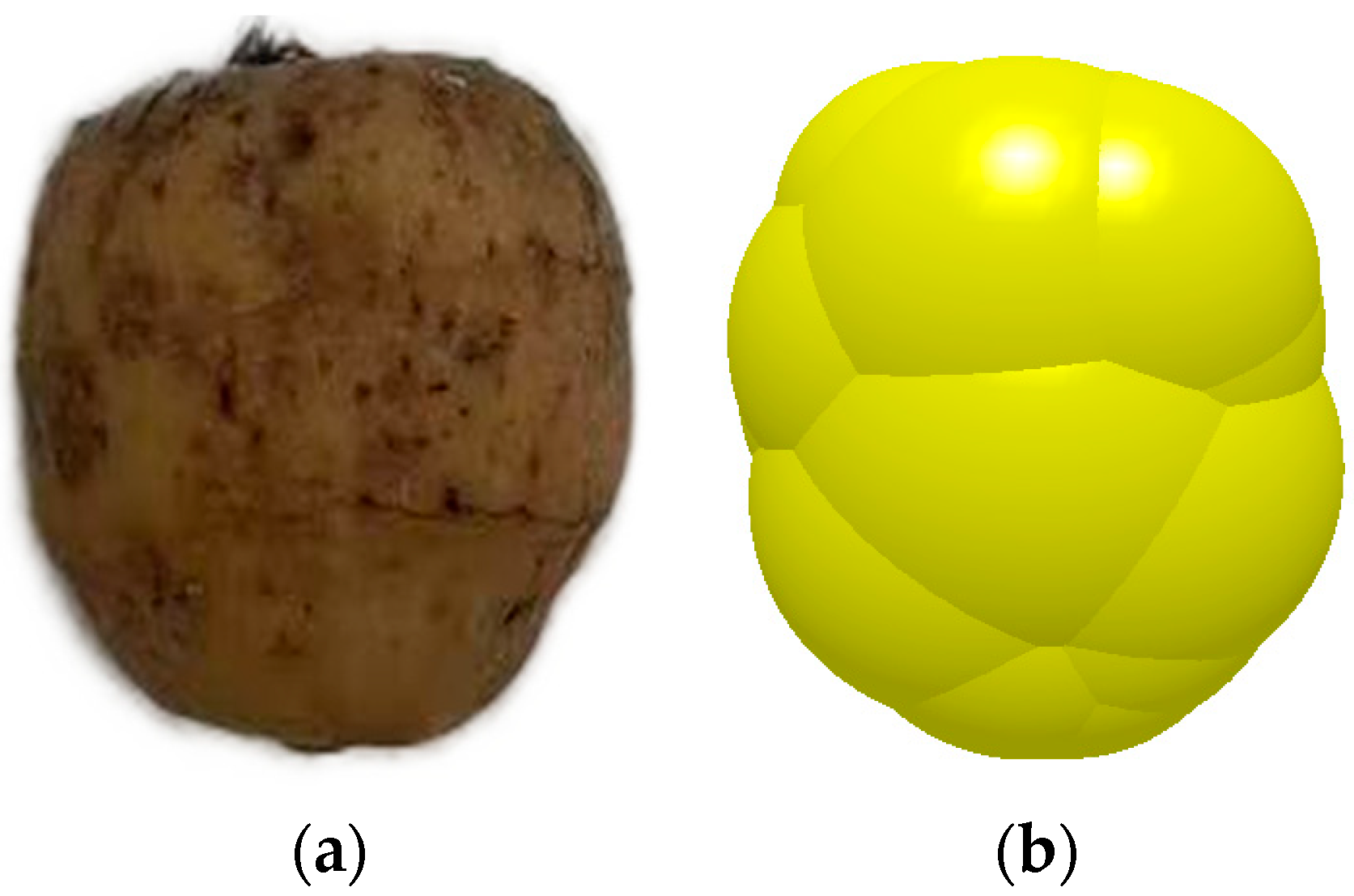
C. esculentus seeds are granular materials. Considering the uneven surface characteristics of the seeds, the reverse engineering technique was employed to accurately establish their discrete element model. A 3D scanner was used to create a three-dimensional model, generating an STL model of the C. esculentus seed. This STL model was then imported into EDEM (version 2022) software. To balance the efficiency and accuracy of calibrating the discrete element simulation parameters, a multi-sphere automatic filling modeling approach was adopted to rapidly fill the sample model. The particle smoothing value was set to 5, and the model was composed of 20 spheres of different diameters, followed by manual modification [31,32,33], as shown in Figure 2b.
During the experiment, in addition to seed/seed contact, interaction forces also occur between the seeds and other materials of the metering device. In this study, Nitrile Butadiene Rubber (NBR) was selected as the contact material with C. esculentus seeds [34], and its parameters are presented in Table 1.

2.3. Determination of Contact Parameters for C. esculentus Seeds

2.3.1. Measurement of Static and Dynamic Friction Coefficients

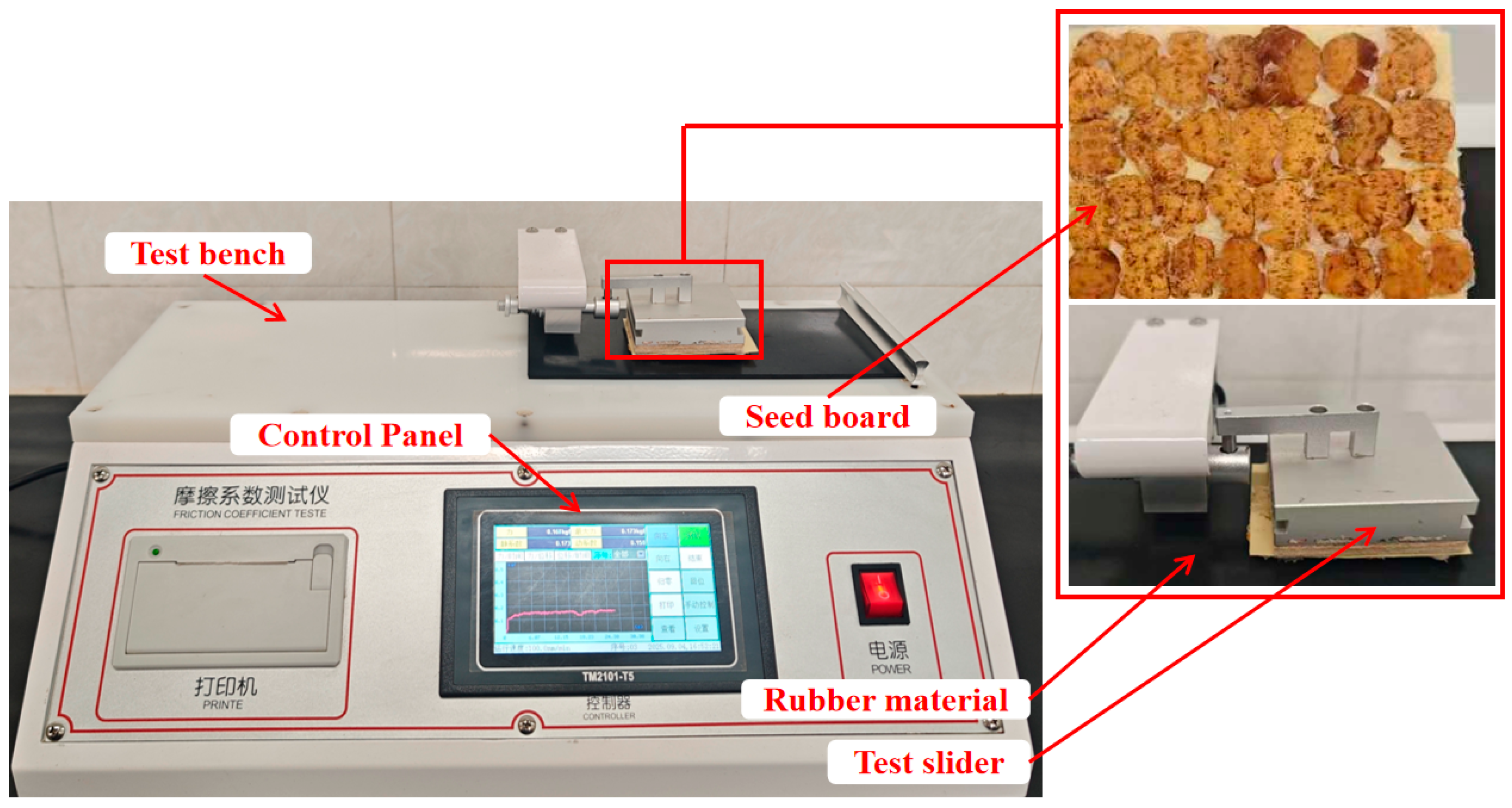
The coefficient of friction reflects the frictional characteristics when seeds and contact materials (rubber) undergo relative sliding, serving as an important parameter in the design of metering device materials. This study utilized a dynamic friction coefficient tester (Model ST-MXZ-1, Xiamen Oriental Instrument Co., Ltd., Xiamen, China) to determine the static and dynamic friction coefficients between C. esculentus seeds, as well as between the seeds and rubber. C. esculentus seeds with similar triaxial dimensions were selected. After peeling, their epidermis was firmly adhered to PLA plates using strong adhesive. Once fixed, these were prepared as seed plates. The entire testing system included PLA plates, an objective stage, a control panel, seed plates, a towing mechanism, and a slider. For testing, two seed plates were configured—one upper and one lower—to simulate frictional behavior under different contact conditions. The testing setup is shown in Figure 3.
One seed plate was fixed to the instrument platform, while the other was attached to the slider. The movement distance was set to 40 mm, after which the instrument was activated for data acquisition. Each test group was repeated eight times, and the average value of the results was taken. The calculated average static and dynamic friction coefficients between C. esculentus seeds were 0.56 and 0.31, respectively; while the average static and dynamic friction coefficients between C. esculentus seeds and rubber were 0.26 and 0.21, respectively.

2.3.2. Coefficient of Restitution

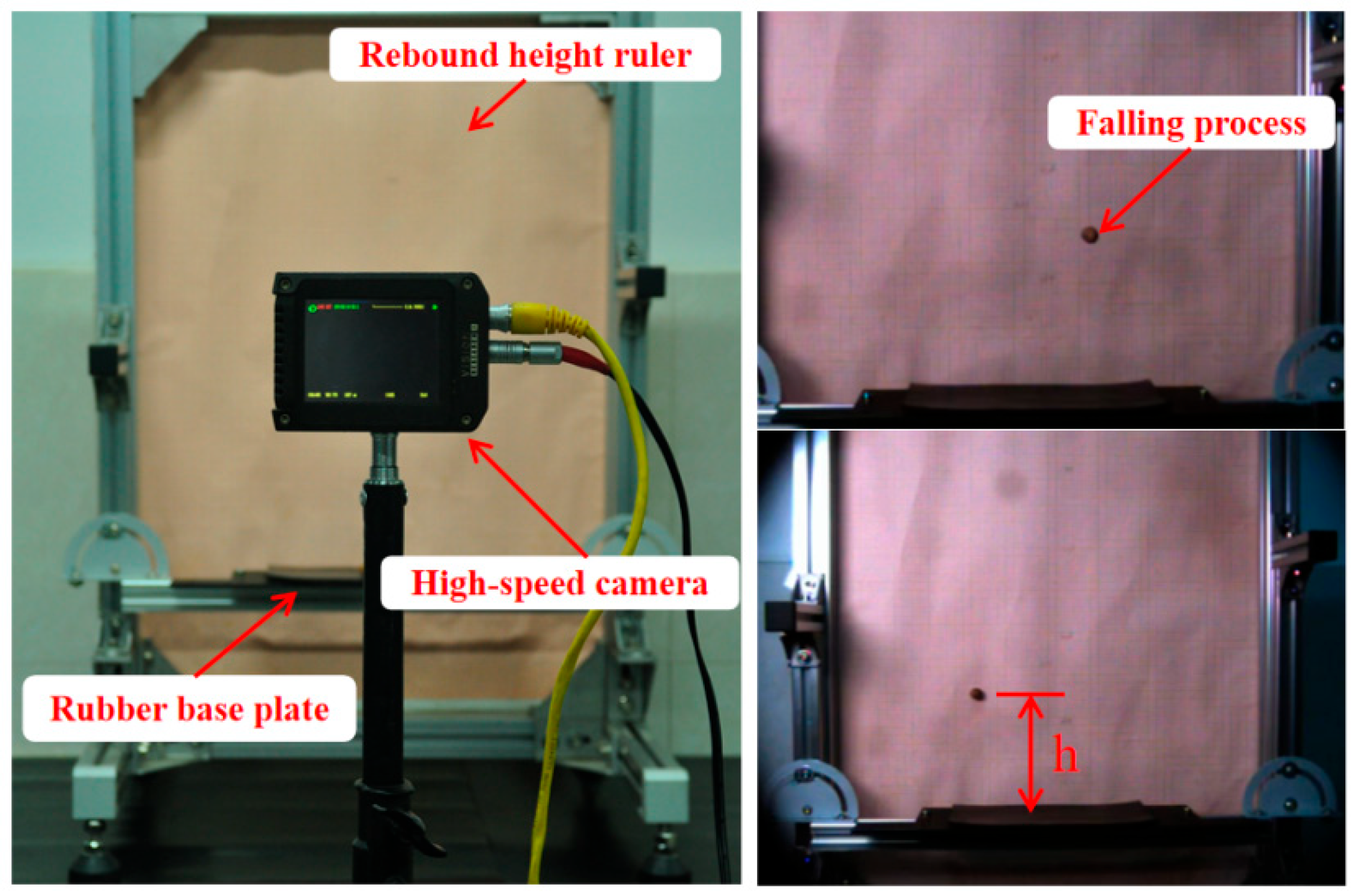
The coefficient of restitution is a parameter that quantifies the recovery of material after collision deformation with a contact plate. It is defined as the ratio of the upward separation velocity after collision to the downward vertical velocity before collision [35,36]. For the contact plates, C. esculentus seed plates and rubber material were selected, respectively. The seed drop height was set at a fixed value H of 50 cm.
C. esculentus seeds were randomly selected and allowed to free-fall from a designated drop point. After a time interval t1, they collided with the contact plate (the time was recorded), marking the end of the free-fall phase with an impact velocity of V. Following the impact, the seeds experienced an upward momentum, during which their maximum rebound height h was recorded using a high-speed camera (Phantom T1340, model: NTA-1383; Sony Corporation, Tokyo, Japan), yielding a rebound velocity of V1. The testing setup is illustrated in Figure 4.
Based on Equation (1), the average coefficients of restitution between C. esculentus seeds and the seed plate and between the seeds and the rubber were determined to be 0.46 and 0.54, respectively.
This is example 1 of an equation:
e = V 1 V = 2 g h 2 g H
where e is the coefficient of restitution; h is the maximum rebound height of the seed (mm); and H is the free-fall height of the seed (mm).

2.4. Stacking Angle Test

2.4.1. Physical Stacking Angle Measurement

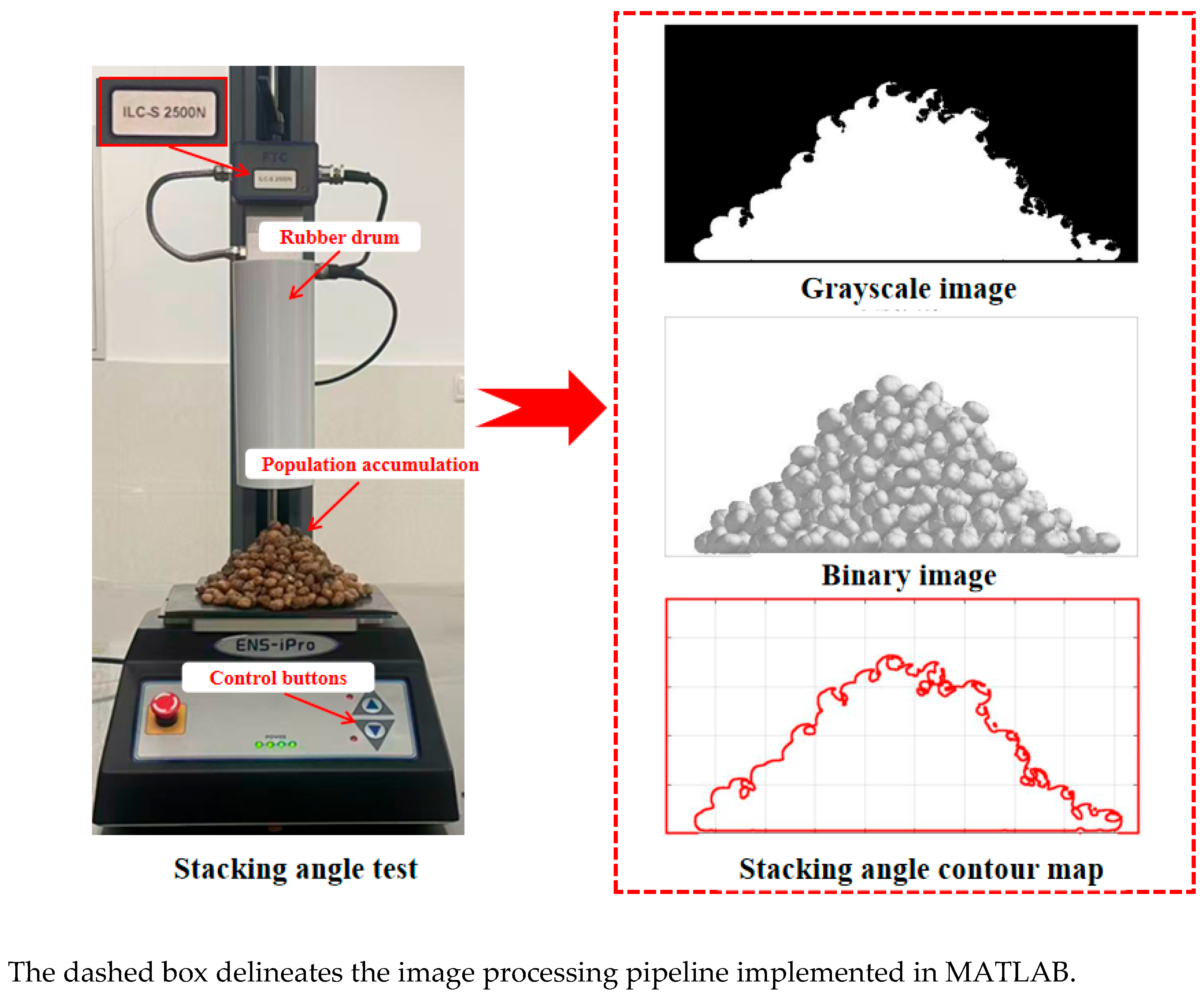
The stacking angle of granular materials is influenced by particle characteristics and environmental conditions, reflecting the material’s flowability and frictional properties. The physical stacking angle of the seeds was measured using the cylinder lift method. The measurement device consisted of a cylinder with an outer diameter of 74 mm, inner diameter of 72 mm, wall thickness of 2 mm, and length of 200 mm, lacking both top and bottom ends. The inner wall was lined with a 2 mm thick rubber layer. To ensure a constant lifting speed of 0.015 m/s, the entire measurement process was conducted on a universal testing machine. A square rubber plate was placed on the base of the testing machine. The cylinder was filled with C. esculentus seeds and then slowly lifted. The seed pile descended naturally under gravity and gradually formed a pile. After the seed pile stabilized, the angle between the slope surface and the horizontal plane was defined as the stacking angle.
Upon completion of the test, to minimize errors associated with manual measurement, a high-definition camera was positioned directly facing the pile to capture images. The collected high-definition images of the stacking angle were processed using MATLAB software (version R2024b). The procedure was as follows: the image information was first read and converted to grayscale. An appropriate threshold was then selected to convert the grayscale image into a binary image. The imfill function was used to fill holes in the binary image. The processed image often contained noise; to extract an ideal edge contour curve, a suitable filling radius was selected, and erosion or dilation operations were applied. Finally, the slope of the fitted straight line was converted into an angle, which was determined as the stacking angle for the C. esculentus seed pile. As shown in Figure 5.
This process was repeated ten times, yielding a mean cylinder stacking angle of 49.03°. The experimental results are presented in Table 2.

2.4.2. Simulated Stacking Angle Measurement

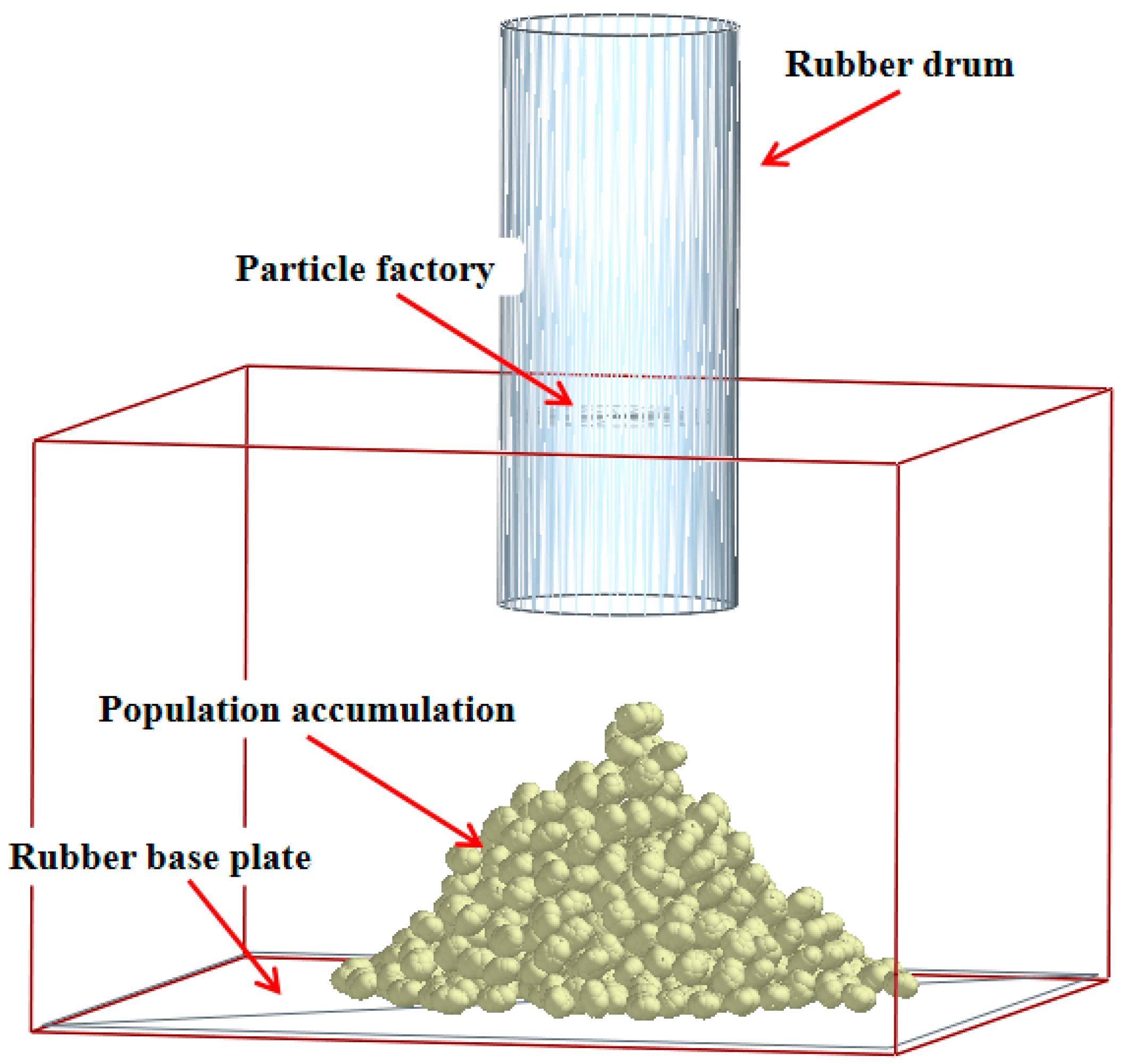
In the EDEM simulation, to ensure the seed pile simulation process remained consistent with the physical test, a cylinder model identical to that used in the physical experiment was created in SolidWorks (version 2018). The particle size distribution of the seed population in the simulation was set to a normal distribution. Particles were generated using a static generation method and allowed to settle for 1.5 s to fully fill the internal volume of the device. The cylinder was then lifted slowly at a speed of 0.015 m/s, allowing a stable stacking angle to form at the bottom. The total simulation duration was 12 s, with a time step of 5.25 × 10⁻⁶ s and a grid size of 2.5 times the smallest particle radius. The Hertz-Mindlin contact model was selected for the simulation. After the test, images were captured to record the stacking angle (Figure 6).

2.5. Plackett Burman Experimental Design

To identify the significant simulation parameters influencing the stacking angle of C. esculentus populations, a Plackett Burman experimental design was implemented using Design-Expert 13 software with the stacking angle (degrees) as the response. The design incorporated 11 parameters, consisting of 8 real factors (denoted A–H) and 3 dummy variables (assigned J–L) for error estimation. The high (+1), middle (0), and low (−1) levels for each parameter were established through preliminary experiments and are detailed in Table 3.
The experiment was designed with 3 center points, resulting in a total of 15 trial runs. After each simulation, the corresponding image of the stacking angle was captured. Consistent with the method used for the physical stacking angle, MATLAB was employed to measure the simulated stacking angle from these images. The experimental design and corresponding results are presented in Table 4.

2.6. Steepest Ascent Experiment Design

Based on the results of the Plackett Burman experimental design, this study identified three key parameters that significantly affect the simulated stacking angle of C. esculentus: the static friction coefficient between seeds, the rolling friction coefficient between seeds, and the rolling friction coefficient between C. esculentus seeds and rubber. To determine the optimal parameter combination, the actual stacking angle obtained from preliminary experiments was used as the benchmark. The parameter whose simulated value was closest to the actual value was selected as the key factor, and a steepest ascent experiment was conducted with the stacking angle as the response.
Upon completion of each simulation, the resulting accumulation morphology image was automatically analyzed using MATLAB for image processing. The stacking angle was accurately extracted through edge detection and angle calculation algorithms. The stacking angle measurements recorded during the steepest ascent experiment are summarized in Table 5, which visually reflects the gradient influence of parameter adjustments on the simulation output.

2.7. Box Behnken Experimental Design

Design-Expert 13 software was employed to conduct a Box Behnken experimental design. The parameter settings for the experiment are shown in Table 6. The static friction coefficient between seeds (D), the rolling friction coefficient between seeds (E), and the rolling friction coefficient between C. esculentus seeds and rubber (H) were selected as the factors for the response surface experiment. Three levels were defined within the optimal range identified for each factor, resulting in a three-factor, three-level orthogonal experimental design. The experimental design matrix and the corresponding angles of repose are presented in Table 7.

2.8. Validation Experiment Design

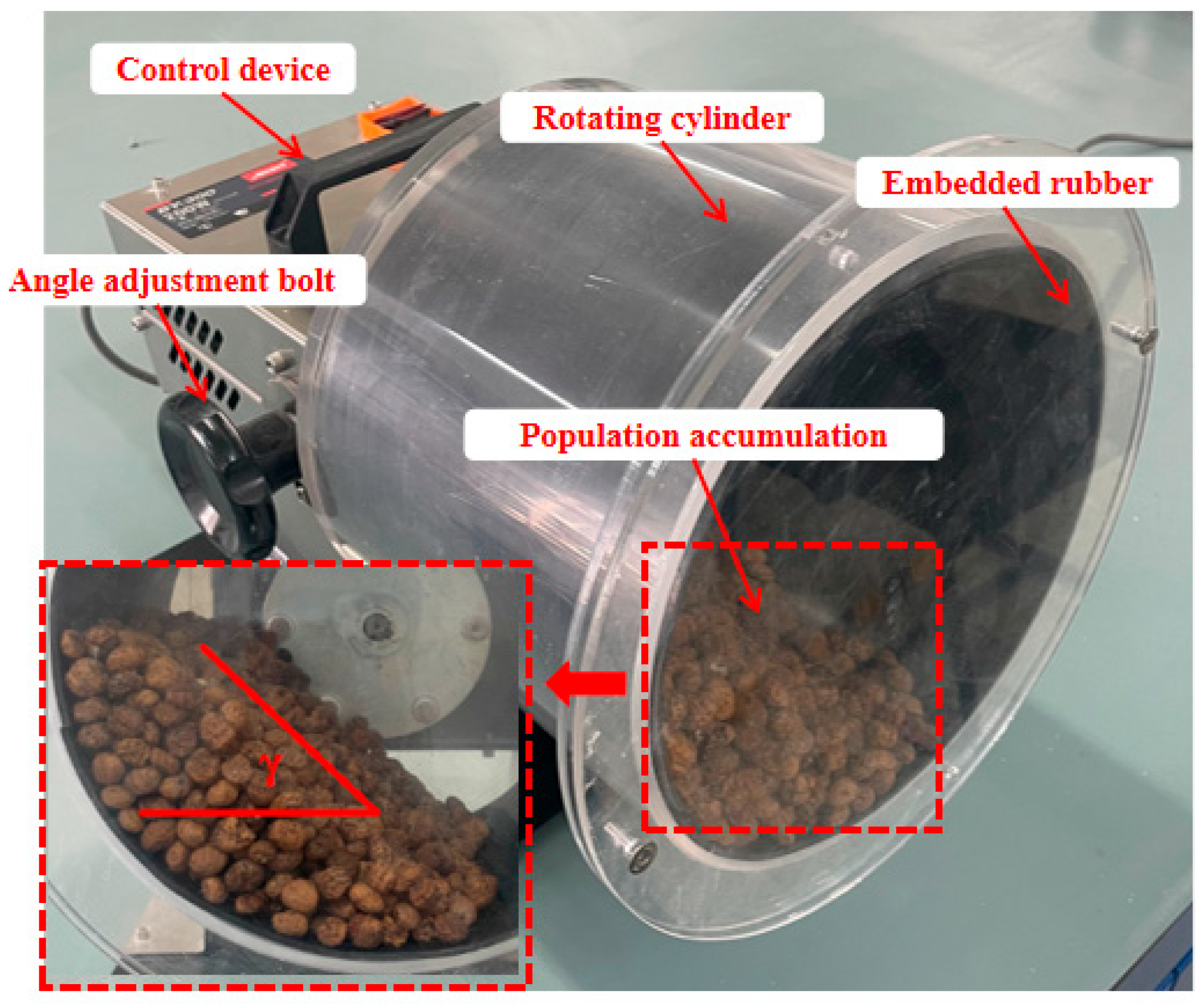
To verify the reliability of the identified optimal parameter combination, a physical experiment measuring the dynamic stacking angle was conducted using a custom-built apparatus. The results were then compared with discrete element simulations using the optimized parameters. In the simulations, non-significant parameters were set to their intermediate levels. The dynamic stacking angle is defined as the maximum inclination angle between the pile surface and the horizontal plane just before collapse occurs, when the interactive forces between seeds ascending within the rotating drum can no longer balance gravity. This angle serves as a key parameter characterizing the dynamic flow properties of seeds. The experiment measured the dynamic stacking angle based on the rotating drum method. The experimental setup, shown in Figure 7, primarily consists of a rotating cylinder (300 mm in diameter, 200 mm in length, with an inner wall lined with rubber material), a motor, and a controller.
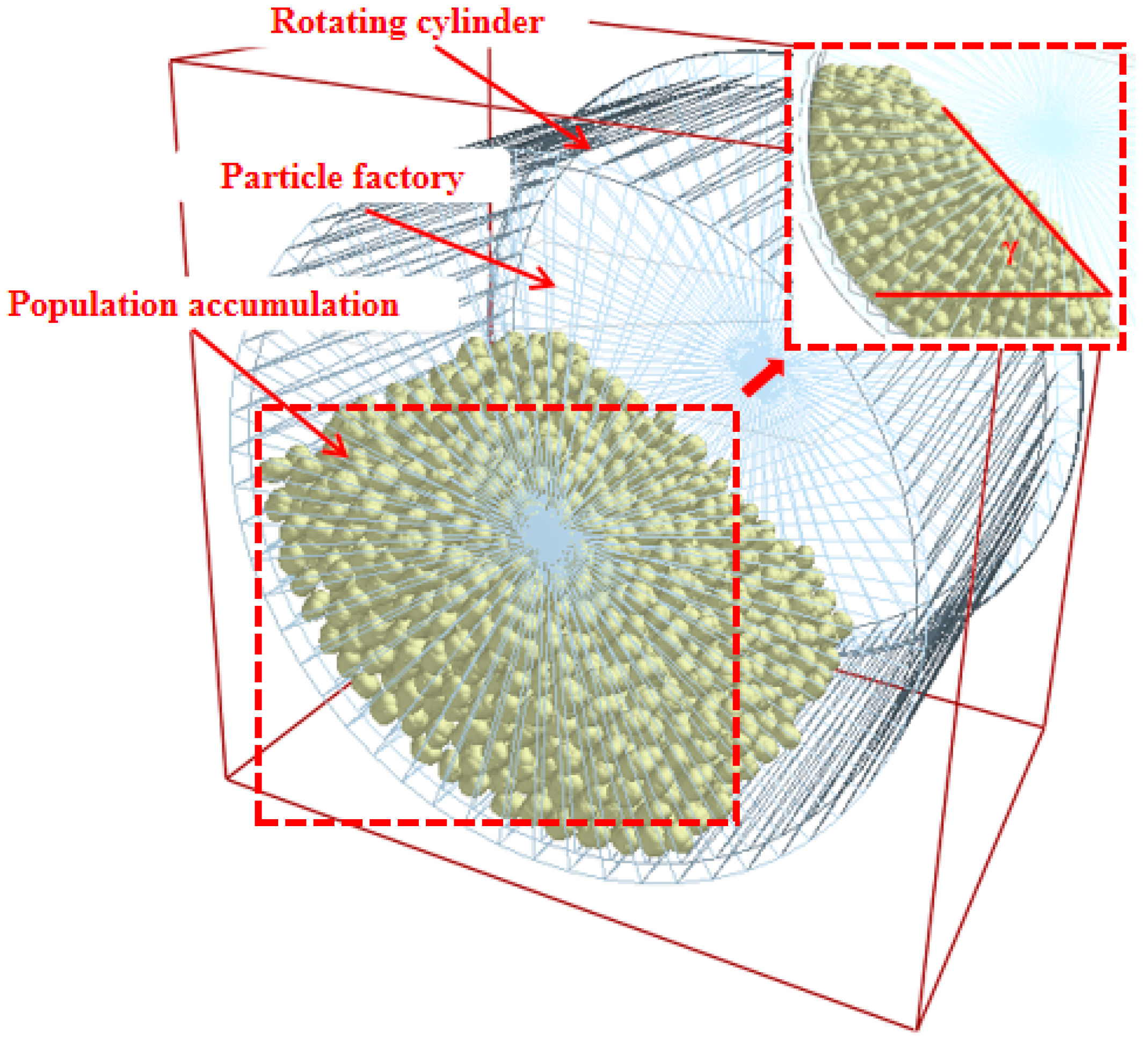
The stacking angle testing setup in the discrete element simulation was built at a 1:1 scale according to the actual dimensions. The procedure for determining the dynamic stacking angle in the DEM simulation remained consistent with the physical experiment (Figure 8). A total of 1500 seeds were loaded into the cylinder, and the motor was started to rotate the cylinder at a constant speed of 0.5 rad/s. A camera positioned directly in front of the cylinder recorded the changing pile morphology of the C. esculentus seeds in real time, from which the dynamic stacking angle was extracted. The test was repeated three times.

3. Results

3.1. Comprehensive Analysis of Germination Indicators of C. esculentus Under Different Soaking Durations

One-way ANOVA (Table 8) revealed that all germination indicators of C. esculentus seeds were altered by the different soaking durations. Specifically, significant differences (p = 0.05) were observed in the germination rate, germination potential, germination lag time, germination period, and germination index among the 0, 24, 48, and 72 h soaking treatments. Among these indicators, the germination index reached its maximum at the 48 h soaking treatment. When soaking exceeded 48 h, the germination rate, germination potential, and germination index showed a declining trend. Based on a comprehensive evaluation of the germination indicators, a 48 h soaking duration is most conducive to the growth of C. esculentus.

3.2. Effects of Different Soaking Treatments on Root and Shoot Traits of C. esculentus After Development

A comprehensive impact analysis of different soaking treatments on the germination indicators of C. esculentus was conducted using three time gradients: 0, 24, and 48 h. One-way ANOVA revealed that the soaking time had a significant effect (p = 0.05) on the root fresh weight, shoot fresh weight, and total root length of the seeds, as shown in Table 9. When C. esculentus seeds were soaked for 48 h and then placed in Petri dishes for 10 days of growth, the maximum root fresh weight, shoot fresh weight, and total root length reached 100.4 mg, 102.5 mg, and 78.07 cm, respectively. Under the influence of different soaking durations, the order of these growth metrics from highest to lowest was consistently 48 h > 24 h > 0 h. Therefore, a 48 h soaking duration for C. esculentus seeds proved more advantageous compared to the other treatment times.

3.3. Pot Experiment in Illuminated Growth Chamber

The seedling emergence rate in each plot was measured and recorded 20 days after sowing through the pot experiment. The emergence rates for C. esculentus seeds soaked for 0, 24, and 48 h were 20%, 40%, and 70%, respectively. The pot experiment conducted in the illuminated growth chamber validated previous findings, confirming that the 48 h soaking treatment resulted in the most favorable germination indicators and root-shoot traits for the growth of C. esculentus.

3.4. Analysis of Plackett Burman Test Results for the Stacking Angle

Variance analysis of the experimental results was conducted, and the influence of each parameter on the response value (seed stacking angle) is shown in Table 10. A model p-value of less than 0.05 indicates that the regression model is significant. Parameters A, B, C, F, and G had a minor influence on the stacking angle, as their p-values were all greater than 0.05, indicating these factors were not significant. In contrast, the rolling friction coefficient between C. esculentus seeds (E) contributed the most significantly to the population stacking angle, with a contribution rate of 44.62%. This was followed by the static friction coefficient between seeds (D) at 20.53%, and the rolling friction coefficient between C. esculentus seeds and rubber (H) at 8.54%. The p-values for these three factors were all less than 0.05, confirming their significant influence on the response value (stacking angle). By eliminating the factors that had no significant effect on the stacking angle, the subsequent orthogonal experiment focused on calibrating the significant factors with the highest contribution rates: the rolling friction coefficient between C. esculentus seeds (E), the static friction coefficient between seeds (D), and the rolling friction coefficient between C. esculentus seeds and rubber (H). The values for the remaining parameters were set to their intermediate levels as listed in Table 3.

3.5. Analysis of Steepest Ascent Test Results

The experimental results indicate that the stacking angle gradually increases with the rise in the rolling friction coefficient between C. esculentus seeds (E), the static friction coefficient between seeds (D), and the rolling friction coefficient between seeds and rubber (H), showing a positive correlation. The relative error initially decreases and then increases. When D, E, and H are set to 0.6, 0.38, and 0.24, respectively, the relative error between the simulated and actual angles of repose reaches its minimum value of 1.89%.

3.6. Analysis of Box Behnken Test Results

The Box Behnken test focused on evaluating the model’s fit quality, reliability, lack-of-fit, and precision, as shown in Table 11. The results demonstrate that the overall model is highly significant (p < 0.01), indicating an extremely significant correlation between the independent and dependent variables. The coefficient of variation (CV = 1.25% < 10%) confirms the reliability of the experimental data. The lack-of-fit term (p = 0.5446 > 0.05) suggests a good fit of the equation without significant lack-of-fit. The coefficient of determination (R2 = 0.9810) is close to 1, with an adjusted R2 (R2 adj) of 0.9565 and a predicted R2 (R2 pred) of 0.8652. The difference between R2 adj and R2 pred is less than 0.2, indicating the model’s rationality. A precision value of 20.29, which is greater than 4, confirms the model’s adequate precision.
In summary, the model performs excellently in terms of fit quality, reliability, lack-of-fit, and precision, establishing it as a rational and effective model.
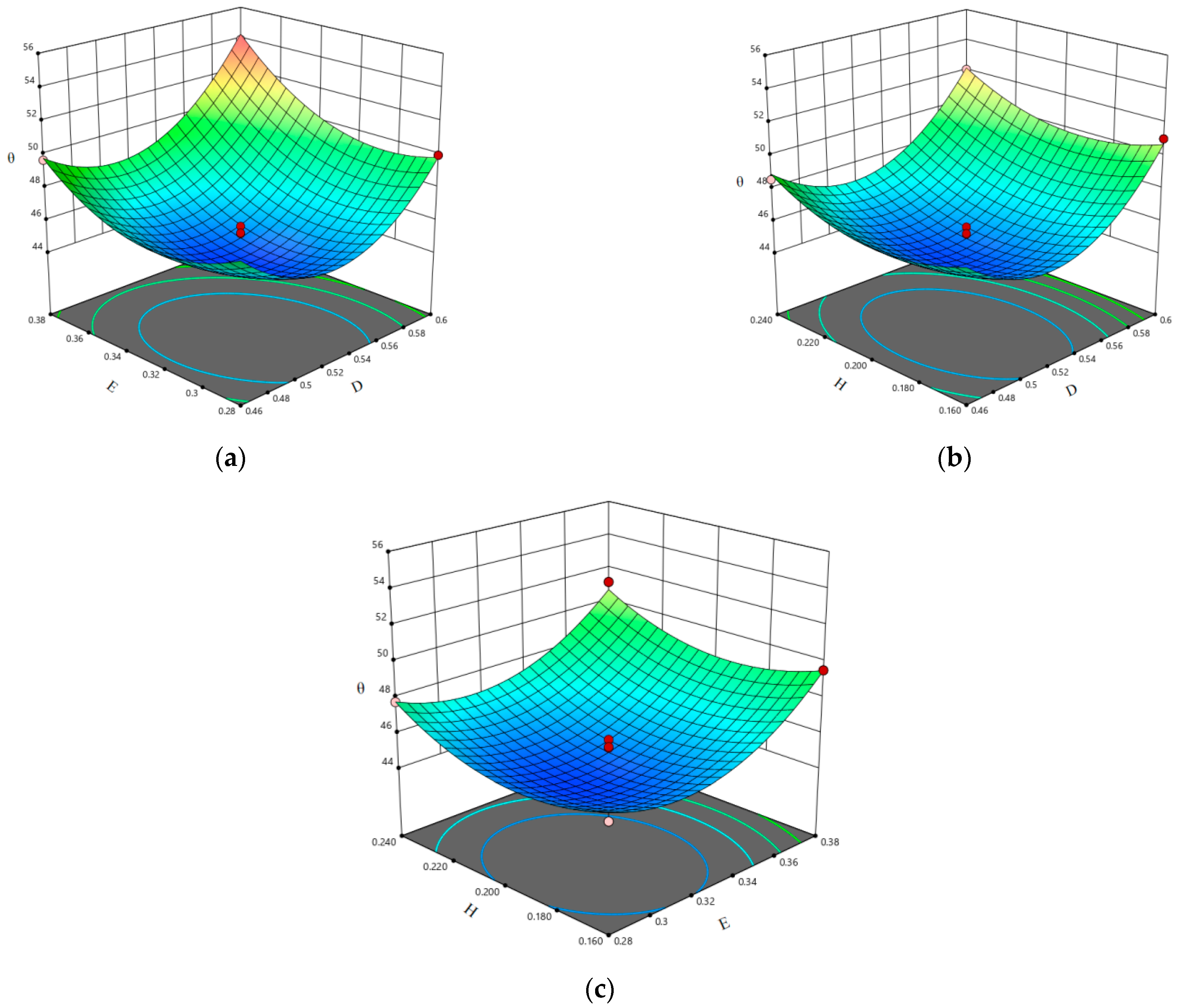
The experimental data were analyzed using multiple regression fitting in Design-Expert software, yielding significance test results for the regression equation. As shown in Table 11, the rolling friction coefficient between C. esculentus seeds (E) and the static friction coefficient between seeds (D) exhibited highly significant effects on the stacking angle, while the rolling friction coefficient between C. esculentus seeds and rubber (H) showed a significant effect. The processed data were used to generate the response surface plot shown in Figure 9.
A quadratic regression model was established. Through analysis of variance (ANOVA) of the quadratic polynomial model, the quadratic polynomial regression equation was obtained as shown in Equation (2).
This is example 2 of an equation:
θ = 44.90 + 1.53 D + 1.5 E + 0.625 H + 0.6975 D E + 0.105 D H 0.045 E H + 3.47 D 2 + 2.17 E 2 + 1.55 H 2

3.7. Determination of the Optimal Parameter Combination

This study developed a quadratic regression model (Equation (2)) with stacking angle as the response variable based on Box Behnken experimental design, which served as the core tool for response surface optimization. During the process of determining the optimal parameter combination, the fitting performance of this model was evaluated. The results demonstrated that the quadratic regression model effectively captured the nonlinear interactions between friction coefficients and stacking angle, with a non-significant lack-of-fit term (p > 0.05) and a high coefficient of determination (R2 > 0.95), indicating that the model adequately reflects the intrinsic variation patterns of the system.
Although machine learning and deep learning regressors perform well in handling extremely high-dimensional and highly nonlinear problems, they were not adopted in this study for several reasons. First, the well-designed Box Behnken experiment involved a limited number of factors with smooth and continuous responses, making quadratic regression models a recognized efficient and reliable method for such calibration problems. Second, the objective of this study was not parameter prediction but parameter optimization and identification of optimal parameter combinations through the model, facilitating direct analysis of the influence trends of various friction coefficients and their interactions on stacking angle. Based on this approach, the optimization module of Design-Expert software was utilized to solve the regression model with physical stacking angle as the target value under specified parameter constraints (Equation (3)), ultimately obtaining the optimal parameter combination.
This is example (3) of an equation:
θ ( D , E , H ) = 49.03 s . t 0.46 D 0.6 0.28 E 0.38 0.16 H 0.24
Consequently, the optimal combination of parameters was determined as follows: the static friction coefficient between C. esculentus seeds (D) is 0.592, the rolling friction coefficient between seeds (E) is 0.325, and the rolling friction coefficient between seeds and rubber (H) is 0.171.

3.8. Analysis of Validation Test Results

Simulation validation was performed using the optimized parameters. The measured physical dynamic stacking angle was 48.19°, while the average value from three repeated simulation tests was 47.25°, yielding a relative error of only 1.96%. These results indicate a high agreement between the simulation and physical tests, validating the reliability of the established regression model.

4. Discussion

4.1. Calibration Differences in Seeds Before and After Soaking

This study, through parameter calibration and validation, confirms the necessity and effectiveness of dedicated contact parameter calibration for C. esculentus seeds after soaking. Compared to dry seeds, the physical characteristics of soaked C. esculentus change significantly, which is directly reflected in the notable influence of the inter-seed static friction coefficient (D), inter-seed rolling friction coefficient (E), and the seed-rubber rolling friction coefficient (H) on the simulation results of the stacking angle. The high consistency between the simulated and physical angles of repose not only verifies the accuracy of the current parameter calibration but, more importantly, reveals that design solutions based on dry C. esculentus parameters may not be suitable for the metering operation of wet seeds. This finding provides clear guidance for the optimized design of precision seed metering devices: to achieve high-quality sowing of soaked C. esculentus, the design of the metering device (particularly the rubber suction holes) must fully account for the tribological properties of seeds in a wet state. Future research can build on this work to further explore the influence of different moisture contents on the mechanical behavior of seeds, thereby providing a theoretical basis for achieving precision seeding with broader adaptability.

4.2. Seeding Optimization for Other Seeds

Irregular seed shape is a common challenge affecting precision seeding performance, as observed in various crop seeds such as corn, peanuts, walnuts, and peas. Irregular morphology leads to poor contact between seeds and metering device components, often resulting in unstable seed pickup performance, increased multiple-seeding and miss-seeding rates, which severely constrain seeding efficiency and quality. The pre-soaking method adopted in this study offers an effective approach to mitigating such issues. The underlying mechanism lies in water penetration softening the seed coat and moderately altering its surface characteristics and overall flexibility, thereby enhancing the compatibility between seeds and metering components (e.g., rubber suction holes). This improvement in adsorption effectiveness promotes seeding uniformity and reliability. This finding suggests that implementing suitable pre-treatment methods tailored to the physical characteristics of specific seed types may represent a key direction for optimizing seeding processes and enhancing the universal applicability of seeding equipment.

4.3. Optimization of Seeding Performance Using Rubber Suction Holes

The use of rubber suction holes, leveraging their flexibility and self-adaptability, effectively addresses the challenges of precision seeding posed by the irregular shape and significant size variation in C. esculentus. When contacting the seeds, the rubber material undergoes minor deformation, conforming closely to irregular surfaces and ensuring secure adsorption, which significantly reduces the miss-seeding rate. Concurrently, this flexible adsorption method avoids rigid impacts and compression, substantially minimizing mechanical damage to the seeds. Furthermore, the moderate elastic deformation capability of the rubber holes allows them to accommodate a certain range of size fluctuations, enhancing the metering device’s adaptability to different batches of C. esculentus. Therefore, by enabling stable, gentle, and efficient single-seed adsorption, rubber suction holes establish a solid foundation for high-quality, precision seeding of C. esculentus, directly contributing to uniform seedling emergence and increased yield.

4.4. Research Limitations and Breakthrough Pathways in Tiger Nut Seeding

Current research on tiger nut seeding exhibits significant limitations. Most studies primarily focus on mechanical optimization of seeder components while considering dry, untreated seeds as invariable conditions. This approach fails to address the fundamental constraint caused by the seed’s naturally uneven surface morphology, which substantially compromises flowability and adsorption performance. Consequently, potential solutions through seed pretreatment remain unexplored. Additionally, there exists a notable lack of comprehensive material testing for critical components such as seed suction orifices. These limitations have substantially impeded breakthroughs in seeding performance. To address these challenges, this study introduces an innovative approach that transitions from “modification of seed physical characteristics” to “calibration of seed-contact interface parameters,” establishing a new pathway for advancing seeding technology.

5. Conclusions

(1)
Four soaking time gradients (0, 24, 48, and 72 h) were set to determine the optimal soaking time for C. esculentus seeds. One-way ANOVA indicated that soaking time had a significant effect (p = 0.05) on seed germination and root-shoot traits. The 48 h treatment showed the highest values across all indicators, while longer soaking times led to a decline in germination metrics, reflecting an inhibitory effect. Pot experiments further confirmed that the 48 h soaking treatment resulted in the highest seedling emergence rate, identifying it as the optimal soaking duration.
(2)
Physical tests were conducted on pre-soaked C. esculentus seeds, measuring a coefficient of restitution of 0.54 against rubber, along with static and rolling friction coefficients of 0.26 and 0.21, respectively.
(3)
Plackett Burman design was employed to screen significant parameters affecting the stacking angle. The results showed that the static friction coefficient between seeds (D) and the rolling friction coefficient between seeds (E) had extremely significant effects, while the rolling friction coefficient between seeds and rubber (H) was significant. The steepest ascent experiment was used to approach the optimal region of these significant parameters.
(4)
A second-order regression model for the relative error of the stacking angle was developed using Box Behnken design. With the objective of minimizing the deviation from the physical stacking angle, the optimal parameter combination was determined as follows: static friction coefficient between seeds (D) = 0.592, rolling friction coefficient between seeds (E) = 0.325, and rolling friction coefficient between seeds and rubber (H) = 0.171. Validation through dynamic stacking angle tests yielded a physical value of 48.13° and a simulated value of 47.25°, with a relative error of 1.96%, indicating good agreement with physical experiments and confirming the reliability of the optimal parameter set. The calibrated discrete element parameters can provide reference for the design of precision seed metering devices for C. esculentus.

Author Contributions

Conceptualization, Z.L. and J.Y.; methodology, Z.L.; software, F.L.; validation, L.W., F.L. and J.Y.; formal analysis, Z.L.; investigation, Z.L.; resources, Z.L.; data curation, Z.L.; writing—original draft preparation, Z.L.; writing—review and editing, J.Y.; visualization, L.W.; supervision, F.L.; project administration, J.Y.; funding acquisition, J.Y. All authors have read and agreed to the published version of the manuscript.

Funding

The Central Government Guided Local Science and Technology Development Fund Project (2025ZY0101), the Science and Technology Program of the Inner Mongolia Autonomous Region of China (2023YFHH0012), and the Program for Improving the Scientific Research Ability of Youth Teachers of Inner Mongolia Agricultural University (BR230126).

Data Availability Statement

The original contributions presented in this study are included in the article. Further inquiries can be directed to the corresponding author.

Acknowledgments

We would like to acknowledge the use of DeepSeek for checking and correcting English grammar during the preparation of this manuscript.

Conflicts of Interest

The authors declare no conflicts of interest.

References

  1. Zhou, Q.; Liu, Y.; Liu, L.; Tian, Z.; He, Y. Genome-Wide Identification and Expression Analysis of the GRF Gene Family in C. esculentus. Southwest China J. Agric. Sci. 2025, 38, 1–18. [Google Scholar]
  2. Chen, Z.; Hu, X.; Liu, P.; Bai, C.; Liu, G. Research Progresses on Cultivation and Utilization of Cyperus esculentus. Chin. J. Trop. Agric. 2017, 37, 56–60. [Google Scholar]
  3. Wang, R.Y.; Wang, X.S.; Xiang, H. An Emerging Multipurpose Oil-Bearing Crop: Tiger Nut (Cyperus esculentus). China Oils Fats 2019, 44, 1–4. [Google Scholar]
  4. Yuan, C. Research status and prospect of seeding technology for cyperus. China Agric. Mach. Equip. 2025, 8, 123–125. (In Chinese) [Google Scholar]
  5. Tiger Nut Achieved a Record Yield of 858 kg per Mu in Henan Province. J. Seed Ind. Guide 2019, 33. (In Chinese)
  6. Yan, F.; Zhu, W. Research status and prospect of Cyperus esculentus. Grain Oil Sci. Technol. 2020, 33, 4–6. [Google Scholar]
  7. Zhang, Y.; Xue, Z.; Liu, X.; Meng, W.; Zhang, J.; Chen, G.; Nan, J.; Zhong, P. Research Progress on Nutritional Components and Biological Functions of Cyperus esculentus and Its Application. Feed Ind. 2025, 46, 56–60. (In Chinese) [Google Scholar] [CrossRef]
  8. Turck, D.; Bohn, T.; Cámara, M.; Castenmiller, J.; De Henauw, S. Hirsch—Ernst. Safety of Tiger nuts (Cyperus esculentus) oil as a novel food pursuant to Regulation. EFSA J. 2024, 22, e9102. [Google Scholar]
  9. Fernandes, F.A.; Roriz, C.; Calhelha, R.C.; Rodrigues, P.; Pires, T.C.S.P.; Prieto, M.A.; Ferreira, I.C.F.R.; Barros, L.; Heleno, S.A. Valorization of natural resources—Development of a functional plant-based beverage. Food Chem. 2025, 472, 142813. [Google Scholar] [CrossRef]
  10. Adedeji, O.E.; Abiodun, O.A.; Adedeji, O.G.; Kang, H.J.; Istiana, N.; Min, J.H.; Ayo, J.A.; Chinma, C.E.; Jung, Y.H. Cellulose synthesis from germinated tiger nut residue and its application in the production of a functional cookie. J. Food Sci. Technol. 2024, 61, 1965–1975. [Google Scholar] [CrossRef]
  11. Li, M.; Feng, X.; Zhao, Y.; Xia, C.M. Research progress and prospect of precision seeder seeding technology and drive technology. J. Chin. Agric. Mech. 2025, 46, 64–69.82. [Google Scholar] [CrossRef]
  12. Nie, W.; Li, W.; Zeng, J.; Han, H.; Yun, X. Study on Formula and Properties of Rubber Track Compound for Agricultural Machinery. China Rubber Ind. 2022, 69, 445–448. (In Chinese) [Google Scholar] [CrossRef]
  13. Wang, Y. The application of NBR. China Elastomerics 2022, 41–44. (In Chinese) [Google Scholar] [CrossRef]
  14. Zhao, H.; Wang, X.; Zheng, Z.; Li, X.; Huang, Y. Research Status and Progress of Discrete Element Method Applications in Agricultural Equipment. Trans. Chin. Soc. Agric. Mach. 2025, 56, 1–19. [Google Scholar] [CrossRef]
  15. Guo, L.; Fang, Q.; Li, M.; Wang, Z.; Wang, C.; Zhang, L. Parameter Calibration for Discrete Element Simulation of Red Clay Soilsin Sloping Cropland in Central Yunnan. Trans. Chin. Soc. Agric. Mach. 2024, 55, 185–193. [Google Scholar]
  16. Liu, F.; Zhang, J.; Li, B.; Chen, J. Calibration of parameters of wheat required in discrete element method simulation based on repose angle of particle heap. Trans. Chin. Soc. Agric. Eng. 2016, 32, 247–253. [Google Scholar]
  17. Ma, Y.; Qi, Y.; Wang, H.; Teng, D.; Chen, J.; Liu, D. Discrete Element Simulation Parameter Calibration and Experiment of Corn Straw—Cow Manure Mixture. Trans. Chin. Soc. Agric. Mach. 2024, 55, 441–450+504. [Google Scholar] [CrossRef]
  18. Wang, X.; Yu, Z.; Zhang, D.; Chen, Y.; Ni, D. Calibration of Simulation Parameters for Roasted Green TeaBased on Discrete Element Method. Trans. Chin. Soc. Agric. Mach. 2024, 55, 418–427. [Google Scholar]
  19. Liao, Y.; You, Y.; Wang, D.; Zhang, X.; Zhang, H.; Ma, W. Parameter Calibration and Experiment of Discrete Element Model forMixed Seeds of Oat and Arrow Pea. Trans. Chin. Soc. Agric. Mach. 2022, 53, 14–22. [Google Scholar]
  20. Chen, Y.; Gao, X.; Jin, X.; Ma, X.; Hu, B.; Zhang, X. Calibration and Analysis of Seeding Parameters of Cyperus esculentus Seeds Based on Discrete Element Simulation. Trans. Chin. Soc. Agric. Mach. 2023, 54, 58–69. [Google Scholar]
  21. Ma, S.K.; He, X.N.; Zhu, H.; Liu, Z.X.; Wang, D.W.; Shang, S.Q.; Li, G.H. Vibration Parameter Calibration and Test of Tiger Nut Based on Discrete Element Method. INMATEH Agric. Eng. 2024, 73, 30–39. [Google Scholar] [CrossRef]
  22. Zheng, X.; He, X.; Shang, S.; Wang, D.; Li, C.; Shi, Y.; Zhao, Z.; Lu, Y. Calibration of Discrete Element Simulation Parameters for Tiger Nut Seeds and Experimental Validation. J. Agric. Mech. Res. 2024, 46, 172–178. [Google Scholar]
  23. Li, Y.L.; Zhao, H.; Xu, G.H.; Song, J.N.; Dong, X.Q.; Zhang, C.; Wang, J.C. Gradient throwing characteristics of oscillating slat shovel for rhizome crop harvesters. Adv. Mod. Agric. 2022, 3, 18. [Google Scholar] [CrossRef]
  24. Chen, K.; Yin, X.; Ma, W.; Jin, C.; Liao, Y. Contact Parameter Calibration for Discrete Element Potato Minituber Seed Simulation. Agriculture 2024, 14, 2298. [Google Scholar] [CrossRef]
  25. Miao, Y.L.; Zhao, Y.H.; Yuan, S.; Li, F.F.; Ye, C.C.; Chen, H.B.; Chen, R.F. Establishment of Discrete Element Model of Corn Seeds and Parameter Calibration. Jiangsu Agric. Sci. 2024, 52, 209–214. [Google Scholar] [CrossRef]
  26. Shan, H.Y.; Yan, Y.N.; Shen, Y.; Liu, X.J.; Zhang, J.; Han, X.; Shi, L.; Liu, J. Calibration of discrete element parameters in wheat-corn farming straw mixed soil returning mode. Agric. Eng. 2024, 14, 72–81. [Google Scholar]
  27. Gao, Z.H.; Shang, S.; Xu, N.; Wang, D.W. Parameter Calibration of Discrete Element Simulation Model of Wheat Straw-Soil Mixture in Huang Huai Hai Production Area. INMATEH Agric. Eng. 2022, 66, 201–210. [Google Scholar] [CrossRef]
  28. Fu, Y. Study on the Influencing Factors of Cyperus esculentus L. Tuber Germination. Master’s Thesis, Jilin Agricultural University, Changchun, China, 2021. [Google Scholar] [CrossRef]
  29. Wang, X.; Zhong, P.; Yang, Z.; Xu, Y.; Chai, H.; Li, S.; Wang, J.; Wu, Y.; Gao, H.; Li, X.; et al. Effects of Soaking Time and Germinating Bed on Germination of Cyperus Esculentus. Mod. Anim. Husb. Sci. Technol. 2023, 98, 93–95. (In Chinese) [Google Scholar] [CrossRef]
  30. Yan, J.; Liu, Z.; Liu, F. Calibration and Analysis of Seeding Parameters of Soaked Cyperus esculentus L. Seeds. Appl. Sci. 2025, 15, 2951. [Google Scholar] [CrossRef]
  31. Ye, D.; Gao, Y.; Qi, Y.; Wang, H.; Wu, R.; Weng, H. DEM Parameter Calibration and Experimental Definition for White Tea Granular Systems. Agronomy 2025, 15, 1909. [Google Scholar] [CrossRef]
  32. Fang, W.; Wang, X.; Han, D.; Enema Ohiemi, I. Design and Testing of Film Picking–Unloading Device of Tillage Residual Film Recycling Machine Based on DEM Parameter Calibration. Agronomy 2025, 15, 955. [Google Scholar] [CrossRef]
  33. Wang, X.; Zhai, Q.; Zhang, S.; Li, Q.; Zhou, H. Efficient and Accurate Calibration of Discrete Element Method Parameters for Black Beans. Agronomy 2024, 14, 2803. [Google Scholar] [CrossRef]
  34. Wang, X.; Yang, D.; Liu, M.; Li, Y.; Chen, X.; Cheng, Z. Parameter Optimization and Experiment of Picking Device ofSelf-propelled Potato Collecting Machine. Trans. Chin. Soc. Agric. Mach. 2023, 54, 20–29. [Google Scholar]
  35. Zhou, H.; Li, K.T.; Qin, Z.Y.; Wang, S.S.; Wang, X.Z.; Sun, F.Y. Discrete Element Model of Oil Peony Seeds and the Calibration of Its Parameters. Agriculture 2024, 14, 1092. [Google Scholar] [CrossRef]
  36. Yu, Q.X.; Liu, Y.; Chen, X.B.; Sun, K.; Lai, Q.H. Calibration and Experiment of Simulation Parameters for Panax notoginseng Seeds Based on DEM. Trans. Chin. Soc. Agric. Mach. 2020, 51, 123–132. [Google Scholar]
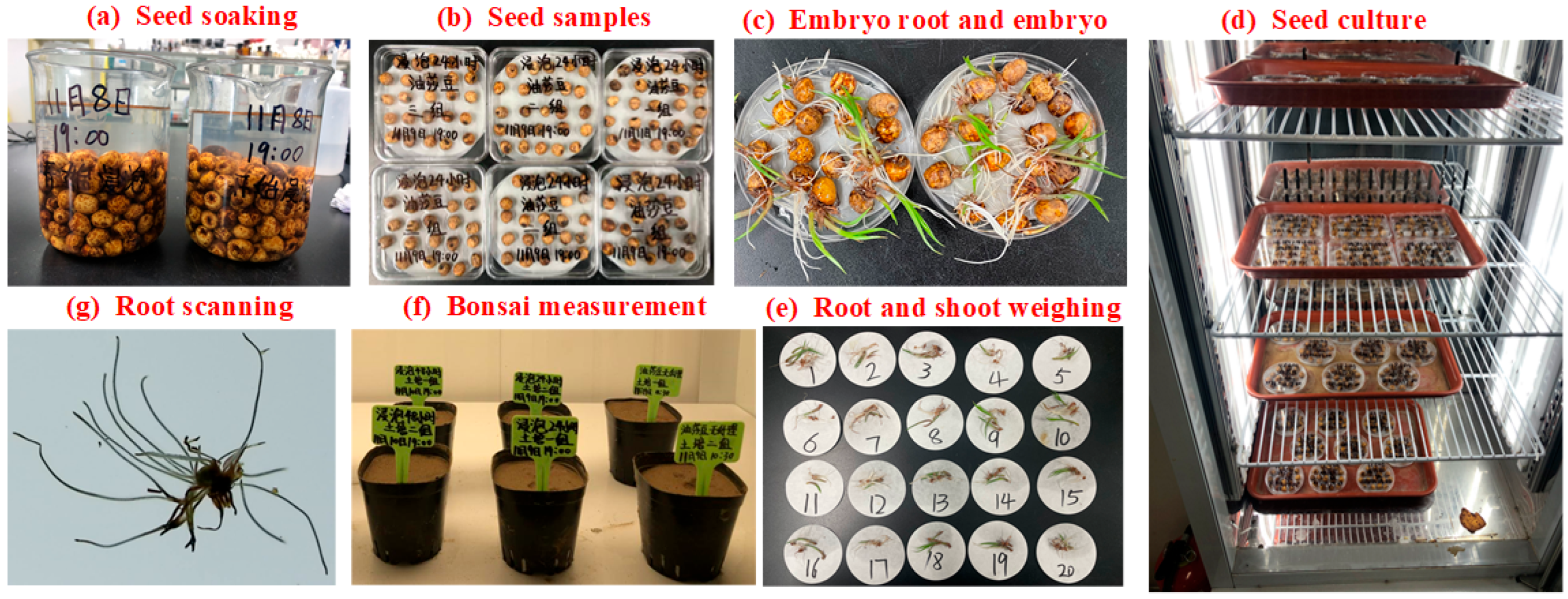
Figure 1. Soaking and Testing Experiments for C. esculentus Seeds. Figure (a) shows the seed soaking operation, which commenced at 19:00 on 8 November 2024. Figure (b) displays the grouping of seed culture dishes, divided into three groups, with the seeds placed in the dishes at 19:00 on 9 November 2024. Figure (f) illustrates the pot experiment, which included three treatments (non-soaked C. esculentus, 24 h soaking, and 48 h soaking). Sowing was completed at 19:00 on 9 November and 10:30 on 10 November 2024.
Agronomy 15 02440 g001
Figure 2. Comparison Between Physical C. esculentus Seeds and the Discrete Element Model: (a) Physical Samples of C. esculentus; (b) Discrete Element Model.
Agronomy 15 02440 g002
Figure 3. Test for Measuring Static and Dynamic Friction Coefficients.
Agronomy 15 02440 g003
Figure 4. The determination of the Coefficient of Restitution for C. esculentus Seeds.
Agronomy 15 02440 g004
Figure 5. Physical Stacking Angle Test and Image Processing.
Agronomy 15 02440 g005
Figure 6. Simulated Stacking Angle Test.
Agronomy 15 02440 g006
Figure 7. Physical Dynamic Stacking Angle Test.
Agronomy 15 02440 g007
Figure 8. Discrete Element Simulation of the Dynamic Stacking Angle. The dashed box delineates an enlarged front view of the angle of repose.
Agronomy 15 02440 g008
Figure 9. Response Surfaces of the Interactive Effects between Factor Pairs on the stacking angle of C. esculentus Seeds: (a) Response surface of the stacking angle for the interaction between the inter-seed dynamic friction coefficient and the inter-seed static friction coefficient; (b) Response surface of the stacking angle for the interaction between the inter-seed static friction coefficient and the seed-rubber rolling friction coefficient; (c) Response surface of the stacking angle for the interaction between the inter-seed rolling friction coefficient and the seed-rubber rolling friction coefficient.
Agronomy 15 02440 g009
Table 1. Simulation Parameters of Rubber.
MaterialParameterValue
NBRPoisson’s Ratio0.3
Shear Modulus (MPa)38.46
Density (kg/m3)1800
Table 2. Physical Stacking Angle Test Results.
Serial Number12345678910Mean Value
Stacking Angle (°)47.8250.2448.5349.8746.7550.7648.1349.5547.2850.5749.03
Table 3. Simulation Parameters for the Plackett Burman Test.
FactorsCode
−101
A Poisson’s Ratio of C. esculentus Seeds0.320.410.49
B Shear Modulus of C. esculentus Seeds (MPa)253337
C Coefficient of Restitution between C. esculentus Seeds0.320.460.58
D Static Friction Coefficient between C. esculentus Seeds0.420.560.69
E Rolling Friction Coefficient between C. esculentus Seeds0.220.310.43
F Coefficient of Restitution between C. esculentus Seeds and Rubber0.340.540.74
G Static Friction Coefficient between C. esculentus Seeds and Rubber0.200.260.32
H Rolling Friction Coefficient between C. esculentus Seeds and Rubber0.150.210.27
J, K, L Dummy Parameters
Note. A dash (—) indicates a non-applicable or dummy parameter in the design.
Table 4. Plackett Burman Experimental Design and Simulation Results.
Serial NumberFactorStacking Angle (°)
ABCDEFGHJKL
11−1−1−11−1111−1−151.23
2−1−1−1−1−1−1−1−1−1−1−128.86
3−111−1111−1−11141.04
411−1−1−11−1111−133.16
51−111−11111−1145.72
61−1111−1−1−11−1149.75
711−1111−1−111−155.19
80000000000050.16
9111−1−1−11−111140.09
10−11−111−111−11−161.41
11−1−1−11−111−1−1−1−134.37
120000000000051.23
130000000000050.62
14−1−11−111−11−1−1145.70
15−1111−1−1−11−11145.56
Table 5. Steepest Ascent Experiment Design and Results.
Serial NumberFactorStacking
Angle θ (°)
Relative
Error (%)
Static Friction Coefficient Between C. esculentus Seeds (D)Rolling Friction
Coefficient Between C. esculentus Seeds (E)
Rolling Friction
Coefficient Between C. esculentus Seeds and Rubber (H)
10.40.220.1240.24 ± 0.1618.9
20.50.30.1844.45 ± 0.2510.42
30.60.380.2448.68 ± 0.131.89
40.70.460.355.77 ± 0.4612.39
Table 6. Parameter Design for the Box Behnken Experiment.
CodeExperimental Factor
Static Friction Coefficient Between C. esculentus Seeds (D)Rolling Friction Coefficient
Between C. esculentus Seeds (E)
Rolling Friction Coefficient Between C. esculentus Seeds and Rubber (H)
−10.460.280.16
00.530.330.20
10.60.380.24
Table 7. Box Behnken Experimental Design and Results.
Serial NumberFactorStacking Angle θ (°)
DEH
100044.32
201−149.55
310−151.06
400044.17
510152.07
600045.16
700045.21
80−1−145.98
900045.63
101−1049.99
11−11049.69
12−1−1048.56
1311053.91
14−10148.57
15−10−147.98
160−1147.77
1701151.16
Table 8. Comprehensive Analysis of Germination Indicators of C. esculentus under Different Soaking Durations.
Soaking Duration (h)Germination Rate (%)Germination
Potential (%)
Germination
Delay (d)
Germination
Period (d)
Germination
Index
052.00 ± 8.72 c63.33 ± 7.57 c3.67 ± 0.58 a14.33 ± 0.58 a2.93 ± 0.39 c
2468.00 ± 2.00 b73.33 ± 1.15 b3 b13.67 ± 0.58 a4.06 ± 0.07 b
4889.33 ± 1.15 a92.67 ± 2.31 a2 c8.67 ± 1.16 b5.41 ± 0.04 a
7240.00 ± 2.00 d40.67 ± 2.31 d2 c--2.69 ± 0.12 c
‘--’: Due to low germination percentage and incomplete process, which prevents a valid calculation of the germination duration. For the “Germination Delay” data, the absence of a standard deviation (SD) value indicates that the three experimental replicates yielded identical observed values, resulting in a standard deviation of zero. This reflects highly synchronized seed germination under the respective treatment. Within a column, values followed by different lowercase letters are significantly different according to Duncan’s multiple range test at p < 0.05. The same convention applies to the table below.
Table 9. Effects of Different Soaking Treatments on Root and Shoot Weight Indicators of C. esculentus After Development.
Soaking Duration (h)Root Fresh Weight (mg)Shoot Fresh Weight (mg)Total Root Length (cm)
040.47 ± 4.64 c49.2 ± 7.83 c22.61 ± 5.03 c
2464.2 ± 9.31 b60.93 ± 10.24 b44.15 ± 7.34 b
48100.4 ± 10.82 a102.5 ± 9.52 a78.07 ± 4.58 a
Within a column, values followed by different lowercase letters are significantly different according to Duncan’s multiple range test at p < 0.05.
Table 10. Analysis of Plackett Burman Test Parameters.
Source of VariationContribution (%)F-Valuep-ValueSignificance Rank
Model--10.850.0089--
A2.522.570.16955
B3.303.370.12597
C0.100.1030.76134
D20.5320.950.0063
E44.6245.550.00112
F3.593.670.11371
G1.861.90.22658
H8.548.710.03186
The symbol “--” indicates that no corresponding numerical value is applicable. Specifically, the “Model” row is designated for evaluating the collective significance of all factors and does not participate in comparisons between individual factors. Therefore, both the percentage contribution and significance ranking are not applicable to this entry.
Table 11. Analysis of Box Behnken Test Parameters.
Source of VariationMean SquareSum of SquaresDegrees of Freedomp-Value
Model14.51130.6390.0001
D18.718.710.0002
E18.0318.0310.0002
H3.133.1310.0218
DE1.951.9510.0535
DH0.04410.044110.7374
EH0.00810.008110.8853
D250.7650.7610.0001
E219.7819.7810.0002
H210.1110.1110.0011
Disclaimer/Publisher’s Note: The statements, opinions and data contained in all publications are solely those of the individual author(s) and contributor(s) and not of MDPI and/or the editor(s). MDPI and/or the editor(s) disclaim responsibility for any injury to people or property resulting from any ideas, methods, instructions or products referred to in the content.