Article

Evaluating Critical Nitrogen Dilution Curves for Assessing Maize Nitrogen Status across the US Midwest


1
College of Resources and Environmental Sciences, Northeast Agricultural University, Harbin 150030, China
2
Precision Agriculture Center, Department of Soil, Water and Climate, University of Minnesota, St. Paul, MN 55108, USA
3
USDA-ARS Cropping Systems and Water Quality Research Unit, 243 Agricultural Engineering Building, Columbia, MO 65211, USA
4
Department of Agronomy, Purdue University, Lilly 3-365, West Lafayette, IN 47907, USA
5
Corteva Agriscience, 7100 NW 62nd Ave., Johnston, IA 50131, USA
6
Department of Agronomy and Horticulture, University of Nebraska, Keim 367, Lincoln, NE 68583, USA
7
School of Natural Resource Sciences, North Dakota State University, P.O. Box 6050, Fargo, ND 58108, USA
8
USDA-ARS Pasture Systems & Watershed Management Research, Curtin Rd, Bldg 3702, University Park, PA 16802, USA
9
Department of Crop Sciences, University of Illinois, W-301 Turner Hall, 1102 S. Goodwin, Urbana, IL 61801, USA
10
Department of Agronomy, Iowa State University, 3208 Agronomy Hall, Ames, IA 50011, USA
11
Agoro Carbon Alliance, Lincoln, NE 68512, USA
*
Author to whom correspondence should be addressed.
Agronomy 2023, 13(7), 1948; https://doi.org/10.3390/agronomy13071948

Submission received: 1 July 2023 / Revised: 15 July 2023 / Accepted: 20 July 2023 / Published: 23 July 2023
(This article belongs to the Special Issue The Importance of Soil Spatial Variability in Precision Agriculture)

Abstract

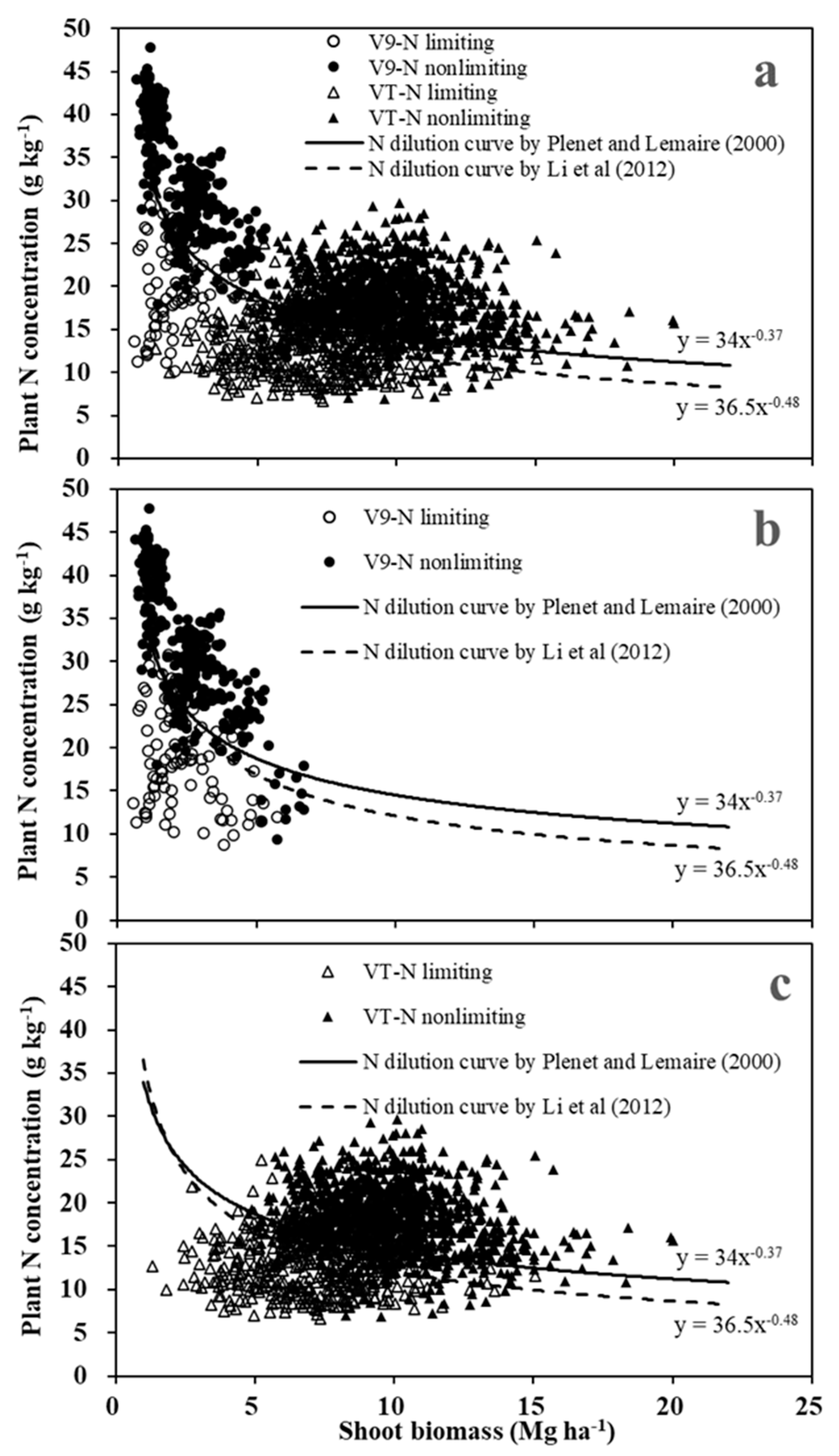
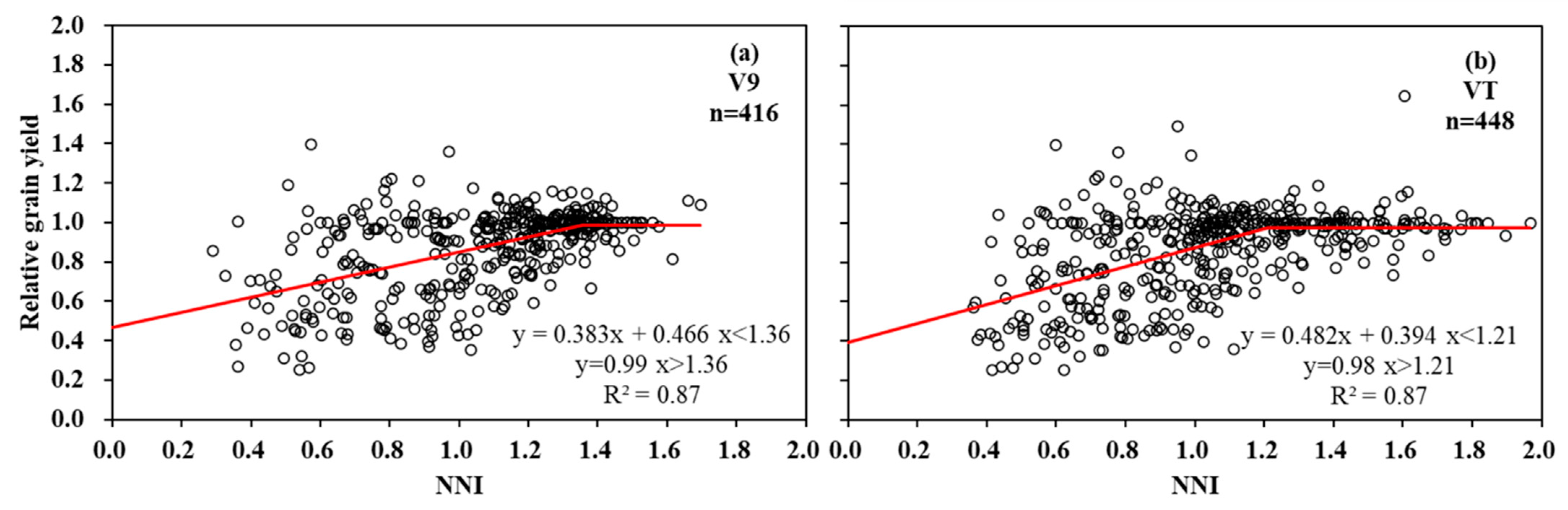
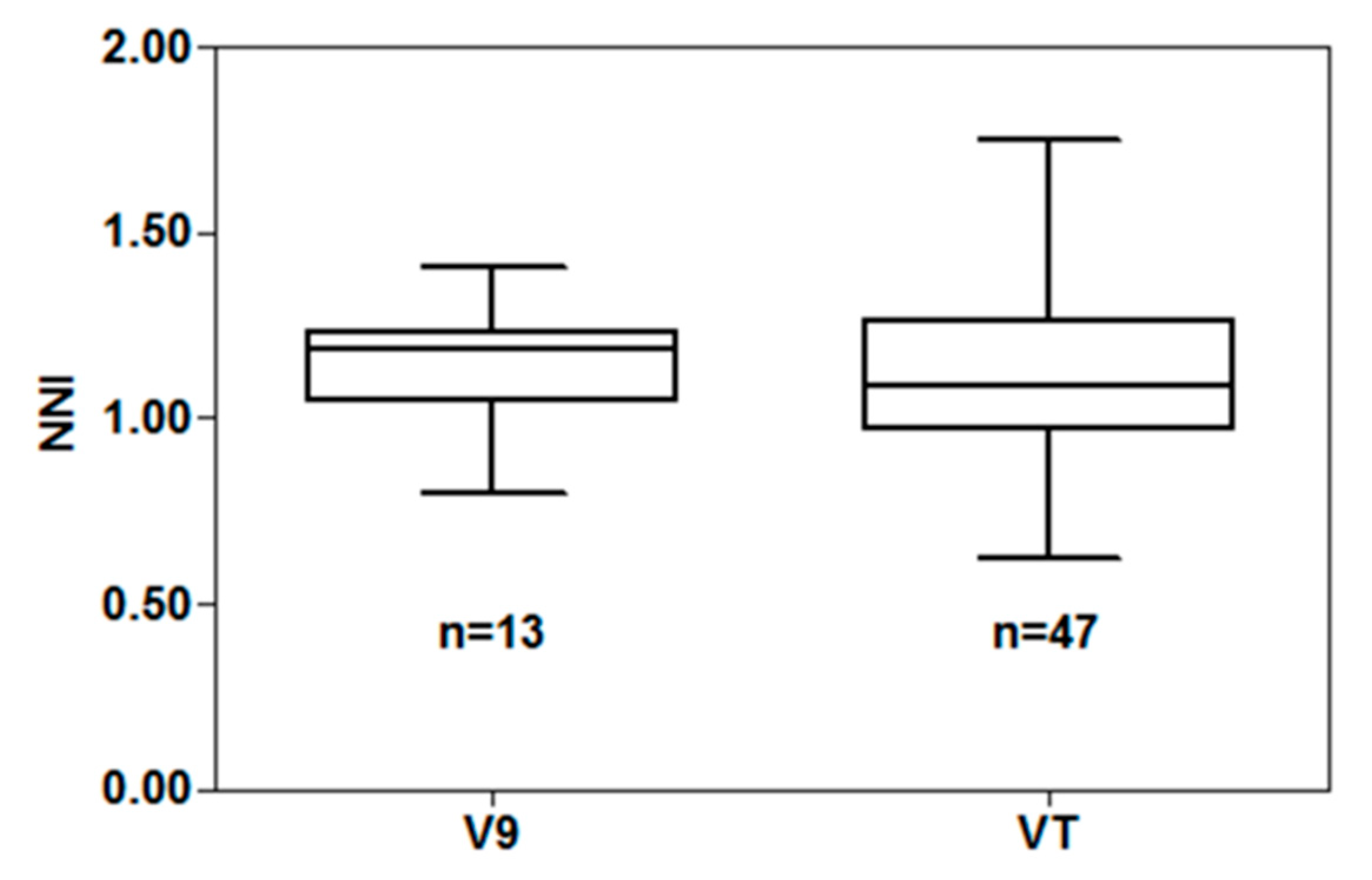
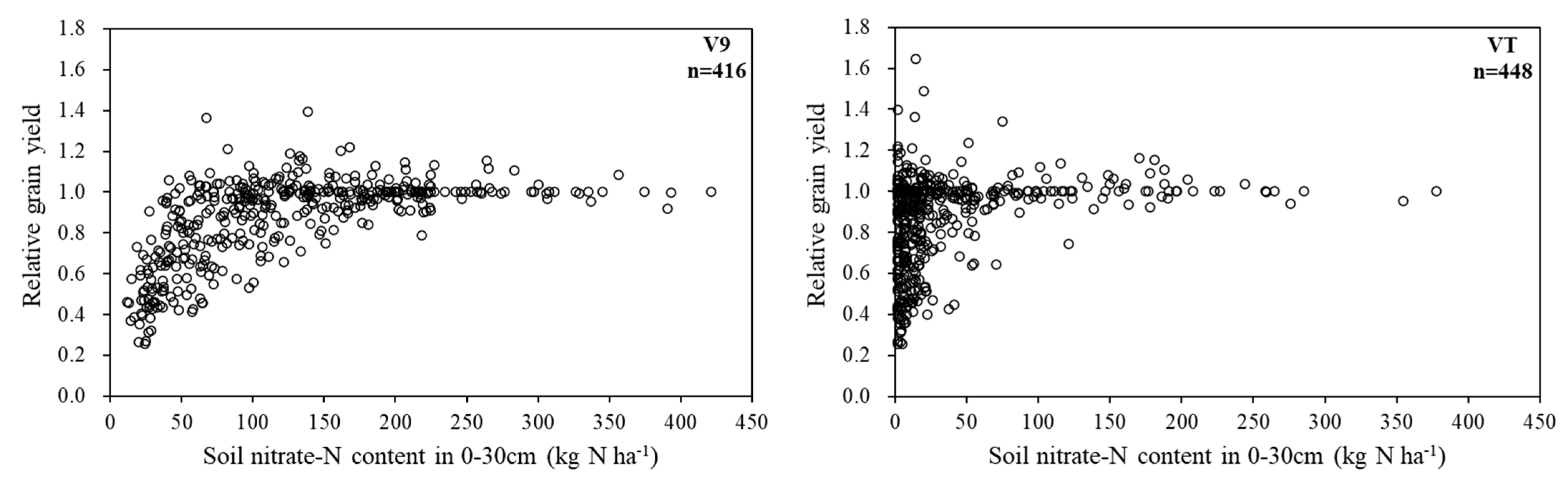
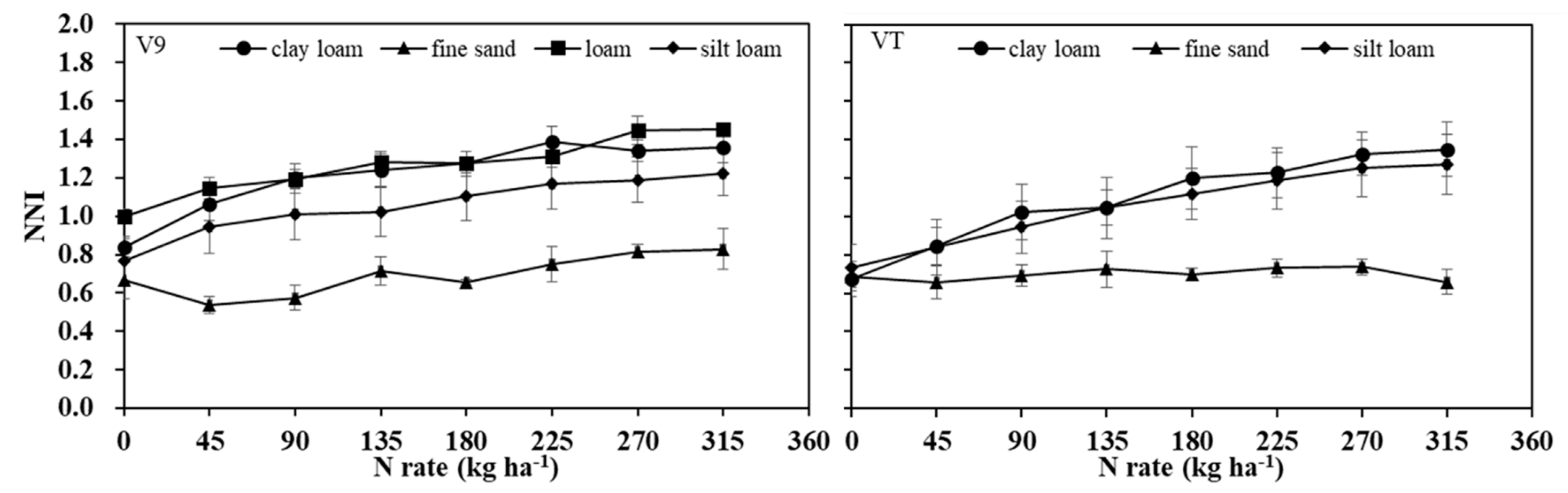
Plant N concentration (PNC) has been commonly used to guide farmers in assessing maize (Zea mays L.) N status and making in-season N fertilization decisions. However, PNC varies based on the development stage. Therefore, a relationship between biomass and N concentration is needed (i.e., critical N dilution curve; CNDC) to better understand when plants are N deficient. A few CNDCs have been developed and used for plant N status diagnoses but have not been tested in the US Midwest. The objective of this study was to evaluate under highly diverse soil and weather conditions in the US Midwest the performance of CNDCs developed in France and China for assessing maize N status. Maize N rate response trials were conducted across eight US Midwest states over three years. This analysis utilized plant and soil measurements at V9 and VT development stages and final grain yield. Results showed that the French CNDC (y = 34.0x−0.37, where y is critical PNC, and x is aboveground biomass) was better with a 91% N status classification accuracy compared to only 62% with the Chinese CNDC (y = 36.5x−0.48). The N nutrition index (NNI), which is the quotient of the measured PNC and the calculated critical N concentration (Nc) based on the French CNDC was significantly related to soil nitrate-N content (R2 = 0.38–0.56). Relative grain yield on average reached a plateau at NNI values of 1.36 at V9 and 1.21 at VT but for individual sites ranging from 0.80 to 1.41 at V9 and from 0.62 to 1.75 at VT. The NNI threshold values or ranges optimal for crop biomass production may not be optimal for grain yield production. It is concluded that the CNDC developed in France is suitable as a general diagnostic tool for assessing maize N status in US Midwest. However, the threshold values of NNI for diagnosing maize N status and guiding N applications vary significantly across the region, making it challenging to guide specific on-farm N management. More studies are needed to determine how to effectively use CNDC to make in-season N recommendations in the US Midwest.
Keywords: critical nitrogen dilution curve; nitrogen nutrition index; soil nitrate-N content; crop nitrogen status diagnosis; precision nitrogen management critical nitrogen dilution curve; nitrogen nutrition index; soil nitrate-N content; crop nitrogen status diagnosis; precision nitrogen management