Viscosity Characteristics of Cationic Polyacrylamide Aqueous Solutions

 , , ,
, , ,
Abstract
1. Introduction
2. Materials and Methods
2.1. Materials
2.2. Methods
3. Results and Discussion
3.1. Flow Profiles of Cationic Polyacrylamide Solutions
3.2. Viscosity Profiles
3.3. Effect of Temperature on Cationic Polyacrylamide Flow Behavior
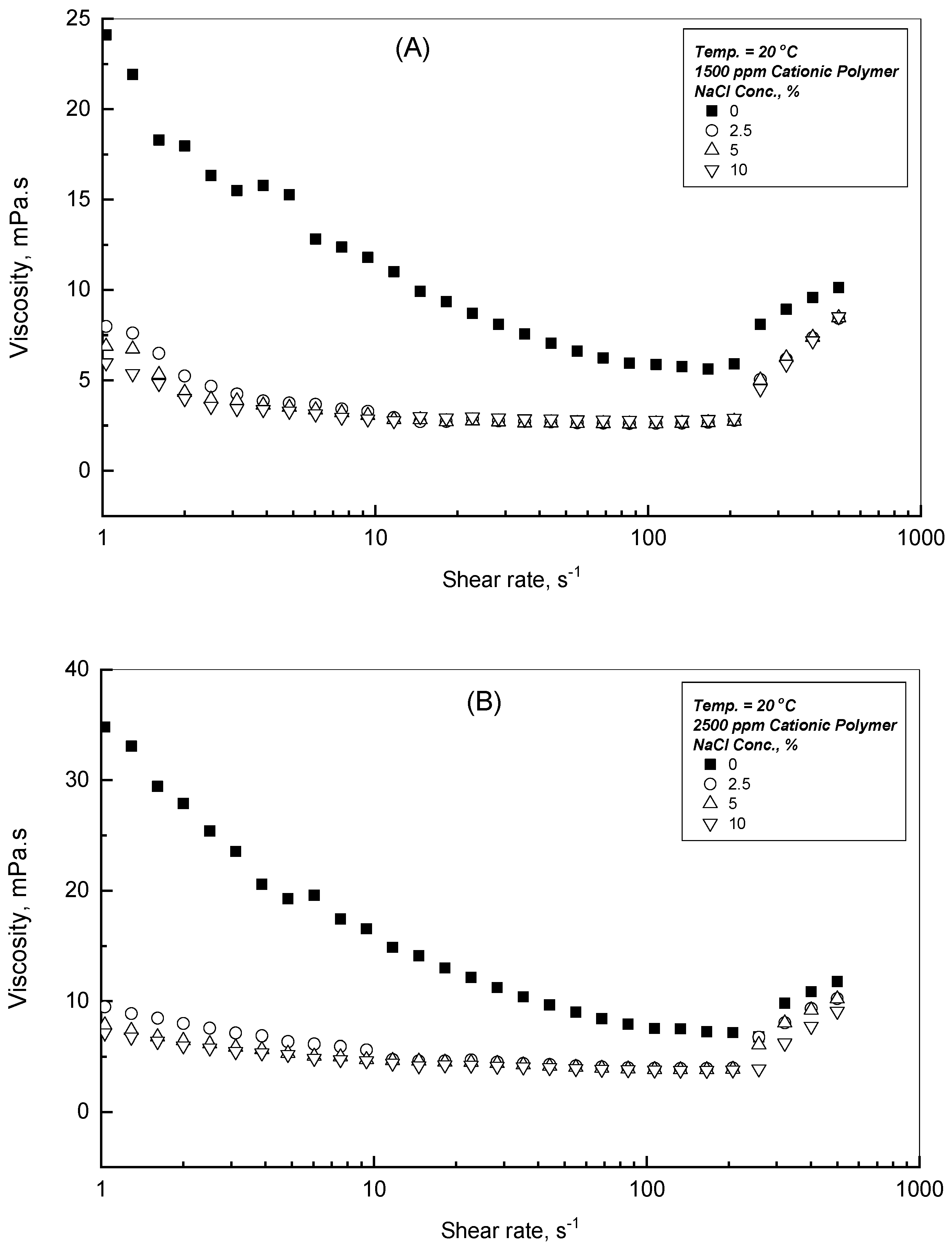
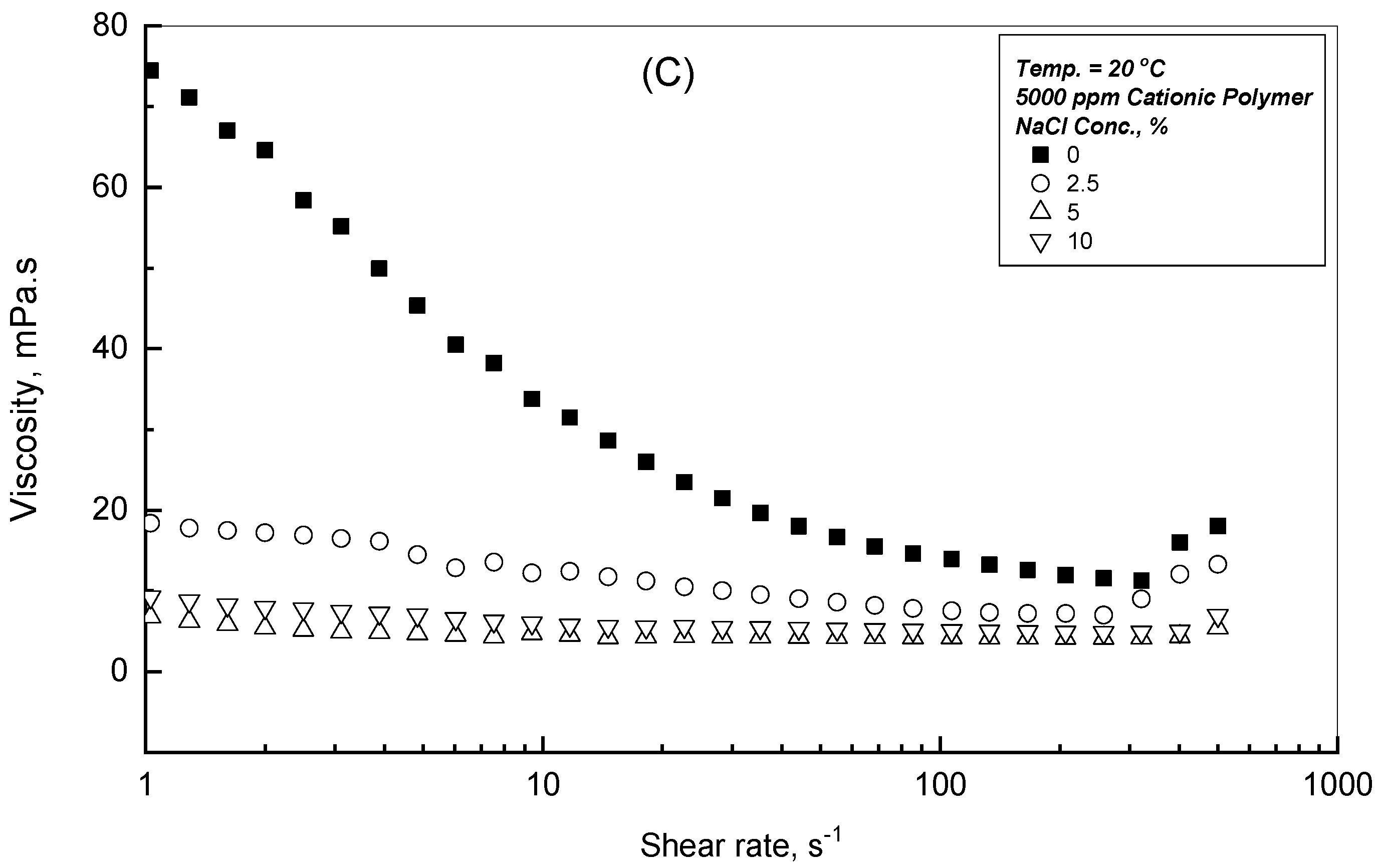
3.4. Effect of NaCl Addition
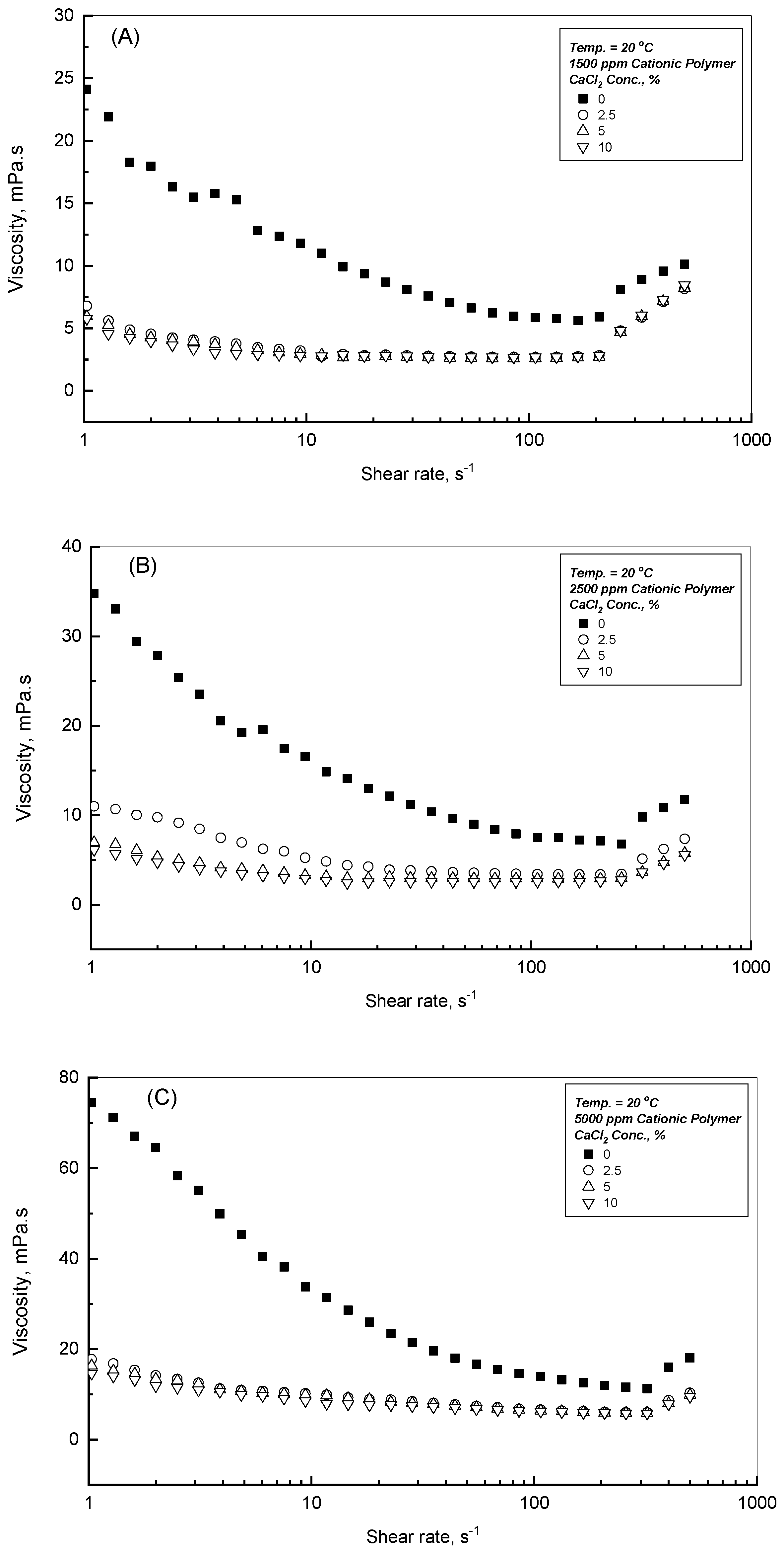
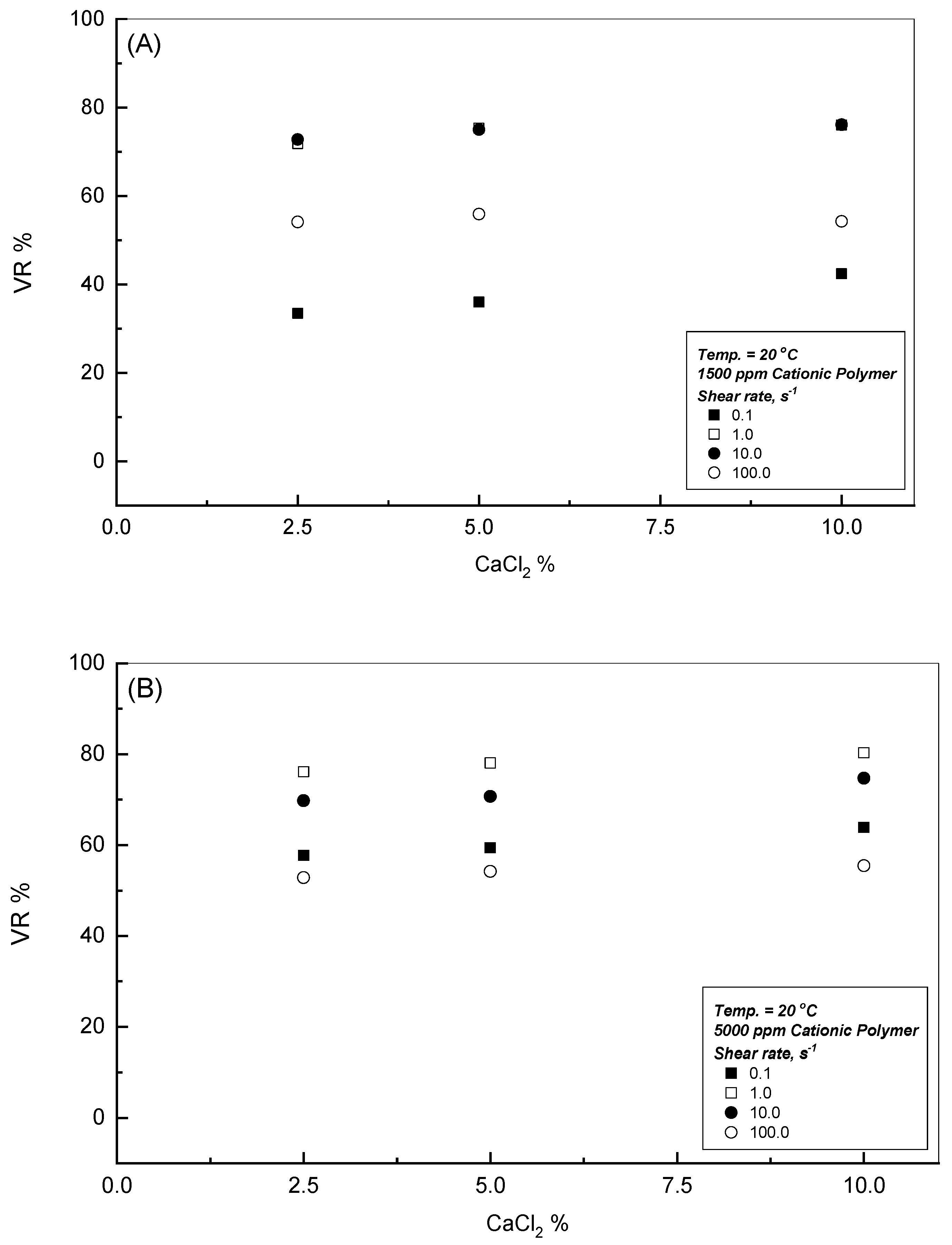
3.5. Effect of CaCl2 Addition
4. Conclusions
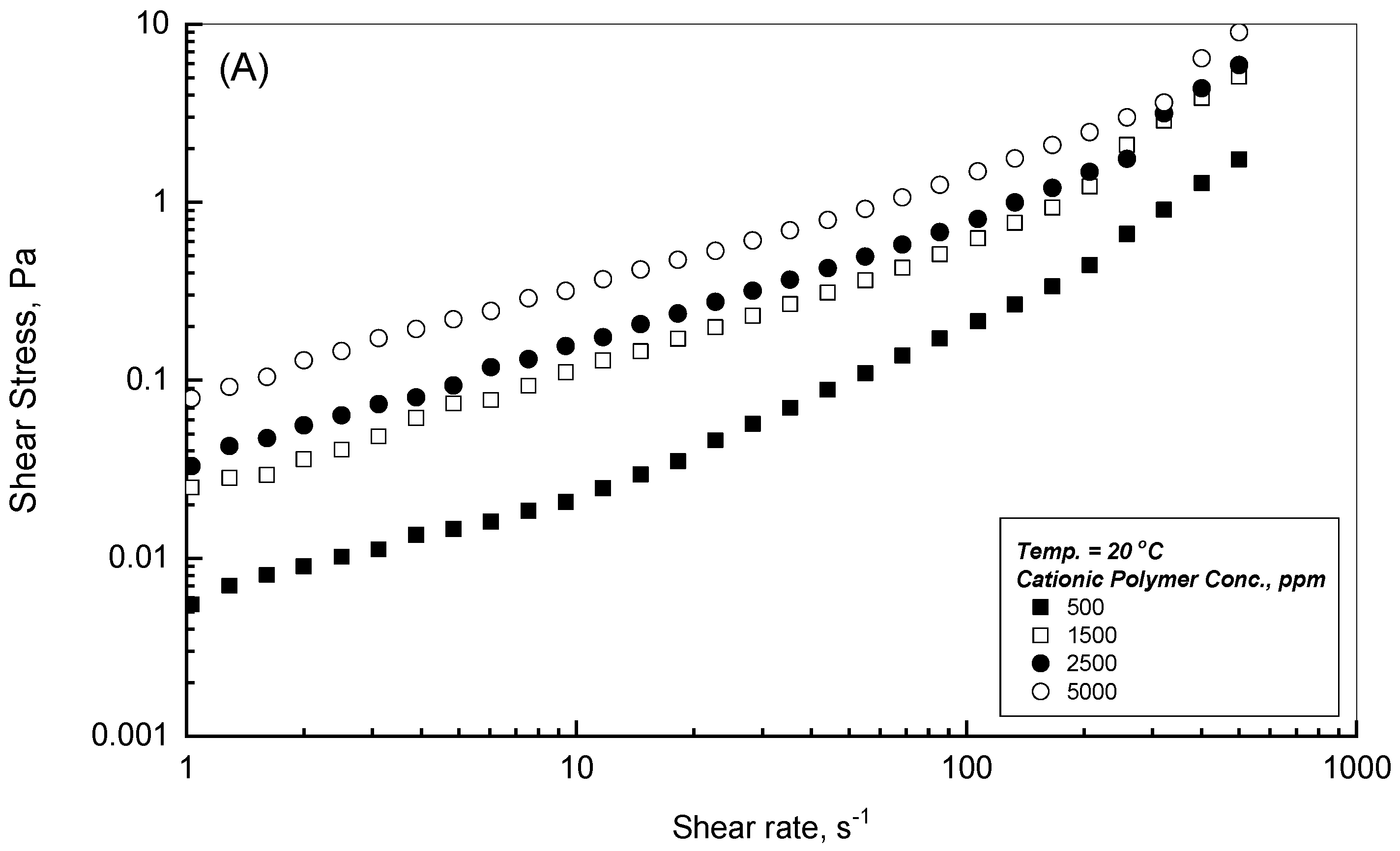
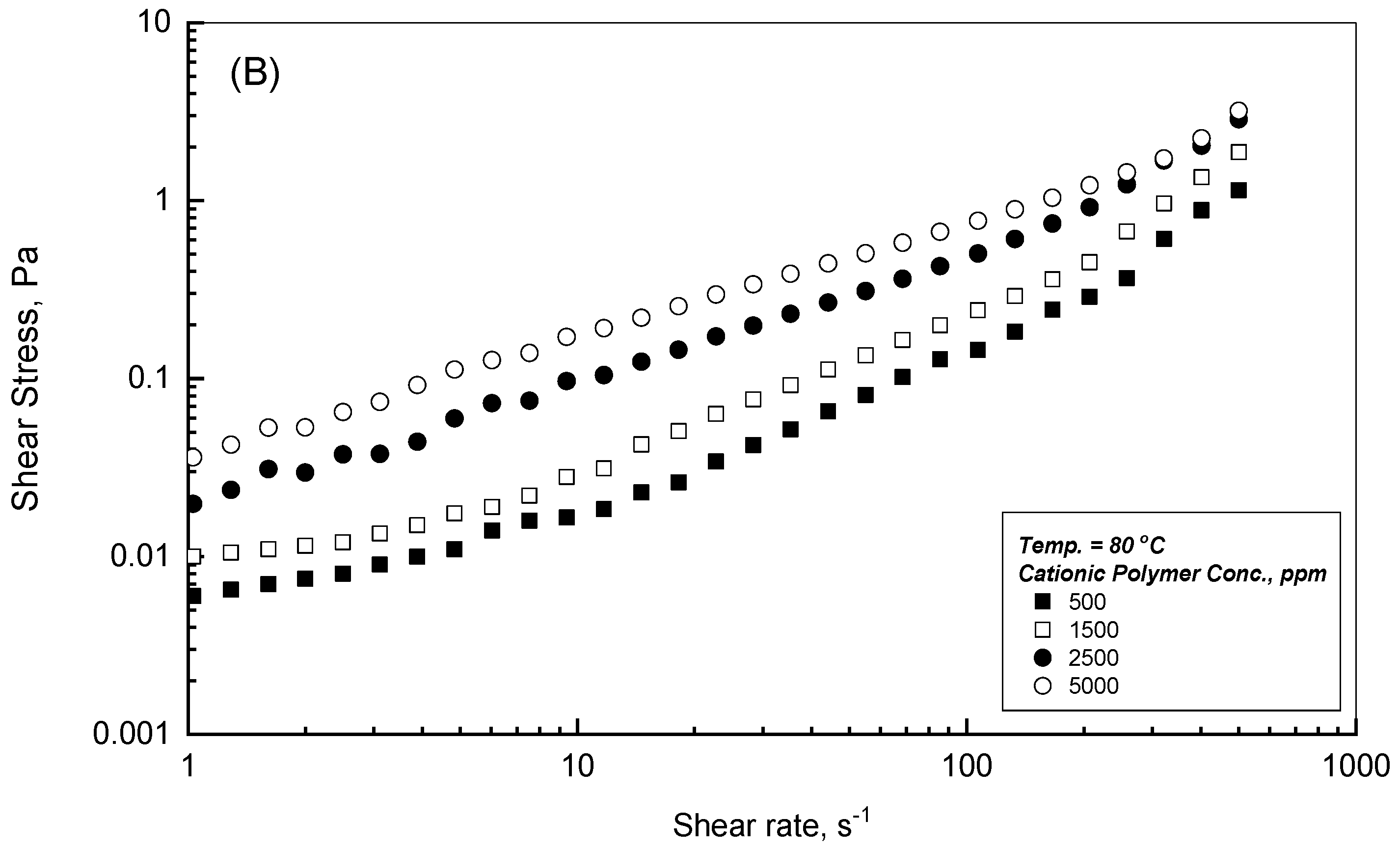
- The shear stress measurements increase with both shear rate and polymer concentration, up to a shear rate of 200 s−1. Beyond this level, the shear stress–shear rate profiles approach each other regardless the polymer concentration.
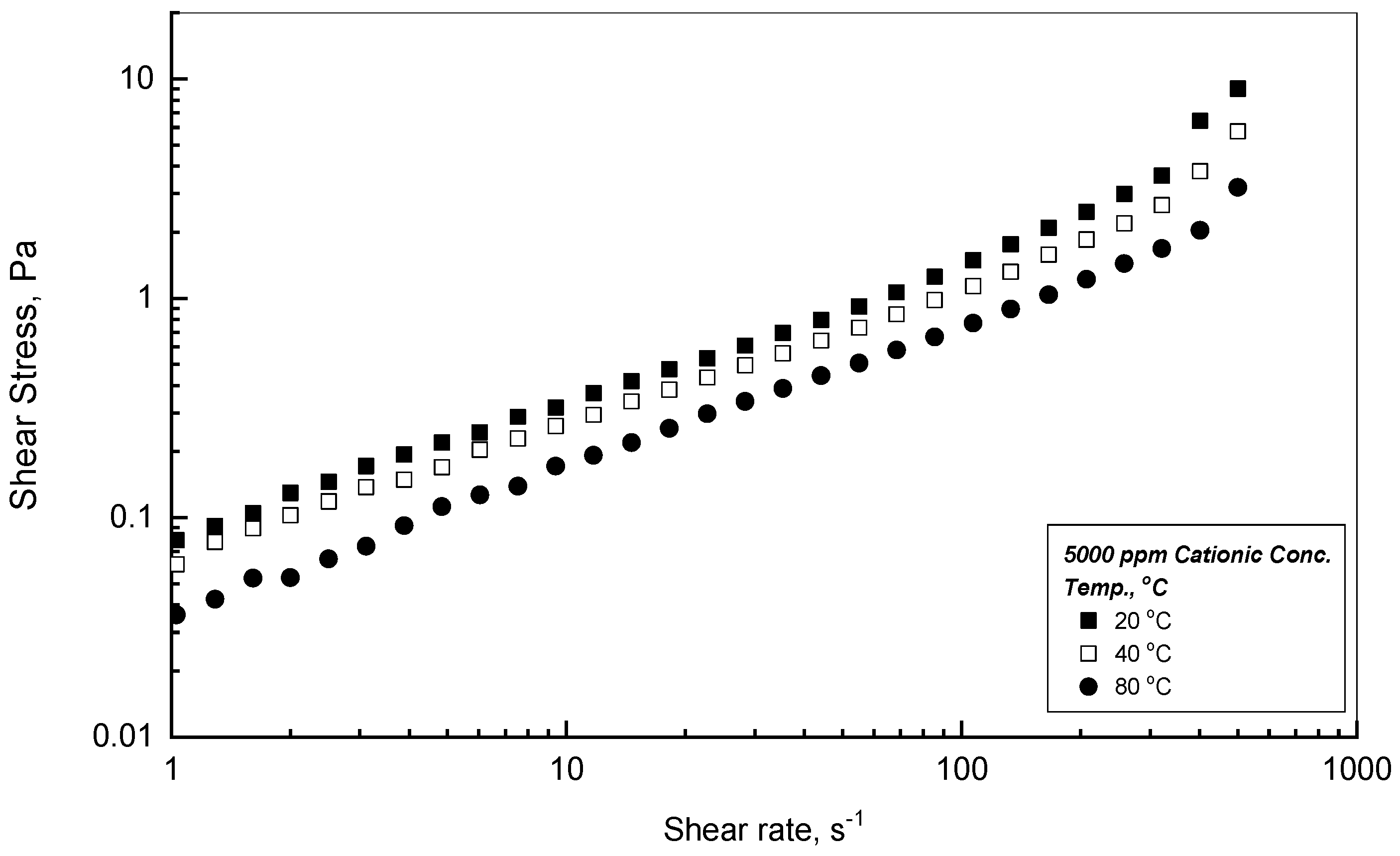
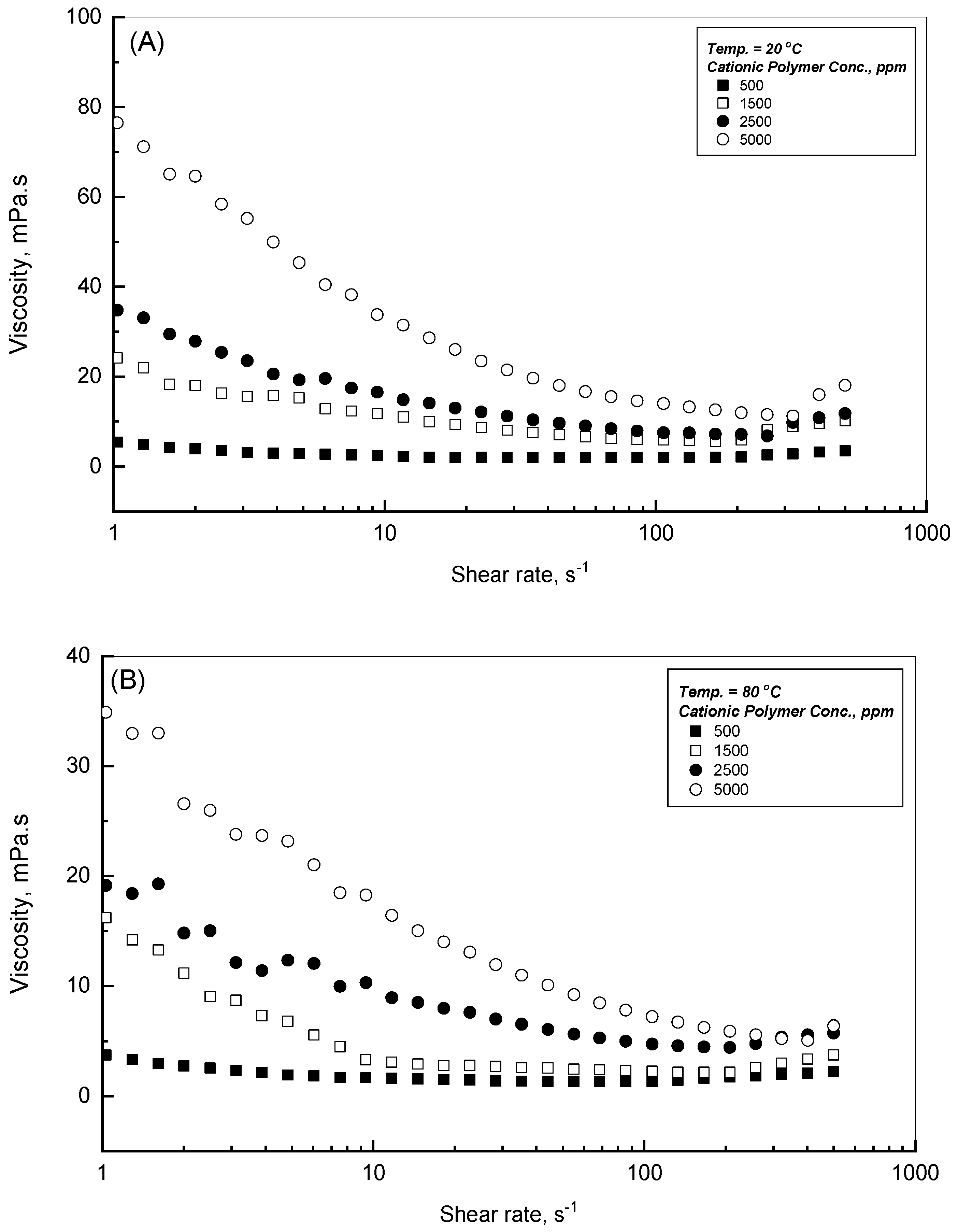
- The obtained rheogram of CPAA declines significantly with the assigned temperature from 20 to 80 °C due to the thermal negative effect on the molecular interactions of the examined polymer solutions.
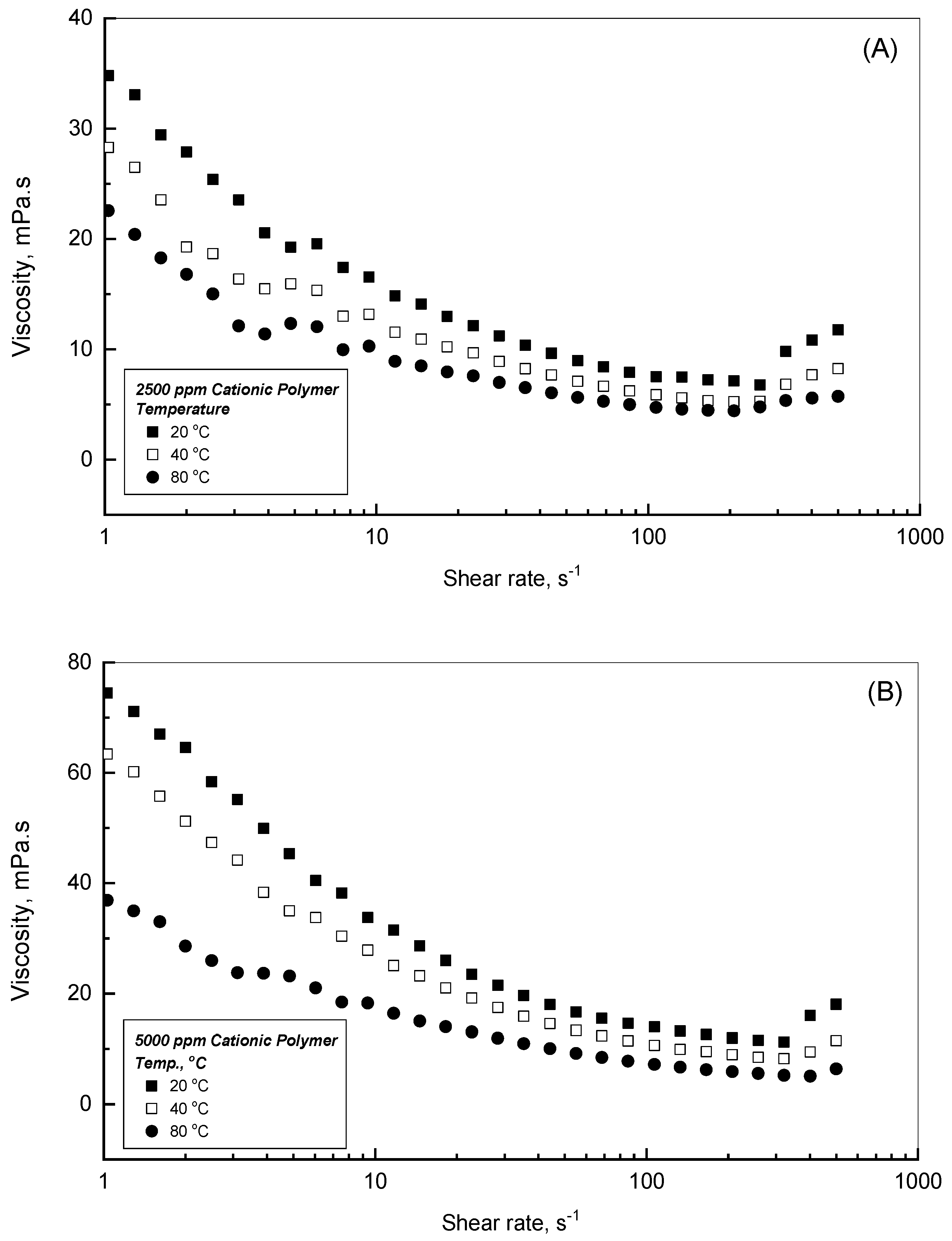
- The CPAA polymer solutions with different concentrations display strong shear-thinning non-Newtonian flow profiles with shear rate in which the viscosity decreases considerably with shear rate until 200 s−1. Shear-thickening flow profiles will result with a shear rate higher than 200 s−1.
- The results show significant increases in dynamic viscosity with CPAA concentration from 500 to 5000 ppm.
- The measurements of the CPAA dynamic viscosity show strong deterioration with temperature over the range of 20 to 80 °C.
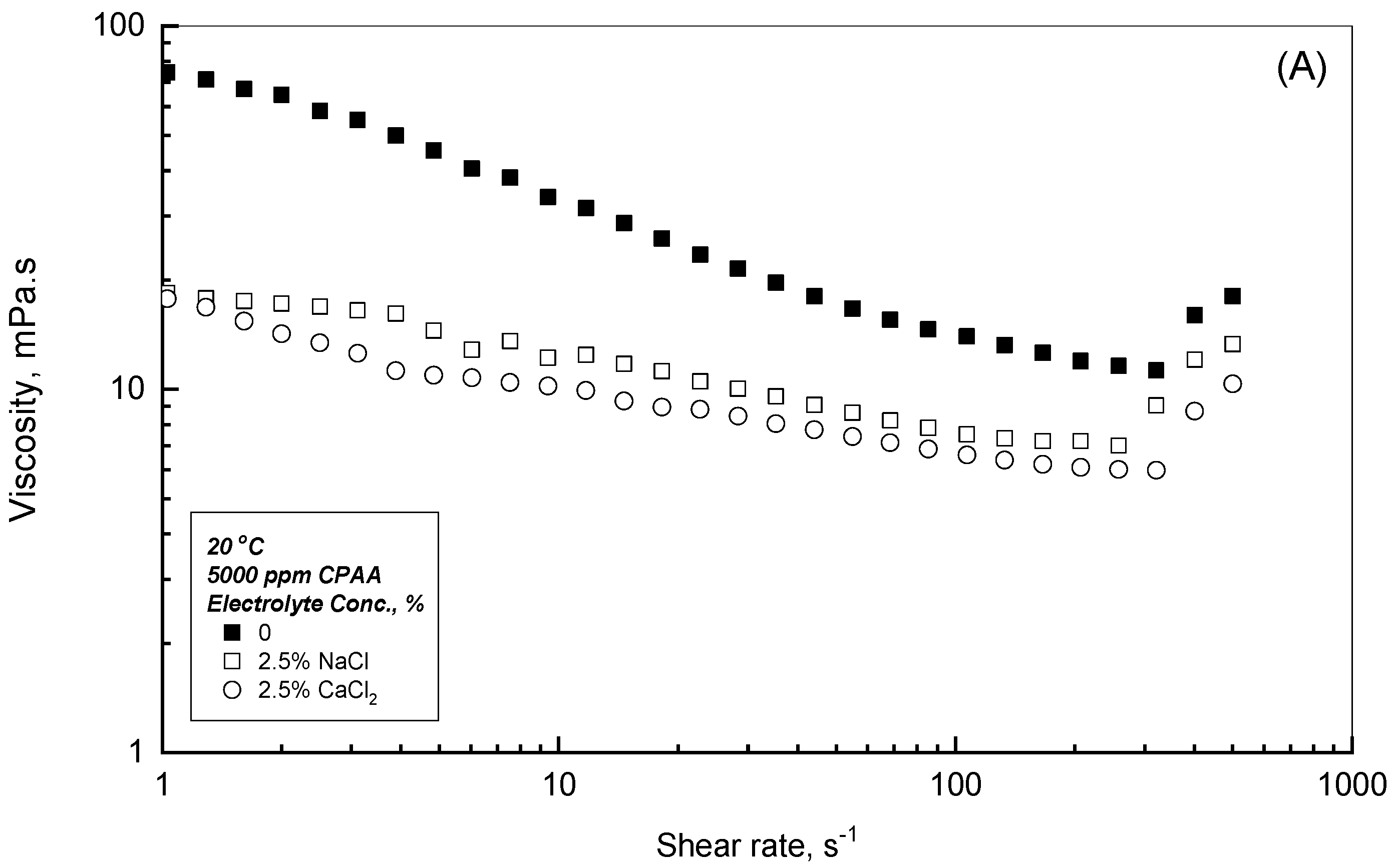
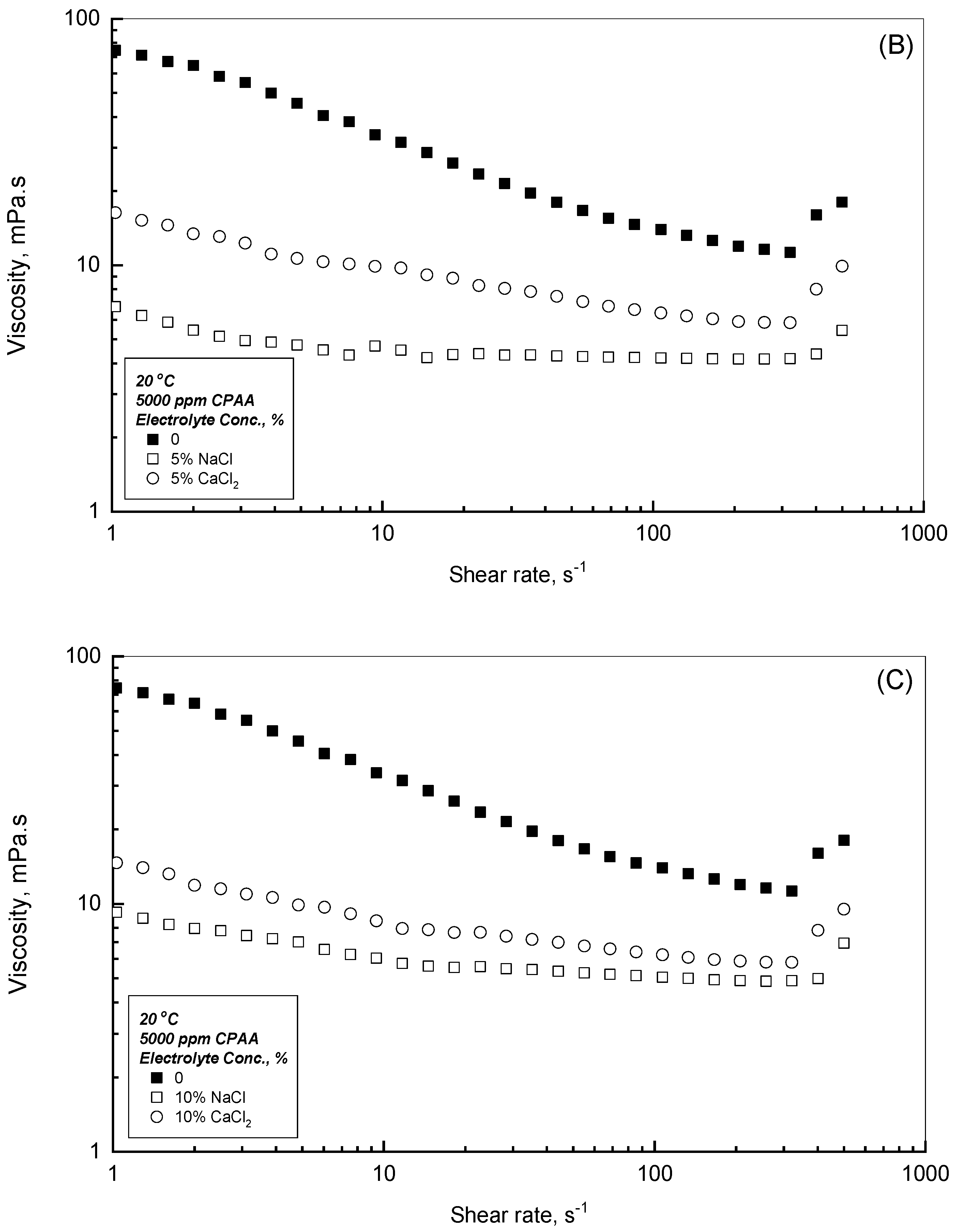
- The existence of NaCl within the CPAA solutions will reduce the viscosity flow profiles significantly for all polymer concentrations, especially for the higher concentration of 5000 ppm.
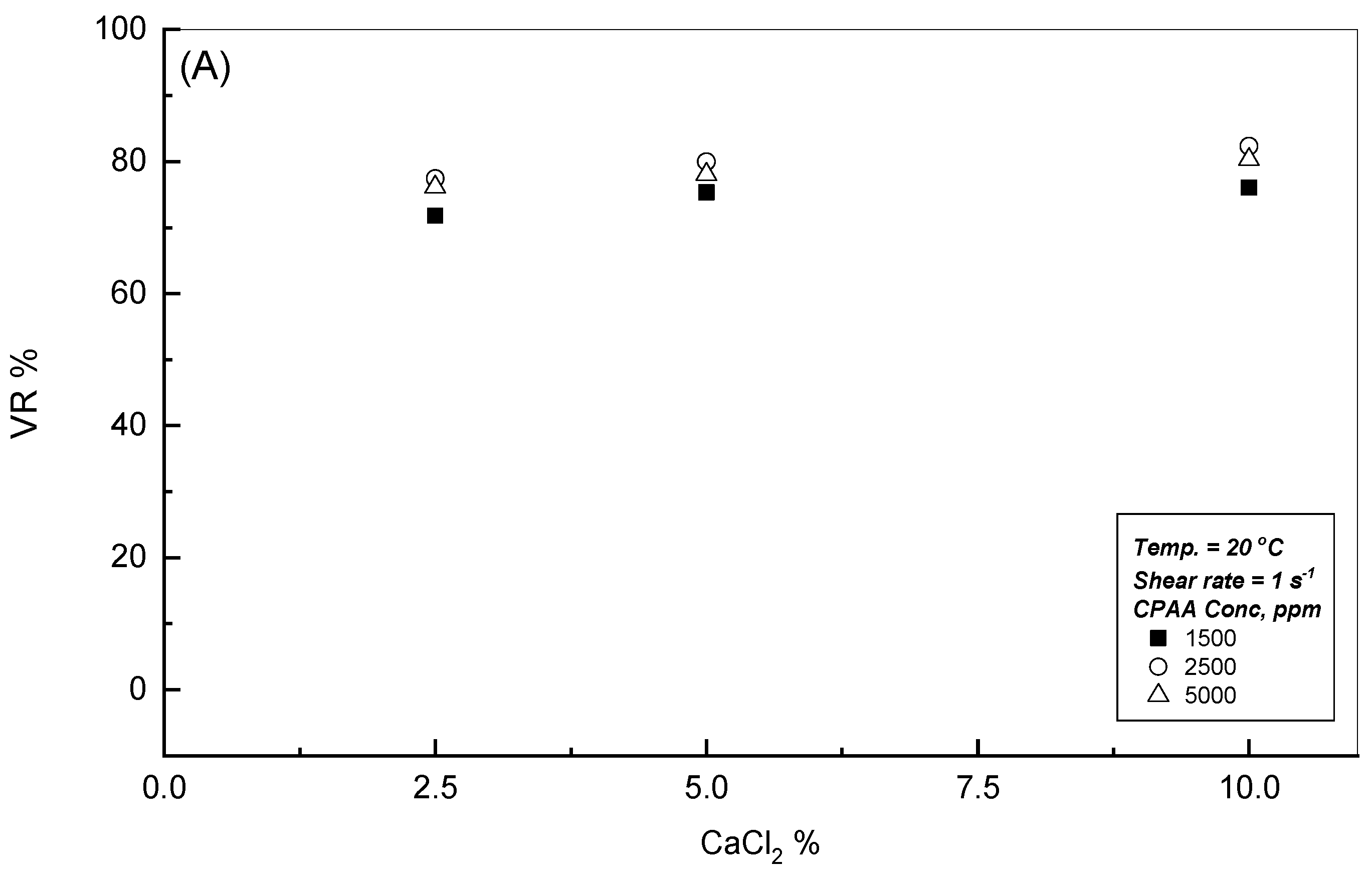
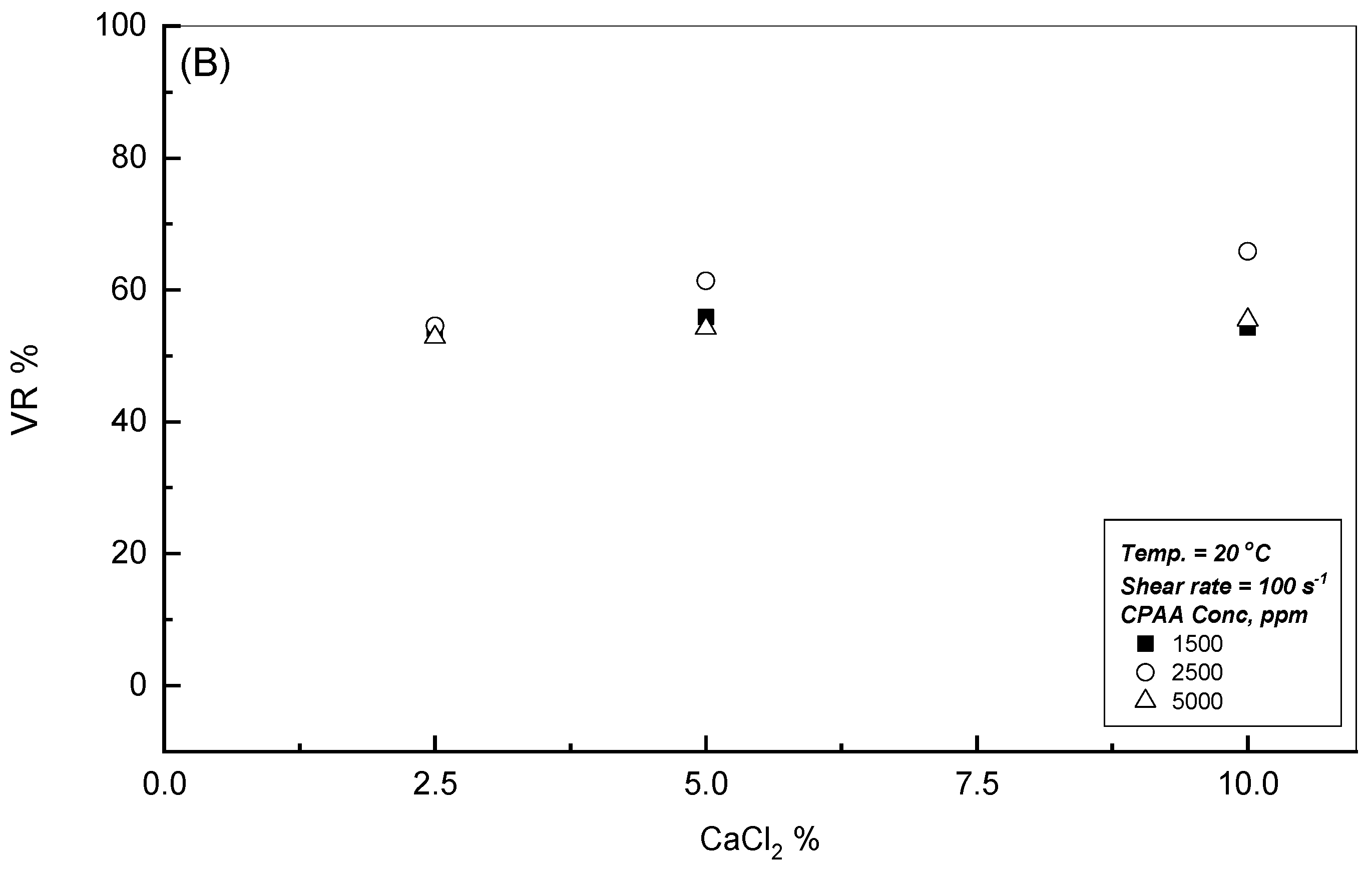
- The presence of 2.5 Wt.% CaCl2 in the CPAA solutions decreases the measurements of the dynamic viscosity values, while this effect is weakened with more addition of CaCl2 into the polymer solution.
- For the addition of 2.5 Wt.% electrolyte, the presence of CaCl2 causes slightly higher viscosity reduction than in the case of NaCl. However, with the addition of higher electrolyte concentrations, the opposite behavior was reported, in which NaCl causes greater viscosity reduction than CaCl2.
Author Contributions
Funding
Data Availability Statement
Conflicts of Interest
References
- Hon, V.Y.; Kechut, N.I.; Razak, W.N. Enhanced oil recovery potential of heavy-oil fields in Africa. In Proceedings of the International Oil Conference and Exhibition in Mexico, Veracruz, Mexico, 27–30 June 2007. [Google Scholar]
- Arjmand, O.; Kalbasi, M.; Roostaei, A.R. Experimental study of chemical flooding using new chemical component to enhance oil recovery. Res. J. Appl. Sci. Eng. Technol. 2012, 4, 3056–3061. [Google Scholar]
- Wang, Z.; Le, X.; Zhang, C. The role of matching relationship between polymer injection parameters and reservoirs in enhanced oil recovery. J. Pet. Sci. Eng. 2013, 111, 139–143. [Google Scholar] [CrossRef] [Scilit]
- Wei, P.; Pu, W.; Sun, L.; Li, D.; Ji, X. Alkyl polyglucosides stabilized foam for gas controlling in high-temperature and high-salinity environments. J. Ind. Eng. Chem. 2018, 60, 143–150. [Google Scholar] [CrossRef] [Scilit]
- Druetta, P.; Picchioni, F. Surfactant-polymer interactions in a combined enhanced oil recovery flooding. Energies 2020, 13, 6520. [Google Scholar] [CrossRef] [Scilit]
- Meng, Q.; Cai, Z.; Cai, J. Oil recovery by spontaneous imbibition from partially water-covered matrix blocks with different boundary conditions. J. Pet. Sci. Eng. 2019, 172, 454–464. [Google Scholar] [CrossRef] [Scilit]
- Tavakkoli, O.; Kamyab, H.; Shariati, M. Effect of nanoparticles on the performance of polymer/surfactant flooding for enhanced oil recovery: A review. Fuel 2022, 312, 122867. [Google Scholar] [CrossRef] [Scilit]
- Wang, Y.; Liu, H.; Chen, Z. A visualized investigation on the mechanisms of anti-water coning process using nitrogen injection in horizontal wells. J. Pet. Sci. Eng. 2018, 166, 636–649. [Google Scholar] [CrossRef] [Scilit]
- Yin, D.; Zhao, D. Main controlling factor of polymer-surfactant flooding to improve recovery in heterogeneous reservoir. Adv. Mater. Sci. Eng. 2017, 4, 1–8. [Google Scholar] [CrossRef] [Scilit]
- Baek, K.H.; Liu, M.; Argüelles-Vivas, F.J. The effect of surfactant partition coefficient and interfacial tension on oil displacement in low-tension polymer flooding. J. Pet. Sci. Eng. 2022, 214, 110487. [Google Scholar] [CrossRef] [Scilit]
- Pal, S.; Mushtaq, M.; Banat, F. Review of surfactant-assisted chemical enhanced oil recovery for carbonate reservoirs: Challenges and future perspectives. Pet. Sci. 2018, 15, 77–102. [Google Scholar] [CrossRef] [Scilit]
- Yang, J.; Ban, W.; Han, Z. Demulsification of produced liquid from surfactant-polymer flooding. J. Dispers. Sci. Technol. 2019, 40, 487–494. [Google Scholar] [CrossRef] [Scilit]
- Wu, Y.F.; Mahmoudkhani, A.; Watson, P.; Fenderson, T.; Nair, M. Development of new polymers with better performance under conditions of high temperature and high salinity. In Proceedings of the SPE EOR Conference at Oil and Gas West Asia, SPE 155653, Muscat, Oman, 16–18 April 2012. [Google Scholar]
- Shiran, B.S.; Skauge, A. Enhanced oil recovery (EOR) by combined low salinity water/polymer flooding. Energy Fuels 2013, 27, 1223–1235. [Google Scholar] [CrossRef] [Scilit]
- Ghannam, M.T.; Abu-Jdayil, B.; Selim, M.Y.E.; Esmail, N. Comparison of synthetic and natural polymers-oil emulsions in terms of viscous and elastic behaviors. Pet. Sci. Technol. 2023, 41, 959–977. [Google Scholar] [CrossRef] [Scilit]
- Yen, W.S.; Coscia, A.T.; Kohen, S.I. Enhanced oil recovery, II: Processes and Operations. Dev. Pet. Sci. 1989, 17, 189–218. [Google Scholar]
- Wang, S.; Li, G.; Li, Y.; Guo, J.; Zhou, S.; Yong, S.; Bai, B. Adsorption of new hydrophobic polyacrylamide on the calcite surface. J. Appl. Polym. Sci. 2017, 134, 45314. [Google Scholar] [CrossRef] [Scilit]
- Kamal, M.S.; Sultan, A.S.; AL-Mubaiyedh, U.A.; Hussein, I.A. Review on polymer flooding: Rheological, adsorption, stability, and field applications of various polymer systems. Polym. Rev. 2015, 55, 491–530. [Google Scholar] [CrossRef] [Scilit]
- Lewandowska, K. Comparative studies of rheological properties of polyacrylamide and partially hydrolyzed polyacrylamide solutions. J. Appl. Polym. Sci. 2007, 103, 2235–2241. [Google Scholar] [CrossRef] [Scilit]
- Xiong, B.; Purswani, P.; Pawlik, T.; Samineni, L.; Karpyn, Z.T.; Zydney, A.L.; Kumar, M. Mechanical degradation of polyacrylamide at ultra-high deformation rates during hydraulic fracturing. Environ. Sci. Water Res. Technol. 2020, 6, 166–172. [Google Scholar] [CrossRef] [Scilit]
- Elbing, B.R.; Winkel, E.S.; Solomon, M.J.; Ceccio, S.L. Degradation of homogeneous polymer solutions in high shear turbulent pipe flow. Exp. Fluids 2009, 47, 1033–1044. [Google Scholar] [CrossRef] [Scilit]
- Ghannam, M.T.; Esmail, N. Yield stress behavior for crude oil–polymer emulsions. J. Pet. Sci. Eng. 2005, 47, 105–115. [Google Scholar] [CrossRef] [Scilit]
- Rao, M.A. Flow and functional models for rheological properties of fluid foods. In Rheology of Fluid, Semisolid, and Solid Foods: Principles and Applications; Rao, M.A., Ed.; Springer: New York, NY, USA, 2014. [Google Scholar]
- Upadhyay, R.; Chen, J. Rheology and tribology assessment of foods: A food oral processing perspective. In Biopolymer-Based Formulations; Pal, K., Banerjee, I., Sarkar, P., Kim, D., Deng, W.P., Dubey, N.K., Eds.; Elsevier: Amsterdam, The Netherlands, 2020. [Google Scholar]
- Ait-Kadi, A.; Cameau, P.J.; Chauveteau, G. Rheological properties of partially hydrolyzed polyacrylamide solutions. J. Rheol. 1987, 31, 537–561. [Google Scholar] [CrossRef] [Scilit]
- Rivero, D.; Gouveia, L.M.; Müller, A.J.; Sáez, A.E. Shear-thickening behavior of high molecular weight poly(ethylene oxide) solutions. Rheol. Acta 2012, 51, 13–20. [Google Scholar] [CrossRef] [Scilit]
- Jiang, W.; Sun, Y.; Xu, Y.; Peng, C.; Gong, X.; Zhang, Z. Shear-thickening behavior of polymethylmethacrylate particles suspensions in glycerine-water mixtures. Rheol. Acta 2010, 49, 1157–1163. [Google Scholar] [CrossRef] [Scilit]
- Gürgen, S.; Kuşhan, M.C.; Li, W. Shear thickening fluids in protective applications: A review. Prog. Polym. Sci. 2017, 75, 48–72. [Google Scholar] [CrossRef] [Scilit]
- Liberatore, M.W.; Pollauf, E.J.; McHugh, A.J. Shear-induced structure formation in solutions of drag reducing polymers. J. Non-Newton. Fluid Mech. 2003, 113, 193–208. [Google Scholar] [CrossRef] [Scilit]
- Wang, Y.Y.; Dai, Y.H.; Zhang, L.; Luo, L.; Chu, Y.P.; Zhao, S.; Li, M.Z.; Wang, E.J.; Yu, J.Y. Hydrophobically modified associating polyacrylamide solutions: Relaxation processes and dilational properties at the oil-water interface. Macromolecules 2004, 37, 2930–2937. [Google Scholar] [CrossRef] [Scilit]
- Zhang, L.; Zhang, D.; Jiang, B. The rheological behavior of salt tolerant polyacrylamide solutions. Chem. Eng. Technol. 2006, 29, 395–400. [Google Scholar] [CrossRef] [Scilit]
- Seo, D.; Jeong, Y.B.; Oh, K.; Im, W.; Lee, H.L. Effects of charge density and molecular weight of cationic polyacrylamides on growth and structural characteristics of ground calcium carbonate aggregates. Nord. Pulp Pap. Res. J. 2016, 31, 191–197. [Google Scholar] [CrossRef] [Scilit]
- Loukili, N.; Jossic, L.; Bleses, D.; Oliveira, M.; Fayolle, Y.; Ginisty, P.; Elkissi, N.; Magnin, A.; Rharbi, Y. Impact of cationic polyacrylamide degradation on flocculation in wastewater treatment. Colloids Surf. A Physicochem. Eng. Asp. 2024, 702, 134975. [Google Scholar] [CrossRef] [Scilit]





| Shear Rate, s−1 | 2.5 Wt% NaCl | 5 Wt% NaCl | 10 Wt% NaCl |
|---|---|---|---|
| 0.1 | 51.81 | 58.53 | 63.72 |
| 1.0 | 66.92 | 71.44 | 75.25 |
| 10.0 | 72.12 | 74.00 | 75.76 |
| Shear Rate, s−1 | 2.5 Wt% NaCl | 5 Wt% NaCl | 10 Wt% NaCl |
|---|---|---|---|
| 0.1 | 46.11 | 55.16 | 66.10 |
| 1.0 | 72.76 | 77.44 | 79.50 |
| 10.0 | 66.04 | 71.37 | 72.09 |
| Shear Rate, s−1 | 2.5 Wt% NaCl | 5 Wt% NaCl | 10 Wt% NaCl |
|---|---|---|---|
| 0.1 | 68.25 | 77.66 | 77.03 |
| 1.0 | 75.29 | 90.87 | 87.59 |
| 10.0 | 63.85 | 86.07 | 82.15 |
| Concentration, ppm | τo, Pa | m, Pa.sn | n | R2 |
| 500 | 0.0133 | 0.0002 | 1.4595 | 0.998 |
| 1500 | 0.0566 | 0.0007 | 1.4349 | 0.995 |
| 2500 | 0.1006 | 0.0005 | 1.4924 | 0.989 |
| 5000 | 0.2208 | 0.0011 | 1.4439 | 0.977 |
| Concentration, ppm | τo, Pa | m, Pa.sn | n | R2 |
| 500 | 0.0125 | 0.0001 | 1.4774 | 0.994 |
| 1500 | 0.0217 | 0.0002 | 1.4851 | 0.996 |
| 2500 | 0.0438 | 0.0018 | 1.1788 | 0.995 |
| 5000 | 0.0607 | 0.0084 | 0.9382 | 0.985 |
| Temperature, °C | τo, Pa | m, Pa.sn | n | R2 |
|---|---|---|---|---|
| 20 | 0.2208 | 0.0011 | 1.4439 | 0.977 |
| 40 | 0.1429 | 0.0034 | 1.1747 | 0.977 |
| 80 | 0.0607 | 0.0084 | 0.9382 | 0.985 |
Disclaimer/Publisher’s Note: The statements, opinions and data contained in all publications are solely those of the individual author(s) and contributor(s) and not of MDPI and/or the editor(s). MDPI and/or the editor(s) disclaim responsibility for any injury to people or property resulting from any ideas, methods, instructions or products referred to in the content. |
© 2026 by the authors. Licensee MDPI, Basel, Switzerland. This article is an open access article distributed under the terms and conditions of the Creative Commons Attribution (CC BY) license.
Share and Cite
Ghannam, M.T.; Selim, M.Y.E.; Thaher, A.; Ahmad, N.; Almarzooqi, R.; Khalil, A. Viscosity Characteristics of Cationic Polyacrylamide Aqueous Solutions. Polymers 2026, 18, 331. https://doi.org/10.3390/polym18030331
Ghannam MT, Selim MYE, Thaher A, Ahmad N, Almarzooqi R, Khalil A. Viscosity Characteristics of Cationic Polyacrylamide Aqueous Solutions. Polymers. 2026; 18(3):331. https://doi.org/10.3390/polym18030331
Chicago/Turabian StyleGhannam, Mamdouh T., Mohamed Y. E. Selim, Ahmed Thaher, Nejood Ahmad, Reem Almarzooqi, and Afnan Khalil. 2026. "Viscosity Characteristics of Cationic Polyacrylamide Aqueous Solutions" Polymers 18, no. 3: 331. https://doi.org/10.3390/polym18030331
APA StyleGhannam, M. T., Selim, M. Y. E., Thaher, A., Ahmad, N., Almarzooqi, R., & Khalil, A. (2026). Viscosity Characteristics of Cationic Polyacrylamide Aqueous Solutions. Polymers, 18(3), 331. https://doi.org/10.3390/polym18030331