Article

Nitrates of Synthetic Cellulose

by
Vera V. Budaeva
1,*,
Anna A. Korchagina
1,
Yulia A. Gismatulina
1,
Ekaterina I. Kashcheyeva
1,
Polina A. Gorbatova
1,2,
Galina F. Mironova
1,
Vladimir N. Zolotukhin
1,
Nikolay V. Bychin
3,
Inna V. Lyukhanova
4,
Lyudmila A. Aleshina
5 and
Gennady V. Sakovich
1
1
Bioconversion Laboratory, Institute for Problems of Chemical and Energetic Technologies, Siberian Branch of the Russian Academy of Sciences (IPCET SB RAS), Biysk 659322, Russia
2
Department of Biotechnology, Biysk Technological Institute, Polzunov Altai State Technical University, Biysk 659305, Russia
3
Laboratory of Materials Science of Mineral Raw Materials, Institute for Problems of Chemical and Energetic Technologies, Siberian Branch of the Russian Academy of Sciences (IPCET SB RAS), Biysk 659322, Russia
4
Radiation Monitoring Sector, Petrozavodsk State University (PetrSU), Petrozavodsk 185910, Russia
5
Department of Solid-State Physics, Petrozavodsk State University (PetrSU), Petrozavodsk 185910, Russia
*
Author to whom correspondence should be addressed.
Polymers 2026, 18(1), 10; https://doi.org/10.3390/polym18010010
Submission received: 17 November 2025 / Revised: 11 December 2025 / Accepted: 16 December 2025 / Published: 19 December 2025
(This article belongs to the Special Issue Advances in Cellulose-Based Polymers and Composites, 2nd Edition)

Abstract

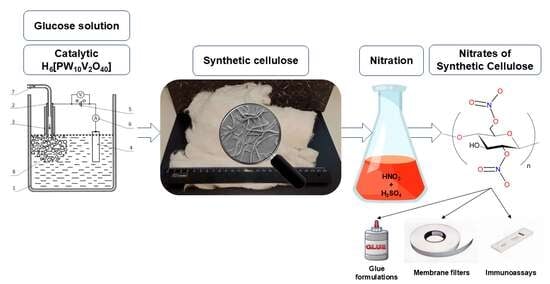
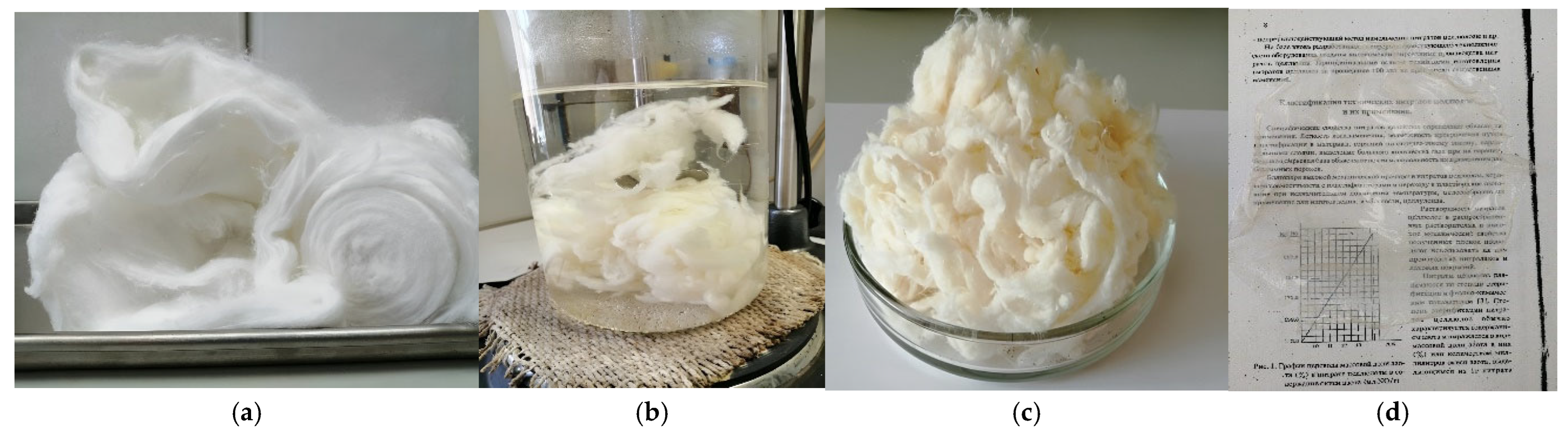
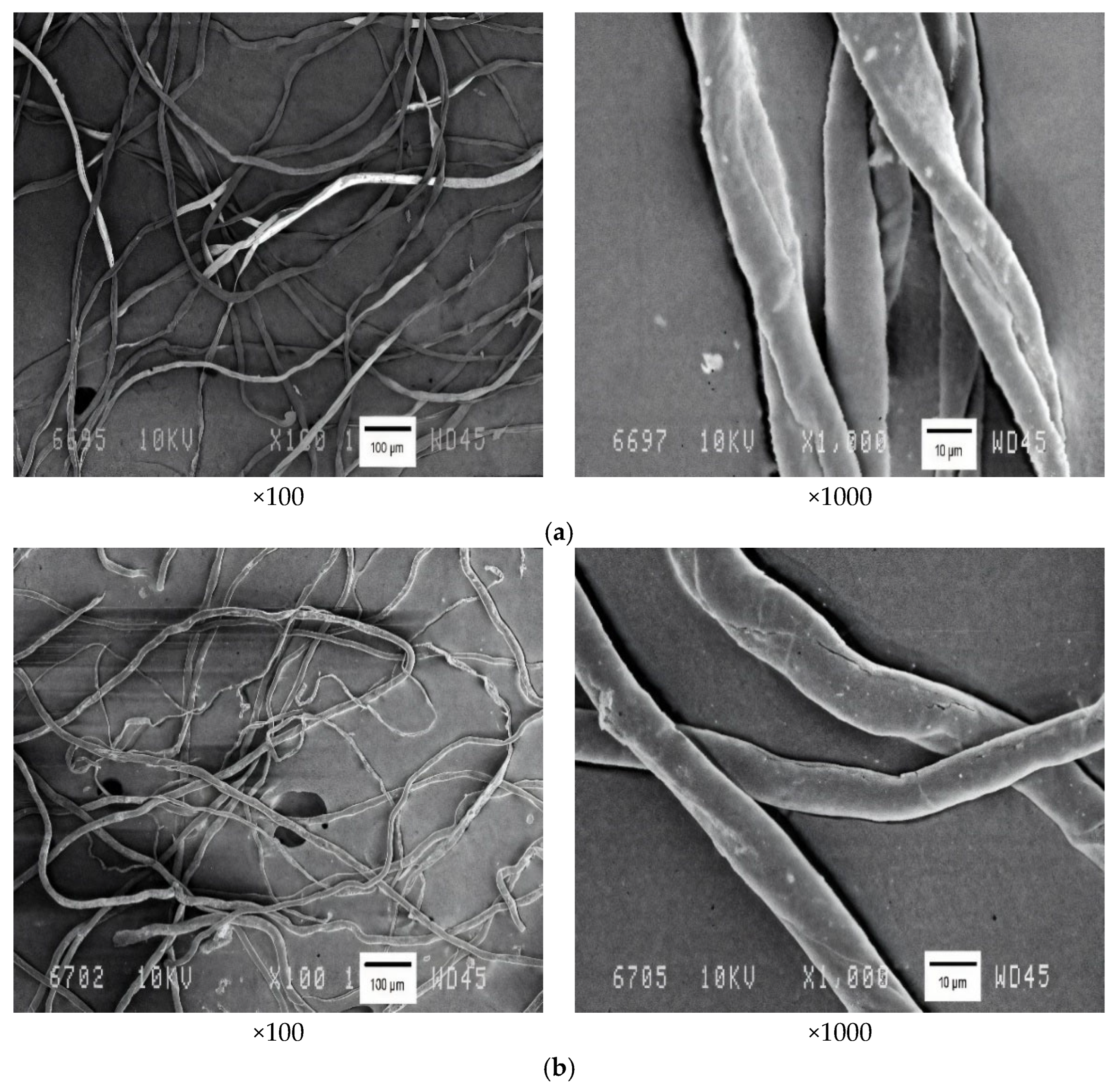
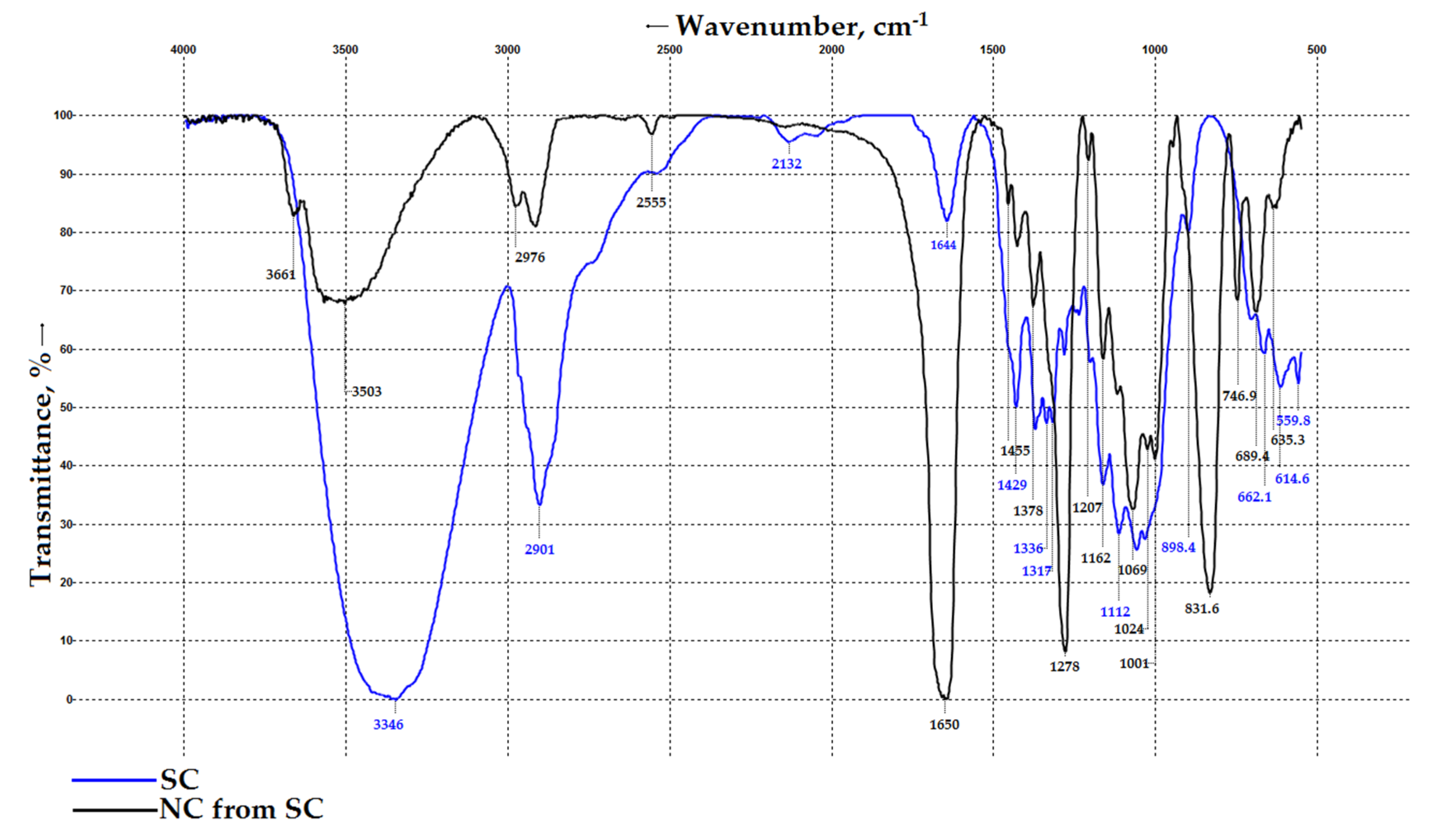
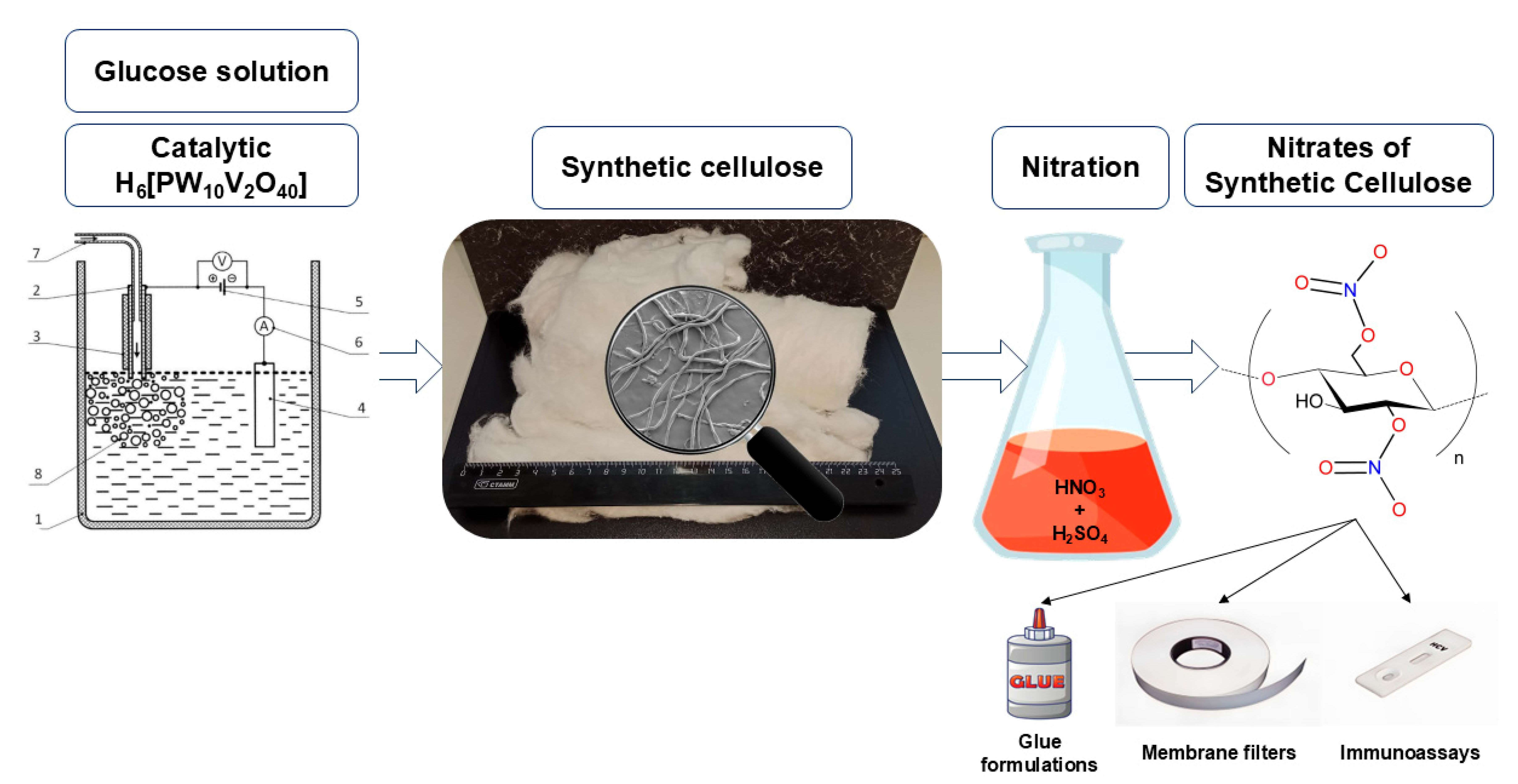
To avoid dependence on conventional raw materials, global emphasis has been placed on obtaining alternative plant celluloses and the chemical synthesis of cellulose. The use of synthetically derived cellulose as a precursor for cellulose nitrates (NCs) is currently absent in global practice, which underscores the undoubted relevance of this research. Cellulose nitrate (NC) was synthesized in a 138% actual yield by nitration of synthetic cellulose (SC)—a new type of cellulose—prepared by electropolymerization from an aqueous glucose solution in the presence of catalytic tungsten–vanadium heteropolyacid of the 1–12 series with the chemical formula H6[PW10V2O40]: a nitrogen content of 11.83%, a viscosity of 198 mPa·s, a high solubility of 91% in an alcohol–ether solvent, and an ash content of 0.05%. SEM provided a general concept of the morphological structure of SC and SC-derived NC. The initial SC consisted of flat, curly fibers with a smooth surface approximately 10–20 μm wide, with no aggregation observed. The fibers of SC-derived NC had a cylindrical shape with a diameter of up to 25 μm and a rough surface. FT-IR spectroscopy revealed that SC and SC-derived NC have the main functional groups characteristic of classical cellulose (3346, 2901, 1644, 1429, 1162, and 1112 cm−1) and nitrate esters of cellulose (1650, 1278, 832, 747, and 689 cm−1), respectively. For the first time, a full-profile analysis discovered that SC is made up of the monoclinic phase of cellulose Iβ with an antiparallel chain arrangement. SC with a crystallinity index (CrI) of 81–86% was shown to undergo amorphization upon nitration, with the CrI declining to 17% and the crystallite sizes decreasing from 44 × 62 × 59 × 94 Å to 29 × 62 × 26 × 38 Å. Coupled TGA/DTA revealed that SC exhibits a high-temperature endothermic peak of decomposition of 374 °C, with a weight loss of 84%. The thermostable SC-derived NC exhibits a high onset temperature of intense decomposition of 200 °C and an exothermic peak of 208 °C, with a weight loss of 88%, and is characterized by a high specific heat of decomposition of 7.74 kJ/g. This study provides new insights into the functionalization of SC with a high degree of polymerization, expanding the classical concepts of cellulose nitration.
Keywords: synthetic cellulose; nitration; synthetic cellulose nitrate; SEM; FT-IR spectroscopy; X-ray diffraction; TGA/DTA synthetic cellulose; nitration; synthetic cellulose nitrate; SEM; FT-IR spectroscopy; X-ray diffraction; TGA/DTA
Graphical Abstract