The Introduction of Myo-Inositol in the Synthesis of Rigid Polyurethane-Polyisocyanurate (RPU/PIR) Foams and Its Effect on RPU/PIR Properties



Abstract
1. Introduction
- -
- Reducing the level of reactive oxygen species (ROS)—helping to limit cellular damage caused by oxidative stress,
- -
- Supporting mitochondrial function—improving cellular energy efficiency, which is important for brain and nervous system health,
- -
- Influencing glucose and lipid metabolism—supporting insulin function, which is important in the prevention of type 2 diabetes and polycystic ovary syndrome (PCOS).
- -
- Due to its antioxidant properties, inositol is increasingly used as a dietary supplement to support the treatment of various conditions such as: neurological and mental disorders (depression, anxiety disorders, bipolar disorder), metabolic diseases, including insulin resistance and polycystic ovary syndrome (PCOS), and cardiovascular diseases by regulating cholesterol and triglyceride levels [19,20,21].
2. Materials
3. Methods
4. Results and Discussion
4.1. Foam Production
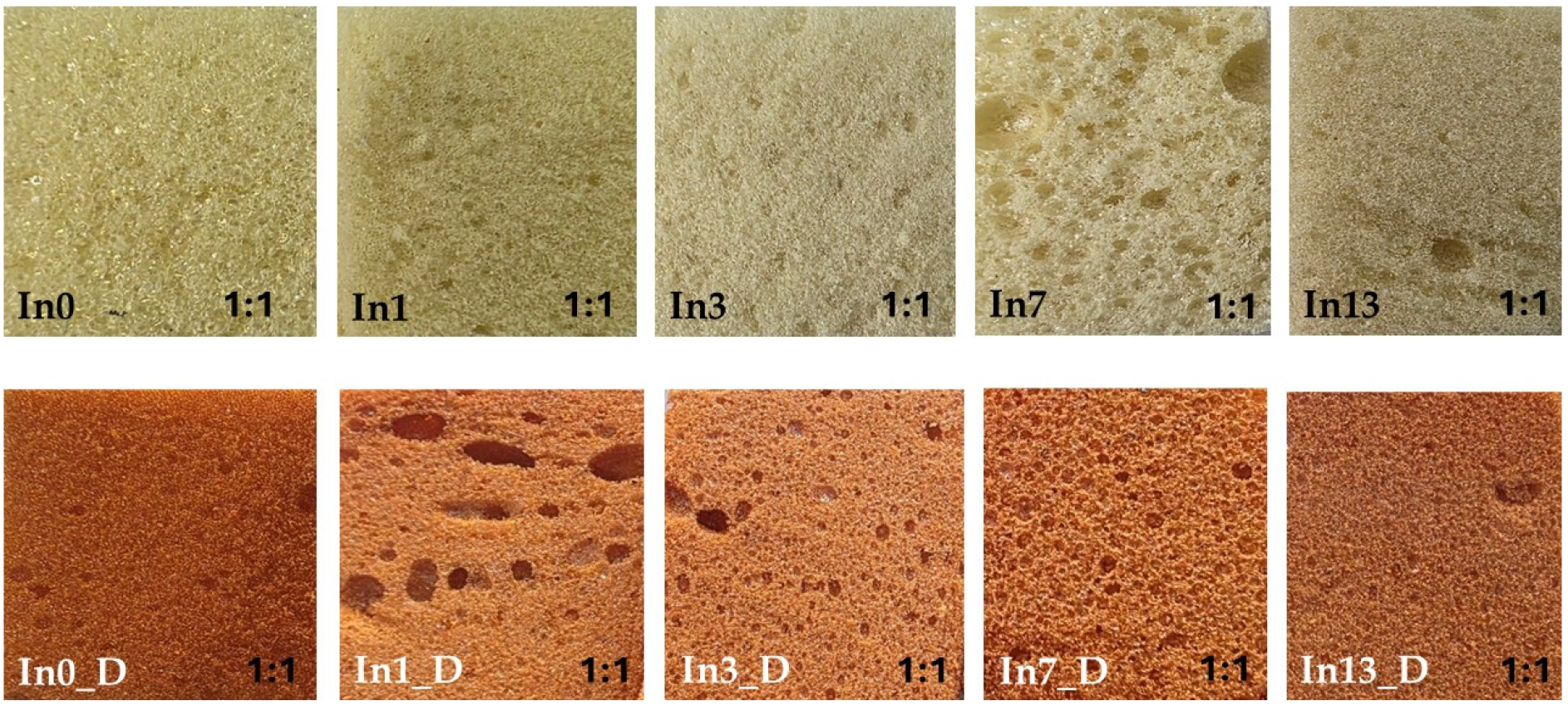
4.2. Color
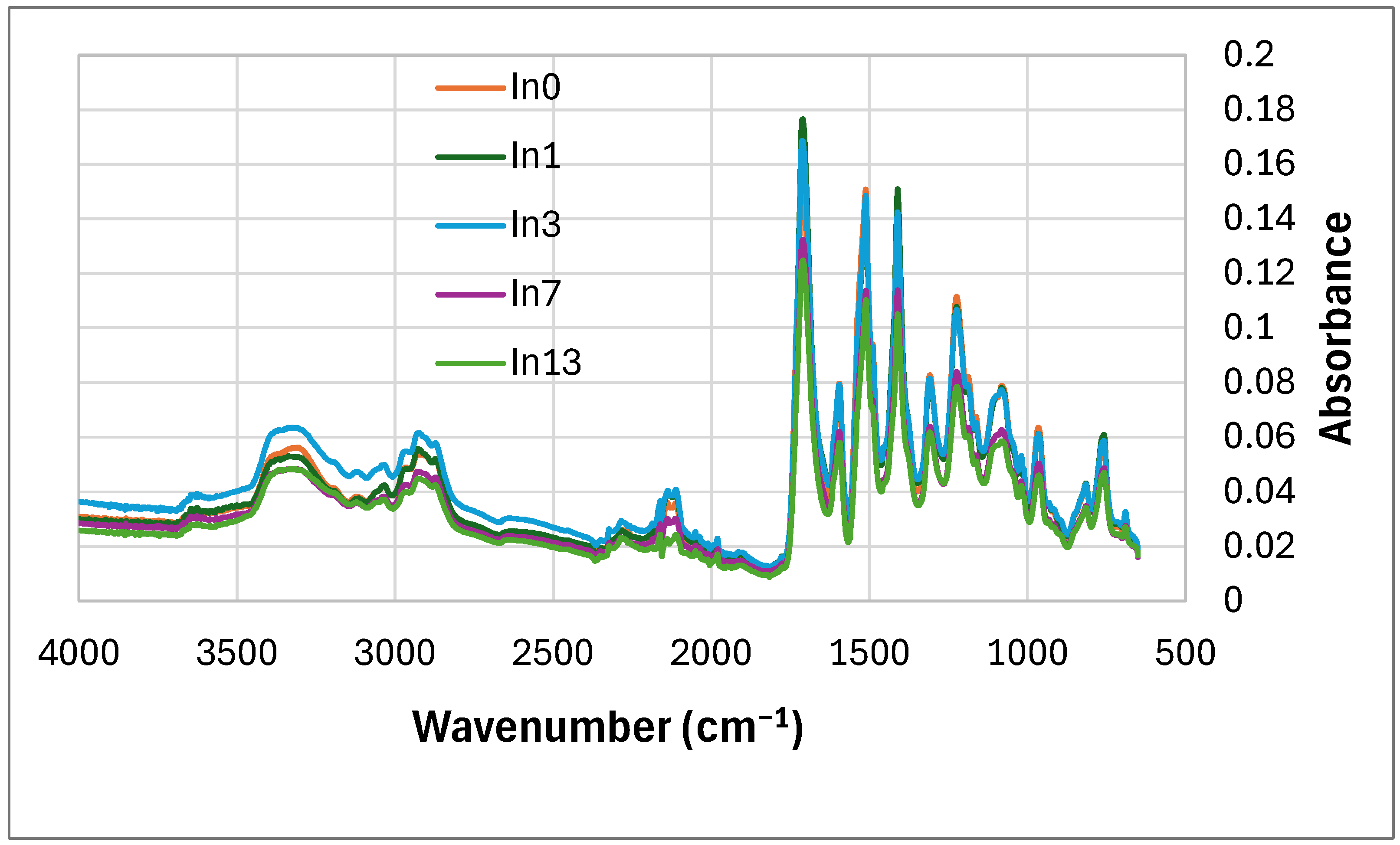
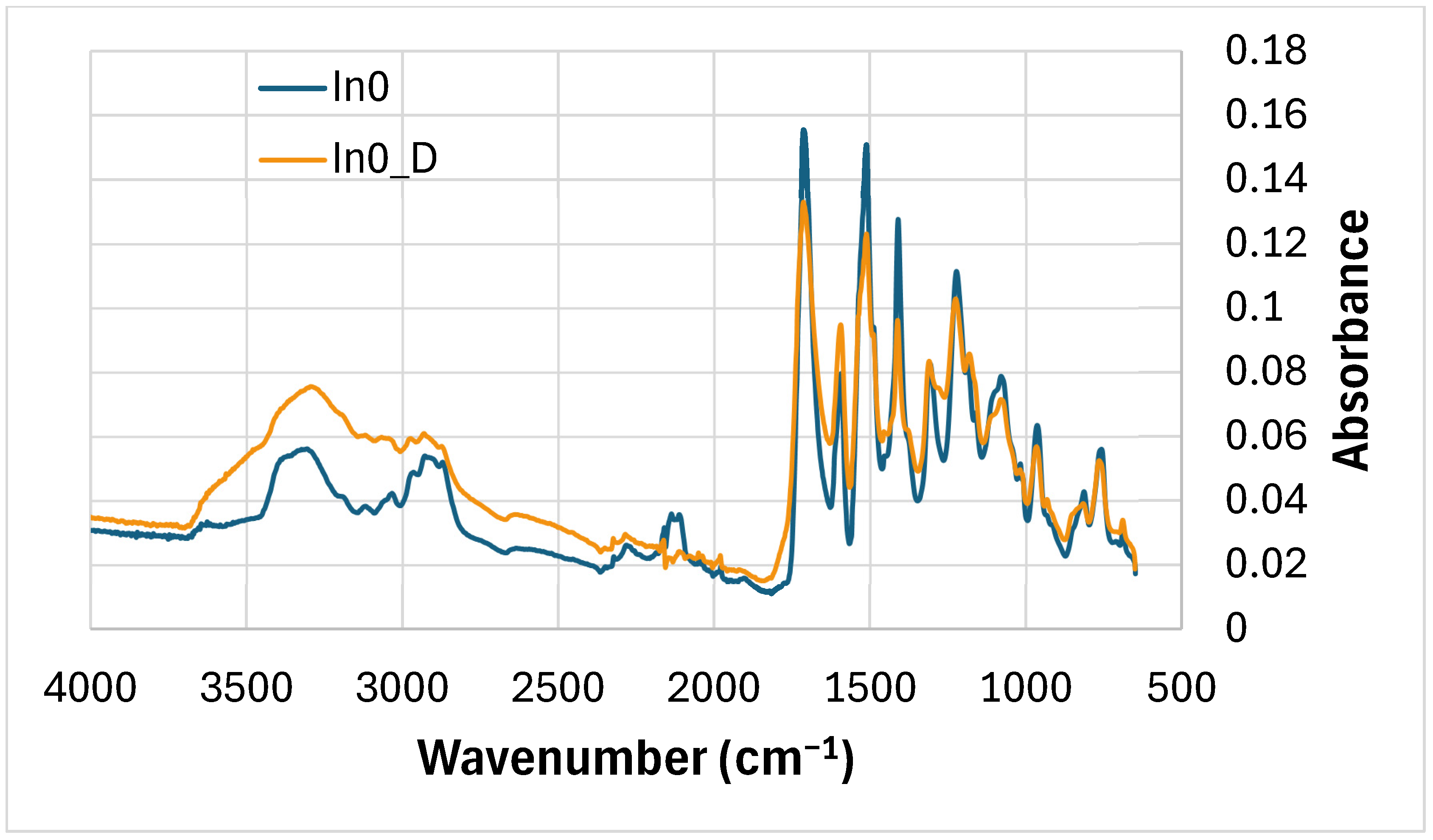
4.3. FTIR
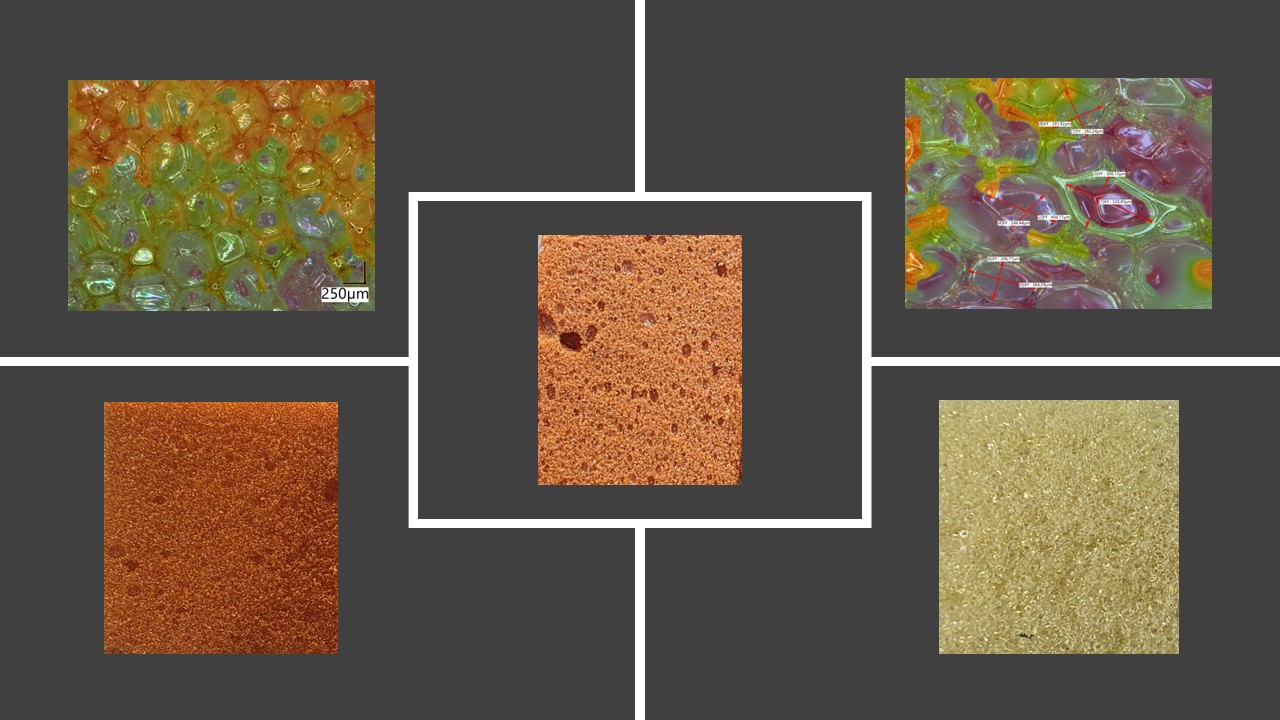
4.4. Foam Structure
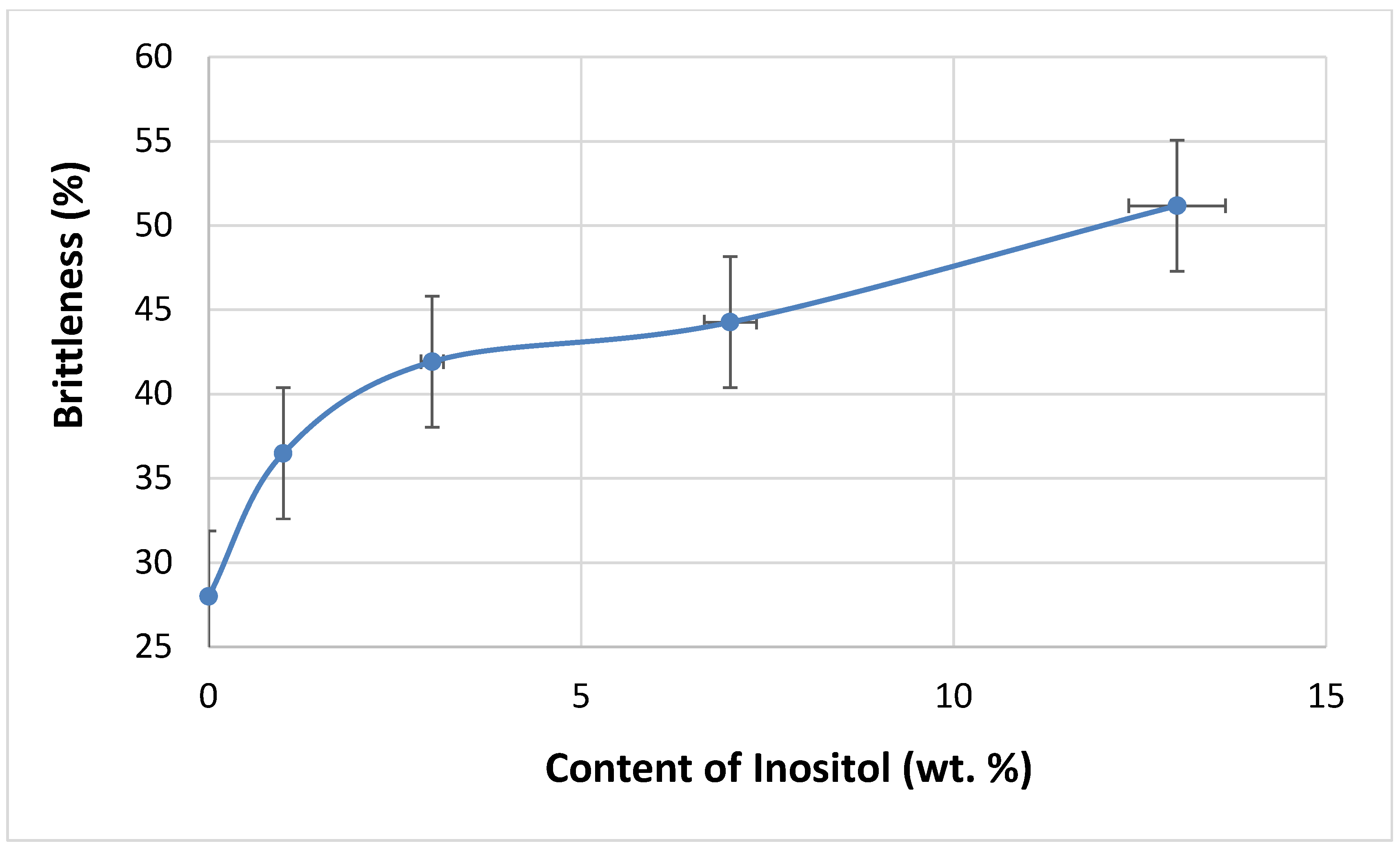
4.5. Britleness
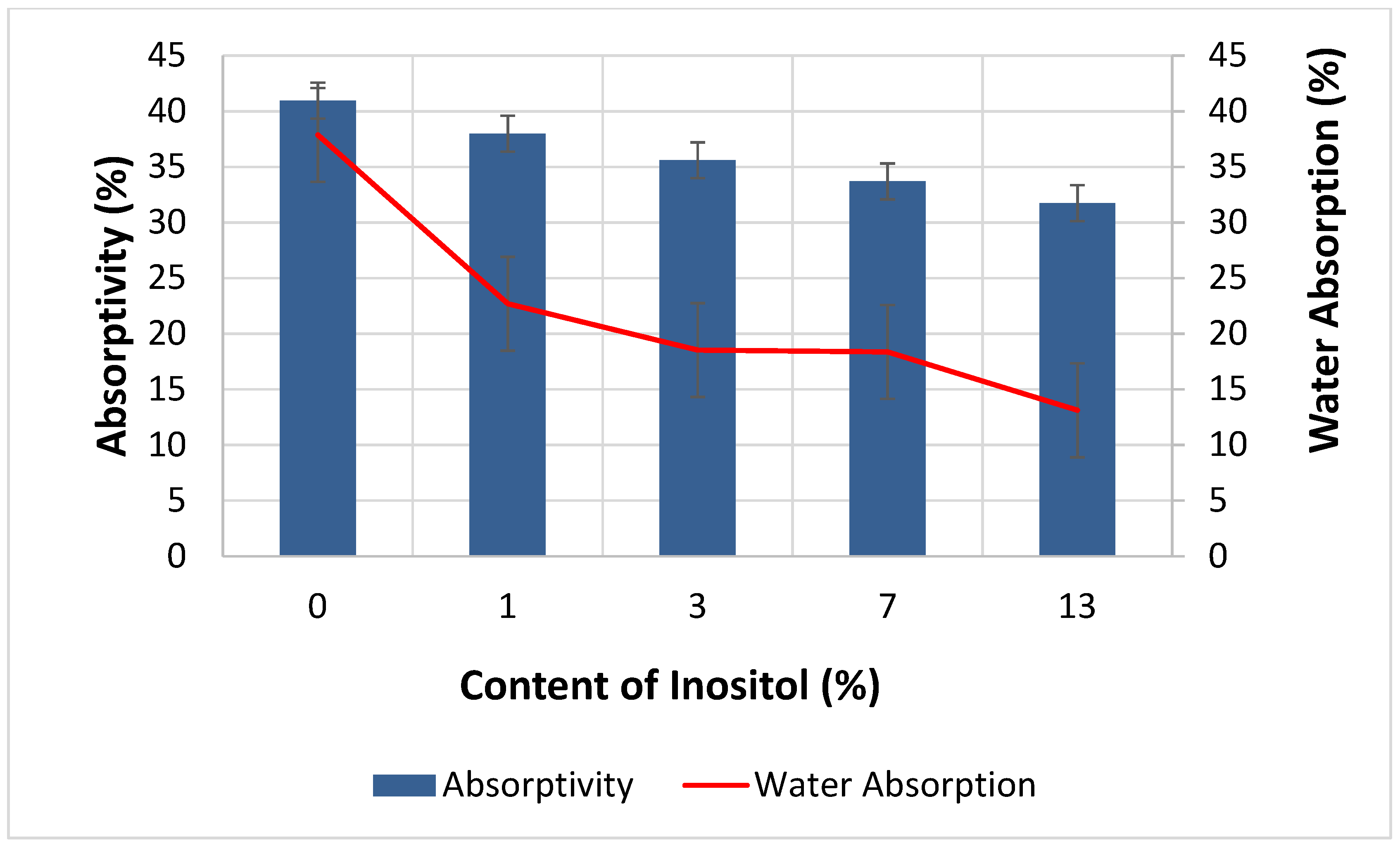
4.6. Absorptivity and Water Absorption
4.7. Density and Compressive Strength
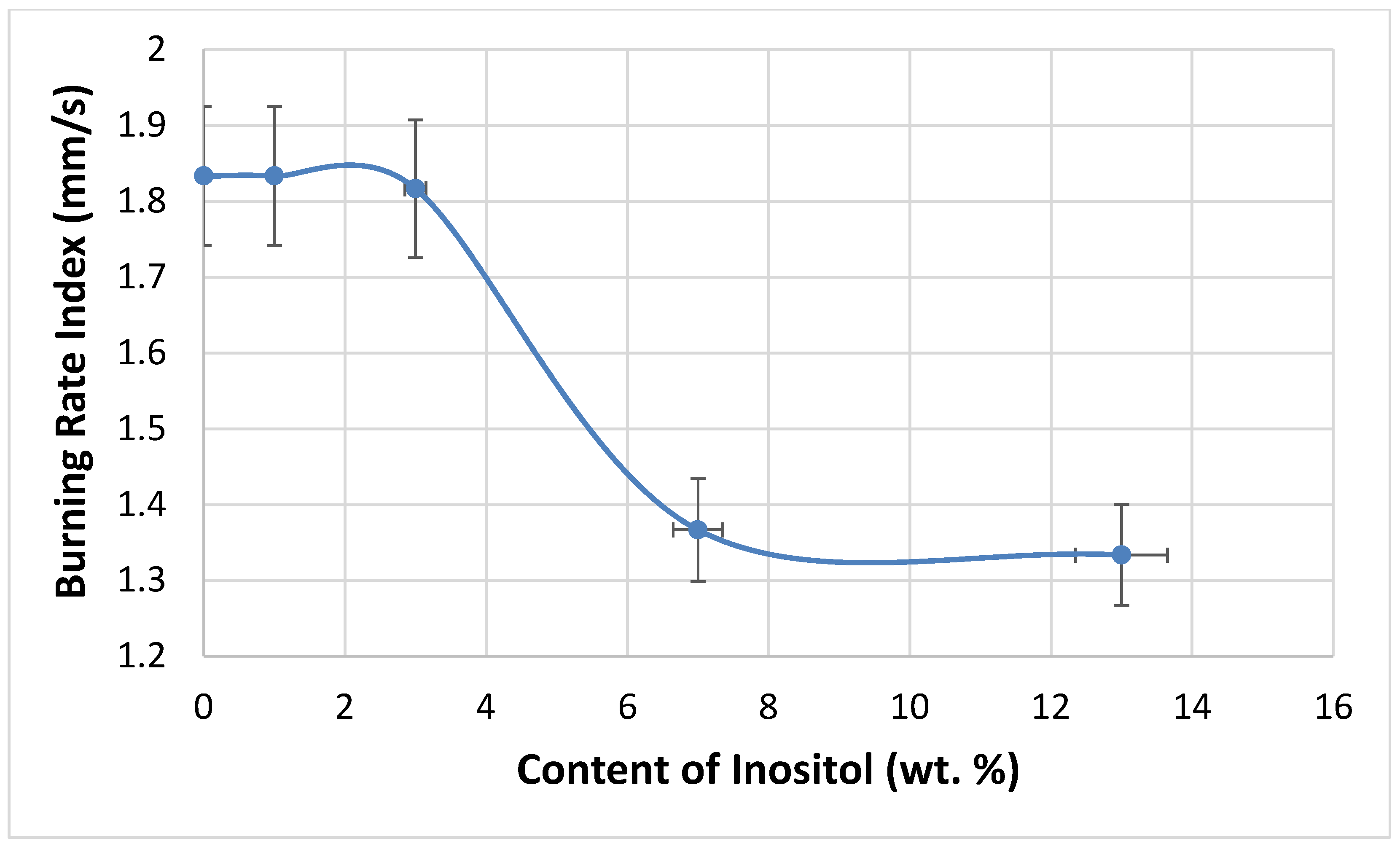
4.8. Flammability
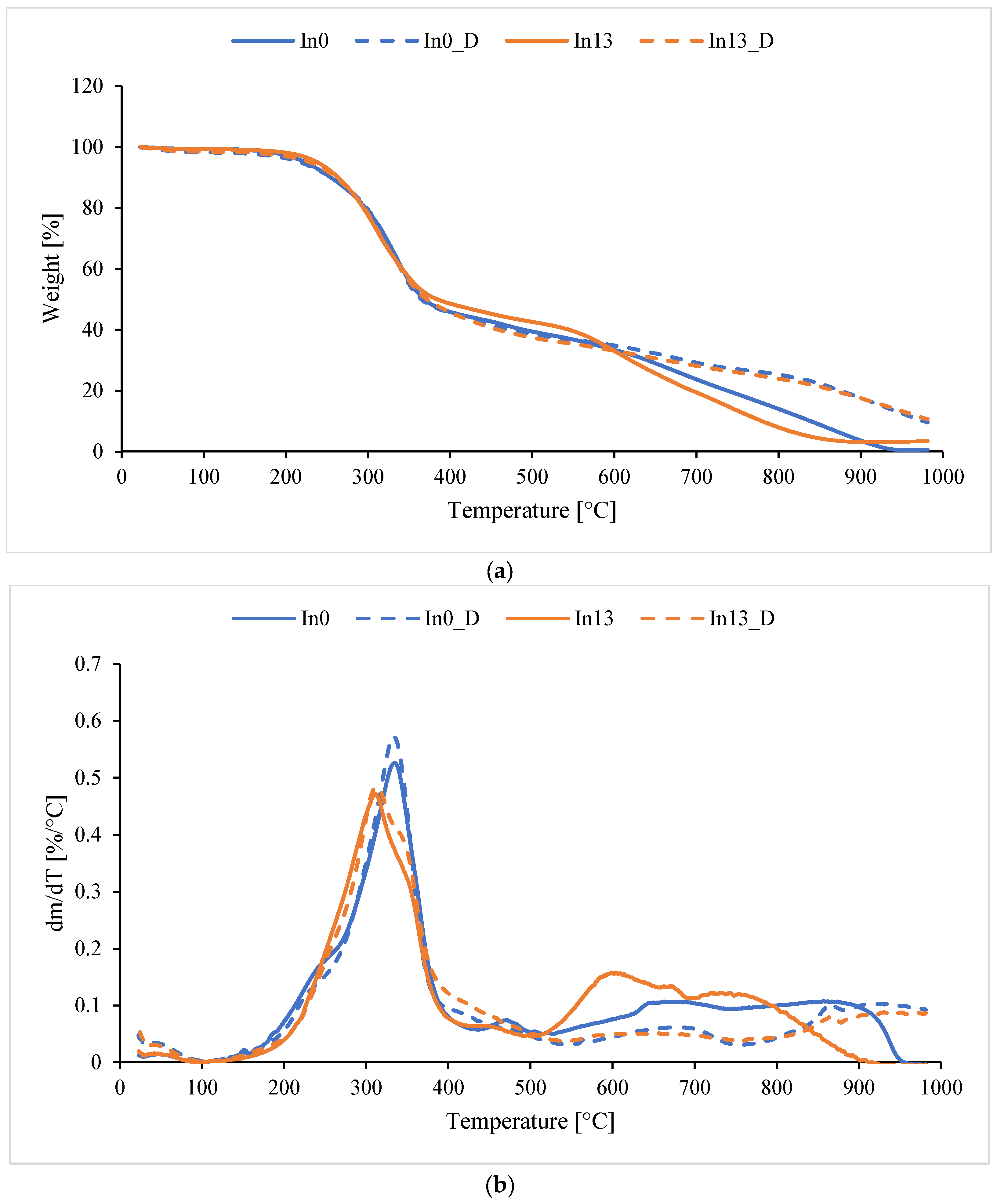
4.9. TGA
4.10. DSC
5. Conclusions
Author Contributions
Funding
Institutional Review Board Statement
Informed Consent Statement
Data Availability Statement
Conflicts of Interest
Abbreviations
| In | mya-inositol |
| In0–In13 | non-aged foams |
| In0_D–In13_D | aged foams |
| Dataset | |
| Dataset License |
References
- Nowak, A.; Zielonka, J.; Turek, M.; Klimowicz, A. The effects of fruit antioxidants on skin photoaging. Postępy Fitoter. 2014, 15, 94–99. Available online: https://ppm.pum.edu.pl/info/article/PUM1f42c232a3494661939ac746f0bdf09a (accessed on 14 September 2025).
- Vedova, L.D.; Baron, G.; Morazzoni, P.; Aldini, G.; Gado, F. The Potential of Polyphenols in Modulating the Cellular Senescence Process: Implications and Mechanism of Action. Pharmaceuticals 2025, 18, 138. [Google Scholar] [CrossRef] [PubMed]
- Najda, A. Chemical Composition and Antioxidant. Activity of Extracts from Mentha × piperita L. Postępy Fitoter. 2017, 18, 251–258. [Google Scholar] [CrossRef]
- Baraniak, J.; Kania, M. Bilberry, Grape and Pomegranate—Well-Known Plants with Antioxidant Activity. Postępy Fitoter. 2015, 16, 50–55. Available online: https://www.postepyfitoterapii.pl/wp-content/uploads/2015/04/pf_2015_050-055.pdf (accessed on 14 September 2025).
- Biskup, I.; Mizerska, A.; Fecka, I. Alkylphenols of Natural Origin—Properties and Prospects for Their Use in Pharmacy. Postępy Fitoter. 2015, 16, 37–44. Available online: https://www.postepyfitoterapii.pl/wp-content/uploads/2015/04/pf_2015_037-044.pdf (accessed on 14 September 2025).
- Gwóźdź, E.; Gębczyński, P. Tomato Fruit as a Source of Carotenoids. Med. Rodz. 2017, 20, 211–214. [Google Scholar] [CrossRef]
- Zdrojewicz, Z.; Cabała, K.; Pypno, D.; Bugaj, B. Eating Apple—You’ll Be Healthier. Med. Rodz. 2015, 18, 131–136. [Google Scholar]
- Banaś, A.; Korus, A.; Korus, J. Texture, Color, and Sensory Features of Low-Sugar Gooseberry Jams Enriched with Plant Ingredients with Prohealth Properties. J. Food Qual. 2018, 2018, 1646894. [Google Scholar] [CrossRef]
- Cieślik, E.; Topolska, K. Chemical Composition and Functional Properties of Acai Berry (Euterpe oleracea Mart.). Postępy Fitoter. 2012, 13, 188–191. [Google Scholar]
- Liszkowska, J.; Gozdecka, G.; Sitarz, M. Methods to Increase or Decrease Resistance to Photodegradation and Biodegradation of Polyurethane/Polyisocyanurate (PU/PIR) Foams. Materials 2023, 16, 5930. [Google Scholar] [CrossRef]
- Liszkowska, J.; Borowicz, M.; Paciorek-Sadowska, J.; Isbrandt, M.; Czupryński, B.; Moraczewski, K. Assessment of Photodegradation and Biodegradation of RPU/PIR Foams Modified by Natural Compounds of Plant Origin. Polymers 2020, 12, 33. [Google Scholar] [CrossRef] [PubMed]
- Mutua, J.K.; Imathiu, S.; Owino, W. Evaluation of the Proximate Composition, Antioxidant Potential, and Antimicrobial Activity of Mango Seed Kernel Extracts. Food Sci. Nutr. 2016, 5, 349–357. [Google Scholar] [CrossRef] [PubMed]
- Król, D.; Gregorczyk, M.; Szymańska, A.; Jankiewicz, U.; Kowalczyk, P. Antioxidant Substances in Red Wine. (Substancje antyoksydacyjne w czerwonym winie). Postępy Fitoter. 2013, 1, 260–262. [Google Scholar]
- Kwiatkowska, E. Components of Red Wine in the Prevention of Cardiovascular Diseases. Med. Rodz. 2007, 10, 7–9. [Google Scholar]
- Buljeta, I.; Pichler, A.; Šimunović, J.; Kopjar, M. Beneficial Effects of Red Wine Polyphenols on Human Health: Comprehensive Review. Curr. Issues Mol. Biol. 2023, 45, 782–798. [Google Scholar] [CrossRef]
- Tzachristas, A.; Pasvanka, K.; Calokerinos, A.; Proestos, C. Polyphenols: Natural Antioxidants to Be Used as a Quality Tool in Wine Authenticity. Appl. Sci. 2020, 10, 5908. [Google Scholar] [CrossRef]
- Santos-Buelga, C.; González-Manzano, S.; González-Paramás, A.M. Wine, Polyphenols, and Mediterranean Diets. What Else Is There to Say? Molecules 2021, 26, 5537. [Google Scholar] [CrossRef]
- Hallouch, O.; Ibourki, M.; Devkota, K.P.; Majour, K. Proximate Composition, Antioxidant Activity, Lipids and Elemental Profiling of Argan, Almond, Sesame, Nigella, Soybean and Sunflower Oil Press Cakes Reveal a Great Potential of Valorization. Res. Sq. 2024, 13, 1–27. [Google Scholar] [CrossRef]
- Croze, M.L.; Soulage, C.O. Potential Role and Therapeutic Interests of Myo-Inositol in Metabolic Diseases. Biochimie 2013, 95, 1811–1827. [Google Scholar] [CrossRef]
- Bizzarri, M.; Carlomagno, G. Inositol: History of an Effective Therapy for Polycystic Ovary Syndrome (PCOS). Eur. Rev. Med. Pharmacol. Sci. 2014, 18, 1896–1903. [Google Scholar]
- Harwood, A.J. The Roles of Inositol in Health and Disease. Trends Pharmacol. Sci. 2011, 32, 84–90. [Google Scholar] [CrossRef]
- Okamoto, S.; Onoue, S.; Muramatsu, M.; Sudo, A. Radical Polymerization of Methacrylates with an Adamantane-Like Rigid Core Derived from Naturally Occurring myo-Inositol. J. Polym. Sci. Part A Polym. Chem. 2015, 53, 2432–2439. [Google Scholar] [CrossRef]
- Xie, M.; Ge, J.; Xue, Y.; Du, Y.; Lei, B.; Ma, P.X. Photo-crosslinked fabrication of novel biocompatible and elastomeric star-shaped inositol-based polymer with highly tunable mechanical behavior and degradation. J. Mech. Behav. Biomed. Mater. 2015, 51, 163–168. [Google Scholar] [CrossRef] [PubMed]
- Lang, K.; Sánchez-Leija, R.J.; Gross, R.A.; Linhardt, R.J. Review on the Impact of Polyols on the Properties of Bio-Based Polyesters. Polymers 2020, 12, 2969. [Google Scholar] [CrossRef]
- Ikeya, K.; Okamoto, S.; Sudo, A. Synthesis of a Divinyl-Functionalized Diamantane-Analogue from Naturally Occurring Myo-Inositol and Its Application to Polymer Synthesis via the Thiol-Ene Reaction. Results Chem. 2021, 3, 100167. [Google Scholar] [CrossRef]
- Sudo, A.; Shibata, Y.; Miyamoto, A. Synthesis of High-Performance Polyurethanes with Rigid 5-6-5-Fused Ring System in the Main Chain from Naturally Occurring Myo-Inositol. J. Polym. Sci. Part A Polym. Chem. 2013, 51, 3956–3963. [Google Scholar] [CrossRef]
- Yoshida, A.; Sudo, A. Rigid Diol Bearing 6-6-6 Fused Ring System Derived from Naturally Occurring Myo-Inositol and Its Polyaddition with Diisocyanates. J. Polym. Sci. A Polym. Chem. 2017, 55, 3798–3803. [Google Scholar] [CrossRef]
- Sudo, A.; Kaiba, K. Synthesis of Hydroxyl-Bearing Polyurethanes from Naturally Occurring Myo-Inositol. J. Polym. Sci. A Polym. Chem. 2019, 57, 1358–1364. [Google Scholar] [CrossRef]
- Amako, T.; Nakabayashi, K.; Sudo, A.; Fujiki, M.; Imai, Y. Solid-State Circularly Polarised Luminescence of Atropisomeric Fluorophores Embedded in Achiral Myo-Inositol-Containing Polyurethanes. Org. Biomol. Chem. 2015, 13, 2913–2917. [Google Scholar] [CrossRef]
- Makowska, S.; Szymborski, D.; Sienkiewicz, N.; Kairytė, A. Current Progress in Research into Environmentally Friendly Rigid Polyurethane Foams. Materials 2024, 17, 3971. [Google Scholar] [CrossRef]
- Combating Climate Change. Available online: https://www.europarl.europa.eu/factsheets/en/sheet/72/walka-ze-zmianaklimatu (accessed on 1 April 2025).
- EU Directive 2010/31/EU of the European Parliament and of the Council on the Energy Performance of Buildings. 2010. Available online: https://eur-lex.europa.eu/LexUriServ/LexUriServ.do?uri=OJ:L:2010:153:0013:0035:EN:PDF (accessed on 1 April 2025).
- EU Directive 2012/27/EU of the European Parliament and of the Council. 2012. Available online: https://eur-lex.europa.eu/LexUriServ/LexUriServ.do?uri=OJ:L:2012:315:0001:0056:en:PDF (accessed on 1 April 2025).
- Paris Agreement on Climate Change. Available online: https://www.consilium.europa.eu/en/policies/paris-agreement-climate (accessed on 1 April 2025).
- Xue, B.L.; Wen, J.L.; Sun, R.C. Lignin-Based Rigid Polyurethane Foam Reinforced with Pulp Fiber: Synthesis and Characterization. ACS Sustain. Chem. Eng. 2014, 2, 1474–1480. [Google Scholar] [CrossRef]
- Mort, R.; Peters, E.; Griffin, E.; Curtzwiler, G.; Vorst, K.; Jiang, S. Low-Isocyanate Polyurethane Foams with Improved Stability and Compression Modulus Prepared from Biosourced and Landfill-Diverted Materials. ACS Appl. Polym. Mater. 2023, 5, 7602–7613. [Google Scholar] [CrossRef]
- Stanzione, M.; Oliviero, M.; Cocca, M.; Errico, M.E.; Gentile, G.; Avella, M.; Lavorgna, M.; Buonocore, G.G.; Verdolotti, L. Tuning of Polyurethane Foam Mechanical and Thermal Properties Using Ball-Milled Cellulose. Carbohydr. Polym. 2020, 231, 115772. [Google Scholar] [CrossRef] [PubMed]
- Beaufils-Marquet, M.; Blanchet, P.; Hussain, A.; Landry, V. Investigation of Cellulose Filaments as Filler in Rigid Insulating Polyurethane Foam. BioResources 2023, 18, 6086–6117. [Google Scholar] [CrossRef]
- Sture, B.; Vevere, L.; Kirpluks, M.; Godina, D.; Fridrihsone, A.; Cabulis, U. Polyurethane Foam Composites Reinforced with Renewable Fillers for Cryogenic Insulation. Polymers 2021, 13, 4089. [Google Scholar] [CrossRef]
- Liszkowska, J. The Effect of Ground Coffee on the Mechanical and Application Properties of Rigid Polyurethane-Polyisocyanurate Foams. Polimery 2018, 63, 305–310. [Google Scholar] [CrossRef]
- Zhang, J.; Hori, N.; Takemura, A. Reinforcement of Agricultural Wastes Liquefied Polyols Based Polyurethane Foams by Agricultural Wastes Particles. J. Appl. Polym. Sci. 2021, 138, 50583. [Google Scholar] [CrossRef]
- Kairytė, A.; Kirpluks, M.; Ivdre, A.; Cabulis, U.; Vėjelis, S.; Balčiūnas, G. Paper Waste Sludge Enhanced Eco-Efficient Polyurethane Foam Composites: Physical–Mechanical Properties and Microstructure. Polym. Compos. 2018, 39, 1852–1860. [Google Scholar] [CrossRef]
- Kairytė, A.; Vaitkus, S.; Vėjelis, S.; Girskas, G.; Balčiūnas, G. Rapeseed-Based Polyols and Paper Production Waste Sludge in Polyurethane Foam: Physical Properties and Their Prediction Models. Ind. Crops Prod. 2018, 112, 119–129. [Google Scholar] [CrossRef]
- Ebereonwu, P.; Dashak, D.; Ogah, C. Investigation and Characterization of Flexible Polyurethane Foams from the Use of Chicken Eggshells as Fillers. ChemRxiv 2022. [Google Scholar] [CrossRef]
- Erdem, M.; Akdoğan, E.; Üreyen, M.E.; Uysal, O.; Kaya, M.; Irmak, C. Eggshell Powder Added Rigid Polyurethane Foams: The Investigation of Their Thermal Conductivity, Compressive Strength and Fire Behaviors. J. Therm. Sci. Technol. 2018, 38, 83–93. [Google Scholar]
- Paciorek-Sadowska, J.; Borowicz, M.; Czupryński, B.; Tomaszewska, E.; Liszkowska, J. New Bio-Polyol Based on White Mustard Seed Oil for Rigid PUR-PIR Foams. Pol. J. Chem. Technol. 2018, 20, 694–699. [Google Scholar] [CrossRef]
- Paciorek-Sadowska, J.; Borowicz, M.; Czupryński, B.; Liszkowska, J. Nowy Biopoliol na Bazie Oleju z Gorczycy Białej (Sinapis alba) Jako Alternatywny Surowiec dla Przemysłu Poliuretanowego. Polimery 2018, 63, 38–43. [Google Scholar] [CrossRef]
- Paciorek-Sadowska, J.; Borowicz, M.; Czupryński, B.; Tomaszewska, E.; Liszkowska, J. Oenothera biennis Seed Oil as an Alternative Raw Material for Production of Bio-Polyol for Rigid Polyurethane-Polyisocyanurate Foams. Ind. Crops Prod. 2018, 126, 208–217. [Google Scholar] [CrossRef]
- Engels, H.W.; Pirkl, H.G.; Albers, R.; Albach, R.W.; Krause, J.; Hoffmann, A.; Casselmann, H.; Dormish, J. Polyurethanes: Versatile Materials and Sustainable Problem Solvers for Today’s Challenges. Angew. Chem. Int. Ed. 2013, 52, 9422–9441. [Google Scholar] [CrossRef] [PubMed]
- Fridrihsone, A.; Romagnoli, F.; Kirsanovs, V.; Cabulis, U. Life Cycle Assessment of Vegetable Oil-Based Polyols for Polyurethane Production. J. Clean. Prod. 2020, 266, 121403. [Google Scholar] [CrossRef]
- Zhang, C.; Garrison, T.F.; Madbouly, S.A.; Kessler, M.R. Recent advances in vegetable oil-based polymers and their composites. Prog. Polym. Sci. 2017, 71, 91–143. [Google Scholar] [CrossRef]
- Furtwengler, P.; Avérous, L. Renewable Polyols for Advanced Polyurethane Foams from Diverse Biomass Resources. Polym. Chem. 2018, 9, 4258–4287. [Google Scholar] [CrossRef]
- Desroches, M.; Escouvois, M.; Auvergne, R.; Caillol, S.; Boutevin, B. From Vegetable Oils to Polyurethanes: Synthetic Routes to Polyols and Main Industrial Products. Polym. Rev. 2012, 52, 38–79. [Google Scholar] [CrossRef]
- Kurańska, M.; Prociak, A. The Influence of Rapeseed Oil-Based Polyols on the Foaming Process of Rigid Polyurethane Foams. Ind. Crops Prod. 2016, 89, 182–187. [Google Scholar] [CrossRef]
- Tan, S.; Abraham, T.; Ference, D.; Macosko, C.W. Rigid Polyurethane Foams from a Soybean Oil-Based Polyol. Polymer 2011, 52, 2840–2846. [Google Scholar] [CrossRef]
- Narine, S.S.; Kong, X.; Bouzidi, L.; Sporns, P. Physical Properties of Polyurethanes Produced from Polyols from Seed Oils: II. Foams. J. Am. Oil Chem. Soc. 2006, 84, 65–72. [Google Scholar] [CrossRef]
- Ji, D.; Fang, Z.; He, W.; Luo, Z.; Jiang, X.; Wang, T.; Guo, K. Polyurethane Rigid Foams Formed from Different Soy-Based Polyols by the Ring Opening of Epoxidised Soybean Oil with Methanol, Phenol, and Cyclohexanol. Ind. Crops Prod. 2015, 74, 76–82. [Google Scholar] [CrossRef]
- Hejna, A.; Kirpluks, M.; Kosmela, P.; Cabulis, U.; Haponiuk, J.; Piszczyk, Ł. The Influence of Crude Glycerol and Castor Oil-Based Polyol on the Structure and Performance of Rigid Polyurethane-Polyisocyanurate Foams. Ind. Crops Prod. 2017, 95, 113–125. [Google Scholar] [CrossRef]
- Ionescu, M.; Radojčić, D.; Wan, X.; Shrestha, M.L.; Petrović, Z.S.; Upshaw, T.A. Highly Functional Polyols from Castor Oil for Rigid Polyurethanes. Eur. Polym. J. 2016, 84, 736–749. [Google Scholar] [CrossRef]
- Srihanum, A.; Tuan Noor, M.T.I.; Devi, K.P.P.; Hoong, S.S.; Ain, N.H.; Mohd, N.S.; Nek Mat Din, N.S.M.; Kian, Y.S. Low Density Rigid Polyurethane Foam Incorporated with Renewable Polyol as Sustainable Thermal Insulation Material. J. Cell. Plast. 2022, 58, 485–503. [Google Scholar] [CrossRef]
- Marcovich, N.E.; Kurańska, M.; Prociak, A.; Malewska, E.; Kulpa, K. Open Cell Semi-Rigid Polyurethane Foams Synthesized Using Palm Oil-Based Bio-Polyol. Ind. Crops Prod. 2017, 102, 88–96. [Google Scholar] [CrossRef]
- Zhou, X.; Sain, M.M.; Oksman, K. Semi-Rigid Biopolyurethane Foams Based on Palm-Oil Polyol and Reinforced with Cellulose Nanocrystals. Compos. Part. A Appl. Sci. Manuf. 2016, 83, 56–62. [Google Scholar] [CrossRef]
- Huang, X.; De Hoop, C.F.; Xie, J.; Wu, Q.; Boldor, D.; Qi, J. High Bio-Content Polyurethane (PU) Foam Made from Bio-Polyol and Cellulose Nanocrystals (CNCs) via Microwave Liquefaction. Mater. Des. 2018, 138, 11–20. [Google Scholar] [CrossRef]
- Zhou, X.; Sethi, J.; Geng, S.; Berglund, L.; Frisk, N.; Aitomäki, Y.; Sain, M.M.; Oksman, K. Dispersion and Reinforcing Effect of Carrot Nanofibers on Biopolyurethane Foams. Mater. Des. 2016, 110, 526–531. [Google Scholar] [CrossRef]
- Kurańska, M.; Pinto, J.A.; Salach, K.; Barreiro, M.F.; Prociak, A. Synthesis of Thermal Insulating Polyurethane Foams from Lignin and Rapeseed Based Polyols: A Comparative Study. Ind. Crops Prod. 2020, 143, 111882. [Google Scholar] [CrossRef]
- Liszkowska, J.; Czupryński, B.; Paciorek-Sadowska, J.; Borowicz, M. PUR-PIR Foam Produced Based on Poly(hydroxybutyl Citrate) Foamed Founded with Different Factories. Pol. J. Chem. Technol. 2018, 20, 87–95. [Google Scholar] [CrossRef]
- Liszkowska, J.; Czupryński, B.; Paciorek-Sadowska, J. Temperature Stability and Thermal Properties of Polyurethane-Polyisocyanurate Foams Obtained Using Products of Citric Acid Condensation. Polimery 2018, 63, 503–514. [Google Scholar] [CrossRef]
- Liszkowska, J.; Czupryński, B.; Paciorek-Sadowska, J. The Effect of Hydroxyalkyls, Derivatives of 2-Hydroxypropane-1,2,3-Tricarboxylic Acid, on Flammability and Thermal Properties of PUR-PIR Foams. Polym. Bull. 2018, 75, 3801–3823. [Google Scholar] [CrossRef]
- Czupryński, B. Zagadnienia z Chemii i Technologii Poliuretanów; WUKW: Bydgoszcz, Poland, 2004. [Google Scholar]
- Yadav, A.; de Souza, F.M.; Dawsey, T.; Gupta, R.K. Recent Advancements in Flame-Retardant Polyurethane Foams: A Review. Ind. Eng. Chem. Res. 2022, 61, 15046–15065. [Google Scholar] [CrossRef]
- McKenna, S.T.; Hull, T.R. The Fire Toxicity of Polyurethane Foams. Fire Sci. Rev. 2016, 5, 3. [Google Scholar] [CrossRef]
- Liszkowska, J.; Stepczyńska, M.; Trafarski, A.; Miłek, J.; Karasiewicz, T. Utilization of Coniferous and Deciduous Tree and Paper Ashes as Fillers of Rigid Polyurethane/Polyisocyanurate (PU/PIR) Foams. Materials 2025, 18, 1165. [Google Scholar] [CrossRef]
- Kapps, M.; Buschkamp, S. The Production of Rigid Polyurethane Foam. Insulation Technical Information, File No. PU21012-0406 en; Issue 2004-06-29; Bayer AG: Leverkusen, Germany, 2004. [Google Scholar]
- ISO 845:2006; Cellular Plastics and Rubbers—Determination of Apparent Density. International Organization for Standardization: Geneva, Switzerland, 2006.
- ISO 844:2021; Rigid Cellular Plastics—Determination of Compression Properties, Edition 7. International Organization for Standardization (ISO): Geneva, Switzerland, 2021.
- ASTM D3014 (ASTM D3014-19); Standard Test Method for Flame Height, Time of Burning, and Loss of Mass of Rigid Thermoset Cellular Plastics in a Vertical Position. ASTM International: West Conshohocken, PA, USA, 2019.
- PN-78/C-05012/12; Test Methods for Flexible Porous Materials—Determination of the Surface Flame Spread Rate. Polish Committee for Standardization and Measures Standardization Publishing House: Warsaw, Poland, 1979.
- ISO 280 2896:2001; Rigid Cellular Plastics 2—Determination of Water Absorption. International Organization for Standardization: Geneva, Switzerland, 2001.
- Hunter, R.S. Photoelectric Tristimulus Colorimetry with Three Filters; Circular of the National Bureau of Standards, No. 429; U.S. Government Printing Office: Washington, DC, USA, 1942. [Google Scholar]
- International Commission on Illumination. Calculation and Measurement of Luminance and Illuminance in Road Lighting: Computer Program for Luminance, Illuminance and Glare; Bureau Central de la CIE: Paris, France, 1976. [Google Scholar]
- AMSA. Guidelines for Meat Color Evaluation; American Meat Science Association and National Livestock and Meat Board: Chicago, IL, USA, 1991. [Google Scholar]
- Ates, M.; Karadag, S.; Eker, A.A.; Eker, B. Polyurethane Foam Materials and Their Industrial Applications. Polym. Int. 2022, 71, 1157–1163. [Google Scholar] [CrossRef]
- Wang, Z.; Wang, C.; Gao, Y.; Li, Z.; Shang, Y.; Li, H. Porous Thermal Insulation Polyurethane Foam Materials. Polymers 2023, 15, 3818. [Google Scholar] [CrossRef]
- Vakili, M.; Nikje, M.M.A.; Hajibeygi, M. The Effects of a Phosphorus/Nitrogen-Containing Diphenol on the Flammability, Thermal Stability, and Mechanical Properties of Rigid Polyurethane Foam. Colloid Polym. Sci. 2024, 302, 79–90. [Google Scholar] [CrossRef]
- Luo, S.P.; Gao, L.; Guo, W.J. Effect of Incorporation of Lignin as Bio-Polyol on the Performance of Rigid Lightweight Wood-Polyurethane Composite Foams. J. Wood Sci. 2020, 66, 23. [Google Scholar] [CrossRef]
- Samborska-Skowron, R.; Balas, A. Qualitative Identification of Isocyanurate in Urethane-Isocyanurate Elastomers and Their Hydrolyzates. Polimery 2003, 48, 371–374. [Google Scholar] [CrossRef][Green Version]
- Bo, G.X.; Xu, X.L.; Tian, X.K.; Yan, J.Y.; Su, X.J.; Yan, Y.J. Bio-Based Rigid Polyurethane Foams Modified with C-MOF/MWCNTs and TBPBP as Building Insulation Materials: Synergistic Effect and Corresponding Mechanism for Enhancing Fire and Smoke Safety. Polymers 2022, 14, 3630. [Google Scholar] [CrossRef] [PubMed]
- Balas, A.; Lisowska, R.; Canowiecka, I. Wpływ n-butylolitu i 1,4-butylenodwulitu na przemiany prepolimeru uretanowego syntezowanego z oligo(oksypropyleno)glikolu i dwuizocyjanianu 2,4-toluilenu. Polimery 1982, 27, 160–163. Available online: https://archiwum.ichp.vot.pl/1982/rok_1982_04_art_07.pdf (accessed on 10 June 2025). [CrossRef]
- Baytemir, G.; Gürol, I.; Karakus, S.; Tasaltin, C.; Tasaltin, N. Nickel Phthalocyanine-Borophene Nanocomposite-Based Electrodes for Non-Enzymatic Electrochemical Detection of Glucose. J. Mater. Sci. Mater. Electron. 2022, 33, 16586–16596. [Google Scholar] [CrossRef]
- Güngör, S.; Tasaltin, C.; Gürol, I.; Baytemir, G.; Karakus, S.; Tasaltin, N. Copper Phthalocyanine-Borophene Nanocomposite-Based Non-Enzymatic Electrochemical Urea Biosensor. Appl. Phys. A 2022, 128, 89. [Google Scholar] [CrossRef]
- Ababsa, H.S.; Safidine, Z.; Mekki, A.; Grohens, Y.; Ouadah, A.; Chabane, H. Fire Behavior of Flame-Retardant Polyurethane Semi-Rigid Foam in Presence of Nickel (II) Oxide and Graphene Nanoplatelets Additives. J. Polym. Res. 2021, 28, 87. [Google Scholar] [CrossRef]
- Rostami-Tapeh-Esmaeil, E.; Rodrigue, D. Morphological, Mechanical and Thermal Properties of Rubber Foams: A Review Based on Recent Investigations. Materials 2023, 16, 1934. [Google Scholar] [CrossRef]
- Mills, N.J. The Wet Kelvin Model for Air Flow through Open-Cell Polyurethane Foams. J. Mater. Sci. 2005, 40, 5845–5851. [Google Scholar] [CrossRef]
- Randall, D.; Lee, S. The Polyurethanes Book; Wiley: New York, NY, USA, 2002. [Google Scholar]
- Pascault, J.P.; Williams, R.J.J. Epoxy Polymers: New Materials and Innovations; Wiley-VCH: Weinheim, Germany, 2010. [Google Scholar]
- Ionescu, M. Chemistry and Technology of Polyols for Polyurethanes; Rapra Technology Ltd.: Shropshire, UK, 2005. [Google Scholar]
- Gama, N.V.; Ferreira, A.; Barros-Timmons, A. Polyurethane Foams: Past, Present, and Future. Materials 2018, 11, 1841. [Google Scholar] [CrossRef]
- Kuciel, S.; Liber-Kneć, A. Biocomposites based on PHB filled with wood or kenaf fibers. Polimery 2011, 56, 218–223. [Google Scholar] [CrossRef]
- Oertel, G. Polyurethane Handbook: Chemistry, Raw Materials, Processing, Application, Properties; Hanser: Munchen, Germany, 1994. [Google Scholar]
- Wang, P.; Li, X.; Jianfeng Li, J.; Zhang, J.; Wang, T.; Fu, Z.; An, W.; Sun, G.; Chen, M.; Deng, J. Rigid polyurethane foam with durable hydrophobicity and flame retardancy endowed by novel functional surfactants. Constr. Build. Mater. 2024, 451, 138815. [Google Scholar] [CrossRef]
- ISO 11357-1:2023; Plastics—Differential Scanning Calorimetry (DSC). International Organization for Standardization: Geneva, Switzerland, 2023.
- ISO 175:2010; Plastics—Methods of Test for the Determination of the Effects of Immersion in Liquid Chemicals. ISO: Geneva, Switzerland, 2010.
- ISO 4892-2:2013; Plastics—Methods of Exposure to Laboratory Light Sources—Part 2: Xenon-Arc Lamps. ISO: Geneva, Switzerland, 2013.
- Kurańska, M.; Prociak, A.; Kirpluks, M.; Cabulis, U. Water-Blown Rigid Polyurethane Foams Modified with Natural Fillers. Polymers 2020, 12, 1362. [Google Scholar] [CrossRef]
- Pikhurov, D.V.; Sakhatskii, A.S.; Vjacheslav Zuev, V. Rigid polyurethane foams with infused hydrophilic/hydrophobic nanoparticles: Relationship between cellular structure and physical properties. Eur. Polym. J. 2018, 99, 403–414. [Google Scholar] [CrossRef]
- Kurańska, M.; Leszczyński, M.K.; Prociak, A. Open-Cell Polyurethane Foams Modified with Bio-Polyols Based on Used Cooking Oil. Materials 2021, 14, 1063. [Google Scholar] [CrossRef]
- Prociak, A.; Ryszkowska, J. Technologia Poliuretanów; Wydawnictwo Naukowe PWN: Warszawa, Poland, 2014. [Google Scholar]
- Leszczyński, M.K.; Kurańska, M.; Prociak, A. The Effect of Isosorbide and Other Bio-Based Polyols on the Structure and Properties of Rigid Polyurethane Foams. Materials 2022, 15, 2903. [Google Scholar] [CrossRef]
- Kirpluks, M.M.; Cabulis, U.; Ivdre, A.; Kuranska, M.; Zieleniewska, M.; Auguscik, M. Mechanical and Thermal Properties of High-Density Rigid Polyurethane Foams from Renewable Resources. J. Renew. Mater. 2016, 4, 86–100. [Google Scholar] [CrossRef]
- Xue, B.; Zhang, C.; Zhang, H.; Li, M. The Influence of Bio-Polyol Structure on the Properties of Rigid Polyurethane Foams. Polymers 2022, 14, 3631. [Google Scholar] [CrossRef]
- Chattopadhyay, D.K.; Webster, D.C. Thermal Stability and Flame Retardancy of Polyurethanes. Prog. Polym. Sci. 2009, 34, 1068–1133. [Google Scholar] [CrossRef]
- Hejna, A. Clays as Inhibitors of Polyurethane Foams’ Flammability. Materials 2021, 14, 4826. [Google Scholar] [CrossRef]
- Kurańska, M.; Prociak, A.; Michałowski, S.; Uram, K. Open-Cell Polyurethane Foams Based on Polyols from Hydrolysis of Sugar Beet Pulp. Materials 2021, 14, 223. [Google Scholar] [CrossRef]
- Seung, H.L.; Seul, G.L.; Jun, S.L.; Byung, C.M. Understanding the Flame Retardant Mechanism of Intumescent Flame Retardant on Improving the Fire Safety of Rigid Polyurethane Foam. Polymers 2022, 4, 4904. [Google Scholar] [CrossRef]
- Qu, D.; Yu, J.; Zhang, H.; Li, C.; Li, J.; Li, S.; Wang, Y. Brief Analysis on the Degradation of Sugar-Based Copolyesters. Polymers 2023, 15, 4372. [Google Scholar] [CrossRef]
- Czupryński, B. Badania nad Wpływem Oligodioli Pochodnych N,N’-Di(hydroksymetylo)mocznika na Właściwości Sztywnych Pianek Poliuretanowo-Poliizocyjanurowych; Rozprawa nr 66; Wydawnictwo Uczelniane Akademia Techniczno-Rolnicza: Bydgoszcz, Poland, 1995. [Google Scholar]




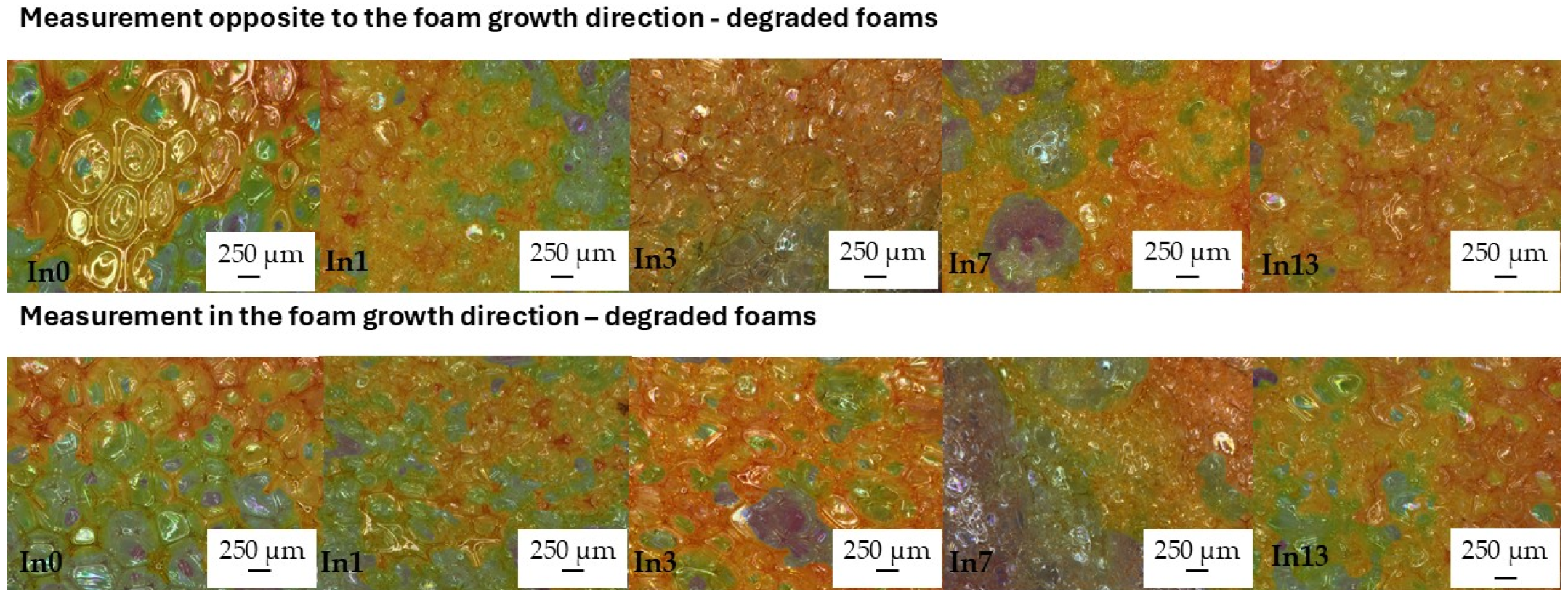


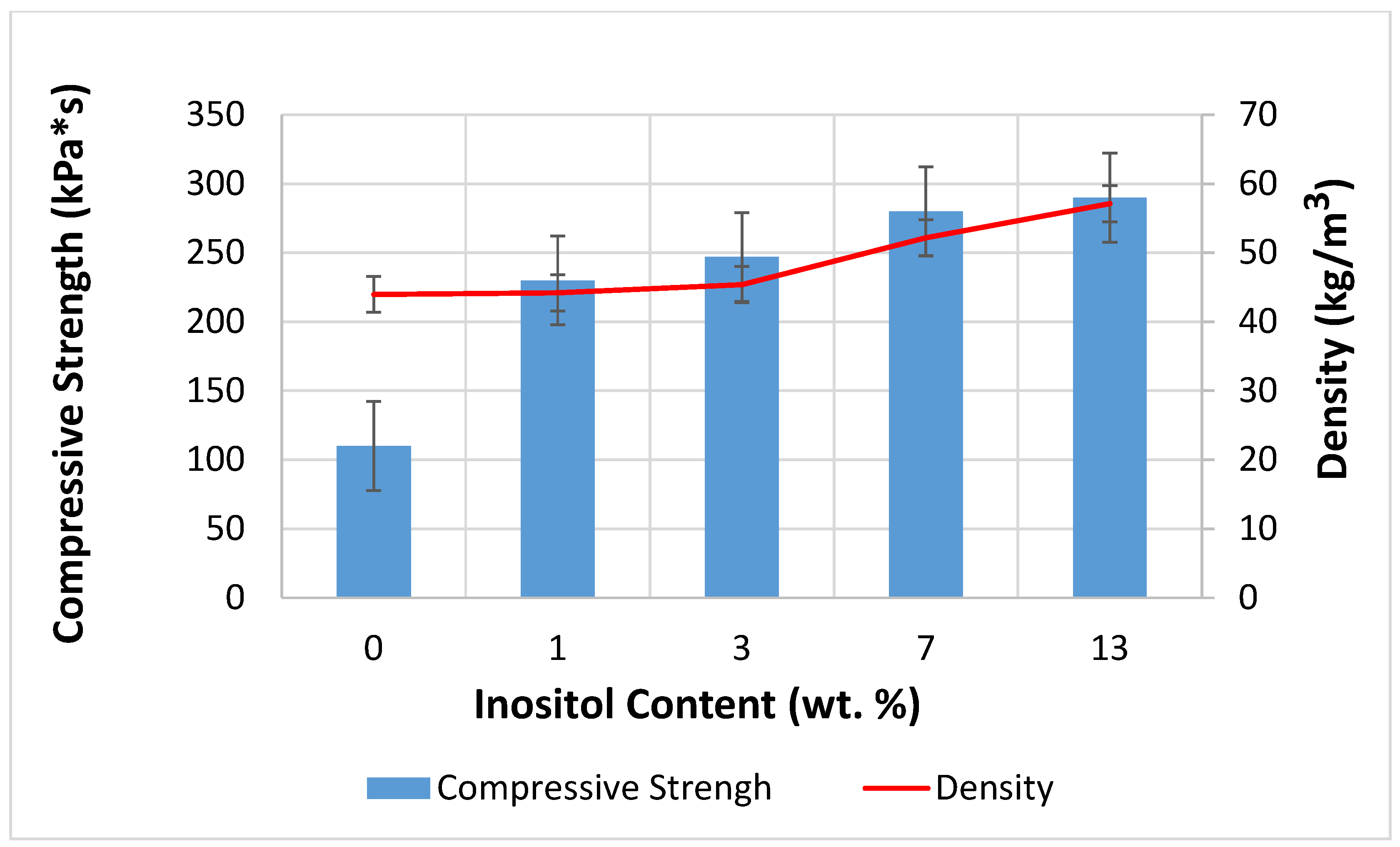
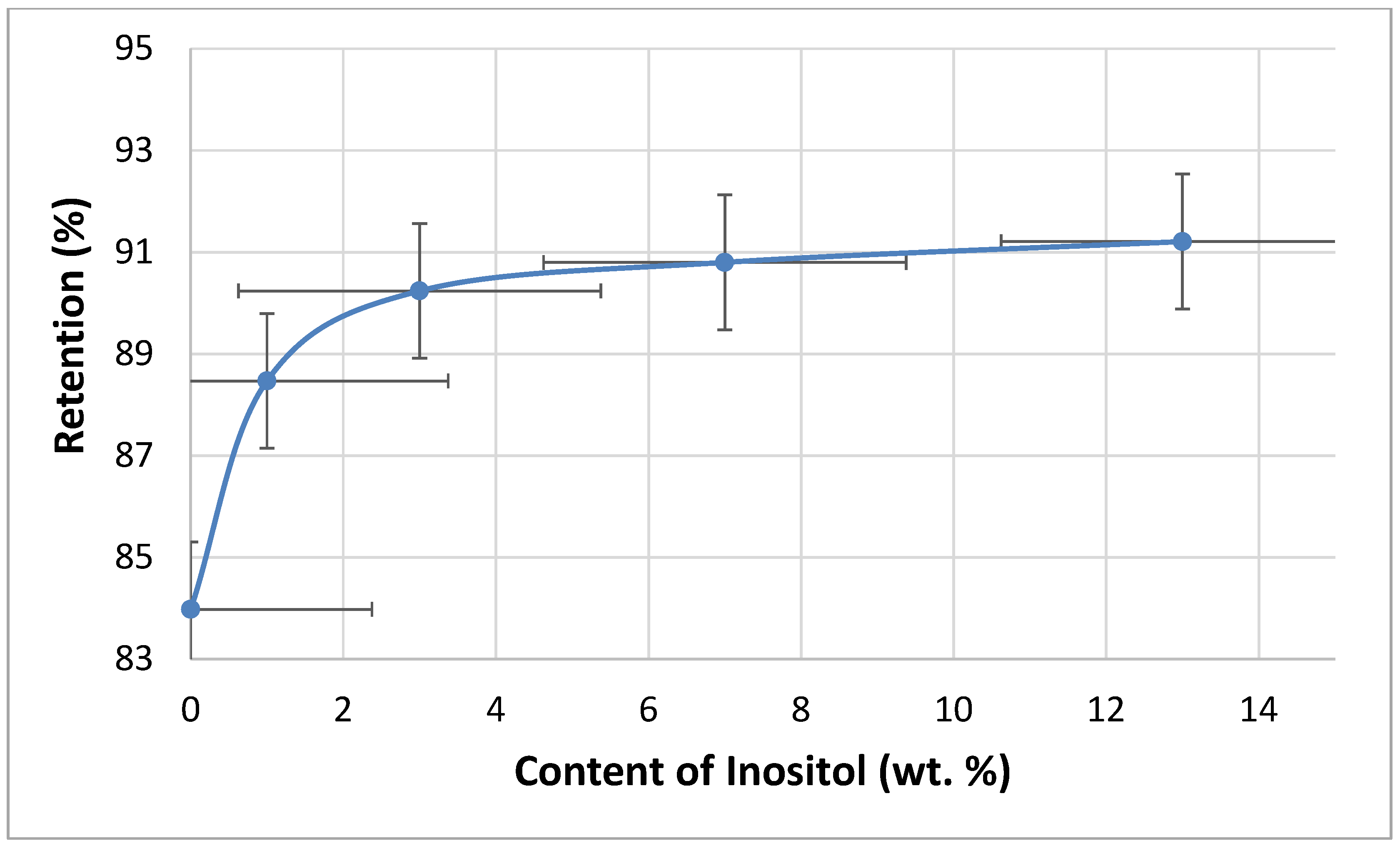



| Foam | Cream Time (s) | String Time (s) | Tack Free Time (s) | Free Rise Time (s) | Tmax (°C) |
|---|---|---|---|---|---|
| In0 | 10 | 28 | 31 | 40 | 171 |
| In1 | 13 | 26 | 28 | 30 | 177 |
| In3 | 14 | 26 | 27 | 30 | 174 |
| In7 | 15 | 27 | 29 | 30 | 172 |
| In13 | 16 | 28 | 30 | 30 | 171 |
| Foam | L (-) | a* (-) | b* (-) | ΔE (-) |
|---|---|---|---|---|
| In0 | 63.51 | −4.99 | 20.50 | 66.92 |
| In1 | 72.61 | −1.37 | 35.41 | 80.79 |
| In3 | 70.53 | −1.8 | 32.77 | 77.79 |
| In7 | 67.07 | −0.52 | 35.70 | 75.98 |
| In13 | 66.91 | −0.93 | 34.07 | 75.09 |
| In0_D | 42.25 | 18.17 | 31.94 | 55.99 |
| In1_D | 48.41 | 16.77 | 35.28 | 62.20 |
| In3_D | 48.14 | 18.04 | 33.62 | 61.43 |
| In7_D | 45.60 | 19.98 | 38.14 | 62.71 |
| In13_D | 45.50 | 19.02 | 34.02 | 59.91 |
| Wavenumber (cm−1) | Absorbance Before Degradation (-) | Absorbance After Degradation (-) | ||||
|---|---|---|---|---|---|---|
| In0 | In3 | In13 | In0 | In3 | In13 | |
| 3340 | 0.56 | 0.64 | 0.49 | 0.062 | 0.075 | 0.075 |
| 2965–2974 | 0.049 | 0.055 | 0.040 | 0.048 | 0.059 | 0.059 |
| 2867–2872 | 0.051 | 0.057 | 0.043 | 0.046 | 0.057 | 0.057 |
| 2285–2323 | 0.025 | 0.031 | 0.023 | 0.023 | 0.030 | 0.030 |
| 2138 | 0.036 | 0.041 | 0.023 | 0.022 | 0.025 | 0.020 |
| 2106–2111 | 0.037 | 0.041 | 0.024 | 0.024 | 0.026 | 0.021 |
| 1713 (1660–1740) | 0.155 | 0.170 | 0.125 | 0.013 | 0.014 | 0.013 |
| 1595 | 0.080 | 0.079 | 0.058 | 0.093 | 0.095 | 0.081 |
| 1511 | 0.151 | 0.149 | 0.110 | 0.122 | 0.131 | 0.107 |
| 1411 | 0.129 | 0.142 | 0.104 | 0.096 | 0.131 | 0.110 |
| 1308 | 0.082 | 0.081 | 0.061 | 0.061 | 0.081 | 0.081 |
| 1224 | 0.112 | 0.106 | 0.079 | 0.011 | 0.106 | 0.078 |
| 1075–1081 | 0.079 | 0.079 | 0.059 | 0.079 | 0.078 | 0.058 |
| 950–964 | 0.063 | 0.061 | 0.046 | 0.061 | 0.060 | 0.045 |
| 758–765 | 0.056 | 0.058 | 0.046 | 0.057 | 0.058 | 0.046 |
| Foam | Cell Hight (μm) | Cell Width (μm) | Anisotrophy (-) | Degraded Layer Thickness (μm) |
|---|---|---|---|---|
| In0_op | 538 | 463 | 1.16 | - |
| In1_op | 256 | 249 | 1.03 | - |
| In3_op | 254 | 229 | 1.11 | - |
| In7_op | 257 | 230 | 1.12 | - |
| In13_op | 236 | 219 | 1.08 | - |
| In0_in | 747 | 410 | 1.82 | - |
| In1_in | 256 | 229 | 1.12 | - |
| In3_in | 255 | 230 | 1.11 | - |
| In7_in | 278 | 265 | 1.05 | - |
| In13_in | 257 | 230 | 1.12 | - |
| In0_D_op | 556 | 528 | 1.05 | - |
| In1_D_op | 254 | 234 | 1.08 | - |
| In3_D_op | 338 | 257 | 1.32 | - |
| In7_D_op | 217 | 198 | 1.10 | - |
| In13_D_op | 412 | 313 | 1.31 | - |
| In0_D_in | 462 | 413 | 1.12 | 1441 |
| In1_D_in | 355 | 314 | 1.13 | 1592 |
| In3_D_in | 403 | 315 | 1.28 | 1709 |
| In7_D_in | 503 | 345 | 1.50 | 1642 |
| In13_D_in | 452 | 288 | 1.75 | 2035 |
| Foam | T5% (°C) | T10% (°C) | T20% (°C) | T50% (°C) | Residue at 1000 °C (mg) |
|---|---|---|---|---|---|
| In0 | 223.4 | 254.8 | 296.9 | 368.7 | 0.6 |
| In1 | 237.0 | 266.9 | 303.8 | 379.4 | 4.3 |
| In3 | 235.2 | 265.2 | 300.7 | 362.2 | 13.0 |
| In7 | 239.2 | 268.8 | 301.8 | 374.5 | 12.5 |
| In13 | 238.1 | 263.6 | 294.3 | 384.2 | 3.4 |
| In0_D | 217.6 | 255.4 | 298.4 | 365.0 | 9.6 |
| In1_D | 227.6 | 267.6 | 307.9 | 398.8 | 22.5 |
| In3_D | 222.8 | 261.0 | 301.7 | 441.9 | 2.5 |
| In7_D | 226.0 | 261.1 | 299.8 | 387.3 | 10.0 |
| In13_D | 229.3 | 260.9 | 295.4 | 371.5 | 10.6 |
| Foam | Tmax1 (°C) | Δm1 (%) | Tmax2 (°C) | Δm2 (%) | Tmax3 (°C) | Δm3 (%) | Tmax4 (°C) |
|---|---|---|---|---|---|---|---|
| In0 | 334.8 | 55.7 | 470.6 | 5.6 | 662.9 | 18.0 | 857.2 |
| In1 | 335.0 | 55.3 | 467.5 | 3.5 | 650.1 | 15.9 | 927.4 |
| In3 | 335.1 | 61.6 | 480.7 | 4.4 | 780.3 | 20.5 | - |
| In7 | 340.9 | 58.2 | 471.9 | 3.8 | 633.2 | 11.1 | 943.7 |
| In13 | 311.2 | 51.5 | 455.0 | 5.1 | 603.7 | 22.1 | 769.3 |
| In0_D | 333.6 | 52.6 | 468.1 | 8.8 | 679.9 | 10.0 | 925.7 |
| In1_D | 339.5 | 47.5 | 468.0 | 16.2 | - | - | 918.6 |
| In3_D | 332.3 | 44.3 | 463.5 | 8.9 | 634.9 | 19.8 | 920.0 |
| In7_D | 334.3 | 49.5 | 507.0 | 12.3 | 673.9 | 13.7 | 854.2 |
| In13_D | 312.7 | 51.7 | 456.0 | 10.6 | 655.8 | 10.5 | 970.8 |
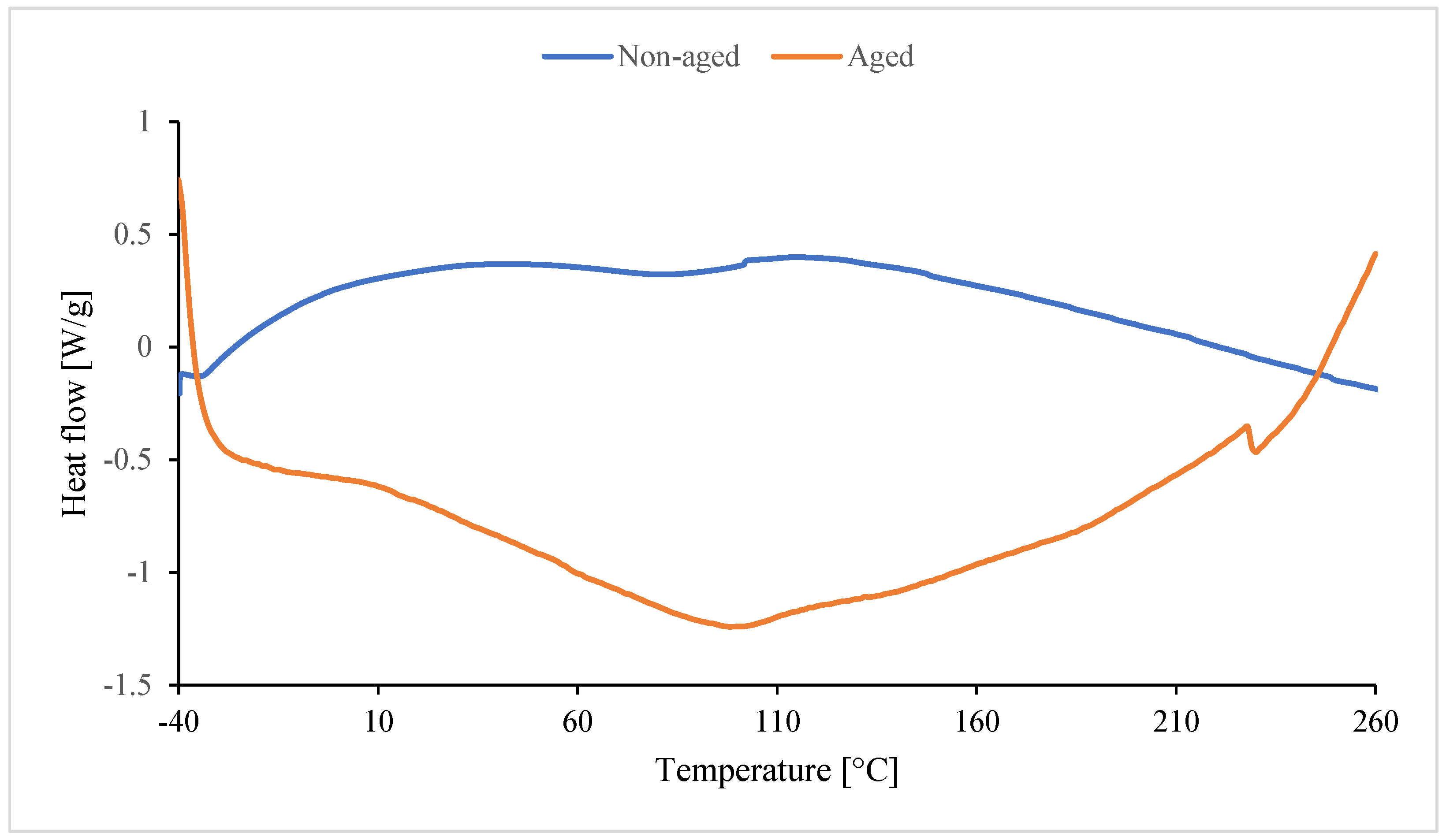
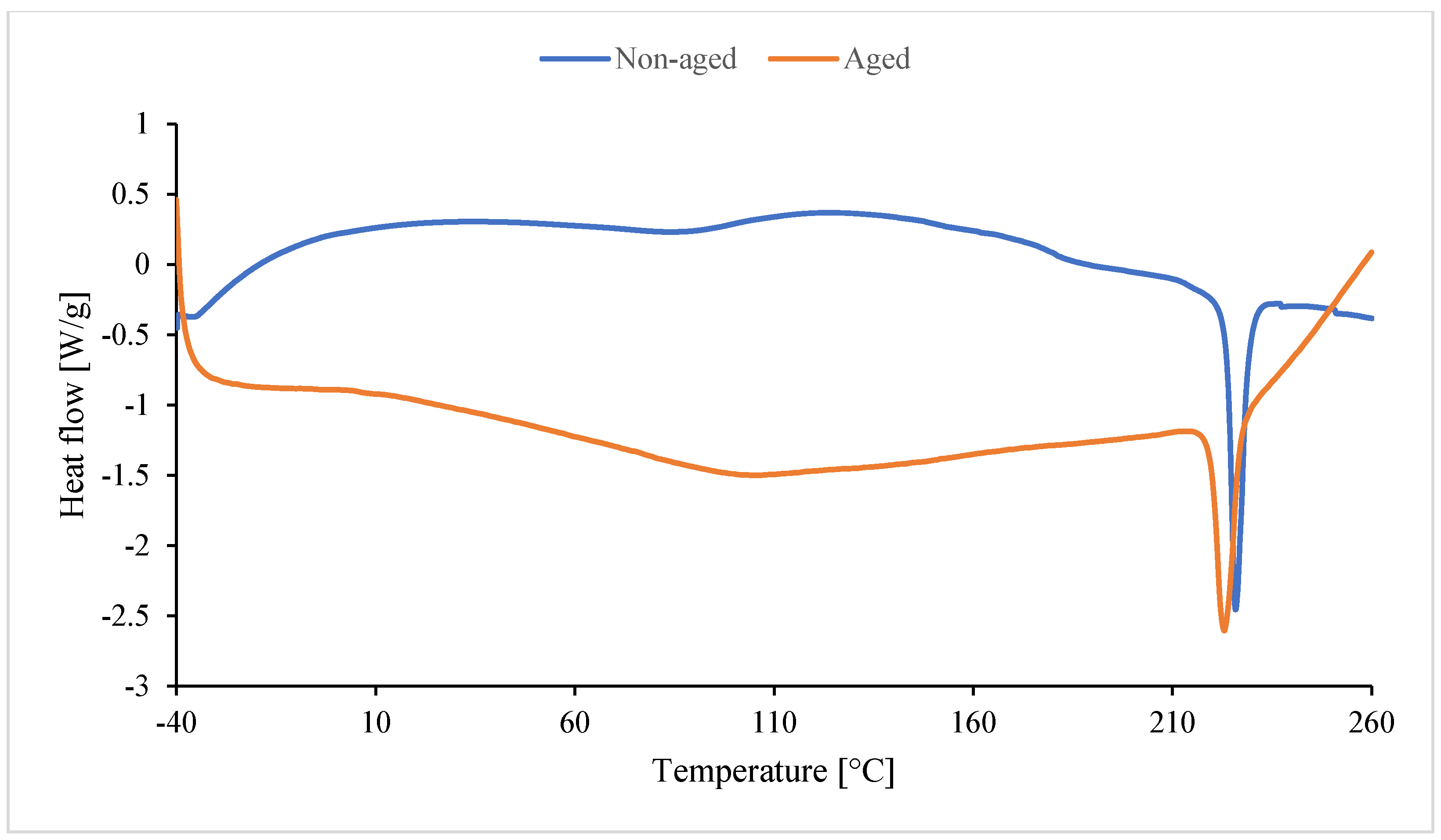
| Foam | Texo1 (°C) | Texo2 (°C) | Δhexo1 (J/g) | Tm (°C) | Δhexo2 (J/g) |
|---|---|---|---|---|---|
| In0 | 39.9 | 115.2 | 329.2 | - | - |
| In1 | 51.5 | 115.4 | 352.9 | 226.0 | 2.5 |
| In3 | 53.8 | 112.5 | 303.0 | 227.4 | 6.1 |
| In7 | 22.4 | 147.0 | 141.1 | 225.7 | 12.9 |
| In13 | 23.2 | 123.8 | 289.3 | 225.9 | 28.1 |
| Foam | Tendo1 (°C) | ΔHendo1 (J/g) | Tendo2 (°C) | ΔHendo2 (J/g) |
|---|---|---|---|---|
| In0_D | 145.7 | 98.0 | - | - |
| In1_D | 115.0 | 105.0 | 222.9 | 1.8 |
| In3_D | 107.8 | 81.9 | 222.9 | 5.0 |
| In7_D | 101.9 | 113.5 | 222.9 | 11.9 |
| In13_D | 105.9 | 93.0 | 222.9 | 18.8 |
Disclaimer/Publisher’s Note: The statements, opinions and data contained in all publications are solely those of the individual author(s) and contributor(s) and not of MDPI and/or the editor(s). MDPI and/or the editor(s) disclaim responsibility for any injury to people or property resulting from any ideas, methods, instructions or products referred to in the content. |
© 2025 by the authors. Licensee MDPI, Basel, Switzerland. This article is an open access article distributed under the terms and conditions of the Creative Commons Attribution (CC BY) license (https://creativecommons.org/licenses/by/4.0/).
Share and Cite
Liszkowska, J.; Moraczewski, K. The Introduction of Myo-Inositol in the Synthesis of Rigid Polyurethane-Polyisocyanurate (RPU/PIR) Foams and Its Effect on RPU/PIR Properties. Polymers 2025, 17, 2986. https://doi.org/10.3390/polym17222986
Liszkowska J, Moraczewski K. The Introduction of Myo-Inositol in the Synthesis of Rigid Polyurethane-Polyisocyanurate (RPU/PIR) Foams and Its Effect on RPU/PIR Properties. Polymers. 2025; 17(22):2986. https://doi.org/10.3390/polym17222986
Chicago/Turabian StyleLiszkowska, Joanna, and Krzysztof Moraczewski. 2025. "The Introduction of Myo-Inositol in the Synthesis of Rigid Polyurethane-Polyisocyanurate (RPU/PIR) Foams and Its Effect on RPU/PIR Properties" Polymers 17, no. 22: 2986. https://doi.org/10.3390/polym17222986
APA StyleLiszkowska, J., & Moraczewski, K. (2025). The Introduction of Myo-Inositol in the Synthesis of Rigid Polyurethane-Polyisocyanurate (RPU/PIR) Foams and Its Effect on RPU/PIR Properties. Polymers, 17(22), 2986. https://doi.org/10.3390/polym17222986