Thermal Insulation and Mechanical Properties of Polylactic Acid (PLA) at Different Processing Conditions




Abstract
1. Introduction
2. Materials and Methods
2.1. Materials
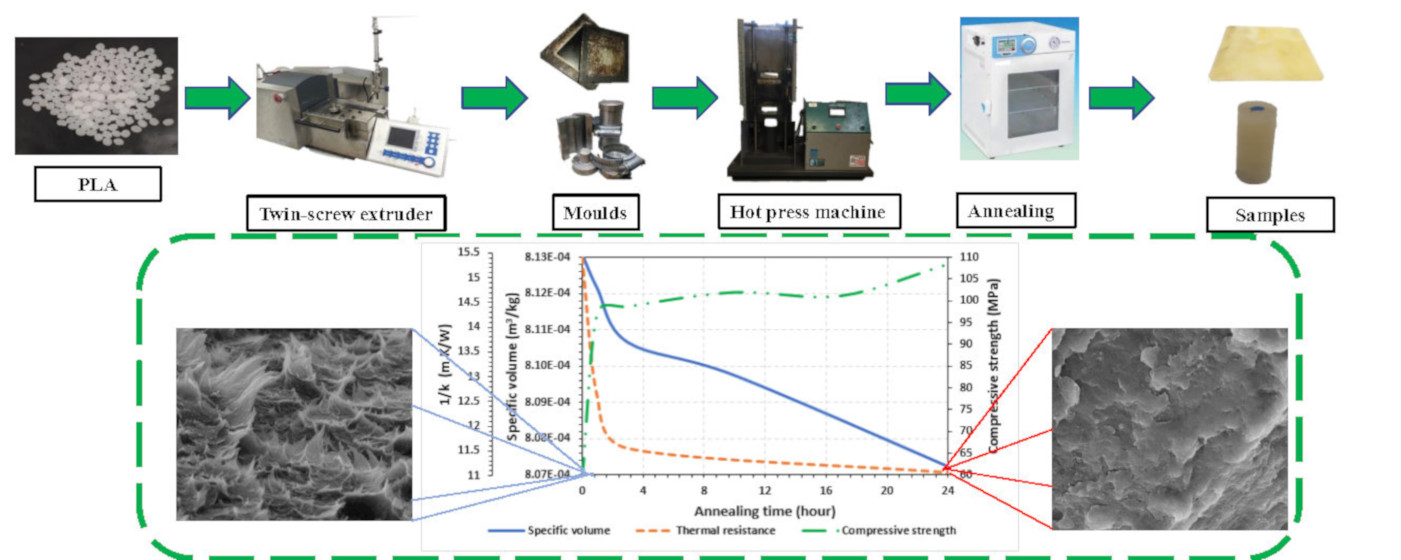
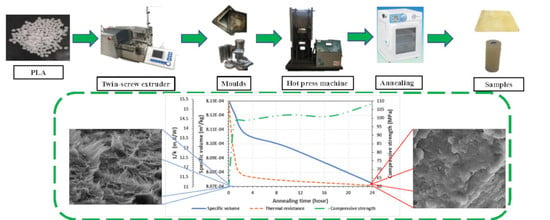
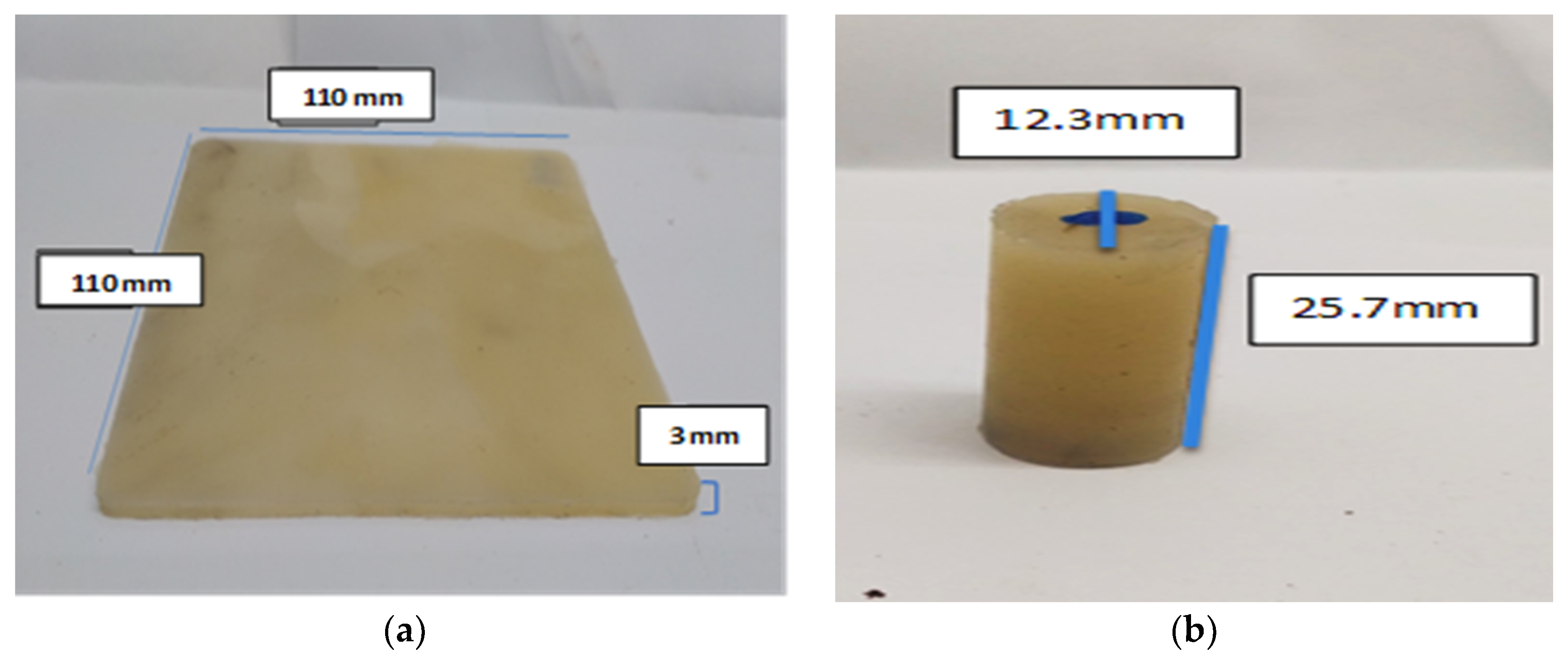
2.2. PLA Samples Preparation and Thermal Treatment
2.3. Scanning Electron Microscopy (SEM)
2.4. Thermal Conductivity
2.5. Differential Scanning Calorimetry
2.6. Compression Test
2.7. Water Retention
2.8. Density
3. Results and Discussion
3.1. Thermal Properties of Processed PLA
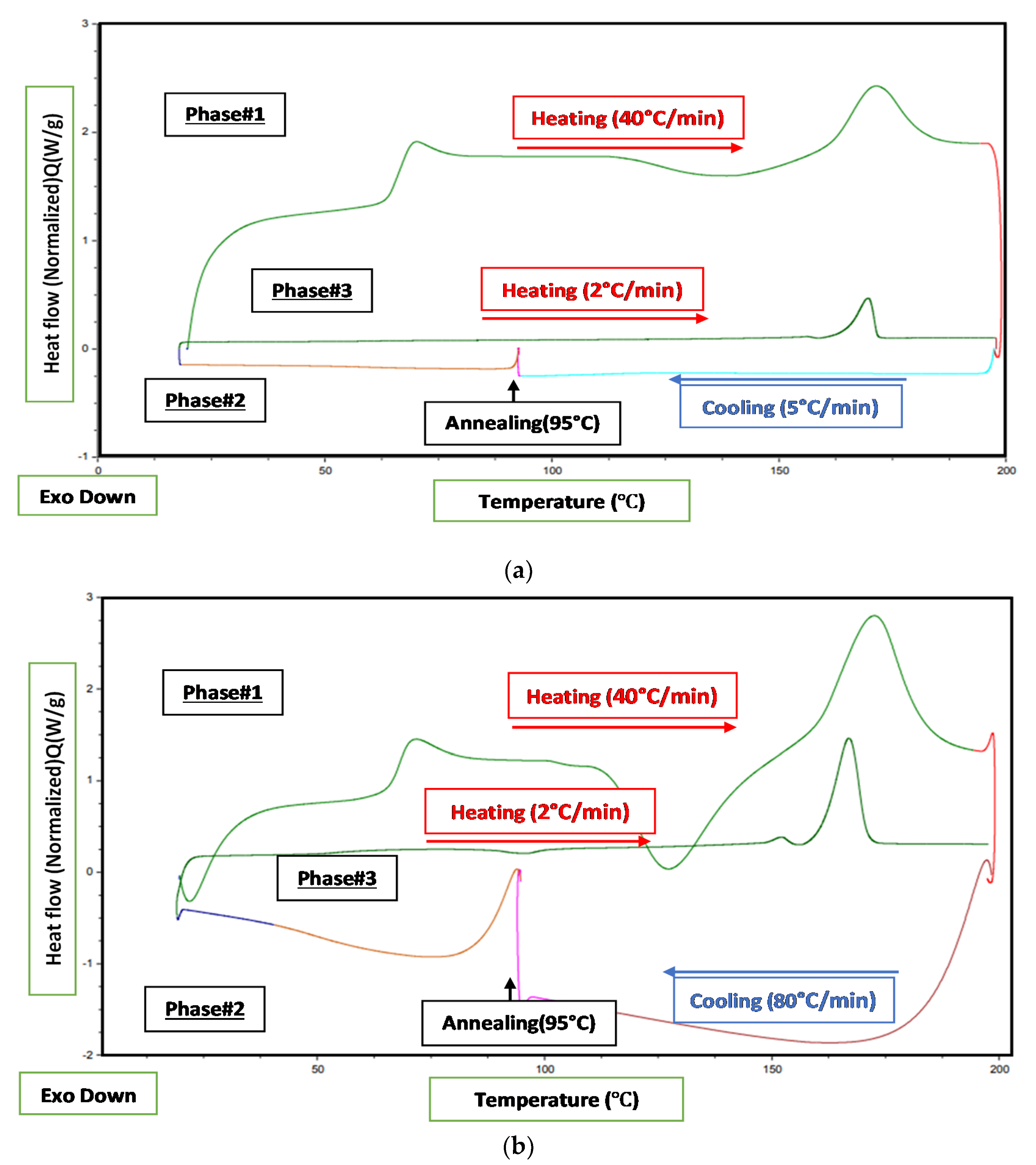
3.1.1. Case A
3.1.2. Case B
3.2. Thermal Conductivity
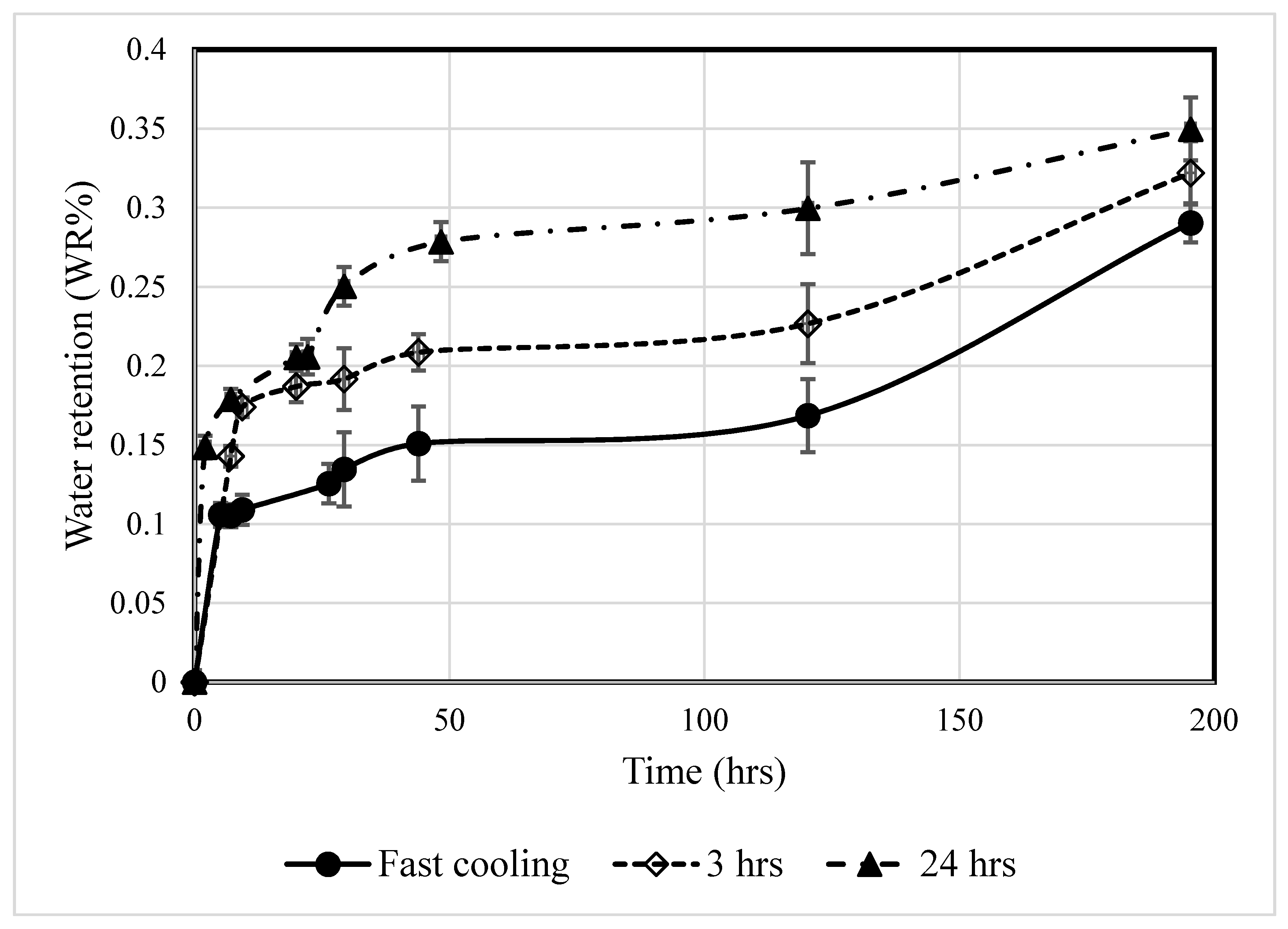
3.3. Water Retention
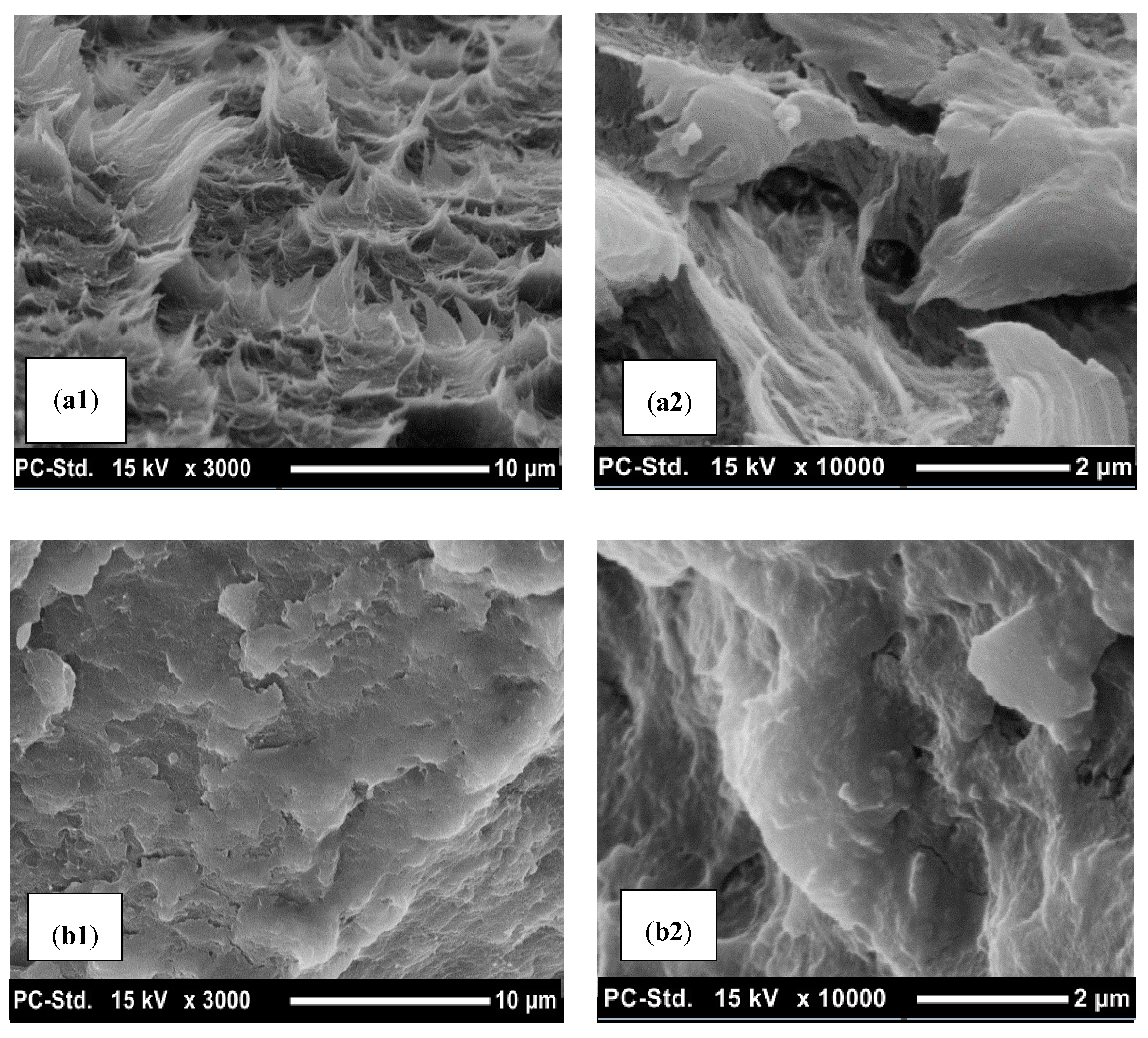
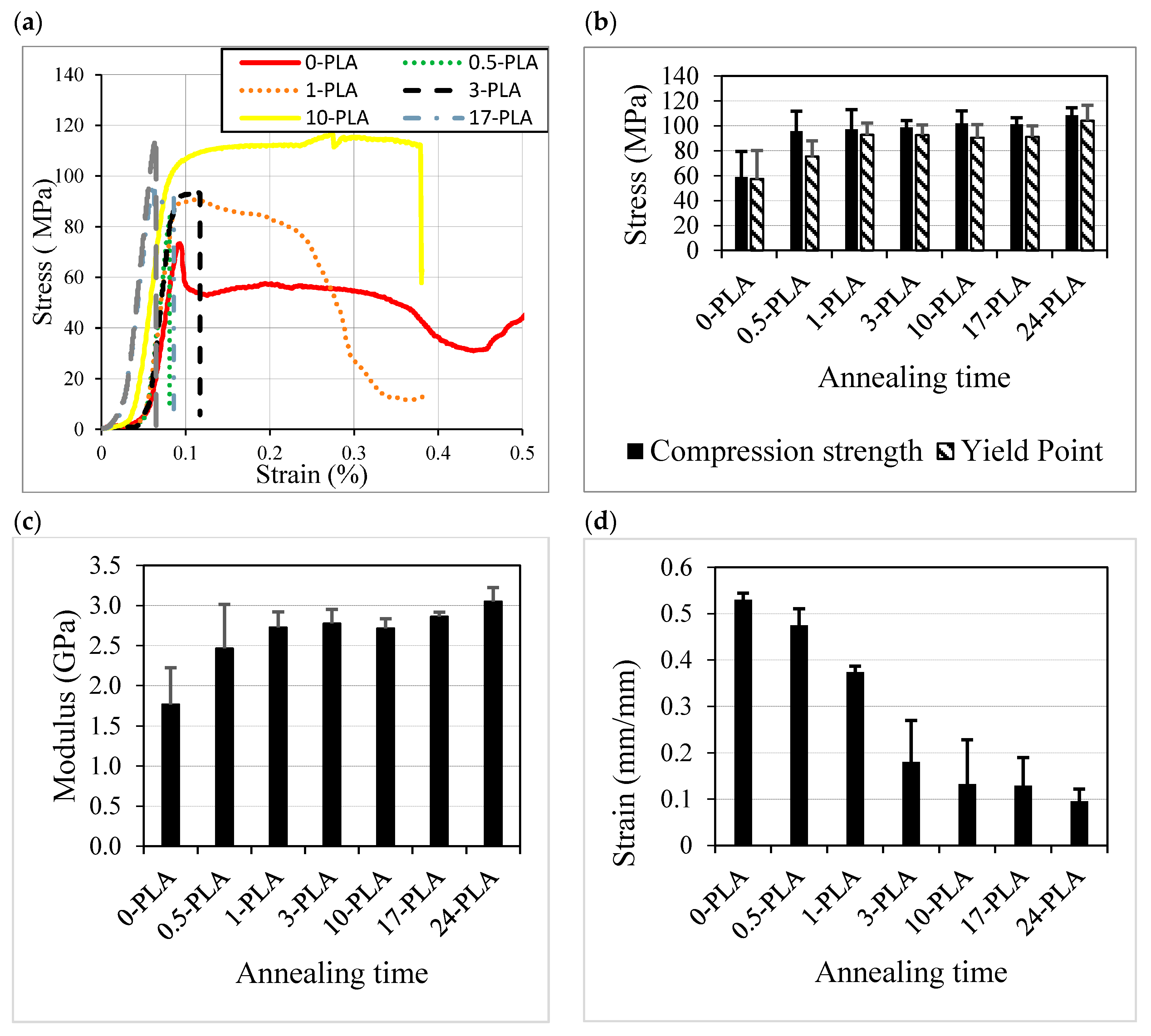
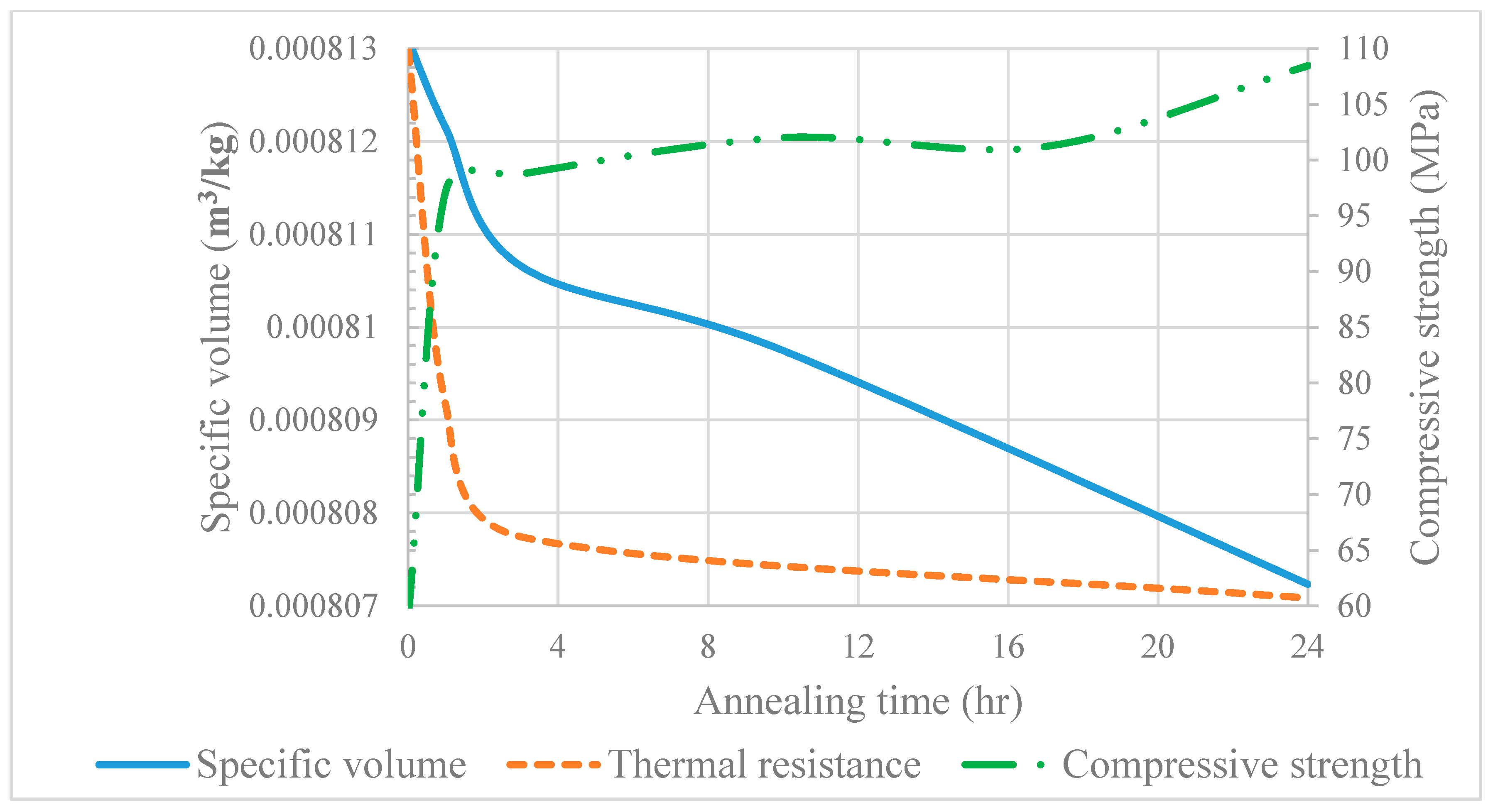
3.4. Mechanical and Morphological Characteristics
4. Conclusions
Author Contributions
Funding
Conflicts of Interest
References
- Tan, L.; Yu, X.; Wan, P.; Yang, K. Biodegradable Materials for Bone Repairs: A Review. J. Mater. Sci. Technol. 2013, 29, 503–513. [Google Scholar] [CrossRef]
- Laycock, B.; Nikolić, M.A.; Colwell, J.M.; Gauthier, E.; Halley, P.J.; Bottle, S.E.; George, G. Lifetime prediction of biodegradable polymers. Prog. Polym. Sci. 2017, 71, 144–189. [Google Scholar] [CrossRef]
- Johansson, C.; Bras, J.; Mondragon, I.; Nechita, P.; Plackett, D.; Simon, P.; Aucejo, S. Renewable fibers and bio-based materials for packaging applications—A review of recent developments. BioResources 2012, 7, 2506–2552. [Google Scholar] [CrossRef]
- Guan, X. Fabrication of Poly-Lactic Acid (PLA) Composite Films and Their Degradation Properties; University of Toledo: Toledo, Spain, 2012. [Google Scholar]
- Farah, S.; Anderson, D.G.; Langer, R. Physical and mechanical properties of PLA, and their functions in widespread applications—A comprehensive review. Adv. Drug Deliv. Rev. 2016, 107, 367–392. [Google Scholar] [CrossRef]
- Gupta, B.; Revagade, N.; Hilborn, J. Poly(lactic acid) fiber: An overview. Prog. Polym. Sci. 2007, 32, 455–482. [Google Scholar] [CrossRef]
- Srithep, Y.; Nealey, P.; Turng, L.-S. Effects of annealing time and temperature on the crystallinity and heat resistance behavior of injection-molded poly(lactic acid). Polym. Eng. Sci. 2013, 53, 580–588. [Google Scholar] [CrossRef]
- Jamshidian, M.; Tehrany, E.A.; Imran, M.; Akhtar, M.J.; Cleymand, F.; Desobry, S. Structural, mechanical and barrier properties of active PLA–antioxidant films. J. Food Eng. 2012, 110, 380–389. [Google Scholar] [CrossRef]
- Rasal, R.M.; Janorkar, A.V.; Hirt, D.E. Poly(lactic acid) modifications. Prog. Polym. Sci. 2010, 35, 338–356. [Google Scholar] [CrossRef]
- Janorkar, A.V.; Metters, A.T.; Hirt, D.E. Modification of Poly(lactic acid) Films: Enhanced Wettability from Surface-Confined Photografting and Increased Degradation Rate Due to an Artifact of the Photografting Process. Macromolecules 2004, 37, 9151–9159. [Google Scholar] [CrossRef]
- Tokiwa, Y.; Calabia, B.P. Biodegradability and biodegradation of poly(lactide). Appl. Microbiol. Biotechnol. 2006, 72, 244–251. [Google Scholar] [CrossRef]
- Yu, L.; Liu, H.; Xie, F.; Chen, L.; Li, X.; Xie, F. Effect of annealing and orientation on microstructures and mechanical properties of polylactic acid. Polym. Eng. Sci. 2008, 48, 634–641. [Google Scholar] [CrossRef]
- Abhari, R.E.; Mouthuy, P.-A.; Zargar, N.; Brown, C.; Carr, A.J. Effect of annealing on the mechanical properties and the degradation of electrospun polydioxanone filaments. J. Mech. Behav. Biomed. Mater. 2017, 67, 127–134. [Google Scholar] [CrossRef] [PubMed]
- Saeidlou, S.; Huneault, M.A.; Li, H.; Park, C.B. Poly(lactic acid) crystallization. Prog. Polym. Sci. 2012, 37, 1657–1677. [Google Scholar] [CrossRef]
- Yuan, C.; Xu, Y.; Yang, K.; Wang, Y.; Wang, Z.; Cheng, X.; Su, L. Isothermally crystallization behavior of poly (L-lactide) from melt under high pressure. Polym. Adv. Technol. 2018, 29, 3049–3055. [Google Scholar] [CrossRef]
- Lv, S.; Gu, J.; Cao, J.; Tan, H.; Zhang, Y. Effect of annealing on the thermal properties of poly (lactic acid)/starch blends. Int. J. Biol. Macromol. 2015, 74, 297–303. [Google Scholar] [CrossRef]
- Takayama, T.; Todo, M.; Tsuji, H. Effect of annealing on the mechanical properties of PLA/PCL and PLA/PCL/LTI polymer blends. J. Mech. Behav. Biomed. Mater. 2011, 4, 255–260. [Google Scholar] [CrossRef]
- Tábi, T. Crystalline structure of annealed polylactic acid and its relation to processing. Express Polym. Lett. 2010, 4, 659–668. [Google Scholar] [CrossRef]
- Weir, N.; Buchanan, F.; Orr, J.; Farrar, D.; Boyd, A. Processing, annealing and sterilisation of poly-l-lactide. Biomaterials 2004, 25, 3939–3949. [Google Scholar] [CrossRef]
- Hassan, M.M.; Le Guen, M.J.; Tucker, N.; Parker, K. Thermo-Mechanical, morphological and water absorption properties of thermoplastic starch/cellulose composite foams reinforced with PLA. Cellulose 2019, 26, 4463–4478. [Google Scholar] [CrossRef]
- Yeh, G.; Hosemann, R.; Loboda-Čačković, J.; Čačković, H. Annealing effects of polymers and their underlying molecular mechanisms. Polymer 1976, 17, 309–318. [Google Scholar] [CrossRef]
- Viswanath, V.; Maity, S.; Bochinski, J.R.; Clarke, L.I.; Gorga, R.E. Thermal Annealing of Polymer Nanocomposites via Photothermal Heating: Effects on Crystallinity and Spherulite Morphology. Macromolecules 2013, 46, 8596–8607. [Google Scholar] [CrossRef]
- ASTM International. ASTM C1045–07, Standard Practice for Calculating Thermal Transmission Properties under Steady State Conditions; ASTM International: West Conshohocken, PA, USA, 2019. [Google Scholar]
- ASTM International. ASTM D570-98 Standard Test Methods for Water Absoption of Plastics; ASTM International: West Conshohocken, PA, USA, 2000. [Google Scholar]
- Bigg, D.M. Polylactide copolymers: Effect of copolymer ratio and end capping on their properties. Adv. Polym. Technol. 2005, 24, 69–82. [Google Scholar] [CrossRef]
- Shi, Q.F.; Mou, H.Y.; Gao, L.; Yang, J.; Guo, W.H. Double-Melting Behavior of Bamboo Fiber/Talc/Poly (Lactic Acid) Composites. J. Polym. Environ. 2010, 18, 567–575. [Google Scholar] [CrossRef]
- Nizamuddin, S.; Jadhav, A.; Qureshi, S.S.; Baloch, H.A.; Siddiqui, M.T.H.; Mubarak, N.M.; Griffin, G.; Madapusi, S.; Tanksale, A.; Ahamed, M.I. Synthesis and characterization of polylactide/rice husk hydrochar composite. Sci. Rep. 2019, 9, 5445. [Google Scholar] [CrossRef]
- Garlotta, D. A Literature Review of Poly(Lactic Acid). J. Polym. Environ. 2001, 9, 63–84. [Google Scholar] [CrossRef]
- Harris, A.M.; Lee, E.C. Improving mechanical performance of injection molded PLA by controlling crystallinity. J. Appl. Polym. Sci. 2008, 107, 2246–2255. [Google Scholar] [CrossRef]
- Abu-Jdayil, B.; Mourad, A.-H.I.; Hittini, W.; Hassan, M.; Hameedi, S. Traditional, state-of-the-art and renewable thermal building insulation materials: An overview. Constr. Build. Mater. 2019, 214, 709–735. [Google Scholar] [CrossRef]
- Abu-Jdayil, B. Unsaturated Polyester Microcomposites. In Unsaturated Polyester Resins; Elsevier: Amsterdam, The Netherlands, 2019; pp. 67–100. [Google Scholar]
- He, X.; Xu, X.; Wan, Q.; Bo, G.; Yan, Y. Synthesis and Characterization of Dimmer-Acid-Based Nonisocyanate Polyurethane and Epoxy Resin Composite. Polymers 2017, 9, 649. [Google Scholar] [CrossRef]
- Silva, C.G.; Campini, P.A.; Rocha, D.B.; Rosa, D.D.S. The influence of treated eucalyptus microfibers on the properties of PLA biocomposites. Compos. Sci. Technol. 2019, 179, 54–62. [Google Scholar] [CrossRef]
- Abu-Jdayil, B.; Mourad, A.-H.I.; Hussain, A. Investigation on the mechanical behavior of polyester-scrap tire composites. Constr. Build. Mater. 2016, 127, 896–903. [Google Scholar] [CrossRef]


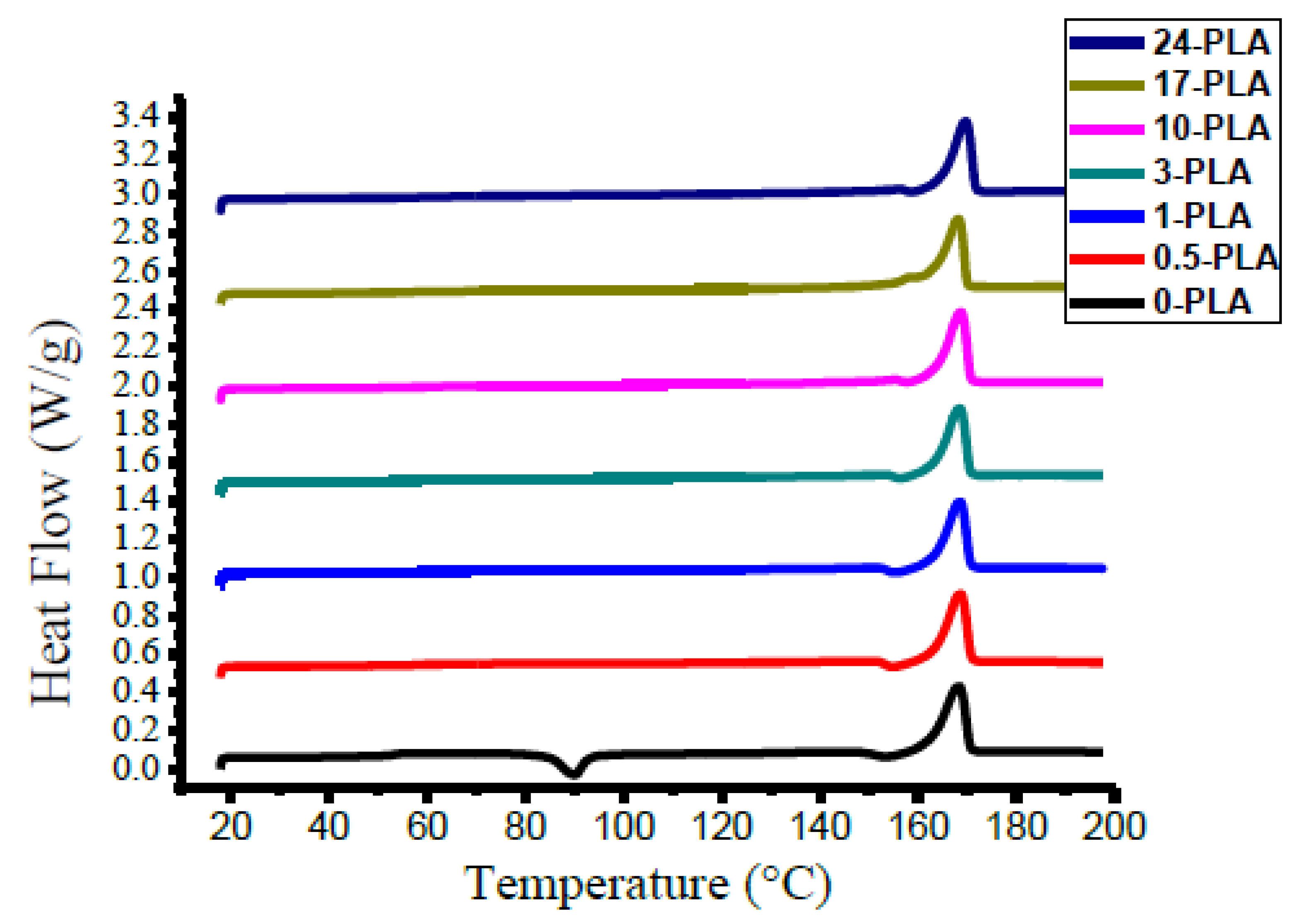
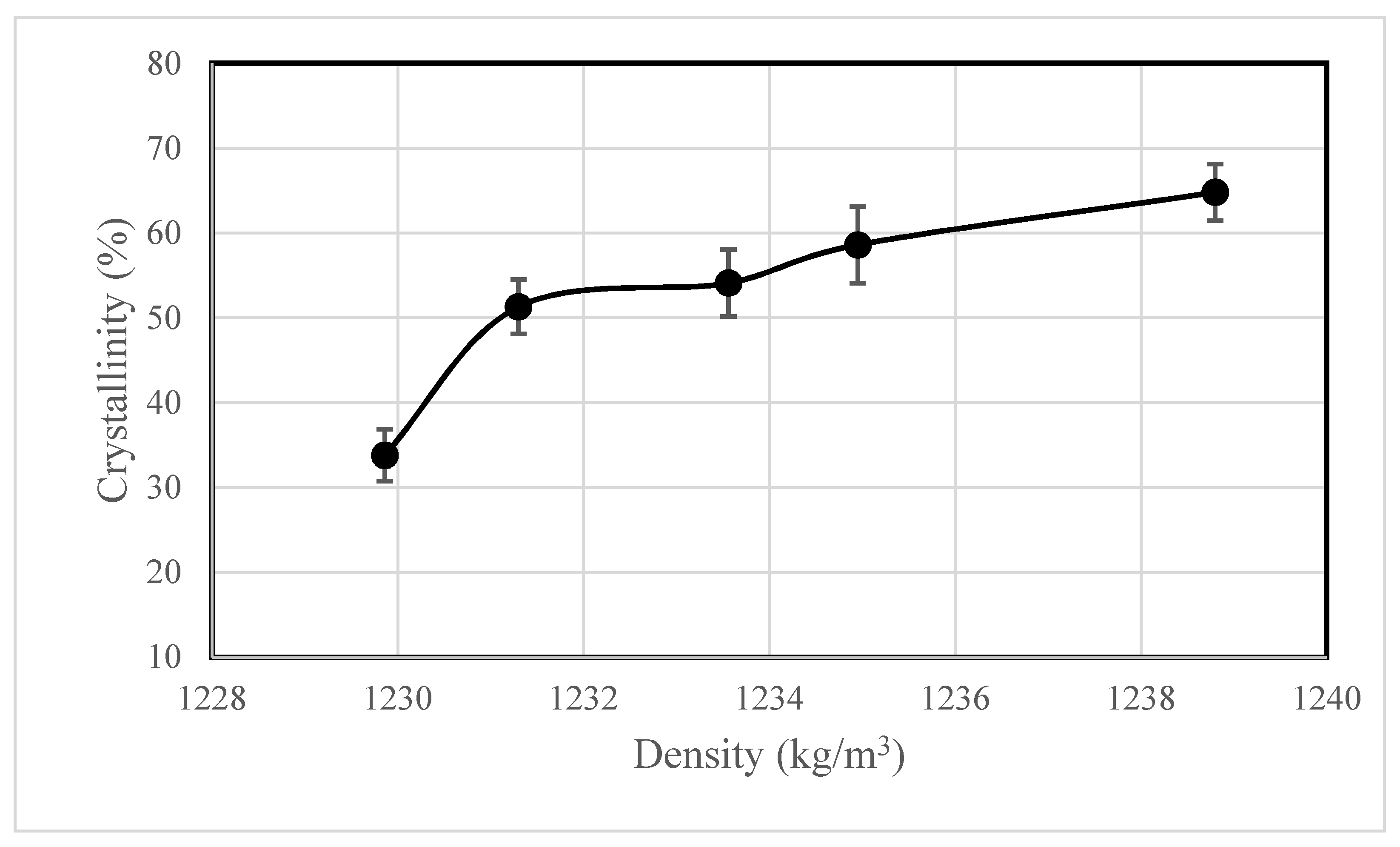
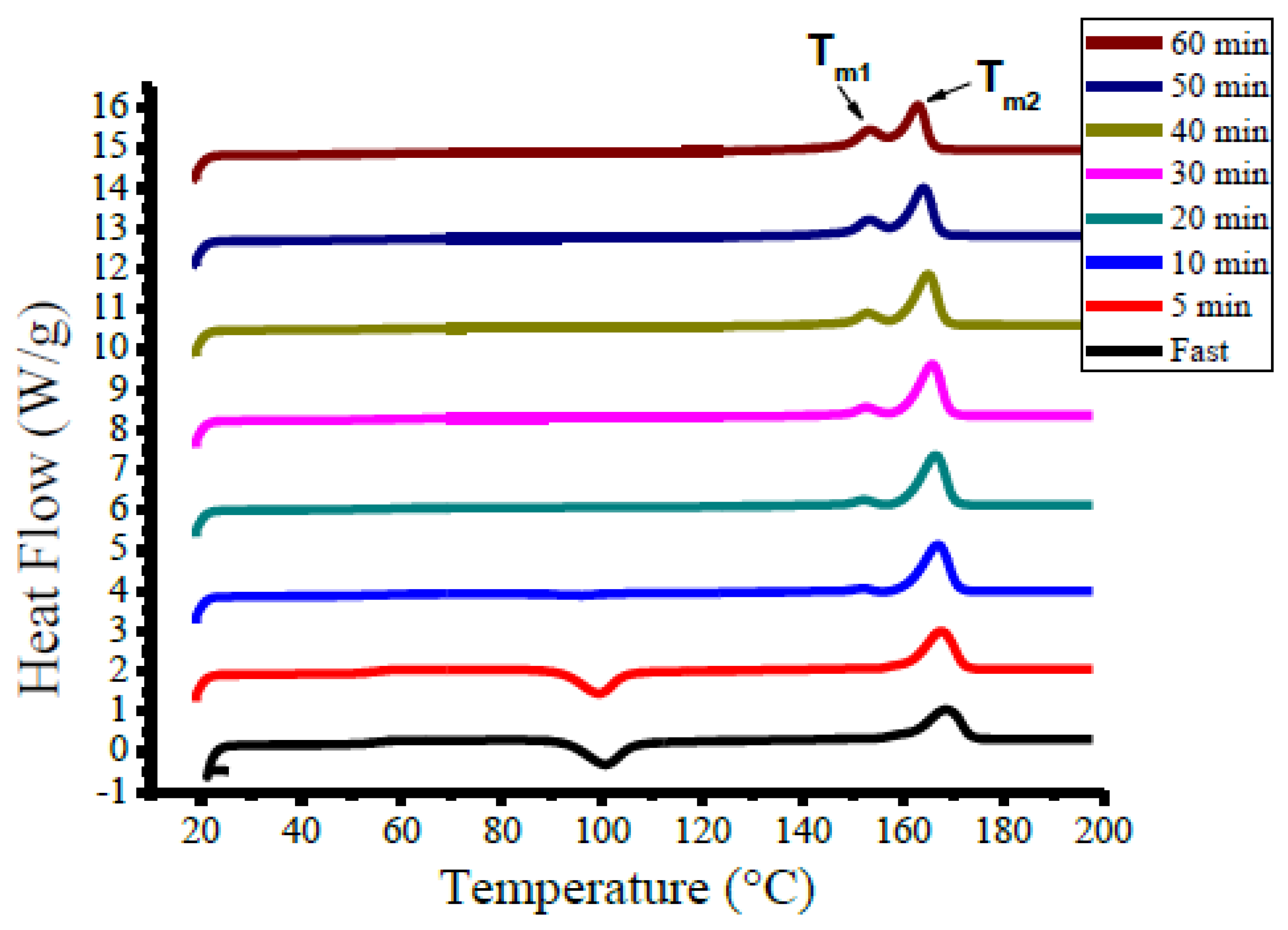
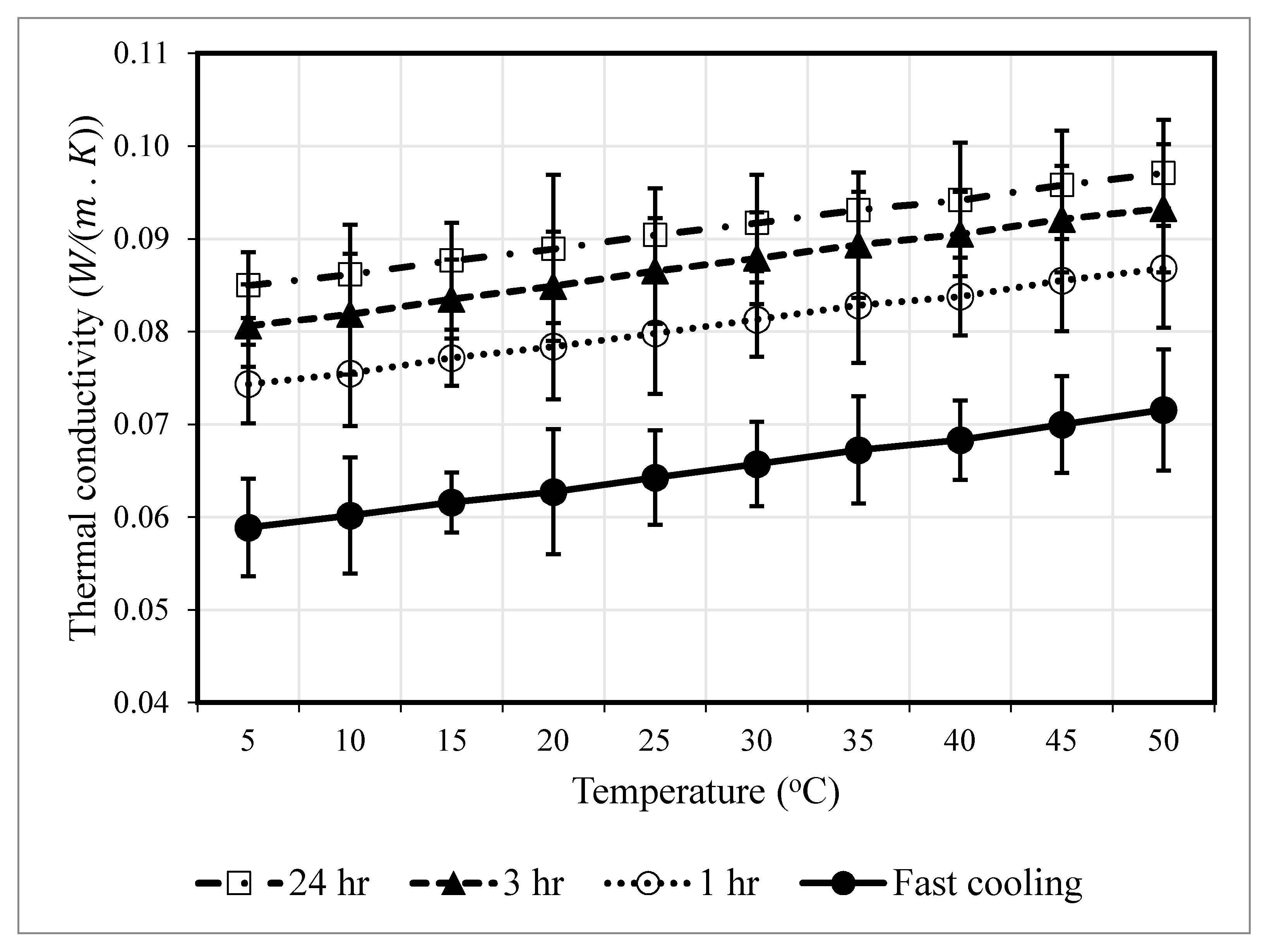
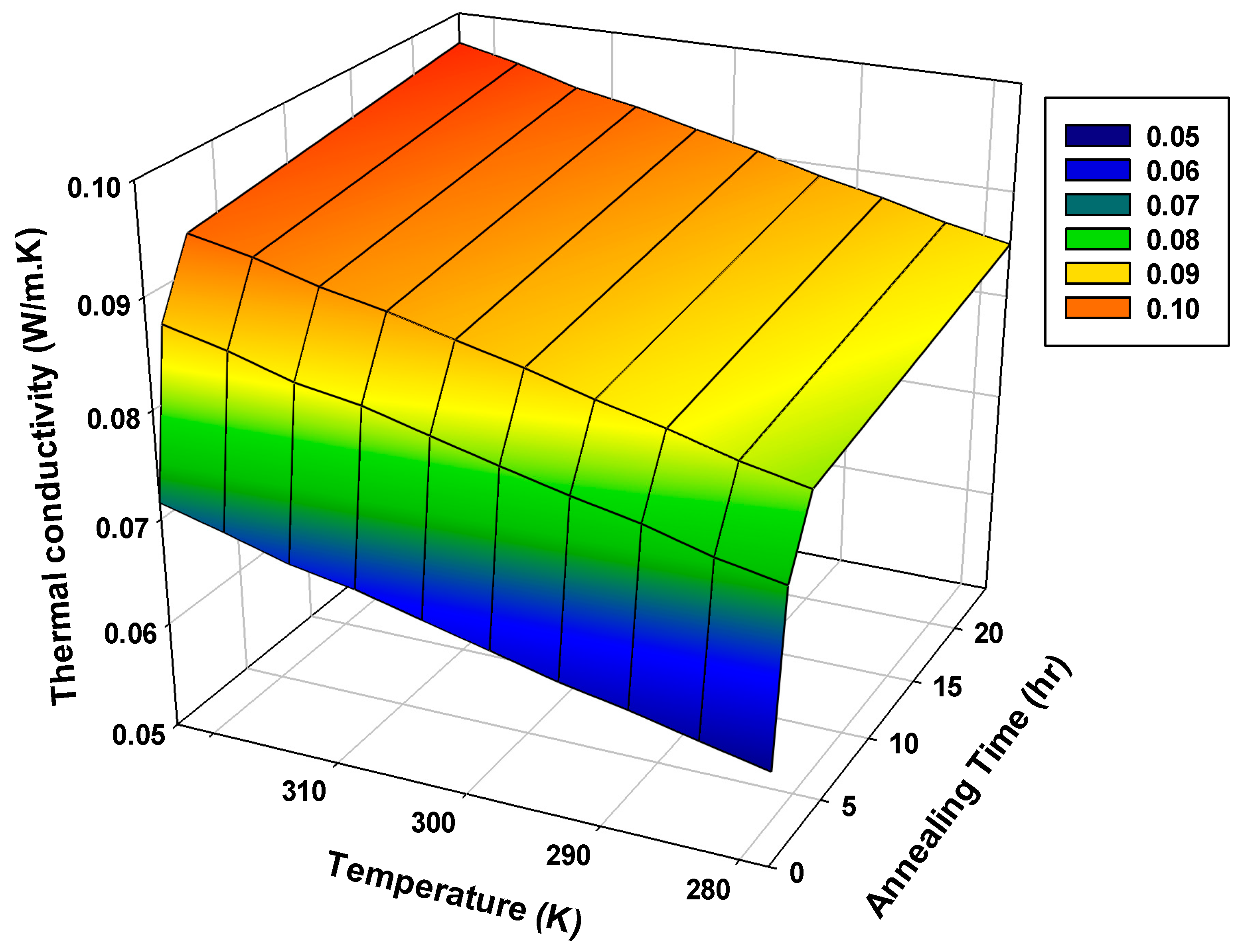


| Annealing Processing Interval | |
|---|---|
| 0-PLA | Fast |
| 0.5-PLA | 0.5 h |
| 1-PLA | 1 h |
| 3-PLA | 3 h |
| 10-PLA | 10 h |
| 17-PLA | 17 h |
| 24-PLA | 24 h |
| Interval (h) | (°C) | (°C) | (°C) | (J/g) | (J/g) | (%) |
|---|---|---|---|---|---|---|
| Fast (0) | 53 | 89.9 | 168.4 | 19.2 | 50.6 | 33.8 |
| 0.5 | 57.6 | 168.7 | 48.8 | 52.5 | ||
| 1 | 56 | 168.6 | 47.7 | 51.3 | ||
| 3 | 56.4 | 168.5 | 50.3 | 54.1 | ||
| 10 | 57.6 | 168.8 | 54.5 | 58.6 | ||
| 17 | 56.6 | 168.3 | 60.3 | 64.8 | ||
| 24 | 59 | 169.7 | 54.3 | 58.4 |
| Interval (min) | (°C) | (°C) | (°C) | (°C) | (J/g) | (J/g) | (J/g) | (%) |
|---|---|---|---|---|---|---|---|---|
| Fast (0) | 55.1 | 101 | 168.6 | 32.5 | 36 | 38.7 | ||
| 5 | 54.3 | 99 | 167.6 | 30.4 | 41.4 | 44.5 | ||
| 10 | 54 | 94.3 | 152 | 167 | 3.5 | 2.5 | 43.6 | 49.6 |
| 20 | 55 | 152.5 | 165.8 | 3.8 | 40.9 | 48.1 | ||
| 30 | 54.1 | 152.8 | 165 | 5.3 | 36.3 | 44.7 | ||
| 40 | 52.1 | 153.1 | 164.2 | 54.7 | 58.8 | |||
| 50 | 50.8 | 153.2 | 163.1 | 55.4 | 59.6 | |||
| 60 | 49.1 | 153.3 | 162.1 | 55 | 59.1 |
© 2020 by the authors. Licensee MDPI, Basel, Switzerland. This article is an open access article distributed under the terms and conditions of the Creative Commons Attribution (CC BY) license (http://creativecommons.org/licenses/by/4.0/).
Share and Cite
Barkhad, M.S.; Abu-Jdayil, B.; Mourad, A.H.I.; Iqbal, M.Z. Thermal Insulation and Mechanical Properties of Polylactic Acid (PLA) at Different Processing Conditions. Polymers 2020, 12, 2091. https://doi.org/10.3390/polym12092091
Barkhad MS, Abu-Jdayil B, Mourad AHI, Iqbal MZ. Thermal Insulation and Mechanical Properties of Polylactic Acid (PLA) at Different Processing Conditions. Polymers. 2020; 12(9):2091. https://doi.org/10.3390/polym12092091
Chicago/Turabian StyleBarkhad, Mohamed Saeed, Basim Abu-Jdayil, Abdel Hamid I. Mourad, and Muhammad Z. Iqbal. 2020. "Thermal Insulation and Mechanical Properties of Polylactic Acid (PLA) at Different Processing Conditions" Polymers 12, no. 9: 2091. https://doi.org/10.3390/polym12092091
APA StyleBarkhad, M. S., Abu-Jdayil, B., Mourad, A. H. I., & Iqbal, M. Z. (2020). Thermal Insulation and Mechanical Properties of Polylactic Acid (PLA) at Different Processing Conditions. Polymers, 12(9), 2091. https://doi.org/10.3390/polym12092091