Influence of Chemical Composition and Electro-Steel Sheets Manufacturing Parameters on the Adhesion of an Electro-Insulating Self-Bonding Varnish Layer
 , ,
, ,  ,
,  and
and
Abstract
1. Introduction
2. Materials and Methods
2.1. Experimental Material
2.1.1. Chemical Composition
2.1.2. Production Parameters
- RTF—radiation tube furnace temperature.
- HF—heating furnace (grain growth temperature, i.e., recrystallization temperature).
- PMT—peak metal temperature.
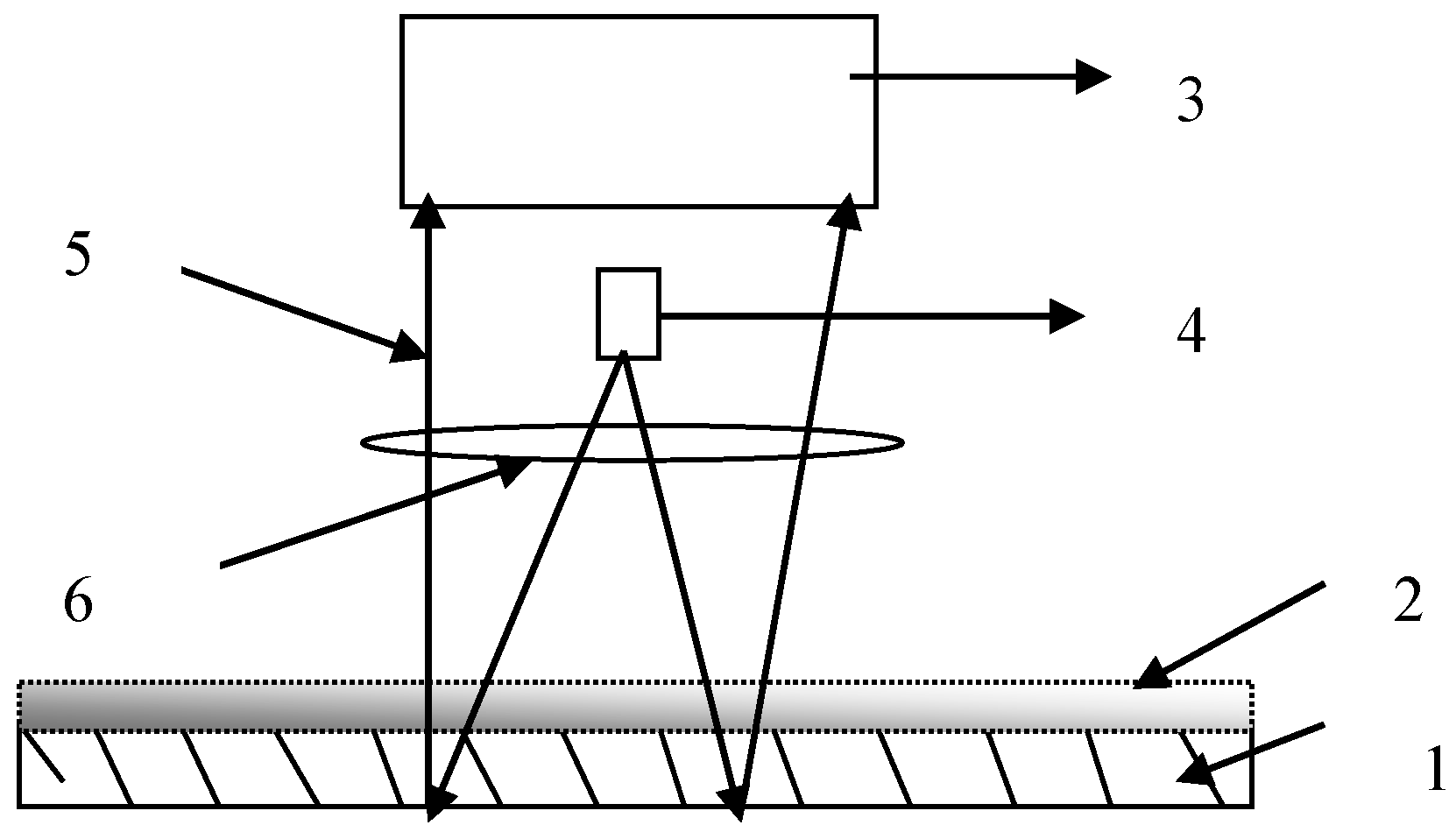
2.1.3. Self-Bonding Varnish Thickness
2.1.4. Surface Microgeometry
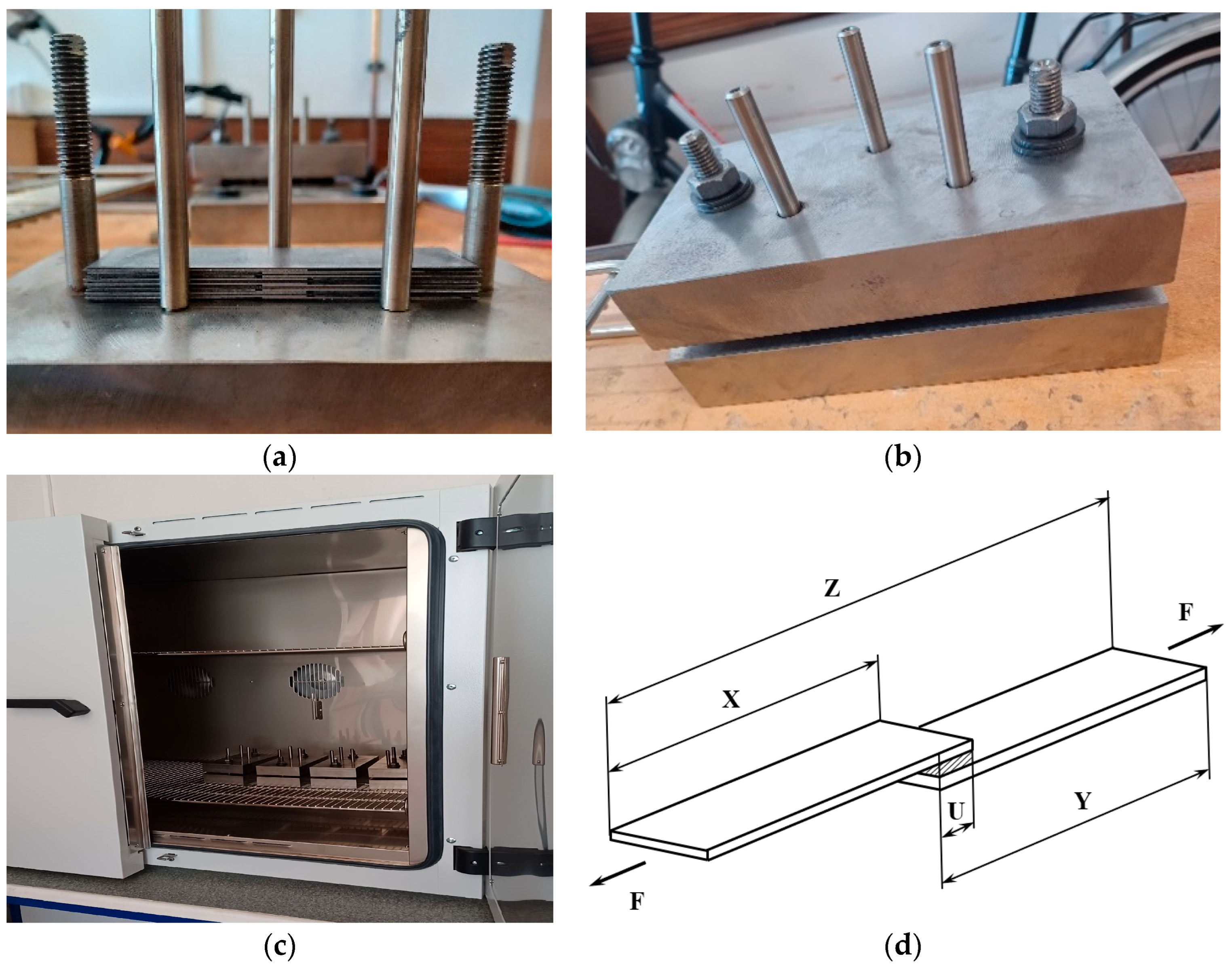
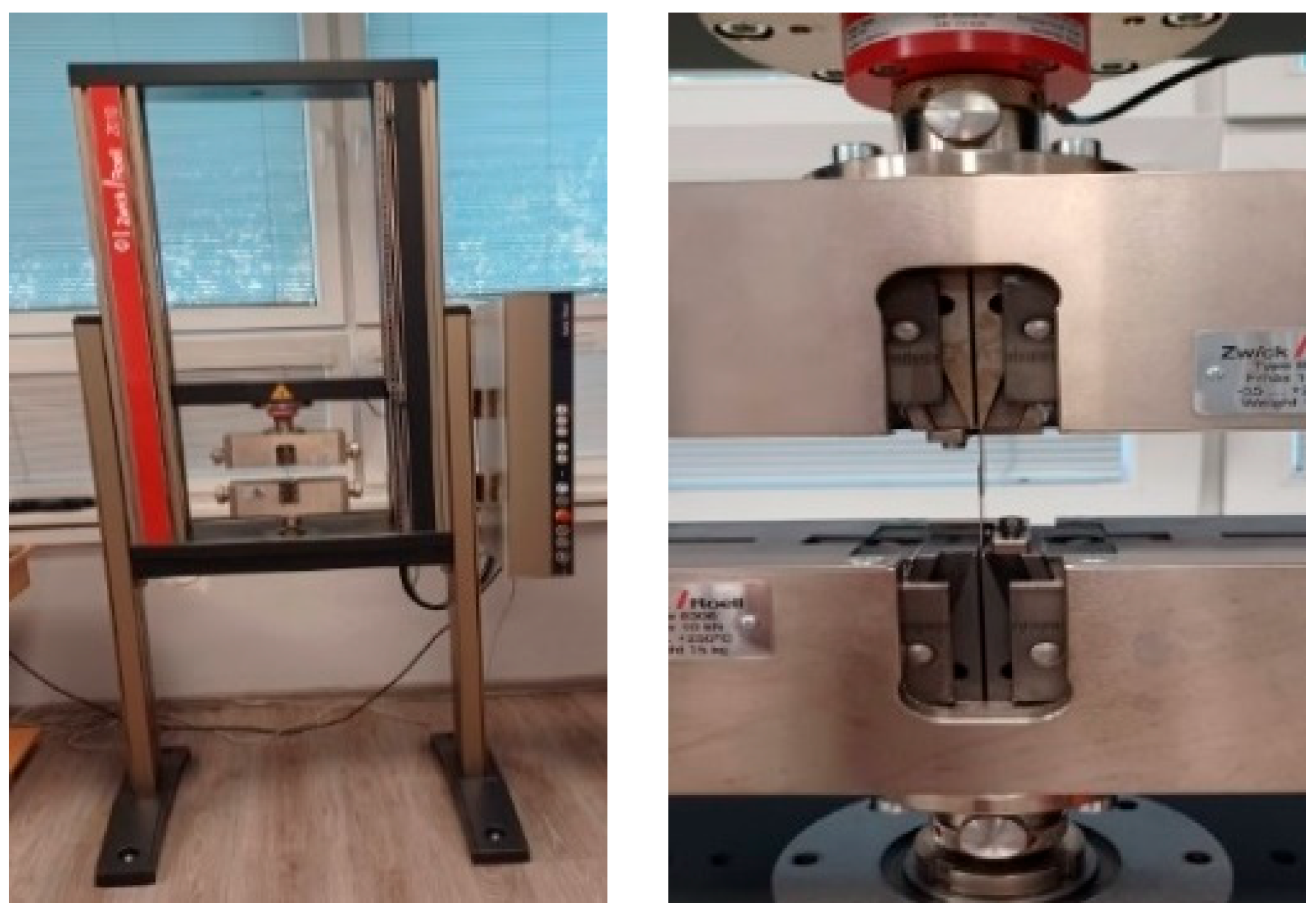
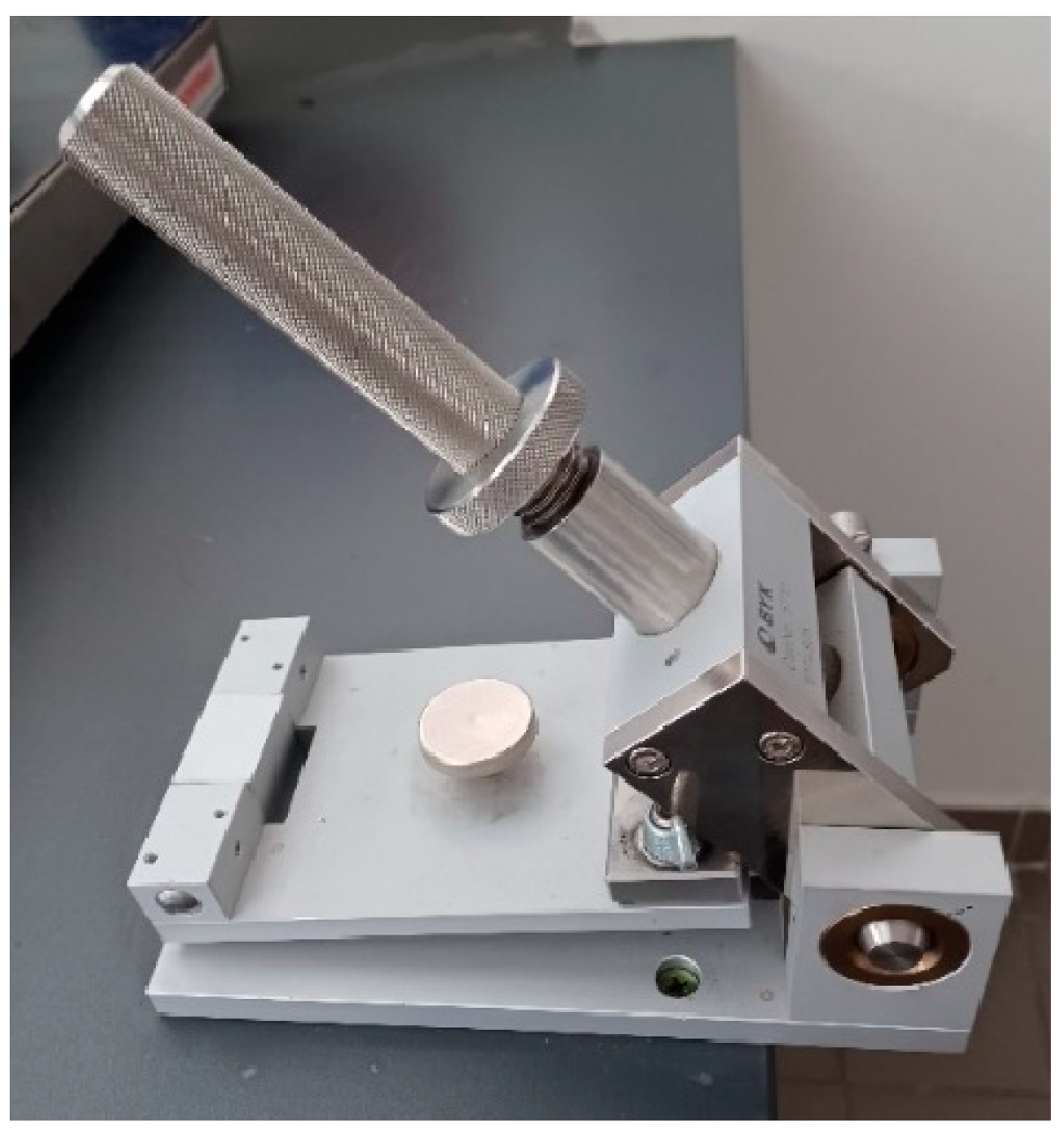
2.2. Tensile Lap-Shear Test
2.3. Adhesion of Self-Bonding Varnish Layer
3. Results
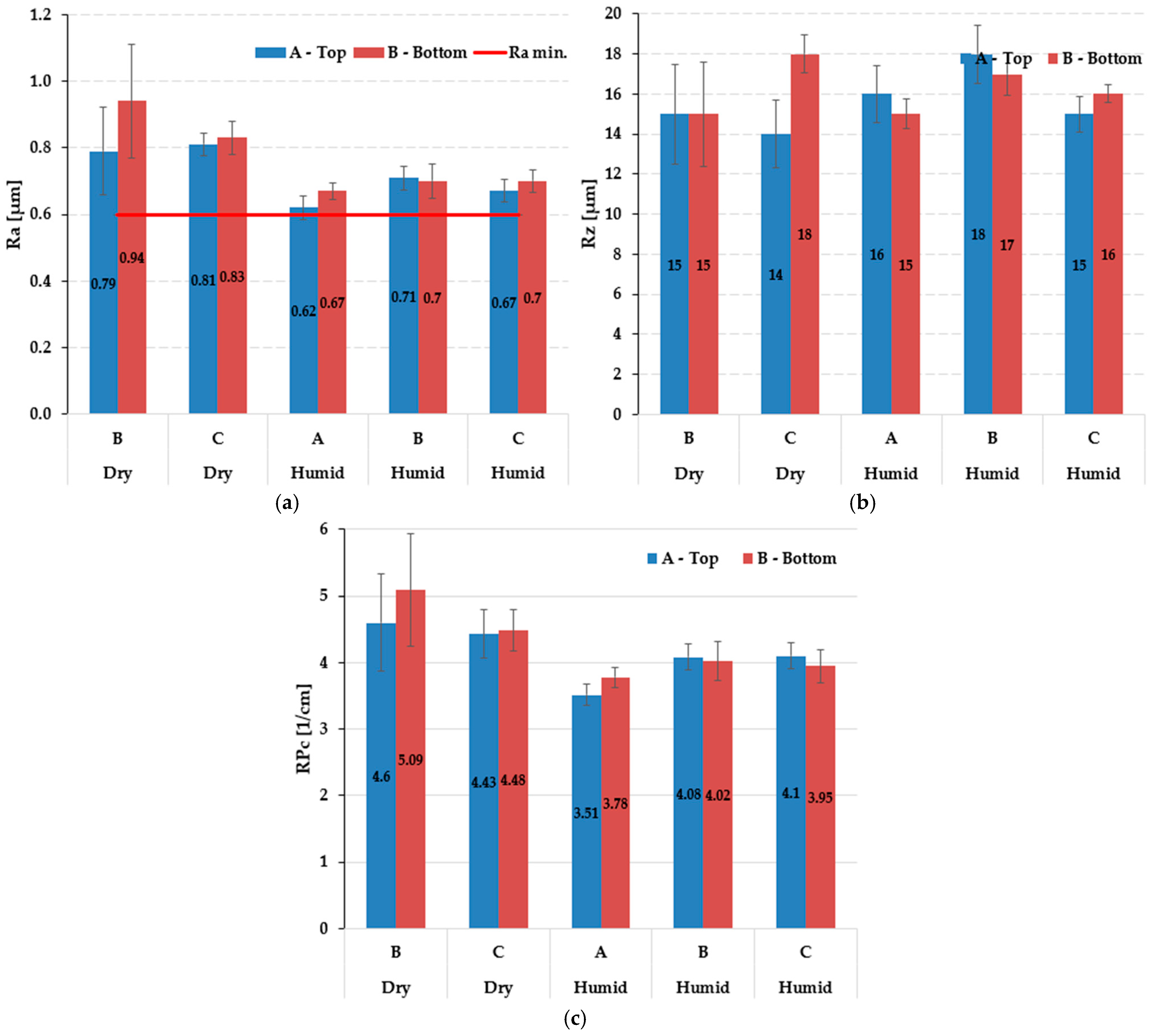
3.1. Surface Microgeometry
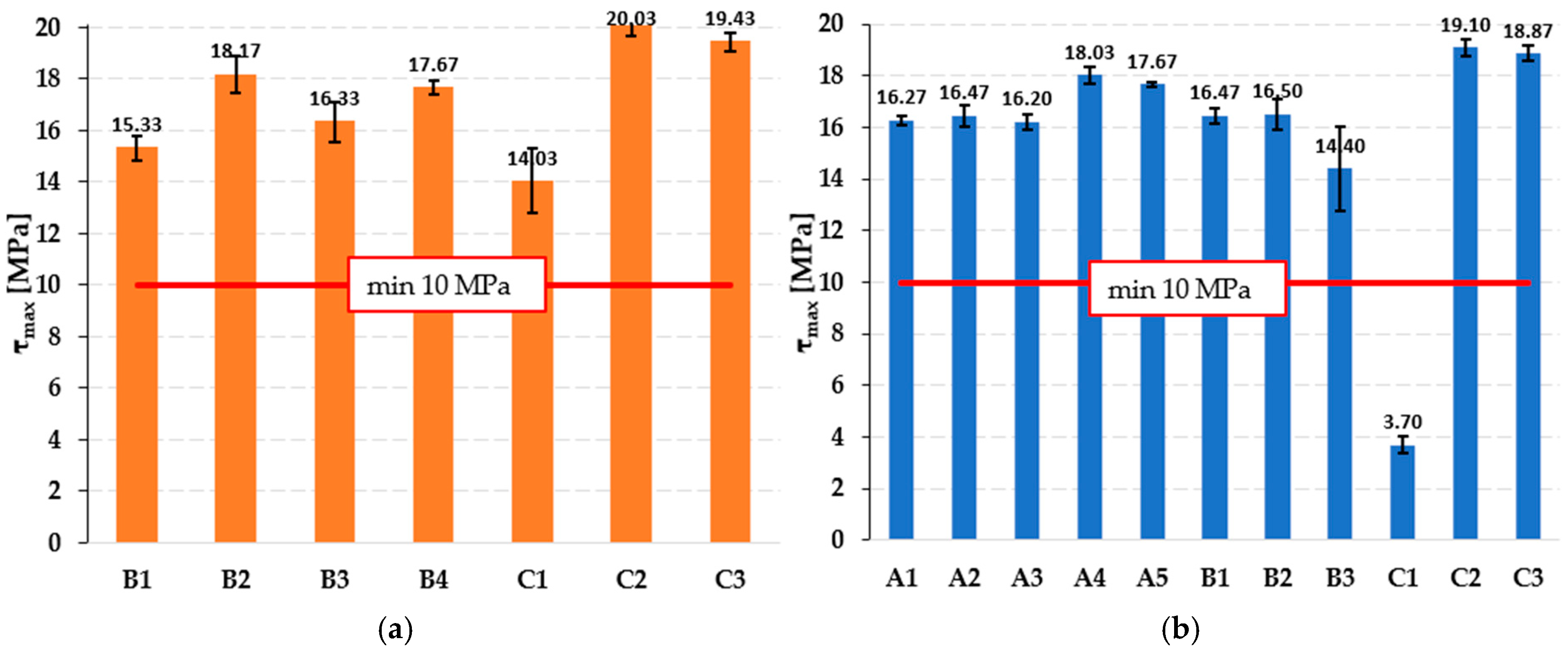
3.2. Tensile Lap-Shear Test
3.3. Adhesion of Self-Bonding Varnish Layer
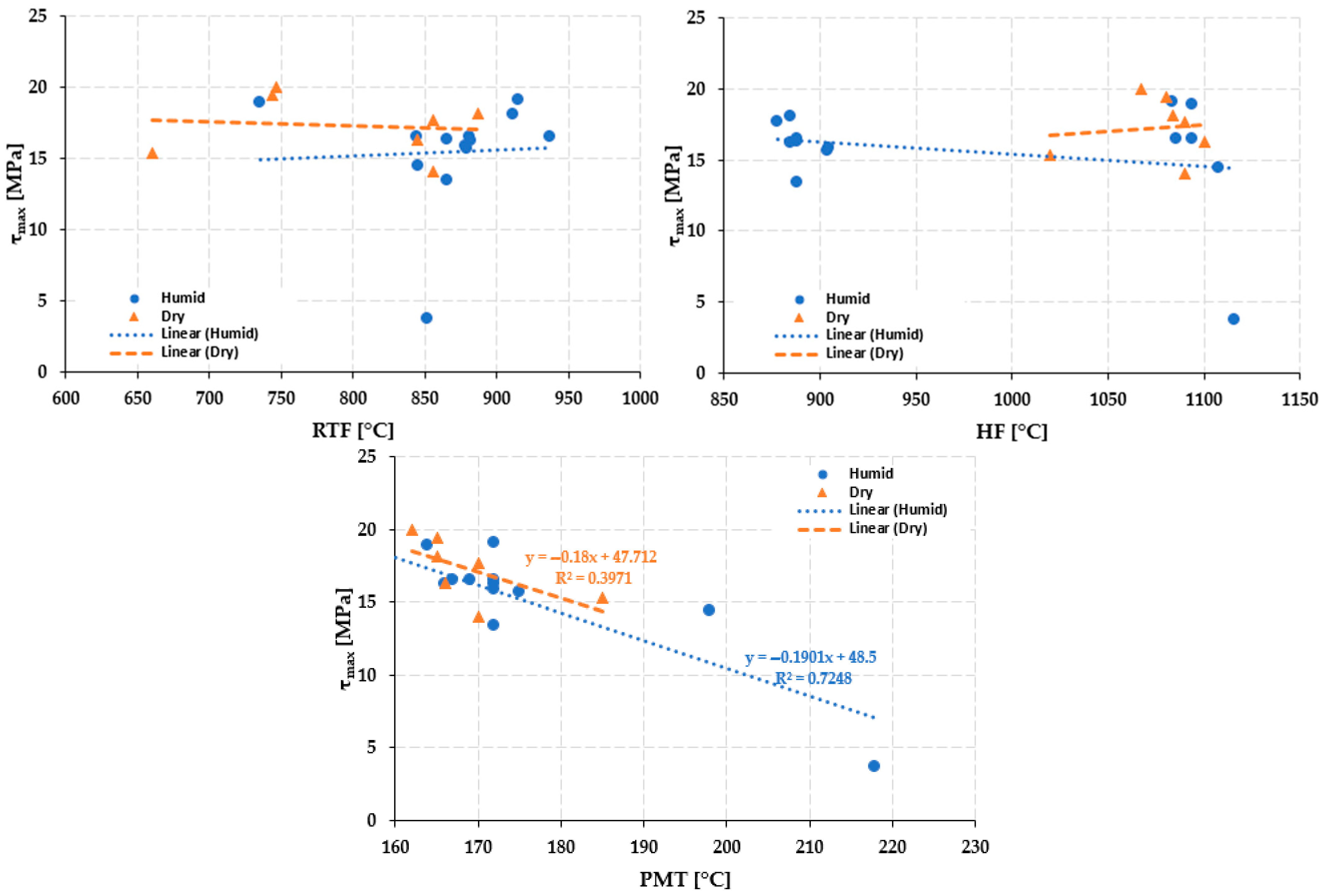
3.4. Influence of Production Parameters
4. Discussion
5. Conclusions
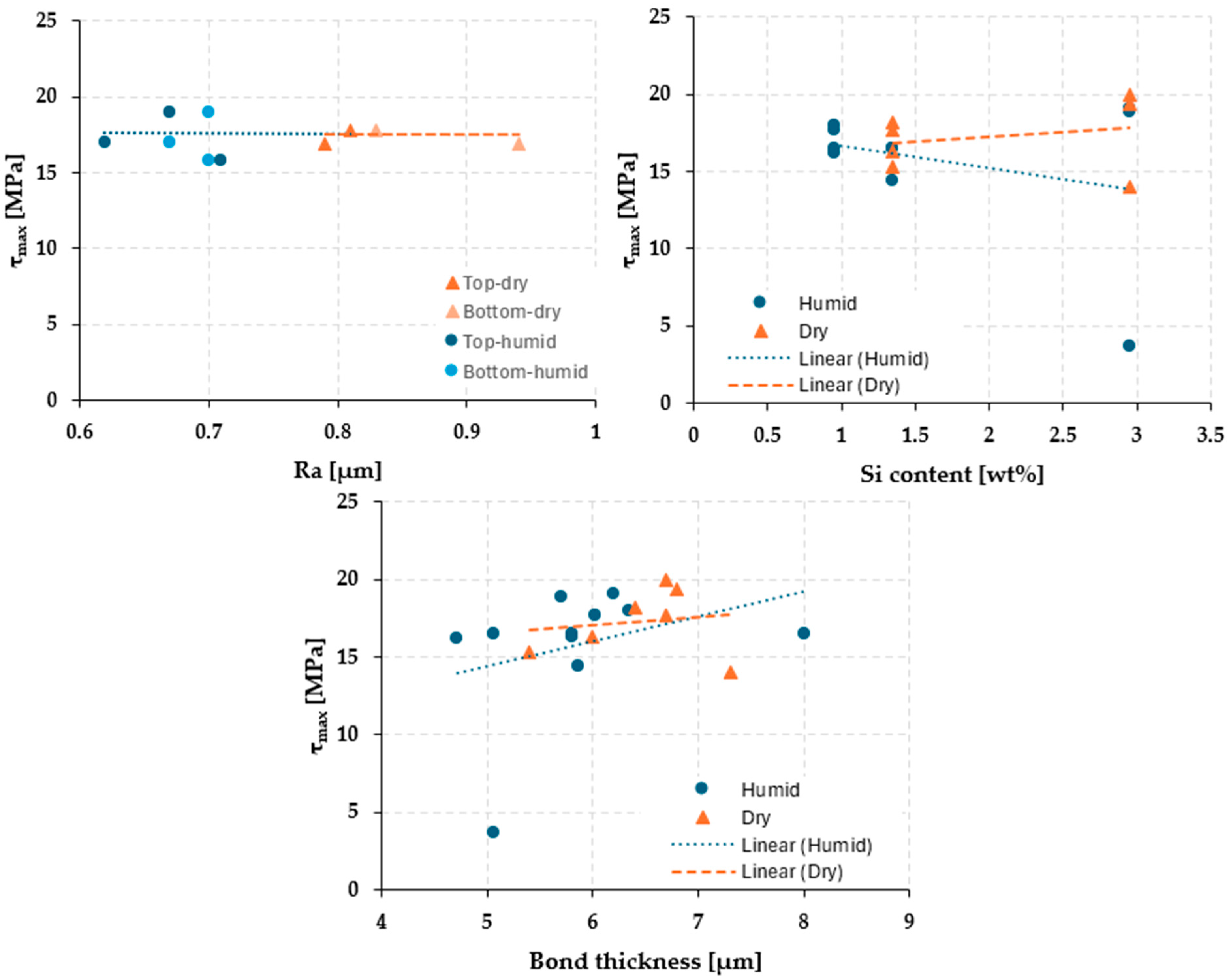
- The lap-shear strength of the self-bonded non-oriented electrical steels was found to be independent of the surface roughness within the investigated range, indicating that the applied surface preparation was sufficient to ensure consistent adhesion.
- The Si content exhibited condition-dependent effects. A higher Si content enhances the sensitivity of the bonded interface to the environmental factors, decreasing the strength and increasing the variability under a humid atmosphere. This may reflect changes in the surface oxide characteristics.
- The bond thickness showed a weak positive influence on the strength, particularly in the moisture-exposed environments.
- While the RTF and the HF resulted in relatively stable mechanical performance between 650 °C and 1100 °C, the PMT was identified as the critical factor. The strong negative correlation confirms that the PMT is the primary determinant of the lap-shear strength degradation.
- Humidity plays an important role in mechanical performance. Across the thermal ranges, samples that were annealed under a humid atmosphere exhibited lower lap-shear strength than those processed in a dry atmosphere, which suggests that moisture likely facilitates the interfacial oxidation of the bonding matrix.
- The drastic reduction in the lap-shear strength to 3.7 MPa does not appear to be a random error but rather a predictable threshold event. This outlier occurs when the material is subjected to the synergic effect of a high PMT and a humid atmosphere.
- To maintain a lap-shear strength above 15 MPa, processing should be controlled to keep the PMT below 180 °C. If higher temperatures are required for processing, dry annealing conditions must be employed.
Author Contributions
Funding
Data Availability Statement
Acknowledgments
Conflicts of Interest
References
- Schneider, M.; Urban, N.; Franke, J. Relation of joining parameters of stator core production and iron loss. In Proceedings of the 2017 7th International Electric Drives Production Conference (EDPC), Würzburg, Germany, 5–6 December 2017; pp. 1–6. [Google Scholar] [CrossRef] [Scilit]
- Schonherr, R. TGA-FTIR-Kopplung Anwendung zur Untersuchung von ElektroIsolier-Lacken (Backlack). Mater. Werkst. 1996, 27, 267–271. [Google Scholar] [CrossRef] [Scilit]
- In-Depth Study of Self-bonding Motor Lamination Stacks. Available online: https://www.backlack.com/News/in-depth-study-of-self-bonding-motor-lamination-stacks.html (accessed on 6 September 2025).
- Poskovic, E.; Ferraris, L.; Bramerdorfer, G.; Cossale, M. A Thermographic Method to Evaluate Different Processes and Assembly Effects on Magnetic Steels. IEEE Trans. Ind. Appl. 2022, 58, 3405–3413. [Google Scholar] [CrossRef] [Scilit]
- Bali, M.; Muetze, A. The degradation depth of non-grain oriented electrical steel sheets of electric machines due to mechanical and laser cutting: A state-of-the-art review. IEEE Trans. Ind. Appl. 2019, 55, 366–375. [Google Scholar] [CrossRef] [Scilit]
- Coatings for Electric Vehicles. Available online: https://www.kansai-helios.at/en/markets-products/core-plate-varnishes/e-mobility/ (accessed on 6 September 2025).
- Motor Bonding Lamination Stacks. Available online: https://lammotor.com/glue-bonding-stator-rotor/ (accessed on 6 September 2025).
- Electrical Steel Strip with Precise Magnetic Properties. Available online: https://www.waelzholz.com/en/steel-materials/electrical-steel-strip.html (accessed on 6 September 2025).
- Mahmouditabar, F.; Baker, N. A Review on the Effect of Electrical Steel Manufacturing Processes on the Performance of Electric Machines. Energies 2023, 16, 7954. [Google Scholar] [CrossRef] [Scilit]
- Xia, C.; Wang, H.; Wu, Y.; Wang, H. Joining of the Laminated Electrical Steels in Motor Manufacturing: A Review. Materials 2020, 13, 4583. [Google Scholar] [CrossRef] [Scilit]
- Insulating Varnish Systems. Available online: https://www.voestalpine.com/isovac/en/Products/Insulating-varnish-systems (accessed on 6 September 2025).
- Baloglu, M.V.; Ziegler, M.; Franke, J.; Willner, K. Determination of Equivalent Transversely Isotropic Material Parameters for Sheet-Layered Lamination Stacks. Mech. Syst. Signal Process. 2020, 145, 106915. [Google Scholar] [CrossRef] [Scilit]
- Marchfelder, C.; Pugstaller, R.; Wallner, G.M.; Brüggemann, O.; Aufray, M. Effect of Epoxy Structure on Properties of Waterborne Coatings and Electrical Steel Laminates. Polymers 2022, 14, 1556. [Google Scholar] [CrossRef] [Scilit]
- Backlack: Testing Methods and Production of Test Specimens. Available online: https://www.voestalpine.com/isovac/en/insights/self-bonding-varnish-testing-methods-and-production-of-test-specimens (accessed on 7 September 2025).
- EN 1464:2010; Adhesives—Determination of Peel Resistance of Adhesive Bonds—Floating Roller method. European Committee for Standardization (CEN): Brussels, Belgium, 2010.
- EN 1465:2009; Adhesives—Determination of Tensile Lap-Shear Strength of Bonded Assemblies. European Committee for Standardization (CEN): Brussels, Belgium, 2009.
- Garrison, W.M. Steels: Classifications. In Encyclopedia of Materials: Science and Technology; Buschow, K.H.J., Cahn, R.W., Flemings, M.C., Ilschner, B., Kramer, E.J., Mahajan, S., Veyssière, P., Eds.; Elsevier: Oxford, UK, 2001; pp. 8840–8843. [Google Scholar]
- Ouyang, G.; Chen, X.; Liang, Y.; Macziewski, C.; Cui, J. Review of Fe-6.5 wt%Si High Silicon Steel—A Promising Soft Magnetic Material for Sub-kHz Application. J. Magn. Magn. Mater. 2019, 481, 234–250. [Google Scholar] [CrossRef] [Scilit]
- Elgamli, E.; Anayi, F. Advancements in Electrical Steels: A Comprehensive Review of Microstructure, Loss Analysis, Magnetic Properties, Alloying Elements, and the Influence of Coatings. Appl. Sci. 2023, 13, 10283. [Google Scholar] [CrossRef] [Scilit]
- Kim, M.S.; Chae, W.K.; Choe, H.J. Non-Oriented Electrical Steel Sheet and Manufacturing Method Therefor. EP 3 239 326 B1, 1 November 2024. [Google Scholar]
- Leunis, E.; Van De Putte, T.; Jacobs, S.; Saikaly, W. Method of Production of Tin-Containing Non Grain-Oriented Silicon Steel Sheet, Steel Sheet Obtained and Use Thereof. EP3 209 807 A1, 30 August 2023. [Google Scholar]
- Yasiki, H.; Natori, Y.; Takeda, K.; Mukawa, S.; Matsumoto, T.; Fujita, K.; Morohoshi, T.; Miyazaki, M. Non-Oriented Electromagnetic Steel Sheet Having Excellent Magnetic Characteristics. EP3 569 728 A1, 20 November 2023. [Google Scholar]
- Hilinski, E.J.; Johnston, G.H. Annealing of electrical steel. In Proceedings of the 2014 4th International Electric Drives Production Conference (EDPC), Nuremberg, Germany, 18–20 June 2014; pp. 1–7. [Google Scholar] [CrossRef] [Scilit]
- Jin, X.; Chu, S.; Peng, J.; Hu, G. Effect of dew point on selective oxidation and decarburization of 0.2%C-1.5%Si-2.5%Mn high strength steel sheet during continuous annealing. Acta Metall. Sin. 2023, 59, 1324–1334. [Google Scholar] [CrossRef]
- ISO 21 920-2:2021; Geometrical Product Specifications (GPS)—Surface Texture: Profile—Part 2: Terms, Definitions and Surface Texture Parameters. ISO: Geneva, Switzerland, 2021.
- AK Steel Corporation. Selection of Electrical Steels for Magnetic Cores; Product Data Bulletin; AK Steel Corporation: West Chester, OH, USA, 2007. [Google Scholar]
- Li, X.; Chen, C.; Wang, T.; Guo, Z.; Wang, H.; Wang, H.; Xue, L.; Tian, J.; Sun, Y. Inclusions and phases in Fe-RE-Si steelmaking alloys and their effect on evolution of inclusions in non-oriented silicon steels. J. Rare Earths 2026, 44, 377–387. [Google Scholar] [CrossRef] [Scilit]
- Wang, L.; Wang, S.; Li, J.; Zhang, M.; Feng, Y. Effects of High-Temperature Annealing Atmosphere on the Secondary Recrystallization Behavior and Magnetic Properties of Fe-3.2%Si-0.055%Nb Grain-Oriented Silicon Steel. Materials 2022, 15, 8388. [Google Scholar] [CrossRef] [Scilit]
- Boutar, Y.; Naïmi, S.; Mezlini, S.; Ali, M.B.S. Effect of Surface Treatment on the Shear Strength of Aluminium Adhesive Single-Lap Joints for Automotive Applications. Int. J. Adhes. Adhes. 2016, 67, 38–43. [Google Scholar] [CrossRef] [Scilit]
- Rudawska, A.; Miturska-Barańska, I.; Doluk, E. Influence of Surface Treatment on Steel Adhesive Joints Strength—Varnish Coats. Materials 2021, 14, 6938. [Google Scholar] [CrossRef] [Scilit]
- Kim, J.; Ha, B.; Lee, D.; Park, J. Self-Bonding Electrical Steel Sheet and Laminate Comprising the Same. Korean Patent KR20220089675A, 28 June 2022. [Google Scholar]
- Chen, Q.; Du, B.; Zhang, X.; Zhong, H.; Ning, C.; Bai, H.; Li, Q.; Pan, R.; Zhou, B.; Hu, H. Parametric Investigation into the Shear Strength of Adhesively Bonded Single-Lap Joints. Materials 2022, 15, 8013. [Google Scholar] [CrossRef] [Scilit]
- Da Silva, L.F.M.; Rodrigues, T.N.S.; Figueiredo, M.V.; de Moura, M.F.S.F.; Öchsner, A. Effect of adhesive type and thickness on the lap shear strength. J. Adhes. 2006, 82, 1053–1076. [Google Scholar] [CrossRef] [Scilit]
- Marchfelder, C.; Pugstaller, R.; Wallner, G.M. Effect of Adhesion Promoters on Rheokinetics and Roll Peel Strength of Electrical Steel Stacks. Int. J. Adhes. Adhes. 2024, 134, 103789. [Google Scholar] [CrossRef] [Scilit]
- Tiefenthaler, M.; Wallner, G.M.; Marchfelder, C.; Strauß, B. Simulation of steel/epoxy laminates for electric engines or generators: Part 2—Experimentally and numerically established temperature-dependent cohesive zone model. J. Mater. Sci. 2025, 60, 9969–9984. [Google Scholar] [CrossRef] [Scilit]
- Banea, M.D.; da Silva, L.F.M.; Campilho, R.D.S.G. Effect of Temperature on the Shear Strength of Aluminium Single Lap Bonded Joints for High Temperature Applications. J. Adhes. Sci. Technol. 2014, 28, 1367–1381. [Google Scholar] [CrossRef] [Scilit]
- Xie, B.; Sun, M.; Xu, B.; Wang, C.; Li, D.; Li, Y. Dissolution and evolution of interfacial oxides improving the mechanical properties of solid state bonding joints. Mat. Des. 2018, 157, 437–446. [Google Scholar] [CrossRef] [Scilit]
- Diéz-Ercilla, M.; Ros-Yáñez, T.; Petrov, R.; Houbaert, Y.; Colás, R. Oxidation of Silicon Steels. Corros. Eng. Sci. Technol. 2004, 39, 295–300. [Google Scholar] [CrossRef] [Scilit]
- Song, E.J.; Suh, D.W.; Bhadeshia, H.K.D.H. Oxidation of Silicon Containing Steel. Ironmak. Steelmak. 2012, 39, 599–604. [Google Scholar] [CrossRef] [Scilit]





| Steel Grade | C | Si | Al | S | N |
|---|---|---|---|---|---|
| (A) | 0.95 ± 0.25 | 0.13 ± 0.04 | |||
| (B) | <0.006 | 1.35 ± 0.15 | 0.26 ± 0.05 | <0.01 | <0.007 |
| (C) | 2.95 ± 0.25 | 1.02 ± 0.13 |
| Steel Grade | RTF [°C] | HF [°C] | PMT [°C] |
|---|---|---|---|
| (A) | Not produced | ||
| (B) | 660–890 | 1020–1100 | 165–185 |
| (C) | 740–860 | 1070–1090 | 160–170 |
| Steel Grade | RTF [°C] | HF [°C] | PMT [°C] |
|---|---|---|---|
| (A) | 870–940 | 880–900 | 150–175 |
| (B) | 845–855 | 1090–1110 | 170–200 |
| (C) | 735–920 | 1080–1120 | 165–220 |
| Measuring Device | Hommel tester T2000 |
| Stylus tip | TKPK100 (two sliding surfaces) |
| Stylus tip: cone angle | Ø 5 µm (α = 90°) |
| Total measurement length | Lt = 15.0 mm |
| Evaluated measurement length | Ln = 12.5 mm |
| Basic measurement length Cut-off | Lr = 2.5 mm |
| Section lines C1, C2 | ±0.5 µ |
| Filter | M1 |
| Steel Grade | Atmosphere | Top | Bottom | ||||
|---|---|---|---|---|---|---|---|
| Ra [µm] | RPc [1/cm] | Rz [µm] | Ra [µm] | RPc [1/cm] | Rz [µm] | ||
| (B) | Dry | 0.79 | 15 | 4.60 | 0.94 | 15 | 5.09 |
| STDEV | ±0.264 | ±5.0 | ±1.449 | ±0.339 | ±5.2 | ±1.682 | |
| (C) | Dry | 0.81 | 14 | 4.43 | 0.83 | 18 | 4.48 |
| STDEV | ±0.070 | ±3.4 | ±0.720 | ±0.101 | ±1.9 | ±0.624 | |
| (A) | Humid | 0.62 | 16 | 3.51 | 0.67 | 15 | 3.78 |
| STDEV | ±0.072 | ±2.8 | ±0.321 | ±0.052 | ±1.5 | ±0.299 | |
| (B) | Humid | 0.71 | 15 | 4.08 | 0.70 | 17 | 4.02 |
| STDEV | ±0.071 | ±2.9 | ±0.393 | ±0.104 | ±2.1 | ±0.593 | |
| (C) | Humid | 0.67 | 15 | 4.10 | 0.70 | 16 | 3.95 |
| STDEV | ±0.068 | ±1.8 | ±0.396 | ±0.067 | ±0.9 | ±0.497 | |
| Steel Grade | Si and Al Content | Sample Designation Along Length Strip | Thickness of Self-Bonding Varnish | Lap-Shear Strength τmax | ||
|---|---|---|---|---|---|---|
| Top | Bottom | Bond Thickness | ||||
| [µm] | [µm] | [µm] | [MPa] | |||
| (B) | Medium | B1 | 1.6 | 3.8 | 5.4 | 15.30 ± 0.95 |
| B2 | 2.6 | 3.8 | 6.4 | 18.20 ± 1.40 | ||
| B3 | 3.0 | 3.0 | 6.0 | 16.30 ± 1.54 | ||
| B4 | 3.4 | 3.3 | 6.7 | 17.70 ± 0.55 | ||
| (C) | High | C1 | 4.0 | 3.3 | 7.3 | 14.00 ± 2.51 |
| C2 | 3.5 | 3.2 | 6.7 | 20.00 ± 0.75 | ||
| C3 | 3.6 | 3.2 | 6.8 | 19.40 ± 0.75 | ||
| Steel Grade | Si and Al Content | Sample Designation Along Length Strip | Thickness of Self-Bonding Varnish | Lap-Shear Strength τmax | ||
|---|---|---|---|---|---|---|
| Top | Bottom | Bond Thickness | ||||
| [µm] | [µm] | [µm] | [MPa] | |||
| (A) | Low | A1 | 2.9 | 2.9 | 5.8 | 16.30 ± 0.40 |
| A2 | 3.9 | 4.1 | 8.0 | 16.50 ± 0.85 | ||
| A3 | 2.2 | 2.5 | 4.7 | 16.20 ± 0.60 | ||
| A4 | 3.2 | 3.2 | 6.4 | 18.00 ± 0.67 | ||
| A5 | 3.1 | 2.9 | 6.0 | 17.70 ± 0.21 | ||
| (B) | Medium | B1 | 2.9 | 2.9 | 5.8 | 16.47 ± 0.61 |
| B2 | 2.6 | 2.5 | 5.1 | 16.50 ± 1.18 | ||
| B3 | 3.1 | 2.8 | 5.9 | 14.40 ± 3.27 | ||
| (C) | High | C1 | 2.6 | 2.5 | 5.1 | 3.70 ± 0.61 |
| C2 | 2.9 | 3.3 | 6.2 | 19.10 ± 0.62 | ||
| C3 | 2.9 | 2.8 | 5.7 | 18.90 ± 0.61 | ||
Disclaimer/Publisher’s Note: The statements, opinions and data contained in all publications are solely those of the individual author(s) and contributor(s) and not of MDPI and/or the editor(s). MDPI and/or the editor(s) disclaim responsibility for any injury to people or property resulting from any ideas, methods, instructions or products referred to in the content. |
© 2026 by the authors. Licensee MDPI, Basel, Switzerland. This article is an open access article distributed under the terms and conditions of the Creative Commons Attribution (CC BY) license.
Share and Cite
Tomková, V.; Tomáš, M.; Németh, S.; Horváth, M.; Kundracík, V.; Evin, E.; Slota, J.; Guzanová, A.; Filipovská, I. Influence of Chemical Composition and Electro-Steel Sheets Manufacturing Parameters on the Adhesion of an Electro-Insulating Self-Bonding Varnish Layer. Crystals 2026, 16, 253. https://doi.org/10.3390/cryst16040253
Tomková V, Tomáš M, Németh S, Horváth M, Kundracík V, Evin E, Slota J, Guzanová A, Filipovská I. Influence of Chemical Composition and Electro-Steel Sheets Manufacturing Parameters on the Adhesion of an Electro-Insulating Self-Bonding Varnish Layer. Crystals. 2026; 16(4):253. https://doi.org/10.3390/cryst16040253
Chicago/Turabian StyleTomková, Vanda, Miroslav Tomáš, Stanislav Németh, Matúš Horváth, Vladimír Kundracík, Emil Evin, Ján Slota, Anna Guzanová, and Iveta Filipovská. 2026. "Influence of Chemical Composition and Electro-Steel Sheets Manufacturing Parameters on the Adhesion of an Electro-Insulating Self-Bonding Varnish Layer" Crystals 16, no. 4: 253. https://doi.org/10.3390/cryst16040253
APA StyleTomková, V., Tomáš, M., Németh, S., Horváth, M., Kundracík, V., Evin, E., Slota, J., Guzanová, A., & Filipovská, I. (2026). Influence of Chemical Composition and Electro-Steel Sheets Manufacturing Parameters on the Adhesion of an Electro-Insulating Self-Bonding Varnish Layer. Crystals, 16(4), 253. https://doi.org/10.3390/cryst16040253