
Article

Synthesis, Characterization and Application of Hybrid ZnO Nanoparticles in the Adsorption of Heavy Metals from Aqueous Solutions

Department of Chemistry, College of Science, Princess Nourah Bint Abdulrahman University, P.O. Box 84428, Riyadh 11671, Saudi Arabia
*
Author to whom correspondence should be addressed.
Crystals 2026, 16(4), 231; https://doi.org/10.3390/cryst16040231
Submission received: 22 February 2026 / Revised: 26 March 2026 / Accepted: 30 March 2026 / Published: 31 March 2026

Abstract

Hybrid material-derived adsorbents have demonstrated exceptional efficacy in a variety of fields, including environmental cleanup and manufacturing operations. In this study, zinc oxide nanoparticles modified with carbon (ZnO-C) as hybrid adsorbent materials were synthesized using both expired zinc chloride and corncob extract. Hybrid ZnO-C adsorbents were employed for the removal of heavy metals, Co(II), and Ni(II) ions, from wastewater via adsorption. Transmission electron microscopy (TEM), scanning electron microscopy (SEM), X-ray diffraction (XRD), Fourier transform infrared spectroscopy (FTIR), and energy dispersive spectroscopy (EDS) were among the methods used to fully characterize the structural and morphological properties. To maximize the adsorption process for every metal ion, kinetic and equilibrium studies were carried out. Results revealed that the ZnO-C material formed crystalline, spherical granules with nanoparticle sizes ranging from 25 nm, embedded within a carbon matrix. Additionally, these spherical zinc oxide particles tended to aggregate into clusters. FTIR analysis indicated that the surface of ZnO-C was rich in hydroxyl (OH) groups and zinc oxide, which play a crucial role in the adsorption mechanism. The capacity of ZnO/CC-NPs to adsorb cobalt and nickel ions from aqueous solutions was investigated, examining the influences of initial ion concentration, pH levels, contact duration, and temperature. The findings highlight the high efficiency of ZnO/CC-NPs as an adsorbent, promoting the reuse of waste materials and supporting environmental sustainability efforts.

1. Introduction

Hazardous chemical waste can threaten human well-being if not disposed of properly. Agricultural leftovers and their disposal methods, such as incineration, also contribute to pollution that directly affects health by increasing respiratory and sinus conditions. Indirectly, they exacerbate environmental issues like air pollution, release of carbon compounds, heat emissions, and climate change phenomena [1,2,3,4]. To mitigate environmental contamination, expired chemicals and agricultural by-products have been repurposed and applied in safe, scientifically sound ways, transforming waste into valuable resources. For example, agricultural residues have been utilized in the synthesis of hybrid materials, which can then be employed across various sectors, including industrial processes, water treatment, and fertilizer production [5,6].
In recent times, there has been a growing interest in nanoparticles due to their remarkable efficiency, extensive surface area relative to their diminutive size, and minimal toxicity. Nanotechnology stands as one of the most advanced and significant innovations across various sectors, including industry, healthcare, chemistry, and physics. It also plays a vital role in environmental science. Nanoparticles can be produced through numerous methods, such as biological, chemical, or physical approaches. Among these, biosynthesis is considered eco-friendlier and safer compared to physical and chemical synthesis techniques. The biosynthesis of nanoparticles utilizing plants has been found to be safer, more environmentally friendly, cost-effective, straightforward, and quicker than methods involving microbes or fungi [7,8,9]. Owing to their unique physical and chemical characteristics, they contain a variety of genetic components like proteins, vitamins, phenols, flavonoids, carbohydrates, and other plant metabolites. In addition, these plant compounds possess functional groups such as hydroxyl, carbonyl, and amines, which facilitate the formation and stability of nanoparticles. One of the most significant advantages of biosynthesis is the prevention of nanoparticles from clumping, due to the presence of carbon residues coating them. Examples of plant-based nanoparticles include Fe3O4, ZnO, CuO, TiO2, MnO2, MgO2, Al2O3, and SiO2, all of which demonstrate high effectiveness in removing heavy metals from wastewater through adsorption [10,11,12].
Corn is a vital cereal grain and serves as a primary food source for over 1.2 billion individuals across various parts of the globe. Corn residues are often not managed appropriately, as they are typically burned, resulting in environmental contamination. This method does not support the development of an eco-friendly economy. Therefore, a more sustainable strategy involves transforming these residues into valuable materials [13,14,15]. Among corn waste, a corncob is a heterogeneous substance composed of molecules with irregular shapes and pores of different sizes, facilitating the formation of nanoparticles. Moreover, it mainly consists of cellulose and lignin, which help increase the number of active sites available to synthesis of various nanomaterials [16]. Certain inexpensive organic waste materials, including sawdust, rice husks, coconut pulp, corn stalks, corn cobs, and various other plant residues, have been utilized in the production of ZnO-derived hybrid adsorbent materials [13,14,15,16,17]. Hybrid materials, featuring carbon-based and metal oxide nanoparticles, represent an innovative class of advanced materials distinguished by superior properties [14,15,16]. These composites have demonstrated remarkable potential across various fields, including catalysis, adsorption, and medical applications [13,17].
Water forms the foundation for an organism’s existence, constituting roughly 80% of the body’s makeup. As the population continues to grow, so does water usage, highlighting the need for accessible clean drinking water. The aquatic environment faces significant threats from industrial waste discharged into water bodies without proper treatment, leading to pollution with heavy metals. This issue remains a major concern for scientists, who are actively seeking effective methods to eliminate these contaminants [18,19,20,21].
Heavy metals are harmful pollutants that do not decompose naturally and tend to build up in living organisms, leading to numerous health issues that threaten human well-being [22]. These metals are released into environmental waters through various industries, including battery production, mining operations, electroplating, and other metal-related manufacturing processes [23]. When the levels of heavy metals rise, they can affect human health through contact with contaminated water, food, air, and everyday items such as kitchen utensils [24]. Specifically, for toxic metals like cobalt and nickel, the safe limits are 0.05 mg/L for cobalt and 0.02 mg/L for nickel. Elevated cobalt levels can result in conditions such as pneumonia, paralysis, and asthma, while increased nickel concentrations are associated with lung cancer, respiratory failure, and other serious illnesses [25].
As industrial effluents continue to introduce these metals into the environment, research and investigations have been intensified to eliminate or minimize these contaminants [26,27]. One of the fundamental and widely accepted scientific methods for removing pollutants from water-based solutions is adsorption technology. Due to its high effectiveness and straightforward application, adsorption has been extensively employed [28]. The adsorption process is a surface-based phenomenon that involves attracting molecules to and adhering them to a surface. This process can be categorized into two types depending on the nature of the bonding: physical adsorption, which occurs through van der Waals forces, and chemical adsorption, which involves the formation of covalent bonds between the surface and the adsorbed molecules [28].
When choosing nanoparticles, factors such as chemical, electrochemical, electronic, antimicrobial, catalytic, and chemical reactivity are taken into account. Indeed, ZnO nanoparticles are an inorganic, white crystalline substance that does not dissolve in water. They are known for their thermal stability, n-type semiconductor behavior, a broad direct band gap of 3.37 electron volts (eV), and a significant exciton binding energy of 60 meV. Due to their nanoscale characteristics and straightforward synthesis process, zinc oxide nanoparticles possess an abundance of hydroxyl (-OH) functional groups, which facilitate the adsorption of positively charged ions, enabling them to effectively remove heavy metals from water solutions [29,30].
This work is novel in that it creates an effective pollutant extractor from wastewater by recycling expired chemicals and agricultural residues. Therefore, the purpose of this work was to create zinc oxide-anchored carbon (ZnO-C) as a hybrid adsorbent in order to improve the adsorption capacity for heavy metal uptake. The ZnO-C composite was thoroughly characterized using energy-dispersive X-ray spectroscopy (EDS), X-ray diffraction (XRD), transmission electron microscopy (TEM), scanning electron microscopy (SEM), and Fourier Transform Infrared Analysis (FTIR).
Additionally, the efficacy of the ZnO-C hybrid in the adsorption of cobalt and nickel ions from aqueous solutions has been demonstrated by studying the effect of initial concentration, dosage, solution pH, contact time and temperature. The efficiency and behavior of ZnO-C Ps as hybrid adsorbent were studied using isothermal adsorption models, kinetic models and thermodynamic models.

2. Materials and Methods

2.1. Materials

The following chemicals were purchased, ZnCl2·6H2O (98%), CoCl2·6H2O (98%), NiCl2·6H2O (98%), HCl (37%), NaOH (97%), C2H5OH (80%) from Sigma-Aldrich (Hamburg, Germany), which were analytical-grade, and corncob obtained from vegetable shops.

2.2. Preparation of Corncob Extract

The corncob was segmented into small fragments, thoroughly washed, and dried. An extract was prepared by combining the corncob with distilled water, and the mixture was then placed on a magnetic stirrer and heated at 50 °C for one hour. Subsequently, the mixture was filtered, and the filtrate (liquid extract) was collected and stored for future use.

2.3. Synthesis of ZnO/CC-NPs

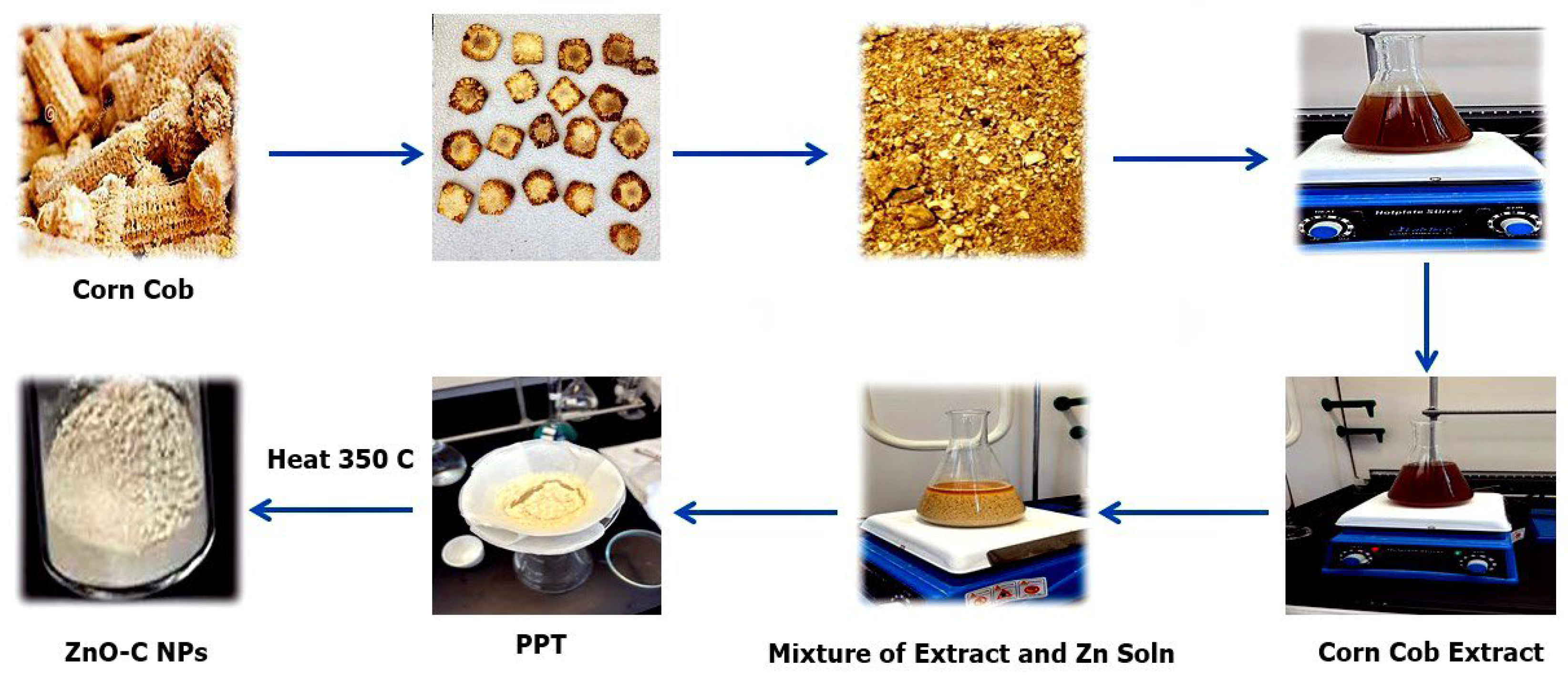
A zinc chloride solution was prepared by dissolving 3 g of the salt in 100 mL of deionized water, with continuous stirring until complete dissolution. Similarly, a sodium hydroxide solution was made by dissolving 6 g of the pellet in 100 mL of deionized water, stirring until fully dissolved. The sodium hydroxide solution was then gradually added to the zinc chloride solution along with corncob extract, drop by drop. The appearance of discoloration in the mixture indicated the onset of nanoparticle synthesis. The resulting precipitate was collected, and the pH of the mixture was adjusted to 11 using 0.1 M HCl or NaOH solutions. The suspension was subsequently filtered through a nano-filtration system. The precipitate was washed three times with ethanol, dried in an oven at 80 °C for 6 h, then calcined at 350 °C for 2 h, and stored for future applications. Figure 1 shows the schematic of the ZnO-C NPs synthesis procedure.

2.4. Characterization and Measurements

Various mixed solids were characterized using X-ray diffraction technology (Berlin, Germany) based on a BRUKER D8 advance diffractometer. Cu Kα radiation at 40 kV, 40 mA, and a scanning speed of 2° min−1 was used to create the patterns shown. The size of the crystallite (d) in the crystalline phase that was present was determined by X-ray diffraction line broadening and Scherrer equation calculations [31].
d = K   λ β cos θ
where K is the geometrical Scherrer constant equal to 0.94, which is related to crystalline shape, λ is wavelength of x-ray beam used. β is peak width at half maximum height; the value of β in the 2θ axis of diffraction profile must be in radian. The θ is Bragg angle in radian since the cos θ corresponds to the same number.
The optical absorption characteristics of the prepared compounds were examined using UV-Vis spectroscopy. A JASCO V360 UV-visible spectrometer (Jasco, Easton, MD, USA) was used to record absorption spectra in the wavelength range of 190 to 1100 nm. The concentrations of heavy metals Ni2+ and Co2+ in aqueous samples were measured in this study using a UV-Vis spectrophotometer both before and after the adsorption process. These measurements, which use standard calibration curves to record absorbance at particular wavelengths for each metal, are crucial for assessing how well the adsorption process removes impurities from the solution.
The different materials’ Fourier-transform infrared (FTIR) spectra were captured using a Perkin-Elmer Spectrophotometer (Norwalk and Wilton, CT, USA). Two milligrams of solid material and two hundred milligrams of vacuum-dried, IR-grade potassium bromide (KBr) were thoroughly combined for each sample. A wavenumber range of 1000–4000 cm−1 was used to gather the FTIR spectra. After the mixture was processed for three minutes in a vibrating ball mill, it was compressed into pellets using a 13 mm steel die. For spectral analysis, these compressed disks were subsequently put in the double-grating FTIR spectrophotometer’s holder.
JEOL JAX-840A and JEOL Model 1230 (JEOL, Tokyo, Japan) enabled us to recode scanning electron microscope (SEM), energy-dispersive X-ray spectroscopy (EDS) and transmittance electron micrograph (TEM). In order to disperse individual particles over mount setup and Cupper grids, the specimens were dispersed in ethanol and then treated ultrasonically for a few minutes.

2.5. Adsorption Experiments

Different concentrations of nickel and cobalt used in this study were prepared (100, 200, 300, 400, 500 mg/L). To investigate how solution concentration affects adsorption, 0.1 g of ZnO/Corncobs-NPs was added to 25 mL each for Co2+ and Ni2+, and placed in the vibrator at 150 rpm for 180 min at 25 and 60 °C. The effect of ZnO/Corncobs-NPs (0, 1, 0.25, 0.5, 0.75, 1 g) was studied. At a constant concentration of cobalt and nickel (300 mg/L), constant temperature (25 °C) and constant pH (7). The effect of pH (3, 5, 7, 9, and 11) was studied, using NaOH (1M) and HCl (1M) at a constant concentration (300 mg/L), constant temperature (25 °C) and a constant mass of ZnO/Cc-NPs (0.5 g/L). Contact time experiments (30, 60, 90, 120, 180 min) were conducted at a constant concentration of cobalt-nickel (300 mg/L), a constant mass of ZnO/Cc-NPs (0.5 g/L), a constant temperature (25 °C) and a constant pH (7).
A UV and visible spectrophotometer with wavelengths of 515 nm for cobalt and 390 nm for nickel was used to measure the concentrations of Co2+ and Ni2+ in the filtrate that was collected for each experiment. Three iterations of the experiment were conducted with an error rate of ±0.0005.
A visible and ultraviolet device (double UV markers: UV visible double spectrophotometer) was used to analyze the solutions both before and after adsorption. The following formula was used to determine the amount of cobalt-nickel (qe (mg/g)):
q e = C 0 C e V m
where V is the volume of solution (L), m is the mass of the adsorbent (g), and C0 and Ce (mg/L) are the initial concentrations and equilibrium, respectively. The following formula was used to determine the cobalt-nickel adsorption ratios from the solution:
A d s H M = ( C 0 C e ) C 0 × 100
XRD, SEM-EDX with a high resolution of 3.0 nm and an acceleration voltage of 0.5 to 30 kV, and a TEM microscope that produces a high-quality image and analyzes up to 120 kV were used to characterize the adsorbent (ZnO/Corncobs-NPs), determine the size of the granule, and learn about its properties.
To describe the behavior of the adsorbent in removing cobalt and nickel from aqueous solutions, models of isothermal adsorption curves of Langmeier and Freundlich, kinetics (pseudo-order I and II), and to describe the type of adsorption, raedynamic dynamics (ΔG°, ΔH° and ΔS°) were found. The experiments were conducted at the Physical Chemistry Unit at the Natural and Health Sciences Research Center at Princess Nourah bint Abdulrahman University.

3. Results and Discussion

3.1. FTIR Analysis

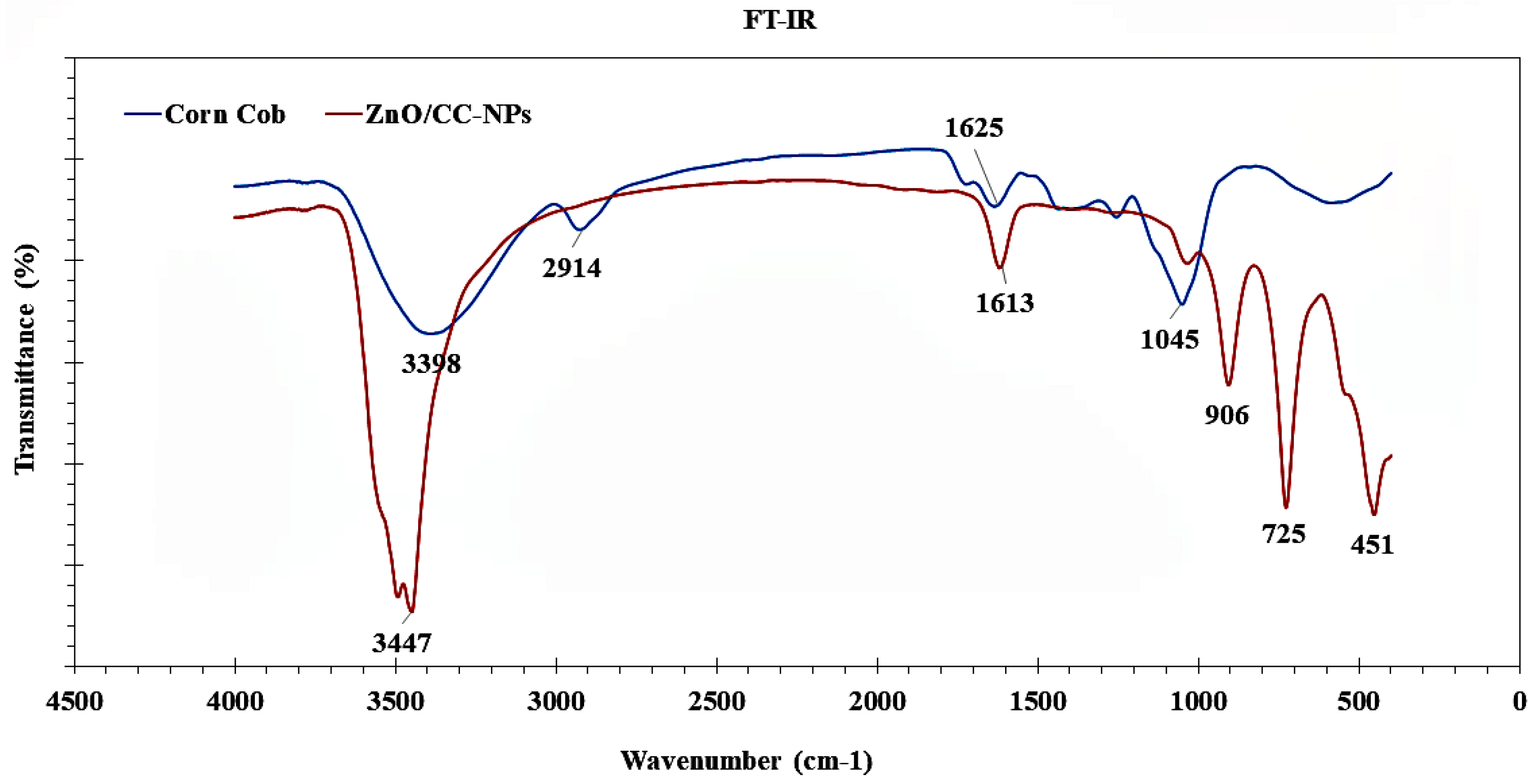
The synthesis of ZnO-C nanoparticles (ZnO-C NPs) and corncob was confirmed through Fourier Transform Infrared (FTIR) spectroscopy, as illustrated in Figure 2. It shows the corncob’s distinctive infrared absorption bands at 1045, 1625, 2914, and 3398 cm−1. The bands at 3398 and 1045 cm−1 are typically associated with O–H bending vibrations. The peak at 2914 cm−1 corresponds to the stretching vibration of C–H bonds in –CH2 groups, while the band at 1625 cm−1 is indicative of C=O stretching vibrations.
Additionally, Figure 2 illustrates the FTIR spectrum of ZnO-C NPs, showing notable peaks at 3447, 3398, 1613, 1045, 905, 725, and 451 cm−1. The peaks at 3447, 3398, and 1045 cm−1 suggest the presence of hydroxyl (–OH) functional groups [32]. The O-H bending mode of tightly bound or “crystallized” water molecules often appears as a peak around 1620–1630 cm−1. The absorption at 1613 cm−1 indicates the presence of C–O groups [33]. The bands at 906 and 725 cm−1 are attributed to bending vibrations of C–H bonds. Additionally, the prominent peak at 451 cm−1 corresponds to the stretching mode of zinc-oxygen bonds, confirming the formation of ZnO nanoparticles [32].
It is widely recognized that synthesizing ZnO particles through the hydrolysis of Zn2+ ions in aqueous solutions is a complex process. The interaction of Zn2+ ions with hydroxide ions can lead to the formation of various polyvalent cationic species, with their prevalence heavily dependent on the solution’s pH. Depending on factors such as pH, temperature, and synthesis conditions, the precipitation of ZnO typically involves the formation of intermediate species like Zn(OH)2 or Zn(OH)42−. The dissolution-reprecipitation mechanism has been proposed as the primary pathway for ZnO formation from Zn (OH)2 [34]. Ultimately, ZnO is generated through the chemical reaction described in the following equation [35].
Zn (OH)2 = ZnO + H2O

3.2. XRD Analysis

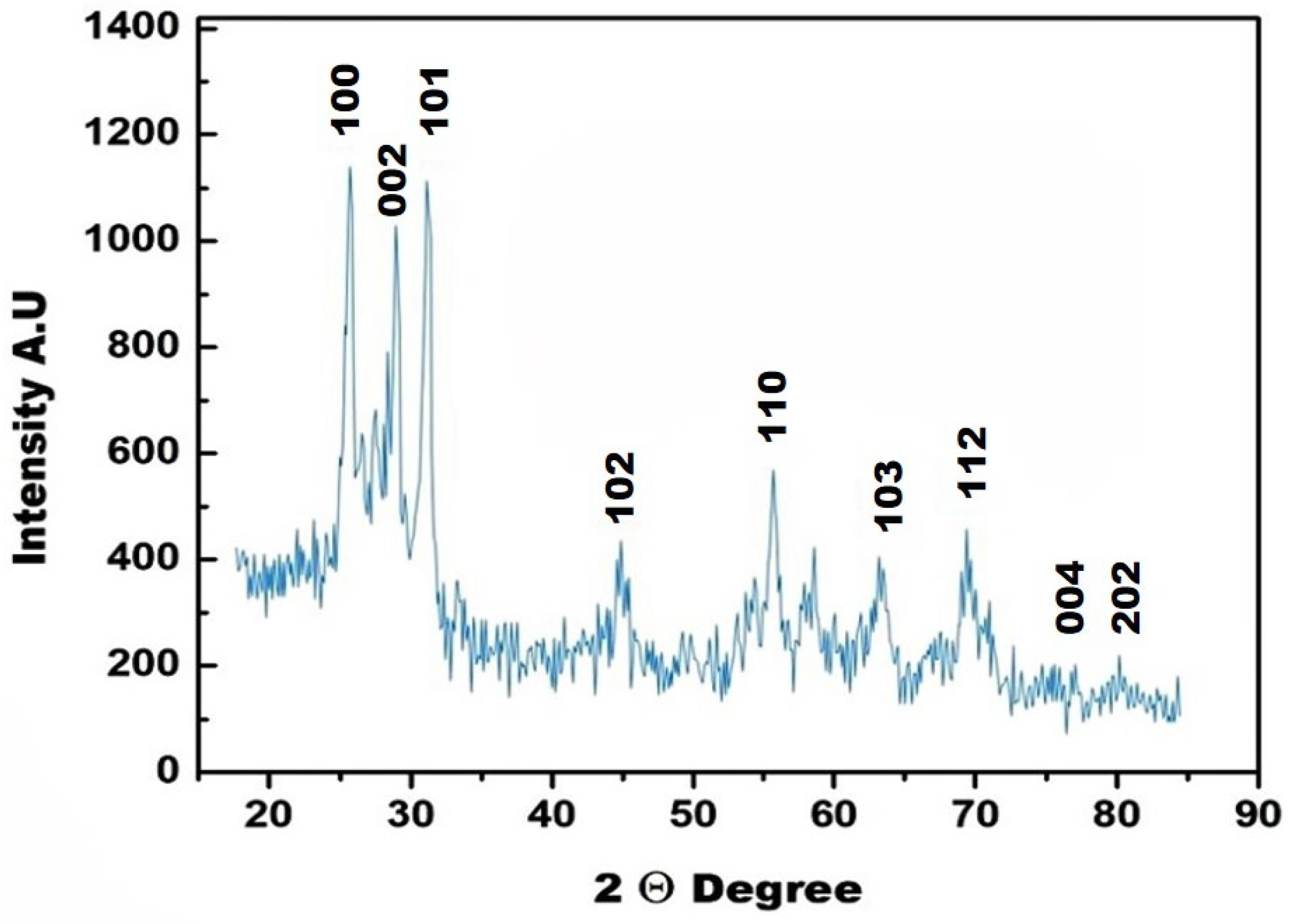
The XRD pattern depicted in Figure 3 displays prominent peaks at 2θ angles of 31.6°, 34.3°, 36.1°, 47.4°, 56.3°, 58.7°, 62.72°, 67.6°, and 76.5°, corresponding to the (100), (002), (101), (102), (110), (103), (112), (004), and (202) crystallographic planes of Zinc Oxide. These peaks are characteristic of the hexagonal wurtzite crystal structure, according to the Powder Diffraction File (PDF No. 89-1397) [36]. Their presence confirms the formation of a hexagonal wurtzite phase, demonstrating the structural stability of the crystalline ZnO lattices. The diffraction pattern also validates the successful biosynthesis of Zinc Oxide nanoparticles with crystallite size equal to 28 ± 1 nm.

3.3. Morphological Studies

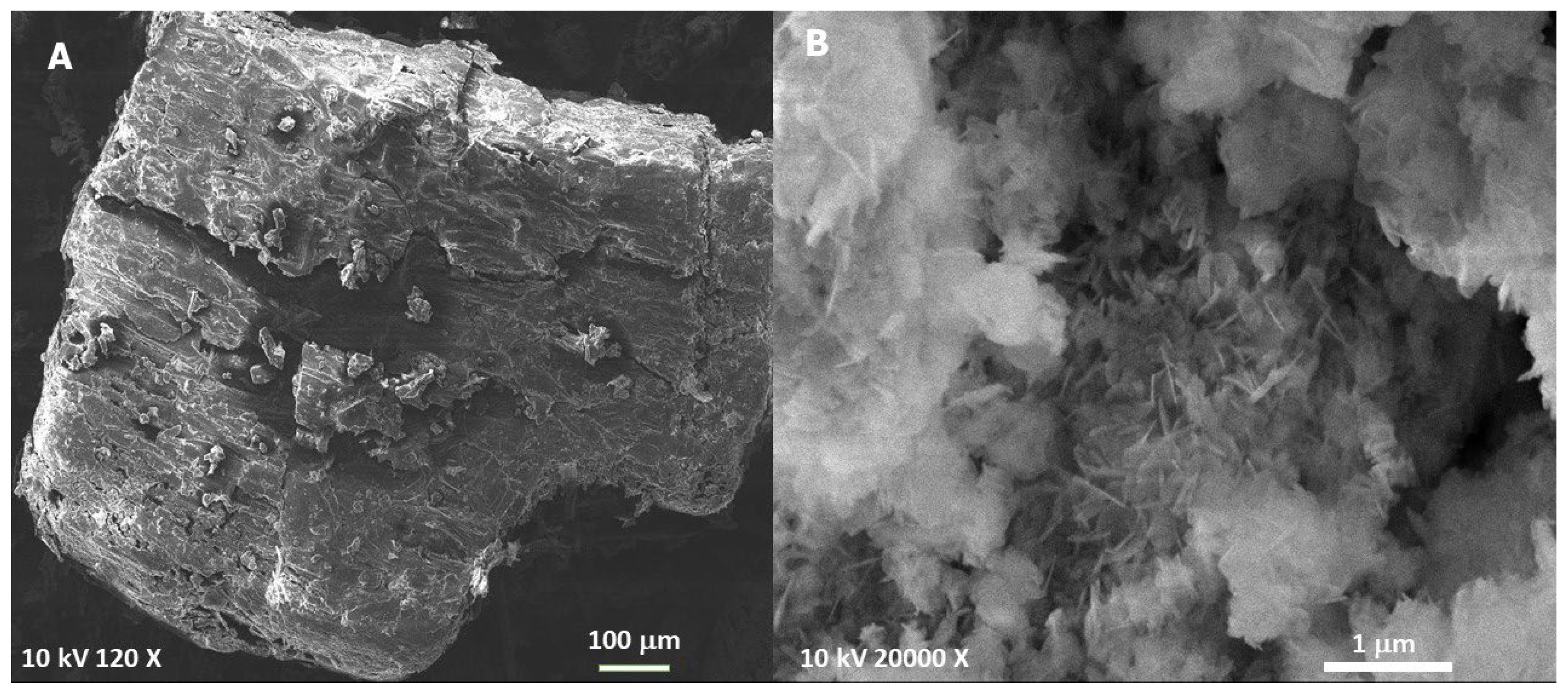
From Figure 4A,B, the SEM analysis reveals a pronounced morphological transformation from raw corn cobs to biosynthesized ZnO–C hybrid materials. The raw corn cobs exhibit a rough, irregular, and relatively compact surface with limited porosity, characteristic of lignocellulosic structures composed of cellulose, hemicellulose, and lignin, as shown in Figure 4A. In contrast, the synthesized ZnO–C materials display a highly porous architecture consisting of aggregated nanosized particles with predominantly irregular-to-spherical morphology, as shown in Figure 4B. SEM observations further indicate the formation of sphere-like granulated structures within the nanoscale range, where the aggregation of these nanograins leads to clustered assemblies, likely due to Van der Waals interactions. The presence of interconnected pores between the aggregated ZnO nanoparticles confirms the development of a porous network with enhanced surface characteristics [37]. These morphological findings are strongly supported by EDX analysis, which confirms the successful incorporation of Zn and O as the primary, along with C originating from the corn cob matrix, indicating the formation of a ZnO–C hybrid structure with high purity. Furthermore, FTIR spectra provide additional evidence of successful synthesis, showing characteristic Zn–O stretching vibrations along with functional groups such as –OH and –COOH, which play a crucial role in the reduction, stabilization, and surface functionalization of the nanoparticles. The significant reduction in particle size, coupled with increased surface roughness, porosity, and the presence of active functional groups, results in an enlarged specific surface area and a higher density of active adsorption sites, thereby significantly enhancing the adsorption performance of the material toward heavy metal ions such as Co2+ and Ni2+ in aqueous solutions.
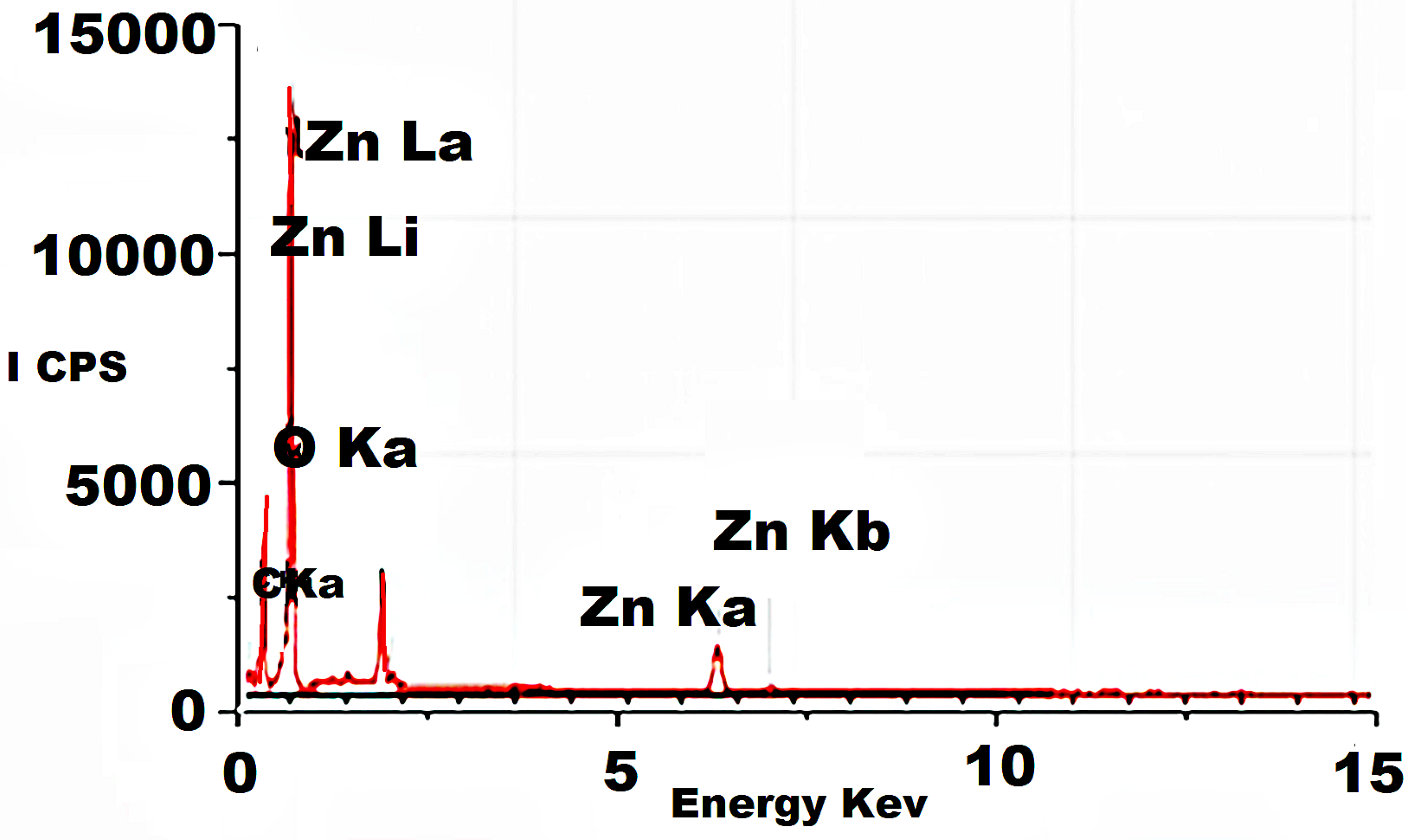
Figure 5 displays the EDX spectrum of the ZnO-C nanoparticles. The spectrum exhibits prominent peaks corresponding to zinc, oxygen, and carbon. These results verify the presence of zinc on the surface of the particles, along with carbon and oxygen.
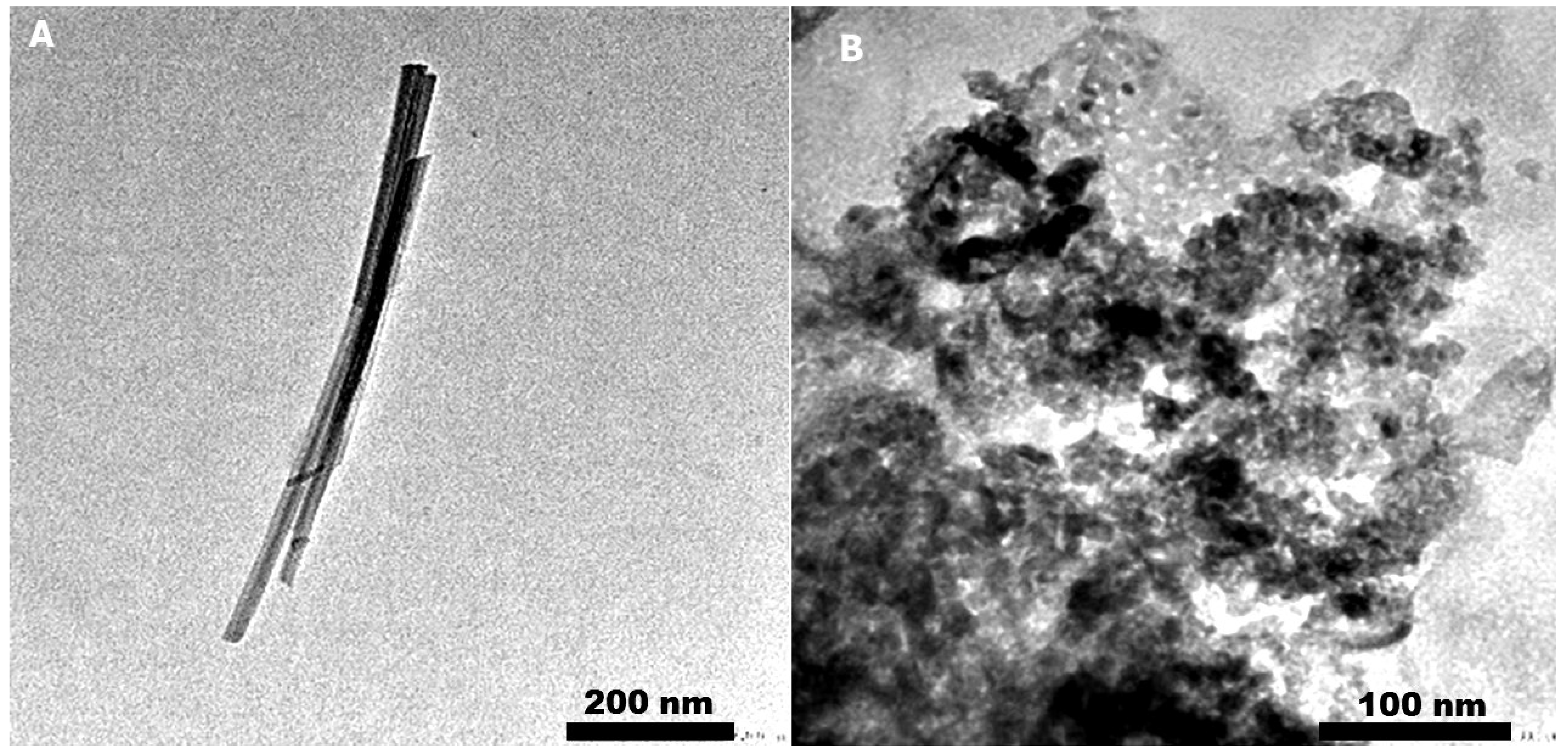
The Transmission Electron Microscopy (TEM) analysis revealed that ZnO nanoparticles are distributed within the carbon matrix, indicating the formation of ZnO-C hybrid materials, as illustrated in Figure 6A displays the corncobs and ZnO/C-NPs before and after adsorption Ni2+ and Co2+, the Dark regions represent parts of the sample that block electron passage due to their high density or thickness, and the Light regions indicate less dense areas, allowing electrons to pass through more easily. The morphology and precise particle size were determined, a process typically characterized by TEM. The ZnO produced in this study exhibited a uniform shape, appearing approximately hexagonal or nanospheres, with an average particle diameter of 28 ± 2 nm Figure 6B. The presence of some agglomerates cannot be ruled out, as they are observed within the carbon matrix. These results are consistent with what was obtained in the results of both SEM and XRD.

3.4. Adsorption Studies

3.4.1. Initial Concentration and Temperature Effects

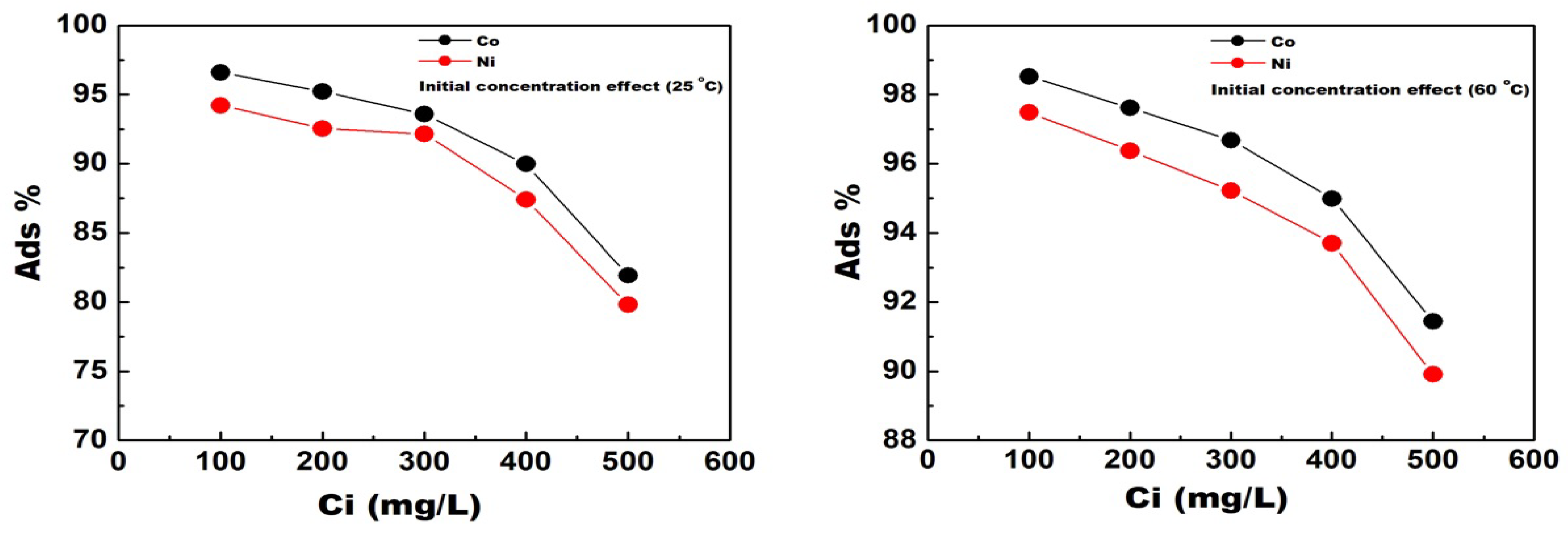
The investigation into the impact of initial concentration on the adsorption process demonstrates an inverse correlation between the initial concentration (Ci) and the adsorption efficiency (Ads %) for both nickel (Ni) and cobalt (Co) ions, as shown in Figure 7. At lower concentrations (100–200 mg/L), the adsorption capacity is notably high (95–100%), but it diminishes progressively as the concentration rises (300–500 mg/L), due to the saturation of active sites on the adsorbent surface. Additionally, the study indicates that temperature influences the adsorption process. At 60 °C, adsorption is more effective compared to 25 °C, with higher Ads% observed at the elevated temperature. This can be attributed to the increased mobility of the adsorbate molecules at 60 °C, which facilitates their attachment to active sites on the adsorbent.
The observed decrease in adsorption efficiency (Ads%) with increasing initial concentration (Ci) for both Ni and Co ions can be attributed to the progressive saturation of the available active sites on the adsorbent surface. At lower concentrations (100–200 mg/L), the number of metal ions in solution is relatively small compared to the abundance of active sites, allowing nearly all ions to be effectively adsorbed, resulting in high removal efficiency (95–100%).
However, as the initial concentration increases (300–500 mg/L), the number of ions exceeds the available binding sites, leading to intensified competition among ions for adsorption. Consequently, a portion of the ions remains unadsorbed in the solution, causing a reduction in Ads%. This behavior is consistent with adsorption systems approaching surface saturation and is commonly described by monolayer adsorption models such as the Langmuir isotherm.
Regarding temperature, the enhanced adsorption efficiency observed at 60 °C compared to 25 °C suggests that the adsorption process is endothermic in nature. The increase in temperature promotes greater mobility of the adsorbate species, facilitating their diffusion from the bulk solution to the external surface of the adsorbent and subsequently into its pores. Additionally, elevated temperature may enhance the accessibility and reactivity of active sites, as well as reduce solution viscosity, thereby improving mass transfer.
Overall, the combined effects of increased molecular mobility, improved intraparticle diffusion, and possible activation of adsorption sites contribute to the higher adsorption performance at elevated temperature.

3.4.2. pH Effect

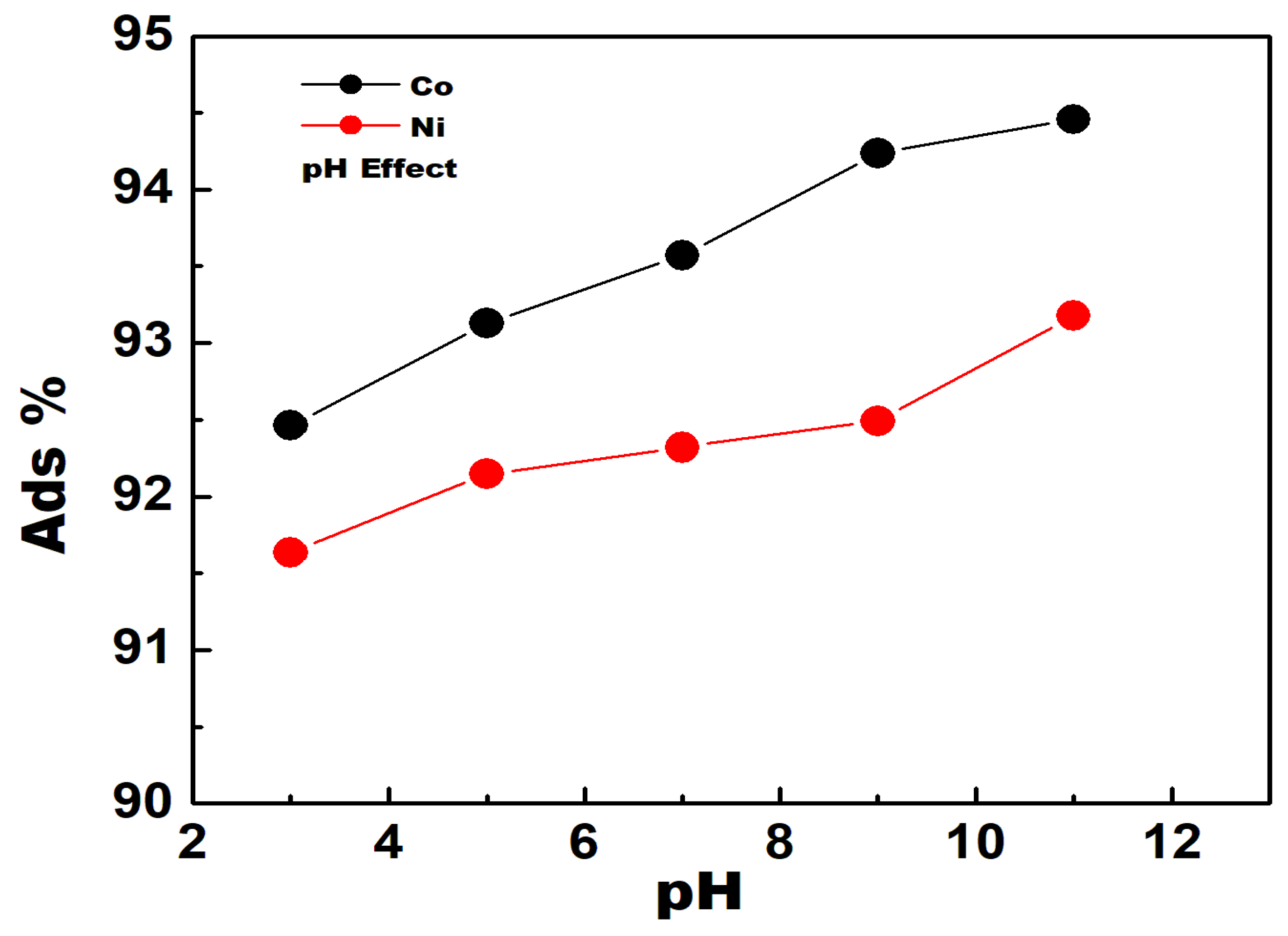
The examination of pH influence on the adsorption process revealed a direct correlation between pH levels and the adsorption efficiency (Ads%) for both Ni and Co ions. As illustrated in the figures, at lower pH values (pH = 3 or 5), the adsorption percentages are relatively modest, ranging from 91% to 92%. As the pH increases to 7, 9, and 11, a gradual enhancement in adsorption efficiency is observed, with the highest percentages recorded at pH = 11. This trend is attributed to the reduction in competition between hydrogen ions (H+) and metal ions (Ni and Co) for active sites on the adsorbent surface, thereby promoting greater adsorption at higher pH levels (Figure 8) [38].
The strong dependence of adsorption efficiency on pH can be explained by considering both the surface chemistry of the adsorbent and the aqueous speciation of Ni2+ and Co2+ ions.
At lower pH values (pH = 3–5), the adsorption efficiency remains relatively limited (91–92%) due to the high concentration of hydrogen ions (H+) in the solution. Under these acidic conditions, the adsorbent surface becomes highly protonated, leading to the formation of positively charged surface functional groups. This results in two key effects:
(i)
Electrostatic repulsion between the positively charged surface and metal cations (Ni2+ and Co2+);
(ii)
Competitive adsorption between H+ ions and metal ions for the available active sites.
As a result, fewer metal ions are able to bind to the adsorbent surface, leading to reduced adsorption efficiency.
As the pH increases (pH = 7–11), the concentration of H+ ions decreases significantly, which leads to gradual deprotonation of the adsorbent surface. Consequently, the surface acquires a more negatively charged character due to the presence of functional groups such as –OH and –COO. This enhances the electrostatic attraction between the adsorbent surface and the positively charged Ni2+ and Co2+ ions, thereby improving adsorption efficiency.
In addition, the reduction in H+ concentration minimizes competition for active sites, allowing more metal ions to be effectively adsorbed. The highest adsorption observed at pH = 11 can therefore be attributed to the combined effects of strong electrostatic attraction, increased availability of active sites, and improved interaction between the adsorbent and metal ions.
It is also important to note that at higher pH values, partial hydrolysis of metal ions may occur, forming species such as M(OH)+ or M(OH)2. These species can either enhance adsorption through surface complexation or, in some systems, lead to precipitation. Therefore, the observed increase in Ads% at high pH may involve both adsorption and possible contributions from surface-induced precipitation.

3.4.3. Adsorbent Dosage Effect

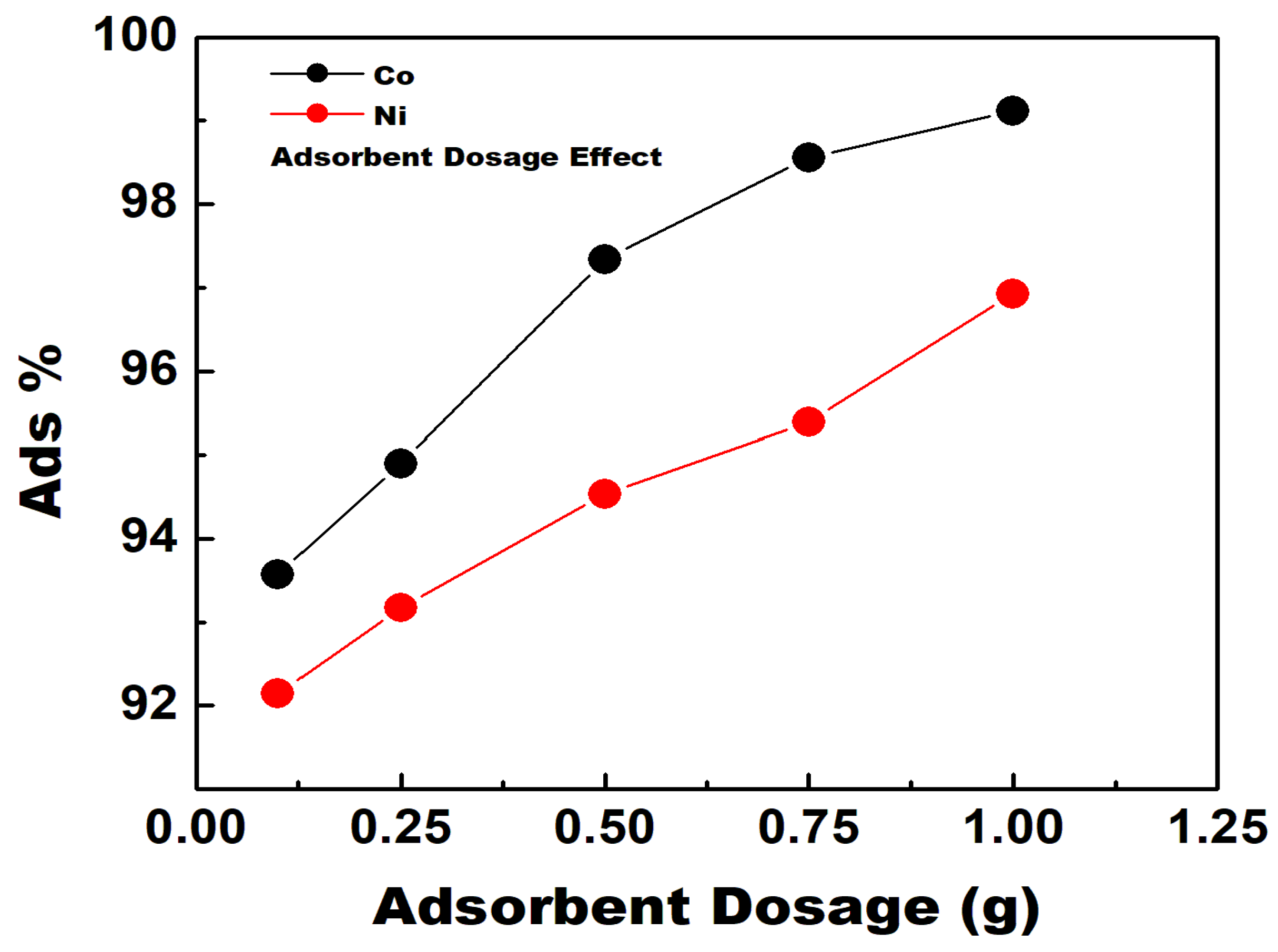
A direct correlation exists between the adsorbent dosage and the adsorption percentage, with higher dosages resulting in increased Ads%. This is because increasing the amount of adsorbent offers a greater surface area and a larger number of active sites, which enhances the capacity to capture more metal ions from the solution and thereby improves overall adsorption efficiency (Figure 9) [38].
The observed direct relationship between adsorbent dosage and adsorption efficiency (Ads%) can be explained based on surface availability, site density, and mass transfer considerations.
As the adsorbent dosage increases, the total available surface area and the number of active binding sites in the system increase proportionally. This provides more opportunities for Ni2+ and Co2+ ions to interact with the adsorbent surface, leading to a higher fraction of metal ions being removed from the solution. Consequently, the adsorption percentage (Ads%) increases.
In addition, increasing the adsorbent dosage enhances the probability of collision between adsorbate ions and active sites, thereby improving adsorption kinetics and facilitating faster attainment of equilibrium. The higher solid-to-liquid ratio also reduces the metal ion concentration per unit mass of adsorbent, effectively minimizing competition among ions for the same adsorption sites.
However, from a deeper mechanistic perspective, it is important to note that while Ads% increases, the adsorption capacity per unit mass (qₑ, mg/g) often decreases at higher dosages. This phenomenon is attributed to:
(i)
Unsaturation of adsorption sites, where not all sites are fully utilized due to the excess adsorbent;
(ii)
Possible particle aggregation or overlap, which can reduce the effective surface area and limit accessibility of some active sites.
Therefore, the increase in adsorption efficiency with adsorbent dosage is primarily governed by the expansion of available surface area and active sites, along with improved mass transfer conditions, although it may be accompanied by a decline in adsorption capacity per unit mass at higher dosages.

3.4.4. Contact Time Effect

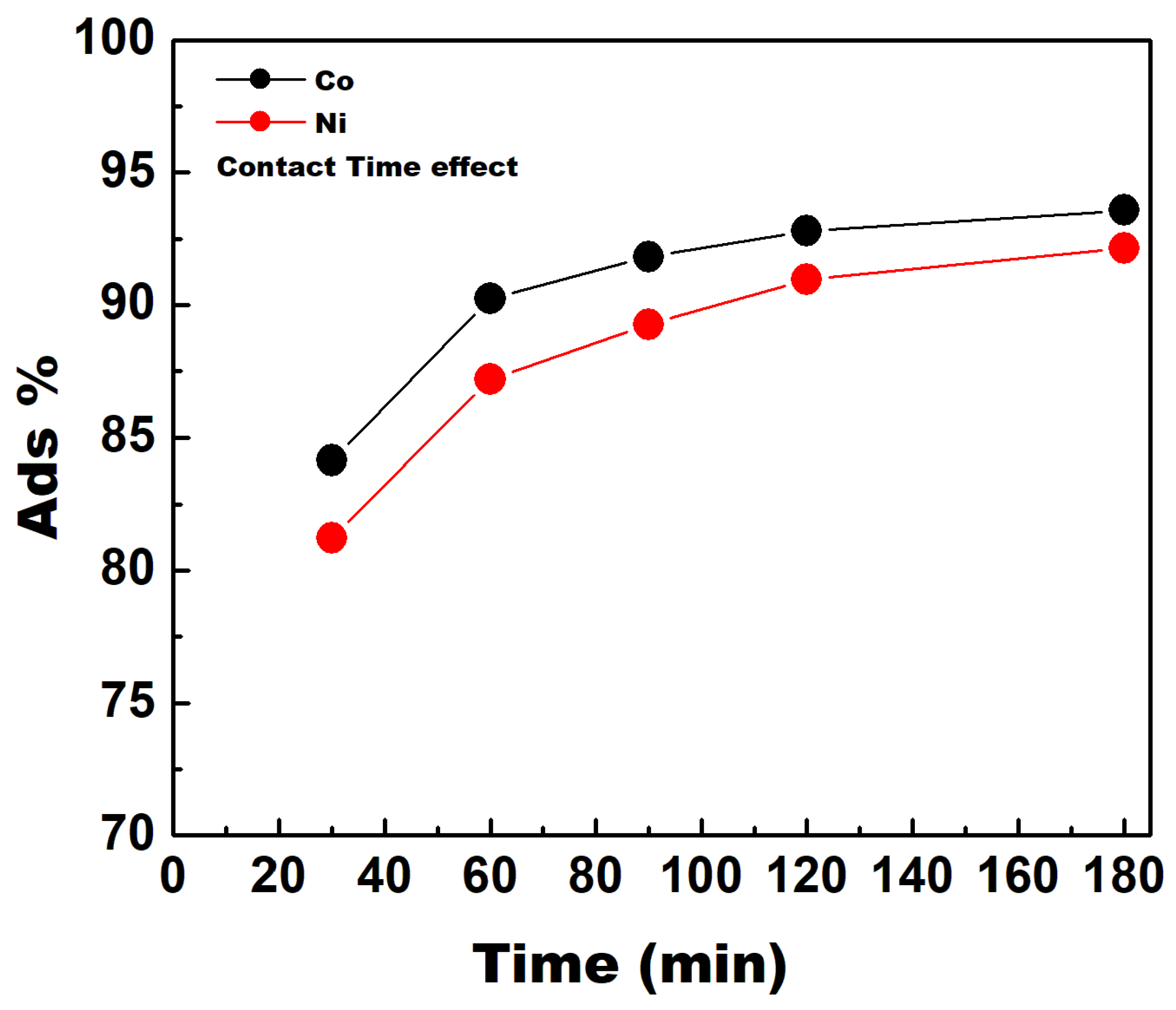
ZnO-C NPs’ ability to adsorb Co2 and Ni2 ions over time was also evaluated. The results showed that longer contact times, ranging from 30 to 180 min, increased the adsorption percentages of Co2+ and Ni2+ ions (Figure 10). There are many active adsorption sites in the early stages of contact, which causes a quick uptake of ions between 30 and 120 min. Nevertheless, the saturation of active sites on the ZnO-C NPs surface with Co2+ and Ni2+ ions causes the adsorption efficiency to decrease over time [38].
The adsorption behavior of Co2+ and Ni2+ ions onto ZnO–C nanoparticles as a function of contact time reflects the typical multi-stage nature of adsorption processes, involving surface interaction and diffusion mechanisms.
At the initial stage (30–120 min), the adsorption rate is rapid. This can be attributed to the abundance of vacant and energetically favorable active sites on the external surface of the ZnO–C nanoparticles. During this stage, metal ions are readily transferred from the bulk solution to the adsorbent surface through film (boundary layer) diffusion, followed by immediate attachment via electrostatic interaction and/or surface complexation. The high concentration gradient between the solution and the adsorbent surface further accelerates mass transfer, resulting in a sharp increase in adsorption efficiency.
As contact time progresses (approaching 180 min), the rate of adsorption gradually slows down. This behavior is primarily due to:
(i)
Progressive occupation and saturation of active sites;
(ii)
Reduction in the concentration gradient;
(iii)
Increased resistance to mass transfer as the system approaches equilibrium.
At this stage, adsorption is no longer controlled by external surface interactions alone, but also by intraparticle diffusion, where metal ions must diffuse into the pores of the nanoparticles. This diffusion process is inherently slower and becomes the rate-limiting step.
Eventually, the system reaches adsorption equilibrium, where the number of ions being adsorbed equals those desorbing from the surface. The statement that “adsorption efficiency decreases over time” is more accurately interpreted as a decrease in the adsorption rate, not necessarily a decline in total adsorption, since the system is approaching saturation rather than losing previously adsorbed ions.

3.5. Adsorption Isotherms

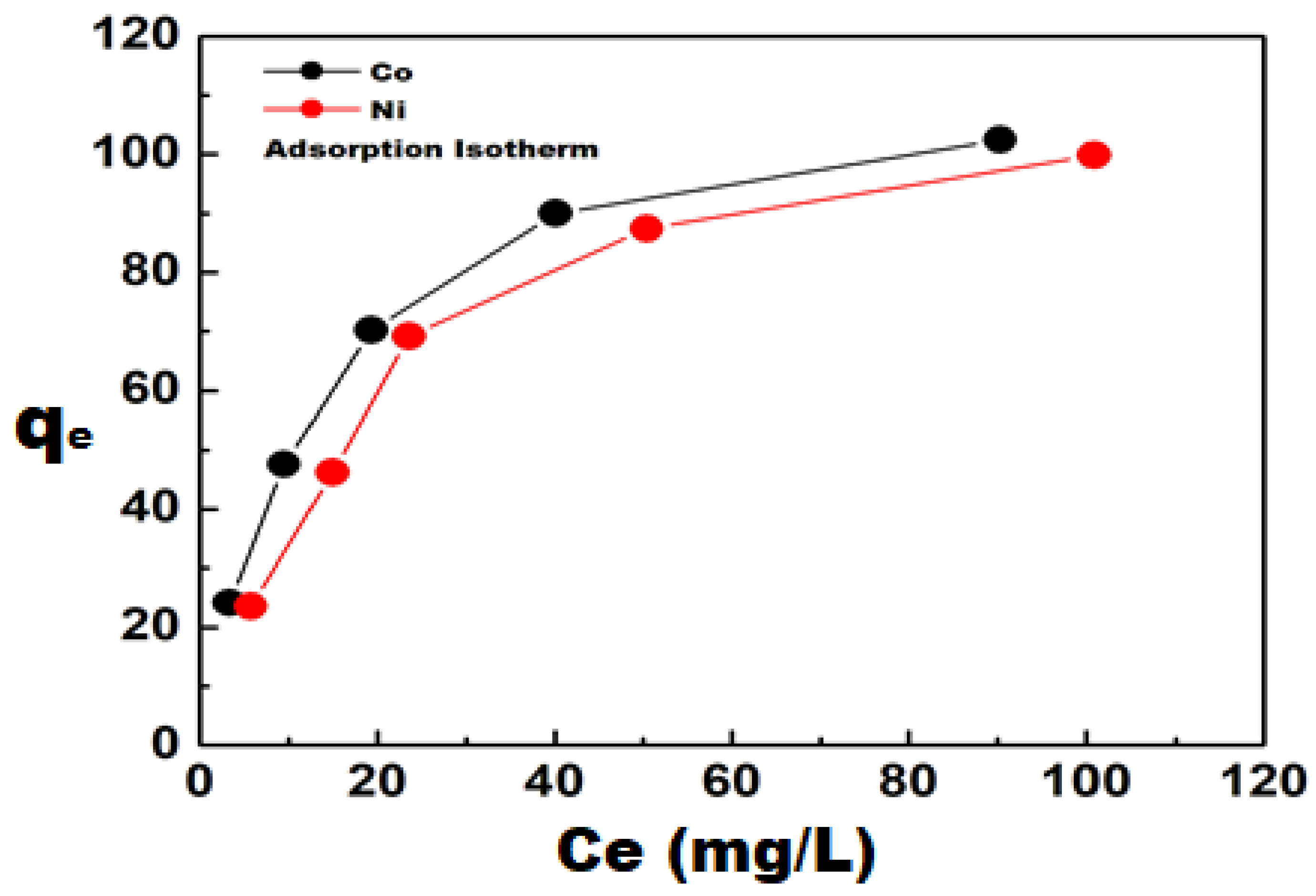
Figure 11 illustrates the relationship between the initial solution concentration (Ce) and the amount of adsorption at equilibrium (qe) for both nickel (Ni2+) and cobalt (Co2+) ions. At lower initial concentrations, a notable increase in (qe) is observed as the adsorbate concentration rises. This trend is likely due to the availability of numerous active sites on the adsorbent surface, which facilitates the adsorption of more ions. As the initial concentration continues to increase, the adsorption capacity (qe) begins to level off, indicating that the system is nearing saturation, where the number of active sites becomes limited relative to the ion concentration in the solution. This behavior reflects the application of an adsorption isotherm model, which characterizes the balance between the adsorbate concentration in the solution and the adsorption capacity of the adsorbent. This behavior is commonly observed in adsorption systems (Figure 1) [17].

3.5.1. Adsorption Models

Adsorption isotherms serve as a valuable tool for analyzing adsorption processes. They define the relationship between the equilibrium pressure or concentration and the amount of adsorbate adsorbed per unit mass of adsorbent at a constant temperature. However, because liquid-phase adsorption on microporous materials involves complex interactions, it is often challenging to develop a simple mathematical expression that accurately describes the process. To simplify practical applications, the Langmuir and Freundlich models are extensively employed to characterize the behavior of adsorbent–adsorbate systems [38,39,40].
Langmuir Isotherm
To describe the nature of adsorption, isothermal adsorption models like Freundlich and Langmuir were used. According to the Langmuir model, solid surfaces have primary adsorption sites that can each adsorb a single adsorbate molecule. It makes the assumption that these sites are uniform and closely spaced, and that molecular interactions can cause the adsorption of a molecule at one site to affect the characteristics of nearby sites. Equation (5) represents the Langmuir adsorption model [38,39,40]:
C e q e = K L q 1 m a x + q m a x C e
where qe (mg/g) represents the adsorption capacity at equilibrium, Ce (mg/L) is the equilibrium concentration of the adsorbate, qmax (mg/g) denotes the maximum monolayer adsorption capacity, and KL (L/mg) is the Langmuir constant related to the affinity of the adsorption sites and adsorption energy.
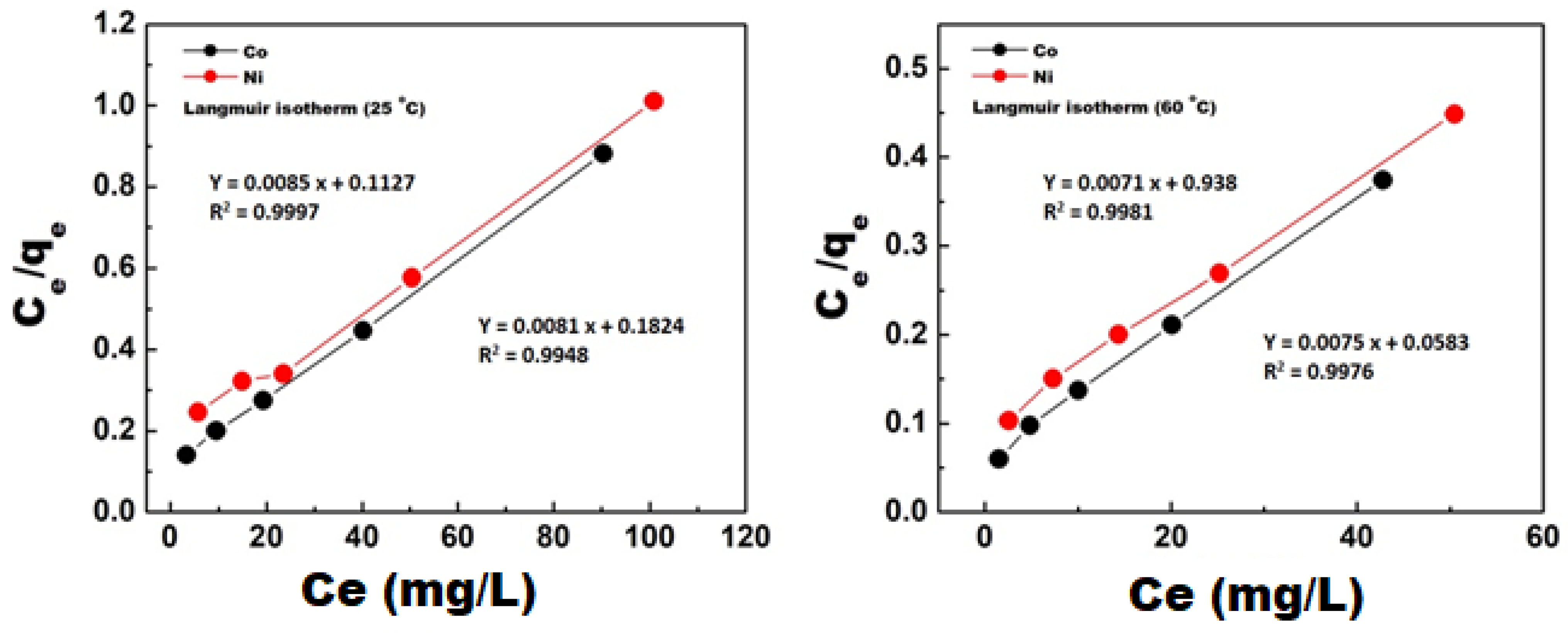
This model describes monolayer adsorption, where maximum uptake is achieved when the adsorbent surface becomes fully saturated. Accordingly, at higher adsorbate concentrations, the adsorption capacity approaches its maximum value (qmax). The excellent agreement between the experimental data and the Langmuir model, as evidenced by the high correlation coefficient values (R2 = 0.995–0.999), indicates that adsorption predominantly occurs as a monolayer on a relatively homogeneous surface (Figure 12). Furthermore, the increase in both qmax and KL with increasing temperature suggests that the adsorption process is endothermic, where elevated temperatures enhance adsorbate mobility and improve access to active sites.
Freundlich Isotherm
Although the Freundlich isotherm is typically utilized for adsorption from liquid solutions, it can also be applied to gas adsorption. This model represents a unique situation where the energy-related term KL in the Langmuir isotherm varies as a function of surface coverage q and the adsorbent surface energy is heterogeneous [39,40].
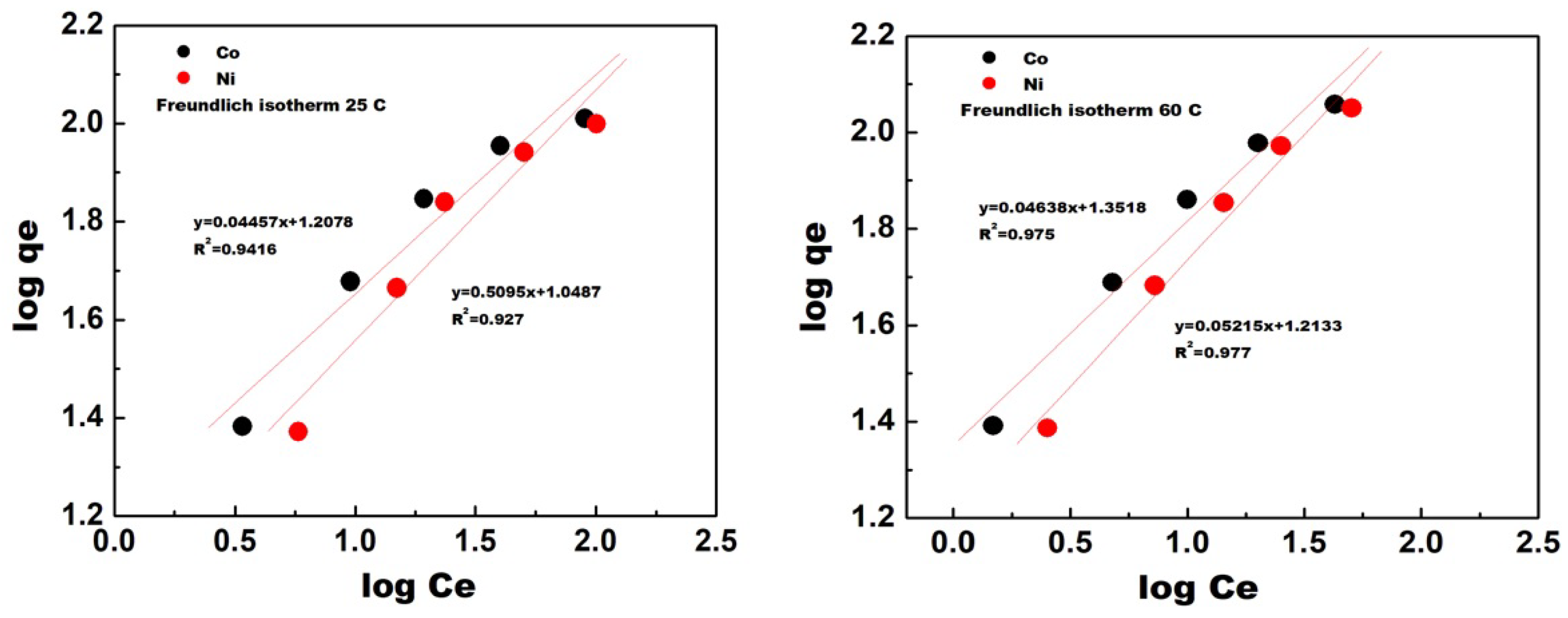
The results in Table 1 demonstrate that the KF values increased with increasing temperature, confirming that the adsorption process was endothermic. According to this model, the amount of adsorbed compound initially increases rapidly and then slows down. R2 values (0.927–0.977) are lower than Langmuir, showing that Freundlich describes the data less accurately for this system. The 1/n values were less than unity and increased with increasing temperature, indicating the suitability for Co2+ and Ni2+ ion adsorption on ZnO-C NPs (Figure 13), as shown in Equation (6) [38]:
log qe = log KF + n1 log Ce

3.5.2. Adsorption Thermodynamics

Thermodynamic Model
Thermodynamics primarily deals with the transformations of heat into mechanical work and vice versa, i.e., the conversion of mechanical work into heat. These processes are described by Equations (7)–(9) [38]:
∆G°ads = − RT lnK
lnKK12 = ∆H°ads(T12 − T11)
∆H°ads = ∆G°ads − T∆S°ads
The Enthalpy Change
The enthalpy change (ΔH) associated with hydrogen desorption and absorption is a key factor in evaluating the suitability of a hydrogen storage system for practical applications.
The thermodynamic parameters of adsorption were estimated using the Langmuir adsorption equilibrium constant (KL), where K is the KL multiplied by the water concentration of 106 mg/L. Table 2 displays the Van’t Hoff plots of ln KL versus 1/T.

3.5.3. Adsorption Kinetics

Chemical kinetics is the branch of chemistry that deals with reaction rates, or speeds. The concentration of a single reactant raised to the first power determines the rate of a first-order reaction. The rate law for a reaction involving type A products could be first order, as shown in Equation (10) [38]:
log (qe − qt) = log qe − K1/2.303 t
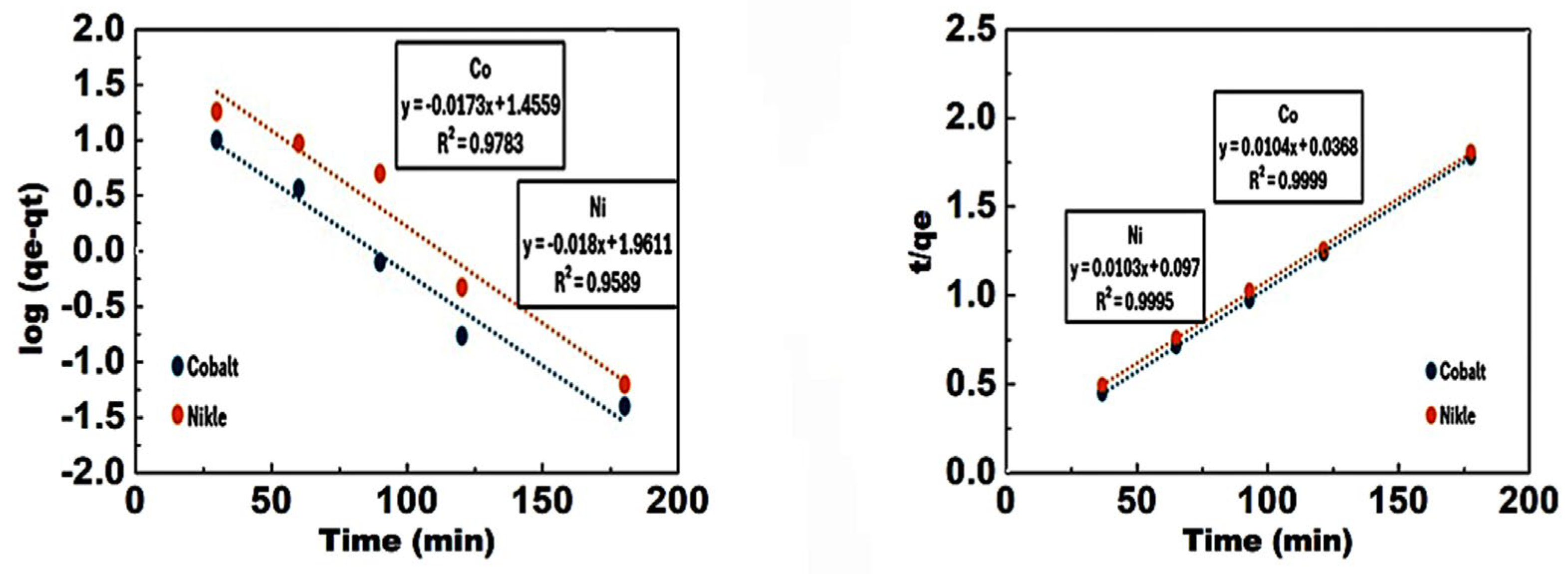
Plotting the linear relationship log (qe − qt) against t for PFO and t/qt against t for PSO yielded K1, K2, qe, and R2, where K1 and K2 are the PFO and PSO rate constants, respectively, and qt is the amount of material adsorbed at time t, as illustrated in Figure 14. The rate of a second-order reaction is determined by either the concentration of one reactant raised to the second power or the concentrations of two reactants each raised to the first power, Equation (11) [38]:
qtt = K21 q2e + qt,e
The results in Table 3 illustrate the relationship between time and the adsorption concentration for various materials. As time progresses, the adsorption concentration increases, displaying a linear trend in a first-order kinetic model. According to the data provided in Table 3, Co2+ follows both first-order and second-order kinetics but ultimately fits second-order kinetics more accurately. In first-order kinetics, the reaction rate is directly proportional to the reactant concentration, whereas in second-order kinetics, the rate is proportional to the square of the concentration, resulting in distinct kinetic behavior. In contrast, Ni2+ adheres strictly to second-order kinetics, exhibiting a different behavior compared to Co2+.

4. Conclusions

This study successfully achieved its primary objective by developing an innovative and sustainable approach to recycling expired chemicals and agricultural waste to produce ZnO-C hybrid adsorbent materials. Hybrid ZnO-C nanoparticles were synthesized and characterized using FTIR, XRD, TEM, SEM, and EDS techniques. FTIR analysis revealed the presence of functional groups such as O–H, C-H, C–O, and Zn–O stretching vibrations, which enhance their ion-exchange capabilities for the selective adsorption of oppositely charged molecules. The crystalline ZnO nanoparticle-anchored carbon (ZnO-C) hybrid adsorbents exhibited a sphere-like, granulated structure with nanoscale sizes of about 28 nm. EDX analysis confirmed the presence of Zn on the surface of the granules, along with carbon matrix and oxygen.
Increasing the amount of ZnO–C NPs leads to a higher percentage removal (Ads%) due to the availability of more active sites and greater surface area. However, as the dosage increases beyond an optimal point, the adsorption capacity per unit mass may decrease. This is attributed to unsaturated adsorption sites and potential particle aggregation, which reduce the effective surface area. Linking this to the Langmuir model, higher dosages allow the system to approach the maximum monolayer coverage (qmax), highlighting the practical limit of adsorption efficiency. Adsorption efficiency rises with increasing pH, reaching a maximum at pH 11. At low pH (3–5), hydrogen ions compete with metal ions for adsorption sites, and the surface is positively charged, reducing electrostatic attraction to Ni2+ and Co2+. At higher pH, surface deprotonation increases negative charge density, enhancing electrostatic attraction. Additionally, partial hydrolysis of metal ions at high pH (e.g., M(OH)+, M(OH)2) may contribute to adsorption. The Langmuir parameters (qmax, KL) reflect this trend, as more active sites become effectively available at higher pH. Freundlich constants (KF, n) similarly indicate increased adsorption intensity under these favorable conditions.
At low initial concentrations, adsorption is nearly complete due to the abundance of active sites. As concentration increases, competition among ions leads to site saturation, consistent with the Langmuir model’s monolayer limitation. Temperature elevation from 298 K to 333 K enhances adsorption efficiency, reflected in higher qmax and KF values. This confirms the endothermic nature of the process, as increased thermal energy facilitates adsorbate mobility and improves intraparticle diffusion, enabling ions to reach and occupy active sites more effectively. The adsorption is rapid during the initial 30–120 min due to readily available external surface sites, and then gradually slows as the system approaches equilibrium. This behavior is associated with film diffusion followed by intraparticle diffusion and aligns with the Langmuir concept of surface saturation. The slowdown does not indicate desorption but reflects the system reaching dynamic equilibrium, where adsorption and desorption rates balance.
This study highlights the significant potential of waste utilization in developing sustainable and eco-friendly technologies for pollutant removal, paving the way for innovative applications of renewable materials to address global environmental challenges.

Author Contributions

L.M.A., W.H.A., L.K.A., A.M.A., N.A.A. and G.T.A.; methodology, G.M.A.-S.; software, S.D.A.-Q.; validation, G.M.A.-S. and S.D.A.-Q.; formal analysis, G.M.A.-S.; investigation, S.D.A.-Q.; resources, S.D.A.-Q.; data curation, G.M.A.-S.; writing—original draft preparation, G.M.A.-S. and S.D.A.-Q.; writing—review and editing, G.M.A.-S. and S.D.A.-Q.; visualization, G.M.A.-S.; supervision, S.D.A.-Q.; project administration, G.M.A.-S.; funding acquisition, G.M.A.-S. and S.D.A.-Q. All authors have read and agreed to the published version of the manuscript.

Funding

This research project was funded by the Deanship of Scientific Research and Libraries Princess Nourah bint Abdulrahman University, through the Pioneer Researcher Funding Initiative, Grant No. (PRFI-2026).

Data Availability Statement

The data presented in this study are available on request from the corresponding author.

Conflicts of Interest

The authors declare no conflicts of interest.

References

  1. Kyaw, H.H.; Myint, M.T.Z.; Al-Harthi, S.; Al-Abri, M. Removal of heavy metal ions by capacitive deionization: Effect of surface modification on ions adsorption. J. Hazard. Mater. 2020, 385, 121565. [Google Scholar] [CrossRef] [PubMed]
  2. Najem, G.R.; Cappadona, J.L. Health effects of hazardous chemical waste disposal sites in New Jersey and in the United States: A review. Am. J. Prev. Med. 1991, 7, 352–362. [Google Scholar] [CrossRef] [PubMed]
  3. Ramawat, K.G.; Mérillon, J.M.; Arora, J. (Eds.) Agricultural Waste: Environmental Impact, Useful Metabolites and Energy Production; Springer: Berlin/Heidelberg, Germany, 2023. [Google Scholar]
  4. Khan, M.N.; Sial, T.A.; Ali, A.; Wahid, F. Impact of agricultural wastes on environment and possible management strategies. In Frontier Studies in Soil Science; Springer International Publishing: Cham, Switzerland, 2024; pp. 79–108. [Google Scholar]
  5. Thompson, J.; Anthony, H. The health effects of waste incinerators. J. Nutr. Environ. Med. 2005, 15, 115–156. [Google Scholar] [CrossRef]
  6. Kucukcongar, S.; Akbari, A.J.; Turkyilmaz, M. Removal of nickel from aqueous solutions using magnetic nanocomposite synthesised with agricultural waste. Int. J. Environ. Anal. Chem. 2022, 102, 4996–5014. [Google Scholar] [CrossRef]
  7. Romanovski, V. Agricultural waste based-nanomaterials: Green technology for water purification. In Aquananotechnology; Elsevier: Amsterdam, The Netherlands, 2021; pp. 577–595. [Google Scholar]
  8. Yadi, M.; Mostafavi, E.; Saleh, B.; Davaran, S.; Aliyeva, I.; Khalilov, R.; Nikzamir, M.; Nikzamir, N.; Akbarzadeh, A.; Panahi, Y.; et al. Current developments in green synthesis of metallic nanoparticles using plant extracts: A review. Artif. Cells Nanomed. Biotechnol. 2018, 46, 336–343. [Google Scholar] [CrossRef]
  9. Antunes Filho, S.; dos Santos, M.S.; dos Santos, O.A.L.; Backx, B.P.; Soran, M.-L.; Opriş, O.; Lung, I.; Stegarescu, A.; Bououdina, M. Biosynthesis of Nanoparticles Using Plant Extracts and Essential Oils. Molecules 2023, 28, 3060. [Google Scholar] [CrossRef]
  10. Zehra, A.; Meena, M.; Swapnil, P.; Raytekar, N.A.; Upadhyay, R.S. Sustainable Approaches to Remove Heavy Metals from Water. In Microbial Biotechnology: Basic Research and Applications. Environmental and Microbial Biotechnology; Singh, J., Vyas, A., Wang, S., Prasad, R., Eds.; Springer: Singapore, 2020. [Google Scholar] [CrossRef]
  11. Sharma, Y.C.; Srivastava, V.; Singh, V.K.; Kaul, S.N.; Weng, C.H. Nano-adsorbents for the removal of metallic pollutants from water and wastewater. Environ. Technol. 2009, 30, 583–609. [Google Scholar] [CrossRef]
  12. Zahid, M.; Nadeem, N.; Tahir, N.; Majeed, M.I.; Naqvi, S.A.; Hussain, T. Hybrid nanomaterials for water purification. In Multifunctional Hybrid Nanomaterials for Sustainable Agrifood and Ecosystems; Elsevier: Amsterdam, The Netherlands, 2020; Volume 1, pp. 155–188. [Google Scholar]
  13. Xiao, F.X.; Miao, J.; Tao, H.B.; Hung, S.F.; Wang, H.Y.; Yang, H.B.; Chen, J.; Chen, R.; Liu, B. One-dimensional hybrid nanostructures for heterogeneous photocatalysis and photoelectrocatalysis. Small 2015, 11, 2115–2131. [Google Scholar] [CrossRef]
  14. Pratama, A.W. Advances in Green Synthesis of Nanoparticles from Crop Residues and Their Application in Sustainable Agriculture: A Review. J. Appl. Chem. Sci. Int. 2025, 16, 230–240. [Google Scholar] [CrossRef]
  15. Rambabu, K.; Bharath, G.; Banat, F.; Show, P.L. Green synthesis of zinc oxide nanoparticles using Phoenix dactylifera waste as bioreductant for effective dye degradation and antibacterial performance in wastewater treatment. J. Hazard. Mater. 2021, 402, 123560. [Google Scholar] [CrossRef]
  16. Ramesh, R.; Parasaran, M.; Mubashira, G.F.; Flora, C.; Khan, F.L.; Almaary, K.S.; Elbadawi, Y.B.; Chen, T.W.; Kanimozhi, K.; Bashir, A.K.; et al. Biogenic synthesis of ZnO and NiO nanoparticles mediated by fermented Cocos nucifera. (L) deoiled cake extract for antimicrobial applications towards gram positive and gram negative pathogens. J. King Saud. Univ. Sci. 2022, 34, 101696. [Google Scholar] [CrossRef]
  17. Abdallah, Y.; Liu, M.; Ogunyemi, S.O.; Ahmed, T.; Fouad, H.; Abdelazez, A.; Yan, C.; Yang, Y.; Chen, J.; Li, B. Bioinspired green synthesis of chitosan and zinc oxide nanoparticles with strong antibacterial activity against rice pathogen Xanthomonas oryzae pv. oryzae. Molecules 2020, 25, 4795. [Google Scholar] [CrossRef]
  18. Mekonnen, M.M.; Hoekstra, A.Y. Four billion people facing severe water scarcity. Sci. Adv. 2016, 2, e1500323. [Google Scholar] [CrossRef]
  19. Xu, W.; Lin, T.; Hu, Z.; Yan, W. Environmental exposure and ecological risk of heavy metals in fishing harbors of the Pearl River Delta, South China. Aquat. Ecosyst. Health Manag. 2012, 15, 192–199. [Google Scholar] [CrossRef]
  20. Tahoon, M.A.; Siddeeg, S.M.; Salem Alsaiari, N.; Mnif, W.; Ben Rebah, F. Effective heavy metals removal from water using nanomaterials: A review. Processes 2020, 8, 645. [Google Scholar] [CrossRef]
  21. Savage, N.; Diallo, M.S. Nanomaterials and water purification: Opportunities and challenges. J. Nanopart. Res. 2005, 7, 331–342. [Google Scholar] [CrossRef]
  22. Tchounwou, P.B.; Yedjou, C.G.; Patlolla, A.K.; Sutton, D.J. Heavy Metal Toxicity and the Environment. In Molecular, Clinical and Environmental Toxicology. Experientia Supplementum; Luch, A., Ed.; Springer: Basel, Switzerland, 2012; Volume 101. [Google Scholar] [CrossRef]
  23. Dasila, H.; Saxena, R.; Tiwari, A.; Bhatt, D.; Rawat, K.; Suyal, D.C. Heavy metal pollution in water: Cause and remediation strategies. In Current Status of Fresh Water Microbiology; Springer: Singapore, 2023; Volume 27, pp. 181–204. [Google Scholar]
  24. Mansour, S.A. Heavy Metals of Special Concern to Human Health and Environment. In Practical Food Safety; Bhat, R., Gómez-López, V.M., Eds.; John Wiley & Sons, Inc.: Hoboken, NJ, USA, 2014. [Google Scholar] [CrossRef]
  25. Lauwerys, R.; Lison, D. Health risks associated with cobalt exposure—An overview. Sci. Total Environ. 1994, 150, 1–6. [Google Scholar] [CrossRef]
  26. Hasan, M.A.; Mallick, J.; Ahmed, M.; Saleem, M. Hazardous Wastes and its Impact on Human Health. In IOP Conference Series: Materials Science and Engineering; IOP Publishing: New Delhi, India, 2020; Volume 804, p. 012056. [Google Scholar] [CrossRef]
  27. Chung, S.S.; Lo, C.W. Evaluating sustainability in waste management: The case of construction and demolition, chemical and clinical wastes in Hong Kong. Resour. Conserv. Recy. 2003, 37, 119–145. [Google Scholar] [CrossRef]
  28. Kotnala, S.; Tiwari, S.; Nayak, A.; Bhushan, B.; Chandra, S.; Medeiros, C.R.; Coutinho, H.D.M. Impact of heavy metal toxicity on the human health and environment. Sci. Total Environ. 2025, 987, 179785. [Google Scholar] [CrossRef]
  29. Somu, P.; Paul, S. Casein based biogenic-synthesized zinc oxide nanoparticles simultaneously decontaminate heavy metals, dyes, and pathogenic microbes: A rational strategy for wastewater treatment. J. Chem. Technol. Biotechnol. 2018, 93, 2962–2976. [Google Scholar] [CrossRef]
  30. Srivastava, V.; Gusain, D.; Sharma, Y.C. Synthesis, characterization and application of zinc oxide nanoparticles (n-ZnO). Ceram. Int. 2013, 39, 9803–9808. [Google Scholar] [CrossRef]
  31. Al-Senani, G.M.; Al-Fawzan, F.F.; Almufarij, R.S.; Abd-Elkader, O.H.; Deraz, N.M. Biosynthesis, physicochemical and magnetic properties of inverse spinel nickel ferrite system. Crystals 2022, 12, 1542. [Google Scholar] [CrossRef]
  32. Abd-Elkader, O.H.; Deraz, N.M.; Aleya, L. Rapid bio-assisted synthesis and magnetic behavior of zinc oxide/carbon nanoparticles. Crystals 2023, 13, 1081. [Google Scholar] [CrossRef]
  33. Abul, A.; Samad, S.A.; Huq, D.; Moniruzzaman, M.; Masum, M. Textile Dye Removal from Wastewater Effluents Using Chitosan-Zno Nanocomposite. J. Textile Sci. Eng. 2015, 5, 200. [Google Scholar] [CrossRef]
  34. Samaele, N.; Amornpitoksuk, P.; Suwanboon, S. Effect of pH on the morphology and optical properties of modified ZnO particles by SDS via a precipitation method. Powder Technol. 2010, 203, 243–247. [Google Scholar] [CrossRef]
  35. Sagar, P.; Shishodia, P.K.; Mehra, R.M. Influence of pH value on the quality of sol–gel derived ZnO films. Appl. Surf. Sci. 2007, 253, 5419–5424. [Google Scholar] [CrossRef]
  36. Pascariu, P.; Olaru, N.; Rotaru, A.; Airinei, A. Innovative low-cost carbon/ZnO hybrid materials with enhanced photocatalytic activity towards organic pollutant dyes’ removal. Nanomaterials 2020, 10, 1873. [Google Scholar] [CrossRef] [PubMed]
  37. Fouladi-Fard, R.; Aali, R.; Mohammadi-Aghdam, S.; Mortazavi-derazkola, S. The surface modification of spherical ZnO with Ag nanoparticles: A novel agent, biogenic synthesis, catalytic and antibacterial activities. Arab. J. Chem. 2022, 15, 103658. [Google Scholar] [CrossRef]
  38. Lima, E.C.; Hosseini-Bandegharaei, A.; Moreno-Piraján, J.C.; Anastopoulos, I. A critical review of the estimation of the thermodynamic parameters on adsorption equilibria. Wrong use of equilibrium constant in the Van’t Hoof equation for calculation of thermodynamic parameters of adsorption. J. Mol. Liq. 2019, 273, 425–434. [Google Scholar] [CrossRef]
  39. Musah, M.; Azeh, Y.; Mathew, J.T.; Umar, M.T.; Abdulhamid, Z.; Muhammad, A.I. Adsorption kinetics and isotherm models: A review. CaJoST 2022, 4, 20–26. [Google Scholar] [CrossRef]
  40. Azizian, S.; Eris, S.; Wilson, L.D. Re-evaluation of the century-old Langmuir isotherm for modeling adsorption phenomena in solution. Chem. Phys. 2018, 513, 99–104. [Google Scholar] [CrossRef]
Figure 1. Schematic of the ZnO-C NPs synthesis procedure.
Crystals 16 00231 g001
Figure 2. The FT-IR spectrum of Corncob and ZnO-C NPs.
Crystals 16 00231 g002
Figure 3. XRD spectra of ZnO-C NPs.
Crystals 16 00231 g003
Figure 4. SEM image of Cc- (A), and ZnO-C NPs (B).
Crystals 16 00231 g004
Figure 5. EDX spectrum of ZnO-C NPs.
Crystals 16 00231 g005
Figure 6. TEM image of Corncobs (A) and ZnO/Cc-NPs (B).
Crystals 16 00231 g006
Figure 7. Initial concentration effect on the adsorption percentage of Co2+ and Ni2+ onto ZnO-C NPs at different temperatures.
Crystals 16 00231 g007
Figure 8. pH effect on the adsorption percentage of Co2+ and Ni2+ onto ZnO-C NPs.
Crystals 16 00231 g008
Figure 9. Dose adsorbent effect on the adsorption percentage of Co2+ and Ni2+ onto ZnO-C NPs.
Crystals 16 00231 g009
Figure 10. Effect of the contact time on the adsorption percentage of Co2+ and Ni2+ onto ZnO-C NPs.
Crystals 16 00231 g010
Figure 11. Adsorption isotherms for adsorption of Co2+ and Ni2+ onto ZnO-C NPs.
Crystals 16 00231 g011
Figure 12. Langmuir isotherms for adsorption of Co2+ and Ni2+ onto ZnO-C NPs.
Crystals 16 00231 g012
Figure 13. Freundlich isotherms for adsorption of Co2+ and Ni2+ on ZnO-C NPs.
Crystals 16 00231 g013
Figure 14. PFO and PSO kinetic plots of Co2+ and Ni2+ on adsorption ZnO/Cc-NPs.
Crystals 16 00231 g014
Table 1. Adsorption isotherms parameters of Co2+ and Ni2+ ion adsorption of ZnO-C NPs.
Model Heavy MetalsTemperature (K)Langmuir ModelFreundlich Model
qmax
(mg/g)
KL (L/mg)R2KF (mg/g)
(L/mg) 1/n
nR2
Co2+298 K117.6470.07540.99916.1362.2440.941
333 K 133.333 0.129 0.99828.7672.1560.975
Ni2+298 K 123.457 0.0440.99513.369 1.963 0.927
333 K 140.845 0.0760.99814.8321.9180.977
Table 2. Thermodynamic parameters for adsorption of Co2+ and Ni2+ on ZnO-C NPs.
Heavy MetalsT (K)KLΔG°ads (KJ/mol)ΔH°ads (KJ/mol)ΔS°ads (J/mol)
Co2+2980.075−27.8251.51498.454
3330.129−32.572102.359
Ni2+2980.044−26.5131.51294.043
3330.076−31.10397.944
Table 3. Kinetic models of Co2+ and Ni2+ ion adsorption of ZnO/Cc-Nps.
Heavy MetalCo2+Ni2+
qe, exp mg/g93.5792.15
Pseudo-First-order
qe, cal mg/g0.160.29
K2, g/mg min0.0410.039
R20.9590.978
Pseudo-second-order
qe, cal mg/g96.1597.09
K2, g/mg min0.00290.0011
R20.99950.9999
Disclaimer/Publisher’s Note: The statements, opinions and data contained in all publications are solely those of the individual author(s) and contributor(s) and not of MDPI and/or the editor(s). MDPI and/or the editor(s) disclaim responsibility for any injury to people or property resulting from any ideas, methods, instructions or products referred to in the content.