Article

Study on Stress Corrosion Resistance of Multiphase Composite Nanobainitic Steel via Isothermal Treatment


1
National Engineering Research Center for Equipment and Technology of Cold Strip Rolling, Yanshan University, Qinhuangdao 066004, China
2
Key Laboratory of Intelligent Industrial Equipment Technology of Hebei Province, Hebei University of Engineering, Handan 056038, China
3
Hubei Provincial Key Laboratory of Design and Testing for Power Systems of Pure Electric Vehicles, Hubei University of Arts and Science, Xiangyang 441053, China
4
School of Mechanical, Electronic, and Control Engineering, Beijing Jiaotong University, Beijing 100044, China
5
School of Materials Science and Engineering, Hebei University of Technology, Tianjin 300401, China
6
Institute of Electrical Engineering, Chinese Academy of Sciences, Beijing 100190, China
7
Hubei Tri-Ring Forging Co., Ltd., Xiangyang 441700, China
*
Authors to whom correspondence should be addressed.
Crystals 2026, 16(2), 151; https://doi.org/10.3390/cryst16020151
Submission received: 8 January 2026 / Revised: 13 February 2026 / Accepted: 18 February 2026 / Published: 21 February 2026
(This article belongs to the Special Issue Crystallization of High-Performance Metallic Materials (3rd Edition))

Abstract

This study examines the electrochemical behavior and slow strain rate tensile (SSRT) properties of 67Si2CrNiAlMnMoCu steel featuring a multiphase nanobainitic microstructure consisting of bainitic ferrite (BF), retained austenite (RA), and martensite (M). Electrochemical measurements reveal that both the corrosion tendency and dissolution rate decrease with extended austempering time, with the sample austempered at 220 °C for 21 h showing the lowest corrosion susceptibility. SSRT results indicate that specimens with a nearly fully bainitic microstructure exhibit increased strength sensitivity to stress corrosion. Notably, the specimen austempered at 240 °C for 9 h demonstrates excellent corrosion resistance while retaining favorable overall mechanical properties, exhibiting a tensile strength-based stress corrosion cracking sensitivity coefficient as low as 4.1%.

1. Introduction

Nanobainitic steel has emerged as one of the most prominent research directions in the field of advanced iron and steel materials, owing to its ultra-high strength, good plasticity and toughness, and excellent wear and fatigue resistance [1,2,3]. With the rapid development of industries such as mechanical manufacturing, marine engineering, and petrochemical engineering, the demand for higher strength in structural steels is continuously increasing. High-strength and high-toughness nanobainitic steel is expected to be applied in engineering fields to achieve a longer service life.
Steel components in engineering are often used in harsh environments such as humidity, saline–alkali conditions, acid rain, and seawater [4]. During service, they may be subjected to various external loads, and residual stresses can be introduced during production, manufacturing, and processing [5]. Under the combined action of tensile stress and corrosive media, structural components are prone to stress corrosion cracking (SCC), which is one of the primary forms of material failure in engineering applications.
Stress corrosion is a form of localized corrosion where cracks are often covered by corrosion products, making it difficult to detect. Specimens subjected to stress corrosion may undergo sudden brittle fracture. As industries such as chemical, petroleum, and power machinery develop toward higher temperatures and pressures, SCC incidents have increased, drawing growing attention to this issue.
Alloying is one of the primary methods of enhancing the corrosion resistance of steel [6,7,8,9,10]. Through the optimization of alloying elements, alloying promotes a positive shift in corrosion potential and inhibits anodic activity, significantly delaying the electrochemical corrosion process of the matrix [11,12,13,14,15,16,17,18]. In nanobainitic steel, chromium acts as a catalytic element for the formation of the dense passive film. When its concentration reaches a critical level, it significantly improves corrosion resistance [19,20,21]. The presence of nickel in steel not only enhances resistance to acids, alkalis, salts, and the atmosphere but also improves corrosion fatigue resistance [22,23,24]. In reducing acids and strongly oxidizing salt solutions, molybdenum promotes the passivation of the steel surface by significantly enhancing the enrichment of chromium, thereby greatly increasing the corrosion resistance of the passive film on the matrix [25] and effectively preventing the pitting corrosion. The bainitic ferrite in nanobainitic steel is a body-centered cubic structure with numerous slip systems, facilitating cross-slip during deformation. This structure does not produce linear corrosion grooves in corrosive media [26], making it less prone to transgranular cracking under stress corrosion. Carbides in steel, as second-phase particles, can increase the number of micro-galvanic cells, thereby accelerating the corrosion rate. However, the high content of silicon or aluminum in nanobainitic steel inhibits the precipitation of cementite, resulting in a carbide-free bainitic microstructure, which is beneficial for improving corrosion resistance. Additionally, after austempering, nanobainitic steel often exhibits a certain degree of residual compressive stress on the surface [27], which is highly advantageous for reducing its susceptibility to stress corrosion. The nanobainitic steel has significant potential advantages in stress corrosion resistance due to its unique chemical composition and microstructure. Clarifying its stress corrosion behavior and cracking mechanisms is not only crucial for designing the “composition–process–microstructure” of nanobainitic steel used in corrosive environments, but also provides a theoretical basis for extending its service life.
Currently, some research is being conducted on the stress corrosion behavior and mechanisms of medium- and low-carbon bainitic steels. Lunarska et al. [28] studied the SCC behavior of 0.3 C high-strength bainitic steel used in aircraft components in simulated acid rain solutions. The results showed that the pitting corrosion sensitivity of the bainitic microstructure was consistent with its stress corrosion sensitivity, both decreasing with lower carbon content and the application of surface shot peening. Wang et al. [29,30] improved the corrosion resistance of bainitic steel through Cu-Cr alloying. Accelerated corrosion tests indicated that the corrosion performance of ultra-low-carbon bainitic steel was nearly identical to that of weathering steel 09CuPCrNi.
The uniform and fine microstructure, low carbon content, and abundance of low-angle grain boundaries in ultra-low-carbon bainitic steel effectively enhance the corrosion resistance. Related studies [31,32] have shown that SO2 can promote the accumulation and acidification of chloride ions at the rust layer/matrix interface, thereby initiating and propagating SCC cracks in E690 steel. Liang et al. [33] compared the corrosion kinetics of granular and lath bainite in a simulated industrial atmospheric environment and found that the corrosion rate of lath bainite was lower due to its high dislocation density and more uniform microstructure. Lv et al. [34] investigated the stress corrosion and neutral salt spray corrosion behavior of 0.3 C carbide-free bainitic steel containing Si/Al. Their findings indicated that replacing Si with Al not only significantly reduced SCC susceptibility but also decreased the corrosion rate and thickness of the rust layer. These results indicated that the medium and low-carbon bainitic steels exhibit excellent corrosion resistance, exploring the application in fields such as marine engineering and petrochemical industries. Increasing the carbon content in steel enhances strength and hardness, but reduces toughness, plasticity and corrosion resistance. However, the ultrafine microstructure of nanobainitic steel is beneficial for improving corrosion resistance. Therefore, the stress corrosion behavior and cracking mechanisms of high-carbon nanobainitic steel are different from those of medium- and low-carbon bainitic steels.
Heat treatment can be used to tailor the microstructure, and different microstructures have varying effects on the corrosion resistance of steel. The threshold stress intensity for SCC in high-strength steels is related to their yield strength, which primarily depends on the elemental composition and microstructure of the steel. Kannan et al. [35] compared the corrosion resistance of nanobainitic and martensitic microstructures in the same steel, revealing that nanobainite exhibited higher corrosion resistance than martensite in chloride solutions. Researchers [36,37] studied the corrosion behavior of high-strength nanobainitic steel and conventional pearlitic rail steel using salt spray tests. The results showed that nanobainitic steel demonstrated superior corrosion resistance due to a fine microstructure, and the formation of a dense rust layer during testing. Qu et al. [38] found that the ferrite phase in steel is more active than the bainite phase, leading to a higher corrosion rate. Davis et al. [39] reported that in simulated lubricant-contaminated environments, the nanobainitic lath structure effectively hindered short crack propagation and promoted passivation through finely dispersed phase interfaces, significantly reducing the crack growth rate.
The mentioned studies indicate that differences in microstructure ultimately result in significant variations in the corrosion performance of materials. However, as nanobainitic steel is a relatively recent development, there is still a lack of in-depth research on its stress corrosion behavior. The stress corrosion susceptibility of different microstructural states has not been reported, and the underlying cracking mechanisms remain unclear.
Despite extensive studies on the SCC of bainitic/martensitic steels, a clear gap remains in the systematic evaluation of highly alloyed nanobainitic steels processed within a well-defined low-temperature austempering window and exposed to chloride environments. In particular, existing SCC reports rarely establish a coupled “processing–microstructure–passivation–SCC” map that simultaneously considers (i) the effects of austempering temperature/time on SCC susceptibility and (ii) the stability of the passive film against chloride-induced breakdown. The present work addresses this gap by investigating a 67Si2CrNiAlMnMoCu steel, whose multi-alloy chemistry (Si-Cr-Ni-Al-Mo-Cu) differs from commonly reported nanobainitic/bainitic steels and is designed to tailor transformation behavior, stabilize retained austenite, and potentially modify corrosion/passivation responses. Moreover, SCC studies on this specific alloy family and processing window (200–240 °C with 3–21 h holding) are scarce; therefore, the literature does not adequately capture how this composition–process combination governs the BF/RA/ M multiphase microstructure, passive film stability in 3.5 wt.% NaCl, and the resulting SCC susceptibility. Accordingly, this study provides a systematic dataset and quantitative correlations linking austempering parameters, microstructural features, polarization/passivation metrics, and SSRT-based SCC susceptibility.

2. Materials and Methods

This experiment employed a self-designed 67Si2CrNiAlMnMoCu steel, with the chemical composition by weight as follows: 0.67% carbon (C), 1.85% silicon (Si), 1.09% chromium (Cr), 1.08% nickel (Ni), 1.05% aluminum (Al), 1.5% manganese (Mn), 0.52% copper (Cu), and 0.40% molybdenum (Mo). To investigate the influence of different multiphase microstructures on the mechanical and corrosion-resistant properties of the experimental steel, various heat treatment processes were applied to obtain multiphase microstructures with varying proportions of bainite, martensite, and retained austenite. Figure 1 presents the samples oiled and austempered at 200 °C, 220 °C and 240 °C for different times, and the corresponding microstructures (OM, SEM, TEM and XRD) are introduced in Reference [40].
The microstructure of the specimens and the fracture surfaces from slow strain rate tensile tests were observed using a scanning electron microscope (SEM, Hitachi SU8220, manufacture, city, if any state, country). Prior to fractography, the samples were cleaned with alcohol and dried in an oven at 100 °C for one hour. Samples were then stored under vacuum until observation.
Electrochemical tests were conducted using a CHI660E electrochemical workstation (Chenhua, manufacture, city, if any state, country) in 3.5 wt.% NaCl solution. Specimens with dimensions of 3 × 10 × 10 mm were ground stepwise to 400-grit. A copper wire (Φ 1.5 mm) was soldered onto one face of each specimen, which was then embedded in resin. Before testing, the working surface was further ground stepwise to 2000-grit, rinsed with deionized water, and dried immediately prior to the experiment. The specimens were allowed to stabilize in the electrolyte for 1 h before polarization measurements. Potentiodynamic polarization was performed from −1.2 V to 0 V (vs. SCE) at a scan rate of 1 mV/s. Potentiodynamic polarization measurements were repeated three times (n = 3) for each condition using independently prepared specimen surfaces under identical test parameters. The corrosion potential Ecorr and corrosion current density icorr were obtained by Tafel extrapolation. The anodic and cathodic Tafel slopes (βa and βc) were determined by linear regression of E versus log10(i) in activation-controlled regions, excluding data within ±50 mV of Ecorr. To quantitatively assess passive film stability, the passivation onset potential Epass, passive current density ipass (average value over the passive plateau), and pitting/breakdown potential Epit (onset of sustained sharp anodic current increase) were extracted from the anodic branch. The Epit values obtained from forward polarization are treated as apparent breakdown potentials, reflecting the onset of localized passive film instability in 3.5 wt.% NaCl. The passivation range was calculated as ΔEpass = Epit − Epass.
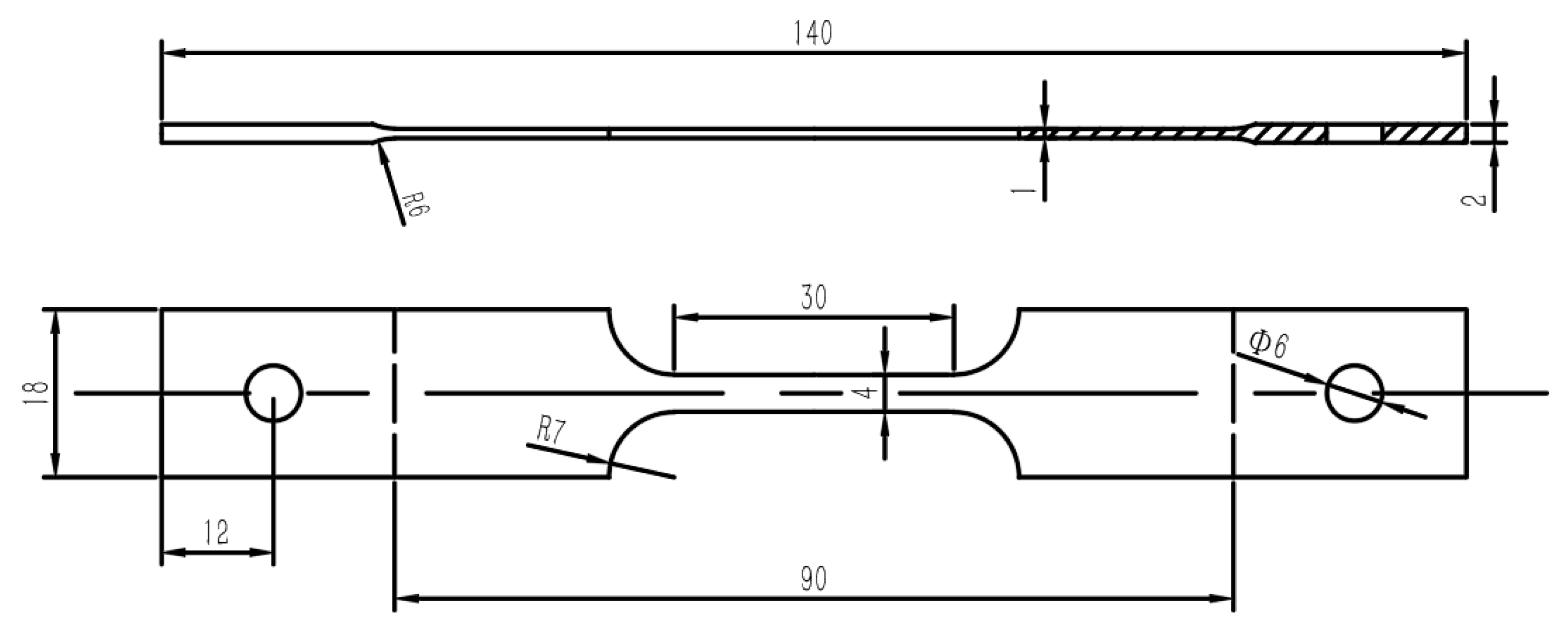
Stress corrosion tests were performed using a slow strain rate tensile testing machine at a strain rate of 1.1 × 10⁻⁶ s−1. The corrosive medium was a 3.5 wt.% NaCl solution. Tests were conducted both in air and in the corrosive medium. The specimen dimensions are shown in Figure 2. The specimens were ground stepwise to 2000-grit, rinsed with alcohol, dried, and tested immediately. For SSRT in 3.5 wt.% NaCl, no separate pre-immersion period was applied. After surface preparation, the specimen was mounted in the corrosion cell with the gauge section continuously immersed, and loading started immediately; thus, the exposure time in NaCl corresponds to the entire SSRT duration until fracture. Macroscopic fracture surfaces were documented using an industrial camera, while microscopic fracture features were examined via SEM.

3. Results and Discussion

3.1. Polarization Curve Analysis

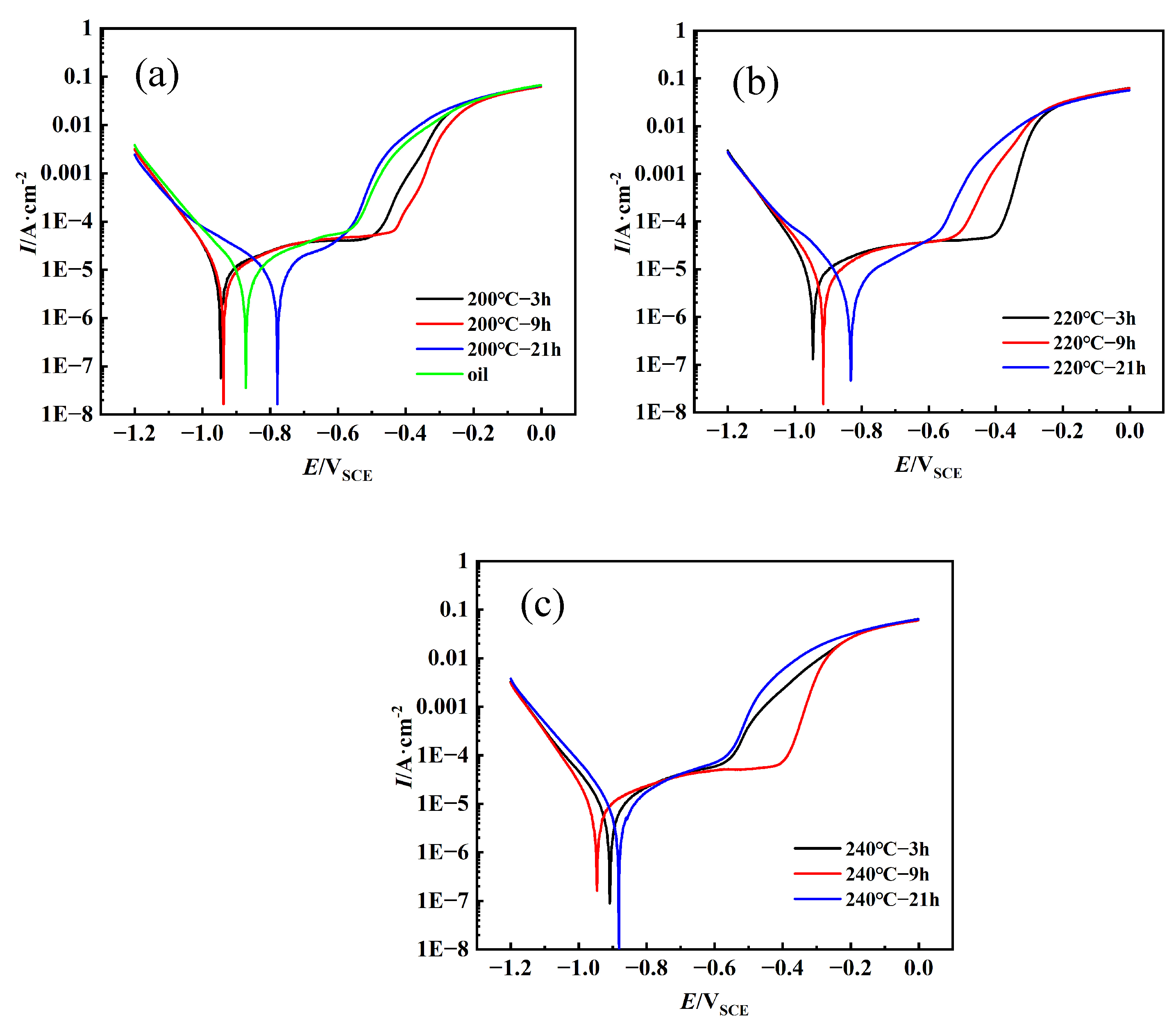
Figure 3 presents the polarization curves of the experimental steels. A passive region is observed in the anodic zone of the curves, indicating the formation of a passive film on the specimen surface during polarization. As the potential increases, the passive film breaks down, leading to a sharp rise in current. The corrosion potential and corrosion current density for each experimental steel were obtained by the Tafel fitting method, as summarized in Table 1 [41]. To further elucidate the reaction kinetics and provide a quantitative evaluation of passive film stability, we additionally extracted the anodic and cathodic Tafel slopes (βa, βc) and passivation parameters (Epass, ipass, Epit, and ΔEpass); the results are summarized in Table 2. The Epit values obtained from forward polarization are treated as apparent breakdown potentials, reflecting the onset of localized passive film instability in 3.5 wt.% NaCl.
The corrosion potential exhibits an increasing trend with prolonged austempered time. The lower corrosion potential presents a greater tendency or corrosion [42]. This suggests that the corrosion tendency of the specimens decreases as the austempered time increases.
Regarding the relevance of corrosion kinetic parameters, studies have shown that compared to thermodynamic criteria (such as corrosion potential), the current density, as a kinetic parameter, more dynamically characterizes the metal dissolution process. Analysis based on electrochemical transport theory indicates that the corrosion current density is positively correlated with the anodic dissolution rate. A higher value signifies a lower charge transfer barrier, weaker passive film formation capability, a more pronounced tendency for electrochemical active dissolution, and, consequently, poorer corrosion resistance [43].
With increasing the austempering time, the corrosion current density of the specimens generally shows a decreasing trend. However, at the austempering temperature of 240 °C, the corrosion current density first increases and then decreases with extended holding time. The specimen treated at 220 °C for 21 h exhibits the lowest corrosion current density, while the specimen treated at 200 °C for 3 h shows the highest. The corrosion current density for the oil-quenched specimen is 5.192 × 10⁻⁶ A·cm−2, placing it at a medium level.
The corrosion resistance of the specimens is closely related to the morphology and distribution of the constituent phases within the microstructure. When the austempering time is short, the microstructure contains a significant amount of blocky martensite–austenite (M-A) islands. The presence of these blocky M-A islands increases the number of micro-galvanic couples [44], thereby accelerating the corrosion rate of the specimens and resulting in a relatively high corrosion current density. As the austempering time increases, the proportion of blocky M-A islands within the specimens decreases, reducing the number of micro-galvanic couples and leading to a decline in the corrosion current density. Furthermore, uniformly distributed retained austenite (RA) and ferrite (F) can hinder the diffusion of corrosion products into the solution, inhibiting the dissolution rate of the specimens and thereby enhancing the corrosion resistance [45].
The extracted Tafel slopes provide additional kinetic insight beyond Ecorr and icorr. Across all investigated conditions, βa ranges from 228.07 to 460.80 mV/dec, while βc ranges from 98.83 to 239.83 mV/dec (Table 2). In aerated neutral NaCl solution, the cathodic process near Ecorr is mainly associated with oxygen reduction, whereas hydrogen evolution may contribute at sufficiently negative potentials within the scanned range. Therefore, the reported βc should be regarded as an effective descriptor of the most linear activation-controlled segment of the cathodic branch.
To quantitatively compare passive film stability in chloride solution, we determined Epass, ipass, Epit and ΔEpass (Table 2). The passive current density ipass varies from 24.51 to 54.75 μA/cm2, reflecting different dissolution rates through the passive film. Notably, the 240 °C-9 h condition exhibits the highest Epit (−0.348 VSCE) and the widest passivation range (ΔEpass = 0.342 V), indicating the greatest resistance to chloride-induced film breakdown among the tested conditions. By contrast, the oil-quenched specimen shows the narrowest passivation range (ΔEpass = 0.181 V), suggesting comparatively less stable passivation in NaCl solution. These quantitative metrics complement the trends in icorr and support a more robust comparison of passive film stability across different austempering conditions.
Both the specimen austempered at 240 °C for 21 h and 220 °C for 21 h exhibit low corrosion current densities. However, the specimen austempered at 220 °C for 21 h demonstrates superior corrosion resistance. This is because, although both specimens undergo complete bainitic transformation, the 220 °C-21 h specimen possesses a finer bainitic ferrite (BF) microstructure. Microstructural refinement may influence corrosion in competing ways: a finer structure can promote more uniform passivation and faster repassivation, whereas a higher density of grain/phase boundaries may also increase anodic activity; therefore, its net effect depends on boundary chemistry (segregation/precipitates) and the corrosive environment. In the present 3.5 wt.% NaCl condition, our discussion focuses on passive film stability and localized breakdown. A finer grain size implies more grain boundaries and shorter corrosion pathways, thereby improving the corrosion resistance [46].
Compared with specimens dominated by the bainitic phase (e.g., the 220 °C-21 h specimen), the oil-quenched specimen exhibits a higher corrosion current density and inferior corrosion resistance. This is primarily due to the higher energy and reactivity of the martensitic phase, which typically leads to a higher corrosion rate [47]. The specimens austempered at 200 °C for 3 h contain not only BF and RA but also a considerable amount of lath-like martensitic structure, with an uneven distribution of the phases. The potential differences among these phases result in a sharp increase in the number of micro-galvanic couples within the specimen under this processing condition [48], further accelerating the corrosion rate and leading to a high corrosion current density.

3.2. Stress Corrosion Susceptibility Analysis

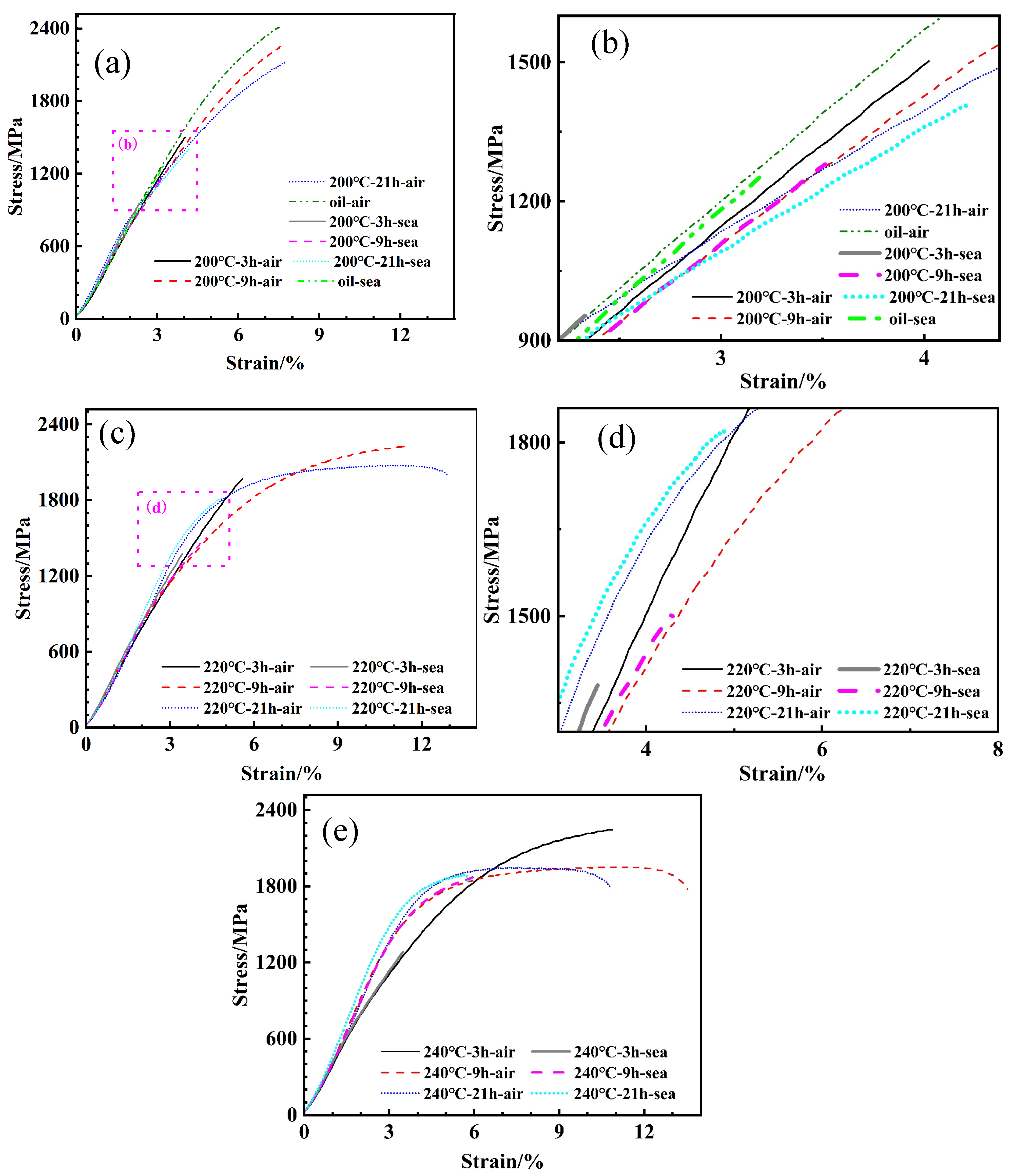
Figure 4 shows the stress–strain curves in the air and corrosive medium of the specimens at a tensile rate of 0.00198 mm/min. The results demonstrate that the corrosive medium significantly affects the mechanical properties of the steel, particularly exerting a strong inhibitory effect during the plastic deformation stage. The tensile strength and elongation of the specimen austempered at 220 °C for 21 h in air were 2078 MPa and 13.0%, respectively. In the corrosive medium, these values decreased to 1821 MPa and 4.9%, representing a 62.0% reduction in elongation. This phenomenon of strain-accelerated corrosion can be attributed to dislocation multiplication induced by plastic deformation, which exposes more active dissolution sites [49]. This leads to local breakdown of the passive film and initiates micro-crack nucleation. Although the kinetic segregation of molybdenum promotes the formation of a repassivation film [50], under sustained strain loading, the high-strain zone at the crack tip remains prone to preferential anodic dissolution, thereby accelerating the crack propagation rate [51].
Table 3 presents the tensile strength and elongation from the slow strain rate tensile (SSRT) tests of the experimental steels. The data indicates that the tensile properties of the specimens under slow strain rate conditions (in air) differ significantly from those reported in the literature [40] under conventional tensile rates. Specifically, the elongations of the specimens under slow strain rate tension are lower than those under conventional tensile conditions, although the overall trends remain similar.
Regarding tensile strength, under conventional tensile conditions, specimens austempered at 200 °C for 3 h and 220 °C for 3 h exhibited tensile strengths as high as 2700 MPa. Under slow strain rate tension, these values decreased the most, indicating that the martensite–bainite multiphase microstructure is highly sensitive to strain rate. In contrast, for specimens austempered at 240 °C, the tensile strength values were similar to those under conventional strain rates, and both decreased with increasing austempering time. In the corrosive medium, both the tensile strength and elongation of the specimens increased with prolonged austempering time.
The resistance of metallic materials to stress corrosion cracking can be quantitatively assessed using the stress corrosion cracking susceptibility coefficient [52]. In this study, an evaluation method for stress corrosion susceptibility is established by comparing the ductility characteristics of the material in a corrosive medium versus an inert environment (air).
Through constant strain rate tensile testing, tensile strength F(σ) and elongation after fracture F(I) are selected as key evaluation parameters to formulate the stress corrosion susceptibility criterion:
F I = ( I 0 I ) / I 0 × 100 %
F σ = ( σ 0 σ ) / σ 0 × 100 %
In these formulas:
  • I0, I—represent the elongation in the inert medium and corrosive medium, respectively.
  • F(I) represents the elongation loss rate.
  • σ0, σ represent the tensile strength in air and NaCl solution, respectively.
  • F(σ) represents the tensile strength loss rate.
  • F(σ) reflects the extent to which the corrosive medium weakens the tensile strength, with higher values indicating poorer strength retention capability.
  • F(I) characterizes the tendency toward brittle fracture induced by corrosion, with higher values indicating more significant degradation in plasticity.
Generally, if the stress corrosion susceptibility coefficient exceeds 35%, the specimen exhibits extremely poor resistance to stress corrosion, and this range is referred to as the brittle fracture zone. If the value is below 25%, the specimen demonstrates good resistance to stress corrosion, which is termed the safe zone. Intermediate values indicate a risk of cracking, referred to as the hazardous zone [53].
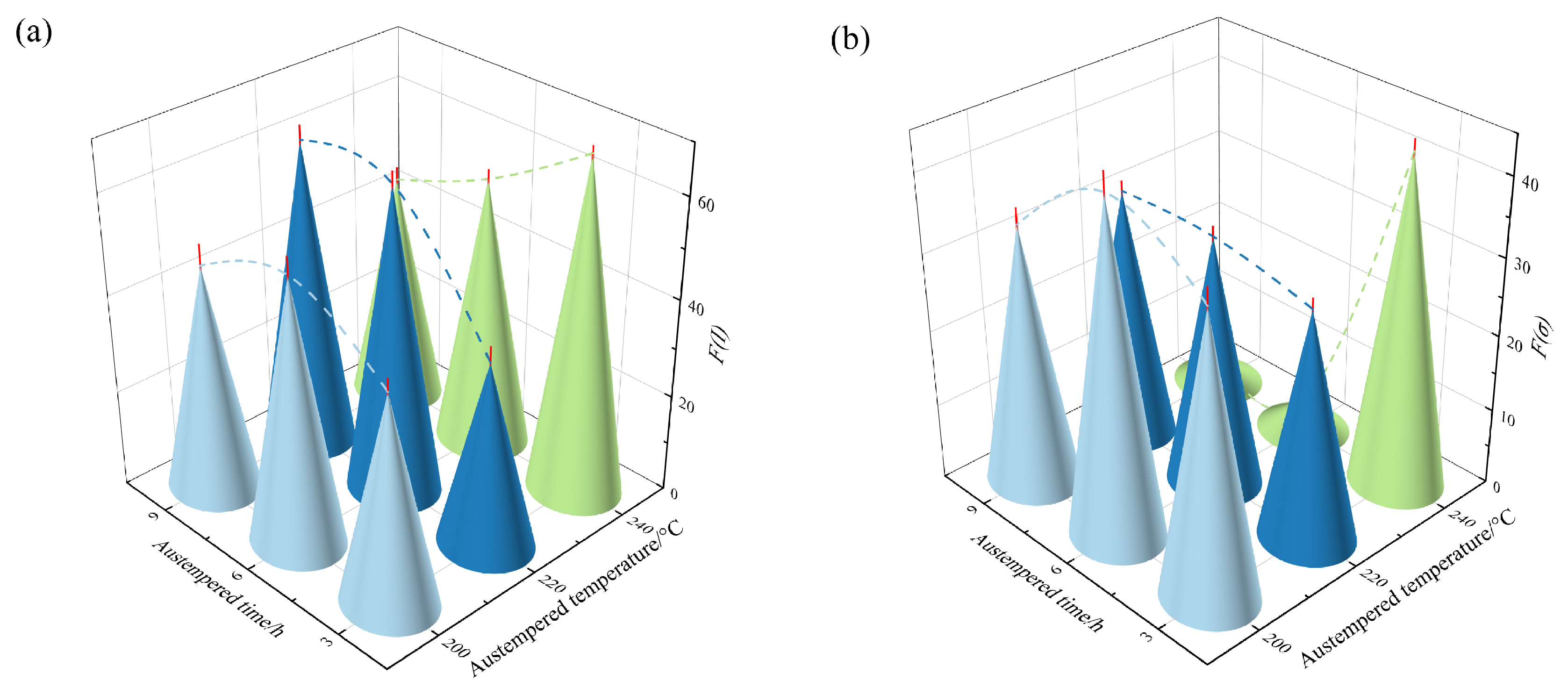
By substituting the data from Table 3 into Formulas (1) and (2), the stress corrosion susceptibility coefficients for specimens under different heat treatment processes are obtained, as shown in Table 4. The bar graph illustrating the susceptibility coefficients of the specimens is presented in Figure 5. The stress corrosion susceptibility of specimens under different processes exhibits significant variability. As observed from the chart, the trends in the two coefficients are consistent.
When the austempered temperature is below 220 °C, the stress corrosion susceptibility coefficient of the specimens initially increases and then decreases with prolonged austempering time. In contrast, the stress corrosion susceptibility of specimens austempered at 240 °C decreases as the austempering time increases. Additionally, the F(I) values for all specimens exceed 35%, indicating high susceptibility to plasticity loss and a significant risk of brittle fracture in corrosive environments. For specimens processed under the conditions of 200 °C-21 h, 220 °C-3 h, and 220 °C-9 h, the F(σ) values range between 25% and 35%, suggesting relatively low strength sensitivity. Conversely, specimens austempered under the conditions of 220 °C-21 h, 240 °C-9 h, and 240 °C-21 h exhibit F(σ) values significantly below 25%, indicating extremely low strength sensitivity.
Variations in austempering temperature and time lead to changes in the morphology and distribution of bainitic ferrite (BF) as well as the area fraction of martensite–austenite (M-A) islands within the specimens, thereby affecting their resistance to stress corrosion. At lower austempering temperatures and shorter holding times, the proportion of blocky M-A islands is higher, and the BF within the specimens is finer and more disordered, resulting in a greater number of active sites and poorer stress corrosion resistance [54]. Blocky M-A islands, being metastable structures, are prone to deformation-induced martensitic transformation during tensile loading, accompanied by significant dislocation accumulation and defect generation [55], which further promotes microcrack initiation. As the austempering temperature and time increase, the bainitic transformation becomes complete, and the independently existing martensite within the microstructure diminishes, predominantly existing in the form of M-A islands. The extensive diffusion of carbon atoms leads to a more uniform distribution of carbon in the surrounding microstructure, resulting in a sharp decrease in the proportion of blocky M-A islands. This further reduces the tendency of microcrack formation during tensile loading in corrosive environments. Additionally, the stable retained austenite (RA) and ferrite (F) within the microstructure can absorb a portion of the stress during deformation under high-stress conditions, effectively passivating cracks [56].

3.3. Fracture Morphology Characteristics

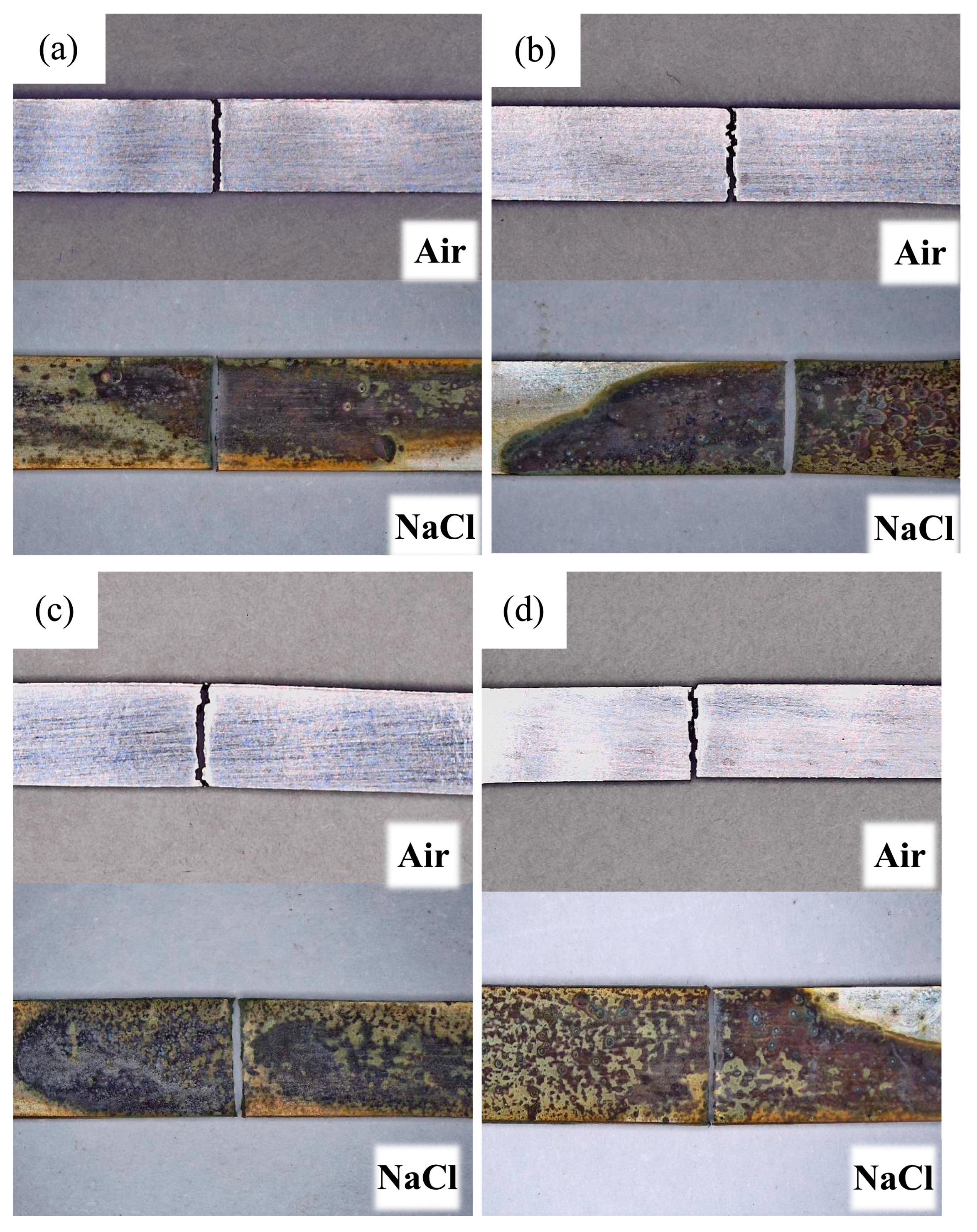
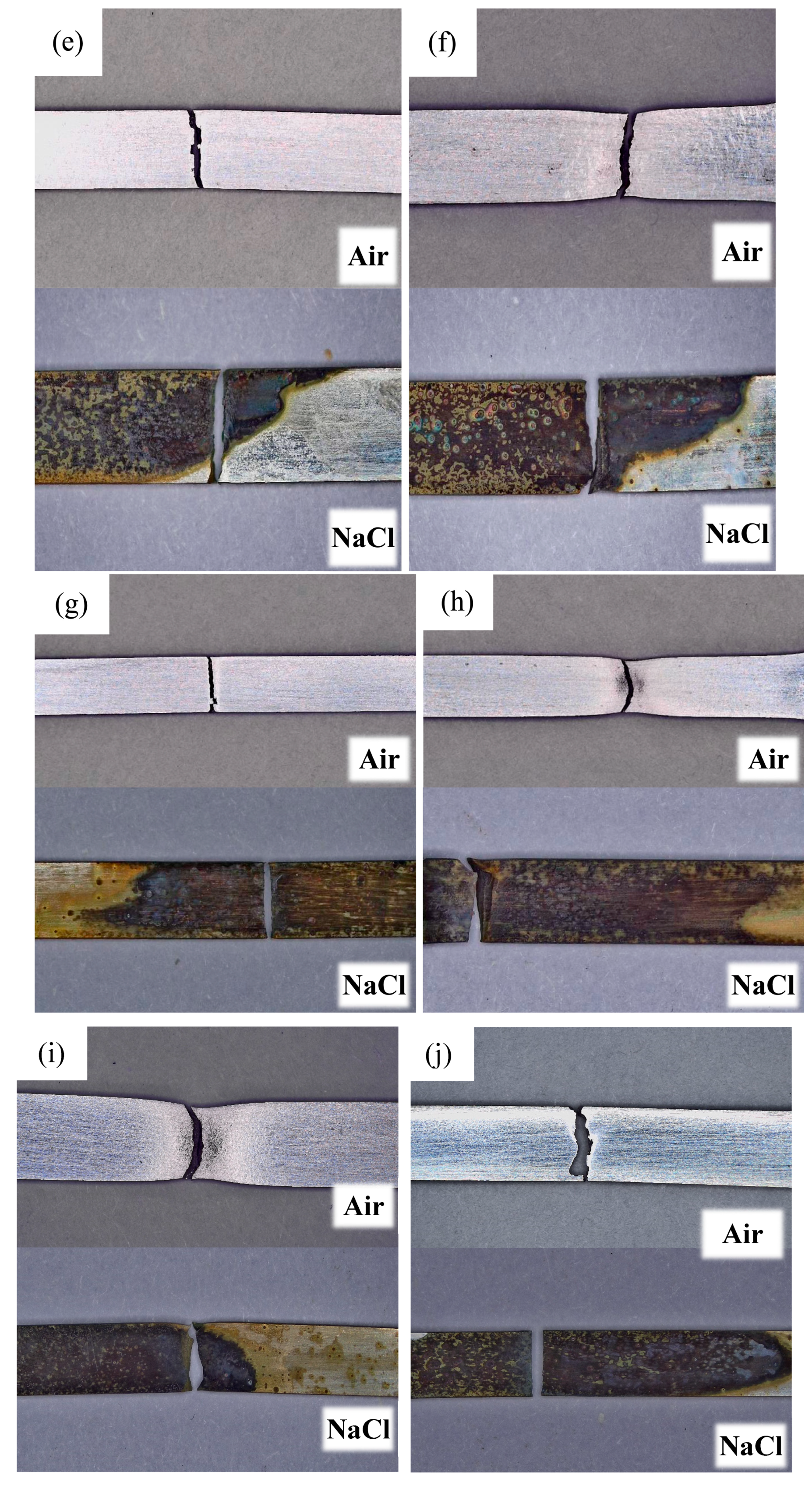
Figure 6 shows the macroscopic fracture morphology of the oil-quenched and austempered specimens after the SSRT testing.
As shown in Figure 6, specimens subjected to tensile testing in air with incomplete bainitic transformation predominantly exhibit brittle fracture characteristics, featuring flat fracture surfaces with no noticeable necking. With prolonged austempering time, the fraction of bainitic transformation increases, and necking becomes apparent at the tensile fracture surfaces, indicating ductile fracture behavior. In contrast, the surfaces of specimens tested in the corrosive medium are largely covered by rust layers, and their fracture surfaces appear flatter and more uniform compared to those tested in air. For the three processes with complete bainitic transformation (200 °C-21 h, 220 °C-3 h, and 220 °C-9 h), although necking is observed in the tensile fractures in the corrosive medium, the extent of necking is significantly less pronounced than in the fractures produced in air.
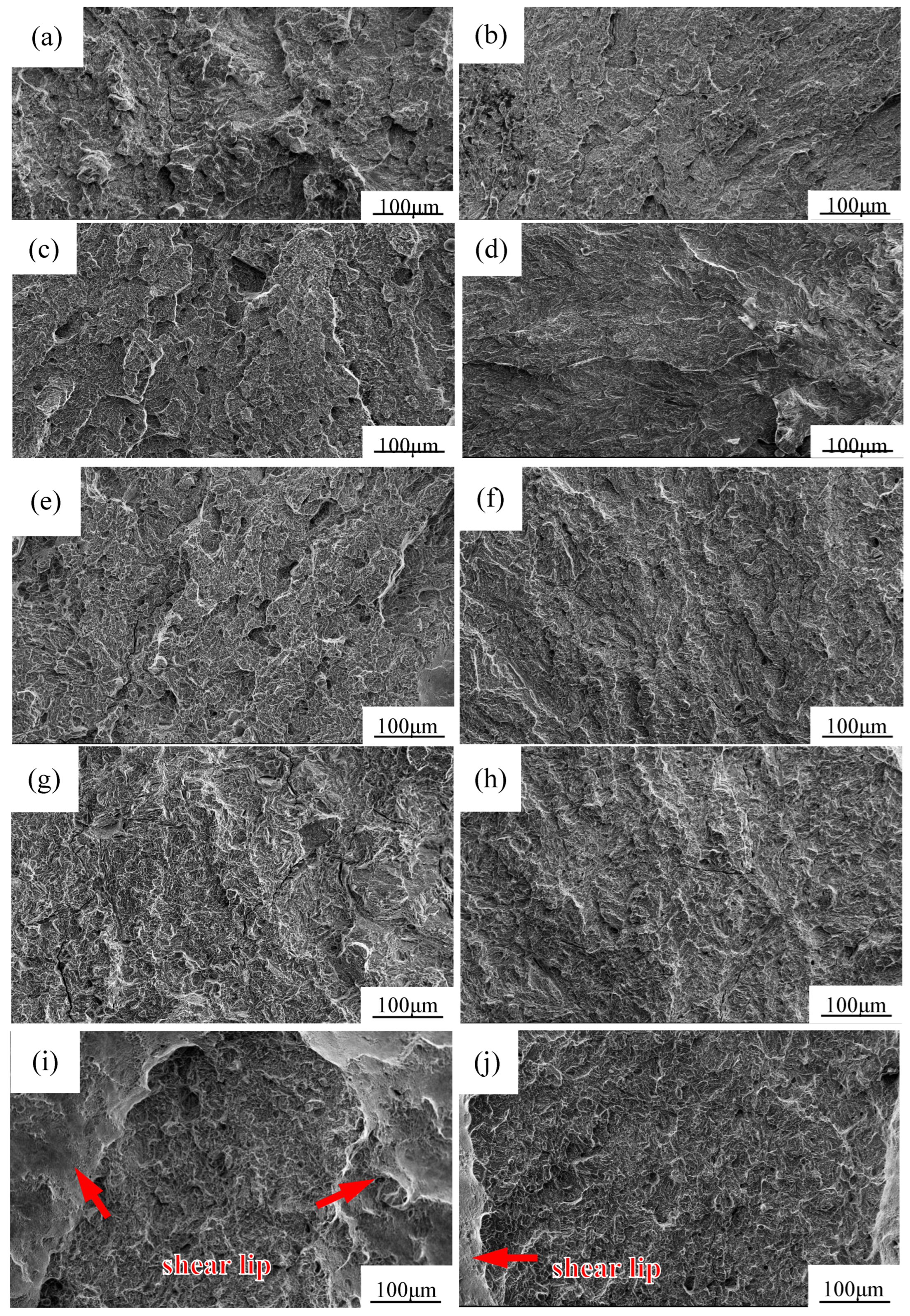
Figure 7 shows the SEM images of fracture surfaces from the experimental steels subjected to different heat treatment processes. As can be seen from the images, the fracture surfaces of specimens tested in the corrosive medium are noticeably smoother than those tested in air. Furthermore, for the specimen austempered at 240 °C for 9 h, the area of the shear lip region on the fracture surface tested in air is significantly larger than that in the corrosive medium. This indicates a rapid decline in the toughness of the specimen in the corrosive environment, which is also reflected in the reduction in elongation.
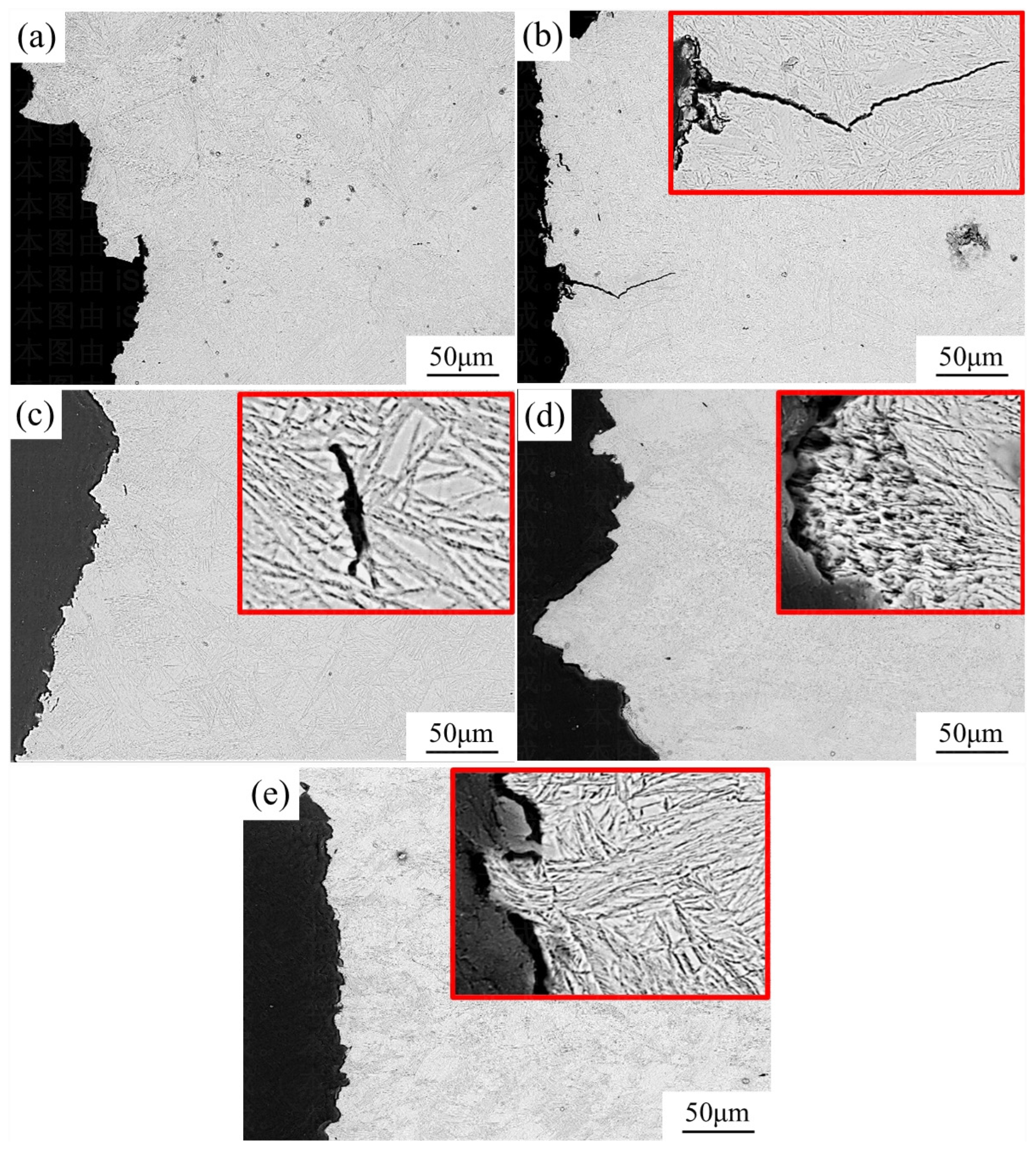
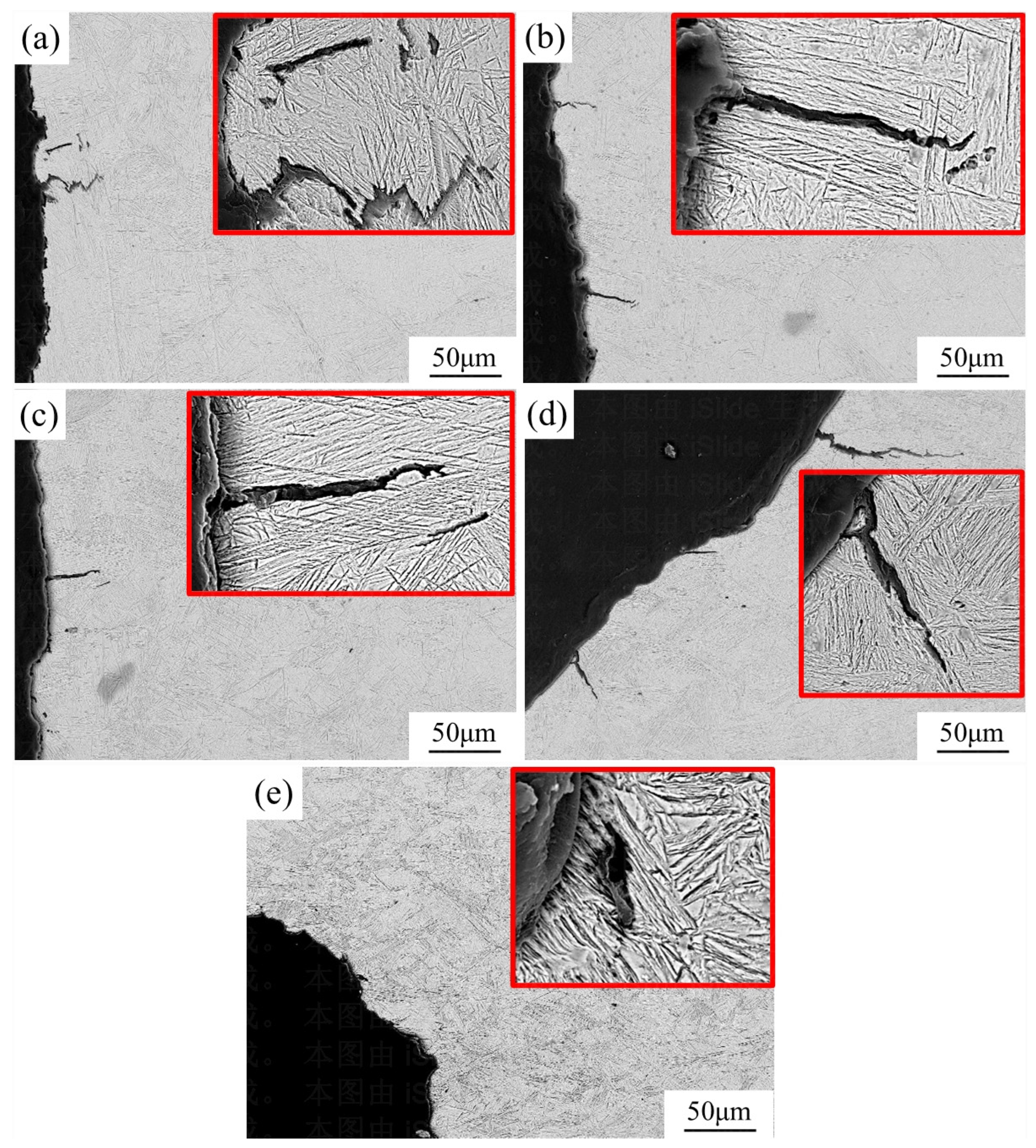
Further observation of the microcrack propagation modes on the cross sections of the specimens was conducted using SEM. Figure 8 presents SEM images of the fracture cross sections of austempered specimens tested in air. As shown in the images, the fracture cross sections of specimens tested in air exhibit relatively few microcracks, with noticeable deflection along the fracture interface. For specimens austempered at 220 °C for 3 h and 220 °C for 9 h, microcrack initiation points are located near martensite–austenite (M-A) islands. The primary fracture mode is transgranular fracture, and it is also observable that bainitic lath bundles intersecting with the cracks, along with some lath martensite, contribute to hindering crack propagation. In specimens austempered at 220 °C for 21 h and 240 °C for 9 h, deformation of retained austenite and ferrite (RA-F) under high stress is observed near the fracture surface, which explains the improved elongation in specimens under these processing conditions.
Figure 9 presents SEM images of the fracture cross sections of experimental steels with different heat treatment processes tested in NaCl solution. As evident from the images, the fracture cross sections of specimens tested in seawater show a significant increase in microcracks, with less deflection along the fracture interface. The microcrack propagation mode changes from predominantly transgranular fracture to mainly intergranular fracture. Cracks primarily initiate at the martensite–austenite (M-A) islands along the fracture interface and extend into the specimen along the grain boundaries between bainite and retained austenite-ferrite (RA-F), which illustrated that blocky M-A islands act as micro-galvanic cells. However, bainitic lath bundles and martensite (M) intersecting with the cracks continue to play a crucial role in hindering crack propagation. As shown in Figure 9a, cracks propagating along grain boundaries change direction noticeably upon encountering intersecting BF and M. In Figure 9b, a crack is even arrested near a perpendicularly oriented bainitic lath bundle. In contrast, specimens austempered at 240 °C for 9 h exhibit fewer microcracks, and the observed microcracks appear as transgranular fractures within bainitic lath bundles (alternating lath bainite and RA-F).
In summary, during tensile testing in air, microcracks are predominantly transgranular. In corrosive media, the microcrack mode shifts to being primarily intergranular. The stress corrosion resistance of the specimens was reduced by unstable blocky M-A islands, acting as initiation sites for microcracks. In contrast, the more stable bainitic lath bundles significantly hinder microcrack propagation. At lower austempering temperatures and shorter holding time, the BF within the specimens is fine and irregularly distributed, with a higher proportion of unstable blocky M-A islands, resulting in higher stress corrosion susceptibility. At higher austempering temperatures and longer holding time, bainitic lath bundles dominate the microstructure, and the reduced area fraction of blocky M-A islands greatly enhances the stress corrosion resistance of specimens under these conditions. Additionally, experimental results indicate that the presence of lath-like M also impedes microcrack propagation to some extent. This explains why specimens with shorter holding times but lower temperatures (e.g., 220 °C-3 h) exhibit lower stress corrosion susceptibility than those with higher temperatures under similar short holding times.

4. Conclusions

  • The results of the polarization curve indicated that both corrosion tendency and dissolution rate decrease with prolonged isothermal holding time. The synergistic effect of a high proportion of bainite and RA-F endows the specimen treated at 220 °C for 21 h with optimal corrosion resistance.
  • The results of the polarization curve indicated that the sample austempered at 220 °C for 21 h exhibited the lowest corrosion tendency. Stress corrosion tensile test demonstrates that the F(σ) values of specimens austempered at 200 °C for 21 h, 220 °C for 3 h and 220 °C for 9 h are between 25% and 35%, indicating relatively low strength sensitivity. In contrast, the F(σ) values for specimens treated at 220 °C for 21 h, 240 °C for 9 h and 240 °C for 21 h are significantly below 25%, demonstrating very low strength sensitivity. Notably, the specimen austempered at 240 °C for 9 h exhibited excellent corrosion resistance while maintaining favorable comprehensive mechanical properties, with a stress corrosion cracking sensitivity coefficient for tensile strength as low as 4.1%.
  • The findings of this study provide a theoretical foundation and technical support for the application of nanobainitic steel in fields such as springs, high-strength bolts, marine engineering, and the petrochemical industry.

5. Limitations

Although the present study employs potentiodynamic polarization combined with SSRT to evaluate SCC susceptibility, EIS was not performed. Future work will incorporate EIS to deconvolute interfacial processes through equivalent-circuit analysis, such as extracting passive film resistance (Rf) and charge-transfer resistance (Rct). In particular, in situ EIS under applied stress/strain would be valuable to directly link passive film stability and rupture-repassivation behavior with SCC susceptibility, thereby providing a more mechanistic and quantitative interpretation complementary to polarization-derived metrics.
Without cyclic polarization verification, Epit is used primarily as a comparative descriptor of passive film breakdown tendency across processing conditions, together with ΔEpass and ipass, rather than as an absolute threshold for stable pit growth.

Author Contributions

Conceptualization, J.Z. and Q.L.; methodology, Q.Y.; software, J.W. and Y.Z.; validation, Y.W. and J.Z.; formal analysis, W.S.; investigation, Q.Y.; resources, Y.S.; data curation, W.X.; writing—original draft preparation, Q.Y.; writing—review and editing, Q.L.; visualization, J.Z.; supervision, H.D.; project administration, Z.W. and M.X.; funding acquisition, J.Z., W.X. and H.D. All authors have read and agreed to the published version of the manuscript.

Funding

The research was funded by the Nature Science Foundation of Hubei Province (2024AFD046, 2024AFD031 and 2025AFD032), the Program of Key Laboratory of Power System Design and Testing for Pure Electric Vehicles of Hubei Province (ZDSYS202519), the Science Research Project of Hebei Education Department (No.QN2023007), the National Natural Science Foundation of China (52307032), and the National Key R&D Program of China (2022YFE03150204).

Data Availability Statement

The original contributions presented in the study are included in the article; further inquiries can be directed to the corresponding authors.

Conflicts of Interest

Authors Zhanbing Wang and Mingkun Xu were employed by the company Hubei Tri-ring forging Co., Ltd. The remaining authors declare that the research was conducted in the absence of any commercial or financial relationships that could be construed as a potential conflict of interest. The authors declare that the research was conducted in the absence of any commercial or financial relationships that could be construed as potential conflicts of interest.

References

  1. Rana, R.; Tapia, C.E.; Rivas, M.L.; Jiménez, J.A.; Garcia-Mateo, C. Mechanical behaviour and microstructural characteristics of high-silicon ultra-strong bainitic steels for hot rolling practice. Mater. Sci. Eng. A 2025, 931, 148236. [Google Scholar] [CrossRef]
  2. Bhadeshia, H.K.D.H. Bainite in Steels: Theory and Practice, 3rd ed.; CRC Press: Boca Raton, FL, USA, 2019. [Google Scholar]
  3. Pet, W.; Liu, W.; Zhang, Y.; Qie, R.; Zhao, A. Study on Kinetics of Transformation in Medium Carbon Steel Bainite at Different Isothermal Temperatures. Materials 2021, 14, 2721. [Google Scholar] [CrossRef]
  4. Prathamesh, G.; Sandeep, S. Effect of fly ash on compressive strength, carbonation and corrosion resistance of reinforced concrete: A systematic review. World J. Eng. 2025, 22, 40–60. [Google Scholar] [CrossRef]
  5. Ayad, A.; Gholamreza, A.; Seyedkomeil, H. Effect of silica fume on Pullout capacity and corrosion resistance of hook bars in the external beam-column concrete joint. World J. Eng. 2025, 22, 357–366. [Google Scholar] [CrossRef]
  6. Lei, K.; Chen, L.; Lu, H.; Lian, X.; Feng, Q.; Li, H.; Dong, H. Microstructure and properties of corrosion-resistant steel produced by CASTRIP. Crystals 2025, 15, 595. [Google Scholar] [CrossRef]
  7. Sun, J.L.; Tang, H.J.; Wang, C.L.; Han, Z.; Li, S.S. Effects of alloying elements and microstructure on stainless steel corrosion: A Review. Steel. Res. Int. 2022, 93, 2100450. [Google Scholar] [CrossRef]
  8. Wang, D.; Zhong, Q.D.; Yang, J.; Zhang, S.J. Effects of Cr and Ni on the microstructure and corrosion resistance of high-strength low alloy steel. J. Mater. Res. Technol. 2023, 23, 36–52. [Google Scholar] [CrossRef]
  9. Feng, C.; Zhu, L.J.; Cheng, X.; Li, Z.; Gui, X.L.; Gao, G.H. Mechanistic role of vanadium microalloying in improving corrosion resistance of low carbon bainitic steel. J. Mater. Res. Technol. 2024, 33, 982–993. [Google Scholar] [CrossRef]
  10. Lv, W.; Yan, L.; Pang, X.; Qiao, L.; Su, Y.; Salvatori, I.; Gao, K.; Yang, H. Synergistic effect of Cu and Cr on pitting behavior induced by MnS inclusions in low alloy steels. J. Alloys Compd. 2021, 864, 158133. [Google Scholar] [CrossRef]
  11. Scully, J.R.; Inma, S.B.; Gerard, A.Y.; Taylor, C.D.; Windl, W.G.; Schreiber, D.K.; Lu, P.; Saal, J.E.; Frankel, G. Controlling the corrosion resistance of multi-principal element alloys. Scripta. Mater. 2020, 188, 96–101. [Google Scholar] [CrossRef]
  12. Song, D.; Hao, D.; Yang, F.L.; Chen, H.D.; Liang, N.N.; Wu, Y.Y.; Zhang, J.C.; Ma, H.; Klu, E.E.; Gao, B. Corrosion behavior and mechanism of Cr–Mo alloyed steel: Role of ferrite/bainite duplex microstructure. J. Alloy. Compd. 2019, 809, 151787. [Google Scholar] [CrossRef]
  13. Li, L.; Liu, H.; Yan, Y.; Zhu, H.L.; Fang, H.J.; Luo, X.R.; Dai, Y.L.; Yu, K. Effects of alloying elements on the electrochemical behaviors of Al-Mg-Ga-In based anode alloys. Int. J. Hydrogen. Energ. 2019, 44, 12073–12084. [Google Scholar] [CrossRef]
  14. Kong, D.J.; Wang, J.C. Salt spray corrosion and electrochemical corrosion properties of anodic oxide film on 7475 aluminum alloy. J. Alloy. Compd. 2015, 632, 286–290. [Google Scholar] [CrossRef]
  15. Liu, W.M.; Zhou, Q.J.; Li, L.S.; Wu, Z.J.; Cao, F.B.; Gao, Z.F. Effect of alloy element on corrosion behavior of the huge crude oil storage tank steel in seawater. J. Alloy. Compd. 2014, 598, 198–204. [Google Scholar] [CrossRef]
  16. Zheng, Q.J.; Wu, J.; Jiang, H.X.; Zhang, L.L.; Zhao, J.Z.; He, J. Effect of micro-alloying element La on corrosion behavior of Al-Mg-Si alloys. Corros. Sci. 2021, 179, 109113. [Google Scholar] [CrossRef]
  17. Yuan, J.; Li, P.; Zhang, H.H.; Yin, S.B.; Xu, M.L.; Zhou, A.K. The Effects of alloying elements on the corrosion of rebar steel in a chloride environment. Metals. 2025, 15, 383. [Google Scholar] [CrossRef]
  18. Liu, Z.; Lian, X.T.; Liu, T.S.; Yang, Y.D.; Zhu, J.A.; Dong, H. Effects of rare earth elements on corrosion behaviors of low-carbon steels and weathering steels. Mater. Corros. 2020, 71, 258–266. [Google Scholar] [CrossRef]
  19. Long, X.Y.; Wang, W.S.; Zhu, R.R.; Li, Y.N.; Yang, Y.; Tong, L.; Liu, Y.D.; Li, Y.G.; Wang, Y.F. Study on corrosion resistance of plain high-strength bainite steel in an industrial atmospheric corrosion environment. J. Mater. Eng. Perform. 2025, 1–12. [Google Scholar] [CrossRef]
  20. Łukaszczyk, A.; Banaś, J.; Pisarek, M.; Seyeux, A.; Marcus, P.; Światowska. Effect of Cr content on corrosion resistance of low-Cr alloy steels studied by surface and electrochemical techniques. J. Electrochem. 2021, 2, 546–562. [Google Scholar] [CrossRef]
  21. Benmessaoud, M.; Es-salah, K.; Hajjaji, N.; Takenouti, H.; Srhiri, A.; Ebentouhami, M. Inhibiting effect of 2-mercaptobenzimidazole on the corrosion of Cu–30Ni alloy in aerated 3% NaCl in presence of ammonia. Corros. Sci. 2007, 49, 3880–3888. [Google Scholar] [CrossRef]
  22. Cheng, X.Q.; Jin, Z.; Liu, M.; Li, X.G. Optimizing the nickel content in weathering steels to enhance their corrosion resistance in acidic atmospheres. Corros. Sci. 2017, 115, 135–142. [Google Scholar] [CrossRef]
  23. Sequeira, C.A.C.; Cardoso, D.S.P.; Amaral, L.; Šljukić, B.; Santos, D.M.F. Corrosion-resistant materials for alkaline water electrolyzers. Corrosion 2020, 76, 1155–1176. [Google Scholar] [CrossRef]
  24. Hendery, M.L.; Whittaker, M.T.; Cockings, B.J.; Mignanelli, P.M. The effect of salt composition on the stress-free and corrosion-fatigue performance of a fine-grained nickel-based superalloy. Corros. Sci. 2022, 198, 110113. [Google Scholar] [CrossRef]
  25. Xiao, X.M.; Peng, Y.; Ma, C.Y.; Tian, Z.L. Effects of alloy element and microstructure on corrosion resistant property of deposited metals of weathering steel. J. Iron Steel Res. Int. 2023, 23, 171–177. [Google Scholar] [CrossRef]
  26. Singh, K.; Singh, A. Effect of austempering temperature on corrosion evolution during immersion of high carbon nano-structured bainitic steel in aqueous chloride environment. Materialia 2022, 21, 101282. [Google Scholar] [CrossRef]
  27. Wang, Y.; Zhang, F.; Yang, Z.; Lv, B.; Zheng, C. Rolling contact fatigue performances of carburized and high-C nanostructured bainitic steels. Materials 2016, 9, 960. [Google Scholar] [CrossRef]
  28. Lunarska, E.; Nikiforow, K.; Sitko, E. Stress corrosion cracking of bainite 0.3C-1Cr-1Mn-1Si-1Ni type steel in acid rain simulated solution. Materials. And. Corrosion 2004, 55, 373–380. [Google Scholar] [CrossRef]
  29. Wang, Z.F.; Li, P.H.; Guan, Y.; Chen, Q.F.; Pu, S.K. The corrosion resistance of ultra-low carbon bainitic steel. Corros. Sci. 2009, 51, 954–961. [Google Scholar] [CrossRef]
  30. Wang, Z.F.; Yin, F.X.; Wu, L.X.; Sun, Y.Q.; Zhang, W.L. Corrosion resistance on high strength bainitic steel and 09CuPCrNi after wet-dry cyclic conditions. J. Iron. Steel. Res. Int. 2013, 20, 72–78. [Google Scholar] [CrossRef]
  31. Ma, H.C.; Liu, Z.Y.; Du, C.W.; Wang, H.R.; Li, X.G.; Zhang, D.W.; Cui, Z.Y. Stress corrosion cracking of E690 steel as a welded joint in a simulated marine atmosphere containing sulphur dioxide. Corros. Sci. 2015, 100, 627–641. [Google Scholar] [CrossRef]
  32. Zhao, T.L.; Liu, Z.Y.; Du, C.W.; Dai, C.D.; Li, X.G.; Zhang, B.W. Corrosion fatigue crack initiation and initial propagation mechanism of E690 steel in simulated seawater. Mater. Sci. Eng. A 2017, 708, 181–192. [Google Scholar] [CrossRef]
  33. Liang, Z.Q.; Li, H.G.; Wang, Q.C.; Sun, X.W.; Gao, X.L.; Yuan, S.J.; Yang, Z.Y. Enhancing the resistance to hydrogen embrittlement in bainitic steel via grain refinement, dislocation density reduction, and retained austenite stability improvement. J. Mater. Sci. Technol. 2026, 247, 214–225. [Google Scholar] [CrossRef]
  34. Lv, B.; Zhang, Z.M.; Yang, Z.N.; Zhang, F.; Zheng, C.; He, Y. A higher corrosion resistance for a bainitic steel with Al instead of Si. Mater. Lett. 2016, 173, 95–97. [Google Scholar] [CrossRef]
  35. Kazum, O.; Kannan, M.B.; Beladi, H.; Timokhina, I.B.; Hodgson, P.D.; Khoddam, S. Aqueous corrosion performance of nanostructured bainitic steel. Mater. Des. 2014, 54, 67–71. [Google Scholar] [CrossRef]
  36. Moon, A.P.; Sangal, S.; Layek, S.; Mondal, K. Corrosion behavior of high-strength bainitic rail steels. Metall. Mater. Trans. A 2015, 46, 1500–1518. [Google Scholar] [CrossRef]
  37. Sandeep, K.G.; Manna, R.; Chattopadhyay, K. Effect of austempering time on electrochemical and immersion corrosion behaviour of high carbon, carbide-free nanostructured bainitic steel in an aqueous 3.5% NaCl. Met. Mater. Int. 2023, 29, 2533–2555. [Google Scholar] [CrossRef]
  38. Qu, S.P.; Pang, X.L.; Wang, Y.B.; Gao, K.W. Corrosion behavior of each phase in low carbon microalloyed ferrite-bainite dual-phase steel: Experiments and modeling. Corros. Sci. 2013, 75, 67–77. [Google Scholar] [CrossRef]
  39. Davis, L.; Panda, A.; Ramkumar, P. The influence of lubricants on white etching areas formation in DLC-coated bearing steel under severe boundary lubrication. Tribol. Int. 2024, 192, 109310. [Google Scholar] [CrossRef]
  40. Yang, Q.; Zhao, J.; Wang, J.J.; Yang, J.; Wang, G.; Wang, Y.H.; Li, Q.; Ding, H.F.; Xu, S.R. Microstructure evolution and mechanical properties in multi-phase composite nanobainitic steel via isothermal treatment. J. Mater. Res. Technol. 2025, 39, 9119–9131. [Google Scholar] [CrossRef]
  41. Li, J.H. Study on Friction and Wear Properties and Corrosion Resistance of New Self-Lubricating Bearing Materials. Master’s Thesis, Hebei University of Engineering, Handan, China, 2023. [Google Scholar]
  42. Li, H.D. Study on Microstructure and Corrosion Resistance of Nickel-Based 690 Alloy for Nuclear Power Plant Safe-End. Master’s Thesis, Shanghai Jiao Tong University, Shanghai, China, 2018. [Google Scholar]
  43. Zeng, H.T. Study on Pitting Behavior of 2205 Duplex Stainless Steel in Hot Concentrated Seawater. Ph.D. Thesis, Shanghai University, Shanghai, China, 2021. [Google Scholar]
  44. Wei, J.; Dong, J.H.; Ke, W.; He, X.Y. Influence of Inclusions on Early Corrosion Development of Ultra-Low Carbon Bainitic Steel in NaCl Solution. Corrosion 2015, 71, 1467–1480. [Google Scholar] [CrossRef]
  45. Dong, X.X.; Shen, Y.F. Improving mechanical properties and corrosion resistance of 0.5 wt.% C TRIP steel by adjusting retained austenite stability and microstructural constituents. Mater. Sci. Eng. A 2022, 852, 143737. [Google Scholar] [CrossRef]
  46. Bahmani, A.; Moradi, S.; Lotfpour, M.; Jeong, H.T.; Kim, W.J. Effect of grain size on the corrosion resistance of the Fe41Mn25Ni24Co8Cr2 high entropy alloy. Corros. Sci. 2024, 230, 111892. [Google Scholar] [CrossRef]
  47. Li, Y.; Wei, Y.Z.; Zhang, G.H.; Liu, E.K.; Luo, H.Z.; Luo, G.D.; Xi, X.K.; Wang, S.G.; Wang, W.H.; Yue, M.; et al. Windows open for highly tunable magnetostructural phase transitions. APL Mater. 2016, 4, 071101. [Google Scholar] [CrossRef]
  48. Collazo, A.; Figueroa, R.; Mariño-Martínez, C.; Nóvoa, X.R.; Pérez, C. Electrochemical characterization of a Fe-based shape memory alloy in an alkaline medium and the behaviour in aggressive conditions. Electrochim. Acta 2023, 444, 142034. [Google Scholar] [CrossRef]
  49. Gong, L. Effect of Retained Austenite on Electrochemical and Stress Corrosion Behavior in Micro-Nano Structured Bainitic Steel. Master’s Thesis, Wuhan University of Science and Technology, Wuhan, China, 2023. [Google Scholar]
  50. Xu, Y.T.; Zhang, B.; Wei, X.X.; Chen, Z.Y.; Li, X.L.; Ma, X.L. Detecting structure and composition of passive film on Mo-containing stainless steel formed in alkaline environment by aberration-corrected TEM. Corrosion. Sci. 2024, 235, 112208. [Google Scholar] [CrossRef]
  51. Freixes, L.M.; Peguet, L.; Warner, T.; Gault, B. Nanoscale perspective on the stress-corrosion cracking behavior of a peak-aged 7XXX-Al alloy. Corros. Sci. 2024, 229, 111904. [Google Scholar] [CrossRef]
  52. Putri, E.D.W.S.; Triyono, T.; Prabowo, A.R. Estimating Failure Mechanism of Steel Specimens using Stress Corrosion-Cracking (SCC) Testing Methods: State and Development. Procedia Struct. Integr. 2022, 41, 266–273. [Google Scholar] [CrossRef]
  53. Li, X.; Ran, Y.; Yu, Z.; Mao, T. Study on Sulfide Stress Corrosion Cracking Susceptibility of 20# Steel Weld Joints in H2S-Rich Environments. Molecules 2025, 30, 4499. [Google Scholar] [CrossRef]
  54. Sun, H.Q. Study on Mechanical Properties and Corrosion Resistance of Alloy Spring Steel. Master’s Thesis, Hebei University of Engineering, Handan, China, 2024. [Google Scholar]
  55. Jia, P.; Shi, L.; Li, L.F.; Huang, C.J.; Sun, W.T.; Huang, Y.N.; Dai, J.J.; Bao, R.; Zhang, B.T. Stability of retained austenite and its effect on tensile properties and hole expansion performance of high-strength steel. Mater. Sci. Eng. A 2024, 914, 147112. [Google Scholar] [CrossRef]
  56. Jiang, Y. Study on TRIP Effect of Super Bainite. Master’s Thesis, Changchun University of Technology, Changchun, China, 2015. [Google Scholar]
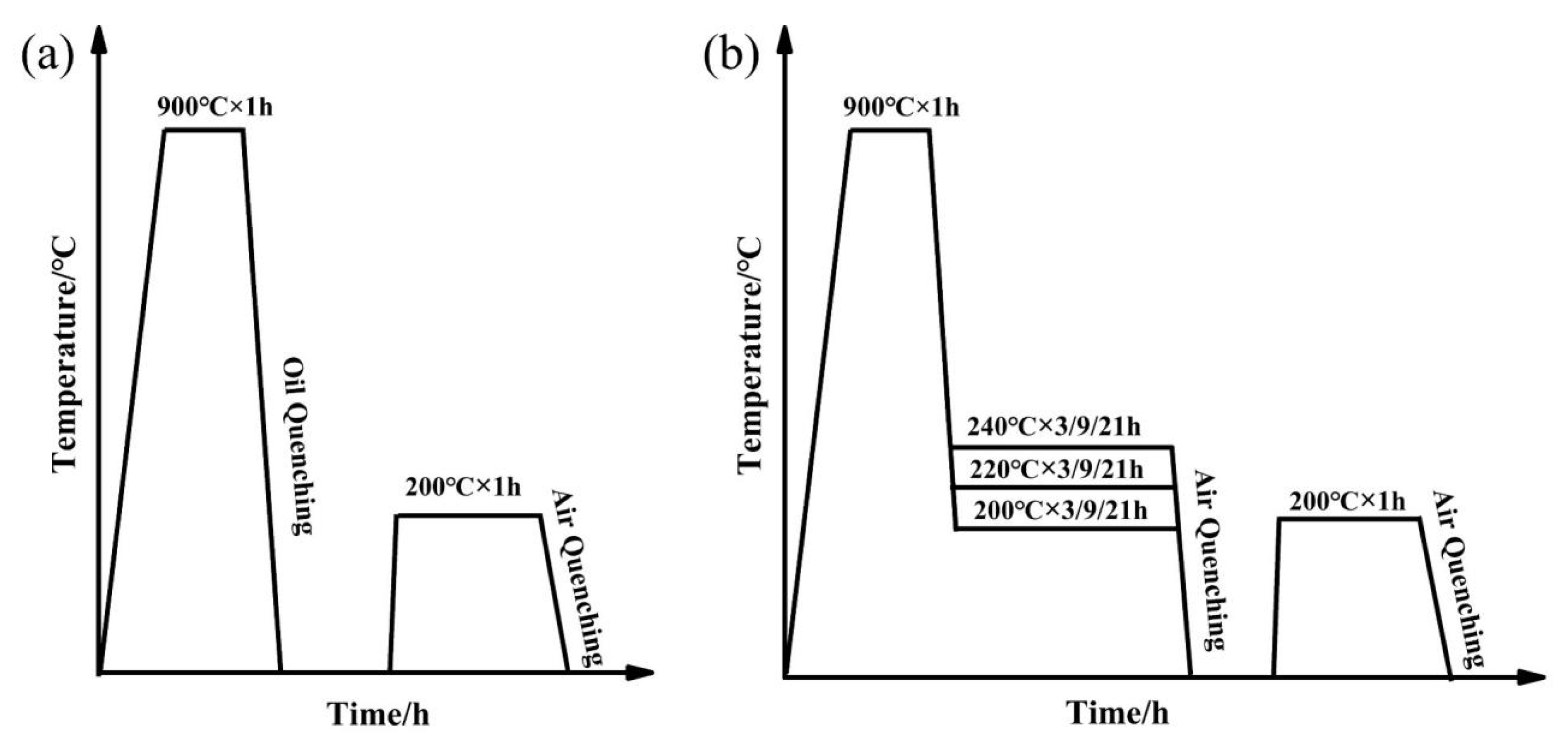
Figure 1. The process of heat treatment: (a) oil quenching; (b) austempering.
Crystals 16 00151 g001
Figure 2. The dimensions of specimens under slow-rate strain–stress corrosion.
Crystals 16 00151 g002
Figure 3. Polarization curves of specimens oiled and austempered at different temperatures and times: (a) specimens oiled and austempered at 200 °C, (b) specimens austempered at 220 °C; (c) specimens austempered at 240 °C.
Crystals 16 00151 g003
Figure 4. SSRT stress–strain curves of specimens austempered at different times: (a) 200 °C; (c) 220 °C; (e) 240 °C; (b) local amplification of (a); (d) local amplification of (b).
Crystals 16 00151 g004
Figure 5. Stress corrosion sensitivity coefficients of austempered specimens: (a) F(I); (b) F(σ).
Crystals 16 00151 g005
Figure 6. Macroscopic fracture morphology of oil-quenched and austempered specimens after SSRT testing: (a) 200 °C-3 h, (b) 200 °C-9 h, (c) 200 °C-21 h; (d) 220 °C-3 h, (e) 220 °C-9 h, (f) 220 °C-21 h; (g) 240 °C-3 h, (h) 240 °C-9 h, (i) 240 °C-21 h, (j) oil quenched.
Crystals 16 00151 g006aCrystals 16 00151 g006b
Figure 7. SEM images of fracture of austempered specimens after SSRT testing in different mediums. Tested in air: (a) 200 °C-9 h, (c) 220 °C-3 h, (e) 220 °C-9 h, (g) 220 °C-21 h, (i) 240 °C-9 h. Tested in NaCl solution: (b) 200 °C-9 h, (d) 220 °C-3 h, (f) 220 °C-9 h, (h) 220 °C-21 h, (j) 240 °C-9 h.
Crystals 16 00151 g007
Figure 8. SEM images of fracture of austempered specimens after SSRT testing in air: (a) 200 °C-9 h, (b) 220 °C-3 h, (c) 220 °C-9 h, (d) 220 °C-21 h, (e) 240 °C-9 h.
Crystals 16 00151 g008
Figure 9. SEM images of fracture of austempered specimens after SSRT testing in NaCl solution: (a) 200 °C-9 h, (b) 220 °C-3 h, (c) 220 °C-9 h, (d) 220 °C-21 h, (e) 240 °C-9 h.
Crystals 16 00151 g009
Table 1. Polarization-derived corrosion parameters of oil-quenched and austempered specimens in 3.5 wt.% NaCl. Values are reported as mean ± 95% CI (n = 3).
Austempered Temperature/°CAustempered Time/hCorrosion Potential/VSCE (Mean ± 95% CI)Corrosion Current Density/10−6A·cm−2 (Mean ± 95% CI)
2003−0.946 ± 0.0057.25 ± 0.13
9−0.938 ± 0.1025.91 ± 0.16
21−0.779 ± 0.1865.20 ± 0.30
2203−0.945 ± 0.0575.64 ± 0.31
9−0.915 ± 0.1344.39 ± 0.56
21−0.833 ± 0.3802.65 ± 0.41
2403−0.909 ± 0.1124.90 ± 0.47
9−0.946 ± 0.0575.76 ± 1.94
21−0.882 ± 0.1474.03 ± 1.41
Oil quenched−0.872 ± 0.1695.19 ± 1.05
Table 2. The fitting results of polarization curves of specimens oil-quenched and austempered at different temperatures and times. Values are reported as mean ± 95% CI (n = 3).
Austempered Temperature/°CAustempered Time/hβa/(mV/dec)βc(mV/dec)Epass/VSCEIpass/10−6 A·cm−2Epit/VSCEΔEpass/V
2003370.74 ± 17.9106.84 ± 6.5−0.680 ± 0.05239.68 ± 3.11−0.423 ± 0.0370.257 ± 0.064
9331.49 ± 15.9104.62 ± 7.1−0.682 ± 0.10243.18 ± 6.09−0.365 ± 0.0700.317 ± 0.123
21318.93 ± 13.7239.83 ± 8.0−0.717 ± 0.08724.51 ± 2.63−0.527 ± 0.0940.190 ± 0.128
2203323.61 ± 17.2101.81 ± 11.2−0.690 ± 0.16935.31 ± 6.24−0.351 ± 0.1340.339 ± 0.216
9296.71 ± 14.5113.58 ± 9.5−0.678 ± 0.13435.70 ± 5.59−0.446 ± 0.0520.232 ± 0.144
21270.44 ± 10.6119.92 ± 6.3−0.704 ± 0.15227.21 ± 4.20−0.520 ± 0.1290.184 ± 0.199
2403329.71 ± 16.5106.05 ± 6.3−0.696 ± 0.13950.55 ± 6.91−0.489 ± 0.1120.207 ± 0.178
9460.80 ± 10.698.83 ± 3.3−0.690 ± 0.13444.94 ± 2.76−0.348 ± 0.0840.342 ± 0.159
21228.07 ± 6.3124.99 ± 9.6−0.700 ± 0.06054.75 ± 9.89−0.507 ± 0.1090.193 ± 0.125
Oil quenched326.69 ± 11.0118.06 ± 6.5−0.674 ± 0.12751.81 ± 10.24−0.493 ± 0.0520.181 ± 0.137
Table 3. Tensile strength and elongation of austempered specimens under SSRT. Values are mean ± 95% CI (n = 3).
Austempered Temperature/°CAustempered Time/hTensile Strength/MPaYield Strength/MPaElongation/%
AirSeaAirSeaAirSea
20031503 ± 84954 ± 421501 ± 79288 ± 124.0 ± 1.22.3 ± 0.5
92257 ± 1041280 ± 552257 ± 102623 ± 227.6 ± 1.03.5 ± 1.2
212124 ± 921407 ± 622124 ± 601407 ± 377.8 ± 1.24.2 ± 1.2
22031967 ± 721380 ± 571967 ± 701379 ± 325.6 ± 2.03.5 ± 1.0
92226 ± 771502 ± 621878 ± 621502 ± 3511.4 ± 1.04.3 ± 1.2
212078 ± 701821 ± 671977 ± 671820 ± 4213.0 ± 1.24.9 ± 1.0
24032247 ± 921284 ± 551966 ± 841283 ± 3010.9 ± 0.73.5 ± 1.2
91954 ± 821874 ± 471840 ± 791874 ± 4013.5 ± 1.26.1 ± 1.7
211948 ± 701891 ± 651926 ± 701890 ± 4210.8 ± 1.55.8 ± 1.2
Oil quenched2410 ± 871261 ± 452409 ± 871245 ± 277.5 ± 0.53.2 ± 1.0
Table 4. F(I) and F(σ) of oil-quenched and austempered specimens under SSRT. Values are mean ± 95% CI (n = 3).
Austempered Temperature/°CAustempered Time/hF(I)F(σ)
200342.5 ± 2.736.5 ± 3.0
953.9 ± 3.543.3 ± 4.0
2146.2 ± 3.033.8 ± 3.7
220337.5 ± 3.729.8 ± 2.7
962.1 ± 5.532.5 ± 3.5
2162.2 ± 5.712.4 ± 1.2
240367.9 ± 6.242.9 ± 2.7
954.8 ± 3.74.1 ± 0.5
2146.3 ± 3.52.9 ± 0.2
Oil quenched57.3 ± 4.247.7 ± 3.7
Disclaimer/Publisher’s Note: The statements, opinions and data contained in all publications are solely those of the individual author(s) and contributor(s) and not of MDPI and/or the editor(s). MDPI and/or the editor(s) disclaim responsibility for any injury to people or property resulting from any ideas, methods, instructions or products referred to in the content.