Article

Plasma-Assisted Selective Catalytic Reduction for Low-Temperature Removal of NOx and Soot Simulant


1
Department of Chemical and Biological Engineering, Jeju National University, Jeju 63243, Korea
2
Center for Advanced Chemistry, Institute of Research and Development, Duy Tan University, 03 Quang Trung, Da Nang 550000, Vietnam
3
Environment & Sustainable Resources Research Center, Korea Research Institute of Chemical Technology, Daejeon 34114, Korea
*
Author to whom correspondence should be addressed.
Catalysts 2019, 9(10), 853; https://doi.org/10.3390/catal9100853
Submission received: 8 September 2019 / Revised: 30 September 2019 / Accepted: 11 October 2019 / Published: 13 October 2019

Abstract

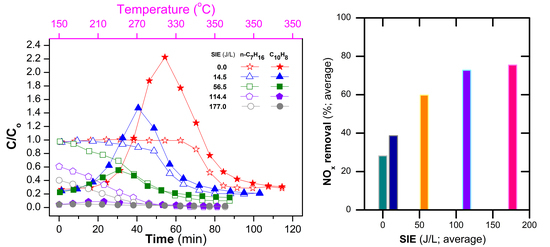

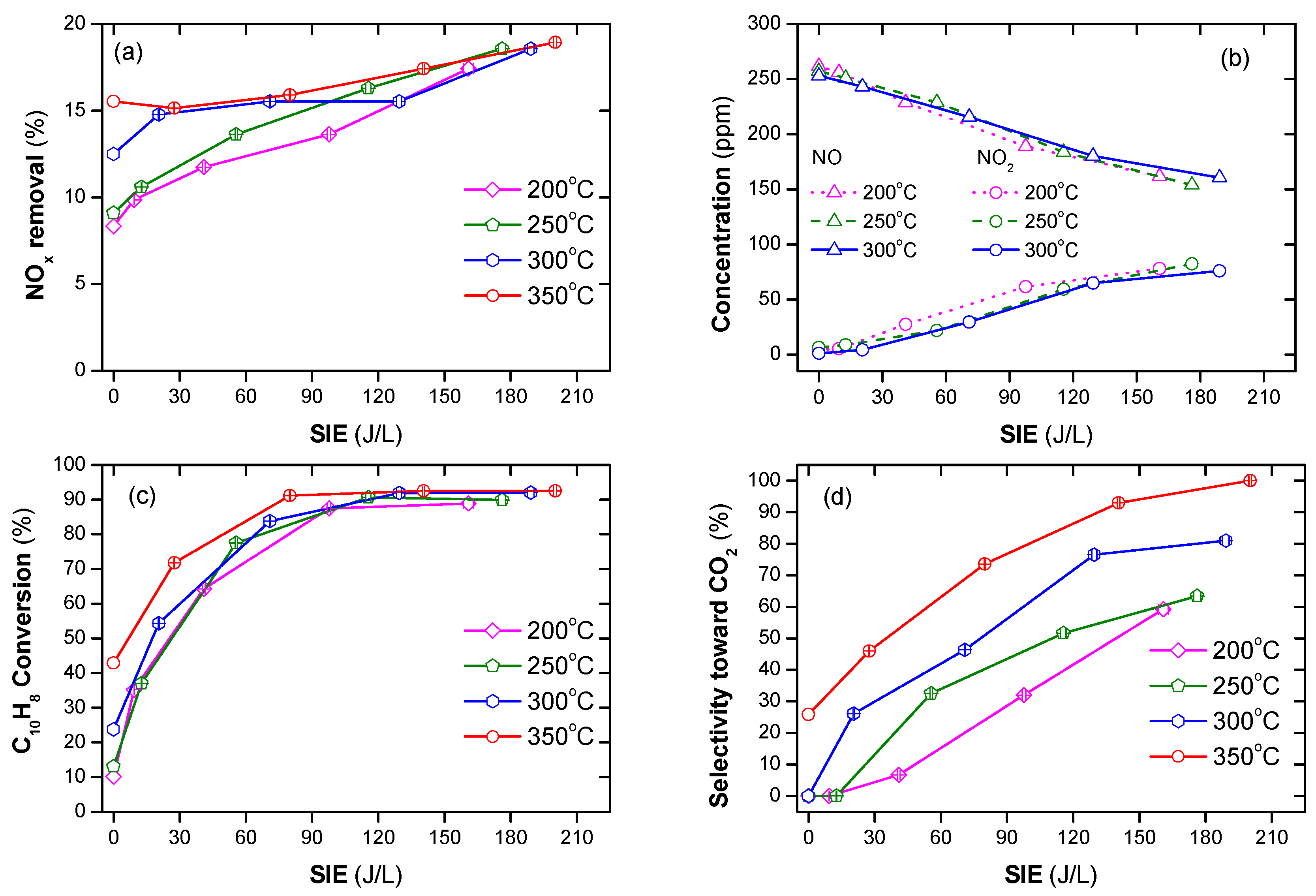
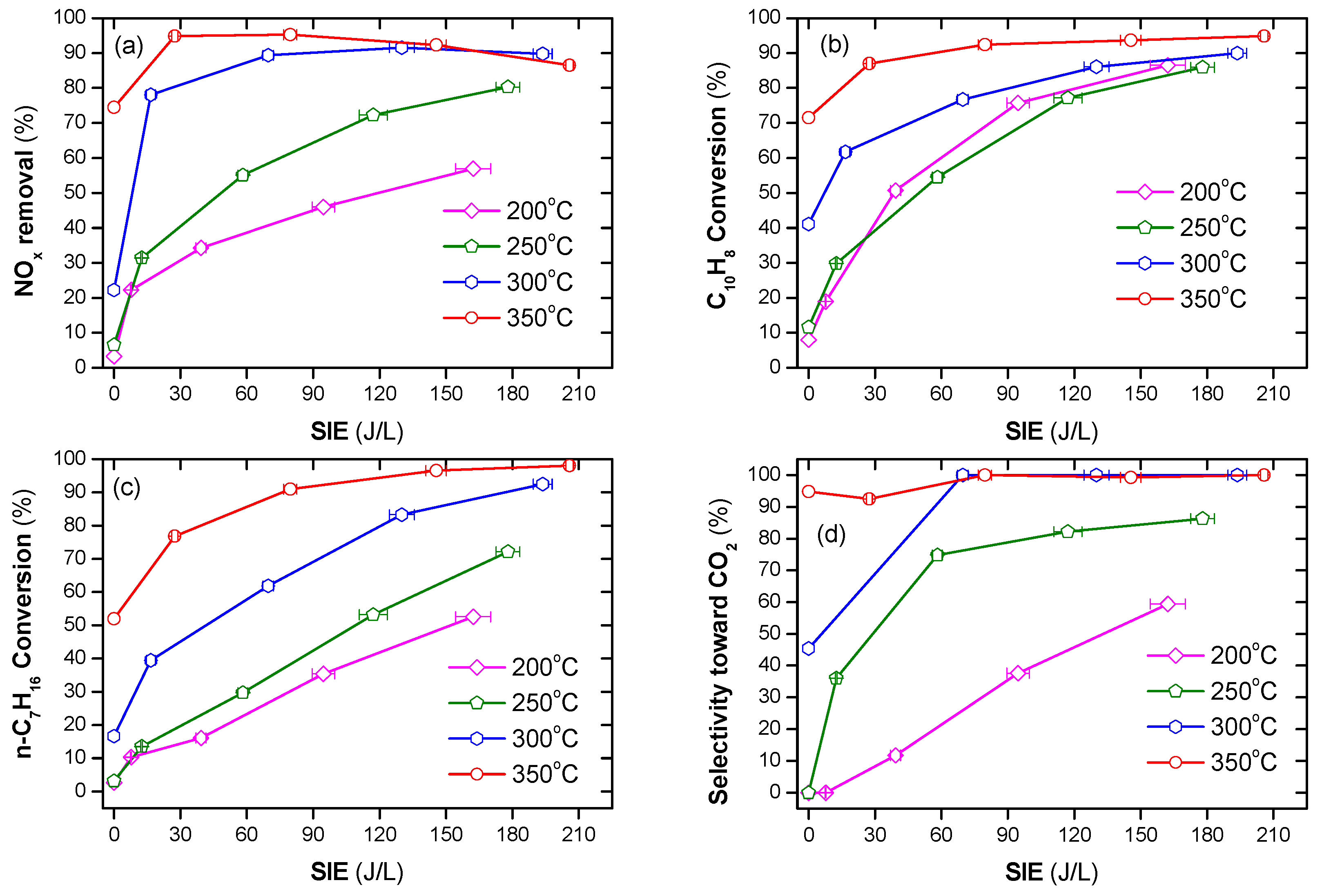
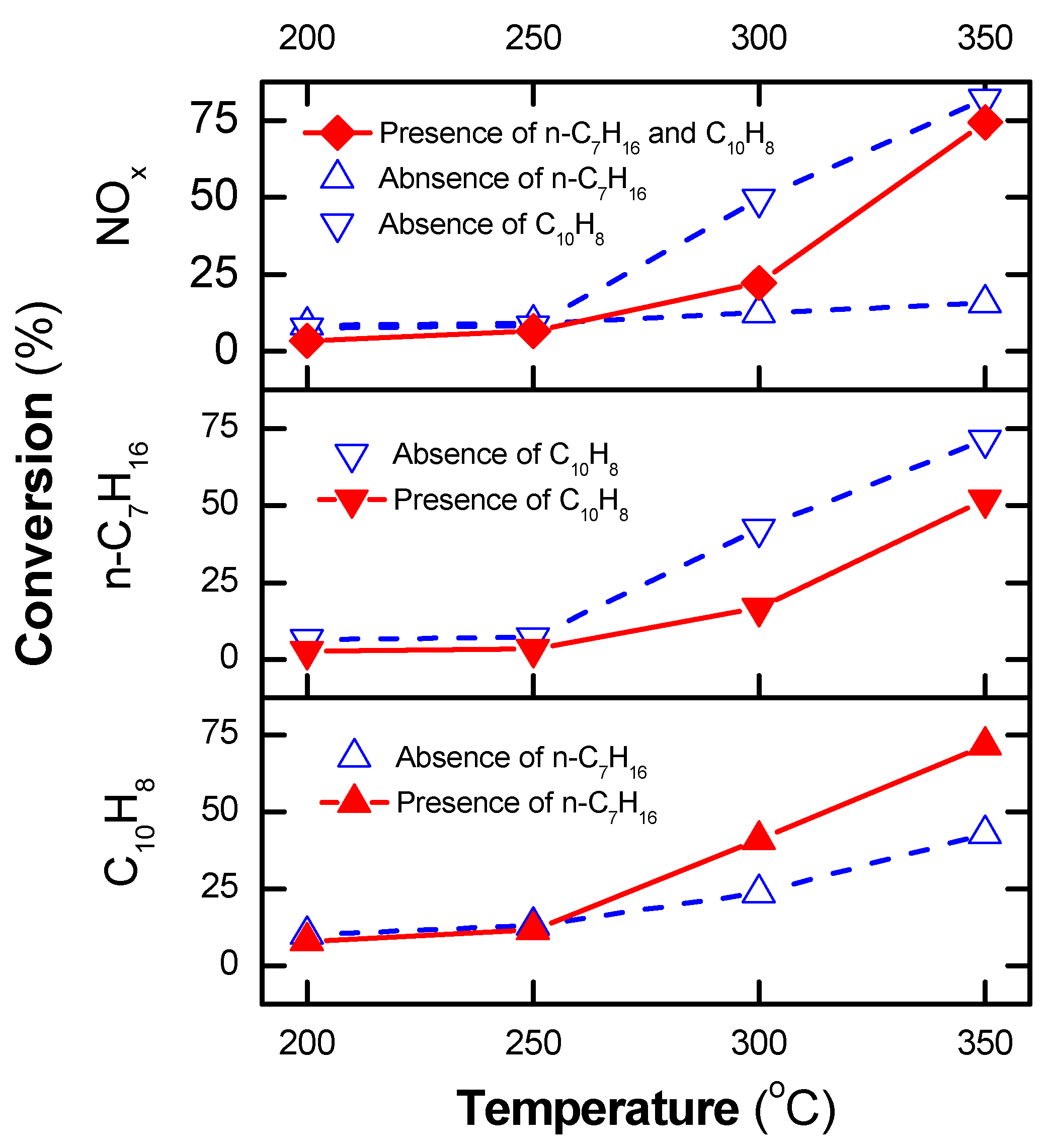
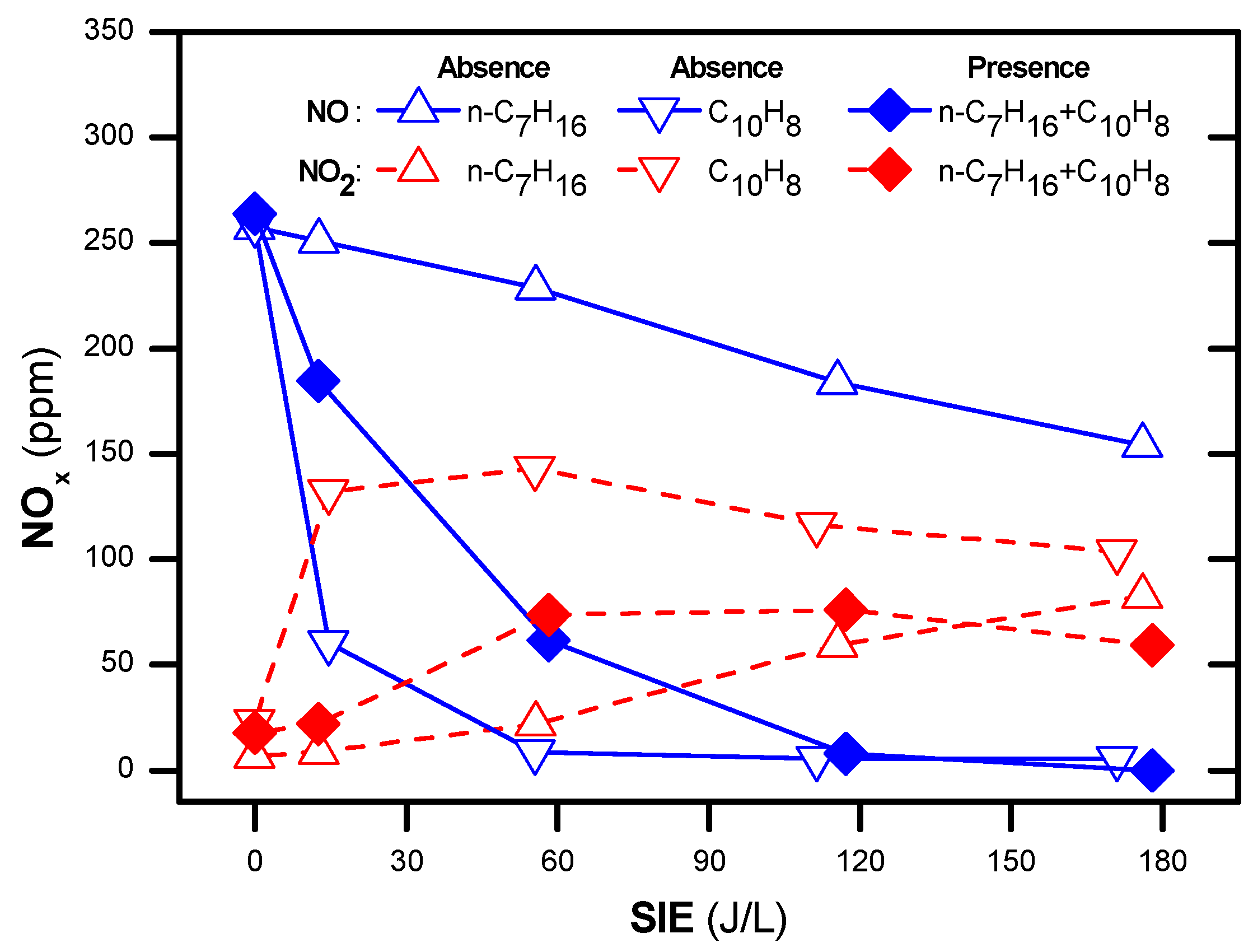
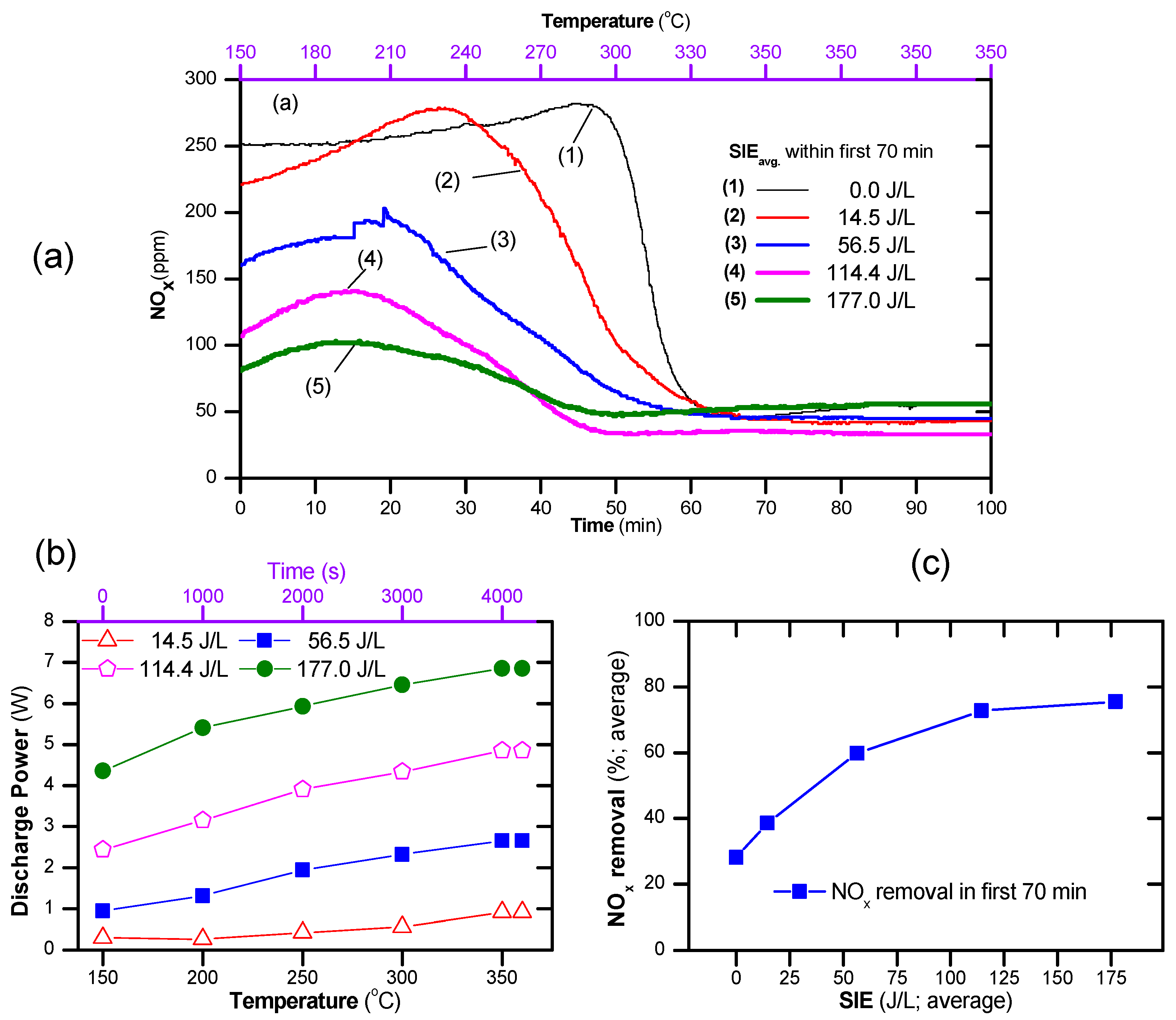
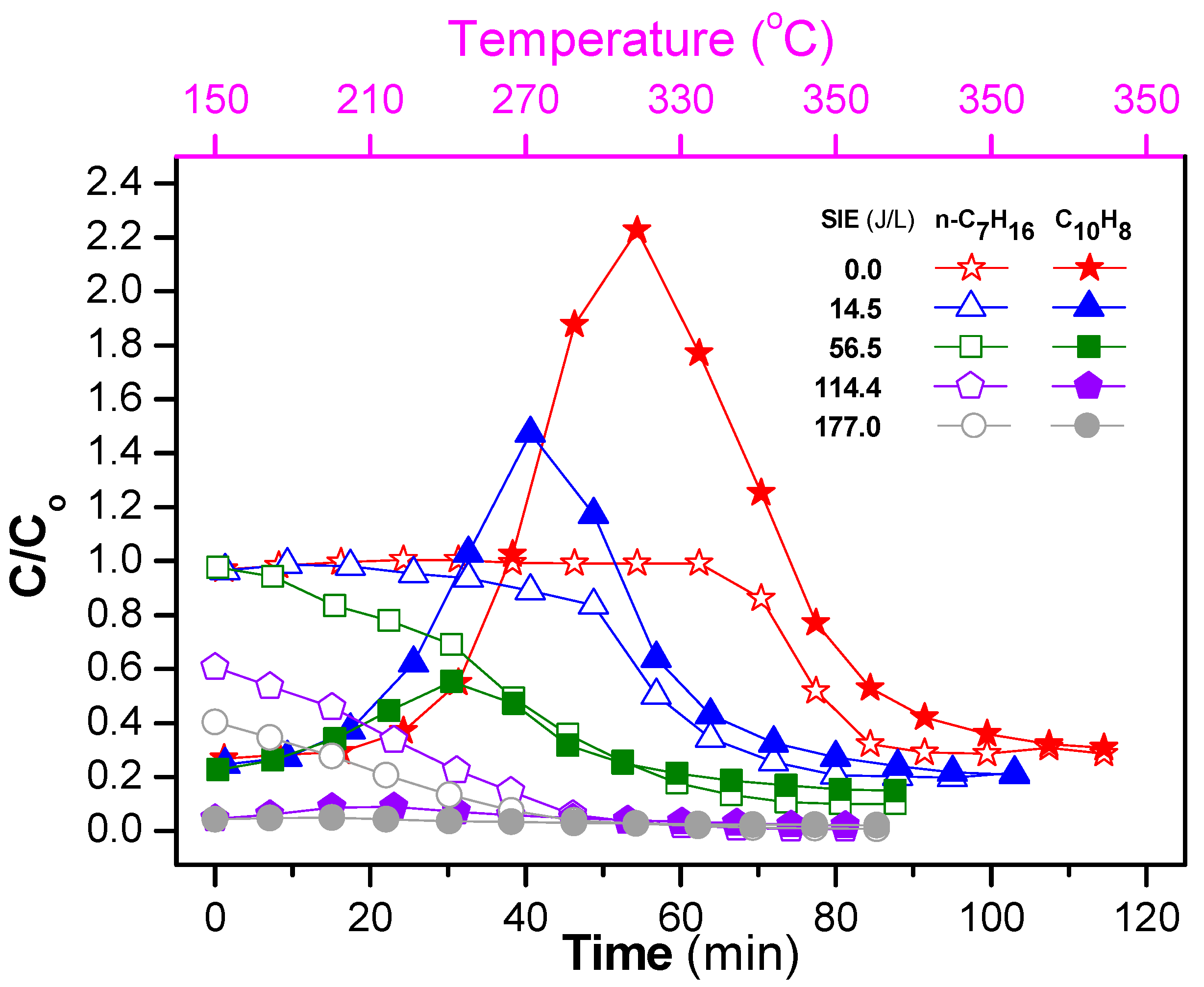
The challenge that needs to be overcome regarding the removal of nitrogen oxides (NOx) and soot from exhaust gases is the low activity of the selective catalytic reduction of NOx at temperatures fluctuating from 150 to 350 °C. The primary goal of this work was to enhance the conversion of NOx and soot simulant by employing a Ag/α-Al2O3 catalyst coupled with dielectric barrier discharge plasma. The results demonstrated that the use of a plasma-catalyst process at low operating temperatures increased the removal of both NOx and naphthalene (soot simulant). Moreover, the soot simulant functioned as a reducing agent for NOx removal, but with low NOx conversion. The high efficiency of NOx removal required the addition of hydrocarbon fuel. In summary, the combined use of the catalyst and plasma (specific input energy, SIE ≥ 60 J/L) solved the poor removal of NOx and soot at low operating temperatures or during temperature fluctuations in the range of 150–350 °C. Specifically, highly efficient naphthalene removal was achieved with low-temperature adsorption on the catalyst followed by the complete decomposition by the plasma-catalyst at 350 °C and SIE of 90 J/L.
Keywords: removal of NOx and soot; plasma-catalyst; DBD; low-temperature; non-thermal plasma removal of NOx and soot; plasma-catalyst; DBD; low-temperature; non-thermal plasma
Graphical Abstract