Review

ZSM-5 Zeolite for Catalytic Cracking of Non-Edible Oil: Strategies for Coke Suppression

1
College of Material and Chemical Engineering, Zhengzhou University of Light Industry, Zhengzhou 450000, China
2
College of Chemistry and Chemical Engineering, Henan University of Technology, Zhengzhou 450002, China
*
Author to whom correspondence should be addressed.
Catalysts 2026, 16(9), 834; https://doi.org/10.3390/catal16090834
Submission received: 9 August 2026 / Revised: 13 September 2026 / Accepted: 15 September 2026 / Published: 17 September 2026

Abstract

In the context of energy security strategies, advancing the green and low-carbon energy transition is critical for achieving the “dual carbon” goals. A key technology in this transition is the catalytic cracking of non-edible oil to produce clean biofuels, which plays a vital role in accelerating industrial restructuring and upgrading traditional energy systems. However, ZSM-5 zeolites, the most widely used catalysts in this process, commonly encounter challenges such as coke deposition and subsequent deactivation. With a focus on the underlying reaction mechanism, this review provides an in-depth analysis of the origins of coke formation and systematically explores the key influencing factors, namely the acidic properties, pore architecture, and Si/Al ratio of ZSM-5 zeolites. Furthermore, recent advances in ex situ characterization and real-time monitoring techniques for identifying coke origins, composition, and spatial distribution are summarized. Building on these insights, we detail various strategies to suppress coke deposition, including constructing hierarchical pore structures, metal doping, core–shell catalyst design, plasma catalysis, and microwave-assisted techniques. Finally, we propose perspectives and recommendations for enhancing the coking resistance of ZSM-5 zeolites.

1. Introduction

Given the dual imperatives of achieving the “dual carbon” goals and ensuring national energy security, accelerating the development of clean energy is particularly crucial. Non-edible oils, as a category of biomass resources characterized by their non-competition for arable land and food resources, offer distinct advantages in terms of abundance, environmental sustainability, and carbon neutrality [1,2,3]. The resource utilization of these oils is not only instrumental in addressing climate change and safeguarding energy security but also holds substantial strategic importance in driving economic growth.
High-temperature cracking, encompassing thermal cracking, hydrocracking, and catalytic cracking [4,5,6], serves as a vital pathway for the resource utilization of non-edible oils. While thermal cracking achieves bond cleavage under high-temperature, anoxic or oxygen-lean conditions and exhibits strong feedstock adaptability, it faces challenges in controlling the degree of cracking/deoxygenation and product distribution [7]. Hydrocracking involves hydrogenation and cracking reactions catalyzed under suitable temperature and pressure, targeting reduced O/C and increased H/C ratios in liquid products. However, it suffers from complex process conditions and stringent equipment requirements, making it unsuitable for small-scale and decentralized production [8]. Catalytic cracking utilizes catalysts to achieve deoxygenation, cracking, and shape selectivity, driving secondary cracking of triglycerides [9,10]. This process generates hydrocarbon compounds, lowers the acid value and oxygen content of biofuel, and thereby enhances fuel quality. Compared to hydrocracking and thermal cracking, catalytic cracking offers distinct advantages, including simplified reactor design, operational flexibility, and lower production costs. The resulting liquid biofuel possesses properties comparable to conventional gasoline/diesel, exhibits excellent low-temperature fluidity, and is virtually sulfur-, nitrogen-, and pollutant-free—establishing it as a high-quality ultra-clean fuel [11,12]. Therefore, the catalytic cracking of low-grade oils exhibits superior technical performance and economic viability, underscoring its strong potential for industrial application.
ZSM-5 zeolites are widely recognized as highly effective catalysts for catalytic cracking reactions, owing to its unique three-dimensional pore structure, large specific surface area, exceptional hydrothermal stability, tunable acidity, and shape-selective catalytic properties [13,14,15]. However, it still commonly faces the persistent challenge of rapid deactivation due to coke deposition during catalytic cracking of bio-oils [16,17]. Primary components of triglycerides in bio-oils feature large molecular sizes and abundant oxygen-containing functional groups. The microporous structure in conventional ZSM-5 zeolites imposes substantial resistance for mass transfer and diffusion, leading to low utilization of internal active sites [18]. Consequently, reactants/intermediates reside longer within the pores, which promotes excessive cracking. This ultimately results in an unfavorable product distribution, a low liquid product yield, and catalyst deactivation by coke deposition [7,19]. This review summarizes the causes, influencing factors, and mitigation strategies concerning coke formation during the catalytic cracking of non-edible oils over ZSM-5 zeolites, aiming to provide valuable references and insights for future research in this field.

2. Mechanisms and Key Factors Influencing Coke Formation

2.1. Overview of the Catalytic Cracking of Non-Edible Oils

Non-edible oils primarily consist of triglycerides and free fatty acids, with carbon chain lengths typically ranging from C12 to C24 and oxygen content of approximately 10–20% [20,21,22,23]. Through the catalytic cracking process, these oils undergo chain shortening and deoxygenation, yielding biofuels with improved fuel properties. The resulting improvements include higher calorific value, lower density, reduced kinematic viscosity, and decreased acid value. These changes can be understood from a thermodynamic perspective: during combustion, the cleavage of high-energy C–H and C–C bonds releases substantial energy, accompanied by the formation of lower-energy H–O and C–O bonds. In contrast, the scission of C–O bonds contributes minimally to the net energy release, as these bonds are largely reformed in the final combustion products (CO2 and H2O).
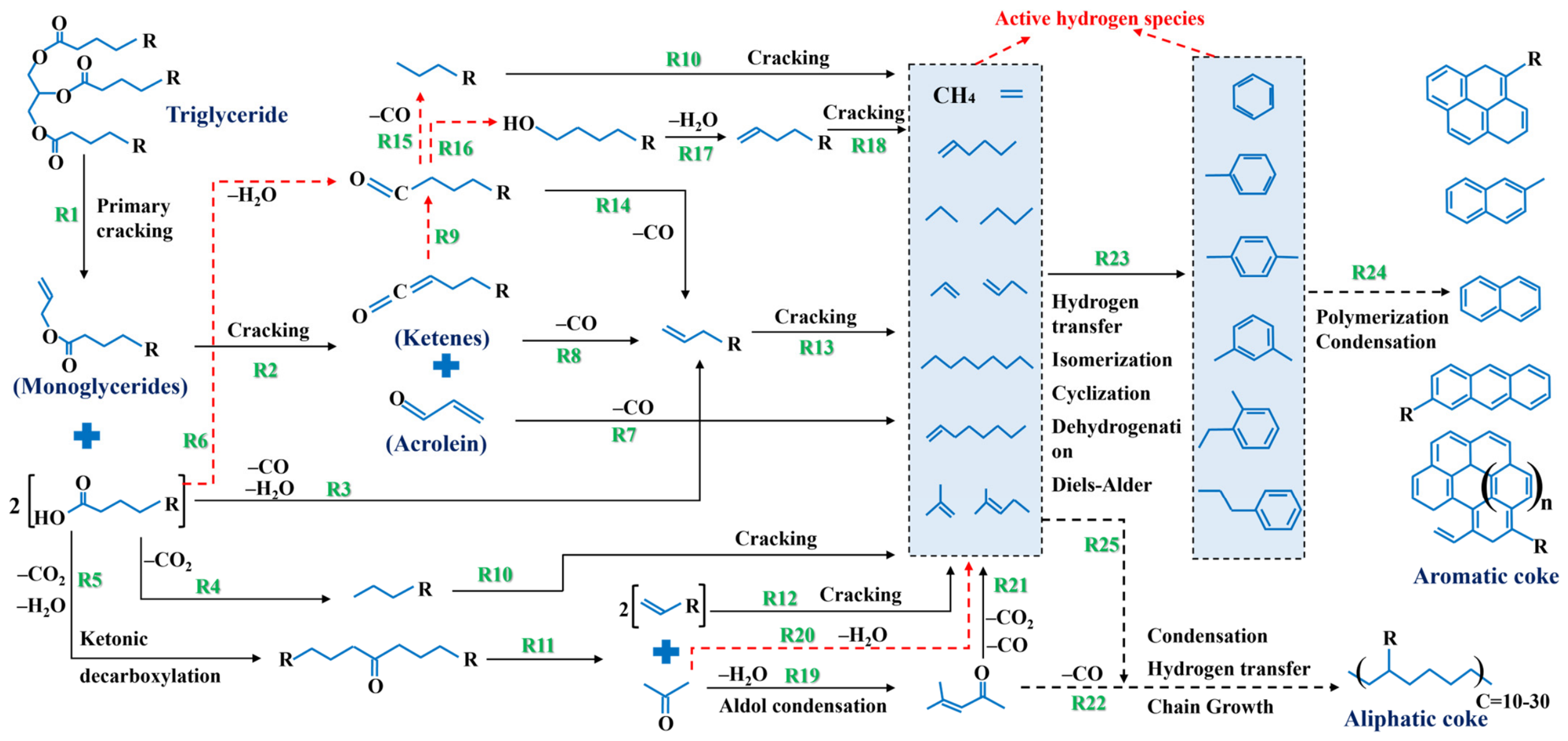
It is widely accepted that during the catalytic cracking of non-edible oils over ZSM-5 zeolites, the overall reaction process can be divided into two successive stages: the deoxygenation of triglyceride-derived oxygenated intermediates and the secondary catalytic conversion of deoxygenated hydrocarbons (Figure 1). Triglycerides first undergo primary cracking (R1), yielding monoglycerides and two carboxylic acids. Monoglycerides are further converted via β-elimination (R2) to produce ketenes and acrolein, which can undergo decarbonylation (CO removal; R7, R8) and cracking (R13) to form short-chain olefins that enter the core hydrocarbon pool [24,25,26]. Ketenes can also undergo hydrogenation to aldehydes (R9), which may undergo direct decarbonylation (R14) to alkenes, or enter the hydrocarbon pool via hydrodeoxygenation–cracking (R15, R10) and hydrodehydration–cracking (R16, R17, R18).
Concurrently, the free fatty acids released from triglyceride decomposition follow four parallel conversion pathways [27,28,29]. They may undergo direct decarbonylation/dehydration (R3) or decarboxylation (R4) to paraffins, which then crack (R10, R13) into the hydrocarbon pool. Alternatively, two molecules of fatty acids can be converted via a decarboxylative coupling-condensation reaction (R5) to produce long-chain aliphatic ketones, which subsequently crack (R11) into two alkene molecules and one acetone molecule, with the alkenes fed into the pool via R12. Acetone can undergo aldol condensation and dehydration (R19) to α,β-unsaturated ketones, which can either enter the hydrocarbon pool via decarbonylation (R21) or undergo polycondensation and hydrogen transfer (R22) to form soft coke [30]. In addition to aldol condensation, acetone can be hydrogenated by active hydrogen species and dehydrated to propylene (R20), which then enters the hydrocarbon pool. Furthermore, hydrodehydration of fatty acids (R6) generates aldehydes, which then enter the hydrocarbon pool through hydrodeoxygenation or decarbonylation pathways.
The light olefin intermediates constitute the core platform pool of the entire reaction network. Within this pool, multiple competing reactions occur (R23), including cracking, isomerization, cyclization, dehydrogenation, hydrogen transfer, and Diels-Alder reactions [31,32]. Active hydrogen species generated in situ during cracking and dehydrogenation reactions participate in hydrogen transfer and hydrodeoxygenation processes (R6, R9, R15, R16, R20), promoting the formation of isomerized paraffins and deoxygenated hydrocarbons, and thus monocyclic aromatic products [33]. The resulting monocyclic aromatics may subsequently undergo polymerization and condensation (R24) to form polycyclic aromatic hydrocarbons (PAHs), which further transform into hard coke. In addition to the aromatic pathway, hydrocarbons in the pool may also undergo continuous condensation, hydrogen transfer, and carbon chain growth (R25), ultimately forming soft coke on the external surface of the zeolite.
In summary, two main coke formation pathways exist in this catalytic cracking system. Aromatic coke originates from the polycondensation of aromatic intermediates, whereas aliphatic coke is generated from the chain-growth reactions of aliphatic carbonyl fragments. Controlling the reaction balance between olefin aromatization and undesired condensation pathways is crucial for enhancing aromatic selectivity and suppressing coke deposition.

2.2. Mechanisms of Coke Formation

Coke deposition is inevitable during the catalytic cracking of oils. As coke accumulates, it progressively covers active sites and eventually blocks pore channels of the zeolite catalyst. This not only adversely affects reaction rates and product distributions but also shortens the catalyst’s operational lifespan [34,35]. Therefore, understanding the mechanisms behind coke formation is of critical importance.
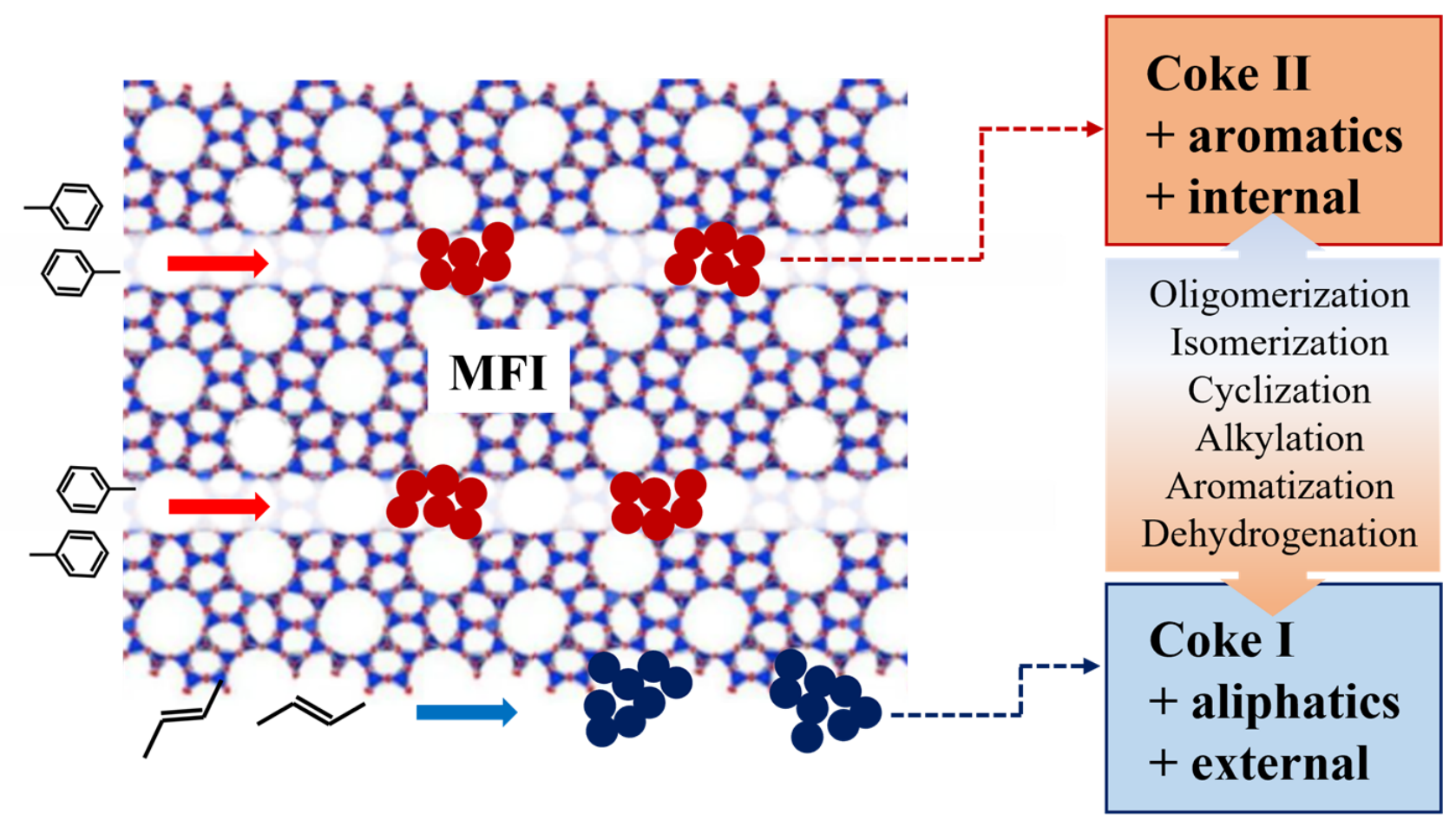
Generally, coke formation is influenced by multiple factors, including catalyst properties (e.g., active components and support characteristics), reaction conditions (e.g., temperature, pressure, and space velocity), and feedstock composition (e.g., molecular size, and impurity content). Given the focus of this study on zeolite catalysts, we specifically examine coke formation mechanisms associated with zeolite properties. Firstly, the unique pore architecture of zeolites governs their catalytic behavior. Their inherent shape selectivity promotes target reactions while restricting the diffusion and desorption of bulky molecules or intermediates within the pores. This confinement effect prolongs residence time, facilitating undesirable side reactions such as deep dehydrogenation and condensation. These side reactions, inherently promoted by shape-selective confinement, accelerate the formation and accumulation of coke precursors [36,37]. Figure 2 schematically demonstrates how Mordenite Framework Inverted (MFI) pore confinement bifurcates coke formation into two pathways. Olefinic precursors undergo oligomerization on the external crystal surface of zeolites to form aliphatic Coke I with limited pore-blocking effects. Its aggregate size surpasses the zeolite pore diameter, so it barely clogs internal channels and leads to moderate loss of catalytic activity. By comparison, aromatic intermediates trapped inside confined pore channels undergo consecutive cyclization, aromatization, and deep dehydrogenation, generating polycyclic aromatic Coke II deposited within intracrystalline voids. This internal coke is the direct product of confinement-enhanced condensation side reactions, which blocks pores and deactivates internal acid active sites [38,39].
Secondly, coke formation correlates strongly with zeolite acidity. As oil cracking proceeds via acid-catalyzed mechanisms, large triglyceride molecules generate carbocation intermediates on acidic ZSM-5 active sites. These intermediates undergo progressive transformation into coke precursors including olefins, benzene, benzene derivatives, and polycyclic aromatic hydrocarbons (PAHs), ultimately forming coke through hydrogen transfer and condensation reactions. Argyle et al. demonstrated that carbon deposit formation initiates with the adsorption of carbenium ions onto the zeolite surface [36]. To achieve thermodynamic stability, these adsorbed carbenium ions subsequently migrate, aggregate, and grow into carbonaceous deposits. This process is known to be strongly promoted by Brønsted acid sites (BAS), which serves as the primary centers for cyclization and aromatization reactions [40]. The coke formation process can be delineated into four sequential stages [36,37]: (i) Chemisorption or physisorption of carbenium ions onto active sites within the zeolite; (ii) Complete coverage of active sites by adsorbed species, preventing reactant access; (iii) Gradual blockage of zeolite pore entrances, isolating internal active sites from reactants; (iv) Structural degradation of the zeolite framework during the later stages of coke growth.
In parallel, the quantity, type, and location of carbon deposits formed during the catalytic cracking of non-edible oils are governed by precursor characteristics, the oxygen content of intermediates, and diffusion limitations with the catalyst. Precursor reactivity exhibits a distinct hierarchy in coke-forming propensity, decreasing in the order: PAHs > aromatics > olefins > branched alkanes > n-alkanes [41]. Typically, precursors with higher unsaturation (e.g., PAHs containing extensive delocalized π-bonds) and lower stability (e.g., olefins) undergo rapid polymerization and dehydrogenation-condensation reactions, leading to high coke formation activity. Conversely, saturated and structurally stable alkanes, particularly n-alkanes, demonstrate relatively low susceptibility to coke formation [39]. These inherent precursor properties directly influence deposit morphology and location. PAH precursors, due to their low diffusivity, preferentially deposit and cause pore blockage near the catalyst’s external surface or at pore entrances. This localization facilitates the formation of highly condensed, hard carbon deposits rich in fused-ring aromatics, potentially approaching a graphitic-like structure. Light olefin precursors with higher diffusivity, can penetrate deeper into the pore network. Subsequent slower coke deposition occurs on internal active sites, yielding softer, tar-like deposits with higher hydrogen content and less structural order compared to PAH-derived coke. Furthermore, the oxygen content of intermediate species critically impacts coke pathways during hydrogen transfer and aromatization reactions forming PAHs [38,39,40]. Contrastingly, Chen et al. demonstrated that low-molecular-weight oxygenated intermediates and olefins are more readily aromatized to aromatic hydrocarbons, which then act as precursors for PAH-type coke [42]. Critically, restricted diffusion processes, identified by He et al. as a major contributor to coke formation, exacerbate these issues. The resulting steric constraints on reaction and diffusion favor the formation of aromatic polymers and derivatives as carbon deposits [43]. This accumulation reduces active site availability and compromises catalytic performance. The adsorbed aromatic species subsequently undergo further surface reactions, culminating in insoluble PAH-based coke deposition.

2.3. Key Factors Influencing Coke Formation

ZSM-5, a conventional microporous catalyst, is highly susceptible to rapid deactivation via coke deposition during the catalytic cracking of oils. This propensity is closely linked to its intrinsic properties, including acidity, pore structure, and silicon-to-aluminum (Si/Al) ratio [20,44].

2.3.1. Acidity of ZSM-5 Zeolite

As an acidic catalyst, the acid properties of ZSM-5 zeolite primarily encompass acid sites, acid density, and acid strength. These characteristics directly influence the selectivity of catalytic cracking reactions and the formation of coke deposits [45]. Two primary types of acid sites exist: Brønsted acid sites (BAS) and Lewis acid sites (LAS). Typically, BAS originate from the bridging hydroxyl groups (Si–OH–Al) associated with tetrahedrally coordinated aluminum atoms within the zeolite framework. BAS exhibit relatively strong acidity and are predominantly located within the micropores. They facilitate reaction pathways by proton donation, generating carbenium ions. This high acidity also confers significant selectivity towards aromatic hydrocarbons. Consequently, polycyclic aromatic hydrocarbons (PAHs), acting as coke precursors, readily form within the micropores due to the strong acidity. These PAHs progressively deposit, covering the BAS and leading to catalyst deactivation [25,46]. LAS typically arise from either extra-framework aluminum species generated by framework dealumination or coordinatively unsaturated tri-coordinated aluminum species associated with the zeolite framework [47]. These sites possess weaker acidity compared to BAS and exhibit higher selectivity towards short-chain hydrocarbons. Following the blockage of the microporous channels by internal coke deposits, the LAS situated on the external surface become progressively covered by carbon deposits [43,48,49,50,51]. He et al. systematically investigated the coking behavior of HZSM-5 in n-hexane cracking [43]. Their 27Al magic angle spinning nuclear magnetic resonance (MAS NMR) spectroscopy revealed that framework aluminum species (BAS), were progressively covered by internal coke formed in the initial reaction stage, leading to micropore volume loss and rapid deactivation. In contrast, extra-framework aluminum species (LAS) were not involved in this internal coking process but became covered only after substantial external coke accumulation. Furthermore, a dynamic interconversion between BAS and LAS exists, which is significantly influenced by temperature and atmosphere. At elevated temperatures (>400 °C), adjacent BAS undergoes dehydroxylation to form tri-coordinated aluminum LAS, leading to a continuous decrease in the B/L ratio with increasing calcination temperature [52]. Water vapor atmosphere also affects this equilibrium; hydrothermal treatment can progressively reduce BAS content while modulating the B/L balance [53]. Therefore, regulating the B/L ratio through controlled temperature, hydrothermal treatment, and metal modification offers an effective strategy to optimize synergistic catalysis and balance cracking activity and coking resistance.
Acid site density represents another critical factor influencing coke formation. Defined as the number of acid sites per unit mass or volume of ZSM-5 zeolite, acid density exhibits an inverse relationship with coke deposition rate: lower acid density generally correlates with slower coke formation. However, this reduction in coke formation coincides with diminished catalytic activity. Notably, the rate of coke deposition exhibits a dependence on acid strength only when acid densities are comparable [54]. Consequently, optimizing the acid density of ZSM-5 is crucial for achieving minimal coke deposition while maintaining high cracking/deoxygenation efficiency during biofuel production. This optimization necessitates striking a balance between zeolite stability and catalytic activity.
Acid strength, primarily governed by the zeolite’s Si/Al ratio and the specific location of aluminum atoms within the framework, significantly impacts reaction pathways. Theoretical calculations based on linear free-energy theory indicate that the activation energies for all fundamental reactions within the oil catalytic cracking network decrease to varying extents with increasing acid strength, thereby altering the product distribution [55]. Specifically, kinetic modeling has demonstrated that the single-event rate constants for hydride transfer, β-scission, and alkylation increase with increasing acid strength, confirming that stronger acid sites can effectively lower activation barriers and promote these reactions. Meanwhile, zeolites with higher acid strength exhibit a greater propensity for coke formation, because of the disproportionate increase in the rates of oligomerization, hydrogen transfer, and aromatization reactions relative to other fundamental reactions as acid strength rises. These accelerated pathways favor the production of PAHs and long-chain aliphatic hydrocarbons, which act as coke precursors and ultimately cause greater coke deposition [56].

2.3.2. Pore Structure of ZSM-5 Zeolite

ZSM-5 is a microporous zeolite with the characteristic MFI framework, whose fundamental building units consist of eight five-membered rings that form a three-dimensional network of intersecting straight channels and sinusoidal (zigzag) channels. With a pore diameter of approximately 0.55 nm, this narrow microporous system imposes significant diffusional constraints on bulky oil molecules such as triglyceride and long-chain fatty acids. Although microporous zeolites possess high intrinsic catalytic activity, the accessibility of their active sites is severely limited by the narrow pore apertures. During conventional ZSM-5 catalytic cracking, bulky reactants cannot readily penetrate the interior channels, so initial cracking predominantly occurs on the external surface. The generated light hydrocarbons (e.g., olefins and short-chain alkanes) can, however, diffuse into the micropores and undergo secondary reactions (e.g., hydrogen transfer and aromatization) at BAS, forming polycyclic aromatic coke precursors. Due to spatial confinement within the micropores, these precursors are difficult to desorb and diffuse out rapidly; they gradually deposit inside the pores, cover active sites, and eventually block the channels, leading to catalyst deactivation [44,57,58,59].
Hierarchical ZSM-5 zeolites, engineered with mesopores (2–50 nm) through in-situ or post-synthetic modification, retain microporous acidity while substantially improving pore connectivity and mass transfer. The mesopores can effectively reduce the Thiele modulus, indicating decreased internal diffusion resistance. For example, in cumene cracking, the Thiele modulus drops from 1.24 to 0.32, the diffusion length shortens from 450 nm to 115 nm, and the effectiveness factor increases from 0.68 to 0.95, indicating a shift from diffusion-controlled to reaction-controlled regime [60]. Thus, reactants access active sites more rapidly and products escape more readily, suppressing secondary reactions and coking. Additionally, the enlarged pores also create a more favorable spatial environment for isomerization and deoxygenation, which compete with aromatization and thereby reduce the formation of polycyclic aromatic coke precursors [61]. Critically, the improved diffusivity ensures that coke precursors can migrate out of the pore system before they undergo deep condensation and deposit as coke. For instance, alkaline-treated hierarchical HZSM-5 coatings afford 40% higher conversion and a deactivation rate only one-seventh that of conventional coatings in n-dodecane cracking [62]. Collectively, these features, including enhanced accessibility, reaction-pathway regulation, and accelerated precursor migration, endow hierarchical ZSM-5 with markedly superior resistance to coke deactivation [63].

2.3.3. Si/Al Ratio of ZSM-5 Zeolite

The Si/Al ratio of ZSM-5 zeolite also significantly affects coke formation, as it governs the acidic properties of zeolite via the structure and content of aluminum within the zeolite framework. Specifically, as Si/Al ratio decreases, the framework aluminum density increases, leading to a significant rise in the number of BAS per unit cell and thus the ratio of BAS to LAS [64]. BAS promote cracking reactions, whereas LAS favor deoxygenation reactions [49]. A decreasing Si/Al ratio enhances cracking reactions and improves the selectivity towards hydrocarbon products [27,65]. However, an excessively low Si/Al ratio tends to cause rapid coke deposition and consequent deactivation [43,54]. This effect stems from the synergistic regulation of both acid density and acid strength by the Si/Al ratio. While high acid density enhances cracking activity, it simultaneously promotes undesired side reaction pathways: (i) Strong acid sites intensify hydrogen transfer reactions of hydrocarbon molecules, generating unsaturated olefins and aromatic precursors [43]; (ii) Densely packed acid centers provide nucleation sites for polycyclic aromatic hydrocarbon condensation, accelerating the accumulation of graphitic carbon species [54]; (iii) Enrichment of framework aluminum increases BAS density, driving dehydration and condensation of polar oxygen-containing molecules (such as aldehydes and ketones) [66,67].
He et al. systematically investigated the coke deactivation behavior of HZSM-5 zeolites with different Si/Al ratios in n-hexane cracking over 200 h [43]. A greater amount of coke was formed on the zeolites with lower Si/Al ratios. For the low Si/Al ratio zeolites (25 and 50), the coking rate was high initially but decreased considerably after 50 h of reaction. In contrast, for the high Si/Al ratio zeolites (85 and 130), the coking rate remained nearly constant throughout the entire reaction period. These results confirmed that a lower Si/Al ratio leads to a higher initial coking rate and consequently faster catalyst deactivation. Furthermore, low Si/Al ratio zeolites, with their higher density of strong acid sites, favor internal coke formation within micropores, while high Si/Al ratio zeolites tend to promote external coke deposition with a milder deactivation effect. Consequently, optimizing the silica-alumina ratio requires striking a balance between acid activity and coking tolerance. This strategy, together with mesopore construction and metal modification, constitutes a critical dimension for suppressing carbon deposition (as discussed in Section 3).

2.4. Characterization Techniques for Coke Origins

The complex chemical composition, variable structure, and typically low content of coke deposits in zeolites, combined with their general insolubility in conventional solvents, pose a significant challenge for the characterization of coke origins and structures in catalysis. No single analytical technique can fully reveal the chemical nature and spatial distribution of coke within zeolite crystals. Therefore, employing a combined strategy of multiple analytical techniques has become a fundamental consensus in this field. Gao et al. published a comprehensive review that systematically summarized advanced characterization strategies for investigating coke-formation behaviors in zeolites, including coke origins, generation pathways, coke categories, and their influences on zeolite catalytic performance [68]. The following sections provide a systematic overview from two aspects: ex situ characterization and real-time monitoring.

2.4.1. Ex Situ Characterization Techniques

Fourier Transform Infrared Spectroscopy (FTIR) is one of the most widely used spectroscopic methods for identifying the functional group structures of coke. Castaño et al. systematically investigated the coke deposition behavior of HZSM-5, Hβ, and HY zeolites with different pore topologies during high-density polyethylene cracking by combining FTIR with temperature-programmed oxidation (TPO) analysis [69]. It was found that with increasing zeolite pore size, bimolecular reactions (hydrogen transfer and oligomerization), condensation, and cyclization reactions were significantly enhanced, leading to the formation of more aromatic coke. Low-pressure IR spectroscopy was employed to investigate coke formation during 1-butene oligomerization over ZSM-5 [70]. Intense bands at 1508 cm–1 and 1572 cm–1 together with weak C−H stretching signals (3000–3200 cm–1), revealed secondary cracking, hydrogen-transferreactions, and highly alkylated aromatic coke species. Under high-pressure conditions, enhanced CH2 and CH3 vibrations are indicative of soft coke, which can be largely removed by 550 °C nitrogen purging. In contrast, hard coke ages during high-temperature treatment, forming stable strongly-bound deposits that deteriorate catalytic activity.
As a non-destructive technique, NMR spectroscopy enables high-resolution monitoring of hydrocarbon reactions within zeolite pores and provides atomic-level information on chemical environments and connectivity, thereby revealing molecular structures. By correlating multinuclear resonances, it further permits comprehensive characterization of coke, covering its chemical nature, content, spatial distribution, and effects on zeolite deactivation and regeneration [68]. Huang et al. utilized solid-state 13C NMR spectroscopy to investigate the reactions of ethylbenzene over HY and HZSM-5 zeolites, including disproportionation, side reactions, and coke formation [71]. It was found that mesoporous HZSM-5 promoted dealkylation at a lower temperature (503 K), whereas HY required 573 K, suggesting that HZSM-5 was more active in this reaction. However, its stronger Brønsted acidity and smaller pore size also made it more susceptible to coke deposition and deactivation. Ethyl cations or ethylene generated over HZSM-5 are more prone to oligomerization to form coke precursors, ultimately leading to aromatic coke through six-membered ring closure and alkyl cation transfer.
Scanning electron microscopy (SEM) and transmission electron microscopy (TEM) enable direct observation of coke morphology and spatial distribution at the microscale. Sang et al. distinguished near-graphite carbon on the external surface of nano-HZSM-5 aggregates using TEM combined with energy-dispersive spectroscopy (EDS) [72]. Combined with thermogravimetric analysis (TGA) and N2 adsorption–desorption results, this study revealed the distribution patterns of coke in micropores and on external surfaces: in samples with low SiO2/Al2O3 molar ratios, coke was mainly deposited in micropores; whereas in samples with high SiO2/Al2O3 molar ratios, coke tended to deposit on external surfaces and intercrystalline voids. Rzepka et al. systematically investigated the influence of zeolite micropore topology on coke structure and location using SEM combined with a H2 thermal treatment strategy [73]. By selectively removing soft coke within micropores via H2 treatment at high temperatures while retaining heavy coke on the external surface, the two types of coke were analyzed separately.
TGA is a fundamental tool for quantitative analysis of coke on zeolites, serving three primary purposes: (i) quantifying total coke content by measuring mass loss during combustion in air or oxygen; (ii) distinguishing soft coke from hard coke, as soft coke typically decomposes at lower temperatures (200–400 °C), whereas hard coke burns at higher temperatures (400–700 °C), as reflected in the derivative thermogravimetric (DTG) profiles; and (iii) assessing the thermal stability and graphitization degree of coke through differential thermal analysis (DTA) signals [68,70]. These applications enable researchers to evaluate the type of coke formed and the regeneration difficulty of the catalyst.
Atomic Force Microscopy (AFM) and Scanning Tunneling Microscopy (STM) are emerging techniques capable of providing atomic-resolution surface information for coke-deposited zeolite crystals [68,74]. AFM can acquire three-dimensional topographic information without strict conductive requirements for samples, enabling the observation of surface roughness, step sites, and uneven coke accumulation on zeolite outer surfaces, and it is often combined with other spectral methods to correlate surface morphology with coke chemical properties. STM achieves real-space single-molecule imaging for conductive carbon-rich coke species, which can directly resolve the molecular skeleton of polycyclic-aromatic coke deposits at the atomic scale and overcome the limitation that conventional characterization methods only obtain average structural information of mixed coke species. Nevertheless, both AFM and STM are mainly limited to the external surface of zeolite crystals and cannot directly detect coke located inside microporous channels. At present, they are still auxiliary tools for zeolite coking research, and are usually applied in combination with mass-spectrometry, electron microscopy and other complementary characterization techniques to jointly interpret coke molecular structures and spatial distribution features.

2.4.2. Real-Time Monitoring Techniques

Conventional ex situ analysis methods can only provide end-point coke information and fail to capture the dynamic evolution of coke species under real reaction conditions. In recent years, various operando and in situ techniques have been developed for real-time monitoring of coking behavior in zeolite-catalyzed reactions.
Operando spectroscopy plays a central role in real-time coke monitoring. Operando UV-vis spectroscopy enables real-time tracking of the formation and evolution of surface coke species in situ during catalysis [73]. By simultaneously placing multiple UV-vis probes at different positions along the reactor bed, spatial measurements of active-species and coke distribution can be obtained. This technique has been used to investigate the evolution of active hydrocarbon pool species and heavy aromatic coke species during the transient startup period in methanol-to-hydrocarbons reactions [75].
Operando X-ray diffraction (XRD) enables real-time monitoring of the impact of coke on zeolites at the crystal structure level. High-energy space- and time-resolved operando XRD techniques, with continuous scanning along the axial direction of a capillary fixed-bed reactor, achieve a time resolution of 10 s per scan, allowing real-time tracking of coke development and corresponding lattice parameter changes at different positions in the reactor [76]. Operando time-resolved powder XRD coupled with mass spectrometry (MS) has been successfully applied to monitor the regeneration of H-ZSM-5, enabling quantification and identification of coke removal and formation at structurally distinct locations within the zeolite framework [77].
In situ Raman spectroscopy responds to polarizability changes in chemical bonds such as C=C, making it a powerful complementary technique for coke characterization in zeolites. It exhibits good tolerance toward high-temperature and aqueous environments and can probe deeper into bulk samples compared with many surface-restricted spectroscopic tools. Deconvolution of Raman spectra yields characteristic D-band (~1320 cm–1, disordered/amorphous soft coke) and G-band (~1590 cm–1, graphitic hard coke). The ID/IG intensity ratio is commonly adopted to quantify the graphitization extent of coke [68]. Benefiting from ultraviolet excitation, in situ UV-Raman spectroscopy effectively suppresses fluorescence noise and enables real-time observation of coking and regeneration processes. In situ UV-Raman was employed to investigate coke formation over Mo/HMCM-22 during methane dehydroaromatization [78]. The appearance of new bands at 1400 and 1600 cm–1 indicated the build-up of aromatic and graphitic carbon, and the full disappearance of coke-related signals at 700 °C demonstrated complete carbon elimination in the regeneration step.
Despite these technical advances, several challenges remain in coke characterization. Ex situ analyses cannot capture the dynamic evolution of coke during the actual reaction, and sample handling may alter coke chemistry. Although in situ and operando techniques provide real-time information, they often probe only the near-surface region of catalyst crystals and typically require expensive facilities such as synchrotron radiation sources that are not widely accessible. Furthermore, spectroscopic tools often encounter peak-overlap issues and lack spatial resolution; whereas imaging techniques generally cannot deliver detailed molecular-scale compositional information of coke species. Overcoming these challenges will require the synergistic use and cross-validation of multiple complementary techniques.

3. Strategies for Coke Suppression

3.1. Hierarchical Pore Structure Engineering

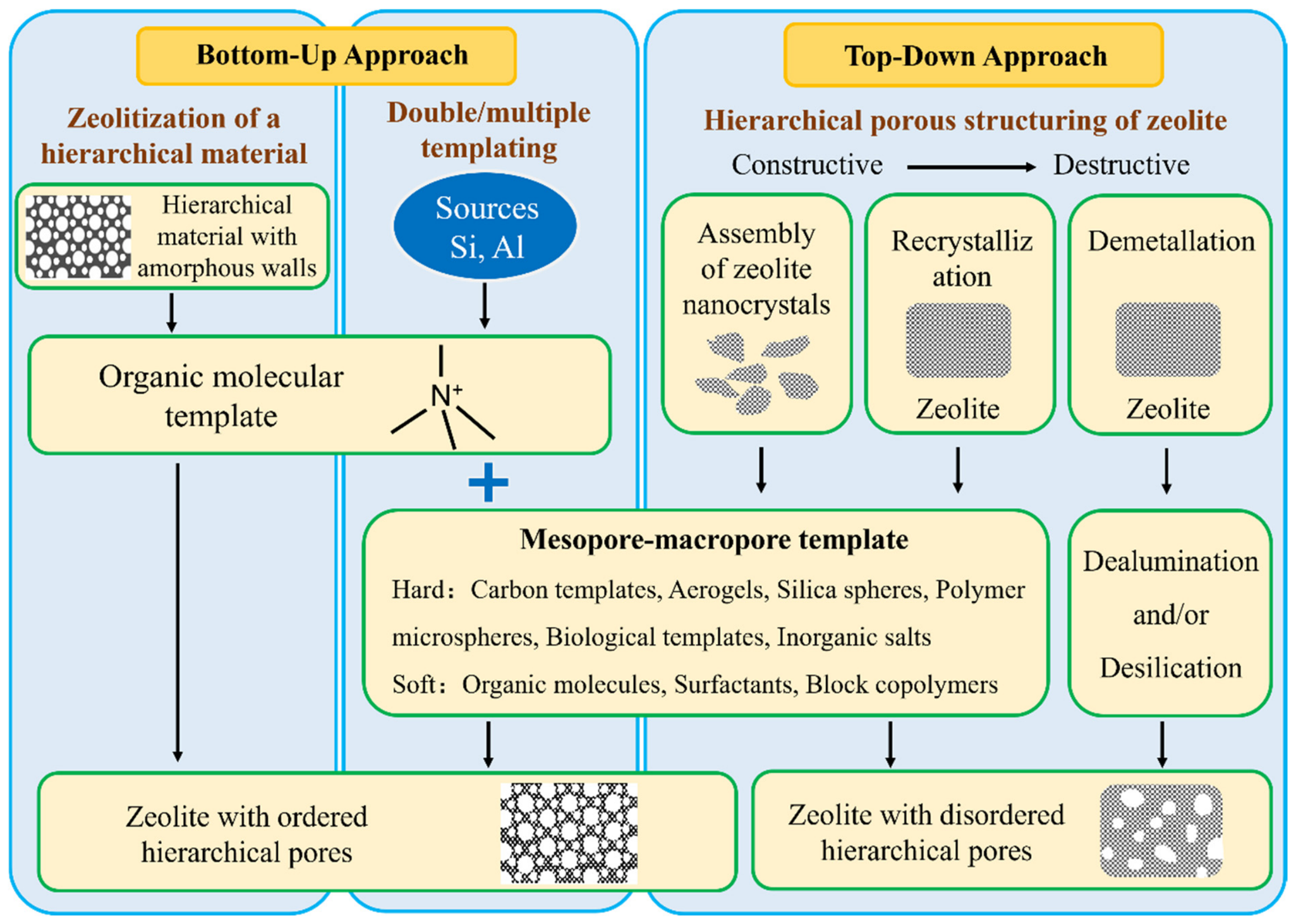
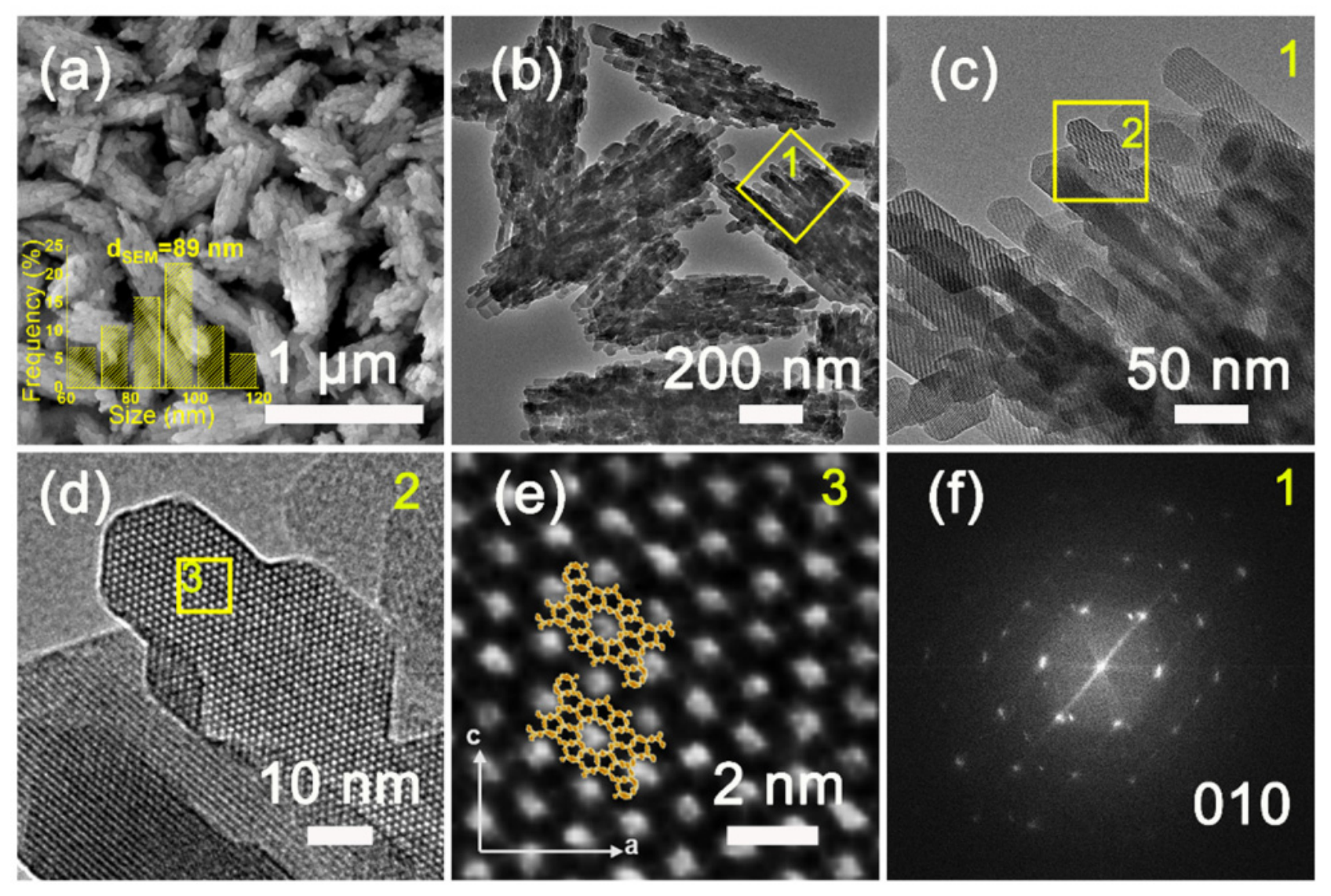
Engineering hierarchical pore structures in ZSM-5 zeolites can effectively enhance mass transfer properties and thus mitigate carbon deposition issues during catalytic processes. Based on the construction mechanisms and methodologies, hierarchical pore formation can be classified into two main approaches: direct synthesis and post-synthesis treatment [79]. Both strategies aim to create secondary pores that complement the intrinsic micropores, thereby improving molecular transport and reducing coke formation. As shown in Figure 3, the direct synthesis method involves the in-situ generation of multi-level pore architectures during zeolite crystallization, whereas the post-treatment approach typically involves controlled destruction and reorganization of the original microporous framework to create secondary mesopores or macropores. Furthermore, emerging nano-sized zeolites have demonstrated promising anti-coking performance in oil catalytic cracking reactions due to their enhanced surface-to-volume ratios and improved accessibility of active sites.

3.1.1. Direct Synthesis Method (Bottom-Up Approach)

The direct synthesis method, also known as the bottom-up approach, involves the incorporation of template agents during zeolite crystallization to generate hierarchical pore structures [44,45,79,81]. Template agents are generally categorized into two types: soft templates and hard templates. Soft templates, including organic silanes, polymers, and surfactants, interact chemically with silicon sources, aluminum sources, or zeolite precursors in the synthesis system. In contrast, hard templates, such as carbon materials, silica spheres, and organic polymers, remain chemically inert and function primarily as physical spacers. Each templating strategy presents distinct trade-offs: the soft template method typically offers broader pore size distributions at the expense of higher costs and more complex synthesis conditions, whereas the hard template method provides simpler operation and easier template removal, albeit with less interconnected pore systems.
In addition to these templating strategies, template-free approaches have also gained increasing attention as a more sustainable and cost-effective alternative. Shestakova et al. employed a template-free, seed-assisted technique to synthesize hierarchical ZSM-5 zeolites for n-hexane catalytic cracking [82]. Compared with conventional commercial ZSM-5, the mesoporous structure significantly enhanced alkene selectivity while effectively suppressing coke deposition. Mohamed et al. further compared multiple synthetic routes, including organic molecules, cationic polymers, and template-free methods, to prepare hierarchical ZSM-5 with varying Si/Al ratios for ethylene oligomerization [83]. Among these, the cationic polymer-templated hierarchical zeolites exhibited the best catalytic performance, with reduced coke deposition and stable operation over 74 h in reaction-regeneration cycles.

3.1.2. Post-Treatment Method (Top-Down Approach)

The post-treatment method, also known as the top-down approach, involves the selective removal of silicon or aluminum atoms from the zeolite framework to generate mesoporous structures [44,60,84]. This method is characterized by its operational simplicity and cost-effectiveness, making it widely adopted in industrial applications.
Framework aluminum atoms are primarily removed through treatments with high-temperature steam or acid solutions such as nitric acid, hydrochloric acid, or oxalic acid [79,85]. Meng et al. systematically investigated the influence of acid type and concentration on the pore structure, acidity, and catalytic performance of ZSM-5 zeolites in diesel cracking [86]. Among the acids tested, only hydrochloric acid and phosphoric acid treatments successfully introduced mesopores and redistributed acidic sites. Hydrochloric acid-treated ZSM-5 exhibited the best catalytic performance, which was attributed to enhanced pore accessibility, increased mesoporosity, and an optimized BAS/LAS ratio.
Silicon atom removal is typically achieved via alkaline treatment, and the Si/Al ratio plays a critical role in determining the effectiveness of the process. Groen et al. systematically studied the role of Al on the controlled formation of mesoporosity in ZSM-5 [87]. A low Si/Al ratio hinders the leaching of framework silicon due to the protective effect of aluminum atoms, whereas at higher ratios (>200), excessive and random Si dissolution occurs, leading to extensive mesoporosity and significant crystallinity loss. This protective effect of Al arises from the negatively charged AlO4 units, which resist OH attack and stabilize Si–O–Al bonds, while unprotected Si–O–Si bonds are preferentially hydrolyzed. This structural stabilization is often referred to as the “directing function” of aluminum within the framework [29,44,88,89].
Many studies have employed alkaline post-treatment to construct hierarchical ZSM-5 zeolites. Hartati et al. compared desilication with NaOH and templating methods for coconut oil catalytic cracking [62]. The desilication-derived sample exhibited stronger acidity and optimal mesopore dimensions, leading to superior catalytic activity. Similarly, Chen et al. applied NaOH desilication to create hierarchical ZSM-5 for methyl oleate aromatization, achieving significantly improved aromatic yields due to shortened diffusion paths from the introduced mesopores [90]. Wang et al. further compared the effects of various alkali agents—NaOH, NaAlO2, Na2CO3, K2CO3, and NaHCO3—on hierarchical ZSM-5 construction and n-pentane cracking performance [91]. Among these, NaHCO3 proved most effective, as it not only adjusted acid properties to promote n-pentane activation but also reduced diffusion resistance and suppressed secondary reactions, thereby enhancing catalytic efficiency and coking resistance.
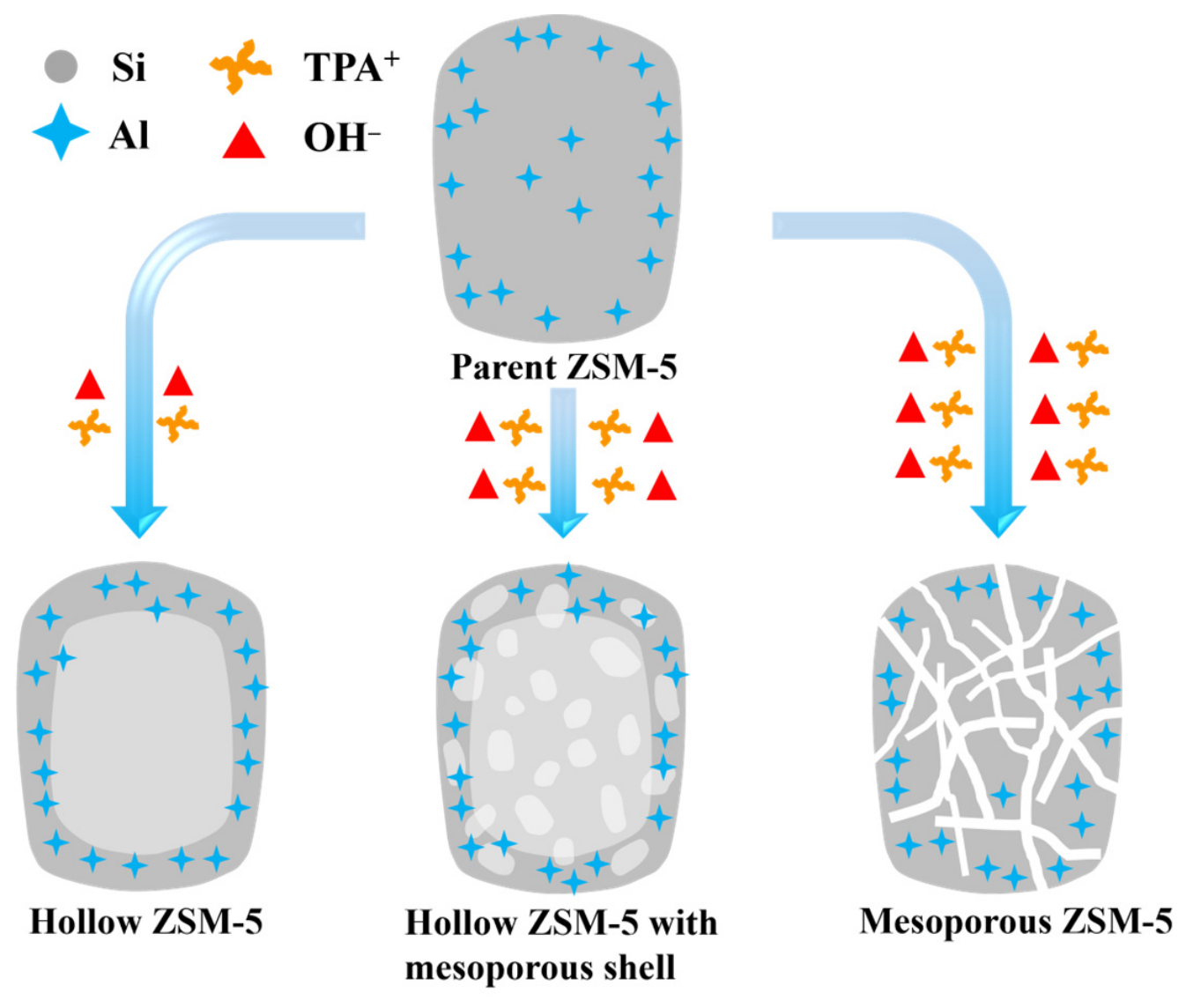
In contrast to inorganic alkalis such as NaOH, the use of organic bases like tetrapropylammonium hydroxide (TPAOH) offers superior control over the desilication process (Figure 4). The bulky TPA+ cations moderate the dissolution rate, preventing excessive framework degradation while effectively generating mesopores [92]. More importantly, TPAOH treatment proceeds via a “dissolution-recrystallization” mechanism: the OH species selectively dissolve the framework silicon in the interior of the zeolite crystals, while the bulky TPA+ cations guide the recrystallization of the dissolved silicon species on the external surface, forming a silica-rich shell [79,93]. The Si atoms on the outer shell are stabilized by neighboring AlO4 tetrahedra and negatively charged OH groups, which hinders silicon extraction from the external surface. This preferential internal dissolution, combined with surface-directed recrystallization, yields a distinctive hollow structure with a mesoporous shell that maintains shape selectivity while significantly enhancing mass transfer [94]. Compared with conventional solid HZSM-5 or NaOH-treated zeolites, this hollow mesoporous architecture shortens diffusion path lengths and provides additional mesopore channels for bulky molecules, thereby improving the accessibility of active sites. In the catalytic upgrading of bio-oil derived from biomass pyrolysis, such a catalyst achieved aromatic hydrocarbon yields of 78% for cellulose and hemicellulose, and up to 80% for real biomass (cedar wood), which are substantially higher than those obtained with conventional HZSM-5 (61–68%) [92]. Moreover, the catalyst exhibited excellent reusability and regeneration properties due to its reduced coking tendency. However, the application of organic bases such as TPAOH is constrained by higher cost, limited commercial availability, and the need for careful handling of organic waste streams, which may hinder their practicality for large-scale industrial implementation.

3.1.3. Nano Zeolites

Nano zeolites refer to ZSM-5 zeolites with crystallite sizes in the nanometer range, typically synthesized using structure-directing agents, growth inhibitors, or microwave-assisted techniques (Figure 5) [79,95,96]. The reduction in crystal size to the nanoscale significantly increases the external surface area and shortens the microporous diffusion path length, thereby improving the accessibility of active sites and enhancing mass transfer efficiency. Yang et al. prepared a series of nanocrystalline ZSM-5 zeolites with abundant intercrystalline mesopores via a two-step hydrothermal method using TPAOH as the structure-directing agent, with Si/Al ratios ranging from 50 to 125 [97]. The resulting nano ZSM-5 exhibited significantly higher external surface areas (146.6 m2/g) compared with conventional ZSM-5 (57.9 m2/g), along with increased mesopore volumes arising from intercrystalline voids between aggregated nanoparticles. The nanocrystalline samples also exhibited distinct acidic properties due to differences in Al distribution and external surface silanol groups. When applied in the catalytic fast pyrolysis of cellulose, the nano ZSM-5 showed markedly higher aromatic yields than conventional ZSM-5. Both pore architecture and acidic properties were found to substantially influence the yields of aromatic products and the extent of coke deposition. Notably, coke deposition increased with increasing micropore surface area but decreased with increasing external surface area, suggesting that carbonaceous deposits predominantly form within the intracrystalline pores.

3.2. Metal Modification

In ZSM-5 zeolites, framework Al atoms generate negative charges that are typically compensated by Brønsted and Lewis acidic protons. This charge compensation mechanism gives rise to distinct acidic sites on the zeolite surface. Upon metal modification, the negative charges are balanced by introduced metal cations, which anchor on the surface as metal active sites. This process significantly alters the acid properties of the zeolite, thereby influencing its catalytic activity, thermal stability, and resistance to coke deposition [98]. The metals commonly employed for such modification can be categorized into three main groups: alkali metals, transition metals, and rare earth metals [19,99,100].

3.2.1. Alkali and Alkaline Earth Metal Modification

Alkali and alkaline earth metals possess strong reducing properties owing to their low ionization energies, which facilitate electron loss. Upon introduction into zeolites, their cations interact with Si–O(H)–Al bonds in the framework, leading to a reduction in BAS, an increase in LAS, and an overall decrease in total acidity. Concurrently, as the hydrated ionic radius of these metal ions decreases, their basicity increases, enabling them to neutralize more acidic sites on the zeolite surface. Following modification with alkali or alkaline earth metals, the catalytic activity of the zeolite initially increases and then decreases with declining acid content. This trend is attributed to the fact that moderate passivation of strong acid centers can suppress excessive reactant-acid interactions, thereby enhancing catalytic performance and reducing carbon deposition [98,101]. However, excessive reduction in strong acid site concentration ultimately leads to a loss of catalytic activity.
Chen et al. reported that an appropriate Mg loading on ZSM-5 zeolites effectively preserved acidic sites while suppressing hydrogen transfer reactions [102]. As a result, the catalyst exhibited high selectivity toward light alkenes, particularly propylene, in oil catalytic cracking. However, no significant change in coke deposition was observed. In contrast to the limited effect of Mg on coke suppression, Xia et al. prepared Sr-modified ZSM-5 catalysts via impregnation [103]. Experimental and theoretical studies demonstrated that Sr modification significantly enhanced catalytic performance and anti-coking properties in the ethanol-to-olefins reaction. This improvement was attributed to enhanced adsorption and desorption of reactants and products, the increased activation energy for ethylene protonation, and the suppressed polymerization of hydrocarbons, all of which collectively contributed to the mitigation of carbon deposition.

3.2.2. Transition Metal Modification

The introduction of transition metals onto ZSM-5 zeolites typically leads to the formation of stable metal oxides, which significantly alter the physicochemical properties of the material (Table 1). In general, the pore volume and specific surface area decrease, whereas the average pore diameter slightly increases. Meanwhile, the incorporation of transition metal cations reduces the concentration of strong BAS while increasing the number of LAS and medium-strong acid sites [98,104]. These modifications favor deoxygenation reactions and suppress the formation of polycyclic aromatic hydrocarbons, thereby effectively reducing coke deposition. In catalytic cracking applications, the extent of coke deposition on transition metal-modified ZSM-5 catalysts follows a distinct trend: Ni > Cr > Fe > Cu > Zn [105,106,107,108,109,110,111].
Mohiuddin et al. synthesized Fe- and Cr-modified ZSM-5 zeolites via impregnation for naphtha catalytic cracking [111]. Metal modification did not affect the zeolite crystallinity but significantly influenced its physicochemical properties and catalytic performance. The Fe-modified sample exhibited higher selectivity toward light alkenes, whereas the Cr-modified catalyst favored aromatic hydrocarbon formation. Coleto et al. prepared bimetallic Pt–M (M = Sn, Cu, Cr) modified ZSM-5 catalysts for n-hexene conversion [112]. Characterization revealed that the introduction of dual metal cations partially blocked micropores, reducing both strong and weak acid sites while increasing medium-strong acidity. The second metal effectively suppressed the hydrogenation activity of Pt, with Pt-Cr/ZSM-5 showing the best cracking performance. Fang et al. compared Ga-modified ZSM-5 prepared via isomorphous substitution and impregnation [113]. The substitution method introduced weak BAS and abundant strong LAS, whereas the impregnation method generated weaker LAS and partially covered strong BAS, owing to differences in the distribution and amount of GaO+ species. In n-hexene aromatization, the substitution-derived catalyst exhibited superior activity and anti-coking performance, attributed to the synergistic effect of BAS and LAS and the presence of abundant intercrystalline mesopores. Momayez et al. investigated Ce- and Zr-modified ZSM-5 catalysts for naphtha cracking [114]. Individual addition of Ce or Zr increased the number of acidic sites, favoring light alkene production. However, simultaneous incorporation of both metals reduced acid site density, negatively affecting ethylene and propylene yields. Notably, Zr improved the crystallinity and hydrothermal stability of ZSM-5, enhancing its suitability for catalytic cracking. Kumar et al. studied Cu- and Ni-modified ZSM-5 catalysts for bio-oil pyrolysis [115]. Bimetallic modification enhanced deoxygenation efficiency by promoting cracking, deoxygenation, and decarboxylation reactions, while also improving the catalyst’s resistance to coke deposition. In summary, the type and dispersion of loaded metals, as well as the nature of composite metal modifications, profoundly influence the structural features, acidic properties, and catalytic behavior of ZSM-5 zeolites, resulting in varying capabilities for suppressing coke deposition.

3.2.3. Rare Earth (RE) Elements Modification

Rare earth elements possess closely spaced inner electron energy levels, allowing both the outermost and penultimate electrons to participate in bonding during compound formation. Through ion exchange, these elements can enhance the thermal stability and catalytic activity of zeolites. Additionally, due to their high oxygen affinity, rare earth elements promote deoxygenation reactions while effectively suppressing side reactions such as hydrogen transfer that are associated with coke deposition [98,116]. The enhancement in catalytic cracking performance, including improved activity, selectivity, and stability, can be attributed to two key mechanisms. First, the coordination between rare earth elements and framework oxygen atoms inhibits framework dealumination during modification, thereby minimizing the loss of acid sites. Second, the polarization-inducing effect of rare earth elements polarizes the Si–OH–Al hydroxyl groups within the zeolite framework, increasing the electron cloud density and consequently enhancing both the number and strength of acidic sites. The total acid content follows the order: Nd > Sm > Eu > Pr > Ce > La > Gd [117].
To gain atomic-level insight into the interaction between rare-earth ions and the zeolite framework, density functional theory (DFT) calculations have been performed on RE-modified ZSM-5 (RE = La, Ce, Nd, Sm, Gd, Dy) [118]. The rare-earth ions preferentially adsorb on the top of the Al atom at the T12 site, forming strong electrostatic interactions with the zeolite framework. Using butene activation as a probe reaction, La- and Sm-modified ZSM-5 exhibited the most favorable catalytic performance among the RE ions tested. In agreement with the DFT predictions, experimental studies have confirmed the beneficial effects of rare-earth modification. Li et al. prepared La-modified ZSM-5 catalysts via impregnation for the catalytic cracking of three bio-oil model compounds (including oleic acid, methyl laurate, and waste cooking oil) [18]. The modified catalyst exhibited better catalytic performance and coking resistance than its unmodified counterpart. This improvement was attributed to the optimized pore architecture and the increased number of medium-strong acid sites induced by La incorporation. These changes effectively suppressed secondary cracking and polymerization reactions, thereby reducing coke deposition while maintaining catalytic activity.

3.3. Core–Shell Catalysts

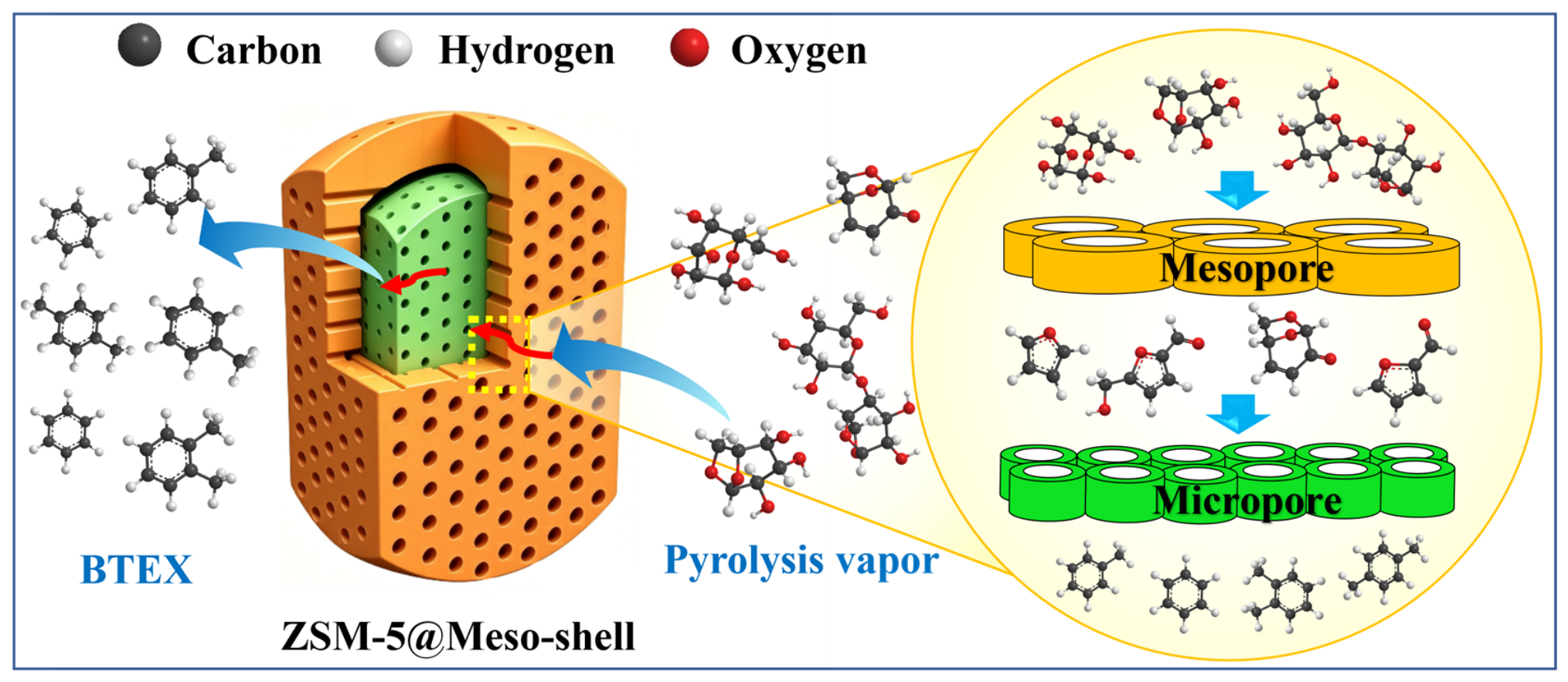
To overcome the mass transfer limitations inherent in conventional ZSM-5 zeolites, the development of core–shell catalysts with ZSM-5 as the core has emerged as an effective strategy. Encapsulating ZSM-5 within a shell structure facilitates the formation of hierarchical mesoporous architectures. This architecture increases pore volume and specific surface area while reducing the Thiele modulus, thereby enhancing diffusion and overall mass transfer efficiency [119]. Moreover, core–shell catalysts not only retain the intrinsic properties of both core and shell components but also generate novel functionalities through interfacial interactions, such as synergistic effects, spatial confinement, and shape-selective catalysis. In the catalytic cracking of non-edible oils, the design of core–shell catalysts primarily focuses on constructing an optimized mesopore shell architecture atop the ZSM-5 framework to enable a cascade reaction pathway and enhance resistance to coke deposition [120]. Initially, the mesoporous shell facilitates the diffusion and preliminary conversion of bulky oxygenates via deoxygenation and cracking, yielding smaller intermediates. These species subsequently enter the ZSM-5 core, where strong BAS drives deep deoxygenation, aromatization, and Diels-Alder reactions to produce monocyclic aromatic hydrocarbons. The hierarchical architecture enhances mass transfer by allowing rapid diffusion of products out of the micropores, thereby suppressing secondary oligomerization and hydrogen transfer reactions leading to coke formation.
Most current studies focus on the construction of mesoporous silica-based shells around ZSM-5 crystals. Guo et al. successfully synthesized a hierarchically porous ZSM-5@MCM-41 core–shell catalyst using MCM-41 as the shell component (Figure 6) [121]. The synthesis process effectively adjusted the micropore/mesopore ratio as well as the balance between BAS and LAS. In cellulose pyrolysis experiments, the core–shell catalyst exhibited a BTEX (benzene, toluene, ethylbenzene, and xylenes) yield 2.39 times higher than that of parent ZSM-5, along with significantly reduced coke deposition. Similarly, Xue et al. fabricated a micro/mesoporous ZSM-5@SBA-15 core–shell composite using the triblock copolymer P123 as a structure-directing agent [122]. In fast pyrolysis tests with corn straw, this catalyst achieved a 10% reduction in coke deposition compared with unmodified ZSM-5, together with markedly improved yields of phenol and hydrocarbons.

4. External Field-Assisted Coke Suppression

4.1. Plasma Catalysis

Plasma, often referred to as the “fourth state of matter” alongside solids, liquids, and gases, consists of electrons, ions, free radicals, and excited species. It is broadly categorized into thermal and non-thermal plasma. In recent years, plasma-assisted catalytic technology has found increasing applications in catalytic cracking processes [123,124,125], and the dielectric barrier discharge (DBD) reactor is recognized as the most suitable configuration for such reactions. The enhanced performance of the plasma-zeolite catalyst system originates from their synergistic interplay, which manifests through two complementary mechanisms [123,126]. First, plasma promotes cracking reactions under mild conditions via non-equilibrium electron-impact dissociation. High-energy electrons generated in the discharge region transfer energy to reactant molecules through inelastic collisions, facilitating C–C and C–H bond cleavage and generating abundant free radical intermediates (e.g., ·CH3, ·C2H5, ·H). These radicals are subsequently converted over the acid sites of ZSM-5, significantly enhancing conversion and selectivity while reducing the required reaction temperature. Second, plasma suppresses coke deposition through the physical bombardment of electrons and ions, which facilitates the desorption of adsorbed intermediates from the catalyst surface. This accelerated desorption effectively shortens the residence time of reactive species, such as olefins and aromatic precursors, on the active sites, thereby inhibiting their further polymerization and condensation into coke precursors.
Zhao et al. employed non-thermal plasma-assisted catalysis to address coke deposition and the consequent deactivation of ZSM-5 zeolites during bio-oil catalytic cracking [127]. Compared with conventional thermal-catalytic processes, plasma-assisted catalysis significantly improved product quality, with reductions of 1.98%, 2.02%, 3.22%, and 14.78% in aldehyde, ketone, alcohol, and phenol contents, respectively. Moreover, this technique effectively enhanced the anti-coking performance of ZSM-5 by eliminating fibrous carbon deposits and reducing graphite-like carbon accumulation on the catalyst surface; the total carbon content decreased from 5.88% to 2.14%. Istadi et al. applied plasma technology to the catalytic cracking of palm oil at 450 °C and observed a significant shift in product distribution compared with conventional catalytic cracking [128]. The selectivity toward gasoline, kerosene, and diesel fractions changed from 12.07%, 39.07%, and 45.11% to 16.43%, 52.74%, and 21.25%, respectively. This indicates that the synergistic interaction between plasma and ZSM-5 catalyst promotes the formation of short-chain hydrocarbons.

4.2. Microwave-Assisted Catalysis

Reaction temperature is a critical parameter that significantly influences both catalytic cracking performance and the formation of carbonaceous deposits. Compared with conventional heating, microwave heating offers several advantages, including uniform heat distribution, accelerated reaction kinetics, operational simplicity, and reduced energy costs [129,130,131], making it increasingly attractive for the catalytic cracking of non-edible oils. Although SiC-based catalysts are considered the most effective for microwave-assisted cracking owing to their strong microwave absorption capability, zeolites have also been extensively explored in such processes [132,133].
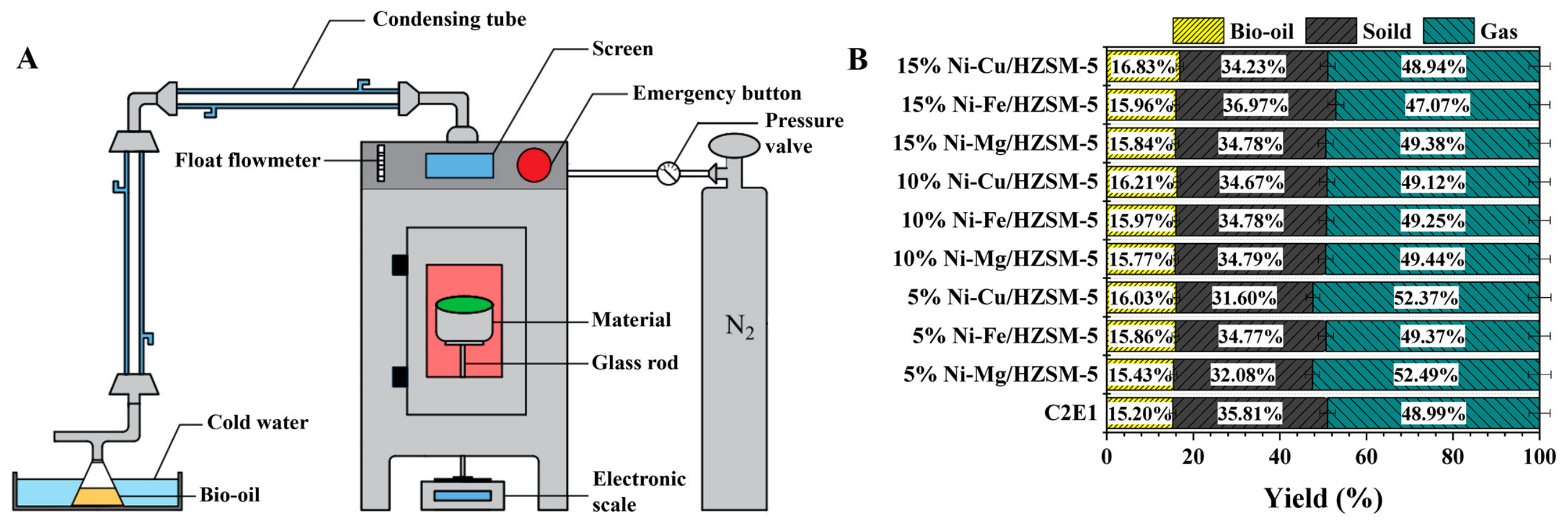
Among the various zeolite-based microwave-assisted systems, several studies have focused on catalyst modification and reactor design to enhance catalytic performance and suppress coke formation. Zhang et al. modified ZSM-5 zeolites with a SiO2 layer via chemical vapor deposition using tetraethyl orthosilicate (TEOS) as the silicon source [129]. The surface acidity of the zeolite decreased markedly with increasing SiO2 loading. Microwave-assisted catalytic fast pyrolysis tests demonstrated a significant reduction in coke deposition as SiO2 loading increased. ZSM-5 zeolites can directly absorb microwave energy, enabling selective heating of the catalyst without substantially affecting the surrounding reaction medium. Such localized heating effect contributes to the suppression of coke formation during microwave-assisted catalytic processes [134]. In another study, microwave-triggered catalytic co-pyrolysis of Chlorella vulgaris and Eucalyptus branches was performed over bimetallic Ni-X (X = Mg, Cu, Fe) modified HZSM-5 (Figure 7) [135]. In the co-pyrolysis of Chlorella vulgaris and Eucalyptus branches over Ni-Cu/HZSM-5, microwave irradiation enabled a maximum weight loss rate of 0.0687 wt.%/s and shortened the stabilization time to 2084 s, while achieving a bio-oil yield of 16.83 wt.%. Moreover, the hydrocarbon content in the bio-oil rose from 11.59% to 28.92%, and nitrogen-containing compounds decreased from 36.74% to 31.69%, underscoring the synergistic effect of microwave heating and bimetallic catalysis in upgrading pyrolysis products. These results confirm that microwave-assisted catalytic co-pyrolysis is a highly efficient and tunable route for valorizing bio-feedstocks.
However, a major limitation of microwave technology lies in its limited penetration depth, particularly in large-volume systems, which leads to uneven temperature distribution and poses a significant challenge to the scalability and industrial application of microwave-assisted catalysis.

5. Conclusions

Non-edible oils represent a class of biomass resources that do not compete with food crops for arable land or with human consumption for grain supply. The conversion of these oils into fuels and value-added chemicals holds great significance for optimizing national energy structures, reducing carbon emissions, and promoting sustainable green development. Catalytic cracking represents a key approach for the resourceful utilization of non-edible oils. However, the application of ZSM-5 zeolite catalysts in this process is still hindered by rapid deactivation due to carbon deposition. Based on a comprehensive analysis of the mechanisms and influencing factors of coke formation, this review summarizes various strategies and technologies aimed at mitigating carbon deposition on ZSM-5 zeolites and enhancing their catalytic stability.
Coke deposition during the catalytic cracking of oils is an inevitable phenomenon, primarily influenced by the acidic properties, pore architecture, and Si/Al ratio of ZSM-5 zeolites. The strong BAS of ZSM-5 facilitates cracking reactions and exhibits high selectivity toward aromatic hydrocarbons, whereas the weaker LAS promotes deoxygenation reactions and favors the formation of short-chain hydrocarbons. Therefore, effective control of carbon deposition requires precise regulation of both the total acid content and the BAS/LAS ratio. Pore structure influences both the accessibility of active acid sites and the reaction pathways; among various structural designs, hierarchical pore architectures have emerged as a widely adopted strategy for mitigating coke formation. Furthermore, the Si/Al ratio indirectly affects coke deposition by modulating the strength and distribution of acid sites.
Accurate identification of coke origins, composition, and spatial distribution is essential for understanding coking mechanisms and developing suppression strategies. Recent advances in ex situ characterization (e.g., FTIR, NMR, SEM/TEM, TGA, AFM/STM) and real-time monitoring (e.g., operando UV-vis, operando XRD, in situ Raman) have significantly improved the understanding of coke chemistry and evolution. Nevertheless, challenges remain, including the inability of ex situ methods to capture dynamic evolution, the near-surface limitation of in situ techniques, and peak-overlap and spatial-resolution constraints of spectroscopic tools.
Various strategies have been developed to suppress coke deposition in the catalytic cracking of oils, each with its own advantages and limitations. Hierarchical pore construction primarily inhibits coke formation by enhancing mass transfer efficiency and improving diffusion kinetics. Among the hierarchical construction strategies, post-synthesis desilication techniques show considerable potential for industrial application. Metal modification offers an effective means to tailor the acidic properties of ZSM-5, although it necessitates a careful balance between catalyst stability and catalytic performance. Core–shell catalysts provide dual benefits by simultaneously optimizing pore size distribution and acid characteristics, making them a highly relevant anti-coking strategy. Plasma-assisted catalysis represents a promising emerging approach; dielectric barrier discharge reactors are currently recognized as the most suitable configuration for catalytic cracking processes, demonstrating significant application potential through low-temperature synergistic effects. Microwave-assisted catalytic cracking is an innovative technique that has shown encouraging results at laboratory scale, yet its large-scale implementation remains constrained by technical and engineering challenges.

6. Perspectives

Despite the notable progress achieved in developing anti-coking strategies for ZSM-5 zeolites, several challenges and opportunities remain for future research and practical applications.
The rational design of ZSM-5 catalysts with enhanced coking resistance requires a more holistic approach that integrates multiple modification strategies. Rather than relying on a single method, catalysts could benefit from synergistic combinations, such as hierarchical pore construction coupled with optimal metal loading, or core–shell architectures combined with rare-earth modification. Such integrated designs would allow simultaneous optimization of diffusion, acidity, and thermal stability, thereby maximizing catalytic performance and longevity. The development of high-throughput synthesis and screening platforms, assisted by machine learning and artificial intelligence, could accelerate the discovery of optimal catalyst compositions and synthesis parameters.
Beyond catalyst design, the translation of these strategies into practical applications faces additional challenges. Future efforts should focus on bridging the gap between fundamental research and practical application through pilot-scale demonstrations and techno-economic assessments. While desilication and metal impregnation are relatively mature and cost-effective, emerging techniques such as plasma-assisted and microwave-assisted catalysis, despite their promising laboratory-scale results, face substantial challenges in reactor design, energy efficiency, and process integration. Furthermore, the sustainability of the modification processes themselves deserves greater attention. The synthesis of hierarchical ZSM-5 often involves the use of templates, organic structure-directing agents, and harsh chemical treatments that generate considerable waste and increase environmental footprints. The exploration of greener synthesis routes, including template-free methods, bio-based templates, and waste-derived silica/alumina sources, would align the catalyst production process with the overarching goal of sustainable biofuel production. Addressing these scalability and sustainability challenges will be essential for translating laboratory innovations into commercially viable technologies.
The integration of ZSM-5-based catalysts with complementary conversion technologies offers another dimension for enhancing overall efficiency and product quality of non-edible oil upgrading. Co-cracking with hydrogen-rich feedstocks, such as renewable hydrogen or hydrogen-donor solvents, has been reported to effectively suppress coke formation by inhibiting hydrogen transfer reactions and promoting deoxygenation pathways. Coupling the cracking process with downstream purification units or integrating it with hydrodeoxygenation and reforming processes could further enable the production of drop-in fuels with tailored properties. Such synergistic combinations would not only mitigate coke deposition but also enhance carbon efficiency and product flexibility, representing a promising direction for future process intensification.
In summary, while significant advances have been made in understanding and mitigating coke formation over ZSM-5 zeolites, the journey toward highly stable, selective, and cost-effective catalysts for non-edible oil cracking is far from complete. Continued interdisciplinary research, encompassing materials science, catalysis, reaction engineering, and process economics, will be essential to translate laboratory innovations into industrial reality, ultimately contributing to a more sustainable and circular bioeconomy.

Author Contributions

Y.L.: Funding acquisition, Writing—original draft. L.X.: Visualization, Writing—original draft. J.Z.: Writing—original draft. C.L.: Project administration, Conceptualization. X.Y.: Writing—review and editing, Conceptualization. L.Z.: Supervision, Writing—review and editing. M.D.: Project administration, Funding acquisition. Q.Z.: Writing—review and editing, Visualization. All authors have read and agreed to the published version of the manuscript.

Funding

This research was funded by the Henan Province Science and Technology Research and Development Plan Joint Fund Project (No. 245200810050), Henan Province Science and Technology Research Project (No. 252102231087, 252102320350), Henan Province Natural Science Foundation (No. 252300423753), Key Scientific Research Project of Colleges and Universities in Henan Province (No. 26A530005), and the Cultivation Project of National Natural Science Foundation in Henan University of Technology (No. 2024PYJH012).

Data Availability Statement

No new data were created or analyzed in this study. Data sharing is not applicable to this article.

Conflicts of Interest

The authors declare no conflicts of interest.

References

  1. Asfaw, B.T.; Gari, M.T.; Jayakumar, M. Transesterification of Biodiesel from Non-Edible Oils Using Heterogeneous Base Catalysts: A Comprehensive Review of Potential Renewable Biomass Feedstocks. Chem. Eng. J. 2025, 511, 162028. [Google Scholar] [CrossRef] [Scilit]
  2. Mondal, S.; Gurumoorthy, A.V.P.; Moorthy, I.G. Sustainable Production of Biodiesel from Non-Edible Kernel-Derived Feedstocks: A Comprehensive Review of Production Processes, Properties, and Optimization. Results Chem. 2026, 20, 102967. [Google Scholar] [CrossRef] [Scilit]
  3. Oyero, A.O.; Adedayo, H.B.; Daniyan, A.A.; Obayopo, S.A.; Akintunde, S.B.; Oladejo, K.A.; Mbohwa, C. Prospective Non-Edible Sources for Biodiesel Production: A Comprehensive Conventional and Bibliometric Review. Next Sustain. 2025, 6, 100194. [Google Scholar] [CrossRef] [Scilit]
  4. Riaz, S.; Qureshi, Z.S.; Akhtar, M.N.; Altahir, E.; Albin Saad, A.H.; Akah, A.C.; Alkhunaizi, M.A.; Aleisa, R.M.; Abdelaziz, O.Y. Zeolite-Based Heterogeneous Catalysts for Biodiesel Production: Recent Progress in the Valorization of Waste-Derived and Next-Generation Feedstocks. Catalysts 2026, 16, 365. [Google Scholar] [CrossRef] [Scilit]
  5. Ratshoshi, S.; Mukaya, H.E.; Nkazi, D. Hydrocracking of Non-edible Vegetable Oil and Waste Cooking Oils for the Production of Light Hydrocarbon Fuels: A Review. Can. J. Chem. Eng. 2024, 102, 3014–3028. [Google Scholar] [CrossRef] [Scilit]
  6. Zhao, X.; Wei, L.; Julson, J.; Qiao, Q.; Dubey, A.; Anderson, G. Catalytic Cracking of Non-Edible Sunflower Oil over ZSM-5 for Hydrocarbon Bio-Jet Fuel. N. Biotechnol. 2015, 32, 300–312. [Google Scholar] [CrossRef] [Scilit] [PubMed]
  7. Hu, X.; Zhang, Z.; Gholizadeh, M.; Zhang, S.; Lam, C.H.; Xiong, Z.; Wang, Y. Coke Formation during Thermal Treatment of Bio-Oil. Energy Fuels 2020, 34, 7863–7914. [Google Scholar] [CrossRef] [Scilit]
  8. Robinson, P.R.; Dolbear, G.E. Hydrocracking. In Springer Handbook of Petroleum Technology; Hsu, C.S., Robinson, P.R., Eds.; Springer Handbooks; Springer: Cham, Switzerland, 2017; pp. 713–776. [Google Scholar] [CrossRef] [Scilit]
  9. Benson, T.J.; Hernandez, R.; French, W.T.; Alley, E.G.; Holmes, W.E. Elucidation of the Catalytic Cracking Pathway for Unsaturated Mono-, Di-, and Triacylglycerides on Solid Acid Catalysts. J. Mol. Catal. A-Chem. 2009, 303, 117–123. [Google Scholar] [CrossRef] [Scilit]
  10. Prado, C.M.R.; Antoniosi Filho, N.R. Production and Characterization of the Biofuels Obtained by Thermal Cracking and Thermal Catalytic Cracking of Vegetable Oils. J. Anal. Appl. Pyrolysis 2009, 86, 338–347. [Google Scholar] [CrossRef] [Scilit]
  11. Xu, J.; Jiang, J.; Chen, J.; Sun, Y. Biofuel Production from Catalytic Cracking of Woody Oils. Bioresour. Technol. 2010, 101, 5586–5591. [Google Scholar] [CrossRef] [Scilit] [PubMed]
  12. Le-Phuc, N.; Tran, T.V.; Phan, T.T.; Ngo, P.T.; Ha, Q.L.M.; Luong, T.N.; Tran, T.H.; Phan, T.T. High-Efficient Production of Biofuels Using Spent Fluid Catalytic Cracking (FCC) Catalysts and High Acid Value Waste Cooking Oils. Renew. Energy 2021, 168, 57–63. [Google Scholar] [CrossRef] [Scilit]
  13. Nishu; Liu, R.; Rahman, M.M.; Sarker, M.; Chai, M.; Li, C.; Cai, J. A Review on the Catalytic Pyrolysis of Biomass for the Bio-Oil Production with ZSM-5: Focus on Structure. Fuel Process. Technol. 2020, 199, 106301. [Google Scholar] [CrossRef] [Scilit]
  14. de Melo, E.F.; de Araújo Melo, D.M.; dos Anjos, W.S.P.; da Silva Correia, L.A.; de Andrade Oliveira Marques, J.; Braga, R.M. Catalytic Cracking of Pachira Aquatica Oil over HZSM-5 for the Production of Low-Carbon Transport Fuels. Biomass Bioenergy 2025, 194, 107680. [Google Scholar] [CrossRef] [Scilit]
  15. Zhao, X.; Wei, L.; Julson, J.; Gu, Z.; Cao, Y. Catalytic Cracking of Inedible Camelina Oils to Hydrocarbon Fuels over Bifunctional Zn/ZSM-5 Catalysts. Korean J. Chem. Eng. 2015, 32, 1528–1541. [Google Scholar] [CrossRef] [Scilit]
  16. Kariim, I.; Swai, H.; Kivevele, T. Bio-Oil Upgrading over ZSM-5 Catalyst: A Review of Catalyst Performance and Deactivation. Int. J. Energy Res. 2023, 2023, 4776962. [Google Scholar] [CrossRef] [Scilit]
  17. Jia, P.; Yang, R.; Panpian, P.; Zhang, Z.; Zhu, L.; Alahakoon, Y.; Huang, W.; Wang, J.; Abudula, A.; Zhang, Y.S.; et al. Spatially Dispersed Hydrophobic SiO2 on HZSM-5 Zeolite for Catalytic Upgrading of Bio-Oil. Fuel 2026, 426, 139613. [Google Scholar] [CrossRef] [Scilit]
  18. Li, F.; Ding, S.; Wang, Z.; Li, Z.; Li, L.; Gao, C.; Zhong, Z.; Lin, H.; Chen, C. Production of Light Olefins from Catalytic Cracking Bio-Oil Model Compounds over La2O3-Modified ZSM-5 Zeolite. Energy Fuels 2018, 32, 5910–5922. [Google Scholar] [CrossRef] [Scilit]
  19. Lok, C.M.; Van Doorn, J.; Aranda Almansa, G. Promoted ZSM-5 Catalysts for the Production of Bio-Aromatics, a Review. Renew. Sustain. Energy Rev. 2019, 113, 109248. [Google Scholar] [CrossRef] [Scilit]
  20. Atabani, A.E.; Silitonga, A.S.; Ong, H.C.; Mahlia, T.M.I.; Masjuki, H.H.; Badruddin, I.A.; Fayaz, H. Non-Edible Vegetable Oils: A Critical Evaluation of Oil Extraction, Fatty Acid Compositions, Biodiesel Production, Characteristics, Engine Performance and Emissions Production. Renew. Sustain. Energy Rev. 2013, 18, 211–245. [Google Scholar] [CrossRef] [Scilit]
  21. Amri, M.R.; Al-Edrus, S.S.O.; Guan, C.T.; Yasin, F.M.; Hua, L.S. Jatropha Oil as a Substituent for Palm Oil in Biobased Polyurethane. Int. J. Polym. Sci. 2021, 2021, 6655936. [Google Scholar] [CrossRef] [Scilit]
  22. Redda, Z.T.; Laß-Seyoum, A.; Yimam, A.; Barz, M.; Jabasingh, S.A. Solvent Extraction and Characterization of Brassica Carinata Oils as Promising Alternative Feedstock for Bio-Jet Fuel Production. Biomass Convers. Biorefinery 2022, 14, 12207–12226. [Google Scholar] [CrossRef] [Scilit] [PubMed]
  23. Mahmudul, H.M.; Hagos, F.Y.; Mamat, R.; Abdul Adam, A.; Ishak, W.F.W.; Alenezi, R. Production, Characterization and Performance of Biodiesel as an Alternative Fuel in Diesel Engines—A Review. Renew. Sustain. Energy Rev. 2017, 72, 497–509. [Google Scholar] [CrossRef] [Scilit]
  24. Ahmad, M.; Farhana, R.; Raman, A.A.A.; Bhargava, S.K. Synthesis and Activity Evaluation of Heterometallic Nano Oxides Integrated ZSM-5 Catalysts for Palm Oil Cracking to Produce Biogasoline. Energy Convers. Manag. 2016, 119, 352–360. [Google Scholar] [CrossRef] [Scilit]
  25. Lahijani, P.; Mohammadi, M.; Mohamed, A.R.; Ismail, F.; Lee, K.T.; Amini, G. Upgrading Biomass-Derived Pyrolysis Bio-Oil to Bio-Jet Fuel through Catalytic Cracking and Hydrodeoxygenation: A Review of Recent Progress. Energy Convers. Manag. 2022, 268, 115956. [Google Scholar] [CrossRef] [Scilit]
  26. Jiang, X.; Long, F.; Cao, X.; Zhao, J.; Liu, P.; Xu, J. Catalytic Cracking of Waste Cooking Oil Followed with Hydro-Isomerization for High-Quality Biofuel Production. J. Clean. Prod. 2022, 345, 131027. [Google Scholar] [CrossRef] [Scilit]
  27. Silva Freitas, L.N.; de Sousa, F.P.; Rodrigues de Carvalho, A.; Pasa, V.M.D. Study of Direct Synthesis of Bio-Hydrocarbons from Macauba Oils Using Zeolites as Catalysts. Fuel 2021, 287, 119472. [Google Scholar] [CrossRef] [Scilit]
  28. Shimada, I.; Nakamura, Y.; Kato, S.; Mori, R.; Ohta, H.; Suzuki, K.; Takatsuka, T. Catalytic Cracking of Wax Esters Extracted from Euglena Gracilis for Hydrocarbon Fuel Production. Biomass Bioenergy 2018, 112, 138–143. [Google Scholar] [CrossRef] [Scilit]
  29. Ahmed, M.H.M.; Batalha, N.; ALOthman, Z.A.; Yamauchi, Y.; Kaneti, Y.V.; Konarova, M. Transforming Red Mud into an Efficient Acid-Base Catalyst by Hybridization with Mesoporous ZSM-5 for Co-Pyrolysis of Biomass and Plastics. Chem. Eng. J. 2022, 430, 132965. [Google Scholar] [CrossRef] [Scilit]
  30. Cruz-Cabeza, A.J.; Esquivel, D.; Jiménez-Sanchidrián, C.; Romero-Salguero, F.J. Metal-Exchanged β Zeolites as Catalysts for the Conversion of Acetone to Hydrocarbons. Materials 2012, 5, 121–134. [Google Scholar] [CrossRef] [Scilit] [PubMed]
  31. Wang, Y.; Yang, Q.; Ke, L.; Peng, Y.; Liu, Y.; Wu, Q.; Tian, X.; Dai, L.; Ruan, R.; Jiang, L. Review on the Catalytic Pyrolysis of Waste Oil for the Production of Renewable Hydrocarbon Fuels. Fuel 2021, 283, 119170. [Google Scholar] [CrossRef] [Scilit]
  32. Qiu, B.; Yang, C.; Shao, Q.; Liu, Y.; Chu, H. Recent Advances on Industrial Solid Waste Catalysts for Improving the Quality of Bio-Oil from Biomass Catalytic Cracking: A Review. Fuel 2022, 315, 123218. [Google Scholar] [CrossRef] [Scilit]
  33. Shimada, I.; Kato, S.; Hirazawa, N.; Nakamura, Y.; Ohta, H.; Suzuki, K.; Takatsuka, T. Deoxygenation of Triglycerides by Catalytic Cracking with Enhanced Hydrogen Transfer Activity. Ind. Eng. Chem. Res. 2017, 56, 75–86. [Google Scholar] [CrossRef] [Scilit]
  34. Zhang, Z.; Huang, J.; Meng, F.S.; Zhang, C.D.; Zhang, Z.M. Coke-Induced Deactivation in Zeolite Catalysts: Mechanisms, Anti-Coking Modifications, and Regeneration Approaches. Dalton Trans. 2025, 54, 17383–17399. [Google Scholar] [CrossRef] [Scilit] [PubMed]
  35. Li, J.; Jiao, L.; Li, Z.; Yan, B.; Chen, G.; Ahmed, S. Investigation of Coke Deposition during Catalytic Cracking of Different Biomass Model Tar: Effect of Microwave. Appl. Catal. A-Gen. 2021, 624, 118325. [Google Scholar] [CrossRef] [Scilit]
  36. Argyle, M.; Bartholomew, C. Heterogeneous Catalyst Deactivation and Regeneration: A Review. Catalysts 2015, 5, 145–269. [Google Scholar] [CrossRef] [Scilit]
  37. Ochoa, A.; Bilbao, J.; Gayubo, A.G.; Castaño, P. Coke Formation and Deactivation during Catalytic Reforming of Biomass and Waste Pyrolysis Products: A Review. Renew. Sustain. Energy Rev. 2020, 119, 109600. [Google Scholar] [CrossRef] [Scilit]
  38. Wei, L.; Wang, H.; Dong, Q.; Li, Y.; Xiang, H. A Review on the Research Progress of Zeolite Catalysts for Heavy Oil Cracking. Catalysts 2025, 15, 401. [Google Scholar] [CrossRef] [Scilit]
  39. Castaño, P.; Elordi, G.; Ibañez, M.; Olazar, M.; Bilbao, J. Pathways of Coke Formation on an MFI Catalyst during the Cracking of Waste Polyolefins. Catal. Sci. Technol. 2012, 2, 504. [Google Scholar] [CrossRef] [Scilit]
  40. Etim, U.J.; Bai, P.; Liu, X.; Subhan, F.; Ullah, R.; Yan, Z. Vanadium and Nickel Deposition on FCC Catalyst: Influence of Residual Catalyst Acidity on Catalytic Products. Microporous Mesoporous Mater. 2019, 273, 276–285. [Google Scholar] [CrossRef] [Scilit]
  41. Appleby, W.G.; Gibson, J.W.; Good, G.M. Coke Formation in Catalytic Cracking. Ind. Eng. Chem. Process Des. Dev. 1962, 1, 102–110. [Google Scholar] [CrossRef] [Scilit]
  42. Chen, H.; Wang, Q.; Zhang, X.; Wang, L. Quantitative Conversion of Triglycerides to Hydrocarbons over Hierarchical ZSM-5 Catalyst. Appl. Catal. B-Environ. 2015, 166–167, 327–334. [Google Scholar] [CrossRef] [Scilit]
  43. He, M.; Ali, M.-F.; Song, Y.-Q.; Zhou, X.-L.; Wang, J.A.; Nie, X.-Y.; Wang, Z. Study on the Deactivation Mechanism of HZSM-5 in the Process of Catalytic Cracking of n-Hexane. Chem. Eng. J. 2023, 451, 138793. [Google Scholar] [CrossRef] [Scilit]
  44. Mardiana, S.; Azhari, N.J.; Ilmi, T.; Kadja, G.T.M. Hierarchical Zeolite for Biomass Conversion to Biofuel: A Review. Fuel 2022, 309, 122119. [Google Scholar] [CrossRef] [Scilit]
  45. Xiao, X.; Sun, B.; Wang, P.; Fan, X.; Kong, L.; Xie, Z.; Liu, B.; Zhao, Z. Tuning the Density of Brønsted Acid Sites on Mesoporous ZSM-5 Zeolite for Enhancing Light Olefins Selectivity in the Catalytic Cracking of n-Octane. Microporous Mesoporous Mater. 2022, 330, 111621. [Google Scholar] [CrossRef] [Scilit]
  46. Li, Y.; Zhang, C.; Liu, Y.; Tang, S.; Chen, G.; Zhang, R.; Tang, X. Coke Formation on the Surface of Ni/HZSM-5 and Ni-Cu/HZSM-5 Catalysts during Bio-Oil Hydrodeoxygenation. Fuel 2017, 189, 23–31. [Google Scholar] [CrossRef] [Scilit]
  47. Ravi, M.; Sushkevich, V.L.; van Bokhoven, J.A. Towards a Better Understanding of Lewis Acidic Aluminium in Zeolites. Nat. Mater. 2020, 19, 1047–1056. [Google Scholar] [CrossRef] [Scilit] [PubMed]
  48. Hernández-Giménez, A.M.; Heracleous, E.; Pachatouridou, E.; Horvat, A.; Hernando, H.; Serrano, D.P.; Lappas, A.A.; Bruijnincx, P.C.A.; Weckhuysen, B.M. Effect of Mesoporosity, Acidity and Crystal Size of Zeolite ZSM-5 on Catalytic Performance during the Ex-situ Catalytic Fast Pyrolysis of Biomass. ChemCatChem 2020, 13, 1207–1219. [Google Scholar] [CrossRef] [Scilit]
  49. Yang, H.; Han, T.; Yang, W.; Sandström, L.; Jönsson, P.G. Influence of the Porosity and Acidic Properties of Aluminosilicate Catalysts on Coke Formation during the Catalytic Pyrolysis of Lignin. J. Anal. Appl. Pyrolysis 2022, 165, 105536. [Google Scholar] [CrossRef] [Scilit]
  50. Chen, T.-S.; Wang, P.-F.; Du, Z.-Y.; Liao, Y.-H. Comparative Effects of Mesopores and Framework Defects on the Deactivation of HZSM-5 Catalyst During Alkylphenol Dealkylation. Chem. Eng. Sci. 2023, 275, 118712. [Google Scholar] [CrossRef] [Scilit]
  51. Kosinov, N.; Uslamin, E.A.; Coumans, F.J.A.G.; Wijpkema, A.S.G.; Rohling, R.Y.; Hensen, E.J.M. Structure and Evolution of Confined Carbon Species during Methane Dehydroaromatization over Mo/ZSM-5. ACS Catal. 2018, 8, 8459–8467. [Google Scholar] [CrossRef] [Scilit] [PubMed]
  52. Qiu, Y.; Hou, X.; Liu, G.Z.; Wang, L.; Zhang, X.W. Fast Recovery of Brønsted Acid Sites Lost during High-temperature Calcination in HZSM-5. Microporous Mesoporous Mater. 2017, 243, 176–185. [Google Scholar] [CrossRef] [Scilit]
  53. Jin, M.T.; Ravi, M.; Lei, C.; Heard, C.J.; Brivio, F.; Tosner, Z.; Grajciar, L.; van Bokhoven, J.A.; Nachtigall, P. Dynamical Equilibrium between Brønsted and Lewis Sites in Zeolites: Framework-Associated Octahedral Aluminum. Angew. Chem. Int. Ed. 2023, 62, e202306183. [Google Scholar] [CrossRef] [Scilit] [PubMed]
  54. Lu, X.; Wei, C.; Zhao, L.; Gao, J.; Xu, C. Modification of the Acidic and Textural Properties of HY Zeolite by AHFS Treatment and Its Coke Formation Performance in the Catalytic Cracking Reaction of n-Butene. Catalysts 2022, 12, 640. [Google Scholar] [CrossRef] [Scilit]
  55. Jin, F.; Zhang, P.; Wu, G. Fundamental Kinetics Model of Acidity-Activity Relation for Ethylene Oligomerization and Aromatization over ZSM-5 Zeolites. Chem. Eng. Sci. 2021, 229, 116144. [Google Scholar] [CrossRef] [Scilit]
  56. Ren, X.-Y.; Cao, J.-P.; Li, Y.; He, Z.-M.; Zhao, X.-Y.; Liu, T.-L.; Feng, X.-B.; Zhao, Y.-P.; Bai, H.-C.; Zhang, J.; et al. Formation of Light Aromatics and Coke during Catalytic Reforming of Biopolymer-Derived Volatiles over HZSM-5. Ind. Eng. Chem. Res. 2021, 60, 12521–12533. [Google Scholar] [CrossRef] [Scilit]
  57. Jia, Y.; Wang, J.; Zhang, K.; Chen, G.; Yang, Y.; Liu, S.; Ding, C.; Meng, Y.; Liu, P. Hierarchical ZSM-5 Zeolite Synthesized via Dry Gel Conversion-Steam Assisted Crystallization Process and Its Application in Aromatization of Methanol. Powder Technol. 2018, 328, 415–429. [Google Scholar] [CrossRef] [Scilit]
  58. Chen, F.; Hao, J.; Yu, Y.; Cheng, D.; Zhan, X. The Influence of External Acid Strength of Hierarchical ZSM-5 Zeolites on n-Heptane Catalytic Cracking. Microporous Mesoporous Mater. 2022, 330, 111575. [Google Scholar] [CrossRef] [Scilit]
  59. Talebian-Kiakalaieh, A.; Tarighi, S. Synthesis of Hierarchical Y and ZSM-5 Zeolites Using Post-Treatment Approach to Maximize Catalytic Cracking Performance. J. Ind. Eng. Chem. 2020, 88, 167–177. [Google Scholar] [CrossRef] [Scilit]
  60. Ishihara, A. Preparation and Reactivity of Hierarchical Catalysts in Catalytic Cracking. Fuel Process. Technol. 2019, 194, 106116. [Google Scholar] [CrossRef] [Scilit]
  61. Cao, Y.; Qiu, Y.; Wang, L.; Zhang, X.; Liu, G. Preparation and Performances of Hierarchical Structured HZSM-5 Washcoating on Stainless-Steel Substrates. J. Am. Ceram. Soc. 2016, 99, 2927–2936. [Google Scholar] [CrossRef] [Scilit]
  62. Hartati; Trisunaryanti, W.; Mukti, R.R.; Kartika, I.A.; Firda, P.B.D.; Sumbogo, S.D.; Prasetyoko, D.; Bahruji, H. Highly Selective Hierarchical ZSM-5 from Kaolin for Catalytic Cracking of Calophyllum Inophyllum Oil to Biofuel. J. Energy Inst. 2020, 93, 2238–2246. [Google Scholar] [CrossRef] [Scilit]
  63. Ivanova, I.I.; Knyazeva, E.E. Micro–Mesoporous Materials Obtained by Zeolite Recrystallization: Synthesis, Characterization and Catalytic Applications. Chem. Soc. Rev. 2013, 42, 3671–3688. [Google Scholar] [CrossRef] [Scilit] [PubMed]
  64. Park, S.; Biligetu, T.; Wang, Y.; Nishitoba, T.; Kondo, J.N.; Yokoi, T. Acidic and Catalytic Properties of ZSM-5 Zeolites with Different Al Distributions. Catal. Today 2018, 303, 64–70. [Google Scholar] [CrossRef] [Scilit]
  65. Asikin-Mijan, N.; AbdulKareem-Alsultan, G.; Mastuli, M.S.; Salmiaton, A.; Azuwa Mohamed, M.; Lee, H.V.; Taufiq-Yap, Y.H. Single-Step Catalytic Deoxygenation-Cracking of Tung Oil to Bio-Jet Fuel over CoW/Silica-Alumina Catalysts. Fuel 2022, 325, 124917. [Google Scholar] [CrossRef] [Scilit]
  66. Taco-Vasquez, S.; Holtzapple, M.T. Conversion of Acetone and Mixed Ketones to Hydrocarbons using HZSM-5 Catalyst in the Carboxylate Platform. PLoS ONE 2022, 17, e0277184. [Google Scholar] [CrossRef] [Scilit] [PubMed]
  67. Hoang, T.Q.; Zhu, X.L.; Sooknoi, T.; Resasco, D.E.; Mallinson, R.G. A Comparison of the Reactivities of Propanal and Propylene on HZSM-5. J. Catal. 2010, 271, 201–208. [Google Scholar] [CrossRef] [Scilit]
  68. Gao, X.Y.; Sun, P.; Liao, J.L.; Xia, L.W. Advanced Characterization Techniques for the Coking Process of Zeolites: A Comprehensive Review. CrystEngComm 2025, 27, 3616–3642. [Google Scholar] [CrossRef] [Scilit]
  69. Castaño, P.; Elordi, G.; Olazar, M.; Aguayo, A.T.; Pawelec, B.; Bilbao, J. Insights into the Coke Deposited on HZSM-5, Hβ and HY Zeolites during the Cracking of Polyethylene. Appl. Catal. B-Environ. 2011, 104, 91–100. [Google Scholar] [CrossRef] [Scilit]
  70. Díaz, M.; Epelde, E.; Valecillos, J.; Izaddoust, S.; Aguayo, A.T.; Bilbao, J. Coke Deactivation and Regeneration of HZSM-5 Zeolite Catalysts in the Oligomerization of 1-butene. Appl. Catal. B-Environ. 2021, 291, 120076. [Google Scholar] [CrossRef] [Scilit]
  71. Huang, J.; Jiang, Y.J.; Marthala, V.R.R.; Bressel, A.; Frey, J.; Hunger, M. Effect of Pore Size and Acidity on the Coke Formation during Ethylbenzene Conversion on Zeolite Catalysts. J. Catal. 2009, 263, 277–283. [Google Scholar] [CrossRef] [Scilit]
  72. Sang, Y.; Xing, A.H.; Wang, C.F.; Han, Z.H.; Wu, Y.L. Near-Graphite Coke Deposit on Nano-HZSM-5 Aggregates for Methanol to Propylene and Butylene Reaction. Catalysts 2017, 7, 171. [Google Scholar] [CrossRef] [Scilit]
  73. Rzepka, P.; Sheptyakov, D.; Wang, C.; van Bokhoven, J.A.; Paunović, V. How Micropore Topology Influences the Structure and Location of Coke in Zeolite Catalysts. ACS Catal. 2024, 14, 5593–5604. [Google Scholar] [CrossRef] [Scilit]
  74. Schmidt, J.E.; Poplawsky, J.D.; Mazumder, B.; Attila, Ö.; Fu, D.L.; de Winter, D.A.M.; Meirer, F.; Bare, S.R.; Weckhuysen, B.M. Coke Formation in a Zeolite Crystal during the Methanol-to-Hydrocarbons Reaction as Studied with Atom Probe Tomography. Angew. Chem. Int. Ed. 2016, 55, 11173−11177. [Google Scholar] [CrossRef] [Scilit]
  75. Hou, J.X.; Chen, Y.Y.; Liu, Y.M.; Zhi, Y.C.; Wei, Y.X.; Liu, Z.M. Multiscale Spatiotemporal Heterogeneity of Zeolite-catalyzed Methanol-to-hydrocarbons (MTH) Reaction. Natl. Sci. Rev. 2025, 13, nwag255. [Google Scholar] [CrossRef] [Scilit] [PubMed]
  76. Rojo-Gama, D.; Mentel, L.; Kalantzopoulos, G.N.; Pappas, D.K.; Dovgaliuk, I.; Olsbye, U.; Lillerud, K.P.; Beato, P.; Lundegaard, L.F.; Wragg, D.S.; et al. Deactivation of Zeolite Catalyst H-ZSM-5 during Conversion of Methanol to Gasoline: Operando Time and Space Resolved X-Ray Diffraction. J. Phys. Chem. Lett. 2018, 9, 1324–1328. [Google Scholar] [CrossRef] [Scilit] [PubMed]
  77. Kalantzopoulos, G.N.; Gama, D.R.; Pappas, D.K.; Dovgaliuk, I.; Olsbye, U.; Beato, P.; Lundegaard, L.; Wragg, D.S.; Svelle, S. Real-time Regeneration of a Working Zeolite Monitored Via Operando X-ray Diffraction and Crystallographic Imaging: How Coke Flees the MFI Framework. Dalton Trans. 2022, 51, 16845–16851. [Google Scholar] [CrossRef] [Scilit] [PubMed]
  78. Jiao, X.; Huang, X.; Wang, K. In Situ UV-Raman Spectroscopy of the Coking-caused Deactivation Mechanism over an Mo/HMCM-22 Catalyst in Methane Dehydroaromatization. Catal. Sci. Technol. 2019, 9, 6552–6555. [Google Scholar] [CrossRef] [Scilit]
  79. Kerstens, D.; Smeyers, B.; Van Waeyenberg, J.; Zhang, Q.; Yu, J.; Sels, B.F. State of the Art and Perspectives of Hierarchical Zeolites: Practical Overview of Synthesis Methods and Use in Catalysis. Adv. Mater. 2020, 32, 2004690. [Google Scholar] [CrossRef] [Scilit] [PubMed]
  80. Chal, R.; Gérardin, C.; Bulut, M.; van Donk, S. Overview and Industrial Assessment of Synthesis Strategies towards Zeolites with Mesopores. ChemCatChem 2010, 3, 67–81. [Google Scholar] [CrossRef] [Scilit]
  81. Zhang, Q.; Han, Q.; Bai, H.; Li, Y.; Zhu, C.; Xie, W. Monolithic HZSM-5/SS-Fiber Catalysts with High Coke-Resistance and Selectivity for Catalytic Cracking of Castor Oil to Produce Biofuel. Renew. Energy 2024, 229, 120755. [Google Scholar] [CrossRef] [Scilit]
  82. Shestakova, D.O.; Babina, K.A.; Sladkovskiy, D.A.; Parkhomchuk, E.V. Seed-Assisted Synthesis of Hierarchical Zeolite ZSM-5 in the Absence of Organic Templates. Mater. Chem. Phys. 2022, 288, 126432. [Google Scholar] [CrossRef] [Scilit]
  83. Mohamed, H.O.; Parsapur, R.K.; Hita, I.; Cerrillo, J.L.; Ramírez, A.; Huang, K.-W.; Gascon, J.; Castaño, P. Stable and Reusable Hierarchical ZSM-5 Zeolite with Superior Performance for Olefin Oligomerization When Partially Coked. Appl. Catal. B-Environ. 2022, 316, 121582. [Google Scholar] [CrossRef] [Scilit]
  84. Ma, Q.; Fu, T.; Li, H.; Cui, L.; Li, Z. Insight into the Selection of the Post-Treatment Strategy for ZSM-5 Zeolites for the Improvement of Catalytic Stability in the Conversion of Methanol to Hydrocarbons. Ind. Eng. Chem. Res. 2020, 59, 11125–11138. [Google Scholar] [CrossRef] [Scilit]
  85. Schmutzler, F.; Zschiesche, C.; Titus, J.; Poppitz, D.; Freiding, J.; Rakoczy, R.; Reitzmann, A.; Gläser, R. Hydroisomerization of Renewable and Fossil n-Alkanes over Bifunctional Dealuminated ZSM-5 Catalysts. Chem. Ing. Tech. 2021, 93, 981–989. [Google Scholar] [CrossRef] [Scilit]
  86. Meng, X.; Lian, Z.; Wang, X.; Shi, L.; Liu, N. Effect of Dealumination of HZSM-5 by Acid Treatment on Catalytic Properties in Non-Hydrocracking of Diesel. Fuel 2020, 270, 117426. [Google Scholar] [CrossRef] [Scilit]
  87. Groen, J.C.; Peffer, L.A.A.; Moulijn, J.A.; Pérez-Ramírez, J. Mechanism of hierarchical porosity development in MFI zeolites by desilication: The role of aluminium as a pore-directing agent. Chem. Eur. J. 2005, 11, 4983–4994. [Google Scholar] [CrossRef] [Scilit] [PubMed]
  88. Lani, N.S.; Ngadi, N.; Inuwa, I.M.; Opotu, L.A.; Zakaria, Z.Y.; Widayat, W. Influence of Desilication Route of ZSM-5 Zeolite in Mesoporous Zeolite Supported Calcium Oxide Catalyst for Biodiesel Production. Microporous Mesoporous Mater. 2022, 343, 112153. [Google Scholar] [CrossRef] [Scilit]
  89. Ren, X.Y.; Cao, J.P.; Zhao, X.Y.; Yang, Z.; Liu, S.N.; Wei, X.Y. Enhancement of Aromatic Products from Catalytic Fast Pyrolysis of Lignite over Hierarchical HZSM-5 by Piperidine-Assisted Desilication. ACS Sustain. Chem. Eng. 2017, 6, 1792–1802. [Google Scholar] [CrossRef] [Scilit]
  90. Chen, X.; An, Z.; Wang, Y.; Ma, Q.; Feng, X.; Liu, Y.; Yang, C. Green BTX Production from Methyl Oleate over Hierarchical HZSM-5 Zeolites Prepared by NaOH Treatment. Fuel 2021, 290, 119798. [Google Scholar] [CrossRef] [Scilit]
  91. Wang, Z.; Zhang, R.; Wang, J.; Yu, Z.; Xiang, Y.; Kong, L.; Liu, H.; Ma, A. Hierarchical Zeolites Obtained by Alkaline Treatment for Enhanced n-Pentane Catalytic Cracking. Fuel 2022, 313, 122669. [Google Scholar] [CrossRef] [Scilit]
  92. Chaihad, N.; Anniwaer, A.; Choirun Az Zahra, A.; Kasai, Y.; Reubroycharoen, P.; Kusakabe, K.; Abudula, A.; Guan, G. In-Situ Catalytic Upgrading of Bio-Oil from Rapid Pyrolysis of Biomass over Hollow HZSM-5 with Mesoporous Shell. Bioresour. Technol. 2021, 341, 125874. [Google Scholar] [CrossRef] [Scilit] [PubMed]
  93. Ma, Z.; Fu, T.; Wang, Y.; Shao, J.; Ma, Q.; Zhang, C.; Cui, L.; Li, Z. Silicalite-1 Derivational Desilication-Recrystallization to Prepare Hollow Nano-ZSM-5 and Highly Mesoporous Micro-ZSM-5 Catalyst for Methanol to Hydrocarbons. Ind. Eng. Chem. Res. 2019, 58, 2146–2158. [Google Scholar] [CrossRef] [Scilit]
  94. Fu, T.; Wang, Y.; Li, Z. Surface-Protection-Induced Controllable Restructuring of Pores and Acid Sites of the Nano-ZSM-5 Catalyst and Its Influence on the Catalytic Conversion of Methanol to Hydrocarbons. Langmuir 2020, 36, 3737–3749. [Google Scholar] [CrossRef] [Scilit] [PubMed]
  95. Zhao, X.; He, J.; Li, J. Generation of ZSM-5 Nanocrystallites and Their Assembly into Hierarchical Architecture in a Phase-Transfer Synthesis. Catalysts 2022, 12, 1216. [Google Scholar] [CrossRef] [Scilit]
  96. Hu, Y.; Wang, C.; Li, T.; Bao, X.; Yue, Y. Nitrogen- and Halogen-Free Multifunctional Polymer-Directed Fabrication of Aluminum-Rich Hierarchical MFI Zeolites. Nanomaterials 2022, 12, 1633. [Google Scholar] [CrossRef] [Scilit] [PubMed]
  97. Yang, K.; Zhou, F.; Ma, H.; Liu, C.; Ma, F.; Wu, G. Preparation of Nanocrystalline ZSM-5 and Its Catalytic Performance in Fast Pyrolysis of Cellulose to Produce Aromatic Hydrocarbons. Microporous Mesoporous Mater. 2022, 331, 111679. [Google Scholar] [CrossRef] [Scilit]
  98. Bai, Y.; Zhang, G.; Liu, D.; Zhang, Y.; Zhao, L.; Gao, J.; Xu, C.; Meng, Q.; Gao, X. The Advance in Catalytic Pyrolysis of Naphtha Technology Using ZSM-5 as Catalyst. Appl. Catal. A-Gen. 2021, 628, 118399. [Google Scholar] [CrossRef] [Scilit]
  99. Rahimi, N.; Karimzadeh, R. Catalytic Cracking of Hydrocarbons over Modified ZSM-5 Zeolites to Produce Light Olefins: A Review. Appl. Catal. A-Gen. 2011, 398, 1–17. [Google Scholar] [CrossRef] [Scilit]
  100. Hou, X.; Qiu, Y.; Tian, Y.; Diao, Z.; Zhang, X.; Liu, G. Reaction Pathways of n-Pentane Cracking on the Fresh and Regenerated Sr, Zr and La-Loaded ZSM-5 Zeolites. Chem. Eng. J. 2018, 349, 297–308. [Google Scholar] [CrossRef] [Scilit]
  101. Ji, Y.; Yang, H.; Yan, W. Effect of Alkali Metal Cations Modification on the Acid/Basic Properties and Catalytic Activity of ZSM-5 in Cracking of Supercritical n-Dodecane. Fuel 2019, 243, 155–161. [Google Scholar] [CrossRef] [Scilit]
  102. Chen, K.; Wu, X.; Zhao, J.; Zhao, H.; Li, A.; Zhang, Q.; Xia, T.; Liu, P.; Meng, B.; Song, W.; et al. Organic-Free Modulation of the Framework Al Distribution in ZSM-5 Zeolite by Magnesium Participated Synthesis and Its Impact on the Catalytic Cracking Reaction of Alkanes. J. Catal. 2022, 413, 735–750. [Google Scholar] [CrossRef] [Scilit]
  103. Xia, W.; Wang, J.; Wang, L.; Qian, C.; Ma, C.; Huang, Y.; Fan, Y.; Hou, M.; Chen, K. Ethylene and Propylene Production from Ethanol over Sr/ZSM-5 Catalysts: A Combined Experimental and Computational Study. Appl. Catal. B-Environ. 2021, 294, 120242. [Google Scholar] [CrossRef] [Scilit]
  104. Xu, J.; Liao, Y.; Lin, Y.; Ma, X.; Yu, Z. Study on Catalytic Pyrolysis of Eucalyptus to Produce Aromatic Hydrocarbons by Zn-Fe Co-Modified HZSM-5 Catalysts. J. Anal. Appl. Pyrolysis 2019, 139, 96–103. [Google Scholar] [CrossRef] [Scilit]
  105. Elamin, N.Y.; Mubarak, M.F.; Elamin, M.R.; Altalhi, A.A.; Bendary, H.I.; Mohamed, E.A. Valorization of Agro-Industrial Biomass into Zeolite-Supported Nickel Catalysts for Green Synthesis of Biofuels via Catalytic Cracking of Waste Cooking Oil. Biomass Bioenergy 2026, 211, 109229. [Google Scholar] [CrossRef] [Scilit]
  106. Auepattana-aumrung, C.; Praserthdam, S.; Wannakao, S.; Jongsomjit, B.; Panpranot, J.; Praserthdam, P. Observation of Reduction on Alkane Products in Butene Cracking over ZSM-5 Modified with Fe, Cu, and Ni Catalysts. Fuel 2021, 291, 120265. [Google Scholar] [CrossRef] [Scilit]
  107. Li, C.; Ma, J.; Xiao, Z.; Hector, S.B.; Liu, R.; Zuo, S.; Xie, X.; Zhang, A.; Wu, H.; Liu, Q. Catalytic Cracking of Swida Wilsoniana Oil for Hydrocarbon Biofuel over Cu-Modified ZSM-5 Zeolite. Fuel 2018, 218, 59–66. [Google Scholar] [CrossRef] [Scilit]
  108. Gurdeep Singh, H.K.; Yusup, S.; Quitain, A.T.; Abdullah, B.; Ameen, M.; Sasaki, M.; Kida, T.; Cheah, K.W. Biogasoline Production from Linoleic Acid via Catalytic Cracking over Nickel and Copper-Doped ZSM-5 Catalysts. Environ. Res. 2020, 186, 109616. [Google Scholar] [CrossRef] [Scilit] [PubMed]
  109. Chiosso, M.E.; Crespo, I.; Merlo, A.B.; Valle, B. Metal-Doped HZSM-5 Zeolite Catalysts for Catalytic Cracking of Raw Bio-Oil: Exploring Activity toward Value-Added Products. Catalysts 2023, 13, 1198. [Google Scholar] [CrossRef] [Scilit]
  110. Qu, B.; Zhang, Y.S.; Wang, T.; Choi, H.S.; Zhang, Y.; Fu, Z.; Li, A.; Ji, G. Pyrolysis-Catalysis of Waste Tire to Enhance the Aromatics Selectivity via Metal-Modified ZSM-5 Catalysts. Process Saf. Environ. Prot. 2024, 190, 138–148. [Google Scholar] [CrossRef] [Scilit]
  111. Mohiuddin, E.; Mdleleni, M.M.; Key, D. Catalytic Cracking of Naphtha: The Effect of Fe and Cr Impregnated ZSM-5 on Olefin Selectivity. Appl. Petrochem. Res. 2018, 8, 119–129. [Google Scholar] [CrossRef] [Scilit]
  112. Coleto, I.; López, M.I.; Roldán, R.; Gómez, J.P.; Jiménez-Sanchidrián, C.; Romero-Salguero, F.J. Transformation of 1-Hexene on Pt Supported ZSM-5 Zeolite Modified with Tin, Copper or Chromium. React. Kinet. Mech. Catal. 2015, 116, 285–297. [Google Scholar] [CrossRef] [Scilit]
  113. Fang, Y.; Su, X.; Bai, X.; Wu, W.; Wang, G.; Xiao, L.; Yu, A. Aromatization over Nanosized Ga-Containing ZSM-5 Zeolites Prepared by Different Methods: Effect of Acidity of Active Ga Species on the Catalytic Performance. J. Energy Chem. 2017, 26, 768–775. [Google Scholar] [CrossRef] [Scilit]
  114. Momayez, F.; Towfighi Darian, J.; Teimouri Sendesi, S.M. Synthesis of Zirconium and Cerium over HZSM-5 Catalysts for Light Olefins Production from Naphtha. J. Anal. Appl. Pyrolysis 2015, 112, 135–140. [Google Scholar] [CrossRef] [Scilit]
  115. Kumar, R.; Strezov, V.; Lovell, E.; Kan, T.; Weldekidan, H.; He, J.; Dastjerdi, B.; Scott, J. Bio-Oil Upgrading with Catalytic Pyrolysis of Biomass Using Copper/Zeolite-Nickel/Zeolite and Copper-Nickel/Zeolite Catalysts. Bioresour. Technol. 2019, 279, 404–409. [Google Scholar] [CrossRef] [Scilit]
  116. Dhanuskar, S.; Naik, S.N.; Pant, K.K. Catalytic Cracking and Deoxygenation of Cottonseed Oil to Yield Light Olefins over Lanthanum-Impregnated Zeolite Catalysts. Sustain. Energy Fuels 2025, 9, 868–878. [Google Scholar] [CrossRef] [Scilit]
  117. Wang, X.; Zhao, Z.; Xu, C.; Duan, A.; Zhang, L.; Jiang, G. Effects of Light Rare Earth on Acidity and Catalytic Performance of HZSM-5 Zeolite for Catalytic Cracking of Butane to Light Olefins. J. Rare Earths 2007, 25, 321–328. [Google Scholar] [CrossRef] [Scilit]
  118. Li, D.; Li, L.; Chen, X.; Li, J.; Zhang, P.; Huang, Y.; Xiao, B. Investigation on the Catalytic Activity and Na Tolerance Performance of Rare Earth Element Decorated ZSM-5 Zeolite: A First-Principle Study. Ferroelectrics 2022, 596, 203–213. [Google Scholar] [CrossRef] [Scilit]
  119. Zhang, Q.; Wang, J.; Zhang, X.; Deng, T.; Zhang, Y.; Ma, P. Metal Oxide-Based Heterogeneous Acid Catalysts for Sustainable Biodiesel Synthesis: Recent Advances and Key Challenges. RSC Adv. 2025, 15, 31683–31705. [Google Scholar] [CrossRef] [Scilit] [PubMed]
  120. Zhang, F.; Nie, Y.; Xu, Y.; Wen, P.; Liu, Y.; Gong, W.; Sun, L.; Yin, J.; Wang, H.; Liu, Y.; et al. Synergistic Modulation of Porosity and Acidity in Core-Shell Zeolite Nanostructures for High-Quality Liquid Fuels Production. Chem. Eng. J. 2026, 534, 174949. [Google Scholar] [CrossRef] [Scilit]
  121. Guo, T.; Ma, X.; Li, Z.; Zheng, L.; Fan, Q.; Ding, X.; Hu, S.; Fu, P. Enhancing High Selectivity Production of Light Aromatics from In-Situ Catalytic Upgrading of Cellulose Pyrolysis Vapors by Regulating Hierarchical Core-Shell ZSM-5@MCM-41. J. Anal. Appl. Pyrolysis 2022, 168, 105774. [Google Scholar] [CrossRef] [Scilit]
  122. Xue, X.; Liu, Y.; Wu, L.; Pan, X.; Liang, J.; Sun, Y. Catalytic Fast Pyrolysis of Maize Straw with a Core-Shell ZSM-5@SBA-15 Catalyst for Producing Phenols and Hydrocarbons. Bioresour. Technol. 2019, 289, 121691. [Google Scholar] [CrossRef] [Scilit] [PubMed]
  123. Shi, K.; Jiao, N.; Zhu, Y.; Xu, Z.; Tang, N.; Wang, H. Unveiling the Synergistic Effect between Dielectric Barrier Discharge Plasma and ZSM-5 in Cracking of n-Hexane: Experimental and Mechanistic Study. Chem. Eng. Sci. 2026, 326, 123548. [Google Scholar] [CrossRef] [Scilit]
  124. Diao, Y.; Qin, X.; Hou, C.; Chen, B.; Yun, T.; Guo, X.; Ma, D.; Shi, C. Plasma Catalysis for Plastic Waste Conversion into Value-Added Products: Advancements and Perspectives. Adv. Funct. Mater. 2025, 36, e21780. [Google Scholar] [CrossRef] [Scilit]
  125. Hosseini, H. A Brief Review of Progress in Zeolite-Catalyzed Non-Thermal Plasma Processes: Applications, Mechanisms, Challenges, and Prospective Developments. J. Ind. Eng. Chem. 2025, 150, 177–183. [Google Scholar] [CrossRef] [Scilit]
  126. Riyanto, T.; Istadi, I.; Buchori, L.; Anggoro, D.D.; Dani Nandiyanto, A.B. Plasma-Assisted Catalytic Cracking as an Advanced Process for Vegetable Oils Conversion to Biofuels: A Mini Review. Ind. Eng. Chem. Res. 2020, 59, 17632–17652. [Google Scholar] [CrossRef] [Scilit]
  127. Zhao, W.; Huang, J.; Ni, K.; Zhang, X.; Lai, Z.; Cai, Y.; Li, X. Research on Non-Thermal Plasma Assisted HZSM-5 Online Catalytic Upgrading Bio-Oil. J. Energy Inst. 2018, 91, 595–604. [Google Scholar] [CrossRef] [Scilit]
  128. Istadi, I.; Riyanto, T.; Buchori, L.; Anggoro, D.D.; Saputra, R.A.; Muhamad, T.G. Effect of Temperature on Plasma-Assisted Catalytic Cracking of Palm Oil into Biofuels. Int. J. Renew. Energy Dev. 2020, 9, 107–112. [Google Scholar] [CrossRef] [Scilit]
  129. Zhang, B.; Zhong, Z.; Chen, P.; Ruan, R. Microwave-Assisted Catalytic Fast Pyrolysis of Biomass for Bio-Oil Production Using Chemical Vapor Deposition Modified HZSM-5 Catalyst. Bioresour. Technol. 2015, 197, 79–84. [Google Scholar] [CrossRef] [Scilit] [PubMed]
  130. Zhang, Y.; Yang, J.; Yu, P.; Ruan, R.; Dai, L.; Zhang, J.; Huo, E.; Zou, R.; Wang, C.; Zhao, Y.; et al. Catalytic Co-Pyrolysis of Cotton Stalks and Ground Film Plastic Using Fishbone-Based Metal Catalysts: Enhanced Production of Olefins and Aromatics. Chem. Eng. J. 2025, 521, 166274. [Google Scholar] [CrossRef] [Scilit]
  131. Ren, X.; Shanb Ghazani, M.; Zhu, H.; Ao, W.; Zhang, H.; Moreside, E.; Zhu, J.; Yang, P.; Zhong, N.; Bi, X. Challenges and Opportunities in Microwave-Assisted Catalytic Pyrolysis of Biomass: A Review. Appl. Energy 2022, 315, 118970. [Google Scholar] [CrossRef] [Scilit]
  132. Zhang, J.; Wang, C.; Lan, D.; Liu, Y.; Wei, R.; Zhu, H.; Jiao, Y.; Shi, K.; Sun, C.; Wu, T. Rational Design of Structured Co3O4@silicalite-1/SiC Foam Catalyst for Microwave-Assisted Highly Efficient Conversion of Bio-Isopropanol to Green Propylene. J. Clean. Prod. 2024, 448, 141537. [Google Scholar] [CrossRef] [Scilit]
  133. Zhang, B.; Ma, X.; Gou, L.; Aldeen, A.S.; Ruan, R. Tailored Core-Shell ZSM-5@Silicalite-1 Zeolite Catalysts for Enhanced Aromatic Product Formation in Microwave-Assisted Pyrolysis of Water Hyacinth. Biomass Bioenergy 2026, 207, 108821. [Google Scholar] [CrossRef] [Scilit]
  134. Bai, Y.; Li, K.; Zhao, J.; Yang, C.; Bai, Y.; Sun, S.; Shang, H. Microwave-Assisted Catalytic Pyrolysis of Waste Plastics for High-Value Resource Recovery: A Comprehensive Review. Processes 2026, 14, 427. [Google Scholar] [CrossRef] [Scilit]
  135. Tian, B.; Ning, H.; Jiang, M.; Jia, G.; Zhao, S.; Wei, G.; Chen, C. Investigation into the Catalytic Co-Pyrolysis of Chlorella vulgaris and Eucalyptus Branches Using Bimetallic Ni-X (X = Mg, Cu, Fe) Modified HZSM-5: Product Characteristics and Bio-Oil Composition. Catalysts 2026, 16, 383. [Google Scholar] [CrossRef] [Scilit]
Figure 1. Schematic illustration of the basic reaction network in catalytic cracking of triglycerides; black solid arrows represent the regular reaction pathways without external hydrogen assistance; red dashed arrows represent hydrogen transfer hydrodeoxygenation pathway, black dashed arrows indicate coke formation routes.
Catalysts 16 00834 g001
Figure 2. Schematic illustration of coke deposition behaviors on ZSM-5 catalysts with different precursors and reactions.
Catalysts 16 00834 g002
Figure 3. Overview of synthesis routes for hierarchically porous zeolites. Adapted with permission from Ref. [80]. Copyright (2010) John Wiley and Sons, License No. 6332460673431.
Catalysts 16 00834 g003
Figure 4. Schematic representation of the formation mechanism of hollow HZSM-5 and the associated Al redistribution during TPAOH treatment.
Catalysts 16 00834 g004
Figure 5. (a) SEM and (be) TEM micrographs (inset: size distribution), and (f) FFT diffraction pattern of nano ZSM-5 (H-Z5-P). Identical numbers and boxes indicate the corresponding regions that are further magnified or examined. Reproduced from Ref. [96].
Catalysts 16 00834 g005
Figure 6. Schematic illustration of ZSM-5@Meso-shell core–shell catalyst for cellulose pyrolysis to BTEX. Redrawn from Ref. [121].
Catalysts 16 00834 g006
Figure 7. (A) Microwave-assisted pyrolysis system device; (B) Microwave-triggered catalytic co-pyrolysis of Chlorella vulgaris and Eucalyptus branches over bimetallic Ni-X (X = Mg, Cu, Fe) modified HZSM-5. Reproduced from Ref. [135].
Catalysts 16 00834 g007
Table 1. Effect of metal modification on the physicochemical properties of ZSM-5 zeolites.
CatalystSBET (m2/g)Pore Volume (cm3/g)Pore Size (nm)Total Acidity (mmol/g)Ref
HZSM-53300.232.72.55[104]
5 wt.%Zn/ZSM-52790.202.82.53
5 wt.%Fe/ZSM-53110.222.92.13
HZSM-53760.17--1.32[106]
0.5 wt.%Fe/ZSM-53430.15--1.10
0.5 wt.%Cu/ZSM-53630.16--1.16
0.5 wt.%Ni/ZSM-53410.16--1.15
HZSM-54570.460.90.62[107]
5 wt.%Cu/ZSM-52660.380.90.87
10 wt.%Cu/ZSM-51770.261.10.75
20 wt.%Cu/ZSM-51400.341.10.57
30 wt.%Cu/ZSM-51070.281.00.53
ZSM-53500.21--0.63[111]
2 wt.%Fe/ZSM-53320.21--0.52
5 wt.%Fe/ZSM-53170.20--0.39
2 wt.%Cr/ZSM-53200.22--0.52
5 wt.%Cr/ZSM-53080.20--0.44
ZSM-53840.242.5--[112]
Pt/ZSM-54070.252.5--
Pt-Cu/ZSM-53200.212.7--
Pt-Cr/ZSM-53760.222.4--
Pt-Sn/ZSM-53890.242.5--
HZSM-53860.28----[113]
1.5%Ga/ZSM-53580.27----
2.1%Ga/ZSM-53520.26----
4.2%Ga/ZSM-53360.25----
HZSM-54430.26--1.18[114]
2 wt.%Ce/ZSM-53670.22--1.57
8 wt.%Ce/ZSM-53610.21--2.54
2 wt.%Zr/ZSM-53750.23--1.55
8 wt.%Zr/ZSM-53700.21--2.04
Disclaimer/Publisher’s Note: The statements, opinions and data contained in all publications are solely those of the individual author(s) and contributor(s) and not of MDPI and/or the editor(s). MDPI and/or the editor(s) disclaim responsibility for any injury to people or property resulting from any ideas, methods, instructions or products referred to in the content.