2.1. Morphological and Structural Characterizations of CeO2@NiFe-LDH Heterostructure
As displayed in
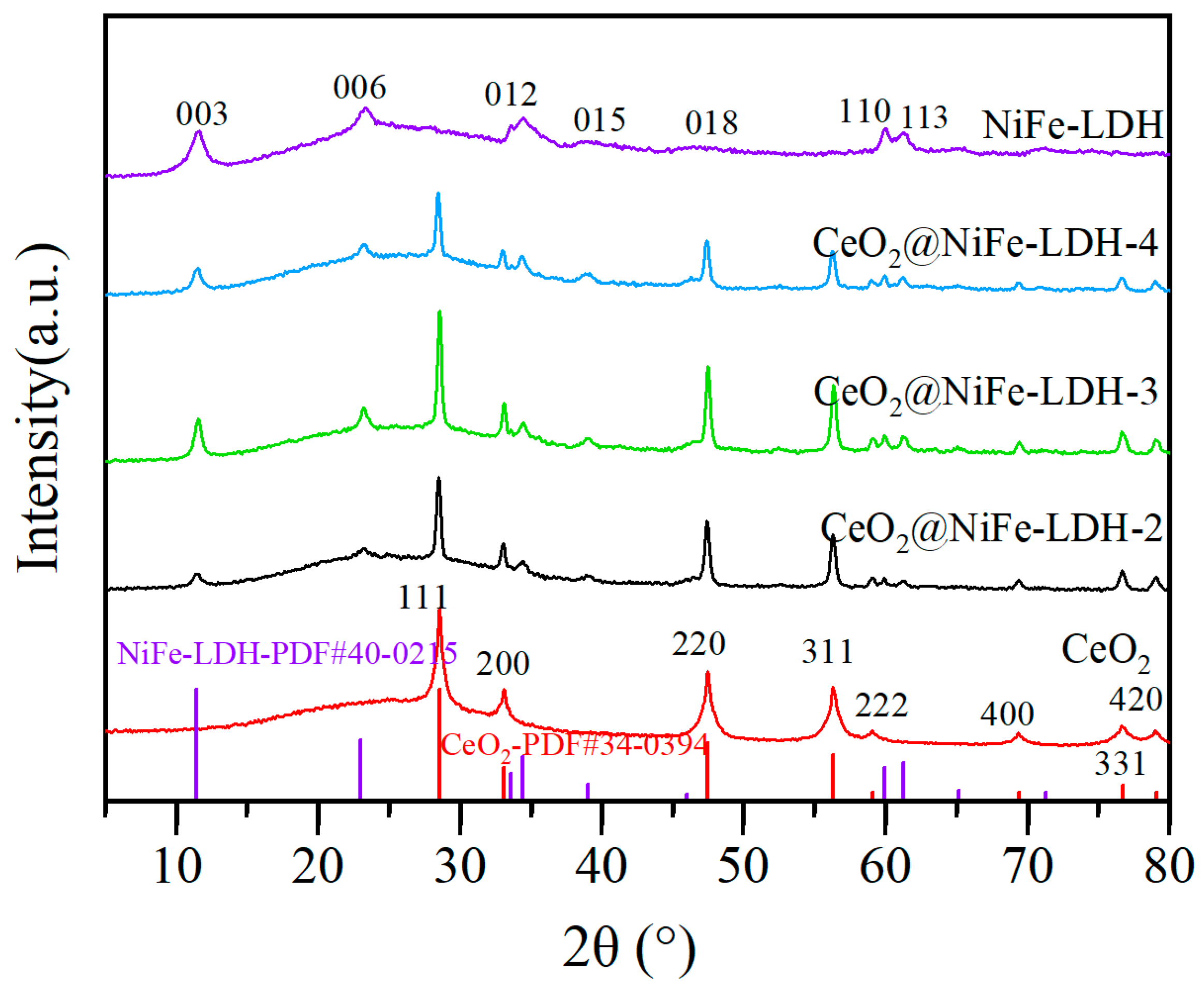
Figure 1, through X-ray powder diffraction (XRD) analysis, the composition and structure of CeO
2, NiFe-LDH, and the CeO
2@NiFe-LDH heterostructure were explored. The characteristic diffraction peaks at 2θ = 28.5, 33.0, 47.4, 56.3, 59.0, 69.3, 76.6 and 79.0 were corresponded to (111), (200), (220), (311), (222), (400), (331) and (420) planes of CeO
2 (JCPDS No. 34-0394), respectively. The diffraction peaks at 2θ = 11.5, 23.3, 34.5, 39.0, 46.4, 60.0 and 61.3 were attributed to (003), (006), (012), (015), (018), (110) and (113) planes of NiFe-LDH (JCPDS No. 40-0215) [
24]. The XRD pattern of CeO
2@NiFe-LDH retains the characteristic diffraction peaks of both NiFe-LDH and CeO
2. Moreover, compared with pristine CeO
2 and NiFe-LDH, no new diffraction peaks appear in the composite material, which demonstrates the successful fabrication of the nanocomposite structure.
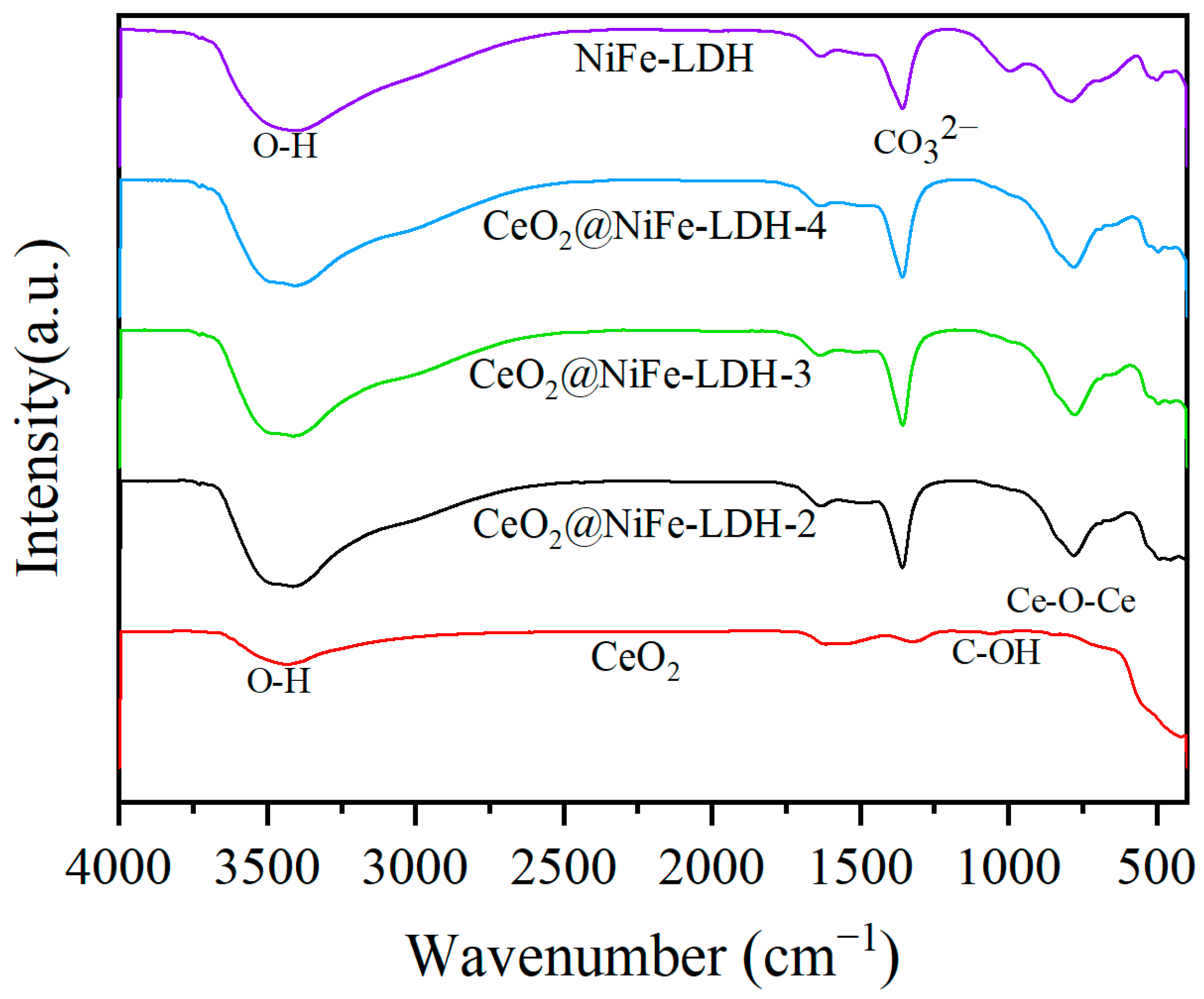
The FT-IR spectra of CeO
2, NiFe-LDH, and CeO
2@NiFe-LDH heterostructure were shown in
Figure 2. The as-synthesized pristine NiFe-LDH displays an obvious wide and high-intensity absorption band spanning 3440–3460 cm
−1, which stems from stretching vibrations of O-H bonds. Such hydroxyl sources cover two parts: hydroxyl groups exposed on the outermost surface of layered NiFe-LDH and crystalline water trapped between adjacent LDH layers. A weak-to-medium absorption signal appearing at approximately 1640 cm
−1 matches the bending vibration mode of H-O-H bonds from interlayer water. In the wavenumber range of 1350–1360 cm
−1, the detectable sharp absorption band serves as the diagnostic peak for interlayer carbonate anions (CO
32−). In the low-wavenumber region of 500–1000 cm
−1, a series of characteristic peaks can be ascribed to lattice vibrations generated by metal-oxygen (M-O) bonds in the layered skeleton of NiFe-LDH. For pure CeO
2, the broad peak at around 3450 cm
−1 and the peak at 1630 cm
−1 were attributed to the O-H stretching vibrations of adsorbed water molecules. The peak at approximately 1070 cm
−1 could be attributed to the C-OH stretching vibration. The peak below 1000 cm
−1 could be coincident with the stretching vibration of Ce-O-Ce bond, which is the characteristic peak of CeO
2 [
25]. All the characteristic peaks of CeO
2 and NiFe-LDH were observed in the resulting CeO
2@NiFe-LDH composites. In addition, the peak intensity of CeO
2@NiFe-LDH at around 418 cm
−1 was sharply lower than that of bare CeO
2, since the in situ formed NiFe-LDH layer encapsulates CeO
2 nanoparticles, which verifies the formation of the CeO
2@NiFe-LDH heterostructure [
26].
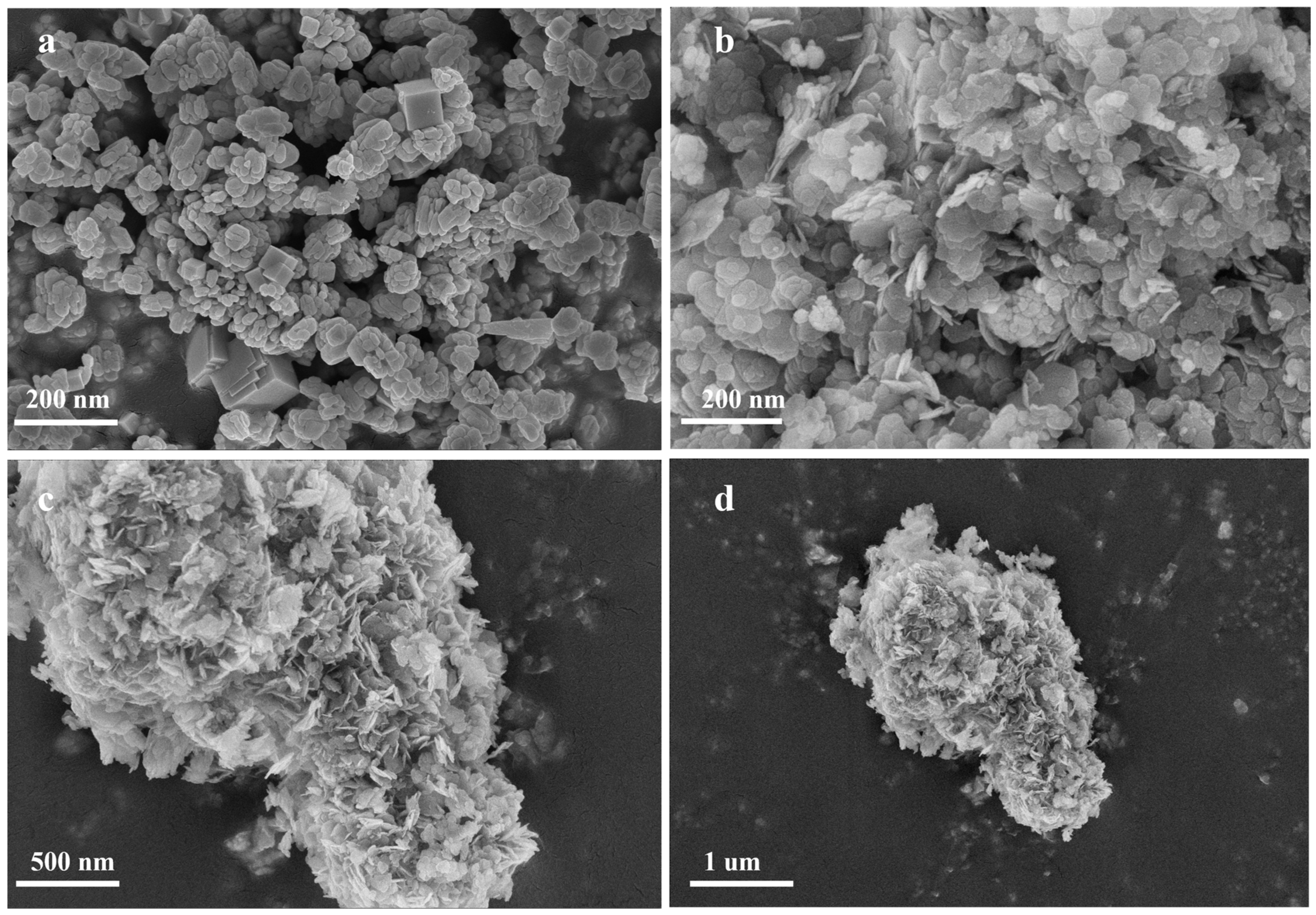
Figure 3 shows the SEM pictures of CeO
2 (a), NiFe-LDH (b) and CeO
2@NiFe-LDH-3 (c and d). SEM characterization results reveal that CeO
2 consists predominantly of irregular polygonal sheet-like particles sized 100–300 nm with noticeable agglomeration. Such morphology arises from differences in precursor decomposition, grain nucleation, and grain growth rates under calcination. While the particles are generally irregular polygons, well-defined cubic crystallites originating from the crystal habit of the cubic fluorite structure can be seen in local regions, indicating that crystal growth is regulated by its inherent crystal structure and confirming the successful fabrication of phase-pure CeO
2 [
27]. The SEM image of NiFe-LDH clearly showed the plate-like structure with regular and orderly stacking. These layers were relatively thick and exhibited a uniform size distribution with the lateral dimension of approximately 80–150 nm. SEM images of the CeO
2@NiFe-LDH-3 nanocomposite clearly demonstrate that abundant NiFe-LDH nanosheets grow in situ on the surface of CeO
2 and form a loose and porous shell layer, thereby constructing a core–shell heterostructure successfully [
24].
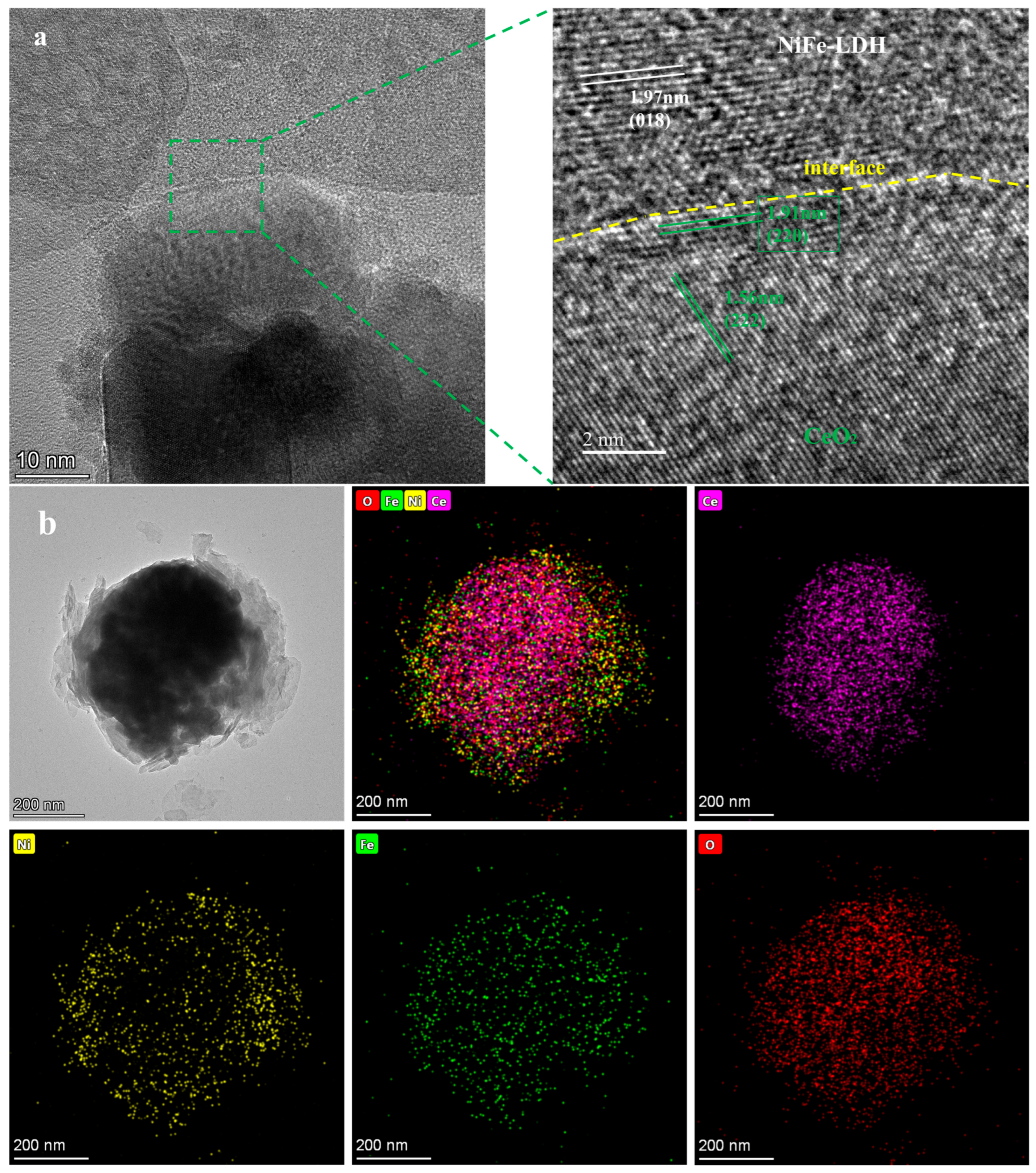
To identify CeO
2@NiFe-LDH-3 nanostructures more clearly, the composite material was further characterized by transmission electron microscopy. As can be seen in
Figure 4, it is worth noting that the heterostructure interface of CeO
2@NiFe-LDH-3 was shown in the HRTEM image (
Figure 4a), proving the formation of the CeO
2@NiFe-LDH-3 heterostructure. The interplanar spacing can be indexed to the (220) and (222) crystal planes of CeO
2, and the (018) crystal plane of NiFe-LDH. Furthermore, the EDX full spectrum and elemental mapping images of CeO
2@NiFe-LDH-3 (
Figure 4b) reveal that Ce, Ni, Fe and O elements are homogeneously distributed throughout the composite. The above characterization results fully confirm the successful fabrication of core–shell heterostructures [
28].
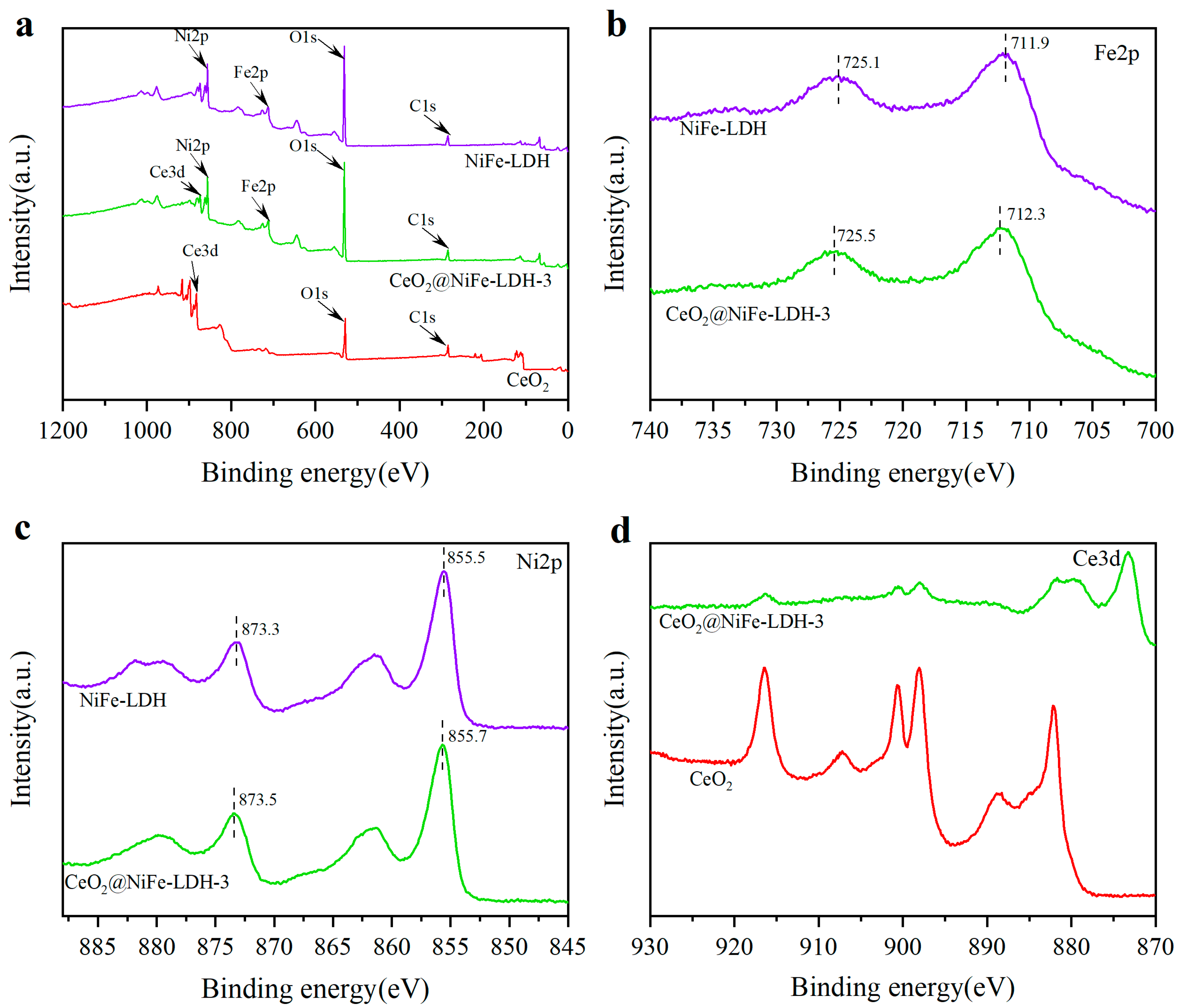
The XPS analysis of CeO
2, NiFe-LDH, and CeO
2@NiFe-LDH-3 nanohybrid was performed to further investigate the elemental compositions and chemical states. The results are shown in
Figure 5.
As shown in
Figure 5a, it can be clearly seen that the survey spectrum of the CeO
2@NiFe-LDH-3 composite was similar to that of NiFe-LDH, with indistinct characteristic peaks of Ce. This phenomenon may be due to the encapsulation of CeO
2 by NiFe-LDH nanosheets. As can be seen in
Figure 5b, the high-resolution Fe 2p XPS spectrum of NiFe-LDH displays two characteristic peaks at 711.9 eV and 725.1 eV, which are assigned to Fe 2p3/2 and Fe 2p1/2, respectively. In comparison, positive shifts in Fe 2p3/2 (712.3 eV) and Fe 2p1/2 (725.5 eV) are observed for CeO
2@NiFe-LDH-3, which is probably attributed to electron transfer induced by the construction of heterostructures [
29]. The Fe 2p spectrum of NiFe-LDH can be deconvoluted into eight peaks (
Figure S1a), the peaks at around 712.07 and 725.21 eV were attributed to Fe
3+ 2p3/2 and Fe
3+ 2p1/2, along with the satellite peaks at around 718.31 and 733.01 eV; the peaks at about 709.06 and 721.86 eV belong to Fe
2+ 2p3/2 and Fe
2+ 2p1/2, along with the satellite peaks at around 714.80 and 728.09 eV, indicating the coexistence of Fe
3+ and Fe
2+ [
30]. The same peak-fitting method is also applicable to the CeO
2@NiFe-LDH-3 composite. In the high-resolution Ni 2p spectra (
Figure 5c), the peaks of pure NiFe-LDH at 873.3 eV and 855.5 eV are assigned to Ni 2p1/2 and Ni 2p3/2, respectively. Similarly, positive shifts in the binding energies of Ni 2p1/2 and Ni 2p3/2 are observed for the CeO
2@NiFe-LDH-3 composite, revealing that electrons transfer from NiFe-LDH to CeO
2 during the formation of the heterostructure [
31]. The high-resolution Ce 3d spectrum of CeO
2 can be deconvoluted into ten peaks (
Figure S1b), which are divided into two sets of signals assigned to Ce 3d3/2 and Ce 3d5/2. Six peaks located at 916.36 eV, 907.25 eV, 900.62 eV, 898.02 eV, 888.63 eV and 882.06 eV were ascribed to Ce
4+, while the remaining four peaks at 879.9 eV, 897.5 eV, 903.16 eV and 884.64 eV are attributed to Ce
3+. These results verify the coexistence of Ce
4+ and Ce
3+ in CeO
2, with Ce
4+ as the dominant cerium species [
32].
Furthermore, as can be seen in
Figure 5d, the peak position of Ce 3d for the CeO
2@NiFe-LDH-3 composites shifted to lower binding energy, and the intensity of Ce 3d diffraction peaks was markedly weaker than that of pure CeO
2. This phenomenon can be ascribed to the encapsulation of CeO
2 cores by NiFe-LDH shells. Nevertheless, distinct Ce 3d signals can still be clearly detected in the composite system, which indicates that the NiFe-LDH shell is thin and porous, further verifying the successful construction of core–shell heterostructures. The unexpected peak observed for CeO
2@NiFe-LDH-3 within the binding energy range of 870–880 eV originates from orbital overlap between Ce 3d and Ni 2p.
It should be noted that the contribution of oxygen vacancies has not been experimentally evaluated via high-resolution O 1s XPS in the present work. Although oxygen vacancies are not the primary focus of this study, we cannot rule out their potential influences on charge transfer and catalytic reactivity, which deserves further exploration in future investigations.
2.2. Optical and Electrochemical Properties
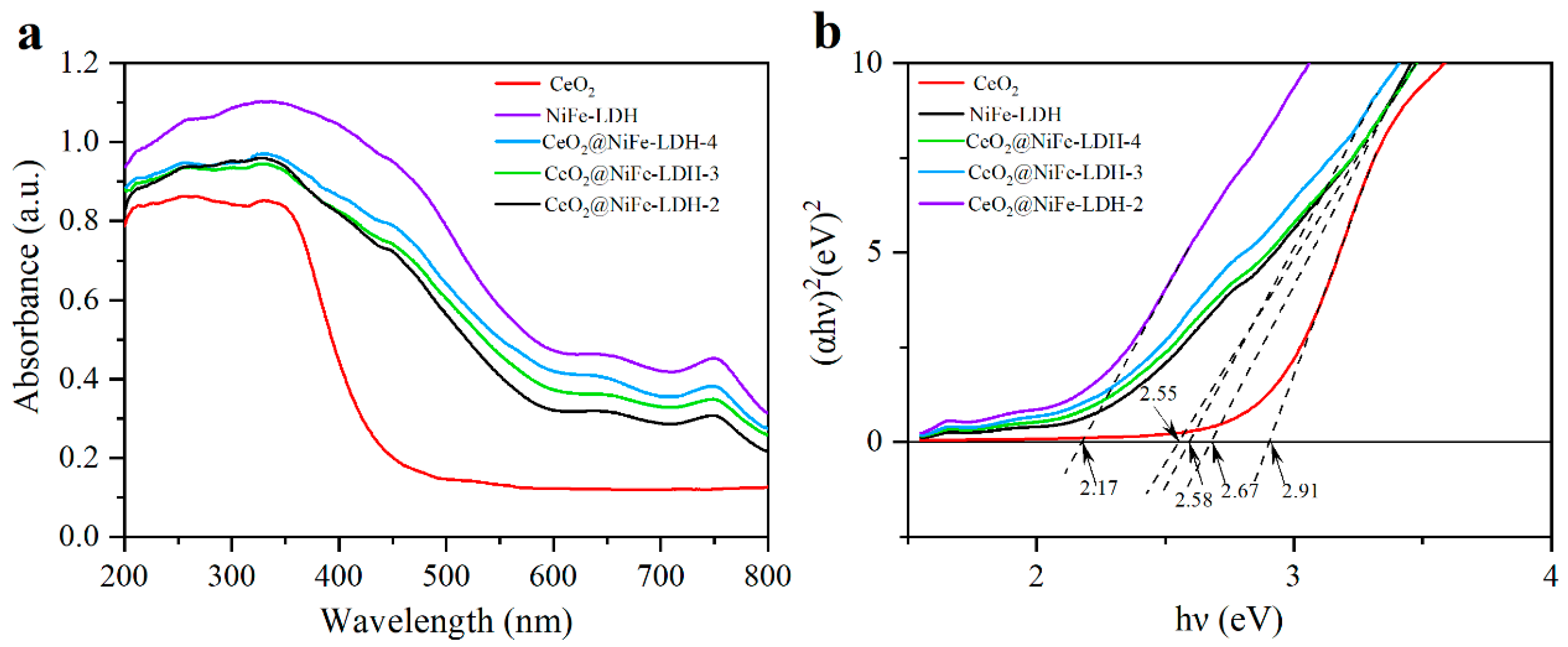
UV-visible diffuse reflectance spectra (DRS) were utilized to elucidate the optical properties of the prepared samples. The UV-Vis absorption spectra of CeO
2, NiFe-LDH, CeO
2@NiFe-LDH-2, CeO
2@NiFe-LDH-3 and CeO
2@NiFe-LDH-4 are presented in
Figure 6a. As can be seen from the spectra, all the samples exhibited absorption peaks in the ultraviolet-visible range. Pure CeO
2 exhibits weak visible-light absorption with low overall absorbance in the visible region, whereas NiFe-LDH displays prominent visible-light responsiveness with intense absorption bands in the range of 400–600 nm. Furthermore, two characteristic broad absorption bands centered at 650 nm and 760 nm are observed, corresponding to d-d transitions of octahedral Ni
2+ and Fe
3+ in the LDH layers, respectively. Compared with pure CeO
2, the CeO
2@NiFe-LDH composites display a red shift in absorption edges, and the absorption edge extends to most of the visible light region that overlaps with that of NiFe-LDH. The results suggest that the composite of CeO
2 and NiFe-LDH possesses remarkably enhanced visible light utilization efficiency, which favors visible light absorption and confirms strong interactions between CeO
2 and NiFe-LDH [
28].
The band gap of all samples is calculated via the Kubelka–Munk formula: (αhν)
2 = K (hν-E
g). Where α, h, v, K and E
g are the absorption coefficient, Planck’s constant (J s), light frequency (s
−1), proportionality coefficient and band gap energy (eV). The band gaps of the samples can be calculated by plotting (αhν)
2 versus hν based on UV-Vis spectral data. As seen from the Tauc plot in
Figure 6b, the band gap energies of CeO
2, NiFe-LDH, CeO
2@NiFe-LDH-2, CeO
2@NiFe-LDH-3, and CeO
2@NiFe-LDH-4 were computed and determined as 2.91 eV, 2.17 eV, 2.67 eV, 2.55 eV and 2.58 eV, respectively. The heterostructures have band gap energies between those of CeO
2 and NiFe-LDH, implying that the construction of heterostructures via coupling CeO
2 with NiFe-LDH narrows the band gap, which further demonstrates that heterostructures possess higher visible light utilization efficiency than pure CeO
2 [
33]. Among all samples, CeO
2@NiFe-LDH-3 exhibits the narrowest band gap and the strongest visible light response capability.
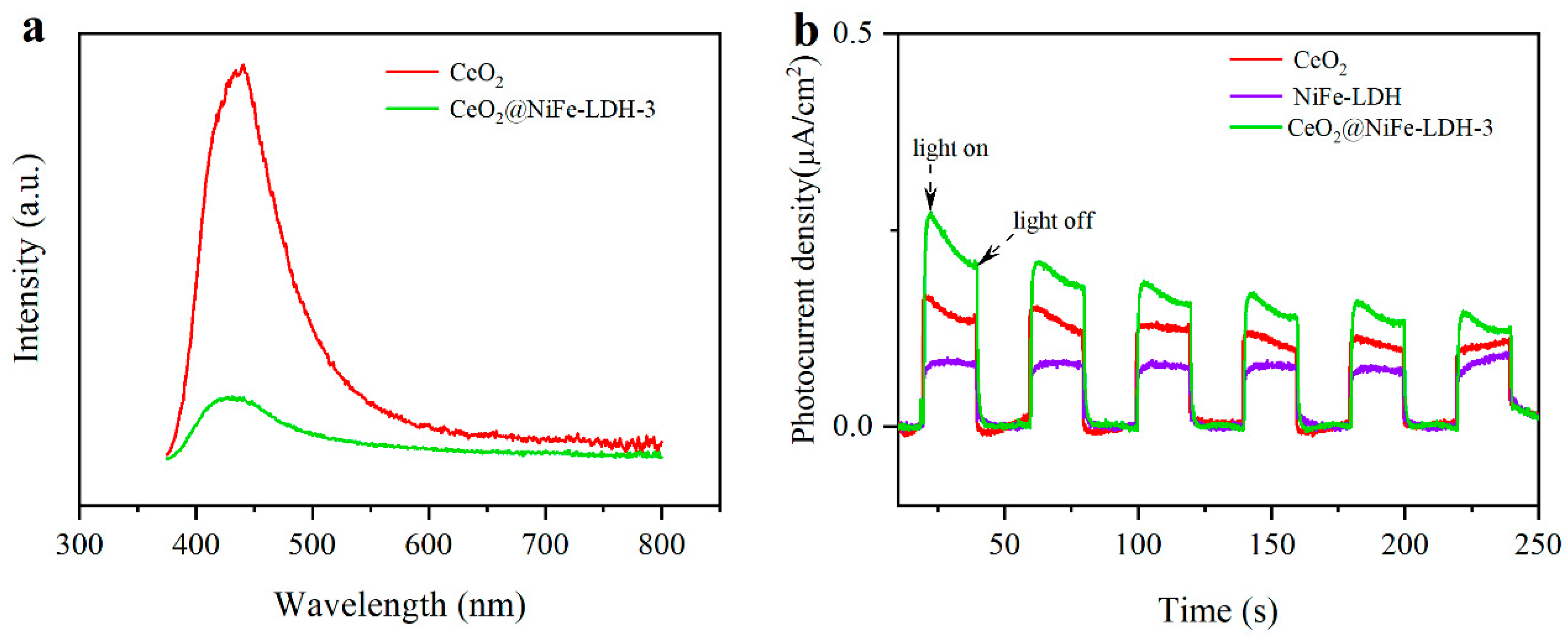
The separation and transfer efficiency of photogenerated charge carriers is another critical factor governing the photocatalytic activity of heterostructures. Apart from light absorption and the generation of electron-hole pairs, the separation efficiency directly determines the quantity of active species participating in surface reactions. Photoluminescence (PL) spectroscopy was applied to investigate the recombination rate of photogenerated electron-hole pairs over the prepared samples. As displayed in
Figure 7a, both CeO
2 and CeO
2@NiFe-LDH-DH-3 exhibit photoluminescence (PL) emission peaks at approximately 440 nm under an excitation wavelength of 355 nm. The PL signal intensity of the CeO
2@NiFe-LDH-3 heterostructure is remarkably quenched compared with that of the single component. Such quenching effect originates from the synergistic interaction between NiFe-LDH and CeO
2, revealing that the heterostructure composite possesses a lower recombination rate of photogenerated charge carriers.
The enhanced charge transfer efficiency was also confirmed by the transient photocurrent response analyses.
Figure 7b showed the transient photocurrent response of the synthesized CeO
2, NiFe-LDH and CeO
2@NiFe-LDH-3 photocatalysts. The results showed that the immediate responses when the light is switched on and off can be observed for all samples. The photocurrent intensity of the CeO
2@NiFe-LDH-3 heterostructure was noticeably stronger than that of pristine CeO
2 and NiFe-LDH. As is well known, a higher photocurrent generally corresponds to more efficient separation and transfer of photogenerated charge carriers. This result is consistent with the photoluminescence (PL) analysis, collectively verifying the highly efficient separation and migration of photogenerated carriers within the heterostructure, with efficiency far superior to that of single components. It further confirms that intimate contact interfaces form between CeO
2 and NiFe-LDH, rather than a simple physical mixture [
34].
2.3. Photocatalytic Performance of Catalysts in the Selective Oxidation of Toluene
Having confirmed successful construction of CeO
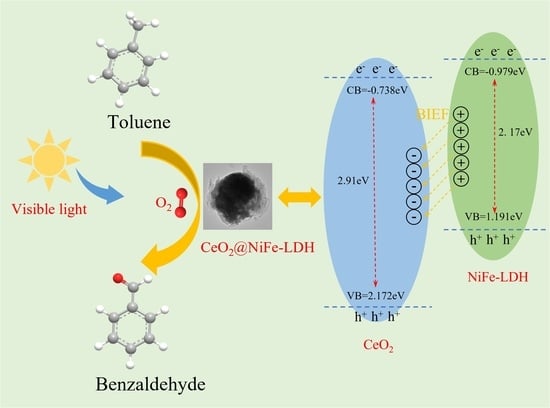
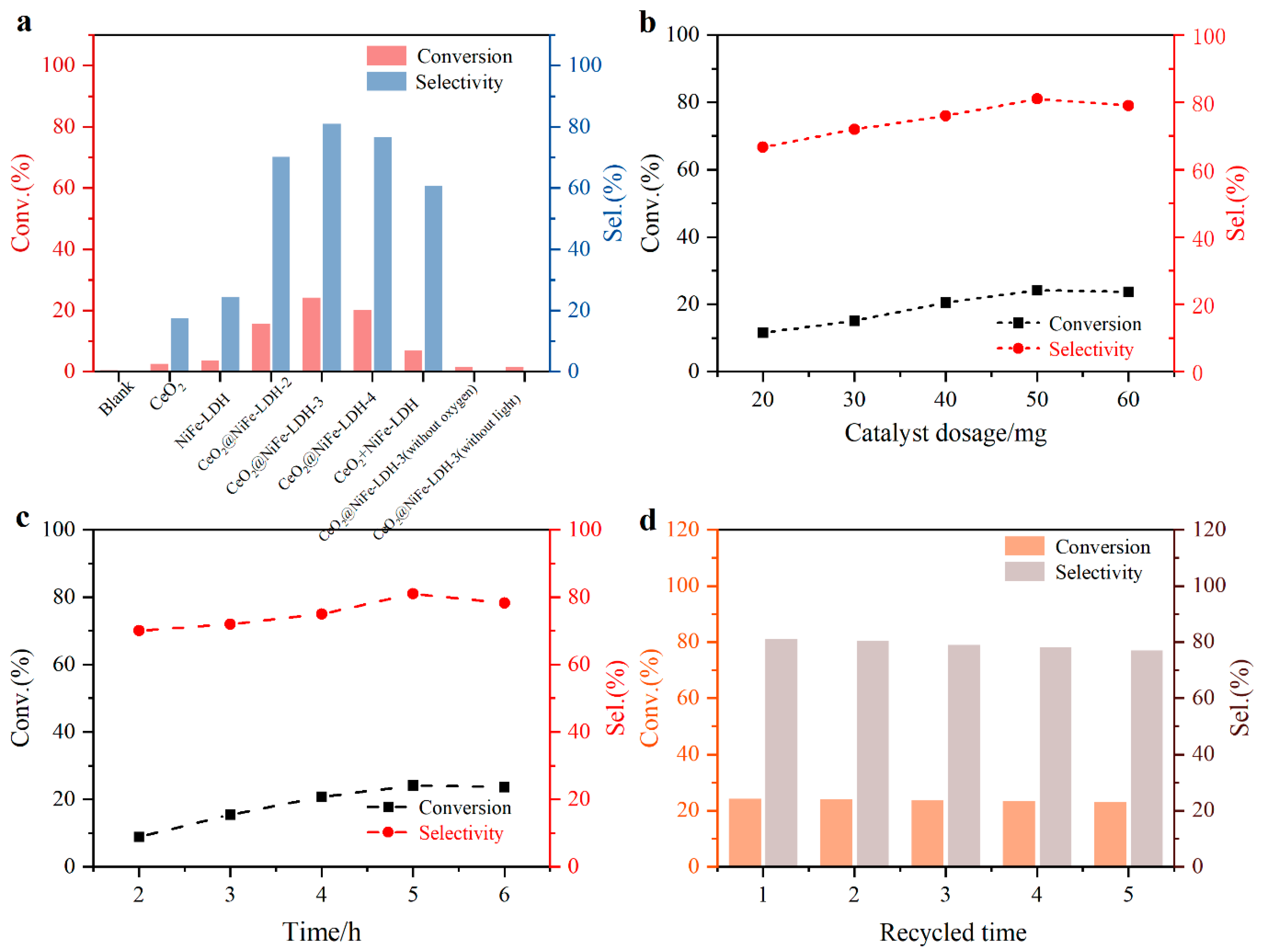
2@NiFe-LDH-3 heterostructure, we then turned our attention to evaluate its photocatalytic performance using toluene as a model substrate and molecular oxygen as a green oxidant under visible light. The corresponding results are presented in
Figure 8a. Meanwhile, as shown in
Figure S2, benzaldehyde was the major product over all tested catalysts, while the byproducts benzyl alcohol and benzoic acid were also detected.
As displayed in
Figure 8a, pristine NiFe-LDH exhibits better catalytic performance than bare CeO
2. The toluene conversion and product selectivity reach 3.6% and 24.4% for NiFe-LDH, while those of CeO
2 are 2.5% and 17.5%, respectively. This originates from the band gap of NiFe-LDH (2.17 eV), which is considerably narrower than that of CeO
2 (2.91 eV) and enables more efficient visible light utilization. However, despite its strong visible-light absorption capability, NiFe-LDH suffers from a high recombination rate of charge carriers, which leads to unsatisfactory oxidation efficiency. Although oxygen vacancies in CeO
2 can promote the separation of photogenerated charge carriers, the recombination of electron-hole pairs still occurs rapidly in single-phase CeO
2. As a result, both materials show low toluene conversion and benzaldehyde selectivity.
The construction of the CeO2@NiFe-LDH heterostructure achieves a prominent increase in toluene conversion and greatly boosted catalytic activity. The toluene conversion over CeO2@NiFe-LDH-2 reaches 15.7%, which is considerably higher than those of pristine CeO2 and pristine NiFe-LDH. Notably, all CeO2@NiFe-LDH photocatalysts exhibit a benzaldehyde selectivity of over 70%. Compared with CeO2@NiFe-LDH-2 (15.7% conversion and 70.1% selectivity) and CeO2@NiFe-LDH-4 (20.1% conversion and 76.5% selectivity), CeO2@NiFe-LDH-3 exhibits the optimal photocatalytic performance, with a toluene conversion of 24.2% and benzaldehyde selectivity of 81%.
With the core–shell structure, CeO2@NiFe-LDH-3 achieves optimal synergy throughout the multi-step reaction process. First, it possesses the narrowest band gap. Theoretically, this enables absorption of visible light across a broader wavelength range and thus generates more photogenerated electrons and holes. Second, the formed CeO2@NiFe-LDH heterostructure creates a built-in electric field that drives efficient separation and transfer of photogenerated carriers, suppresses carrier recombination, and produces abundant active species for surface reactions. Third, its shell has moderate thickness, which guarantees rapid carrier migration while exposing sufficient active sites for catalytic reactions. CeO2@NiFe-LDH-4 exhibits the thickest shell layer. The migration path of charge carriers from the inner CeO2 core to the surface NiFe-LDH shell becomes excessively long, leading to severe recombination of numerous carriers during transportation. This reduces the quantity of reactive species that can actually participate in catalytic reactions and thus impairs the photocatalytic performance. Compared with CeO2@NiFe-LDH-3, the band gap of CeO2@NiFe-LDH-4 slightly increases to 2.58 eV, further verifying that the electronic structure may be altered by the excessively thick shell.
The physically mixed sample of CeO2 and NiFe-LDH with a molar ratio of 1:3 delivers a toluene conversion of 6.8% and benzaldehyde selectivity of 60.7%, whose catalytic activity and selectivity are far inferior to those of the CeO2@NiFe-LDH-3 heterostructure. This result further demonstrates that the chemical interaction between CeO2 and NiFe-LDH serves as the critical factor for boosting photocatalytic performance. Blank control experiments were carried out under three separate conditions: without visible light irradiation, without oxygen, and without photocatalyst. Hardly any target product could be detected in any of the blank tests, which confirms that the reaction proceeds via an aerobic photocatalytic pathway. All catalytic activity originates from photocatalysis, indicating that the photocatalyst, visible light and oxidant are all indispensable for the reaction system.
Using CeO
2@NiFe-LDH-3 with optimal catalytic performance as the photocatalyst, the effects of catalyst dosage and irradiation time on the toluene oxidation performance were systematically investigated. As displayed in
Figure 8b, the toluene conversion increases from 11.6% to 24.2% as the catalyst dosage rises from 20 mg to 50 mg. At this stage, the number of active sites acted as the dominant rate-limiting factor for the reaction; the toluene conversion rapidly increased with the growing catalyst dosage. At a catalyst dosage of 50 mg, abundant active sites were available, and a balance was achieved among the generation and migration of photogenerated charges, reactant adsorption, and product desorption, corresponding to the maximum conversion and optimal selectivity. Further increasing the catalyst dosage to 60 mg led to a decline in photocatalytic activity, accompanied by a drop in toluene conversion to 23.7%. Excessive catalyst particles induced a light-shielding effect, which prevented the underlying catalyst from receiving sufficient light irradiation. Meanwhile, particle agglomeration reduced the effective reactive surface area, and overoxidation of the benzaldehyde product was likely aggravated. Collectively, these factors contributed to the simultaneous reduction in conversion and selectivity. As illustrated in
Figure 8c, the toluene conversion continuously improved as the irradiation time extended from 2 h to 5 h, while the benzaldehyde selectivity remained steadily above 70%. When the irradiation time was prolonged to 6 h, the benzaldehyde selectivity decreased, implying the occurrence of benzaldehyde overoxidation.
A comparison between the as-synthesized catalyst and previously reported heterogeneous photocatalysts (
Table S1) shows that bismuth-based catalysts have a well-established research system for toluene oxidation. Such catalysts generally achieve high benzaldehyde selectivity exceeding 84%, while most of them are limited by low toluene conversion. Composite photocatalysts based on metal sulfides and carbon nitride materials have been extensively investigated, both of which serve as high-performance photocatalysts. In this work, the CeO
2@NiFe-LDH catalyst exhibits outstanding photocatalytic activity for toluene conversion. It realizes a favorable trade-off between toluene conversion and benzaldehyde selectivity, and its overall catalytic performance surpasses most photocatalysts reported to date.
Under the optimal reaction conditions, the catalytic oxidation performance of CeO
2@NiFe-LDH-3 toward various toluene-derived aromatic substrates was further evaluated to explore its substrate compatibility, and the corresponding results are summarized in
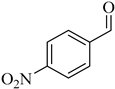
Table 1. This photocatalyst also exhibits outstanding catalytic activity toward toluene-based aromatic substrates. Nevertheless, o-chlorotoluene and o-xylene display lower reaction rates compared with p-chlorotoluene and p-xylene; the conversion efficiency of chlorotoluene is lower than that of toluene. This phenomenon arises because chlorine atoms act as electron-withdrawing groups and hinder the oxidation of methyl groups. P-Nitrotoluene bearing a strong electron-withdrawing nitro group, shows remarkably suppressed oxidation efficiency. In contrast, electron-donating substituents (p-methyl and p-methoxy groups) distinctly boost the oxidation efficiency of toluene derivatives. These observations reveal that the photocatalytic oxidation reaction is governed by electronic effects and steric hindrance effects [
17,
35]. Notably, no CO
2 production was detected throughout all catalytic tests, demonstrating that deep oxidation of the substrates does not occur over the CeO
2@NiFe-LDH-3 photocatalyst.
Considering the significance of catalyst cost for practical industrial applications, an ideal photocatalyst should possess favorable recyclability. Therefore, after each photocatalytic reaction, the CeO
2@NiFe-LDH-3 catalyst was recovered by centrifugation, washed with ethanol and deionized water, and then subjected to cyclic stability tests under identical reaction conditions to evaluate its stability and recyclability. As shown in
Figure 8d, nearly no obvious decline in toluene conversion and benzaldehyde selectivity was observed over CeO
2@NiFe-LDH-3 after five consecutive cycles. Fresh and spent catalysts were characterized by SEM and XRD, and the results (
Figure S3) demonstrate that no remarkable alterations occurred in their morphology and crystal phase structure, which verifies the excellent stability of CeO
2@NiFe-LDH-3 for visible-light-driven toluene oxidation.
2.4. Energy Band Structure and Plausible Mechanism
Mott-Schottky (M-S) curves were further used to estimate the carrier density, flat band potential, and conduction band potential of the catalysts. As displayed in
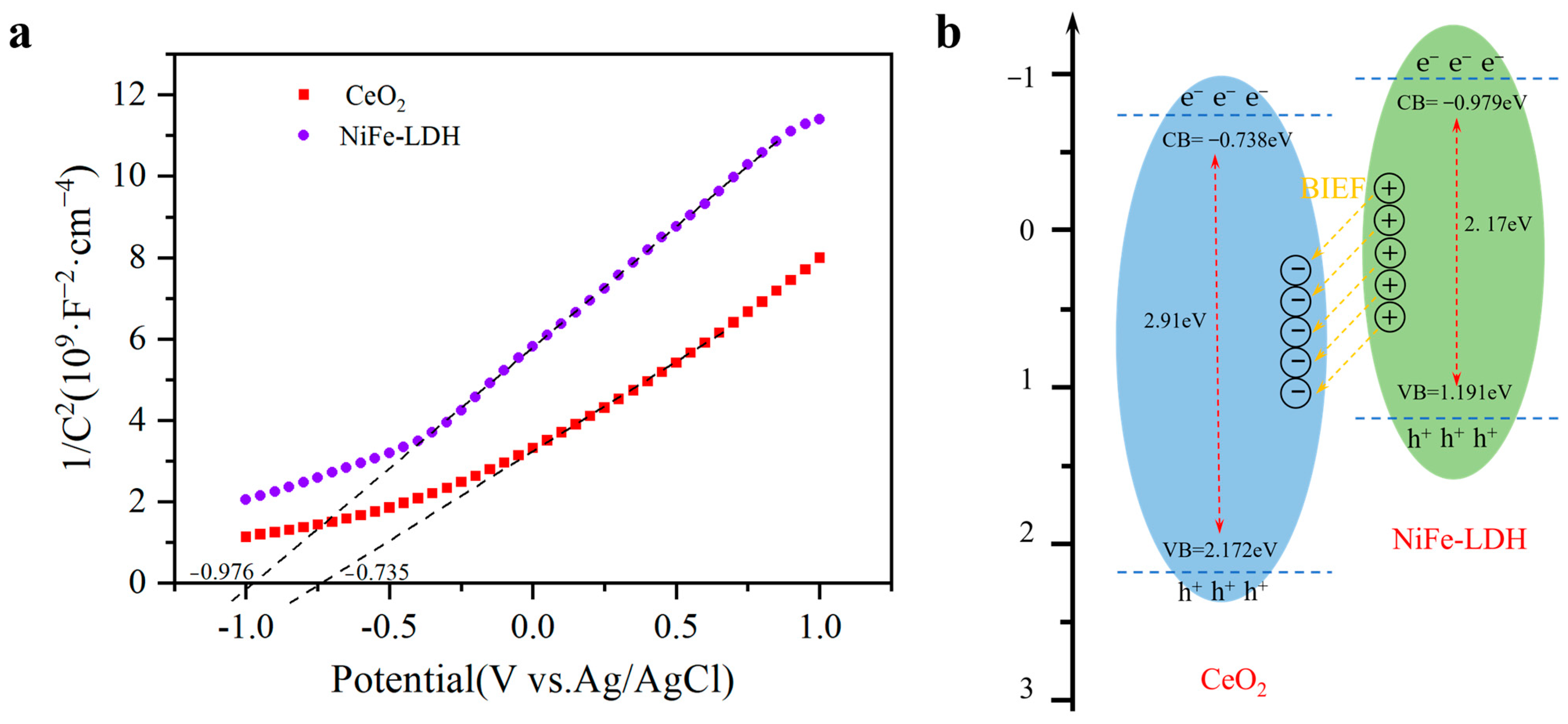
Figure 9a, positive slopes of M-S curves implied that both NiFe-LDH and CeO
2 were typical n-type semiconductors [
24].
Meanwhile, it is widely reported that the converted potential from the flat band (vs. Ag/AgCl) to the normal hydrogen electrode (vs. NHE) is about 0.197 V. Thus, the Mott-Schottky (M-S) curves were used for estimating the conduction band potential of the n-type semiconductors by extending the linear part of the curve to intercept the X-axis at a value equal to E
fb. According to the intercept on the X-axis, the flat band positions of CeO
2 and NiFe-LDH were −0.735 and −0.976 V vs. Ag/AgCl, corresponding to −0.538 and −0.779 V vs. the normal hydrogen electrode (NHE), respectively. Theoretically, the flat-band potential of n-type semiconductors is 0.2 V more positive than the conduction band position. Therefore, the conduction band positions of CeO
2 and NiFe-LDH were −0.738 and −0.979 V vs. NHE, respectively [
34]. Furthermore, the valence band potentials of CeO
2 and NiFe-LDH were calculated to be 2.172 and 1.191 V vs. NHE by combining the obtained band gaps from the transformed Kubelka–Munk function.
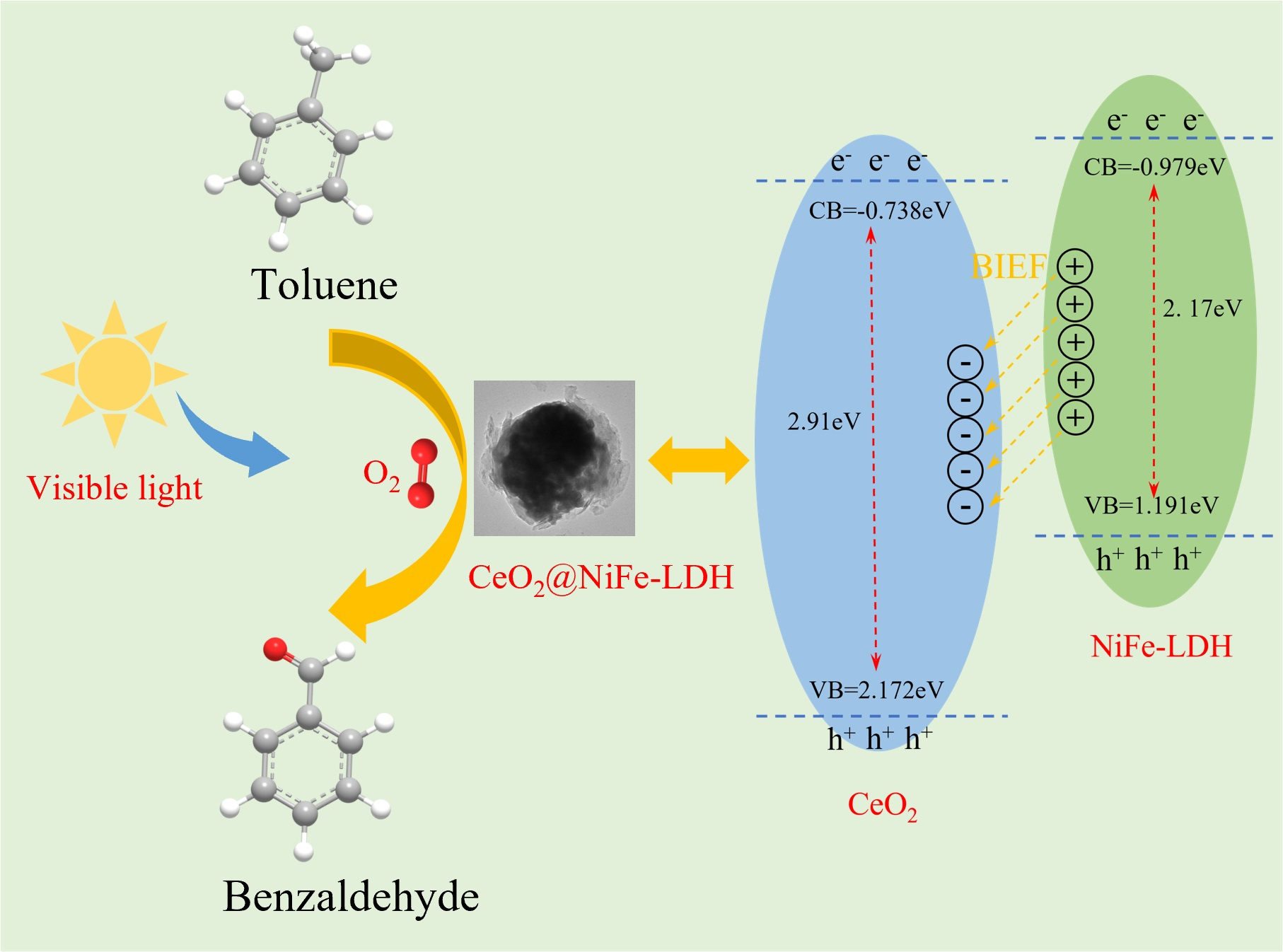
Finally, the energy band structure of CeO
2 and NiFe-LDH was shown in
Figure 9b. From the energy band alignment of CeO
2 and NiFe-LDH, it could be seen that the conduction band and valence band potentials of NiFe-LDH were more negative than those of CeO
2. Furthermore, the energy band structure of CeO
2@NiFe-LDH is staggered. Such energy band configurations enable accelerated migration and spatial segregation of charge carriers in the material [
28,
35].
Ultraviolet photoelectron spectroscopy (UPS) equipped with a He I UV excitation lamp was utilized to identify the heterostructure type of CeO
2@NiFe-LDH composites, which enables quantitative calculation of the work function (Φ) of materials via the formula Φ = hν − E
cut-off. In this formula, 21.2 eV is the incoming photon energy hν supplied by He I irradiation, while E
cut-off denotes the secondary electron cut-off energy [
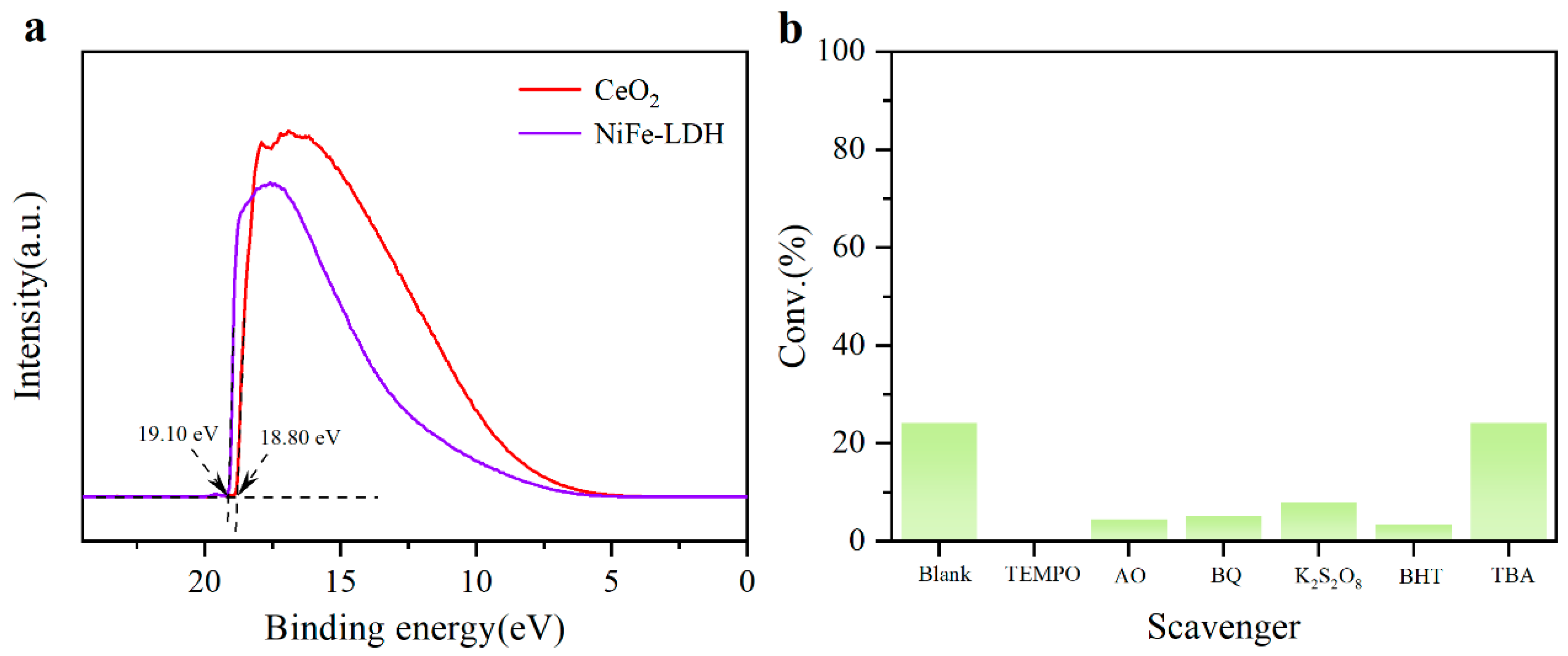
36]. By analyzing the secondary electron cut-off edges illustrated in
Figure 10a, the work functions of individual CeO
2 and NiFe-LDH samples are calculated to be 2.40 eV and 2.10 eV, respectively. Generally speaking, interfacial electrons migrate from semiconductors with lower work functions to those with higher work functions. Thus, when CeO
2 and NiFe-LDH were combined to form a heterostructure, the work function difference between CeO
2 and NiFe-LDH promotes the electron transfer between them until the Fermi energy level tends to be the same. As a result, electrons transfer from NiFe-LDH to CeO
2, which is consistent with the XPS results [
37]. Furthermore, the electron density of NiFe-LDH decreases, and the electron density of CeO
2 increases; thus, the built-in electric field is then formed at the interface (the field strength direction is NiFe-LDH→CeO
2). The formation of the built-in electric field (BIEF) is conducive to the acceleration of electron transfer, and the direction of electron flow is opposite to the direction of the field strength; that is, transfer from CeO
2 to NiFe-LDH. Upon illumination, photogenerated electrons on the conduction band of CeO
2 recombine with photogenerated holes from the valence band of NiFe-LDH. Such interfacial charge migration matches the characteristic S-scheme heterostructure mechanism, which effectively restrains the recombination of charge carriers inside pure CeO
2 and NiFe-LDH. As a result, powerful photogenerated holes and electrons that remain separated at the VB of CeO
2 and CB of NiFe-LDH can serve as active species to drive the target catalytic reaction [
38].
Dioxygen (O2) activation is important in photocatalytic oxidation processes when O2 is used as the sole oxidant. It is apparent that the reactive oxygen species (ROS) originate from O2. To illustrate the reaction mechanisms and how the ROS contributed to the conversion of toluene over the CeO2@NiFe-LDH photocatalyst, a series of radical trapping tests were performed in the presence of scavengers of the photogenerated charge carriers and different radicals.
As shown in
Figure 10b, the conversion of toluene to benzaldehyde was 24.2% after 5 h photoreaction with 50 mg CeO
2@NiFe-LDH as the catalyst (Blank). The reaction was completely inhibited when TEMPO (for all radicals) was introduced to the reaction system, which was attributed to the complete consumption of all radicals. That is to say, toluene was not directly oxidized by the photogenerated holes. When ammonium oxalate (AO) was introduced to trap holes or benzoquinone (BQ) was used to trap ·O
2−, the conversion of the photoreaction was also considerably reduced, and the effect of ·O
2− was greater, indicating that ·O
2− rather than the other oxidative species is the primary photogenerated reactive oxygen species and both photogenerated holes and ·O
2− played important roles in catalyzing the oxidation of toluene. In addition, the conversion of toluene was also inhibited after the addition of K
2S
2O
8 to trap the photogenerated electrons, and butylated hydroxytoluene (BHT) to trap carbon-centered radicals, signifying that e
− and carbon-centered radicals were also involved in the reaction. It should be noted that benzaldehyde conversion was almost unchanged in the presence of TBA (scavenger for·OH), suggesting that ·OH might not participate in the reaction process [
36,
39]. The active radicals generated in the photocatalytic toluene oxidation by the CeO
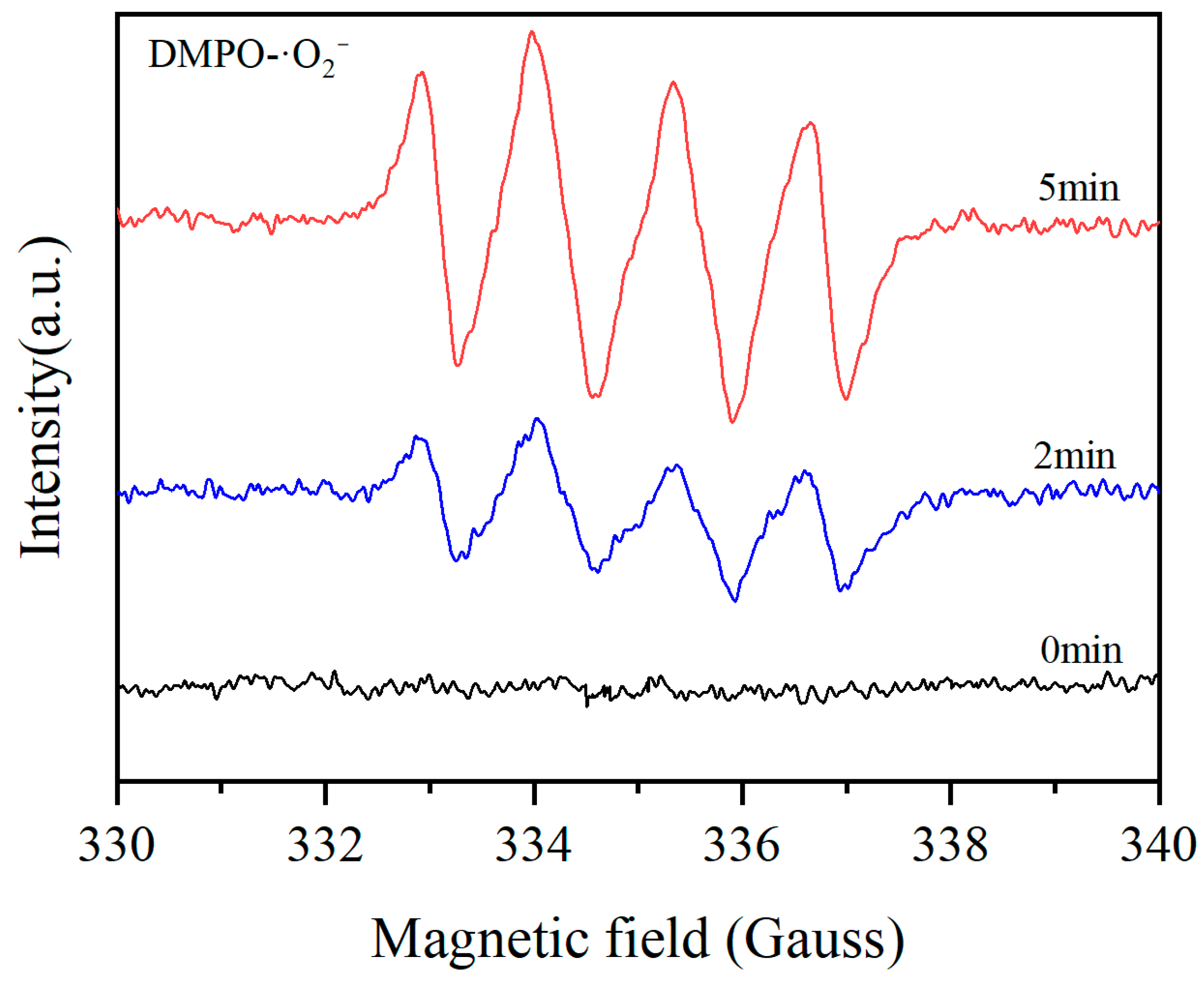
2@NiFe-LDH photocatalyst were further detected with EPR spectra during visible light irradiation. As seen in
Figure 11, the signal of free radicals cannot be observed under dark conditions, but after illumination, the typical EPR signals for the DMPO-·O
2− adducts can be detected, and the signal intensities increased with increasing irradiation time; this indicated that the synthetic CeO
2@NiFe-LDH catalyst can effectively activate O
2 to generate ·O
2− successfully. These findings demonstrate that photogenerated holes, electrons, superoxide radicals, and carbon-centered radicals serve as core active species for converting toluene to oxygen-containing products. The radical-mediated reaction pathway, with benzyl radicals as critical intermediates, is consistent with mechanistic findings from previous literature [
39].
The conduction band potentials of CeO
2 and NiFe-LDH are −0.738 and −0.979 V (vs. NHE), respectively. Both of them have more negative CB potentials than the O
2/·O
2− couple (E
0 = −0.33 V vs. NHE), implying that they are capable of producing ·O
2− in the presence of O
2 and light. Moreover, there is no obvious generation of ·OH because the photocatalysts possess more negative potentials (2.172 and 1.191 V (vs. NHE) for CeO
2 and NiFe-LDH, respectively) for the OH
−/·OH reaction; that is, with an oxidation potential of 2.31 V (vs. NHE) [
40,
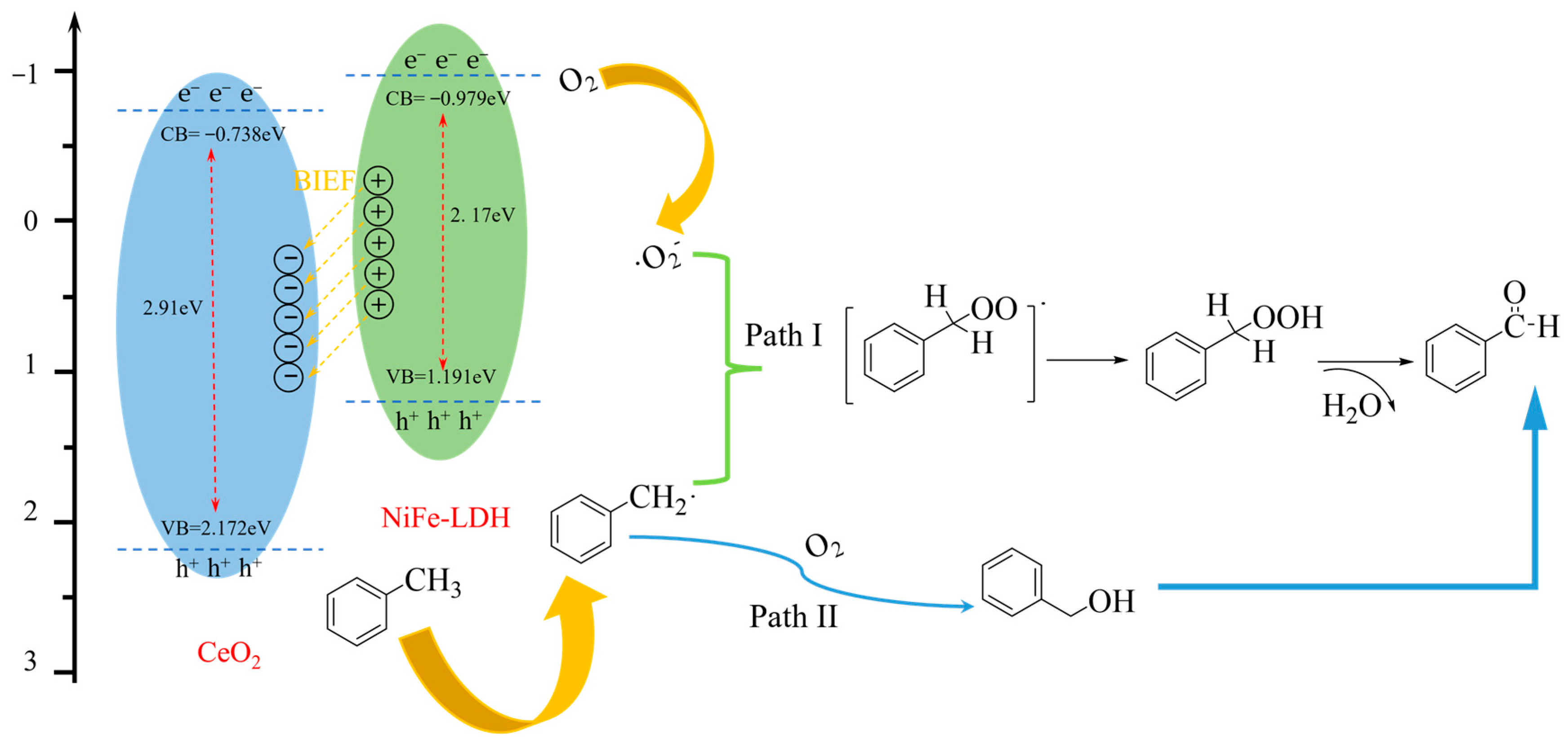
41]. Based on the above results and earlier reports, a probable reaction route for the photocatalytic oxidation of toluene to benzaldehyde can be hypothesized. As shown in
Figure 12, the band gaps of CeO
2 and LDH are 2.91 eV and 2.17 eV, respectively. Both of them can be excited under visible-light to generate electrons and holes. Due to the energy band induced to construct an S-scheme system, photogenerated electrons and holes are effectively separated and enriched in the conduction band of NiFe-LDH and the valence band of CeO
2, respectively. Photogenerated electrons with negative potentials (−0.979 V vs. NHE) in the CB of NiFe-LDH activate molecular oxygen to form superoxide radical (·O
2−); the photogenerated holes (h
+) at the VB of CeO
2, which stay in the initial energy bands, oxidize the C(sp
3)-H bond in toluene to the carbon-centered (benzyl) radicals, respectively. The generated ·O
2− oxidized the benzyl radicals to the peroxy radicals; meanwhile, a portion of benzyl radicals reacted with O
2 molecules to generate benzyl alcohol. The formed peroxy radicals and benzyl alcohol were transformed into the product (benzaldehyde) via dehydration and oxidative dehydrogenation, respectively.