Article

Catalytic Cracking Process of 1-Pentene over H-ZSM-5 Molecular Sieves with Different Silica-Alumina Molar Ratios at Ultra-High Temperatures

1
State Key Laboratory of Petroleum Molecular and Process Engineering, Research Institute of Petroleum Processing, Sinopec, Beijing 100083, China
2
State Key Laboratory of Mesoscience and Engineering, Institute of Process Engineering, Chinese Academy of Sciences, Beijing 100190, China
3
School of Chemical Engineering, University of Chinese Academy of Sciences, Beijing 100049, China
*
Author to whom correspondence should be addressed.
Catalysts 2026, 16(6), 537; https://doi.org/10.3390/catal16060537 (registering DOI)
Submission received: 12 May 2026 / Revised: 5 June 2026 / Accepted: 8 June 2026 / Published: 10 June 2026

Abstract

To investigate the modulation effects of high temperature and molecular sieve acidity on olefin cracking pathways and product selectivity, the catalytic cracking performance of 1-pentene was systematically studied under catalytic cracking temperatures of 700, 750 and 800 °C over H-ZSM-5 molecular sieves with silica-alumina molar ratios (SAR) of 23, 42 and 95. The contributions of catalytic cracking and thermal cracking were quantified, and the synergistic effects of temperature and SAR on monomolecular cracking, bimolecular cracking, confined catalytic radical (CCR) reaction and side reactions were analyzed by composition of the cracking products. Results showed that catalytic cracking dominated the cracking of 1-pentene over H-ZSM-5 in 700–800 °C. Higher temperature promoted monomolecular cracking and CCR, thus significantly increasing ethylene selectivity. Lower SAR enhanced acidity and catalytic cracking activity but intensified aromatization and C5+ formation. HZ-95 with weak acidity favored bimolecular cracking and exhibited low ethylene selectivity. HZ-42 achieved the optimal performance at 800 °C, with 1-pentene conversion of 98.80% and ethylene molar selectivity of 82.41%; both hydrogen transfer reactions and methane formation were effectively suppressed. This work provides mechanistic insights and theoretical support for the targeted catalytic cracking to olefins (TCO) process.

1. Introduction

Low-carbon olefins refer to a class of unsaturated hydrocarbon compounds containing two to four carbon atoms. Among them, ethene (C2H4) serves as the most pivotal core product. With excellent reactivity, ethene can undergo a series of fine chemical reactions including polymerization, copolymerization, oxidation and hydrogenation, and is widely applied in the preparation of key materials such as synthetic fibers, general plastics, engineering plastics and synthetic rubber. It plays an irreplaceable strategic role in ensuring the supply of daily living materials and promoting the upgrading of high-end manufacturing industries [1].
The global ethylene production industry has presently formed a diversified technological landscape, among which steam cracking and catalytic cracking represent the two most widely applied routes [2]. Steam cracking proceeds predominantly via thermal cracking. To overcome inherent thermodynamic and kinetic limitations, the process requires operation at elevated temperatures (>800 °C), resulting in high energy consumption and substantial CO2 emissions, which fail to meet increasingly stringent economic and environmental requirements [2,3]. In contrast, conventional fluid catalytic cracking processes mainly employ alkanes as feedstocks. During alkane cracking, each C–C bond cleavage generates one olefin molecule accompanied by one alkane molecule. Such paired product distribution restricts the utilization efficiency of carbon and hydrogen atoms. Olefin molecules exhibit high reactivity and can be readily activated over Brønsted (B) acid sites of molecular sieves, followed by further cracking into light olefins. Specifically, the cracking mechanisms of olefins include the carbocation mechanism and the free-radical mechanism. The former can be divided into monomolecular and bimolecular pathways based on the reaction behavior of carbocations. In monomolecular cracking, large olefins are protonated to form carbocations, which then undergo β-scission to produce two small olefins. In bimolecular cracking, olefins are first protonated into carbocations, followed by oligomerization with another olefin molecule and subsequent cracking [4]. Taking pentene as an example, one pentene molecule mainly yields one ethene and one propene molecule via monomolecular cracking, whereas bimolecular cracking preferentially produces propene and butene. According to the carbocation mechanism, even if pentene is completely cracked via the monomolecular pathway, the upper limit of the ethene-to-propene molar ratio is approximately unity, making it difficult to enhance ethene yield. The free-radical mechanism includes thermal cracking and confined catalytic radical reaction (CCR). In thermal cracking, hydrocarbon molecules first decompose into two free radicals, followed by hydrogen abstraction, decomposition, addition, and other reactions to produce small molecules and new radicals for chain propagation [5]. This process proceeds without catalysts but involves extensive free-radical generation, leading to a complex reaction network and high methane selectivity [6]. Recently, Yang et al. reported the CCR pathway of pentene over H-ZSM-5 molecular sieves [7]. At high temperatures (700 °C), Brønsted acid sites (BAS) in the molecular sieve can dehydrogenate to form [AlO4]0 sites. Pentene molecules then undergo C–H bond cleavage at these sites to generate C5H9• radicals with simultaneous regeneration of BAS. The C5H9• radicals undergo confined cracking inside the molecular sieve channels (Equation (1)). In this process, the formation energy barrier of ethylene is lower than that of propene, thereby achieving an ethene-to-propene molar ratio exceeding the theoretical upper limit of conventional catalytic cracking.
C5H9• → C2H4 + C3H5
In addition to the main cracking reaction, the catalytic cracking of olefins is frequently accompanied by parallel or tandem side reactions including hydrogen transfer, oligomerization, cyclization and aromatization [8]. Consequently, apart from light olefins such as ethene and propene, the product composition of olefin cracking generally contains hydrogen, methane C2–C4 alkanes and C5+ components, which reflects the complexity of the reaction network involved in catalytic conversion of olefins.
Based on the inherent advantages and characteristics of the olefin cracking reactions, Xu et al. [9] proposed the technical concept of targeted catalytic cracking to olefins (TCO) using olefins as feedstocks, aiming to optimize the production route of light olefins. Systematic investigations have been conducted on the reaction conditions of the TCO process. Experimental results indicate that within the temperature range of 550–700 °C, the contribution of the monomolecular cracking pathway of olefins increases remarkably with the rise in reaction temperature, demonstrating that high-temperature conditions are more favorable for the formation of ethene and propene [10]. Even when the reaction temperature reaches 750 °C, the proportion of catalytic cracking in pentene cracking remains as high as 80%, while the contribution of thermal cracking is relatively limited [11,12]. Accordingly, the core characteristics of TCO technology can be summarized as follows. First, this technology substantially enhances the selectivity toward ethene and propene while effectively suppressing the formation of small-molecule alkanes such as methane, thereby improving carbon atom utilization efficiency. Second, precise regulation of the C–C bond cleavage process throughout the reaction can be realized, providing critical technical support for the efficient and flexible regulation of light olefin production [13].
In terms of catalyst selection, ZSM-5 molecular sieve exhibits excellent performance in promoting molecular diffusion and improving reaction selectivity owing to the unique pore system constructed by its MFI topological structure. Research conducted by Yang et al. [10] demonstrates that, compared with Y-type molecular sieve, pentene tends to generate ethene via the monomolecular pathway over ZSM-5 molecular sieve, accompanied by a lower proportion of hydrogen transfer reactions. Meanwhile, CCR reactions can also proceed over ZSM-5 at high temperatures, which further elevates ethene yield [7]. These findings confirm the applicability of ZSM-5 molecular sieve in the TCO process. The silica-to-alumina ratio (SAR) represents one of the key parameters for regulating the physicochemical properties of ZSM-5 molecular sieve. Variation in SAR directly affects the strength and spatial distribution of acid sites, thereby exerting a significant influence on catalytic reaction behaviors. Rational adjustment of the SAR of ZSM-5 molecular sieve enables effective regulation of product distribution in catalytic cracking [14,15].
At present, research on the high-temperature reaction conditions involved in the TCO process is mainly concentrated in the range of 550–700 °C [7,10,11,12,13]. Zhang et al. [16] employed the Gibbs free energy minimization method to investigate the thermodynamic equilibrium distribution during olefin catalytic cracking. It was found that the equilibrium yield of propene reaches a maximum at approximately 650 °C, while the equilibrium yield of ethene increases significantly above 700 °C. The upper limit of ethene formation is governed by thermodynamic equilibrium, necessitating a further elevation of reaction temperature to improve ethene yield. Nevertheless, studies on olefin cracking reactions above 700 °C remain insufficient. According to Xu et al. [17], the cracking pathway of pentene is significantly affected by temperature. At 530 °C, bimolecular cracking via the carbocation mechanism dominates. With increasing temperature, the contributions of the monomolecular cracking pathway and free-radical reactions gradually rise. It is predicted that free-radical reactions become dominant above 750 °C, yet this prediction still requires experimental verification. Furthermore, there is a lack of systematic understanding regarding the effects of ZSM–5 molecular sieves with different SAR values on cracking reactions under ultra-high temperature conditions.
Accordingly, further exploration is essential to clarify the cracking pathways and product distribution rules of pentene in the high-temperature region, as well as the influence of the silica-alumina ratio, so as to provide theoretical support for the optimized operation of the TCO process. In this work, the cracking performance of 1-pentene over H-ZSM-5 molecular sieves with different silica-alumina ratios was investigated at reaction temperatures of 700 °C, 750 °C and 800 °C with a space time of 3.18 × 10⁻¹ mg⋅mL−1⋅min. The differences in product distribution under different conditions and the underlying mechanisms were discussed.

2. Result and Discussion

2.1. Characterization of H-ZSM-5 Molecular Sieves

The elemental compositions of different H-ZSM-5 molecular sieves were analyzed by XRF, and the results are listed in Table 1. The prepared samples were denoted as HZ-23, HZ-42 and HZ-95 according to the SAR of each molecular sieve. As shown in Table 1, the phosphorus loadings of the three zeolite samples differ. The function of phosphorus modification is to anchor framework aluminum within the zeolite lattice, thereby inhibiting the removal of framework aluminum and enhancing the structural stability of the zeolite [18]. The variation in phosphorus content among the samples arises from the tailored modification conditions that are coordinated with the regulation of the silica-to-alumina ratio during the preparation process.
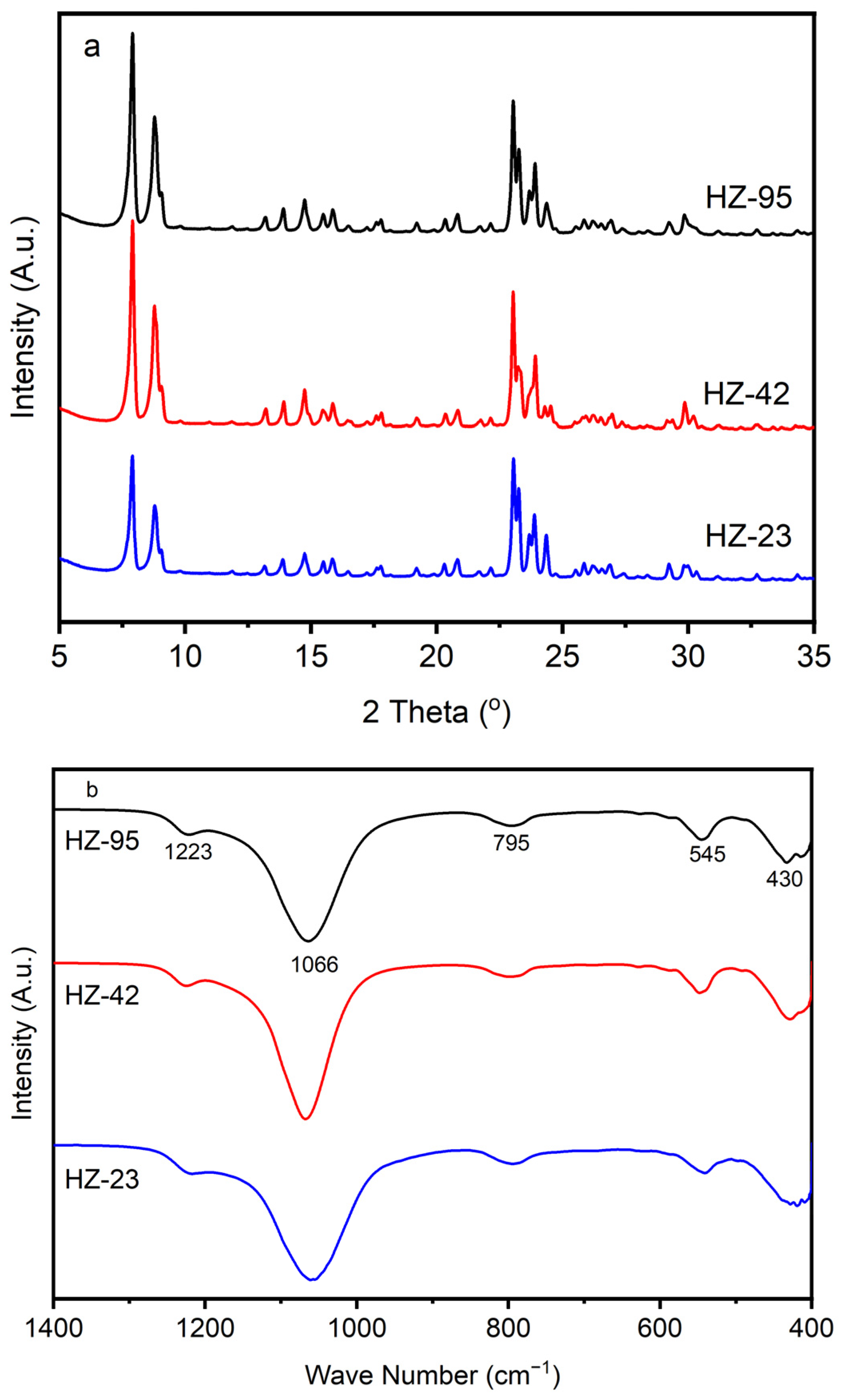
The XRD and FTIR spectra of each molecular sieve are displayed in Figure 1a and b, respectively. Typical characteristic diffraction peaks of MFI topology at 2θ = 7.9°, 8.8°, 23.1°, 23.9° and 24.4° are well detected for all samples, consistent with standard ZSM-5 PDF 44-0003. In the FTIR spectra, a characteristic band at 430 cm−1 is assigned to the bending vibration of [TO4] tetrahedral framework units (T denotes framework Si or Al atom) in the molecular sieve framework. The absorption peak at 545 cm−1 corresponds to the five-membered ring structure [20]. The band at 795 cm−1 is attributed to the symmetric stretching vibration of Si–O–Si bonds [21]. The peak at 1066 cm−1 originates from the stretching vibration of Si–OH groups [17], while the absorption at 1223 cm−1 is ascribed to the asymmetric stretching vibration of O–T–O linkages connecting [TO4] units [20,21]. The above characterization results confirm the well-preserved framework and favorable crystalline structure of all prepared samples.
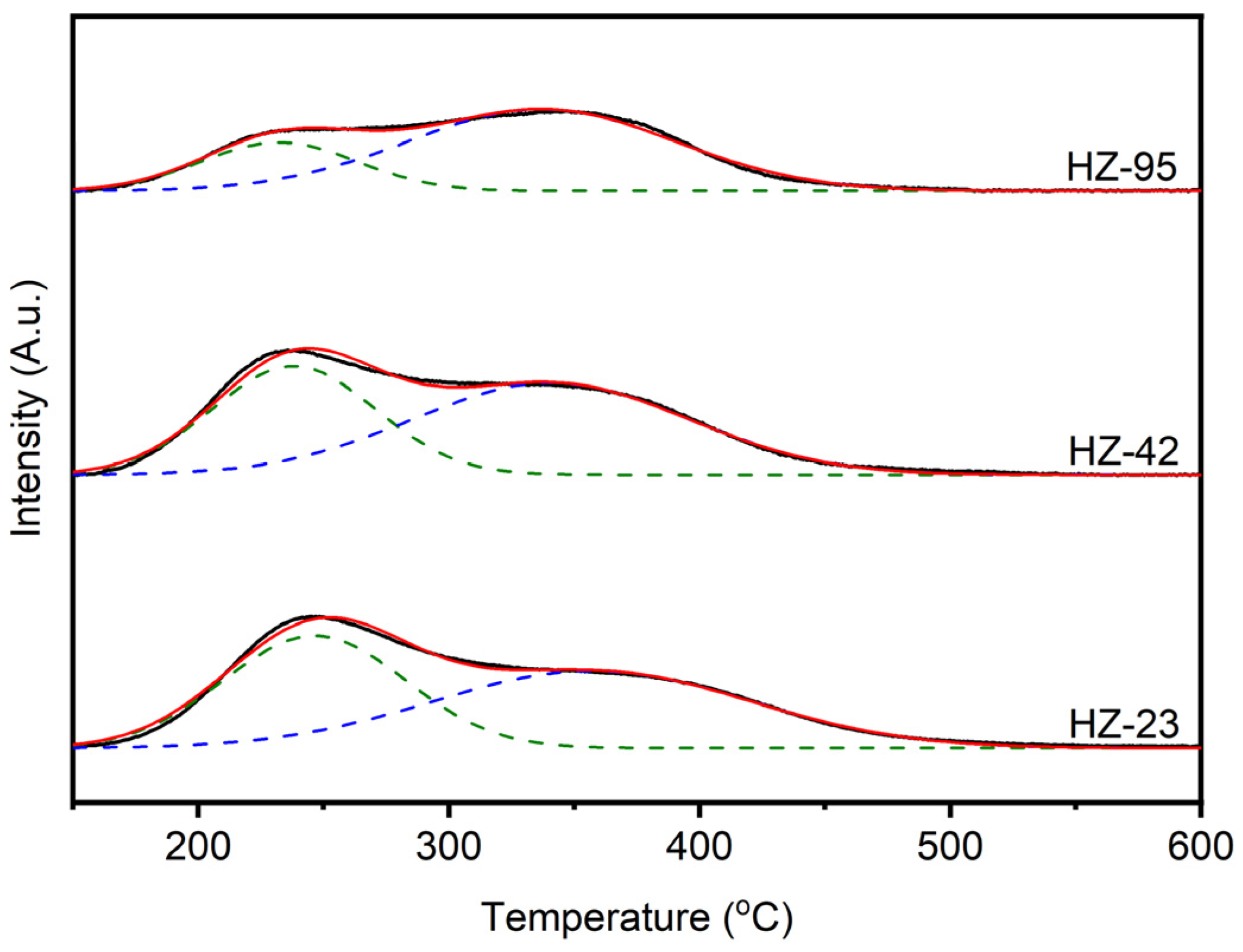
The NH3-TPD profiles of H-ZSM-5 molecular sieve samples with different SAR values are presented in Figure 2, and the corresponding acid amounts are summarized in Table 2. The TPD curves of all molecular sieves consist of two desorption peaks centered near 240 °C and 340 °C, which are assigned to the desorption of ammonia from weak acid sites and strong acid sites of molecular sieves, respectively [22]. With the increase of silica-alumina ratio, both desorption peaks shift toward lower temperature, indicating a gradual reduction in acidity strength. The total acid content of molecular sieves decreases as SAR rises, and the reduction extent of weak acid amount is more pronounced than that of strong acid amount [23].
The acid properties of each sample determined by Py-IR are listed in Table 3. The concentrations of B and L acid sites are calculated from the characteristic absorption bands at 1450 cm−1 and 1545 cm−1, respectively [24]. The total amounts of B acid and L acid are measured at 200 °C, while the contents of strong B acid and strong L acid are obtained at 350 °C. As indicated by the table, distinct differences exist in the acid properties of the prepared samples. Both the amounts of B acid and L acid decrease with the increase of SAR, which may impose remarkable effects on the catalytic cracking performance of molecular sieves.

2.2. Proportions of Catalytic Cracking and Thermal Cracking over H-ZSM-5 Molecular Sieves with Different SAR at Ultra-High Temperatures

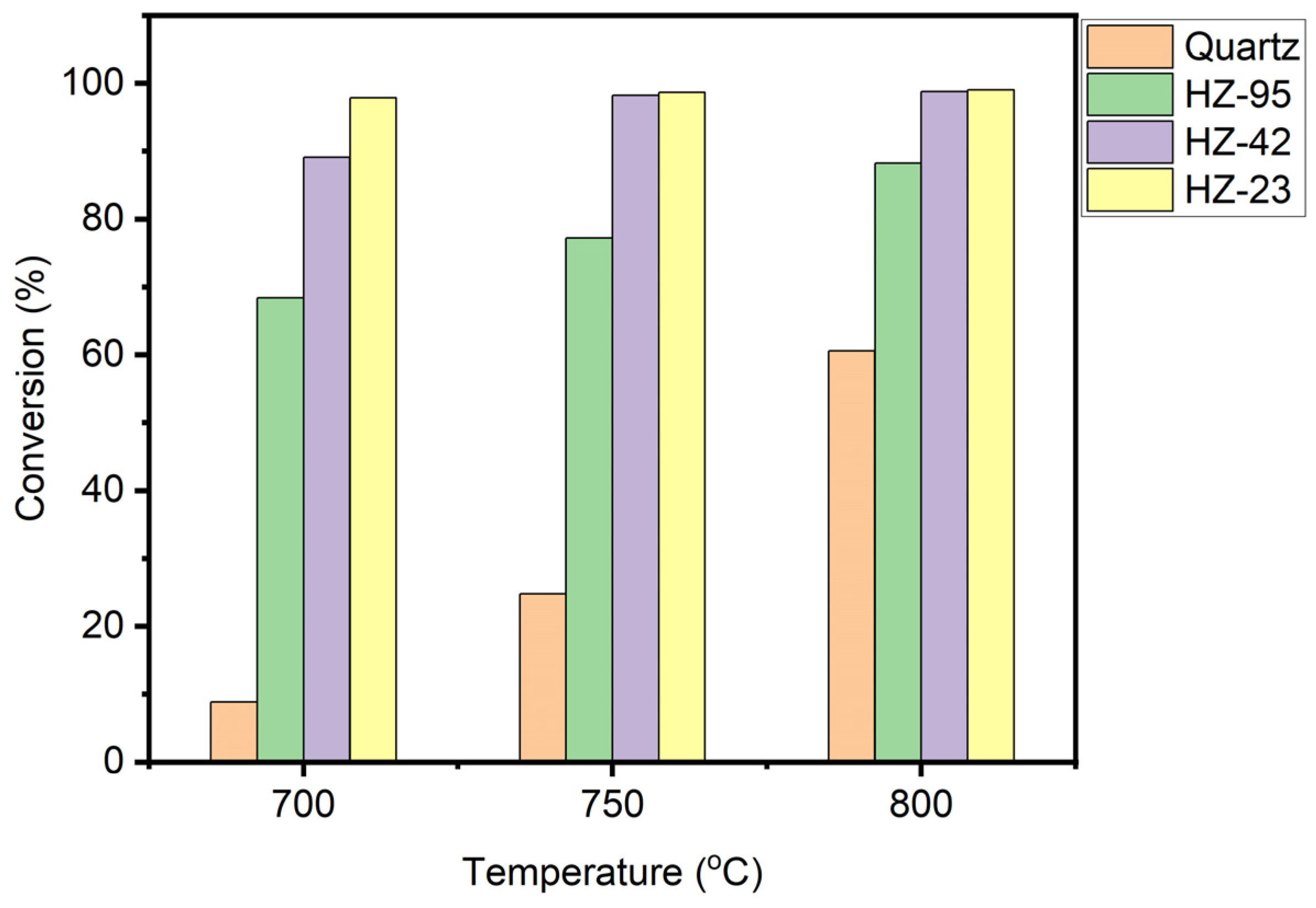
At high temperatures, 1-pentene undergoes carbenium ion cracking reaction, CCR reaction and thermal cracking. Both carbenium ion cracking reaction and CCR reaction require the adsorption and activation of 1-pentene on the active sites of molecular sieves prior to subsequent reaction [5,25]. In contrast, thermal cracking proceeds directly in the bulk phase at high temperatures without catalyst participation [26]. When the reaction temperature exceeds 700 °C, the influence of thermal cracking becomes non-negligible. Accordingly, the conversion of 1-pentene in molecular sieves with different SAR values and quartz sand is compared, as presented in Figure 3. The quartz sand used in this study is amorphous silica with no measurable acid sites, negligible pore volume and specific surface area, which cannot activate 1-pentene via catalytic pathway, hence all conversion over quartz solely originates from pure thermal cracking.
The conversion of 1-pentene increases with the elevation of reaction temperature. This trend is attributed to the endothermic nature of 1-pentene cracking [27], whereby a higher temperature facilitates the cracking process. With the increase in the SAR of molecular sieves, the number of acid sites decreases, leading to a reduction in 1-pentene conversion at identical temperatures. At all investigated temperatures, the conversion of 1-pentene over each molecular sieve is markedly higher than that over quartz sand, demonstrating that catalytic cracking still dominates the overall reaction pathway even under high-temperature conditions.
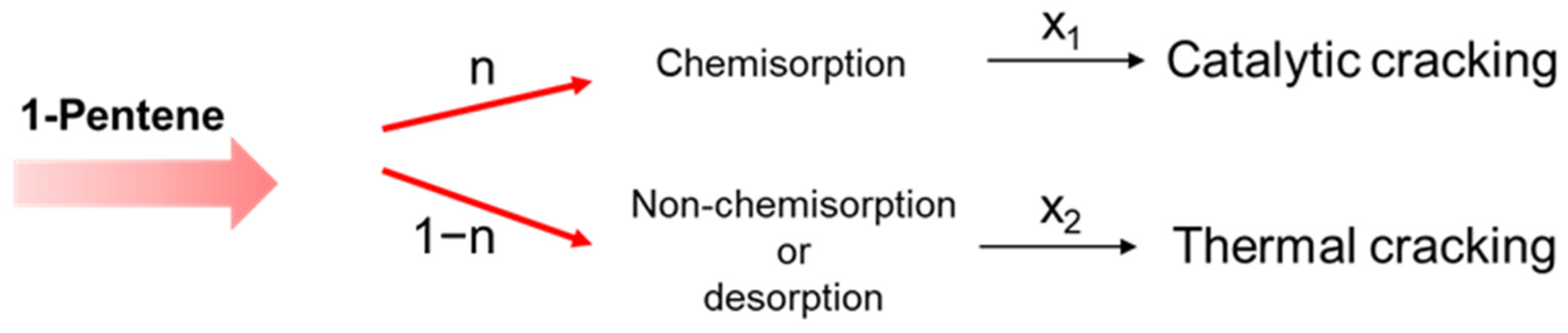
To quantify the proportions of thermal cracking and catalytic cracking (including carbenium ion cracking reaction and CCR reaction) of 1-pentene over each molecular sieve at high temperatures, a proportional model for thermal and catalytic cracking was established based on the method proposed by Han et al. [11,12]. The schematic diagram of the model is illustrated in Figure 4.
Let the total conversion rate of feedstock be X (%), the proportion of chemically adsorbed feedstock on molecular sieves be n (%), the proportion of chemically adsorbed feedstock undergoing catalytic cracking be x1 (%), and the proportion of feedstock undergoing thermal cracking be x2 (%). The following relationships can be established:
X = nx1 + (1 − nx1)x2
nx1 = (X − x2)/(1 − x2)
where nx1 and (1 − nx1)x2 represent the conversion fractions of 1-pentene via the catalytic cracking pathway and the thermal cracking pathway, respectively.
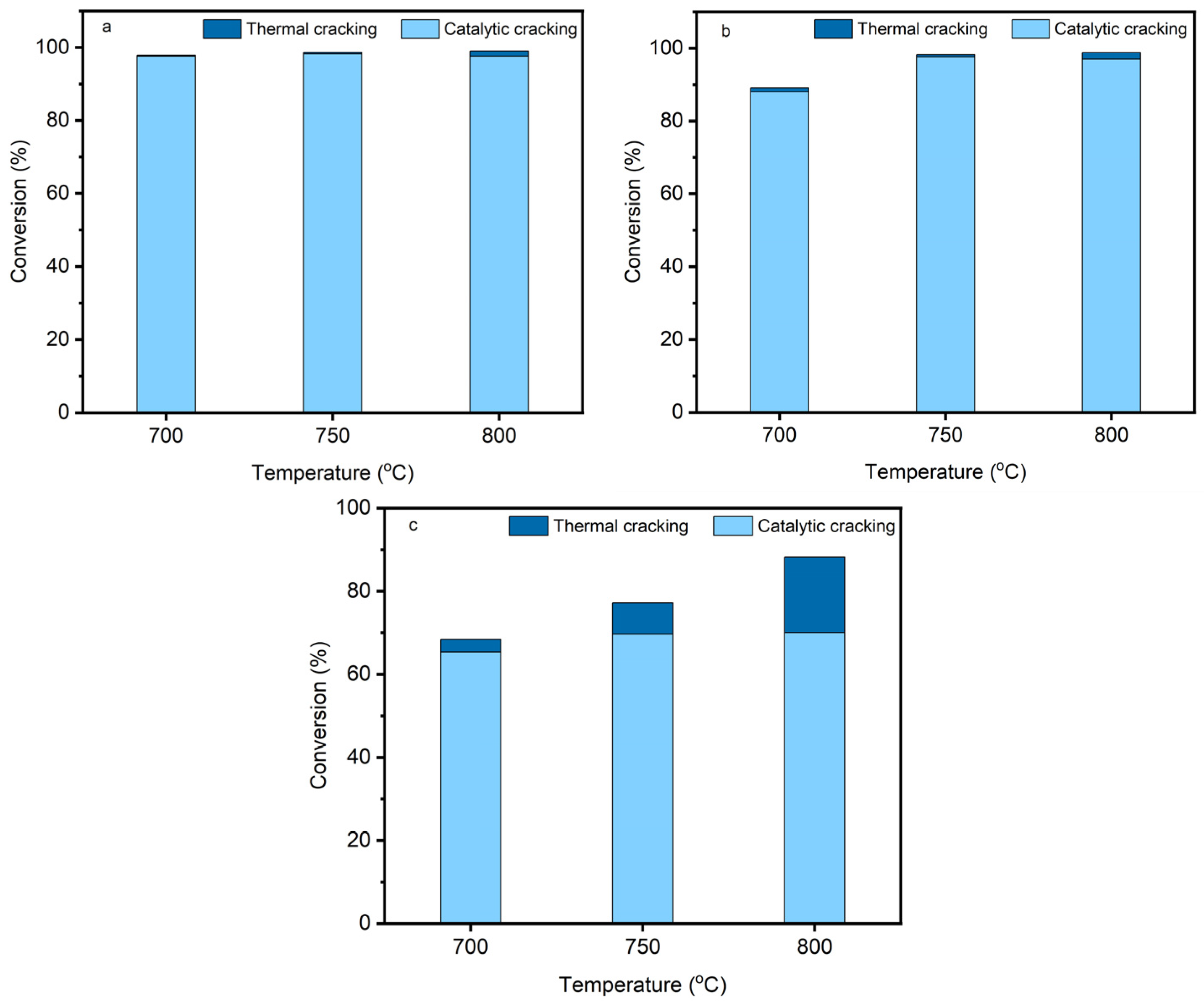
The conversion contributions of catalytic cracking and thermal cracking over molecular sieves with different silica-alumina ratios at high temperatures are presented in Figure 5. The proportion of the catalytic cracking pathway increases with the reduction in silica-alumina ratio at a fixed temperature. A lower silica-alumina ratio elevates the acid amount and acid strength of molecular sieves and increases the number of active sites, thereby facilitating the occurrence of catalytic cracking reactions. For HZ-95, the proportion of thermal cracking rises with increasing temperature. In contrast, the catalytic cracking proportions over HZ-42 and HZ-23 remain above 96% and exhibit insignificant temperature dependence. This result indicates that the cracking of 1-pentene over low silica-alumina ratio molecular sieves is dominated by the catalytic cracking pathway at high temperatures. Furthermore, the SAR, namely the acid properties of molecular sieves, exerts a more pronounced influence on the cracking conversion of 1-pentene than reaction temperature.

2.3. Product Distribution of 1-Pentene Catalytic Cracking over Molecular Sieves with Different SAR at Ultra-High Temperature

The product distribution of 1-pentene cracking over H-ZSM-5 molecular sieves with different SAR values and quartz sand at 700, 750 and 800 °C is summarized in Table 4. The product distribution is remarkably affected by reaction temperature and SAR. At a constant temperature, the selectivities of ethene and propene first increase and then decrease with the rising SAR of H-ZSM-5, among which HZ-42 exhibits the highest ethene selectivity. This is because HZ-23 possesses the largest acid amount and acid strength, which increases the probability of olefin adsorption on adjacent acid sites and promotes secondary side reactions, thereby yielding a higher selectivity to C5+ products [28]. By contrast, HZ-95 is dominated by weak acid sites. In catalytic cracking, ethene is mainly generated via the monomolecular cracking pathway. Strong acid centers of molecular sieves favor monomolecular cracking, whereas weak acid centers are conducive to bimolecular cracking [29,30]. The relatively weak acidity of HZ-95 suppresses the monomolecular cracking of 1-pentene, leading to a reduction in ethene selectivity and a corresponding increase in propene selectivity.
Based on the proportions of thermal cracking and catalytic cracking, the contributions of the two reaction pathways to the molar selectivity of product i (including ethene, propene and butene) were calculated. The calculation method is presented as follows [12]:
Si(c) = Si − (1 − nx1)Yi(Q)Mp/Mi
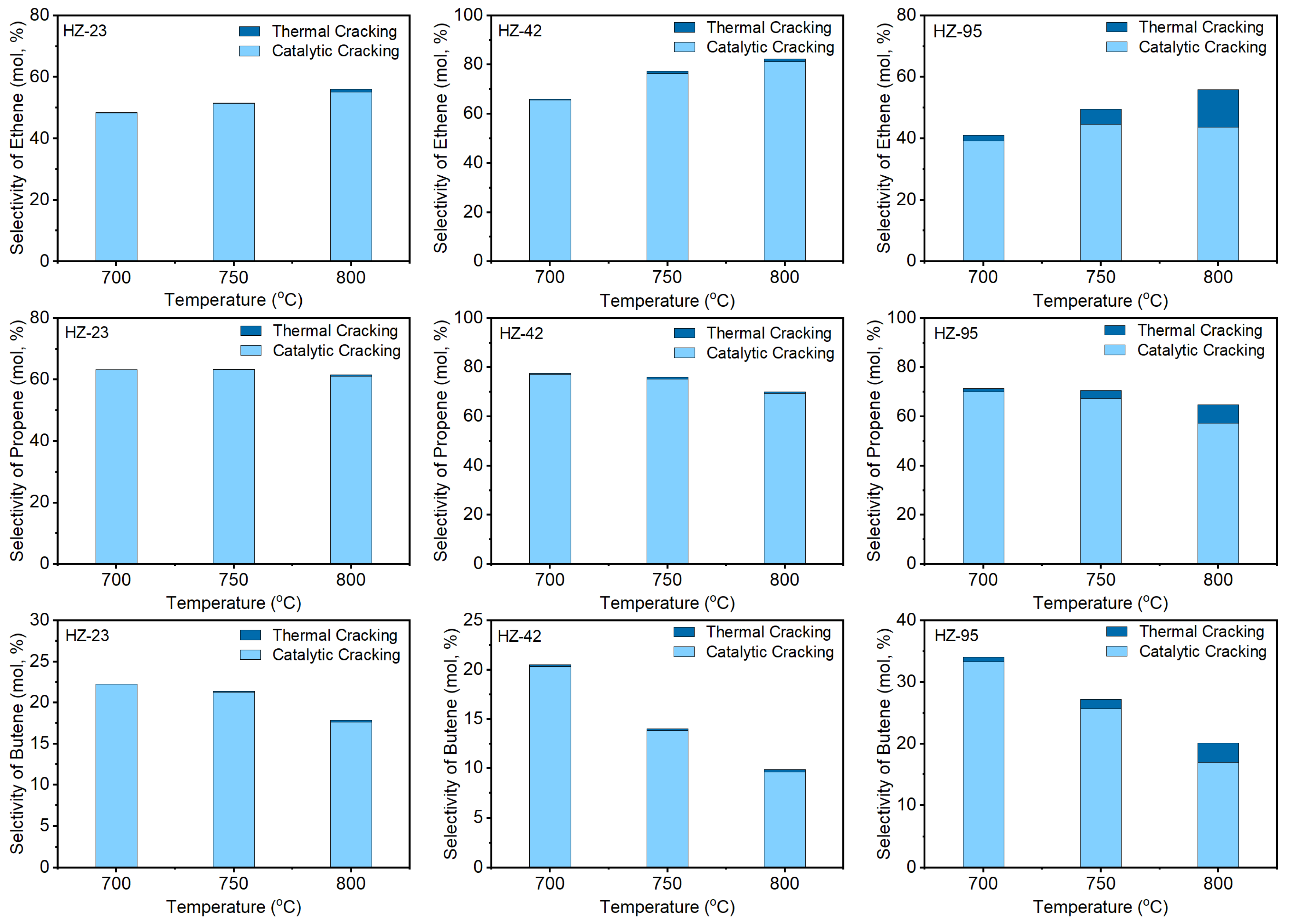
where Si and Si(c) denote the total molar selectivity of product i at high temperature (%) and the molar selectivity contributed by catalytic cracking (%), respectively; Yi(Q) represents the yield of product i from 1-pentene reaction over quartz sand (%); Mp and Mi are the relative molecular masses of 1-pentene and product i, respectively. The corresponding results are shown in Figure 6. Light olefin products from 1-pentene cracking over HZ-23 and HZ-42 are mainly generated through the catalytic cracking pathway. By comparison, a considerable proportion of light olefins over HZ-95 originates from thermal cracking, which can be attributed to its weak acidity that is unfavorable to catalytic cracking reactions.
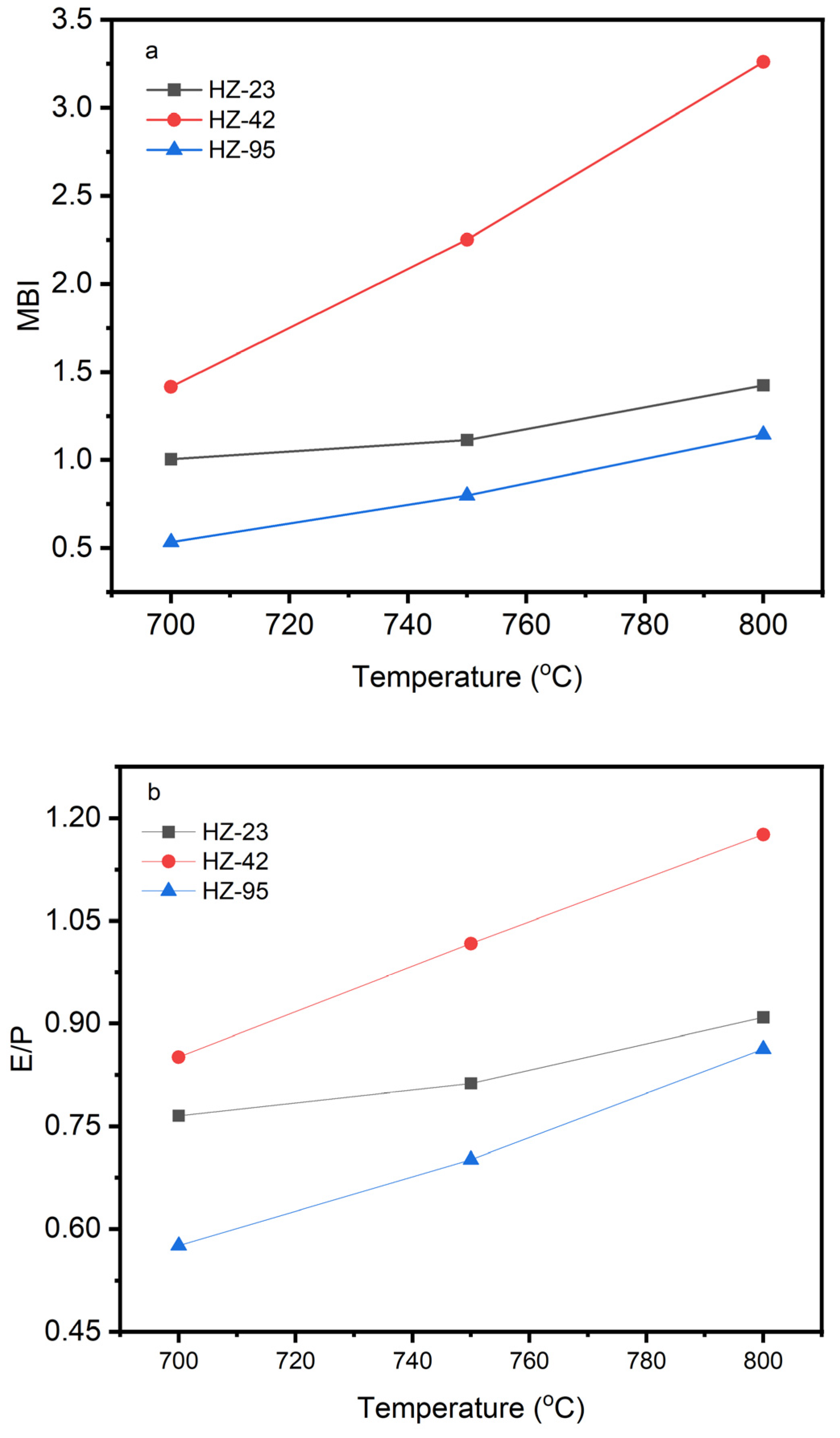
With the increase in reaction temperature, ethene selectivity rises, while the selectivities of propene and butene decline. Based on the C2–C4 olefin selectivity contributed by catalytic cracking in 1-pentene cracking products, a MBI index is defined to quantify the ratio between monomolecular and bimolecular cracking reactions [31]. The MBI indices of molecular sieves with different SAR at various temperatures are presented in Figure 7a.
MBI =   4 S C 2 H 4 ( c ) + S C 3 H 6 ( c ) 2 S C 4 H 8 ( c ) 6 S C 4 H 8 ( c ) + 2 S C 3 H 6 ( c ) S C 2 H 4 ( c )
As shown in Figure 7a, the MBI values of HZ-23 and HZ-42 are both higher than 1 at high temperatures, while those of HZ-95 are lower than 1 at 700 °C and 750 °C. This phenomenon indicates that 1-pentene cracking over the former two molecular sieves is dominated by the monomolecular pathway, whereas a considerable proportion of bimolecular cracking occurs over HZ-95. The MBI values of all molecular sieves increase with rising reaction temperature. High temperature favors the monomolecular cracking of 1-pentene [10,12], thereby reducing the proportion of bimolecular cracking that produces propene and butene. This characteristic serves as a key distinction between the TCO process and conventional catalytic cracking processes. Conducting the reaction at elevated temperatures markedly enhances ethene selectivity in the product distribution [28]. At identical temperatures, HZ-23 exhibits a lower MBI value than HZ-42. This trend is probably attributed to its higher acid amount and acid strength, which promote the oligomerization of light olefins and generate a larger amount of C5+ components [32,33].
It is noteworthy that the calculation of the MBI index is based on the conventional carbenium ion cracking mechanism. Nevertheless, as shown in Figure 7b, at reaction temperatures of 750 °C and above, the molar selectivity ratio of ethene to propene (E/P) over HZ-42 exceeds 1.0, breaking the limitation of traditional catalytic cracking reactions. The elevated ethene selectivity under such conditions may originate from the confined thermal cracking (CCR) of 1-pentene at high temperatures. Yang et al. [7] adopted the ReaxFF MD method to investigate the evolution laws of carbenium ion cracking, CCR reaction and thermal cracking at different temperatures. The results reveal that an increase in temperature reduces the proportion of carbocation cracking while raising the contribution of the CCR pathway. The enhancement of the CCR pathway substantially improves ethene selectivity and consequently increases the MBI index. At this stage, the MBI index essentially reflects the relative proportion of monomolecular cracking and CCR pathways to the bimolecular cracking pathway. Accordingly, it is necessary to evaluate the variation of the CCR pathway and carbocation cracking pathway from alternative perspectives.
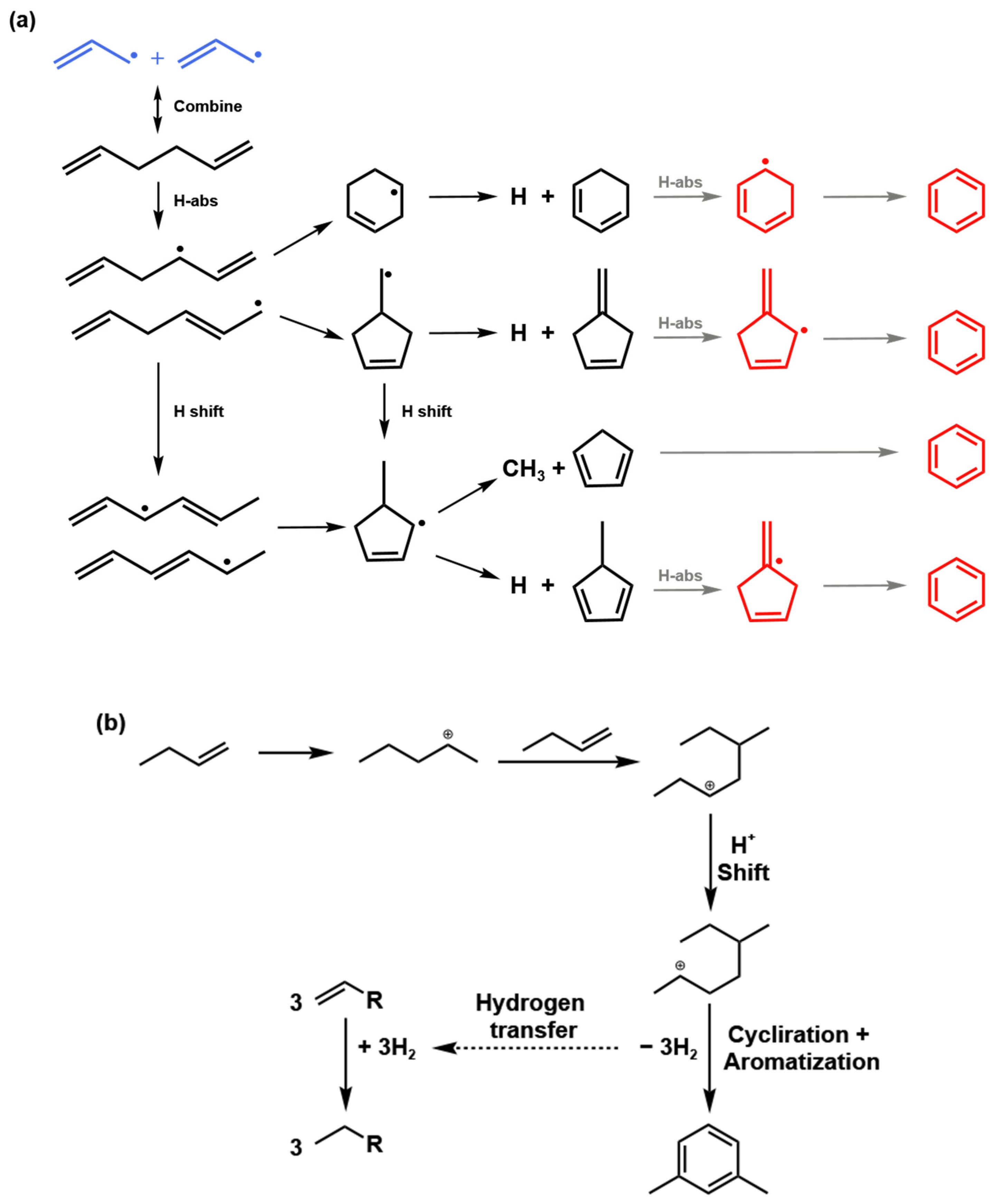
Allyl radicals (C3H5•) generated via the CCR pathway (Equation (1)) serve as an important intermediate for aromatic formation during catalytic cracking. Conventionally, metal-modified H-ZSM-5 (e.g., Zn, Ga) is known to promote olefin dehydrogenation to form allyl radicals, which further undergo oligomerization to produce aromatics [34,35]. The detailed reaction pathway for allyl radical aromatization is illustrated in Figure 8a [36]. Allyl radicals first polymerize to form dienes, followed by cyclization, dehydrogenation and aromatization to yield aromatic products [37,38]. Accordingly, the composition of C5+ products over molecular sieves with different SAR at various temperatures was investigated to infer the origin and formation pathway of these products.
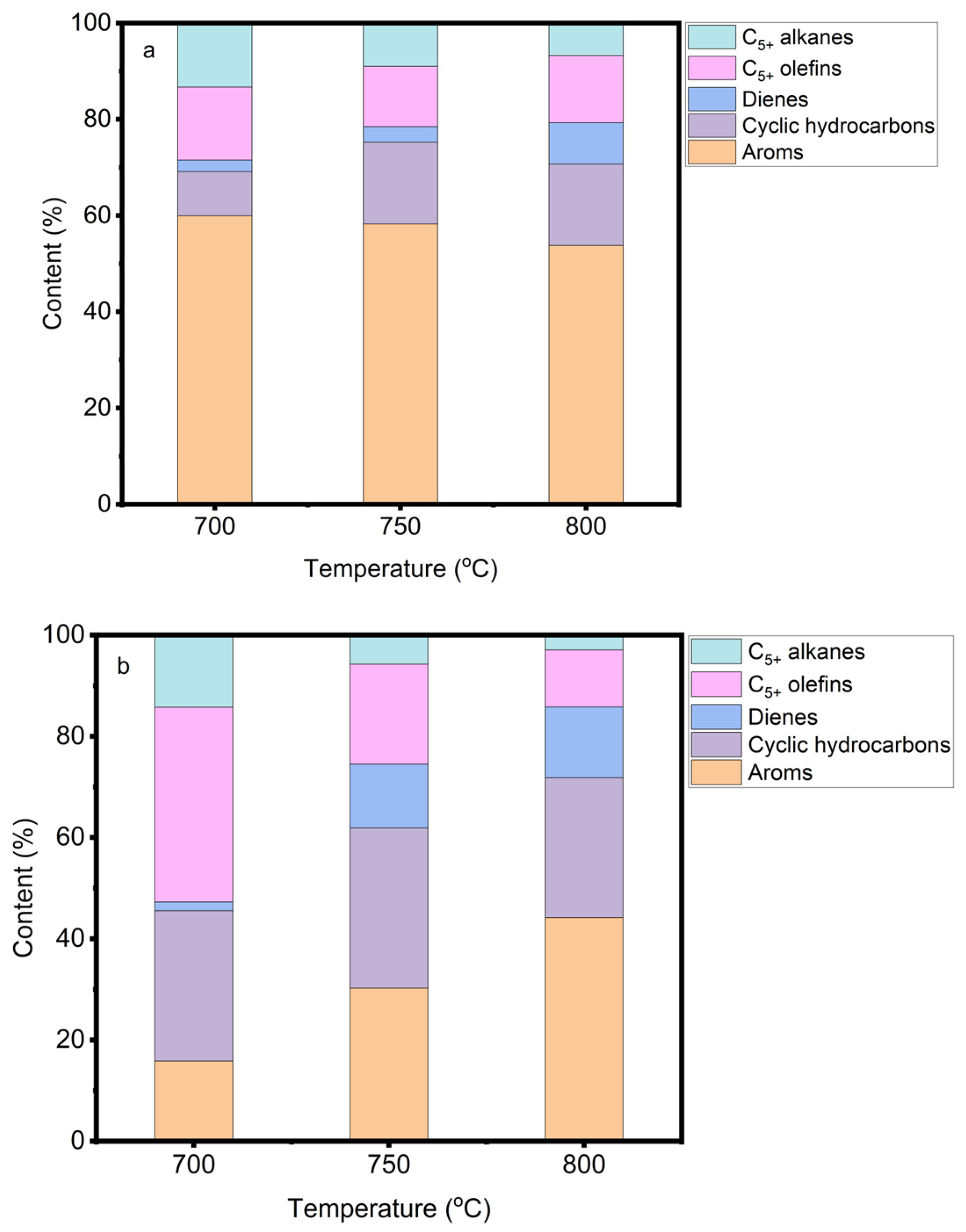
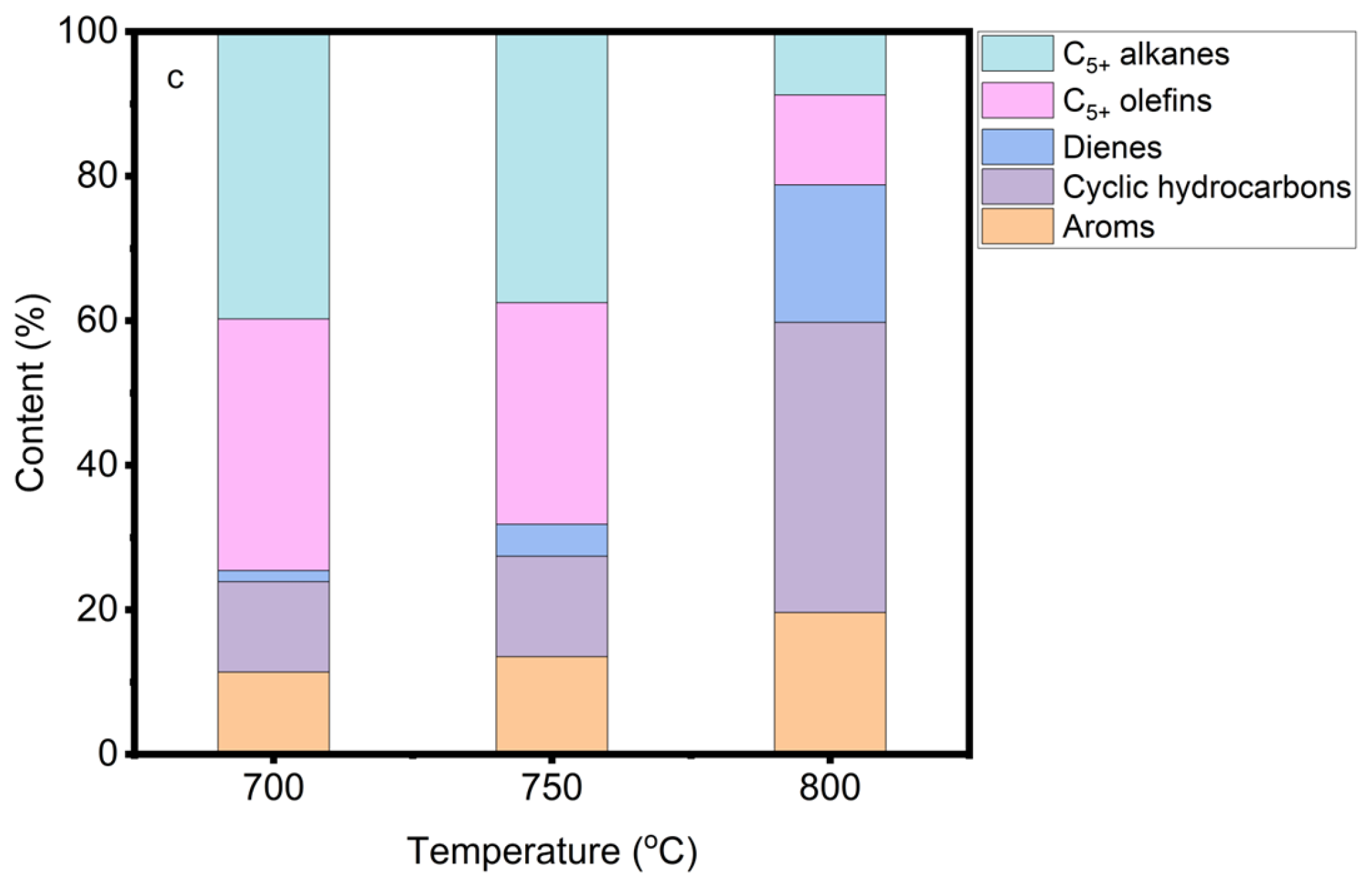
The composition of C5+ products over molecular sieves with different SAR at various temperatures is shown in Figure 9. HZ-23 exhibits the highest selectivity toward C5+ components (Table 4), among which aromatics account for more than 50% while dienes occupy a relatively low proportion. This phenomenon could be caused by the strong acidity of HZ-23, which promotes secondary aromatization reactions of C2–C4 olefins produced from 1-pentene cracking [32]. For ZSM-5 molecular sieves without metal modification, the aromatization of light olefins generally proceeds via initial oligomerization into C5 and heavier olefins, followed by cyclization and subsequent formation of aromatics through hydrogen transfer and dehydrogenative aromatization; the relevant reaction pathway is shown in Figure 8b [32,39]. The hydrogen transfer reaction is inhibited at high temperatures [12,38]. As indicated in Table 4, HZ-23 presents the highest hydrogen selectivity at all tested temperatures, demonstrating the occurrence of a considerable extent of dehydrogenative aromatization over this catalyst. With increasing reaction temperature, the proportion of dienes in the cracking products of HZ-23 gradually rises, suggesting a gradual enhancement of the contribution from the CCR pathway.
Compared with HZ-23, HZ-42 shows an obvious decline in C5+ selectivity. Strong acid sites of molecular sieves are favorable for olefin oligomerization and cyclization [40], and the remarkably reduced number of strong acid sites on HZ-42 suppresses the above processes. As temperature increases, the olefin proportion in the C5+ fraction of HZ-42 decreases, whereas the contents of aromatics and dienes increase. This phenomenon can be interpreted from two aspects. First, the proportion of the monomolecular cracking pathway of 1-pentene over HZ-42 rises with increasing temperature, lowering the content of C5+ olefins as intermediates of bimolecular cracking. Second, elevated temperature facilitates the CCR reaction, which not only makes the molar selectivity of ethene exceed that of propene in products but also strengthens the formation of aromatics from allyl radicals, thereby increasing the contents of aromatics and dienes.
At 700 °C and 750 °C, the C5+ products over HZ-95 are mainly composed of alkanes and olefins. Owing to its weakest acidity, monomolecular cracking, CCR reaction and aromatization are all restrained, and the C5+ components are primarily derived from the bimolecular cracking pathway of 1-pentene. At 800 °C, the contents of cycloalkanes and dienes in the cracking products of HZ-95 increase, while the fractions of olefins and alkanes decrease significantly. Meanwhile, the MBI index exceeds 1 (Figure 7). This indicates that high temperature enhances the monomolecular and CCR reaction pathways of 1-pentene over HZ-95 and suppresses bimolecular cracking, leading to a notable variation in product composition relative to that at 700 °C and 750 °C.
Combined with the composition of 1-pentene cracking products and MBI index analysis, the cracking pathway of 1-pentene at high temperatures is simultaneously governed by molecular sieve acidity and reaction temperature. HZ-23 possesses strong acidity and promotes product aromatization, resulting in lower selectivity of C2–C4 olefins and higher aromatic content in products. In contrast, the weak acidity of HZ-95 favors the predominance of bimolecular cracking of 1-pentene and leads to low ethene selectivity. With the elevation of reaction temperature, both monomolecular cracking and CCR pathways are enhanced over all molecular sieves, which markedly increases ethene selectivity and raises the proportion of dienes in C5+ components.
The cracking of 1-pentene primarily yields C2–C4 olefins without involving the formation of propane and butane. Nevertheless, propane and butane are detected in actual product distributions, indicating the occurrence of hydrogen transfer reactions among part of the light olefins under the reaction conditions of this study. Accordingly, a hydrogen transfer index (HTI) for the 1-pentene cracking process is defined as the molar selectivity ratio of propane plus butane to propene plus butene, to characterize the tendency of hydrogen transfer reactions [28].
HTI   = S C 3 H 8 + S C 4 H 10 S C 3 H 6 + S C 4 H 8
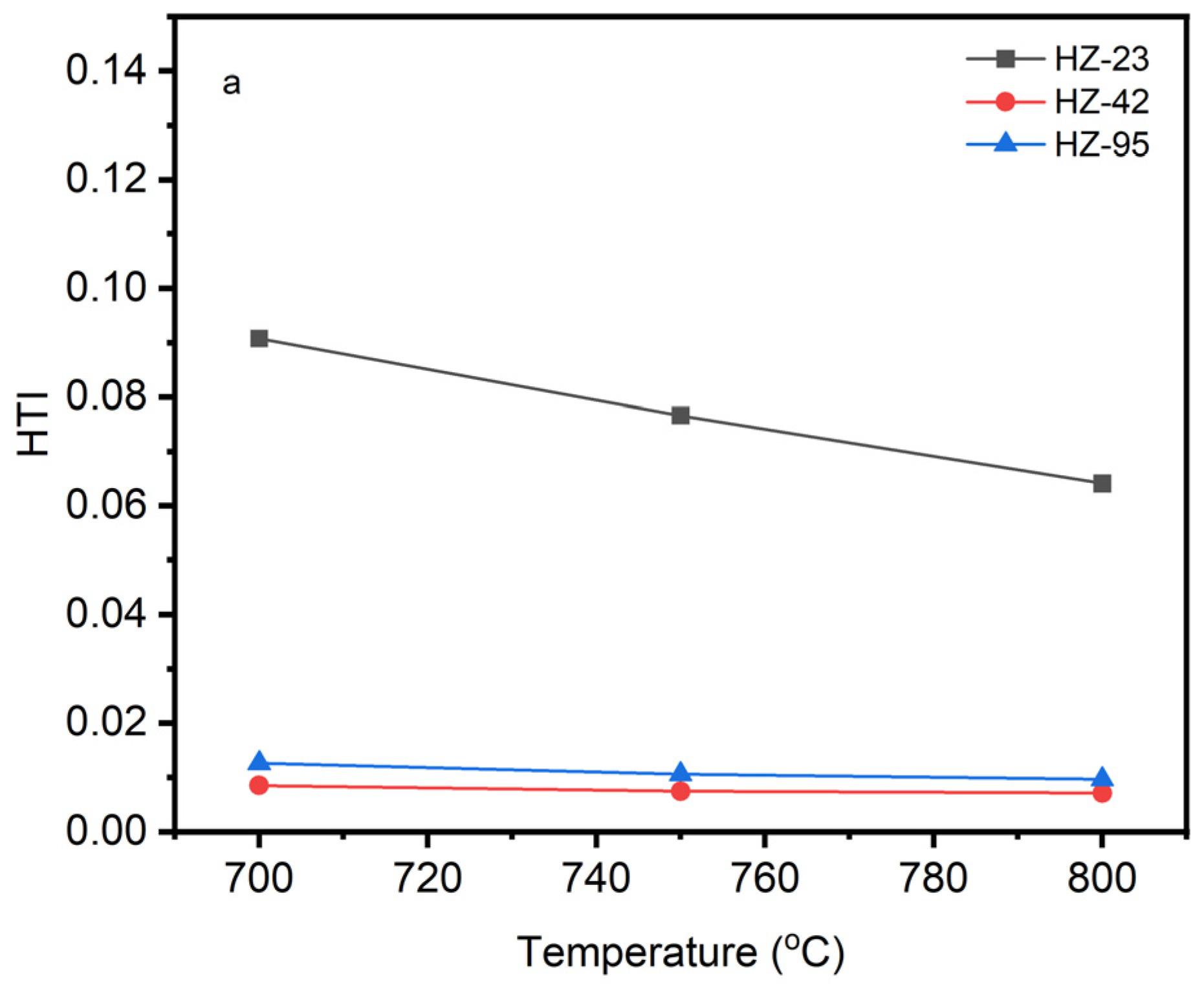
The variation in HTI of 1-pentene over H-ZSM-5 molecular sieves with different silica-alumina ratios at various temperatures is presented in Figure 10a. The HTI values of all tested molecular sieves exhibit a declining trend with increasing reaction temperature. This trend arises from the exothermic nature of hydrogen transfer reactions, which are suppressed under high-temperature conditions [41]. At a fixed temperature, as the total acid content of H-ZSM-5 decreases from 101.1 μmol⋅g−1 (HZ-23) to 36.5 μmol⋅g−1 (HZ-42), a remarkable reduction in HTI is observed. The reduction in total acid content lowers the density of acid sites and decreases the probability of olefin adsorption on adjacent acid sites, thereby inhibiting hydrogen transfer reactions [42]. When the total acid content further decreases to 29.6 μmol⋅g−1 (HZ-95), only a slight change in HTI occurs, owing to the marginal variation in acid content and its negligible influence on hydrogen transfer behavior. Consequently, the intensity of hydrogen transfer reactions is directly correlated with the acid content of molecular sieves. Increasing the SAR of molecular sieves can effectively suppress hydrogen transfer reactions.
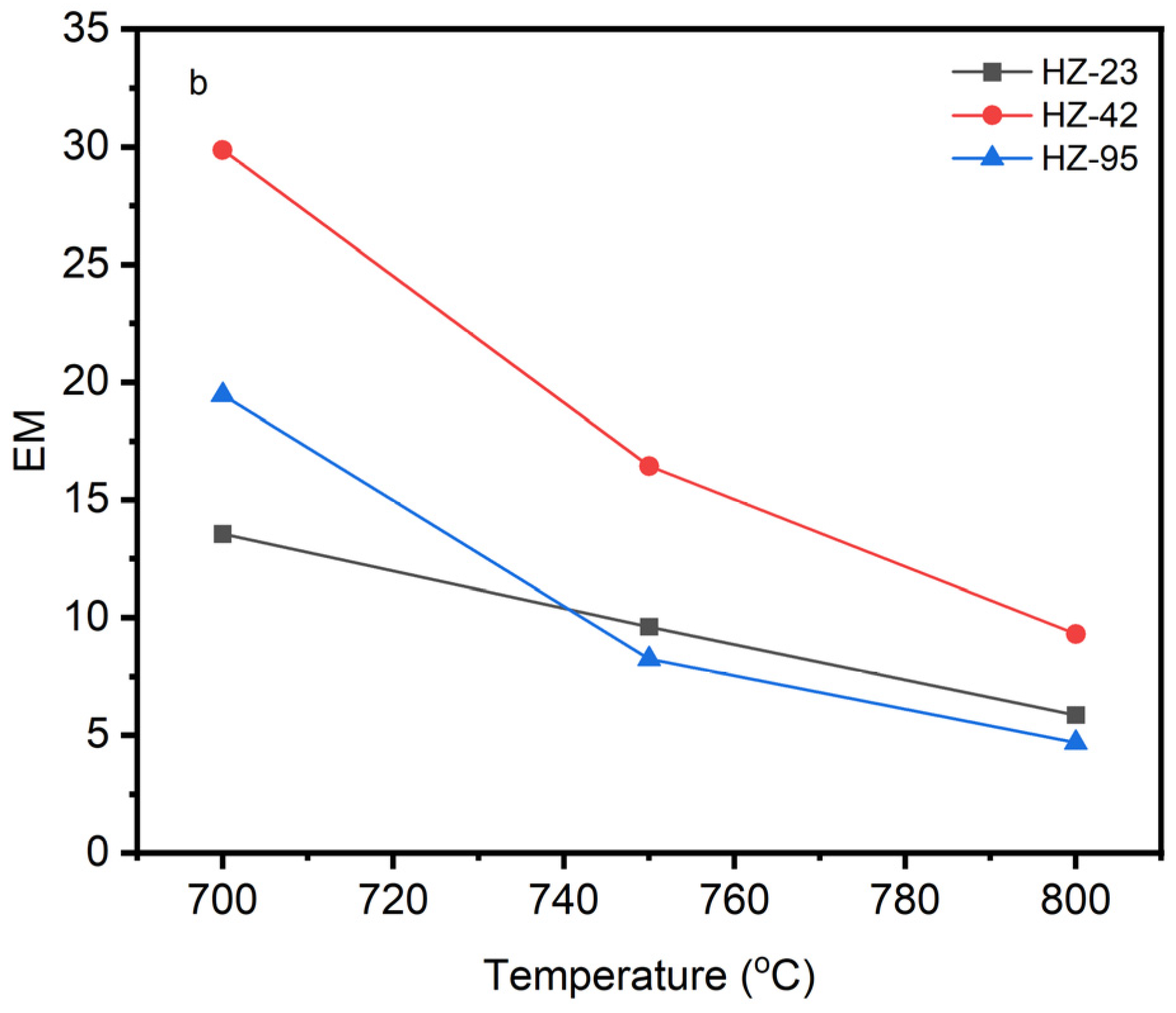
Under the conditions of this study, methane can be formed via both catalytic cracking and thermal cracking pathways. Given that the proportion of thermal cracking is relatively lower than that of catalytic cracking in all reaction systems, methane formation over H-ZSM-5 molecular sieves with different SAR at various temperatures predominantly proceeds through the catalytic cracking process. The molar selectivity ratio of ethene to methane in 1-pentene cracking products is defined as the EM value, which can be used to characterize the competitive relationship between the formation pathways of ethene and methane during the cracking of 1-pentene. The variation trend of the EM value is displayed in Figure 10b. At a constant temperature, the EM value first increases and then decreases with the elevation of the silica-alumina ratio of molecular sieves. In catalytic cracking, methane can be generated via hydride transfer of methyl carbocations produced from 1-pentene cracking [43], and this process tends to occur under high-temperature and strong-acidity conditions [32]. In addition, methane can also originate from dealkylation and side-chain cleavage reactions of aromatics [15,28,41]. HZ-23 possesses strong acidity, which facilitates methyl carbocation cracking and aromatization of 1-pentene, thereby leading to high methane selectivity. When the SAR increases from 23 to 42, the acid content and acid strength decline, side reactions are inhibited, the selectivity of C5+ products decreases, and methane selectivity drops accordingly. As the SAR further rises to 95, the weak acidity of HZ-95 restrains catalytic cracking and increases the proportion of thermal cracking. The amount of methane contributed by thermal cracking grows, resulting in an increase in methane selectivity. The EM values of all molecular sieves decline with the increase of reaction temperature. On one hand, high temperature promotes aromatization and aromatic dealkylation reactions [28,38]. On the other hand, elevated temperature raises the proportion of thermal cracking and further enhances methane selectivity.
In summary, when the reaction temperature exceeds 700 °C, the cracking of 1-pentene over H-ZSM-5 molecular sieves remains dominated by the catalytic cracking pathway. With the rise in reaction temperature, ethene selectivity increases, while hydrogen transfer reactions and methane formation are suppressed. When HZ-42 serves as the catalytic active component, the conversion of 1-pentene reaches 98.80%, with an ethene selectivity of 82.41%, a methane selectivity of 8.86%, and a C5+ product selectivity of 12.54% at 800 °C. This catalyst achieves the maximum ethene selectivity while effectively inhibiting the occurrence of side reactions.

3. Materials and Methods

3.1. Feedstock and Catalyst

The phosphorus-modified H-ZSM-5 molecular sieves with different SAR used in this experiment were provided by Sinopec Petroleum Processing Research Institute Co., Ltd. (RIPP, Beijing, China). The 1-Pentene was purchased from Tokyo Chemical Industry (Shanghai) Co., Ltd. (Tokyo, Japan) with a purity higher than 99%.

3.2. Catalyst Characterization

The elemental composition of molecular sieves was determined by X-ray fluorescence (XRF) using a ZSX Primus II X-ray fluorescence spectrometer (Rigaku Corporation, Tokyo, Japan). A rhodium target was adopted with an excitation voltage of 50 kV and an excitation current of 50 mA. The elemental content of molecular sieves was analyzed according to the characteristic spectral line intensity of each element.
X-ray diffraction (XRD) patterns of molecular sieves were acquired on an EMPYREAN X-ray diffractometer (PANalytical, Alemlo, The Netherlands). Cu Kα radiation (λ = 0.15406 nm) was used as the light source, with a scanning range of 5–140°, a scanning rate of 1°⋅min−1 and a step size of 0.014°.
Fourier transform infrared spectroscopy (FTIR) measurements were performed on an FTIR-8400 infrared spectrometer (Shimadzu, Nakagyoku, Kyoto, Japan). All samples were prepared via the KBr pellet method.
Textural properties of molecular sieves were characterized by an ASAP 2420 automatic specific surface area and pore size analyzer (Micromeritics, Norcross, GA, USA). A certain amount of sample was loaded into a sample tube, evacuated to 1.33 × 10⁻² Pa at 350 °C and maintained for 15 h. After vacuum degassing, nitrogen adsorption–desorption isotherms were collected at −196 °C. The specific surface area was calculated by the Brunauer–Emmett–Teller (BET) method, and pore structure parameters were determined using the Barrett-Joyner–Halenda (BJH) method.
Acidic properties of molecular sieves were characterized by ammonia temperature-programmed desorption (NH3-TPD) and pyridine-adsorbed infrared spectroscopy (Py-IR). NH3-TPD tests were conducted on an AutoChem II 2920 chemisorption analyzer (Micromeritics, Norcross, GA, USA). The experimental procedure was as follows: 0.05 g of sample was purged in helium flow (25 mL⋅min−1) at 400 °C for 60 min, followed by cooling to 150 °C. A 10 vol% mixed gas was introduced at a flow rate of 40 mL⋅min−1 for 60 min adsorption. Subsequently, helium purge was switched on until the baseline stabilized, and the temperature was raised to 600 °C at a heating rate of 10 °C⋅min−1. The desorbed signal was detected and recorded by a thermal conductivity detector (TCD, Micromeritics, Norcross, GA, USA).
Py-IR measurements were performed on a NICOLET 6700 spectrometer (ThermoFisher, Waltham, MA, USA). After pelletizing, the sample was degassed in a reaction cell at 400 °C under 10−6 Pa for 60 min and then cooled to room temperature to collect background spectra in the range of 1300–1700 cm−1. Pyridine was introduced at 2.67 Pa for 30 min equilibrium adsorption. Desorption was then implemented under high vacuum at 200 °C and 350 °C, respectively, and the corresponding spectra at the two temperatures were recorded. The densities of Brønsted (B) and Lewis (L) acid sites were calculated by the method reported by Emeis [24], with molar extinction coefficients of 1.67 cm⋅μmol−1 for B acid sites and 2.22 cm⋅μmol−1 for L acid sites.

3.3. Reaction Equipment and Product Analysis

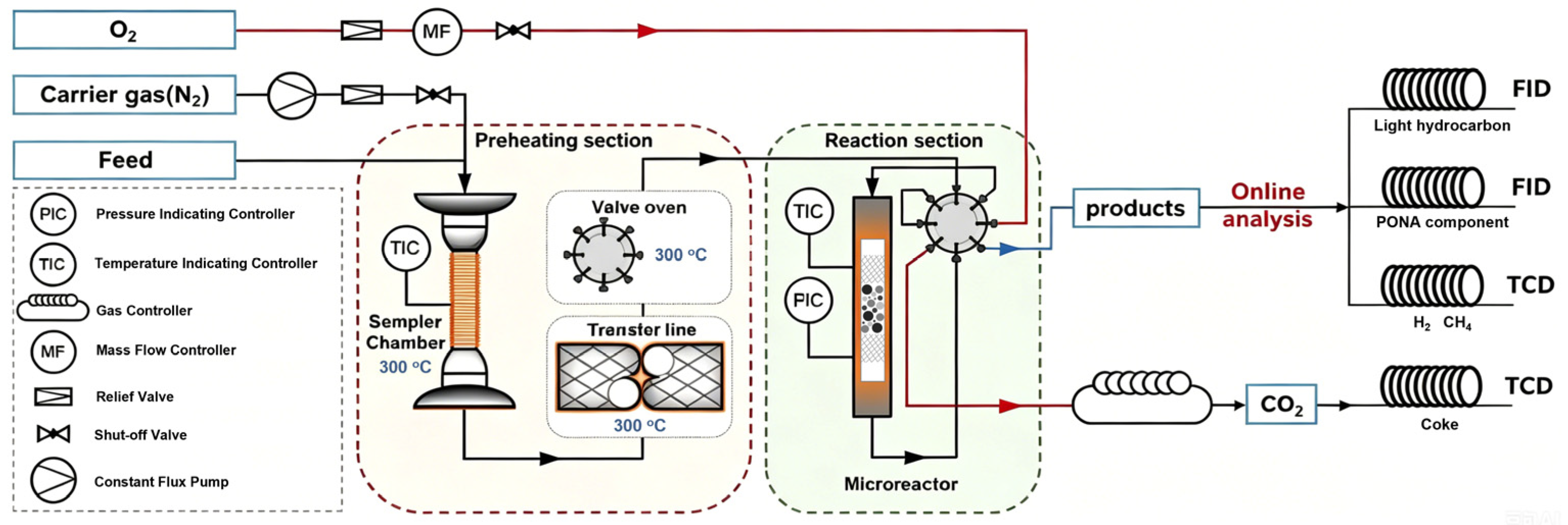
Catalytic cracking performance tests were carried out using a combined system consisting of micro fixed-bed reactor system (CDS6200, Oxford, PA, USA) and an Agilent 8890 online gas chromatograph (Agilent, Santa Clara, CA, USA). The structure of the experimental setup is presented in Figure 11, which mainly consists of a preheating zone, a constant-temperature reaction zone and an online product analysis zone. The undiluted catalyst bed is located within the constant-temperature reaction zone. Under atmospheric pressure, vaporized 1-pentene preheated to 300 °C and delivered via a micro-injection pump is introduced into the microreactor for cracking reaction. The gas chromatograph is fitted with an HP-PLOT Al2O3/KCl capillary column, a PONA column and a 5A molecular sieve column, together with dual-channel FID and TCD detectors for online analysis of reaction products. After each reaction run, catalyst regeneration is performed via coke combustion at 700 °C under an oxygen atmosphere. A universal gas collector is employed for the quantitative analysis of CO2 generated during combustion to determine the coke yield.
The conversion of feedstock (X, %), mass yield of each product (Yi, %), mass selectivity (Si, %) and molar selectivity (SM,i, %) are calculated based on mass conservation, as expressed by the following equations.
X =   W in   W out W in × 100 %
Y i   = W i W in × 100 %
S i = Y i X
S M , i = n i n in   n out
where Win and Wout denote the mass of feed 1-pentene in the inlet and outlet streams, respectively (mg); Wi and ni represent the mass (mg) and molar amount (mol) of product i, respectively; nin and nout are the molar amounts (mol) of feed olefin in the inlet and outlet streams, respectively.

4. Conclusions

To explore the modulation effects of high temperature and molecular sieve acidity on olefin cracking pathways and product selectivity, H-ZSM-5 molecular sieves with different SAR (23, 42, 95) were adopted as catalysts in this study. The cracking performance of 1-pentene was systematically investigated at 700, 750 and 800 °C. By comparing the contributions of catalytic cracking and thermal cracking pathways, combined with evaluation indicators including product molar selectivity, MBI index, HTI index and EM value, the synergistic effects of temperature and SAR on monomolecular cracking, bimolecular cracking and side reactions were comprehensively analyzed. The main conclusions are summarized as follows:
(1) Within the temperature range of 700–800 °C, the cracking of 1-pentene over H-ZSM-5 molecular sieves is dominated by the catalytic cracking pathway (including carbocation and CCR reactions). A reduction in SAR leads to an increase in acid content and acid strength, raises the proportion of catalytic cracking pathway, and enhances the reaction activity of 1-pentene cracking.
(2) An increase in reaction temperature facilitates the occurrence of monomolecular cracking and CCR reactions of 1-pentene, accompanied by a remarkable rise in ethene selectivity. Meanwhile, further reactions of allyl radicals generated from confined thermal cracking result in an increased proportion of dienes in C5+ products.
(3) The SAR of molecular sieves imposes a significant influence on product distribution. HZ-23 possesses high acid content and acid strength, which promotes side reactions and yields high selectivity toward C5+ products. HZ-95 is dominated by weak acid sites and favors the bimolecular cracking pathway, leading to low ethene selectivity. Molecular sieves with an appropriate silica-alumina ratio should be selected to achieve high conversion and high ethene selectivity while restraining side reactions.
(4) High temperature can suppress hydrogen transfer reactions. Increasing the SAR reduces the acid content and acid strength of molecular sieves and further inhibits hydrogen transfer reactions, whereas excessively high or low SAR are conducive to methane formation. At 800 °C, HZ-42 exhibits the lowest HTI and a moderate EM value, with ethene molar selectivity of 82.41%, propene selectivity of 70.07%, and C5+ product selectivity of 12.54%. It presents excellent light olefin selectivity, prominent side reaction inhibition capability, and favorable product regulation potential.

Author Contributions

Writing-original draft, S.H.; Investigation, S.H. and S.Z.; Methodology, S.H., L.L. and S.Z.; Data curation, S.H.; Conceptualization, S.H., Y.Z., L.L. and Y.X.; Validation, S.H.; Supervision, Y.Z. and Y.X.; Writing—review and editing, L.L.; Formal analysis, L.L. All authors have read and agreed to the published version of the manuscript.

Funding

The authors wish to acknowledge the financial supports from the National Natural Science Foundation of China No. U24B20196.

Data Availability Statement

The original contributions presented in this study are included in the article. Further inquiries can be directed to the corresponding authors.

Conflicts of Interest

The authors declare no conflicts of interest.

References

  1. Tian, P.; Wei, Y.; Ye, M.; Liu, Z. Methanol to olefins (MTO): From fundamentals to commercialization. ACS Catal. 2015, 5, 1922–1938. [Google Scholar] [CrossRef]
  2. Chen, Y.; Kuo, M.J.; Lobo, R.; Ierapetritou, M. Ethylene production: Process design, techno-economic and life-cycle assessments. Green Chem. 2024, 26, 2903–2911. [Google Scholar] [CrossRef]
  3. Zhao, Z.; Chong, K.; Jiang, J.; Wilson, K.; Zhang, X.; Wang, F. Low-carbon roadmap of chemical production: A case study of ethylene in China. Renew. Sustain. Energy Rev. 2018, 97, 580–591. [Google Scholar] [CrossRef]
  4. Zhao, R.; Haller, G.; Lercher, J. Alkene adsorption and cracking on acidic zeolites–A gradual process of understanding. Microporous Mesoporous Mater. 2023, 358, 112390. [Google Scholar] [CrossRef]
  5. Sadrameli, S.M. Thermal/catalytic cracking of hydrocarbons for the production of olefins: A state-of-the-art review I: Thermal cracking review. Fuel 2015, 140, 102–115. [Google Scholar] [CrossRef]
  6. Kunzru, D.; Shah, Y.T.; Stuart, E.B. Thermal cracking of 2-Pentene. Ind. Eng. Chem. Process Des. Dev. 1973, 12, 339–344. [Google Scholar] [CrossRef]
  7. Yang, W.; Bai, Y.; Zheng, M.; Xu, Y.; Gao, J.; Ma, D. In-situ formation of [AlO4]0 site for confined catalytic cracking to ethylene with low methane selectivity. Nat. Commun. 2025, 16, 11490. [Google Scholar] [CrossRef]
  8. Li, F.; Zhao, Q.; Yan, B.; Huang, X.; Ding, C.; Liu, Y.; He, M. Hydrogen transfer reaction in butene catalytic cracking over ZSM-5. Microporous Mesoporous Mater. 2024, 373, 113122. [Google Scholar] [CrossRef]
  9. Shi, J.; Wang, W. Status and role of catalytic cracking technology in the transformation of refining enterprise. Petrol. Process. Petrochem. 2025, 5, 180–186. [Google Scholar] [CrossRef]
  10. Yang, W.; Xu, Y.; Shu, X.; Wang, X.; Bai, X.; Zuo, Y.; Luo, Y.; Ouyang, Y. Insights into the effects of zeolite structural confinement on pentene catalytic cracking to light olefins. Appl. Energy 2023, 349, 121665. [Google Scholar] [CrossRef]
  11. Han, Y.; Du, L.; Zhu, Y.; Xu, Y.; Ouyang, Y. Cracking reaction mechanism and reaction pathway of 1-hexene over H-ZSM-5 catalyst at high temperature. Acta Pet. Sin. (Pet. Process. Sect.) 2024, 40, 610–618. [Google Scholar] [CrossRef]
  12. Han, Y.; Du, L.; Zhu, Y.; Xu, Y.; Bai, X.; Ouyang, Y.; Luo, Y.; Shu, X. High-temperature cracking of pentene to ethylene and propylene over H-ZSM-5 zeolites: Effect of reaction conditions and mechanistic insights. Catalysts 2022, 13, 73. [Google Scholar] [CrossRef]
  13. Xu, Y.; Zuo, Y.; Yang, W.; Shu, X.; Chen, W.; Zheng, A. Targeted catalytic cracking to olefins (TCO): Reaction mechanism, production scheme, and process perspectives. Engineering 2023, 30, 100–109. [Google Scholar] [CrossRef]
  14. Lin, L.; Zhao, S.; Zhang, D.; Fan, H.; Liu, Y.; He, M. Acid strength controlled reaction pathways for the catalytic cracking of 1-pentene to propene over ZSM-5. ACS Catal. 2015, 5, 4048–4059. [Google Scholar] [CrossRef]
  15. Zhu, X.; Liu, S.; Song, Y.; Xu, L. Catalytic cracking of C4 alkenes to propene and ethene: Influences of zeolites pore structures and Si/Al2 ratios. Appl. Catal. A Gen. 2005, 288, 134–142. [Google Scholar] [CrossRef]
  16. Zhang, R.; Wang, Z.; Liu, H.; Liu, Z.; Liu, G.; Meng, X. Thermodynamic equilibrium distribution of light olefins in catalytic pyrolysis. Appl. Catal. A Gen. 2016, 522, 165–171. [Google Scholar] [CrossRef]
  17. Xu, Y.; Zuo, Y.; Shu, X. An Exploratory Study on D-, F-and G-type β-Scission Reactions of Carbenium Ions over ZSM-5 Zeolites. Acta Pet. Sin. (Pet. Process. Sect.) 2021, 37, 967–973. [Google Scholar] [CrossRef]
  18. Hendrik, E.; Florian, M.; Sam, K.; Jian, W.; Bert, M. Hexane Cracking over Steamed Phosphated Zeolite H-ZSM-5: Promotional Effect on Catalyst Performance and Stability. Chem.—A Eur. J. 2014, 20, 16922–16932. [Google Scholar] [CrossRef]
  19. Triantafyllidis, K.S.; Nalbandian, L.; Trikalitis, P.N.; Ladavos, A.K.; Mavromoustakos, T.; Nicolaides, C.P. Structural, compositional and acidic characteristics of nanosized amorphous or partially crystalline ZSM-5 zeolite-based materials. Microporous Mesoporous Mater. 2004, 75, 89–100. [Google Scholar] [CrossRef]
  20. Zhong, C.; Ren, Y.; Yin, C.; Wang, R.; Hou, J.; Wang, L.; Zhao, Z.; Mozgawa, B.; Pietrzyk, P.; Sojka, Z.; et al. Design, Synthesis, and Insights into the Redox Mechanism of Highly Efficient One-Pot Cu-ZSM-5 Catalysts for the Reduction of NOx by NH3-SCR at Low Temperatures. ACS Catal. 2023, 13, 10927–10944. [Google Scholar] [CrossRef]
  21. Yuan, E.; Wu, G.; Dai, W.; Guan, N.; Li, L. One-pot construction of Fe/ZSM-5 zeolites for the selective catalytic reduction of nitrogen oxides by ammonia. Catal. Sci. Technol. 2017, 7, 3036–3044. [Google Scholar] [CrossRef]
  22. Rodríguez-González, L.; Hermes, F.; Bertmer, M.; Rodríguez-Castellón, E.; Jiménez-López, A.; Simon, U. The acid properties of H-ZSM-5 as studied by NH3-TPD and 27Al-MAS-NMR spectroscopy. Appl. Catal. A Gen. 2007, 328, 174–182. [Google Scholar] [CrossRef]
  23. Han, L.; Ouyang, Y.; Xing, E.; Luo, Y.; Da, Z. Effect of Si/Al ratio on the catalytic performance of ZSM-5 zeolites in alkane and cycloalkane cracking. Acta Pet. Sin. (Pet. Process. Sect.) 2018, 34, 872–881. [Google Scholar] [CrossRef]
  24. Emeis, C.A. Determination of integrated molar extinction coefficients for infrared absorption bands of pyridine adsorbed on solid acid catalysts. J. Catal. 1993, 141, 347–354. [Google Scholar] [CrossRef]
  25. Sadrameli, S.M. Thermal/catalytic cracking of liquid hydrocarbons for the production of olefins: A state-of-the-art review II: Catalytic cracking review. Fuel 2016, 173, 285–297. [Google Scholar] [CrossRef]
  26. Fakhroleslam, M.; Sadrameli, S.M. Thermal/catalytic cracking of hydrocarbons for the production of olefins; a state-of-the-art review III: Process modeling and simulation. Fuel 2019, 252, 553–566. [Google Scholar] [CrossRef]
  27. Nazarova, G.; Ivanchina, E.; Ivashkina, E.; Kiseleva, S.; Stebeneva, V. Thermodynamic analysis of catalytic cracking reactions as the first stage in the development of mathematical description. Procedia Chem. 2015, 15, 342–349. [Google Scholar] [CrossRef]
  28. Wang, R.; Xu, Y.; Yang, W.; Wang, Y.; Shu, X. High-Temperature Cracking Performance of 1-Pentene and n-Pentane on ZSM-5 Zeolites with Different Si/Al Ratios. Acta Pet. Sin. (Pet. Process. Sect.) 2025, 41, 960–968. [Google Scholar] [CrossRef]
  29. Lin, L.; Qiu, C.; Zhuo, Z.; Zhang, D.; Zhao, S.; Wu, H.; Liu, Y.; He, M. Acid strength controlled reaction pathways for the catalytic cracking of 1-butene to propene over ZSM-5. J. Catal. 2014, 309, 136–145. [Google Scholar] [CrossRef]
  30. Sun, H.; Zhang, B.; Wei, C.; Cao, L.; Zhang, Y.; Zhao, L.; Gao, J.; Xu, C. Intensifying ethylene and propylene of pentene cracking of FCC gasoline by modulating the Brønsted acid site concentrations. Ind. Eng. Chem. Res. 2021, 60, 17469–17479. [Google Scholar] [CrossRef]
  31. Bai, Y.; Zhang, B.; Liu, D.; Zhao, L.; Gao, J.; Xu, C. Influence of synergistic effect of acid properties and pore structure of ZSM-5 zeolite on the catalytic cracking performance of pentene. CIESC J. 2023, 74, 438–448. [Google Scholar] [CrossRef]
  32. Bonnin, A.; Comparot, J.D.; Pouilloux, Y.; Coupard, V.; Uzio, D.; Pinard, L. Mechanisms of aromatization of dilute ethylene on HZSM-5 and on Zn/HZSM-5 catalysts. Appl. Catal. A Gen. 2021, 611, 117974. [Google Scholar] [CrossRef]
  33. Shen, Y.; Qin, Z.; Beuque, A.; Dib, E.; Asahina, S.; Asano, N.; Costa, I.C.M.; Zhang, R.; Wang, L.; Xu, J.; et al. Simultaneous modulation of mesoporosity and Al siting for superior performance zeolite catalyst in ethylene dehydroaromatization to aromatics. Angew. Chem. Int. Ed. 2025, 64, e202508909. [Google Scholar] [CrossRef] [PubMed]
  34. Shibata, M.; Kitagawa, H.; Sendoda, Y.; Ono, Y. Transformation of propene into aromatic hydrocarbons over ZSM-5 zeolites. Stud. Surf. Sci. Catal. 1986, 28, 717–724. [Google Scholar] [CrossRef]
  35. Ono, Y.; Kitagawa, H.; Sendoda, Y. Transformation of lower alkanes into aromatic hydrocarbons over ZSM-5 zeolites. J. Jpn. Pet. Inst. 1987, 30, 77–88. [Google Scholar] [CrossRef]
  36. Wang, K.; Villano, S.M.; Dean, A.M. Impact of the molecular structure on olefin pyrolysis. Energy Fuels 2017, 31, 6515–6524. [Google Scholar] [CrossRef]
  37. Matsugi, A.; Suma, K.; Miyoshi, A. Kinetics and mechanisms of the allyl+ allyl and allyl+ propargyl recombination reactions. J. Phys. Chem. A 2011, 115, 7610–7624. [Google Scholar] [CrossRef]
  38. Choudhary, V.R.; Banerjee, S.; Panjala, D. Influence of temperature on the product selectivity and distribution of aromatics and C8 aromatic isomers in the conversion of dilute ethene over H-galloaluminosilicate (ZSM-5 type) zeolite. J. Catal. 2002, 205, 398–403. [Google Scholar] [CrossRef]
  39. Pierre, D.; Jacques, C.; Vera, B.; Eric, G. DerouaneReaction pathways for the conversion of methanol and olefins on H-ZSM-5 zeolite. J. Catal. 1980, 63, 331–345. [Google Scholar] [CrossRef]
  40. Song, Y.; Zhu, X.; Xie, S.; Wang, Q.; Xu, L. The effect of acidity on olefin aromatization over potassium modified ZSM-5 catalysts. Catal. Lett. 2004, 97, 31–36. [Google Scholar] [CrossRef]
  41. Liu, Y.; Zhao, H.; Yang, C.; Shan, H. Secondary reaction of propylene under conditions of catalytic pyrolysis. J. China Univ. Pet. Ed. Nat. Sci. 2009, 33, 153–157. [Google Scholar] [CrossRef]
  42. Sun, H.; Cao, L.; Zhang, Y.; Zhao, L.; Gao, J.; Xu, C. Effect of catalyst acidity and reaction temperature on hexene cracking reaction to produce propylene. Energy Fuels 2021, 35, 3295–3306. [Google Scholar] [CrossRef]
  43. Buchanan, J.; Santiesteban, J.; Haag, W. Mechanistic considerations in acid-catalyzed cracking of olefins. J. Catal. 1996, 158, 279–287. [Google Scholar] [CrossRef]
Figure 1. XRD (a) and FTIR (b) spectra of H-ZSM-5 molecular sieves with different SAR.
Catalysts 16 00537 g001
Figure 2. NH3-TPD Spectra of H-ZSM-5 molecular sieves with different SAR.
Catalysts 16 00537 g002
Figure 3. Conversion of 1-pentene over H-ZSM-5 molecular sieves with different SAR and quartz sand at various reaction temperatures. (Reaction conditions: catalyst dosage 0.030 g; space time 3.18 × 10⁻¹ mg⋅mL−1⋅min; flow rate 93.21 mL⋅min−1; pressure 0.1 MPa).
Catalysts 16 00537 g003
Figure 4. Proportion model of thermal cracking and catalytic cracking for 1-pentene cracking over H-ZSM-5.
Catalysts 16 00537 g004
Figure 5. Thermal and catalytic cracking conversion of 1-Pentene over HZ-23 (a), HZ-42 (b) and HZ-95 (c). (Reaction conditions: catalyst dosage 0.030 g; space time 3.18 × 10⁻¹ mg⋅mL−1⋅min; flow rate 93.21 mL⋅min−1; pressure 0.1 MPa).
Catalysts 16 00537 g005
Figure 6. Molar selectivity of ethene, propene and butene from thermal and catalytic cracking of 1-pentene over molecular sieves with different SAR. (Reaction conditions: catalyst dosage 0.030 g; space time 3.18 × 10⁻¹ mg⋅mL−1⋅min; flow rate 93.21 mL⋅min−1; pressure 0.1 MPa).
Catalysts 16 00537 g006
Figure 7. Variation of MBI index (a) and E/P (b) for 1-pentene over H-ZSM-5 molecular sieves with different SAR at different temperatures. (Reaction conditions: catalyst dosage 0.030 g; space time 3.18 × 10⁻¹ mg⋅mL−1⋅min; flow rate 93.21 mL⋅min−1; pressure 0.1 MPa).
Catalysts 16 00537 g007
Figure 8. Reaction pathway for aromatic formation from allyl radicals [36] (a) and hydrogen transfer or dehydrogenative aromatization [39] (b).
Catalysts 16 00537 g008
Figure 9. Composition of C5+ products over HZ-23 (a), HZ-42 (b) and HZ-95 (c) at different temperatures. (Reaction conditions: catalyst dosage 0.030 g; space time 3.18 × 10⁻¹ mg⋅mL−1⋅min; flow rate 93.21 mL⋅min−1; pressure 0.1 MPa).
Catalysts 16 00537 g009aCatalysts 16 00537 g009b
Figure 10. Variation trends of HTI (a) and EM (b) for 1-Pentene over H-ZSM-5 molecular sieves with different SAR at different temperatures. (Reaction conditions: catalyst dosage 0.030 g; space time 3.18 × 10⁻¹ mg⋅mL−1⋅min; flow rate 93.21 mL⋅min−1; pressure 0.1 MPa).
Catalysts 16 00537 g010aCatalysts 16 00537 g010b
Figure 11. Flowchart of the experimental setup.
Catalysts 16 00537 g011
Table 1. The elemental composition of different H-ZSM-5 molecular sieves.
Samplesw (Al2O3) 1
(%)
w (SiO2) 1
(%)
w (P2O5) 1
(%)
Crystallinity 2
(%)
SAR 1
HZ-233.4692.224.0780.523
HZ-421.9596.091.7088.442
HZ-950.8898.040.8986.995
1 Detected by XRF. 2 Relative XRD crystallinity based on the sum of peak intensities between 22° and 25° 2θ as compared to that of the reference crystalline ZSM-5 [19].
Table 2. Physicochemical properties of H-ZSM-5 molecular sieves with different SAR.
ZeolitesSBET 1
(cm2/g)
Smicro 2
(cm2∙g−1)
Vmicro 2
(cm3∙g−1)
Vtotal 3
(cm3∙g−1)
Acid Amount 4
(μmol∙g−1)
TotalWeakStrong
HZ-232472310.1070.136376171
(246 °C)
205
(357 °C)
HZ-423203020.1410.18223195
(238 °C)
136
(341 °C)
HZ-953363170.1520.19515039
(232 °C)
111
(337 °C)
1 Characterized via the BET analytical method. 2 Calculated via the t-plot method. 3 Calculated based on the quantity of N2 adsorption capacity at p/p0 = 0.982. 4 Measured by NH3-TPD.
Table 3. Py-IR results of H-ZSM-5 molecular sieves with different SAR.
SampleAmount of Total Acid Site
(200 °C)/(μmol∙g−1)
B/L Acid
Ratio
Amount of Strong Acid Site
(350 °C)/(μmol∙g−1)
B/L Acid
Ratio
BLBL
HZ-23101.19.410.7547.63.613.22
HZ-4236.53.89.6112.91.210.75
HZ-9529.61.915.575.90.414.75
Table 4. Conversion and molar selectivities of 1-pentene cracking over molecular sieves with different SAR and quartz sand at different temperatures. (Reaction conditions: catalyst dosage 0.030 g; space time 3.18 × 10⁻¹ mg⋅mL−1⋅min; flow rate 93.21 mL⋅min−1; pressure 0.1 MPa).
Temperature
(°C)
SampleConversion (%)Selectivity
(mol, %)
H2CH4C2H4C3H6C4H8C5+ 1
700HZ–2397.830.363.5848.4863.3422.2711.98
HZ–4289.08-2.2166.0077.5520.536.07
HZ–9568.39-2.1141.0971.3834.056.85
Quartz8.81-15.3940.5727.8016.0315.02
750HZ–2398.650.715.3751.6063.5121.3812.23
HZ–4298.040.364.7177.3976.1114.036.86
HZ–9577.180.458.8449.4970.5927.186.90
Quartz24.79-14.1149.2132.4115.6314.17
800HZ–2399.060.719.5856.0561.6617.8813.69
HZ–4298.800.718.8682.4170.079.899.47
HZ–9588.180.4011.9655.9464.8320.129.92
Quartz60.610.5813.0059.5236.2915.1613.49
1 C5+ represents the total selectivity of C5+ alkane, olefins, dienes, cyclic and aromatic hydrocarbons.
Disclaimer/Publisher’s Note: The statements, opinions and data contained in all publications are solely those of the individual author(s) and contributor(s) and not of MDPI and/or the editor(s). MDPI and/or the editor(s) disclaim responsibility for any injury to people or property resulting from any ideas, methods, instructions or products referred to in the content.