Article

A New Composite Lead Electrode for the Reduction Synthesis of Adiponitrile from Acrylonitrile

1
School of Chemistry and Chemical Engineering, Yancheng Institute of Technology, Yancheng 224051, China
2
Jiangsu Ancan Technology Co., Ltd., Jiangyin 214400, China
*
Author to whom correspondence should be addressed.
Catalysts 2026, 16(6), 518; https://doi.org/10.3390/catal16060518
Submission received: 5 May 2026 / Revised: 26 May 2026 / Accepted: 1 June 2026 / Published: 4 June 2026

Abstract

Adiponitrile (ADN) serves as a critical intermediate for manufacturing polyamide 66. Electrochemical hydrodimerization of acrylonitrile (AN) offers a green and sustainable route for ADN production, yet conventional lead plate cathodes still suffer from high cell voltage, insufficient mechanical stability, and lead dust shedding during long-term operation. In this work, we developed a novel composite lead electrode in ambient air to overcome these drawbacks. Key preparation parameters, including calcination temperature, polytetrafluoroethylene (PTFE) content, substrate type, dispersion method, and dispersant dosage, were carefully screened and optimized. The optimal conditions were determined as follows: PTFE mesh as the substrate, 10% PTFE relative to lead powder, mechanical stirring dispersion, 0.5 wt% sodium hexametaphosphate as dispersant, air calcination at 325 °C, and subsequent electrochemical reduction. SEM, XRD, and XPS characterizations showed that the optimized electrode features a three-dimensional porous network assembled from interlaced rod-like and flower-like micro/nanostructures, which greatly elevates the specific surface area, enriches active sites, and facilitates electrolyte penetration and mass transport. After electrochemical reduction, the electrode surface was dominated by catalytically active Pb0. Electrochemical tests indicated that the composite electrode delivered a current density of 60–70 mA·cm−2 at −1.6 to −2.0 V (vs. SCE) for AN reduction, nearly three times higher than that of a conventional lead plate. In addition, the composite electrode showed improved mechanical hardness and completely suppressed lead dust shedding, greatly enhancing operational safety and service life. Stable voltage was maintained during long-term electrolysis. This study provides a low-cost and scalable strategy for fabricating high-performance lead-based composite cathodes, which can support the industrial-scale green electrosynthesis of adiponitrile from acrylonitrile.

1. Introduction

Adiponitrile (ADN), the key intermediate for polyamide 66 (nylon 66), is widely used in automotive, electronic and electrical, and high-performance engineering materials, With the continuous expansion of downstream demand [1,2,3], the production technology has long been predominantly held by a limited number of manufacturers worldwide [4]. Among the mainstream industrial methods for ADN, the electro hydrodimerization of acrylonitrile stands out as the most promising green process, owing to its mild conditions, high atom economy, and avoidance of toxic hydrocyanic acid [4,5,6,7]. In this electrolysis system, lead-based electrodes remain the preferred cathode material for industrial applications due to their high hydrogen overpotential and excellent selectivity toward acrylonitrile dimerization [8,9,10,11,12].
However, conventional pure lead plate cathodes suffer from low specific surface area, insufficient active sites, unfavorably high overpotential (the theoretical cell voltage for the overall reaction is 3.08 V), and poor mechanical strength. During long-term operation, lead powder shedding readily occurs, severely compromising energy efficiency and electrode lifetime [13,14]. Various strategies have been explored, including alloying [11], electroplating [15], porous structuring [16] and composite modification [17,18]. As documented in previous studies, although alloying enhances hardness and corrosion resistance, it inevitably results in higher costs and more complex process control [19]. Porous electrodes offer higher surface area yet remain fragile and prone to pulverization [20]. Composite electrodes, while promising, involve complex preparation and high scale-up costs. It is worth noting that although cadmium electrodes have been reported in earlier literature for acrylonitrile dimerization due to their high hydrogen overpotential, their high toxicity and environmental hazards have prevented widespread industrial adoption [6], and lead-based cathodes remain the dominant industrial choice. Challenges related to the mechanical stability of porous and composite electrodes in flowing electrolytes have been documented in other electrochemical systems, such as flow batteries [21,22]. These reports highlight the general tendency for pulverization and shedding under electrolyte scouring and mechanical impact, an issue that represents a core bottleneck for the industrial application of acrylonitrile electrolysis for ADN production.
Here, we propose a simple and scalable lead-based composite electrode featuring an architecture of “ultrafine lead powder + polymer binder + high-strength inert substrate”. The ultrafine lead powder increases specific surface area and active sites, promoting acrylonitrile adsorption and reduction. PTFE as a binder enhances interparticle cohesion and resistance to scouring [23,24,25,26,27]. Conventional inert substrates are typically carbon cloth or carbon paper, which provide a stable framework for the electrode [28,29,30] and further reinforce long-term operational stability. PTFE mesh offers superior chemical resistance and hydrophobicity, which minimize electrolyte-induced degradation and lead powder shedding. Furthermore, its excellent compatibility with the PTFE binder enhances interfacial adhesion. To the best of our knowledge, the use of a PTFE mesh as the substrate has not been reported in current industrial practice or in the literature for this reaction. This design aims to simultaneously achieve high catalytic activity, low cell voltage, and excellent structural stability, providing a reliable cathode solution for the industrial electrosynthesis of ADN.
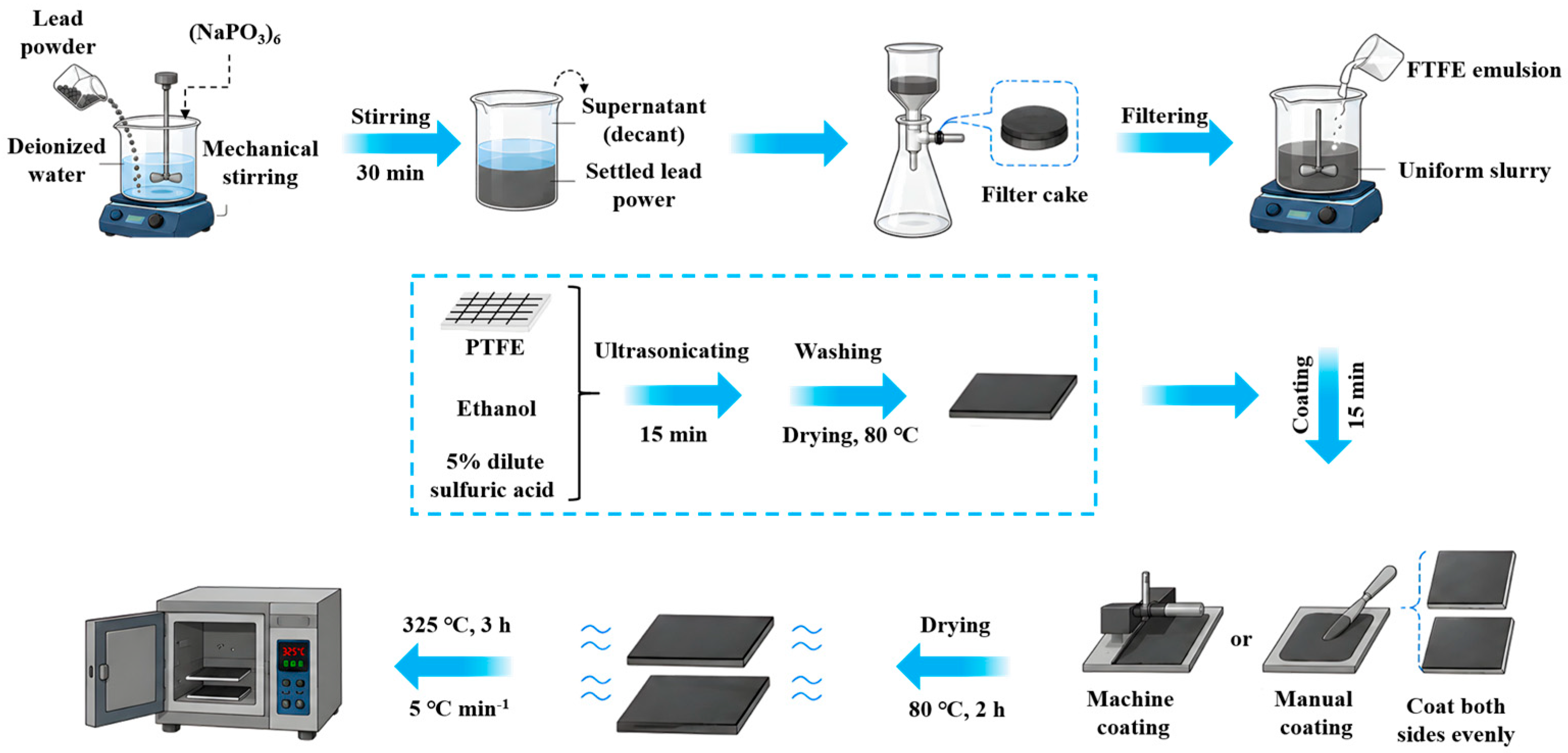
Based on the above design, this study systematically optimized key preparation parameters including calcination temperature, binder ratio, substrate type, dispersion method, and dispersant dosage, successfully fabricating high-performance composite lead electrodes under air atmosphere and applying them to the acrylonitrile electrolysis system for ADN production. Electrochemical and long-term electrolysis tests demonstrate that the optimal composite lead electrode achieves a current density of 60–70 mA·cm−2 in the potential range of −1.6 to −2.0 V (vs. SCE), approximately three times that of the conventional lead plate. During continuous electrolysis for 15 h, the voltage remains stable without significant increase. When coupled with DSA (dimensionally stable anode), the composite lead electrode exhibits a 0.4 V reduction in cell voltage relative to the conventional lead plate-DSA system. This work provides a low-cost, scalable lead-based cathode technology route for the green and efficient industrial production of ADN. The preparation process for the composite lead electrode is illustrated in Figure 1.

2. Results

2.1. Preparation Factors on the Catalytic Performance of Lead Electrodes

The effects of key preparation parameters—including electrode substrate, PTFE content, dispersion method, and the type and amount of dispersant—on the catalytic performance of the composite lead electrode were examined.
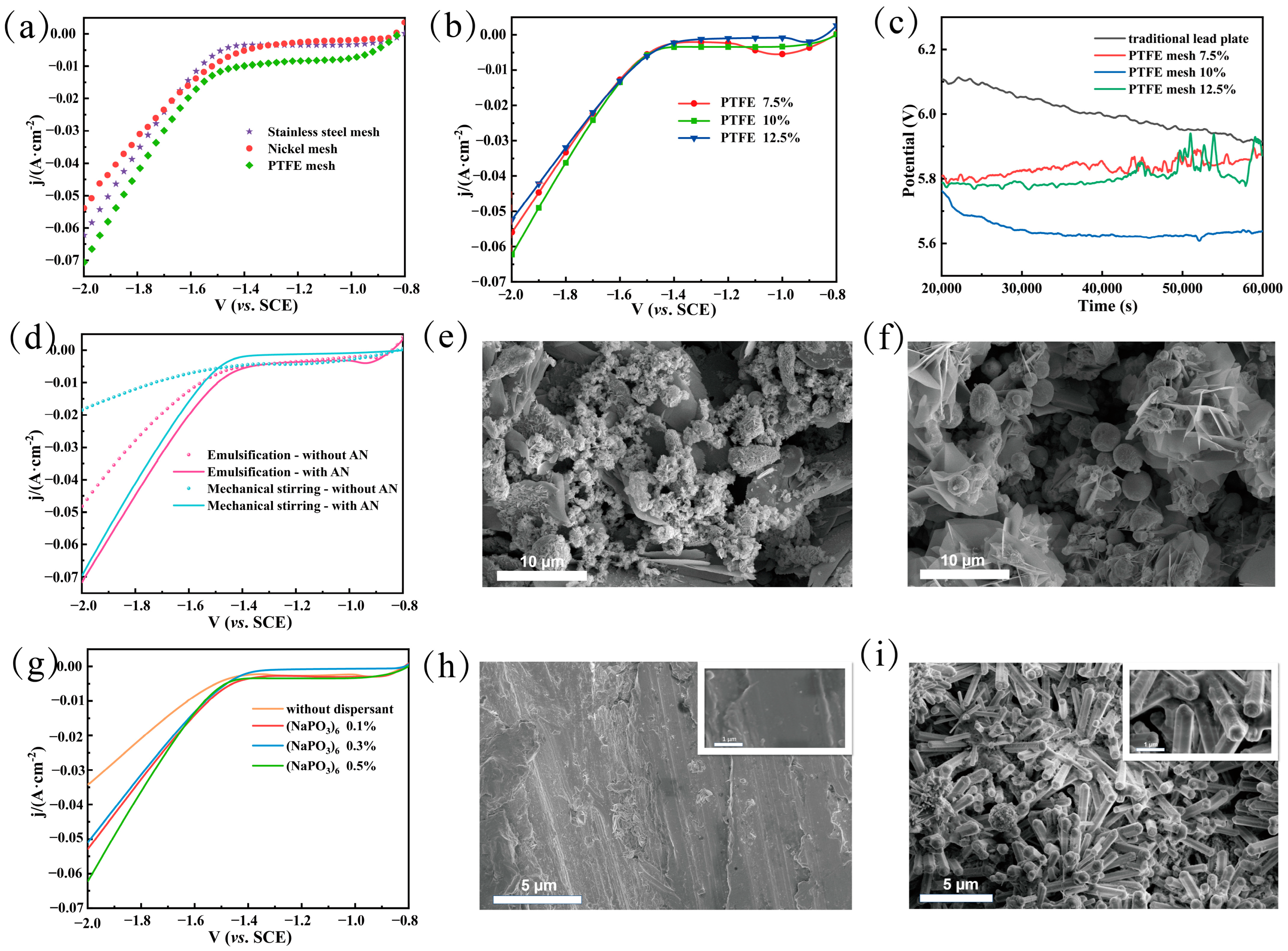
Substrate comparison experiments (Figure 2a) revealed that nickel mesh led to severe side reactions due to its high catalytic activity toward the hydrogen evolution reaction (HER). Stainless steel mesh showed moderate performance. In contrast, PTFE mesh, being inert and hydrophobic, effectively suppressed HER and gave the highest current response for AN reduction in the AN-containing electrolyte. Therefore, PTFE mesh was selected as the optimal substrate.
It should be noted that the PTFE mesh is a pure polymer screen and is electrically insulating. It serves solely as a mechanical support scaffold, not as a current conductor. Electronic conductivity of the composite electrode is provided by the three-dimensional percolation network formed by the interconnected lead particles within the PTFE binder matrix, which contacts the external current collector directly.
PTFE content optimization (Figure 2b) showed that at a PTFE-to-lead mass ratio of 10%, AN reduction reached its maximum, indicating an optimal balance between catalytic activity and side reaction suppression. Excess PTFE blocks active sites, while insufficient PTFE compromises mechanical stability. This trend is supported by the electrolysis results in Figure 2c: with PTFE mesh as the substrate and a PTFE content of 10%, the electrode exhibited the lowest electrolysis voltage (5.6 V), which was 0.2 V lower than at 7.5% or 12.5% PTFE content, and 0.3–0.4 V lower than that of a conventional lead plate.
Dispersion method comparison (Figure 2d) indicated that mechanical stirring gave a low current density in the blank solution, whereas emulsification gave a high blank current but only a slightly higher response to acrylonitrile—just a few milliamps above that of mechanical stirring. Additionally, the emulsification process tends to overheat the slurry due to high-speed shear. As shown in Figure 2e, the electrode prepared by emulsification had an irregular surface with flake-like structures and flocculent agglomerates; the particles were loosely distributed with obvious local agglomeration, failing to form a continuous and stable framework. Although this loose and uneven morphology had some porosity, its poor structural integrity led to a high current response in the blank solution, because irregular regions tend to concentrate local current and thus raise the overall measured current. By contrast, the electrode prepared by mechanical stirring (Figure 2f) exhibited a flower-cluster morphology with interspersed flake-like and spherical particles, forming a relatively complete three-dimensional porous network. This interconnected structure increases the specific surface area and accelerates electrolyte and reactant diffusion within the electrode, thereby enhancing interfacial reaction activity and operational stability.
Dispersant study results (Figure 2g) showed that without a dispersant, lead particles severely agglomerated, leading to a marked reduction in specific surface area and fewer active sites, which weakened the electrochemical response to acrylonitrile. With the anionic dispersant sodium hexametaphosphate at a dosage of 0.5 wt% relative to lead powder, optimal dispersion was achieved through multiple synergistic mechanisms including electrostatic repulsion, steric hindrance, and lead ion complexation. Further increasing the dispersant concentration caused the slurry to become noticeably viscous during stirring, which severely deteriorated its coating processability and made subsequent coating impossible.
Figure 2h shows the SEM morphology of a conventional lead plate. Its surface is dense and flat, with tightly bonded particles, typical of a low-roughness smooth morphology. While this structure is beneficial for mechanical integrity, it suffers from low specific surface area, few catalytic active sites, high interfacial mass transfer resistance, and poor electrolyte penetration—all of which limit its electrochemical performance.
Figure 2i shows the SEM morphology of the composite lead electrode. The surface features uniformly distributed, dense flower-cluster-like microstructures, with rod-like crystals interlaced and overlapped to form a three-dimensional connected network. Numerous nanoscale gaps and pores exist between the crystals, ensuring mechanical stability while providing efficient ion transport channels and abundant active sites.

2.2. Electrochemical Reduction Process of Lead Electrodes

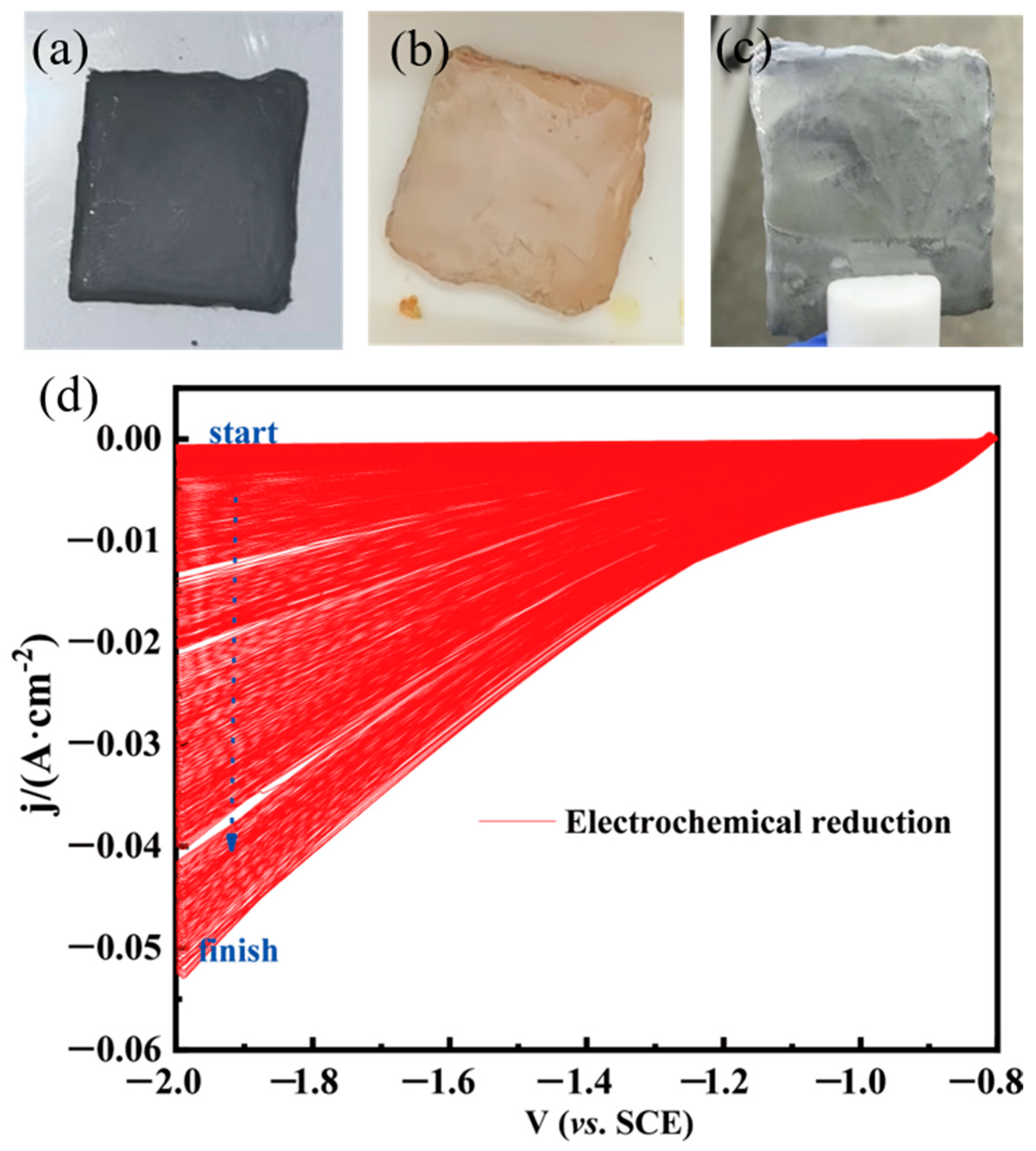
During high-temperature calcination of the composite lead electrode in air, lead reacts with oxygen to form a dense, electrochemically inactive yellow PbO passivation layer on the surface (Figure 3b), following the reaction: 2Pb + O2 → 2PbO. This leads to a loss of catalytic performance. In contrast, gray-black elemental lead (Figure 3a) is electrocatalytically active. Therefore, the PbO layer must be reduced to recover the active phase (Figure 3c). It should be noted that oxidation in air helps PTFE and lead powder adhere better to each other. The preparation parameters of different electrodes used in this work are listed in Table 1, including substrate types, PTFE loadings, dispersion methods, and dispersant conditions After electrochemical reduction, the morphology of the lead electrode changes noticeably. This reduction pretreatment can be performed in a blank electrolyte or an alkaline electrolyte using methods such as chronoamperometry, cyclic voltammetry, or potentiostatic reduction. At the beginning of reduction, the measured current is very low because the PbO layer blocks electron transfer. As reduction proceeds, the yellow PbO on the electrode surface gradually turns into gray-black elemental lead, and the current slowly rises until it stabilizes (Figure 3d). Once the surface PbO is fully converted to metallic lead and the color returns to gray-black, the electrochemical reduction pretreatment is complete, and the composite lead electrode regains its catalytic activity.
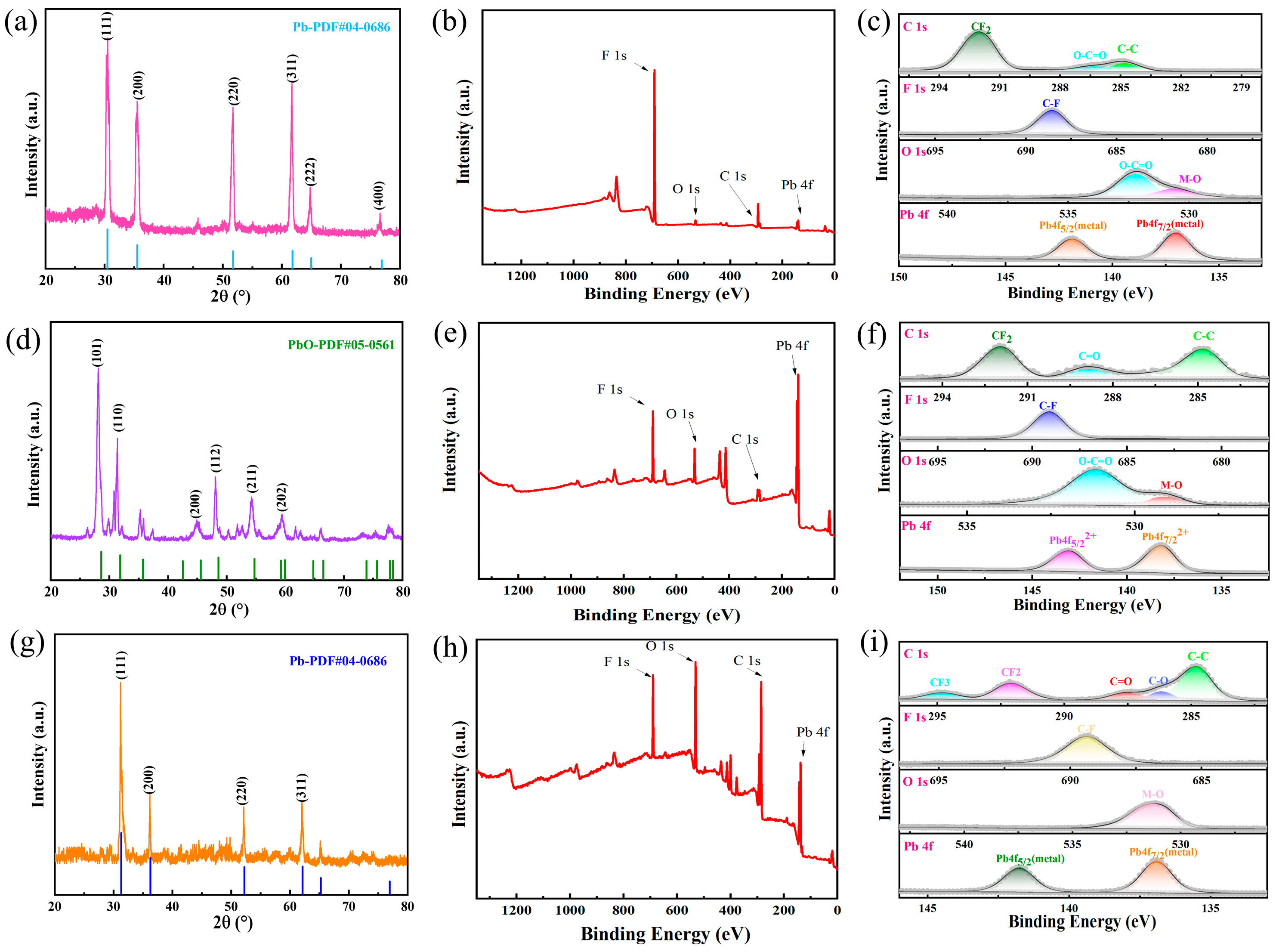
The microstructure, phase composition, and surface chemical states of the composite lead electrode were characterized before and after electrochemical reduction using X-ray diffraction (XRD) and X-ray photoelectron spectroscopy (XPS). Before calcination, all diffraction peaks of the composite electrode matched those of elemental lead (Pb0, PDF#04-0686). Peaks corresponding to the (111), (200), (220), (311), (222), and (400) planes of face-centered cubic Pb0 were clearly visible, indicating that the as-prepared electrode consisted mainly of high-purity metallic lead—the active phase for acrylonitrile electroreduction. After calcination in air at 325 °C for 3 h, the Pb0 peaks disappeared, and new peaks matching tetragonal PbO (PDF#05-0561) appeared. This confirms complete oxidation of Pb0 to PbO. After electrochemical reduction in a blank electrolyte, the PbO peaks vanished and Pb0 peaks returned, showing that PbO was successfully reduced back to metallic lead. Restoring the Pb0 phase is essential for recovering catalytic activity toward acrylonitrile hydrodimerization to adiponitrile. XPS analysis gave consistent results. Before calcination, the high-resolution Pb 4f spectrum showed two peaks at 136.9 eV and 141.8 eV, corresponding to the Pb 4f7/2 and Pb 4f5/2 spin–orbit splitting peaks of metallic Pb0. After calcination, these peaks disappeared and a new doublet appeared at 139.0 eV and 144.1 eV, characteristic of Pb2+ in PbO—again confirming complete oxidation. After electrochemical reduction, the Pb 4f spectrum once again showed peaks at 136.9 eV and 141.7 eV, matching Pb0. This indicates that surface Pb2+ species were reduced back to Pb0, restoring the catalytically active metallic lead surface. These results are summarized in Figure 4. Taken together, the XRD and XPS data demonstrate a reversible phase evolution pathway: Pb0 (before calcination) → PbO (after air calcination) → Pb0 (after electrochemical reduction). This pathway confirms that composite lead electrodes can be prepared in ambient air and then activated by a simple electrochemical reduction step, offering a cost-effective and scalable route for industrial applications.

2.3. Electrolysis Process Using Lead Electrodes

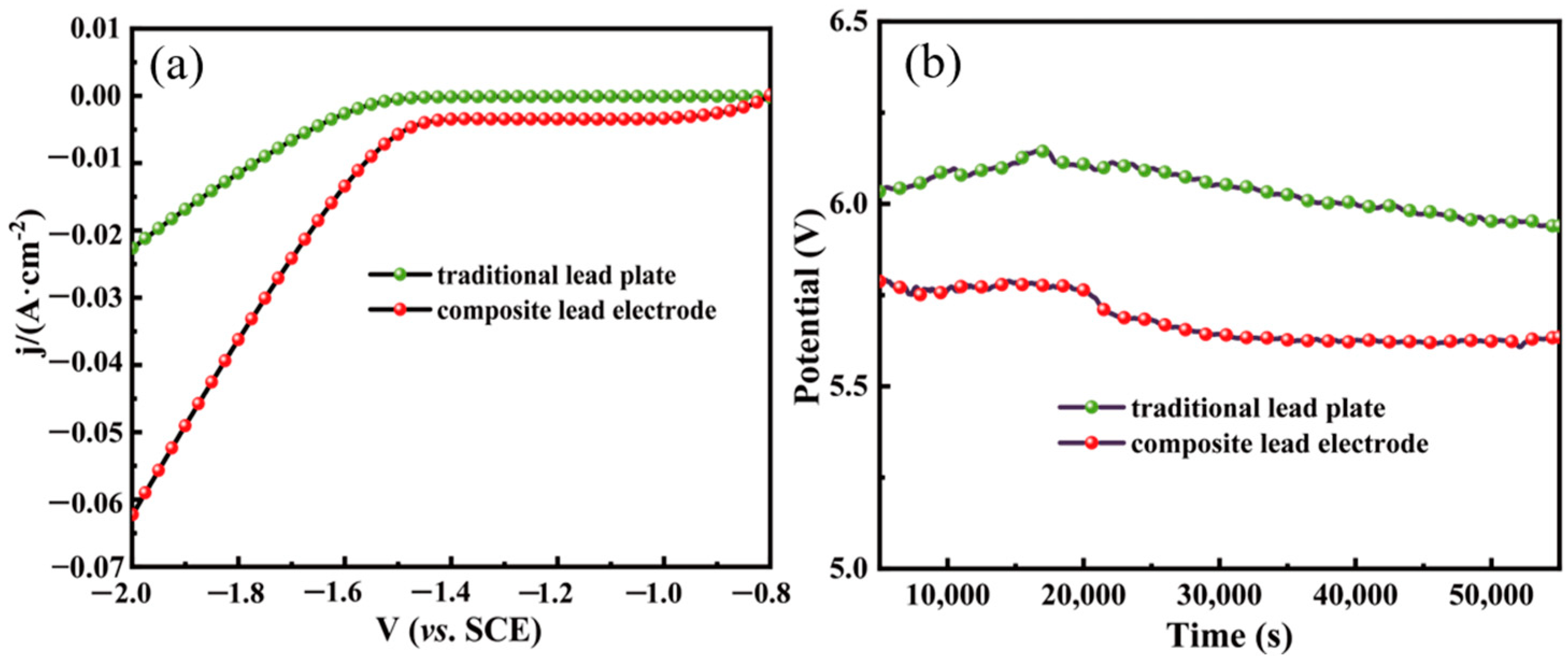
The electrochemical performance and operational stability of the composite lead electrode (prepared under the optimal conditions) were compared with those of a conventional lead plate during acrylonitrile electrolysis. In the AN-containing electrolyte, the composite electrode produced a substantially higher current density than the conventional lead plate (Figure 5a). Within the potential range of −1.6 V to −2.0 V (vs. SCE), the composite electrode delivered 64 mA·cm−2, whereas the conventional lead plate reached only 22.5 mA·cm−2 at −2.0 V—approximately three times lower. This potential range corresponds to the working window for the electrochemical hydrodimerization of acrylonitrile to adiponitrile. Over this range, the composite electrode also showed an earlier onset potential and a steeper current rise, indicating lower reaction overpotential and faster kinetics. This improvement comes from the three-dimensional porous network of the composite electrode. The flower-cluster-like micro/nanostructure increases the specific surface area and exposes more catalytic active sites. Meanwhile, the interconnected pores formed by the interlaced rod-like crystals provide efficient channels for electrolyte penetration and reactant mass transfer, thereby lowering the interfacial mass transfer resistance.
Long-term galvanostatic electrolysis was performed at 100 mA·cm−2 (0.4 A, electrode area 2 cm × 2 cm) for 15 h (Figure 5b). The composite lead electrode maintained a stable voltage throughout this period, with no significant increase—indicating good catalytic durability and structural integrity. For the conventional lead plate, the electrolysis voltage dropped slightly during the initial stage but remained about 0.3 V higher than that of the composite electrode overall. In addition, the composite electrode had much higher mechanical hardness than the conventional lead plate. This completely eliminated lead dust contamination caused by lead powder detaching from the electrode surface during installation and operation—an issue common with conventional plates. This improvement not only extends electrode service life but also lowers health risks for operators. Taken together, these results confirm that the composite lead electrode and its electrolysis cell are reliable for long-term continuous production of adiponitrile from acrylonitrile.

3. Discussion

In this work, we developed a composite lead electrode in ambient air for the electrochemical hydrodimerization of acrylonitrile to adiponitrile. Compared with conventional lead plate cathodes, the composite electrode shows better electrochemical performance, higher mechanical stability, and improved operational safety. The main findings are discussed below.
Structure–performance relationship. The improved performance of the composite electrode comes mainly from its three-dimensional porous network, made up of flower-cluster-like and rod-like micro/nanostructures (Figure 2i). This network gives a large specific surface area, plenty of active sites, and good paths for electrolyte penetration and mass transfer. In contrast, the conventional lead plate has a dense, flat surface (Figure 2h), which limits its catalytic activity. These observations agree with earlier reports that porous structures can improve electrocatalytic reaction rates [16,20].
Optimization of preparation parameters. A PTFE-to-lead mass ratio of 10% gave the best balance between catalytic activity and side reaction suppression (Figure 2b). PTFE plays two roles: it acts as a binder to improve particle cohesion, and its hydrophobicity helps suppress hydrogen evolution. The PTFE mesh substrate also helped reduce HER because it is chemically inert and hydrophobic (Figure 2a). The dispersant study showed that sodium hexametaphosphate at 0.5 wt% gives good particle dispersion through electrostatic repulsion and steric hindrance (Figure 2g); without a dispersant, particles agglomerate and background currents become high.
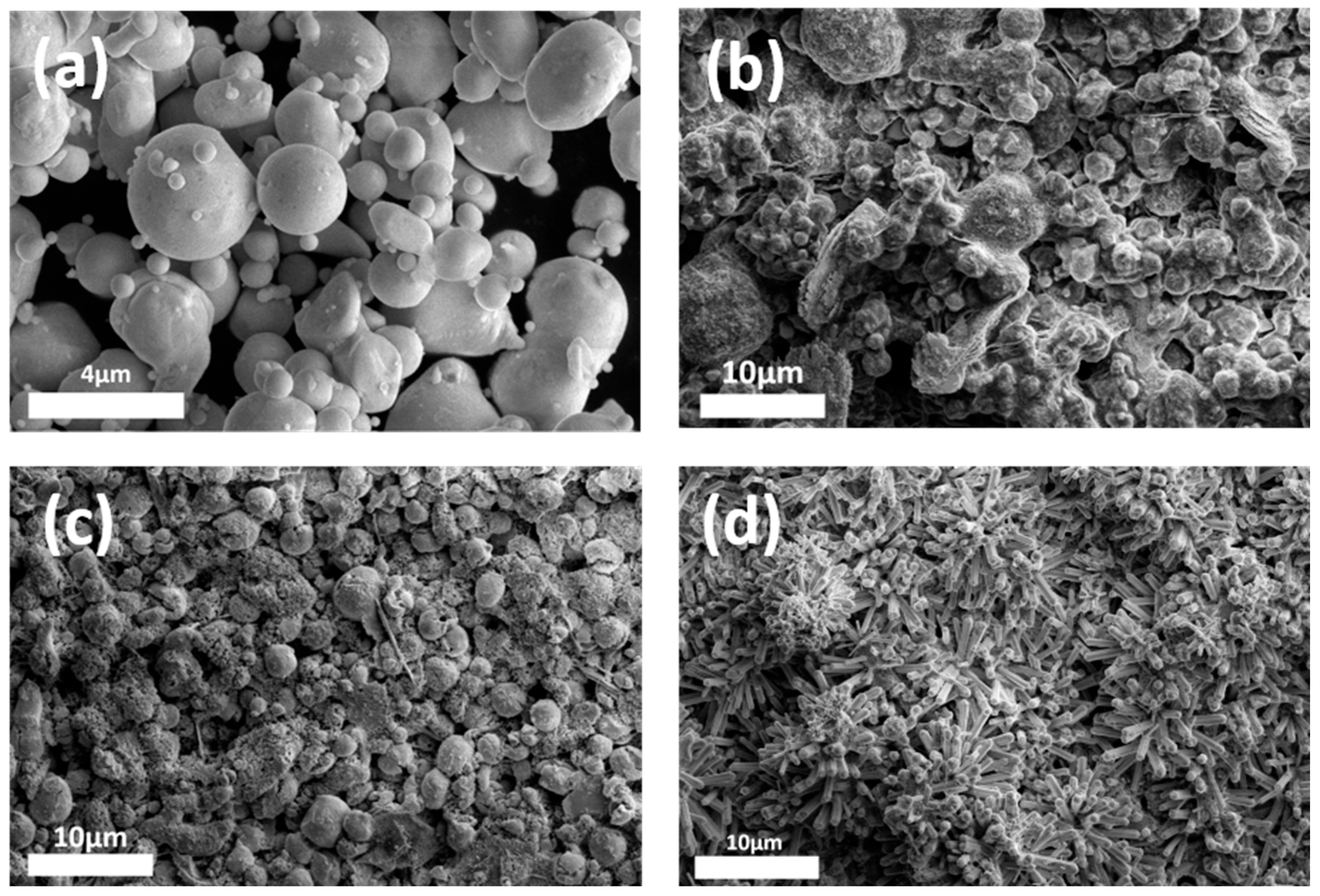
Activation mechanism. A unique feature of our method is the two-step activation: calcination in air followed by electrochemical reduction. Untreated lead powder is shown in Figure 6a, which exhibits spherical particles of varying sizes. The lead electrode with added PTFE binder but without calcination is shown in Figure 6b. Calcination helps PTFE and lead particles bond thermally, forming a mechanically stable network, as shown in Figure 6c. Although this step creates an inactive PbO layer, the subsequent electrochemical reduction not only restores active Pb0 but also significantly changes the electrode morphology (Figure 6d)—from a granular packed structure to an interlaced needle-like/rod-like flower-cluster nanostructure. The electrochemical reduction process was carried out for 1 h to ensure complete conversion of PbO to Pb0. This change is likely due to volume shrinkage and preferential crystal growth, providing new insight into the activation process.
Practical implications. The composite electrode has three main advantages over conventional lead plates: (1) current density is about three times higher (64 vs. 22.5 mA·cm−2) in the working potential range (−1.6 to −2.0 V vs. SCE), meaning faster reactions; (2) overpotential is lower, so energy consumption is reduced; and (3) mechanical hardness is better, which eliminates lead dust shedding—a major safety and maintenance issue in industry. The stable voltage during 15-h electrolysis (Figure 4b) also shows good catalytic durability.
Lead contamination risk and mitigation. A critical concern for any lead-based cathode in organic electrosynthesis is the potential contamination of the final product (adiponitrile) by leached lead ions or particles. Lead contamination can poison downstream catalysts used in polyamide 66 production and poses significant environmental and health risks. Conventional lead plate cathodes are prone to shedding lead dust during long-term operation, which is a direct and severe source of contamination. In contrast, our composite electrode design fundamentally mitigates this risk. The PTFE binder encapsulates the lead particles within a robust polymer network, and the inert PTFE mesh substrate provides additional mechanical reinforcement. This structure effectively suppresses the physical erosion and shedding of lead particles into the electrolyte. While trace amounts of lead dissolution cannot be completely ruled out without dedicated quantitative analysis (e.g., ICP-MS of the product stream), the complete absence of visible lead dust and the stable long-term voltage profile strongly suggest a significantly lower contamination risk compared to conventional plates. Future work will include systematic measurement of lead leachate levels to validate this advantage for industrial applications.
Limitations and future directions. Some limitations should be noted. First, 15-h tests only confirm medium-term stability; industrial operation requires much longer lifetimes (thousands of hours). Future work should test stability over longer periods (e.g., 500–1000 h) and with larger electrodes. Second, a systematic analysis of the electrolysis products, including Faradaic efficiency and selectivity for adiponitrile versus byproducts, was not carried out in this study. These parameters will be systematically investigated in future work. The theoretical Faradaic efficiency can be calculated using the following formula:
η   =   Q t Q r   ×   100 %
Q t = n   ×   z   ×   F
Q r = I   ×   t
Broader context. This work contributes to sustainable organic electrosynthesis by showing a simple, scalable, air-processable composite lead electrode that outperforms conventional lead plates. The general ideas presented here—using polymer binders to build three-dimensional porous networks, choosing inert substrates to suppress side reactions, and using electrochemical reduction for activation—could be applied to other electrode systems, supporting the move toward greener chemical manufacturing.

4. Materials and Methods

4.1. Chemicals

Lead powder (200 mesh) was purchased from China Metallurgical Research Institute (Beijing, China). Polytetrafluoroethylene (PTFE) emulsion (60 wt%) was supplied by Jiangsu Ancan Technology Co., Ltd. (Jiangyin, China). Sodium hexametaphosphate (analytical grade), dipotassium hydrogen phosphate (K2HPO4), tetrabutylammonium hydroxide (25 wt%), acrylonitrile (AN, 99%), and phosphoric acid (H3PO4) were purchased from Sinopharm Chemical Reagent Co., Ltd. (Shanghai, China). Deionized water (99.9%) was produced by Hangzhou Wahaha Group Co., Ltd. (Hangzhou, China). Stainless steel mesh, nickel mesh, and PTFE mesh were used as substrate materials. All reagents were used directly without further purification.

4.2. Preparation of Lead Electrodes

The composite lead electrodes were prepared through a sequential process involving slurry preparation, coating, calcination, and electrochemical reduction.
Slurry preparation: Under mechanical stirring at 1500 rpm, 50 g of lead powder (200 mesh, >99.5% purity) was gradually added to 200 g of deionized water containing sodium hexametaphosphate (0.5 wt% relative to lead powder mass) as a dispersant. The mixture was stirred for 30 min to achieve uniform wetting and dispersion. After dispersion, the supernatant was discarded, and the lead–water mixture was filtered under suction using a Büchner funnel with Whatman No. 1 filter paper to remove approximately 99% of the water, yielding a lead paste. Subsequently, PTFE emulsion (60 wt%) was added to the suction-filtered lead paste at a PTFE-to-lead mass ratio of 10%, and the mixture was stirred at low speed (200 rpm) for 15 min to form a uniform, spreadable paste.
Coating: Prior to coating, the PTFE mesh substrate (2 cm × 2 cm, 0.5 mm × 0.5 mm mesh opening, 1.0 mm thickness) was sequentially ultrasonicated in ethanol and 5% dilute sulfuric acid for 15 min each, then rinsed with deionized water and dried at 80 °C. The lead paste was then uniformly coated onto both sides of the pretreated substrate using a doctor blade coating method, with a coating thickness of approximately 0.8 mm per side. The coated electrode was dried at 80 °C for 2 h.
Calcination: The dried electrode was placed in a box furnace and calcined under an air atmosphere at 325 °C for 3 h with a ramp rate of 5 °C·min−1. During calcination, the PTFE binder melts and binds the lead particles together, while a thin PbO passivation layer forms on the lead surface due to oxidation.
Electrochemical reduction: The calcined electrode (yellow surface) was subjected to electrochemical reduction pretreatment in a blank electrolyte (26 g·L−1 K2HPO4, 28 g·L−1 tetrabutylammonium hydroxide, pH adjusted to 8 with H3PO4), 100 cycles using cyclic voltammetry at −0.8–−2.0volts (compared to SCE), or until the electrode surface turned from yellow to gray-black. The reduction was considered complete when the current stabilized, typically after 20–30 min. After reduction, the electrodes are rinsed with deionized water and stored in a sealed bag before use.

4.3. Materials Characterizations

SEM (Zeiss Gemini, Jena, Germany) was used to observe the micro-morphology and surface structure of materials at an accelerating voltage of 5 kV and a working distance of 8 mm. EDS enabled rapid analysis of elemental composition and distribution. XRD (D8 ADVANCE, Bruker AXS GmbH, Karlsruhe, Germany) was applied for phase identification and crystal structure characterization using Cu Kα radiation (λ = 1.5406 Å) over a scanning range of 10–80°. XPS (Nexsa G2, Thermo Fisher Scientific, Waltham, MA, USA) characterized the chemical valence and bonding states of surface elements using an Al Kα excitation source (1486.6 eV), with all spectra calibrated against the C 1 s peak at 284.8 eV.

4.4. Electrochemical Measurements

Electrochemical tests were conducted using a three-electrode system on a CHI660e electrochemical workstation (Shanghai Chenhua Instrument, Shanghai, China). The composite lead electrode (or traditional lead plate) served as the working electrode, a platinum plate as the counter electrode, and a saturated calomel electrode (SCE) as the reference electrode. The electrolyte composition was: 26 g·L−1 K2HPO4, 28 g·L−1 tetrabutylammonium hydroxide (25 wt%), and 14 g·L−1 acrylonitrile, with the pH adjusted to 8 using phosphoric acid. Linear sweep voltammetry (LSV) was employed to evaluate the electrocatalytic activity of the composite lead electrodes for AN reduction within a potential range of −0.8 V to −2.0 V (vs. SCE) at a scan rate of 5 mV·s−1.

4.5. Electrochemical Measurements in Adiponitrile Electrolysis Cell

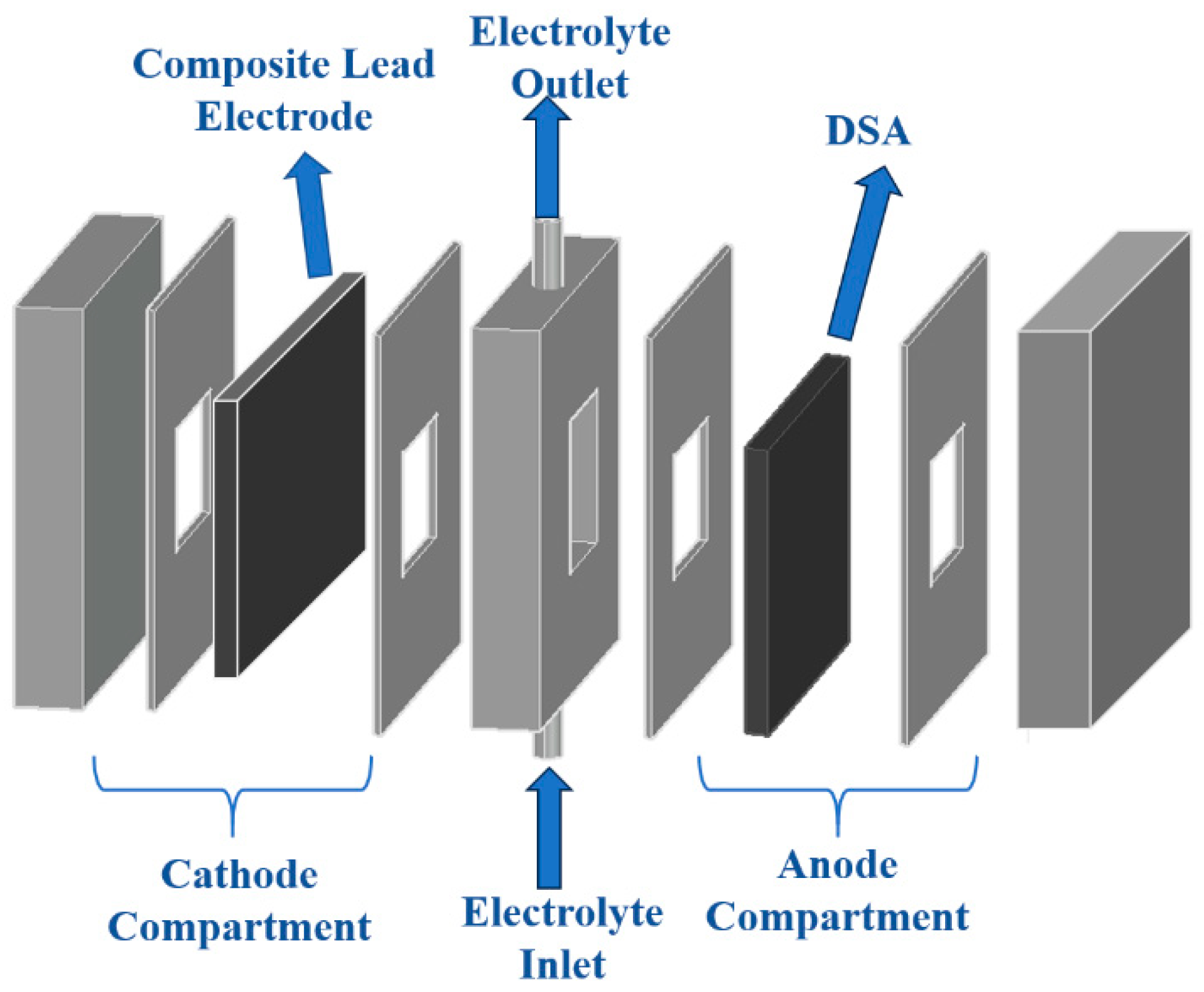
The electrolysis cell adopts a membrane-less dual-chamber structure, consisting of the cell body, cathode, anode, and an electrolyte circulation system. The cathode and anode chambers are distinguished within the cell through flow channel design and spatial separation, which effectively simplifies the cell structure and reduces energy consumption. However, the electrolytes in the two chambers are directly connected within the cell, sharing the same electrolyte system. Cathode chamber: The composite lead electrode serves as the cathode, immersed in the electrolyte containing acrylonitrile (AN), where the reductive dimerization of acrylonitrile to adiponitrile occurs. Anode chamber: A DSA serves as the anode, also immersed in the same electrolyte system. Both electrodes have the same dimensions of 2 × 2 cm2. Since the electrolytes in the cathode and anode chambers can mix freely, rapid electrolyte circulation (300 mL·min−1) and reaction selectivity are relied upon to control product distribution and avoid interference from anodic products (e.g., oxygen) on the cathodic reaction.
At the DSA anode, the oxygen evolution reaction (OER, 2H2O → O2 + 4H+ + 4e) is typically considered the dominant anodic process. However, in the weakly alkaline (pH 8) electrolyte containing acrylonitrile and tetrabutylammonium ions, the anodic chemistry may be more complex. Partial oxidation of organic species or other side reactions cannot be excluded without detailed product analysis of the anodic compartment. For the purpose of describing the overall cell reaction in a simplified manner, the OER is used as the representative anodic half-reaction. We acknowledge that a full Faradaic analysis of the anodic processes is beyond the scope of the present study and will be addressed in future work.
The electrolysis process is conducted under galvanostatic mode at a constant current density of 100 mA·cm−2 (current 0.4 A, electrode area 2 cm × 2 cm). The schematic diagram of the electrolysis cell is shown in Figure 7.
Anode   reaction :   2 H 2 O O 2 + 4 H + + 4 e
Cathode   reaction :   4 C H 2 = CHCN + 4 H + + 4 e 2 NC CH 2 4 CN
Overall   reaction :   4 C H 2 = CHCN + 2 H 2 O 2 NC CH 2 4 CN   +   O 2
Structural formula equation:
Catalysts 16 00518 i001

5. Conclusions

This study successfully prepared a novel composite lead electrode for the electrochemical hydrodimerization of acrylonitrile to adiponitrile under an air atmosphere. The main findings are summarized as follows:
The optimal preparation parameters were determined: PTFE mesh substrate, PTFE-to-lead mass ratio of 10%, mechanical stirring dispersion, 0.5 wt% sodium hexametaphosphate as a dispersant, calcination at 325 °C in air, followed by electrochemical reduction. The composite electrode possesses a three-dimensional porous network structure composed of flower-like and rod-like micro/nanostructures. After electrochemical reduction, the surface mainly consists of Pb0.
Compared to the traditional lead plate, the composite lead electrode exhibits superior electrochemical performance: a current density of 60–70 mA·cm−2 for AN electroreduction (approximately three times that of the traditional lead plate), enhanced mechanical stability (no lead dust generation), and improved operational durability.
This study demonstrates a cost-effective and scalable method for preparing high-performance composite lead electrodes under an air atmosphere. The developed electrode addresses key issues of traditional lead plate cathodes, providing technical support for the green and efficient industrial production of adiponitrile. Future work will focus on evaluating the long-term stability of the electrode under industrial operating conditions and exploring its application in large-scale.

Author Contributions

Conceptualization, S.C.; methodology, J.F. and Y.L.; software, Y.X.; validation, P.M. and F.L.; formal analysis, J.F.; investigation, Y.L.; resources, S.C.; data curation, J.F.; writing—original draft preparation, J.F.; writing—review and editing, S.C. and F.L.; visualization, Y.X.; supervision, S.C.; project administration, S.C.; funding acquisition, S.C., Y.S. and Y.X. All authors have read and agreed to the published version of the manuscript.

Funding

This research was funded by Jiangsu Ancan Technology Co., Ltd. Industry-University-Research Project Support (Grant No. YG2023031509 and Grant No. YG20250409001). The APC was funded by the corresponding author.

Data Availability Statement

Data are contained within the article.

Acknowledgments

The authors would like to thank Jiangsu Ancan Technology Co., Ltd., for funding this study. The authors are grateful to their laboratory colleagues for valuable discussions and technical assistance during the course of this research. The corresponding author acknowledges all co-authors for their contributions to manuscript preparation and experimental design.

Conflicts of Interest

Authors Yuxiang Xu, Peilan Ma, and Song Chen were employed by the company Jiangsu Ancan Technology Co., Ltd. The remaining authors declare that the research was conducted in the absence of any commercial or financial relationships that could be construed as a potential conflict of interest. The authors declare that this study received funding from Jiangsu Ancan Technology Co., Ltd. The funder was not involved in the study design, collection, analysis, interpretation of data, the writing of this article or the decision to submit it for publication.

References

  1. Beylergil, B.; Tanoğlu, M.; Aktaş, E. Effect of polyamide-6,6 (PA 66) nonwoven veils on the mechanical performance of carbon fiber/epoxy composites. Compos. Struct. 2018, 194, 21–35. [Google Scholar] [CrossRef]
  2. Guo, X.; Liu, L.; Feng, H.; Li, D.; Xia, Z.; Yang, R. Flame Retardancy of Nylon 6 Fibers: A Review. Polymers 2023, 15, 2161. [Google Scholar] [CrossRef]
  3. Balzano, V.; Mariconda, A.; Acocella, M.R.; Raimondo, M.; D’Amato, A.; Longo, P.; Guadagno, L.; Longo, R. Synthesis of Nylon 6,6 with Pyrene Chain-End for Compatibilization with Graphite and Enhancement of Thermal and Mechanical Properties. Polymers 2025, 17, 1735. [Google Scholar] [CrossRef]
  4. Nizami, A.S.; Luo, X.; Dou, J.; Bai, A.; Wang, L.; Wei, M.; Bashir, M.J.K.; Ganjidoust, H. Production technology of adiponitrile. E3S Web Conf. 2023, 441, 01019–01024. [Google Scholar] [CrossRef]
  5. Francke, R. Concepts for sustainable organic electrosynthesis. Curr. Opin. Electrochem. 2022, 36, 101111. [Google Scholar] [CrossRef]
  6. Su, J.-S.; Huang, S.-C.; Tsai, M.-C.; Yen, C.-H.; Lin, C.-Y. Efficient and selective electrosynthesis of adiponitrile by electrohydrodimerization of acrylonitrile over a bismuth nanosheet modified electrode. Green Chem. 2024, 26, 8220–8229. [Google Scholar] [CrossRef]
  7. Blanco, D.E.; Lee, B.; Modestino, M.A. Optimizing organic electrosynthesis through controlled voltage dosing and artificial intelligence. Proc. Natl. Acad. Sci. USA 2019, 116, 17683–17689. [Google Scholar] [CrossRef] [PubMed]
  8. Wu, S.; Zhang, H.; Huang, X.; Liao, Q.; Wei, Z. Acrylonitrile Conversion on Metal Cathodes: How Surface Adsorption Determines the Reduction Pathways. Ind. Eng. Chem. Res. 2021, 60, 8324–8330. [Google Scholar] [CrossRef]
  9. Huang, X.; Tan, L.; Zhang, L.; Li, C.; Wei, Z. Coverage-dependent acrylonitrile adsorption and electrochemical reduction kinetics on Pb electrode. Chem. Eng. J. 2020, 382, 123006. [Google Scholar] [CrossRef]
  10. Li, B.-Y.; Huang, W.-F.; Yang, M.-C. Electrodimerization of acrylonitrile with a rotating rod electrode. J. Taiwan Inst. Chem. Eng. 2020, 115, 13–19. [Google Scholar] [CrossRef]
  11. Clancy, M.; Bettles, C.J.; Stuart, A.; Birbilis, N. The influence of alloying elements on the electrochemistry of lead anodes for electrowinning of metals: A review. Hydrometallurgy 2013, 131–132, 144–157. [Google Scholar] [CrossRef]
  12. Watson, M.; Pletcher, D.; Sopher, D.W. A Microelectrode Study of Competing Electrode Reactions in the Commercial Process for the Hydrodimerization of Acrylonitrile to Adiponitrile. J. Electrochem. Soc. 2000, 147, 3751–3758. [Google Scholar] [CrossRef]
  13. Elrefaey, A.; Gu, Y.; James, J.D.; Kneen, C.; Crabbe, I.; Sienz, J. Analysis of a centreline failure of a lead alloy anode used in the copper electro-winning process. Eng. Fail. Anal. 2021, 120, 105057–105065. [Google Scholar] [CrossRef]
  14. Elrefaey, A.; Gu, Y.; James, J.D.; Kneen, C.; Crabbe, I.; Sienz, J. An investigation of the failure mechanisms of lead anodes in copper electrowinning cells. Eng. Fail. Anal. 2020, 108, 104273–104281. [Google Scholar] [CrossRef]
  15. Wang, Y.C.; Yen, J.H.; Huang, C.W.; Chang, T.E.; Chen, Y.L.; Chen, Y.H.; Lin, C.Y.; Kung, C.W. Metal-Organic Framework-Derived Electrocatalysts Competent for the Conversion of Acrylonitrile to Adiponitrile. ACS Appl. Mater. Interfaces 2022, 14, 35534–35544. [Google Scholar] [CrossRef] [PubMed]
  16. Shin, H.C.; Dong, J.; Liu, M. Nanoporous Structures Prepared by an Electrochemical Deposition Process. Adv. Mater. 2003, 15, 1610–1614. [Google Scholar] [CrossRef]
  17. Atobe, M.; Sasahira, M.; Nonaka, T. Ultrasonic effects on electroorganic processes Part 17. Product selectivity control in cathodic reduction of acrylonitrile. Ultrason. Sonochem. 2000, 7, 103–107. [Google Scholar] [CrossRef]
  18. Asami, R.; Atobe, M.; Fuchigami, T. Ultrasonic effects on electroorganic processes. Part 27. Electroreduction of acrylonitrile at suspended lead particle-electrode. Ultrason. Sonochem. 2006, 13, 19–23. [Google Scholar] [CrossRef]
  19. Yang, H.; Yang, L.Y.; Abliz, A.; Wang, S.Y.; Zhao, F.J.; Zhang, M.; Li, J.; Li, H.B. Bi and Sn particles embedded in ZIF-8-derived porous carbon as anode for lithium and sodium storage. Ionics 2021, 27, 1429–1437. [Google Scholar] [CrossRef]
  20. Li, X.; Gu, M.; Hu, S.; Kennard, R.; Yan, P.; Chen, X.; Wang, C.; Sailor, M.J.; Zhang, J.-G.; Liu, J. Mesoporous silicon sponge as an anti-pulverization structure for high-performance lithium-ion battery anodes. Nat. Commun. 2014, 5, 4105. [Google Scholar] [CrossRef]
  21. Krishna, M.; Fraser, E.J.; Wills, R.G.A.; Walsh, F.C. Developments in soluble lead flow batteries and remaining challenges: An illustrated review. J. Energy Storage 2018, 15, 69–90. [Google Scholar] [CrossRef]
  22. Pletcher, D.; Zhou, H.; Kear, G.; Low, C.T.J.; Walsh, F.C.; Wills, R.G.A. A novel flow battery—A lead-acid battery based on an electrolyte with soluble lead(II). J. Power Sources 2008, 180, 630–634. [Google Scholar] [CrossRef]
  23. Xing, Z.; Hu, L.; Ripatti, D.S.; Hu, X.; Feng, X. Enhancing carbon dioxide gas-diffusion electrolysis by creating a hydrophobic catalyst microenvironment. Nat. Commun. 2021, 12, 136. [Google Scholar] [CrossRef]
  24. Wakerley, D.; Lamaison, S.; Wicks, J.; Clemens, A.; Feaster, J.; Corral, D.; Jaffer, S.A.; Sarkar, A.; Fontecave, M.; Duoss, E.B.; et al. Gas diffusion electrodes, reactor designs and key metrics of low-temperature CO2 electrolysers. Nat. Energy 2022, 7, 130–143. [Google Scholar] [CrossRef]
  25. Tian, Y.; Pei, L.; Wang, S.; Yu, K.; Xu, Y.; Ye, X.; Zhu, S.; Liu, Y.; Zhang, Z.; Ye, Z. A self-breathing electrode enabled by interface regulation and gradient wettability engineering for industrial H2O2 electrosynthesis. Nat. Commun. 2026, 17, 1735. [Google Scholar] [CrossRef]
  26. Yu, Q.; Liu, Z.; Li, J. Synthesis of fluorinated biomimetic hydrophobic gas diffusion cathodes for catalytic hydrogen peroxide. Catal. Sci. Technol. 2025, 15, 2888–2897. [Google Scholar] [CrossRef]
  27. Sung, K.-E.; Hwang, I.; Choi, J.; Jung, S.-K.; Yoon, J. Enhanced adhesion in PTFE-based dry electrodes with hydrogen bonding co-binder integration for advanced lithium-ion batteries. Chem. Eng. J. 2025, 511, 161789–161799. [Google Scholar] [CrossRef]
  28. Costa, F.R.; Da Silva, L.M. Fabrication and characterization of a porous gas-evolving anode constituted of lead dioxide microfibers electroformed on a carbon cloth substrate. Electrochim. Acta 2012, 70, 365–374. [Google Scholar] [CrossRef]
  29. Higgins, D.; Hahn, C.; Xiang, C.; Jaramillo, T.F.; Weber, A.Z. Gas-Diffusion Electrodes for Carbon Dioxide Reduction: A New Paradigm. ACS Energy Lett. 2018, 4, 317–324. [Google Scholar] [CrossRef]
  30. Ham, Y.S.; Park, Y.S.; Jo, A.; Jang, J.H.; Kim, S.-K.; Kim, J.J. Proton-exchange membrane CO2 electrolyzer for CO production using Ag catalyst directly electrodeposited onto gas diffusion layer. J. Power Sources 2019, 437, 226898–226906. [Google Scholar] [CrossRef]
Figure 1. Schematic illustration of the preparation process for the composite lead electrode.
Catalysts 16 00518 g001
Figure 2. (a) Effect of different substrates (stainless steel mesh, nickel mesh, PTFE mesh) on the polarization curves of composite lead electrodes in AN-containing electrolyte; (b) Effect of different PTFE-to-lead mass ratios (7.5%, 10%, 12.5%) on the polarization curves of composite lead electrodes in AN-containing electrolyte; (c) Electrolysis voltage of composite lead electrodes with different PTFE-to-lead mass ratios; (d) Effect of different dispersion methods (mechanical stirring vs. emulsification) on the polarization curves of composite lead electrodes in AN-containing electrolyte; (e) SEM image of lead electrode slurry prepared by emulsification; (f) SEM image of lead electrode slurry prepared by mechanical stirring; (g) Effect of dispersant type (no dispersant, sodium hexametaphosphate) on the polarization curves of composite lead electrodes in AN-containing electrolyte; (h) SEM image of traditional lead plate; (i) SEM image of composite lead electrode.
Catalysts 16 00518 g002
Figure 3. Composite lead electrode; (a) Before calcination; (b) After calcination in air; (c) After electrochemical reduction; (d) Electrochemical reduction process.
Catalysts 16 00518 g003
Figure 4. XRD patterns and XPS spectra of the composite lead electrode at different stages. (ac) Uncalcined; (df) after air calcination; (gi) after electrochemical reduction. Left column: XRD patterns; middle column: XPS survey spectra; right column: high-resolution XPS spectra.
Catalysts 16 00518 g004
Figure 5. (a) Comparison of polarization curves in AN-containing electrolyte between the composite lead electrode prepared under optimal conditions and the traditional lead plate; (b) Comparison of voltage-time curves during galvanostatic electrolysis between the composite lead electrode prepared under optimal conditions and the traditional lead plate.
Catalysts 16 00518 g005
Figure 6. SEM images of (a) lead powder, (b) the lead electrode before calcination, (c) the lead electrode after calcination, and (d) the lead electrode after electrochemical reduction for 1 h.
Catalysts 16 00518 g006
Figure 7. Diagram of the electrolysis cell setup.
Catalysts 16 00518 g007
Table 1. Summary of the different electrodes prepared and characterized in this study, including conventional lead plate and composite lead electrodes with various substrates, PTFE contents, dispersion methods, and dispersant conditions. SHMP: sodium hexametaphosphate. N/A: not applicable.
Electrode NameSubstratePTFE Content (vs. Pb)DispersantDispersion MethodCalcinationElectrochemical ReductionFigure Reference
Conventional lead plateLead plateN/AN/AN/AN/AN/AFigure 2h and Figure 4
Ni-mesh/PbNickel mesh10%SHMPMechanical stirring325 °C, AirYesFigure 2a
SS-mesh/PbStainless steel mesh10%SHMPMechanical stirring325 °C, AirYesFigure 2a
PTFE-mesh/Pb-7.5%PTFE mesh7.5%SHMPMechanical stirring325 °C, AirYesFigure 2b,c
PTFE-mesh/Pb-10%PTFE mesh10%SHMPMechanical stirring325 °C, AirYesFigure 2b,c,i and Figure 4
PTFE-mesh/Pb-12.5%PTFE mesh12.5%SHMPMechanical stirring325 °C, AirYesFigure 2b,c
Emulsified-PTFE-mesh/PbPTFE mesh10%SHMPEmulsification325 °C, AirYesFigure 2d,e
No-dispersant/PbPTFE mesh10%NoneMechanical stirring325 °C, AirYesFigure 2g
Disclaimer/Publisher’s Note: The statements, opinions and data contained in all publications are solely those of the individual author(s) and contributor(s) and not of MDPI and/or the editor(s). MDPI and/or the editor(s) disclaim responsibility for any injury to people or property resulting from any ideas, methods, instructions or products referred to in the content.