1. Introduction
Titanium dioxide (TiO
2) is a well-known photocatalyst used in various environmental applications, such as wastewater purification, water splitting, degradation of volatile organic compounds, and hydrogen production, due to its high photocatalytic activity, chemical stability, cost effectiveness, and low toxicity [
1,
2]. However, the practical efficiency of TiO
2 is fundamentally limited by its wide bandgap (≈3.2 eV). This energy requirement restricts its activation to the ultraviolet region, which constitutes only about 5% of solar spectrum [
3]. Consequently, TiO
2 exhibits very limited photocatalytic performance under visible light, which represents the most abundant portion of solar radiation.
To overcome this limitation, several strategies have been developed to enhance the visible-light-responsive properties of TiO
2. These approaches include doping with metals [
4,
5] or non-metals [
6,
7], as well as surface deposition of noble metal [
8]. While metal doping typically involves the incorporation of ions into the TiO
2 crystal lattice—based on their ionic radius—to create sub-energy levels, metal surface deposition focuses on attaching metal nanoparticles to the catalyst surface [
9].
Among these techniques, the deposition of noble metals such as silver (Ag), gold (Au), palladium (Pd) and platinum (Pt) is an effective method for enabling visible-light activation [
10]. In particular, the surface plasmon resonance (SPR) effect observed in noble metal nanoparticles, involves the collective oscillation of conduction electrons under visible-light irradiation. These excited electrons can overcome the Schottky barrier at the noble metal–TiO
2 interface and be injected into the conduction band of TiO
2, thereby enhancing light absorption and overall photocatalytic activity [
10,
11,
12,
13,
14].
Specifically, Ag has attracted significant attention due to its strong SPR effect and relatively low Schottky barrier height, which enables more efficient injection of excited electrons and improved charge separation. Furthermore, Ag exhibits excellent antimicrobial activity, making it a multifunctional surface modifier [
15,
16].
The co-doping of Ag with transition metals such as zirconium (Zr) has emerged as a promising strategy. Since the ionic radius of Zr
4+ (0.72 Å) is very similar to Ti
4+ (0.65 Å) [
17], it can easily substitute into the TiO
2 host crystal lattice. However, the slightly larger size of the Zr
4+ ion leads to lattice distortion, which promotes the formation of oxygen vacancies or defects states [
18]. These defects can act as electron trap sites that suppress bulk electron-hole recombination [
19]. Unfortunately, Zr doping is insufficient for narrowing the bandgap energy. In fact, some studies have reported that mono-doping with Zr inherently widens the bandgap energy of the photocatalyst from 2.78 eV in TiO
2 nanofiber to 3.03 eV in Zr-doped TiO
2 nanofiber, due to the remarkably wide intrinsic bandgap of pure ZrO
2 (approx. 5.0 eV) [
20]. Nevertheless, many researchers have noted that Zr doping possesses the potential to inhibit the undesirable anatase-to-rutile phase transition during calcination [
17,
20,
21]. For this reason, establishing a synergistic system via co-doping with an efficient visible-light-harvesting co-dopant, such as Ag, is highly critical. This configuration allows the co-doped system to harvest light energy effectively across both the UV and visible regions, while simultaneously prolonging the lifetime of photo-generated electron-hole pairs by retarding their recombination. However, an unsuitable Zr doping concentration can be detrimental. An excessive Zr loading may render the lattice structure amorphous [
22] or act as charge transfer resistance at the interface [
23], thereby negatively affecting overall photodegradation performance.
To optimize photocatalytic efficiency, several researchers have explored the optimal Ag-to-Zr ratio using various synthesis techniques. For instance, Ag, Zr co-doped TiO
2 catalysts were prepared via the sol–gel method with calcination at 500 °C to investigate the effect of high Zr concentrations (5 to 15 mol%) at a fixed Ag concentration of 5 mol%. The results suggested that 10 mol% Zr exhibited the highest MB decolorization efficiency under indoor fluorescent light [
17]. However, it is noteworthy that while the photocatalytic performance improved significantly due to the Ag, Zr co-doping, further increasing the Zr content did not significantly affect the performance. In addition, the effect of high Zr concentrations (5 to 20 mol%) was also studied in Ag, Zr co-doped TiO
2 coated nanofibers [
20] prepared via sol–gel electrospinning followed by calcination at 450–650 °C. They found that TiO
2 co-doped with 10 mol% Zr and 2 mol% Ag showed the highest photocatalytic performance under visible light emitted from a 300 W xenon lamp. Similarly, in both studies, changing the Zr concentration at high levels (>5 mol%) had a negligible effect on efficiency. However, Zr clearly inhibited phase transformation.
On the other hand, the effect of low Zr concentrations (1 to 7 mol%) within a fixed Ag co-doped TiO
2 system has been investigated using a co-precipitation method followed by calcination at 500 °C, which resulted in a mixed anatase/rutile phase catalyst [
24]. Nevertheless, this study focused on varying the Zr concentration and did not investigate the effect of altering the Ag concentration. Recently, low-temperature synthesis methods have been applied to prepare Ag, Zr co-doped TiO
2. It was found that doping Zr at 5 mol% could still effectively protect the active anatase phase of TiO
2 and exhibit promising photocatalytic performance [
25]. However, reports on low-temperature Ag, Zr co-doped TiO
2 systems remain highly limited, and their underlying photocatalytic mechanisms remain under-investigated.
In Ag–Zr co-doped systems synthesized at low temperatures (≈150 °C), high Zr surface concentrations are typically not achieved [
26]. Under these conditions, the role of Zr in suppressing the anatase-to-rutile phase transition becomes less significant. Consequently, low-temperature co-doped synthesis provides a promising strategy for increasing the Ag content, thereby enhancing visible-light absorption via surface plasmon resonance (SPR). This approach is expected to improve photocatalytic activity under low-intensity irradiation, such as household LED lighting, where Ag induced photon absorption is particularly effective. By maintaining a low Zr concentration, this strategy might promote the formation of structural defects and oxygen vacancies. Given that the synergistic potential of combining a high Ag concentration with a low, fixed Zr concentration—which remains insufficiently explored—this study aims to elucidate this relationship.
To accomplish this, TiO2, Zr mono-doped/TiO2 (ZT), and Ag, Zr co-doped TiO2 (AZT) were synthesized via a solvothermal method using an organic-free peroxide route. This approach employs hydrogen peroxide to form a soluble peroxo-titanium complex, ensuring high purity and homogeneity of the final product without the need for organic surfactants. The prepared catalysts with Ag concentration of 5, 7, and 10 mol% at a fixed Zr concentration of 3 mol% were designated as A5.ZT, A7.ZT and A10.ZT, respectively. The crystal structure, phase composition, micromorphology, and optical properties, and surface properties were characterized to assess the impact of varying Ag content. Photocatalytic performance was evaluated based on the decolorization of methylene blue (MB) under low-intensity visible-light irradiation from a household LED lamp. Additionally, radical scavenger experiments were conducted to provide evidence for radical formation and clarify their mechanistic roles in the photocatalytic process.
2. Results and Discussion
2.1. Characterization of the Prepared Catalyst
2.1.1. Crystal Structure
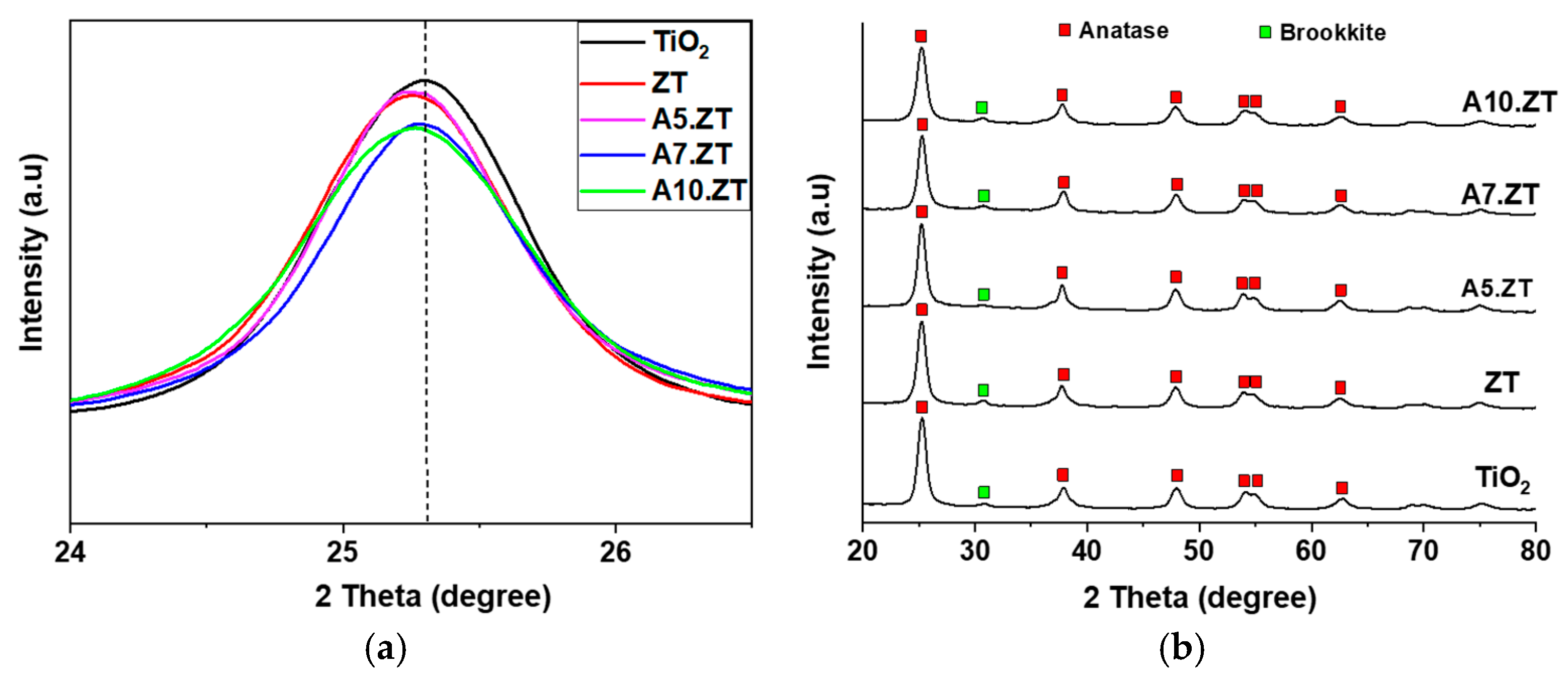
The determined X-ray diffraction (XRD) patterns of TiO
2, ZT, and AZT catalysts are shown in
Figure 1a. It is shown that all samples prepared exhibit characteristic peaks at 2θ values of 25.3°, 37.8°, 48.0°, 54.0°, 55.1°, and 62.7°, which are assigned to the (101), (004), (200), (105), (211), and (204) planes of the anatase phase of TiO
2, respectively. Additionally, a weak peak is observed at approximately 31° in all samples, which can be attributed to the (121) plane of brookite, with the most intense brookite peak at around 25° presumably overlapped by the dominant anatase (101) peak at 25.3° [
27].
The effect of Zr incorporating into TiO
2 is also observed in the XRD patterns. As shown in
Figure 1b, the main peak of all Zr-doped TiO
2 sample slightly shifts to a lower angle, from 25.3° to 25.2°. This shift suggests that Zr
4+ ions are incorporated into the TiO
2 lattice by substituting Ti
4+ ions [
17,
25], owing to their similar ionic radii and charge equivalence.
In contrast, co-doping with Ag does not cause any additional peak shift, likely because the ionic radius of Ag
+ is nearly twice that of Ti
4+ and its charge is not equivalent. Therefore, Ag is more likely to be deposited on the surface rather than incorporated into the TiO
2 [
20,
21].
No diffraction peaks corresponding to Ag species are detected in any sample. This absence is attributed to the homogeneous distribution and low dopant concentration [
21,
28], which are below the detection limit of the XRD instrument.
The minimum crystallite size (
D) of each prepared catalyst was calculated using the Debye–Scherrer equation (Equation (1)), where
β is the full width at half maximum, λ is the wavelength of the X-rays (1.54 Å), and
θ is the diffraction angle.
Furthermore, to differentiate the effects of crystallite size and lattice strain on peak broadening, the Williamson–Hall (W-H) analysis was employed according to the following equation (Equation (2)):
where
L represents the strain-corrected crystallite size and
ɛ denotes the micro-strain.
The effects of Ag and Zr doping on the crystallite size of TiO
2 are summarized in
Table 1.
Based on
Table 1 results doping with 3 mol% Zr initially caused a minor change in the measured crystallite size. However, the W-H analysis revealed a more significant structural distortion. The crystallite size corrected for lattice strain for ZT was found to be 24.36 nm, compared to 12.21 nm for pristine TiO
2. This increase was accompanied by a 2-fold higher in micro-strain from 1.04 × 10
−3 to 2.07 × 10
−3. This result confirms that even at a low concentration of 3 mol%, Zr incorporation induces significant lattice distortion due to the larger ionic radius of Zr
4+ (0.72 Å) compared to Ti
4+ (0.605 Å) [
20].
Interestingly, co-doping Zr/TiO2 with Ag influenced crystal growth in a biphasic manner. According to the Williamson–Hall (W–H) analysis, the crystallite size reached a maximum of 33.24 nm for A7.ZT, which also exhibited the highest microstrain (2.38 × 10⁻³). This result suggests that at 7 mol% Ag loading, the TiO2 lattice approaches a structural threshold, where the combined effects of Ag and Zr lead to maximum lattice distortion.
However, further increasing the Ag concentration to 10 mol% (A10.ZT) led to a sharp decrease in both crystallite size (12.84 nm) and microstrain (1.50 × 10
−3), indicating a strain relaxation mechanism. At this higher concentration, Ag species may exceed the solubility limit of the anatase lattice, leading to segregation at grain boundaries. This segregation can create a “restricting” effect that hinders further crystal growth while simultaneously relieving internal stress within the TiO
2 framework [
29].
2.1.2. Morphology and Composition
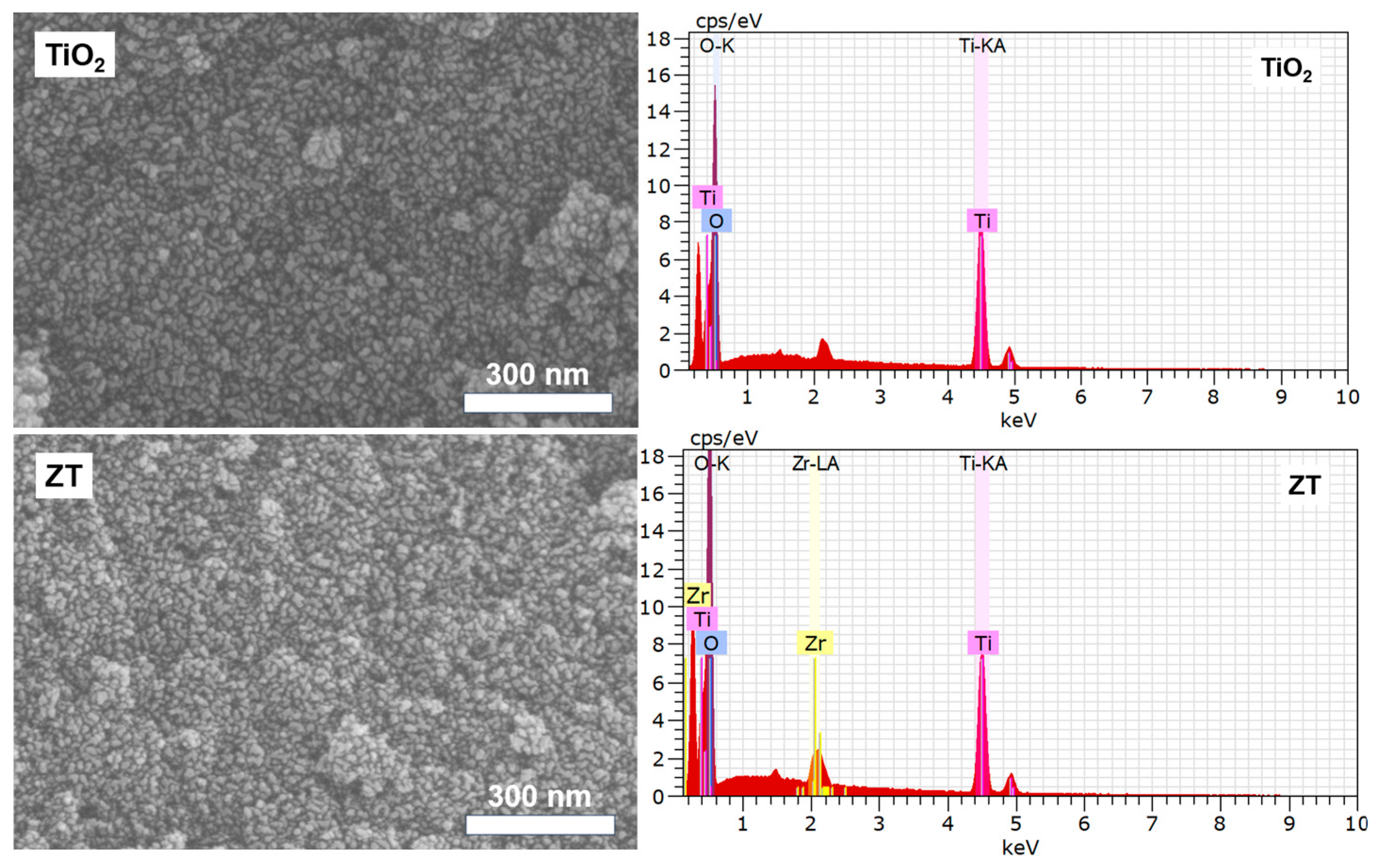
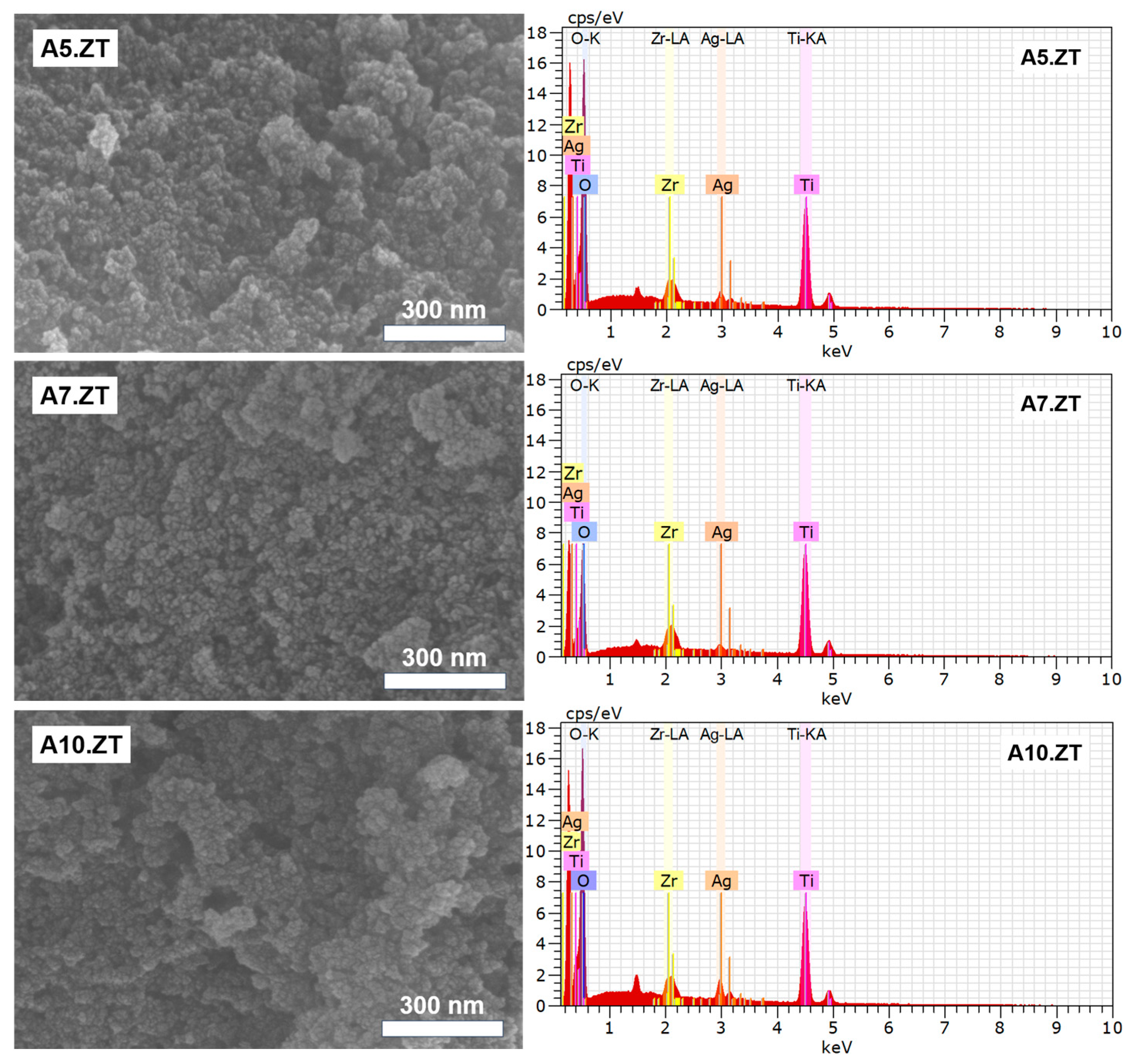
Morphological investigations of the prepared catalysts were conducted using SEM, and the corresponding results are presented in
Figure 2. The TiO
2 consists of nanoparticles with irregular shapes. However, the incorporation of Zr into the TiO
2 system notably alters the surface morphology. The presence of Zr suppresses particle aggregation, leading to the formation of smaller and more uniformly dispersed particles in the ZT sample compared with TiO
2. This morphological improvement is consistent with the BET surface area analysis (
Table 1), where ZT exhibits a higher specific surface area of 176 m
2 g
−1, compared to 140 m
2 g
−1 for TiO
2.
Following the introduction of Ag as a co-dopant,
Figure 2 reveal that Ag significantly influences the morphology of the material. A clear trend is observed, where increasing Ag concentration corresponds to enhanced particle agglomeration. In the A5.ZT sample, the nanoparticles exhibit an average size of approximately 32.7 nm and display a higher degree of clustering compared with the ZT sample. This agglomeration is accompanied by a reduction in specific surface area, decreasing to 139 m
2 g
−1 for A5.ZT and further to 134 m
2 g
−1 for A7.ZT. This behavior can be attributed to the formation of high-energy interfaces induced by Ag deposition, which provides a thermodynamic driving force for particle aggregation in order to minimize total surface energy [
30,
31].
However, a different trend is observed when the Ag concentration is further increased to 10 mol%. For the A10.ZT sample, the specific surface area increases again to 163 m
2 g
−1. This behavior is consistent with the XRD results, which indicate a reduction in crystallite size for A10.ZT, attributed to the pinning effect of excess silver at the grain boundaries. The suppressed crystal growth and the formation of smaller primary particles contribute to a partial recovery of the surface area, despite the presence of agglomerated structures. These results suggest that while moderate Ag loading promotes particle aggregation, higher concentrations can inhibit crystal growth, thereby governing the development of the final porous structure and the accessible surface area relevant to photocatalytic reactions [
32,
33].
2.1.3. Optical and Electronic Properties
The optical absorption properties of the samples were investigated using UV-Vis diffuse reflectance spectroscopy (DRS). Since DRS measures diffuse reflectance (%R), the data were converted using the Kubelka–Munk function, F(R), which is proportional to the absorption coefficient (α). The relationship is given as follows:
The optical band gap energy (Eg) was then calculated using the Tauc relation:
where hν represents the photon energy, A is a proportionality constant, and the exponent n depends on the nature of electronic transition. In this study, n = 1/2 was applied, corresponding to an indirect allowed transition characteristic of anatase TiO
2. The band gap energy was determined by plotting [F(R)hν]
n versus hν and extrapolating the linear portion of the curve to intercept the energy axis. The intercept provides the optical band gap value [
34], an essential parameter for understanding the electronic structure of the materials and predicting their photocatalytic performance.
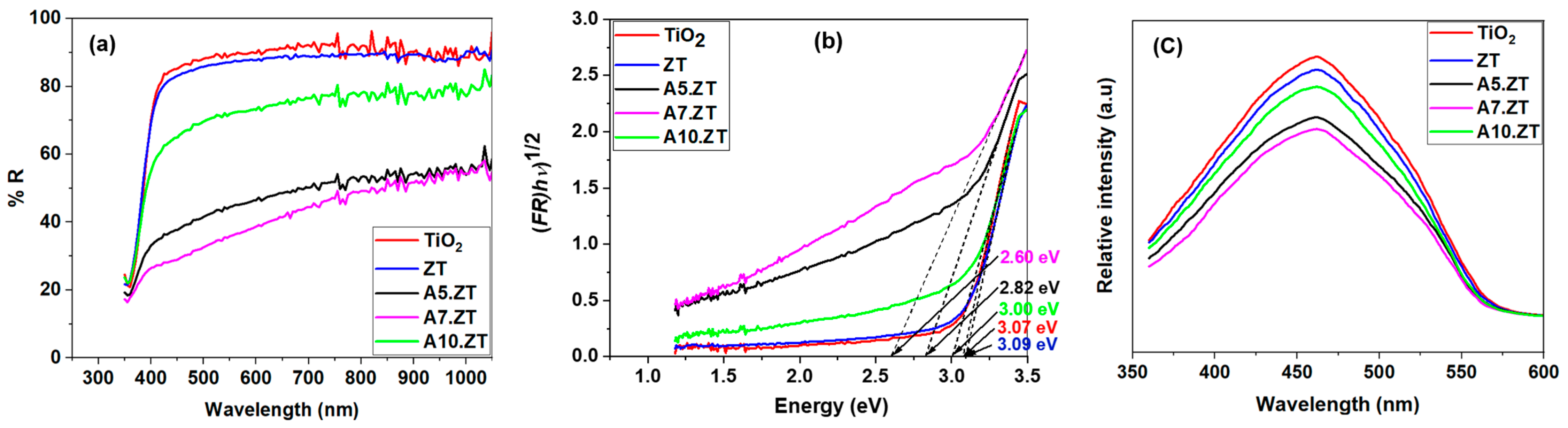
Figure 3a,b report the UV–Vis diffuse reflectance spectra and the corresponding Tauc plots of all prepared catalysts. The results indicate that the incorporation of Zr into the TiO
2 matrix has a negligible effect on the optical band gap, as the value for ZT (3.07 eV) is very close to that of TiO
2 (3.09 eV), This finding is highly consistent with several previous studies reporting that mono-doped Zr does not significantly alter the band gap of TiO
2, primarily because the outermost orbitals involved in the electronic transitions of Zr
4+ and Ti
4+ possess similar energy levels within the conduction band matrix. In contrast, co-addition of Ag significantly narrows the optical band gap, thereby enhancing the photoresponse of the material in the visible-light region. This band gap reduction is evident in the Ag-doped samples, where the band gap decreases from 2.82 eV for A5.ZT to a minimum value of 2.60 eV for A7.ZT.
Notably, this trend is not monotonic with increasing Ag concentration. For instance, at 10 mol% Ag loading (A10.ZT), the band gap energy increases again to 3.00 eV. This behavior can be attributed to enhanced reflectance associated with excessive Ag addition. It is therefore hypothesized that when the Ag concentration exceeds the optimal loading of 7 mol%, a light-shielding effect and/or pronounced agglomeration of Ag nanoparticles may occur. This shielding effect can suppress surface plasmon resonance (SPR) and limit effective interfacial interactions, thereby reducing the ability of Ag to narrow the band gap [
20]. Consequently, A7.ZT is expected to exhibit the highest photocatalytic performance under visible-light irradiation, owing to its optimal balance of optical properties and charge separation efficiency.
Furthermore, the charge recombination behavior as evaluated by photoluminescence (PL) spectroscopy, shows a strong correlation with the observed optical band gap trends. As shown in
Figure 3c, the ZT sample exhibits only a slight decrease in PL intensity compared with TiO
2. This indicates that 3 mol% Zr doping provides a limited improvement in charge separation, likely through the introduction of lattice defects that act as shallow charge-trapping sites [
35].
In contrast, co-addition of Ag leads to a pronounced reduction in PL intensity, with A7.ZT exhibiting the lowest emission among all samples. This trend suggests that Ag–Zr co-doping promotes more efficient charge separation through a dual mechanism. First, Zr introduces lattice defects within the TiO
2 structure that act as charge-trapping sites for photogenerated carriers. Second, Ag is present in the form of Ag
2+/AgO and Ag
+/Ag
2O), as confirmed by XPS analysis in the subsequent section, and is believed to enhance spatial charge separation. In particular, the heterointerface between Ag-oxide and TiO
2 may facilitate interfacial charge transfer, with photogenerated holes preferentially migrate toward the Ag-oxide phase, thereby suppressing electron–hole recombination [
36].
This synergistic effect, which combines internal charge trapping with external spatial charge separation, is expected to enhance the performance of the co-doped catalyst compared with the individual single-doped counterparts, which primarily rely on surface-mediated interactions. However, the PL intensity of A10.ZT increases again, indicating a deterioration in charge separation efficiency at higher Ag loadings. This suggests that excessive Ag species may act as recombination centers, thereby promoting electron–hole recombination and ultimately reducing photocatalytic efficiency [
37].
2.1.4. Surface Chemistry and Electronic States
The A7.ZT sample was selected for further analysis due to its superior light-harvesting capability and low site-electron recombination rate. Its surface elemental composition and chemical states were subsequently examined using X-ray Photoelectron Spectroscopy (XPS) to elucidate interactions within the TiO
2 matrix.
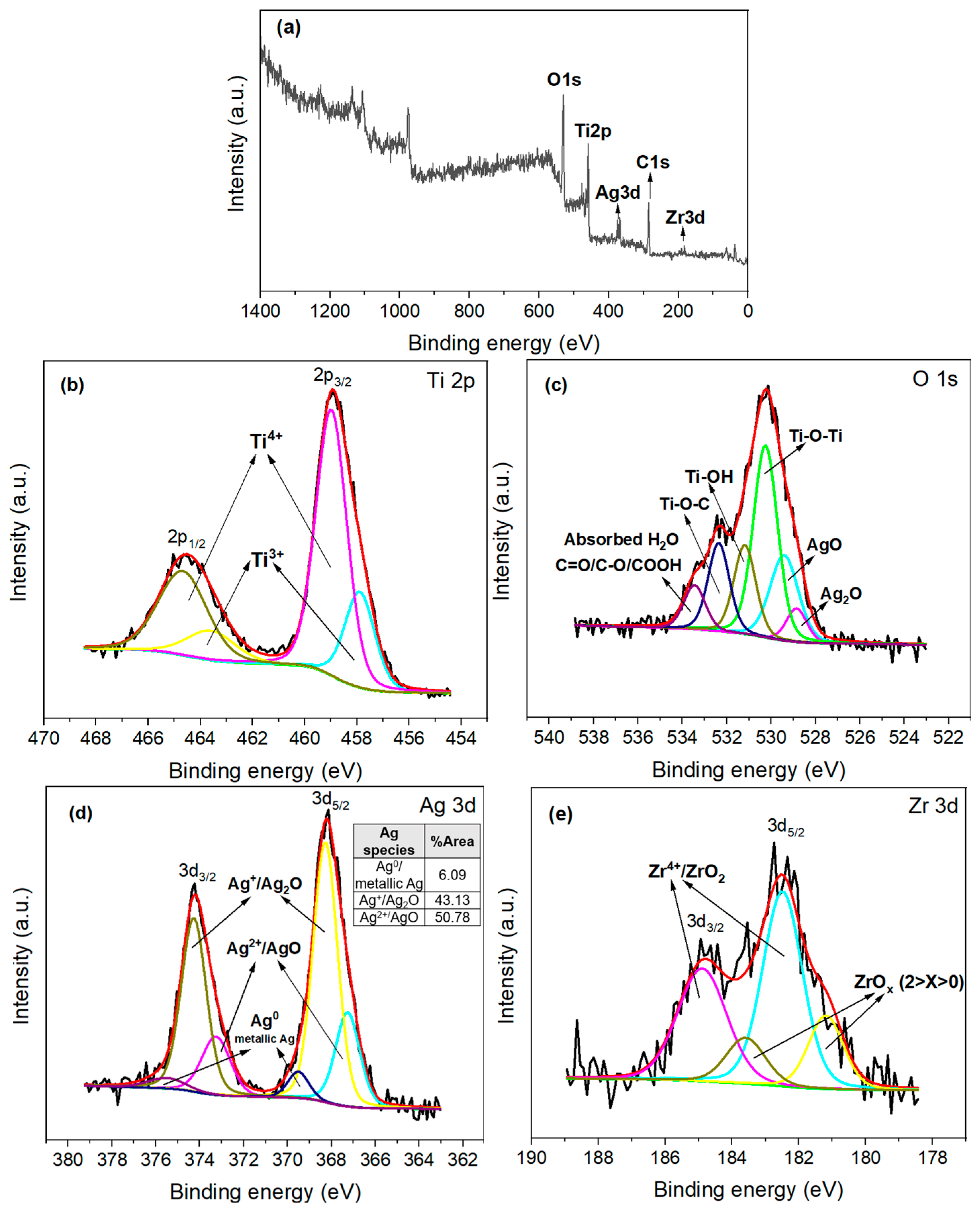
Figure 4a presents the survey spectrum, confirming the presence of Ti 2p, O 1s, Ag 3d, and Zr 3d signals. The detection of all expected elements verifies the successful incorporation of Ag and Zr into the TiO
2 matrix, while the C 1s peak was used as an internal reference to correct for binding energy shifts caused by surface charge accumulation.
To further investigate the chemical states of the elements, high-resolution spectra were subsequently used. The high-resolution Ti 2p spectrum in
Figure 4b reveals that titanium exists in a mixed-valence state after deconvolution. The two dominant peaks at higher binding energies (458.93 eV and 464.68 eV) are ascribed to the Ti
4+ state. In contrast, the smaller shoulder peaks at lower binding energies (457.89 eV and 463.59 eV) are assigned to the Ti
3+ state. The observed red shift in these peaks indicates a change in the chemical environment, which can be associated with the presence of oxygen vacancies in the TiO
2 lattice [
18].
The high-resolution O 1s spectrum in
Figure 4c exhibits a dominant peak at 530.26 eV, which is attributed to lattice oxygen in the TiO
2 structure. This peak corresponds to the characteristic Ti–O bonds that form the backbone of the catalyst matrix. Furthermore, the peaks observed at higher binding energies of 531.18 eV and 533.45 eV are attributed to oxygen bonded to silver as Ag-O and Ag-O-Ag, respectively
These findings are consistent with the high-resolution Ag 3d spectrum shown in
Figure 4d. The Ag 3d
5/
2 and Ag 3d
3/
2 peaks, located at binding energies of 367.26 eV and 373.26 eV, are attributed to Ag
2+/AgO, accounting for the majority of the total peak area (55.4%). The peaks at the higher binding energies of 368.27 eV and 374.27 eV correspond to Ag
+/Ag
2O. Additionally, the minor peaks at the highest binding energy 369.51 eV and 375.51 eV are assigned to Ag
0/metallic Ag. From the peak area deconvolution, the relative percentage distribution of Ag
2+/AgO, Ag
+/Ag
2O, and Ag
0/metallic Ag on the catalyst surface was determined to be 50.78%, 43.13%, and 6.09%, respectively, confirming that oxidized silver species are the predominant forms. Such a mixed-valence state can enhance photocatalytic performance, where metallic Ag contributes via localized surface plasmon resonance (LSPR), while oxidized Ag species facilitate charge separation at the TiO
2 interfaces [
37,
38].
The high-resolution Zr 3d spectrum shown in
Figure 4e exhibits two dominant peaks at binding energies of 182.49 eV and 184.89 eV, corresponding to the Zr
4+ oxidation state. These peaks are characteristic of Zr–O bonding, indicating the presence of zirconium dioxide (ZrO
2) or the incorporation of Zr
4+ ions into the TiO
2 lattice.
These results indicate the incorporation of Zr
4+ ions into the host material, likely through substitution at Ti
4+ sites [
39], which is consistent with the slight shift observed in the XRD patterns of Zr mono-doped TiO
2 discussed in
Section 2.1.1 of this article. In addition, the peaks labeled as ZrO
x, located at 181.19 eV and 183.59 eV, are attributed to sub-stoichiometric zirconium oxides. The presence of these species suggests the formation of oxygen vacancies in the vicinity of the zirconium atoms. These vacancies appear to be significant, as they can act as trapping sites for charge carriers and serve as active sites in catalytic reactions.
2.2. Photocatalytic Activity
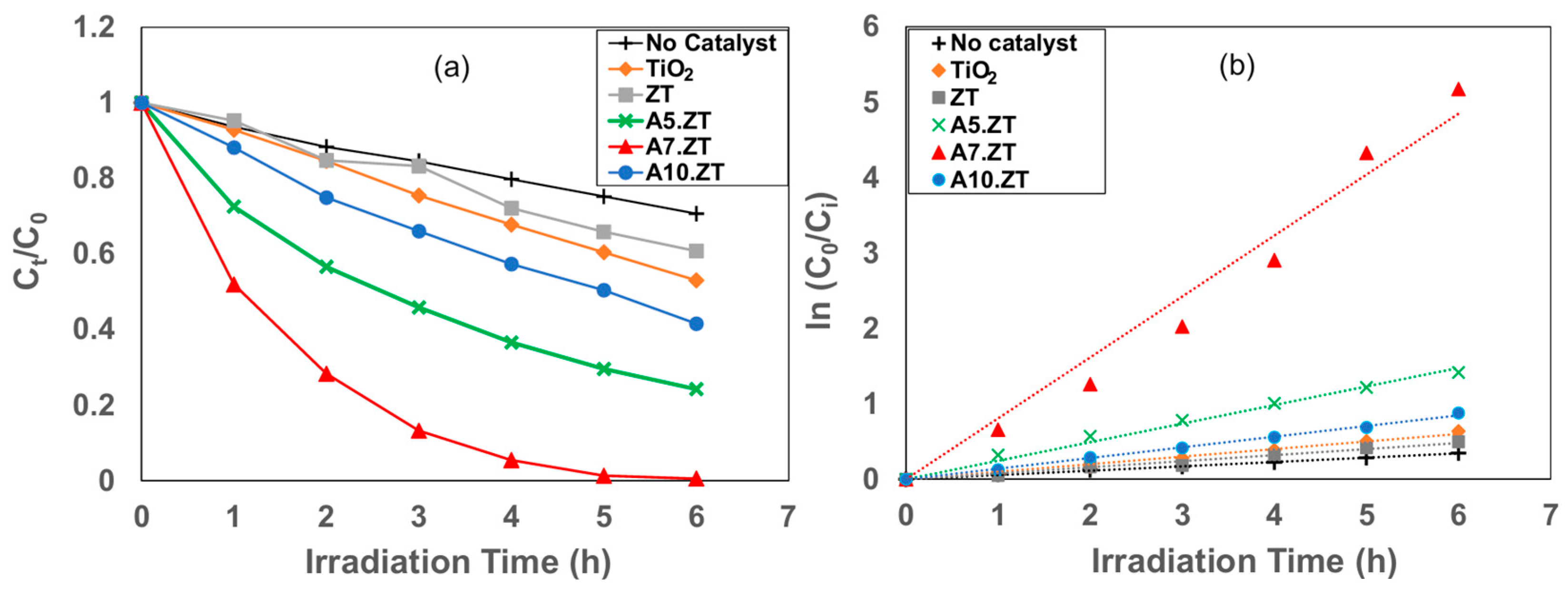
The photocatalytic activities of the prepared catalysts were evaluated via the decolorization of methylene blue (MB) under visible light irradiation. To ensure equilibrium at the catalyst surface, the suspension was stirred in the dark for 12 h prior to irradiation to reach adsorption–desorption equilibrium.
Figure 5 presents the C
t/C
0 plot, illustrating the normalized MB concentration as a function of irradiation time for each catalyst.
A blank control experiment conducted in the absence of a catalyst showed a degradation efficiency of 29.3% after 6 h of irradiation, which is attributed to the self-photolysis of methylene blue (MB). This behavior arises from the presence of a chromophoric structure in MB that strongly absorbs visible light, particularly near its maximum absorption wavelength of approximately 664 nm.
Regarding photocatalytic activity, the Zr mono-doped TiO
2 (ZT) catalyst exhibited slightly lower decolorization efficiency than pure TiO
2. This unexpected behavior may be attributed to the low photon flux of the LED source; in the absence of a visible-light-harvesting co-dopant, these sub-bandgap defect states can act as interfacial resistance or recombination centers under weak irradiation [
40].
Consequently, the ZT catalyst exhibits limited capability to utilize low-energy photons for the generation of electron–hole pairs under the household LED visible light source. This suggests that, although the high surface area of ZT may enhance molecular adsorption, it is insufficient to compensate for its limited photoactivation under visible-light irradiation.
In contrast, the decolorization efficiency increased significantly when Zr was co-doped with Ag. The incorporation of 5 mol% Ag in the A5.ZT catalyst resulted in a 75% decolorization efficiency compared to 39.2% for the ZT catalyst, while the A7.ZT with 7 mol% of Ag displayed the highest efficiency at 99.4%. This superior photocatalytic performance of A7.ZT is further evidenced by an apparent rate constant of 0.808 h
−1, which is approximately tenfold higher than that of the ZT catalyst as shown in (
Table 2).
The special performance of A7.ZT can be directly attributed to its optimized optical and electronic properties, as discussed in the previous sections. In particular, A7.ZT exhibits the narrowest band gap (2.60 eV) among all samples, which enhances its ability to absorb visible light. In addition, it shows the lowest photoluminescence (PL) intensity, indicating highly efficient separation of photogenerated charge carriers. This enhanced performance is primarily due to a synergistic effect, where silver species—identified via XPS as silver oxide—serve as a co-catalyst that promotes spatial charge separation. Consequently, electron–hole recombination is more effectively suppressed than in systems relying solely on defect-induced charge trapping from Zr doping.
The efficiency of the A10.ZT catalyst decreased to 58.4%. This decline is consistent with the observed increase in both band gap energy and PL intensity. Excessive Ag loading likely promotes the formation of larger Ag clusters, which induce a light-shielding effect on the TiO
2 surface. In addition, these excess Ag species may function as recombination centers rather than charge traps, thereby suppressing charge separation and ultimately reducing photocatalytic activity [
41]. Such performance deterioration associated with overloading of metal cocatalysts is widely reported across various photocatalytic systems.
2.3. Identification of Reactive Species
The photocatalytic degradation of organic dyes generally proceeds through two primary pathways [
42]: direct oxidation by photogenerated holes and indirect oxidation mediated by reactive oxygen species (ROS), such as hydroxyl radicals (•OH) and superoxide radicals (•O
2−). In the direct mechanism, photogenerated holes (h
+) interact with methylene blue (MB) molecules adsorbed on the catalyst surface, initiating their oxidation and eventual mineralization into simpler, non-toxic products.
In the indirect mechanism, the photogenerated charge carriers first react with water, hydroxide ions, or dissolved oxygen to generate secondary reactive species, which subsequently attack the dye molecules. The fundamental pathways for methylene blue (MB) degradation can be described by the following reactions, starting with Equation (5):
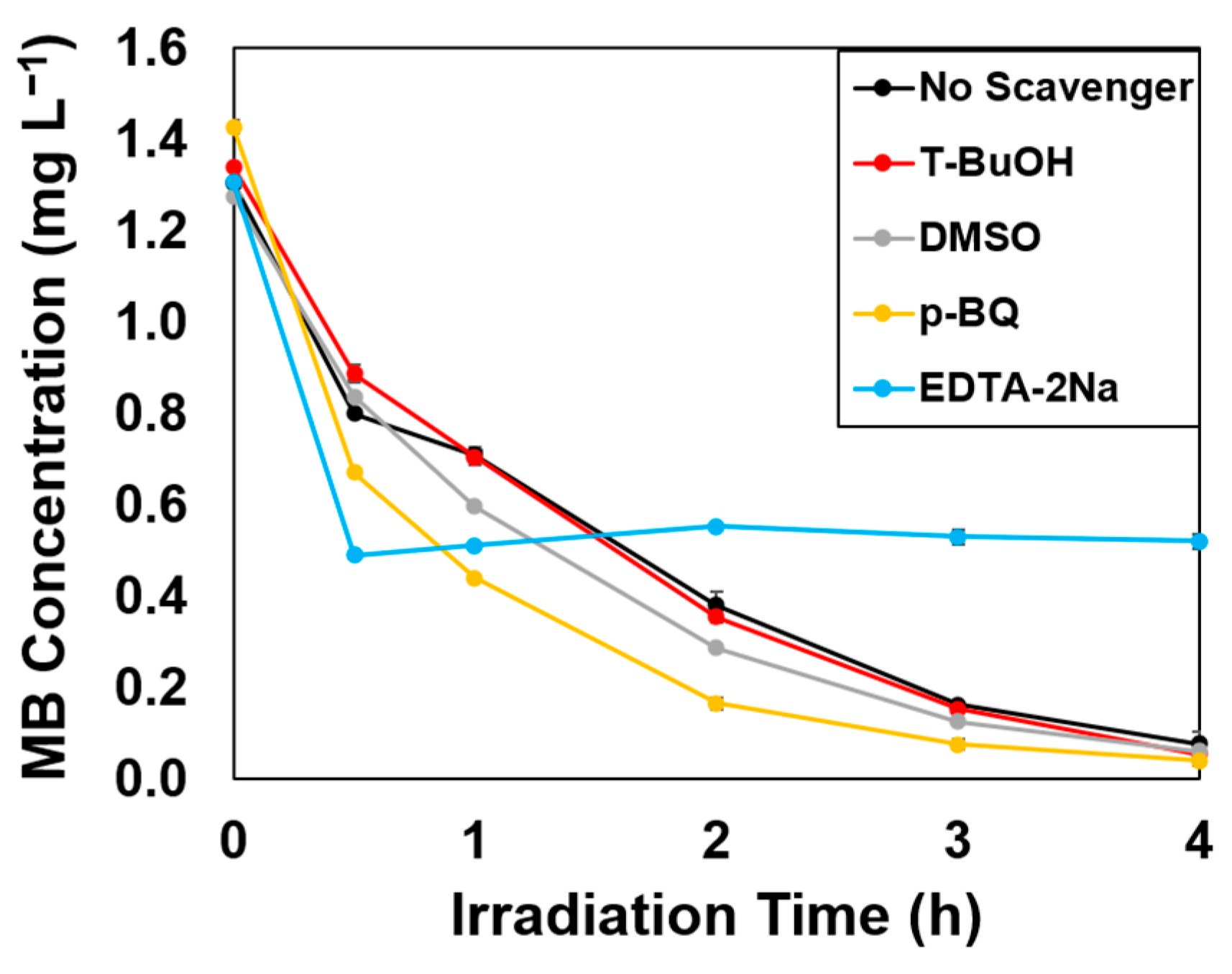
To determine the dominant reaction pathway using the A7.ZT photocatalyst, various scavengers were used. The results shown in
Figure 6 indicate that the addition of EDTA-2Na led to a significant inhibition of the decolorization process, whereas the effects of other scavengers were relatively minor. This suggests that photogenerated holes (h
+) play the most critical role through the direct oxidation pathway shown in Equation (6). At the experimental pH of approximately 5.5, EDTA exists primarily in the form of dihydrogen ethylenediaminetetraacetate ions (H
2EDTA
2−) [
43]. The chemical interaction between this active species and the photogenerated holes can be described by the following reaction:
In this process, EDTA functions as a hole scavenger by readily reacting with photogenerated holes to form radical intermediates, thereby suppressing the direct oxidation of methylene blue and diminishing the overall photocatalytic degradation efficiency.
As shown in
Figure 6, there is a sharp decrease in photocatalytic activity confirming that spatially separated holes are dominant reactive species responsible for the direct oxidation of methylene blue (MB) molecules. Notably, during the initial 0.5 h, the concentration of MB in the EDTA-2Na-containing water solution decreased more rapidly than in the control system. This behavior is consistent with previous reports, where the introduction of a hole scavenger was found to enhance the initial decolorization rate by effectively suppressing electron–hole recombination [
42,
44].
By quenching the photogenerated holes via Equation (10), the lifetime of the remaining electrons is prolonged, allowing them to participate more effectively in the initial reduction steps or surface interactions with methylene blue (MB) molecules. However, the subsequent plateau in MB concentration indicates that, in the absence of holes required for direct oxidation, complete decolorization is significantly hindered.
Interestingly, the addition of p-BQ and DMSO resulted in a slight enhancement of the decolorization performance during certain intervals compared to the control without scavengers. This phenomenon can be attributed to the redistribution of charge carriers and the suppression of recombination within the system [
45]. When DMSO traps a small fraction of photogenerated electrons, as shown below, it helps reduce electron–hole recombination and thereby increases the availability of holes for oxidation reactions as follows:
or when p-BQ quenches superoxide radicals via
Thus, the consumption of these negatively charged species reduces the probability of electron–hole recombination. As illustrated in
Figure 6, the removal of these recombination partners from the conduction band (CB) via Equations (11) and (12) effectively prolongs the lifetime of photogenerated holes in the Ag oxide valence band (VB). Consequently, a greater population of holes remains available for the direct oxidation of methylene blue (MB), resulting in the observed enhancement in photocatalytic efficiency.
Furthermore, the role of hydroxyl radicals can also be assessed using T-BuOH via the following reaction with •OH radicals.
The minimal inhibition observed with T-BuOH as reported in
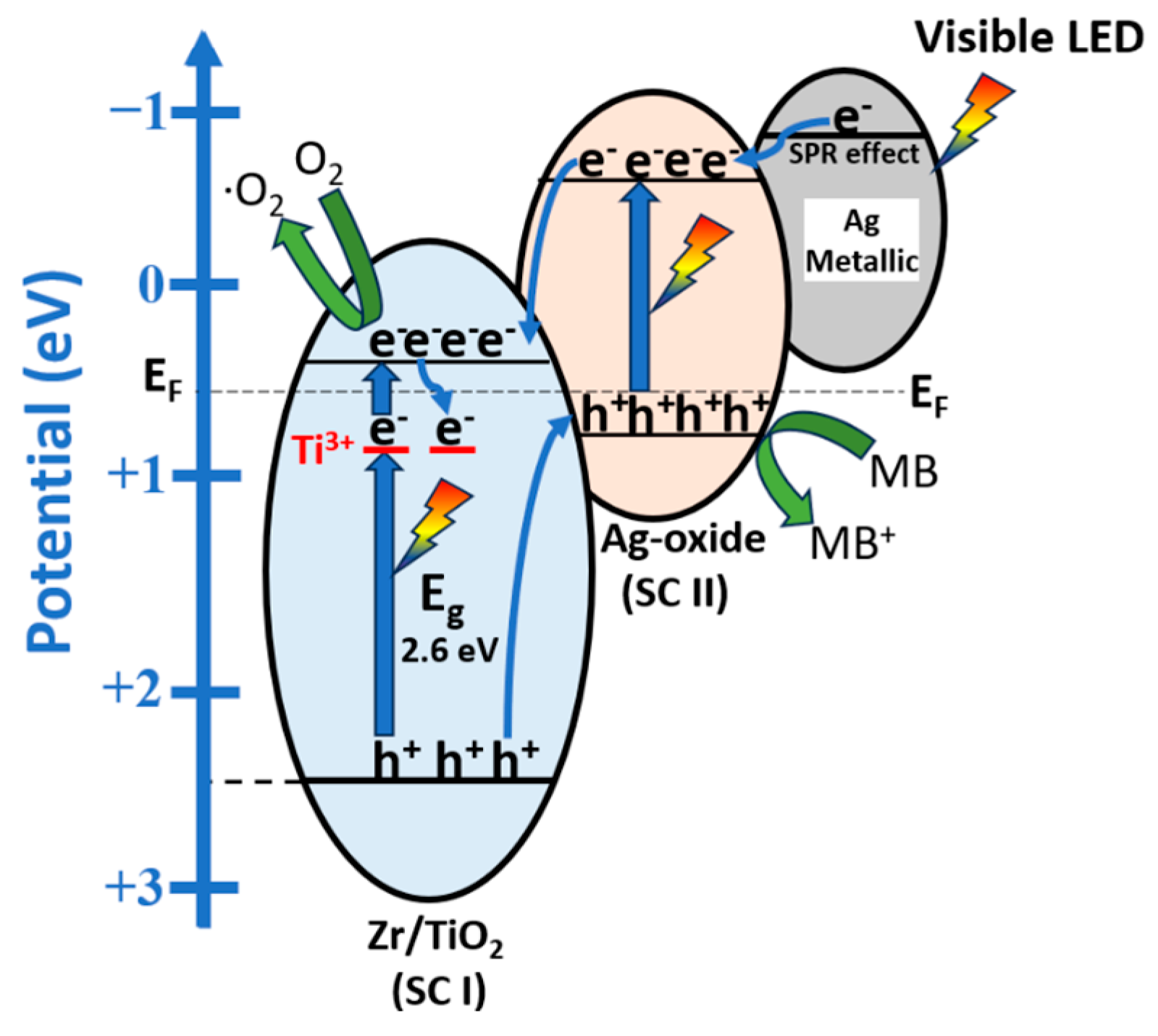
Figure 6, confirms that •OH radicals produced via Equation (13) are not the primary reactive species in the photocatalytic reaction. This observation is consistent with the energy band structure illustrated in
Figure 7 for the proposed A7.ZT photocatalyst, where photogenerated holes migrate to the valence band (VB) of Ag oxide, facilitating effective charge separation. However, the VB potential of Ag oxide is likely insufficient to oxidize water molecules or hydroxide ions to generate •OH radicals. These results further support the conclusion that the superior performance of the A7.ZT catalyst is predominantly governed by direct oxidation via spatially separated holes. Moreover, the activity and lifetime of these holes are further enhanced when electron–hole recombination is suppressed in the presence of electron-accepting species.
2.4. Proposed Photocatalytic Mechanism
The enhanced photocatalytic activity of Ag/Zr co-doped TiO
2 arises from its modified electronic structure and the synergistic interactions among its multivalent components, as illustrated in
Figure 7. XPS analysis confirms the coexistence of ternary silver species. where silver oxide phases (Ag
2+/AgO at 50.78% and Ag
+/Ag
2O at 43.13%) constitute the vast majority of the distributed silver (93.91%). These predominant silver oxide phases (denoted as SC II) are expected to serve as key components in constructing a heterostructure interface with the Zr/TiO
2 host material (denoted as SC I). According to the literature [
46], silver oxides are typically p-type semiconductors, whereas TiO
2-based materials are generally n-type due to the presence of oxygen vacancies. The interaction between these two phases is therefore hypothesized to facilitate the formation of a p–n heterojunction.
The selected solvothermal synthesis method adopted in the present study plays a pivotal role in tailoring these electronic properties. In this respect, the high-temperature, high-pressure conditions of the solvothermal process facilitate the effective incorporation of Zr into the TiO
2 lattice. Owing to the larger ionic radius of Zr
4+ compared to Ti
4+, this substitution induces lattice distortion, which is reported to promote the formation of oxygen vacancies to maintain charge neutrality [
35,
47]. Consequently, these defects play a critical role in the generation and stabilization of Ti
3+ states, leading to the creation of intermediate donor-like band gap energy levels [
48,
49].
Regarding electronic equilibrium at the interface, contact between p-type Ag oxide (SC II) and the n-type Zr/TiO
2 host (SC I) induces a redistribution of charge carriers to align their electrochemical potentials. Initially, the Fermi level (
Ef) of the p-type SC II lies close to the valence band, whereas that of the n-type SC I is near the conduction band. Upon contact, equilibration of (
Ef) leads to downward band bending in the n-type semiconductor and upward band bending in the p-type semiconductor [
50]. This realignment results in the bending of the conduction and valence bands at the interface, generating an internal electric field that serves as a strong driving force for the spatial separation of photogenerated electrons and holes.
Based on UV–Vis DRS analysis, the optical bandgap (
Eg) of Ag/Zr co-doped TiO
2 is 2.60 eV, whereas the
Eg of the Ag oxide phase (SC II) is estimated to be ≈1.60 eV from the literature [
51]. The resulting staggered band alignment suggests the plausible formation of a Type-II heterojunction, which, together with the built-in electric field of the p–n junction, could potentially facilitates efficient charge separation. As illustrated in
Figure 7, Ti
3+ intermediate states may act as electron relay centers, trapping photogenerated electrons from the conduction band (
ECB) of SC II. Meanwhile, holes generated in the valence band (
EVB) of SC I are spatially separated from these electrons. The trapped electrons can subsequently transfer to the minor localized fraction of Ag
0/metallic Ag (6.09%), which is inferred to serves as an electron sink, or be promoted into the conduction band of SC I. In addition, despite its smaller fraction, the surface plasmon resonance (SPR) effect of Ag nanoparticles is anticipated to further contribute to the overall visible-light-driven activity.
Regarding hole migration, the proposed mechanism suggests that photogenerated holes (h+) transfer from the valence band (EVB) of SC I to that of SC II. This pathway is consistent with the radical scavenger results, where significant inhibition by EDTA-2Na confirms that direct hole oxidation is the dominant degradation pathway. The accumulated holes at the SC II interface are expected to possess sufficient oxidative potential to react directly with methylene blue (MB) molecules. However, the valence band potential of the Ag oxide phase is likely insufficient to oxidize water or hydroxide ions into hydroxyl radicals (•OH), which explains the minimal impact of T-BuOH and DMSO on decolorization efficiency.
Although the alternative reductive pathway contributes to the overall process, hole-driven oxidation at the heterojunction interface appears to be the primary mechanism governing the efficient visible-light-induced decolorization of MB, as postulated in the present study.
3. Materials and Methods
3.1. Materials
Titanium (IV) chloride (TiCl4, ≥99%) was purchased from Shanghai Runwu Chemical Technology (Shanghai, China). Zirconium (IV) chloride (ZrCl4, ≥98%) and silver nitrate (AgNO3, ≥99%) from Merck (Boston, MA, USA). Hydrogen peroxide (H2O2, 30%) and ammonium solution (NH4OH, 25%) were purchased from QRëC (Rawang, Malaysia). Methylene blue (C16H18N3SCl) and phenol (C6H5OH) were obtained from Alfa Aesar (Heysham, UK).
Chemicals used in the radical scavenger test, such as ethylenediaminetetraacetic acid disodium salt (EDTA-2Na, ≥99%) and 1,4-benzoquinone (p-BQ, ≥99%), were acquired from Acros Organics, whereas dimethyl sulfoxide (DMSO, ≥99.9%) and tert-butanol (T-BuOH, ≥99.5%) were obtained from Sigma-Aldrich (Saint Louis, MO, USA) and PanReac™ (Barcelona, Spain), respectively. All chemicals were of analytical grade and used without further treatment.
3.2. Preparation of Ag/Zr Co-Doped TiO2 Photocatalyst (AZT)
The AZT photocatalysts were synthesized by combining a solvothermal process with a peroxy route. Briefly, 20 mL of TiCl4 was added dropwise to 200 mL of deionized (DI) water under continuous stirring for 1 h to obtain a Ti precursor solution. Subsequently, 1.28 g of ZrCl4 was added to the precursor solution, and the mixture was stirred for an additional hour. Ammonium solution (NH4OH) was then added dropwise until the pH reached 7. The resulting white precipitate was separated by filtration and washed with hot deionized water until the filtrate was free of Cl− ions, as confirmed using a 1 M AgNO3 solution. A desired amount of AgNO3 was dissolved in 115 mL of H2O2 solution. This solution was poured into the precipitate to obtain a yellow suspension, which is a peroxytitanate complex containing Ag+ and Zr4+ ions. The mixture was continuously stirred for 1 h to achieve a homogeneous solution, which was then poured into a Teflon-lined stainless-steel autoclave. The reaction was carried out at 150 °C for 6 h with a heating rate of 8 °C min−1 using a hot air oven. After cooling to room temperature, the product was separated, rinsed with DI water, and dried at 80 °C until a constant weight was achieved. The catalysts obtained were labeled as Ax.ZT, where ‘x’ represents the molar percentage of Ag relative to Ti (x = 5, 7, and 10 mol%). For comparison, TiO2 and Zr mono-doped TiO2 (ZT) were prepared using the same procedure but without the addition of Ag/Zr and Ag, respectively.
3.3. Photocatalyst Characterizations
The crystalline structure and phase composition of the prepared catalysts were analyzed by X-ray diffraction (XRD) using a Rigaku (Tokyo, Japan) SmartLab SE® instrument with Cu Kα radiation (40 kV, 30 mA) over a 2θ scanning range of 20–80° at a scanning rate of 10° min−1. The morphology and elemental composition of the samples were studied using a field-emission scanning electron microscope (FESEM, Hitachi SU5000, Tokyo, Japan). The specific surface area and porosity were determined by the Brunauer–Emmett–Teller (BET) method using a Quantachrome AUTOSORB-iQ-AG analyzer (Boynton Beach, FL, USA), based on nitrogen adsorption–desorption isotherms. The surface chemical composition and electronic states were characterized by X-ray photoelectron spectroscopy (XPS). The optical properties of the samples were investigated using a UV–Vis spectrophotometer (GENESYS 180, Thermo Scientific®, Waltham, MA, USA). The separation efficiency of photogenerated electron–hole pairs was evaluated by photoluminescence (PL) spectroscopy at an excitation wavelength of 325 nm using a Horiba FluoroMax system (Kyoto, Japan).
3.4. Photocatalytic Experiments
The photocatalytic activity was evaluated by monitoring the decolorization of methylene blue (MB) under visible light irradiation using a 15 W LED lamp (LAMPTAN
® Bulb Gloss Daylight, Bangkok, Thailand). The experimental procedure was based on the ISO 10678:2010 standard [
52], using a photocatalyst with the modifications proposed in the present study [
28]. Initially, 1 g of catalyst was dispersed in 100 mL of MB solution (2 × 10
−5 M) in a 150 mL beaker and sonicated for 10 min. The suspension was then stirred in the dark for 12 h to achieve adsorption–desorption equilibrium, as prescribed in the standard protocol. To monitor this process, stirring was briefly halted for 5 min at each sampling point to allow catalyst sedimentation. A 20 mL aliquot of the supernatant was withdrawn and centrifuged to ensure complete removal of any remaining fine catalyst particles. Subsequently, 5 mL of the clear supernatant was collected for analysis by UV–Vis spectrophotometry at 664 nm. After analysis, both the 5 mL measured sample and the remaining 15 mL were returned to the beaker to maintain a constant catalyst-to-solution ratio.
Following the dark phase, the solution was replaced with 100 mL of MB (1 × 10
−5 M) to comply with the standard test concentration. The beaker was irradiated from above, maintaining a distance of 5 cm between the liquid surface and the LED source. During the photocatalytic test, 5 mL aliquots were collected using the same sampling and analytical procedures established during the dark phase. However, both LED irradiation and stirring were briefly suspended during sampling to allow for catalyst sedimentation. Finally, MB decolorization was calculated according to Equation (14).
where C
t and C
0 represent the MB concentrations at reaction time t and at the initial time (t = 0), respectively.
Furthermore, the kinetics of MB photocatalytic decolorization were analyzed using a pseudo-first-order kinetic model, as shown in Equation (15):
where k is the decolorization kinetic constant with h
−1 units and t a reaction time in h.
Furthermore, to investigate the photocatalytic degradation mechanism of the AZT catalyst, radical scavenger experiments were conducted. The experimental procedure followed that of the MB decolorization experiment, except that a scavenger was added to the solution prior to light irradiation. Specifically, 5.0 mL of a 5.0 mM stock solution of each scavenger was introduced into the reaction mixture. The scavenger used were T-BuOH for hydroxyl radicals (•OH), p-BQ for superoxide radicals (•O
2−), DMSO for electron (e
−) and EDTA-2Na for hole (h
+) [
53,
54].