Review

Advances in Catalytic Materials for Wastewater Treatment: Design Strategies and Reaction Mechanisms


College of Ocean Engineering and Energy, Guangdong Ocean University, Zhanjiang 524088, China
*
Author to whom correspondence should be addressed.
Catalysts 2026, 16(5), 472; https://doi.org/10.3390/catal16050472
Submission received: 15 April 2026 / Revised: 15 May 2026 / Accepted: 17 May 2026 / Published: 19 May 2026

Abstract

With the growing severity of water pollution, conventional treatment technologies are increasingly unable to satisfy the demand for deep purification. Catalytic wastewater treatment has emerged as an effective strategy for degrading refractory pollutants because of its high efficiency, mild operating conditions, and environmentally friendly nature. This review systematically summarizes recent progress in catalytic materials for wastewater treatment, covering four major categories: metal-based materials, carbon-based materials, multicomponent composites, and photo/electrocatalytic systems. Particular attention is given to their design strategies, structural characteristics, and performance advantages. On this basis, the full mechanistic chain is discussed, from interfacial adsorption and activation to reactive-species generation, including both radical and non-radical pathways, intermediate transformation, and macroscopic reaction kinetics. The review also highlights representative applications in practical wastewater streams, including textile dyeing and pharmaceutical, chemical, landfill leachate, and municipal tailwater treatment, thereby demonstrating the engineering potential of catalytic technologies. At the same time, several critical challenges remain, including insufficient long-term material stability, incomplete mechanistic understanding in complex water matrices, limited adaptability to real wastewater, and the high cost of large-scale preparation. Future research should therefore focus on the development of highly stable, low-cost, and interference-resistant catalytic materials, deeper mechanistic elucidation through in situ characterization and theoretical calculations, stronger integration with membrane separation, biological treatment, photovoltaic or electrochemical processes, and the establishment of standardized evaluation protocols and life-cycle assessment frameworks. These efforts will accelerate the transition of catalytic wastewater treatment toward greener, smarter, and more practical engineering applications.

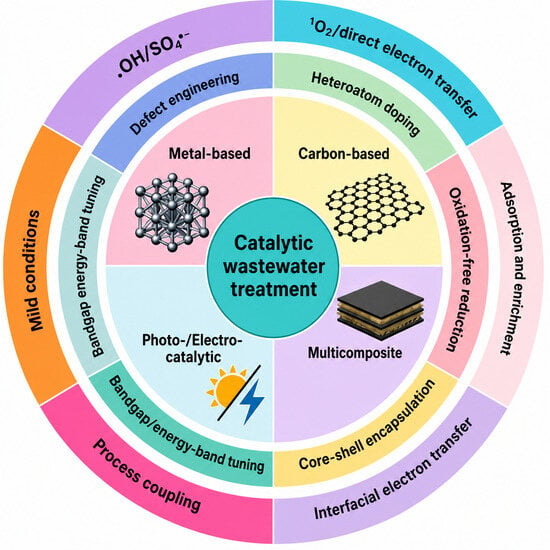
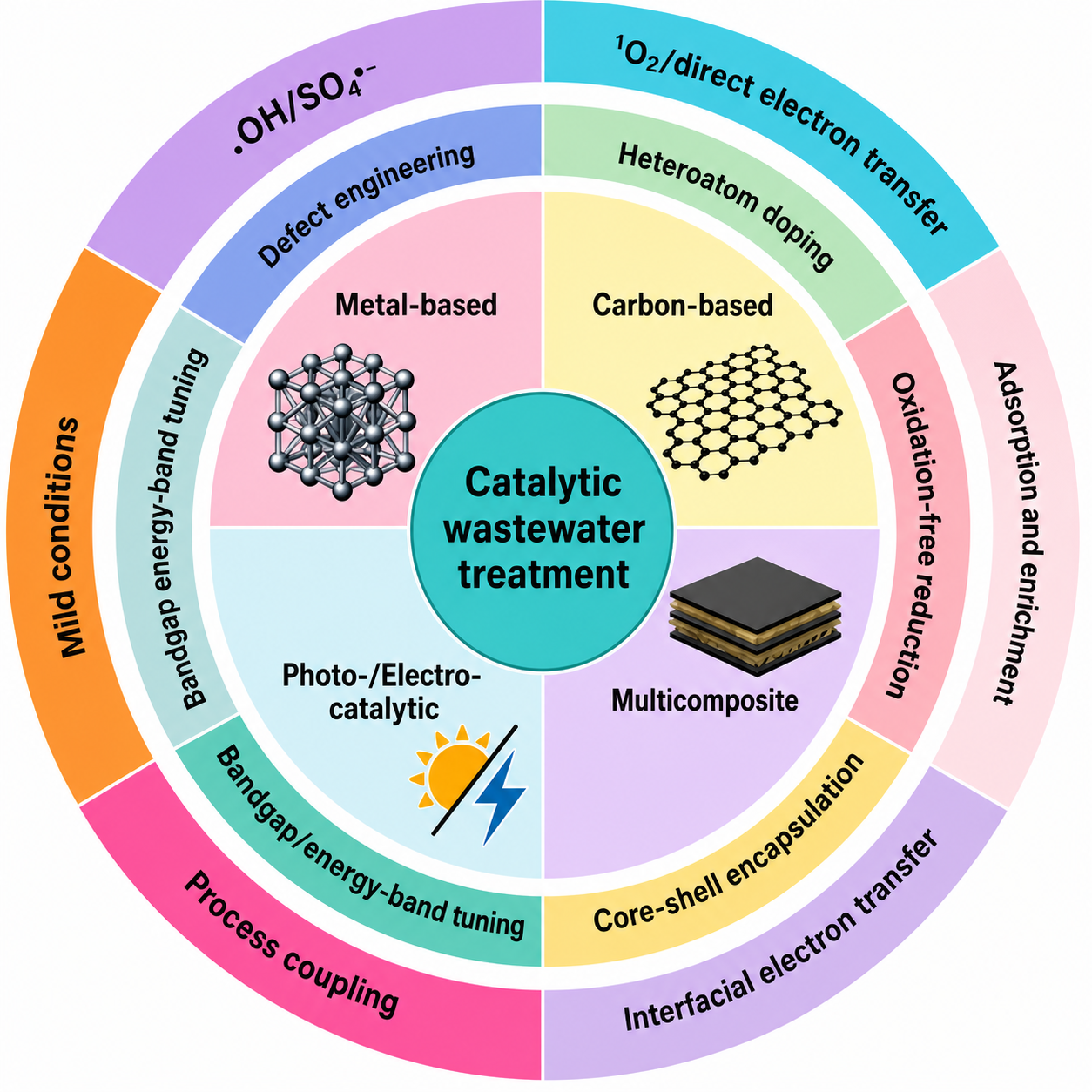
Graphical Abstract

1. Introduction

With the continued acceleration of global industrialization and urbanization, water pollution has become a major factor threatening ecological security and human health. Figure 1 summarizes the principal sources of water pollution and their major impact pathways on ecosystems and public health, thereby providing a broad context for the importance of catalytic wastewater treatment. Wastewater from industrial production, agricultural activities, and domestic life contains large quantities of refractory organic pollutants, antibiotics, heavy metals, and other hazardous substances. These contaminants are often highly toxic, persistent, and mobile. For example, antibiotic residues in aquatic environments can promote the proliferation of antibiotic-resistant bacteria and may pose indirect risks to human health through accumulation along the food chain. A recent review systematically assessed the risks posed by antibiotics, antibiotic-resistant bacteria, and resistance genes in agri-food systems. It noted that the direct contamination risk from antibiotic residues may often be limited. However, the disruption of intestinal microbiota due to antibiotic resistance has substantially increased the global health and economic burden. Furthermore, the transmission of these risks through the food chain remains insufficiently understood. Global analyses of antibiotic consumption further support this concern. These analyses reveal a marked increase in antibiotic use and a gradual narrowing of regional disparities between 2000 and 2015. This data provides important background for understanding the spread of resistance. Heavy metal ions exhibit strong bioaccumulation and can cause irreversible damage to aquatic ecosystems and human organs even at very low concentrations. A study of historically contaminated areas in Portugal further confirmed that, even after 25 years of natural attenuation, mercury and arsenic concentrations in sediments remained higher than those in uncontaminated systems and continued to induce toxicity in salt marsh halophyte communities, highlighting the long-term hazards of heavy-metal pollution [1,2,3].
Traditional treatment methods, including physical adsorption, chemical precipitation, and biodegradation, often suffer from incomplete pollutant removal, secondary pollution, and long treatment times. These limitations make them inadequate for deep water purification and water reuse. One study compared biological filtration with the conventional activated sludge process for removing 104 priority and emerging pollutants. Although both processes removed most contaminants, approximately half of the target molecules were still detected in the effluent. Some effluent concentrations remained above 1 × 10⁻⁶ g/L, posing a risk to aquatic environments. These findings clearly demonstrate the limitations of conventional biological treatment for trace-pollutant removal. Another review systematically summarized the transition from conventional biological treatment to hybrid processes and showed that process coupling can significantly enhance the removal of trace organic pollutants, thereby offering a practical route to overcome the limitations of standalone biological treatment [5,6]. To compare the performance of conventional and catalytic technologies for representative pollutants, Table 1 summarizes the reaction conditions, removal efficiencies, advantages, and limitations of selected systems for tetracycline, bisphenol A, and sulfamethoxazole.
Against this background, catalytic wastewater treatment has emerged as a key strategy for overcoming the limitations of conventional processes because it can accelerate pollutant degradation and mineralization under mild conditions and convert toxic substances into relatively harmless products such as water and carbon dioxide. Catalytic materials are the core of these technologies. Their composition, structure, and surface properties directly govern three key aspects: catalytic activity, selectivity, and reaction pathways. Elucidation of the reaction mechanism is therefore essential for optimizing material performance and improving treatment efficiency. In recent years, extensive efforts have been devoted to the development and modification of catalytic materials and to mechanistic studies of pollutant degradation. A variety of efficient systems have been reported, including metal-based, carbon-based, and composite catalysts, together with both radical and non-radical reaction pathways. For instance, one study first reported the activation of peroxymonosulfate (PMS) by TiO2 nanoparticles through a tribocatalytic effect. In this system, low-frequency friction from magnetic stirring induced electron–hole pair formation in TiO2. This process generated sulfate radicals (SO4) and increased the abundance of hydroxyl radicals (•OH) and singlet oxygen (1O2). Consequently, it substantially improved both the degradation and mineralization of typical contaminants like phenol and bisphenol A. This finding opened a new route for advanced oxidation driven by mechanical energy and expanded the range of energy input modes available for catalytic treatment systems. In parallel, another review systematically summarized the application of photocatalysis, piezocatalysis, pyrocatalysis, sonocatalysis, tribocatalysis, and their synergistic combinations in wastewater treatment, emphasizing that coupled methods can achieve higher pollutant removal within shorter reaction times and highlighting the unique advantages of ferroelectric materials for enhancing catalytic activity under external stimuli [7,8].
In studies of the structure–activity relationships of catalytic materials, theoretical calculations and structural design have become key tools for revealing reaction mechanisms and guiding material optimization. One study systematically clarified microenvironment regulation strategies for single-atom catalysts in Fenton-like reactions. These strategies cover coordination environment engineering, support- and ligand-mediated electronic regulation, and spatial confinement effects. Through this analysis, the study revealed the intrinsic relationship between the local structure of active centers and catalytic performance. Building on this framework, another study comprehensively reviewed recent advances in two-dimensional carbon–metal composites for catalysis, including supported single-atom and diatomic catalysts based on graphene and graphyne, as well as two-dimensional metal–carbon crystalline materials such as metal–organic frameworks (MOFs) and MXenes. That review systematically analyzed the structure–activity relationship between coordination structure and catalytic behavior from a theoretical perspective [9,10].
Table 1. Comparison of conventional and catalytic treatments for four representative pollutants.
PollutantMethod TypeMaterial/ProcessReaction ConditionsRemoval EfficiencyAdvantagesDisadvantagesRef.
TetracyclineConventional methodTea-waste-activated carbon adsorptionpH 9, 230 min, 60 ppm [11]; pH 2, 24 h [12]88% [11];
70% [12]
Low cost using waste material; simple operation; no complex equipmentLong treatment time; difficult adsorbent regeneration; only phase transfer, no complete mineralization[11,12]
Catalytic methodWet air oxidation (WAO)Real hospital wastewater [13]; varied conditions [14,15]COD 77.1%, TOC 72.6% [13]; high efficiency [14,15]Complete mineralization of organic pollutants; no additional chemicals needed; suitable for high-strength organic wastewaterHigh temperature and pressure (high energy consumption); high equipment cost; risk of metal corrosion[13,15]
Bisphenol AConventional methodCoagulation/flocculation/sedimentation/filtrationSimulated drinking water treatment [16]; aqueous solution, pH 8 [17]0–7% [16]; 38% [17]Mature technology; relatively low operating cost; simple operationLow removal for BPA alone (<7%) [16]; limited removal even under optimized condition (38%) [17][16,17]
Catalytic methodOzonation coupled with activated carbonOzonation, 45 min>99%Very high removal efficiency; simultaneous removal of multiple micropollutants; improves effluent biodegradabilityHigh energy consumption for ozone generation; possible formation of toxic by-products (e.g., bromate); activated carbon requires periodic regeneration[18]
SulfamethoxazoleConventional methodTwo-dimensional electrochemical system (2DES)Pt or graphite electrodes, 0.1 M Na2SO4 or phosphate buffer, 40 min>98%No chemical addition; mild reaction conditions; electrode materials can be optimizedRelatively slow degradation rate; possible high cost of electrode materials; limited current efficiency[19]
Catalytic methodSrFeO3/MoSe2 heterojunction + PMS activation20 min96%Fast degradation (20 min); visible-light responsive; radical and non-radical pathwaysComplex catalyst preparation; reliance on precious/rare metals; long-term stability needs verification[20]
Despite these advances, the field still faces several major challenges. The structure–activity relationships of different classes of catalytic materials have not yet been fully clarified, some reaction mechanisms remain controversial, and high material costs, together with limited long-term stability, continue to hinder large-scale engineering applications. In this context, the present review summarizes recent progress in catalytic materials for wastewater treatment, including the design strategies and structural characteristics of different material classes, their core reaction mechanisms, and their treatment performance in various wastewater systems. The review is intended to provide researchers with a clear overview of three key aspects of the field: structure–activity relationships, mechanistic controversies, and the balance between material stability and cost control. Such an overview will help deepen the understanding of catalytic processes, guide the rational design of efficient, stable, and low-cost catalytic materials, and provide theoretical support and technical references for both mechanistic optimization and engineering applications. More broadly, this review aims to support the development of catalytic wastewater treatment technologies toward greener, more efficient, and scalable solutions for global water pollution control and sustainable water resource utilization.

2. Fundamental Characteristics of Catalytic Wastewater Treatment

Catalytic wastewater treatment is an advanced water treatment strategy that uses catalytic materials to efficiently degrade refractory pollutants through chemical catalysis. Its core principle is to lower the activation energy of relevant reactions, accelerate electron transfer, and generate reactive species, such as hydroxyl radicals (•OH), which can mineralize highly toxic and persistent organic pollutants into carbon dioxide, water, and inorganic salts. Compared with traditional physical adsorption, chemical coagulation, and biological treatment, catalytic wastewater treatment shows five representative characteristics: high degradation efficiency, good selectivity, mild operating conditions, strong process synergy, and pronounced dependence on material structure. These features make it a major technological direction for the treatment of highly toxic, refractory, and high-risk wastewater streams.

2.1. High Degradation Efficiency

A defining feature of catalytic wastewater treatment is its ability to achieve both high pollutant removal efficiency and high mineralization efficiency within relatively short treatment times. This characteristic is especially important for refractory organic pollutants that are difficult to remove using conventional processes. A large body of work has confirmed the scientific basis and engineering potential of this advantage through catalyst design, optimization of reaction conditions, and analysis of degradation pathways.
In this context, researchers have substantially improved catalytic performance by introducing synergistic interactions among different functional components. For example, one review systematically summarized the application of iron-modified biochar in antibiotic degradation and pointed out that the Fe2+/Fe3+ redox cycle can enhance electron transfer and promote radical formation through Fenton-like pathways, thereby enabling efficient antibiotic removal [21].
Beyond strategies based on metal–carbon synergy, researchers have also explored the use of solid waste as a precursor for efficient catalysts, thereby simultaneously pursuing resource utilization and pollutant degradation. One study prepared a Fe/N co-doped carbon catalyst (CWBC) by simple pyrolysis and used it to activate periodate for sulfadiazine (SDZ) degradation. Under a catalyst dosage of 0.5 g/L, a periodate concentration of 5.0 × 10⁻³ M, and an initial SDZ concentration of 4.0 × 10⁻⁵ M, the SDZ removal efficiency reached 98.94% within 90 min, and the TOC removal reached approximately 78%. Mechanistic analysis showed that electron transfer dominated the degradation process, with electron circulation established among SDZ, CWBC, and periodate, whereas superoxide radicals (•O2), persistent free radicals (PFRs), and reactive iodine species played secondary roles. Density functional theory calculations further showed that Fe/N co-doping altered the electronic configuration of the carbon matrix, disrupted its chemical inertness, and promoted electron transfer to periodate through Fe–O covalent bonding, thus strengthening the electron transfer pathway. This study not only offers a simple route for valorizing coagulation waste but also provides mechanistic insight into periodate activation and micropollutant degradation. In addition to catalytic efficiency, catalyst stability in complex wastewater is another critical indicator of practical utility. Another study showed that a magnetic spinel CoFe2O4-PAC nano-catalyst synthesized by ultrasound-assisted coprecipitation exhibited excellent performance for the treatment of high-salinity petrochemical wastewater (HPCW). Under pH 5–6, a catalyst dosage of 1.0 g/L, and PMS of 1.0 mM, the COD removal reached 90.4% within 90 min. Meanwhile, iron and cobalt leaching remained low, at 3.14 × 10⁻⁴ g/L and 9.5 × 10⁻⁵ g/L, respectively, and the COD removal declined by only 7.2% after five cycles. These results demonstrate both high degradation efficiency and good operational stability. A systematic review of heterogeneous Fenton-like catalysts (HFCs) further noted that most existing HFCs are stable for only 3–10 cycles and still suffer from limited service life. That review comprehensively summarized six typical preparation methods and six major characterization techniques and proposed five key performance-improvement strategies, thereby providing valuable guidance for rational catalyst design [22,23,24]. It can also be observed that material design strategies (such as doping, compositing, and defect engineering) can significantly enhance the initial activity of catalysts, but the trade-off between “high activity” and “long lifetime” remains a key challenge. Therefore, for systems pursuing “high degradation efficiency”, their evaluation must go beyond a single removal rate indicator and should simultaneously examine cyclic stability under complex water quality conditions, control of metal leaching, and long-term cost-effectiveness.

2.2. Good Reaction Selectivity

Catalytic wastewater treatment not only aims at high degradation efficiency but also emphasizes the precise recognition and preferential transformation of target pollutants. By regulating catalyst composition, active site type, pore structure, and surface chemistry, selective degradation or directional conversion of specific pollutants can be achieved in complex water matrices, thereby reducing interference from coexisting species and lowering the risk of undesirable by-products. In recent years, researchers have systematically explored the application of MOF-derived carbon materials and transition metal oxides in selective catalysis. Through fine control over catalyst morphology, particle size, and coordination environment, they have enabled the targeted degradation of structurally different pollutants.
At the level of active-site morphology control, one study successfully tuned catalyst structure and composition by introducing both a high-energy MOF (MET-6) and an Fe-MOF (MIL-100(Fe)) during electrospinning, thereby achieving precise control over the types of reactive oxygen species produced. Three catalysts were prepared: PCFe-8-containing Fe nanoclusters, EPCFe-8-containing Fe–Nx sites, and EPC-8 without Fe doping. These materials were used to activate PMS for pollutant degradation. The results showed that the PCFe-8/PMS system predominantly generated SO4 radicals and exhibited excellent removal performance for azo pollutants, whereas the EPCFe-8/PMS and EPC-8/PMS systems preferentially degraded non-azo pollutants. This work demonstrated that the morphology of Fe active sites, namely nanoclusters versus Fe–Nx sites, directly determines whether the dominant reactive oxygen species follow radical or non-radical (1O2) pathways, thereby enabling selective degradation of structurally distinct pollutants. In addition to active-site morphology, active-site size is another key parameter for regulating selectivity. Another study combined dual-MOF pyrolysis with phase inversion to achieve precise control over cobalt active sites, ranging from nanoparticles to atomically dispersed species, within millimeter-scale porous carbon beads. This design enabled a size-responsive switch in PMS activation pathways and targeted pollutant degradation. Radical pathways dominated by Co nanoparticles favored the degradation of the electron-deficient pollutant carbamazepine, whereas atomically dispersed Co–N/C preferentially degraded the electron-rich pollutant diclofenac through the non-radical 1O2 pathway. This study revealed the intrinsic mechanism by which reactive oxygen species selectivity can be tuned through active-site size control and thus provides a theoretical basis for the targeted removal of pharmaceutical contaminants in wastewater [25,26].
In addition to direct regulation of active sites, the construction of multicomponent synergistic systems has become an effective strategy for enhancing selectivity. One study used a solvent-free melting method to convert a mixture of zeolitic imidazolate frameworks (ZIFs) and MoS2 into a three-dimensional cobalt–molybdenum bimetallic, nitrogen-doped porous carbon foam with catalytic and co-catalytic functions (MC@NCF). Efficient PMS activation was achieved through the combined effects of pore confinement and cocatalysis. The authors found that Mo–S/O–Co and Mo–N–Co/C bonds formed within the material promoted rapid charge transfer between confined microdomains, thereby increasing the yield of singlet oxygen (1O2). This system achieved nearly 100% tetracycline degradation within 10 min and maintained excellent anti-interference performance in real water matrices, thus providing a promising strategy for the selective removal of refractory antibiotics [27].
The above strategies offer different pathways to achieving selectivity: morphology control focuses on regulating the types of active species; size control links the dimensions of active sites to the electronic properties of pollutants; and multicomponent synergy creates a specific microenvironment to dominate a particular reaction pathway. In practical selection, if the target pollutant type is clearly defined (e.g., mainly azo dyes), morphology control is a more direct strategy. If the electronic properties of pollutants vary significantly, size control may be preferable. If both high-efficiency and anti-interference capabilities are required, a multicomponent synergistic system is worth considering.

2.3. Mild Reaction Conditions

Mild operating conditions are another major advantage of catalytic wastewater treatment over many conventional advanced oxidation processes. Efficient reactions can often proceed under ambient temperature and pressure and within a near-neutral pH range, without the need for harsh conditions such as elevated temperature, high pressure, or strongly acidic or alkaline environments. This substantially reduces energy consumption, improves operational safety, and simplifies process design. In recent years, systematic progress has been made in both photocatalytic systems and catalytic ozonation systems operating under mild conditions.
In photocatalysis, molecular imprinting has been used to endow catalysts with a selective-recognition capability, enabling precise degradation of target pollutants under mild conditions. One study designed a molecularly imprinted photocatalyst, TiO2@Fe2O3@g-C3N4 (MFTC), for the selective degradation of sulfamethoxazole (SMX). To evaluate selectivity, the catalyst was tested in synthetic wastewater containing SMX, together with interfering compounds such as sulfadiazine (SDZ), ibuprofen, and bisphenol A (BPA). The selective degradation efficiency for SMX reached 96.8%, approximately twice that observed for the competing pollutants. This excellent performance was attributed to the molecularly imprinted sites, which selectively captured SMX and enhanced its adsorption, thereby significantly improving photocatalytic efficiency under mild illumination. The degradation process involved both •OH and •O2, and the authors proposed a double Z-scheme mechanism together with a plausible degradation pathway for SMX in the MFTC system [28].
Catalytic ozonation also exhibits excellent pollutant removal performance under mild conditions. One study developed a CeO2/Al2O3 heterogeneous catalytic ozonation system for the removal of dimethyl phthalate (DMP) from wastewater. Under neutral conditions (pH = 6), the system achieved nearly 100% DMP removal within 15 min. Electron paramagnetic resonance (EPR) and quantitative analyses confirmed that the CeO2-based ceramic catalyst rapidly converted O3 into •OH at a rate of 0.774 μM min−1. Quenching experiments further verified that hydroxyl radicals dominated the mineralization of DMP. Notably, the system maintained stable degradation performance over a relatively broad pH range of 5–10, outperforming conventional ozonation systems that often require stricter pH control. In addition to advanced oxidation processes (AOPs), advanced reduction processes (ARPs) based on catalytic hydrogenation have also shown unique advantages under mild conditions. A recent review pointed out that catalytic hydrogenation can efficiently degrade refractory pollutants, including nitroaromatics, azo dyes, and halogenated compounds, at ambient temperature and pressure, with optimized systems often achieving more than 90% removal within 10 min. That review also discussed the synthesis, stability, and mechanisms of both noble metal and non-noble metal catalysts, with particular emphasis on the selectivity advantages of catalytic hydrogenation and its potential for pollutant valorization, such as conversion of nitro compounds into industrially valuable aromatic amines [29,30]. These developments clearly demonstrate that rational catalyst design and process optimization can enable the efficient removal of refractory pollutants under mild and energy-saving conditions. It should be noted that achieving high degradation efficiency under “mild conditions” often requires more efficient catalysts or longer reaction times as compensation. For example, molecularly imprinted catalysts involve complex preparation processes; catalytic ozonation still relies on ozone generators, which poses energy consumption issues; and catalytic hydrogenation may depend on noble metal catalysts, resulting in high costs. Therefore, the advantages of “mild conditions” must be comprehensively weighed against catalyst cost, system energy consumption, and total treatment time.

2.4. Excellent Process Synergy

Catalytic wastewater treatment does not operate in isolation. One of its most important advantages is its compatibility with other treatment units, including photocatalysis, electrocatalysis, membrane separation, and biological treatment, to form synergistic integrated systems. Through complementary mechanisms, such systems can not only improve pollutant degradation efficiency but also enable catalyst recovery, in situ oxidant generation, and process intensification. In recent years, both photo-Fenton synergistic systems and catalytic membrane-coupled systems have shown substantial progress at the theoretical and practical levels.
At the theoretical level, one study systematically reviewed the application of photo-Fenton–membrane coupling in water treatment and comprehensively summarized the current status of photo-Fenton catalysts, membrane materials, and reactor configurations. It pointed out that this technology can simultaneously realize pollutant degradation, separation, and membrane self-cleaning, thereby providing a systematic framework for the development of integrated photo-Fenton–membrane systems. Catalytic membrane technology likewise offers a promising route for integrating separation and degradation. Another review classified catalytic membranes into five representative categories, namely photocatalytic, electrocatalytic, Fenton-type catalytic, persulfate catalytic, and ozone catalytic membranes, and revealed the synergistic mechanism between membrane separation and catalytic degradation in pollutant removal and fouling control. That review further noted that long-term membrane stability, oxidation resistance of polymeric membranes, and inconsistent evaluation standards remain key challenges. The same concept of process synergy has also been extended to ecological engineering. Another study proposed the concept of “constructed wetlands beyond the Fenton limit” by coupling photo-Fenton reactions with plant–microbial interactions in wetland matrices, thereby enabling efficient solar-driven pollutant degradation under near-neutral conditions. A decision-making framework covering indices such as electrical energy per order (EE/O), iron leaching, and reactive oxygen species/photon yield was established, offering a scalable pathway from laboratory systems to engineering implementation [31,32,33]. In addition to piezoelectric–Fenton-like systems, sequential integration of catalytic oxidation with biological treatment has also shown pronounced synergy. One review reported that combined AOP-BIOP systems can significantly improve wastewater biodegradability, with the BOD5/COD ratio increasing from 0 to 0.8. In complex industrial wastewater, Fenton/ozonation–bioreactor combinations can achieve COD removal rates of 85–93% while reducing treatment costs by 40–60% compared with complete mineralization by AOPs alone. Another systematic review of the combined use of electrochemical advanced oxidation and biological treatment highlighted the strong complementarity between these technologies: electrochemical oxidation is rapid but expensive, whereas biological treatment is economical and environmentally friendly but relatively slow. Their integration can therefore overcome the limitations of each individual process and show clear advantages in both wastewater treatment and soil remediation [34,35].

2.5. Material Dependency

The catalytic effect is strongly dependent on the nature of the catalytic material itself. The efficiency of catalytic wastewater treatment is fundamentally determined by the composition, crystal structure, specific surface area, defect characteristics, and interfacial bonding of the catalyst. These microstructural parameters govern the number and accessibility of active sites, the rate of electron transfer, the pathways for reactive-species generation, and the long-term stability of the material during operation. In recent years, researchers have clarified the structure–activity relationship of catalytic systems by focusing on design strategies such as core–shell encapsulation, oxygen vacancy engineering, and single-atom dispersion, thereby laying the foundation for the rational development of high-performance catalysts.
For example, one study designed a TiO2/C2N core–shell photocatalyst in which the built-in electric field of a type-II heterojunction created nanoconfined catalytic sites on the TiO2 surface. The C2N shell allowed micropollutants and free chlorine to enter the catalytic domain while excluding natural organic matter (NOM) through steric hindrance and anion repulsion, thereby enabling selective pollutant degradation. The core–shell structure confined 82.7% of hydroxyl radicals (HO•) near the TiO2 surface and maintained nearly 100% micropollutant degradation under different NOM and anion concentrations, across a wide pH range, and even in real water samples, whereas the performance of the non-encapsulated structure decreased by 40–80%. By precisely controlling the shell thickness to 5–6 nm, the authors optimized light absorption, oxygen diffusion, and HO• confinement, clearly demonstrating the value of core–shell engineering for tuning the catalytic microenvironment. Oxygen vacancy engineering has likewise proved highly effective. Another study synthesized a CeO2/NiAl-LDH@MIL-88A composite electrocatalyst on low-grade biochar. XPS, EXAFS, and XRD analyses confirmed the presence of abundant oxygen vacancies and atomic-lattice distortion. These engineered defects increased charge separation by 2.5-fold relative to CeO2 and NiAl-LDH alone, enlarged the effective catalytic surface area, and promoted reactant adsorption and conversion. In alkaline solution, the catalyst exhibited an oxygen evolution overpotential as low as 243 mV at 10 mA cm−2 and simultaneously achieved more than 98% degradation of rhodamine B within 40 min, highlighting the important role of oxygen vacancies in enhancing catalytic activity. In addition to defect engineering, single-atom dispersion strategies have shown unique catalytic advantages. Another study prepared a CuFe-PCN dual-site single-atom catalyst through an in situ polymerization strategy, with Cu and Fe loadings of 12.5 wt% and 10.6 wt%, respectively, which are both higher than those reported for most dual-site single-atom catalysts. Aberration-corrected transmission electron microscopy and synchrotron X-ray absorption spectroscopy confirmed the formation of CuN3 and FeN3 dual single-atom sites on polymerized carbon nitride. Under alkaline conditions (pH = 13), the degradation rate constant for methyl orange was 73 times higher than that under acidic conditions (pH = 3), and no obvious deactivation was observed after 12 consecutive cycles. DFT calculations showed that the introduction of Fe sites weakened Cu–N orbital hybridization, increased charge density on Cu atoms, promoted H2O2 adsorption and conversion under alkaline conditions, and enabled highly selective generation of singlet oxygen. This system also showed excellent performance for ibuprofen-containing wastewater and livestock wastewater, achieving 96.7% COD removal within 2 h. These results provide a compelling example of the precise control of atomic-scale active sites for wastewater treatment [36,37,38].
Taken together, these five features indicate that the effectiveness of catalytic wastewater treatment is rooted in the intrinsic properties of the catalyst. Systematic research on material design strategies and structural characteristics is therefore essential for advancing the field. On this basis, the following section discusses four major classes of catalytic materials—metal-based, carbon-based, multicomponent composite, and photo/electrocatalytic materials—and systematically analyzes their design concepts and structural features.

3. Advanced Catalytic Materials: Design Strategies and Structural Characteristics

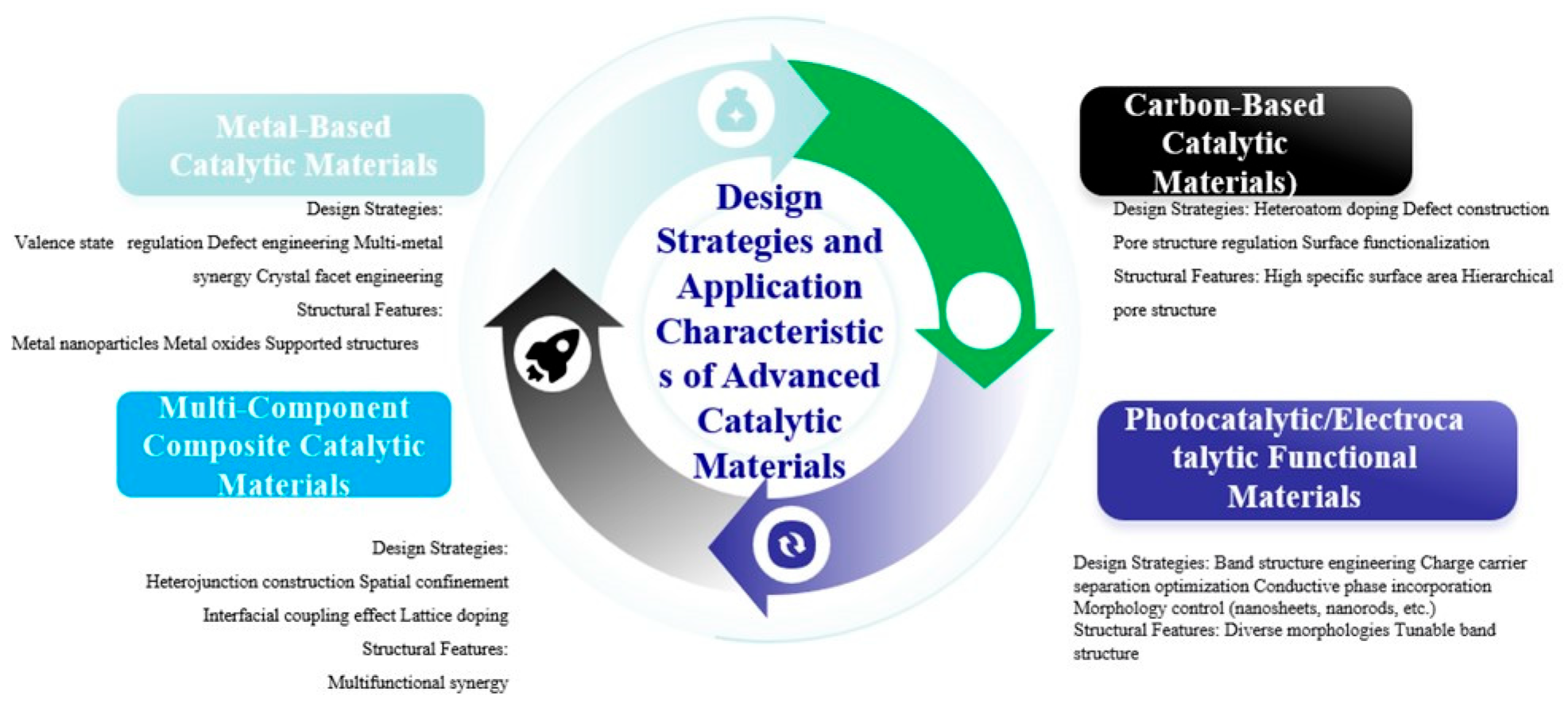
Advanced catalytic materials are the core functional carriers in catalytic wastewater treatment systems. Their design strategies and structural characteristics directly determine pollutant degradation efficiency, reaction pathways, operational stability, and engineering applicability. At present, advanced catalytic materials for water treatment can generally be divided into four categories: metal-based materials, carbon-based materials, multicomponent composite materials, and photo/electrocatalytic functional materials. Each class has developed a characteristic design logic centered on improving activity, optimizing electron transfer, stabilizing structure, and enhancing environmental adaptability [39]. As shown in Figure 2, the specific design strategies and structural features of these four classes can be summarized as follows.

3.1. Metal-Based Catalytic Materials

Metal-based catalytic materials are among the most widely studied and technologically mature catalyst systems for wastewater treatment. Their core design principles are to strengthen redox cycling, increase active-site utilization, and suppress metal leaching. Through strategies such as valence state regulation, defect engineering, crystal facet engineering, and multi-metal synergy, they can efficiently generate reactive species such as hydroxyl radicals (•OH) and sulfate radicals (SO4).
In recent years, metal-containing catalysts have shown strong potential for the remediation of refractory pollutants such as nitroaromatics and organic dyes. One review summarized the use of metal nanoparticles, metal nanocomposites, metal–organic frameworks (MOFs), metal hydrogels, and metal complexes for pollutant degradation or reduction, and emphasized that catalytic efficiency and selectivity can be significantly improved by regulating the coordination environment and electronic structure of metal active centers. Likewise, in Fenton and Fenton-like systems, another review systematically summarized how transition metals such as Co, Fe, and Mn activate PMS and persulfate, covering design strategies including valence state regulation, defect engineering, and multi-metal synergy. These strategies enable efficient generation of hydroxyl and sulfate radicals, which are crucial for the deep mineralization of refractory pollutants. Together, these reviews provide an important theoretical basis for the design and optimization of metal-based catalysts [40,41,42].
Guided by these theoretical advances, researchers have continued to develop new metal-based catalytic systems that are both highly active and practically relevant. One study prepared a MoS2/Fe3O4 composite bulk catalyst (wood@MoS2/Fe3O4) supported on delignified natural wood for PMS activation and antibiotic degradation. The catalyst cleverly exploited the synergistic heterostructure effect between MoS2 and Fe3O4: interfacial electron transfer promoted the Fe3+/Fe2+ redox cycle and accelerated hydroxyl radical generation. The removal efficiency remained close to 100% over 144 h of continuous operation, and the bulk catalyst maintained excellent stability over a wide pH range and in the presence of common coexisting species. This work not only verified the effectiveness of multi-metal synergy, but also demonstrated how nanomaterial functionality can be integrated with macroscopic engineered supports to provide a scalable solution for practical application [43,44].
Beyond transition metal/PMS activation systems, metal–semiconductor hybrid catalysts have also demonstrated considerable promise for wastewater remediation through enhanced charge separation and multifunctionality. Transparent TiO2 films loaded with Ag nanoparticles (TiO2-Ag NPs) were prepared using pulsed laser ablation in liquids and spray pyrolysis techniques. The design successfully integrated the antibacterial properties of Ag NPs with the photocatalytic capability of TiO2. Specifically, Ag nanoparticles formed a Schottky junction at the TiO2 interface, facilitating photogenerated electron transfer from the TiO2 conduction band to Ag and effectively suppressing electron–hole recombination. Under UV irradiation, the TiO2-Ag NPs film achieved 99% degradation efficiency of rhodamine B (RhB) within 210 min, significantly outperforming pristine TiO2 films (85.3%), while also exhibiting a 93% inactivation rate against Gram-negative bacteria. This study further demonstrates how metal–semiconductor synergy can simultaneously enhance catalytic activity and introduce multifunctional performance, while highlighting the feasibility of scalable fabrication technologies for high-performance catalytic films [45].

3.2. Carbon-Based Catalytic Materials

Carbon-based catalytic materials have become attractive candidates for green catalytic systems because they are metal-free or metal-lean, environmentally benign, structurally tunable, and relatively low in cost. Their design focuses on constructing highly efficient active sites and optimizing surface physicochemical properties. The main strategies include heteroatom doping with N, S, P, and B, engineering of edge and topological defects, hierarchical pore-structure control, and direct modification of surface functional groups. In addition, green carbon materials derived from agricultural waste, sludge, and other biomass resources have enabled both high-value resource utilization and low-cost catalyst preparation. Structurally, carbon-based materials are typically characterized by high specific surface area, interconnected micro/meso/macroporous channels, highly conductive sp2-hybridized carbon networks, and active centers formed by doped atoms and carbon defects [46].
Driven by the concept of waste valorization, the conversion of residual sludge from wastewater treatment plants into functional carbon materials has become an important direction in carbon-based catalyst development. One study used microwave pyrolysis to prepare a sludge-derived biochar (FSBC) from Fenton-conditioned residual sludge for PMS activation and sulfamethoxazole (SMX) degradation. The pyrolysis temperature strongly influenced the surface structure, defect density, surface functional groups, and iron speciation of FSBC, which together determined PMS activation performance. In the FSBC/PMS system, multiple reactive oxygen species, including SO4, •OH, O2, and 1O2, cooperatively promoted SMX degradation. A quantitative structure–activity relationship-based toxicity assessment further confirmed that the 16 intermediate products formed during degradation led to an overall reduction in residual toxicity. This work provides a complete strategy for the resource utilization of wastewater sludge. Industrial solid wastes also show great potential as precursors for carbon-based catalysts. Another study used vinasse from the brewing industry as a feedstock and synthesized a magnetic porous Fe-doped biochar (FVB700) through acid treatment and ferric-oxalate-assisted co-pyrolysis. In this material, Fe existed as Fe0, Fe3C, and Fe3O4, thereby enabling synergistic adsorption and PMS-driven catalytic oxidation. FVB700 first rapidly adsorbed bisphenol A through monolayer chemisorption, after which the adsorbed pollutant was degraded by reactive species generated from PMS activation. Quenching experiments and EPR analysis confirmed that singlet oxygen was the dominant non-radical species responsible for bisphenol A degradation in the FVB700/PMS system. Density functional theory calculations further showed that Fe3C served as the main catalytic center by anchoring PMS and facilitating 1O2 generation. The system maintained high performance over a broad pH range of 4–11, tolerated common coexisting species such as Cl, NO3, HCO3, H2PO4, and humic acid, and achieved 78.9–90.2% bisphenol A removal in tap water, groundwater, and pharmaceutical wastewater. In a continuous-flow fixed-bed reactor, the removal efficiency remained above 90% for up to 8 days, demonstrating excellent long-term stability and practical potential. Carbon-based materials have also shown promise in catalytic ozonation. A recent review summarized the use of biochar, activated carbon, and related carbon materials in catalytic ozonation of aqueous organic pollutants, highlighting that low-cost biochar can both adsorb dissolved pollutants and catalyze ozone decomposition to generate reactive oxygen species, thereby significantly improving the removal of refractory contaminants. This work further suggested that air-based ozone generation combined with biochar is a sustainable strategy for advanced water treatment [47,48,49].
Among these approaches, functionalizing waste-derived porous carbon via surface polymer engineering has emerged as an effective strategy to enhance adsorption performance. Spent coffee grounds were converted into activated carbon, which was then grafted with poly(3-sulfopropyl methacrylate potassium salt) to obtain a functionalized composite. This material combines the high porosity of activated carbon with sulfonate groups introduced by the polymer chains, significantly improving its affinity toward cationic dyes such as methylene blue. Structural characterization confirmed the successful incorporation of sulfonate and acrylate functionalities, with a polymer loading of approximately 8.5 wt%. Under optimized conditions, the adsorption capacity for methylene blue reached 430.64 mg/g, outperforming unmodified activated carbon and the intermediate. The adsorption mechanism is mainly attributed to electrostatic attraction and π–π interactions. After five adsorption–desorption cycles, the removal efficiency remained above 90%, demonstrating excellent stability. This work transforms low-cost agricultural waste into high-value adsorbents through the combination of chemical activation and surface polymer modification, highlighting the importance of interface engineering in carbon-based material design [50].

3.3. Multicomponent Composite Catalytic Materials

Multicomponent composite catalytic materials are designed according to the principle of “complementary functions and interfacial synergy.” By integrating metal-based, carbon-based, and semiconductor components, these materials can overcome the performance limitations of single-component systems. Common strategies include heterostructure construction, core–shell coating, lattice doping, spatial confinement, and the incorporation of magnetic components to facilitate catalyst separation and recovery. Through interfacial chemical bonding, lattice matching, and electron-cloud redistribution, composite materials can simultaneously enhance adsorption, oxidant activation, charge transport, and the stable generation of reactive species. Based on this design philosophy, researchers have constructed catalytic systems with synergistic mechanisms through rational interface engineering. One representative study used a solvothermal method to build an interfacial Schottky junction between the porphyrin-based metal–organic framework PCN-224 and Ti3C2-MXene, thereby producing a PCN-224/MXene composite photocatalyst. This system combines three cooperative advantages: high photothermal conversion from MXene, improved carrier separation through the Schottky junction, and enzyme-like catalytic activity from PCN-224. Mechanistic studies combining first-principle calculations, photoelectrochemical characterization, and in situ infrared thermal imaging showed that the Schottky junction optimized carrier utilization, whereas the local heating effect induced by MXene lowered the activation barriers for water and oxygen. The degradation efficiencies for tetracycline and rhodamine B reached 91.2% and 97.4%, respectively, within 60 min, while the inactivation rates for methicillin-resistant Staphylococcus aureus and Escherichia coli reached 99.99% and 99.92%, respectively. This work provides a new paradigm for the design of multi-mechanism synergistic catalytic systems [51,52].
Spatial confinement strategies have opened new possibilities for the precise regulation of multi-metal active centers. MOF-derived catalysts are a representative example. One review systematically summarized the design principles and catalytic applications of MOF-based single-atom catalysts in energy and environmental fields, emphasizing that the periodic structure and abundant coordination sites of MOFs are highly effective for stabilizing atomically dispersed active metals. Building on this concept, another study used spatially confined pyrolysis to synthesize an FeCoMnMoNb polyatomic active-site-doped N-doped porous carbon catalyst (FeCoMnMoNb-NPC). In this material, five metal active sites were confined within a hierarchical porous carbon skeleton, enabling atomic-level dispersion and cooperative catalysis among multiple metal centers. The hierarchical porous support provided a three-dimensional catalytic surface and exposed abundant active sites, while the synergy among the different metal centers played a decisive role in catalytic hydrogenation. This catalyst exhibited excellent activity and reusability for the reduction in p-nitrophenol, thus offering a promising design strategy for the efficient removal of refractory organic pollutants from wastewater [53,54].

3.4. Photo/Electrocatalytic Functional Materials

The design of photo/electrocatalytic functional materials is driven by the pursuit of sustainable energy utilization. Current research focuses on broadening spectral response, improving charge separation efficiency, and strengthening interfacial charge transfer. Major strategies include semiconductor band gap regulation, elemental doping, heterostructure construction, morphology control, and conductive phase coupling. These approaches enhance performance by suppressing electron–hole recombination, extending charge-carrier lifetime, and improving light harvesting. Such materials usually possess typical semiconductor band structures and often exhibit morphologies such as two-dimensional nanosheets, one-dimensional nanorods, and three-dimensional hierarchical porous architectures or multilayer heterojunctions. Under light irradiation or an electric field, they can directly generate active species such as electrons, holes, and hydroxyl radicals without the addition of external oxidants. Owing to their clean, efficient, and sustainable characteristics, they represent an important future direction for low-carbon wastewater treatment [55].
Based on this design concept, researchers have explored highly efficient photoelectrocatalytic systems by combining heterojunction engineering with bimetallic active centers. One study adopted a strategy involving both an S-scheme/ohmic dual heterojunction and Cu/Fe bimetallic centers to construct a CuBi2O4/TiO2 photoanode and an nZVI/TiO2 photocathode, thereby establishing an efficient CuBi2O4/nZVI-PEC/PMS system. In situ XPS and DFT calculations confirmed that the S-scheme heterojunction at the CuBi2O4/TiO2 interface and the ohmic contact at the nZVI/TiO2 interface generated a built-in electric field, which effectively promoted the separation and migration of photogenerated carriers. The Cu/Fe bimetallic centers showed strong PMS adsorption and injected abundant electrons into the O–O antibonding orbital, thereby inducing peroxide bond cleavage and generating high-valent metal–oxygen species in situ. As a result, the system achieved almost complete removal of ofloxacin (OFL, k = 0.994 min−1) and Cr(VI) (k = 0.325 min−1) within 10 min and maintained about 90% of its activity after five cycles, demonstrating good potential for real water treatment. Another strategy has focused on self-driven systems. One study developed an autonomous photopotential-driven catalytic system (APDCS) that simultaneously enabled U(VI) reduction and immobilization, tetracycline degradation, and clean electricity generation through a three-effect synergistic mechanism. The system combined TiO2 nanorods and silicon photovoltaic cells to realize complementary spectral utilization. TiO2 nanorods absorbed ultraviolet photons to generate electron–hole pairs, whereas silicon photovoltaic cells harvested visible light to establish a self-bias field that drove photogenerated electrons toward a ZnS@MXene/CF composite cathode. Holes generated hydroxyl radicals for tetracycline oxidation and dissociation of the UO22+-tetracycline complex, while electrons continuously transferred to the cathode reduced hexavalent uranium to stable uranium oxide precipitates. Under complex conditions involving coexisting organic interferents, the efficiency loss remained below 5%; in simulated seawater, uranium extraction reached 99.3%; and after 15 consecutive cycles, the system maintained excellent uranium recovery, pollutant degradation, and stable power output under real solar irradiation [56,57,58].
As another charge separation strategy, noble metal–semiconductor Schottky junctions have also shown great potential. A recent study constructed a transparent tin dioxide–gold nanoparticle thin film for the ultraviolet photocatalytic degradation of the antibiotic ciprofloxacin. The incorporation of gold nanoparticles reduced the bandgap of tin dioxide from 3.42 eV to 3.20 eV and served as an electron trap to suppress electron–hole recombination. With an extremely low catalyst dosage of only 0.02 g/L, the degradation efficiency of ciprofloxacin reached 75% within 180 min, and the total organic carbon mineralization efficiency reached 70% (the main active species were hydroxyl radicals and superoxide radicals). After four cycles, no metal leaching was detected, indicating good stability. This work demonstrates that Schottky heterojunctions can achieve efficient and deep mineralization of pollutants under very low catalyst loading [59].
Different classes of catalytic materials emphasize different aspects of component selection, structural design, and performance optimization. To facilitate comparison, Table 2 summarizes the key design strategies, structural characteristics, and representative applications of metal-based, carbon-based, multicomponent composite, and photo/electrocatalytic functional materials. Ultimately, these structural designs serve the catalytic reaction process itself. Catalyst composition, interfacial configuration, and active-site morphology directly govern pollutant adsorption, the pathways of reactive-species generation, and the efficiency of charge transfer. Therefore, after establishing the material design strategies, it is essential to further examine the complete reaction mechanism, from molecular-level interfacial interactions to macroscopic system dynamics, in order to guide catalyst optimization and broaden practical application.
Based on the above mechanistic understanding and performance comparison (see Table 2), the selection of catalytic materials for actual wastewater treatment should go beyond single laboratory activity indicators and involve a multi-objective comprehensive trade-off. The decision-making process needs to systematically consider the following three dimensions: (1) wastewater matrix characteristics—including pH, salinity, and the types and concentrations of coexisting organic and inorganic ions, which directly affect the selectivity of catalytic pathways (radical/non-radical) and catalyst stability; (2) core treatment objectives—whether pursuing rapid concentration reduction, deep mineralization, selective removal of specific biotoxins, enhancement of biodegradability for subsequent biological treatment, or coupling with resource recovery and energy production; and (3) process constraints—including the need for easy catalyst separation and recovery, limitations on system energy consumption and chemical usage, as well as initial capital investment and long-term operating costs. For example, for high-salinity industrial wastewater with complex composition, priority may be given to composite materials with strong anti-interference abilities (e.g., dominated by non-radical pathways such as singlet oxygen) and good stability. For low-concentration pharmaceutical wastewater with strong bio-inhibition, selective catalysis (e.g., molecular imprinting) or photocatalysis may be more suitable. In scenarios emphasizing low carbon footprint and resource recovery, photoelectrocatalysis or catalytic hydrogenation technologies deserve priority consideration.
In summary, metal-based, carbon-based, multicomponent composite, and photoelectrocatalytic materials each have their own emphasis in terms of activity, stability, cost, sustainability, and operational complexity. Future catalyst design and process development should pay greater attention to the precise matching between material microstructure optimization and macro-scale engineering application needs, thereby advancing catalytic wastewater treatment technologies from highly efficient laboratory systems to reliable engineering solutions in practice.
Table 2. Comparison of design strategies and structural characteristics of representative catalytic materials.
Material CategoryRepresentative MaterialDesign StrategyStructural FeatureTarget PollutantReaction ConditionDegradation EfficiencyRef.
Metal-BasedMoS2/Fe3O4 immobilized on delignified woodHeterostructure synergy, interfacial electron transferBulk catalyst, MoS2/Fe3O4 heterojunction promotes Fe3+/Fe2+ cyclingAntibiotics (tetracycline)PMS activation, continuous flow~100% (144 h continuous operation)[43]
CuFe-PCN dual-site single-atom catalystIn situ polymerization, bimetallic synergyCuN3 and FeN3 dual single-atom sites, Cu loading 12.5 wt%, Fe loading 10.6 wt%Methyl orange, ibuprofenpH 13, H2O2Rate constant 75-fold higher than under acidic conditions[38]
FeS2/MoS2 heterojunction catalytic membraneHeterostructure synergy, membrane separation couplingFeS2/MoS2 uniformly dispersed in polysulfone membrane matrix, MoS2 promotes Fe(II)/Fe(III) cyclingBPA, 4-CP, SMX, MBPMS activation, continuous flow>99% removal, >50% mineralization after 10 h continuous operation[60]
Ti-Mn3O4/Fe3O4 catalystOxygen vacancy engineering, OVs-mediated O2/O2/H2O2 cyclingOV-rich Ti-Mn3O4/Fe3O4, electron delocalization induced by oxygen vacanciesTiamulin, emerging contaminantsH2O2 activation, integrable with membrane filtration100% (30 min), H2O2 utilization efficiency 96.0%, 24-fold higher than Fe3O4[61]
Nano-island encapsulated cobalt single-atom catalyst (CoSA/ZnO-ZnO)Nano-island encapsulation, “island–sea” synergyCo single atoms confined to ZnO nanoparticles, high selectivity for SO4 generationSMX, RhB, MB, SDZ, SPY, ATZ, BPAPMS activationComplete removal, reaction rate constant 98.2 min−1 M−1[62]
Carbon-BasedSludge-derived biochar (FSBC)Microwave pyrolysis, Fenton conditioningSurface defects, oxygen-containing functional groups, tunable iron speciationSulfamethoxazole (SMX)PMS activation,Efficient degradation, toxicity reduction of 16 intermediates[47]
Vinasse-derived magnetic porous Fe-biochar (FVB700)Acid and ferric oxalate co-pyrolysisMulti-species Fe (Fe0, Fe3C, Fe3O4), Fe3C as catalytic centerBisphenol A (BPA)PMS activation, continuous-flow fixed-bed>90% (8 days continuous operation)[48]
Iron-based plant-derived biocharOne-step pyrolysis, coprecipitationHigh specific surface area, hierarchical pore structure, Fe-O/C-O functional groupsPharmaceuticals, pesticides, dyesFenton-like reaction (radical + non-radical pathways)High catalytic efficiency, multiple reuse cycles[63]
Metal–carbon composites (AC/GO/CNT-based)Metal loading on carbon supports, composite formationTunable geometric and electronic structures, enhanced interfacial electron transferRefractory organic pollutants Catalytic ozonationLong-term stable performance in engineering applications[64]
Biochar-based catalystsPyrolysis temperature control, heteroatom dopingHigh specific surface area, porosity, abundant surface-active sitesPharmaceuticals, pesticides, dyesMultiple AOPs (persulfate, Fenton, ozone, photocatalysis)Sustainable catalysis with good reusability[65]
Multicomponent CompositePCN-224/MXene compositeInterfacial Schottky junction, photothermal synergySchottky junction at PCN-224/MXene interface, photothermal conversion +Tetracycline, rhodamine BPhotocatalysis (60 min)91.2% (tetracycline), 97.4% (rhodamine B)[66]
FeCoMnMoNb-N-doped porous carbonSpatial confinement pyrolysis, multi-metal synergyFive metal active sites atomically dispersed in hierarchical porous carbon framework4-nitrophenolCatalytic hydrogenationHigh activity, good reusability[53]
MOF/MXene composites (Ti3C2/MIL-53(Fe), ZIF-67@MXene, Ni-MOF@MXene, etc.)Interfacial engineering, in situ growth, electrostatic self-assembly, solvothermal methodTunable MOF porosity + high MXene conductivity, enhanced charge transfer, stable heterojunction formationDyes, pharmaceuticals, heavy metals, CO2Adsorption, photocatalysis, electrocatalysis, electromagnetic wave absorptionSynergistic effect enhances stability and catalytic activity[67]
Multi-metallic nanoparticles (PtCo, PdCu, AuPd, PtCoFeNiCu, etc.)Multi-metal synergy, alloy structure design, lattice engineeringSolid solutions, inter-metallics (L10, B2), core/shell, heterodimers, high-entropy alloys (HEAs)Electrocatalytic reactions (ORR, FAO, MOR, EOR, OER, etc.)Electrocatalysis, thermocatalysis (FA dehydrogenation, AB methanolysis, tandem hydrogenation)High catalytic efficiency, tunable structure–property relationships[68]
CoAlLa-LDH/Ti3C2/TiO2 ternary S-scheme heterojunctionDual-interface engineering, S-scheme heterojunction, electrostatic assemblyLDH multi-metal active sites (Co, Al, La) + MXene conductivity + TiO2 photoresponse, built-in electric field formationCO2Photocatalytic CO2 reduction (4 h, 35 W Xe lamp)CO 38.25 μmol, CH4 3.36 μmol, CO selectivity 91.93%[69]
Photo/ElectrocatalyticCuBi2O4/TiO2 photoanode + nZVI/TiO2 photocathodeS-type/Ohmic dual heterojunction, Cu/Fe bimetallic synergyInterfacial built-in electric field, Cu/Fe bimetallic active centersOfloxacin (OFL), Cr(VI)PEC/PMS system (10 min)OFL k = 0.994 min−1, Cr(VI) k = 0.325 min−1[57]
Metal oxide/carbon dot nanocomposites (TiO2/CDs, ZnO/CDs, etc.)Carbon dot coupling, band gap tuning, upconversion luminescenceCDs enhance visible light absorption, promote electron–hole separation, broaden spectral responseTetracycline, ciprofloxacin, levofloxacin, etc.Visible light photocatalysisSignificantly enhanced photocatalytic degradation efficiency[58]
Iron oxide-based heterojunction photo-Fenton catalysts (α-Fe2O3/TiO2, α-Fe2O3/g-C3N4, etc.)Heterojunction construction, Z-scheme/S-scheme, band engineeringCore–shell heterostructure, Z-scheme/S-scheme junctions, promote charge separation and Fe3+/Fe2+ cyclingTetracycline, dyes, pharmaceuticals, etc.Visible light irradiation, H2O2 activation, photo-Fenton reactionSignificantly enhanced photocatalytic activity and degradation efficiency[70]
TiO2-based photoelectrocatalytic materialsElemental doping, defect engineering, heterojunction construction, plasmonic enhancementModulated energy band structure, enhanced visible light response, improved charge separationPersistent organic pollutants, dyes, pharmaceuticals, pesticidesPhotoelectrocatalysis (PEC)High degradation efficiency with reduced charge recombination[71]
WO3-based photo(electro)catalytic materialsHeterojunction construction, element doping, vacancy engineeringNarrow bandgap (~2.6 eV), good visible light response, high chemical stabilityPersistent organic pollutants, polymeric wastesPhotocatalysis (PC), photoelectrocatalysis (PEC)Enhanced visible-light-driven degradation efficiency[72]

4. Reaction Mechanisms: From Molecular Insights to System Dynamics

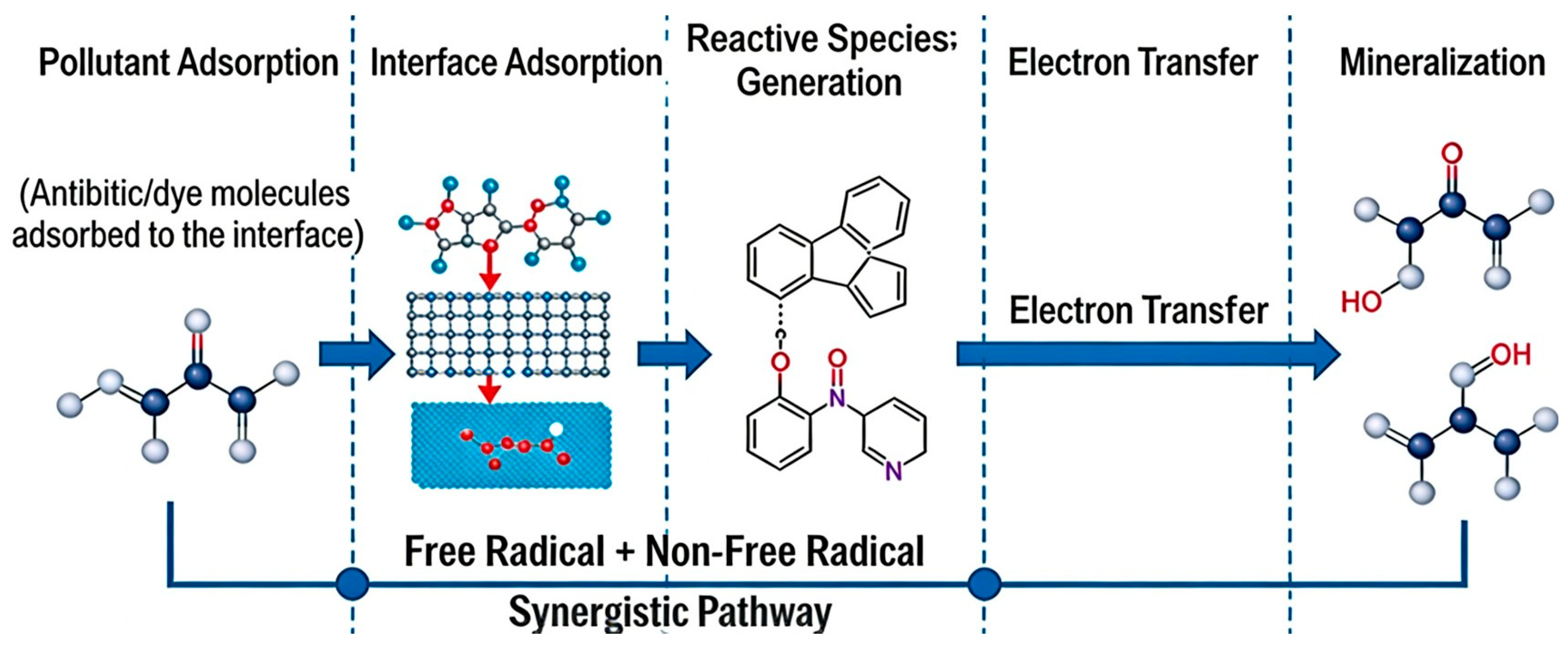
The reaction mechanism of catalytic wastewater treatment provides a scientific bridge between material design and pollutant removal efficiency. In essence, it involves a multilevel and multiscale physicochemical process. The reaction begins with molecular-scale interfacial interactions, proceeds through the generation and transformation of reactive species, regulation of electron transfer pathways, and dynamic evolution of intermediates, and ultimately manifests at the macroscopic level as measurable reaction kinetics. However, a critical limitation is that most current mechanistic studies remain at the level of qualitative description of how structural parameters (e.g., defects, coordination environment) affect performance, without establishing quantitative structure–activity relationships. For example, the functional relationship between oxygen vacancy concentration and reaction rate constant, or the precise correlation between single-atom coordination number and adsorption energy, is rarely explicitly revealed. The lack of such quantitative models hinders true rational design. The following sections will first review the current multiscale mechanistic understanding, which has been greatly advanced by recent developments in characterization and simulation. In recent years, with the rapid development of in situ characterization techniques, such as in situ Raman spectroscopy, in situ electron paramagnetic resonance, and synchrotron-radiation-based X-ray absorption spectroscopy, together with theoretical methods such as density functional theory and molecular dynamics simulation, mechanistic studies have moved beyond conventional radical-dominated interpretations toward more complex frameworks involving the coexistence of radical pathways, non-radical pathways, interfacial electron transfer, surface-complexation-mediated activation, and energy-transfer processes. This progress has enabled a more integrated understanding of catalytic reactions from molecular events to reactor-scale behavior and has provided critical theoretical support for precise catalyst design and process optimization [73]. Figure 3 summarizes the major pollutant degradation mechanisms currently reported in catalytic wastewater treatment, including radical pathways, such as •OH and SO4, non-radical pathways, such as 1O2 and electron transfer, and their possible synergistic effects.
At the molecular and interfacial levels, catalytic reactions begin with microscopic interactions between pollutant molecules and catalyst surfaces. These interactions include adsorption, coordination, charge polarization, and steric matching. The functional groups within pollutant molecules, their molecular polarity, and steric effects collectively determine adsorption configuration, adsorption energy, and the ease of subsequent activation. For example, phenols, anilines, and antibiotic compounds can specifically bind to carbon-based materials, such as graphene and carbon nanotubes, or metal oxides, such as TiO2 and Fe2O3, through hydrogen bonding, π–π stacking, and electrostatic interactions. After adsorption, the electron density of pollutant molecules may shift because of interfacial effects, thereby weakening key chemical bonds and making them more susceptible to oxidation or cleavage by subsequently generated reactive species. In metal-based catalytic systems, pollutant molecules can directly form surface complexes with metal sites, and the redox ability of metal ions facilitates initial electron extraction from the pollutant to the catalyst. This interfacial step not only determines selectivity and reaction rate, but also provides the basis for fine control over the catalyst surface structure [74].
At the level of reactive-species generation and transformation, catalytic systems can generally be divided into radical and non-radical mechanisms. Radical mechanisms are centered on highly oxidative reactive oxygen species, including hydroxyl radicals (•OH), sulfate radicals (SO4), and superoxide radicals (O2). These species exhibit strong oxidation ability and rapid reaction kinetics but relatively low selectivity, and they are therefore suitable for the broad-spectrum mineralization of organic pollutants. In Fenton and Fenton-like systems, for example, the Fe2+/Fe3+ cycle catalytically decomposes H2O2 to generate •OH, which then degrades pollutants through hydrogen abstraction, addition, and bond cleavage. In persulfate-based systems, Co-, Cu-, and Mn-containing catalysts can activate S2O82− or PMS to produce SO4, which offers high oxidation potential, a broader working pH range, and stronger anti-interference performance in real wastewater. In parallel, non-radical mechanisms have attracted increasing attention in recent years. These mainly include singlet oxygen (1O2), direct interfacial electron transfer, and surface-complexation-mediated oxidation. Such pathways often provide higher oxidation selectivity, stronger resistance to anionic interference, and fewer unwanted by-products. In carbon-based catalytic systems, for instance, the catalyst can act as an electron shuttle, directly transferring electrons from pollutants to oxidants without generating highly reactive radical intermediates, thereby improving system stability and mineralization selectivity. In many practical systems, radical and non-radical pathways coexist, and their relative contributions are jointly regulated by catalyst composition, pH, dissolved oxygen, and the presence of coexisting ions. However, accurately identifying and quantifying these coexisting pathways is a complex task, and common mechanistic research methods each have their limitations. For example, widely used radical quenching experiments rely on the high selectivity and complete reaction of quenchers (such as methanol and NaN3), but the quenchers themselves may adsorb onto the catalyst or interact with other components of the system, leading to biases in assessing the contribution of a specific pathway. Electron paramagnetic resonance (EPR) spectroscopy can directly detect paramagnetic species, yet it is often difficult to accurately quantify low-concentration transient species under dynamic reaction conditions. Density functional theory (DFT) calculations can reveal atomic-scale electronic structures and reaction pathways, but their models, based on ideal clean surfaces, may not fully capture the hydration, fouling, and complex solvation effects on the catalyst surface in real wastewater environments. Therefore, a deep understanding of catalytic mechanisms requires the integration of multiple complementary techniques (e.g., combining quenching experiments, direct EPR detection, X-ray absorption spectroscopy, and in situ characterization), along with a careful consideration of the boundary conditions of the conclusions drawn from each method. Regarding the difference in advantages between the 1O2 pathway and the direct electron transfer pathway in PMS systems, contradictory conclusions exist in the literature, which precisely reflects the complexity of the aforementioned mechanistic studies. 1O2 is generally considered to be more readily generated under alkaline conditions or on carbon materials with specific electronic structures, whereas direct electron transfer may occur directly between a well-conducting catalyst and the pollutant without the mediation of reactive oxygen species. The controversy arises, in part, because most current mechanistic studies still remain at the qualitative level of describing the relationship between structural parameters (e.g., defects, coordination environment) and catalytic performance, failing to establish quantitative structure–activity models that could precisely resolve the contributions of different pathways. A representative study developed manganese single-atom catalysts (Mn-SACs) for PMS activation and degradation of the antiepileptic drug carbamazepine (CBZ). The results showed that Mn(III) intermediates played a key role in a combined radical/non-radical mechanism involving SO4, •OH, and 1O2, with 1O2 contributing the most, at 66.3%. By selectively attacking key sites on the carbamazepine molecule, the system achieved 91.7% degradation within 30 min. This work clearly revealed the role of Mn(III)-mediated radical/non-radical synergy in efficient pharmaceutical removal [75].
At the level of intermediate transformation and degradation pathways, catalytic reactions generally follow a stepwise oxidation process. Initial bond cleavage usually occurs at the weakest bonds within the pollutant molecule, such as C–N, C–O, C–S, and N–N bonds. In antibiotic degradation, for example, catalytic reactions often first disrupt conjugated ring structures and characteristic functional groups, generating smaller carboxylic acids, ketones, and aldehydes, which are then gradually oxidized and mineralized into CO2 and H2O. With the aid of gas chromatography–mass spectrometry, liquid chromatography–mass spectrometry, and in situ spectroscopic techniques, researchers have been able to identify the degradation pathways of typical pollutants such as sulfonamides, quinolones, and bisphenol A and clarify how the toxicity of intermediates evolves during reaction. These analyses provide an important basis for evaluating the safety of catalytic treatment processes. Pei et al. proposed a new catalytic mechanism termed the “non-contact electron transfer process” (NCETP) in a layered double hydroxide/peroxymonosulfate (LDH/PMS) system. Their Co–Fe LDH catalyst containing HSO5 vacancies could preferentially adsorb and anchor PMS within the interlayer region, whereas large pollutant molecules such as levofloxacin (LVX) were adsorbed outside the LDH layers. This arrangement physically separated the oxidant and pollutant on opposite sides of the catalyst. During the reaction, a hydrogen-bridge-mediated pathway involving single-coordinated oxygen sites enabled rapid electron transfer while completely avoiding radical side reactions. The number of electron transfer events in NCETP was reported to be 2.58 times that of the conventional electron transfer pathway, and LVX degradation exceeded 95% within 30 min. This study revealed a new way to realize efficient electron transfer through spatial separation and offers a valuable concept for the design of non-radical-dominated catalytic systems [76].
At the level of electron transfer and interfacial dynamics, mechanistic research has further extended to microscopic processes such as interfacial charge transport, band alignment, heterojunction-mediated carrier separation, and defect-state electron trapping. In photocatalytic systems, semiconductor materials generate electron–hole pairs upon light excitation, and heterojunction design or defect engineering can greatly enhance carrier separation while suppressing recombination, thereby extending carrier lifetime and improving catalytic efficiency. In electrocatalytic systems, the rate of interfacial charge transfer is governed by factors such as conductivity, electric double-layer structure, and interfacial capacitance, and it can be quantitatively analyzed by techniques such as Tafel plots and electrochemical impedance spectroscopy. One study identified a direct electron transfer mechanism cooperatively induced by F–Fe dual sites on fluorinated perovskite KFeF3. In this system, F sites activated H2O2 and generated •OH, but •OH attack was not the dominant degradation pathway. Instead, the redox interaction between the F site and H2O2 triggered direct electron transfer from the Fe-phenol complex, or its hydroxylated intermediate, to the F site, thereby avoiding passivation of the Fe site and accelerating the Fenton-like cycle. Rhodamine B and phenol were removed within 2 s and 16 s, respectively, and phenol mineralization approached 90% within 5 min. This work revealed a new mechanism in which F–Fe dual sites cooperatively regulate direct electron transfer and thus provide a theoretical basis for ultrafast treatment of refractory organics. At the macroscopic level, catalytic reactions can be quantitatively described using apparent kinetic models such as pseudo-first-order kinetics, second-order kinetics, the Langmuir–Hinshelwood model, and the Eley–Rideal model. Pseudo-first-order kinetics are often suitable for radical-dominated oxidation processes, whereas Langmuir–Hinshelwood kinetics are better suited to catalytic systems controlled jointly by adsorption and surface reactions. Through kinetic fitting, key parameters such as reaction rate constants, activation energy, and adsorption equilibrium constants can be obtained, thereby linking molecular-level mechanisms with reactor design and engineering applications. Building on this idea, another study used the electron complementarity effect of the 4f orbitals of rare-earth metals and interfacial oxygen-mediated metal-support interactions to construct valence-self-cycling manganese–cerium dual sites on an inexpensive red clay support, thereby developing a millimeter-scale monolithic Mn–Ce dual-site catalyst (MCT). The catalyst decomposed ozone into surface-adsorbed atomic oxygen and generated hydroxyl radicals, which were the dominant reactive species, together with singlet oxygen through oxygen atom and electron transfer processes. The cerium site reduced the energy required for dual-site ozone activation through the electron complementarity effect of its 4f orbitals. As a result, after five cycles without regeneration, the TOC removal remained above 87%. Kinetic analysis further showed that the apparent rate constant for fulvic acid degradation by 4MCT-catalyzed ozonation was 2.65 × 10⁻² min−1, corresponding to 2.71- and 3.68-fold enhancements over the corresponding single-Mn and single-Ce catalysts, respectively. In addition, the catalyst showed synergistic removal of refractory organics and ammonia nitrogen in biologically treated landfill leachate [77,78]. This work effectively connects microscopic electronic structure control with macroscopic reactor performance and provides a new perspective for the development of recyclable and scalable heterogeneous ozone catalysts.
In summary, mechanistic studies in catalytic wastewater treatment have evolved from single radical-based interpretations to multiscale frameworks involving multiple coupled pathways. These mechanisms and characterization techniques at different scales are summarized in Table 3. Even so, despite the substantial progress made at the molecular and interfacial levels, many bottlenecks remain when moving from fundamental studies to large-scale engineering implementation. The following section therefore discusses the key challenges currently facing the field and outlines future research directions.
Table 3. Key mechanisms and characterization methods across four scale levels in catalytic water treatment.
Scale HierarchyKey Mechanism DescriptionKey Parameters and Characterization TechniquesRef.
Molecular/interface levelDual-atom Fe/Mo catalysts enhance interfacial reaction mechanisms, promoting coordination and electron transfer between pollutant molecules and catalyst surfaces in Fenton-like reactions, thereby lowering the reaction energy barrier.XPS, DFT, FTIR, Zeta potential[79]
By regulating Mn–OV–Ce active sites, the interfacial complexation and charge polarization of pollutants on the catalyst surface are enhanced, facilitating chemical bond activation.XPS, Raman spectroscopy, Zeta potential, DFT[80]
The proton-coupled electron transfer mechanism at the solid–water interface regulates the activation of peroxides, highlighting the role of interfacial hydrogen-bonding networks and surface complexation in chemical bond activation.In situ FTIR, EIS, DFT[81]
Generation and transformation of reactive speciesThe generation mechanism of singlet oxygen(1O2) in catalyst/peroxymonosulfate systems, and the dominant role of the non-radical pathway under specific catalyst compositions and pH conditions.EPR, Radical quenching experiments, XANES/EXAFS[82]
Through crystal facet engineering of Co3O4, the targeted generation of 1O2 is achieved, revealing the influence of different exposed facets on the selectivity of the non-radical pathway.EPR, Radical quenching experiments, XANES/EXAFS[83]
Transformation of intermediates and degradation pathwaysThe degradation pathway of oxytetracycline in a three-dimensional photoelectrocatalytic system. Initial bond cleavage occurs at the C–N bond, generating small-molecule intermediates, ultimately mineralizing into CO2 and H2O.LC-MS/MS, toxicity testing, FT-ICR MS[84]
During the photocatalytic degradation of the uramil dye, initial bond cleavage occurs at the N–N and C–N bonds, gradually generating small-molecule carboxylic acids and ketones, with toxicity initially increasing and then decreasing.LC-MS/MS, GC-MS, Q-TOF toxicity testing [85]
In the photo-Fenton system, the degradation of oxytetracycline begins with the cleavage of C–N and C–O bonds, generating small-molecule aldehydes and carboxylic acids. During mineralization, toxicity exhibits a trend of initially increasing and then decreasing.LC-MS/MS, FT-ICR MS, toxicity testing[86]
During the mineralization of propranolol in the TAML/peroxide system, the toxicity of intermediates first increases and then decreases. Initial bond cleavage sites are concentrated at C–N and C–O bonds.LC-MS/MS, toxicity testing[87]
Electron transfer and interfacial kineticsIn carbon dot-modified Co/AC particle electrodes, interfacial electron transport capacity is significantly enhanced. The hydrogen radical (H∗)-dominated electron transfer pathway improves humic acid removal efficiency.Tafel plots, EIS, Transient photocurrent[88]
Electron transfer-driven pollutant degradation mechanism in piezocatalysis, and the regulatory role of heterojunction charge separation and defect-state electron trapping on the reaction rate.Mott–Schottky, KPFM, EIS[89]

5. Critical Challenges and Future Perspectives

Although catalytic materials have achieved important progress in wastewater treatment and have shown excellent performance in material design, mechanistic study, and laboratory-scale applications, several critical challenges still hinder their transition to large-scale engineering implementation. What follows is the English translation of the provided Chinese paragraph. First, the long-term stability of catalytic materials remains insufficient. Metal-based catalysts are prone to metal leaching, active-site deactivation, and structural collapse in real water matrices, which not only reduces treatment efficiency but may also create ecological risks. Carbon-based materials can be oxidized or etched under strongly oxidative conditions, leading to rapid deterioration in recyclability. Composite catalysts may suffer from weak interfacial bonding, component peeling, and progressive activity loss during long-term operation. From a practical perspective, catalyst deactivation in real wastewater involves multiple mechanisms: metal leaching is exacerbated under acidic or ligand-rich conditions; surface poisoning by sulfides, phosphates, or humic substances blocks active sites; pore clogging by organic matter or biofilms reduces accessibility; and aggregation or phase transformation of active components gradually diminishes efficiency over extended operation. Coexisting inorganic ions and natural organic matter can accelerate deactivation through competitive adsorption, radical scavenging, or complexation with metal ions. Therefore, assessing practical viability requires long-term continuous-flow tests under realistic wastewater conditions, combined with post-reaction characterization to elucidate deactivation pathways. These issues make continuous and stable engineering operation difficult to achieve [90,91].
Second, reaction mechanisms in complex systems remain far from fully understood. Existing studies still rely heavily on indirect approaches such as radical quenching experiments and electron paramagnetic resonance, while direct in situ observation of interfacial electron transfer pathways and active-species evolution under realistic conditions, including multi-pollutant coexistence, inorganic ion interference, and organic matter competition, remains limited. As a result, the dominant pathways and cooperative relationships between radical and non-radical mechanisms are still debated, which complicates the precise design and regulation of catalysts. Third, the adaptability of catalytic systems to real wastewater remains insufficient. Most laboratory studies are performed in simulated solutions, whereas actual industrial wastewater and natural waters contain humic substances, chloride, bicarbonate, and many other coexisting components that can compete for active sites or quench reactive species. Consequently, laboratory performance is often difficult to reproduce in practice. High salinity, high hardness, and extreme pH can further alter catalyst surface properties and reaction kinetics, thereby limiting practical applicability [92,93].
Finally, large-scale preparation and economic feasibility remain major bottlenecks. High-performance nano-catalysts, single-atom catalysts, and hierarchically structured composites often require complex synthesis, expensive raw materials, and harsh preparation conditions, which complicate ton-scale production. In particular, some precious-metal-based and hierarchically structured heterojunction catalysts typically rely on high-purity precursors, high-temperature calcination, or multi-step fine synthesis processes, which not only increase material preparation costs but also significantly raise energy consumption and scale-up difficulty. Moreover, the high catalytic activity achieved at the laboratory scale often faces challenges in industrial continuous-flow systems, such as reduced mass transfer efficiency, lower active-site utilization, and diminished long-term operational stability, making it difficult to directly translate experimental performance into engineering advantages. In addition, catalyst separation, recovery, and regeneration technologies remain underdeveloped, and the costs associated with oxidants and energy input are often high. From an engineering–economic perspective, bridging the gap between laboratory achievements and industrial applications also requires a systematic assessment of catalyst synthesis cost, scalability, and practical service life. Although many advanced catalytic materials exhibit excellent performance, their industrial feasibility often depends on the use of low-cost precursors (e.g., biomass waste, earth-abundant metals), the development of simple and energy-efficient preparation routes (e.g., one-step pyrolysis, spray coating), and the immobilization of catalysts on macroscopic supports to facilitate recovery and continuous-flow operation. Therefore, alongside the pursuit of high performance, future research should strengthen techno-economic analysis and pilot-scale validation to ensure that catalytic materials achieve stable engineering operation under acceptable cost and energy consumption. These factors undermine life-cycle economic performance and constrain engineering deployment [94]. Importantly, these challenges are not independent. Limited material stability directly affects catalyst adaptability in complex wastewater, incomplete mechanistic understanding restricts rational design for improved stability, and the high cost of scale-up is closely linked to complex material architectures and dependence on expensive components. Poor adaptability to real wastewater further magnifies cost-related problems. Future research therefore requires a coordinated development pathway that simultaneously advances material design, mechanistic understanding, and engineering applications.
Notably, the practical application of catalytic wastewater treatment technologies requires them to be capable of addressing pollutants with diverse chemical structures originating from various industrial sources. Current research has yielded fruitful results on common pollutants such as antibiotics, dyes, and phenols, providing a solid foundation for the design of catalytic materials. However, to advance the deployment of these technologies in broader industrial scenarios, future efforts must intensify focus on complex pollutants with industry-specific characteristics. For instance, in the “whitewater” of the paper industry, pollutant composition is extremely complex, encompassing lignin derivatives, adsorbable organic halides, resin acids, terpenoids, and various additives. These pollutants typically feature high halogen content, large molecular weights, and complex functional group structures, posing unique challenges to the performance of catalytic materials. These challenges include demands for catalysts with enhanced resistance to chloride ion interference, the ability to recognize and attack specific functional groups, and effective cleavage capabilities for large molecules. Catalytic technologies have already demonstrated potential in treating such wastewater, for example, using modified photocatalysts to degrade chlorinated organic compounds or employing catalytic ozonation for targeted removal of resin acids. Future design of catalytic materials should increasingly emphasize matching with the molecular structures of specific industrial pollutants, aiming to develop catalysts with targeted degradation functions. This is not only crucial for expanding the application scope of catalytic technologies but also represents a significant research direction for achieving a leap from “broad-spectrum efficiency” to “precision treatment”.
To meet the practical demands of the water treatment industry, future research on catalytic materials should focus on achieving key breakthroughs in stability, low cost, anti-interference capabilities, and engineering feasibility. In terms of material design, precise synthesis strategies such as interfacial engineering, defect regulation, and lattice stabilization should be further developed, and resistance to dissolution, corrosion, and aging should be improved through core–shell encapsulation, elemental doping, and porous confinement. At the same time, biomass-based catalytic materials derived from agricultural and forestry residues, sludge, and industrial solid waste should be vigorously explored in order to simplify preparation and promote low-cost, green, and resource-efficient production. In terms of mechanism research, in situ infrared spectroscopy, in situ Raman spectroscopy, in situ transmission electron microscopy, and density functional theory calculations should be integrated to establish real-time atomic- and molecular-scale observation methods capable of clarifying active-site behavior, electron transfer pathways, and intermediate evolution in complex water matrices. In terms of process adaptation, multifunctional catalytic systems with strong anti-interference capability should be developed for wastewater with complex composition, high salinity, and high organic loading. Catalytic technologies should also be more deeply coupled with membrane separation, biological treatment, ozonation, and photo- or electro-driven processes in order to build integrated and highly efficient treatment systems.
From an engineering perspective, continuous-flow, modular, and easily recyclable catalytic reactors should be developed to simplify operation and reduce energy consumption and oxidant dosage. Catalyst regeneration and recycling strategies should also be established to lower operating costs. At the same time, standardized evaluation criteria and environmental risk assessment frameworks are needed to promote the transition from pilot studies to industrial deployment [95,96]. Looking further ahead, catalytic wastewater treatment is increasingly moving toward resource recovery and carbon neutrality. A recent review by Luo et al. proposed a new paradigm of “catalytic resource recovery technology,” emphasizing that industrial wastewater should be viewed not only as a pollution source but also as a resource pool containing energy, chemicals, and reusable water. That review outlined future priorities from the perspectives of science, engineering, and policy: (1) at the material and mechanism levels, multifunctional, long-lived, highly selective, and earth-abundant catalysts should be developed, and artificial intelligence, together with in situ characterization, should be used to accelerate catalyst screening; (2) at the process and reactor levels, microchannel reactors, membrane reactors, and multiphase flow platforms should be developed, together with machine-learning-assisted real-time optimization; and (3) a five-step decision-making framework should be established, covering wastewater characterization, pollutant classification, technology screening, catalysis/reactor design, and multi-index evaluation, in order to achieve standardization and policy alignment. With deeper integration of materials science, interfacial catalysis, and engineering technology, catalytic materials are expected to evolve toward higher efficiency, better stability, greener processing, and greater economic viability, thereby providing strong support for advanced wastewater treatment and sustainable water resource utilization [97].

6. Conclusions

This review systematically summarizes recent progress in catalytic materials for wastewater treatment, with particular emphasis on design strategies, reaction mechanisms, and representative applications. It comprehensively discusses the structural characteristics and major advantages of metal-based, carbon-based, composite, and photo/electrocatalytic materials, and it provides an in-depth analysis of radical, non-radical, and synergistic catalytic mechanisms. The review also objectively evaluates the main challenges currently facing the field and outlines important future directions. Existing studies clearly show that catalytic materials have become a core technology for the treatment of refractory organic wastewater, antibiotics, heavy metals, and micropollutants because of their high degradation efficiency, mild operating conditions, strong selectivity, and excellent compatibility with integrated treatment processes.
Metal-based materials offer high catalytic activity, carbon-based materials provide low-cost and environmentally friendly options, composite materials enable synergistic functionality, and photo/electrocatalytic materials offer clean and sustainable treatment routes. Through structural optimization and interfacial control, all four classes can significantly improve pollutant mineralization efficiency and operational stability. However, important bottlenecks remain, including insufficient long-term stability, metal leaching, poor adaptability to real water matrices, incomplete mechanistic understanding, and the high cost of large-scale preparation. These factors still limit broad engineering implementation.
For practical application and sustainable development, future research should focus on the following aspects: the development of highly stable, low-cost, and interference-resistant green catalytic materials; deeper elucidation of interfacial reaction mechanisms through in situ characterization and theoretical calculations; improved catalyst adaptability in complex wastewater systems; stronger integration of catalytic technologies with membrane separation, biological treatment, optical systems, and electrochemical processes; and accelerated development of catalyst-regeneration strategies, modular reactors, and scalable preparation technologies.
Overall, catalytic materials possess a solid theoretical foundation and broad prospects in wastewater treatment. Looking ahead, research on catalytic materials is expected to be increasingly integrated with artificial intelligence, machine learning, and high-throughput computation. In addition to AI-assisted material design, life-cycle-assessment-based environmental evaluation will become an important component of catalyst development. The establishment of unified catalyst performance criteria and life-cycle assessment systems will help accelerate the transition of catalytic technologies from laboratory research to practical applications and provide a sound basis for comparing different catalytic routes. The deep integration of cross-scale theoretical simulation and experimental characterization will further accelerate the rational design of high-performance catalytic materials and promote catalytic wastewater treatment toward greener, smarter, and more scalable engineering solutions.

Author Contributions

Conceptualization, Y.W. and Q.X.; methodology, Y.W. and W.L. (Wenwen Liu).; resources, Q.X. and Y.W.; data curation, L.X., J.S., L.C. and W.L. (Wenhao Lv); writing—original draft preparation, Q.X., W.L. (Wenwen Liu)., L.X. and J.S.; writing—review and editing, Q.X. and Y.W.; supervision, Q.X., S.X., H.L. and Y.W.; project administration, Q.X. and Y.W.; funding acquisition, Q.X., H.L., S.X. and Y.W. All authors have read and agreed to the published version of the manuscript.

Funding

This work was funded by the National Natural Science Foundation of China (Grant No. 52476190); National Natural Science Foundation of China (Grant No. 52376171); Zhanjiang Science and Technology Plan Project (2025A401002); Zhanjiang Marine Youth Talent Innovation Project (Grant No. 2024R3002); Zhanjiang Non-Funded Science and Technology Project (Grant No. 2025B01045); 2025 Higher Education Science Research Planning Project of the Chinese Society of Higher Education (Grant No. 25R0309); Program for Scientific Research Start-up Funds of Guangdong Ocean University (Grant No. 060302072302); Youth S&T Talent Support Programme of GDSTA (Grant No. SKXRC2025403); Guangdong Basic and Applied Basic Research Foundation (2023A1515110541); Guangdong Basic and Applied Basic Research Foundation (2025A1515010722); Characteristic and Innovative Projects of General Institutions of Higher Education in Guangdong Province (2025KTSCX044); Youth S&T Talent Support Programme of GDSTA (SKXRC2025404); Zhanjiang Non-Funded Science and Technology Research Program Projects (2025B01054); and Guangdong Basic and Applied Basic Research Foundation (2024A1515010637).

Data Availability Statement

No new data were created or analyzed in this study. Data sharing is not applicable to this article.

Acknowledgments

The authors would like to thank the Joint Training Demonstration Base Project for Graduate Students of the Guangzhou Institute of Energy Conversion, Chinese Academy of Sciences, in Guangdong Province, as well as the Guangdong Provincial Key Laboratory of Intelligent Equipment for South China Sea Marine Ranch. The authors also thank Uttpal Anand and co-authors for their original diagram (Figure 1) published in Environmental Chemistry Letters (Anand et al., 2022, https://doi.org/10.1007/s10311-022-01498-7, accessed on 19 May 2026) [4], which is reprinted in this paper under the Creative Commons Attribution 4.0 International License (CC BY 4.0). During the preparation of this manuscript, the authors used DeepSeek-V3 for literature retrieval and data analysis, and used Dou bao (version 2026) and Gemini-3-pro-image-preview for the generation of the graphical abstract and Figure 3 based on the authors’ original concepts. The authors reviewed and edited the generated content and take full responsibility for the final manuscript.

Conflicts of Interest

The authors declare no conflicts of interest.

Abbreviations

The following abbreviations are used in this manuscript:
AOPsAdvanced Oxidation Processes
PMSPeroxymonosulfate
MOFMetal–Organic Framework
CODChemical Oxygen Demand
TOCTotal Organic Carbon
BPABisphenol A
CBZCarbamazepine
CWBCCoagulation Waste-derived Biochar with Fe/N Doping
SDZSulfadiazine
PFRsPersistent Free Radicals
HPCWHigh-salinity Petrochemical Wastewater
HFCHeterogeneous Fenton-like Catalyst
ZIFsZeolitic Imidazolate Frameworks
SMXSulfamethoxazole
XRDX-ray Diffraction
XPSX-ray Photoelectron Spectroscopy
FTIRFourier Transform Infrared Spectroscopy
G-C3N4Graphitic Carbon Nitride
MFTCTiO2@Fe2O3@g-C3N4
DMPDimethyl Phthalate
EPRElectron Paramagnetic Resonance
ARPsAdvanced Reduction Processes
EE/OElectrical Energy per Order
BOD5Five-day Biochemical Oxygen Demand
NOMNatural Organic Matter
LDHLayered Double Hydroxide
PCNPolymeric Carbon Nitride
EXAFSExtended X-ray Absorption Fine Structure
DFTDensity Functional Theory
FSBCFenton Sludge-derived biochar
FVB700Ferric-doped biochar from vinasse 700 °C
MXeneTransition Metal Carbide/Nitride
OFLOfloxacin
nZVINanoscale Zero-Valent Iron
APDCSAutonomous Photopotential-Driven Catalytic System
MBMethylene Blue
RhBRhodamine B
SACsSingle-atom Catalysts
SPYSulfapyridine
ATZAtrazine
ORROxygen Reduction Reaction
FAOFormic Acid Oxidation Reaction
MORMethanol Oxidation Reaction
EOREthanol Oxidation Reaction
OEROxygen Evolution Reaction
PECPhotoelectrochemical
PCPorous Carbon
NCETPNon-Contact Electron Transfer Process
LVXLevofloxacin
MCTMonolithic Manganese–Cerium dual-site catalyst
EISElectrochemical Impedance Spectroscopy
XANESX-ray Absorption Near Edge Structure
LC-MS/MSLiquid Chromatography–tandem Mass Spectrometry
TAMLTetra-Amido Macrocyclic Ligand
FT-ICR MSFourier Transform Ion Cyclotron Resonance Mass Spectrometry
GC-MSGas Chromatography–Mass Spectrometry
Q-TOFQuadrupole Time-of-Flight
ACActivated carbon
KPFMKelvin Probe Force Microscopy

References

  1. Zackariah, G.S.K.; Tremblay, L.A.; Li, Z.; Palmer, B.; Liu, X.; An, S.; Zhu, R.; Wang, J.; Jacob, M.K.; Kebede, Y.; et al. Antibiotics, Antibiotic-Resistant Bacteria, and Genes in Agri-Foods: A Global Review of the Consumption Risks to Human Health. Integr. Environ. Assess. Manag. 2025, 21, 1255–1280. [Google Scholar] [CrossRef] [PubMed]
  2. Klein, E.Y.; Van Boeckel, T.P.; Martinez, E.M.; Pant, S.; Gandra, S.; Levin, S.A.; Goossens, H.; Laxminarayan, R. Global Increase and Geographic Convergence in Antibiotic Consumption between 2000 and 2015. Proc. Natl. Acad. Sci. USA 2018, 115, E3463–E3470. [Google Scholar] [CrossRef]
  3. Oliveira, V.H.; Coelho, J.P.; Borgogni, R.; Pereira, M.E.; Figueira, E. Metal(Oid)s Accumulation (Hg and As) and Their Biochemical Effects in Halimione portulacoides (Ria de Aveiro, Portugal). Mar. Pollut. Bull. 2022, 180, 113804. [Google Scholar] [CrossRef] [PubMed]
  4. Anand, U.; Adelodun, B.; Cabreros, C.; Kumar, P.; Suresh, S.; Dey, A.; Ballesteros, F.; Bontempi, E. Occurrence, Transformation, Bioaccumulation, Risk and Analysis of Pharmaceutical and Personal Care Products from Wastewater: A Review. Environ. Chem. Lett. 2022, 20, 3883–3904. [Google Scholar] [CrossRef]
  5. Mailler, R.; Gasperi, J.; Rocher, V.; Gilbert-Pawlik, S.; Geara-Matta, D.; Moilleron, R.; Chebbo, G. Biofiltration vs Conventional Activated Sludge Plants: What about Priority and Emerging Pollutants Removal? Environ. Sci. Pollut. Res. 2014, 21, 5379–5390. [Google Scholar] [CrossRef] [PubMed]
  6. Grandclément, C.; Seyssiecq, I.; Piram, A.; Wong-Wah-Chung, P.; Vanot, G.; Tiliacos, N.; Roche, N.; Doumenq, P. From the Conventional Biological Wastewater Treatment to Hybrid Processes, the Evaluation of Organic Micropollutant Removal: A Review. Water Res. 2017, 111, 297–317. [Google Scholar] [CrossRef]
  7. Zhou, Z.; Chen, R.; Zhu, H.; Hu, Y.; Li, N.; Chen, W. Tribocatalytic Activation of Peroxymonosulfate by TiO2 Nanoparticles for Powerful Degradation of Organic Pollutants. J. Adv. Ceram. 2026, 15, 9221237. [Google Scholar] [CrossRef]
  8. Kumar, M.; Shukla, A.; Thakur, N.; Vaish, R. Synergetic Catalysis Methods for Sustainable Wastewater Treatment. Environ. Res. 2025, 285, 122598. [Google Scholar] [CrossRef]
  9. Wang, N.; Yang, J.; Li, S.; Ren, Z.; Xu, Q. Microenvironment Modulation of Single-Atom Sites and Its Applications in Fenton-like Reactions. Chem. Sci. 2025, 16, 19072–19098. [Google Scholar] [CrossRef]
  10. Zhang, Y.; Yam, K.-M.; Wang, H.; Guo, N.; Zhang, C. Recent Progresses in Two-Dimensional Carbon-Metal Composites for Catalysis Applications. WIREs Comput. Mol. Sci. 2025, 15, e70014. [Google Scholar] [CrossRef]
  11. Faisal, H.A.; Mohammed, A.K.; Al Sbani, N.H.; Isaha, W.N.R.W. Comparative Study of Activated Carbon and Silver Nanoparticle-Loaded Activated Carbon Derived from Tea Waste for Removal of Tetracycline from Aqueous Solution. Tikrit J. Eng. Sci. 2025, 32, 1890. [Google Scholar] [CrossRef]
  12. Antón-Herrero, R.; García-Delgado, C.; Alonso-Izquierdo, M.; García-Rodríguez, G.; Cuevas, J.; Eymar, E. Comparative Adsorption of Tetracyclines on Biochars and Stevensite: Looking for the Most Effective Adsorbent. Appl. Clay Sci. 2018, 160, 162–172. [Google Scholar] [CrossRef]
  13. Ranaweera, R.; Wu, X.; Ng, D.; Reineck, P.; Zhang, J.; Williams, M.; Fan, L.; Xie, Z. Comparative Study of Adsorption, Thermally Activated Peroxymonosulfate and Wet Air Oxidation for Tetracycline Removal and Wastewater Treatment. J. Water Process Eng. 2025, 72, 107559. [Google Scholar] [CrossRef]
  14. Zheng, T.-H.; Zhang, Z.-Z.; Liu, Y.; Zou, L.-H. Recent Progress in Catalytically Driven Advanced Oxidation Processes for Wastewater Treatment. Catalysts 2025, 15, 761. [Google Scholar] [CrossRef]
  15. Evazinejad-Galangashi, R.; Mohagheghian, A.; Shirzad-Siboni, M. Catalytic Wet Air Oxidation Removal of Tetracycline by La2O3 Immobilized on Recycled Polyethylene Terephthalate Using the Response Surface Methodology. J. Environ. Manag. 2024, 368, 122043. [Google Scholar] [CrossRef] [PubMed]
  16. Choi, K.J.; Kim, S.G.; Kim, C.W.; Park, J.K. Removal Efficiencies of Endocrine Disrupting Chemicals by Coagulation/Flocculation, Ozonation, Powdered/Granular Activated Carbon Adsorption, and Chlorination. Korean J. Chem. Eng. 2006, 23, 399–408. [Google Scholar] [CrossRef]
  17. Barzegari, Z.; Bina, B.; Pourzamani, H.R.; Ebrahimi, A. The Combined Treatment of Bisphenol a (BPA) by Coagulation/Flocculation (C/F) Process and UV Irradiation in Aqueous Solutions. Desalin. Water Treat. 2016, 57, 8802–8808. [Google Scholar] [CrossRef]
  18. Hernández-Leal, L.; Temmink, H.; Zeeman, G.; Buisman, C.J.N. Removal of Micropollutants from Aerobically Treated Grey Water via Ozone and Activated Carbon. Water Res. 2011, 45, 2887–2896. [Google Scholar] [CrossRef]
  19. Sifuna, F.W.; Orata, F.; Okello, V.; Jemutai-Kimosop, S. Comparative Studies in Electrochemical Degradation of Sulfamethoxazole and Diclofenac in Water by Using Various Electrodes and Phosphate and Sulfate Supporting Electrolytes. J. Environ. Sci. Health Part A 2016, 51, 954–961. [Google Scholar] [CrossRef]
  20. Gao, X.; Xing, D.; Shu, D.; Liu, G.; Wang, C.; He, Y.; Cao, X.; Luo, Y. Efficient Solar-Peroxymonosulfate Activation via d-Band Modulation on SrFeO3/MoSe2 toward Antibiotic Contaminant Removal. J. Hazard. Mater. 2025, 500, 140367. [Google Scholar] [CrossRef]
  21. Yang, X.; Tian, X.; Xue, Y.; Wang, C. Application of Iron-Modified Biochar in the Fields of Adsorption and Degradation of Antibiotics. J. Environ. Manag. 2025, 380, 124875. [Google Scholar] [CrossRef]
  22. He, L.; Yang, C.; Ding, J.; Lu, M.-Y.; Chen, C.-X.; Wang, G.-Y.; Jiang, J.-Q.; Ding, L.; Liu, G.-S.; Ren, N.-Q.; et al. Fe, N-Doped Carbonaceous Catalyst Activating Periodate for Micropollutant Removal: Significant Role of Electron Transfer. Appl. Catal. B 2022, 303, 120880. [Google Scholar] [CrossRef]
  23. Esmaeili, S.; Dehvari, M.; Neisi, A.; Takdastan, A.; Tahmasebi Birgani, Y.; Babaei, A.A. Ultrasound—induced Facile Synthesis of Spinel CoFe2O4—PAC Magnetic Nanocatalyst for Remediation of Hypersaline Petrochemical Wastewater: Degradation Mechanism, Biodegradability Enhancement and Phytotoxicity Mitigation. Environ. Res. 2024, 254, 118676. [Google Scholar] [CrossRef]
  24. Wang, N.; Yang, Y.; Wang, K.; Liu, Y.; Liu, X.; Hou, Z.; Zou, S.; Liu, X.; Zou, W.; Wang, P. A Comprehensive Review on Heterogeneous Fenton-like Catalyst for the Oxidation Degradation of Organics in Wastewater. J. Water Process Eng. 2025, 72, 107444. [Google Scholar] [CrossRef]
  25. Chen, Z.; Wang, X.; Zhang, M.; Liu, C.; Li, W.; Tian, T.; Wei, W.; Qiao, W.; Gu, C.; Li, J. Selective Oxidation Behavior Based on Iron-Doped MOF Derived Carbon-Based Catalysts: Active Site Regulation and Degradation Mechanism Analysis. J. Colloid Interface Sci. 2024, 670, 323–336. [Google Scholar] [CrossRef]
  26. Bi, Q.; Zhang, Y.; Zhang, C.; Wang, K.; Zhao, S.; Xue, J. Precise Control of Cobalt Active Site Size to Switch ROS Pathways: Millimeter-Scale Carbon Beads Derived from Dual MOFs for Targeted Degradation of Drug Pollutants. Appl. Catal. B Environ. Energy 2026, 383, 126046. [Google Scholar] [CrossRef]
  27. Ye, J.; Yang, J.; Liu, Y.; Xue, W.; Wong, J.W.C.; Dai, J.; Zhao, J.; Crittenden, J. Synergy of Pore Confinement and Co-Catalytic Effects in Peroxymonosulfate Activation for Persistent and Selective Removal of Contaminants. Chem. Eng. J. 2024, 496, 154034. [Google Scholar] [CrossRef]
  28. Zhang, J.-Y.; Ding, J.; Liu, L.-M.; Wu, R.; Ding, L.; Jiang, J.-Q.; Pang, J.-W.; Li, Y.; Ren, N.-Q.; Yang, S.-S. Selective Removal of Sulfamethoxazole by a Novel Double Z-Scheme Photocatalyst: Preferential Recognition and Degradation Mechanism. Environ. Sci. Ecotechnol. 2024, 17, 100308. [Google Scholar] [CrossRef] [PubMed]
  29. Yuan, J.; Li, Y.; Guo, Y.; Wang, Z. Enhanced Degradation of Dimethyl Phthalate in Wastewater via Heterogeneous Catalytic Ozonation Process: Performances and Mechanisms. RSC Adv. 2022, 12, 31024–31031. [Google Scholar] [CrossRef] [PubMed]
  30. Karim, A.V.; Cichocki, Ł.; Wang, C.; Boczkaj, G. Advanced Reduction Processes (ARPs) Based on Catalytic Hydrogenation for Wastewater Pollutants Degradation—A Special Focus on Process Efficiency and Mechanisms—A Review. J. Clean. Prod. 2025, 531, 146870. [Google Scholar] [CrossRef]
  31. Liang, L.; Ji, L.; Ma, Z.; Ren, Y.; Zhou, S.; Long, X.; Cao, C. Application of Photo-Fenton-Membrane Technology in Wastewater Treatment: A Review. Membranes 2023, 13, 369–387. [Google Scholar] [CrossRef]
  32. Dai, J.; Zhuang, Y.; Shah, K.J.; Sun, Y. A Review on the Application of Catalytic Membranes Technology in Water Treatment. Catalysts 2025, 15, 1081. [Google Scholar] [CrossRef]
  33. Nour, M.M.; Tony, M.A.; Nabwey, H.A. Constructed Wetlands beyond the Fenton Limit: A Systematic Review on the Circular Photo-Biochemical Catalysts Design for Sustainable Wastewater Treatment. Catalysts 2026, 16, 92–127. [Google Scholar] [CrossRef]
  34. Xiangyu, B.; Chao, L.; Shilong, H.; Jiping, Z.; Hu, J. Combining Advanced Oxidation Processes with Biological Processes in Organic Wastewater Treatment: Recent Developments, Trends, and Advances. Desalin. Water Treat. 2025, 323, 101263. [Google Scholar] [CrossRef]
  35. Zeng, W. Combination of Electrochemical Advanced Oxidation and Biotreatment for Wastewater Treatment and Soil Remediation. J. Environ. Sci. 2024, 150, 36–53. [Google Scholar] [CrossRef]
  36. He, S.; Yu, D.; He, C.; Li, P.; Wang, M.; Tian, S.; Fang, J. Selective Micropollutant Degradation via Nanoconfined Core-Shell Heterostructures with Robust Resilience to Water Matrices. Nat. Commun. 2025, 16, 11321. [Google Scholar] [CrossRef] [PubMed]
  37. Pirkarami, A.; Faria, J.; Fidelis, M.Z.; Siqueira, L.; de Jesus Motheo, A. Wastewater Treatment and Oxygen Evolution via Oxygen Vacancy-Engineered CeO2-NiAl-LDH@MIL-88A Eectrocatalyst Supported on Low-Grade Charcoal. J. Water Process Eng. 2025, 80, 109095. [Google Scholar] [CrossRef]
  38. Han, J.; Zhang, R.; Wang, J.; Gong, C.; Wei, T.; He, C.; Shan, Y.; Lou, H.; Zhang, Z. A CuFe-PCN Single-Atom Catalyst with Highly Dense Diatomic Sites for Alkaline Fenton-like Decontamination. J. Mater. Chem. A 2025, 13, 32675–32683. [Google Scholar] [CrossRef]
  39. Ravelli, D.; Dondi, D.; Fagnoni, M.; Albini, A. Photocatalysis. A Multi-Faceted Concept for Green Chemistry. Chem. Soc. Rev. 2009, 38, 1999–2011. [Google Scholar] [CrossRef]
  40. Taha, A.; Hashmi, A.A. Recent Advancement of Metal-Containing Catalysts for the Environmental Remediation of Nitro Aromatics and Organic Dyes from Wastewater. J. Environ. Manag. 2026, 402, 129132. [Google Scholar] [CrossRef]
  41. Wang, J.; Wang, S. Activation of Persulfate (PS) and Peroxymonosulfate (PMS) and Application for the Degradation of Emerging Contaminants. Chem. Eng. J. 2018, 334, 1502–1517. [Google Scholar] [CrossRef]
  42. Abdulwahab, K.O.; Khan, M.M.; Jennings, J.R. Doped Ceria Nanomaterials: Preparation, Properties, and Uses. ACS Omega 2023, 8, 30802–30823. [Google Scholar] [CrossRef]
  43. Zhu, L.; Ren, W.; Liu, Y.; Zhu, Z.-S.; Zhong, S.; Wang, S.; Duan, X. Upscaled wood@MoS2/Fe3O4 Bulk Catalysts for Sustainable Catalytic Water Pollutant Removal. Nanoscale Horiz. 2025, 10, 2447–2453. [Google Scholar] [CrossRef] [PubMed]
  44. Liu, L.; Corma, A. Metal Catalysts for Heterogeneous Catalysis: From Single Atoms to Nanoclusters and Nanoparticles. Chem. Rev. 2018, 118, 4981–5079. [Google Scholar] [CrossRef]
  45. Cuadra, J.G.; Molina-Prados, S.; Mínguez-Vega, G.; Estrada, A.C.; Trindade, T.; Oliveira, C.; Seabra, M.P.; Labrincha, J.; Porcar, S.; Cadena, R.; et al. Multifunctional Silver-Coated Transparent TiO2 Thin Films for Photocatalytic and Antimicrobial Applications. Appl. Surf. Sci. 2023, 617, 156519. [Google Scholar] [CrossRef]
  46. Huang, C.; Zhai, Y. A Comprehensive Review of the “Black Gold Catalysts” in Wastewater Treatment: Properties, Applications and Bibliometric Analysis. Chemosphere 2024, 362, 142775. [Google Scholar] [CrossRef]
  47. Hu, S.; Xu, P.; Zhu, Q.; Yang, J.; Yu, J.; Chen, Z.; Hu, J.; Hou, H. Activation of Peroxymonosulfate by Fenton-Conditioned Sludge-Derived Biochar for Efficient Degradation and Detoxification of Sulfamethoxazole: Reactive Oxygen Species Dominated Process. Environ. Res. 2025, 286, 122637. [Google Scholar] [CrossRef] [PubMed]
  48. Zheng, H.; Guo, H.; Dai, P.; Zhang, J.; Wang, D.; Faheem, M.; Liu, Z.; Tao, M.; Song, P.; Huang, Y. Vinasse-Derived Magnetic Porous Fe-Biochar for Synergistic Adsorption and Non-Radical Oxidation of Bisphenol A: Mechanisms and Applications. Environ. Res. 2026, 289, 123395. [Google Scholar] [CrossRef] [PubMed]
  49. Leinweber, P.; Malý, J.; Weidlich, T. Carbon-Based Catalysts in Ozonation of Aqueous Organic Pollutants. Catalysts 2026, 16, 41. [Google Scholar] [CrossRef]
  50. Hassan, H.M.A.; Alhumaimess, M.S.; Alsohaimi, I.H.; Al-Furhud, S.F.; Alqadami, A.A.; Aldawsari, A.M. Synthesis of Polymer Functionalized Spent Coffee-Based Porous Carbon for Efficient Dye Adsorption. Biomass Bioenergy 2025, 203, 108275. [Google Scholar] [CrossRef]
  51. Chen, C.; Wang, Y.-R.; Wang, Y.-J.; Zhou, J.-H.; Li, Y.-Q.; Shen, P.-X.; Guo, Z.-Y.; Li, W.-W. Built-In Electric Field Augments Hypersalinity Resistance of Heterostructured Metal Oxides for Efficient Fenton-like Catalysis. ACS Nano 2025, 19, 29616–29626. [Google Scholar] [CrossRef]
  52. Li, S.; Li, J.; Ren, W.; Xu, Y.; Liu, Q. Schottky-Mediated Porphyrin-Metal-Organic Framework/Ti3C2-MXene Heterojunction for Water Decontamination via Photonic-Thermal-Enzyme Synergistic Catalysis. J. Colloid Interface Sci. 2025, 691, 137462. [Google Scholar] [CrossRef]
  53. Jiao, L.; Jiang, H.-L. Metal-Organic-Framework-Based Single-Atom Catalysts for Energy Applications. Chem 2019, 5, 786–804. [Google Scholar] [CrossRef]
  54. Tian, F.-M.; Chen, X.-Y.; Feng, J.-J.; Wu, L.; Wang, A.-J. FeCoMnMoNb with Multi-Atom Active Sites in N-Doped Porous Carbon for Synergistic Catalytic Removal of 4-Nitrophenol from Wastewater. New J. Chem. 2025, 49, 7227–7236. [Google Scholar] [CrossRef]
  55. Xiao, J.-D.; Jiang, H.-L. Metal–Organic Frameworks for Photocatalysis and Photothermal Catalysis. Acc. Chem. Res. 2019, 52, 356–366. [Google Scholar] [CrossRef]
  56. Zhu, T.; Gao, Y.; Sun, J.; Jin, Y.; Li, M.; Zhang, Y. An Efficient CuBi2O4/nZVI-PEC/PMS System for Simultaneous Removal of OFL and Cr(VI): Synergistic Role of S-Scheme/Ohmic Dual Junctions and Cu/Fe Double Active Centers. Adv. Funct. Mater. 2026, 36, e22611. [Google Scholar] [CrossRef]
  57. Chen, L.; Wang, X.; Lu, W.; Wu, X.; Li, J. Molecular Imprinting: Perspectives and Applications. Chem. Soc. Rev. 2016, 45, 2137–2211. [Google Scholar] [CrossRef]
  58. Liu, Y.-L.; Cao, P.; Zhang, Q.; Guo, C.; Li, J.; Zeng, Q. Solar-Activated ZnS@MXene Heterostructure for Integrated Radioactive Wastewater Treatment and Energy Harvesting. Water Res. 2025, 286, 124254. [Google Scholar] [CrossRef]
  59. Molina Prados, S.; Minguez Vega, G.; Lahlahi Attalhaoui, A.; Carda, J.B.; Colombari, J.; Goncalves, N.P.F.; Novais, R.M.; António Labrincha, J.; Cuadra, J. Generation of Schottky Heterojunction (SnO2-Au Nps) Transparent Thin Film for Ciprofloxacin Photodegradation. Appl. Surf. Sci. Adv. 2025, 27, 100751. [Google Scholar] [CrossRef]
  60. Wang, Y.-J.; Zhong, X.; Li, M.-M.; Meng, Y.; Li, C.-X.; Guo, Z.-Y.; Cai, P.-J.; Li, W.-W. FeS2/MoS2 Heterostructured Catalytic Membrane for Robust Water Decontamination via Mixed-Pathway Fenton-like Oxidation. J. Environ. Chem. Eng. 2025, 13, 118350. [Google Scholar] [CrossRef]
  61. Chen, X.; Fu, W.; Yang, Z.; Yang, Y.; Li, Y.; Huang, H.; Zhang, X.; Pan, B. Enhanced H2O2 Utilization Efficiency in Fenton-like System for Degradation of Emerging Contaminants: Oxygen Vacancy-Mediated Activation of O2. Water Res. 2023, 230, 119562. [Google Scholar] [CrossRef]
  62. Zhang, Z.-Q.; Duan, P.-J.; Zheng, J.-X.; Xie, Y.-Q.; Bai, C.-W.; Sun, Y.-J.; Chen, X.-J.; Chen, F.; Yu, H.-Q. Nano-Island-Encapsulated Cobalt Single-Atom Catalysts for Breaking Activity-Stability Trade-off in Fenton-like Reactions. Nat. Commun. 2025, 16, 115–127. [Google Scholar] [CrossRef] [PubMed]
  63. Wang, X.; Zhang, D.; Cheng, Y.; Wu, B.; Sun, L. Progress in the Application of Iron-Based Plant Derived Biochar Catalyst for Fenton-like Remediation of Organic Wastewater: A Review. Molecules 2025, 30, 4549. [Google Scholar] [CrossRef] [PubMed]
  64. Zhang, J.; Tian, K.; Liu, Y.; Fu, Y.; Ren, Y.; Lai, B. Synergistic Effects of Metal-Carbon Composites in Catalytic Ozonation: Structure, Catalytic Pathway and Application. Chem. Eng. J. 2025, 524, 169455. [Google Scholar] [CrossRef]
  65. Hama Aziz, K.H.; Mustafa, F.S.; Karim, M.A.H.; Hama, S. Biochar-Based Catalysts: An Efficient and Sustainable Approach for Water Remediation from Organic Pollutants via Advanced Oxidation Processes. J. Environ. Manag. 2025, 390, 126245. [Google Scholar] [CrossRef]
  66. Li, Y.; Ma, Y.; Jiang, Y.; Sun, M.; Zhou, S.; Jiang, W.; Liu, B.; Liu, C.; Che, G. Core-Shell Structured Co/MnO@N-Doped Carbon Efficiently Generates Non-Radicals for Water Purification in Fenton-like Catalysis. Sep. Purif. Technol. 2025, 354, 128993. [Google Scholar] [CrossRef]
  67. Zheng, S.; Zhou, K.; Zhang, X.; Ren, N. Metal–Organic Framework/MXene-Based Materials: Preparations and Applications. RSC Adv. 2025, 15, 30921–30968. [Google Scholar] [CrossRef] [PubMed]
  68. Chen, Y.; Zohaib, A.; Sun, H.; Sun, S. Multi-Metallic Nanoparticles: Synthesis and Their Catalytic Applications. Chem. Commun. 2025, 61, 12097–12114. [Google Scholar] [CrossRef]
  69. Khan, A.A.; Tahir, M. Engineered Dual-Interface MXene-Integrated CoAlLa-LDH/TiO2 Ternary Heterojunctions for Highly Selective Photoreduction of CO2 into Renewable Fuels. J. CO2 Util. 2025, 102, 103235. [Google Scholar] [CrossRef]
  70. Ansari, A.S.; Azzahra, G.; Nugroho, F.G.; Mujtaba, M.M.; Ahmed, A.T.A. Oxides and Metal Oxide/Carbon Hybrid Materials for Efficient Photocatalytic Organic Pollutant Removal. Catalysts 2025, 15, 134–176. [Google Scholar] [CrossRef]
  71. Wu, Y.; Wang, C.; Wang, L.; Hou, C. Recent Advances in Iron Oxide-Based Heterojunction Photo-Fenton Catalysts for the Elimination of Organic Pollutants. Catalysts 2025, 15, 391–419. [Google Scholar] [CrossRef]
  72. Bu, L.; Tan, L.; Zhang, S.; Xu, K.; Zeng, C. Recent Progress in WO3-Based Photo(Electro)-Catalysis Systems for Green Organic Synthesis and Wastewater Remediation: A Review. Catalysts 2025, 15, 1061. [Google Scholar] [CrossRef]
  73. Kumar, N.; Najimu, M.O.; Cho, Y.J.; Gilliard-AbdulAziz, K.L.; Nikolla, E.; Wu, Z.; Wachs, I.E. Probing Surface/Bulk Structural Chemistry of Key Components of Solid Oxide Electrochemical Cells with In Situ/Operando Raman Spectroscopy. Chem. Rev. 2025, 125, 8921–8955. [Google Scholar] [CrossRef]
  74. Jia, W.; Li, Y.; Chen, C.; Wu, Y.; Liang, Y.; Du, J.; Feng, X.; Wang, H.; Wu, Q.; Guo, W.-Q. Unveiling the Fate of Metal Leaching in Bimetal-Catalyzed Fenton-like Systems: Pivotal Role of Aqueous Matrices and Machine Learning Prediction. J. Hazard. Mater. 2024, 477, 135291. [Google Scholar] [CrossRef]
  75. Hu, J.; Xu, X.; Ji, Y.; Zhu, H.; Zhou, Y.; Zhu, M.; Huang, Y. Role of Mn(III) Intermediates in the Degradation of Carbamazepine via Peroxymonosulfate Activation by Manganese Single-Atom Catalysts: Radical and Non-Radical Synergistic Effects. Appl. Catal. B Environ. Energy 2025, 373, 125337. [Google Scholar] [CrossRef]
  76. Pei, W.; Hao, C.; Zhou, J.; Li, X.; Lu, Z.; Sun, Y.; Zhou, L.; Lei, J.; Zhang, J. Peroxymonosulfate Activation via Non-Contact Electron Transfer Process (NCETP) for Efficient Organic Pollutant Removal. Water Res. 2026, 289, 124796. [Google Scholar] [CrossRef] [PubMed]
  77. Zhang, H.; Xie, J.; Luo, Z.; Shen, L.; Sun, L.; Li, G.; Ji, J.; Liu, W.; Peng, H. Synergy of F-Fe Dual Sites in KFeF3 Promoting Fenton-like Cycle and Refractory Organics Degradation through Direct Electron Transfer. J. Colloid Interface Sci. 2025, 691, 137406. [Google Scholar] [CrossRef]
  78. Zhang, J.-R.; Zhong, F.-Q.; Zhong, L.-B.; Dong, Z.-J.; Zhao, Q.-B.; Ao, Z.; Sun, D.D.; Yang, J.-C.E.; Zheng, Y.-M. Electron Complementary Effect of Cerium Tailored the Electron/Valence State of Mn-Ce Dual-Atom Monolithic Catalyst for Enhanced Ozone Catalysis. Appl. Catal. B Environ. Energy 2025, 373, 125361. [Google Scholar] [CrossRef]
  79. Liu, Z.; Xu, X.-Y.; Xu, F.; Su, R.-D.; Li, B.; Zhang, F.; Xu, X.; Wang, Y.; Ma, D.-F.; Gao, B.-Y.; et al. Diatomic “Catalytic/Co-Catalytic” Fe/Mo Catalysts Promote Fenton-like Reaction to Treat Organic Wastewater through Special Interfacial Reaction Enhancement Mechanism. Water Res. 2025, 274, 123147. [Google Scholar] [CrossRef]
  80. Zhang, M.; Wu, J.; Tang, W.; Mei, J.; Zhang, Q.; Wu, J.; Xu, D.; Liu, Z.; Hao, F.; Sheng, L.; et al. Inverted Loading Strategy Regulates the Mn–OV–Ce Sites for Efficient Fenton-like Catalysis. J. Colloid Interface Sci. 2024, 668, 303–318. [Google Scholar] [CrossRef]
  81. Chen, J.-H.; Li, W.-T.; Cai, K.-Y.; Tu, H.-J.; Long, Z.-T.; Akhtar, S.; Liu, L.-D. Proton-Coupled Electron Transfer Controls Peroxide Activation Initiated by a Solid-Water Interface. Nat. Commun. 2025, 16, 3789. [Google Scholar] [CrossRef]
  82. Fang, Q.; Yang, H.; Ye, S.; Zhang, P.; Dai, M.; Hu, X.; Gu, Y.; Tan, X. Generation and Identification of 1O2 in Catalysts/Peroxymonosulfate Systems for Water Purification. Water Res. 2023, 245, 120614. [Google Scholar] [CrossRef]
  83. Wang, H.; Wang, D.; Sun, C.; Zhao, X.; Xu, C.; Li, Z.; Hou, Y.; Lei, L.; Yang, B.; Duan, X. Oriented Generation of 1O2 from Peroxymonosulfate via Co3O4 Facet Engineering. Appl. Catal. B Environ. Energy 2025, 364, 124854. [Google Scholar] [CrossRef]
  84. Zhang, W.; Wang, G.; Yang, H.; Ma, R.; Wang, H. Covalent Triazine Frameworks as Particle Electrode for Three-Dimensional Photoelectrocatalytic Degradation of Oxytetracycline: Synergy Effects, Pathway, and Mechanism. J. Environ. Manag. 2024, 371, 123219. [Google Scholar] [CrossRef]
  85. Abidin, Z.U.; Majeed, A.; Iqbal, M.A.; Kashif, M.; Fatima, T.; Yousif, M.; Arbaz, M.; Hussain, S.A.; Sajid, M. Green and Cost-Effective Photocatalytic Degradation of Murexide Dye with Acid Catalyst. Clean Technol. Environ. Policy 2025, 27, 3333–3347. [Google Scholar] [CrossRef]
  86. Zheng, N.; Shi, J.; Nie, L.; Xue, K.; Gao, Y.; Shi, J. Photo-Fenton Degradation of Oxytetracycline by g-C3N4/CQDs/FeOCl with in-Situ Hydrogen Peroxide Production: Degradation Pathway and Toxicity Analysis of Intermediate Products. J. Water Process Eng. 2025, 69, 106615. [Google Scholar] [CrossRef]
  87. Somasundar, Y.; Burton, A.E.; Mills, M.R.; Zhang, D.Z.; Ryabov, A.D.; Collins, T.J. Quantifying Evolving Toxicity in the TAML/Peroxide Mineralization of Propranolol. iScience 2021, 24, 101897. [Google Scholar] [CrossRef] [PubMed]
  88. Zhang, W.; Hui, Y.; Bi, J.; Wang, H.; Liang, W. Carbon Dots Improved the Electrochemical Reduction Performance of Co/AC Particle Electrodes for Humic Acid Removal: The Dominant Role of H∗. J. Environ. Manag. 2025, 392, 126768. [Google Scholar] [CrossRef] [PubMed]
  89. Zhang, J.; Luan, X.; Lv, Z.; Wang, Y.; Yu, Q.; Zhong, H.; Yang, G.; Liu, H. Electron Transfer Driven Piezocatalytic Degradation of Emerging Contaminants: Recent Advances, Modification Strategies, and Prospects. J. Water Process Eng. 2025, 75, 108012. [Google Scholar] [CrossRef]
  90. Costamagna, M.; Gonçalves, N.P.F.; Bianco Prevot, A. Environmental Assessment of Humic Acid Coated Magnetic Materials Used as Catalyst in Photo-Fenton Processes. Catalysts 2020, 10, 771. [Google Scholar] [CrossRef]
  91. Hodges, B.C.; Cates, E.L.; Kim, J.-H. Challenges and Prospects of Advanced Oxidation Water Treatment Processes Using Catalytic Nanomaterials. Nat. Nanotechnol. 2018, 13, 642–650. [Google Scholar] [CrossRef]
  92. Neale, P.A.; Jämting, Å.K.; O’Malley, E.; Herrmann, J.; Escher, B.I. Behaviour of Titanium Dioxide and Zinc Oxide Nanoparticles in the Presence of Wastewater-Derived Organic Matter and Implications for Algal Toxicity. Environ. Sci. Nano 2015, 2, 86–93. [Google Scholar] [CrossRef]
  93. Lefebvre, O.; Moletta, R. Treatment of Organic Pollution in Industrial Saline Wastewater: A Literature Review. Water Res. 2006, 40, 3671–3682. [Google Scholar] [CrossRef]
  94. Gowland, D.C.A.; Robertson, N.; Chatzisymeon, E. Life Cycle Assessment of Immobilised and Slurry Photocatalytic Systems for Removal of Natural Organic Matter in Water. Environments 2024, 11, 114. [Google Scholar] [CrossRef]
  95. Wu, Z.; Xiong, Z.; Liu, R.; He, C.; Liu, Y.; Pan, Z.; Yao, G.; Lai, B. Pivotal Roles of N-Doped Carbon Shell and Hollow Structure in Nanoreactor with Spatial Confined Co Species in Peroxymonosulfate Activation: Obstructing Metal Leaching and Enhancing Catalytic Stability. J. Hazard. Mater. 2022, 427, 128204. [Google Scholar] [CrossRef]
  96. Chi, G.T.; Churchley, J.; Huddersman, K.D. Pilot-Scale Removal of Trace Steroid Hormones and Pharmaceuticals and Personal Care Products from Municipal Wastewater Using a Heterogeneous Fenton’s Catalytic Process. Int. J. Chem. Eng. 2013, 2013, 760915. [Google Scholar] [CrossRef]
  97. Ren, W.; Zhang, Q.; Chen, J.; Xiao, X.; Duan, X.; Luo, X.; Wang, S. Catalytic Resource Recovery for Transformation of the Wastewater Industry. Nat. Water 2025, 3, 1228–1242. [Google Scholar] [CrossRef]
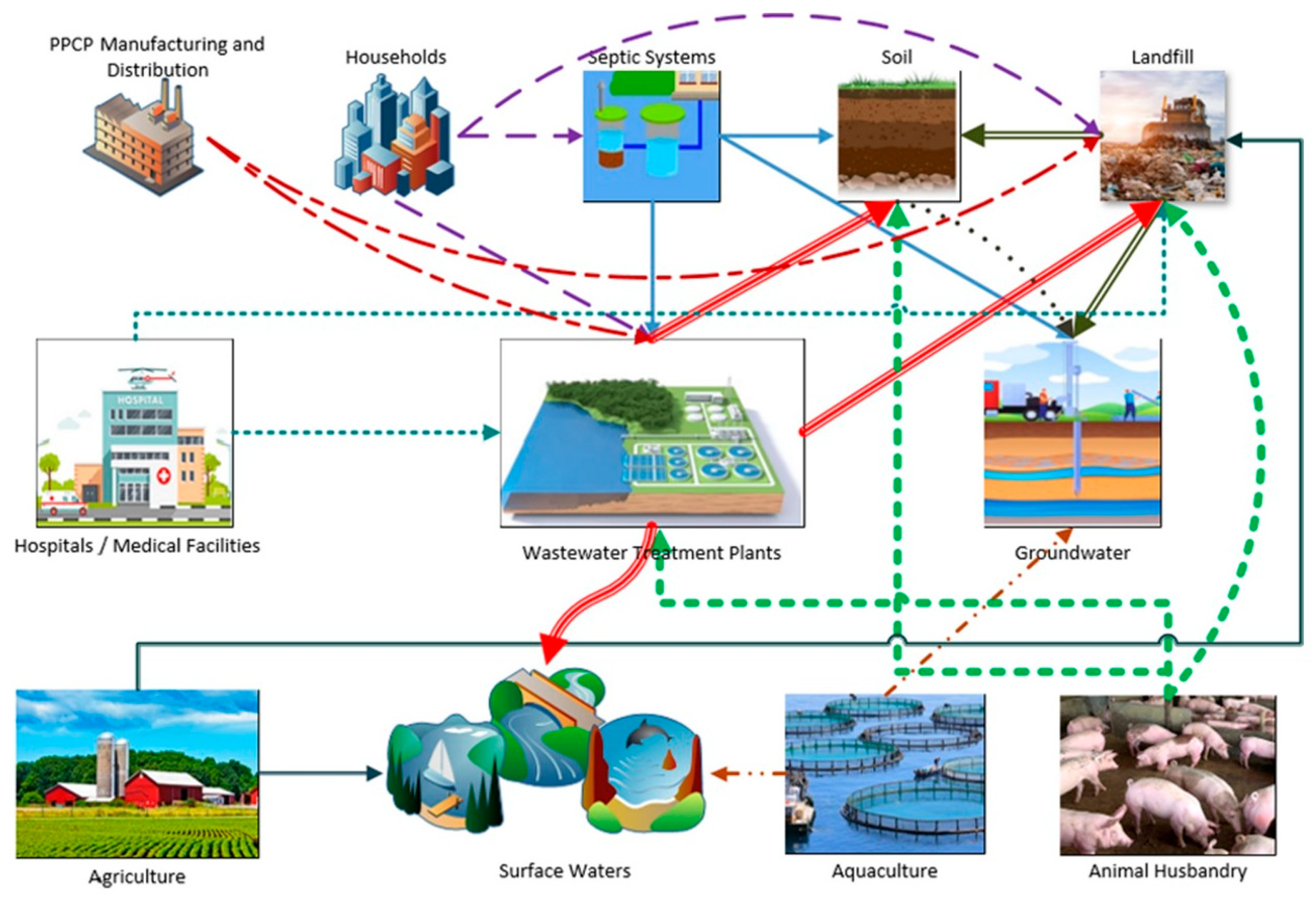
Figure 1. Water pollution: sources and impacts. Reprinted from OA Ref. [4], 2022 Springer Nature.
Catalysts 16 00472 g001
Figure 2. Design strategies and structural characteristics of advanced catalytic materials.
Catalysts 16 00472 g002
Figure 3. Schematic illustration of catalytic degradation mechanisms for pollutants in wastewater treatment.
Catalysts 16 00472 g003
Disclaimer/Publisher’s Note: The statements, opinions and data contained in all publications are solely those of the individual author(s) and contributor(s) and not of MDPI and/or the editor(s). MDPI and/or the editor(s) disclaim responsibility for any injury to people or property resulting from any ideas, methods, instructions or products referred to in the content.