
Water–Energy–Carbon Nexus: Biochar-Based Catalysts via Waste Valorization for Sustainable Catalysis


Abstract
1. Introduction
2. Bibliometric Analysis
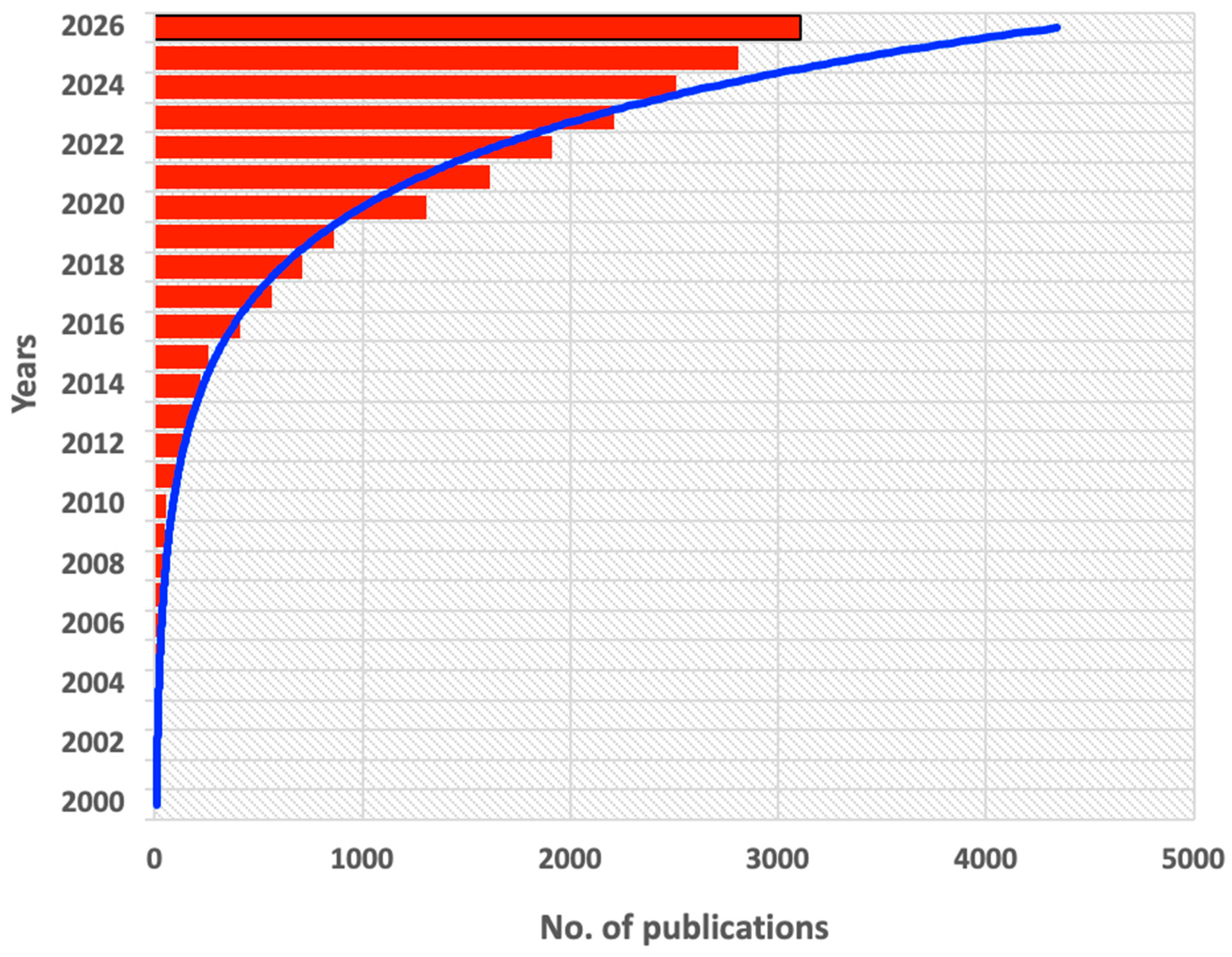
2.1. Annual Publication Growth in Waste-Derived Biochar
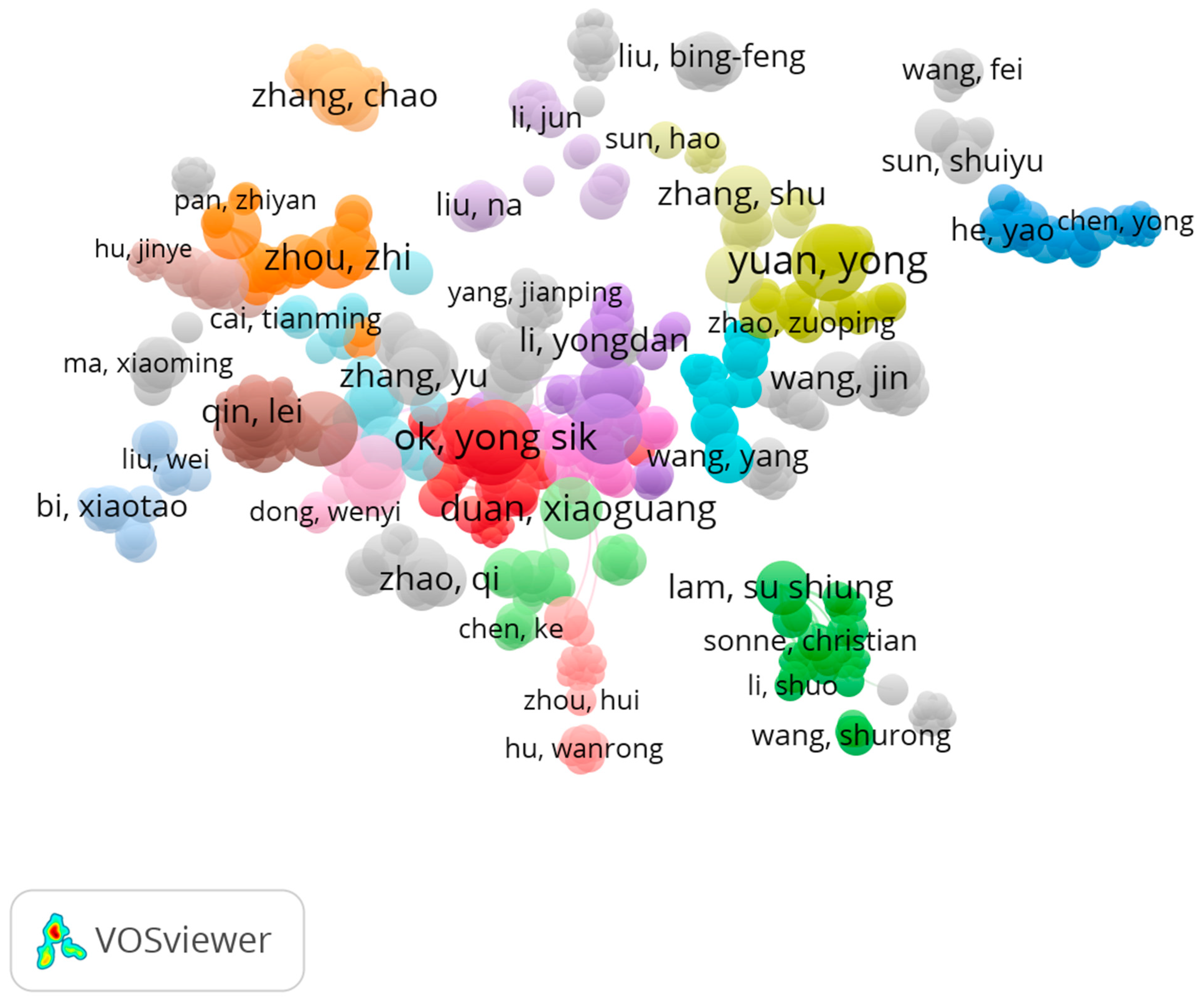
2.2. Co-Authorship Network Analysis
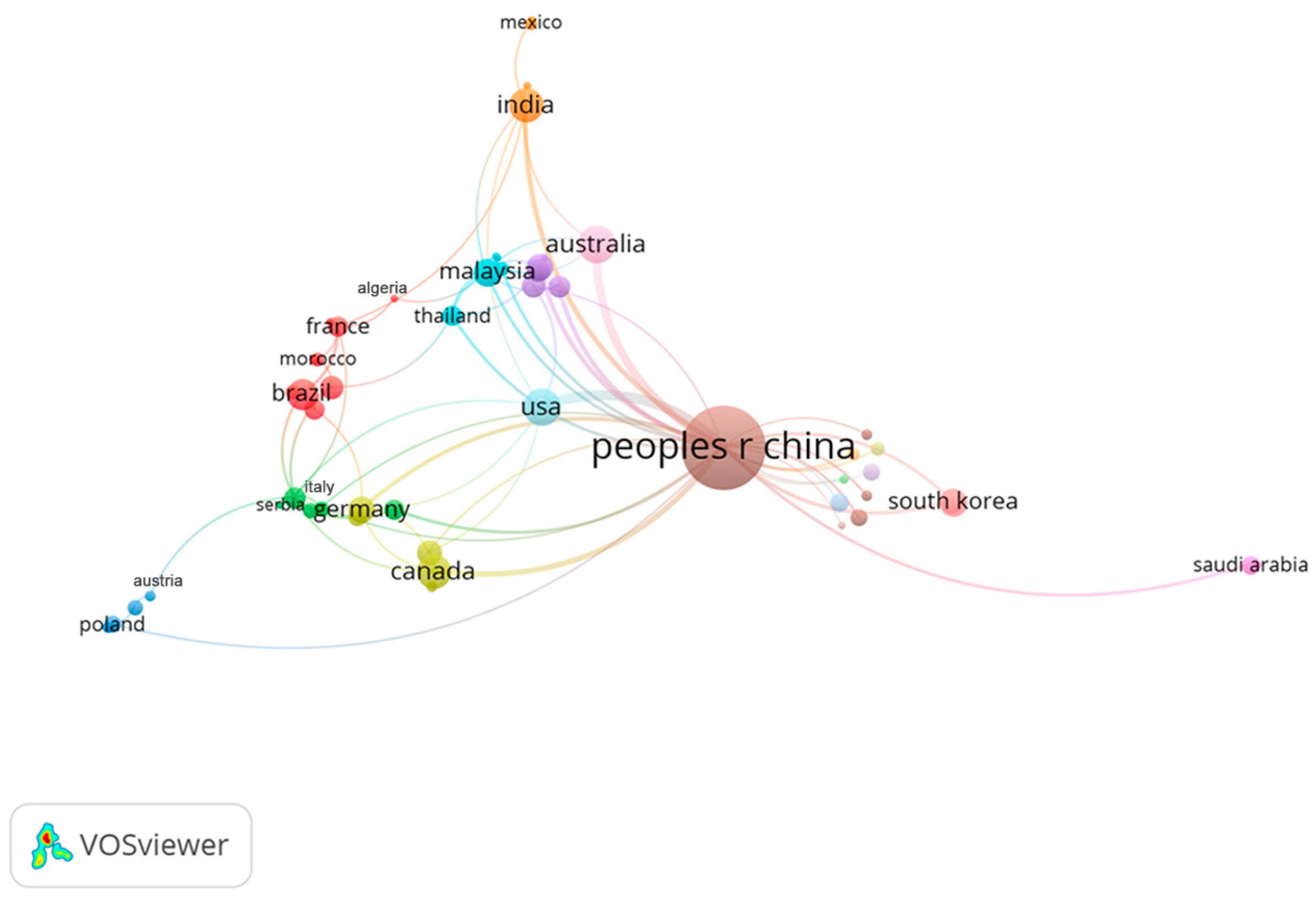
2.3. Country Collaboration Network Analysis
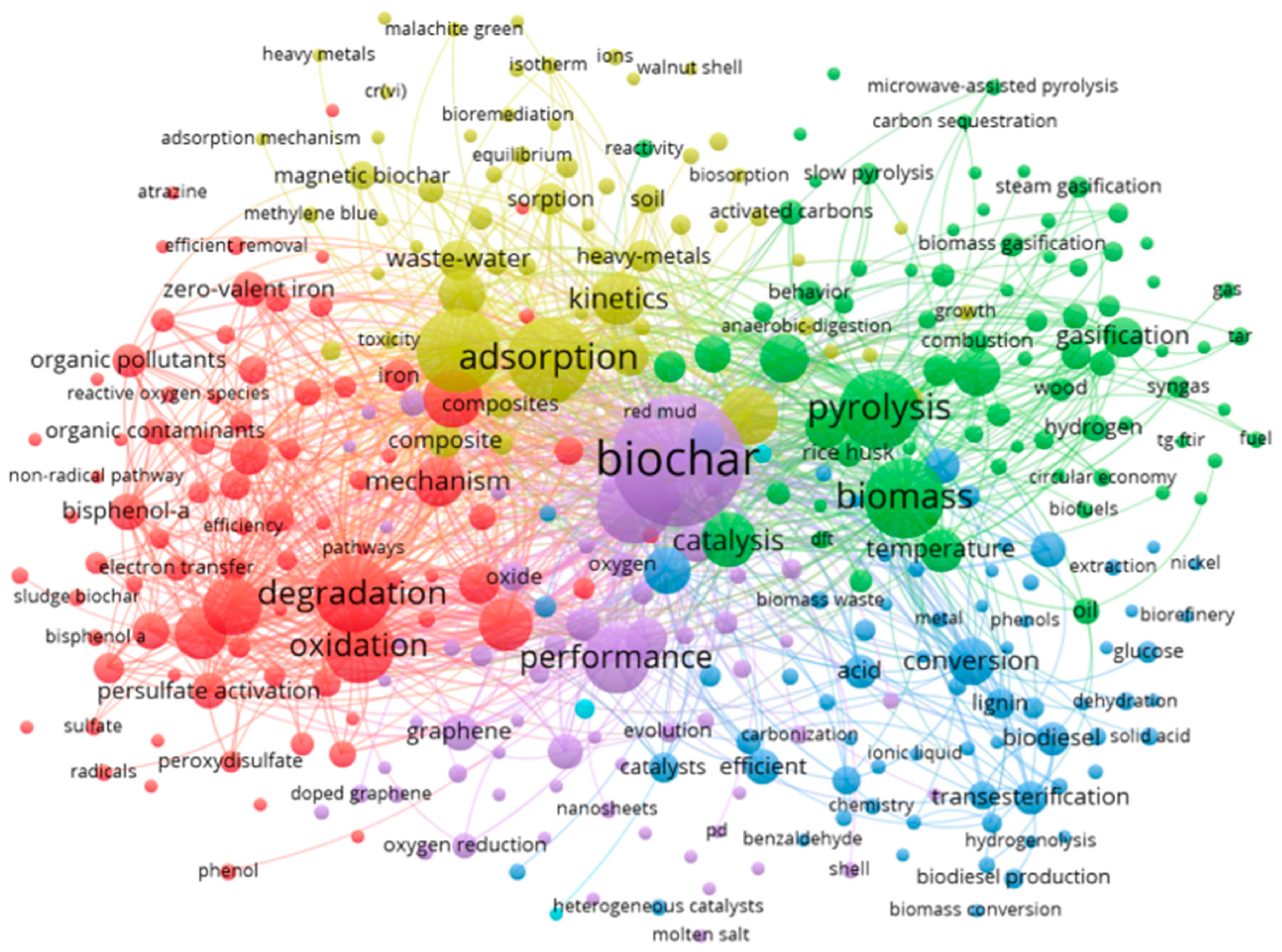
2.4. Keyword Co-Occurrence
3. Waste Valorization for Biochar Production
3.1. Types of Feedstocks
3.1.1. Agricultural Residues
3.1.2. Industrial By-Products
3.1.3. Animal Manures and Organic Waste
3.1.4. Municipal Wastes and Urban Organic Fractions
3.1.5. Other Biomass Types
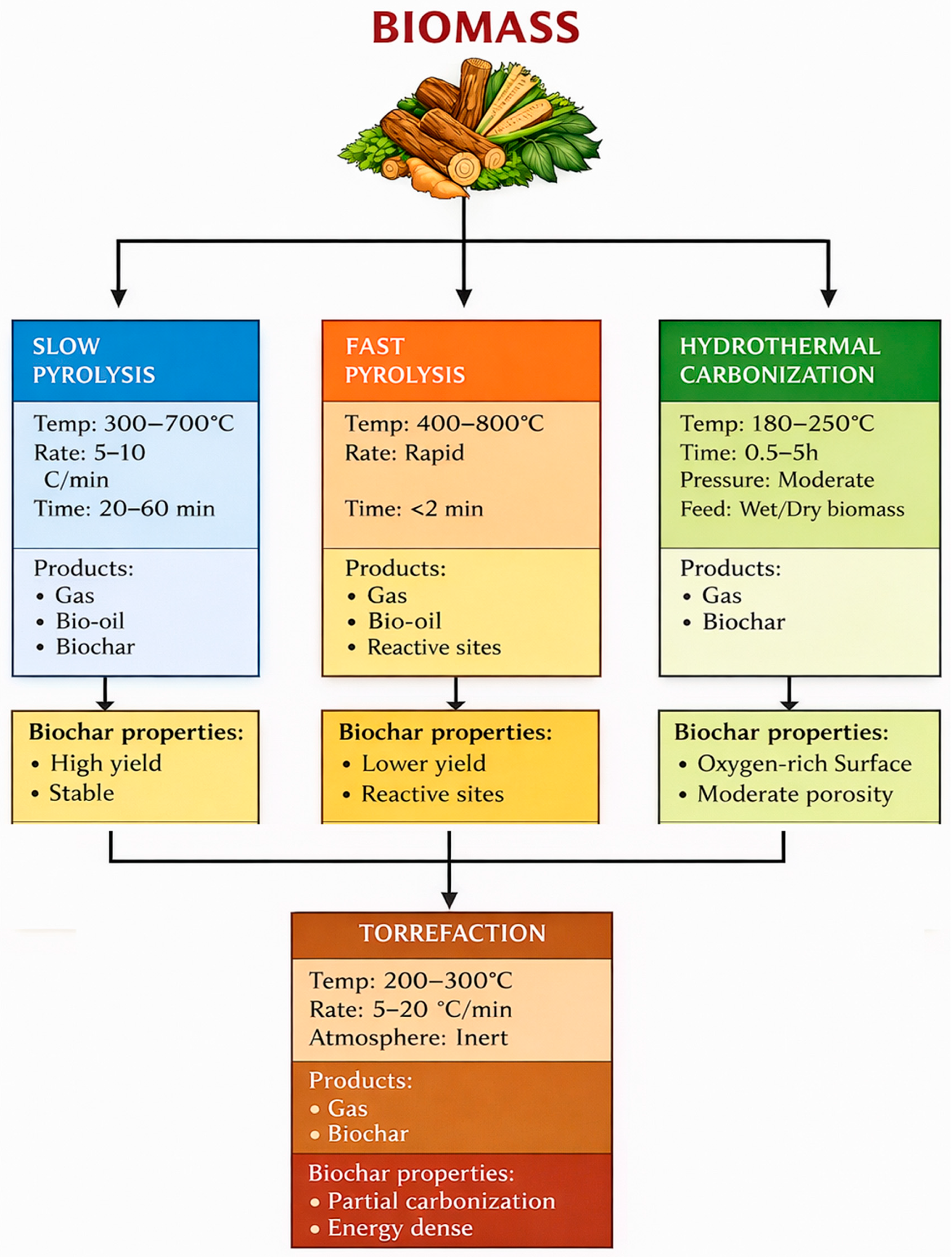
3.2. Pyrolysis and Carbonization Methods
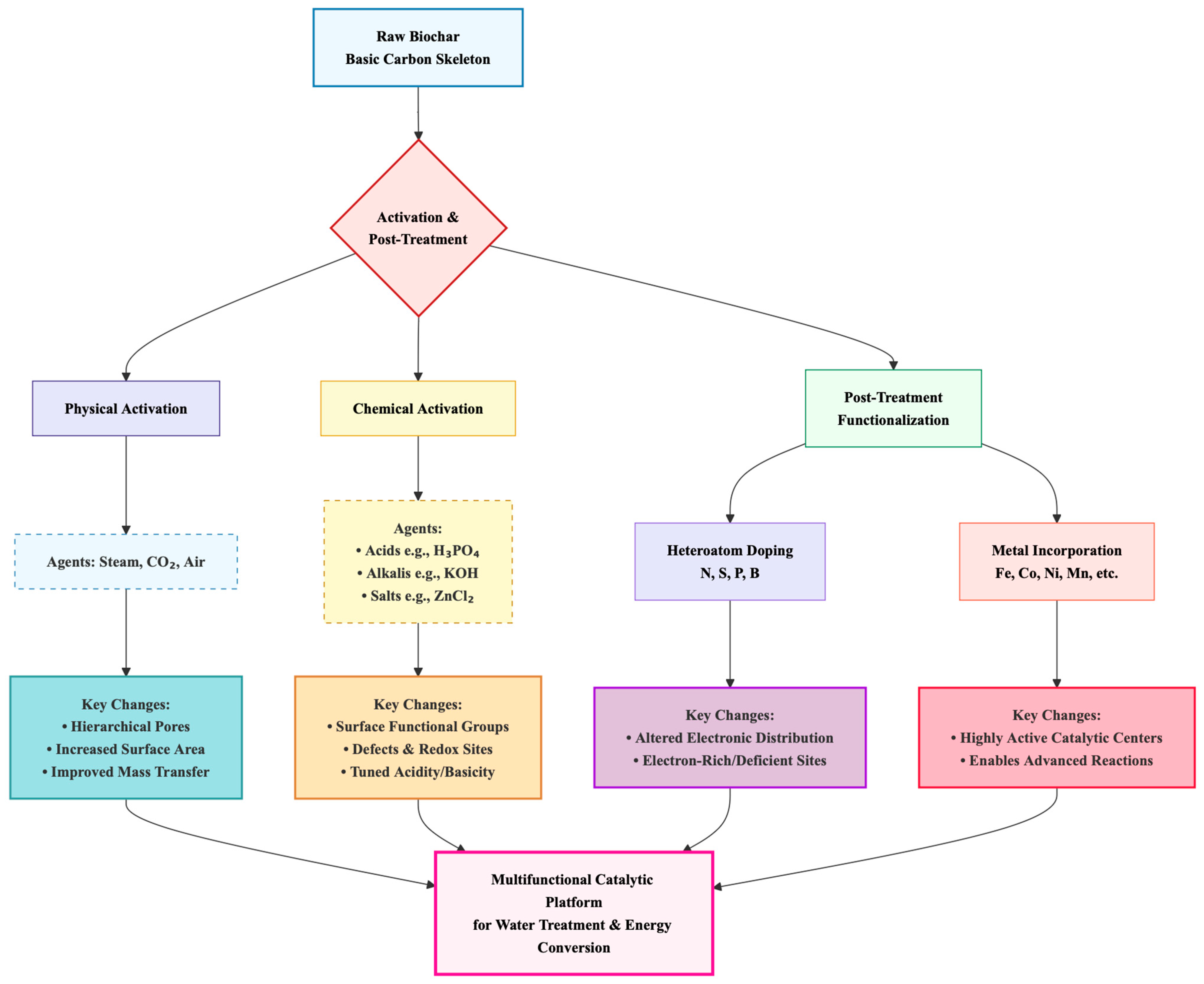
3.3. Activation and Post-Treatment Strategies
3.4. Determinants of Biochar Properties
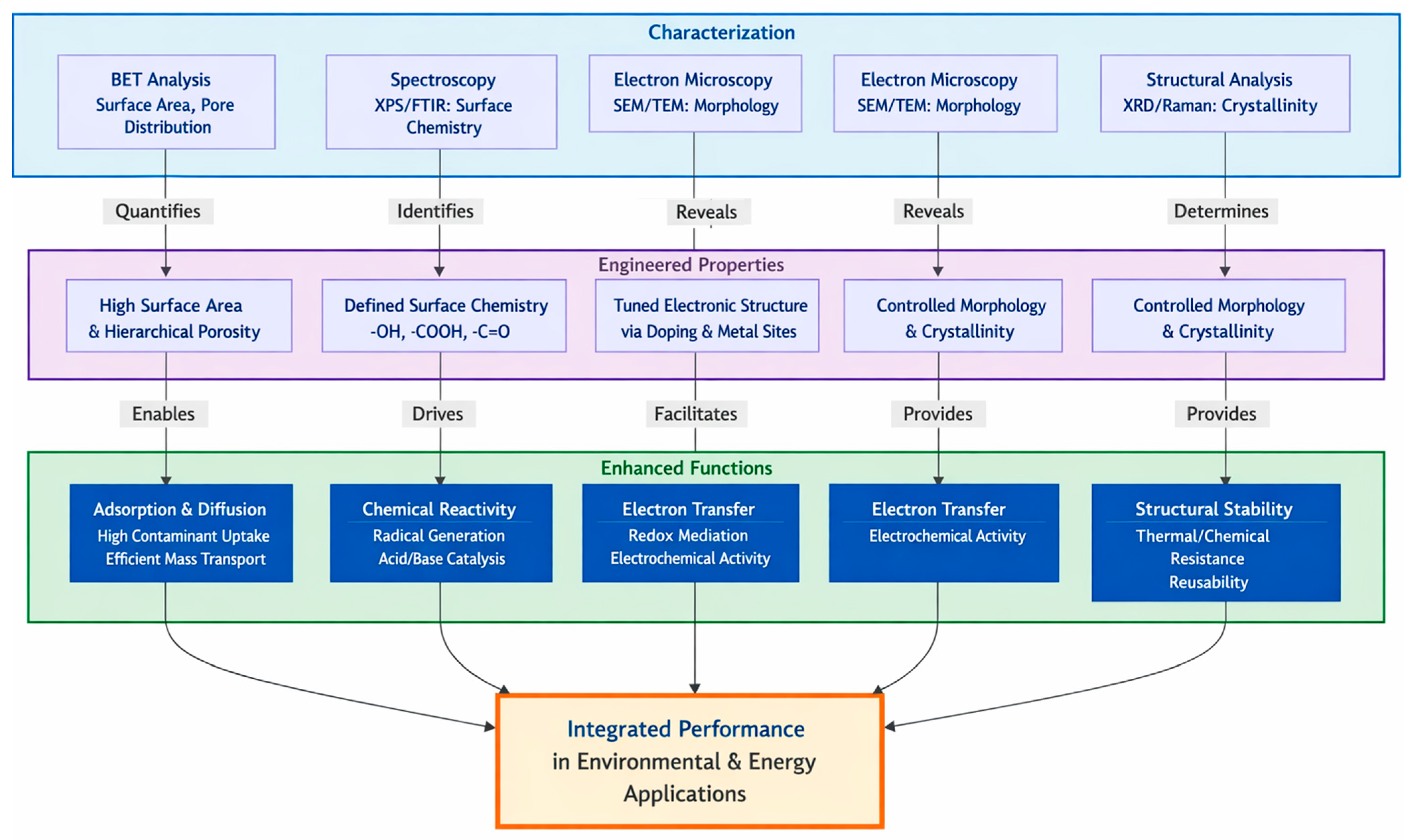
3.5. Structural and Physicochemical Properties of Biochar Catalysts
3.6. Biochar Applications
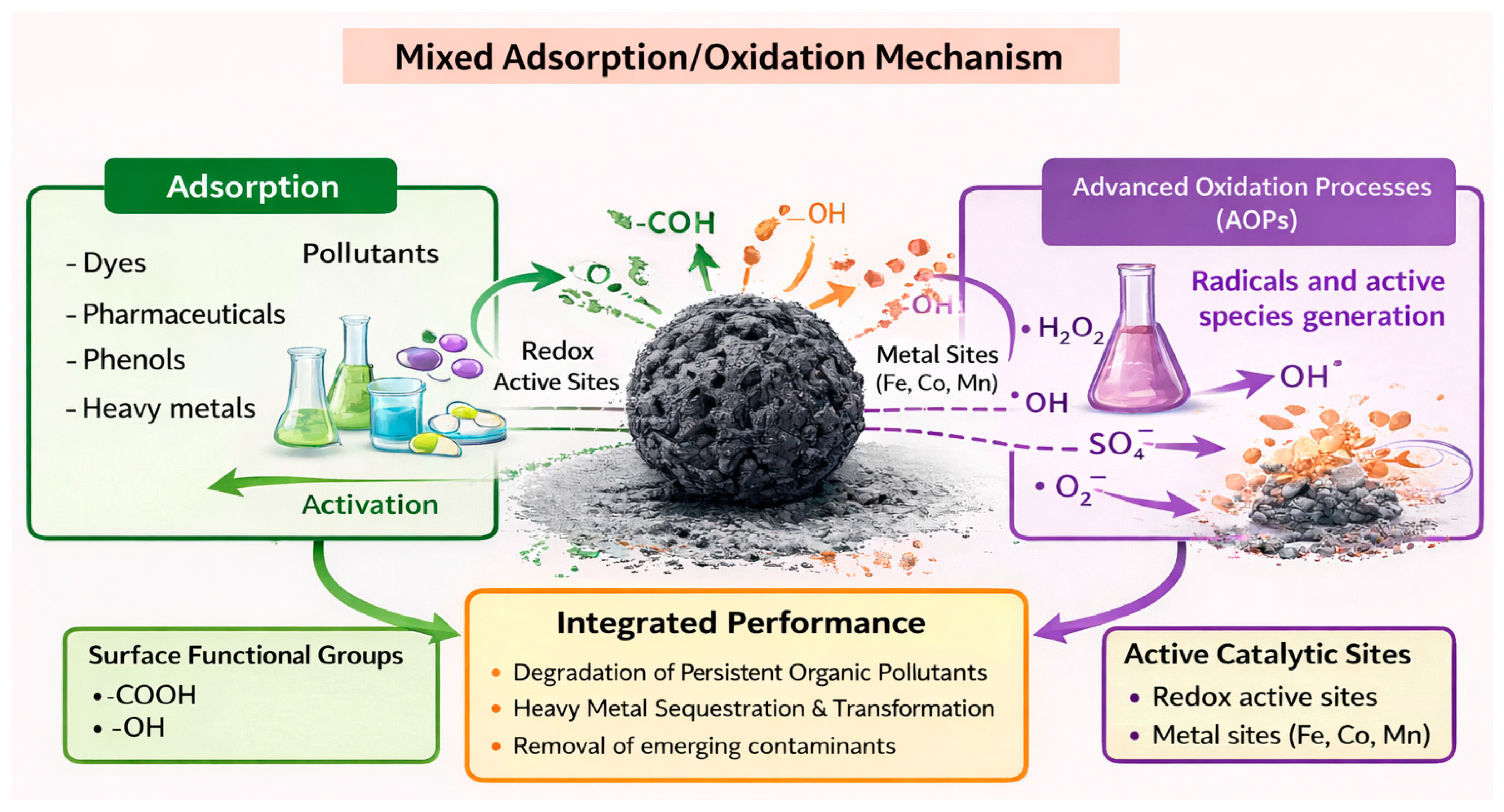
3.6.1. Catalytic Applications in Water Treatment
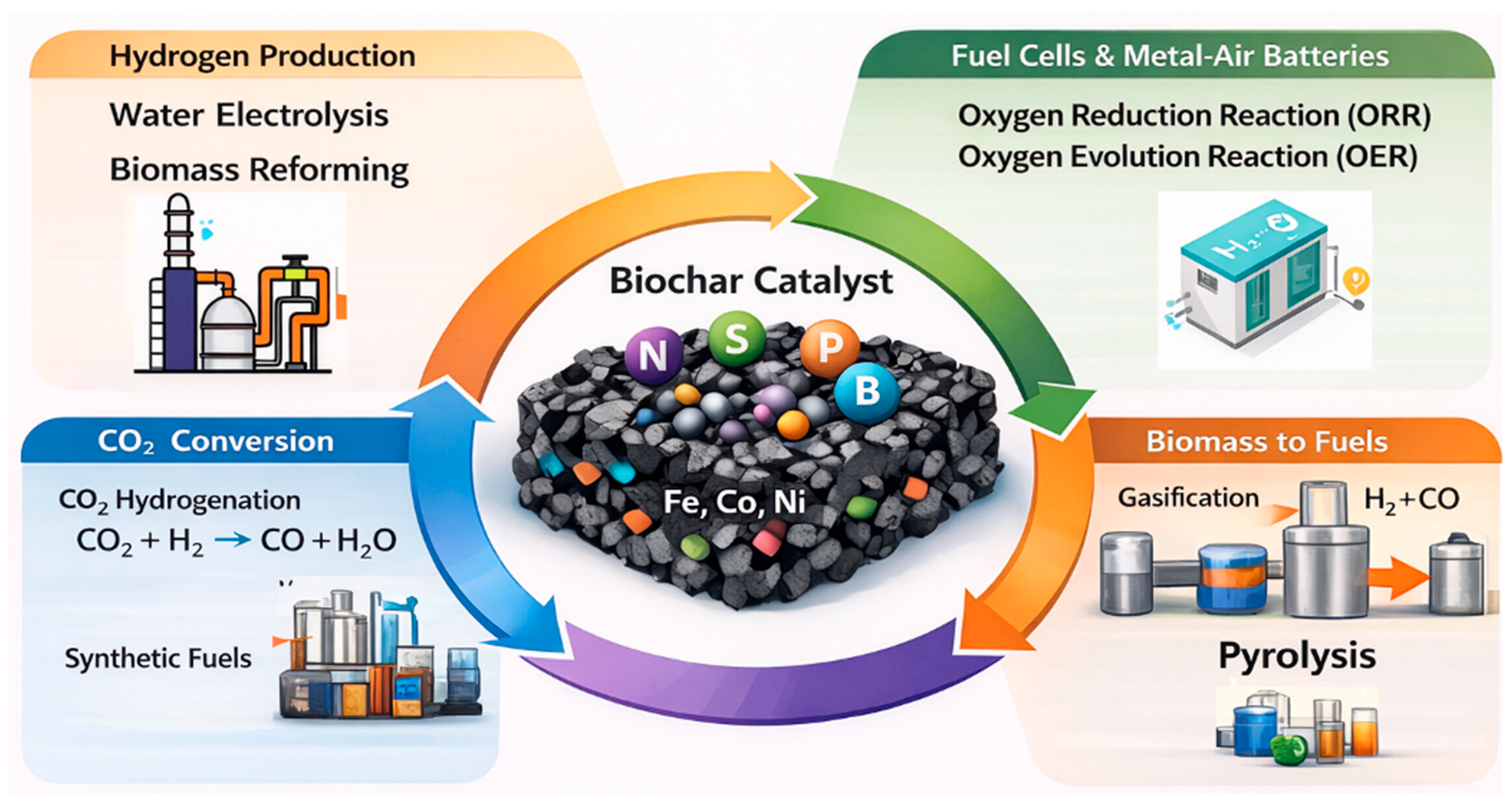
3.6.2. Catalytic Applications in Energy Conversion
3.7. Carbon Management and Environmental Impact
3.8. Water–Energy–Carbon Nexus Framework
3.9. Nexus Design Rules of Water–Energy–Carbon Framework
3.9.1. Feedstock Alignment and Conversion Pathways
3.9.2. Surface Engineering and Catalyst Stability
3.9.3. Selective Pathways in Advanced Oxidation and Catalysis
3.9.4. Energy Efficiency and Low-Carbon Processing
3.9.5. Carbon Balance and Climate Mitigation Outcomes
3.9.6. Multifunctionality and Integrated Nexus Benefits
3.9.7. Standardized Performance Metrics and Deployment Readiness
3.10. Reactor Design and Field Performance of Biochar Catalysts
4. Challenges and Future Perspectives
5. Conclusions
Author Contributions
Funding
Data Availability Statement
Acknowledgments
Conflicts of Interest
References
- Naveed, U.; Rozali, N.E.M.; Mahadzir, S. Energy–Water–Carbon nexus study for the optimal design of integrated energy–water systems considering process losses. Energies 2022, 15, 8605. [Google Scholar] [CrossRef]
- Li, H.; Zhao, Y.; Kang, J.; Wang, S.; Liu, Y.; Wang, H. Identifying sectoral energy–carbon–water nexus characteristics of China. J. Clean. Prod. 2020, 249, 119436. [Google Scholar] [CrossRef]
- Su, Q.; Dai, H.; Lin, Y.; Chen, H.; Karthikeyan, R. Modeling the carbon–energy–water nexus in a rapidly urbanizing catchment: A general equilibrium assessment. J. Environ. Manag. 2018, 225, 93–103. [Google Scholar] [CrossRef]
- Li, G.; Masui, T. Assessing the impacts of China’s environmental tax using a dynamic computable general equilibrium model. J. Clean. Prod. 2019, 208, 316–324. [Google Scholar] [CrossRef]
- Bai, J.; Wang, S.; Ren, F.; Lian, Y.-B.; Xiang, M.; Zhang, J.; Deng, Y. Coupling single-atom sites and nanoclusters/nanoparticles: Collective catalysis toward the oxygen reduction reaction. Chem. Commun. 2026, 62, 2726–2739. [Google Scholar] [CrossRef]
- Feng, K.; Hubacek, K.; Sun, L.; Liu, Z. Consumption-based CO2 accounting of China’s megacities: The case of Beijing, Tianjin, Shanghai and Chongqing. Ecol. Indic. 2014, 47, 26–31. [Google Scholar] [CrossRef]
- Elsheikh, A.H.; Katekar, V.P.; Muskens, O.L.; Deshmukh, S.S.; Abd Elaziz, M.; Dabour, S.M. Utilization of LSTM neural network for water production forecasting of a stepped solar still with a corrugated absorber plate. Process Saf. Environ. Prot. 2021, 148, 273–282. [Google Scholar] [CrossRef]
- Zhang, C.; Chen, X.; Li, Y.; Ding, W.; Fu, G. Water–energy–food nexus: Concepts, questions and methodologies. J. Clean. Prod. 2018, 195, 625–639. [Google Scholar] [CrossRef]
- Gómez-Gardars, E.B.; Rodríguez-Macias, A.; Tena-García, J.L.; Fuentes-Cortés, L.F. Assessment of the water–energy–carbon nexus in energy systems: A multi-objective approach. Appl. Energy 2022, 305, 117872. [Google Scholar] [CrossRef]
- Ali, H.; Maulud, A.S.; Zabiri, H.; Nawaz, M.; Suleman, H.; Taqvi, S.A.A. Multiscale principal component analysis–signed directed graph based process monitoring and fault diagnosis. ACS Omega 2022, 7, 9496–9512. [Google Scholar] [CrossRef]
- Rozali, N.E.M.; Alwi, S.R.W.; Manan, Z.A.; Klemeš, J.J.; Hassan, M.Y. Process integration of hybrid power systems with energy losses considerations. Energy 2013, 55, 38–45. [Google Scholar] [CrossRef]
- Liang, M.; Huang, G.; Chen, J.; Li, Y. Energy–water–carbon nexus system planning: A case study of Yangtze River Delta urban agglomeration, China. Appl. Energy 2022, 308, 118144. [Google Scholar] [CrossRef]
- Trubetskaya, A.; Horan, W.; Conheady, P.; Stockil, K.; Moore, S. A methodology for industrial water footprint assessment using energy–water–carbon nexus. Processes 2021, 9, 393. [Google Scholar] [CrossRef]
- Lim, X.Y.; Foo, D.C.; Tan, R.R. Pinch analysis for the planning of power generation sector in the United Arab Emirates: A climate–energy–water nexus study. J. Clean. Prod. 2018, 180, 11–19. [Google Scholar] [CrossRef]
- Rossi, D.; Lermen, F.H.; Echeveste, M.E. Circular product development strategies for sustainable production and consumption based on waste valorization. Manag. Environ. Qual. 2025, 36, 470–490. [Google Scholar] [CrossRef]
- Ng, H.S.; Kee, P.E.; Yim, H.S.; Chen, P.-T.; Wei, Y.-H.; Lan, J.C.-W. Recent advances on the sustainable approaches for conversion and reutilization of food wastes to valuable bioproducts. Bioresour. Technol. 2020, 302, 122889. [Google Scholar] [CrossRef]
- Freitas, L.C.; Barbosa, J.R.; da Costa, A.L.C.; Bezerra, F.W.F.; Pinto, R.H.H.; de Carvalho, R.N., Jr. From waste to sustainable industry: How can agro-industrial wastes help in the development of new products? Resour. Conserv. Recycl. 2021, 169, 105466. [Google Scholar] [CrossRef]
- Chen, X.; Oh, W.D.; Lim, T.T. Graphene- and CNTs-based carbocatalysts in persulfates activation: Material design and catalytic mechanisms. Chem. Eng. J. 2018, 354, 941–976. [Google Scholar] [CrossRef]
- Sun, H.; Liu, S.; Zhou, G.; Ang, H.M.; O Tadé, M.; Wang, S. Reduced graphene oxide for catalytic oxidation of aqueous organic pollutants. ACS Appl. Mater. Interfaces 2012, 4, 5466–5471. [Google Scholar] [CrossRef]
- Scott, A.; Oze, C.; Shah, V.; Yang, N.; Shanks, B.; Cheeseman, C.; Marshall, A.; Watson, M. Transformation of abundant magnesium silicate minerals for enhanced CO2 sequestration. Commun. Earth Environ. 2021, 2, 25. [Google Scholar] [CrossRef]
- Deng, D. Li-ion batteries: Basics, progress, and challenges. Energy Sci. Eng. 2015, 3, 385–418. [Google Scholar] [CrossRef]
- Sabapathy, P.C.; Devaraj, S.; Meixner, K.; Anburajan, P.; Kathirvel, P.; Ravikumar, Y.; Zabed, H.M.; Qi, X. Recent developments in polyhydroxyalkanoates (PHAs) production—A review. Bioresour. Technol. 2020, 306, 123132. [Google Scholar] [CrossRef]
- Abdussalam-Mohammed, W.; Qasem, A.; Errayes, A.O. Green chemistry: Principles, applications, and disadvantages. Chem. Methodol. 2020, 4, 408–423. [Google Scholar] [CrossRef]
- Butnar, I.; Broad, O.; Rodriguez, B.S.; Dodds, P.E. The role of bioenergy for global deep decarbonization: CO2 removal or low-carbon energy? GCB Bioenergy 2020, 12, 198–212. [Google Scholar] [CrossRef]
- Soon, J.J.; Low, K.S.; Goh, S.T. Multi-dimension diode photovoltaic (PV) model for different PV cell technologies. In Proceedings of the IEEE International Symposium on Industrial Electronics, Istanbul, Turkey, 1–4 June 2014; IEEE: New York, NY, USA, 2014; pp. 2496–2501. [Google Scholar]
- Kulik, H.J.; Wong, S.E.; Baker, S.E.; Valdez, C.A.; Satcher, J.H.; Aines, R.D.; Lightstone, F.C. Developing an approach for first-principles catalyst design: Application to carbon-capture catalysis. Acta Crystallogr. Sect. C Struct. Chem. 2014, 70, 123–131. [Google Scholar] [CrossRef] [PubMed]
- Ni, X.; Guo, R.; Cai, C.; Chen, S.; Liu, J.; Zhu, X.; Huang, X.; Peng, K. Synergies via decoupling: Achieving pollution–carbon co-benefit and sustainable transformation in wastewater treatment. ACS ES&T Water 2025, 5, 6175–6178. [Google Scholar] [CrossRef]
- Zhao, Y.; Duan, L. Beyond pollution control: Transforming agricultural effluents into strategic water–energy–nutrient assets. ACS Agric. Sci. Technol. 2025, 5, 1569–1571. [Google Scholar] [CrossRef]
- Chen, T.-L.; Tseng, P.-C.; Chen, L.-H.; Lin, Y.J.; Snyder, S.W.; Lin, Z.-Z.; Ma, H.-W. Circular transition of cooling tower blowdown using resin wafer electrodeionization (RW-EDI) technology: Transforming water–energy system hotspots. ACS ES&T Water 2025, 5, 3719–3728. [Google Scholar] [CrossRef]
- Nour, M.M.; Tony, M.A.; Nabwey, H.A.; Shaaban, S.M. Numerical optimization and experimental design of photochemical oxidation performance based on activated carbon derived fruit waste to remove tetracycline from wastewater. Catalysts 2025, 15, 351. [Google Scholar] [CrossRef]
- Cairone, S.; Choo, K.-H.; Naddeo, V. Carbon neutrality in a sustainable water cycle: Synergies between the water–energy nexus, climate change adaptation, one health, and circular economy. Sci. Total Environ. 2025, 996, 180300. [Google Scholar] [CrossRef] [PubMed]
- Pandey, A.K. Sustainable water management through integrated technologies and circular resource recovery. Environ. Sci. Water Res. Technol. 2025, 11, 1822–1846. [Google Scholar] [CrossRef]
- Nour, M.M.; Tony, M.A.; Fouad, M.K.; Nabwey, H.A. Hybrid PK-P/Fe3O4 catalyst derived from pumpkin peel (bio-waste) for Synozol Red KHL dye oxidation under photo-Fenton reaction. Catalysts 2025, 15, 977. [Google Scholar] [CrossRef]
- Acuña, E.; Sandoval, S.; Montes, C.R.; Olmedo, G.F.; Cerda, A.; Mena-Quijada, P. Integrating carbon markets into forest management: Economic analysis of extended rotations with PES in Chile. For. Sci. 2025, 72, 21–43. [Google Scholar] [CrossRef]
- Tomczyk, A.; Sokołowska, Z.; Boguta, P. Biochar physicochemical properties: Pyrolysis temperature and feedstock kind effects. Rev. Environ. Sci. Biotechnol. 2020, 19, 191–215. [Google Scholar] [CrossRef]
- Tian, F.; Wang, Y.; Zhao, Y.; Sun, R.; Qi, M.; Wu, S.; Wang, L. A review of biochar–industrial waste composites for sustainable soil amendment: Mechanisms and perspectives. Water 2025, 17, 2184. [Google Scholar] [CrossRef]
- Freddo, A.; Cai, C.; Reid, B.J. Environmental contextualisation of potential toxic elements and polycyclic aromatic hydrocarbons in biochar. Environ. Pollut. 2012, 171, 18–24. [Google Scholar] [CrossRef] [PubMed]
- Mangood, A.H.; Salama, E.S.; El-Sayed, I.E.T.; Fouad, M.K.; Tony, M.A. Efficient augmentation of superparamagnetic ferrite with alum sludge as a sustainable nanoadsorbent matrix for promoting dye removal: Preparation, characterization and application. Int. J. Environ. Res. 2025, 19, 76. [Google Scholar] [CrossRef]
- Michalovicz, L.; Tormena, C.A.; Lopes Muller, M.M.; Dick, W.A.; Cervi, E.C. Residual effects of phosphogypsum rates and machinery traffic on soil attributes and common-bean (Phaseolus vulgaris) yield in a no-tillage system. Soil Tillage Res. 2021, 213, 105152. [Google Scholar] [CrossRef]
- Morillon, A.; Mudersbach, D.; Rex, M.; Spiegel, H.; Mauhart, M.; Tuomikoski, S.; Branca, T.A.; Ragaglini, G.; Colla, V.; Romaniello, L. Impact of long-term application of blast furnace and steel slags as liming materials on soil fertility and crop yields. In Proceedings of the 8th European Slag Conference (EUROSLAG 2015), Linz, Austria, 21–23 October 2015. [Google Scholar]
- Emamjomehzadeh, O.; Omidi, F.; Kerachian, R.; Emami-Skardi, M.J.; Momeni, M. Water–energy–food–greenhouse gases nexus management in urban environments: A robust multi-agent decision-support system. Sustain. Cities Soc. 2024, 113, 105676. [Google Scholar] [CrossRef]
- Lahori, A.H.; Guo, Z.; Zhang, Z.; Li, R.; Mahar, A.; Awasthi, M.K.; Shen, F.; Sial, T.A.; Kumbhar, F.; Wang, P.; et al. Use of biochar as an amendment for remediation of heavy metal-contaminated soils: Prospects and challenges. Pedosphere 2017, 27, 991–1014. [Google Scholar] [CrossRef]
- Wang, W.; Lai, D.Y.F.; Abid, A.A.; Neogi, S.; Xu, X.; Wang, C. Effects of steel slag and biochar incorporation on active soil organic carbon pools in a subtropical paddy field. Agronomy 2018, 8, 135. [Google Scholar] [CrossRef]
- Du, S.; Liang, C.; Sun, H.; Deng, X.; Xue, J.; Chen, F.; Xiao, W.; Zhou, H.; Meng, C.; You, Z.; et al. Policy implications of energy–water–carbon emissions nexus based on national policies in China. Energy 2025, 339, 138950. [Google Scholar] [CrossRef]
- Maziotis, A.; Sala-Garrido, R.; Mocholi-Arce, M.; Molinos-Senante, M. Understanding water–energy–carbon nexus in English and Welsh water industry by assessing eco-productivity of water companies. npj Clean Water 2024, 7, 121. [Google Scholar] [CrossRef]
- Dong, Z.; Sun, X.; Chen, L.; Lv, W.; Wang, Q.; Liu, X. Water–energy–carbon nexus and decarbonation pathways in integrated urban water system for a megacity study. Water Res. 2026, 295, 125555. [Google Scholar] [CrossRef] [PubMed]
- Bossolani, J.W.; Crusciol, C.A.C.; Garcia, A.; Moretti, L.G.; Portugal, J.R.; Rodrigues, V.A.; Fonseca, M.d.C.d.; Calonego, J.C.; Caires, E.F.; Amado, T.J.C.; et al. Long-term lime and phosphogypsum amended-soils alleviates the field drought effects on carbon and antioxidative metabolism of maize by improving soil fertility and root growth. Front. Plant Sci. 2021, 12, 650296. [Google Scholar] [CrossRef] [PubMed]
- Li, S.; Skelly, S. Physicochemical properties and applications of biochars derived from municipal solid waste: A review. Environ. Adv. 2023, 13, 100395. [Google Scholar] [CrossRef]
- Tadesse, A.W.; Huang, M.; Zhou, T. Biochar for wastewater treatment: Preparation, modification, characterization, and its applications. Molecules 2025, 30, 4288. [Google Scholar] [CrossRef]
- Sathyabama, K.; Firdous, S. Effect of pyrolysis temperature on the physicochemical properties and structural characteristics of agricultural wastes-derived biochar. ACS Omega 2025, 10, 37013–37024. [Google Scholar] [CrossRef] [PubMed]
- Ganesapillai, M.; Mehta, R.; Tiwari, A.; Sinha, A.; Bakshi, H.S.S.; Chellappa, V.; Drewnowski, J. Waste to energy: A review of biochar production with emphasis on mathematical modelling and its applications. Heliyon 2023, 9, e14873. [Google Scholar] [CrossRef]
- Shyam, S.; Ahmed, S.; Joshi, S.J.; Sarma, H. Biochar as a soil amendment: Implications for soil health, carbon sequestration, and climate resilience. Discov. Soil 2025, 2, 18. [Google Scholar] [CrossRef]
- Vijay, V.; Shreedhar, S.; Adlak, K.; Payyanad, S.; Sreedharan, V.; Gopi, G.; van der Voort, T.S.; Malarvizhi, P.; Yi, S.; Gebert, J.; et al. Review of large-scale biochar field-trials for soil amendment and the observed influences on crop yield variations. Front. Energy Res. 2021, 9, 710766. [Google Scholar] [CrossRef]
- Malyan, S.K.; Kumar, S.S.; Fagodiya, R.K.; Ghosh, P.; Kumar, A.; Singh, R.; Singh, L. Biochar for environmental sustainability in the energy–water–agroecosystem nexus. Renew. Sustain. Energy Rev. 2021, 149, 111379. [Google Scholar] [CrossRef]
- Martínez-Gómez, Á.; Poveda, J.; Escobar, C. Overview of the use of biochar from main cereals to stimulate plant growth. Front. Plant Sci. 2022, 13, 912264. [Google Scholar] [CrossRef]
- Amalina, F.; Abd Razak, A.S.; Zularisam, A.W.; Aziz, M.A.A.; Krishnan, S.; Nasrullah, M. Comprehensive assessment of biochar integration in agricultural soil conditioning: Advantages, drawbacks, and prospects. Phys. Chem. Earth 2023, 132, 103508. [Google Scholar] [CrossRef]
- Matos, R.; Marques, I.S.; Fernandes, A.J.S.; Peixoto, A.F.; Fernandes, D.M. Multifunctional N,S-doped biochar decorated with transition metals as electrocatalysts for energy conversion applications. Biomass Bioenergy 2026, 204, 108463. [Google Scholar] [CrossRef]
- Zare, M.R.; Mengelizadeh, N.; Alizadeh, Z.; Saloot, M.K.; Darvishmotevalli, M.; Kazemi, F.; Rahmani, A.; Habibi, Z. Degradation of naproxen and diclofenac from aqueous solutions via catalytic activation of peroxymonosulfate using MMT@CuFe2O4. Environ. Surf. Interfaces 2025, 3, 208–223. [Google Scholar] [CrossRef]
- Zhao, J.; Chen, T.; Hou, C.; Huang, B.; Du, J.; Liu, N.; Zhou, X.; Zhang, Y. Efficient activation of peroxymonosulfate by biochar-loaded zero-valent copper for enrofloxacin degradation: Singlet oxygen-dominated oxidation process. Nanomaterials 2022, 12, 2842. [Google Scholar] [CrossRef]
- Mehdinia, M.; Asgharnia, H.; Shirmardi, M.; Bahramifar, N.; Tabarinia, H.; Asgharzadeh, F. Enhanced tetracycline degradation via photo-activated potassium persulfate catalyzed by cobalt ferrite/carbon nanocomposite. Sci. Rep. 2026, 16, 1852. [Google Scholar] [CrossRef]
- Sun, P.; Wang, Z.; An, S.; Zhao, J.; Yan, Y.; Zhang, D.; Wu, Z.; Shen, B.; Lyu, H. Biochar-supported nZVI for the removal of Cr(VI) from soil and water: Advances in experimental research and engineering applications. J. Environ. Manag. 2022, 316, 115211. [Google Scholar] [CrossRef]
- Han, R.; Fang, Y.; Sun, P.; Xie, K.; Zhai, Z.; Liu, H.; Liu, H. N-doped biochar as a new metal-free activator of peroxymonosulfate for singlet oxygen-dominated catalytic degradation of Acid Orange 7. Nanomaterials 2021, 11, 2288. [Google Scholar] [CrossRef]
- Alharbi, F.F.; Hamdalla, T.A.; Al-Ghamdi, H.; Albarzan, B.; Darwish, A.A. Biochar-modified TiO2 composites: Enhanced optical and photocatalytic properties for sustainable energy and environmental applications. Catalysts 2025, 15, 1065. [Google Scholar] [CrossRef]
- AlNeyadi, S.S.; Alhassani, M.T.; Mukhtar, M.R.; Alblooshi, H.K.; Jama, S.A.; Al Mujaini, I.; Aleissaee, A.S. Hydrophilic magnetic COFs: The answer to photocatalytic degradation and removal of imidacloprid insecticide. Heliyon 2024, 10, e39042. [Google Scholar] [CrossRef]
- Kong, F.; Liu, J.; Xiang, Z.; Fan, W.; Liu, J.; Wang, J.; Wang, Y.; Xi, B. Degradation of water pollutants by biochar combined with advanced oxidation: A systematic review. Water 2024, 16, 875. [Google Scholar] [CrossRef]
- Feng, L.; He, S.; Zhao, W.; Ding, J.; Liu, J.; Zhao, Q.; Wei, L. Can biochar addition improve the sustainability of intermittent aerated constructed wetlands for treating wastewater containing heavy metals? Chem. Eng. J. 2022, 444, 136636. [Google Scholar] [CrossRef]
- Ramos, R.; Abdelkader-Fernández, V.K.; Matos, R.; Peixoto, A.F.; Fernandes, D.M. Metal-supported biochar catalysts for sustainable biorefinery, electrocatalysis, and energy storage applications: A review. Catalysts 2022, 12, 207. [Google Scholar] [CrossRef]
- Jadhav, G.S.; Mehta, A.K.; Ghangrekar, M.M.; Bhowmick, G.D. Metal-doped (Fe–Mn) heteroatom-rich porous biochar-based poison-resilient cathode catalyst for enhanced performance of microbial fuel cell. Sustain. Energy Technol. Assess. 2025, 75, 104208. [Google Scholar] [CrossRef]
- Osmieri, L.; Escudero-Cid, R.; Armandi, M.; Monteverde Videla, A.H.A.; García Fierro, J.L.; Ocón, P.; Specchia, S. Fe–N/C catalysts for oxygen reduction reaction supported on different carbonaceous materials: Performance in acidic and alkaline direct alcohol fuel cells. Appl. Catal. B 2017, 205, 637–653. [Google Scholar] [CrossRef]
- Li, Y.-W.; Zhang, W.-J.; Li, J.; Ma, H.-Y.; Du, H.-M.; Li, D.-C.; Wang, S.-N.; Zhao, J.-S.; Dou, J.-M.; Xu, L. Fe-MOF-derived efficient ORR/OER bifunctional electrocatalyst for rechargeable zinc–air batteries. ACS Appl. Mater. Interfaces 2020, 12, 44710–44719. [Google Scholar] [CrossRef] [PubMed]
- Eldesouki, M.H.; Eldemerdash, U.N.; Mohamed, M.M.; Abd El-Moneim, A. Semi-industrial CO and CO2 conversion with biochar-supported Fe-based catalysts. Carbon Resour. Convers. 2026, 9, 100358. [Google Scholar] [CrossRef]
- Fu, S.; Li, M.; de Jong, W.; Kortlever, R. Tuning the properties of N-doped biochar for selective CO2 electroreduction to CO. ACS Catal. 2023, 13, 10309–10323. [Google Scholar] [CrossRef]
- Parrillo, F.; Ardolino, F.; Boccia, C.; Arconati, V.; Ruoppolo, G.; Arena, U. Waste-derived catalysts for tar cracking in hot syngas cleaning. Waste Manag. 2024, 179, 163–174. [Google Scholar] [CrossRef]
- Li, J.; Lin, F.; Yu, H.; Tong, X.; Cheng, Z.; Yan, B.; Song, Y.; Chen, G.; Hou, L.; Crittenden, J.C. Biochar-assisted catalytic pyrolysis of oily sludge to attain harmless disposal and residue utilization for soil reclamation. Environ. Sci. Technol. 2023, 57, 7063–7073. [Google Scholar] [CrossRef]
- Tian, Z.; Bhuvanendran, N.; Liu, H.; Zhang, W.; Xu, Q.; Su, H. Biomass-derived carbon catalysts revolutionizing sustainable hydrogen production via water electrolysis: A review. Int. J. Hydrogen Energy 2025, 175, 151542. [Google Scholar] [CrossRef]
- Wu, K.; Zhang, Z.; Shan, R.; Li, L.; Wang, J.; Hou, B.; Xu, Y.; Ding, M. Encapsulating Fischer–Tropsch synthesis catalyst with porous graphite-carbon enables ultrahigh activity for syngas to α-olefins. Appl. Catal. B Environ. Energy 2024, 353, 124067. [Google Scholar] [CrossRef]
- Kun, U.H.; Ksepko, E. Advancing municipal solid waste management through gasification technology. Processes 2025, 13, 2000. [Google Scholar] [CrossRef]
- Kavindi, G.A.G.G.; Tang, L.; Sasaki, Y. Assessing GHG emission reduction in biomass-derived biochar production via slow pyrolysis: A cradle-to-gate LCA approach. Resour. Conserv. Recycl. 2025, 212, 107900. [Google Scholar] [CrossRef]
- Duan, Z.; Scheutz, C.; Kjeldsen, P. Trace gas emissions from municipal solid waste landfills: A review. Waste Manag. 2021, 119, 39–62. [Google Scholar] [CrossRef] [PubMed]
- Ungureanu, N.; Vlăduț, N.-V.; Biriș, S.-Ș.; Ionescu, M.; Gheorghiță, N.-E. Municipal solid waste gasification: Technologies, process parameters, and sustainable valorization of by-products in a circular economy. Sustainability 2025, 17, 6704. [Google Scholar] [CrossRef]
- Rautela, R.; Sharma, A.; Ranjan, V.P.; Rathika, K.; Pratap, V.; Yadav, B.R.; Kumar, S. Turning solid waste into catalysts: A path for environmental solutions. ChemSusChem 2024, 89, e202400246. [Google Scholar] [CrossRef]
- Zhang, X.; Wang, X.-Q.; Wang, D.-F. Immobilization of heavy metals in sewage sludge during land application process in China: A review. Sustainability 2017, 9, 2020. [Google Scholar] [CrossRef]
- Luo, X.; Pei, X.; Zhang, X.; He, X.; Liu, T.; Dong, X. In-situ carbonate mineral coupling by hydrothermal carbonization: A strategy for enhanced hydrochar stability and long-term carbon sequestration. Fuel 2025, 402, 135709. [Google Scholar] [CrossRef]
- Areti, H.A.; Hamda, A.S.; Abo, L.D.A.; Jabesa, A.; Muleta, M.D. Biowastes as sustainable catalysts for water treatment: A comprehensive overview. Environ. Adv. 2025, 19, 100610. [Google Scholar] [CrossRef]
- Joseph, S.; Kammann, C.I.; Shepherd, J.G.; Conte, P.; Schmidt, H.-P.; Hagemann, N.; Rich, A.M.; Marjo, C.E.; Allen, J.; Munroe, P.; et al. Microstructural and associated chemical changes during the composting of a high temperature biochar: Mechanisms for nitrate, phosphate and other nutrient retention and release. Sci. Total Environ. 2018, 618, 1210–1223. [Google Scholar] [CrossRef]
- Halle, B.; Jóhannesson, H.; Venu, K. Model-free analysis of stretched relaxation dispersions. J. Magn. Reson. 1998, 135, 1–13. [Google Scholar] [CrossRef]
- Harvie, C.E.; Weare, J.H. The prediction of mineral solubilities in natural waters: The Na–K–Mg–Ca–H–Cl–SO4–OH–HCO3–CO3–CO2–H2O system to high ionic strengths at 25 °C. Geochim. Cosmochim. Acta 1984, 44, 981–997. [Google Scholar] [CrossRef]
- Khan, N.; Clark, I.; Sánchez-Monedero, M.A.; Shea, S.; Meier, S.; Qi, F.; Kookana, R.S.; Bolan, N. Physical and chemical properties of biochars co-composted with biowastes and incubated with a chicken litter compost. Chemosphere 2016, 142, 14–23. [Google Scholar] [CrossRef]
- Kimmich, R.; Anoardo, E. Field-cycling NMR relaxometry. Prog. Nucl. Magn. Reson. Spectrosc. 2004, 44, 257–320. [Google Scholar] [CrossRef]
- El-Aswar, E.I.; Ramadan, H.; Elkik, H.; Taha, A.G. A comprehensive review on preparation, functionalization and recent applications of nanofiber membranes in wastewater treatment. J. Environ. Manag. 2022, 301, 113908. [Google Scholar] [CrossRef]
- Maťátková, O.; Michailidu, J.; Miškovská, A.; Kolouchová, I.; Masák, J.; Čejková, A. Antimicrobial properties and applications of metal nanoparticles biosynthesized by green methods. Biotechnol. Adv. 2022, 58, 107905. [Google Scholar] [CrossRef] [PubMed]





| Determinant | Specific Factor | Influence on Biochar Properties |
|---|---|---|
| Feedstock Composition | High Lignin Content (e.g., hardwood) | • Promotes highly aromatic, graphitized carbon structure • High thermal stability |
| High Cellulose/Hemicellulose (e.g., straw, grass) | • Favors the development of porous structures • Higher specific surface area (SSA) | |
| Inherent Inorganics (K, Ca, Mg, Si) | • Acts as a natural template/catalyst during pyrolysis • Influences pore development and surface chemistry | |
| Pyrolysis Conditions | Low Temperature (300–500 °C) | • Retains oxygen-containing groups (–OH, –COOH) • Moderate SSA, less graphitized |
| High Temperature (600–800+ °C) | • High graphitization and electrical conductivity • Removes volatiles, increases aromaticity and stability | |
| Integrated Engineering | Combination of Feedstock + Pyrolysis + Post-Treatment | • Precise tuning of Porosity (micro/meso), Specific Surface Area, Surface functionality, Electronic structure, Stability |
| Biochar-Based Catalyst System | Biochar Feedstock/Support | Target Pollutant(s) | Treatment Process/Oxidant | Dominant Reactive Species | Key Outcomes/Advantages | Ref. |
|---|---|---|---|---|---|---|
| Fe-loaded biochar (Fe–BC) | Rice husk biochar | Pharmaceuticals (diclofenac, ibuprofen) | Fenton-like (H2O2 activation) | •OH | High degradation efficiency; reduced Fe leaching vs. homogeneous Fenton | [58] |
| MnOx/biochar composite | Bamboo biochar | Synthetic dyes (MB, RhB) | PMS activation | SO4•−, •OH | Strong oxidation performance under mild pH; good stability | [59] |
| Co–biochar catalyst | Corn straw biochar | Antibiotics (tetracycline) | Persulfate activation | SO4•−, •O2− | Rapid degradation kinetics; reusable over multiple cycles | [60] |
| Biochar-supported nZVI (BC–nZVI) | Wood-derived biochar | Heavy metals (Cr(VI), Pb2+) | Adsorption + redox reduction | e− transfer | Synergistic metal sequestration and detoxification | [61] |
| N-doped biochar (metal-free) | Sewage sludge biochar | Phenols, organic micropollutants | PMS activation | 1O2, •O2− | Metal-free catalysis; minimal secondary contamination | [62] |
| Biochar/TiO2 composite | Agricultural waste biochar | Dyes, endocrine disruptors | Photocatalysis (visible light) | •OH, h+ | Enhanced electron transfer; suppressed recombination | [63] |
| Magnetic biochar (Fe3O4–BC) | Coconut shell biochar | Pesticides (atrazine) | Photo-Fenton-like | •OH | Easy recovery via magnetic separation; high catalytic activity | [64] |
| Cu–biochar catalyst | Sawdust biochar | Emerging contaminants (PFAS precursors) | PMS oxidation | SO4•− | Promising PFAS degradation; stability still under evaluation | [65] |
| Biochar catalysts in constructed wetlands | Mixed lignocellulosic biochar media | Mixed wastewater organics | Catalytic CW + ROS generation | ROS + adsorption | Improved removal efficiency through adsorption–oxidation synergy | [66] |
| Energy Application | Biochar Catalyst Type | Modification | Target Process | Performance Highlights | Ref. |
|---|---|---|---|---|---|
| Hydrogen Production | Biochar-supported electrocatalyst | N-, S-, P-doped biochar frameworks | HER | Heteroatom doping improves conductivity and increases active catalytic sites for HER | [57] |
| Fuel Cells | Metal-loaded biochar catalyst | Ni, Co, Fe nanoparticles on biochar | Biomass reforming/Electrolysis | Enhanced hydrogen yield due to strong metal–support interactions and high dispersion | [67] |
| Metal-free doped biochar | N-doped porous biochar | ORR | Competitive ORR activity vs. Pt-based catalysts, especially under alkaline conditions | [68] | |
| Transition metal biochar catalyst | Fe–N–C biochar composites | ORR catalysis in PEM fuel cells | High durability and improved oxygen adsorption due to a defect-rich carbon matrix | [69] | |
| Metal–Air Batteries | Biochar-derived carbon catalyst | Co, Ni supported biochar | ORR/OER bifunctional catalysis | Defect-rich biochar improves oxygen kinetics and cycling stability in Zn–air batteries | [70] |
| CO2 Conversion | Biochar-supported metal catalyst | Cu, Fe, Ni nanoparticles | CO2 hydrogenation/Dry reforming | Enhanced CO2 adsorption and conversion due to alkaline surface groups | [71] |
| Electrochemical biochar catalyst | N-doped biochar electrodes | Electrochemical CO2 reduction (CO2RR) | Improved selectivity toward CO/formate with stable long-term performance | [72] | |
| Syngas Production | Waste-derived biochar catalyst | Alkali-rich biochar ash content | Biomass gasification | Promotes tar cracking and syngas yield enhancement | [73] |
| Pyrolysis Upgrading | Catalytic biochar support | Metal-loaded biochar (Ni/BC, Fe/BC) | Bio-oil upgrading | Reduces oxygenated compounds and improves fuel quality | [74] |
| Circular Carbon and Waste Valorization | Waste biomass-derived biochar catalysts | Multi-functional catalytic biochars | Integrated biomass-to-fuel pathways | Enables renewable fuel production while supporting carbon sequestration | [75] |
| Fischer–Tropsch Synthesis | Biochar-supported catalyst | Co/Fe catalysts on activated biochar | Syngas to liquid fuels | High stability and resistance to sintering compared to conventional supports | [76] |
| Feedstock | Conversion Method | Application | Outcomes | LCA | Ref. |
|---|---|---|---|---|---|
| Agricultural residues (rice husk, corn stover) | Slow pyrolysis | Soil amendment | Long-term carbon sequestration; improved soil water retention | Net negative GHG emissions due to stable carbon storage and reduced fertilizer demand | [77] |
| Forestry waste | Fast pyrolysis | Bioenergy + biochar co-production | Carbon sequestration with energy recovery | GHG reduction depends on energy substitution efficiency | [78] |
| Municipal solid waste (organic fraction) | Pyrolysis | Waste management and soil application | Avoided landfill methane emissions; stabilized carbon | Up to 40–60% reduction in lifecycle GHG emissions | [79] |
| Municipal solid waste | Gasification | Syngas production + biochar | Reduced landfill volume; carbon retention in char | Integrated energy recovery improves overall carbon balance | [80] |
| Sewage sludge | Pyrolysis | Soil remediation | Immobilization of heavy metals; carbon stabilization | Environmental benefit depends on contaminant control | [81] |
| Agricultural waste | Pyrolysis + activation | Water treatment catalyst | Indirect carbon benefit via pollution mitigation | Emission reductions via extended catalyst lifetime | [82] |
| Mixed biomass waste | Pyrolysis | Carbon sequestration strategy | Stable aromatic carbon structures | Carbon stability up to centuries under soil conditions | [83] |
| Crop residues | Pyrolysis | Climate mitigation | 2.5–6.6 Gt CO2-eq yr−1 sequestration potential | Strong climate mitigation potential at the global scale | [84] |
Disclaimer/Publisher’s Note: The statements, opinions and data contained in all publications are solely those of the individual author(s) and contributor(s) and not of MDPI and/or the editor(s). MDPI and/or the editor(s) disclaim responsibility for any injury to people or property resulting from any ideas, methods, instructions or products referred to in the content. |
© 2026 by the authors. Licensee MDPI, Basel, Switzerland. This article is an open access article distributed under the terms and conditions of the Creative Commons Attribution (CC BY) license.
Share and Cite
Nabwey, H.A.; Tony, M.A. Water–Energy–Carbon Nexus: Biochar-Based Catalysts via Waste Valorization for Sustainable Catalysis. Catalysts 2026, 16, 267. https://doi.org/10.3390/catal16030267
Nabwey HA, Tony MA. Water–Energy–Carbon Nexus: Biochar-Based Catalysts via Waste Valorization for Sustainable Catalysis. Catalysts. 2026; 16(3):267. https://doi.org/10.3390/catal16030267
Chicago/Turabian StyleNabwey, Hossam A., and Maha A. Tony. 2026. "Water–Energy–Carbon Nexus: Biochar-Based Catalysts via Waste Valorization for Sustainable Catalysis" Catalysts 16, no. 3: 267. https://doi.org/10.3390/catal16030267
APA StyleNabwey, H. A., & Tony, M. A. (2026). Water–Energy–Carbon Nexus: Biochar-Based Catalysts via Waste Valorization for Sustainable Catalysis. Catalysts, 16(3), 267. https://doi.org/10.3390/catal16030267