Article

Metal-Organic Framework (UiO-66-NH2) as a Dual-Functional Material for Photo-Assisted Nitroarene Reduction and Supercapacitor Applications


by
Hani Nasser Abdelhamid
Department of Chemistry, College of Science, Imam Mohammad Ibn Saud Islamic University (IMSIU), Riyadh 11623, Saudi Arabia
Catalysts 2026, 16(2), 172; https://doi.org/10.3390/catal16020172
Submission received: 17 January 2026 / Revised: 30 January 2026 / Accepted: 2 February 2026 / Published: 5 February 2026
(This article belongs to the Section Catalytic Materials)

Abstract

This study investigates the synthesis, dual functional applications, and electrochemical performance of the amine-functionalized metal-organic framework (MOF), namely UiO-66-NH2. The material was synthesized via the solvothermal method and characterized by X-ray diffraction (XRD), Fourier transform infrared spectroscopy (FT-IR), and scanning and transmission electron microscopy (SEM/TEM). UiO-66-NH2 was assessed as a catalyst for the reduction of nitroarenes, specifically 2-nitrophenol (2-NP) and 4-nitrophenol (4-NP), under both dark and photo-assisted (i.e., photocatalysis) conditions. Complete photoreduction of nitroarenes was achieved under photocatalysis, highlighting its photo-assisted catalytic efficacy. UiO-66-NH2 before and after nitroarenes adsorption capacities were investigated, and subsequent electrochemical assessments confirmed its suitability as a supercapacitor electrode. Cyclic voltammetry (CV) and galvanostatic charge–discharge (GCD) analyses demonstrated that nitroarene adsorption and light irradiation markedly improved specific capacitance. 2-NP@UiO-66-NH2 showed specific capacitance of 221 F/g at 1 A/g under UV radiation. UiO-66-NH2 demonstrated remarkable cycling stability (100%) across 7000 cycles. Structural and property modifications of UiO-66-NH2, adsorption of redox-active species, and photo-assisted mechanisms can significantly enhance the energy storage efficacy. The results illustrate the dual role of UiO-66-NH2 as an effective photo-assisted catalyst and electroactive supercapacitor material, facilitating integrated environmental remediation and energy storage applications.

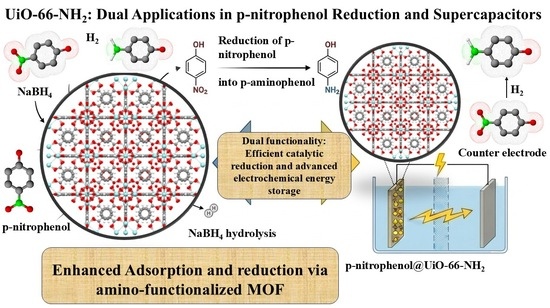
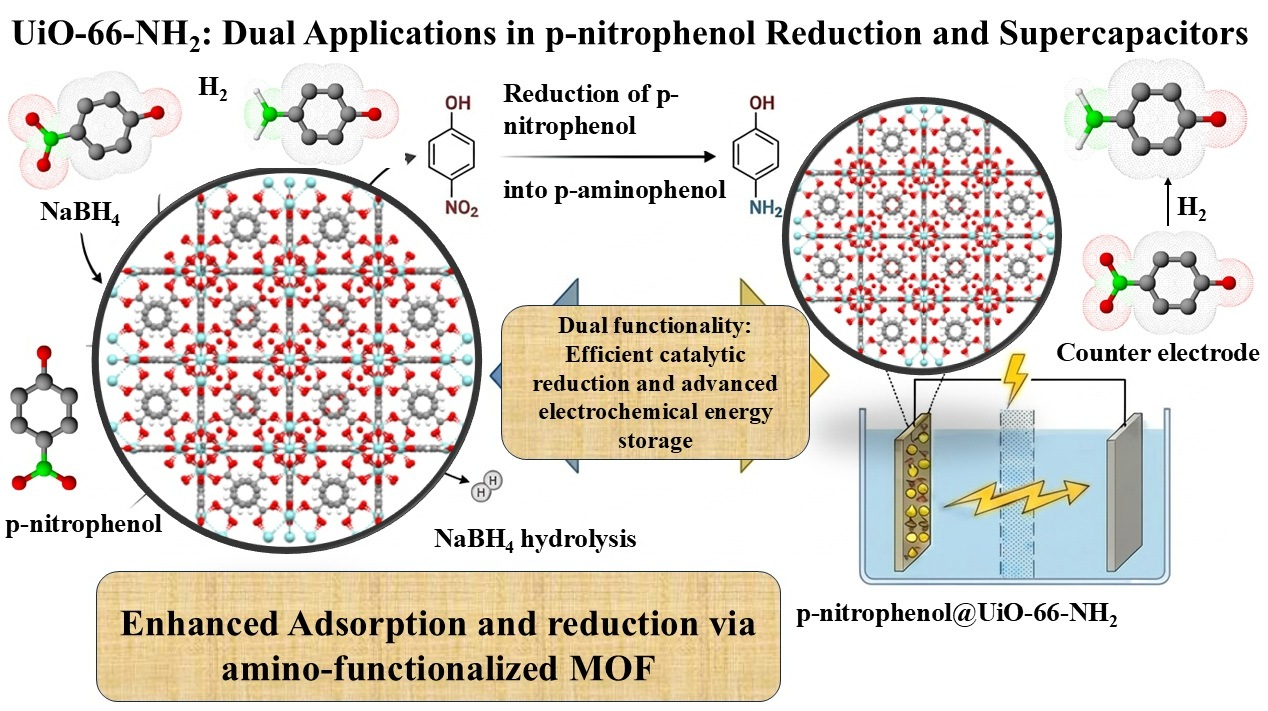
Graphical Abstract

1. Introduction

Metal-organic frameworks (MOFs) represent advanced porous materials that were awarded the Nobel Prize in Chemistry for 2025 [1,2]. Among MOFs, Zr-based UiO (Universitetet i Oslo) materials have been extensively investigated for a wide range of applications, including carbon dioxide (CO2) adsorption [3,4], photocatalytic CO2 reduction [5], antibiotic removal from water [6], photodegradation of antibiotics [7], water purification [8], and thermal catalysis [9]. In particular, UiO-66 and its amine-functionalized analogue, UiO-66-NH2, are well recognized as ideal catalytic supports due to their outstanding thermal stability, chemical robustness, and well-defined porosity, with UiO-66 exhibiting pore sizes in the 10–14 Å range [10]. The introduction of amino groups in UiO-66-NH2 enhances its stability and catalytic activity, although it slightly reduces the surface area because of partial pore blockage and decreased pore volume. Nevertheless, UiO-66-NH2 remains highly attractive for adsorption and catalytic applications, owing to its tunable band gap (typically 2.0–2.5 eV) and favorable electronic properties, which are particularly important for environmental remediation and energy conversion. Both UiO-66 and UiO-66-NH2 were explored as bifunctional electrocatalysts for water splitting [11], while UiO-66-NH2 and its hybrid nanomaterials have demonstrated excellent photocatalytic performance in applications such as Cr(VI) reduction, CO2 photoreduction, dye and antibiotic degradation, and H2/O2 evolution [12]. Beyond catalysis, UiO-66-NH2 has been integrated with conducting polymers, such as polyaniline, via in situ polymerization, yielding composites with enhanced electron transfer and remarkable supercapacitor performance [9]. It has also been grown in situ on porous carbon nanofibers for highly selective fluoride removal via capacitive deionization [13]. Advances in synthetic routes, including electrochemical methods, have enabled the scalable production of highly crystalline, porous UiO-66-NH2 with superior sensing performance for Fe3+ ions compared to solvothermally synthesized counterparts [14]. UiO-66-NH2-based materials were also applied in diverse applications in biomedicine, proton-conducting membranes, sensing, optoelectronics, and water treatment, such as magnetic core–shell nanohybrids for targeted drug delivery [15], high-proton-conductivity composite membranes [16], dual-emission fluorescent sensors for tetracycline [17], interface engineering in perovskite solar cells [18], aerogels for azo dye removal [19], membranes for water contaminant removal [20], and thin-film for water treatment [21].
The contamination of drinking water resulting from increasing industrial discharges has become a growing environmental concern, particularly due to hazardous organic pollutants, including nitroaromatic compounds, such as para-nitrophenol (4-NP, 4-hydroxy nitrobenzene), which is classified as a toxic pollutant by the US Environmental Protection Agency (EPA). Consequently, extensive research efforts have focused on the catalytic reduction of 4-NP to the less toxic and value-added product 4-aminophenol (4-AP), employing a wide range of catalytic materials including metallic nanoparticles [22,23], halloysite-supported copper nanoparticles [24], metal oxides [25,26,27], molybdenum ditelluride (MoTe2) [28], Ni-NiO nanostructures and their composites with two-dimensional hexagonal boron nitride (h-BN) [29], and MOFs [30,31]. Zeolitic imidazolate frameworks (ZIF-8 and ZIF-67), synthesized via a room-temperature one-pot method with and without TEMPO-oxidized cellulose nanofibrils (TOCNF), were integrated into cellulose substrates and applied to effectively reduce 4-NP, highlighting the promise of cellulose–ZIF hybrid materials for water treatment [30]. Copper-based MOFs and their derivatives, including CuO@C [25], CuBDC and aminated CuBDC-NH2 [32], as well as MnO/Cu-C catalysts derived from MnO2/Cu-MOF composites [33], have shown excellent catalytic activity toward 4-NP hydrogenation using NaBH4. In addition, nanoflake-like nickel cobaltite (NiCo2O4) synthesized via a cost-effective hydrothermal route has exhibited rapid catalytic reduction of 4-NP alongside supercapacitor performance [34]. Two-dimensional MOFs prepared by surfactant-assisted solvothermal methods have further demonstrated ultrafast and complete 4-NP reduction within minutes, owing to their high crystallinity and nanoscale morphology [35]. At the same time, Cu-BDC MOF nanosheets/reduced graphene oxide (rGO) enhanced catalytic efficiency [36]. UiO-66-NH2@(PdAu)@MOF-808 was reported to exploit synergistic interactions between PdAu nanoparticles and MOF-808 for efficient hydrogen activation under mild conditions [37], and UiO-66-NH2@Pt@PCN-222 core–shell systems that exhibit outstanding performance in tandem catalytic reactions involving nitroarene hydrogenation [38].
Energy crisis and environmental degradation pose significant challenges to societal development, driving the urgent transition to renewable energy sources, such as solar and wind power, to reduce dependence on fossil fuels [39,40,41,42,43]. In parallel, significant research efforts have focused on improving energy storage and conversion technologies to support sustainable energy systems. Although high-energy–density batteries are widely commercialized and used across many sectors, their limited cycle life, safety concerns, and insufficient power delivery limit their applicability, particularly in systems that require rapid charging and discharging. In this context, supercapacitors (SCs) have emerged as promising energy storage devices owing to their fast charge–discharge capability, high power density, long cycle stability, operational safety, and low maintenance costs [44,45,46,47]. Based on their charge–storage mechanisms, SCs are classified into electric double-layer capacitors (EDLCs) and pseudocapacitors, and they are generally considered safer and more sustainable than conventional batteries [38]. The performance of SCs is strongly dependent on electrode materials, underscoring the need to develop new materials with enhanced electrochemical properties [48,49]. Among several electroactive materials, MOFs exhibit promising properties, including high specific surface areas and theoretical capacitance, and have attracted considerable attention as potential electrode materials, particularly for asymmetric capacitor cathodes, due to their abundance, tunable structures, and chemical versatility [50]. However, their intrinsically poor electrical conductivity often limits direct application in supercapacitors, prompting the design of MOF-derived or hybrid materials. Various MOF-based and MOF-derived electrodes have therefore been reported, including ZIF-8/ZIF-67-derived ZnSe/CoSe2 [51], MOF-derived ZnCo2O4@CoMoO4 [52], CuO@C [53], bimetallic NiO/CuO@C derived from Ni–Cu MOFs [54,55], and Fe2O3@C obtained from Fe-based MOFs through high-temperature carbonization [56]. Strategies to improve MOF conductivity have also been explored, such as oxidizing UiO-66 using the Hummers method to form conductive H-UiO-66, which exhibited a dramatic increase in specific capacitance (82.8 F/g) compared to pristine UiO-66 (0.18 F/g) due to enhanced graphitization and electrochemical activity [57]. Furthermore, hybrid composites such as UiO-66-NH2/PEDOT have been developed and carbonized to produce ZrO2/N, S-doped carbon electrodes with excellent supercapacitor performance, high energy and power densities, and outstanding cycling stability, demonstrating the significant potential of MOF-based materials for next-generation energy storage devices [58].
Herein, UiO-66-NH2 was synthesized and utilized as a dual functional material for catalytic and energy-storage applications. It was examined as a catalyst for the reduction of nitroarenes, specifically 2-nitrophenol (2-NP) and 4-nitrophenol (4-NP), in both dark and light-assisted environments. The structural and morphological characterization of UiO-66-NH2 was conducted utilizing X-ray diffraction (XRD), Fourier transform infrared spectroscopy (FT-IR), scanning electron microscopy (SEM), and transmission electron microscopy (TEM). The catalytic performance demonstrated that UiO-66-NH2 fully reduced nitroarenes under light irradiation, underscoring its photo-assisted catalytic efficacy. Furthermore, pristine and nitroarene-modified UiO-66-NH2 samples were assessed as electroactive materials for supercapacitor applications in both lighted and non-illuminated environments. Significantly, 2-nitrophenol@UiO-66-NH2, upon light exposure, displayed a substantial specific capacitance of 221 F/g at a current density of 1 A/g, demonstrating the synergistic effect of nitroarene and light on electrochemical performance.

2. Results and Discussion

2.1. Materials Synthesis and Characterization

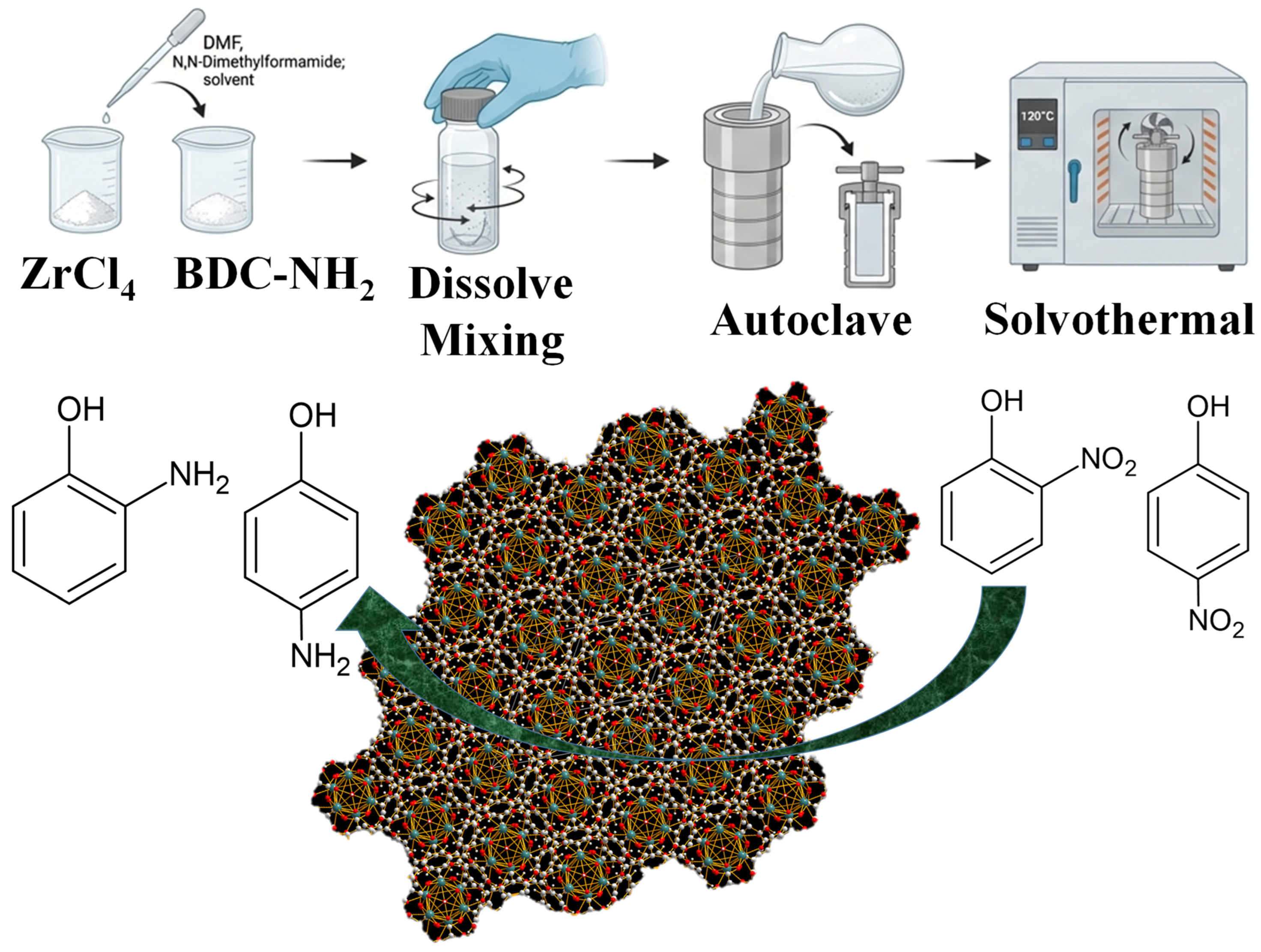
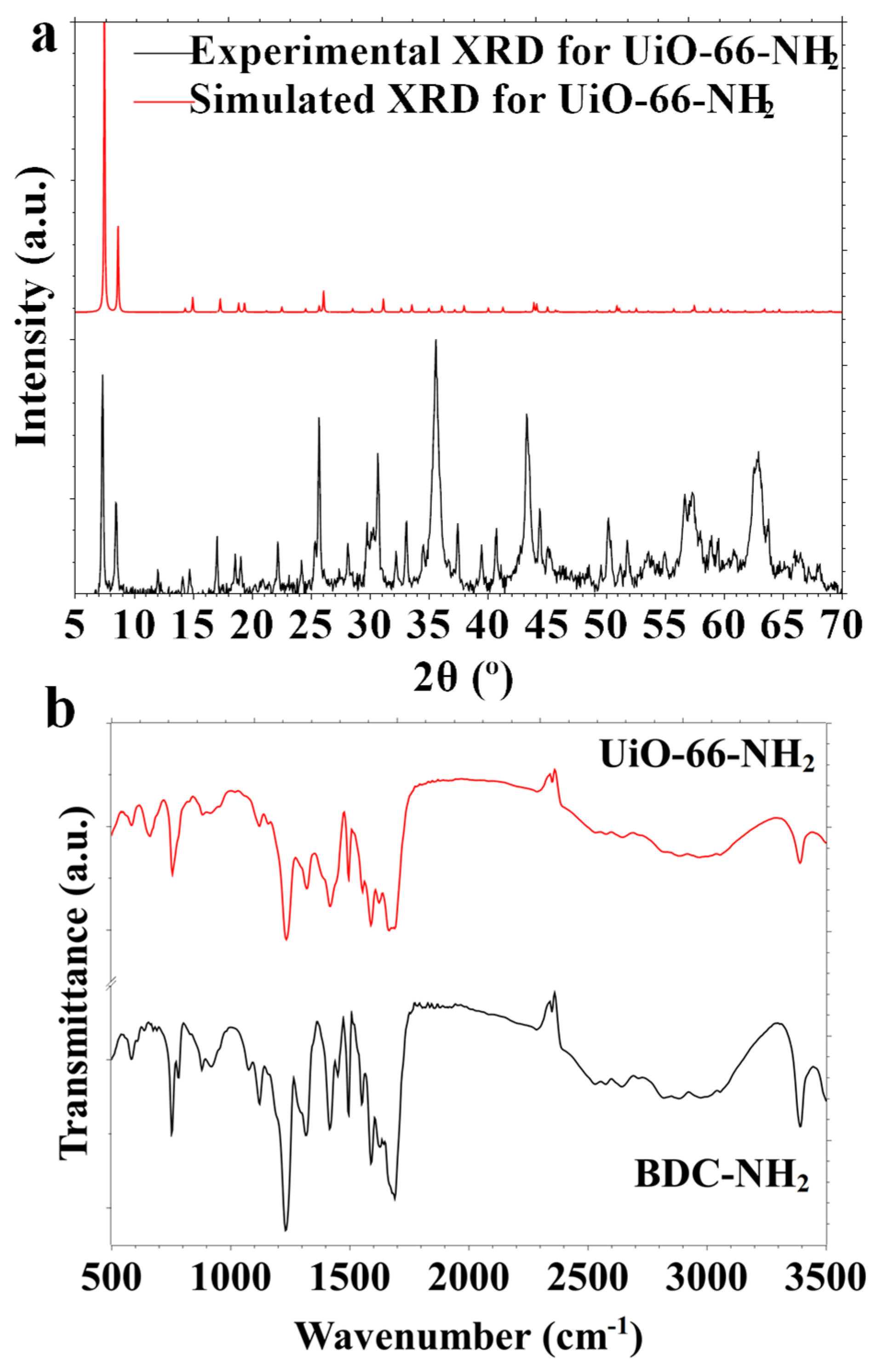
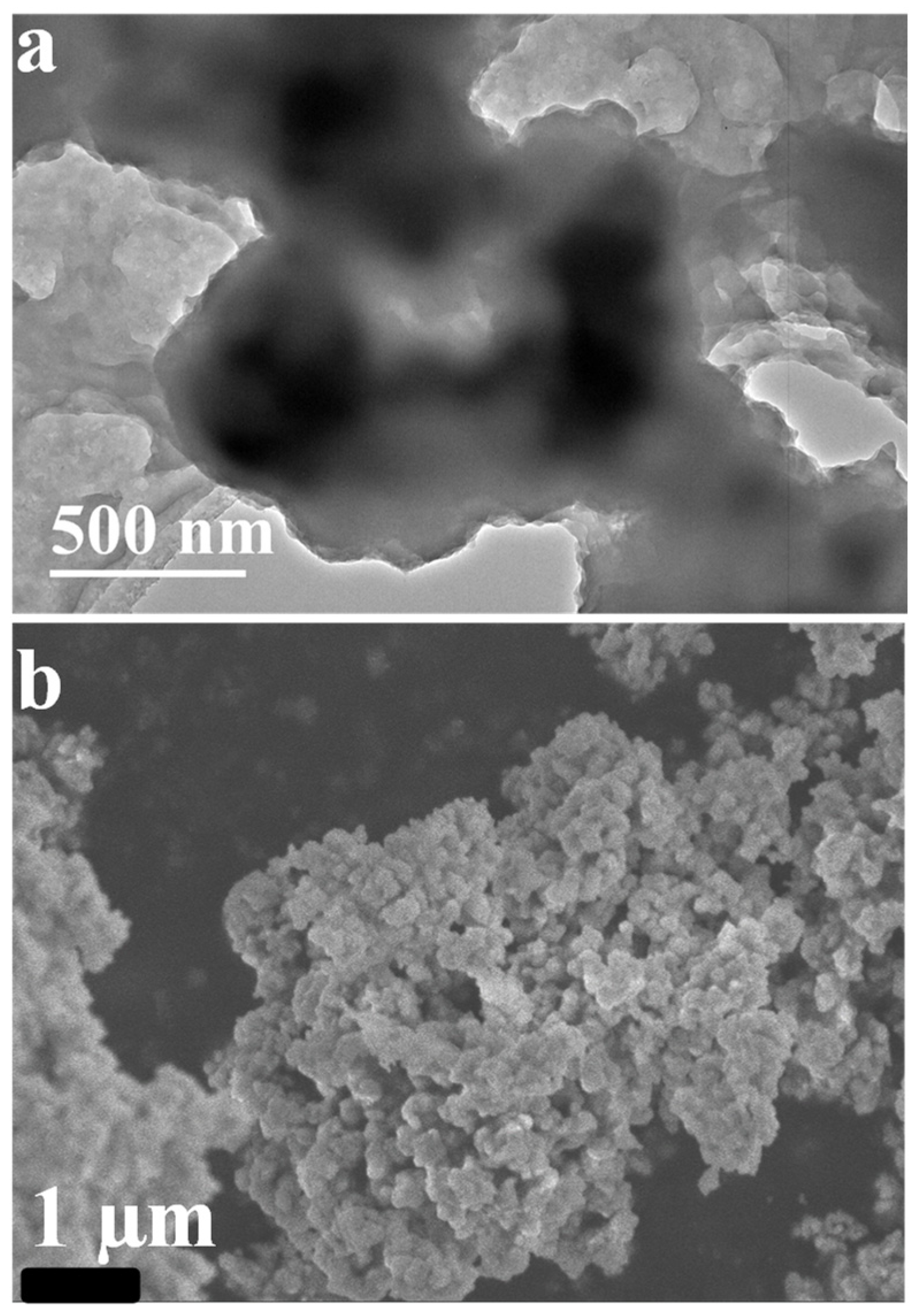
Figure 1 schematically depicts the manufacture of UiO-66-NH2 and its subsequent utilization in the catalytic reduction of nitroarene compounds. It shows the synthesis of the amine-functionalized Zr-based MOF, in which zirconium nodes are coordinated to 2-aminoterephthalic acid linkers, yielding the highly crystalline UiO-66-NH2 framework (Figure 1). This technique yields a porous structure featuring accessible active sites and uniformly distributed –NH2 functional groups, which are essential for the adsorption and activation of nitroarene molecules (Figure 1). After synthesis, UiO-66-NH2 catalyzes the reduction of nitroarenes, including 2-nitrophenol and 4-nitrophenol, wherein the reactant molecules are initially adsorbed into the MOF pores or on the surface via π–π interactions and hydrogen bonding (Figure 1). The material was characterized by XRD (Figure 2a), FT-IR (Figure 2b), TEM (Figure 3a), and SEM (Figure 3b).
XRD was utilized to examine the crystal structure and phase purity of the produced material (Figure 2a). Figure 2a displays the XRD patterns of samples, alongside the simulated diffraction pattern of UiO-66 (CIF: 1405751, CCDC, SURKAT: catena-(tris(μ4-2-aminobenzene-1,4-dicarboxylato)-bis(μ3-hydroxo)-bis(μ3-oxo)-tri-zirconium), space group Fm 3 ¯ m (225), with unit cell parameters a = b = c = 20.7988(12) Å and α = β = γ = 90°) [59]. The experimental patterns exhibit distinct, well-defined diffraction peaks, confirming the high crystallinity of the synthesized materials and their strong correspondence with the simulated MOF pattern (Figure 2a). The observed characteristic reflections at 2θ values of 7.2°, 8.5°, 11.9°, 17.0°, 25.8°, 28.0°, 30.8°, 43.0°, 50.1°, and 56.2° correspond to the (111), (200), (220), (400), (442), (533), (551), (771), (971), and (991) crystallographic planes, respectively, thereby confirming the synthesis of the UiO-66-NH2 framework without impurity phases.
Figure 2b displays the FT-IR spectra of the organic linker BDC-NH2 and the synthesized UiO-66-NH2 framework. The FT-IR spectrum of BDC-NH2 displays distinctive absorption bands at 3390 cm−1, indicative of the stretching vibration of the –NH2 group, bands at 2800 and 2890 cm−1 corresponding to C–H stretching vibrations, a prominent band at 1688 cm−1 linked to the C=O stretching of the carboxylic acid group, a peak at 1230 cm−1 of C–N stretching, and a band at 750 cm−1 attributed to aromatic C–H bending vibrations (Figure 2b). UiO-66-NH2 exhibits analogous characteristic bands; nevertheless, significant variations in their wavenumbers are noted. The shifts result from the coordinating interaction between the carboxylate groups of BDC-NH2 and the Zr6 clusters, thereby affirming the integration of the organic linker into the UiO-66-NH2 framework and the establishment of robust metal–ligand interactions.
Particle size and morphology of UiO-66-NH2 were evaluated using a TEM image (Figure 3a) and an SEM image (Figure 3b). The TEM image displays distinctly defined particles shape, signifying the synthesis of nanoscale UiO-66-NH2 with excellent dispersion (Figure 3a). In addition, the SEM image corroborates the uniform particle distribution and consistent shape, demonstrating the production of well-defined UiO-66-NH2 crystallites that tend to aggregate (Figure 3b). These observations indicate the synthesis of UiO-66-NH2 with regulated particle size and structural characteristics.

2.2. Reduction of Nitroarenes

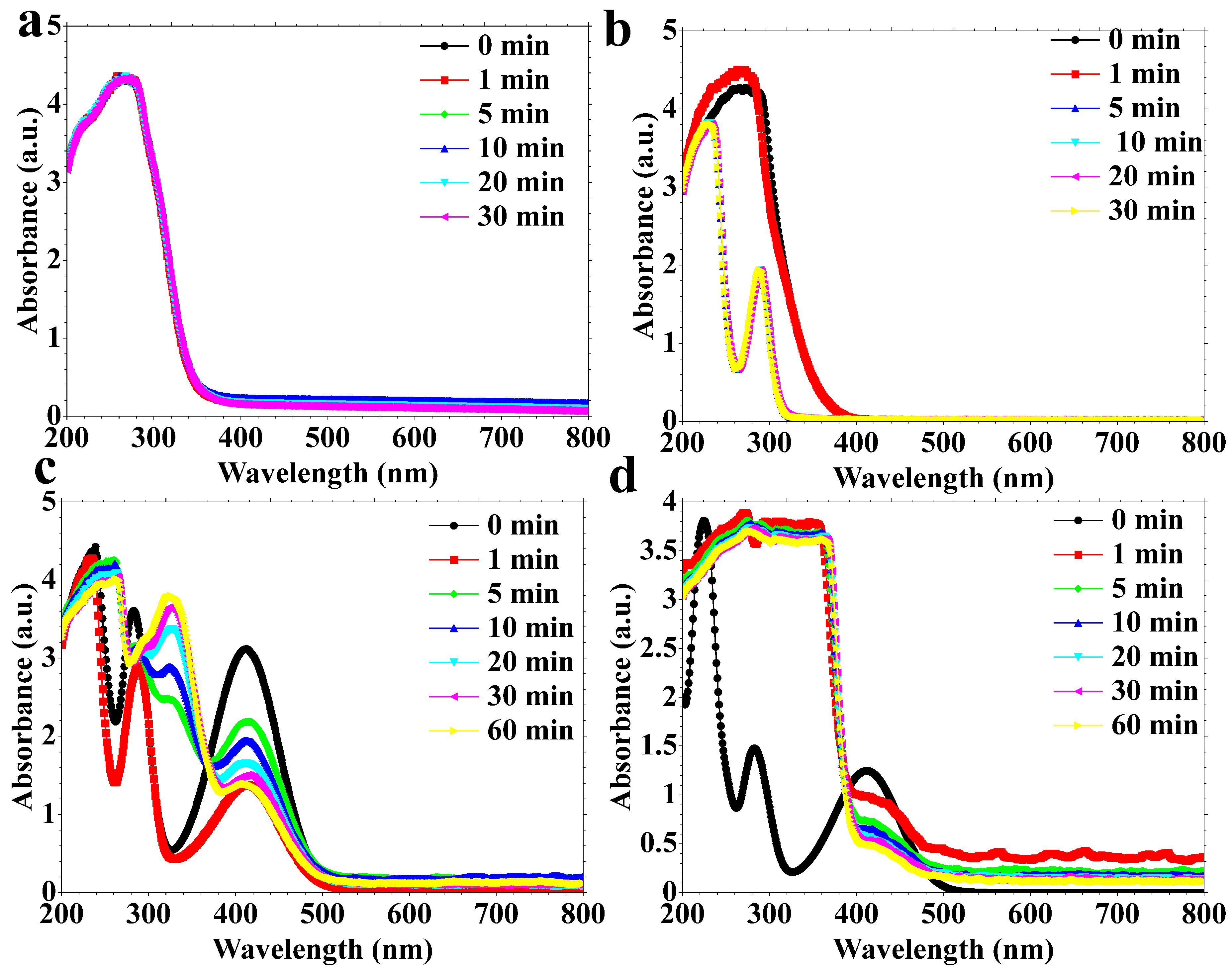
Figure 4 illustrates the UV–Vis absorption spectra of 2-NP and 4-NP in the presence of UiO-66-NH2 in both dark- and light-irradiated conditions. Figure 4a,b shows that 2-NP exhibits a distinctive UV absorption band with a peak at 270 nm. In the absence of light (Figure 4a), no significant change in UV-Vis absorption intensity is detected, suggesting that 2-NP experiences minimal reduction in dark settings. Conversely, upon light irradiation (Figure 4b), the complete reduction of 2-NP is observed, as evidenced by the disappearance of the initial absorption band and the emergence of new bands at about 230 nm and 290 nm, respectively, thereby validating the formation of reduced products. These new absorptions indicate chemical changes in the chronophoric group of 2-NP, i.e., the conversion of the nitro group into an amine group upon reduction with NaBH4.
The UV–Vis spectra of 4-NP, obtained in the absence and presence of light, are presented in Figure 4c,d. 4-NP exhibits prominent absorption bands at 235 nm and 285 nm in the ultraviolet spectrum, alongside a significant absorption band at 410 nm in the visible spectrum, which is ascribed to the generation of the phenolate ion. UiO-66-NH2 facilitates the reduction of 4-NP under both dark and illuminated conditions. However, light irradiation significantly enhances the reduction. This improvement is indicated by a significant drop in the intensity of the phenolate absorption peak at 410 nm under illumination, illustrating the improved photo-assisted catalytic efficacy of UiO-66-NH2 in the reduction of 4-NP (Figure 4d). The 4-amino-phenol displays a new absorption peak at 325 nm, indicating chemical reduction of the nitro group into an amino group. Based on the new absorption peak, UiO-66-NH2 exhibits complete reduction of 4-NP to 4-AP, i.e., 100% efficiency. Upon exposure to light, the amine-functionalized MOF, i.e., UiO-66-NH2, enhances electron transport, hence encouraging the effective reduction of nitro groups to their respective amino derivatives. The dual functionality of UiO-66-NH2 highlights its methodical synthesis and its efficacy as a light-assisted catalyst for the reduction of nitroarenes.
The amino functional group in UiO-66-NH2 significantly improves interactions with nitroarenes. The –NH2 groups increase host–guest affinity and residence time within the pores by donating hydrogen bonds to the nitro oxygen atoms. Furthermore, interactions with electron-deficient nitroarenes are favored by their polar and partially positive nature, which increases the local electrostatic potential. Strong π–π donor–acceptor interactions with nitroaromatic compounds are made possible by –NH2, an electron-donating group that also raises the aromatic linker’s π-electron density. UiO-66-NH2 demonstrates guest-anion-induced photoluminescence enhancement, wherein particular anions like carbonate and fluoride interact robustly with amino functional groups via hydrogen bonding, resulting in the formation of quaternary (–N(H))4···X molecular bridges that impede linker rotation and alter electronic density within the framework [60]. UiO-66-NH2 can actively engage in both the hydrolysis of NaBH4 and the subsequent usage of the produced hydrogen for nitroarene reduction, acting as more than a passive host. When NaBH4 is added to UiO-66-NH2, it diffuses into the porous framework and is activated by multiple interactions. Lewis acidic sites, i.e., zirconium ions and μ3-OH groups, are provided by the ZrO4(OH)4 clusters in UiO-66, whereas the amino-functionalized linkers enhance pore polarity and can form hydrogen bonds with BH4. These interactions make it easier for water molecules to approach and weaken the B–H bonds. H2 gas is thus produced because of the progressive hydrolysis of NaBH4 (BH4 → BH3 → BH2 → BO2). UiO-66-NH2 accelerates this process by stabilizing BH4 by Zr–OH sites, activating water via hydrogen bonding with the –NH2 groups. The –NH2 group boosts hydrolysis rates due to higher local polarity and proton-transfer efficiency. The in situ-generated hydrogen can be used immediately to reduce nitroarenes adsorbed within the framework. Through hydrogen bonding, electrostatic interactions, and π-donor–acceptor interactions, UiO-66-NH2 firmly adsorbs nitroarenes, bringing them into proximity to the hydrogen release sites. Amino groups enhance adsorption geometry and closeness, hence indirectly promoting electron donation. Through the establishment of hydrogen bonds (N–H···O) with nitro groups and π–π donor–acceptor interactions, –NH2 groups position nitroarenes in proximity to electron-rich domains of the framework or catalytic sites. After that, hydrogen might take part in the gradual reduction of nitro groups (–NO2 → –NO → –NHOH → –NH2). The amino-functionalized linker further helps this process by increasing charge transfer and stabilizing chemical intermediates through hydrogen bonding. The framework serves as an effective catalytic surface process. High reduction efficiency and selectivity result from the hydrogen produced by NaBH4 hydrolysis being activated at the Zr metal sites of MOF. As a result, UiO-66-NH2 functions as an integrated platform in which NaBH4 is hydrolyzed in a confined, polar environment, yielding hydrogen, which is then used immediately for nitroarene reduction. The amino functional group enables effective, mild-condition reduction of nitroaromatic compounds, improving reaction kinetics and reducing hydrogen loss.
The increased catalytic activity under light irradiation results from an effective photoinduced charge-transfer process, wherein amino functional groups are pivotal in the generation, separation, and transport of charge carriers to nitroarene molecules. Upon light absorption, UiO-66-NH2 experiences linker-to-cluster or linker-to-guest excitation. The –NH2 group acts as an electron-donating substituent, reducing the framework’s band gap and enhancing light absorption. Photoexcitation promotes electrons in the amino-functionalized linker to higher-energy states. The photogenerated electrons are subsequently transferred to adsorbed nitroarenes via a donor–acceptor charge-transfer mechanism. Nitroarenes, characterized by low-lying π* orbitals and electron-withdrawing nitro groups, efficiently take electrons from the excited UiO-66-NH2 linker or via hydrogen generated from NaBH4 hydrolysis. The robust host–guest interactions (hydrogen bonding and π donor–acceptor interactions) facilitate this process, hence enhanced electronic coupling and inhibiting charge recombination.
Table 1 presents a comparative analysis of several catalysts reported for the reduction of nitroarenes, highlighting the variety of material systems and their respective performance. Metallic nanoparticles have been extensively investigated for the reduction of nitroarenes owing to their enhanced catalytic activity [61]. Silver nanoparticle-decorated cellulose beads have been identified as environmentally benign catalysts that effectively reduce 4-NP and display antibacterial characteristics [22]. Nonetheless, silver’s inherent toxicity considerably limits its widespread and ecological applications. Alternative noble metal nanoparticles, such as gold nanoparticles, offer enhanced safety. However, their elevated cost limits their widespread application [62,63]. ZIFs, incorporated into cellulose substrates, including ZIF-8 and ZIF-67, synthesized within Whatman® filter paper, were assessed for the reduction of 4-NP, with ZIF-67-based materials, demonstrating markedly superior efficiencies (92–94%) relative to ZIF-8-based systems (approximately 35%) and catalyst-free reactions (approximately 30%) [30].
Enhanced catalytic activity was achieved with bimetallic, carbonized MOF-derived catalysts. Copper-doped ZIF-67, subjected to carbonization (CuCo@CNx−y), exhibited rapid and full reduction of 4-NP within 1.5 min, alongside remarkable reusability and stability, highlighting the efficacy of metal doping and carbonization techniques [64]. Likewise, two-dimensional Ni@Cu-MOF bimetallic nanosheets exhibited effective and selective hydrogenation of nitroarenes [65], whilst Cu@C and CuFe@C catalysts, produced from HKUST-1 and Fe-doped HKUST-1, demonstrated significant activity in the reduction of 4-NP [66]. NiCo@C–N catalysts derived from the pyrolysis of ZIF-67 underscored the advantageous impact of nickel integration on enhancing reduction efficacy [67]. Additionally, polyoxometalate-encapsulated MOFs, such as H3PSr3Mo9O37@ZIF-67, have been effectively utilized for the reduction of 4-NP [68].
Low-dimensional MOFs systems have attracted increased interest owing to their enhanced surface accessibility. Two-dimensional MOFs produced by surfactant-assisted solvothermal methods achieved full reduction of 4-NP in 2 min, without an induction time, demonstrating rapid catalytic performance via a straightforward, economical synthesis [35]. Moreover, Cu-BDC MOF nanosheets integrated with rGO exhibited superior catalytic and electrochemical performance, with a higher NaBH4 concentration further augmenting the reduction efficiency by providing additional electrons and BH4 ions [36]. In addition to MOFs, nanoflake-like nickel cobaltite (NiCo2O4), synthesized using an economical hydrothermal process, has been identified as an excellent catalyst for the fast reduction of 4-NP and as an electrode material for supercapacitors [34].
Carbon-supported non-noble metal catalysts were investigated to decrease costs, including thiol-functionalized copper-deposited porous carbon generated from oil palm leaves (Cu/TF-CNS), which demonstrated remarkable catalytic activity for the reduction of nitro compounds at minimal copper loadings [23]. Nonetheless, the need for high-temperature synthesis (1000 °C), high reaction temperatures (80 °C), and the incorporation of thiol groups raises concerns about energy consumption and environmental sustainability. MoTe2 catalysts exhibiting mixed 1T′/2H phases achieved an over 80% reduction of 4-NP within 15 min, despite being produced by solid-state processes and undergoing comparatively energy-intensive annealing [28]. The research shown in Table 1 highlights ongoing advances in catalyst design aimed at achieving high efficiency, stability, cost-effectiveness, and environmental compatibility in nitroarene reduction.

2.3. Application for Supercapacitors

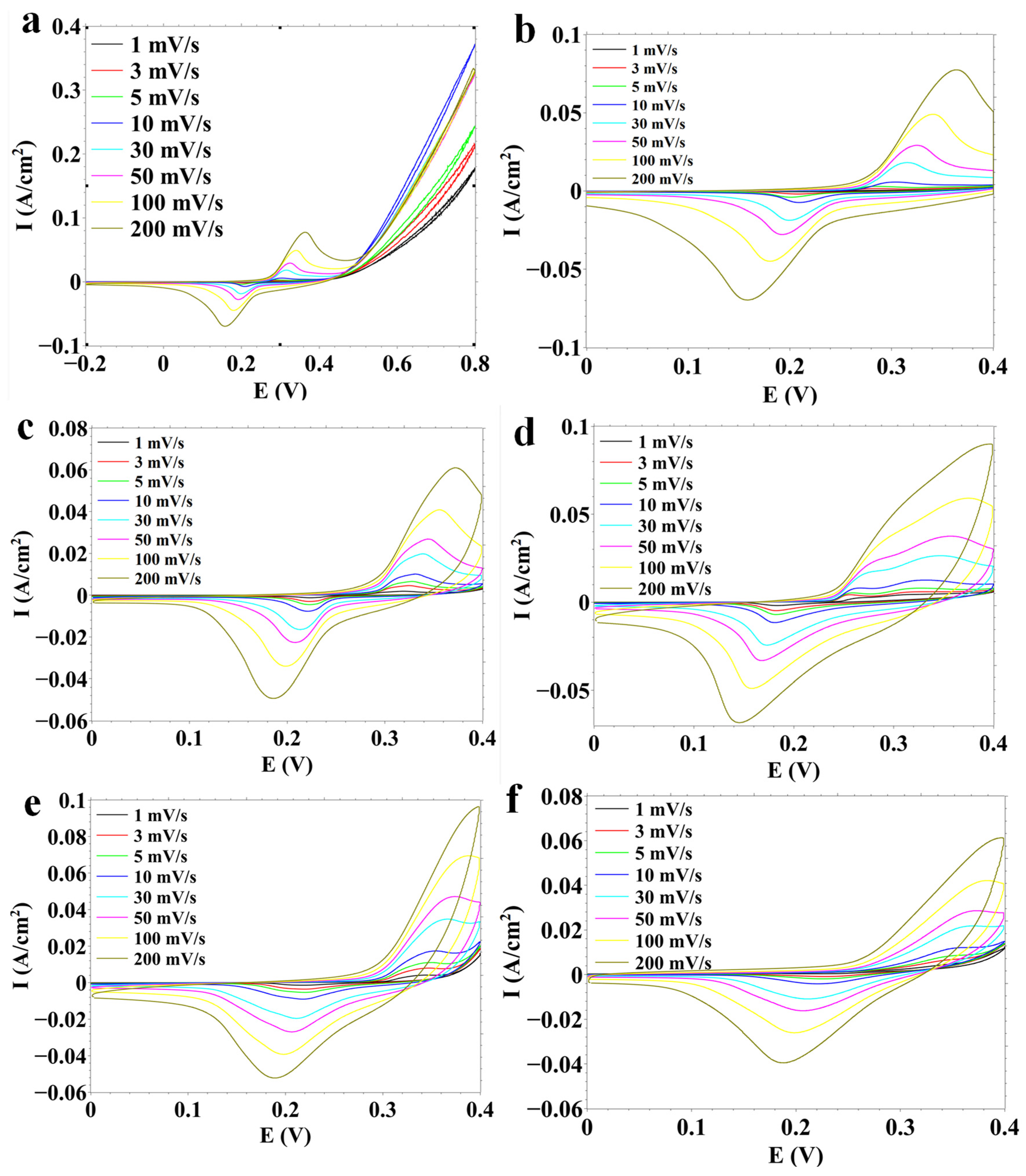
The electroactive properties of UiO-66-NH2 were assessed before and after the adsorption of 2-NP and 4-NP for supercapacitor applications. Based on the weight difference recorded before and after adsorption, UiO-66-NH2 demonstrated adsorption capacities of 200 mg/g for 2-NP and 215 mg/g for 4-NP. The electrochemical performance of pritine and nitroarene-loaded UiO-66-NH2 was examined by CV (Figure 5) and GCDC (Figure 6).
Figure 5 displays the CV curves for UiO-66-NH2, 2-NP@UiO-66-NH2, and 4-NP@UiO-66-NH2, obtained under dark and light-irradiated conditions. In pristine UiO-66-NH2, CV studies conducted within the potential range of −0.2 to 0.8 V indicated the initiation of hydrogen evolution at potentials exceeding 0.4 V. Consequently, further CV tests were conducted within a constrained and stable potential range of 0 to 0.4 V, utilizing scan rates from 1 to 200 mV/s. UiO-66-NH2 displays distinct redox peaks with oxidation and reduction potentials approximately at 0.30 V and 0.20 V, respectively. As the scan rate increases, the peaks shift to around 0.36 V (oxidation) and 0.15 V (reduction), accompanied by a consistent increase in peak current, indicating excellent electrochemical reversibility and rapid charge-transfer kinetics.
Following the adsorption of 2-NP and 4-NP, the CV curves profiles of 2-NP@UiO-66-NH2 and 4-NP@UiO-66-NH2 closely resemble that of pristine UiO-66-NH2, indicating that the intrinsic electrochemical characteristics of the framework are maintained. Significant variations in current intensity are evident, attributable to adsorbate effects arising from the presence of 2-NP or 4-NP within the framework. Moreover, the CV responses of the nitroarene-loaded samples under light irradiation exhibit distinct fluctuations in current values relative to dark conditions, indicating a pronounced photoelectrochemical response and underscoring the synergistic effect of light and adsorbed nitroarenes on the electrochemical performance of UiO-66-NH2.
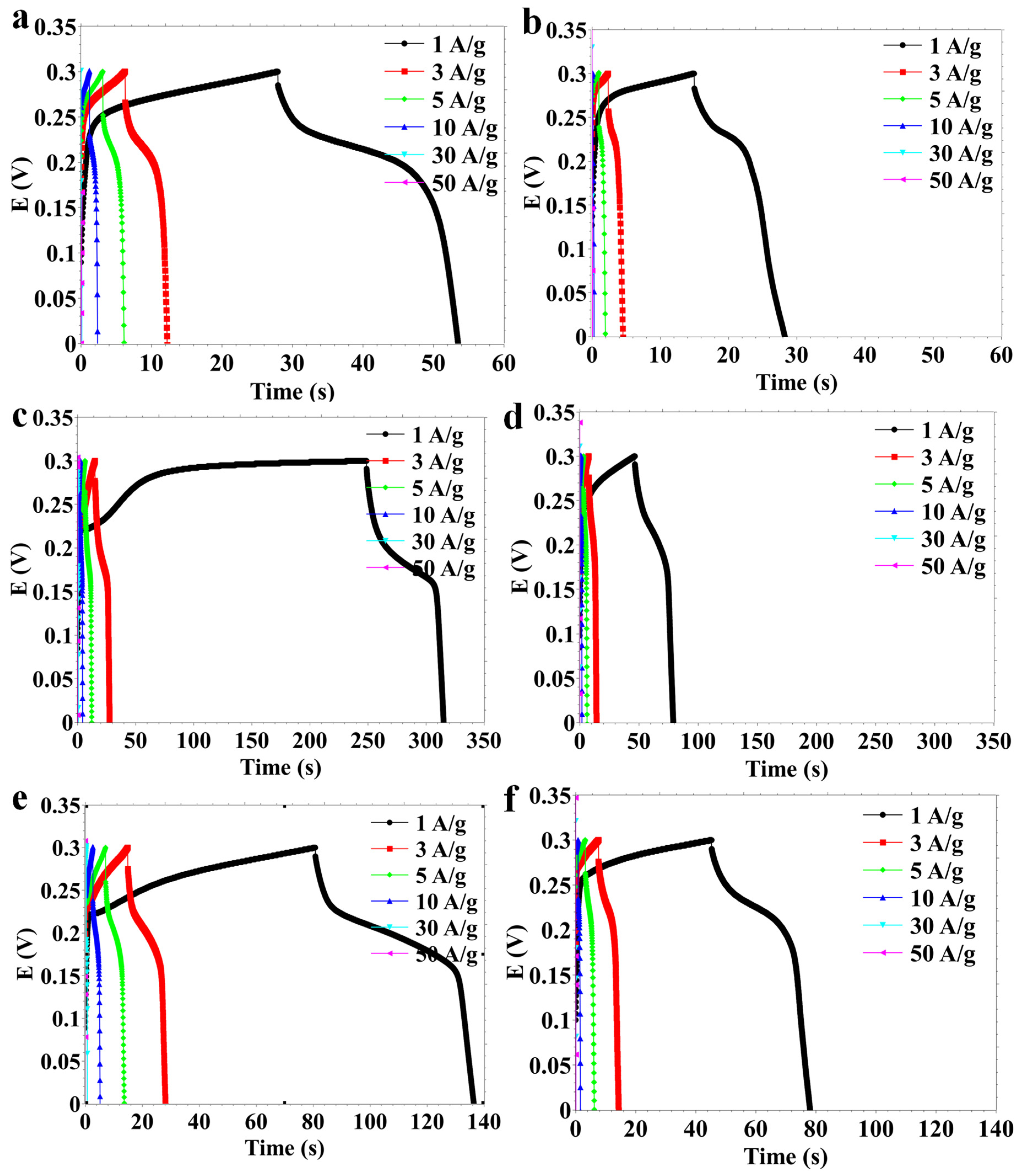
Figure 6 illustrates the GCD curves for pristine UiO-66-NH2, 2-NP@UiO-66-NH2, and 4-NP@UiO-66-NH2, obtained under dark and light-irradiated circumstances. The GCD experiments were conducted at current densities ranging from 1 to 50 A/g to assess the rate capabilities and charge–discharge characteristics of the materials. The GCD curves for pristine UiO-66-NH2 exhibit almost symmetric triangular voltage–time profiles, indicating excellent reversibility and a primarily capacitive nature (Figure 6). The nearly linear charge and discharge segments indicate fast and reversible ion buildup at the electrode-electrolyte interface, a hallmark of adequate charge storage (Figure 6).
Conversely, UiO-66-NH2 exhibits considerable alterations in the GCD curve morphology and charge–discharge durations following the adsorption of 2-NP or 4-NP, indicating the impact of the adsorbed nitroarene molecules on electrochemical performance. The GCD profiles of 2-NP@UiO-66-NH2 and 4-NP@UiO-66-NH2 diverge from the ideal triangular form, exhibiting more inclined and non-linear characteristics indicative of pseudocapacitive activity (Figure 6). These characteristics result from rapid, surface-restricted Faradaic redox processes associated with the adsorbates, providing additional charge storage beyond the basic electric double-layer capacitance. The knee-like features in the curves for nitroarenes@UiO-66-NH2 can be ascribed to redox transitions of the nitroarene-modified framework (Figure 6). Furthermore, the morphology of the GCD curves changes with rising current density, facilitating the assessment of capacitance, energy density, and rate performance. Light irradiation additionally modifies the charge–discharge behavior, affirming that photo-assisted mechanisms significantly influence the electrochemical response of UiO-66-NH2 and its nitroarene-loaded variants.
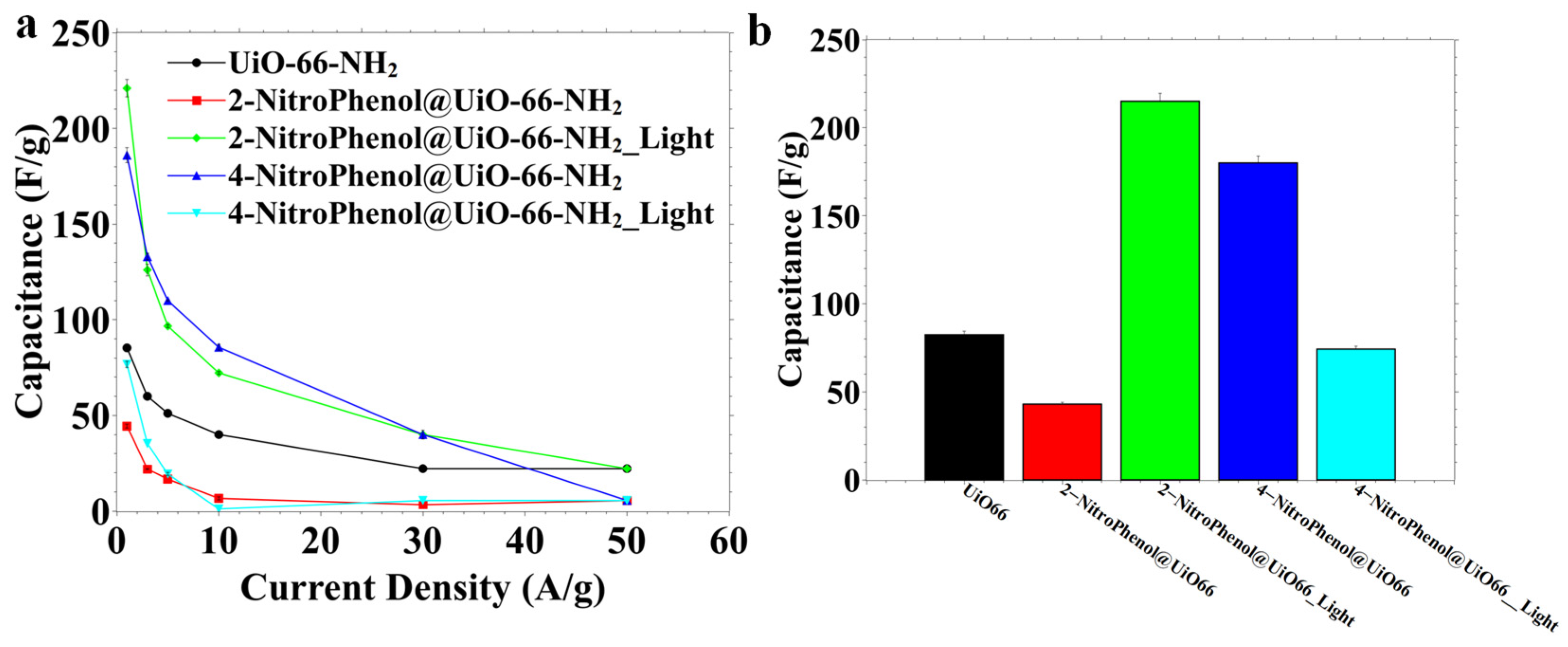
Figure 7 compares the specific capacitance values of pure UiO-66-NH2 and nitroarene-modified UiO-66-NH2 electrodes as a function of current density, highlighting their performance at 1 A/g. As the current density increases from 1 to 50 A/g, all samples exhibit a progressive decline in specific capacitance, a phenomenon commonly attributed to constrained ion transport and decreased activation of active sites at high charge–discharge rates (Figure 7a). The unaltered UiO-66-NH2 exhibits a specific capacitance of 85.3 F/g at 1 A/g, decreasing to 22.2 F/g at 50 A/g, indicating its inherent capacitive behavior and adequate rate performance.
Following the adsorption of 2-nitrophenol, the specific capacitance in the absence of light decreases to 44.4 F/g at 1 A/g, suggesting that the deposited 2-NP partially obstructs electroactive sites or impedes ion transport. Notably, during light irradiation, 2-NP@UiO-66-NH2 demonstrates a significant increase in capacitance, attaining 221 F/g at 1 A/g, exceeding that of pristine UiO-66-NH2 by more than double. This improvement is consistent across all current densities, indicating a robust photo-assisted electrochemical impact and effective use of redox-active sites activated by the adsorbed nitroarene. A comparable, though unique, pattern is observed with 4-nitrophenol-modified UiO-66-NH2 (Figure 7b). In darkness, 4-NP@UiO-66-NH2 exhibits a remarkable specific capacitance of 186 F/g at 1 A/g, much surpassing that of pristine UiO-66-NH2, indicating that 4-NP enhances pseudocapacitive redox processes more efficiently. Under light irradiation, the capacitance of 4-NP@UiO-66-NH2 decreases to 76.7 F/g at 1 A/g, suggesting that light may facilitate competing mechanisms, such as accelerated charge recombination or structural/electronic changes that reduce effective charge storage in this system.
In a system comprising UiO-66-NH2 and nitrophenol-adsorbed UiO-66-NH2, the overall observed capacitance results from two distinct charge-storage mechanisms: EDLC and pseudo-capacitance. EDLC arises from the physical segregation of charges at the electrode–electrolyte interface, occurring without any electron transport across the contact. It mostly arises from the adsorption of ions onto the high-surface-area porous framework and the exterior surfaces of particles. Amino functional groups enhance surface polarity and wettability, facilitating the more efficient accumulation of electrolyte ions within pores. Pseudo-capacitance arises from rapid, reversible faradaic reactions involving surface- or near-surface redox-active species. Upon the adsorption of nitrophenol onto UiO-66-NH2, further pseudocapacitive contributions arise. The nitro (–NO2) group of nitrophenol can participate in redox transformations (e.g., –NO2/–NO/–NHOH couples), while the amino-functionalized framework promotes electron and proton transfer via hydrogen bonding and donor–acceptor interactions. EDLC in UiO-66-NH2 results from non-faradaic ion adsorption on its porous surface, while the pseudo-capacitance in nitrophenol-adsorbed UiO-66-NH2 is due to rapid, reversible redox reactions of the adsorbed nitrophenol or nitroarenes.
The maximum capacitance is attained by 2-NP@UiO-66-NH2 under illumination (221 F/g), succeeded by 4-NP@UiO-66-NH2 in darkness (186 F/g), pristine UiO-66-NH2 (85 F/g), and 4-NP@UiO-66-NH2 under illumination (77 F/g, Figure 7b). Figure 7 unequivocally demonstrates that both nitroarene adsorption and light irradiation are essential and independent factors in modulating the electrochemical performance of UiO-66-NH2, with a pronounced synergistic photoelectrochemical enhancement observed in the nitroarene-modified material. Light irradiation can reduce internal resistance and enhance electrochemical kinetics by modifying charge-carrier production, transport, and interfacial reaction dynamics inside the electrochemical system. In the presence of light, photoactive materials produce extra charge carriers (electrons and holes) by photon absorption. The high carrier density improves the material’s electrical conductivity and reduces both bulk and grain-boundary resistance, thereby directly decreasing the electrode’s internal resistance. Photoinduced internal electric fields or band bending at interfaces facilitate directional charge migration towards active sites, hence reducing charge-transfer resistance at the electrode–electrolyte interface. Consequently, electron transfer processes in electrochemical reactions occur more rapidly. Simply, light irradiation reduces internal resistance by enhancing the charge-carrier concentration and mobility, while concurrently enhancing electrochemical kinetics via improved charge separation, decreased charge-transfer resistance, and reduced activation energy for interfacial processes.
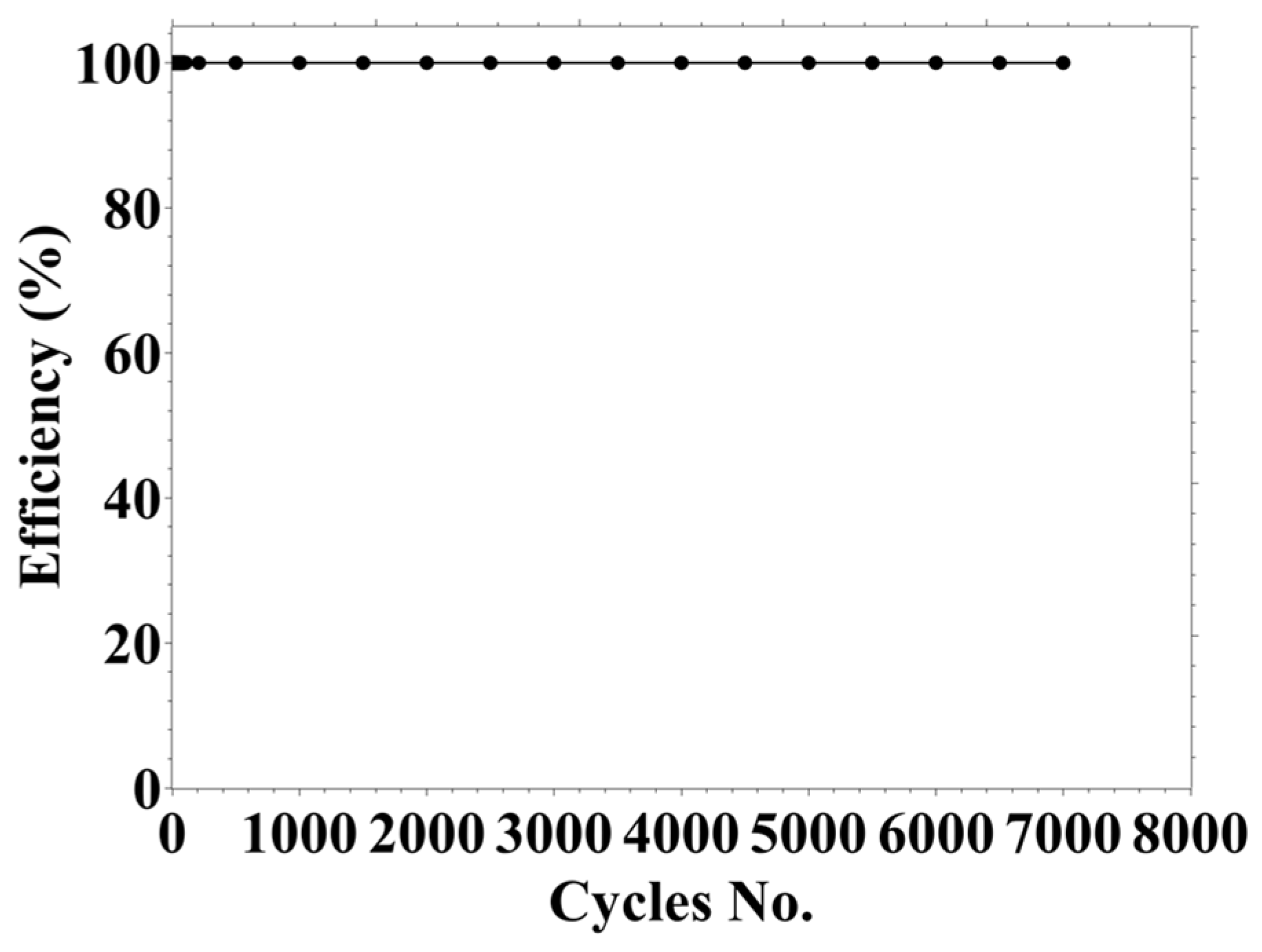
Figure 8 depicts the cycling stability and recyclability of UiO-66-NH2 assessed over 7000 consecutive charge–discharge cycles. The results indicate a negligible decline in electrochemical performance (100%) during the cycle test, showcasing the material’s exceptional stability and endurance. The consistent capacitance retention suggests that the UiO-66-NH2 framework maintains its structural integrity and electrochemical functionality during extended operation. This unique cycling performance demonstrates that UiO-66-NH2 can be efficiently recycled and reused without a significant decline in performance, underscoring its appropriateness for long-term supercapacitor applications.
Table 2 compares the performance of supercapacitors using various MOF-based and hybrid electrode materials, highlighting the benefits of structural alteration and composite design in improving electrochemical performance. A composite comprising a polymer with intrinsic microporosity (PIM-1) and leaf-like zeolitic imidazolate frameworks (ZIF-L) was reported as an effective electroactive material for supercapacitors [69]. In this system, ZIF-L@PIM-1 was used as a precursor for the synthesis of ZnO@nitrogen-doped carbon via carbonization at 400–700 °C. Electrodes constructed from these materials on nickel foam current collectors demonstrated outstanding electrochemical performance, achieving specific capacitances of 240 F/g and 272.4 F/g for the negative and positive electrodes, respectively, at a current density of 0.5 A/g [69]. The improvement in conductivity via chemical modification has been shown for UiO-66 using Hummers’ oxidation approach, yielding an oxidized variant (H-UiO-66) with significantly enhanced electrochemical activity [57]. In contrast to pristine UiO-66, which showed a minimal specific capacitance of 0.18 F/g at 1 mA, H-UiO-66 achieved a significantly higher value of 82.8 F/g, owing to partial graphitization and enhanced charge transfer within the framework. These findings emphasize the capability of post-synthetic modification techniques in converting insulating MOFs into effective supercapacitor materials [57]. Superior performance has been achieved through the incorporation of conducting polymers. The UiO-66-NH2 modified with polyaniline (PANI) via in situ polymerization yielded a composite that provided multiple electroactive sites from the MOF, while PANI enhanced effective electron transport [70]. The optimized composite (UP0.1) exhibited a specific capacitance of 462.2 F/g at a current density of 1 A/g in 2 M KOH. Furthermore, the incorporation of the redox-active electrolyte additive, K4[Fe(CN)6], enhanced the capacitance to 859.5 F/g by decreasing diffusion and charge-transfer resistances [70]. The comparison in Table 2 demonstrates that modifying MOFs via polymer integration, chemical oxidation, or transformation into conductive carbon derivatives is an effective strategy for improving supercapacitor performance, making MOF-based composites strong contenders for advanced energy storage applications.

3. Experimental

3.1. Materials and Methods

Zirconium oxochloride (ZrOCl2), 2-amino-benzene-1,4-dicarboxylic acid (BDC-NH2), dimethylformamide (DMF), carbon black, polyvinylidene difluoride (PVDF), 2-nitrophenol (2-NP), and 4-nitrophenol (4-NP) were acquired from Sigma-Aldrich (Schnelldorf, Germany).

3.2. Synthesis of UiO-66-NH2

UiO-66-NH2 was synthesized via the solvothermal method [58]. A mixture comprising BDC-NH2 (0.9 mmol) and 0.9 mmol of ZrOCl2 (0.9 mmol) was dissolved in 12 mL of DMF and 9 mL of acetic acid. The solution was sonicated for 10 min before being placed in a Teflon autoclave at 120 °C for 3 h. To eliminate leftover precursors, the resultant yellow powder was centrifuged, rinsed with 15 mL of DMF, and immersed in 15 mL of methanol for three days, with methanol refreshed every 12 h. A solvent-free powder was prepared by drying UiO66-NH2 under vacuum at 120 °C for 24 h.

3.3. Catalytic Reduction of Nitroarenes

The catalytic reduction of nitroarenes was conducted utilizing a UiO66-NH2 catalyst. A conventional 3 mL quartz cell was used to examine the catalytic characteristics of nitroarenes (2-NP or 4-NP). To evaluate the catalytic reduction of nitroarenes, 1 mg of catalyst, 1 mL of 2-NP/4-NP (10 mM), and 1 mL of NaBH4 aqueous solution (10 mM) were combined and distributed. Time-dependent UV–Vis absorption spectra were analyzed to assess the catalytic efficacy of UiO66-NH2 catalyst in the conversion of nitroarens to aminoarens within the wavelength range of 200–800 nm (SHIMADZU, UV-26001, Kyoto, Japan). The same procedure was also evaluated under UV light (365 nm, 10 W).

3.4. Electrochemical Investigation

To assess the electrochemical characteristics, UiO-66-NH2 was deposited on a nickel foam substrate. The electrochemical performance of the UiO-66-NH2 electrode was investigated in a three-electrode configuration, with the UiO-66-NH2 serving as the working electrode, a platinum electrode as the counter electrode, and an Ag/AgCl electrode as the reference electrode. The electrochemical performance was evaluated in a 6 M KOH alkaline electrolyte. It was performed by cyclic voltammetry (CV) and galvanostatic charge–discharge curves (GCDC) using a CS150M (Corrtest, Wuhan, China). Recycling was evaluated at 10 A/g for 7000 cycles.

3.5. Characterization Instruments

XRD was performed using a PANalytical X’Pert PRO diffractometer (Malvern, UK). FT-IR spectra were acquired with a Fourier transform infrared spectrometer (JASCO, model 4600, Hachioji, Japan). A SEM image was collected using JSM-4000 (JEOL, Akishima, Japan). A TEM image was acquired using a TEM-2100 (JEOL, Japan).

4. Conclusions

UiO-66-NH2 was synthesized and demonstrated utility as a multifunctional material for the catalytic reduction of nitroarenes and for supercapacitor applications. The structural analysis confirmed the formation of a highly crystalline framework with accessible amino groups, thereby enhancing the robust adsorption of 2-NP and 4-NP. The material demonstrated total photoreduction of nitroarenes under illumination, underscoring its photo-assisted catalytic efficacy. The adsorption of nitroarenes improved the electrochemical performance of UiO-66-NH2, with 2-NP@UiO-66-NH2 exhibiting the maximum specific capacitance of 221 F/g at a current density of 1 A/g under illumination. Galvanostatic charge–discharge analyses validated pseudo-capacitive behavior due to rapid Faradaic redox reactions, and the material exhibited remarkable stability over 7000 cycles. Comparisons with alternative MOF-based and hybrid systems, such as polymer composites, carbonized MOFs, and MOF–conducting polymer composites, indicate that structural optimization, guest-molecule integration, and light-assisted mechanisms substantially enhance energy storage efficacy. This work demonstrates that UiO-66-NH2 serves as a durable platform for dual-function applications in environmental cleanup and energy storage, providing high efficiency, stability, and recyclability.

Funding

This work was supported and funded by the Deanship of Scientific Research at Imam Mohammad Ibn Saud Islamic University (IMSIU) (grant number IMSIU-DDRSP2603).

Data Availability Statement

All data are presented in the manuscript.

Conflicts of Interest

The author declares that he have no known competing financial interests or personal relationships that could have influenced the work reported in this paper.

References

  1. Yaghi, O.M.; Kalmutzki, M.J.; Diercks, C.S. Introduction to Reticular Chemistry; Wiley: Hoboken, NJ, USA, 2019. [Google Scholar]
  2. Zhou, H.-C.; Kitagawa, S. Metal–Organic Frameworks (MOFs). Chem. Soc. Rev. 2014, 43, 5415–5418. [Google Scholar] [CrossRef]
  3. Zhou, C.; Li, H.; Qin, H.; Yuan, B.; Zhang, M.; Wang, L.; Yang, B.; Tao, C.; Zhang, S. Defective UiO-66-NH2 monoliths for optimizing CO2 capture performance. Chem. Eng. J. 2023, 467, 143394. [Google Scholar] [CrossRef]
  4. Zhu, J.; Wu, L.; Bu, Z.; Jie, S.; Li, B.-G. Polyethyleneimine-Modified UiO-66-NH2 (Zr) Metal–Organic Frameworks: Preparation and Enhanced CO2 Selective Adsorption. ACS Omega 2019, 4, 3188–3197. [Google Scholar] [CrossRef]
  5. Shi, L.; Xin, T.; Peng, C.; Wu, Z.; Liu, S.; Yu, K.; Lou, L.-L. UiO series of MOFs and their composites for photocatalytic CO2 reduction: A review. Smart Mater. Devices 2025, 1, 202506. [Google Scholar] [CrossRef]
  6. Amani, V.; Norouzi, F.; Akrami, Z. A review of UiO-based MOF detection and removal strategies for antibiotics in water. New J. Chem. 2024, 48, 18600–18617. [Google Scholar] [CrossRef]
  7. Wang, Y.L.; Zhang, S.; Zhao, Y.F.; Bedia, J.; Rodriguez, J.J.; Belver, C. UiO-66-based metal organic frameworks for the photodegradation of acetaminophen under simulated solar irradiation. J. Environ. Chem. Eng. 2021, 9, 106087. [Google Scholar] [CrossRef]
  8. Li, Y.-H.; Wang, C.-C.; Yi, X.-H.; Chu, H.-Y. UiO-66(Zr)-based functional materials for water purification: An updated review. Environ. Funct. Mater. 2023, 2, 93–132. [Google Scholar] [CrossRef]
  9. Feng, Q.; Yang, C.; Chang, L.; Li, G.; Tang, Z. Recent progress on the synthesis of defective UiO-66 for thermal catalysis. Nano Res. 2024, 17, 8653–8670. [Google Scholar] [CrossRef]
  10. Wiersum, A.D.; Soubeyrand-Lenoir, E.; Yang, Q.; Moulin, B.; Guillerm, V.; Yahia, M.B.; Bourrelly, S.; Vimont, A.; Miller, S.; Vagner, C.; et al. An Evaluation of UiO-66 for Gas-Based Applications. Chem. Asian J. 2011, 6, 3270–3280. [Google Scholar] [CrossRef] [PubMed]
  11. Abbas, B.; Ravindra, A.V. Nano UiO-66 and UiO-66-NH2 MOFs as Bifunctional Electrocatalysts for Water-Splitting: A Comparative Study. Mol. Catal. 2025, 578, 115025. [Google Scholar] [CrossRef]
  12. Sultana, N.; Priyadarshini, P.; Parida, K. UiO-66-NH2 and its functional nanohybrids: Unlocking photocatalytic potential for clean energy and environmental remediation. Sustain. Energy Fuels 2025, 9, 3458–3494. [Google Scholar] [CrossRef]
  13. Hu, Y.; Hu, B.; Ge, Y.; Nie, P.; Yang, J.; Huang, M.; Liu, J. In-situ synthesis of UiO-66-NH2 on porous carbon nanofibers for high performance defluoridation by capacitive deionization. Colloids Surf. A Physicochem. Eng. Asp. 2022, 646, 129020. [Google Scholar] [CrossRef]
  14. Wei, J.-Z.; Gong, F.-X.; Sun, X.-J.; Li, Y.; Zhang, T.; Zhao, X.-J.; Zhang, F.-M. Rapid and Low-Cost Electrochemical Synthesis of UiO-66-NH2 with Enhanced Fluorescence Detection Performance. Inorg. Chem. 2019, 58, 6742–6747. [Google Scholar] [CrossRef] [PubMed]
  15. Parsaei, M.; Akhbari, K. Magnetic UiO-66-NH2 Core–Shell Nanohybrid as a Promising Carrier for Quercetin Targeted Delivery toward Human Breast Cancer Cells. ACS Omega 2023, 8, 41321–41338. [Google Scholar] [CrossRef] [PubMed]
  16. Xing, Y.-Y.; Wang, J.; Zhang, C.-X.; Wang, Q.-L. High Proton Conductivity of the UiO-66-NH2-SPES Composite Membrane Prepared by Covalent Cross-Linking. ACS Appl. Mater. Interfaces 2023, 15, 33003–33012. [Google Scholar] [CrossRef] [PubMed]
  17. Li, C.; Xu, X.; Xing, J.; Wang, F.; Shi, Y.; Zhao, X.; Liu, J.; Yang, Y.; Zhao, Z. A fluorescent dual-emissions UiO-66-NH2@TpTt-COF core-shell composite for sensitive and optosmart sensing of tetracycline. Appl. Surf. Sci. 2023, 616, 156455. [Google Scholar] [CrossRef]
  18. Kabir, N.; Abbasi, A.; Abdi, Y. Amorphous UiO-66-NH2 for next-generation interface engineering in perovskite solar cells. J. Phys. Chem. Solids 2026, 208, 113113. [Google Scholar] [CrossRef]
  19. Amen, R.; Elsayed, I.; Kim, Y.; Schueneman, G.T.; El-Giar, E.M.; Hassan, E.B. A Novel Green In Situ Amine-Functionalized Aerogel UiO-66-NH2/TOCNF for the Removal of Azo Anionic Dyes. Gels 2025, 11, 365. [Google Scholar] [CrossRef]
  20. Istirokhatun, T.; Fajrina, A.N.; Susanto, H.; Gonzales, R.R.; Desiriani, R.; Matsuyama, H. UiO-66-NH2: Sourcing amino groups from natural material and their application in membranes for water contaminants removal. Chem. Eng. J. 2025, 509, 160183. [Google Scholar] [CrossRef]
  21. Yu, Q.; Zhou, Y.; Gao, C. UiO-66 regulated thin-film nanocomposite membranes for water treatment. Desalination 2024, 587, 117917. [Google Scholar] [CrossRef]
  22. El Allaoui, B.; Chakhtouna, H.; Ouhssain, A.; Kadmiri, I.M.; Benzeid, H.; Zari, N.; Qaiss, A.e.K.; Bouhfid, R. Silver nanoparticle-decorated cellulose beads: Eco-friendly catalysts for efficient 4-nitrophenol reduction and antibacterial performance. Int. J. Biol. Macromol. 2024, 273, 133078. [Google Scholar] [CrossRef]
  23. Shetty, A.; Bag, B.G.; Sirimahachai, U.; Hegde, G. Copper-boosted thiol-functionalized carbon nanospheres from biomass: A novel non-noble metal based recoverable catalyst for efficient nitro-to-amine reduction. Catal. Sci. Technol. 2025, 15, 1525–1537. [Google Scholar] [CrossRef]
  24. Gözeten, İ.; Karakaş, K. Copper nanoparticles impregnated on halloysite support: A highly active, flexible and reusable heterogeneous nanocatalyst in the reduction of 4-nitrophenol under mild conditions. J. Water Process Eng. 2025, 80, 109138. [Google Scholar] [CrossRef]
  25. Kassem, A.A.; Abdelhamid, H.N.; Fouad, D.M.; Ibrahim, S.A. Catalytic reduction of 4-nitrophenol using copper terephthalate frameworks and CuO@C composite. J. Environ. Chem. Eng. 2021, 9, 104401. [Google Scholar] [CrossRef]
  26. Tran, T.-H.; Tran, Q.-H.; Lam, H.-H.; Do, T.-A.-S.; Nguyen, P.-T.-D.; Tran, T.-K.-A.; Phan, H.-P.; Reina, A.; Dang-Bao, T. Copper(I) Oxide Supported on α-Zirconium Phosphate as a Stable and Recyclable Catalyst for Selective Reduction of 4-Nitrophenol. Arab. J. Sci. Eng. 2025. [Google Scholar] [CrossRef]
  27. Abdelhamid, H.N. Vanadium Oxo Sulfate (VOSO4) for hydrogen generation and catalytic hydrogenation. Inorganica Chim. Acta 2025, 586, 122774. [Google Scholar] [CrossRef]
  28. Samuel, A.K.; Ertekin, Z.; Abraham, B.M.; Yang, Z.; Symes, M.D.; Ganin, A.Y. Catalytic reduction of 4-nitrophenol using 2D-molybdenum ditelluride. Dalton Trans. 2025, 54, 16525–16534. [Google Scholar] [CrossRef] [PubMed]
  29. Varshney, A.; Dubey, R.; Kumar, S.; Goswami, T.; Layek, S. Rapid reduction of nitrophenols using reusable magnetic h-BN/Ni-NiO nanocomposites. J. Environ. Chem. Eng. 2025, 13, 118533. [Google Scholar] [CrossRef]
  30. Abdelhamid, H.N.; Mathew, A.P. In-situ growth of zeolitic imidazolate frameworks into a cellulosic filter paper for the reduction of 4-nitrophenol. Carbohydr. Polym. 2021, 274, 118657. [Google Scholar] [CrossRef] [PubMed]
  31. Acharya, D.; Samantaray, T.; Das, N.; Sahoo, M.K.; Kinyon, J.; Agasti, N.; Jena, A.; Sinha, J.K.; Sahu, R.; Samantaray, R. Metal–Organic Framework (MOF) as Catalysts for Nitroarenes. In Handbook of Materials Science, Volume 3; Springer: Berlin/Heidelberg, Germany, 2025; pp. 293–314. [Google Scholar]
  32. Farshchi, M.E.; Bozorg, N.M.; Ehsani, A.; Aghdasinia, H.; Chen, Z.; Rostamnia, S.; Ni, B.-J. Green valorization of PET waste into functionalized Cu-MOF tailored to catalytic reduction of 4-nitrophenol. J. Environ. Manag. 2023, 345, 118842. [Google Scholar] [CrossRef]
  33. Shokry, R.; Abd El Salam, H.M.; Aman, D.; Mikhail, S.; Zaki, T.; El Rouby, W.M.A.; Farghali, A.A.; Al Zoubi, W.; Ko, Y.G. MOF-derived core–shell MnO@Cu/C as high-efficiency catalyst for reduction of nitroarenes. Chem. Eng. J. 2023, 459, 141554. [Google Scholar] [CrossRef]
  34. Hunge, Y.M.; Yadav, A.A.; Kang, S.-W.; Kim, H.; Fujishima, A.; Terashima, C. Nanoflakes-like nickel cobaltite as active electrode material for 4-nitrophenol reduction and supercapacitor applications. J. Hazard. Mater. 2021, 419, 126453. [Google Scholar] [CrossRef]
  35. Abdelhamid, H.N. High performance and ultrafast reduction of 4-nitrophenol using metal-organic frameworks. J. Environ. Chem. Eng. 2021, 9, 104404. [Google Scholar] [CrossRef]
  36. Yadav, A.A.; Hunge, Y.M.; Majumder, S.; Mourad, A.-H.I.; Islam, M.M.; Sakurai, T.; Kang, S.-W. Multiplicative rGO/Cu-BDC MOF for 4-nitrophenol reduction and supercapacitor applications. J. Colloid Interface Sci. 2025, 677, 161–170. [Google Scholar] [CrossRef] [PubMed]
  37. Han, T.; Wang, Y.; Yu, W.; Liu, Y.; Guo, R.; Chen, X.; Zhang, W.; Jiang, T.; Du, C.; Sun, H. Unveiling synergistic catalysis in reductive amination through a UiO-66-NH2@(PdAu)@MOF-808 sandwich nanostructure. Appl. Catal. A Gen. 2024, 685, 119884. [Google Scholar] [CrossRef]
  38. Li, H.; Wang, Y.; Guo, R.; Zheng, J.; Sun, Z.; Zhang, X.; Guo, Y.; Jia, H.; Liang, Q.; Sun, H. Encapsulating UiO-66-NH2@Pt with defective PCN-222 as an active armor to fabricate a sandwich-type nanocatalyst for the tandem synthesis via hydrogenation of nitroarenes. J. Catal. 2022, 407, 253–264. [Google Scholar] [CrossRef]
  39. Zhang, R.; Zhang, Z.; Jiang, J.; Pang, H. Recent electrochemical-energy-storage applications of metal–organic frameworks featuring iron-series elements (Fe, Co, and Ni). J. Energy Storage 2023, 65, 107217. [Google Scholar] [CrossRef]
  40. Yu, Z.; Tetard, L.; Zhai, L.; Thomas, J. Supercapacitor electrode materials: Nanostructures from 0 to 3 dimensions. Energy Environ. Sci. 2015, 8, 702–730. [Google Scholar] [CrossRef]
  41. Morozan, A.; Jaouen, F. Metal organic frameworks for electrochemical applications. Energy Environ. Sci. 2012, 5, 9269. [Google Scholar] [CrossRef]
  42. Xu, Y.; Li, Q.; Guo, X.; Zhang, S.; Li, W.; Pang, H. Metal organic frameworks and their composites for supercapacitor application. J. Energy Storage 2022, 56, 105819. [Google Scholar] [CrossRef]
  43. Baumann, A.E.; Burns, D.A.; Liu, B.; Thoi, V.S. Metal-organic framework functionalization and design strategies for advanced electrochemical energy storage devices. Commun. Chem. 2019, 2, 86. [Google Scholar] [CrossRef]
  44. Beitollahi, H.; Van Le, Q.; Farha, O.K.; Shokouhimehr, M.; Tajik, S.; Nejad, F.G.; Kirlikovali, K.O.; Jang, H.W.; Varma, R.S. Recent electrochemical applications of metal-organic framework-based materials. Cryst. Growth Des. 2020, 20, 7034–7064. [Google Scholar] [CrossRef]
  45. Krishna Paul, T.; Parvez, M.S.; Mashfik Ahmed, C. Recent Progress and Prospects of MXene/Cellulose-Based Composite Electrodes: A Sustainable Pathway towards Supercapacitor Application. ChemElectroChem 2024, 11, e202300435. [Google Scholar] [CrossRef]
  46. Meng, Q.; Cai, K.; Chen, Y.; Chen, L. Research progress on conducting polymer based supercapacitor electrode materials. Nano Energy 2017, 36, 268–285. [Google Scholar] [CrossRef]
  47. Ega, S.P.; Srinivasan, P. Quinone materials for supercapacitor: Current status, approaches, and future directions. J. Energy Storage 2022, 47, 103700. [Google Scholar] [CrossRef]
  48. Gomez Vidales, A.; Kim, J.; Omanovic, S. Ni0.6-xMo0.4-xIrx-oxide as an electrode material for supercapacitors: Investigation of the influence of iridium content on the charge storage/delivery. J. Solid. State Electrochem. 2019, 23, 2129–2139. [Google Scholar] [CrossRef]
  49. Gomaa, I.; Al-Namshah, K.S.; Abdelhamid, H.N. Hybrid Mesoporous Mn2O3/Carbon as Electrode Materials for Supercapacitors. J. Clust. Sci. 2025, 37, 5. [Google Scholar] [CrossRef]
  50. Abdelhamid, H.N.; Salim, S.A. Ferric metal-organic frameworks (MOFs)-based electrospinning fibers for supercapacitors. React. Funct. Polym. 2025, 217, 106466. [Google Scholar] [CrossRef]
  51. Hassan, Z.M.; Elantabli, F.M.; Mohamed, S.G.; Abdelhamid, H.N. Metal-organic frameworks (MOFs)-derived zinc selenide and cobalt selenide for asymmetric supercapacitors. J. Energy Storage 2026, 141, 119311. [Google Scholar] [CrossRef]
  52. Jothilakshmi, T.; Deepika, S.; Sivakumar, N.; Meghanathan, K.L. Metal-organic framework-derived ZnCo2O4@CoMoO4 positive electrode for high-performance asymmetric supercapacitors. Mater. Chem. Phys. 2025, 334, 130484. [Google Scholar] [CrossRef]
  53. Algethami, F.K.; Al Kiey, S.A.; Abdelhamid, H.N. CuO Nanoparticles on Carbon from Copper-Based Metal–Organic Frameworks (MOF) for Energy Storage. J. Inorg. Organomet. Polym. Mater. 2025. [Google Scholar] [CrossRef]
  54. Abdelhamid, H.N. Bimetallic Metal–Organic Framework (MOF)–Derived NiO/CuO-Embedded Carbon for Supercapacitor. Appl. Organomet. Chem. 2025, 39, e70193. [Google Scholar] [CrossRef]
  55. Abdelhamid, H.N. Ni/Cu Metal-Organic Frameworks (MOFs)-derived NiO/CuO@C for Supercapacitors and Oxygen Evolution Reaction. Surf. Interfaces 2025, 76, 107923. [Google Scholar] [CrossRef]
  56. Al Kiey, S.A.; Algethami, F.K.; Abdelhamid, H.N. Ferric Oxide@Carbon-Derived from Fe-MOF for Supercapacitor. Arab. J. Sci. Eng. 2025. [Google Scholar] [CrossRef]
  57. Okba, D.; Hassan, S.; Aleem, A.A.H.A.; El-din, M.T.S.; El Sayed, I.E.T.; Abou-Elyazed, A.S. Enhanced performance of UiO-66 for supercapacitor applications through oxidation via the Hummers’ method. RSC Adv. 2025, 15, 795–805. [Google Scholar] [CrossRef]
  58. Sharmoukh, W.; Hassan, Z.M.; Mohamed, S.G.; Abdelhamid, H.N. Metal-organic frameworks (UiO66-NH2)/PEDOT-derived ZrO2/N, S-doped carbon for supercapacitors. J. Energy Storage 2024, 102, 114071. [Google Scholar] [CrossRef]
  59. Trickett, C.A.; Gagnon, K.J.; Lee, S.; Gándara, F.; Bürgi, H.; Yaghi, O.M. Definitive Molecular Level Characterization of Defects in UiO-66 Crystals. Angew. Chem. Int. Ed. 2015, 54, 11162–11167. [Google Scholar] [CrossRef]
  60. Xue, Q.; Chan, K.H.; Yim, C.K.; Ng, B.K.Y.; Chen, T.; Day, S.J.; Tang, C.; Kawaguchi, S.; Wong, K.-Y.; Lo, T.W.B. Guest-Anion-Induced Rotation-Restricted Emission in UiO-66-NH2 and Advanced Structure Elucidation. Chem. Mater. 2021, 33, 5422–5429. [Google Scholar] [CrossRef]
  61. Payamifar, S.; Aslaheh, H.S.; Marjani, A.P. A review of the recent application of magnetic silver nanocatalysts as an easily retrievable catalyst in nitroarene reduction. J. Organomet. Chem. 2025, 1038, 123776. [Google Scholar] [CrossRef]
  62. Taha, A.; Alsadun, N. High efficiency reduction of 4-nitrophenol on greenly synthesized gold nanoparticles decorated on chitosan matrix (CS-GLA/AuNPs). Sci. Rep. 2025, 15, 36333. [Google Scholar] [CrossRef] [PubMed]
  63. Aslam, S.; Subhan, F.; Liu, Z.; Yan, Z.; Ahmad, A.; Nazir, A.; Siddiqa, A.; Yaseen, M. Magnetic Fe3O4@MIL-100(Fe) core-shells decorated with gold nanoparticles for enhanced catalytic reduction of 4-nitrophenol and degradation of azo dye. Colloids Surf. A Physicochem. Eng. Asp. 2023, 660, 130904. [Google Scholar] [CrossRef]
  64. Aykut, E.; Sert, M.; Sert, E. Determination of synthesis conditions of ZIF-derived CuCo/CN composite for enhanced catalytic activity and stability in environmental pollutant remediation. J. Water Process Eng. 2025, 77, 108530. [Google Scholar] [CrossRef]
  65. Zhang, Y.-X.; Ma, Y.-J.; Fei, H.-M.; Zhang, F.; Lan, L.-J.; Yu, C.-X.; Li, X.-Q.; Liu, L.-L. Efficient and selective catalytic hydrogenation of nitroarenes catalyzed by two-dimensional Ni@Cu-MOF bimetallic nanosheets. Sep. Purif. Technol. 2026, 388, 136830. [Google Scholar] [CrossRef]
  66. Aykut, E.; Sert, M.; Sert, E. Catalytic activity of MOF derived CuFe@C catalysts for catalytic reduction of 4-nitrophenol. J. Water Process Eng. 2023, 54, 103970. [Google Scholar] [CrossRef]
  67. Örtün, H.; Aykut, E.; Sert, M.; Sert, E. Removal of 4-Nitrophenol from Wastewater Using ZIF-67-Derived Porous, Magnetic NiCo@C–N Using Catalytic Reduction: Optimization by Central Composite Design. Ind. Eng. Chem. Res. 2025, 64, 23234–23246. [Google Scholar] [CrossRef]
  68. Gholami, A.; Nasri, Z.; Ghafuri, H. Encapsulation of three-substituted Sr polyoxometalate in the scaffold of hierarchical ZIF-67 for efficient reduction of 4-nitrophenol. J. Environ. Chem. Eng. 2025, 13, 117237. [Google Scholar] [CrossRef]
  69. Abdelhamid, H.N.; Ibrahim, M.; Yahia, M. Supercapacitor Performance Using ZIF-L@PIM-1-Derived ZnO@N-Doped Carbon Electrodes. J. Appl. Polym. Sci. 2025, 142, e57702. [Google Scholar] [CrossRef]
  70. Chattopadhyay, K.; Basak, A.; Lee, G.-B.; Mandal, M.; Nah, C.; Maiti, D.K. Highly Efficient Aqueous Symmetric Redox Electrochemical Capacitor Based on UiO-66-NH2–Polyaniline Composite Powering Yellow LEDs. ACS Appl. Energy Mater. 2024, 7, 8683–8693. [Google Scholar] [CrossRef]
Figure 1. Synthesis procedure for UiO-66-NH2 and its application for nitroarenes reduction.
Catalysts 16 00172 g001
Figure 2. Materials characterization using (a) XRD and (b) FT-IR.
Catalysts 16 00172 g002
Figure 3. (a) TEM image and (b) SEM image for UiO-66-NH2.
Catalysts 16 00172 g003
Figure 4. UV-Vis spectra for (a,b) 2-NP and (c,d) 4-NP, (a,c) without, and (b,d) under light.
Catalysts 16 00172 g004
Figure 5. CV curves for (a,b) UiO-66-NH2, (c,d) 2-NP@UiO-66, and (e,f) 4-NP@UiO-66, (c,e) without and (d,f) under light.
Catalysts 16 00172 g005
Figure 6. GCDC for (a,b) UiO-66-NH2, (c,d) 2-NP@UiO-66, and (e,f) 4-NP@UiO-66, (a,c,e) without and (b,d,f) under light.
Catalysts 16 00172 g006
Figure 7. Specific capacitance vs. (a) current densities and (b) different materials at a current density of 1 A/g.
Catalysts 16 00172 g007
Figure 8. Cycling of UiO-66-NH2 at a current density of 10 A/g.
Catalysts 16 00172 g008
Table 1. Summary for catalysts used for 4-NP reduction.
MaterialsSynthesis MethodSynthesis ConditionsCatalysis ConditionsEfficiencyRef.
Ag@celluloseOne-pot methodReduction, stirring for 60 minCat. (15 mg); 4-NP (0.1 mM), NaBH4 (0.05 M)100%[22]
Cu/TF-CNSpyrolysis of oil palm leaves in a nitrogen atmosphere at 1000 °C
Thio-functionlization
Reduction
nitrogen atmosphere at 1000 °C
H2SO4/HNO3 treatment, 45 °C in a hot air oven for 8 h
stirred at RT for about 16 h
Cat. (4 mol%, 20 wt.%)98%[23]
MoTe2Solid-state reactionheated to 400 °C at a rate of 1 °C per minute, and the temperature was held for 16 hCat. (500 mg/L), 4-NP (0.5 mM), NaBH4 (0.13 mM)80%[28]
Cellulose/ZIF-8StaticLeft for 30 minCat. (100 mg); 4-NP (0.1 L, 1 μg/mL), NaBH4 (100 mg)35%[30]
Cellulose/ZIF-6792–94%
NiCo2O4Hydrothermal
Calcination
140 °C for 12 h
300 °C for 3 h
Cat. (6 mg); 4-NP (10 mM), NaBH4 (10 mM)
98.34%[34]
CuBDCSolvothermalstirred at 100 °C for 5 hCat. (5 mg), 4-NP (0.1 mM), NaBH4 (0.1 M) 100%[35]
rGO/Cu-BDC MOFStirring
Sonication
Keep for 4 h at RT
sonicated for 30 min
Cat. (1 mg), 4-NP (2 mL, 5 mM), NaBH4 (1 mL, 5 mM)99%[36]
UiO-66-NH2Solvothermal120 °C for 24 hCat. (1 mg), 4-NP (1 mL, 10 mM), NaBH4 (1 mL, 10 mM)100%This study
Table 2. Summary for MOF-based supercapacitors.
MOFsSynthesis ProcessElectrolyteCapacitanceRecyclingRef.
H-UiO-66Solvothermal method
Hummer’s method
0.5 M Na2SO482.8 F/g at 1 mA [57]
ZnO@nitrogen-doped carbon materialsRoom Temperature
Carbonization
6 M KOH272.4 F/g, respectively, at a current density of 0.5 A/g100% for 4000 cycles, [69]
UiO-66-NH2/PANISolvothermal
Polymerization
2 M KOH462.2 F/g at 1 A/g [70]
2-nitrophenol@UiO-66-NH2Solvothermal6 M KOH221 F/g at 1 A/g100% for 7000 cycles at 10 A/gThis study
Disclaimer/Publisher’s Note: The statements, opinions and data contained in all publications are solely those of the individual author(s) and contributor(s) and not of MDPI and/or the editor(s). MDPI and/or the editor(s) disclaim responsibility for any injury to people or property resulting from any ideas, methods, instructions or products referred to in the content.