Article

Investigation of Lignin-Based Catalysts’ Effectiveness and Constraints in Selective Hydrogenation

by
Mahendra Kothottil Mohan
1,
Nadiia Shevchenko
1,
Louiza Aïchaoui
1,2,
Renan de Melo Correia Lima
3,
Denys Bondar
1,4,
Boudjema Hamada
2 and
Yevgen Karpichev
1,*
1
Department of Chemistry and Biotechnology, Tallinn University of Technology (TalTech), 12618 Tallinn, Estonia
2
Department of Chemical and Pharmaceutical Process Engineering, Faculty of Hydrocarbons and Chemistry, M’Hamed Bougara University (UMBB), Boumerdes 35000, Algeria
3
Laboratório de Microscopia Eletrônica de Alta Resolução, Centro de Caracterização Avançada para a Indústria de Petróleo (LaMAR/CAIPE), Universidade Federal Fluminense, Niterói 24210-346, RJ, Brazil
4
Department of Chemistry, Ghent University, Krijgslaan 281 (S3), 9000 Ghent, Belgium
*
Author to whom correspondence should be addressed.
Catalysts 2026, 16(2), 173; https://doi.org/10.3390/catal16020173
Submission received: 6 December 2025 / Revised: 31 January 2026 / Accepted: 4 February 2026 / Published: 6 February 2026

Abstract

Lignin’s complex structure makes it a valuable resource for producing aromatic chemicals, but selectively converting it into specific products remains challenging. This study explores the use of technical hydrolysis lignin as a renewable support for palladium (Pd) and copper (Cu) catalysts in hydrogenation reactions. The materials were characterized using NMR, FTIR, XRF, AAS, XPS, and TEM. The reduction of nitrobenzene to aniline was tested with various Pd/Cu catalysts with different metal contents. The hydrogenation results showed that the Pd-only catalyst (catalyst-1) performed best on most substrates. In contrast, catalysts with only Cu or with Pd-Cu bimetallic showed no catalytic activity. The study discusses the effects of Pd incorporation and the Pd-Cu synergistic effect on catalyst stability, highlighting potential limitations in active-site stability and suggesting ways to enhance catalyst longevity. Overall, this research reveals that lignin is a promising, renewable support for catalysts, offering alternatives to traditional supports. These findings provide valuable insights into improving lignin modification and developing eco-friendly catalytic processes aligned with green chemistry principles.

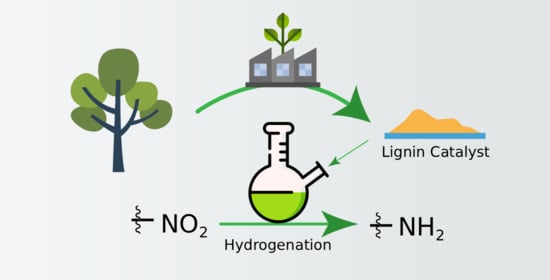
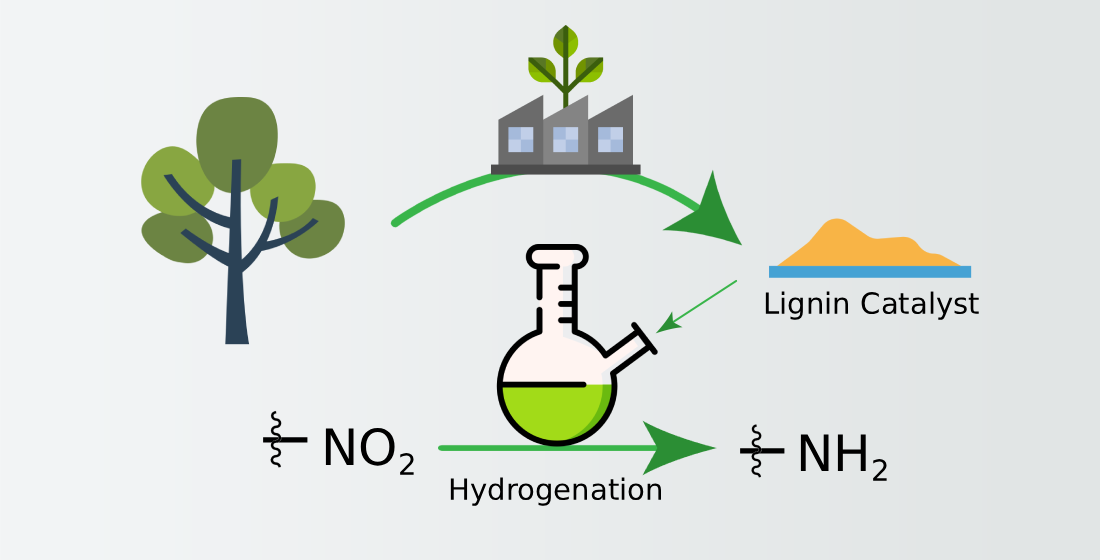
Graphical Abstract

1. Introduction

Catalytic hydrogenation ranks among the fundamental transformations in a wide range of organic chemistry processes and has high strategic importance in fine chemistry, petrochemistry, and pharmaceutical synthesis. It enables the conversion of aromatic substrates into high-value products, including aromatic amines, alcohols, and cycloalkanes. Among those substances, nitrobenzene holds a dominant position: it is used to manufacture colorants, explosives, pharmaceuticals, pesticides, and polymers (in particular polyurethanes) [1,2,3]. Excessive nitrobenzene use and poor wastewater treatment caused harmful discharges, risking human health [4]. It is frequently found in the environment and listed as a priority pollutant due to its mutagenicity, resistance, and accumulation [5]. The removal of nitrobenzene through selective conversion into aniline facilitates the valorization of hazardous waste and serves as a crucial intermediate in the synthesis of pharmaceuticals, dyes, agrochemicals, and other value-added chemical products [3].
The catalytic hydrogenation reaction reduces nitrobenzene via two main methods. The first uses hydrogen gas (H2), offering high efficiency but requiring high pressure and temperature, which limits safety and equipment needs [6]. The second, catalytic transfer hydrogenation (CTH), employs hydrogen donors like alcohols, NaBH4, hydrazine, ammonium borane, and formic acid salts. CTH avoids pressurized H2, making it more sustainable and effective under mild conditions [7].
The majority of heterogeneous catalysts employed in catalytic transfer hydrogenation (CTH) reactions consist of metal-based catalysts, including Fe, Co, Ni, Cu, Ru, and Pd, among others [8,9,10]. Non-noble catalysts are cost-effective; however, they typically demonstrate reduced activity and selectivity and often require stringent reaction conditions [11]. Traditional palladium-catalyzed hydrogenation reactions are widely used in fine chemical and pharmaceutical synthesis due to their high catalytic activity, gentle operating conditions, and broad tolerance for functional groups [12]. Palladium catalysts are often supported on materials such as activated carbon, alumina, or silica and are effective for hydrogenating alkenes, alkynes, nitro groups, and carbonyl compounds. However, their use faces challenges such as the high cost and limited availability of palladium, catalyst deactivation caused by sintering or poisoning, and metal leaching, which can contaminate products. Additionally, traditional supports are generally non-renewable and have limited options for modifying metal–support interactions, raising both economic and environmental concerns [13,14].
The classic catalytic Pd, including Pd/Cu and Pd/SiO2, demonstrates high yields and excellent selectivity, but its efficiency strongly depends on the support used, the nanoparticles’ size, their dispersion, and the interaction between the metal and support [15,16]. Notably, Pd activity can be enhanced by N-heterocyclic carbene (NHC) ligation, which increases electron density at the metal and improves stability under hydrogenation [17]. The adjustment of the surface polarity (hydrophilic vs. hydrophobic), hierarchic porosity, and support functionalization are key parameters influencing catalytic activity and over-hydrogenation prevention [18].
In this context, lignin serves as an environmentally friendly bio-source for catalytic support. This aromatic biopolymer is generated in large quantities as a byproduct of the paper and biofuel industries. Lignin’s unique chemistry results from random polymerization involving combinatorial oxidative phenolic coupling reactions. Its structure consists of three aromatic monolignol units: p-coumaryl (H), coniferyl (G), and sinapyl (S) alcohols. These units are joined through various chemical linkages, such as carbon-carbon or carbon-oxygen bonds, including β-O-4, β-5, β-β, and α-O-4. As a highly branched polymer, it features a variety of functional groups like methoxy, aliphatic hydroxyl, and phenolic hydroxyl groups [19].
Lignin can be used in raw, activated, or carbonized form to produce porous materials, reaching up to 3000 m2/g of specific surface area after alkaline activation with alkali metal hydroxides [20,21]. Metal-loaded lignin has also been used as a precursor for the preparation of supported nanoparticles (NPs) [22]. Several studies have shown that the Pd/lignin system effectively catalyzes the hydrogenation of chemical compounds such as nitrobenzene, vanillin, or guaiacol, achieving yields of about 99% under mild aqueous conditions [23,24]. The catalytic potential of lignin can be further enhanced through structural modifications, including nitrogen doping, self-assembly into nanoparticles (LNPs), and copolymerization. These treatments increase Pd dispersion, prevent aggregation, improve electronic reactivity, and facilitate recyclability [25,26].
The stability of nanoparticles is determined by interfacial thermodynamics, ligand and surface chemistry, and the kinetics that influence growth or detachment, nanoparticle size, surface modifiers, mixing ratios, and the aging environment [27]. Lignin exhibits various anchoring motifs, including phenolic hydroxyl groups, carboxylate groups, methoxy groups, and π-systems, which facilitate the complexation of metal cations and the coordination of metal surfaces. This enables in situ reduction and robust chemisorption of Pd/Cu species. Such specific interactions between metals and lignin impart both electronic stabilization via ligand-to-metal donation and backbonding, as well as an enthalpic barrier to particle detachment [28]. Lignin stabilization works through steric hindrance and surface charge, creating an electrostatic double layer. The importance of these mechanisms varies with solvent polarity, ionic strength, and lignin solvation, affecting electrostatic screening and chain solvency [29]. Failure of stabilization occurs when metal–support interactions are weak, enabling particle migration and coalescence; Ostwald ripening favors smaller particles dissolving and redepositing onto larger ones; or lignin surface chemistry changes, losing chelation/adsorption sites. These processes accelerate at higher temperatures, with protic or polar solvents, and in the presence of redox-active species [30]. Competitive adsorption, such as by solvent molecules, intermediates, or halide anions, can displace lignin ligands, exposing metal surfaces to aggregation or corrosion. Leaching of metal atoms, especially Cu, under acidic or oxidative conditions, further weakens particle integrity and catalytic lifetime [31]. Robust Pd/Cu stabilization in lignin requires maximizing chemisorption sites through controlled lignin functionalization, ensuring steric coverage or grafting to form a solvated barrier, and operating under conditions that minimize ionic screening, ligand displacement, and aggregation or metal loss, which degrade performance [27].
Our recent research demonstrates that modified organosolv lignin with a methyl imidazolium group serves as an effective stabilizing agent for Pd and Cu in various cross-coupling reactions [22]. Additionally, these heterogeneous catalysts can be reused multiple times without a loss of activity. This work aims to thoroughly investigate the performance and limitations of Pd supported by technical (hydrolysis) lignin, a homogeneous catalyst, with a focus on its reducing ability and metal dispersion, by integrating literature comparisons. This study seeks to establish the Pd/lignin system as an alternative to conventional catalysts, addressing the challenges of the energy transition and the circular economy.

2. Results

2.1. Characterization of CML

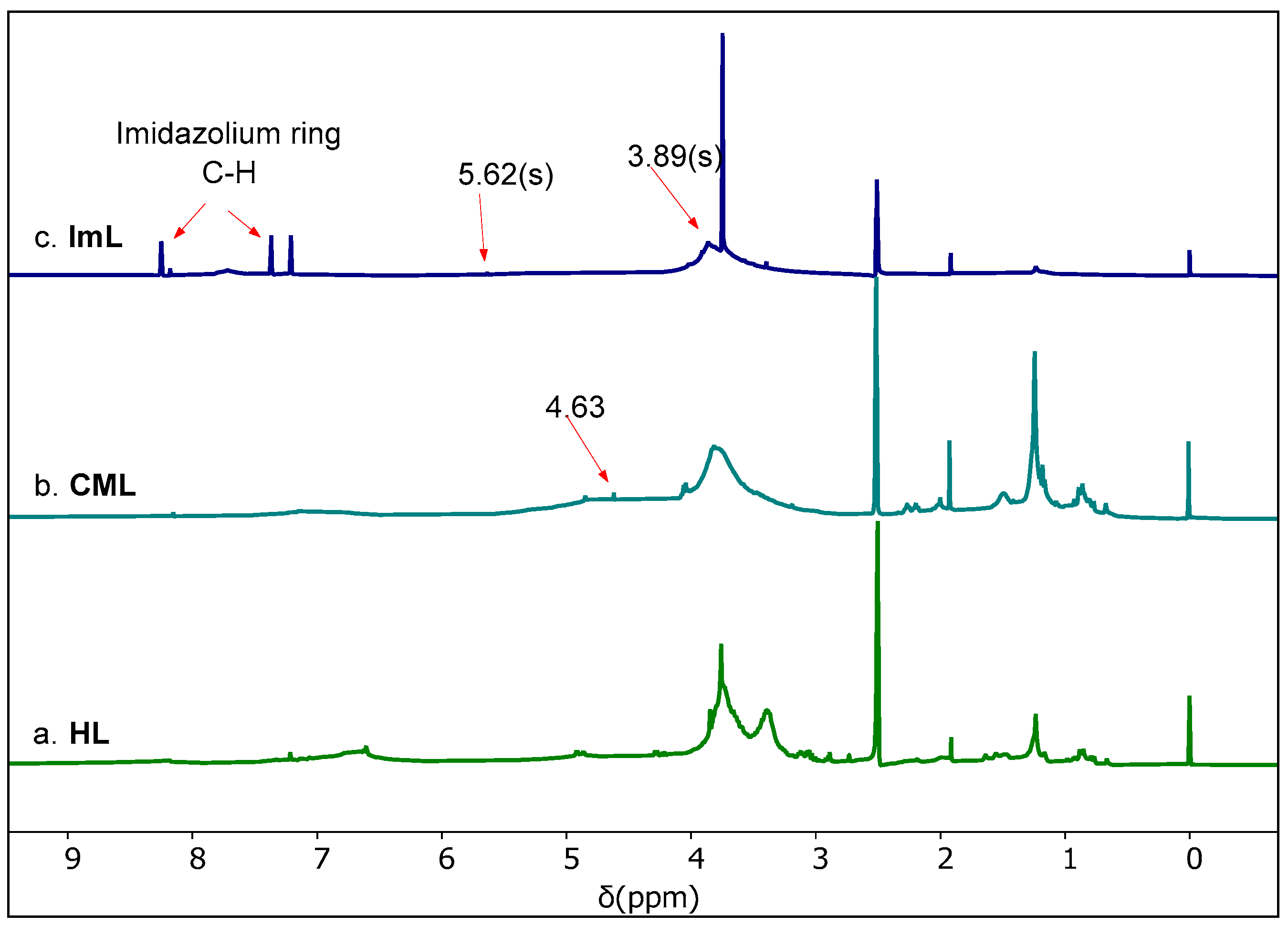
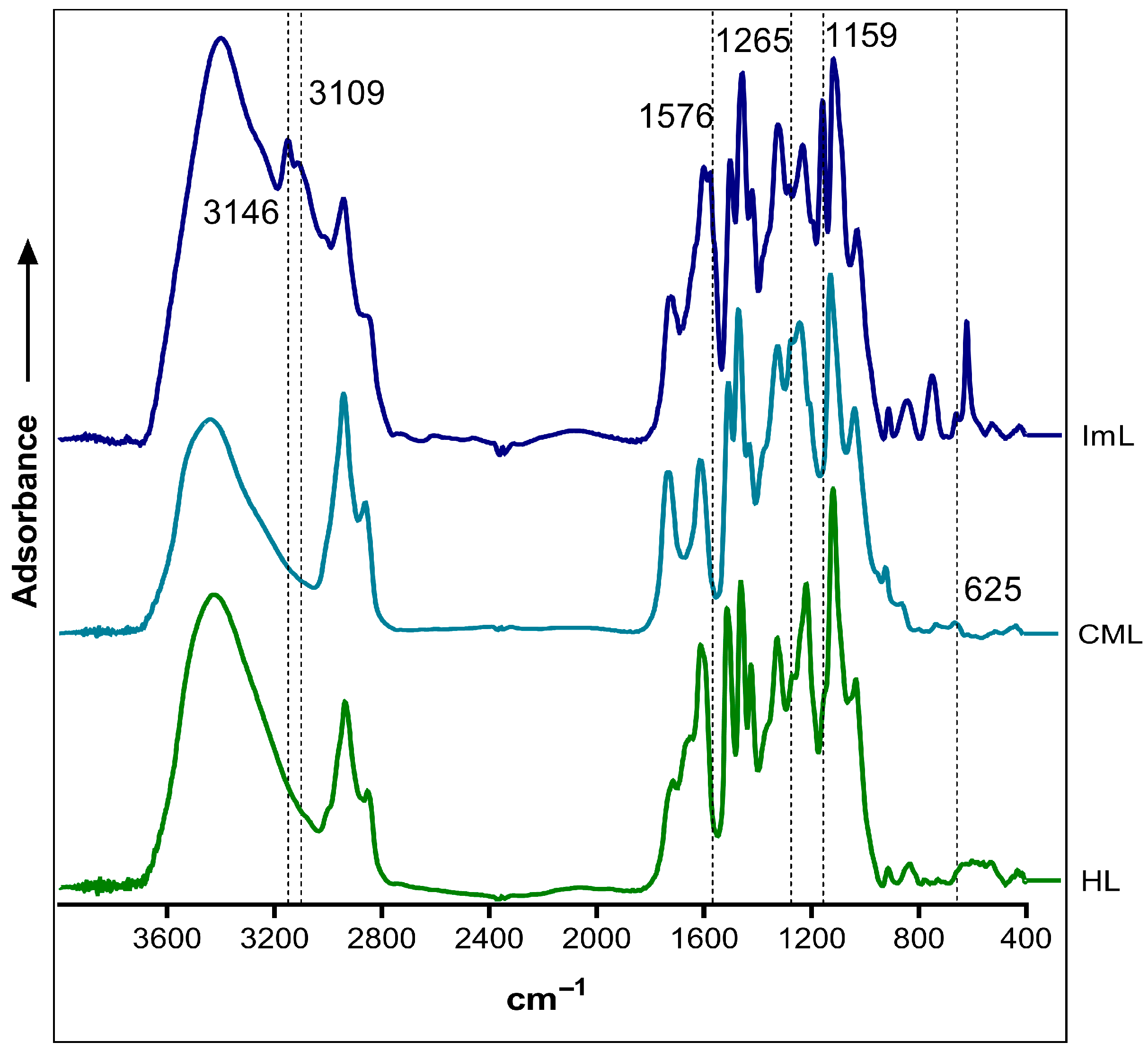
A new peak at 4.63 ppm appears in the 1H NMR spectra of the CML product (Figure 1b) in comparison to HL (Figure 1a), thereby confirming the presence of a –CH2–Cl group on the benzene ring. A characteristic peak of –CH2Cl appears at 625 cm−1 (see Figure 2). The absorption peak at 1265 cm−1 corresponds to the in-plane stretching vibration of C–H in 1,2,4-substituted benzene. The XRF analysis demonstrated that the chloromethylated product contained 11.6% organic chlorine, whereas HL exhibited no detectable amount of chlorine.

2.2. Characterization of 1-Methylimidazolium Lignin (ImL)

The new peaks observed at 5.62 ppm and 3.89 ppm in the 1H NMR spectra corroborate the presence of NCH2Ph and NCH3, respectively (Figure 1c). Additionally, peaks at 8.25 ppm and 7.3 ppm are indicative of imidazolium –CHs. FTIR spectra of ImL were recorded for further identification (see Figure 2). The spectrum shows absorption peaks at 3146 and 3109 cm−1, corresponding to N–H stretching from the imidazolium salt. The C=C stretching vibrations of the imidazole ring appear at 1576 cm−1, while a sharp peak at 1159 cm−1 is linked to C–N stretching in ImL.

2.3. Characterization of Lignin-Based Catalyst

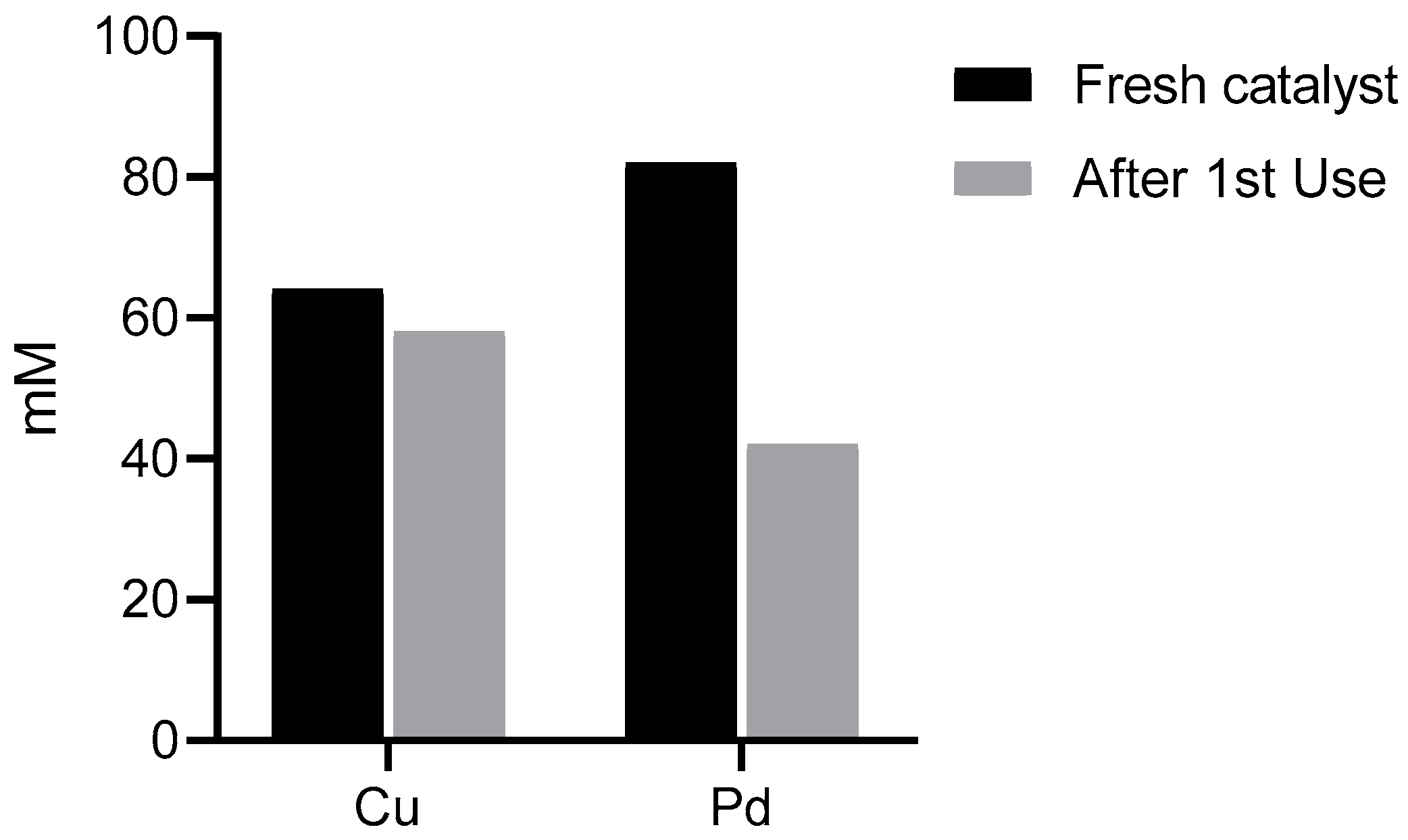
An investigation was conducted to determine the Pd/Cu level in the system using an atomic absorption spectrometer. The analysis confirmed the metal impregnation in the lignin. A consistent correlation has been established between the initial amount of Pd/Cu introduced and the measured contents in mole and mass percentages. The atomic absorption data show a decrease in palladium (Pd) and copper (Cu) content relative to the reaction input loading across a series of lignin-based catalysts (see Table 1). Primarily, Catalyst 1 with a 100 mM loading contains only 81.7 mM Pd following catalyst preparation. Similarly, the 100 mM Cu loading contains only 64 mM Cu within the catalytic system. These results likely indicate saturation of lignin’s active sites or its maximum ligand capacity. Moreover, the samples containing only Cu present a low metallic content. This may be due to a weak interaction between Cu2+ ions and lignin, less efficient complexation with methylimidazole, or Cu2+ precipitation during catalyst preparation, leading to reduced Cu incorporation. Pd content was the highest, indicating a high capacity for Pd metal incorporation.
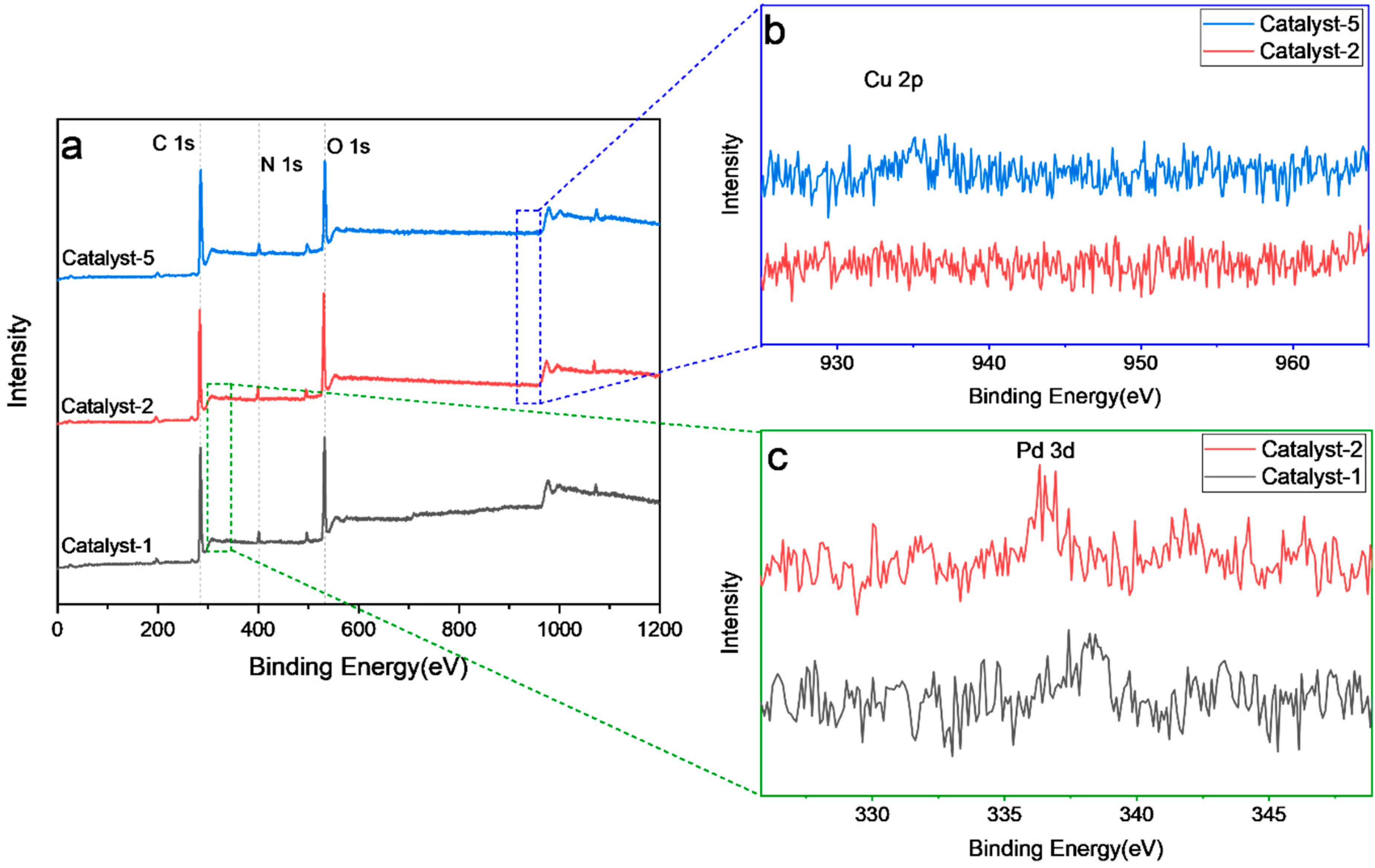
The XPS results reveal several key features related to the lignin matrix and the incorporated metal species (see Figure 3a). The C 1s spectra are consistent with the chemical structure of lignin, showing dominant contributions from C–C/C–H bonds at ~284.8 eV, C–O/C–Cl functionalities at ~286.3 eV, and carbonyl groups in the 288.0–288.6 eV range. The N 1s spectra are dominated by an imidazolium N+ component at ~401.6–401.8 eV, accompanied by a lower binding energy peak at ~399.5–400.0 eV, which is attributed to neutral organic nitrogen species (C–N type). A weak high-binding-energy shoulder above 403 eV is also observed and is likely associated with differential charging effects or strongly polarized nitrogen environments. The O 1s spectra display multiple components, in agreement with the presence of diverse oxygen-containing functional groups in lignin, such as C–O and C=O moieties.
Regarding Pd0/Pd2+, based on the spectra and the very low Pd surface concentration (below ~0.1 at.%), we do not observe any reliable Pd0 contribution around 335–336 eV. The Pd 3d signal is weak and noisy, and the only consistently visible Pd feature in catalyst-2 samples, the 3d5/2 peak, is located after ~336 eV, which could be consistent with oxidized Pd species (Pd2+ or Pd4+) or Pd becoming electron-depleted by interaction with CuO (no reduction); Pd 3d5/2 will be at or shifted slightly higher (see Figure 3c). Given the signal-to-noise ratio, more refined peak separation is unfortunately not meaningful. Cu 2p does not show a visible Cu feature; the region was measured at ~933 eV, but the signal is below the detection limit under the applied conditions, suggesting either a very low surface concentration of Cu or strong attenuation by the Pd-containing overlayer or organic matrix (see Figure 3b).
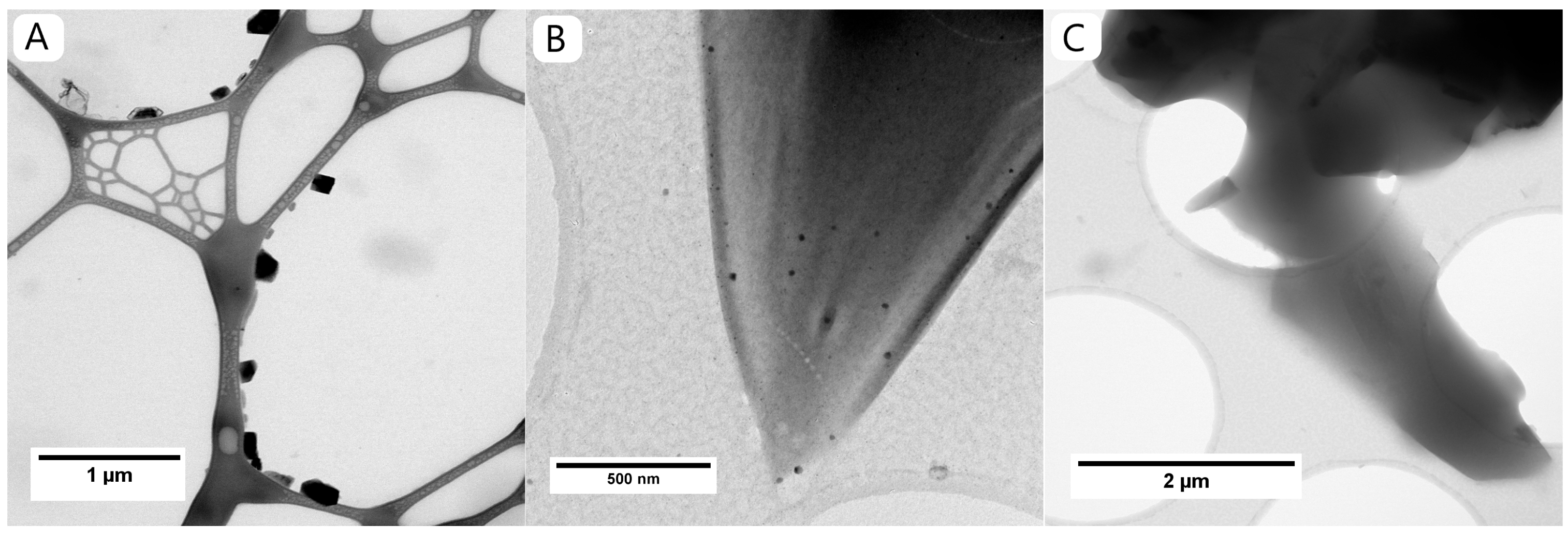
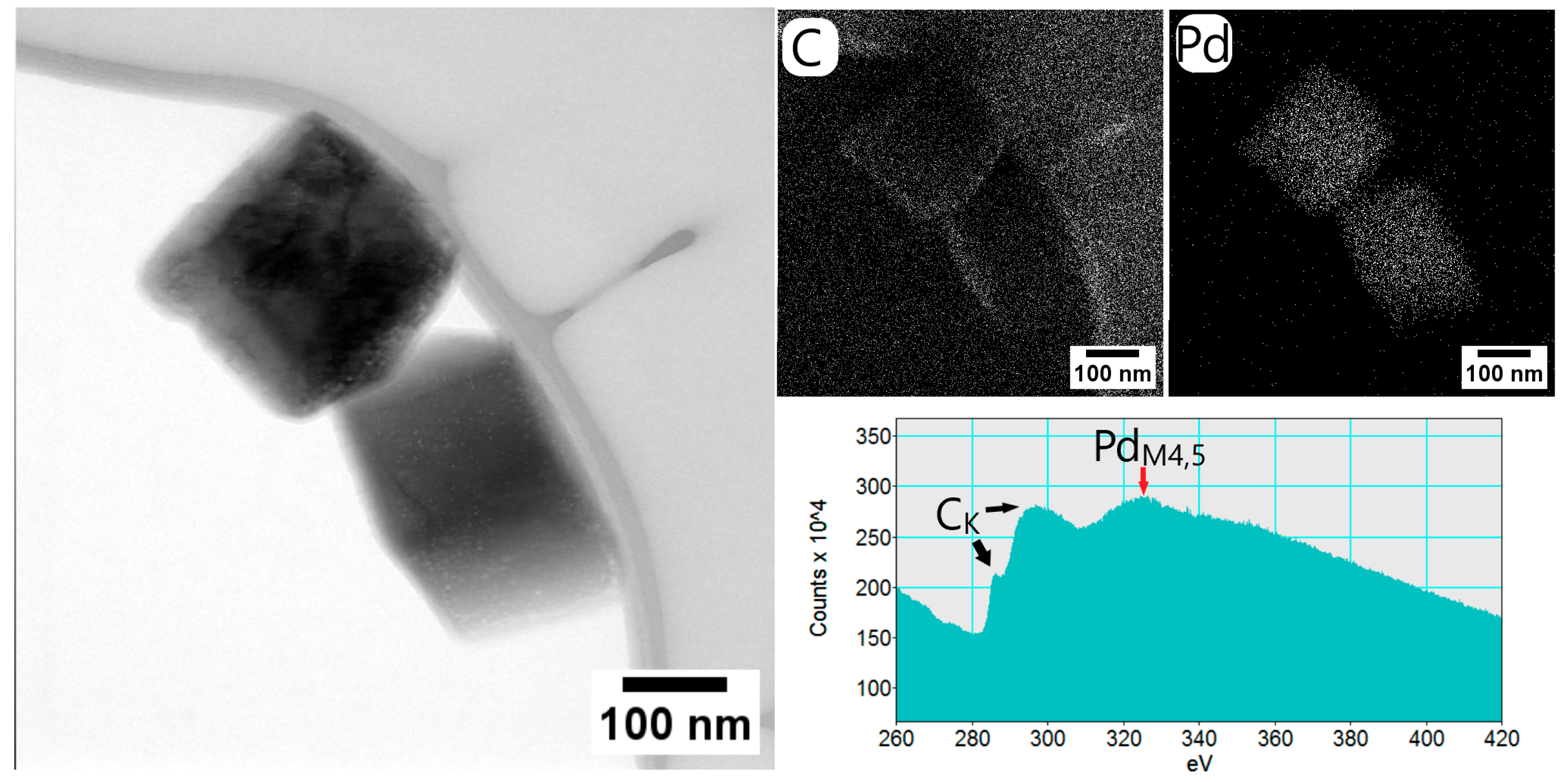
TEM analyses were conducted, with images obtained in bright-field and STEM modes for particle size analysis, while EDS and electron energy-loss spectroscopy were used to confirm the nanoparticles’ composition. TEM characterization (see Figure 4, Figure 5 and Figure 6) revealed that in catalyst-1, nanoparticles were dispersed and still contained unstable organic material that progressively degraded under electron-beam irradiation. These nanoparticles were analyzed by EDS and EELS, which showed a composition dominated by carbon and palladium, with trace amounts of sodium and chlorine. A particle size histogram was obtained based on the measurement of 200 individual particles, yielding an average particle size of 46 nm with a standard deviation of 12.4 nm.
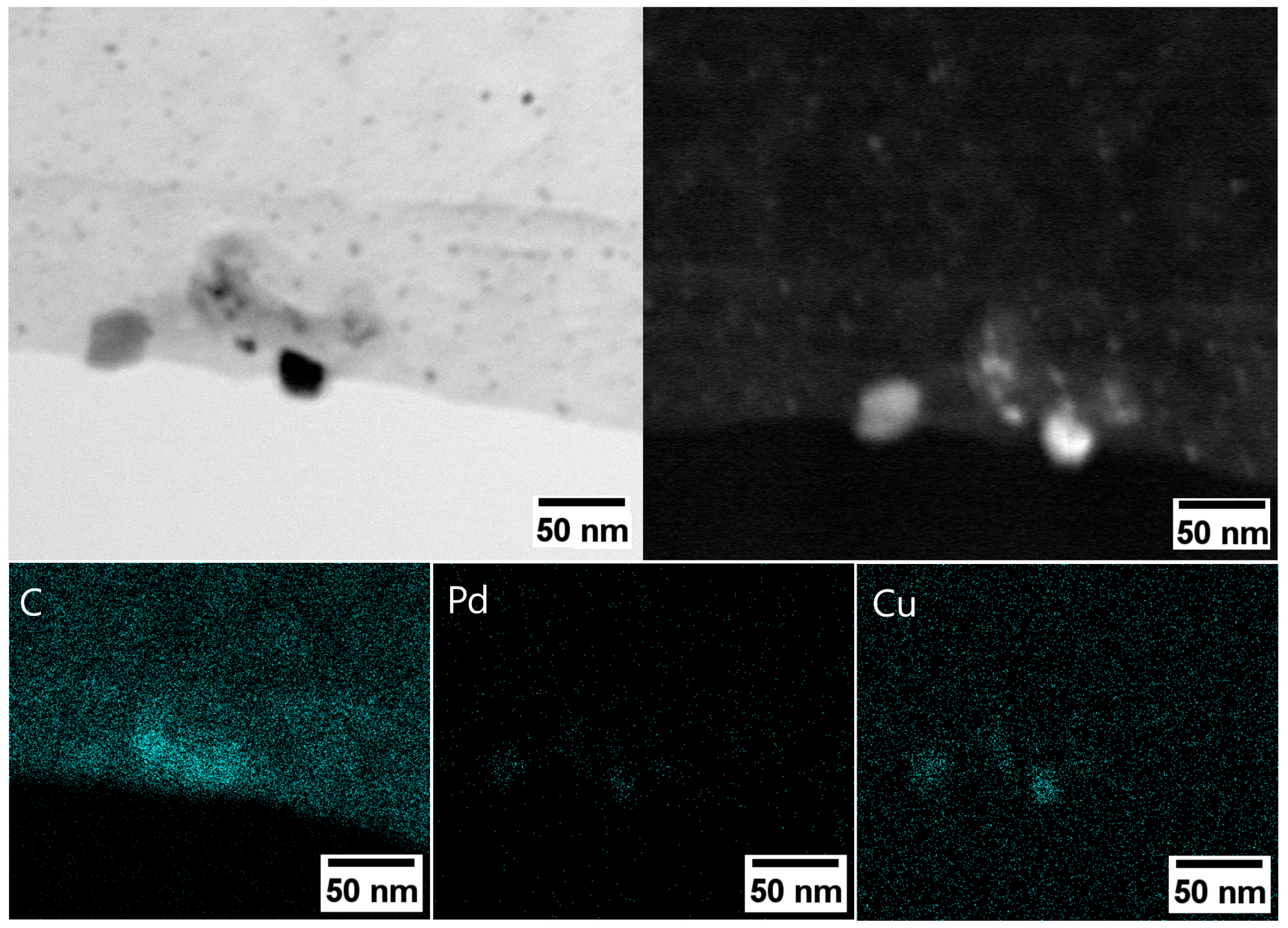
In catalyst-2, organic flakes that were more stable under electron-beam exposure were observed, containing nanoparticles embedded within their interiors. EDS and EELS analyses indicated the presence of carbon, palladium, and copper, along with trace amounts of nickel, sodium, and chlorine. Due to the spent condition of catalyst-2, the number of observable particles was too limited to allow a statistically robust size distribution analysis. Nevertheless, for particles that could be identified, an average size of approximately 18.4 nm with a standard deviation of 4.8 nm was measured. Characterization of catalyst -5 revealed the presence of flakes that did not contain nanoparticles, possibly indicating that nanoparticle precipitation did not occur during sample preparation. Both the size measurements were conducted using FIJI open-source software (Version 1.54p).

2.4. Catalytic Evaluation of Different Metal-Based Catalysts

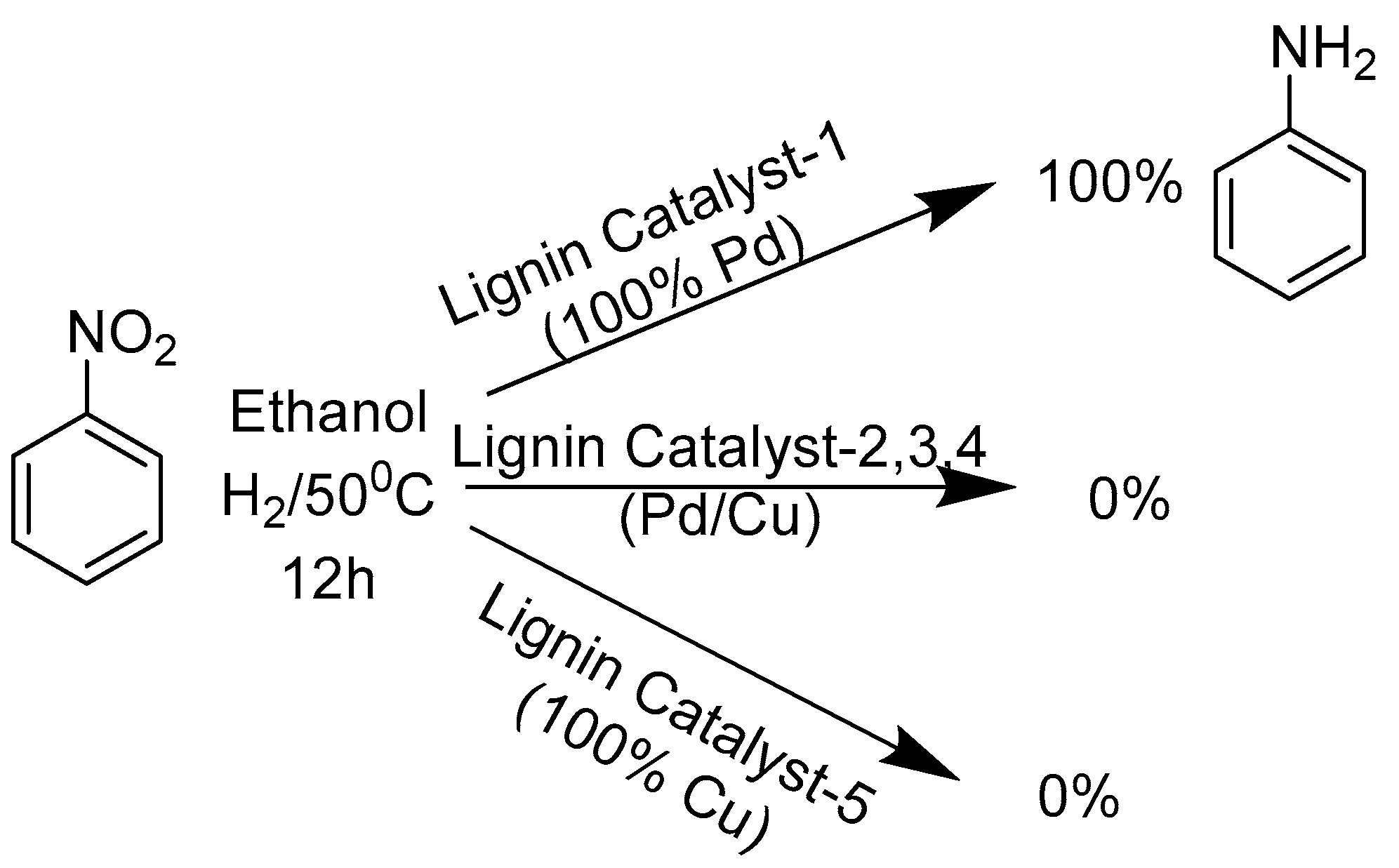
The catalytic activity of the different catalysts synthesized was evaluated for the conversion of nitrobenzene to aniline under homogeneous conditions, as shown in Scheme 1. Catalyst 1, with a high Pd concentration (81.7 mM), achieves complete conversion (100%) in the absence of Cu. These results demonstrate that Pd is the essential catalytic species in this reaction. Conversely, catalysts 2 to 5 were found to be entirely inactive, yielding 0%. The catalyst comprising only Cu (catalyst 5; 64 mM) confirms that Pd metal is needed for the transformation. Regarding catalysts 2, 3, and 4, which contain Pd combined with Cu, activity remains absent. This observation proves that the inhibitory effect of Cu impedes the reaction, as evidenced by the higher oxidation states of Pd observed in the XPS study (see Figure 3c). These initial findings verify the significance of high palladium loading and the absence of copper in optimizing catalytic performance. Furthermore, these results imply that, within this system, copper does not facilitate the reaction but instead impairs palladium activity.

2.5. Evaluation of the Catalytic Activity of Lignin-Based Catalyst-1

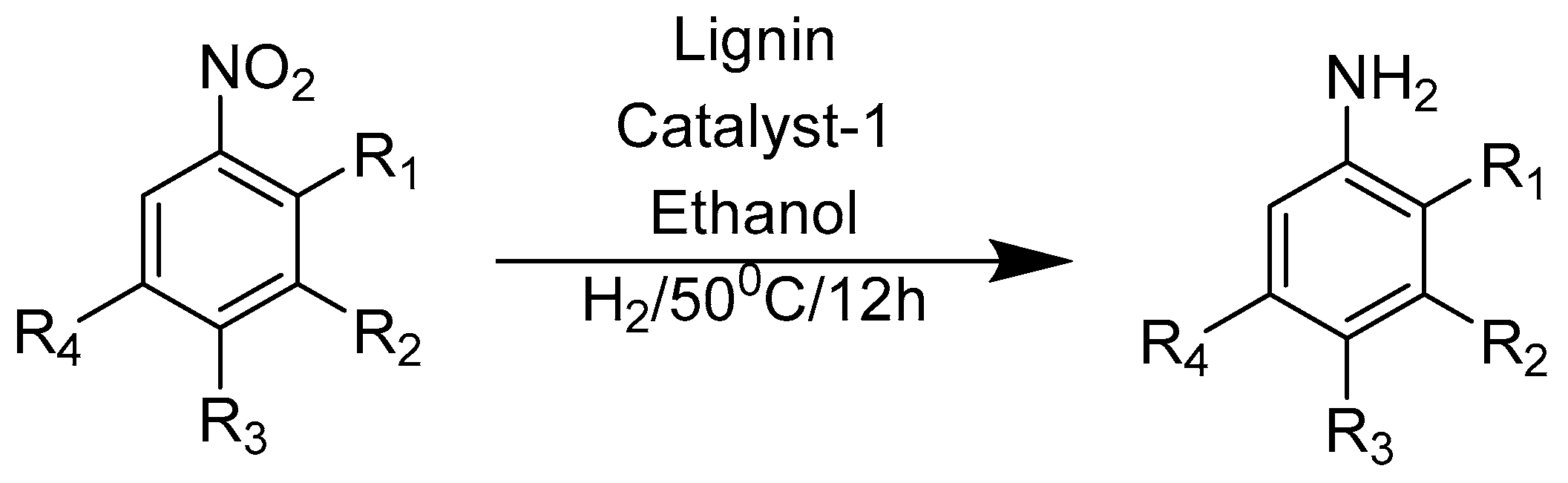
Table 2 examines the reactivity of several substrates tested with catalyst-1, which was identified as the most effective during the initial experimentation. All tests were conducted under identical conditions (see Scheme 2).
Catalyst-1, despite demonstrating 100% yield in specific experiments, exhibits significant variability in substrate conversion to the anticipated hydrogenated product, with conversion rates ranging from 0% to 100% under identical conditions.
Some substrates, such as 1, 25, and 27, are fully converted to their corresponding hydrogenated products. Conversely, other reactants only achieve moderate conversions, with yields ranging from 40% to 66%, as exemplified by substrates 2, 8, 9, 10, 12, 13, 22, and 24. Several substrates, including 4, 6, 7, 15–21, and 23, show no detectable product, indicating no reactivity. The reduction of nitrobenzene to aniline is greatly affected by the electronic characteristics and the position of substituents on the aromatic ring. Electron-withdrawing groups generally promote nitro group reduction, following a para > meta > ortho reactivity pattern, due to favorable electronic effects and less steric hindrance at the para position. This is seen with –COOH, –CHO, and –COCH3 substituents, although ortho substitutions often show reduced activity owing to steric limitations. Halogen substituents exhibit different behaviors: Cl and I tend to inhibit the reaction, likely because they poison the catalyst, whereas F shows moderate activity due to its powerful inductive effect and small size. Conversely, electron-donating groups usually hinder nitro reduction by increasing electron density on the ring. For example, –OH and –NH2 have limited, position-dependent activity, with ortho substitutions being somewhat more reactive, possibly due to specific adsorption or coordination. Meanwhile, –CH3 shows minimal activity overall. These findings indicate that catalyst efficiency in reducing substituted nitrobenzenes depends on a combination of electronic effects and steric accessibility, with para-electron-withdrawing groups offering the best conditions for forming aniline.
This altered catalytic performance may be attributed to structural and physicochemical limitations arising from several interdependent factors, as widely supported in the recent literature on Pd-LNP systems [24,32,33]. Among these, several critical phenomena can be identified involving concurrent structural, chemical, and colloidal interactions. The active Pd0 may undergo oxidation during storage, especially in the presence of moisture or air, significantly diminishing the availability of active sites. XPS analyses have confirmed the existence of Pd2+ or Pd4+, especially in mixture on Pd-Cu metals, with a decline in activity correlating with a higher proportion of Pd oxides [32].

2.6. Chemical Degradation of the Lignin Support

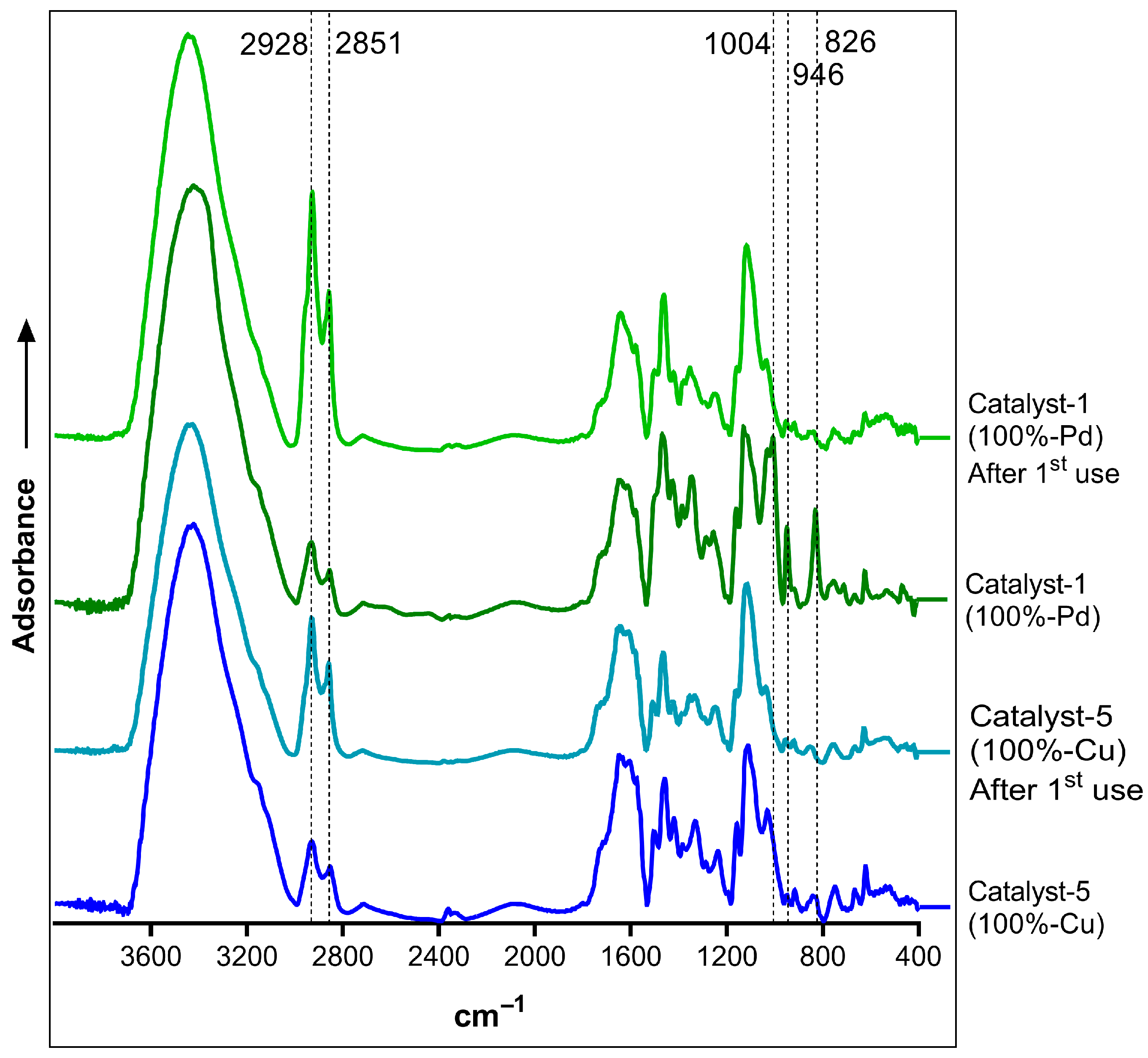
Lignin-based catalyst stability/degradation can negatively impact metal coordination and catalyst stability. FTIR analysis was used to identify the functional groups present before and after the reaction, indicating that the catalyst’s chemical stability influences its performance. This analysis allows us to confirm the hypothesis to evaluate the chemical degradation of the support. Following one catalytic cycle, the FTIR spectrum of the recovered lignin catalyst shows notable changes, reflecting structural transformations during the reaction (see Figure 7). Most prominently, the absorption bands at 2928 and 2851 cm−1, assigned to the asymmetric and symmetric stretching vibrations of aliphatic –CH2– groups, show a marked increase in intensity in both Cu and Pd-based catalysts. This enhancement suggests an increase in the relative abundance or accessibility of aliphatic moieties within the lignin matrix. Such a change is consistent with partial depolymerization of lignin, particularly the cleavage of β–O–4 and other alkyl–aryl ether linkages, which can generate lower-molecular-weight fragments with more exposed methylene groups.
In contrast, several characteristic bands associated with the aromatic framework of lignin, particularly those at 1004, 946, and 826 cm−1, diminish or disappear after use. These bands correspond to aromatic ring-breathing modes, C–O deformation vibrations, and C–H out-of-plane bending characteristic of guaiacyl and syringyl units. The loss of these signals indicates significant modification of the lignin aromatic structures. Possible explanations include oxidation of phenolic units, demethoxylation, or partial aromatic ring opening, all of which can suppress or eliminate the characteristic vibrations of intact aromatic systems. Furthermore, the formation of metal–phenolate or metal–aromatic complexes during the catalytic process may alter electron distribution within the rings, resulting in attenuation or disappearance of these diagnostic peaks.
Atomic absorption spectrometry analysis of the recovered lignin-based catalyst following one catalytic cycle showed a noticeable decrease in both Pd and Cu content compared to the fresh material (see Figure 8). This reduction is most plausibly attributed to partial metal leaching into the reaction medium, where Pd and Cu may be released as soluble ions, or to structural depolymerization of the lignin support, as seen in the FTIR. Additionally, physical loss of metal-containing nanoparticles during filtration or washing cannot be excluded, particularly if small colloidal particles are detached from the lignin surface. Raising serious concerns about the heterogeneous nature of the catalysis, the homogeneous and solid fractions of catalyst-1 after a mock reaction (without reactants, under the same reaction conditions) were used to repeat the hydrogenation of nitrobenzene to determine whether the reaction is driven by leached homogeneous Pd species or the solid catalyst. This result demonstrates that the solid portion of the catalyst yielded 58%, whereas the soluble portion produced no product. These results show that the reaction is driven by the solid Pd catalyst rather than by the leached homogeneous Pd species. Some of the lignin support may dissolve in the solvent, leading to the loss of active catalyst and a subsequent reduction in catalytic activity. Overall reduction in measured metal concentration indicates that the initial catalytic cycle results in a significant loss of metals from the lignin support, thereby affecting catalyst stability and recyclability.

3. Discussion

A significant challenge in directly converting lignin from its intricate structure into a stable ligand is understanding its molecular composition, which is vital for producing high-value commodities. Typically, lignin predominantly comprises phenylpropyl groups and contains three central aromatic units: syringyl (S), guaiacyl (G), and hydroxyphenyl (H) [34]. During ligand synthesis and catalytic reactions, low-energy C–O bonds, such as β–O–4 linkages, are prone to rupture, yielding lignin fragments. These fragments may contain metals and could be lost during hydrogenation, potentially elucidating variations in the catalytic activity of lignin-based catalysts across different substrates. Collectively, the FTIR spectral changes indicate that lignin undergoes both structural and chemical transformations during its catalytic application. The concurrent increase in aliphatic C–H stretching bands and loss of aromatic vibrational modes suggests that lignin, as a homogeneous support, may be affected during the hydrogenation process and may participate in the structural changes.
The addition of the methyl imidazolium group could be linked to the in situ formation of reactive carbene species on the Pd surface, facilitating oxidative addition, supporting hydride formation, and resisting aggregation [17,35]. Lignin-derived oxygenated fragments and nitrogen functionalities may further promote persistent carbene formation during hydrogen transfer. Compared to phosphines, NHCs offer improved thermal and oxidative stability and remain coordinated under hydrogenation conditions, allowing for effective activation of polar functional groups such as –NO2 and C=O [36]. Sterically, NHCs provide tunable protection through their buried volume (%V bur), controlled by N-substituents. Bulky substituents, including lignin fragments, create a steric “shield” that suppresses Pd aggregation, enhances reductive elimination, and stabilizes monoligated active Pd species [37]. Coordination is expected to occur predominantly via the carbene carbon (Pd–C(NHC)), as N-coordination is disfavored due to protonation or substitution [38]. Overall, imidazolium-functionalized lignin likely acts not only as a structural support but also as a ligand, influencing Pd dispersion, oxidation-state stability, and hydrogen-transfer efficiency. This pathway complements the classical adsorption reduction model and highlights the active role of lignin in modulating catalytic cycles.
The efficiency of catalyst-1 may be attributed to the presence of Pd0, which is widely recognized as the active species in hydrogenation reactions. This observation aligns with prior studies demonstrating that lignin nanoparticles (LNPs) rich in phenyl groups can reduce Pd2+ to Pd0 in the absence of an external agent, thereby yielding high catalytic activity [24]. The dispersion and anchoring of palladium onto the lignin support are facilitated by functional groups such as –OH, –COOH, and imidazole, as confirmed by other studies [39], in which functionalized lignin acts as both a stabilizing and reducing agent. The bimetallic catalysts-2, despite their high Pd content, showed low or no catalytic activity. Several studies have demonstrated that introducing Cu into the Pd catalytic system can dilute active sites or poison Pd active sites by forming Pd-Cu alloys or poorly active Pd-Cu phases [40,41]. This hypothesis is supported by the XPS analysis, which shows a Pd peak shift indicating a Pd-Cu interaction on γ-Al2O3 but not on Activated Carbon (AC), demonstrating the importance of the support on this synergy [40]. These suggest that improving the catalyst will require (i) enhancing Pd anchoring through ligand design, (ii) minimizing degradation of the lignin backbone, and (iii) optimizing steric/electronic properties to retain Pd in an active, soluble form. Future work should include XPS tracking of Pd0/Pd2+ interconversion, isolation of model Pd–ImL carbene complexes, recyclability tests, and evaluation of substrate-dependent mechanistic pathways.

4. Materials and Methods

4.1. Materials

All reagents employed in this study were of analytical reagent (AR) grade and used without additional purification. Birch-derived hydrolysis lignin (HL) samples were obtained from Fibenol OÜ (Imavere, Järva, Estonia). The lignin was classified as hydrolysis lignin due to its production process, which involves enzymatic treatment. Reagents and solvents were procured from Sigma-Aldrich (Taufkirchen, Germany). CDCl3 and DMSO-d6 were purchased from Eurisotop (Saint-Aubin, France). All chemicals utilized were of analytical grade and were used as received. Deionized water, obtained from a Milli-Q water purification system (Millipore S.A., Molsheim, France), was used throughout the research.
The NMR spectra were recorded using a Bruker Avance III 400 MHz spectrometer (Rheinstetten, Germany). MestReNova x64 software (version 15.1.0) was employed to analyze the 1H spectra. The FTIR spectra were acquired with a Shimadzu IRTracer-100 spectrometer (Kyoto, Japan); KBr pellets were utilized to prepare the samples at a concentration of 1% by weight, with a resolution of 2 cm−1 and 80 scans. All samples within the spectral range of 400–4000 cm−1 were analyzed using Shimadzu LabSolutionsIR v6 software. The metal content of Pd and Cu was measured using a Varian SpectrAA 220FS flame atomic absorption spectrometer (Palo Alto, CA, USA). Organic chlorine in CML samples was analyzed with a Bruker S4 Pioneer XRF spectrometer (Karlsruhe, Germany) employing the pre-calibrated MultiRes measurement method. For sample preparation, a dilution approach was used with a 1:10 ratio of sample to NaHCO3. X-ray photoelectron spectroscopy (XPS) was performed using a Kratos AXIS Ultra DLD spectrometer (Manchester, UK). Spectra were obtained with monochromatic Al Kα radiation (1486.6 eV) and non-monochromatic Mg Kα radiation (1253.6 eV) as sources. Electron energies were analyzed with a hemispherical analyzer. Survey spectra were recorded at a pass energy of 160 eV, and high-resolution spectra at 20 eV. All binding energies were charge-corrected by referencing the C 1s (C–C/C–H) peak to 284.8 eV. TEM images were acquired using a JEOL 2100F microscope (Tokyo, Japan) operated in both conventional transmission (TEM) and scanning transmission (STEM) modes. The instrument was equipped with a JEOL JED-2200 energy-dispersive X-ray spectroscopy (EDS) system (Tokyo, Japan) and a Gatan electron energy-loss spectrometer (EELS) (Pleasanton, CA, USA) with an energy resolution of 1 eV.

4.2. Preparation of Lignin-Based Catalyst

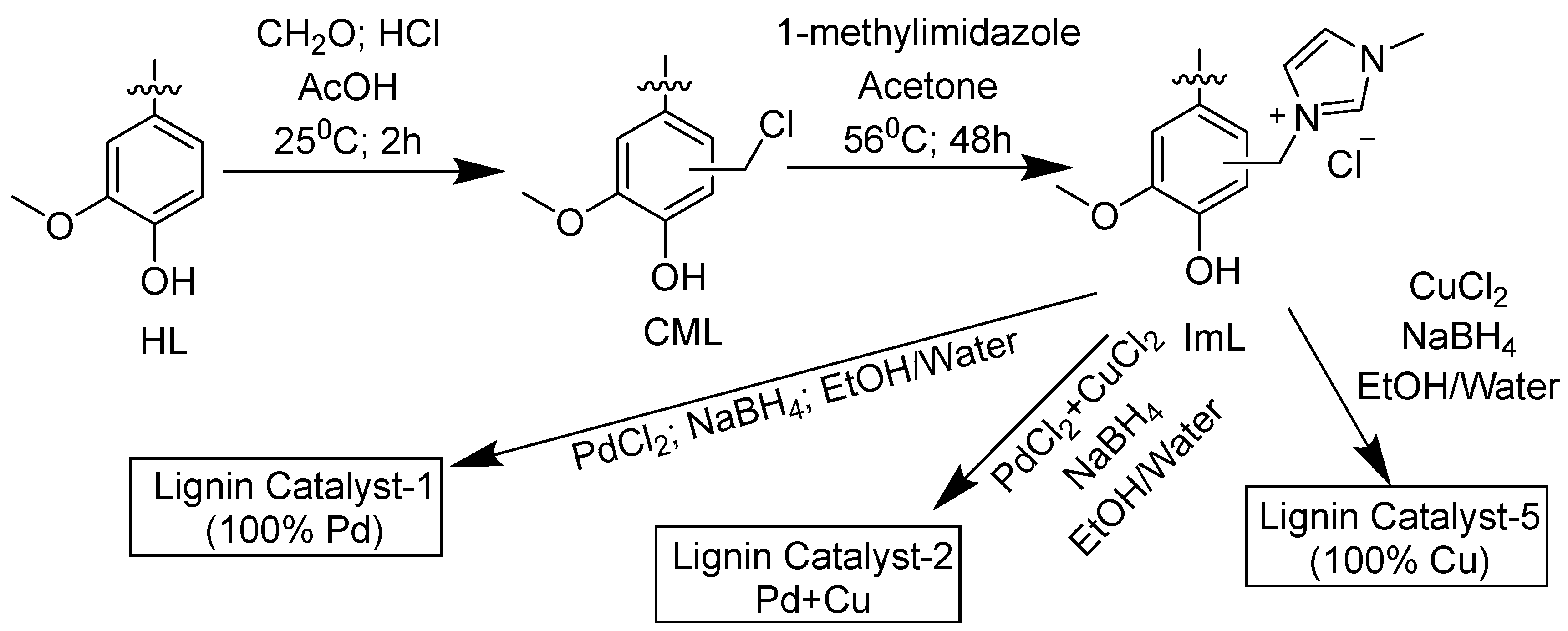
The detailed procedure for the organosolv lignin-based catalyst is explained in our previous publication [22]. This process involves three steps: chloromethylation, 1-methylimidazolium functionalization, and catalyst preparation with Pd and Cu. The same procedure is followed here with HL.

4.2.1. Chloromethylation of Hydrolysis Lignin

1 g of HL and 1 g of paraformaldehyde (PFA) were dissolved in 10 milliliters of glacial acetic acid (AcOH), followed by bubbling with HCl gas for 2 h (refer to Scheme 3). The reaction was quenched by adding 30 mL of water. The crude chloromethyl lignin (CML) product was then filtered, rinsed with water, and dried under vacuum, yielding 1.2 g. The conversion to the chloromethylated product was monitored by analyzing the organic chlorine content.

4.2.2. Preparation of 1-Methylimidazolium Lignin (ImL)

1 g of 1-methylimidazole was added slowly to a solution containing 1 g of CML in 20 mL of acetone. The reaction mixture was subjected to heating while stirring at 56 °C (refer to Scheme 1). After 48 h, the precipitate was separated by filtration, washed with 10 mL of a 70% ethanol/water mixture, and subsequently dried under vacuum. Only the precipitated and washed product, with a yield of 350 mg, was selected for subsequent characterization and functionalization.

4.2.3. Preparation of Lignin-Based Catalyst

A mixture of ImL (1 g) and ethanol (25 mL) was stirred for 30 min at ambient temperature in a 100 mL round-bottom flask. Subsequently, 25 mL of the metal (PdCl2, CuCl2, or PdCl2 + CuCl2) solution, prepared in advance as described in Table 3, was added to the mixture. The entire reaction mixture was stirred for an additional 45 min at 70 °C using magnetic agitation. Following this, NaBH4 (0.070 g, 2 mmol) was added incrementally over 15–25 min. The mixture was then stirred at ambient temperature for a further 12 h, during which its color sequentially transitioned from brown to black as nanoparticles were formed. Ethanol was removed from the mixture by rotary evaporation, then the mixture was washed with water and finally dried.

4.3. Hydrogenation General Procedure

A mixture of 10 mg nitrobenzene and 5 mg of the Lignin catalyst was stirred for 12 h in 5 mL of ethanol under ambient hydrogen pressure at 50 °C. The solvents were removed under vacuum, and the resulting residue was analyzed by 1H NMR.

4.4. Catalyst Reusability Test

To assess the reusability and stability of the catalyst, a mock reaction was performed with 50 mg of the Lignin catalyst (1, 5). The catalyst was stirred for 12 h in 25 mL of ethanol under ambient hydrogen pressure at 50 °C. The heterogeneous portion is analyzed by atomic absorption spectrometry to determine the remaining metal content in the catalyst. FTIR was used to analyze the entire catalyst after removing the ethanol. The homogeneous and heterogeneous fractions of catalyst-1 were used to repeat the hydrogenation of nitrobenzene.

5. Conclusions

This work emphasizes the drawbacks of hydrolyzed lignin as an environmentally friendly support for metal-based homogeneous catalysts in hydrogenation. The successful synthesis of metal-coordinated imidazolium lignin (Pd and Cu) has been accomplished through a chloromethylation method applied to hydrolyzed lignin. The characterization of the modified lignin was confirmed using a range of analytical methods, including Fourier-transform infrared spectroscopy (FTIR), nuclear magnetic resonance (NMR), and X-ray fluorescence (XRF) for measuring organic chlorine content. Atomic absorption spectroscopy was used to verify the metal content of the lignin-based catalyst. The surface element compositions of Pd and Cu at the lignin catalyst were analyzed by X-ray photoelectron spectroscopy (XPS). The lignin NPs are fully characterized here by TEM. Additionally, the effectiveness of the lignin-based catalyst in supporting various nitro-to-amine reactions was demonstrated. The homogeneous catalyst demonstrated significant performance variation between batches, suggesting limitations in terms of Pd distribution homogeneity. The Pd-only systems (Catalysts-1) exhibited the highest yields in mild conditions, while Cu alone or with Pd showed no catalytic activity. These results highlight the importance of Pd-metal-support interactions in determining catalyst performance. Additional optimization is required to enhance metal retention, dispersion, and catalyst stability.
Overall, this research shows that lignin has excellent potential as a traditional catalyst support, as it is a renewable, functionalized bio-sourced material, and as a limitation for homogeneous catalysts. These findings provide valuable insights for improving chemical processes, from lignin modification to the development of sustainable applications, in line with green chemistry principles.

Author Contributions

Conceptualization, M.K.M. and Y.K.; methodology, M.K.M.; software, M.K.M.; validation, M.K.M.; formal analysis, M.K.M. and D.B.; investigation, M.K.M., L.A., N.S. and R.d.M.C.L.; resources, Y.K.; data curation, M.K.M., N.S. and R.d.M.C.L.; writing—original draft preparation, M.K.M., N.S. and L.A.; writing—review and editing, D.B., B.H. and Y.K.; visualization, M.K.M.; supervision, B.H. and Y.K.; project administration, Y.K.; funding acquisition, Y.K. All authors have read and agreed to the published version of the manuscript.

Funding

This research was funded by the Estonian Research Council, grant number TEM-TA49 (for M.K.M., N.S. and Y.K.). This work has also received funding from the European Union’s Horizon Europe research and innovation programme under the Marie Skłodowska-Curie grant agreement No. 101210683 (for D.B). L.A. and B.H. acknowledge support of the Erasmus+ programme of the European Union.

Data Availability Statement

Data are available from the authors upon reasonable request.

Acknowledgments

Authors acknowledge Maria Kulp for providing support in AAS experiments and Fibenol OÜ for providing samples of technical lignin. During the preparation of this manuscript/study, the authors used GraphPad Prism 8 for the graphs. The authors have reviewed and edited the output and take full responsibility for the content of this publication.

Conflicts of Interest

The authors declare no conflicts of interest.

References

  1. Li, W.; Zhao, J.-W.; Yan, C.; Dong, B.; Zhang, Y.; Li, W.; Zai, J.; Li, G.-R.; Qian, X. Asymmetric Activation of the Nitro Group over a Ag/Graphene Heterointerface to Boost Highly Selective Electrocatalytic Reduction of Nitrobenzene. ACS Appl. Mater. Interfaces 2022, 14, 25478–25489. [Google Scholar] [CrossRef]
  2. Wang, H.; Zhang, W.; Liu, Y.; Pu, M.; Lei, M. First-Principles Study on the Mechanism of Nitrobenzene Reduction to Aniline Catalyzed by a N-Doped Carbon-Supported Cobalt Single-Atom Catalyst. J. Phys. Chem. C 2021, 125, 19171–19182. [Google Scholar] [CrossRef]
  3. Hirakawa, H.; Katayama, M.; Shiraishi, Y.; Sakamoto, H.; Wang, K.; Ohtani, B.; Ichikawa, S.; Tanaka, S.; Hirai, T. One-Pot Synthesis of Imines from Nitroaromatics and Alcohols by Tandem Photocatalytic and Catalytic Reactions on Degussa (Evonik) P25 Titanium Dioxide. ACS Appl. Mater. Interfaces 2015, 7, 3797–3806. [Google Scholar] [CrossRef]
  4. Zheng, H.; Deng, Y.-K.; Ye, M.-Y.; Xu, Q.-F.; Kong, X.-J.; Long, L.-S.; Zheng, L.-S. Lanthanide-Titanium Oxo Clusters as the Luminescence Sensor for Nitrobenzene Detection. Inorg. Chem. 2020, 59, 12404–12409. [Google Scholar] [CrossRef] [PubMed]
  5. Rickert, D.E. Toxicity of Nitroaromatic Compounds; Hemisphere Publishing Corporation: Sydney, Australia, 1985. [Google Scholar]
  6. Wu, B.; Lin, T.; Yang, R.; Huang, M.; Zhang, H.; Li, J.; Sun, F.; Song, F.; Jiang, Z.; Zhong, L.; et al. Ru Single Atoms for Efficient Chemoselective Hydrogenation of Nitrobenzene to Azoxybenzene. Green Chem. 2021, 23, 4753–4761. [Google Scholar] [CrossRef]
  7. Duan, Y.; Song, T.; Dong, X.; Yang, Y. Enhanced Catalytic Performance of Cobalt Nanoparticles Coated with a N,P-Codoped Carbon Shell Derived from Biomass for Transfer Hydrogenation of Functionalized Nitroarenes. Green Chem. 2018, 20, 2821–2828. [Google Scholar] [CrossRef]
  8. Wang, Z.; Wang, H. Pt, Pd, and Rh Nanoparticles Supported on Polydopamine Nanospheres as Catalysts for Transfer Hydrogenolysis. ACS Appl. Nano Mater 2022, 5, 11797–11808. [Google Scholar] [CrossRef]
  9. He, J.; Li, H.; Riisager, A.; Yang, S. Catalytic Transfer Hydrogenation of Furfural to Furfuryl Alcohol with Recyclable Al–Zr@Fe Mixed Oxides. ChemCatChem 2018, 10, 430–438. [Google Scholar] [CrossRef]
  10. García, B.; Orozco-Saumell, A.; López Granados, M.; Moreno, J.; Iglesias, J. Catalytic Transfer Hydrogenation of Glucose to Sorbitol with Raney Ni Catalysts Using Biomass-Derived Diols as Hydrogen Donors. ACS Sustain. Chem. Eng. 2021, 9, 14857–14867. [Google Scholar] [CrossRef]
  11. Nie, R.; Tao, Y.; Nie, Y.; Lu, T.; Wang, J.; Zhang, Y.; Lu, X.; Xu, C.C. Recent Advances in Catalytic Transfer Hydrogenation with Formic Acid over Heterogeneous Transition Metal Catalysts. ACS Catal. 2021, 11, 1071–1095. [Google Scholar] [CrossRef]
  12. Zhao, X.; Chang, Y.; Chen, W.-J.; Wu, Q.; Pan, X.; Chen, K.; Weng, B. Recent Progress in Pd-Based Nanocatalysts for Selective Hydrogenation. ACS Omega 2022, 7, 17–31. [Google Scholar] [CrossRef]
  13. Blaser, H.-U.; Indolese, A.; Schnyder, A.; Steiner, H.; Studer, M. Supported Palladium Catalysts for Fine Chemicals Synthesis. J. Mol. Catal. A Chem. 2001, 173, 3–18. [Google Scholar] [CrossRef]
  14. Astruc, D. (Ed.) Nanoparticles and Catalysis; Wiley: Hoboken, NJ, USA, 2007. [Google Scholar]
  15. Chalmers, J.A.; Moon, H.; Ausman, S.F.; Chuang, C.-H.; Scott, S.L. Enhancing Phenol Adsorption on Hydrophobic Pd/SiO2 to Achieve Faster and More Selective Hydrogenation. Top. Catal. 2023, 66, 1143–1151. [Google Scholar] [CrossRef]
  16. Feng, G.; Chen, P.; Lou, H. Palladium Catalysts Supported on Carbon–Nitrogen Composites for Aqueous-Phase Hydrogenation of Phenol. Catal. Sci. Technol. 2015, 5, 2300–2304. [Google Scholar] [CrossRef]
  17. Díez-González, S.; Marion, N.; Nolan, S.P. N-Heterocyclic Carbenes in Late Transition Metal Catalysis. Chem. Rev. 2009, 109, 3612–3676. [Google Scholar] [CrossRef]
  18. Zhang, J.; Zhao, H.; Yang, L.; Jiang, H.; Du, Y.; Chen, R. Facile and Efficient Synthesis of Pd2+@CN Catalysts for Enhanced Phenol Hydrogenation to Cyclohexanone. Appl. Catal. A Gen. 2023, 666, 119428. [Google Scholar] [CrossRef]
  19. Gellerstedt, G.; Henriksson, G. Lignins: Major Sources, Structure and Properties. In Monomers, Polymers and Composites from Renewable Resources; Elsevier: Amsterdam, The Netherlands, 2008; pp. 201–224. [Google Scholar]
  20. Gao, Y.; Yue, Q.; Gao, B.; Sun, Y.; Wang, W.; Li, Q.; Wang, Y. Preparation of High Surface Area-Activated Carbon from Lignin of Papermaking Black Liquor by KOH Activation for Ni(II) Adsorption. Chem. Eng. J. 2013, 217, 345–353. [Google Scholar] [CrossRef]
  21. Zhang, L.L.; Zhao, X.S. Carbon-Based Materials as Supercapacitor Electrodes. Chem. Soc. Rev. 2009, 38, 2520. [Google Scholar] [CrossRef]
  22. Mohan, M.K.; Silenko, O.; Krasnou, I.; Volobujeva, O.; Kulp, M.; Ošeka, M.; Lukk, T.; Karpichev, Y. Chloromethylation of Lignin as a Route to Functional Material with Catalytic Properties in Cross-Coupling and Click Reactions. ChemSusChem 2024, 17, e202301588. [Google Scholar] [CrossRef]
  23. Marulasiddeshwara, M.B.; Raghavendra Kumar, P. Hydrogenation of Carbonyl Compounds to Alcohols Catalyzed by Lignin Supported Palladium Nanoparticles. Mater. Today Proc. 2019, 9, 295–305. [Google Scholar] [CrossRef]
  24. Guo, X.; Ma, Y.; Li, Z.; Jiang, Q.; Jiang, Z.; Shi, B. Multi-Scale Utilization of Lignin: A Catalytic Hydrogenation Strategy Based on Catechyl Lignin Nanoparticles. Chem. Eng. J. 2023, 478, 147362. [Google Scholar] [CrossRef]
  25. Zhang, C.; Zhang, J.; Shao, Y.; Jiang, H.; Chen, R.; Xing, W. Controllable Synthesis of 1D Pd@N-CNFs with High Catalytic Performance for Phenol Hydrogenation. Catal. Lett. 2021, 151, 1013–1024. [Google Scholar] [CrossRef]
  26. Mennani, M.; Kasbaji, M.; Ait Benhamou, A.; Boussetta, A.; Mekkaoui, A.A.; Grimi, N.; Moubarik, A. Current Approaches, Emerging Developments and Functional Prospects for Lignin-Based Catalysts—A Review. Green Chem. 2023, 25, 2896–2929. [Google Scholar] [CrossRef]
  27. Zhang, Z.; Zuo, F.; Cai, T.; Gai, X.; Wan, L.; Lin, H.; Wang, B.; Zhang, H. Modification of Insulating Oils and Oil-Based Titanium Dioxide Nanofluids for Transformers: A Review. Phys. Chem. Chem. Phys. 2023, 25, 22565–22582. [Google Scholar] [CrossRef]
  28. Pang, T.; Wang, G.; Sui, W.; Xu, T.; Wang, D.; Si, C. Lignin-Based Support for Metal Catalysts: Synthetic Strategies, Performance Boost, and Application Advances. Coord. Chem. Rev. 2025, 528, 216426. [Google Scholar] [CrossRef]
  29. Pomogailo, A.D.; Kestelman, V.K. Principles and Mechanisms of Nanoparticle Stabilization by Polymers. In Metallopolymer Nanocomposites; Springer Series in Materials Science; Springer: Berlin/Heidelberg, Germany, 2005; Volume 81, pp. 65–113. [Google Scholar]
  30. Liu, L.; Yuan, W.; Yao, S.; Cao, A.; Wang, L. Stabilizing Metal Nanoparticle Catalysts in Their Dynamic Processes. Chem Catal. 2025, 5, 101330. [Google Scholar] [CrossRef]
  31. Mennani, M.; Kasbaji, M.; Ait Benhamou, A.; Boussetta, A.; Kassab, Z.; El Achaby, M.; Grimi, N.; Moubarik, A. The Potential of Lignin-Functionalized Metal Catalysts—A Systematic Review. Renew. Sustain. Energy Rev. 2024, 189, 113936. [Google Scholar] [CrossRef]
  32. Sun, H.; Wang, G.; Ge, J.; Wei, N.; Sui, W.; Chen, Z.; Jia, H.; Parvez, A.M.; Si, C. Reduction of Lignin Heterogeneity for Improved Catalytic Performance of Lignin Nanosphere Supported Pd Nanoparticles. Ind. Crops Prod. 2022, 180, 114685. [Google Scholar] [CrossRef]
  33. Coccia, F.; Tonucci, L.; d’Alessandro, N.; D’Ambrosio, P.; Bressan, M. Palladium Nanoparticles, Stabilized by Lignin, as Catalyst for Cross-Coupling Reactions in Water. Inorg. Chim. Acta 2013, 399, 12–18. [Google Scholar] [CrossRef]
  34. Behling, R.; Valange, S.; Chatel, G. Heterogeneous Catalytic Oxidation for Lignin Valorization into Valuable Chemicals: What Results? What Limitations? What Trends? Green Chem. 2016, 18, 1839–1854. [Google Scholar] [CrossRef]
  35. Kantchev, E.A.B.; O’Brien, C.J.; Organ, M.G. Palladium Complexes of N-Heterocyclic Carbenes as Catalysts for Cross-Coupling Reactions—A Synthetic Chemist’s Perspective. Angew. Chem. Int. Ed. 2007, 46, 2768–2813. [Google Scholar] [CrossRef]
  36. Nahra, F.; Nelson, D.J.; Nolan, S.P. Design Concepts for N-Heterocyclic Carbene Ligands. Trends Chem. 2020, 2, 1096–1113. [Google Scholar] [CrossRef]
  37. Wei, W.-X.; Kuang, Y.; Tomanik, M. Ligand-Controlled Alkylation–Heck–C(Sp3)–H Annulation Cascade for a Divergent Synthesis of Cyclobutane- and Cyclopropane-Containing Heterocycles. J. Am. Chem. Soc. 2025, 147, 37347–37356. [Google Scholar] [CrossRef] [PubMed]
  38. Terreno, E.; Cabella, C.; Carrera, C.; Delli Castelli, D.; Mazzon, R.; Rollet, S.; Stancanello, J.; Visigalli, M.; Aime, S. From Spherical to Osmotically Shrunken Paramagnetic Liposomes: An Improved Generation of LIPOCEST MRI Agents with Highly Shifted Water Protons. Angew. Chem. Int. Ed. 2007, 46, 966–968. [Google Scholar] [CrossRef] [PubMed]
  39. Han, G.; Li, X.; Li, J.; Wang, X.; Zhang, Y.S.; Sun, R. Special Magnetic Catalyst with Lignin-Reduced Au–Pd Nanoalloy. ACS Omega 2017, 2, 4938–4945. [Google Scholar] [CrossRef] [PubMed]
  40. Atanasova, B.; De Saegher, T.; Poelman, H.; de Reviere, A.; Vercammen, J.; Verberckmoes, A.; De Clercq, J.; Lauwaert, J. Pd Catalysts in the Mild Reductive Depolymerization of Soda Lignin: Support and Cu Addition Effects. Chem. Eng. J. 2024, 498, 155866. [Google Scholar] [CrossRef]
  41. Bonarowska, M.; Machynskyy, O.; Łomot, D.; Kemnitz, E.; Karpiński, Z. Supported Palladium–Copper Catalysts: Preparation and Catalytic Behavior in Hydrogen-Related Reactions. Catal. Today 2014, 235, 144–151. [Google Scholar] [CrossRef]
Figure 1. 1H NMR spectra of hydrolysis lignin (HL), chloromethylated lignin (CML), and imidazoilium functionalized lignin (ImL); DMSO-d6.
Catalysts 16 00173 g001
Figure 2. FTIR spectra of hydrolysis lignin (HL), chloromethylated lignin (CML), and imidazoilium functionalized lignin (ImL).
Catalysts 16 00173 g002
Figure 3. XPS spectrum of as-prepared lignin catalysts (a); the inset in (b) shows the Cu 2p spectra region of catalyst-2 and catalyst-5; (c) shows the Pd 3d spectra region of catalyst-1 and catalyst-2.
Catalysts 16 00173 g003
Figure 4. Bright-field TEM images of catalysts 1, 2, and 5. Catalyst-1 shows small, dispersed nanoparticles (A). Panel (B) (catalyst-2) shows an organic flake containing nanoparticles within its interior, while panel (C) (catalyst-5) shows an organic flake without nanoparticles.
Catalysts 16 00173 g004
Figure 5. Bright-field TEM image of nanoparticles in catalyst- 1. EDS elemental maps showing the distribution of Pd and C, their presence confirmed by electron energy-loss spectroscopy (EELS), which reveals characteristic energy-loss features associated with carbon K-edge bonding at 284 eV (indicated by black arrows) and palladium M4 and M5 edges at 335 eV (indicated by the red arrow).
Catalysts 16 00173 g005
Figure 6. Bright- and dark-field TEM images showing nanoparticles in catalyst-2. EDS elemental maps display the spatial distribution of carbon, Pd, and Cu within the nanoparticles.
Catalysts 16 00173 g006
Scheme 1. Hydrogenation reactions of nitrobenzene were conducted using three distinct lignin-based catalysts: lignin catalyst-1 with 100% palladium (Pd) loading without copper (Cu), lignin catalyst-2 combining palladium and copper, and lignin catalyst-5 with 100% copper without palladium.
Catalysts 16 00173 sch001
Scheme 2. Scope of hydrogenation reactions of substituted nitrobenzene using three lignin catalysts with 100% palladium (Pd) loading without copper (Cu). Substituents R1–R4 are presented in Table 2.
Catalysts 16 00173 sch002
Figure 7. FTIR spectra of lignin-based catalyst before and after catalytic use.
Catalysts 16 00173 g007
Figure 8. Metal loading and leaching from the lignin-based catalyst.
Catalysts 16 00173 g008
Scheme 3. The chemical transformation of hydrolysis lignin (HL) into lignin-based catalysts through chloromethylation, followed by 1-methylimidazolium functionalization (ImL), is envisioned for the G unit.
Catalysts 16 00173 sch003
Table 1. Amount of Pd and Cu present in the lignin-based catalyst.
Catalyst NumberPd Content (mM)Cu Content
(mM)
Lignin-based catalyst181.70
254.5 19.2
339.3 44.1
423 58.3
50 64
Table 2. Hydrogenation yields of various substrates using a lignin catalyst.
EntryRnNMR Yield (%)
1R1 = R2 = R3 = R4 = H100
2R3 = –COOH; R1 = R2 = R4 = H40
3R2 = –COOH; R1 = R3 = R4 = H21
4R1 = –COOH; R2 = R3 =R4 = H0
5R2 = –COOH; R4 = –NO2; R1 = R3 = H; 30
6R3 = –OH; R1 = R2 = R4 = H0
7R2 = –OH; R1 = R3 =R4 = H0
8R1 = –OH; R2 = R3 = R4 = H66
9R3 = –CHO; R1 = R2 = R4 = H50
10R1 = –CHO; R2 = R3 = R4 = H50
11R3 = –NH2; R1 = R2 = R4 = H33
12R2 = –NH2; R1 = R3 = R4 = H50
13R1 = –NH2; R2 = R3 = R4 = H60
14R3 = –CH3; R1 = R2 = R4 = H12
15R2 = –CH3; R1 = R3 = R4 = H0
16R1 = –CH3; R2 = R3 = R4 = H0
17R3 = –I; R1 = R2 = R4 = H0
18R2 = –I; R1 = R3 = R4 = H0
19R1 = –I; R2 = R3 = R4 = H0
20R3 = –Cl; R1 = R2 = R4 = H0
21R1 = –Cl; R2 = R3 = R4 = H0
22R3 = –F; R1 = R2 = R4 = H66
23R2 = –F; R1 = R3 = R4 = H0
24R1 = –F; R2 = R3 = R4 = H66
25R3 = –COCH3; R1 = R2 = R4 = H100
26R2 = –COCH3; R1 = R3 = R4 = H30
27R1 = –COCH3; R2 = R3 = R4 = H100
Table 3. Molar composition of Pd and Cu solutions used for catalyst synthesis.
Catalyst-1Catalyst-2Catalyst-3Catalyst-4Catalyst-5
PdCl2 Content (mM)1007550250
CuCl2 Content (mM)0255075100
Disclaimer/Publisher’s Note: The statements, opinions and data contained in all publications are solely those of the individual author(s) and contributor(s) and not of MDPI and/or the editor(s). MDPI and/or the editor(s) disclaim responsibility for any injury to people or property resulting from any ideas, methods, instructions or products referred to in the content.