Review

Green Synthesis of Biocatalysts for Sustainable Biofuel Production: Advances, Challenges, and Future Directions


by
Ghazala Muteeb
1,*,
Asmaa Waled Abdelrahman
2,
Mohamed Abdelrahman Mohamed
3,
Youssef Basem
4,
Abanoub Sherif
4,
Mohammad Aatif
5,
Mohd Farhan
6,
Ghazi I. Al Jowf
5,
Anabelle P. Buran-Omar
1 and
Doaa S. R. Khafaga
7,*
1
Department of Nursing, College of Applied Medical Sciences, King Faisal University, Al-Ahsa 31982, Saudi Arabia
2
Biotechnology Program Department, Faculty of Agriculture, Cairo University, Giza 12613, Egypt
3
Biochemistry Department, Faculty of Science, Alexandria University, Alexandria 21928, Egypt
4
Medical and Pharmaceutical Industrial Biotechnology Department, College of Biotechnology, Misr University for Science and Technology (MUST), 6th of October City, Giza 12566, Egypt
5
Department of Public Health, College of Applied Medical Sciences, King Faisal University, Al-Ahsa 31982, Saudi Arabia
6
Department of Chemistry, College of Science, King Faisal University, Al-Ahsa 31982, Saudi Arabia
7
Department of Basic Medical Sciences, Health Sector, Galala University, New Galala City 43511, Suez, Egypt
*
Authors to whom correspondence should be addressed.
Catalysts 2026, 16(2), 115; https://doi.org/10.3390/catal16020115
Submission received: 25 November 2025 / Revised: 16 January 2026 / Accepted: 19 January 2026 / Published: 25 January 2026
(This article belongs to the Special Issue Design and Application of Combined Catalysis, 2nd Edition)

Abstract

The accelerating global demand for sustainable energy, driven by population growth, industrialization, and environmental concerns, has intensified the search for renewable alternatives to fossil fuels. Biofuels, including bioethanol, biodiesel, biogas, and biohydrogen, offer a viable and practical pathway to reducing net carbon dioxide (CO2) emissions. Yet, their large-scale production remains constrained by biomass recalcitrance, high pretreatment costs, and the enzyme-intensive nature of conversion processes. Recent advances in enzyme immobilization using magnetic nanoparticles (MNPs), covalent organic frameworks, metal–organic frameworks, and biochar have significantly improved enzyme stability, recyclability, and catalytic efficiency. Complementary strategies such as cross-linked enzyme aggregates, carrier-free immobilization, and site-specific attachment further reduce enzyme leaching and operational costs, particularly in lipase-mediated biodiesel synthesis. In addition to biocatalysis, nanozymes—nanomaterials exhibiting enzyme-like activity—are emerging as robust co-catalysts for biomass degradation and upgrading, although challenges in selectivity and environmental safety persist. Green synthesis approaches employing plant extracts, microbes, and agro-industrial wastes are increasingly adopted to produce eco-friendly nanomaterials and bio-derived supports aligned with circular economy principles. These functionalized materials have demonstrated promising performance in esterification, transesterification, and catalytic routes for biohydrogen generation. Technoeconomic and lifecycle assessments emphasize the need to balance catalyst complexity with environmental and economic sustainability. Multifunctional catalysts, process intensification strategies, and engineered thermostable enzymes are improving productivity. Looking forward, pilot-scale validation of green-synthesized nano- and biomaterials, coupled with appropriate regulatory frameworks, will be critical for real-world deployment.

1. Introduction

The accelerating global demand for energy, driven by population growth, urbanization, and industrialization, has sparked a growing imperative to replace or complement fossil fuels with renewable sources [1]. Urbanization and industrialization cause air and water pollution and loss of biodiversity and are the primary sources of anthropogenic greenhouse gas emissions, causing climate change [2]. Moreover, supply finiteness and geopolitical concentration of coal, oil, and natural gas add to supply vulnerability and render diversification toward bio-based carriers desirable [3]. In this scenario, biofuels, such as bioethanol, biodiesel, biogas, and biohydrogen, are renewable fuels with the potential to integrate with existing infrastructure to reduce net CO2 emissions. Nevertheless, first-generation biofuels derived from food crops are tainted by ethical and land-use concerns and have steered research toward second- and third-generation biomass, such as lignocellulosic biomass and microalgae [4]. Promising as these are, biomass recalcitrance, logistical challenges, and pretreatment costs are key barriers to converting lignocellulose into fermentable sugars at a commercial scale [5]. The conversion processes are enzyme-intensive, involving cellulases, hemicellulases, lipases, and dehydrogenases, with high selectivity and mild operating conditions [6], but challenges raised by enzyme costs, thermal and operational stability, and restricted reutilization have spurred comprehensive studies on immobilization and stabilization techniques [5]. Immobilization with carriers such as MNPs, covalent organic frameworks (COFs), metal–organic frameworks (MOFs), and biochar successfully enhanced enzyme recyclability and operational lifetimes [3], and strategies such as cross-linked enzyme aggregates (CLEAs), carrier-free immobilization, and site-specific covalent attachment further reduce leaching and boost turnover number [6]. For lipase-based transesterification during biodiesel fuel manufacture, immobilized enzyme catalysis enables operation at lower temperatures and supports fatty acid-rich feedstocks [7]. Hybrid strategies combining whole-cell biocatalysts and immobilized enzymes further reduce purification demands and operational costs.
Outside the field of enzyme technology are nanozymes, enzyme-like catalytic nanomaterials, which are highly desirable as durable, tunable materials for mimicking peroxidase, oxidase, hydrolase, and other activities relevant to biomass conversion and upgrading [8]. Nanozyme–enzyme hybrids leverage nanomaterials’ multi-conductivity and strength with biological enzyme selectivity [8], but there are challenges in controlling selectivity, excluding side reactions, and ensuring nanomaterial environmental safety [9]. To compensate for these challenges, green synthetic procedures using plant extracts, microbes, or agro-industrial byproducts as reducing and capping agents are gaining favor for the synthesis of metal and metal-oxide NPs at mild temperatures and atmospheric pressure [10]. These waste valorization schemes align with circular economy ideals by generating bio-derived products, such as biochar and activated carbon, that are low-toxicity and sustainable [11]. Functionalized biomass supports, such as sulfonated biochar and ash-supported catalysts, have already demonstrated their efficiency as heterogeneous catalysts for esterification and transesterification reactions to synthesize biodiesel-related fuels [11]. At the same time, photocatalytic and electrocatalytic routes, commonly accompanied by nanozyme materials, aim to directly generate biohydrogen or convert bio-oils into drop-in fuels [12], whereas biological routes, such as dark and light fermentation or anaerobic digestion, continue to provide carbon-neutral hydrogen flows with inherent yield limitations [13]. Technoeconomic and lifecycle assessments advise catalyst design to balance material complexity, performance gains, and environmental footprints [14]. Process intensification schemes involving mild pretreatment, immobilized enzymes, or nanozyme co-catalysts have been shown to amplify yields and productivity at the lab scale [12], whereas multifunctionality-guided catalyst systems with co-localized biomass degradation and conversion activities attenuate mass-transfer losses and streamline process flowsheets [15]. Recent exemplifications involving magnetic-, COF-, and MOF-based supports facilitate efficient, facile separation and consecutive reuse, thereby improving process economics [3], and engineered thermostable cellulases and tailored lipases are expanding the substrate range [16]. Piloting green-synthesized nano- and biomaterials is an indispensable step to validate lab-scale successes with real-world feedstock variations [17], supplemented by novel regulatory frameworks to ensure nano-enabled catalyst safety [3]. The synergy between biocatalysis, nanozymes, and green synthesis is an extremely promising avenue for greener, more efficient, and closed-loop biofuel production processes [18]. This overview combines conclusions published from 2020 to 2025 on enzyme immobilization, nanozyme engineering, and green syntheses based on waste, while highlighting key gaps and future research directions [1].

2. Types of Biofuel and Biocatalysts

2.1. Types of Biofuels

Biofuels are a clean, renewable energy source, seen as an alternative to fossil fuels. The main non-toxic biofuel products are bioethanol, biodiesel, cellulosic ethanol, biogas, and algae-based biodiesel. This review will give a comprehensive overview of each type [19]. Governments adopted biofuel production to achieve the Sustainable Development Goals (SDGs) of the United Nations [20]. Biofuel is considered a milestone in reducing greenhouse gas (GHG) emissions. After burning biofuels, they release CO2 in theoretically similar amounts as the consumed CO2 from plants used to produce biofuel; creating a carbon cycle, so scientists consider biofuels to be “carbon neutral”. Therefore, the net increase in atmospheric carbon is theoretically zero [21]. Biofuels vary widely in their potential to reduce GHG emissions, depending on the generation and feedstock. For example, second-generation biofuel is considered to reduce GHGs more than the first generation does, while the third generation produces GHGs even more than petroleum fuel [22].

2.1.1. First Generation (1G)

First-generation (1G) biofuel, produced from food, has two main products: bioethanol and biodiesel. In the US and China, bioethanol is primarily produced from corn, whereas other countries prefer sugarcane and sugar beets [23]. Alternatively, the top biodiesel producers are the EU (depending on canola) and the US (depending on soybeans) [24]. One disadvantage of 1G biofuels is their potential to conflict with food security. However, over the last few years, there has been significant interest in producing liquid biofuels (bioethanol and biodiesel) as eco-friendly substitutes for fossil fuels. Bioethanol production can be explained within five basic stages. Feedstock preparation: This stage aims to make the raw material sugars accessible for fermentation. This can be achieved by grinding grains to release sugars and starches. Pretreatment aims to convert starches into sugars, and also to convert tough fibers into fermentable sugars [24]. There are many techniques used in this stage (chemical, physical, and enzymatic). Fermentation aims to add sugars to yeast (Saccharomyces cerevisiae) in a tank. The yeast produces ethanol and CO2 as byproducts. The fermented solution contains ethanol and water. This solution is heated, causing ethanol to vaporize, which is then condensed to produce a much purer liquid. This stage results in the vaporization of ethanol, which is then condensed to produce a much purer liquid. This stage is called distillation. Dehydration removes a small amount of water from the obtained liquid. This step is technically performed by molecular sieves [25].
Biodiesel feedstocks are animal fats, cooked oils, and oilseeds. The pivotal operation through all stages is called transesterification. The feedstock (e.g., cooked oil) must be free of solids and water. Filtering techniques are applied to remove solid food particles, and heating is used to remove water particles [26]. The filtered oil is reacted with a short-chain alcohol [27]. As an industrial reaction, it needs a proper catalyst. Homogeneous catalysts are commonly used for their efficiency. Sodium hydroxide (NaOH), potassium hydroxide (KOH), and sodium methoxide (CH3ONa) are typical examples of proper catalysts. But they are sensitive to free fatty acids (FFAs) and water, so the feedstock should be filtered well. Mixing and heating the oil, alcohol, and catalyst in this step is very important for completing the reaction. The end product of the reaction will be fatty acid methyl ester (FAME) (biodiesel) and glycerin [28]. The separation step occurs immediately after the reaction ends, yielding two distinct layers: the top layer, which is biodiesel, and the bottom layer, which contains glycerin and the catalyst. The key priority step is purification. Biodiesel still contains impurities, so it needs purification to be as clear as possible. Scientists have found many ways to carry this out perfectly. Affinity-based techniques are considered a classic method of purification; they depend on adsorption using adsorbents or membrane-based methods. Membrane-based technology is a relatively newer approach than the previous one; it relies on microfiltration, ultrafiltration, and nanofiltration to separate impurities [29]. To prevent leftover water from reducing the quality of the end product, manufacturers also use quality control to ensure optimal performance. But 1G biofuels have some ethical and economic drawbacks, such as the food vs. fuel dilemma. First-generation biofuels depend on food crops for production. Also, land-use change is a major factor that can increase GHG emissions [30]. These insights have heightened the eagerness to develop second-generation biofuels.

2.1.2. Second Generation (2G)

Second-generation biofuels are produced from non-edible lignocellulosic biomass [31]. Lignocellulose is a complex matrix composed mainly of three polymers: cellulose, hemicellulose, and lignin. It is the most abundant renewable carbon source on Earth, and, due to its non-edible trait, it avoids the food vs. fuel dilemma [32]. It includes agricultural residues, such as corn stover and sugarcane bagasse. The main advantages of these resources are that they are readily available and can be easily collected at harvest sites. For forestry waste, such as wood chips, logging residues, and pulp [31], the main advantage is their high cellulose content. Second-generation biofuels also include some industrial waste, such as organic solid waste, non-recycled paper, and cardboard. Their key advantage is providing both waste management and biofuel production [33]. Second-generation biofuel was developed to overcome the ethical and economic hurdles of first-generation biofuels. There are several pivotal rollouts for 2G biofuel: Cellulosic ethanol, which is central to the brand, is structurally similar to 1G ethanol but different in the source [34]. It becomes the flagship product in 2G biofuel because of its substantial capacity to reduce GHGs. Advanced bio-hydrocarbons can be dropped in the existing fuel supply chain pipes, tanks, and vehicle engines with zero modification. Conversely, 1G products like corn ethanol and biodiesel need some modifications to mimic petroleum fuel. Advanced bio-hydrocarbons are grouped based on the fossil fuel they replace: renewable diesel (hydrotreated vegetable oil) replaces traditional fossil diesel, bio-gasoline is developed to replace conventional fossil gasoline, and bio-jet fuel (aviation fuel) is designed to meet the safety and performance requirements of aviation [19].
Some drawbacks constrain the commercial success of 2G biofuels. Technological disadvantages, such as the complex structure of lignocellulose, make them highly resistant to breakdown, making the first step of pretreatment the most power- and cost-intensive. Logistical drawback: As lignocellulose is a bulky, dispersed biomass, year-round transportation is difficult. Economic drawback: Using enzymes, chemicals, and massive energy capacity for pre-treatment makes the operating costs very high [35].
Since 2G technologies face many drawbacks, policies are critical to directing investment. The Renewable Energy Directive (RED) (European Union) has established mandatory sustainability criteria, including high GHG reduction, which give an advantage for 2G over 1G biofuel [36]. This policy skeleton has evolved from RED (2009) to RED (2018) and most recently to RED (2023), with each redirecting the focus to non-food stocks [36].

2.1.3. Third Generation (3G)

Although second-generation (2G) feedstock is non-food, it still requires specialized land for energy crops such as switchgrass. Conversely, third-generation (3G) feedstock requires algae for biofuel production, which have exceptionally high growth rates, and produce more oil per unit area than any plant-based feedstock. Their short harvesting cycles allow for great annual productivity [37]. Algae processing is much simpler than lignocellulose. In addition to that, algae have a photosynthetic advantage, meaning they consume CO2 as they are growing, resulting in negative carbon production [38].
Third-generation feedstock is grown in specialized systems, such as photo-bioreactors [39]. The production method includes four different levels. Cultivating and selecting the rich oily microalgae to an elevated concentration uses closed photobioreactors for a high-value production [40]. The second level of protection is dewatering, which allows algae to grow in an aqueous medium; this can be a challenging and expensive step, making the transition to a non-aqueous medium difficult. Dewatering is typically achieved through centrifugation and filtration, forming a paste, which is then dried to extract the fuel from dry biomass, as achieved by conventional methods. Third-level byproducts are extracted from algae before biofuel production. This step is typically achieved by disrupting the algal cell wall using homogenization or chemical/biological agents such as enzymes and acids. The fourth conversion to the final biofuel and co-products converts oil into transportation fuel. Some of the final fuel products are biodiesel or FAME from extracted lipids, crude oil from wet algae, and biogas or methane from defatted biomass [40].

2.1.4. Fourth Generation (4G)

This generation is considered the most modern engineered technology for biofuel production. Fourth-generation (4G) technology’s main concerns are to produce genetically engineered microalgae and cyanobacteria for maximum fuel efficiency [41]. The ultimate goal of this technology is to achieve a carbon-negative fuel life cycle by encouraging microalgae to produce more lipid oil and enhancing their photosynthetic capability, thereby providing a larger volume per area than 3G and other generations. It also provides cheaper total operational costs due to the streamlined process and requires less purification energy, offering the “drop-in” character [42].
Recent studies have reported using techniques such as CRISPR-Cas9 to upregulate genes involved in oil production and downregulate genes that divert carbon away from fuel production. Another pathway is to maximize photosynthetic capacity by reducing cell size or altering antenna size. Carbon-negative solar fuel is also a principal aspect of 4G biofuel, by inputting renewable energy sources like wind or solar heat to provide electricity from microbial systems [43]. Yoshimitsu Y et al. [44] studied the unicellular Coccomyxa sp. strain KJ. They performed successful genome editing and isolated several knockout lines of the FISY Gene by introducing Cas9-guide RNA ribonucleoprotein into strain KJ cells, applying an electroporator with a short (2.5 ms) electric pulse at a high field strength (7500 V cm−1), followed by multiple (50 ms) electric pulses at a low field strength (250 V cm−1) and producing a more flexible strain of Coccomyxa in the process that can effectively produce biofuel.

2.2. Types of Biocatalysts

Biocatalysts are typically enzymes or whole cells, such as bacteria and yeasts. Their primary function is to catalyze the biological reaction without being depleted during it. The key role of biocatalysts is to lower the initial energy (activation energy) required to initiate the reaction, thereby elevating the reaction rate. They also do not alter the reaction equilibrium [45]. Each biocatalyst has its own hallmark, which gives it a selectivity profile, allowing it to act only on specific substrates. Biocatalysts can be designed to target a particular molecule, which is very beneficial in the pharmaceutical industry [46]. Biocatalysts are also used across various industries, particularly in food and beverage applications, especially in fermentation processes. Also, they are used in the fragrance industry and, finally, in green chemistry and recycling waste yields from agriculture, reducing the reliance on toxic materials in industry [47].

2.2.1. Natural Enzymes

Natural enzymes are synthesized in all living organisms. Enzymes can act inside the cell in the cytoplasm and can also be secreted into the digestive tract or other parts to perform their function. Their target molecules are typically called substrates, and the binding usually follows the lock-and-key model [48]. Natural enzymes have several divergent functions at both the biological and commercial levels. Natural enzymes are classified into six classes: oxidoreductases, transferases, hydrolases, lyases, isomerases, and ligases. The most commonly used enzymes in green chemistry are hydrolases and oxidoreductases [48].
They are composed of one or more amino acid chains, and the amino acid sequence is determined by the DNA sequence. Only ribozymes (digestive enzymes) are made of RNA instead of amino acids. The organism’s DNA determines the enzyme’s final structure [49]. Their role in 1G biofuel production typically involves breaking down starch and sugars using amylases and glycoamylase, after which yeast ferments the glucose to produce ethanol. The lipase enzyme is used in the transesterification process for biodiesel generation. The lipase enzyme is also used in oil extraction and conversion from algae in 3G [50].

2.2.2. Immobilized Enzymes

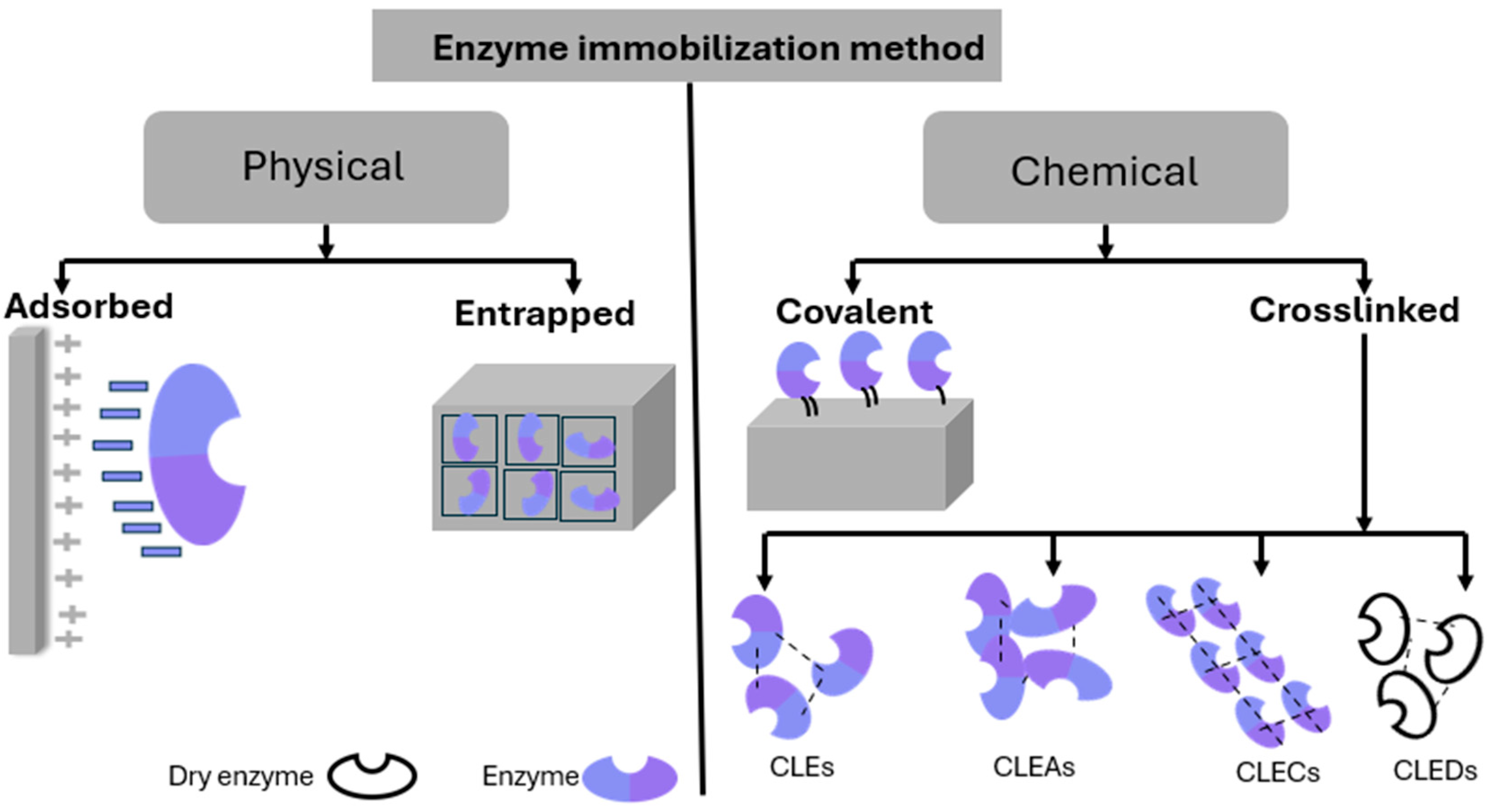
Immobilized enzymes are enzymes attached to a solid, insoluble support [51]. This simple adhesion makes significant improvements across industries, especially those that require large amounts of enzymes. That way, the manufacturer can use an expensive enzyme multiple times in many cycles, dramatically cutting operational costs. Sticking enzymes to a support medium gives them high resistance to temperature and pH changes. As immobilized enzymes are solid, the separation process will be much easier [52]. Cellulases are expensive enzymes used in bioethanol production. Immobilization methods offer the advantages of reusability and reduced processing costs. In addition, immobilized enzymes ensure the complete removal of the enzymes from the final product. Immobilization allows it to be used repeatedly, cutting processing costs. Continuous flow in reactors is ensured by immobilized enzymes [53]. For immobilizing enzymes, several methods are available [54]. Balraj S et al. [55] attempted to convert waste fish oil to form biodiesel in a packed bed reactor (PBR) using a zinc oxide nanoparticle-immobilized recombinant whole-cell biocatalyst. The immobilized biocatalyst showed maximum lipase activity at 6% (w/v) zinc oxide nanoparticles (ZnONPs) and 15% (v/v) glutaraldehyde, showing a maximum biodiesel yield of about 91.54 ± 1.86% after 43 h in PBR. Mirsalami S. M. et al. [56] used mesoporous silica particles as a support for the immobilization of commercial lipases. They converted algal oil from Nannochloropsis into biodiesel, achieving an ester conversion rate of over 94.8%.
For immobilizing enzymes, there are several primary methods, as illustrated in Figure 1. In cross-linking (self-bonding), enzymes typically form a bunch of insoluble molecules, which increases the amount of active enzymes in the product [57].

2.2.3. Nanozymes

Artificial enzymes are made from inorganic NPs that can perform like natural enzymes and catalyze biochemical reactions. They exploit their protein-based similarities because they exhibit greater stability and robustness under harsh conditions than their natural counterparts. Also, they exhibit other tunable characteristics that enable surface, size, and shape modifications [58].
Nanozymes are widely used in the medical field. They are used as a part of biosensors to detect different biomolecules and diseases. Targeted therapy utilizes nanozymes to act selectively on pathogenic sites and then uses their catalytic ability to convert an inert therapeutic substance into an activated form, such as reactive oxygen species (ROS), to kill the desired cell. Some of the nanozymes can mimic antioxidant enzymes to neutralize the harmful effects [58].
Biofuel synthesis methodologies integrate nanotechnology to rationalize processing costs and increase operational efficiency. Nanoparticles, due to their small size and high surface area, can penetrate complex biomass more easily than natural enzymes, accelerating the process and increasing the rate. Nanozymes can also be used in synergy with immobilized carriers, enabling recovery and reuse to overcome high costs and instability. In addition to these features, nanozymes’ high catalytic activity makes the reaction not need a high energy input [59].
One considerable case study that shows the efficiency and benefits of using these highly significant nanozymes was performed by a group of researchers [60]. They established their experiment to address the problem of CO poisoning of electrocatalysts for the commercialization of direct formic acid fuel cells, which can inhibit the entire process. They reported that rhodium single-atom nanozymes (Rh SAzymes) can catalyze the direct commercialization of the formic acid oxidation reaction. Rh SAzymes showed a non-CO pathway. Single-atom nanozymes (SAzymes) with isolated active sites show better performance by mimicking the structures and catalytic mechanisms of natural enzymes. These promising findings demonstrate the efficiency of nanozymes in industry. Srikumar K. et al. [61] produced biodiesel from waste cooking oil. They used a magnetic bifunctional calcium–iron oxide nanocatalyst derived from empty fruit bunches. They used OpenLCA, which identified the transesterification phase as the primary hotspot, with fossil fuel resource consumption showing the highest impact at 39.029 Pt per 1000 kg of biodiesel. The nanozyme they used maintained catalytic stability for at least six successive cycles.

2.2.4. Whole-Cell Biocatalysts

Whole-cell biocatalysts are typically microbial cells, such as bacteria, yeast, and fungi. They have their own enzymes that can catalyze chemical reactions. They are often used when it is challenging to purify enzymes from microbial cells or when the reaction requires an enzymatic cascade, thereby allowing microbial cells to contain the entire cascade. Alternatively, manufacturers may want to decrease costs, as cells are easier to modify. There are many applications for these biocatalysts, such as in pharmaceuticals, environmental remediation, and renewable energy generation [62]. Many organisms are utilized in biofuel generation, for example, Rhizopus oryzae contains lipases. So, this fungal species is used in the transesterification process. Engineered E. coli is used to ferment oils directly into alcohol [63].
A group of researchers used this background and introduced ZnONPs into a recombinant whole-cell biocatalyst (rWCB) to convert waste fish oil into biodiesel [55]. Eventually, they found that production of biodiesel from waste fish oil using ZnO nano-immobilized rWCB could become a powerful competitor for commercialization. S. Vishnupriya et al. [64] selected Calophyllum inophyllum as it ensures an available biomass source. They conducted transesterification of C. inophyllum oil under proper conditions, with a 6:1 methanol-to-oil ratio, 8% (w/w) water content, and 30% (w/w) catalyst. The process produced a maximum conversion of 90.2% for fatty acid methyl ester. Estimating emissions, they found that the B10 blend decreases carbon monoxide and hydrocarbon emissions by 14.01% and 18.33%, respectively, while the B20 blend decreases them by 25.44% and 31.67%, respectively.

3. Green Synthesis Strategies for Biocatalysts

The dominant purpose of green synthesis is to invent competent and renewable products whilst minimizing environmental impact and preventing the use of hazardous chemicals, establishing energy-efficient processes [65]. The biocatalysis process is naturally green, offering several environmental advantages. Biocatalysts often share traits such as high chemo-, regio-, and enantio-selectivity. These characteristics drastically reduce unwanted byproducts and increase their capability for production under mild reaction conditions [65].

3.1. Sustainable Biocatalyst Sources

Sources used in the environmentally friendly production of biocatalysts are various and widely available (e.g., plant extracts, algae, microorganisms, extremophiles, and engineered enzymes) [66]. Attention is now directed to the influence of efficiency and functionality, an aspect not fully captured in the preceding examples.

3.1.1. Natural Biocatalysts

Microorganisms are an essential source for the green synthesis of biocatalysts, as they are self-sustaining chemical factories that produce enzymes naturally through fermentation, enabling environmentally friendly production. Microorganisms are utilized in basic, different ways: producing isolated enzymes or being used as whole-cell catalysts [67]. The production of isolated enzymes is typically used to synthesize most commercial enzymes (e.g., lipases, proteases, and hydrolases). Enzyme production is carried out using specific microbial strains, such as Escherichia coli, Pichia pastoris, or Aspergillus species, under mild conditions. This model aligns with green chemistry principles by minimizing the use of toxic chemicals in the process, leading to overexpression of enzymes and modifying the enzymes themselves through advanced genetic engineering techniques in these microorganisms [68]. Whole-cell biocatalysis uses the entire microorganism cell as a biocatalyst; this eliminates expensive steps such as enzyme purification and cell disruption significantly. Extremophiles are a shining group of organisms, comprising mostly microorganisms such as Archaea and bacteria, which thrive in environments once considered inhospitable to life. These extreme conditions, ranging from the boiling acidity of volcanic vents to the freezing salinity of polar ice, require unique and robust biological mechanisms, making these organisms an indispensable resource for modern biotechnology and green synthesis of biocatalysts [69]. The primary interest in extremophiles comes from the unique enzymes they produce, known as extremozymes. These biocatalysts are essential because they maintain their catalytic activity and structural integrity under the same harsh conditions as their host organisms [70]. Their industrial advantages often rely on their high stability, resistance to high temperatures and acidic solutions, high specificity, minimization of side products, and sustainability; they are more environmentally friendly than other chemicals [71]. Another trend in natural enzymes is the use of algae. The interest in algae arises from their rapid growth and their potential as whole-cell biocatalysts while capturing CO2. Algal biomass provides proteins, carbohydrates, and pigments that carry out both reduction and stabilization of metal precursors, offering a highly effective, renewable source of biomass that does not consume agricultural land and freshwater resources [72]. Recent studies show that extremophilic algae exhibit greater robustness and lower contamination than normal algae, making them a practical bioreactor [73]. Additionally, agricultural waste is used for the green synthesis of biocatalysts. Agricultural waste, regularly called lignocellulosic biomass (e.g., fruit peels, rice husks, and wheat straw), is a globally abundant byproduct. The massive waste byproduct is treated with special strategies to confer low-cost feedstock for microbial production [74]. By treating this huge amount of waste, biocatalysts can be primarily obtained by microbial fermentation [74]. The fermentation process is the most widely used method in industry, carried out by bacteria and fungi cultivated on agricultural waste to produce enzymes that break down (e.g., cellulases, xylanases, lipases, and pectinases) at high yields. Techniques used for this method include submerged fermentation, in which waste is fixed in a liquid medium where microbes can thrive, and solid-state fermentation, which mimics the natural microbial environment and leads to higher production. Both techniques are powerful ways to generate high yield [75]. Additionally, biocatalysts, natural enzymes, are increasingly used for environmental detoxification, particularly in degrading synthetic dyes, plastics, and industrial effluents [76].

3.1.2. Modified Biocatalysts

Engineered enzymes are modified versions of natural enzymes. Although natural enzymes are specific and efficient, they cannot withstand harsh industrial conditions (e.g., high heat, extreme pH, and non-water-based solvents) [77]. Methods used to synthesize engineered enzymes typically employ three methods: directed evolution, mimicking natural selection in the laboratory; rational design, relying on the enzyme’s 3D structure and catalytic mechanisms to make it more specific and targeted; and immobilization, which fixes the enzyme on a solid surface, enabling its reusability [78].

3.1.3. Synthetic Biocatalysts

Plant extracts are widely used in the green synthesis of nanobiocatalysts, typically enzymes immobilized on NPs, providing biomolecules (e.g., polyphenols, tannins, and flavonoids) that act as natural reducing elements and capping elements for metallic ions, resulting in the synthesis of metal/metal oxide NPs (e.g., silver, gold, and ZnO), reducing the need for toxic chemical reductants or stabilizers [51]. The results of using both phytochemicals and algae are stable and, most importantly, recyclable NPs (AgNPs, FeNPs, and ZnONPs), which are capable of supporting enzyme immobilization, resulting in nanobiocatalysts, with a reduced amount of hazardous waste and toxic chemicals [72].

3.2. Applications and Examples of Biocatalysts

Pharmaceuticals, food, and environmental remediation are just a few of the industries that have found extensive uses for biocatalysts [62]. To reduce reliance on hazardous chemicals, the pharmaceutical industry uses enzymes such as lipases and oxidoreductases for the stereoselective synthesis of drug intermediates [79]. Facilitating enzymatic conversions during fermentation and processing, biocatalysts improve flavor, texture, and nutritional value in the food industry [48]. Oxidases and peroxidases are used in environmental applications to biodegrade pollutants and dyes, which helps treat wastewater sustainably [80]. Additionally, immobilized enzymes on NPs offer stability and reusability, increasing the economic viability of large-scale nanobiocatalyst operations, which are increasingly being investigated for biofuel production [81].
The central challenge within this process is how to overcome the restrictions of traditional aqueous systems, particularly for the substrates and products that are hydrophobic, and how to increase the sustainability of the process [82]. The primary strategy to solve these issues is to make a localized, high-concentration environment for the substrate or to provide a less aqueous environment for the enzyme [83]. The second strategy is to maintain continuous contact between the two phases (a hydrophobic substrate and an aqueous enzyme). This can be achieved by making the process continuous or by improving mixing [83]. As summarized in Table 1, the most common enzyme immobilization methods and their complementary bioreactor systems are compared in terms of their fundamental mechanisms and primary industrial advantages.

4. Role of Green-Synthesized Biocatalysts in Biofuel Production

Green-synthesized biocatalysts, including immobilized enzymes, bio-inspired nanozymes, and eco-friendly functional materials, are increasingly explored to enhance biofuel production while reducing environmental burdens associated with conventional catalyst synthesis [91]. These systems are discussed as distinct functional categories rather than equivalent catalyst classes, as they differ fundamentally in catalytic mechanisms, operational stability, and application scope across biodiesel, bioethanol, biogas, and biohydrogen pathways [92]. Immobilization onto eco-friendly carriers dramatically increases enzyme thermal and solvent tolerance, enables straightforward magnetic or solid-phase recovery, and converts single-use enzymes into truly recyclable catalysts, a prerequisite for economically viable circular biofuel processes [93]. Biomass-derived supports, such as engineered biochar and cellulose nanofibers, and magnetically functionalized nanocomposites have a high surface area, tunable porosity, and ease of separation, making them ideal green platforms for enzyme anchoring and repeated operation [94]. For second-generation bioethanol, success hinges on integrated pretreatment coupled with tailored cellulase or amylase systems. The production process includes green carriers that reduce nonproductive lignin binding and protect enzyme cocktails, significantly increasing fermentable sugar yields under industrially relevant conditions [95]. In anaerobic digestion, eco-friendly conductive amendments such as magnetite-doped biochar promote direct interspecies electron transfer (DIET), stabilize syntrophic consortia, and often improve methane yields, offering a practical, low-cost route to upgrade biogas performance [94]. Hydrogenase-mimicking nanozymes and green photocatalysts enable complementary pathways for biohydrogen and solar hydrogen. These nanozymes and green photocatalysts are composed of single-atom and mixed-anion materials that exhibit promising hydrogen evolution activity when paired with immobilization strategies that limit leaching and charge recombination [95]. Finally, despite these advances, critical barriers to enzyme/inhibitor interactions (e.g., methanol inhibition and glycerol fouling), long-term catalyst stability, variable real-world feedstocks, and lifecycle/technoeconomic gaps must be addressed through co-development of green supports, enzyme engineering, and reactor intensification [96]. From a sustainability perspective, these green-derived systems are often positioned as environmentally preferable alternatives to conventionally synthesized materials. In practice, their advantages primarily stem from reduced reliance on toxic solvents, milder synthesis conditions, and simplified downstream processing, although the net environmental benefit remains context-dependent and must be assessed relative to energy input, scalability, and end-of-life management [97].

4.1. Biodiesel

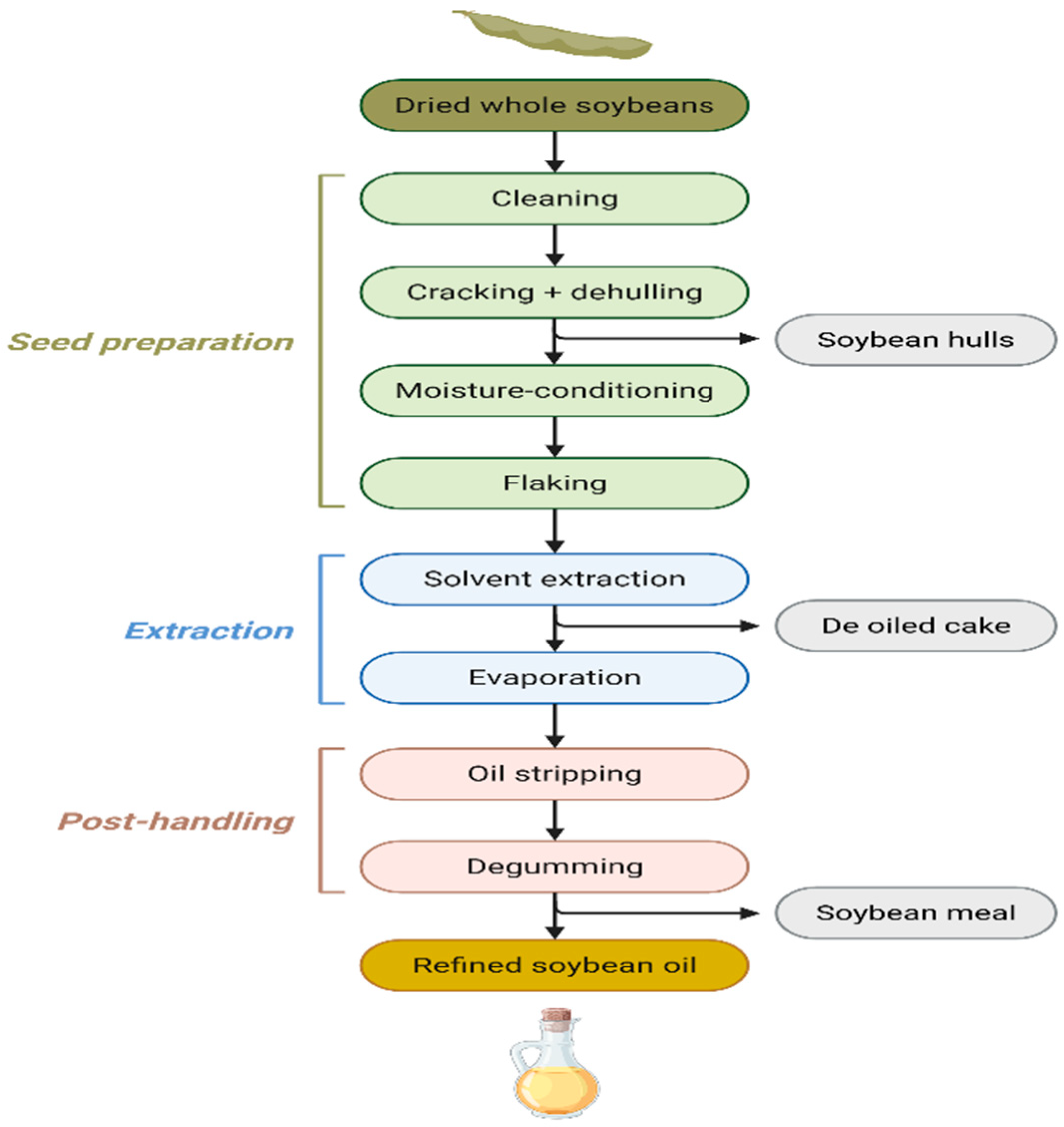
Enzymatic transesterification using lipases provides a greener route to convert triglyceride oils into fatty acid esters, as summarized in Figure 2, where nanozyme-based systems are shown as prospective rather than industrially implemented technologies. Generally, lipases work at milder temperatures and a near-neutral pH, reducing soap formation with high-free fatty acid feedstocks and simplifying downstream purification [98]. Among the practical enzyme choices, Candida antarctica lipase B and newer commercial preparations, such as engineered Eversa variants, have become common due to their broad substrate scope, good operational stability, and compatibility with immobilization [92]. Immobilizing lipases on solid carriers is a cornerstone strategy because it markedly improves thermal and solvent stability, enables facile catalyst recovery, and supports multiple reuse cycles that are essential for economic viability [99].
This enhancement is primarily attributed to multipoint enzyme anchoring and the creation of a protective microenvironment at the solid–liquid interface, which restricts conformational mobility and suppresses thermal and solvent-induced denaturation [100]. Recent work has focused on green routes to prepare nano-supports using plant extracts or other biogenic reducing agents to synthesize MNPs and functional nanomaterials that enable gentle enzyme attachment without harsh chemicals [101]. Parallel efforts explore renewable biomass-derived carriers, such as engineered biochar and cellulose nanofibers derived from agro-waste, because these materials offer a high surface area, tunable porosity, and lower lifecycle impact compared with fossil-derived supports [102]. Combining magnetic functionality with carbonaceous biochar cores yields magnetically recoverable composites that achieve high enzyme loading and simplified separation while retaining substantial activity across reuse cycles [103]. Despite these material advances, the enzymatic route still faces operational limitations, such as methanol-induced enzyme inhibition, glycerol fouling, and mass transfer restrictions in viscous oil phases, which have motivated targeted process innovations [104]. Practical mitigations reported in recent studies include stepwise addition of alcohol, the use of alternative acyl acceptors such as methyl acetate, and the formulation of methanol-tolerant enzyme variants or protective immobilization microenvironments [104]. Process intensification through packed-bed columns, membrane reactors, and continuous-flow configurations improves mass transfer and productivity while preserving the advantages of immobilized biocatalysts for cyclic operation. Representative immobilized-enzyme reactor configurations have been reported in recent studies [105]. Advanced reactor concepts and continuous platforms are increasingly paired with robust immobilized preparations to move from batch proofs of concept toward pilot-scale operation with higher space–time yields [105]. Contemporary case studies demonstrate that green-immobilized lipase systems can convert low-quality feedstocks, such as waste cooking oils, animal fats, and acid-rich residual oils and used cooking oils, into biodiesel with competitive yields after optimization of support chemistry and process control [106]. However, technoeconomic assessments continue to identify enzyme cost, the variability of real-world feedstocks, and the lack of standardized, scalable green manufacturing routes for supports as the main barriers to broad industrial adoption [107]. Looking ahead, the most realistic pathway to increasing scale involves integrating green nanosupport synthesis, targeted enzyme engineering, and reactor design to deliver robust, recyclable biocatalyst systems that enable circular biofuel value chains [107].

4.2. Bioethanol

Second-generation bioethanol, produced from lignocellulosic and waste feedstocks, depends critically on biocatalysts, particularly tailored cellulases and amylases, for efficient depolymerization of complex polymers into fermentable sugars, which is essential to make 2G ethanol economically and environmentally viable [108]. Cellulases and amylases remain central to bioethanol production, but recent advances focus on tailoring enzyme cocktails and immobilization strategies to specific lignocellulosic feedstocks rather than on enzyme discovery alone [109]. However, free enzymes suffer from limited thermal and operational stability and poor recyclability, so immobilization on green carriers has become a dominant research theme to boost reusability while lowering environmental cost [110]. Biomass-derived carriers, such as bacterial nanocellulose and engineered cellulose nanofibers, provide native chemical compatibility with cellulases and amylases, offer tunable porosity and water retention, and can be functionalized by mild, low-toxicity chemistries to preserve enzyme activity [111].
Their effectiveness arises from favorable enzyme–support interactions, high water retention, and reduced nonproductive adsorption, which together preserve enzyme accessibility and catalytic efficiency during repeated hydrolysis cycles [112]. Advanced nanocarriers, including zeolitic imidazolate frameworks and other metal–organic frameworks, have been shown to protect cellulases at high solids loading levels and to reduce nonproductive adsorption, thereby improving hydrolysis rates under industrially relevant conditions [113]. Magnetically functionalized supports permit rapid separation and repeated reuse of cellulase preparations, and several recent experimental reports document sustained hydrolysis activity across multiple cycles when enzymes are immobilized on functionalized MNPs [114]. Carrier-free immobilization approaches, such as cross-linked enzyme aggregates and combi-CLEAs, remove the need for an inert scaffold, often delivering significant gains in thermal stability and solvent tolerance that are attractive for concentrated feedstock processing [115]. Translating immobilized enzyme concepts into practical reactors has spurred microreactor and packed-bed work, in which immobilized cellulases achieve higher space–time yields and improved mass transfer than in stirred-batch hydrolysis [116]. Despite these material and reactor advances, real feedstock complexity poses residual challenges, including inhibitor formation, nonproductive binding to lignin, and cost sensitivity, which together keep technoeconomic feasibility as a central concern for scale-up [108]. The most promising near-term pathway, therefore, couples green-synthesized carriers, enzyme engineering for inhibitor tolerance, and process intensification in consolidated or semi-consolidated platforms to reduce unit operations and improve overall yield and circularity [93]. Beyond improving saccharification and fermentation, the solid residues and unconverted lignocellulosic fractions from bioethanol processing can be valorized through anaerobic digestion to produce biogas, suggesting integrated bioethanol biogas biorefinery pathways [117].

4.3. Biogas

In anaerobic digestion, conductive additives such as biochar and magnetite do not function as biocatalysts per se, but rather as process enhancers that mediate electron transfer and stabilize microbial consortia [118]. At the hydrolytic and acidogenic stages, the spatial organization of microbes and biofilm formation increases substrate turnover and fosters microenvironments that favor downstream acetogens and methanogens [119]. Conductive additives, such as biochar and magnetite, can stimulate direct interspecies electron transfer between fermentative bacteria and methanogenic archaea, thereby alleviating the electron transfer bottleneck that limits methane formation [120].
Importantly, these conductive materials do not function as classical biocatalysts but act as electron transfer mediators that regulate microbial interactions and system-level kinetics within anaerobic consortia [121]. Functionalization of biochar by activation, iron doping, or magnetic modification tailors surface chemistry, porosity, and conductivity, enabling the material to both adsorb inhibitors and provide niches for syntrophic partners [122]. Combining carbonaceous cores with magnetic iron oxide phases produces magnetically recoverable composites that merge adsorption and electron shuttling, enabling easier recovery and often improving methane production metrics [123]. Controlled dosing studies and reactor trials report that appropriately dosed magnetite or magnetite-modified supports accelerate volatile fatty acid degradation and increase methane formation under stressed conditions [123]. Mechanistically, these additives work through enhanced extracellular electron transfer, provision of trace iron as a cofactor, surface adsorption of inhibitors, and local pH buffering, a multi-pronged effect that explains consistent improvements across substrates [124]. Beyond single additive effects, co-immobilizing anaerobic microbes with conductive particles stabilizes community structure and improves contact efficiency between cells and conductive scaffolds, which preserves activity during feedstock shocks [125]. From a process design perspective, pairing conductive amendments with co-digestion strategies, two-phase reactors, and continuous packed-bed configurations amplifies benefits by improving mass transfer and enabling higher organic loading rates [126]. Pilot and field reports show tangible gains in methane yield and operational robustness when green-synthesized conductive amendments are combined with tailored operational control, although optimal dosing and long-term fate vary by substrate and reactor [126]. Important caveats remain, including additive toxicity at high doses, potential accumulation in the digestate, and the need for lifecycle and regulatory assessment before widescale deployment [127]. Taken together, these advances point to practical pathways to upgrade anaerobic digestion via eco-friendly conductive materials and engineered consortia, and they also point naturally toward renewable hydrogen strategies that use hydrogenase-mimicking nanozymes and photocatalysts for water splitting, as explored in [128].

4.4. Biohydrogen

Beyond methane-centered anaerobic digestion, similar electron transfer and conductive material concepts are being increasingly explored for renewable hydrogen production, providing a natural transition to biohydrogen systems. Renewable hydrogen production via biological and photocatalytic routes sits at the intersection of enzyme mimicry and materials innovation, where hydrogenase-mimicking nanozymes and green photocatalysts together create new pathways to split water or augment microbial hydrogen generation [128].
Unlike anaerobic digestion systems that rely on community-level electron exchange, biohydrogen production shifts toward bio-inspired and photocatalytic materials that directly mediate proton reduction and charge transfer at defined active sites [129]. Hydrogenase-mimicking nanozymes reproduce the active-site chemistry of natural hydrogenases, enabling rapid proton reduction on robust inorganic scaffolds that resist deactivation under operational conditions [130]. Design advances in single-atom catalysts and mixed-anion semiconductors tune the electronic structure and active-site geometry to favor hydrogen evolution while suppressing competing reactions, thereby improving intrinsic catalytic selectivity [131]. Photocatalytic water splitting leverages visible light-responsive materials and engineered heterojunctions to harvest solar energy and drive charge separation, and recent prototype reactors demonstrate the feasibility of scaled photocatalyst sheets for outdoor operation [132]. Green synthesis methods that use plant extracts, biochar templates, or benign reducing agents produce photocatalysts and nanozymes with lower environmental footprints and improved biocompatibility for systems that integrate microbes and materials [133]. Coupling photocatalysts with photo-fermentative microbes or engineered consortia amplifies hydrogen yields by combining light-driven electron supply with biological pathways that channel reducing power into hydrogen rather than biomass or byproducts [134]. Practical reactor concepts include immobilized nanozyme films, photocatalyst-coated sheets, and hybrid photo-bioreactors that maximize light penetration, improve mass transfer, and allow separate handling of oxygen and hydrogen to minimize safety risks [135]. Machine learning and high-throughput screening are increasingly used to guide green-by-design discovery of nanozymes and photocatalysts by predicting optimal compositions and surface chemistries, thereby reducing empirical trial and error [136]. Key technical challenges remain, such as the long-term stability of photocatalysts in natural waters, charge-carrier recombination losses, the potential leaching or ecotoxicity of nanomaterials, and the need for safe, cost-effective gas separation at scale [137]. Addressing these challenges calls for integrated strategies that combine green synthesis, protective immobilization, tandem catalyst architectures, and rigorous lifecycle assessment to ensure that laboratory gains translate into real-world, sustainable hydrogen supply [137]. Taken together, hydrogenase-mimicking nanozymes and eco-friendly photocatalysts offer complementary levers to advance biohydrogen and solar hydrogen technologies, and the next section will synthesize these materials and process insights into a roadmap for scale-up, regulation, and technoeconomic integration [132]. Beyond material- and catalyst-level strategies, reactor-level intensification offers a complementary pathway to enhance the performance of green-assisted bioenergy systems. Electro-stimulated anaerobic bioreactors (EABs) have been proposed as a reactor-level intensification strategy to enhance anaerobic digestion efficiency. These systems integrate conductive and non-conductive supports under controlled electrical stimulation to improve reaction kinetics, microbial activity, and overall energy recovery [138]. An EAB is typically composed of tubular containers with conductive and non-conductive supports. Electrical simulation is applied to the conductive support to improve reaction kinetics; meanwhile, non-conductive supports promote metabolic activity. An EAB provides an adaptable platform for processing organic substrates and producing renewable energy, such as bioethanol, biohydrogen, and renewable chemicals.

5. Advantages and Challenges of Biofuel

Biofuel cells are increasingly popular as a green and sustainable energy source. Biofuel cells are one-of-a-kind energy devices that can transform stored chemical energy from waste materials such as pollutants, organics, and wastewater into reliable, renewable, pollution-free energy sources via the action of biocatalysts such as microorganisms and enzymes [139]. Recent research in biofuel cells has focused on the use of diverse biocatalysts and how they improve power production for a variety of applications in environmental technology and biomedicine, including implantable devices, testing kits, and biosensors [140]. Biofuels are an integral component of the renewable energy mix due to their ability to minimize greenhouse gas emissions and reliance on fossil fuels. Concerns about global oil price volatility, energy supply security, global warming, and the development of new agricultural potential are primary motivators for biofuel research.
Furthermore, concerns about sustainable agriculture, energy security, and reducing CO2 emissions from transportation have all become significant drivers of biofuel production growth. Cocultivation systems have been developed to enhance the efficiency of biofuel production by utilizing diverse microorganisms to produce biofuels, chemicals, and other valuable products. The worldwide biofuel market is anticipated to be valued at more than USD 200 billion by 2030 [141]. This diverse growth in biofuel production helps explain why biofuels are becoming more and more popular as fossil fuel substitutes [18].

5.1. Environmental Impacts and Advantages of Biofuels

5.1.1. Reduction in Greenhouse Gas Emissions

Biofuels offer a significant environmental benefit by reducing greenhouse gas emissions compared with fossil fuels. They are derived from various renewable sources, including plant-based biomass, algae, waste materials, animal fats, industrial off-gases, and atmospheric CO2. Plant-based biomass absorbs atmospheric CO2 during its growth, while algae exhibit rapid growth rates and high CO2 absorption capacities. Materials such as municipal solid waste, food waste, and industrial byproducts help promote sustainability by enabling the reuse of waste streams. Animal fats and leftover cooking oils help to promote sustainability by reusing waste materials. Industrial off-gases may be transformed into biofuels, hence reducing greenhouse gas emissions. Direct air capture technology, paired with renewable energy, may generate synthetic biofuels that actively remove CO2 from the environment. Biofuels absorb atmospheric CO2 during growth and, when combusted, emit CO2, offset by the carbon absorbed during feedstock cultivation. Advanced biofuels, such as cellulosic ethanol and algae-based fuels, hold even greater promise for reducing emissions. Cellulosic ethanol has the potential to reduce greenhouse gas emissions by up to 90%. Biofuels are also completely biodegradable, unlike other gasoline additives, making them a promising alternative to fossil fuels [142].

5.1.2. Air Quality Enhancements

Biofuels have the potential to enhance air quality by lowering pollution levels. Biofuels release far less sulfur dioxide, particulate matter, and nitrogen oxides than fossil fuels, all of which have been linked to respiratory and cardiovascular disorders. Using biofuels for transportation can help alleviate these health consequences and improve air quality, especially in heavily populated regions [143].

5.2. SWOT Analysis for Biocatalysis in Biofuel Production

5.2.1. Strengths of Biocatalysis

The environmental friendliness of biocatalysts, which enable reactions under milder conditions than those of standard chemical catalysts, offers considerable environmental benefits. Operating at ambient temperatures and pressures, biocatalysis significantly decreases energy consumption and greenhouse gas emissions associated with the recycling process. Such eco-friendly attributes make biocatalysis an attractive option for processes looking to improve their sustainability practices [144]. Furthermore, enzymes are quite specialized. This specificity ensures that enzymes catalyze only the intended reactions, reducing the likelihood of undesired byproducts. As a result, enzyme-based methods produce cleaner products and create fewer side effects. This feature not only improves the quality of the finished product but also simplifies purification, resulting in cost savings and a lower environmental burden from waste products [140].

5.2.2. Weaknesses of Biocatalysis

Scalability, scaling biocatalytic processes to industrial scale, poses substantial challenges, principally owing to concerns with enzyme stability and activity under large-scale conditions. Another scaling challenge is the cost of producing large quantities of biocatalysts. Enzyme production often requires complex biotechnological techniques that can be costly to operate on a large scale. Moreover, incorporating these bioprocesses into current industrial settings necessitates substantial financial investment in specialized equipment and technology [145].
In addition, the high costs of enzyme production and purification frequently make biocatalytic technologies economically unviable. Enzyme production in significant quantities for industrial use is often achieved through complex biotechnological techniques such as genetic engineering and fermentation, which require specialized equipment and expertise. Moreover, ensuring that these enzymes meet the required purity standards for practical application may require lengthy, costly purification procedures. To address this, it is necessary to produce more robust enzymes, optimize operational conditions, and engineer cost-effective enzyme production and recovery technologies [146].

5.2.3. Opportunities for Biocatalysis

Advances in genetic engineering are significantly improving the biocatalysis landscape, making it a more viable and competitive option across a range of industrial processes. Genetic engineering enables biocatalytic methods to be more widely applicable and scalable by enhancing enzyme stability, efficiency, and cost-effectiveness. Growing environmental awareness by increased consumer and regulatory demand for sustainable processes, may drive further research and adoption of biocatalytic recycling techniques [147].
Although heterogeneous catalysis is among the most promising methods for trans-esterifying fatty acids, there is still plenty of room for improvement. It may be performed by enhancing a variety of associated factors, such as catalyst type and reactor configuration [148]. It is possible to create a revised catalyst and reactor symmetry that is simple to run in a variety of dynamic operating conditions. It will all work together to develop catalytic process strategies that align with shifting industry expectations. In the near future, the chance of using biofuel as a green alternative energy source will rise significantly [149].

5.2.4. Threats of Biocatalysis

First, there are technological constraints, such as enzymes’ technological limitations, notably in terms of performance and longevity under industrial conditions, that present substantial barriers to their broader implementation across a variety of fields. These restrictions can limit the breadth of enzyme applications, especially in high-volume, high-intensity industrial operations that require strong and long-lasting solutions. Second, market competition from well-established chemo-catalytic processes presents a severe challenge to the growth of biocatalytic methods [146].

6. Future Perspectives

The availability and cost of substrates, as well as their composition and complexity, can all affect the efficiency of enzyme-catalyzed reactions; therefore, selecting the right substrate for biofuel generation is critical for biocatalysis success. Thus, establishing efficient and cost-effective pretreatment and hydrolysis technologies to convert raw substrates into fermentable substrates, precursors, or intermediates that can be enzymatically converted into various biofuels is critical for biocatalysis in biofuel production. More studies and development in this field are necessary to achieve sustainable, renewable energy sources. The choice of substrate for biofuel production is crucial to the success of biocatalysis, as substrate availability and cost, as well as their composition and complexity, can affect the efficiency of enzyme-catalyzed reactions [140]. The following are some solutions to resolve the issues addressed here: (i) algae-based biofuel feedstocks can be used as promising future resources that are expected to bring biofuel production to the forefront; (ii) government policies that would incentivize and subsidize the production of biofuels will further boost their sustainability; (iii) regulatory frameworks should be more oriented to address environmental economic challenges; (iv) developing certification for biofuel standards can enhance their acceptability and wide-scale applications; and (v) blending biofuels with petroleum-based fuels may result in more resilient and sustainable energy systems. Future studies should focus on integrating omics technologies, such as genomics, proteomics, and metabolomics, to better understand and optimize the metabolic processes underlying biofuel synthesis and production. The goal is to create potent enzyme combinations that can work together to efficiently break down complex biomass materials [149].

7. Conclusions

The growing global energy crisis and the environmental pollution caused by fossil fuel use have spurred interest in sourcing renewable, eco-efficient biofuels. In this sense, biocatalysts that can be green-synthesized from plant extracts, microbial systems, agricultural waste, and biopolymers have been widely recognized as part of the nanotechnology toolbox, as they can be used across biotechnology, nanotechnology, and green chemistry. This review article referenced a variety of biofuels, including first-generation (from food crops), second-generation (from lignocellulosic biomass), third-generation (from microalgae), and fourth-generation (from genetically modified systems) biofuels, biocatalysts (natural enzymes (lipases, cellulases, amylases, and xylanases), immobilized enzymes, and nanozymes (Fe3O4 and CeO2)), and whole-cell catalysts. Green synthesis strategies have dramatically reshaped how catalysts are synthesized, primarily by enabling environmentally friendly methods for producing functional materials. For example, silver and magnetite NPs from green coffee or microbial extracts can be synthesized and used effectively and ecologically for lipase immobilization and as an immobilization support (e.g., biochar, chitosan, and algal materials), thereby improving lipase reusability and operational stability. This allows for fewer toxic reagents, lower energy consumption, and improved catalytic efficiency, which is indeed an effort toward a low-carbon bioprocess. These catalysts have a wide-ranging role across all of the main biofuel platforms: in biodiesel, lipase-catalyzed transesterification exhibits an increase in yield and recyclability; in bioethanol, cellulases and amylases, restrained on green supports, facilitate biomass saccharification; in biogas, nano-additives augment microbial methanogenesis; and in biohydrogen, hydrogenase-like nanozymes and green-synthesized photocatalysts improve hydrogen evolution sustainably. Together, these developments illustrate how biologically motivated materials can drive change in renewable energy. Nevertheless, there are still challenges to be addressed. The fluctuation of natural feedstocks, the leaching or deactivation of an enzyme under industrial stress, and non-reproducible green synthesis conditions impede scale-up. Additionally, the persistent shortfalls in basic safety over longer timeframes and the unregulated approval pathways for nanozymes have not been fully explored. Progressing forward requires multiple disciplines, such as AI-driven catalyst design, hybridized enzyme/nanozyme systems, smart or self-healing biocatalysts, and integration with continuous bioreactor platforms. Combining knowledge-driven optimization with sustainable synthesis in future research will lead to the discovery of catalysts that are both efficient and regenerative, while accommodating the variability inherent to industrial use. At the same time, policymakers and funding agencies should direct incentives toward these developments through green innovation programs so that breakthroughs achieved at the laboratory scale can be translated into secure, scalable, and safe technologies with real commercial value. In summary, biocatalysts produced through green synthesis offer an innovative and sustainable alternative to supporting next-generation biofuels. Their combination of enzymatic precision, nanomaterial durability, and environmental compatibility provides a tangible pathway toward a circular bioeconomy and carbon-neutral energy system. The contributions and significance of this review lie in integrating enzyme research, nanoscience, and renewable energy engineering within a common green framework, providing not only an up-to-date synthesis of current work but also a roadmap for transitioning laboratory innovation into industrial sustainability. As such, we intend to meaningfully contribute to the global effort to retrofit for clean energy and environmental conservation.

Author Contributions

Conceptualization, D.S.R.K. and G.M.; supervision, D.S.R.K. and G.M.; investigation, A.W.A. and M.A.M.; visualization, A.W.A., M.A.M., A.P.B.-O. and G.I.A.J.; data curation, Y.B. and A.P.B.-O.; methodology, Y.B., A.S., M.F. and A.P.B.-O.; software, Y.B. and A.S.; formal analysis, M.A. and M.F.; resources, M.A., G.I.A.J., A.P.B.-O. and D.S.R.K.; validation, G.M., M.A., M.F. and D.S.R.K.; project administration, G.M. and D.S.R.K.; writing—original draft, G.M., A.W.A., M.A.M., Y.B., A.S., G.I.A.J. and A.P.B.-O.; writing—review and editing, G.M., M.A., M.F. and D.S.R.K. All authors have read and agreed to the published version of the manuscript.

Funding

This work was supported by the Deanship of Scientific Research, Vice Presidency for Graduate Studies and Scientific Research, King Faisal University, Saudi Arabia [Grant no. KFU260270].

Data Availability Statement

No new data were created or analyzed in this study.

Conflicts of Interest

The authors declare no conflicts of interest.

Abbreviations

SDGs (Sustainable Development Goals), GHG (Greenhouse Gas), 1G (First-Generation Biofuel), 2G (Second-Generation Biofuel), 3G (Third-Generation Biofuel), 4G (Fourth-Generation Biofuel), NaOH (Sodium Hydroxide), KOH (Potassium Hydroxide), CH3ONa (Sodium Methoxide), FFAs (Free Fatty Acids), FAME (Fatty Acid Methyl Ester), RED (Renewable Energy Directive), EU (European Union), ROS (Reactive Oxygen Species), E. coli (Escherichia coli), CO2 (Carbon Dioxide), ZnONPs (Zinc Oxide Nanoparticles), NPs (Nanoparticles), DIET (Direct Interspecies Electron Transfer), MOFs (Metal–Organic Frameworks), COFs (Covalent Organic Frameworks), CLEAs (Cross-Linked Enzyme Aggregates), MNPs (Magnetic Nanoparticles), PBR (Packed Bed Reactor), CLECs (Cross-Linking Enzyme Crystals), CLEDs (Cross-Linking Enzyme Derivatives) and EABs (Electro-Stimulated Anaerobic Bioreactors).

References

  1. Dadi, M.; Siwale, W.; Munalula, F.; Ravi, S.N.; Mundike, J.; Ramasamy, S.; Mulenga, C. A Comprehensive Review of Advances in Bioenergy Including Emerging Trends and Future Directions. Discov. Energy 2025, 5, 26. [Google Scholar] [CrossRef]
  2. Akram, F.; Shoaib, E.; Fatima, T.; Shabbir, I.; Haq, I. Evolution of Biofuels: Unraveling Diverse Applications and Emerging Horizons. Energy Explor. Exploit. 2025, 43, 834–864. [Google Scholar] [CrossRef]
  3. Zhou, Z.-W.; Cai, C.-X.; Xing, X.; Li, J.; Hu, Z.-E.; Xie, Z.-B.; Wang, N.; Yu, X.-Q. Magnetic COFs as Satisfactory Support for Lipase Immobilization and Recovery to Effectively Achieve the Production of Biodiesel by Maintenance of Enzyme Activity. Biotechnol. Biofuels 2021, 14, 156. [Google Scholar] [CrossRef]
  4. Roy Choudhury, S.; Das, A.; Chakraborty, R. Review on Progress in Cellulase Catalyzed Saccharification of Agricultural Lignocellulosic Biomass towards Fermentable Sugar and Bioethanol: Kinetics & Reactor Configurations. Biocatal. Agric. Biotechnol. 2024, 58, 103142. [Google Scholar] [CrossRef]
  5. Fernandez-Lafuente, R. Enzyme Immobilization. Molecules 2023, 28, 1373. [Google Scholar] [CrossRef]
  6. Costa, I.O.; Morais, J.R.F.; De Medeiros Dantas, J.M.; Gonçalves, L.R.B.; Dos Santos, E.S.; Rios, N.S. Enzyme Immobilization Technology as a Tool to Innovate in the Production of Biofuels: A Special Review of the Cross-Linked Enzyme Aggregates (CLEAs) Strategy. Enzyme Microb. Technol. 2023, 170, 110300. [Google Scholar] [CrossRef] [PubMed]
  7. Feng, Z.; Guo, Y.; Zhang, Y.; Zhang, A.; Jia, M.; Yin, J.; Shen, G. Nanozymes: A Bibliometrics Review. J. Nanobiotechnol. 2024, 22, 704. [Google Scholar] [CrossRef]
  8. Pi-Sunyer, X.; Astrup, A.; Fujioka, K.; Greenway, F.; Halpern, A.; Krempf, M.; Lau, D.C.W.; Le Roux, C.W.; Violante Ortiz, R.; Jensen, C.B.; et al. A Randomized, Controlled Trial of 3.0 Mg of Liraglutide in Weight Management. N. Engl. J. Med. 2015, 373, 11–22. [Google Scholar] [CrossRef]
  9. Zandieh, M.; Liu, J. Nanozymes: Definition, Activity, and Mechanisms. Adv. Mater. 2024, 36, 2211041. [Google Scholar] [CrossRef] [PubMed]
  10. Singh, H.; Desimone, M.F.; Pandya, S.; Jasani, S.; George, N.; Adnan, M.; Aldarhami, A.; Bazaid, A.S.; Alderhami, S.A. Revisiting the Green Synthesis of Nanoparticles: Uncovering Influences of Plant Extracts as Reducing Agents for Enhanced Synthesis Efficiency and Its Biomedical Applications. Int. J. Nanomed. 2023, 18, 4727–4750. [Google Scholar] [CrossRef]
  11. Osman, A.I.; Zhang, Y.; Farghali, M.; Rashwan, A.K.; Eltaweil, A.S.; Abd El-Monaem, E.M.; Mohamed, I.M.A.; Badr, M.M.; Ihara, I.; Rooney, D.W.; et al. Synthesis of Green Nanoparticles for Energy, Biomedical, Environmental, Agricultural, and Food Applications: A Review. Environ. Chem. Lett. 2024, 22, 841–887. [Google Scholar] [CrossRef]
  12. Yusuff, A.S.; Thompson-Yusuff, K.A.; Porwal, J. Sulfonated Biochar Catalyst Derived from Eucalyptus Tree Shed Bark: Synthesis, Characterization and Its Evaluation in Oleic Acid Esterification. RSC Adv. 2022, 12, 10237–10248. [Google Scholar] [CrossRef]
  13. Zhao, C.; Xu, Q.; Gu, Y.; Nie, X.; Shan, R. Review of Advances in the Utilization of Biochar-Derived Catalysts for Biodiesel Production. ACS Omega 2023, 8, 8190–8200. [Google Scholar] [CrossRef]
  14. Mandalika, A.S.; Chou, K.J.; Decker, S.R. Biohydrogen: Prospects for Industrial Utilization and Energy Resiliency in Rural Communities. Front. Ind. Microbiol. 2024, 2, 1428686. [Google Scholar] [CrossRef]
  15. Fortuin, J.; Hoffmeester, L.J.; Minnaar, L.S.; Den Haan, R. Advancing Cellulose Utilization and Engineering Consolidated Bioprocessing Yeasts: Current State and Perspectives. Appl. Microbiol. Biotechnol. 2025, 109, 43. [Google Scholar] [CrossRef] [PubMed]
  16. Ariaeenejad, S.; Motamedi, E.; Kavousi, K.; Ghasemitabesh, R.; Goudarzi, R.; Salekdeh, G.H.; Zolfaghari, B.; Roy, S. Enhancing the Ethanol Production by Exploiting a Novel Metagenomic-Derived Bifunctional Xylanase/β-Glucosidase Enzyme with Improved β-Glucosidase Activity by a Nanocellulose Carrier. Front. Microbiol. 2023, 13, 1056364. [Google Scholar] [CrossRef]
  17. Saxena, R.; Kotnala, S.; Bhatt, S.C.; Uniyal, M.; Rawat, B.S.; Negi, P.; Riyal, M.K. A Review on Green Synthesis of Nanoparticles toward Sustainable Environment. Sustain. Chem. Clim. Action 2025, 6, 100071. [Google Scholar] [CrossRef]
  18. El-Araby, R. Biofuel Production: Exploring Renewable Energy Solutions for a Greener Future. Biotechnol. Biofuels Bioprod. 2024, 17, 129. [Google Scholar] [CrossRef] [PubMed]
  19. Cavelius, P.; Engelhart-Straub, S.; Mehlmer, N.; Lercher, J.; Awad, D.; Brück, T. The Potential of Biofuels from First to Fourth Generation. PLoS Biol. 2023, 21, e3002063. [Google Scholar] [CrossRef]
  20. Nazari, M.T.; Mazutti, J.; Basso, L.G.; Colla, L.M.; Brandli, L. Biofuels and Their Connections with the Sustainable Development Goals: A Bibliometric and Systematic Review. Environ. Dev. Sustain. 2021, 23, 11139–11156. [Google Scholar] [CrossRef]
  21. Sharma, T.; Chauhan, P.S.; Patel, M.; Singh, A.; Kaur, M.; Chauhan, G.; Rana, B.B.; Kumar, N.; Walia, A. Carbon Negative Biofuels: A Step Ahead of Carbon Neutrality. Biofuels 2025, 16, 754–774. [Google Scholar] [CrossRef]
  22. Jeswani, H.K.; Chilvers, A.; Azapagic, A. Environmental Sustainability of Biofuels: A Review. Proc. R. Soc. Math. Phys. Eng. Sci. 2020, 476, 20200351. [Google Scholar] [CrossRef]
  23. Devi, A.; Bajar, S.; Sihag, P.; Sheikh, Z.U.D.; Singh, A.; Kaur, J.; Bishnoi, N.R.; Pant, D. A Panoramic View of Technological Landscape for Bioethanol Production from Various Generations of Feedstocks. Bioengineered 2023, 14, 81–112. [Google Scholar] [CrossRef] [PubMed]
  24. Malik, K.; Capareda, S.C.; Kamboj, B.R.; Malik, S.; Singh, K.; Arya, S.; Bishnoi, D.K. Biofuels Production: A Review on Sustainable Alternatives to Traditional Fuels and Energy Sources. Fuels 2024, 5, 157–175. [Google Scholar] [CrossRef]
  25. Bušić, A.; Marđetko, N.; Kundas, S.; Morzak, G.; Belskaya, H.; Ivančić Šantek, M.; Komes, D.; Novak, S.; Šantek, B. Bioethanol Production from Renewable Raw Materials and Its Separation and Purification: A Review. Food Technol. Biotechnol. 2018, 56, 289–311. [Google Scholar] [CrossRef]
  26. Cárdenas, J.; Orjuela, A.; Sánchez, D.L.; Narváez, P.C.; Katryniok, B.; Clark, J. Pre-Treatment of Used Cooking Oils for the Production of Green Chemicals: A Review. J. Clean. Prod. 2021, 289, 125129. [Google Scholar] [CrossRef]
  27. Salaheldeen, M.; Mariod, A.A.; Aroua, M.K.; Rahman, S.M.A.; Soudagar, M.E.M.; Fattah, I.M.R. Current State and Perspectives on Transesterification of Triglycerides for Biodiesel Production. Catalysts 2021, 11, 1121. [Google Scholar] [CrossRef]
  28. Wang, B.; Wang, B.; Shukla, S.K.; Wang, R. Enabling Catalysts for Biodiesel Production via Transesterification. Catalysts 2023, 13, 740. [Google Scholar] [CrossRef]
  29. Bateni, H.; Saraeian, A.; Able, C. A Comprehensive Review on Biodiesel Purification and Upgrading. Biofuel Res. J. 2017, 4, 668–690. [Google Scholar] [CrossRef]
  30. Sharma, A.K.; Jaryal, S.; Sharma, S.; Dhyani, A.; Tewari, B.S.; Mahato, N. Biofuels from Microalgae: A Review on Microalgae Cultivation, Biodiesel Production Techniques and Storage Stability. Processes 2025, 13, 488. [Google Scholar] [CrossRef]
  31. Rai, A.K.; Al Makishah, N.H.; Wen, Z.; Gupta, G.; Pandit, S.; Prasad, R. Recent Developments in Lignocellulosic Biofuels, a Renewable Source of Bioenergy. Fermentation 2022, 8, 161. [Google Scholar] [CrossRef]
  32. Beluhan, S.; Mihajlovski, K.; Šantek, B.; Ivančić Šantek, M. The Production of Bioethanol from Lignocellulosic Biomass: Pretreatment Methods, Fermentation, and Downstream Processing. Energies 2023, 16, 7003. [Google Scholar] [CrossRef]
  33. Pramanik, A.; Sinha, A.; Chaubey, K.K.; Hariharan, S.; Dayal, D.; Bachheti, R.K.; Bachheti, A.; Chandel, A.K. Second-Generation Bio-Fuels: Strategies for Employing Degraded Land for Climate Change Mitigation Meeting United Nation-Sustainable Development Goals. Sustainability 2023, 15, 7578. [Google Scholar] [CrossRef]
  34. Xu, X.; Zhang, Y. Network Analysis of Housing Price Comovements of a Hundred Chinese Cities. Natl. Inst. Econ. Rev. 2023, 264, 110–128. [Google Scholar] [CrossRef]
  35. Balan, V. Current Challenges in Commercially Producing Biofuels from Lignocellulosic Biomass. ISRN Biotechnol. 2014, 2014, 1–31. [Google Scholar] [CrossRef] [PubMed]
  36. Devis, A. The Renewable Energy Directive III and the Streamlining of Environmental Procedures: A Paradigm Shift in EU Environmental Policy? J. Environ. Law 2025, 37, 443–466. [Google Scholar] [CrossRef]
  37. Abdullah, M.; Ali, Z.; Yasin, M.T.; Amanat, K.; Sarwar, F.; Khan, J.; Ahmad, K. Advancements in Sustainable Production of Biofuel by Microalgae: Recent Insights and Future Directions. Environ. Res. 2024, 262, 119902. [Google Scholar] [CrossRef] [PubMed]
  38. Li, G.; Yao, J. A Review of Algae-Based Carbon Capture, Utilization, and Storage (Algae-Based CCUS). Gases 2024, 4, 468–503. [Google Scholar] [CrossRef]
  39. Condor, B.E.; De Luna, M.D.G.; Chang, Y.-H.; Chen, J.-H.; Leong, Y.K.; Chen, P.-T.; Chen, C.-Y.; Lee, D.-J.; Chang, J.-S. Bioethanol Production from Microalgae Biomass at High-Solids Loadings. Bioresour. Technol. 2022, 363, 128002. [Google Scholar] [CrossRef]
  40. Patnaik, R.; Mallick, N. Microalgal Biodiesel Production: Realizing the Sustainability Index. Front. Bioeng. Biotechnol. 2021, 9, 620777. [Google Scholar] [CrossRef]
  41. Abdullah, B.; Syed Muhammad, S.A.F.; Shokravi, Z.; Ismail, S.; Kassim, K.A.; Mahmood, A.N.; Aziz, M.M.A. Fourth Generation Biofuel: A Review on Risks and Mitigation Strategies. Renew. Sustain. Energy Rev. 2019, 107, 37–50. [Google Scholar] [CrossRef]
  42. Yuan, R.; Pu, J.; Wu, D.; Wu, Q.; Huhe, T.; Lei, T.; Chen, Y. Research Priorities and Trends on Bioenergy: Insights from Bibliometric Analysis. Int. J. Environ. Res. Public Health 2022, 19, 15881. [Google Scholar] [CrossRef]
  43. Aro, E.-M. From First Generation Biofuels to Advanced Solar Biofuels. Ambio 2016, 45, 24–31. [Google Scholar] [CrossRef] [PubMed]
  44. Yoshimitsu, Y.; Abe, J.; Harayama, S. Cas9-Guide RNA Ribonucleoprotein-Induced Genome Editing in the Industrial Green Alga Coccomyxa Sp. Strain KJ. Biotechnol. Biofuels 2018, 11, 326. [Google Scholar] [CrossRef] [PubMed]
  45. Yi, D.; Bayer, T.; Badenhorst, C.P.S.; Wu, S.; Doerr, M.; Höhne, M.; Bornscheuer, U.T. Recent Trends in Biocatalysis. Chem. Soc. Rev. 2021, 50, 8003–8049. [Google Scholar] [CrossRef]
  46. Albarrán-Velo, J.; González-Martínez, D.; Gotor-Fernández, V. Stereoselective Biocatalysis: A Mature Technology for the Asymmetric Synthesis of Pharmaceutical Building Blocks. Biocatal. Biotransform. 2018, 36, 102–130. [Google Scholar] [CrossRef]
  47. Sheldon, R.A.; Woodley, J.M. Role of Biocatalysis in Sustainable Chemistry. Chem. Rev. 2018, 118, 801–838. [Google Scholar] [CrossRef]
  48. Yang, W.; Lu, F.; Liu, Y. Recent Advances of Enzymes in the Food Industry. Foods 2023, 12, 4506. [Google Scholar] [CrossRef] [PubMed]
  49. Li, W.-L.; Head-Gordon, T. Catalytic Principles from Natural Enzymes and Translational Design Strategies for Synthetic Catalysts. ACS Cent. Sci. 2021, 7, 72–80. [Google Scholar] [CrossRef]
  50. Anboo, S.; Lau, S.Y.; Kansedo, J.; Yap, P.; Hadibarata, T.; Jeevanandam, J.; Kamaruddin, A.H. Recent Advancements in Enzyme-incorporated Nanomaterials: Synthesis, Mechanistic Formation, and Applications. Biotechnol. Bioeng. 2022, 119, 2609–2638. [Google Scholar] [CrossRef]
  51. Khafaga, D.S.R.; Muteeb, G.; Elgarawany, A.; Aatif, M.; Farhan, M.; Allam, S.; Almatar, B.A.; Radwan, M.G. Green Nanobiocatalysts: Enhancing Enzyme Immobilization for Industrial and Biomedical Applications. PeerJ 2024, 12, e17589. [Google Scholar] [CrossRef] [PubMed]
  52. Maghraby, Y.R.; El-Shabasy, R.M.; Ibrahim, A.H.; Azzazy, H.M.E.-S. Enzyme Immobilization Technologies and Industrial Applications. ACS Omega 2023, 8, 5184–5196. [Google Scholar] [CrossRef]
  53. Asar, M.F.; Shoeb, M.; Husain, Q. High Yield Immobilization of Cellulase on the Polypyrrole Fe2 O4 SiO2 Nanocomposite: Its Stabilization and Applicability in the Hydrolysis of Microcrystalline Cellulose in a Batch Process. Prep. Biochem. Biotechnol. 2025, 1–11. [Google Scholar] [CrossRef]
  54. Khafaga, D.S.R.; Radwan, M.G.; Muteeb, G.; Aatif, M.; Farhan, M. Green Synthesis of Biocatalysts Based on Nanocarriers Promises an Effective Role in Pharmaceutical and Biomedical Fields. Catalysts 2023, 13, 1448. [Google Scholar] [CrossRef]
  55. Balraj, S.; Gnana Prakash, D.; Iyyappan, J.; Bharathiraja, B. Modelling and Optimization of Biodiesel Production from Waste Fish Oil Using Nano Immobilized rPichiapastoris Whole Cell Biocatalyst with Response Surface Methodology and Hybrid Artificial Neural Network Based Approach. Bioresour. Technol. 2024, 393, 130012. [Google Scholar] [CrossRef] [PubMed]
  56. Mirsalami, S.M.; Mirsalami, M. Evaluation of Mesoporous Silica Particles as a Support for Lipase Immobilization in Biodiesel Production: Enhanced Ethyl Ester Synthesis from Algal Oil. Results Eng. 2024, 22, 102138. [Google Scholar] [CrossRef]
  57. Mohidem, N.A.; Mohamad, M.; Rashid, M.U.; Norizan, M.N.; Hamzah, F.; Mat, H.B. Recent Advances in Enzyme Immobilisation Strategies: An Overview of Techniques and Composite Carriers. J. Compos. Sci. 2023, 7, 488. [Google Scholar] [CrossRef]
  58. Robinson, P.K. Enzymes: Principles and Biotechnological Applications. Essays Biochem. 2015, 59, 1–41. [Google Scholar] [CrossRef]
  59. Singhvi, M.; Kim, B.S. Current Developments in Lignocellulosic Biomass Conversion into Biofuels Using Nanobiotechology Approach. Energies 2020, 13, 5300. [Google Scholar] [CrossRef]
  60. Li, R.; Chen, J.; Zhao, P.; Zhao, J.; Li, C.; Sun, X.; Dong, S. Bioinspired Design of Rhodium Single-Atom Nanozymes Enable a Non-Poisoning Pathway for Direct Formic Acid Oxidation in Enzymatic Biofuel Cells. Nano Energy 2024, 130, 110178. [Google Scholar] [CrossRef]
  61. Srikumar, K.; Tan, Y.H.; Rashid, U.; Tan, I.S.; Kansedo, J.; Mubarak, N.M.; Yek, P.N.Y.; Chai, P.V.; Karri, R.R.; Chan, Y.S. A Life Cycle Assessment of Biodiesel from Waste Cooking Oil Using Bifunctional Magnetic Nanocatalyst. Energy 2025, 331, 137029. [Google Scholar] [CrossRef]
  62. Farhan, M.; Hasani, I.W.; Khafaga, D.S.R.; Ragab, W.M.; Ahmed Kazi, R.N.; Aatif, M.; Muteeb, G.; Fahim, Y.A. Enzymes as Catalysts in Industrial Biocatalysis: Advances in Engineering, Applications, and Sustainable Integration. Catalysts 2025, 15, 891. [Google Scholar] [CrossRef]
  63. Nikhil, A.; Kumar, A. Evaluating Potential of Tissue-engineered Cryogels and Chondrocyte Derived Exosomes in Articular Cartilage Repair. Biotechnol. Bioeng. 2022, 119, 605–625. [Google Scholar] [CrossRef] [PubMed]
  64. Vishnupriya, S.; Rahul, S.; Nithyanand, P.; Arumugam, A. Deciphering the Role of Enterobacter Cloacae as a Green Whole-Cell Biocatalyst for Production of Calophyllum Inophyllum Biodiesel. Sci. Rep. 2025, 15, 40980. [Google Scholar] [CrossRef] [PubMed]
  65. Asif, M. Green Synthesis, Green Chemistry, and Environmental Sustainability: An Overview on Recent and Future Perspectives of Green Chemistry in Pharmaceuticals. Green Chem. Technol. Lett. 2021, 7, 18–27. [Google Scholar] [CrossRef]
  66. Bilal, M.; Mehmood, S.; Rasheed, T.; Iqbal, H.M.N. Bio-Catalysis and Biomedical Perspectives of Magnetic Nanoparticles as Versatile Carriers. Magnetochemistry 2019, 5, 42. [Google Scholar] [CrossRef]
  67. Sharma, N.; Ahlawat, Y.K.; Stalin, N.; Mehmood, S.; Morya, S.; Malik, A.; H, M.; Nellore, J.; Bhanot, D. Microbial Enzymes in Industrial Biotechnology: Sources, Production, and Significant Applications of Lipases. J. Ind. Microbiol. Biotechnol. 2024, 52, kuaf010. [Google Scholar] [CrossRef] [PubMed]
  68. Han, L.; Ma, X.; Liu, Y.; Yu, Z.; Liu, T. Mechanistic Insight into the C7-Selective C–H Functionalization of N -Acyl Indole Catalyzed by a Rhodium Complex: A Theoretical Study. Org. Chem. Front. 2018, 5, 725–733. [Google Scholar] [CrossRef]
  69. Marzban, G.; Tesei, D. The Extremophiles: Adaptation Mechanisms and Biotechnological Applications. Biology 2025, 14, 412. [Google Scholar] [CrossRef]
  70. Sepe, F.; Costanzo, E.; Ionata, E.; Marcolongo, L. Biotechnological Potential of Extremophiles: Environmental Solutions, Challenges, and Advancements. Biology 2025, 14, 847. [Google Scholar] [CrossRef]
  71. Mesbah, N.M. Industrial Biotechnology Based on Enzymes From Extreme Environments. Front. Bioeng. Biotechnol. 2022, 10, 870083. [Google Scholar] [CrossRef]
  72. Mukherjee, A.; Sarkar, D.; Sasmal, S. A Review of Green Synthesis of Metal Nanoparticles Using Algae. Front. Microbiol. 2021, 12, 693899. [Google Scholar] [CrossRef] [PubMed]
  73. Rojas-Villalta, D.; Rojas-Rodríguez, D.; Villanueva-Ilama, M.; Guillén-Watson, R.; Murillo-Vega, F.; Gómez-Espinoza, O.; Núñez-Montero, K. Exploring Extremotolerant and Extremophilic Microalgae: New Frontiers in Sustainable Biotechnological Applications. Biology 2024, 13, 712. [Google Scholar] [CrossRef] [PubMed]
  74. Sharma, V.; Tsai, M.-L.; Nargotra, P.; Chen, C.-W.; Kuo, C.-H.; Sun, P.-P.; Dong, C.-D. Agro-Industrial Food Waste as a Low-Cost Substrate for Sustainable Production of Industrial Enzymes: A Critical Review. Catalysts 2022, 12, 1373. [Google Scholar] [CrossRef]
  75. Mizuno, N.; Iwata, T.; Ohsawa, R.; Ouhara, K.; Matsuda, S.; Kajiya, M.; Matsuda, Y.; Kume, K.; Tada, Y.; Morino, H.; et al. Optineurin Regulates Osteoblastogenesis through STAT1. Biochem. Biophys. Res. Commun. 2020, 525, 889–894. [Google Scholar] [CrossRef]
  76. Yamaguchi, H.; Miyazaki, M. Bioremediation of Hazardous Pollutants Using Enzyme-Immobilized Reactors. Molecules 2024, 29, 2021. [Google Scholar] [CrossRef]
  77. Radley, E.; Davidson, J.; Foster, J.; Obexer, R.; Bell, E.L.; Green, A.P. Engineering Enzymes for Environmental Sustainability. Angew. Chem. Int. Ed. 2023, 62, e202309305. [Google Scholar] [CrossRef]
  78. Mao, S.; Jiang, J.; Xiong, K.; Chen, Y.; Yao, Y.; Liu, L.; Liu, H.; Li, X. Enzyme Engineering: Performance Optimization, Novel Sources, and Applications in the Food Industry. Foods 2024, 13, 3846. [Google Scholar] [CrossRef]
  79. Kar, S.; Sanderson, H.; Roy, K.; Benfenati, E.; Leszczynski, J. Green Chemistry in the Synthesis of Pharmaceuticals. Chem. Rev. 2022, 122, 3637–3710. [Google Scholar] [CrossRef]
  80. Kyomuhimbo, H.D.; Feleni, U.; Haneklaus, N.H.; Brink, H. Recent Advances in Applications of Oxidases and Peroxidases Polymer-Based Enzyme Biocatalysts in Sensing and Wastewater Treatment: A Review. Polymers 2023, 15, 3492. [Google Scholar] [CrossRef]
  81. Goyal, A.; Meena, P.K.; Shelare, S.; Kumar, S. Advancing Biofuel Production through Nanomaterials: A Review of Efficiency Improvements, Challenges, and Future Directions. Nanocomposites 2025, 11, 151–172. [Google Scholar] [CrossRef]
  82. Ma, J.; Wang, L.; Chu, Y.; Wang, Y.; Chen, K.; Li, H. Recent Progress in Non-Aqueous Biocatalysis of Immobilized Enzymes. Processes 2024, 12, 1571. [Google Scholar] [CrossRef]
  83. Gil-Garcia, M.; Benítez-Mateos, A.I.; Papp, M.; Stoffel, F.; Morelli, C.; Normak, K.; Makasewicz, K.; Faltova, L.; Paradisi, F.; Arosio, P. Local Environment in Biomolecular Condensates Modulates Enzymatic Activity across Length Scales. Nat. Commun. 2024, 15, 3322. [Google Scholar] [CrossRef]
  84. Aghabeigi, F.; Nikkhah, H.; Zilouei, H.; Bazarganipour, M. Immobilization of Lipase on the Graphene Oxides Magnetized with NiFe2O4 Nanoparticles for Biodiesel Production from Microalgae Lipids. Process Biochem. 2023, 126, 171–185. [Google Scholar] [CrossRef]
  85. Gill, J.; Orsat, V.; Kermasha, S. Optimization of Encapsulation of a Microbial Laccase Enzymatic Extract Using Selected Matrices. Process Biochem. 2018, 65, 55–61. [Google Scholar] [CrossRef]
  86. Nguyen, H.H.; Kim, M. An Overview of Techniques in Enzyme Immobilization. Appl. Sci. Converg. Technol. 2017, 26, 157–163. [Google Scholar] [CrossRef]
  87. Guisan, J.M.; Fernandez-Lorente, G.; Rocha-Martin, J.; Moreno-Gamero, D. Enzyme Immobilization Strategies for the Design of Robust and Efficient Biocatalysts. Curr. Opin. Green Sustain. Chem. 2022, 35, 100593. [Google Scholar] [CrossRef]
  88. Sheldon, R.A. Cross-Linked Enzyme Aggregates (CLEA®s): Stable and Recyclable Biocatalysts. Biochem. Soc. Trans. 2007, 35, 1583–1587. [Google Scholar] [CrossRef]
  89. Xu, M.-Q.; Wang, S.-S.; Li, L.-N.; Gao, J.; Zhang, Y.-W. Combined Cross-Linked Enzyme Aggregates as Biocatalysts. Catalysts 2018, 8, 460. [Google Scholar] [CrossRef]
  90. Sheldon, R.A. CLEAs, Combi-CLEAs and ‘Smart’ Magnetic CLEAs: Biocatalysis in a Bio-Based Economy. Catalysts 2019, 9, 261. [Google Scholar] [CrossRef]
  91. Fotiadou, R.; Chatzikonstantinou, A.V.; Hammami, M.A.; Chalmpes, N.; Moschovas, D.; Spyrou, K.; Polydera, A.C.; Avgeropoulos, A.; Gournis, D.; Stamatis, H. Green Synthesized Magnetic Nanoparticles as Effective Nanosupport for the Immobilization of Lipase: Application for the Synthesis of Lipophenols. Nanomaterials 2021, 11, 458. [Google Scholar] [CrossRef]
  92. Robescu, M.S.; Bavaro, T. A Comprehensive Guide to Enzyme Immobilization: All You Need to Know. Molecules 2025, 30, 939. [Google Scholar] [CrossRef] [PubMed]
  93. TanG; Yu, H.-Q. Benefits of Conductive Additive for Direct Interspecies Electron Transfer in Anaerobic Digestion. Front. Environ. Sci. Eng. 2025, 19, 170. [Google Scholar] [CrossRef]
  94. Song, N.; Guo, Z.; Wang, S.; Li, Y.; Liu, Y.; Zou, M.; Liang, M. A Functional Hydrogenase Mimic That Catalyzes Robust H2 Evolution Spontaneously in Aqueous Environment. Nano Res. 2024, 17, 3942–3949. [Google Scholar] [CrossRef]
  95. Xia, S.; Lin, J.; Sayanjali, S.; Shen, C.; Cheong, L.-Z. Lipase-Catalyzed Production of Biodiesel: A Critical Review on Feedstock, Enzyme Carrier and Process Factors. Biofuels Bioprod. Biorefining 2024, 18, 291–309. [Google Scholar] [CrossRef]
  96. Sharma, N.; Basera, P. Green Chemistry Strategies in Pulping and Biomass Valorization: Toward a Circular Bioeconomy. Front. Chem. 2025, 13. [Google Scholar] [CrossRef]
  97. Naseef, H.H.; Tulaimat, R.H. Transesterification and Esterification for Biodiesel Production: A Comprehensive Review of Catalysts and Palm Oil Feedstocks. Energy Convers. Manag. X 2025, 26, 100931. [Google Scholar] [CrossRef]
  98. Sousa, R.R.; dos Santos, M.M.; Medeiros, M.W.R.; Manoel, E.A.; Berenguer-Murcia, Á.; Freire, D.M.; Fernandez-Lafuente, R.; Ferreira-Leitão, V.S. Immobilized Lipases in the Synthesis of Short-Chain Esters: An Overview of Constraints and Perspectives. Catalysts 2025, 15, 375. [Google Scholar] [CrossRef]
  99. Ma, X.; Pronay, T.S.; Gao, B.; Zhao, J. Nanoengineered Enzyme Immobilization: Toward Biomedical, Orthopedic, and Biofuel Applications. ACS Omega 2025, 10, 35434–35450. [Google Scholar] [CrossRef]
  100. Pandit, C.; Roy, A.; Ghotekar, S.; Khusro, A.; Islam, M.N.; Emran, T.B.; Lam, S.E.; Khandaker, M.U.; Bradley, D.A. Biological Agents for Synthesis of Nanoparticles and Their Applications. J. King Saud Univ. - Sci. 2022, 34, 101869. [Google Scholar] [CrossRef]
  101. Guo, J.; Wang, Y.; Fang, Z. Covalent Immobilization of Lipase on Magnetic Biochar for One-Pot Production of Biodiesel from High Acid Value Oil. Bioresour. Technol. 2024, 394, 130237. [Google Scholar] [CrossRef]
  102. Tan, Z.; Chen, G.; Ma, X.; Ge, F.; Zhao, Y.; Li, A.; Hu, L.; Ren, S.; Zhu, C.; You, Q.; et al. Carbon-Based Magnetic Nano-Particle Utilizing Nano-Biochar as Core and Its Immobilizing Lipase for Biodiesel Preparation. Ind. Crops Prod. 2024, 222, 119693. [Google Scholar] [CrossRef]
  103. Wancura, J.H.C.; Brondani, M.; dos Santos, M.S.N.; Oro, C.E.D.; Wancura, G.C.; Tres, M.V.; Oliveira, J.V. Demystifying the Enzymatic Biodiesel: How Lipases Are Contributing to Its Technological Advances. Renew. Energy 2023, 216, 119085. [Google Scholar] [CrossRef]
  104. Almeida, F.L.C.; Sampaio, K.A.; Prata, A.S.; Forte, M.B.S. Evaluation of Oil Transesterification in a Packed-Bed Reactor Containing Lipase Immobilized in Starch–Alginate Jet Cutting Beads. Biofuels Bioprod. Biorefining 2024, 18, 2005–2014. [Google Scholar] [CrossRef]
  105. Alonazi, M.; Al-Diahan, S.K.; Alzahrani, Z.R.A.; Ben Bacha, A. Combined Immobilized Lipases for Effective Biodiesel Production from Spent Coffee Grounds. Saudi J. Biol. Sci. 2023, 30, 103772. [Google Scholar] [CrossRef] [PubMed]
  106. Makepa, D.C.; Chihobo, C.H. Barriers to Commercial Deployment of Biorefineries: A Multi-Faceted Review of Obstacles across the Innovation Chain. Heliyon 2024, 10, e32649. [Google Scholar] [CrossRef]
  107. Novia, N.; Melwita, E.; Jannah, A.M.; Selpiana, S.; Yandriani, Y.; Afrah, B.D.; Rendana, M. Current Advances in Bioethanol Synthesis from Lignocellulosic Biomass: Sustainable Methods, Technological Developments, and Challenges. J. Umm Al-Qura Univ. Appl. Sci. 2025; open access. [Google Scholar] [CrossRef]
  108. Somadder, P.D.; Trzcinski, A.; Chen, G.; Chow, Y.; Manan, M.A. Fermentation of Sorghum with Aspergillus Strains: A Promising and Sustainable Pathway to Enzyme Production- Comprehensive Review. Renew. Sustain. Energy Rev. 2025, 213, 115456. [Google Scholar] [CrossRef]
  109. Wahab, W.A.A. Review of Research Progress in Immobilization and Chemical Modification of Microbial Enzymes and Their Application. Microb. Cell Factories 2025, 24, 167. [Google Scholar] [CrossRef]
  110. Kaczmarek, M.; Białkowska, A.M. Enzymatic Functionalization of Bacterial Nanocellulose: Current Approaches and Future Prospects. J. Nanobiotechnol. 2025, 23, 82. [Google Scholar] [CrossRef] [PubMed]
  111. Fahim, Y.A.; Ragab, W.M.; Hasani, I.W.; El-Khawaga, A.M. Biomedical and Environmental Applications via Nanobiocatalysts and Enzyme Immobilization. Eur. J. Med. Res. 2025, 30, 505. [Google Scholar] [CrossRef]
  112. Xu, C.; Sun, L.; Tong, S.; Ouyang, J.; Gu, X. Cellulase Immobilization on Zeolitic Imidazolate Frameworks for Boosting Cellulose Hydrolysis at High Solids Loading. Ind. Crops Prod. 2023, 206, 117693. [Google Scholar] [CrossRef]
  113. Punia, P.; Singh, L. Functionalized Magnetic Nanoparticles for Cellic Ctec2 Cellulase Immobilization: Allowing Reusability of Enzyme in the Conversion of Cellulosic Biomass. Biocatal. Biotransform. 2024, 42, 661–677. [Google Scholar] [CrossRef]
  114. Abdel-Mageed, H.M. Frontiers in Nanoparticles Redefining Enzyme Immobilization: A Review Addressing Challenges, Innovations, and Unlocking Sustainable Future Potentials. Micro Nano Syst. Lett. 2025, 13, 7. [Google Scholar] [CrossRef]
  115. Zhou, Q.; Zhao, Z.; Wang, L.; Wang, J.; Fu, L.; Cui, J.; Liu, G.; Yang, J.; Fu, Y. Immobilized Enzyme Microreactor System with Bamboo-Based Cellulose Nanofibers for Efficient Biotransformation of Phytochemicals. J. Bioresour. Bioprod. 2025, 10, 224–238. [Google Scholar] [CrossRef]
  116. Gegić, B.; Vučurović, D.; Dodić, S.; Bajić, B. Process Modelling of Integrated Bioethanol and Biogas Production from Organic Municipal Waste. Energies 2024, 17, 4286. [Google Scholar] [CrossRef]
  117. Valentin, M.T.; Luo, G.; Zhang, S.; Białowiec, A. Direct Interspecies Electron Transfer Mechanisms of a Biochar-Amended Anaerobic Digestion: A Review. Biotechnol. Biofuels Bioprod. 2023, 16, 146. [Google Scholar] [CrossRef]
  118. Renganathan, P.; Gaysina, L.A.; García Gutiérrez, C.; Rueda Puente, E.O.; Sainz-Hernández, J.C. Harnessing Engineered Microbial Consortia for Xenobiotic Bioremediation: Integrating Multi-Omics and AI for Next-Generation Wastewater Treatment. J. Xenobiotics 2025, 15, 133. [Google Scholar] [CrossRef]
  119. Zhang, K.; Deng, Y.; Liu, Z.; Feng, Y.; Hu, C.; Wang, Z. Biochar Facilitated Direct Interspecies Electron Transfer in Anaerobic Digestion to Alleviate Antibiotics Inhibition and Enhance Methanogenesis: A Review. Int. J. Environ. Res. Public Health 2023, 20, 2296. [Google Scholar] [CrossRef] [PubMed]
  120. Dubé, C.-D.; Guiot, S.R. Direct Interspecies Electron Transfer in Anaerobic Digestion: A Review. In Biogas Science and Technology; Guebitz, G.M., Bauer, A., Bochmann, G., Gronauer, A., Weiss, S., Eds.; Springer International Publishing: Cham, Switzerland, 2015; pp. 101–115. ISBN 978-3-319-21993-6. [Google Scholar]
  121. Chen, B.; Zeng, H.; Yang, F.; Yang, Y.; Qiao, Z.; Zhao, X.; Wang, L.; Wu, F. Functional Biochar as Sustainable Precursors to Boost the Anaerobic Digestion of Waste Activated Sludge from a Circular Economy Perspective: A Review. Biochar 2024, 6, 60. [Google Scholar] [CrossRef]
  122. Fountoulakis, M.S.; Frkova, Z.; Lemaigre, S.; Goux, X.; Calusinska, M.; Roussel, J. Enhancement of Anaerobic Digestion of Dairy Wastewater by Addition of Conductive Materials with or without the Combination of External Voltage Application. J. Chem. Technol. Biotechnol. 2024, 99, 1837–1846. [Google Scholar] [CrossRef]
  123. Elsayed, A.; Laqa Kakar, F.; Mustafa Abdelrahman, A.; Ahmed, N.; AlSayed, A.; Sherif Zagloul, M.; Muller, C.; Bell, K.Y.; Santoro, D.; Norton, J.; et al. Enhancing Anaerobic Digestion Efficiency: A Comprehensive Review on Innovative Intensification Technologies. Energy Convers. Manag. 2024, 320, 118979. [Google Scholar] [CrossRef]
  124. Chan, S.; Nishi, K.; Koyama, M.; Matsuyama, T.; Ida, J. Advanced Anaerobic Digestion by Co-Immobilization of Anaerobic Microbes and Conductive Particles in Hydrogel for Enhanced Methane Production Performance. Biochem. Eng. J. 2025, 213, 109563. [Google Scholar] [CrossRef]
  125. Masoud, A.; Samy, M.; Allam, N.E.; Dhar, B.R.; Meshref, M.N.A.; Elagroudy, S. Improving the Biogas Production in Two-Phase Anaerobic Digester of Food Waste Using Sugarcane Bagasse-Derived Biochar. Biomass Convers. Biorefinery 2025, 15, 22959–22970. [Google Scholar] [CrossRef]
  126. Azad, B.; Wu, L.; Duan, H.; Qian, J. Enhanced Anaerobic Digestion Performance with Carbon-Based Material Additives towards Sustainable Energy Production: A Comprehensive Review. J. Clean. Prod. 2025, 525, 146616. [Google Scholar] [CrossRef]
  127. Hisatomi, T.; Wang, Q.; Zhang, F.; Ardo, S.; Reisner, E.; Nishiyama, H.; Kudo, A.; Yamada, T.; Domen, K. Photocatalytic Water Splitting for Large-Scale Solar-to-Chemical Energy Conversion and Storage. Front. Sci. 2024, 2–2024. [Google Scholar] [CrossRef]
  128. Tiwari, A.; Nakamura, K. Closing the Loop on Biohydrogen Production: A Critical Review on the Post-Fermentation Broth Management Techniques. Int. J. Hydrogen Energy 2024, 81, 595–614. [Google Scholar] [CrossRef]
  129. Zaffaroni, R.; Orth, N.; Ivanović-Burmazović, I.; Reek, J.N.H. Hydrogenase Mimics in M12L24 Nanospheres to Control Overpotential and Activity in Proton-Reduction Catalysis. Angew. Chem. Int. Ed. 2020, 59, 18485–18489. [Google Scholar] [CrossRef] [PubMed]
  130. Wang, H.; Yan, L. Recent Advances in Single-Atom Catalysts for High-Performance Carbon Dioxide Electroreduction: Synthetic Strategies and Electrochemical Frontiers. Int. J. Electrochem. Sci. 2025, 20, 101131. [Google Scholar] [CrossRef]
  131. Fu, H.; Wu, Y.; Guo, Y.; Sakurai, T.; Zhang, Q.; Liu, Y.; Zheng, Z.; Cheng, H.; Wang, Z.; Huang, B.; et al. A Scalable Solar-Driven Photocatalytic System for Separated H2 and O2 Production from Water. Nat. Commun. 2025, 16, 990. [Google Scholar] [CrossRef]
  132. Zango, Z.U.; Garba, A.; Shittu, F.B.; Imam, S.S.; Haruna, A.; Zango, M.U.; Wadi, I.A.; Bello, U.; Adamu, H.; Keshta, B.E.; et al. A State-of-the-Art Review on Green Synthesis and Modifications of ZnO Nanoparticles for Organic Pollutants Decomposition and CO2 Conversion. J. Hazard. Mater. Adv. 2025, 17, 100588. [Google Scholar] [CrossRef]
  133. Yue, T.; Sun, Y.; Zhang, Q.; Jiang, D.; Zhang, Z.; Zhang, H.; Li, Y.; Zhang, Y.; Zhang, T. Enhancement of Biohydrogen Production by Photo-Fermentation of Corn Stover via Visible Light Catalyzed Titanium Dioxide/Activated Carbon Fiber. Bioresour. Technol. 2024, 399, 130459. [Google Scholar] [CrossRef] [PubMed]
  134. Savateev, O.; Zhuang, J.; Wan, S.; Song, C.; Cao, S.; Tang, J. Photocatalytic Water Splitting versus H2 Generation Coupled with Organic Synthesis: A Large Critical Review. Chin. J. Catal. 2025, 70, 44–114. [Google Scholar] [CrossRef]
  135. Park, Y.-S.; Park, B.U.; Jeon, H.-J. Advances in Machine Learning-Enhanced Nanozymes. Front. Chem. 2024, 12. [Google Scholar] [CrossRef]
  136. Ahasan, T.; Edirisooriya, E.M.N.T.; Senanayake, P.S.; Xu, P.; Wang, H. Advanced TiO2-Based Photocatalytic Systems for Water Splitting: Comprehensive Review from Fundamentals to Manufacturing. Molecules 2025, 30, 1127. [Google Scholar] [CrossRef] [PubMed]
  137. Flores-Rodriguez, C.; Adarme, O.F.H.; Mockaitis, G. Revolutionizing Fixed-Film Anaerobic Bioreactors: An Innovative Electrostimulated System for Superior Biomethane and Biohydrogen Production. Invent. Discl. 2025, 5, 100044. [Google Scholar] [CrossRef]
  138. Ummalyma, S.B.; Bhaskar, T. Recent Advances in the Role of Biocatalyst in Biofuel Cells and Its Application: An Overview. Biotechnol. Genet. Eng. Rev. 2024, 40, 2051–2089. [Google Scholar] [CrossRef]
  139. Karimi, M.; Simsek, H.; Kheiralipour, K. Advanced Biofuel Production: A Comprehensive Techno-Economic Review of Pathways and Costs. Energy Convers. Manag. X 2025, 25, 100863. [Google Scholar] [CrossRef]
  140. Akbarian, A.; Andooz, A.; Kowsari, E.; Ramakrishna, S.; Asgari, S.; Cheshmeh, Z.A. Challenges and Opportunities of Lignocellulosic Biomass Gasification in the Path of Circular Bioeconomy. Bioresour. Technol. 2022, 362, 127774. [Google Scholar] [CrossRef]
  141. Assaf, J.C.; Mortada, Z.; Rezzoug, S.-A.; Maache-Rezzoug, Z.; Debs, E.; Louka, N. Comparative Review on the Production and Purification of Bioethanol from Biomass: A Focus on Corn. Processes 2024, 12, 1001. [Google Scholar] [CrossRef]
  142. Ekici, F.; Orhan, G.; Gümüş, Ö.; Bahce, A.B. A Policy on the Externality Problem and Solution Suggestions in Air Transportation: The Environment and Sustainability. Energy 2022, 258, 124827. [Google Scholar] [CrossRef]
  143. Ahmed, A.; Dabi, N.K.; Verma, S.; Gehlot, P.; Purohit, P.; Kumar, R.; Meghwanshi, G.K. Evaluation of Thar Desert Bacterial Lipases for Catalytic Efficiencies and Biodiesel Production Potentials. Biologia 2023, 78, 1187–1197. [Google Scholar] [CrossRef]
  144. Wen, S.; Zheng, W.; Bornscheuer, U.T.; Wu, S. Generative Artificial Intelligence for Enzyme Design: Recent Advances in Models and Applications. Curr. Opin. Green Sustain. Chem. 2025, 52, 101010. [Google Scholar] [CrossRef]
  145. Cirujano, F.G.; Villa, R.; Salas, R.; Maireles, M.; Martín, N.; Altava, B.; Lozano, P.; García Verdugo, E. On the Metal- and Bio-Catalyzed Solvolysis of Polyesters and Polyurethanes Wastes. RSC Sustain. 2024, 2, 2781–2804. [Google Scholar] [CrossRef]
  146. Bai, J.; Huang, C.; Liu, Y.; Zheng, X.; Liu, J.; Zhou, L.; Liu, J.; Jiang, Y. Integrating Biocatalysis with Continuous Flow: Current Status, Challenges, and Future Perspectives. J. Adv. Res. 2025; in press. [Google Scholar] [CrossRef]
  147. Umakanth, A.V.; Datta, A.; Reddy, B.S.; Bardhan, S. Biomass Feedstocks for Advanced Biofuels: Sustainability and Supply Chain Management. In Advanced Biofuel Technologies; Elsevier: Amsterdam, The Netherlands, 2022; pp. 39–72. ISBN 978-0-323-88427-3. [Google Scholar]
  148. Pramanik, A.; Chaudhary, A.A.; Sinha, A.; Chaubey, K.K.; Ashraf, M.S.; Basher, N.S.; Rudayni, H.A.; Dayal, D.; Kumar, S. Nanocatalyst-Based Biofuel Generation: An Update, Challenges and Future Possibilities. Sustainability 2023, 15, 6180. [Google Scholar] [CrossRef]
  149. Meghwanshi, G.K.; Verma, S.; Choyal, R.; Vashishtha, A.; Trinh, N.T.T.; Kumar, R. Biocatalysis in Transforming Biofuel Technologies. Front. Biosci.-Elite 2025, 17, 37729. [Google Scholar] [CrossRef]
Figure 1. Immobilization methods for enzymes.
Catalysts 16 00115 g001
Figure 2. Generalized process flow of green-assisted biofuel production. The diagram summarizes key steps of feedstock pretreatment, catalytic conversion, extraction, and refining, highlighting prospective integration points for immobilized enzymes, while nanozymes are shown as emerging concepts under investigation.
Catalysts 16 00115 g002
Table 1. Overview and comparison of common enzyme immobilization methods and their complementary bioreactor systems, detailing their fundamental mechanisms and primary industrial advantages.
Type of Immobilization MethodExplanationAdvantageDisadvantageRef.
AdsorptionIt is the intermolecular interaction that causes enzyme accumulation on a solid surface. The interaction between a solid surface and enzymes involves hydrogen bonds and electrostatic interactions. It gives rise to thermostability, e.g., lipase-immobilized enzyme retains residual activity at higher temperatures (e.g., 50 °C and 60 °C). It provides good performance and reusability. In addition, it is a simple and economical process.Adsorption is considered to have relatively low enzyme–support binding compared with other methods, e.g., covalent bonding, because it relies on weak bonds, such as van der Waals forces and hydrophobic interactions.[57,84]
Entrapment/encapsulationThe enzyme is entrapped in a polymeric network with covalent and non-covalent bonds, which restrict the enzyme’s movement and allow the passage of the substrate and product. Encapsulation is similar to entrapment, as the enzyme is specified in a polymer matrix. However, the difference is that the polymer support matrix has “pores” or “pockets” to restrict enzymes.Protein and enzymes can be damaged and easily attacked by external proteases. Encapsulation of these enzymes is a promising method to protect them from denaturation. It confers more stability than the physical adsorption method. It provides less difficulty to produce than covalent bonding. Encapsulating materials can be modified to have the optimal pH or polarity.Mass transfer resistance is considered a significant drawback as the substrate cannot diffuse deep into the gel matrix to reach the active site, which is when polymerization extension happens and increases the gel thickness. The method has a low enzyme loading capacity; the polymerization can damage the support material.[57,85]
Covalent bondingEnzymes are stacked on a support matrix by forming covalent bonds between functional groups on the enzymes and the support matrix. The functional group that forms the covalent bond on the enzyme should not affect the enzymatic activity. The functional groups on enzymes that can be used for covalent attachment include amino, carboxylic, phenolic, indole, and hydroxyl groups.Provides good control of the immobilized enzyme and stacked binding between the enzyme and support matrix; therefore, no significant leakage of enzyme from the support is observed. If the support structure shows high compatibility with the enzyme surface, the enzyme molecule may be protected against harsh conditions, e.g., temperature, and extremely acidic or alkaline environments.In covalent bonding, enzymes must undergo chemical modifications to activate their functional groups; therefore, enzyme denaturation can occur. In addition to the requirement of a high volume of bioreagents, only a small amount of enzymes may be immobilized (~0.02 g per gram of matrix). It requires a relatively high incubation time compared with the adsorption method.[86,87]
Cross-linking enzymes (CLEs)An irreversible cross-linking method involves forming intermolecular covalent bonds between enzyme molecules. The immobilized enzymes are found in the reaction mixture and not attached to any support.By using proper stabilizers, the microenvironment can be adjusted. It provides minimal enzyme leakage and strong chemical binding.When chemicals are used to link enzyme molecules together, conformational changes and loss of enzymatic activity can occur.[88]
Cross-linking enzyme crystals (CLECs)Chemically cross-linking is carried out between enzyme crystals. It requires a linking agent, such as glutaraldehyde, to cross-link enzyme molecules.They confer a controllable particle size, showing high tolerance to organic reagents and extreme pH. They are incorporated in many applications, e.g., drug release, chiral synthesis, and other fields.There is difficulty in preparing them for industrial-scale production stems from the stringent conditions required for protein crystallization. Furthermore, their size and shape are greatly affected by these conditions, which will determine the CLECs’ activity.[89]
Cross-linking enzyme aggregates (CLEAs)A type of cross-linking enzyme is used that forms enzyme aggregates by adding organic solvents or non-ionic polymers, maintaining the enzyme’s catalytic properties. CLEAs are considered the enhanced version of CLECs. This also requires a linking agent to cross-link enzyme molecules.CLEAs can work in aqueous solution. They have gained much attention because of their simple preparation and high catalytic activity. In addition, CLEAs exhibit high robustness to organic solvents and extreme pH values.The enzyme’s structural flexibility is reduced due to the presence of a linking agent. Also, mass transfer limitations are a significant drawback, as CLEAs are solid, large substrates that can make it difficult for the CLEAs to diffuse into the aggregate, or for products to diffuse out of the aggregate.[57,89]
Cross-linking enzyme derivatives (CLEDs)The advanced and specialized form of cross-linked enzyme, considered as the developed form of CLECs, and CLEAs, includes combi-CLEAs and magnetic-CLEAs (prepared with MNPs).Combi-CLEAs can contain multiple-enzyme catalysis that combines two or more immobilized enzymes, which can perform parallel reactions in one reaction system. Magnetic CLEAs are recoverable CLEAs by performing the cross-linking in the presence of MNPs. M-CLEAs have a small particle size and high catalytic activity, facilitating separation using commercial magnetic separation equipment and making them efficient on an industrial scale.Combi-CLEAs’ half-life is highly affected by the least stable enzyme in the aggregates, so if one enzyme of the combined enzymes loses its activity faster than the other enzymes, the whole reaction becomes inefficient. The use of conventional magnetite- based magnetic CLEAs can cause the leaching of iron in an acidic pH, which makes them inefficient in processes like the hydrolysis of starch or lignocellulose.[89,90]
Disclaimer/Publisher’s Note: The statements, opinions and data contained in all publications are solely those of the individual author(s) and contributor(s) and not of MDPI and/or the editor(s). MDPI and/or the editor(s) disclaim responsibility for any injury to people or property resulting from any ideas, methods, instructions or products referred to in the content.