Article

NiCoP: A Highly Active Catalyst for Hydrogenation of Ethyl Levulinate to γ-Valerolactone in Liquid Phase


1
Daqing Petrochemical Research Center, PetroChina Company Limited, Daqing 163714, China
2
National Center for International Research on Catalytic Technology, School of Chemistry and Material Sciences, Heilongjiang University, Harbin 150080, China
*
Author to whom correspondence should be addressed.
Catalysts 2026, 16(1), 86; https://doi.org/10.3390/catal16010086
Submission received: 15 December 2025 / Revised: 30 December 2025 / Accepted: 31 December 2025 / Published: 12 January 2026
(This article belongs to the Special Issue Catalytic Conversion of Biomass to Chemicals, 2nd Edition)

Abstract

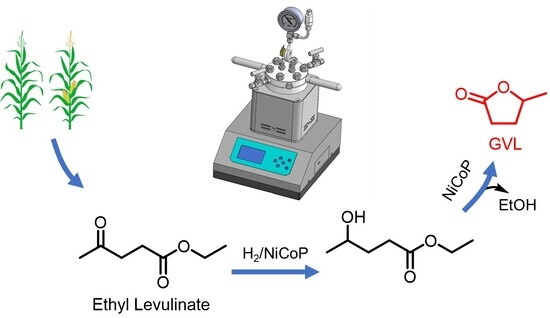
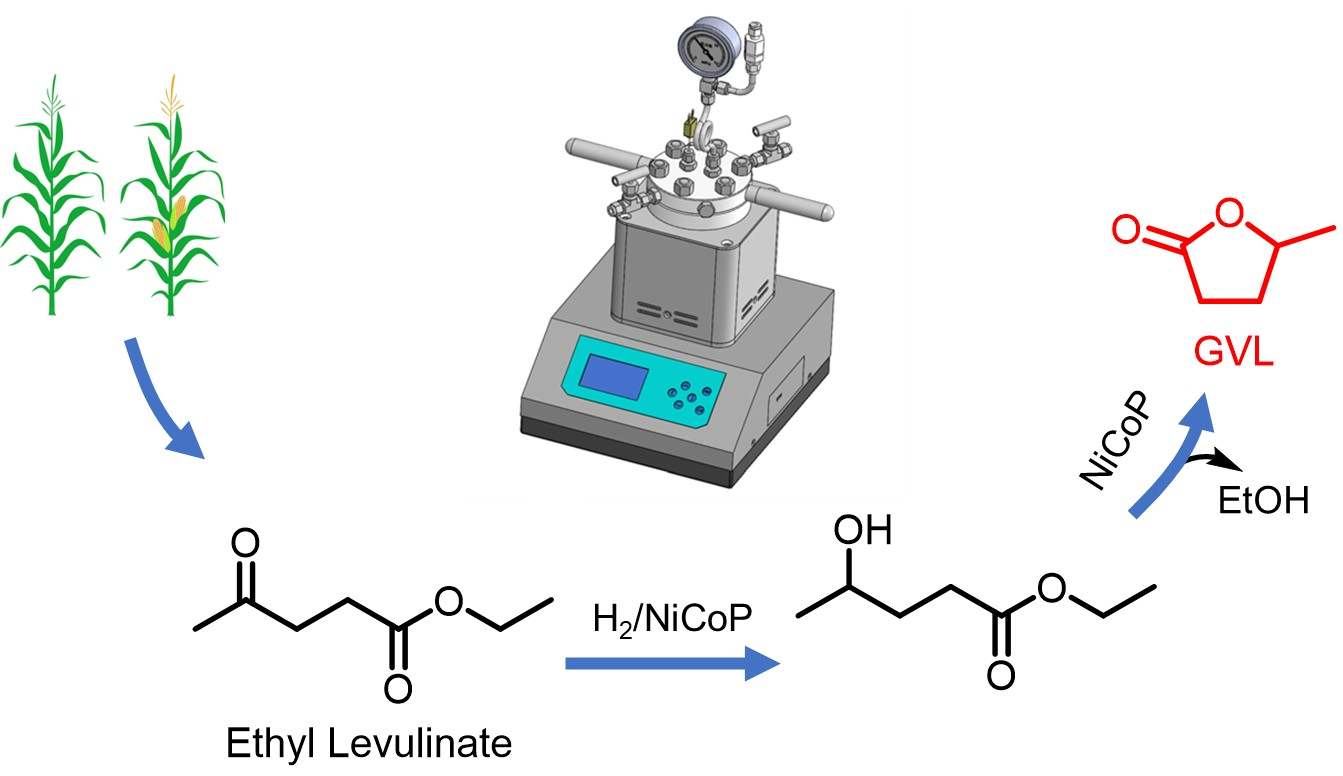
The hydrogenation of the biomass platform compound, ethyl levulinate, for the synthesis of γ-valerolactone represents a highly promising pathway for biomass valorization. Transition metal phosphates are extensively utilized in biomass hydrogenation reactions due to their Brønsted and Lewis acid sites. In this study, we synthesized a series of transition metal (Ni, Co, and NiCo) phosphide catalysts using the liquid phase method. We investigated the effects of metal species and initial Co/Ni molar ratios on catalytic activity in hydrogenation of ethyl levulinate and optimized the reaction conditions. The NiCoP-1.00 sample, prepared with a Co/Ni molar ratio of 1, demonstrated high efficacy in the hydrogenation of ethyl levulinate to γ-valerolactone, achieving excellent selectivity (97.9%) under optimized conditions. Experimental findings indicate that the synergistic interaction between Ni and Co facilitates the hydrogenation of the intermediate ethyl 4-hydroxypentanoate to γ-valerolactone while inhibiting excessive hydrogenation. The catalytic performance of the NiCoP-1.00 catalyst remained stable over five recycling runs.

Graphical Abstract

1. Introduction

Renewable lignocellulosic biomass has been the subject of extensive research as a cost-effective and environmentally sustainable resource for the fuel industry, particularly in light of the significant depletion of petroleum resources and the escalating emissions of greenhouse gas [1]. As a readily available renewable material, lignocellulosic biomass can be hydrolyzed into various bio-based platform compounds, including 5-hydroxymethylfurfural, 2,5-dimethylfuran, levulinic acid (LA) and its esters, γ-valerolactone (GVL), and furfural [2,3]. Among these platform molecules, GVL is regarded as one of the most promising candidates, and it is applied as a green solvent, fuel additive, and food additive [3]. Additionally, GVL plays a pivotal role as an intermediate in the synthesis of value-added chemicals and high-quality biofuels, including 2-methyltetrahydrofuran, 1,4-pentanediol, pentenoic acid, and liquid alkenes [4].
GVL can be synthesized through the hydrogenation of LA or its esters in a hydrogen atmosphere using noble metal catalysts such as Ru [5,6], Pd [7,8], and Pt [9,10], which have exhibited exceptional catalytic performance. However, the industrial application of noble metal catalysts is constrained by their high cost and limited stability [11,12]. Consequently, there is a pressing need to develop low-cost, efficient, and stable catalysts for the synthesis of GVL via the hydrogenation of LA or its esters [11,13,14]. In response, several transition metal-based catalysts have been developed for conversion of LA and its esters to GVL. As a representative nickel-based catalyst, RANEY® Ni has been used in LA hydrogenation since 1947 [15]. An effective catalytic transfer hydrogenation (CTH) process utilizing isopropanol as the hydrogen donor has been developed with RANEY® Ni serving as the catalyst [16]. The use of Ni-based catalysts has also been investigated by other researchers [17,18,19]. ZrFeOx has been identified as an effective catalyst in the CTH process for GVL production, necessitating a reaction temperature of up to 230 °C [20]. Additionally, catalysts composed of Cu-Zn/ZrO2-Al2O3 with an adjustable alumina binder content have been utilized for the conversion of EL to GVL [12], achieving an EL conversion of 96.4% and a GVL selectivity of 94.0% at a reaction temperature of 240 °C. Cobalt-based catalysts have also exhibited commendable catalytic performance in the hydrogenation of EL [21]. Recently, Han et al. [22] reported that the metallic Co0, synthesized through the hydrogen reduction in commercial Co3O4, showed excellent catalytic performance in the hydrogenation of EL to GVL, achieving a 96% GVL yield within 2 h under a H2 pressure of 4 MPa. To date, the majority of reported transition metal-based catalysts still necessitate elevated reaction temperatures and/or pressures for the hydrogenation of EL [12,20,23]. Therefore, there is a critical need to develop catalysts capable of facilitating the hydrogenation of LA or its esters to form GVL under milder reaction conditions.
Transition metal phosphides have garnered significant attention [24,25] as a novel class of hydrogenation catalysts, demonstrating exceptional catalytic performance in hydrogenation reactions [26,27,28,29,30]. Bimetallic phosphides, in particular, exhibit enhanced catalytic activity compared to single-transition metal phosphides, which can be attributed to the synergistic effects arising from their ternary phases in hydrodesulfurization and hydrodenitrogenation processes [31,32]. As reported, the catalytic mechanisms involved in hydrogenation are analogous to mechanisms observed in hydrodesulfurization and hydrodenitrogenation [33]. Consequently, bimetallic NiCoP nanostructures are anticipated to exhibit superior catalytic performance in hydrogenation reactions [34]. To date, a variety of synthesis methods have been explored for the production of phosphides, including temperature-programmed reduction [35], solvothermal methods [36], thermal decomposition of a single molecular precursor [37], reduction of phosphates and phosphinates [38], solid-state metathesis [39], and microwave synthesis [40]. Compared with other alternative methods, the thermal decomposition of precursors offers a safe and straightforward approach for synthesizing bimetallic phosphides at relatively low temperature. This technique is particularly advantageous as it allows for precise control over the product morphology, thereby facilitating the optimization of both the morphology and performance of bimetallic phosphides. Based on these considerations, our objective is to develop a NiCoP bimetallic phosphide catalyst and evaluate its efficacy in the hydrogenation of ethyl levulinate. In this work, NiCoP catalysts were synthesized via one-pot thermal decomposition of bis(triphenylphosphine)nickel dichloride, cobalt acetate, and triphenylphosphine (PPh3) in the presence of oleylamine. The structural characteristics of the synthesized catalysts were thoroughly characterized. The catalytic performance of NiCoP was evaluated in the hydrogenation of EL to produce GVL, and an analysis of the structure–activity relationship was conducted.

2. Results and Discussions

2.1. Catalyst Characterizations

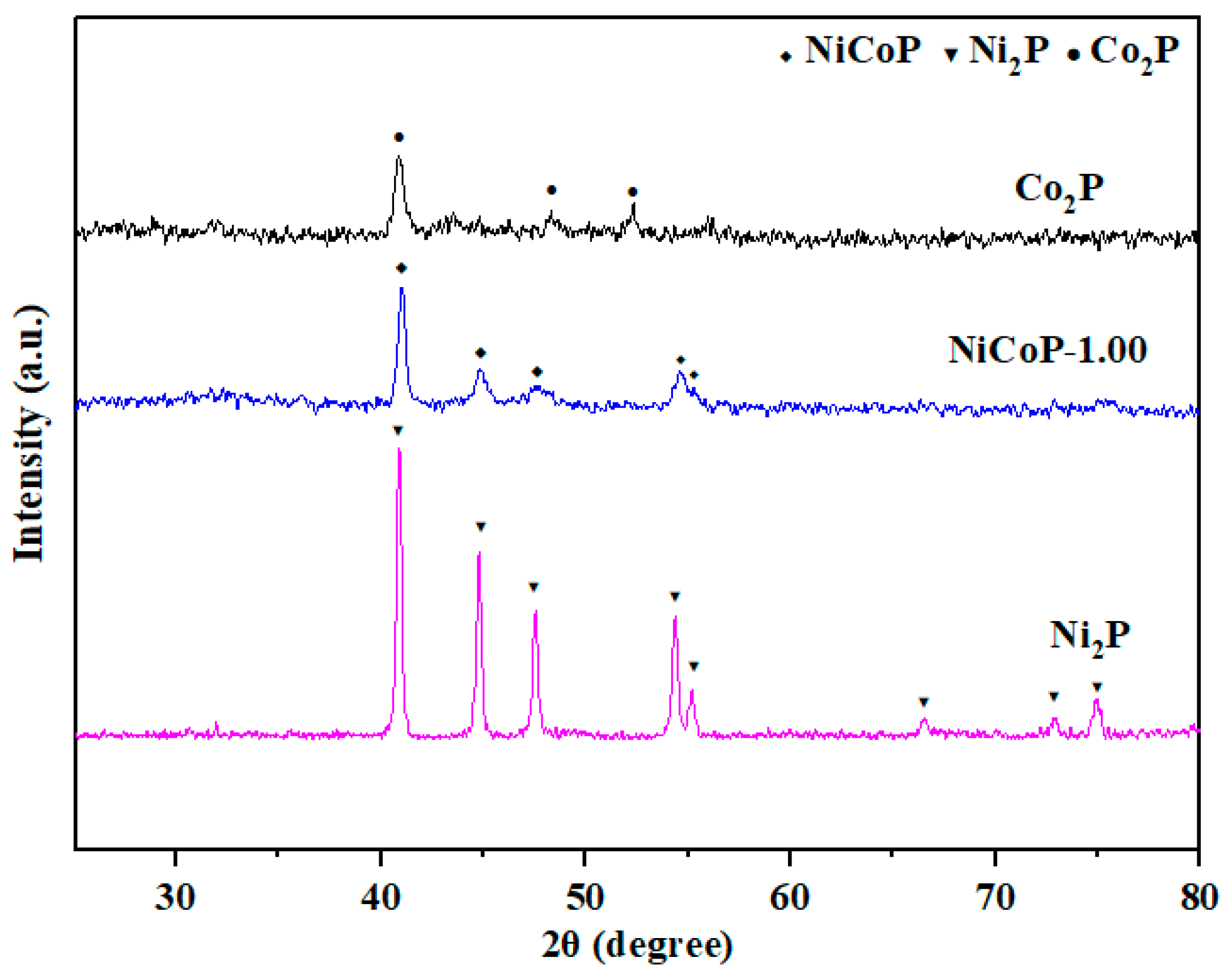
The X-ray diffraction (XRD) patterns of the bulk Ni2P, Co2P, and NiCoP-1.00 samples are depicted in Figure 1. For the Co2P sample, the diffraction peaks observed at 2θ = 40.75°, 48.73°, and 52.00° are consistent with the orthorhombic structure of Co2P (JCPDS File No. 32-0306). In the case of the Ni2P sample, the diffraction peaks at 2θ = 40.88°, 44.78°, 47.58°, 54.48°, 55.00°, 66.48°, 72.68°, and 75.08° correspond to the hexagonal structure of Ni2P (JCPDS File No. 74-1385). For the NiCoP-1.00 sample, the diffraction peaks at 2θ = 40.93°, 44.90°, 47.56°, 54.43°, and 55.24° are indicative of the hexagonal structure of NiCoP (JCPDS File No. 71-2336). The absence of additional characteristic diffraction peaks in the XRD patterns, including those associated with oxides or other phosphide phases, indicate the successful synthesis of pure Co2P, Ni2P, and NiCoP products.
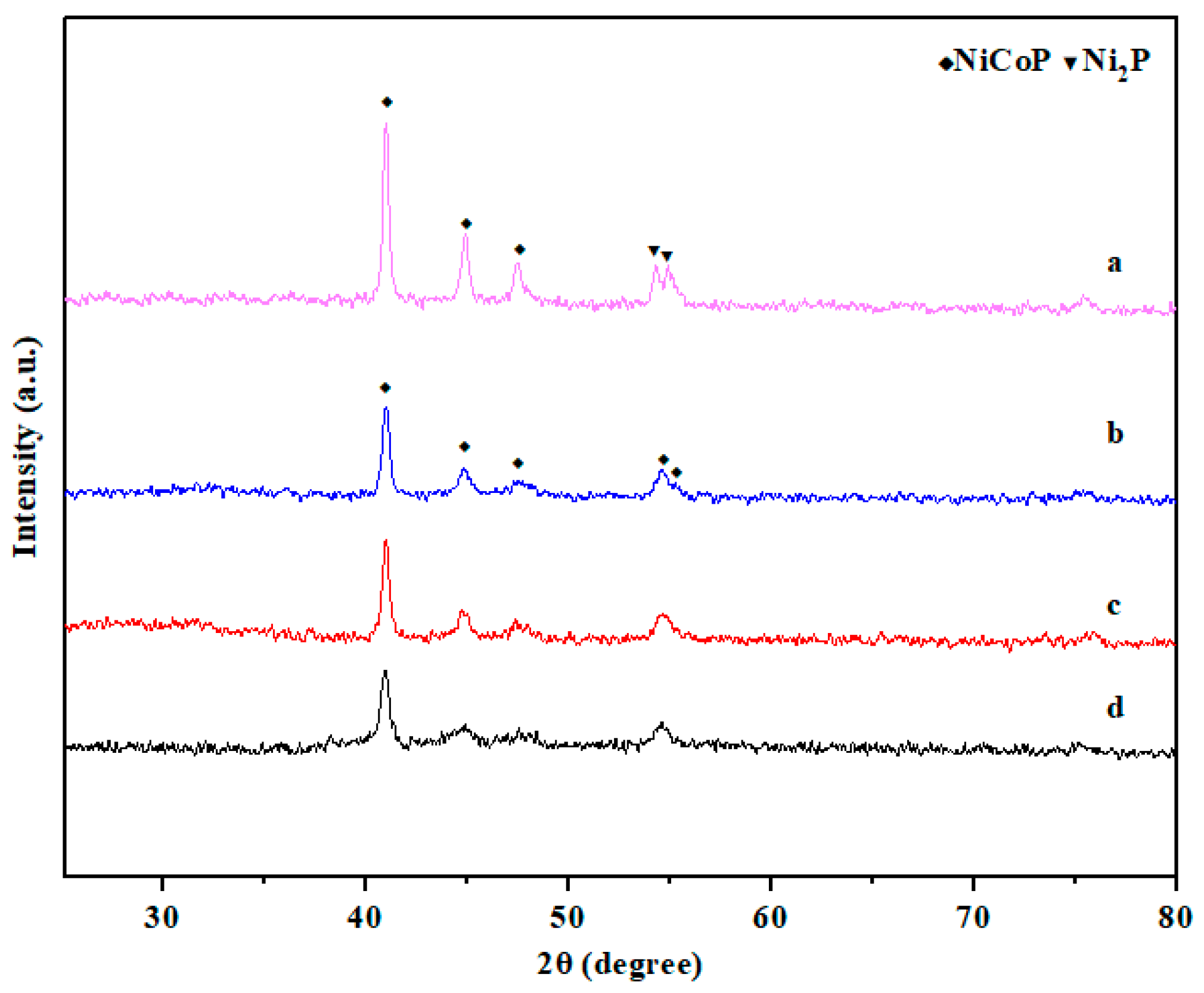
To elucidate the evolution of the bulk phase with varying cobalt-to-nickel molar ratios in the precursors, the samples were characterized by XRD (Figure 2). For the NiCoP-0.75 catalyst, the diffraction peaks at 41.0°, 44.8°, and 47.6° were indexed to the (111), (201), and (210) planes of NiCoP (JCPDS File No. 71-2336), respectively. Additionally, two peaks at 54.2° and 55.0° were identified and attributed to the (300) and (211) planes of Ni2P (JCPDS File No. 74-1385). Upon increasing the Co/Ni molar ratio of the precursor to 1.00, the characteristic peaks appeared at 2θ = 40.93°, 44.90°, 47.56°, 54.43°, and 55.24°, corresponding to the (111), (201), (210), (002), and (211) planes of hexagonal NiCoP, with no other characteristic diffraction peaks detected. The similar XRD patterns were observed when the initial Co/Ni molar ratio was further increased from 1 to 1.75 (Figure 2c,d). These findings indicate that the Co/Ni molar ratio of the precursor plays a critical role in determining the phase and crystal structure of the resulting samples [41]. As the Co/Ni molar ratio in the precursors increases, the initial Ni2P crystal phase is converted into a mixed crystal phase of Ni2P and NiCoP, eventually transforming into a single NiCoP crystal phase [41,42].
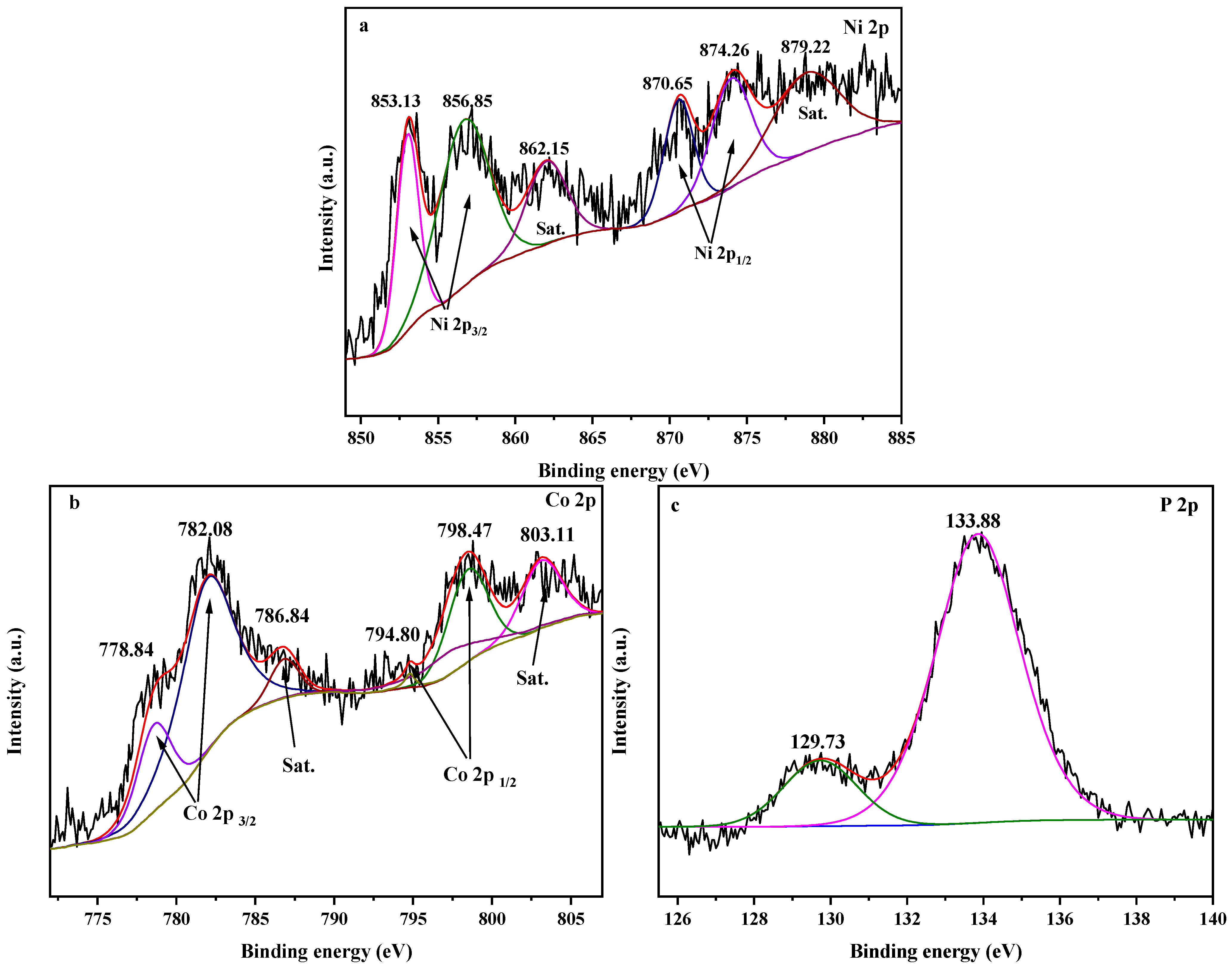
To further substantiate the surface elemental composition and chemical state of NiCoP-1.00, X-ray photoelectron spectroscopy (XPS) was utilized, with the spectra presented in Figure 3a–c. In the Ni 2p3/2 region (Figure 3a), a peak at 853.13 eV was attributed to Niδ+ (where δ is likely close to 0) [43]. Compared with metallic Ni (852.00–852.90 eV), the Ni 2p3/2 electron binding energy of 853.13 eV exhibited a positive shift, indicating that Ni in NiCoP carries a partial positive charge. The peaks at 856.85 eV and 874.26 eV correspond to Ni in an oxidized state. Among these, the peak at 856.85 eV is attributed to Ni2+, and this oxidation is due to the passivation of the sample and its subsequent exposure to air [33]. Additionally, the peak appearing at 862.15 eV corresponds to the satellite peak. In the Ni 2p1/2 region, three peaks are observed at 870.65 eV, 874.26 eV, and 879.22 eV, which are assigned to Niδ+, Ni2+, and the satellite peak, respectively. In the Co XPS spectrum, three distinct peaks are observed at 778.84 eV, 782.08 eV, and 786.84 eV within the Co 2p3/2 region, corresponding to Coδ+, Co2+, and the satellite peak [35]. Similarly, in the Co 2p1/2 region, peaks corresponding to Coδ+, Co2+, and the satellite peak are observed at 794.8 eV, 798.47 eV, and 803.11 eV. In the P 2p spectrum (Figure 3c), two peaks are observed at 129.73 eV and 133.88 eV. The predominant peak at 129.73 eV is attributed to Pδ- in metal phosphides, with a binding energy slightly lower than that of phosphorus (130.1 eV) [40]. These findings suggest partial electron transfer from metal (Co and Ni) to P. The peak at 133.88 eV is assigned to PO43− [39], which forms during the oxidation process. Furthermore, the XPS results confirm the successful synthesis of the NiCoP catalyst via the liquid-phase method in oleylamine.
N2 adsorption–desorption analysis was conducted on bulk Ni2P, Co2P, and the NiCoP-1.00 sample (Figure S1 and Table S1). The results indicate that these catalysts have a very small surface area.
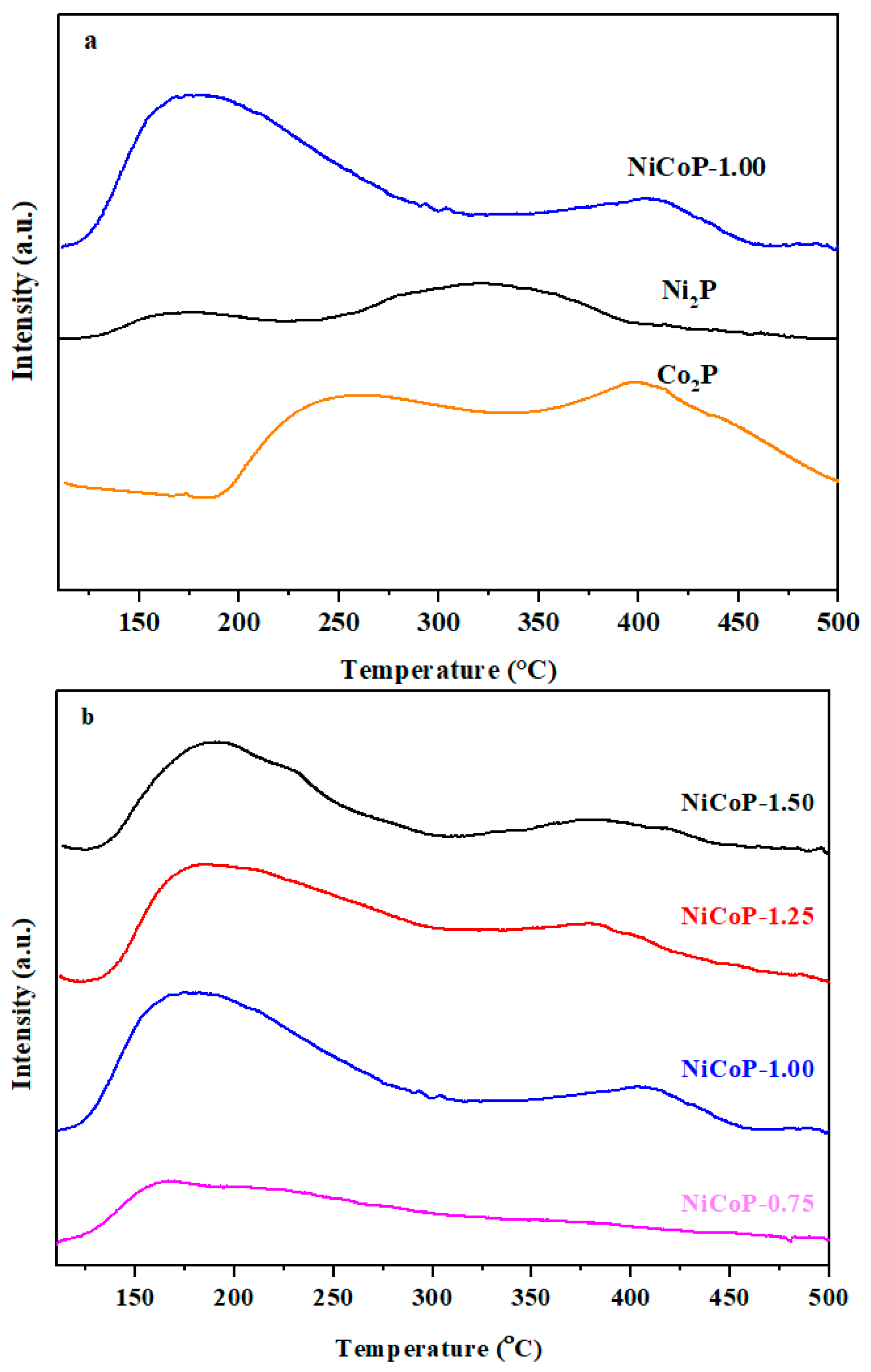
The surface acidity of catalysts plays an important role in the hydrogenation of ethyl levulinate (EL). Consequently, the surface acidities of the catalysts were investigated by NH3-TPD, and the results are depicted in Figure 4 and Table 1. As shown in Figure 4a, all metal phosphides display two distinct ammonia desorption peaks: one occurring below 270 °C and the other in the range of 300–400 °C. These peaks correspond to weak acid sites and medium-to-strong acid sites, respectively. Previous studies have indicated that the Brønsted acid sites in Ni2P, identified as weak acid sites, are associated with P-OH groups, while the Lewis acid sites of Ni2P, identified as medium acid sites, are related to the Ni species with a slight positive charge (Niδ+) [26]. Similar acidic characteristics have been observed in other transition metal phosphides [44]. Therefore, in NiCoP catalysts, the P-OH groups are correlated with Brønsted acidity, whereas the metal sites (i.e., Niδ+ and Coδ+) are associated with Lewis acidity. The total acid amount of the three metal phosphide catalysts follows the descending order of NiCoP-1.00 (410 μmol·g−1) > Co2P (260 μmol·g−1) > Ni2P (160 μmol·g−1). Figure 4b and Table 1 (entries 2–5) clearly show that for NiCoP samples, the acid strength of the weak acid sites gradually increases as the Co/Ni molar ratio increases.
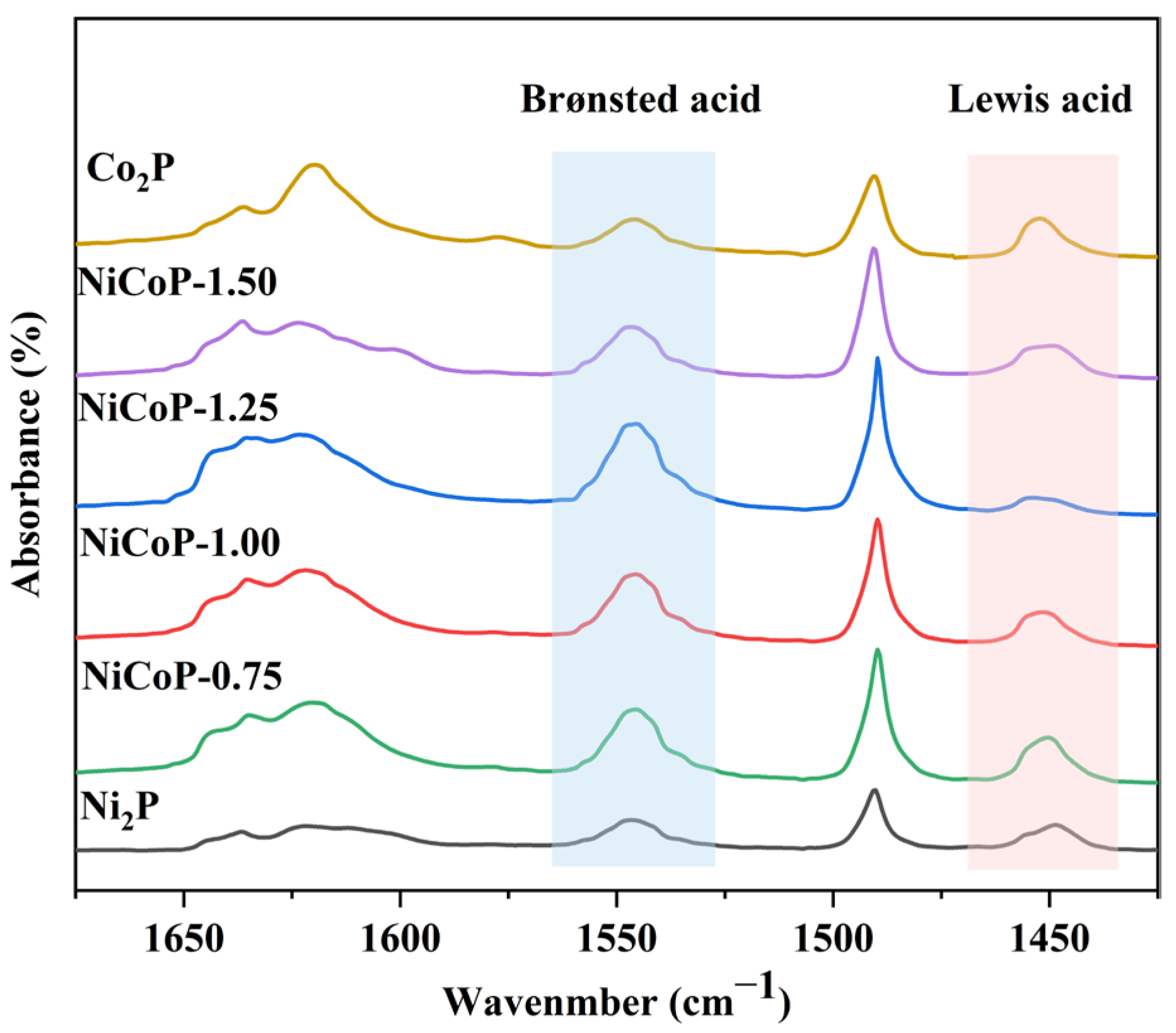
To examine the impact of different types of acid sites in metal phosphides with varying Co/Ni molar ratios, pyridine-IR (Py-IR) characterization was conducted on each sample, with the findings presented in Figure 5 and Table 1. All samples displayed bands within the range of approximately 1448–1456 cm−1 and 1544–1547 cm−1, corresponding to the vibrations of pyridine adsorbed on Lewis and Brønsted acid sites, respectively. The band at approximately 1620 cm−1 corresponds to the vibration modes ν8a[CC(N)] of the pyridine ring. The band observed at 1496 cm−1 is attributed to the combined effect of pyridine adsorption on both Lewis and Brønsted acid sites [45]. Consequently, the presence of Lewis and Brønsted acid sites in the synthesized metal phosphides is confirmed, aligning with results reported in the literature [46]. Furthermore, Table 1 (entries 2–5) clearly illustrates a trend in the NiCoP samples, indicating that the total number of acid sites decreases as the Co/Ni molar ratio increases. Notably, among the analyzed samples, NiCoP-1.00 exhibits the highest density of Brønsted acid sites.

2.2. Catalyst Performance

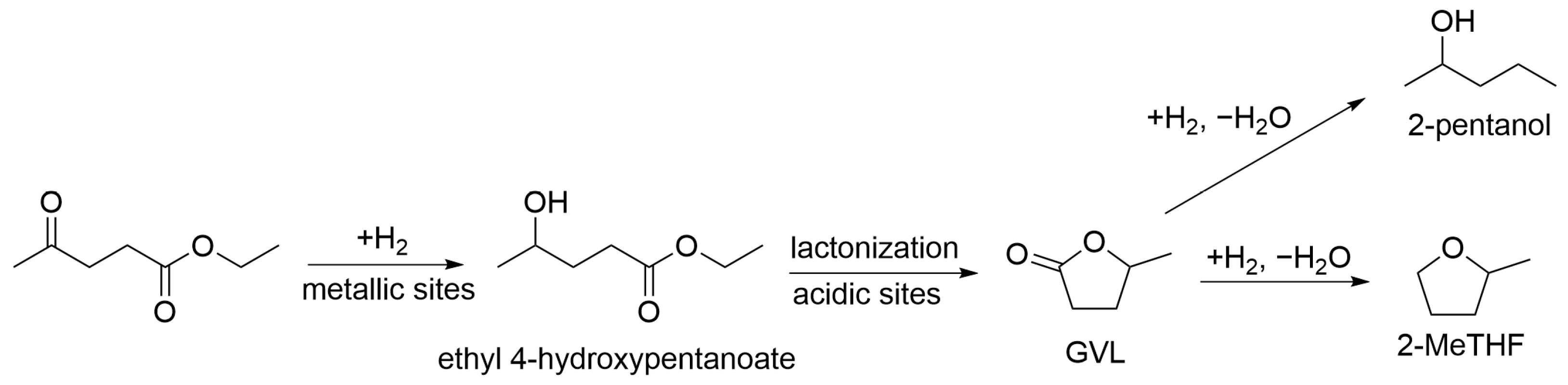
The hydrogenation of EL to produce GVL was carried out using various metal phosphide catalysts at a temperature of 140 °C, 100 mg of catalyst, 0.5 mL EL, and a pressure of 20 bar H2 pressure, with 3 mL of water (H2O) serving as the solvent. The results are detailed in Table 2. For comparison, Ni2P demonstrated an EL conversion rate of 11.4% and a GVL selectivity of 60.7%, whereas Co2P exhibited moderate catalytic performance, achieving a 75.1% EL conversion and an 89.8% GVL selectivity (Table 2, entries 1 and 2). As expected, the utilization of the bimetallic phosphide catalyst NiCoP-1.00 resulted in complete conversion of EL and a GVL selectivity of 97.9% (Table 2, entry 4). These results indicate that the bimetallic phosphide NiCoP significantly outperforms the monometallic phosphides (Ni2P and Co2P) in the hydrogenation of EL, likely due to the synergistic interaction between Ni and Co within the NiCoP catalyst, which enhances the hydrogenation of EL to GVL [14,47]. In addition to GVL, ethyl 4-hydroxypentanoate (4-HPE), 2-pentanol, and 2-methyltetrahydrofuran (2-MeTHF) were also observed in the reaction products. This led us to the conclusion that the hydrogenation of EL to GVL proceeds via the following path: Initially, EL undergoes hydrogenation at metallic sites, resulting in the formation of 4-HPE. Subsequently, 4-HPE undergoes lactonization at acidic sites, leading to the production of GVL [48]. Meanwhile, the hydrogenation of GVL to 2-pentanol and 2-MeTHF occurs as a side reaction [49,50]. The proposed reaction route for hydrogenation of EL is depicted in Scheme 1.
The effect of the Co/Ni molar ratio on the catalytic performance of the NiCoP catalyst was systematically investigated. An increase in the Co/Ni molar ratio of the precursors from 0.75 to 1.50 resulted in the complete conversion of EL, while the selectivity for GVL varied from 90.2% to 97.9% (Table 2, entries 3–6). As illustrated in Scheme 1, the synthesis of GVL from the hydrogenation of EL on the NiCoP catalyst involves a two-step reaction process, comprising hydrogenation and lactonization [51]. The Brønsted and Lewis acid sites play a crucial role in activating the carbonyl group of EL, thereby weakening the C=O bond and promoting its reaction with H atoms activated at the metal sites. Therefore, a catalyst with appropriate amounts of both acid sites and metal sites is advantageous for the hydrogenation of EL to GVL. [46,48,52,53]. As the Co/Ni molar ratio increased from 0.75 to 1.50, NiCoP-1.00 demonstrated the highest exposure of Brønsted acid sites and the most pronounced acidity, resulting in the highest GVL selectivity of 97.9%.
Table 3 presents a comparative analysis of the performance of NiCoP-1.00 against other analogous metal catalysts reported in the literature. Supported Pt and Pd catalysts are typically employed in the hydrogenation of LA or EL, achieving satisfactory GVL selectivity under optimal reaction conditions, and thus necessitating a H2 pressure of 60 bar. Catalysts such as Cu0.5Ni1Co3B, Ni/MgAlO, and Ni-Mo/C are employed for the hydrogenation of butyrolactone (BL) or LA—demonstrating excellent catalytic performance but requiring organic solvents. In contrast, water (H2O) serves as an environmentally benign solvent, facilitating the hydrogenation of LA and its esters to GVL with high conversion and selectivity. However, this process generally requires elevated temperatures and/or pressures. In comparison to the catalysts enumerated in Table 3, NiCoP-1.00 achieves complete EL conversion and 97.9% GVL selectivity under relatively mild reaction conditions (140 °C, 20 bar). Thus, compared with other representative catalysts reported in the literature, the NiCoP-1.00 catalyst developed in this work demonstrates significant competitive advantages among a variety of non-noble metal-based catalysts.

2.3. Effect of Catalyst Dosage

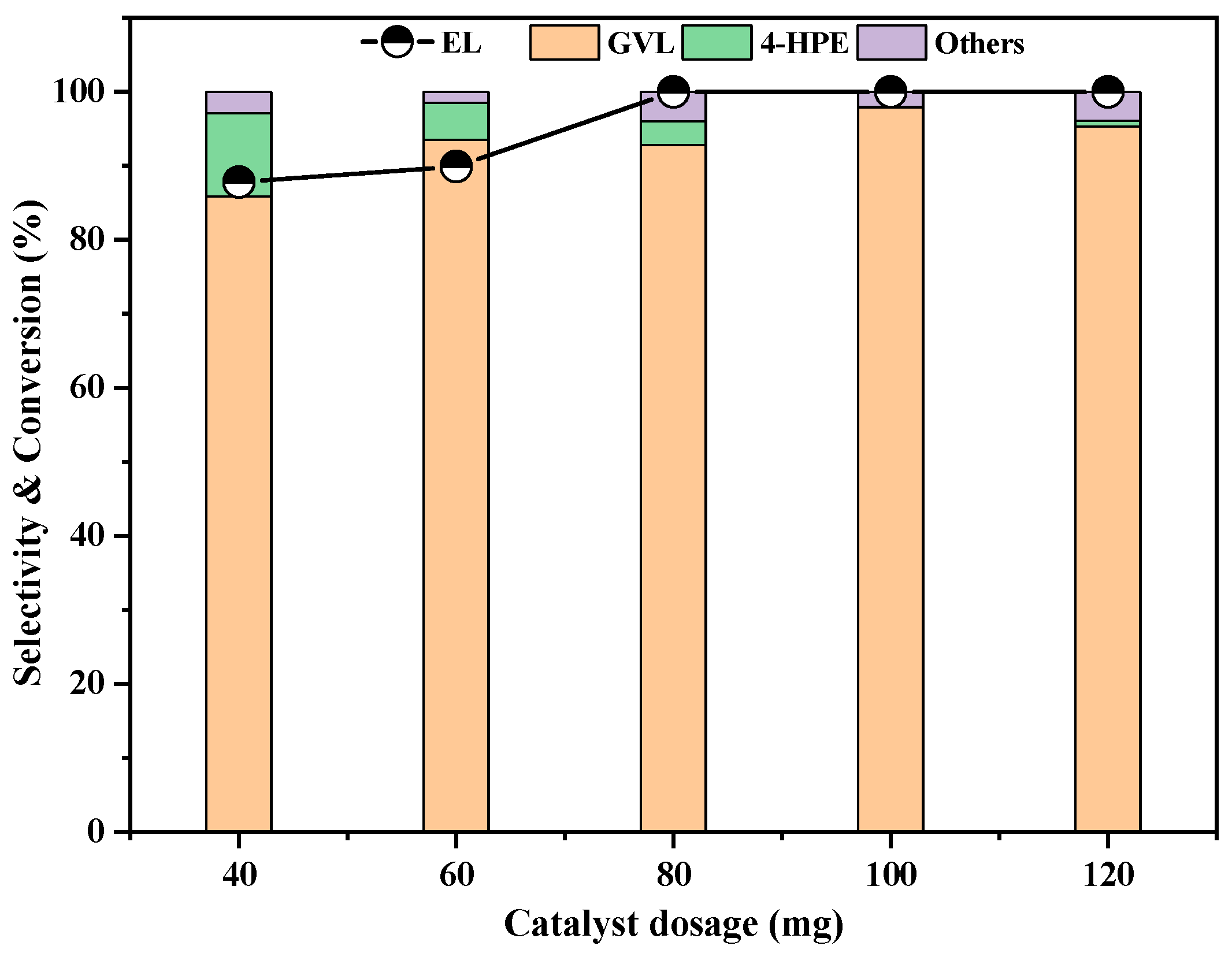
Under the conditions of 140 °C and 20 bar H2 pressure, the effect of NiCoP-1.00 dosage on the EL hydrogenation was examined over a reaction period of 4 h, as depicted in Figure 6. An increase in the NiCoP-1.00 dosage from 40 mg to 80 mg resulted in a significant rise in the EL conversion and GVL selectivity from 87.8% and 85.9% to 100% and 92.8%, respectively (Figure 6). When the catalyst dosage was increased to 100 mg, the selectivity of GVL reached 97.9%. However, when the catalyst dosage was elevated to 120 mg, a decline in GVL selectivity was observed, attributed to the further hydrogenation of GVL to form 2-MeTHF.

2.4. Effect of Reaction Temperature

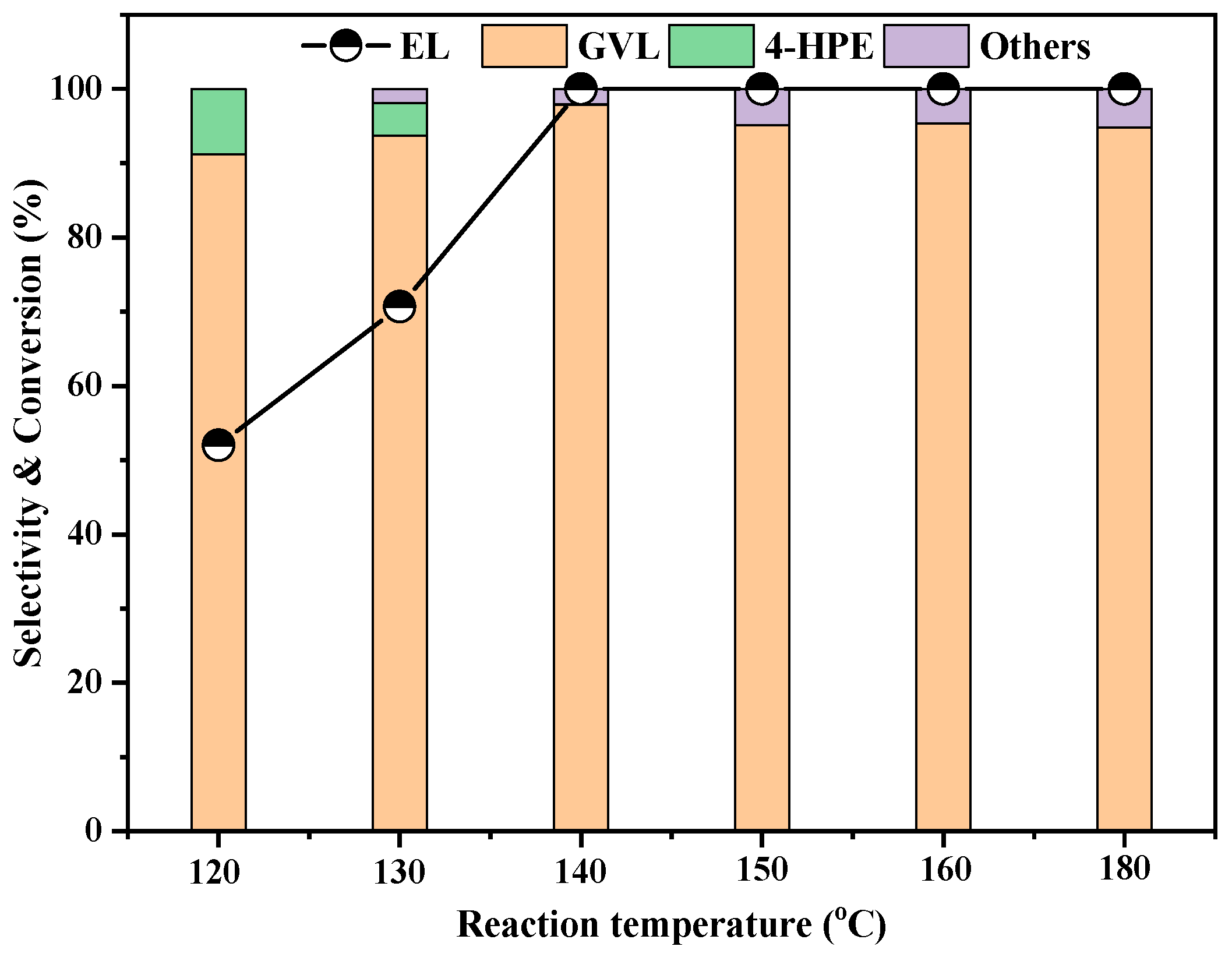
The effect of reaction temperature on EL conversion and GVL selectivity is shown in Figure 7. At lower temperatures (<130 °C), the catalyst exhibits limited activity, resulting in EL conversion below 55%. Increasing the temperature significantly enhances the conversion of EL, while GVL selectivity remains relatively constant. At a reaction temperature of 140 °C, complete conversion of EL is achieved within 4 h, with a GVL selectivity of 97.9%. However, further increases in reaction temperature (>140 °C) lead to a gradual rise in the concentration of 2-MeTHF in the product, indicating that higher temperatures promote excessive hydrogenation of GVL to 2-MeTHF. Therefore, a reaction temperature of 140 °C is optimal for achieving a satisfactory reaction rate and GVL selectivity.

2.5. Effect of H2 Pressure

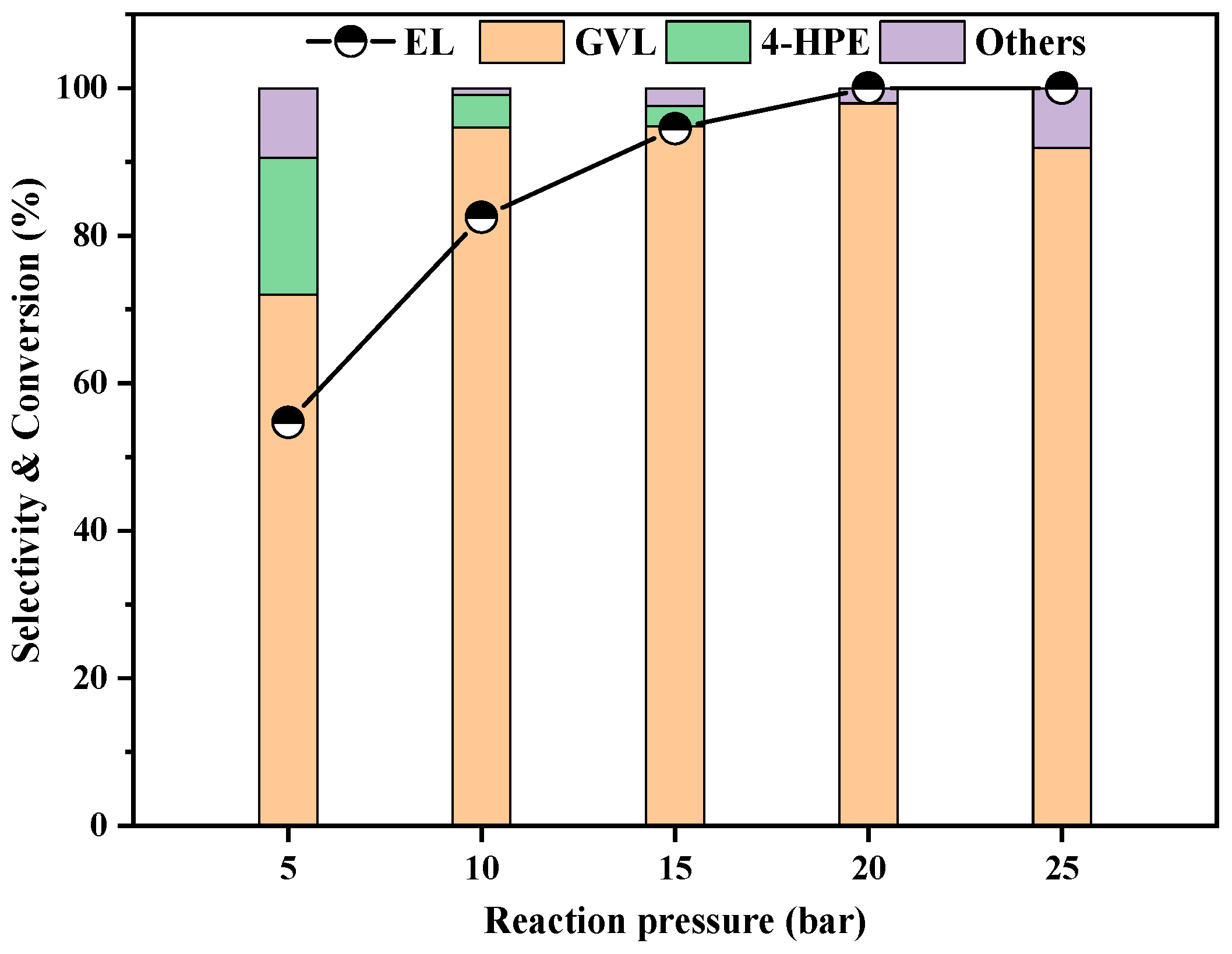
The influence of H2 pressure on the conversion of EL to GVL using the NiCoP-1.00 catalyst was investigated under various H2 pressures, and the results are presented in Figure 8. The data indicate that an increase in H2 pressure from 5 bar to 15 bar results in a significant enhancement in both EL conversion and GVL selectivity, achieving 82.5% and 94.7%, respectively. Further elevation of H2 pressure from 15 bar to 20 bar leads to a complete conversion of EL (100%), while the GVL selectivity experiences a modest increase, reaching a peak of 97.9% at 20 bar. However, when the H2 pressure is increased beyond 20 bar (up to 25 bar), a slight decline in GVL selectivity is observed. This phenomenon can be attributed to the more severe reaction conditions, under which GVL undergoes further hydrogenation to form 2-methyltetrahydrofuran [64].

2.6. Effect of Reaction Time

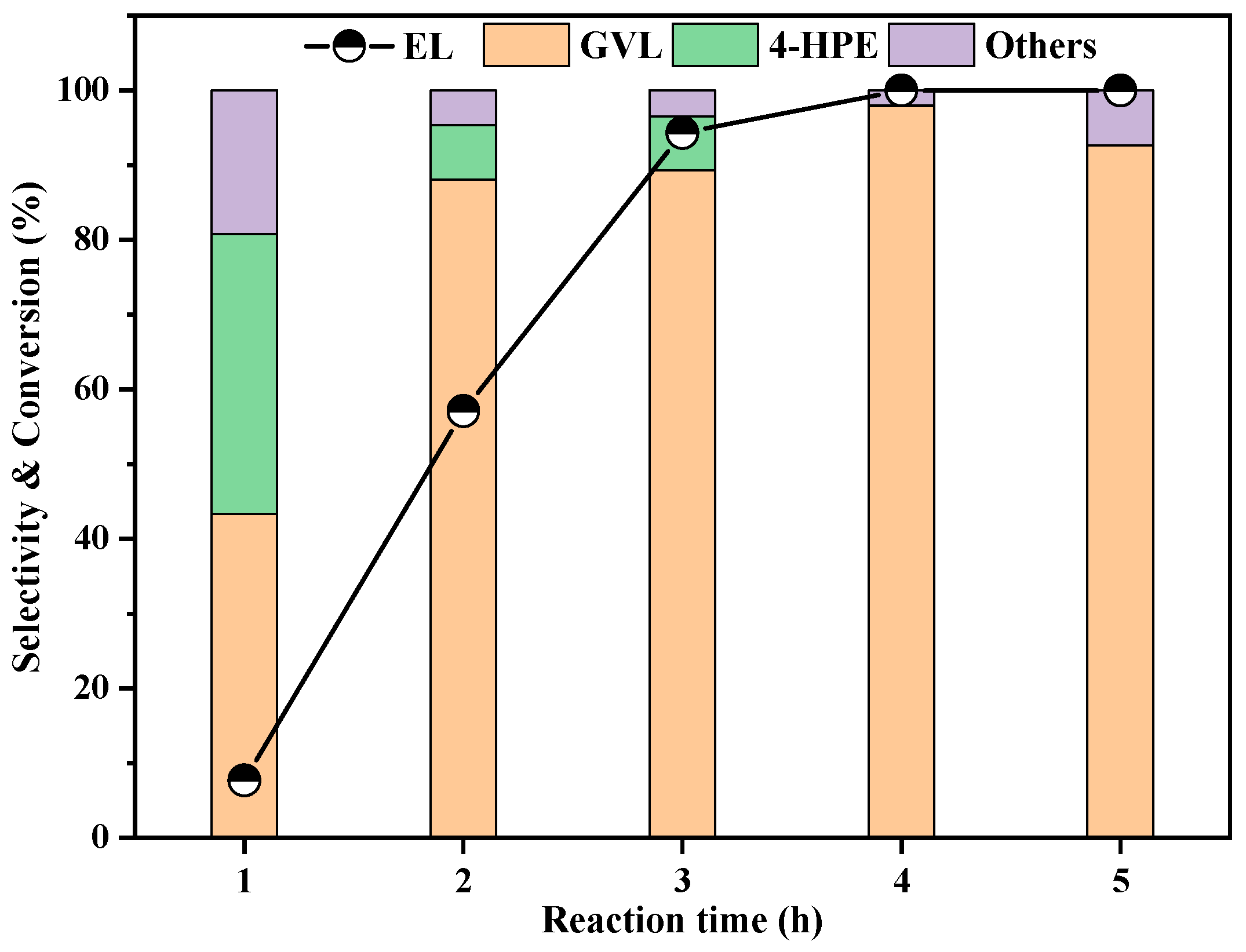
The effects of reaction time on the conversion of EL and the selectivity of GVL are illustrated in Figure 9. It is evident that reaction time exerts a substantial influence on both EL conversion and GVL selectivity. Within a short reaction time frame (<1 h), the catalyst demonstrates low activity, resulting in EL conversion and GVL selectivity of less than 7.7% and 43.3%, respectively. Extending the reaction time significantly improves both EL conversion and GVL selectivity, achieving 100% and 97.9%, respectively, within 4 h at 140 °C. However, further prolongation of the reaction time leads to excessive hydrogenation of GVL.

2.7. Reusability of the Catalyst

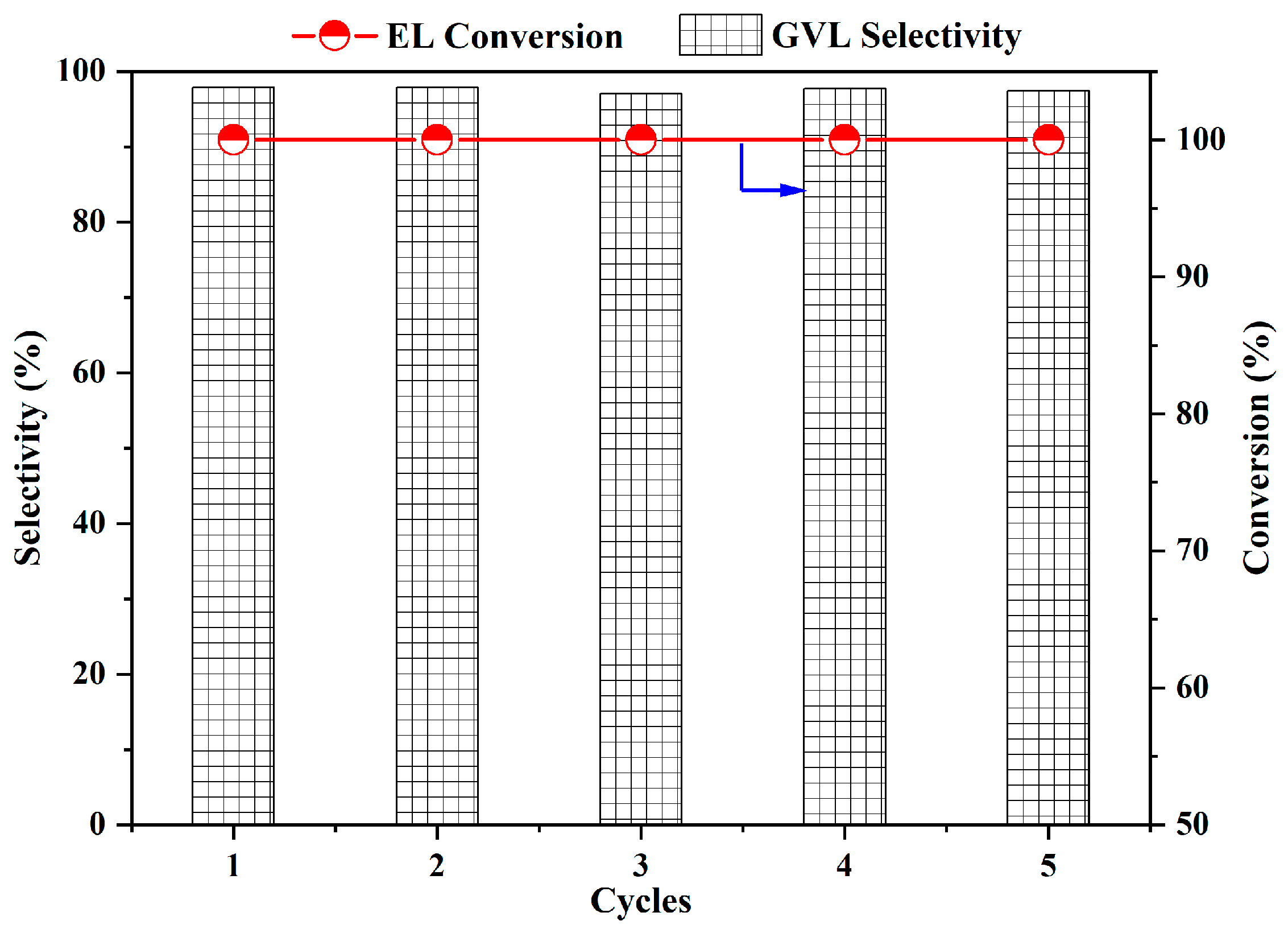
The stability of the NiCoP-1.00 catalyst was evaluated under optimal conditions. Following each cycle, the catalyst was isolated via centrifugation and subsequently reused in the subsequent experimental run. The results are shown in Figure 10. After being recycled five times, the NiCoP-1.00 catalyst continues to show stable EL conversion and GVL selectivity. These results suggest that the NiCoP-1.00 catalyst has outstanding reusability in hydrogenation reactions, making it a promising option for industrial hydrogenation applications.

3. Materials and Methods

3.1. Materials

NiCl2•6H2O and Co(OAc)2 were obtained from Tianjin Guangfu Fine Chemical Research Institute. Ethyl levulinate was purchased from Macleans. Oleylamine (OAm, 80~90%) was purchased from Shanghai Hansi Chemical Industry Co., Ltd. (Shanghai, China). PPh3, ether, ethanol, hexane, and isopropyl alcohol were purchased from Tianjin Kemiou Chemical Reagent Co., Ltd. (Tianjin, China). All chemicals were used as received without additional purification, and all reactions were carried out under a nitrogen atmosphere using standard air-free techniques.

3.2. Catalyst Preparation

Bis(triphenylphosphine)nickel(II) dichloride (BTND) was synthesized through the following procedure: NiCl2•6H2O (17.85 g, 61.4 mmol), PPh3 (45.23 g, 172.6 mmol), and EtOH (300 mL) were sequentially added into a three-necked flask. The resulting mixture was stirred and refluxed for 60 min. Upon cooling to room temperature, the mixture was filtered to obtain a dark green solid, which was subsequently washed with ethanol. The solid was then dried overnight at 60 °C under vacuum conditions, resulting in a dark green powder [65].
The NiCoP sample (denoted as NiCoP-1.00) was synthesized using a liquid-phase method. Specifically, BTND (1.30 g, 3.8 mmol), PPh3 (4.72 g, 18.0 mmol), Co(OAc)2 (0.49 g, 2.8 mmol), and OAm (20 mL) were used together as a coordinating solvent and introduced into a three-neck flask and subjected to magnetic stirring under a nitrogen atmosphere. The mixture was initially heated to 120 °C with a rate of 10 °C/min and maintained at this temperature for 30 min. Subsequently, the temperature was further increased to 350 °C with the same rate and maintained for 9 h before being allowed to cool to room temperature. Excess ethanol was then added, and the mixture was centrifuged for 15 min. The mixture was filtered, washed, and dried overnight at 60 °C under vacuum, and then NiCoP was obtained. By varying the molar ratio of cobalt to nickel in the precursors, a series of NiCoP-x samples were prepared, where x denotes the molar ratio of cobalt to nickel. Similarly, Co2P was synthesized using PPh3 (4.72 g, 18.0 mmol) and Co(OAc)2 (0.49 g, 2.8 mmol) as precursors, while Ni2P was prepared using BTND as an “all-in-one” precursor.

3.3. Catalyst Characterization

The crystal phase was determined by X-ray diffractometry (XRD, Bruker D8 Advance, Cu Kα, λ = 1.5404 Å, 40 kV, 40 mA).
The valence state of the catalyst metal was characterized and determined using X-ray photoelectron spectroscopy (XPS). X-ray photoelectron spectroscopy (XPS) experiments were performed on a Thermo ESCALAB 250Xi spectrometer utilizing an Al Kα (1486.6 eV) photon source.
The density of acid sites in NiCoP were measured by ammonia temperature-programmed desorption (NH3-TPD, Micromeritics, AutoChem II 2920). A catalyst sample of 0.2 g (20–40 mesh) was placed in a quartz tube and then pretreated by heating to 500 °C at a rate of 15 °C/min under an Ar stream for 1 h. After cooling to 100 °C under an Ar stream, a mixture of NH3 and Ar (10 vol.% NH3) was introduced over the sample for 30 min. Subsequently, physically adsorbed NH3 was removed by flowing Ar stream over the sample, and the baseline was stabilized. The sample was then heated from 100 to 450 °C at a rate of 10 °C/min. The amount of NH3 desorbed was measured by a thermal conductivity detector (TCD).
Fourier transform infrared spectroscopy of the metal phosphide by pyridine adsorption was carried out by using Spectrum 100 Fourier transform infrared spectrometer manufactured by PE Company of the United States. Self-supporting wafers were mounted in a high-vacuum IR cell and pretreated at 350 °C under vacuum degassing for 2 h. Following this, pyridine adsorption was carried out at 120 °C for 15 min to achieve saturated adsorption. Infrared spectra were subsequently acquired after the sample was warmed to 150 °C and subjected to desorption for 1 h. The acid content of the sample was quantified by analyzing the peak area of the resulting spectrum. The amounts of adsorbed pyridine molecules at different samples were calculated based on the integral areas of the spectral bands for Brønsted acid sites and Lewis acid sites and their molar extinction coefficients (εBrønsted = 1.67 cm/μmol; εLewis = 2.22 cm/μmol).

3.4. Catalytic Performance of NiCoP for Hydrogenation of EL

Catalytic hydrogenation of EL was conducted in a magnetically stirred stainless steel high-pressure autoclave. The amounts of catalyst, EL, and water introduced into the reactor were 100 mg, 0.5 mL, and 3.0 mL, respectively. The autoclave was purged with H2 three times to remove air, and the reaction was carried out under the specified conditions. Finally, the reaction mixture was analyzed by GC (Agilent 7890A instrument equipped with an HP 1-MS capillary column). The reaction products were identified by gas chromatography–mass spectrometry (GC–MS).
The conversion and selectivity were calculated based on the following equations:
Conversion   ( % )   =   Mole   of   ethyl   levulinate   converted Mole   of   ethyl   levulinate   loaded   initially   ×   100 %
Selectivity   ( % ) = Mole   of   the   product Mole   of   ethyl   levulinate   converted   ×   100 %

4. Conclusions

In summary, a series of NiCoP catalysts with varying densities of acid sites were synthesized using a liquid-phase method. Among the three metal phosphides investigated (cobalt phosphide, nickel phosphide, and NiCoP), the NiCoP catalyst exhibited a synergistic interaction between nickel (Ni) and cobalt (Co), which proved to be more conducive to the hydrogenation of ethyl levulinate (EL) to GVL. Under optimized reaction conditions, the conversion of EL and the selectivity of GVL achieved 100% and 97.9%, respectively. Furthermore, the production of GVL is influenced by the quantity of Brønsted and Lewis acid sites, and the ratio of these two types of acid sites can be modulated by varying the Co/Ni molar ratio in the precursor. Meanwhile, the optimized catalyst (NiCoP-1.00) also showed exceptional stability.

Supplementary Materials

The following supporting information can be downloaded at: https://www.mdpi.com/article/10.3390/catal16010086/s1, Figure S1: Nitrogen adsorption-desorption isotherms of the catalysts; Table S1: Physical properties of samples NiCoP-1.00, Ni2P and Co2P.

Author Contributions

Conceptualization, Y.J. and Y.W.; methodology, Y.J.; software, S.W.; validation, S.W., X.Y. and Y.B.; formal analysis, X.Y.; investigation, Y.B.; resources, L.C.; data curation, X.L.; writing—original draft preparation, Y.J.; writing—review and editing, T.Z., L.X. and Y.W.; visualization, L.X.; supervision, Y.W.; project administration, Y.W.; funding acquisition, Y.W. All authors have read and agreed to the published version of the manuscript.

Funding

The APC was funded by Yazhou Wang and the Daqing Petrochemical Research Center, PetroChina Company Limited.

Data Availability Statement

The dataset is available upon request from the authors.

Acknowledgments

This work was financially supported by Daqing Petrochemical Research Center, PetroChina Company Limited, China.

Conflicts of Interest

Authors Yonggang Ji, Siqi Wang, Xiaolu Yuan, Yan Bing, Li Chen, Xuefeng Lu, Tan Zhao and Yazhou Wang were employed by the company Daqing Petrochemical Research Center, PetroChina Company Limited. The remaining authors declare that the research was conducted in the absence of any commercial or financial relationships that could be construed as a potential conflict of interest.

References

  1. Serrano-Ruiz, J.C.; Dumesic, J.A. Catalytic routes for the conversion of biomass into liquid hydrocarbon transportation fuels. Energy Environ. Sci. 2011, 4, 83–99. [Google Scholar] [CrossRef]
  2. Van Putten, R.-J.; Van Der Waal, J.C.; De Jong, E.; Rasrendra, C.B.; Heeres, H.J.; de Vries, J.G. Hydroxymethylfurfural, a versatile platform chemical made from renewable resources. Chem. Rev. 2013, 113, 1499–1597. [Google Scholar] [CrossRef]
  3. Wettstein, S.G.; Alonso, D.M.; Chong, Y.; Dumesic, J.A. Production of levulinic acid and gamma-valerolactone (GVL) from cellulose using GVL as a solvent in biphasic systems. Energy Environ. Sci. 2012, 5, 8199–8203. [Google Scholar] [CrossRef]
  4. Yan, K.; Yang, Y.; Chai, J.; Lu, Y. Catalytic reactions of gamma-valerolactone: A platform to fuels and value-added chemicals. Appl. Catal. B Environ. 2015, 179, 292–304. [Google Scholar] [CrossRef]
  5. Wang, J.; Dong, X.; Fan, Y.; Wang, Y.; Guo, X. Stable RuIr Nanoalloy Catalyst for Levulinic Acid Hydrogenation Reaction. Molecules 2025, 30, 93. [Google Scholar] [CrossRef]
  6. Dao, Z.; Wang, Y.; Yang, C.; Pu, S.; Yan, W.; Tian, D.; Min, C.; Zhao, J.; Zhuang, C. Synergistic catalysis of Ru0-Ru3+ in MOF supported ultrafine Ru nanoparticles catalyst promotes ethyl levulinate to γ-valerolactone. Appl. Catal. A Gen. 2024, 677, 119705. [Google Scholar] [CrossRef]
  7. Yan, K.; Lafleur, T.; Wu, G.; Liao, J.; Ceng, C.; Xie, X. Highly selective production of value-added γ-valerolactone from biomass-derived levulinic acid using the robust Pd nanoparticles. Appl. Catal. A Gen. 2013, 468, 52–58. [Google Scholar] [CrossRef]
  8. Shan, J.; Chen, Z.; Wang, D.; Zhang, G.; Li, S.; Sun, C.; Wang, D.; Ju, C.; Zhang, X.; Li, L. Boosting γ-valerolactone production from ethyl levulinate hydrogenation over Pd catalyst via alloying with Co and synergistic catalysis with HZSM-5. Appl. Catal. B Environ. 2025, 362, 124769. [Google Scholar] [CrossRef]
  9. Hsiao, C.-Y.; Chiu, H.-Y.; Lin, T.-Y.; Lin, K.-Y.A. A comparative study on microwave-assisted catalytic transfer hydrogenation of levulinic acid to γ-valerolactone using Ru/C, Pt/C, and Pd/C. Chem. Eng. Commun. 2021, 208, 1511–1522. [Google Scholar] [CrossRef]
  10. Lü, Z.; Zhu, S.; Dong, M.; Qin, Z.; Fan, W.; Wang, J. Synthesis of γ-Valerolactone through coupling of methyl levulinate hydrogenation with aqueous phase reforming of methanol over Pt/CoxAl catalyst. J. Fuel Chem. Technol. 2024, 52, 1266–1279. [Google Scholar] [CrossRef]
  11. Chen, B.; Guo, H.; Wan, Z.; Xu, X.; Zhang, H.; Zhao, D.; Chen, X.; Zhang, N. Efficient catalytic hydrogenation of butyl levulinate to γ-valerolactone over a stable and magnetic CuNiCoB amorphous alloy catalyst. Energy Fuels 2018, 32, 5527–5535. [Google Scholar] [CrossRef]
  12. Kong, X.; Wu, S.; Jin, Y.; Liu, L.; Liu, J. Continuous hydrogenation of ethyl levulinate to γ-valerolactone over Cu-Zn/ZrO2 catalyst with alumina binder. Energy Fuels 2017, 31, 12232–12237. [Google Scholar] [CrossRef]
  13. Yue, Y.; Zhu, G.; Liu, M.; Zhu, Y.; Ji, W.; Si, X.; Lu, T. Catalytic Conversion of Ethyl Levulinate to γ-Valerolactone Under Mild Conditions over Zr-Beta Acidic Zeolite Prepared by Hydrothermal Method. Catalysts 2024, 14, 924. [Google Scholar] [CrossRef]
  14. Ding, H.; Yang, C.; Jiang, C.; Luo, W.; Wang, Q.; Guo, X. Ion-Exchange Synthesis of Surrounded CoNi@Al2O3 Catalyst for Levulinic Acid Hydrogenation to γ-Valerolactone under Mild Conditions. Catalysts 2024, 14, 113. [Google Scholar] [CrossRef]
  15. Christian, R.V., Jr.; Brown, H.D.; Hixon, R. Derivatives of γ-Valerolactone, 1,4-Pentanediol and 1,4-Di-(β-cyanoethoxy)-pentane. J. Am. Chem. Soc. 1947, 69, 1961–1963. [Google Scholar] [CrossRef]
  16. Yang, Z.; Huang, Y.-B.; Guo, Q.-X.; Fu, Y. RANEY® Ni catalyzed transfer hydrogenation of levulinate esters to γ-valerolactone at room temperature. Chem. Commun. 2013, 49, 5328–5330. [Google Scholar] [CrossRef]
  17. Mohan, V.; Venkateshwarlu, V.; Pramod, C.V.; Raju, B.D.; Rao, K.S.R. Vapour phase hydrocyclisation of levulinic acid to γ-valerolactone over supported Ni catalysts. Catal. Sci. Technol. 2014, 4, 1253–1259. [Google Scholar] [CrossRef]
  18. Liu, X.; Li, Z. Efficient transfer hydrogenation of levulinic acid (LA) to γ-valerolactone (GVL) over Ni/NiO-MC (MC= mesoporous carbon). Sustain. Energy Fuels 2021, 5, 3312–3320. [Google Scholar] [CrossRef]
  19. Shao, Y.; Sun, K.; Fan, M.; Wang, J.; Gao, G.; Zhang, L.; Zhang, S.; Hu, X. Selective conversion of levulinic acid to gamma-valerolactone over Ni-based catalysts: Impacts of catalyst formulation on sintering of nickel. Chem. Eng. Sci. 2022, 248, 117258. [Google Scholar] [CrossRef]
  20. Li, H.; Fang, Z.; Yang, S. Direct conversion of sugars and ethyl levulinate into γ-valerolactone with superparamagnetic acid-base bifunctional ZrFeOx nanocatalysts. ACS Sustain. Chem. Eng. 2016, 4, 236–246. [Google Scholar] [CrossRef]
  21. Kondeboina, M.; Enumula, S.S.; Gurram, V.R.B.; Chada, R.R.; Burri, D.R.; Kamaraju, S.R.R. Selective hydrogenation of biomass-derived ethyl levulinate to γ-valerolactone over supported Co catalysts in continuous process at atmospheric pressure. J. Ind. Eng. Chem. 2018, 61, 227–235. [Google Scholar] [CrossRef]
  22. Zhou, H.; Song, J.; Fan, H.; Zhang, B.; Yang, Y.; Hu, J.; Zhu, Q.; Han, B. Cobalt catalysts: Very efficient for hydrogenation of biomass-derived ethyl levulinate to gamma-valerolactone under mild conditions. Green Chem. 2014, 16, 3870–3875. [Google Scholar] [CrossRef]
  23. Liu, M.; Li, S.; Fan, G.; Yang, L.; Li, F. Hierarchical flower-like bimetallic NiCu catalysts for catalytic transfer hydrogenation of ethyl levulinate into γ-valerolactone. Ind. Eng. Chem. Res. 2019, 58, 10317–10327. [Google Scholar] [CrossRef]
  24. Oyama, S.T.; Gott, T.; Zhao, H.; Lee, Y.-K. Transition metal phosphide hydroprocessing catalysts: A review. Catal. Today 2009, 143, 94–107. [Google Scholar] [CrossRef]
  25. Pei, Y.; Cheng, Y.; Chen, J.; Smith, W.; Dong, P.; Ajayan, P.M.; Ye, M.; Shen, J. Recent developments of transition metal phosphides as catalysts in the energy conversion field. J. Mater. Chem. A 2018, 6, 23220–23243. [Google Scholar] [CrossRef]
  26. Wang, Y.; Liu, F.; Han, H.; Xiao, L.; Wu, W. Metal Phosphide: A Highly Efficient Catalyst for the Selective Hydrodeoxygenation of Furfural to 2-Methylfuran. ChemistrySelect 2018, 3, 7926–7933. [Google Scholar] [CrossRef]
  27. Wang, Y.; Nuzhdin, A.L.; Shamanaev, I.V.; Bukhtiyarova, G.A. Flow synthesis of N-alkyl-5-methyl-2-pyrrolidones over Ni2P/SiO2 catalyst. Mol. Catal. 2021, 515, 111884. [Google Scholar] [CrossRef]
  28. Topalian, P.J.; Liyanage, D.R.; Danforth, S.J.; d’Aquino, A.I.; Brock, S.L.; Bussell, M.E. Effect of particle size on the deep HDS properties of Ni2P catalysts. J. Phys. Chem. C 2019, 123, 25701–25711. [Google Scholar] [CrossRef]
  29. Tian, Y.; Wang, Y.; Zhang, H.; Xiao, L.; Wu, W. Novel C@Ni3P Nanoparticles for Highly Selective Hydrogenation of Furfural to Furfuryl Alcohol. Catal. Lett. 2021, 152, 883–894. [Google Scholar] [CrossRef]
  30. Wang, Y.; Nuzhdin, A.L.; Shamanaev, I.V.; Kodenev, E.G.; Gerasimov, E.Y.; Bukhtiyarova, M.V.; Bukhtiyarova, G.A. Effect of Phosphorus Precursor, Reduction Temperature, and Support on the Catalytic Properties of Nickel Phosphide Catalysts in Continuous-Flow Reductive Amination of Ethyl Levulinate. Int. J. Mol. Sci. 2022, 23, 1106. [Google Scholar] [CrossRef]
  31. Burns, A.W.; Gaudette, A.F.; Bussell, M.E. Hydrodesulfurization properties of cobalt–nickel phosphide catalysts: Ni-rich materials are highly active. J. Catal. 2008, 260, 262–269. [Google Scholar] [CrossRef]
  32. Fang, M.; Tang, W.; Yu, C.; Xia, L.; Xia, Z.; Wang, Q.; Luo, Z. Performance of Ni-rich bimetallic phosphides on simultaneous quinoline hydrodenitrogenation and dibenzothiophene hydrodesulfurization. Fuel Process. Technol. 2015, 129, 236–244. [Google Scholar] [CrossRef]
  33. Bao, T.; Song, L.; Zhang, S. Synthesis of carbon quantum dot-doped NiCoP and enhanced electrocatalytic hydrogen evolution ability and mechanism. Chem. Eng. J. 2018, 351, 189–194. [Google Scholar] [CrossRef]
  34. Pan, Z.; Wang, R.; Nie, Z.; Chen, J. Effect of a second metal (Co, Fe, Mo and W) on performance of Ni2P/SiO2 for hydrodeoxygenation of methyl laurate. J. Energy Chem. 2016, 25, 418–426. [Google Scholar] [CrossRef]
  35. Movick, W.J.; Yun, G.-N.; Vargheese, V.; Bando, K.K.; Kikuchi, R.; Oyama, S.T. Hydrodeoxygenation of benzofuran on novel CoPdP catalysts supported on potassium ion exchanged ultra-stable Y-zeolites. J. Catal. 2021, 403, 160–172. [Google Scholar] [CrossRef]
  36. Chouki, T.; Machreki, M.; Emin, S. Solvothermal synthesis of iron phosphides and their application for efficient electrocatalytic hydrogen evolution. Int. J. Hydrogen Energy 2020, 45, 21473–21482. [Google Scholar] [CrossRef]
  37. Huo, D.; Song, F.; Hu, J.; Yuan, J.; Niu, L.; Wang, A.-J. One-step synthesis of carbon-encapsulated nickel phosphide nanoparticles with efficient bifunctional catalysis on oxygen evolution and reduction. Int. J. Hydrogen Energy 2021, 46, 8519–8530. [Google Scholar] [CrossRef]
  38. Chen, L.; Ren, J.-T.; Yuan, Z.-Y. Interface engineering for boosting electrocatalytic performance of CoP-Co2P polymorphs for all-pH hydrogen evolution reaction and alkaline overall water splitting. Sci. China Mater. 2022, 65, 2433–2444. [Google Scholar] [CrossRef]
  39. Tang, X.; Gao, S.; Zhang, D.; Xia, X.; Wang, J.; She, W.; Yang, B.; Meng, X.; Wang, K.; Han, Z. One-step solid-state synthesis of NixPy@C nanocomposites for high-performance hybrid supercapacitor. J. Alloys Compd. 2022, 923, 166289. [Google Scholar] [CrossRef]
  40. Kang, Y.; Du, H.; Jiang, B.; Li, H.; Guo, Y.; Amin, M.A.; Sugahara, Y.; Asahi, T.; Li, H.; Yamauchi, Y. Microwave one-pot synthesis of CNT-supported amorphous Ni–P alloy nanoparticles with enhanced hydrogenation performance. J. Mater. Chem. A 2022, 10, 6560–6568. [Google Scholar] [CrossRef]
  41. Sun, L.; Xiang, X.; Wu, J.; Cai, C.; Ao, D.; Luo, J.; Tian, C.; Zu, X. Bi-Metal Phosphide NiCoP: An Enhanced Catalyst for the Reduction of 4-Nitrophenol. Nanomaterials 2019, 9, 112. [Google Scholar] [CrossRef] [PubMed]
  42. Ding, L.; Shu, Y.; Wang, A.; Zheng, M.; Li, L.; Wang, X.; Zhang, T. Preparation and catalytic performances of ternary phosphides NiCoP for hydrazine decomposition. Appl. Catal. A Gen. 2010, 385, 232–237. [Google Scholar] [CrossRef]
  43. Cai, Z.; Wu, A.; Yan, H.; Xiao, Y.; Chen, C.; Tian, C.; Wang, L.; Wang, R.; Fu, H. Hierarchical whisker-on-sheet NiCoP with adjustable surface structure for efficient hydrogen evolution reaction. Nanoscale 2018, 10, 7619–7629. [Google Scholar] [CrossRef]
  44. Li, K.; Wang, R.; Chen, J. Hydrodeoxygenation of Anisole over Silica-Supported Ni2P, MoP, and NiMoP Catalysts. Energy Fuels 2011, 25, 854–863. [Google Scholar] [CrossRef]
  45. Schmidt, F.; Hoffmann, C.; Giordanino, F.; Bordiga, S.; Simon, P.; Carrillo-Cabrera, W.; Kaskel, S. Coke location in microporous and hierarchical ZSM-5 and the impact on the MTH reaction. J. Catal. 2013, 307, 238–245. [Google Scholar] [CrossRef]
  46. Lee, Y.K.; Oyama, S.T. Bifunctional nature of a SiO2-supported Ni2P catalyst for hydrotreating: EXAFS and FTIR studies. J. Catal. 2006, 239, 376–389. [Google Scholar] [CrossRef]
  47. Wang, Y.; Chen, M.; Zhang, K.; Wu, H.; Wang, J.; Cheng, Y.; Wei, Z. CoNi alloy nanoparticles confined in N-doped porous carbon as an efficient and versatile catalyst for reductive amination of levulinic acid/esters to N-substituted pyrrolidones. ACS Catal. 2023, 13, 12601–12616. [Google Scholar] [CrossRef]
  48. Li, F.; France, L.J.; Cai, Z.; Li, Y.; Liu, S.; Lou, H.; Long, J.; Li, X. Catalytic transfer hydrogenation of butyl levulinate to γ-valerolactone over zirconium phosphates with adjustable Lewis and Brønsted acid sites. Appl. Catal. B Environ. 2017, 214, 67–77. [Google Scholar] [CrossRef]
  49. Yun, G.-N.; Takagaki, A.; Kikuchi, R.; Oyama, S.T. Hydrodeoxygenation of gamma-valerolactone on transition metal phosphide catalysts. Catal. Sci. Technol. 2017, 7, 281–292. [Google Scholar] [CrossRef]
  50. Ye, F.; Zhang, D.; Xue, T.; Wang, Y.; Guan, Y. Enhanced hydrogenation of ethyl levulinate by Pd-AC doped with Nb2O5. Green Chem. 2014, 16, 3951–3957. [Google Scholar] [CrossRef]
  51. Gilkey, M.J.; Xu, B. Heterogeneous catalytic transfer hydrogenation as an effective pathway in biomass upgrading. ACS Catal. 2016, 6, 1420–1436. [Google Scholar] [CrossRef]
  52. Zuo, H.; Liu, Q.; Wang, T.; Ma, L.; Zhang, Q.; Zhang, Q. Hydrodeoxygenation of methyl palmitate over supported Ni catalysts for diesel-like fuel production. Energy Fuels 2012, 26, 3747–3755. [Google Scholar] [CrossRef]
  53. Chen, J.; Shi, H.; Li, L.; Li, K. Deoxygenation of methyl laurate as a model compound to hydrocarbons on transition metal phosphide catalysts. Appl. Catal. B Environ. 2014, 144, 870–884. [Google Scholar] [CrossRef]
  54. Chen, C.-B.; Chen, M.-Y.; Zada, B.; Ma, Y.-J.; Yan, L.; Xu, Q.; Li, W.-Z.; Guo, Q.-X.; Fu, Y. Effective conversion of biomass-derived ethyl levulinate into γ-valerolactone over commercial zeolite supported Pt catalysts. RSC Adv. 2016, 6, 112477–112485. [Google Scholar] [CrossRef]
  55. Yan, K.; Lafleur, T.; Jarvis, C.; Wu, G. Clean and selective production of γ-valerolactone from biomass-derived levulinic acid catalyzed by recyclable Pd nanoparticle catalyst. J. Clean. Prod. 2014, 72, 230–232. [Google Scholar] [CrossRef]
  56. Yan, K.; Chen, A. Selective hydrogenation of furfural and levulinic acid to biofuels on the ecofriendly Cu-Fe catalyst. Fuel 2014, 115, 101–108. [Google Scholar] [CrossRef]
  57. Li, J.-F.; Zhao, L.; Li, J.; Li, M.; Liu, C.-L.; Yang, R.-Z.; Dong, W.-S. Highly selective synthesis of γ-valerolactone from levulinic acid at mild conditions catalyzed by boron oxide doped Cu/ZrO2 catalysts. Appl. Catal. A Gen. 2019, 587, 117244. [Google Scholar] [CrossRef]
  58. Li, C.; Xu, G.; Zhai, Y.; Liu, X.; Ma, Y.; Zhang, Y. Hydrogenation of biomass-derived ethyl levulinate into γ-valerolactone by activated carbon supported bimetallic Ni and Fe catalysts. Fuel 2017, 203, 23–31. [Google Scholar] [CrossRef]
  59. Hengst, K.; Schubert, M.; Carvalho, H.W.; Lu, C.; Kleist, W.; Grunwaldt, J.-D. Synthesis of γ-valerolactone by hydrogenation of levulinic acid over supported nickel catalysts. Appl. Catal. A Gen. 2015, 502, 18–26. [Google Scholar] [CrossRef]
  60. Pinto, B.P.; Fortuna, A.L.L.; Cardoso, C.P.; Mota, C.J. Hydrogenation of levulinic acid (LA) to γ-valerolactone (GVL) over Ni-Mo/C catalysts and water-soluble solvent systems. Catal. Lett. 2017, 147, 751–757. [Google Scholar] [CrossRef]
  61. Zhao, H.; Hao, J.; Ban, Y.; Sha, Y.; Zhou, H.; Liu, Q. Novel and efficient cobalt catalysts synthesized by one-step solution phase reduction for the conversion of biomass derived ethyl levulinate. Catal. Today 2019, 319, 145–154. [Google Scholar] [CrossRef]
  62. Li, Y.; Liu, B.; Wang, Y.; Wang, S.; Lan, X.; Wang, T. High-Performance Ni3P Catalyst for C=O Hydrogenation of Ethyl Levulinate: Niδ+ as Outstanding Adsorption Sites. ACS Catal. 2022, 12, 7926–7935. [Google Scholar] [CrossRef]
  63. Li, Y.; Lyu, K.; Liu, D.; Lan, X.; Wang, T. Metal-modified Ni phosphides: Highly efficient catalysts for the hydrogenation of ethyl levulinate. Catal. Today 2024, 442, 114938. [Google Scholar] [CrossRef]
  64. Zheng, J.; Zhu, J.; Xu, X.; Wang, W.; Li, J.; Zhao, Y.; Tang, K.; Song, Q.; Qi, X.; Kong, D. Continuous hydrogenation of ethyl levulinate to γ-valerolactone and 2-methyltetrahydrofuran over alumina doped Cu/SiO2 catalyst: The potential of commercialization. Sci. Rep. 2016, 6, 28898. [Google Scholar] [CrossRef] [PubMed]
  65. Wang, Y.; Feng, X.; Yang, S.; Xiao, L.; Wu, W. Influence of acidity on the catalytic performance of Ni2P in liquid-phase hydrodeoxygenation of furfural to 2-methylfuran. J. Nanopart. Res. 2020, 22, 67. [Google Scholar] [CrossRef]
Figure 1. XRD patterns of different metal phosphide catalysts.
Catalysts 16 00086 g001
Figure 2. XRD patterns of (a) NiCoP-0.75, (b) NiCoP-1.00, (c) NiCoP-1.25, and (d) NiCoP-1.50.
Catalysts 16 00086 g002
Figure 3. The high-resolution XPS spectra of NiCoP-1.00: (a) Ni 2p, (b) Co 2p, and (c) P 2p.
Catalysts 16 00086 g003
Figure 4. NH3-TPD profiles of the samples. (a) Different metal phosphide catalysts; (b) NiCoP catalysts with different Co/Ni molar ratios.
Catalysts 16 00086 g004
Figure 5. FT-IR spectra of pyridine adsorbed on the different metal phosphide catalysts.
Catalysts 16 00086 g005
Scheme 1. Possible reaction route of EL hydrogenation over NiCoP-1.00.
Catalysts 16 00086 sch001
Figure 6. Effect of catalyst dosage on hydrogenation performance of NiCoP-1.00 catalyst. Reaction conditions were as follows: temperature of 140 °C, time of 4 h, and H2 pressure of 20 bar.
Catalysts 16 00086 g006
Figure 7. Effect of reaction temperature on hydrogenation performance of NiCoP-1.00 catalyst. Reaction conditions were as follows: time of 4 h, H2 pressure of 20 bar, and catalyst dosage of 100 mg.
Catalysts 16 00086 g007
Figure 8. Effect of H2 pressure on hydrogenation performance of NiCoP-1.00 catalyst. Reaction conditions were as follows: temperature of 140 °C, time of 4 h, and catalyst dosage of 100 mg.
Catalysts 16 00086 g008
Figure 9. Effect of reaction time on hydrogenation performance of NiCoP-1.00 catalyst. Reaction conditions were as follows: temperature of 140 °C, H2 pressure of 20 bar, and catalyst dosage of 100 mg.
Catalysts 16 00086 g009
Figure 10. Catalyst reuse results for the hydrogenation of EL over NiCoP-1.00. Reaction conditions were as follows: temperature of 140 °C, time of 4 h, H2 pressure of 20 bar, and catalyst dosage of 100 mg.
Catalysts 16 00086 g010
Table 1. Acidic data for different metal phosphide catalysts.
EntrySamplesPeak Temperature a (°C)Density of Acid Sites (μmol·g−1)
L.T.L.T.Brønsted bLewis bTotal b
1Ni2P174322252048
2NiCoP-0.7516634823556291
3NiCoP-1.0017940125920279
4NiCoP-1.2518637713453187
5NiCoP-1.501943779454148
6Co2P2563989321114
a The LT and HT peak represents low- and high-temperature desorption peaks, respectively. b Determined by the Py-IR method at the desorption temperature of 150 °C.
Table 2. Catalytic performance of the metal phosphide catalysts a.
EntryCatalystConversion/%Selectivity/%
GVL4-HPE2-MeTHFOthers b
1Ni2P11.460.75.9033.4
2Co2P75.189.82.325.9
3NiCoP-0.7510093.74.006.3
4NiCoP-1.0010097.90.102.0
5NiCoP-1.2510092.84.203
6NiCoP-1.5010090.22.01.26.6
a Reaction conditions: 0.5 mL of EL, 100 mg of catalyst, temperature of 140 °C, H2 pressure of 20 bar, time of 4 h, and 3 mL of H2O. b Others: 2-pentanol and a small number of unidentifiable products.
Table 3. Comparison of different catalysts in typical studies.
CatalystsReaction ConditionsConversion (Substrate)
%
Selectivity of GVL
%
Ref.
1% Pt/ZSM-35200 °C, 60 bar H2, 6 h, EtOH100 (EL)99.0[54]
5 wt% Pd/MCM-41240 °C, 60 bar H2, 10 h, H2O>99 (LA a)97.3[55]
Cu-Fe220 °C, 70 bar H2, 14 h, H2O98.7 (LA)91.3[56]
Cu/ZrO2200 °C, 34 bar H2, 5 h, H2O100 (LA)99.9[57]
Cu0.5Ni1Co3B200 °C, 30 bar H2, 3 h, cyclohexane99.7 (BL b)89.8[11]
Ni-Fe/AC100 °C, 40 bar H2, 6 h, H2O99.3 (EL)99.7[58]
Co0.52Ni0.48@Al2O3130 °C, 20 bar H2, 4 h, 2-PrOH100 (LA)99.9[14]
3% Ni/Al2O3200 °C, 50 bar H2, 4 h, H2O100 (LA)92[59]
Ni-Mo/C200 °C, 100 bar, 2 h H2, Dioxane100 (LA)100[60]
Co(ethanol)150 °C, 30 bar H2, 4 h, H2O99 (EL)92[61]
10% Ni-0.38P/Al2O3140 °C, 25 bar H2, 4 h, n-hexane99.2 (EL)98.4[62]
10% Ni-P-Cu/Al2O3140 °C, 25 bar H2, 4 h, n-hexane99.3 (EL)98.2[63]
NiCoP-1.00140 °C, 20 bar H2, 4 h, H2O100 (EL)97.9This work
a LA: Levulinic Acid, b BL: Butyl Levulinate.
Disclaimer/Publisher’s Note: The statements, opinions and data contained in all publications are solely those of the individual author(s) and contributor(s) and not of MDPI and/or the editor(s). MDPI and/or the editor(s) disclaim responsibility for any injury to people or property resulting from any ideas, methods, instructions or products referred to in the content.