Article

Fungal Pectinolytic Enzyme System for the Production of Long- and Short-Chain Pectin-Derived Oligosaccharides (POS) from Pomelo Albedo and Their Prebiotic Potential


by
Katesuda Aiewviriyasakul
1,†,
Worawat Surarit
2,†,
Pawadee Methacanon
3,
Hataikarn Lekakarn
2,4,
Chonchanok Buathongjan
3,
Chaiwut Gamonpilas
3,
Wipawee Sritusnee
1,
Thanaporn Laothanachareon
1,
Duriya Chantasingh
1,
Verawat Champreda
1 and
Benjarat Bunterngsook
1,*
1
Enzyme Technology Research Team, Biorefinery Technology and Bioproduct Research Group, National Center for Genetic Engineering and Biotechnology, 113 Thailand Science Park, Khlong Luang 12120, Pathum Thani, Thailand
2
Department of Biotechnology, Faculty of Science and Technology, Thammasat University, Rangsit Campus, Phahonyothin Road, Khlong Luang 12120, Pathum Thani, Thailand
3
Food Materials Research Team, Advanced Polymer Technology Research Group, National Metal and Materials Technology Center, 114 Thailand Science Park, Khlong Luang 12120, Pathum Thani, Thailand
4
Thammasat University Center of Excellence in Smart Materials, Energy, Biochemistry, Food Technology and Textile Innovation for Sustainable Environment, Thammasat University, Rangsit Campus, Phahonyothin Road, Khlong Luang 12120, Pathum Thani, Thailand
*
Author to whom correspondence should be addressed.
These authors contributed equally to this work.
Catalysts 2026, 16(1), 85; https://doi.org/10.3390/catal16010085
Submission received: 16 December 2025 / Revised: 5 January 2026 / Accepted: 8 January 2026 / Published: 11 January 2026
(This article belongs to the Section Biocatalysis)

Abstract

Pectin-derived oligosaccharides (POS) are emerging as promising functional prebiotics with growing industrial interest. This study reports a synergistic fungal pectinolytic biocatalytic system comprising endopolygalacturonase (EndoPG) and pectin methylesterase (PET11) from Aspergillus aculeatinus BCC 17849 for the controlled depolymerization of pomelo (Citrus maxima) albedo pectin. PET11-mediated demethylation increased substrate accessibility, thereby enhancing EndoPG-catalyzed hydrolysis and resulting in higher POS yields than those obtained with single-enzyme systems. The highest production of short-chain POS, comprising GalA, di-GalA, and tri-GalA (681 mg/g substrate), was achieved at an EndoPG:PET11 dosage ratio of 15:5. The resulting POS fraction significantly promoted the growth of five probiotic strains, including Lactobacilli and Bifidobacteria species, and enhanced probiotic adherence to intestinal epithelial cells. In particular, Lactobacillus acidophilus TBRC 5030 exhibited the highest adhesion level (35.24 ± 6.43%) in the presence of 2.0 mg/mL POS. Overall, this work demonstrated that enzyme-assisted demethylation coupled with targeted endo-hydrolysis enables effective tailoring of POS chain length, providing a promising biocatalytic strategy for pectin valorization into prebiotic ingredients.

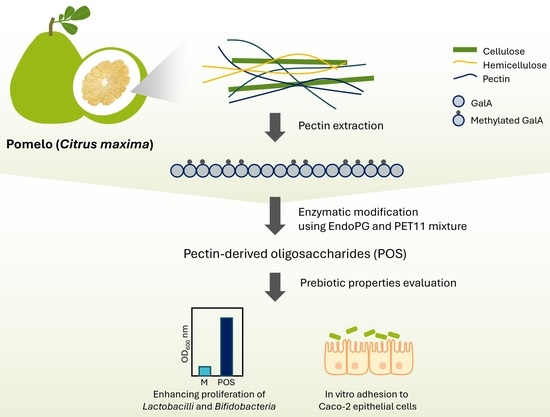
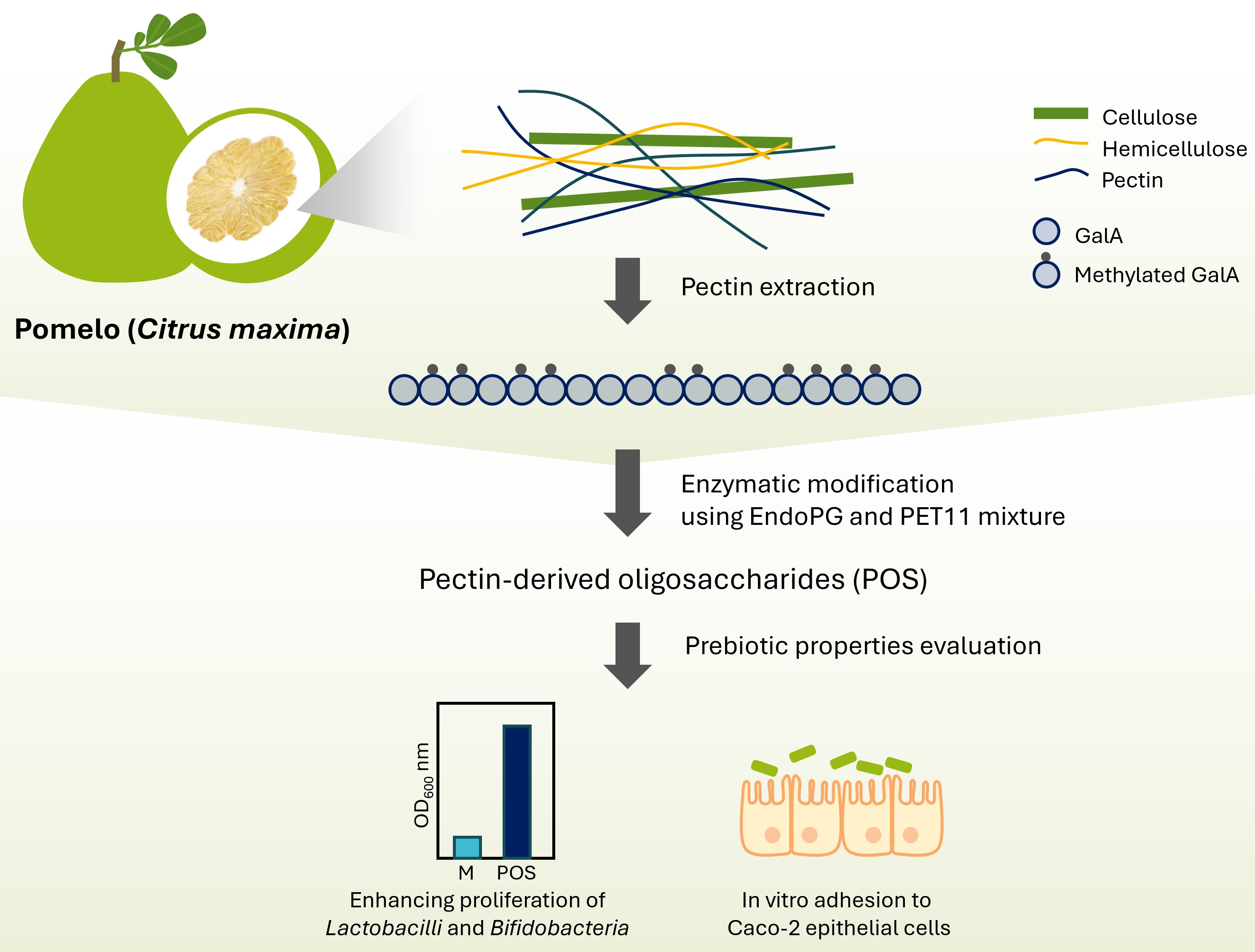
Graphical Abstract

1. Introduction

Pectin is a structurally complex polysaccharide widely used in the food, pharmaceuticals, and cosmetics industries for several purposes, such as gelling agents, thickeners, and stabilizers [1]. Structurally, pectin is composed of three major domains: homogalacturonan (HG), rhamnogalacturonan I (RG-I), and rhamnogalacturonan II (RG-II). Among these, HG presents the simplest and most abundant fraction, consisting of a linear backbone of (1⟶4)-α-D-galacturonic acid (GalA) residues. The carboxyl groups of the GalA units can be partially esterified with methyl and acetyl groups, and the proportion of esterified GalA residues is defined as the degree of esterification (DE). In contrast, RG-I and RG-II exhibit highly branched structures, with RG-I side chains mainly composed of neutral sugars, such as galactose, arabinose, and rhamnose, whereas RG-II contains more complex sugars, including apiose, aceric acid, 3-deoxy-d-manno-octulosonic acid, and 3-deoxy-d-lyxoheptulosaric acid [1,2,3,4].
Pomelo (Citrus maxima) is extensively cultivated in Thailand, with an annual production exceeding 200,000 tons, resulting in large quantities of peel being generated as agricultural waste. Thai pomelo varieties, such as Khoa-Yai cultivar, possess a robust outer flavedo (green skin) and a thick albedo (soft white inner layer), with the albedo accounting for approximately 30% of the fruit’s weight. Pomelo peel has been reported as a rich source of pectin, with extraction yields ranging from about 23 to 32%, depending on the extraction method employed [5,6,7,8]. Native to Southeast Asia, pomelo is a key source of high-methoxyl pectin, containing 73–86% galacturonic acid with a degree of esterification of 59–71%. Pomelo pectin exhibits a distinctive side chain composition that is rich in arabinose, in contrast to pectin from other citrus fruits and apples, which typically contains higher galactose levels. The average molecular weight of pomelo pectin ranges from 440 kDa to 645 kDa [5].
In recent years, pectin-derived oligosaccharides (POS) have attracted increasing attention as emerging prebiotics due to their ability to selectively stimulate the growth of beneficial gut microbiota [9]. Pectin oligosaccharides derived from sugar beet pulp and citrus peel, with a degree of polymerization (DP) of 2–10, resist digestion and reach the colon intact, where they promote beneficial bacteria, including Lactobacillus and Bifidobacterium while inhibiting harmful pathogens such as Escherichia coli and Clostridium perfringens [10,11,12]. POS can be produced through chemical, physical, or enzymatic hydrolysis of purified pectin or pectin-rich agricultural by-products [13]. Chemical methods depolymerize pectin into smaller molecules; for example, acid hydrolysis using trifluoroacetic acid (TFA) at high temperatures (e.g., 110 °C) produces POS with a degree of polymerization (DP) of 2 to 7 [14]. Another approach is oxidative hydrolysis via the Fenton reaction, which combines metal ions (e.g., Fe2+ or Cu2+) with hydrogen peroxide to reduce pectin molecular weight [15,16]. These methods offer advantages such as cost-effectiveness, rapid processing, and ease of implementation [14]. However, concerns remain regarding environmental safety and the limited specificity in controlling POS structure [17]. Various physical methods, including ultrasonication [18], microwave-assisted extraction [19], subcritical water extraction [20], dynamic high-pressure microfluidization (DHPM) [21], and pulsed electric fields (PEF) [22], have also been employed for POS preparation by applying physical energy to depolymerize or extract POS. Although these techniques increase yield and reduce processing time, their industrial application remains limited due to insufficient large-scale assessment and the high initial cost of specialized equipment [17].
Among these approaches, enzymatic hydrolysis is particularly advantageous, as it is environmentally friendly, operates under mild conditions and allows for greater control over product specificity compared with chemical or hydrothermal treatments [4]. Pectinases constitute a diverse group of enzymes involved in pectin degrading and modification, including polygalacturonases (EC 3.2.1.15), exopolygalacturonase (EC 3.2.1.67), pectin methylesterases (EC 3.1.1.11), pectin acetyl esterase (EC 3.1.1.–), endopectate lyases (EC 4.2.2.2), and exopectate lyases (EC 4.2.2.9). However, several commercial pectinases (Pectinex Ultra SP-L, Pectiase 62L, ViscozyeL, and Macer 8FJ) exhibit both exo- and endo-modes of action, often resulting in excessive depolymerization and the formation of undesired galacturonic acid monomers in POS products [23]. This limitation highlights the importance of developing tailored enzyme systems capable of controlled pectin depolymerization.
Due to the structural complexity of pectin, efficient POS production requires the coordinated action of multiple carbohydrate-active enzymes (CAZymes) that target distinct structural features of the polymer [24]. In particular, the degree of methylation plays a crucial role in determining pectin susceptibility to enzymatic hydrolysis. Highly methyl-esterified pectin is resistant to endopolygalacturonase (EndoPG), whereas low-methylated or de-esterified pectin is readily cleaved along the galacturonan backbone. Consequently, pectin methylesterase (PME)-mediated demethylation is a key step in enhancing substrate accessibility and promoting subsequent endo-hydrolysis [25].
In this study, we report the production of the POS from pomelo pectin, using a synergistic fungal pectinolytic enzyme system comprising recombinant endopolygalacturonase (EndoPG) and pectin methylesterase (PET11) derived from Aspergillus aculeatinus BCC 17849. PET11 catalyzes targeted demethylation of the pectin backbone, thereby facilitating EndoPG-mediated cleavage and enabling controlled generation of short-chain POS. Notably, pomelo pectin exhibits distinct structural characteristics—such as monosaccharide composition, branching degree, and molecular weight—compared with commercial citrus pectin [5], making it an attractive substrate for tailored enzymatic valorization.
Given that the biological functionality of POS is strongly influenced by their structural features, including monosaccharide composition, molecular weight, and degree of esterification [16,26], the prebiotic potential of the produced POS was further evaluated. The growth-promoting effects on beneficial gut bacteria, as well as their adhesion ability to intestinal epithelial cells, were investigated using probiotic strains and a human colon cell line (Caco-2). This integrated biocatalytic and biological assessment highlights the potential of enzyme-assisted pectin valorization for the production of functional prebiotic ingredients.

2. Results and Discussion

2.1. Catalytic Performance of Pectinolytic Enzymes

In this work, recombinant fungal endopolygalacturonase (EndoPG) and pectin methylesterase (PET11) isolated from A. aculeatinus BCC 17849 were used to create a pectinolytic enzyme system for the structural modification of pomelo pectin, resulting in the production of pectic oligosaccharides (POS). The molecular weights of recombinant EndoPG and PET11 analyzed by SDS-PAGE were approximately 38 kDa and 34 kDa (Figure S1), respectively, consistent with the theoretical prediction based on the amino acid sequences and previous studies [27,28]. Recombinant PET11 exhibited pectin methylesterase activity toward citrus peel pectin (1.95 U/mg protein) and pomelo albedo pectin (1.02 U/mg protein), along with minor endopolygalacturonase activity (1.3 U/mg protein) on pomelo pectin (Table 1). These results indicate that PET11 primarily functions as a pectin methylesterase, removing methoxyl groups, while its minor endopolygalacturonase activity can reduce pectin molecular weight. On the other hand, EndoPG displayed predominant endopolygalacturonase activity, specifically cleaving α-1,4-glycosidic linkage in the linear homogalacturonan backbone of both citrus peel pectin (101,607.36 U/mg protein) and pomelo albedo pectin (74,428.19 U/mg protein), with minor accompanying pectin methylesterase activity (Table 1).
Enzyme kinetic activity revealed that EndoPG exhibited the highest specific activity toward linear chain of polygalacturonic acid, with a value of 169,089.79 µmol/min·mg protein. Among the 5 substrates tested, the catalytic efficiency (kcat/Km) of EndoPG was highest for polygalacturonic acid (191,803.36 mL/mg·s), followed by low- and high-methoxyl pectin, citrus pectin, and pomelo pectin (Table 2). For citrus-derived pectins, EndoPG showed higher specificity toward low-degree-of-esterification (DE) pectins compared to high-DE pectins, suggesting that methylesterase activity is essential for the efficient structural modification of highly esterified pectins such as pomelo pectin.
For comparison, the endopolygalacturonase pePGA from Penicillium rolfsii exhibited a catalytic efficiency (kcat/Km) of 47,663.479 mL/mg·s for polygalacturonic acid, with a Km of 0.1569 mg/mL, a Vmax of 12,273 μmol/min/mg, and a kcat of 7478.4 s−1 [29], which are all lower than the corresponding values of EndoPG in this study. Similarly, the specific activities of pePGA were 8,881.50 U/mg for polygalacturonic acid and 583.1 U/mg for citrus pectin, approximately 19- and 174-fold lower than those of EndoPG, respectively. Consistent with our findings, both EndoPG and pePGA showed higher affinity for polygalacturonic acid than for other pectins. Other fungal endopolygalacturonases also showed lower catalytic performance. For instance, AnEPG from A. nidulans exhibited a specific activity of 3,268.6 U/mg for polygalacturonic acid, with Km of 8.3 mg/mL and Vmax, of 5,640 μmol/min/mg [30], while PGA-ZJ5A from A. niger ZJ5 showed a specific activity of 6,360.6 U/mg, with Km of 0.85 mg/mL and Vmax of 1.871 μmol/min/mg [31]. Overall, the EndoPG characterized in this study demonstrated high biotechnological potential across a range of substrates, including polygalacturonic acid, citrus pectin, pomelo pectin, and low- and high-esterified pectins, as reflected by its superior specific activity and catalytic efficiency.

2.2. Pectin-Derived Oligosaccharides (POS) Production Using EndoPG and PET11

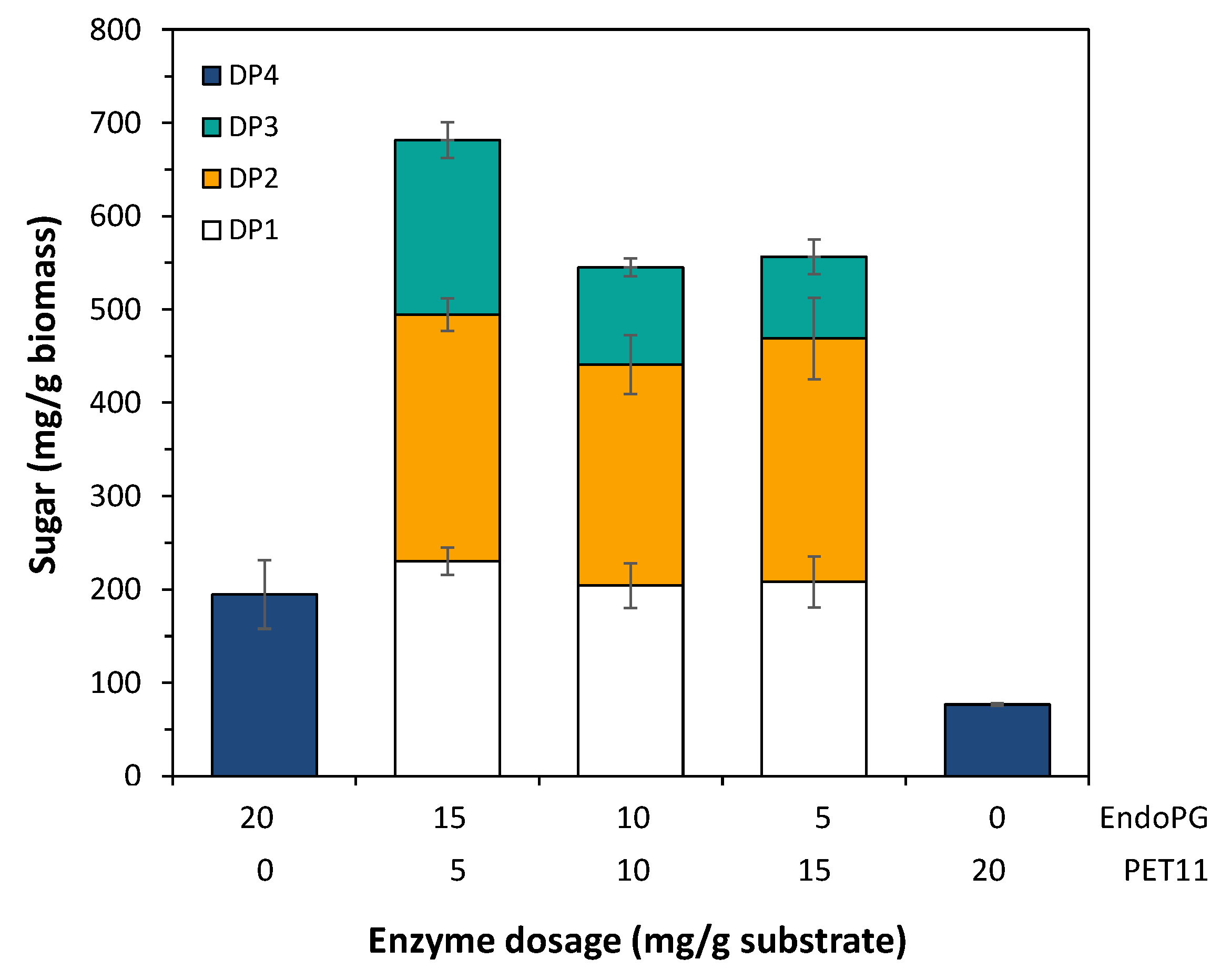
Pomelo pectin with the molecular weight (MW) and degree of esterification (DE) of 313 kDa and 64.72%, respectively, was used as a starting material for POS production through structural modification via hydrolyzing the galacturonic linear backbone and de-esterification using either EndoPG or PET11. Regarding the degree of polymerization (DP) analysis, the enzymatically modified pectin in all mixture ratios had lower DP than non-treated pectin (blank). Furthermore, using either EndoPG or PET11 alone was less effective in depolymerization compared to the mixed enzyme systems. For the binary enzyme mixture, EndoPG and PET11 were combined in various ratios (15:5, 10:10, and 5:15) with a total enzyme dosage of 20 mg/g substrate and used for hydrolyzing pomelo pectin. As shown in Table 3, approximately 97% yield of POS was achieved when using the mixed-enzyme systems for all studied ratios. Thus, this result clearly indicated that the mixed systems were more effective than the single one (either EndoPG or PET11 alone). Notably, MW of POS obtained from all mixed systems was 0.8 kDa (DP 5). To further investigate the effectiveness of each mixed-enzyme ratio, short-chain POS with lower DP (DP 1–4) produced by such system was examined. The result showed that all mixtures of EndoPG and PET11 produced short-chain POS (DP 1–3) with production yield ranging from 545 to 681 mg/g substrate within 24 h (Figure 1). It is worth noting that undesired GalA (DP 1) content in all enzyme mixture ratios was comparable (ca. 204–230 mg/g substrate). In other words, POS with DP 2–3 produced from the enzyme mixed system accounted for 340–451 mg/g substrate, with the highest yield at the ratio of 15:5. Regarding enzyme mixture design for POS production, the regression analysis using the quadratic model suggested that EndoPG worked synergistically with PET11 on POS production at a 95% confidence level (p-value < 0.05) (Table 4).
Numerous enzymatic processes have been previously established for the production of POS from agricultural by-products. Nevertheless, challenges arise from the relatively low specificity towards pectin polymers due to the presence of various pectinases and other lignocellulose-degrading activities available in microbial crude enzymes, for example, cellulase from A. niger, Viscozyme, Celluclast, Endopolygalacturonase M2, Pectinase, Pectinex Ultra SP-L, Pectinase 62L and Macer8 F [4,23,32,33]. Coupling pectinase-mediated depolymerization with lipase-catalyzed alkyl succinylation was demonstrated for production of POS-derived amphiphile with prebiotic and emulsifying properties from citrus pectin [34]. Therefore, this study is the first report of simultaneous synergistic enzyme composite between de-methyl esterification using PET11 and α-D-1,4 glycosidic linkage depolymerization using EndoPG specifically for structural modification of pectin to yield POS. Based on the results, either EndoPG or PET11 alone was less effective in depolymerization than the mixed enzyme systems. These results suggested that two enzymes had a synergistic function in restructuring pomelo pectin. In essence, EndoPG digested the pectin molecule; thus, methylesterase could eliminate methoxyl groups more easily. Alternatively, pectin methylesterase increases galacturonic acid content in the pectin molecule, increasing the substrate accessibility and creating more entry sites for EndoPG to break down α-D-1,4 glycosidic linkages between galacturonic acid units in the linear pectin chain [35,36,37], resulting in higher POS yield produced from the binary enzyme combination relevant to single composite. Importantly, this enzymatic POS production process allows precise modulation of enzymatic activity to control the degree of polymerization and other POS features, enabling the tailoring of the final product for specific applications.

2.3. Effects of Pomelo POS on Cell Viability

The POS produced from EndoPG:PET11 mixture (15:5 mg/g substrate) was selected for further evaluation of intestinal epithelial cell viability and prebiotic activity. To assess cell viability, sulforhodamine B (SRB) assay, a sensitive, rapid, and inexpensive method, was carried out. In the assay, pink anionic SRB dye binds to basic amino acids of the cells after fixing with TCA, and the protein-bound SRB is dissolved by Tris-base to quantify the cell viability. Regarding Caco-2 human intestinal epithelial cell viability assessment through the SRB assay, POS at 0.1, 0.5, and 1.0 mg/mL did not decrease the percentage of cell viability of Caco-2 cells, while 2.0 mg/mL of the POS significantly decreased the percentage of cell viability in comparison with the untreated group (Figure S2). However, the percentage of cell viability higher than 80% is considered non-cytotoxic according to ISO 10993-5:2009 (Biological evaluation of medical devices; Part 5: Tests for in vitro cytotoxicity) [38]. Therefore, the concentrations of pomelo POS at 0.1–2.0 mg/mL were selected for further experiments.

2.4. Prebiotic Properties of POS from Pomelo

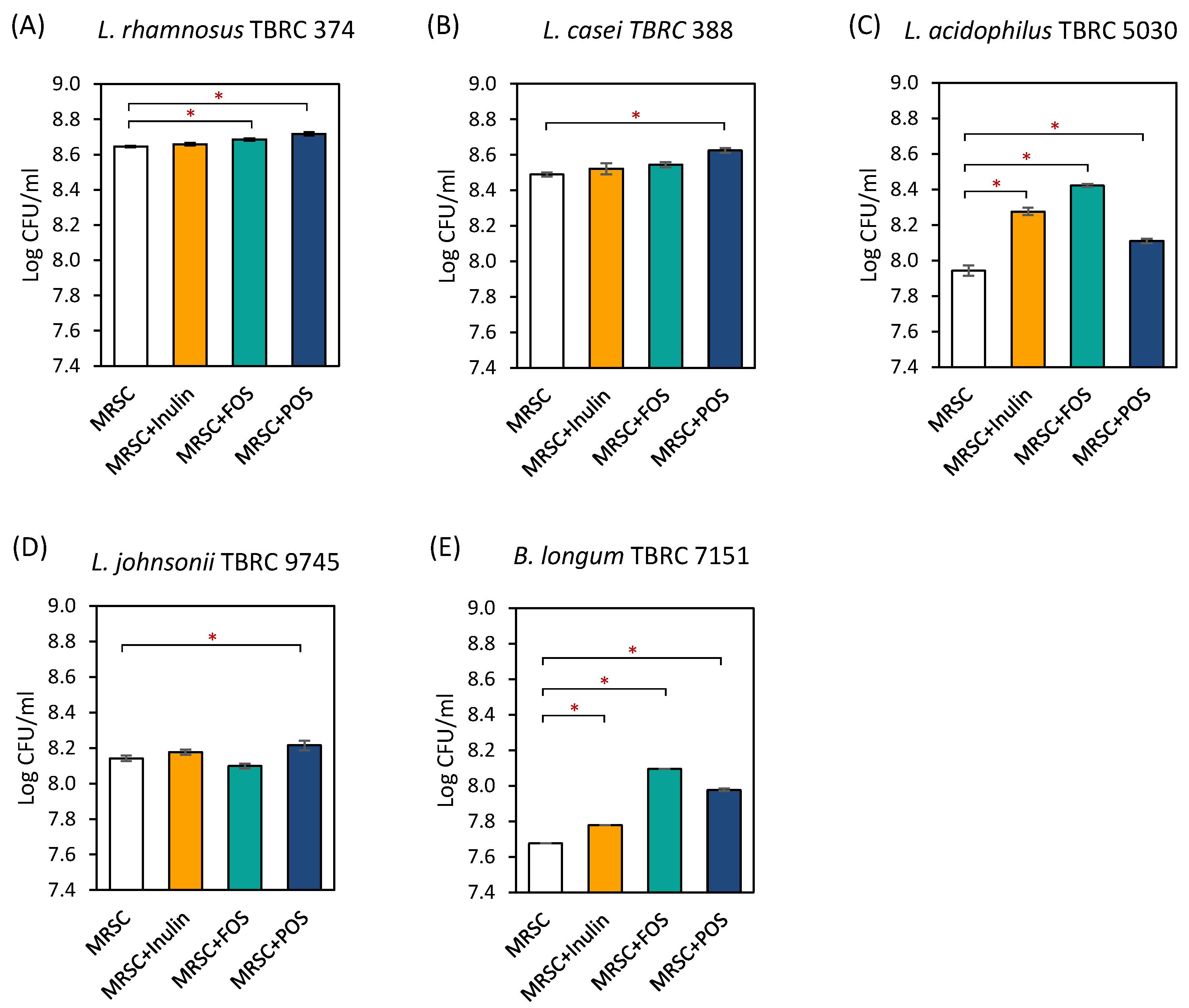
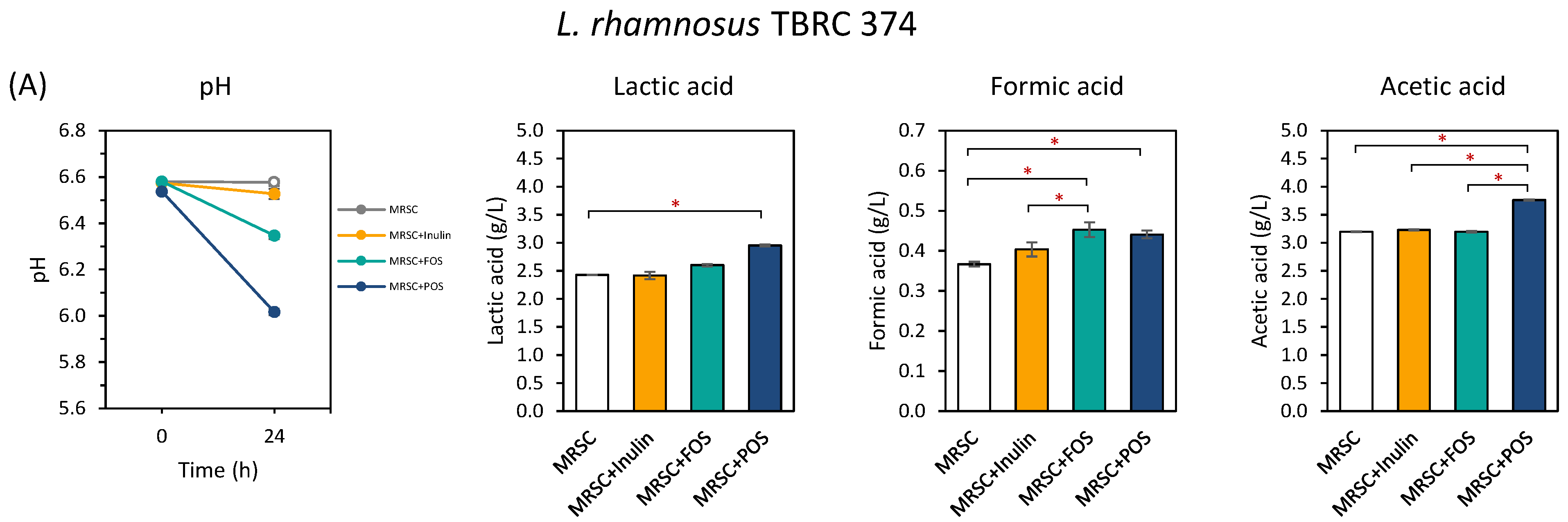
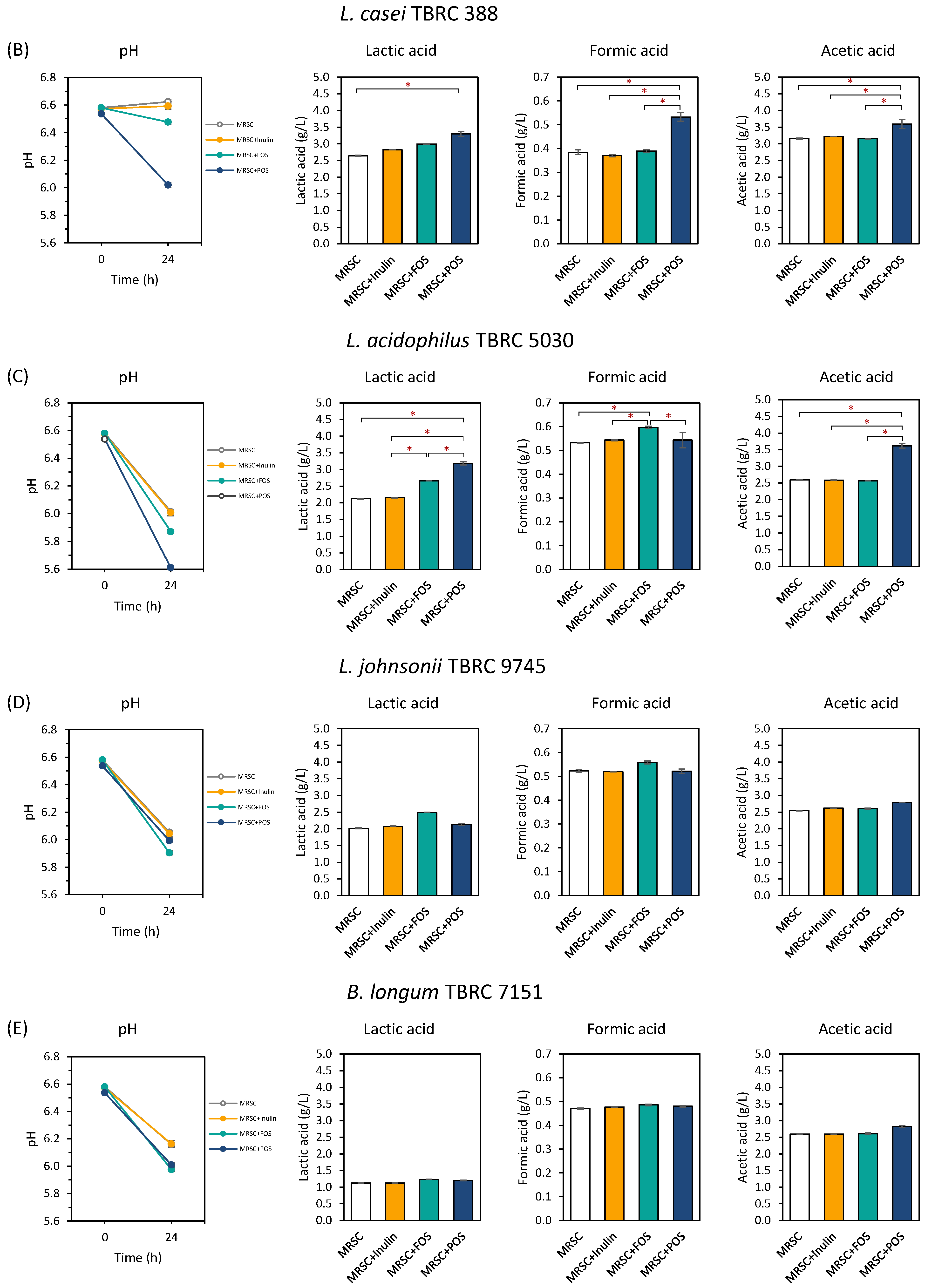
Lactic acid bacteria (LAB) are recognized as promising probiotics with crucial functions in the preservation of equilibrium within the gut microbiota composition and enhancing immunological regulation in the host. Therefore, the prebiotic potential of pomelo POS was subsequently assessed for its ability to promote the proliferation of beneficial probiotic strains, including Lactobacillus and Bifidobacteria. According to the growth profile of 5 probiotic strains shown in Figure 2, enzymatically produced pomelo POS significantly stimulated the growth of all Lactobacillus and Bifidobacteria probiotic strains, including Lacticaseibacillus rhamnosus TBRC 374, Lactobacillus casei subsp. casei TBRC 388, Lactobacillus acidophilus TBRC 5030, Lactobacillus johnsonii TBRC 9745, and Bifidobacterium longum subsp. longum TBRC 7151 compared to MRSC without any additional C-source, which is used as the experimental control. The growth of probiotics in the presence of 2 mg/mL of pomelo POS showed the same trend as in the presence of inulin and fructooligosaccharides (FOS), which served as control prebiotics (Figure 2A,B,D,E), except for the lower growth rate of L. acidophilus TBRC 5030 detected in MRSC supplemented with POS (Figure 2C). Regarding the pH profile of 5 bacterial strains, the pH of culture media of L. rhamnosus TBRC 374, L. casei subsp. casei TBRC 388, and L. acidophilus TBRC 5030 in the presence of pomelo POS were remarkably decreased after 24 h cultivation, consistent with statistically significant higher production of organic acids (lactic acid, formic acid, and acetic acid) compared to the control (Figure 3A–C). In contrast, both pH and organic acids production profiles of L. johnsonii TBRC 9745 and B. longum subsp. longum TBRC 7151 cultivated in MRSC supplemented with POS did not exhibit a statistically significant difference from the basal medium (p-value > 0.05) (Figure 3D–E). The findings of this study are consistent with our previous work demonstrating that electron beam-produced POS (approximately DP9) promoted the growth and acids production of various short-chain fatty-acid (SCFA)-producing, LAB, and bifidobacterial strains compared to longer-chain inulin and untreated pectin [26]. Higher levels of lactate and acetate were also observed after supplementation with pectin-oligosaccharides (POS) derived from sugar beet pulp and discarded red beetroot, compared with inulin and FOS [39]. Xylooligosaccharides (XOS) produced from barley straw increased the production of SCFAs, including acetic acid, lactic acid, and formic acid, compared with the no-carbohydrate control, although the levels remained lower than those achieved with commercial FOS [40]. This study demonstrates the prebiotic potential of pomelo-derived POS. Notably, pomelo-derived POS exhibited probiotic growth-promoting effects that are comparable in trend to those reported for commercially available inulin and FOS. While differences in chemical structure, degree of polymerization, and fermentation behavior should be considered, these findings highlight the potential of pomelo-derived POS as a promising alternative prebiotic source.
The effectiveness of POS as prebiotics is linked to their degree of polymerization (DP). Bifidobacterium and Lactobacillus are beneficial bacteria that thrive with low DP POS. The “hairy regions” (RG-I) of POS are rich in arabinose and galactose and are important to promote the growth of beneficial bacteria. Structures high in arabinose, like pomelo pectin, provide preferential support for specific bacterial strains [14,41]. Fermentation of POS leads to increased production of short-chain fatty acids (SCFAs), including acetic, propionic, and butyric acids, which lower intestinal pH and contribute to the suppression of pathogens microorganisms [42]. Compared with simpler commercial prebiotics such as inulin and FOS, POS possess greater structural complexity, which may result in slower and more sustained fermentation in the colon. This prolonged fermentation profile has been associated with enhanced SCFA production and anti-inflammatory effects; however, such comparisons should be interpreted cautiously, as fermentation outcomes depend strongly on substrate structure and microbial composition [17].
The prebiotic effects of POS are known to be highly strain-dependent, reflecting differences in microbial enzymatic capabilities and substrate preferences. Previous studies often compare POS with intact pectin to evaluate how depolymerization into shorter chains influences fermentability and microbiota modulation. While both pectin and POS can promote gut health through SCFA production, oligomeric pectins are generally more accessible to a broader range of gut microorganisms, leading to selective enrichment of beneficial taxa, including bifidobacteria, and increased production of health-promoting SCFAs, alongside reduced relative abundance of pathogenic bacteria [14,43,44].
Structural properties of POS, particularly degree of polymerization (DP) and monosaccharide composition, play a critical role in determining microbial utilization patterns. In the large intestine, members of the phylum Bacteroidetes are primary degraders of complex carbohydrates, whereas certain Firmicutes species, which are unable to degrade long-chain pectin, can efficiently metabolize shorter POS [45]. For example, Eubacterium eligens utilizes apple-derived pectin via pectate lyase activity, while Faecalibacterium prausnitzii preferentially consumes POS with DP of 4 and 5 [44]. Due to their shorter chain length and reduced structural complexity, POS bypass the initial depolymerization step required for native pectin, enabling more rapid microbial utilization. Consequently, pomelo-derived POS may offer enhanced prebiotic synergy compared with long-chain pectin by facilitating earlier and more selective microbial fermentation, resulting in strain-specific stimulation of bacterial growth and SCFA production. These observations highlight the importance of tailoring POS structural characteristics to achieve targeted modulation of gut microbiota and functional metabolic outputs.

2.5. Adhesion Ability of LAB and Bifidobacterial Strains to Caco-2 Cells in the Presence of Pomelo POS

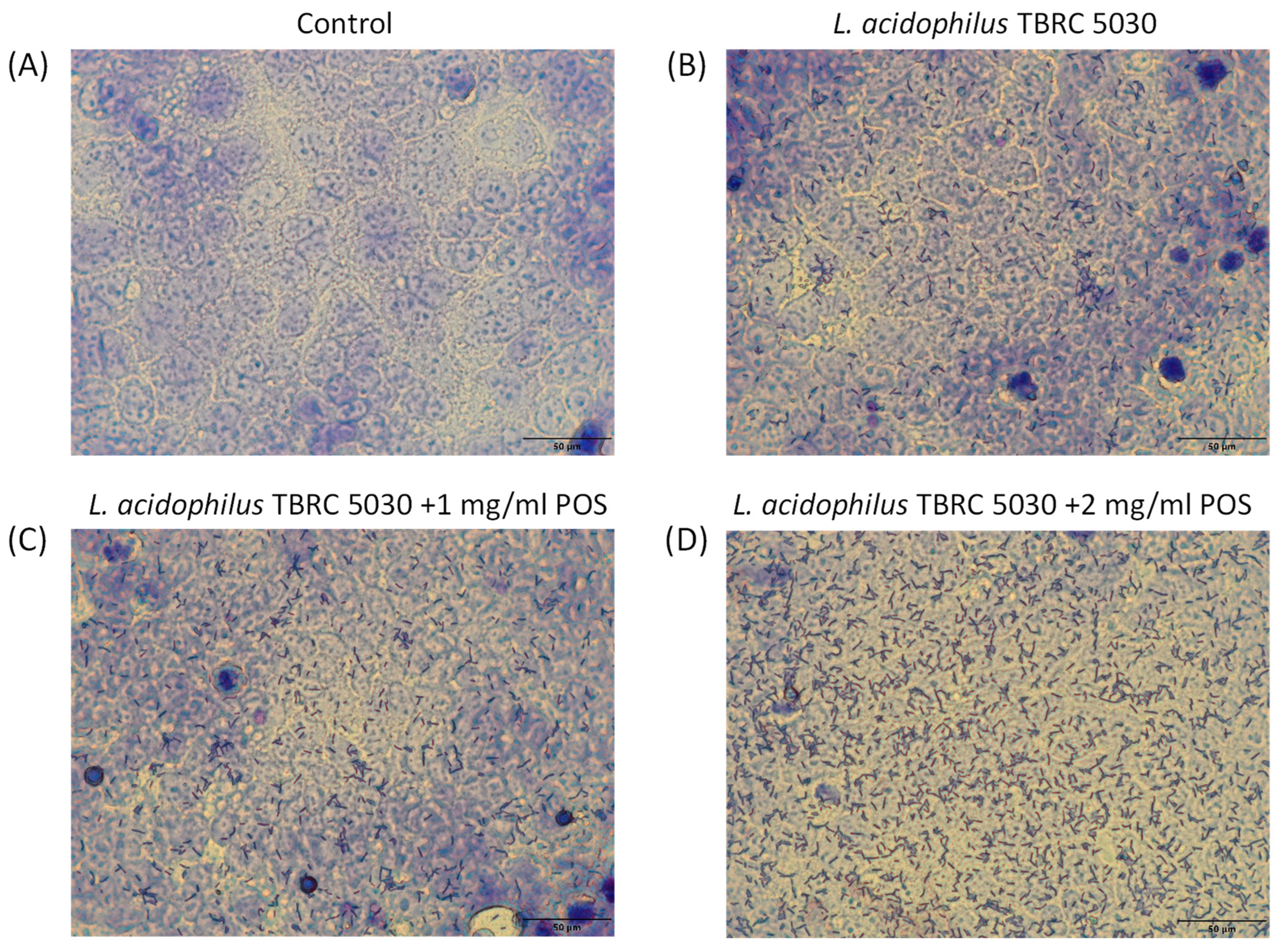
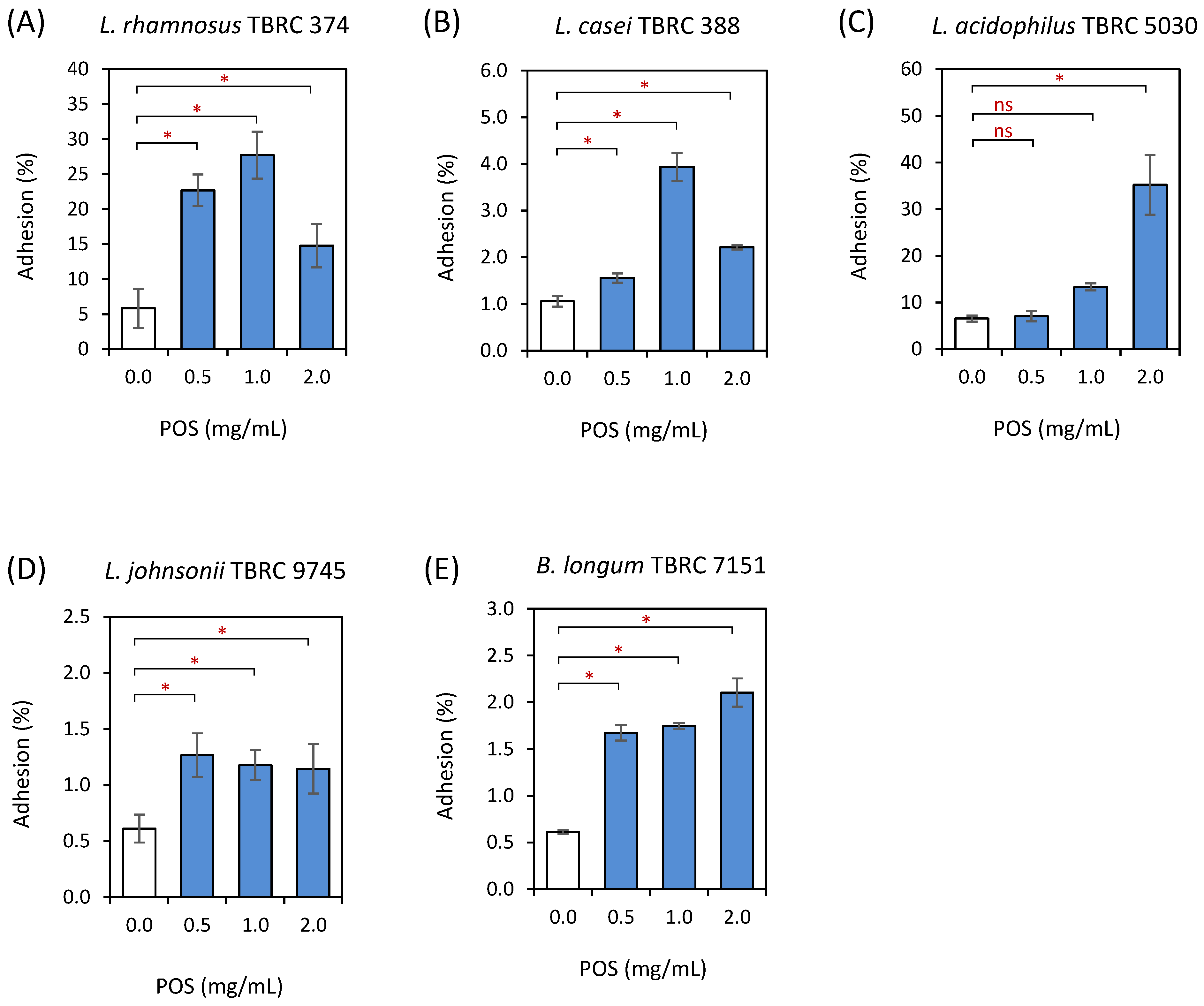
Basically, beneficial probiotic bacterial colonization in the gastrointestinal system appears to be mediated through adhesion to intestinal epithelial cells, representing the initial stage of their probiotic actions. This ability could provide host immunomodulation and prevention of pathogens adhered to the gastrointestinal system [46]. Additionally, the human intestinal Caco-2 cells, which can express characteristics of mature enterocytes after complete differentiation, are basically used as a model for examining the adhesion ability of probiotics. Therefore, the effect of pomelo POS on the adhesion ability of LAB and bifidobacterial strains to Caco-2 cells was investigated. According to the adhesion ability of Lactobacillus and Bifidobacteria shown in Figure 4, all five tested strains demonstrated high attachment to Caco-2 cells in the presence of pomelo POS (0.5–2.0 mg/mL) compared to the blank without pomelo POS (p-value < 0.05), except L. acidophilus TBRC 5030, which significantly exhibited adhesion in only 2.0 mg/mL pomelo POS. However, the number of adherent bacteria in the blank and the samples treated with pomelo POS varied depending on the strain. Among the bacterial strains, the highest adhesion of bacteria to Caco-2 cells was observed in L. acidophilus TBRC 5030 treated with 2 mg/mL pomelo POS with 35.24 ± 6.43% adhesion (2.4 × 10⁶ CFU/mL of adhered bacterial cells), which is an increase of 28.71% increasing from the blank without pomelo POS (6.52% adhesion) (Figure 4C). This result corresponded to the adhesion ability of L. acidophilus TBRC 5030 observed under a microscope (Figure 5) in which the number of rod-shaped bacterial cells attached to Caco-2 in the presence of 1 and 2 mg/mL pomelo POS (Figure 5C,D) was significantly higher than the co-cultivation of Caco-2 cells and L. acidophilus TBRC 5030 without pomelo POS (Figure 5B). However, there was no bacterial adhesion in the sample cultivated with Caco-2 cells alone (Figure 5A). As adhesion ability increased in the presence of pomelo POS, the highest fold-change was observed in L. acidophilus TBRC 5030 with a 4.40-fold increase compared to the blank without pomelo POS (Figure 4C), followed by L. rhamnosus TBRC 374 (3.75-folds) (Figure 5A), L. casei subsp. casei TBRC 388 (2.74-folds) (Figure 4B), B. longum subsp. longum TBRC 7151 (2.43-folds) (Figure 4E), and L. johnsonii TBRC 9745 (0.87-folds) (Figure 4D), respectively.
Based on adhesion evaluation, pomelo POS (0.5–2.0 mg/mL) in the media exhibited significant increase in the adhered cells of five Lactobacilli and Bifidobacteria strains to human intestinal epithelium cells compared to the basal medium, corresponding with prebiotic functionality of inulin-type fructan, xylooligosaccharides (XOS), and POS produced from agricultural by-products [21,26,47,48,49]. Prebiotics are selectively used as a carbon source by probiotics to promote their growth in the gut. Some prebiotics have been reported to enhance the proportion of unsaturated fatty acids in the probiotic cell membrane resulting in an increase in probiotic adhesion [50]. In addition, a previous study has shown that prebiotics can increase the adhesion of Bifidobacterium DNG6 to Caco-2 by inducing the expression of adhesion protein-encoding genes [51]

3. Materials and Methods

3.1. Materials

Pomelo pectin was extracted from pomelo albedo (Khoa-Yai strain from Nakhon Pathom, Thailand) according to our previous study [5]. Other substrates for enzyme activity assay, including polygalacturonic acid, pectin from citrus peel (degree of esterification, DE = 85.62%), and D-galacturonic acid (GalA) were purchased from Sigma-Aldrich (St. Louis, MO, USA). Inulin (DP 2–60) and FOS (DP 2–8), digalacturonic acid (di-GalA), trigalacturonic acid (tri-GalA), and tetragalacturonic acid (tetra-GalA) were purchased from Megazyme (Wicklow, Ireland). Low- and high-esterified pectin samples produced from citrus peel (DE = 44.45 and 83.20%, respectively) were also obtained from Megazyme (Wicklow, Ireland). Recombinant plasmids used in this study (pPICZαA-EndoPG and pPICZαA-PET11 carrying endopolygalacturonase gene (EndoPG) and pectin methylesterase gene (PET11) from A. aculeatinus BCC 17849, respectively) were constructed and transformed into Pichia pastoris KM71, according to the previous reports [27,28]. Three kinds of cultivation media were YPD [1% yeast extract, 2% peptone, and 2% glucose], BMGY [1% yeast extract, 2% peptone, 1.34% YNB (yeast nitrogen base without amino acid), 0.4 mg/L biotin, 100 mM potassium phosphate (pH 6), and 1% glycerol], and BMMY (the same composition as BMGY except for 3% methanol instead of glycerol). Methanol at a final concentration of 3% (v/v) was supplemented every 24 h to maintain the induction of alcohol oxidase (AOX) promoter.

3.2. Microorganisms and Growth Condition

Five strains of lactic acid bacteria (LAB), including L. rhamnosus TBRC 374, L. casei subsp. casei TBRC 388, L. acidophilus TBRC 5030, L. johnsonii TBRC 9745, and B. longum subsp. longum TBRC 7151, were obtained from the Thailand Bioresources Research Center, BIOTEC, Pathum Thani, Thailand. They were cultured in MRSC broth (Lactobacilli MRS (Difco, Sparks, MD, USA) supplemented with 0.05% (w/v) L-cysteine HCl) at 37 °C under anaerobic conditions (AnaeroPack, MGC Mitsubishi, Tokyo, Japan) for 18 h. The cultures were then centrifuged at 8000× g for 10 min. The LAB pellets were washed twice with phosphate-buffered saline (PBS) (pH 7.4). The pellets were resuspended in DMEM without antibiotics to an optical density at 600 nm of 0.6 ± 0.02 (corresponding to 1 × 10⁸ CFU/mL).

3.3. Recombinant Enzyme Production

The condition for P. pastoris KM71 cultivation in every step was operated at 30 °C with 200 rpm orbital shaking. To produce recombinant EndoPG and PET11 enzymes, the recombinant P. pastoris KM71 strains containing pPICZαA-EndoPG and pPICZαA-PET11 plasmids were inoculated into 50 mL YPD broth and cultured for 18 h. The 0.5% (v/v) of the overnight culture was inoculated into 2 L BMGY and cultivated until OD600 of the culture reached 8–10 before the cell was centrifuged and pelleted. After discarding BMGY supernatant, 200 mL BMMY media was used to resuspend the cell pellet and further cultivated to induce EndoPG and PET11 genes for 24 h and 72 h, respectively. To retrieve crude enzymes, BMMY supernatants of cultures were separated by centrifugation at 5000× g for 5 min at 4 °C and subsequently desalted using a Macrosep column with 10 kDa molecular weight cut-off (Pall, Port Washington, NY, USA). The crude enzymes in the BMMY supernatant were exchanged into 100 mM sodium acetate buffer (pH 5.0) and finally dissolved at a volume 10-fold the concentration. The protein concentrations of the enzymes were measured using the Bradford assay kit (Bio-Rad, Hercules, CA, USA).

3.4. Enzyme Activity Assay

Endopolygalacturonase activity was determined by measuring the amount of liberated reducing sugars using the 3,5-dinitrosalicylic acid (DNS) method [52]. The reaction component contained an appropriate amount of recombinant enzyme mixed with 1% (w/v) substrate (citrus pectin or pomelo pectin) dissolved in 50 mM sodium acetate (pH 5.0). The reaction was incubated at 50 °C for 10 min, and the enzyme activity was measured using the absorbance at 540 nm. A standard curve of galacturonic acid was used to interpolate the amount of reducing sugars from a measurement of absorbance at 540 nm. One unit of endopolygalacturonase activity was defined as the amount of enzyme that liberated 1 μmol of galacturonic acid per min.
In addition, pectin methylesterase activity was calculated based on the determination of the carboxyl group released by titration with 0.02 M NaOH, following a method modified from Kertez [53]. The reaction substrate was either 1% (w/v) pomelo pectin or citrus pectin dissolved in 0.1 M NaCl. Briefly, the substrate was equilibrated to 50 °C; pH was adjusted to 7.5 with 0.02 M NaOH, and the volume was adjusted to 19.8 mL. The reaction started by adding 0.2 mL of the enzyme. After incubating the reaction at 50 °C for 5 min, pH 7.5 was maintained throughout the experiment by adding 0.02 M NaOH. The total volume of NaOH used to maintain pH was recorded for enzyme activity calculation. The amount of enzyme releasing one microequivalent of acid per minute at 50 °C with a pH of 7.5 was used to define one unit of pectin methylesterase activity. The equation for calculating pectin methylesterase activity is as follows:
P e c t i n   m e t h y l e s t e r a s e   a c t i v i t y   U n i t s / m L   =   N a O H   v o l u m e   f o r   r e a c t i o n   ( m L ) r e a c t i o n   t i m e   ( m i n )     N a O H   v o l u m e   f o r   b l a n k   ( m L ) r e a c t i o n   t i m e   f o r   b l a n k   ( m i n ) r e a c t i o n   t i m e   m i n   ×   e n z y m e   v o l u m e   ( m L )   ×   1000
Specific activity was calculated by dividing the measured enzyme activity by the protein content and is expressed as activity per milligram of protein.

3.5. Enzyme Kinetic of EndoPG

The Michaelis constant (Km) and Vmax values were calculated from the Michaelis-Menten curve of the reaction between EndoPG activity and its substrates at optimal pH and temperature. Substrates used in this experiment were polygalacturonic acid and citrus pectin (Sigma-Aldrich, St. Louis, MO, USA), low and high esterified pectin (Megazyme, Bray, Ireland), and pomelo pectin at concentrations of 1.0, 2.5, 5.0, and 10.0 mg/mL. The molecular weight (MW) and degree of esterification (%DE) of the substrates were analyzed according to methods described in Section 3.7.

3.6. Pomelo Pectin-Derived Oligosaccharides (POS) Production

The systematic mixture of EndoPG and PET11 to produce POS from pomelo pectin was designed using an experimental mixture design technique. The interactions of recombinant EndoPG and PET11 in the hydrolysis of pomelo pectin were investigated. Based on the total amount of short-chain POS including digalacturonic acid (di-GalA), trigalacturonic acid (tri-GalA), and tetragalacturonic acid (tetra-GalA), an optimal enzyme mixture for POS production was determined using a [2]-augmented simplex lattice design implemented in the Minitab 17.0 software (Minitab Inc., State College, PA, USA). The design included 5 experimental points investigated in triplicate using two components and a lattice degree of two. The sum of all components in the mixture was fixed at 100%, depending on the volume in the mixture design. EndoPG and PET11, two independent variables, were used to hydrolyze 5 mg/mL of pomelo pectin in a 50 mM sodium citrate buffer (pH 5.0) at 50 °C with shaking at 200 rpm. After 24 h of incubation, the hydrolysis reactions were terminated by adding 0.1% (w/v) of the final concentration of sodium dodecyl sulfate, and the samples were centrifuged at 12,000× g for 5 min to remove the residue. The supernatant was collected and used for molecular weight and short-chain POS analyses. The yield of short-chain POS was also used as a dependent variable in the responder model analysis and simulation. Following the regression analysis, the full cubic model was used to estimate the optimal mixture component ratio.

3.7. Characterization of Pectin and Its Derived Oligosaccharides

3.7.1. Degree of Esterification (DE)

The degree of esterification of pectin was analyzed using FTIR-ATR at a wavelength between 4000 and 400 cm−1 using Nicolet 6700 FTIR spectrometer (4 cm−1 resolution, 32 scans). The DE was then calculated from peak areas of esterified carboxylic (1735 cm−1) and carboxylic group (1610 cm−1) after deconvolution [5].

3.7.2. Molecular Weight (MW) Analysis

The molecular weight of pectin or enzyme-degraded samples was analyzed by Gel Permeation Chromatography (Waters 600E, Waters, Milford, MA, USA) using an Ultrahydrogel linear column (Waters, 7.8 × 300 mm, MW resolving range: 1–7,000 kDa) with a guard column (6.0 × 40 mm). RI (refractive index) was used as a detector. The 0.8 M NaCl was used as a mobile phase with 0.6 mL/min flow rate at 30 °C. Dextran with various molecular weights ranging from 1,030 to 401,000 Da were used as standards for the calibration curve.

3.7.3. Short-Chain POS Analysis

The detection of short-chain POS such as D-galacturonic acid (GalA), digalacturonic acid (di-GalA), trigalacturonic acid (tri-GalA), and tetragalacturonic acid (tetra-GalA) in the sample was accomplished using an Aminex HPX-87H column (Bio-Rad, Hercules, CA, USA) operated by UltiMate® 3000 High-Performance Liquid Chromatography (HPLC, Dionex, Sunnyvale, CA, USA) equipped with a refraction index (RI) detector (Shodex, New York, NY, USA). The HPLC was performed at 65 °C using 5 mM H2SO4 as a mobile phase at the flow rate of 0.5 mL/min.

3.8. Cytotoxicity of POS

3.8.1. Cell Culture

The human colon cancer Caco-2 cell line was purchased from the American Type Culture Collection (ATCC®, HTB-37). The cells were cultured in Dulbecco’s modified Eagle’s medium (DMEM, Caisson Labs Inc., Smithfield, UT, USA) supplemented with 10% (v/v) heat-inactivated fetal bovine serum (Gibco, Grand Island, NY, USA). The cell cultures were placed in 5% CO2 at 37 °C in a humidified atmosphere. After reaching a confluence of 80–90%, Caco-2 cells were passaged and seeded into 96-well or 24-well culture plates to perform the experiments.

3.8.2. Cell Viability Assay

Cytotoxicity of Caco-2 cells after exposure to POS was assessed through cell viability test. The cell viability was measured by the sulforhodamine B (SRB) assay, which quantifies cellular protein content [54]. Briefly, Caco-2 cells were seeded in 96-well culture plates at a density of 1.5 × 10⁴ cells/well and cultured in 5% CO2 at 37 °C for 18 h. After that, the cells were treated with various concentrations of pomelo POS ranging from 0.0 to 2.0 mg/mL in the media and incubated for 72 h. After removing the media and prebiotic solution, the cells were fixed with 100 µL of cold 40% (w/v) trichloroacetic acid (TCA) for 1 h and then washed three times with distilled water. After air drying, 50 µL of 0.4% (w/v) SRB in 1% (v/v) acetic acid was added to each well and incubated for 30 min. Subsequently, unbound SRB dye was washed three times with 1% (v/v) acetic acid, and protein-bound dye was dissolved in 100 µL of 10 mM Tris-base (pH 10.0). The absorbance was measured at 492 nm using a microplate reader (EnSightTM, PerkinElmer, Singapore), and the cell viability was calculated using the following formula:
%   V i a b i l i t y = A s a m p l e A c o n t r o l   ×   100
where Asample and Acontrol were the absorbance of the POS-treated cell group and the untreated cell group, respectively.

3.9. Effect of Pomelo POS on the Growth of Probiotics

The prebiotic properties of POS from pomelo pectin were evaluated for its ability to support the growth of beneficial gut bacteria. Lactobacillus and Bifidobacterium strains were cultivated overnight on MRSC agar (Lactobacilli MRS (Difco, Sparks, MD, USA) supplemented with 0.05% (w/v) L-cysteine hydrochloride), except TBRC 7151, which was cultured on GAM agar (Gifu Anaerobic Medium (GAM), Nissui Pharmaceutical, Tokyo, Japan). Colonies on the plates were cultured in MRSC broth for 18 h and used as starters; consequently, they were inoculated at 1% (v/v) into five types of MRSC media (MRSC without glucose, MRSC with 2 g/L glucose, MRSC with 2 g/L inulin, MRSC with 2 g/L FOS, and MRSC with 2 g/L POS from pomelo pectin); the pH of all media were previously adjusted to 6.5. All cultures were grown under anaerobe conditions (AnaeroPack, MGC Mitsubishi, Tokyo, Japan) at 37 °C. The samples were collected at 0, 6, 12, 24, 36, and 48 h, and the optical density, bacterial concentration (CFU/mL), and pH were recorded. The produced lactic acid, formic acid, and acetic acid were analyzed using HPLC equipped with an Aminex HPX-87H column (Bio-Rad, California, USA) and a refractive index detector (Shodex, Kyoto, Japan).

3.10. Adhesion Ability to Caco-2 Cells

The adhesion ability of LAB was investigated using the method modified from Jacobsen (1999) [55]. To assess the percentage adhesion of LAB, Caco-2 cells were seeded in 24-well culture plates at a density of 1 × 10⁵ cells/well and cultured in 5% CO2 at 37 °C for 14 days to obtain a complete monolayer of differentiated cells. After that, the cells in each well were washed three times with PBS (pH 7.4). The pomelo POS concentrations in the complete media without antibiotics were added to each well and incubated for 12 h. Then, LAB suspension adjusted its density to 1 × 10⁸ CFU/mL in the complete media without antibiotics and was added to the wells and incubated for 2 h. After removal of the non-adherent LAB by washing the cells three times with PBS, each well was dissociated with 500 μL of 0.1% (v/v) Triton X-100 in PBS for 20 min. The dissociated LAB suspension was kept, serially diluted with PBS, and spread on MRSC agar, except B. longum subsp. longum TBRC 7151, which was cultured on GAM agar. After incubation under anaerobic conditions for 2 days, the percentage of adhesion ability was calculated using the following formula:
%   A d h e s i o n   =   T h e   n u m b e r   o f   a d h e r e d   L A B T o t a l   n u m b e r   o f   a d d e d   L A B   ×   100
To observe the adherence of LAB to Caco-2 cells, Caco-2 cells were cultured in 4-well chamber culture slides at a density of 1 × 10⁵ cells/well over 14 days. After following the above-mentioned treatment protocol, the cells were fixed with 100% methanol for 20 min. After removal of methanol, the cells were washed with PBS, air-dried, and stained with crystal violet for 10 min. The slides were then washed three times with absolute ethanol and air-dried overnight. The adherence of LAB to Caco-2 was observed using an inverted phase contrast microscope (CKX53, Olympus, Tokyo, Japan) under 400× magnification.

3.11. Statistical Analysis

All experiments were conducted with at least three replicates. The statistical analyses were carried out using the one-way analysis of variance (ANOVA) followed by Tukey’s multiple comparison test with a confidence level of 0.05 (95% confidence interval).

4. Conclusions

This study demonstrates the effectiveness of a synergistic fungal pectinolytic enzyme system comprising endopolygalacturonase (EndoPG) and pectin methylesterase (PET11) from A. aculeatinus BCC 17849 for the controlled production of POS from pomelo pectin. PET11-mediated demethylation enhanced substrate accessibility, enabling EndoPG to act more efficiently on the homogalacturonan backbone and resulting in significantly higher yields of chain-length–specific POS compared with single-enzyme systems. By optimizing the EndoPG:PET11 ratio, short-chain POS enriched in GalA, di-GalA, and tri-GalA were selectively generated, highlighting the importance of coordinated catalytic action for precise modulation of pectin depolymerization.
Beyond catalytic efficiency, the produced POS exhibited remarkably prebiotic functionality by stimulating growth, short-chain fatty acid production, and intestinal adhesion of lactic acid bacteria and bifidobacterial strains. These outcomes underscore the close relationship between enzymatically tailored POS structure and their functional performance. Importantly, this work establishes pomelo peel—an abundant agricultural by-product—as a valuable feedstock for sustainable biocatalytic conversion into high-value prebiotic ingredients.
The integration of enzyme-assisted demethylation with targeted endo-hydrolysis offers a robust and environmentally friendly strategy for pectin valorization. This study advances understanding synergistic pectinase systems in controlled oligosaccharide production and provides insights into developing tailored biocatalytic processes for food, nutraceutical, and functional ingredient applications. Although conducted under laboratory conditions with purified enzymes and substrates, further work is needed to evaluate scalability, enzyme stability, and performance with complex industrial feedstocks, as well as the in vivo functionality of pomelo-derived POS. Nevertheless, the EndoPG–PET11 system represents a versatile platform for sustainable valorization of pectin-rich biomass and could be extended to other agricultural residues and functional oligosaccharides.

Supplementary Materials

The following supporting information can be downloaded at https://www.mdpi.com/article/10.3390/catal16010085/s1. Figure S1: SDS-PAGE analysis of recombinant endopolygalacturonase (EndoPG) and pectin methylesterase (PET11) from A. aculeatinus BCC 17849 heterologously produced in P. pastoris KM71; Figure S2: Effects of various concentrations of POS from pomelo on cell viability of the Caco-2 cells.

Author Contributions

K.A.: Methodology, Formal analysis, Writing—original draft, Writing—review and editing. W.S. (Worawat Surarit): Methodology, Writing—original draft, Writing—review and editing. P.M.: Conceptualization, Resources, Methodology, Investigation, Writing—original draft, Writing—review and editing. H.L.: Conceptualization, Methodology, Visualization, Investigation, Funding acquisition, Writing—original draft, Writing—review and editing. C.B.: Methodology, Writing—review and editing. C.G.: Conceptualization, Funding acquisition, Writing—original draft, Writing—review and editing. W.S. (Wipawee Sritusnee): Writing—original draft, Writing—review and editing. T.L.: Resources, Writing—review and editing. D.C.: Resources, Writing—review and editing. V.C.: Conceptualization, Funding acquisition, Writing—review & editing. B.B.: Conceptualization, Methodology, Resources, Visualization, Investigation, Funding acquisition, Writing—original draft, Writing—review & editing. All authors have read and agreed to the published version of the manuscript.

Funding

This work was financially supported by the National Science and Technology Development Agency under funding nos. P-18-52705 and P-18-50265, and this research was supported by the Thailand Science Research and Innovation (TSRI) Fundamental Fund, fiscal year 2026 (project number P2550453). This work was also financially supported by the Thammasat University Center of Excellence in Smart Materials, Energy, Biochemistry, Food Technology and Textile Innovation for Sustainable Environment.

Institutional Review Board Statement

Not applicable.

Informed Consent Statement

Not applicable.

Data Availability Statement

The original contributions presented in this study are included in the article/Supplementary Material. Further inquiries can be directed to the corresponding author.

Acknowledgments

The authors acknowledge the support provided by the Enzyme Technology Research Team, National Center for Genetic Engineering and Biotechnology, and Department of Biotechnology, Faculty of Science and Technology, Thammasat University.

Conflicts of Interest

The authors declare that they have no conflicts of interest.

References

  1. Voragen, A.G.J.; Coenen, G.-J.; Verhoef, R.P.; Schols, H.A. Pectin, a versatile polysaccharide present in plant cell walls. Struct. Chem. 2009, 20, 263. [Google Scholar] [CrossRef]
  2. Ngouémazong, E.; Christiaens, S.; Shpigelman, A.; van Loey, A.; Hendrickx, M. The emulsifying and emulsion-stabilizing properties of pectin: A review. Compr. Rev. Food Sci. Food Saf. 2015, 14, 705–718. [Google Scholar] [CrossRef]
  3. Sayah, M.Y.; Chabir, R.; Benyahia, H.; Rodi Kandri, Y.; Ouazzani Chahdi, F.; Touzani, H.; Errachidi, F. Yield, Esterification degree and molecular weight evaluation of pectins isolated from orange and grapefruit peels under different conditions. PLoS ONE 2016, 11, e0161751. [Google Scholar] [CrossRef] [PubMed]
  4. Babbar, N.; Dejonghe, W.; Sforza, S.; Elst, K. Enzymatic pectic oligosaccharides (POS) production from sugar beet pulp using response surface methodology. J. Food Sci. Technol. 2017, 54, 3707–3715. [Google Scholar] [CrossRef] [PubMed]
  5. Methacanon, P.; Krongsin, J.; Gamonpilas, C. Pomelo (Citrus maxima) pectin: Effects of extraction parameters and its properties. Food Hydrocoll. 2014, 35, 383–391. [Google Scholar] [CrossRef]
  6. Wandee, Y.; Uttapap, D.; Mischnick, P. Yield and structural composition of pomelo peel pectins extracted under acidic and alkaline conditions. Food Hydrocoll. 2019, 87, 237–244. [Google Scholar] [CrossRef]
  7. Liu, Z.; Qiao, L.; Gu, H.; Yang, F.; Yang, L. Development of Brönsted acidic ionic liquid based microwave assisted method for simultaneous extraction of pectin and naringin from pomelo peels. Sep. Purif. Technol. 2017, 172, 326–337. [Google Scholar] [CrossRef]
  8. Liu, Z.; Qiao, L.; Yang, F.; Gu, H.; Yang, L. Brönsted acidic ionic liquid based ultrasound-microwave synergistic extraction of pectin from pomelo peels. Int. J. Biol. Macromol. 2017, 94, 309–318. [Google Scholar] [CrossRef]
  9. Míguez, B.; Gómez, B.; Gullón Estévez, P.; Gullón, B.; Alonso, J. [15] Pectic oligosaccharides and other emerging prebiotics. In Probiotics and Prebiotics in Human Nutrition and Health; Intech Open: London, UK, 2016; pp. 301–330. [Google Scholar]
  10. Prandi, B.; Baldassarre, S.; Babbar, N.; Bancalari, E.; Vandezande, P.; Hermans, D.; Bruggeman, G.; Gatti, M.; Elst, K.; Sforza, S. Pectin oligosaccharides from sugar beet pulp: Molecular characterization and potential prebiotic activity. Food Funct. 2018, 9, 1557–1569. [Google Scholar] [CrossRef]
  11. Zhang, S.; Hu, H.; Wang, L.; Liu, F.; Pan, S. Preparation and prebiotic potential of pectin oligosaccharides obtained from citrus peel pectin. Food Chem. 2018, 244, 232–237. [Google Scholar] [CrossRef]
  12. Wang, S.; Xiao, Y.; Tian, F.; Zhao, J.; Zhang, H.; Zhai, Q.; Chen, W. Rational use of prebiotics for gut microbiota alterations: Specific bacterial phylotypes and related mechanisms. J. Funct. Foods 2020, 66, 103838. [Google Scholar] [CrossRef]
  13. Gullón, B.; Gómez, B.; Martínez-Sabajanes, M.; Yáñez, R.; Parajó, J.C.; Alonso, J.L. Pectic oligosaccharides: Manufacture and functional properties. Trends Food Sci. Technol. 2013, 30, 153–161. [Google Scholar] [CrossRef]
  14. Singh, R.P.; Prakash, S.; Bhatia, R.; Negi, M.; Singh, J.; Bishnoi, M.; Kondepudi, K.K. Generation of structurally diverse pectin oligosaccharides having prebiotic attributes. Food Hydrocoll. 2020, 108, 105988. [Google Scholar] [CrossRef]
  15. Li, J.; Li, S.; Liu, S.; Wei, C.; Yan, L.; Ding, T.; Linhardt, R.J.; Liu, D.; Ye, X.; Chen, S. Pectic oligosaccharides hydrolyzed from citrus canning processing water by Fenton reaction and their antiproliferation potentials. Int. J. Biol. Macromol. 2019, 124, 1025–1032. [Google Scholar] [CrossRef] [PubMed]
  16. Yeung, Y.K.; Kang, Y.-R.; So, B.R.; Jung, S.K.; Chang, Y.H. Structural, antioxidant, prebiotic and anti-inflammatory properties of pectic oligosaccharides hydrolyzed from okra pectin by Fenton reaction. Food Hydrocoll. 2021, 118, 106779. [Google Scholar] [CrossRef]
  17. Alencar, J.C.G.d.; Pinto, G.T.d.S.; e Silva, K.F.C.; Santos, J.M.S.; Hubinger, M.D.; Bicas, J.L.; Maróstica, M.R., Jr.; Petkowicz, C.L.d.O.; Paulino, B.N. Pectin and pectic oligosaccharides (POS): Recent advances for extraction, production, and its prebiotic potential. Trends Food Sci. Technol. 2025, 155, 104808. [Google Scholar] [CrossRef]
  18. Ogutu, F.O.; Mu, T.-H. Ultrasonic degradation of sweet potato pectin and its antioxidant activity. Ultrason. Sonochemistry 2017, 38, 726–734. [Google Scholar] [CrossRef] [PubMed]
  19. Mao, Y.; Robinson, J.P.; Binner, E.R. Current status of microwave-assisted extraction of pectin. Chem. Eng. J. 2023, 473, 145261. [Google Scholar] [CrossRef]
  20. Pereira, D.T.V.; Méndez-Albiñana, P.; Mendiola, J.A.; Villamiel, M.; Cifuentes, A.; Martínez, J.; Ibáñez, E. An eco-friendly extraction method to obtain pectin from passion fruit rinds (Passiflora edulis sp.) using subcritical water and pressurized natural deep eutectic solvents. Carbohydr. Polym. 2024, 326, 121578. [Google Scholar] [CrossRef]
  21. Chen, J.; Liang, R.-h.; Liu, W.; Li, T.; Liu, C.-m.; Wu, S.-s.; Wang, Z.-j. Pectic-oligosaccharides prepared by dynamic high-pressure microfluidization and their in vitro fermentation properties. Carbohydr. Polym. 2013, 91, 175–182. [Google Scholar] [CrossRef]
  22. Thikham, S.; Tongdonyod, S.; Kantala, C.; Therdtatha, P.; Klangpetch, W. Enhancing enzymatic production efficiency of crude pectic oligosaccharides by pulsed electric field and study of prebiotic potential. J. Food Sci. Technol. 2024, 61, 320–330. [Google Scholar] [CrossRef]
  23. Combo, A.M.M.; Aguedo, M.; Goffin, D.; Wathelet, B.; Paquot, M. Enzymatic production of pectic oligosaccharides from polygalacturonic acid with commercial pectinase preparations. Food Bioprod. Process. 2012, 90, 588–596. [Google Scholar] [CrossRef]
  24. Yüksel, E.; Kort, R.; Voragen, A.G.J. Structure and degradation dynamics of dietary pectin. Crit. Rev. Food Sci. Nutr. 2025, 65, 6249–6268. [Google Scholar] [CrossRef] [PubMed]
  25. Wormit, A.; Usadel, B. The multifaceted role of pectin methylesterase inhibitors (PMEIs). Int. J. Mol. Sci. 2018, 19, 2878. [Google Scholar] [CrossRef] [PubMed]
  26. Gamonpilas, C.; Buathongjan, C.; Sangwan, W.; Rattanaprasert, M.; Weizman, K.C.; Klomtun, M.; Phonsatta, N.; Methacanon, P. Production of low molecular weight pectins via electron beam irradiation and their potential prebiotic functionality. Food Hydrocoll. 2021, 113, 106551. [Google Scholar] [CrossRef]
  27. Bunterngsook, B.; Laothanachareon, T.; Natrchalayuth, S.; Lertphanich, S.; Fujii, T.; Inoue, H.; Youngthong, C.; Chantasingh, D.; Eurwilaichitr, L.; Champreda, V. Optimization of a minimal synergistic enzyme system for hydrolysis of raw cassava pulp. RSC Adv. 2017, 7, 48444–48453. [Google Scholar] [CrossRef]
  28. Laothanachareon, T.; Bunterngsook, B.; Suwannarangsee, S.; Eurwilaichitr, L.; Champreda, V. Synergistic action of recombinant accessory hemicellulolytic and pectinolytic enzymes to Trichoderma reesei cellulase on rice straw degradation. Bioresour. Technol. 2015, 198, 682–690. [Google Scholar] [CrossRef]
  29. Hao, M.J.; Wu, D.; Xu, Y.; Tao, X.M.; Li, N.; Yu, X.W. A novel endo-polygalacturonase from Penicillium rolfsii with prebiotics production potential: Cloning, characterization and application. Foods 2022, 11, 3469. [Google Scholar] [CrossRef]
  30. Xu, H.; Zhang, P.; Zhang, Y.; Liu, Z.; Zhang, X.; Li, Z.; Li, J.J.; Du, Y. Overexpression and biochemical characterization of an endo-α-1,4-polygalacturonase from Aspergillus nidulans in Pichia pastoris. Int. J. Mol. Sci. 2020, 21, 2100. [Google Scholar] [CrossRef]
  31. Wang, J.; Zhang, Y.; Qin, X.; Gao, L.; Han, B.; Zhang, D.; Li, J.; Huang, H.; Zhang, W. Efficient expression of an acidic endo-polygalacturonase from Aspergillus niger and its application in juice production. J. Agric. Food Chem. 2017, 65, 2730–2736. [Google Scholar] [CrossRef]
  32. Sabater, C.; Blanco-Doval, A.; Montilla, A.; Corzo, N. Optimisation of an enzymatic method to obtain modified artichoke pectin and pectic oligosaccharides using artificial neural network tools. In silico and in vitro assessment of the antioxidant activity. Food Hydrocoll. 2021, 110, 106161. [Google Scholar] [CrossRef]
  33. Gómez, B.; Yáñez, R.; Parajó, J.; Alonso, J. Pectin-derived oligosaccharides production from lemon peels by extraction, enzymatic hydrolysis and membrane filtration. J. Chem. Technol. Biotechnol. 2014, 91, 234–247. [Google Scholar] [CrossRef]
  34. Li, L.; Li, Z.; Balle, T.; Liu, G.; Guo, Z. Biosynthesis of pectic oligosaccharide-based amphiphiles as novel stabilizers of nanoemulsions by coupling enzymatic depolymerization with alkyl/alkenyl succinylation. Food Hydrocoll. 2023, 139, 108574. [Google Scholar] [CrossRef]
  35. Prabhudev, H.; Sneharani, A.H. Extraction and characterization of pectin methylesterase from muskmelon biowaste for pectin remodeling. J. Food Biochem. 2020, 44, e13237. [Google Scholar] [CrossRef]
  36. Kotnala, B.; Shashirekha, M.N.; Vasu, P. Purification and characterization of a salt-dependent pectin methylesterase from Carica papaya fruit mesocarp-exocarp tissue. J. Food Sci. 2018, 83, 2062–2070. [Google Scholar] [CrossRef] [PubMed]
  37. Kim, Y.; Cameron, R.G.; Williams, M.A.K.; Lee, C.J. Charged functional domains introduced into a modified pectic homogalacturonan by a mixture of pectin methylesterases isozymes from sweet orange (Citrus sinensis L. Osbeck var. Pineapple). Food Hydrocoll. 2019, 96, 589–595. [Google Scholar] [CrossRef]
  38. ISO10993-5:2009; Biological Evaluation of Medical Devices—Part 5: Tests for In Vitro Cytotoxicity. International Organization for Standardization: Geneva, Switzerland, 2009.
  39. del Amo-Mateos, E.; Pérez, R.; Merino, A.; Lucas, S.; García-Cubero, M.T.; Coca, M. Rhamnogalacturonan–I pectin and derived oligosaccharides obtained from sugar beet pulp and discarded red beetroot: Characterization and comparative study of their antioxidant and prebiotic properties. Food Hydrocoll. 2024, 152, 109955. [Google Scholar] [CrossRef]
  40. Álvarez, C.; González, A.; Ballesteros, I.; Gullón, B.; Negro, M.J. In vitro assessment of the prebiotic potential of xylooligosaccharides from barley straw. Foods 2022, 12, 83. [Google Scholar] [CrossRef]
  41. Lu, X.; Zhao, C.; Liu, D.; Hu, M.; Cui, J.; Wang, F.; Zeng, L.; Zheng, J. A novel prebiotic enzymatic hydrolysate of citrus pectin during juice processing. Food Hydrocoll. 2024, 146, 109198. [Google Scholar] [CrossRef]
  42. Tian, L.; Bruggeman, G.; van den Berg, M.; Borewicz, K.; Scheurink, A.J.; Bruininx, E.; de Vos, P.; Smidt, H.; Schols, H.A.; Gruppen, H. Effects of pectin on fermentation characteristics, carbohydrate utilization, and microbial community composition in the gastrointestinal tract of weaning pigs. Mol. Nutr. Food Res. 2017, 61, 1600186. [Google Scholar] [CrossRef]
  43. Yang, Z.; Tan, D.; Chen, W.; Hu, J.; Huang, R.; Wu, X.; Georgiev, M.I.; Bai, W.; Tian, L. Fermentation characteristics and prebiotic potential of enzymatically synthesized butyryl-fructooligosaccharides. Carbohydr. Polym. 2024, 324, 121486. [Google Scholar] [CrossRef]
  44. Chung, W.S.F.; Meijerink, M.; Zeuner, B.; Holck, J.; Louis, P.; Meyer, A.S.; Wells, J.M.; Flint, H.J.; Duncan, S.H. Prebiotic potential of pectin and pectic oligosaccharides to promote anti-inflammatory commensal bacteria in the human colon. FEMS Microbiol Ecol. 2017, 93, fix127. [Google Scholar] [CrossRef] [PubMed]
  45. Chung, W.S.F.; Walker, A.W.; Louis, P.; Parkhill, J.; Vermeiren, J.; Bosscher, D.; Duncan, S.H.; Flint, H.J. Modulation of the human gut microbiota by dietary fibres occurs at the species level. BMC Biol. 2016, 14, 3. [Google Scholar] [CrossRef]
  46. Gorreja, F.; Walker, W.A. The potential role of adherence factors in probiotic function in the gastrointestinal tract of adults and pediatrics: A narrative review of experimental and human studies. Gut Microbes 2022, 14, 2149214. [Google Scholar] [CrossRef]
  47. Amorim, C.; Silvério, S.C.; Cardoso, B.B.; Alves, J.I.; Pereira, M.A.; Rodrigues, L.R. In vitro assessment of prebiotic properties of xylooligosaccharides produced by Bacillus subtilis 3610. Carbohydr. Polym. 2020, 229, 115460. [Google Scholar] [CrossRef]
  48. Fu, Y.-P.; Li, L.-X.; Zhang, B.-Z.; Paulsen, B.S.; Yin, Z.-Q.; Huang, C.; Feng, B.; Chen, X.-F.; Jia, R.-R.; Song, X.; et al. Characterization and prebiotic activity in vitro of inulin-type fructan from Codonopsis pilosula roots. Carbohydr. Polym. 2018, 193, 212–220. [Google Scholar] [CrossRef] [PubMed]
  49. Zeybek, N.; Rastall, R.A.; Buyukkileci, A.O. Utilization of xylan-type polysaccharides in co-culture fermentations of Bifidobacterium and Bacteroides species. Carbohydr. Polym. 2020, 236, 116076. [Google Scholar] [CrossRef]
  50. Cai, G.; Wu, D.; Li, X.; Lu, J. Levan from Bacillus amyloliquefaciens JN4 acts as a prebiotic for enhancing the intestinal adhesion capacity of Lactobacillus reuteri JN101. Int. J. Biol. Macromol. 2020, 146, 482–487. [Google Scholar] [CrossRef] [PubMed]
  51. Zhang, G.; Zhao, J.; Wen, R.; Zhu, X.; Liu, L.; Li, C. 2′-Fucosyllactose promotes Bifidobacterium bifidum DNG6 adhesion to Caco-2 cells. J. Dairy Sci. 2020, 103, 9825–9834. [Google Scholar] [CrossRef]
  52. Miller, G.L. Use of dinitrosalicylic acid reagent for determination of reducing sugar. Anal. Chem. 1959, 31, 426–428. [Google Scholar] [CrossRef]
  53. Kertesz, Z.I. [18] Pectic enzymes. In Methods in Enzymology; Academic Press: New York, NY, USA, 1955; Volume 1, pp. 158–166. [Google Scholar]
  54. Houghton, P.; Fang, R.; Techatanawat, I.; Steventon, G.; Hylands, P.J.; Lee, C.C. The sulphorhodamine (SRB) assay and other approaches to testing plant extracts and derived compounds for activities related to reputed anticancer activity. Methods 2007, 42, 377–387. [Google Scholar] [CrossRef] [PubMed]
  55. Jacobsen, C.N.; Rosenfeldt Nielsen, V.; Hayford, A.E.; Møller, P.L.; Michaelsen, K.F.; Paerregaard, A.; Sandström, B.; Tvede, M.; Jakobsen, M. Screening of probiotic activities of forty-seven strains of Lactobacillus spp. by in vitro techniques and evaluation of the colonization ability of five selected strains in humans. Appl. Env. Microbiol. 1999, 65, 4949–4956. [Google Scholar] [CrossRef] [PubMed]
Figure 1. Pectin-derived oligosaccharides profile prepared from pomelo pectin via enzymatic conversion using systematic recombinant endopolygalacturonase (EndoPG) and recombinant pectin methylesterase (PET11) from A. aculeatinus BCC 17849 mixture at 24 h. The error bars represent the standard deviation (SD).
Catalysts 16 00085 g001
Figure 2. Effect of pomelo POS on the growth rate of LAB and bifidobacterial strains after 24 h incubation. (A) L. rhamnosus TBRC 374, (B) L. casei TBRC 388, (C) L. acidophilus TBRC 5030, (D) L. johnsonii TBRC 9745, and (E) B. longum subsp. longum TBRC 7151. The asterisk (*) represents statistical significance analyzed by one-way ANOVA using Tukey’s multiple comparison test at a confidence level of 0.05 (p-value < 0.05). The error bars represent the standard deviation (SD).
Catalysts 16 00085 g002
Figure 3. The pH and acids production profiles of LAB and bifidobacterial strains in the presence of pomelo POS after 24 h incubation. (A) L. rhamnosus TBRC 374, (B) L. casei TBRC 388, (C) L. acidophilus TBRC 5030, (D) L. johnsonii TBRC 9745, and (E) B. longum subsp. longum TBRC 7151. The asterisk (*) represents statistical significance analyzed by one-way ANOVA using Tukey’s multiple comparison test at a confidence level of 0.05 (p-value < 0.05). The error bars represent the standard deviation (SD).
Catalysts 16 00085 g003aCatalysts 16 00085 g003b
Figure 4. Effect of pomelo POS on adhesion ability of LAB and bifidobacterial strains. The pomelo POS was supplemented with cell culture medium at 0.5–2.0 mg/mL. (A) L. rhamnosus TBRC 374, (B) L. casei TBRC 388, (C) L. acidophilus TBRC 5030, (D) L. johnsonii TBRC 9745, and (E) B. longum subsp. longum TBRC 7151. The asterisk (*) represents statistical significance analyzed by one-way ANOVA using Tukey’s multiple comparison test at a confidence level of 0.05 (p-value < 0.05). The error bars represent the standard deviation (SD).
Catalysts 16 00085 g004
Figure 5. Adhesion of L. acidophilus TBRC 5030 to Caco-2 human intestinal epithelial cell in the presence of pomelo POS (magnification 400×). (A) Caco-2 epithelial cell, (B) Caco-2 with L. acidophilus TBRC 5030, (C) Caco-2 with L. acidophilus TBRC 5030 in the presence of 1 mg/mL pomelo POS, and (D) Caco-2 with L. acidophilus TBRC 5030 in the presence of 2 mg/mL pomelo POS.
Catalysts 16 00085 g005
Table 1. Enzyme activity of recombinant endopolygalacturonase (EndoPG) and pectin methylesterase (PET11) from A. aculeatinus BCC 17849.
Enzyme ActivitySubstrateActivity (μmol/min·mg Protein)
EndoPGPET11
Pectin methylesterase
(EC 3.1.1.11)
Pectin from pomelo albedo0.89 ± 0.251.02 ± 0.15
Pectin from citrus peel0.63 ± 0.341.95 ± 0.55
Endopolygalacturonase
(EC 3.2.1.15)
Pectin from pomelo albedo74,428.19 ± 4820.361.30 ± 0.11
Pectin from citrus peel101,607.36 ± 12,254.410.00 ± 0.00
Table 2. Enzyme kinetic and substrate specificity of recombinant EndoPG.
Substrate%DEMW (kDa)DPActivity
(µmol/min·mg Protein)
Vmax (μmol/min)Km
(mg/mL)
kcat
(s−1)
kcat/Km
(mL/mg·s)
Polygalacturonic acid0.0085483169,089.866.990.86165,718.1191,803.4
Low esterified pectin44.4551290151,308.339.780.7898,409.1126,489.9
High esterified pectin83.202821602135,909.145.543.75112,674.030,022.4
Citrus pectin85.622881636101,607.471.683.87177,340.845,824.5
Pomelo pectin64.72313177874,428.251.293.55124,284.934,993.1
Note: DE = degree of esterification; MW = average molecular weight; DP = degree of polymerization.
Table 3. Molecular weight of pomelo pectin modified by EndoPG:PET11 with various ratios.
Enzyme Dosage of EndoPG:PET11
(mg/g Substrate)
MW
(kDa)
Relative
Abundant (%)
Relative Abundant
of POS (%)
20:07944
1.5 *14
0.8 *4256
15:5613
0.8 *9797
10:10633
0.8 *9797
5:15693
0.8 *9797
0:205021
7 *18
1 *5977
* POS with degree of polymerization (DP) approximately 5 to 40.
Table 4. Regression analysis of POS production using quadratic model.
FactorCoefficientSET-Valuep-Value
EndoPG227.3846.98**
PET1183.4746.98**
EndoPG × PET112041.18213.459.560.000
R2 = 88.95%
* Statistically significant at the 95% confidence level (p < 0.05).
Disclaimer/Publisher’s Note: The statements, opinions and data contained in all publications are solely those of the individual author(s) and contributor(s) and not of MDPI and/or the editor(s). MDPI and/or the editor(s) disclaim responsibility for any injury to people or property resulting from any ideas, methods, instructions or products referred to in the content.