1. Introduction
The dual challenges of escalating global energy demands and anthropogenic climate change driven by relentless fossil fuel consumption and consequent CO
2 emissions underscore the critical need for sustainable technologies capable of converting greenhouse gases into renewable energy resources [
1,
2]. Photocatalytic CO
2 reduction, a process that utilises solar energy to transform CO
2 into value-added hydrocarbons (e.g., CO and CH
4), has emerged as a possible solution for addressing these intertwined crises. By simulating natural photosynthesis, this approach not only mitigates atmospheric CO
2 levels, but also produces storable chemical fuels, thereby closing the carbon cycle [
3]. However, the practical implementation of this technology remains constrained by the inefficiency of existing photocatalysts, which are limited by inadequate photoabsorption, fast photogenerated charge–carrier recombination, and a lack of active sites for CO
2 activation and adsorption [
4,
5]. Among the various semiconductor materials explored, graphitic carbon nitride has attracted considerable interest because of its visible-light responsiveness, tuneable band structure, and robust thermal and chemical stabilities. Despite these advantages, the performance of pristine g-C
3N
4 is fundamentally limited by its narrow optical absorption spectrum (460 nm) and inefficient charge separation owing to the strong Coulombic interactions between the photogenerated electrons and holes. These intrinsic shortcomings necessitate innovative strategies for reengineering g-C
3N
4 at the atomic and electronic levels to unlock its full potential for solar-driven CO
2 conversion [
6].
To overcome the limitations of conventional photocatalysts, recent advances have focused on defect engineering and atomic-scale metal incorporation to tailor the optical, electronic, and catalytic properties of the catalyst. Introducing nitrogen vacancies into g-C
3N
4 (denoted V
N-C
3N
4) represents a paradigm shift. These vacancies act as electron-deficient regions, creating mid-gap states that extend photoabsorption into the visible and near-infrared wavelengths, while simultaneously serving as electron traps to impede charge recombination. Furthermore, the undercoordinated carbon atoms adjacent to the vacancies can function as preferential anchoring sites for metal species, enhancing interfacial charge transfer. Parallel to defect engineering, the advent of dual-atom catalysts (DACs) has revolutionised heterogeneous catalysis by leveraging the synergistic interactions between adjacent metal sites [
7,
8]. DACs combine the multifunctional reactivity of bimetallic systems with the high atom-usage efficiency of single-atom catalysts, enabling precise control over reaction pathways. In this context, the strategic pairing of platinum (Pt) and copper (Cu) atoms offers a compelling synergy: Pt, with its strong CO
2 adsorption capability and low activation energy for C=O bond cleavage, complements the exceptional electron transfer kinetics and ability of Cu to stabilise key intermediates (e.g., *COOH and *CO). By immobilising PtCu dual atomic species on N-deficient g-C
3N
4, the resultant catalyst harmonises defect-mediated light harvesting with bimetallic cooperativity, creating a multifunctional platform for CO
2 reduction. This proposal not only optimises the adsorption-energy landscape for CO
2, but also establishes dual reaction centres to accelerate proton-coupled electron transfer, a rate-limiting step in photocatalytic CO
2 conversion [
9].
Herein, we present a nitrogen-deficient g-C3N4-supported PtCu dual-atom catalyst (PtCu/VN-C3N4) engineered for high-efficiency photocatalytic CO2 reduction. This study not only establishes a blueprint for integrating defect engineering with dual-atom catalysis, but also elucidates the atomic-level interplay between vacancies and bimetallic sites, offering transformative insights for the rational design of photocatalysts. N-deficient g-C3N4 nanosheets were synthesised using a controlled alkali etching protocol, which selectively removed nitrogen atoms to generate vacancies while preserving the structural integrity of the material. This defect-rich framework not only broadened the photoabsorption edge to 620 nm, but also provided a high density of anchoring sites for the atomic-level dispersion of Pt and Cu. Through a codeposition strategy involving spatially confined reduction, Pt and Cu atoms were uniformly embedded in the N-deficient g-C3N4 lattice, forming stable PtNX and CuNX sites, as verified by the extended X-ray absorption fine structure (EXAFS). Aberration-corrected HAADF-STEM imaging further corroborated the atomic dispersion of PtCu diatoms, indicating direct metal–metal interactions. Under visible light (λ > 420 nm), the optimised PtCu/VN-C3N4 demonstrated a CO evolution rate of 13.3 µmol/g/h, which was three to five times faster than those of the majority of g-C3N4-based photocatalysts that have been reported. In situ diffuse reflectance infrared Fourier-transform spectroscopy (DRIFTS) revealed the reaction mechanism: dual-atom species preferentially adsorb and activate CO2 molecules while stimulating the C=O bond to form *COOH intermediates, thus lowering the energy barrier for its protonation to *CO, which subsequently desorbs as CO.
2. Results and Discussion
A defect confinement strategy was employed to deposit the PtCu dual-atomic species on the V
N-C
3N
4 nanosheets. As illustrated in
Figure S1, the surface of V
N-C
3N
4 exhibits a negative charge (zeta potential of −8.2 mV). The PtCu dual-atomic species and V
N-C
3N
4 nanosheets can form a solid interface more easily because of their opposing surface charges [
10]. The morphology of the as-prepared PtCu/V
N-C
3N
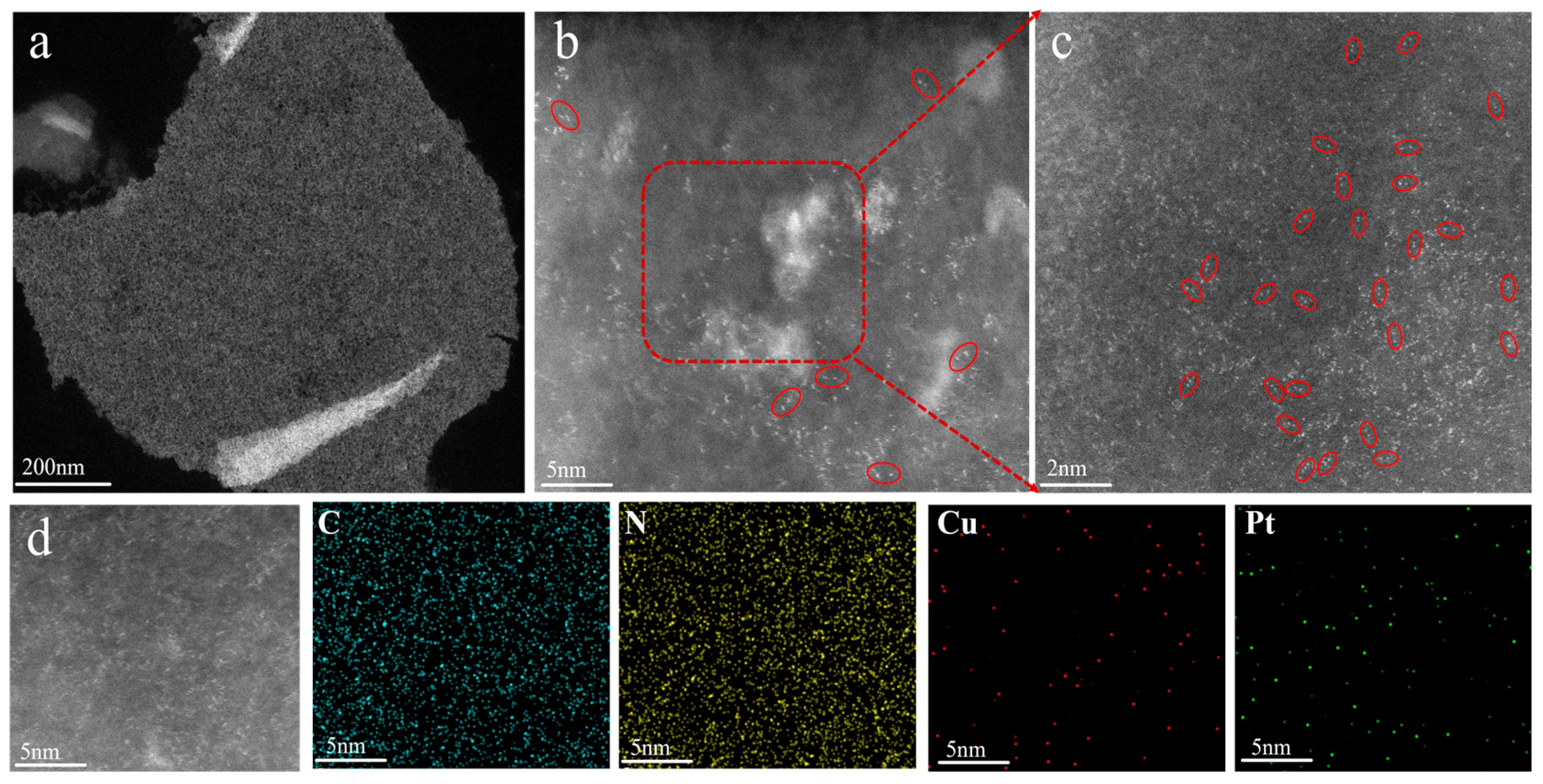
4 composite was investigated using aberration-corrected transmission electron microscopy (AC-TEM). As shown in
Figure 1a, the V
N-C
3N
4 exhibits a surface-exposed nanosheet structure, which provides an ideal environment for anchoring bimetallic Pt and Cu atomic sites. As shown in
Figure 1b,c, the presence of uniformly distributed bright spots on the PtCu/V
N-C
3N
4 nanosheets indicates the homogeneous dispersion of Pt and Cu atoms across the nanosheet. Furthermore, the coexistence of Cu and Pt species was observed on the same nanosheets. This observation confirms that the PtCu obtained through the impregnation method exists in a dual-atomic configuration, rather than as isolated Cu and Pt NPs. Finally, as illustrated in
Figure 1d, the homogeneous distribution of C, N, Cu, and Pt across the surface of the PtCu/V
N-C
3N
4 nanosheets was revealed by elemental mapping of the PtCu/V
N-C
3N
4 composite using energy-dispersive X-ray spectroscopy (EDS). The successful loading of PtCu onto the PtCu/V
N-C
3N
4 nanosheets was further confirmed by the corresponding high-angle annular dark-field scanning transmission electron microscopy (HAADF-STEM) images and quantitative elemental analysis presented in
Figures S2 and S3.
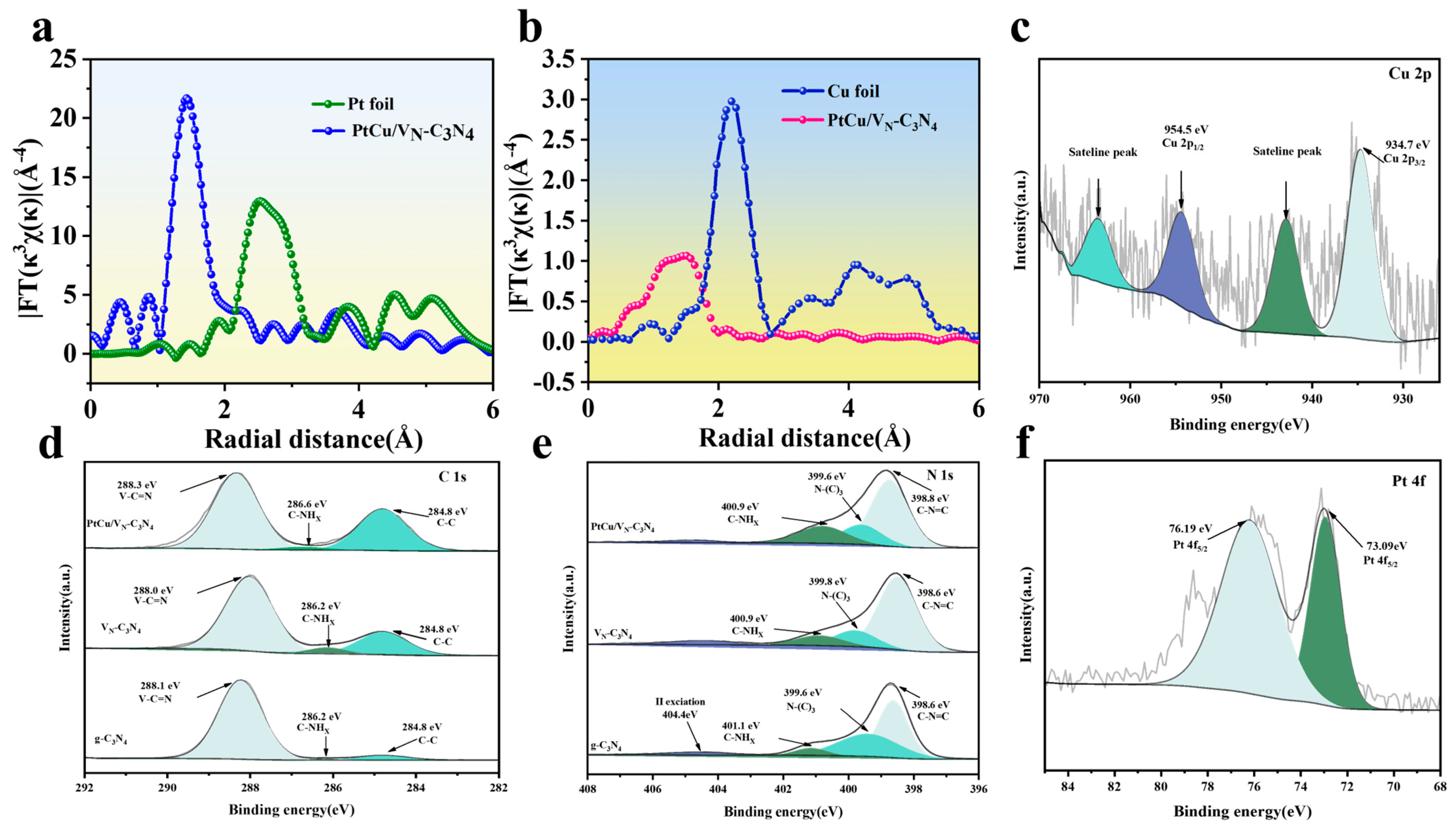
The Fourier-transformation expanded X-ray-absorbing microstructure (FT EXAFS) was analysed in the R space for the determination of Pt and Cu atoms (
Figure 2a,b). Referencing the standard Pt foil, the Pt L
3-edge k
3-weighted FT EXAFS of the PtCu/V
N-C
3N
4 sample exhibited a dominant peak at 1.57 Å, with no peaks corresponding to Pt–Pt bonds (2.57 Å). This observation ruled out the formation of metallic crystalline Pt clusters or nanoparticles and confirmed the atomic dispersion of Pt [
11]. Similarly, referencing the standard Cu foil, the PtCu/V
N-C
3N
4 sample displayed a dominant peak at 1.44 Å, with no peaks corresponding to Cu–Cu bonds. This excludes the formation of metallic crystalline Cu clusters or nanoparticles, confirming that Cu also exists in the atomic form [
12]. These findings are consistent with the HAADF-STEM results. Furthermore, the existence of defects and the interaction between the PtCu dual-atomic species and V
N-C
3N
4 in the mixed specimen were studied by X-ray photoelectron spectroscopy (XPS). XPS (
Figure S4) showed that the feature peaks in the PtCu/V
N-C
3N
4 specimens can be attributed to four elements: C, N, Pt, and Cu, suggesting that PtCu/V
N-C
3N
4 was successfully synthesised by defect confinement. XPS was performed on the as-prepared PtCu/V
N-C
3N
4 samples to investigate their elemental composition and valence states. The Cu 2p XPS profiles were separated into two peaks, as illustrated in
Figure 2c. The peaks of Cu 2p
3/2 and Cu 2p
1/2 of Cu
2+ in PtCu/V
N-C
3N
4 are found at 934.7 eV and 954.5 eV, respectively [
13]. As illustrated in
Figure 2d, decompressing the C 1s XPS spectrum into three peaks at 288.1 eV, 286.6 eV and 284.8 eV is possible, which correspond to NC=N, CNHₓ, and sp
2 hybridised carbon (CC). The N 1s XPS spectrum can be matched with three peaks at 398.6 eV, 400.2 eV and 401.1 eV, as illustrated in
Figure 2e, and these values are attributable to CN=C, N(C)
3, and CNHₓ. The Pt 4f XPS spectrum exhibits two characteristic peaks at 73.09 eV and 76.19 eV, as illustrated in
Figure 2f, and they are attributed to Pt 4f
7/2 and Pt 4f
5/2 of Pt4+ in PtCu/V
N-C
3N
4 [
14].
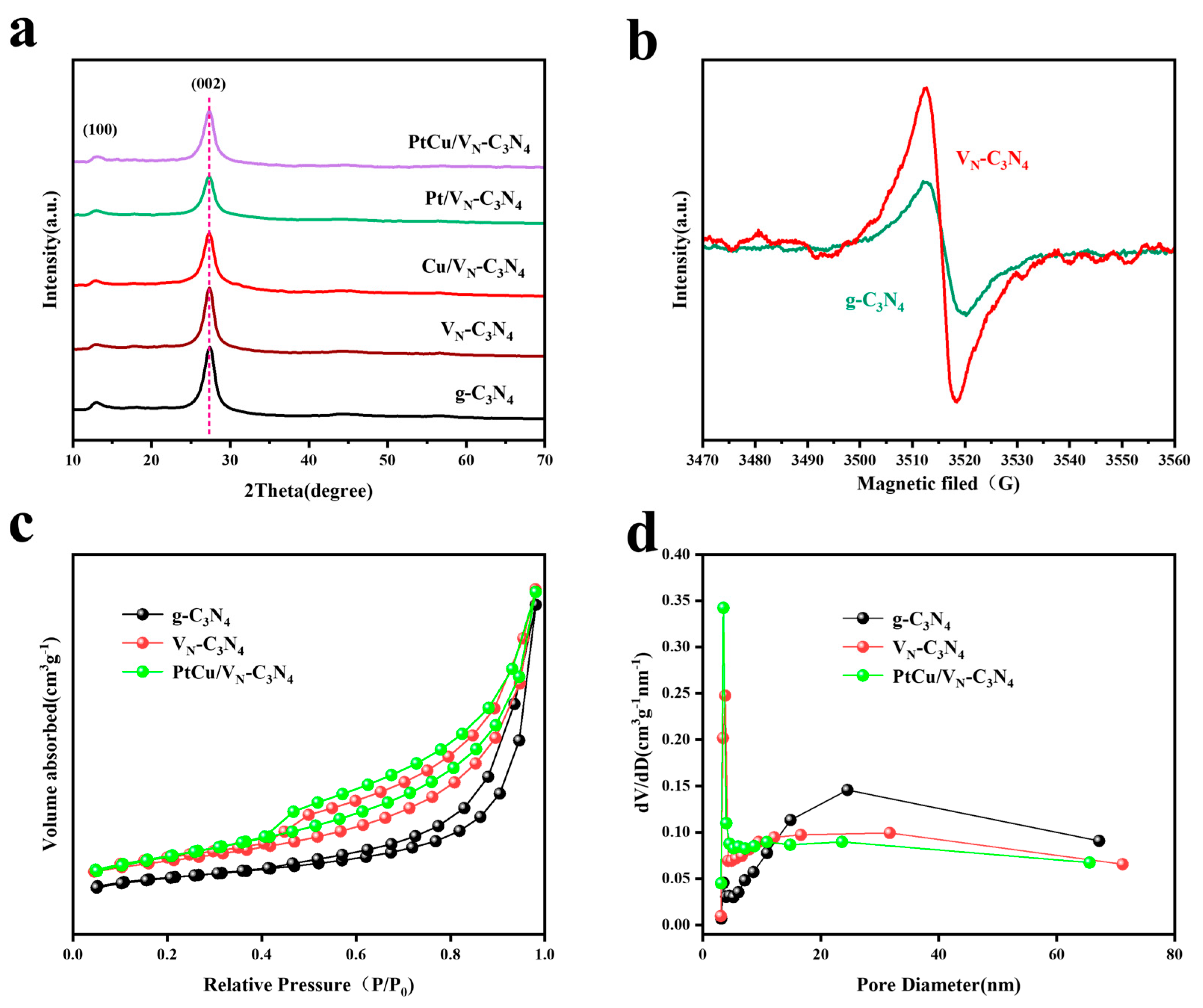
Figure 3a shows the X-ray diffraction (XRD) patterns of the as-synthesised specimens. The samples exhibited similar crystalline structures. Two distinct diffraction peaks were observed in all specimens at approximately 12.7° (100) and 27.6° (002), which correspond to the in-plane repeating units of the conjugated aromatic system and the interlayer stacking of g-C
3N
4, respectively [
15]. Compared with g-C
3N
4, the (002) diffraction peak of V
N-C
3N
4 shows a slight leftward shift, indicating an increased interlayer distance according to Bragg’s law nλ = 2dsinθ [
16]. However, no detectable diffraction peaks corresponding to Pt or Cu are observed for the PtCu/V
N-C
3N
4 composite, which may be attributed to their relatively low loading. Electron spin resonance (ESR) measurements conducted at room temperature (25 °C) on both g-C
3N
4 and V
N-C
3N
4 demonstrated that both samples exhibited a characteristic signal near g = 2.004 (
Figure 3b), which was attributed to unpaired electrons in the heptazine rings [
17,
18,
19]. Although both g-C
3N
4 and V
N-C
3N
4 possess carbon atoms with unpaired electrons within their heptazine ring structures, the successful incorporation of nitrogen vacancies into V
N-C
3N
4 induces the localisation of additional unpaired electrons on adjacent carbon atoms. This phenomenon was further substantiated by the significantly enhanced ESR signal intensity observed in V
N-C
3N
4 compared with that in g-C
3N
4. ESR spectroscopic analysis provided definitive evidence of the successful formation of nitrogen defects in V
N-C
3N
4. Furthermore, the stronger ESR signal of V
N-C
3N
4 indicated its enhanced electron delocalisation capability, thereby promoting a more efficient separation of the photogenerated charge carriers [
20].
The textural properties of the samples, including specific surface area and pore characteristics, were systematically investigated through N
2 adsorption–desorption measurements. As illustrated in
Figure 3c, g-C
3N
4, V
N-C
3N
4, and PtCu/V
N-C
3N
4 exhibited characteristic Type IV isotherms with H3-type hysteresis loops, indicating the formation of a mesoporous structure [
21]. The specific surface areas were determined to be 30.488, 56.906, and 63.825 m
2 g
−1 for g-C
3N
4, V
N-C
3N
4, and PtCu/V
N-C
3N
4, respectively. The enhanced surface area provides an increased number of active sites for water molecule interactions, thereby improving photocatalytic activity. Furthermore, Barrett–Joyner–Halenda (BJH) analysis revealed that PtCu/V
N-C
3N
4 possessed a pore size distribution ranging from 1 to 70 nm, with particularly abundant pores in the 10–20 nm range (
Figure 3d). For a comparative analysis, the specific surface areas, pore volumes, and pore size distributions of g-C
3N
4, V
N-C
3N
4, and PtCu/V
N-C
3N
4 are summarised in
Table S1 (Supporting Information).
The photocatalytic properties of CO
2 were tested using a mixed quartz glass reactor in a closed gas circulation system.
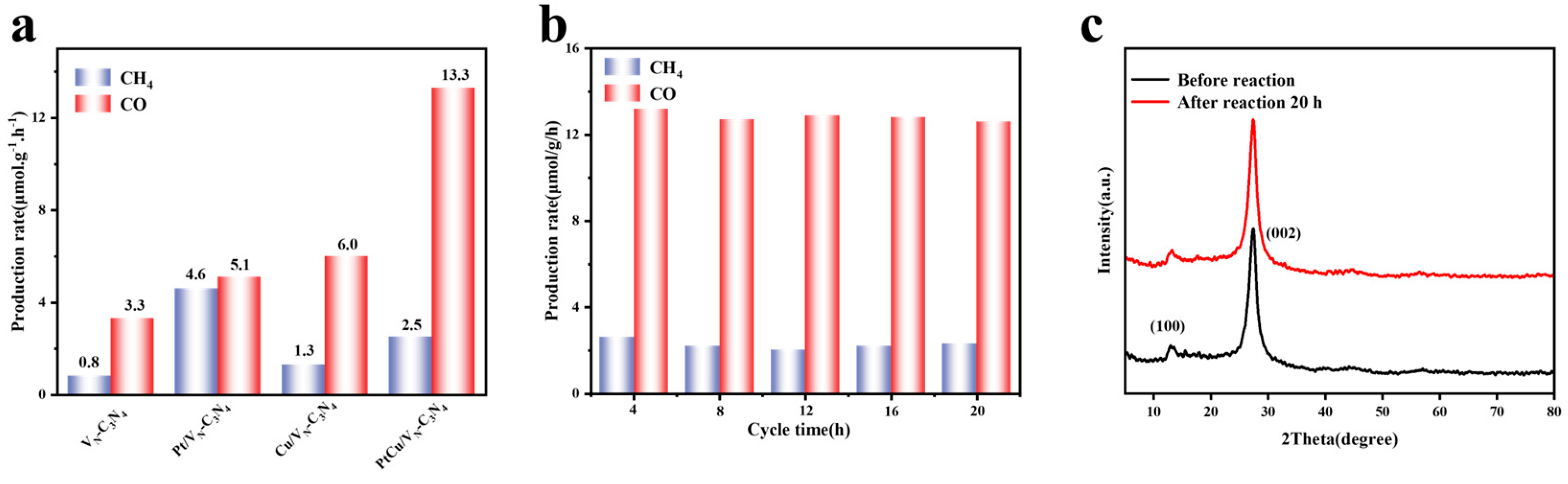
Figure 4 illustrates the photocatalytic CO
2 reduction activity of all synthesised catalysts under simulated solar irradiation. Among them, PtCu/V
N-C
3N
4 demonstrated enhanced CO production, reaching up to 13.3 µmol/g/h after 4 h of irradiation, which is significantly higher than that of single-atom Pt/V
N-C
3N
4 (5.1 µmol/g/h), single-atom Cu/V
N-C
3N
4 (6.0 µmol/g/h), V
N-C
3N
4 (3.3 µmol/g/h) and g-C
3N
4 (2.2 µmol/g/h) (
Figure 4a). Notably, the anchoring of single atoms (Pt or Cu) resulted in a relatively modest enhancement in CO production, approximately 1.5 and 2 times that of V
N-C
3N
4, respectively, whereas PtCu/V
N-C
3N
4 exhibited a CO production rate approximately 4.1 times that of V
N-C
3N
4 [
22]. The results demonstrate that the synergistic effect induced by the incorporation of dual-atomic PtCu can significantly suppress photo-induced electron and hole recombination, thus increasing the photocatalytic CO
2 reduction activity. In addition, after five successive photocatalytic cycles (20 h), the PtCu/V
N-C
3N
4 complex showed a negligible decline in CO and CH
4 yields and strong cyclic stability under long illumination conditions (
Figure 4b). Additionally, to systematically evaluate structural stability, the post-reaction PtCu/V
N-C
3N
4 catalyst was analysed by XRD. As shown in
Figure 4c, the crystalline structure did not change after 20 h of reaction, indicating that PtCu/V
N-C
3N
4 exhibited a stable structure.
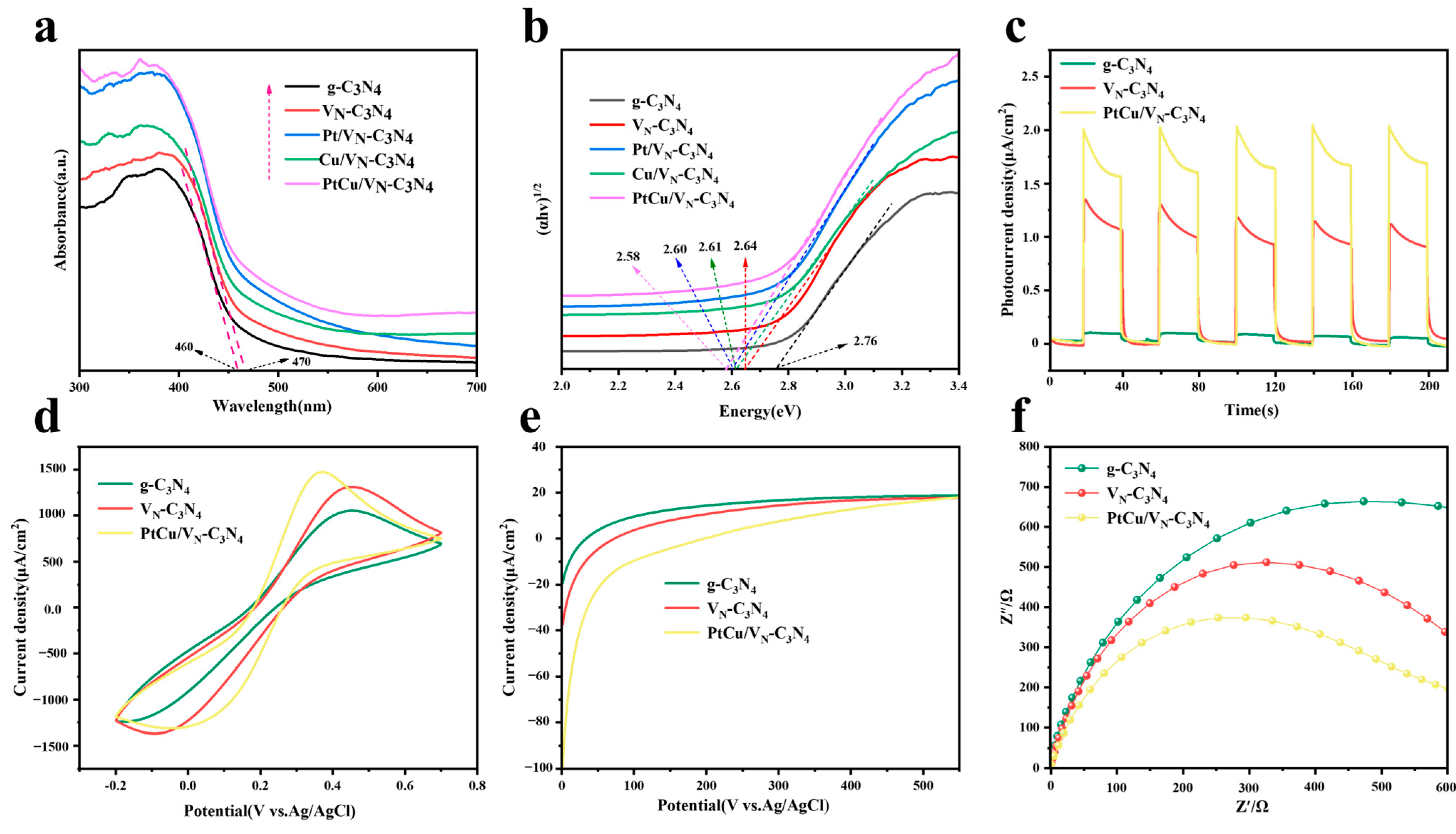
The photocatalytic activity of semiconductor photocatalysts is predominantly governed by their capability to generate electron–hole pairs upon photoexcitation, which is fundamentally determined by the bandgap size and photo-absorption capacity of the semiconductor. As illustrated in
Figure 5a, the composite photocatalyst (g-C
3N
4, V
N-C
3N
4, Pt/V
N-C
3N
4, Cu/V
N-C
3N
4, and PtCu/V
N-C
3N
4) was measured by diffusion reflectivity spectrometry (DRS). The g-C
3N
4 specimen exhibited an absorbing edge extending to 460 nm in the UV-visible region. In addition, the V
N-C
3N
4 sample exhibited a red-shifted absorption edge from 460 to 470 nm, accompanied by a broadened photoabsorption spectrum compared with that of g-C
3N
4 [
23]. Notably, the Cu/V
N-C
3N
4, Pt/V
N-C
3N
4, and PtCu/V
N-C
3N
4 samples exhibited similar absorption edges. The respective bandgap energies, calculated using the Kubelka–Munk function, decreased from 2.76 eV to 2.58 eV (
Figure 5b). These results suggest that a PtCu dual-atomic scheme can improve the photoabsorbing ability of the g-C
3N
4 defects. Notably, minimal shifts or even blue shifts were observed for the single-atom Pt/V
N-C
3N
4 and Cu/V
N-C
3N
4 samples. This observation suggests a synergistic effect between the Pt and Cu species, which optimises the photoabsorption properties of PtCu/V
N-C
3N
4, further confirming the successful preparation of dual-atom PtCu. This observation suggests a synergistic effect between the Pt and Cu species, which optimises the photoabsorption properties of PtCu/V
N-C
3N
4, further confirming the successful preparation of dual-atomic Pt–Cu.
Through photoelectrochemistry, the ability to separate and migrate photogenerated electrons and holes was studied, which demonstrated that PtCu/V
N-C
3N
4 has excellent catalytic properties.
Figure 5c shows the instantaneous photocurrent response curves of specimens subjected to intermittent radiation. In general, a positive relationship exists between the optical response strength and the electron–hole separation efficiency, which indicates improved photocatalysis. The experiment demonstrates that V
N-C
3N
4 has a photocurrent density approximately five times that of g-C
3N
4, which suggests an improvement in photogeneration owing to the introduction of defect energy levels. The maximum photocurrent strength of PtCu/V
N-C
3N
4 was higher than those of V
N-C
3N
4 and g-C
3N
4 [
24]. In addition,
Figure 5d shows the periodic cyclic voltammetry (CV) profile of the specimen, which shows clear anodising and cathodic peaks for every specimen. The current density achieved on PtCu/V
N-C
3N
4 is double or triple those of V
N-C
3N
4 and g-C
3N
4, suggesting that PtCu/V
N-C
3N
4 has a remarkable catalytic effect in increasing the efficiency of electron–hole pair separation. The overpotential of hydrogen evolution was studied using linear sweep voltammetry. As shown in
Figure 5e, the PtCu/V
N-C
3N
4 sample exhibited the lowest hydrogen evolution overpotential compared with V
N-C
3N
4 and g-C
3N
4, providing strong evidence that PtCu/V
N-C
3N
4 more effectively supplied hydrogen sources for the CO
2 reduction process [
25]. As illustrated in
Figure 5f, the electrochemical impedance spectroscopy (EIS) results of these specimens demonstrate that the PtCu/V
N-C
3N
4 composite exhibits a lower resistance after the introduction of the PtCu dual-atomic species.
To further explain the mechanism for the improved photocatalytic properties of the PtCu/V
N-C
3N
4 composite, the behaviour of the photogenerated charges in the photocatalyst was investigated through photoluminescence (PL) spectroscopy [
26]. The intensity of the PL peak reflects the extent of electron–hole recombination, with a lower peak intensity indicating a reduced rate of electron–hole recombination. The PL spectra of g-C
3N
4, V
N-C
3N
4, Cu/V
N-C
3N
4, Pt/V
N-C
3N
4, and PtCu/V
N-C
3N
4 were recorded at an excitation wavelength of 300 nm. As illustrated in
Figure S5, all samples exhibited similar peak shapes, with g-C
3N
4 demonstrating the highest peak intensity, indicating the most rapid electron–hole recombination rate among the samples. The peak intensity of V
N-C
3N
4 is significantly lower than that of g-C
3N
4, suggesting that the recombination of photogenerated charges in V
N-C
3N
4 is effectively suppressed. The PtCu/V
N-C
3N
4 sample exhibits the lowest peak intensity, indicating the highest charge-separation efficiency for the photogenerated carriers. In summary, the photochemical characterisation results suggest that the synergistic effect of PtCu dual-atomic species can accelerate the migration and transfer of photogenerated electrons, thereby enhancing the multifunctional photocatalytic conversion of CO
2 [
27].
The water contact angles of g-C
3N
4 and V
N-C
3N
4 are 48.3°and 45.0°, respectively. Upon the introduction of PtCu atoms, the contact angle of PtCu/V
N-C
3N
4 decreased to 42.3° (
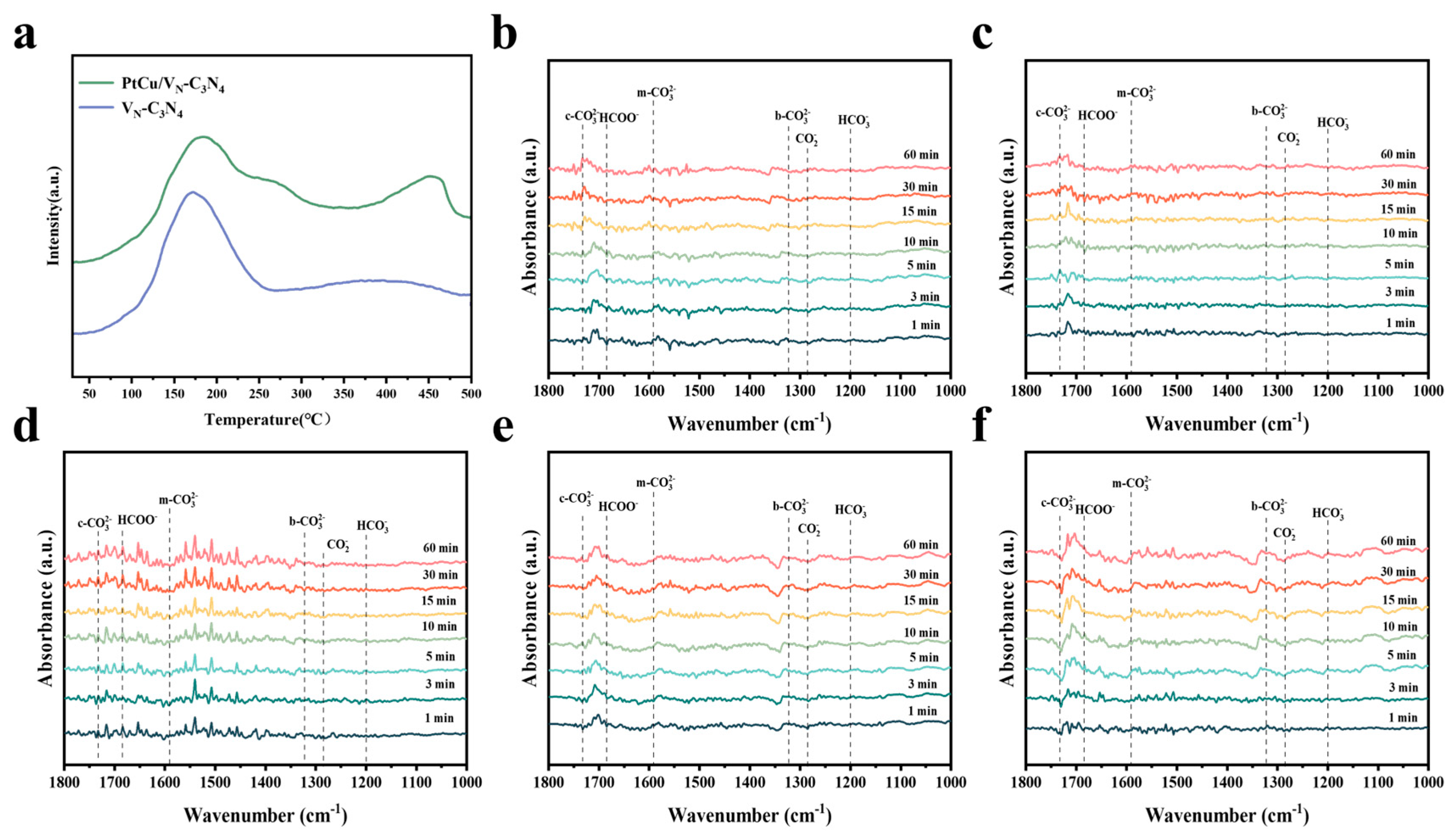
Figure S6), indicating enhanced surface hydrophilicity, which facilitated the absorption of water and accelerated protonation reactions. The interaction of CO
2 molecules with the catalyst was studied by CO
2-TPD. As shown in
Figure 6a, both PtCu/V
N-C
3N
4 and V
N-C
3N
4 exhibit a strong CO
2 desorption peak near 175 °C. However, for PtCu/V
N-C
3N
4, an enhanced CO
2 desorption peak appears at 450 °C as the temperature increases, which is attributed to the physical adsorption of CO
2 on the sample. In contrast, the CO
2 adsorption peak of V
N-C
3N
4 was weak and negligible [
28]. The results indicate that, after loading PtCu dual-atom species, the multifunctional active sites on the surface of PtCu/V
N-C
3N
4 facilitate the adsorption of CO
2.
In situ DRIFTS spectroscopy revealed distinct characteristic vibrational signals corresponding to various intermediate species in the photocatalytic process. As illustrated in
Figure 6b–f, CO
2− (1630 cm
−1), b-CO
32− (1599 cm
−1, 1325 cm
−1), and m-CO
32− (1514 cm
−1) exhibit negative signals [
29]. The accumulation of these carbonate and carboxylate compounds over a long irradiation time (60 min) suggests that a significant intermediate HCOO⁻ is formed, which is responsible for photocatalytic CO
2 conversion. Furthermore, HCOO⁻ acts as the rate-determining intermediate for the photocatalytic reduction of CO
2 to CO and CH
4 [
30]. The subsequent consumption of HCOO⁻ effectively participates in the photoreduction of CO
2, which is closely associated with the high selectivity toward methane and the remarkable reduction efficiency of CO
2. The results further corroborate the synergistic effect of the platinum–copper (PtCu) dual-active sites, which stabilise the HCOO
- intermediate and facilitate its protonation to form *CO, thereby ultimately driving the selective formation of hydrocarbon products. In contrast, the DRIFTS peak strengths of the intermediates in the in situ DRIFTS of g-C
3N
4, Cu/V
N-C
3N
4, and Pt/V
N-C
3N
4 were significantly lower, indicating that their ability to convert CO
2 in the presence of light was inferior to that of PtCu/V
N-C
3N
4.
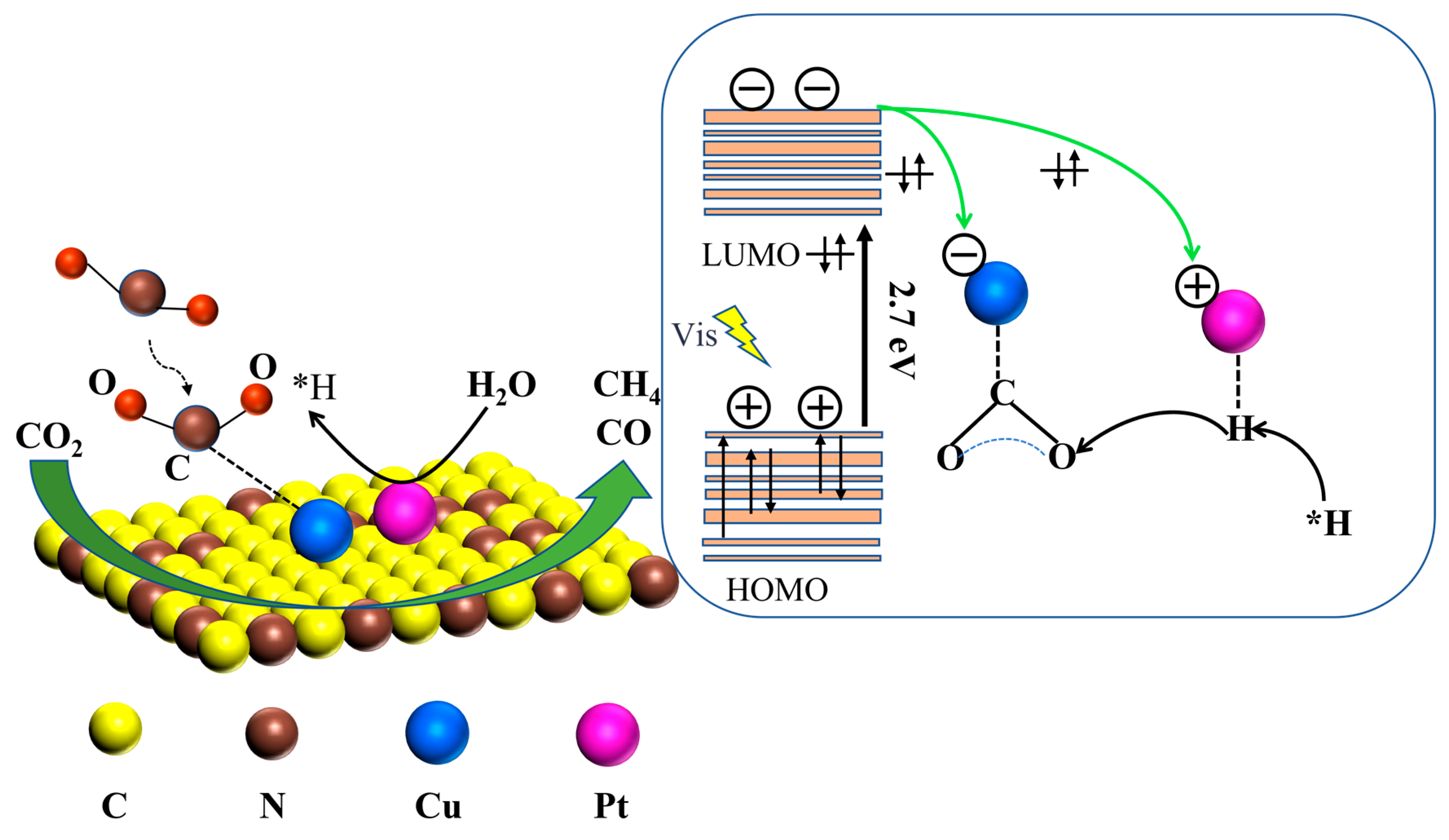
As shown in
Figure 7, the introduced PtCu dual-atomic species exhibited a synergistic photocatalytic effect, where the dispersed Pt sites functioned as hydrogen storage centres participating in hydrogenation reactions, while Cu acted as an active adsorption centre for CO
2. Both active centres promoted long-lived charge separation. Research indicates that copper species have a strong binding effect on the surface adsorption CO
2 molecules by means of a strong hybridisation of Cu and the 2 p orbital of CO
2. During the photocatalytic process, evidence from the dynamic trajectories of the charge carriers highlights the synergistic oxidation facilitated by the dispersed PtCu active sites. The bimetallic PtCu atoms act as active centres, taking advantage of their respective strengths. On the other hand, the scattered PtCu atoms offer an active site for ultrafast photogeneration of electron transfer, thus maximising the lifetime of charge separation on the V
N-C
3N
4 nanosheets. The main reaction mechanism is as follows [
31].
CO
2 adsorption and activation:
Formation of HCOO* intermediate:
Further reduction to CH
4 (minor pathway):