Article

Esterification of Free Fatty Acids Under Heterogeneous Catalysis Using Ultrasound
Department of Chemical Engineering, Ariel University, Kiryat-ha-Mada, Ariel 4070000, Israel
*
Authors to whom correspondence should be addressed.
Catalysts 2025, 15(12), 1161; https://doi.org/10.3390/catal15121161
Submission received: 31 October 2025 / Revised: 30 November 2025 / Accepted: 8 December 2025 / Published: 11 December 2025
(This article belongs to the Special Issue Catalysis Accelerating Energy and Environmental Sustainability)

Abstract

The efficient conversion of free fatty acids (FFAs) to fatty acid methyl esters via esterification is a crucial step in biodiesel production from low-cost high-FFA feedstocks, which supports global efforts toward renewable energy and reduced dependence on fossil fuels. However, this esterification process is hindered by slow reaction kinetics, high energy demand, and low catalyst efficiencies. This study investigates tungsten disulfide (WS2) as a heterogeneous catalyst for the esterification of a mixture of oleic and linoleic acids with methanol under ultrasonic activation, aiming to improve catalytic performance, reaction efficiency, and enhance process sustainability. Four commercial WS2 powders from various suppliers, varying in particle size (2 μm and 90 nm), were characterized using X-ray diffraction, scanning electron microscopy, and transmission electron microscopy. Micron-sized WS2 exhibited higher catalytic activity than nano-scaled WS2 due to a higher density of edge defects and abundance of catalytically active edge sites. Variation in reaction parameters demonstrated that the ester yield increases from 7% to 53% as the catalyst loading rises from 2% to 32% and reaches a 95% yield at an FFAs-to-methanol molar ratio of 1:15 under ultrasonic activation at 75 °C for 1 h. Comparative experiments confirmed that ultrasound treatment increases the yield of esterification compared to thermal activation. The results suggest WS2 as a heterogeneous catalyst appropriate for efficient sonochemical esterification in biodiesel production. These kinetic and catalytic data are valuable for future process design, scalability assessments, and techno-economic evaluations of sustainable biodiesel production.

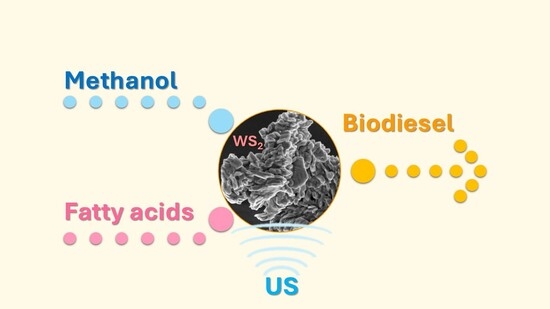
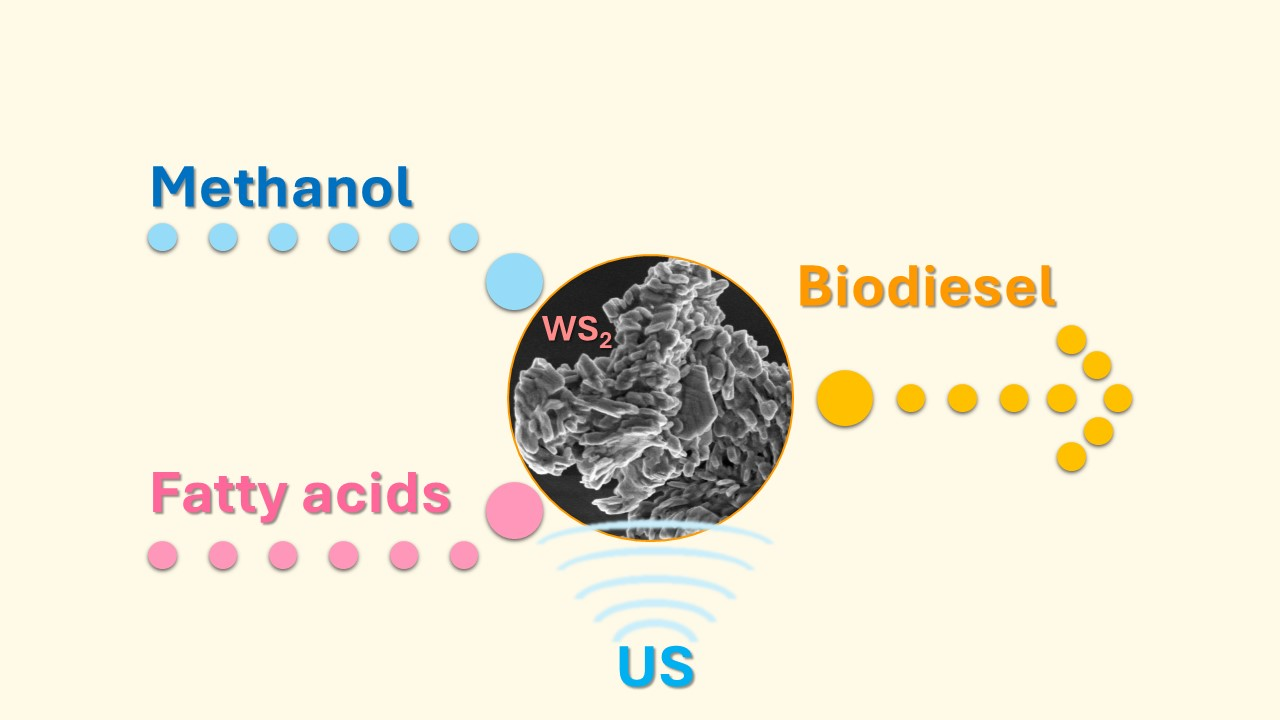
Graphical Abstract

1. Introduction

Growing concerns about energy security, climate change, and the reduction in fossil resources have raised global interest in renewable liquid fuels. Among the available alternatives, biodiesel has received considerable attention as a sustainable replacement for conventional diesel due to its renewable origin, biodegradability, low sulfur content, and favorable combustion characteristics [1,2,3]. Biodiesel can be produced from a wide range of feedstocks, including vegetable oils, animal fats, and waste cooking oils, through reactions with short-chain alcohols [4,5,6]. In addition to reducing dependence on petroleum-based fuels, biodiesel contributes to lower greenhouse gas emissions and supports the principles of a circular economy by valorizing waste lipid sources [3,5]. As transportation remains one of the largest consumers of fossil fuels, the development of efficient biodiesel production methods has become a key priority in global efforts to achieve carbon neutrality. Consequently, current research is focused on enhancing catalyst performance, improving reaction kinetics, and developing process intensification methods that may contribute to more economically viable and environmentally sustainable biodiesel production.
Biodiesel is a renewable, biodegradable fuel composed primarily of fatty acid methyl esters, which are produced through esterification of free fatty acids (FFAs) and/or transesterification of triglycerides with short-chain alcohols such as methanol or ethanol. Due to its similar physicochemical properties to petroleum diesel, biodiesel can be blended with existing diesel engines or used directly without significant modifications. Furthermore, it offers excellent lubricity, low particulate and sulfur emissions, and a favorable toxicity profile compared to traditional fossil diesel fuels. However, the commercial competitiveness of biodiesel production largely depends on the efficiency of the catalyst system and the ability to utilize inexpensive feedstocks with high free fatty acid content, such as waste cooking oils or animal fat [7,8]. Despite its advantages, biodiesel also presents several limitations, including higher production costs compared to petroleum diesel, potential cold-flow problems (fuel gelling) in low-temperature environments, and risks of filter clogging or corrosion when the fuel is not sufficiently purified. Moreover, large-scale biodiesel production may compete with food crops for land and resources, raising concerns regarding long-term sustainability [1,2,3,5,6].
Conventional biodiesel production processes commonly utilize homogeneous acid and base catalysts (e.g., H2SO4, HCl, NaOH, KOH) due to their high activity and low cost. However, the use of such catalysts has several drawbacks, including equipment corrosion, soap formation, difficulties in phase separation, and the need for extensive water consumption for purification. These issues result in increased operational costs and environmental burdens associated with wastewater generation [9,10,11]. Consequently, growing attention has been directed toward heterogeneous catalysts due to their non-toxic nature, ease of separation between solid and liquid phases, environmental friendliness, and the possibility of continuous operation while maintaining high activity, even in feedstocks rich in FFAs [12,13,14]. Heterogeneous acid catalysts, in particular, have demonstrated strong potential for esterification reactions, maintaining high activity even in the presence of FFAs and water.
Among the various heterogeneous catalysts, transition metal dichalcogenides such as WS2 and MoS2 have been reported as robust, thermally stable catalysts with tunable acidity and a high density of edge-active sites. Their catalytic behavior is strongly influenced by the density of active edge sites, surface defects, and the degree of crystallinity. Recent studies have demonstrated that MoS2-based catalysts, including magnetically recoverable composites, exhibit excellent performance in both esterification and transesterification reactions [15,16]. However, only a single report has described the use of WS2 as a catalyst for the esterification of C2–C16 carboxylic acids with methanol under moderate thermal conditions [17].
The most common activation method in biodiesel synthesis is conventional thermal heating, which provides sufficient energy to overcome the activation barriers of esterification and transesterification reactions [18,19]. However, this approach has serious drawbacks, including prolonged reaction times, high energy consumption, and poor mass transfer between immiscible reactants. To overcome these disadvantages, several energy intensification techniques have been explored, including microwave irradiation and ultrasonic treatment [20]. Microwave activation provides rapid, volumetric heating of the reaction mixture, significantly reducing processing time; however, it can lead to uneven field distribution and scaling issues [21,22]. Ultrasonication, on the other hand, generates the formation, growth, and collapse of microbubbles due to acoustic cavitation, which induce localized hot spots, intense micro-mixing, and high shear gradients. These effects significantly enhance both heat and mass transfer, thus improving catalytic efficiency and reducing energy requirements [23,24,25]. Despite these advantages, ultrasonic activation also has limitations, such as cavitation erosion of reactor surfaces, difficulties in optimizing energy efficiency, and challenges in scaling equipment while maintaining stable cavitation parameters. These factors, along with limited industrial-scale deployment, indicate that economic and engineering barriers to large-scale implementation remain [26].
In this work, we propose using WS2 as a heterogeneous catalyst for the esterification of a binary mixture of oleic and linoleic acids with methanol under ultrasonic activation. To the best of our knowledge, this is the first systematic study evaluating WS2 catalysts of different particle sizes and loadings in sonochemical processes.

2. Results and Discussion

Our previous research was focused on the synthesis of biodiesel from oleic acid and waste cooking oils using Lewis acid catalysts under ultrasonic activation. In particular, catalysts such as BF3 and AlCl3 demonstrated high activity in esterification and transesterification reactions of oleic acid or brown grease with methanol, as reported in earlier works [27,28,29]. However, despite their catalytic efficiency, the post-reaction separation and removal of these homogeneous Lewis acids resulted in significant drawbacks for product purification and potential process scalability.
To overcome this limitation, the present work investigates the use of a heterogeneous catalyst that enables the separation and recovery of the catalyst, thereby minimizing contamination of the biodiesel phase. Among potential candidates, tungsten disulfide (WS2) was selected as a catalyst due to its previously reported catalytic activity in esterification reactions of various carboxylic acids under thermal activation, as demonstrated in [17]. While WS2 has not been investigated in combination with ultrasonic-assisted methods, the proven efficacy of ultrasound in our earlier projects provided a rationale to test this catalyst under similar conditions.
In this work, the effect of different reaction parameters on the conversion of a mixture of oleic and linoleic acids was investigated. The parameters were as follows: particle size of the catalyst, catalyst loading, FFAs-to-methanol molar ratio, time, temperature, and method of activation. Four commercial WS2 samples with varying particle sizes and sources (2 µm, ThermoScientific—sample A; 2 µm, Sigma-Aldrich—sample B; 90 nm, Sigma-Aldrich—sample C; and 90 nm, MKNano—sample D) were evaluated as heterogeneous catalysts for the esterification reaction.

2.1. Comparison Between the Catalysts from Different Sources

To compare the samples of WS2 from different sources, their structure was investigated using XRD, SEM, and TEM, and their efficiency was tested in the esterification reaction (Scheme 1).

2.1.1. Structure and Morphology Characterization

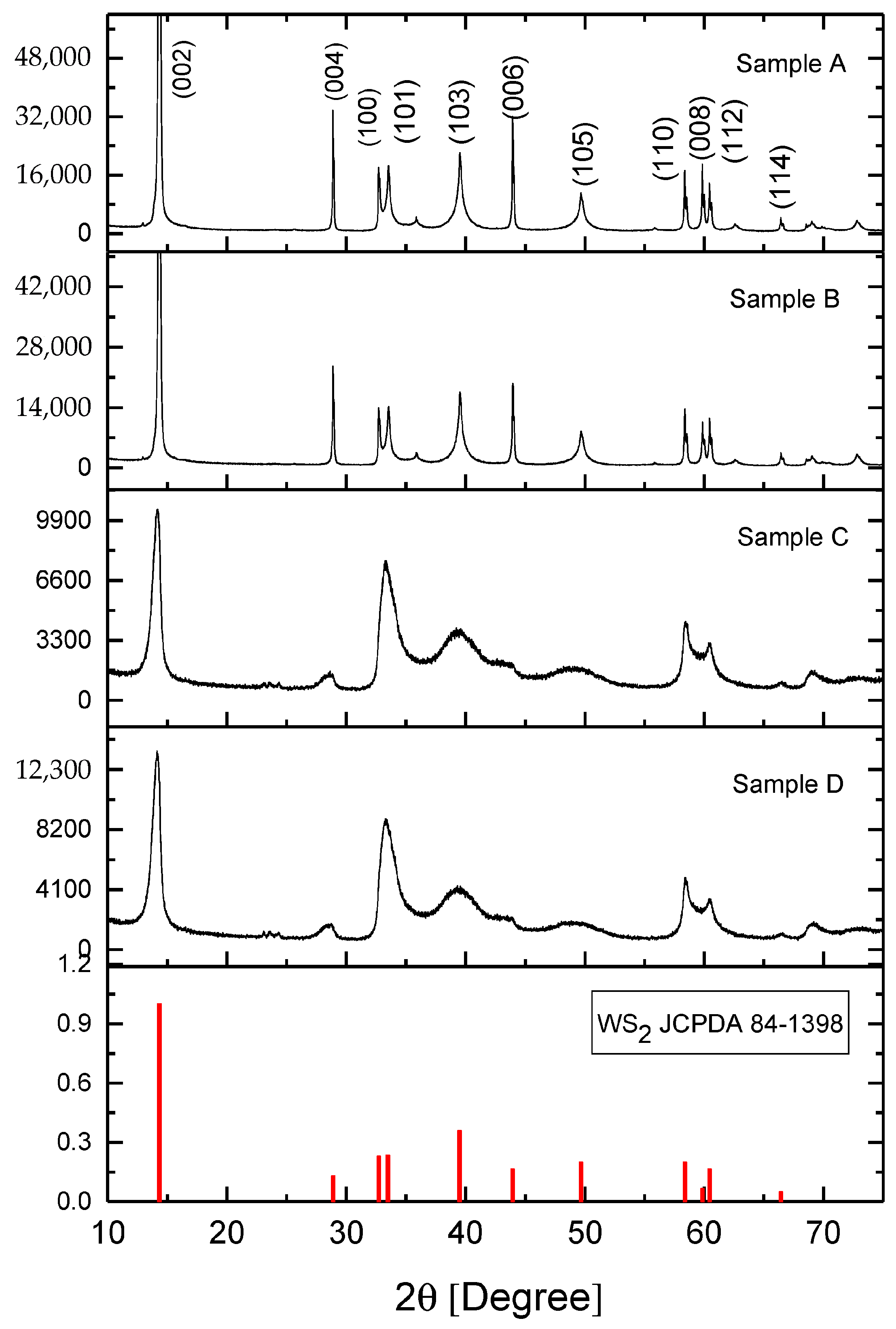
The crystal structure of the WS2 samples was examined by X-ray diffraction. As shown in Figure 1, the 2 µm WS2 powder of samples A and B exhibits sharp and well-defined diffraction peaks corresponding to the 2H-phase of WS2 (JCPDS standard card No. 84-1398). The strong and narrow (002) reflection indicates high crystallinity and pronounced preferred orientation of the layered basal planes. The absence of any additional tungsten or sulfur corresponding peaks confirmed the phase purity of these samples. In contrast, the XRD pattern of the 90 nm WS2 (samples C and D) exhibits broader and less intense peaks, indicating a reduced crystallite size, partial stacking disorder, and the presence of microstrain within the layered structure. Such features are typical for nanostructured WS2, where the layers are curved, turbostratically misaligned, or even form closed-cage, fullerene-like architectures.
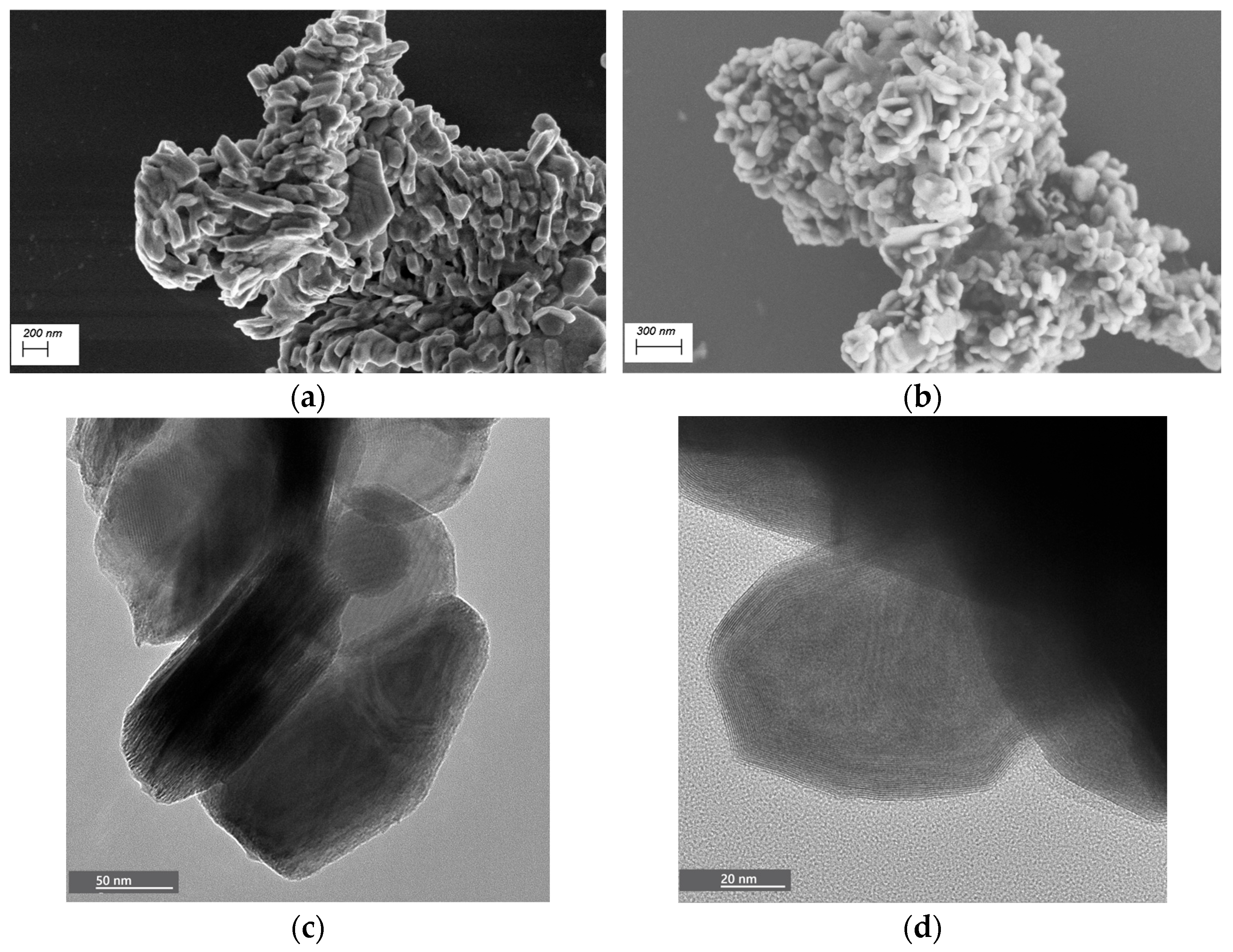
The morphology of the WS2 powders was visualized by the SEM and TEM images (Figure 2).

2.1.2. The Effect of Particle Size of the WS2 from Various Sources on the Yield of Esterification Reaction

The catalytic activity of four commercial WS2 samples was investigated in the esterification reaction of a mixture of oleic and linoleic acids with methanol, using the experimental conditions reported in [17]. The reaction was performed for one hour under ultrasonication treatment without external heating, with the bath temperature increasing from 20 °C to 60 °C. Table 1 presents the effect of different WS2 samples on esterification yield. Both 2 µm WS2 samples (samples A and B) yielded similar results, with approximately 18–20% of the material converted. In contrast, the 90 nm WS2 (sample C) yielded a 14% mixture of methyl oleate and methyl linoleate, while the 90 nm sample D produced only 7% esters, i.e., approximately half the yield of sample C with the same particle size.
In conventional heterogeneous catalysis, catalytic activity is generally expected to scale with available surface area, assuming that the intrinsic reactivity per unit area remains comparable. Thus, the catalytic activity of WS2 NPs (~90 nm, BET surface area ~20–40 m2/g) should outperform the larger WS2 platelets (~2 µm, BET surface area < 5 m2/g).
Data obtained demonstrate a correlation between particle size and catalytic activity, with micron-sized powders outperforming nanoscale materials. This result contrasts with the generally accepted assumption that smaller particles, having higher surface areas, should exhibit higher catalytic activity, leading to an increase in reaction yield [30,31,32]. This observation can be attributed to the distinct structural and chemical properties of the two WS2 morphologies, particularly in terms of surface reactivity and defect density, which significantly impact their catalytic performance. The WS2 nanoparticles (NPs) (samples C and D, 90 nm) adopt a closed-cage, fullerene-like nanostructure, characterized by a highly ordered, onion-like architecture where layers of WS2 are concentrically arranged to form a polyhedral or spherical particle [33]. This configuration causes a chemically inert and highly stable surface, as the closure of the layers eliminates dangling bonds and minimizes edge sites [34,35].
The fully saturated surface of these NPs, being structurally robust, results in a very low density of surface defects, which are crucial for catalytic activity in esterification reactions. The adsorption of oleic acid, a critical step in the esterification process, relies on the availability of active sites where the molecule can interact with the catalyst surface. The lack of such sites on the closed-cage WS2 nanoparticles severely limits their ability to facilitate the adhesion and subsequent activation of oleic acid, thereby reducing their catalytic efficacy. The formation of closed-cage, polyhedral WS2 nanoparticles—structures in which the lamellar sheets curve and close into near-spherical or polyhedral morphologies—was described in [34]. This encapsulated architecture eliminates most edge terminations and saturates dangling bonds, thereby drastically reducing the number of catalytically relevant sites. Such nanoparticles are mechanically robust and chemically resistant but inherently less reactive. Chen et al. in [35] demonstrated that gold nanoparticles preferentially adsorb onto defect sites of WS2 and MoS2, providing direct evidence that basal planes possess minimal reactivity, whereas edges and defects act as the primary chemically active centers. Their study showed that fullerene-like nanoparticles exhibit fewer exposed edges and significantly lower defect densities, resulting in reduced capacity for adsorption-driven processes.
In contrast, the WS2 platelets, with their significantly larger dimensions (samples A and B, ~2 μm), exhibit a non-uniform, highly defective morphology, as confirmed by SEM and TEM analyses (Figure 2). While the basal planes of these platelets are chemically stable and inert, similar to the surfaces of the closed-cage NPs, their edges and layer borders are characterized by multiple structural imperfections, including dangling bonds and lattice defects [36]. These defects arise from the open, layered structure of the platelets, which lack the perfect closure found in the NPs. The presence of dangling bonds and irregular edge sites creates highly reactive regions that serve as preferential reaction centers for the adsorption of oleic acid molecules in the methanol environment [37].
Thus, the higher activity of the micron-sized WS2 catalyst compared to the nanoparticles can be attributed not to surface area considerations, but to the fundamentally different distribution and accessibility of catalytically active edge sites. This mechanistic rationale aligns with established principles of TMD catalysis and explains why the observed trend deviates from conventional expectations in heterogeneous catalysis.
Based on the obtained yields, WS2 sample A demonstrated the highest activity among the tested materials and was selected for all subsequent studies.

2.2. Effect of WS2 Concentration on the Reaction Yield

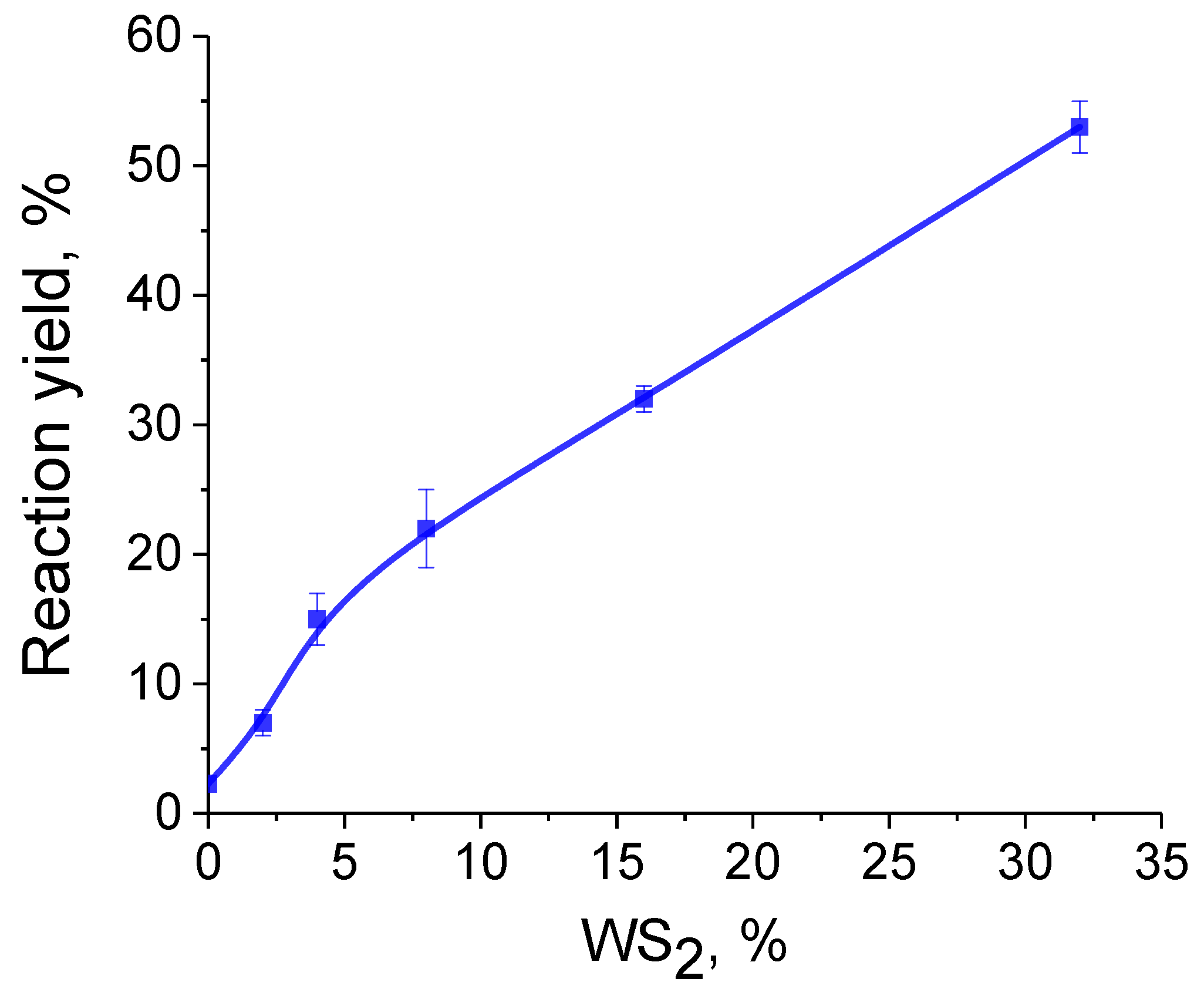
To determine the optimal catalyst loading for subsequent experiments, a preliminary series of esterification reactions was performed using WS2 in amounts ranging from 0 to 32 wt% relative to the total mass of free fatty acids. The reactions were carried out under ultrasonic irradiation for 1 h in a water bath without external heating. Due to continuous ultrasonic cavitation, the bath temperature gradually increased from approximately 20 °C to 60 °C during the reaction. Under these conditions, the yield of fatty acid methyl esters varied from 2.3% to 53%, depending on the catalyst concentration (Figure 3).
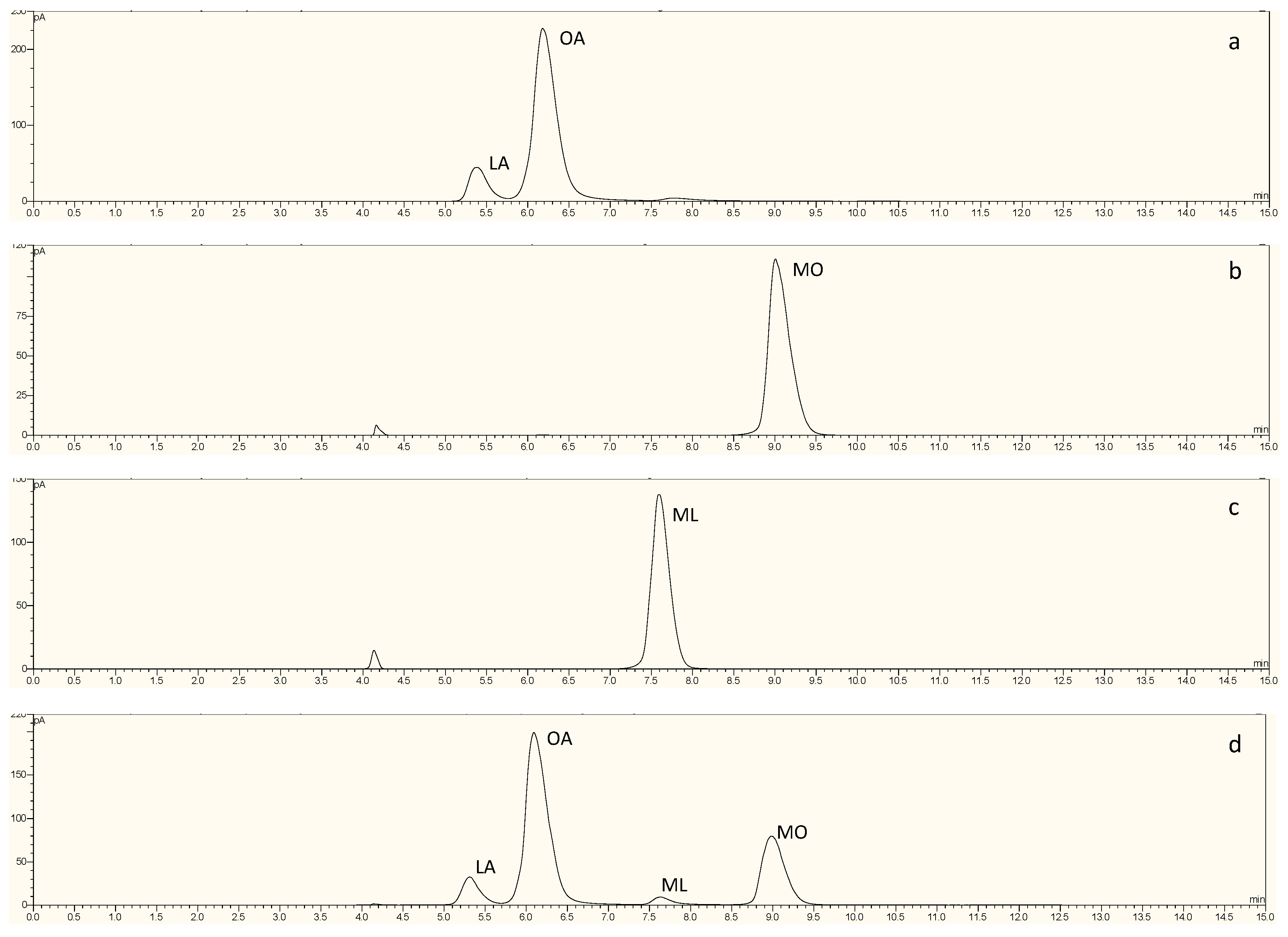
The ester yield was determined by HPLC chromatogram. The identification of reactants and products was confirmed by matching their retention times with those of commercial standards for oleic acid, linoleic acid, methyl oleate, and methyl linoleate (Figure 4).
Although the highest conversion was obtained at 32 wt% WS2, using such a large catalyst loading is neither practical nor economically attractive for further process development. In contrast, 16 wt% of WS2 resulted in a substantial increase in the conversion of the FFAs mixture (32%) and was therefore selected as the working catalyst amount. This intermediate loading provided a balance between catalytic efficiency and feasibility, while leaving scope for subsequent optimization (e.g., adjustment of temperature, FFAs-to-methanol ratio, and reaction time) to further improve the ester yield. For comparison, a catalyst-free reaction carried out under identical ultrasonic conditions yielded less than 3% ester, confirming that WS2 is essential for the conversion.

2.3. Effect of FFAs-to-Methanol Molar Ratio on the Reaction Yield

2.3.1. Screening of FFAs-to-Methanol Molar Ratio Under Ultrasonic Activation Without External Heating

The molar ratio of FFAs to methanol is a key parameter in the esterification process because the reaction is reversible and equilibrium-limited. In our previous studies [30], an FFAs-to-methanol ratio of 1:140 was used under ultrasonic treatment. Although a large excess of methanol improved miscibility between the reactants and shifted the equilibrium toward ester formation, it simultaneously produced an extremely diluted reaction medium, hindering process scalability. To determine a more efficient and practically relevant ratio, a systematic investigation of the effect of the excess of methanol was carried out in the present work.
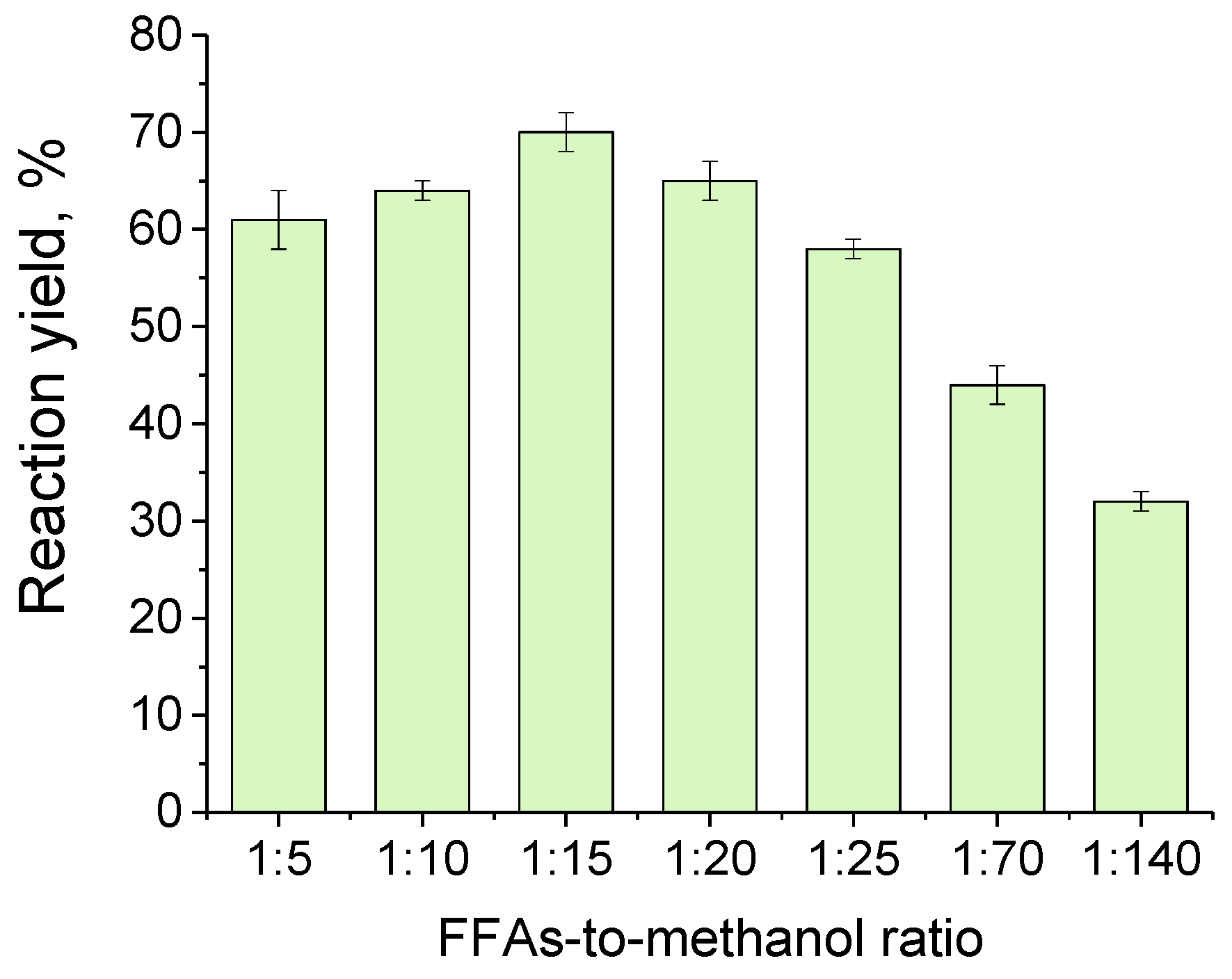
Esterification reactions were performed under ultrasonic treatment for 1 h, during which the bath temperature increased naturally from 20 °C to 60 °C. The following FFAs-to-methanol molar ratios were examined: 1:5, 1:10, 1:15, 1:20, 1:25, 1:70, and 1:140. The conversion of the oleic and linoleic acid mixture increased progressively as the methanol content increased from 1:5 to 1:15, reaching a maximum ester yield of 70% at a 1:15 ratio (Figure 5). Further increase in methanol concentration led to a decline in conversion, with the lowest yield obtained at a 1:140 ratio. The decrease in yield at high methanol ratios is likely associated with a reduction in cavitation intensity and a dilution of the reactive phase, which slows down the interaction between the catalyst surface and the free fatty acid molecules. Based on this, the 1:15 FFAs-to-methanol ratio was considered the most suitable for subsequent experiments.
This observation is consistent with several literature reports where optimal conversions were reached at FFAs-to-methanol molar ratios between 1:10 and 1:15. For example, maximum ester yields within this range for heterogeneous and ultrasonically assisted systems were reported in [38,39,40].

2.3.2. Temperature-Controlled Esterification

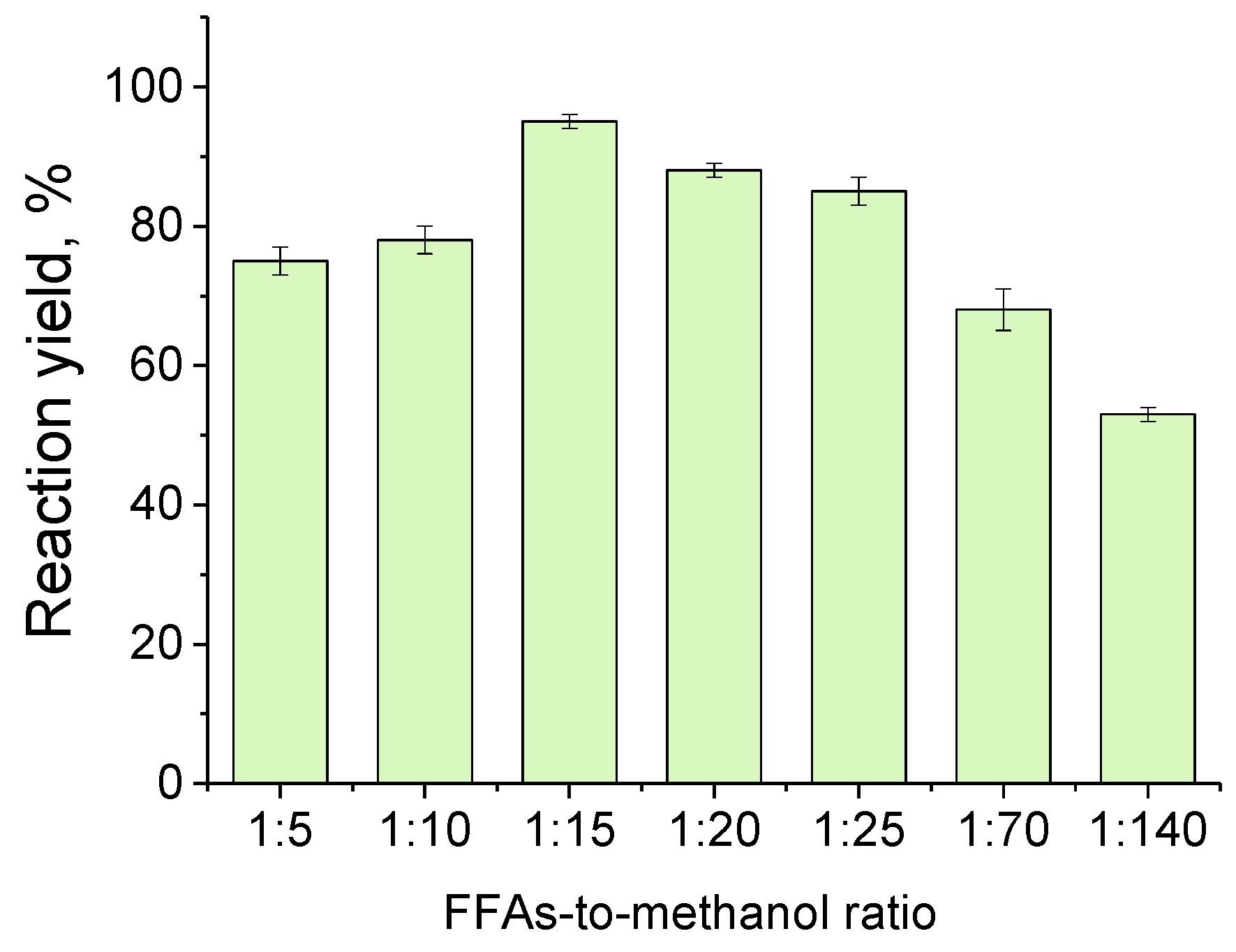
To further validate the effect of the FFAs-to-methanol ratio, the same series of experiments was repeated under ultrasonic activation at a constant bath temperature of 75 °C for 1 h. Under these conditions, the ester yield increased from 75% to 95% for FFAs-to-methanol molar ratios from 1:5 to 1:15, and then decreased to 53% when the ratio reached 1:140 (Figure 6). Once again, the 1:15 ratio produced the highest yield (95%), confirming that a moderate methanol excess is more favorable than either extremely low or excessively high alcohol concentrations. Based on both temperature regimes, the FFAs-to-methanol ratio of 1:15 was determined to be the most effective (Figure 5 and Figure 6).

2.4. The Effect of the Reaction Time

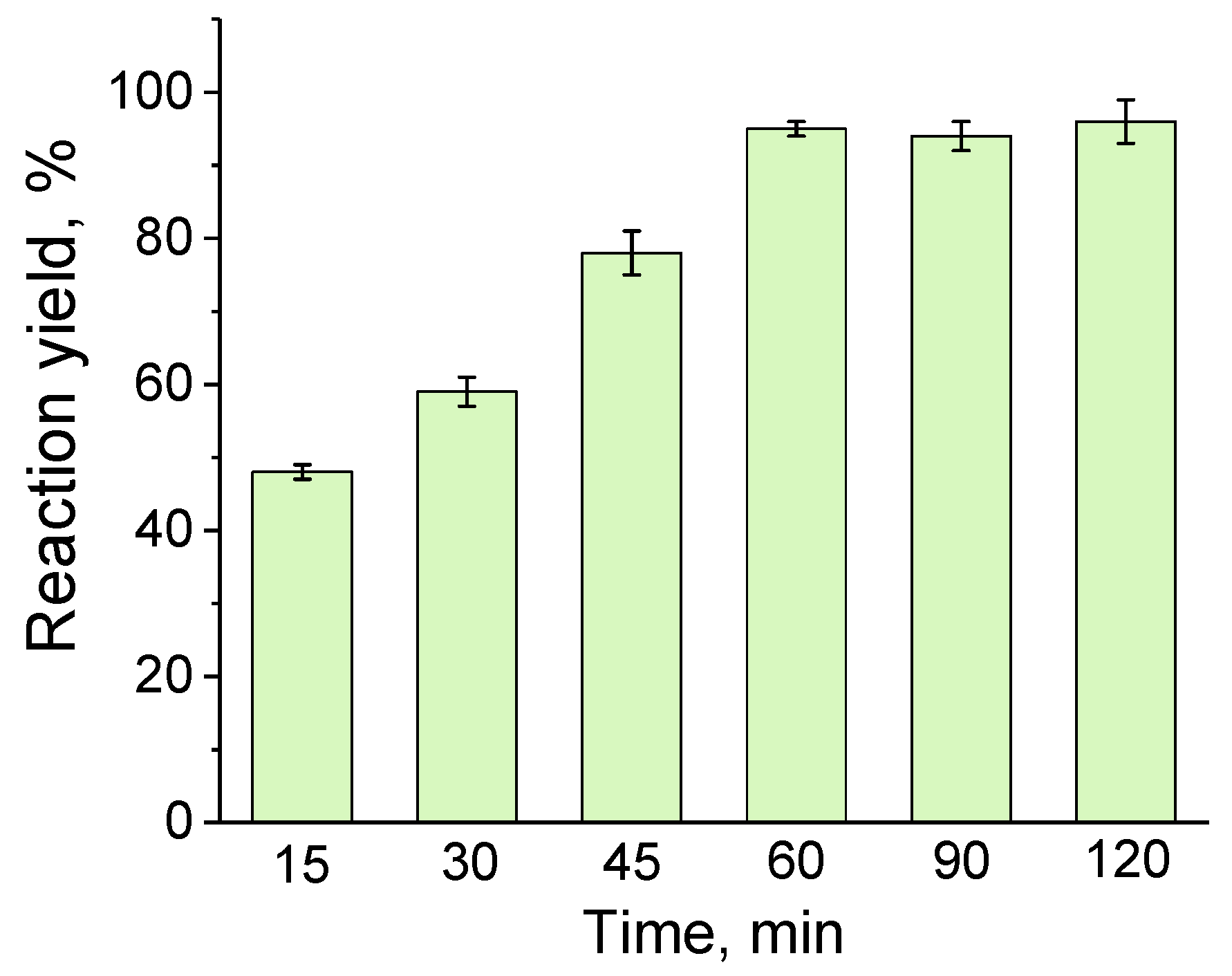
To examine the impact of time, esterification reaction was carried out for periods ranging from 15 to 120 min using the following parameters: FFAs-to-methanol molar ratio (1:15), catalyst amount (16 wt%), and temperature (75 °C). As shown in Figure 7, the FFAs conversion increased considerably from 48% to 95% when the reaction time was extended from 15 to 60 min, indicating that the system approaches equilibrium at this stage. Extending the reaction time to 120 min provides only a marginal increase in yield, suggesting that 60 min is sufficient to achieve near-complete esterification under these ultrasonic conditions.

2.5. Esterification Under Ultrasonic and Thermal Activation

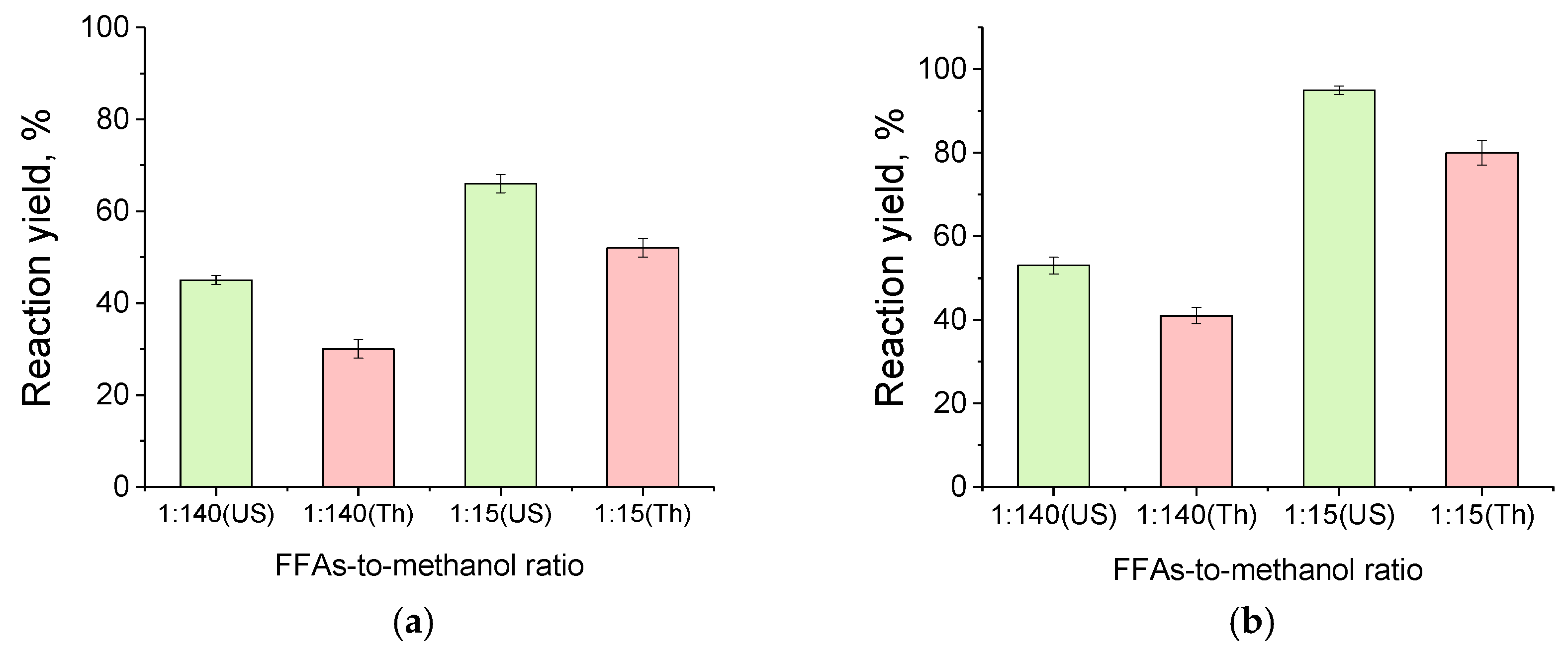
To verify whether ultrasonic activation provides a real advantage over conventional heating under otherwise identical conditions, a comparative study was conducted at two temperatures and two FFAs-to-methanol ratios.
The results are presented in Figure 8. At both temperatures tested (60 °C and 75 °C) and for both FFAs-to-methanol ratios (1:15 and 1:140), ultrasonic activation consistently produced higher ester yields than conventional thermal treatment. At 60 °C, ultrasound resulted in 66% and 45% conversion at 1:15 and 1:140, respectively, compared with 52% and 30% under thermal activation. At 75 °C, this difference became even more pronounced (95% and 5% for ultrasound versus 80% and 41% for thermal activation). These results suggest that cavitation likely enhances mass transfer and promotes catalytic surface interactions more efficiently than heating activation [41,42].
A comparison with selected literature reports on ultrasonication-assisted esterification and transesterification (Table 2) shows that the ester yield obtained in this work (95%) is within the upper range of values reported for other heterogeneous catalysts (80–96%). Although reaction conditions vary across studies, the data demonstrate that WS2 provides a catalytic efficiency comparable to that of conventional heterogeneous catalysts, further supporting its potential as an effective sonochemical catalyst.
While this study focuses on WS2-catalyzed FFA esterification, industrial biodiesel production can utilize feedstocks rich in triglycerides. Future research should evaluate WS2’s performance in mixed FFA/triglyceride systems relevant to industrial applications.

3. Materials and Methods

3.1. Materials

Methanol, hexane, and acetonitrile were purchased from Bio Lab, Jerusalem, Israel. Oleic acid was purchased from Sigma, Ronkonkoma, NY, USA; linoleic acid was purchased from Acros Organics, Morris Plains, NJ, USA; methyl oleate and methyl linoleate were purchased from Alfa Aesar, Heysham, UK. The samples of WS2 powder with a particle size of 2 μm were purchased from ThermoScientific, Waltham, MA, USA (sample A) and Sigma-Aldrich, St. Louis, MO, USA (sample B). The samples of WS2 nanopowder with a particle size of 90 nm were purchased from Sigma-Aldrich (sample C) and MKNano (Mississauga, ON, Canada) (sample D). All chemical reagents were used directly without further purification.

3.2. Methods

3.2.1. Catalyst Characterization

The X-ray diffraction (XRD) patterns were recorded using an X-ray diffractometer (X’Pert Pro; PANalytical B.V., Eindhoven, The Netherlands) with Cu Kα radiation (λ = 0.154 nm) with full pattern identification by the X’Pert HighScore-Plus software package (PANalytical B.V.; version 2.2e/2.2.5).
The morphology of the WS2 powders was visualized by TESCAN MAIA3 Scanning electron microscope, Brno, Czech Republic (SEM) and Thermo Fisher Scientific™ Talos™ F200X transmission electron microscope, Waltham, MA, USA (TEM).

3.2.2. Ultrasound-Assisted Esterification

The catalytic activity of WS2 was evaluated by the reaction esterification of the mixture of oleic and linoleic acids (FFAs mixture) (85%:15%) with methanol under ultrasonic activation using a sonication water bath (Elmasonic P 30H, Elma, Singen, Germany, frequency of 80 kHz, power 320 W). FFAs mixture (100 mg) and 0–32 wt% of WS2 based on FFAs mixture were placed in a 15 mL pressure vessel glass tube with FFAs-to-methanol molar ratios from 1:5 to 1:140. The reaction mass was sonicated either without heating or at a constant temperature of 75 °C for 15–120 min. After the established reaction time, the catalyst was separated from the reaction mixture using centrifugation. The reaction mixture was then transferred to another centrifuge tube, where 1 mL of water and 1 mL of hexane were added. The mixture was centrifuged for 10 min at 10,000 rpm in a centrifuge (Beckman Coulter, Brea, CA, USA) using a JA-25.50 rotor (Beckman Coulter). The composition of the hexane phase was analyzed using HPLC. Reactions were performed in triplicate, with average values reported.

3.2.3. Product Analysis

FFAs and fatty acid methyl esters were analyzed by HPLC (UltiMate, Dionex, Hamburg, Germany) equipped with a Corona Ultra RS detector (Thermo Scientific, Bremen, Germany) on a Sepax Poly RP-100 (5 µm) 4.6 × 250 mm column (Sepax Technologies, Inc., Newark, DE, USA) using acetonitrile as a mobile phase. The column temperature was 30 °C, the flow rate was 1.2 mL/min, and the injection volume was 2 µL. Calibration was performed using oleic acid, linoleic acid, methyl oleate, and methyl linoleate standards.

4. Conclusions

This study demonstrates the feasibility and catalytic efficacy of tungsten disulfide (WS2) as a heterogeneous catalyst for the ultrasound-assisted esterification of free fatty acids with methanol. Among the four WS2 samples tested, the micron-sized WS2 (2 µm) exhibited higher catalytic activity than the nanoscale forms (90 nm), which is attributed to its higher crystallinity and a greater number of exposed reactive edge sites. Ultrasonic cavitation significantly enhanced mass transfer, enabling ester yields of up to 70% without external heating and 95% under temperature-controlled conditions (75 °C, 1 h, 1:15 FFAs-to-methanol ratio). While the present results demonstrate that WS2 exhibits strong catalytic activity under ultrasonic activation, the practical scalability of the system requires further evaluation. The relatively high catalyst loading (16 wt%) and the need for a substantial excess of methanol highlight important challenges for industrial implementation. Future work should therefore focus on improving catalyst recovery and reusability, as well as reducing methanol consumption through process optimization.

Author Contributions

Conceptualization, M.N. and F.N.; methodology, F.N. and L.Y.; validation, O.S. and L.Y.; investigation, O.S. and Z.A.D.; resources, M.N. and F.N.; data curation, O.S. and Z.A.D.; writing—original draft preparation, O.S.; writing—review and editing, M.N. and F.N.; visualization, O.S. and Z.A.D.; supervision, M.N. and F.N.; project administration, M.N.; funding acquisition, F.N. All authors have read and agreed to the published version of the manuscript.

Funding

This research was funded by the Ministry of Energy, Israel (Grant No. 222-11-066), and by the Israeli Science Foundation Planning and Budgeting Committee, Waste to Energy Research Hub (Grant No. 0605408961).

Data Availability Statement

The original contributions presented in this study are included in the article. Further inquiries can be directed to the corresponding author(s).

Acknowledgments

We acknowledge the Research Authority of Ariel University, Ariel, Israel, for supporting this research. We are very grateful to Alexey Kossenko for assisting with XRD measurements. We are grateful to Melad Atrash and Tania Afriat for experimental assistance.

Conflicts of Interest

The authors declare that they have no conflicts of interest.

Abbreviations

The following abbreviations are used in this manuscript:
FFAFree Fatty Acids
NPNanoparticles
SEMScanning Electron Microscope
TEMTransmission Electron Microscope
WS2Tungsten Disulfide
XRDX-Ray Diffraction

References

  1. Anil, N.; Rao, P.K.; Sarkar, A.; Kubavat, J.; Vadivel, S.; Manwar, N.R.; Paul, B. Advancements in sustainable biodiesel production: A comprehensive review of bio-waste derived catalysts. Energy Convers. Manag. 2024, 318, 118884. [Google Scholar] [CrossRef]
  2. Ramasamy, D.; Hasan, M.A.; AbdulRTh, A.Z. Biodiesel and Its Potential to Mitigate Transport-Related CO2 Emissions. Clean Technol. Environ. Policy 2023, 25, 2281–2293. [Google Scholar] [CrossRef]
  3. Jeswani, H.K.; Chilvers, A.; Azapagic, A. Environmental Sustainability of Biofuels: A Review. Proc. R. Soc. A 2020, 476, 20200351. [Google Scholar] [CrossRef]
  4. Andreo-Martínez, P.; Ortiz-Martínez, V.M.; Salar-García, M.J.; Quesada-Medina, J.; Hernández-Fernández, F.J. Waste Animal Fats as Feedstock for Biodiesel Production Using Non-Catalytic Supercritical Alcohol Transesterification: A Perspective by the PRISMA Methodology. Energy Sustain. Dev. 2022, 69, 150–163. [Google Scholar] [CrossRef]
  5. Rocha-Meneses, L.; Hari, A.; Inayat, A.; Yousef, L.A.; Alarab, S.; Abdallah, M.; Shanableh, A.; Ghenai, C.; Shanmugam, S.; Kikas, T. Recent Advances on Biodiesel Production from Waste Cooking Oil (WCO): A Review of Reactors, Catalysts, and Optimization Techniques Impacting the Production. Fuel 2023, 348, 128514. [Google Scholar] [CrossRef]
  6. Farouk, S.M.; Tayeb, A.M.; Abdel-Hamid, S.M.S.; Osman, R.M. Recent Advances in Transesterification for Sustainable Biodiesel Production, Challenges, and Prospects: A Comprehensive Review. Environ. Sci. Pollut. Res. 2024, 31, 12722–12747. [Google Scholar] [CrossRef] [PubMed]
  7. Camilo, G.L.; Queiroz, A.; Ribeiro, A.E.; Gomes, A.; Brito, P. Review of biodiesel production using various feedstocks and its purification through several methodologies, with a specific emphasis on dry washing. J. Ind. Eng. Chem. 2024, 136, 1–15. [Google Scholar] [CrossRef]
  8. Yue, M.; Rokhum, S.L.; Ma, X.; Wang, T.; Li, H.; Zhao, Z.; Wang, Y.; Li, H. Recent advances of biodiesel production enhanced by external field via heterogeneous catalytic transesterification system. Chem. Eng. Process.–Process Intensif. 2024, 205, 109997. [Google Scholar] [CrossRef]
  9. Hsiao, M.C.; Liao, P.-H.; Lan, N.V.; Hou, S.S. Enhancement of Biodiesel Production from High-Acid-Value Waste Cooking Oil via a Microwave Reactor Using a Homogeneous Alkaline Catalyst. Energies 2021, 14, 437. [Google Scholar] [CrossRef]
  10. Mekonnen, K.D.; Degefa, T.H.; Rachapudi, V.S.P.; Kumar, N. NaOH-Catalyzed Methanolysis Optimization of Biodiesel Production from Waste Cooking Oil. ACS Omega 2021, 6, 25256–25266. [Google Scholar] [CrossRef]
  11. Hassan, A.A.; Smith, J.D. Investigation of Microwave-Assisted Transesterification Reactor of Waste Cooking Oil. Renew. Energy 2020, 162, 1735–1746. [Google Scholar] [CrossRef]
  12. Mukhtar, A.; Saqib, S.; Lin, H. Current Status and Challenges in the Heterogeneous Catalysis for Biodiesel Production. Renew. Sustain. Energy Rev. 2022, 157, 112012. [Google Scholar] [CrossRef]
  13. Ghosh, N.; Patra, M.; Halder, G. Current Advances and Future Outlook of Heterogeneous Catalytic Transesterification towards Biodiesel Production from Waste Cooking Oil. Sustain. Energy Fuels 2024, 8, 1105–1152. [Google Scholar] [CrossRef]
  14. Yusuf, B.O.; Oladepo, S.A.; Ganiyu, S.A. Efficient and Sustainable Biodiesel Production via Transesterification: Catalysts and Operating Conditions. Catalysts 2024, 14, 581. [Google Scholar] [CrossRef]
  15. Ibrahim, A.S.I.; Gözmen, B.; Sönmez, Ö. Esterification of oleic acid using CoFe2O4@MoS2 solid acid catalyst under microwave irradiation. Fuel 2024, 371, 131988. [Google Scholar] [CrossRef]
  16. Zhang, T.; Li, B.; Li, H.; Liu, Y.; Li, J.; Zhao, B.; Zhang, X.; Wang, J. The efficient and green synthesis of biodiesel from crude oil without degumming catalyzed by sodium carbonate supported MoS2. RSC Adv. 2022, 12, 24456–24464. [Google Scholar] [CrossRef]
  17. Santos, V.C.; Durndell, L.J.; Isaacs, M.A.; Parlett, C.M.A.; Wilson, K.; Lee, A.F. A new application for transition metal chalcogenides: WS2 catalysed esterification of carboxylic acids. Catal. Commun. 2017, 9, 16–20. [Google Scholar] [CrossRef]
  18. Sivanesh, S.; Aswin, K.N.; Antony, A.; Varma, M.S.; Kamalesh, K.; Naageshwaran, M.; Soundarya, S.; Subramanian, S. Biodiesel Production from Custard Apple Seeds and Euglena sanguinea Using CaO Nano-Catalyst. Bioresour. Technol. 2022, 344, 126418. [Google Scholar] [CrossRef]
  19. Zhang, J.; Liu, J.; Huang, X.; Choi, S.; Zhu, R.; Tang, S.; Bond, J.Q.; Tavlarides, L.L. Heterogeneous Catalytic Esterification of Oleic Acid under Sub/Supercritical Methanol over γ-Al2O3. Fuel 2020, 268, 117359. [Google Scholar] [CrossRef]
  20. Chipurici, P.; Vlaicu, A.; Călinescu, I.; Vinatoru, M.; Vasilescu, M.; Ignat, N.D.; Mason, T.J. Ultrasonic, Hydrodynamic and Microwave Biodiesel Synthesis: A Comparative Study for Continuous Process. Ultrason. Sonochem. 2019, 57, 38–47. [Google Scholar] [CrossRef]
  21. Ruatpuia, J.V.L.; Halder, G.; Mohan, S.; Gurunathan, B.; Li, H.; Chai, F.; Basumatary, S.; Rokhum, S.L. Microwave-Assisted Biodiesel Production Using ZIF-8 MOF-Derived Nanocatalyst: Process Optimization, Kinetics, Thermodynamics, and Life-Cycle Cost Analysis. Energy Convers. Manag. 2023, 292, 117418. [Google Scholar] [CrossRef]
  22. Nomanbhay, S.; Ong, M.Y. A Review of Microwave-Assisted Reactions for Biodiesel Production. Bioengineering 2017, 4, 57. [Google Scholar] [CrossRef] [PubMed]
  23. Korkut, I.; Bayramoğlu, M. Selection of Catalyst and Reaction Conditions for Ultrasound-Assisted Biodiesel Production from Canola Oil. Renew. Energy 2018, 116, 543–551. [Google Scholar] [CrossRef]
  24. Malani, R.S.; Shinde, V.; Ayachit, S.; Goyal, A.; Moholkar, V.S. Ultrasound-Assisted Biodiesel Production Using Heterogeneous Base Catalyst and Mixed Non-Edible Oils. Ultrason. Sonochem. 2019, 52, 232–243. [Google Scholar] [CrossRef]
  25. Sharma, A.; Kodgire, P.; Kachhwaha, S.S. Investigation of Ultrasound-Assisted KOH and CaO Catalyzed Transesterification for Biodiesel Production from Waste Cotton-Seed Cooking Oil: Process Optimization and Conversion Rate Evaluation. J. Clean. Prod. 2020, 259, 120982. [Google Scholar] [CrossRef]
  26. Veljković, V.B.; Avramović, J.; Stamenković, O.S. Biodiesel production by ultrasound-assisted transesterification: State of the art and the perspectives. Renew. Sustain. Energy Rev. 2012, 16, 1193–1209. [Google Scholar] [CrossRef]
  27. Kolet, M.; Zerbib, D.; Nakonechny, F.; Nisnevitch, M. Production of Biodiesel from Brown Grease. Catalysts 2020, 10, 1189. [Google Scholar] [CrossRef]
  28. Kolet, M.; Atrash, M.; Molina, K.; Zerbib, D.; Albo, Y.; Nakonechny, F.; Nisnevitch, M. Sol-Gel Entrapped Lewis Acids as Catalysts for Biodiesel Production. Molecules 2020, 25, 5936. [Google Scholar] [CrossRef]
  29. Atrash, M.; Molina, K.; Sharoni, E.-O.; Azwat, G.; Nisnevitch, M.; Albo, Y.; Nakonechny, F. Toward Efficient Continuous Production of Biodiesel from Brown Grease. Sustainability 2023, 15, 8507. [Google Scholar] [CrossRef]
  30. Hua, J.; Ji, M.; Jiao, P.; Yin, Z.; Xia, Q.; Jiang, L.; Zhang, J.; Pan, H. Heterogeneous Acid Catalysts for Biodiesel Production: Effect of Physicochemical Properties on Their Activity and Reusability. Catalysts 2025, 15, 396. [Google Scholar] [CrossRef]
  31. Bernard, P.; Stelmachowski, P.; Broś, P.; Makowski, W.; Kotarba, A. Demonstration of the Influence of Specific Surface Area on Reaction Rate in Heterogeneous Catalysis. J. Chem. Educ. 2021, 98, 935–940. [Google Scholar] [CrossRef] [PubMed]
  32. Caballero, K.V.; Guerrero-Amaya, H.; Baldovino-Medrano, V.G. Revisiting Glycerol Esterification with Acetic Acid over Amberlyst-35 via Statistically Designed Experiments: Overcoming Transport Limitations. Chem. Eng. Sci. 2019, 207, 91–104. [Google Scholar] [CrossRef]
  33. Tenne, R.; Margulis, L.; Genut, M.; Hodes, G. Polyhedral and Cylindrical Structures of Tungsten Disulphide. Nature 1992, 360, 444–446. [Google Scholar] [CrossRef]
  34. Tenne, R. Inorganic Nanotubes and Fullerene-Like Nanoparticles. Nat. Nanotechnol. 2006, 1, 103–111. [Google Scholar] [CrossRef] [PubMed]
  35. Chen, S.; Levi, R.; Cohen, S.R.; Tenne, R. Gold Nanoparticles as Surface Defect Probes for WS2 Nanostructures. J. Phys. Chem. Lett. 2010, 1, 540–543. [Google Scholar] [CrossRef]
  36. Chhowalla, M.; Amaratunga, G.A.J. Thin Films of Fullerene-like MoS2 Nanoparticles with Ultra-Low Friction and Wear. Nature 2000, 407, 164–167. [Google Scholar] [CrossRef]
  37. Voiry, D.; Yang, J.; Chhowalla, M. Recent Strategies for Improving the Catalytic Activity of 2D TMD Nanosheets toward the Hydrogen Evolution Reaction. Adv. Mater. 2016, 28, 6197–6206. [Google Scholar] [CrossRef]
  38. Erchamo, Y.S.; Mamo, T.T.; Workneh, G.A.; Mekonnen, Y.S. Improved biodiesel production from waste cooking oil with mixed methanol-ethanol using enhanced eggshell-derived CaO nano-catalyst. Sci. Rep. 2021, 11, 6708. [Google Scholar] [CrossRef]
  39. Attari, A.; Abbaszadeh-Mayvan, A.; Taghizadeh-Alisaraie, A. Process optimization of ultrasonic-assisted biodiesel production from waste cooking oil using waste chicken eggshell-derived CaO as a green heterogeneous catalyst. Biomass Bioenergy 2022, 158, 106357. [Google Scholar] [CrossRef]
  40. Abdullah, S.H.Y.S.; Hanapi, N.H.M.; Azid, A.; Umar, R.; Juahir, H.; Khatoon, H.; Endut, A. A review of biomass-derived heterogeneous catalyst for a sustainable biodiesel production. Renew. Sust. Energ. Rev. 2017, 70, 1040–1051. [Google Scholar] [CrossRef]
  41. Elgharbawy, A.S.; Osman, A.I.; El Demerdash, A.G.M.; Sadik, W.A.; Kasaby, M.A.; Ali, S.E. Enhancing Biodiesel Production Efficiency with Industrial Waste-Derived Catalysts: Techno-Economic Analysis of Microwave and Ultrasonic Transesterification Methods. Energy Convers. Manag. 2024, 321, 118945. [Google Scholar] [CrossRef]
  42. Teixeira, L.S.G.; Assis, J.C.R.; Mendonça, D.R.; Santos, I.T.V.; Guimarães, P.R.B.; Pontes, L.A.M.; Teixeira, J.S. Comparison between Conventional and Ultrasonic Preparation of Beef Tallow Biodiesel. Fuel Process. Technol. 2009, 90, 1164–1166. [Google Scholar] [CrossRef]
  43. Thawornprasert, J.; Somnuk, K. Two-Step Esterification Process of Palm Fatty Acid Distillate Using Soaking Coupled with Ultrasound: Process Optimization and Reusable Solid Acid Catalysts. ACS Omega 2024, 9, 50427–50438. [Google Scholar] [CrossRef]
  44. Vaz, L.M.O.; Martins, M.I.; Filho, U.C.; Cardoso, V.L.; Reis, M.H.M. Ultrasound-assisted transesterification reactions for biodiesel production with sodium zirconate supported in polyvinyl alcohol as catalyst. Environ. Prog. 2017, 36, 1262–1267. [Google Scholar] [CrossRef]
  45. Malani, R.S.; Singh, S.; Goyal, A.; Moholkar, V.S. Ultrasound-Assisted Biodiesel Production Using KI-Impregnated Zinc Oxide (ZnO) as Heterogeneous Catalyst: A Mechanistic Approach. In Conference Proceedings of the Second International Conference on Recent Advances in Bioenergy Research; Springer: Singapore, 2016; pp. 67–81. [Google Scholar] [CrossRef]
  46. Yadav, A.K.; Khan, M.E.; Pal, A.; Singh, B. Ultrasonic-assisted optimization of biodiesel production from Karabi oil using heterogeneous catalyst. Biofuels 2016, 9, 101–112. [Google Scholar] [CrossRef]

Scheme 1. Scheme of esterification reaction, where R-COOH—the free fatty acid, R’-OH—the alcohol, R-COO-R’—the fatty acid alkyl ester.
Catalysts 15 01161 sch001
Figure 1. XRD spectra of the investigated samples of WS2.
Catalysts 15 01161 g001
Figure 2. SEM of sample A (a) and sample C (b); TEM of sample A (c) and sample C (d).
Catalysts 15 01161 g002
Figure 3. Effect of WS2 amount on the esterification of FFAs mixture with methanol under ultrasonic activation. Reaction conditions: 100 mg FFAs mixture, 2 mL methanol, and a reaction time of 1 h. The temperature increased during ultrasonication from 20 to 60 °C without external heating.
Catalysts 15 01161 g003
Figure 4. HPLC chromatograms of (a) oleic acid (OA)-linoleic acid (LA) mixture (85%/15%); (b) methyl oleate (MO); (c) methyl linoleate (ML); (d) reaction mass mixture under reaction conditions: 100 mg FFAs mixture, 16 wt% WS2 based on FFAs mixture, 2 mL methanol, and a reaction time of 1 h. The temperature increased during ultrasonication from 20 to 60 °C without external heating.
Catalysts 15 01161 g004
Figure 5. The effect of the FFAs-to-methanol molar ratio on the yield of the esterification reaction under ultrasonic activation without external heating. The reaction conditions: 100 mg FFAs mixture, 16 wt% WS2 based on FFAs mixture, reaction time—1 h.
Catalysts 15 01161 g005
Figure 6. Effect of FFAs-to-methanol molar ratio on the yield of esterification reaction under ultrasonic activation at 75 °C (conditions: 100 mg FFAs mixture, 16 wt% WS2 based on FFAs mixture, reaction time—1 h).
Catalysts 15 01161 g006
Figure 7. Effect of reaction time on the yield of the esterification reaction of the FFAs mixture, under ultrasonic activation at 75 °C. Reaction conditions: 100 mg of FFAs mixture, 16 wt% of WS2 based on FFAs mixture, FFAs-to-methanol molar ratio (1:15).
Catalysts 15 01161 g007
Figure 8. Effect of FFAs-to-methanol molar ratio on the yield of esterification reaction at 60 °C (a) and 75 °C (b) with ultrasonic (US) and thermal (Th) treatment. Reaction conditions: 100 mg of FFAs mixture, 16 wt% of WS2 based on FFAs mixture, reaction time 1 h.
Catalysts 15 01161 g008
Table 1. Effect of particle sizes and sources on the yield of the esterification reaction.
WS2 LotParticles SizeReaction Yield, %
Sample A2 µm20.0 ± 1.4
Sample B2 µm18.2 ± 1.5
Sample C90 nm14.3 ± 1.7
Sample D90 nm7.1 ± 0.9
Table 2. Comparison of Ultrasonication-Assisted Esterification/Transesterification Using Heterogeneous Catalysts.
CatalystCatalyst LoadingFeedstockAcid-to-Methanol RatioTemperature (°C)TimeUltrasonication ConditionsYield (%)Reference
WS216 wt%Oleic + linoleic acids (85:15)1:15751 hUS bath,
80 kHz,
320 W
95This study
Amberlyst-1560 wt%Palm FFA distillate36 wt% FFA60130 min soak + 8.5 min USUS horn, 18 kHz, 1000 W89[43]
Na2ZrO3/PVA film3 wt%Soybean oil1:6558 hUS bath, 25 kHz, 360 W80[44]
KI–ZnO6 wt%Soybean oil1:108240 minUS bath, 35 kHz, 35 W95[45]
CaO5 wt%Karabi seed oil1:12602 hUS horn, 20–30 kHz, 50 W94[46]
Disclaimer/Publisher’s Note: The statements, opinions and data contained in all publications are solely those of the individual author(s) and contributor(s) and not of MDPI and/or the editor(s). MDPI and/or the editor(s) disclaim responsibility for any injury to people or property resulting from any ideas, methods, instructions or products referred to in the content.