Article

Controlled Sequential Oxygenation of Polyunsaturated Fatty Acids with a Recombinant Unspecific Peroxygenase from Aspergillus niger


by
Carlos Renato Carrillo Avilés
1,*,
Marina Schramm
1,
Sebastian Petzold
1,
Miguel Alcalde
2,
Martin Hofrichter
3,* and
Katrin Scheibner
1
1
Institute of Biotechnology, Brandenburg University of Technology Cottbus-Senftenberg, Universitätsplatz 1, 01968 Senftenberg, Germany
2
Department of Biocatalysis, Institute of Catalysis, Consejo Superior de Investigaciones Científicas (CSIC), Cantoblanco, 28049 Madrid, Spain
3
Unit of Bio- and Environmental Sciences, TU Dresden, International Institute Zittau, 02763 Zittau, Germany
*
Authors to whom correspondence should be addressed.
Catalysts 2025, 15(12), 1162; https://doi.org/10.3390/catal15121162
Submission received: 5 November 2025 / Revised: 8 December 2025 / Accepted: 9 December 2025 / Published: 11 December 2025
(This article belongs to the Special Issue 15th Anniversary of Catalysts: The Future of Enzyme Biocatalysis)

Abstract

The metabolism of polyunsaturated fatty acids (PUFAs) is a broad research field, and the products identified so far offer potential medical and industrial applications. Epoxy fatty acids (EpFAs) act as lipid mediators that modulate renal function, angiogenesis, vascular dilatation and inflammation; moreover, they regulate monocyte aggregation and are involved in cardiovascular and metabolic diseases. On the other hand, EpFAs are precursors of environmentally friendly products for the plastics industry, in which the grade of epoxidation of the compounds gives the polymeric material different advantageous characteristics. The controlled chemical synthesis of poly epoxidized PUFAs is challenging as the reactions are non-selective. In contrast, the biosynthetic route based on cytochrome P450 monooxygenases and lipoxygenases is highly selective but ineffective due to the instability of the enzymes in cell-free systems. Fungal unspecific peroxygenases (UPOs, EC 1.11.2.1) with P450-like activity offer a suitable alternative for the selective synthesis of EpFAs from PUFAs. Here we demonstrate that a recombinant unspecific peroxygenase from Aspergillus niger (rAniUPO) is able to sequentially epoxidize eicosapentaenoic acid (EPA) and docosahexaenoic acid (DHA) to 14,15-17,18 diepoxyeicosatrienoic acid (14,15-17,18 diEpETrE) and 16,17-19,20-diepoxydocosatetraenoic acid (16,17-19,20 diEpDTE), respectively, while arachidonic acid is transformed into 13-hydroxy-14,15-epoxyeicosatrienoic acid (14,15-hepoxilin B3). Optimal production for these oxygenated derivatives (up to 15 mg) was achieved using 2 mM hydrogen peroxide as the co-substrate. The obtained molecules were identified using high-resolution mass spectrometry and their structure was verified by NMR. Our results demonstrate the suitability of UPOs for the synthesis of EpFAs that can be used in medical research and industrial applications.

1. Introduction

Polyunsaturated fatty acids (PUFAs) are versatile substances, the potential of which could be exploited in the industrial and medical field. They play an important role in human health due to their presence in different metabolic routes and their effect on inflammation processes and cardiac diseases [1,2]. For example, during the metabolism of arachidonic acid (AA), a widespread long-chain ω-6 PUFA in the human body, prostaglandins and leukotrienes are formed, which are precursors of pro-inflammatory reactions [3,4]. In view of this medical relevance, various strategies have been developed to avoid an increased formation of these metabolites. It was shown that the intake of long-chain ω-3 fatty acids reduces the inflammatory response, which is due to their competition in AA metabolism [5]. Such PUFAs as eicosapentaenoic acid (EPA) and docosahexaenoic acid (DHA) inhibit the formation of inflammatory agonists and, at the same time, enable the formation of molecules (lipoxins, protectins, resolvins, maresins) that have activating or inhibitory effects on cell receptors, leading to pro-resolving responses. The complex metabolic pathways involve a series of enzymes (lipoxygenases, cytochrome P450 monooxygenases/CYPs, cyclooxygenases, etc.) responsible for converting PUFAs into active lipid mediators, which trigger all the beneficial effects associated with these molecules [6,7].
Research into PUFAs and their metabolism is still in its infancy, as the role of their epoxylipid metabolites (acting as mediators) in particular is not yet fully understood due to rapid hydrolysis by soluble epoxy hydrolases (sEHs) in cell models [8]. Inhibition of these hydrolases made it possible to demonstrate anti-inflammatory, cardio- and neuroprotective effects for several EpFAs, notably 14,15-EETrE, 17,18-EpETE and 19,20-EpDPE [9,10,11,12,13,14]. In addition to their potential medical uses, PUFAs and their derivatives are valuable raw materials for industrial products, wherein it is important to obtain them from sustainable and reliable sources.
In the industrial context, vegetable oils rich in mono- and polyunsaturated fatty acids and their derivates (e.g., linseed oil) have already been in use for centuries, for example, in form of varnish or linoleum [15,16]. This requires, first of all, the spontaneous (O2) or forced (catalysts) generation of oxygen-containing derivatives, mainly epoxides (EpFAs), followed by the activation of the generated groups and subsequent polymerization to obtain the desired product [17]. Nowadays this technique is elaborated and applied for the production of lubricants [18], resins [19], polyurethanes [20,21] and plasticizers [22,23].
The traditional chemical epoxidation requires harsh conditions as well as the usage of heavy metal catalysts and long chain-alkyl compounds as precursors [24,25]. Further chemical treatments and transformations can also include treatments with formic acid in reaction with hydrogen peroxide or NaOH [26,27]. In one study, it was shown that monoepoxidation of EPA can be achieved using m-chloroperbenzoic acid as the oxidant (overall yield 34%), but even in a controlled reaction system, the formation of several isomeric products (EpETEs) was unavoidable and their individual quantification not possible [28]. In view of this, the polymer and pharmaceutical industries are looking for selective, efficient and environmentally friendly ways to produce EpFAs [29]. As an alternative to traditional chemical synthesis, enzymatic oxyfunctionalization can provide the desired regio- and stereoselectivity at appreciable yields. The general possibility of enzymatic conversion of PUFAs into EpFAs was demonstrated in vitro for some CYP variants [22,23] and plant peroxygenases [30,31,32], and led to the formation of individual ω-epoxides of PUFAs. Enzymatic synthesis with CYPs is a useful approach, but the availability of respective enzyme preparations for cell-free conversions (in vitro) is limited to very small quantities (pmol), and PUFA substrates can only be converted in the pg/µL (µg/L) range, even in whole-cell cultures (in vivo), which makes it difficult to scale-up the reactions [33,34].
Unspecific peroxygenases (UPOs, EC 1.11.2.1) from fungi are also among the promising biocatalytic tools for the oxyfunctionalization of complex molecules. Since their discovery in 2004 by Ulrich et al. [35], UPOs have been applied as versatile catalysts in a variety of oxygen-transfer reactions, including the functionalization of pharmaceutical compounds. UPOs, like CYPs (P450s), are heme thiolate proteins, have a similar catalytic architecture, and mediate similar oxygenation reactions, including epoxidations [36,37,38,39,40,41,42]. In this context, they have several advantages over other enzymatic systems, since, as extracellularly acting enzymes, they exhibit high stability in aqueous solutions and organic solvents, and their activation depends only on the presence of a peroxide (e.g., H2O2). Furthermore, UPOs can be produced as recombinant proteins, for example, in yeasts (Saccharomyces, Pichia), or by cell-free protein synthesis using isolated ribosomes [43,44,45,46,47]. Considering all these aspects, UPOs appear to be the most promising enzyme candidates for the oxyfunctionalization of various PUFAs in a simpler and more efficient way compared to the existing synthetic routes mentioned above [48,49,50,51].
In this study, we identified the main EpFAs synthesized with a recombinant UPO from Aspergillius niger (rAniUPO) using AA, EPA and DHA as substrates. A suitably optimized and upscaled reaction system enabled the preparation of mono- and di-oxygenated PUFA derivatives in the mg-scale, the structure of which was elucidated by means of high-resolution mass spectrometry (HRMS), 1H NMR and 13C NMR.

2. Results

2.1. Enzyme Testing

In the first step, the single epoxidation of PUFAs by various UPOs was tested. In this context, the oxyfunctionalization patterns of the short UPOs, CglUPO, MroUPO, TanUPO and rAniUPO, were analyzed in comparison to those of their long counterparts, FettUPO, rPabUPO-I, rPabUPO II and PaDa I UPO (Table 1). Results show that the short UPOs accepted all three fatty acids as suitable substrates for epoxidation, with relative conversions over 95%, while those of the long UPOs were somewhat lower, especially with regard to the conversion of AA by FettUPO and rPabUPO-I. Among the short UPOs, rAniUPO exhibited the highest yields of EpFA formation (12.8–58.4%), whereas those achieved with the other short UPOs were lower due to the further oxidation of the initially formed monoepoxide products.
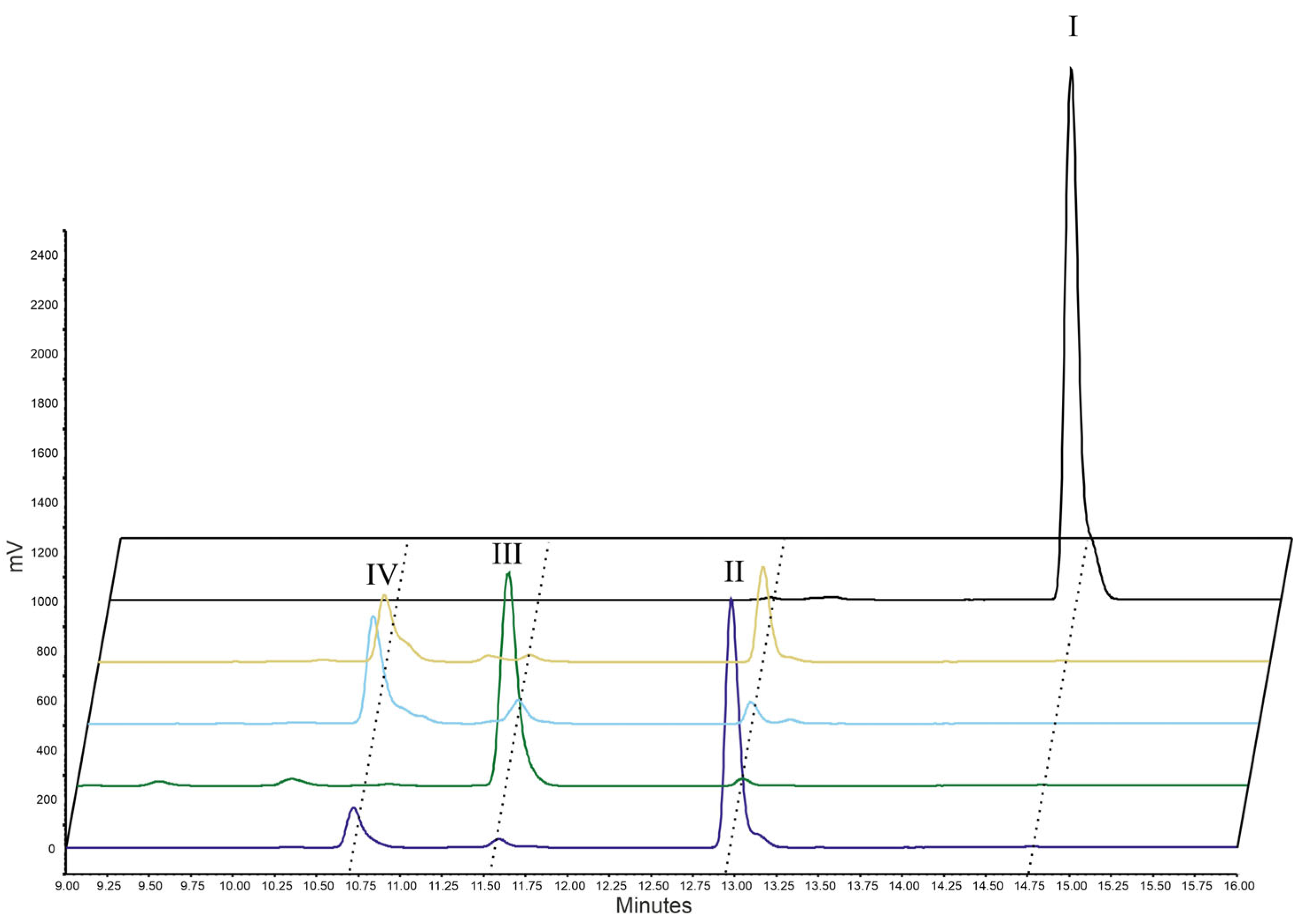
The corresponding evaluation for the long UPOs showed a dichotomy in product formation with regard to AA between rPabUPO-II and the other enzymes of this type. The former catalyzed the formation of 11,12 epoxyeicosatrienoic acid (11,12-EpETrE) and 14,15-epoxyeicosatrienoic acid (14,15-EpETrE), while the rest preferred the hydroxylation of the ω position of AA, i.e., the formation of 18 hydroxyeicosatetraenoic acid (18-HETE) and 19-hydroxyeicosatetraenoic acid (19-HETE). HPLC ELSD techniques allowed the detection and separation of the products formed (Figure 1), and subsequent LC/MS-MS analysis was successfully used to identify these metabolites (see Supporting Information Figures S1–S5).
In the case of AA conversion, mixtures of polyoxygenated derivatives were always observed when short UPOs served as catalyst for the transformation. 13-hydroxy-14,15-epoxyeicosatrienoic acid (14,15-Hepoxilin B3; 14,15-HxB3) was found to be the final reaction product in most cases, except for CglUPO that formed 11,12-14,15 diepoxyeicosadienoic acid (11,12-14,15-diEpEDE) in the final step and as the major metabolite (Figure 2). The formation of 14,15-HxB3 from AA by rAniUPO proceeded more slowly than by MroUPO and TanUPO; therefore, rAniUPO was selected as the catalyst of choice for studying the sequential oxygenation of AA. This phenomenon was also observed for EPA and DHA, in the case of which the slow formation of diEpFAs was suitable for tracking the stepwise reaction progress. The products formed were identified based on standards by HPLC-ELSD analysis and confirmed by LC-MS/MS analysis (see Supporting Information Figures S4–S10).

2.2. Role of Hydrogen Peroxide in Mono- and Di-Oxygenated Product Formation

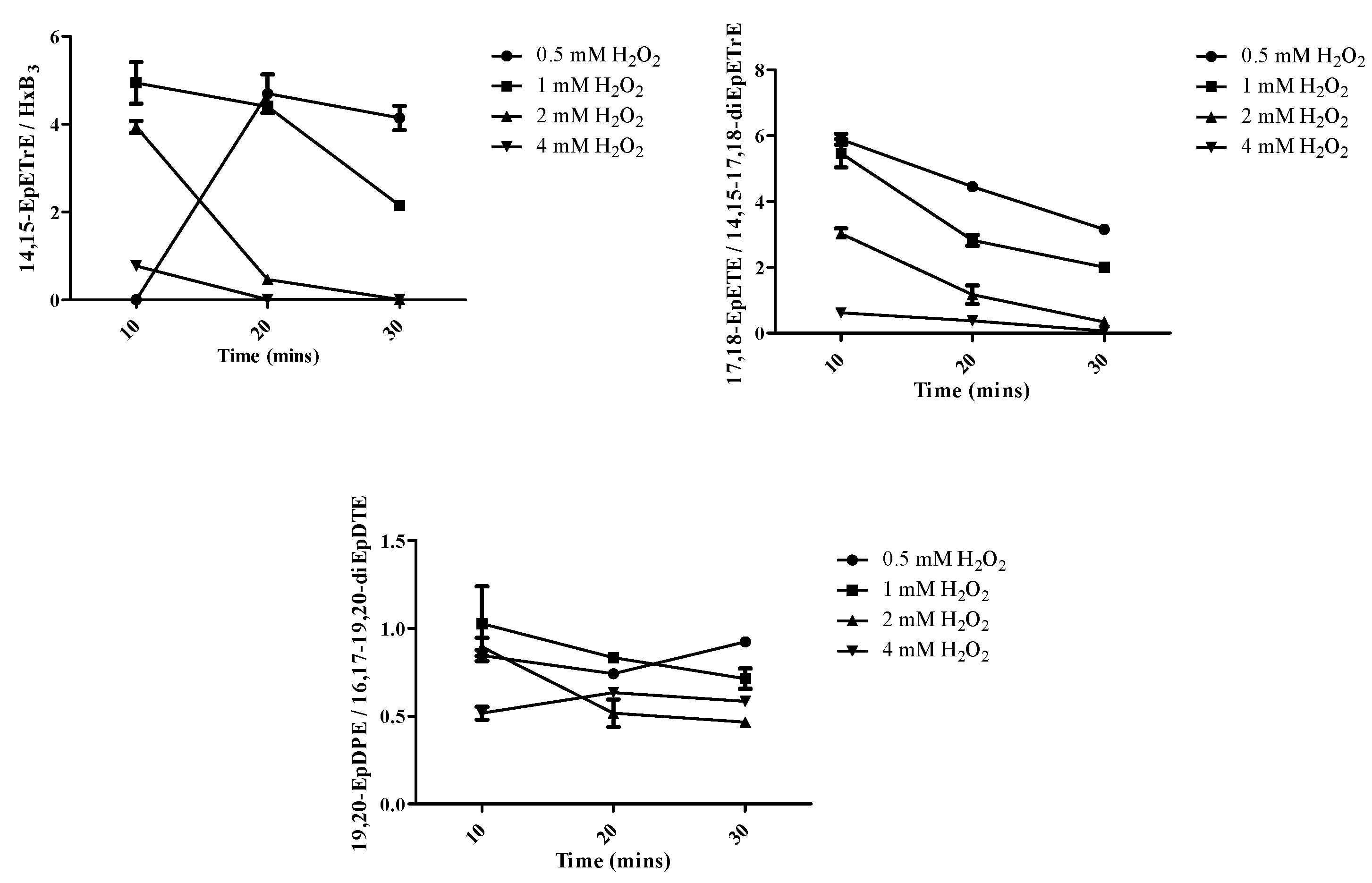
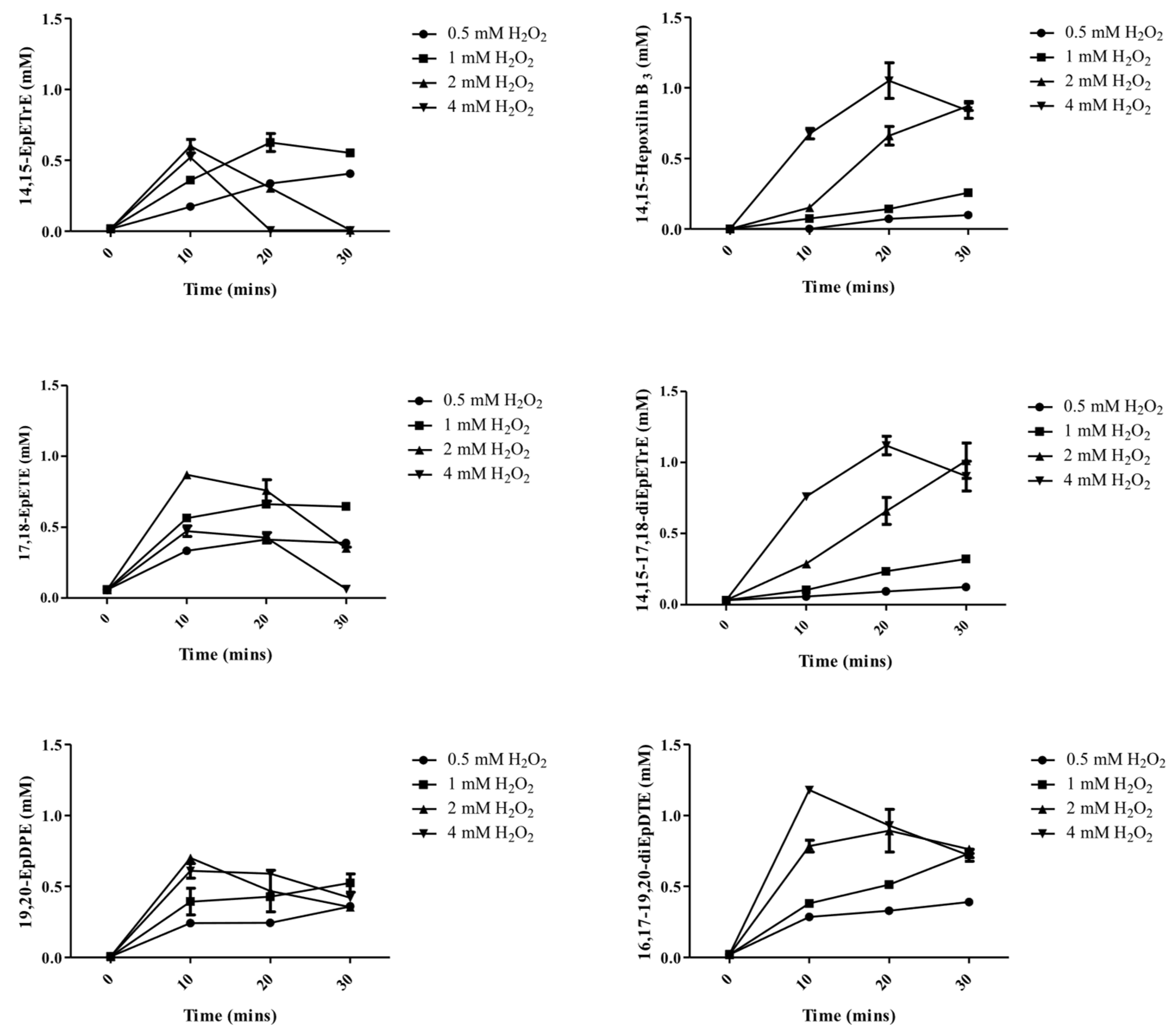
The evaluation of the time-courses of product formation in dependence of the hydrogen peroxide (H2O2) concentration revealed a consistent profile across all oxygenated derivatives and showed that product formation was critically dependent on both reaction time and H2O2 concentration. The rate and overall extent of product accumulation exhibited a positive correlation with increasing co-substrate concentration, confirming the peroxygenase-like, oxidative nature of the transformation catalyzed by rAniUPO (Figure 3). Peak product accumulation for the mono-epoxyeicosatrienoic acids (mono-EpFAs) was typically observed between 10 and 20 min of incubation. In contrast, the majority of the double-oxygenated species exhibited maximal formation later in the reaction, generally between 20 and 30 min, with the notable exception of DHA at the highest H2O2 concentration (4 mM), where the maximum was reached at 10 min. Following peak production, the concentration profiles were subsequently characterized by either a plateau or a modest decline, suggesting potential limitations such as substrate depletion or product degradation over extended reaction times. Furthermore, higher H2O2 concentrations (2–4 mM) consistently resulted in significantly faster initial formation rates and greater overall product yields compared to the lower concentrations (0.5–1 mM), highlighting the direct role of the co-substrate concentration in driving the catalytic cycle and maximizing the conversion efficiency. To facilitate the interpretation of the data presented in this section, a ratio between the concentration of the previous described mono- and di-oxygenated products was calculated (Figure 4). For clarity, the initial values were removed so that the analysis focuses solely on the relevant phase of product formation and consumption.

2.3. Time Course of Product Formation at Larger Scale

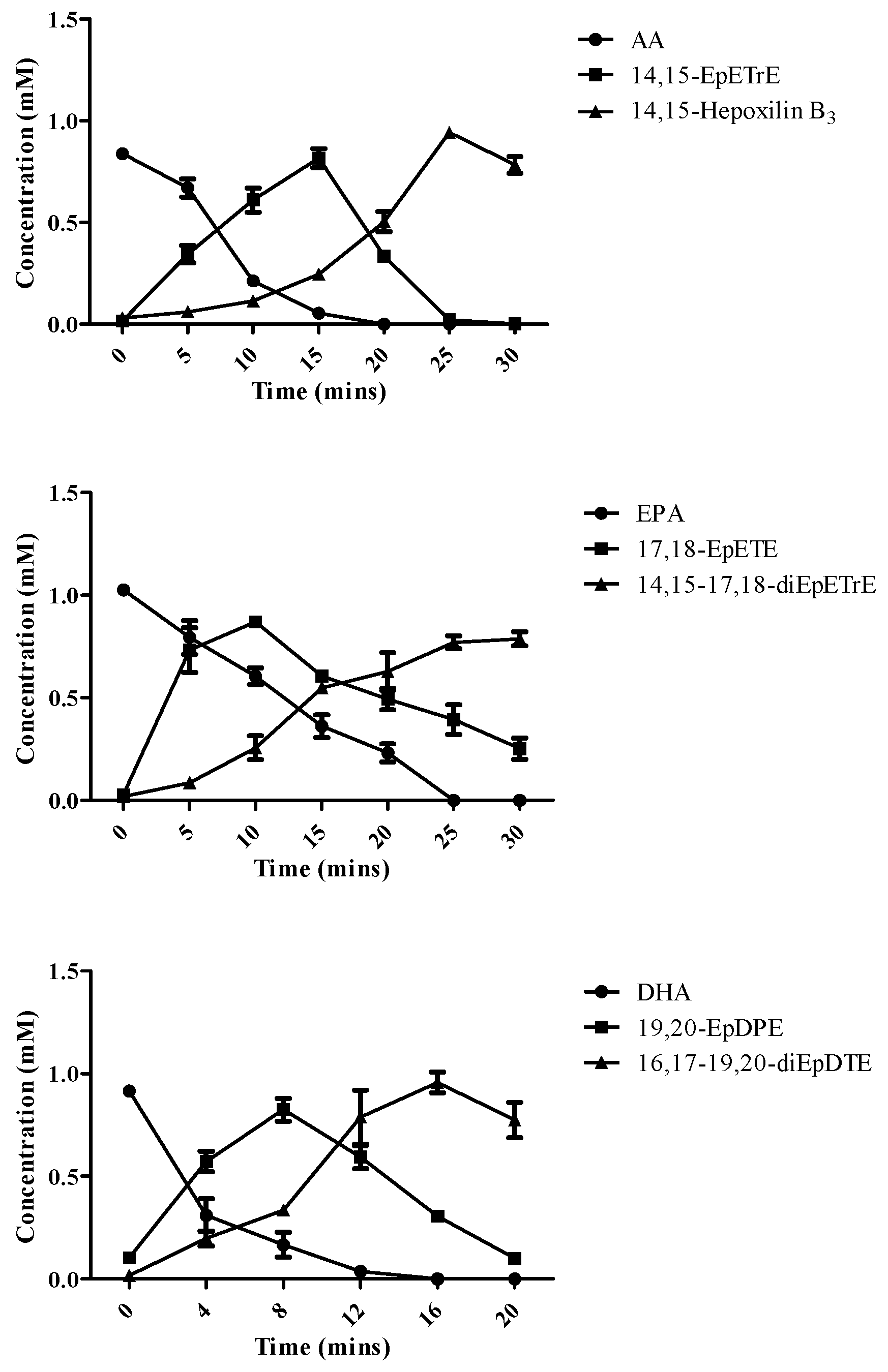
rAniUPO was used for upscaled conversions of the three PUFAs with a time-resolved monitoring of the products enabling the determination of optimal production times for the first and second oxygenation products. The data show that the formation of dioxygenated products was faster in the case of EPA and DHA than for AA, and also their initial conversion to ω-3 monoepoxy fatty acids was faster. A similar pattern was observed with regard to the total amounts of oxygenated products; thus, 15.8 mg of 14,15-HxB3 was obtained from AA versus 22.2 mg and 24.2 mg of diepoxidized derivatives starting from EPA and DHA, respectively. Reaction yields and turnover frequencies (TOFs) were calculated from the aforementioned values and are listed in Table 2. We corroborate the assumption that the addition of the cosubstrate (H2O2) influenced the sequential formation of single- and double-oxygenated products. In all three cases, the formation of double oxygenated products began significantly later than that of single oxygenated fatty acids and accelerated when the maximum amount of single oxygenated products was reached. This indicates a successive uptake and transformation system. Reactions were stopped when the slope of the formation curve started to decrease (Figure 5).
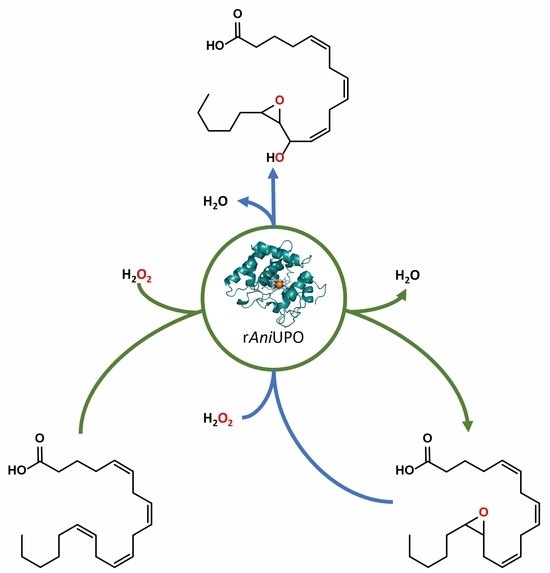
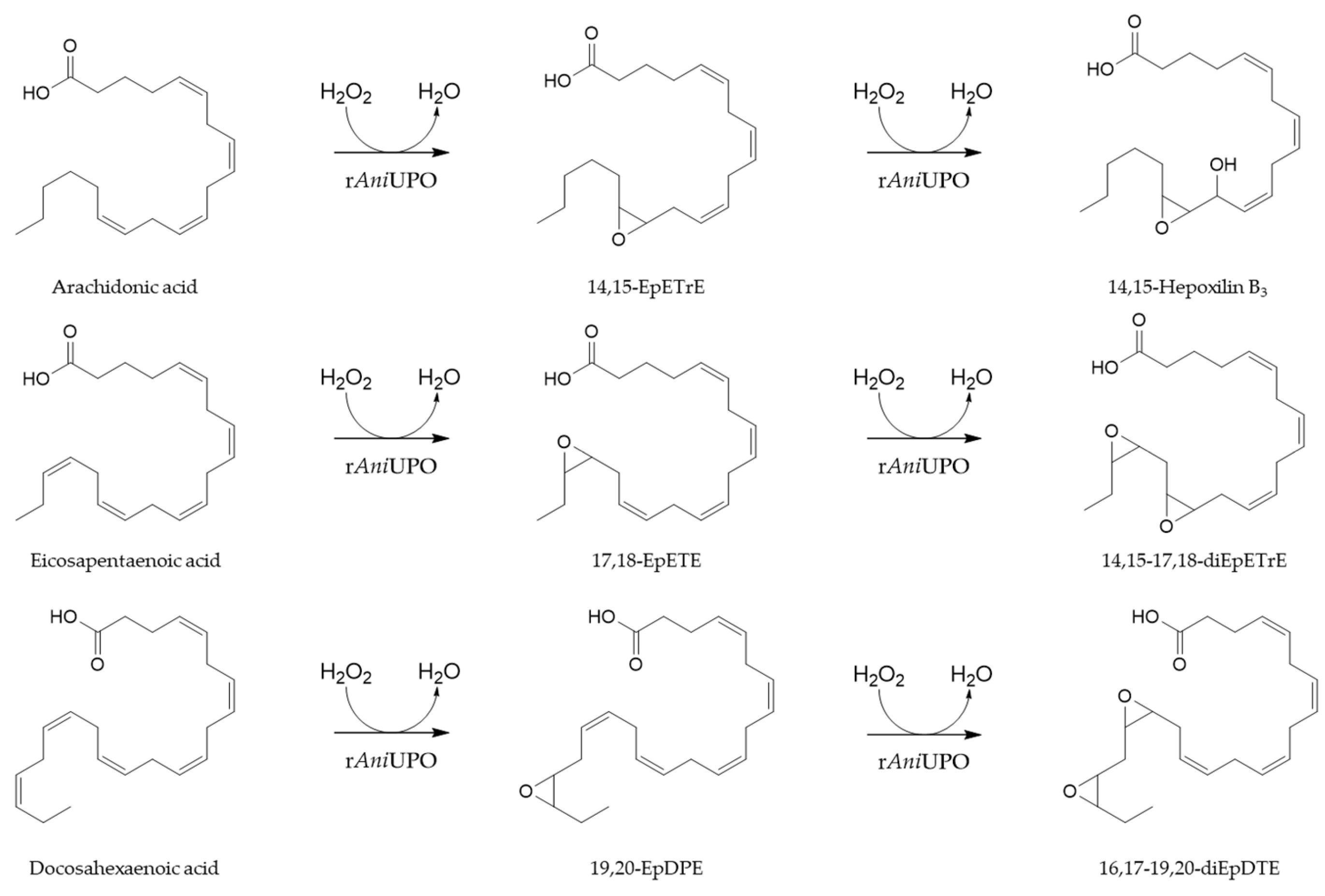
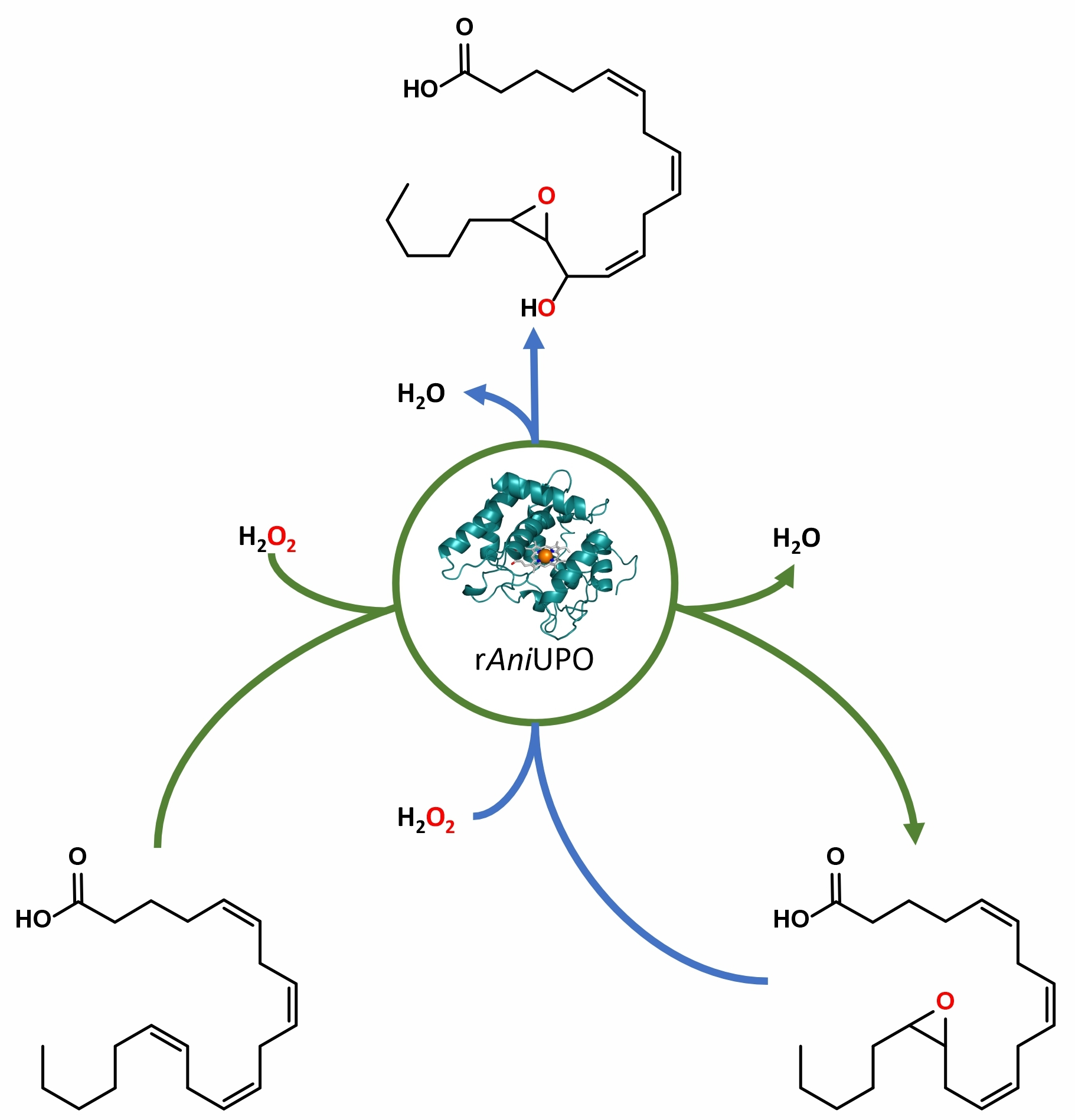
Based on the mass spectrometric data and the exact molecule structures of oxygenated metabolites elucidated by 1H- and 13C-NMR analyses (see Supporting Information Figures S5–S40; Tables S1–S6), the reaction scheme shown in Figure 6 was developed. In this reaction cascade, rAniUPO uses its own first reaction product as the second substrate to accomplish another oxygenation reaction. In the case of the second functionalization of AA, the corresponding oxygenation occurred as a hydroxylation at ω-8 position adjacent to the initially formed epoxide (between positions ω-6 and ω-7). In contrast, rAniUPO consecutively formed mono- and diepoxidized metabolites from EPA and DHA, in both cases at positions ω-3; ω-4 and ω-6; ω-7.
Due to the hydrophobic properties of the UPO access channel, it was expected that the rather flexible methyl end of the PUFAs would have a higher affinity toward the active site than the middle or polar parts of the molecule. As a result, (per)oxygenation preferentially occurred at the first double bond. This behaviour was also influenced by the position and number of double bonds within the molecule, as was observed in the epoxidation of AA. When the substrate is oxidized, its polarity increases, leading to a reduced affinity for the access channel. This phenomenon could be observed for recombinant rAniUPO, where the results suggest that the next double bond (between ω-9 and ω-10) did not reach the catalytic site of the enzyme, leading therefore to (per)oxygenation of the carbon near the epoxide (ω-8). In the case of EPA and DHA, the proximity of the double bonds to the methyl end and their increased number allow for appropriate interaction of the substrates with the access channel, so that the internal double bonds could be reached. Consequently, a third epoxidation was expected by rAniUPO, while only hydroxylation at the ω-8 position was plausible with EPA, similar to what was observed for AA.

3. Discussion

The present results demonstrate that UPOs are valuable catalysts for the synthesis of oxyfunctionalized human-like lipid mediators at 15 mg scale by the controlled epoxidation (and hydroxylation) of different PUFAs. The data also show that rAniUPO, which belongs to the short peroxygenases, is suitable for first epoxidizing arachidonic acid (AA), eicosapentaenoic acid (EPA) and docosahexaenoic acid (DHA) to corresponding monoepoxides and then further oxyfunctionalizing these metabolites to hydroxy-epoxy or diepoxy derivatives. These findings confirm and complement previous observations on the behaviour of UPOs towards various fatty acids [49]. The aforementioned PUFAs were selected due to the number of double bonds (4, 5 or 6) in their structure, which allowed the assumption of their sequential oxygenation to be proved. Not least, these molecules play an important role in the human metabolism as precursors of pro- and anti-inflammatory mediators [2,52], which is associated with their potential use in a medical context. To substantiate this, we specifically searched for metabolites with additional oxygen functionalities (known to be particularly bioactive) and found substances with two epoxy or an additional hydroxy group. We were able to show that the differences in the formation of 14,15-EpETrE, 17,18-EpETE and 19,20-EpDPE and their derivatives 14,15-HxB3, 14,15-17,18-diEpETrE and 16,17-19,20-diEpDTE depend on the stoichiometric dosage of the co-substrate (H2O2) during the reaction time. At low concentrations, mono-oxygenated products are predominantly formed, whereas increasing the concentration of H2O2 leads to a higher production of di-oxygenated compounds. This indicates that the availability of reactive oxygen species, provided by hydrogen peroxide, dictates the extent and nature of oxygenation. Additionally, reaction time is a crucial factor for optimizing metabolite yields. Proper timing can help control and maximize the production of a target oxygenated derivative, highlighting the importance of precise time management in these reactions to achieve specific products formation and better yields.
The metabolites observed first were identified as mono-epoxy derivatives, which also represent the first step in the oxygenation of PUFAs by CYP monooxygenases in the human body, particularly in the liver [53]. In vivo, due to their instability, EpFAs are rapidly transformed by soluble epoxide hydrolases (sEHs) to form more stable di-hydroxylated fatty acids (diHFAs). This transformation alters the molecular properties and masks the beneficial effects of EpFAs against inflammation, especially considering the antagonistic effect of diHFAs compared to their precursors [54]. In contrast, the UPOs used here enabled the stable synthesis of identifiable and separable individual EpFAs. In addition to rapid adaptation of the reaction under mild conditions, the use of UPOs allowed control over the oxygenation process and the substitution pattern. Our results show that oxygenation catalyzed by short UPOs started at the rearmost double bond (ω-double bond) and then continued at the next double bond. Of all the tested short UPOs, rAniUPO showed a temporal offset in this reaction sequence in such a way that it was possible to allow the reaction to proceed slowly enough to determine optimal times for the formation of individual metabolites.
All short UPOs showed the tendency to accomplish a second epoxidation in their individual reactions with AA, EPA and DHA, with the exception of AA, in the case of which—in addition to double epoxidation—the mono-epoxidized product (14,15 EpETrE) was also hydroxylated to form 14,15-HxB3. Such hydroxylation adjacent to a double bond is a preferred reaction, as the corresponding carbon-centred radical formed as an intermediate would be relatively stable, as shown in a DFT study on P450-catalyzed substrate hydroxylation compared to epoxidation [55]. 14,15-HxB3 exhibits structural similarity to a human metabolite [56] formed as an intermediate of 15-lipoxygenase activity (LOX). The synthesis by UPOs is easier to handle than with LOX and thus offers the possibility of the scalable synthesis of 14,15-HxB3 to study its regulatory inflammatory activity during the cell signalling process [57,58,59,60]. However, the exact enantiomeric conformation of the UPO-based 14,15-HxB3 still needs to be determined to confirm its identity to the human LOX-metabolite. The conversion of AA and the reactions of the long UPOs led us to assume that hydroxylation of PUFAs causes the hydroxylated product to be immediately expelled from the hydrophobic area of the UPO access channel, thereby ending all reactions. This may also explain the inhibiting effect of hydroxylated fatty on CYPs reported in several studies [60,61,62,63].
In the plastics industry, efforts are being made to avoid the use of environmentally harmful plasticizers, which has led to the search for new environmentally friendly derivatives and production processes [64]. In this context, PUFAs and their epoxidized derivatives (EpFAs), could represent a new promising research direction. Due to their natural occurrence, certain plant PUFAs (e.g., linoleic acid) do not require the introduction of additional double bonds and thus offer the possibility of including more activating groups directly, giving the respective preparations of potential plasticizers high elasticity and resistance [65]. An example for the beneficial effect of epoxidized fatty acids is the production setup of polyvinyl chloride (PVC) with an added bio plasticizer derivative, containing EpFAs from soy beans, that resulted in a polymeric product with improved properties (e.g., viscosity) and the polymerization process was more efficient. However, an incomplete epoxidation of double bonds resulted in instability of the plasticizer at elevated temperatures [66]. Polylactic acid (PLA) was shown to have a higher thermal, pressure and mechanical resistance when epoxidized fatty acids were added to the production mixture [67]. With all the findings presented here, rAniUPO could become a green and controllable catalyst for the synthesis of PUFA-based plasticizers.
It is crucial to highlight the stereoisomerism of oxygenated products derived from enzymatic reactions. Although it is well-established that the metabolites investigated in this study can exist in stereoisomeric forms, and that different stereoisomers may exert distinct effects on cell cultures [68,69,70,71,72,73], we were not able to determine this isomeric form within our MS and NMR results. This phenomenon adds another layer of complexity to the characterization of the oxygenated derivates. Future research should focus on integrating advanced analytical techniques that can effectively distinguish stereoisomers, thereby deepening our understanding of their roles and implications in enzymatic processes. Addressing this challenge offers significant prospects for further scientific exploration and advancement in the field.
The (bio)synthesis of lipid mediators is a complex and extensive field of research, and even if we hint at possible effects of the synthesized molecules here based on scientific reports related to the human metabolites, the experimental confirmation of such activities is still pending. In any case, the initial hypothesis that sequential epoxidation of PUFAs by fungal UPOs is possible was confirmed here as a prerequisite. Moreover, it turned out that, as in the case of AA and DHA, further interesting metabolites can be produced in the course of PUFA oxidation by UPOs, which should be included in future research.

4. Materials and Methods

4.1. Chemicals

The standards, 14,15-epoxy-5Z,8Z,11Z-eicosatrienoic acid (14,15-EpETrE), 17,18-epoxy-5Z,8Z,11Z,14Z-eicosatetraenoic acid (17,18-EpETE) and 19,20-epoxy-4Z,7Z,10Z,13Z,16Z-docosapentaenoic acid (19,20-EpDPE) were obtained from Cayman Chemical (Cayman Chemical, Ann Arbor, MI, USA). All other fine chemicals including arachidonic acid (AA), eicosapentaenoic acid (EPA) and docosahexaenoic acid (DHA), organic solvents, etc., were purchased from Sigma-Aldrich (Sigma-Aldrich Chemie GmbH, Taufkirchen, Germany).

4.2. Enzymes

The different PUFAs were converted by several wild-type and recombinant UPOs. For this, purified protein preparations obtained from liquid cultures of Chaetomium globosum (DSM 62110), Truncatella angustata (DSM 62886) and Marasmius rotula (DSM 25031) were used, containing CglUPO (36 kDa), TanUPO (40 kDa) and MroUPO (32 kDa), respectively [38,74,75]. In addition, following purified recombinant UPOs heterologously produced with Pichia pastoris and Saccharomyces cerevisiae, respectively, were used: FettUPO and PaDa-I UPO (both are mutants of AaeUPO from Cyclocybe (Agrocybe) aegerita), and rPabUPO-I and rPabUPO-II from Candolleomyces aberdarensis as well as rAniUPO from Aspergillius niger [76,77,78,79,80]. The concentrations of active enzymes were determined using the carbon monoxide binding assay [81].

4.3. Enzymatic Test for AA, EPA and DHA

To identify the best catalyst for the generation of epoxidized fatty acids (EpFAs), the transformation potential of the enzymes listed above for the three substrates (AA, EPA, DHA) was evaluated. For this, 100 µL of potassium phosphate buffer (KPi, pH 7.0; 100 mM) was mixed with 50 µL PUFA substrate (10 mM) previously solved in acetone, 10 µL UPO solution (100 µM) and water (total 400 µL); then 20 µL of hydrogen peroxide (5 mM) was added stepwise every 6 min over a total reaction time of 30 min. All experiments were carried out in duplicate. Subsequently, 500 µL of ice-cold acetonitrile was added to stop the reaction, and the mixture was centrifuged at 13,000 rpm for 10 min. 100 µL of the supernatant was taken and transferred into 200 µL vials for LC-MS/MS and HPLC-ELSD analysis.

4.4. Evaluation of Hydrogen Peroxide Dependence

To investigate the effect of hydrogen peroxide (H2O2) on the enzymatic formation of mono- and dioxygenated compounds, rAniUPO was utilized as the selected catalyst for the transformation of AA, EPA, and DHA. The standard enzymatic assay conditions (as detailed in Section 2.3) were employed, complemented by the stepwise addition of H2O2. Hydrogen peroxide was introduced in three sequential additions to achieve final concentrations of 0.5, 1, 2, and 4 mM after a total reaction time of 30 min. Aliquots (25 µL) were sampled during the transformation and immediately diluted with 75 µL of ice-cold acetonitrile. The resulting mixture was centrifuged at 13,000 rpm for 10 min. Subsequently, 70 µL of the supernatant was transferred into 200 µL vials for analysis by LC-MS/MS.

4.5. Upscaling and Time Course of EpFA Synthesis

With the selection of rAniUPO as the catalyst of choice for the transformation of AA, EPA and DHA, the reactions were scaled-up to 100 mL. The conditions were the same as in the enzymatic test (See Section 2.3), except for the dosage of hydrogen peroxide, which was performed with a syringe pump delivering H2O2 (0.05 M) continuously at a rate of 4 mL h−1. After this time, the enzymatic reaction was stopped by adding 100 mL ethyl acetate and the enzymatic products formed were obtained by serial liquid–liquid extraction (up to 200 mL ethyl acetate). The solvent was evaporated using a rotary evaporator and the obtained product (yellowish droplets) was re-dissolved in acetonitrile and used for preparative HPLC. The organic solvent from the relevant fractions was evaporated with a rotary evaporator and the residual water removed by freeze drying.

4.6. Analytical Methods

4.6.1. Preparative HPLC Chromatography

Individual compounds in the extracted enzymatic reaction mixtures were separated using a Shimadzu® preparative HPLC system (Shimadzu Europa GmbH, Duisburg, Germany) consisting of a solvent delivery unit (LC-20AP) coupled with two degassing units (DGU-403 and DGU-405) and connected to a UV-Vis detector (SPD-40, Shimadzu Europa GmbH, Duisburg, Germany). The system was fitted with a preparative LC-C18 column (Shim-pack GIST C18, 5 µm, 20 × 250 mm, Shimadzu Europa GmbH, Duisburg, Germany) connected to a fraction collector (FRC-40, Shimadzu Europa GmbH, Duisburg, Germany). Two mobile phases, A (diH2O, i.e., bidest water) and B (acetonitrile), were used as eluents and eluting substances were detected at 195 nm. The injection volume of the acetonitrile extract was 2 mL and the separation of compounds was performed at room temperature at a flow rate of 10 mL min−1 applying the following gradient: 0 min, 25% B; 3 min, 25% B; 15 min, 95% B; 27 min, 95% B; 27.5 min, 25% B; 30 min, 25% B.

4.6.2. HPLC-ELSD

Quantification of the oxyfunctionalized PUFA metabolites, for which standards were available, was performed using the HPLC system LaChrom Elite® (VWR-Hitachi, Radnor, PA, USA), which included a pump system (L-2130, VWR-Hitachi, PA, USA), an autosampler (L-2200, VWR-Hitachi, PA, USA), the column oven L-2300 and a diode array detector (DAD, L-2455, VWR-Hitachi, PA, USA) and was coupled to a low-temperature evaporative light scattering detector (ELSD Sedex 100, Sedere, Alfortville Cedex, France). All analyses including various controls with H2O2 were evaluated by means of the EZChrome Elite® software (Version: 3.3.2.SP2). A Kinetix® reversed phase column (C18, 5 μm, 100 Å, 150 × 4.6 mm, Phenomenex, Torrance, CA, USA) with a corresponding pre-column was used for separation. Two mobile phases, A [diH2O, 0.1% (v/v) formic acid] and C [acetonitrile, 0.1% (v/v) formic acid], were used as eluents. The injection volume was 10 µL and the separation of analytes was performed at 40 °C and a flow rate of 1 mL min−1 using the following gradient: 0 min, 25% C; 2 min, 25% C; 12 min, 95% C; 17 min, 95% C; 17.1 min, 25% C; 24 min, 25% C. For detection of eluted PUFAs by ELSD (Sedex 100, Sedere, Alfortville Cedex, France), a drift temperature of 50 °C, 2 s laser filter, a measuring rate of 200 ms and nitrogen (N2) as carrier gas were used. All solvents were filtered and degassed prior to use. Analytes were identified using authentic standards or own data obtained by high-resolution mass spectrometry (HRMS).

4.6.3. UHPLC Coupled with High Resolution Mass Spectrometry

For the confirmation of the isolated compounds’ identity, mass spectrometric analyses were performed in combination with a Thermo Scientific Vanquish Flex Quaternary UHPLC system (Thermo Fisher Scientific, Waltham, MA, USA) fitted with a Kinetex® EVO column (C18, 5 µm, 100 Å, 150 × 4.6 mm, Phenomenex). The injection volume was 1 µL and the column was eluted at a flow rate of 0.5 mL min−1 at 40 °C using two mobile phases, A (diH2O, 0.05% ammonia) and B (acetonitrile), applying the following gradient: 0 min, 10% B; 0.5 min, 10% B; 5 min, 80% B; 7 min, 80% B; 7.1 min, 10% B; 10 min, 10% B.
MS1 and MS2 spectra were obtained using a Thermo Scientific Q Exactive Focus quadrupole-Orbitrap mass spectrometer (Thermo Electron, Waltham, MA, USA) coupled with a heated electrospray ionization source in the negative mode. The tune operating parameters were as follows: the rate of sheath gas flow and auxiliary gas flow was 40 and 15 (arbitrary units), respectively; spray voltage 4.0 kV; the temperature of capillary and auxiliary gas heater was 260 °C and 400 °C, respectively; high-resolution mass spectrometry was operated at full scan mode (MS1) with a mass range of m/z 100–1000 at a resolution of 70,000 (m/z 200). The MS2 data were obtained at a resolution of 35,000 by the parallel reaction monitoring mode triggered by inclusion ions list, which was built by the molecule predicted. The collision energies were CE10 and CE20.

4.6.4. NMR

The structural characterization of the synthesized compounds was described using one-dimensional (1D) and two-dimensional (2D) nuclear magnetic resonance (NMR) spectroscopy from the recorded 1H and 13C spectra. The chemical shifts (δ) are reported in parts per million (ppm), with the residual solvent (CDCl3) signal as the internal reference. For further structural elucidation, 2D NMR results, including COSY (Correlation Spectroscopy), HSQC (Heteronuclear Single Quantum Coherence), and HMBC (Heteronuclear Multiple Bond Correlation), were analyzed. These experiments facilitated the assignment of proton and carbon resonances and the identification of connectivity and long-range correlations within the molecular framework. All spectral data were analyzed using MestReNova (Version: 14.2.1-27684) and interpreted in relation to available literature data. Details can be found in the Supplementary Section.

Supplementary Materials

The following supporting information can be downloaded at: https://www.mdpi.com/article/10.3390/catal15121162/s1. Figure S1: Mass spectra of 11,12-epoxyeicosatrienoic acid produced with rPabUPO-II from AA, Figure S2: Mass spectra of 19-hydroxyeicosatetraenoic acid produced with rPabUPO-I and PaDa I UPO from AA, Figure S3: Mass spectra of 19-hydroxyeicosatetraenoic acid produced with rPabUPO-I, FettUPO and PaDa I UPO from AA, Figure S4: Mass spectra of 11,12-14,15-diepoxyeicosadienoic acid produced with all the tested short UPOs from AA, Figure S5: Mass spectra of 14,15-epoxyeicosatrienoic acid produced with rPabUPO-II and the tested short UPOs from AA, Figure S6: 1H-NMR spectrum of produced and isolated 14,15-epoxyeicosatrienoic acid, Figure S7: 13C-NMR spectrum of produced and isolated 14,15-epoxyeicosatrienoic acid, Figure S8: COSY spectrum of produced and isolated 14,15-epoxyeicosatrienoic acid, Figure S9: HMBC spectrum of produced and isolated 14,15-epoxyeicosatrienoic acid, Figure S10: HSQC spectrum of produced and isolated 14,15-epoxyeicosatrienoic acid, Figure S11: Mass spectra of 17,18-epoxyeicosatetraenoic acid produced with rAniUPO from EPA, Figure S12: 1H-NMR spectrum of produced and isolated 17,18-epoxyeicosatetraenoic acid, Figure S13: 13C-NMR spectrum of produced and isolated 17,18-epoxyeicosatetraenoic acid, Figure S14: COSY spectrum of produced and isolated 17,18-epoxyeicosatetraenoic acid, Figure S15: HMBC spectrum of produced and isolated 17,18-epoxyeicosatetraenoic acid, Figure S16: HSQC spectrum of produced and isolated 17,18-epoxyeicosatetraenoic acid, Figure S17: Mass spectra of 19,20-epoxydocosapentaenoic acid produced with rAniUPO from DHA, Figure S18: 1H-NMR spectrum of produced and isolated 19,20-epoxydocosapentaenoic acid, Figure S19: 13C-NMR spectrum of produced and isolated 19,20-epoxydocosapentaenoic acid, Figure S20: COSY spectrum of produced and isolated 19,20-epoxydocosapentaenoic acid, Figure S21: HMBC spectrum of produced and isolated 19,20-epoxydocosapentaenoic acid, Figure S22: HSQC spectrum of produced and isolated 19,20-epoxydocosapentaenoic acid, Figure S23: Mass spectra of 14,15-hepoxilin B3 produced with rAniUPO from AA, Figure S24: 1H-NMR spectrum of produced and isolated 14,15-hepoxilin B3, Figure S25: 13C-NMR spectrum of produced and isolated 14,15-hepoxilin B3, Figure S26: COSY spectrum of produced and isolated 14,15-hepoxilin B3, Figure S27: HMBC spectrum of produced and isolated 14,15-hepoxilin B3, Figure S28: HSQC spectrum of produced and isolated 14,15-hepoxilin B3, Figure S29: Mass spectra of 14,15-17,18-diepoxyeicosatrienoic acid produced with rAniUPO from EPA, Figure S30: 1H-NMR spectrum of produced and isolated 14,15-17,18-diepoxyeicosatrienoic acid, Figure S31: 13C-NMR spectrum of produced and isolated 14,15-17,18-diepoxyeicosatrienoic acid, Figure S32: COSY spectrum of produced and isolated 14,15-17,18-diepoxyeicosatrienoic acid, Figure S33: HMBC spectrum of produced and isolated 14,15-17,18-diepoxyeicosatrienoic acid, Figure S34: HSQC spectrum of produced and isolated 14,15-17,18-diepoxyeicosatrienoic acid, Figure S35: Mass spectra of 16,17-19,20-diepoxydocosatetraenoic acid with rAniUPO from DHA, Figure S36: 1H-NMR spectrum of produced and isolated 16,17-19,20-diepoxydocosatetraenoic acid, Figure S37: 13C-NMR spectrum of produced and isolated 16,17-19,20-diepoxydocosatetraenoic acid, Figure S38: COSY spectrum of produced and isolated 16,17-19,20-diepoxydocosatetraenoic acid, Figure S39: HMBC spectrum of produced and isolated 16,17-19,20-diepoxydocosatetraenoic acid, Figure S40: HSQC spectrum of produced and isolated 16,17-19,20-diepoxydocosatetraenoic acid, Table S1: Assignment of 1H and 13C-NMR signals to 14,15-epoxyeicosatrienoic acid, Table S2: Assignment of 1H and 13C-NMR signals to 17,18-epoxyeicosatretraenoic acid, Table S3: Assignment of 1H and 13C-NMR signals to 19,20-epoxydocosapentaenoic acid, Table S4: Assignment of 1H and 13C-NMR signals to 14,15-hepoxilin B3, Table S5: Assignment of 1H and 13C-NMR signals to 14,15-17,18-diepoxyeicosatrienoic acid, Table S6: Assignment of 1H and 13C-NMR signals to 16,17-19,20-diepoxydocosatetraenoic acid.

Author Contributions

C.R.C.A.: Conceptualization, Methodology, Validation, Investigation, Writing—Original Draft, Visualization. M.S.: Conceptualization, Resources, Writing—Review and Editing. S.P.: Conceptualization, Writing—Review and Editing. M.A.: Resources, Writing—Review and Editing. M.H.: Validation, Writing—Review and Editing, Supervision. K.S.: Resources, Supervision, Project administration, Funding acquisition. All authors have read and agreed to the published version of the manuscript.

Funding

This research was funded by the Federal Ministry of Research, Technology and Space (BMFTR, Germany), project CEFOX-II (031B1346A). We gratefully acknowledge MWFK for their financial support as part of the framework ‘Großgeräte der Länder’ on the acquisition of high-resolution mass spectrometry (GZ: INST 263/88-1 LAGG).

Data Availability Statement

The original contributions presented in this study are included in the article/Supplementary Material. Further inquiries can be directed to the corresponding authors.

Acknowledgments

We would like to thank to Jan Kiebist for the support in the conceptualization of the analytic study, Mohit Malik for his initial experimental work and Kai-Uwe Schmidtke and Tino Koncz for the production and purification of the used enzymes here. Special recognition is given to the Chiracon GmbH for the support in NMR analysis.

Conflicts of Interest

The authors declare no conflicts of interest.

Abbreviations

The following abbreviations are used in this manuscript:
11,12;14,15-diEpEDE11,12-14,15-diepoxyeicosadienoic acid
11,12-EpETrE11,12-epoxyeicosatrienoic acid
14,15;17,18-diEpETrE14,15-17,18-diepoxyeicosatrienoic acid
14,15-EpETrE14,15-epoxyeicosatrienoic acid
14,15-HxB314,15-Hepoxilin B3
16,17;19,20-diEpDTE16,17-19,20-diepoxydocosatetraenoic acid
17,18-EpETE17,18-epoxyeicosatetraenoic acid
19,20-EpDPE19,20-epoxydocosapentaenoic acid
AAArachidonic acid
CglUPOUnspecific peroxygenase from Chaetomium globosum
CYPCytochrome P450 monooxygenase
DHADocosahexaenoic acid
diHFADihydroxy fatty acid
EPAEicosapentaenoic acid
EpFAEpoxy fatty acid
MroUPOUnspecific peroxygenase from Marasmius rotula
PaDa-I UPORecombinant mutant of an unspecific peroxygenase from Agrocybe aegerita
PAAPolyacrylic acid
rAniUPORecombinant unspecific peroxygenase from Aspergillus niger
rPabUPO-IRecombinant unspecific peroxygenase I from Psathyrella (syn. Candolleomyces) abendarensis
rPabUPO-IIRecombinant unspecific peroxygenase II from Psathyrella (syn. Candolleomyces) abendarensis
sEHSoluble epoxide hydrolase
TanUPOUnspecific peroxygenase from Truncatella angustata
TOFTurnover frequency
UPOUnspecific peroxygenase

References

  1. Marion-Letellier, R.; Savoye, G.; Ghosh, S. Polyunsaturated Fatty Acids and Inflammation. IUBMB Life 2015, 67, 659–667. [Google Scholar] [CrossRef]
  2. Salter, A.M. Dietary Fatty Acids and Cardiovascular Disease. Animal 2013, 7, 163–171. [Google Scholar] [CrossRef]
  3. Ricciotti, E.; FitzGerald, G.A. Prostaglandins and Inflammation. Arterioscler. Thromb. Vasc. Biol. 2011, 31, 986–1000. [Google Scholar] [CrossRef] [PubMed]
  4. Crooks, S.W.; Stockley, R.A. Leukotriene B4. Int. J. Biochem. Cell Biol. 1998, 30, 173–178. [Google Scholar] [CrossRef] [PubMed]
  5. Heller, A.; Koch, T.; Schmeck, J.; van Ackern, K. Lipid Mediators in Inflammatory Disorders. Drugs 1998, 55, 487–496. [Google Scholar] [CrossRef] [PubMed]
  6. Serhan, C.N.; Chiang, N.; Van Dyke, T.E. Resolving Inflammation: Dual Anti-Inflammatory and pro-Resolution Lipid Mediators. Nat. Rev. Immunol. 2008, 8, 349–361. [Google Scholar] [CrossRef]
  7. Hajeyah, A.A.; Griffiths, W.J.; Wang, Y.; Finch, A.J.; O’Donnell, V.B. The Biosynthesis of Enzymatically Oxidized Lipids. Front. Endocrinol. 2020, 11, 591819. [Google Scholar] [CrossRef]
  8. Morisseau, C.; Kodani, S.D.; Kamita, S.G.; Yang, J.; Lee, K.S.S.; Hammock, B.D. Relative Importance of Soluble and Microsomal Epoxide Hydrolases for the Hydrolysis of Epoxy-Fatty Acids in Human Tissues. Int. J. Mol. Sci. 2021, 22, 4993. [Google Scholar] [CrossRef]
  9. Darwesh, A.M.; Fang, L.; Altamimi, T.R.; Jamieson, K.L.; Bassiouni, W.; Valencia, R.; Huang, A.; Wang, F.; Zhang, H.; Ahmed, M.; et al. Cardioprotective Effect of 19,20-Epoxydocosapentaenoic Acid (19,20-EDP) in Ischaemic Injury Involves Direct Activation of Mitochondrial Sirtuin 3. Cardiovasc. Res. 2024, 121, cvae252. [Google Scholar] [CrossRef]
  10. Gross, G.J.; Hsu, A.; Falck, J.R.; Nithipatikom, K. Mechanisms by Which Epoxyeicosatrienoic Acids (EETs) Elicit Cardioprotection in Rat Hearts. J. Mol. Cell. Cardiol. 2007, 42, 687–691. [Google Scholar] [CrossRef]
  11. Morin, C.; Fortin, S.; Rousseau, E. 19,20-EpDPE, a Bioactive CYP450 Metabolite of DHA Monoacyglyceride, Decreases Ca2+ Sensitivity in Human Pulmonary Arteries. Am. J. Physiol. Heart Circ. Physiol. 2011, 301, H1311–H1318. [Google Scholar] [CrossRef] [PubMed]
  12. Tajima, Y.; Ishikawa, M.; Maekawa, K.; Murayama, M.; Senoo, Y.; Nishimaki-Mogami, T.; Nakanishi, H.; Ikeda, K.; Arita, M.; Taguchi, R.; et al. Lipidomic Analysis of Brain Tissues and Plasma in a Mouse Model Expressing Mutated Human Amyloid Precursor Protein/Tau for Alzheimer’s Disease. Lipids Health Dis. 2013, 12, 68. [Google Scholar] [CrossRef] [PubMed]
  13. Dai, N.; Yang, C.; Fan, Q.; Wang, M.; Liu, X.; Zhao, H.; Zhao, C. The Anti-Inflammatory Effect of Soluble Epoxide Hydrolase Inhibitor and 14, 15-EET in Kawasaki Disease Through PPARγ/STAT1 Signaling Pathway. Front. Pediatr. 2020, 8, 451. [Google Scholar] [CrossRef] [PubMed]
  14. Yang, Y.; Xu, X.; Wu, H.; Yang, J.; Chen, J.; Morisseau, C.; Hammock, B.D.; Bettaieb, A.; Zhao, L. Differential Effects of 17,18-EEQ and 19,20-EDP Combined with Soluble Epoxide Hydrolase Inhibitor t-TUCB on Diet-Induced Obesity in Mice. Int. J. Mol. Sci. 2021, 22, 8267. [Google Scholar] [CrossRef]
  15. Khot, S.N.; Lascala, J.J.; Can, E.; Morye, S.S.; Williams, G.I.; Palmese, G.R.; Kusefoglu, S.H.; Wool, R.P. Development and Application of Triglyceride-Based Polymers and Composites. J. Appl. Polym. Sci. 2001, 82, 703–723. [Google Scholar] [CrossRef]
  16. Juita; Dlugogorski, B.Z.; Kennedy, E.M.; Mackie, J.C. Low Temperature Oxidation of Linseed Oil: A Review. Fire Sci. Rev. 2012, 1, 3. [Google Scholar] [CrossRef]
  17. Xia, Y.; Larock, R.C. Vegetable Oil-Based Polymeric Materials: Synthesis, Properties, and Applications. Green Chem. 2010, 12, 1893–1909. [Google Scholar] [CrossRef]
  18. Borugadda, V.B.; Goud, V.V. Epoxidation of Castor Oil Fatty Acid Methyl Esters (COFAME) as a Lubricant Base Stock Using Heterogeneous Ion-Exchange Resin (IR-120) as a Catalyst. Energy Procedia 2014, 54, 75–84. [Google Scholar] [CrossRef]
  19. Supanchaiyamat, N.; Shuttleworth, P.S.; Hunt, A.J.; Clark, J.H.; Matharu, A.S. Thermosetting Resin Based on Epoxidised Linseed Oil and Bio-Derived Crosslinker. Green Chem. 2012, 14, 1759–1765. [Google Scholar] [CrossRef]
  20. Zhang, C.; Ding, R.; Kessler, M.R. Reduction of Epoxidized Vegetable Oils: A Novel Method to Prepare Bio-Based Polyols for Polyurethanes. Macromol. Rapid Commun. 2014, 35, 1068–1074. [Google Scholar] [CrossRef]
  21. Zhang, C.; Li, Y.; Chen, R.; Kessler, M.R. Polyurethanes from Solvent-Free Vegetable Oil-Based Polyols. ACS Sustain. Chem. Eng. 2014, 2, 2465–2476. [Google Scholar] [CrossRef]
  22. Jia, P.; Zhang, M.; Hu, L.; Zhou, Y. Green Plasticizers Derived from Soybean Oil for Poly(Vinyl Chloride) as a Renewable Resource Material. Korean J. Chem. Eng. 2016, 33, 1080–1087. [Google Scholar] [CrossRef]
  23. Kandula, S.; Stolp, L.; Grass, M.; Woldt, B.; Kodali, D. Synthesis and Functional Evaluation of Soy Fatty Acid Methyl Ester Ketals as Bioplasticizers. J. Am. Oil Chem. Soc. 2014, 91, 1967–1974. [Google Scholar] [CrossRef]
  24. Hwang, S.H.; Wagner, K.; Xu, J.; Yang, J.; Li, X.; Cao, Z.; Morisseau, C.; Lee, K.S.S.; Hammock, B.D. Chemical Synthesis and Biological Evaluation of ω-Hydroxy Polyunsaturated Fatty Acids. Bioorg. Med. Chem. Lett. 2017, 27, 620–625. [Google Scholar] [CrossRef] [PubMed]
  25. Scala, J.L.; Wool, R.P. The Effect of Fatty Acid Composition on the Acrylation Kinetics of Epoxidized Triacylglycerols. J. Am. Oil Chem. Soc. 2002, 79, 59–63. [Google Scholar] [CrossRef]
  26. Yi, J.-J.; Heo, S.-Y.; Ju, J.-H.; Oh, B.-R.; Son, W.S.; Seo, J.-W. Synthesis of Two New Lipid Mediators from Docosahexaenoic Acid by Combinatorial Catalysis Involving Enzymatic and Chemical Reaction. Sci. Rep. 2020, 10, 18849. [Google Scholar] [CrossRef]
  27. Campanella, A.; La Scala, J.J.; Wool, R.P. The Use of Acrylated Fatty Acid Methyl Esters as Styrene Replacements in Triglyceride-Based Thermosetting Polymers. Polym. Eng. Sci. 2009, 49, 2384–2392. [Google Scholar] [CrossRef]
  28. Cui, P.H.; Zhang, W.V.; Hook, J.; Tattam, B.N.; Duke, C.C.; Murray, M. Synthesis and NMR Characterization of the Methyl Esters of Eicosapentaenoic Acid Monoepoxides. Chem. Phys. Lipids 2009, 159, 30–37. [Google Scholar] [CrossRef]
  29. Devansh; Patil, P.; Pinjari, D.V. Oil-Based Epoxy and Their Composites: A Sustainable Alternative to Traditional Epoxy. J. Appl. Polym. Sci. 2024, 141, e55560. [Google Scholar] [CrossRef]
  30. Sanfilippo, C.; Paterna, A.; Biondi, D.M.; Patti, A. Lyophilized Extracts from Vegetable Flours as Valuable Alternatives to Purified Oxygenases for the Synthesis of Oxylipins. Bioorganic Chem. 2019, 93, 103325. [Google Scholar] [CrossRef]
  31. Piazza, G.J.; Nuñez, A.; Foglia, T.A. Epoxidation of Fatty Acids, Fatty Methyl Esters, and Alkenes by Immobilized Oat Seed Peroxygenase. J. Mol. Catal. B Enzym. 2003, 21, 143–151. [Google Scholar] [CrossRef]
  32. Fuchs, C.; Schwab, W. Epoxidation, Hydroxylation and Aromatization Is Catalyzed by a Peroxygenase from Solanum lycopersicum. J. Mol. Catal. B Enzym. 2013, 96, 52–60. [Google Scholar] [CrossRef]
  33. Bonafini, S.; Giontella, A.; Tagetti, A.; Marcon, D.; Montagnana, M.; Benati, M.; Gaudino, R.; Cavarzere, P.; Karber, M.; Rothe, M.; et al. Possible Role of CYP450 Generated Omega-3/Omega-6 PUFA Metabolites in the Modulation of Blood Pressure and Vascular Function in Obese Children. Nutrients 2018, 10, 1689. [Google Scholar] [CrossRef] [PubMed]
  34. Borsini, A.; Nicolaou, A.; Camacho-Muñoz, D.; Kendall, A.C.; Di Benedetto, M.G.; Giacobbe, J.; Su, K.-P.; Pariante, C.M. Omega-3 Polyunsaturated Fatty Acids Protect against Inflammation through Production of LOX and CYP450 Lipid Mediators: Relevance for Major Depression and for Human Hippocampal Neurogenesis. Mol. Psychiatry 2021, 26, 6773–6788. [Google Scholar] [CrossRef]
  35. Ullrich, R.; Nüske, J.; Scheibner, K.; Spantzel, J.; Hofrichter, M. Novel Haloperoxidase from the Agaric Basidiomycete Agrocybe aegerita Oxidizes Aryl Alcohols and Aldehydes. Appl. Environ. Microbiol. 2004, 70, 4575–4581. [Google Scholar] [CrossRef]
  36. Aranda, C.; Municoy, M.; Guallar, V.; Kiebist, J.; Scheibner, K.; Ullrich, R.; del Río, J.C.; Hofrichter, M.; Martínez, A.T.; Gutiérrez, A. Selective Synthesis of 4-Hydroxyisophorone and 4-Ketoisophorone by Fungal Peroxygenases. Catal. Sci. Technol. 2019, 9, 1398–1405. [Google Scholar] [CrossRef]
  37. Gomez de Santos, P.; Cañellas, M.; Tieves, F.; Younes, S.H.H.; Molina-Espeja, P.; Hofrichter, M.; Hollmann, F.; Guallar, V.; Alcalde, M. Selective Synthesis of the Human Drug Metabolite 5′-Hydroxypropranolol by an Evolved Self-Sufficient Peroxygenase. ACS Catal. 2018, 8, 4789–4799. [Google Scholar] [CrossRef]
  38. Kiebist, J.; Schmidtke, K.-U.; Zimmermann, J.; Kellner, H.; Jehmlich, N.; Ullrich, R.; Zänder, D.; Hofrichter, M.; Scheibner, K. A Peroxygenase from Chaetomium globosum Catalyzes the Selective Oxygenation of Testosterone. ChemBioChem 2017, 18, 563–569. [Google Scholar] [CrossRef]
  39. Steinbrecht, S.; Kiebist, J.; König, R.; Thiessen, M.; Schmidtke, K.-U.; Kammerer, S.; Küpper, J.-H.; Scheibner, K. Synthesis of Cyclophosphamide Metabolites by a Peroxygenase from Marasmius rotula for Toxicological Studies on Human Cancer Cells. AMB Express 2020, 10, 128. [Google Scholar] [CrossRef]
  40. Kiebist, J.; Schmidtke, K.-U.; Schramm, M.; König, R.; Quint, S.; Kohlmann, J.; Zuhse, R.; Ullrich, R.; Hofrichter, M.; Scheibner, K. Biocatalytic Syntheses of Antiplatelet Metabolites of the Thienopyridines Clopidogrel and Prasugrel Using Fungal Peroxygenases. J. Fungi 2021, 7, 752. [Google Scholar] [CrossRef]
  41. Kiebist, J.; Hofrichter, M.; Zuhse, R.; Scheibner, K. Oxyfunctionalization of Pharmaceuticals by Fungal Peroxygenases. In Pharmaceutical Biocatalysis; Jenny Stanford Publishing: Singapore, 2019; ISBN 978-0-429-35311-6. [Google Scholar]
  42. Hofrichter, M.; Kellner, H.; Herzog, R.; Karich, A.; Liers, C.; Scheibner, K.; Kimani, V.W.; Ullrich, R. Fungal Peroxygenases: A Phylogenetically Old Superfamily of Heme Enzymes with Promiscuity for Oxygen Transfer Reactions. In Grand Challenges in Fungal Biotechnology; Nevalainen, H., Ed.; Grand Challenges in Biology and Biotechnology; Springer International Publishing: Cham, Switzerland, 2020; pp. 369–403. ISBN 978-3-030-29541-7. [Google Scholar]
  43. Hofrichter, M.; Kellner, H.; Herzog, R.; Karich, A.; Kiebist, J.; Scheibner, K.; Ullrich, R. Peroxide-Mediated Oxygenation of Organic Compounds by Fungal Peroxygenases. Antioxidants 2022, 11, 163. [Google Scholar] [CrossRef] [PubMed]
  44. Robinson, W.X.Q.; Mielke, T.; Melling, B.; Cuetos, A.; Parkin, A.; Unsworth, W.P.; Cartwright, J.; Grogan, G. Comparing the Catalytic and Structural Characteristics of a ‘Short’ Unspecific Peroxygenase (UPO) Expressed in Pichia pastoris and Escherichia coli. ChemBioChem 2023, 24, e202200558. [Google Scholar] [CrossRef] [PubMed]
  45. Schramm, M.; Friedrich, S.; Schmidtke, K.-U.; Kiebist, J.; Panzer, P.; Kellner, H.; Ullrich, R.; Hofrichter, M.; Scheibner, K. Cell-Free Protein Synthesis with Fungal Lysates for the Rapid Production of Unspecific Peroxygenases. Antioxidants 2022, 11, 284. [Google Scholar] [CrossRef] [PubMed]
  46. Walter, R.M.; Zemella, A.; Schramm, M.; Kiebist, J.; Kubick, S. Vesicle-Based Cell-Free Synthesis of Short and Long Unspecific Peroxygenases. Front. Bioeng. Biotechnol. 2022, 10, 964396. [Google Scholar] [CrossRef]
  47. Friedrich, S.; Schramm, M.; Kiebist, J.; Schmidtke, K.-U.; Scheibner, K. Development of Translationally Active Cell Lysates from Different Filamentous Fungi for Application in Cell-Free Protein Synthesis. Enzyme Microb. Technol. 2025, 185, 110588. [Google Scholar] [CrossRef]
  48. González-Benjumea, A.; Marques, G.; Herold-Majumdar, O.M.; Kiebist, J.; Scheibner, K.; del Río, J.C.; Martínez, A.T.; Gutiérrez, A. High Epoxidation Yields of Vegetable Oil Hydrolyzates and Methyl Esters by Selected Fungal Peroxygenases. Front. Bioeng. Biotechnol. 2021, 8, 605854. [Google Scholar] [CrossRef]
  49. González-Benjumea, A.; Linde, D.; Carro, J.; Ullrich, R.; Hofrichter, M.; Martínez, A.T.; Gutiérrez, A. Regioselective and Stereoselective Epoxidation of N-3 and n-6 Fatty Acids by Fungal Peroxygenases. Antioxidants 2021, 10, 1888. [Google Scholar] [CrossRef]
  50. Carro, J.; González-Benjumea, A.; Fernández-Fueyo, E.; Aranda, C.; Guallar, V.; Gutiérrez, A.; Martínez, A.T. Modulating Fatty Acid Epoxidation vs Hydroxylation in a Fungal Peroxygenase. ACS Catal. 2019, 9, 6234–6242. [Google Scholar] [CrossRef]
  51. González-Benjumea, A.; Carro, J.; Renau-Mínguez, C.; Linde, D.; Fernández-Fueyo, E.; Gutiérrez, A.; Martínez, A.T. Fatty Acid Epoxidation by Collariella virescens Peroxygenase and Heme-Channel Variants. Catal. Sci. Technol. 2020, 10, 717–725. [Google Scholar] [CrossRef]
  52. Friesen, R.W.; Innis, S.M. Dietary Arachidonic Acid to EPA and DHA Balance Is Increased among Canadian Pregnant Women with Low Fish Intake. J. Nutr. 2009, 139, 2344–2350. [Google Scholar] [CrossRef]
  53. Graham-Lorence, S.; Truan, G.; Peterson, J.A.; Falck, J.R.; Wei, S.; Helvig, C.; Capdevila, J.H. An Active Site Substitution, F87V, Converts Cytochrome P450 BM-3 into a Regio- and Stereoselective (14S,15R)-Arachidonic Acid Epoxygenase. J. Biol. Chem. 1997, 272, 1127–1135. [Google Scholar] [CrossRef] [PubMed]
  54. Wagner, K.M.; Gomes, A.; McReynolds, C.B.; Hammock, B.D. Soluble Epoxide Hydrolase Regulation of Lipid Mediators Limits Pain. Neurotherapeutics 2020, 17, 900–916. [Google Scholar] [CrossRef] [PubMed]
  55. de Visser, S.P.; Ogliaro, F.; Sharma, P.K.; Shaik, S. What Factors Affect the Regioselectivity of Oxidation by Cytochrome P450? A DFT Study of Allylic Hydroxylation and Double Bond Epoxidation in a Model Reaction. J. Am. Chem. Soc. 2002, 124, 11809–11826. [Google Scholar] [CrossRef] [PubMed]
  56. Pace-Asciak, C.R. Pathophysiology of the Hepoxilins. Biochim. Biophys. Acta BBA-Mol. Cell Biol. Lipids 2015, 1851, 383–396. [Google Scholar] [CrossRef]
  57. Siangjong, L.; Goldman, D.H.; Kriska, T.; Gauthier, K.M.; Smyth, E.M.; Puli, N.; Kumar, G.; Falck, J.R.; Campbell, W.B. Vascular Hepoxilin and Trioxilins Mediate Vasorelaxation through TP Receptor Inhibition in Mouse Arteries. Acta Physiol. 2017, 219, 188–201. [Google Scholar] [CrossRef]
  58. Kubala, S.A.; Patil, S.U.; Shreffler, W.G.; Hurley, B.P. Pathogen Induced Chemo-Attractant Hepoxilin A3 Drives Neutrophils, but Not Eosinophils across Epithelial Barriers. Prostaglandins Other Lipid Mediat. 2014, 108, 1–8. [Google Scholar] [CrossRef]
  59. Brunnström, Å.; Hamberg, M.; Griffiths, W.J.; Mannervik, B.; Claesson, H.-E. Biosynthesis of 14,15-Hepoxilins in Human L1236 Hodgkin Lymphoma Cells and Eosinophils. Lipids 2011, 46, 69–79. [Google Scholar] [CrossRef]
  60. Lee, J.; Kim, T.-H.; Oh, D.-K. Bioconversion of Arachidonic Acid into Human 14,15-Hepoxilin B3 and 13,14,15-Trioxilin B3 by Recombinant Cells Expressing Microbial 15-Lipoxygenase without and with Epoxide Hydrolase. Biotechnol. Lett. 2020, 42, 2001–2009. [Google Scholar] [CrossRef]
  61. Shoieb, S.M.; Dakarapu, R.; Falck, J.R.; El-Kadi, A.O.S. Novel Synthetic Analogues of 19(S/R)-Hydroxyeicosatetraenoic Acid Exhibit Noncompetitive Inhibitory Effect on the Activity of Cytochrome P450 1A1 and 1B1. Eur. J. Drug Metab. Pharmacokinet. 2021, 46, 613–624. [Google Scholar] [CrossRef]
  62. Shoieb, S.M.; El-Kadi, A.O.S. S-Enantiomer of 19-Hydroxyeicosatetraenoic Acid Preferentially Protects Against Angiotensin II-Induced Cardiac Hypertrophy. Drug Metab. Dispos. 2018, 46, 1157–1168. [Google Scholar] [CrossRef]
  63. Hidayat, R.; Shoieb, S.M.; Mosa, F.E.S.; Barakat, K.; Brocks, D.R.; Isse, F.A.; Gerges, S.H.; El-Kadi, A.O.S. 16R-HETE and 16S-HETE Alter Human Cytochrome P450 1B1 Enzyme Activity Probably through an Allosteric Mechanism. Mol. Cell. Biochem. 2024, 479, 1379–1390. [Google Scholar] [CrossRef] [PubMed]
  64. Porretti, M.; Impellitteri, F.; Caferro, A.; Albergamo, A.; Litrenta, F.; Filice, M.; Imbrogno, S.; Di Bella, G.; Faggio, C. Assessment of the Effects of Non-Phthalate Plasticizer DEHT on the Bivalve Molluscs Mytilus galloprovincialis. Chemosphere 2023, 336, 139273. [Google Scholar] [CrossRef]
  65. Cherepanova, A.; Savel’ev, E.; Alieva, L.; Kuznetsova, I.; Sapunov, V. A New Green Method for the Production Polyvinylchloride Plasticizers from Fatty Acid Methyl Esters of Vegetable Oils. J. Am. Oil Chem. Soc. 2020, 97, 1265–1272. [Google Scholar] [CrossRef]
  66. Kandula, S.; Stolp, L.; Grass, M.; Woldt, B.; Kodali, D. Functionalization of Soy Fatty Acid Alkyl Esters as Bioplasticizers. J. Vinyl Addit. Technol. 2017, 23, 93–105. [Google Scholar] [CrossRef]
  67. Sustaita-Rodríguez, A.; Vega-Rios, A.; Bugarin, A.; Ramos-Sánchez, V.H.; Camacho-Dávila, A.A.; Rocha-Gutiérrez, B.; Chávez-Flores, D. Chemoenzymatic Epoxidation of Highly Unsaturated Fatty Acid Methyl Ester and Its Application as Poly(Lactic Acid) Plasticizer. ACS Sustain. Chem. Eng. 2021, 9, 17016–17024. [Google Scholar] [CrossRef]
  68. VanderNoot, V.A.; VanRollins, M. Capillary Electrophoresis of Cytochrome P-450 Epoxygenase Metabolites of Arachidonic Acid. 2. Resolution of Stereoisomers. Anal. Chem. 2002, 74, 5866–5870. [Google Scholar] [CrossRef]
  69. Zeldin, D.C.; Wei, S.Z.; Falck, J.R.; Hammock, B.D.; Snapper, J.R.; Capdevila, J.H. Metabolism of Epoxyeicosatrienoic Acids by Cytosolic Epoxide Hydrolase: Substrate Structural Determinants of Asymmetric Catalysis. Arch. Biochem. Biophys. 1995, 316, 443–451. [Google Scholar] [CrossRef]
  70. Daikh, B.E.; Lasker, J.M.; Raucy, J.L.; Koop, D.R. Regio- and Stereoselective Epoxidation of Arachidonic Acid by Human Cytochromes P450 2C8 and 2C9. J. Pharmacol. Exp. Ther. 1994, 271, 1427–1433. [Google Scholar] [CrossRef]
  71. Schwarz, D.; Kisselev, P.; Ericksen, S.S.; Szklarz, G.D.; Chernogolov, A.; Honeck, H.; Schunck, W.-H.; Roots, I. Arachidonic and Eicosapentaenoic Acid Metabolism by Human CYP1A1: Highly Stereoselective Formation of 17(R),18(S)-Epoxyeicosatetraenoic Acid. Biochem. Pharmacol. 2004, 67, 1445–1457. [Google Scholar] [CrossRef]
  72. Schmidt, C.; Fischer, R.; Markovic, M.; Morisseau, C.; Hammock, B.D.; Schunck, W.-H. Stereoselective Hydrolysis of Epoxy-Eicosanoids by Mammalian Soluble Epoxide Hydrolases. FASEB J. 2008, 22, 479.32. [Google Scholar] [CrossRef]
  73. Reynaud, D.; Ali, M.; Demin, P.; Pace-Asciak, C.R. Formation of 14,15-Hepoxilins of the A3 and B3 Series through a 15-Lipoxygenase and Hydroperoxide Isomerase Present in Garlic Roots*. J. Biol. Chem. 1999, 274, 28213–28218. [Google Scholar] [CrossRef]
  74. Ullrich, R.; Poraj-Kobielska, M.; Scholze, S.; Halbout, C.; Sandvoss, M.; Pecyna, M.J.; Scheibner, K.; Hofrichter, M. Side Chain Removal from Corticosteroids by Unspecific Peroxygenase. J. Inorg. Biochem. 2018, 183, 84–93. [Google Scholar] [CrossRef] [PubMed]
  75. König, R.; Kiebist, J.; Kalmbach, J.; Herzog, R.; Schmidtke, K.-U.; Kellner, H.; Ullrich, R.; Jehmlich, N.; Hofrichter, M.; Scheibner, K. Novel Unspecific Peroxygenase from Truncatella angustata Catalyzes the Synthesis of Bioactive Lipid Mediators. Microorganisms 2022, 10, 1267. [Google Scholar] [CrossRef] [PubMed]
  76. Gomez de Santos, P.; González-Benjumea, A.; Fernandez-Garcia, A.; Aranda, C.; Wu, Y.; But, A.; Molina-Espeja, P.; Maté, D.M.; Gonzalez-Perez, D.; Zhang, W.; et al. Engineering a Highly Regioselective Fungal Peroxygenase for the Synthesis of Hydroxy Fatty Acids. Angew. Chem. Int. Ed. 2023, 62, e202217372. [Google Scholar] [CrossRef] [PubMed]
  77. Gomez de Santos, P.; Hoang, M.D.; Kiebist, J.; Kellner, H.; Ullrich, R.; Scheibner, K.; Hofrichter, M.; Liers, C.; Alcalde, M. Functional Expression of Two Unusual Acidic Peroxygenases from Candolleomyces aberdarensis in Yeasts by Adopting Evolved Secretion Mutations. Appl. Environ. Microbiol. 2021, 87, e00878-21. [Google Scholar] [CrossRef]
  78. Monterrey, D.T.; Menés-Rubio, A.; Keser, M.; Gonzalez-Perez, D.; Alcalde, M. Unspecific Peroxygenases: The Pot of Gold at the End of the Oxyfunctionalization Rainbow? Curr. Opin. Green Sustain. Chem. 2023, 41, 100786. [Google Scholar] [CrossRef]
  79. Bormann, S.; Kellner, H.; Hermes, J.; Herzog, R.; Ullrich, R.; Liers, C.; Ulber, R.; Hofrichter, M.; Holtmann, D. Broadening the Biocatalytic Toolbox—Screening and Expression of New Unspecific Peroxygenases. Antioxidants 2022, 11, 223. [Google Scholar] [CrossRef]
  80. Schramm, M.; Carrillo Avilés, C.R.; Kalmbach, J.; Schmidtke, K.-U.; Kiebist, J.; Kellner, H.; Hofrichter, M.; Scheibner, K. Rapid Screening System to Identify Unspecific Peroxygenase Activity*. Clin. Hemorheol. Microcirc. 2025, 89, 13860291241306566. [Google Scholar] [CrossRef]
  81. Otey, C.R. High-Throughput Carbon Monoxide Binding Assay for Cytochromes P450. In Directed Enzyme Evolution: Screening and Selection Methods; Arnold, F.H., Georgiou, G., Eds.; Humana Press: Totowa, NJ, USA, 2003; pp. 137–139. ISBN 978-1-59259-396-5. [Google Scholar]
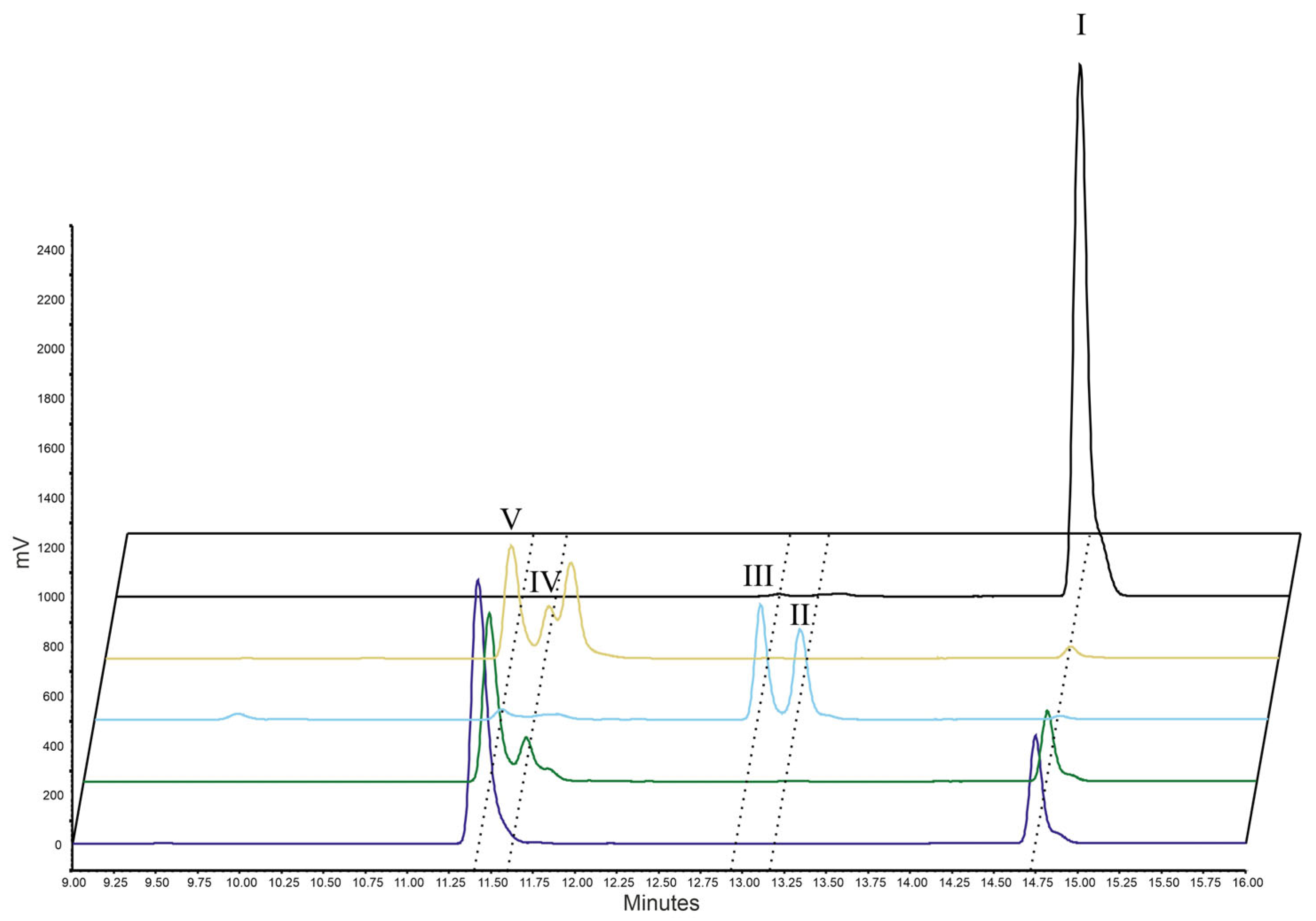
Figure 1. Exemplary HPLC elution profiles of metabolites formed by long UPOs from arachidonic acid (AA). Stacked chromatograms refer to the reactions of FettUPO (blue), rPabUPO-I (green), rPabUPO-II (light-blue), PaDa I UPO (mustard) with hydrogen peroxide and AA; control without enzyme (black). The metabolites were identified on the basis of authentic standards and their indicative mass spectra: (I) AA; (II) 11,12 EpETrE; (III) 14,15-EpETrE; (IV) 18-HETE and (V) 19-HETE.
Catalysts 15 01162 g001
Figure 2. HPLC elution profiles of metabolites formed during the conversion of AA by three short UPOs. Stacked chromatograms illustrate the reactions of rAniUPO (blue), CglUPO (green), MroUPO (light-blue), TanUPO (mustard) and AA with hydrogen peroxide without enzyme as control (black). (I) AA; (II) 14,15 EpETrE; (III) 11,12-14,15-diEpEDE; (IV) 14,15 HxB3.
Catalysts 15 01162 g002
Figure 3. Time-course analysis of the hydrogen peroxide-dependent formation of mono- and di-oxygenated products derived from AA (up), EPA (middle), and DHA (down) catalyzed by rAniUPO. The enzymatic reactions were conducted in a total volume of 500 µL under the following conditions: 20 mM potassium phosphate buffer (KPi, pH 7), 1 mM PUFA substrate, 10% (v/v) acetone, and 2 µM rAniUPO. The desired final H2O2 concentrations (4, 2, 1, and 0.5 mM) were achieved by the stepwise addition of three aliquots of 10, 5, 2.5, and 1.25 mM H2O2 stock solutions, respectively.
Catalysts 15 01162 g003
Figure 4. Graphical representation of the calculated ratios between mono- and di-oxygenated products.
Catalysts 15 01162 g004
Figure 5. Time courses of the formation of mono- and dioxygenated products from AA (up), EPA (middle) and DHA (down) catalyzed by rAniUPO. Following conditions were applied: 20 mM KPi pH 7, 1 mM PUFA substrate, 10% acetone (v/v) and 2 µM rAniUPO in 100 mL reaction volume; 2 mL hydrogen peroxide (stock 50 mM) was delivered into the reaction setup via a syringe pump at 4 mL h−1.
Catalysts 15 01162 g005
Figure 6. Reaction scheme illustrating the formation of major products in the course of the conversion of three PUFAs (AA, EPA and DHA) by rAniUPO.
Catalysts 15 01162 g006
Table 1. Monoepoxidation of three polyunsaturated fatty acids (AA, EPA and DHA) 1 by eight different UPOs.
EnzymesAAEPADHA
Relative Conversion (%) 2Yield 14,15-EpETrE (%)Relative Conversion Rate (%)Yield 17,18-EpETE (%)Relative Conversion Rate (%)Yield 19,20-EpDPE (%)
FettUPO (l) 362.2 ± 0.4-94.9 ± 0.250.9 ± 0.580.2 ± 0.350.8 ± 0.8
rPabUPO-I (l)68.7 ± 0.8-88.6 ± 3.033.8 ± 2.086.9 ± 2.747.3 ± 1.7
rPabUPO-II (l)96.0 ± 1.440.7 ± 0.695.6 ± 0.378.2 ± 0.997.6 ± 1.067.5 ± 0.4
PaDa I UPO (l)90.3 ± 1.1-96.0 ± 0.273.5 ± 0.296.0 ± 2.176.3 ± 4.5
MroUPO (s)97.6 ± 1.620.8 ± 0.997.8 ± 0.2-97.5 ± 0.616.2 ± 2.5
TanUPO (s)97.9 ± 0.229.5 ± 7.398.2 ± 2.00.9 ± 0.197.4 ± 0.89.0 ± 0.1
rAniUPO (s)98.1 ± 0.158.4 ± 0.797.6 ± 0.312.8 ± 2.795.7 ± 0.221.5 ± 3.4
CglUPO (s)97.1 ± 1.412.2 ± 0.696.5 ± 0.3-95.8 ± 0.58.1 ± 1.5
1 Reaction conditions: 20 mM potassium phosphate buffer (pH 7), 1 mM PUFA substrate dissolved in acetone, 20% (v/v) acetone and 2 µM UPO. Hydrogen peroxide was added at the beginning and every 15 min over a reaction time of 2 h giving a final concentration of 1 mM. All reactions were performed in duplicate and percentages given are respective means with standard deviation. 2 Percentages are based on relative peak areas determined by HPLC-ELSD. Compounds’ identity was confirmed by high resolution mass spectrometry. 3 Abbreviations (s) and (l) refer to the classification of UPOs into short and long representatives, respectively.
Table 2. Output of the different preparative reactions of PUFAs with rAniUPO.
SubstrateProducts 1Yield (%)TOF (h−1) 2
AA15.8 mg (14,15-Hepoxilin B3)43.2939.2
EPA22.1 mg (14,15-17,18-diEpETrE)60.81321.4
DHA24.2 mg (16,17-19,20-diEpDTE)61.81798.1
1 Isolated product. 2 Turnover frequency (number of reaction products generated per active site per unit time).
Disclaimer/Publisher’s Note: The statements, opinions and data contained in all publications are solely those of the individual author(s) and contributor(s) and not of MDPI and/or the editor(s). MDPI and/or the editor(s) disclaim responsibility for any injury to people or property resulting from any ideas, methods, instructions or products referred to in the content.