
Article

Investigation of the Synergistic Aromatization Effect During the Co-Pyrolysis of Wheat Straw and Polystyrene Modulated by an HZSM-5 Catalyst

1
School of Civil Engineering and Transportation, Guangzhou University, Guangzhou 510006, China
2
School of Architectural Engineering, Guangzhou Institute of Science and Technology, Guangzhou 510540, China
3
Faculty of Urban Construction Engineering, Wenhua College, Wuhan 430074, China
*
Authors to whom correspondence should be addressed.
Catalysts 2025, 15(12), 1121; https://doi.org/10.3390/catal15121121
Submission received: 28 October 2025 / Revised: 10 November 2025 / Accepted: 20 November 2025 / Published: 1 December 2025

Abstract

To achieve the high-value utilization of agricultural and plastic wastes, the catalytic co-pyrolysis behavior of wheat straw (WS) and polystyrene (PS) was systematically investigated using HZSM-5 zeolite as a catalyst. The results revealed that oxygenates and aliphatic hydrocarbons derived from WS pyrolysis were efficiently converted into aromatics over the HZSM-5 catalyst, increasing the yield of monocyclic aromatic hydrocarbons (MAHs) from 7.8% to 30.3%. A significant synergistic effect was observed at a WS:PS ratio of 60:40, where the yield of BTX (benzene, toluene, and xylene) reached 41.1%, exceeding the levels achieved from the catalytic pyrolysis of either WS or PS alone. This synergy originates from the reconstruction of reaction pathways: the hydrogen-rich environment generated by PS promoted hydrodeoxygenation of biomass, which suppressed CO2 formation (−16%) and enhanced carbon atom utilization; meanwhile, HZSM-5 facilitated dealkylation and alkyl transfer reactions, leading to an increase in benzene production (+12%). Moreover, elevating the catalytic temperature helped to inhibit the formation of polycyclic aromatic hydrocarbons (PAHs) and further increased the MAH yield. These findings provide a valuable reference and experimental basis for the synergistic conversion of waste materials into high-value-added aromatics.

1. Introduction

The continuous growth of the global population and the rapid advancement of modern society have resulted in tremendous energy demands, accompanied by increasingly severe environmental challenges [1]. The development of contemporary society remains heavily reliant on fossil resources, which serve not only as the dominant energy source but also as the essential feedstock for producing fundamental chemicals and polymeric materials [2,3]. However, fossil resources are inherently non-renewable, and their extraction and utilization lead to substantial greenhouse gas emissions and environmental pollution. Consequently, establishing a sustainable production system for energy and chemicals based on renewable resources has become a strategic imperative to achieve carbon neutrality and advance the circular economy.
Biomass, as the most abundant renewable carbon resource on Earth, has widespread sources and vast reserves [4]. In China alone, the annual quantity of collectible crop straw reaches approximately 731 million tons [5]. However, the current utilization rate of such biomass remains low, with direct incineration being a common practice that results in resource waste and air pollution [6]. Meanwhile, the massive accumulation of waste plastics has led to severe “white pollution” [7,8,9]. Therefore, developing technologies for the synergistic conversion of biomass and waste plastics into high-value chemicals can not only mitigate resource depletion and environmental burdens but also align with the growing demand for green and low-carbon development [10,11]. Among the target products, BTX (benzene, toluene, and xylene) are essential aromatic hydrocarbons that serve as key feedstocks for producing fuel blendstocks, plastics, solvents, and fine chemicals, thereby holding significant economic and strategic importance [12]. Efficient conversion technologies, including pyrolysis, liquid-phase pyrolysis [13], and reductive catalytic fractionation [14], for valorizing waste biomass and plastics into BTX are paramount, this approach not only provides an effective solution to environmental contamination but also accelerates the transition away from conventional fossil fuel feedstocks toward carbon resource circularity [15,16].
Biomass pyrolysis is a promising conversion technology that decomposes macromolecular biomass into biochar, bio-oil, and syngas under anaerobic or oxygen-limited conditions [17]. However, due to the inherently high oxygen content of biomass, its pyrolysis products are typically rich in oxygenated compounds such as phenols, acids, aldehydes, and ketones [18]. As a result, the obtained bio-oil exhibits low heating value, high acidity, and poor chemical stability, which restricts its direct use as a fuel or chemical feedstock [19]. To improve the quality of bio-oil, co-pyrolysis of biomass with hydrogen-rich waste plastics has been recognized as an effective approach [20,21]. Waste plastics (e.g., polypropylene, polystyrene, and polyethylene) possess high heating values and low oxygen content; during co-pyrolysis, their thermal cracking generates hydrogen-rich radicals and hydrogen-donor molecules that can react with oxygen-containing intermediates formed from biomass decomposition, thereby facilitating deoxygenation reactions and improving the product properties [22]. In particular, polystyrene (PS), due to the inherent benzene rings in its molecular structure, not only serves as an excellent hydrogen source during pyrolysis, but also yields cracking products (such as styrene) that serve as direct precursors for BTX formation, thereby presenting a unique synergistic potential for aromatic production in its co-pyrolysis with biomass.
In enhancing product selectivity, the introduction of catalysts plays a crucial role. Zeolitic molecular sieves, particularly HZSM-5, have been most extensively employed in studies on the catalytic pyrolysis of biomass and plastics for aromatic production, owing to their unique MFI topology, tunable acidity, and excellent shape-selective catalytic properties. The three-dimensional intersecting channel system of HZSM-5 (pore size ≈ 0.55 nm) provides shape selectivity toward monocyclic aromatic hydrocarbons such as BTX, thereby effectively suppressing the formation of large-molecule coke precursors [23]. Moreover, its abundant Brønsted acid sites facilitate a series of key reactions, including cracking, dehydration, oligomerization, cyclization, and aromatization [24]. Despite the outstanding potential of HZSM-5 in catalytic aromatization, the intricate interactions between feedstock components and the associated reaction network on the HZSM-5 surface during biomass–plastic co-pyrolysis remain insufficiently understood and require further in-depth investigation.
Accordingly, this study systematically investigates the catalytic co-pyrolysis of wheat straw (WS) and polystyrene (PS) over an HZSM-5 catalyst, with particular focus on the mechanistic role of HZSM-5 in the observed synergistic effects. The co-pyrolysis vapors were analyzed using a pyrolysis–catalysis–gas chromatography/mass spectrometry (Py-CAT-GC/MS) system. The specific objectives of this work are three-fold: (i) to elucidate how different WS/PS blending ratios influence product distribution with particular emphasis on BTX selectivity, (ii) to investigate the synergistic effects on BTX formation under HZSM-5 catalysis and assess how these effects vary with feedstock composition, (iii) and to clarify the possible reaction pathways that govern the interactions between biomass-derived intermediates and PS-derived products over HZSM-5. The findings of this study are expected to provide theoretical insights and technical guidance for the efficient utilization of agricultural and plastic wastes, as well as for the development of sustainable catalytic routes toward high-value aromatic hydrocarbons.

2. Results

2.1. Characterization of the Catalyst

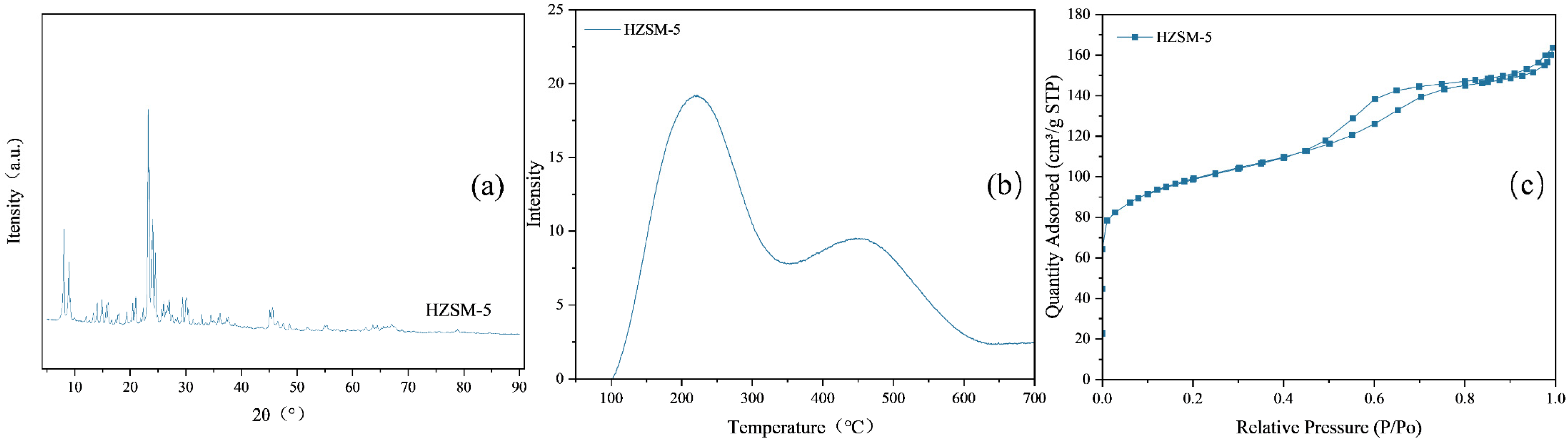
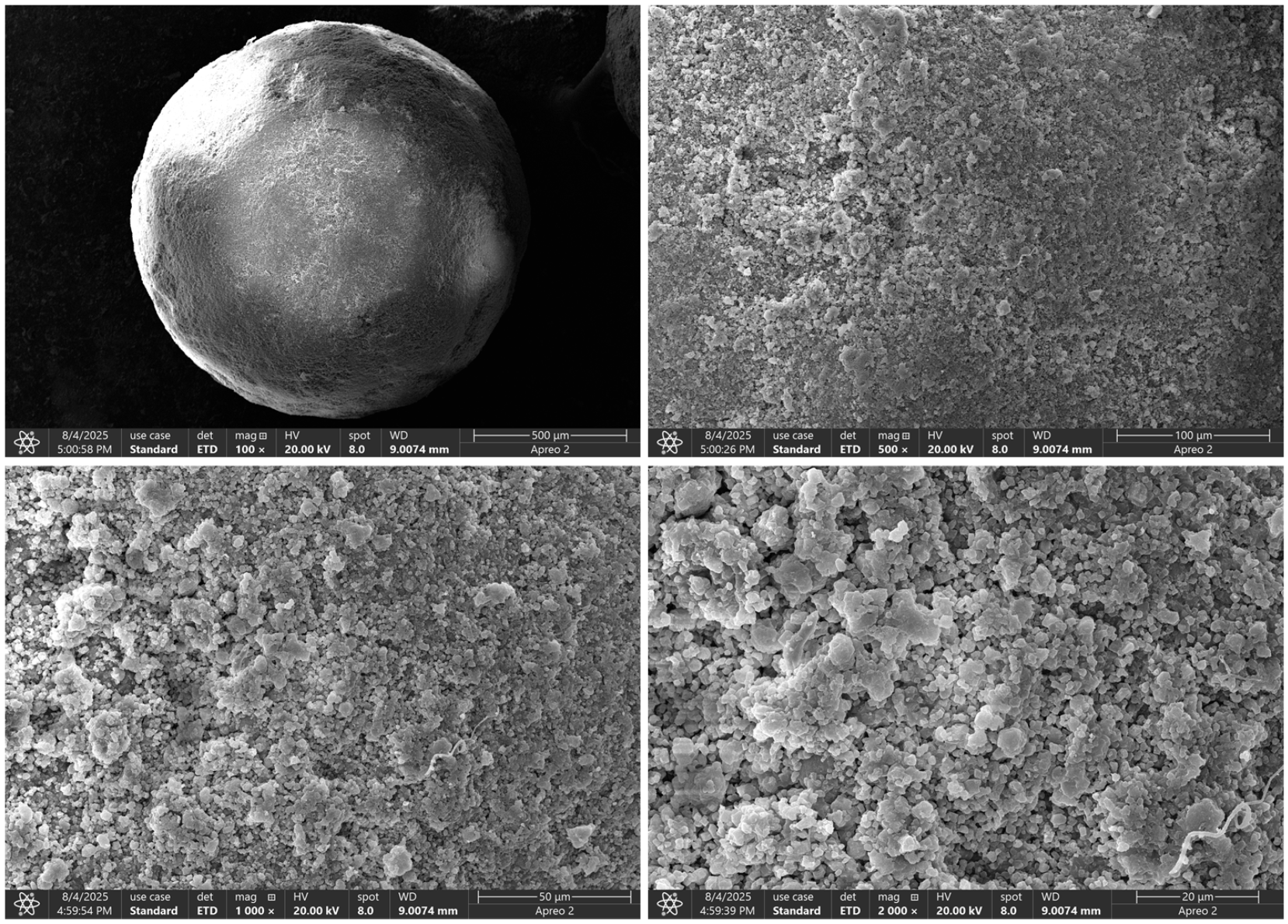
The micromorphology of the catalyst was observed using SEM. As shown in Figure 1, the HZSM-5 sample exhibits a spherical morphology composed of aggregated, block-like crystals with clear boundaries and non-uniform sizes, featuring a porous surface. To further identify its crystal structure, the sample was analyzed by XRD, and the results are shown in Figure 2a, the catalyst exhibits sharp diffraction peaks characteristic of the MFI topology at 2θ = 7.8°, 8.7°, and 23.1°, confirming the high crystallinity and intact zeolite framework of the HZSM-5 sample.
The surface acidity of the catalyst was characterized by NH3-TPD, with the results presented in Figure 2b and Table 1. The NH3 desorption profile of HZSM-5 shows two characteristic peaks, which correspond to weak acid sites in the low-temperature region (219.71 °C) and strong acid sites in the high-temperature region (431.60 °C). Quantitative analysis reveals that the catalyst possesses an abundance of acid sites, with a total acidity of 0.884 mmol/g. The concentrations of weak and strong acid sites were determined to be 0.526 mmol/g and 0.358 mmol/g, respectively. The presence of the high-temperature desorption peak and the relatively large proportion of strong acid sites are mainly attributed to the abundance of Brønsted acid sites within its framework structure, which serve as the key active centers for catalytic cracking and aromatization reactions.
The BET analysis results are shown in Figure 2c. The N2 adsorption–desorption isotherm exhibits a typical type IV curve with an H4 hysteresis loop, indicating that the HZSM-5 possesses characteristic mesoporous structures. The pore structure parameters in Table 2 further confirm this observation. The catalyst shows a high BET specific surface area of 330.55 m2/g. Its micropore and mesopore surface areas are 169.33 m2/g and 132.52 m2/g, respectively, with corresponding micropore and mesopore volumes of 0.08 cm3/g and 0.15 cm3/g. These results suggest that the HZSM-5 catalyst has both abundant micropores and mesopores, forming a typical hierarchical pore structure. This structure not only provides ample active sites for the reaction but also features a well-developed mesoporous network also facilitates the diffusion of reactant molecules and the mass transfer of product molecules, thereby positively impacting the efficiency and selectivity of the catalytic reaction.

2.2. Solid Residue Analysis

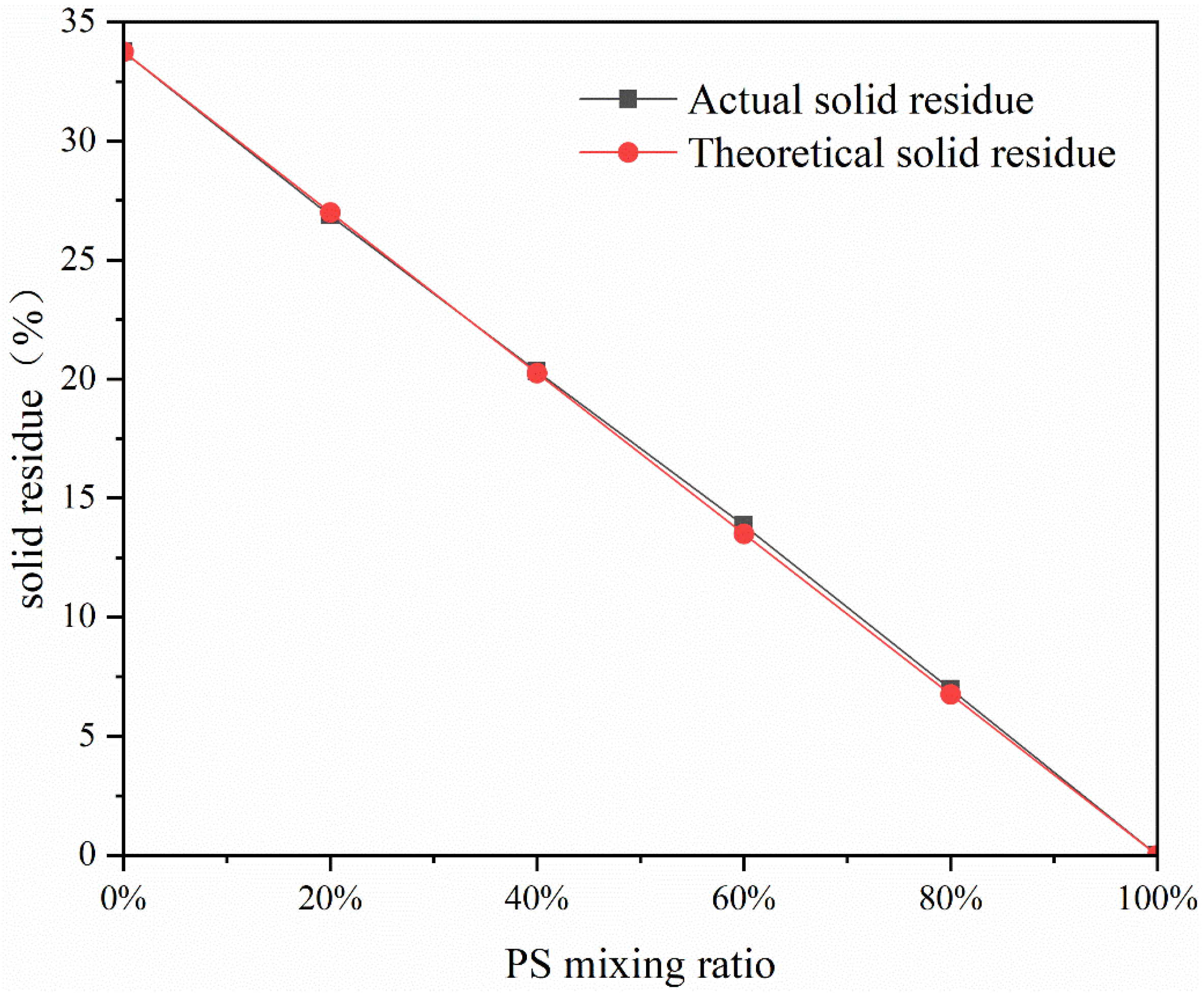
The actual solid residue yields from the pyrolysis of wheat straw and its mixtures with varying proportions of PS are shown in Figure 3. The results indicate that after complete pyrolysis for 45 min, the solid residue yield for wheat straw alone was 33.75%, whereas pure PS pyrolysis produced almost no solid residue. As the blending ratio of PS increased, the actual residue yield gradually decreased, showing excellent agreement with the theoretical values, with deviations within ±0.3%. This high degree of agreement suggests that under conditions of complete pyrolysis, the co-pyrolysis of WS and PS generally follows an additive rule in terms of char formation, exhibiting no significant synergistic or antagonistic effects. The addition of PS primarily acts as a diluent, reducing the solid residue. The char from WS mainly originates from the polycondensation and aromatization reactions of cellulose, hemicellulose, and lignin at high temperatures, whereas PS is completely decomposed into gaseous and liquid products during pyrolysis without forming a stable solid residue. Theoretically, during co-pyrolysis, hydrogen-containing free radicals and fragments from plastic pyrolysis can react to some extent with oxygen-containing radicals from biomass pyrolysis, thereby reducing the char yield [22]. Alternatively, volatiles from both components could undergo secondary reactions (such as condensation) to increase the char yield [25]. However, under the conditions of this study, no synergistic effects leading to deviations from theoretical values were observed. These findings suggest that the interaction between WS and PS appears to manifest primarily in the vapor-phase product distribution and selectivity, as discussed in the following sections.

2.3. Effect of HZSM-5 on Product Distribution

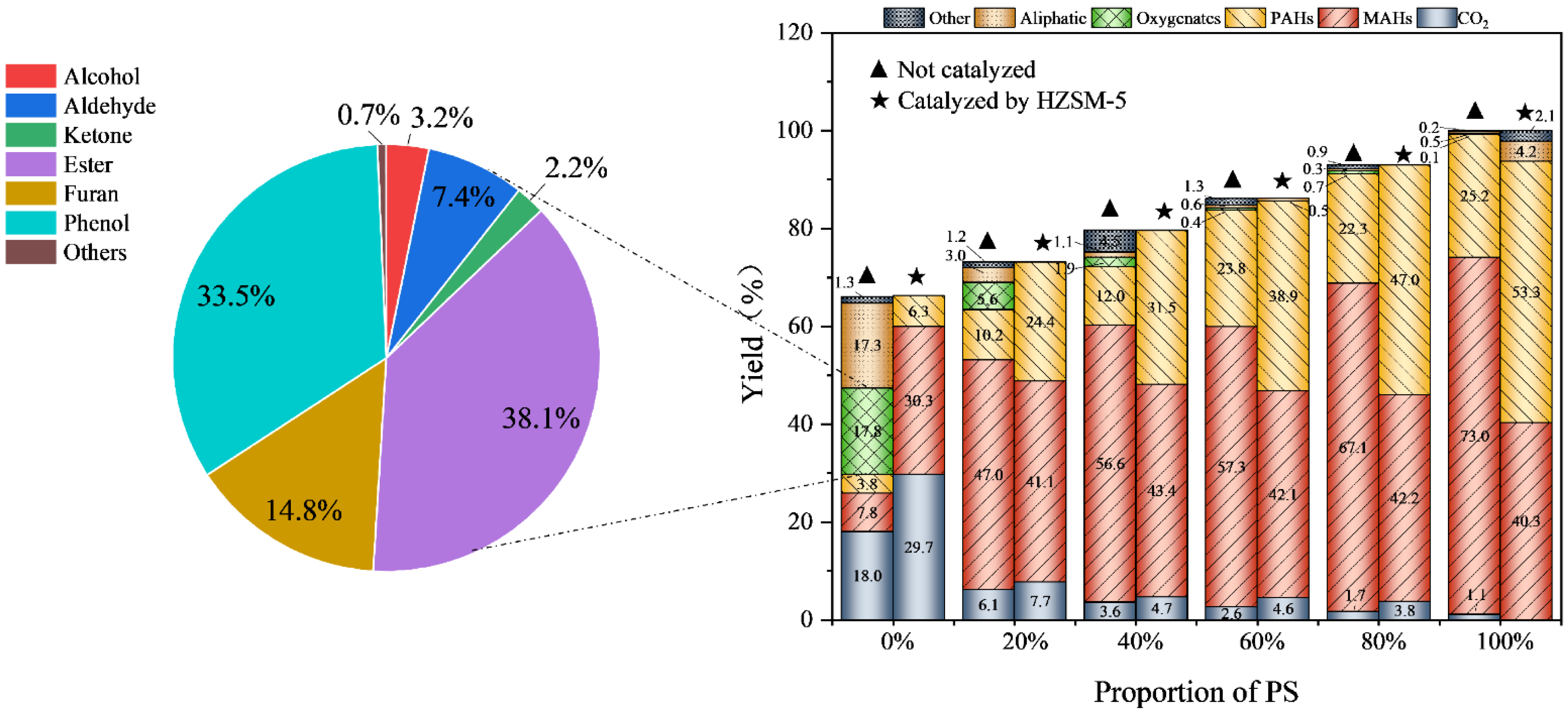
As shown in Figure 4, under non-catalytic conditions, wheat straw primarily produced oxygenated compounds and aliphatic hydrocarbons, accompanied by the release of CO2, while monocyclic aromatic hydrocarbons (MAHs) accounted for only 7.8%. These oxygenates mainly included phenols, furans, ketones, and aldehydes, which correspond to the typical pyrolysis products of lignin and cellulose/hemicellulose [26]. In contrast, the pyrolysis products of polystyrene were highly concentrated in aromatics, with MAHs accounting for 73.0% and polycyclic aromatic hydrocarbons (PAHs) for 25.2%. This is because at high temperatures, PS primarily undergoes chain-scission cracking to produce styrene monomers, with some of the styrene also serving as an intermediate for the further formation of PAHs [27,28]. After the introduction of the HZSM-5 catalyst, significant transformations were observed. For wheat straw, the catalyst exhibited strong deoxygenation and aromatization activity. Oxygenates and aliphatic hydrocarbons were almost completely eliminated, and the MAH yield increased substantially from 7.8% to 30.3%. This transformation is attributed to the oxygenates in the pyrolysis vapors undergoing dehydration, decarboxylation, and decarbonylation on the Brønsted acid sites, releasing H2O and CO2 (the CO2 yield increased to 29.7%). The resulting unsaturated hydrocarbons then undergo further oligomerization, cyclization, and hydrogen transfer under the confinement of the zeolite channels, ultimately forming MAHs such as benzene, toluene, and xylene [29]. For PS pyrolysis, HZSM-5 promoted secondary reactions: the MAH yield decreased from 73.0% to 40.3%, while the PAH yield increased from 25.2% to 53.3%, indicating that styrene and its derived MAHs readily undergo polymerization and cyclization on the acid sites, transforming into PAHs like naphthalene and phenanthrene [30]. In the WS–PS co-pyrolysis system, the total aromatic yield increased with the proportion of PS, but the regulatory effect of HZSM-5 on the aromatic distribution was more complex. Under non-catalytic conditions, the products were consistently dominated by MAHs, whereas under catalytic conditions, the MAH yield initially increased at low PS blending ratios but then gradually decreased, while the PAH yield continuously increased. This reflects the differential role of HZSM-5 on the pyrolysis products of biomass and PS: biomass-derived vapors are primarily deoxygenated and aromatized to MAHs, whereas PS-derived species are more prone to further condensation into PAHs.
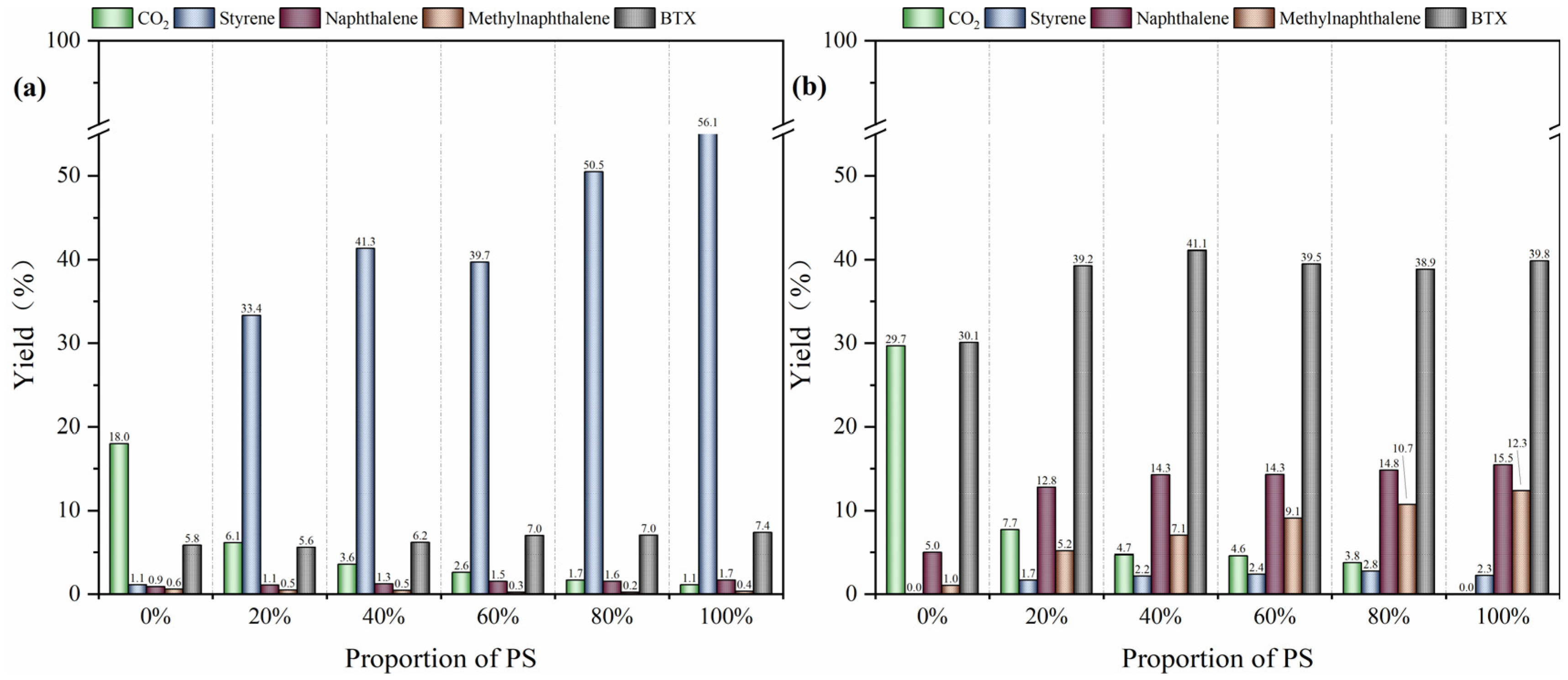
To further elucidate the role of HZSM-5 in the co-pyrolysis process, a detailed analysis of the key products was conducted. Under non-catalytic conditions (Figure 5a), the product distribution primarily reflected the intrinsic cracking characteristics of the individual feedstocks. As the PS proportion increased, the yield of styrene, the main product of PS pyrolysis, rose significantly, whereas the total BTX yield only increased slightly from 5.8% to 7.4%. This indicates that the addition of PS mainly led to styrene enrichment and failed to establish a significant synergy with the biomass products. After the introduction of HZSM-5 (Figure 5b), the product distribution was significantly restructured. Styrene derived from PS was almost completely converted, with its yield remaining below 3% at all blending ratios, suggesting that it is a highly active intermediate on the acid sites that rapidly participates in further transformations. More importantly, the catalyst substantially enhanced BTX production: the BTX yield reached 30.1% for the catalytic pyrolysis of pure WS and peaked at 41.1% at a WS/PS ratio of 60:40, substantially exceeding the levels obtained from either single component. This super-additive increase clearly demonstrates that the two feedstocks undergo synergistic aromatization in the presence of the HZSM-5 catalyst.

2.4. Analysis of the Synergistic Effect of HZSM-5 on Products

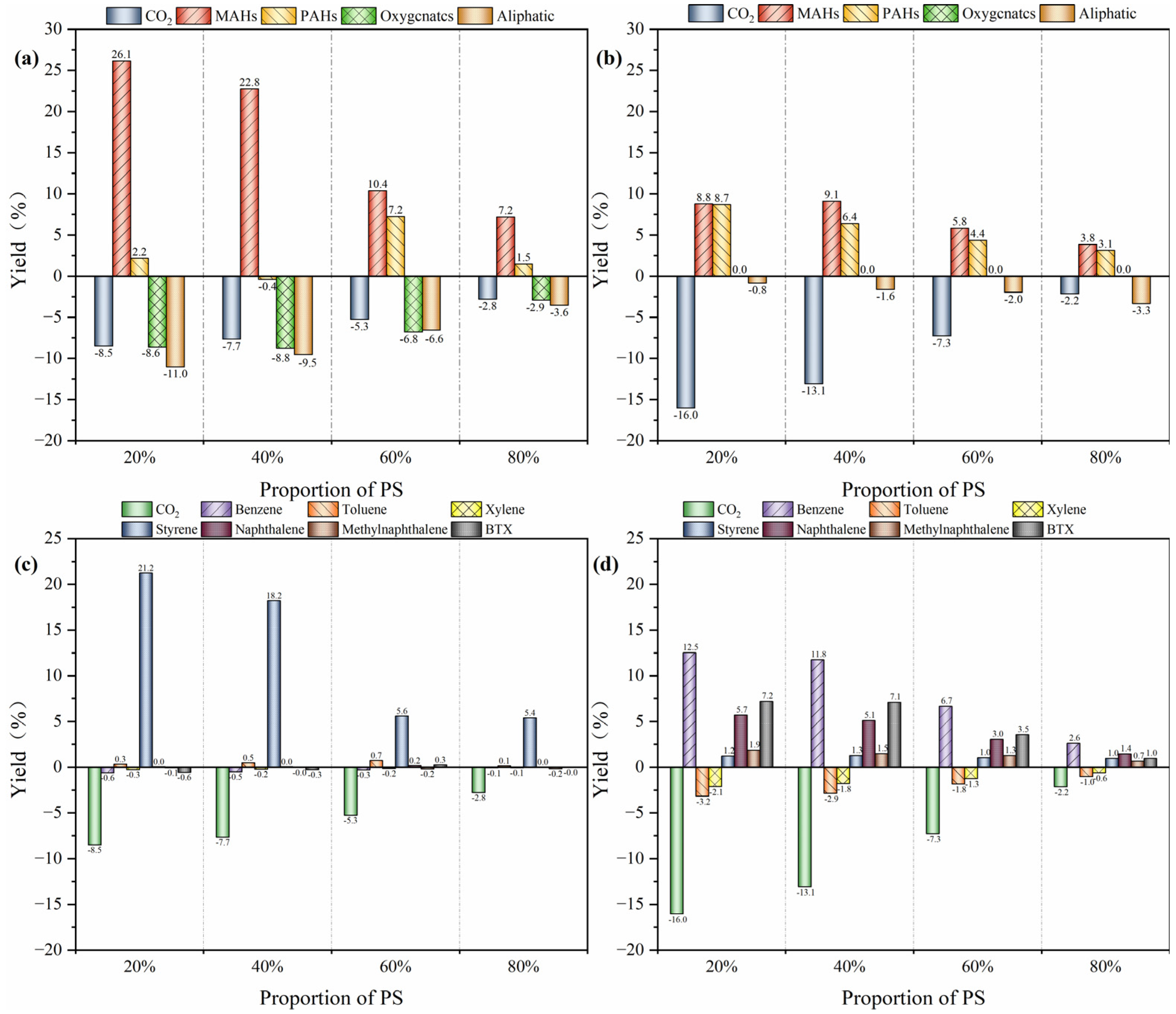
To evaluate the interaction between WS and PS during co-pyrolysis, the magnitude and direction of the synergistic effect were analyzed by comparing the experimental product distribution with the theoretically calculated values, as shown in Figure 6. Furthermore, to better visualize the overall trends, these interactions are also qualitatively summarized in Table 3 and Table 4, where ‘+’ denotes promotion and ‘–’ denotes inhibition. Under non-catalytic conditions (Figure 6a,c, Table 3), the synergy was primarily reflected in the inhibition of secondary styrene reactions. With the introduction of the HZSM-5 catalyst (Figure 6b,d, Table 4), however, this simple interaction evolved into a complex and highly selective catalytic synergistic network. One of the most prominent manifestations of this catalytic synergy was the optimization of reaction pathways. The synergistic effect on CO2 exhibited a strong inhibitory response (up to −16.0%), indicating that the hydrogen-rich environment created during co-pyrolysis, together with the catalytic function of HZSM-5, redirected the dominant deoxygenation pathway of biomass from decarboxylation—which releases CO2—to hydrodeoxygenation (HDO) and dehydration reactions that produce H2O instead. This transition effectively reduced carbon loss during deoxygenation, thereby enhancing the overall carbon utilization efficiency of the system. Regarding aromatic products, the HZSM-5 catalyst steered the synergistic effect toward a targeted reconstruction of reaction pathways. As shown in the Figure 6, the catalyst significantly promoted benzene formation (+12%) while suppressing the production of toluene and xylene. This trade-off clearly demonstrates that the catalytic synergy primarily originates from dealkylation and alkyl transfer reactions, through which various alkylaromatics in the reaction pool are reformed into benzene. Meanwhile, the synergistic effect on PAHs shifted from weak under non-catalytic conditions to a marked promotion under catalytic conditions, indicating that in an aromatic-rich environment, HZSM-5 also promotes the conversion of monocyclic aromatic hydrocarbons to polycyclic aromatic hydrocarbons. Overall, the role of HZSM-5 extends far beyond that of a passive reaction platform. It transforms the WS–PS synergistic mechanism from one dominated by hydrogen transfer—stabilizing radicals and suppressing side reactions—into a catalyst-driven process in which dealkylation, aromatization, and hydrodeoxygenation collectively reorganize the carbon flux, achieving high-efficiency carbon conversion and targeted product formation. This mechanistic insight provides a fundamental understanding of how catalyst-feedstock interactions can be engineered to maximize aromatic yield and selectivity in waste valorization processes.

2.5. Effect of Catalytic Temperature on Product Distribution

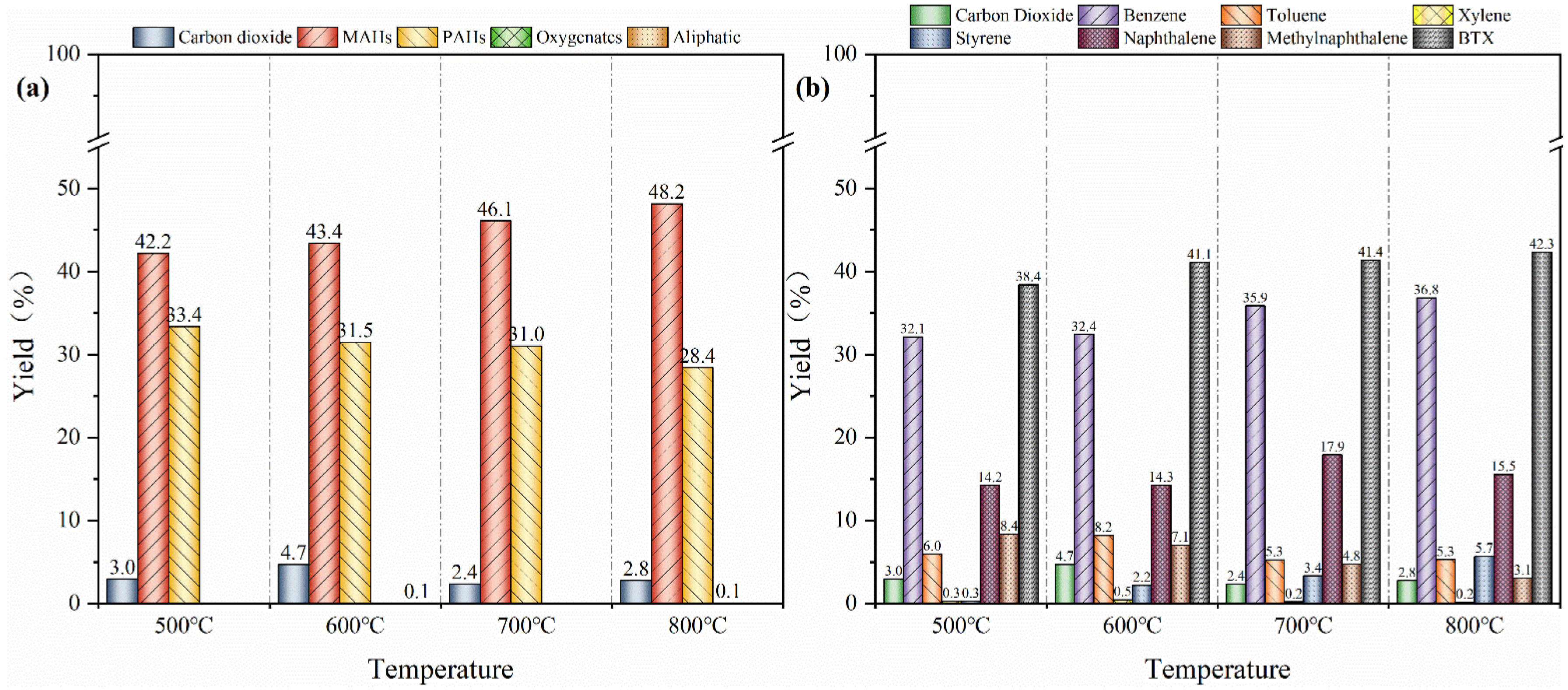
Catalytic temperature is a key parameter influencing the distribution and selectivity of pyrolysis products. In this study, the feedstock with a 40% PS blending ratio—showing the strongest synergistic effect and the highest BTX yield at 600 °C—was selected to examine temperature effects over the range of 500–800 °C. As shown in Figure 7a, the catalyst effectively minimized the formation of intermediate products such as oxygenates and aliphatic hydrocarbons across the entire temperature range. With increasing temperature, the yield of monocyclic aromatic hydrocarbons (MAHs) rose from 42.2% to 48.2%, while that of polycyclic aromatic hydrocarbons (PAHs) decreased from 33.4% to 28.4%. These results indicate that higher temperatures promote the cracking of aromatic precursors and suppress the condensation of monocyclic aromatics, thereby shifting product selectivity toward MAHs. In terms of individual aromatic species (Figure 7b), the total BTX yield increased continuously with temperature, mainly due to the rise in benzene yield (from 32.1% to 36.9%). Meanwhile, the yields of toluene, xylene, and methylnaphthalene gradually declined. The reaction mechanisms responsible for this change may stem from: (1) Intensified dealkylation reactions: The alkyl side chains of alkylaromatics, such as toluene and xylene, are more prone to cleave at high temperatures to form benzene, which could be driven by an equilibrium shift at elevated temperatures. (2) A shift in reaction pathways: High temperatures inhibit the pathway for the formation of PAHs via the condensation of MAHs, directing the reaction network toward a route that favors the production of monocyclic aromatics. These temperature-dependent effects underscore the importance of optimizing reaction conditions to achieve maximum selectivity toward desired aromatic products.

2.6. Derivation of Reaction Pathways

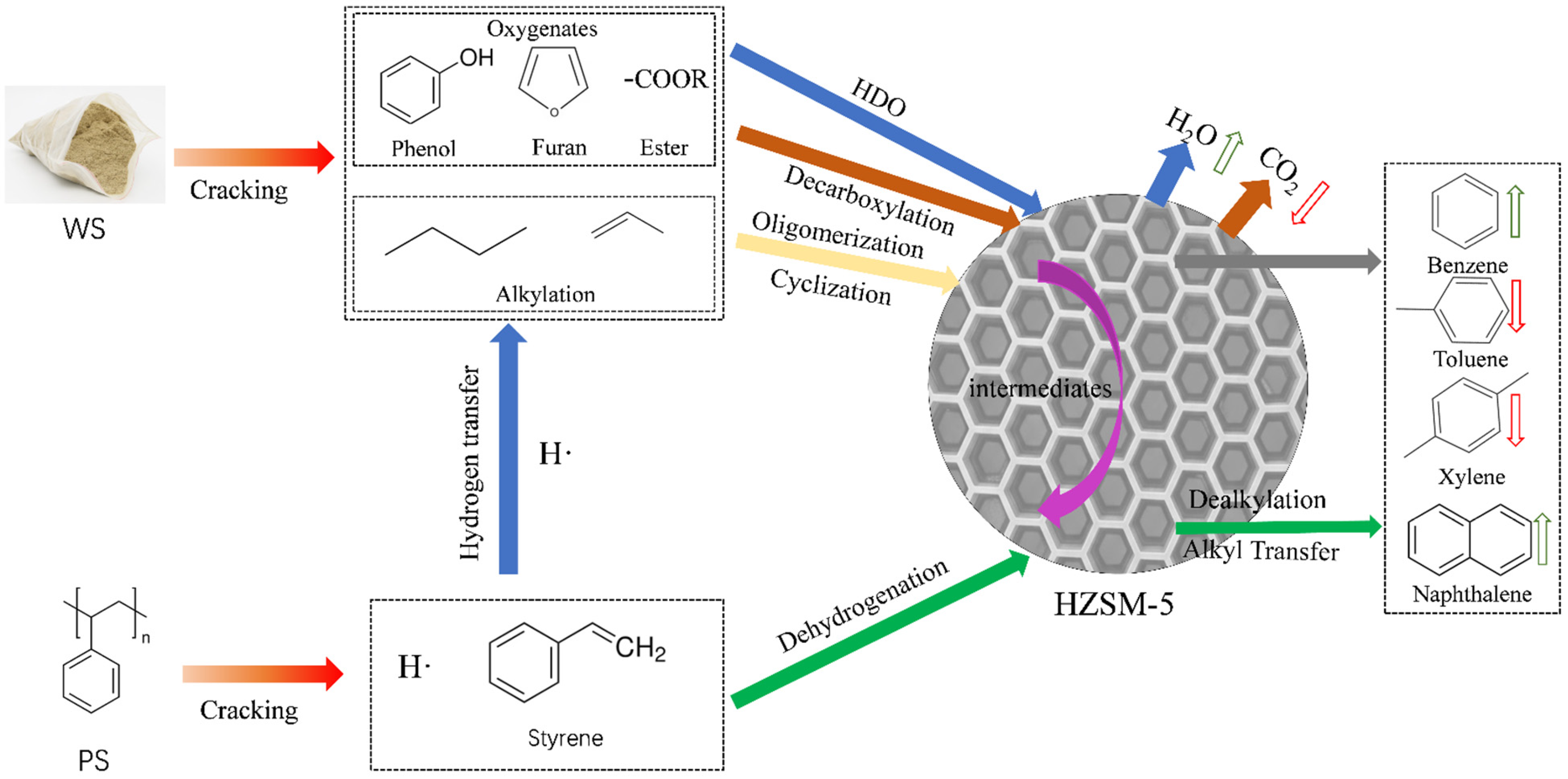
In this study, as shown in Figure 8, the HZSM-5 catalyst plays a core role as a “reaction pathway restructurer” during the co-pyrolysis of wheat straw and polystyrene, inducing a significant synergistic aromatization effect. This synergistic mechanism is primarily achieved via two pathways: First, HZSM-5 utilizes the hydrogen-rich environment provided by PS pyrolysis to forcibly restructure the main deoxygenation pathway of WS away from decarboxylation (which releases CO2) and toward hydrodeoxygenation (HDO) and dehydration reactions, which produce H2O. This strongly inhibits CO2 generation, significantly enhancing the system’s carbon atom utilization efficiency. Second, HZSM-5’s unique acid sites and pore structure further reorganize the aromatics generation pathway, the catalyst strongly promotes dealkylation and alkyl transfer reactions, consuming alkylbenzenes like toluene and xylene generated in the reaction pool as intermediates, and directionally reforming them into the more thermodynamically stable benzene. Ultimately, this leads to a strong promotion of benzene yield, achieving an efficient and directional conversion toward high-value-added chemicals.

3. Materials and Methods

3.1. Experimental Materials

The wheat straw used in the experiment was collected from a local farm, dried, ground in a blender, and then sieved to a particle size of 0.075–0.105 mm, and is denoted as WS. Polystyrene (PS), with a particle size of 0.074 mm, was purchased from Fengtai Plastic Raw Materials Co., Ltd., Guangzhou, China. The materials were mixed according to specific proportions for the experiments. Prior to use, all materials were stored in a desiccator to prevent moisture absorption. The pretreated wheat straw and PS were subjected to proximate and elemental analyses.
To elucidate the fundamental characteristics of the feedstocks, proximate and ultimate analyses were performed on wheat straw (WS) and polystyrene (PS), and the results are presented in Table 5. The proximate analysis reveals distinct differences between WS and PS. As a typical lignocellulosic biomass, WS contains a substantial amount of ash and fixed carbon. The high ash content primarily arises from the inorganic minerals naturally present in the biomass. In contrast, PS exhibits negligible moisture and ash contents, with its volatile matter reaching up to 99.91 wt%. This suggests that PS can be almost completely volatilized and decomposed during pyrolysis, leaving virtually no solid residue. In comparison, the volatile matter content of WS is only 58.1 wt%. The ultimate analysis further demonstrates their contrasting chemical compositions. WS has a relatively low carbon content but an exceptionally high oxygen content, attributable to its abundance of oxygen-containing structural components such as cellulose, hemicellulose, and lignin. Conversely, PS, being a typical hydrocarbon polymer, contains significantly higher proportions of carbon and hydrogen than WS.

3.2. Catalyst Preparation and Characterization

Spherical HZSM-5 catalyst with a Si/Al molar ratio of 25–35 (referring to the silicon-to-aluminum ratio in the zeolite framework) and a particle diameter of 1–2 mm was purchased from Raodong Molecular Sieve Co. (Dalian, China). Before use, the catalyst was calcined in an air atmosphere at 550 °C for 4 h to remove residues and adsorbed water. The crystal structures were analyzed by X-ray diffraction (XRD) using a Bruker D8 ADVANCE diffractometer (Bruker, Karlsruhe, Germany) with Ni-filtered Cu-Kα radiation. The samples were scanned from 10° to 80° at a rate of 5°/min. N2 adsorption–desorption isotherms were obtained using an ASAP 2020 PLUS HD88 analyzer (Micromeritics Instrument Corp., Norcross, GA, USA). The specific surface area was calculated using the BET method, while the pore size distribution was determined by the BJH method at P/P0 = 0.99. The micropore surface area and volume were evaluated by the t-Plot method. The acidity and acid site distribution were evaluated by NH3-temperature-programmed desorption. NH3-TPD measurements were performed using a high-precision pyrolyzer (PY-2020iD, Frontier Laboratories Ltd., Koriyama, Japan; temperature accuracy: ±0.1 °C) connected to a gas chromatograph (GC, Panna A91) equipped with a thermal conductivity detector (TCD). The outlet of the pyrolyzer was connected to the GC inlet via a transfer line, while the GC inlet was linked to the TCD through an inert glass column to ensure the rapid and stable transfer of desorbed gases to the detector. In a typical run, 150 mg of catalyst was pretreated in a high-purity helium (He) flow (50 mL/min) at 500 °C for 1 h to remove adsorbed moisture and impurities. The sample was then cooled to 50 °C and exposed to an ammonia (NH3) flow (30 mL/min) for 1 h to allow adsorption. After saturation, the system was purged with He (50 mL/min) at 50 °C until a stable TCD baseline was obtained, ensuring the removal of physically adsorbed NH3. Finally, the temperature was ramped from 50 °C to 700 °C at a rate of 10 °C min−1, and the TCD continuously recorded the NH3 desorption signal throughout the process.

3.3. Catalytic Experimental Apparatus

Before the pyrolysis experiments, 2 g of the material at each mixing ratio was placed in a tube furnace and rapidly heated to 800 °C at a rate of 50 K/min under a nitrogen atmosphere with a flow rate of 100 mL/min. The temperature was held at 800 °C for 45 min to ensure complete pyrolysis. The solid residue yield (S%) was calculated from the mass difference of the container before and after calcination to correct the product distribution data from the PY-CAT-GC/MS.
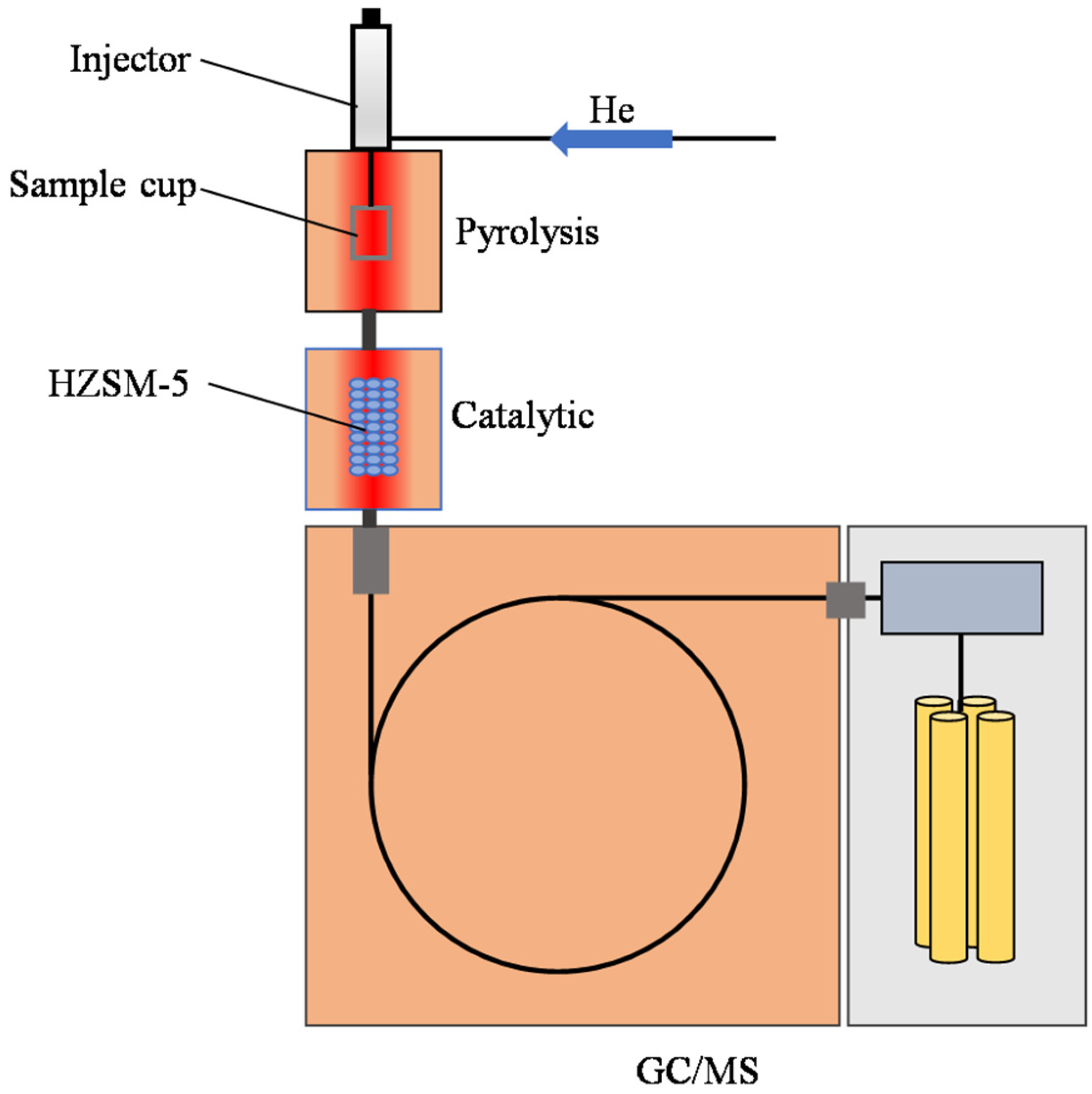
A schematic diagram of the experimental setup is shown in Figure 9. The catalytic pyrolysis experiments were conducted in a PY-2020iD (Frontier Lab) tandem double-shot micro-furnace pyrolyzer system, where the upper furnace served as the pyrolyzer (PY, Set 800 °C) and the lower furnace as the catalytic reactor (CAT, Set 600 °C). The catalyst was packed into a quartz tube with an inner diameter of 0.3 cm to a height of approximately 3 cm. The tube was then fixed inside the catalytic reactor and maintained at the target catalytic temperature. After the pyrolyzer reached the set temperature, a sample of 0.30 ± 0.02 mg was injected into the pyrolyzer via an injector. The products, after pyrolysis and catalysis, were introduced into a GC/MS (Agilent 7890A-5975C, Agilent Technologies, Santa Clara, CA, USA). The GC conditions were as follows: A split injection mode was used with a split ratio of 1:100. Helium at 30 mL/min was used as the carrier gas to transport the products into the GC/MS. The injector temperature was 320 °C. An HP-5MS capillary column (30 m × 0.25 mm × 0.25 μm) was employed for separation. The oven temperature program was: hold at 40 °C for 3 min, then ramp at 10 °C/min to 300 °C, and hold at 300 °C for 16 min. The MS was operated in electron ionization (EI) mode at 70 eV, with a scan range of 35–550 m/z. The detected components within the measurable mass-to-charge (m/z) range were normalized to 100%.The ion source and quadrupole temperatures were set at 230 °C and 150 °C, respectively.

3.4. Product Analysis Method

The proportion of each peak area in the chromatogram (AExp%) was considered as the proportion of the product components in the gas and liquid phases after pyrolysis, and it was corrected using the solid residue yield (S%). After correction, the actual proportion of each product component (Areal%) was obtained. The calculation formula is as Equation (1):
A r e a l % = A E x p % × 100 % S %
The calculated value of the product proportion (ACal%) is determined by a weighted average of the experimental values from the individual pyrolysis of the feedstocks. The synergistic effect, ΔA, is then calculated by subtracting the calculated value from the actual experimental value; ΔA > 0 indicates a promotional effect, while ΔA < 0 signifies an inhibitory effect. The calculation formulas are as Equations (2) and (3)
A C a l % = x A r e a l W S % + 1 x A r e a l P S %
Δ A = A r e a l % A C a l %
where x represents the mass fraction of WS in the mixture. Compound identification was performed by comparing mass spectra with the NIST 17 mass spectral library, with a match quality threshold of ≥80%. All analytical results were confirmed by triplicate runs, and the relative standard deviation (RSD) was maintained below 5% for quantitative reliability.

4. Conclusions

The HZSM-5 catalyst effectively promoted the selective formation of aromatics during the co-pyrolysis of wheat straw (WS) and polystyrene (PS), significantly suppressing oxygenate generation and enhancing the selectivity toward monocyclic aromatic hydrocarbons (MAHs). The combined effects of its strong acidity and hierarchical pore structure enabled deep deoxygenation of oxygenated intermediates and facilitated the construction of aromatic frameworks. A pronounced synergistic effect was observed between WS and PS, in which hydrogen-rich pyrolysis fragments from PS participated in hydrodeoxygenation reactions on the HZSM-5 surface. This process not only improved carbon utilization efficiency but also restructured the aromatization network, directing product selectivity toward MAHs. Furthermore, reaction temperature played a key regulatory role in product distribution: moderate temperature increases intensified dealkylation reactions and suppressed the formation of polycyclic aromatic hydrocarbons (PAHs), thereby further enhancing MAH yields. Ultimately, this catalytic co-pyrolysis strategy represents a promising route toward sustainable production of high-value aromatic hydrocarbons from agricultural and plastic wastes, contributing to both waste valorization and carbon resource circularity.

Author Contributions

Conceptualization, Z.C. and D.G.; methodology, Z.C.; software, Z.C. and Y.Y.; validation, Z.C., H.R. and B.C.; formal analysis, Z.C.; investigation, Y.Y.; resources, D.G.; data curation, Z.C.; writing—original draft preparation, Z.C.; writing—review and editing, A.K., H.R. and B.C.; visualization, B.C.; supervision, D.G. and F.Z.; project administration, B.C. and F.Z.; funding acquisition, D.G. All authors have read and agreed to the published version of the manuscript.

Funding

This research was funded by Characteristic Innovation Projects of Colleges and Universities in Guangdong Province, China 2025KTSCX208 and the Natural Science Foundation of Guangdong Province (2025A1515011303).

Data Availability Statement

The data presented in this study are available on request from the corresponding author.

Acknowledgments

The authors acknowledge the Natural Science Foundation of Guangdong Province, China (2025A1515011303), The Characteristic Innovation Projects of Colleges and Universities in Guangdong Province, China 2025KTSCX208, We thank the Analysis and Test Centre of Guangzhou University for their technical support.

Conflicts of Interest

The authors declare no conflicts of interest.

References

  1. Naqvi, S.R.; Jamshaid, S.; Naqvi, M.; Farooq, W.; Niazi, M.B.K.; Aman, Z.; Zubair, M.; Ali, M.; Shahbaz, M.; Inayat, A.; et al. Potential of Biomass for Bioenergy in Pakistan Based on Present Case and Future Perspectives. Renew. Sustain. Energy Rev. 2018, 81, 1247–1258. [Google Scholar] [CrossRef]
  2. Huber, G.W.; Iborra, S.; Corma, A. Synthesis of Transportation Fuels from Biomass: Chemistry, Catalysts, and Engineering. Chem. Rev. 2006, 106, 4044–4098. [Google Scholar] [CrossRef] [PubMed]
  3. World Energy Outlook 2024—Analysis. Available online: https://www.iea.org/reports/world-energy-outlook-2024 (accessed on 8 October 2025).
  4. Cui, B.; Rong, H.; Luo, S.; Chen, Z.; Hu, M.; Yan, W.; He, P.; Guo, D. Pyrolysis Characteristics of Camellia Oleifera Seeds Residue in Different Heating Regimes: Products, Kinetics, and Mechanism. Renew. Energy 2025, 238, 121972. [Google Scholar] [CrossRef]
  5. Fertilization, feed, energyization, binder, raw materials. China forms a new pattern of straw multi-use. Available online: https://www.agri.cn/zx/nyyw/202405/t20240514_8632898.htm (accessed on 8 October 2025).
  6. Kumar, A.; Jamro, I.A.; Rong, H.; Kumari, L.; Laghari, A.A.; Cui, B.; Aborisade, M.A.; Oba, B.T.; Nkinahamira, F.; Ndagi-jimana, P.; et al. Assessing Bioenergy Prospects of Algal Biomass and Yard Waste Using an In-tegrated Hydrothermal Carbonization and Pyrolysis (HTC-PY): A Detailed Emission-to-Ash Characterization via Diverse Hyphenated Analytical Techniques and Modelling Strategies. Chem. Eng. J. 2024, 492, 152335. [Google Scholar] [CrossRef]
  7. Plastics—The Fast Facts 2024 • Plastics Europe. Available online: https://plasticseurope.org/knowledge-hub/plastics-the-fast-facts-2024/ (accessed on 20 August 2025).
  8. Jambeck, J.R.; Geyer, R.; Wilcox, C.; Siegler, T.R.; Perryman, M.; Andrady, A.; Narayan, R.; Law, K.L. Plastic Waste Inputs from Land into the Ocean. Science 2015, 347, 768–771. [Google Scholar] [CrossRef]
  9. MacLeod, M.; Arp, H.P.H.; Tekman, M.B.; Jahnke, A. The Global Threat from Plastic Pollution. Science 2021, 373, 61–65. [Google Scholar] [CrossRef]
  10. Mo, F.; Ullah, H.; Zada, N.; Shahab, A. A Review on Catalytic Co-Pyrolysis of Biomass and Plastics Waste as a Thermochemical Conversion to Produce Valuable Products. Energies 2023, 16, 5403. [Google Scholar] [CrossRef]
  11. Hassan, H.; Lim, J.K.; Hameed, B.H. Recent Progress on Biomass Co-Pyrolysis Conversion into High-Quality Bio-Oil. Bioresour. Technol. 2016, 221, 645–655. [Google Scholar] [CrossRef]
  12. Wu, Y.; Yang, J.; Wu, G.; Gao, W.; Silva Lora, E.E.; Isa, Y.M.; Subramanian, K.A.; Kozlov, A.; Zhang, S.; Huang, Y. Benzene, Toluene, and Xylene (BTX) Production from Catalytic Fast Pyrolysis of Biomass: A Review. ACS Sustain. Chem. Eng. 2023, 11, 11700–11718. [Google Scholar] [CrossRef]
  13. Szabó, B.; Takács, M.; Domján, A.; Barta-Rajnai, E.; Valyon, J.; Hancsók, J.; Barthos, R. Liquid Phase Pyrolysis of Wheat Straw and Poplar in Hexadecane Solvent. J. Anal. Appl. Pyrolysis 2019, 137, 237–245. [Google Scholar] [CrossRef]
  14. Dao Thi, H.; Van Aelst, K.; Van Den Bosch, S.; Katahira, R.; Beckham, G.T.; Sels, B.F.; Van Geem, K.M. Identification and Quantification of Lignin Monomers and Oligomers from Reductive Catalytic Fractionation of Pine Wood with GC × GC—FID/MS. Green Chem. 2022, 24, 191–206. [Google Scholar] [CrossRef]
  15. Okonsky, S.T.; Hogan, N.R.; Toraman, H.E. Effect of Pyrolysis Operating Conditions on the Catalytic Co-pyrolysis of Low-density Polyethylene and Polyethylene Terephthalate with Zeolite Catalysts. AIChE J. 2024, 70, e18548. [Google Scholar] [CrossRef]
  16. Wang, G.; Dai, Y.; Yang, H.; Xiong, Q.; Wang, K.; Zhou, J.; Li, Y.; Wang, S. A Review of Recent Advances in Biomass Pyrolysis. Energy Fuels 2020, 34, 15557–15578. [Google Scholar] [CrossRef]
  17. Zhang, J.; Gu, J.; Shan, R.; Yuan, H.; Chen, Y. Advances in Thermochemical Valorization of Biomass towards Carbon Neutrality. Resour. Conserv. Recycl. 2025, 212, 107905. [Google Scholar] [CrossRef]
  18. Yang, Q.; Wu, S.; Lou, R.; Lv, G. Analysis of Wheat Straw Lignin by Thermogravimetry and Pyrolysis–Gas Chromatography/Mass Spectrometry. J. Anal. Appl. Pyrolysis 2010, 87, 65–69. [Google Scholar] [CrossRef]
  19. Zhang, C.; Zhang, Z.C. Essential Quality Attributes of Tangible Bio-Oils from Catalytic Pyrolysis of Lignocellulosic Biomass. Chem. Rec. 2019, 19, 2044–2057. [Google Scholar] [CrossRef]
  20. Cai, W.; Wang, X.; Zhu, Z.; Kumar, R.; Nana Amaniampong, P.; Zhao, J.; Hu, Z.-T. Synergetic Effects in the Co-Pyrolysis of Lignocellulosic Biomass and Plastic Waste for Renewable Fuels and Chemicals. Fuel 2023, 353, 129210. [Google Scholar] [CrossRef]
  21. Salvilla, J.N.V.; Ofrasio, B.I.G.; Rollon, A.P.; Manegdeg, F.G.; Abarca, R.R.M.; De Luna, M.D.G. Synergistic Co-Pyrolysıs of Polyolefin Plastics with Wood and Agricultural Wastes for Biofuel Production. Appl. Energy 2020, 279, 115668. [Google Scholar] [CrossRef]
  22. Guo, N.; Wang, Z.; Chen, G.; Zhang, M.; Zhu, H.; Wang, Q.; Guo, S.; Su, F.; You, Z.; Yang, S.; et al. Co-Pyrolysis Kinetic Characteristics of Wheat Straw and Hydrogen Rich Plastics Based on TG-FTIR and Py-GC/MS. Energy 2024, 312, 133683. [Google Scholar] [CrossRef]
  23. Mullen, C.A.; Boateng, A.A. Catalytic Pyrolysis-GC/MS of Lignin from Several Sources. Fuel Process. Technol. 2010, 91, 1446–1458. [Google Scholar] [CrossRef]
  24. Qiu, B.; Tao, X.; Wang, J.; Liu, Y.; Li, S.; Chu, H. Research Progress in the Preparation of High-Quality Liquid Fuels and Chemicals by Catalytic Pyrolysis of Biomass: A Review. Energy Convers. Manag. 2022, 261, 115647. [Google Scholar] [CrossRef]
  25. Ni, Y.; Bi, D.; Qin, Z.; He, Z.; Huang, J.; Liu, S. Co-Pyrolysis of Wheat Straw with Polyester-Based Polyurethane for Nitrogenous Compounds: Pyrolysis Kinetic Properties and Synergistic Effects. J. Anal. Appl. Pyrolysis 2024, 182, 106662. [Google Scholar] [CrossRef]
  26. Wu, Y.; Wu, S.; Zhang, H.; Xiao, R. Cellulose-Lignin Interactions during Catalytic Pyrolysis with Different Zeolite Catalysts. Fuel Process. Technol. 2018, 179, 436–442. [Google Scholar] [CrossRef]
  27. Holtkamp, M.; Renner, M.; Matthiesen, K.; Wald, M.; Luinstra, G.A.; Biessey, P. Robust Downstream Technologies in Polystyrene Waste Pyrolysis: Design and Prospective Life-Cycle Assessment of Pyrolysis Oil Reintegration Pathways. Resour. Conserv. Recycl. 2024, 205, 107558. [Google Scholar] [CrossRef]
  28. Liu, Y.; Qian, J.; Wang, J. Pyrolysis of Polystyrene Waste in a Fluidized-Bed Reactor to Obtain Styrene Monomer and Gasoline Fraction. Fuel Process. Technol. 2000, 63, 45–55. [Google Scholar] [CrossRef]
  29. Tian, H.; Zhu, R.; Zhu, G.; Wang, J.; Cheng, Y. Hierarchical HZSM-5 Catalysts Enhancing Monocyclic Aromatics Selectivity in Co-Pyrolysis of Wheat Straw and Polyethylene Mixture. Renew. Energy 2024, 233, 121150. [Google Scholar] [CrossRef]
  30. Guo, S.; Wang, Z.; Chen, G.; Chen, Y.; Wu, M.; Zhang, M.; Li, Z.; Yang, S.; Lei, T. Catalytic Co-Pyrolysis of Poplar Tree and Polystyrene with HZSM-5 and Fe/HZSM-5 for Production of Light Aromatic Hydrocarbons. Energy 2024, 298, 131433. [Google Scholar] [CrossRef]
Figure 1. This SEM image of HZSM-5.
Catalysts 15 01121 g001
Figure 2. (a) XRD patterns of the HZSM-5 catalysts; (b) NH3 temperature-programmed desorption profiles; (c) N2 adsorption–desorption isotherms.
Catalysts 15 01121 g002
Figure 3. Theoretical and actual solid residue yields of wheat straw and its mixtures with PS at different blending ratios.
Catalysts 15 01121 g003
Figure 4. Effect of different PS blending ratios on the co-pyrolysis product distribution with and without a catalyst. (The pie chart on the left shows the component distribution of oxygenates from the non-catalytic pyrolysis of pure WS).
Catalysts 15 01121 g004
Figure 5. Effect of different PS blending ratios on the yield of key compounds under (a) non-catalytic and (b) HZSM-5 catalytic conditions.
Catalysts 15 01121 g005
Figure 6. Synergistic effects as a function of the PS blending ratio on major product categories and key compounds: (a) major product categories and (c) key compounds under non-catalytic conditions; (b) major product categories and (d) key compounds under HZSM-5 catalytic conditions.
Catalysts 15 01121 g006
Figure 7. Effect of catalytic temperature on the distribution of (a) major product categories and (b) key compounds from the co-pyrolysis of a 60:40 WS/PS blend.
Catalysts 15 01121 g007
Figure 8. Proposed reaction pathway for the catalytic co-pyrolysis of WS and PS.
Catalysts 15 01121 g008
Figure 9. Schematic diagram of the experimental setup.
Catalysts 15 01121 g009
Table 1. Distribution of Acid Sites in HZSM-5.
Parameter TypeData
Weak Acid Peak Temperature (°C)219
Strong Acid Peak Temperature (°C)431
Weak Acidity (mmol/g)0.526
Strong Acidity (mmol/g)0.358
Total Acidity (mmol/g)0.884
Weak/Strong Acid Ratio1.47
Table 2. Pore structure of HZSM-5.
CatalystSBET m2/gSmicro m2/gSmeso m2/gVmicro cm3/gVmeso cm3/g
HZSM-5330.55169.33132.520.080.15
Table 3. Synergistic effect of different PS mixing ratios on product formation under uncatalyzed conditions.
Products20% PS40% PS60% PS80% PS
MAHs++++
PAHs+++
Oxygcnatcs
Aliphatic
CO2
Benzene
Toluene++++
Xylene
Styrene++++
Naphthalene++++
Methylnaphthalene
BTX+
“+” denotes synergistic promotion; “−” denotes synergistic inhibition.
Table 4. Synergistic effect of different PS mixing ratios on product formation under HZSM-5 catalyzed conditions.
Products20% PS40% PS60% PS80% PS
MAHs
PAHs++++
Oxygcnatcs\\\+
Aliphatic
CO2
Benzene++++
Toluene
Xylene
Styrene++++
Naphthalene++++
Methylnaphthalene++++
BTX++++
“+” denotes synergistic promotion; “−” denotes synergistic inhibition; “\” denotes no significant effect.
Table 5. Proximate and ultimate analyses of wheat straw (WS) and polystyrene (PS).
SampleWSPS
Proximate analyses (wt%)
Moisture8.20.1
Ash14.20
Volatile58.199.9
Fixed Carbon19.50
Ultimate analyses (wt%)
C25.5292.11
H2.786.85
O55.940.32
N0.920.07
S0.640.65
Disclaimer/Publisher’s Note: The statements, opinions and data contained in all publications are solely those of the individual author(s) and contributor(s) and not of MDPI and/or the editor(s). MDPI and/or the editor(s) disclaim responsibility for any injury to people or property resulting from any ideas, methods, instructions or products referred to in the content.