Article

CoRu Alloy/Ru Nanoparticles: A Synergistic Catalyst for Efficient pH-Universal Hydrogen Evolution


1
DGUT-CNAM Institute, Dongguan University of Technology, Dongguan 523106, China
2
School of Materials Science and Engineering, Shaanxi University of Science and Technology, Xi’an 710021, China
*
Authors to whom correspondence should be addressed.
Catalysts 2025, 15(12), 1106; https://doi.org/10.3390/catal15121106
Submission received: 23 October 2025 / Revised: 18 November 2025 / Accepted: 25 November 2025 / Published: 27 November 2025
(This article belongs to the Special Issue Catalysis Accelerating Energy and Environmental Sustainability)

Abstract

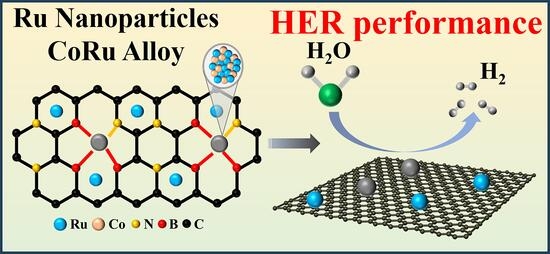
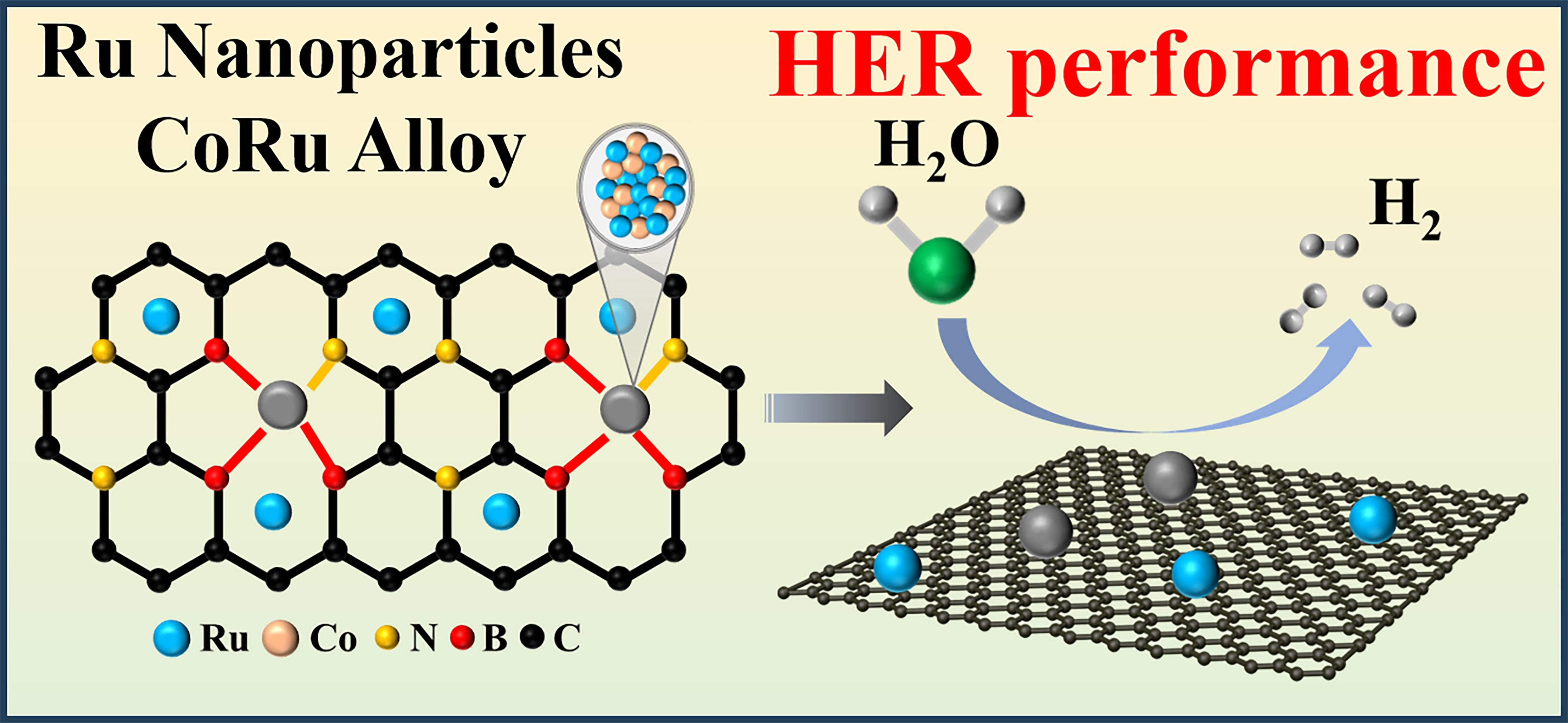
Fullerenes were modified into fulleramines by the wet chemical method, and then a CoRu/CNB bimetallic catalyst with defect-rich carbon-coated CoRu alloy and Ru NPs anchored on N- and B-doped carbon, promoting full pH hydrogen evolution, was prepared by condensation reflux and pyrolysis. Structural analysis indicates that the carbon layer endows the catalyst with excellent acid/alkali corrosion resistance, and the defect-rich characteristics expose more active sites. This catalyst only requires overpotentials of 21, 33, and 56 mV to drive HER to a current density of 10 mA cm−2 in alkaline, acidic, and neutral solutions, featuring a rapid kinetic process and a large electrochemically active surface area. The synergistic effect of CoRu alloy and Ru NPs promotes charge redistribution and accelerates electron transfer, enabling CoRu/CNB to exhibit electrochemical activity and stability far exceeding that of commercial Pt/C in 1 M KOH, 0.5 M H2SO4, and 1 M PBS media.

Graphical Abstract

1. Introduction

Industrial development and population growth have accelerated the world’s energy consumption [1]. The greenhouse gas emissions caused by the excessive exploitation of traditional fossil fuels (such as coal, oil, and natural gas) have had a significant impact on economic development and social progress [2,3]. Therefore, the development and utilization of green, economical, and efficient renewable energy, as well as the transformation of the energy structure towards low-carbonization, are of vital importance to economic growth and the sustainable development of society. Hydrogen energy, with its advantages, such as high energy density (146 MJ kg−1), environmental friendliness, and sustainability, is regarded as an ideal alternative to fossil fuels [4,5]. At present, a variety of hydrogen production technologies have been developed, mainly including hydrocarbon reforming [6], electrolytic water [7], photocatalytic water splitting [8], and steam reforming [9], etc. Among them, electrocatalytic water-splitting technology is regarded as one of the most promising environmentally friendly hydrogen production methods due to its advantages, such as relatively simple operation, high energy conversion efficiency, and high purity of the produced hydrogen [10,11,12]. In the actual electrolysis process, the electrodes will polarize to form an energy barrier. Moreover, there are other unfavorable factors, such as the internal resistance of the solution, contact resistance, and wire resistance, which lead to a slow and inefficient kinetic process [13]. Therefore, the voltage required to drive the electrolysis of water reaction is much greater than the theoretical decomposition voltage. Therefore, electrocatalysts that can significantly lower the reaction barrier are the key to enhancing the efficiency of water electrolysis reactions. At present, the precious metals Pt and IrO2 are commercial catalysts for HER and OER, respectively. However, their high prices, limited reserves in the Earth’s crust, and short lifespans have greatly restricted their large-scale application in actual production [14,15,16]. The development of new HER and OER catalytic materials with high activity, low cost, and abundant resources is of great significance for the advancement of hydrogen energy and related energy storage technologies.
Ruthenium metal (Ru) belongs to the same family as platinum and has a metal–hydrogen bonding strength similar to that of Pt [17,18]. It is worth noting that Ru has a greater appeal for hydrogen evolution reactions (HER), and it has a hydrogen bond strength comparable to Pt (∼65 kcal mol−1) and excellent corrosion resistance [19]. These characteristics make it suitable for catalytic environments with a variety of electrolytes and a wide pH range. Moreover, the price of Ru is only one-third of that of Pt, and it is regarded as an ideal substitute for Pt [20].
The crystallinity, particle size, and distribution state of Ru nanoparticles are the key factors determining their electrocatalytic activity. To prevent the aggregation of nanoparticles and cover the active sites, they are usually loaded on various carriers, such as metal materials, semiconductor materials, modified carbon-based materials, etc. As an important component of electrocatalysts, carriers can disperse active sites and increase specific surface area to facilitate the exposure of active sites, and the bonding between carriers and nanoparticles can lead to charge transfer, enhancing the metal–carrier interaction effect [21,22]. At present, researchers have developed a series of Ru nanoparticle-supported catalysts with excellent activity. Ma et al. [23] anchored Ru nanoparticles, respectively, on the outer surface (HMCs@Ru), cavities (Ru@HMCs), and channels (Ru/S-HMCs) of hollow mesoporous carbon spheres through a simple hydrothermal in situ polymerization method. The results showed that although the Ru NPs of HMCs@Ru were prone to exposing the active sites on the outer surface, the agglomeration phenomenon was obvious, resulting in a lower utilization rate of Ru. The Ru NPs of Ru@HMCs are encapsulated in the cavity, and the carbon layer blocks the adsorption process. Ru/S-HMCs have S-doped hollow nanostructures and exhibit excellent activity and stability over a wide pH range. In addition, fullerenes, as common electrocatalytic carriers, can achieve ultrafine dispersion and stable anchoring of metal nanoparticles through their functionalized spherical structure, defect-adjustable doping characteristics, and excellent spatial confinement ability [24].
Alloying Ru with other elements can increase the density of active sites while reducing the amount of Ru, regulate electronic properties, change the chemical state of the surface, and induce the charge density rearrangement of the main elements, thereby improving the electrocatalytic performance [25,26,27]. For instance, Huang et al. [28] constructed a self-supporting catalyst with a core–shell structure Co@RuCo, which was composed of Co nanoparticles coated with RuCo alloy layers. In addition, the hydrogen bond at the Ru site is a key point that restricts hydrogen evolution, and the alloy can optimize the hydrogen bond combination through the interaction of different atomic orbitals. Cai et al. [29] prepared the highly active alloy catalyst RuCo-ANS by rapid coprecipitation combined with electrochemical reduction. Ru atoms, as isolated active sites, are embedded in the Co substrate, featuring planar symmetry and Z-direction asymmetry coordination structures, achieving the optimal modulation electronic structure of 4 dz2. DFT indicates that the interaction between the Ru 4 dz2 orbital and the H 1 s orbital enhances the adsorption and desorption efficiency of H at the Ru site. This is compared with the RuCo alloy nanosheets (RuCo ANSs) prepared by Cai et al. through the rapid coprecipitate method and mild electrochemical reduction. The CoRu/CNB catalyst constructed in this study is based on the modification of organic precursors: firstly, fullerenes are converted into water-soluble fulamine, then a complex is formed through condensation reflux with Co/Ru salts, and finally, carbonization is achieved through high-temperature pyrolysis in an inert atmosphere. The essential difference lies in that RuCo ANS achieves atomic-level precise regulation through electrochemical reduction, focusing on the optimization of electron orbitals in single-phase alloys. CoRu/CNB relies on high-temperature pyrolysis to construct a multi-component composite system and utilizes the synergistic effect of carbon encapsulation and dual active sites to achieve complete pH adaptability. Covalent organic frameworks (COF) are typically used as ordered channel carriers for CoRu derived from COF, and then CO2+/Ru3+ is introduced into the COF channel through ion exchange. And a template needs to be added to construct the macroporous skeleton. This will prolong the preparation cycle and may damage the material structure during the subsequent demolding process [27].
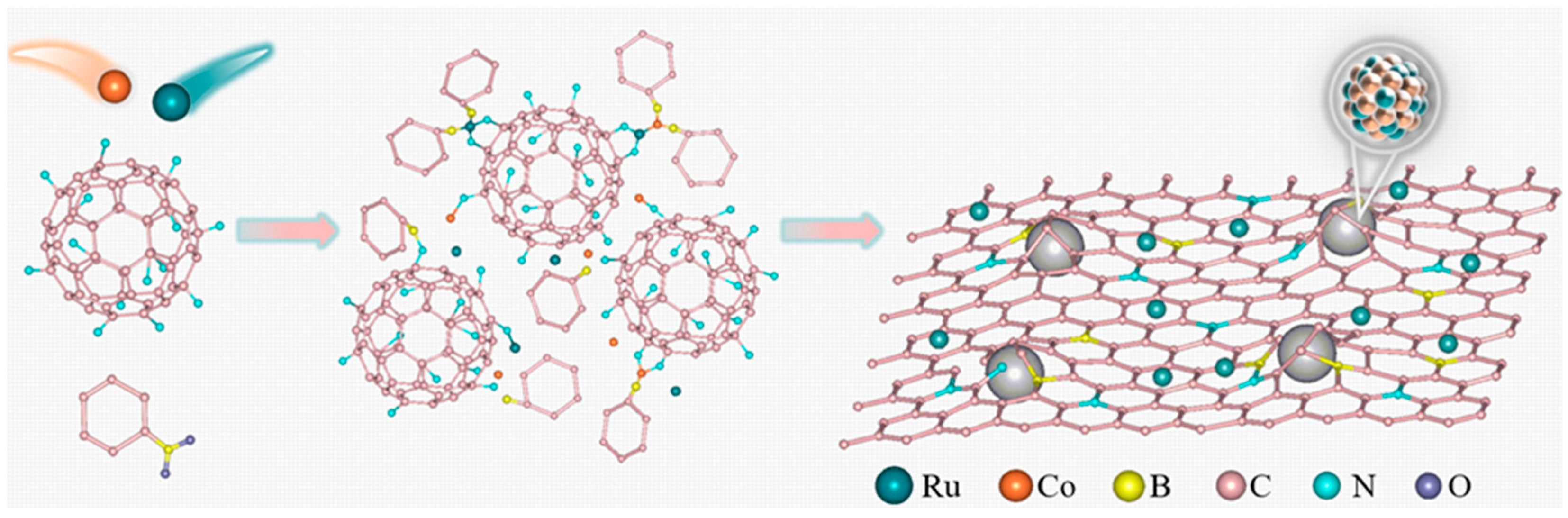
In this work, based on fullerene derivatization and B, N co-doping strategy, fullerene (C60) was modified into water-soluble fulleramine (C60-EDA) by a wet chemical method, and a CoRu/CNB bimetallic catalyst was prepared by condensation reflux and high-temperature pyrolysis. CoRu alloy particles are coated with a defect-enriched carbon layer, and ultrafine Ru nanoparticles are anchored on the surface of N and B co-doped carbon carriers, synergically enhancing the hydrogen evolution reaction (HER) activity across the entire pH range. Structural analysis indicates that the carbon layer endows the catalyst with excellent acid/alkali corrosion resistance, and the defect-rich characteristics expose more active sites. The synergistic effect of CoRu alloy and Ru NPs promotes charge redistribution and accelerates electron transfer. Electrochemical tests have shown that CoRu/CNB exhibits electrochemical activity and stability far exceeding that of commercial Pt/C in 1 M KOH, 0.5 M H2SO4, and 1 M PBS media.

2. Results

2.1. The Structure and Composition of CoRu/CNB Electrocatalysts

The XRD patterns of the three samples, CoRu/CNB, Ru/CNB, and Co/CNB, are shown in Figure 1a. Obviously, the three strong diffraction peaks of Ru/CNB at 43.8°, 41.9°, and 38.2° correspond, respectively, to the (101), (002), and (100) crystal planes of Ru (JCPDS No: 06-0663). The diffraction peaks of Co/CNB at 44.0°, 51.3°, and 75.6° belong to the (111), (200), and (220) three different oriented crystal planes of Co (PDF#15-0806). Meanwhile, the XRD diffraction spectra of CoRu/CNB confirmed the successful synthesis of CoRu alloy on the modified carbon substrate. The diffraction peaks at 39.0°, 42.8°, and 44.8°, respectively, belong to the (100), (002), and (101) crystal planes of the hexagonal CoRu alloy phase (PDF#65-8976). Compared with the standard card data, the diffraction peaks of CoRu/CNB show a significant negative shift. This phenomenon might be due to the increase in atomic radius after Ru doping, which indirectly indicates the interaction between Co and Ru. In addition, all three groups of samples present broadening peaks in the low-angle region near 25.3°, which belong to the (002) crystal plane diffraction of graphite carbon (PDF#41-1487) generated by the pyrolysis of modified carbon substrates. It is worth noting that the graphite carbon peaks in CoRu/CNB and Co/CNB are sharper, indicating that the presence of Co can promote the degree of carbon graphitization.
Figure 1b shows the Raman spectrum of the sample. From it, it can be obtained that all three samples have obvious D band (1346.0 cm−1) and G band (1574.3 cm−1), representing the disordered carbon and graphite carbon structures in the carbon matrix, respectively [30,31]. It can be seen from the Figure that the ID/IG intensity ratios of CoRu/CNB, Ru/CNB, and Co/CNB are 0.69, 0.98, and 0.93, respectively. A lower ID/IG value indicates that there are more ordered graphite carbon structures in the CoRu/CNB samples, which suggests that the degree of graphitization of the CoRu/CNB samples is higher, which is conducive to electron transfer and improves electrical conductivity. The strong peak of the CoRu/CNB sample near 2800 cm−1 corresponds to the 2D band and also indicates that there is a considerable amount of multilayer carbon structure in the sample. This is because the formation of CoRu alloy promotes the generation of graphite carbon, increases the order of carbon, and thereby enhances the speed of charge transfer.
The microstructure of CoRu/CNB was analyzed by transmission electron microscopy (TEM). The results show that the lattice spacing of the large particles in the red area of Figure 1c is 0.197 nm, corresponding to the (002) crystal plane of the CoRu alloy phase. The lattice spacing of the dispersed nanoparticles in the yellow area is 0.203 nm, belonging to the Ru (111) crystal plane. Ultrafine Ru nanocrystals with an average diameter of 2.070 nm were formed in CoRu/CNB and uniformly anchored to the carbon surface. The CoRu alloy is tightly confined within the inner surface of the graphite carbon layer, presenting a unique spatial confinement effect. Furthermore, no lattice fringes of metal Co were detected in most nanoparticles smaller than 5 nm, indicating that Co atoms have dissolved into the Ru lattice matrix to form a CoRu alloy. Figure 1d clearly shows the structure of the CoRu alloy coated with graphite carbon. Different lattice fringes with crystal plane spacings of 0.195 nm and 0.340 nm point to the (101) and (002) crystal planes of the CoRu alloy and graphite carbon, respectively. Furthermore, despite having relatively ordered graphite-carbon properties, the carbon layer still exhibits numerous defects, such as dislocations at corners, fracture fringes, and micropores, which are attributed to the co-doping of B and N in the carbon substrate. These introduced defects can effectively regulate the electronic structure and interface state, thereby promoting the occurrence of reactions. Selective electron diffraction (Figure 1e) further confirmed the presence of CoRu alloy, Ru metal, and graphite carbon in CoRu/CNB. The high-angle annular dark-field scan image of CoRu/CNB (Figure 1f) and the distribution map of each element indicate that Ru and Co elements are surrounded by N, B, and C elements, further confirming that the CoRu alloy particles are encapsulated in a carbon layer co-doped with N and B, and that N and B elements are uniformly dispersed on the carbon substrate. The incorporation of B and N can regulate the local electronic environment, thereby inducing the rearrangement of hydrogen bond networks and promoting the adsorption and dissociation processes of water [32].
In addition, the morphology and structure of the Ru/CNB and Co/CNB samples are shown in Figure S1. Ultrafine Ru nanoparticles with an average particle size of 3.20 nm and large-sized Co nanoparticles with an average particle size of 33.15 nm are uniformly dispersed on amorphous carbon. And there are many layered carbon structures accompanying the Co/CNB samples. This result proves that the introduction of Co leads to the formation of a defect-rich carbon-coated CoRu alloy structure. The carbon coating not only prevents the aggregation/separation of nanoparticles during the HER process but also enhances the overall conductivity of the catalyst. In addition, the metal sites attached to the defect carbon can be regarded as possible active sites, which is conducive to reducing the dissociation obstacle of hydrolysis and thereby improving HER performance.
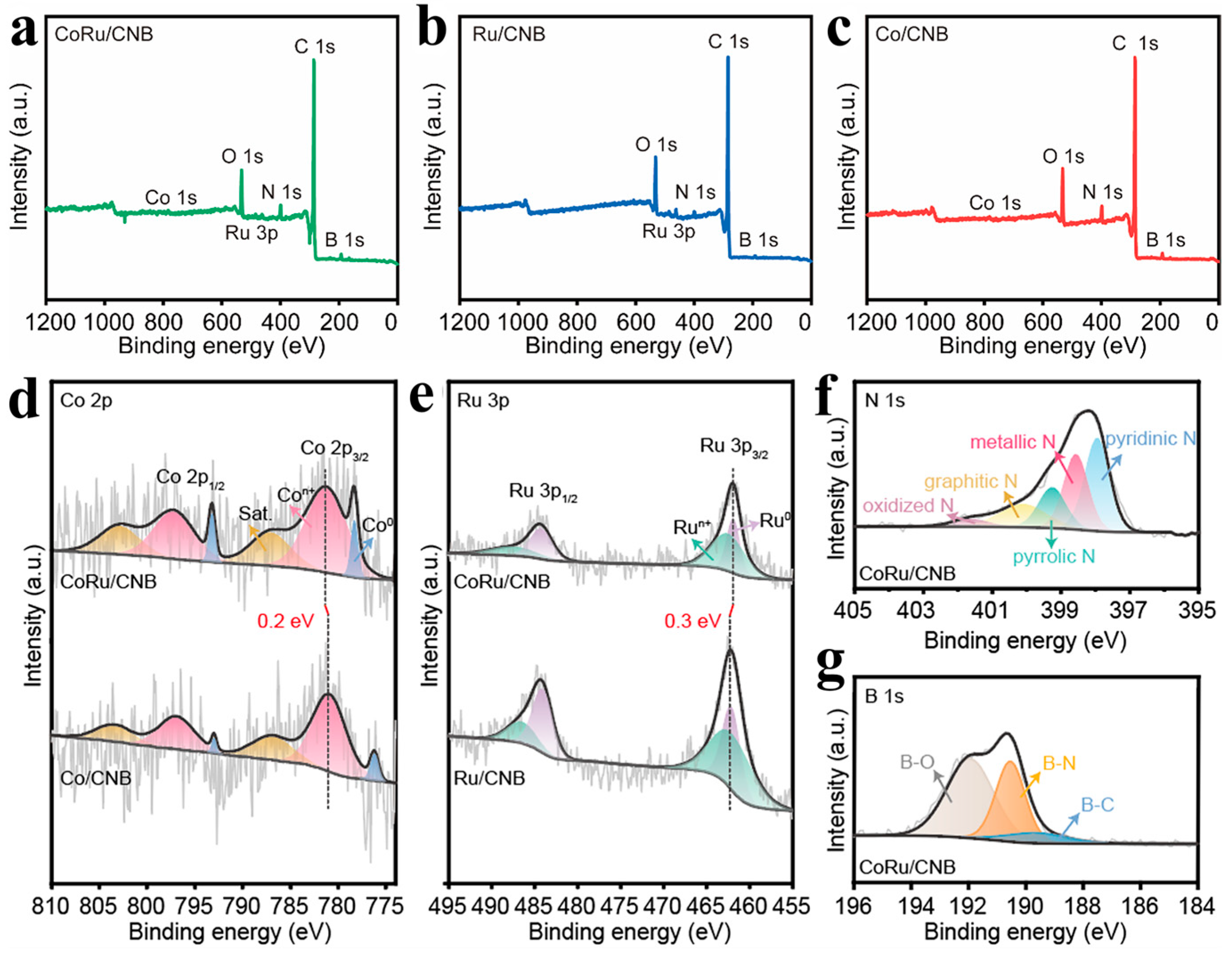
Figure 2a shows the XPS map of CoRu/CNB, with the presence of C, N, B, Co, and Ru elements detected. The O element is derived from the oxygen-containing functional groups adsorbed on the surface, which is consistent with the results presented by the above mapping. In both Ru/CNB and Co/CNB samples, there are C, N, B, and the metal elements they contain, respectively (Figure 2b,c). This indicates that three different compositions of electrocatalysts have been successfully prepared.
The high-resolution fine spectrum of Co 2p in CoRu/CNB (Figure 2d) shows the main 2p3/2 peaks at 778.30 and 781.21 eV, corresponding to Co0 and Con+, respectively. The presence of cobalt oxide is attributed to the oxidation of the sample surface in the air. The other two peaks, located at 787.08 and 802.92 eV, are oscillating satellite peaks [33]. The elemental Co peaks of the Co/CNB samples occurred at 776.21 and 793.00 eV, while those of the oxides were at 780.89 and 796.90 eV. In the Ru 3p spectrum of CoRu/CNB (Figure 2e), the two signal peaks at 461.87 and 484.24 eV belong to metallic ruthenium, Ru0 3p3/2 and Ru0 3p1/2, respectively. The other two characteristic peaks at 462.47 and 487.40 eV correspond to ruthenium oxide, Run+ 3p3/2 and Run+ 3p1/2. The peaks of the Ru0 species in Ru/CNB samples occurred at 462.13 and 484.11 eV, while those of the Run + species were at 462.45 and 486.49 eV. It is worth noting that, compared with Ru/CNB and Co/CNB, the Co 2p peak in CoRu/CNB shifts towards a higher binding energy, and the Ru 3p peak shifts towards a lower binding energy. This indicates that electrons transfer from the less electronegative Co to the more electronegative Ru, resulting in Ru becoming an electron acceptor (negative shift 0.3 eV). It carries some negative charges, and Co becomes an electron donor (moving forward by 0.2 eV), losing part of the charge [34]. The above results further prove the successful synthesis of the CoRu alloy and the existence of interatomic charge polarization, which can significantly reduce the energy barrier of water splitting and promote the HER reaction in terms of thermodynamics [27].
In addition, the N 1 s spectrum of CoRu/CNB (Figure 2f) can be divided into five peaks, which belong to pyridine N (397.94 eV), metal N (398.56 eV), pyrrole N (399.25 eV), graphite N (400.10 eV), and oxide N (401.62 eV), respectively. The presence of pyridine N, graphite N, and pyrrole N proves that N successfully binds to C, which can regulate the electronic structure and improve the conductivity of the substrate. Metal coordination -N indicates that there is a certain correlation between N and the metal Co/Ru. The B 1 s spectrum (Figure 2g) can be divided into three peaks: B-N (190.53 eV), B-O (191.94 eV), and B-C (189.64 eV).

2.2. Electrocatalytic Performance of CoRu/CNB

To verify whether the CoRu/CNB catalyst has the expected catalytic activity and stability, in an N2-saturated atmosphere, a typical three-electrode system was used in 1 M KOH, 0.5 M H2SO4, and 1 M PBS electrolytes, respectively. The performance of CoRu/CNB, Ru/CNB, Co/CNB, and commercial Pt/C catalysts was tested.
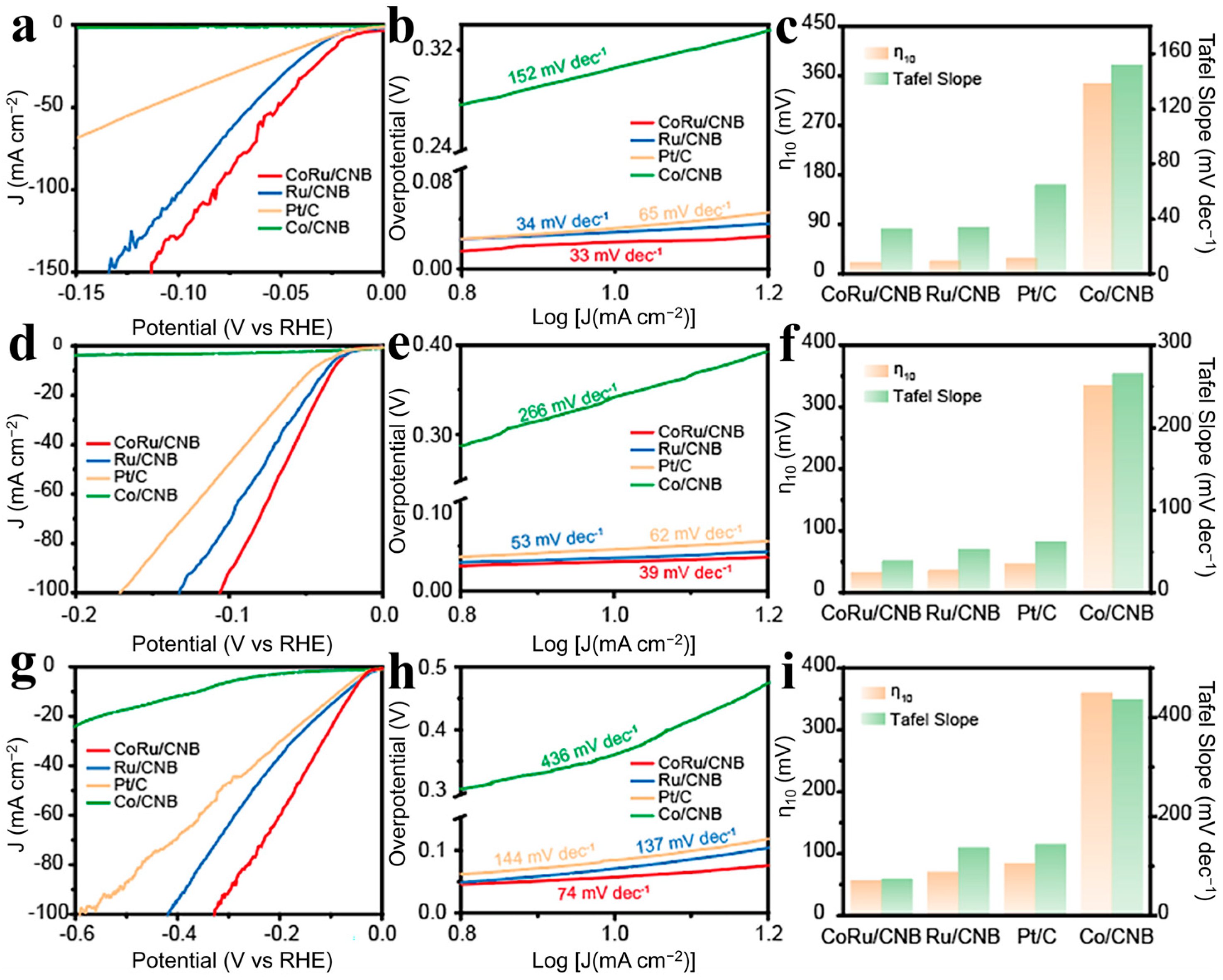
Figure 3a shows the linear scanning voltammetry (LSV) polarization curves of CoRu/CNB, Ru/CNB, Co/CNB, and commercial Pt/C catalysts in 1 M KOH. The results show that for the hydrogen evolution reaction (HER) driven by the CoRu/CNB electrocatalyst to reach a current density of 10 mA cm−2, only an overpotential of 21 mV is required, which is much lower than that of Ru/CNB (28 mV), commercial Pt/C (33 mV), and Co/CNB (350 mV), indicating that it has the optimal HER catalytic activity. Figure 3b shows the Tafel slope plot obtained from the transformation of the polarization curve. The Tafel slope can be used to evaluate the kinetic rate of interfacial reactions. Among them, the Tafel slope of CoRu/CNB was the smallest (33 mV·dec−1), which was much lower than that of Ru/CNB (34 mV·dec−1), commercial Pt/C (65 mV·dec−1), and Co/CNB (152 mV·dec−1). This indicates that CoRu/CNB has the fastest hydrogen evolution reaction (HER) kinetics and the strongest intrinsic activity. Figure 3c indicates that CoRu/CNB has the smallest overpotential and the lowest Tafel slope, and it exhibits optimal catalytic activity in alkaline media.
The ideal catalyst should achieve the goal of efficient and stable operation within a wide pH range. We continued to evaluate the electrocatalytic performance of CoRu/CNB in the environment of 0.5 M H2SO4 and 1 M PBS solutions. Under acidic conditions, the η10 of CoRu/CNB is only 33 mV (Figure 3d), which is significantly lower than that of Ru/CNB (37 mV), Pt/C (47 mV), and Co/CNB (339 mV). The Tafel slope was 39 mV·dec−1 (Figure 3e), which was lower than that of Ru/CNB (53 mV·dec−1), commercial Pt/C catalyst (62 mV·dec−1), and Co/CNB (266 mV·dec−1). The lowest η10 and the smallest Tafel slope values (Figure 3f) indicate that CoRu/CNB also exhibits the fastest hydrogen evolution reaction kinetics process and the best catalytic activity in acidic conditions. Finally, the catalytic performance of CoRu/CNB was tested in a neutral medium. The η10 (Figure 3g) and Tafel slope values (Figure 3h) were 56 mV and 74 mV·dec−1, respectively, which were also smaller than those of Ru/CNB (70 mV, 137 mV·dec−1) and commercial Pt/C (84 mV, 144 mV·dec−1) and Co/CNB (360 mV, 436 mV·dec−1) exhibited excellent catalytic activity (Figure 3i).
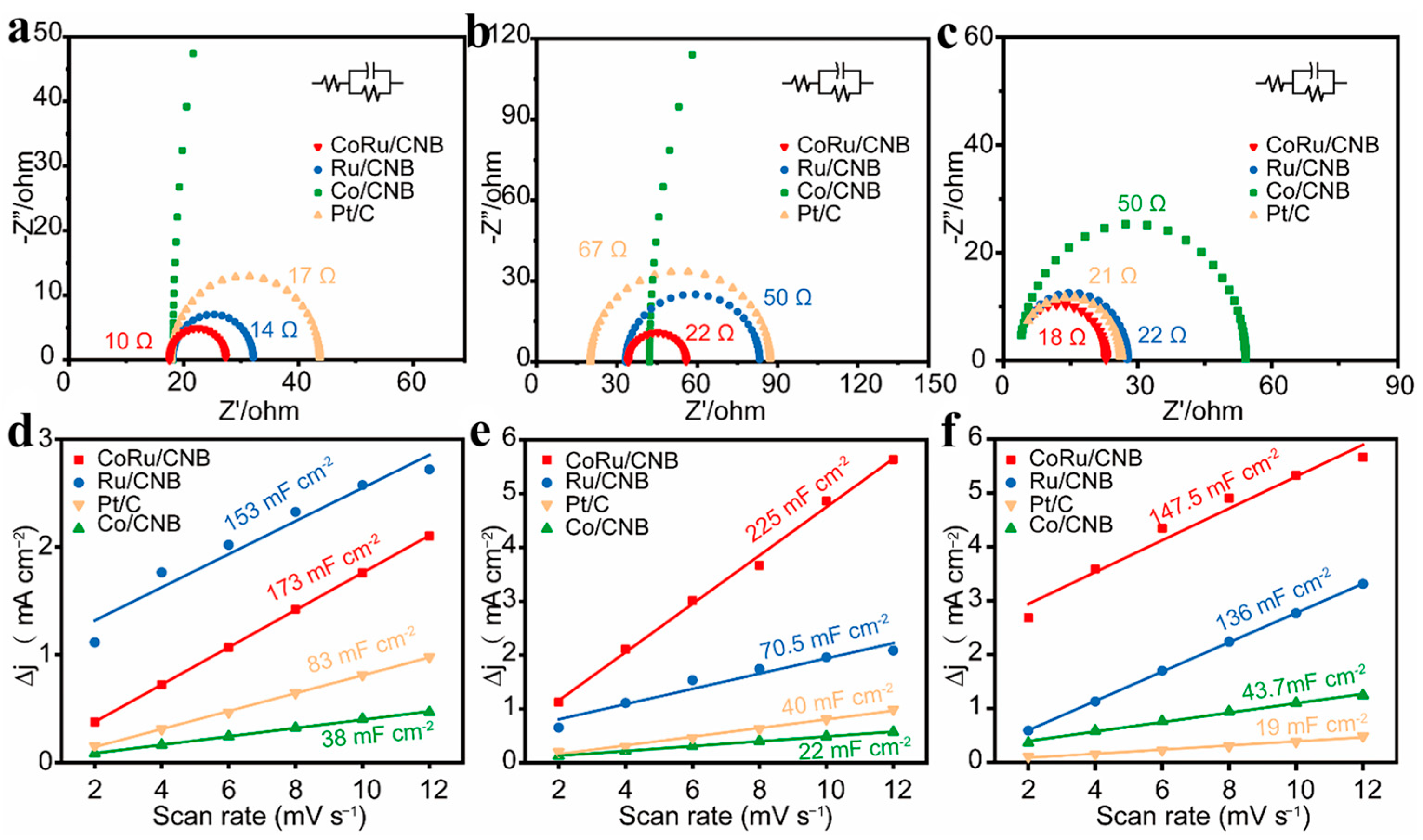
To further evaluate the catalytic performance of CoRu/CNB over the full pH range, the charge transfer ability of the catalyst was investigated using electrochemical impedance spectroscopy (EIS) [35]. The charge transfer impedance values (Rct) of CoRu/CNB under alkaline (Figure 4a), acidic (Figure 4b), and neutral (Figure 4c) conditions are 10, 22, and 18 Ω, respectively, all of which are smaller than those of other comparison samples in the same medium. This is due to the interaction between the CoRu alloy and Ru NPs, which promotes charge transfer, improves conductivity, and reduces the Rct value. This enables it to have the fastest electron transfer rate.
Based on this, the effective electrochemically active area of the sample was characterized by the double-layer capacitance method. The double-layer capacitance (Cdl) values of the electrocatalyst were obtained by cyclic scanning voltammetry curves at different rates in the non-Faraday interval (Figures S2–S4) [36,37]. It can be seen that CoRu/CNB has the largest Cdl values in alkaline (Figure 4d), acidic (Figure 4e), and neutral (Figure 4f) media, which are 173, 225, and 147.5 mF/cm2, respectively, indicating that it has the most electrochemically active sites. This is due to the defecation-rich characteristics of the coated carbon layer, which induce the generation of more active sites.
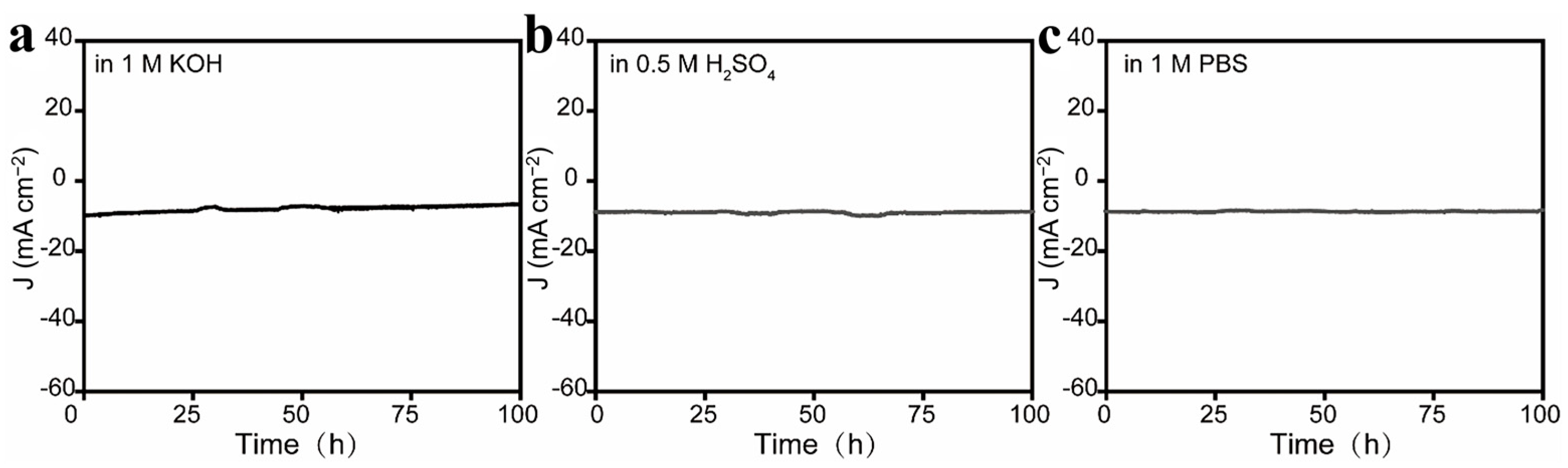
Apart from activity, durability is another key factor determining the performance of electrocatalysis. The stability of the CoRu/CNB electrocatalyst over the full pH range was evaluated by potentiostatic timing amperometry (I-t). The CoRu/CNB electrocatalyst can operate stably for over 100 h in alkaline, acidic, and neutral solutions, demonstrating excellent stability (Figure 5). In addition, Figure S5 shows the LSV curve of the sample after 100 h of cycling. It can be seen that the LSV curve of the sample maintains almost the same trend of change before and after the 100 h stability test. This indicates that CoRu/CNB actually has good long-term stability. In addition, we conducted ICP testing on the electrolyte of the sample, but failed to detect the Ru content. This indicates that Ru did not precipitate in large quantities after long-term stability tests, confirming the cycling stability of CoRu/CNB. As shown in Figure S6, the mass activities of CoRu/CNB under 1 M KOH, 1 M PBS, and 0.5 M H2SO4 conditions in 100 mV are −5.05, −0.96, and −3.68 A mg−1Ru, respectively. And the TOF of CoRu/CNB under the conditions of 1 M KOH, 1 M PBS, and 0.5 M H2SO4 are 3.51, 0.67, and 2.49 s−1, respectively. Compared with the reports in the literature, CoRu/CNB demonstrates relatively superior performance (Tables S1–S3).
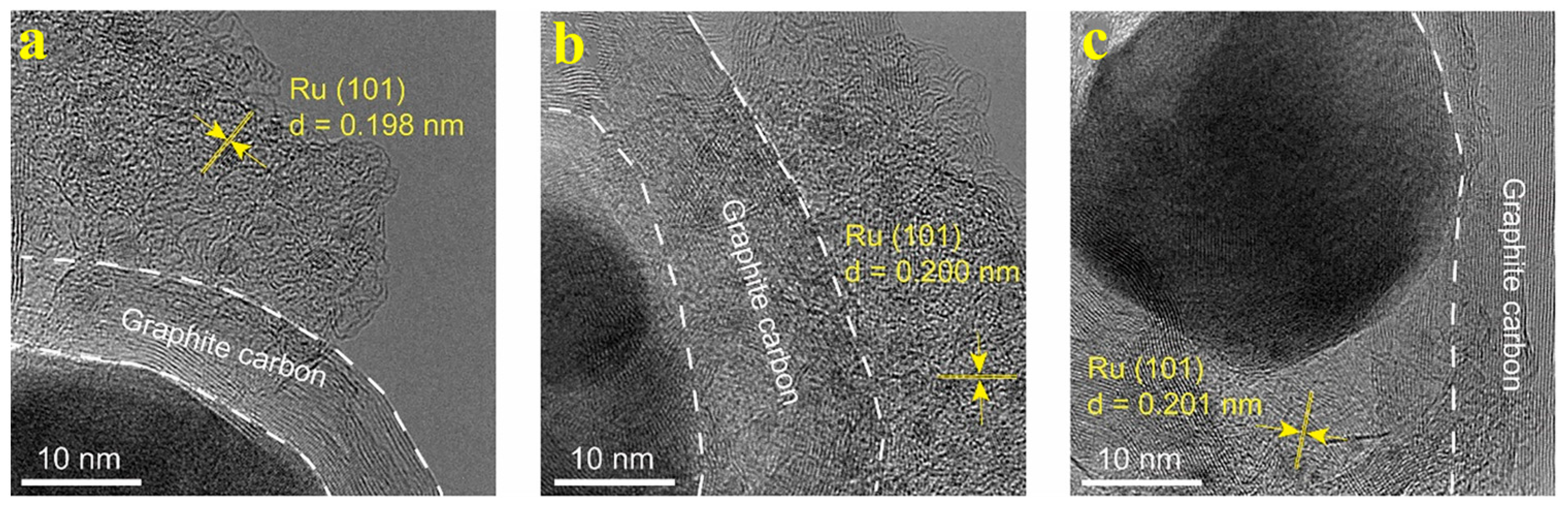
Subsequently, the morphology, structure, and elemental chemical state of the CoRu/CNB samples after 100 h of potentiostatic polarization stability tests were characterized by TEM and XPS. After long-term HER tests in alkaline, acidic, and neutral solutions, the carbon shell was not eroded and still effectively confined CoRu alloy nanoparticles. Meanwhile, the Ru nanoparticles did not undergo significant agglomeration and remained well-dispersed and anchored on the amorphous carbon substrate, indicating that the overall morphology and structure of the CoRu/CNB electrocatalyst remained intact (Figure 6).
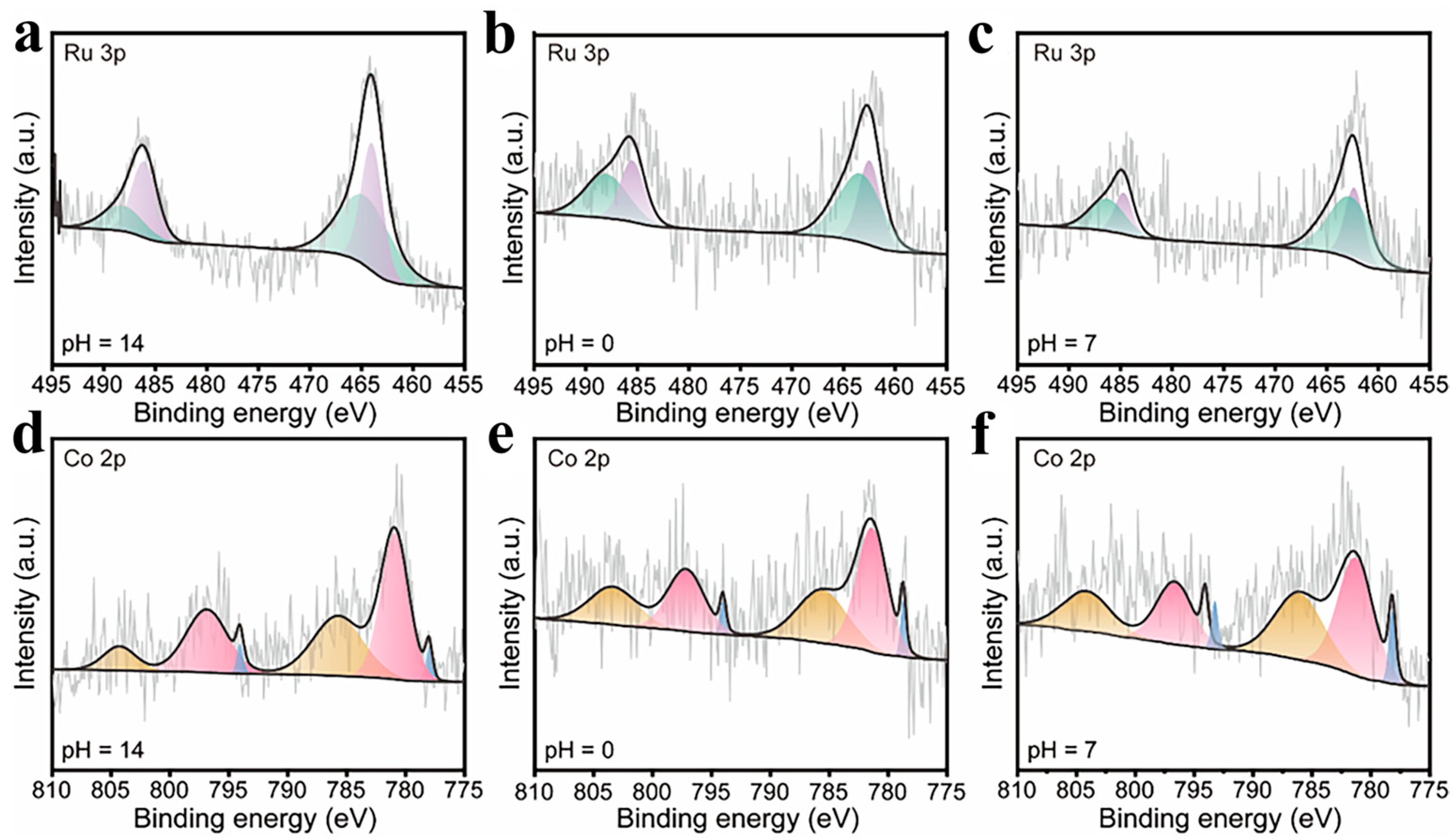
As shown in Figure 7, the chemical states of Co and Ru in the CoRu/CNB samples have not changed, and their chemical environment remains stable. The results show that the binding energies of the two characteristic peaks of the Ru 3p orbital have no significant shift under the three pH conditions (Figure 7a–c), and the peak shapes are always sharp and symmetrical, with no obvious attenuation in intensity, indicating that the chemical state of Ru has not changed. The characteristic peak of the Co 2p orbit and the accompanying satellite peak (~802 eV) remain consistent in peak position and intensity throughout the entire pH range, indicating that the valence state and bonding of Co are stable, and no oxidation or reduction reactions have occurred (Figure 7d–f). The above XPS results are consistent with the TEM characterization results, providing crucial electronic structure and morphology evidence for the high durability of the catalyst under all pH conditions, and further supporting the practical application potential of the catalyst.
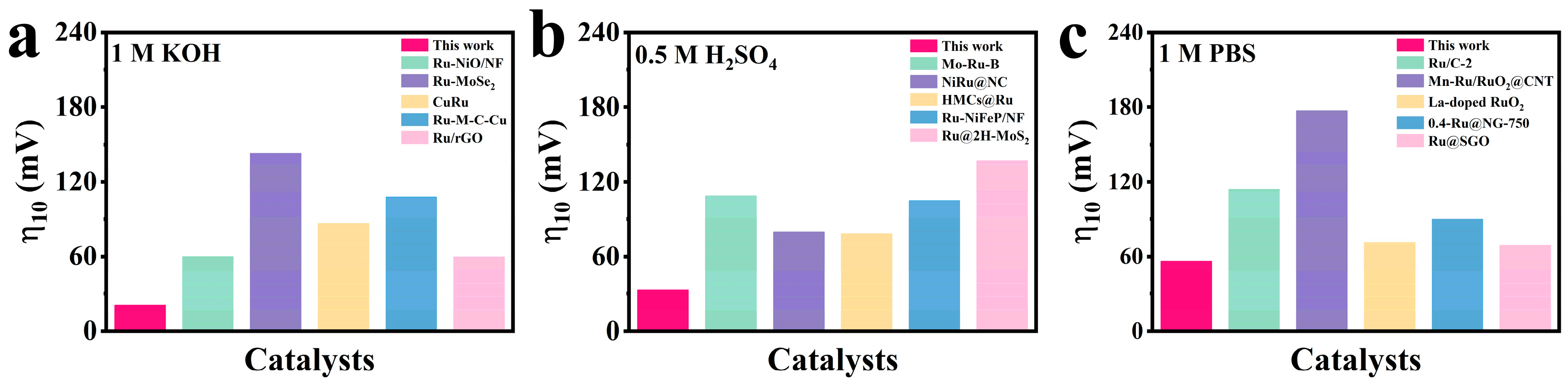
In summary, the CoRu/CNB electrocatalyst exhibits outstanding HER activity in alkaline, acidic, and neutral environments, even surpassing other recently reported novel Ru-based electrocatalysts, and it also has good durability (Figure 8, Tables S4–S6).

3. Materials and Methods

3.1. Preparation of C60-EDA Precursors

Fullerene powder (C60, 100 mg) was added to an ethylenediamine (EDA) solution (200 mL). The mixture was stirred at room temperature for 24 h. After reaction, excess EDA was removed by concentration under reduced pressure. The black solid was dissolved in an H2SO4 solution (2 mM). Subsequently, excess H2SO4 was neutralized with a NaOH solution (2 mM). The mixture was then transferred to a cellulose dialysis bag and dialyzed against deionized water for 2 days (with water changed every 24 h). Finally, the C60-EDA solid powder was obtained by freeze-drying.

3.2. Preparation of CoRu/CNB Electrocatalysts

RuCl3 (25 mg), CoCl3 (20 mg), and phenylboronic acid (C6H7BO2, 20 mg) were added to 150 mL of deionized water dissolved in 100 mg of C60-EDA. The mixture was condensed and refluxed at 120 °C for 8 h until the reaction liquid cooled to room temperature. Subsequently, the solvent was removed under vacuum conditions through freeze-drying, and the black powder samples were collected. The powder was placed in an Ar atmosphere and heated to 900 °C at a heating rate of 5 °C/min and held for 2 h. After cooling, the black powder was collected and named CoRu/CNB.
Among them, Ru/CNB and Co/CNB electrocatalysts were prepared through the same process without adding CoCl3 and RuCl3, respectively. Figure 9 illustrates the synthesis process and structure of the CoRu/CNB electrocatalyst.

3.3. Characterization

The phase composition of the catalyst was analyzed by X-ray diffractometer (XRD, Rigaku D/max-2200PC, Tokyo, Japan), and the presence state of carbon was characterized by Raman spectroscopy (Raman, Renishaw-invia, London, UK). The morphology, crystal structure, and crystal plane information of the sample were observed by transmission electron microscopy (TEM, TECNAI G2 F20, Hillsboro, OR, USA). The elemental composition, content, and chemical state of the sample surface were determined by X-ray photoelectron spectroscopy (XPS, Thermo Scientific ESCA Lab 250Xi, Hillsboro, OR, USA).
The evaluation of electrocatalytic performance was all carried out on the CHI660E Chenhua electrochemical workstation in a standard three-electrode setup. Saturated calomel electrodes (SCE) are used as reference electrodes in acidic and neutral solutions, Hg/HgO electrodes are used as reference electrodes in alkaline conditions, and graphite carbon rods are used as counter electrodes in all measurements. The alkaline medium is 1 M KOH (pH = 14), the acidic medium is 0.5 M H2SO4 (pH = 0), and the neutral electrolyte is 1 M phosphate-buffered solution (PBS, pH = 7). Before all tests, the potential of the reference electrode was corrected relative to the reversible hydrogen electrode (RHE) in the H2-saturated electrolyte using a classic three-electrode system: the Pt plate was used as the working electrode and the Pt wire as the counter electrode. The reference electrode should be a saturated calomel electrode (for acidic/neutral media) or an Hg/HgO electrode (for alkaline media).
Catalyst ink preparation: Ultrasonically disperse 5 mg of the sample in a mixture of 200 μL of isopropyl alcohol (IPA) and 5 μL of Nafion solution to form a uniform ink. Subsequently, 2 μL of ink was transferred using a pipette and dropped onto the surface of a glass carbon electrode (GCE, with an area of 0.07065 cm2) with a diameter of 3 mm. After natural drying, it was set aside for later use.

4. Conclusions

In this work, an alloying strategy of transition metal Co and noble metal Ru was adopted to successfully prepare the hydrogen evolution catalyst CoRu/CNB. This catalyst is composed of a CoRu alloy coated with defect-rich carbon and Ru nanoparticles anchored on modified carbon and exhibits outstanding hydrogen evolution reaction (HER) activity and robust stability over a wide pH range (alkaline, acidic, and neutral). In alkaline, acidic, and neutral solutions, when driving HER to a current density of 10 mA cm−2, the overpotential is as low as 21, 33, and 56 mV, respectively. Meanwhile, it has rapid reaction kinetics and a large electrochemically active surface area, further supporting its excellent performance. The root causes of its activity and stability can be summarized in three points: (i) The spatial confinement effect of the carbon layer effectively separates the CoRu alloy from Ru nanoparticles, inhibits their mutual agglomeration or individual aggregation, and ensures the structural integrity of the catalyst; (ii) defect-rich carbon carriers not only enhance electrical conductivity and promote electron transfer, but also provide abundant exposed active sites, significantly improving the intrinsic activity of the catalyst; and (iii) there is an interatomic charge polarization effect between CoRu alloy and Ru nanoparticles, which optimizes the electronic structure of the catalyst.

Supplementary Materials

The following supporting information can be downloaded at https://www.mdpi.com/article/10.3390/catal15121106/s1.

Author Contributions

Conceptualization, H.O. and X.S.; validation, X.S. and J.L.; formal analysis, T.S. and S.W.; writing—original draft preparation, X.S.; writing—review and editing, Y.F. All authors have read and agreed to the published version of the manuscript.

Funding

This research received no external funding.

Data Availability Statement

All original data from the study have been fully included in the article/Supplementary Materials and further enquiries can be directed to the corresponding author.

Conflicts of Interest

The authors declare no conflicts of interest.

References

  1. Malaiyarasan, V.; Umamageshwari, R.; Sunil Kumar, M.; Beem Kumar, N.; Subbiah, G.; Priya, K.K. Advances in electrocatalyst development for hydrogen production by water electrolysis. Rev. Inorg. Chem. 2025. [Google Scholar] [CrossRef]
  2. Pashaei, B.; Aghaei, A.; Ghaderian, A.; Fardood, S.T. Abundant transition metal sulfides as promising class of materials for electrochemical hydrogen evolution: Design and synthesis strategies. J. Alloys Compd. 2025, 1035, 181395. [Google Scholar] [CrossRef]
  3. Chien, F. How renewable energy and non-renewable energy affect environmental excellence in N-11 economies? Renew. Energy 2022, 196, 526–534. [Google Scholar] [CrossRef]
  4. Lee, W.H.; Ko, Y.-J.; Kim, J.H.; Choi, C.H.; Chae, K.H.; Kim, H.; Hwang, Y.J.; Min, B.K.; Strasser, P.; Oh, H.-S. High crystallinity design of Ir-based catalysts drives catalytic reversibility for water electrolysis and fuel cells. Nat. Commun. 2021, 12, 4271. [Google Scholar] [CrossRef]
  5. Liu, Y.; Zhou, D.; Deng, T.; He, G.; Chen, A.; Sun, X.; Yang, Y.; Miao, P. Research Progress of Oxygen Evolution Reaction Catalysts for Electrochemical Water Splitting. ChemSusChem 2021, 14, 5359–5383. [Google Scholar] [CrossRef]
  6. Azizan, M.T.; Aqsha, A.; Ameen, M.; Syuhada, A.; Klaus, H.; Abidin, S.Z.; Sher, F. Catalytic reforming of oxygenated hydrocarbons for the hydrogen production: An outlook. Biomass Convers. Biorefin. 2023, 13, 8441–8464. [Google Scholar] [CrossRef]
  7. Amini Horri, B.; Ozcan, H. Green hydrogen production by water electrolysis: Current status and challenges. Curr. Opin. Green Sustain. Chem. 2024, 47, 100932. [Google Scholar] [CrossRef]
  8. Molaei, M.J. Recent advances in hydrogen production through photocatalytic water splitting: A review. Fuel 2024, 365, 131159. [Google Scholar] [CrossRef]
  9. Cai, L.; He, T.; Xiang, Y.; Guan, Y. Study on the reaction pathways of steam methane reforming for H2 production. Energy 2020, 207, 118296. [Google Scholar] [CrossRef]
  10. Cao, X.; Gao, Y.; Li, Y.; Weragoda, D.M.; Tian, G.; Zhang, W.; Zhang, Z.; Zhao, X.; Chen, B. Research progress on MOFs and their derivatives as promising and efficient electrode materials for electrocatalytic hydrogen production from water. RSC Adv. 2023, 13, 24393–24411. [Google Scholar] [CrossRef] [PubMed]
  11. Zhang, L.; Qi, F.; Ren, R.; Gu, Y.; Gao, J.; Liang, Y.; Wang, Y.; Zhu, H.; Kong, X.; Zhang, Q.; et al. Recent Advances in Green Hydrogen Production by Electrolyzing Water with Anion-Exchange Membrane. Research 2025, 8, 0677. [Google Scholar] [CrossRef]
  12. Wang, S.; Lu, A.; Zhong, C.-J. Hydrogen production from water electrolysis: Role of catalysts. Nano Converg. 2021, 8, 4. [Google Scholar] [CrossRef]
  13. Yu, Z.Y.; Duan, Y.; Feng, X.Y.; Yu, X.; Gao, M.R.; Yu, S.H. Clean and Affordable Hydrogen Fuel from Alkaline Water Splitting: Past, Recent Progress, and Future Prospects. Adv. Mater. 2021, 33, 2007100. [Google Scholar] [CrossRef]
  14. Jiang, X.; Jang, H.; Liu, S.; Li, Z.; Kim, M.G.; Li, C.; Qin, Q.; Liu, X.; Cho, J. The Heterostructure of Ru2P/WO3/NPC Synergistically Promotes H2O Dissociation for Improved Hydrogen Evolution. Angew. Chem. Int. Ed. 2020, 60, 4110–4116. [Google Scholar] [CrossRef]
  15. Li, Q.; Wang, D.; Lu, Q.; Meng, T.; Yan, M.; Fan, L.; Xing, Z.; Yang, X. Identifying the Activation Mechanism and Boosting Electrocatalytic Activity of Layered Perovskite Ruthenate. Small 2020, 16, 1906380. [Google Scholar] [CrossRef]
  16. Wang, Y.; Lu, Q.; Li, F.; Guan, D.; Bu, Y. Atomic-Scale Configuration Enables Fast Hydrogen Migration for Electrocatalysis of Acidic Hydrogen Evolution. Adv. Funct. Mater. 2023, 33, 2213523. [Google Scholar] [CrossRef]
  17. Nguyen, T.-B.; Sherpa, K.; Chen, C.-W.; Chen, L.; Dong, C.-D. Breakthroughs and prospects in ruthenium-based electrocatalyst for hydrogen evolution reaction. J. Alloys Compd. 2023, 968, 172020. [Google Scholar] [CrossRef]
  18. You, M.; Du, X.; Hou, X.; Wang, Z.; Zhou, Y.; Ji, H.; Zhang, L.; Zhang, Z.; Yi, S.; Chen, D. In-Situ growth of ruthenium-based nanostructure on carbon cloth for superior electrocatalytic activity towards HER and OER. Appl. Catal. B Environ. 2022, 317, 121729. [Google Scholar] [CrossRef]
  19. Xu, G.-R.; Jiang, X.; Sun, T.; Wang, X.; Li, B.; Wu, Z.; Liu, H.; Wang, L. Ru branched nanostructure on porous carbon nanosheet for superior hydrogen evolution over a wide pH range. J. Alloys Compd. 2023, 947, 169393. [Google Scholar] [CrossRef]
  20. Zhu, J.; Cai, L.; Tu, Y.; Zhang, L.; Zhang, W. Emerging ruthenium single-atom catalysts for the electrocatalytic hydrogen evolution reaction. J. Mater. Chem. A 2022, 10, 15370–15389. [Google Scholar] [CrossRef]
  21. Sun, X.; Hu, Y.; Fu, Y.; Yang, J.; Song, D.; Li, B.; Xu, W.; Wang, N. Single Ru Sites on Covalent Organic Framework-Coated Carbon Nanotubes for Highly Efficient Electrocatalytic Hydrogen Evolution. Small 2023, 20, 2305978. [Google Scholar] [CrossRef]
  22. Wang, X.; Yang, X.; Pei, G.; Yang, J.; Liu, J.; Zhao, F.; Jin, F.; Jiang, W.; Ben, H.; Zhang, L. Strong metal–support interaction boosts the electrocatalytic hydrogen evolution capability of Ru nanoparticles supported on titanium nitride. Carbon Energy 2023, 6, e391. [Google Scholar] [CrossRef]
  23. Ma, X.-F.; Xiao, H.; Jing, Y.-Y.; Gao, Y.; He, Y.-L.; Zhao, M.; Jia, J.-F.; Wu, H.-S. Site difference influence of anchored Ru in mesoporous carbon on electrocatalytic performance toward pH-universal hydrogen evolution reaction. Rare Met. 2023, 42, 4015–4028. [Google Scholar] [CrossRef]
  24. Luo, T.; Huang, J.; Hu, Y.; Yuan, C.; Chen, J.; Cao, L.; Kajiyoshi, K.; Liu, Y.; Zhao, Y.; Li, Z.; et al. Fullerene Lattice-Confined Ru Nanoparticles and Single Atoms Synergistically Boost Electrocatalytic Hydrogen Evolution Reaction. Adv. Funct. Mater. 2023, 33, 2213058. [Google Scholar] [CrossRef]
  25. Zhou, X.; Mukoyoshi, M.; Kusada, K.; Yamamoto, T.; Toriyama, T.; Murakami, Y.; Ina, T.; Kawaguchi, S.; Kubota, Y.; Kitagawa, H. RuIn Solid-Solution Alloy Nanoparticles with Enhanced Hydrogen Evolution Reaction Activity. ACS Mater. Lett. 2024, 6, 353–359. [Google Scholar] [CrossRef]
  26. Lu, Y.; Tang, L.; Wang, P.; He, M.; Yang, C.; Li, Z. Rare Earth-Based Alloy Nanostructure for Hydrogen Evolution Reaction. ACS Catal. 2023, 13, 13804–13815. [Google Scholar] [CrossRef]
  27. Huihui, Z.; Xinghao, Z.; Dingxuan, K.M. Covalent organic framework-derived CoRu nanoalloy doped macro–microporous carbon for efficient electrocatalysis. J. Mater. Chem. A Mater. Energy Sustain. 2022, 10, 25272–25278. [Google Scholar]
  28. Huang, H.; Jung, H.; Park, C.-Y.; Kim, S.; Lee, A.; Jun, H.; Choi, J.; Han, J.W.; Lee, J. Surface conversion derived core-shell nanostructures of Co particles@RuCo alloy for superior hydrogen evolution in alkali and seawater. Appl. Catal. B Environ. Energy 2022, 315, 121554. [Google Scholar] [CrossRef]
  29. Cai, C.; Liu, K.; Zhu, Y.; Li, P.; Wang, Q.; Liu, B.; Chen, S.; Li, H.; Zhu, L.; Li, H.; et al. Optimizing Hydrogen Binding on Ru Sites with RuCo Alloy Nanosheets for Efficient Alkaline Hydrogen Evolution. Angew. Chem. Int. Ed. 2021, 61, e202113664. [Google Scholar] [CrossRef]
  30. Wang, H.; Zhou, M.; Bo, X.; Guo, L. Rapid and facile laser-assistant preparation of Ru-ZIF-67-derived CoRu nanoalloy@N-doped graphene for electrocatalytic hydrogen evolution reaction at all pH values. Electrochim. Acta 2021, 382, 138337. [Google Scholar] [CrossRef]
  31. Liu, Y.; Zhang, K.; Wang, K.; Wang, M.; Liu, Y.; Jiang, J.; Liu, T.; Liang, E.; Li, B. Out-of-plane CoRu nanoalloy axially coupling CosNC for electron enrichment to boost hydrogen production. Appl. Catal. B Environ. 2022, 318, 121890. [Google Scholar] [CrossRef]
  32. Feng, Y.; Zhu, W.; Xu, J.; Zhang, D.; Ma, Q.; Zhao, L.; Lin, L.; Su, Q.; Wang, Y.; Liu, Q.; et al. Steering the Electronic Microenvironment of Ruthenium Sites via Boron Buffering Enables Enhanced Hydrogen Evolution under a Universal pH Range. ACS Nano 2025, 19, 7948–7961. [Google Scholar] [CrossRef]
  33. Liao, L.; Zhao, Y.; Zhou, H.; Li, D.; Qi, Y.; Zhang, Y.; Sun, Y.; Zhou, Q.; Yu, F. Edge-oriented N-Doped WS2 Nanoparticles on Porous Co3N Nanosheets for Efficient Alkaline Hydrogen Evolution and Nitrogenous Nucleophile Electrooxidation. Small 2022, 18, 2203171. [Google Scholar] [CrossRef] [PubMed]
  34. Jiao, J.; Zhang, N.N.; Zhang, C.; Sun, N.; Pan, Y.; Chen, C.; Li, J.; Tan, M.; Cui, R.; Shi, Z.; et al. Doping Ruthenium into Metal Matrix for Promoted pH-Universal Hydrogen Evolution. Adv. Sci. 2022, 9, 2200010. [Google Scholar] [CrossRef]
  35. Li, X.; Luo, D.; Jiang, F.; Zhang, K.; Wang, S.; Li, S.; Zha, Q.; Huang, Y.; Ni, Y. Electronic Modulation of Metal-Organic Frameworks Caused by Atomically Dispersed Ru for Efficient Hydrogen Evolution. Small 2023, 19, 2301850. [Google Scholar] [CrossRef]
  36. Liao, L.; Cheng, C.; Zhou, H.; Qi, Y.; Li, D.; Cai, F.; Yu, B.; Long, R.; Yu, F. Accelerating pH-universal hydrogen-evolving activity of a hierarchical hybrid of cobalt and dinickel phosphides by interfacial chemical bonds. Mater. Today Phys. 2022, 22, 100589. [Google Scholar] [CrossRef]
  37. Shao, C.; Luo, M.; Song, H.; Zhang, S.; Wang, F.; Liu, X.; Huang, Z. Highly Active Porous Carbon-Supported CoNi Bimetallic Catalysts for Four-Electron Reduction of Oxygen. Energy Fuels 2023, 37, 4026–4037. [Google Scholar] [CrossRef]
  38. Guan, X.; Wu, Q.; Li, H.; Zeng, S.; Yao, Q.; Li, R.; Chen, H.; Zheng, Y.; Qu, K. Identifying the roles of Ru single atoms and nanoclusters for energy-efficient hydrogen production assisted by electrocatalytic hydrazine oxidation. Appl. Catal. B Environ. 2023, 323, 122145. [Google Scholar] [CrossRef]
  39. Luo, L.; Cheng, X.; Wu, Q. Ru-modified NiO electrocatalysts for HER: Lower energy barriers and prolonged stability. Chin. Chem. Lett. 2026, 37, 111308. [Google Scholar] [CrossRef]
  40. Cui, Z.; Duan, S.; Yao, S.; Pan, T.; Dai, D.; Gao, H. Investigation of the Electrocatalytic Activity of CuRu Alloy and Its Mechanism for Hydrogen Evolution Reaction. ChemElectroChem 2021, 8, 705–711. [Google Scholar] [CrossRef]
  41. Yin, Y.; Zhu, Y.; Qian, L.; Wang, F.; Yuan, Z.; Dai, Y.; Zhang, T.; Xue, S.; Yang, D.; Qiu, F. Integrated doped-Ru electrocatalyst with excellent H adsorption–desorption and active site on hollow tubular structures for boosting efficient hydrogen evolution. J. Colloid Interface Sci. 2025, 677, 1005–1013. [Google Scholar] [CrossRef]
  42. Que, X.; Lin, T.; Li, S.; Chen, X.; Hu, C.; Wang, Y.; Shi, M.; Peng, J.; Li, J.; Ma, J.; et al. Radiation synthesis of size-controllable ruthenium-based electrocatalysts for hydrogen evolution reaction. Appl. Surf. Sci. 2021, 541, 148345. [Google Scholar] [CrossRef]
  43. Yang, P.; Zhou, B.; Wang, J.; Wang, Y.; Chen, Z.; Wang, X.; Wang, L.; Liu, F.; Wu, Z. Molten salt assisted to synthesize molybdenum–ruthenium boride for hydrogen generation in wide pH range. Int. J. Hydrogen Energy 2023, 48, 21568–21577. [Google Scholar] [CrossRef]
  44. Wu, Z.; Zhao, Y.; Xiao, W.; Fu, Y.; Jia, B.; Ma, T.; Wang, L. Metallic-Bonded Pt–Co for Atomically Dispersed Pt in the Co4N Matrix as an Efficient Electrocatalyst for Hydrogen Generation. ACS Nano 2022, 16, 18038–18047. [Google Scholar] [CrossRef]
  45. Lin, Y.; Zhang, M.; Zhao, L.; Wang, L.; Cao, D.; Gong, Y. Ru doped bimetallic phosphide derived from 2D metal organic framework as active and robust electrocatalyst for water splitting. Appl. Surf. Sci. 2021, 536, 147952. [Google Scholar] [CrossRef]
  46. Yu, W.; Chen, Z.; Fu, Y.; Xiao, W.; Ma, T.; Dong, B.; Chai, Y.; Wu, Z.; Wang, L. Co-Mo microcolumns decorated with trace Pt for large current density hydrogen generation in alkaline seawater. Appl. Catal. B Environ. 2022, 317, 121762. [Google Scholar] [CrossRef]
  47. Chen, Z.; Li, Q.; Xiang, H.; Wang, Y.; Yang, P.; Dai, C.; Zhang, H.; Xiao, W.; Wu, Z.; Wang, L. Hierarchical porous NiFe-P@NC as an efficient electrocatalyst for alkaline hydrogen production and seawater electrolysis at high current density. Inorg. Chem. Front. 2023, 10, 1493–1500. [Google Scholar] [CrossRef]
  48. Xu, W.; Huang, H.; Wu, X.; Yuan, Y.; Liu, Y.; Wang, Z.; Zhang, D.; Qin, Y.; Lai, J.; Wang, L. Mn-doped Ru/RuO2 nanoclusters@CNT with strong metal-support interaction for efficient water splitting in acidic media. Compos. Part B Eng. 2022, 242, 110013. [Google Scholar] [CrossRef]
  49. Wu, Y.; Yao, R.; Zhao, Q.; Li, J.; Liu, G. La-RuO2 nanocrystals with efficient electrocatalytic activity for overall water splitting in acidic media: Synergistic effect of La doping and oxygen vacancy. Chem. Eng. J. 2022, 439, 135699. [Google Scholar] [CrossRef]
  50. Xu, J.; Lian, Z.; Wei, B.; Li, Y.; Bondarchuk, O.; Zhang, N.; Yu, Z.; Araujo, A.; Amorim, I.; Wang, Z.; et al. Strong Electronic Coupling between Ultrafine Iridium–Ruthenium Nanoclusters and Conductive, Acid-Stable Tellurium Nanoparticle Support for Efficient and Durable Oxygen Evolution in Acidic and Neutral Media. ACS Catal. 2020, 10, 3571–3579. [Google Scholar] [CrossRef]
  51. Cao, L.-M.; Zhang, J.; Ding, L.-W.; Du, Z.-Y.; He, C.-T. Metal-organic frameworks derived transition metal phosphides for electrocatalytic water splitting. J. Energy Chem. 2022, 68, 494–520. [Google Scholar] [CrossRef]
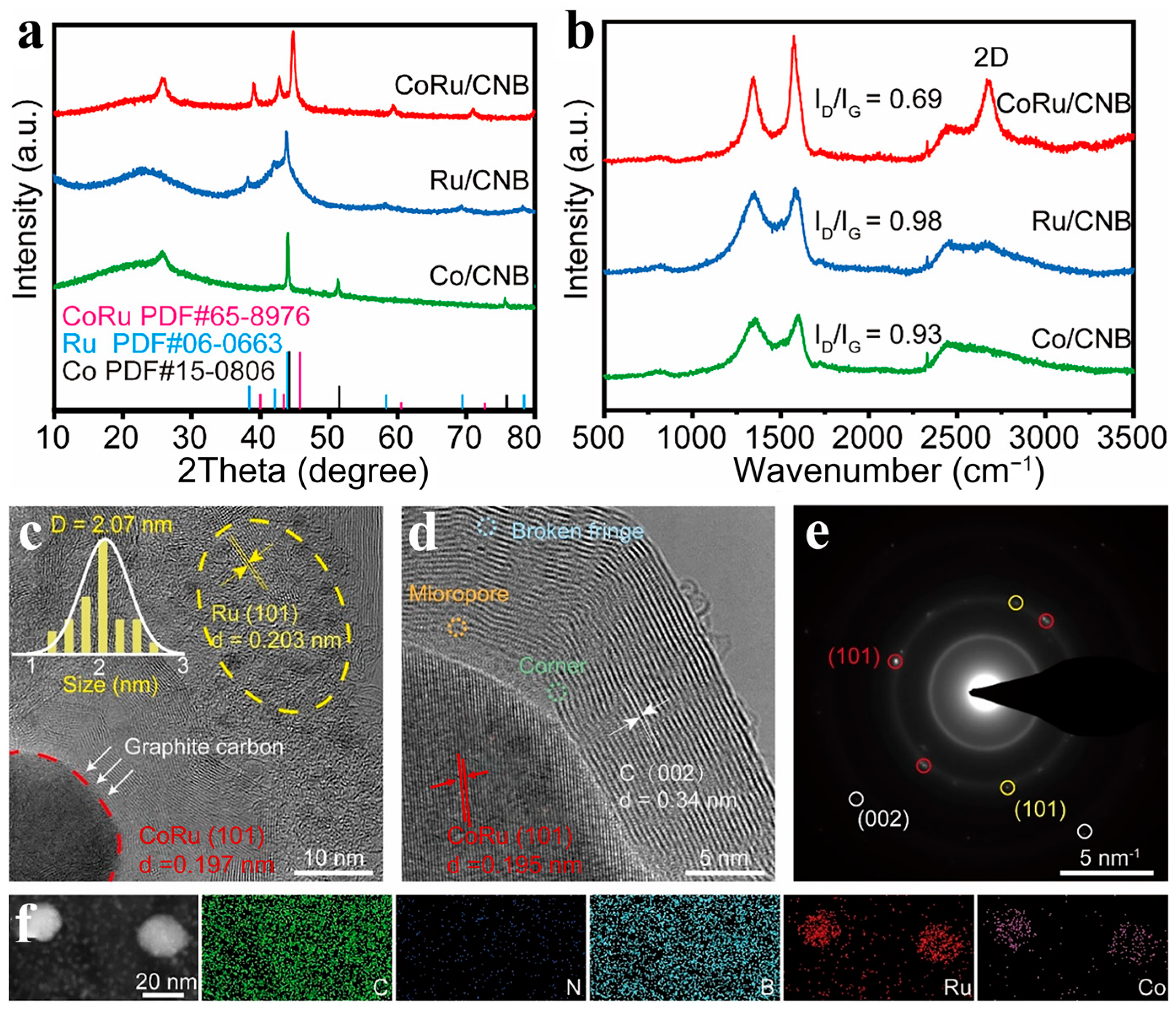
Figure 1. The phase and structure of CoRu/CNB: (a) XRD patterns; (b) Raman spectra; (c,d) HRTEM; (e) SAED; and (f) HAADF-STEM images and corresponding to EDX elemental mappings for C, N, B, Ru, and Co.
Catalysts 15 01106 g001
Figure 2. XPS surveys of (a) CoRu/CNB, (b) Ru/CNB, and (c) Co/CNB; (d) Co 2p spectra of CoRu/CNB and Co/CNB; (e) Ru 3p spectra of CoRu/CNB and Ru/CNB; (f) N 1 s and (g) B 1 s XPS spectra for CoRu/CNB.
Catalysts 15 01106 g002
Figure 3. HER performance test of CoRu/CNB in 1 M KOH: (a) LSV curves and (b) Tafel curves of CoRu/CNB, Ru/CNB, Co/CNB, and Pt/C; (c) η10 and Tafel slope comparison chart of CoRu/CNB; in 0.5 M H2SO4: (d) LSV curves and (e) Tafel curves of CoRu/CNB, Ru/CNB, Co/CNB, and Pt/C; (f) η10 and Tafel slope comparison chart of CoRu/CNB; in 1 M PBS: (g) LSV curves and (h) Tafel curves of CoRu/CNB, Ru/CNB, Co/CNB, and Pt/C; (i) η10 and Tafel slope comparison chart of CoRu/CNB.
Catalysts 15 01106 g003
Figure 4. Nyquist curves in (a) 1 M KOH, (b) 0.5 M H2SO4, and (c) 1 M PBS; the illustration is an equivalent circuit diagram. The corresponding current density difference against scan rate plots scanning at a rate of 2, 4, 6, 8, 10, and 12 mV/s in (d) 1 M KOH, (e) 0.5 M H2SO4, and (f) 1 M PBS.
Catalysts 15 01106 g004
Figure 5. Electrochemical HER performance of CoRu/CNB. Long-term chronoamperometry measurements at a current density of 10 mA cm−2 of CoRu/CNB in (a) 1 M KOH, (b) 0.5 M H2SO4, and (c) 1 M PBS solution.
Catalysts 15 01106 g005
Figure 6. TEM images of CoRu/CNB after HER in (a) 1 M KOH, (b) 0.5 M H2SO4, and (c) 1 M PBS solution.
Catalysts 15 01106 g006
Figure 7. High-resolution XPS spectra for Ru 3p of CoRu/CNB after HER in (a) 1 M KOH, (b) 0.5 M H2SO4, and (c) 1 M PBS solution. High-resolution XPS spectra for Co 2p of CoRu/CNB after HER in (d) 1 M KOH, (e) 0.5 M H2SO4, and (f) 1 M PBS solution.
Catalysts 15 01106 g007
Figure 8. Comparison of the overpotential at 10 mA cm−210) in (a) 1 M KOH, (b) 0.5 M H2SO4, and (c) 1 M PBS solution for CoRu/CNB with recently reported Ru-based HER electrocatalysts [23,38,39,40,41,42,43,44,45,46,47,48,49,50,51].
Catalysts 15 01106 g008
Figure 9. Schematic diagram of the structure of the CoRu/CNB electrocatalyst.
Catalysts 15 01106 g009
Disclaimer/Publisher’s Note: The statements, opinions and data contained in all publications are solely those of the individual author(s) and contributor(s) and not of MDPI and/or the editor(s). MDPI and/or the editor(s) disclaim responsibility for any injury to people or property resulting from any ideas, methods, instructions or products referred to in the content.