Article

PdAg/C Electrocatalysts Synthesized by Thermal Decomposition of Polymeric Precursors Improve Catalytic Activity for Ethanol Oxidation Reaction
by
Yonis Fornazier Filho
1,
Ana Caroliny Carvalho da Cruz
1,
Rolando Pedicini
2,
José Ricardo Cezar Salgado
3,
Rodrigo Vieira Rodrigues
4,
Priscilla Paiva Luz
1,
Sergi Garcia-Segura
5,* and
Josimar Ribeiro
1,*
1
Centro de Ciências Exatas, Departamento de Química, Universidade Federal do Espírito Santo (UFES), Av. Fernando Ferrari, 514, Vitória 29075-910, Brazil
2
National Research Council, Institute for Advanced Energy Technologies “Nicola Giordano” (CNR-ITAE), Via Santa Lucia Sopra Contesse, 5, 98126 Messina, Italy
3
Instituto Latino Americano de Ciências da Vida e da Natureza, Universidade Federal da Integração Latino-Americana (UNILA), Foz do Iguaçu 85866-000, Brazil
4
Instituto de Química, Universidade de São Paulo (USP), Av. Lineu Prestes, São Paulo 05508-000, Brazil
5
Nanosystems Engineering Research Center for Nanotechnology-Enabled Water Treatment, School of Sustainable Engineering and the Built Environment, Arizona State University, Tempe, AZ 85287, USA
*
Authors to whom correspondence should be addressed.
Catalysts 2022, 12(1), 96; https://doi.org/10.3390/catal12010096
Submission received: 21 December 2021 / Revised: 6 January 2022 / Accepted: 12 January 2022 / Published: 14 January 2022

Abstract

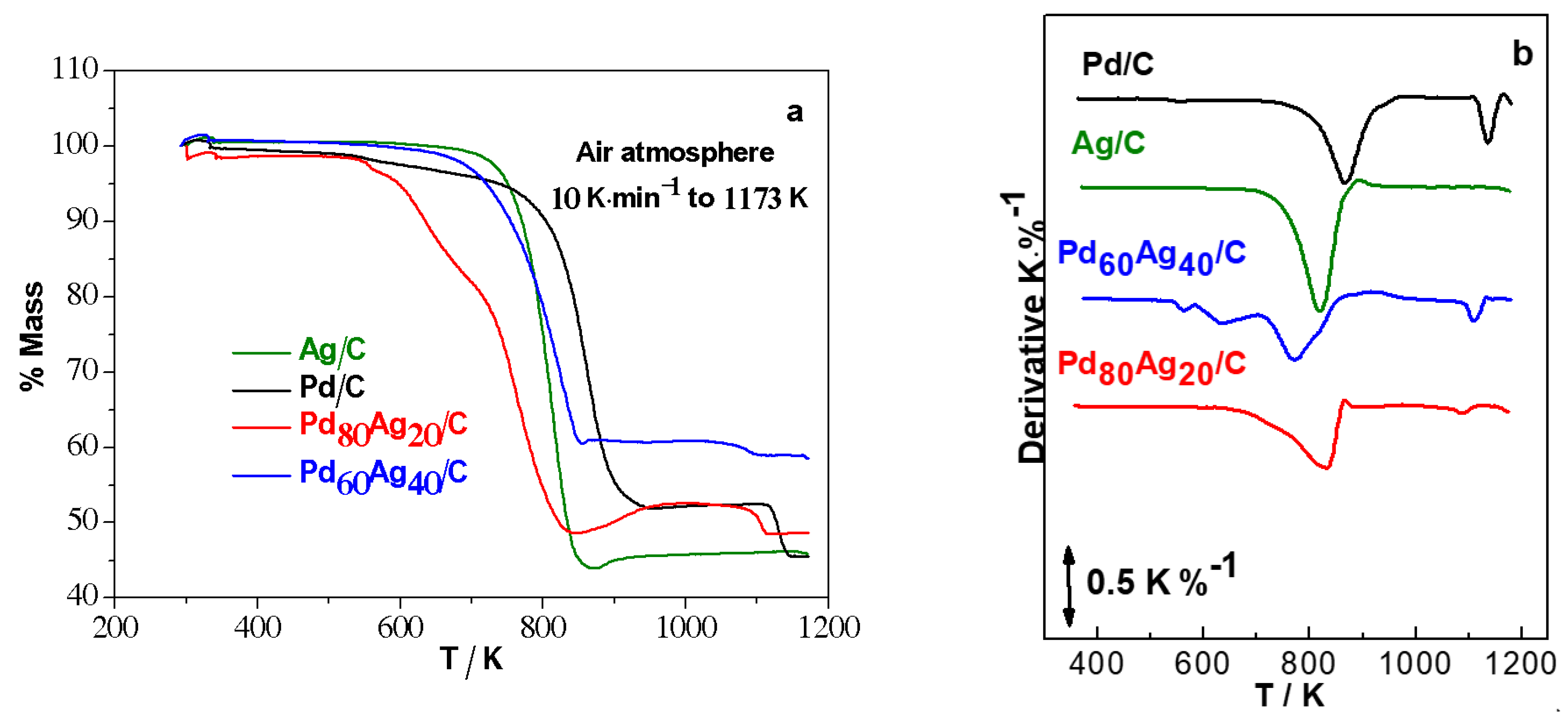
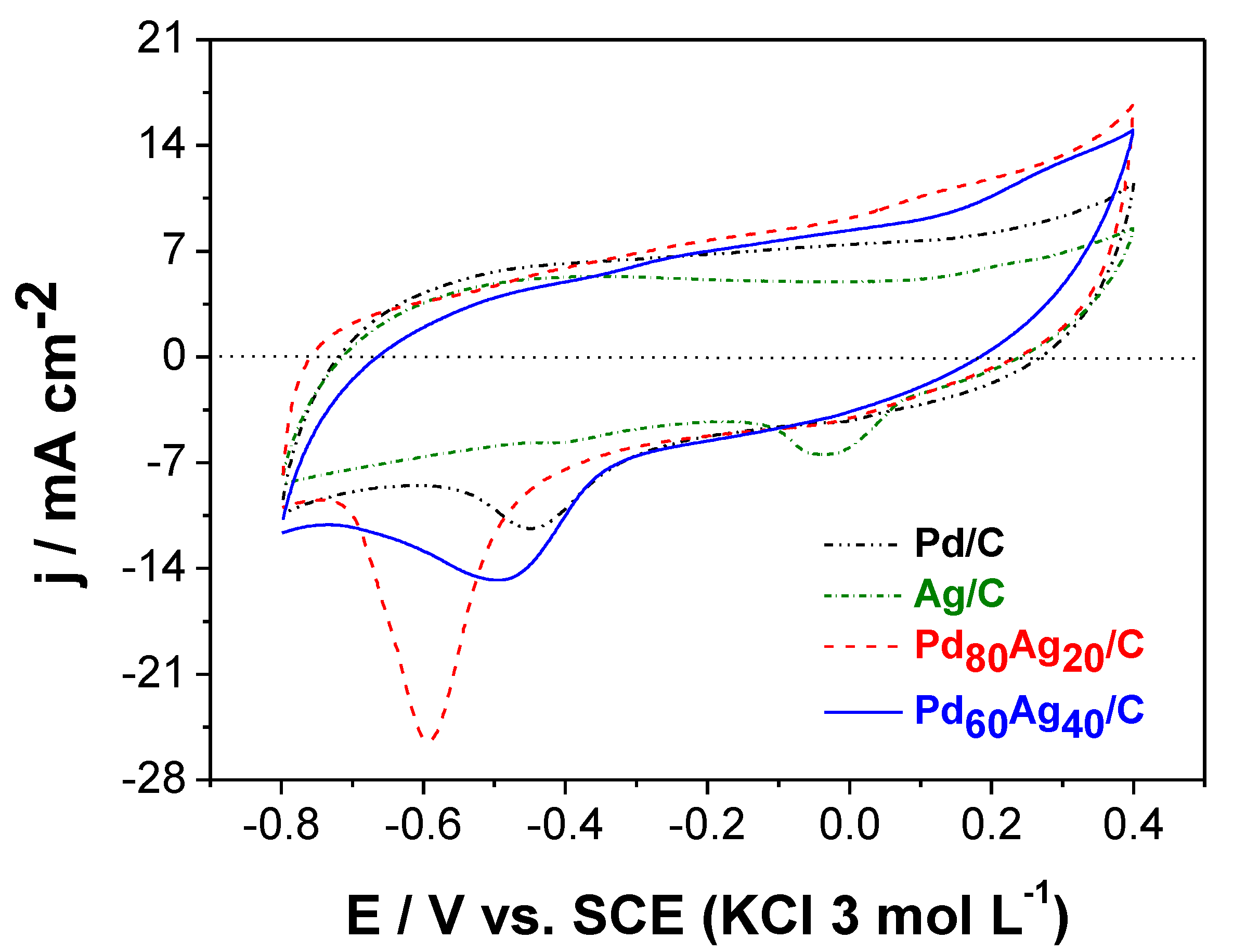
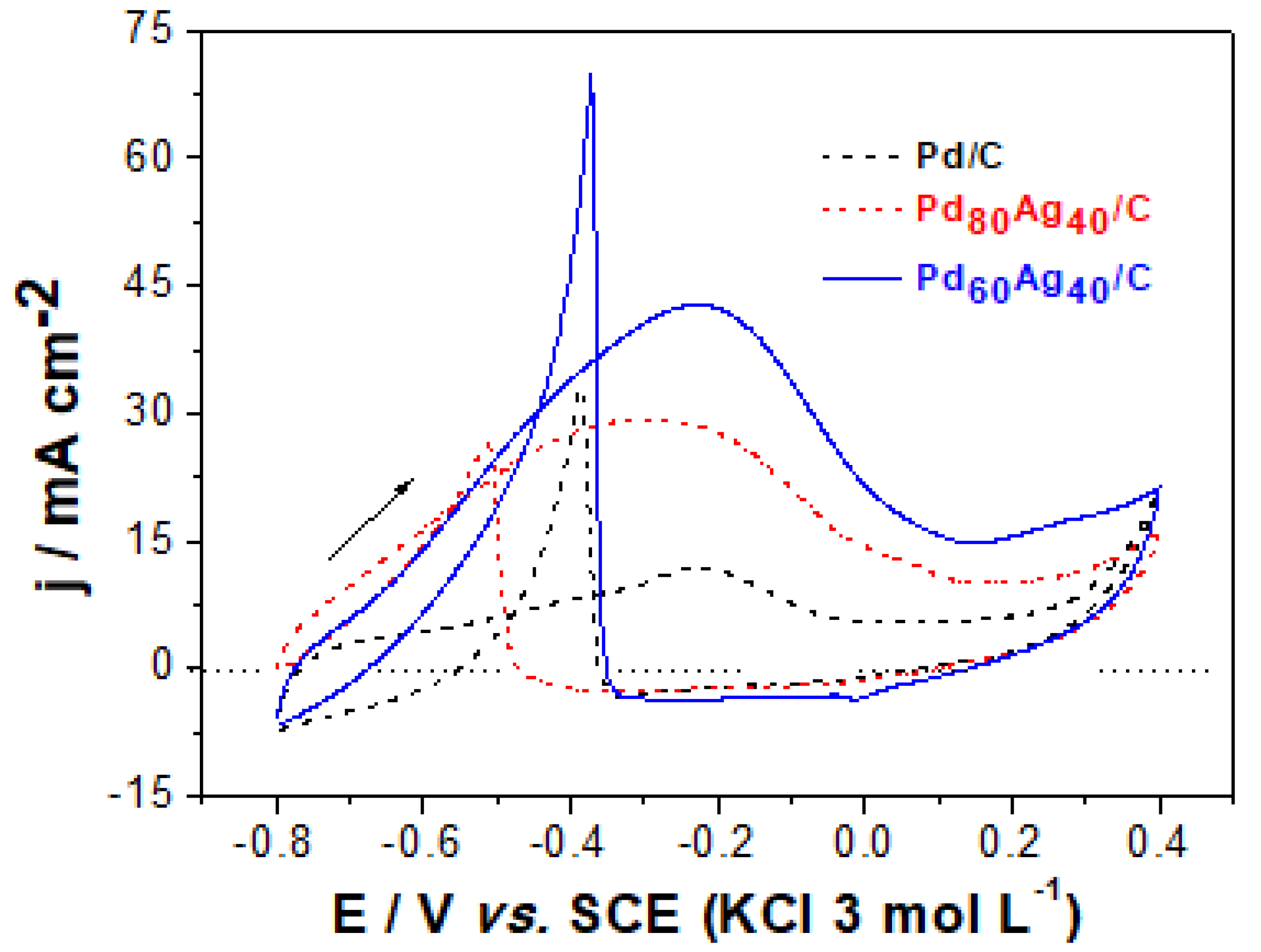
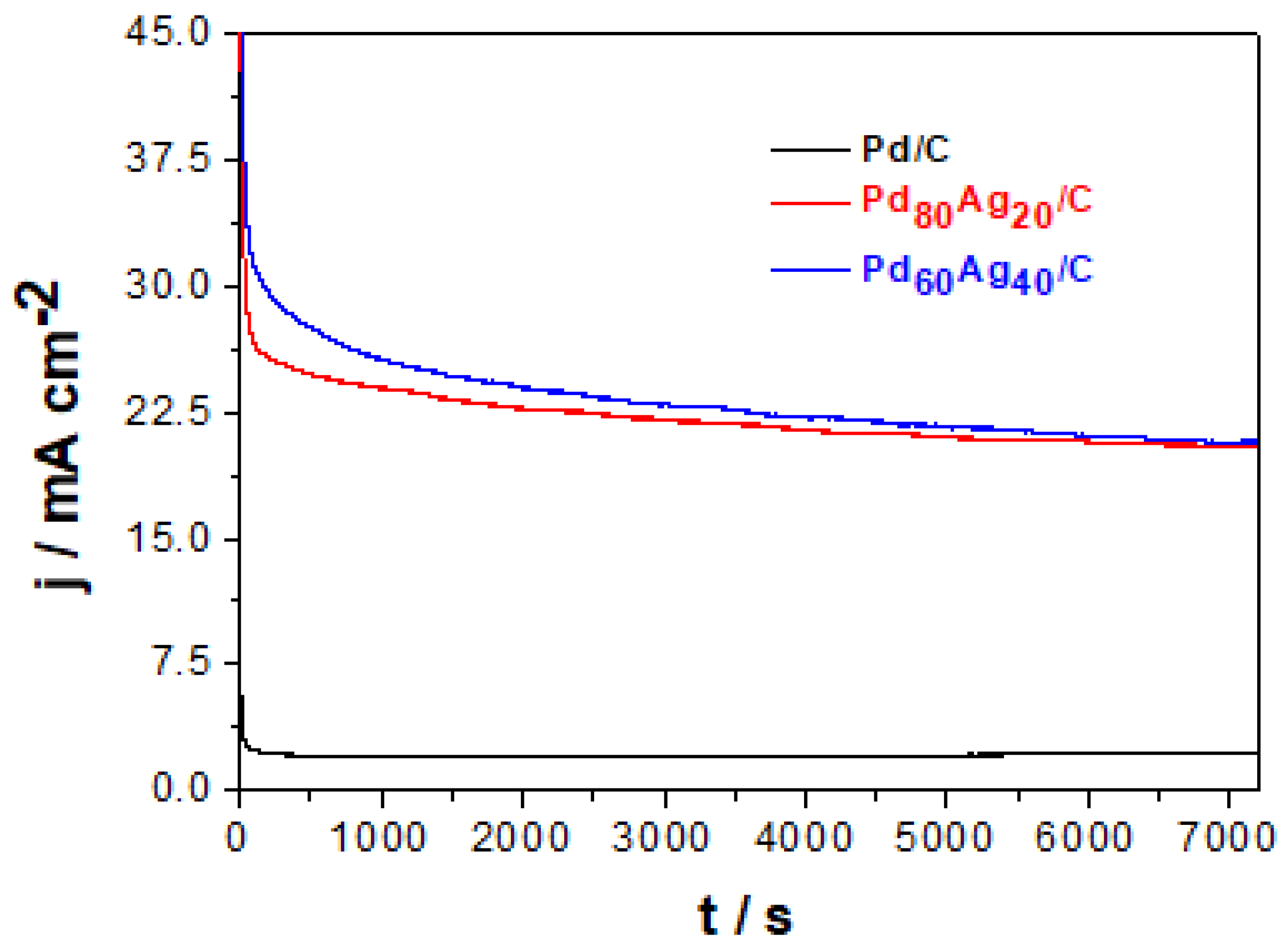
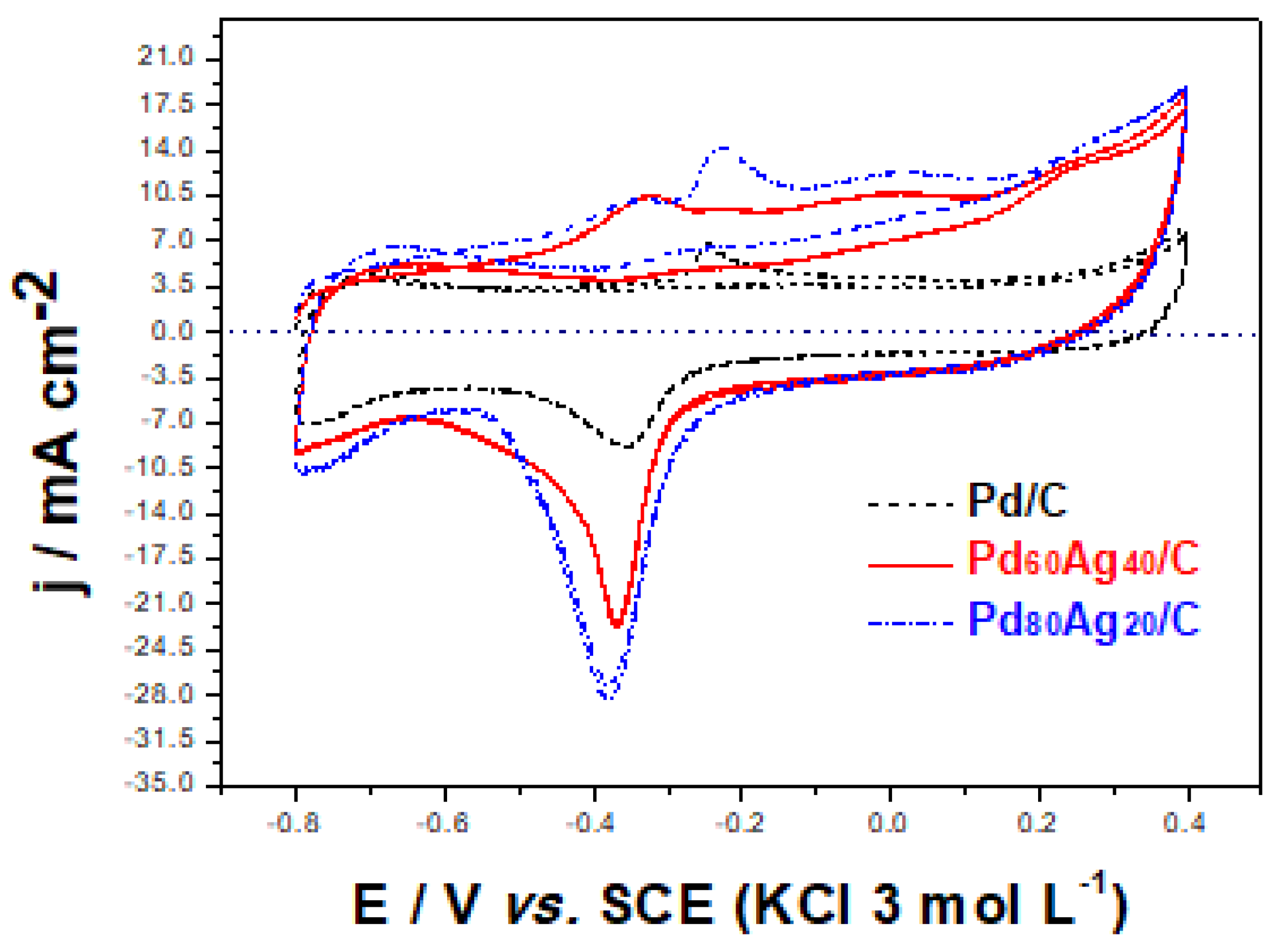
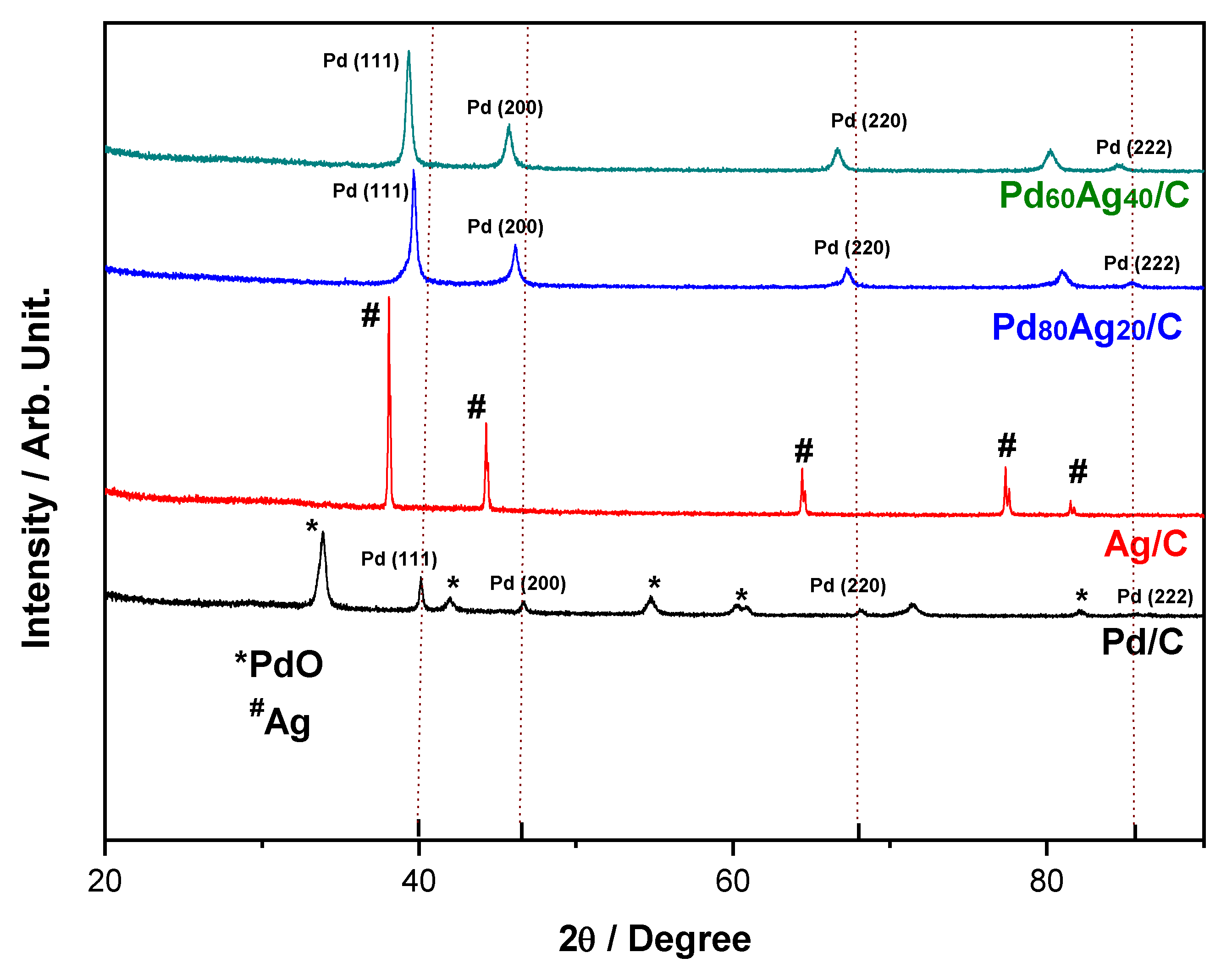
An efficient ethanol oxidation reaction (EOR) is required to enhance energy production in alcohol-based fuel cells. The use of bimetallic catalysts promises decreasing reliance on platinum group metal (PGM) electrocatalysts by minimizing the use of these expensive materials in the overall electrocatalyst composition. In this article, an alternative method of bimetallic electrocatalyst synthesis based on the use of polymeric precursors is explored. PdAg/C electrocatalysts were synthesized by thermal decomposition of polymeric precursors and used as the anode electrocatalyst for EOR. Different compositions, including pristine Pd/C and Ag/C, as well as bimetallic Pd80Ag20/C, and Pd60Ag40/C electrocatalysts, were evaluated. Synthesized catalysts were characterized, and electrochemical activity evaluated. X-ray diffraction showed a notable change at diffraction peak values for Pd80Ag20/C and Pd60Ag40/C electrocatalysts, suggesting alloying (solid solution) and smaller crystallite sizes for Pd60Ag40/C. In a thermogravimetric analysis, the electrocatalyst Pd60Ag40/C presented changes in the profile of the curves compared to the other electrocatalysts. In the cyclic voltammetry results for EOR in alkaline medium, Pd60Ag40/C presented a more negative onset potential, a higher current density at the oxidation peak, and a larger electrically active area. Chronoamperometry tests indicated a lower poisoning rate for Pd60Ag40/C, a fact also observed in the CO-stripping voltammetry analysis due to its low onset potential. As the best performing electrocatalyst, Pd60Ag40/C has a lower mass of Pd (a noble and expensive metal) in its composition. It can be inferred that this bimetallic composition can contribute to decreasing the amount of Pd required while increasing the fuel cell performance and expected life. PdAg-type electrocatalysts can provide an economically feasible alternative to pure PGM-electrocatalysts for use as the anode in EOR in fuel cells.
Keywords: alkaline direct ethanol fuel cell; electrocatalysts; ethanol oxidation; PdAg/C; performance with the economy alkaline direct ethanol fuel cell; electrocatalysts; ethanol oxidation; PdAg/C; performance with the economy