1. Introduction
The human body continuously generates biological signals that reflect a wide range of physiological processes. Advances in sensor technology, including Internet of Things (IoT) devices and wearable healthcare systems, have enabled the large-scale acquisition of physiological data, creating new opportunities for continuous health monitoring and predictive healthcare applications [
1]. Despite these advances, the full potential of such technologies for proactive and predictive cardiac monitoring remains underexplored.
Cardiovascular diseases (CVDs) remain the leading cause of mortality worldwide, accounting for approximately 19 million deaths in 2019, corresponding to nearly 31% of all global deaths [
2,
3]. Early diagnosis and continuous monitoring are therefore essential to reduce mortality and improve clinical outcomes. In this context, the electrocardiogram (ECG) represents one of the most important tools in cardiovascular assessment due to its ability to provide non-invasive information regarding cardiac electrical activity. Consequently, there is growing interest in the development of intelligent systems for real-time ECG analysis and predictive cardiac monitoring using computational intelligence and signal processing techniques [
4,
5,
6,
7,
8,
9,
10,
11,
12,
13].
Although considerable progress has been achieved in automated ECG analysis, early identification and prediction of cardiovascular abnormalities remain challenging problems [
10,
14]. Most existing ECG analysis systems focus primarily on classification and diagnostic tasks, such as arrhythmia detection or heartbeat classification, after abnormal patterns have already emerged. In contrast, forecasting approaches aim to anticipate future cardiac signal behavior before clinically significant abnormalities become evident.
Time series forecasting is a methodological framework used to estimate future observations based on historical sequential data. Traditional forecasting approaches were historically dependent on expert interpretation and statistical analysis, whereas modern forecasting systems increasingly rely on computational intelligence techniques, including statistical models [
15,
16], machine learning (ML) [
17,
18], deep learning (DL) [
19,
20,
21,
22], and hybrid forecasting architectures [
23,
24,
25]. Forecasting methodologies have been successfully applied across several domains, including geology, finance, weather prediction, energy systems, and healthcare [
17,
18,
26,
27,
28,
29,
30,
31].
In healthcare applications, forecasting models have demonstrated promising performance in predicting disease progression, mortality risk, physiological hazards, and future biomedical signal behavior, including blood pressure, electroencephalogram (EEG), electromyography (EMG), respiration, and ECG signals [
21,
32,
33,
34,
35,
36,
37,
38,
39,
40,
41,
42]. Among these applications, ECG waveform forecasting has emerged as a particularly promising research direction because of its potential to support proactive cardiovascular monitoring and early identification of abnormal cardiac dynamics.
Previous review studies on time series forecasting have primarily focused on comparing predictive models or analyzing forecasting applications in broad healthcare and engineering domains [
26,
38,
43,
44,
45,
46,
47,
48,
49,
50,
51,
52,
53,
54,
55]. Similarly, most review studies involving ECG analysis have concentrated on classification-oriented tasks such as arrhythmia detection, diagnostic support systems, and cardiovascular risk assessment.
To the best of our knowledge, no previous systematic review has specifically investigated ECG waveform forecasting as an independent research domain. Unlike previous studies, this work provides a dedicated analysis of forecasting methodologies applied to ECG signals, examining the datasets, preprocessing strategies, forecasting architectures, experimental configurations, and evaluation metrics currently adopted in the literature.
In this review, ECG forecasting refers specifically to waveform time series forecasting, in which past ECG signal samples are used to estimate future ECG waveform values. This scope differs from related tasks such as arrhythmia classification, event prediction, and clinical diagnosis, where the objective is to identify discrete cardiac events or disease states rather than forecast the future evolution of continuous ECG signals. Although some reviewed studies discuss potential clinical applications, the present review focuses exclusively on ECG waveform forecasting methodologies.
To address this research gap, this paper presents a systematic literature review (SLR) of ECG waveform forecasting studies published between 2013 and 2023. The review follows the PRISMA 2020 guidelines and aims to synthesize the current state of the field while identifying methodological trends, research gaps, and future opportunities.
More specifically, this study makes the following contributions:
Analyzes how ECG waveform forecasting problems are formulated and addressed in the literature;
Identifies the datasets, preprocessing techniques, features, forecasting architectures, and evaluation metrics employed in existing studies;
Discusses the principal methodological limitations and research gaps in current ECG forecasting research;
Proposes future research directions for the development of robust, interpretable, and clinically applicable ECG forecasting systems.
By focusing specifically on ECG waveform forecasting, this review contributes a consolidated overview of an emerging research area that remains fragmented and methodologically heterogeneous. The findings may support future developments in predictive cardiology, intelligent monitoring systems, and real-time decision-support technologies for cardiovascular healthcare.
The remainder of this paper is organized as follows.
Section 2 presents the theoretical background related to ECG signals, time series forecasting, forecasting models, and performance metrics.
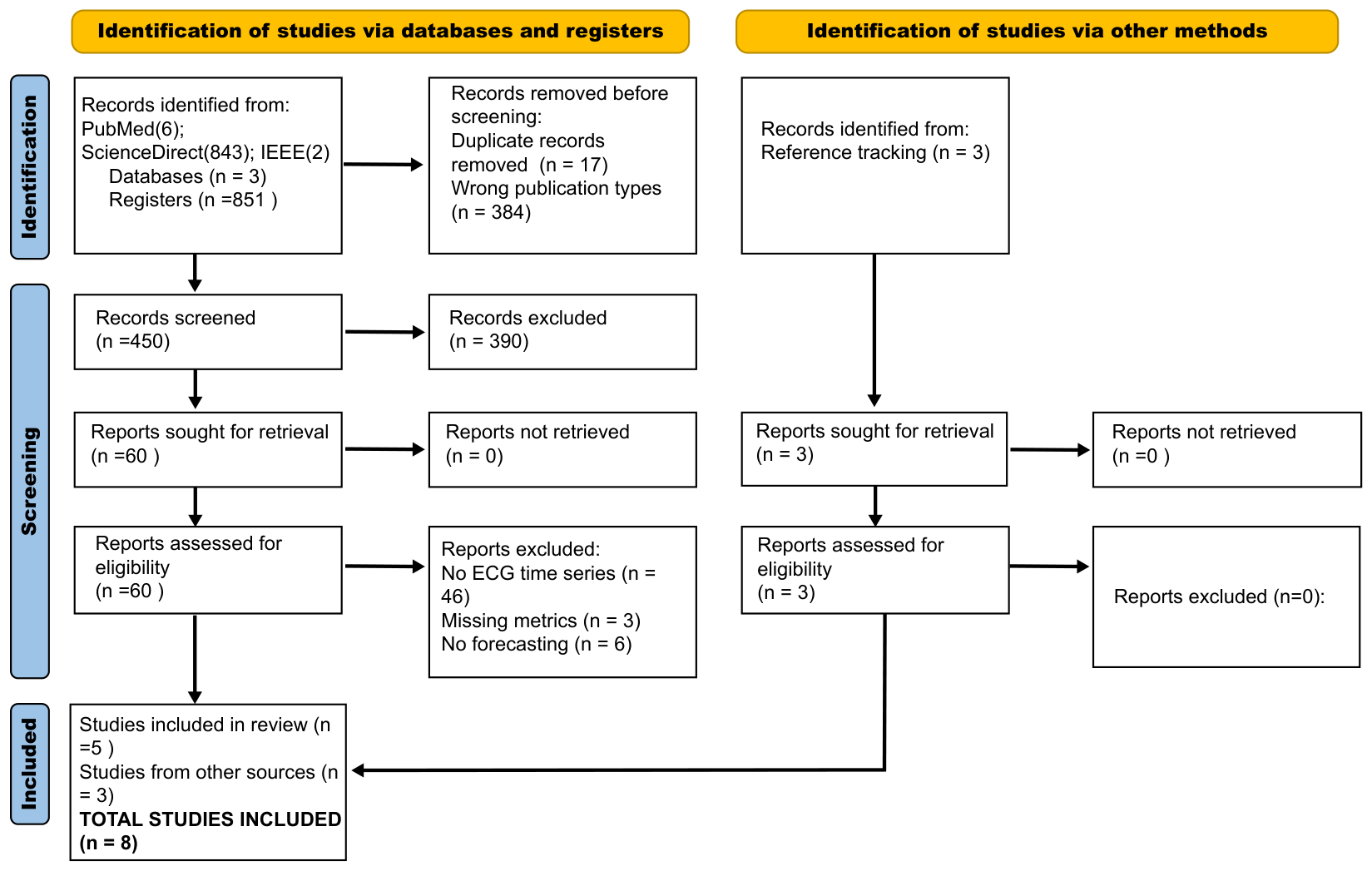
Section 3 describes the systematic review methodology, including the search strategy, eligibility criteria, and data extraction process.
Section 4 presents the results of the review.
Section 5 discusses the main findings, research gaps, and future research directions. Finally,
Section 6 concludes the paper.
3. Methods
This systematic literature review (SLR) was conducted following the PRISMA 2020 (Preferred Reporting Items for Systematic Reviews and Meta-Analyses) guidelines [
66,
67]. The completed PRISMA 2020 Checklist is provided as
Supplementary Material. The methodological design was additionally informed by recommendations from the Cochrane Handbook for Systematic Reviews of Interventions and engineering-oriented review guidelines [
68].
3.1. Research Questions
This review aims to synthesize the current state of ECG time series forecasting research. To guide the analysis, five research questions (RQs) were formulated, as summarized in
Table 2.
3.2. Eligibility Criteria and Temporal Scope
Studies were included if they: (i) addressed time series forecasting tasks; (ii) used ECG signals for experimental validation; (iii) reported quantitative performance metrics; (iv) were peer-reviewed; and (v) were written in English.
Although this review was completed in 2026, the search period was limited to studies published up to 31 December 2023. This restriction was adopted to ensure reproducibility of the review process and allow sufficient time for peer-reviewed studies to achieve scientific consolidation.
3.3. Information Sources and Search Strategy
The literature search was conducted across three multidisciplinary databases: PubMed/MEDLINE, IEEE Xplore, and ScienceDirect. These sources were selected to cover biomedical, engineering, and computational intelligence literature.
The final Boolean search string was defined as:
(“ECG” OR “electrocardiogram”) AND (“time series”) AND (“forecasting” OR “prediction”) AND (“machine learning” OR “deep learning”)
Study screening was performed using Rayyan QCRI [
69] through a two-stage process involving title/abstract screening followed by full-text assessment. Three authors (Henriques Zacarias, Virginie Felizardo, and Leonice Souza-Pereira) independently participated in the screening and eligibility assessment. Disagreements were resolved through discussion and consensus.
Backward and forward citation tracking (snowballing) was additionally applied to identify relevant studies not retrieved through the initial database search.
The review protocol was not preregistered in repositories such as PROSPERO or OSF, and no formal review protocol was published prior to conducting the study. This is acknowledged as a limitation of the review.
3.4. Data Extraction and Synthesis
A standardized extraction protocol was used to systematically organize the characteristics of the included studies. The extracted information included publication venue, forecasting objective, dataset source, preprocessing techniques, forecasting architecture, sequence length, forecasting horizon, and evaluation metrics.
To facilitate comparative analysis, the studies were grouped according to forecasting scope, modeling strategy, and evaluation methodology. The synthesized information is summarized in
Table 3,
Table 4 and
Table 5.
Artificial intelligence tools were used only in a supportive manner during manuscript preparation. Specifically, generative artificial intelligence (Gemini 3 Flash, Google) and AI-assisted language tools were employed for minor language refinement and for generating preliminary visual layouts of the conceptual diagrams illustrating the research gaps and the research agenda. All scientific interpretations, conceptual structures, analyses, and validations were conducted entirely by the authors.
No AI tools were used for literature search, study selection, data extraction, data analysis, interpretation of results, or formulation of conclusions.
3.5. Threats to Validity and Limitations
Some limitations of this review should be acknowledged. First, the selected search terms may not have captured studies using alternative terminology such as “physiological modeling” or “cardiac prediction.” Second, although PubMed, IEEE Xplore, and ScienceDirect provide broad multidisciplinary coverage, the exclusion of databases such as Scopus and Web of Science may have resulted in the omission of some relevant studies.
Selection bias was mitigated through predefined inclusion and exclusion criteria and the use of the Rayyan platform to support transparent screening procedures.
The relatively small number of included studies reflects both the emerging nature of ECG time series forecasting and the strict eligibility criteria adopted in this review. In particular, only studies explicitly addressing forecasting tasks with quantitative evaluation metrics were considered, while works focused exclusively on classification or detection tasks were excluded.
Although the limited number of studies may restrict the generalizability of the findings, it also highlights the need for further research and methodological consolidation in this emerging domain.
Risk-of-Bias Assessment
Given the exploratory nature of this review, the methodological heterogeneity of the included studies, and the limited number of eligible publications, a formal risk-of-bias assessment tool was not applied. Most included studies differed substantially in terms of datasets, preprocessing pipelines, forecasting objectives, experimental configurations, and evaluation protocols, making the application of a standardized risk-of-bias framework challenging.
This decision is acknowledged as a limitation of the review and should be considered when interpreting the findings. Future systematic reviews, including a larger and more homogeneous body of literature, may benefit from adopting formal quality assessment or risk-of-bias instruments.
5. Discussion and Future Directions
5.1. Interpretation of the Results
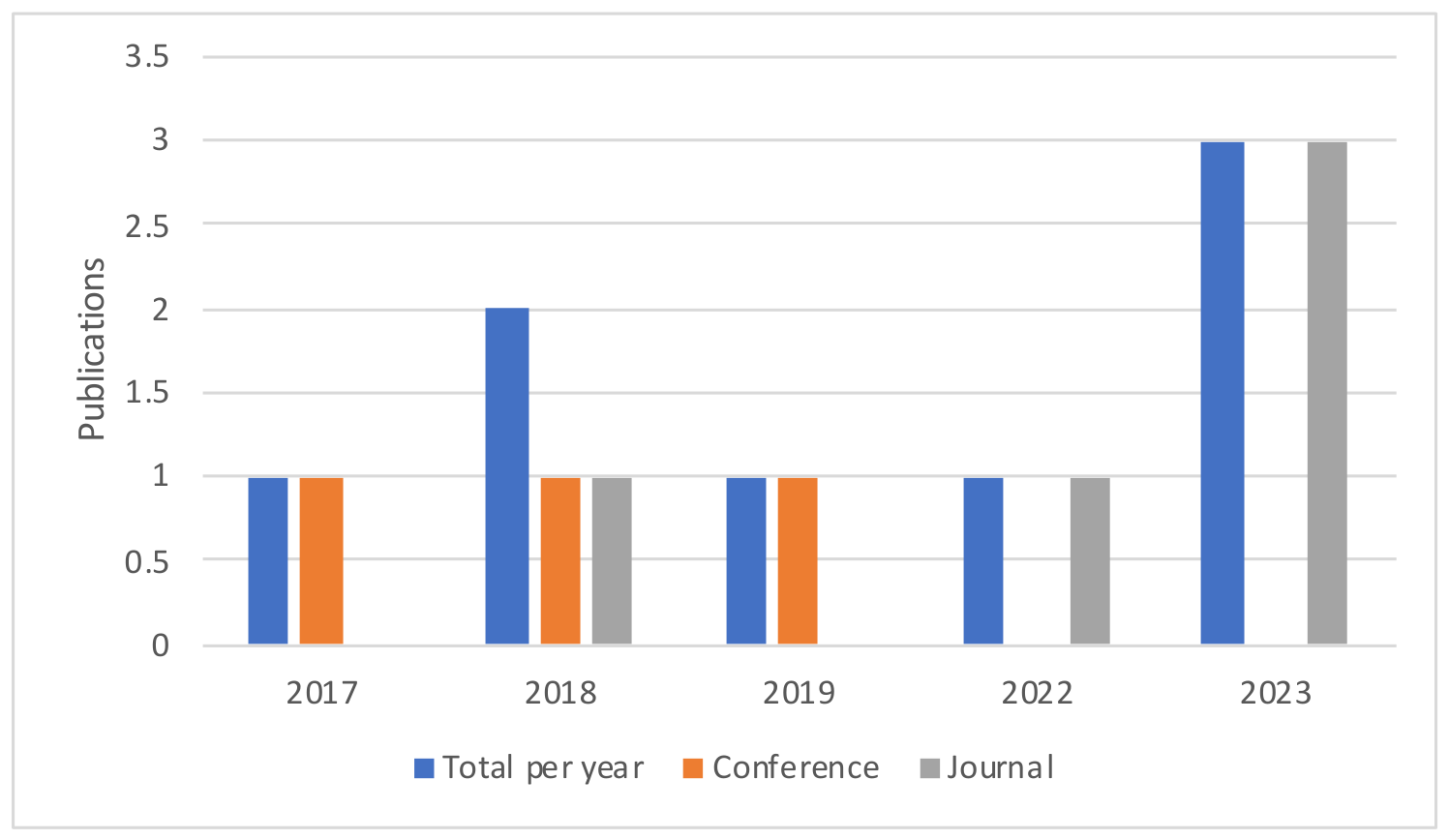
The results of this systematic review indicate that ECG time series forecasting remains an emerging research area that is still undergoing methodological consolidation, particularly when compared with more established ECG analysis tasks such as arrhythmia detection and classification. The temporal distribution of publications shown in
Figure 3 supports this observation, revealing that the studies included in the review were published between 2017 and 2023, with a noticeable increase in publication activity in 2023. This trend reflects growing scientific interest in predictive modeling of physiological signals, likely stimulated by advances in deep learning architectures, increased computational capacity, and the broader availability of physiological signal repositories.
Figure 3 also suggests a gradual evolution in research maturity. Earlier studies are predominantly exploratory and conference-oriented, whereas more recent works increasingly appear in peer-reviewed journals. This transition suggests that ECG forecasting research is progressively moving beyond proof-of-concept experimentation toward more structured methodological development and scientific consolidation.
The reviewed studies also reveal substantial variability in the formulation of the forecasting problem itself. Some works focus specifically on ECG waveform prediction, whereas others investigate ECG signals within broader time series forecasting scenarios. As a result, methodological innovation frequently receives greater emphasis than clinically oriented problem formulation. Consequently, several forecasting models are optimized primarily for numerical prediction accuracy rather than physiological interpretability or clinical applicability.
The limited exploration of multivariate forecasting further reinforces this observation. Only one study integrates ECG signals with additional physiological measurements. Considering that cardiovascular dynamics are inherently multimodal and influenced by multiple interacting physiological processes, current forecasting approaches may not fully exploit inter-signal dependencies capable of improving predictive performance and physiological representation.
Dataset usage patterns also provide important insight into the current state of the field. The reviewed studies exhibit a strong dependence on publicly available repositories, particularly PhysioNet and the MIT-BIH Arrhythmia Database. Although the increasing number of publications reflects growing methodological interest, the continued reliance on a small set of benchmark datasets reveals comparatively limited progress in data diversification. This imbalance suggests that methodological advances are progressing faster than the development of broader and more representative ECG forecasting datasets, potentially restricting model generalization in real-world clinical environments.
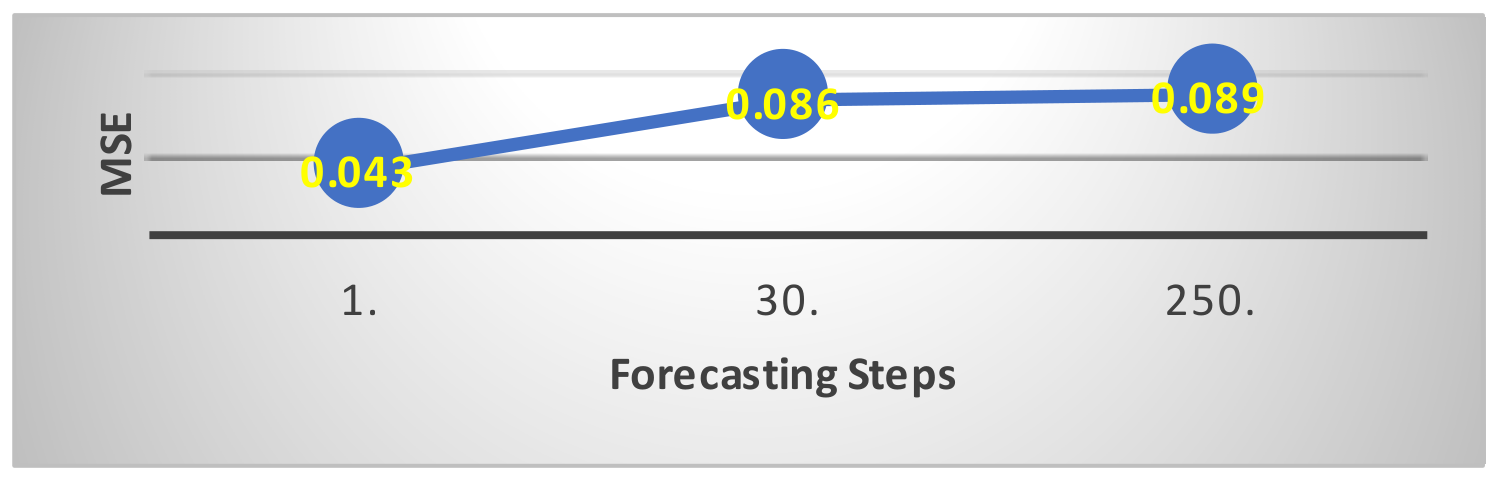
Figure 4 provides additional insight into forecasting behavior across prediction horizons. The increase in MSE values as forecasting horizons expand confirms the presence of cumulative error propagation in sequential prediction tasks. This phenomenon is particularly relevant for ECG forecasting because cardiac signals exhibit high temporal variability and sensitivity to small perturbations. Importantly, the increase in prediction error does not appear strictly linear, suggesting that architectural design, sequence modeling strategies, and preprocessing techniques may partially mitigate long-range forecasting degradation.
From a methodological perspective, the comparative analysis suggests that forecasting performance is strongly influenced by the compatibility between model assumptions and ECG signal properties. Classical statistical approaches such as ARIMA generally demonstrate lower forecasting performance because they assume linearity and stationarity, assumptions that are rarely satisfied by ECG signals. Nevertheless, these methods remain computationally efficient and interpretable, making them useful baseline models and suitable for relatively stable short-term forecasting scenarios.
Machine learning approaches based on conventional neural networks improve modeling flexibility by learning nonlinear relationships directly from data but generally remain dependent on manually engineered representations and relatively limited temporal memory mechanisms. In contrast, deep learning architectures provide greater representational capacity for modeling complex temporal dynamics inherent to ECG signals.
Recurrent architectures such as LSTM and GRU are particularly well suited to ECG forecasting because their gated memory mechanisms enable the learning of long-term temporal dependencies while mitigating the vanishing gradient problem commonly observed in conventional recurrent networks. Temporal Convolutional Networks (TCNs), especially when combined with recurrent units, further enhance forecasting capability by exploiting large receptive fields and parallel computation, allowing efficient modeling of long sequential signals while preserving temporal dependencies.
Table 6 indicates that hybrid forecasting approaches provide one of the most consistent methodological patterns across the reviewed literature. Their effectiveness can be explained by the combination of complementary mechanisms: signal decomposition or preprocessing stages reduce noise and isolate local temporal structures, while neural components model nonlinear dependencies and longer-term temporal dynamics. This architectural complementarity appears especially advantageous in biomedical forecasting scenarios characterized by noisy, non-stationary, and relatively limited datasets. Rather than relying on a single modeling paradigm, hybrid architectures leverage the complementary strengths of statistical, signal processing, and deep learning techniques, explaining their growing adoption in recent ECG forecasting studies.
Table 6 further illustrates that forecasting performance is not determined solely by model complexity but by the alignment between architectural assumptions and ECG signal characteristics. Hybrid approaches appear particularly effective because they combine explicit signal decomposition with nonlinear temporal learning mechanisms.
A further observation concerns experimental variability across studies. The reviewed works differ substantially regarding preprocessing procedures, sequence construction strategies, forecasting horizons, and evaluation protocols. Such methodological heterogeneity complicates direct comparison between forecasting approaches and limits reproducibility. Several studies also fail to explicitly report preprocessing pipelines, sequence lengths, or dataset partitioning procedures, reducing methodological transparency.
The predominance of error-based metrics such as RMSE and MAE reflects a methodological emphasis on waveform reconstruction accuracy. Correlation measures such as R and appear less frequently, while broader clinical evaluation criteria remain largely unexplored. These observations indicate that methodological advances have been accompanied by increasing model complexity; however, experimental heterogeneity and the predominance of reconstruction-oriented evaluation metrics continue to limit objective comparison between forecasting approaches. The clinical implications of these findings are discussed in the following subsection.
5.2. Toward Clinically Meaningful ECG Forecasting
One of the main observations emerging from this review is that most existing studies evaluate ECG forecasting primarily as a signal reconstruction problem rather than as a tool for clinical decision support. In almost all of the reviewed studies, model performance is assessed using conventional regression metrics such as Root Mean Square Error (RMSE), Mean Absolute Error (MAE), Mean Squared Error (MSE), and, less frequently, correlation-based measures including Pearson’s correlation coefficient and the coefficient of determination (
) [
25,
70,
71,
72,
73,
74,
75,
76].
These metrics are well suited for measuring numerical prediction accuracy and provide an objective way to compare forecasting models. Nevertheless, they say relatively little about whether the predicted waveform preserves information that is clinically relevant. A model may achieve a very low prediction error while failing to reproduce subtle electrophysiological changes associated with the development of cardiac abnormalities. Therefore, good forecasting accuracy should not automatically be interpreted as evidence of clinical predictive capability. Rather, it reflects the model’s ability to reproduce the temporal behaviour of the ECG signal.
This distinction is important because ECG waveform forecasting and clinical event prediction pursue different objectives. Forecasting aims to estimate future ECG samples based on previously observed signals, whereas clinical prediction seeks to identify or anticipate pathological conditions before they become clinically apparent [
10,
84].
Viewed from this perspective, waveform forecasting should not be considered the final goal of predictive cardiac analysis. Instead, it can be understood as an enabling technology that supports more advanced applications. Accurate forecasts may improve anomaly detection, facilitate continuous patient monitoring, contribute to the development of digital physiological twins, or provide more informative inputs for downstream arrhythmia classification systems.
An additional consideration is that the high periodicity of ECG signals may inadvertently simplify short-term forecasting tasks. When prediction horizons are limited to a single sample or a very short interval, forecasting models may primarily learn the local temporal continuity of the cardiac cycle rather than anticipate meaningful physiological changes. Consequently, excellent performance under these conditions may reflect accurate waveform extrapolation rather than genuine predictive capability. This distinction becomes increasingly important when forecasting models are intended to support early diagnosis or preventive clinical interventions.
Another noteworthy finding concerns the forecasting horizons explored in the current literature. Most studies focus on one-step or very short-term prediction, while only one investigates substantially longer forecasting horizons [
75].
Although short-term forecasting is useful for evaluating a model’s ability to capture local temporal dependencies, its clinical value remains uncertain. Predicting only the next sample or the immediate future provides limited opportunity for preventive intervention. From a clinical perspective, the greatest potential of physiological forecasting lies in anticipating patient deterioration sufficiently early to support risk stratification, early warning systems, and timely clinical decision-making [
85,
86].
The choice of evaluation metrics also deserves further attention. Regression metrics such as RMSE, MAE, and MSE remain essential because they quantify numerical differences between predicted and reference signals. Likewise, Pearson’s correlation coefficient and provide complementary information regarding overall waveform similarity and explained variance. However, none of these measures directly evaluates whether clinically important ECG characteristics have been preserved.
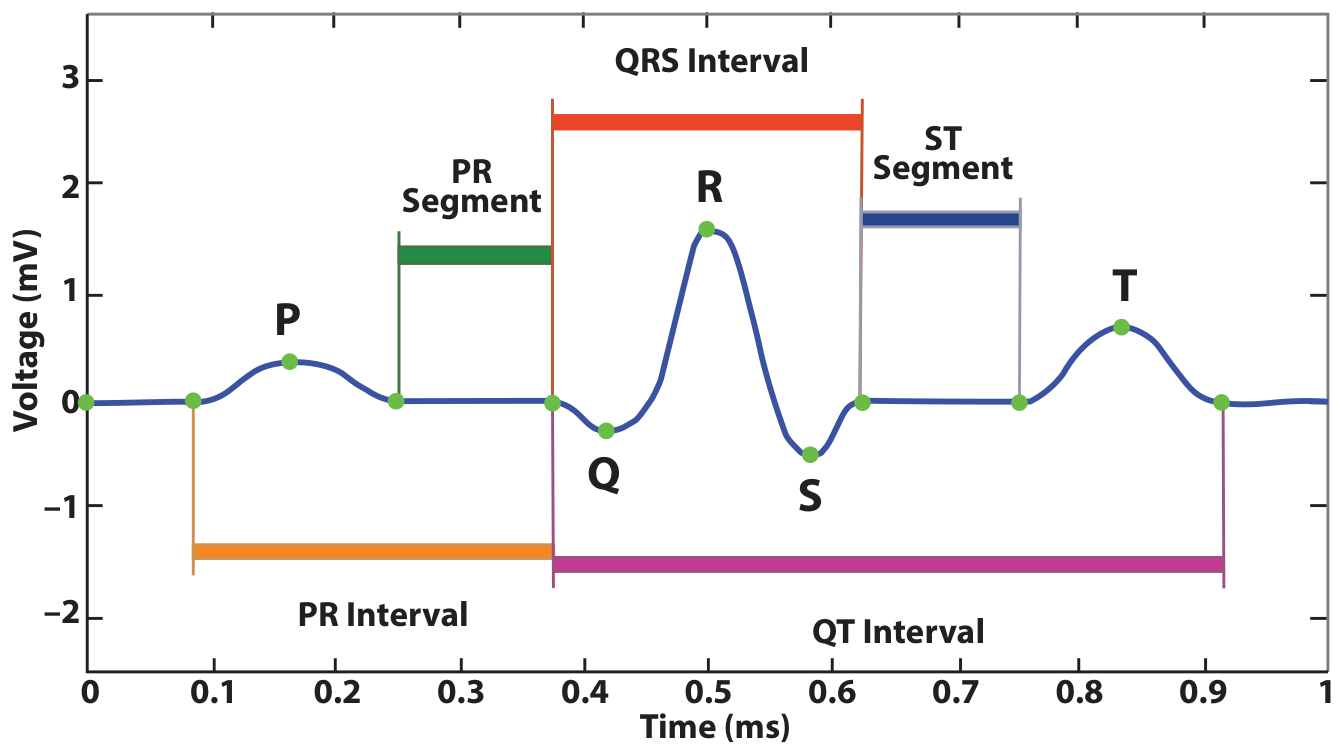
For example, alterations in P-wave morphology, QRS duration, ST-segment deviation, T-wave morphology, QT interval, or RR interval variability may substantially influence clinical interpretation while producing only modest changes in numerical error. As a result, two models with similar RMSE values may differ considerably in their ability to preserve diagnostically relevant information.
In this context, Dynamic Time Warping Distance (DTW Distance) deserves particular attention. Although only rarely reported in the reviewed studies, DTW Distance provides a complementary perspective for evaluating forecasting performance by comparing waveform similarity after optimal temporal alignment [
87,
88]. Unlike conventional point-wise error metrics, DTW Distance is considerably less sensitive to small temporal shifts between predicted and reference signals, allowing the comparison to emphasize overall waveform morphology rather than exact sample-by-sample correspondence [
88,
89]. Consequently, DTW Distance may offer a more clinically meaningful assessment of ECG waveform preservation, particularly when minor temporal misalignments do not substantially alter the underlying cardiac morphology.
This characteristic may be especially valuable in ECG analysis, where slight temporal misalignments do not necessarily affect clinical interpretation. Conversely, models presenting similar RMSE or MAE values may preserve cardiac morphology to very different degrees. For this reason, DTW Distance should not be viewed as a replacement for conventional regression metrics but rather as a complementary measure capable of providing additional insight into waveform quality and temporal consistency.
Taken together, these observations suggest that future ECG forecasting studies should move beyond purely numerical performance evaluation. Conventional regression metrics remain essential, but they should be complemented by morphology-aware evaluation criteria, preservation of clinically relevant fiducial points, interval estimation errors (RR, PR, and QT), uncertainty estimation, and assessment of the contribution of predicted signals to downstream clinical tasks such as arrhythmia prediction or early warning systems.
Ultimately, the success of ECG forecasting should not be judged solely by its ability to minimise numerical prediction errors. Its real value lies in its potential to support predictive cardiac monitoring and improve clinical decision-making. Viewed from this perspective, ECG waveform forecasting should be regarded not as an end in itself, but as a foundational component of intelligent predictive healthcare systems. This shift from numerical signal reconstruction toward clinically meaningful prediction provides a broader context for interpreting the current state of the field and highlights the growing importance of evaluating forecasting models according to their potential clinical impact rather than numerical accuracy alone.
5.3. Summary of Research Question Findings
This section summarizes the main findings of the review by addressing the proposed research questions and highlighting the principal methodological patterns identified across the included studies.
(RQ1) How is the ECG forecasting problem addressed?
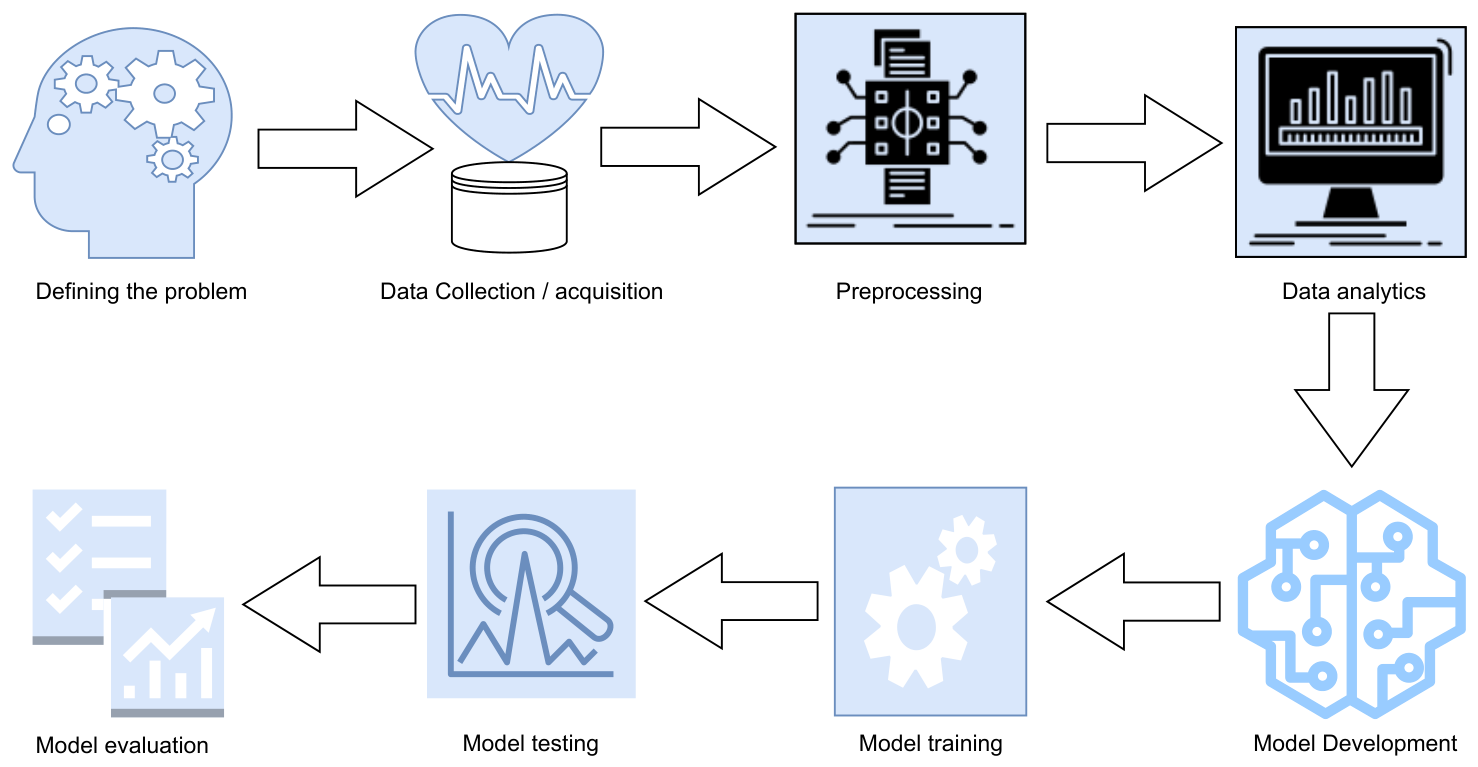
The reviewed studies generally adopt a multi-stage forecasting pipeline involving signal acquisition, optional preprocessing, sequence construction, model training, and performance evaluation. However, substantial variability exists regarding preprocessing procedures, segmentation strategies, forecasting horizons, and experimental design.
Traditional ECG analysis commonly relies on extensive preprocessing and feature engineering. In contrast, several forecasting approaches increasingly employ end-to-end learning paradigms capable of operating directly on raw or minimally processed ECG signals. This shift reflects the growing adoption of neural forecasting architectures that implicitly learn temporal representations from sequential data.
Despite broad similarities in the overall workflow,
Figure 5 reveals considerable heterogeneity in sequence length, forecasting horizon, and partitioning strategies, indicating the absence of standardized experimental protocols for ECG forecasting.
(RQ2) Which databases and features are used?
The results reveal a strong dependence on publicly available physiological repositories, particularly PhysioNet and the MIT-BIH Arrhythmia Database. The widespread use of these datasets is mainly associated with their accessibility, annotation quality, and historical relevance within ECG research.
This concentration on a limited number of benchmark datasets may introduce structural bias into the literature. Most forecasting models are developed and validated using relatively controlled and curated datasets, which may not adequately reflect real-world acquisition variability, noise conditions, or patient diversity. Consequently, the robustness and generalizability of many forecasting approaches remain uncertain.
Most studies rely directly on raw ECG signals rather than handcrafted feature extraction. This trend reflects the increasing adoption of representation-learning approaches capable of extracting temporal patterns directly from sequential physiological signals.
(RQ3) Which forecasting algorithms are used?
The reviewed forecasting approaches can be grouped into four main categories: statistical models, machine learning methods, deep learning architectures, and hybrid approaches.
Statistical forecasting models are less frequently adopted because their assumptions of linearity and stationarity are poorly aligned with ECG signal dynamics. Machine learning approaches improve modeling flexibility but remain constrained by feature-engineering dependencies and limited temporal modeling capacity.
Deep learning models, particularly recurrent architectures such as LSTM and GRU, are widely adopted due to their ability to capture long-range temporal dependencies and nonlinear sequential dynamics. More recent architectures, including Temporal Convolutional Networks (TCNs) combined with recurrent units and GAN-based forecasting models, demonstrate promising capability in modeling complex ECG temporal structures.
Hybrid approaches consistently demonstrate strong performance by combining complementary mechanisms. Signal-processing techniques reduce noise and isolate local temporal structures, while neural architectures learn nonlinear dependencies and global temporal patterns. This combination appears particularly suitable for physiological forecasting scenarios involving noisy and non-stationary signals.
(RQ4) How many samples or minutes are used for forecasting, and what forecasting horizons are considered?
The reviewed studies reveal substantial variability regarding dataset size, sequence configuration, and forecasting horizon. No standardized guidelines currently exist regarding optimal sequence length or partitioning strategy for ECG forecasting tasks.
Most studies allocate a larger proportion of samples to training to facilitate learning of underlying temporal dynamics. However, the absence of consistent sequence construction procedures introduces additional methodological variability that may significantly influence forecasting performance.
One-step-ahead prediction remains the dominant forecasting strategy because of its lower complexity and reduced error accumulation. Multi-step forecasting remains comparatively less explored since prediction errors tend to propagate and amplify over time in highly dynamic physiological signals such as ECG. This behavior explains the performance degradation observed for longer forecasting horizons.
(RQ5) Which evaluation metrics are used to assess forecasting performance?
Performance evaluation is dominated by regression-oriented metrics, particularly RMSE and MAE. These metrics are well suited for measuring pointwise deviations in continuous waveform prediction tasks, which explains their widespread adoption in ECG forecasting studies.
The reviewed literature nevertheless reveals substantial inconsistency in evaluation practices. Some studies combine multiple metrics such as RMSE, MAE, R, and , but reporting protocols remain highly heterogeneous. Consequently, direct comparison between forecasting approaches remains difficult.
This variability reflects a broader methodological limitation: the absence of standardized evaluation frameworks specifically designed for ECG waveform forecasting. Current evaluation practices remain primarily focused on numerical prediction accuracy rather than clinically meaningful forecasting utility.
5.4. Research Gaps in ECG Forecasting
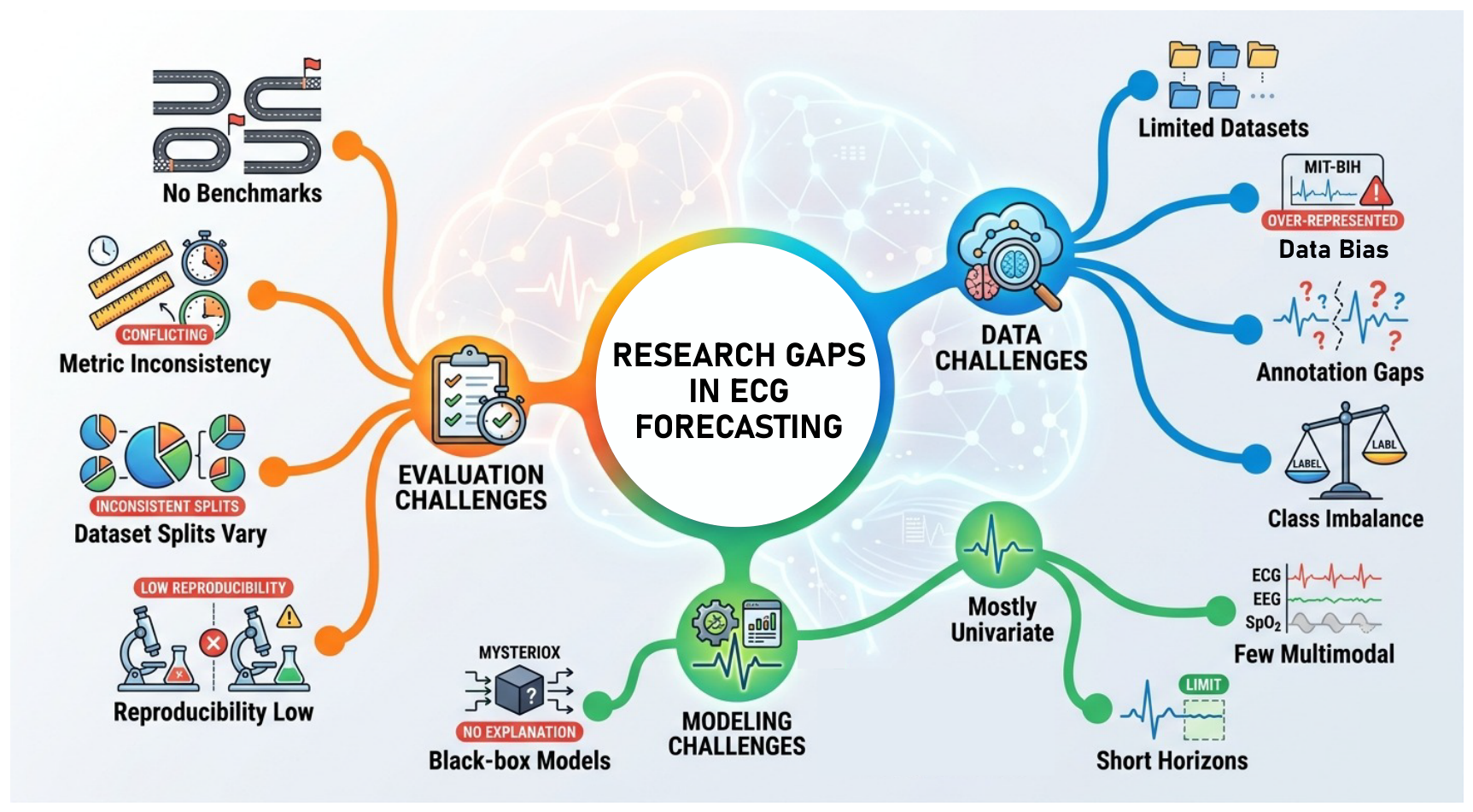
Although the reviewed studies demonstrate encouraging progress in ECG time series forecasting, the comparative analysis reveals several unresolved challenges involving data diversity, methodological consistency, model generalization, and evaluation practices. As illustrated in
Figure 6, these limitations can be grouped into three interconnected categories: data-related constraints, methodological limitations, and evaluation inconsistencies.
One major observation is that ECG forecasting remains significantly less explored than other ECG analysis domains, particularly arrhythmia detection and classification. Compared with these more mature research areas, ECG forecasting still exhibits limited methodological consolidation, reduced benchmarking standardization, and a comparatively small body of validated studies.
A second limitation concerns the strong dependency on a small number of benchmark datasets, particularly the MIT-BIH Arrhythmia Database [
10,
11]. Although the MIT-BIH Arrhythmia Database is the dataset most frequently used in the forecasting studies reviewed due to its availability and its long-standing use in ECG research, it was originally developed for arrhythmia analysis rather than forecasting tasks. Consequently, while it provides an important foundation for methodological development, its extensive adoption does not necessarily imply that it is the most appropriate benchmark for evaluating long-horizon forecasting models or clinically oriented prediction systems. Furthermore, publicly available benchmark datasets are typically acquired under controlled conditions and may not adequately represent the variability encountered in wearable devices, long-term Holter monitoring, intensive care units, or routine clinical practice.
The review also reveals substantial methodological heterogeneity across studies. As summarized in
Table 4 and
Table 5, the included works differ considerably regarding preprocessing pipelines, sequence segmentation procedures, forecasting horizons, partitioning strategies, and evaluation protocols. Several studies do not fully report preprocessing or experimental configuration details, limiting transparency and reproducibility.
Another important consideration concerns the experimental validation protocols adopted by the reviewed studies. In several cases, the data partitioning strategy is insufficiently described, making it difficult to determine whether training and testing were performed at the patient, record, or segment level. Since adjacent segments extracted from the same ECG recording often exhibit strong temporal correlation, inadequately documented partitioning procedures may inadvertently overestimate forecasting performance and limit reproducibility. Likewise, the limited use of external validation across independent datasets restricts confidence in the robustness and generalizability of current forecasting models under different patient populations, acquisition devices, and clinical scenarios.
Closely related to this issue is the absence of standardized benchmarking frameworks. Although RMSE and MAE dominate the literature, other studies employ correlation-based measures such as R and , while evaluation procedures vary substantially across works. This inconsistency complicates direct comparison between forecasting approaches and hinders objective assessment of methodological progress.
Most studies also remain focused on univariate forecasting despite the inherently multimodal nature of physiological regulation. The limited exploration of multimodal forecasting frameworks integrating ECG with complementary physiological signals such as respiration, blood pressure, or oxygen saturation restricts the ability of current approaches to capture broader physiological interactions that may improve predictive performance.
Forecasting horizons constitute another important limitation. Most reviewed studies focus primarily on short-term, single-step forecasting tasks. Although these settings are methodologically simpler and typically yield lower prediction errors, they provide limited insight into long-term predictive behavior. Multi-step and long-horizon forecasting remain comparatively underexplored, particularly under realistic and noisy clinical conditions.
The review further indicates that current studies remain predominantly focused on waveform reconstruction accuracy while providing limited discussion regarding interpretability, uncertainty estimation, computational efficiency, or real-world deployment feasibility. Although deep learning and hybrid forecasting architectures demonstrate promising predictive capability, their black-box nature may reduce clinical trust and hinder adoption in healthcare environments.
External validation also remains uncommon across the reviewed literature. Most forecasting models are evaluated using a single dataset under highly specific experimental conditions, limiting confidence in robustness and cross-domain generalization.
Overall, these findings indicate that current ECG forecasting research still faces important challenges regarding dataset representativeness, experimental validation, methodological standardization, and clinical translation. Addressing these issues will be essential to improve the robustness, reproducibility, and clinical applicability of future ECG forecasting systems.
5.5. Future Research Agenda
Building upon the limitations discussed in
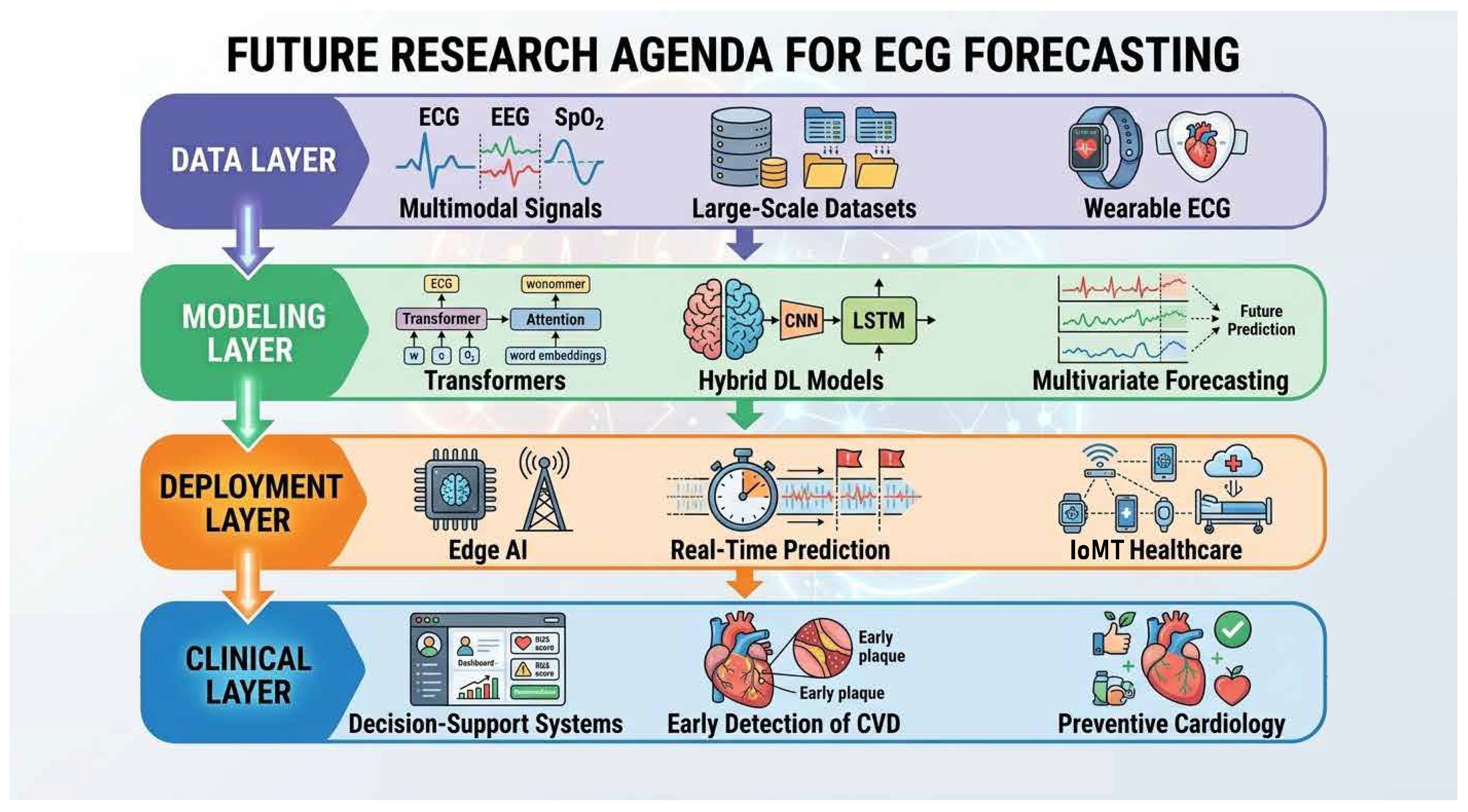
Section 5.4, the findings of this review suggest that future advances in ECG forecasting should extend beyond incremental improvements in predictive accuracy toward the development of clinically robust, interpretable, and deployable forecasting systems. Accordingly, a structured research agenda for the period 2025–2030 is proposed, as summarized in
Figure 7.
These priorities can be organized into four complementary dimensions: richer physiological data representation, methodological innovation, robust experimental validation, and clinical translation.
A first research priority concerns the development of multimodal forecasting frameworks capable of integrating multiple physiological signals simultaneously. Most current approaches rely exclusively on univariate ECG signals, limiting their ability to capture complex physiological interactions underlying cardiac dynamics. Integrating complementary signals such as blood pressure, respiration, and photoplethysmography (PPG) may enable richer physiological representations and improve predictive performance.
Another important direction involves the exploration of more advanced temporal learning architectures. Recent advances in time-series learning, including transformer-based architectures, attention mechanisms, and advanced temporal convolution strategies, have shown considerable potential for modeling long-range temporal dependencies. Extending these paradigms to ECG forecasting may improve the representation of complex temporal structures that are difficult to capture using conventional recurrent approaches.
Real-time ECG forecasting also represents an important yet comparatively underexplored research direction. The increasing adoption of wearable monitoring devices and Internet-of-Medical-Things (IoMT) infrastructures creates new opportunities for continuous cardiovascular monitoring. This scenario requires lightweight and computationally efficient forecasting architectures capable of operating under resource-constrained environments and edge-computing settings.
Robustness and generalization constitute another critical research direction. Current forecasting approaches rely predominantly on benchmark datasets such as MIT-BIH, which may not adequately reflect the heterogeneity of real-world clinical environments. Future studies should therefore prioritize cross-dataset validation, domain adaptation strategies, and robustness evaluation under noisy and variable acquisition conditions. Future studies should also investigate patient-specific adaptation strategies capable of accounting for inter-patient physiological variability while maintaining robust generalization across broader clinical populations.
The integration of explainable artificial intelligence (XAI) techniques and uncertainty quantification mechanisms also represents a critical step toward clinical adoption. Although deep learning forecasting models often achieve strong predictive performance, their limited interpretability may reduce clinician trust. Incorporating explainability and uncertainty-aware forecasting could improve transparency and support safer clinical decision-making.
The establishment of standardized benchmarking frameworks remains equally important. The reviewed studies reveal substantial variability regarding preprocessing pipelines, partitioning strategies, forecasting horizons, and evaluation metrics. Developing unified benchmarking protocols would enable fairer comparison between forecasting approaches and accelerate methodological progress in the field.
Finally, future research should move beyond isolated methodological improvements toward the integration of ECG forecasting systems into real clinical workflows. Accurate forecasting of ECG signals has the potential to support earlier identification of cardiac abnormalities and enable more proactive healthcare interventions. Realizing this potential will require close collaboration between computer scientists, biomedical engineers, clinicians, and healthcare institutions.
Translating ECG forecasting from methodological research into routine clinical practice will require more than advances in artificial intelligence alone. It will also depend on the establishment of standardized evaluation protocols, representative datasets, clinically meaningful performance criteria, and close collaboration between computer scientists, biomedical engineers, clinicians, and healthcare institutions. Progress across these complementary dimensions will be essential to establishing ECG forecasting as a reliable component of next-generation predictive cardiac monitoring systems.
6. Conclusions
This systematic review investigated the current state of research on electrocardiogram (ECG) waveform forecasting, aiming to identify methodological trends, major challenges, and future research opportunities in this emerging domain. Following a structured PRISMA-based selection process, eight primary studies were included and systematically analyzed with respect to datasets, forecasting methodologies, experimental configurations, and evaluation practices.
The findings indicate that ECG waveform forecasting remains a comparatively underexplored research area when contrasted with more established ECG analysis tasks such as arrhythmia detection, classification, and heartbeat segmentation. Although research activity has increased in recent years, the literature still exhibits substantial methodological heterogeneity regarding preprocessing pipelines, sequence construction, forecasting horizons, and evaluation protocols.
The reviewed studies reveal a strong dependence on publicly available benchmark datasets, particularly the MIT-BIH Arrhythmia Database, which remains the dominant source for model development and evaluation. While these datasets have played a fundamental role in advancing ECG forecasting research, their widespread reuse raises concerns regarding model robustness and generalization across diverse patient populations, acquisition devices, and real-world clinical environments.
From a methodological perspective, the literature demonstrates a predominance of deep learning and hybrid forecasting approaches. Recurrent neural architectures and temporal deep learning models are widely adopted due to their ability to capture nonlinear temporal dependencies inherent in physiological signals. Hybrid approaches, combining signal-processing techniques with neural forecasting models, appear particularly effective because they integrate complementary mechanisms for noise reduction, temporal decomposition, and nonlinear sequential learning.
The review also highlights several important methodological gaps that continue to limit the advancement of the field. Most studies focus primarily on short-term, single-step forecasting tasks, whereas long-horizon and multi-step forecasting scenarios remain comparatively underexplored. In addition, the literature reveals limited adoption of multimodal forecasting strategies integrating complementary physiological signals. Other important challenges include the lack of standardized benchmarking frameworks, inconsistent evaluation practices, limited external validation, and insufficient attention to interpretability and uncertainty quantification.
From a clinical perspective, ECG forecasting presents significant potential for supporting proactive cardiovascular monitoring and earlier identification of abnormal cardiac behavior. Forecasting-based approaches may complement traditional ECG analysis systems by enabling predictive monitoring in continuous healthcare environments, particularly in wearable and Internet of Medical Things (IoMT)-based systems.
Overall, the main contributions of this review can be summarized as follows:
ECG waveform forecasting remains an emerging and methodologically heterogeneous research field.
Deep learning and hybrid forecasting architectures currently dominate the literature due to their ability to model nonlinear temporal dynamics.
The MIT-BIH Arrhythmia Database remains the principal benchmark dataset used for ECG forecasting evaluation.
Significant research gaps persist regarding multimodal forecasting, long-horizon prediction, standardized benchmarking, interpretability, and cross-dataset generalization.
Based on these findings, future research should prioritize the development of robust, explainable, and clinically oriented ECG forecasting systems capable of operating under realistic healthcare conditions. The integration of multimodal physiological data, advanced temporal learning architectures, standardized evaluation frameworks, and real-time deployment strategies will be essential for translating ECG forecasting research into reliable clinical decision-support technologies.





 ,
,