
Algorithmic Profiling of Operational Risk: A Data-Driven Predictive Model for Micro-Enterprise Solvency Assessment


Abstract
1. Introduction
- To engineer a set of latent operational features derived from raw transactional logs that serve as robust proxies for business stability.
- To train and validate a non-linear machine learning architecture (XGBoost) capable of high-precision solvency classification.
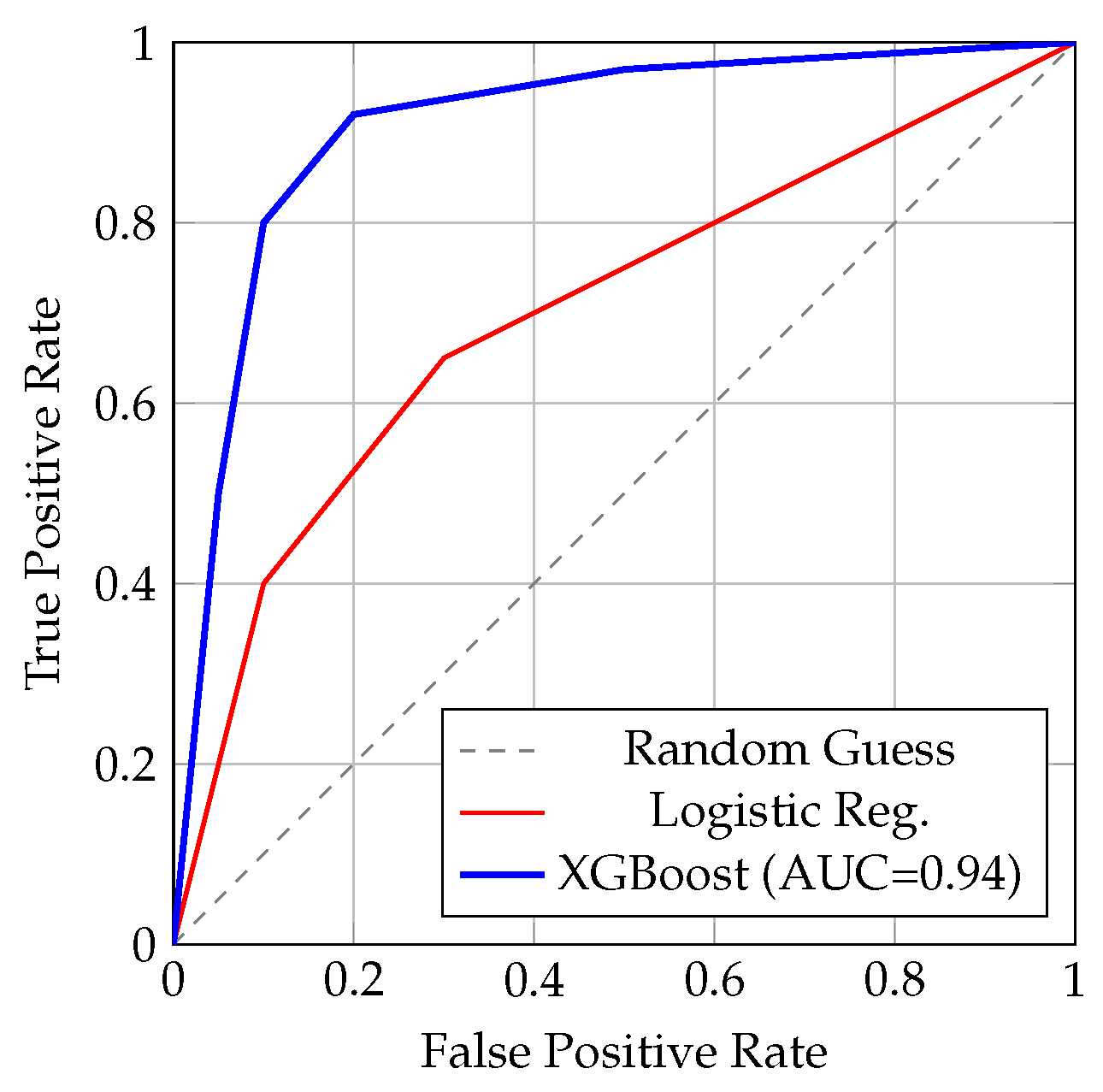
- To benchmark the predictive performance of the proposed algorithmic solution against industry-standard logistic regression models.
2. Theoretical Framework
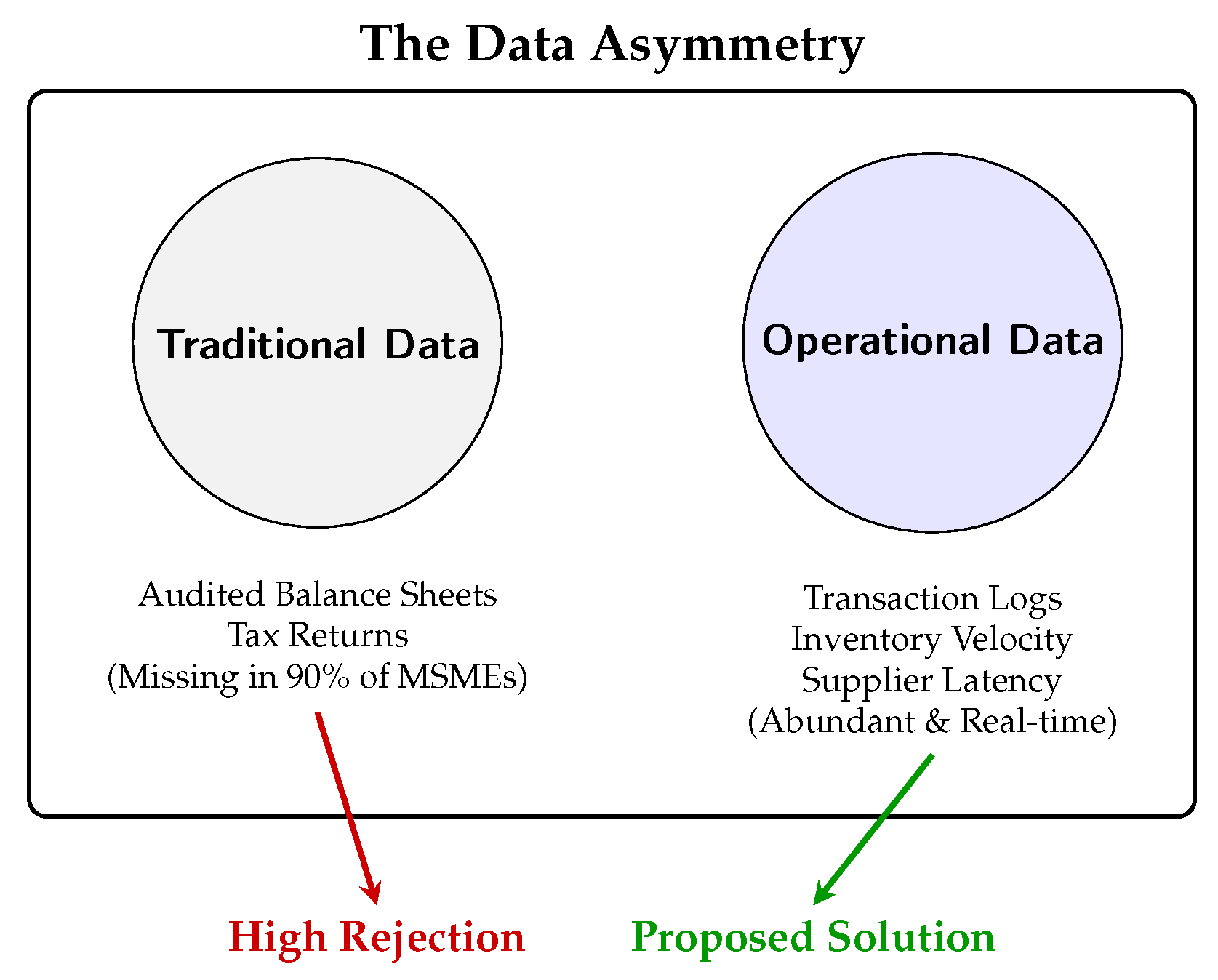
2.1. Information Asymmetry and the “Thin-File” Problem
2.2. Structured Review and Research Gap
2.3. Operational Risk: From Basel to the Micro-Segment
2.4. Machine Learning in Solvency Assessment
2.5. The Paradigm of Alternative Data
2.6. Conceptual Link Between Theory, Operational Risk, and Empirical Design
3. Methodology
3.1. Synthetic Data Generation and Validity Constraints
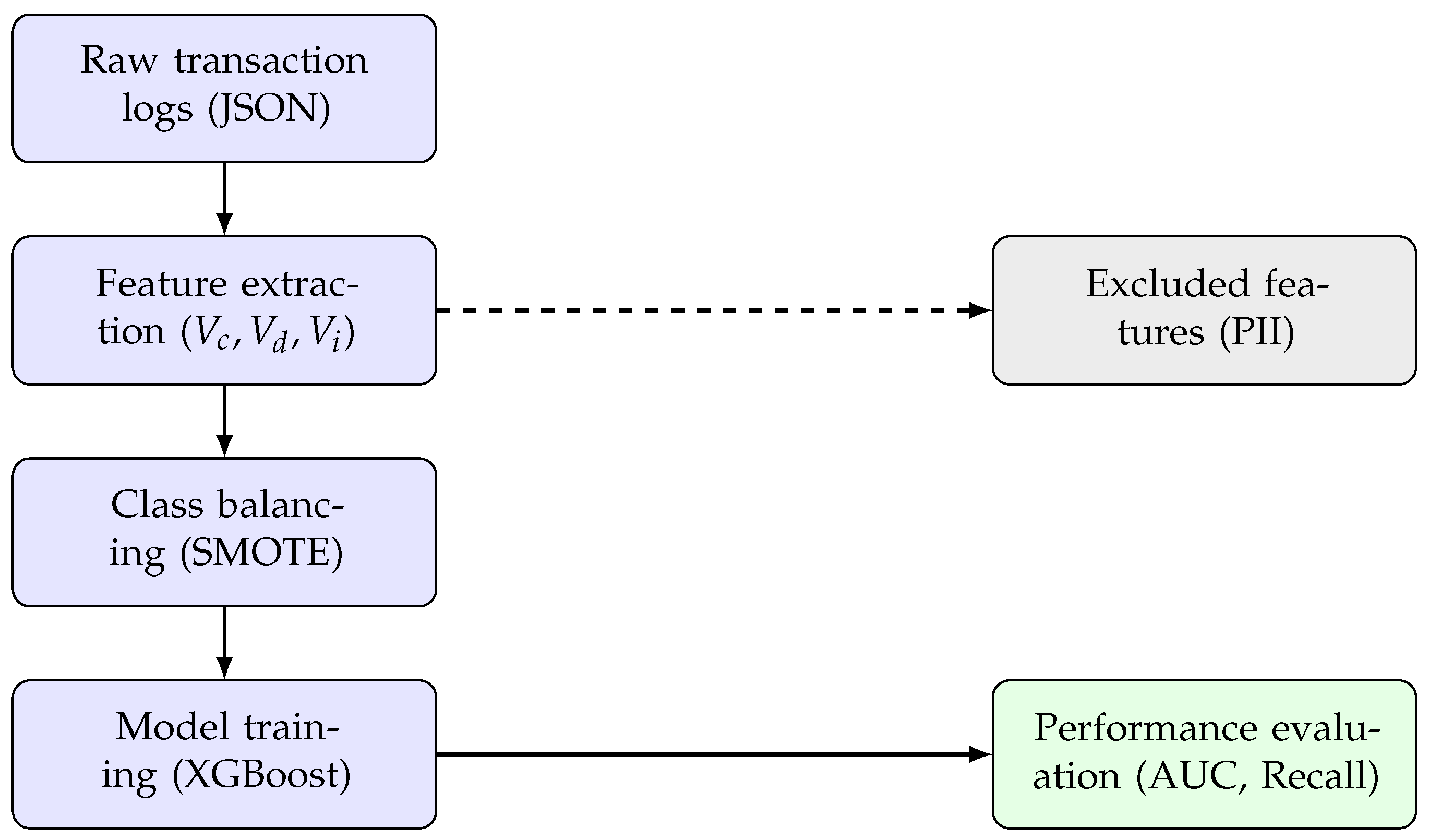
3.2. Dataset and Preprocessing
3.3. Feature Engineering: The Operational Vectors
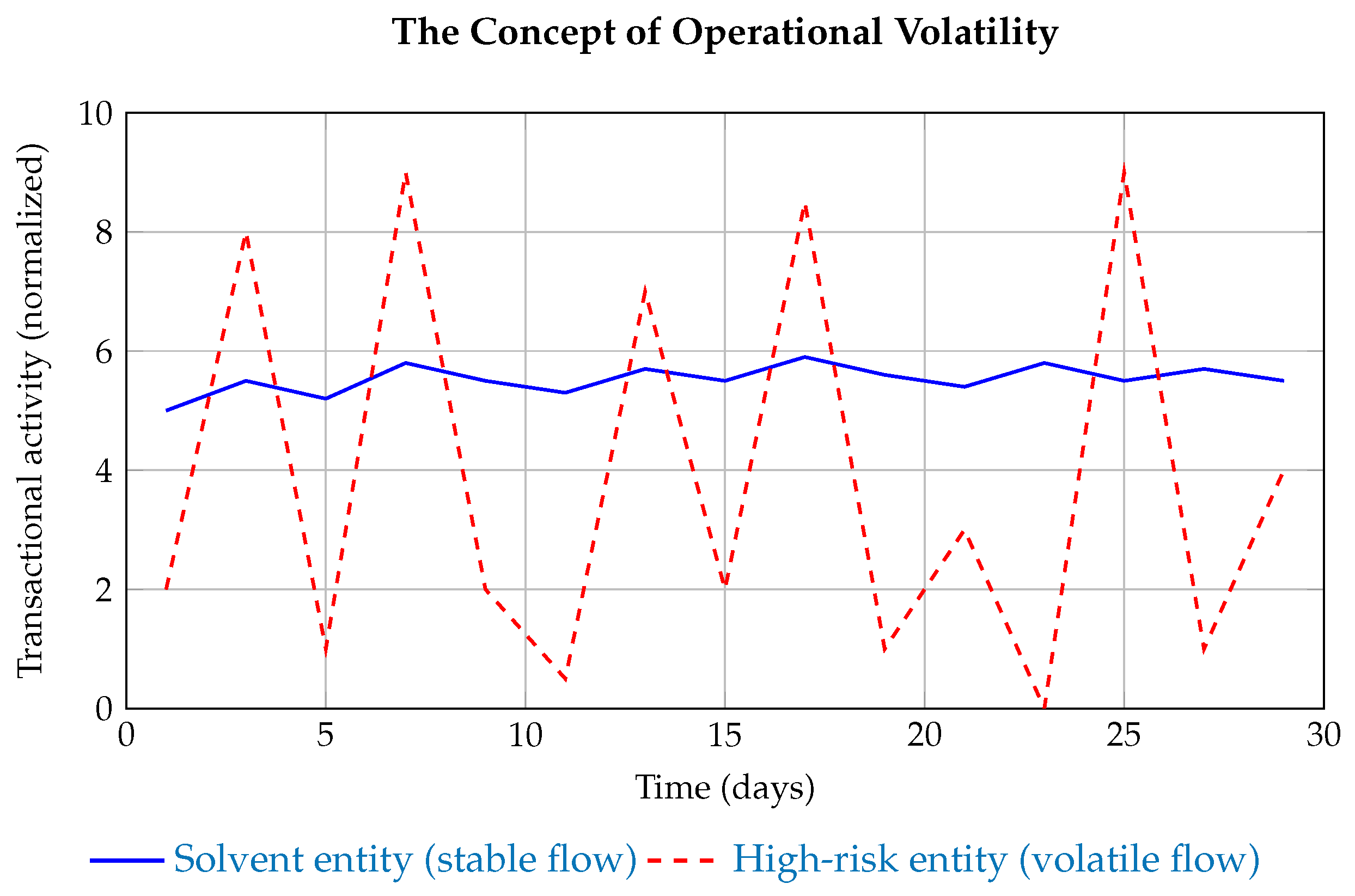
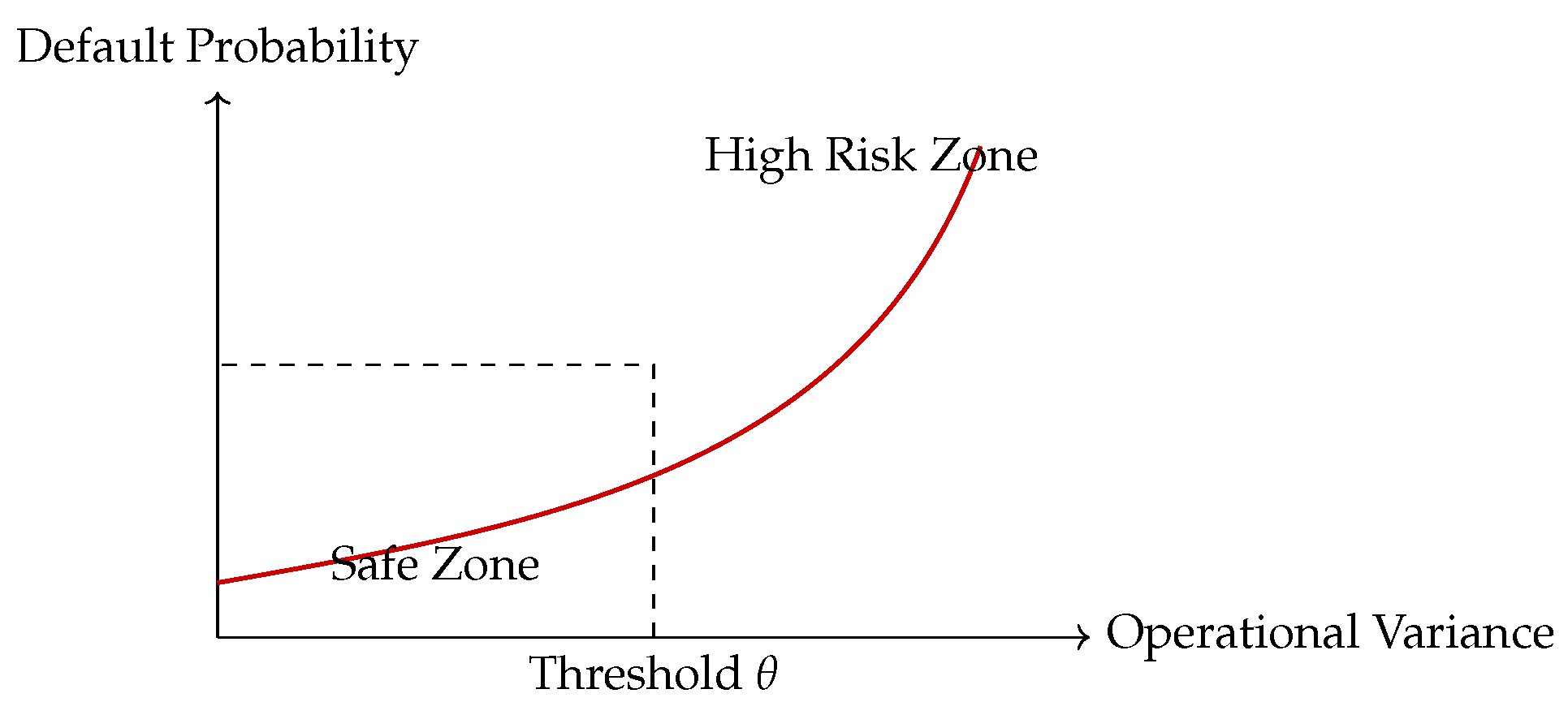
- Consistency Vector (): Measures the standard deviation of time-between-transactions (). High variance implies erratic business operation.
- Dependency Vector (): Calculated using the Herfindahl–Hirschman Index (HHI) on supplier payments. High concentration indicates supply chain fragility.
- Digital Intensity (): Frequency of platform logins and data exports, serving as a proxy for management diligence.
3.4. Model Architecture
4. Results
4.1. Performance Metrics
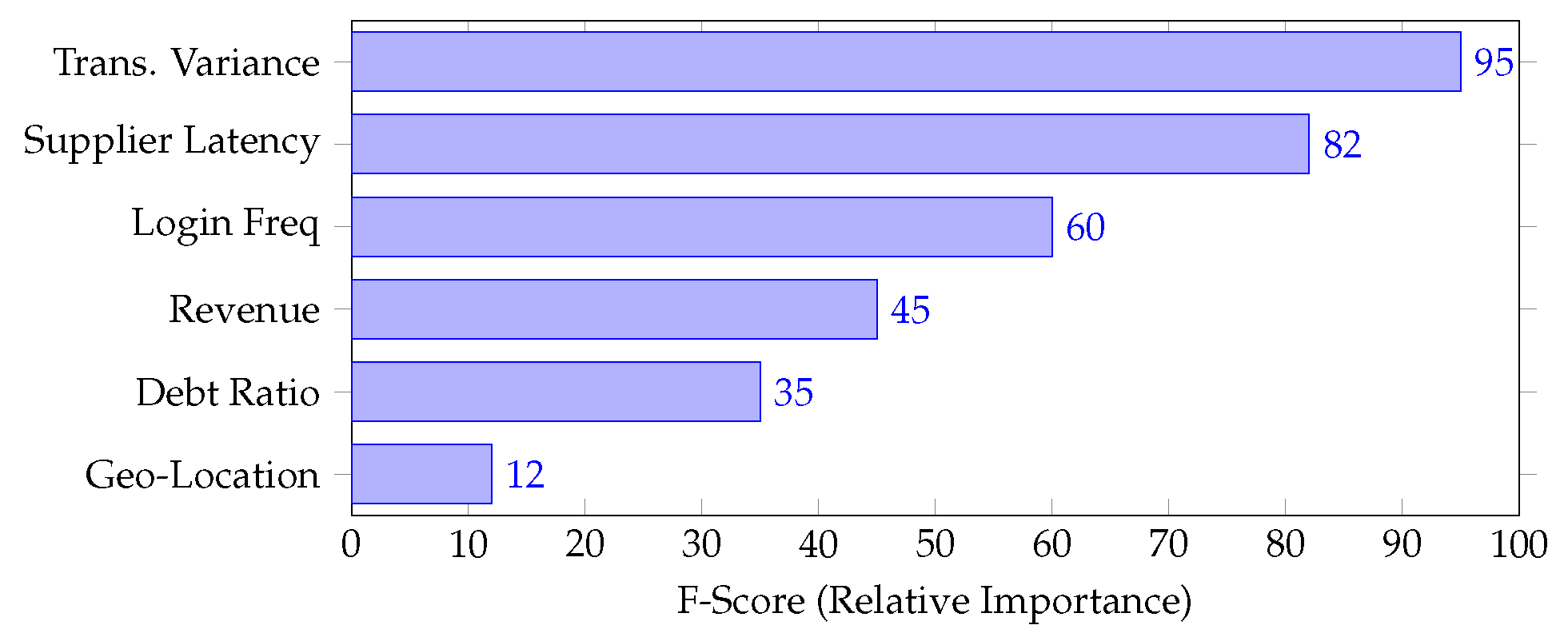
4.2. Feature Importance Analysis
4.3. ROC Curve Analysis
5. Discussion
5.1. Operational Consistency as a Proxy for Discipline
5.2. Computational Implications vs. Traditional Banking
5.3. Toward Practical Deployment and Failure Probability Estimation
5.4. Limitations and Ethical Considerations
5.5. Interpretative and Policy Relevance Under Thin-File Conditions
6. Conclusions
Author Contributions
Funding
Institutional Review Board Statement
Informed Consent Statement
Data Availability Statement
Conflicts of Interest
References
- Mer, A.; Virdi, A.S. Decoding the Challenges and Skill Gaps in Small- and Medium-Sized Enterprises in Emerging Economies: A Review and Research Agenda. In Contemporary Challenges in Social Science Management: Skills Gaps and Shortages in the Labour Market; Thake, A.M., Sood, K., Özen, E., Grima, S., Eds.; Emerald Publishing Limited: Leeds, UK, 2024; Volume 112B. [Google Scholar] [CrossRef]
- Mugano, G.; Dorasamy, N. SMEs Perspective in Africa, 1st ed.; Palgrave Macmillan: Cham, Switzerland, 2024. [Google Scholar] [CrossRef]
- World Bank. Small and Medium Enterprises (SMEs) Finance. 2025. Available online: https://www.worldbank.org/en/topic/smefinance (accessed on 1 February 2026).
- Suhadolnik, N.; Ueyama, J.; Da Silva, S. Machine Learning for Enhanced Credit Risk Assessment: An Empirical Approach. J. Risk Financ. Manag. 2023, 16, 496. [Google Scholar] [CrossRef]
- Joenoes, K.S.H.; Sugiyanto, C.; Sukamdi; Moeljono, D. Evaluating Microcredit: Effects of the 5Cs of Credit Analysis and Entrepreneur Characteristics on Loan Performance among MSMEs in Yogyakarta. Asian J. Soc. Humanit. 2025, 3, 1400–1419. [Google Scholar] [CrossRef]
- Mukit, M.M.H.; Hasan, F.; Choudhury, T.; Al Fadli, A.; Fadul, A. Machine Learning & Artificial Intelligence Powered Credit Scoring Models for Islamic Microfinance Institutions: A Blockchain Approach. Risks 2026, 14, 12. [Google Scholar] [CrossRef]
- Blessing, E.; Saleh, M.; Jason, H. Big data in finance: Data processing and storage solutions for handling large financial datasets. Zenodo 2024, Preprint. [Google Scholar] [CrossRef]
- Liu, J.; Fu, S. Financial big data management and intelligence based on computer intelligent algorithm. Sci. Rep. 2024, 14, 9395. [Google Scholar] [CrossRef]
- Taleb, T.S.T.; Hashim, N.; Zakaria, N. Mediating Effect of Innovation Capability Between Entrepreneurial Resources and Micro Business Performance. Bottom Line 2023, 36, 77–100. [Google Scholar] [CrossRef]
- Hernández, V.; Revilla, A.; Rodríguez, A. Digital data-driven technologies and the environmental sustainability of micro, small, and medium enterprises: Does size matter? Bus. Strategy Environ. 2024, 33, 5563–5582. [Google Scholar] [CrossRef]
- Mayilsamy, M. Event Forecasting in Real-Time Data Engineering: Predicting the Future at Scale. J. Comput. Sci. Technol. Stud. 2025, 7, 16. [Google Scholar] [CrossRef]
- Acquaye, A. Operational research for sustainability: A synthesis of methods, applications and challenges. J. Oper. Res. Soc. 2026, 77, 8–42. [Google Scholar] [CrossRef]
- Ju, H.; Lee, J.; Yang, S.; Ok, J.; Hwang, I. Toward affective empathy via personalized analogy generation: A case study on microaggression. In Proceedings of the 2025 CHI Conference on Human Factors in Computing Systems (CHI ’25), Yokohama, Japan, 26 April–1 May 2025. [Google Scholar] [CrossRef]
- Seberger, J.S.; Gupta, S.D. Designing for difference: How we learn to stop worrying and love the doppelganger. In Proceedings of the 2025 CHI Conference on Human Factors in Computing Systems (CHI ’25), Yokohama, Japan, 26 April–1 May 2025. [Google Scholar] [CrossRef]
- Chen, R.; Dai, T.; Zhang, Y.; Zhu, Y.; Liu, X.; Zhao, E. GBDT-IL: Incremental Learning of Gradient Boosting Decision Trees to Detect Botnets in Internet of Things. Sensors 2024, 24, 2083. [Google Scholar] [CrossRef]
- Gonçalves, V.S.F.; de Carvalho, V.R. A Review of Interpretability Methods for Gradient Boosting Decision Trees. J. Braz. Comput. Soc. 2025, 31, 639–653. [Google Scholar] [CrossRef]
- Lim, H.; Uddin, M.; Liu, Y.; Chin, S.M.; Hwang, H.L. A Comparative Study of Machine Learning Algorithms for Industry-Specific Freight Generation Model. Sustainability 2022, 14, 15367. [Google Scholar] [CrossRef]
- Ofori, I.K.; Obeng, C.K.; Asongu, S.A. What Really Drives Economic Growth in Sub-Saharan Africa? Evidence from the Lasso Regularization and Inferential Techniques. J. Knowl. Econ. 2024, 15, 144–179. [Google Scholar] [CrossRef] [PubMed]
- Moscatelli, M.; Parlapiano, F.; Narizzano, S.; Viggiano, G. Corporate default forecasting with machine learning. Expert Syst. Appl. 2020, 161, 113567. [Google Scholar] [CrossRef]
- Kanapickienė, R.; Kanapickas, T.; Nečiūnas, A. Bankruptcy Prediction for Micro and Small Enterprises Using Financial, Non-Financial, Business Sector and Macroeconomic Variables: The Case of the Lithuanian Construction Sector. Risks 2023, 11, 97. [Google Scholar] [CrossRef]
- Zhao, Y.; Lin, D. Prediction of Micro- and Small-Sized Enterprise Def ault Risk Based on a Logistic Model: Evidence from a Bank of China. Sustainability 2023, 15, 4097. [Google Scholar] [CrossRef]
- Jaffee, D.; Stiglitz, J. Credit rationing. In Handbook of Monetary Economics; Friedman, B.M., Hahn, F.H., Eds.; Elsevier: Amsterdam, The Netherlands, 1990; Volume 2, pp. 837–888. [Google Scholar] [CrossRef]
- Garcia, F.T.; ten Caten, C.S.; Campos, E.A.R.d.; Callegaro, A.M.; Pacheco, D.A.d.J. Mortality Risk Factors in Micro and Small Businesses: Systematic Literature Review and Research Agenda. Sustainability 2022, 14, 2725. [Google Scholar] [CrossRef]
- Chen, T.; Guestrin, C. XGBoost: A Scalable Tree Boosting System. In Proceedings of the 22nd ACM SIGKDD International Conference on Knowledge Discovery and Data Mining, San Francisco, CA, USA, 13–17 August 2016; pp. 785–794. [Google Scholar] [CrossRef]
- Liu, M.; Hu, Y.; Li, C.; Wang, S. The influence of financial knowledge on the credit behaviour of small and micro enterprises: The knowledge-based view. J. Knowl. Manag. 2023, 27, 208–229. [Google Scholar] [CrossRef]
- Huang, Y.; Shen, Y.; Cheng, D.; Chen, X. Assessing Effectiveness of Structural Monetary Policy in China. Asian Econ. Pap. 2023, 22, 127–146. [Google Scholar] [CrossRef]
- Gasparėnienė, L.; Remeikienė, R.; Williams, C.C. Theorizing the Informal Economy. In Unemployment and the Informal Economy; Springer Briefs in Economics; Springer: Cham, Switzerland, 2022. [Google Scholar] [CrossRef]
- Behera, S.K.; Panda, R.K.; Senapati, S. Role of Financial and Social Capital in Rural Women Micro-Enterprises: Assessing Entrepreneurial Orientation as a Performance Catalyst. J. Enterprising Communities People Places Glob. Econ. 2026, 20, 59–93. [Google Scholar] [CrossRef]
- Li, J.; Wei, L.; Zhu, X. Basic Concepts of Bank Risk Aggregation. In Financial Statements-Based Bank Risk Aggregation; Innovation in Risk Analysis; Springer: Singapore, 2022. [Google Scholar] [CrossRef]
- Dhingra, D.; Sharma, S. Operational risk and resilience: Insights from banking case studies. In Risk, Reliability and Resilience in Operations Management; Advances in Reliability Science; Elsevier: Amsterdam, The Netherlands, 2025; pp. 121–154. [Google Scholar] [CrossRef]
- Wang, W.; Guedes, M.J. Firm failure prediction for small and medium-sized enterprises and new ventures. Rev. Manag. Sci. 2025, 19, 1949–1982. [Google Scholar] [CrossRef]
- Liu, W.; Liu, Y. Worst-Case Higher Moment Coherent Risk Based on Optimal Transport with Application to Distributionally Robust Portfolio Optimization. Symmetry 2022, 14, 138. [Google Scholar] [CrossRef]
- Narayany, S.C.; Zargar, F.N.; Ali, A. Does Risk–Return Trade-Off Exist in the GCC Stock Markets? Int. J. Emerg. Mark. 2025. [Google Scholar] [CrossRef]
- Garcia, E.J.; Mulvihill, M.L.; Kharab, M.S.; Stephens, C.L.; Napoli, N.J. Capturing multivariate time series interactions to detect high-risk instability during approach. In Proceedings of the AIAA AVIATION 2023 Forum, Reston, VA, USA, 12–16 June 2023; pp. Paper AIAA 2023–3548. [Google Scholar] [CrossRef]
- Kaur, R.; Sharma, M.; Chaturvedi, D.D.; Deka, J. Z-score and logistic model-based default probability prediction in India’s manufacturing sector for economic growth insights. Int. J. Trade Glob. Mark. 2025, 20, 180–208. [Google Scholar]
- Liu, S.; Song, Y.; Xu, Z.; Zhao, Y.; Pan, B.; Xu, D. An Improved Framework: NFMGBM for Enhanced Anomaly Detection. IEEE Access 2025, 13, 46374–46382. [Google Scholar] [CrossRef]
- Wang, C.; Marini, L.; Chin, C.L.; Vance, N.; Donelson, C.; Meunier, P.; Yun, J.T. Social Media Intelligence and Learning Environment: An Open Source Framework for Social Media Data Collection, Analysis and Curation. In Proceedings of the 15th International Conference on eScience (eScience), San Diego, CA, USA, 24–27 September 2019; pp. 252–261. [Google Scholar] [CrossRef]
- Celik, E.; Omurca, S.I. A Novel Framework Leveraging Social Media Insights to Address the Cold-Start Problem in Recommendation Systems. J. Theor. Appl. Electron. Commer. Res. 2025, 20, 234. [Google Scholar] [CrossRef]
- Nallakaruppan, M.K.; Balusamy, B.; Shri, M.L.; Malathi, V.; Bhattacharyya, S. An Explainable AI Framework for Credit Evaluation and Analysis. Appl. Soft Comput. 2024, 153, 111307. [Google Scholar] [CrossRef]
- Custer, S. Digital Exhaust or Strategic Asset? Navigating Big Data Benefits and Risks for Public Administration. In Handbook of Public Administration Reform; Goldfinch, S.F., Ed.; Edward Elgar Publishing: Cheltenham, UK, 2023; pp. 111–130. [Google Scholar] [CrossRef]
- Demuner Flores, M.d.R.; Saavedra García, M.L.; Choy Zevallos, E.E. Chapter 1: The systemic competitiveness of Latin American MSMEs under COVID-19. In Research in Administrative Sciences Under COVID-19; Sánchez Limón, M.L., Saavedra García, M.L., Eds.; Emerald Publishing Limited: Leeds, UK, 2022. [Google Scholar] [CrossRef]
- Castillo, M.J.; Carpio, C.E.; Rios, A.R.; Garcia, M.; Murguia, J.M. Innovation in the agrifood sector of Latin America and the Caribbean: Agribusiness’ responses to the COVID-19 pandemic. J. Agribus. Dev. Emerg. Econ. 2025, 1–18. [Google Scholar]
- Kim, H.; Cho, H.; Ryu, D. Corporate Bankruptcy Prediction Using Machine Learning Methodologies with a Focus on Sequential Data. Comput. Econ. 2022, 59, 1231–1249. [Google Scholar] [CrossRef]
- Rudd, M.A.; Porter, D. Bitcoin Supply, Demand, and Price Dynamics. J. Risk Financ. Manag. 2025, 18, 570. [Google Scholar] [CrossRef]
- Óskarsdóttir, M.; Bravo, C.; Sarraute, C.; Vanthienen, J.; Baesens, B. The value of big data for credit scoring: Enhancing financial inclusion using mobile phone data and social network analytics. Appl. Soft Comput. 2019, 74, 26–39. [Google Scholar] [CrossRef]


| Risk Measure | Typical Application | Suitability in This Study |
|---|---|---|
| Variance/Volatility | Operational and process stability | High (robust under sparse, irregular data) |
| Semi-variance | Downside risk assessment | Medium (requires consistent distribution) |
| VaR/CVaR | Financial reminder portfolio risk | Low (assumes stationarity, long horizons) |
| Skewness/Kurtosis | Distributional tail behavior | Low (unstable under short series) |
| Feature | Logistic Regression (Baseline) | XGBoost (Proposed) |
|---|---|---|
| Functional Form | Linear () | Non-linear (Ensemble of Trees) |
| Missing Data | Requires Imputation (Mean/Median) | Handles natively (Sparsity-aware split) |
| Feature Interactions | Must be manually engineered | Learned automatically during training |
| Variance Handling | Sensitive to outliers | Robust to noise and outliers |
| Generation | Data Source | Algorithmic Approach | Limitation |
|---|---|---|---|
| Gen 1.0 (1960s) | Financial Ratios (Altman Z) | Discriminant Analysis | Requires audited data. |
| Gen 2.0 (1990s) | Credit Bureau History | Logistic Regression | Lagging indicator (past behavior). |
| Gen 3.0 (2010s) | Social & Psychometric | Random Forest/SVM | Privacy concerns; noise. |
| Gen 4.0 (Proposed) | Operational Flows | Gradient Boosting (XGB) | High computational cost. |
| Model | Accuracy | Precision | Recall | AUC-ROC |
|---|---|---|---|---|
| Logistic Regression | 0.78 | 0.72 | 0.65 | 0.75 |
| Support Vector Machine | 0.82 | 0.79 | 0.74 | 0.81 |
| Random Forest | 0.88 | 0.85 | 0.82 | 0.89 |
| XGBoost (Proposed) | 0.91 | 0.88 | 0.90 | 0.94 |
| Study | Data Type | Model | Reported AUC |
|---|---|---|---|
| Moscatelli et al. (2020) [19] | Financial + Behavioral | ML Ensemble | 0.86 |
| Kanapickiene et al. (2023) [20] | Financial Ratios | Logistic/ML | 0.82 |
| Zhao & Lin (2023) [21] | Financial Statements | Logistic Model | 0.79 |
| Present Study | Operational Logs (Synthetic) | XGBoost | 0.94 |
Disclaimer/Publisher’s Note: The statements, opinions and data contained in all publications are solely those of the individual author(s) and contributor(s) and not of MDPI and/or the editor(s). MDPI and/or the editor(s) disclaim responsibility for any injury to people or property resulting from any ideas, methods, instructions or products referred to in the content. |
© 2026 by the authors. Licensee MDPI, Basel, Switzerland. This article is an open access article distributed under the terms and conditions of the Creative Commons Attribution (CC BY) license.
Share and Cite
Pérez-Salazar, J.; Márquez, N.; Vidal-Silva, C. Algorithmic Profiling of Operational Risk: A Data-Driven Predictive Model for Micro-Enterprise Solvency Assessment. Computers 2026, 15, 135. https://doi.org/10.3390/computers15020135
Pérez-Salazar J, Márquez N, Vidal-Silva C. Algorithmic Profiling of Operational Risk: A Data-Driven Predictive Model for Micro-Enterprise Solvency Assessment. Computers. 2026; 15(2):135. https://doi.org/10.3390/computers15020135
Chicago/Turabian StylePérez-Salazar, Jazmín, Nicolás Márquez, and Cristian Vidal-Silva. 2026. "Algorithmic Profiling of Operational Risk: A Data-Driven Predictive Model for Micro-Enterprise Solvency Assessment" Computers 15, no. 2: 135. https://doi.org/10.3390/computers15020135
APA StylePérez-Salazar, J., Márquez, N., & Vidal-Silva, C. (2026). Algorithmic Profiling of Operational Risk: A Data-Driven Predictive Model for Micro-Enterprise Solvency Assessment. Computers, 15(2), 135. https://doi.org/10.3390/computers15020135