1. Introduction
The rapid expansion of digital technologies and the ubiquity of cyber-physical systems have reshaped the computational profile expected of engineers entering Industry 4.0 environments [
1,
2]. Beyond mastering foundational programming constructs, modern engineering curricula must cultivate the ability to interrogate real-time data, justify architectural decisions, and translate technical reasoning into coherent scientific explanations [
3,
4]. These demands highlight the strategic role of early-cycle engineering education in establishing a robust “scientific culture,” where inquiry, experimentation, and evidence-based analysis are mediated by advanced computing tools [
5,
6].
A significant gap persists between industrial computing requirements and the reality of freshman engineering courses, particularly in the Global South context where access to hardware is limited [
7,
8]. In our study cohort, for instance, 65% of incoming students reported no prior experience with microcontrollers or cloud platforms before the intervention. Traditional introductory modules frequently exacerbate this divide by focusing on isolated algorithmic syntax, neglecting the systemic view of data acquisition, transmission, and cloud processing required by the Internet of Things (IoT) [
9,
10].
Table 1 summarizes the structural disconnect between conventional early-cycle approaches and the computing competencies demanded by current technological frameworks.
To bridge this gap, Project-Based Learning (PBL) offers a framework capable of immersing students in authentic problem-solving scenarios [
11,
12,
13]. When integrated with affordable yet powerful embedded systems like the ESP32, PBL transforms abstract coding assignments into tangible full-stack engineering challenges [
14,
15]. While recent studies confirm that IoT-based ecosystems enhance engagement [
16,
17], there is limited evidence on how the specific architectural components of IoT—such as real-time dashboards and time-series visualization—act as Human–Computer Interfaces (HCI) to foster scientific argumentation in early-year students.
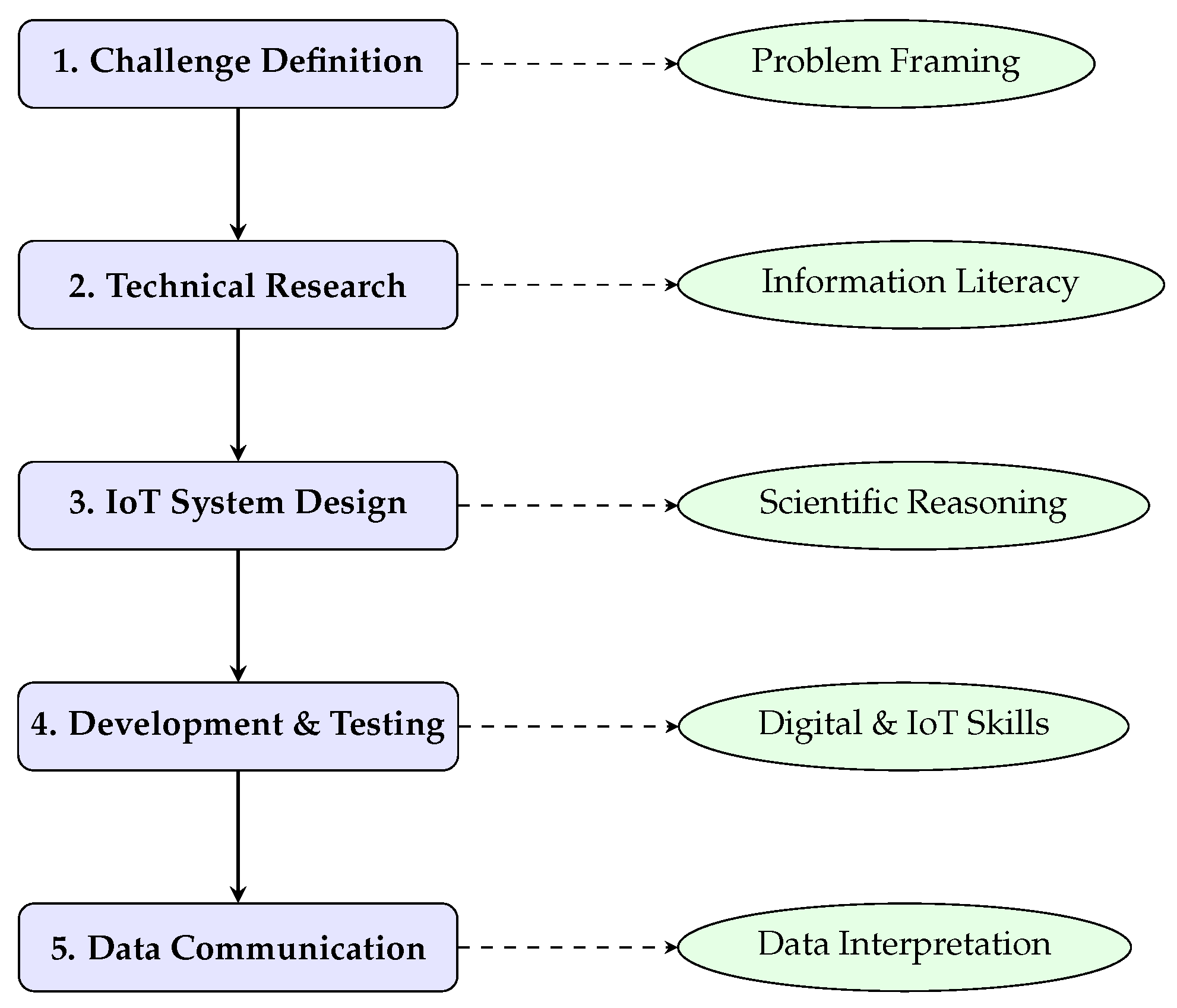
This study proposes an integrated learning model where the phases of PBL are directly mapped to specific scientific competencies mediated by IoT technology. As illustrated in
Figure 1, the progression from “Challenge” to “Communication” is not merely procedural but represents a shift from defining a problem to interpreting empirical evidence using digital artifacts.
The primary objective of this study is to evaluate the effectiveness of an ESP32-based IoT intervention in developing scientific reasoning and digital literacy among first-year engineering students. Specifically, we hypothesize that the implementation of a full-stack IoT architecture (sensing, transmission, and cloud visualization) within a PBL framework shifts the student focus from syntax verification to data interpretation, resulting in higher reported confidence in scientific argumentation compared to isolated programming tasks.
To verify this, the study addresses three Research Questions (RQs):
RQ1:How does the integration of IoT workflows influence perceived learning progression across the PBL cycle?
RQ2: To what extent do cloud-based dashboards serve as cognitive artifacts that facilitate evidence-based argumentation?
RQ3: What is the impact of this methodology on self-reported transversal competencies such as autonomy and collaborative problem-solving?
The remainder of this article is organized as follows.
Section 2 provides the theoretical background on Industry 4.0 computing competencies and the role of IoT in education.
Section 3 details the system architecture, hardware specifications, and the full-stack technical implementation.
Section 4 presents the empirical findings regarding learning progression and the usage of cloud-based telemetry.
Section 5 analyzes the role of visualization dashboards as HCI artifacts, and
Section 6 offers concluding remarks and future outlooks.
2. Theoretical Background
This study is situated at the intersection of three complementary domains: Industry 4.0 computing frameworks, Project-Based Learning (PBL) in engineering, and the deployment of Internet of Things (IoT) architectures for educational purposes. Understanding the synergy between these domains is essential for designing interventions that go beyond technical training to foster high-level computational thinking.
2.1. Computing Paradigms, Cyber-Physical Systems, and Education 4.0
Industry 4.0 is fundamentally characterized by the convergence of Cyber-Physical Systems (CPS) and pervasive connectivity [
3,
4]. The modern engineer requires a hybrid profile that combines traditional disciplinary knowledge with advanced digital literacy and data interpretation skills [
3]. Education 4.0 frameworks respond to this by emphasizing competencies such as complex problem-solving and the ability to interact with smart algorithms and cloud-based systems [
5,
6]. However, recent reviews indicate that while universities often update their syllabi with IoT terminology, the actual integration of data-driven reasoning into early-cycle curricula remains fragmented [
9,
10,
18].
The Internet of Things has evolved from an industrial paradigm to a potent platform for “Physical Computing” in education [
19,
20]. Microcontrollers like the ESP32 allow students to build sensing-to-cloud workflows, providing a direct link between abstract code and physical phenomena [
14,
15]. Research suggests that when students engage in designing IoT systems—rather than merely operating them—they develop a deeper appreciation for the socio-technical implications of ubiquitous sensing [
16,
17]. Specific applications in smart agriculture demonstrate that affordable hardware can effectively bridge the gap between classroom theory and real-world utility [
21].
2.2. Synergy with Project-Based Learning (PBL)
PBL is widely recognized for its ability to foster autonomy and collaborative skills [
11]. In the context of computer engineering, PBL helps students articulate scientific arguments and justify architectural decisions under constraints [
12,
13].
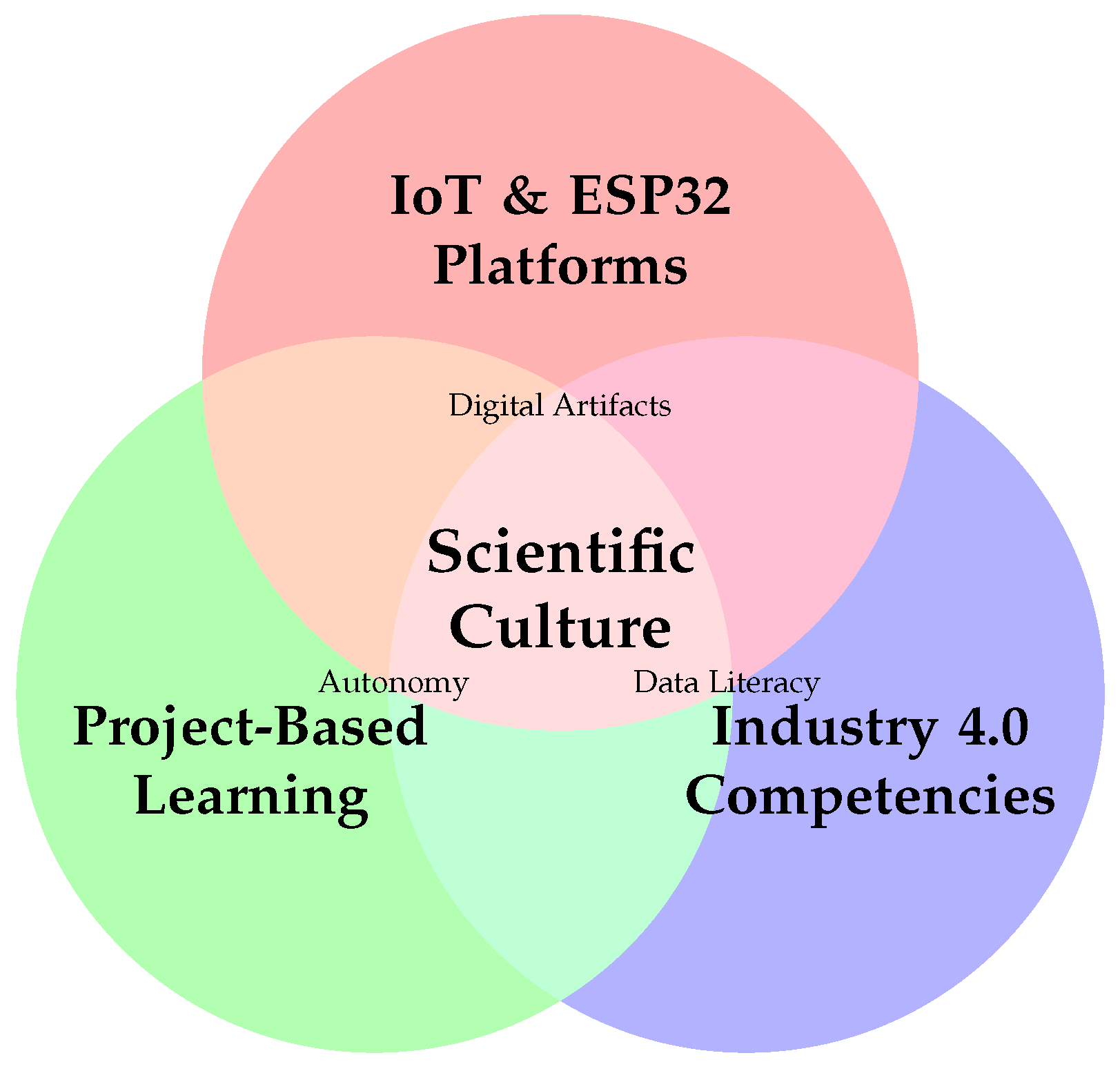
Figure 2 illustrates the theoretical niche of this study: while PBL provides the pedagogical structure and IoT provides the technological medium, the intersection of both is where “Scientific Culture” (evidence-based reasoning) is cultivated through the use of digital artifacts.
To clarify how prior research informs this intervention,
Table 2 summarizes key studies that link these domains, highlighting the specific gap this paper addresses: the use of visualization as a cognitive artifact in early engineering.
This theoretical framework suggests that simply introducing technology is insufficient. The challenge lies in orchestrating IoT artifacts within a PBL cycle to ensure they serve as instruments for scientific reasoning rather than just technical novelties.
3. Materials and Methods
This study employed a longitudinal case study design aimed at evaluating the progression of engineering competencies throughout a semester-long intervention. By tracking student development over sixteen weeks, the research captures the transition from theoretical understanding to applied full-stack implementation. We implemented the intervention over a sixteen-week academic semester within an “Applied Programming” course at a Peruvian university. The methodology integrated a standard Project-Based Learning (PBL) framework with a specific technical stack designed to facilitate rapid prototyping and cloud integration.
The study population consisted of 91 first-year engineering students enrolled in three distinct course sections. The participants, aged between 17 and 21, belonged primarily to Systems Engineering, Industrial Engineering, and Environmental Engineering programs. Prior to this course, 65% of students reported no prior experience with microcontrollers or cloud platforms [
7].
3.1. System Architecture and Technical Stack
Unlike traditional introductory programming courses that focus solely on algorithmic logic, this intervention required students to deploy a full-stack IoT solution. The system architecture was standardized to ensure comparability across projects while allowing flexibility in the specific application (e.g., agriculture, beekeeping).
The hardware core was the ESP32 DevKit V1, selected for its dual-core architecture and integrated Wi-Fi/Bluetooth capabilities, which are essential for Education 4.0 applications [
14,
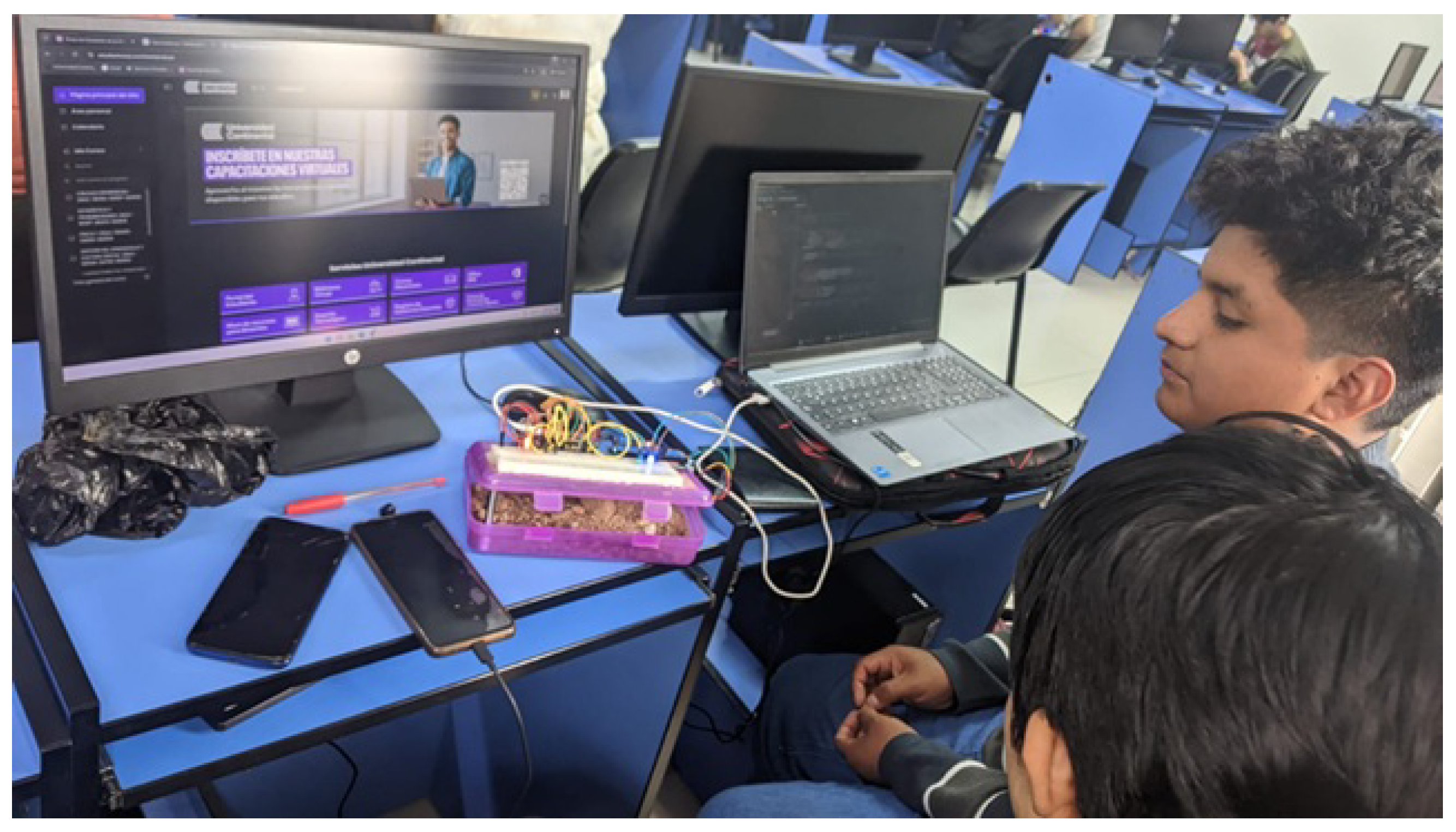
28]. As shown in
Figure 3, the proposed system is built around an ESP32 microcontroller integrated with environmental sensors for temperature and humidity monitoring. The prototype is assembled using low-cost electronic components and a modular breadboard design, enabling rapid prototyping and easy replication.
Students interfaced this microcontroller with environmental sensors and transmitted data to cloud platforms (ThingSpeak or Blynk) using RESTful API calls or MQTT protocols. The visualization layer consisted of real-time dashboards accessible via web or mobile interfaces.
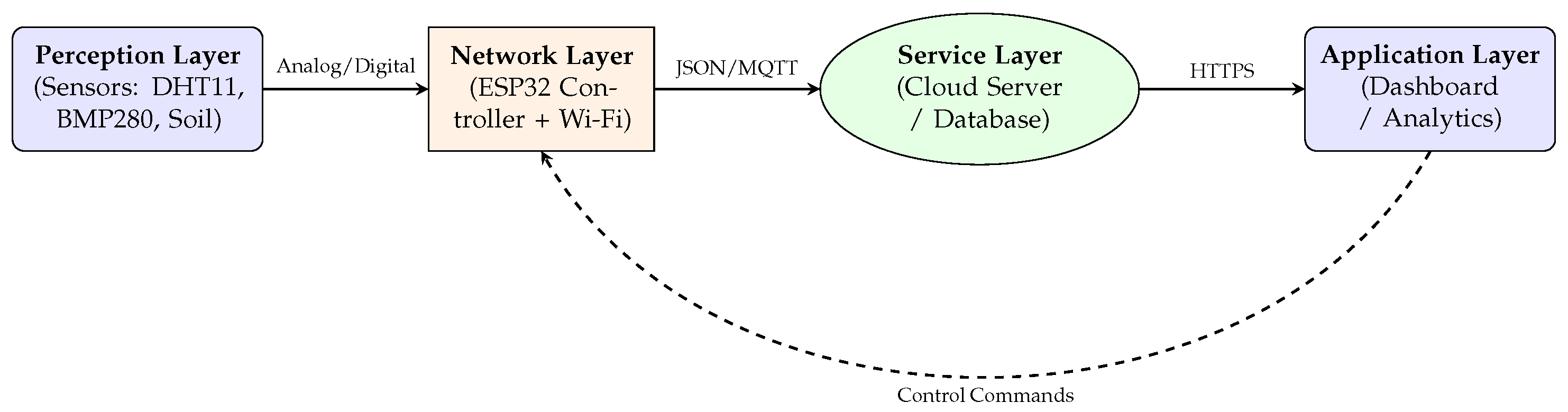
Figure 4 illustrates the high-level architecture implemented by the student teams, detailing the data flow from physical acquisition to digital visualization.
Table 3 details the specific hardware and software components utilized during the intervention, which were selected based on affordability and community support [
15,
21].
3.2. Pedagogical Procedure
The course was divided into two strategic phases. (i) Phase I (Weeks 1–8) focused on “Algorithmic Foundations,” utilizing Arduino simulations in Tinkercad to master control structures without the risk of hardware damage [
27]. (ii) Phase II (Weeks 9–16) introduced the physical ESP32 hardware and the PBL methodology.
In this study, we operationally define Data Literacy not merely as the ability to read graphs, but as an iterative four-step engineering competence: (1) Acquisition (configuring sensors to capture physical phenomena), (2) Sanitization (filtering noise and outliers from raw signals), (3) Visualization (configuring temporal scales and dashboard widgets), and (4) Argumentation (using visual evidence to justify system behavior).
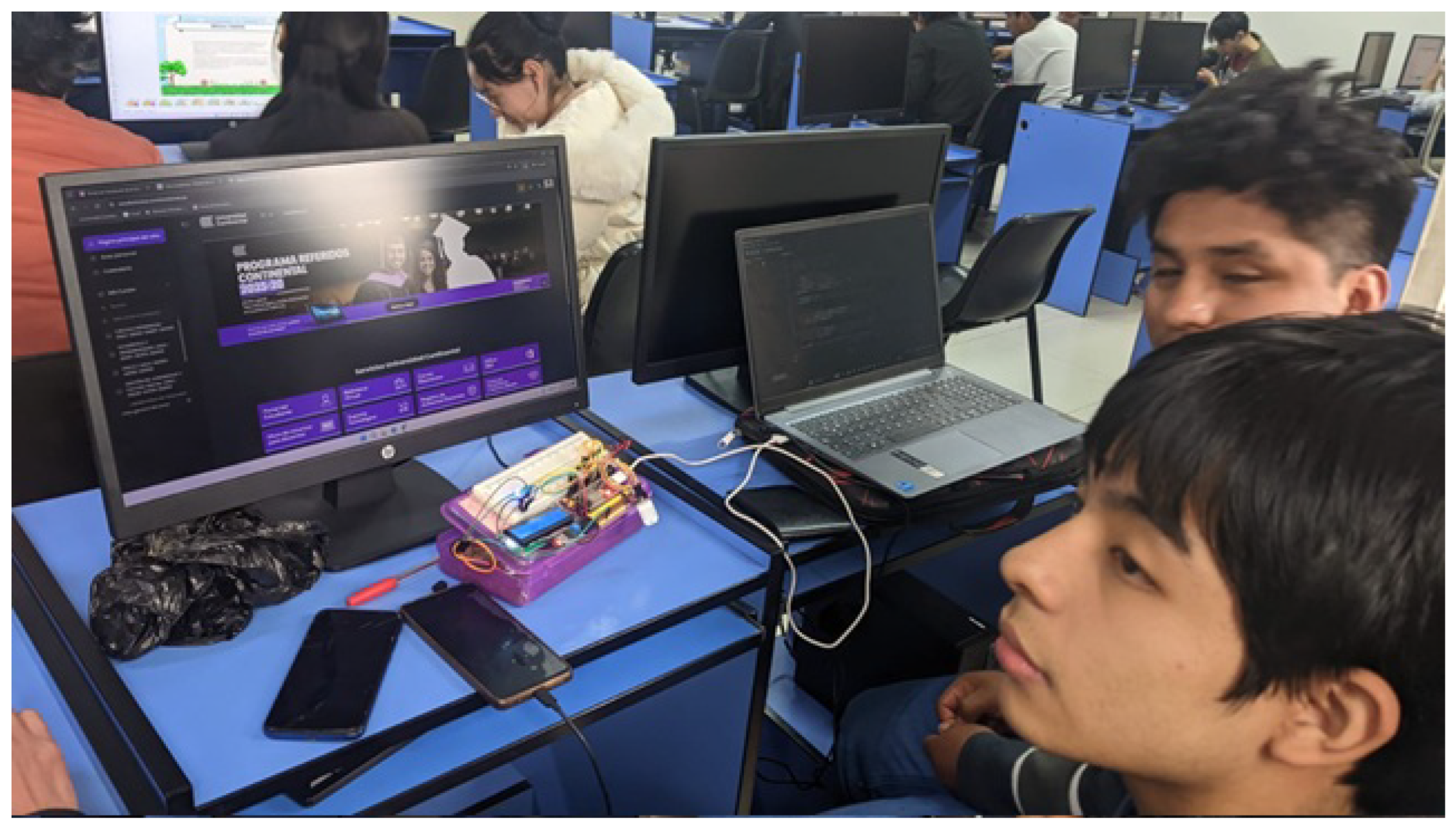
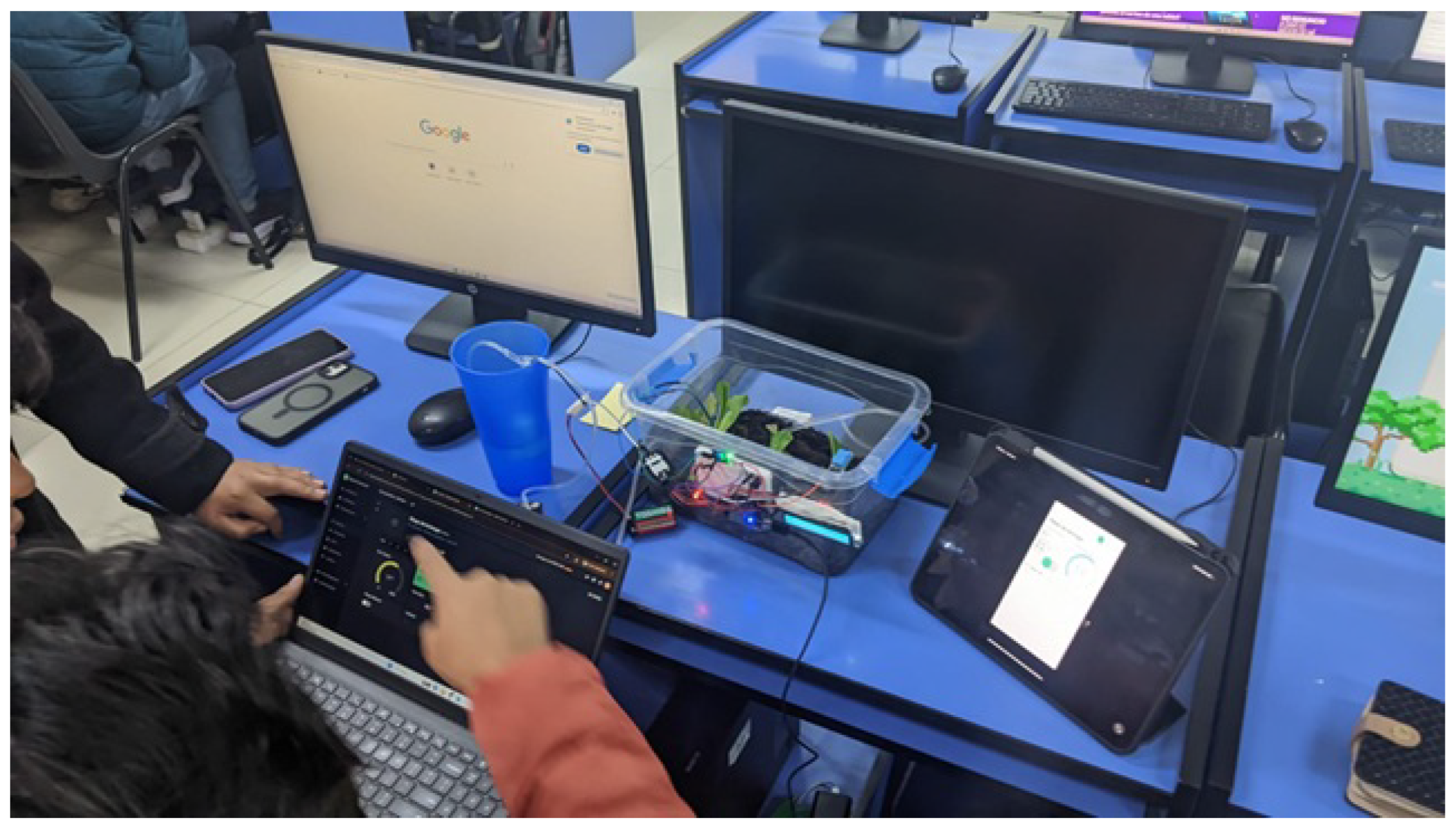
Figure 5 illustrates the academic laboratory environment in which the proposed IoT system was designed and implemented. The setup reflects a collaborative learning context, where students develop, configure, and validate an ESP32-based monitoring prototype using standard computing resources and embedded programming tools.
During Phase II, students worked in teams of 4–5 to identify a local problem (e.g., optimizing irrigation in high-altitude terrain). They were required to:
- 1.
Design a circuit capable of monitoring at least two environmental variables.
- 2.
Program the ESP32 to filter noise and transmit data.
- 3.
Visualize the data to identify trends (e.g., day/night temperature cycles).
- 4.
Argue for the efficiency of their solution using the collected data during a final public defense.
To assess the hypothesis, we adopted a mixed-methods approach using three data sources to ensure triangulation. First, a structured survey was administered at the end of Week 16 (), measuring perceived learning across PBL phases. Second, systematic observations were conducted during laboratory sessions by two instructors using a standardized checklist to record instances of data-driven argumentation. To mitigate observer bias, the instructors cross-validated their field notes at the end of each session. Third, an objective performance assessment was conducted using a technical rubric that evaluated the final IoT prototypes based on code efficiency, sensor calibration, and dashboard functionality.
4. Results
This section presents the empirical findings obtained from the structured survey (N = 91) and systematic classroom observations. The analysis is organized to answer the research questions regarding learning progression (RQ1), the role of digital artifacts (RQ2), and competency development (RQ3). Internal consistency for the survey instrument was verified (Cronbach’s ), indicating high reliability for descriptive analysis.
4.1. Progression of Perceived Learning (RQ1)
Students rated their perceived learning and confidence levels at the conclusion of each PBL phase using a 5-point Likert scale. As hypothesized, the integration of the IoT architecture resulted in a sustained increase in perceived competence as the projects advanced from abstract design to physical implementation.
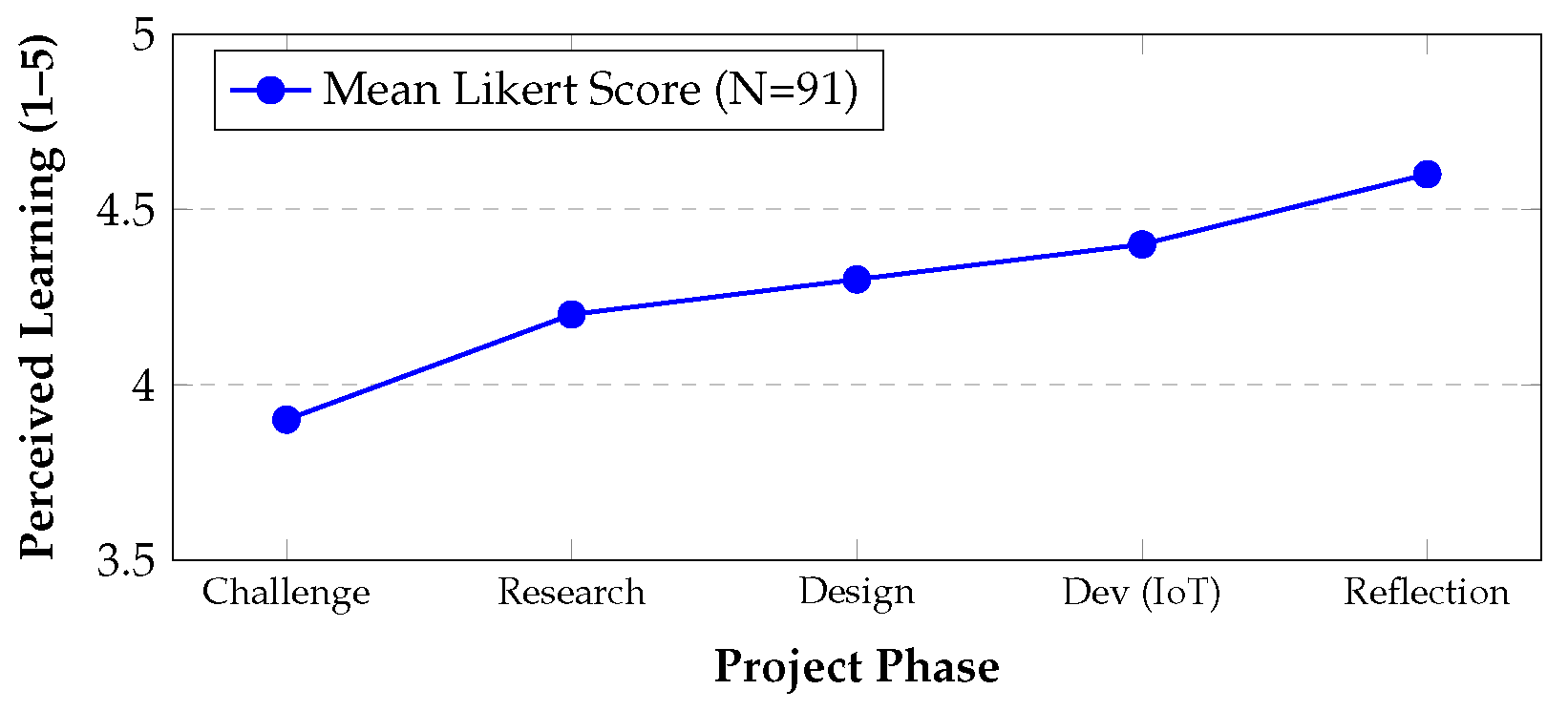
Figure 6 illustrates this trajectory. The initial “Challenge” phase recorded the lowest mean score (
), reflecting the initial cognitive load associated with framing the engineering problem. However, a significant upward trend is observed during the “Development” (
) and “Reflection” (
) phases, where students actively engaged with the ESP32 hardware and cloud dashboards.
4.2. Dashboards as Cognitive Artifacts (RQ2)
A critical component of the intervention was the use of real-time dashboards (e.g., ThingSpeak, Blynk).
Figure 7 presents the actual software interface employed by students to visualize and analyze environmental data. This interface served as the primary Human–Computer Interface (HCI), allowing students to move beyond local serial monitoring to remote, cloud-based telemetry.
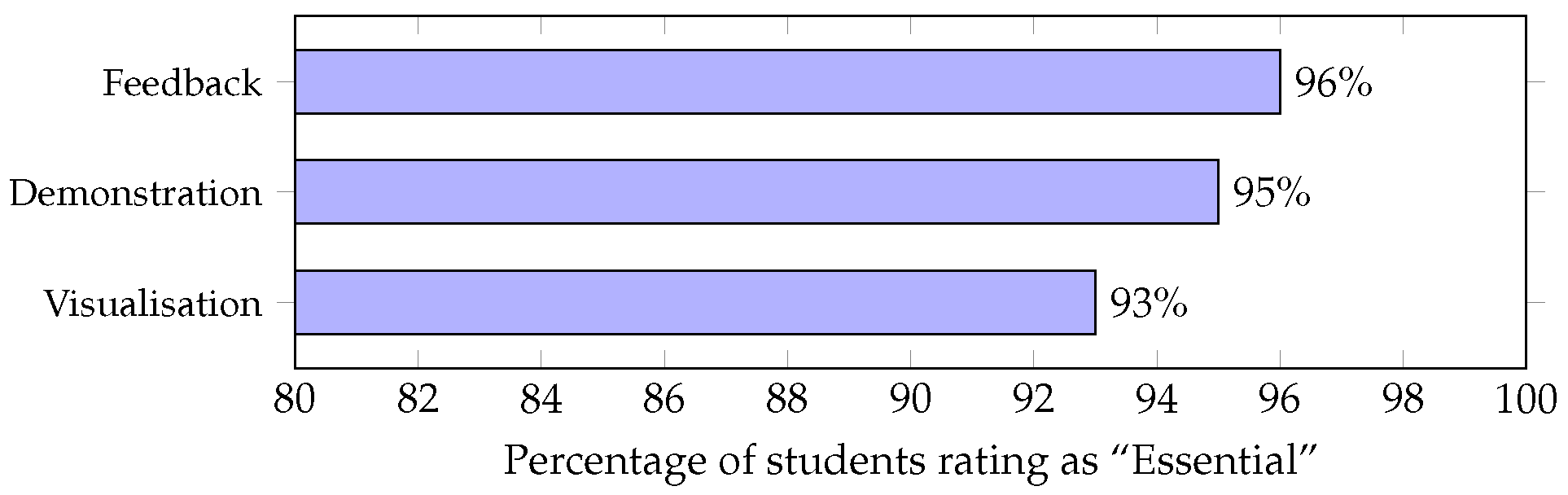
To assess the impact of these tools, students were asked to rate the importance of different communication elements. As shown in
Figure 8, “Feedback” (96%) and “Live Demonstration” (95%) were rated slightly higher than purely “Visualisation” (93%), though all three were deemed essential.
Qualitative evidence suggests that these dashboards functioned as cognitive artifacts that externalized the students’ thinking processes.
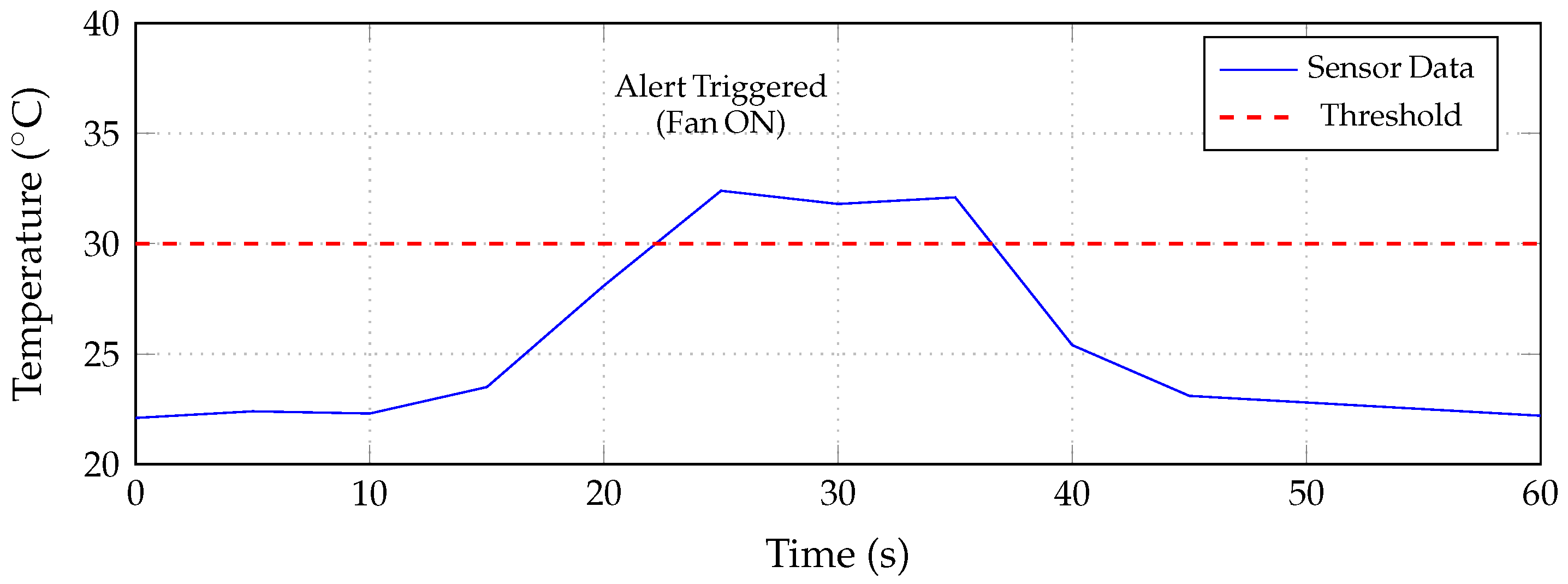
Figure 9 presents a reconstruction of a typical student analysis based on observation notes. Students used specific data features (peaks, noise) visible in the interface to justify physical interventions in their prototypes.
4.3. Competency Development (RQ3)
Finally, the intervention fostered significant transversal competencies.
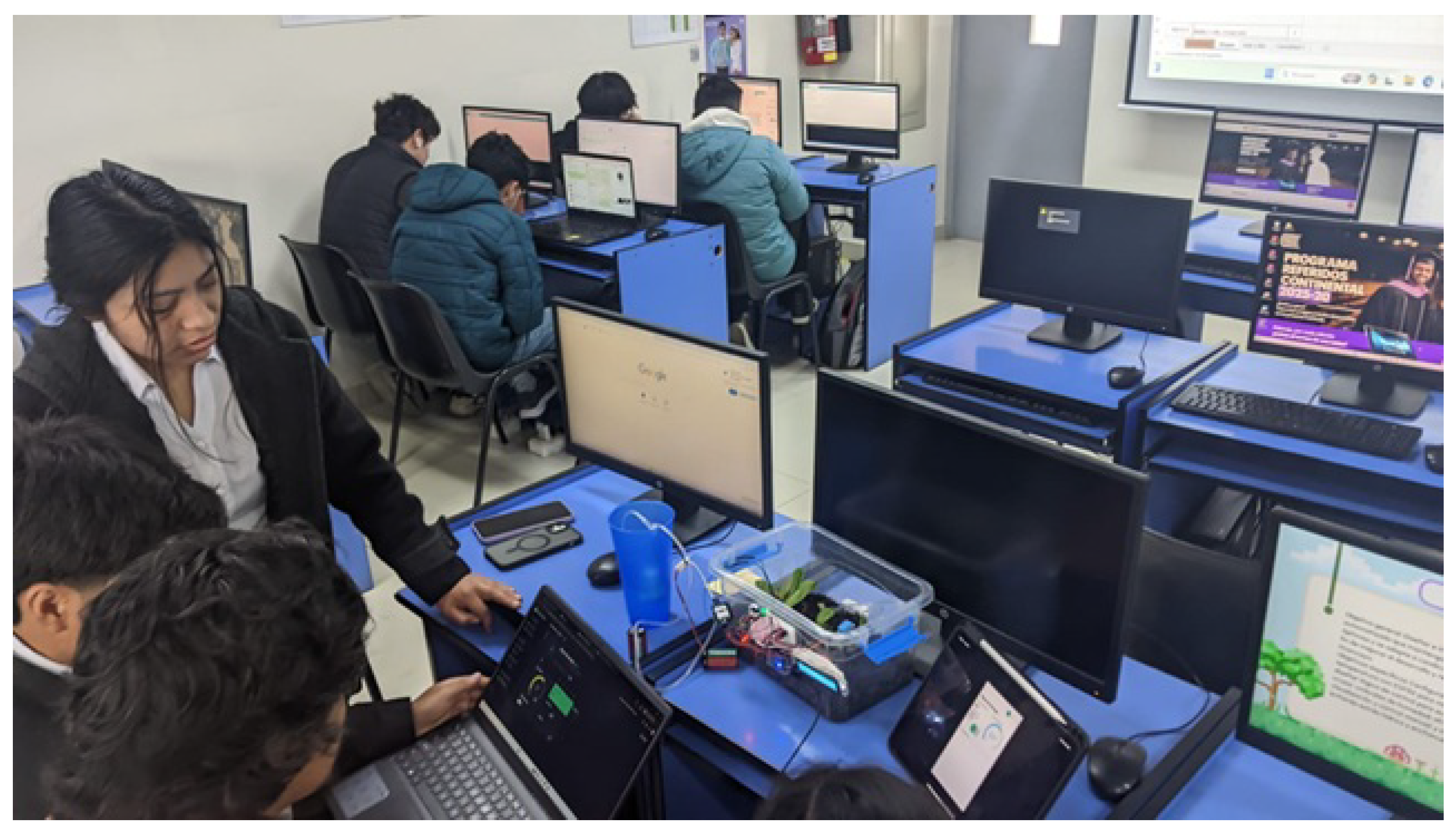
Figure 10 depicts the collaborative validation stage of the project, in which participants evaluate sensor outputs and system performance. This phase supports both technical verification and educational objectives, reinforcing applied learning in IoT system development.
Table 4 details the self-reported development of these competencies. The high mean scores in “Scientific Reasoning” (
) and “Collaboration” (
) align with the observed behaviors in
Figure 10, suggesting that the shared nature of the IoT architecture fostered necessary interdependence.
These results collectively indicate that the “Applied” nature of the IoT project provided a tangible context that anchored abstract competencies, making them visible and measurable.
4.4. Objective Technical Performance
While perceived learning provides insight into student confidence, project grades offer an objective measure of technical proficiency. The final prototypes were assessed using a rubric emphasizing full-stack integration (sensing, connectivity, and visualization). The cohort achieved an average score of 16.4/20 (SD = 2.1), with a 92% pass rate. Notably, the “Dashboard Implementation” component received the highest average rating (4.5/5), correlating with the students’ self-reported reliance on visualization tools for debugging (see
Figure 8). This objective performance aligns with the qualitative observation that students successfully bridged the gap between raw data acquisition and meaningful interpretation.
5. Discussion
The results of this study provide empirical support for the hypothesis that integrating full-stack IoT architectures into Project-Based Learning accelerates the development of scientific competencies. While previous studies have documented the motivational benefits of microcontrollers [
27], our findings go further by isolating the specific role of cloud visualization as a catalyst for computational reasoning.
5.1. From Syntax Debugging to System Debugging
The learning curve observed in
Figure 6 reveals a crucial insight: the “Development” phase was not merely a technical exercise but a cognitive turning point. The steep rise in perceived learning during this phase (
) coincides precisely with the activation of the IoT telemetry.
Before this stage, students worked with abstract code; however, the feedback loop provided by the physical system (
Figure 4) forced them to confront the “messiness” of real-world computing. Unlike isolated simulations where parameters are idealized, the open-ended nature of this architecture required students to distinguish between sensor noise, network latency, and actual environmental changes. This transition marks a shift from “Syntax Debugging” (fixing code errors) to “System Debugging” (analyzing the interaction between hardware, software, and the environment), fostering a resilience often absent in traditional coursework.
5.2. Dashboards as Human–Computer Interfaces (HCI) for Reasoning
A key finding of this research (RQ2) is the transformation of the dashboard from a passive monitoring screen into an active Human–Computer Interface (HCI) for argumentation. The software interface acted as a “shared cognitive artifact”.
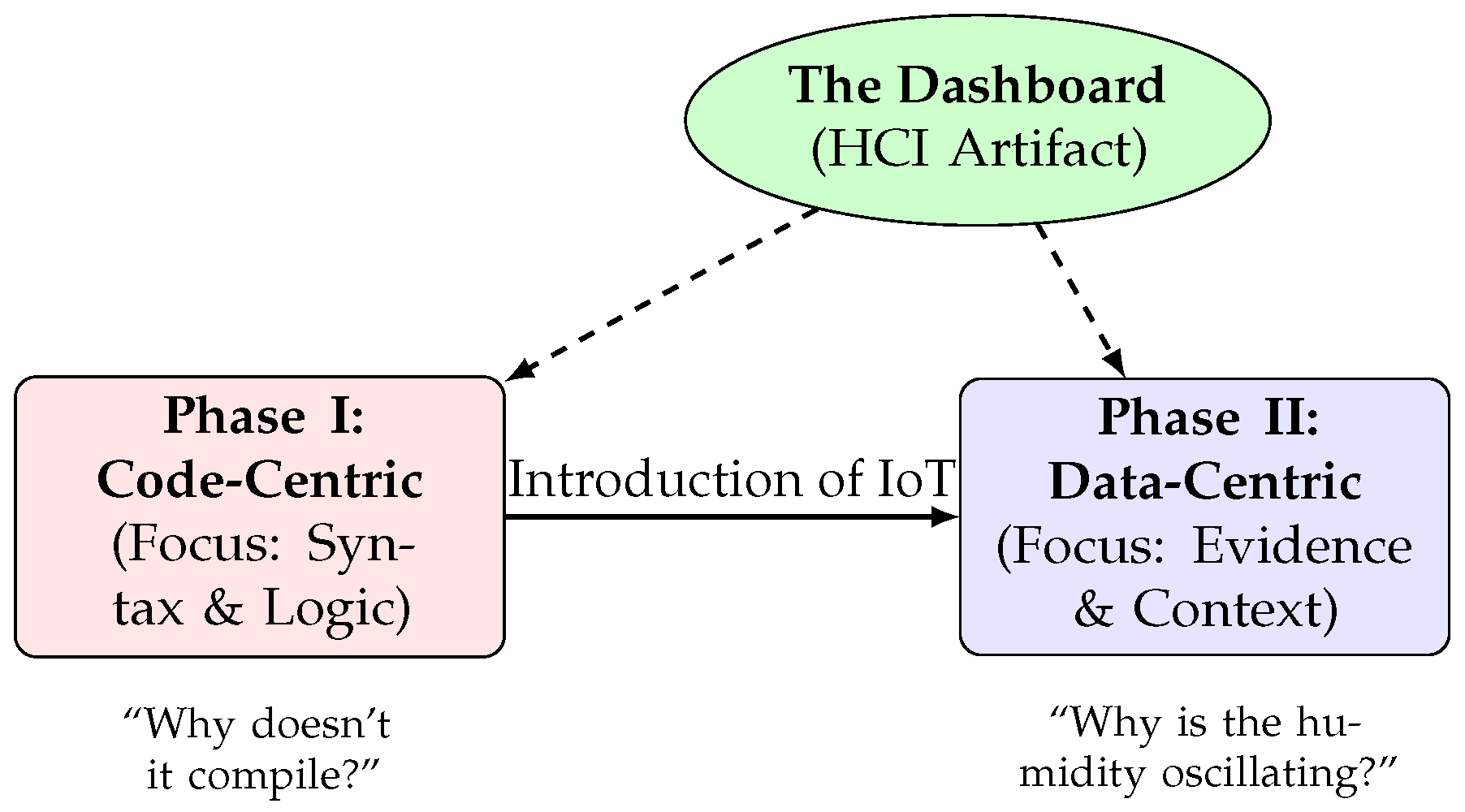
As illustrated in
Figure 11, this technological mediation fundamentally shifted the students’ cognitive focus. In traditional programming, the feedback comes from the compiler. In our IoT-PBL architecture, the feedback comes from physical reality via the dashboard. This forces students to interpret data trends rather than just verifying logic, a core competency for Industry 4.0.
5.3. Comparison with Related Work, Sustainability & Technical Scalability
To contextualize our contribution,
Table 5 compares this intervention with other recent IoT educational implementations. Existing literature often treats IoT as a subject of study (learning about IoT). Conversely, our approach posits the IoT architecture as a scaffolding tool (learning with IoT).
While the ESP32 architecture significantly reduces hardware costs (< per unit), large-scale implementation faces specific sustainability challenges. First, reliance on free-tier IoT platforms (e.g., ThingSpeak or Blynk) imposes data rate limits (typically one update every 15 s), which forces students to implement efficient data handling strategies rather than streaming raw data continuously. Second, the dependence on Wi-Fi connectivity presents a barrier for agricultural applications in rural zones; to mitigate this, future iterations of the course will require students to implement local “offline caching” (using SD cards or SPIFFS) to ensure data integrity during network outages. Finally, to prevent students from merely replicating templates, the evaluation rubric specifically penalized “black-box” implementations, requiring teams to demonstrate code modularity and API endpoint management.
5.4. Implications for Engineering Education & Limitations
The validation process shown in
Figure 10 demonstrates that low-cost ESP32 architectures can serve as effective substitutes for high-end laboratories. By investing in versatile microcontrollers rather than fixed-function equipment, universities in emerging economies can provide students with hands-on experiences that cover the entire data value chain—from edge acquisition to cloud analytics—without incurring prohibitive costs.
The study acknowledges inherent limitations. First, the single-group pretest–posttest design (N = 91) prevents the complete isolation of the IoT stack effects compared to traditional instruction. While maturation effects cannot be fully ruled out without a control group, the specific qualitative shift observed during the ‘Development’ phase suggests a unique contribution of the technology. Second, the sample was restricted to a single university cohort within a specific Applied Programming course; thus, the findings should be interpreted within this contextual boundary and may not be immediately generalizable to different engineering disciplines without adaptation. Third, while we included project grades as an objective indicator, a portion of the data relies on self-reported perceptions of learning, which can be subject to response bias.
6. Conclusions
This study presented the design, implementation, and evaluation of a full-stack IoT architecture aimed at fostering high-level computing competencies in first-year engineering students. The empirical results suggest that the transition from local, offline coding to sensing-to-cloud workflows can accelerate the development of data interpretation skills. Critically, the architectural decision to implement a complete IoT stack, spanning from sensor to network and cloud, proved to be more than merely instrumental. It functioned as a cognitive scaffold that compelled students to engage with the systemic nature of Industry 4.0, forcing a shift in focus from isolated execution errors to holistic considerations of system performance, latency, and data integrity.
The integration of cloud-based dashboards served as a pivotal Human–Computer Interface (HCI) for scientific reasoning. As evidenced by the qualitative data, these visualization tools acted as essential cognitive artifacts, enabling students to transition from intuitive guessing to evidence-based argumentation mediated directly by time-series data. This confirms that real-time telemetry provides a critical feedback mechanism, effectively bridging the gap between the abstract logic of programming and the physical reality of environmental monitoring.
Finally, the successful deployment of this system demonstrates that low-cost, open-source hardware like the ESP32 can effectively replicate the functionality of expensive industrial monitoring systems. This finding validates a scalable and affordable model for engineering education, particularly in the Global South where access to high-end infrastructure often remains a barrier to developing digital literacy. Building on this foundation, future iterations of the curriculum will explore the integration of Edge AI (TinyML) to implement anomaly detection at the edge, alongside expanding the study to a multi-institutional format to verify the robustness of this model across diverse engineering disciplines.
Author Contributions
Conceptualization, J.Z.-M., M.T.-Y. and C.V.-S.; methodology, M.T.-Y. and C.V.-S.; software, M.T.-Y. and C.V.-S.; validation, J.Z.-M. and S.M.-L.; formal analysis, C.V.-S.; investigation, J.Z.-M., M.T.-Y., S.M.-L. and C.V.-S.; resources, S.M.-L.; data curation, M.T.-Y.; writing—original draft preparation, J.Z.-M. and M.T.-Y.; writing—review and editing, S.M.-L. and C.V.-S.; visualization, C.V.-S.; supervision, C.V.-S.; project administration, J.Z.-M. All authors have read and agreed to the published version of the manuscript.
Funding
This research received no external funding.
Institutional Review Board Statement
Ethical review and approval were waived for this study due to the non-sensitive nature of the data collected and the anonymity of participants.
Informed Consent Statement
Informed consent was obtained from all participants involved in the study as part of the academic course activities.
Data Availability Statement
The data presented in this study are available in the article.
Conflicts of Interest
The authors declare no conflict of interest.
References
- Bueno, A.; Azevedo, M.L.d.R.; Godinho Filho, M.; Ganga, G.M.D.; Lizarelli, F.L. Industry 4.0 Skills in Industrial Engineering Courses: Contributing to the Role of Universities Toward Sustainable Development. IEEE Trans. Eng. Manag. 2024, 71, 8369–8387. [Google Scholar] [CrossRef]
- Zong, Z.; Guan, Y. AI-Driven Intelligent Data Analytics and Predictive Analysis in Industry 4.0: Transforming Knowledge, Innovation, and Efficiency. J. Knowl. Econ. 2025, 16, 864–903. [Google Scholar] [CrossRef]
- Kozcu Cakir, N.; Guven, G. Enhancing engineering design, scientific creativity, and decision-making skills in prospective science teachers through engineering design-based robotics coding applications. Res. Sci. Technol. Educ. 2025, 1–26. [Google Scholar] [CrossRef]
- Pirzado, F.A.; Ahmed, A.; Hussain, S.; Ibarra-Vázquez, G.; Terashima-Marin, H. Assessing Computational Thinking in Engineering and Computer Science Students: A Multi-Method Approach. Educ. Sci. 2025, 15, 344. [Google Scholar] [CrossRef]
- Panizzon, D.; Pegg, J.; Arthur, D.; McCloughan, G. Designing a developmental progression to assess students’ conceptual understandings by focusing on the language demands in Science. Aust. J. Educ. 2021, 65, 265–279. [Google Scholar] [CrossRef]
- Allen, T.; Arriola, P.E.; Breitenberger, C.; Klyczek, K.; Marrs, K.A.; Matzner, S.; Miller, K.G.; Powell-Coffman, J.A.; Thatcher, M. Building Communities of Practice among Undergraduate STEM Departments to Foster Emergent Transformation: A Report on the Impact of Multiple-year Engagement within the PULSE Midwest and Great Plains Regional Network. CBE—Life Sci. Educ. 2024, 24, ar5. [Google Scholar] [CrossRef]
- Das, D.K. Reflexive Praxis in Curriculum Transformation: The Case of Engineering Education in the Global South. In North American and European Perspectives on Sustainability in Higher Education; Filho, W.L., Newman, J., Lange Salvia, A., Viera Trevisan, L., Corazza, L., Eds.; World Sustainability Series; Springer: Cham, Switzerland, 2025. [Google Scholar] [CrossRef]
- Vidal-Silva, C.; Cárdenas-Cobo, J.; Tupac-Yupanqui, M.; Serrano-Malebrán, J.; Sánchez Ortiz, A. Developing Programming Competencies in School-Students With Block-Based Tools in Chile, Ecuador, and Peru. IEEE Access 2024, 12, 118924–118936. [Google Scholar] [CrossRef]
- Hsu, Y.C. Mapping the Landscape of Data Science Education in Higher General Education in Taiwan: A Comprehensive Syllabi Analysis. Educ. Sci. 2024, 14, 763. [Google Scholar] [CrossRef]
- Miedema, D.; Taipalus, T.; Ajanovski, V.V.; Alawini, A.; Goodfellow, M.; Liut, M.; Peltsverger, S.; Young, T. Syllabi, and Industry Needs. In Proceedings of the ITiCSE 2024: 2024 Working Group Reports on Innovation and Technology in Computer Science Education, Milan, Italy, 8 July 2024; ACM: New York, NY, USA, 2025; pp. 95–123. [Google Scholar] [CrossRef]
- Fan, H.; Xie, H.; Feng, Q.; Bonizzoni, E.; Heidari, H.; McEwan, M.P.; Ghannam, R. Interdisciplinary Project-Based Learning: Experiences and Reflections from Teaching Electronic Engineering in China. IEEE Trans. Educ. 2023, 66, 73–82. [Google Scholar] [CrossRef]
- Žerovnik, A.; Nančovska Šerbec, I. Project-Based Learning in Higher Education. In Technology Supported Active Learning; Vaz de Carvalho, C., Bauters, M., Eds.; Lecture Notes in Educational Technology; Springer: Singapore, 2021. [Google Scholar] [CrossRef]
- Wang, C.Y.; Gao, B.L.; Chen, S.J. The effects of metacognitive scaffolding of project-based learning environments on students’ metacognitive ability and computational thinking. Educ. Inf. Technol. 2024, 29, 5485–5508. [Google Scholar] [CrossRef]
- Hercog, D.; Lerher, T.; Truntič, M.; Težak, O. Design and Implementation of ESP32-Based IoT Devices. Sensors 2023, 23, 6739. [Google Scholar] [CrossRef]
- Hafiz, F.; Emon, M.J.H.; Hossain, M.A.; Mukta, M.S.H.; Islam, S.; Shatabda, S. Design of a Microprocessors and Microcontrollers Laboratory Course Addressing Complex Engineering Problems and Activities. Comput. Appl. Eng. Educ. 2025, 33, e70006. [Google Scholar] [CrossRef]
- Tham, J.C.K.; Verhulsdonck, G. Smart Education in Smart Cities: Layered Implications for Networked and Ubiquitous Learning. IEEE Trans. Technol. Soc. 2023, 4, 87–95. [Google Scholar] [CrossRef]
- Manwaring, P.; Malakhatka, E.; Fiore, E.; Paradiso, J.; Hill, D.; Wiberg, M. Internet of Things (IoT): Studying the Integration of Everyday Objects with the Internet and the Implications for Human Lives. In Human-Technology Interaction; Malakhatka, E., Wiberg, M., Eds.; Springer Series in Adaptive Environments; Springer: Cham, Switzerland, 2025. [Google Scholar] [CrossRef]
- Bettahi, A.; Beloudha, F.Z.; Harroud, H. Continuous-Time Modeling in Educational Data Mining and Learning Analytics: A Literature Review on Methods, Ethics, and Emerging AI Trends. IEEE Access 2025, 13, 181443–181464. [Google Scholar] [CrossRef]
- Zeeshan, K.; Hämäläinen, T.; Neittaanmäki, P. Internet of Things for Sustainable Smart Education: An Overview. Sustainability 2022, 14, 4293. [Google Scholar] [CrossRef]
- Ghashim, I.A.; Arshad, M. Internet of Things (IoT)-Based Teaching and Learning: Modern Trends and Open Challenges. Sustainability 2023, 15, 15656. [Google Scholar] [CrossRef]
- Mowla, M.N.; Mowla, N.; Shah, A.F.M.S.; Rabie, K.M.; Shongwe, T. Internet of Things and Wireless Sensor Networks for Smart Agriculture Applications: A Survey. IEEE Access 2023, 11, 145813–145852. [Google Scholar] [CrossRef]
- Benetos, K. Digital Tools for Written Argumentation. In Digital Writing Technologies in Higher Education; Kruse, O., Rapp, C., Anson, C.M., Benetos, K., Eds.; Springer: Cham, Switzerland, 2023. [Google Scholar] [CrossRef]
- Chang, D.; Lin, M.P.C.; Hwang, G.J. Charting the field: A review of argument visualization research for writing, learning, and reasoning. Front. Educ. 2025, 10, 1672105. [Google Scholar] [CrossRef]
- Tuzinkievicz, M.A.; Peralta, N.S.; Castellaro, M.A. Influence of technological environment and mediation on dialogical argumentative interactions. Eur. J. Psychol. Educ. 2025, 40, 12. [Google Scholar] [CrossRef]
- Vidal-Silva, C.; Lineros, M.I.; Uribe, G.E.; Olmos, C.J. Electrónica para Todos con el Uso de Arduino: Experiencias Positivas en la Implementación de Soluciones Hardware-Software. Inf. Tecnol. 2019, 30, 377–386. [Google Scholar] [CrossRef]
- Tapia-Jara, J.; Sánchez-Ortíz, A.; Vidal-Silva, C. Estilos de aprendizaje e intención de uso de videos académicos de YouTube en el contexto universitario chileno. Form. Univ. 2020, 13, 3–12. [Google Scholar] [CrossRef]
- Tupac-Yupanqui, M.; Vidal-Silva, C.; Pavesi-Farriol, L.; Sánchez Ortiz, A.; Cárdenas-Cobo, J.; Pereira, F. Exploiting Arduino Features to Develop Programming Competencies. IEEE Access 2022, 10, 20602–20615. [Google Scholar] [CrossRef]
- Serepas, F.; Papias, I.; Christakis, K.; Dimitropoulos, N.; Marinakis, V. Lightweight Embedded IoT Gateway for Smart Homes Based on an ESP32 Microcontroller. Computers 2025, 14, 391. [Google Scholar] [CrossRef]
- Cherifi, T.; Salag, A.; Kerrouchi, S. Development of an Educational Low-Cost and ESP32-Based Platform for Fundamental Physics. Comput. Appl. Eng. Educ. 2023, 31, 1796–1807. [Google Scholar] [CrossRef]
- Fortoul-Diaz, J.A.; Cortes-Santacruz, F.; Perez-Rojas, D.; Torres-Rios, E.; Carrillo-Martinez, L.A. Project-Based Learning Using Internet of Things as an Educational Tool in COVID–19 Era with a Hybrid Context for Engineering Students. In Proceedings of the 2021 4th International Conference on Education Technology Management (ICETM ’21), Tokyo, Japan, 17–19 December 2021; ACM: New York, NY, USA, 2022; pp. 111–117. [Google Scholar] [CrossRef]
Figure 1.
Conceptual framework mapping the Project-Based Learning (PBL) phases to the development of scientific competencies. The IoT workflow acts as the enabling mechanism for this transition.
Figure 1.
Conceptual framework mapping the Project-Based Learning (PBL) phases to the development of scientific competencies. The IoT workflow acts as the enabling mechanism for this transition.
Figure 2.
Theoretical convergence of the study. The intervention targets the central intersection where technological tools (IoT) and pedagogical methods (PBL) overlap to foster a scientific culture aligned with Industry 4.0 requirements.
Figure 2.
Theoretical convergence of the study. The intervention targets the central intersection where technological tools (IoT) and pedagogical methods (PBL) overlap to foster a scientific culture aligned with Industry 4.0 requirements.
Figure 3.
Low-cost IoT prototype for environmental monitoring based on an ESP32 microcontroller and temperature–humidity sensors, assembled on a breadboard and enclosed in a transparent protective case for experimental validation.
Figure 3.
Low-cost IoT prototype for environmental monitoring based on an ESP32 microcontroller and temperature–humidity sensors, assembled on a breadboard and enclosed in a transparent protective case for experimental validation.
Figure 4.
The IoT system architecture implemented by students. The model follows a four-layer structure: Perception (data acquisition), Network (ESP32 processing and transmission), Service (cloud storage), and Application (visualization and decision making).
Figure 4.
The IoT system architecture implemented by students. The model follows a four-layer structure: Perception (data acquisition), Network (ESP32 processing and transmission), Service (cloud storage), and Application (visualization and decision making).
Figure 5.
Classroom-based development environment for the implementation and testing of a low-cost IoT monitoring system using ESP32. Students are shown configuring the hardware prototype and programming the device using desktop and portable computing equipment.
Figure 5.
Classroom-based development environment for the implementation and testing of a low-cost IoT monitoring system using ESP32. Students are shown configuring the hardware prototype and programming the device using desktop and portable computing equipment.
Figure 6.
Evolution of student perceived learning across the PBL lifecycle. The steep rise between “Design” and “Reflection” coincides with the active use of IoT visualization tools.
Figure 6.
Evolution of student perceived learning across the PBL lifecycle. The steep rise between “Design” and “Reflection” coincides with the active use of IoT visualization tools.
Figure 7.
Software environment used for data visualization and system configuration during the experimental phase. The interface displays environmental parameters captured by the ESP32-based monitoring system.
Figure 7.
Software environment used for data visualization and system configuration during the experimental phase. The interface displays environmental parameters captured by the ESP32-based monitoring system.
Figure 8.
Student valuation of communication artifacts. The high value placed on feedback suggests that visualization tools serve primarily as a basis for collaborative dialogue.
Figure 8.
Student valuation of communication artifacts. The high value placed on feedback suggests that visualization tools serve primarily as a basis for collaborative dialogue.
Figure 9.
Representation of a typical “Scientific Argumentation” event facilitated by the IoT dashboard. Students utilized the data spike (t = 20 s to t = 40 s) to demonstrate the responsiveness of their control logic during the public defense.
Figure 9.
Representation of a typical “Scientific Argumentation” event facilitated by the IoT dashboard. Students utilized the data spike (t = 20 s to t = 40 s) to demonstrate the responsiveness of their control logic during the public defense.
Figure 10.
Collaborative validation process of the ESP32-based IoT monitoring system, where students analyze sensor outputs and verify system behavior under controlled conditions.
Figure 10.
Collaborative validation process of the ESP32-based IoT monitoring system, where students analyze sensor outputs and verify system behavior under controlled conditions.
Figure 11.
The cognitive shift facilitated by the IoT architecture. The visualization dashboard acts as the mediator that pushes students from verifying syntax to interpreting physical reality.
Figure 11.
The cognitive shift facilitated by the IoT architecture. The visualization dashboard acts as the mediator that pushes students from verifying syntax to interpreting physical reality.
Table 1.
Contrast between traditional early-cycle engineering education and Industry 4.0 computing requirements.
Table 1.
Contrast between traditional early-cycle engineering education and Industry 4.0 computing requirements.
| Competency Domain
| Traditional Approach (CS Education) | Industry 4.0 Computing Requirements |
|---|
| Programming | Focus on syntax, logic loops, and local execution (offline). | Focus on connectivity, APIs, and cloud-based execution (online). |
| Data Handling | Input data is often static, simulated, or manually entered. | Data is dynamic, noisy, and acquired in real-time via sensors. |
| Infrastructure | PC-based simulations or closed laboratory kits. | Open-source microcontrollers (e.g., ESP32), heterogeneous networks, and IoT platforms. |
| Reasoning | Deterministic: “Does the code compile and run?” | Probabilistic and Evidential: “What does the data say about the system?” |
Table 2.
Summary of key literature informing the intervention design.
Table 2.
Summary of key literature informing the intervention design.
| Domain | Key References | Relevance to This Study |
|---|
| IoT Education | [14,15,21] | Validates the ESP32 as a viable low-cost platform for student-led instrumentation and environmental monitoring. |
| PBL Efficacy | [12,13] | Establishes that structured projects improve retention and problem-solving, though scaffolding is critical for freshmen. |
| Digital Artifacts | [22,23,24] | Suggests that visualization tools act as “shared cognitive artifacts” that facilitate collaborative argumentation. |
| Regional Context | [8,25,26,27] | Highlights the specific challenges and successes of introducing microcontroller curricula in Latin American universities. |
Table 3.
Technical specifications of the IoT ecosystem used in the course.
Table 3.
Technical specifications of the IoT ecosystem used in the course.
| Layer | Components and Specifications |
|---|
| Hardware | ESP32-WROOM-32 (Xtensa Dual-Core 32-bit LX6); Sensors: DHT11 (Temp/Hum), BMP280 (Pressure), Capacitive Soil Moisture v1.2. |
| Firmware | Developed in C++ using Arduino IDE; Libraries: WiFi.h, HTTPClient.h, Adafruit_Sensor. |
| Connectivity | Wi-Fi 802.11 b/g/n (2.4 GHz); Data transmission interval: 15–30 s via HTTP POST or GET requests. |
| Cloud & UI | ThingSpeak (MATLAB R2024b)
analytics integration) and the Blynk IoT Platform; widgets include time-series charts, Gauges, and Status LEDs. |
Table 4.
Descriptive statistics of self-reported competency development (Scale 1–5) and observed behaviors.
Table 4.
Descriptive statistics of self-reported competency development (Scale 1–5) and observed behaviors.
| Competency | Mean | SD | Observed Behavioral Indicator |
|---|
| Autonomy | 4.0 | 0.6 | Searching for datasheets and resolving library conflicts independently. |
| Collaboration | 4.2 | 0.5 | Effective division of labor (hardware assembly vs. cloud config). |
| Sci. Reasoning | 4.1 | 0.5 | Using graphs to explain system anomalies rather than guessing. |
| Problem Solving | 4.1 | 0.5 | Diagnosing wiring errors by interpreting “zero” values on the dashboard. |
Table 5.
Comparison of this study with recent IoT educational interventions.
Table 5.
Comparison of this study with recent IoT educational interventions.
| Study | Platform | Pedagogical Focus | Key Differentiator of Present Work |
|---|
| Cherifi et al. (2023) [29] | ESP32 (Lab Kit) | Physics Experiments | Focuses on open-ended PBL rather than pre-defined lab scripts. |
| Fortoul-Díaz et al. (2021) [30] | IoT (Generic) | Hybrid Learning | Emphasizes Cloud Dashboards as cognitive artifacts for argumentation. |
| Tupac-Yupanqui et al. (2022) [27] | Arduino | Basic Programming | Transitions from offline Arduino to Online Full-Stack IoT (sensing-to-cloud). |
| This Study (2025) | ESP32 + Cloud | Scientific Competencies | Integrates Data Literacy as a core outcome of the engineering design process. |
| Disclaimer/Publisher’s Note: The statements, opinions and data contained in all publications are solely those of the individual author(s) and contributor(s) and not of MDPI and/or the editor(s). MDPI and/or the editor(s) disclaim responsibility for any injury to people or property resulting from any ideas, methods, instructions or products referred to in the content. |