Ex Vivo Characterization Studies Identify Candidate Therapies for the Individualized Care of NF2-Related Schwannomatosis

 , ,
, ,
Simple Summary
Abstract
1. Introduction
2. Materials and Methods
2.1. Clinical History and Radiographic Assessment of Tumors
2.2. Schwannoma Dissection and Schwannoma Cell Culture
2.3. Tissue Preparation and Immunohistochemistry
2.4. High-Content Drug Screening and Incucyte Live Cell Confluence Analysis
2.5. Tumor Spheroid Development and Drug Screens
2.6. Violet Ratiometric Cell Death Assay
2.7. Cell Cycle Analysis
2.8. Immunofluorescence (IF)
2.9. Jess Automated Immunoblotting
2.10. Sample Preparation for Transcriptomics
2.11. Statistical Analysis
3. Results
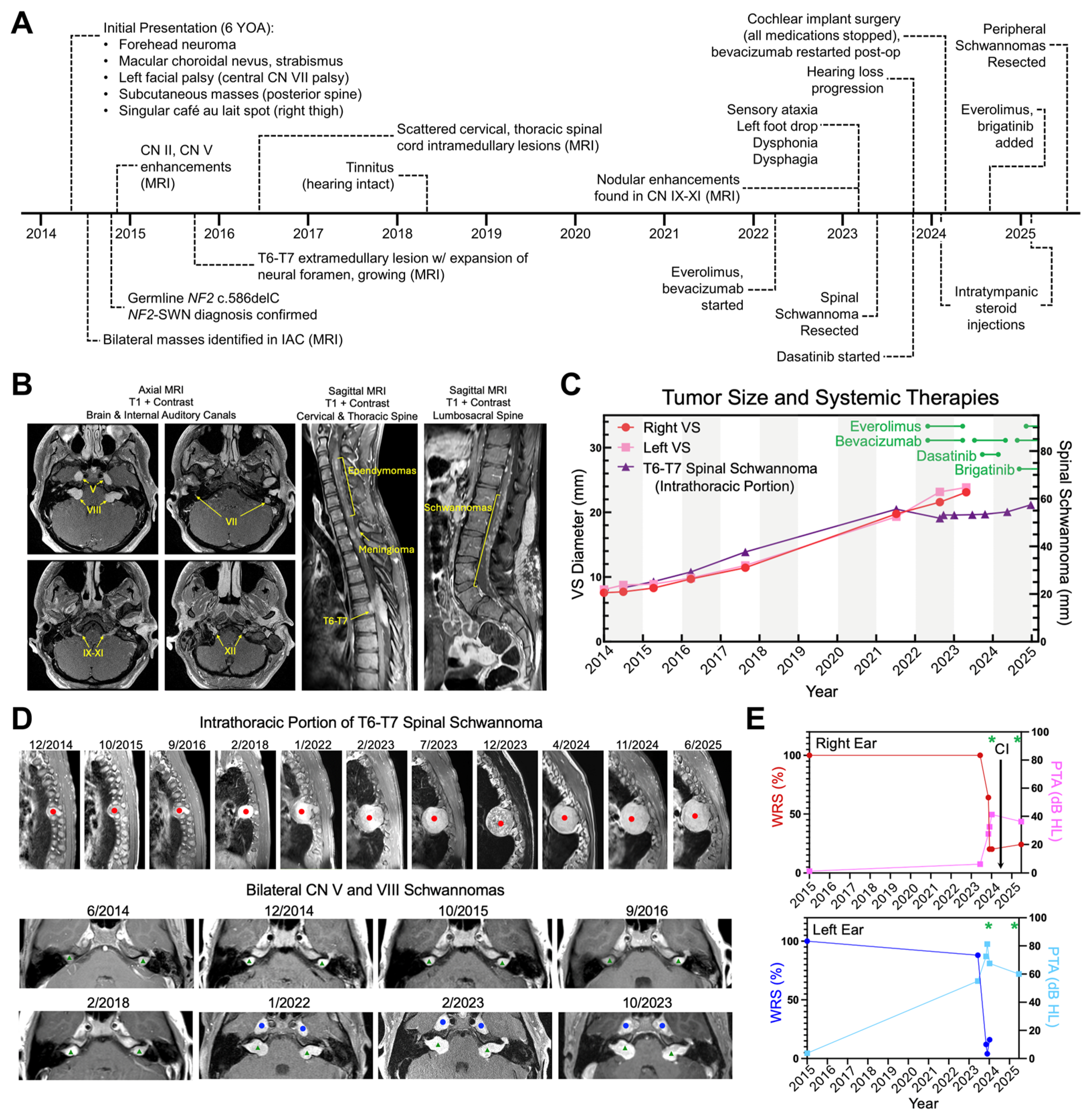
3.1. Clinical Timeline
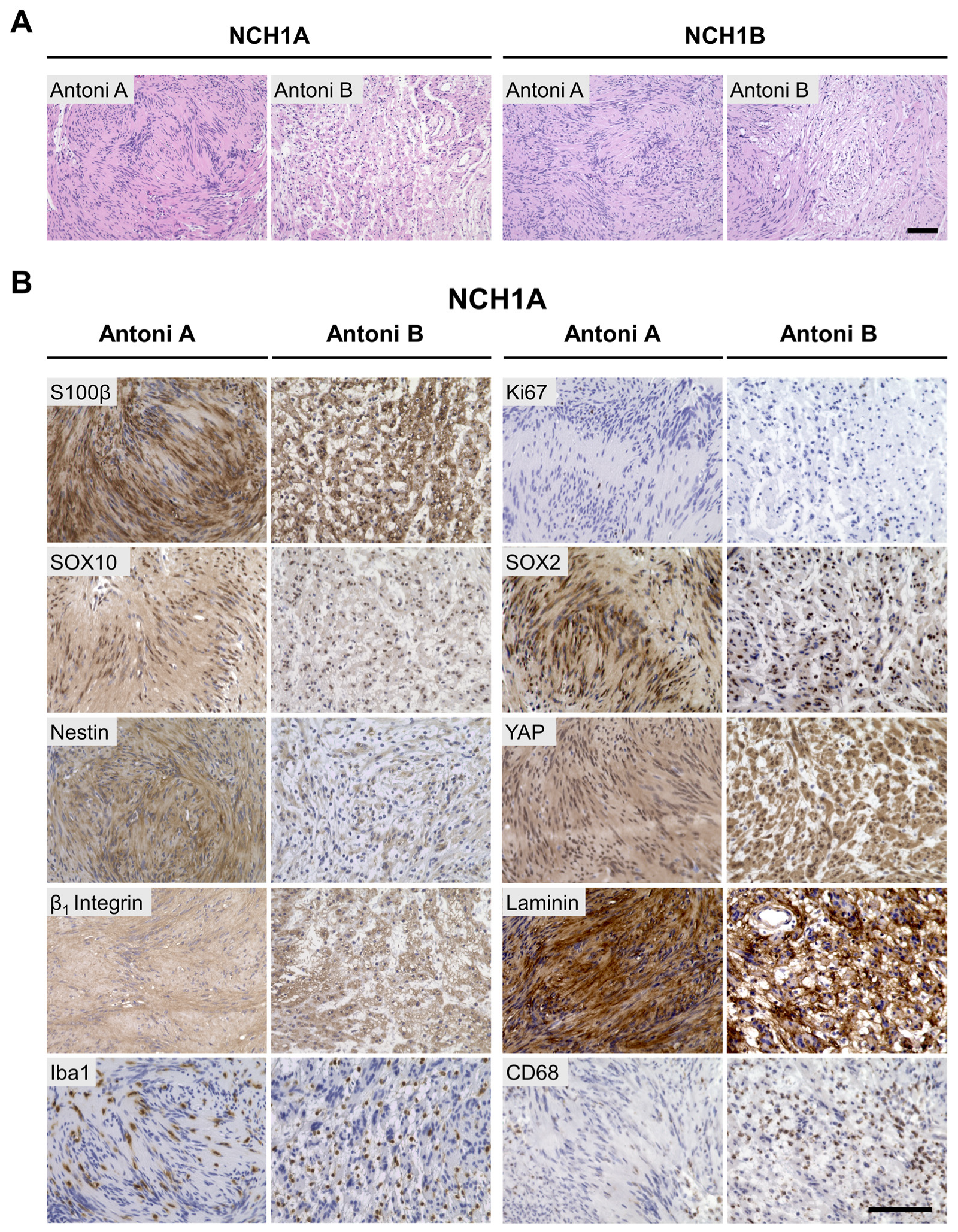
3.2. NCH1 Tumor Genetics and Histology Are Consistent with Schwannoma
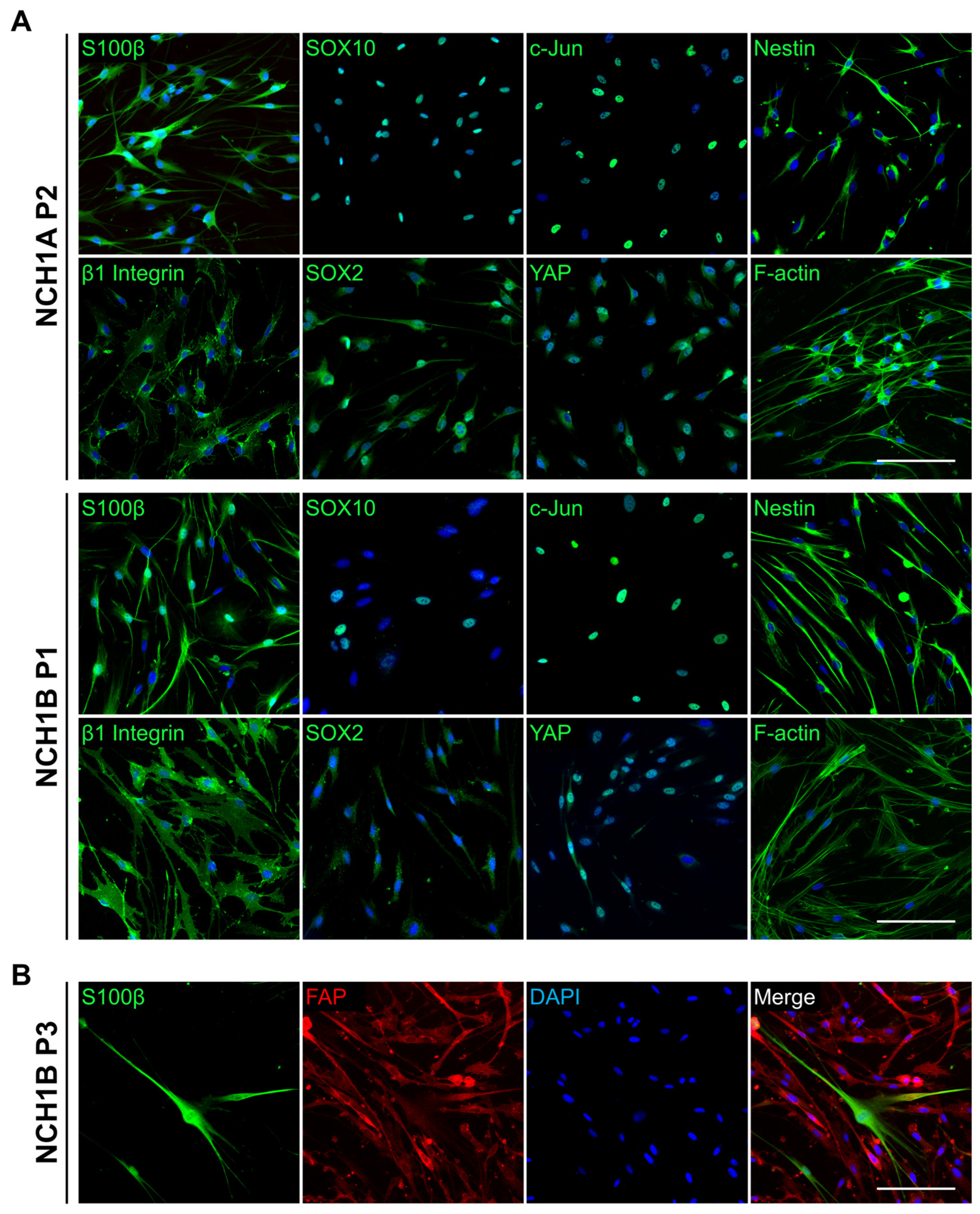
3.3. Primary NCH1 Schwannoma Cells Express Characteristic Schwannoma Cell Markers
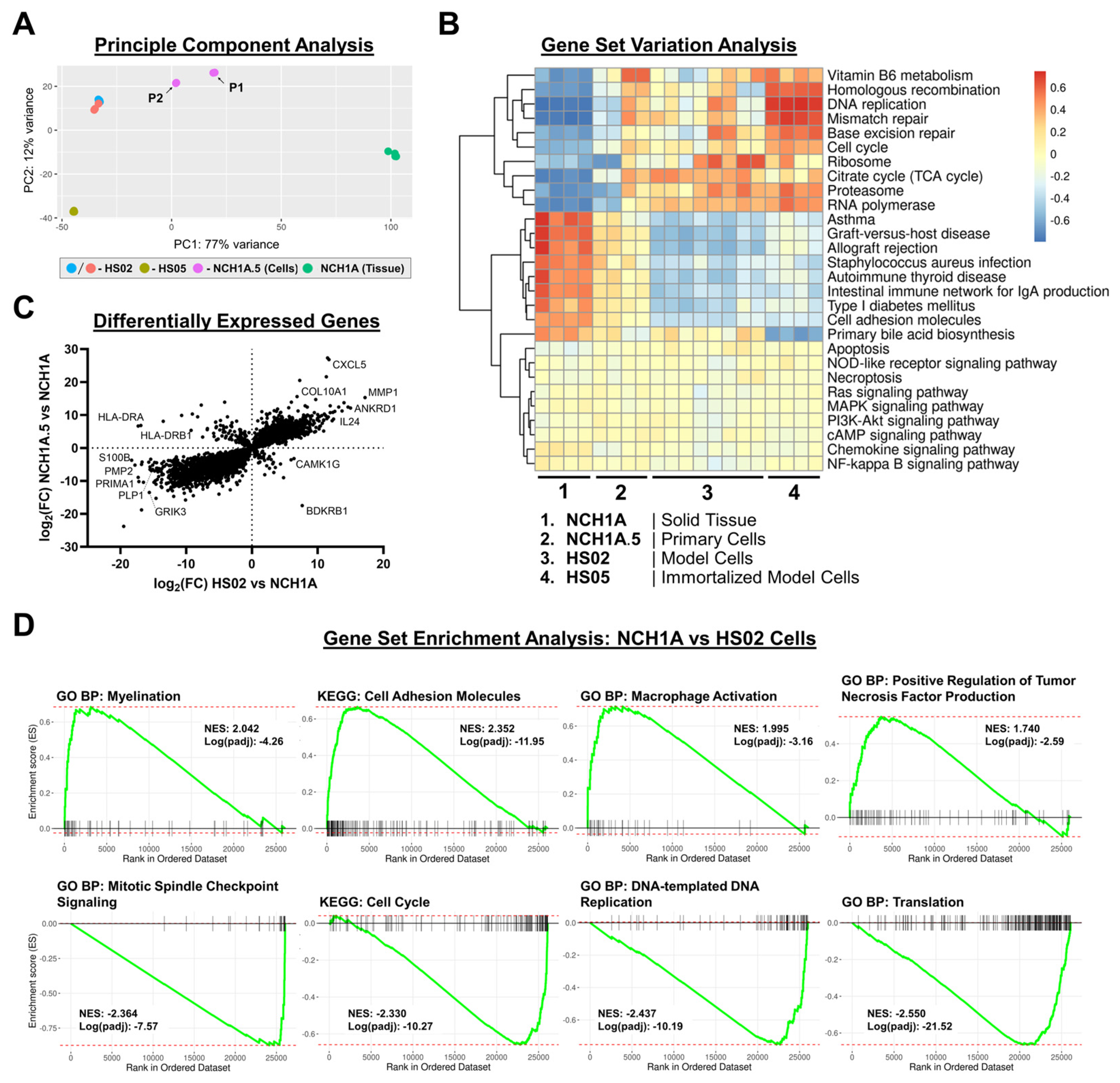
3.4. Merlin-Related Tumorigenic Pathways Are Conserved in NCH1A Solid Tissue, Primary Schwannoma Cells, and Human Merlin-Deficient Schwannoma Model Cells
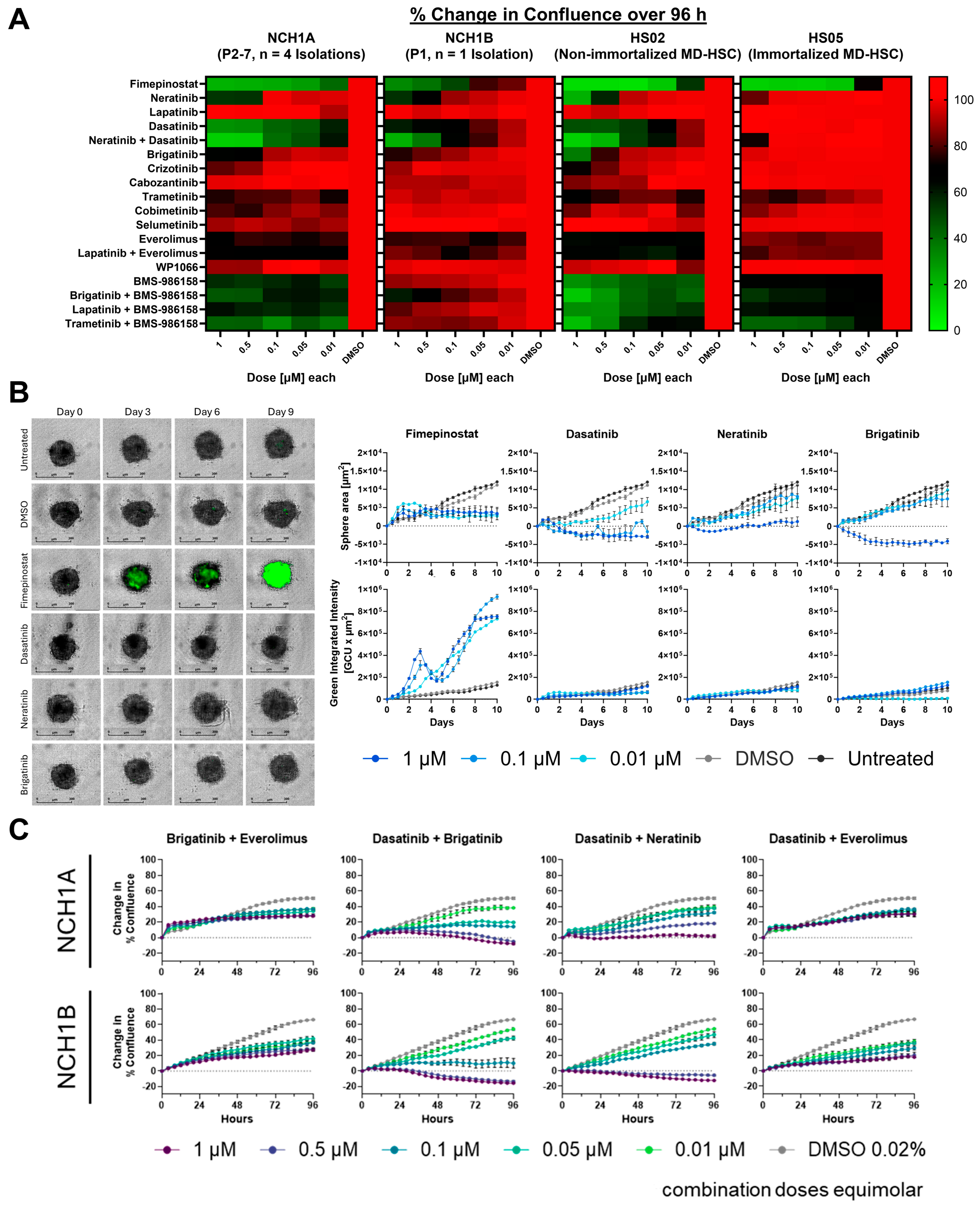
3.5. Fimepinostat and Dasatinib Were the Most Effective Monotherapies; BMS-986158 with Trametinib Was the Most Effective Combination Therapy in NCH1A Cells
3.6. Dasatinib with Brigatinib Was the Most Effective Combination in NCH1A and NCH1B Cells in a Secondary Screen
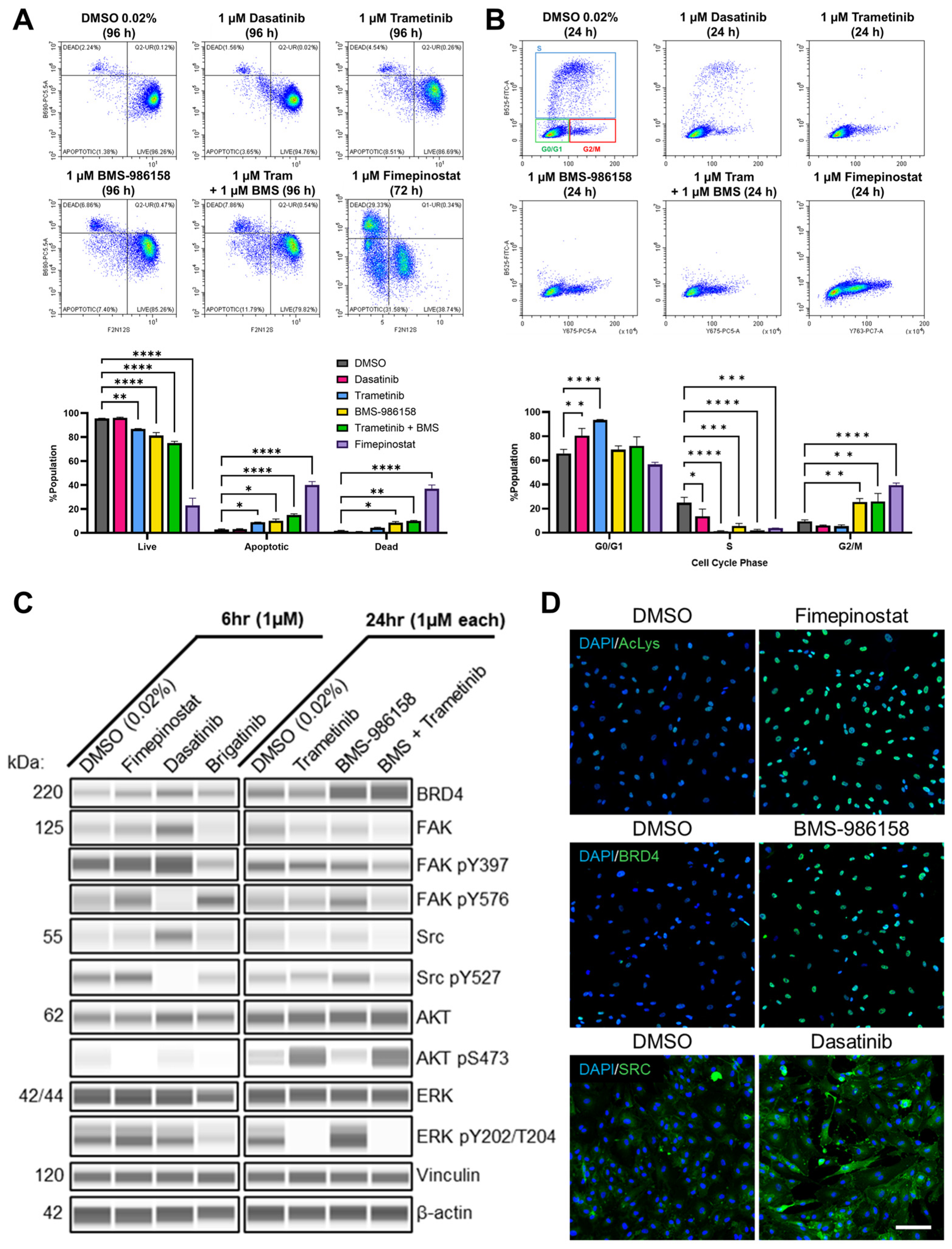
3.7. Fimepinostat Is Cytotoxic and Dasatinib, Trametinib, and BMS-986158 Are Cytostatic in NCH1A Cells
3.8. Fimepinostat, Dasatinib, Trametinib, and BMS-986158 Modulate Their Respective Targets in NCH1A Cells
4. Discussion
5. Conclusions
Supplementary Materials
Author Contributions
Funding
Institutional Review Board Statement
Informed Consent Statement
Data Availability Statement
Acknowledgments
Conflicts of Interest
Abbreviations
| BETs | Bromodomain and extraterminal proteins |
| BRD4 | Bromodomain-containing protein 4 |
| CC-3/7 | Cleaved caspase 3/7 |
| DEGs | Differentially expressed genes |
| DMEM | Dulbecco’s modified Eagle’s medium |
| FAK | Focal adhesion kinase |
| FBS | Fetal bovine serum |
| FPM | Functional precision medicine |
| GEM | Genetically engineered mouse |
| GSEA | Gene set enrichment analysis |
| GSVA | Gene set variation analysis |
| H&E | Hematoxylin and eosin |
| HBSS | Hank’s balanced salt solution |
| IF | Immunofluorescence |
| IHC | Immunohistochemistry |
| MD-HSC | Merlin-deficient human Schwann cell |
| MRI | Magnetic resonance imaging |
| NES | Normalized enrichment score |
| NF2-SWN | NF2-related schwannomatosis |
| PCA | Principal component analysis |
| PFA | Paraformaldehyde |
| prf | Phenol red-free |
| PTA | Pure tone average |
| SFK | Src family kinase |
| TBS | Tris-buffered saline |
| VEGF | Vascular endothelial growth factor |
| VS | Vestibular schwannoma |
| WRS | Word recognition score |
References
- Rouleau, G.A.; Merel, P.; Lutchman, M.; Sanson, M.; Zucman, J.; Marineau, C.; Hoang-Xuan, K.; Demczuk, S.; Desmaze, C.; Plougastel, B.; et al. Alteration in a New Gene Encoding a Putative Membrane-Organizing Protein Causes Neuro-Fibromatosis Type 2. Nature 1993, 363, 515–521. [Google Scholar] [CrossRef]
- Trofatter, J.A.; MacCollin, M.M.; Rutter, J.L.; Murrell, J.R.; Duyao, M.P.; Parry, D.M.; Eldridge, R.; Kley, N.; Menon, A.G.; Pulaski, K.; et al. A Novel Moesin-, Ezrin-, Radixin-like Gene is a Candidate for the Neurofibromatosis 2 Tumor Suppressor. Cell 1993, 72, 791–800. [Google Scholar] [CrossRef]
- Plotkin, S.R.; Messiaen, L.; Legius, E.; Pancza, P.; Avery, R.A.; Blakeley, J.O.; Babovic-Vuksanovic, D.; Ferner, R.; Fisher, M.J.; Friedman, J.M.; et al. Updated Diagnostic Criteria and Nomenclature for Neurofibromatosis Type 2 and Schwannomatosis: An International Consensus Recommendation. Genet. Med. 2022, 24, 1967–1977. [Google Scholar] [CrossRef] [PubMed]
- Aboukais, R.; Zairi, F.; Bonne, N.-X.; Baroncini, M.; Schapira, S.; Vincent, C.; Lejeune, J.-P. Causes of Mortality in Neurofibromatosis Type 2. Br. J. Neurosurg. 2015, 29, 37–40. [Google Scholar] [CrossRef]
- Baser, M.E.; Kuramoto, L.; Joe, H.; Friedman, J.M.; Wallace, A.J.; Gillespie, J.E.; Ramsden, R.T.; Evans, D.G.R. Genotype-Phenotype Correlations for Nervous System Tumors in Neurofibromatosis 2: A Population-Based Study. Am. J. Hum. Genet. 2004, 75, 231–239. [Google Scholar] [CrossRef]
- Hilton, D.A.; Hanemann, C.O. Schwannomas and Their Pathogenesis. Brain Pathol. 2014, 24, 205–220. [Google Scholar] [CrossRef] [PubMed]
- Bettegowda, C.; Upadhayaya, M.; Evans, D.G.; Kim, A.; Mathios, D.; Hanemann, C.O. Genotype-Phenotype Correlations in Neurofibromatosis and Their Potential Clinical Use. Neurology 2021, 97, S91–S98. [Google Scholar] [CrossRef] [PubMed]
- Halliday, D.; Emmanouil, B.; Vassallo, G.; Lascelles, K.; Nicholson, J.; Chandratre, S.; Anand, G.; Wasik, M.; Pretorius, P.; Evans, D.G.; et al. Trends in Phenotype in the English Paediatric Neurofibromatosis Type 2 Cohort Stratified by Genetic Severity. Clin. Genet. 2019, 96, 151–162. [Google Scholar] [CrossRef]
- Hexter, A.T.; Evans, D.G. The Genetics of Vestibular Schwannoma. Curr. Otorhinolaryngol. Rep. 2014, 2, 226–234. [Google Scholar] [CrossRef]
- Baser, M.E.; Friedman, J.M.; Aeschliman, D.; Joe, H.; Wallace, A.J.; Ramsden, R.T.; Evans, D.G.R. Predictors of the Risk of Mortality in Neurofibromatosis 2. Am. J. Hum. Genet. 2002, 71, 715–723. [Google Scholar] [CrossRef]
- Carlson, M.L.; Link, M.J.; Wanna, G.B.; Driscoll, C.L.W. Management of Sporadic Vestibular Schwannoma. Otolaryngol. Clin. N. Am. 2015, 48, 407–422. [Google Scholar] [CrossRef] [PubMed]
- Sobieski, C.; Killeen, D.E.; Barnett, S.L.; Mickey, B.E.; Hunter, J.B.; Isaacson, B.; Kutz, J.W. Facial Nerve Outcomes After Vestibular Schwannoma Microsurgical Resection in Neurofibromatosis Type 2. Otolaryngol.–Head Neck Surg. 2021, 164, 850–858. [Google Scholar] [CrossRef] [PubMed]
- Evans, D.G.; Halliday, D.; Obholzer, R.; Afridi, S.; Forde, C.; Rutherford, S.A.; Hammerbeck-Ward, C.; Lloyd, S.K.; Freeman, S.M.; Pathmanaban, O.N.; et al. Radiation Treatment of Benign Tumors in NF2-Related-Schwannomatosis: A National Study of 266 Irradiated Patients Showing a Significant Increase in Malignancy/Malignant Progression. Neurooncol. Adv. 2023, 5, vdad025. [Google Scholar] [CrossRef] [PubMed]
- Holland, K.; Kaye, A.H. Spinal Tumors in Neurofibromatosis-2: Management Considerations—A Review. J. Clin. Neurosci. 2009, 16, 169–177. [Google Scholar] [CrossRef]
- Nguyen, T.; Chung, L.K.; Sheppard, J.P.; Bhatt, N.S.; Chen, C.H.J.; Lagman, C.; Kaprealian, T.; Lee, P.; Nghiemphu, P.L.; Yang, I. Surgery versus Stereotactic Radiosurgery for the Treatment of Multiple Meningiomas in Neurofibromatosis Type 2: Illustrative Case and Systematic Review. Neurosurg. Rev. 2019, 42, 85–96. [Google Scholar] [CrossRef]
- Karajannis, M.A.; Legault, G.; Hagiwara, M.; Ballas, M.S.; Brown, K.; Nusbaum, A.O.; Hochman, T.; Goldberg, J.D.; Koch, K.M.; Golfinos, J.G.; et al. Phase II Trial of Lapatinib in Adult and Pediatric Patients with Neurofibromatosis Type 2 and Progressive Vestibular Schwannomas. Neuro Oncol. 2012, 14, 1163–1170. [Google Scholar] [CrossRef]
- Goutagny, S.; Raymond, E.; Esposito-Farese, M.; Trunet, S.; Mawrin, C.; Bernardeschi, D.; Larroque, B.; Sterkers, O.; Giovannini, M.; Kalamarides, M. Phase II Study of MTORC1 Inhibition by Everolimus in Neurofibromatosis Type 2 Patients with Growing Vestibular Schwannomas. J. Neurooncol. 2015, 122, 313–320. [Google Scholar] [CrossRef]
- Plotkin, S.R.; Allen, J.; Dhall, G.; Campian, J.L.; Clapp, D.W.; Fisher, M.J.; Jain, R.K.; Tonsgard, J.; Ullrich, N.J.; Thomas, C.; et al. Multicenter, Prospective, Phase II Study of Maintenance Bevacizumab for Children and Adults with NF2-Related Schwannomatosis and Progressive Vestibular Schwannoma. Neuro Oncol. 2023, 25, 1498–1506. [Google Scholar] [CrossRef]
- Welling, D.B. Targeted Therapies in the Treatment of Vestibular Schwannomas: Current State and New Horizons. Otolaryngol. Clin. N. Am. 2023, 56, 543–556. [Google Scholar] [CrossRef]
- Plotkin, S.R.; Yohay, K.H.; Nghiemphu, P.L.; Dinh, C.T.; Babovic-Vuksanovic, D.; Merker, V.L.; Bakker, A.; Fell, G.; Trippa, L.; Blakeley, J.O. Brigatinib in NF2-Related Schwannomatosis with Progressive Tumors. N. Engl. J. Med. 2024, 390, 2284–2294. [Google Scholar] [CrossRef]
- Newbern, J.; Birchmeier, C. Nrg1/ErbB Signaling Networks in Schwann Cell Development and Myelination. Semin. Cell Dev. Biol. 2010, 21, 922–928. [Google Scholar] [CrossRef]
- Grove, M.; Brophy, P.J. FAK Is Required for Schwann Cell Spreading on Immature Basal Lamina to Coordinate the Radial Sorting of Peripheral Axons with Myelination. J. Neurosci. 2014, 34, 13422–13434. [Google Scholar] [CrossRef]
- Webb, M.J.; Neth, B.J.; Webb, L.M.; Van Gompel, J.J.; Link, M.J.; Neff, B.A.; Carlson, M.L.; Driscoll, C.L.; Dornhoffer, J.; Ruff, M.W.; et al. Withdrawal of Bevacizumab Is Associated with Rebound Growth of Vestibular Schwannomas in Neurofibromatosis Type 2-Related Schwannomatosis Patients. Neurooncol. Adv. 2023, 5, vdad123. [Google Scholar] [CrossRef] [PubMed]
- Wood, C.G.; Kozanno, L.; Stemmer-Rachamimov, A.; Lee, D.J.; Barker, F.G.; Carter, B.S.; Plotkin, S.R.; Jordan, J.T.; Chang, L.; Welling, D.B. Increased Hemorrhage During Excision of Bevacizumab-Treated NF2-Related Vestibular Schwannomas. Laryngoscope 2025, 135, 4355–4363. [Google Scholar] [CrossRef] [PubMed]
- Hung, G.; Li, X.; Faudoa, R.; Xeu, Z.; Kluwe, L.; Rhim, J.; Slattery, W.; Lim, D. Establishment and Characterization of a Schwannoma Cell Line from a Patient with Neurofibromatosis 2. Int. J. Oncol. 2002, 20, 475–482. [Google Scholar] [CrossRef]
- Giovannini, M.; Bonne, N.-X.; Vitte, J.; Chareyre, F.; Tanaka, K.; Adams, R.; Fisher, L.M.; Valeyrie-Allanore, L.; Wolkenstein, P.; Goutagny, S.; et al. MTORC1 Inhibition Delays Growth of Neurofibromatosis Type 2 Schwannoma. Neuro Oncol. 2014, 16, 493–504. [Google Scholar] [CrossRef]
- Troutman, S.; Moleirinho, S.; Kota, S.; Nettles, K.; Fallahi, M.; Johnson, G.L.; Kissil, J.L. Crizotinib Inhibits NF2-Associated Schwannoma through Inhibition of Focal Adhesion Kinase 1. Oncotarget 2016, 7, 54515–54525. [Google Scholar] [CrossRef] [PubMed]
- Doherty, J.; Mandati, V.; González Rodriguez, M.A.; Troutman, S.; Shepard, A.; Harbaugh, D.; Brody, R.; Miller, D.C.; Kareta, M.S.; Kissil, J.L. Validation of Bromodomain and Extraterminal Proteins as Therapeutic Targets in Neurofibromatosis Type 2. Neurooncol. Adv. 2022, 4, vdac072. [Google Scholar] [CrossRef]
- Petrilli, A.M.; Fuse, M.A.; Donnan, M.S.; Bott, M.; Sparrow, N.A.; Tondera, D.; Huffziger, J.; Frenzel, C.; Malany, C.S.; Echeverri, C.J.; et al. A Chemical Biology Approach Identified PI3K as a Potential Therapeutic Target for Neurofibromatosis Type 2. Am. J. Transl. Res. 2014, 6, 471–493. [Google Scholar]
- Allaway, R.; Angus, S.P.; Beauchamp, R.L.; Blakeley, J.O.; Bott, M.; Burns, S.S.; Carlstedt, A.; Chang, L.-S.; Chen, X.; Clapp, D.W.; et al. Traditional and Systems Biology Based Drug Discovery for the Rare Tumor Syndrome Neurofibromatosis Type 2. PLoS ONE 2018, 13, e0197350. [Google Scholar] [CrossRef]
- Nagel, A.; Huegel, J.; Petrilli, A.; Rosario, R.; Victoria, B.; Hardin, H.M.; Fernandez-Valle, C. Simultaneous Inhibition of PI3K and PAK in Preclinical Models of Neurofibromatosis Type 2-Related Schwannomatosis. Oncogene 2024, 43, 921–930. [Google Scholar] [CrossRef]
- Chang, L.-S.; Oblinger, J.L.; Smith, A.E.; Ferrer, M.; Angus, S.P.; Hawley, E.; Petrilli, A.M.; Beauchamp, R.L.; Riecken, L.B.; Erdin, S.; et al. Brigatinib Causes Tumor Shrinkage in Both NF2-Deficient Meningioma and Schwannoma through Inhibition of Multiple Tyrosine Kinases but Not ALK. PLoS ONE 2021, 16, e0252048. [Google Scholar] [CrossRef]
- Hardin, H.M.; Dinh, C.T.; Huegel, J.; Petrilli, A.M.; Bracho, O.; Allaf, A.M.; Karajannis, M.A.; Griswold, A.J.; Ivan, M.E.; Morcos, J.; et al. Cotargeting Phosphoinositide 3-Kinase and Focal Adhesion Kinase Pathways Inhibits Proliferation of NF2 Schwannoma Cells. Mol. Cancer Ther. 2023, 22, 1280–1289. [Google Scholar] [CrossRef]
- Acanda De La Rocha, A.M.; Berlow, N.E.; Fader, M.; Coats, E.R.; Saghira, C.; Espinal, P.S.; Galano, J.; Khatib, Z.; Abdella, H.; Maher, O.M.; et al. Feasibility of Functional Precision Medicine for Guiding Treatment of Relapsed or Refractory Pediatric Cancers. Nat. Med. 2024, 30, 990–1000. [Google Scholar] [CrossRef]
- Boilève, A.; Cartry, J.; Goudarzi, N.; Bedja, S.; Mathieu, J.R.R.; Bani, M.-A.; Nicolle, R.; Mouawia, A.; Bouyakoub, R.; Nicotra, C.; et al. Organoids for Functional Precision Medicine in Advanced Pancreatic Cancer. Gastroenterology 2024, 167, 961–976.e13. [Google Scholar] [CrossRef]
- Liebers, N.; Bruch, P.-M.; Terzer, T.; Hernandez-Hernandez, M.; Paramasivam, N.; Fitzgerald, D.; Altmann, H.; Roider, T.; Kolb, C.; Knoll, M.; et al. Ex Vivo Drug Response Profiling for Response and Outcome Prediction in Hematologic Malignancies: The Prospective Non-Interventional SMARTrial. Nat. Cancer 2023, 4, 1648–1659. [Google Scholar] [CrossRef] [PubMed]
- Patro, R.; Duggal, G.; Love, M.I.; Irizarry, R.A.; Kingsford, C. Salmon Provides Fast and Bias-Aware Quantification of Transcript Expression. Nat. Methods 2017, 14, 417–419. [Google Scholar] [CrossRef]
- Love, M.I.; Huber, W.; Anders, S. Moderated Estimation of Fold Change and Dispersion for RNA-Seq Data with DESeq2. Genome Biol. 2014, 15, 550. [Google Scholar] [CrossRef] [PubMed]
- Hänzelmann, S.; Castelo, R.; Guinney, J. GSVA: Gene Set Variation Analysis for Microarray and RNA-Seq Data. BMC Bioinform. 2013, 14, 7. [Google Scholar] [CrossRef] [PubMed]
- Kanehisa, M. Toward Understanding the Origin and Evolution of Cellular Organisms. Protein Sci. 2019, 28, 1947–1951. [Google Scholar] [CrossRef]
- Kanehisa, M. KEGG: Kyoto Encyclopedia of Genes and Genomes. Nucleic Acids Res. 2000, 28, 27–30. [Google Scholar] [CrossRef]
- Kanehisa, M.; Furumichi, M.; Sato, Y.; Matsuura, Y.; Ishiguro-Watanabe, M. KEGG: Biological Systems Database as a Model of the Real World. Nucleic Acids Res. 2025, 53, D672–D677. [Google Scholar] [CrossRef]
- Korotkevich, G.; Sukhov, V.; Budin, N.; Shpak, B.; Artyomov, M.N.; Sergushichev, A. Fast Gene Set Enrichment Analysis. biorXiv 2016. [Google Scholar] [CrossRef]
- Hardin, H.M.; Hass, E.W.; Allaway, R.; Morrison, H.; Fernandez-Valle, C. BET Proteins Mediate Survival Mechanisms in Human Schwannoma Model Cells Challenged with Trametinib but not Brigatinib. Oncogene 2025, 44, 4699–4711. [Google Scholar] [CrossRef]
- Plotkin, S.; INTUITT-NF2 Consortium. Neratinib for NF2-Related Schwannomatosis with Progressive Tumors: Interim Analysis from the INTUITT-NF2 Platform-Basket Trial. In 2025 NF Conference; Children’s Tumor Foundation: Washington, DC, USA, 2025. [Google Scholar]
- Tan, X.; Yan, Y.; Song, B.; Zhu, S.; Mei, Q.; Wu, K. Focal Adhesion Kinase: From Biological Functions to Therapeutic Strategies. Exp. Hematol. Oncol. 2023, 12, 83. [Google Scholar] [CrossRef] [PubMed]
- Liu, G.; Jin, Z.; Lu, X. Differential Targeting of Gr-MDSCs, T Cells and Prostate Cancer Cells by Dactolisib and Dasatinib. Int. J. Mol. Sci. 2020, 21, 2337. [Google Scholar] [CrossRef] [PubMed]
- Okada, M. Regulation of the Src Family Kinases by Csk. Int. J. Biol. Sci. 2012, 8, 1385–1397. [Google Scholar] [CrossRef] [PubMed]
- Gore, L.; Kearns, P.R.; de Martino Lee, M.L.; De Souza, C.A.; Bertrand, Y.; Hijiya, N.; Stork, L.C.; Chung, N.G.; Cardos, R.C.; Saikia, T.; et al. Dasatinib in Pediatric Patients With Chronic Myeloid Leukemia in Chronic Phase: Results From a Phase II Trial. J. Clin. Oncol. 2018, 36, 1330. [Google Scholar] [CrossRef]
- Slaughter, M.J.; Shanle, E.K.; Khan, A.; Chua, K.F.; Hong, T.; Boxer, L.D.; Allis, C.D.; Josefowicz, S.Z.; Garcia, B.A.; Rothbart, S.B.; et al. HDAC Inhibition Results in Widespread Alteration of the Histone Acetylation Landscape and BRD4 Targeting to Gene Bodies. Cell Rep. 2021, 34, 108638. [Google Scholar] [CrossRef]
- Huegel, J.; Dinh, C.T.; Martinelli, M.; Bracho, O.; Rosario, R.; Hardin, H.; Estivill, M.; Griswold, A.; Gultekin, S.; Liu, X.-Z.; et al. CUDC907, a Dual Phosphoinositide-3 Kinase/Histone Deacetylase Inhibitor, Promotes Apoptosis of NF2 Schwannoma Cells. Oncotarget 2022, 13, 890–904. [Google Scholar] [CrossRef]
- Chen, Y.; Wang, H.; Yoon, S.O.; Xu, X.; Hottiger, M.O.; Svaren, J.; Nave, K.A.; Kim, H.A.; Olson, E.N.; Lu, Q.R. HDAC-Mediated Deacetylation of NF-ΚB is Critical for Schwann Cell Myelination. Nat. Neurosci. 2011, 14, 437–441. [Google Scholar] [CrossRef]
- Gomez-Sanchez, J.A.; Patel, N.; Martirena, F.; Fazal, S.V.; Mutschler, C.; Cabedo, H. Emerging Role of HDACs in Regeneration and Ageing in the Peripheral Nervous System: Repair Schwann Cells as Pivotal Targets. Int. J. Mol. Sci. 2022, 23, 2996. [Google Scholar] [CrossRef]
- Jacob, C.; Christen, C.N.; Pereira, J.A.; Somandin, C.; Baggiolini, A.; Lötscher, P.; Özçelik, M.; Tricaud, N.; Meijer, D.; Yamaguchi, T.; et al. HDAC1 and HDAC2 Control the Transcriptional Program of Myelination and the Survival of Schwann Cells. Nat. Neurosci. 2011, 14, 429–436. [Google Scholar] [CrossRef] [PubMed]
- Shulman, D.S.; Vo, K.T.; Balis, F.M.; Lindsay, H.; Bagatell, R.; Place, A.E.; Chi, S.N.; Shusterman, S.; Ezrre, S.; Czaplinski, J.; et al. A Phase 1 Trial of Fimepinostat in Children and Adolescents With Relapsed and Refractory Solid and CNS Tumors. Cancer Med. 2025, 14, e71417. [Google Scholar] [CrossRef] [PubMed]
- González-Rodriguez, M.A.; Troutman, S.; Bayle, S.; Lester, D.K.; Grove, M.; Duckett, D.; Kareta, M.S.; Kissil, J.L. Synergistic Effects of Combined BET and FAK Inhibition against Vestibular Schwannomas in NF2-Related Schwannomatosis. Oncogene 2024, 43, 2995–3002. [Google Scholar] [CrossRef]
- Ortega-Bertran, S.; Fernández-Rodríguez, J.; Magallón-Lorenz, M.; Zhang, X.; Creus-Bachiller, E.; Diazgranados, A.P.; Uriarte-Arrazola, I.; Mazuelas, H.; Blanco, I.; Valverde, C.; et al. Triple Combination of MEK, BET, and CDK Inhibitors Significantly Reduces Human Malignant Peripheral Nerve Sheath Tumors in Mouse Models. Clin. Cancer Res. 2025, 31, 907–920. [Google Scholar] [CrossRef] [PubMed]
- Ayala, R.; Lopez, N.; Abulafia, A.S.; Alwan, M.; Yannakou, C.K.; Raman, I.; Ribrag, V.; Fong, C.Y.; Volchek, Y.; Bonifacio, M.; et al. MPN-381 BMS-986158, a Potent Bromodomain and Extraterminal Domain Inhibitor (BETi), as Monotherapy and in Combination with Ruxolitinib (RUX) or Fedratinib (FED) in Intermediate-Risk or High-Risk Myelofibrosis (MF): Results from a Phase I/II Study. Clin. Lymphoma Myeloma Leuk. 2023, 23, S391–S392. [Google Scholar] [CrossRef]
- Gershenson, D.M.; Miller, A.; Brady, W.E.; Paul, J.; Carty, K.; Rodgers, W.; Millan, D.; Coleman, R.L.; Moore, K.N.; Banerjee, S.; et al. Trametinib versus Standard of Care in Patients with Recurrent Low-Grade Serous Ovarian Cancer (GOG 281/LOGS): An International, Randomised, Open-Label, Multicentre, Phase 2/3 Trial. Lancet 2022, 399, 541–553. [Google Scholar] [CrossRef]
- Gonzalez Castro, L.N.; Gavish, A.; Bussema, L.; Mount, C.W.; Neftel, C.; Nomura, M.; Chiocca, E.A.; Bi, W.L.; Arnaout, O.; Barker, F.G.; et al. A Single-Cell Atlas of Schwannoma across Genetic Backgrounds and Anatomic Locations. Genome Med. 2025, 17, 37. [Google Scholar] [CrossRef]
- Kaiserling, E.; Xiao, J.C.; Ruck, P.; Horny, H.P. Aberrant Expression of Macrophage-Associated Antigens (CD68 and Ki-M1P) by Schwann Cells in Reactive and Neoplastic Neural Tissue. Light-and Electron-Microscopic Findings. Mod. Pathol. 1993, 6, 463–468. [Google Scholar]



Disclaimer/Publisher’s Note: The statements, opinions and data contained in all publications are solely those of the individual author(s) and contributor(s) and not of MDPI and/or the editor(s). MDPI and/or the editor(s) disclaim responsibility for any injury to people or property resulting from any ideas, methods, instructions or products referred to in the content. |
© 2026 by the authors. Licensee MDPI, Basel, Switzerland. This article is an open access article distributed under the terms and conditions of the Creative Commons Attribution (CC BY) license.
Share and Cite
Hass, E.W.; Nagel, A.; Scott, A.J.; Allaway, R.; Hardin, H.M.; Hayes, H.M.; Huelbes, L.; Sutton, A.W.; Oliveira, S.A.; Pei, M.; et al. Ex Vivo Characterization Studies Identify Candidate Therapies for the Individualized Care of NF2-Related Schwannomatosis. Cancers 2026, 18, 1209. https://doi.org/10.3390/cancers18081209
Hass EW, Nagel A, Scott AJ, Allaway R, Hardin HM, Hayes HM, Huelbes L, Sutton AW, Oliveira SA, Pei M, et al. Ex Vivo Characterization Studies Identify Candidate Therapies for the Individualized Care of NF2-Related Schwannomatosis. Cancers. 2026; 18(8):1209. https://doi.org/10.3390/cancers18081209
Chicago/Turabian StyleHass, Ethan W., Anna Nagel, Alexandra J. Scott, Robert Allaway, Haley M. Hardin, Hollie M. Hayes, Lenna Huelbes, Alexander W. Sutton, Sofia A. Oliveira, Michelle Pei, and et al. 2026. "Ex Vivo Characterization Studies Identify Candidate Therapies for the Individualized Care of NF2-Related Schwannomatosis" Cancers 18, no. 8: 1209. https://doi.org/10.3390/cancers18081209
APA StyleHass, E. W., Nagel, A., Scott, A. J., Allaway, R., Hardin, H. M., Hayes, H. M., Huelbes, L., Sutton, A. W., Oliveira, S. A., Pei, M., Telischi, F. F., Ragheb, J., McKinnon, M., Khatib, Z., Bauer, M., Dinh, C. T., & Fernandez-Valle, C. (2026). Ex Vivo Characterization Studies Identify Candidate Therapies for the Individualized Care of NF2-Related Schwannomatosis. Cancers, 18(8), 1209. https://doi.org/10.3390/cancers18081209