Is There an Immune Effect of Exercise in Patients with Breast Cancer? A Systematic Review and Meta-Analysis
 , , , and
Simple Summary
Abstract
1. Introduction
2. Materials and Methods
2.1. Data Sources and Search Strategy
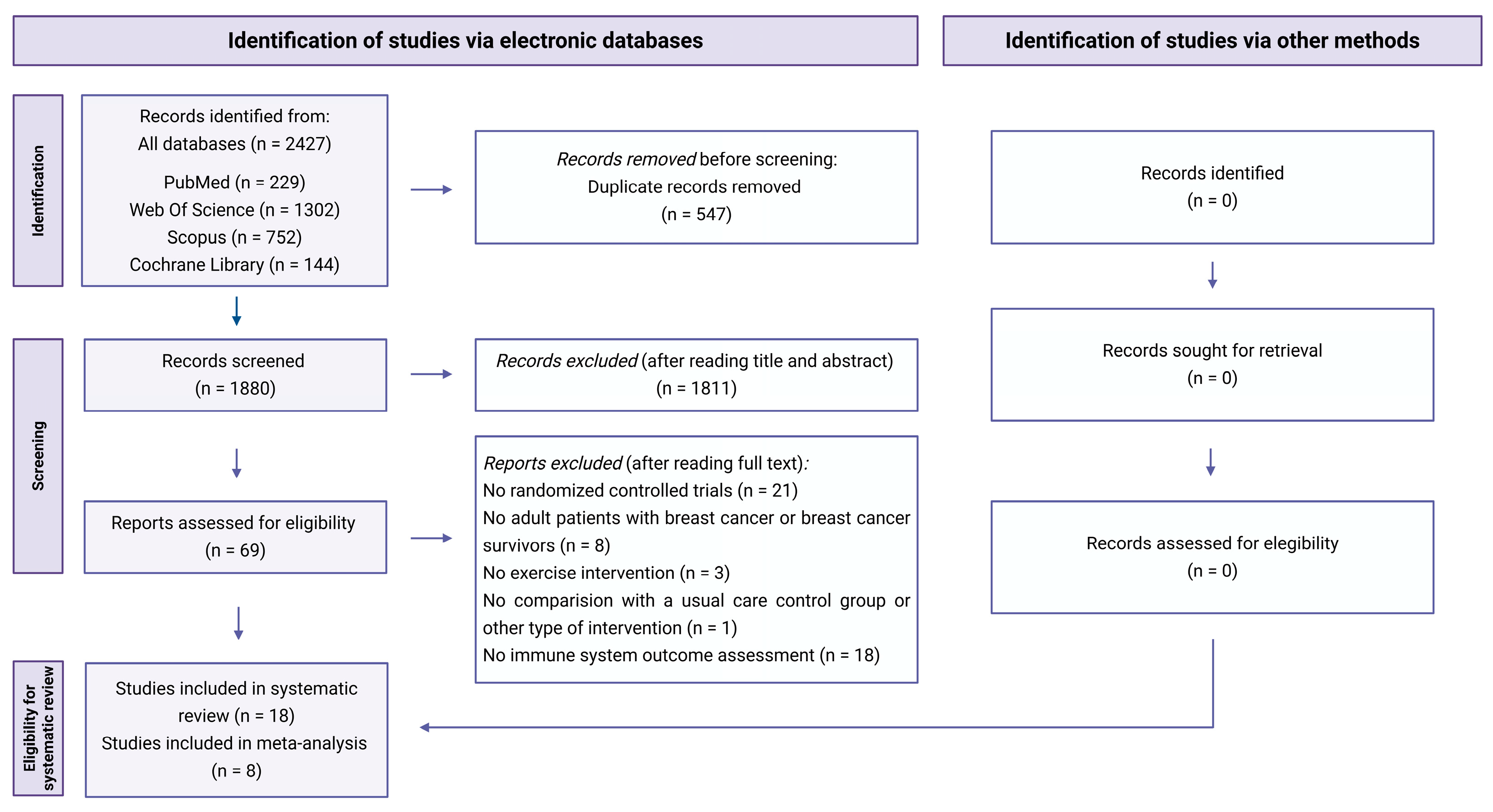
2.2. Study Selection
2.3. Data Extraction
2.4. Risk of Bias Assessment
2.5. Statistical Analysis
3. Results
3.1. Characteristics of Included Studies
3.2. Risk of Bias Assessment Results
3.3. Synthesis
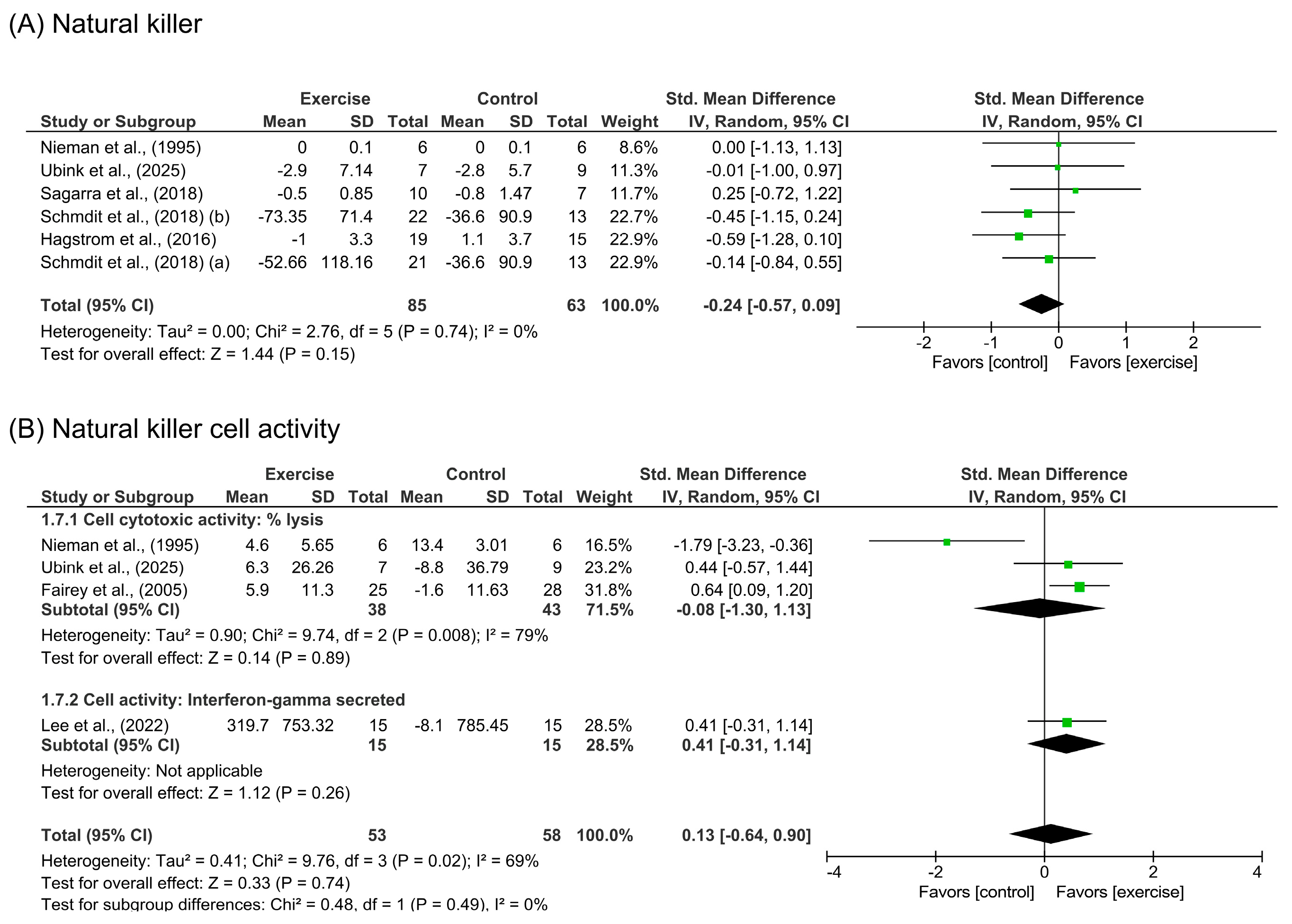
3.3.1. Natural Killer Cells and Natural Killer Cell Activity
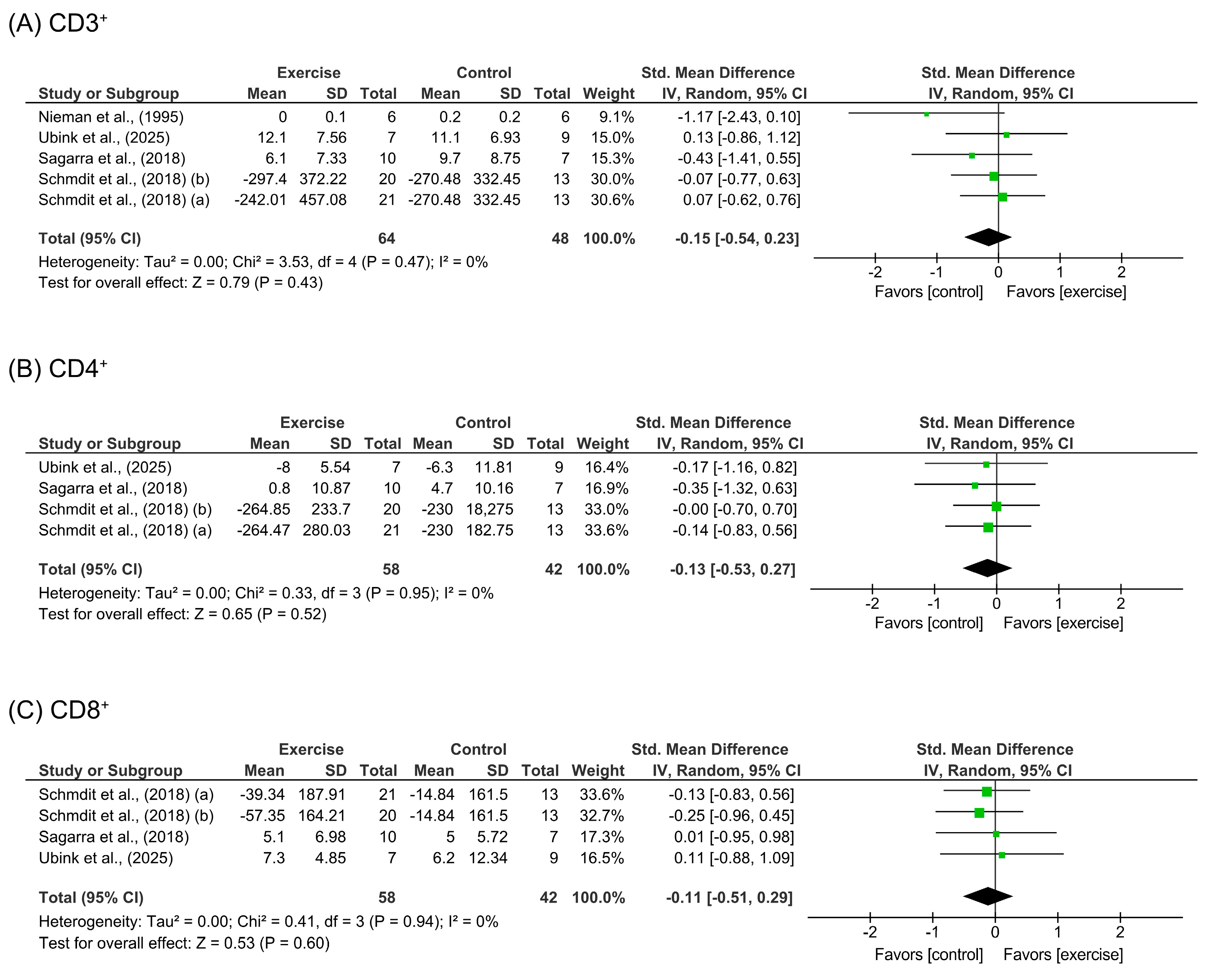
3.3.2. T Cells
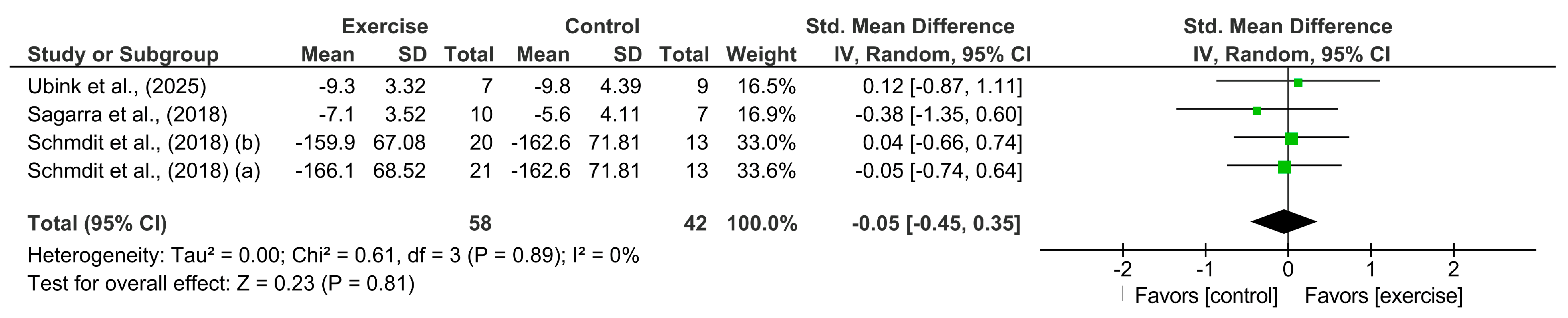
3.3.3. B Cells
4. Discussion
5. Conclusions
Supplementary Materials
Author Contributions
Funding
Institutional Review Board Statement
Informed Consent Statement
Data Availability Statement
Conflicts of Interest
Abbreviations
| 1RM | One-repetition maximum |
| AT | Aerobic training |
| BC | Breast cancer |
| CI | Confidence interval |
| HRmax | Maximum heart rate |
| IFN-γ | Interferon-gamma |
| IL | Interleukin |
| Ig | Immunoglobulin |
| MD | Mean difference |
| NK | Natural killer |
| NKCA | Natural killer cell activity |
| PRISMA | Preferred Reporting Items for Systematic Reviews and Meta-Analyses |
| RCT | Randomized controlled trial |
| RPE | Rate of perceived exertion |
| RT | Resistance training |
| SD | Standard deviation |
| SMD | Standardized mean difference |
| TILs | Tumor-infiltrating lymphocytes |
| TME | Tumor microenvironment |
| VO2max | Maximum oxygen consumption |
| VO2peak | Peak oxygen consumption |
References
- Bray, F.; Laversanne, M.; Sung, H.; Ferlay, J.; Siegel, R.L.; Soerjomataram, I.; Jemal, A. Global Cancer Statistics 2022: GLOBOCAN Estimates of Incidence and Mortality Worldwide for 36 Cancers in 185 Countries. CA Cancer J. Clin. 2024, 74, 229–263. [Google Scholar] [CrossRef]
- Kim, J.; Harper, A.; McCormack, V.; Sung, H.; Houssami, N.; Morgan, E.; Mutebi, M.; Garvey, G.; Soerjomataram, I.; Fidler-Benaoudia, M.M. Global Patterns and Trends in Breast Cancer Incidence and Mortality across 185 Countries. Nat. Med. 2025, 31, 1154–1162. [Google Scholar] [CrossRef]
- Hashim, D.; Boffetta, P.; La Vecchia, C.; Rota, M.; Bertuccio, P.; Malvezzi, M.; Negri, E. The Global Decrease in Cancer Mortality: Trends and Disparities. Ann. Oncol. 2016, 27, 926–933. [Google Scholar] [CrossRef] [PubMed]
- Zhao, H.; Yin, X.; Wang, L.; Liu, K.; Liu, W.; Bo, L.; Wang, L. Identifying Tumour Microenvironment-Related Signature That Correlates with Prognosis and Immunotherapy Response in Breast Cancer. Sci. Data 2023, 10, 119. [Google Scholar] [CrossRef] [PubMed]
- Rodríguez-Bejarano, O.H.; Parra-López, C.; Patarroyo, M.A. A Review Concerning the Breast Cancer-Related Tumour Microenvironment. Crit. Rev. Oncol. Hematol. 2024, 199, 104389. [Google Scholar] [CrossRef] [PubMed]
- Xu, T.; Zhang, H.; Yang, B.B.; Qadir, J.; Yuan, H.; Ye, T. Tumor-Infiltrating Immune Cells State-Implications for Various Breast Cancer Subtypes. Front. Immunol. 2025, 16, 1550003. [Google Scholar] [CrossRef]
- Tufail, M.; Jiang, C.-H.; Li, N. Immune Evasion in Cancer: Mechanisms and Cutting-Edge Therapeutic Approaches. Signal. Transduct. Target. Ther. 2025, 10, 227. [Google Scholar] [CrossRef]
- Hanahan, D.; Weinberg, R.A. Hallmarks of Cancer: The Next Generation. Cell 2011, 144, 646–674. [Google Scholar] [CrossRef]
- Criscitiello, C.; Corti, C.; Pravettoni, G.; Curigliano, G. Managing Side Effects of Immune Checkpoint Inhibitors in Breast Cancer. Crit. Rev. Oncol. Hematol. 2021, 162, 103354. [Google Scholar] [CrossRef]
- Liu, L.; Wu, D.; Qian, Z.; Jiang, Y.; You, Y.; Wang, Y.; Zhang, F.; Ning, X.; Mei, J.; Iqbal, J.; et al. Empowering Hypoxia to Convert Cold Tumors into Hot Tumors for Breast Cancer Immunotherapy. Cell Death Discov. 2025, 11, 381. [Google Scholar] [CrossRef]
- McTiernan, A.; Friedenreich, C.M.; Katzmarzyk, P.T.; Powell, K.E.; Macko, R.; Buchner, D.; Pescatello, L.S.; Bloodgood, B.; Tennant, B.; Vaux-Bjerke, A.; et al. Physical Activity in Cancer Prevention and Survival: A Systematic Review. Med. Sci. Sports Exerc. 2019, 51, 1252–1261. [Google Scholar] [CrossRef] [PubMed]
- Chen, X.; Wang, Q.; Zhang, Y.; Xie, Q.; Tan, X. Physical Activity and Risk of Breast Cancer: A Meta-Analysis of 38 Cohort Studies in 45 Study Reports. Value Health 2019, 22, 104–128. [Google Scholar] [CrossRef] [PubMed]
- Hapuarachi, B.; Danson, S.; Wadsley, J.; Muthana, M. Exercise to Transform Tumours from Cold to Hot and Improve Immunotherapy Responsiveness. Front. Immunol. 2023, 14, 1335256. [Google Scholar] [CrossRef] [PubMed]
- Fiuza-Luces, C.; Valenzuela, P.L.; Gálvez, B.G.; Ramírez, M.; López-Soto, A.; Simpson, R.J.; Lucia, A. The Effect of Physical Exercise on Anticancer Immunity. Nat. Rev. Immunol. 2024, 24, 282–293. [Google Scholar] [CrossRef]
- Pedersen, L.; Idorn, M.; Olofsson, G.H.; Lauenborg, B.; Nookaew, I.; Hansen, R.H.; Johannesen, H.H.; Becker, J.C.; Pedersen, K.S.; Dethlefsen, C.; et al. Voluntary Running Suppresses Tumor Growth through Epinephrine- and IL-6-Dependent NK Cell Mobilization and Redistribution. Cell Metab. 2016, 23, 554–562. [Google Scholar] [CrossRef]
- Koivula, T.; Lempiäinen, S.; Rinne, P.; Rannikko, J.H.; Hollmén, M.; Sundberg, C.J.; Rundqvist, H.; Minn, H.; Heinonen, I. The Effect of Acute Exercise on Circulating Immune Cells in Newly Diagnosed Breast Cancer Patients. Sci. Rep. 2023, 13, 6561. [Google Scholar] [CrossRef]
- Koivula, T.; Lempiäinen, S.; Neuvonen, J.; Norha, J.; Hollmén, M.; Sundberg, C.J.; Rundqvist, H.; Minn, H.; Rinne, P.; Heinonen, I. The Effect of Exercise and Disease Status on Mobilization of Anti-Tumorigenic and pro-Tumorigenic Immune Cells in Women with Breast Cancer. Front. Immunol. 2024, 15, 1394420. [Google Scholar] [CrossRef]
- Toffoli, E.C.; Sweegers, M.G.; Bontkes, H.J.; Altenburg, T.M.; Verheul, H.M.W.; van der Vliet, H.J.; de Gruijl, T.D.; Buffart, L.M. Effects of Physical Exercise on Natural Killer Cell Activity during (Neo)Adjuvant Chemotherapy: A Randomized Pilot Study. Physiol. Rep. 2021, 9, e14919. [Google Scholar] [CrossRef]
- Coletta, A.M.; Agha, N.H.; Baker, F.L.; Niemiro, G.M.; Mylabathula, P.L.; Brewster, A.M.; Bevers, T.B.; Fuentes-Mattei, E.; Basen-Engquist, K.; Gilchrist, S.C.; et al. The Impact of High-Intensity Interval Exercise Training on NK-Cell Function and Circulating Myokines for Breast Cancer Prevention among Women at High Risk for Breast Cancer. Breast Cancer Res. Treat. 2021, 187, 407–416. [Google Scholar] [CrossRef]
- Valenzuela, P.L.; Saco-Ledo, G.; Santos-Lozano, A.; Morales, J.S.; Castillo-García, A.; Simpson, R.J.; Lucia, A.; Fiuza-Luces, C. Exercise Training and Natural Killer Cells in Cancer Survivors: Current Evidence and Research Gaps Based on a Systematic Review and Meta-Analysis. Sports Med. Open 2022, 8, 36. [Google Scholar] [CrossRef]
- Lavín-Pérez, A.M.; Collado-Mateo, D.; Abbasi, S.; Ferreira-Júnior, J.B.; Hekmatikar, A.H.A. Effects of Exercise on Immune Cells with Tumor-Specific Activity in Breast Cancer Patients and Survivors: A Systematic Review and Meta-Analysis. Support. Care Cancer 2023, 31, 507. [Google Scholar] [CrossRef] [PubMed]
- Page, M.J.; McKenzie, J.E.; Bossuyt, P.M.; Boutron, I.; Hoffmann, T.C.; Mulrow, C.D.; Shamseer, L.; Tetzlaff, J.M.; Akl, E.A.; Brennan, S.E.; et al. The PRISMA 2020 Statement: An Updated Guideline for Reporting Systematic Reviews. BMJ 2021, 372, n71. [Google Scholar] [CrossRef] [PubMed]
- Schardt, C.; Adams, M.B.; Owens, T.; Keitz, S.; Fontelo, P. Utilization of the PICO Framework to Improve Searching PubMed for Clinical Questions. BMC Med. Inform. Decis. Mak. 2007, 7, 16. [Google Scholar] [CrossRef] [PubMed]
- Pinto, A.J.; Bergouignan, A.; Dempsey, P.C.; Roschel, H.; Owen, N.; Gualano, B.; Dunstan, D.W. Physiology of Sedentary Behavior. Physiol. Rev. 2023, 103, 2561–2622. [Google Scholar] [CrossRef]
- Mc McHugh, M.L. Interrater Reliability: The Kappa Statistic. Biochem. Med. 2012, 22, 276–282. [Google Scholar] [CrossRef]
- Sterne, J.A.C.; Savović, J.; Page, M.J.; Elbers, R.G.; Blencowe, N.S.; Boutron, I.; Cates, C.J.; Cheng, H.Y.; Corbett, M.S.; Eldridge, S.M.; et al. RoB 2: A Revised Tool for Assessing Risk of Bias in Randomised Trials. BMJ 2019, 366, l4898. [Google Scholar] [CrossRef]
- Higgins, J.P.; Li, T.; Deeks, J.J. Chapter 6: Choosing Effect Measures and Computing Estimates of Effect [Last Updated August 2023]. In Cochrane Handbook for Systematic Reviews of Interventions Version 6.5; Higgins, J.P., Thomas, J., Chandler, J., Cumpston, M., Li, T., Page, M.J., Welch, V.A., Eds.; Cochrane: London, UK, 2024; Available online: https://Cochrane.Org/Handbook (accessed on 5 February 2026).
- Pearson, M.J.; Smart, N.A. Reported Methods for Handling Missing Change Standard Deviations in Meta-Analyses of Exercise Therapy Interventions in Patients with Heart Failure: A Systematic Review. PLoS ONE 2018, 13, e0205952. [Google Scholar] [CrossRef]
- Higgins, J.P.T.; Thompson, S.G.; Deeks, J.J.; Altman, D.G. Measuring Inconsistency in Meta-Analyses. BMJ 2003, 327, 557–560. [Google Scholar] [CrossRef]
- Nieman, D.C.; Cook, V.D.; Henson, D.A.; Suttles, J.; Rejeski, W.J.; Ribisl, P.M.; Fagoaga, O.R.; Nehlsen-Cannarella, S.L. Moderate Exercise Training and Natural Killer Cell Cytotoxic Activity in Breast Cancer Patients. Int. J. Sports Med. 1995, 16, 334–337. [Google Scholar] [CrossRef]
- Fairey, A.S.; Courneya, K.S.; Field, C.J.; Bell, G.J.; Jones, L.W.; Mackey, J.R. Randomized Controlled Trial of Exercise and Blood Immune Function in Postmenopausal Breast Cancer Survivors. J. Appl. Physiol. 2005, 98, 1534–1540. [Google Scholar] [CrossRef]
- Hagstrom, A.D.; Marshall, P.W.M.; Lonsdale, C.; Papalia, S.; Cheema, B.S.; Toben, C.; Baune, B.T.; Fiatarone Singh, M.A.; Green, S. The Effect of Resistance Training on Markers of Immune Function and Inflammation in Previously Sedentary Women Recovering from Breast Cancer: A Randomized Controlled Trial. Breast Cancer Res. Treat. 2016, 155, 471–482. [Google Scholar] [CrossRef] [PubMed]
- Hagstrom, A.D.; Denham, J. The Effect of Resistance Training on Telomere Length in Women Recovering from Breast Cancer. J. Funct. Morphol. Kinesiol. 2018, 3, 9. [Google Scholar] [CrossRef]
- Sagarra-Romero, L.; Ruidiaz, M.; Morales, S.C.; Antón-Solanas, I.; Antón, A.M. Influence of an Exercise Program on Blood Immune Function in Women with Breast Cancer. Med. Sport 2018, 71, 604–616. [Google Scholar] [CrossRef]
- Schmidt, T.; Jonat, W.; Wesch, D.; Oberg, H.H.; Adam-Klages, S.; Keller, L.; Röcken, C.; Mundhenke, C. Influence of Physical Activity on the Immune System in Breast Cancer Patients during Chemotherapy. J. Cancer Res. Clin. Oncol. 2018, 144, 579–586. [Google Scholar] [CrossRef]
- Ligibel, J.A.; Dillon, D.; Giobbie-Hurder, A.; McTiernan, A.; Frank, E.; Cornwell, M.; Pun, M.; Campbell, N.; Dowling, R.J.O.; Chang, M.C.; et al. Impact of a Pre-Operative Exercise Intervention on Breast Cancer Proliferation and Gene Expression: Results from the Pre-Operative Health and Body (PreHAB) Study. Clin. Cancer Res. 2019, 25, 5398–5406. [Google Scholar] [CrossRef]
- Ashem, H.N.; Hamada, H.A.; Abbas, R.L. Effect of Aerobic Exercise on Immunoglobulins and Anemia after Chemotherapy in Breast Cancer Patients. J. Bodyw. Mov. Ther. 2020, 24, 137–140. [Google Scholar] [CrossRef]
- Mijwel, S.; Bolam, K.A.; Gerrevall, J.; Foukakis, T.; Wengström, Y.; Rundqvist, H. Effects of Exercise on Chemotherapy Completion and Hospitalization Rates: The OptiTrain Breast Cancer Trial. Oncologist 2020, 25, 23–32. [Google Scholar] [CrossRef]
- Toohey, K.; Pumpa, K.; McKune, A.; Cooke, J.; Welvaert, M.; Northey, J.; Quinlan, C.; Semple, S. The Impact of High-Intensity Interval Training Exercise on Breast Cancer Survivors: A Pilot Study to Explore Fitness, Cardiac Regulation and Biomarkers of the Stress Systems. BMC Cancer 2020, 20, 787. [Google Scholar] [CrossRef]
- Pagola, I.; Morales, J.S.; Alejo, L.B.; Barcelo, O.; Montil, M.; Oliván, J.; Álvarez-Bustos, A.; Cantos, B.; Maximiano, C.; Hidalgo, F.; et al. Concurrent Exercise Interventions in Breast Cancer Survivors with Cancer-Related Fatigue. Int. J. Sports Med. 2020, 41, 790–797. [Google Scholar] [CrossRef]
- Hiensch, A.E.; Mijwel, S.; Bargiela, D.; Wengström, Y.; May, A.M.; Rundqvist, H. Inflammation Mediates Exercise Effects on Fatigue in Patients with Breast Cancer. Med. Sci. Sports Exerc. 2021, 53, 496–504. [Google Scholar]
- Lee, K.J.; An, K.O. Impact of High-Intensity Circuit Resistance Exercise on Physical Fitness, Inflammation, and Immune Cells in Female Breast Cancer Survivors: A Randomized Control Trial. Int. J. Environ. Res. Public Health 2022, 19, 5463. [Google Scholar] [CrossRef] [PubMed]
- Brown, J.C.; Sturgeon, K.; Sarwer, D.B.; Troxel, A.B.; DeMichele, A.M.; Denlinger, C.S.; Schmitz, K.H. The Effects of Exercise and Diet on Oxidative Stress and Telomere Length in Breast Cancer Survivors. Breast Cancer Res. Treat. 2023, 199, 109–117. [Google Scholar] [CrossRef] [PubMed]
- Arana Echarri, A.; Struszczak, L.; Beresford, M.; Campbell, J.P.; Thompson, D.; Turner, J.E. The Effects of Exercise Training for Eight Weeks on Immune Cell Characteristics among Breast Cancer Survivors. Front. Sports Act. Living 2023, 5, 1163182. [Google Scholar] [CrossRef]
- Kjeldsted, E.; Ammitzbøll, G.; Lænkholm, A.V.; Rasic, D.; Ceballos, S.G.; Jørgensen, L.B.; Skou, S.T.; Bojesen, R.D.; Lodin, A.; Tolver, A.; et al. Effects of Supervised Exercise during Neoadjuvant Chemotherapy on Tumor Response in Patients with Breast Cancer (Neo-Train): A Randomized Controlled Trial. Clin. Cancer Res. 2025, 31, 4265–4277. [Google Scholar] [CrossRef] [PubMed]
- Ubink, A.; ten Tusscher, M.R.; van der Vliet, H.J.; Douma, J.A.J.; de Gruijl, T.D.; Bontkes, H.; Bonnet, P.; van Ens, D.; Hobo, W.; Dolstra, H.; et al. Exploring the Effects of Exercise on Immune Cell Function and Tumour Infiltration in Patients with Breast Cancer Receiving Neoadjuvant Chemotherapy—A Feasibility Trial. Brain Behav. Immun. Health 2025, 46, 101021. [Google Scholar] [CrossRef]
- Fan, Y.; Xu, H.; Li, H.; Zhang, Z.; Zhang, S.; Wang, Y.; Zhou, L. Effects of Different Intensity of Resistance Exercise on Shoulder Function and Immune Function in Young and Middle-Aged Postoperative Breast Cancer Patients: A Randomized Control Trial. Support. Care Cancer 2025, 34, 12. [Google Scholar] [CrossRef]
- Avancini, A.; Borsati, A.; Toniolo, L.; Ciurnelli, C.; Belluomini, L.; Budolfsen, T.; Lillelund, C.; Milella, M.; Quist, M.; Pilotto, S. Physical Activity Guidelines in Oncology: A Systematic Review of the Current Recommendations. Crit. Rev. Oncol. Hematol. 2025, 210, 104718. [Google Scholar] [CrossRef]
- Mason, C.; Alfano, C.M.; Smith, A.W.; Wang, C.-Y.; Neuhouser, M.L.; Duggan, C.; Bernstein, L.; Baumgartner, K.B.; Baumgartner, R.N.; Ballard-Barbash, R.; et al. Long-Term Physical Activity Trends in Breast Cancer Survivors. Cancer Epidemiol. Biomark. Prev. 2013, 22, 1153–1161. [Google Scholar] [CrossRef]
- Bian, Z.; Zhang, R.; Yuan, S.; Fan, R.; Wang, L.; Larsson, S.C.; Theodoratou, E.; Zhu, Y.; Wu, S.; Ding, Y.; et al. Healthy Lifestyle and Cancer Survival: A Multinational Cohort Study. Int. J. Cancer 2024, 154, 1709–1718. [Google Scholar] [CrossRef]
- Rezende, L.F.M.d.; Sá, T.H.d.; Markozannes, G.; Rey-López, J.P.; Lee, I.-M.; Tsilidis, K.K.; Ioannidis, J.P.A.; Eluf-Neto, J. Physical Activity and Cancer: An Umbrella Review of the Literature Including 22 Major Anatomical Sites and 770 000 Cancer Cases. Br. J. Sports Med. 2018, 52, 826–833. [Google Scholar] [CrossRef]
- Yang, L.; Courneya, K.S.; Friedenreich, C.M. The Physical Activity and Cancer Control (PACC) Framework: Update on the Evidence, Guidelines, and Future Research Priorities. Br. J. Cancer 2024, 131, 957–969. [Google Scholar] [CrossRef] [PubMed]
- Emery, A.; Moore, S.; Turner, J.E.; Campbell, J.P. Reframing How Physical Activity Reduces The Incidence of Clinically-Diagnosed Cancers: Appraising Exercise-Induced Immuno-Modulation As An Integral Mechanism. Front. Oncol. 2022, 12, 788113. [Google Scholar] [CrossRef] [PubMed]
- Simpson, R.J.; Campbell, J.P.; Gleeson, M.; Krüger, K.; Nieman, D.C.; Pyne, D.B.; Turner, J.E.; Walsh, N.P. Can Exercise Affect Immune Function to Increase Susceptibility to Infection? Exerc. Immunol. Rev. 2020, 26, 8–22. [Google Scholar] [PubMed]
- Campbell, J.P.; Turner, J.E. Debunking the Myth of Exercise-Induced Immune Suppression: Redefining the Impact of Exercise on Immunological Health Across the Lifespan. Front. Immunol. 2018, 9, 648. [Google Scholar] [CrossRef]
- Koivula, T.; Lempiäinen, S.; Rinne, P.; Hollmén, M.; Sundberg, C.J.; Rundqvist, H.; Minn, H.; Heinonen, I. Acute Exercise Mobilizes CD8+ Cytotoxic T Cells and NK Cells in Lymphoma Patients. Front. Physiol. 2022, 13, 1078512. [Google Scholar] [CrossRef]
- Nieman, D.C.; Wentz, L.M. The Compelling Link between Physical Activity and the Body’s Defense System. J. Sport Health Sci. 2019, 8, 201–217. [Google Scholar] [CrossRef]
- Khosravi, N.; Stoner, L.; Farajivafa, V.; Hanson, E.D. Exercise Training, Circulating Cytokine Levels and Immune Function in Cancer Survivors: A Meta-Analysis. Brain Behav. Immun. 2019, 81, 92–104. [Google Scholar] [CrossRef]
- Shi, X.; Hu, L.; Nieman, D.C.; Li, F.; Chen, P.; Shi, H.; Shi, Y. Exercise Workload: A Key Determinant of Immune Health—A Narrative Review. Front. Immunol. 2025, 16, 1617261. [Google Scholar] [CrossRef]
- Walzik, D.; Belen, S.; Wilisch, K.; Kupjetz, M.; Kirschke, S.; Esser, T.; Joisten, N.; Schenk, A.; Proschinger, S.; Zimmer, P. Impact of Exercise on Markers of B Cell-Related Immunity: A Systematic Review. J. Sport Health Sci. 2024, 13, 339–352. [Google Scholar] [CrossRef]
- Dong, G.; He, X.; He, J.; Bao, D.; Gao, Q.; Zhou, J. Impact of Aerobic Exercise on Immune Components across Healthy and Diseased Populations: A Systematic Review and Meta-Analysis of Randomized Controlled Trials. J. Exerc. Sci. Fit. 2025, 23, 301–316. [Google Scholar] [CrossRef]
- Chastin, S.F.M.; Abaraogu, U.; Bourgois, J.G.; Dall, P.M.; Darnborough, J.; Duncan, E.; Dumortier, J.; Pavón, D.J.; McParland, J.; Roberts, N.J.; et al. Effects of Regular Physical Activity on the Immune System, Vaccination and Risk of Community-Acquired Infectious Disease in the General Population: Systematic Review and Meta-Analysis. Sports Med. 2021, 51, 1673–1686. [Google Scholar] [CrossRef] [PubMed]
- Brodin, P.; Davis, M.M. Human Immune System Variation. Nat. Rev. Immunol. 2017, 17, 21–29. [Google Scholar] [CrossRef] [PubMed]
- Sharma, A.; Jasrotia, S.; Kumar, A. Effects of Chemotherapy on the Immune System: Implications for Cancer Treatment and Patient Outcomes. Naunyn. Schmiedeberg′s Arch. Pharmacol. 2024, 397, 2551–2566. [Google Scholar] [CrossRef] [PubMed]
- de Hoop, A.M.S.; Valkenet, K.; Dronkers, J.J.; Krul, C.A.M.; Ruurda, J.P.; Veenhof, C.; Pieters, R.H.H. Effects of Exercise during Chemo- or Radiotherapy on Immune Markers: A Systematic Review. Oncology 2024, 102, 425–440. [Google Scholar] [CrossRef]
- Dixon-Douglas, J.; Virassamy, B.; Clarke, K.; Hun, M.; Luen, S.J.; Savas, P.; van Geelen, C.T.; David, S.; Francis, P.A.; Salgado, R.; et al. Sustained Lymphocyte Decreases after Treatment for Early Breast Cancer. npj Breast Cancer 2024, 10, 94. [Google Scholar] [CrossRef]
- Carvalho, H.d.A.; Villar, R.C. Radiotherapy and Immune Response: The Systemic Effects of a Local Treatment. Clinics 2018, 73, e557s. [Google Scholar] [CrossRef]
- Boomsma, M.F.; Garssen, B.; Slot, E.; Berbee, M.; Berkhof, J.; Meezenbroek, E.d.J.; Slieker, W.; Visser, A.; Meijer, S.; Beelen, R.H.J. Breast Cancer Surgery-Induced Immunomodulation. J. Surg. Oncol. 2010, 102, 640–648. [Google Scholar] [CrossRef]
- Kurowski, M.; Seys, S.; Bonini, M.; Del Giacco, S.; Delgado, L.; Diamant, Z.; Kowalski, M.L.; Moreira, A.; Rukhadze, M.; Couto, M. Physical Exercise, Immune Response, and Susceptibility to Infections-Current Knowledge and Growing Research Areas. Allergy 2022, 77, 2653–2664. [Google Scholar] [CrossRef]
- Wang, J.; Zhao, W.; Ding, J.; Li, Y. The Effect of Physical Activity on Anti-Infection Immunity: A Review. Health Inf. Sci. Syst. 2025, 13, 45. [Google Scholar] [CrossRef]
- Chen, L.; Deng, H.; Cui, H.; Fang, J.; Zuo, Z.; Deng, J.; Li, Y.; Wang, X.; Zhao, L. Inflammatory Responses and Inflammation-Associated Diseases in Organs. Oncotarget 2018, 9, 7204–7218. [Google Scholar] [CrossRef]
- Meneses-Echávez, J.F.; Correa-Bautista, J.E.; González-Jiménez, E.; Schmidt Río-Valle, J.; Elkins, M.R.; Lobelo, F.; Ramírez-Vélez, R. The Effect of Exercise Training on Mediators of Inflammation in Breast Cancer Survivors: A Systematic Review with Meta-Analysis. Cancer Epidemiol. Biomark. Prev. 2016, 25, 1009–1017. [Google Scholar] [CrossRef]
- Bettariga, F.; Taaffe, D.R.; Crespo-Garcia, C.; Clay, T.D.; De Santi, M.; Baldelli, G.; Adhikari, S.; Gray, E.S.; Galvão, D.A.; Newton, R.U. A Single Bout of Resistance or High-Intensity Interval Training Increases Anti-Cancer Myokines and Suppresses Cancer Cell Growth in Vitro in Survivors of Breast Cancer. Breast Cancer Res. Treat. 2025, 213, 171–180. [Google Scholar] [CrossRef]
- Wang, J.; He, Y.; Kim, A.-R.; Lee, K.-H.; Choi, S.-W. Effects of Different Types of Exercise on Inflammatory Markers in Cancer Patients: A Systematic Review and Bayesian Network Meta-Analysis. J. Sports Sci. 2025, 43, 1121–1138. [Google Scholar] [CrossRef]
- Furuya-Kanamori, L.; Xu, C.; Lin, L.; Doan, T.; Chu, H.; Thalib, L.; Doi, S.A.R. P Value–Driven Methods Were Underpowered to Detect Publication Bias: Analysis of Cochrane Review Meta-Analyses. J. Clin. Epidemiol. 2020, 118, 86–92. [Google Scholar] [CrossRef]



| First Author (Year) | Age (Mean ± SD) | % Women Sample Size (Randomized) | Sample Size (Analyzed) | Treatment Type and Timing or Clinical Situation | Stage of Cancer |
|---|---|---|---|---|---|
| Nieman et al., (1995) [30] | EG: 60.8 ± 4.0 CG: 51.2 ± 4.7 | 100% EG: n = 8 CG: n = 8 | EG: n = 6 CG: n = 6 | Surgery, chemotherapy and/or radiotherapy within the previous four years | Not specified |
| Fairey et al., (2005) [31] | EG: 59.0 ± 5.0 CG: 58.0 ± 6.0 | 100% EG: n = 25 CG: n = 28 | EG: n = 25 CG: n = 28 | Completed surgery, radiotherapy, and/or chemotherapy with or without current tamoxifen or anastrozole therapy use | Stage I–IIIA |
| Hagstrom et al., (2016) [32] (ANZCTR #12612000346875 study) | EG: 51.2 ± 8.5 CG: 52.7 ± 9.4 | 100% EG: n = 20 CG: n = 19 | EG: n = 19 CG: n = 15 | Completed surgery, radiotherapy, and/or chemotherapy | Stage I–IIIA with no evidence of recurrent disease |
| Hagstrom et al., (2018) [33] (ANZCTR #12612000346875 study) | EG: 50.8 ± 8.3 CG: 52.1 ± 8.5 | 100% EG: n = 19 CG: n = 14 | EG: n = 19 CG: n = 14 | Completed surgery, radiotherapy, and/or chemotherapy | Stage I–IIIA |
| Sagarra et al., (2018) [34] | EG: 50.0 ± 5.5 CG: 53.1 ± 6.8 | 100% EG: n = 11 CG: n = 11 | EG: n = 10 CG: n = 7 | During chemotherapy | Stage I–II |
| Schmidt et al., (2018) [35] | EG1 (RT): 53.0 ± 12.6 EG2 (AT): 56.0 ± 10.2 CG: 54.0 ± 11.2 | 100% EG1: n = 24 EG2: n = 29 CG: n = 28 | EG1: n = 21 EG2: n = 20 CG: n = 26 | Planned adjuvant or neoadjuvant chemotherapy or further chemotherapy regimen | Primary moderate- or high-risk BC |
| Ligibel et al., (2019) [36] | EG: 52.3 ± 9.6 CG: 53.1 ± 7.9 | 100% EG: n = 26 CG: n = 22 | EG: n = 14 CG: n = 11 | Planning to undergo primary breast surgery | Stage I–III |
| Ashem et al., (2020) [37] | EG: 45.0 ± 3.3 CG: 45.1 ± 3.0 | 100% EG: n = 15 CG: n = 15 | EG: n = 15 CG: n = 15 | Undergoing chemotherapy | Stage I |
| Mijwel et al., (2020) [38] (OptiTrain Breast Cancer Trial) | EG1 (RT): 52.7 ± 10.3 EG2 (AT): 54.4 ± 10.3 CG: 52.6 ± 10.2 | 100% EG1: n = 79 EG2: n = 80 CG: n = 81 | EG1: n = 65 EG2: n = 60 CG: n = 57 | Undergoing adjuvant chemotherapy (consisting of anthracyclines, taxanes, or a combination of both) | Stage I–IIIA |
| Toohey et al., (2020) [39] | EG1 (MIAT): 65.0 ± 7.7 EG2 (HIIT): 60.0 ± 8.1 CG: 61.0 ± 7.9 | 100% EG1: n = 5 EG2: n = 6 CG: n = 6 | EG1: n = 5 EG2: n = 6 CG: n = 6 | Completed cancer treatment within the previous two years | Not specified |
| Pagola et al., (2020) [40] | EG1 (RT + HIAT): 47.0 ± 7.0 EG2 (RT + MIAT): 51.0 ± 6.0 | 100% EG1: n = 13 EG2: n = 10 | EG1: n = 13 EG2: n = 10 | Chemotherapy or radiotherapy completed five years ago or less | Not specified |
| Hiensch et al., (2021) [41] (OptiTrain Breast Cancer Trial) | EG1 (RT): 52.2 ± 10.1 EG2 (AT): 53.9 ± 7.4 CG: 52.9 ± 10.1 | 100% EG1: n = 79 EG2: n = 80 CG: n = 81 | EG1: n = 30 EG2: n = 27 CG: n = 29 | Undergoing adjuvant chemotherapy | Stage I–IIIA |
| Lee et al., (2022) [42] | EG: 54.7 ± 5.1 CG: 55.4 ± 4.3 | 100% EG: n = 15 CG: n = 15 | EG: n = 15 CG: n = 15 | Surgery, chemotherapy, or radiotherapy completed more than two years ago | Stage I–IIIA |
| Brown et al., (2023) [43] | EG: 59.2 ± 8.1 CG: 58.9 ± 8.4 | 100% EG: n = 87 CG: n = 90 | EG: n = 86 CG: n = 88 | Cancer-directed therapy completed ≥ 6 months before | Stage I–III |
| Arana Echarri et al., (2023) [44] | Total: 56.0 ± 6.0 | 100% EG1: n = 10 EG2: n = 10 | EG1: n = 10 EG2: n = 10 | Last treatment received at least two months before (no longer than five years prior) | Stage I–III |
| Kjeldsted et al., (2025) [45] | Not specified (≥18 years of age) | 100% EG: n = 50 CG: n = 52 | EG: n = 49 CG: n = 52 | Planning to undergo neoadjuvant chemotherapy | Not specified |
| Ubink et al., (2025) [46] | EG: Median = 53.0; interquartile range = 16 CG: Median = 44.0; interquartile range = 26 | Sex not specified EG: n = 11 CG: n = 9 | EG: n = 7 CG: n = 9 | Scheduled for neoadjuvant chemotherapy with four cycles of two- or three-weekly Adriamycin and cyclophosphamide, followed by weekly paclitaxel | Stage I–III |
| Yijing et al., (2025) [47] | EG1 (LIRT): 49.1 ± 9.4 EG2 (MIRT): 46.7 ± 10.98 CG: 51.5 ± 4.6 | Sex not specified EG1: n = 38 EG2: n = 38 CG: n = 38 | EG1: n = 36 EG2: n = 37 CG: n = 37 | Had undergone modified radical mastectomy (or unilateral axillary lymph node dissection) | Not specified |
| Author (Year) | Intervention | Outcome | Main Results | |
|---|---|---|---|---|
| Nieman et al., (1995) [30] | EG | Type of exercise: Supervised AT and RT Intensity: 75% HRmax (AT); weight progressively increased (RT) Volume: 3 sessions per week; 60 min each session: 30 min (AT) + 2 sets of 12 repetitions of 7 exercises (RT) Total duration: 8 weeks |
| No significant differences between groups in CBC, percentage of immune cells, and NKCA |
| CG | Type of intervention: Usual care Total duration: 8 weeks | |||
| Fairey et al., (2005) [31] | EG | Type of exercise: Supervised AT Intensity: 70–75% VO2peak Volume: 3 sessions per week of 15 min (weeks 1–3); 20 min (weeks 4–6); 25 min (weeks 7–9); 30 min (weeks 10–12); and 35 min (weeks 13–15) Total duration: 15 weeks |
| ↑ NKCA in the EG ↑ Mononuclear cell proliferative capacity (unstimulated) in the EG No significant differences between groups in standard hematological variables; neutrophil size, granularity, and oxidative burst; blood mononuclear cell phenotypes; and mononuclear cell proliferative capacity (PHA-stimulated) |
| CG | Type of intervention: No exercise and were asked not to begin a structured exercise program Total duration: 15 weeks | |||
| Hagstrom et al., (2016) [32] (ANZCTR #12612000346875 study) | EG | Type of exercise: Supervised RT Intensity: 8RM (80% 1RM) Volume: 3 sessions per week; 3 sets of 8–10 repetitions of 6–7 exercises Total duration: 16 weeks |
| No significant differences between groups in NK and NKT cell counts; functional markers on NK and NKT cells; IFN-γ; and CBC |
| CG | Type of intervention: No exercise Total duration: 16 weeks | |||
| Hagstrom et al., 2018 [33] (ANZCTR #12612000346875 study) | EG | Type of exercise: Supervised RT Intensity: 8RM (80% 1RM) Volume: 3 sessions per week; 3 sets of 8–10 repetitions of 6–7 exercises Total duration: 16 weeks |
| No significant differences between groups in leucocyte telomere length |
| CG | Type of intervention: No exercise Total duration: 16 weeks | |||
| Sagarra et al., (2018) [34] | EG | Type of exercise: Supervised AT + RT Intensity: 60–70% (AT) + weights of 0.5–1 kg on the non-intervened side (RT) + two psychosocial support sessions Volume: 3 sessions per week; 10 min warm-up + 20 min (AT) + 15 min (RT) + 5 min cool down Total duration: 18–22 weeks |
| ↓ B cells in the EG ↓ Igs G, M, E and A in the EG ↓ IgG in the CG ↑ CD8+ T cells in both groups ↑ CD3+ and CD4+ in the CG |
| CG | Type of intervention: Two psychosocial support sessions Total duration: 16 weeks | |||
| Schmidt et al., (2018) [35] | EG1 | Type of exercise: Supervised RT Intensity: Hypothetical 50% of the maximum weight and progression based on the Borg scale Volume: 2 sessions per week; one set of 20 repetitions of 10 exercises Total duration: 12 weeks |
| ↓ CD4+ T cells in all groups ↓ B cells in all groups ↓ CD8+ T cells in EG2 ↓ NK cells in EG2 No significant differences between groups in CD4+ and CD8+ T cells in EG1 and CG; NK cells in EG1 and CG; and γδ T cells |
| EG2 | Type of exercise: Supervised AT Intensity: RPE 11–14 Volume: 2 sessions per week; 45 min for each session (10 min warm-up; 25–30 min exercise; and 5 min cool down) Total duration: 12 weeks | |||
| CG | Type of intervention: Usual care Total duration: 12 weeks | |||
| Ligibel et al., (2019) [36] | EG | Type of exercise: Supervised RT and AT + additional unsupervised AT Intensity: Moderate Volume: 2 sessions per week; 30–45 min (AT) + 20 min (RT) of six exercises Total duration: mean 29.3 days |
| No significant differences between groups in CD4+ and CD8+ T cells; NK cells (CD56+); macrophages (CD163+) and FOXP3+ |
| CG | Type of intervention: Mind–body control (surgical preparation program consisting of a book and a relaxation audio guide) Total duration: mean 29.3 days | |||
| Ashem et al., (2020) [37] | EG | Type of exercise: Supervised AT Intensity: 60–80% VO2max (progressively increased) Volume: 3 sessions per week for 15 min (weeks 0–2); 20 min (weeks 3–5); 25 min (weeks 6–8); 30 min (weeks 9–11); 35 min (weeks 12–14); 40 min (weeks 15–18); and 45 min (>18 weeks) Total duration: 20 weeks |
| ↑ IgA in EG ↑ IgA in EG vs. CG |
| CG | Type of intervention: No intervention Total duration: 20 weeks | |||
| Mijwel et al., (2020) [38] (OptiTrain Breast Cancer Trial) | EG1 | Type of exercise: Supervised RT-HIIT Intensity: 70–80% 1RM (progression when more than 12 repetitions could be performed) (RT) + 16–18 RPE (HIIT) Volume: 3 sessions per week; 60 min for each session: 2–3 sets of 8–12 repetitions of 8 exercises (RT) + 3 × 3 min bouts (HIIT) Total duration: 16 weeks |
| No significant differences between groups in circulating blood cell concentrations |
| EG2 | Type of exercise: Supervised AT-HIIT Intensity: RPE 13–15 (AT) + RPE 16–18 (HIIT) Volume: 3 sessions per week; 60 min for each session: 20 min AT + 3 × 3 min bouts (HIIT) Total duration: 16 weeks | |||
| CG | Type of intervention: Usual care (information about physical activity) Total duration: 16 weeks | |||
| Toohey et al., (2020) [39] | EG1 | Type of exercise: Supervised continuous MIAT Intensity: 55–65% Wmax (progressively increased); RPE 9–13 Volume: 3 sessions per week; 5 min warm-up + 20 min MIAT + 5 min cool down Total duration: 12 weeks |
| No significant differences between groups in IgA |
| EG2 | Type of exercise: Supervised HIIT Intensity: As hard as possible (cadence 95–115 RPM to ensure consistency) Volume: 3 sessions per week; 5 min warm-up + 4–7 × 30 s bouts with 2 min of active recovery between bouts (HIIT) + 5 min cool down Total duration: 12 weeks | |||
| CG | Type of intervention: Usual care Total duration: 12 weeks | |||
| Pagola et al., (2020) [40] | EG1 | Type of exercise: Supervised RT + HIAT Intensity: RPE 7–8 (HIAT) + RPE 6–7 (RT) Volume: 2 sessions per week; 75 min for each session: 10 min warm-up + 35 min (HIAT) + 30–35 min RT (2–3 sets of 8–12 reps of 8–10 exercises) Total duration: 16 weeks |
| No significant differences in NLR |
| EG2 | Type of exercise: Supervised RT + unsupervised MIAT Intensity: RPE 6 (MIAT) + RPE 6–7 (RT) Volume: >150 min/week (MIAT) + 2 sessions per week of 30–35 min RT (2–3 sets of 8–12 reps of 8–10 exercises) (RT) Total duration: 16 weeks | |||
| Hiensch et al., (2021) [41] (OptiTrain Breast Cancer Trial) | EG1 | Type of exercise: Supervised RT-HIIT Intensity: 70–80% 1RM (progression when more than 12 repetitions could be performed) (RT) + RPE 16–18 (HIIT) Volume: 3 sessions per week; 60 min for each session: 2–3 sets of 8–12 repetitions of 8 exercises (RT) + 3 × 3 min bouts (HIIT) Total duration: 16 weeks |
| No significant differences in IFN-γ |
| EG2 | Type of exercise: Supervised AT-HIIT Intensity: RPE 13–15 + RPE 16–18 (HIIT) Volume: 3 sessions per week; 60 min for each session: 20 min AT + 3 × 3 min bouts (HIIT) Total duration: 16 weeks | |||
| CG | Type of intervention: Usual care (information about physical activity) Total duration: 16 weeks | |||
| Lee et al., (2022) [42] | EG | Type of exercise: RT Intensity: 40–80% 1RM (weekly progression) Volume: 2–3 sessions per week; 50 min for each session: 10 min warm-up + 3 sets of 16 repetitions (week 1); 4 sets of 12 repetitions (week 2); and 4 sets of 8 repetitions (weeks 3–12) of 8 exercises + 10 min cool down Total duration: 12 weeks |
| ↑ NKCA in the EG ↑ NKCA in the EG vs. CG |
| CG | Type of intervention: Usual care (activities of daily living) Total duration: 12 weeks | |||
| Brown et al., (2023) [43] | EG | Type of exercise: Supervised (weeks 1–6 + 1 session per month in the following weeks) and unsupervised (>6 weeks, except 1 session per month) RT + unsupervised MIAT Intensity: 10RM (RT) + moderate (MIAT) Volume: 2 sessions per week; 2−3 sets with a weight that allowed 10 repetitions with correct physical form + 3–6 sessions per week to reach 180 min/week (AT) Total duration: 52 weeks |
| No significant differences in lymphocyte telomere length |
| CG | Type of intervention: Instruction to refer to their physician to check which exercise or diet could be safe Total duration: 52 weeks | |||
| Arana Echarri et al., (2023) [44] | EG1 | Type of exercise: Partly supervised AT Intensity: 55–70% VO2max Volume: 2 supervised sessions per week + 1 unsupervised session per week; 35–50 min for each session Total duration: 8 weeks |
| ↓ CD4+/CD8+ ratio in the EG1 vs. EG2 ↑ CD16− regulatory NK cells in the EG1 vs. EG2 No significant differences between groups in T cells, B cells, NK cells, and IFN-γ production |
| EG2 | Type of exercise: Remotely supervised AT Intensity: 55–70% VO2max Volume: 105–150 min each week (minimum bout length of 10 min) Total duration: 8 weeks | |||
| Kjeldsted et al., (2025) [45] | EG | Type of exercise: Supervised HIIT + RT Intensity: ≥85% HRmax or RPE ≥ 16 (HIIT) + 65% 1RM increase in load of 10% from week 4 onward if the participant could complete ≥ 17 repetitions (RT) Volume: 2–3 sessions per week: 5 min warm-up + 4 × 2 min bouts (HIIT) + 5 min cool down + 3 sets of 12–15 repetitions of 3 exercises (RT) Total duration: 18 to 24 weeks |
| ↑ Stromal TIL percentage in the CG vs. EG (manual assessment) No significant differences between groups in TIL density per 10,000 μm2 (digital analysis) |
| CG | Type of intervention: Usual care (maintain regular routine) Total duration: 18 to 24 weeks | |||
| Ubink et al., (2025) [46] | EG | Type of exercise: Supervised RT + AT + physical activity recommendations Intensity: 70–80% 1RM (gradual progression) (RT) + 50–80% Wmax (AT) + RPE 12–14 (recommendations) Volume: 2 sessions per week; 2 sets of 8–12 repetitions (RT); + 30 min (AT); + 3 days per week of 30 min (recommendations) Total duration: 6 weeks |
| ↓ CD8+ naïve T cells in EG vs. CG ↑ CD107a MFI in NK cells in EG vs. CG ↓ CD4+/CD8+ ratio in TILs in EG vs. CG ↓ CD4+ and CD4+ naïve cells T cells, B cells, and CD56dim NK cells in both groups ↑ T cells, CD4+ central memory cells, CD4+ effector memory cells, CD8+ T cells, and NKT cells in both groups ↓ CD8+ TEMRA cells in the CG No significant differences between groups in other T-cell subsets, B cells, NK cells, and TILs CD56+ |
| CG | Type of intervention: Usual care Total duration: 6 weeks | |||
| Yijing et al., (2025) [47] | EG1 | Type of exercise: Unsupervised LIRT (weights adjusted progressively) + AT Intensity: 40–70% 1RM (RPE 13–15) (LIRT) + 30–70% of cardiac reserve (RPE 12–13) (AT) Volume: 2–3 sessions per week; 2–3 sets of 15–20 repetitions of 7 exercises (LIRT) + 15–25 to 35–40 min (AT) Total duration: 12 weeks (T1) + 12 week follow-up (T2) |
| ↑ Perforin+ in EG2 vs. EG1 and CG (T1 and T2) ↑ Granzyme B+ in EG2 vs. EG1 and CG (T1 and T2) ↑ Perforin+/Granzyme B+ in EG2 vs. EG1 and CG (T1 and T2) ↑ Granzyme B+ in EG1 vs. CG (T2) |
| EG2 | Type of exercise: Unsupervised MIRT (weights adjusted progressively) + AT Intensity: 50–80% 1RM (MIRT) + 30–70% of cardiac reserve (RPE 12–13) (AT) Volume: 2–3 sessions per week; 2–3 sets of 8–12 repetitions of 7 exercises (MIRT); + 15–25 to 35–40 min (AT) Total duration: 12 weeks (T1) + 12 week follow-up (T2) | |||
| CG | Type of intervention: Health education (diet, physical activity, and psychological regulation) and routine care Total duration: 12 weeks (T1) + 12 week follow-up (T2) | |||
Disclaimer/Publisher’s Note: The statements, opinions and data contained in all publications are solely those of the individual author(s) and contributor(s) and not of MDPI and/or the editor(s). MDPI and/or the editor(s) disclaim responsibility for any injury to people or property resulting from any ideas, methods, instructions or products referred to in the content. |
© 2026 by the authors. Licensee MDPI, Basel, Switzerland. This article is an open access article distributed under the terms and conditions of the Creative Commons Attribution (CC BY) license.
Share and Cite
García-Chico, C.; Merino-País, M.; Lista, S.; Minoretti, P.; Emanuele, E.; Santos-Lozano, A.; López-Ortiz, S. Is There an Immune Effect of Exercise in Patients with Breast Cancer? A Systematic Review and Meta-Analysis. Cancers 2026, 18, 621. https://doi.org/10.3390/cancers18040621
García-Chico C, Merino-País M, Lista S, Minoretti P, Emanuele E, Santos-Lozano A, López-Ortiz S. Is There an Immune Effect of Exercise in Patients with Breast Cancer? A Systematic Review and Meta-Analysis. Cancers. 2026; 18(4):621. https://doi.org/10.3390/cancers18040621
Chicago/Turabian StyleGarcía-Chico, Celia, María Merino-País, Simone Lista, Piercarlo Minoretti, Enzo Emanuele, Alejandro Santos-Lozano, and Susana López-Ortiz. 2026. "Is There an Immune Effect of Exercise in Patients with Breast Cancer? A Systematic Review and Meta-Analysis" Cancers 18, no. 4: 621. https://doi.org/10.3390/cancers18040621
APA StyleGarcía-Chico, C., Merino-País, M., Lista, S., Minoretti, P., Emanuele, E., Santos-Lozano, A., & López-Ortiz, S. (2026). Is There an Immune Effect of Exercise in Patients with Breast Cancer? A Systematic Review and Meta-Analysis. Cancers, 18(4), 621. https://doi.org/10.3390/cancers18040621