Reprogramming Tumorigenesis and the Tumor Microenvironment with Flavokawains
 ,
,  , and
, and
Simple Summary
Abstract
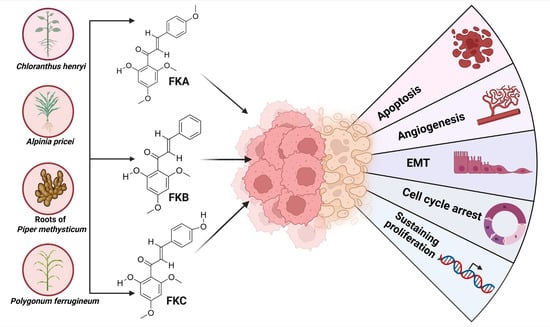
1. Introduction
2. Selection Criteria
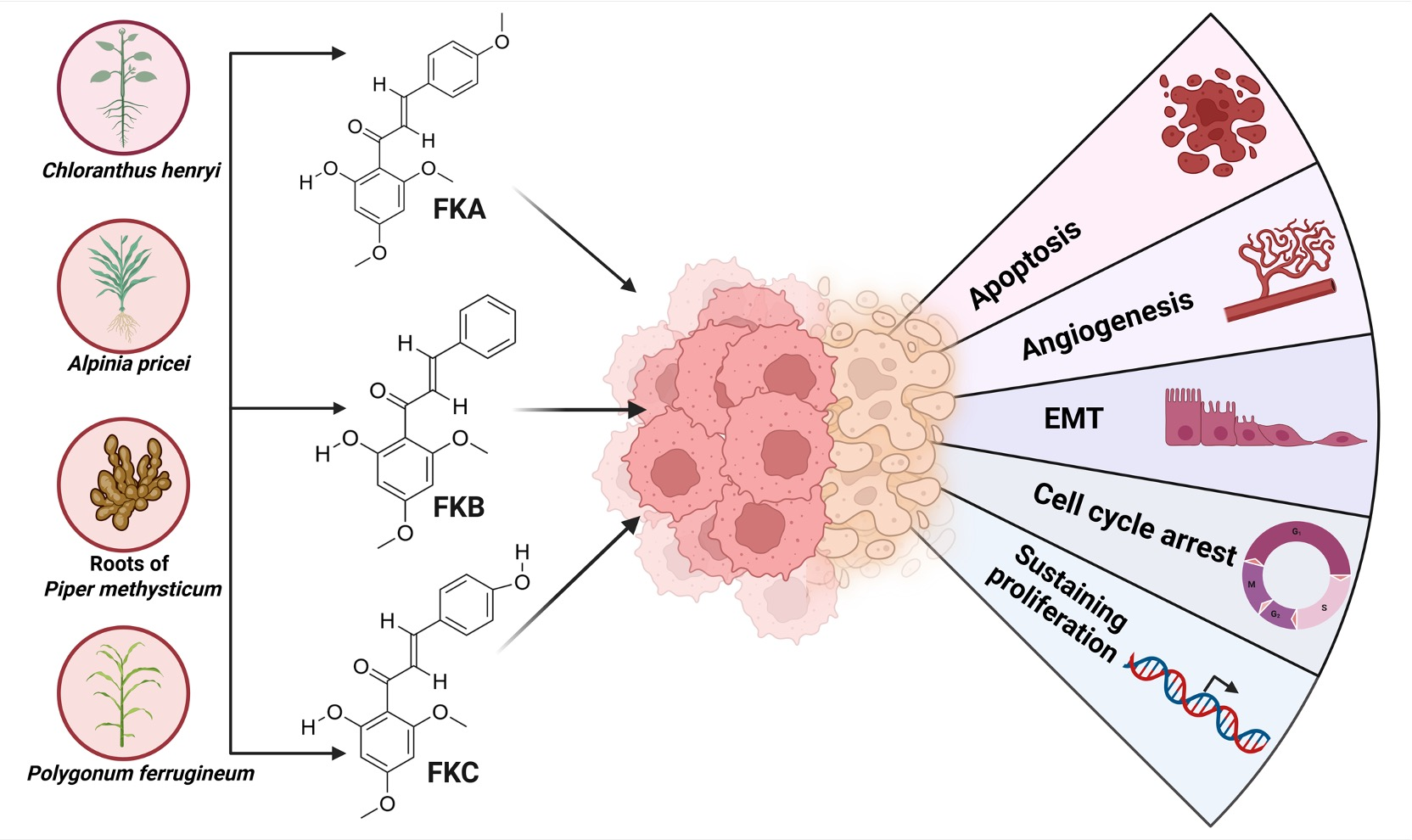
3. Chemical Nature of Flavokawains
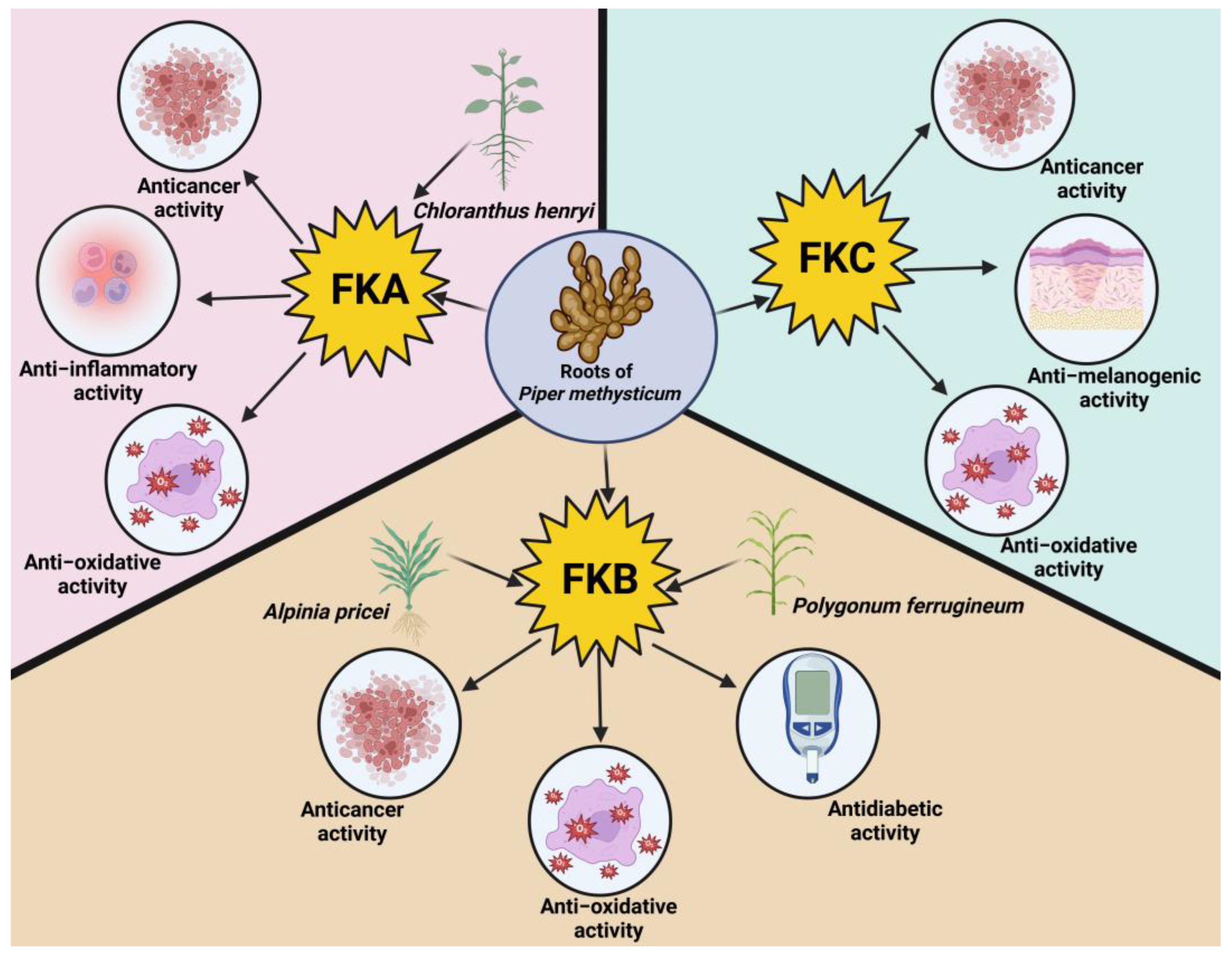
4. Sources of Flavokawain
5. Biological Properties of Flavokawains
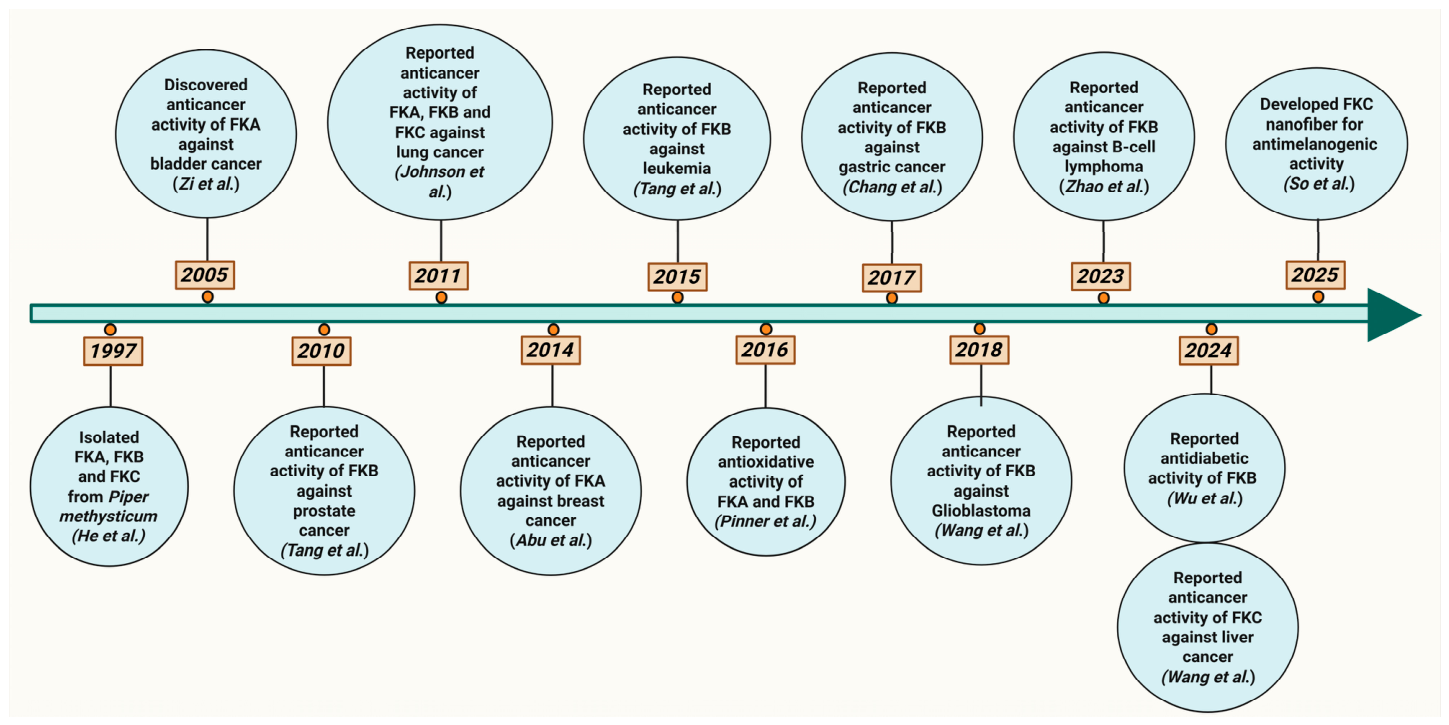
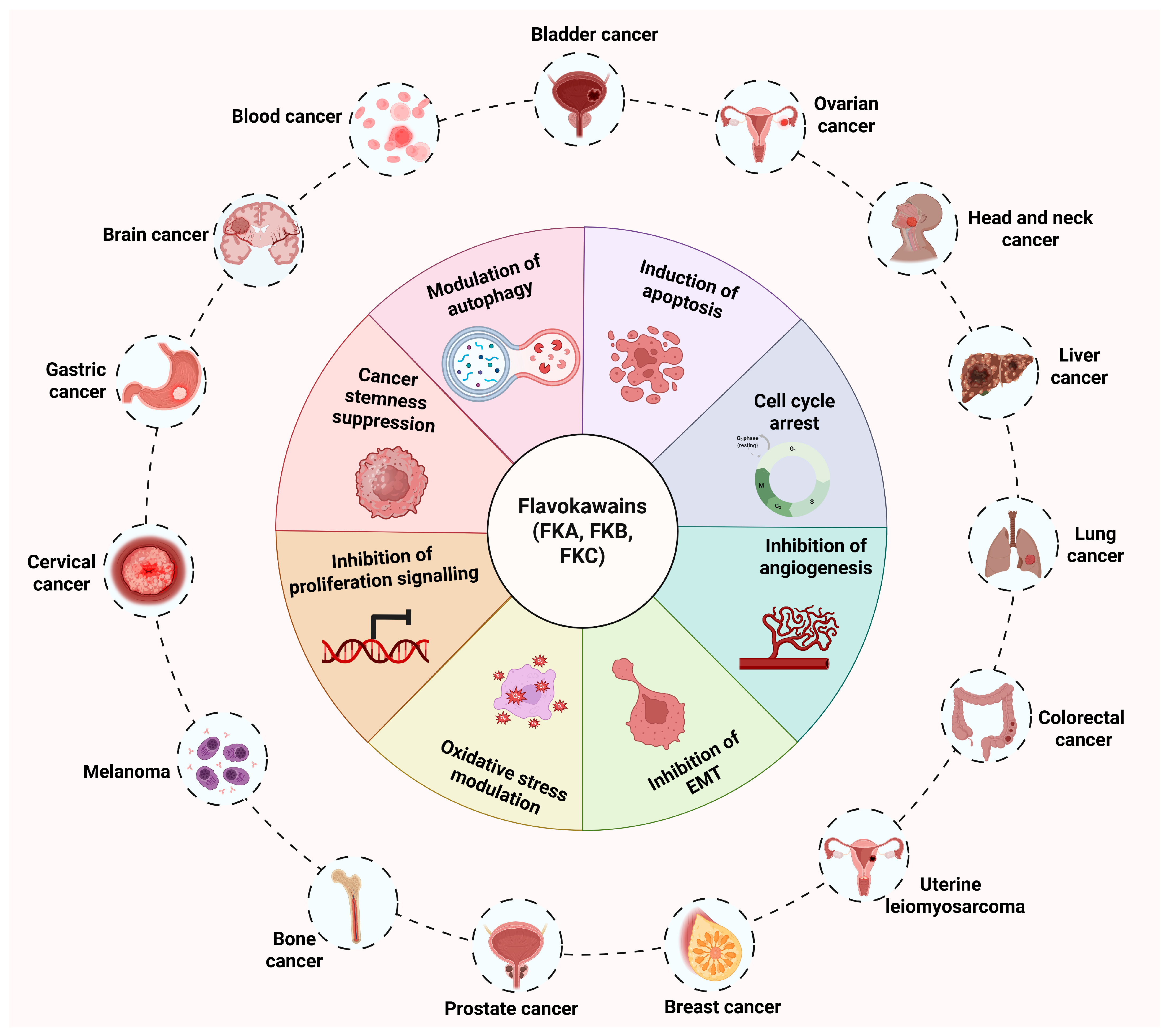
6. Anticancer Potential of Flavokawains
6.1. B-Cell Lymphoma
6.2. Bladder Cancer
6.3. Bone Cancer
6.4. Breast Cancer
6.5. Cervical Cancer
6.6. Cholangiocarcinoma
6.7. Colorectal Cancer
6.8. Gastric Cancer
6.9. Head and Neck Cancers
6.10. Liver Cancer
6.11. Lung Cancer
6.12. Leukemia
6.13. Melanoma
6.14. Neuro-Oncological Malignancies
6.15. Ovarian Cancer
6.16. Prostate Cancer
6.17. Squamous Carcinoma
6.18. Uterine Leiomyosarcoma
7. Flavokawains and the Tumor Microenvironment (TME)
8. Toxicity Concerns and Safety Issues
9. Limitations and Future Perspectives
10. Conclusions
Author Contributions
Funding
Data Availability Statement
Acknowledgments
Conflicts of Interest
Abbreviations
| AKP | Alkaline phosphatase |
| Akt | Protein kinase B |
| ALT | Alanine aminotransferase |
| Ang-1 | Angiopoietin-1 |
| AP-1 | Activator protein 1 |
| APAP | Acetaminophen |
| AR | Androgen receptor |
| AST | Aspartate aminotransferase |
| BaP | Benzo[a]pyrene |
| Bax | BCL2-associated X protein |
| BBB | Blood–brain barrier |
| Bcl-2 | B-cell lymphoma 2 protein |
| Bcl-xL | B-cell lymphoma-extra large |
| CDK | Cyclin-dependent kinase |
| COX-2 | Cyclooxygenase-2 |
| CSC | Cancer stem cell |
| DR5 | Death receptor 5 |
| EGFR | Epidermal growth factor receptor |
| EMT | Epithelial–mesenchymal transition |
| ER | Endoplasmic reticulum |
| ERK | Extracellular signal-regulated kinase |
| FAK | Focal adhesion kinase |
| FKA | Flavokawain A |
| FKB | Flavokawain B |
| FKC | Flavokawain C |
| FOXM1 | Forkhead box protein M1 |
| GADD153 | Growth arrest and DNA damage-inducible protein 153 |
| GBM | Glioblastoma |
| GLUT1 | Glucose transporter 1 |
| GSH H&E | Glutathione Hematoxylin and Eosin |
| HCC | Hepatocellular carcinoma |
| HER2 | Human epidermal growth factor receptor 2 |
| HIF-1α | Hypoxia-inducible factor 1-alpha |
| HK2 | Hexokinase 2 |
| HMOX1 | Heme oxygenase-1 gene |
| HSP90B1 | Heat shock protein 90 beta family member 1 |
| iNOS | Inducible nitric oxide synthase |
| JNK | c-Jun N-terminal kinase |
| LC3-II LD50 | Microtubule-associated protein 1A/1B-light chain 3-II (autophagy marker) Median lethal dose |
| LPS | Lipopolysaccharide |
| MAPK | Mitogen-activated protein kinase |
| MMP | Matrix metalloproteinase |
| mTOR | Mammalian target of rapamycin |
| NF-κB | Nuclear factor kappa-light-chain-enhancer of activated B cells |
| NNK | 4-(Methylnitrosamino)-1-(3-pyridyl)-1-butanone (tobacco carcinogen) |
| NO | Nitric oxide |
| Nrf2 | Nuclear factor erythroid 2-related factor 2 |
| OSCC | Oral squamous cell carcinoma |
| PAI-1 | Plasminogen activator inhibitor-1 |
| PARP | Poly (ADP-ribose) polymerase |
| PCNA | Proliferating cell nuclear antigen |
| PI3K | Phosphoinositide 3-kinase |
| PLK1 | Polo-like kinase 1 |
| PPARγ | Peroxisome proliferator-activated receptor gamma |
| PRMT5 | Protein arginine methyltransferase 5 |
| PSA | Prostate-specific antigen |
| ROS SA-β-gal | Reactive oxygen species Senescence-associated β-galactosidase |
| SCID | Severe combined immunodeficiency |
| Skp2 | S-phase kinase-associated protein 2 |
| SOD | Superoxide dismutase |
| TGF-β1 | Transforming growth factor beta 1 |
| TIMP-1 | Tissue inhibitor of metalloproteinase-1 |
| TME | Tumor microenvironment |
| TRAMP | Transgenic adenocarcinoma of mouse prostate |
| TUNEL | Terminal deoxynucleotidyl transferase dUTP nick end labeling |
| u-PA | Urokinase-type plasminogen activator |
| VEGF | Vascular endothelial growth factor |
| XIAP | X-linked inhibitor of apoptosis protein |
References
- Hassanpour, S.H.; Dehghani, M. Review of cancer from perspective of molecular. J. Cancer Res. Pract. 2017, 4, 127–129. [Google Scholar] [CrossRef]
- Rodriguez-Gonzalez, A.; Carmona-Bayonas, A.; Hernandez San Gil, R.; Cruz-Castellanos, P.; Antonanzas-Basa, M.; Lorente-Estelles, D.; Corral, M.J.; Gonzalez-Moya, M.; Castillo-Trujillo, O.A.; Esteban, E. Impact of systemic cancer treatment on quality of life and mental well-being: A comparative analysis of patients with localized and advanced cancer. Clin. Transl. Oncol. 2023, 25, 3492–3500. [Google Scholar] [CrossRef] [PubMed]
- Wu, Z.; Xia, F.; Lin, R. Global burden of cancer and associated risk factors in 204 countries and territories, 1980–2021: A systematic analysis for the GBD 2021. J. Hematol. Oncol. 2024, 17, 119. [Google Scholar] [CrossRef] [PubMed]
- Shabnam, B.; Padmavathi, G.; Banik, K.; Girisa, S.; Monisha, J.; Sethi, G.; Fan, L.; Wang, L.; Mao, X.; Kunnumakkara, A.B. Sorcin a potential molecular target for cancer therapy. Transl. Oncol. 2018, 11, 1379–1389. [Google Scholar] [CrossRef] [PubMed]
- Bray, F.; Laversanne, M.; Sung, H.; Ferlay, J.; Siegel, R.L.; Soerjomataram, I.; Jemal, A. Global cancer statistics 2022: GLOBOCAN estimates of incidence and mortality worldwide for 36 cancers in 185 countries. CA Cancer J. Clin. 2024, 74, 229–263. [Google Scholar] [CrossRef] [PubMed]
- Bizuayehu, H.M.; Ahmed, K.Y.; Kibret, G.D.; Dadi, A.F.; Belachew, S.A.; Bagade, T.; Tegegne, T.K.; Venchiarutti, R.L.; Kibret, K.T.; Hailegebireal, A.H. Global disparities of cancer and its projected burden in 2050. JAMA Netw. Open 2024, 7, e2443198. [Google Scholar] [CrossRef] [PubMed]
- Ramos, A.; Sadeghi, S.; Tabatabaeian, H. Battling chemoresistance in cancer: Root causes and strategies to uproot them. Int. J. Mol. Sci. 2021, 22, 9451. [Google Scholar] [CrossRef] [PubMed]
- Mali, S.B. Cancer treatment: Role of natural products. Time to have a serious rethink. Oral Oncol. Rep. 2023, 6, 100040. [Google Scholar] [CrossRef]
- Wu, Y.; Song, Y.; Wang, R.; Wang, T. Molecular mechanisms of tumor resistance to radiotherapy. Mol. Cancer 2023, 22, 96. [Google Scholar] [CrossRef] [PubMed]
- Okwundu, N.; Grossman, D.; Hu-Lieskovan, S.; Grossmann, K.F.; Swami, U. The dark side of immunotherapy. Ann. Transl. Med. 2021, 9, 1041. [Google Scholar] [CrossRef] [PubMed]
- Zafar, A.; Khatoon, S.; Khan, M.J.; Abu, J.; Naeem, A. Advancements and limitations in traditional anti-cancer therapies: A comprehensive review of surgery, chemotherapy, radiation therapy, and hormonal therapy. Discov. Oncol. 2025, 16, 607. [Google Scholar] [CrossRef] [PubMed]
- Milliron, B.J.; Packel, L.; Dychtwald, D.; Klobodu, C.; Pontiggia, L.; Ogbogu, O.; Barksdale, B.; Deutsch, J. When Eating Becomes Torturous: Understanding Nutrition-Related Cancer Treatment Side Effects among Individuals with Cancer and Their Caregivers. Nutrients 2022, 14, 356. [Google Scholar] [CrossRef] [PubMed]
- Joshi, D.C.; Sharma, A.; Prasad, S.; Singh, K.; Kumar, M.; Sherawat, K.; Tuli, H.S.; Gupta, M. Novel therapeutic agents in clinical trials: Emerging approaches in cancer therapy. Discov. Oncol. 2024, 15, 342. [Google Scholar] [CrossRef] [PubMed]
- Aswathy, M.; Vijayan, A.; Daimary, U.D.; Girisa, S.; Radhakrishnan, K.V.; Kunnumakkara, A.B. Betulinic acid: A natural promising anticancer drug, current situation, and future perspectives. J. Biochem. Mol. Toxicol. 2022, 36, e23206. [Google Scholar] [CrossRef] [PubMed]
- Naeem, A.; Hu, P.; Yang, M.; Zhang, J.; Liu, Y.; Zhu, W.; Zheng, Q. Natural products as anticancer agents: Current status and future perspectives. Molecules 2022, 27, 8367. [Google Scholar] [CrossRef] [PubMed]
- Albahri, G.; Badran, A.; Abdel Baki, Z.; Alame, M.; Hijazi, A.; Daou, A.; Baydoun, E. Potential anti-tumorigenic properties of diverse medicinal plants against the majority of common types of cancer. Pharmaceuticals 2024, 17, 574. [Google Scholar] [CrossRef] [PubMed]
- Newman, D.J.; Cragg, G.M. Natural products as sources of new drugs over the nearly four decades from 01/1981 to 09/2019. J. Nat. Prod. 2020, 83, 770–803. [Google Scholar] [CrossRef] [PubMed]
- Chunarkar-Patil, P.; Kaleem, M.; Mishra, R.; Ray, S.; Ahmad, A.; Verma, D.; Bhayye, S.; Dubey, R.; Singh, H.N.; Kumar, S. Anticancer drug discovery based on natural products: From computational approaches to clinical studies. Biomedicines 2024, 12, 201. [Google Scholar] [CrossRef] [PubMed]
- Nan, Y.; Su, H.; Zhou, B.; Liu, S. The function of natural compounds in important anticancer mechanisms. Front. Oncol. 2023, 12, 1049888. [Google Scholar] [CrossRef] [PubMed]
- Dharmaratne, H.R.W.; Nanayakkara, N.D.; Khan, I.A. Kavalactones from Piper methysticum, and their 13C NMR spectroscopic analyses. Phytochemistry 2002, 59, 429–433. [Google Scholar] [CrossRef] [PubMed]
- Abu, N.; Akhtar, M.N.; Yeap, S.K.; Lim, K.L.; Ho, W.Y.; Zulfadli, A.J.; Omar, A.R.; Sulaiman, M.R.; Abdullah, M.P.; Alitheen, N.B. Flavokawain A induces apoptosis in MCF-7 and MDA-MB231 and inhibits the metastatic process in vitro. PLoS ONE 2014, 9, e105244. [Google Scholar] [CrossRef] [PubMed]
- Son, J.H.; Choi, Y.H.; Lee, S.H.; Paik, W.H.; Ryu, J.K.; Kim, Y.-T. Flavokawain B inhibits growth of cholangiocarcinoma cells by suppressing the Akt pathway. In Vivo 2023, 37, 1077–1084. [Google Scholar] [CrossRef]
- So, P.B.; Wang, Y.-C.; Huang, P.-H.; Wu, T.-H.; Yen, F.-L. Physicochemical Characterization, Skin Penetration, Anti-Melanogenesis and Safety Assessment of Flavokawain C Nanofibers. Int. J. Mol. Sci. 2025, 26, 2966. [Google Scholar] [CrossRef] [PubMed]
- Chlipała, P.; Tronina, T.; Dymarska, M.; Urbaniak, M.; Kozłowska, E.; Stępień, Ł.; Kostrzewa-Susłow, E.; Janeczko, T. Multienzymatic biotransformation of flavokawain B by entomopathogenic filamentous fungi: Structural modifications and pharmacological predictions. Microb. Cell Fact. 2024, 23, 65. [Google Scholar] [CrossRef] [PubMed]
- Abu, N.; Ho, W.Y.; Yeap, S.K.; Akhtar, M.N.; Abdullah, M.P.; Omar, A.R.; Alitheen, N.B. The flavokawains: Uprising medicinal chalcones. Cancer Cell Int. 2013, 13, 102. [Google Scholar] [CrossRef] [PubMed]
- Wei, Z.; Gu, X.; Zhang, J.; Chen, Y.; Jiang, T.; Hu, D.; Miao, M.; Zhou, H.; Cheng, R.; Teichmann, A.T. Beneficial biological effects of Flavokawain A, a chalcone constituent from kava, on surgically induced endometriosis rat model. J. Ethnopharmacol. 2024, 318, 116896. [Google Scholar] [PubMed]
- Abu, N.; Mohameda, N.E.; Tangarajoo, N.; Yeap, S.K.; Akhtar, M.N.; Abdullah, M.P.; Omar, A.R.; Alitheen, N.B. In vitro toxicity and in vivo immunomodulatory effects of flavokawain A and flavokawain B in Balb/C mice. Nat. Prod. Commun. 2015, 10, 1199–1202. [Google Scholar] [CrossRef] [PubMed]
- Luo, Y.M.; Luo, Y.D.; Chen, F.Y.; Liu, H.; Fu, J.J. Studies on the Chemical Constituents of Chloranthus henryi. Adv. Mater. Res. 2014, 1033, 279–282. [Google Scholar] [CrossRef]
- Xiao, T.; Bao, J.; Tian, J.; Lin, R.; Zhang, Z.; Zhu, Y.; He, Y.; Gao, D.; Sun, R.; Zhang, F. Flavokawain A suppresses the vasculogenic mimicry of HCC by inhibiting CXCL12 mediated EMT. Phytomedicine 2023, 112, 154687. [Google Scholar] [CrossRef] [PubMed]
- Lin, C.-T.; Senthil Kumar, K.J.; Tseng, Y.-H.; Wang, Z.-J.; Pan, M.-Y.; Xiao, J.-H.; Chien, S.-C.; Wang, S.-Y. Anti-inflammatory activity of Flavokawain B from Alpinia pricei Hayata. J. Agric. Food Chem. 2009, 57, 6060–6065. [Google Scholar] [CrossRef] [PubMed]
- Chang, N.; Wu, C.; Wang, S.; Pei, R.; Lin, C. Alpinia pricei Hayata rhizome extracts have suppressive and preventive potencies against hypercholesterolemia. Food Chem. Toxicol. 2010, 48, 2350–2356. [Google Scholar] [CrossRef] [PubMed]
- López, S.; Furlan, R.; Zacchino, S. Detection of antifungal compounds in Polygonum ferrugineum Wedd. extracts by bioassay-guided fractionation. Some evidences of their mode of action. J. Ethnopharmacol. 2011, 138, 633–636. [Google Scholar] [CrossRef] [PubMed]
- Rodrigues, D.F.; Maniscalco, D.A.; Silva, F.A.; Chiari, B.G.; Castelli, M.V.; Isaac, V.L.; Cicarelli, R.M.; Lopez, S.N. Trypanocidal activity of flavokawin B, a component of Polygonum ferrugineum Wedd. Planta Med. 2017, 83, 239–244. [Google Scholar] [PubMed]
- Khwairakpam, A.D.; Damayenti, Y.D.; Deka, A.; Monisha, J.; Roy, N.K.; Padmavathi, G.; Kunnumakkara, A.B. Acorus calamus: A bio-reserve of medicinal values. J. Basic Clin. Physiol. Pharmacol. 2018, 29, 107–122. [Google Scholar] [PubMed]
- Nasim, N.; Sandeep, I.S.; Mohanty, S. Plant-derived natural products for drug discovery: Current approaches and prospects. Nucleus 2022, 65, 399–411. [Google Scholar] [CrossRef]
- Chen, Y.; Jin, T.; Zhang, M.; Hong, B.; Jin, B.; Hu, C.; Wang, J.; Chen, Y.; Zhang, L.; Wang, Y. Flavokawain B inhibits NF-κB inflammatory signaling pathway activation in inflammatory bowel disease by targeting TLR2. Toxicol. Appl. Pharmacol. 2024, 486, 116922. [Google Scholar] [PubMed]
- Jing, S.; Wan, J.; Wang, T.; He, Z.; Ding, Q.; Sheng, G.; Wang, S.; Zhao, H.; Zhu, Z.; Wu, H. Flavokawain A alleviates the progression of mouse osteoarthritis: An in vitro and in vivo study. Front. Bioeng. Biotechnol. 2022, 10, 1071776. [Google Scholar] [CrossRef] [PubMed]
- Yiannis, C.; Huang, K.; Tran, A.N.; Zeng, C.; Dao, E.; Baselyous, O.; Mithwani, M.A.; Paolini, R.; Cirillo, N.; Yap, T. Protective effect of kava constituents in an in vitro model of oral mucositis. J. Cancer Res. Clin. Oncol. 2020, 146, 1801–1811. [Google Scholar] [CrossRef] [PubMed]
- Xiao, T.; Gao, D.; Gu, X.; Zhang, Y.; Zhu, Y.; Zhang, Z.; He, Y.; Wei, L.; Li, H.; Zhou, H. Flavokawain A ameliorates pulmonary fibrosis by inhibiting the TGF-β signaling pathway and CXCL12/CXCR4 axis. Eur. J. Pharmacol. 2023, 958, 175981. [Google Scholar] [PubMed]
- Hseu, Y.C.; Yang, T.Y.; Li, M.L.; Rajendran, P.; Mathew, D.C.; Tsai, C.H.; Lin, R.W.; Lee, C.C.; Yang, H.L. Chalcone flavokawain A attenuates TGF-β1-induced fibrotic pathology via inhibition of ROS/Smad3 signaling pathways and induction of Nrf2/ARE-mediated antioxidant genes in vascular smooth muscle cells. J. Cell. Mol. Med. 2019, 23, 775–788. [Google Scholar] [PubMed]
- Kwon, D.-J.; Ju, S.M.; Youn, G.S.; Choi, S.Y.; Park, J. Suppression of iNOS and COX-2 expression by flavokawain A via blockade of NF-κB and AP-1 activation in RAW 264.7 macrophages. Food Chem. Toxicol. 2013, 58, 479–486. [Google Scholar] [PubMed]
- Wu, Q.; Jiao, Y.; Li, J.; Ma, Y.; Wang, J.; Luo, M.; Wang, Y.; Fan, X.; Liu, C. Flavokawain B is an effective natural peroxisome proliferator-activated receptor γ-selective agonist with a strong glucose-lowering effect. Biochem. Pharmacol. 2024, 229, 116548. [Google Scholar] [PubMed]
- Kamaldin, M.N.; Akhtar, M.N.; Mohamad, A.S.; Lajis, N.; Perimal, E.K.; Akira, A.; Ming-Tatt, L.; Israf, D.A.; Sulaiman, M.R. Peripheral antinociception of a chalcone, flavokawin B and possible involvement of the nitric oxide/cyclic guanosine monophosphate/potassium channels pathway. Molecules 2013, 18, 4209–4220. [Google Scholar] [PubMed]
- Yang, X.; Zan, T.; Yan, H.; Liu, B. UPLC–MS/MS determination of flavokawain B, a novel anti-tumor chemotherapeutic agent in rat plasma and its application to a pharmacokinetic study in rats. Biomed. Chromatogr. Biomed. Chromatogr. 2019, 33, e4391. [Google Scholar] [PubMed]
- Zi, X.; Simoneau, A.R. Flavokawain A, a novel chalcone from kava extract, induces apoptosis in bladder cancer cells by involvement of Bax protein-dependent and mitochondria-dependent apoptotic pathway and suppresses tumor growth in mice. Cancer Res. 2005, 65, 3479–3486. [Google Scholar] [CrossRef] [PubMed]
- Zhao, M.; Jiang, X.; Fang, J.; Lin, Y.; Li, Y.; Pei, R.; Ye, P.; Lu, Y.; Jiang, L. The kava chalcone flavokawain B exerts inhibitory activity and synergizes with BCL-2 inhibition in malignant B-cell lymphoma. Phytomedicine 2023, 120, 155074. [Google Scholar] [CrossRef] [PubMed]
- He, X.G.; Lin, L.Z.; Lian, L.Z. Electrospray high performance liquid chromatography-mass spectrometry in phytochemical analysis of kava (Piper methysticum) extract. Planta Med. 1997, 63, 70–74. [Google Scholar] [CrossRef] [PubMed]
- Wang, R.; Li, R.; Yang, H.; Chen, X.; Wu, L.; Zheng, X.; Jin, Y. Flavokawain C inhibits proliferation and migration of liver cancer cells through FAK/PI3K/AKT signaling pathway. J. Cancer Res. Clin. Oncol. 2024, 150, 117. [Google Scholar] [PubMed]
- Chang, C.-T.; Hseu, Y.-C.; Thiyagarajan, V.; Lin, K.-Y.; Way, T.-D.; Korivi, M.; Liao, J.-W.; Yang, H.-L. Chalcone flavokawain B induces autophagic-cell death via reactive oxygen species-mediated signaling pathways in human gastric carcinoma and suppresses tumor growth in nude mice. Arch. Toxicol. 2017, 91, 3341–3364. [Google Scholar] [PubMed]
- Pinner, K.D.; Wales, C.T.; Gristock, R.A.; Vo, H.T.; So, N.; Jacobs, A.T. Flavokawains A and B from kava (Piper methysticum) activate heat shock and antioxidant responses and protect against hydrogen peroxide-induced cell death in HepG2 hepatocytes. Pharm. Biol. 2016, 54, 1503–1512. [Google Scholar] [PubMed]
- Johnson, T.E.; Hermanson, D.; Wang, L.; Kassie, F.; Upadhyaya, P.; O’Sullivan, M.G.; Hecht, S.S.; Lu, J.; Xing, C. Lung tumorigenesis suppressing effects of a commercial kava extract and its selected compounds in A/J mice. Am. J. Chin. Med. 2011, 39, 727–742. [Google Scholar] [CrossRef] [PubMed]
- Tang, Y.-L.; Huang, L.-B.; Tian, Y.; Wang, L.-N.; Zhang, X.-L.; Ke, Z.-Y.; Deng, W.-G.; Luo, X.-Q. Flavokawain B inhibits the growth of acute lymphoblastic leukemia cells via p53 and caspase-dependent mechanisms. Leuk. Lymphoma 2015, 56, 2398–2407. [Google Scholar] [CrossRef] [PubMed]
- Wang, J.; Qi, Q.; Zhou, W.; Feng, Z.; Huang, B.; Chen, A.; Zhang, D.; Li, W.; Zhang, Q.; Jiang, Z. Inhibition of glioma growth by flavokawain B is mediated through endoplasmic reticulum stress induced autophagy. Autophagy 2018, 14, 2007–2022. [Google Scholar] [CrossRef] [PubMed]
- Tang, Y.; Li, X.; Liu, Z.; Simoneau, A.R.; Xie, J.; Zi, X. Flavokawain B, a kava chalcone, exhibits robust apoptotic mechanisms on androgen receptor-negative, hormone-refractory prostate cancer cell lines and reduces tumor growth in a preclinical model. Int. J. Cancer 2010, 127, 1758. [Google Scholar] [PubMed]
- Liu, S.; Liu, Z.; Piao, C.; Zhang, Z.; Kong, C.; Yin, L.; Liu, X. Flavokawain A is a natural inhibitor of PRMT5 in bladder cancer. J. Exp. Clin. Cancer Res. 2022, 41, 293. [Google Scholar] [CrossRef] [PubMed]
- Liu, Z.; Xu, X.; Li, X.; Liu, S.; Simoneau, A.R.; He, F.; Wu, X.R.; Zi, X. Kava chalcone, flavokawain A, inhibits urothelial tumorigenesis in the UPII-SV40T transgenic mouse model. Cancer Prev. Res. 2013, 6, 1365–1375. [Google Scholar] [CrossRef] [PubMed]
- Tang, Y.; Simoneau, A.R.; Xie, J.; Shahandeh, B.; Zi, X. Effects of the kava chalcone flavokawain A differ in bladder cancer cells with wild-type versus mutant p53. Cancer Prev. Res. 2008, 1, 439–451. [Google Scholar] [CrossRef] [PubMed]
- Liu, Z.; Ha, U.S.; Yu, K.; Wu, C.; Yokoyama, N.; Zi, X. Kavalactone yangonin induces autophagy and sensitizes bladder cancer cells to flavokawain A and docetaxel via inhibition of the mTOR pathway. J. Biomed. Res. 2017, 31, 408–418. [Google Scholar] [CrossRef] [PubMed]
- Zhang, Y.; Zvi, Y.S.; Batko, B.; Zaphiros, N.; O’Donnell, E.F.; Wang, J.; Sato, K.; Yang, R.; Geller, D.S.; Koirala, P. Down-regulation of Skp2 expression inhibits invasion and lung metastasis in osteosarcoma. Pharmaceutics 2018, 8, 14294. [Google Scholar] [CrossRef]
- Wang, J.; Sato, K.; O’donnell, E.; Singla, A.; Yaguare, S.; Aldahamsheh, O.; Batko, B.; Borjihan, H.; Tingling, J.; Zhang, J. Skp2 depletion reduces tumor-initiating properties and promotes apoptosis in synovial sarcoma. Transl. Oncol. 2020, 13, 100809. [Google Scholar] [CrossRef] [PubMed]
- Sakai, T.; Eskander, R.N.; Guo, Y.; Kim, K.J.; Mefford, J.; Hopkins, J.; Bhatia, N.N.; Zi, X.; Hoang, B.H. Flavokawain B, a kava chalcone, induces apoptosis in synovial sarcoma cell lines. J. Orthop. Res. 2012, 30, 1045–1050. [Google Scholar] [PubMed]
- Abu Bakar, A.; Akhtar, M.N.; Mohd Ali, N.; Yeap, S.K.; Quah, C.K.; Loh, W.-S.; Alitheen, N.B.; Zareen, S.; Ul-Haq, Z.; Shah, S.A.A. Design, synthesis and docking studies of flavokawain B type chalcones and their cytotoxic effects on MCF-7 and MDA-MB-231 cell lines. Molecules 2018, 23, 616. [Google Scholar] [CrossRef] [PubMed]
- Jandial, D.D.; Krill, L.S.; Chen, L.; Wu, C.; Ke, Y.; Xie, J.; Hoang, B.H.; Zi, X. Induction of G2M arrest by flavokawain A, a kava chalcone, increases the responsiveness of HER2-overexpressing breast cancer cells to herceptin. Molecules 2017, 22, 462. [Google Scholar] [PubMed]
- Ali, N.M.; Akhtar, M.N.; Ky, H.; Lim, K.L.; Abu, N.; Zareen, S.; Ho, W.Y.; Alan-Ong, H.K.; Tan, S.W.; Alitheen, N.B. Flavokawain derivative FLS induced G2/M arrest and apoptosis on breast cancer MCF-7 cell line. Drug Des. Dev. Ther. 2016, 10, 1897–1907. [Google Scholar] [CrossRef]
- Abu, N.; Akhtar, M.N.; Yeap, S.K.; Lim, K.L.; Ho, W.Y.; Abdullah, M.P.; Ho, C.L.; Omar, A.R.; Ismail, J.; Alitheen, N.B. Flavokawain B induced cytotoxicity in two breast cancer cell lines, MCF-7 and MDA-MB231 and inhibited the metastatic potential of MDA-MB231 via the regulation of several tyrosine kinases In vitro. BMC Complement. Altern. Med. 2016, 16, 86. [Google Scholar] [PubMed]
- Yeap, S.K.; Abu, N.; Akthar, N.; Ho, W.Y.; Ky, H.; Tan, S.W.; Alitheen, N.B.; Kamarul, T. Gene expression analysis reveals the concurrent activation of proapoptotic and antioxidant-defensive mechanisms in flavokawain B–treated cervical cancer HeLa cells. Integr. Cancer Ther. 2017, 16, 373–384. [Google Scholar] [PubMed]
- Zhang, M.; Xue, J.; Chen, X.; Elsaid, F.G.; Salem, E.T.; Ghanem, R.A.; El-kott, A.F.; Xu, Z. Bioactivity of hamamelitannin, flavokawain A, and triacetyl resveratrol as natural compounds: Molecular docking study, anticolon cancer, and anti-Alzheimer potentials. Biotechnol. Appl. Biochem. 2023, 70, 730–745. [Google Scholar] [PubMed]
- Phang, C.-W.; Abd Malek, S.N.; Karsani, S.A. Flavokawain C exhibits anti-tumor effects on in vivo HCT 116 xenograft and identification of its apoptosis-linked serum biomarkers via proteomic analysis. Biomed. Pharmacother. 2021, 137, 110846. [Google Scholar] [PubMed]
- Palko-Łabuz, A.; Kostrzewa-Susłow, E.; Janeczko, T.; Środa-Pomianek, K.; Poła, A.; Uryga, A.; Michalak, K. Cyclization of flavokawain B reduces its activity against human colon cancer cells. Hum. Exp. Toxicol. 2020, 39, 262–275. [Google Scholar] [PubMed]
- Phang, C.-W.; Gandah, N.A.; Abd Malek, S.N.; Karsani, S.A. Proteomic analysis of flavokawain C-induced cell death in HCT 116 colon carcinoma cell line. Hum. Exp. Toxicol. 2019, 853, 388–399. [Google Scholar] [CrossRef]
- Phang, C.-W.; Karsani, S.A.; Abd Malek, S.N. Induction of apoptosis and cell cycle arrest by flavokawain C on HT-29 human colon adenocarcinoma via enhancement of reactive oxygen species generation, upregulation of p21, p27, and Gadd153, and inactivation of inhibitor of apoptosis proteins. Pharmacogn. Mag. 2017, 13, S321. [Google Scholar] [CrossRef] [PubMed]
- Kuo, Y.-F.; Su, Y.-Z.; Tseng, Y.-H.; Wang, S.-Y.; Wang, H.-M.; Chueh, P.J. Flavokawain B, a novel chalcone from Alpinia pricei Hayata with potent apoptotic activity: Involvement of ROS and GADD153 upstream of mitochondria-dependent apoptosis in HCT116 cells. Free Radic. Biol. Med. 2010, 49, 214–226. [Google Scholar] [CrossRef] [PubMed]
- Zhang, X.; Wang, D.; Wang, Y.; Wang, M.; Wang, J.; Sun, Y.; Chen, S.; Qu, X.; Xia, A.; Liu, H. Integrated 16S rRNA Sequencing and Metabolomics Analysis Reveal the Protective Effects of (E)-Flavokawain A on AOM/DSS-Induced Colorectal Cancer in Mice. Nutrients 2026, 18, 310. [Google Scholar] [PubMed]
- Hseu, Y.C.; Lin, R.W.; Shen, Y.C.; Lin, K.Y.; Liao, J.W.; Thiyagarajan, V.; Yang, H.L. Flavokawain B and Doxorubicin Work Synergistically to Impede the Propagation of Gastric Cancer Cells via ROS-Mediated Apoptosis and Autophagy Pathways. Cancers 2020, 12, 2475. [Google Scholar] [CrossRef] [PubMed]
- Zhu, Y.; Fan, W.; Wang, Y.; Ding, H.; Yang, S.; He, F. Flavokawain B weakens gastric cancer progression via the TGF-β1/SMAD4 pathway and attenuates M2 macrophage polarization. J. Immunol. Res. 2022, 2022, 4903333. [Google Scholar] [PubMed]
- Celentano, A.; Yiannis, C.; Paolini, R.; Zhang, P.; Farah, C.S.; Cirillo, N.; Yap, T.; McCullough, M. Kava constituents exert selective anticancer effects in oral squamous cell carcinoma cells in vitro. Sci. Rep. 2020, 10, 15904. [Google Scholar] [CrossRef] [PubMed]
- Hseu, Y.-C.; Lee, M.-S.; Wu, C.-R.; Cho, H.-J.; Lin, K.-Y.; Lai, G.-H.; Wang, S.-Y.; Kuo, Y.-H.; Senthil Kumar, K.; Yang, H.-L. The chalcone flavokawain B induces G2/M cell-cycle arrest and apoptosis in human oral carcinoma HSC-3 cells through the intracellular ROS generation and downregulation of the Akt/p38 MAPK signaling pathway. J. Agric. Food Chem. 2012, 60, 2385–2397. [Google Scholar] [PubMed]
- Zhao, X.; Chao, Y.-L.; Wan, Q.-B.; Chen, X.-M.; Su, P.; Sun, J.; Tang, Y. Flavokawain B induces apoptosis of human oral adenoid cystic cancer ACC-2 cells via up-regulation of Bim and down-regulation of Bcl-2 expression. Can. J. Physiol. Pharmacol. 2011, 89, 875–883. [Google Scholar] [PubMed]
- Hu, Y.; Yu, C.; Cheng, L.; Zhong, C.; An, J.; Zou, M.; Liu, B.; Gao, X. Flavokawain C inhibits glucose metabolism and tumor angiogenesis in nasopharyngeal carcinoma by targeting the HSP90B1/STAT3/HK2 signaling axis. Cancer Cell Int. 2024, 24, 158. [Google Scholar] [PubMed]
- Li, J.; Zheng, L.; Yan, M.; Wu, J.; Liu, Y.; Tian, X.; Jiang, W.; Zhang, L.; Wang, R. Activity and mechanism of flavokawain A in inhibiting P-glycoprotein expression in paclitaxel resistance of lung cancer. Oncol. Lett. 2020, 19, 379–387. [Google Scholar] [PubMed]
- Warmka, J.K.; Solberg, E.L.; Zeliadt, N.A.; Srinivasan, B.; Charlson, A.T.; Xing, C.; Wattenberg, E.V. Inhibition of mitogen activated protein kinases increases the sensitivity of A549 lung cancer cells to the cytotoxicity induced by a kava chalcone analog. Biochem. Biophys. Res. Commun. 2012, 424, 488–492. [Google Scholar] [CrossRef] [PubMed]
- Hseu, Y.C.; Huang, Y.C.; Thiyagarajan, V.; Mathew, D.C.; Lin, K.Y.; Chen, S.C.; Liu, J.Y.; Hsu, L.S.; Li, M.L.; Yang, H.L. Anticancer activities of chalcone flavokawain B from Alpinia pricei Hayata in human lung adenocarcinoma (A549) cells via induction of reactive oxygen species-mediated apoptotic and autophagic cell death. J. Cell. Physiol. 2019, 234, 17514–17526. [Google Scholar] [PubMed]
- Jin, L.; Jiang, X.; Li, Y.; Xiang, S.; Pei, R.; Lu, Y.; Jiang, L. Flavokawain a induces cell cycle arrest through CDT1-dependent p27 regulation and synergizes with venetoclax in acute myeloid leukemia. Toxicol. Appl. Pharmacol. 2025, 498, 117305. [Google Scholar] [CrossRef] [PubMed]
- Lee, J.J.; Koh, K.-N.; Park, C.-J.; Jang, S.; Im, H.J.; Kim, N. The combination of flavokawain B and daunorubicin induces apoptosis in human myeloid leukemic cells by modifying NF-κB. Anticancer Res. 2018, 38, 2771–2778. [Google Scholar] [PubMed]
- Mohd Sakeh, N.; Md Razip, N.N.; Mohd Ma’in, F.I.; Abdul Bahari, M.N.; Latif, N.; Akhtar, M.N.; Balia Yusof, Z.N.; Ahmad, S. Melanogenic inhibition and toxicity assessment of flavokawain A and B on B16/F10 melanoma cells and zebrafish (Danio rerio). Molecules 2020, 25, 3403. [Google Scholar] [CrossRef] [PubMed]
- Dong, M.; Li, G.; Geng, G.; Ming, M.; Xu, Y. Flavokawain A suppresses the malignant progression of neuroblastoma in vitro depending on inactivation of ERK/VEGF/MMPs signaling pathway. Discov. Oncol. 2024, 15, 677. [Google Scholar] [PubMed]
- Li, J.; Wang, R.; Liu, Y.; Wu, Y.; Han, L.; Zheng, L.; Bao, Z. FKA-A NPs enhances PTX-A NPs efficacy to suppress ovarian cancer via regulating Skp2/YAP pathway. Fundam. Clin. Pharmacol. 2023, 37, 125–136. [Google Scholar] [PubMed]
- Fu, M.; Ji, C.; Yang, T.; Mao, F.; Shati, A.A.; El-Kott, A.F.; El-Maksoud, M.M.A.; Negm, S.; Ji, Y. Anti-ovarian cancer potential, in silico studies, and anti-Alzheimer’s disease effects of some natural compounds as cholinesterase inhibitors. Biotechnol. Appl. Biochem. 2023, 70, 1085–1099. [Google Scholar] [PubMed]
- Song, L.; Mino, M.; Yamak, J.; Nguyen, V.; Lopez, D.; Pham, V.; Fazelpour, A.; Le, V.; Fu, D.; Tippin, M. Flavokawain A reduces tumor-initiating properties and stemness of prostate cancer. Front. Oncol. 2022, 12, 943846. [Google Scholar] [CrossRef] [PubMed]
- Wang, K.; Zhang, W.; Wang, Z.; Gao, M.; Wang, X.; Han, W.; Zhang, N.; Xu, X. Flavokawain A inhibits prostate cancer cells by inducing cell cycle arrest and cell apoptosis and regulating the glutamine metabolism pathway. J. Pharm. Biomed. Anal. 2020, 186, 113288. [Google Scholar] [CrossRef] [PubMed]
- Li, X.; Pham, V.; Tippin, M.; Fu, D.; Rendon, R.; Song, L.; Uchio, E.; Hoang, B.H.; Zi, X. Flavokawain B targets protein neddylation for enhancing the anti-prostate cancer effect of Bortezomib via Skp2 degradation. Cell Commun. Signal. 2019, 17, 25. [Google Scholar] [CrossRef] [PubMed]
- Li, X.; Yokoyama, N.N.; Zhang, S.; Ding, L.; Liu, H.-m.; Lilly, M.B.; Mercola, D.; Zi, X. Flavokawain A induces deNEDDylation and Skp2 degradation leading to inhibition of tumorigenesis and cancer progression in the TRAMP transgenic mouse model. Oncotarget 2015, 6, 41809. [Google Scholar] [CrossRef] [PubMed]
- Li, X.; Liu, Z.; Xu, X.; Blair, C.A.; Sun, Z.; Xie, J.; Lilly, M.B.; Zi, X. Kava components down-regulate expression of AR and AR splice variants and reduce growth in patient-derived prostate cancer xenografts in mice. PLoS ONE 2012, 7, e31213. [Google Scholar] [PubMed]
- Lin, E.; Lin, W.-H.; Wang, S.-Y.; Chen, C.-S.; Liao, J.-W.; Chang, H.-W.; Chen, S.-C.; Lin, K.-Y.; Wang, L.; Yang, H.-L. Flavokawain B inhibits growth of human squamous carcinoma cells: Involvement of apoptosis and cell cycle dysregulation in vitro and in vivo. J. Nutr. Biochem 2012, 23, 368–378. [Google Scholar] [CrossRef] [PubMed]
- Eskander, R.N.; Randall, L.M.; Sakai, T.; Guo, Y.; Hoang, B.; Zi, X. Flavokawain B, a novel, naturally occurring chalcone, exhibits robust apoptotic effects and induces G2/M arrest of a uterine leiomyosarcoma cell line. J. Obstet. Gynaecol. Res. 2012, 38, 1086–1094. [Google Scholar] [CrossRef] [PubMed]
- Wang, F.-F.; Zhang, X.-N. Utility of Multimodal Magnetic Resonance Imaging in Orbital Lymphoma Diagnosis. J. Craniofac. Surg. 2025, 36, e661–e665. [Google Scholar] [CrossRef] [PubMed]
- Doval, D.; Bhurani, D.C.; Nair, R.; Gujral, S.; Malhotra, P.; Ramanan, G.; Mohan, R.; Biswas, G.; Dattatreya, S.; Agarwal, S. Indian Council of Medical Research Consensus document for the management of non-Hodgkin’s lymphoma (high grade). Indian J. Med. Paediatr. Oncol. 2017, 38, 51–58. [Google Scholar] [PubMed][Green Version]
- Sanli, O.; Dobruch, J.; Knowles, M.A.; Burger, M.; Alemozaffar, M.; Nielsen, M.E.; Lotan, Y. Bladder cancer. Nat. Rev. Dis. Primers 2017, 3, 17022. [Google Scholar] [CrossRef] [PubMed]
- Liu, P.; Lv, H.; Li, Y.; Liu, Z.; Yang, X.; Hu, H. Global bone cancer incidence and death rate analysis at 40 years. Discov. Oncol. 2025, 16, 1087. [Google Scholar] [CrossRef] [PubMed]
- Sun, Y.-S.; Zhao, Z.; Yang, Z.-N.; Xu, F.; Lu, H.-J.; Zhu, Z.-Y.; Shi, W.; Jiang, J.; Yao, P.-P.; Zhu, H.-P. Risk factors and preventions of breast cancer. Int. J. Biol. Sci. 2017, 13, 1387. [Google Scholar] [CrossRef] [PubMed]
- Shao, H.; Varamini, P. Breast cancer bone metastasis: A narrative review of emerging targeted drug delivery systems. Cells 2022, 11, 388. [Google Scholar] [CrossRef] [PubMed]
- Cohen, P.A.; Jhingran, A.; Oaknin, A.; Denny, L. Cervical cancer. Lancet 2019, 393, 169–182. [Google Scholar] [CrossRef] [PubMed]
- Brindley, P.J.; Bachini, M.; Ilyas, S.I.; Khan, S.A.; Loukas, A.; Sirica, A.E.; Teh, B.T.; Wongkham, S.; Gores, G.J. Cholangiocarcinoma. Nat. Rev. Dis. Prim. 2021, 7, 65. [Google Scholar] [CrossRef] [PubMed]
- Li, Y.; Yu, J.; Zhang, Y.; Peng, C.; Song, Y.; Liu, S. Advances in targeted therapy of cholangiocarcinoma. Ann. Med. 2024, 56, 2310196. [Google Scholar] [CrossRef] [PubMed]
- Marcellinaro, R.; Spoletini, D.; Grieco, M.; Avella, P.; Cappuccio, M.; Troiano, R.; Lisi, G.; Garbarino, G.M.; Carlini, M. Colorectal cancer: Current updates and future perspectives. J. Clin. Med. 2023, 13, 40. [Google Scholar] [CrossRef] [PubMed]
- Roshandel, G.; Ghasemi-Kebria, F.; Malekzadeh, R. Colorectal cancer: Epidemiology, risk factors, and prevention. Cancers 2024, 16, 1530. [Google Scholar] [CrossRef] [PubMed]
- Thrift, A.P.; El-Serag, H.B. Burden of gastric cancer. Clin. Gastroenterol. Hepatol. 2020, 18, 534–542. [Google Scholar] [PubMed]
- Harsha, C.; Banik, K.; Ang, H.L.; Girisa, S.; Vikkurthi, R.; Parama, D.; Rana, V.; Shabnam, B.; Khatoon, E.; Kumar, A.P. Targeting AKT/mTOR in oral cancer: Mechanisms and advances in clinical trials. Int. J. Mol. Sci. 2020, 21, 3285. [Google Scholar] [PubMed]
- Silva, L.C.; Faustino, I.S.P.; Ramos, J.C.; Colafemina, A.C.E.; Di Pauli-Paglioni, M.; Leite, A.A.; Santos-Silva, A.R.; Lopes, M.A.; Vargas, P.A. The importance of early treatment of oral squamous cell carcinoma: Case report. Oral Oncol. 2023, 144, 106442. [Google Scholar] [CrossRef] [PubMed]
- Su, Z.Y.; Siak, P.Y.; Lwin, Y.Y.; Cheah, S.-C. Epidemiology of nasopharyngeal carcinoma: Current insights and future outlook. Cancer Metastasis Rev. 2024, 43, 919–939. [Google Scholar] [CrossRef] [PubMed]
- Guo, Q.; Zhu, X.; Beeraka, N.M.; Zhao, R.; Li, S.; Li, F.; Mahesh, P.A.; Nikolenko, V.N.; Fan, R.; Liu, J. Projected epidemiological trends and burden of liver cancer by 2040 based on GBD, CI5plus, and WHO data. Sci. Rep. 2024, 14, 28131. [Google Scholar] [CrossRef] [PubMed]
- Shong, L.Y.; Lam, D.C. Emerging Trends in Global Lung Cancer Burden. Semin. Respir. Crit. Care Med. 2025, 46, 409–418. [Google Scholar] [CrossRef] [PubMed]
- Li, F.; Wang, H.; Ye, T.; Guo, P.; Lin, X.; Hu, Y.; Wei, W.; Wang, S.; Ma, G. Recent advances in material technology for leukemia treatments. Adv. Mater. 2024, 36, 2313955. [Google Scholar] [CrossRef]
- Huang, J.; Chan, S.C.; Ngai, C.H.; Lok, V.; Zhang, L.; Lucero-Prisno, D.E., III; Xu, W.; Zheng, Z.-J.; Elcarte, E.; Withers, M. Disease burden, risk factors, and trends of leukaemia: A global analysis. Front. Oncol. 2022, 12, 904292. [Google Scholar] [CrossRef] [PubMed]
- Boutros, A.; Croce, E.; Ferrari, M.; Gili, R.; Massaro, G.; Marconcini, R.; Arecco, L.; Tanda, E.T.; Spagnolo, F. The treatment of advanced melanoma: Current approaches and new challenges. Crit. Rev. Oncol. Hematol. 2024, 196, 104276. [Google Scholar] [CrossRef] [PubMed]
- White, J.; White, M.P.; Wickremesekera, A.; Peng, L.; Gray, C. The tumour microenvironment, treatment resistance and recurrence in glioblastoma. J. Transl. Med. 2024, 22, 540. [Google Scholar] [CrossRef] [PubMed]
- Obrador, E.; Moreno-Murciano, P.; Oriol-Caballo, M.; Lopez-Blanch, R.; Pineda, B.; Gutierrez-Arroyo, J.L.; Loras, A.; Gonzalez-Bonet, L.G.; Martinez-Cadenas, C.; Estrela, J.M. Glioblastoma therapy: Past, present and future. Int. J. Mol. Sci. 2024, 25, 2529. [Google Scholar] [CrossRef] [PubMed]
- Bonine, N.; Zanzani, V.; Van Hemelryk, A.; Vanneste, B.; Zwicker, C.; Thoné, T.; Roelandt, S.; Bekaert, S.-L.; Koster, J.; Janoueix-Lerosey, I. NBAtlas: A harmonized single-cell transcriptomic reference atlas of human neuroblastoma tumors. Cell Rep. 2024, 43, 114804. [Google Scholar] [CrossRef] [PubMed]
- Webb, P.M.; Jordan, S.J. Global epidemiology of epithelial ovarian cancer. Nat. Rev. Clin. Oncol. 2024, 21, 389–400. [Google Scholar] [CrossRef] [PubMed]
- Liu, D.; Wang, L.; Guo, Y. Advances in and prospects of immunotherapy for prostate cancer. Cancer Lett. 2024, 601, 217155. [Google Scholar] [CrossRef] [PubMed]
- Kourti, A.; Kalogiannidis, I.; Makedou, K.; Georgiou, E. MicroRNAs in Uterine Leiomyosarcoma: From Molecular Mechanisms to Clinical Applications. Int. J. Mol. Sci. 2025, 26, 10952. [Google Scholar] [CrossRef] [PubMed]
- Garcia, J.; Hurwitz, H.I.; Sandler, A.B.; Miles, D.; Coleman, R.L.; Deurloo, R.; Chinot, O.L. Bevacizumab (Avastin®) in cancer treatment: A review of 15 years of clinical experience and future outlook. Cancer Treat. Rev. 2020, 86, 102017. [Google Scholar] [CrossRef] [PubMed]
- Wojtukiewicz, M.Z.; Rek, M.M.; Karpowicz, K.; Górska, M.; Polityńska, B.; Wojtukiewicz, A.M.; Moniuszko, M.; Radziwon, P.; Tucker, S.C.; Honn, K.V. Inhibitors of immune checkpoints—PD-1, PD-L1, CTLA-4—New opportunities for cancer patients and a new challenge for internists and general practitioners. Cancer Metastasis Rev. 2021, 40, 949–982. [Google Scholar] [PubMed]
- Zhou, P.; Gross, S.; Liu, J.-H.; Yu, B.-Y.; Feng, L.-L.; Nolta, J.; Sharma, V.; Piwnica-Worms, D.; Qiu, S.X. Flavokawain B, the hepatotoxic constituent from kava root, induces GSH-sensitive oxidative stress through modulation of IKK/NF-κB and MAPK signaling pathways. FASEB J. 2010, 24, 4722. [Google Scholar] [PubMed]
- Li, X.; Xu, X.; Ji, T.; Liu, Z.; Gu, M.; Hoang, B.H.; Zi, X. Dietary feeding of Flavokawain A, a Kava chalcone, exhibits a satisfactory safety profile and its association with enhancement of phase II enzymes in mice. Toxicol. Rep. 2014, 1, 2–11. [Google Scholar] [CrossRef] [PubMed]
- Narayanapillai, S.C.; Leitzman, P.; O’Sullivan, M.G.; Xing, C. Flavokawains a and B in kava, not dihydromethysticin, potentiate acetaminophen-induced hepatotoxicity in C57BL/6 mice. Chem. Res. Toxicol. 2014, 27, 1871–1876. [Google Scholar] [PubMed]
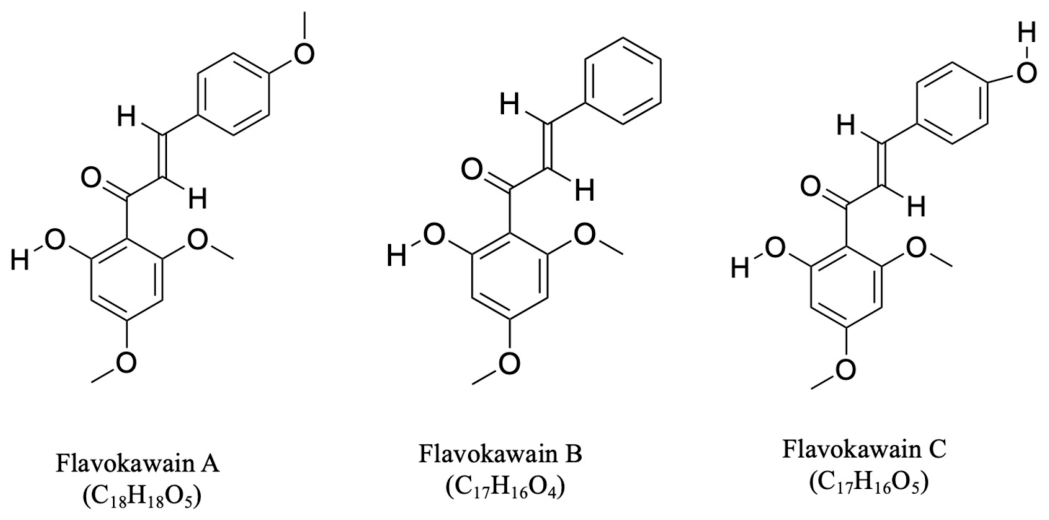



| Features | Flavokawain A | Flavokawain B | Flavokawain C |
|---|---|---|---|
| Natural source | Piper methysticum, Chloranthus henryi | Piper methysticum, Alpinia pricei Hayata, Polygonum ferrugineum Wedd. | Piper methysticum |
| Molecular formula | C18H18O5 | C17H16O4 | C17H16O5 |
| Molecular weight | 314.3 g/mol | 284.31 g/mol | 300.30 g/mol |
| Melting point | 113 °C | 91 °C | 194–195 °C |
| Appearance | Yellow crystalline | Yellow crystalline | Yellow crystalline |
| A-Ring substituents | 2′-Hydroxy, 4′6′-Methoxy | 2′-Hydroxy, 4′6′-Methoxy | 2′-Hydroxy, 4′6′-Methoxy |
| B-Ring substituents | 4-Methoxy | - | 4-Hydroxy |
| Core | α, β-unsaturated ketone | α, β-unsaturated ketone | α, β-unsaturated ketone |
| Hydroxyl content | 1 OH group | 1 OH group | 2 OH group |
| Binding | Weak H-bond | No extra H-bond | Strong H-bond |
| Electrophilicity | Moderate | High | Low |
| Antioxidant activity | Low | Low | Low |
| Apoptosis induction | High | High | Moderate |
| G2/M arrest | Yes | Yes | Yes |
| Cytotoxicity | Moderate | High | Moderate |
| Selectivity | High | Moderate | High |
| Cancer Types | Flavokawains | In Vitro/In Vivo/Ex Vivo | Conc./Dosage | Model | Mechanism of Action or Outcome | References |
|---|---|---|---|---|---|---|
| B-cell lymphoma | FKB | In vitro | 1.25, 2.5, 5, 10, 20 µg/mL | SUDHL-4, Raji, Jeko | ↓ Cell viability, p-Akt, p-mTOR, BcL-xL, p-GSK3β; ↑ cleaved PARP, caspase-3 | [46] |
| In vivo | 0.75 mg/kg.b.wt (every 4 days) | SUDHL-4-derived xenograft in nude mice | ↓ Tumor weight, Ki-67 | |||
| Bladder Cancer | FKA | In vitro | 10, 20, 40, 60, 80 μM | UMUC3, T24 cells | ↓ PRMT5, cell viability, H2AR3, H4R3 methylation; ↑ apoptosis | [55] |
| In vivo | 30 mg/kg.b.wt (every 3 days) | UMUC3-derived xenograft in nude mice | ↓ Tumor size, H2A, H4 R3 methylation | |||
| FKA + GC | In vitro | 10–80 μM | UMUC3, T24 cells | ↓ Cell viability | ||
| FKA | In vivo | 6 g/kg in AIN-93M diet | UPII-SV40T transgenic mice | ↓ Tumor weight, Ki-67, Bcl-2, XIAP, survivin; ↑ survival of mice, TUNEL-positive cells, DR-5, p27 | [56] | |
| FKA | In vitro | 4–40 µM | RT4 cells | ↓ Cell growth, CDK2, SKP2; ↑ G1, G2/M phase arrest, p21, p27 | [57] | |
| In vivo | 50 mg/kg.b.wt/day | RT4-derived xenograft in nude mice | ↓ Tumor growth | |||
| FKA | In vitro | 0.05, 0.5, 5, 12.5, 25 µg/mL | T24 cells | ↓ Cell proliferation, survivin, XIAP, Bcl-xL; ↑ caspase-3, -9, Bax | [45] | |
| In vivo | 50 mg/kg.b.wt/day | EJ-derived xenograft in nude mice | ↓ Tumor growth | |||
| FKA + yangonin | In vitro | FKA: 50 µg/mL; Yangonin: 5, 12.5 µg/mL | UMUC3 cells | ↓ Cell viability | [58] | |
| Bone Cancer Osteosarcoma | FKA | In vitro | 2.5, 5, 10, 25, 50 μg/mL | 143B, SaOS-2 cells | ↓ Cell viability, invasion, SKP2, RhoA, MMP-9; ↑ G2/M arrest, caspase-3, cleaved PARP, p21 | [59] |
| In vivo | 200, 600 mg/kg.b.wt/day | 143B-derived xenograft in SCID mice | ↓ Lung metastasis, p27, SKP2; ↑ apoptosis | |||
| Synovial sarcoma | FKA | In vitro | 2.5, 5, 10, 25 μg/mL | HSSY-II, SYO-I, Yamato, Aska cells | ↓ Cell viability, invasion, SKP2, ETV4, ECT2, vimentin, Twist, ZO-1, sarcosphere; ↑ apoptosis, G2/M arrest, E-cadherin, cleaved PARP, p27 | [60] |
| In vivo | 600 mg/kg.b.wt/day | HSSY-II-derived xenograft in SCID mice | ↓ Tumor growth | |||
| FKB | In vitro | 2.5, 5, 7.5 μg/mL | SYO-I, HSSY-II cells | ↓ Cell growth, colony formation, IAP, survivin, Bcl-2; ↑ caspase-3, -7, -8, -9, DR5, Bim, Puma, Bax | [61] | |
| Breast Cancer | 13, 15, 16 (FKB derivatives) | In vitro | 0.47–30 µg/mL | MCF-7, MDA-MB-231 cells | ↑ Cytotoxicity | [62] |
| FKA | In vitro | 2, 4, 8, 16 μM | SKBR3, MCF-7, MDA-MB-468 cells | ↓ Cell growth, colony formation, HER2, p-Akt, Bcl-2, survivin, XIAP; ↑ G2/M arrest, Cdc2, apoptosis, Bim, Bax, cleaved PARP | [63] | |
| FLS (FK derivative) | In vitro | 3–180 μM | MCF-7, MDA-MB-231 cells | ↓ Cell viability, Bcl-2, Cdc2; ↑ G2/M arrest, apoptosis, caspase-9, cytochrome c, Bax, p53, c-Jun, WEE-1 | [64] | |
| FKB (synthetic) | In vitro | 6–40.5 μM | MDA-MB-231 cells | ↓ Cell proliferation, migration, invasion, angiogenesis; NF-κB, COX-2 ↑ G2/M arrest, apoptosis | [65] | |
| Ex vivo | 6, 12.3, 24.6 μM | Male Sprague Dawley rats | ↓ Angiogenesis | |||
| FKA (synthetic) | In vitro | 6.5–70 μM | MCF-7, MDA-MB-231 cells | ↓ Cell proliferation, PLK1, FOXM1; ↑ apoptosis, G2/M arrest, caspase-8, -9, Bax, cytochrome c | [21] | |
| Ex vivo | 6.5, 17.5, 65 μM | Male Sprague Dawley rats | ↓ Angiogenesis | |||
| Cervical Cancer | FKB | In vitro | 1.56–100 µM | HeLa cells | ↑ Cytotoxicity, G2/M arrest, apoptosis, SOD2, GSH, cytochrome C, p-p38α, p-HSP27, HSP70 | [66] |
| Cholangiocarcinoma | FKB; cisplatin; FKB + cisplatin | In vitro | 0–100 μM | SNU-478 | ↓ Cell viability, p-Akt; ↑ apoptosis, cleaved PARP | [22] |
| FKB; FKB + cisplatin/gemcitabine | In vivo | Cisplatin: 5 mg/kg, gemcitabine: 100 mg/kg and FKB: 25 mg/kg (twice a week) | SNU-478-derived xenograft in nude mice | ↓ Tumor growth | ||
| Colorectal Cancer | FKA | In vitro | 25,100, 200, 500 μg/mL | SW620, DLD-1, HT-29, HCT-8, HCT-116 cells | ↓ Cell viability | [67] |
| FKC | In vivo | 1, 3 mg/kg.b.wt (thrice weekly) | HCT-116-derived xenograft in nude mice | ↓ Tumor growth, Ki-67; ↑ apoptosis, cleaved caspase-3 | [68] | |
| FKB | In vitro | 10, 20 μM | LoVo, LoVo/Dx cells | ↓ Cell growth, PCNA; ↑ apoptosis, G2/M arrest | [69] | |
| FKC | In vitro | 60 μM | HCT-116 cells | ↓ MLC-3, GAMT, DCK, PGAM1, GSTO1, COMT, BPNT1, CNPY2, TCEB1, CRABP2, eIF-5A, EEF-2, eIF-3I, CBX3, SKP1, ATP5H, RanBP1, hTom22; ↑ Hspa8, Hsp70-Hom, Hsp27, Hsp70-1/Hsp70-2, Hsp86, TCP-1-eta, CK-18, Tubulin beta-2 chain, Gamma actin, P4HB, HMOX1, FKBP4, HR23B, SFPQ, PARK7, GLOD4, GLRX3 | [70] | |
| FKC | In vitro | 40, 60, 80 µM | HCT-116 cells, HT-29 | ↓ Cell viability, SOD; ↑ apoptosis, caspase-3-, -8-, -9-positive cells, cleaved PARP-1, ROS, p21, p27, G2/M arrest | [71] | |
| FKB | In vitro | 0.1–50 μM | HCT-116 cells | ↓ Cell viability, proliferation, colony formation, Bcl-2; ↑ apoptosis, cleaved PARP, GADD153, Bim L, Bim S, p-38 MAPK, ROS, G2/M arrest, autophagy | [72] | |
| FKA | In vivo | 20, 80 mg/kg/2 days | AOM/DSS-induced CRC in mice | ↓ Tumor count, polyp size, LPS biosynthesis pathway | [73] | |
| Gastric Cancer | FKB + doxorubicin | In vitro | FKB: 1.25, 2.5, 5 µg/mL; Dox: 0.5 µg/mL | AGS, SCM-1, MKN-45 | ↓ ATG4B; ↑ autophagy, apoptosis, caspase-3, -8, -9, Fas-FasL, LC3-II, Beclin-1, ROS | [74] |
| In vivo | FKB: 0.75 mg/kg.b.wt; Dox: 1.5 mg/kg.b.wt (every 2 days) | AGS-derived xenograft in nude mice | ↓ Tumor growth | |||
| FKB | In vitro | 2.5–20 μg/mL | AGS, NCI-N87, Hs738, Kato-III, TSGH-9201 cells | ↓ Cell survival, colony formation, ATG4B, HER2, PI3K, Akt, mTOR; ↑ LC3-II, autophagy, ROS, apoptosis, JNK, ERK, G2/M arrest, cyclin A, cyclin B1, CDK1, Cdc25C | [49] | |
| In vivo | 1.5, 7.5 mg/kg.b.wt (every 2 days) | AGS-derived xenograft in nude mice | ↓ Tumor growth | |||
| FKB | In vitro | 10 μg/mL | SGC-7901 | ↓ Cell growth, proliferation, Cdc2, Cdc25C, cyclin A, cyclin B1, CCR2, macrophage migration; ↑ G2/M arrest, apoptosis, caspase-3, -7, -8, -9, TSPAN12, TGF-β1, SMAD4 | [75] | |
| In vivo | 1.5 mg/kg.b.wt (every 2 days) | SGC-7901-derived xenograft in nude mice | ↓ Tumor weight; ↑ SMAD4, TGF-β1, TSPAN12, survival time | |||
| Head and Neck Cancers Oral squamous cell carcinoma | FKA, FKB | In vitro | 10 μg/mL, 2.5 μg/mL | H400, BICR56, OKF6 cells | ↓ Cell growth, migration, invasion | [76] |
| Oral carcinoma | FKB | In vitro | 1.25–10 μg/mL; 4.4–35.2 μM | HSC-3, Cal-27 cells | ↓ Cell viability, cyclin A, cyclin B, Cdc2, Cdc25C, Bcl-2, PI3K/Akt, p38 MAPK; ↑ G2/M arrest, apoptosis, cytochrome c, Bax | [77] |
| Oral adenoid cystic carcinoma | FKB (synthetic) | In vitro | 1.1, 2.2, 4.4, 8.8, 17.6, 44, 87.9 µmol/L | ACC-2 cells | ↓ Cell growth, Bcl-2; ↑ apoptosis, G2/M arrest, Bim, Bak, Bax | [78] |
| Nasopharyngeal carcinoma | FKC | In vitro | 0.5, 1, 2, 4 μM | HNE1, HNE2, CNE1, CNE2, HONE1 cells | ↓ HSP90B1, Ang-1, VEGF, EGFR/PI3K/Akt/mTOR | [79] |
| In vivo | 3 mg/kg.b.wt | HNE1-derived xenograft in nude mice | ↓ Tumor volume, tumor weight, HSP90B1, GLUT1, HK2, Ang-1, VEGF, EGFR/PI3K/Akt/mTOR | |||
| Liver Cancer | FKA | In vitro | 10, 20, 40 μM | SMMC-7721, huh7, PANC-1, HepG2, HeLa, Hep3B, A549 cells | ↓ Cell viability, migration, invasion, CXCR4, proliferation, VM formation, VE-cadherin, vimentin, Snail1, EMT, p-PI3K, p-Akt, HIF-1α, NF-κB, Twist1; ↑ apoptosis, E-cadherin | [29] |
| In vivo | 30, 60, 120 mg/kg.b.wt/day | HepG2-derived xenograft in nude mice | ↓ Tumor growth, EMT, metastasis, VE-cadherin, vimentin, Twist1, p-Akt; ↑ E-cadherin | |||
| FKA | In vitro | 2–100 μM | HepG2 cells | ↓ Cell viability; ↑ toxicity, Nrf2, HSF1, HMOX1, GCLC, HSPA1A, DNAJA4, GSH | [50] | |
| FKB | In vitro | 2–100 μM | HepG2 cells | ↓ Cell viability; ↑ toxicity, Nrf2, HSF1, HMOX1, GCLC, HSPA1A, DNAJA4, GSH | ||
| FKC | In vitro | 4, 8, 16 μM | Huh-7, Hep3B, HepG2 cells | ↓ Cell proliferation, migration, Bax, Bcl-2, p-FAK, p-PI3K, p-Akt; ↑ apoptosis | [48] | |
| In vivo | 16 mg/kg.b.wt/day | Huh-7-derived xenograft in nude mice | ↓ Tumor growth, Ki-67; ↑ γ-H2AX | |||
| Lung Cancer | FKA | In vitro | 5–30 µM | A549, PTX-resistant A549 (A549/T), THLE-3 cells | ↓ Cell viability, cell growth, P-gp, Akt, p-Akt; ↑ apoptosis, PARP | [80] |
| FKA, FKB, FKC | In vivo | FKA, FKB: 5 mg/g, FKC: 2.5 mg/g.b.wt | NNK, BaP-induced tumor in mice | ↓ Tumor multiplicity | [51] | |
| Chalcone-24 (FK synthesized) | In vitro | 0.3, 1, 3 μM | A549 cells | ↓ Cell viability, NF-κB; ↑ ERK1/2, JNK, caspase activity | [81] | |
| FKB | In vitro | 5–15 μg/mL | A549, H1299 cells | ↓ Cell viability, colony formation, Bcl-2; ↑ caspase-3, -9, Bax, LC3 | [82] | |
| Leukemia Acute Myeloid Leukemia (AML) | FKA | In vitro | 2.5, 5, 10, 20 μg/mL | MV4-11, THP-1, MOLM-13, U937 cells | ↓ Cell viability, CDT1, CCND1, CCNE1, CCNE2, CDK2, CDK4, CDK6; ↑ p27, G1 arrest, CDKN1B | [83] |
| Ex vivo | 2.5, 5, 10, 20 μg/mL | Primary AML blasts from patients | ↓ Cell viability | |||
| Acute Lymphoblastic Leukemia (ALL) | FKB | In vitro | 0.1–120 μM | CCRF-CEM, CEM-C1, Jurkat, RS4-11 | ↓ Cell viability; ↑ apoptosis, caspase-3, cleaved PARP, p53, Bax, Puma | [52] |
| In vivo | 0.75 mg/kg.b.wt/day | CCRF-CEM-inoculated Balb/c mice | ↓ Leukocytes, WBC, splenomegaly | |||
| Ex vivo | 25–100 μM | Primary B-ALL blasts, T-ALL blasts | ↓ Cell proliferation; ↑ p53, Bax, Puma | |||
| Myeloid Leukemia | FKB | In vitro | 0.5–24 µM | HL-60, K562, MOLT4, CEM1 cells | ↓ Cell viability; ↑ apoptosis | [84] |
| FKB + Daunorubicin (DNR) | In vitro | FKB: 10, 12, 2, 3 µM; DNR: 0.15, 0.05, 0.005, 0.01 µM | HL-60, K562, MOLT4, CEM1 cells | ↓ Cell viability; ↑ NF-ĸB | ||
| Melanoma | FKA, FKB (synthetic) | In vitro | 1.56, 6.25, 25 µM | B16/F10 cells | ↓ Cell viability, cellular melanin, Tyr, Trp-1, Trp-2, Mitf | [85] |
| In vivo | FKA: 0.78–25 µM, 25 µM; FKB: 0.78–12.5 µM, 6.25 µM | Zebrafish | ↓ Melanin production; ↑ survival rate | |||
| Neuro-oncological malignancies Glioblastoma | FKB | In vitro | 1–5 μg/mL | U251, U87, T98 cells | ↓ Cell viability, proliferation, SQSTM1, p-mTOR, p-Akt, p-RPS6KB1; ↑ G2/M arrest, senescence, autophagy, MAP1LC3B-II, HSPA5, p-EIF2AK3, p-EIF2A, ATF4, DDIT3, p-γH2AX | [53] |
| In vivo | 50 mg/kg.b.wt/day | U251-derived xenograft in nude mice | ↓ Tumor growth | |||
| Neuroblastoma | FKA | In vitro | 12.5, 25, 50 μM | SK-N-SH, HUVEC cells | ↓ Cell viability, colony formation, migration, invasion, angiogenesis, N-cadherin, Snail, VE-cadherin; ↑ apoptosis, E-cadherin, G1 arrest | [86] |
| Ovarian Cancer | FKA-A NPs+ PTX-A NPs | In vitro | FKA-A NPs: 2.5–60 μM); PTX-A NPs: 2.5–60 μM | A2780, SKOV-3 cells | ↓ Cell proliferation, colony formation, migration, vimentin, SKP2, nuclear translocation of YAP; ↑ E-cadherin | [87] |
| In vivo | PTX-A NPs + FKA-A NPs: 2.5 + 2.5 mg/kg.b.wt (every 3 days) | A2780-derived xenograft in nude mice | ↓ Tumor growth | |||
| FKC | In vitro | 1–100 µM | SKOV-3, SW-626, OVCAR3, CaOV-3, IOSE80 | ↓ Cell viability | [88] | |
| Prostate Cancer | FKA | In vitro | 5, 12.5, 25 µM | 22Rv1, DU145, CD44+/CD133 | ↓ Tumor spheroid size, number, Oct4, Sox2, Nanog, c-Myc, CK8, Ubc12 neddylation | [89] |
| In vivo | 6 g/kg FKA in diet | CD44+/CD133+ 22Rv1-derived xenograft in NOD/SCID mice | ↓ Tumor growth, Ki-67, c-Myc, Ubc12 neddylation, Nanog | |||
| FKA | In vitro | 1.56, 3.12, 6.25, 12.5, 25, 50, 100 µM | PC3 cell line | ↓ Cell proliferation, survivin, GSH, GSS; ↑ apoptosis, G2/M arrest, GSTP1, ROS | [90] | |
| FKB | In vitro | 8.8 μM | C4-2B, PC3 | ↓ SKP2; ↑ p27/Kip1 | [91] | |
| FKB | In vitro | 1.1, 2.2, 4.4, 8.8, 17.6 µM | LNCaP, LAPC4, DU145, PC3 | ↓ Cell viability, XIAP, survivin; ↑ apoptosis, caspase-3, -8, -9, DR5, Bim, Puma | [54] | |
| In vivo | 50 mg/kg.b.wt/day | DU145-derived xenograft in nude mice | ↓ Tumor growth; ↑ Bim | |||
| FKA | In vitro | 4–80 µM | DU145 (Rb−/−), PC3 (Rb+/+), 22Rv1 (Rb+/+), MEF (Rb+/+, Rb−/−), MPEC (Rb+/+, Rb−/−) cells | ↓ Cell growth, SKP2, Cullin-1, Ubc12 neddylation | [92] | |
| In vivo | 3, 6 g/kg FKA in diet | TRAMP mice | ↓ Cell proliferation, HG-PIN, prostate adenocarcinoma, tumor burden, metastasis, Ki-67, SKP2, NEDD8; ↑ apoptosis, p27 | |||
| FKB | In vitro | 0.63–25 μg/mL | LNCaP, LAPC4, 22Rv1, PC3, DU145, WPMY-1 cells | ↓ Cell growth, AR, PSA, TMPRSS2 | [93] | |
| In vivo | 200 mg/kg.b.wt/day | Patient-derived xenograft in SCID mice | ↓ Tumor growth, PSA, AR | |||
| Squamous carcinoma | FKB | In vitro | 5, 10, 20 μg/mL | KB cells | ↓ Cell viability, Bcl-2, cyclin A, cyclin B1, Cdc2, Cdc25C, MMP-9, uPA; ↑ apoptosis, G2/M arrest, caspase-3, -9, Bax, p21/WAF1, Wee1, p53, TIMP-1, PAI-1 | [94] |
| In vivo | 0.75 mg/kg.b.wt (every 2 days) | KB-induced xenograft in nude mice | ↓ Tumor volume, angiogenesis; ↑ TUNEL-positive cells | |||
| Uterine leiomyosarcoma | FKB | In vitro | 1.1, 2.2, 4.4, 8.8 μM | SK-LMS-1, ECC-1, T-HESC cells | ↓ Cell growth, IAP, survivin; ↑ G2/M arrest, DR5, Bim, Puma | [95] |
| FKB + Docetaxel + Gemcitabine | In vitro | FKB: 2.2, 4.4 μM; Docetaxel + Gemcitabine: IC50 | SK-LMS-1 cells | ↓ Cell proliferation |
| Toxicity Type | Flavokawain | In Vitro/In Vivo | Model | Conc./Dosage | Toxicity | References |
|---|---|---|---|---|---|---|
| Hepatotoxicity | FKB | In vitro | HepG2 | 10–50 μM | ↑ Cell death, apoptosis, MAPK, caspase-3; ↓ NF-kB FKB: LD50: 15.3 ± 0.2 μM | [124] |
| FKB, FKC | In vitro | L-02 | 0–150 μM | ↑ Cell death, apoptosis; ↓ GSH FKB: LD50: 32 μM FKC: LD50: 70 μM | ||
| FKA | In vitro | HepG2 | 0–150 μM | FKA: LD50: 75 μM | ||
| FKB | In vivo | ICR mice | 25 mg/kg.b.wt | ↑ Liver damage, AST, AKP; ↓ NF-kB | ||
| Hepatotoxicity | FKB | In vivo | C57BL/6J mice (acetaminophen-induced) | FKB: 11.5 mg/kg.b.wt; APAP: 800 mg/kg.b.wt | ↑ AST, ALT | [126] |
| FKA + FKB | In vivo | C57BL/6J mice | 1× dose FKA-8 mg/kg FKB-11.5 mg/kg | No effect on AST and ALT levels | ||
| 2× dose FKA-16 mg/kg FKB-23 mg/kg | ||||||
| 4× dose FKA-32 mg/kg FKB-46 mg/kg | ||||||
| FKA + FKB | In vivo | C57BL/6J mice (acetaminophen-induced) | 1× dose FKA-8 mg/kg FKB-11.5 mg/kg | ↑ AST, ALT | ||
| 2× dose FKA-16 mg/kg FKB-23 mg/kg | ||||||
| 4× dose FKA-32 mg/kg FKB-46 mg/kg | ||||||
| Bone marrow toxicity | FKA | In vitro | Mouse bone marrow cells | 0–25 μg/mL | No significant effect on colony formation | [125] |
| General toxicity | FKA | In vivo | FVB/N mice | 6 g/kg in diet | No adverse effects on body weight, food intake, organ histology, or serum biochemistry | |
| Hepatotoxicity | FKA | In vivo | FVB/N mice | 6 g/kg in diet | No increase in liver weight, no histopathological changes, no change in ALT, AST, ALP, albumin |
Disclaimer/Publisher’s Note: The statements, opinions and data contained in all publications are solely those of the individual author(s) and contributor(s) and not of MDPI and/or the editor(s). MDPI and/or the editor(s) disclaim responsibility for any injury to people or property resulting from any ideas, methods, instructions or products referred to in the content. |
© 2026 by the authors. Licensee MDPI, Basel, Switzerland. This article is an open access article distributed under the terms and conditions of the Creative Commons Attribution (CC BY) license.
Share and Cite
Pampita, N.; Aswani, B.S.; BharathwajChetty, B.; Lone, S.; Hegde, M.; Kaul, S.C.; Hirano, K.; Wadhwa, R.; Kunnumakkara, A.B. Reprogramming Tumorigenesis and the Tumor Microenvironment with Flavokawains. Cancers 2026, 18, 2211. https://doi.org/10.3390/cancers18142211
Pampita N, Aswani BS, BharathwajChetty B, Lone S, Hegde M, Kaul SC, Hirano K, Wadhwa R, Kunnumakkara AB. Reprogramming Tumorigenesis and the Tumor Microenvironment with Flavokawains. Cancers. 2026; 18(14):2211. https://doi.org/10.3390/cancers18142211
Chicago/Turabian StylePampita, Nath, Babu Santha Aswani, Bandari BharathwajChetty, Sameena Lone, Mangala Hegde, Sunil C. Kaul, Kazumi Hirano, Renu Wadhwa, and Ajaikumar B. Kunnumakkara. 2026. "Reprogramming Tumorigenesis and the Tumor Microenvironment with Flavokawains" Cancers 18, no. 14: 2211. https://doi.org/10.3390/cancers18142211
APA StylePampita, N., Aswani, B. S., BharathwajChetty, B., Lone, S., Hegde, M., Kaul, S. C., Hirano, K., Wadhwa, R., & Kunnumakkara, A. B. (2026). Reprogramming Tumorigenesis and the Tumor Microenvironment with Flavokawains. Cancers, 18(14), 2211. https://doi.org/10.3390/cancers18142211