Next Article in Journal
A Multimodal Artificial Intelligence Model to Guide Use of Whole-Pelvic Radiation Therapy in Patients with Localized Prostate Cancer: Exploratory Analysis of RTOG 9413
Previous Article in Journal
Inpatient Outcomes of Pancreatic Cancer Surgery in Patients with Coronary Artery Disease
 
 
cancers-logo
Article Menu

Article Menu

Article

Real-World Outcomes and Progression Patterns with First-Line Osimertinib in Patients with Advanced EGFR-Mutant Non-Small Cell Lung Cancer: A Nationwide Turkish Oncology Group Study


by
Bahadır Köylü
1,*,
Özde Melisa Celayir
2,
Harun Muğlu
3,
Orçun Can
4,
Fatma Şen
5,
Bala Başak Öven
6,
Umut Demirci
7,
Teoman Şakalar
8,
Serdar Karakaya
9,
Özlem Er
4,
Ömer Burak Ekinci
10,
Abdullah Sakin
3,
Hasibe Bilge Gür
11,
Yağmur Karaman
12,
Duygu Ercan Uzundal
13,
Esra Aşık
14,
Kezban Nur Pilancı
15,
Nilüfer Avcı
16,
Pınar Gürsoy
17,
Muhammet Ali Kaplan
18,
Serkan Menekşe
19,
Engin Kut
19,
Erkan Arpacı
20,
Hakan Kosku
21,
Selami Bayram
22,
Taha Koray Şahin
23,
Emine Türkmen
24,
Abdurrahman Aykut
25,
Yeşim Ağyol
26,
Ahmet Özveren
27,
Elif Şahin
28,
Öztürk Ateş
29,
Gamze Serin Özel
30,
Cevat İlteriş Kıkılı
1,
Fatih Kemik
1,
Başak Oyan
4,
Taner Korkmaz
4,
Osman Gökhan Demir
4,
Deniz Tural
31,
Şeyda Gündüz
31,
Şahin Laçin
1,
Nazan Demir
31,
Didem Tunalı
31,
Ahmet Bilici
3,
Ömer Fatih Ölmez
32,
İlhan Hacıbekiroğlu
11,
Erdem Çubukçu
12,
Ozan Yazıcı
13,
Atila Yıldırım
14,
Burak Bilgin
33,
Mehmet Ali Nahit Şendur
33,
Ali Murat Tatlı
22,
Mustafa Özdoğan
22,
Burak Yasin Aktaş
23,
Metin Kanıtez
34,
Bülent Karabulut
27,
Ferhat Ekinci
24,
Ertuğrul Bayram
25,
Gamze Gököz Doğu
30,
Saadettin Kılıçkap
35,
Perran Fulden Yumuk
1,34,
Nil Molinas Mandel
1,34 and
Fatih Selçukbiricik
1,34
add Show full author list remove Hide full author list
1
Division of Medical Oncology, Department of Internal Medicine, Koç University School of Medicine, Istanbul 34010, Türkiye
2
Department of Medical Oncology, Başakşehir Çam and Sakura City Hospital, Istanbul 34480, Türkiye
3
Division of Medical Oncology, Department of Internal Medicine, Medipol University School of Medicine, Istanbul 34214, Türkiye
4
Division of Medical Oncology, Department of Internal Medicine, Acibadem University, Istanbul 34752, Türkiye
5
Division of Medical Oncology, Department of Internal Medicine, Uskudar University Faculty of Medicine, Istanbul 34768, Türkiye
6
Department of Medical Oncology, Yeditepe University, Istanbul 34755, Türkiye
7
Department of Medical Oncology, Memorial Ankara Hospital, Ankara 06520, Türkiye
8
Department of Medical Oncology, HG Hospital, Kahramanmaras 46050, Türkiye
9
Department of Medical Oncology, Ankara Atatürk Sanatorium Training and Research Hospital, Ankara 06290, Türkiye
10
Department of Medical Oncology, Prof. Dr. Cemil Tascioglu City Hospital, Istanbul 34384, Türkiye
11
Division of Medical Oncology, Department of Internal Medicine, Sakarya University Faculty of Medicine, Sakarya 54050, Türkiye
12
Division of Medical Oncology, Department of Internal Medicine, Uludag University Faculty of Medicine, Bursa 16059, Türkiye
13
Division of Medical Oncology, Department of Internal Medicine, Gazi University, Ankara 06560, Türkiye
14
Division of Medical Oncology, Department of Internal Medicine, Karadeniz Technical University Faculty of Medicine, Trabzon 61080, Türkiye
15
Department of Medical Oncology, Bahçelievler Memorial Hospital, Istanbul 34180, Türkiye
16
Radiotherapy Programme, Vocational School of Health Services, Fenerbahce University, Istanbul 34758, Türkiye
17
Division of Medical Oncology, Department of Internal Medicine, Ege University Faculty of Medicine, Izmir 35040, Türkiye
18
Division of Medical Oncology, Department of Internal Medicine, Dicle University Faculty of Medicine, Diyarbakır 21280, Türkiye
19
Department of Medical Oncology, Manisa City Hospital, Manisa 45040, Türkiye
20
Department of Medical Oncology, Adatıp Hospital, Sakarya 54050, Türkiye
21
Department of Medical Oncology, Ankara Bilkent City Hospital, Ankara 06800, Türkiye
22
Department of Medical Oncology, Antalya Memorial Hospital, Antalya 07025, Türkiye
23
Department of Medical Oncology, Hacettepe University Cancer Institute, Ankara 06230, Türkiye
24
Division of Medical Oncology, Department of Internal Medicine, Manisa Celal Bayar University Faculty of Medicine, Manisa 45140, Türkiye
25
Division of Medical Oncology, Department of Internal Medicine, Çukurova University Faculty of Medicine, Adana 01330, Türkiye
26
Division of Medical Oncology, Department of Internal Medicine, Marmara University Faculty of Medicine, Istanbul 34899, Türkiye
27
Department of Medical Oncology, Acibadem Izmir Kent Hospital, Izmir 35620, Türkiye
28
Department of Medical Oncology, Kocaeli City Hospital, Kocaeli 41060, Türkiye
29
Department of Medical Oncology, Dr. Abdurrahman Yurtaslan Ankara Oncology Training and Research Hospital, Ankara 06200, Türkiye
30
Division of Medical Oncology, Department of Internal Medicine, Pamukkale University Faculty of Medicine, Denizli 20160, Türkiye
31
Department of Medical Oncology, Koç University Hospital, Istanbul 34010, Türkiye
32
Department of Medical Oncology, Acibadem Maslak Hospital, Istanbul 34457, Türkiye
33
Division of Medical Oncology, Department of Internal Medicine, Ankara Yildirim Beyazit University Faculty of Medicine, Ankara 06800, Türkiye
34
Department of Medical Oncology, American Hospital, Istanbul 34365, Türkiye
35
Division of Medical Oncology, Department of Internal Medicine, Istinye University Faculty of Medicine, Istanbul 34010, Türkiye
*
Author to whom correspondence should be addressed.
Cancers 2026, 18(12), 1979; https://doi.org/10.3390/cancers18121979
Submission received: 12 May 2026 / Revised: 13 June 2026 / Accepted: 16 June 2026 / Published: 18 June 2026
(This article belongs to the Section Cancer Therapy)

Simple Summary

Epidermal growth factor receptor (EGFR) mutations represent the second most common oncogenic driver in non-small cell lung cancer. Osimertinib, a third-generation EGFR-tyrosine kinase inhibitor, has demonstrated improved survival outcomes compared with first-generation EGFR-tyrosine kinase inhibitors. During osimertinib treatment, disease progression may occur with different patterns. In this nationwide, multicenter, retrospective study, we evaluated the real-world outcomes of first-line osimertinib in patients with advanced EGFR-mutant non-small cell lung cancer, together with the progression patterns. Oligoprogression rate was 51.2% and median overall survival was longer in case of oligoprogression than in systemic progression. While real-world median PFS mirrored that observed in pivotal trials, the integration of local ablative treatments in carefully selected patients with oligoprogression may be associated with prolonged osimertinib treatment duration and favorable post-progression outcomes. The intracranial efficacy outcomes were numerically similar to those reported in clinical trials.

Abstract

Background/Objectives: We aimed to evaluate the real-world outcomes of first-line osimertinib in patients with advanced EGFR-mutant non-small cell lung cancer, together with the progression patterns, including the management and outcomes of oligoprogressive disease in the real-world setting. Methods: Patients who received first-line osimertinib at 33 oncology centers across Türkiye were retrospectively analyzed. Results: The median (IQR) age of 143 patients was 59.4 (50.9–68.9), 62.9% were female, and 68.5% were non-smokers. The most frequently identified EGFR mutations were exon 19 deletion (64.3%) and exon 21 L858R (28.7%). The median progression-free survival (PFS) was 17.6 months (95% CI 14.6–20.6). Exon 19 deletion subgroup had significantly longer median PFS than exon 21 L858R subgroup (22.0 vs. 11.7 months; HR = 0.40 [95% CI 0.25–0.64]; p < 0.001). Of the patients who experienced disease progression, 51.2% had oligoprogression. Among these, 81.8% received local ablative treatments (LATs) while continuing osimertinib. The median time to osimertinib discontinuation was significantly longer in patients treated with LATs than in those who continued osimertinib without LATs (8.5 vs. 3.0 months; p = 0.001). In the overall cohort, 12- and 24-month overall survival (OS) rates were 93.0% and 82.5%, respectively. The median OS was significantly longer in patients with oligoprogression compared to those with systemic progressive disease (57.7 vs. 36.5 months; p = 0.007). Any-grade and grade ≥ 3 osimertinib-related adverse events occurred in 55.2% and 6.3% of patients, respectively. Conclusions: This study supports the real-world effectiveness and tolerability of first-line osimertinib. Oligoprogression was associated with longer OS compared with systemic progression, and the integration of LATs in carefully selected patients with oligoprogression may be associated with prolonged osimertinib treatment duration and favorable post-progression outcomes.

1. Introduction

Epidermal growth factor receptor (EGFR) mutations represent the second most common oncogenic driver in non-small cell lung cancer (NSCLC), with a reported frequency of approximately 12–15% in European populations and 16.6% in Turkish population [1,2,3,4]. Activating EGFR mutations are more frequently identified among non-smokers, younger patients, and females [4]. Despite substantial advances in the systemic treatment of metastatic EGFR-mutant NSCLC, more than half of patients survive for less than four years [5].
Osimertinib, a third-generation EGFR-tyrosine kinase inhibitor (TKI), has demonstrated improved survival outcomes compared with first-generation EGFR-TKIs in the phase III FLAURA trial [6,7]. Recently, the addition of four cycles of platinum-based chemotherapy to osimertinib has been shown to improve overall survival (OS) in the phase III FLAURA2 trial, albeit at the cost of a higher incidence of grade 3 or higher adverse events [5]. However, many patients in real-world settings are unable to tolerate chemotherapy because of advanced age, organ dysfunction, or poor performance status. Additionally, while the combination of amivantamab and lazertinib showed superior progression-free survival (PFS) and OS compared with osimertinib monotherapy in the phase III MARIPOSA trial, the high rates of dermatologic toxicity, infusion-related events, and venous thromboembolism may limit its widespread use [8]. Therefore, osimertinib monotherapy continues to be widely used in clinical practice.
During osimertinib treatment, disease progression may occur with different patterns. Oligoprogressive disease is a relatively novel concept characterized by progression in a limited number of lesions (usually ≤3–5) with otherwise stable metastatic disease and is frequently observed in patients receiving osimertinib monotherapy, with reported rates ranging from 37% to 77% [9,10,11]. In cases of oligoprogression during osimertinib monotherapy, current guidelines support local ablative treatments with continuation of osimertinib, as this strategy may provide clinical benefit despite the lack of randomized phase III trials [12,13]. Substantial toxicities of subsequent-line systemic therapies and limited access to targeted agents, including amivantamab and lazertinib, further support the continuation of osimertinib in cases of oligoprogression in routine clinical practice.
In this study, we aimed to evaluate the real-world effectiveness and safety of first-line osimertinib monotherapy in patients with unresectable locally advanced or metastatic EGFR-mutant NSCLC. In addition, we explored patterns of disease progression, including the management and outcomes of oligoprogressive disease.

2. Materials and Methods

2.1. Study Design and Population

This nationwide, multicenter, retrospective study was conducted across 33 tertiary oncology centers in Türkiye. Patients with unresectable locally advanced or metastatic EGFR-mutant NSCLC who had not previously received systemic treatment for advanced disease and received first-line osimertinib monotherapy between June 2018 and December 2024 were retrospectively included. Inclusion criteria were as follows: age ≥ 18 years, histologically confirmed NSCLC with an EGFR mutation confirmed by a local laboratory, an Eastern Cooperative Oncology Group (ECOG) performance status of 0–2, and treatment with first-line osimertinib monotherapy. EGFR mutation status was determined at the participating centers using locally available validated molecular diagnostic methods. Next-generation sequencing was the most commonly used testing method, although PCR-based assays were also used in some centers according to local practice and test availability. Patients with missing essential clinicopathologic or survival follow-up data were excluded (Supplementary Figure S1). Baseline variables included demographics; clinicopathologic characteristics, including ECOG performance status, histologic subtypes, EGFR mutation type, PD-L1 expression, and metastatic sites at diagnosis; and treatment details, including local ablative treatments. Data were extracted from electronic medical records across participating centers using a standardized, prespecified data collection template.

2.2. Treatment Protocol and Follow-Up

Osimertinib was administered at a dose of 80 mg orally once daily as monotherapy and was continued until disease progression or unacceptable adverse events. Patients underwent regular follow-up according to local clinical practice at each participating center, with imaging assessments routinely performed every 8–12 weeks after initial evaluation. Baseline brain MRI was routinely performed as part of the initial staging evaluation. However, imaging modalities and the frequency of follow-up assessments, including central nervous system (CNS) imaging, were not fully standardized across participating centers and were determined at the discretion of the treating physicians. In cases of oligoprogression, defined as progression in ≤5 lesions during osimertinib treatment, osimertinib could be continued with or without local ablative treatments at the discretion of the treating physicians, in accordance with real-world clinical practice. CNS-only progression meeting this criterion was classified as oligoprogression, whereas leptomeningeal disease was considered systemic progression. For patients with oligoprogression, the number of local ablative treatments administered and the time to osimertinib discontinuation were also recorded.

2.3. Outcomes and Assessments

The primary endpoint of this study was to evaluate the effectiveness of osimertinib monotherapy in terms of PFS, defined as the time from initiation of osimertinib to disease progression or death, whichever occurred first. Secondary endpoints included OS, objective response rate (ORR), disease control rate (DCR), intracranial PFS and response rates, and osimertinib-related adverse events.
OS was defined as the time from initiation of osimertinib to death, with censoring at the last follow-up for patients who were alive or lost to follow-up at study end. Post-progression survival (PPS) was defined as the time from the first documented progression on osimertinib to death. Tumor responses were assessed by local investigators according to the Response Evaluation Criteria in Solid Tumors (RECIST), version 1.1 [14]. In accordance with real-world clinical practice, progression was also accepted when unequivocal radiologic progression was documented on PET-CT, particularly in the presence of new lesions or anatomically corresponding progressive disease confirmed by CT, MRI, or clinical evaluation. No centralized or blinded independent radiologic review was performed. Histopathological confirmation and/or additional confirmatory imaging were not mandatory for the diagnosis of progressive disease. ORR was defined as the proportion of patients achieving a complete response (CR) or partial response (PR), and DCR was defined as the proportion of patients with CR, PR, or stable disease (SD) as their best overall response according to RECIST version 1.1. Duration of response (DoR) was defined as the interval between the first documented objective response (CR or PR) and disease progression or death, whichever occurred first.
Safety was evaluated through the analysis of treatment-related adverse events (TRAEs), which were categorized and graded according to the National Cancer Institute Common Terminology Criteria for Adverse Events (CTCAE), version 5.0 [15].

2.4. Statistical Analysis

All statistical analyses were performed using SPSS software version 25.0 (IBM Corp., Armonk, NY, USA) and R version 4.5.1 (R Foundation for Statistical Computing, Vienna, Austria). No formal sample size calculation was performed due to the exploratory and descriptive nature of this retrospective study. The anticipated sample size was approximately 100 patients who met the predefined eligibility criteria.
Continuous variables were reported as medians with interquartile ranges (IQRs), whereas categorical variables were reported as frequencies and percentages. For descriptive analyses, missing values were reported as “Unknown” where applicable and are presented in the relevant tables. Analyses involving a specific variable were performed using available data for that variable. Kaplan–Meier methodology was used to estimate PFS, OS, PPS, DoR, and intracranial PFS, with comparisons between groups performed using the log-rank test. Follow-up duration was estimated using the reverse Kaplan–Meier method. Factors associated with PFS were evaluated using univariable and multivariable Cox regression analyses, with hazard ratios (HRs) and 95% confidence intervals (CIs) reported. Variables with p < 0.10 in univariable analysis were included in the multivariable model using the enter method. Given the limited number of death events, multivariable Cox regression analysis for OS was not performed to avoid model overfitting; OS was therefore assessed descriptively using Kaplan–Meier estimates and log-rank testing. A two-sided p value of <0.05 was considered statistically significant.

3. Results

A total of 159 patients treated with first-line osimertinib monotherapy between June 2018 and December 2024 were retrospectively enrolled in this nationwide multicenter study. Following the exclusion of 16 patients due to missing essential clinicopathologic or survival follow-up data, the final study population comprised 143 patients for efficacy and safety analyses (Supplementary Figure S1). Baseline clinicopathologic characteristics are presented for the overall study population and stratified according to the two most common EGFR mutations: exon 19 deletion and exon 21 L858R (Table 1). In the overall cohort, the median (IQR) age at diagnosis was 59.4 (50.9–68.9), and 90 (62.9%) patients were female. The majority of patients were non-smokers (n = 98; 68.5%) and had an ECOG performance status of <2 (n = 127; 88.8%). All patients had adenocarcinoma, with acinar (n = 27; 18.9%), solid (n = 25; 17.5%), and lepidic (n = 20; 14.0%) patterns being the most common predominant histologic subtypes. Patients with PD-L1 tumor proportion scores (TPS) of ≥1% and ≥50% represented 49.0% (n = 70) and 16.8% (n = 24) of the study population, respectively. The most frequently identified EGFR mutations were exon 19 deletion (n = 92; 64.3%) and exon 21 L858R (n = 41; 28.7%). In addition, rare EGFR mutations were observed in ten patients (7.0%), including de novo T790M (n = 5; 3.5%), exon 18 G719S, exon 18 G719X, exon 20 S768I, exon 20 in-frame insertion N771_P772insY, and exon 21 L861Q (each n = 1; 0.7%). Most patients presented with de novo metastatic disease (n = 124; 86.7%). The most frequent metastatic sites were bone (n = 76; 53.1%), CNS (n = 51; 35.7%), and contralateral lung (n = 32; 22.4%). The majority of patients had metastases in one or two organ systems (n = 118; 82.5%), while extensive metastatic disease involving ≥3 organ systems was present in 17.5% (n = 25) of the study population.
The median duration of follow-up was 23.1 months (95% CI 19.0–27.1). Following the diagnosis of metastatic disease, radiotherapy was administered to 24.5% of patients for CNS metastases and to 20.3% of patients for bone metastases. The median duration of osimertinib monotherapy was 13.7 months (95% CI 7.1–25.3). The ORR was 88.1% (95% CI 81.6–92.9%), and DCR was 93.0% (95% CI 87.5–96.6%) in the overall cohort (Supplementary Table S1). Patients in the exon 19 deletion subgroup achieved higher response rates, with an ORR of 92.4% and a DCR of 96.7%, compared with an ORR of 82.9% and a DCR of 87.8% in the exon 21 L858R subgroup.
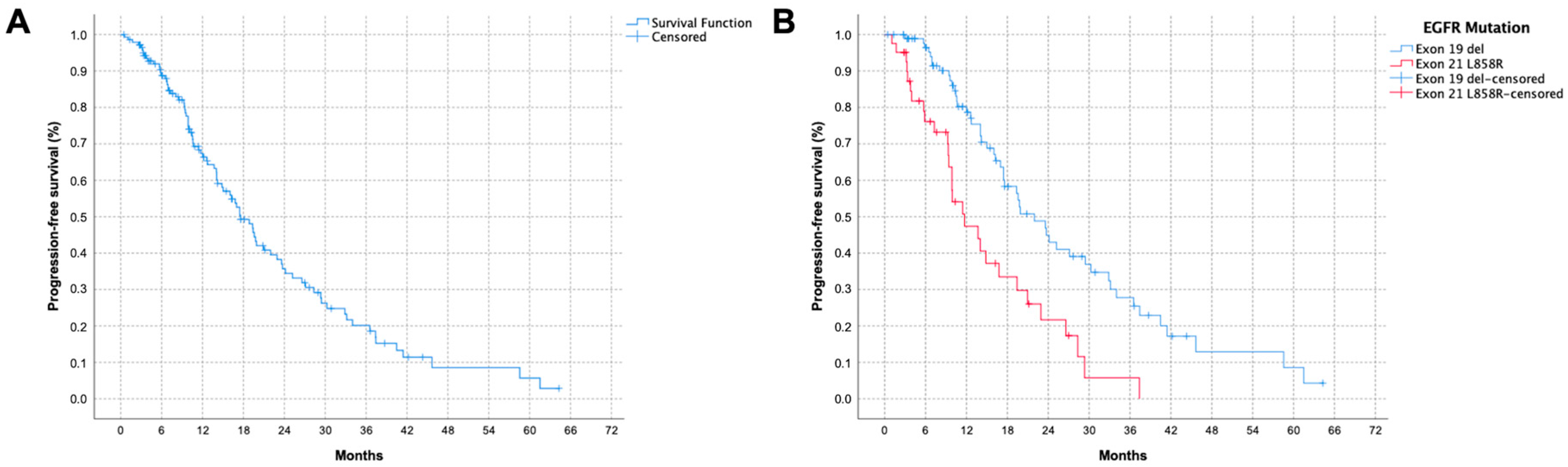
By the end of the data collection period, disease progression had occurred in 86 patients (60.1%). The median PFS in the overall cohort was 17.6 months (95% CI 14.6–20.6), with 12- and 24-month PFS rates of 67.3% (95% CI 59.3–76.4%) and 35.7% (95% CI 27.1–47.0%) (Figure 1). Compared with the exon 21 L858R subgroup, patients with exon 19 deletion had significantly longer median PFS (22.0 vs. 11.7 months; HR = 0.40 [95% CI 0.25–0.64]; p < 0.001), as well as higher 12-month (80.2% vs. 47.3%) and 24-month (44.9% vs. 21.7%) PFS rates. Of the patients who experienced progression on osimertinib monotherapy (n = 86), 44 (51.2%) had oligoprogression. The median DoR among patients with oligoprogression was 8.7 months (95% CI 6.5–11.0). Notably, only two patients (4.5%) developed oligoprogression at the first radiologic assessment after osimertinib initiation, suggesting that the potential for early misclassification was limited. Among patients with oligoprogression, 36 patients (81.8%) received radiotherapy while continuing osimertinib, whereas six patients (13.6%) continued osimertinib without local ablative treatments and two patients (4.5%) discontinued osimertinib to receive subsequent-line therapy. Radiotherapy was the only local ablative treatment used in the cohort, and none of the patients underwent surgery for oligoprogression. Among patients treated with radiotherapy at oligoprogression (n = 36), 25 patients (69.4%) received a single course of radiotherapy, eight patients (22.2%) received two courses, two patients (5.6%) received three courses, and one patient (2.8%) received five courses. The median time to osimertinib discontinuation was significantly longer in patients treated with radiotherapy for oligoprogression than in those who continued osimertinib without local ablative treatments (8.5 months [95% CI 6.3–10.8] vs. 3.0 months [95% CI 2.3–3.6]; log-rank p = 0.001). The median OS was significantly longer in patients with oligoprogression compared to those with systemic progressive disease (57.7 months [95% CI 42.2–73.3] vs. 36.5 months [95% CI 19.4–53.7]; log-rank p = 0.007) (Supplementary Figure S2). Among patients who experienced progression on osimertinib monotherapy, median PPS was significantly longer in patients with oligoprogression than in those with systemic progression (28.5 months [95% CI 26.5–30.5] vs. 8.7 months [95% CI 0.0–22.0]; log-rank p = 0.001) (Supplementary Figure S3). Patients with oligoprogression who received radiotherapy had a significantly longer median PPS than those who did not receive radiotherapy (28.5 months [95% CI 25.4–31.6] vs. 11.1 months [95% CI not estimable]; log-rank p = 0.002) (Supplementary Figure S4). By the end of the data collection period, 13 patients who received radiotherapy for oligoprogression and two patients who continued osimertinib without local ablative treatments remained on osimertinib monotherapy.
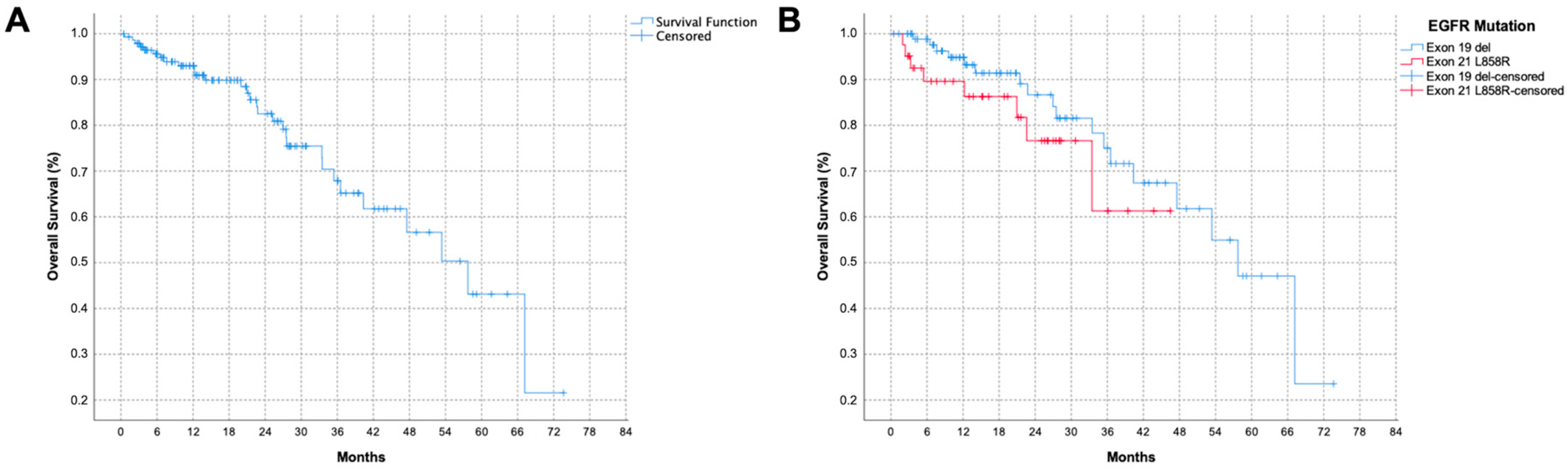
During the follow-up period, 30 patients (21.0%) died. The median OS in the overall cohort was 57.7 months (95% CI 42.4–73.1), with 12- and 24-month OS rates of 93.0% (95% CI 88.6–97.5%) and 82.5% (95% CI 74.9–90.9%) (Figure 2). In the exon 19 deletion subgroup, the 12- and 24-month OS rates were numerically higher compared to the exon 21 L858R subgroup (12-month OS rates: 94.8% vs. 89.6%; 24-month OS rates: 86.6% vs. 76.6%). However, no statistically significant difference in OS was observed between the two subgroups (log-rank p = 0.24).
Among patients presenting with CNS metastases at diagnosis (n = 51), 35 patients (68.6%) received radiotherapy to these lesions, whereas 16 patients (31.4%) did not. The intracranial ORR and DCR in patients who received cranial radiotherapy in combination with osimertinib monotherapy were 97.1% and 100%, respectively (Table 2). The corresponding rates in patients who did not receive cranial radiotherapy were 75.0% and 93.8%, respectively. During the follow-up period, intracranial progression was observed in 14 patients (27.5%) with CNS metastases at diagnosis and in 12 patients (13.0%) without CNS metastases at diagnosis (log-rank p = 0.011). The median time to intracranial progression was 41.4 months (95% CI 1.7–81.2) in patients with CNS metastases at diagnosis who received radiotherapy, whereas the median time was not reached in patients with CNS metastases at diagnosis who did not receive radiotherapy, nor in those without CNS metastases at diagnosis.
Of the patients in whom osimertinib was discontinued due to disease progression (n = 69), 47 patients (68.1%) received second-line therapy, 20 patients (29.0%) received third-line therapy, and four patients (5.8%) received fourth-line therapy. The most frequently used second-line regimen was platinum (either cisplatin or carboplatin) plus pemetrexed (n = 23; 48.9%), followed by platinum (either cisplatin or carboplatin) plus pemetrexed plus pembrolizumab (n = 3; 6.4%) and carboplatin plus paclitaxel (n = 3; 6.4%) (Supplementary Table S2). Histologic transformation to small cell carcinoma occurred in four patients (5.8%), and an ALK fusion was identified in one patient (1.4%). Among the 22 patients (31.9%) who did not receive second-line therapy, seven (10.1%) died at the time of progression or shortly thereafter, five (7.2%) were deemed unfit for further systemic treatment because of poor performance status, and ten (14.5%) were lost to follow-up after progression. Because of the substantial heterogeneity of post-progression treatment regimens and the limited number of patients within individual treatment groups, meaningful comparisons of PPS according to second-line therapy were not feasible.
Using a significance threshold of p < 0.1, univariable Cox regression analysis revealed associations between PFS and the following covariates: exon 21 L858R mutation (HR = 2.51 [95% CI 1.56–4.05]; p < 0.001), involvement of ≥3 metastatic organ systems (HR = 1.67 [95% CI 0.98–2.85]; p = 0.059), liver metastasis (HR= 2.10 [95% CI 1.17–3.76]; p = 0.013), bone metastasis (HR = 1.58 [95% CI 1.02–2.43]; p = 0.040), and adrenal gland metastasis (HR = 4.34 [95% CI 2.24–8.39]; p < 0.001) (Table 3). The multivariable Cox regression analysis demonstrated that exon 21 L858R mutation (HR = 2.07 [95% CI 1.27–3.37]; p = 0.003) and adrenal gland metastasis (HR = 4.41 [95% CI 2.02–9.63]; p < 0.001) were independently associated with worse PFS. Among patients with oligoprogression, univariable Cox regression analysis showed that receipt of radiotherapy for oligoprogression was the only variable significantly associated with time to osimertinib discontinuation following documented oligoprogression (HR = 0.16 [95% CI 0.05–0.52]; p = 0.002) (Supplementary Table S3).
In the safety analysis, 79 patients (55.2%) experienced any-grade osimertinib-related adverse events, while grade ≥ 3 adverse events occurred in nine patients (6.3%) (Table 4). The most frequently reported adverse events were rash (23.1%), diarrhea (16.8%), thrombocytopenia (10.5%), anemia (9.8%), and fatigue (8.4%). The most commonly observed grade ≥ 3 adverse events were rash (2.1%) and diarrhea (1.4%). Notably, one patient developed a grade 4 thromboembolic event requiring prolonged hospitalization.

4. Discussion

In this nationwide, multicenter, retrospective study, the real-world effectiveness and safety outcomes of first-line osimertinib monotherapy were comparable to those reported in pivotal clinical trials. Patients with exon 19 deletion achieved numerically higher response rates and experienced longer median PFS and OS than exon 21 L858R subgroup. Multivariable analysis identified exon 21 L858R mutation and adrenal gland metastasis at diagnosis as independent factors associated with worse PFS. Exploratory analyses further suggested that oligoprogression was associated with more favorable outcomes, with local ablative treatments enabling prolonged continuation of osimertinib treatment.
While the median PFS of 17.6 months was similar to that observed in the FLAURA trial and in the osimertinib monotherapy arm of the FLAURA2 trial, higher ORR (88.1%) and longer median OS (57.7 months) were observed in our cohort [7,16]. In addition to immature OS data in our cohort, several additional factors may partly account for this observation. In our cohort, a higher complete response rate was observed compared with the FLAURA trial (9.8% vs. 3%) and the osimertinib monotherapy arm of the FLAURA2 trial (9.8% vs. 1%), which may have contributed to longer survival in a subset of good responders [7,16]. The younger median age of our cohort compared with that of the FLAURA trial (59 vs. 64 years) and the osimertinib monotherapy arm of FLAURA2 (59 vs. 62 years) may have influenced the tolerability of subsequent-line treatments [7,16]. Additionally, improved second- and later-line systemic treatment options may have contributed to this observation, while the relatively high rate of local ablative treatments (81.8%) with continued osimertinib in cases of oligoprogression may also have played a role. As OS comparisons according to progression pattern are inherently susceptible to immortal time bias, we additionally evaluated PPS from the time of first documented progression. The persistence of a significant PPS advantage among patients with oligoprogression suggests that the observed survival difference is unlikely to be explained solely by immortal time bias. Nevertheless, the exploratory nature of this analysis and the potential influence of residual confounding should be acknowledged. Furthermore, the impact of individual second-line treatment strategies on PPS and OS could not be reliably assessed because of the substantial heterogeneity and limited sample sizes of the post-progression treatment groups. A recent Swiss cohort study including patients treated with first-line osimertinib (n = 148) reported a similar median OS of 51.6 months, with oligoprogression in 77% of patients and local ablative treatment applied in 45% of oligoprogressive cases [10]. Consistent with our findings, Schuler et al. reported significantly longer OS in patients with oligoprogression compared with those with systemic progression (51.6 vs. 26.4 months; p = 0.004) [10]. Another study from China (n = 282) reported an oligoprogression rate of 37%, with local ablative treatment applied in 46% of oligoprogressive cases, and demonstrated longer OS in patients with oligoprogression compared with those with systemic progression (35.4 vs. 24.8 months; p = 0.01) [11]. However, neither study demonstrated a significant OS benefit associated with local ablative treatments in the setting of oligoprogression [10,11]. Together with our findings, these results suggest that oligoprogressive disease in metastatic EGFR-mutant NSCLC may constitute a distinct clinical entity, highlighting the need for prospective studies evaluating tailored therapeutic strategies for this subgroup. Nevertheless, given the inherent limitations of indirect cross-trial comparisons, any comparisons with other studies should be considered hypothesis-generating rather than definitive and interpreted within the context of differences in patient populations, study methodologies, and treatment settings.
Previous studies have consistently highlighted a prognostic disparity between the two classical EGFR variants, with the exon 21 L858R mutation conferring a worse prognosis than the exon 19 deletion [5,6,7,16,17,18,19,20]. In the FLAURA trial, first-line osimertinib monotherapy resulted in distinct median PFS intervals of 21.4 and 14.4 months for the exon 19 deletion and exon 21 L858R cohorts, respectively [7]. This survival trend was mirrored in the osimertinib monotherapy cohort of the FLAURA2 trial, which reported median PFS intervals of 19.4 and 13.9 months for patients with exon 19 deletions and exon 21 L858R mutations, respectively [16]. In addition to the PFS benefit, significant OS differences were observed between patients with exon 19 deletion and those with exon 21 L858R mutations receiving first-line osimertinib monotherapy in both the FLAURA and FLAURA2 trials [5,6]. These findings were supported by a recent large-scale retrospective analysis of 1267 patients receiving first-line osimertinib, which reported significantly improved OS in the exon 19 deletion subgroup compared with the exon 21 L858R subgroup (adjusted HR = 1.43 [95% CI 1.22–1.67]; p < 0.001) [17]. The precise biological mechanisms underlying the more favorable outcomes observed in patients with exon 19 deletion remain to be fully elucidated. However, several studies have suggested that tumors harboring exon 19 deletions may exhibit greater sensitivity to EGFR inhibition than those harboring exon 21 L858R mutations [21]. Furthermore, differences in resistance mechanisms, co-mutation profiles, and tumor biology have been proposed as potential explanations for the consistently superior outcomes observed in patients with exon 19 deletion across multiple EGFR-TKI studies [22,23,24]. Collectively, these findings support the growing concept that exon 19 deletion and exon 21 L858R mutations may represent biologically distinct disease subtypes rather than interchangeable EGFR-mutant populations [25].
Through its ability to cross both the intact blood–brain barrier and the brain–tumor barrier, osimertinib demonstrates substantial intracranial activity, resulting in decreased CNS metastatic volume and prevention of new lesions [26,27]. Our study also included an analysis of intracranial response and progression rates among patients treated with osimertinib monotherapy. The intracranial ORR in patients who did not receive cranial radiotherapy was 75.0% in our cohort, which was numerically similar to that reported in the osimertinib monotherapy arm of the FLAURA2 trial (n = 38; CNS ORR, 69%) [28]. The intracranial complete response rate in our cohort was 43.8%, which was also numerically similar to the 43.3% rate reported in the osimertinib monotherapy arm of the FLAURA2 trial [28]. These findings provide additional real-world data regarding the intracranial efficacy of osimertinib monotherapy. However, they should be interpreted with caution because of the limited sample size and the descriptive nature of our analysis. Whether the addition of local treatment to osimertinib improves OS or intracranial PFS remains an area of ongoing investigation, with conflicting results reported across retrospective studies [29,30]. Despite higher ORR and DCR observed in patients with CNS metastases at diagnosis who received radiotherapy, our study did not provide definitive evidence regarding the additional benefit of cranial radiotherapy, primarily due to the small sample sizes in each subgroup and the limited number of intracranial progression events. Furthermore, baseline clinical and disease characteristics may have differed between patients who did and did not receive cranial radiotherapy, limiting the comparability of these groups.
Beyond osimertinib monotherapy, treatment intensification with the addition of platinum-based chemotherapy to osimertinib in FLAURA2 and the combination of amivantamab and a third-generation EGFR-TKI lazertinib in MARIPOSA showed improved oncologic outcomes, albeit at the cost of increased toxicity [5,8]. Given that a uniform treatment approach is unlikely to be suitable for all patients with metastatic EGFR-mutant NSCLC, therapeutic decisions should incorporate patients’ performance status, anticipated hematologic toxicity from chemotherapy, dermatologic toxicity related to amivantamab plus lazertinib, the time burden of frequent clinic visits and intravenous infusions, and individual patient preferences. While younger and fit patients without significant comorbidities may derive greater benefit from intensified strategies, osimertinib monotherapy remains an effective and well-tolerated treatment option for a substantial proportion of patients with metastatic EGFR-mutant NSCLC.
This study has several limitations that should be acknowledged. Despite being a nationwide study, the sample size was limited due to the lack of reimbursement for osimertinib in Türkiye during the study period. The retrospective nature of the study and the limited sample size of our cohort may have introduced selection bias and should be considered when interpreting the results, particularly those derived from subgroup analyses. The retrospective design also limited our ability to evaluate potential selection factors associated with the use of local ablative treatments, as no standardized criteria were used for patient selection and the reasons underlying these treatment decisions were not systematically recorded. Therefore, residual confounding and treatment-selection bias cannot be excluded. Other key limitations are the relatively short duration of follow-up, absence of co-mutation data, and decentralized tumor response evaluation. The lack of co-mutation data may be largely attributable to restricted access to comprehensive genomic profiling in Türkiye, primarily due to reimbursement restrictions. Consequently, molecular analyses were confined to selected driver alterations in most patients. Imaging modalities and radiologic assessments were not fully standardized across participating centers, and some response evaluations were based on PET-CT findings obtained during routine clinical practice. Therefore, response assessments may have been subject to inter-center variability and may not be directly comparable to those of prospective clinical trials using strictly protocol-defined RECIST criteria.
On the other hand, the major strength of this study is the detailed evaluation of progression patterns during first-line osimertinib monotherapy in a nationwide real-world cohort, together with the exploration of local ablative treatment strategies in patients with oligoprogression. In addition, the intracranial efficacy analysis provides complementary real-world data regarding the CNS activity of osimertinib in routine clinical practice.

5. Conclusions

In conclusion, osimertinib monotherapy represents an effective and generally well-tolerated first-line treatment option for patients with metastatic EGFR-mutant NSCLC. Oncologic outcomes appear more favorable in the exon 19 deletion subgroup compared with the exon 21 L858R subgroup. While real-world median PFS mirrored that observed in pivotal trials, the integration of local ablative treatments in carefully selected patients with oligoprogression may be associated with prolonged osimertinib treatment duration and favorable post-progression outcomes. However, prospective studies are needed to determine whether this strategy translates into improved survival outcomes. The intracranial efficacy outcomes observed in this real-world cohort were numerically similar to those reported in clinical trials.

Supplementary Materials

The following supporting information can be downloaded at https://www.mdpi.com/article/10.3390/cancers18121979/s1: Figure S1: Flow diagram of patients included in the study; Figure S2: Overall survival according to progression pattern during first-line osimertinib; Figure S3: Post-progression survival according to progression pattern following first-line osimertinib; Figure S4: Post-progression survival according to receipt of local ablative treatment among patients with oligoprogression following first-line osimertinib; Table S1: Best response rates; Table S2: Second-line treatment regimens following progression on first-line osimertinib monotherapy; Table S3: Univariable Cox regression analysis for time to osimertinib discontinuation following documented oligoprogression.

Author Contributions

Conceptualization, B.K. (Bahadır Köylü) and F.S.; methodology, B.K. (Bahadır Köylü) and F.S.; software, B.K. (Bahadır Köylü); validation, B.K. (Bahadır Köylü); formal analysis, B.K. (Bahadır Köylü); investigation, B.K. (Bahadır Köylü), Ö.M.C., H.M., O.C., F.Ş., B.B.Ö., U.D., T.Ş., S.K. (Serdar Karakaya), Ö.E., Ö.B.E., A.S., H.B.G., Y.K., D.E.U., E.A. (Esra Aşık), K.N.P., N.A., P.G., M.A.K., S.M., E.K., E.A. (Erkan Arpacı), H.K., S.B., T.K.Ş., E.T., A.A., Y.A., A.Ö., E.Ş., Ö.A., G.S.Ö., C.İ.K., F.K., B.O., T.K., O.G.D., D.T. (Deniz Tural), Ş.G., Ş.L., N.D., D.T. (Didem Tunalı), A.B., Ö.F.Ö., İ.H., E.Ç., O.Y., A.Y., B.B., M.A.N.Ş., A.M.T., M.Ö., B.Y.A., M.K., B.K. (Bülent Karabulut), F.E., E.B., G.G.D., S.K. (Saadettin Kılıçkap), P.F.Y. and N.M.M.; writing—original draft preparation, B.K. (Bahadır Köylü); writing—review and editing, B.K. (Bahadır Köylü), Ö.M.C., H.M., O.C., F.Ş., B.B.Ö., U.D., T.Ş., S.K. (Serdar Karakaya), Ö.E., Ö.B.E., A.S., H.B.G., Y.K., D.E.U., E.A. (Esra Aşık), K.N.P., N.A., P.G., M.A.K., S.M., E.K., E.A. (Erkan Arpacı), H.K., S.B., T.K.Ş., E.T., A.A., Y.A., A.Ö., E.Ş., Ö.A., G.S.Ö., C.İ.K., F.K., B.O., T.K., O.G.D., D.T. (Deniz Tural), Ş.G., Ş.L., N.D., D.T. (Didem Tunalı), A.B., Ö.F.Ö., İ.H., E.Ç., O.Y., A.Y., B.B., M.A.N.Ş., A.M.T., M.Ö., B.Y.A., M.K., B.K. (Bülent Karabulut), F.E., E.B., G.G.D., S.K. (Saadettin Kılıçkap), P.F.Y., N.M.M. and F.S.; visualization, F.S.; supervision, F.S.; project administration, F.S. All authors have read and agreed to the published version of the manuscript.

Funding

This research received no external funding.

Institutional Review Board Statement

The study was conducted in accordance with the Declaration of Helsinki, and approved by the Ethics Committee of Koç University (Approval ID: 2025.095.IRB2.043, Approval date: 26 February 2025). Given the retrospective design and the use of de-identified data, the institutional review board waived the requirement for individual informed consent.

Informed Consent Statement

Patient consent was waived due to the retrospective design.

Data Availability Statement

The data supporting the findings of this study are available from the corresponding author upon reasonable request.

Conflicts of Interest

The authors declare no conflicts of interest.

Abbreviations

The following abbreviations are used in this manuscript:
CIConfidence interval
CNSCentral nervous system
CRComplete response
CTCAECommon Terminology Criteria for Adverse Events
DCRDisease control rate
ECOGEastern Cooperative Oncology Group
EGFREpidermal growth factor receptor
HRHazard ratio
IQRInterquartile range
LATLocal ablative treatment
NSCLCNon-small cell lung cancer
ORRObjective response rate
OSOverall survival
PFSProgression-free survival
PRPartial response
RECISTResponse Evaluation Criteria in Solid Tumors
SDStable disease
TKITyrosine kinase inhibitor
TPSTumor proportion score
TRAETreatment-related adverse event

References

  1. Zhang, Y.-L.; Yuan, J.-Q.; Wang, K.-F.; Fu, X.-H.; Han, X.-R.; Threapleton, D.; Yang, Z.-Y.; Mao, C.; Tang, J.-L. The prevalence of EGFR mutation in patients with non-small cell lung cancer: A systematic review and meta-analysis. Oncotarget 2016, 7, 78985–78993. [Google Scholar] [CrossRef]
  2. Melosky, B.; Kambartel, K.; Häntschel, M.; Bennetts, M.; Nickens, D.J.; Brinkmann, J.; Kayser, A.; Moran, M.; Cappuzzo, F. Worldwide Prevalence of Epidermal Growth Factor Receptor Mutations in Non-Small Cell Lung Cancer: A Meta-Analysis. Mol. Diagn. Ther. 2022, 26, 7–18. [Google Scholar] [CrossRef] [PubMed]
  3. Calibasi-Kocal, G.; Amirfallah, A.; Sever, T.; Unal, O.U.; Gurel, D.; Oztop, I.; Ellidokuz, H.; Basbinar, Y. EGFR mutation status in a series of Turkish non-small cell lung cancer patients. Biomed. Rep. 2020, 13, 2. [Google Scholar] [CrossRef] [PubMed]
  4. Chevallier, M.; Borgeaud, M.; Addeo, A.; Friedlaender, A. Oncogenic driver mutations in non-small cell lung cancer: Past, present and future. World J. Clin. Oncol. 2021, 12, 217–237. [Google Scholar] [CrossRef] [PubMed]
  5. Jänne, P.A.; Planchard, D.; Kobayashi, K.; Yang, J.C.-H.; Liu, Y.; Valdiviezo, N.; Kim, T.M.; Jiang, L.; Kagamu, H.; Yanagitani, N.; et al. Survival with Osimertinib plus Chemotherapy in EGFR-Mutated Advanced NSCLC. N. Engl. J. Med. 2026, 394, 27–38. [Google Scholar] [CrossRef] [PubMed]
  6. Ramalingam, S.S.; Vansteenkiste, J.; Planchard, D.; Cho, B.C.; Gray, J.E.; Ohe, Y.; Zhou, C.; Reungwetwattana, T.; Cheng, Y.; Chewaskulyong, B.; et al. Overall Survival with Osimertinib in Untreated, EGFR-Mutated Advanced NSCLC. N. Engl. J. Med. 2020, 382, 41–50. [Google Scholar] [CrossRef] [PubMed]
  7. Soria, J.-C.; Ohe, Y.; Vansteenkiste, J.; Reungwetwattana, T.; Chewaskulyong, B.; Lee, K.H.; Dechaphunkul, A.; Imamura, F.; Nogami, N.; Kurata, T.; et al. Osimertinib in Untreated EGFR-Mutated Advanced Non–Small-Cell Lung Cancer. N. Engl. J. Med. 2018, 378, 113–125. [Google Scholar] [CrossRef] [PubMed]
  8. Yang, J.C.-H.; Lu, S.; Hayashi, H.; Felip, E.; Spira, A.I.; Girard, N.; Kim, Y.J.; Lee, S.-H.; Ostapenko, Y.; Danchaivijitr, P.; et al. Overall Survival with Amivantamab–Lazertinib in EGFR-Mutated Advanced NSCLC. N. Engl. J. Med. 2025, 393, 1681–1693. [Google Scholar] [CrossRef] [PubMed]
  9. Nguyen, K.T.; Sakthivel, G.; Milano, M.T.; Qiu, H.; Singh, D.P. Oligoprogression in non-small cell lung cancer: A narrative review. J. Thorac. Dis. 2022, 14, 4998–5011. [Google Scholar] [CrossRef] [PubMed]
  10. Schuler, A.; Huser, J.; Schmid, S.; Schär, S.; Scherz, A.; Gautschi, O.; Mauti, L.; von Briel, T.; Waibel, C.; Wannesson, L.; et al. Patterns of progression on first line osimertinib in patients with EGFR mutation-positive advanced non-small cell lung cancer (NSCLC): A Swiss cohort study. Lung Cancer 2024, 187, 107427. [Google Scholar] [CrossRef] [PubMed]
  11. Chen, A.C.; Mok, F.S.; Wong, W.K.; Lam, B.H.; Johnson, D.; Lee, M.M.; Chan, L.L.; Mo, F.; Mok, K.K.; Chen, O.H.; et al. Pattern of failure, impact of local therapy, and characteristics of long-term responders with advanced EGFR mutation positive non-small cell lung cancer treated with first-line osimertinib. Lung Cancer 2025, 210, 108808. [Google Scholar] [CrossRef] [PubMed]
  12. Hendriks, L.; Kerr, K.; Menis, J.; Mok, T.; Nestle, U.; Passaro, A.; Peters, S.; Planchard, D.; Smit, E.; Solomon, B.; et al. Oncogene-addicted metastatic non-small-cell lung cancer: ESMO Clinical Practice Guideline for diagnosis, treatment and follow-up. Ann. Oncol. 2023, 34, 339–357. [Google Scholar] [CrossRef] [PubMed]
  13. National Comprehensive Cancer Network (NCCN). NCCN Clinical Practice Guidelines in Oncology: Non–Small Cell Lung Cancer, Version 3.2026; National Comprehensive Cancer Network: Philadelphia, PA, USA, 2026. [Google Scholar]
  14. Eisenhauer, E.A.; Therasse, P.; Bogaerts, J.; Schwartz, L.H.; Sargent, D.; Ford, R.; Dancey, J.; Arbuck, S.; Gwyther, S.; Mooney, M.; et al. New response evaluation criteria in solid tumours: Revised RECIST guideline (version 1.1). Eur. J. Cancer 2009, 45, 228–247. [Google Scholar] [CrossRef] [PubMed]
  15. National Cancer Institute Division of Cancer Treatment and Diagnosis (DCTD); Cancer Therapy Evaluation Program (CTEP); U.S. Department of Health and Human Services; National Cancer Institute. Common Terminology Criteria for Adverse Events (CTCAE) Version 5.0; 2017. Available online: https://dctd.cancer.gov/research/ctep-trials/for-sites/adverse-events/ctcae-v5-5x7.pdf (accessed on 6 February 2026).
  16. Planchard, D.; Jänne, P.A.; Cheng, Y.; Yang, J.C.-H.; Yanagitani, N.; Kim, S.-W.; Sugawara, S.; Yu, Y.; Fan, Y.; Geater, S.L.; et al. Osimertinib with or without Chemotherapy in EGFR-Mutated Advanced NSCLC. N. Engl. J. Med. 2023, 389, 1935–1948. [Google Scholar] [CrossRef] [PubMed]
  17. Sabari, J.K.; Yu, H.A.; Mahadevia, P.J.; Liu, Y.; Demirdjian, L.; Chen, Y.H.; Wang, X.; Passaro, A. Overall Survival in EGFR-Mutant Advanced NSCLC Treated with First-Line Osimertinib: A Cohort Study Integrating Clinical and Biomarker Data in the United States. J. Thorac. Oncol. 2025, 20, 1268–1278. [Google Scholar] [CrossRef] [PubMed]
  18. Kobayashi, K.; Soejima, K.; Fukunaga, K.; Shintani, Y.; Sekine, I.; Shukuya, T.; Takayama, K.; Inoue, A.; Okamoto, I.; Kiura, K.; et al. Key prognostic factors for EGFR-mutated non-adenocarcinoma lung cancer patients in the Japanese Joint Committee of Lung Cancer Registry Database. Lung Cancer 2020, 146, 236–243. [Google Scholar] [CrossRef] [PubMed]
  19. Hong, W.; Wu, Q.; Zhang, J.; Zhou, Y. Prognostic value of EGFR 19-del and 21-L858R mutations in patients with non-small cell lung cancer. Oncol. Lett. 2019, 18, 3887–3895. [Google Scholar] [CrossRef] [PubMed]
  20. Batra, U.; Biswas, B.; Prabhash, K.; Krishna, M.V. Differential clinicopathological features, treatments and outcomes in patients with Exon 19 deletion and Exon 21 L858R EGFR mutation-positive adenocarcinoma non-small-cell lung cancer. BMJ Open Respir. Res. 2023, 10, e001492. [Google Scholar] [CrossRef] [PubMed]
  21. van Alderwerelt van Rosenburgh, I.K.; Lu, D.M.; Grant, M.J.; Stayrook, S.E.; Phadke, M.; Walther, Z.; Goldberg, S.B.; Politi, K.; Lemmon, M.A.; Ashtekar, K.D.; et al. Biochemical and structural basis for differential inhibitor sensitivity of EGFR with distinct exon 19 mutations. Nat. Commun. 2022, 13, 6791. [Google Scholar] [CrossRef] [PubMed]
  22. Zheng, Q.; Huang, Y.; Zhao, H.; Yang, Y.; Hong, S.; Hou, X.; Zhao, Y.; Ma, Y.; Zhou, T.; Zhang, Y.; et al. EGFR mutation genotypes affect efficacy and resistance mechanisms of osimertinib in T790M-positive NSCLC patients. Transl. Lung Cancer Res. 2020, 9, 471–483. [Google Scholar] [CrossRef] [PubMed]
  23. Gu, W.; Liu, P.; Tang, J.; Lai, J.; Wang, S.; Zhang, J.; Xu, J.; Deng, J.; Yu, F.; Shi, C.; et al. The prognosis of TP53 and EGFR co-mutation in patients with advanced lung adenocarcinoma and intracranial metastasis treated with EGFR-TKIs. Front. Oncol. 2024, 13, 1288468. [Google Scholar] [CrossRef] [PubMed]
  24. Offin, M.; Rizvi, H.; Tenet, M.; Ni, A.; Sanchez-Vega, F.; Li, B.T.; Drilon, A.; Kris, M.G.; Rudin, C.M.; Schultz, N.; et al. Tumor Mutation Burden and Efficacy of EGFR-Tyrosine Kinase Inhibitors in Patients with EGFR-Mutant Lung Cancers. Clin. Cancer Res. 2019, 25, 1063–1069. [Google Scholar] [CrossRef] [PubMed]
  25. Kim, S.; Heo, Y.; Lee, Y.-H.; Kang, J.H. Are 19del and L858R really different disease entities? Future Oncol. 2024, 20, 1689–1694. [Google Scholar] [CrossRef] [PubMed]
  26. Ekman, S.; Cselényi, Z.; Varrone, A.; Jucaite, A.; Martin, H.; Schou, M.; Johnström, P.; Laus, G.; Lewensohn, R.; Brown, A.P.; et al. Brain exposure of osimertinib in patients with epidermal growth factor receptor mutation non-small cell lung cancer and brain metastases: A positron emission tomography and magnetic resonance imaging study. Clin. Transl. Sci. 2023, 16, 955–965. [Google Scholar] [CrossRef] [PubMed]
  27. Wu, Y.-L.; Tsuboi, M.; He, J.; John, T.; Grohe, C.; Majem, M.; Goldman, J.W.; Laktionov, K.; Kim, S.-W.; Kato, T.; et al. Osimertinib in Resected EGFR-Mutated Non-Small-Cell Lung Cancer. N. Engl. J. Med. 2020, 383, 1711–1723. [Google Scholar] [CrossRef] [PubMed]
  28. Jänne, P.A.; Planchard, D.; Kobayashi, K.; Cheng, Y.; Lee, C.K.; Valdiviezo, N.; Laktionov, K.; Yang, T.-Y.; Yu, Y.; Kato, T.; et al. CNS Efficacy of Osimertinib with or Without Chemotherapy in Epidermal Growth Factor Receptor–Mutated Advanced Non–Small-Cell Lung Cancer. J. Clin. Oncol. 2024, 42, 808–820. [Google Scholar] [CrossRef] [PubMed]
  29. Thomas, N.J.; Myall, N.J.; Sun, F.; Patil, T.; Mushtaq, R.; Yu, C.; Sinha, S.; Pollom, E.L.; Nagpal, S.; Camidge, D.R.; et al. Brain Metastases in EGFR- and ALK-Positive NSCLC: Outcomes of Central Nervous System-Penetrant Tyrosine Kinase Inhibitors Alone Versus in Combination with Radiation. J. Thorac. Oncol. 2022, 17, 116–129. [Google Scholar] [CrossRef] [PubMed]
  30. Tozuka, T.; Noro, R.; Mizutani, H.; Kurimoto, F.; Hakozaki, T.; Hisakane, K.; Naito, T.; Takahashi, S.; Taniuchi, N.; Yajima, C.; et al. Osimertinib plus local treatment for brain metastases versus osimertinib alone in patients with EGFR-Mutant Non-Small Cell Lung Cancer. Lung Cancer 2024, 191, 107540. [Google Scholar] [CrossRef] [PubMed]
Figure 1. Kaplan–Meier curves for progression-free survival in (A) the overall cohort and (B) stratified by EGFR mutation subtype (exon 19 deletion vs. exon 21 L858R).
Cancers 18 01979 g001
Figure 2. Kaplan–Meier curves for overall survival in (A) the overall cohort and (B) stratified by EGFR mutation subtype (exon 19 deletion vs. exon 21 L858R).
Cancers 18 01979 g002
Table 1. Baseline clinicopathologic characteristics of the overall study population and EGFR mutation subgroups.
VariablesAll Group
(n = 143)
Exon 19 Deletion
(n = 92)
Exon 21 L858R
(n = 41)
Age, years, median (IQR)59.4 (50.9–68.9)56.9 (49.6–66.5)65.6 (53.3–71.6)
Sex, female, n (%)90 (62.9)59 (64.1)24 (58.5)
Smoking habit, n (%)   
  • Smoker
  • Former smoker
  • Non-smoker
11 (7.7)
34 (23.8)
98 (68.5)
4 (4.3)
21 (22.8)
67 (72.8)
6 (14.6)
12 (29.3)
23 (56.1)
ECOG performance status, n (%)   
  • 0
  • 1
  • 2
60 (42.0)
67 (46.9)
16 (11.2)
39 (42.4)
41 (44.6)
12 (13.0)
16 (39.0)
21 (51.2)
4 (9.8)
Histology, n (%)   
  • Adenocarcinoma
    • Lepidic
    • Papillary
    • Micropapillary
    • Acinar
    • Solid
    • Mucinous
    • Unknown
  • Squamous cell carcinoma
  • Adenosquamous carcinoma
143 (100.0)
20 (14.0)
11 (7.7)
10 (7.0)
27 (18.9)
25 (17.5)
3 (2.1)
47 (32.9)
0
0
92 (100.0)
13 (14.1)
8 (8.7)
7 (7.6)
14 (15.2)
15 (16.3)
3 (3.3)
32 (34.8)
0
0
41 (100.0)
6 (14.6)
1 (2.4)
3 (7.3)
9 (22.0)
10 (24.4)
0
12 (29.3)
0
0
PD-L1 TPS, n (%)   
  • <1%
  • ≥1%
    • 1–49%
    • ≥50%
  • Unknown
45 (31.5)
70 (49.0)
46 (32.2)
24 (16.8)
28 (19.6)
33 (35.9)
44 (47.8)
27 (29.3)
17 (18.5)
15 (16.3)
12 (29.3)
19 (46.3)
14 (34.1)
5 (12.2)
10 (24.4)
Metastatic presentation, n (%)   
  • De novo
  • Recurrent
124 (86.7)
19 (13.3)
81 (88.0)
11 (12.0)
35 (85.4)
6 (14.6)
Metastatic sites, n (%)   
  • Central nervous system
  • Liver
  • Bone
  • Adrenal gland
  • Contralateral lung
  • Pleura
  • Pericardium
51 (35.7)
18 (12.6)
76 (53.1)
13 (9.1)
32 (22.4)
26 (18.2)
4 (2.8)
31 (33.7)
9 (9.8)
51 (55.4)
6 (6.5)
23 (25.0)
21 (22.8)
3 (3.3)
17 (41.5)
8 (19.5)
20 (48.8)
7 (17.1)
5 (12.2)
3 (7.3)
1 (2.4)
Number of metastatic sites, n (%)   
  • ≤2 organ systems
  • ≥3 organ systems
118 (82.5)
25 (17.5)
75 (81.5)
17 (18.5)
35 (85.4)
6 (14.6)
Radiotherapy at metastatic diagnosis, n (%)61 (42.7)38 (41.3)18 (43.9)
  • Primary lung tumor
  • Central nervous system
  • Bone
6 (4.2)
35 (24.5)
29 (20.3)
3 (3.3)
21 (22.8)
20 (21.7)
2 (4.9)
13 (31.7)
8 (19.5)
ECOG, Eastern Cooperative Oncology Group; IQR, Interquartile range; TPS, Tumor proportion score.
Table 2. Best intracranial response and progression rates according to baseline central nervous system metastasis status and treatment with radiotherapy.
Intracranial Best ResponsePatients with CNS Metastasis at Diagnosis (n = 51)Patients Without CNS Metastasis at Diagnosis (n = 92)
Received Radiotherapy (n = 35)Not Received Radiotherapy (n = 16)
Complete response (CR), n (%)11 (31.4)7 (43.8)-
Partial response (PR), n (%)23 (65.7)5 (31.3)-
Stable disease (SD), n (%)1 (2.9)3 (18.8)-
Progressive disease (PD), n (%)01 (6.3)-
Intracranial ORR, %97.1%75.0%-
Intracranial DCR, %100.0%93.8%-
Intracranial progression, n (%)9 (25.7)5 (31.3)12 (13.0)
Median time to intracranial progression, months (95% CI)41.4 (1.7–81.2)NRNR
CI, Confidence interval; CNS, Central nervous system; NR, Not reached; ORR, Objective response rate (CR + PR); DCR, Disease control rate (CR + PR + SD).
Table 3. Univariable and multivariable Cox regression analyses for progression-free survival.
VariablesMedian PFS, Months (95% CI)Univariable AnalysisMultivariable Analysis
HR (95% CI)p Value aHR (95% CI)p Value a
Age
  • <70
  • ≥70

18.9 (15.6–22.1)
16.0 (11.1–21.0)
0.84 (0.48–1.46)0.53  
Sex
  • Female
  • Male

18.9 (16.1–21.7)
16.3 (9.7–22.8)
1.12 (0.73–1.72)0.61  
Smoking habit
  • Non-smoker
  • Smoker/Former smoker

19.4 (16.6–22.1)
16.3 (9.7–22.9)
1.32 (0.83–2.10)0.24  
ECOG PS
  • 0–1
  • 2

18.9 (16.2–21.6)
14.1 (8.1–20.0)
1.24 (0.67–2.29)0.49  
Metastatic presentation
  • De novo
  • Recurrent

17.4 (13.6–21.3)
26.6 (2.2–51.0)
1.35 (0.69–2.63)0.38  
EGFR mutation
  • Exon 19 deletion
  • Exon 21 L858R

22.0 (17.2–26.8)
11.7 (6.8–16.6)
2.51 (1.56–4.05)<0.0012.07 (1.27–3.37)0.003
PD-L1 TPS
  • <1%
  • ≥1%

19.4 (10.6–28.1)
16.3 (10.7–21.9)
1.35 (0.82–2.22)0.24  
Number of metastatic sites
  • ≤2 organ systems
  • ≥3 organ systems

17.6 (14.4–20.7)
13.7 (0.7–26.7)
1.67 (0.98–2.85)0.0590.84 (0.41–1.75)0.65
CNS metastases
  • No
  • Yes

19.4 (15.9–22.8)
14.9 (8.5–21.2)
1.19 (0.76–1.85)0.45  
Liver metastases
  • No
  • Yes

19.4 (16.6–22.1)
11.4 (9.3–13.6)
2.10 (1.17–3.76)0.0131.76 (0.87–3.53)0.11
Bone metastases
  • No
  • Yes

22.0 (14.1–29.9)
15.0 (12.2–17.8)
1.58 (1.02–2.43)0.0401.48 (0.93–2.37)0.10
Adrenal gland metastases
  • No
  • Yes

19.4 (16.8–22.0)
6.9 (5.0–8.9)
4.34 (2.24–8.39)<0.0014.41 (2.02–9.63)<0.001
Contralateral lung metastases
  • No
  • Yes

17.4 (13.7–21.2)
18.9 (11.9–25.8)
1.04 (0.63–1.73)0.87  
Pleural metastases
  • No
  • Yes

17.0 (13.2–20.7)
24.1 (4.4–43.9)
0.62 (0.35–1.11)0.11  
a Cox proportional hazards regression; CI, Confidence interval; CNS, Central nervous system; ECOG PS, Eastern Cooperative Oncology Group performance status; HR, Hazard ratio; PFS, Progression-free survival; TPS, Tumor proportion score.
Table 4. Osimertinib-related adverse events.
Adverse EventAny GradeGrade ≥ 3
n%n%
Any adverse event7955.2%96.3%
Rash3323.1%32.1%
Diarrhea2416.8%21.4%
Thrombocytopenia1510.5%00
Anemia149.8%21.4%
Fatigue128.4%00
Nail changes96.3%00
Leukopenia85.6%21.4%
Nausea42.8%00
Oral mucositis42.8%00
ALT or AST elevation32.1%00
Muscle cramp21.4%00
Thromboembolic event21.4%10.7%
Alopecia21.4%00
Decreased appetite21.4%00
Peripheral neuropathy10.7%00
ALT, Alanine aminotransferase; AST, Aspartate aminotransferase.
Disclaimer/Publisher’s Note: The statements, opinions and data contained in all publications are solely those of the individual author(s) and contributor(s) and not of MDPI and/or the editor(s). MDPI and/or the editor(s) disclaim responsibility for any injury to people or property resulting from any ideas, methods, instructions or products referred to in the content.