Tailoring Oncofertility to Breast Cancer Subtype: A Systematic Review of Fertility Preservation Strategies in Premenopausal Women

 , , , and
Simple Summary
Abstract
1. Introduction
2. Materials and Methods
2.1. Inclusion Criteria
2.2. Exclusion Criteria
2.3. Outcomes
2.4. Search Strategy
2.5. Screening and Data Extraction
2.6. Risk of Bias Assessment
2.7. Data Synthesis
3. Results
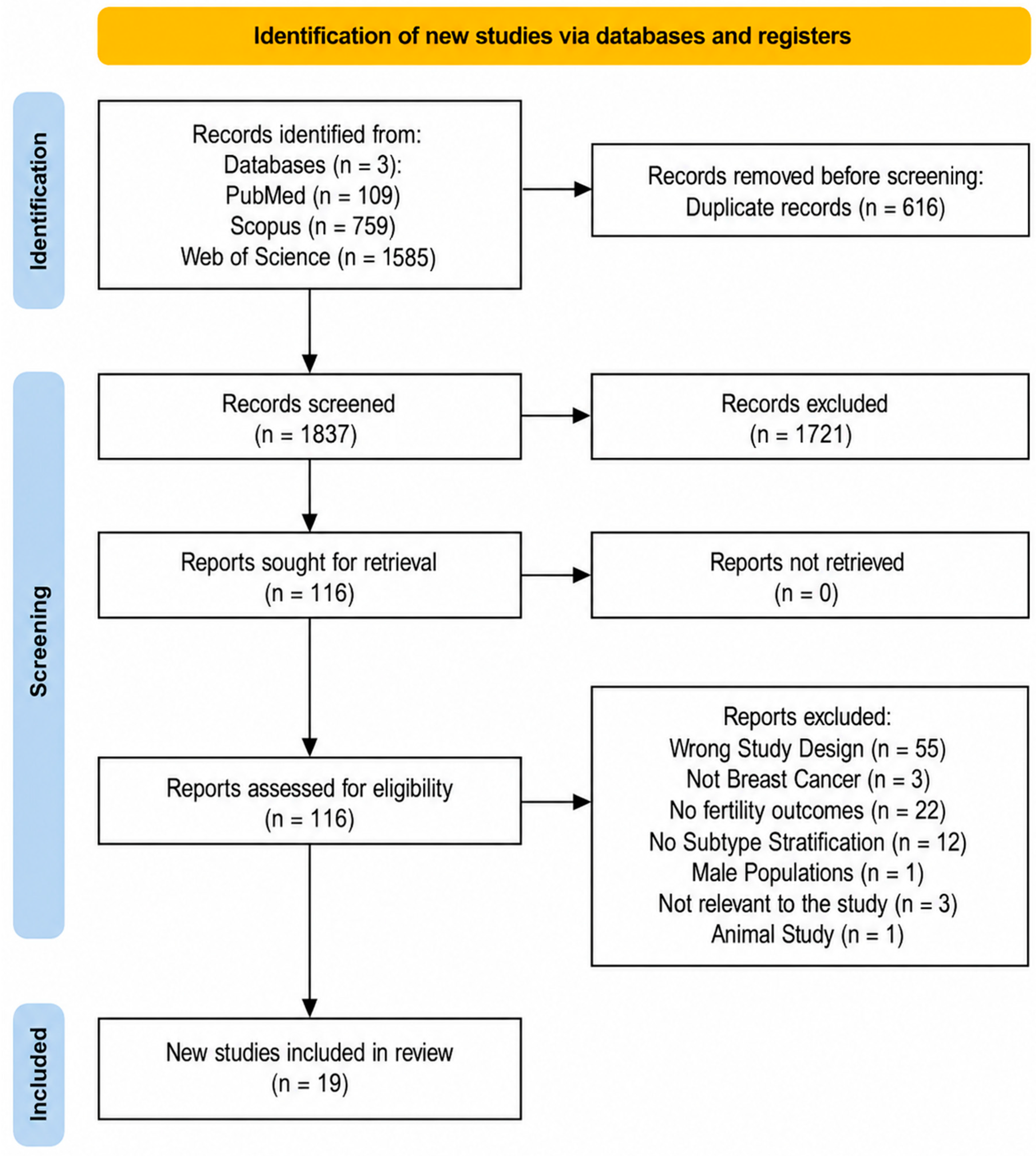
3.1. Study Selection
3.2. Study Characteristics
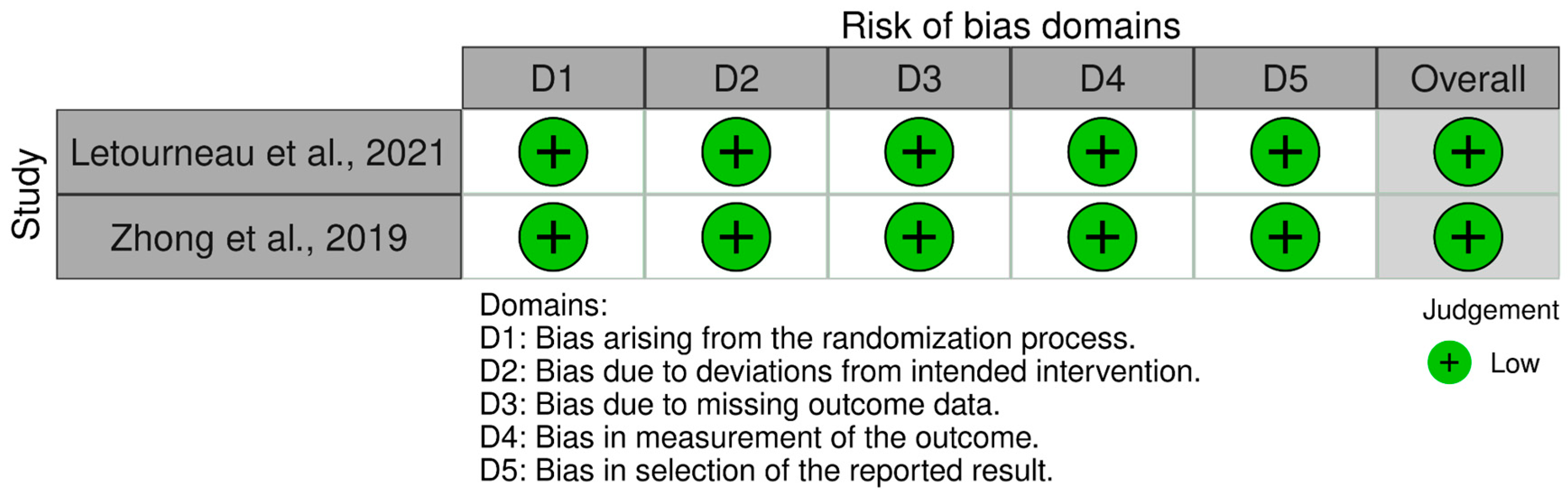
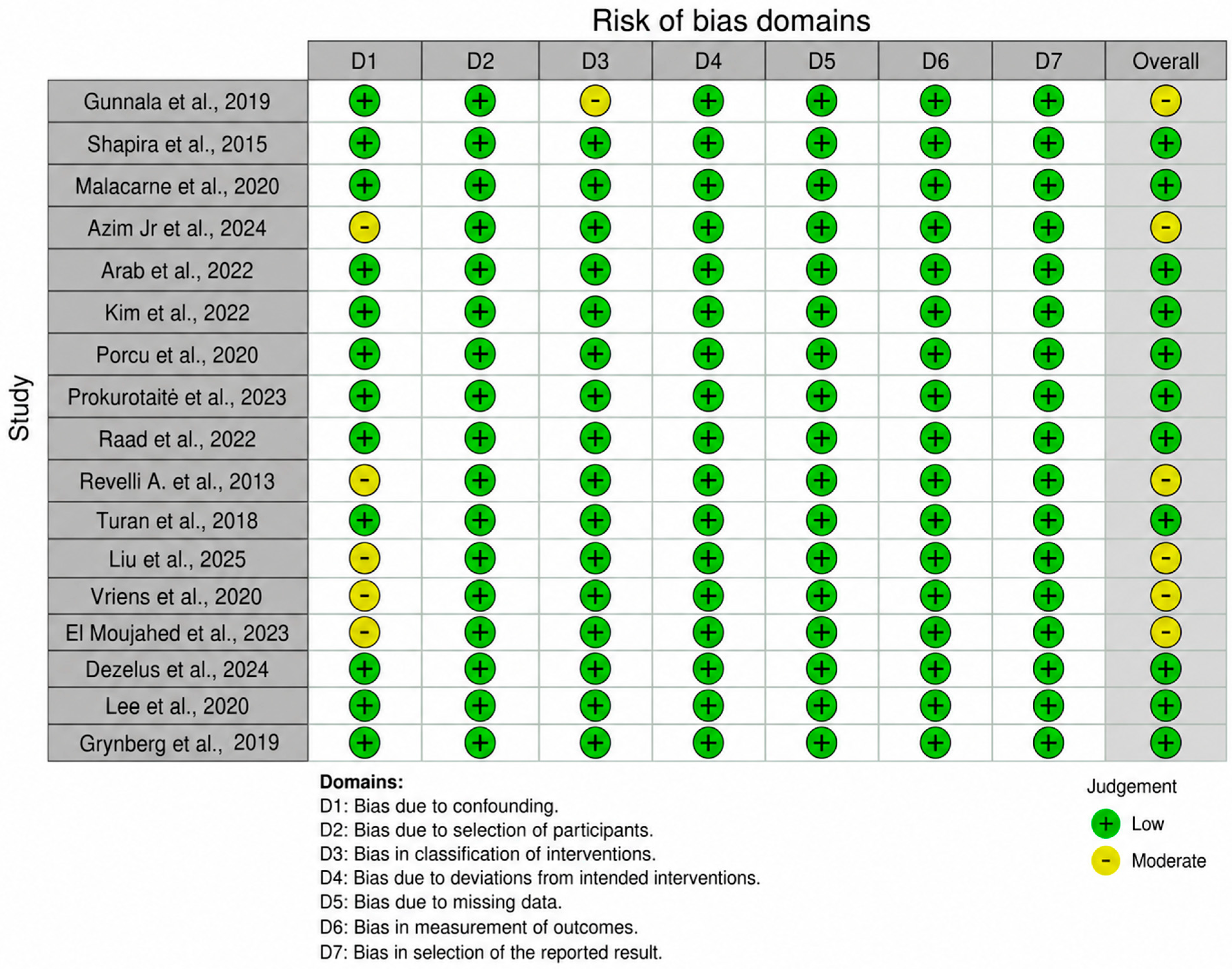
3.3. Bias Assessment
3.4. Summary of Evidence
4. Discussion
4.1. Ovarian Function Preservation
4.2. Controlled Ovarian Stimulation and Cryopreservation Outcomes
4.3. Impact of BRCA Mutation Status
4.4. In Vitro Maturation, In Vitro Fertilization, and Ovarian Tissue Cryopreservation
4.5. Post-Treatment Fertility Outcomes
4.6. Clinical Implications and Recommendations for Practice
4.7. Limitations and Methodological Considerations
4.8. Directions for Future Research
5. Conclusions
Author Contributions
Funding
Data Availability Statement
Conflicts of Interest
Abbreviations
| AFC | antral follicle count |
| AI | aromatase inhibitor |
| AMH | anti-Müllerian hormone |
| ART | assisted reproductive technology |
| ASCO | American Society of Clinical Oncology |
| BC | breast cancer |
| BCFI | breast cancer-free interval |
| BMI | body mass index |
| BRCA | breast cancer susceptibility gene |
| CDK4/6 | cyclin-dependent kinase 4/6 |
| COC | cumulus-oocyte complex |
| COS | controlled ovarian stimulation |
| DFS | disease-free survival |
| E2 | estradiol |
| ER | estrogen receptor |
| ESMO | European Society for Medical Oncology |
| ET | endocrine therapy |
| FEC | 5-fluorouracil, epirubicin, cyclophosphamide |
| FP | fertility preservation |
| FSH | follicle-stimulating hormone |
| GnRH | gonadotropin-releasing hormone |
| GnRHa | gonadotropin-releasing hormone agonist |
| HER2 | human epidermal growth factor receptor 2 |
| HR | hormone receptor |
| ICSI | intracytoplasmic sperm injection |
| IUI | intrauterine insemination |
| IVF | in vitro fertilization |
| IVM | in vitro maturation |
| LH | luteinizing hormone |
| MII | metaphase II |
| NAC | neoadjuvant chemotherapy |
| OFS | ovarian function suppression |
| OTC | ovarian tissue cryopreservation |
| OVF | ovarian function failure |
| PARP | poly ADP-ribose polymerase |
| PR | progesterone receptor |
| RCT | randomized controlled trial |
| SBR | Scarff-Bloom-Richardson |
| SERM | selective estrogen receptor modulator |
| TNBC | triple-negative breast cancer |
References
- Freihat, O.; Sipos, D.; Kovacs, A. Global burden and projections of breast cancer incidence and mortality to 2050: A comprehensive analysis of GLOBOCAN data. Front. Public Health 2025, 13, 1622954. [Google Scholar] [CrossRef]
- Kim, J.; Harper, A.; McCormack, V.; Sung, H.; Houssami, N.; Morgan, E.; Mutebi, M.; Garvey, G.; Soerjomataram, I.; Fidler-Benaoudia, M.M. Global patterns and trends in breast cancer incidence and mortality across 185 countries. Nat. Med. 2025, 31, 1154–1162. [Google Scholar] [CrossRef]
- Wang, W.; Sun, Y.; Li, J.; Bai, H.; Ren, C.; Feng, Y.; Wang, S. Global, regional, and national burden of breast cancer in young women from 1990 to 2021: Findings from the global burden of disease study 2021. BMC Cancer 2025, 25, 1015. [Google Scholar] [CrossRef]
- Breast Recent Trends in SEER Age-Adjusted Incidence Rates, 2000–2022. Available online: https://seer.cancer.gov/statistics-network/explorer/ (accessed on 15 November 2025).
- El Saghir, N.S.; Khalil, L.E.; El Dick, J.; Atwani, R.W.; Safi, N.; Charafeddine, M.; Al-Masri, A.; El Saghir, B.N.; Chaccour, M.; Tfayli, A.; et al. Improved Survival of Young Patients with Breast Cancer 40 Years and Younger at Diagnosis. JCO Glob. Oncol. 2023, 9, e2200354. [Google Scholar] [CrossRef] [PubMed]
- Chen, M.; Wang, X.; Lan, N.; Chen, Y.; Gao, Y.; Wang, J.; Wang, W.; Jiao, M.; Bai, S.; Li, W.; et al. Prevalence and impact of fertility preservation among young women with breast cancer. Sci. Rep. 2025, 15, 7549. [Google Scholar] [CrossRef] [PubMed]
- Gentile, G.; Tesei, C.; Brunetti, S.; Cavaceppi, P.; Sorrenti, G.; Lambertini, M.; Ciccarone, M. Fertility preservation in young patients with breast cancer: Insights from the Gemme Dormienti network. Ther. Adv. Med. Oncol. 2025, 17, 17588359251341210. [Google Scholar] [CrossRef] [PubMed]
- Hong, Y.H.; Park, C.; Paik, H.; Lee, K.-H.; Lee, J.R.; Han, W.; Park, S.; Chung, S.; Kim, H.J. Fertility Preservation in Young Women with Breast Cancer: A Review. J. Breast Cancer 2023, 26, 221. [Google Scholar] [CrossRef]
- Committee of Diagnosis Treatment and Fertility Management of Chinese Young Breast Cancer Patients. Expert consensus on diagnosis, treatment and fertility management of young breast cancer patients. J. Natl. Cancer Cent. 2021, 1, 23–30. [CrossRef]
- Mohd Faizal, A.; Sugishita, Y.; Suzuki-Takahashi, Y.; Iwahata, H.; Takae, S.; Horage-Okutsu, Y.; Suzuki, N. Twenty-first century oocyte cryopreservation-in vitro maturation of immature oocytes from ovarian tissue cryopreservation in cancer patients: A systematic review. Women’s Health 2022, 18, 17455057221114268. [Google Scholar] [CrossRef]
- Oktay, K.; Harvey, B.E.; Partridge, A.H.; Quinn, G.P.; Reinecke, J.; Taylor, H.S.; Wallace, W.H.; Wang, E.T.; Loren, A.W. Fertility Preservation in Patients with Cancer: ASCO Clinical Practice Guideline Update. J. Clin. Oncol. 2018, 36, 1994–2001. [Google Scholar] [CrossRef]
- Peccatori, F.A.; Azim, H.A.; Orecchia, R.; Hoekstra, H.J.; Pavlidis, N.; Kesic, V.; Pentheroudakis, G. ESMO Guidelines Working Group. Cancer, pregnancy and fertility: ESMO Clinical Practice Guidelines for diagnosis, treatment and follow-up. Ann. Oncol. 2013, 24, vi160–vi170. [Google Scholar] [CrossRef]
- Yersal, O.; Barutca, S. Biological subtypes of breast cancer: Prognostic and therapeutic implications. World J. Clin. Oncol. 2014, 5, 412–424. [Google Scholar] [CrossRef]
- Hage, A.M.; Gebert, P.; Blohmer, J.-U.; Hedayati, E.; Speiser, D.; Karsten, M.M. Subtype-Specific Survival of Young Women with Breast Cancer and Its Interaction with the Germline BRCA Status. Cancers 2024, 16, 738. [Google Scholar] [CrossRef]
- Kurian, A.W.; Abrahamse, P.; Hamilton, A.S.; Caswell-Jin, J.L.; Gomez, S.L.; Hofer, T.J.; Ward, K.C.; Katz, S.J. Chemotherapy Regimens Received by Women with BRCA1/2 Pathogenic Variants for Early Stage Breast Cancer Treatment. JNCI Cancer Spectr. 2022, 6, pkac045. [Google Scholar] [CrossRef]
- Page, M.J.; McKenzie, J.E.; Bossuyt, P.M.; Boutron, I.; Hoffmann, T.C.; Mulrow, C.D.; Shamseer, L.; Tetzlaff, J.M.; Akl, E.A.; Brennan, S.E.; et al. The PRISMA 2020 statement: An updated guideline for reporting systematic reviews. BMJ 2021, 372, n71. [Google Scholar] [CrossRef] [PubMed]
- Dezellus, A.; Mirallie, S.; Leperlier, F.; Sauterey, B.; Bouet, P.-E.; Dessaint, A.; Duros, S.; Gremeau, A.S.; Mouret-Reynier, M.-A.; Durand, L.M.; et al. Use of tamoxifene-controlled ovarian hyperstimulation for fertility preservation before breast cancer treatment: A prospective cohort study with a 5-year follow-up. Breast 2024, 77, 103776. [Google Scholar] [CrossRef] [PubMed]
- Kim, S.W.; Kim, T.H.; Han, J.Y.; Kim, S.K.; Lee, J.R.; Jee, U.C.; Suh, C.S.; Kim, S.H. Impact of BRCA mutations and hormone receptor status on reproductive potential in breast cancer patients undergoing fertility preservation. Gynecol. Endocrinol. 2022, 38, 227–230. [Google Scholar] [CrossRef]
- Shapira, M.; Raanani, H.; Feldman, B.; Srebnik, N.; Dereck-Haim, S.; Manela, D.; Brenghausen, M.; Geva-Lerner, L.; Friedman, E.; Levi-Lahad, E.; et al. BRCA mutation carriers show normal ovarian response in in vitro fertilization cycles. Fertil. Steril. 2015, 104, 1162–1167. [Google Scholar] [CrossRef] [PubMed]
- Gunnala, V.; Fields, J.; Irani, M.; D’Angelo, D.; Xu, K.; Schattman, G.; Rosenwaks, Z. BRCA carriers have similar reproductive potential at baseline to noncarriers: Comparisons in cancer and cancer-free cohorts undergoing fertility preservation. Fertil. Steril. 2019, 111, 363–371. [Google Scholar] [CrossRef]
- Porcu, E.; Cillo, G.M.; Cipriani, L.; Sacilotto, F.; Notarangelo, L.; Damiano, G.; Dirodi, M.; Roncarati, I. Impact of BRCA1 and BRCA2 mutations on ovarian reserve and fertility preservation outcomes in young women with breast cancer. J. Assist. Reprod. Genet. 2020, 37, 709–715. [Google Scholar] [CrossRef]
- Letourneau, J.; Juarez-Hernandez, F.; Wald, K.; Ribeiro, S.; Wang, A.; McCulloch, C.E.; Mok-Lin, E.; Dolezal, M.; Chien, A.J.; Cedars, M.I.; et al. Concomitant tamoxifen or letrozole for optimal oocyte yield during fertility preservation for breast cancer: The TAmoxifen or Letrozole in Estrogen Sensitive tumors (TALES) randomized clinical trial. J. Assist. Reprod. Genet. 2021, 38, 2455–2463. [Google Scholar] [CrossRef] [PubMed]
- Revelli, A.; Porcu, E.; Levi Setti, P.E.; Delle Piane, L.; Merlo, D.F.; Anserini, P. Is letrozole needed for controlled ovarian stimulation in patients with estrogen receptor-positive breast cancer? Gynecol. Endocrinol. 2013, 29, 993–996. [Google Scholar] [CrossRef] [PubMed]
- Prokurotaite, E.; Condorelli, M.; Dechene, J.; Bouziotis, J.; Lambertini, M.; Demeestere, I. Impact of Breast Cancer and Germline BRCA Pathogenic Variants on Fertility Preservation in Young Women. Life 2023, 13, 930. [Google Scholar] [CrossRef]
- El Moujahed, L.; Philis, R.; Grynberg, M.; Laot, L.; Mur, P.; Amsellem, N.; Mayeur, A.; Benoit, A.; Rakrouki, S.; Sifer, C.; et al. Response to Ovarian Stimulation for Urgent Fertility Preservation before Gonadotoxic Treatment in BRCA-Pathogenic-Variant-Positive Breast Cancer Patients. Cancers 2023, 15, 895. [Google Scholar] [CrossRef] [PubMed]
- Malacarne, E.; Devesa, M.; Martinez, F.; Rodriguez, I.; Coroleu, B. COH outcomes in breast cancer patients for fertility preservation: A comparison with the expected response by age. J. Assist. Reprod. Genet. 2020, 37, 3069–3076. [Google Scholar] [CrossRef]
- Liu, S.-M.; Huang, S.-Y.; Wu, H.-M.; Chang, C.-L.; Huang, H.-Y. Ovarian stimulation response and fertility outcomes in patients with breast cancer across different stages, grades, and hormone receptor status for fertility preservation. J. Formos. Med. Assoc. 2025, 124, 241–245. [Google Scholar] [CrossRef]
- Turan, V.; Bedoschi, G.; Emirdar, V.; Moy, F.; Oktay, K. Ovarian Stimulation in Patients with Cancer: Impact of Letrozole and BRCA Mutations on Fertility Preservation Cycle Outcomes. Reprod. Sci. 2018, 25, 26–32. [Google Scholar] [CrossRef]
- Vriens, I.J.H.; Ter Welle-Butalid, E.M.; de Boer, M.; de Die-Smulders, C.E.M.; Derhaag, J.G.; Geurts, S.M.E.; van Hellemond, I.E.G.; Luiten, E.J.T.; Dercksen, M.W.; Lemaire, B.M.D.; et al. Preserving fertility in young women undergoing chemotherapy for early breast cancer; the Maastricht experience. Breast Cancer Res. Treat. 2020, 181, 77–86. [Google Scholar] [CrossRef]
- Azim, H.A.; Niman, S.M.; Partridge, A.H.; Demeestere, I.; Ruggeri, M.; Colleoni, M.; Saura, C.; Shimizu, C.; Saetersdal, A.B.; Kroep, J.R.; et al. Fertility Preservation and Assisted Reproduction in Patients with Breast Cancer Interrupting Adjuvant Endocrine Therapy to Attempt Pregnancy. J. Clin. Oncol. 2024, 42, 2822–2832. [Google Scholar] [CrossRef]
- Lee, D.-Y.; Kim, J.-Y.; Yu, J.; Kim, S.W. Prediction of Successful Ovarian Protection Using Gonadotropin-Releasing Hormone Agonists During Chemotherapy in Young Estrogen Receptor-Negative Breast Cancer Patients. Front. Oncol. 2020, 10, 863. [Google Scholar] [CrossRef]
- Zhong, Y.; Lin, Y.; Cheng, X.; Huang, X.; Zhou, Y.; Mao, F.; Wang, Y.; Guan, J.; Shen, S.; Xu, Y.; et al. GnRHa for Ovarian Protection and the Association between AMH and Ovarian Function during Adjuvant Chemotherapy for Breast Cancer. J. Cancer 2019, 10, 4278–4285. [Google Scholar] [CrossRef]
- Arab, S.; Tulandi, T.; Buckett, W. Hereditary breast cancer and fertility preservation outcomes. J. Assist. Reprod. Genet. 2022, 39, 1163–1168. [Google Scholar] [CrossRef] [PubMed]
- Grynberg, M.; Dagher Hayeck, B.; Papanikolaou, E.G.; Sifer, C.; Sermondade, N.; Sonigo, C. BRCA1/2 gene mutations do not affect the capacity of oocytes from breast cancer candidates for fertility preservation to mature in vitro. Hum. Reprod. 2019, 34, 374–379. [Google Scholar] [CrossRef]
- Raad, J.; Sonigo, C.; Benoit, A.; Cedrin-Durnerin, I.; Sifer, C.; Sermondade, N.; Grynberg, M. Influence of breast cancer prognostic factors on oocyte in vitro maturation outcomes performed for urgent fertility preservation. Hum. Reprod. 2022, 37, 1480–1488. [Google Scholar] [CrossRef]
- Bonardi, B.; Massarotti, C.; Bruzzone, M.; Goldrat, O.; Mangili, G.; Anserini, P.; Spinaci, S.; Arecco, L.; Del Mastro, L.; Ceppi, M.; et al. Efficacy and Safety of Controlled Ovarian Stimulation with or Without Letrozole Co-administration for Fertility Preservation: A Systematic Review and Meta-Analysis. Front. Oncol. 2020, 10, 574669. [Google Scholar] [CrossRef]
- Oktay, K.; Kim, J.Y.; Barad, D.; Babayev, S.N. Association of BRCA1 Mutations with Occult Primary Ovarian Insufficiency: A Possible Explanation for the Link Between Infertility and Breast/Ovarian Cancer Risks. J. Clin. Oncol. 2010, 28, 240–244. [Google Scholar] [CrossRef] [PubMed]
- Moore, H.C.F.; Unger, J.M.; Phillips, K.-A.; Boyle, F.; Hitre, E.; Porter, D.; Francis, P.A.; Goldstein, L.J.; Gomez, H.L.; Vallejos, C.S.; et al. Goserelin for Ovarian Protection during Breast-Cancer Adjuvant Chemotherapy. N. Engl. J. Med. 2015, 372, 923–932. [Google Scholar] [CrossRef] [PubMed]
- Lin, W.; Titus, S.; Moy, F.; Ginsburg, E.S.; Oktay, K. Ovarian Aging in Women with BRCA Germline Mutations. J. Clin. Endocrinol. Metab. 2017, 102, 3839–3847. [Google Scholar] [CrossRef]
- Oktay, K.; Turan, V.; Titus, S.; Stobezki, R.; Liu, L. BRCA Mutations, DNA Repair Deficiency, and Ovarian Aging. Biol. Reprod. 2015, 93, 67. [Google Scholar] [CrossRef]
- Scavone, G.; Ottonello, S.; Blondeaux, E.; Arecco, L.; Scaruffi, P.; Stigliani, S.; Cardinali, B.; Borea, R.; Paudice, M.; Vellone, V.G.; et al. The Role of Cyclin-Dependent Kinases (CDK) 4/6 in the Ovarian Tissue and the Possible Effects of Their Exogenous Inhibition. Cancers 2023, 15, 4923. [Google Scholar] [CrossRef]



| Study Info | Study Design | Sample Size | Population Characteristics + BC Subtype | Cancer Treatment | FP Timing | FP Method | Fertility Outcomes | Follow Up | Key Findings |
|---|---|---|---|---|---|---|---|---|---|
| Controlled Ovarian Stimulation (COS) Studies | |||||||||
| Dezellus et al., 2024 [17] | Multicentric prospective cohort study | 95 | Most patients had grade II–III carcinoma (94.6 %) and Estrogen Receptor (ER) positive cancer (67 %) | 69 pts (72.6%) received FEC → Taxane (3 FEC + 3 taxane); 36 NAC (37.9%), 59 adjuvant (62.1%). | • Neoadjuvant Group: Median time from first oncological visit to chemotherapy initiation: 3.6 weeks • Adjuvant Group: Median time from surgery to chemotherapy initiation: 6.0 weeks | Tamoxifen-controlled ovarian hyperstimulation (COS) for oocyte/embryo cryopreservation | Procedure success 89.5%; 10.5% canceled (mostly poor response); mean oocytes collected 12.8, mature vitrified 9.8; stimulation 10.4 days; yield similar across cycle start phases. | • Median Follow-up: 5.5 years (95% CI: 5.4–5.7) • Loss to Follow-up: 2 patients | Tamoxifen-COS effective for FP (89.5% success, 9.8 oocytes); outcomes similar to letrozole-COS; no significant chemo delay; 5-yr DFS 82%, OS 90%; flexible start phase; 22.1% spontaneous pregnancy low oocyte use return rate (5.3%). |
| Kim et al., 2022 [18] | Retrospective study | 117 | TNBC, ER, PR, HER2-+, BRCA1, BRCA2, and both BRCA1 and BRCA2 | Not applicable; FP performed before gonadotoxic therapy. | Performed before gonadotoxic therapy. | Oocyte/embryo cryopreservation | BRCA carriers: similar ovarian reserve, lower oocyte yield; mature oocyte rate and 5-yr pregnancy rate comparable. | Not Reported | BRCA carriers had similar ovarian reserve but lower oocyte yield; TNBC patients had higher mature oocyte rates. |
| Shapira et al., 2015 [19] | Retrospective matched cohort study | 62 | Of the included carriers, 43 had a mutation in the BRCA1 gene 17 had a mutation in the BRCA2 gene, and 1 had mutations in both genes. In 1 additional carrier, definite information regarding the involved mutated gene (BRCA1 or BRCA2) was not available. | Not Reported. | Breast Cancer Patients underwent IVF for fertility preservation before chemotherapy | FP used COH for IVF: 54.8% long GnRH agonist, remainder GnRH antagonist; 19 HR+ patients received tamoxifen 20 mg/day during stimulation. | No Significant Differences Between BRCA+ and BRCA Groups | Retrospective matched cohort study | BRCA mutation carriers demonstrate normal ovarian response and comparable IVF outcomes (oocyte yield, fertilization, and pregnancy rates) relative to non-carriers. These findings support the use of standard IVF protocols and indicate that BRCA status should not alter fertility preservation recommendations. |
| Gunnala et al., 2019 [20] | Retrospective cohort study | 795 | Total: 329 BC patients (52 BRCA+, 277 BRCA−). | Not detailed; FP performed before gonadotoxic therapy | Performed before gonadotoxic therapy. | Oocyte cryopreservation after COS (mostly antagonist protocol) + letrozole | Findings: BRCA carriers had higher AFC (15.5 vs. 12.6) and more mature oocytes cryopreserved (14.0 vs. 10.4). | Not reported (single-cycle, pre-treatment). | BRCA carriers have similar reproductive potential at baseline to noncarriers. |
| Porcu et al., 2020 [21] | Prospective cohort study | 46 | Young women with breast cancer, with and without BRCA mutations. Mean age ~32.5 years (20–40), premenopausal. Stage I–II. | All referred for FP before starting chemo/radiotherapy. | Before starting chemotherapy and radiotherapy. | .COS with GnRH agonist protocol + r-FSH, + letrozole for hormone-sensitive tumors. | Findings: BRCA1+ had lower AMH and yielded fewer mature oocytes vs. BRCA− BC and controls. BRCA2+ did not differ significantly. | Not applicable to this study. | Total oocytes were similar, but BRCA carriers had lower maturation and fewer mature oocytes; earlier or repeated FP may benefit BRCA-positive women. |
| Letourneau et al., 2021 [22] | Open-label, single-institution n, randomized controlled trial | 134 | Premenopausal women (18–44) with newly diagnosed non-metastatic breast cancer; randomized groups had ER+ disease, comparison group had ER– disease. | Patients were newly diagnosed and had not yet begun chemotherapy at the time of FP. | Performed after diagnosis but before the start of chemotherapy. | Oocyte or embryo cryopreservation using random-start GnRH antagonist protocol with gonadotropins; Those with estrogen-receptor-positive (ER+) breast cancer were randomized to tamoxifen-gonadotropin or letrozole-gonadotropin; randomized groups received tamoxifen (20 mg/day) or letrozole (5–10 mg/day). | Mature oocyte yield: Tamoxifen-Gn 12.0, Letrozole-Gn 11.6, Gn-only 12.4; no significant differences (p = 0.81). Peak estradiol was lower in the letrozole group (642 pg/mL) by design. | Follow-up was only for the duration of the ovarian stimulation cycle. No long-term follow-up for cancer or obstetrical outcomes is reported in this paper. | Tamoxifen-gonadotropin and letrozole-gonadotropin produced a similar number of mature oocytes. Women who received either tamoxifen-gonadotropin or letrozole-gonadotropin had a similar number of oocytes to the gonadotropin-only group. |
| Revelli et al., 2013 [23] | Multicenter Retrospective cohort study | 75 | 50 ER+ breast cancer patients undergoing COH to cryopreserve oocytes before gonadotoxic chemotherapy with a Letrozole plus gonadotropins (Le+Gn) protocol were compared with those of 25 young women with ER- breast cancer, submitted to COH using a protocol with gonadotropins alone (Gn-only). | Patients were scheduled for gonadotoxic chemotherapy after oocyte retrieval. | Performed before gonadotoxic therapy. | Oocyte cryopreservation (slow freezing or vitrification) following controlled ovarian stimulation | The Le+Gn protocol implied a significantly lower total Gn consumption and allowed to maintain significantly lower circulating E2 levels at all checkpoints throughout stimulation the Le+Gn protocol allowed a significantly lower yield of oocytes available for cryostorage | No follow-up reported. The study focused on outcomes of the ovarian stimulation cycle itself. | Letrozole with gonadotropins yields fewer mature oocytes than gonadotropins alone but significantly lowers estradiol, highlighting a trade-off between fertility preservation and cancer safety. |
| Prokurotaite et al., 2023 [24] | Retrospective single-center cohort study. | 85 | 85 patients were included in the 3 groups: (1) patients diagnosed with BC without a gBRCA PV, (2) patients diagnosed with BC with a gBRCA PV, and (3) healthy gBRCA PV carriers who underwent FP or PGT-M cycles | Not applicable: Fertility preservation occurred before starting any cancer treatment. Nearly all breast cancer patients were planned for (neo)adjuvant chemotherapy; anti-HER2 therapy was more frequent in non-BRCA carriers. | Performed before gonadotoxic therapy. | Ovarian stimulation for fertility preservation. | Fertility outcomes were similar between BRCA-positive and BRCA-negative patients, with comparable total oocytes retrieved (5–6 mature oocytes) and consistently high maturation rates (>80%). | Fertility follow up is limited as few patients. | Neither BC nor gBRCA PV significantly affects ovarian reserve and FP efficacy in terms of the number of mature oocytes retrieved. |
| El Moujahed et al., 2023 [25] | Retrospective cohort study | 311 | Inclusion criteria were a histologically confirmed diagnosis of BC, known BRCA status, and having undergone COH in the context of emergency FP with oncologists’ authorization | Not applicable: Fertility preservation occurred before starting any cancer treatment. | Performed urgently before gonadotoxic therapy. | Ovarian stimulation for fertility preservation. | The mean number of oocytes recovered, as well as the FORT The index did not significantly differ between the BRCA-mutated and non-mutated groups; Oocyte maturation rates were significantly altered in the BRCA-mutated group in comparison to the non-mutated group, leading to a lower number of MII oocytes | Not applicable to this study. | a BRCA pathogenic variant does not affect the response to COH in terms of number of oocytes retrieved, FORT, or oocyte retrieval rates but may alter the capacity of oocytes to reach the MII stage |
| Malacarne et al., 2020 [26] | Retrospective observational study | 61 | Breast cancer patients were categorized into multiple predefined groups: High-grade (n = 23) vs. low-grade (n = 24), High-stage (n = 14) vs. low-stage (n = 33), ER-positive (n = 36) vs. ER-negative (n = 11), TNBC (n = 6) vs. non-TNBC | All patients were scheduled to begin (neo)adjuvant chemotherapy after FP. | Performed before gonadotoxic therapy. | Ovarian stimulation for fertility preservation. using GnRH antagonist or PPOS protocols with recombinant FSH, hMG, or r-FSH + r-LH; | Breast cancer prognostic factors did not impact ovarian stimulation response or fertility preservation outcomes. The numbers of mature oocytes and total oocytes, and the estradiol response, were comparable across all prognostic groups. | Not applicable. | Authors conclude that these cancer characteristics should not be considered limiting factors when counseling patients about fertility preservation efficacy. |
| Liu et al., 2025 [27] | Retrospective cohort study | 147 | In the analysis of hormone receptor profiles, women were categorized according to their ER, PR, and HER-2 status. Patients who tested negative for ER, PR, and HER-2 were categorized as TNBC. The patients were subsequently divided into two groups: (1) individuals characterized as ER-positive vs. those classified as ER-negative, and (2) those with TNBC vs. non-TNBC. | Not applicable: All participants were newly diagnosed and underwent fertility preservation before beginning any cancer chemotherapy. | Performed before gonadotoxic therapy. | All patients underwent either oocyte or embryo cryopreservation with the administration of either gonadotropin-releasing hormone (GnRH) antagonist or progestin-primed ovarian stimulation (PPOS) protocols. | No significant differences in mature or total oocytes retrieved or peak estradiol were seen across subgroups (grade, stage, ER status, TNBC); patients exhibiting ER positivity demonstrated a comparable number of mature oocytes, collected oocytes, and peak estradiol levels; Patients with TNBC also exhibited a similar number of collected mature oocytes, total oocytes, and peak estradiol levels compared to patients without TNBC | Short-term oncologic follow-up. | BRCA mutation status does not significantly impair ovarian response during fertility preservation; the study showed similar ovarian stimulation response and fertility preservation outcomes among breast cancer patients with different prognostic factors. |
| Turan et al., 2018 [28] | secondary analysis of a prospective database | 145 | In the LF group, 21 had BRCA mutations; breast cancer patients undergoing controlled ovarian stimulation for fertility preservation. Subgroup analysis included BRCA mutation carriers and non-carriers. | All participants were newly diagnosed and underwent fertility preservation before beginning any cancer therapy. | Performed before gonadotoxic therapy. | Ovarian stimulation for fertility preservation. | BRCA mutations produced fewer oocytes and embryos compared to those who were BRCA negative or untested; After adjusting for age and BMI, these differences became more prominent with marginally lower fertilization rates in women with BRCA mutations | Short-term oncologic follow-up (2–3 years) | Letrozole-supplemented ovarian stimulation is effective and safe. BRCA mutation status does not significantly impair ovarian response during fertility preservation. |
| Vriens et al., 2020 [29] | Prospective cohort study with long-term follow-up. | 118 | Young women with early-stage breast cancer. | (Neo)adjuvant chemotherapy after fertility preservation. Many HR-positive patients received adjuvant endocrine therapy. | Performed before gonadotoxic therapy. | Controlled ovarian stimulation with gonadotropins, often plus letrozole in ER-positive patients, with oocyte and embryo cryopreservation. | Good ovarian response observed; several women returned for embryo transfer, with reassuring live birth rates. | Median oncologic follow-up (5 years) | Fertility preservation before chemotherapy is feasible and does not appear to compromise oncologic outcomes. Long-term data support the safety of COS with letrozole in young breast cancer patients. |
| Azim et al., 2024 [30] | International, multicenter, single-arm, prospective trial (secondary analysis of POSITIVE) * | 516 | Women with hormone receptor-positive breast cancer and BRCA | All patients received adjuvant endocrine therapy (ET) for 18–30 months before study entry | Fertility preservation performed before chemotherapy. | ART and cryopreservation | ART outcomes: Cryopreserved embryo transfer increased pregnancy odds (OR 2.41); IVF, IUI, and clomiphene donation were not significant. Menstruation recovery: 85% by 6 mo, 94.2% by 12 mo; age not a significant predictor (35–39 OR 0.50, 40–42 OR 0.16). | Median Follow-up: 41 months | 1. High Pregnancy Rates: 74% achieved pregnancy; young age is the main determinant of shorter time to pregnancy. 2. Cryopreservation Works Best: Embryo/oocyte cryopreservation at diagnosis, followed by later embryo transfer, was associated with significantly higher pregnancy rates (OR 2.41). 3. No Short-Term Safety Signal: Ovarian stimulation for FP at diagnosis was not associated with increased short-term (3-year) risk of recurrence, even in hormone receptor-positive disease. |
| GnRH Agonist Studies | |||||||||
| Lee et al., 2020 [31] | Prospective cohort study. | 67 | ER– Breast Cancer Patients | Cyclophosphamide-based chemotherapy (most common regimen: doxorubicin and cyclophosphamide followed by taxane). Mean cumulative cyclophosphamide dose was 3841.9 +/– 432.2 gram | GnRH agonists were administered starting before chemotherapy. | Ovarian protection with GnRHa | Success defined as resumption of menstruation AND serum AMH > 1 ng/mL at 12 months after chemotherapy. Menstruation Resumption: 97% (65/67) of women. AMH > 1 ng/mL: 70.1% (47/67) of women | 12 months after the completion of chemotherapy. | Higher AMH associated with better GnRH agonist response |
| Zhong et al., 2019 [32] | Randomized controlled study | 98 | Premenopausalwomen, aged 18 to 45 years (median age: 39.0 years); HER-2+/– ER+/– | Adjuvant anthracycline-based chemotherapy (100%); 79% received additional taxane; HR+ patients received toremifene. | GnRHa administration was concurrent with chemotherapy, starting within 1 week of the initial dose. | Ovarian protection with GnRHa | Primary outcome: OVF (amenorrhea ≥ 6 months) at 1 year; 80.6% chemo alone vs. 44.7% chemo + goserelin (p = 0.002). | Median follow-up time was 15 months. Primary end point (OVF) was assessed at 1 year after chemotherapy. | GnRHa protects ovarian function during chemotherapy regardless of HR status; AMH predicts chemotherapy-induced ovarian failure. |
| IVM/OTC Studies | |||||||||
| Arab et al., 2022 [33] | retrospective cohort study | 132 | (1) women diagnosed with breast cancer at <35 years old; TNBC, ER, PR, HER2, BRCA, BRCA1, BRCA2 | Not applicable; FP performed before gonadotoxic therapy. | Performed before gonadotoxic therapy. | IVF, IVM. | Baseline FSH/AFC similar; hereditary group had more cryopreserved embryos (3.35 vs. 1.9, p = 0.046) and lower ER/HER2 positivity (7.5% vs. 32%). | The study does not state a specific follow-up duration for patients. The only follow-up data reported is regarding return rates for fertility treatment. | 77.5% of mutations were BRCA; hereditary and non-hereditary patients had similar ovarian stimulation response; higher embryo yield in hereditary patients likely due to younger age (30.7 vs. 32.4 yrs, p = 0.034). |
| Grynberg et al., 2019 [34] | Retrospective cohort study | 329 | Mean age ~32.1 years, premenopausal al. All invasive ductal carcinoma; BRCA, BRCA1, BRCA2, ER, PR | All candidates for neoadjuvant chemo (regimens not detailed) | Before starting neoadjuvant chemotherapy | In vitro maturation (IVM) of oocytes. | Findings: No difference in AFC, AMH, oocytes retrieved, or IVM maturation rates between BRCA+ and BRCA groups. | Not applicable (single procedure). | BRCA1/2 gene mutations do not affect the capacity of oocytes from breast cancer candidates for fertility preservation to mature in vitro. |
| Raad et al., 2022 [35] | Retrospective cohort study Single center | 321 | Women aged 18–41 y with invasive breast cancer, indicated for neoadjuvant chemotherapy, no prior chemo or current hormone therapy, two ovaries, and ≥10 small antral follicles; triple-negative status, HER2 +/− overexpression, | Planned neoadjuvant chemotherapy, fertility preservation performed before chemotherapy No prior gonadotoxic treatment | Performed urgently before initiation of neoadjuvant chemotherapy. IVM was scheduled 1–3 days after oncofertility counseling. Retrieval during the follicular (63%) or luteal (37%) phase. | Oocyte vitrification after IVM (in vitro maturation). Immature oocyte retrieval without ovarian stimulation. 24–48 hours in vitro maturation. Mature (MII) oocytes vitrified. Ovarian tissue cryopreservation (OTC) was offered in combination (61 patients). | AMH levels were significantly lower in the case of triple-negative BC when compared with ER/PR/HER2 status-positive cancer; Multivariate statistical analysis showed that HER2-positive status was associated with a mean maturation rate < 60% | Outcomes assessed per IVM cycle. No reproductive follow-up (pregnancy/live birth). | triple-negative BC, and HER2 overexpression may negatively influence IVM outcomes. HER2 is independent predictors of poor IVM outcomes. AMH < 1.5 ng/mL predicts lower maturation rates. Tumor aggressiveness may affect ovarian function and folliculogenesis. Important implications for FP counselling in urgent breast cancer cases. |
Disclaimer/Publisher’s Note: The statements, opinions and data contained in all publications are solely those of the individual author(s) and contributor(s) and not of MDPI and/or the editor(s). MDPI and/or the editor(s) disclaim responsibility for any injury to people or property resulting from any ideas, methods, instructions or products referred to in the content. |
© 2026 by the authors. Licensee MDPI, Basel, Switzerland. This article is an open access article distributed under the terms and conditions of the Creative Commons Attribution (CC BY) license.
Share and Cite
Oloriegbe, M.G.; Bolgova, O.; Alissa, R.; Abdelmeguid, A.; Oloriegbe, H.G.; Rehan, U.; Mavrych, V. Tailoring Oncofertility to Breast Cancer Subtype: A Systematic Review of Fertility Preservation Strategies in Premenopausal Women. Cancers 2026, 18, 1896. https://doi.org/10.3390/cancers18121896
Oloriegbe MG, Bolgova O, Alissa R, Abdelmeguid A, Oloriegbe HG, Rehan U, Mavrych V. Tailoring Oncofertility to Breast Cancer Subtype: A Systematic Review of Fertility Preservation Strategies in Premenopausal Women. Cancers. 2026; 18(12):1896. https://doi.org/10.3390/cancers18121896
Chicago/Turabian StyleOloriegbe, Maryam Garba, Olena Bolgova, Rasha Alissa, Aliaa Abdelmeguid, Hamida Garba Oloriegbe, Umaiza Rehan, and Volodymyr Mavrych. 2026. "Tailoring Oncofertility to Breast Cancer Subtype: A Systematic Review of Fertility Preservation Strategies in Premenopausal Women" Cancers 18, no. 12: 1896. https://doi.org/10.3390/cancers18121896
APA StyleOloriegbe, M. G., Bolgova, O., Alissa, R., Abdelmeguid, A., Oloriegbe, H. G., Rehan, U., & Mavrych, V. (2026). Tailoring Oncofertility to Breast Cancer Subtype: A Systematic Review of Fertility Preservation Strategies in Premenopausal Women. Cancers, 18(12), 1896. https://doi.org/10.3390/cancers18121896