The Usefulness of Indocyanine Green in Modern Gynecological Oncology—Analysis, Literature Review, and Future Perspectives
by
 , and
, and
Michał Kostrzanowski
1,* ,
,
Grzegorz Ziółkowski
1,
Agata Mandes
1,
Grzegorz Panek
1,
Michał Ciebiera
2,3 and
Filip Dąbrowski
1 1
Department of Gynecology and Gynecologic Oncology, Center of Postgraduate Medical Education, Cegłowska 80, 01-809 Warsaw, Poland
2
Second Department of Obstetrics and Gynecology, Center of Postgraduate Medical Education, 00-189 Warsaw, Poland
3
Warsaw Institute of Women’s Health, 00-189 Warsaw, Poland
*
Author to whom correspondence should be addressed.
Cancers 2025, 17(18), 3081; https://doi.org/10.3390/cancers17183081
Submission received: 1 August 2025
/
Revised: 31 August 2025
/
Accepted: 4 September 2025
/
Published: 21 September 2025
(This article belongs to the Special Issue Advances in Surgical Treatment of Gynecological Cancers)
Simple Summary
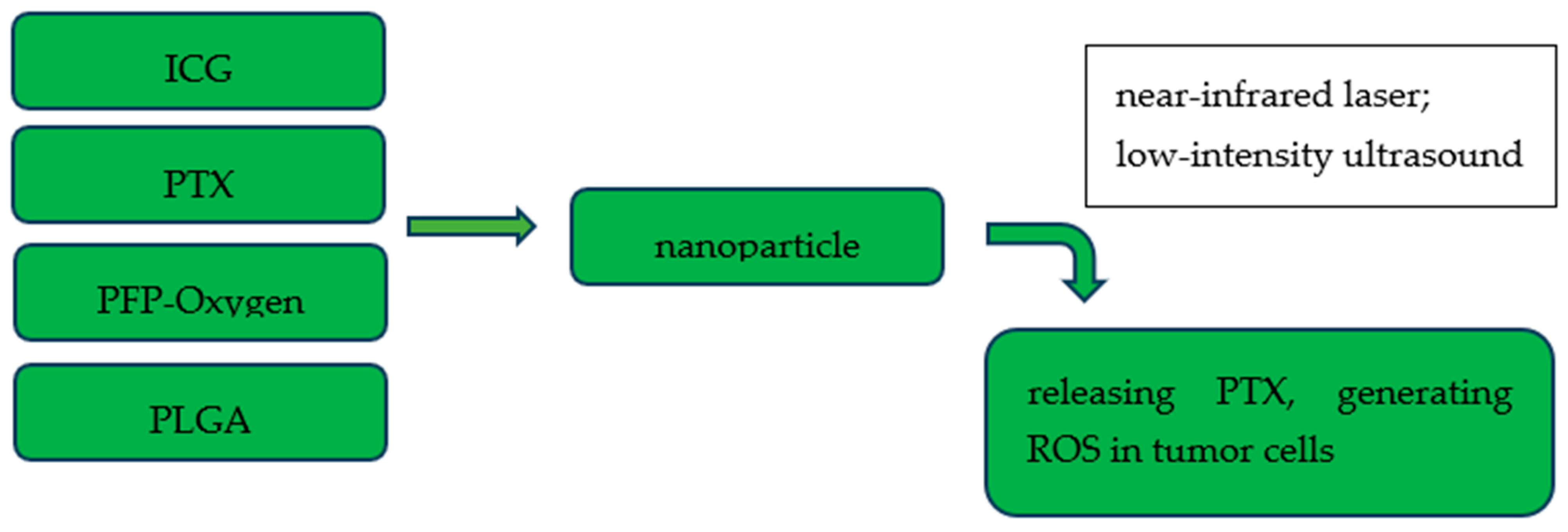
Indocyanine green (ICG) is a fluorescent agent which is characterized by a wide range of applications in the proper visualization of the operating field. It is particularly important in surgical oncology, where proper visualization translates into the completeness of tumor resection. We reviewed the usefulness of indocyanine green in sentinel lymph node mapping, its application in angiography, and the identification of structures such as ureters or nerves. Preclinical models of using indocyanine green as a cytotoxic agent conjugated with macromolecules were summarized. The use of indocyanine green in this way still requires clinical trials before daily application.
Abstract
Indocyanine green (ICG) is a fluorescent agent which is characterized by a wide range of applications in the proper visualization of the operating field, differentiation of vital structures, and localization of lesions to be excised. An investigation and overview of novel approaches of indocyanine green in modern gynecological oncology was conducted, including ovarian cancer surgery with its compartmental approach and compartmental surgery in endometrial cancer. Ureteral visualization and perfusion, lymphography, lymph node transfers, or the localization of anastomotic leakage in bowel surgery are examples of applications aimed at reducing the risk of surgical complications and improving the patients’ quality of life. The general use of indocyanine green in lymph node detection, subcategorized and analyzed, is constantly improved and reviewed. A therapeutic approach with macromolecules is being tested in preclinical models. Early results could suggest the future application of indocyanine green not only in broad-sense imaging but also as a cytotoxic agent conjugated with macromolecules. Further studies on the application of indocyanine green in laparoscopy, open surgery, and finally as a curative cytotoxic agent are needed.