Digital Pathology for Better Clinical Practice

1
The French National Institute of Health & Medical Research (INSERM), Laboratory of Integrative Cancer Immunology, F-75006 Paris, France
2
Equipe Labellisée Ligue Contre le Cancer, F-75006 Paris, France
3
Centre de Recherche des Cordeliers, Sorbonne Université, Université Paris Cité, F-75006 Paris, France
4
Providence Genomics, Portland, OR 02912, USA
5
Earle A Chiles Research Institute, Portland, OR 97213, USA
6
Department of Pathology, Cliniques Universitaires Saint Luc, UCLouvain, 1200 Brussels, Belgium
7
Veracyte, 13009 Marseille, France
*
Author to whom correspondence should be addressed.
Cancers 2024, 16(9), 1686; https://doi.org/10.3390/cancers16091686
Submission received: 8 April 2024
/
Revised: 24 April 2024
/
Accepted: 25 April 2024
/
Published: 26 April 2024
(This article belongs to the Special Issue Predictive Biomarkers for Colorectal Cancer)
Simple Summary
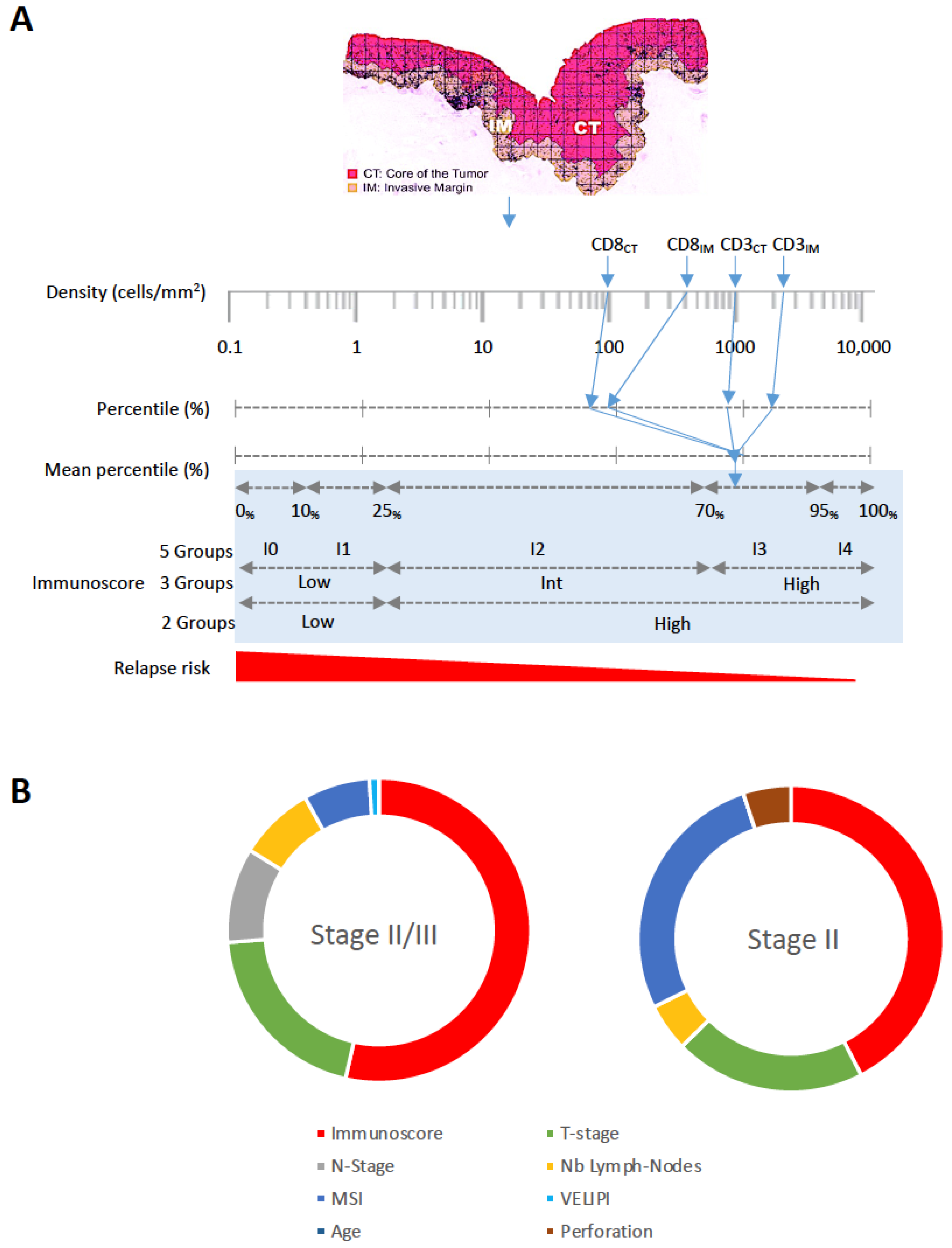
This review highlights the profound impact of digital pathology (DP) and artificial intelligence (AI) on advancing cancer diagnosis and treatment. DP enables pathologists to access, analyze, and share high-resolution images, enhancing diagnostic accuracy and fostering remote collaboration. AI further refines cancer diagnosis by automating tasks and facilitating spatial analysis of the tumor microenvironment (TME), leading to the discovery of novel biomarkers. Immunoscore (IS), an AI-assisted immune assay, exhibits robust potential in improving cancer diagnosis, prognosis, and treatment selection, surpassing traditional staging systems. Integrating DP and AI, particularly the IS biomarker, into clinical practice promises to enhance personalized cancer therapy. The research underscores a pivotal leap forward in pathology, stressing the imperative of incorporating AI-driven technologies for improved cancer patient care and outcomes. This exploration aims to provide insights into the transformative potential of DP in cancer management, influencing the clinical community towards more effective diagnostic and therapeutic strategies.
Abstract
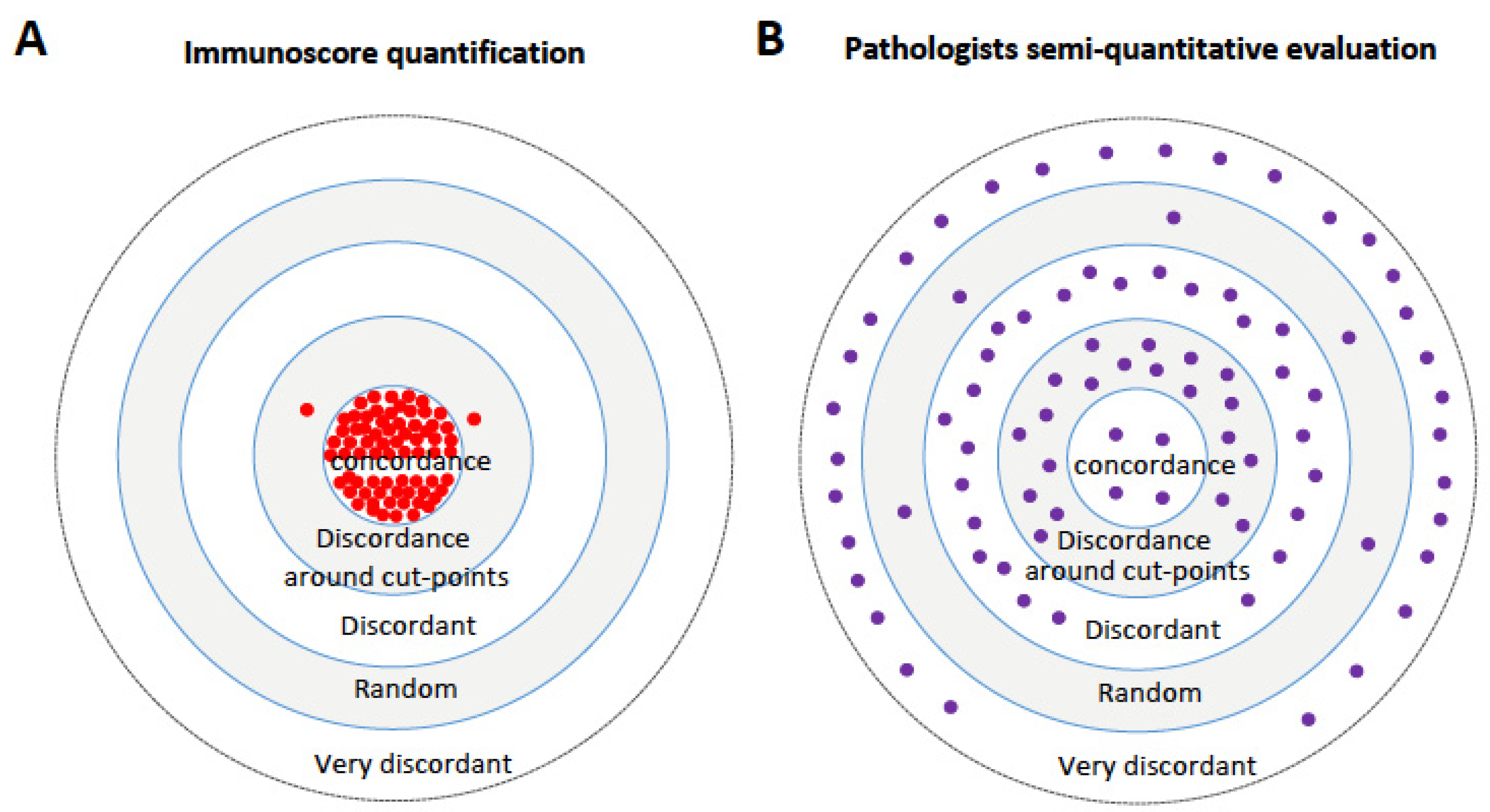
(1) Background: Digital pathology (DP) is transforming the landscape of clinical practice, offering a revolutionary approach to traditional pathology analysis and diagnosis. (2) Methods: This innovative technology involves the digitization of traditional glass slides which enables pathologists to access, analyze, and share high-resolution whole-slide images (WSI) of tissue specimens in a digital format. By integrating cutting-edge imaging technology with advanced software, DP promises to enhance clinical practice in numerous ways. DP not only improves quality assurance and standardization but also allows remote collaboration among experts for a more accurate diagnosis. Artificial intelligence (AI) in pathology significantly improves cancer diagnosis, classification, and prognosis by automating various tasks. It also enhances the spatial analysis of tumor microenvironment (TME) and enables the discovery of new biomarkers, advancing their translation for therapeutic applications. (3) Results: The AI-driven immune assays, Immunoscore (IS) and Immunoscore-Immune Checkpoint (IS-IC), have emerged as powerful tools for improving cancer diagnosis, prognosis, and treatment selection by assessing the tumor immune contexture in cancer patients. Digital IS quantitative assessment performed on hematoxylin–eosin (H&E) and CD3+/CD8+ stained slides from colon cancer patients has proven to be more reproducible, concordant, and reliable than expert pathologists’ evaluation of immune response. Outperforming traditional staging systems, IS demonstrated robust potential to enhance treatment efficiency in clinical practice, ultimately advancing cancer patient care. Certainly, addressing the challenges DP has encountered is essential to ensure its successful integration into clinical guidelines and its implementation into clinical use. (4) Conclusion: The ongoing progress in DP holds the potential to revolutionize pathology practices, emphasizing the need to incorporate powerful AI technologies, including IS, into clinical settings to enhance personalized cancer therapy.