The Impact of FDA-Approved Novel Agents for Steroid-Refractory Chronic Graft vs. Host Disease on Treatment Patterns and Outcomes—A Single-Center Longitudinal Cohort Analysis
by
 ,
,
Gil Fridberg
1,2,†,
Odelia Amit
1,2,†,
Chen Karni
1,
Dina Tshernichovsky
1,
David Shasha
2,3,
Vanessa Rouach
2,4,
David Varssano
2,5,
Amir Bar-Shai
2,6,
Ilan Goldberg
2,7,
Gilad Wasserman
2,8,
Irit Avivi
1,2 and
Ron Ram
1,2,* 1
Bone Marrow Transplantation Unit, Tel Aviv Sourasky Medical Center, Tel Aviv 6423906, Israel
2
Faculty of Medical and Health Sciences, Tel Aviv University, Tel Aviv 6997801, Israel
3
Infectious Disease Unit, Tel Aviv Sourasky Medical Center, Tel Aviv 6423906, Israel
4
The Institute of Endocrinology, Tel Aviv Sourasky Medical Center, Tel Aviv 6423906, Israel
5
Department of Ophthalmology, Tel Aviv Sourasky Medical Center, Tel Aviv 6423906, Israel
6
The Institute of Pulmonary Medicine, Tel Aviv Sourasky Medical Center, Tel Aviv 6423906, Israel
7
Department of Dermatology, Tel Aviv Sourasky Medical Center, Tel Aviv 6423906, Israel
8
Department of Oral Medicine, Tel Aviv Sourasky Medical Center, Tel Aviv 6423906, Israel
*
Author to whom correspondence should be addressed.
†
These authors contributed equally to this work.
Cancers 2024, 16(20), 3521; https://doi.org/10.3390/cancers16203521
Submission received: 3 August 2024
/
Revised: 17 September 2024
/
Accepted: 16 October 2024
/
Published: 17 October 2024
(This article belongs to the Special Issue Hematologic Malignancies and Related Disorders: Challenges from Diagnosis to Treatment)
Simple Summary
Chronic graft vs. host disease (cGVHD) is a major complication that appears after allogeneic hematopoietic cell transplantation. As result, this has a significant and detrimental impact on both the quality of life and survival of patients after transplantation. In recent years, three novel therapies have been approved by the FDA for the management of cGVHD. To date, previous studies have not analyzed the effect of these novel drugs on other health-associated conditions such as metabolic syndrome, bone health, return to employment, mental health, and other para-medical outcomes. In this study, during three different time periods, we aimed to assess and highlight the association between novel advanced treatments for cGVHD and their impact on the quality of life of patients after allogeneic transplantation.
Abstract
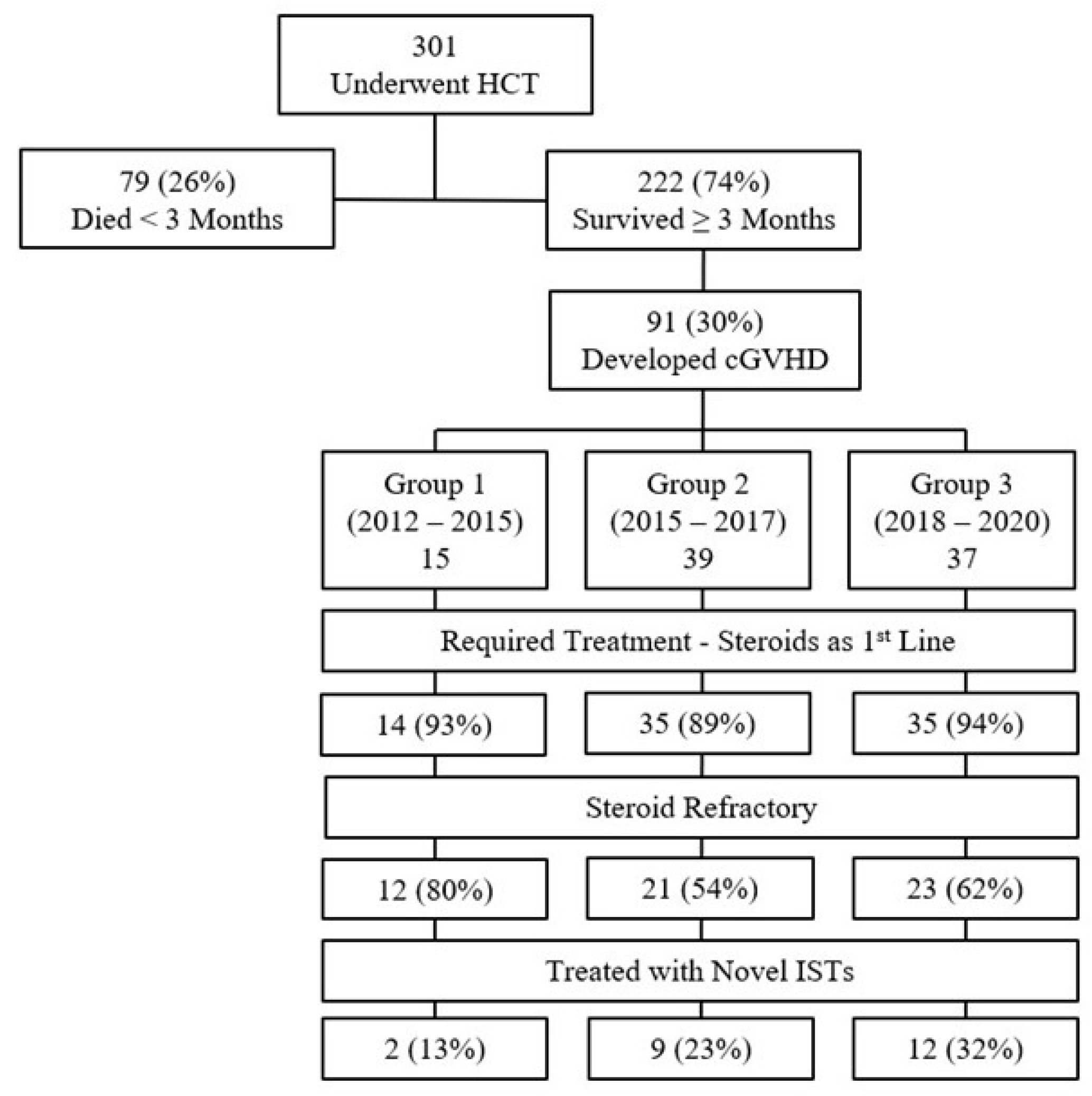
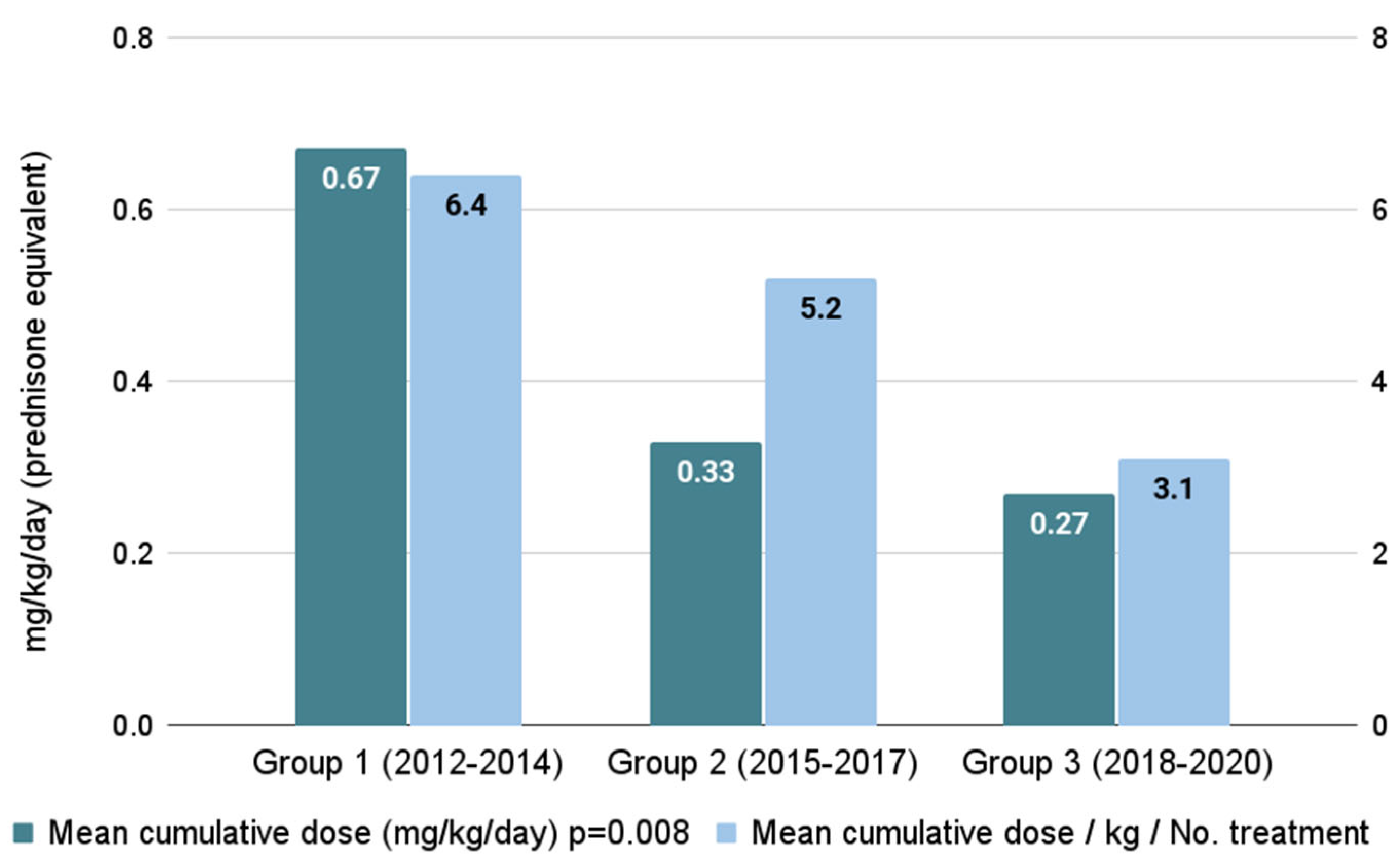
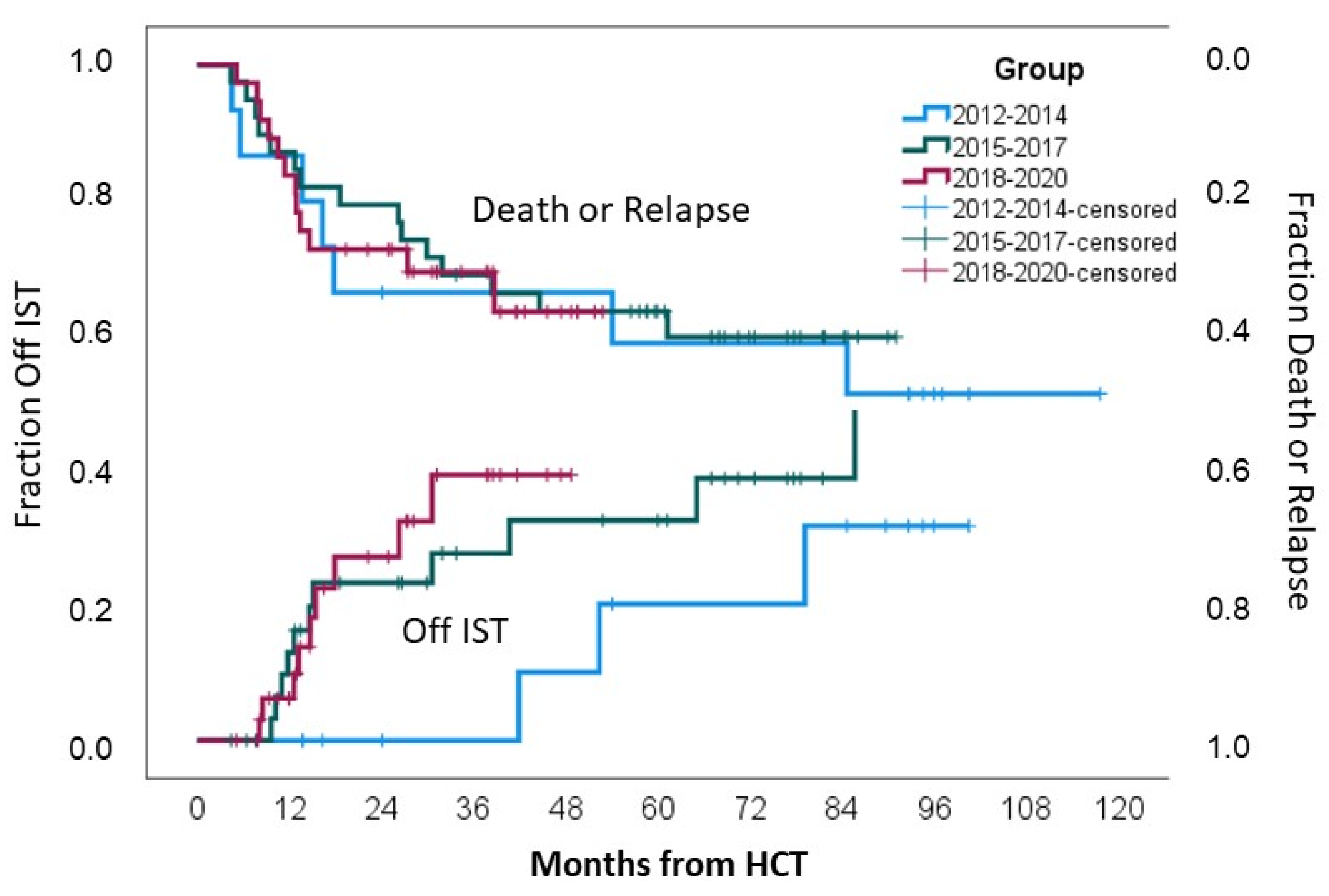
Objectives—chronic graft vs. host disease (cGVHD) is associated with substantial morbidity and mortality. We aimed to analyze advances in treatment strategy and outcomes during the last decade due to the incorporation of novel immunosuppressive therapy (IST) drugs in the armamentarium. Methods—we retrospectively analyzed all patients > 18 years with cGVHD after their first hematopoietic cell transplantation (HCT) between 2012 and 2020 (n = 91), divided into three treatment periods: 2012–2014, 2015–2017, and 2018–2020 (groups 1, 2, and 3, respectively). Results—mean cumulative steroid dose and dose/total cGVHD-treatment days was lower in groups 2–3 compared to 1 (p = 0.008 and p = 0.042, respectively). The median IST-free survival was 79 (95%CI54–94) months, with more patients in group 3 (47% (95%CI 25–54%) discontinuing IST at 3 years, p = 0.1). Groups 2–3 compared to 1 had better glycemic control (p < 0.01), higher bone density (p = 0.06), and fewer cardiovascular events. The number of admissions/patient dropped from 0.7/year in group 1 to 0.24/year and 0.36/year in groups 2–3, respectively (p = 0.36). Employment reintegration was higher in groups 2–3 compared with 1 (p = 0.05) and so was earlier return to work (p = 0.01). There were no differences in survival outcomes. Conclusions—the incorporation of novel agents appears to be associated with reduced overall steroid burden, improved cGVHD control, and fewer long-term side effects.
Keywords:
GVHD; allogeneic HCT; steroids; ruxolitinib; ibrutinib