Impact of Metastatic Pattern on Survival in Patients with Posterior Uveal Melanoma: A Retrospective Cohort Study
by
 , , , , , , , ,
Tine G. Hindso
1,* ,
,
Peter S. Jensen
2,
Mette B. Sjøl
1,
Kristoffer Nissen
1,
Camilla W. Bjerrum
3,
Eric von Benzon
4,
Carsten Faber
1,
Steen F. Urbak
2,
Marco Donia
5 ,
,
Inge M. Svane
5 ,
,
Eva Ellebaek
5,
Steffen Heegaard
1,6,
Karine Madsen
4 and
Jens F. Kiilgaard
1 1
Department of Ophthalmology, Copenhagen University Hospital—Rigshospitalet, Blegdamsvej 9, 2100 Copenhagen Ø, Denmark
2
Department of Ophthalmology, Aarhus University Hospital, Palle Juul-Jensens Boulevard 99, 8200 Aarhus N, Denmark
3
Department of Radiology, Copenhagen University Hospital—Rigshospitalet, Blegdamsvej 9, 2100 Copenhagen Ø, Denmark
4
Department of Clinical Physiology and Nuclear Medicine, Copenhagen University Hospital—Rigshospitalet, Blegdamsvej 9, 2100 Copenhagen Ø, Denmark
5
National Center for Cancer Immune Therapy (CCIT-DK), Department of Oncology, Copenhagen University Hospital—Herlev and Gentofte, Borgmester Ib Juuls Vej 13, 2730 Herlev, Denmark
6
Department of Pathology, Copenhagen University Hospital—Rigshospitalet, Blegdamsvej 9, 2100 Copenhagen Ø, Denmark
*
Author to whom correspondence should be addressed.
Cancers 2024, 16(19), 3346; https://doi.org/10.3390/cancers16193346
Submission received: 11 September 2024
/
Revised: 26 September 2024
/
Accepted: 27 September 2024
/
Published: 30 September 2024
(This article belongs to the Special Issue Current Progress and Research Trends in Ocular Oncology)
Simple Summary
In this study, we investigated whether the anatomical location of metastases from posterior uveal melanoma affects survival. We found that patients with newly diagnosed metastatic posterior uveal melanoma who only have extrahepatic metastases had a significantly longer survival compared to patients with liver metastases. This insight could help clinicians improve the prediction of patient outcomes and enhance the selection of patients in clinical trials.
Abstract
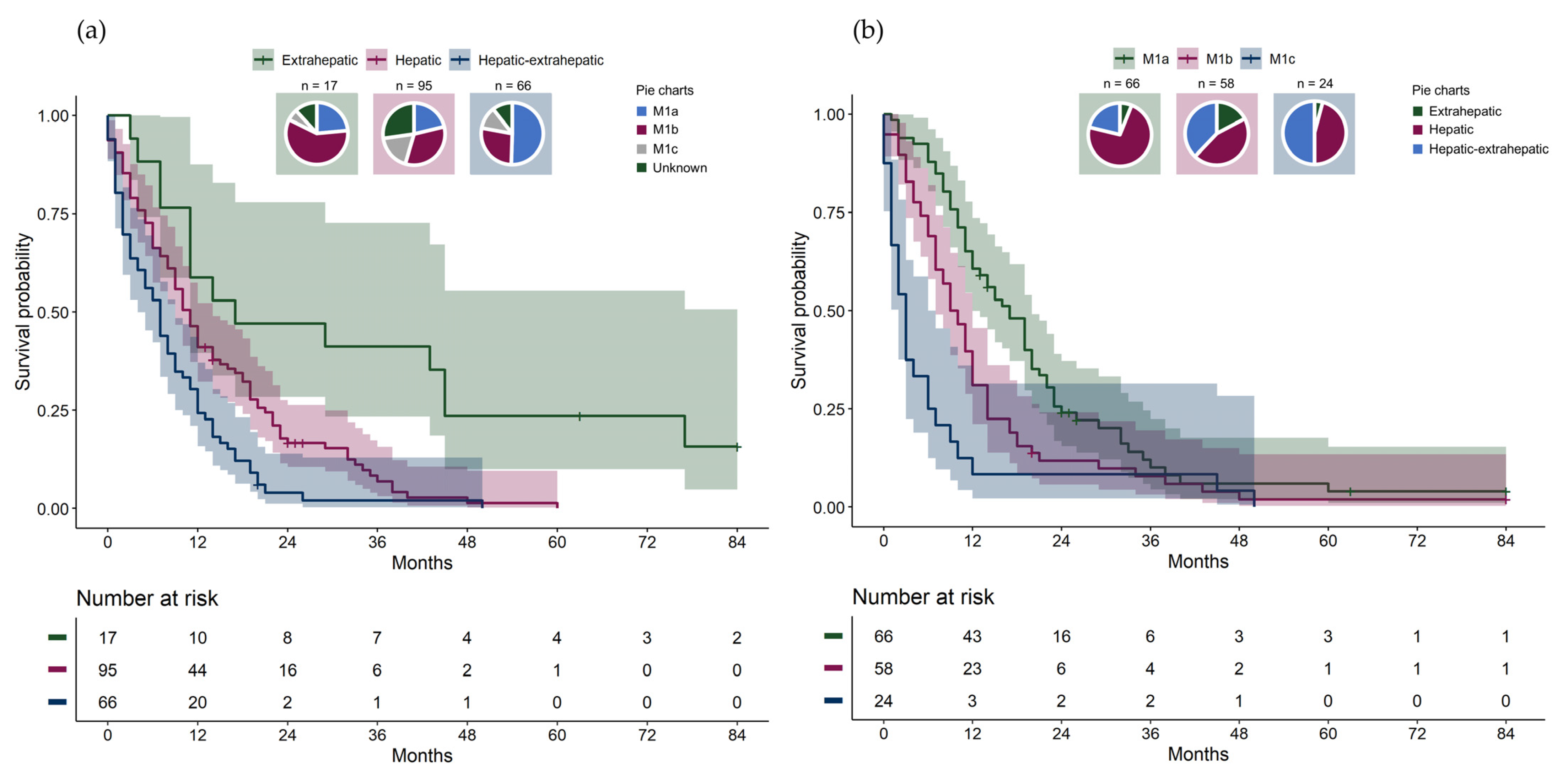
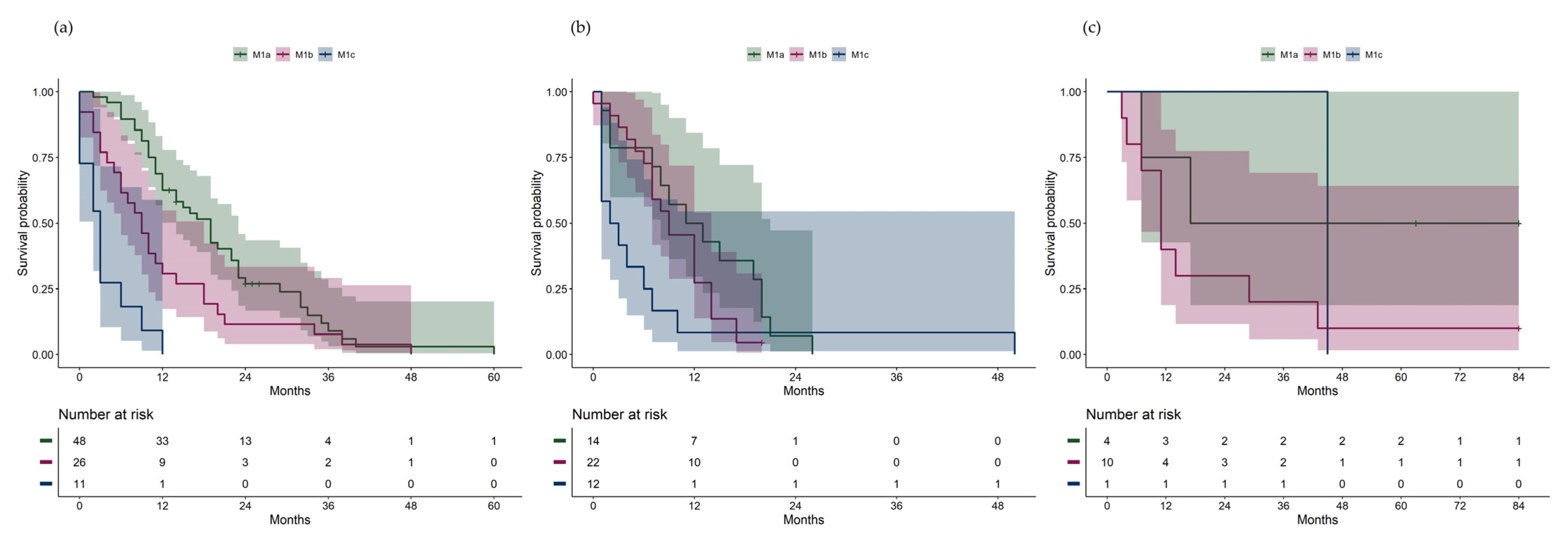
Background/Objectives: Metastatic posterior uveal melanoma (PUM) is one of the deadliest types of melanomas. Though the median survival is short, some patients with metastatic disease live for a long time. In this study, we investigated whether the anatomical location of the metastatic lesions is associated with differences in survival. Methods: One hundred and seventy-eight patients with metastatic PUM with baseline whole-body imaging were retrospectively included. The patients were divided into three groups based on the anatomical location of metastases: (1) exclusive liver metastases (hepatic pattern), (2) both hepatic and extrahepatic metastatic lesions (hepatic–extrahepatic pattern), and (3) exclusive extrahepatic lesions (extrahepatic pattern). Survival was investigated using Kaplan–Meier plots, log-rank test, and the Cox proportional hazard model. Results: In total, 95 patients (53%) presented with hepatic pattern, 66 patients (37%) presented with hepatic–extrahepatic pattern, and 17 patients (10%) presented with extrahepatic pattern. Overall survival was significantly longer in patients with extrahepatic pattern (median 17.0 months) compared to those with hepatic pattern (median 11.0 months) and hepatic–extrahepatic pattern (median 7.0 months) (p < 0.001, log-rank test). Multivariate Cox regression analysis showed increased hazard ratios (HR) for hepatic pattern (HR 2.37, 95% CI 1.08–5.17, p = 0.031) and hepatic–extrahepatic pattern (3.25, 95% CI 1.42–7.41, p = 0.005) compared to extrahepatic pattern. Most patients with hepatic (95%) and hepatic–extrahepatic patterns (82%) were diagnosed with metastases by liver ultrasonography screening, whereas 81% of patients with extrahepatic pattern developed symptoms that led to the diagnosis. Conclusions: Extrahepatic pattern was associated with prolonged survival in patients with metastatic PUM, despite there being a larger proportion of symptomatic patients. It is therefore important to consider the anatomical location of the metastatic lesions when stratifying patients into clinical trials.