Technical and Clinical Outcomes of Laparoscopic–Laparotomic Hepatocellular Carcinoma Thermal Ablation with Microwave Technology: Case Series and Review of Literature
by
 , , , , ,
Riccardo Muglia
1,2,* ,
,
Paolo Marra
1,2,
Domenico Pinelli
3,
Ludovico Dulcetta
1,
Francesco Saverio Carbone
1,
Alessandro Barbaro
2,
Antonio Celestino
2,
Michele Colledan
3 and
Sandro Sironi
1,2 1
Department of Radiology, Papa Giovanni XXIII Hospital, 24127 Bergamo, Italy
2
School of Medicine, University of Milano-Bicocca, 20126 Milano, Italy
3
Department of General Surgery, Papa Giovanni XXIII Hospital, 24127 Bergamo, Italy
*
Author to whom correspondence should be addressed.
Cancers 2024, 16(1), 92; https://doi.org/10.3390/cancers16010092
Submission received: 8 November 2023
/
Revised: 21 December 2023
/
Accepted: 23 December 2023
/
Published: 24 December 2023
(This article belongs to the Special Issue Interventional Radiology in Cancer Treatment)
Simple Summary
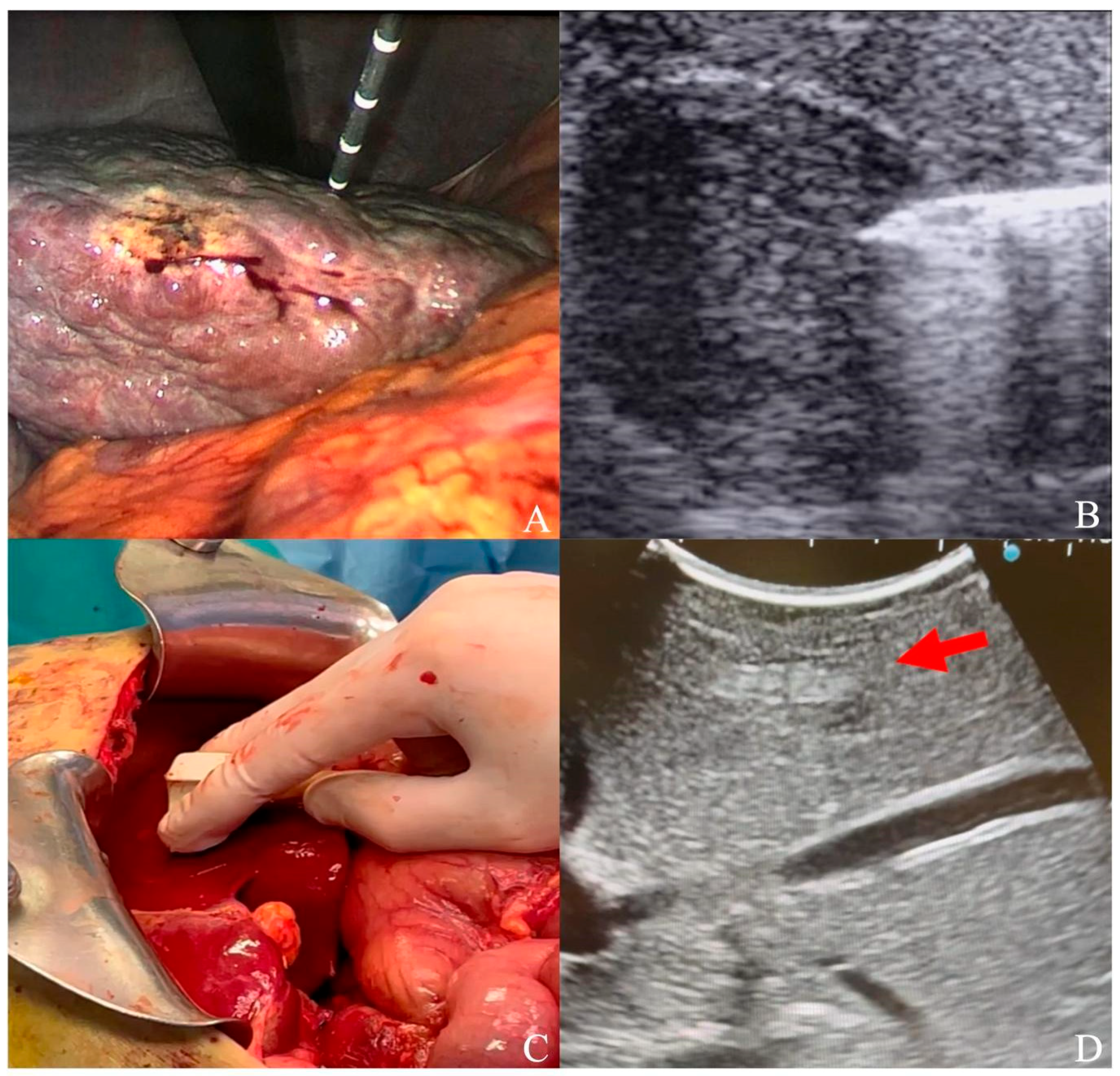
Although the percutaneous approach has always been the standard to ablate hepatocellular carcinomas (HCCs), both intraoperative laparoscopic and laparotomic approaches have recently demonstrated viability in patients unfit for hepatic resection or percutaneous ablation. Most published papers are based on radiofrequency technology performed with a laparoscopic approach, and the literature lacks up-to-date data on laparotomic microwave ablations. This study discusses the efficacy and safety of intraoperative ablation of HCC with state-of-the-art microwave technology in both laparoscopic and laparotomic fashions, demonstrating high clinical success rates and rare complications for intraoperative HCC ablation unsuitable for a percutaneous treatment, strengthening its performance with microwave technology. Moreover, for the first time in literature, both laparoscopic and laparotomic fashions are reported altogether.
Abstract
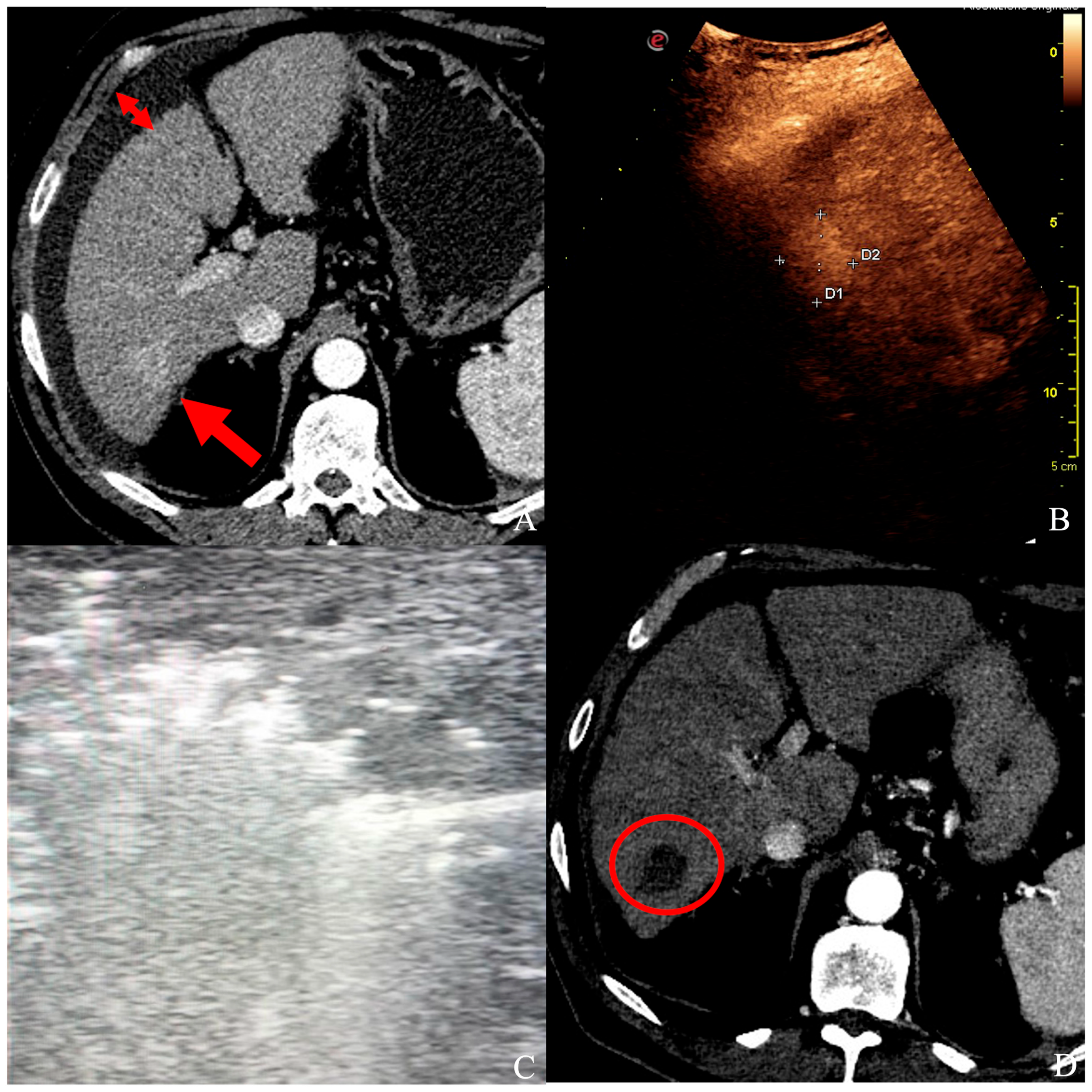
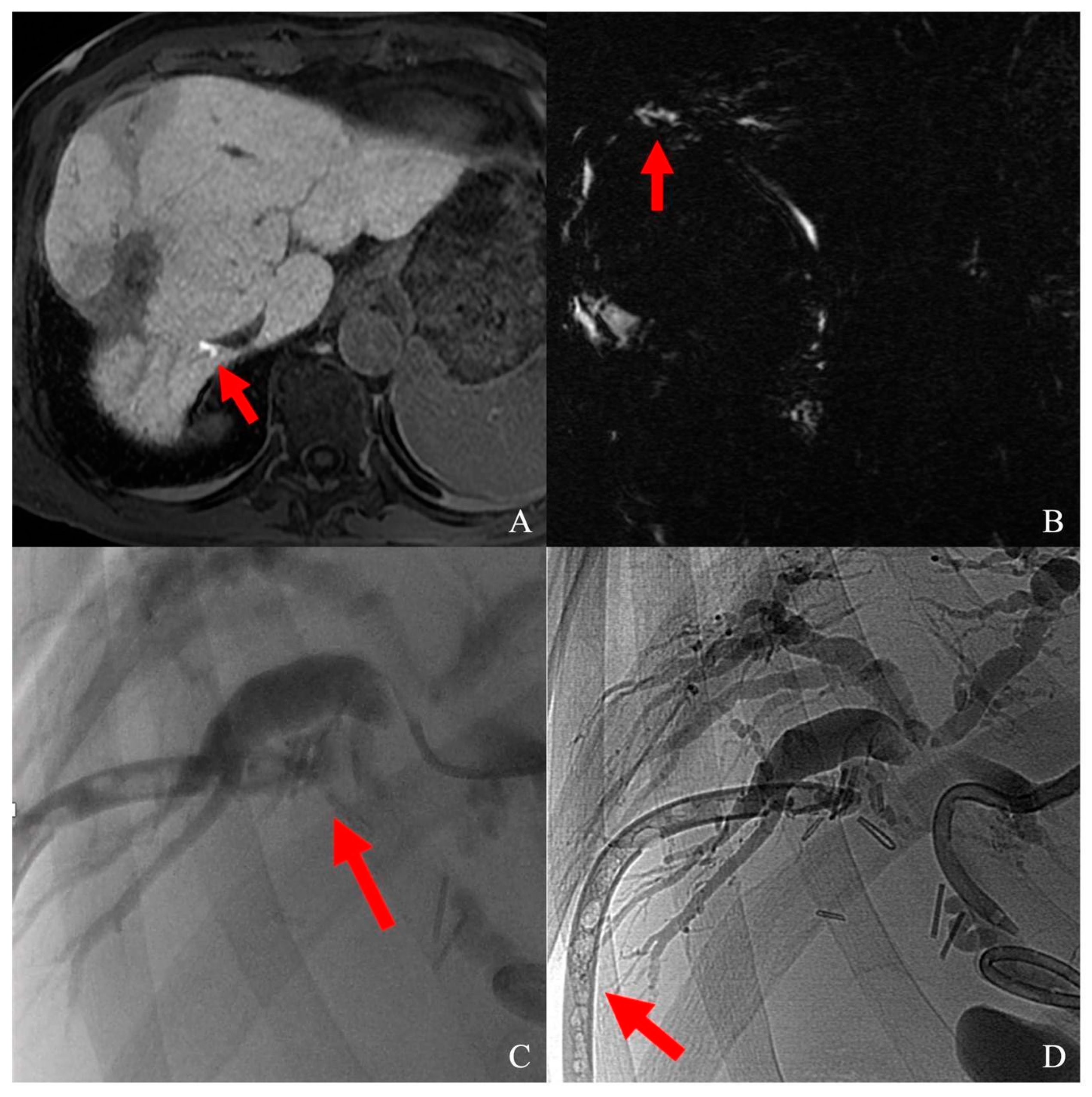
Purpose: To evaluate technical and clinical outcomes of intraoperative (laparoscopic/laparotomic) microwave ablation on HCC. Materials and Methods: This is a retrospective single-center study evaluating consecutive patients treated for very early/early-stage HCC with intraoperative microwave ablation from 1 July 2017 to 30 June 2023. In these patients, a percutaneous US-guided approach was excluded due to the nodule’s suboptimal visibility or harmful location and liver resection for a deep position or adherences. Data about the clinical stage, surgical approach, liver pathology and nodules characteristics, technical success, complications, and follow-up were collected. Technical success was intended as the absence of locoregional persistence at follow-up CT/MRI controls. Results: A total of 36 cirrhotic patients (M:F = 30:6, median age 67 years) were enrolled; 18/36 (50%) had a single nodule, 13/36 (36%) had two, 4/36 had three (11%), and 1/36 had four (3%). Among the patients, 24 (67%) were treated with laparoscopy, and 12/36 (33%) with a laparotomic approach. Sixty HCCs of 16.5 mm (6–50 mm) were treated for 7 min (2–30 min) with 100 W of power. A total of 55 nodules (92%) were treated successfully and showed no residual enhancement at the first postoperative follow-up; the other 5/60 (8%) underwent chemo/radioembolization. There was one complication (3%): a biliary fistula treated with percutaneous drainage and glue embolization. The average hospital stay was 3.5 days (1–51 days), and patients were followed up on average for 238 days (13–1792 days). During follow-up, 5/36 patients (14%) underwent liver transplantation, 1/36 (2%) died during hospitalization and 1 after discharge. Conclusions: Laparoscopic/laparotomic intraoperative HCC MW ablation is feasible in patients unsuitable for percutaneous approach or hepatic resection, with rare complications and with good technical and clinical outcomes.