The Ubiquitin–Proteasome System in Tumor Metabolism


1
Department of Otolaryngology-Head and Neck Surgery, Renmin Hospital of Wuhan University, Wuhan 430060, China
2
Hubei Key Laboratory of Cell Homeostasis, College of Life Sciences, Wuhan University, Wuhan 430072, China
*
Author to whom correspondence should be addressed.
†
These authors contributed equally to this work.
Cancers 2023, 15(8), 2385; https://doi.org/10.3390/cancers15082385
Submission received: 1 February 2023
/
Revised: 16 April 2023
/
Accepted: 17 April 2023
/
Published: 20 April 2023
(This article belongs to the Special Issue Cancer Metabolomic Analysis)
Simple Summary
The reprogramming of tumor cell metabolism is an important char acteristic of cancer, which provides the energy and biomacromolecules in tumor development, especially through glucose, amino acid, and lipid metabolism. The ubiquitin–proteasome system (UPS) has been widely reported to be involved in tumor metabolism. In this review, we aim to highlight the function of UPS members in major metabolic enzymes and critical signaling pathways, and emphasize the current progress of the small molecules as well as drugs in clinical trials.
Abstract
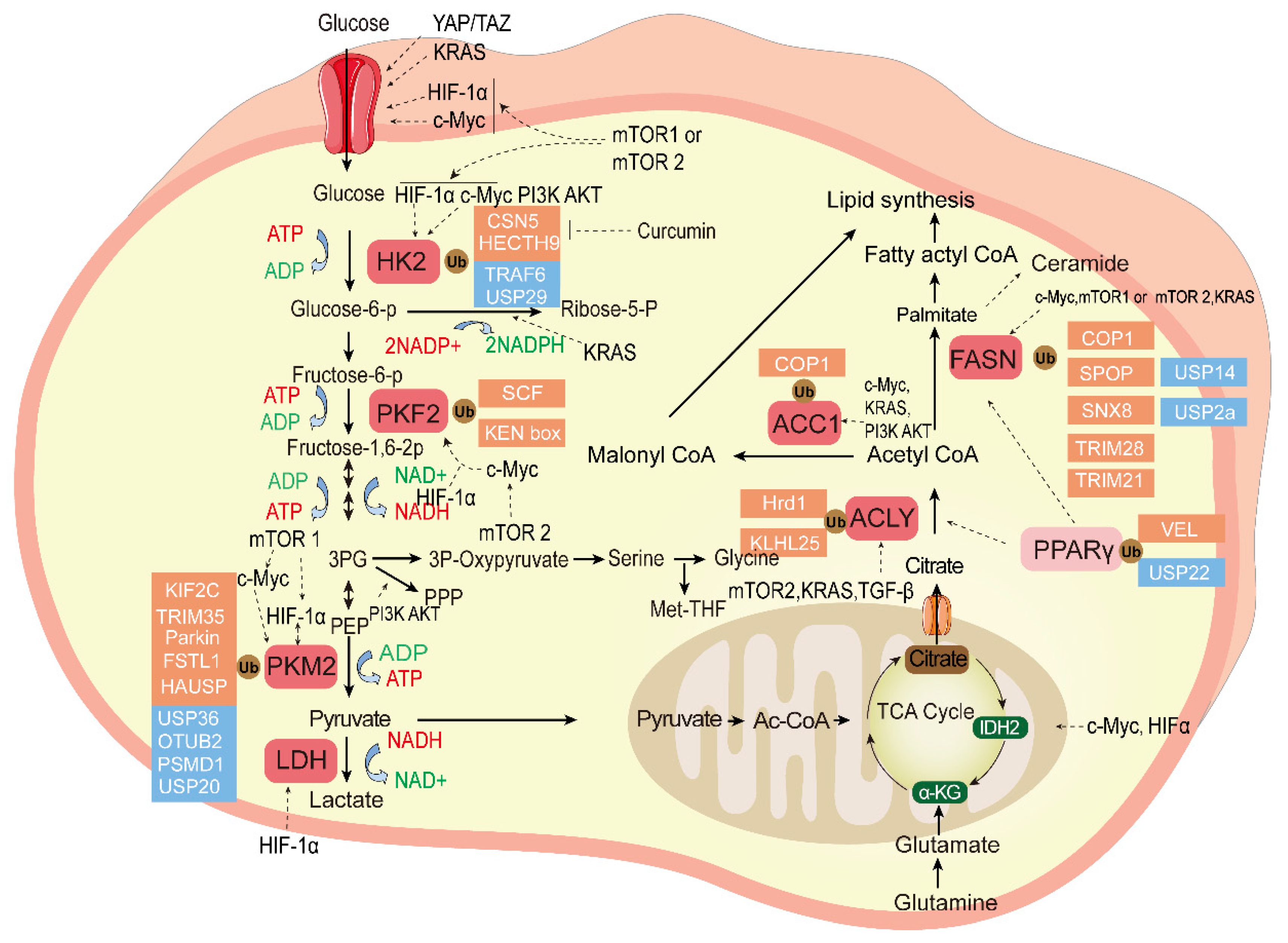
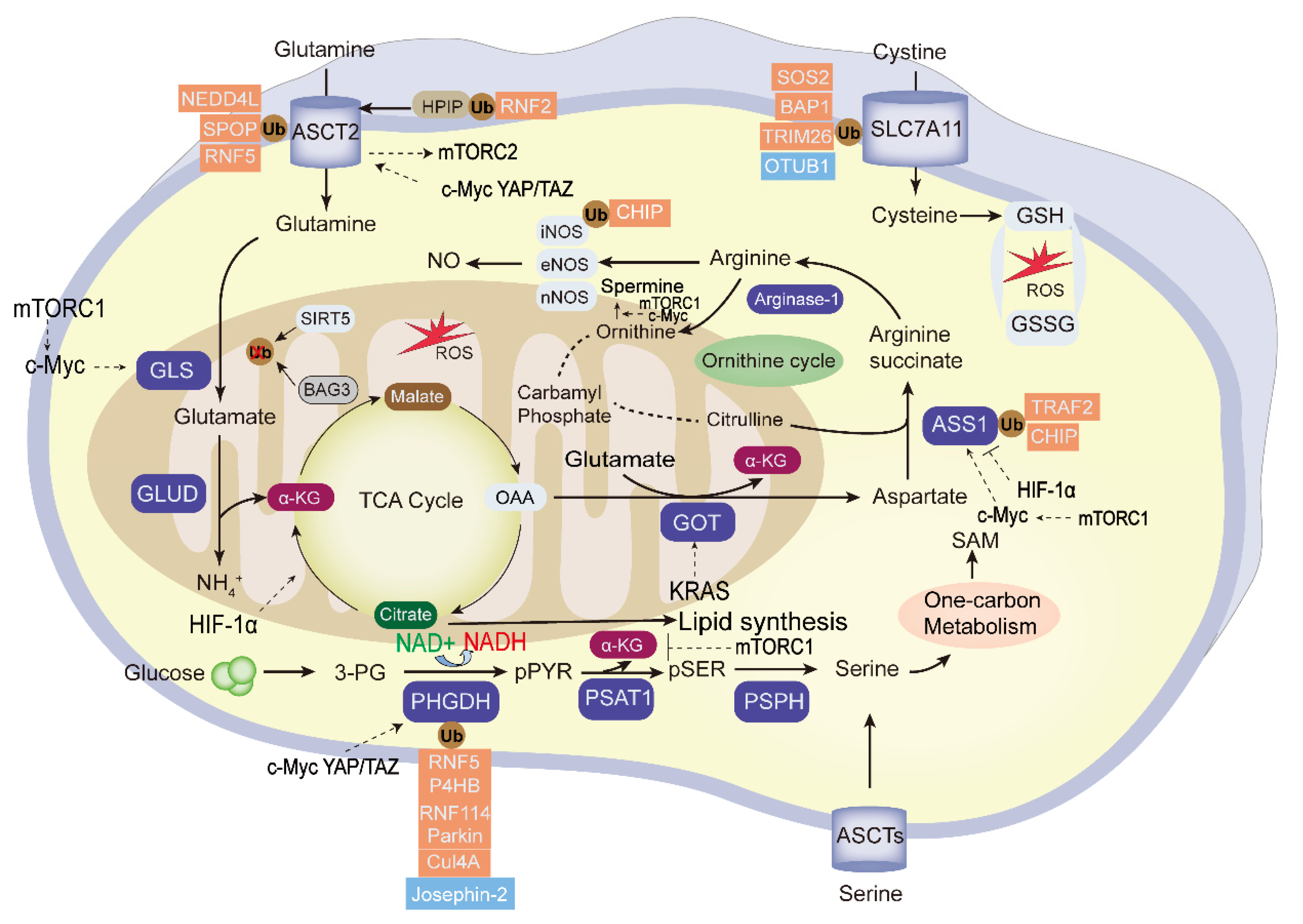
Metabolic reprogramming, which is considered a hallmark of cancer, can maintain the homeostasis of the tumor environment and promote the proliferation, survival, and metastasis of cancer cells. For instance, increased glucose uptake and high glucose consumption, known as the “Warburg effect,” play an essential part in tumor metabolic reprogramming. In addition, fatty acids are harnessed to satisfy the increased requirement for the phospholipid components of biological membranes and energy. Moreover, the anabolism/catabolism of amino acids, such as glutamine, cystine, and serine, provides nitrogen donors for biosynthesis processes, development of the tumor inflammatory environment, and signal transduction. The ubiquitin–proteasome system (UPS) has been widely reported to be involved in various cellular biological activities. A potential role of UPS in the metabolic regulation of tumor cells has also been reported, but the specific regulatory mechanism has not been elucidated. Here, we review the role of ubiquitination and deubiquitination modification on major metabolic enzymes and important signaling pathways in tumor metabolism to inspire new strategies for the clinical treatment of cancer.